IV iv 1 Phocensium desperatio Phocian desperation
Φωκέων ἀπόνοια, sive φωκικὴ ἀπόνοια, id est, Phocensium, sive Phocica desperati, de stultis et insanis consiliis dici solitum admonet Stephanus. verum ex Plutarcho Cheronensi conicere licet dici solitum, ubi desperatis rebus ad extrema consilia veniretur. Natum est autem ex evetu huiusmodi: Atrox odium et irreconciliabilis simultas, atque ut Plutarchi dicamusverbis, a)/spondos2 po/lemos2 erat inter Thessalos et Phocenses: quod hi primores illorum in suis urbibus, ad unum omnes eodem die trucidassent, illi vicissim illorum obsides ducentos quinquaginta in crucem sustulissent: Deinde Thessali contractis omnibus copiis, per Locrenses irruperunt, edicto puomulgato, ne cuiquam provectioris aetatis parceretur: pueri cum mulieribus in seruitutem abducerentur. Daiphantus itaque, qui fuit unus e tribus, quibus Phocensium res erat commissa, suasit uti viri quidem Thessalis obviam irent, cum illis conslicturi. ceterum mulieres una cum liberis, ex universa Phocido congregatas, in uno quopiam loco seponerent, congesta ingenti lignorum materia: et adhibitis custodibus mandarent, ut simul ac intellexissent se victos in praelio, continuo pueros et uxores iniecto igni exurerent. Id reliquis comprobantibus, exurgens quidam negavit aequum fieri, ni consilium hoc, uxorum quoque suffragiis comprobatum suisset, quod si non placeret, non esse cogendas. Itaque mulieres, ubi rem cognovissent, ipsae inter se habito consilio, Daiphantum collaudarunt, qui rectissime consuluisset phocensiu rebus. Eadem autem videri et uxoribus et liberis eorum. His ita peractis, congressi cum Thessalis Phocenses, superiores exstiterunt. Ac decretum quidem illud Graeci Phocensium desperationem appellarunt, quod etiam si feliciter cessisset, tamen temerarium parumque cordatum viderertur. Huiusmodi ferme Plutarchus. Similia fere narrat Pausanias in Phocicis. Meminit et proverbii, quod ait ex hoc eventu dici solitum: e)pi\ pa/ntwn bouleuma/twn a)nalgh/twn, hoc est, de omnibus consiliis quae carent dolore. Meminit et Stephanus indicans dici solitum: Περὶ τῶν τὰ ἀναλγῆ βουλευομένων.
[greek], Desperation of the Phocians, or [greek], Phocian desperation. Stephanus tells us that this was customarily said of stupid and irrational plans. From Plutarch of Chaeronea, however, we can conclude that it was usually said when people resorted to extreme measures in a desperate situation. The expression arose from the following circumstances. Between the Thessalians and the Phocians there was fierce hatred and irreconcilable enmity, and, to use Plutarch's words, [greek] 'A truceless war.' The Phocians had slaughtered on the same day every single leading man in the cities of Thessalia, while the Thessalians in turn had crucified 250 Phocian hostages. The Thessalians then gathered together all their forces and invaded Phocis by way of Locris, having issued a decree that no mature male was to be spared and that the women and children were to be taken off into slavery. Accordingly, Daiphantus, one of the three leaders of the Phocians, proposed that the Phocian men should go to meet the Thessalians to join battle with them, but that all the women and children in Phocis should be assembled and sequestered in one place under guard. A huge supply of wood should be heaped up around the location and the guards were to be instructed to set fire to it and burn to death the women and children immediately they learned that the Phocians had been defeated in battle. All agreed with this proposal except for one man who rose to his feet and said that this action was not right unless the women voted and approved it as well. If they disapproved, they should not be compelled to follow it. And so when the women learned of the proposal, they themselves met together in council. They praised Daiphantus for having considered the interests of Phocis in the best possible way and said that both the wives and their children agreed with the proposal. When this procedure was over, the Phocians joined battle with the Thessalians and emerged victorious. The Greeks called that decree 'madness of the Phocians.' The reason was that even though the situation had a happy ending they thought the decree extremely rash and very unwise. This is very much what Plutarch tells us. Pausanias gives a fairly similar account in his 'Phocis.' He also mentions this proverb, which he says is applied, because of this event, to 'all ruthless proposals.' Stephanus also mentions it, pointing out that it was customarily said of 'those who make ruthless proposals.'
Facsimile: 
Iconclass: 51F52 Earliness 54DD52 Risk; 'Ardire ultimo & necessario' (Ripa) 61D(PHOCIS) geographical names of countries, regions, mountains, rivers, etc. (PHOCIS) (PHOCIS)
Loci Communes: Desperatio (Despair, Désespoir)
IV iv 2 Suspensa manu With a limp hand
Plin. in Epist. lib. vi. Suspensa manu, dixit pro eo quod est, leviter parumque accurate. Tu vero, inquit, non debes suspensa manu commendare mihi, quos tuendos putas. Fit enim venustius, si à corpore ad animum transferas. Quintilianus declamatione duodecima in eundem sensum usurpat, Levi manu, tanquam proverbium. Cicero Levi brachio, de quo dictum est aliàs. Itidem dicimus Suspenso pede, pro sensim ac tacite. Ammianus libro xiiii. Seseque suspensis passibus iniecerunt in scaphas.
Pliny in book six of his Letters said Suspensa man 'With a limp hand' in the sense of 'lightly' or 'very half-heartedly.' He writes, 'You ought not to commend to me with a limp hand those whom you think need to be assisted.' For the expression has more appeal if one transfers the sense from the physical to the mental. In Declamation 12 Quintilian uses levi manu 'with a light hand' in the same sense as if it were a proverb, while Cicero uses levi bracchio 'with a light arm,' about which I have spoken elsewhere. We also say suspenso pede 'on tiptoe' in the sense of 'gently and quietly.' Ammianus in book fourteen: 'They threw themselves into the skiffs suspensis passibus "quietly."'
Facsimile:
Iconclass: 54AA7:31A2245 Weakness, Powerlessness, Helplessness; 'Infermità' (Ripa)❧hand
Loci Communes: Indiligentiae (Carelessness, Négligence)
IV iv 3 Extremum occupet scabies The last one's a scab
Olim pueri cursu certantes clamare solebant: Occupet extremum scabies, adhortantes hac voce singulos ad cursum, ac male precantes ei, qui fuerit omnium postremus. Id deductum est in adagium, quo utebantur, qui significarent sese quocumque modo velle vincere, neque commissuros, ut inter postemos sint. Ita qui per fas nefasque rem augent, possunt alio vocanti respondere: Extremum occupet scabies. Quam quam nihil vetat, quo minus inbonam partem detorqueamus, ut si quis summis viribus adnititur, ne ab ae qualibus, eruditione, aut recte factis, aut officiis ab amico superetur, dicat: Occupet extremum scabies. Hoc igitur proveibium pueris acceptum ferimus, quemadmodum et illud: Τὴν κατὰ σαυτὸν ἔλα. Usus est Horatius in Arte poetica: Occupet extremum scabies, mibi turpe relinqus est. Originem Acronindieat.
In antiquity when children raced each other they often used to shout, 'The last one's a scab,' using these words to encourage every one to run fast and putting a curse on who was last. This became an adage used by those who indicated that they wanted to prevail by any means and would not allow themselves to be among the last. Accordingly, those who increase their wealth by fair means or foul so that they will not fail to be among the elite, those who by deceitful practices rise to the position of magistrates, and those who hunt unscrupulously for highly paid offices in the church can say to someone who urges them to behave differently, 'The last one's a scab.' And yet nothing prevents us from applying it differently in a good sense. Whoever strives with all his might not to be surpassed by his contemporaries in erudition or by a friend in kindnesses and the duties of friendship may say, 'The last one's a scab.' We credit this proverb, therefore, to children, as also [greek] 'Seek a wife of your own sort,' and this one in the Gospel according to Matthew chapter 11, 'We piped for you and you did not dance.' Horace used it in his Art of Poetry: 'The last one's a scab; it is a disgrace for me to be left behind.' Acron points out the origin.
Facsimile:
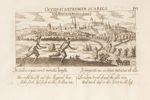
Occupat extremum scabies: Meisner, Politica Politica (Nürnberg, 1700), emblem 513
Iconclass: 31A46321(+0) scar, cicatrix (+ variant) 43C71111(+321) running (~ game) (+ loser scorned (sports, games, etc.)) 51AA4:54A211 Nothingness, Absence❧Scrupulosity; 'Scropolo' (Ripa)
Loci Communes: Vincere et vinci (To conquer and to be conquered, Vaincre et être vaincu)
IV iv 4 Ημερόκοιτος Daysleeper
Vulgari ioco fures dicti videntur, h)mero/koitoi, quod interdiu dormiant, noctu vigilent. Sic enim Hesiodus in Operibus, ac diebus: Μή ποτέ σ᾿ ἡμερόκοιτος ἀνὴρ ἀπὸ χρήμαθ᾿ ἕληται. id est, Ne solitus dormire die tua tollere possit. Apte torquebitur in tollionem, et furacem. Est et piscis eiusdem nominis, ut indicat Suidas, Phoca opinor.
It seems to be a common joke for thieves to be called [greek] 'Daysleepers,' because they sleep during the day and are awake in the night. So Hesiod in Works and Days: 'Let not him who is a [greek] "a sleeper by day" remove your goods.' It will be apt to apply it to a pilferer and a thief. There is also a fish of the same name, as Suidas points out - a phoca, I think.
Facsimile:
Iconclass: 31B1:23R2 sleeping; unconsciousness❧day from sunrise to sunset 44G54 thief
Loci Communes: Rapacitas et avaritia (Rapacity and greed, Rapacité et avarice)
IV iv 5 In omnia potentes Powerful over all things
In eos qui plurimum possunt vel nocere vel prodesse, quadrabit illud Hesiodi: Εν τοῖς γὰρ τέλος ἐστὶν ὁμῶς ἀγαθῶν τε κακῶν τε.. id est, Est enim in his pariter sita summa bonique malique. Quod quidem à poeta de diis dictum, accommodare licebit, vel in hominem cuius summa sit autoritas, vel in rem quae plurimum habeat momenti. Veluti in principem, aut vehementer gratiosum, sive in pecuniam per iocum, vel in literas ac virtutes serio.
The following words of Hesiod will suit those who have the greatest power to harm or help: [greek] 'For in them [Zeus and Poseidon] lies the supreme power of good and evil.' What was said by the poet about the gods we can apply also to a human being who has supreme authority or to something that is of very great importance. For example, to a prince or to something that is very highly-regarded, such as money if we wish to be facetious or literature and virtues if we are serious.
Facsimile: 
Iconclass: 53C11 Authority, Power; 'Dominio', 'Giurisdittione' (Ripa) 92B171(+0) Jupiter as king of Heaven (+ variant)
Loci Communes: Potentes (The powerful, Les puissants)
IV iv 6 Ne uni navi facultates Do not put all your wealth on one ship
Quin illud etiam ad proverbiorum classem, si longius deflectatur, reserendum videtur, quod est in eodem opere: Μηδ᾿ ἐπὶ νηυσὶν ἅπαντα βίον κοίλῃσι τίθεσθαι. id est, Nebona tu pandis ratibus semel omnta mandes. Ne quid aggrediaris, in quo sint universa periclitanda. Non omnis statim alea iacienda est. Periculosa est nautica negotiatio. Naufragium enim tollit omnia. Tutius est cum terra commercium. Alibi retulimus dictum Laconis, qui negabat sibi placere divitias, quae penderent a funibus.
In fact I think what is in the same work, [greek] 'Do not entrust all your possessions to curved ships all at once,' should be regarded as a proverb if it is used in a figurative way. Do not attempt anything that will endanger everything. For you must not gamble all that you have on one throw. Sea commerce is dangerous; for a shipwreck carries off everything. It is safer to trade on land. We have reported elsewhere the saying of a Spartan, who said he did not like wealth that depended on the sheets of a ship.
Facsimile:
Iconclass: 43C552 dice 46B47 profit and loss 54DD52 Risk; 'Ardire ultimo & necessario' (Ripa)
Loci Communes: Discriminis (Danger, crisis, Danger)
IV iv 7 Urit absque torre You don't need fire to burn someone up
Versum hunc ceu proverbialem subinde Plutarchus usurpat: Εὔει ἄτερ δαλοῖο καὶ ὠμῷ γήραϊ δῶκεν. id est, Exurit sine torre, gravique dat ille senecta. Nempe uxor improba, quae moribus suis senium viro praematurum conciliat. Idem lepide transferetur ad avaritiam, ad ambitionem, ad invidiam, amorem obscenum, similiaque animi vitia, quibus obnoxii torquentur et contabescunt.
This verse is used now and then in a proverbial sense by Plutarch, [greek] 'She burns him up without a firebrand and consigns him to old age.' This is said of course of a shameless wife who by her behaviour makes her husband prematurely old. The expression will have charm if one applies it to avarice, ambition, envy, shameful lust, and similar moral flaws to which humans are exposed and which torture them and cause them to waste away.
Facsimile:
Iconclass: 31D7:42D31 unnatural aging❧unequal couple, ill-matched couple 33C8110 'Libidine', 'Voluttà' (Ripa) 41B12(+0) burning as process (+ variant) 55CC11 Greed, Covetousness, Cupidity; 'Cupidità' (Ripa) 56F11 Ambition; 'Ambitione', 'Amor di Fama' (Ripa) 57AA76 Jealousy; 'Gelosia', 'Rammarico del ben'altrui' (Ripa)
Loci Communes: Occulta (Hidden things, Choses cachées)
IV iv 8 Adhuc coelum volvitur The heavens are still revolving
Quoties significabimus adhuc superesse spem, et nondum omne tempus, quod melioris fortunae solet occasionem adducere, exactum esse, conveniet illud Theocriticum ex Charitibus: Οὔπω μῆνας ἄγων ἔκαμ᾿ οὐρανὸς οὐδ᾿ ἐνιαυτούς, id est, Nondum defessus provoluere desiit aether Menses, atque annos. Quod enim unus annus negat, alter ultro defert.
Whenever we mean that there is still hope and that time, which usually brings an opportunity for better fortune, still remains, those words of Theocritus from the Graces will be appropriate: [greek] 'The heavens are not yet weary and have not ceased to roll round the months and years.'
For what one year denies us the next confers of its own accord.
Facsimile:
Iconclass: 51F2:24 Continuity❧the heavens (celestial bodies) 56D1 Hope; 'Speranza', 'Speranza delle fatiche' (Ripa)
Loci Communes: Spes pertinax (Persistent hope, Espoir tenace)
IV iv 9 Multae rotae volventur There's many a wheel to turn
Proverbialiter extulit et ad eandem pertinet sententiam, quod proxime consequitur: Πολλοὶ κινήσουσιν ἔτι τροχὸν ἅρματος ἵπποι. id est, permultis voluetur adhuc rota mota caballis. Id est, Multum adhuc temporis restat, multaeque rerum incident mutationes. Quod quidem adagium et hodie nostrati vulgo in ore est, Frigidius enim est quod quidam interpretantur de certaminibus Olympiacis, de quibus illic non agit poeta in carmine Bucolico.
What follows next is a proverbial expression and is related in sense: [greek] 'There is many a horse that will move the wheel and make it turn.' In other words, there is still a lot of time remaining and many changes in circumstances will occur. This adage is commonly spoken even today in our own time. The interpretation of some that it relates to the Olympic games is quite unappealing. The poet is not dealing with these in this context, in a pastoral poem.
Facsimile:
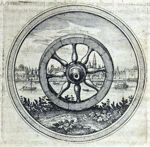
Rota volvitur aevi: Zincgreff, Emblematum Ethico-politicorum (Heidelberg, 1619), emblem 94 paraphrases the adage and uses the imagery of the wheel
Iconclass: 46C19 wheel (of vehicle) 51H4:23 Plenitude❧time 52B42 Possibility 54F122 Vicissitudes of Life
Loci Communes: Fortunae commutatio (Change of fortune, Changement de fortune)
IV iv 10 Ne nomen quidem Not even the name
Proverbiali figura dictum est, et illud in eadem Ecolg: Βοᾶς δ᾿ ἔτι μηδ᾿ ὄνομ᾿ εἴη. id est, Ulterius nec nomen erit belli atque tumultus. Itidem Paulus ad Ephesios: Fornicatio autem et omnis immunditia aut auaritia nec nominetur in vobis. Quid enim? Itane scelus est nominare auaritiam aut libidinem? Non opinor, sed Apostolus, vt grauiter vitia detestaretur, vsus est hyperbole prouerbiali. Nam inter pios nominatur et Iudas et Pilatus.
What is said in the same eclogue, is also proverbial: [greek] e 'No longer will there be even the name of war and discord.' Similarly Paul to the Ephesians: 'Let not fornication or indecency of any kind or greed be even named among you.' But why? Is it such a crime to say the words 'greed' or 'lust'? I do not think so, but the Apostle used a proverbial hyperbole to denounce strongly these vices. For both Judas and Pilate are named by the devout.
IV iv 11 Cervus canes trahit The stag drags off the hounds
Inter adagia quibus a)dun/aton, seu praeposterum quidpiam signisicanus, adnumerandum et illud, quod est apud Theocritum in Thyrside: Τοὺς κύνας ὁ ἔλαφος ἕλκει. id est, Canes cervus trahit. Praeposterum enim est, ut cervus Venetur canes. Carmen Theocriti sic habet: Δάφνις ἐπεὶ θνάσκει, καὶ τὼς κύνας ὥλαφος ἕλκοι, id est, Postquam Daphnis obit, cervus trahat ipse molossos. Ad consimilem formam Virgil. in Pharmaceutria: Nunc et oves ultre fugiat lupus.
Among the adages that we use to signify a reversal of nature or what is impossible we should count too what appears in Theocritus in the Thyrsis: [greek] 'The stag drags off the hounds.' For it is a reversal of nature for a stag to hunt hounds. This is how the Theocritean verse runs: [greek] 'Now that Daphnis is dying, may the stag drag off the hounds.' Similarly, Virgil in the Pharmaceutria: 'Now may the wolf flee from the sheep.'
Facsimile:
Iconclass: 25F24(STAG)(+512):43C1147 hoofed animals: stag (+ animal(s) attacking)❧hunting dogs 52AA511 Ridiculousness
Loci Communes: Absurda, indecora, seu praepostera (Absurd, unbecoming, or preposterous things, Choses absurdes, inconvenantes ou déplacées)
IV iv 12 Bubo canit luscinae The owl sings to the nightingale
Item illud, quod proxime consequitur: Κήξ ὀρέων τοι σκῶπες ἀηδόσι γαρύσαιντο. id est, Buboque montanus philomelis occinat ipsis. Cum infans suadere conatur eloquenti, aut ineruditus docere doctissimu.
Also what immediately follows:[greek] 'And may the mountain owl sing to the nightingales.' When an inarticulate person tries to persuade someone who is eloquent, or an ignorant person tries to instruct someone who is very learned.
Facsimile: 
Iconclass: 25F32(NIGHTINGALE) song-birds: nightingale 25F34(+49) owls (+ audible means of communication of animal(s): roaring, crying, singing, barking, mewing, neighing, chirping, etc.)
Loci Communes: Excellentia, inaequalitas (Excellence, inequality, Excellence, inégalité)
IV iv 13 Ne videt quidem oleum He has never even laid eyes upon oil
Ecloga cui titulus: nomei=s2, scatet proverbialibus sententiis ac figuris, quarum de numero primu est illud: Καὶ πόκα τηνὸς ἔλαιον ἐν ὀφθαλμοῖσι ὀπώπει; id est, Et quande ille oculis, oleum conspexerat umquam? Conveniet in eos, qui sunt artis alicuius prorsus rudes, et imperiti. Veluti si quis profiteatur rem medicam, qui numquam didicerit quidquam illius artis, venuste notabitur hoc verΚαὶ πόκα τηνὸς ἔλαιον ἐν ὀφθαλμοῖσιν ὀπώπει; (su Ungebantur enim athletae, quo membris evaderent durioribus, unde per oleum signisicant certamen. Quamquam scholia declarant quosdam hoc ad atborem referre, quod in Olympiacis olcastro sive olea coronari solcbant.
The eclogue entitled the Swineherds is full of proverbial expressions and figures. The first of these is [greek]; 'And when had that fellow ever laid eyes on oil?' This will suit those who are very ignorant of some profession or unskilled in it. For example, if anyone were to claim knowledge of medicine when he has never learned anything of that art, this verse will be a witty criticism of him. Athletes were smeared with olive-oil so that their limbs would be stronger. Because of this the contest itself is signified by the word 'oil.' The scholia, however, state that some take 'oil' to refer to the tree, since competitors in the Olympic games were awarded wreaths of olive or oleaster.
Facsimile:
Iconclass: 25G3(OLIVE-TREE):25G22(OIL) trees: olive-tree❧(non-fruit) products of plants or trees (OIL) 52AA5 Ignorance; 'Ignoranza', 'Ignoranza di tutte le cose', 'Ignoranza in un ricco senza lettere' (Ripa)
Loci Communes: Ignavia et inscitia (Cowardice and ignorance, Lâcheté et ignorance)
IV iv 14 Et me mater etc. And my mother said I was better than Pollux
Item illud, quod in eadem sequitur: Κἤμ᾽ ἔφαθ᾽ ἁ μάτηρ πολυδεύκεος ἦμεν ἀμείνω. id est, Mequoque Pollucem mea mater vincere dixit. Cum quis anteponitur, aut ae quatur iis, cum quibus nullo modo conferendus est. Matres enim amore caecutiunt in silios, & formosissimos putant, qui sunt deformes, fortissimos, qui sunt ignavissimi. Porro Pollux pugil optimus fuisse creditur, teste Flacco: Castor gaudet equis, ovo prognatus eodem Pugnis.
Also what follows in the same poem, [greek] 'And my mother said that I was better than Pollux.' When anyone is ranked higher than or reckoned equal to those with whom he in no way ought to be compared. For mothers are blinded by love for their sons and think that they are extremely handsome when they are ugly, and extremely brave when they are very cowardly. Pollux is believed to have been the best boxer, as Horace attests: 'Castor takes delight in horses, the other one born from the same egg takes delight in boxing.'
Facsimile:
Iconclass: 42B12 mother-love 43C391(+31) boxing (sport) (+ the winner, victor, of a contest (sports, games, etc.)) 94R(POLLUX) one of the Dioscuri: Pollux, the boxer
Loci Communes: Philautia (Self-love, Amour-propre)
IV iv 15 Suade lupis ut insaniant Persuade wolves to go mad
Rursum in eadem: Πείσαι τοι Μίλων καὶ τὼς λύκως αὐτίκα λυσσῆν. id est, Hot quoque Mile lupis mox persuadete rabire. Ubi quis animum inducit ad rem stultissimam, quam non aggrederetur, nisi insanus. Nam lupi insaniunt vel sua sponte, veluti si quis tyrannum instiget ad crudelitatem, cum plus satis saeviat suopte ingenio. Rabies proprie canum est, unde Scholiastes Theocriti putat hoc veluti absurdum proponi. Sed canes aliquando rabiunt, lupi numquam non rabiunt.
Again in the same poem: [greek] 'Milo, next persuade even wolves to go mad.' When someone turns his mind to doing something very foolish, which he would not attempt unless he were mad. For wolves are mad by their very nature. It is as if someone were to goad on a tyrant to be cruel when he has the natural disposition for excessive violence. Rabies is a characteristic of dogs. Accordingly, the scholiast of Theocritus thinks that these words are offered as a reversal of nature. But dogs are mad only sometimes, wolves are always rabid.
Facsimile:
Iconclass: 54C21 Persuasion; 'Persuasione' (Ripa) 52AA51 Folly, Foolishness; 'Pazzia', 'Sciocchezza', 'Stoltitia' (Ripa) 54C21 Persuasion; 'Persuasione' (Ripa)
Loci Communes: Proclivitas (contra) (Propensity (against), Penchant (contre))
IV iv 16 Rore pascitur Feeding on dew
In hominem praetenui corpore. quadrabit illud ex eodem Idyllio, quod dictum est in vetulam macram: Μὴ πρῶκας σιτίζεται, ὥσπερ ὁ τέττιξ; Dores enim rorem appellant πρῶκα, quia πρωΐ, id est, mane cadat. Porro cicadas rore ali, testis est Plinius libro 11. cap. 26. Orecarent, sed habent in pectore sistuloso quiddam aculeatum linguis simile. Eo rorem lambunt. Cu excitatae subuolant, reddunt humorem, quod solum argumentum est illas rore pasci. Neque enim ad excremeta corporis ullum foramen est. Unde Maro: Dumque thymo pascentur apes, dum rore cicadae. Venustius erit, si transseratur ad ingenium, ive stylum ieiunum et aridum. Aut per ironiam, in hominem vehementer obeso corporae.
What is said of a skinny calf in the same Idyll will suit perfectly a person who is extremely thin: [greek] 'Does it live on dew like the cicada?' For in Doric the word for dew is [greek] because it falls [greek] 'in the morning.' In addition Pliny attests, in book eleven, chapter twenty-six, that cicadas feed on dew: 'They do not have a mouth, but on their breast, which is porous, they have a sharp needle like our tongues. They lick up the dew with this. When they are disturbed and fly off, they give off moisture, the only proof that they feed on dew. For they have no orifice to excrete the body's waste.' So also Virgil: 'As long as the bees will feed on thyme and the cicadas on dew.' The proverb will be more wittily used if applied to intellect or to a style of writing that is very spare and dry, or in irony to a person who is excessively fat.
Facsimile:
Iconclass: 25F711(CICADA)(+45) insects: cicada (+ animals eating and drinking) 26B3 dew 32A22 thin (human type) 55CC1 Saving, Frugality, Parsimony; 'Parsimonia' (Ripa)
Loci Communes: Sordes et parcimonia (Meanness and stinginess, Bassesse et avarice)
IV iv 17 Tuam ipsius terram calca Walk on your own land
Cum iubebimus cuipiam, ut suo loco se contineat, neque se recipiat in nostra, quadrabitillud ex eiusdem Hodoeporis: Τὰν σαυτοῦ πατέων ἔχε τὰς δρύας. id est, quin propriam calcans terra, querceta temeto. Conveniet, ubi parum fidemus alicui, nec volemus in domesticam recipere consuerudinem.
When we tell someone to confine himself to his own place and not to come into ours, the words from the same author's the Wayfarers will be very fitting: [greek] 'Why don't you walk on your own land and keep to your own oak trees?' It will be suitable when we do not trust someone very much and do not want to allow him to frequent our house.
IV iv 18 Nihil simile In no way similar
Ad iniquam comparationem significandam valebit illud ex eodem, Αλλ᾽ οὐ σύμβλητ᾽ ἐστὶ κυνόσβατος οὐ δ᾽ ἀνεμώνη Πρός ρὅδα. id est, Imò res est stulta cynosbaton aut anemonam Composuisse rosis. Cynosbatos Graecis sonat canis rubum. est fruticis genus, sed rosam producit, contemptam, minimeque grati odoris. Anemonam Dioscorides papaveris speciem facere videtur.
To signify a comparison of things that are in no way equal the words from the same poem will be effective: 'It is foolish to compare a kynosbatos or an anemone / With roses.' Kynosbatos means 'dog's-bramble' in Greek. It is a kind of bush, but produces a rose that is extremely unattractive and has a most unpleasant smell. Dioscorides seems to make the anemone a kind of poppy.
Facsimile: 
Iconclass: 25G41(DOG-ROSE) flowers (DOG-ROSE) 25G41(ROSE) flowers: rose 51BB2 Dissimilarity, Unlikeness 51BB3 Imparity, Inequality, Difference
Loci Communes: Excellentia, inaequalitas (Excellence, inequality, Excellence, inégalité)
IV iv 19 Ne fascines To avoid the evil eye
Ινα μὴ βασκαίνης με. i. Ne me faseines. Dici solitum ubi quis rem suavem nactus, praesentibus impartit aliquid, ne solus fruens alios contrister. Indicat hoc Aristoteles sectionis vigesimae, problemate 24. Ubi de mensa communi aliquis sibi privatim sumeret aliquid, intuenti communicans dicebat, ne me sascines Itaque sumpturi cibum prius edebant rutam, ceu remedium adversus fascinum. Tum enim metuebant noxam fascini, quoties vel avidius vescerentur, vel alicuius incommodi suspicione teneretur, aut cibum haberent suspectum quem cupiebant.Ita fiebat, ut semper cum perturbatione vel biberent vel ederent, slatu simul hausto, qui si expellitur, simul exit cibus, si retinetur, movet tormina. Itaque ruta prius comesa, et stomachum et reliquum corpus calefacit, ut spiritus ille inclusus discuti atque abigi possit. Unde et illud proverbiale quiddam habet, ruta opus est, ubi signisicabimus periculu cuiuspiam incomodi, quem admodum de baccare, et apio diximus alias.
[greek], So that you may not cast the evil eye on me. Customarily said when someone has received something pleasant and shares part of it with those present to avoid annoying others by enjoying it alone. Aristotle explains this in item 34 of Problem 20. When someone was taking something from the common table for himself alone, he would share it with anyone who saw him, saying, 'So that you may not cast the evil eye on me.' In addition, before eating they would eat rue to protect them against the evil eye. For at that time people used to fear its harmful power whenever they ate too greedily, or when they were gripped with fearful anticipation of some misfortune, or when they were suspicious of the food they were eating. As a result of this they were always extremely anxious when they ate or drank, and gulped in air at the same time. If this was expelled, food came out with it; if the air was retained, it caused colic. Therefore rue was eaten first and this warmed the stomach and the rest of the body so that the trapped air could be dispersed and be got rid of. Because of this, 'there's need of rue' has also a proverbial ring about it, signifying that there is danger of some harm, as we have said elsewhere about hazelwort and celery.
Facsimile:
Iconclass: 25G4(RUE) plants and herbs: rue 46A8211(+0) communal sharing of everything (+ variant) 54E42:13D1 Protection; 'Custodia', 'Difesa contra nimici, malefici & venefici', 'Difesa contra pericoli', 'Riparo da i tradimenti' (Ripa)❧evil eye
Loci Communes: Discriminis (Danger, crisis, Danger)
IV iv 20 Non omnis fert omnia tellus All fields do not produce all things
Ut Vergilianum illud, Non omnis fert omnia tellus, proverbium erit, si traducatur ad diversa ingenii dotes, aut non quidvis a quovis esse petendum: ita proverbii rationem habebit illud Theocriticum, ex Cycolope: Αλλὰ τὰ μὲν θέρεος, τὰ δὲ γίγνεται ἐν χειμῶνι. id est, Illa quidem producit hiems, illa educat aestas. Cum significabimus aliud agendum iuveni, aliud seni, aliis atque aliis temporibus diversis moribus utendum. Quid autem quaeque ferat tellus, eleganter describit Virgilius in Georgicis, & Hermippus apud Athenaeum libro primo.
Just as the words of Virgil, 'All fields do not produce all things,' will be a proverb if it is used metaphorically of different talents or to mean that we should not seek just anything from just anyone, so the words of Theocritus in the Cyclops, 'Some flowers bloom in summer, some in winter grow,' will have the force of a proverb when we want to say that a young man and an old man should engage in different activities, and that we should not behave in the same way at different times. Virgil beautifully describes in the Georgics what is produced by each kind of soil, as does Hermippus, quoted in Athenaeus book one.
Facsimile:
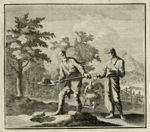
Non omnis fert omnia: Abraham à S. Clara, Huy! und Pfuy! der Welt (Nürnberg, 1707), emblem 7
Iconclass: 47I11 plants ~ agriculture 51BB3 Imparity, Inequality, Difference
Loci Communes: Alibi diminutum alibi redditum (Diminished in one place, restored in another, Diminué ici, rendu là)
IV iv 21 Dum virent genua While our knees are fresh
Nec illud caret proverbii specie, quod est apud eunde in Thyonicho: Ποιεῖν τι δεῖ οἶς γόνυ χλωρόν. id est, Quando virent genua, tum aliquid faciamus oportet. Studendum bonis literis, dum adhuc viget ingenium. Ducenda est uxor, sed iuveni. Consimilem ad modum Horatius: Dumque virent genua, Et decet, obducta solvatur fronte senectus. Quamquam haec ipsa figura, genu viget, proverbialis est, quoties iuventutem signisicamus.
What is in the same poet's Thyonichus also has the appearance of a proverb: [greek] 'We should be active while our knees are fresh.' We ought to study literature when our minds are still sharp. We should take a wife, but do so when we are young. Similarly, Horace:
And while our knees are fresh
And while it is appropriate, let us smooth out the furrowed brow of old age.
And yet the figure genu viret 'green-kneed' is itself proverbial when-
ever we use it to mean 'youthful.'
Facsimile:
Iconclass: 22C4(GREEN) colours, pigments, and paints: green 31A2252:51F51 knee❧Newness 31D120 Youth, Adolescence, 'Iuventus'; 'Adolescenza', 'Gioventù' (Ripa)
Loci Communes: Absurda, indecora, seu praepostera (Absurd, unbecoming, or preposterous things, Choses absurdes, inconvenantes ou déplacées)
IV iv 22 Neque pessimus, neque primus Neither worst nor first
Mediocritatem hoc pacto signisicare licebit, Οὔτε κάκιστος Οὔτε πρῶτος. id est, Neque pessimus, at nec Primus. Lepidius fiet, si ad ingenii laudem transferatur. Nam apud Theocritum in Thyonicho de milite dictum est, qui se ipsum modeste iactat.
We can indicate average quality in this way: [greek] 'Neither worst nor first.' It will be quite witty if used to praise someone's abilities. For in Theocritus in Thyonichus it is said of a soldier who speaks of himself in modest terms.
Facsimile:
Iconclass: 51AA4:51E2 Nothingness, Absence❧Superiority 51AA4:51F3 Nothingness, Absence❧Priority, Pre-eminence 57A641 Discretion, Modesty; 'Discretione', 'Modestia' (Ripa)
Loci Communes: Modestia modusque (Modesty and moderation, Modestie et mesure)
IV iv 23 Scit quomodo Jupiter duxerit Junonem He knows how Jupiter married Juno
In curiosos, et quid quisque domi faciat pervestigantes, conveniet illud ex Syracusanis: Πάντα γυναῖκες ἴσασι καὶ ὡς ζεὺς ἠγαγεθ᾽ ἥρην. id est, Novit femineum genus omnia, novit et illud Iunonem quo pacto duxit Iuppiter olim. Scholiastes Theocriti putat significari furtiusa Iovis, et Iunonis nuptias, quales describit Homerus Τὰν σαυτοῦ πατέων ἔχε τὰς δρύας.id est, Coniugii subiere torum clam utroque parent. Adiungit fabulam, quam retulit Aristoteles quodam in libro, quem scripsit de templo Hermiones. Iuppiter insidians pudicitiae, cum forte vidisset illam semotam ab reliquis diis: nam ne diis quidem virginibus tutum est obambulare solas: se ipsum vertit in cuculum, conseditque in monte, qui prius dictus erat Thronax, nunc Coccyx dicitur. Eo vero die Iuppiter excitavit ingentem tempestatem. Iuno itaque sola pervenit in montem, conswditque eo loci, ubi nun c est Iunonis Teliae, hoc est, perscctae templum. Cuculus autem ob tempestatem horridus ac tremens deuolavit, conseditque in Iunonis genibus. Eum Iuno miserta texit veste sua. Hic rex deorum repente e cuculo factus Iuppiter, Iunonem complexus est. Cumque illa metu matris recusaret coitum, Iuppiter promisit se ducturum illam in uxorem. Hinc natum existimant proverbium. Addithuius Iunonis simulacrum in templo fuisse collocatum hac imagine, ut in throno sedens sceptrum dextra teneret, in cuiusfastigio sederet cuculus. Vix credimus hanc fabulam apud veteres inveniri, sed suspicamur ab otioso quopiam grammatico fuisse consictam. Adeo sapit anile quiddam. Huic similimum est quod scribit Plautus in Trinummo: Sciunt quid in aurem rex reginae dixerit, sciunt quid Iuno fabulata cum Iove: quae neque futura, neque facta, tamen illi sciunt.
Those words from the Women of Syracuse will suit those who are inquisitive and try to find out what everyone is doing in his own home: [greek] 'Women know everything, even how Jupiter once married Juno.' The scholiast of Theocritus thinks that this is a reference to the secret marriage of Jupiter and Juno, as described by Homer: 'They went to bed without the knowledge of either parent. He adds the story told by someone called Aristotle in a work that he wrote about the temple of Hermione. When Jupiter was plotting against his sister's virginity and saw by chance that she had been separated from the other gods (for it is not safe even for young female goddesses to stroll about on their own), he turned himself into a cuckoo and took up position on a mountain, now called Coccyx, but previously Thronax. On that day Jupiter stirred up a great storm. And so it happened that Juno, who was all on her own, came to the mountain and sat down in that very spot where there is now the temple of Juno Telia (that is, Juno Allpowerful). The cuckoo, unkempt and shivering because of the storm, flew down and perched on Juno's knees. Juno took pity on it and covered it with her clothes. Thereupon the King of the Gods suddenly abandoned the form of the cuckoo and became himself again and embraced Juno. When she refused to have intercourse out of fear of her mother, Jupiter promised that he would marry her. This is thought to be the origin of the proverb. The scholiast adds that a statue of Juno had been placed in the temple, depicting her as sitting on a throne, holding in her right hand a sceptre, on the tip of which sat a cuckoo. For my part, I can scarcely believe that this story is to be found in the ancient writers. Rather, I suspect that it has been concocted by some idle schoolteacher, so much does it smack of an old wife's tale. What Plautus writes in the Three-shilling Day is very similar to this:
They knew what the king of the gods whispered to the queen,
They know what Juno said to Jupiter;
What won't happen or hasn't happened - they still know it.
Facsimile: 
Iconclass: 25F39(CUCKOO) other birds: cuckoo 52A12 Curiosity, Inquisitiveness, Desire of Knowledge; 'Curiosità' (Ripa) 92B122111
Loci Communes: Curiositas (Curiosity, Curiosité)
IV iv 24 Ubi paveris impera Give orders to those you have fed
In eadem Ecloga, Πασσάμενος ἐπίτασσε. id est, Praecipito postquam satiaveris esca. Ad eum modum respondent mulieres cuipiam obiurganti, quod loquaciores essent, et silentium imperanti. Conveniet ubi quis imperiosior est in eos, de quibus nihil est meritus.
In the same eclogue, [greek] 'Give orders to those you have fed.' The women say these words in reply to someone who upbraids them for being too talkative and tells them to be silent. The proverb will suit an occasion when someone keeps issuing orders to those whom he has no right to treat in such a way.
Facsimile:
Iconclass: 53C2:52DD3 Command❧Taciturnity; 'Secretezza', 'Secretezza overo Taciturnità' (Ripa) 54EE11 Opposition, Counteraction, Resistance
Loci Communes: Modestia modusque (Modesty and moderation, Modestie et mesure)
IV iv 25 Gallus in suo sterquilinio plurimum potest A cock has most power on its own dunghill
Quod scriptum est in ludicro Senece, proverbii speciem habet: intellexit, inquit, neminem parem sibi Romae fuisse, illicque non habere se idem gratiae. Gallum in suo sterquilinio plurimum posse. Allusit ad Claudium Imperatorem Lugduni natum. Hodieque de cane vulgo dicunt, eum in suo stequilinio plurimum audere. In alieno timidiores sumus omnes, in suo quisque regno ferocior est, et animosior.
What is written in Seneca's humorous bagatelle has the appearance of a proverb. 'He realized,' he says, 'that no one had been his equal in Rome but that he did not have the same popularity there. A cock has most power on its own dunghill.' Seneca is referring to the emperor Claudius, born in Lyon. Today it is commonly said of a dog that 'it dares the most on its own dunghill.' We are all somewhat timid in someone else's domain; all of us are fiercer and braver in our own.
Facsimile:
Iconclass: 34(+94591) man and animal (+ excrement, dung of animal(s)) 34B232(+51) fowl (cock, hen, chicken, etc.) (+ male animal) 53C11 Authority, Power; 'Dominio', 'Giurisdittione' (Ripa) 54A8 Courage, Bravery, Valiance, Manliness; 'Ardire magnanimo et generoso', 'Gagliardezza', 'Valore', 'Virtù heroica', 'Virtù dell'animo e del corpo' (Ripa)
Loci Communes: Arrogantia jactantiaque (Arrogance and boastfulness, Arrogance et vantardise)
IV iv 26 Isthmum perfodere To dig through the Isthmus
Isthmum perfodere dicebantur, qui magno quidem conatu, sed irrito molirentur aliquid. Ductum ab Isthmo Corinthiaco, qui efficiebat, ut naves longo et ancipiti ambitu iuxta peninsulam circumagerentur. Unde complures illum adorti sunt, qua erat angustissimus, perfodere, nempe Demetrius Rex, Dictator Caesar, C. Princeps, Domitius Nero, infausto, ut omnium patuit exitu, incepto. Auctor plin. lib. 4, c. 4. Tranquillus ostendit, idem tentatum a Caligula. Philostratus in vita Apol lonii negat Neronem destitisse victum operis difficultate: sed quod timeret, ne admissum mare, perituram Aeginam portenderet, aut res novas in Imperio Romano coorituras: nam id praedixerant Aegyptii vates. Qum et vetustissimus scriptor Herodotus libro historiae suo primo, prodidit Cnidios Isthmum qua angustissimo spatio, nempe quinque stadiorum spectabat continentem, perfodere adortos, quo insulam facerent, ceterum ictos scopulos in fodientium oclos resiliisse, deinde Delphicum Apollinem ab eis consultum trimetris respondisse: Ἰσθμὸν δὲ μὴ πυργοῦτε μηδ᾿ ὀρύσσετε Ζεὺς γάρ κ᾿ ἔθηκε• νῆσον, εἴ κ᾿ ἐβούλετο,. Neque cingite Isthmum moenibus, neque fodite. Nam si Iovi id visum, locasset in salo. Denique Nicanor Seleucus aggrssus est Isthmum, qui dirimit Euxinum, et Caspium mare, nec perfecit a Ptolomaeo Cerauno interfectus.
Those who worked at something with great but futile effort were said to be digging through the Isthmus. Taken from the Isthmus of Corinth, the existence of which forced ships to circumnavigate the peninsula, close to the shore, in a long and dangerous voyage. Because of this several persons undertook to dig across it at its narrowest point: 'King Demetrius, the dictator Caesar, the emperor Gaius, Domitius Nero - an ill-omened enterprise, as is clear from how all of them died.' The source is Pliny chapter four of book four. Tranquillus informs us that the same deed was attempted by Caligula. Philostratus in the Life of Apollonius says that it was not the difficulty of the enterprise that forced Nero to give it up, but rather the fear that bringing the sea onto the Isthmus might portend the destruction of Aegina or the beginning of revolution in the Roman empire. For Egyptian prophets had foretold this. In fact, the very early writer Herodotus also tells us in the first book of his History that the Cnidians began to dig through their isthmus at its narrowest point, five stades in length, to create an island. When the rocks were struck, however, the fragments leapt back into the eyes of the diggers. The Delphic Apollo was consulted and gave the following reply in trimeters:
Gird not the Isthmus with walls nor through it dig.
For in the brine would Jove have placed it if that was his desire.
Finally, Nicanor Seleucus began work on the isthmus that separates the Black and Caspian Seas, but did not complete the project, because of his death at the hands of Ptolemy Ceraunus.
Facsimile:
Iconclass: 25H142 isthmus 47C21 digging (industrial process) 54A11 Industriousness, Assiduity; 'Assiduità', 'Industria', 'Zelo' (Ripa) 54BB3 Inutility, Noxiousness; 'Nocumento', 'Nocumento d'ogni cosa' (Ripa) 61D(ISTHMUS OF CORINTH) geographical names of countries, regions, mountains, rivers, etc. (ISTHMUS OF CORINTH) (ISTHMUS OF CORINTH)
Loci Communes: Inanis opera (Vain effort, Effort vain)
IV iv 27 Lingere salem To lick salt
Olim tenuis fortunae hominibus sal pulmentarii vice fuit, uti nuc quibusdam est acetum. Quae res et in proverbium abiit, tametsi non satis liquet cuiusmodi fuerit. Sed praestiterit ipsius Plinii verba super hac re subscribere ex libri trigesimi primi cap. 7. Varro, inquit, veteres etiam pulmentarii vice usos, auctor est. Esitasse enim salem cum pane et caseo, ut proverbio apparet. Persius in Satyra quinta: Iura, sed Iuppiter audiet. heu heu. Vare regustatum aigito terebrare salinum, Contentus perages, si vivere cum Iove tendis. Hoc est, vitam ages miserrimam.
In antiquity persons of humble means used salt as relish, just as nowadays some use vinegar. This custom also resulted in a proverb even if it is not quite clear what the proverb was. But it may be better to append the words of Pliny himself on this subject, from book thirty-one, chapter seven. 'Varro,' he says, 'is our source for telling us that the ancients used salt as a relish. For they were accustomed to eat salt with bread and cheese, as is apparent in a proverb.' Persius in his fifth Satire:
Swear falsely. 'But Jupiter will hear.' Alas,
Varus, if you want to live in accordance with Jupiter's wishes, you'll go on,
As now, content to scrape out the salt cellar with your finger,
Even when you have already licked it again and again.
In other words, you will live a life of great poverty.
Facsimile:
Iconclass: 31B62323 tongue stuck out 41C661 salt 46A15 the poor 55CC1 Saving, Frugality, Parsimony; 'Parsimonia' (Ripa)
Loci Communes: Sordes et parcimonia (Meanness and stinginess, Bassesse et avarice)
IV iv 28 Sellissare To act like Sellus
Σελλίζειν proverbiali ioco dicebantur, gloriosi, fastuque praeturgidi, Suidas admonet sumptum a moribus Selli cuiuspiam, qui cum re esset perquam tenui, tamen affectabat haberi dives. Torqueri poterit et in eos, qui se doctrinae iactitant, ac venditant opinione, cum a literis sint alieni. Hesychius indicat Graecis idem significare s1elli/zesqai kai\ yelli/zesqai. Qua voce semel agque iterum usus est Plato in Gorgia: & ψελλὸς dicitur, qui sigma crassius profert, qua de re nonnihil attigimus in proverbio, ἡ ψελλὴ οὐ πιττεύει. Addit Heszchius nonnumquam σελλινίζειν, idem esse quod ἀλαζονεύειν, videl. adstipulans Suidae.
A humorous proverb was directed at persons who were boastful and excessively swollen with pride; they were said [greek] 'To act like Sellus.' Suidas tells us that it was taken from the habits of someone called Sellus who strove to be thought of as rich although he was of very poor means. It can be applied also to those who boast of their learning and use their reputation to promote themselves even though they are strangers to literature. Hesychius points out that in Greek [greek] means the same as [greek] 'to stutter.' Plato uses this word once or twice in the Gorgias. And a person who pronounces 's' indistinctly is called a [greek]. We touched on this to some extent in the proverb '[greek] 'The girl who stammers doesn't b-b-believe.' Hesychius adds that sometimes [greek] is the same as [greek] 'to boast,' clearly agreeing with Suidas.
Facsimile: 
Iconclass: 55B1:57AA645 Wealth, Opulence; 'Opulenza', 'Richezza' (Ripa)❧Boast; 'Iattanza' (Ripa) 57AA611:46A162 Dissimulation, Hypocrisy; 'Hippocresia', 'Simulatione' (Ripa)❧exhibition of wealth 98B(SELLUS) male persons from classical history (SELLUS)
Loci Communes: Arrogantia jactantiaque (Arrogance and boastfulness, Arrogance et vantardise)
IV iv 29 Cecidis et Buphoniorum Cecides and tbe Buphonia
Τὰ κηκείδου καὶ βουφονίων. i. Caecidis et Buphonioru, de re magnopere prisca, & ob vetustatem iam pridem obsoleta, desuetaque. Atistophanes in Nebulis, Αρχαῖα δὲ καὶ δὴ πολιώδη, καὶ τεττίγων ἀνάμεστα, Καὶ κηκείδου καὶ βουφονίων. id est, Prisca haec sane atque obsita canis, nec non oppleta cicadis, Ac Cecide cum Buphoniis. Siquidem Cecides puetustus quispiam Dithyramboru poeta fuit, cuius scripta iam situm olebant, unde in iocum velgarem abierunt. Quemadmodum iure ridentur hodie, qui immodica et intmpestiva affectatione vetustatis, e duodecim tabulis, ex Ennio, Lucilioque petunt sermonem, perinde quasi cum Euandri matre loquantur: nec ullum verbum elegans esse putant, nisi quod sit ab usu vulgi, et nostro saeculo procul remotum. Item Buphonia festum quoddam erat apud Athenienses, ob vetustatem neglectum iam ac desitum, sic appellatum a caede boum. Huiusmodi ludos adhuc durare videmus apud Italos, praecipue Romanos, priscae videlicet etiamnum insaniae vestigia, quos illi Taureos vocant. Adagio licebit per iocum uti cum significabimus aliquid ceu nimis priscum negligi: veluti si notare velis pontifices, episcopos, & sacerdotes, quod Evangelica praecepta, de paupertate, de tollerandis iniuriis, de contemptu vitae: aut priscorum pontificum decreta, de simioniacis, de deligendis absque corruptela episcopis, de submovendis scelerosis, iam pro antiquatis habeant, dicas licebit, ταῦτα κηκείδου καὶ βουφονίων. i. Haec Cecidis sunt & Buphoniorum.
[greek], Like Cecides and the Buphonia. Of something extremely ancient that, because of its antiquity, has long since fallen into disuse and been cast aside. Aristophanes in the Clouds: 'These are ancient things, to be sure, and hoary, and filled with cicadas, with things like Cecides and the Buphonia.' For Cecides was a very early dithyrambic poet, whose writings smelled of mould, so to speak; because of this, his poetry became the butt of popular humour. So today we laugh with justification at those who have an excessive and inappropriate fondness for archaisms and use diction from the Twelve Tables, Ennius and Lucilius, 'as if they are speaking with Evander's mother.' They think nothing is elegant unless it is far removed from popular and contemporary use. Similarly, the Buphonia, given this name because of the slaughter of an ox, was an Athenian festival that had been neglected and abandoned because of its antiquity. We see that such festivals still endure in Italy, especially in Rome, called Bull-games, even now still clearly bearing the traces of ancient madness. The adage can be used in a humorous way to point out that something is neglected just because it is thought to be extremely ancient. For example, some popes, bishops and priests regard as old-fashioned what the gospels teach us about poverty, about the need to accept injury without retaliation, and about the insignificance of this earthly life; or they have the same attitude to what the early popes decreed about simony, about bribery having no place in choosing bishops, and about the removal from office of wicked men. If you want to impugn such persons, you will be able to say, 'Such teaching and decrees are treated by them like Cecides and the Buphonia!'
Facsimile:
Iconclass: 48C75412 bard, lyric poet 98B(CECIDES) male persons from classical history (CECIDES)
Loci Communes: Contemptus et vilitatis (Contempt and worthlessness, Mépris et bassesse)
IV iv 30 Serenitati nubem inducit Bringing clouds to a clear sky
Non tam ovum ovo simile, quam illud proverbi faciem prae se fert, quia refertur a Plutarcho in commentario de dignoscendo adulatore ab amico, Εὐδίᾳ γὰρ ἐπάγει νέφος, id est, Serenitati nubem inducit. De eo, qui inter pocula ludosque virulentum aliquid admiscet, quod offuscata hilaritate frontem corruget, superciliaque contrahat. Ad eundem modum Horatius lib. 3. Ode 15. de anu deformi, quae se puellarum choris admiscebat: Et stellis nebulam spargere candidis.
What Plutarch says in 'On Distinguishing a Flatterer from a Friend' has the appearance of a proverb as much as an egg is an egg: [greek] 'He brings clouds to a clear sky.' About the person who in the midst of merriment and gaiety dispenses poison that spoils the happy atmosphere and prompts others to frown and scowl. In the same way Horace in book three, ode fifteen, says of an ugly old woman who joined a group of young girls, that 'she casts a cloud over shining stars.'
Facsimile:
Iconclass: 26A clouds 26F1 good weather 56B2 Happiness, Felicity 56BB21 Calamity, Distress; 'Calamità', 'Calamità o miseria' (Ripa)
Loci Communes: Absurda, indecora, seu praepostera (Absurd, unbecoming, or preposterous things, Choses absurdes, inconvenantes ou déplacées)
IV iv 31 Μονόγραμμοι Mere outlines
Olim homines macie praetenues, vesculi, ac decolores, proverbiali ioco mono/grammoi vocabantur. Lucilius. Vix vivo homini ac monogrammo. Rursum idem alibi: Quae pietas monogrammi. Nonius Marcellus ductum atutumat a pictura, quae priusquam coloribus corporatur, umbra fingitur. Non perperam quidem Marcellus: venustius tamen erit adagium, si ad veterum picturam respiciamus: quae primitus omnium consensu, ab umbra hominis lineis circumducta coepit initium, quod vocant deliniare. Deinde singulis colorib. pingi coeptum est, easque picturas μονοχρωμάτους appellabant. Mox ars distinxit sese, et invenit lumen atque umbras, ut quae dam eminere, quaedam abdi, premique viderentur, differentia colorum. Deinde adiectus est splendor, quem alium a lumine volunt esse, medium tamen inter lumen et umbram: proinde eundem Tonon vocant. Nam commissuram ac transitum colorum, aἁρμογήν appellant. Huiusmodi ferme Plinius lib. trigesimoquinto, capite quinto. Conveniet igitur in hominem deformem, nullo aut eodem vultus colore, cuius modi priscorum erant imagines. M. Tullius libro de natura deorum secundo. Non enim venis et nervis et ossibus continentur: nec escis, nec potionibus vescuntur, ut aut nimis acres, aut nimis concretos humores colligant, Nec his corporibus sunt, ut aut casus, aut ictus extimescant, aut morbos metuant, ex defatigatione membrorum. Quae verens Epicurus, monogrammos deos, et nihil agentes commentus est, Illi autem pulcherrima forma praediti, purissimaque in regione caeli collocati, ita feruntur, moderanturque cursus, ut ad omnia conservanda et tuenda consensisse videantur. Monogtammos appellat Cicero insormes, nullaque specie.
In antiquity a humorous proverb was applied to persons who were extremely thin, feeble, and pallid: [greek] 'Mere outlines.' Lucilius: 'A man scarcely alive and a mere outline.' Again the same poet elsewhere: 'Such is the piety of a mere outline.' Nonius Marcellus says that it was taken from a picture that is fashioned from a shadow before it is filled in with colours. Marcellus is certainly not wrong, but the adage will have more charm if we think of ancient painting. All agree that this initially started with the tracing round of a person's shadow, a process called delineation. When painters began to use one colour, such paintings were called [greek] 'one-colour paintings.' Soon the art developed and the use of light and shade was discovered, so that some things seemed to stand out, while others were hidden and concealed through the difference in colours. Then brightness was added, by which is meant something other than light, but something midway between light and shade. This is why they call this tonos 'contrast.' For to the joining together and gradations of colours they give the name [greek] 'attunement.' Such for the most part is what Pliny says in book thirty-five, chapter five. The expression will suit, then, an unsightly person whose face either has no colour at all or is all the same colour, like the representations of the ancients. Marcus Tullius in book two of On the Nature of the Gods: For they [the gods] are not held together by veins and sinews and bones. Nor do they feed on food or drink so as to contract too sharp or too sluggish a condition of the humours. Nor do they have bodies such as to make them fear either a fall or blow or make them frightened of illness because of physical exhaustion. It was through fear of such dangers that Epicurus invented the notion of the gods as being insubstantial (monogrammoi) and inactive. They are endowed, however, with the most beautiful form, and live in the purest region of the heavens, moving around and controlling their courses in such a way that they seem to have conspired to save and preserve everything. Cicero calls those who have no form and no appearance monogrammoi.
Facsimile:
Iconclass: 32A22 thin (human type) 48C524 drawing, sketch 48C5254(+0) silhouette-apparatus, 'physionotrace' (+ variant)
Loci Communes: Forma, deformitas (Beauty, deformity, Beauté, difformité)
IV iv 32 Aliorum medicus A doctor to others
Manet hoc dictum his quoque saeculis celebratissimum, quod refertur a Plutarcho in commentario de dignoscendo assentatore ab amico, a poeta quopiam: Αλλων ἰατρὸς, αὐτὸς ἕλκεσι βρύων. id est, Aliis medetur, ipsus ulceribus scatens. Utitur eo et in commentario, quem inscripsit adversum Coloten. Conveniet in hos, qui aliis sapiunt, non sibi, alios consolari norunt, ipsi sua mala non ferunt aequo animo. In eundem sensum usus est Christus apud Lucam. Iudaeis enim admirantibus eius dicta factaque, ac dicentibus, Οὐχ οὗτός ἐστιν ὁ υἱὸς ἰωσηφ; i. An non hic est filius Ioseph? respondit ad hunc modum, Πάντως ἐρειτέ μοι τὴν παραβολην τάυτην, ἰατρέ, θεράπευσον σεαυτόν. ὅσα ἠκούσαμεν γενόμενα ἐν τῇ καπερναοὺη, ποιησον καὶ ὧδε ἐν τῇ πατριδισον. Omnino dicetis mihi parabolam hanc, Medice cura teipsum. Quaecunque audivimus facta in Capernaum, facito & hic in patria sua.
[greek], He is a doctor to others, but covered in sores himself. These words of some poet, reported by Plutarch in his essay 'On Distinguishing a Flatterer from a Friend' remain very popular even in our times. He also uses it in the essay entitled 'Against Colotes.' It will suit those who are wise in other persons' affairs, but not in their own, who are observant and careful for others, but not for themselves. They know how to console others, but they themselves do not bear their own misfortunes with equanimity. Christ used it in the same sense in the Gospel according to Luke. When the Jews marvelled at his deeds and words and said, 'Is not this the son of Joseph?' he replied in this way: 'Doubtless you will quote to me this proverb, "Physician, heal yourself."' 'What we have heard you did in Capernaum, do here also in your own country.'
Facsimile: 
Iconclass: 49G1 physician, doctor 52AA53(+0) Lack of Self-knowledge (+ variant) 54A6 Helpfulness
Loci Communes: Aliis sapere (To be wise for others, Être sage pour autrui)
IV iv 33 Lapsana vivere To live on charlock
Lapsana vivere lepide dixeris eos, qui perparce, nimiumque tenuiter vivunt. Consentaneum est enim iocum illum militarem in popularem fabulam abiisse, quo Caesariani milites alternis versibus exprobrabant, quod apud Dirachium lapsana vixissent. Est autem lapsana, olus silvestre ac vulgare, passimque proveniens, trium foliorum, ex Brassicarum ni fallimur genere. Verum si quis forte requiret, plinii verba sunt haec libro 19. capite 8. Nec non olus quoque silvestre est trium foliorum, Divi Iulii carminibus, praecipue iocis militaribus celebratu. Alternis quippe versibus exprobravere lapsana se vixisse apud Dirachium, praemiorum parsimoniam cavillantes. Est autem id cyma silvestris. Hactenus Plinius, Idem libro 20. cymam inutilem esse dicit, et concoctu difficilem. Cymam autem interpretatur in caulibus dici delicatiorem, tenerioremque cauliculum, qui et in lappis et asparagis gratiam habet. Dioscorides ait Lapsanam Romanis et napium dici, cuius folia simul et caules elixi comeduntur: putat hanc stomacho magis amicam quam lapathum, cuius meminit Horatius, de cena frugali loquens: Aut herba lapathi, prata amantis, et gravi Malvae salubres corpori.
It will be witty to say that those who live very frugally and poorly 'Live on charlock.' The soldiers of Caesar took turns in taunting him in verse that they had lived on charlock at Dyrrachium, and it is generally agreed that this jest gave rise to a popular expression. Lapsana is a vegetable that grows wild and is very common, growing everywhere. It has three leaves, and is of the cabbage family, if I am not mistaken. If anyone, however, wants the words of Pliny, this is what he says in book nineteen, chapter eight: 'There is also a kind of wild cabbage, three-leaved, well-known because of the verses directed at the deified Julius, especially in the soldiers' jests. For they took turns in taunting him in verse about how they had lived on charlock at Dyrrachium, complaining in jest about his meanness in rewarding them. For charlock is a wild cabbage.'So says Pliny. In book twenty the same writer says that cyma 'wild cabbage' is unwholesome and difficult to digest. He explains [elsewhere], however, that cyma is the name given to a more delicate and more tender sprout growing on cabbages and that this goes well with burdock and asparagus. Dioscorides says that lapsana is also called napium by the Romans and that its stalk is boiled and eaten as well as its leaves. He thinks that this is more wholesome than sorrel, which Horace mentions when he talks about a frugal dinner: 'Or the sorrel that loves the meadows and mallows that are good for a sick body.'
Facsimile:
Iconclass: 41C652(CHARLOCK) vegetables (CHARLOCK) 55CC1 Saving, Frugality, Parsimony; 'Parsimonia' (Ripa)
Loci Communes: Sordes et parcimonia (Meanness and stinginess, Bassesse et avarice)
IV iv 34 Haud contra ostium Not against the door
Οὐ κατα θύρας. i. Haud contra ianuam, pro eo, quod est, non proprie ad rem. et apte ad id, de quo agitur, proverbiali certe figura dictum est ab Aristotele lib. Physicorum quarto: Οὖτοι μὲν οὖν οὐ κατα θύρας πρὸς τὸ πρόβλημα ἀπαντῶσιν. i. Isti quidem igitur haud contra ostium occurrunt quaestioni, Argyropylus οὐ κατα θύρας, non recte, neque non recte ta men id quidem. Perinde valet, quasi dicas: Ad scopum. Illud expende lector, num hoc adagium illi sit affine, τίς ἂν θύρας ἁμάρτοι; i. Quis aberraverit a ianua?
[greek], Not against the door, meaning something that is inappropriate to a subject and unsuited to what is being discussed. This was used, certainly in a proverbial sense, by Aristotle in book four of his Physics: [greek] 'these do not confront the question against the door.' Argiropolo translates [greek] as non recte 'not directly,' and quite correctly (neque non recte) at that! It has the same meaning as ad scopum 'on target.' Consider, reader, whether this adage is related to [greek] 'Who could miss the gate?'
Facsimile:
Iconclass: 41A32 door 52BB53 Nonsense, Absurdity 55CC1 Saving, Frugality, Parsimony; 'Parsimonia' (Ripa)
Loci Communes: Aliena a re (Irrelevant to the matter, Étranger au sujet)
IV iv 35 Climacides Little stairs
Κλιμακίδες. i. Scalulae, periocum vocari poterunt, qui se divitibus ad quiduis obsequii submittunt, etiam si sordissimum sit. Sic autem vulgato convicio sunt appellatae mulietculae quaedam Cypriae, adulatrices apud Syros, qud regum uxotibus submitterentsese, ut per eas ceu per scalas currum conscenderent. Meminit Plutarchus in libello de discernendo adulatore ab amico. Et Athenaeus libro Dipnosophistarum sexto. Et Valerius Maximus rerum memorabilium libro nono, capite primo.
Those who are prepared to perform any task for the rich, even the most sordid one, can humorously be called [greek] 'Little stairs.' This was the name given as a common insult to certain Cyprian women, flatterers living in Syria, who allowed kings' wives to board their chariots by using them as stairs. Plutarch mentions it in his essay 'On Distinguishing the Flatterer from a Friend.' Athenaeus too in book six of Doctors at Dinner. Also Valerius Maximus in book nine, chapter one.
Facsimile:
Iconclass: 31A2331(+911) kneeling on both knees (+ saluting, showing reverence) 44B1323(+0) prostration, 'proskynesis' (+ variant) 46C1181(+0) flight of steps (+ variant) 57A644 Submissiveness; 'Ossequio' (Ripa) 59BB3 Dishonour, Disrepute
IV iv 36 Valeat amicus cum inimico Away with friend as well as foe
Εῤῥέτω φίλος σὺν ἐχθρῷ. i. Valeat amicus cum inimico. Quadrat in eos, qui toti ad se spectant, nec amici rationem habent: cuiusmodi fertur Timon ille Misanthropos. Plutarchus in commentario quem modo citavimus, Εἰ μηδαμῆ μηδαμῶς ἐπαινοῦμεν τὸ, ἐῤῥέτω φίλος σὺν ἐχθρῷ. i. Si nequaquam placet illud. Valeat amicus cum inimico. Est autem Grecis hemistichium carminis trochaici.
'[greek], Away with friend as well as foe. This suits those who are completely engrossed in themselves and think no more of a friend than an enemy. Timon the famous misanthrope is said to have been such a person. Plutarch in the essay that we have just cited: 'If that saying "Away with friend as well as foe" does not please us in any way.' The Greek expression is the hemistich of a trochaic verse.
Facsimile:
Iconclass: 33A5 friends 33A5 friends 57AA65(+0) Selfishness; 'Interesse', 'Interesse proprio' (Ripa) (+ variant)
Loci Communes: Differentiae (Differences, Différences)
IV iv 37 Manica Worthy of a Manes
Μανικὰ Phrygio proverbio dicebantur ingentia, egregiaque facta, ducta voce a Manc quodam prisco apud ipsos rege, quem ferunt virum fuisse praepotentem, et admirabili virtute praeditum. Auctor Plutarchus inlibello de Osiride. Quin & Latini insanum vocant, quod est praeter vulgarem modum, Insanire libet. Et: Insano iuvat indulgere labori.
[greek], Worthy of a Manes, a Phrygian proverb applied to great and outstanding achievements. It derives from a certain Manes, an early king of theirs who they say was extremely powerful and wonderfully brave. The source is Plutarch in his essay 'On Osiris.' In fact in Latin too something that is out of the ordinary is described as 'mad': 'It pleases me to be mad,' and 'it pleases me to indulge a mad labour.'
Facsimile:
Iconclass: 32B2(PHRYGIANS) historical peoples and nationalities (PHRYGIANS) 44B113 king 59B34 Illustriousness; 'Chiarezza' (Ripa) 98B(MANES) male persons from classical history (MANES)
Loci Communes: Excellentia, inaequalitas (Excellence, inequality, Excellence, inégalité)
IV iv 38 Ruta caesa Minerals and timber excluded
Ne in rutis quidem et caesis, haud dubie proverbiali specie dictum est a Cicerone libro de Oratore secundo, pro eo quod est: Nulla in parte. Sed dicet te, cum aedes venderes, ne in rutis quidem et caesis, solium tibi paternum recepisse. Quo quidem loco illud obiter admonendum, iu vulgatis Tullii codicibus perperam pro recepisse, legi reliquisse, id quod satis liquere potest ex Nonio Marcello, qui in dictione receptitius, hunc ipsum Ciceronis adducit locum. Est enim hoc loco recipere idem, quod excipete. Porro quid sibi velint ruta caesa, nam verba sunt peculiaria iureconsultis, abunde patet ex Pandectarum lib. 19 Lege 18. Si ruta, inquit Ulpianus, caesa excipiantur in venditione, ea placuit esse ruta, quae, eruta sunt, ut arena, et similia, caesa ea esse, ut arbores caesas et carbones, et his similia. Gallus autem Aquilius, cuius Mela refert opinionem, recte ait frustra in lege venditionis de rutis, et cesis contineri, quia si non specialiter venierint, ad exhibendum de his agi potest. Neque magis de materia caesa, aut de caementis, aut de harena cavendum est venditori, quam de ceteris, quae sunt pretiosiora. Meminit et in Topicis de rutis et caesis M. Cicero: Nam ne praeterirem aliquid, quod ad argumentum in omni ratione reperiendum pertineret, plura fortasse, quam abs te desiderata erant, sum complexus: fecique quod saepe liberales venditores solent, ut cum aedes, fundumve vendiderint, rutis caesis receptis, concedant, tamen aliquid emptori quia ornandi causa apte, et suo loco positum esse videatur: Meminit et in Partitionibus. Et cum significabimus inclementius tolli omnia,neque quidquam fieri reliqui, venuste dicemus, ne rutis quidem ac caesis receptis, ut iureconsultorum more loquar.
'Not even with minerals and timber excluded.' This was without doubt said in a proverbial sense by Cicero in book two of the Making of an Orator in the sense of 'not even anything': 'But he will say that when you were selling your house, you did not hold back any of your father's estate, not even minerals and timber being excluded.' At this point I must point out in passing that in the printed editions of Tullius reliquisse 'to have left' is read for recepisse 'to have excluded,' wrongly, as can be clearly seen from Nonius Marcellus, who adduces this very passage from Cicero when discussing the word receptitius. For here recipere has the same sense as excipere 'to exclude.' In addition the meaning of ruta caesa is abundantly clear from book nineteen of the Pandects (the words are peculiar to the legal writers) in law 18. Ulpian says:
If minerals and timber are excluded in a sale, in law minerals constitute those
that have been quarried, like sand and similar materials, and the timber con-
stitutes trees that have already been cut and charcoal and similar things. Gal-
lus Aquilius, whose opinion Mela reports, is right in saying that exclusions
about minerals and timber in the law of sale are pointless, because if they are
not specifically for sale negotiations for including them can still take place.
A seller should be less concerned about cut timber, quarried stones, or sand
than about all the other things that are more valuable.
Marcus Cicero also mentions minerals and timber in his Topica: 'For, to avoid passing over anything that might pertain to producing arguments of every kind I have included perhaps more than you needed. I have done what generous vendors often are wont to do. When they have sold their house or farms, minerals and timber excluded, they nevertheless give the buyer something that seems to be an appropriate adornment.' He also mentions it in his Parts of a Speech. And when we want to mean that everything is removed quite ruthlessly and that nothing at all is left, it will be witty to say, in lawyers' terms, 'not even minerals and timbers excluded.'
Facsimile: 
Iconclass: 25D13 minerals and metals 47G314 timber framing 51A7 Perfection, Completeness; 'Perfettione', 'Operatione perfetta' (Ripa)
Loci Communes: Totum ut nihil reliqui (The whole, so that nothing remains, Le tout, sans rien laisser)
IV iv 39 Aetna, Athon An Etna, an Athos
Aetnam et Athonem montes in molestiae, taediique proverbium abisse, testatur Lucilius apud A. Gellium lib. 16. cap. 9. etiam si locus is depravatus habeatur. Lucilii versus, quos adducit, sunt hi: Verum hic ludus ibi, sus que omnia, deque fuere. Susque et d. que fuere inquam emnia ludus iocusque. Illud opus durum, ut Setinumus accessimus finem ἐπὶ τὸ λοιπὸν, ut aiunt, Montes Aetnae omnes atque asperi Athones. De Aetna Siciliae monte dictum est, quod gigantem sua mole premat, iuxta poetarum fabulas. Sive quod crebris incendiis gravis acperniciosus olim esset accolis. Unde & M. Tullius in Catone maiore, dixit onus Aetna gravius. De Atho vero, quod ob ingentem celsitudinem, umbra sit molestus, quam in Lemnum usque trecentis dissitam stadiis mittit, alibi diximus. Pomponius Mela tradidit huius cacumen altius, quam unde cadant imbres: eius rei coniecturam ex eo colligi, quod de aris, quas in vertice sustinet, non abluitur cinis, sed quo relinquitur aggere ma net. Obstat et navigantibus, quod toto longe dorso procedat in pelagus, qua continenti adheret. Unde et a Xerxe perfossus. Athenaeus libro decimo commemorat Erysichthonem quendam inexpletae voracitatis, vulgo dictum fuisse βορᾶς ἄθωνα. i. Voracitatis Athonem.
'An Etna, an Athos.' These mountains were used to express proverbially the idea of troublesomeness or weariness, as is attested by Lucilius, cited in book sixteen, chapter nine, of Aulus Gellius, even if the passage is thought to be corrupt. The verses of Lucilius that he adduces are the following:
All this was sport to us, to us it was all one.
It was all one, I say, all sport and play.
Hard toil it was when Setia's land we neared.
Henceforward, as they say, mountains, all Etnas, rough Athoses.
This was said of Etna, a mountain in Sicily, because according to the poets it covers a giant with its great mass, or because its frequent fires once posed serious and deadly danger to the inhabitants. Because of this Marcus Tullius also says in his Cato the Elder 'a weight heavier than Etna.' About Athos we have spoken elsewhere, that because of its vast height the shade it casts is a nuisance; its shadow is three hundred stades in length extending right as far as Lemnos. Pomponius Mela tells us that its peak is too high for rain to fall upon it. The basis for this conjecture is that 'ashes are not washed away from the altars that it has on its summit but remain in the pile in which they were left.' It is also a barrier to sailors since it protrudes from the mainland far into the sea with its long ridge. Because of this Xerxes dug a channel through it. Athenaeus in book ten mentions a certain Erysichthon who had an insatiable appetite and was commonly called [greek] 'an Athos of gluttony.'
Facsimile:
Iconclass: 25H11 mountains 56BB1 Pain, Sorrow, Sadness; 'Dolore', 'Dolore di Zeusi' (Ripa) 61D(ETNA) geographical names of countries, regions, mountains, rivers, etc. (ETNA) (ETNA) 61D(ATHOS) geographical names of countries, regions, mountains, rivers, etc. (ATHOS) (ATHOS)
Loci Communes: Molesti intolerabiles (Unbearable, troublesome people, Gens insupportables)
IV iv 40 Immunem venire To come empty-handed
Immunem Latini vocant, quem ἀσύμβολον Graeci, nempe eum, qui nihil confert ad convivium. Horatius in Odis: Nardi parvus onyx eliciet cadum. Non ego te meis Immunem meditor tingere poculis Plena dives ut in domo. Sed plusculum habebit gratiae, si transferatur ad res animi, puta doctrinam, versus, aut simile quippiam. Aulus Gellius libr. 6. cap. 13. indicat vocem hanc in proverbium abiisse: Ne omnino, ut dicitur, immunes et asymboli veniremus, convectabamus ad coenulam, non cupedias ciborum, sed argutias quaestionum. Terentius in Phormione: Tene'asymbolum venire unctum atquelautum e balneis? Apud Athenaeum Ephippus eleganter dixit immuni manu: Ἀλλότριον εἰσελθὼν ὄψον ἐσθίειν μάθῃ, Ἀσύμβολόν τε χεῖρα προσβάλῃ βορᾷ, id est, Ingressus altenum edere disce obsontum, Eduliisque porrigere immunem manum.
A person whom the Greeks call [greek] is called immunis in Latin, meaning someone who contributes nothing to a banquet. Horace in the Odes:
A small onyx-box of nard will elicit a jar ...
I do not intend ... like a rich man in a full house
To steep you, who are empty-handed, in my cups.
But it will be more attractive if it refers metaphorically to mental activities, for example, scholarship, poetry, or some such thing. Aulus Gellius in book six, chapter thirteen, shows that this word had become a common proverb: 'So that we might not come completely empty-handed, as the saying goes, and without a contribution, we brought to the meal, not dainty foods, but clever topics of conversation.' Terence in his Phormio: 'Oh, that you should come from the baths, washed and anointed, without a contribution!' According to Athenaeus Ephippus wittily said 'a non-contributing hand': 'When you go in, learn how to eat someone else's food and how to stretch out a non-contributing hand to the meal.'
Facsimile:
Iconclass: 31A2245:51II2 hand❧Emptiness, Void 51AA4:54A6 Nothingness, Absence❧Helpfulness 51AA4:55C2 Nothingness, Absence❧Giving 55CC1 Saving, Frugality, Parsimony; 'Parsimonia' (Ripa)
Loci Communes: Sordes et parcimonia (Meanness and stinginess, Bassesse et avarice)
IV iv 41 Soterichi lecti Couches of Soterichus
Apparet Soterichi lectos in vulgarem iocum abiisse de re vili priscaque et minime ambitiosa, et rudis artificii. Sic enim Seneca Ennianos de Cethego versus irridens: Qui huiusmodi versus amant, inquit, liceat sibi et eosdem admirari, et Soterichi lectos. Aulus Gellius, nam ab hoc ista referuntur libro 10. capite 2. Dignus sane Seneca videatur lectione ac studio adolescentium, qui honorem et colorem veteris orationis Soterichi lectis compara rit, quasi minimae scilicet gratiae, et relictis iam contemptisque. Conicere licet Soterichum fabrum fuisse quempiam, cuius opera priscam illam et rudem simplicitatem prae se tulerint. Nam Romae postea argentea triclinia divitibus in vus fuisse, testatur Plinius libro tricesimotertio, capite undecimo. Huiusmodi inter pictores fuisse Fuluium, Rutubam, et Placideianum, in Sermonibus indicat Horatius, Vel cum Pausiaca corpes insane taebella, Qut peocas minus, atque ego, cum Fulus, Rutubaeque. Aut Placidetani contento poplite, miror Praelta rubrica picta, aut carbone.
It is clear that the 'Couches of Soterichus' was an expression commonly used to make fun of anything that was cheap, old, crudely made, and in no way attractive. For this is what Seneca says when mocking some verses of Ennius about Cethegus: 'Those who love verses of this kind would admire the couches of Soterichus too.' Aulus Gellius (for these words are reported by him in book twelve, chapter two): 'Seneca would surely appear worthy of being read and studied by the young when he has compared the dignity and beauty of early Latin with the couches of Soterichus, the latter being very unattractive and obsolete and despised!' One can conjecture that Soterichus was some artisan whose works displayed primitive and crude simplicity. For Pliny attests, in book thirty-three, chapter eleven, that in later times at Rome the rich had silver couches. Horace points out in his Satires that among painters Fulvius, Rutuba, and Placidianus were like Soterichus:
Or when, madman, you swoon over a painting of Pausias,
How are you less in error than I when, with knee bent stiff,
I wonder at the battles of Fulvius, Rutuba, or Placideianus,
Painted in red chalk or charcoal?
Facsimile: 
Iconclass: 41A722 couch, sofa, settee 48C316 joiner, cabinet maker, 'ébéniste' 59AA2 Ill-breeding, Bad Taste 98B(SOTERICHUS) male persons from classical history (SOTERICHUS)
Loci Communes: Contemptus et vilitatis (Contempt and worthlessness, Mépris et bassesse)
IV iv 42 Peribis, si non feceris Dead if you don't
Ubi quis in eum redactus est locum, ut nec aggredi rem possit citra magnum incomodum, neque tuto omittere, conveniet illud ex oraculo profectum: deinde populari, ut solet, sermone iactatum: Peribo, si non fecero: si faxo, vapulabo. Refertur ab Aulo Gellio, lib. Noctium 3. cap. 3. 3 Plautina comoedia, cui nomen Fretum. Versus Plautini sunt hi: Nunc illud est, quod Arietini responsum magnis liisdis: Peribo, si non fecero: si faxo, vapulabo. Porro quae nam sit historia redditi oraculi, Gellius ipse testatur sibi non liquere, et in hoc hos Plauti versiculos enotasse, ut historiam quaereret. Sunt autem versus iambici tetrametri catalectici. Unde dicitur verbum, adiectum, opinamur, ab interpretante, submovimus. Nam in vulgatis codicibus scriptum est, magnis ludis dicitur.
When someone has been reduced to such a state that he cannot undertake some action without incurring great harm, but cannot safely shrink from it, then this common expression, originally an oracle, is often used: 'I'll be dead if I don't, thrashed if I do.' It is reported by Aulus Gellius in the third book of his Nights, chapter three, from the comedy of Plautus entitled Fretum. These are the verses of Plautus:
Now here we have the oracular response of Arietinus at the great games:
I'll be dead if I don't, thrashed if I do.
Gellius himself attests that the story behind the oracle was not clear to him and that he had copied out these verses of Plautus with the intention of investigating it. The verses are iambic tetrameters catalectic. Because of this we have removed the word dicitur (for in the printed editions the text is magnis ludis dicitur), which was added in my opinion by a scholiast.
IV iv 43 Ex se fingit velut araneus Spinning tales like a spider
Proverbialis videtur et illa collatio, aranei ex sese texentis telas, et hominis ex se ipso comminiscentis mendacia. Sic enim Plutarchus in libello, cui titulus de Osiride: Οἷα ποιηταὶ καὶ λογογράφοι καθάπερ οἱ ἀράχναι γεννῶντες ἀφ᾽ ἑαυτῶν ἀποαρχὰς ἀνυποθέτους ὑφαίνουσι καὶ ἀπο τεινουσι. i. Qualia poetae & oratores, velut aranei gignentes ex seipsis a nullis suggesta, exordia texunt, producuntque. Plinius tradit maiores araneas in terra cavernarum exigua vestibula praepandere, minimas non texere: tertium genus erudita operatione esse conspicuum. Orditur, inquit, telas, tantique operis materiae uterus eius sufficit: sive ita corrupta alui natura stato tempore, ut Democrito placet, sive est intus quaedam lanigera fertilitas: tam moderato ungui, tam tereti filo, et tam aequali, deducit stamina, ipso se pondere usus. Texere a medio incipit, circinato orbe subtegmina adnectens: maculasque paribus semper intervallis, sed subinde crescentibus, ex angusto dilatas indissolubili nodo implicat. Nec abhorrent ab his, quae Aristoteles refert libro de natura animalium nono, addens araneos, mox ut editi sunt, fila mittere, non ex interioribus, velut excrementa, quemadmodum sentit Democritus, sed de summa corporis parte,; veluti corticem, aut in morem Hystricis de cute spinas iaculantis. Non texunt autem, neque venantur, nisi feminae. Mas fruendi comes est, non laborandi.
The comparison of a spider weaving its web from its own body and of a person making up lies also seems to be proverbial. For this is what Plutarch says in his essay entitled 'On Osiris': 'Poets and orators are like [greek] "the spiders who create material that is their very own" and is not supplied by others, and start to weave their webs and then expand them.' Pliny reports that the larger spiders stretch their webs on the ground over the small openings of their holes, and that the smallest spiders do not weave webs, and that a third type is distinguished by the adroitness of its workmanship. He says, 'The spider begins with the warpthreads and its belly supplies the material for such a great enterprise, either bowel-matter that decays at a fixed time, as Democritus holds, or from some internal organ for producing thread. Employing its own weight and with a careful use of its claw the spider draws out smooth and even threads of finely controlled thickness. Then it begins from the centre with the creation of the weft, attaching it to the warp to make circles, at gradually increasing intervals, though each circle is equidistant from the preceding one. The mesh, though very fine, is tied together by an indissoluble knot.' This agrees with what Aristotle relates in the Nature of Animals, book nine. Aristotle adds that spiders produce thread as soon as they have been born, not from inside their bodies, like waste material, as Democritus thinks, but from the body's surface, like the bark of a tree, or like a porcupine that shoots spines from its skin. Only the females spin webs or hunt. The male shares in the spoils, not in the labour.
Facsimile:
Iconclass: 25F713(+4712) spiders (+ animals nesting; making nests, lodges, webs, etc.) 57AA6221 Lie; 'Bugia' (Ripa)
Loci Communes: Inconstantiae, perfidiae, versutiae (Inconstancy, treachery, cunning, Inconstance, perfidie, ruse)
IV iv 44 Bove venari leporem, et similia To hunt a hare with an ox
Τῷ βοΐ τὸν λαγὼ κυνηγετεῖν. i. Bove leporem venari, dicuntur qui rem absurda, stultam, ac praeposteram aggrediuntur. Veluti si quis in curia Romana, citra pecuniam ambiat episcopi dignitatem. Plutarchus in commentario de animi tranquillitate: Οὐδὲ γὰρ ὁ τοξεύειν τῷ ἀρότρῳ βουλόμενος καὶ τῷ βοΐ τὸν λαγὼ κυνηγετεῖν, δυστυχής ἐστιν. οὐδε γὰρ γρίφοις καὶ σαγήναις ἐλάφους μὴ λαμβάνοντι, μηδὲ εἷς δαίμων ἐναντιοῦται μοχθηρὸς, ἀλλὰ ἀβελτηρία καὶ μοχθηρία τοῖς ἀδυνάτοις ἐπιχειροῦσιν. i. Neque enim qui in aratro velit iaculari; ac bone venari leporem, infortunatus est. Neque ei, qui piscatoriis retibus cervos non ceperit, ullus malus adversatur genius, sed stultitia et perversitas, aggrediuntur quae fieri non possunt. Non quidvis est accommodum ad omnia, veluti si quis homini studiis et otio nato, bellum, aut rem publicam administrandam mandet τῷ βοΐ τὸν λαγώ κυνηγετεῖ. Aut si quis stupido et insulso iudicia committat. Citat in eodem libello versus, ni fallimur, Pindari, ἐν ἅρμασιν ἵππος, ἐν δ᾽ ἀρότρῳ βοῦς, παρὰ ναῦν δ᾽ ἰθύνει τάχιστα δελφίς, κάπρῳ δὲ βουλεύοντι φόνον, κύνα δεῖ τλάθυμον ἐξευρεῖν, In curribus equus, in aratro vero bos, navem autem praevertitur quam ocissime Delphinus. At apro paranti mortem, canis est fortis inveniendus. nam haec quoque proverbii speciem habent.
[greek], Hunting the hare with the ox. This is said of those who undertake something that is ridiculous, foolish, and absurd. For example, if anyone in the Curia at Rome were to seek election as a bishop without having any money. Plutarch in his essay 'On Tranquillity of Mind':
For it is not a question of ill luck if someone wishes to shoot arrows with a
plough and hunt a hare with an ox. Nor is it a question of divine malevolence
if someone does not catch deer with fishing nets. Rather, it is foolishness or
perversity in undertaking what cannot be done.
There is not a single thing that is suited for all circumstances. For example, whoever entrusts the conduct of a war or the government of the state to a person who is naturally disposed to learning and a life of peace 'is hunting a hare with an ox.' Or if someone were to entrust court judgments to a fool or a dullard. In the same essay Plutarch cites these verses, of Pindar if am not mistaken:
Horses for chariot, ox to the plough,
A dolphin can swim as fast as any ship.
For a wild boar bent on slaughter a hound of great courage must be found.
I quote these lines, since they too have a proverbial look about them.
Facsimile:
Iconclass: 11P3113 archbishop, bishop, etc. (Roman Catholic) 43C111261(+42):47I21111 hare-hunting, rabbit-hunting (+ animals used for hunting, hunting with animals)❧ox 44C23(+0) voting, election (+ variant) 52AA511 Ridiculousness 51AA4:46B31 Nothingness, Absence❧money
Loci Communes: Absurda, indecora, seu praepostera (Absurd, unbecoming, or preposterous things, Choses absurdes, inconvenantes ou déplacées); Ultio malefacti (Vengeance for a wrongdoing, Vengeance d'un méfait)
IV iv 45 Ab diagrammate In one key
Plutarchus, in libello de discrimine inter adulatorem et amicum:ὁ δε κόλαξ ἀφ᾽ ἑνὸς διαγράμ ματος ἀεὶ τὸ ἡδὺ, καὶ πρὸς χάριν εἰωθὼς ὑποκρέκειν, οὔτε ἐργον οῖδεν ἀντιτεῖνον, οὔτε ῥῆμα λυποῦν, ἀλλὰ μόνον παρέπεται βουλομένῳ, συνᾴδων ἀεὶ καὶ συμφωεγγόμενος. i. Adulator autem ab uno diagrammate semper id, quod iucundum est, quodque blandiatur solitus succinere, neque facto resistere novit, neque verbo contristare, sed tantum obsecundat volenti, semper illi concinens et consonans. Palam est proverbii specie dictum esse ἀφ᾿ ἑνὸς διαγράμματος, Est autem diagramma pictura, descriptioque philosophorum, qua rem exponunt oculis, ut perinde valeat, quasi dicas de eadem formula.
Plutarch in his essay 'On the Difference between a Flatterer and a Friend': 'A flatterer always sings in one key ([greek]) whatever is pleasing and agreeable; he does not know how to object to any action or how to say anything hurtful. All he can do is agree with what the other person wishes, always being in accord and harmony with him.' '[greek] 'In one key.' This obviously has the appearance of a proverb. A diagramma is also a diagram or illustration used by philosophers to show something in visual terms. It means, then, the same as if one were to say de eadem formula 'by the same formula.'
Facsimile: 
Iconclass: 51KK1:22D110 Permanence❧'Armonia' (Ripa) 54E31 Agreement, Unity; 'Concordia', 'Concordia insuperabile', 'Concordia militare', 'Concordia di Pace', 'Unione civile' (Ripa) 57AA6121 Flattery; 'Adulatione' (Ripa) 57AA61:51D2 Dishonesty, Falsety❧Harmony, Regularity
Loci Communes: Similitudinis et congruentiae (Similarity and congruence, Similitude et convenance)
IV iv 46 Non filius Achillis You are not the son of Achilles
Inter carmina nobilium poetarum, quae a doctis vice proverbiorum usurpantur, haec quoque referri posse videntur: Οὐ παῖς ἀχιλλέως, ἀλλ᾽ ἀχιλλεὺς αὐτὸς εἶ, i. Haud satus Achille, verum Achilles ipsus es.Etragoedia quapiam, aut comoedia sumptum videtur. Est enim versus trimeter iambicus. Usuratur a Plutarcho in eodem commentario, quem inscripsit, qua ratione sit adulator ab amico dignoscendus. Ait enim adulatorem modis omnibus sic amicum imitari, ut illud in eum dici possit: Οὐ παἶς ἀχιλλέως. &tc. Itidem Terentianus Parmeno in Gnathonem Thrasonis orationi subservientem: Hem alterum hunc ex hoc natum dicas.
I think that the following can be included in the verses of famous poets that are used by the learned in a proverbial way: [greek] 'You are not the son of Achilles, but Achilles himself.' It seems to have been taken from some tragedy or comedy since the verse is an iambic trimeter. It is used by Plutarch in the same essay, entitled 'How to Distinguish a Flatterer from a Friend.' For he says that a flatterer acts the part of a friend in every way so that one can say of him, 'You are not the son of Achilles, etc' Similarly Terence's Parmeno, speaking of Gnatho, who slavishly goes along with whatever Thraso says, remarks, 'Heavens, one could say this fellow is born from this other one.'
Facsimile:
Iconclass: 51B2:95A(ACHILLES) Similarity, Likeness❧(story of) Achilles 57AA6121 Flattery; 'Adulatione' (Ripa)
Loci Communes: Similitudinis et congruentiae (Similarity and congruence, Similitude et convenance)
IV iv 47 Ulysses pannos exuit Ulysses has stripped off his rags
In eodem, quem modo diximus, commentario Plutarchus hunc Homericum versum usurpat, non sine specie proverbiali, ex Odysseae χ. Αὐτὰρ ὁ γυμνώθη ῥακέων πολύμητις ὀδυσσεὺς. id est, Vilibus at pannis mox est exutus Ulysses. Accommodare licebit iis, qui genere vitae subito commutato, c pauperibus divites, e squalidis nitidi, e tristibus hilares exsistunt. Nam Ulysses simul atque pannos, in quibus mendicum apud procos egerat, exutus, magnificis vestibus ornatus esset, repente visus est alius. Plutarchus torquet in adulatorem, qui Polypi more omnium studiis sese accommodat: adeo ut qui paulo ante apud amicum philosophiae deditum, prolixam barbam ac pallium gestarit, assidue versans in libris, nihilque crepans nisi numeros, rectangulos et triangulos Platonis: si forte fortuna in amicum inciderit, volupratibus addictum, continuo mutata figura velut à Circe transformatus, Sardanapalus fiat.
In the same essay that I have just mentioned Plutarch uses this verse of Homer, from Odyssey 22, which has the appearance of a proverb: [greek] 'Then Ulysses stripped off his cheap rags.' One can apply this to those who experience a sudden change in their circumstances, becoming rich instead of poor, elegant instead of filthy, happy instead of sad. For as soon as Ulysses stripped off the rags that he wore when pretending to be a beggar among the suitors and was decked out with magnificent clothes, he suddenly seemed a different person. Plutarch applies this to a flatterer, who, like a cuttlefish, adapts himself to everyone's pursuits. While living with a friend devoted to philosophy, he wears a long beard and cloak and is completely immersed in his books, prattling on about Plato's numbers, rectangles, triangles, and nothing else. A short time later, if by chance he falls in with a friend who is a voluptuary, his appearance suddenly changes as if he has been transformed by Circe, and he becomes a Sardanapalus.
Facsimile:
Iconclass: 51K1 Change 57AA6121 Flattery; 'Adulatione' (Ripa) 95A(ULYSSES):31A552 (story of) Ulysses❧undressing oneself, getting undressed
Loci Communes: Mutati instituti (A changed custom, Une coutume changée)
IV iv 48 Subito alius Suddenly another person
Simili modo torquet & illud Homericum ex Odysseae π. in hominem repente mutatum, quique subito alius factus esse videatur, Αλλοιος μοι ξεῖν᾽ ἐφάνης νέον ἠέ πάροιθεν. id est, Hospes nunc alius mihi, quàm dudum esse videris. Congruit huic illud Theocriti, Αράτις ἐξαπίνας μὲ θεὸς βροτὸν ἄλλον ἔτευξεν. id est, Num quo alius subito factus sum numine divûm.
Similarly, Plutarch also applies the words of Homer, from book sixteen of the Odyssey, to a person who suddenly changes and seems to have become someone else: '[greek] 'Friend, you appear to be someone different from who you were a little while ago.' Similar to this are the words of Theocritus: 'Surely the gods have not turned me into someone else?'
Facsimile:
Iconclass: 51K1:32A7 Change❧characters (human types)
Loci Communes: Indiligentiae (Carelessness, Négligence); Mutati instituti (A changed custom, Une coutume changée)
IV iv 49 In durum et implacabilem Unyielding and implacable
In hominem impendio rigidum et implacabilem recte torquebitur illud Homericum, ex Odysseae Κ. Σοὶ δέ τις ἐν στήθεσσι ἀκήλητος νόος ἐστί. id est, At tibi non unquam plaecandae in pectore mens est. Plutarchus in commentario de dignoscendo ab amico adulatorem, ait hunc versum obici solitum Antonio ob assentatoribus, quod Cleopatrae efflictim amanti, non responderet in amore.
It will be appropriate to apply to a person who is excessively rigid and implacable those words of Homer, from book ten of the Odyssey: [greek] 'You have a heart in your breast that cannot be enchanted.' In his essay 'On Distinguishing a Flatterer from a Friend' Plutarch says that Antony's entourage often used this verse to rebuke him, because his love for Cleopatra did not match her consuming passion for him.
Facsimile:
Iconclass: 51AA4:51K1 Nothingness, Absence❧Change 51G4 Hardness 51KK1 Permanence 53A212 Implacability
Loci Communes: Asperitas, morositas (Harshness, moroseness, Rudesse, morosité)
IV iv 50 Asinus balneatoris A bath-keeper's mule
Ωσπερ ὄνος βαλανέως. i. Ut asinus balneatoris. Dictum est in eos, qui ex suis laboribus ipsi nihil fructus caperent. Plutarchus in libello: περὶ τῆς φιλοπλουτίας, Οὐδὲν εὖ πάσχων, ὥσπερ ὄνος βαλανέως, ξύλα καὶ φρύγανα κατακομΐζων, ἀεὶ καπνοῦ καὶ τέφρας ἀναπιμπλάμενος, λουτροῦ δὲ μὴ μετέχων, μὴ δὲ ἀλέας, μηδὲ καθαροιότητος. i. Nihil inde capiens commodi, velut asinus balneatoris, qui ligna et sarmenta defert, semper fumo ac favillis oppletus, numquam autem particeps balnei, neque teporis, neque mundiciei. Loquitur de divite parco ac sordido, qui cum sit onustus divitiis, non fruitur tamen.
[greek], Like a bath-keeper's mule. This was said of those who enjoyed no fruit from their labour. Plutarch in his essay 'On Desire for Riches': 'Deriving no benefit, like a bath-keeper's mule that carries logs and wood, always smothered in smoke and ash, but never enjoying a bath, warmth or cleanliness.' He is speaking about a rich man who is mean and niggardly; although he is laden with riches, he never enjoys them.
Facsimile:
Iconclass: 31A5451 public baths 46C13143 mule 58AA3 Unproductiveness, Fruitlessness, Lost Labour, Wasted Labour
Loci Communes: Inanis opera (Vain effort, Effort vain)
IV iv 51 Lychnobii Livers-by-lamplight
Apparet λυχνοβίους proverbiali ioco dictos, qui lucernariam vitam ducerent, ut torque ri possit vel in nocturnum potorem, vel hominem supra modum studiosum, qui quemadmodum dictum de Demosthene, plus absumat olei, quam vini: vel in sordidum et parcum, quasi de lucernario oleo victitantem. Seneca libro epist. 22. epist. 122. dictum ostendit in lucifugam quemdam, cuius tota vita erat praepostera, adeo ut quidquid hominum vulgus interdiu solet facere, id ille faceret noctu. Sub noctem expergiscebatur, diluculo ibat cubitum. In quem ita iocatus Varus lepidissimus fabulator, ut eum diceret admodum frugaliter vivere, quippe qui nihil insumeret, nisi noctem. Et quibusdam illum sordidum et avarum dicentibus, Vos, inquit, illum et Lychnobium dicetis. Est autem in loco vox ambigua, ut intelligas eum usqueadeo sordidum, ut lucernas etiam absumeret: vel adeo parcum, ut lucernis victitaret. Ceterum adlusum est ad vitam hominis praeposteram, cuiusmodi describit in eadem epistola, & Butam quendam Attilium.
[greek], Livers-by-lamplight. This is obviously a proverbial expression humorously describing those who spend their lives in lamplight. It can be applied, therefore, to a nocturnal drinker, to an excessively studious person, since, as was said of Demosthenes, such a person uses more oil than wine, or to mean and niggardly persons, because they were thought to subsist on lamp-oil. Seneca in book twenty-two of his Letters, letter 122, points out that this was said of someone who shunned daylight and who lived in a topsy-turvy way, doing at night whatever ordinary people usually do in daytime. He would rise at nightfall and go to bed at dawn. Varus, a very witty raconteur, made a joke against such a person, saying that he lived extremely frugally, since the only thing he spent was night. And when some people said that such a man was mean and miserly, he said, 'You should call him a lychnobius "a liverby-lamplight."' There is, however, some ambiguity in the joke. You can understand it to mean that this person was so far from being miserly that he actually used up all his lamps or that he was so tight-fisted that he lived by lamplight. But the allusion was really to a person's topsyturvy way of life like that of a certain Atilius Buta described in the same letter.
Facsimile: 
Iconclass: 29A1:23R 'mundus inversus', the reversed world, the topsy-turvy world, 'le monde bestourné'❧day and night 41B34(+1) oil-lamp (+ kindling a light; lit, burning light, lamp, candle)
Loci Communes: Nobilitas / obscuritas (Nobility / obscurity, Noblesse / obscurité)
IV iv 52 Quasi Sutrium eant As if going to Sutrium
Sutrium pervetustum Etruriae oppidum. Id olim defecerat a Romanis, cum quibus inierant societatem, Camillus ad id delectus a senatu, ut eos cogeret ad fidem. Is ne in apparando commcatu multum temporis tereretur, utque Sutrini ipsa celeritate opprimerentur edixit, uti singuli milites trium dierum commeatum secum exportarent. Id deinde versum est in proverbium, quod usurpari consuevit, quoties aliquis suo sumptu navat operam aliis. Sic enim interpretatur Festus Pompeius in ftagmentis quibusdam, qua Romae inveniuntur. Arbitramur eandem esse historiam quam aliquanto aliter narrat Titus Livius libro ab urbe condita 6. Plautus in Cassina. Tum quoque facito ut veniant, quasi eant Sutrium. Iubet Alcessimus; ut suos ad sese mittat, sed suopte cibo instructos. Notum est carmen Catulli, quo Fabullum ad cenam vocat, sed ita ut ipse secum adferat quidquid ad lautam cenam pertinet.
Sutrium is a very old town in Etruria. At one time the Sutrians had revolted from the Romans, with whom they had formed an alliance. Camillus was chosen by the senate to force them to keep faith. So that little time would be wasted in procuring supplies and so that the Sutrians would be caught out by his quickness in getting there, he ordered each soldier to bring with him a three-day supply of food. This then ['As if going to Sutrium'] became proverbial, customarily being used whenever someone worked for others at his own expense. For this is how Festus Pompeius interprets it in some fragments that are to be found in Rome. I think this is the same story as the one that Titus Livius tells, somewhat differently, in book six of From the Founding of the City. Plautus in Cassina: 'Then also see to it that they come as if they are going to Sutrium.' Alcesimus is ordering him [Lysidamus] to send his servants to his house, but they are to be equipped with their own food. The poem of Catullus in which he invites Fabullus to dinner, but only if he brings with him all that is needed for an elegant meal, is well known.
Facsimile:
Iconclass: 23R1:49D11(3) day of 24 hours, natural day❧numerals: 3 45C32 food reserves 61E(SUTRIUM) names of cities and villages (SUTRIUM)
Loci Communes: Inanis opera (Vain effort, Effort vain)
IV iv 53 Αὐτολήκυθοι Those who carry their own oil-flask
Αὐτολήκυθοι, vulgato verbo dicebantur, qui non ex animo, sed ventris causa colerent amicos, inde conficta voce, quod sponte ad Lecythum commearent, et invocati praesto essent in conviviis. Eosdem τραπεζέας quoque vocatos fuisse restatur, et ab Eupolide, τοὺς περὶ τάγηνον καὶ μετ᾽ ἄριστον φίλους. i. Circum sartaginem et post prandium amicos dictos fuisse. Plutarch. in libello cui titulus. Quo pacto quis dignoscere possit adulatorem ab amico: ἀλλὰ μὴ καθάπερ οἱ πολλοὶ τοὺς αὐτοληκύθους τούτους λεγομένους καὶ τραπεζέας καὶ μετὰ τὸ κατὰ χεῖρας ὕδωρ, ἀκουμένους, ὥς τις εἶπε, κόλακας νομίζωμεν. i. Sed ne quemadmodum vulgus hominum facit Autolecythos istos, qui vocantur, ac mensales, quique tum demum audiunt, posteaquam aqua manib. infunditur, sicuti dixit quidam, existimemus adulatores. Usus est eo verbo Demosthenes in oratione adversus Cononem. Interpretes varie exponunt, vel de his qui ad quiduis perpetien dum parati sunt, vel de pauperibus, qui praeter lenticulam nihil possident, vel de iis, qui faciles sunt ad depromendam pecuniam, quia quidam soleant in lenticulis pecuniam recondere, atque aliis item modis, quorum nihil convenit cum sententia Plutarchi. Apud Athenaeum libro quarto vocantur ἀλλοτριοφάγοι, quibus dulce est aliena vivere quadra, Refert ibi dem quiddam non illepidum: orta disceptatione quaenam aquarum esset optima, cum alii praeferrent Lernaeam, alii Pirenaeam, alii aliam, Carneus iuxta Philoxeni sententiam dixit, τὸ κατα χειρῶν ὕδωρ ἥδιστον, suavissimam aquam quae manibus infunditur, quod ea declaret cenam esle paratam, cum convivator iubet convivas lavare. Congruit cum eo, quod alibi dictum est, Fervet olla, vivit amicitia.
Those who cultivated friends not out of true feeling for them but for the sake of their bellies were called [greek] 'Those who carry their own oilflask,' a popular word coined because such persons travelled to and fro of their own accord with an oil-flask and attended banquets, though uninvited. In his essay entitled 'How One can Distinguish between a Flatterer and a Friend' Plutarch attests that these same persons were called 'frying-pan friends and post-prandial pals' by Eupolis and were also termed [greek] 'table-men': 'But are we not to think, as ordinary people do, that those socalled autolecythoi and 'table-men' who are to be heard, as someone said, only after the call of "water for hands" are flatterers?' Demosthenes used this word in his speech Against Conon. Commentators explain it in different ways, as describing either those who are prepared to put up with anything at all, or poor people who possess only a cheap bowl, or those who are quick to take money, because some people are in the habit of keeping their money in such bowls, and in other ways as well, none of which agrees with Plutarch's view. In Athenaeus, book four, those who take pleasure 'in living at other men's tables' are called [greek] 'those who eat other persons' food.' In the same book he relates a story that is not without wit. A dispute arose about which water was the best. Some preferred the water of Lerna, others the water from Pirene, others had different choices. Then Carneus said, adopting an expression of Philoxenus, The sweetest water is "water poured over your hands."' For when the host bids the guests wash, this shows that the meal is ready. This proverb is similar to what has been said elsewhere: Fervet olla, vivit amicitia 'When the pot boils, friendship thrives.'
Facsimile:
Iconclass: 41A774:41C671 container of glass: bottle, jar, vase❧oils and vegetable fats 57AA6121 Flattery; 'Adulatione' (Ripa)
Loci Communes: Intemperantia, libido (Intemperance, lust, Intempérance, désir); Parasiti (Parasites, hangers-on, Parasites)
IV iv 54 Melitaeus catulus A Maltese lapdog
Μελιταῖον κυνίδιον. i. Melitaeus catellus, dicebatur is, cuius opera nulli seriae rei conducebat, sed duntaxat animi causa alebatur, cuiusmodi non mediocris est multitudi in divitum familiis, Aliorum canom varius est usus. Sunt quibus aedium custodia delegata est, ut noctibus adversus fures excubias agant. Hi vocantur οἰκουροί. Sunt quorum opera in venatibus utimur, qui θηρευτικοὶ dicuntur, Sunt quorum nullus est usus, nisi ut cum otiosis ac delicatis matronis lusitent, qui nostris quoque temporibus mirum quam sint in deliciis. Atqueii melitai=oi vocantur, nimirum ab insula Melita inter Corcyram nigram et Illyricum sita. Auctor Plin. lib. 3. c. ult. Itidem Strabo et Stephanus. Horum meminit Atistoteles Sectionis decimae problemate xiiii. indicanseos omnibus membris pusillos gracilesque fuisse, et hac dcte commendantur, quem ad modum sunt qui sine nanis et pumilionibus non possunt vivere. Apud Lucianum in Lapithis γελωτοποιὸς Alcidamantem Cynicum, μελιταῖον κινίδιον vocat. Athenaeus lib. duodecimo scribit Sybaritis vehementer in deliciis fuisse canes Melitaeos. Qui quidem hoc esse videntur in genere canum, quod nani, et pumiliones inter homines. At Massinissa merito laudatur, quod pro simiis et catulis maluit pueros alere, usque ad annum tertium, dein de remittebat eos suis parentibus. Sed intolerabilius est, quod apud Britannos complures alunt greges ursorum ad saltationem, animal vorax et maleficum. Cuiusmodi sunt et simiae, licet minus voraces. Nec pudet has Christianorum esse delicias, tot egenis esurientibus. Verum quid ista deploramus, quum obambulent qui exemplo ab Italis orto, puellam aut puerum circumferunt gesticulationes ineptas edoctum, & unius puellae calamitas alit ocium quatuor aut quinque robustorum nebulonum. Et huiusmodi ludos aequis oculis spectant homines Christiani. [missing]
[greek], A Maltese lapdog. This was applied to someone whose services were of no use for any serious purpose but who was kept only for amusement. There is no small number of such persons in the households of the rich. Different dogs serve different purposes. Some are entrusted with guarding the house, so that they keep watch at night against thieves. These are called [greek] 'watchdogs.' There are some whom we use for hunting, called [greek]i 'hunting dogs.' Some serve no useful purpose except to amuse idle, spoiled women and even today it is surprising how popular such pets are. These are called 'Maltese' from the island of Malta situated between Corcyra Nigra and Illyricum. The source is Pliny, book three, in the final chapter. Also Strabo and Stephanus. Aristotle mentions these in problem fourteen of book ten, pointing out their whole bodies were very tiny and thin. They are attractive because of this, in the same way that some cannot live without having dwarfs and pigmies. In Lucian in the Lapiths the jokester calls Alcidamas, the Cynic philosopher, 'A Maltese lapdog.' In his twelfth book Athenaeus writes that Maltese dogs were very special favourites of the Sybarites. Among dogs these seem to be the equivalent of dwarfs and pigmies among humans. Masinissa is deservedly praised for preferring to rear children instead of monkeys and puppies and he did so until they were three, only then giving them back to their parents. It is more intolerable, however, that in Britain many persons keep groups of dancing bears, a dangerous animal that has a voracious appetite. Monkeys too are like these, although less voracious. Is it not shameful for Christians to have such playthings when so many poor persons go hungry? Yet why do we deplore this when some people follow a custom that began in Italy and stroll about parading a young boy or girl who has been taught to act in a silly way, and when the dreadful plight of one girl occupies the leisure time of four or five sturdy wastrels? Christians, however, look at such idle sport without blinking an eye.
Facsimile: 
Iconclass: 34B11(MALTESE) dog (MALTESE) 54BB3 Inutility, Noxiousness; 'Nocumento', 'Nocumento d'ogni cosa' (Ripa)
Loci Communes: Adulatio - in deliciis (Flattery - among favourites, Flatterie - parmi les favoris)
IV iv 55 Illco hyems erit Suddenly it will be winter
Aristoteles in Problematibus sectione tertiadecima. refert hunc versum, nullo citato auctore, sed veluti vulgo iactatum: Εἰ ὀ νότος βορέαν προκαλέσσεται, αὐτίκα χειμὼν. id est, Ilico hiems sit ubi Boream accersiverit Auster. Causam hanc adfert, quod Notus suapte natura nubem et imbrem affatim colligat. Proinde si hoc tempore Boreasadcesserit, congelascunt omnia huius rigore, atque ita protinus hiems. Adicit in eodem problemate carmen alterum consimili ferè sententia: Εἰ βοῤῥᾶς πηλὸν καταλήψεται, αὐτίκα χειμών. id est Molle lutum Boreas si prenderit, ilico hyems fit. Id tametsi vulgo simpliciter dictum apparet, tamen nos eo deflectere poterimus, ut dicamus ingens periculum imminere, si malum malo successerit. Veluti si qui immodice discruciat sese studii laboribus amare etiam incipiat: aut si qui prius principi parum gratus fuit, in plebis etiam odium veniat, aut si regi vehementer leni, placidoque succedat admodum rigidus, aut contra. Nam huiusmodi subitae mutationes, maximos rerum motus solent excitare.
In his Problems in section 13 Aristotle gives this verse without citing the author but as if it were a common saying: [greek] [greek] 'It is suddenly winter once the south wind calls forth the north wind.' He gives this reason, that by its very nature the south wind gathers clouds and rain in abundance. Therefore, if the north wind gets up at such a time, everything freezes because of this wind's coldness, and so suddenly there is winter. In the same problem he adds another verse expressing much the same: [greek] 'If the North wind comes upon mud, immediately there is winter.' Even if it is clear that this is a simple and common saying, nevertheless we can apply it to mean that a great danger threatens us if one misfortune is followed by another. For example, if someone who is excessively tortured by the labours of study also falls in love, or if someone not well liked by his ruler also incurs the hatred of the common people, or if a very lenient and easy-going king is succeeded by one who is extremely strict, or vice versa. For such sudden changes usually stir up the greatest unrest.
Facsimile:
Iconclass: 51M11:23D41 Swiftness, Speed; 'Agilità', 'Celerità', 'Velocità' (Ripa)❧winter, 'Hyems'; 'Inverno' (Ripa) 54AA72 Vulnerability 54DD51 Danger; 'Pericolo' (Ripa)
Loci Communes: Malum conduplicatum aut renovatum (Evil doubled or renewed, Mal redoublé ou renouvelé)
IV iv 56 Eundem calceum omni pedi inducere Putting the same shoe on every foot
Galenus Therapeutices lib. nono, ἐκεῖνοι μὲν οὔτε ζητοῦσιν, οὔτε ἴσασιν, ἀλλὰ καὶ κατα τὴν παροιμΐαν, ἑνὶ καλαπόδι πάντας ὑποδέους. i. Isti quidem igitur neque inquirunt, neque sciunt. Quin magis iuxta proverbium, eodem calciamento calceant omnes. Loquitur de quibusdam medicis imperitis, qui non habita ratione morborum, eadem remedia admovent omnibus, cum diversa mala diversam curationem desiderent. Non dissimile illi, quod alio dictum est loco: Scis simulare cupressum. Ad hanc formam pertiner, quod ad ducit Hieronymus in 1. praefatione commentariorum, quos edidit in epistolam ad Ephesios: Nec ad instar imperiti medici uno collyrio omnium oculos velle curare.
Galen in book nine of his Medical Treatment: To be sure, these neither search out nor have knowledge. In fact, as the proverb says, [greek] "They fit the same shoe on everyone.'" He is speaking about some inexperienced doctors who lack knowledge of diseases and apply the same remedies to all ailments, although different illnesses need different treatment. It is very similar to what we have said elsewhere: 'You know how to paint a cypress tree.' Related to this expression is what Jerome adduces at the beginning of his preface of the commentary that he wrote on the Epistle to the Ephesians: 'And not to wish, like an inexperienced doctor, to treat the eyes of all with the same salve.'
Facsimile:
Iconclass: 41D2332 shoes, sandals 49G1 physician, doctor 51B4 Uniformity 54AA31 Inexperience
Loci Communes: Inanis opera (Vain effort, Effort vain); Similitudinis et congruentiae (Similarity and congruence, Similitude et convenance)
IV iv 57 Cochleae vita A snail's life
Κοχλίου βίος. i. Cochleae vita. De iis, qui parce paruoquevivunt, aut contracti a negotiis, luceque forensi semoti. Notum est animal, unde sumpta est metaphora. Plutarch. in libello: περὶ τῆς φιλοπλουτίας, σὺ δὲ τοσαῦτα πράματα συνέχεις, καὶ ταράττεις καὶ στροβεῖς σεαυτὸν, κοχλίου βίον ζῶν διὰ τὴν μικρολογάσ. i. Tu vero tantum molestiarum sustines turbans ac torquens teipsum, cum ob parsimoniam cochleae vitam vivas. De Cochleis quae, cum caletur, succo victitant suo alias retulimus ex Plautina Captivi duo.
[greek], A snail's life. Said of those who live frugally and on little, or have withdrawn from business and are aloof from the activities of commercial daily life. The creature from whom the metaphor has been taken is well known. Plutarch in his essay 'On Love of Wealth': 'You are beset by many troubles, you torture and upset yourself when you live a snail's life because of your stinginess.' We have quoted elsewhere from the Two Captives of Plautus about how snails 'live on their own juice ... when it is hot weather.'
Facsimile:
Iconclass: 25F72(SNAIL)(+45) molluscs: snail (+ animals eating and drinking) 55CC1 Saving, Frugality, Parsimony; 'Parsimonia' (Ripa)
Loci Communes: Sordes et parcimonia (Meanness and stinginess, Bassesse et avarice)
IV iv 58 Bello parta Spoils of war
Εκ πολεμΐας. i. Ex hostium regione. Ubi quis immodice insumeret. Solemus enim celerius ac temere profundere, si quid hostibus sit ereptum. Quod quidem adagium et hodie passim audivimus vulgo dictitari in Lurcones et heluones. Plutarchus in libello, cui titulum fecit: ὑγεινὰ παραγγέλματα, ἐμπίπλασθαι παρ᾽ ἑτέροις τῶν πολυτελῶν, καὶ ἀπολαύειν, καθάπρ ἐκ πολεμίας ἀφειδῶς ἐπισιτιζομένους. i. Impleri apud alios, cibis sum ptuosis, fruique velut ex hostili regione raptis, ampliter sese cibo onerantes. Usurpat idem Symposiacae decadis septimae, problemate sexto. Satyrus apud Athenaeum lib. quarto id genus homines depingit his verbis: katatre/xontes2 to\n a)gro\n, diarpa/zontes2 th\n oi)ki/an, lafuropwloun=tes2 ta\ u(pa/rxonta, id est, Proculcantes agrum, diripientes domum, pro spoliis vendentes facultates. Nam lafuropwlei=n, est praedas hostibus detractas sub hasta vendere. Atque ea solent minoris aestimari, veluti aliena. Hinc Graecis λαφύκται dicuntur, qui luxu prodigunt rem familiarem ut indicat Athenaeus lib. 11. et eiusmodi profusio λαφυγμός dicitur, et λαφύσσειν praedari, aut intemperan ter profundere seu devorare, ut in dicat Suidas. Nam λάφυρα spolia dicuntur, vivis hostibus detracta, quemadmodum σκῦλα mortuis.
'[greek], From enemy land. Used when anyone spends extravagantly. For we are accustomed to squander quickly and rashly whatever has been plundered from enemies. Even today we have heard this adage being commonly said everywhere of gluttons and spendthrifts. Plutarch in his essay that he entitled 'Advice about Good Health': 'They fill themselves with expensive food at another's table and enjoy it, ladening themselves with food as if it were booty from an enemy.' He also uses this in the sixth problem of the seventh decade of the 'Table-talk.' In book four of Athenaeus Satyrus describes such persons in these words: 'Trampling on their land, plundering their household, selling their possessions as if they were [greek] "selling the spoils of war.'" For [greek] means 'to put up for sale booty that has been seized from the enemy.' Because of this, those who dissipate their assets in luxurious living are called [greek] in Greek, as Athenaeus points out in book eleven. Suidas points out that such squandering is called [greek] and that [greek] means 'to plunder,' or 'to squander extravagantly' or 'to consume completely.' For [greek] means spoils taken from living enemies, while the spoils taken from dead enemies are [greek] 'armour.'
Facsimile: 
Iconclass: 45L31 booty, spoil 55C11 Squandering, Extravagance, Prodigality, Waste; 'Prodigalità' (Ripa)
Loci Communes: Profusio (Extravagance, Prodigalité)
IV iv 59 Panis lapidosus Gritty bread
Illud si quis proverbium esse negabit, cum hoc equidem non admodum digladiabimur, certe dignum est, ut assidua usurpatione in adagiorum contubernium cooptetur, quod refertur a Seneca lib. de beneficiis 2. Panis lapidosus. (Sic enim Fabius Verrucosus appellabat beneficium, ab homine duro aspere datum) quem esurienti necessarium sit accipere, durum et acerbum esse. Ita quidam cunctatione, toruitate vultus, asperitate orationis, ostentatione molesta, corrumpunt beneficium, ut nemo sit accepturus, qui possit eo carere.
If anyone denies that 'Gritty bread,' mentioned by Seneca in book two of On Kindnesses, is a proverb, I shall certainly not fight to the death with him. But it certainly deserves to be included in the company of adages because of how frequently it is used. For this is what Fabius Verrucosus called a kindness that a hard-hearted man pitilessly gives to someone who in his hunger has no choice but to accept it. Such a kindness, he says, is cruel and harsh. Some people spoil a kindness by giving it with a scowl or a truculent expression, or by speaking sharply or by flaunting it in an annoying way. The result is that if any one can do without the kindness he will not accept it.
Facsimile:
Iconclass: 41C621:25D23 bread, loaf❧sand (soil type) 57AA61:57A77 Dishonesty, Falsety❧Friendliness, Gentleness, Affability; 'Affabilità, piacevolezza, amabilità', 'Animo piacevole, trattabile & amorevole', 'Benignità' (Ripa)
Loci Communes: Beneficium correptum (A favor withdrawn, Bienfait retiré)
IV iv 60 E Patroclis domo venit He comes from the house of Patrocles
ἐκ πατροκλέους. i. E Patroclis domo. In sordidos: sumptum a moribus Patroclis cuiusdam Atheniensis, praedivitis quidem, verum impendio parci sordidique, quem vetus comoedia talem ferme depingit, qualem Plautus Euclionem, teste Aristophanis interprete, cuius verba Suidas quoque refert, qui et proverbium esse vult. Est autem in Aristophanis Pluto. Is cum esset squalidus, incultus et sordibus obsitus, rogatus unde venisset: Πέθεν οὖν φράσον αὐχμῶν βαδίζεις; id est, Unde igitur adeo sordidus squalensque venias dicito. Atque ille respondet, Εκ πατροκλέους ἔρχομαι ὃς οὐκ ἐλούσατ᾽ ἐξ ὅτουπερ ἐγένετο. id est, E Patroclis domo, Qui haud lavit unquam posteaquam natus est.
'[greek], From the house of Patrocles. Of mean persons, taken from the character of a certain Patrocles, an Athenian, who was certainly very rich but also parsimonious and miserly in spending money. Old Comedy depicts him very much as Plautus depicts Euclio. The evidence comes from a scholiast on Aristophanes whose words are reported by Suidas as well, who also regards this as a proverb. It is in the Plutus of Aristophanes. Since Wealth was grubby, dishevelled, and covered in dirt, he was asked from where he had come: 'Tell me where you are coming from since you are so dirty and unkempt?' And he replied, 'From the house of Patrocles, who has never washed from the day he was born.'
Facsimile:
Iconclass: 31A59 absence of hygiene, uncleanliness 32A44 miser 55CC1 Saving, Frugality, Parsimony; 'Parsimonia' (Ripa) 98B(PATROCLES) male persons from classical history (PATROCLES)
Loci Communes: Sordes et parcimonia (Meanness and stinginess, Bassesse et avarice)
IV iv 61 Tam in proclivi quam imber As easy as rain can fall
Non absque proverbii specie dictum est illud a Plauto in fabula, cui titulus est Captivi duo: Tam hoc tibi in proclivi quam imber est quando pluit. Nam proclive proprie dicitur, quod ex alto deorsum propendet. Arduum est autem onera submoliri in altum, deorsum vero vel suapte sponte devolvuntur.
The following words of Plautus in his play entitled Two Captives have the appearance of a proverb: 'This is as easy for you as it is for raindrops to fall when there are showers.' For proclive properly describes what hangs downwards. And indeed it is difficult to push heavy objects up a hill, but they roll down it of their own accord.
Facsimile:
Iconclass: 21D water (one of the four elements) 26B rain 54D4 Facility
Loci Communes: Proclivitas (contra) (Propensity (against), Penchant (contre))
IV iv 62 E post malam segetem serendum est Even after a bad harvest we must sow
Equidem non pugnamus esse proverbium, etiam si proverbii similimum est, illud epiphonema Senecae, lib. Epistolarum undecimo, Et post malam segetem serendum est. Quo licebit uti, quoties res parum ex animi sententia cecidit, & significabimus non esse desistendum a conatu. Quamquam Seneca loquitur de iis, qui refugiunt in ullum hominem beneficium collocare, quod semel inciderint in ingratum. Eiusdem generis est, quod eodem subnectitur loco: Post naufragium maria tentantur.
I would not argue very strongly that the epiphonema of Seneca in book eleven of his Letters, 'Even after a bad harvest we must sow,' is a proverb although it is very similar to one. It may be used whenever something has not turned out at all as we thought, meaning that we must not give up trying. Seneca, however, is talking about those who shrink from doing a kindness to any one because they have once encountered ingratitude. What Seneca adds in the same passage, 'post naufragium maria tentantur ', 'after shipwreck sailors try the seas again,' is of the same kind.
Facsimile:
Iconclass: 47I131 sowing 54FF1:47I14 Failure❧harvest 53A2 Perseverance, Resolution, Determination; 'Perseveranza' (Ripa) 57AA8 Ingratitude; 'Ingratitudine' (Ripa)
Loci Communes: Experientae seu pericliationis (Experience or risk-taking, Expérience ou mise à l'épreuve)
IV iv 63 Spes servat afflictos Hope preserves the afflicted
Plutarchus in libello de ratione victus, indicat vulgatum fuisse proverbium, de spe, nec tamen explicat quodnam id fuerit. Τοὺς πλείονας δὲ μαλακίᾳ καὶ ἀκρασίᾳ συνήγορον ἔχουσα παροιμΐαν ἐλπὶς ἀναπείθει καὶ προσάγεται βαδιζειν ἀναστάντας ἰταμῶς ἐπὶ τὴν συνηθειαν. i. Plerosque vero spes intemperantiae mollicieique patrocinante proverbio adducit huc, ut relictis stratis, ad consuetam redeant vitam. Quod autem sit illud proverbium, quod intem perantiae suae praetexunt homines, declarat in his quae sequuntur: ὡς οἴνῳ δὴ τὸν οἶνον, κραιπάλῃ δὲ κραιπάλην ἐξελόντας καὶ διαφορήσαντας. i. Tamquam vinum vino, et crapulam crapula eiecerint ac discusserint. Ex his apparet Plutarchum allusisse ad proverbium: Clavum clavo pellere. Quod quidem et hodie manet aeque celebratum inter compotores. Addunt iocum de pilo canis rabidi, et experiuntur facetiam multis exitialem. Quanquam & obiter allusum est ad hoc, quod exstat in sententiis e comoediis, ut apparet, collectis: Ανὴρ ἀτυχῶν, σώσεται ταῖς ἐλπίσι. id est, Spes servat hominem, rebus in duris bona. Notum est illud Nasonis: Spes bona dat vires, animum quoque spes bona firmat. Vivere spe vidi, qui moriturus erat. Deinde Pindaricum illud apud eruditos pene cessit in proverbium: Ελπὶς γηροτρόφος. id est, Spes altrix senectae. Sic enim Plutarchus in libello de tranquillitate animi: καὶ τὴν μνήμην ἡδίονα καὶ βεβαιτέραν τῆς πινδαρικῆς γηροτρόφου ἐλπίδος. id est, Et memoriam iucundiorem ac firmiorem, Pindari ca spe, senectae altrice. Refert autem hunc Pindari locum Plato libro de Republica primo: ὅτι ὄς ἂν δικαίως καὶ ὁσίως τὸν ὁσίως τὸν βίον διαγάγοι, γλυκεῖα οἵ καρδίαν ἀγάλλοισα, ἡ γηροτρόφος συναορεῖ ἐλπὶς, ἃ μάλιστα θνατῶν πολύσπροφον γνώμαν κυβερνᾷ i. Propterea quod qui iuste pieque vitam peregerit, huic dulcis cor exhilarans, senectutis altrix, familiaris est spes, quae maxime versatilem mortalium mentem gubernat.
In his essay 'How to Keep Well' Plutarch points out that there was a common proverb about hope, although he does not reveal what it was: 'Using a proverb to defend their weakness and intemperance, most people are led by hope to take to their customary way of life the moment they leave their beds.' On the identification of the proverb that people use to excuse their intemperance he makes it clear in what follows: 'As if they will cast off and dispel wine with wine, drunkenness with drunkenness.' It is obvious from this that Plutarch was alluding to the proverb 'To drive out one nail by another.' Even today this is an equally common expression among fellow imbibers. They add a joke about 'the hair of a rabid dog' and put into practice a witticism that can prove fatal to many. There is a passing allusion to this proverb ['Hope saves the afflicted'] in the sayings that have been culled, so it appears, from comedies: [greek] 'good hope saves a man in adversity.' These words of Naso are well known: 'Good hope gives strength, good hope strengthens the mind as well. I have seen a person on the point of death living through hope.' Then those words of Pindar almost became proverbial among the learned: '[greek] 'Hope the nourisher of old age.' For so Plutarch in his essay 'On Tranquillity of Mind': 'And a more pleasant and stable memory than that hope of Pindar's, the nourisher of old age.' And indeed Plato recalls this Pindaric passage in book one of the Republic: 'Because to him who has lived an upright and pious life hope is a friend, hope that is sweet and gladdens the heart, hope that nourishes old age, hope that especially guides the resilient minds of mortals.'
Facsimile: 
Esperance conforte l’homme.: Corrozet, Hecatomgraphie (Paris, 1540), emblem 46
Iconclass: 54FF11 Adversity, Misfortune, Bad Luck; 'Fortuna infelice', 'Infortunio' (Ripa) 56D1:54E42 Hope; 'Speranza', 'Speranza delle fatiche' (Ripa)❧Protection; 'Custodia', 'Difesa contra nimici, malefici & venefici', 'Difesa contra pericoli', 'Riparo da i tradimenti' (Ripa)
Loci Communes: Spes pertinax (Persistent hope, Espoir tenace)
IV iv 64 Tria saluberrima The most wholesome three
In eodem opere, quandoquidem nullo auctore refert, videtur et hoc proverbio fuisse iactatum. Sed praestat ipsius verba transcribere: Ὅθεν ἄριστα λέλεκται 'τροφῆς ἀκορίην καὶ πόνων ἀοκνίην καὶ σπέρματος οὐσίης συντήρησιν ὑγιεινότατα εἶναι, id est. Unde optime dictum est, vesci citra saturitatem, non refugere laborem, naturae semen conservare, esse saluberrima
This too, in the same work, appears to have been spoken as a proverb, since he reports it without naming its source. But it is better to give his actual words: 'Accordingly, it is a splendid saying, that the most wholesome things are to stop eating before one is full, never to shrink from toil, to preserve the seed of nature.'
Facsimile:
Iconclass: 31A469 health 33C812 chastity 54A11 Industriousness, Assiduity; 'Assiduità', 'Industria', 'Zelo' (Ripa) 54A43 Temperance, Moderation; 'Misura' (Ripa)
Loci Communes: Salubritas (Wholesomeness, Salubrité)
IV iv 65 Admoto capite With head brought near
Plutarchus in libello, cui titulus, pw=s2 a)/ntis2 diakri/neie to\n ko/laka tou= fi/lou, versum hunc, qui apud Homerum frequenter obvius est, ceu proverbialem usurpat: Ἀγχὶ σχὼν κεφαλήν, ἵνα μὴ πευθοίαθ᾿ οἱ ἄλλοι. id est, Admote capite, reliqui ne audire valerent. Admonet eo loco, si quid obiurgandus est amicus, ut id fiat primum in tempore, deinde comiter et amice magis quam aspere, postremo clanculum semotis arbitris: Ὅθεν ἄριστα μὲν ἔχει τὸ Ἀγχὶ σχὼν κεφαλήν, id est, Unde optimum est illud: Admoto propius capite. Pro eo Livius lib. ab urbe cond. 10. dixit conferre capita, Consules velut delirabundi capita conferunt.
In his work entitled 'How One Should Distinguish between Friend and Flatterer' Plutarch uses this verse (which occurs frequently in Homer) as if it were proverbial: [greek] 'With head brought near, so that the rest might not be able to hear.' In this passage Plutarch is advising that if a friend deserves a rebuke this should be done, first of all, at the appropriate time, secondly, in a friendly and affable manner, and finally, privately with no witnesses present: 'And so, this is what is best, "With head brought nearer."' Instead of this expression, Livy used conferre capita in book ten of From the Founding of the City: 'The consuls capita conferunt "put together their heads" as if in deliberation.'
Facsimile:
Iconclass: 31B62352 whispering 52DD1:57BB12 Secrecy, Latency, Concealment; 'Secretezza' (Ripa)❧Correction; 'Correttione' (Ripa) 57A641 Discretion, Modesty; 'Discretione', 'Modestia' (Ripa)
Loci Communes: Occulta (Hidden things, Choses cachées)
IV iv 66 Cur cessatum est? Why have we stopped?
Eodem in commentario usurpat et hunc Homeri versum ex Iliados Λ: Τυδείδη, τί πάθοντε λελάσμεθα θούριδος ἀλκῆς. id est, Dic quidnam acciderit nobis, ut Martia virtus Tydide exciderit animis? Licebit uti, quoties communem culpam apud amicum agnoscemus, et in re quapiam male cessatum esse significabimus.
In the same essay Plutarch also makes use of this verse of Homer from Iliad, book eleven: [greek]; 'Son of Tydeus, what has happened that we have forgotten our martial valour?' We may use it whenever we recognize a fault that we share with a friend and thereby indicate that it was wrong to have stopped in some action.
IV iv 67 Abjiciendum procul It must be cast far away
Cum vitium aliquod, aut rem alioqui noxiam admonebimus procul abiciendam esse, conveniet versus ille, ni fallimur, Homericus, Εἰς ὄρος, ἢ εἰς κῦμα πολυφλίσβοιο θαλάσσης. id est, In montem tumidasve frementis in aequoris undas. Sic & Horatius in Odis, libro tertio Oda xiiii. Vel nos in capitolium, Quo clamor Vocat, et turba faventium, Vel nos in mare proximum. Gemmas et lapides, aurum et inutile, Summi materiam mali Mittamus, scelerum si bene paenitet. Contra Theognis non opes, sed ipsam paupertatem iubet, ei)s2 megakh/tea po/nton r)i/ptein, id est, In immensum mare proicere. Item hominem vehementer pestilentem in extremas insulas deportandum dicimus.
Whenever we advise that some vice or something harmful in other respects ought .to be cast far away, this verse (of Homer, if I am not mistaken) will be appropriate: [greek] 'On to a mountain or into the swollen waves of the roaring sea.' So too Horace in his Odes, book three, ode fourteen:
Let us cast into the Capitol,
Where clamour calls and the supporters throng,
Or into the nearest sea
Our gems and our rare stones and useless gold,
Of deepest wrong the occasion and the means,
If we are truly sorry for our crimes.
Theognis, however, bids us throw into the mighty sea not wealth, but poverty itself. Similarly, we say that an extremely dangerous person ought to be deported to the remotest of islands.
Facsimile:
Iconclass: 31A27412(+0) throwing down something (+ variant) 51II4 Farness 57AA6 Viciousness, Naughtiness
Loci Communes: Damnandi (Condemning, Condamner)
IV iv 68 Testudinem equus insequitur The steed is in pursuit of the tortoise
Plutarchus in libello, quem scripsit adversus Stoicos: Πολλῷ δὲ τοῦτο σχετλιώτερόν ἐστι καὶ μᾶλλον ἀπήρτηται τῶν ἐννοιῶν τὸ μηδὲν ὑπὸ μηδενὸς περικαταλαμβάνεσθαι, μηδ᾿ εἰ χελώνην, τὸ τοῦ λόγου φασί, μετόπισθε διώκοι Ἀδράστου ταχὺς ἵππος, id est, Multo vero illud indignius, et a cogitationib. seiunctius, nihil a quoquam comprehendi, nec si testudinem, id quod proverbio dicitur, a tergo insequatur Adrasti celer equus. Conveniet uti, cu rem praepostere et absurde geri significamus. Finitimum est illi, quod alias a nobis dictum est: Testudinem Pegaso comparas, et Citius testudo leporem praevertit.
Plutarch in the essay that he wrote 'Against the Stoics':
It is a much more shameful belief and one going against all reason that nothing
can catch up with anything, [greek]
'not even if the swift steed of Adrastus were in pursuit of a
tortoise,' as the proverb says.
An appropriate use will be when we mean that something is being done in a quite absurd and unnatural way. It is related to what we have said elsewhere: 'You match a tortoise against Pegasus' and 'Sooner will the tortoise outrun the hare.'
Facsimile:
Iconclass: 25F44 tortoises, turtles 43C11 hunting, chase 92M193 Arion, the winged horse, offspring of Ceres and Neptune
Loci Communes: Excellentia, inaequalitas (Excellence, inequality, Excellence, inégalité)
IV iv 69 Stultior Melitide As stupid as Melitides
*mwro/teros2 meliti/dou, id est, Stultior Melitide. Melitides unus est e felicissimis illis fatuis, quos Homerus suo carmine nobilitavit. Hic iam eversa Troia, venisse legitur auxilium laturus Priamo, ut meminit Eustath. decimum Odysseae librum enarrans. Lucianus in Amoribus: Μελιτίδην ἢ Κόροιβον οἴει με, πρὸς θεῶν, id est, Melitidem aut Coroebum me putas per deos? Proverbium refertur a Zenodoto, docens hunc comicorum convitiis fuisse traductum ob stultitiam, nec potuisse numerare supra quinque, et ducta uxore novam nuptam non attigisse, veritum ne se illa accusaret apud matrem. Commemorat eodem in loco et alium quem dam infigniter stultum, qui dubitarit ex utro parente fuisset natus. De Melitidis sodali Coroebo meminimus alibi Pausanias admonuit, Coroebum una cum Butalione ac Melitide ab Aristophane inter fatuos numerari. Eadem Suidas, afferens hoc carmen ex Aristophane: Τέως δ᾽ ἀβελτερώτατοι κεχηνότες, μαμὰκουθαι, μελιτίδαι κάθηνται. id est, Hactenus abiectissimi, inhiantes Mamacuthae, Melitidae desident.
[greek], More stupid than Melitides. Melitides was one of those lucky fools whom Homer made famous in his poetry. He is said to have come to help Priam when Troy had already been destroyed, as Eustathius mentions in his commentary on book ten of the Odyssey. Lucian in his Love Affairs: 'For heaven's sake, do you think that I am Melitides or Coroebus?' The proverb is cited by Zenodotus, who informs us that this fellow was a target for the abuse of the comic writers because of his stupidity: he could not count beyond five and he never laid a finger on a new bride when he married her for fear that she would lay accusations against him to her mother. In the same place he mentions another extremely stupid man who did not know which parent gave him birth. We have mentioned Coroebus, the friend of Melitides, elsewhere. Pausanias said that Aristophanes counted this man along with Butalio and Melitides as a fool. Suidas says the same, quoting these verses from Aristophanes: 'Up to now the most abject of men, idly gaping / They sit, like a Mamakuthes or a Melitides.'
Facsimile: 
Iconclass: 51FF52 Lateness 52AA1 Stupidity, Poverty of Intellect; 'Stupidità overo Stolidità' (Ripa) 82A(COROEBUS) male literary characters (COROEBUS) 82A(MELITIDES) male literary characters (MELITIDES)
Loci Communes: Multi - in stupidos (Many people - against the stupid, Beaucoup de gens - contre les sots); Risus (Laughter, Rire)
IV iv 70 Non pluit etc It stops raining the night the wild sow farrows
Plutarchus in causis naturalibus, refert hunc versiculum proverbio iactatum apud priscos: Μηκέτι νυκτὸς ὕει, ᾕκεν τέκῃ ἀργοτέρα σῦς. id est, Iam non nocte pluit, quae sus fetum edit agrestis. Quaerit autem, cur domesticae sues saepius, idque incerto tempore pariant contra ferae semel dumtaxat, atque iis dem ferme diebus, Hi sunt initio aestatis, quae pars anni minimum est obnoxia pluviae, praesertim apud Graecos. Non alium equidem videmus proverbii usum nisi si quis significare velit exacto vere, aut autumno serenitatem fore. Quod si libebit longius etiam detorquere, per iocum licebit uti, cum significabimus, ubi hoc aut illud evenerit, quod brevi sit eventurum, finem malorum nobis fore.
Plutarch in his 'Natural Causes' gives this verse as a proverb among the ancients: [greek] 'The rain stops on the night that the wild sow farrows.' He is enquiring into why domesticated sows farrow fairly often and at different times of the year, while wild sows do so only once and almost on the same day each year. This occurs at the beginning of summer, the season of the year that has least rain, especially in Greece. I do not see any use for the proverb other than to indicate that there will be fair weather, once spring or autumn is over. But if you want to apply it in a more metaphorical way, it will be possible to use it humorously to indicate that there will be an end of troubles for us when something or other that will happen soon has come to pass.
IV iv 71 Electro lucidior As clear as amber
Ηλέκτρου διαφεγγέστερος. i. Electro pellucentior. De re magnopere dilucida, aut de forma supra modum nitida, quod electrum miro quodam more pelluceat. Unde Virgilius, liquidum appellat: Liquidove potest electro. Lucianus in Amoribus: ἠλέκτρου φασίν, ἢ τῆς σιδωνίας ὑέλου διαφεγγέστερος. id est, Electro, ut aiunt, aut Sidonio vitro pellucentior. Sidonium autem vitrum vocat, quod ea civitas artificio vitri fuerit olim nobilis.
'[greek], Clearer than amber. Of something extremely translucent or about an object that is exceptionally bright, since amber shines in a marvellous way. Accordingly, Virgil calls it liquidus 'clear': liquidove potest electro. Lucian in his Love Affairs: 'More translucent than amber, as the saying goes, or than Sidonian glass.' He describes glass as 'Sidonian' because Sidon was once famous for the manufacturing of glass.
IV iv 72 Tam perit, quam extrema faba As precarious as a bean on the edge
Festus Pompeius ostendit proverbio dici solere, tam perit, quam extrema faba, propterea quod extremae fabae plerumque aut proterantur, aut decerpantur a praetereuntibus. Quadrabit igitur in hominem, seu rem omnibus omnium iniuriis expositam.
Festus Pompeius points out that a frequently spoken proverb was 'As precarious as a bean on the edge,' the reason for the proverb being 'that beans growing on the edge [of a plot] are generally either trampled on or picked by passers-by.' It will suit, then, an individual or a thing that is exposed to all kinds of harm from everyone. For example, if one were to say that theology is as precarious as a bean on the edge because there is no place where the most ignorant men do not engage in it and defile it.
Facsimile:
Iconclass: 25G21(BEANS) fruits: beans 49D421 edge ~ stereometry 54DD51 Danger; 'Pericolo' (Ripa)
Loci Communes: Infortunii sive exitii (Misfortune or ruin, Malheur ou ruine)
IV iv 73 Tyria maria Tyrian seas
Tyria maria proverbio dicebatur, de re magnopere tumultuosa, periculique plena. Festus Pompeius inde natum adagium indicat, quod Poeni Tyro oriundi adeo potentes maris fuerunt, ut per hos omnibus mortalibus navigatio esset periculosa. Citatque Afranium qui scripserit de quopiam, quod Tyria maria concitet, hoc est, ingentes turbas excitaret.
'Tyrian seas' was said proverbially about a situation that was very turbulent and fraught with danger. Festus Pompeius says that the adage arose because 'the Carthaginians, who originated in Tyre, had great control of the sea. Accordingly, a voyage that would take one through them was dangerous for all.' And he cites Afranius, since he said of some individual 'that he was stirring up Tyrian seas,' in other words, that he was stirring up great troubles.
Facsimile:
Iconclass: 54DD51 Danger; 'Pericolo' (Ripa) 61D(TYRIAN SEAS) geographical names of countries, regions, mountains, rivers, etc. (TYRIAN SEAS) (TYRIAN SEAS)
IV iv 74 Altera manu fert aquam, etc He carries water in one hand, etc
Τῇ μὲν ὕδωρ φορεῖ, τῇ δὲ ἑτέρῃ τὸ πῦρ. i. Altera manu fert aquam, altera ignem. In eum torqueas licebit, qui cum coram sit blandus, occulte noceat. Aut in bilinguem, et nunc laudantem, nunc vituperantem, aut in diversa sentientem. Finitimum illi Plautino: Alter a manu fert lapidem, panem ostentas altera. Refertur adagium a Plutarcho, in commentario de primo frigore, τῇ μὲν ὕδωρ ἐφόρει δολοφρονέουσα χειρὶ, τῇ δὲ ἑτέρῃ τὸ πῦρ. i. Altera quidem aquam gestabat dolosa manu, altera vero ignem. Loquitur autem de muliere diversis et contrariis instructa.Mirum est autem idem dictum hodie totidem verbis in ore esse vulgo.
[greek], He is carrying water in one hand and fire in the other. One can apply this figuratively to someone who flatters a man to his face but privately does him harm. Or to someone who speaks with two tongues, sometimes praising, sometimes reviling, or to someone whose feelings are quite different from what he says. It is related to those words of Plautus, 'He bears a stone in one hand and offers a loaf in the other.' It is reported by Plutarch in 'The Principle of Cold': 'Deceitfully she brought water in one hand, and fire in the other.' He is talking about a woman whose intentions are quite different from and contradictory to what she professes. It is surprising, however, that the same saying, in almost the same words, is commonly on our lips today.
IV iv 75 Vapula papiria You be hanged, Papiria
Vapula papyria. Sisinius Capito scribit proverbio dici solitum, si quando volebant signisicare se negligere minas aliquorum: hoc tantum reperimus in fragmentis Festi Pompeii. Suspicamur esse natum a Papyrio praetextato, a quo mater comminando plagas, frustra conata est exscalpere, quid actum esset in senatu. Proinde Papyri legendum, non Papyria, nisi mavis subaudire lege, ut sit comminantis poenam legis Papyriae. Aut ni magis placeat, ut intelligas de Papyria, uxore Pauli Aemilii, quae repudiata est a marito, cum repudii causam nemo scire potuerit. Quid enim facias? divinandum est, ubi non succurrunt auctores.
'You be flogged, Papiria.' Sisinius Capito writes that this was a proverb frequently used whenever persons wanted to show that they did not pay any attention to someone else's threats. We find this only in the fragments of Festus Pompeius. I suspect that it originated with Papirius Praetextatus, whose mother tried to extract from him what had happened in the senate, in vain, even though she threatened a flogging. Therefore one should read Papiri, not Papiria, unless one prefers to understand lege 'law,' so that the words are a threat to inflict the punishment of the lex Papiria Unless you prefer to understand it as referring to Papiria, the wife of Paulus Aemilius, who was divorced by her husband although no one could find the reason for it. What can one do? We must engage in conjecture when no sources can help us.
Facsimile:
Iconclass: 31E2355 violent death by hanging 44G3731 flogging, scourging (in public) 53C22 Menace, Intimidation; 'Minaccie' (Ripa) 98B(PAPIRIUS PRAETEXTATUS) male persons from classical history (PAPIRIUS PRAETEXTATUS)
Loci Communes: Contemptus et vilitatis (Contempt and worthlessness, Mépris et bassesse)
IV iv 76 Quasi millus cani Like a hound's collar
Sapit & hoc proverbium, quod apud eundem ad populum dixit Scipio Aemilianus: No bis, inquit, reique publicae, praesidio eritis. quasi millus cani. Nam millus est collare canum venaticorum, coriaceum, confixum clavis ferreis eminentibus adversus impetum luporum. Ad hunc igitur modum, certum firmumque praesidium significabimus.
According to the same author, another attractive proverb was spoken by Scipio Aemilianus when addressing the people. He said, 'You will be protection for us and the state, as a collar protects a hound.' For millus is a collar for hunting dogs, made of leather, in which are embedded iron nails that protrude to repel attacking wolves. By using this proverb, then, we shall indicate a sure and strong means of protection.
Facsimile: 
Iconclass: 34B111(+0):47D8(NAIL) collar (of a dog) (+ variant)❧tools, aids, implements ~ crafts and industries: nail 54E42 Protection; 'Custodia', 'Difesa contra nimici, malefici & venefici', 'Difesa contra pericoli', 'Riparo da i tradimenti' (Ripa)
Loci Communes: Securitatis et tutae rei (Security and safety, Sécurité et sûreté)
IV iv 77 Non liberat podagra calceus A sandal does not cure gout
Plutarchus in commentario περὶ τῆς εὐθυμίας, refert huiusmodi sententiam, ceu vulgo iactatam, alioqui ipsa quoque figura proverbium prae se ferentem: Οὔτε ποδάγρας ἀπαλλάττει καλτίκιος, οὔτε δακτύλιος πολυτελὴς παρωνυχίας, οὔτε διάδημα κεφαλαλγίας. id est, Nec podagra liberat calceolus, nec pretiosus anulus unguium vitio, quam παρωνυχίαν vocant, Latini reduviam, nec diadema capitis dolore. Plutarchus utitur ad hunc modum, si divitiae, reliquaque fortunaemunera, non tollunt morbos corporis, quanto minus mederi possunt animi malis?
Plutarch in his essay 'On Tranquillity of Mind' cites the following expression, which he says was commonly spoken and which shows its proverbial nature in any case by the trope: Οὔτε ποδάγρας ἀπαλλάττει καλτίκιος, οὔτε δακτύλιος πολυτελὴς παρωνυχίας, οὔτε διάδημα κεφαλαλγία 'A sandal does not cure gout, nor an expensive ring a hangnail, nor a diadem a headache.' The Greek word for hangnail is παρωνυχίαν, the Latin for which is reduvia. Plutarch uses it to express the idea that if wealth and the other gifts of good fortune do not remove physical illnesses, how much less can they cure flaws of the soul. A ring is the mark of a doctorate, but it does not remove dullness of intellect. A diadem is the symbol of kings, but it does not free a person of stupidity. A red cap is the mark of outstanding piety, but not even this frees one from impious thoughts.
Facsimile:
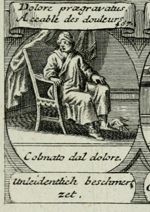
Dolore praegravatus - Unleidentlich beschmerzet: Woytt, Emblematischer Parnassus (Augsburg, 1727), emblem 497 refers to the adage's imagery
Iconclass: 31A461:31A2225 pain❧back 31A463(GOUT) diseases affecting parts of the body (GOUT) 41D2332 shoes, sandals 54BB4:49G3 Inefficiency❧medical examination, medical treatment
Loci Communes: Malum immedicabile (Incurable evil, Mal incurable)
IV iv 78 Uno digitulo With one little finger
Uno digitulo, summam negotii facultatem significabant. Terent. in Eunucho: Qui mihi nunc uno digitulo fores aperis fortunatus, Nae tu istas faxo calcibus saepe insultabis frustra. Hieronymus in dialogo Luciferiani et Orthodoxi. Hanc igitur hastam, quam totis viribus misisti, de qua nobis minaris, uno, ut aiunt, digitulo repellam. Huc pertinet et illud, quod alibi dictum est: Minimo provocare, cum significamus, nos vel nullo negotio posse vincere.
'With one little finger' describes the ability to do something with the utmost ease. Terence in the Eunuchus:
You who are lucky enough now to open the door with one little finger
Will often strike it with your feet in vain, I warrant it.
Jerome in the Dialogue of Luciferianus and Orthodoxus: 'This spear, then, that you have hurled with all your might, with which you threaten us, I shall parry with one little finger, as the saying goes.' The adage we have spoken of elsewhere, Minimo provocare, to indicate that we can prevail even with no effort at all, is also relevant.
Facsimile:
Iconclass: 31A22465 little finger 51E2:54A33 Superiority❧Skill, Ability; 'Artificio', 'Prontezza' (Ripa)
Loci Communes: Proclivitas (contra) (Propensity (against), Penchant (contre))
IV iv 79 Muli Mariani Marian mules
Muli Mariani, Castrensi provexbio dicti sunt varicosi milites, qui ex C. Marii ducis instituto, in furca tabella interposita, sua onera portare consueverunt, ut testatur et Festus Pompeius. At Plutarchus in vita C. Marii originem adagii bifariam refert: cum Marius imperator milites cursu, variis que ac longis itineribus gestandisque oneribus exerceret, atque illi tam assueti, non gravatim tacitique ea ferrent, castrensi ioco ἡμίονοι, Μαριανοί, id est, muli Mariani dicti sunt. Hinc translatum est in quosvis, qui facile parerent im peratis. Meminit adagii et Iulius Frontinus libr. Strategematon quarto hisce verbis: Caius Marius recidendorum impedimentorum gratia, quibus maxime exercitus agmen oneratur, vasa et cibaria militum in fascieulos aptata furcis imposuit, sub quibus et habile onus et facilis requies esset, unde et in proverbium tractum est, Muli Mariani, nimirum ob laborum tolerantiam, quod Homerus, ἡμιόνους ταλαέργους identidem appellat. Sunt qui diversam adagii originem referant. Cum enim Scipio Numantiam obsidens statuisset inspicere non arma modo militum, verum etiam equos, mulos, et currus, quo pacto haec quisque sibi haberet exercitata atque apparata, Marium produxisse equum pulcherrime ab ipso nutritum, praeterea mulum habitudine corporis, mansuetudine ac robore, longe ceteris antecellentem. Itaque cum Imperator Marii iumentis delectaretur, ac subinde horum faceret mentionem, tandem factum est, ut iocosa laude, qui in officio se praestaret assiduum, patientem ac industrium, mulus Marianus diceretur. Et hanc alteram proverbii originem refert Plutarchus in vita Marii, quam modo citavimus. Seneca in ludicro libello, quem scripsit in Claudium Caesarem, mulos perpetuarios nominat. Festivius erit, si detorqueatur in hominem immenso studio, aut perpetuis negotiis vehementer destrictum.
'Marian mules,' a proverb of the army camp, was applied to soldiers suffering from varicose veins who were accustomed to carry their loads on a board that rested on a fork-shaped yoke, a practice instituted by their leader Caius Marius. Festus Pompeius is also our source for this. But Plutarch in his Life of Caius Marius gives two explanations of the adage's origin. When the general Marius was building up his soldiers by making them go on training runs and on different kinds of forced marches, and by making them carry heavy loads, they became accustomed to these activities and put up with them in silence and without rancour. By a camp joke they were called [greek] 'Marian mules.' From this the expression was applied to anyone who readily obeyed orders. Julius Frontinus also mentions the adage in book four of his Strategies in this way: 'In order to cut down the baggage with which an army on the move is especially burdened, equipment and the soldiers' provisions were fitted into baskets and placed on fork yokes. The purpose was to make the weight easier to bear and to allow the soldiers to rest more easily. Because of this "Marian mules" became a proverb.' This was doubtless because of the soldiers' great tolerance of toil, since Homer continually calls mules [greek] 'toil-enduring.' Some give a different origin for the adage. For when Scipio was besieging Numantia and decided to inspect not only the soldiers' weapons but also their horses, mules, and chariots to see how each had trained and prepared them, Marius had led out a horse that had been extremely well looked after by him, and in addition a mule that far surpassed all others in its physical condition, obedience, and strength. And so since the general was delighted by Marius' animals and continually referred to them, the outcome was that anyone who was untiring, strong, and hard-working in performing his duties was called 'a Marian mule' as a humorous term of praise. This other origin for the proverb is given by Plutarch in his Life of Marius, which I have just cited. In his humorous bagatelle directed at the emperor Claudius Seneca describes mules as perpetuarii 'non-stop workers.' It will be rather amusing if it is applied to someone completely engrossed in an immense project or in never-ending business.
Facsimile:
Iconclass: 31A2747:46C14111 drawing, pulling something❧yoke 45B211 drill ~ military training 46C13143(+0) mule (+ variant) 53B5 Obedience; 'Obedienza' (Ripa)
Loci Communes: Industria (Industriousness, Application, diligence)
IV iv 80 Osculana pugna An Osculan battle
Festus Pompeius indicat Osculanam pugnam proverbio dici solitam, quoties victi vincerent. Idque inde natum, quod Valerius Levinus Imperator, prius a Pyrrho victus, paulo post eundem regem devicerit. Citat ticinium, qui huius adagii fecerit mentionem, Quamquam hic quoque locus mutilus, ac truncus est apud Festum.
Festus Pompeius points out that 'An Osculan battle' was a proverb customarily used whenever those who had been defeated were later victorious. It originated when the general Valerius Laevinus was first defeated by Pyrrhus and then a little later crushed the same king. He cites Ticinius who mentioned the adage. However, this passage in Festus, like others, is corrupt and lacunose.
Facsimile:
Iconclass: 45A3 victory ~ armed conflict 45A4 defeat ~ armed conflict 45H3 battle 54F121 Turn of Fate, Wheel of Fortune 61I(OSCULAN BATTLE) names of historical events and situations (OSCULAN BATTLE)
Loci Communes: Fortunae commutatio (Change of fortune, Changement de fortune)
IV iv 81 Osce loqui Speaking Oscan
Osce loqui vetusto proverbio dicebantur, qui turpiter parumque pudice loquerentur. Ab Oscorum moribus allusione sumpta, quod apud eos spurcarum libidinum impunitus usus fuerit, unde et obscena dicta quidam putant, quaecumque factu dictuve turpia sint, etiam si refragatur Festus Pompeius. Citat autem Ticinium quendam, qui scripserit ad hunc modum: Osce & Volsce fabulantur, quia Latine nesciunt.
'Speaking Oscan,' an old proverb applied to those who spoke in a disgusting and shameless way. The allusion is taken from the customs of the Oscans; for among them the practice of satisfying foul desires went unpunished. Because of this some think that whatever is disgusting in word or deed is also called obscene (obscaena), though Festus Pompeius rejects this. And indeed he cites a certain Ticinius who wrote as follows: 'They speak Oscan and Volscian, because they do not know how to speak Latin.'
Facsimile:
Iconclass: 49K32:32B2(OSCANS) language ~ philology❧historical peoples and nationalities (OSCANS) 57AA4 Shamelessness 57AA5 Indecency, Impudence; 'Sfacciatigine' (Ripa)
Loci Communes: Impudicitia (Unchastity, Impudicité)
IV iv 82 Sero molunt Deorum molae The gods' mill grinds slow
Plutarchus in commentario cui titulus: περὶ τῶν ὑπο τοῦ θείου βραδέως τιμωρουμένων, ὥστε οὐχ ὁρῶ, τὶχρήσιμον ἔνεστι, τοῖς ὀψὲ δὴ τούτοις ἀλεῖν λεγομένοις μύλοις τῶν θεῶν. id est, Itaque non video, quidnam utilitatis insit istis deorum molis, quae sero dicuntur molere. Ceterum ex his, quae praecedunt eodem in loco, colligere licet, dici solitum de his, qui licet serius, tamen aliquando poenas dant malefactorum, vindici deo.
Plutarch in his essay 'On Those Punished Late by the Gods': " [greek] 'I do not see the value in those mills of the gods that are said to grind slow.' But from what precedes in the same passage one can infer that it was frequently said of those who finally, though belatedly, were punished for their misdeeds by an avenging god.
Facsimile: 
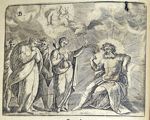
Siet hoe de wrake Gods ... hier vergeleken werd by een stillen Molen: Vondel, Gulden Winkel (Amsterdam, 1622), emblem 8
Iconclass: 51MM11 Slowness, Tardiness; 'Tardità' (Ripa) 52B41:44G37 Certainty❧public punishment (death not intended or involved) 59C2 Justice; 'Forza alla giustitia sottoposta', 'Giustitia', 'Giustitia retta', 'Giustitia rigorosa', 'Impietà e violenza soggetta alla giustitia' (Ripa)
Loci Communes: Ultio malefacti (Vengeance for a wrongdoing, Vengeance d'un méfait)
IV iv 83 In transcursu On the run
Plutarchus in commentario De liberis educandis, ἀλλὰ ταῦτα μὲν ἐκ παραδρομῆς μαθεῖν ὡσπερεὶ γεύματος ἕνεκεν. id est, Sed haec quidem ex transcursu discere, veluti degustandi causa. Metaphora plane; proverbium sapit. Quintilianus pro eo dixit, In transcitu. Plinius mavult In transcursu. Idem valet Obiter.
Plutarch in his essay 'On Bringing up Children': 'But they learn this ' [greek] "On the run," as if they are just having a taste.' The metaphor clearly has the flavour of a proverb. Instead of this expression Quintilian used in transitu. Pliny prefers in transcursu; obiter means the same.
Facsimile:
Iconclass: 31A27112 running 49A education 51M11 Swiftness, Speed; 'Agilità', 'Celerità', 'Velocità' (Ripa)
Loci Communes: Indiligentiae (Carelessness, Négligence)
IV iv 84 Tribus verbis In three words
Tribus verbis pro paucissimis dicere proverbiale est. Divus Hieronymus in dialogo Luciferiani, et Orthodoxi, Tribus, ut aiunt, verbis rem istam grandem dissolvisti. Item Geta Terentianus in Phormione negat quosdam tria inter se commutaturos verba. Pindarus in Nemeis hymno duodecimo, τρία ἔπεα διαρκέσει, id est, Tria verba sufficient. Tametsi nos non fugit hic interpretes superstitiosius philosophari de tribus verbis. Marcus Tullius pro Cluentio. Accusabat autem Scamandrum verbis tribus, venenum esse deprehensum, etc. consimili sigura, sexcenta dicimus pro multis: Proinde sexcentas mihi dicas scribito. Contra verbo rem expedire dicitur, qui paucis explicat: et ne syllaba quidem attingere, qui nihil omnino meminit, Ita Galenus in Erasistratum opinor: πῶς δὲ οὐκ αἰδεῖται, τὰς μὲν τῆς πέψεως ἀποτυχίας διαιρούμενος ὡς πολλαί τε εἰσὶ καὶ κατα πολλὰς γίνονται προφάσεις, ὑπὲρ δὲ τῶν αἱματώσεως σφαλματῶν, οὐδ᾽ ἄχρι συλλαβῆς μιᾶς φθεγξάμενος. i. Qui fit ut non pudeat, quod cum de concoctionis vitiis distinxerit, et quia multa sint, et variis ex causis accidant, de generandi sanguinis defectibus, ne uno quidem verbo, ne una quidem syllaba locutus sit?
'In three words' is a proverbial expression for 'in very few words.' St Jerome in the Dialogue of Luciferianus and Orthodoxus: 'You have solved that huge problem in three words, as the saying goes.' Similarly Terence's Geta says in the Phormio that some persons 'will not exchange three words.' Pindar in the Nemeans in hymn twelve: [greek] "three words" will suffice.' And yet I am fully aware that on this passage the commentators philosophize quite superstitiously on 'three words.' Marcus Tullius in For Cluentius: 'He accused Scamandrus in three words; the poison has been seized .. .' Using the same trope we say 'six hundred' to mean 'many': 'Bring six hundred suits against me then.' In the opposite way a person who explains in a few words is said 'to complete the matter in a word' and the person who says nothing at all is said 'to expend not even a syllable on the matter.' So Galen, speaking against Erasistratus, I think: 'How is it he has no shame? He has made distinctions about problems in digestion, saying that they are many and occur from different causes, but has said not even one word, not even one syllable, about deficiencies in blood-production.'
Facsimile:
Iconclass: 49K321:49D11(3) word❧numerals: 3 52D21 Conciseness
Loci Communes: Breviloquentia (Brevity of speech, Brièveté du discours)
IV iv 85 Ne punctum quidem Not even a point
Divus Hieronymus in Epistolis, Et apostolicae voluntatis sequentes vestigia, ne punctum quidem, ut dicitur, aut unguem transversum ab illius sententiis recedamus. Apud Mathematicos punctum minimum quiddam est in dimensione corporis, adeo ut dividi non possit, quod imaginatione porrectumin longum, lineam efficit: rursum in latum porrecta linea, superficiem efficit. Ad eundem modum Terentius in Andria: Tum temporis ad hoc mihi punctum est.
St Jerome in his Letters: 'Let us follow in the footsteps of the Apostolic will and not depart by even a point, as the saying goes, or a nail's breadth from its tenets.' For the mathematicians a point is the smallest unit of measurement. It cannot be divided and if imaginarily extended vertically it produces a line. Again if the line is extended horizontally it makes a plane figure. Similarly Terence in the Woman of Andros: 'Moreover, I have only a point of time for this.'
Facsimile:
Iconclass: 49D31 point (~ planimetry, geometry) 51GG1 Littleness, Smallness
Loci Communes: Nugalia (Trifles, Bagatelles)
IV iv 86 Incita equum juxta nyssam Ride your horse close to the turning point
Κέντει τὸν πῶλον περὶ τὴν νύσσαν. id est, Stimula equum iuxta lineam sive metam, dicebatur ubi sermo loquentis aberraret ob eo quod esset institutum. Natum videtur ex Iliados Homericae y. Ubi Nestor multis verbis docet filium Antilochum quomodo debeat equos regere, addit & hoc: Εν νύσσῃ δὲ τοι ἵππος ἀριστερὸς ἐχριφθήτω, id est, Ceterum equum laevum, constringat linea metae. Sumptum ab equestri cursu, qui inter praescriptas metas ac lineas agebatur, quas transilire nefas erat. Ad quod haud dubie Fabius allusit, in undecimo Institutionum oratoriarum libro, referens Cassium Severum lineam poscere solitum, adversus eos, qui in aliena transirent subsellia, veluti qui praescriptum limitem egrederentur. Finitimum illi: ἐκτὸς τῶν ἐλαιῶν. id est, Extra oleas. Item illi: ὑπὲρ τὰ ἐσκαμμένα πηδᾶν. Usurpavit proverbii titulo Gregorius Nayianyenus in oratione de sancto pascha: ἀλλάτοι τούτῶν ἡμῖν τάξα ἂν εἴποιτις τῶν φιλέορτῶν καὶ θερμοτέρων, κέντει τὸν πῶλον περὶ τὴν νύσσαν. τά τῆς ἑορτῆς φιλοσόφει. id est, Sed hic fortassis aliquis nobis dixerit ex his, qui amant dies festos, ac calidiores sunt, incita equum iuxta Nyssam, ac de festo dissere. Utitur eodem proverbio in oratione de natali Iesu Christi. Idem narravit nonnihil in oratione contra Eunomianos: μηδὲ καθάπερ ἵπποι θερμοὶ καὶ δυσκάθεκτοι τὸν ἐπιβάτην λογισμὸν ἀποῤῥίψαντες, καὶ τὴν καλῶς ἄγχουσαν εὐλάβειαν ἀπόπτσαντες πόῤῥω τῆς νύσσας θέωμεν. id est, Ne velut equi fervidi et intractabiles, posteaquam rationem ceu sessorem excusserimus, et religiosam cautionem pulchre nos septis cohibentem, procul a meta curramus.
[greek], Spur your horse close to the line or turning point. This was said when a speaker's words were wandering from what had been prescribed. It seems to have its origin in Homer's Iliad, book twenty-three. When Nestor is instructing his son Antilochus at great length how he ought to steer his horse, he adds this: 'But let the boundary of the turning post graze the horse on the left.' Taken from a horse race which took place between fixed turning points and boundaries beyond which it was forbidden to go. Undoubtedly Fabius alludes to this in book eleven of his Principles of Oratory, when he recalls that Cassius Severus used to demand that a line be drawn to thwart those who crossed over to their opponents' seats, on the grounds that they were transgressing a prescribed boundary. It is related to 'Beyond the olive trees' and also to 'To overleap the pit.' Gregory of Nazianzus uses it in a proverbial way in his speech On Holy Easter: 'But at this point perhaps one of those who like festivals and are rather hot-headed may say to us, "Steer your horse close to the turning point and talk about the festival."' He also uses the same proverb in his speech On the Birthday of Jesus Christ. He also varied it somewhat in the speech Against the Eunomians: 'Let us not, like excited and unmanageable horses unseating their riders, shake off reason and religious caution that properly restrain us within the bounds; let us not run far from the turning point.'
Facsimile:
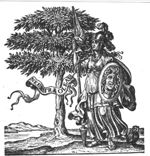
Ne extra oleas: Printer's device 0699
Ne extra oleas: Printer's device 0439
Iconclass: 43C2121 horse-racing 43C1161(+0):43C21213 boundary-post of hunting-ground (+ variant)❧race-track 52DD21 Confusion, Obscurity; 'Confusione' (Ripa)
Loci Communes: Aliena a re (Irrelevant to the matter, Étranger au sujet)
IV iv 87 Praestat invidiosum esse, etc Better envied than pitied
Nihil tam vulgari sermone iactatum, quam haec sententia, praestat invidiosum esse quam miserabilem. Nam invidia fere comes est felicitatis, miseratio calamitatis. Est autem apud Herodotum in Thalia, ubi Periander ita loquitur filio: σὺ δὲ μαθὼν ὅσῳ φωονέεσθαι κρέσσον ἐστι ἢ οἰκτείρεσθαι. id est, Tu vero doctus, quanto satius sit, invidiosum esse quam miserandum. Extat epigramma Graecum Palladae in hanc sententiam: Ο φθόνος οἰκτιρμοῦ κατα πίνδαρόν ἐστιν ἀμείνων, Οἱ βασκαινόμενοι λαμπρὸν ἔχουσι βΐον. Τοὺς δὲ λΐαν ἀτυχεῖς οἰκτείρομεν, ἀλλά τις εἴην Μήτ᾽ ἄγαν εὐδαίμων, μήτ᾽ ἐλεεινὸς ἐγώ. Η μεσότης γὰρ άῤιστον, ἐπεὶ τὰ μὲν ἄκρα πέφυκεν Κινδύνους ἐπάγειν, ἔσχατα δ᾽ ὕβριν ἔχει. id est, Peior livore est miser atio, Pindarus inquit, Nam sunt felices ques Petit invidia. Horum nos contra miseret, quorum aspera sers est. At mihi donari non cupio alterutrum, Ut nimium fclix, vel sim miserabilis villi. Nam praestat cunctis rebus adosse modum. Quandoquidem celsae vicina pericula sorti, Inaque deprimitur non toler anda ferens. Est autem apud Pindarum primo hymno Pythiorum: Αλλ᾽ ὅμως, κρέσσων γὰρ οἰκτιρμῶν φθόνος, Μὴ παρίει καλὰ, νώμα δικαίῳ πηδαλίῳ στρατὸν. id est, Veruntamen melior est commiseratione inutdentta. Ne omitte honesta, guberna iusto clavo exercitum. Rursus in Nemeis hymno octavo, ὄψον δὲ λόγοι φθονεροῖσιν, ἅπτεται ἐσλῶν αἰεὶ, χειρόνεσσι δ᾽ οὐκ ἐριζει, id est, Obsonium est invidis obtrectatio. Attingit autem honestos, cum deterioribus non contendit. Rursus Pythiorum undecimo: Ισχει τε γὰρ ὄλβος οὐ μείονα φθόνον. Ο δὲ χάμηλα πνέων ἄφαντον βρὲμει. id est, Habet enim felicitas haud minimam inutdiam. At qui humilia spirat, in obscuro fremit.
No expression is more frequent in the vernacular than this one: 'Better envied than pitied.' For envy is generally the companion of good luck, pity of disaster. It is in Herodotus in his Thalia where Periander says this to his son: [greek] 'You who have learned how better it is to be envied than pitied.' There survives a Greek epigram of Palladas on this idea:
Pity is worse than envy, says Pindar,
For those assailed by envy prosper.
Pity befalls those whose lot is cruel.
I do not wish for either,
To be too lucky or to be pitied by any.
For it's better moderation in all things,
Since peril sits next to lofty lot
And he who bears the unbearable is crushed low.
The expression is to be found in Pindar in the Pythians hymn one: 'But envy is better than pity. Do not abandon what is good, guide your army with a just rudder.' Again in the Nemeans, hymn eight: 'Slander is the food of the envious. It is aimed at those who are upright, it has no concern with the inferior.' Again, in the eleventh hymn of the Pythians: 'For prosperity incurs much envy. But the roars of a man who is weak and humble go unheard.'
Facsimile: 
Iconclass: 57A75 Mercy, Compassion; 'Compassione', 'Misericordia' (Ripa) 57AA76:54F14 Jealousy; 'Gelosia', 'Rammarico del ben'altrui' (Ripa)❧Advantage
Loci Communes: Invidia, aemulatio (Envy, rivalry, Envie, rivalité)
IV iv 88 E nassa escam petere To seek food from a fishtrap
Admodum certe proverbiali figura dictum est Plauto, citanto Festo Pompeio: Numquam hercle ex ista nassa hoc die escam petam. Et Cicero ad Atticum libro quintodecimo, epist. ultima. Ex hac nassa exire constitui, non ad fugam, sed spem mortis meliorem. Est aunt nassa piscatorii vasis genus, quo posteaquam intrarit piscis, exire non potest. Unde proverbialia fuerint et illa: In nassam incidere, & E nassa elapsus.
Plautus, cited by Festus Pompeius, said, 'I'll never seek food from that trap,' using what is certainly a proverb. Cicero too in Letters to Atticus in book fifteen, the final letter: 'I've decided to leave this trap, not that I may flee, but that I may have better hope of death.' A nassa is a 'kind of container for fishing, from which a fish cannot escape once it has entered.' Because of this the following are also proverbial: in nassam incidere 'to fall into a fishtrap' and e nassa elapsus 'having escaped from a fishtrap.'
Facsimile:
Noorderwiel, Huwelijksfuik: Hendrik Noorderwiel, The marriage trap (Huwelijksfuik), painting, 1647
Savery, Huwelijksfuik: Salomon Savery, The marriage trap (Afbeeldinghe des huwelyx onder de gedaente van een fuyk), 1655
Iconclass: 43C115 searching for game 43C12(+4164) fishing (sports) (+ fish-trap)
Loci Communes: Discriminis (Danger, crisis, Danger)
IV iv 89 Nec mulieri, nec gremio credendum Trust neither a woman nor your lap
Idem Festus indicat huiusmodi proverbium vulgo dictitatum fuisse, Nec mulieri, nec gremio credi oportere, quod illa incerti, ac levis sit animi, et plerumque fiat ut in gremio posita, cum in oblivionem venerint, exsurgentibus procidant, Itidem sinui commissa decidunt, nisi cingaris. Itaque M. Tullius silentium promittens, ait: In sinu est, nec discingor.
'One should trust neither a woman nor your lap.' Festus also points out that this proverb was in frequent use: 'The reason is that a woman has a wavering and fickle mind, and often what has been placed in the lap is forgotten and falls when one stands up.' In the same way, things placed close to your breast drop to the ground if your garment falls loose. Accordingly, when promising to say nothing, Cicero says, 'It's in my bosom. I shall not be ungirt.'
IV iv 90 Una cum templis et aris Along with temples and altars
Plutarchus locis aliquot in Symposiacis significat antiquitus fuisse morem, ut quoties unicuipiam deo res divina fieret, omnibus simul vota fierent, videlicet ne Calydonii suis tragoedia renovaretur. Invocantes autem deos, addebant haec verba ceu sollemnia: ἅμα σὺν ναοῖς καὶ βωμοῖς. id est, Unà cum fanis et aris. Non admonet quidem ille palam, esse proverbium, tamen ita videtur usurpare, ut conicere possis, proverbio dici solitum, cum nihil omnino praetermissum volebant signisicare.Quemadmodum et hodie vulgo dicunt, Una cum vestibus et calciamentis. Et Demigrarunt unà cum sarcinis & impedimentis.
In some passages in his 'Table-talk' Plutarch points out that it was the custom in antiquity to offer prayers to all the gods whenever a religious ceremony was being conducted for any one of them. Clearly the purpose was to avoid a repetition of the tragedy of the Calydonian boar. When they were invoking the gods, they would add these words as if they were an established part of the ritual: "[greek] 'Along with temples and altars.' He does not say explicitly that this is a proverb, but he appears to use it in such way that one can infer these words were customarily spoken in a proverbial way when people wanted to show that nothing at all had been overlooked. Even today common sayings are una cum vestibus et calciamentis 'with clothes and shoes,' and demigrarunt una cum sarcinis et imvedimentis 'they left along with bag and baggage.
Facsimile:
Iconclass: 12B61 temple, shrine ~ non-Christian religions 12B62 altar ~ non-Christian religions 51A7 Perfection, Completeness; 'Perfettione', 'Operatione perfetta' (Ripa)
Loci Communes: Totum ut nihil reliqui (The whole, so that nothing remains, Le tout, sans rien laisser)
IV iv 91 Mercurius supervenit Mercury has now arrived
Ο ἑρμῆς ἐπεισελήλυθεν. id est,Mercurius supervenit. Ita loqui consueverunt, si quando silentium oriretur in conciliabulo multorum, signisicantes, non esse fas loqui Mercurio praesente, qui sermonis sit auctor. Ominosum et hodie putatur, si quando in coetu, aut convivio, subitum omnium silentium fuerit obortum. Refertur adagium a Plutarcho in com mentario, περὶ τῆς ἀδολεσχίας. Affine est illi, quod alibi dictum est, Lupus in fabula.
'[greek], Mercury has now arrived. It was the custom to say these words whenever a silence fell over a large gathering. The meaning was that it was not proper to speak when Mercury was present since he was the inventor of speech. Even today it is thought ominous whenever a sudden silence occurs at a meeting or a party. The adage is reported by Plutarch in his essay 'On Garrulity.' Related to this is what is said elsewhere: 'The wolf in the story.'
Facsimile: 
Iconclass: 22D9 silence 46C514 arrival and return ~ travelling 92B57(+0) specific aspects, allegorical aspects of Mercury; Mercury as patron (+ variant)
Loci Communes: Subiti interventus (A sudden intervention, Intervention soudaine)
IV iv 92 Dulce pomum cum abest custos Sweet is the apple that has no guard
Γλυκεῖ᾽ ὀπώρα φύλακος ἐκλελοιπότος. id est, Custos ubi deest, dulce pomum est scilicet. Senarius est proverbialis, quo licebit uti cum signisicabimus impunitate malos ad peccandum provocar. Sumpta metaphora a pueris et adolescentibus, qui sibi non temperant, quo minus furentur poma, si senserint abesse custodem. Utitur Plutarchus in libello quem inscripsit, Ἐρωτικόν, in philosophos, qui sub praetextu philosophiae, libidini suae serviunt: πρόφασις οὖν φιλία καὶ αῤετή. κονιεται δὲ καὶ ψυχρολουτεῖ καὶ τὰς ὀφρῦς αἴρει, καὶ φιλοσοφεῖν φησὶ, σωφρονῶν ἔξω διὰ τὸν νόμον, εἰτα νύκτωρ καὶ κατ᾽ ἡσυχίαν, Γλυκεῖ᾽ ὀπώρα φύλακος ἐκλελοιπότος. id est, Igitur occasio amicitia ac virtus est. Sordidatur autem pulvere, frigidaque lavat, attollit supercilia, ac philosophari se praedicat, et foris sobrius est ob legem, deinde noctu clanculum Pomum suave est, tunc ubi custos abest. Et Pindarus in Isthmiis hymno sexto, τὸ δὲ πὰρ δίκαν γλυκὺ πικροτάτα μένει τελευτὰ. i. Id quod praeter honestum dulce est, manet finis amarissimus.
[greek], Sweet is the apple when the guard is away. The verse is proverbial and one may use it to mean that impunity tempts the wicked to sin. The metaphor is taken from children and young persons who cannot restrain themselves from stealing apples if they are aware that the guard is absent. Plutarch uses it in his essay entitled 'On Love' against philosophers who employ the pretext of philosophy to satisfy their own desires: And so friendship and virtue are used as excuses. He is befouled with dust, he
washes in cold water, he raises his eyebrows and says that he is a philosopher.
In public he is sober because of the law, but then secretly at night 'Sweet is
the apple when the guard is away.'
It is to be found in the proverbs of the Hebrews: 'Stolen waters are sweeter.' And Pindar in hymn six of the Isthmians: 'A most bitter end awaits what is sweet but dishonourable.'
Facsimile:
Iconclass: 44G544:25G21(APPLE) theft❧fruits: apple 47I411 orchard 51AA4:42F55(+0) Nothingness, Absence❧house-guard, doorkeeper, janitor (+ variant) 54B12 Opportunity, Opportuneness, Seasonableness 54C4 Temptation; 'Tentatione' (Ripa)
Loci Communes: Ultio malefacti (Vengeance for a wrongdoing, Vengeance d'un méfait)
IV iv 93 Sanior es pisce You are as healthy as a fish
Proverbialiter haud dubie dixit Iuvenalis: Sanior es pisce. Nam ad eum modum, hodieque vulgo loquuntur, tam sanus es, quam piscis. Id inde sumptum est, quod creditum est, pisces non sentire morbos. Quamquam huic sententiae refragatur Aristoteles libro de natura animalium octavo, atque hunc secutus Plinius lib. nono. Siquidem aegrotare pisces hoc argumento colligunt piscatores, quod aliquoties inter eiusdem gene ris praepingues ac vegetos, aliquot capiunt extenuatos, ac languentibus similes, coloreque immutato. Quamquam universo piscium generi non incidit pestis, quemadmodum frequenter accidit hominibus, ac ceteris animantibus, non cicuribus modo, verum etiam feris.
Undoubtedly Juvenal's words 'You are healthier than a fish' were used proverbially. For people, even today, commonly say, 'You are as healthy as a fish.' This arose from the belief that fish did not experience sickness. And yet Aristotle in book eight of the Nature of Animals opposes this view and Pliny followed him in book nine. For fisherman infer that fish can be sick because among plump and healthy fish they sometimes find some of the same species that are extremely thin, discoloured, and languid. And yet disease does not attack a whole species of fish, as frequently happens in the case of humans and all other animals, wild as well as tame ones.
Facsimile:
Iconclass: 25F6 fishes 31A469 health
Loci Communes: Salubritas (Wholesomeness, Salubrité)
IV iv 94 E Creta raptus Booty from Crete
Plutarchus in commentario de puerorum educatione: καὶ τοὺς μὲν θήβῃσι καὶ τοὺς ἤλιδι φεύκτέον ἔρωτας, καὶ τὸν ἐκ κρήτης καλούμενον ἁρπαγμόν. τοὺς δὲ ἀθηνῃσι καὶ τοὺς ἐν λακεδαίμονι ζηλθτέον. id est, Thebanorum quidem ac Heliensium amores oportet fugere, eumque qui vocatur e Creta raptum. Atheniensium vero & Lacedaemoniorum imitari. Apparet furtivum amorem his verbis olim significatum fuisse, quod aliquoties illinc virgines à negociatoribus adveherentur.
Plutarch in his essay 'On the Education of Children': 'The sexual practices of the Thebans and the people of Elis should be shunned as should what is called [greek] "Booty from Crete." Those of the Athenians and the Spartans should be imitated.' It is clear that these words indicated secret love-making, because sometimes young girls were brought from there by traders.
Facsimile:
Iconclass: 33C57 white-slave trade ~ prostitution 61D(CRETE) geographical names of countries, regions, mountains, rivers, etc. (CRETE) (CRETE)
IV iv 95 Euparyphus ex comoedia Like Euparyphus in comedy
Admodum proverbiali figura dixit Plutarchus in Symposiacis, ὥσπερ εὐπάρυφος ἐκκωμῳδίας, hominom significans magnifice vestitum, ac magnam servorum turbam post se trahentem. Nam huiusmodi finguntur in comoediis milites gloriosi.Quorum insigne est chlamys purpurea, quemadmodum indicat Donatus. Ita Lucianus de milite, τὸν εὐπάρηφον λέγω τὸν ἐν χλαμυδι. id est, Eupatyphum illum dico, illum chlamydatum: Unde divites omnes splendide cultos, εὐπαρύφους appellant Graeci, quia ipsum proverbiale quiddam habet. Nam Paryphis vestimenti genus est, cuius meminit Iulius Pollux libro septimo. Id utrinque purpuram habebat assuram, quod virgae purpureae intertextae vesti, Ionum lingua Paryphi vocantur. Idem admonet εὐπάρυφον novae comaediae verbum esse. Contra tenues et humiles nullo cultu insignes tunicari dicuntur. Cornelius Tacitus in dialogo de oratoribus: Quos saepius vulgus imperitum et tunicatus hic populus traseuntes nomine vocat, et digito demonstrat. Similiter Horatius: Vilia vendentem tunicato scruta popello. Nam praetexta nobilium erat, et toga civium erat in signe. M. Tullius contra Rullum: Iam vero qui metus erat tunicatorum illorum Item pro M. Caelio: Nobis quidem olim annus erat unus ad cohibendum brachium toga constitutus, et ut exercitatione ludoque campestri tunicati uteremur.
In his 'Table-talk' Plutarch used what is clearly a proverbial expression: [greek] 'Like Euparyphus from comedy.' He is referring to a man wearing luxurious clothes and trailing behind him a huge crowd of slaves. For this is how braggart soldiers are depicted in comedies. Their distinguishing mark is a red cloak, as Donatus points out. So Lucian on a soldier: 'I mean that Euparyphus, that man in the cloak.' Because of this the Greeks call all rich men who are splendidly garbed [greek], and this on its own has something of the characteristics of a proverb. For a paryphis is a kind of garment, mentioned by Julius Pollux in book seven. This had a red border on each side, because in Ionic Greek paryphi is the word for red threads woven into a garment. He also tells us that [greek] is a word in New Comedy. By contrast, poor and low-born persons, not distinguished by any elegant garb, are called tunicati 'tunicked.' Cornelius Tacitus in his Dialogue on the Orators: 'As these pass by, very often the inexperienced throng and those tunicked people call them by name and point to them.' Similarly Horace: 'Selling cheap trash to the tunicked rabble.' For the praetexta was the distinguishing mark of nobles, while the toga was that of citizens. Marcus Tullius in Against Rullus: 'Now what fear there was of those tunicked men.' Also in For Marcus Caelius: 'In times past we were given a year to keep our arms restrained in our toga and to enjoy exercise and sport on the Campus clad in tunics.'
IV iv 96 Tranquillo quilibet gubernator est In a calm sea anyone can be a pilot
Seneca in epistola quadam ad Lucilum: Alioqui gubernatoris artem adeo non impedit tempestas, ut ostendar. Tranquillo enim. ut aiunt, quilibet gubernator est. Ait autem illic, fortunam adversam, ac rerum difficultatem, non solum non obesse sapienti, verum etiam vir tutem in his maxime proferresese, quae rebus secundis ac pacatis latebat. Non magnum est administrare rem publicam, cum omnia in pace constant.
Seneca in a letter to Lucilius: 'A storm does not so much impede a pilot's skill as reveal it. For, as they say, in a calm sea anyone can be a pilot.' What he is saying there is that misfortune and difficult circumstances, so far from harming the wise man, allow his virtue, which lies hidden in prosperity and peace, to reveal itself then especially. It is no great achievement to govern a state when there is complete concord.
Facsimile: 
Iconclass: 26C9:25H2322 absence of wind, calm❧sea 46C2711(PILOT) seaman (PILOT) 54D4 Facility
Loci Communes: Bonae fortunae, copiae, felicitatis aut ominis (Of good fortune, abundance, happiness, or omen, Bonne fortune, abondance, bonheur ou présage)
IV iv 97 Neque Lydorum carycas Neither Lydian black-puddings
Μήτε λυδῶν κάρυκας, μήτε μαστίγων ψόφους. id est, Neque Lydorum condimenta, neque siagrorum crepitus. Constabit trochaicus tetrameter catalecticus, si addas articulum: Μήτε τῶν λυδῶν, & καρύκκας per geminum cappa legimus apud Hesychium et Athenaeum. Hesychius indicat καρύκκην dici offam è sanguine variis que condimentis confectam. Athenaeus hunc versiculum adducit, Εἴωθας εἰς ταυτὸν καρυκεύειν, μέλι, Σεμΐδαλιν, ὠά. πάντα γὰρ τᾀναντία. id est, Miscere in unum consuevisti, mel, ad haec Simtlaginem, ova. Cuncta enim contrarta. Unde καρυκκάζειν pro miscere Varias rerum species, et καρυκκεύματα pro cibis varie conditis, et karukkei/a conditura exquisitior. Sed quibus rebus quibusque modis genus hoc edulii conficiatur, serio declarat libro duodecimo, dicens hoc inventum esse Candauli, qui hinc sibi nomen celebre peperit. Suidas refert adsgium, nec exponit. Conicere licet dici solitum, quoties mediocrem vitae rationem, aut conditionem significarent, quae pariter et a summis deliciis, et ab extremis malis abesset. Legimus enim Lydos luxu deliciisque fuisle corruptissimos, adeo ut ludiis nomen dederint:de Tyrrhenis certum est, ad tibiae modos solere servos caedere, summam molliciem cum summa saevitia coniungentes. Venustius erit, si ad animi res transferatur, velut ad oratione, nec omnino rusticam nec operosius expolitam. Unde καρυκκεύειν dicuntur, non solum qui variis condimentis inficiunt cibos, verum etiam, qui sermonem multiplici verborum, et figurarum lenocinio condiunt: aut concionem è diversis male cohaerentibus contexunt, qui mos est quibusdam ostentatoribus, Exponunt paucis scripturam, addunt quaestionem Sorbonicam, assuunt aliquid ex iure Caesareo, nonniil ex iure Pontificio, tum ex Aristotele, ex poetis. His omnibus Colophonem addunt, anilem fabulam, hoc est vere καρυκκεύειν. Quanquam huius adagionis & alibi nobis, ni fallor, facta mentio.
Μήτε Λυδῶν κάρυκας, μήτε μαστίγων ψόφους, Neither Lydian black-puddings nor the crack of whips. This will scan as a trochaic tetrameter catalectic if one adds the definite article (Μήτε τῶν Λυδῶν) and if we read κάρυκκας, with a double kappa, as in Hesychius and Athenaeus. Hesychius tells us that καρύκκη is a mixture made from blood and different spices. Athenaeus adduces these verses: 'You are wont to mix together honey, flour, and eggs. / For all these are quite different from each other.' Therefore καρυκκάζειν means 'to mix together different kinds of things,' and καρακκεύματα means 'foods with different spices' and καρυκκεία 'a rather exotic sauce.' He shows later, in book twelve, the ingredients of this kind of food and how it is made, saying that it was the invention of Candaulus, who thereby made a great name for himself. Suidas gives the adage, but does not explain it. One can guess that it was customarily said to indicate an average mode of living, one that was both removed from the greatest luxury and free of the worst misfortune. For we read that the Lydians had been extremely corrupted by luxury and pleasures, so much so that they gave their name to ludii 'pantomime actors.' It is certain too that barbarians, perhaps the Lydians but certainly the Etruscans, were accustomed to whip their slaves to the accompaniment of the flute, thus bringing together extreme tenderness and extreme cruelty. The adage will have more charm if it is applied metaphorically to intellectual things, for example, to a speech that is neither completely crude in style nor too carefully polished. Accordingly the term καρακκεύειν 'to make a hodge-podge' can be said not only of those who use different spices with their food, but also of those who spice up their style of speaking with an excessive and meretricious adornment of words and figures, or of those who put together a sermon from contradictory elements that do not cohere well, the custom of certain show-offs. They expound upon the Scripture in a few words, they insert a problem from the Sorbonne, and stitch on something from imperial law, something from canon law, then from Aristotle, and from poets. As a colophon they add an old wife's tale. This is truly καρακκεύειν 'to create a hodge-podge.' But we have mentioned this adage elsewhere, if I am not mistaken.
Facsimile:
Iconclass: 32B2(LYDIANS) historical peoples: Lydians 41C692(BLACKPUDDING) kinds of meat (BLACKPUDDING) 51BB4 Multiformity, Variety 51EE4 Incoherence
Loci Communes: Modestia modusque (Modesty and moderation, Modestie et mesure)
IV iv 98 Tanquam de narthecio As if from the medicine box
Proverbii sumilimum est et illud Ciceronis in secundo De finibus bonorum libro, tam quam de narthecio, pro eo quod est ex parato, et ad manum. Nam narthecium, vocat pyxidem, unde pharmacopolae depromunt medicamenta. Verba Ciceronis sic habent: Iam doloris medicamenta illa Epicurea, tamquam de narthecio promant, Si gravis, brevis: si longus, levis.
Very like a proverb too is that phrase of Cicero in Definitions of Good and Evil, book two, Tamquam de narthecio 'As if from the medicine box,' meaning what is ready and at hand. For by narthecium he means the box from which druggists take out their medicines. Cicero's words are these: 'Now let them take out those Epicurean treatments for pain, as if from the medicine box. If the pain is severe, it will be short, if long, it will be slight.'
Facsimile:
Iconclass: 41A773:49G81 container of ceramics: jar, jug, pot, vase❧medicament, medicine 54D4 Facility
Loci Communes: Proclivitas (contra) (Propensity (against), Penchant (contre))
IV iv 99 Quod non opus est, ass carum est What you do not need to have is dear at a penny
Catoniana velut et oracula videntur apud veteres in proverbium abiisse, non secus atque illa Apollinis, Nosce teipsum, et Ne quid nimis. Quorum de numero commodissime dictum est, quod in epistola quadam ad Lucilium refert Seneca, Quod non opus est, asse carum est. Vult autem Cato diligentem patrem familias vendacem esse, non emacem, et emere non quod opus est, sed quod necesse est. Nam quod non opus est, inquit, asse carum est: hoc est, quantumvis paruo emptum, tamen carum est, si nec opus est eo. Vocat necesse, quo carere non possis, velut aratro: opus, quod usui futurum sit, si quis habeat, sed eiusmodi tamen, ut carere possis. Porro quod opus non est, id est prorsus supervacaneum et inutile. Potest ad complures accommodari sententias, ut si quis dicat artem quampiam minimo negotio posse disci, quae tamen nihil sit frugis allatura, responderi posset: Quod opus non est, asse carum est.
The pronouncements of Cato (oracles, one might say) seem to have become proverbial in antiquity, like those of Apollo: 'Know thyself,' and 'Nothing too much.' From their number the one that Seneca reports in a letter to Lucilius is extremely useful, 'What you do not need to have is dear at a penny.' Cato means that a careful head of the house likes to sell, not to buy, and buys not what he wants, but what is necessary. 'For what you do not need to have,' he says, 'is dear at penny.' He terms as 'necessary' something that one cannot do without, for example, a plough to a ploughman, as 'wanted' something that may be useful if one has it but is such that one can do without it. Whatever you do not need to have is quite superfluous and useless. The adage can be adapted so as to have several meanings. If someone says that some skill can be learned with the minimum of effort - a skill, however, that will bring no profit, a possible response would be, 'What you do not need to have is dear at a penny.'
Facsimile:
Iconclass: 54BB2:54BB6 Unnecessity, Superfluity❧Worthlessness
Loci Communes: Contemptus et vilitatis (Contempt and worthlessness, Mépris et bassesse)
IV iv 100 Nunc tuum ferrum in igni est Now your iron is in the fire
EIus ferrum in igni esse dicebant, cuius negotium iam ageretur. Praemollitur enim ferrum igni ad cudendum. Ita Seneca in ludicro libello, quem scripsit de morte Claudii imperatoris. Hercules enim qui videret ferrum suum in igni esse, modo huc modo illuc cursabat, et aiebat, Noli mihi invidere, mea res agitur: deinde si quid volueris invicem facia, manus manum lavat. Adlusit eo, quia Hercules quoque ex homine factus esset Deus, id quod ambiebat Claudius. Alexander Magnus interrogatus quomodo potitus esset Graecia, respondit. μηδὲν ἀναβαλλόμενος, id est, Nil procrastinans. Refert Homeri Scholiastes Iliados b.
It was said of someone who was already working on some enterprise that 'his iron was in the fire.' For iron is first softened by fire before it is worked upon. So Seneca in his humorous bagatelle On the Death of the Emperor Claudius.
For since Hercules saw that his iron was in the fire, he ran now to this one,
now to that, saying, 'Don't begrudge me this. It's my case that is at stake.
If you want anything after this, I'll return the favour. One hand washes another.'
The point of this is that Hercules too had been a mortal who became a god, something that Claudius was seeking. When Alexander the Great was asked how he had taken possession of Greece, he replied, 'By never procrastinating.' This is cited by the scholiast on Homer at Iliad, book two.
Facsimile:
Manus manum lava: Wither, A collection of emblems (London, 1635), emblem 128 quotes the comment
Iconclass: 25D13(IRON) minerals and metals: iron 47A212 fire, oven, furnace ~ interior of industrial structure
Loci Communes: Occasio (Opportunity, Occasion)