III ix 1 Alia dantur, alia negantur Some things are given, some are denied
Quoties è duabus naturae dotibus altera contigit, altera negata est, veluti si cui formae decus adsit, desit ingenii laus. Sive cum è duobus postulatis alterum duntaxat impetratur, quadraverit illud ex Iliad. π. Τῷ δ᾽ ἕτερον μὲν ἔδωκε παρὴρ, ἕτερον δ᾽ ἀνένευσε. id est, Annuit hoc illi divûm pater abnuit illud. Hunc versiculum usurpat Plinius in epistola quadam. Dictus est autem de Achille, qui in votis, quae facit pro Patroclo suis armis inituro proelium, duo quaedam rogarat, alterum ut cum laude pugnaret, alterum, ut peracta pugna referret arma, incolumis et ipse. Quorum alterum annuit Iuppiter, nempe ut fortissime pugnaret. Ceterum Achillis arma non retulit, nec incolumis rediit. Festiviter abusus est hoc carmine Stratonicus citharoedus, qui cum audisset quendam cithara canentem, subiecit hunc Homeri versum: Τῶν δ᾽ ἕτερον μὲν ἔδωκε παρὴρ, ἕτερον δ᾽ ἐνένευσεν. Ac mox alio quodam rogante, cur ita diceret, Quoniam, inquit, male canere cithara dedit, ceterum bene canere voce abnuit. Ita ferme Athenaeus libro octavo.
Whenever one of a natural pair of gifts has been granted and the other has been denied - for example if someone is of handsome appearance and has no intelligence to boast of - or when only one of two requests is fulfilled, there will be a place for this line from book 16 of the Iliad: 'To him one thing the divine father granted, the other he denied.' This line was used by Pliny in one of his letters. The words refer to Achilles; in the prayers he made for Patroclus, who was about to go into battle in Achilles' own armour, he asked for two things: one that Patroclus should fight gloriously, the second that after the battle he should return safe himself and with the armour. Jupiter granted one of these requests, namely that he should fight bravely. But the arms of Achilles he did not bring back nor did he return safely. The verse was used wittily by Stratonicus the lyre-player, who quoted the Homeric line when he heard someone singing to the lyre: 'To him one thing the divine father granted, the other he denied.' And when somebody else asked him why he said this he replied, 'Because he gave him a talent for playing the lyre badly, but denied him a talent for singing well.' This is all in Athenaeus book 8.
III ix 2 Victoria non incruenta Not a bloodless victory
Facit hoc tum corruptela iudicum, tum patronorum rapacitas, ut fere litigantium utraeque partes plectantur, adeo ut non raro paeniteat etiam eum, qui vicit litem. In hos igitur convenit illud ex Iliados ρ. Οὐ δ᾽ οἱ γὰρ ἄναιμωτί γ᾽ ἐμάχοντο. id est, Nec hi sine sanguine pugnam Miscebant.
In general not only the corruption of judges but also the greed of advocates causes both parties in a lawsuit to suffer damage, so much so that it is not uncommon for the one who has won the case to regret it. For such people a suitable quote is this from book 17 of the Iliad: 'And these too did not fight without bloodshed.'
Facsimile: 
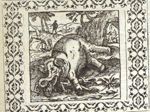
Victoria cruenta: Whitney, A choice of emblemes (Leiden, 1586), emblem 211
Iconclass: 54F2 Victory 54DD4 Difficulty
Loci Communes: Victoria utrimque tristis (A victory sad on both sides, Victoire triste des deux côtés)
III ix 3 Filius degenerans A son going to the bad
In filium, qui paterno degenerat instituto, sive qui non diu fruitur à patre relictis, sed excutitur à maiorum facultatibus, apposite torquebitur illud ex eodem libro, Αλλ᾽ οὐχ ὑμὸς ἐν ἔντεσι πατρὸς ἐγήρα. id est, At non consenuit patriis in filius armis.
For a son who falls short of the upbringing given by his father, or one who does not long enjoy his father's inheritance but is driven out of his ancestral possessions, we can aptly transpose this from the same book:
But the son did not grow old in his father's armour.
Facsimile:
Iconclass: 42B832 the naughty child 42B7411 father and son(s) (family group) 57AA1 Bad Behaviour
Loci Communes: Degenerantium in pejus (Degenerating for the worse, Dégénérer en pire)
III ix 4 Eventus praeter expectationem An unexpected outcome
Quoties res multo secus evenit quàm vel fuerat instituta, vel probabilibus coniecturis eventura videbatur, congruet illud ex eodem libro, Αλλ᾽ αἰεί τε διὸς κρείσσων νοος αἰγιόχοιο. id est, Verum praepollet magni Iovis vique voluntas. Pindarus in Pythiis hymno ultimo, τὸ γὰρ μόρσιμον οὐ πάρφυκτον, Αλλ᾽ ἔσται χρονος οὗτος, ὅς καὶ τιν᾽ ἀειλπτίᾳ βαλὼν, ἔμπαλιν γνώμας τὸ μὲν δώσει, τὸ δ᾽ οὔπω. id est, Quod enim in fatis est, evitari non potest, Sed erit tempus hoc, quod aliquem desperatione iaculatum, praeter opinionem, hoc quidem dabit, aliud vero nequaquam. Rursum Iliad. π. Αλλ᾽ αἰεί τε διὸς κρείσσων νοος ἠέπερ ἀνδρῶν. id est, Sed magis atque hominum pollet Iovis usque voluntas.
Whenever something turns out very differently from what was intended or seemed likely to happen, then this from the same book will be fitting: 'But the will of great Jove prevails at every moment.' Pindar in the last Pythian Ode: 'For what is in the fates cannot be avoided; but there will be times when to someone cast down in despair one thing will be granted beyond all expectation, but another will not.' And again in book 16 of the Iliad: 'But greater than that of men at all times is the will of Jove.'
Facsimile:
Iconclass: 52BB3 Surprise, Wonder; 'Maraviglia' (Ripa) 54FF12 Fate, Doom
Loci Communes: Praeter spem bonum aut malum (Good or bad beyond expectation, Bien ou mal inattendu)
III ix 5 Reprehensio cogitationis Censuring what we think
Cum ipsi reprehendimus animi nostri consilium, aut cogitationem parum honestam, aut parum utilem, locus fuerit ex Iliad. ρ. Αλλὰ τίη μοι ταῦτα φίλος διελέξατο θυμός; id est, Sed mihi cur animus, secum haec in pectore versat? Idem aliis item locis repetitur.
When we reproach ourselves for our intentions or for dishonourable or unhelpful thoughts, it would be a good place for this from book 17 of the Iliad: 'But why does my mind put this into my heart?' The same is to be found in other passages.
Facsimile:
Iconclass: 57BB11:52B1 Admonition, Reprehension; 'Riprensione', 'Riprensione giovevole' (Ripa)❧Thinking, Thought, Reflection; 'Pensiero' (Ripa)
Loci Communes: Mutandae sententiae (Changing one's opinion, Changer d'avis)
III ix 6 Praebere viros Prove yourselves men
Ad fortiter agendum, ferendûmve adhortabimur hoc carmine ex eodem Iliad. ρ. quanquam idem aliàs subinde repetitur, Ανέρες ἐστὲ φίλοι, μνήσασθε δὲ θούριδος ἀλκῆς. id est, Eia estote viri, validasque expromite vires.
We can encourage people to act or suffer bravely with this line, also from book 17 of the Iliad, though it is also found repeatedly in other places: 'Come then, be men, show vigour and strength.'
Facsimile:
Iconclass: 31A711 masculinity 54A7 Strength, Power; 'Fortezza', 'Fortezza d'Animo e di corpo', 'Fortezza del corpo congiunta con la generosità dell'animo', 'Fortezza & valore del corpo congiunto con la prudenza & virtù del animo', 'Forza' (Ripa) 54A8 Courage, Bravery, Valiance, Manliness; 'Ardire magnanimo et generoso', 'Gagliardezza', 'Valore', 'Virtù heroica', 'Virtù dell'animo e del corpo' (Ripa) 54C22 Appeal
III ix 7 Re opitulandem, non verbis Help is in the deed, not in words
Cum re opus est, nihil prosunt verba, veluti si quis egeat pecuniariis suppetiis, quorsum attineat huic aures explere dictis? Rursum in consultationibus, in iudiciis, rationibus agendum est, non vi. Ad id faciet Homericum illud ex Iliad. π. Εν γὰρ χερσὶ τέλος πολέμου, ἐπέων δ᾽ ἐνὶ βουλῇ. id est, Verba in consilio, valet in certamine robur.
When action is required, words are no help; for example, if someone needs financial support, what use is it to fill his ears with advice? On the other hand in deliberations and decisions it is a matter of arguments, not action. This Homeric line from book 16 of the Iliad is suitable for this:
The council is the place for words, in battle what matters is fortitude.
Facsimile:
Iconclass: 54A6 Helpfulness 51HH41:53D2 Insufficiency❧Promise; 'Promissione' (Ripa) 54B2:54D2 Indispensability❧Action; 'Operatione manifesta' (Ripa)
Loci Communes: Cum auxilio ; citra auxilium (With help; without help, Avec aide ; sans aide)
III ix 8 Corrupta iudicia Corrupt judgments
In eos qui corrupte iudicant, aut suffragium ferunt, non ad Reipub. commodum, sed ad privatum commodum respicientes: sive qui per tyrannidem leges opprimunt, competet illud ex eodem libro, Οἵ βίῃ ἐν ἀγορῇ σκολιὰς κρίνωσι θέκιστας, Εκ δὲ δίκην ἐλάσωσι, θεῶν ὄπιν οὐκ ἀλέγοντες. id est, Qui per vim in populi coetu communia iura Depravant, ac iustitiam depellere tentant Nil veriti vocem divûm.
The case of those who give corrupt judgments or who cast their votes not with the good of the state in mind but their private advantage, or who stifle law by tyranny, is met by this couplet from the same book:
Men who by violence in public meetings
Pervert the common laws and seek to drive out justice,
Having no respect for the voice of the gods.
Facsimile:
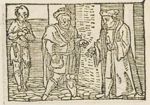
L'argent content faict playder Aduocatz: La Perrière, Le theatre des bons engins (Lyon, 1545), emblem 66 uses the imagery of lawyers accepting a bribe
Iconclass: 44G690 'Corruttella ne' giudici' (Ripa) 59CC221 Corruptibility, Venality, Corruption
Loci Communes: Munerum corruptela (Corruption by gifts, Corruption par les présents)
III ix 9 Apta provincia A suitable function
In eum, qui provinciam suscipit, suis aptam viribus, abstinens à negocio, cui sit impar, veluti si quis episcopatum accipiat, summum pontificium recuset, conveniet illud ex eodem lib. Εἴλετο ἄλκιμα δοῦρα τὰ οἱ παλάμηφιν ἀρήρει, Εγχος δ᾽ οὐχ ἔλετ᾽ οἶον ἀμύμονος αἰακίδαο. id est, Quae manibus quadrent, ingentes corripit hastas Quaslibet, ast hastam solam non sumit Achillis. De Patroclo dictum, qui cum Achillis armis esset indutus, ab hasta tamen abstinebat, quod ea gravior esset, quàm ut quisquam Graecorum regere posset praeter unum Achillem. Quod idem in Odyssea de Arcu Ulyssis finxit Homerus.
For a person who takes up a function suited to his abilities and refrains from affairs to which he is not equal - for example if someone accepts a bishopric and declines the papacy - this couplet from the same book will be suitable: 'He seizes any huge spears that fit his grasp, / Only the spear of Achilles he does not take.' This refers to Patroclus who put on Achilles' armour but refrained from taking the spear because it was too heavy for any of the Greeks to wield except Achilles alone. Homer pictured the bow of Ulysses in the same way in the Odyssey.
Facsimile: 
Iconclass: 51D2 Harmony, Regularity 54A33 Skill, Ability; 'Artificio', 'Prontezza' (Ripa) 54A43 Temperance, Moderation; 'Misura' (Ripa)
Loci Communes: Munus aptum aut ineptum (A gift fitting or unfitting, Un présent convenable ou inconvenant)
III ix 10 Pudor et metus Shame and fear
Cum abstinetur à re quapiam, quia ea tum inhonesta factu videatur, tum vero minime tuta, locum habet illud ex Iliados ο. Ισχε γὰρ αἰδὼς, καὶ δέος. id est, Nam pudor atque metus vetuit. De conglobata acie dictum, quae ne se diduceret, partim pudor obstabat, partim metus: Pudorem aunt ingens addere calcar ad fortiter agendum, indicat in eodem lib. cum ait, Αἰδομένων δ᾽ ἀνδρῶν πλέονες σόοι ἠὲ πέφανται. id est, Plures sunt salui, atque cadunt his, quis pudor adsit.
When we refrain from something because it seems improper to do it and also dangerous, there will be a place for this from book 15 of the Iliad: 'For shame and fear forbid it.' Homer is speaking of a compact battle formation which was prevented from breaking up partly by shame and partly by fear. He shows that shame is a great spur to acting bravely in the same book when he says: 'Of those who feel shame more are saved than fall.'
Facsimile:
Iconclass: 56DD1 Fear, Dread; 'Paura', 'Timidità o Timore', 'Timore' (Ripa) 57A4 Shame
Loci Communes: Pudor (Shame, modesty, Pudeur)
III ix 11 Qui obticescit One who falls silent
In eum, qui metu attonitus, aut stupefactus admiratione tacet, aut cui non est quod respondeat, quadrabit illud ex Iliados ρ. Δὴν δέ μιν ἀμφασίη ἐπέων λάβε. id est, Illum corripuit stupor, atque infantia linguae.
For someone who is stunned by fear or struck dumb with wonder and falls silent, or who can find no answer, a good phrase would be this from book 17 of the Iliad: 'He was stunned and struck dumb.'
Facsimile:
Iconclass: 52BB3 Surprise, Wonder; 'Maraviglia' (Ripa) 52DD3 Taciturnity; 'Secretezza', 'Secretezza overo Taciturnità' (Ripa) 56DD1 Fear, Dread; 'Paura', 'Timidità o Timore', 'Timore' (Ripa)
Loci Communes: Laudata (Praised things, Choses louées)
III ix 12 Mors omnibus communis Death is the common lot
Qui dicet omnibus ex aequo moriendum, nec ullis viribus arceri fati necessitatem, citabit illud ex Iliados σ Οὐ δὲ γὰρ οὐδὲ βίη ἡρακληος φύγε κῆρα. id est, Nec vis Herculea fatum euitavit acerbum.
Anyone who wants to say that death must come to all equally and that no force can ward off the necessity of fate can quote this from the Iliad book 18: 'Not even Hercules was strong enough to avoid pitiless death.'
Facsimile:
Iconclass: 51C2:31E Necessity, Inevitability; 'Necessità' (Ripa)❧death of human being
Loci Communes: Necessitas (Necessity, Nécessité)
III ix 13 Alius aliis in rebus praestantior People excel in different ways
Qui dicit alium alia dote praecellere, accommodabit quod in eodem libro dictum est de Polydamante & Hectore, Αλλ᾽ ὁ μὲν ἂρ μύθοισιν, ὁ δ᾽ ἔγχεϊ πολλόν ἐνίκα. id est, His dictis, hasta longe praestantior ille. Eandem sententiam fusius explicat Iliad. u. Polydamas loquens Hectori: Εκτορ ἀμήχανός ἐσσι παρὰ ῥητοῖσι πιθέσθαι. Οὔνεκα τοι περὶ δώκε θεὸς πολεμηϊα ἔργα, Τούνεκα τῇ βουλῇ ἐθέλεις περιΐδμεναι ἂλλων; Αλλ᾽ οὔπως ἅμα πάντα δυνήσεαι αὐτὸς ἐλέσθαι. Αλλῳ μὲν γὰρ ἔδωκε θεὸς πολεμήϊα ἔργα, Αλλῳ δ᾽ ὀρχηστὺν, ἑτέρῳ κίθαριυ καὶ ἀοιδὴν, Αλλῳ δ᾽ ἐν στήθεσσι τίθει νόον εὐρύοπα ζεύς Εσθλόν. id est, Hector non potis es deflectere pectora dictis. An quia dii donant factis praecellere belli, Vis in concilio reliquos praecedere sensu? At non cuncta petes unus simul omnia ferre. Quippe Deus dedit huic virtute excellere belli, Huic laudem choreae, citharam illi, & carmina blanda, Rursum alii mentem praeclaram in pectore, magnus Iuppiter inseruit.
If we want to say that different people have different talents, we can borrow what is said in the same book of Polydamas and Hector: 'This man is far better with words and that one with a spear.' The same view is expressed at greater length in book 13 of the Iliad by Polydamas when he speaks to Hector:
Hector, you are not good at gaining hearts with words.'
But just because the gods have granted you to be a great fighter,
Do you think your ideas should be given precedence over others' in council?
But you cannot take on alone all responsibilities at the same time,
For the god has given to one to excel in fighting,
Another earns praise for dancing, another for playing the lyre and singing sweet songs,
And in another's mind great Jupiter has planted
A brilliant intelligence.
Facsimile:
Iconclass: 51BB3:52A13 Imparity, Inequality, Difference❧Talent
Loci Communes: Excellentia, inaequalitas (Excellence, inequality, Excellence, inégalité)
III ix 14 In periculoso negocio non est dormitandum In a dangerous affair you cannot afford to doze
Ubi monebimus in re ardua non esse cessandum, congruet quod subinde repetitur apud Hometum Iliados π. Ολίγη δ᾽ ἀνόπνευσις πολέμοιο. id est, Exigua est interspiratio belli. Poterit trahi vel ad litem forensem, vel ad simile negocium odiosum, & laboris plenum.
When we want to warn that you must not be negligent in the middle of a difficult business, a fitting phrase could be this found in Homer's Iliad book 16: 'There is little breathing space in battle.' This could be applied to legal battles or to some other such unpleasant, difficult business.
Facsimile:
Iconclass: 45H3 battle 52A23 Alertness, Vigilance; 'Guardia', 'Vigilanza', 'Vigilanza per difendersi & oppugnare altri' (Ripa) 54DD51 Danger; 'Pericolo' (Ripa)
Loci Communes: Discriminis (Danger, crisis, Danger)
III ix 15 Mens laeva Wrong-headed
Frequenter hominum mens laeva est, & pessima pro optimis sequuntur, optima pro pessimis repudiant. Ad hanc sententiam facit illud Iliados σ. Εκτορι μὲν γὰρ ἐπηνησαν κακὰ μητιόωντι, Πουλυδάμαντι δ᾽ ἂρ οὔτις, ὅς ἐσθλὴν φράζετο βουλὴν. id est, Consiltum Hectoreum laedudabat inutile quisque, Nemo Polydamantis, at hic dabat utile solus.
The minds of men are often perverse; they pursue the worst instead of the best, and reject the best in favour of the worst. The idea is suitably expressed by this from book 18 of the Iliad:
Everyone praised the advice of Hector, which was bad,
And no one that of Polydamas, though his alone was good.
Facsimile: 
Iconclass: 52E3 Counsel; 'Consiglio' (Ripa) 53B1:54AA5 Acceptance❧Badness 53BB1:54A5 Rejection❧Goodness; 'Bontà' (Ripa)
Loci Communes: Infortunii sive exitii (Misfortune or ruin, Malheur ou ruine)
III ix 16 Verbis pugnas, non re You are fighting with words, not facts
Facile est conviciis altercari, verum re vincere difficile. Ad eam sententiam quadrabit illud ex Iliados ν ductum ab Aenea congressuro cum Achille, Επεὶ σάφα οἶδα καὶ αὐτὸς Η μὲν κερτομίας ἢ δ᾽ αἴσυλα μυθήσασθαι. id est, Siquidem novi probe & ipse, Et petere probris inimicaque dicere dicta. Paulopost repetit copiosius eandem sententiam: Εστὶ γὰρ ἀμφοτέροισι ὀνείδεα μυθησασθαι Πολλα` μάλ᾽ οὐδ᾽ ἂν νηὺς ἑκατόνζυγος ἄχθος ἄροιτο. Στρεπτὺ δὲ γλῶσσ᾽ ἐστὶ βροτῶν πολέες δ᾽ ἔνι μυθοι, Παντοιοι, ἐτέων δὲ πολὺς νόμος ἔνθα καὶ ἔνθα. Οπποιον κ᾽ εἴπησθα ἔπος, τοῖονδ᾽ ὑπακούσαις. id est, Ambobus siquidem probra dicere plurima promptum est, Quorum onus haud portet centum ratis obsita remis. Est hominum quia lingua volubilis, omnigenique Insunt sermones, variique & pascua dictis, Hinc atque hinc, multaeque vices, sed qualia verba Dices, talia redduntur tibi dicta vicissim.
It is easy to exchange insults, but difficult to convince by the facts. This idea can be suitably expressed by the following from book 20 of the Iliad spoken by Aeneas when he is about to encounter Achilles: 'Seeing I too know well / How to attack with insults and to utter taunts.' Shortly after this he repeats the same idea at greater length:
It is easy for both of us to hurl plenty of insults;
A hundred-oared ship could not carry the weight of them.
For the tongue of man is glib; it has many and varied sorts
Of speech at its command, a wide pasturage of words
On every side and many alternatives, but the sort of words
You utter will be the sort you hear in answer.
III ix 17 Ne quid moveare verborum strepitu Don't be put off by loud words
Qui monebit aliquem, ne saevis verbis ac minis deterreatur, quominus experiatur, accommodabit illud ex eodem libro, ab Apolline dictum Aeneae, Αλλ᾽ ἰθὺς φέρε χαλκὸν ἀτειρέα, μηδέ σε πάμπαν Λευγαλέοις ἐπέεσσιν ἀποτρεπέτω καὶ ἀρειῇ. id est, Quin rigido ferro magis obvius ito, nec umquam Te saevis dictis deterreat ille minisque.
If you want to warn someone not to be dissuaded from trying to achieve something by violent words and threats, you can adapt this from the same book where Apollo speaks to Aeneas: 'Nay, with unwavering sword go forward rather to meet him, / And never let him put you off with violent words and threats.'
III ix 18 Cibo opus duraturis in labore Those who face a long task need food
Inituri bellum, ne omnino ieiuni sint, ne viribus destituantur. Id trahi poterit ad studium literarum, ad exercitium pietatis, atque alia complura. Ad id congruent versus Homerici, ex Iliad. Τ. Οὐ γὰρ ἀνὴρ πρόπαν ἦμαρ ἐς ἡέλιον καταδύντα Ακμηνος σιγτοιο δυνήσεται ἄντα μάχεσθαι, Εἰπερ γὰρ θυμῷ γε μενοινάα πολεμίζειν, Αλλὰ τε λάθρη γῦα βαρύνεται, ἠδὲ κιχάνει Δίψα τε καὶ λιμὸς, βλάβεται δὲ τε γούνατ᾽ ἴοντι. Ος δε κ᾽ ἀνὴρ οἴνοιο κορεσσάμενος, καὶ ἐδωδῆς Ανδράσι δυσμένεεσσι πανημέριος πολεμίζει, Θαρσαλέον νύ οἱ ἦτορ ἐνὶ φρεσὶν, οὐδέτι γῦα Πρὶν κάμνει, πρὶν πάντας ἐρωῆσαι πολεμοιο.. id est: Nam quis ad occasum usque valebit solis ab ortu Impastus iugi durans confligere pugna? Pectore enim quamvis sit prompto ad belligerandum, Sensim membra gravant tamen, ac sitis atra, famesque Corripiunt, genuaque labant tendentis in hostem. Rursus erit quicumque satur, vinoque ciboque, Is demum potuit confligere perdius hosti. Huic animus viget usque ferox, neque membra laborant Huic prius, ac victor bello submousrit omnes.
Those who are about to go into battle should not go in the least hungry lest they are deprived of their strength. This could be applied to literary studies, to the practice of piety and many other things. Homer's verses from book 19 of the Iliad fit here:
For what man can keep going from sunrise to sunset
Enduring the struggle of continuous battle without food?
However eager he may be to fight, his limbs gradually
Become heavy, a burning thirst and hunger attack him
And his knees give way as he struggles against the enemy.
On the contrary, one who has had his fill of wine and food
Will be able to fight the enemy all day long.
His spirits remain ever fierce, his limbs do not tire
Until, victorious, he drives all before him.
Facsimile:
Iconclass: 51C2:41C11 Necessity, Inevitability; 'Necessità' (Ripa)❧eating
Loci Communes: Necessitas (Necessity, Nécessité)
III ix 19 Omnibus armis praesidiisque destitutus Without arms or protection
Hominem inermem et omnibus destitutum praesidiis indicabimus hoc versu, qui est Iliados Φ. Γύμνος ἄτερ κόρυθός τε καὶ ἀσπίδος οὐδ᾽ ἔχεν ἔγχος. id est, Et clypeo simul & galea nudatus, & hasta.
We can signify a man without weapons and deprived of any protection with this line, which is in the Iliad book 21: 'Stripped of everything, shield and helmet and spear.'
Facsimile:
Iconclass: 51AA4:45C1 Nothingness, Absence❧weapons
Loci Communes: Desperatio (Despair, Désespoir)
III ix 20 Frustra habet qui non utitur Possessions are worthless if not used
Si quem increpare voles, quod ingenio, divitiis, literis non utatur, cum habeat, conveniet illud ex eodem Iliad. Φ. Τίνυ τόξον ἔχεις ἀνεμώλιον ἄυτως; id est, Cur frustra tibi iam gestatur inutilis arcus?
If you want to reproach someone for not using the intelligence, wealth or learning that he has, this line from the same book 21 of the Iliad will do: 'Why do you carry your bow about unused?'
Facsimile: 
Iconclass: 51AA4:54B11 Nothingness, Absence❧Use 54BB6:55B Worthlessness❧Possession
Loci Communes: Absurda, indecora, seu praepostera (Absurd, unbecoming, or preposterous things, Choses absurdes, inconvenantes ou déplacées)
III ix 21 In fugituum For a runaway
Ubi quis impotenti animi cupiditate ad rem quampiam instigatur, praecipue parum honestam, vel magis si quis turpiter fugiat, in hunc quadrabit, si dixeris, Τοῦτον ἡ κυνάμυια ἄγει, id est, Hunc cynamya rapit. Sic enim in eodem libro Iuno de Marte è praelio fugiente, Καὶ δ᾽ αὖθ᾽ ἡ κυνάμυια ἄγει βροτολοιγὸν ἄρηα. id est, Pestiferum Martem rursum exagitat Cynamya. id est, musca canina.
When someone is incited by unbridled greed to want something, especially something ignoble, or more still if someone runs away like a coward, it will be apt if you say, 'He is being dragged off by the cynamyia.' In the same book Juno describes Mars as he runs away from the battle like this: 'Plaguebearing Mars is being led off by the cynamyia.' The cynamyia is the dog-fly.
III ix 22 Cum diis non pugnandum You may not fight with the gods
Qui monebit non esse pugnandum cum genio, cum superis, cum magnis principibus, quos Hebraeorum etiam literae vocant deos, usurpabit illud ex eodem libro, Θεοί δέ τε φέρτεροι ἀνδρῶν. id est, Verum homines diis inferiores. De θεομαχεῖν diximus alibi. Plindarus Pythiis hymno secundo sententiam hanc sic extulit, Χρὴ δὲ πρὸς θεὸν οὐκ ἐρίζειν. i. Oportet adversus Deum non contendere.
If you want to warn that we should not fight with a spirit, with the immortal gods, or with great princes that even the Hebrew scriptures call gods, you can use this from the same book: 'But men are lower than the gods.' I have spoken about 'Fighting against the gods,' elsewhere. Pindar expressed this idea in the second Pythian ode thus: 'And it is right not to strive with God.'
Facsimile:
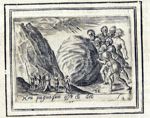
Tegen Godt is quaed vechten - Non pugnandum esse cum deo: Pers, Bellerophon (Amsterdam, 1614), emblem 18
Iconclass: 51EE2:3 Inferiority❧Human Being, Man in General 33B3:12B13:51CC19 fighting❧representations ~ gods, demi-gods, heroes, etc. (non-Christian religions)❧No Result, Lack of Result, Inefficacy, Futility
Loci Communes: Inanis opera (Vain effort, Effort vain)
III ix 23 Autor omnium et fons Author and source of everything
Cum indicare volemus primum omnium autorem, unde ceu captie proficiscantur omnia, maxima pariter & minima: Veluti si quis dicat superbiam omnium malorum parentem, fidem omnium virtutum fontem, Homerum omnis poeseos patrem, non inconcinniter accommodabitur illud ex eodem libro de Oceano dictum, Εξ οὗ περ πάντες ποταμοὶ καὶ πᾶσα θάλασσα Καὶ πᾶσαι κρῆναι καὶ φρείατα μακρὰ νάουσιν. id est, Ex quo uno freta cuncta fluunt & flumina cuncta, Et cuncti manant fontesque lacusque profundi.
When we want to point to the first originator of everything, from whom everything, from the greatest to the smallest, proceeds as from the head (for example, if someone says pride is the father of all evils, faith is the source of all virtues, Homer is the father of all poetry) it will be quite fitting to adapt from the same book this couplet referring to Ocean:
From whom alone flow all seas and all rivers,
All springs and deep lakes stream forth.
III ix 24 Prorsus ignotus Utterly unknown
In hominem quem nobis mirum in modum ignotum videri volumus, per iocum torquebitur illud ex eodem libro atque aliàs apud Homerum frequens, velut Odysseae α & ξ Τίς πόθεν εἶς ἀνδρῶν, πόθι τοι πόλις ἠδὲ τοκῆες; id est, Dic quis & unde venis, tibi ubi patria atque parentes? Cognatum est illi, Albus an ater sis, nescio. Poterit & ad rem applicari: veluti si dicamus aliquem omnis philosophiae imperitum, in librum philosophicum incidisse: Τίς πόθεν εἶς ἀνδρῶν, πόθι τοι πόλις, ἠδὲ τοκῆες;
If we wish to make it apparent that a person is emphatically unknown to us, we can jokingly turn against him this line, which occurs in the same book and often elsewhere in Homer, such as the Odyssey books 1 and 14: 'Tell me, who are you, where do you come from, where are your country and your parents?' This is close to the adage I know not whether you are dark or fair.' It could also be applied to a circumstance, for example, let us say that someone entirely ignorant of philosophy has come across a book on the subject: 'Tell me, who are you, where do you come from, where are your country and your parents?'
III ix 25 Quoad vixero For as long as I live
Quod in vita perpetuum nobis futurum intelligi volemus, indicare licebit Homerico carmine, quod est in Iliados χ. Οφρ᾽ ἂν ἔγωγε Ζωοῖσιν μετέω καὶ μοὶ φίλα γούνατ᾽ ὀρώρα. id est, Donec Vivos inter agam, genibus dum fulciar hisce. Hoc imitatus Marco: Dum memor ipse mei, dum spiritus hos regat artus.
Something that we want to declare we will always hold to in life can be signalled with Homer's verse in book 22 of the Iliad: 'While I move / Among the living, while I am supported by these knees.' Maro imitated this: 'While I am mindful of myself, while my spirit rules these limbs.'
III ix 26 Gloriosum et apud posteros A deed glorious to postery too
Cum facinus significabimus, cuius famam & posteritas celebratura videtur, quadrabit illud ex eodem libro: Αλλὰ μέγα ῥεξας τι καὶ ἐσσομένοισι πυθέσθαι. id est, Imo facinus insigne peregit Ipsa etiam quod posteritas exaudiat.
When we want to signify a deed whose glory will be celebrated by posterity too, this from the same book will be fitting:
Nay rather he achieved a great deed
Such that posterity itself would hear of.
Facsimile:
Iconclass: 42G family, relationship, descent 59B31 Honour, Glory; 'Ampiezza della Gloria', 'Gloria', 'Gloria de prencipi', 'Gloria & Honore', 'Honore', 'Sublimatà della Gloria' (Ripa)
Loci Communes: Probrum, gloria (Disgrace, glory, Honte, gloire)
III ix 27 Vindicta tarda, sed gravis Vengeance falling late, but heavily
Ubi qui diu multa patravit impune, tandem in extremum malum adducitur, semelque dependit superiora flagitia, congruet illud ex eodem libro: Νῦν δ᾽ ἀθρόα πάντ᾽ ἀποτίσεις. id est, Nunc cuncta lues semel adglomerata. Verba sunt Achillis ad Hectorem.
When someone who has committed many crimes over a long period with impunity is at last brought to his downfall, and pays once and for all for his earlier misdeeds, this from the same book will be fitting: 'Now you shall pay once and for all for all your accumulated misdeeds.' These are the words of Achilles to Hector.
Facsimile: 
Iconclass: 51H3:44G51 Multitude❧crime 44G37 public punishment (death not intended or involved) 51MM11 Slowness, Tardiness; 'Tardità' (Ripa)
Loci Communes: Ultio malefacti (Vengeance for a wrongdoing, Vengeance d'un méfait)
III ix 28 Anceps eventus rei Two possible outcomes
Cum anceps rei discrimen significamus, & incertum utrò vergat victoria, congruet illud ex eodem libro, Καὶ τότε δὴ χρύσεια πατὴρ ἐτίτταινε τάλαντα. id est, Tum pater auratas librabat utrinque bilances. Idem est Iliados χ.
When we point out that a situation has two possible outcomes and that it is uncertain which way victory inclines, this line from the same book will be appropriate: 'Then the father balanced the two pans of his golden scales.' The same line occurs in book 8 of the Iliad.
Facsimile:
Iconclass: 52BB41:54F2 Uncertainty❧Victory
Loci Communes: Incertus eventus (Uncertain outcome, Issue incertaine)
III ix 29 Magna de re discepatur A great matter being debated
Cum ingens certamen indicabimus, nec levia aut ludicra peti praemia, quadrabit illud ex eodem libro: Επεὶ οὐκ ἑερμήιον οὐδὲ βοείην Αρνύσθην. id est, Neque enim illis victima sive Bucula captabatur. Dictum est de Achille & Hectore de vita decertantibus. Usurpatur à Luciano in Eunucho, cum ridet philosophos turpiter apud iudices de salario contendentes. Carmen integrum sic habet, Επεὶ οὐχ ἱερμήϊον οὐδὲ βοείην Αρνύσθην, ἅτε ποσσιν ἀέθλϊα γίγνεται ἀνδρῶν, Αλλὰ περὶ ψυχῆς θέον ἓκτορος ἱπποδάμοιο. id est, Neque enim illis victima, sive Bucula captabatur, quippe haer pramia cursus, Verum de vita currebant Hectoris. Vergilius vertit Aeneidos libro duodecimo: Neque enim levia aut ludicra petuntur Praemia, sed Turni de vita & sanguine certant
When we want to say that there is great dispute and that what is to be gained is neither insignificant nor absurd, these lines from the same book will be appropriate: 'For it was not for a sacrificial animal / Or a heifer that they strove.' This is said of Achilles and Hector in mortal combat. It is used by Lucian in his Eunuch where he makes fun of philosophers quarrelling disgracefully before the judges about their fees. The whole verse goes like this:
For it was not for a sacrificial animal
Or a heifer that they strove, such as are the prizes for a race;
They were running for Hector's life.
Virgil renders this in book 12 of the Aeneid: 'For it is not petty or sporting prizes they seek; / They are fighting for the life and blood of Turnus.'
Facsimile:
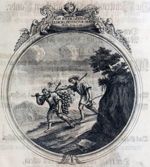
Neque enim levia aut ludicra petuntur praemia: Oppelt, Sammlung geist-und sinnreicher Gedancken (Prague, 1749), emblem 2 quotes the comment
Iconclass: 46A633 debate, discussion (~ meeting) 57A66 Seriousness
Loci Communes: Magni momenti (Of great importance, Grande importance)
III ix 30 Omissis nugis rem experiamur Trifling aside, let's put it to the test
Qui conviciis omissis iubebit ipsa re periculum fieri, uter vincat, aut vincatur, non intempestiviter accommodaverit illud ex eodem libro: Βέλτερον αὖτ᾽ έριδι ξυνελαυνέμεν ὅττι τάχιστα Εἴδομεν ὁπποτέρῳ κεν ὀλύμπιος εὖχος ἐρέξῃ. id est, Sed praestet pugnam committere cominus, ut mox Utri Iuppiter esse velit laudemque, decusque, Perspicuum fiat.
If you want to stop trading insults and demand that it should actually be put to the test to decide which one shall win or lose, then this from the same book will not be inopportune:
But it would be better to come to grips, so that it may be clear
As soon as possible to whom Jupiter wants the fame
And the glory to go.
Facsimile:
Iconclass: 51FF5:52D41 End; 'Fine' (Ripa)❧Trifles, 'Nugae' 53B2 Decisiveness, Decision 57A66 Seriousness
Loci Communes: Aliena curantis - ad rem pertinentia (Meddling in others' affairs - relevant matters, Qui se mêle des affaires d'autrui - choses pertinentes)
III ix 31 Metus infamiae Fear of disgrace
Cum dicemus nos hominum de nobis opinione, rumoribusque commoveri quo minus mutemus consilium, conveniet illud ex eodem libro, praeterea Iliados ζ quod frequenter usurpat Marcus Tullius in Epistolis ad Atticum: Αἰδέομαι τρῶας καὶ τρωάδας ἑλκεσιπέπλους. id est, Troianos, ac Troianas, vereorque pudetque. Verba sunt Hectoris pudore nolentis in urbem recipere sese, ne quis opprobratet illi, imputaretque Troianorum interitum.
When we want to say that people's opinion of us and their murmurings influence us so that we do not waver in our purpose, this from the same book and book 6 of the Iliad, which is used often by Marcus Tullius in his Letters to Atticus, will be suitable: 'I stand in awe of the men and women of Troy and feel shame before them.' These are the words of Hector unwilling for shame to withdraw into the city lest anyone should reproach him and blame him for the deaths of the Trojans.
Facsimile:
Iconclass: 56DD1:59BB31 Fear, Dread; 'Paura', 'Timidità o Timore', 'Timore' (Ripa)❧Disgrace; 'Infamia', 'Scorno' (Ripa)
Loci Communes: Metus poena (Fear as punishment, La peur comme châtiment)
III ix 32 Aliam aetatem alia decent Different ages different conduct
Qui iam aliam aetatem significabit, nec idem decere canum, quod iuvenem aliquando decuit, usurpabit illud ex eodem libro, quanquam & alias iteratum: Αλλ᾽ ὅτε δὴ πόλϊον τε κάρη πόλϊόν τε γένειον. id est, Verum ubi iam, canumque caput, incanaque menta.
If we want to say that someone is older now and that something that was fitting for the young does not befit the old, we can use this, which is from the same book though it is repeated elsewhere:
But when the head is grey and grey the chin .. .
Facsimile:
Iconclass: 59BB31:31D1 Disgrace; 'Infamia', 'Scorno' (Ripa)❧the ages of man
Loci Communes: Tempestiva (Timely things, Choses opportunes)
III ix 33 Quod aliis vitio vertas, ipse ne feceris Don't do yourself what you criticize in others
Quod damnaturus sis in aliis, in te admiseris. Ad id faciet illud ex Iliados Ψ. Καὶ δ᾽ ἄλλῳ νεμεσᾶτον ὅς τις τοιαῦτα γε ῥέζοι. id est, Imò adeo si quisquam alius patrare pararet Tale aliquid, damnaretis, vitioque daretis.
What you would condemn in others you should not do yourself. This line from the Iliad book 23 will be suitable here:
What is more, if anyone else were about to commit
Such an act, you would condemn it and brand it a vice.
III ix 34 Aut ipse fuisti aut tui simillimus It was either you or someone very like you
Si quando per iocum indicabimus eundem aliquem fuisse, qui tamen se fuisse eat inficias, veluti, si quem incuses, quod inter bibones compotaverit, isque sese neget fuisse, verum alium quempiam: non illepide detorseris illud ex eodem libro, quod de Patrocli spectro dixit Homerus: Πάντ᾽ αὐτῳς μέγεθος τε καὶ ὄμματα καλ᾽ αἰκυῖα, Καὶ φωνὴν καὶ τοῖα περὶ χροῒ εἵματα ἕστω. id est, Cuncta ipsi similis, vocemque, oculosque decoros Corporis, atque modum, & talem gestabat amictum.
If we want to say jokingly that a person was present who nevertheless denies that he was - for example, if you accuse someone of drinking with habitual drunkards and he denies that it was he and says it was someone else - it would be quite amusing to adapt this from the same book, where Homer spoke of the shade of Patroclus: 'It was in all things like him - voice, handsome eyes, / Stature - and wore similar dress.'
Facsimile: 
Iconclass: 33A8 double 51B2 Similarity, Likeness
Loci Communes: Similitudinis et congruentiae (Similarity and congruence, Similitude et convenance)
III ix 35 Audiens non audit He has ears and hears not
Sunt quidam, qui si quid parum placet, id scire dissimulant, veluti cum negant sibi redditas literas, quibus commonefiant officii sui: quod tamen malint effugere, quam praestare, in hos quadrabit illud ex Iliados Ψ. Ως οὐκ ἀΐοντι ἑοικώς. id est, Dissimulans audisse. De Antilocho dictum, qui Menelaum revocantem a cursu, cum audiret, perinde tamen quasi non audisset, ita celerius etiam currebat: Αντίλοχος δ᾽ ἐτι καὶ πολὺ μᾶλλον ἔλαυνε, Κέντρῳ ἐπιστέρχων, ὡς οὐκ ἀῒοντι ἑοικώς. id est, Quinetiam cursum Antilochus magis accelerabat. Instigans stimulis, audireque dissimulabat.
There are some people who pretend not to know what they do not like; for example, they deny that they have received a letter reminding them of a duty they would prefer to avoid rather than fulfil. For such people this phrase from the Iliad book 23 will be suitable: 'Pretending not to have heard.' This is said of Antilochus who, although he heard Menelaus calling him back from the race, drove all the faster as if he had not heard:
But Antilochus raced all the faster,
Plying the whip as if he had not heard.
Facsimile:
Iconclass: 31A2213 ears 52CC2 Denial, Negation 57AA611:31A412 Dissimulation, Hypocrisy; 'Hippocresia', 'Simulatione' (Ripa)❧deaf, deafness
Loci Communes: Simulatio, dissimulatio (Pretense, dissimulation, Simulation, dissimulation)
III ix 36 Ex habitu bonum virum prae se fert Appearance tells you if a man is good
Qui dicet ex ipsa oris figura videri probum hominem, citabit illud ex Odysseae primo: Οὐ μὲν γὰρ τι κακῷ εἰς ὦπα ἐώκει. id est, Ex specie minime improbus ipsae Esse videbatur. M. Tullius in Verrem lib. 8 Is erat Apronius, qui ut ipse non solum vita, sed etiam corpore atque ore significat, immensa aliqua vorago est, aut gurges vitiorum turpitudinumque omnium.
If you want to say that a man's probity can be seen from his face, you can quote this line from book 1 of the Odyssey: 'From his face alone he seemed to be no scoundrel.' Marcus Tullius, in the eighth book of the Verrine Orations: 'This was the Apronius who, as he himself proclaims not only by the way he lives but in his person and face, was a monstrous chasm or abyss of every sort of vice and immorality.'
Facsimile:
Iconclass: 31A2211:57A61 face❧Honesty; 'Honestà' (Ripa)
Loci Communes: Conjecturae (Conjectures, Conjectures)
III ix 37 Absit clamor in colloquio aut lusu Against brawling in conversation or in games
Qui iubebit in convivio, colloquiove temperari à vociferatione, accommodabit illud ex eodem libro, Νῦν μὲν δαινύμενοι τερπώμεθα, μὴ δὲ βοητὺς ἔστω. id est, Nunc bilares caenemus, et omnis clamor abesio.
If we want to recommend at a banquet or in a conversation that we should refrain from shouting, this from the same book will be fitting:
Now let us dine merrily, and let there be no brawling.
Facsimile:
Iconclass: 51AA4:31B522 Nothingness, Absence❧drunken brawl (usually peasants fighting in an inn)
Loci Communes: Clamosus (Noisy, clamorous, Bruyant)
III ix 38 Grata novitas Novelty finds favour
Si quando dices nuperrima quaeque vulgo maximè placere, non intempestivum fuerit illud ex eodem libro: Τὴν γὰρ ἀοιδὴν μᾶλλον ἐπικλείουσ᾽ ἄνθρωποι, Η τις ἀκουόντεσσι νεωτάτη ἀμφιπέληται. id est, Cantio enim haec hominum longe est celeberrima vulgo Et gratissima, quae nuperrima venit in aures. Accinit huic Pindarus Olymp. hymno 9. Αἰνει δὲ παλαιὸν μὲν οἶνον, ἄνθεα δ᾽ ὕμνων νεωτέρων. i. Lauda vinum vetus, sed novorum hymnorum flores. Sentiens gratiores esse hymnos, qui res nuper gestas celebrant, quam qui prisca tractant. Pleraque commendat novitas potissimum apud imperitos. Contra in scriptis antiquitas conciliat gratiam, novitas invidiam, unde Flaccus in Epistolis: Indignor quicquam reprehendi, non quia crasse Compositum, illepidéve putetur, sed quia nuper. Ac caeteris fermè in rebus favor novitatis superiorum obliterat gratiam. Unde David episcopus Traiectensis, patre prognatus Philippo Burgundionum duce, huius nuper defunctus est proavo materno, vir doctes & cordatus, suadentibus quibusdam, ut propter aetatem ingravescentem pateretur adiungi sibi designatum episcopum, ait sese divi Antonii exemplo commoveri, quo minus id facere vellet. Nam hunc negligi coepisse simul atque successisset Rochus recentior divus. Simile fastidium est humani ingenii in his, quae nobis ad manum sunt. Miramur enim exotica, cum interdum domi habeamus meliora. Id potissimum usu venit in medicis: nostros fastidimus, licet eruditos, belluam è longinqua barbarie profectam suscipimus. Itidem pharmacopolae magno emunt herbas e longinquo advectas, cum interdum meliores nascantur in horto vicini. Id eleganter notavit Alexis apud Athenaeum lib. 3. ἐρῶμεν ἀλλοτρίων, παρορῶμεν συγγενεῖς. id est, Alienum amamus, proximum contemnimus.
When you want to say that it is the newest things that please the common people most, it would be quite opportune to quote this from the same book: For the song that is most praised by far by the majority of men And most pleasing is the one that has come most recently to their ears. There is an ode on this by Pindar, number 9 of the Olympian Odes: 'Praise wine that is old, but praise also the flowers of songs that are new,' meaning that songs celebrating recent achievements are more welcome than those that deal with ancient deeds. Novelty renders many things agreeable, especially to the inexperienced. On the other hand, in literature it is age that wins favour, and novelty attracts envy. This is why Flaccus says in his Epistles: 'I find it offensive that anything is blamed, not because it is thought / To be a crude or dull composition, but because it is new.' But in almost every other field the partiality for novelty makes people forget the attraction of older things. This is why David, bishop of Utrecht - a learned and wise man, son of Philip duke of Burgundy, the great grandfather of the one who died recently - when counselled by certain people to allow a bishop elect to be appointed alongside him, because of his advancing age, said that he was persuaded by the example of St Antony not to do this. For the latter was disregarded as soon as the later saint Roche took over his functions. Human nature manifests a similar boredom with what is familiar, and we marvel at the exotic even if we have better things at home. This happens most particularly with physicians: we become tired of our own, even if they are learned, and we revere a monster originating in some remote foreign place. Likewise pharmacists buy up at a great price herbs that have been brought from great distances, even though better ones are to be found in a neighbouring garden. This was neatly illustrated by Alexis in Athenaeus book 3: 'We love a stranger and despise our kin.'
III ix 39 Mulier pudica ne sola sit usquam A modest woman should not be alone anywhere
Cum admonebimus non convenire, ut pudica mulier sola, citraque testes cum viris colloquatur, usui fuerit illud apud Homerum frequens de Penelope: Οὐκ οἴη, ἅμα τῇ γε καὶ ἀμφίπολοι δὺ ἕποντο. id est, Haud sola, ast illam famulae binae comitatae.
When we want to warn that it is not suitable for a modest woman to be talking to men alone and without witnesses, we could make use of this line about Penelope, which occurs often in Homer: 'Not alone, but with two waiting-women in attendance.'
III ix 40 Fatale vitae tempus exactum His allotted span fulfilled
In decrepitos, quorum aetas iam exacta videbitur, quadrabit ex eodem libro: Νήπιοι, οἵ κατὰ βοῦς ὑπερίον ἡελίοιο ἤσθιον. id est, Dementes, ut qui sacros tibi maxime Phoebe Absumpsere boves. Nam per solis boves, annos fatales, ut opinamur, innuit poeta.
For the very old, whose time seems to be completed, this line from the same book will fit: 'Fools, for they devoured the oxen sacred to you, / Highest Apollo.' For I think by the oxen of the sun the poet means the allotted span of years.
Facsimile: 
Iconclass: 31D910 'Vita longa' (Ripa) 31D910 'Vita longa' (Ripa)
Loci Communes: Longae vitae (A long life, Longue vie)
III ix 41 Non luctu, sed remedio opus in malis Misfortunes need healing not mourning
In malis non lamentis, sed auxiliis utendum. Ad id conveniet illud ex Iliados ω. quanquam aliis item iteratum locis: Οὐ γὰρ τις πρῆξις πέλεται κρυεροῖο γόοιο. Id est, Quippe nihil miseri fletus lamentave prosunt.
In misfortunes we should not indulge in lamentation but seek help. This can be illustrated by this line in the Iliad book 24, although it is repeated in other places: 'For wretched weeping and lamentation do no good at all.'
Facsimile:
Iconclass: 54A6 Helpfulness 54FF11 Adversity, Misfortune, Bad Luck; 'Fortuna infelice', 'Infortunio' (Ripa) 54BB3:56BB121 Inutility, Noxiousness; 'Nocumento', 'Nocumento d'ogni cosa' (Ripa)❧Lamentation; 'Querela a Dio' (Ripa)
Loci Communes: Aliena a re (Irrelevant to the matter, Étranger au sujet)
III ix 42 Adhuc aliquis deus respicit nos Thus far some god has cared for us
Cum in rebus vehementer afflictis, negabimus nos prorsus abiecisse animum, verum esse spei nonnihil, conveniet illud, quod in eodem libro dicitur a Priamo: Αλλ᾽ ἔτι τις καὶ ἐμοιο θεῶν ὑπερέσχεθε χεῖρα. id est, Numen adhuc aliquod dextrammi obtendit amicum.
When we wish to say, in particularly calamitous circumstances, that we have not entirely lost courage but that there is some hope, then there will be a place for this, which is spoken by Priam in the same book: 'Some friendly divinity hitherto has held out his hand to me.'
Facsimile:
Iconclass: 54E42:92 Protection; 'Custodia', 'Difesa contra nimici, malefici & venefici', 'Difesa contra pericoli', 'Riparo da i tradimenti' (Ripa)❧gods ~ classical mythology 56BB21 Calamity, Distress; 'Calamità', 'Calamità o miseria' (Ripa) 56D1 Hope; 'Speranza', 'Speranza delle fatiche' (Ripa)
Loci Communes: Diuturnum (Long-lasting things, Ce qui dure longtemps); Spes pertinax (Persistent hope, Espoir tenace)
III ix 43 Mors optima rapit, deterrima relinquit Death snatches away the best and leaves the worst
Optima mors eripit è medio, relinquit deterrima. Proinde videmus quosdam prorsus inutiles Tithoniam aetatem vivere, paucissimos egregio praeditos ingenio, ad senectae limen pervenire. In hanc sententiam quadrat illud ex eodem libro: Τοὺς μὲν ἀπώλετ᾽ ἄρης, τὰ δ᾽ ἐλέγχεα πάντα λέλειπται, Ψεῦσταί τ᾽ ὀρχησταί τε χοριοιτυπίῃσιν αριστοι, Αρνῶν ηδ᾽ ἐριφων ἐπιδήμϊοι ἁρπακτῆρες. id est, Sustulit hos Mavors reliqua at mala probra relicta Mendaces, saltatores, primique choreis Ducendis, agnis, atque haedis diripiendis Strenui. Celebre est illud Maronis, Optima quaeque dies miseris mortalibus aevi Prima fugit, subeunt morbi, &c. Concinit et Theocritus in Epitaphio Bionis, Ταῖς νύμφαισιν ἔδοξεν ἀεὶ τὸν βάτραχον ᾄδειν Τοις δ᾽ ἐγὼ οὐ φθονέοιμι, τὸ γὰρ μέλος οὐ καλὸν ᾄδει. id est, Sic visum est nymphis semper canit improbarana, Huic neque ego invideo, nec enim bona carmina cantat.
The best things are snatched away by death, the worst are left. Accordingly we see some good-for-nothing people live as long as Tithonus, and very few who are endowed with unusual intelligence reach the threshold of old age. This idea is well expressed by the following from the same book:
These have been slain by Mars, yet evil things are left,
Shameful things are left, liars, mountebanks,
Leaders of the dance, robbers of lambs
And kids.
This passage of Maro is famous: 'Life's fairest days are ever the first to flee / For hapless mortals; on creep diseases.' Theocritus too sings the same theme in the Epitaph of Bion:
So the Nymphs have ordained; the wretched frog sings his song for ever;
But I am not envious of him for he does not make good music.
Facsimile:
Iconclass: 31E213:51F52 'sudden death'❧Earliness 57A1 Good Behaviour
Loci Communes: Longae vitae (A long life, Longue vie)
III ix 44 Domi manendum Better stay at home
Inutile diutius abesse domo, relictis possessionibus. In eam sententiam quadrabit illud ex Odysseae Γ. Καὶ σὺ φίλος, μὴ δηθὰ δόμων ἄποτῆλ᾽ ἀλάλησο Κτήματά τε προλιπὼν, ἄνδρας δ᾽ ἐν σοισι δόμοισι. id est, Tu quoque amice domo diuturnus abesse caveto Rebus itemque viris intra tua tecta relictis. Item Hesiodus: Οἴκοι βέλτερον εἶναι, ἐπεὶ βλάβερον τὸ θύρηφι. id est, Esse domi praestat, quia damnosum foris esse. Refertur ex Euripide carmen hoc: Μακάριος ὅς τις εὐτυχῶν οικοι μένει, Εν γῇ δ᾽ ὁ φόρτος καὶ πάλιν ναυτίλλεται. id est, Beatus is qui in prosperis manet domi, Nam sarcina solo quae tenetur, denuo Potest salo committi.
A warning that it is fruitless to be absent a long while from home and to leave one's property. This idea is aptly expressed by this from the Odyssey book 3: 'You too, my friend, beware of staying long away from home, / Leaving wealth and men under your roof.' Hesiod says the same: 'It is better to be at home, for ruin lies abroad.' And this verse of Euripides is recorded:
Blest is he who remains in prosperity at home,
For a cargo that is kept on land
Can be sent to sea again.
Facsimile:
Iconclass: 42B71 family life at home 51AA4:46C5 Nothingness, Absence❧travelling; tourism 52A24 Precaution
Loci Communes: Domi vivere (To live at home, Vivre chez soi)
III ix 45 A sacris abstinendae manus Do not lay hands on sacred things
Vulgo quoque creditum est, fatum instare ei, qui sacris rebus, ac deo dicatis manus iniecerit: aut qui pios homines, aut certe fungentes sacris ministeriis oppugnarit, veluti pontificem Romanum, episcopos, abbates, etiam si parum fuerint piis moribus. Id propemodum iam olim dictum est ab Homero Iliados Ρ. Οππότ᾽ ἀνὴρ ἐθέλει πρὸς δαίμονα φωτὶ μάχεσθαι, Ον τε θεὸς τιμᾶ τάχα οἱ μέγα πῆμα κυλισθη. id est, Cum divo curtare viro simulatque cupit quis, Cuique Deus bene vult, malum huic brevi imminet ingens.
It is a popular belief that misfortune threatens the man who has laid hands on objects that are sacred or dedicated to a god, or who has fought against pious men or those who exercise sacred offices, such as the Roman pontiff, bishops, abbots, even if they were not of pious habits. Something very like this was said long ago by Homer in book 17 of the Iliad:
When someone seeks to contend against both a god and a man
Whom the god favours, disaster threatens him very shortly.
Facsimile:
Iconclass: 31A25(+934):12B6 postures and gestures of arms and hands (+ reaching for somebody or something, seizing something, touching)❧places and objects of worship ~ non-Christian religions 54FF11 Adversity, Misfortune, Bad Luck; 'Fortuna infelice', 'Infortunio' (Ripa)
III ix 46 Turpis iactantia Boasting is ignoble
Non est generosi animi iactare sese de his, quae fortiter, aut feliciter fecit. Super hoc ita Menelaus eodem in libro: Οὐ μὲν καλὸν ὑπέρβϊον εὐχετάασθαι. id est, Haud sane pulchrum sese iactare superbe.
It is not the act of a noble soul to boast about what one has achieved either by courage or by good fortune. On this subject there is a remark of Menelaus in the same book: 'It does not look well to boast proudly of oneself.'
Facsimile: 
Iconclass: 57AA645:59BB33 Boast; 'Iattanza' (Ripa)❧Ignobility, 'Vulgus'; 'Vulgo overo ignobilità' (Ripa)
Loci Communes: Philautia (Self-love, Amour-propre)
III ix 47 Prior occupat He who acts first wins
Ubi quis lucrum celeritate praeripuit cuipiam, conveniet illud ex Iliados χ. Μήτις κῆδος ἄροιτο βαλὼν, ὁ δὲ δεύτερος ἔλθοι. id est, Ne quis praeriperet iaculans laudemque decusque. Atque ita serior ipse veniret, iamque secundus. Dictum de Achille, qui reliquis Achivis innuit, ne quis iaculum mitteret in Hectorem, quo sibi gloriam totam servaret.
When someone seizes an advantage by being quicker than someone else, this line from book 22 of the Iliad will be pertinent:
Lest someone, by throwing a spear, should snatch the glory and the honour,
And he himself come too late in second place.
This is said of Achilles, who signals to the rest of the Achaeans that no one should cast a spear at Hector, so that he should have all the glory to himself.
Facsimile:
Iconclass: 51M11:54F2 Swiftness, Speed; 'Agilità', 'Celerità', 'Velocità' (Ripa)❧Victory
Loci Communes: Festinationis (Haste, Hâte)
III ix 48 Sacra celerius absolvenda Perform sacred rites promptly
In rebus divinis attentum esse convenit magis, quàm diuturnum, ne vilescant assiduitate, contra quorundam morem sacerdotum, qui nimium immorantur sacro, precibusque quas vocant horarias. Ad id torqueri poterit illud ex Odysseae Γ. οὐ δὲ ἔοικε Δῆθα θεῶν ἐν δαιτὶ θαασσέμεν, ἀλλὰ νέεσθαι. id est, Neque par est In divorum epulo sedisse diutius, imo Surgere mature decet.
It is desirable to give more thought rather than more time to church services so that they are not cheapened by being too long, contrary to the habit of certain priests who spend too much time on the rites and prayers called 'hours.' The point could be illustrated by this from book 3 of the Odyssey: 'Nor is it right / To sit too long at the feast of the gods, / But we should rise promptly.'
Facsimile:
Iconclass: 12B2 ritual practices ~ non-Christian religions 51M11 Swiftness, Speed; 'Agilità', 'Celerità', 'Velocità' (Ripa)
Loci Communes: Festinationis (Haste, Hâte)
III ix 49 Ne dii quidem a morte liberant Not even the gods free us from death
Nemo tam carus superis, ut illorum favore mortem cuitarit. Huic sententiae suffragabitur Homericum ex eodem libro testimonium: Αλλ᾽ ἤτοι θάνατον μὲν ὁμοιϊον οὐδε θεοίπερ, Καὶ φίλῳ ἀνδρι δύνανται ἀλαλκέμεν, ὁππότεκεν δὴ Μοιρ᾽ ὀλοὴ καθέλησι τανηλεγέος θανάτοιο. id est, At vero mortem communiter omnibus aequam A dilecto homine, neque dii depellere possunt, Quem funesta dies fati iamiam urget acerbi.
No one is so dear to the gods that he may evade death by their favour. This idea can be supported by the testimony of Homer from the same book:
But death, the common lot of all,
The gods cannot ward off from a man they love
When the dreadful day of bitter destiny is finally upon him.
III ix 50 Deus undecunque iuvat, si modo propitius God's help is everywhere, if only he is so inclined
Deus ubique prasens adest, si faveat: neque refert ubi gentium agas illo propitic. Ad hanc sententiam accommodes licebit ex eodem libro: Ρεία θεὸς κ᾽ ἐθέλων καὶ τηλόθεν ἄνδρα σαῶσαι. id est: Si libeat servare procul quoque numina possint,
God is everywhere present if he so chooses, nor does it matter where in the world you may live if he protects you. The idea can be expressed by adapting this from the same book:
If they will, from far away too the gods can keep one safe.
Facsimile:
Iconclass: 51II1:51A4 Unlimited Space❧Presence 54A6:92 Helpfulness❧gods ~ classical mythology
Loci Communes: Bonae fortunae, copiae, felicitatis aut ominis (Of good fortune, abundance, happiness, or omen, Bonne fortune, abondance, bonheur ou présage)
III ix 51 De lautiis On sumptuous displays
De cibis praelautis quadrabit illud eodem Odysseae Γ. Οψατε οἶα ἔδουσι διοτρεφέες βασιλῆες. id est, Qualia purpurei comedunt opsonia reges. Venustius fiet, si trahetur ad orationem supra modum elegantem, quasi dignam deorum auribus.
For sumptuous foods this line from book 3 of the Odyssey will be suitable: 'Delicacies such as purple-clad kings eat.' It will be more pleasing if it is used metaphorically of speech that is excessively ornate, as if it were worthy of the ears of the gods.
Facsimile:
Iconclass: 46A162 exhibition of wealth 55C11:46A162 Squandering, Extravagance, Prodigality, Waste; 'Prodigalità' (Ripa)❧exhibition of wealth
Loci Communes: Lautitiae (Sumptuousness, luxuries, Somptuosités)
III ix 52 Concordia Harmony
In absolutam concordiam, omniumque rerum consensum, conveniet illud ex eodem libro: Οὐδἐ ποτ᾽ εἰμ ἀγορῇ δίχ᾽ ἐβάζομεν, οὔτ᾽ ἐνι βουλῇ, Αλλ᾽ ἔνα θυνὸν ἔχοντε νόῳ καὶ ἐπίφρονι βουλῇ. id est, Houd unquam neque concio nos, neque curia dictis Audivit pugnare, animo sed semper eodem, Et sentire eadem atque eadem decernere vidit. Verba sunt Nestoris de se, deque Ulysse.
For complete harmony and agreement on all points, this couplet from the same book will be apt:
Our assembly and our council never heard us
Battle in words, but saw us always of the same mind,
Having the same ideas and coming to the same conclusions.
This is Nestor speaking about himself and Ulysses.
Facsimile:
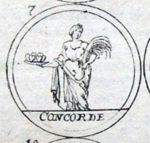
Concorde: Ripa, Essay d'un Dictionaire (Iconologia), (Amsterdam, 1700), emblem 52
Concordia: De la Feuille, Devises et emblemes anciennes et modernes (Augsburg, 1697), emblem 498
Iconclass: 51D2 Harmony, Regularity 51D2 Harmony, Regularity
III ix 53 Fatum immutabile Destiny cannot be changed
Divina decreta non commutantur, humanae leges pro tempore variantur, quemadmodum & mores & voluntates. Ad id congruet illud ex eodem libro: Οὐ γὰρ τ᾽ αἶψα θεῶν πρέπεται νόος αἰὲν ἐόντων. id est: Non etenim divûm mens vertitur astricolarum.
Divine decrees cannot be changed, human laws vary over time, as do customs and ambitions. This idea is suitably expressed by this from the same book: 'For the mind of the star-dwelling gods is not changed.'
Facsimile:
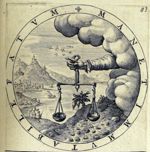
Manet immutabile fatum: Rollenhagen, Nucleus emblematum (Arnhem, 1618), Cent. I, emblem 83
Manet immutabile fatum: Wither, A collection of emblems (London, 1635), emblem 83
Iconclass: 51C2 Necessity, Inevitability; 'Necessità' (Ripa) 51KK2 Immutability 54FF12 Fate, Doom
Loci Communes: Necessitas (Necessity, Nécessité)
III ix 54 Sine ope divina nihil valemus Without divine help we avail nothing
Manca est omnis mortalium industria, omnisque conatus, nisi favor adspiret divinus. Ad id accommodare licebit hometicum illud ex eodem libro, Πάντες δὲ θεῶν χατέουσ᾽ ἂνθρωποι. id est, Mortalis diuum auxilium desiderat omnis.
All human effort and undertakings are lame unless God breathes favourably on them. The idea may be expressed in this Homeric phrase from the same book:
Every mortal has need of divine help.
Facsimile: 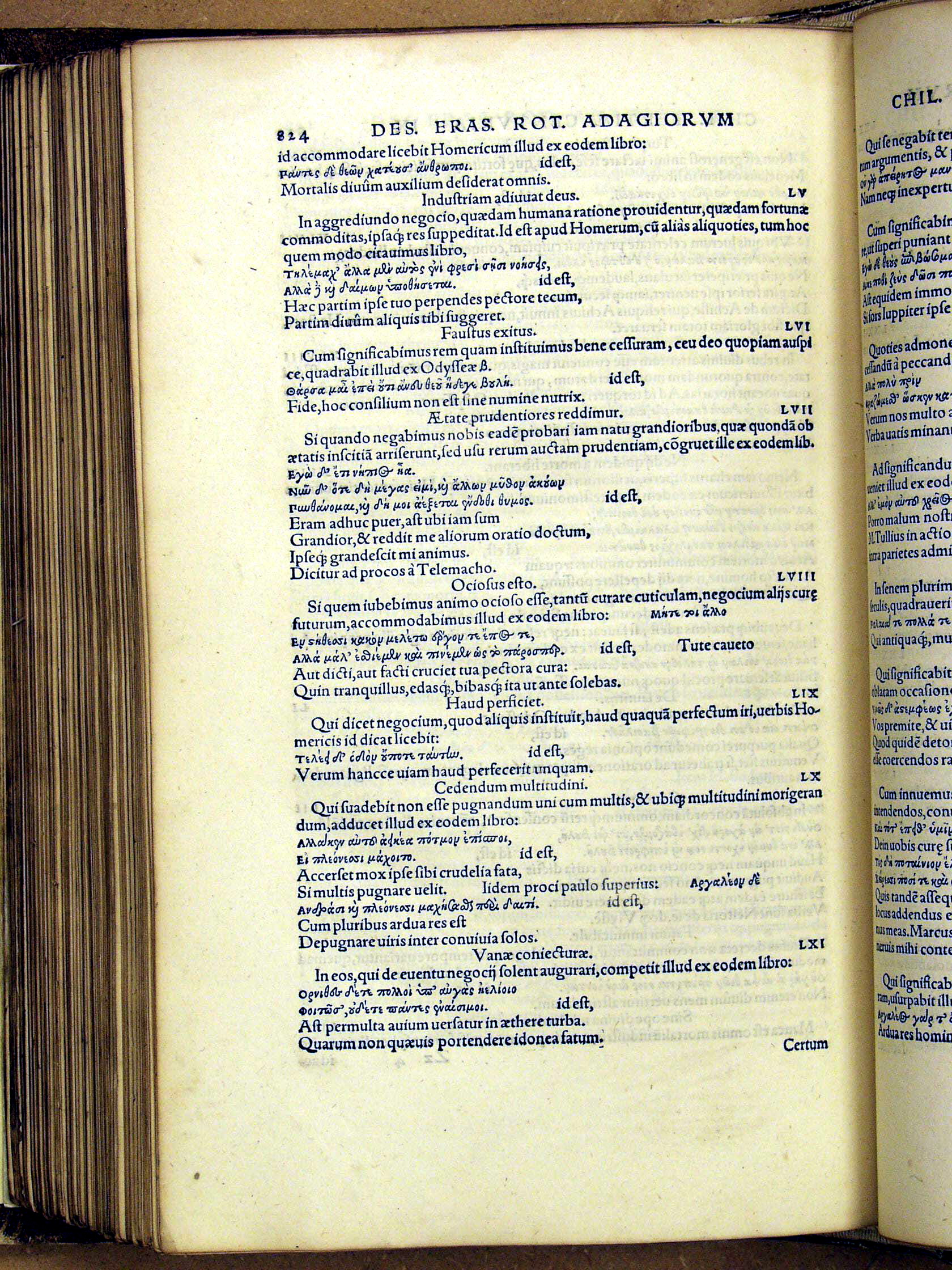
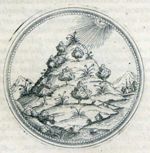
Si serenus illuxerit: Camerarius, Symbolorum et Emblematum Centuria(e) (Nürnberg, 1590, 1595, 1596, 1604), emblem 1 shares the idea that all human efforts need God's help
Si serenus illuxerit: De la Feuille, Devises et emblemes anciennes et modernes (Augsburg, 1697), emblem 394 shares the idea that all human efforts need God's help
Iconclass: 54B2:54A6:92 Indispensability❧Helpfulness❧gods ~ classical mythology
Loci Communes: Cum auxilio ; citra auxilium (With help; without help, Avec aide ; sans aide)
III ix 55 Industriam adiuvat deus God helps those who work hard
In aggrediundo negocio, quaedam humana ratione providentur, quaedam fortunae commoditas, ipsaque res suppeditat. Id est apud Homerum cum alias aliquoties, tum hoc quem modo citavimus libro, Τηλὲμαχ᾽ ἄλλα μὲν αὐτὸς ἐνὶ φρεσὶ σῇσι νοησεις, Αλλὰ δὲ καὶ δαίμων ὑποθήσεται. id est, Haec partim ipse tuo perpendes pectore tecum, Partim diuum aliquis tibi suggeret.
When we enter on an undertaking, we can foresee some things by use of human reason; other elements are provided by the disposition of chance and the situation itself. The idea is found in several places in Homer including the book I have just quoted: 'Part of this you will work out for yourself with your native wit, / Part some god will provide for you.'
Facsimile:

Industriam adiuvat deus: White, A replie to Iesuit Fisher (London, 1624), frontispiece
Iconclass: 54A11 Industriousness, Assiduity; 'Assiduità', 'Industria', 'Zelo' (Ripa) 54A6:92 Helpfulness❧gods ~ classical mythology
Loci Communes: Industria (Industriousness, Application, diligence)
III ix 56 Faustus exitus A lucky outcome
Cum significabimus rem quam instituimus bene cessuram, ceu deo quopiam auspice, quadrabit illud ex Odysseae β. Θάρσα μαἶ ἐπεὶ οὔτι ἄνευ θεοῦ ἥδεγε βουλή. id est, Fide, hoc consilium non est sine numine nutrix.
When we want to express the idea that something we have begun is going to turn out well and has some divine favour, this line from book 2 of the Odyssey will suit: 'Have faith, nurse, this plan is not without a god's inspiration.'
Facsimile:
Iconclass: 54F12 Luck, Fortune, Lot; 'Fato', 'Fortuna', 'Fortuna aurea', 'Fortuna buona', 'Fortuna pacifica overo clemente', 'Sorte' (Ripa)
Loci Communes: Bonae fortunae, copiae, felicitatis aut ominis (Of good fortune, abundance, happiness, or omen, Bonne fortune, abondance, bonheur ou présage)
III ix 57 Aetate prudentiores reddimur Age makes us wiser
Si quando negabimus nobis eadem probari iam natu grandioribus, quae quondam ob aetatis inscitiam arriserunt, sed usu rerum aucta prudentiam, congruet illud ex eodem lib. Εγὼ δ᾽ ἔτι νήπιος ἦα. Νῦν δ᾽ ὅτε δὴ μέγας εἰμὶ, καὶ ἄλλων μῦθον ἀκούων Γυνθάνομαι, καὶ δή μοι ἀέξεται ἔνδοθι θυμός. id est Eram adhuc puer, ast ubi iam sum Grandior, & reddit me aliorum oratio doctum, Ipseque grandescit mi animus. Dicitur ad procos à Telemacho.
If we want to say that now we are older we no longer approve the things we enjoyed before in our youthful ignorance, but have grown wiser with experience, then this passage from the same book will fit:
I was till now a boy, but now I have come of age;
I have gained knowledge by converse with others
And my own mind has grown.
the words of Telemachus to the suitors.
Facsimile:
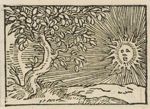
Auec le temps toute chose est cogneue: La Perrière, Le theatre des bons engins (Lyon, 1545), emblem 72 uses the imagery of pears ripening through sunlight to convey the idea that age makes us wiser
Iconclass: 31D14 adult man 52A51 Wisdom; 'Sapienza', 'Sapienza humana', 'Sapienza vera' (Ripa) 54A31 Experience, Mastery; 'Esperienza' (Ripa)
Loci Communes: Prudentia senilis (The prudence of old age, Prudence de la vieillesse)
III ix 58 Otiosus esto Relax!
Si quem iubebimus animo ocioso esse, tantum curare cuticulam, negocium aliis curae futurum, accommodabimus illud ex eodem libro: Μήτε τοι ἄλλο Εν στήθεσσι κακὸν μελέτω ἔργον τε ἔπος τε, Αλλά μάλ᾽ ἐσθιέμεν καὶ πινέμεν ὡς τὸ πάροσπερ. id est Tute caveto Aut dicti, aut facti cruciet tua pectora cura: Quin tranquillus, edasque bibasque ita ut ante solebas.
If we want to recommend to someone to stop worrying, to go and just look after their dainty skin, and leave others to take care of affairs, we can adapt this from the same book:
Take care;
You will torture yourself with thoughts of what to say or do;
Come rather, eat and drink in peace as you did before.
Facsimile:
Iconclass: 54A46 Rest; 'Quiete' (Ripa) 54DD2 Idleness; 'Otio' (Ripa)
Loci Communes: Securitatis et tutae rei (Security and safety, Sécurité et sûreté)
III ix 59 Haud perficiet He will never finish
Qui dicet negocium, quod aliquis instituit, haud quaquam perfectum iri, verbis Homericis id dicat licebit: Τελέει δ᾽ ὁδὸν οὔποτε τάυτην. id est, Verum hancce viam haud perfecerit unquam.
If you want to say that some business begun by someone else cannot in any way be completed, you could say it in Homer's words: But this journey he will never accomplish.
Facsimile:
Iconclass: 51AA4:54D3 Nothingness, Absence❧Completion
Loci Communes: Perficiendi sive absolvendi (Finishing, completing, Achever, accomplir)
III ix 60 Cedendum multitudini Yield to numbers
Qui suadebit non esse pugnandum uni cum multis, & ubique multitudini morigerandum, adducet illud ex eodem libro: Αλλάκεν αὐτοῦ ἀεικέα πότμον ἐπισποι, Εἰ πλεόνεσσι μάχοιτο. id est, Arcesset mox ipse sibi crudelia fata, Si multis pugnare velit. Iidem preci paulo superius: Αργαλέον δὲ Ανδράσι καὶ πλεόνεσσι μαχήσασθαι περὶ δαιτί. id est, Cum pluribus ardua res est Depugnare viris inter convivia solos.
If you want to persuade someone that one person cannot fight against many, and that one should always give in to a multitude, you can bring in this from the same book: 'He will at once bring on himself a harsh fate, / If he seeks to fight against a great number.' The same suitors just before: 'It is a hard thing to fight alone over a banquet / With men that outnumber you.'
Facsimile:
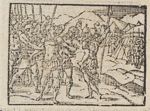
Multitudini cedendum: Aneau, Picta poesis (Lyon, 1564), emblem 66
Iconclass: 33B3 fighting 46A71 individual versus mass 52BB42 Impossibility
Loci Communes: Cedendum multitudini (One must yield to the crowd, Il faut céder à la foule)
III ix 61 Vanae coniecturae Empty guesses
In eos, qui de eventu negocii solent augurari, competit illud ex eodem libro: Ορνιθες δὲτε πολλοὶ ὑπ᾽ αὐγὰς ἠελίοιο Φοιτῶσ᾽, οὐδὲτε πάντες ἐναίσιμοι. id est, Ast permulta avium versatur in aethere turba. Quarum non quaevis portendere idonea fatum.
Against those who are in the habit of giving predictions about the outcome of an undertaking, there is this from the same book: But a great multitude of birds whirl around in the air, And not every one is apt for predicting destiny.
Facsimile:
Iconclass: 52E2:52BB53 Prediction, Prophecy; 'Augurio', 'Divinatione', 'Profetia' (Ripa)❧Nonsense, Absurdity
Loci Communes: Conjecturae (Conjectures, Conjectures)
III ix 62 Certum prospicio I foresee it for certain
Qui se negabit temere, male secúsve de exitu rei cuiuspiam sentire, sed certis adductum argumentis, & pluribus experimentis observasse, accommodabit illud ex eodem lib. Οὐ γὰρ ἀπείρητος μαντεύσομαι, ἀλλὰ εὖ εἰδώς. id est, Nam neque inexpertus iam divinavero, verum Egregie callens.
If we want to say we are not making a rash prediction about the good or bad outcome of anything, but that we have adduced sound arguments and made observations in several trials, we can adapt this from the same book:
For I am not unskilled in prophecy, but
Particularly well experienced.
Facsimile: 
Iconclass: 52E2:52B41 Prediction, Prophecy; 'Augurio', 'Divinatione', 'Profetia' (Ripa)❧Certainty
Loci Communes: Conjecturae (Conjectures, Conjectures)
III ix 63 Deus ulciscetur God will punish
Cum significabimus nobis in praesentia deesse facultatem depellendi, verum optare, ut superi puniant aliquando, usui fuerit illud ex eodem libro: Εγὼ δὲ θεούς ἐπιβώλομαι αἰεὶν ἐόντας Αίκε ποθὶ ζεὺς δῶσι παλίντιτα ἔργα γενέσθαι. id est, Ast equidem immortales imploravero divos, Si fors luppiter ipse vices aliquando reponat.
When we want to say that at the moment we do not have the power to deter someone, but hope the gods will punish eventually, it is a moment to use this from the same book:
But for my part I shall beg the immortal gods
That Jupiter himself may eventually provide requital.
Facsimile:
Iconclass: 51MM11 Slowness, Tardiness; 'Tardità' (Ripa) 52B41:44G37 Certainty❧public punishment (death not intended or involved)
Loci Communes: Ultio malefacti (Vengeance for a wrongdoing, Vengeance d'un méfait)
III ix 64 In tempore cavenda poena mali Beware in good time of the penalty for wrongdoing
Quoties admonebimus, ut multo ante occurratur malo, priusquam oppresserit nos, aut cessandum à peccando, priusquam ingruat divina vindicta, usui fuerit illud ex eodem libro: Αλλὰ πολὺ πρὶν Φραζώμεσθ᾽ ὥσκεν κατὰπάυσομεν. id est, Verum nos multo ante modum, finemque velimus Ponere. Verba vatis minantis procis Ulyssis reditum.
Whenever we want to warn someone that he will encounter misfortune long before he might crush us, or that he should desist from sin before divine vengeance falls on him, we will find this from the same book useful:
But long before that let us seek to set a limit
And an end.
These are the words of the seer threatening the suitors with the return of Ulysses.
Facsimile:
Iconclass: 52B41:44G37 Certainty❧public punishment (death not intended or involved)
Loci Communes: Metus poena (Fear as punishment, La peur comme châtiment)
III ix 65 Domesticum malum Private misfortune
Ad significandum privatum, ac domesticum malum, quod ad alios nihil attinet, conveniet illud ex eodem libro: Αλλ᾽ ἐμον αὐτοῦ χρεῖος, ὅμοι κακὸν ἔμπεσεν οἴκῳ. id est, Porro malum nostras quod in aedes incidit, unum Ad me pertinet. M. Tull. in actione in Verrem 5. domesticum ac vernaculum crimen appellat, quod intra parietes admissum nondum pervenit in publicum rumorem.
To signify a private or family misfortune which does not concern other people, we might aptly use this from the same book: 'Moreover a misfortune that befalls in my house, / Concerns me alone.' Marcus Tullius in the fifth speech against Verres, calls a crime that is committed in the home and that does not become common knowledge a 'domestic or household crime.'
Facsimile:
Iconclass: 42B71 family life at home 54FF11 Adversity, Misfortune, Bad Luck; 'Fortuna infelice', 'Infortunio' (Ripa)
Loci Communes: Elabendi - ex sese (Slipping away - from oneself, S'échapper - de soi-même)
III ix 66 Senum prudentia Wisdom of the aged
In senem plurimarum rerum usu peritum, quique multa meminerit superioribus acta saeculis, quadraverit illud ex eodem libro: Παλαιά τε πολλά τε εἰδώς. id est, Qui antiquaque multaque norat.
For an old man who is experienced in the handling of most situations and who remembers many of the deeds of past years a suitable quotation would be this from the same book:
Who is wise in many and ancient ways.
Facsimile:
Iconclass: 31D14 adult man 52A51 Wisdom; 'Sapienza', 'Sapienza humana', 'Sapienza vera' (Ripa) 54A31 Experience, Mastery; 'Esperienza' (Ripa)
Loci Communes: Prudentia senilis (The prudence of old age, Prudence de la vieillesse)
III ix 67 Premenda occasio Seize the opportunity
Qui significabit modis omnibus instandum esse, nec omittendam è manibus semel oblatam occasionem, accommodabit illud ex Odys. δ. Υμεῖς δ᾽ ἀστεμφέως ἐχέμεν μᾶλλόν τε πϊέζειν. id est, Vos premite, & vinclis magis arcte stringite captum. Quod quidem detorquere licebit ad id, cum dicemus, impetus animi, hoc magis ac magis esse coercendos rationis moderamine, quo magis effervescunt, & ad malum sollicitant.
If you want to say that every means should be used to press forward and an opportunity once offered should not be allowed to slip through our hands, a suitable phrase will be this from book 4 of the Odyssey: 'Hold your captive fast and tie him all the tighter.' This could also be used when we want to say that our natural impulses must be all the more constrained by the guidance of reason the more they boil up and entice us towards wrong-doing.
Facsimile:
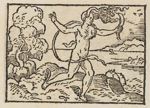
Ne refusons Fortune, quand à nous se presente: La Perrière, Le theatre des bons engins (Lyon, 1545), emblem 63 uses the imagery of Occasio as sculpted by Lysippus and its motto paraphrases the adage
Post Occasio calva est: Printer's device 0507
Fronte capillata est post est Occasio calva: Printer's device 1499
Fronte capillata est post est Occasio calva: Printer's device 1363
Premenda occasio: Cats, Maechdenplicht (Middelburg, 1618), emblem 10
Au monde n'est rien plus cher, que le temps: La Perrière, Le theatre des bons engins (Lyon, 1545), emblem 71 uses the imagery of a man holding on to a winged clock to express the value of timing
Iconclass: 31A2512(+934):54B121 arm stretched forward (+ reaching for somebody or something, seizing something, touching)❧'Occasio', 'Kairos'; 'Occasione' (Ripa)
Loci Communes: Occasio (Opportunity, Occasion)
III ix 68 Omnibus nervis With every nerve
Cum innuemus in negocio quopiam omneis expromendas vires, omneis nervos intendendos, conveniet illud ex eodem loco: Καὶ τότ᾽ ἔπειθ᾽ ὑμῖν μελέτω κάρτος τε βίητε. id est, Dein vobis curae sunto, viresque, vigorque. Adsimili specie Pindarus dixit Olymp. X. Τίς δὴ ποταίνιον ἔλαχε στέφανον, Χείρεσσι ποσί τε καὶ ἅρμασιν ἀγώνιον. id est, Quis tandem assequutus desiderabilem coronam manibus pedibusque & curribus. Hic locus addendus erat proverbio Manibus pedibusque, sed illae paginae iam exierant manus meas. Marcus Tullius libro in Verrem quinto: Attendite ludices, omnibus enim nervis mihi contendendum est.
When we want to indicate that we should put out all our strength in some undertaking, straining every nerve, the following from the same passage will be appropriate: 'Then make use of your strength and courage.' Pindar uses a similar figure in the tenth Olympian ode: 'Who in the end has attained the desired crown with hands and feet and chariots?' This passage should have been added to the adage 'With hands and feet,' but those pages were already out of my hands. Marcus Tullius in the fifth speech Against Verres: 'Listen carefully, members of the jury, for I have to insist with all my strength.'
III ix 69 Cum principe non pugnandum Do not dispute with a ruler
Qui significabit arduum, principem à privato superari: aut difficillimum vincere naturam, usurpabit illud ex eodem libro: Αργαλέος γὰρ τ ἐστὶ θεὸς βροτῷ ἀνδρὶ δαμῆναι. id est, Ardua res homini mortali vincere numen.
If we want to say that it is hard for a private person to overcome a ruler or very difficult to defeat nature, we could use this from the same book: It is hard for a mortal man to defeat a god.'
Facsimile:
Iconclass: 54BB3:33B3:44B1 Inutility, Noxiousness; 'Nocumento', 'Nocumento d'ogni cosa' (Ripa)❧fighting❧ruler, sovereign
Loci Communes: Potentes (The powerful, Les puissants)
III ix 70 Ingens discrimen An enormous difference
Ingens intervallum, veluti si quis sentiat plurimum interesse inter pecuniae studium & sapientiam, hoc versu licebit significare ex eodem lib. Τόσσον ἄνευθ᾽ ὅσσον τε πανημερίη γλαγυρὴ νηὺς Ηνυσεν ᾗ λιγὺς οὖρους ἐπιπνείησεν ὄπισθεν. id est, Tantum aberat, quantum cursu ratis acta diurno Conficiat spatii, quam provehat aura secunda.
An enormous gap - for example if one believes there is a great difference between the pursuit of money and wisdom - could be indicated by this couplet from the same book:
It was as far as a well-steered ship may cover
In a day's run when driven by a following wind.
Facsimile: 
Iconclass: 51G1:51BB2 Largeness, Magnitude❧Dissimilarity, Unlikeness
Loci Communes: Discriminis (Danger, crisis, Danger)
III ix 71 Aperte simpliciterque loqui Speaking literally and simply
Simpliciter & aperte dicturos nos, citraque ambages significabimus hoc carmine, quod est in eodem libro: οὐκ ἄν ἔγωγε Αλλα παρὲξ εἴποιμι παρακλιδὸν, οὐδ᾽ ἀπατήσω. id est, Non fucis te dissimulans decepero fictis.
We can indicate that we are going to speak simply, literally, and directly with this verse, which is in the same book: 'I shall not mislead and cheat you with contrived deceits.'
Facsimile:
Iconclass: 31B6235 speaking 57A642 Simplicity; 'Simplicità' (Ripa)
Loci Communes: Libertas, veritas (Freedom, truth, Liberté, vérité)
III ix 72 Rerum omnium vicissitudo All things do change
Variae fortunae vices, & nunc laeta contingunt unicuique, nunc tristia. Ad eam sententiam applicabitur illud ex eodem lib. Ατὰρ θεὸς ἄλλοτ᾽ ἐπ᾽ ἄλλῳ, Ζεὺς ἀγαθόν τε κακόν τε διδοῖ. id est, Nunc huic, nunc Iuppiter illi Nunc laeta immittit, nunc tristia.
The shifts of fortune are ever changing, and to each man comes now happiness, now sadness. To this idea we can apply, from the same book: 'Now to this one, now to that, / Jupiter sends now joy, now grief.'
Facsimile:

Rerum humanarum vicissitudo: Maccio, Emblemata (Bologna, 1628), emblem 33
Rerum vicissitudo: Borja, Empresas morales (Bruxelles, 1680), emblem 53
L'homme est ioyeux, puis soubdain deuient triste: La Perrière, Le theatre des bons engins (Lyon, 1545), emblem 57 uses the imagery of Jupiter mixing sweet and bitter, visualizing the adage's comment
Iconclass: 51K1 Change 54F121 Turn of Fate, Wheel of Fortune
Loci Communes: Fortunae commutatio (Change of fortune, Changement de fortune)
III ix 73 Festivus sermo Lively conversation
Ubi quis in convivio sermonem inducit, admodum hilarem ac festivum, qui discutiat omnem tristitiam, convenit illud ex eodem libro, quod Homerus finxit de Helena pharmacum immittente in convivarum cyathos, quod omnium anteactorum induceret oblivionem: Αὐτίκ᾽ ἄρ εἰς οἶνον βάλε φάρμακον ἔνθεν ἔπινον Νηπενθές τ᾽ ἄχολόν τε κακῶν ἐπίληθον ἁπάντων. id est, In vinum immisit mox pharmacon, unde biberunt, Luctusque, bilisque malique oblivia cuncti. Huius meminit Plinius lib. 25. Nobile, inquit, illud oblivionem tristitiae veniamque adferens, & ab Helena utique omnibus mortalibus propinandum. Dioscorides lib. 4. refert herban ἅλυπον, quae infernae sumpta atrae bili medeatur: Unde & nomen inditum videtur, quasi dolore carens, quemadmodum νεπενθές & ἄδιψον, quod luctum ac sitim pellant.
When someone at a banquet starts some amusing and witty conversation that dispels any gloom, then there is a place for this passage from the same book where Homer pictures Helen putting in the banqueters' cups a drug that induces forgetfulness of everything they had done before:
Straightway into the wine they drank she put a drug,
Forgetfulness of all grief, all anger, all wrongs.
This is recalled by Pliny in book 25. He talks of 'that noble drug that brings indulgence and forgetfulness of grief, and is to be administered especially by Helen to all mortals.' Dioscorides, in book 4, mentions the herb [greek], which when taken below is good for black bile. This is where the name comes from, it seems, for it means 'having no pain,' just like [greek] 'soothing' and [greek] 'without thirst,' because they dispel grief and thirst.
Facsimile:
Iconclass: 33A35 conversation, dialogue; conversation piece 52A55 Subtlety, Acumen, Lucidity, Wit; 'Acutezza de l'Ingegno', 'Sottilità' (Ripa) 56B1 Pleasure, Enjoyment, Joy; 'Allegrezza', 'Allegrezza da le medaglie', 'Allegrezza, letitia e giubilo', 'Diletto', 'Piacere', 'Piacere honesto' (Ripa)
Loci Communes: Tristitia, laetitia (Sadness, joy, Tristesse, joie)
III ix 74 Qui nocere potest, et idem prodesse One who can both harm and benefit
In medicos imperitos, qui non raro venenum pro remedio ministrat, quadrabit illud ex eodem lib. quod usurpavit in Pseudomante Lucianus, estque pluribus apud Homerum locis: Φάρμακα, πολλὰ μὲν ἐσθλὰ μεμιγμένα, πολλὰ δὲ λυγρὰ. id est, Pharmaca mista, salubria multa, at noxia multa. Idem quadrabit in hominem & bonis & malis instructum artibus, qui vel iuvare possit, si velit, vel laedere.
For inexperienced physicians, who often give a poison instead of a cure, a suitable adage from the same book is this, which Lucian used in his False Prophet and which is to be found in several places in Homer: 'Mixed drugs, many health-giving, but many harmful.' The same would suit a man proficient in good and bad skills who can either give pleasure if he wishes or do harm.
Facsimile:
Iconclass: 49G81 medicament, medicine 49G812 poison ~ medicine
Loci Communes: Anceps et dubius (Doubtful and uncertain, Incertain et douteux)
III ix 75 Asseverantius dicere Speaking out firmly
Audacius quippiam & asseverantius dicturi, quod nobis tamen ita videatur, adducemus illum eodem ex libro versum, quo Helena utitur de Telemacho: Ψεύσομαι, ἢ ἔτημον ἐρέω, κέλεται δέ με θυμός. id est, Mentiar, aut verum dicam, mens attamen ipsa Imperatur dicam. Idem carmen extat Iliados Κ.
When we are about to speak rather boldly and firmly, because it seems to us necessary, we can quote from the same book this line which Helen applies to Telemachus: 'Shall I lie or speak the truth? But my heart / Bids me to speak.' The same line is to be found in book 10 of the Iliad.
Facsimile:
Iconclass: 31B6235 speaking 53A22 Stability, Firmness; 'Fermezza', 'Stabilimento', 'Stabilità' (Ripa)
Loci Communes: Libertas, veritas (Freedom, truth, Liberté, vérité)
III ix 76 Arripienda quae offeruntur Seize what is offered
Sollennis est, multisque locis iteratus versiculus hic: Οἱ δ᾽ ἐπ᾽ ὀνείαθ᾽ ἑτοῖμα προσκείμενα χεῖρας ἴαλλον. Id est, Quisque sibi appositis, si quid foret utile, promptas Admovere manus. Quem torquere licebit in tutores, qui rem nacti pupillorum manus iniiciunt, interque se partiti sibi vindicant. Aut in simile hominum genus invadentium & involantium aliena.
A standard verse, repeated in many places, is this: 'Each laid ready hands on anything useful which was set before him.' This could be taken to apply to guardians who find something belonging to their wards, take it, share it among themselves, and claim it as their own. Or to similar types of people who attack and carry off the property of others.
Facsimile:
Iconclass: 31A2745 grasping something 44G522 robbery
Loci Communes: Munus boni consulendum (A gift to be taken in good part, Un présent à prendre en bonne part)
III ix 77 Principum favor necessarius Support from influential people is essential
Ubi quis invitis principibus, conatur extricare sese e malo quopiam: aut lite, à qua non possit explicari, nisi adiutus illorum favore, conveniet illud ex eodem libro dictum in Aiacem Oileum: Φῆῤ᾽ ἀέκητι θεῶν φυγέειν μέγα λαῖτμα θαλάσσης. id est, Iactabat sese spatiosi ex aequoris altis Emersurum undis, invito numine divûm.
When someone tries, against the wishes of influential people, to disentangle himself from some difficult situation or dispute, from which he cannot escape without their help and support, there will be a place for these words from the same book. They refer to Ajax, son of O'ileus: 'He boasted he would escape from the deep waves / Of the great gulf in spite of the will of the gods.'
III ix 78 Negotium non aptum An unsuitable undertaking
Qui recusat munus, aut provinciam sibi parum accommodam: aut qui negabit arcessere velle sese quempiam ad id muneris, ad quod gerendum idoneus non videatur, usurpabit illud ex eodem libro: Ιππους δ᾽ εἰς ἰθάκην οὐκ ἄξομαι. id est, Caeterum equos Ithacam non duxero. Verba sunt Telemachi recusantis equos, quos Menelaus offerebat dono, quod Ithacensis insula non esset opportuna alendis equis, quippe petricosa, minimeque pascuis apta.
If someone refuses an office or a responsibility which is not suitable for him or says that he does not wish to appoint to some responsibility anyone who does not seem fit to carry it out, he could use this from the same book: 'But horses I shall not take to Ithaca.' These are the words of Telemachus when he refuses the horses offered as a gift by Menelaus because the island of Ithaca is not suitable for feeding horses, being stony and ill-suited to pasturage.
Facsimile: 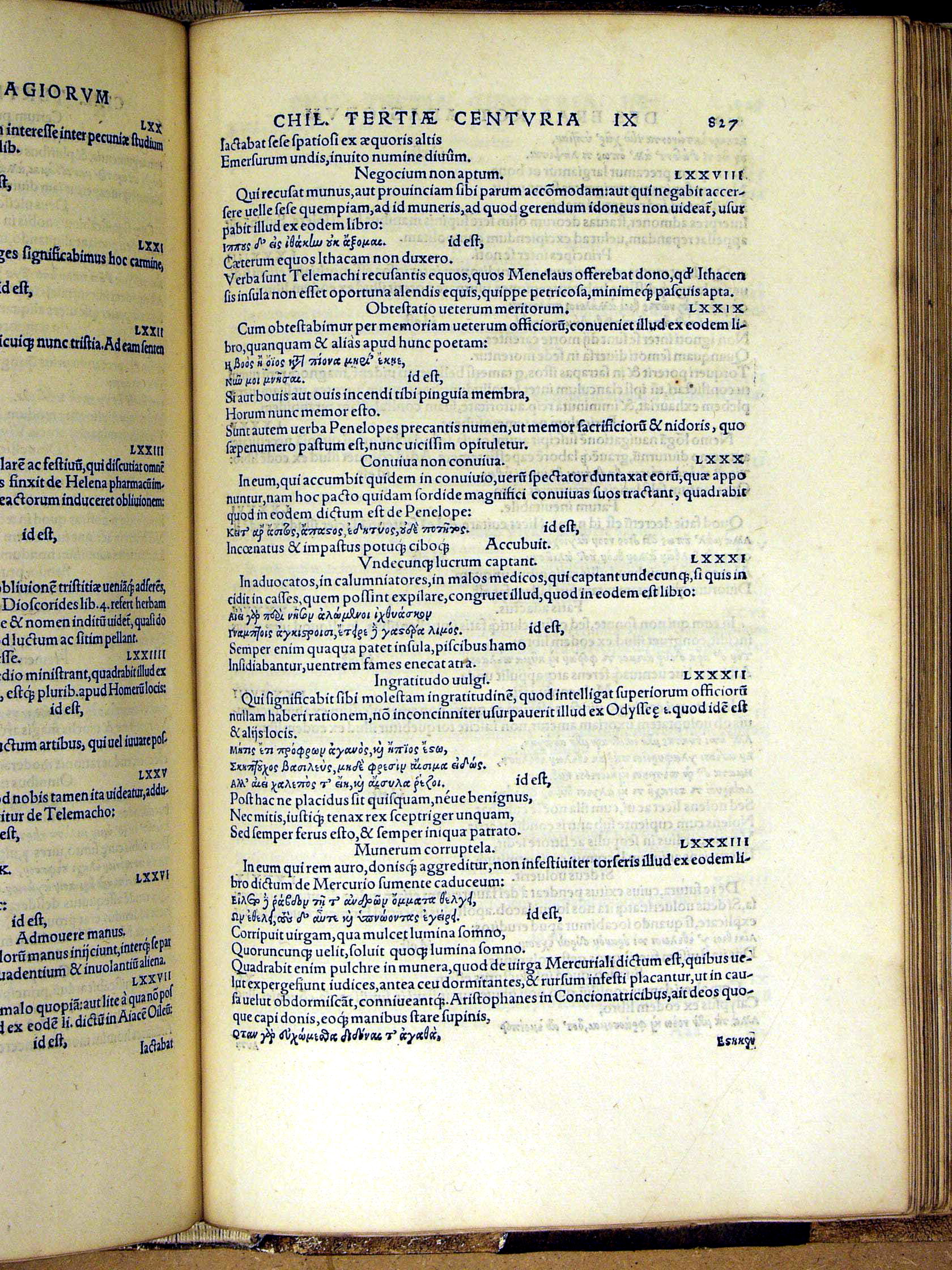
Iconclass: 53DD1:57A25 Refusal❧Responsibility, Liability 54AA33 Inability, Maladroitness, Awkwardness
Loci Communes: Munus aptum aut ineptum (A gift fitting or unfitting, Un présent convenable ou inconvenant)
III ix 79 Obtestatio veterum meritorum Invoking past deserts
Cum obtestabimur per memoriam veterum officiorum, conveniet illud ex eodem libro, quanquam & aliàs apud hunc poetam: Η βοὸς ἢ ὂϊος κατα πίονα μηρί᾽ ἔκῃε, Νῦν μοι μνῆσαι.. id est, Si aut bovis aut ovis incendi tibi pinguia membra, Horum nunc memor esto. Sunt autem verba Penelopes precantis numen, ut memor sacrificiorum & nidoris, quo saepenumero pastum est, nunc vicissim opituletur.
When we want to make an entreaty by recalling our past services, it will be apt to quote this from the same book (it is also found elsewhere in this poet's work): 'If I have burned fat limbs of ox or sheep for you, / Remember them now.' These are the words of Penelope begging the goddess to remember the sacrifices and the savour on which she had often fed and to come now to her aid in return.
III ix 80 Conviva non conviva Invited but not to take part
In eum, qui accumbit quidem in convivio, verum spectator duntaxat corum, quae apponuntur: nam hoc pacto quidam sordide magnifici convivas suos tractant, quadrabit quod in eodem dictum est de Penelope: Κεῖτ᾽ ἄρ άσιτος, ἄπαστος, ἐδητύος, οὐδὲ ποτῆτος. id est, Incoenatus, et impastus potuque ciboque Accubuit.
To someone who sits down at a feast, but only to be a spectator of what is offered - for this is how some mean nobles treat their guests - one could apply what is said in the same book about Penelope: 'Fasting, he sat tasting neither food / Nor drink.'
Facsimile:
Iconclass: 31A31 sight, looking (one of the five senses) 33A3 visiting; receiving guests; elegant company 54DD311 Waiting, Watching 55CC1 Saving, Frugality, Parsimony; 'Parsimonia' (Ripa)
Loci Communes: Sordes et parcimonia (Meanness and stinginess, Bassesse et avarice)
III ix 81 Undecunque lucrum captant No matter where from, it's profit they're after
In advocatos, in calumniatores, in malos medicos, qui captant undecumque, si quis incidit in casses, quem possint expilare, congruet illud, quod in eodem libro: Αἰεὶ γὰρ περὶ νῆσον ἀλώμενοι ἰχθυσάκον Γναμπτοις ἀγκίστροισι, ἔτειρ δὲ γαστέρα λιμός. Semper enim quaque patet insula, piscibus hamo Insidiabuntur, ventrem fames enecat atra.
For lawyers, informers, bad doctors, who hunt everywhere for someone to 'fall into the net,' someone they can plunder, a suitable quotation is this, which is in the same book:
All the time, on every accessible coast of the island, they hunted about
For fish to hook, for grim hunger pinched their stomachs.
Facsimile:
Iconclass: 44G522(+0) robbery (+ variant) 46B471 profit (~ commerce)
Loci Communes: Proprii commodi studium (Pursuit of one's own advantage, Recherche de son propre intérêt); Rapacitas et avaritia (Rapacity and greed, Rapacité et avarice)
III ix 82 Ingratitudo vulgi Public ingratitude
Qui significabit sibi molestam ingratitudinem, quod intelligat superiorum officiorum nullam haberi rationem, non inconcinniter usurpaverit illud ex Odysseae ε quod idem iest & aliis locis. Μήτις ἔτι πρόφρων ἀγανὸς, καὶ ἤπῖος ἔστω, Σκηπτοῦχος βασιλεὺς, μηδὲ φρεσὶν αἴσιμα εἰδώς. Αλλ᾽ αἰεὶ χαλεπὸς τ᾽ εἰη, καὶ αἴσυλα ῥέζοι. id est, Post hac ne placidus sit quisquam, néve benignus, Nec mitis, iustique tenax rex sceptriger unquam, Sed semper ferus esto, & semper iniqua patrato.
If someone wants to declare that he is troubled by ingratitude because he feels that no regard is given to the services of high officials, he might quite aptly use this from book 5 of the Odyssey (the same lines are to be found in other places):
Henceforth let no sceptre-bearing king be gentle and kind
Nor mild nor firm in justice, but let him be
Always harsh and always work unrighteousness.
Facsimile:
Iconclass: 46A7 crowd, mob 57AA8 Ingratitude; 'Ingratitudine' (Ripa)
Loci Communes: Ingratitudo (Ingratitude, Ingratitude)
III ix 83 Munerum corruptela Bribery with gifts
In eum qui rem auro, donisque aggreditur, non infestiviter torseris illud ex eodem lib.dictum de Mercurio sumente caduceum. Εἵλσετο δὲ ῥάβδον τῇ τ᾽ ἀνδρῶν ὄμματα θὲλγεις, Ως ἐθελει, τὲς δ᾽ αὖτε καὶ ὑπονώοντας ἐγείρει. id est, Corripuit virgam, qua mulcet lumina somno, Quorumcumque velit, solvit quoque lumina somno. Quadrat enim pulchre in munera, quod de virga Mercuriali dictum est, quibus velut expergefiunt iudices, antea ceu dormitantes, et rursum infesti placantur, ut in causa velut obdormiscant, conniveantque. Aristophanes in Contionatricibus, ait deos quoque capi donis, eosque manibus stare supinis, Οταν γὰρ εὐχώμεσθα διδόναι τ᾽ ἀγαθὰ, Εστηκεν ἐκτείνοντα τὴν χεῖρ᾽ ὑπτίαν, Οὐχ ὥς τι δώσοντ᾽ ἀλλ᾽ ὅπως τι λήψεται. id est, Nam quum precamur largiantur ut bona, Manum supinam porrigentes stant, velut Nihil daturi, sed recepturi magis. Interpres admonet, statuas deorum olim ferè supinis manibus fingi solere. Supinam autem appellat repandam, velut ad excipiendum compositam.
For someone who approaches a business with money and gifts, you might quite humorously adapt from the same book what is said of Mercury as he takes up his caduceus: 'He seized the staff with which he lulls to sleep the eyes / Of whom he will, and awakens others too.' What is said of Mercury's staff is admirably appropriate for the gifts with which, for example, judges who were dozing before are woken up, and on the other hand the hostile ones are placated so that during the case they go to sleep, as it were, and close their eyes. Aristophanes, in the Women in Parliament says the gods too are won over by gifts and that is why they stand with a hand out palm up:
For when we pray to them to send us good things,
They stand holding out a hand palm up,
As if they will give nothing, but rather will accept.
The scholiast informs us that in olden times the statues of the gods were almost always carved with hands held out 'supine,' and by 'supine' he means 'cupped,' 'positioned so as to receive.'
Facsimile: 
L'argent content faict playder Aduocatz: La Perrière, Le theatre des bons engins (Lyon, 1545), emblem 66 uses the imagery of a lawyer accepting a bribe
Iconclass: 33A4 bringing gifts; exchanging gifts 44G49 barratry (excessive litigation, vexatious litigation or incitement to it) 46B911 bribery 59CC221 Corruptibility, Venality, Corruption 92B58(CADUCEUS) caduceus (staff with two snakes, attribute of Mercury)
Loci Communes: Munerum corruptela (Corruption by gifts, Corruption par les présents)
III ix 84 Principes inter se noti Rulers know each other
Qui dicet mutuam principum, aut eruditorum inter ipsos esse notitiam: etiam si diversas longeque dissitas habitent regiones, usupare poterit illud ex eodem libro: Οὐ γὰρ τ᾽ ἀγνῶτες θεοὶ ἀλλήλοισι πέλονται Αθανατοι, οὐδ᾽ εἴτις ἀπόπροθι δώματα ναίει. id est, Non ignoti inter se sunt dii morte carentes, Quanquam semoti diversa in sede morentur. Torqueri poterit & in satrapas istos, qui tametsi belligerari videntur, magnoque rerum tumultu conflictari, tamen ipsi clanculum inter se colludunt: hox tantum agentes, ut suam uterque plebem exhauriat, & imminuta reip. autoritate, suam constabiliant tyrannidem.
If we want to say that rulers or scholars communicate among themselves even if they live in different and widely separated countries, we could use this from the same book:
The immortal gods are not unknown to each other,
Though they dwell far apart in different abodes.
This could also be turned to apply to those worldly princes who, even if they are visibly at war and clashing in universal turmoil, still conspire secretly among themselves, and this they do for the sole purpose that each may impoverish his own people and, diminishing public authority, reinforce their own tyranny.
III ix 85 Periculum ne temere subeas Do not take a rash risk
Nemo longam navigationem suscipit animi causa, sed adactus gravi quapiam necessitate, aut nemo diuturnum, gravemque laborem capessit temere. Ad id congruet illud ex eodem libro: Τίς δ᾽ ἄν ἑκὼν πόσσον διαδράμοι ἅλμυρον ὕδωρ. id est, Quis tantum falsi laticis percurrere ultro.
No one undertakes a long voyage for pleasure but when impelled by some serious need, and no one enters heedlessly on a long and serious piece of work. This idea is suitably expressed by this from the same book: 'Who would rush of his own accord over such an expanse of sea?'
III ix 86 Fatum inevitabile Destiny is unavoidable
Quod satis decretum est, id nemini licet evitare. Ad eam sententiam faciet illud ex eodem li. Αλλὰ μάλ᾽ οὐπως ἐστὶ διὸς νόον αἰγιόχοιο, Οὔτε παρεξελθεῖν ἄλλον θεὸν, οὔδ᾽ ἁλιῶσαι. id est, At mentem Iovis haud ullis rationibus unquam Divorum quenquam vitare aut fallere fas est.
What is decreed by fate no one can avoid. The idea can be suitably expressed by this from the same book: 'But it is not lawful for any one of the gods / To evade or subvert by any means the will of Jupiter.'
Facsimile:
Manet immutabile fatum: Rollenhagen, Nucleus emblematum (Arnhem, 1618), Cent. I, emblem 83
Manet immutabile fatum: Wither, A collection of emblems (London, 1635), emblem 83
Iconclass: 51C2 Necessity, Inevitability; 'Necessità' (Ripa) 54FF12 Fate, Doom
Loci Communes: Necessitas (Necessity, Nécessité)
III ix 87 Fatis adactus Driven by fate
In eum qui non sponte, sed casu, velutique fatis impellentibus, in aliquod vitae genus incidit, congruet illud ex eodem libro: Τὸν δ᾽ ἄρα δεῦρ᾽ ἄνεμός τε φέρων καὶ κῦμα πέλασσε. id est, Ast hunc huc ventusque ferens atque appulit unda.
For someone who falls into some way of life, not of his own will but as if circumstances and the fates drove him, this line from the same book will be suitable: 'But this man was driven hither, born by the winds and the waves.'
III ix 88 Male coniugati Unhappily married
In eum, qui coniugio vinctus est cum ea, quam non amet vicissim ex animo: quamvis ob voluptatem uxoriam ametur, non inscite torquebitur illud ex eodem libro, Αλλ᾽ ἤτοι νύκτας μὲν ἰαύεσκεν μὲν ἀνάγκη, Εν σπέσσι γλαφυροῖσι πάῤ᾽ οὐκ ἐθέλων ἐθελούσῃ, Ηματα δ᾽ ἐν πέτρῃσι καὶ ἠιόνεσσι καθιζων, Δακρυσί τε στοναχῇ τε καὶ ἄλγεσι θυνὸν ἐρέχθων. id est, Sed nolens licet ac ui, cum illa nocte cubabat Nolens cum cupiente sub antris conditus atris. Verum perdius in scopulis ac littore sedit, Excrucians animum lacrymis, curis gemituque.
For a man who is bound in marriage to a woman whose deep love he cannot return, though she is loved for the pleasure a wife gives, the following lines from the same book can be quite humorously applied:
But unwilling and perforce he lay beside her at night,
Unwilling beside the willing nymph in the dark cave.
All through the day however he sat on the rocks and the shore,
Torturing his soul with tears, cares and groans.
III ix 89 Si deus voluerit God willing
De re futura, cuius exitus pendeat à dei favore: nam etiam vulgo dicunt ominis causa, Si deus voluerit: atque ita nos loqui Iacob. apostolus docet: id Homerico versu licebit explicare, si quando iocabimur apud eruditos: Αἰκε θεοι γ᾽ ἐθέλωσι τοὶ οὐρανὸν εὐρὺν ἔχουσιν. id est, Diis ita si visum fuerit, quos gestat olympus.
Said of some future matter whose outcome depends on the favour of a god; for even among ordinary people they say for good luck 'God willing' and the apostle James teaches us to use the expression. In joking conversation among scholars, it can be expressed in a Homeric verse: 'If it is the will of the gods whom Olympus holds.'
Facsimile:
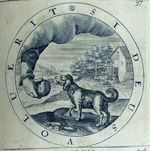
Si deus voluerit: Wither, A collection of emblems (London, 1635), emblem 197
Si deus voluerit: Rollenhagen, Nucleus emblematum (Arnhem, 1618), Cent. II, emblem 97
Si Dominus voluerit: De Montenay, Cent Emblèmes Chrestiens (Frankfurt, 1619), emblem 19
Iconclass: 54A6:11A Helpfulness❧Deity, God (in general) ~ Christian religion 54A6:92 Helpfulness❧gods ~ classical mythology
Loci Communes: Cum auxilio ; citra auxilium (With help; without help, Avec aide ; sans aide)
III ix 90 Suadeo, quod ipse facturus essem I am advising what I myself would do
Cum alteri damus consilium, quo non gravemur ipsi uti in simili causa, conveniet illud Calypsus ex eodem libro, Αλλὰ τὰ μὲν νοέω καὶ φράσσομαι, ὅσσ᾽ ἄν ἐμοίπερ Αὐτῇ μηδοίμεν, ὅτε με χρειὼ τόσον ἥκοι. id est, Sentio, suadeboque tibi, quibus haud graver uti Ipsa, mihi similis si quando occurreret usus.
When we give someone else advice which we would not be unwilling to follow ourselves in a similar case, Calypso's words from the same book will be fitting: 'I have in mind and will give you advice that I would not hesitate / To follow myself, if a similar circumstance befell me.'
Facsimile: 
Iconclass: 52E3 Counsel; 'Consiglio' (Ripa) 54D2 Action; 'Operatione manifesta' (Ripa)
Loci Communes: Consilium (Counsel, advice, Conseil)
III ix 91 Malorum assuetudo Familiarity with misfortune
Qui malis assuevit, ac permulta tulit, commodius fert & aliud, si quod inciderit infortunium. Ad id conveniet illud eodem ex libro sub persona Ulyssis: Ηδη γὰρ μάλα πολλ᾽ ἔπαθον καὶ πολλὰ μόγησα, Κύμασι καὶ πολέμῳ, μετὰ καὶ τόδε τοῖσι γενέσθω. id est, Iam tuli & ante mali multum, multumque laborum Fluctibus & bellis, age & hoc accesserit illis.
Someone who has become familiar with misfortunes and born a great number bears more easily any other ill that occurs. This idea is suitably expressed in the same book by what Ulysses says: I have already born many ills and many labours / Amidst the waves and in wars; let this too be added to those.'
Facsimile:
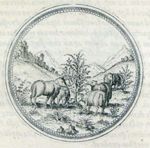
Iconclass: 51B61 Repetition 51F7 Regularity of Recurrence 52A53 Self-knowledge 53A2 Perseverance, Resolution, Determination; 'Perseveranza' (Ripa)
Loci Communes: Malum assuetum (Habitual evil, Mal habituel)
III ix 92 Fortuna reddit insolentes Good luck makes people arrogant
In eum, qui postea quàm fortuna secundior affulsit, animos item effert, & paulo confidentius gerit sese, quoadrabit illud ex eodem libro: Γηθόσυνος δ᾽ ὄρῳ πέτασ᾽ ἱστία δος ὀδυσσεύς. id est, Laetatus ventis pandebat vela secundis.
Someone whom fortune has looked on favourably and who then puts on airs and behaves rather too confidently will be aptly described with this from the same book: 'Gladly he spread his sails to the favourable winds.'
III ix 93 Moderator negocii An arbitrator
Carmen, quod ibidem proxime consequitur, conveniet in eum, qui prudentia & autoritate sua negocium aliquod moderatur. Αυτὰρ ὁ πηδαλιῳ ἰθύνετο τεχνηεντως. id est, Ille ratem clavo scite docteque regebat.
The line that follows immediately after this will be appropriate for one who arbitrates in some affair with wisdom and authority: 'He steered the craft with the oar skilfully and wisely.'
Facsimile:
Iconclass: 52A51 Wisdom; 'Sapienza', 'Sapienza humana', 'Sapienza vera' (Ripa) 54A4 Calmness, Equanimity, Imperturbability 59C22 Impartiality
Loci Communes: Ira (Anger, Colère); Prudentia senilis (The prudence of old age, Prudence de la vieillesse)
III ix 94 Tacite stomachari Silent vexation
In eum qui secum indignatur, quadrabit illud eodem libro: Ο δ᾽ ἐχώσατο κηρόθι μᾶλλον. id est, Illi cor magis atque magis succenditur ira. De Neptuno dictum, indigne ferente, quod Ulysses prospere navigaret.
For someone who is angry within himself a suitable phrase is this from the same book: 'His heart becomes more and more inflamed with anger.' It refers to Neptune who is angry that Ulysses was having a prosperous voyage.
Facsimile:
Iconclass: 56E1 Irritation 56E2 Rage, Anger
Loci Communes: Occupatio (Occupation, business, Occupation)
III ix 95 Qui conturbat omnia He causes havoc everywhere
In eum qui maximas undique ciet turbas, apte detorquebitur illud ex eodem libro: Πάσας δ᾽ ὀρόθηνεν ἀέλλας Παντοίων ἀνέμων. id est, Omneis omnigenûm ille procellas Ventorum ciet.
For one who creates enormous, widespread commotion, we can aptly borrow this from the same book: 'Every sort of storm of every sort of wind / He roused.'
Facsimile:
Iconclass: 51H4:33B1 Plenitude❧quarrel, argument
Loci Communes: Molesti intolerabiles (Unbearable, troublesome people, Gens insupportables)
III ix 96 Non abiicit animum Not losing heart
De eo, qui ne afflictissimis quidem in rebus spem aut consilium abicit: quemadmodum apud Maronem; Latinus rerumque reliquit habenas, sed de recipiendo se utcumque cogitat, apposite dicetur, quod inibi dictum est de Ulysse: Αλλ᾽ οὐδ᾽ ὡς σχεδίης ἐπελήθετο πειρόμενός περ. id est, Ac neque sis licet afflictus oblivia coepit. Navigii.
Concerning someone who does not give up hope or resolution even in the most wretched circumstances - as Latinus did, in Virgil, when he 'resigned the reins of government' - but who thinks of how to recover by any means whatever, we might aptly say what is said in this passage about Ulysses:
But not even in this distress did he forget
His raft.
III ix 97 Malis mala succedunt One misfortune after another
In eum, qui variis exercetur incommoditatibus fortunae, nunc morbo, nunc rapinis, nunc aliis, atque aliis malis, conveniet illud ex eodem libro: Αλλοτε μὲν τε νότος βορέῃ προβάλεσκε φέρεσθαι, Αλλοτε δ᾽ αὖτ᾽ εὖρος ζεφύρῳ εἴξασκε διώκειν. id est, Tradebat notus hunc boreae quandoque vehendum, Nunc rursum Zephyro iactandum tradit eurus. Ausonius in epigrammate eleganter dixit: Catenatos labores, quod negotium ex negocio seritur. Cui contrarium est, quod ait Pindarus Olymp. viii. ἐσθλὰ δ᾽ ἐπ᾽ ἐσθλοῖς ἔργα θέλοι δόμεν. Optat ut Iuppiter velit illi benefacta benefactis cumulare.
For someone who is wearied by multiple misfortunes, first sickness, then robberies, then other ills and more again, this from the same book will be apt:
Sometimes the south wind would fling it to the north to carry along,
Now again the east wind passed it to the west to toss about.
In one of his epigrams Ausonius used the elegant expression catenates labores 'chains of toils,' because every affair is linked to another. The opposite of this is what Pindar says in the eighth Olympian ode where he wishes that Jupiter 'will heap blessings on blessings for him.'
Facsimile:
Iconclass: 51H3:54FF11 Multitude❧Adversity, Misfortune, Bad Luck; 'Fortuna infelice', 'Infortunio' (Ripa)
Collectanea (1500): 411
Loci Communes: Infortunii sive exitii (Misfortune or ruin, Malheur ou ruine)
III ix 98 Hospitis habenda cura A stranger must be cared for
Qui dicet hospitum habendam esse rationem, usurpabit illud ex eodem libro: Αἰδοῖος μὲν τ᾽ ἐστὶ καὶ ἀθανάτοισι θεοῖσι, Ανδρῶν ὅς τις ἵκηται ἁλώμενος ὥσπερ ἐγὼ νῦν. id est, Nam divis reverendus et immortalibus ille est, Quicumque appulerit multis erroribus actus Nunc uti ego.
If you want to say we should have respect for strangers, you could use this passage from the same book: 'For even the immortal gods treat with respect the man / Who is driven ashore after many wanderings, / As I am now.'
Facsimile:
Iconclass: 59A5 Hospitality; 'Hospitalità' (Ripa)
Loci Communes: Hospitalitas (Hospitality, Hospitalité)
III ix 99 Divitiae non semper optimis contingunt Wealth is not always the lot of the best
Qui dicet opes non semper cordatissimis, sed pro fortunae arbitrio, nunc huic, nunc illi contingere, citabit illud ex Odysseae Ζ. Ζεὺς αὐτὸς νέμει ὄλβον ὀλύμπϊος ἀνθρώοισι, Εσθλοῖς ἠδὲ κακοῖσιν, ὅπως ἐθέλησιν ἑκάστῳ. id est, Iupiter emetitur opes mortalibus ipse, Sic visum ut fuerit, cuicumque honove, malóve. Dicuntur à Nausiaca, ad Ulyssem mendicantem: nec illum ob inopiam habet despectui, quae fortunae sit imputanda, non homini, si is modo fuerit alioqui cordatus.
If you want to say that it is not always the most prudent people who become wealthy, but that it is a matter of chance, now one now the other, you can quote this from book 6 of the Odyssey:
Jupiter himself measures out wealth to mortals
To each as he sees fit, to good or to bad.
The words are spoken by Nausicaa to Ulysses when he approaches her as a beggar; and she does not despise him for being poor, because fortune is to be blamed for that not the man, providing he is not imprudent.
III ix 100 Munus exiguum, sed opportunum A small gift, but a timely one
Cum munus indicamus, pretio quidem perpusillum, sed tamen accipienti pro tempore gratissimum, veluti si quis panem porrigat de vita periclitanti, citabimus illud ex eodem libro: Δόσις δ᾽ ὀλίγη τε φίλητε. id est, Exiguum munus, gratum tamen. Idem carmen extat in ξ.
When we describe a gift as costing very little but still most welcome to the receiver at that time - for example if you offer bread to one in danger of starving to death - we may quote this from the same book: 'A small gift,but a welcome one.' The same line is to be found in book 14.
Facsimile: 
Iconclass: 51GG1:55C2 Littleness, Smallness❧Giving 54B5 Importance, Preponderance
Loci Communes: Carpentis seipsum (Criticizing oneself, Qui se critique soi-même); Tempestiva (Timely things, Choses opportunes)