IV ii 1 Δούρεος ἵππος A wooden horse
Δούρεος ἵππος, id est, Dureus equus, de clandestinis insidiis dicebatur, aut ubi repente complures apparerent, qui latebant antea. Sumptum ab equo Homerico, in quo Graecorum proceres abditi, repente prosilientes Troiam ceperunt. Hunc Homerus Durateum appellat, ut Odysscae *q. quod trabibus esset contextus: Αἶσα γὰρ ἦν ἀπολέσθαι ἐπην πόλις ἀμφικαλύψα Δουράτεον μέγαν ἵππον, ὅθ᾽ εἱατο πάντες ἄριστοι Αργείων, τρώεσσι φόνον καὶ κῆρα φέροντες. id est, Fatum enim erat, peritur am urbem, simul ingrederetur Durateus praecelsus equus, qui clauserat omnes Primores Danaum, luctumque, necemque ferentes Troianis. Plutarchus in vita Themistoclis, narrat illum aliquando dono rogasse equum a Philide nutritore equorum. Eum is ubi negasset, comminatum fuisse se brevi ex illius domo facturum equum doura/teion, significans se crimina ipsius, ac domesticorum prolaturum in lucem Nec inscitum fuerit, si quis ludum alicuius eruditi, Durateum equum appellet, quod ex eo brevi tempore summi viri prodierint. De laudatis viris, qui subito alicunde emerserunt, apud eruditos frequens est, ut ex illius domo velut ex equo Troiano prodiisse dicantur. M. Tullius Philippica secunda, ad egregii facinoris societatem retulit: In huius me consilii societatem tamquam in equum Troianum includi cum principibus non recuso. Aristophanes; in Auibus proverbium detorquet in emphasim roboris ac magnitudinis: Ιππων ὑπόντων μέγεθος ὅσον ὁ δούρειος Interpres admonet adlusum ad equum aereum insigni magnitudine, qui in acropoli stabat Palladi dicatus a Charidemo, quod ipsa testabat inscriptio. Verum is ad imitationem equi Troiani compositus erat. Mar. Tullius in C. Verrem 6. Troianum equum accipit pro extrema calamitate: Quem concursum factum in opido putatis? quem clamorem? quem porro fletum mulierum, qui viderent equum Troianum introductum, urbem captam esse dicerent, etc. Portas, per quas introductus fuerat equus Durius, Homerus Iliados γ σκαιὰς. , hoc est, sinistras appellat, quod laeva mente Troiani equum illum induxerint in civitatem. Idem pro Muraena dicit equum Troianum intus esse, cum sentit rei publicae periculum esse aicivili discordia. Intus, inquit, intus est inquam equus Troianus, a quo numquam me consule dormientes opprimemini. Idem pro M. Caelio. An equus Troianus fuerit, qui tot invictos viros muliebre bellum gerentes tulerit; ac texerit?
[greek], A wooden horse. This expression was used of secret conspiracies, or when a large number of people suddenly appeared who were not visible before. It originated with the horse in Homer in which the leaders of the Greeks hid and from which they suddenly leaped out to capture Troy. This horse Homer described as durateus 'wooden,' as in the Odyssey book 8, because it was constructed of timbers:
For it was the city's destiny to perish at the entry
Of the lofty wooden horse that enclosed all
The leaders of Greeks who would bring grief and death to the Trojans.
In his life of Themistocles Plutarch relates that Themistocles once asked for a horse as a gift from the horse-breeder Philides. When the latter refused he threatened he would soon turn Philides' own house into a wooden horse, meaning that he would bring to light accusations against Philides and his household. It would be an ingenious use to call some learned person's school a 'wooden horse' because over a short period a number of the best men were produced by it. Men of reputation who have come all at once from some establishment are often said by scholars to have come from that house 'as if from the Trojan horse.' Marcus Tullius in the second Philippic used it to mean a company engaged in an extraordinary enterprise: T am not unwilling to be included with the leaders in being part of this plan, in a Trojan horse as it were.' In the Birds Aristophanes shifts the meaning of the adage towards the idea of strength and size: 'Drawn by horses as bulky as [greek] "the wooden one."' The scholiast tells us this is an allusion to the bronze horse of wonderful size which stood on the Acropolis, and was consecrated by Charidemus to Pallas, as the inscription itself declared. This horse, however, was in its form a copy of the Trojan horse. In the sixth speech against Gaius Verres, Marcus Tullius uses 'Trojan horse' to mean a terrible disaster: 'Picture to yourselves the hurrying to and fro in the town, the cries of grief, and the wailing of the women, too; anyone looking on would have thought that the Trojan horse had been admitted and that the city was in its enemies' hands.' The gates through which the wooden horse was brought in are called by Homer in book 3 of the Iliad [greek] 'Scaean' or 'ill-omened,' because it was foolish of the Trojans to bring the horse into the city. Cicero also says in the speech in defence of Murena that the Trojan horse is within when he feels that there is a danger to the state from civil discord: 'The Trojan horse is within, within the city, I say. It will never overwhelm you in your sleep while I am consul.' The same author in the speech in defence of Caelio: 'Was it ... a Trojan horse, which received and protected so many invincible warriors waging war for a woman?'
Facsimile: 
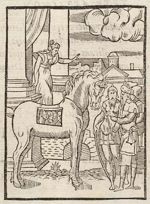
Specie religionis: Saavedra, Idea de un principe (München, 1640), emblem 27 uses the imagery of the Trojan horse
Hic equus armisonae dum creditur: La Perrière, Morosophie (Lyon, 1553), emblem 12 uses the imagery of the Trojan horse
Pro ignotis sumere laborem: Sambucus, Emblemata (Antwerp, 1564), emblem 136 uses the imagery of the Trojan horse
Specie religionis: De la Feuille, Devises et emblemes anciennes et modernes (Augsburg, 1697), emblem 181 uses the imagery of the Trojan horse
Iconclass: 45H12 surprise attack (from ambush) 57AA6223 Ambuscade, Trap; 'Insidia' (Ripa) 94H151 the Trojan horse
Loci Communes: Insidiae (Ambush, treachery, Embûches)
IV ii 2 Cum adsit via, semitam quaeris When the road is before you, you look for a track
Οδοῦ παρούσης τῆν ἀτραπὸν ζητέεις. id est, Cum praesto sit via, tu requiris semitam. Citatur ab Eustathio in Odysseae N. Est autem ἀτραπὸς, semita, quae diversa sit a via plaustrorum, quam regiam vocant. Conveniet adagium in tergiversatores, qui, quo praesens negotium suffugiant, diverticula captant.
[greek], When the road is before you, you look for a track. This is cited by Eustathius in his commentary on Odyssey book 13. [greek] is a 'track,' which is different from the vehicular road called a 'royal' road. The adage will be applicable to shufflers who, to evade an immediate affair, look for diversions.
IV ii 3 E culmo spicam conjicere To guess from the stalk what the grain was like
Eustathius Odysseae ξ. enarrans hunc versum, quem nos alio citavimus loco: Αλλ᾽ ἔμπης καλάμην γέ σ᾽ ὀΐομαι εἰσορόωντα γιγνώσκειν. ostendit Ulyssem ad proverbium allusisse, quod plene sic efferatur, ἐκ καλάμης δῆλος ἐστὶν ὁ τεθερισμένος στάχυς, id est, Ex culmo perspicitur spica demessa. Etiam in sene apparet, cuiusmodi fuerit iuvenis. Meminit huius loci Aristoteles libro Rhetoricorum tertio, indicans per metaphoram senectutem dictam culmum.
Eustathius explains this line from book 14 of the Odyssey which we have quoted in another place: 'Yet I think you can tell, if you do but look at the stubble.' He shows that Ulysses was alluding to the proverb which, in full, goes like this: '[greek] 'From the stalk you can envisage the grain that was harvested.' Even in an old man there are signs of what he was like as a youth. Aristotle mentions this passage in his book on Rhetoric and says 'the stalk' is a metaphor for 'old age.'
Facsimile:
Iconclass: 31D160 Old Age, 'Senectus'; 'Vecchiezza' (Ripa) 47I1111(+8921) ears of corn (+ stem, trunk) 47I1111(+8934) ears of corn (+ bearing fruit) 51B2 Similarity, Likeness
Loci Communes: Conjecturae (Conjectures, Conjectures)
IV ii 4 Βυσσοδομεύειν To lay deep foundations
Βυσσοδομεύειν, frequenter est apud Homerum, non citra proverbii speciem, pro eo quod est, alto pectore moliri quippiam, et clanculum in animo struere insidias. Translatum a fundam entis aedificiotum, quae profunde iaciunrur. Odysseae P. *esql) a)goreu/ontes2 kaka\ de\ fres1i\ bus1s1odo/meuon. id est, Dicebant bene, sed mente alta prava struebant. Idem alibi: *do/lon fres1i bussodomeu/wn. id est, Fraudem alta mente volutans.
[greek]. This occurs frequently in Horner and has the appearance of a proverb. It means to plan something deep in one's heart and to set an ambush secretly in one's mind. It is a figure drawn from the foundation of buildings that are laid very deep. In the Odyssey book 17: 'Who spoke fair, but pondered evil in their minds.' And the same author elsewhere: Turning over deceit deep in his mind.'
IV ii 5 Arcessitum malum Evil brought on oneself
Επισταστὸν κακὸν. id est, Accersitum malum, dicitur, cuius ipse tibi causam praebueris. Homerus Odyss. *s. *h ta/xa i)=ros2 a)/iros2 e)pispasto\n kako\n e(/cei. id est, Nae mox perditus Irus habebit, quod sibi quaerit, Ultro malum
'[greek], Evil brought on oneself. Said of something of which you yourself have been the cause. Homer in the Odyssey book 18: 'Assuredly dissolute Irus will soon experience the harm that he seeks / Of his own accord.'
Facsimile:
Iconclass: 54FF11:58AA12 Adversity, Misfortune, Bad Luck; 'Fortuna infelice', 'Infortunio' (Ripa)❧Self-destruction
Loci Communes: Malum accersitum aut retortum (Evil brought upon oneself or turned back, Mal attiré ou retourné)
IV ii 6 Eurymnus Eurymnus
Εὔρυμνος, id est, Eurymnus, dictus est olim proverbio, qui per calumniam conaret fidos amicos inter sese committere. Nam hic, cum moliretur serere dissidium inter Castorem et Pollucem, alterum apud alterum insimulans, post deprehensus, utrique gravissimas poenas dedit. Hoc autem fere solet accidere iis, qui malis artibus student dirimere eos, quos insolubili vinculo natura copulavit, ut uxorem et maritum, parentem et filium, ac fratres. Fit enim, ut hi redeant in gratiam, et praeteritae simultatis poenas utrique repetant ab auctore. Id evenit Athenis Hyperbolo, qui Niciam, ac Alcibiadem conatus est committere.
[greek], Eurymnus, was formerly a proverbial name for someone who tried to use false accusations to create strife among good friends. This man plotted to sow discord between Castor and Pollux laying blame with each against the other, and when he was subsequently caught was heavily punished by both. This is the common lot of those who seek by wicked means to divide people joined by some unbreakable natural link, such as husband and wife, parent and child, or brothers. For what happens is that, when the victims return to harmony, they both seek punishment from the author for past animosity. This happened at Athens to Hyperbolus who tried to create enmity between Nicias and Alcibiades.
IV ii 7 A Furiis oriundus Born of the Furies
Εριννύων ἀποῤῥὼξ, id est, A furiis profectus. Olim dicebatur taetra, foedaque specie, quique maniko\n ble/pei, quemadmodum ait Aristophanes. Item quod noxium et exitiale sit, id a furiis ortum aiunt, quemadmodum Aiax in tragoedia. Αρα οὐκ ἐριννὺς τοῦτ᾽ ἐχάλκευε ξιφος. id est, An non mucronem hunc furia cudit tartari?
[greek], Born of the Furies. This used to be an expression for someone of foul and hideous appearance, who 'looked mad,' as Aristophanes says. Anything harmful and destructive is also said to have 'come from the Furies,' as Ajax says in the tragedy: 'Was this sword-point not forged by a Fury from hell?'
Facsimile:
Iconclass: 51DD4 Ugliness 58A2 Procreation 92N3 Furies, Dirae (Erinyes), Eumenides; 'Furie' (Ripa)
Loci Communes: Forma, deformitas (Beauty, deformity, Beauté, difformité)
IV ii 8 Similes videntur captivis ex Pylo They look like captives from Pylos
Εοίκασι Τοῖς ἐκπύλου ληφθεῖσι τοῖς λακωνικοῖς. id est, Captivis mihi Similes videntur e Pylo Laconicis. Est apud Aristophanem, en nefe/lais2. Dici solitum de iis, qui vultu sunt miserando, nempe pallidi, squalidi, macileti. Pylus civitas quaepiam Laconicae, quam obsessam Cleon expugnavit. Qui vero superfuerant a caede, secum abduxit Athenas, extenuatos, confectos, pallidos, defoimulpecie, sicuti conlentancum est accidisse, tum ob diutinam obsidonem, praesertum in insula deserta, quae rerum necessariaram copiam maligne suppoditabat, tum quod post expugnatam urbem complures dies in vinculis habiti fuissent. Haec ferme Zenodotus. De Pylo dictum est nobis alias in proverbio, Pylus ante Pylum.
'[greek], They look to me like the Spartan captives from Pylos. This is in the Clouds of Aristophanes. It was said of people of pitiable appearance, pale, dirty, and thin. Pylos was a city in Laconia, besieged and defeated by Cleon. Those who escaped death he took away to Athens, weak, exhausted, pale, disfigured, as must have happened both because of the length of the siege, especially on a deserted island which could offer a poor supply of the necessary provisions, and because after the fall of the city they were kept for many days in chains. This is all in Zenodotus. Of Pylos I have talked elsewhere in the proverb 'Pylos there is before Pylos.'
Facsimile:
Iconclass: 32A22 thin (human type) 41C1191 starvation, famine 45I13 transfer, deportation ~ prisoner of war 61E(PYLOS) names of cities and villages (PYLOS)
Loci Communes: Sollicitudo (Anxiety, care, Souci)
IV ii 9 Γύργαθον φυσᾷς You're blowing away the stocks
Γύργαθον φυσᾷς, id est, Gyrgathum spiras, in insanum, frustraque vociferantem iaciebatur. Gyrgathus lectus est, in quo paralytici, menteque capti, quique vocantur daemoniaci, vincti iactant sese, multa minitantes, sed frustra. Conveniet igitur in atroces sine viribus iras. Hesychius indi cat Gyrgathon dici vas quoque, in quod pistor coctos reponit panes. Graeca vox a voluendo dicta videtur,
[greek], You're blowing away the stocks, a phrase tossed at someone who is mad and shouts vainly. The gyrgathos was the couch to which the paralytic, the mad, and anyone said to be possessed are chained and on which they thrash about; they shout numerous threats but all in vain. It will be suitable therefore to describe a terrible but ineffectual rage. Hesychius mentions that a gyrgathos is also the container in which a baker placed cooked loaves. The Greek word appears to be derived from the word for 'to turn.'
Facsimile:
Iconclass: 31A464 emotional illness, derangement, madness 44G312(+0) prisoner; in fetters (+ variant) 44G3711 in the pillory, in the stocks
Loci Communes: Inanis opera (Vain effort, Effort vain)
IV ii 10 Decora teipsum You should adore yourself
Γέραιρε σαυτὸν. id est, Honesta teipsum. Iocus proverbialis in eum qui se magnificentius gereret. Nam γεραίρειν venerari est, & honorem habere.
[greek], You should worship yourself. A proverbial joke against someone who behaves too grandiosely. [greek] is 'to reverence' and 'to honour.'
Facsimile:
Iconclass: 57AA64 Pride, Loftiness; 'Alterezza in persona nata povera civile' (Ripa) 56F24 Self-love; 'Amor di se stesso' (Ripa)
Loci Communes: Proprii commodi studium (Pursuit of one's own advantage, Recherche de son propre intérêt)
IV ii 11 Byzeni libertas The freedom of Byzenus
Βυζήνου παῤῥησία. id est, Byzeni libertas, ubi quis audacius, liberiusque loquitur. A Byzeno quodam, Neptuni filio, cui mos fuerit mira in dicendo libertate uti. Stephanus commemorat βυζηην, Scythiae civitatem, unde Byzeni. Eius gentis peculiare est intrepide loqui.
[greek], The freedom of Byzenus. Said when someone speaks too boldly and too freely. Derived from Byzenus, apparently a son of Neptune, who was in the habit of taking extraordinary liberties in his speech. Stephanus mentions a Byzya, a city in Scythia, whence came the Byzyeni. It was a characteristic of this people to speak without fear.
Facsimile:
Iconclass: 31B6235:51E11 speaking❧Freedom, Liberty; 'Libertà' (Ripa) 52AA55 Bluntness, Obtuseness, Dullness 92H19 offspring, companion(s), train etc. of Neptune
Loci Communes: Libertas, veritas (Freedom, truth, Liberté, vérité)
IV ii 12 Αχρειόγελως A trifler
Αχρειόγελως, proverbiali, noveque composito verbo dicebatur nugator, quique rebus ineptis oblectaretur. Nam Αχρειόγελως perinde sonat, quasi dicas, temere ridentem, quod vitii vel stultitiae signum est, vel dementiae.
[greek], a proverbial neologism for a 'trifler' and anyone who takes pleasure in absurdities; [greek] means exactly the same as 'laughing for no reason,' an aberration that is a sign of foolishness or madness.
IV ii 13 Protinus apparet, quae plantae frugiferae futurae Fruitful plants show it straightaway
Αὐτίκα καὶ φυτὰ δῆλα ἃ μέλλει κάρπιμ᾽ ἔσεσθαι. id est, Protinus apparet quae fructum plata datura est, Vel in puetis clucet indoles futurae probitatis. Protinus in discipulo praesentire licet profectum futurum.
'[greek], Straightaway it is apparent which plant will give fruit. Even in children their future character is clear. Future progress can be foreseen immediately in the pupil.
Facsimile:
Iconclass: 25G21(+34) fruits (+ bearing fruit) 49B scholastic education, tuition 52E2 Prediction, Prophecy; 'Augurio', 'Divinatione', 'Profetia' (Ripa)
Loci Communes: Conjecturae (Conjectures, Conjectures)
IV ii 14 Periit sus The pig has perished
Απόλωλεν ὗς καὶ τάλαντον καὶ γαμος. id est, Periit mihi sus, & talentum, & nuptiae. Dici luetum, ubi quis frustratus perdidisset operam impensam. Natum a quodam, qui, cum apparasset ad nuptias omnia, non est eas assecutus. Adfine illi, Oleum, et oper???m perdidi.
'[greek], My pig has gone, and my money, and my marriage. This used to be said when someone was cheated and lost a costly investment. Derives from someone who had prepared everything for his marriage but did not achieve it. Very close to 'I have wasted both oil and toil.'
Facsimile: 
Iconclass: 46B472 loss (~ commerce) 57AA621 Cheat, Deceit; 'Fraude', 'Inganno' (Ripa)
Loci Communes: Inanis opera (Vain effort, Effort vain)
IV ii 15 Αμφιθαλής ἔρως Love blossoming on both sides
Αμφιθαλής ἔρως. id est, Utrinque florens amor, olim dicebatur, quoties uterque pariter esset incolumis, ac mutuo responderet amore. Nam dimidiati dicimur, quoties amicus distrahitur, velut altera pars nostri. Exstat apud Aristophanem in Auibus in calce fabulae. Talem amorem in Eunucho optat Phaedria: Utinam esset mihi pars aequa amoris tecum. Congruit huic Pindaricum illud in Pythiis, file/wn file/ont), a)/gwn a)/gonta profro/nws2, id est, Amans amantem, et ducens ducentem libenter.
'[greek], Love blossoming on both sides. This used to be said whenever two persons were complete in each other and loved each other equally. For we say we are 'divided' whenever a friend is taken away, as if he were a part of us. The expression is to be found in Aristophanes' Birds at the end of the play. And this is the sort of love that Phaedria wishes for in the Eunuchus: 'If only you loved me / As much as I love you.' Matching this is the line in Pindar's Pythian Odes: 'Loving him who loves, and joyfully offering my hand to him who offers his.'
IV ii 16 Ex amphitheto bibisti You have drunk from the amphithetos
Αμφιθέτῳ ἔπινες. id est, Ex amphitheto bibisti. Dicebatur in cum, qui meracius, ac largius potaret. Amphithetum cnim erat poculi genus, ita factum, ut quavis ex parte positum staret, nullumque certum haberet fundum. Probabilius est, quod inter varia addit Hesychius, Amphithcton esse poculum, quod ob magnitudinem ambabus tollitur, ac reponitur, id Hollandinautae vocant busam.
'[greek], You have drunk from the amphithetos. Used to be said as a criticism of someone who drank too much undiluted wine. An amphithetos was a sort of cup so fashioned that it would stand whichever way you put it down, having no clearly defined bottom. It is more likely, as Hesychius adds among various facts, that an amphithetos was a cup that was picked up and put down with both hands because of its size, what Dutch sailors call a busa.
Facsimile:
Iconclass: 31B52 drunkenness 41C711(+11) wine ~ alcoholic drinks (+ eating, drinking, smoking, chewing, etc. in secret, furtively)
Loci Communes: Luxus et mollicies (Luxury and softness, Luxe et mollesse)
IV ii 17 Pronomi barba Pronomus' beard
Προνόμου πώγων. id est, Pronomi barba, de praelonga dicebatur. Aristophanes in Contionatricibus: *argu/r)r(ios gou=n to\n prono/mou po/gwn) e)/xwn*le/lhqe. id est, Hucusque latuit ergo Pronomi Argyrrhium Gestare burbam. Pronomus tibicen quispiam fuit, prolixa barba, gestamine non admodum apposito professioni. Quandoquidem tibicinum mollitiem etiam proverbia notant. Argyrrhius exercitus dux quispiam fuit effeminatus et cinaedus, nihil habens viri praeter barbam. Taxatur eodem in loco Epicratis oratoris cuiusdam barba, cui ob idipsum vulgari ioco cognomen inditum s1akes1forw|, teste senario, quem Aristophanis interpres citat ex Platone comico: *anac u(phnhs2 e)pi/krates2 s1akes1fo/re. id est, Rex barbae Epicrates scutifer. Barbam ob similitudinem scutum vocat, et alibi, a(/pas1a kai\ mi/s1ei s1a/kon pro\s2 tai=n gna/qoin exous1a. Aristophanes in eundem: *ka/gw/g) e)pikra/tous2 ouk o)li/gw| kalli/ona. id est, Mihi barba multo pulchrior, atque Epicratis. Est frequens iocus apud Lucianum in barbam philosophorum. Itidem apud Horatium: - Iussit sapientem pascere barbam. Martialis item in huiusmodi quendam iocatur.
[greek], Pronomus' beard was an expression for a very long beard. Aristophanes in the Women in Parliament:
So up till now it was not known that Argyrrhius was [a woman]
Wearing Pronomus' beard.
Pronomus was some flute-player with a very long beard, not a very suitable appurtenance for his profession, but proverbs do sometimes mention the effeminacy of flute-players. Argyrrhius was a general, effeminate and homosexual, with no manly qualities but a beard. In the same play there is criticism of the beard of a certain orator Epicrates who, for this reason, was given the nickname [greek] 'beard-bearer' by way of a popular joke; this is shown by the verse that the scholiast of Aristophanes quotes from Plato the writer of comedies: "The king with the beard, O Epicrates the shield-bearer.' He calls a beard a shield because of their similar shape, and elsewhere we find: 'And loath upon your chins to wear that monstrous equipage of hair.' Of the same person Aristophanes says: 'My beard is much more fine than even Epicrates'.' So it will be appropriate for certain men who are effeminate in other respects but who by the severity of their countenance and garments give the appearance of a continent life. There are frequent jokes in Lucian about philosophers' beards. Likewise in Horace: 'And bade me grow a wise man's beard.' Martial too makes fun of such a person.
Facsimile:
Iconclass: 31A534 beard 31AA5349 false beard or moustache - AA - ~ women 45D311:33C6 commander-in-chief, general, marshal❧homosexual love 48C7351 flute, aulos, tibia 48C7525 one person playing wind instrument 98B(ARGYRIUS) male persons from classical history (ARGYRIUS) 98B(PRONOMUS) male persons from classical history (PRONOMUS)
Loci Communes: Forma, deformitas (Beauty, deformity, Beauté, difformité)
IV ii 18 Omnibus vestigiis inquirere To investigate every trace
Πᾶσιν ἴχνεσι ζητεῖν. id est, Omnibus inquirere vestigiis dicitur, qui summa cura, summaque diligentia rem pervestigat. Metaphora sumpta est a venatoribus. M. Tullius actione in Verrem 4. Ex istis etiam tu retibus effugere te posse confidis? Cum te nos non opinione dubia, sed tuis vestigiis persquamur, quae tu in tabulis publicis ac recentia reliquisti. Rursus in eadem: Ut omnes mortales istius avaritiae non iam vestigia, sed ipsa cubilia videre possint. Item actione 6. Illos ego accusatores puto fuisse, qui huiusmodi hominum furta odore, aut alicubi leviter presso vestigio persequantur. Nam nos quidem quod facimus in Verre, quem in luto volutatum totius corporis vestigiis invenimus. In Oratione pro Cluentio: Quid? Albiana pecunia, vestigiis ne nobis odoranda est, an ad ipsum cubile nobis ducibus venire possumus? Et paulo post: Cluentii nummus nullus iudici datus ullo vestigio reperitur. In Pisonem: An vero tu parum putas investigatas esse a nobis labes imperii tui, stragesque provinciae? quas quidem nos vestigiis odorantes ingressus tuos, sed totis volutationibus corporis, et cubilibus persecuti sumus.
[greek], To investigate every trace, is said of someone who traces an affair with the greatest of care and thoroughness. The metaphor is borrowed from hunters. Marcus Tullius in the fourth speech against Verres: 'You are sure you can escape even from these nets? - for we are following you, not by means of doubtful conjecture, but by your own traces which you left, and recently too, in the public records.' Again in the same speech: 'So that every mortal can see not just the traces of this greed, but its very lairs.' Again in the sixth speech: 'I believe the real prosecutors were those who pursued the thefts of such men by no more than their scent or some faintly traced footprints to guide them. For what are we doing in the case of Verres, who we know has been wallowing in the mire by the traces of his whole body?' In the speech defending Cluentius: 'What? Is the trail of Albius' money to be sniffed out by us, or can we not, following your lead, come straight to his very lair?' And shortly afterwards: 'No trace is to be found of any money of Cluentius given to a magistrate.' In the speech against Piso: 'But do you think I have made insufficient investigation of the disgraces of your rule and the ruins of the province? These I have tracked in fact not by scenting the trail of your comings and goings, but by all the wallowings of your body and your lairs.'
Facsimile:
Iconclass: 31A22552 foot-print, track 43C71721(+0) following a trail (~ hunting games) (+ variant) 54A2 Carefulness, Diligence; 'Diligenza' (Ripa)
Collectanea (1500): 763
Loci Communes: Conjecturae (Conjectures, Conjectures)
IV ii 19 Apros immittere fontibus To allow boars in springs
Qui sibi accersit, optatve perniciem adlatura, in hunc quadrat Virgilianum illud: Et liquidis immisi fontibus apros. Neque enim id sine proverbii specie dictum apparet. Siquidem apri non tantum bibunt e fonte impressis pedibus, verumetiam volutant sese.
Someone who brings on or wishes for himself what will cause him harm will be aptly described by this phrase of Virgil: 'I have let in boars to my crystal springs.' And it is obvious this is said with a proverbial sense. Boars do not just drink from a pool with their feet in the water but even wallow in it.
Facsimile:
Iconclass: 25H211:25D26 spring, source of river or stream❧mud (soil type) 47I2121 boar (male pig) 58AA12 Self-destruction
Loci Communes: Malum accersitum aut retortum (Evil brought upon oneself or turned back, Mal attiré ou retourné)
IV ii 20 E canis podice Out of a dog's bottom
*ek kuno\s2 proktou=, id est, E canis culo. Dictum videtur a Luciano, pro eo, quod est, rebus anxiis atuqe angustis, quod ea pars arctior sit huic animanti, quamobrem et excernunt difficilius. Nam asinum suum finit his verbis: entau=qa qeoi=s2 s1wth=rs1in e)quon, kai\ a)naqh/mata e)/qhka, ma\ di/a ouk e)k kunos2 proktou=, tou=to dh\ to\ tou= lo/gou, a)ll) e)c o/nou periergi/as2, di/a makrou= panu, kai\ ou(/tw de\ mo/lis2 oika de a)nas1wqei\s2, id est, Hic diis servatoribus rem divinam feci, donaque suspendi, nimirum non e canis podice, quemadmodum vulgo dici consuevit, quin magis ex asini curiositate, post multum denique temporis, idque etiam vix domum incolumis reversus. Vulgo iactatur et in Zenonem, teste Laertio, quod in canis postico de Republica conscripsisset, vel quod nimis anxie, vel quod inepte. Verum de hoc proverbio meminimus alibi.
'[greek], Out of a dog's anus. It seems Lucian used this to mean worrying, tight situations because the organ is rather firmly contracted in this animal so that they excrete with some difficulty. He ends his story the Ass with these words: 'Then I sacrificed to my tutelary gods and offered gifts, now that after so long and with such difficulty I reached home in safety, certainly not "out of a dog's bottom" as the popular saying has it, but rather "out of an ass's curiosity."' It was popularly said of Zeno too, as Laertius tells us, that he had written the whole of On the Republic on a dog's bottom, either because the work was too difficult to understand or too silly. But I have mentioned this proverb elsewhere.
Facsimile: 
Iconclass: 34B11(+9322) dog (+ buttocks of an animal) 54DD4 Difficulty
Loci Communes: Discriminis (Danger, crisis, Danger)
IV ii 21 E cantu dignoscitur avis The bird can be told by its song
Refertur et hoc a quibusdam, etiam si nobis nondum apud idoneos auctores repertum. E cantu dignoscitur avis, alioqui non indignum quod in proverbiorum ordinein adlegatur. Sensus congruit cum illo: qualis vir, talis oratio. Iactatur vulgo similimum huic: E plumis avem dignosci, e cultu spectari vitam & ingenium hominis.
This too is reported by certain people, even if I have not yet found it in authors where I would expect it: 'The bird can be told by its song,' which in any case is not unworthy of being classed as a proverb. The meaning matches that of 'As the man is, so is his talk.' A popular saying very similar to this is 'The bird is known from its feathers,' the way of life and the mind of a man are seen from his appearance.
Facsimile:
Iconclass: 25F3:51B2:25F3(+49) birds❧Similarity, Likeness❧birds (+ audible means of communication of animal(s): roaring, crying, singing, barking, mewing, neighing, chirping, etc.)
Loci Communes: Conjecturae (Conjectures, Conjectures)
IV ii 22 Canis saeviens in lapidem A dog getting angry with the stone
Κύων εἰς τὸν λίθον ἀγανακτοῦσα id est, Canis indignans in lapidem. Competit in eos, qui mali sui causam imputant, non ipsi auctori, sed alteri cuipiam. Veluti si quis iracundiae vitium iuventae, non stultitiae attribueret, unde proficiscitur. Plato lib. de Rep. 5. damnans eos, qui caesorum cadavera despoliant, ait hos perinde facere, ut solent canes saevientes in lapidem, eo qui iecit omislo. Pacuvius apud Nonium in armorum iudicio. Nam canis cum est percussus lapide, non tam petit illum, qui in se iecit, quam eum ipsum lapidem, quo ictus est, petit.
[greek], A dog taking offence at the stone. This fits those who attribute the cause of their misfortune not to its source but to something else; for example when someone attributes the vice of anger to youthfulness, not to the stupidity from which it really arises. In book 5 of the Republic Plato condemns those who plunder the bodies of the slain and declares they do exactly what dogs do when they get angry with the stone and ignore the person who threw it. And there is Pacuvius in his Judgment of Arms quoted in Nonius: 'For when a dog has been struck by a stone he tends to seek not the person who threw it but the stone itself with which he was struck.'
Facsimile:
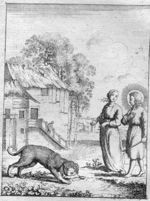
De Ziele neemt alles in gelatenheid van de hand Godts: Luyken, Jezus en de ziel (Amsterdam, 1685), emblem 34 illustrates the adae without quoting it
Alius peccat, alius plectitur: Whitney, A choice of emblemes (Leiden, 1586), emblem 62 illustrates the adage without quoting it
Alius peccat, alius plectitur: Alciatus, Emblemata (Leiden, 1591), emblem 174 illustrates the adage without quoting it
In assentatores: Maccio, Emblemata (Bologna, 1628), emblem 49 illustrates the adage without quoting it
Iconclass: 34B11(+9512):25D12 dog (+ animal(s) attacking)❧kinds of non-precious stone 57A632 Falsely accused Innocence 59CC2 Injustice; 'Ingiustitia' (Ripa)
Loci Communes: Ultio malefacti (Vengeance for a wrongdoing, Vengeance d'un méfait)
IV ii 23 Profundum sulcum A deep furrow
Βαθεῖαν αὔλακα, id est, Profundum sulcum. Refertur et hoc in adagionum collectaneis, addunt dictum de iis, qui cogitationibus rem expenderent. Sumptum est autem ex Aeschyli tragoedia, cui titulus, e(pta\ e)pi qh/bas2. In qua versus hi dicuntur de Amphiarao: *baqei=an au)/laka dia\ frenw=n karpou/menos *ec h(=s2 ta ke/dna blasta/nei bouleu/mata. id est, Sulco e profundo pectoris fructum metens, Rectae unde cogita tiones germinant. Citatur aliquot locis in Moralib. a Plutarcho, et a Platone, 2. de Rep. lib. Adlusit ad hoc proverbium aliquot locis Marcus Tullius, ut in epistola ad Atticum lib. 4. Ne baqu/ths2 mea, quae in agendo apparuit, in scribendo sit occultior. Rursus libro 5.Admirabere meam baqu/thta, cum salui redierimus, tanta mihi mele/s1h huius virtutis datur. Rursum libro 6. epist. 1. Nam nulla re sum delectatus magis quam meam baqu/thta in Appio tibi, liberalitatem in Bruto probari vehementer gaudeo. Nobis videtur recte quadraturum, et in eos qui se metiuntur non aliorum opinione, sed ex recte, secusve factorum conscientia.
[greek], A deep furrow. This too is recorded in the Collected Proverbs. The comment there is that it was said of people who weigh up a matter with profound thoughts that they keep deep within their hearts. It is taken from the tragedy of Aeschylus called Seven against Thebes. In this the following verses are spoken about Amphiaraos: 'Gathering the harvest from the deep furrowing of his mind, / Whence well-founded counsels grow.' This is quoted in several places by Plutarch in his Moralia and by Plato in the second book of the Republic. And there are allusions to the proverb in several places in Marcus Tullius; in a letter to Atticus, book 4: 'Lest the [greek] "careful thought," which was obvious in my action, should be less clear in my writing.' And in book 5: 'You will wonder at my [greek] "careful thought" when we come home safe, so much attention do I give to this virtue.' Again in the first letter of book 6: 'For there is nothing that I have enjoyed more than the immense pleasure in knowing that you approve my [greek] "careful thought" in the case of Appius and my generosity in that of Brutus.' It seems to me it will also fit well those who judge themselves, not by the opinion of others, but by their consciousness of things done rightly or otherwise.
Facsimile:
Iconclass: 47G2 laying the foundations; trench 54A211 Scrupulosity; 'Scropolo' (Ripa)
Loci Communes: Libertas, veritas (Freedom, truth, Liberté, vérité)
IV ii 24 Herniosus usque ad gulam Circumcised up to the neck
Ψωλὸς μέχρι τοῦ μιῤῥίνου, id est, Herniosus usque ad gulam: Quadrat in vehementer herniosum. Carmen est apud Aristophanem in Equitibus: *uwlon genesqai dei= s1e\ me/xri tou= mir)r(i/nou. id est, Sis herniosus oportet ipsam usque ad gulam. Aristophanis interpres ostendit fuisse et apud Diphilum.
[greek], Circumcised right up to the neck. This is suitable for someone who is severely injured. There is a verse in Aristophanes' Knights: 'You must be circumcised up to the neck.' The scholiast of Aristophanes indicates that the expression was also in Diphilus.
Facsimile:
Iconclass: 12B411 circumcision as ritual practice ~ infancy (non-Christian religions) 31A226 other anatomical details
Loci Communes: Intemperantia, libido (Intemperance, lust, Intempérance, désir)
IV ii 25 Benignior pellace vulpe As kind as a cunning fox
Ω πλεῖον ἵλαως αἰμύλης ἀλώπεκος. id est, Pellace quanto est blandior vuliecula. De eo, qui commodi sui causa simulat benevolentiam. Archilochi vulpeculam commemorat Plato lib. de Repub. 2. ouk ou)=n e)peidh\ to\ dokei=n, w(s2 dhlou=s1i moi oi( s1ofoi\, kai\ th\n a)lhqeian bia=tai kai\ ku/rion eu)dai moni/as2, e)pi\ tou=to dh\ trepte/on o(/lws2, pro/qura men kai\ sxh=ma ku/klw| peri\ e(auto\n s1kiagrafi/an a)reth=s2 perigrapte/on, th\n de\ tou= s1ofwta/tou a)rxilo/xou a)lw/peka e(lkte/on e)copi/asqen, id est Itaque posteaquam opinio, quemadmodum declarant homines sapientia praediti, etiam ipsam veritatem cogit, quod felicitatis est proprium, ad hanc sane prorsus incumbedum est, ac sibi quisque ceu vestibu lum ac virtutis umbram circumponere debet, sed ita ut sapientissimi Archilochi vulpem a tergo trahat. Haec ibi Glauco, laudans iniustitiam, quo Socratem ad iustitiae praedicationem excitet. Archilochi vulpeculam commemorat et divus Basilius, cum alias, tum in libello ad nepotes suos, et Philostratus in imaginibus: Multi sunt apologi de vulpis astutia, ex his quis sit Archilochi, non satis liquet.
[greek], He is as kindly as a cunning fox. Said of one who pretends to be kind for his own advantage. Plato mentions the fox of Archilochus in his Republic book 2:
And so, as men endowed with wisdom declare, since appearance masters even
truth itself and is the key to happiness, I must bow to it wholeheartedly; each
man must surround himself with a sort of forecourt and shadow-outline of
virtue, but such that behind his back he may lead the fox of the all-wise Archilochus.
He says these things at that point to Glaucus, praising injustice so that he can provoke Socrates to commend justice. Archilochus' fox is also remembered by St Basil in several places including the book addressed to his grandsons, and by Philostratus in his Pictures. There are many fables about the fox's cunning, but which of these is by Archilochus is not at all clear.
IV ii 26 Non ut prior laedam, sed ut injuriam retaliem I shall not be the first to strike, but I shall repay an insult
Senarium hunc quidam ex Olynthia Menandri citant, quidam ex Thersita Chaeremonis: Ως οὐχ ὑπάρχων, ἀλλὰ τιμωρούμενος. id est, Ut qui prior nolim malo lacessere. Sed ia datum malo retaliem malum. Convenit cum illo Terentiano: Sic existimet, responsum, non dictum esse.
This senarius is quoted by some as from Menander's Olynthia and by others as from the Thersites of Chaeremon: 'I would not willingly be the first to provoke violence, / But I shall repay violence already done with violence.' It matches this one from Terence: 'Let him reflect that this is an answer [in self-defence], not something said [as an attack].'
Facsimile: 
Iconclass: 54EE4 Attack 54E41 Self-defence
Loci Communes: Lacessentis (Provoking, Provoquer)
IV ii 27 Non navigamus ad Hippolaïtas We are not sailing to the Hippolaïtas
Οὐχ ἱππολέκτας περισσὰς πλῶμες. Equidem ad hunc modum reperitua scriptum in vulgatis exemplaribus, verum ex his verbis non videtur quae sententia possit exscalpi. Quid si legas: *ou)k i(ppolai+/tas2 perissou\s2 plw=mes2. id est, Non navigamus ad eximios Hippolaitas, ut sit admonentis parcius utendum esse rebus praesentib. neque enim navigari ad eum locum, unde rerum eiusmodi copia exuberat, ut quod temere prodegeris, facile possis sarcire. Nam in Graecorum commentariis hoc tantum adscriptum invenitur, e)pi\ to=u braxe/a kekthme/nwn, id est, De iis, qui pauca possident. Hippola vero vetustissima civitas fuit Laconicae, non procul a mari, quam olim consentaneum est ob portus commoditatem, mercimoniis floruisse. Meminit huius Pausanias in Laconicis his quidem verbis: kai\ e)pi\ qala/ssh| nao/s2 e)stin a)frodi/ths2 kai\ a)/galma o)rqo\n li/qou. enteu=qen a)posxo/nte tria/konta stadi/ous2, quri/des2 a)/kra taina/rou, kai\ po/lews2 e)rei/pia i(ppo/las2 e)sti\n, en de\ au)toi=s2 a)qhna=s2 i(ero\n i(ppolai+/tidos2, id est, Et ad mare templum est Veneris, et statua recta lapidea. Hinc recedenti 30. ostia summa Taenari, et civitatis Hippolae ruinae sunt. Et in his Minervae fanum Hippolaitidis. Meminit huius urbis et Stemphanus. Ne quam praetermittamus coniecturam, et illud excute lector, num pro Hippolaitas legendum sit Hippobotas, is est populus Chalcidensis, cuius meminit Plutarchus in vita Periclis, olim opibus, gloriaque cum primis clarus. Nam ipsum nomen, ab agrorum fertilitate inditum est,quasi dicas equorum altricem, quorum regionem pulsis indigenis, et deducta colonia occuparunt Athenienses. Huius rei mentionem facit et herodotus in Terpsicore.
[greek]. This is how I myself have found it written in published versions, but from these words I do not see what meaning can be extracted. I shall say therefore what seems to me to be closest to the truth, not because I should like others to yield immediately to my powers of divination, but to provide scholars with some chance of conjecturing the true reading. Try reading 'We are not sailing to the abundant Hippolaitas' - as if it were a warning to use what you have more sparingly, and that you are not on a voyage to this place where an abundance of such things is to be had so that you can easily make good what you have rashly spent. In the Greek collections I find only this note: 'About those who possess little.' Hippola was a very ancient Laconian city, not far from the sea, which because of the convenience of its port probably flourished formerly as a trading centre. Pausanias mentions it in his Laconia in these words: 'And by the sea there is a temple of Venus with a standing statue in stone. If you go thirty stadia from here, you find the high gates of Taenarum and the ruins of the city of Hippola, and among these a sanctuary of Minerva Hippolaitis.' Stephanus mentions this city too. And so as not to omit any conjecture, consider too, dear reader, whether instead of 'Hippolaitas' we should read 'Hippobotas.' This is a tribe in Chalcidia mentioned by Plutarch in his life of Pericles and ranked among the greatest in earlier times for their wealth and fame. Their name was given them for the fertility of their lands, 'nursery of horses,' as you might say. The natives of this region were driven out, a colony was introduced, and it was occupied by the Athenians. This affair is recorded by Herodotus too in the Terpsichore.'
Facsimile:
Iconclass: 46A15 the poor 46C24(+33) sailing-ship, sailing-boat (+ propulsion of vehicle, ship, etc. by wind) 55BB1 Poverty; 'Povertà', 'Povertà del doni', 'Povertà in uno ch'habbia bell'ingegno' (Ripa) 61E(HIPPOLA) names of cities and villages (HIPPOLA)
Loci Communes: Profusio (Extravagance, Prodigalité)
IV ii 28 Epiphyllides Small grapes
Refertur et hic senarius Aristophanicus, e comoedia, quae inscribitur Ranae in proverbia: *epifu/llides2 tau=t) ee)sti\ kai\ stwmu/lmata. id est, Epiphyllides sunt haec et ampullae merae. Eum aiunt convenire in blandiloquos, et phaleris verborum instructos magis quam egregiis factis. Epiphyllides enim Graecis dicuntur minutiores botri maioribus adhaetentes. Callistrat. omnes minutulos racemulos Epiphyllidas appellari scribit, quia sub pampinis lateant. Nam hinc nomen, quod foliis adhaereant. Est autem id luxuriantis arboris argumentum. Theocritus in Aita meminit de pustulis naso innatis, quae mendacem arguunt. Id suo loco dicetur.
This senarius too, from the comedy of Aristophanes called the Frogs, is counted among proverbs: 'These things are small grapes and pure bombast.' It is said to be fitting for smooth talkers and those who make a better show of words than of distinguished deeds. Epiphyllides is the Greek word for the smaller grapes forming part of the bunch with the larger ones. Callistratus writes that all very small bunches are called epiphyllidae because they are hidden under the leaves. The term comes from the fact that they lie close under the leaves. And indeed this is proof of the fruitfulness of the plant. Theocritus reminds us in the Aita that it is used of pustules formed on the nose which are evidence of a liar. This will be dealt with in its proper place.
IV ii 29 Απ᾽ ἀκροφυσίων Straight from the bellows
Απ᾽ ἀκροφυσίων, proverbialiter dicebant pro eo quod est, recens ab officina profectum, perinde quasi modo productum a follibus, aerariaque fornace. Nam ab his sumpta metaphora. Aristophanes: *rh(/mata/ tekomya\ kai\ pai/gnia e)pideiknun/ai *pa/nta a)p) a)krofus1i/wn kai\ a)po\ kinnabeuma/twn. id est, Dictaque splendida, et lusus ostentare, omnia a follibus et archetypis. Porro cinnabeuma vocatur exemplar, et simulacrum, ad cuius imitationem pictores ac statuarii signum effingunt, ac repraesentant. Unde quod nuper natum est, id a)po\ to=u kinnabeumatwn venire dicitur.
[greek], Straight from the bellows, was a proverbial expression for anything that had been produced recently in a workshop, as if straight from the bellows and bronze furnace, for this is where the metaphor is taken from. Aristophanes says: 'Using splendid turns of phrase and jokes, all [greek] "originals" and straight from the bellows.' Cinnabeuma, I may add, is the word for an archetype, an image that painters and sculptors reproduce in order to create and represent emblematic signs. Hence anything recently created is said to come [greek] 'from the archetypes.'
Facsimile:
Iconclass: 41B1311 bellows 51F51 Newness
Loci Communes: Mira nova (Wonderful new things, Choses nouvelles et étonnantes)
IV ii 30 Super te haec omnia Leparge The whole load on your back, Lepargus
Ανά σοι τάδε πάντα λέπαργε. id est, Super haec te cuncta Leparge. Hemistichium heroicum dici solitum in eum, cui ne post laborem quidem exhaustum datur respirare. Transumptum a bubus, quibus perfunctis iam agricolandi labore, labor is etiam reliquus est, ut aratrum, reliquaque instrumenta domum referant. Ea solent imponi, qui sit e duobus robustior. Taurum autem le/pargon appellat, ob candorem pili. Videri possunt verba asini sub onere collabentis ad bovem, qui rogatus ut sarcinae partem reciperet recusavit, moxque deficiente asino, coactus est totam sarcinam una cum asini pelle gestare.
'[greek], The whole load on your back, Lepargus. A heroic hemistich, which was said of someone who is not allowed to take breath even after finishing his work. The figure is derived from oxen who, having already endured the labour of ploughing, have still to perform the labour of carrying home the plough and other tools. These are usually loaded on to whichever of the two is the stronger. The bull is called Lepargus because of the whiteness of its coat. These could well be the words of the ass to the ox as he collapsed under his load; the ox was asked to take part of the load but refused, and when the ass died shortly after, the ox was obliged to carry the whole load together with the hide of the ass.
Facsimile: 
Iconclass: 46C13142 ass, donkey 47I21111:61C2(LEPARGUS) ox❧proper names of animals (LEPARGUS) 51AA4:31B19 Nothingness, Absence❧resting
Loci Communes: Ultio malefacti (Vengeance for a wrongdoing, Vengeance d'un méfait)
IV ii 31 Laqueus auxiliari videtur The snare seems to be a help
Αμύνει ὡς ἔοικεν ἡ πάγη. id est, Laqueus ita ut videtur & bono fuit. Dictitari consuevit, quoties incommodum alicui verteretur in bonum. Veluti si quis Turca bello captus, serviret apud Christianos, isque hac occasione nostrae religionis sacris initiaretur. Aut si dives ad inopiam redactus, hac occasione fieret ex luxurioso sobrius, ex impio pius. Huc pertinet quod philosophus ille, Zenoni fallimur, dicebat, se tum prospere navigasse, posteaquam naufragium fecerat.
'[greek], The snare, it seems, did some good. This was said customarily whenever some misfortune turned out to someone's advantage. For example, if some Turk, captured in the war, worked among Christians and were converted by this opportunity to the rites of our religion. Or if a rich man, reduced to poverty, were changed by this opportunity from a dissolute character to a sober one, and from an unbeliever to a believer. This is what the philosopher, Zeno if I am not mistaken, was saying when he remarked that he had made a good voyage only after he had been shipwrecked.
Facsimile:
Iconclass: 11P161 Christian Religion vs. Mohammedanism 11Q10 'Conversione' (Ripa) 32B33(TURKS) Asian peoples, Asians: Turks 45I1 prisoner of war (after the battle) 54FF11:51CC11 Adversity, Misfortune, Bad Luck; 'Fortuna infelice', 'Infortunio' (Ripa)❧Positive Result, Good Result 54F122 Vicissitudes of Life
Loci Communes: Malum vertens bono (Evil turning to good, Mal qui tourne en bien)
IV ii 32 Αμυστί πινειν To drink at one draught
Αμυστὶ πίνειν, dicuntur qui haustim avideque bibunt, nec inter bibendum spititum reciprocant, sed potum in alvum non secus atque in dolium infundunt. Sonat autem a)musti\ quasi dicas, citra suctum. Traduci poterit ad eos qui sermonem nullo delectu, nimis avide accipiunt. Aut qui immodica lectione obruunt ingenium, cum magis expediat, subinde cogitationem admiscere lectioni. Similis potatio Graecis dicitur ἄμυστις, quod inter bibendum labia non claudantur.
'[greek], To drink at one draught, is said of people who gulp a drink, greedily, without taking a breath as they drink, but tipping it into their bellies as if into a barrel. The word [greek] means the same as 'without swallowing.' It could be used figuratively of people who take what is said too eagerly, without discrimination; or of those who cram their minds with excessive reading when they would do better to mingle reading and thinking together. Such drinking is called [greek] by the Greeks because during the drinking the lips are not closed.
Facsimile:
Iconclass: 11N35 Gluttony, Intemperance, 'Gula'; 'Gola', 'Ingordigia', 'Ingordigia overo Avidità', 'Voracità' (Ripa) ~ personification of one of the Seven Deadly Sins 54AA43 Intemperance, Immoderation 55CC11 Greed, Covetousness, Cupidity; 'Cupidità' (Ripa)
Loci Communes: Ignavia et inscitia (Cowardice and ignorance, Lâcheté et ignorance)
IV ii 33 Amphidromiam agis You are celebrating the Amphidromia
Αμφιδρομΐαν ἄγεις. id est, Amphidromiam agis. Adagium ad varios usus poterit accommodari: vel ad eos, qui pueros ostentant, ac circumferunt, aut munuscula captant, ambiuntque. Sumptum a prisca consuetudine, qua mulieres, quae in partu adfuissent, et obstetricando iuvissent, quinta post die manus abluere solent, ac puerum cursu laribus circumfere. Eoque die munuscula missitabantur a cognatis, sepiae plerumque et polypi, decimo a partu die nomen indebatur infanti. De munusculis huiusmodi meminit et Terentius in 1. Phormionis scena. Et Plautus in Truculento, in qua fabula Phronesium meretrix Dinarcho cupienti accumbere in sacrificio pro puero accititio, iuber potius illud agat, quod quinto die fieri consuevit. Quamquam Hesychius et Amphidromiam septimo die scribit celebrari solitam. Plato in Theaeteto, ta\ a)mfidromia, vocat genere neu tro. Idem facit Ephippus apud Athenaeum li. Dipnosophistarum 9.
Αμφιδρομΐαν ἄγεις, You are celebrating the Amphidromia. This adage could be adapted to various uses: for example to those who show off their children and carry them around, or those who seek gifts and go around soliciting. It is derived from the ancient custom whereby the women who were present at a birth and who helped at the delivery cleansed their hands five days later and ran around the hearth carrying the child. On the same day little gifts, most often cuttlefish and octopuses, were sent by relatives. On the tenth day after the birth the child was given its name. This sort of small gift is recalled by Terence in the first scene of his Phormio. And Plautus in the Truculentus, where the prostitute Phronesium orders Dinarchus, who wants to go to bed with her when she was going to sacrifice 'on behalf of her adopted baby,' to do instead what was usually done on the fifth day. However Hesychius writes that the Amphidromia was usually celebrated on the seventh day. In the Theaetetus Plato calls the ritual [greek], in the neuter gender, and Ephippus does the same in Athenaeus' Doctors at Dinner book 9.
Facsimile:
Iconclass: 12E9:61I(AMPHIDROMIA) other social activities ~ Greek religion❧names of historical events and situations (AMPHIDROMIA) 42A24 midwife, 'accoucheuse' 55C2 Giving
Loci Communes: Luxus et mollicies (Luxury and softness, Luxe et mollesse)
IV ii 34 Canens vitae palmum Singing brief life away
Αδων τὴν σπιθαμὴν τοῦ βίου πρὸς ἄνηθον. id est, Canens vitae palmum ad anethum. De parco dictum, qui re tenui leviculaque transigit vitam, atque interim existimat se laute vivere. Morem hunc quibusdam esse videmus, ut cum nihil apponant in mensa, quod edi possit, ne ieiunum omnino convivium appareat, varias narrant fabulas, aut cantilenas, ut his modis ciborum oblivionem inducant conviviis.
[greek], Singing brief life away with nothing but dill on the table. Said of a frugal man who gets through life on scant, slender resources and yet thinks he lives magnificently. This is visibly the habit of certain people who put nothing that can be eaten on the table, but, so that the meal should not seem to be a complete fast, tell a variety of stories or sing songs to persuade their guests to forget food.
Facsimile:
Iconclass: 33A341 story teller; listening to story teller 55C2 Giving 55CC1 Saving, Frugality, Parsimony; 'Parsimonia' (Ripa)
Loci Communes: Sordes et parcimonia (Meanness and stinginess, Bassesse et avarice)
IV ii 35 Qui non litigat, coelebs est If he has no disputes, he's a bachelor
Divus Hieronymus tamquam proverbio iactatum citat. Qui non litigat, caelebs est. Indicat adagium rixosum esse omne coniugium, nec esse tranquillam vitam, nisi in coelibatu. Iuvenalis: Semper habet lites, alternaque iurgia lectus, In quo nupta tacet: minimism dormitur in illo. Adstipulantur huic scntentiae versus aliquot proverbiales, *xeimwn kat) oi/kous2 e)sti\n a)ndra/s1in gunh. id est, Malier in adibus atra tempestas utro. Item, *zh=los gunaiko\s2 pa/nta purpolei= de/mon. id est, Incendit omnem feminae Zelus domum. *ou)de\n gunaiko\s2 xei=ron ou)de\ th=s2 kalh=s2. id est, Multere nil est peius, atque etiam bona. Sed Hesiodus, ut modestius, ita verius opinamur. *ou) men ga/r ti gunaiko\s2 a)nh\r lhi/zet) a)/meinon *th=s2 a)gaqh=s2, th=s2 d)au)=te kakh=s2 ou) r(i/gion a)/llon. id est, Sors potior muliere proba non obtigit umquam Ulla viro, contraque mala nil tetrius usquam est.
St Jerome cites this phrase as being a proverbial saying: 'If he has no disputes, he's a bachelor.' The adage tells us that every marriage is full of strife and that the only way to live peacefully is in celibacy. Juvenal:
There is endless strife and quarrels one after the other
In the bed where a wife lies; there is no sleep to be had there.
There is support for this aphorism in several proverbial verses: 'A woman in the home means a bad time for the man.' And this: 'A woman's jealousy sets light to any house.' And this: 'There is nothing worse than a woman, even a good one.' But Hesiod, more moderately and so more truthfully I think:
A better fate never befell any man than a good woman;
Contrariwise nothing is ever worse than a bad one.
IV ii 36 Praestat uni malo obnoxium esse quam duobus It is better to be exposed to one evil that two
Aristophanes in Concionatricibus senarium hunc proverbialem refert. *eni\ ga\r s1une/xqai krei=tton h)\ duoi=n kakoi=n. id est, Uni atque geminis praestat involui malis. Quoties utrumque malum evitari non potest, danda tamen opera, quo declinemus alterum, et in id, quod minus habeat incommoditatis, incurramus.
In the Women in Parliament Aristophanes uses the following proverbial senarius: '[greek] 'It is better to be entangled in one evil than two.' Whenever it is impossible to avoid one or the other of two evils we should strive to ward off one and meet face-to-face the one that brings the least disadvantage.
Facsimile: 
Iconclass: 49D11(1):54DD51 numerals (1)❧Danger; 'Pericolo' (Ripa)
Loci Communes: Malum conduplicatum aut renovatum (Evil doubled or renewed, Mal redoublé ou renouvelé)
IV ii 37 Utrumque Both
Enarrator Apollonii citat hunc ex Callimacho versiculum, Αμφότερον κέντρον τε βοω»ν καὶ μέτρον ἀρούρης. id est, Utrunque est, stimulusque boum, mensuraque terrae. Dici potest de re quapiam ad diversum usum accomodabili. Quemadmodum superius ostensum est de gladio Delphico. Sentit autem Callimachus de virga, quam ἄκαιναν Graeci vocant, Latini ni fallor, decempedam. Eam aiunt à Thessalis inventam, pedum longitudine decem. Hac eadem pastores pedi vice consueverunt uti.
The scholiast of Apollonius quotes this line from Callimachus: 'It is both: a goad for the oxen and a measure for the land.' This may be used of anything that can be adapted to a different use, as I have shown earlier in the case of the Delphic sword. Callimachus means the stick that the Greeks call an [greek] and the Romans, if I am not mistaken, a decempeda. This is said to be an invention of the Thessalians, and is ten feet long. It is the same as shepherds used to use as a crook.
Facsimile:
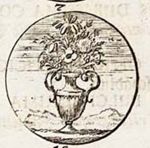
Utrumque: De la Feuille, Devises et emblemes anciennes et modernes (Augsburg, 1697), emblem 554
Iconclass: 46C1461 prick, goad 49D521 measuring-instruments 54B3 Utility, Usefulness; 'Utilità' (Ripa)
Loci Communes: Anceps et dubius (Doubtful and uncertain, Incertain et douteux)
IV ii 38 Chius A Chian
Χῖος ἀποπατῶν, id est, Chius cacans. Aristophanis interpres in Pacem, indicat proverbio iactatum in eos, qui contaminarent, consputcarentque civitatem Nam hac occasione consueverunt calumniam struere Chiis. Unde non perperam accommodabitur et in illos qui captata occasione calumniam ur aliquem. Quemadmodum lupus Aesopicus agnum accusat, quod sibi bibenti turbarit aquam. Aristophanes in ea quam modo citavimus fabula. *h po/lis2 h( xi/wn dia\ to\n s1o\n prwkto\n o)flh/s1ei. Probabile est adagium ab eventu natum, quem refert Plutarchus in apophthegmatibus Laconicis. Chii cum apud Lacedaemonios peregrinarentur, post cenam vomuerunt in curia Ephororum, quorum apud eam gentem erat summa auctoritas, quin et in horum cathedras in quibus sedere consueverunt, incacarunt. Ac primum quidem diligenter inquisitio facta est, quinam hoc designasset scelus, severiter animadversuris, si quis civium hoc perpetrasset. Ubi senserunt id a Chiis factum, per praeconem edixerunt, Chiis permissum esse intemperanter agere.
[greek], A Chian shitting. The scholiast of Aristophanes' Peace shows that this was a proverbial rebuke uttered against those who polluted the city and made it dirty. Any such occasion was used to invent slurs against the Chians. Whence it will be fittingly adapted to those who seize an opportunity to slander someone. Like the wolf in Aesop who accuses the lamb of muddying the water he was drinking. Aristophanes in the play I have just quoted: 'The city of the Chians will incur a fine because of your bowels.' The adage was probably derived from an incident that Plutarch relates in his 'Sayings of Spartans.' Some Chians, travelling in Laconia, vomited after a meal in the Assembly of the Ephors, the highest dignitaries among the Spartans, and emptied their bowels on the seats where the Ephors were accustomed to sit. At first a strict inquiry was made as to who had perpetrated this offence with the intention of dealing severely with any citizen who was responsible. When they discovered that the Chians had done it, they had an edict proclaimed which said, 'Permission is given to the Chians to behave like drunks.'
IV ii 39 Furari littoris arenas Stealing the sands of the sea-shore
Littoris arenas furari dicitur, qui rem ab omnibus neglectam et incustoditam tollit. Ovidius in Amoribus, Ille potest vacuo furari littore arenas, Uxorem stulti quisquis amare potest. Conveniet cum illo, quod alibi retulimus ex Aristotele: en qu/rais2. thn\ u(dri/an, id est, In foribus aqualem. Aptius per negationem usurpabitur proverbium, ut, Quis littoris arenas furetur?
Someone is said 'to steal the sands of the sea-shore' if he takes what no one wants or guards. Ovid in the Amoves: 'Who would make love with the wife of a fool / Could steal the sands from a deserted shore.' A good match for this will be the one from Aristotle I noted elsewhere: 'The water-jar on the door-step.' It will be better if the adage is used with a negative implication: 'Who would steal the sands of the sea-shore?'
Facsimile:
Iconclass: 25H133 beach 44G544:25D23 theft❧sand (soil type) 52AA511 Ridiculousness
Loci Communes: Absurda, indecora, seu praepostera (Absurd, unbecoming, or preposterous things, Choses absurdes, inconvenantes ou déplacées)
IV ii 40 Colubrum in sinu fovere Nourishing a serpent in one's bosom
Οφιν ἐν τῷ κόλπῳ θάλπειν. id est, Serpentem in sinu fovere, dicitur, qui complectitur amore, studioque prosequitur hominem ingratum, et aliquando per occasionem nociturum. Sumptum est ab apologo quodam, qui Aesopi nomine fertur. Eum Gabrias quida iambis expressit in hunc modum: Ἔθαλπέ τις γεωργὸς ἐν κόλποις ὄφιν Ὥρα κρύους· ἐπεὶ δὲ θέρμης ᾔσθετο, Ἔπληξε τὸν θάλψαντα κἄκτεινεν τάχος. Οὕτω κακοὶ ποιοῦσι τοὺς εὐεργέτας, id est, Sinu fovebat quidam agricola viperam Gelu rigentem, at haec calorem ut senserat, Ferit foventem, moxque perimit vulnere. Ingrati ad hunc benemeritos tractunt modum. Est et alter apologus, de gallina fovente serpentis ova, quam admonet hirundo, ne in suam perniciem foveat.
Οφιν ἐν τῷ κόλπῳ θάλπειν, Nourishing a serpent in one's bosom is said of someone who embraces an ungrateful person with affection and zealous attention when he is likely to seize some opportunity to do harm. It comes from a fable which is told under the name of Aesop and which a certain Gabrias put into iambic verse thus:
A certain farmer was nursing in his lap a viper
Which was stiff with cold, but the viper felt the warmth
And bit its nurse, who soon died of the wound.
This is how the ungrateful treat those who deserve well of them.
There is another fable too about a hen that was incubating a snake's eggs; she was warned by a swallow not to hatch it lest it brought her own destruction.
Facsimile:
Iconclass: 25F42(VIPER)(+512) snakes: viper (+ animal(s) attacking) 34C11:25F42(VIPER) feeding wild animals in winter❧snakes: viper 57AA8 Ingratitude; 'Ingratitudine' (Ripa)
Loci Communes: Malum accersitum aut retortum (Evil brought upon oneself or turned back, Mal attiré ou retourné)
IV ii 41 Praeter Sibyllam leget nemo Illegible to anyone but the Sibyl
Divus Hieronymus irridens Iovinia ni stylum, ut perturbatum et obscurum, scribit Plautina rum literarum illud in eum quadrare: Has praeter Sibyllam leget nemo. Est autem hic locus in Pseudolo Plautina, ubi quidam literas ab amica scriptas irridens, notulis malc concinnatis, cuiusmodi fcrme scriptura mulierum.Quaerunt, inquit, hae literae sibi liberos. Alia aliam scandit. Has quidem pol credo nemo nisi Sibylla legerit, interpretari alium posse neminem. An obsecro hercle, habentque gallinae manus? Nam has quidem gallina scripsit.
St Jerome makes fun of the style of Jovinian as confused and obscure and notes that it is aptly described by an expression used about writing in Plautus: 'No one but the Sibyl could read this.' The passage is in Plautus' Pseudolus where someone laughs at the handwriting of a woman friend, little marks badly formed, typical of women's writing:
These characters are after children, the way
They climb on top of each other.
The Sibyl may be able to read this, but I don't believe
Anyone else can make it out.
Lord save us! Have hens got any hands?
For it surely was a hen wrote this.
Facsimile: 
Iconclass: 11I2 sibyls 52DD21:49L7 Confusion, Obscurity; 'Confusione' (Ripa)❧handwriting, written text
Loci Communes: Difficultatis (Difficulty, Difficulté)
IV ii 42 Nihil profuerit bulbus An onion would be no good at all
Athenaeus Dipnosophistarum libro ii. senarium hunc proverbii nomine refert: Οὐδέν σ᾽ ὀνήσει βολβὸς ἂν μὴ νεῦῤ ἔχῃς. id est, Nervis carentem iuverit bulbus nihil. Martialis item: Nil aliud bulbis, quam satur esse pores. Bulbus autem ad irritandam Venerem valet. Licebit ad verecundiorem usum trahere: Nil prodesse studium, ni vis adsit ingenii.
In the second book of the Doctors at Dinner Athenaeus records this senarius as a proverb: 'Any one who is impotent would not be helped at all by an onion.' Martial too: 'You can do nothing but satisfy your hunger with onions.' The onion arouses lust. But we may be allowed to use the adage for a more seemly purpose to mean that study is of no benefit if intelligence is lacking.
Facsimile:
Iconclass: 25G22(ONION) (non-fruit) products of plants or trees: onion 33C7 potency and impotency 33C72 aphrodisiacs 54BB3:49B441 Inutility, Noxiousness; 'Nocumento', 'Nocumento d'ogni cosa' (Ripa)❧studying ~ university
Loci Communes: Cum auxilio ; citra auxilium (With help; without help, Avec aide ; sans aide)
IV ii 43 Quae dantur What is given ...
M. Tullius libro epistolarum ad Atticum sexto: Ἀπογνοὺς δὲ ἀλόγως ἀπέστη ἐπειπὼν 'Αἰσχρόν τοι δηρόν τε μένειν. Meque obiurgavit veteri proverbio: τὰ μὲν διδόμενα. Utitur eodem et alio quodam loco. Non admodum liquet quid sibi velit, nisi quid conicere licet, τὰ μὲν διδόμενα, versum esse poetae cuiuspiam: est enim hemistichium iambicum, quod admonet, quod a fortuna datur, id boni consulendum esse, et ferendum aequo animo, quod mutari non queat. Plato in Goria videtur indicare proverbium: Νῦν δὲ ἐψεύσθην καὶ ὡς ἔοικεν ἀνάγκη μοι κατὰ τὸν παλαιὸν λόγον τὸ παρὸν εὖ ποιεῖν καὶ τοῦτο δέχεσθαι τὸ διδόμενον παρὰ σοῦ, id est Nunc autem mendacio delusus sum, atque ut videtur, necesse est mihi iuxta vetus proverbium, Quod adest boni consulere, idque quod abs te datur accipere, Δῶρον δ᾿ ὅτι δῷ τις ἐπαίνει, alibi dictum est. Eodem pertinet: Ut possumus, quando ut volumus non licet.
Marcus Tullius in book 6 of his Letters to Atticus: 'When he lost them he left without an explanation, saying, "I give in. 'Twere shame to tarry long," and casting in my teeth the old proverb [greek] "Take the goods the gods provide you."' He uses the same phrase in another place too. It is not entirely clear what it means unless we may conjecture that [greek] 'What is given ...' is a line by some poet, for it is an iambic hemistich. It counsels us to accept gratefully what fortune gives us and to bear patiently what cannot be changed. In the Gorgias Plato seems to point to this proverb: 'But now I am deceived by a lie, and it is necessary, it seems, to take my present fortune in good part, as the old saying runs, and [greek] "to accept whatever you give me."' [greek] 'For any gift be grateful' is dealt with elsewhere. The same idea is contained in 'As best we can, since as we would we may not.'
Facsimile:
Iconclass: 53B1 Acceptance 54F12 Luck, Fortune, Lot; 'Fato', 'Fortuna', 'Fortuna aurea', 'Fortuna buona', 'Fortuna pacifica overo clemente', 'Sorte' (Ripa) 55C2 Giving
Loci Communes: Proximis utendum (One must make use of one's neighbors, Il faut se servir de son prochain)
IV ii 44 Sidera addere coelo Adding stars to the heavens
Addere coelo sydera, pro eo quod est, adiungere, quibus ipsis summa est copia, proverbiali schemate dictum, vel illud sat signi fuerit, quod Ouidius secundo Elegiarum amatoriarum libro, duobus proucrbiis intertexuit: Quid folia arboribiis, pleno quid sidera caelo, In freta collectas alta quid addis aquas?
Adding stars to the heavens is a proverbial figure meaning to add to what already exists in great abundance. Proof enough of this would be the way Ovid wove it together with two other proverbs in the second book of his love poems:
Why do you add leaves to the trees, stars to a full sky?
Why add pond-water to the deep seas?
Facsimile:
Iconclass: 33A4:21D bringing gifts; exchanging gifts❧water (one of the four elements) 33A4:25G3(+27) bringing gifts; exchanging gifts❧trees (+ leaf) 33A4:24D bringing gifts; exchanging gifts❧stars 54BB2 Unnecessity, Superfluity
Loci Communes: Absurda, indecora, seu praepostera (Absurd, unbecoming, or preposterous things, Choses absurdes, inconvenantes ou déplacées)
IV ii 45 Pamphili furtum Pamphilus pilfering
Παμφίλου νοσφισμὸς. id est, Pamphili sublatio. Pamphilus hic veteris comoediae conviciis notatus est, quia aerariu expilasset. Convenit in peculatores, qui e publico suffurantur.
Παμφίλου νοσφισμὸς, Pamphilus' thievery. This Pamphilus is censured and abused in the Old Comedy because he robbed the treasury. The expression will be suitable for embezzlers who steal money from the public.
Facsimile:
Iconclass: 44G522 robbery 57AA621 Cheat, Deceit; 'Fraude', 'Inganno' (Ripa)
Loci Communes: Rapacitas et avaritia (Rapacity and greed, Rapacité et avarice)
IV ii 46 Pegaso velocior As fast as Pegasus
Πεγάσου ταχύτερος. id est, Pegaso velocior. Hyperbole proverbialis de praevelocibus. Nota fabula de equo alato. Ita pindarus Olympia. hymno ix. καὶ ἀγάνορος ἱππου θᾶσσον καὶ ναὸς ὑποττέρου. id est, Velocius et generoso equo, & alata nave.
Πεγάσου ταχύτερος, As fast as Pegasus. A proverbial exaggeration describing people who can run very fast. From the well known story of the winged horse. Thus we find in Pindar Olympic Odes number 9: Faster than a noble horse or a winged ship.
Facsimile:
Iconclass: 51M11 Swiftness, Speed; 'Agilità', 'Celerità', 'Velocità' (Ripa) 93D1 Pegasus, the winged horse
Loci Communes: Festinationis (Haste, Hâte)
IV ii 47 Crepitu probabis You will prove it by the sound
Πλατάγῃ δοκιμάσεις. i. Plataga probabis. De iis qui ridicule explorant alterius in sese animum. Sumptum a vulgari ioco puellarum, quae imposito pollici, medioque digito papaveris folio palmam illidunt: quia si crepuerit, amoris argumetum est, sin minus, non amantis indicium. Id Suidas indicat fieri solere folio papaveris, aut anemonae, quod πλαταγώνιον dicitur, a πλατάσσειν, id est, a strependo. Allusit ad proverbium Ammianus libro decimoquarto. Quod cum vere et ex animo dicitur, solet amor ex levi crepitu monstrari. Unde locus erit proverbio, ubi ex dicto simplici deprehenditur animus hominis. Apud alios πλαταγήν reperimus, pro instrumento, quo monemus strepitum, et πλαταγεῖν pro crepitum movere.
Πλατάγῃ δοκιμάσεις, You will prove it by the 'pop.' Said of those who try by absurd means to find out others' intentions towards them. The origin is a common game for girls who strike the palm of one hand against a poppy leaf held between the thumb and middle finger of the other; if it makes a pop it is a proof of love, if not, it is a sign that love is absent. Suidas tells us this is done with the leaf of a poppy or anemone which is called πλαταγώνιον, from πλατάσσειν 'to crack.' Ammianus alluded to the adage in book 14: 'For when it is expressed truthfully and from the heart love shows itself by a slight sound.' So it will be a good moment for the proverb when a man's intention is clearly recognizable in his way of speaking plainly. Elsewhere I find πλαταγήν for the instrument by which we produce the sound, and πλαταγεῖν for 'to make a snapping sound.'
Facsimile:
Iconclass: 22D1 loud sound, noise 25G41(POPPY)(+27) flowers: poppy (+ leaf) 43C77 other children's games 52E2:56F2 Prediction, Prophecy; 'Augurio', 'Divinatione', 'Profetia' (Ripa)❧(personifications and symbolic representations of) Love; 'Amore (secondo Seneca)' (Ripa)
Loci Communes: Conjecturae (Conjectures, Conjectures)
IV ii 48 Multa docet fames Hunger teaches many things
Πολλῶν ὁ λιμὸς γιγνεται διδάσκαλος. id est, Fames magistra est artium complurium. Ovidius, Ingenium mala saepe movent. Persius: Ingenique largitor Venter negatas artifex sequi veces.
Πολλῶν ὁ λιμὸς γιγνεται διδάσκαλος, Hunger is the teacher of many arts. Ovid says: 'Misfortunes often stir the wits.' And Persius: 'That dispenser of genius, the belly, who has a rare skill in getting at words that are not his own.'
IV ii 49 Multorum festorum Jovis glandes comedit He has eaten acorns at many feasts of Jupiter
Πολλῶν πανηγύρεων διὸς βαλάνων ἔφαγεν. id est, Multorum festorum Iovis glandes comedit. De sene longoque plurimarum rerum usu docto, perinde valet quasi dicas, multas vixit Olympiadas. Quercus autem Iovi sacra: unde nuces iuglandes. Simili ioco & hodie di cunt nostrates, Comedit multa ova paschalia, senem indicantes.
Πολλῶν πανηγύρεων διὸς βαλάνων ἔφαγεν, He has eaten acorns at many feasts of Jupiter. Said of a man who is old and wise through long and varied experience; it means exactly the same as 'He has lived many Olympiads.' The oak is sacred to Jupiter, whence the expression 'Jove's oak nuts.' People in my country still say nowadays, 'He has eaten many Easter eggs' as a humorous way of referring to an old man.
Facsimile: 
Iconclass: 41C11:25G21(ACORN) eating❧fruits: acorn 31D160 Old Age, 'Senectus'; 'Vecchiezza' (Ripa) 43A1231 Easter egg 52A51 Wisdom; 'Sapienza', 'Sapienza humana', 'Sapienza vera' (Ripa) 54A31 Experience, Mastery; 'Esperienza' (Ripa)
Loci Communes: Prudentia senilis (The prudence of old age, Prudence de la vieillesse)
IV ii 50 Prodico doctior As learned as Prodicus
Προδίκου σοφώτερος. i. Prodico doctior. Aiunt hunc Prodicum in diiudicandis litibus & arbitriis inter dissentientes amicos, acerrimi fuisse iudicii. Aristophanes in Centauro, citante Suida: Ἐγὼ γάρ, εἴ τις ἠδίκηκε, θέλω δίκην Δοῦναι Πρόδικον, id est, Ego namque, si quis praeter aequum fecerit, Prodicum volo negotium cognoscere. Subest autem allusio ad vocabulum nominis. Prodicus enim veluti praeiudicatorem sonat, qui ante de lite pronunicet, quam ad iudices delata sit. Fuit huius nominis et sophista quidam, cuius meminit Plato locis aliquot.
Προδίκου σοφώτερος, As learned as Prodicus. It is asserted that this Prodicus showed the most acute judgment in settling lawsuits and making decisions between disputing friends. Aristophanes in his Centaur, as quoted by Suidas: 'For my part, if anyone should commit an injustice, / I want Prodicus to consider the matter.' However there is an underlying allusion to the common noun; prodicus means much the same as praeiudicator, an investigating magistrate who gives an opinion on a case before it is sent before the judges. There was also a sophist of this name whom Plato mentions in several places.
Facsimile:
Iconclass: 44G112 judicial verdict 44G16 lawyer, attorney at law 44G6 juridical examples; exemplary judges; 'Gerechtigkeitsbilder'
Loci Communes: Excellentia, inaequalitas (Excellence, inequality, Excellence, inégalité)
IV ii 51 Mendico ne parentes quidem amici sunt For a beggar not even parents are friends
Πτωχοῦ φίλοι οὐδ᾽ οἱ γεννήτορες. i. Mendico ne parentes quidem amici sunt. Divitiae conciliant amicos. Paupertas nec illos habet amicos, quos natuta coniunxit. Tautum valet in hominum vita, cuius momentum oportuit esse levissimum, si res non ex nostris cupiditatibus, sed ex usu metiremur.
Πτωχοῦ φίλοι οὐδ᾽ οἱ γεννήτορες, For a beggar not even parents are friends. Wealth attracts friends, poverty has no friends, not even those bound by Nature. We give so much importance in our lives to things that should have the least influence if we measured them by their usefulness and not by our greed.
Facsimile:
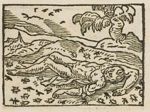
L'homme indigent, amy n'a quel qu'il soit: La Perrière, Le theatre des bons engins (Lyon, 1545), emblem 94 uses the imagery of insects crawling over a human corpse to express that those hit by misfortune are abandoned by everyone
Iconclass: 46A15 the poor 55BB1 Poverty; 'Povertà', 'Povertà del doni', 'Povertà in uno ch'habbia bell'ingegno' (Ripa) 51AA4:33A5 Nothingness, Absence❧friends 59BB1:33A5 Nobody, 'Nemo'❧friends
IV ii 52 Malus janitor A bad gatekeeper
Πυλωρὸς κακὸς. i. Ianitor malus, id est, indiligens praefectus, aut custos. Natum à dicto Thericyonis cuiusdam, qui cum videret Philippi copias, Isthmicas angustias occupasse, sic ait: kakou\s2 pulwrou\s2 u(ma=s2 w)= kori/nqioi h( pelopo/nnhs1os2 e)/xei, id est, Malos ianitores vos ô Corinthii Peloponnesus habet. Siquidem angustias locorum, Graeci pylas, id est, portas appellant. Refertur a Plutarcho in apophthegmatis.
Πυλωρὸς κακὸς, A bad gatekeeper; that is, a negligent leader or custodian. Derived from something a certain Thericyon said when he saw that Philip's troops had occupied the narrows of the Isthmus: 'The Peloponnese has bad gatekeepers in you, men of Corinth.' The Greeks call narrow places pylae 'gates.' The story is told by Plutarch in the 'Sayings of Spartans.'
Facsimile:
Iconclass: 54AA2:42F55 Negligence; 'Negligenza' (Ripa)❧house-guard, doorkeeper, janitor
Loci Communes: Indiligentiae (Carelessness, Négligence)
IV ii 53 Audi chelidonem Listen to Chelidon
Πύθου χελιδόνος. i. Audi chelidonem, id est, in tempore curato tua negotia. Quidam à superstitioso quodam ortum autumant, cui nomen Chelidoni. Nam aiunt huic fuisse morem, observatis prodigiis colligere rerum exitus. Atque huius opinionis auctor citatur Mnaseas Patrensis ἐν τῷ περίπλῳ. Nonnulli malunt ad avem hirundinem referri, quia stridula sit avis, ac lugubris, sive quod Veris praenuntiet adventum.
Πύθου χελιδόνος, Listen to Chelidon, that is, 'Take care of your affairs in good time.' Some believe this originated with a certain diviner by the name of Chelidon. It is said it was his practice to observe portents and to infer the outcome of events from them. The source of this belief is said to be Mnaseas Patrensis in his Circumnavigation. Many prefer to think this is a reference to the swallow, because it is a bird with a screeching and mournful song, or because it announces the arrival of spring.
Facsimile:
Iconclass: 13E7:98B(CHELIDON) diviner, soothsayer❧male persons from classical history (CHELIDON) 25F32(SWALLOW) song-birds: swallow 31A32 hearing, listening (one of the five senses) 52E2 Prediction, Prophecy; 'Augurio', 'Divinatione', 'Profetia' (Ripa)
Loci Communes: Tempestiva (Timely things, Choses opportunes)
IV ii 54 Ominabitur aliquis te conspecto Anyone who sees you will read it as an omen
Σὲ δ᾽ οἰωνίσαιτ᾽ ἂν τις ἰδὼν. i. Qui te conspexerit, augurium poterit capere. Dici consuevit in deformes, foedoque aspectu. Veteres ex primo hominis occursu sumebant omen. Occurrere formoso felix omen habebatur, occurrere deformi nigroque contra. Romanus quidam imperator, Hadrianum opinamur, ut erat omnium superstitionum observantissimus, ex Mauri cuiusdam scurrae occursu, mortem ominatus est. Ille iussus abire, dictum addit ominosive: Totum vicisti, totum fecisti, nunc deus esto. Nam imperatores defuncti, sollemnibus quibusdam caeremoniis referebantur in numerum deorum. Iuvenalis: Et cui per mediam nolis occisrrere noctem.
Σὲ δ᾽ οἰωνίσαιτ᾽ ἂν τις ἰδὼν. Anyone who saw you could take it as an omen. This was said at the expense of deformed or ugly people. The ancients used to derive an omen from the first person they encountered. To meet a handsome person was considered a fortunate omen; to meet an ugly or dark person was the opposite. One Roman emperor, Hadrian I think, being very superstitious in every way, saw it as an omen of death when he encountered a certain Moorish jester. The latter, when ordered to go away, made this rather ominous statement: 'You have conquered everything, you have achieved everything; now be a god.' For deceased emperors were included, following certain solemn rites, in the number of the gods.
Juvenal says: 'And whom you would not want to meet at midnight.'
Facsimile:
Iconclass: 52E21:51D4 Good Omen; 'Augurio buono' (Ripa)❧Beauty; 'Bellezza' (Ripa) 52E22:51DD4 Bad Omen; 'Augurio cattivo' (Ripa)❧Ugliness
Loci Communes: Forma, deformitas (Beauty, deformity, Beauté, difformité)
IV ii 55 Non admodum misces You are not exactly shaking everything
Οὐ μάλα κυκᾷς. i. Non admodum misces, id est, non multum potes, neque prodesse, neque nocere. Pericles dictus est totam miscuisse Graeciam eloquentia sua, quod arbitratu suo versaret omnia. Et apud M. Tullium omnia miscere dicuntur, qui immodica potentia perturbant rem publicam.
Οὐ μάλα κυκᾷς, You are not exactly shaking everything. That is, 'You cannot do much either to benefit or to harm.' Pericles was said to have shaken the whole of Greece with his eloquence, because he changed everything to suit his own idea. And in Marcus Tullius people are said to 'shake everything' when they upset the state with their excessive power.
Facsimile:
Iconclass: 51CC19 No Result, Lack of Result, Inefficacy, Futility
Loci Communes: Contemptus et vilitatis (Contempt and worthlessness, Mépris et bassesse)
IV ii 56 Asini cauda non facit cribrum An ass's tail does not make a sieve
Ονου οὐρὰ τηλίαν οὐ ποιεῖ. i. Asini cauda non facit cribrum: ubi quis ad hoc, aut illud dicitur inutilis. Cribrum e pilis equinis fieri consuevit, non e villis asininae caudis. Suspicamur hoc ex huius aetatis faece sumptum ab Apostolio.
Ονου οὐρὰ τηλίαν οὐ ποιεῖ, An ass's tail does not make a sieve. To be used when someone is said to be unfit for this or that purpose. Sieves used to be made from horse-hair, not from the coarse hair of an ass's tail. I suspect Apostolius took this from the low language of our own age.
Facsimile:
Iconclass: 41C27(SIEVE) kitchen-utensils: sieve 46C13142(+7343) ass, donkey (+ tail of an animal) 52BB42 Impossibility
Loci Communes: Impossibilia (Impossible things, Choses impossibles)
IV ii 57 Ipso cratere Basin and all
Αὐτῷ κρητῆρι γίνῃ κακά. i. Ipso cratere contingant mala. Dictitari solitum de iis in quos recidit quod per insidias in alios moliebantur. Craterem enim quasi malorum fontem vocat, unde Κρατὴρ κακῶν. i. Crater malorum, de quo dictum est alias.
Αὐτῷ κρητῆρι γίνῃ κακά, Let evils fall on him, basin and all. This was often said of those who were the victims of the traps they set for others. 'Basin' is used to mean the source of evils; whence 'A basinful of evils' which is dealt with elsewhere.
Facsimile:
Iconclass: 41A2415 jug and basin; wash-basin 52B5112 Bad, Evil, Wrong 57AA6223 Ambuscade, Trap; 'Insidia' (Ripa)
Loci Communes: Malum accersitum aut retortum (Evil brought upon oneself or turned back, Mal attiré ou retourné)
IV ii 58 Gutta vini A drop of wine
Σταλαγμὸς οἴνου μυρίοις χοεύσιν ὕδατος οὐ μΐγνυται. i. Gutta vini non miscetur aqua saepius infusa. Cum paululo boni nimia mali vis admiscetur. Diluitur enim, et evanescit, si pauxillum vini plurima corrumpas aqua.
Σταλαγμὸς οἴνου μυρίοις χοεύσιν ὕδατος οὐ μΐγνυται, A drop of wine is not mixed too often with water. Used when a little of what is good is mixed with too much evil. For wine is diluted and fades right away if you spoil a small amount with excessive water.
Facsimile:
Iconclass: 41C711:21D wine ~ alcoholic drinks❧water (one of the four elements) 47I4251(+0) wine-testing, wine-grading (+ variant) 54A5:54AA5 Goodness; 'Bontà' (Ripa)❧Badness
Loci Communes: Accessio pusilla aut nimia (A trifling or excessive addition, Un ajout minime ou excessif)
IV ii 59 Bos porrecto ultra Taygeton capite An ox putting its head over Taygetus
Τάυρος ὑπερκύψας τὸ ταΰγετον ἀπὸ τοῦ εὐρώτα ἔπιεν. i.Taurus porrecto ultra Taygetum capite bibit ex Eurota, de re vehementer absurda. Similimum illi: Quid si caelum ruat? Natum ex apophthegmate Geradae Lacedaemonii, is ab hospite quopiam interrogatus, quae poena foret adulteris apud Lacedaemonios, negavit ullos esse adulteros apud Lacedaemonios. At instans ille, quid si quis exsisteret, inquit, quam poenam daret? Is, inquit, taurum maximum dependeret, qui producto ultra Taygetum montem capite, biberet ex Eurota: cumque hospes adridens, et unde taurus tam ingens? Lacedaemonius vicissim, aut unde apud Lacedaemonios adulteri? Refertur à Plutarcho in vita Lycurgi.
Τάυρος ὑπερκύψας τὸ ταΰγετον ἀπὸ τοῦ εὐρώτα ἔπιεν, A bull putting its head over Taygetus to drink from the Eurotas. A phrase for anything utterly absurd. Very like 'What if the sky should fall?' The source is a saying of Geradas the Spartan. When he was asked by a guest what the penalty for adulterers was among the Spartans, he denied that there were any adulterers among Spartans. When his guest insisted, saying, 'What penalty would he pay if there were any?' he said, 'He would pay for a bull big enough to stretch its neck out over Mount Taygetus and drink from the Eurotas.' The guest laughed and asked, 'Where would you get such a huge bull?' The Spartan replied, 'Where would you find an adulterer among the Spartans?' The story is told by Plutarch in his life of Lycurgus.
Facsimile: 
Iconclass: 47I21111 ox 52BB42:42D39 Impossibility❧adultery 52AA511 Ridiculousness 61D(TAYGETUS) geographical names of countries, regions, mountains, rivers, etc. (TAYGETUS) (TAYGETUS) 61E(SPARTA) names of cities and villages (SPARTA)
Loci Communes: Impossibilia (Impossible things, Choses impossibles)
IV ii 60 Ad cribrum dicta Pronouncements according to the sieve
Τἀπὶ κοσκίνῳ. i. Ad cribum dicta.Quae vera compertaque videri vellent, ad hunc appellabant modum. Finitum illi: Τὰ ἐκ τρίποδος sumptum a divinationis genere, quod suspenso circumactoque cribro peragebatur, quemadmodum alias indicavimus ex Aristotell et Luciano.
Τἀπὶ κοσκίνῳ, Pronouncements according to the sieve. Anything they would want to seem true and certain would be described thus. Very like 'Straight from the tripod.' It is derived from a type of divination that was performed by raising and shaking a sieve, as I have shown elsewhere, drawing on Aristotle and Lucian.
Facsimile:
Iconclass: 13E29(SIEVE) other types of divination ~ objects or substances (SIEVE) 41C27(SIEVE) kitchen-utensils: sieve
Loci Communes: Libertas, veritas (Freedom, truth, Liberté, vérité)
IV ii 61 Jovis tergus Jove's hide
Διὸς κώδιον. i. Iovis tergus. De resordida quidem, sed tamen in usum aliquem servata. Nam olim victimae pellem servabant in pompis Eleusinis circumferendam, vel substernendam pedibus eorum, qui piaculo quopiam tenebantur ad expiationem.
Διὸς κώδιον, Jove's hide. An expression for something paltry in itself but kept for some purpose or other. In early times the skin of a sacrificial victim was kept to be carried in the Eleusinian processions or was laid beneath the feet of those who were under constraint to expiate some impiety.
Facsimile:
Iconclass: 12E2121 animal sacrifice ~ Greek religion 25F(+351) animals (+ skin, fleece, hide, fur, leather) 55CC1 Saving, Frugality, Parsimony; 'Parsimonia' (Ripa)
Loci Communes: Tempestiva (Timely things, Choses opportunes)
IV ii 62 Mala ultra adsunt Evils come of their own accord
Fertur et huiusmodi sententia in proverbiorum collectaneis: διζημένοισι τἀγαθὰ μόλις παραγίνεται, τὰ δὲ κακὰ καὶ μὴ διζημένοισι. i. Bona vix accedunt iis, qui quaerunt : mala vel non quaerentibus obtingunt. Ide et vulgo dicunt idiotae, neque tamen non vere: Mala ultro adesse, vel invocata. Et tamen passim vitiis nostris adcersimus bellum, lites, morbos, quasi sua spote parum adsit malorum.
An aphorism like this is found in the Collected Proverbs: 'Good fortune rarely comes to those who seek it, bad fortune befalls even those who do not seek it.' And low-class people commonly say, not without some truth, 'Evils come of their own accord, uncalled for.' And yet time and again it is by our own fault that we bring on ourselves war, disputes, and illnesses, as if there were not evils enough of themselves.
Facsimile:
Iconclass: 51AA4:54AA52 Nothingness, Absence❧Guiltiness 54FF11 Adversity, Misfortune, Bad Luck; 'Fortuna infelice', 'Infortunio' (Ripa)
Loci Communes: Infortunii sive exitii (Misfortune or ruin, Malheur ou ruine)
IV ii 63 A vicinis exemplum habent They have the examples of their neighbours
Εκ τῶν γειτόνων ἔχουσι τὸ παράδειγμα. i. A vicinis sumunt exemplum. Qui faciunt quippiam aliorum exemplo provocati. Vicinus enim vicino morbum suum affricat, & malorum commercio reddimur deteriores. Huc nimirum allusit Terentius in Andria: Quid isthuc tam mirum est, de te si exemplum capit?
Εκ τῶν γειτόνων ἔχουσι τὸ παράδειγμα, They follow their neighbours' example. Said of people who do something because they have been induced by the example of others. One man infects a neighbour with his illness; we are made worse by dealings with wicked people. This is certainly what Terence was alluding to in the Andria: 'What is so surprising about that, if he follows your example?'
Facsimile:
Iconclass: 33A7 neighbour 51B6 Imitation; 'Imitatione' (Ripa) 54C31 Example
Loci Communes: Proclivitas (contra) (Propensity (against), Penchant (contre))
IV ii 64 My fortitus es You have drawn M
Ελαχες τὸ μ. i. M litera tibi sorte obtigit, Aenigma in stultos. Nam Graece μωροὶ hanc initialem habent. Cun aliquando Dionysio M. in sortibus obvenisset, quidam per iocum ait, Μωρολογεῖς, Διονύσιε. Stulta loqueris Dionysi. At ille detorquens alio: Μονομαχήσω μὲν οὖν, inquit, singulari proinde certamine depugnabo. Ad hunc quidem modum refertur in collectaneis Graecorum, sed mendose, quod liquet ex Plutarcho, qui narrat Dionysium respondisse Μοναρχήσωμεν οὖν, quod interpretes verterunt, Monarchae erimus, decepti scripturae vitio. Legendum enim Μοναρχήσω μενοῦν, vt μενοῦν sit unica dictio, que non inferat tantum, sed adversetur potius. Corrigit enim alterius divinationem, et subicit, imo potius ero monarcha, quis enim sic loquitur, erimus monarchae? Ad haec μοναρχήσωμεν, non sonat, erimus monarchae, sed simus monarchae. Postremo si legas ούν, ut sit inferentis, non corrigentis, quid aliud dicit Dionysius, quam ideo se sore monarcham, quod stultus esset?
Ελαχες τὸ Μ, Letter M has fallen to your lot. A riddle meaning stupid people, because in Greek the word μωροὶ 'fools' has this letter as initial. When the letter M came up for Dionysius as lots were being drawn, someone said jokingly: Μωρολογεῖς, Διονύσιε 'You say foolish things, Dionysius.' But he turned it another way and said Μονομαχήσω μὲν οὖν 'No rather, I shall fight in single combat.' This is how the story is told in the Greek Collected Proverbs,' but there is an error as is apparent from Plutarch who relates that Dionysius replied Μοναρχήσωμεν οὖν, which the translators, misled by the mistake in the text, render as 'We shall be monarchs.' The reading should be Μοναρχήσω μενοῦν, vt μενοῦν 'No rather, I shall be monarch,' μενοῦν being one word and adversative rather than inferential, because he corrects someone else's interpretation and adds 'No rather, I shall be monarch.' Who indeed would say, 'We shall be monarchs'? Anyway μοναρχήσωμεν does not mean 'We shall be monarchs' but 'Let us be monarchs.' Finally, if you read μοναρχήσωμεν as indicating a deduction, not a correction, what else is Dionysius saying than that he would be monarch precisely because he is foolish?
Facsimile:
Iconclass: 31B8 fool, simpleton, numskull 49L13(Μ) Greek script (Μ) 49L17 initial 52AA51 Folly, Foolishness; 'Pazzia', 'Sciocchezza', 'Stoltitia' (Ripa)
Loci Communes: Infortunii sive exitii (Misfortune or ruin, Malheur ou ruine)
IV ii 65 In Pythii templo cacare To shit in the temple of Delphi
Εν πυθίου χέσαι. i. In Pythii templo cacare dicebatur, qui rem nefariam & periculosam faceret, quia Pisistratus tyrannus exstructo templo inscripserat, ne quis inibi ventrem exoneraret, & advenam quem dam deprehensum e menio sustulit.
Εν πυθίου χέσαι, To shit in the temple of Delphi. This was said of someone who committed some abominable and perilous act, for the tyrant Pisistratus, having built the temple, inscribed a notice that no one should empty his bowels in the precinct, and imprisoned a foreigner who was caught in the act.
Facsimile:
Iconclass: 12E61:61E(DELPHI) temple, shrine ~ Greek religion❧names of cities and villages (DELPHI) 31A62 defecation 57AA53 Scandalousness, Scandal; 'Scandolo' (Ripa)
Loci Communes: Discriminis (Danger, crisis, Danger)
IV ii 66 In terra pauperem A poor man on dry land
Εν γῇ πένεσθαι μᾶλλον ἢ πλουτοῦντα πλεῖν. id est, Egere praestat in solo, quam divitem Sulcare fluctus. Satius est paululum habere tuto, quam multu cum periculo. Nec placebant cuidam opes de sunibus pendentes, multo minus quas eripere,ventis in manu est, Proverbium admonet certam sortunam, licet modicam, incertis quamlibet amplioribus anteponendam.
Εν γῇ πένεσθαι μᾶλλον ἢ πλουτοῦντα πλεῖν, Better to be needy on dry land than a rich man ploughing the waves. It is preferable to possess little in security than a great deal in danger. No one was content with wealth that depended on ship's ropes, much less wealth that can be snatched away by the winds. The proverb teaches us that a secure fortune, even a modest one, is to be preferred to uncertain ones even if they are greater.
Facsimile:
Iconclass: 25H18 cultivated land 25H2322 sea 57AA53:54D5 Scandalousness, Scandal; 'Scandolo' (Ripa)❧Safety 55B1:54DD51 Wealth, Opulence; 'Opulenza', 'Richezza' (Ripa)❧Danger; 'Pericolo' (Ripa)
Loci Communes: Securitatis et tutae rei (Security and safety, Sécurité et sûreté)
IV ii 67 Inter pueros senex An old man among boys
Εν παῖσι μὲν γέρων, ἐν τοῖς δὲ γέρουσι παίς. i. Inter senes puer, idem at in pueris senex. Conveniet in hominem grandiusculum, maiorem quam ut puer videri possit, minorem quàm ut vir. Dictum est autem ab emulis in Hermogenem rhetorem. Accommodare licebitin hominem sic etudnum, ut interidiotas videri possit doctulus, inter eruditos indoctus.
Εν παῖσι μὲν γέρων, ἐν τοῖς δὲ γέρουσι παίς, A boy among old men, but the same person is an old man among boys. This will be applicable to someone half-grown, too old to look like a boy, too young to look like a man. The expression was used by rivals against Hermogenes the rhetorician. We may use it for someone who is educated to the point where he can appear quite learned among the uneducated but among scholars is an ignoramus.
Facsimile: 
Iconclass: 31D11221 boy (child between toddler and youth) 31D71 'paidogeron', i.e. child or youth with beard or other sign of old age 51BB2 Dissimilarity, Unlikeness
Loci Communes: Anceps et dubius (Doubtful and uncertain, Incertain et douteux)
IV ii 68 In sola Sparta expedit senescere Only in Sparta does it pay to grow old
Εν σπάρτα μόνῃ λυσιτελεῖ γηράσκειν. i. Una in Sparta expedit senescere. Dictum est, quod apud Spartanos summus honos senibus habebatur olim. Torqueri poterit ad quoslibet, penes quos virtus in pretio sit. Refcrt Piutarchus in Laconicis, sed in certo auctore. Dictum est autem a quodam hospite, cum videret apud Lacedaemonios ivenes tantum honoris habere senioribus. M Tullius in Catone maiore. similem sententia adscribit Lysandro: Lysandrum, inquit, Lacedaemonium dicere aiunt solitum, Lacedaemone esse honestissimum domicilium senectutis. Nus. quam enim tantum tribuitur aetati, nusquam est senectus honoratior. Nota est historia de sene, cui cu ingresso theatrum nullus Atheniesium daret locum, soli Lacedaemoniorum legati caniciem illius reveriti, et assurgendi officio venerati sunt, et inter ipsos honoratissimum locum cesserut, cui facto cum applauderet Atheniensiu populus, quidam e Lacedaemoniis dixit, Scire quidem populum Atheniensem quid deeeat, sed negligere. Narratur a multis, nominatum a Valerio Maximo libro quarto, capite quinto.
Εν σπάρτα μόνῃ λυσιτελεῖ γηράσκειν, Sparta is the only place where it pays to grow old. This was said because among the Spartans the greatest respect was accorded to old people in ancient times. It could be used figuratively of any people who place a high price on virtue. Plutarch records this in his 'Sayings of Spartans' but as by an unknown author. It was a remark made by some visitor on seeing how much respect young people accorded to their elders. In his Cato the Elder Marcus Tullius attributes a similar remark to Lysander: 'Lysander the Spartan is said to have been in the habit of remarking that the worthiest home of old age was in Sparta. Nowhere is such tribute paid to age, nowhere is age more honoured.' There is a well-known story of an old man who went into the theatre and to whom no one among the Athenians would give a place; only the Spartan ambassadors showed respect for his white hair, honoured him by standing up, and gave him the most prestigious seat in their midst. When the Athenians in the crowd applauded what had been done for him, one of the Spartans remarked that Athenian people knew very well what was right but they took no heed of it. The story is told by many authors, including Valerius Maximus book 4 chapter 5, to name one.
Facsimile:
Iconclass: 57B2 Respect, Reverence, Esteem 59B33:31D160 Respectability; 'Precedenza et Preminenza de titoli' (Ripa)❧Old Age, 'Senectus'; 'Vecchiezza' (Ripa) 61E(SPARTA) names of cities and villages (SPARTA)
Loci Communes: Prudentia senilis (The prudence of old age, Prudence de la vieillesse)
IV ii 69 Ne maior thylaco accessio Beware the load is not bigger than the bag
Lucianus in Encomio Demosthenis: σοί δ᾽ ἴσως εὐλάβεια τὸ τῆς παροιμΐας σκῶμμα ἐπὶ τῇ ἀσυμμετρίᾳ ἐπαγαγέσθαι, μὴ σοι μεῖζον προσκέοιτο τοὐπίσαγμα τῶν θυλάκῳ. i. At tu fortasse vereris ne in te torqueatur illud proverbiale dicterium de male respondenge proportione, nempe, ne tibi thylaco maior sit adcessoria sarcinula. Thylacus enim culeus est sive mantica parata gestandis oneribus. Neque ignoramus in vulgatis exemplaribus esse τοὐπίγραμμα, non τοὐπίσαγμα. Verum nisi scripturam mutaris, nulla sententia potcst elici. Est autem ἐπίσαγμα a σάττω, velut oneris adfertura. Translatum autem a mulionibus, qui praeter legitimum onus, vascula quaedam superim ponunt. Ergo cum digressio longior est quam ipsa res, uti licebit hoc proverbio. Basilius idem aliis verbis expressit libro de Spiritu Sancto: Ἢ οὕτω γε ἂν τὸ ἐπεισόδιον πολλαπλάσιον εἴη τοῦ κεφαλαίου, id est, Ad istum aliqui modum adcessorium multo maius esiet ipso principali.
In his Praise of Demosthenes Lucian says: 'But perhaps you are afraid of being the butt of the proverbial joke about an ill-judged sense of proportion, namely, "Beware that your little extra bundle isn't bigger than the bag."' The thylakos was a leather saddle-bag or satchel made for carrying loads. I am aware that in published versions we find τοὐπίγραμμα 'label' not τοὐπίσαγμα 'extra bundle.' However, unless you make some change in the text no sense can be derived from it. ἐπίσαγμα is from σάττω 'load' and means 'extras to the load.' The figure is derived from muleteers, who in addition to the proper load put on a number of small containers. So we shall be right to use this proverb when a digression is longer than the matter itself. Basil expresses the same idea in other words in his book on the Holy Spirit: Tn this way moreover the accessory would be much bigger than the main part.'
Facsimile:
Iconclass: 46C1211 carrying something in basket, bag, rucksack, etc. 49D52 measuring 51GG1:41D268 Littleness, Smallness❧bag
Loci Communes: Accessio pusilla aut nimia (A trifling or excessive addition, Un ajout minime ou excessif)
IV ii 70 Acarnici equi Acarnanian horses
Ακαρνικοὶ ἵπποι. i. Acarnici equi, dictbantur cqui maximi. finitimum illi, cuius meminit etiam Aristoteles, ἵππος θεσσαλική. i. Equa Thessalica. Vergilius item in Georgicis tribuit primum laudem equis Epiroticis. Eliadum palmas Epirus equarum. Acarnanes enim sunt iuxta Epirum, quemadmodum et Thessali. Conveniet uti de re quapiam eximia aut insigni praemio.
Ακαρνικοὶ ἵπποι, Acarnanian horses, was a term for the largest horses. Very like the expression that Aristotle also mentions [greek] 'A Thessalian mare.' In his Georgics Virgil awards the highest praise to the horses of Epirus: Epirus [gives us] the Olympian victories of her mares. The Acarnanians are neighbours of the Epirotes, as are the Thessalians. We can use it suitably for anything outstanding or highly prized.
Facsimile:
Iconclass: 46C13141 horse 51E2 Superiority 51G1 Largeness, Magnitude 61D(ACARNANIA) geographical names of countries, regions, mountains, rivers, etc. (ACARNANIA) (ACARNANIA)
Loci Communes: Excellentia, inaequalitas (Excellence, inequality, Excellence, inégalité)
IV ii 71 Contribulis factus serva ordinem When you become a member of the tribe, keep your place
Γεννητὸς γεγονὼς τήρει τὴν τάξιν. i. Tribulis factus serva ordinem, i. postequam ascitus es in ordinem aliquem fungere tuo officio, quemadmodum et ceteri faciunt. Natum à tribubus Atheniensium. Populus Atheniensis distributus erat in tribus duodecim, ad mensium numerum, rusum unaquae que tribus in triginta genera, quemadmodum vocant, ad dierum numerum, unde gennhtoi\ vocabantur, non coniuncti sanguinis propinquitate, sed in eandem tribus partem asciti.
Γεννητὸς γεγονὼς τήρει τὴν τάξιν, When you become a member of the tribe, keep your place; that is, after you are admitted to some body, perform your duty as the others do. The origin is the tribes of Athens. The population of Athens was divided into twelve tribes, following the number of months, and each tribe into thirty gene, according to the number of days. Hence , as they were called, were not people joined by close blood relationship, but those enrolled in the same division of a tribe.
Facsimile:
Iconclass: 46A93 clans, tribal relationships 59A3 Propriety, Decorum; 'Decoro' (Ripa)
Loci Communes: Vices officii (The vicissitudes of duty, Les vicissitudes du devoir)
IV ii 72 Glaucus alter Another Glaucus
Γλαῦκος ἄλλος ἱππόβρωτος. i. Glaucus alter ab quis devoratus. Quadrabit in hominem alendis equis exhaurientem facultates suas. A fabula natum, qualis fertur & de Actaeone.
Γλαῦκος ἄλλος ἱππόβρωτος, Another Glaucus, devoured by horses. This will fit a man who exhausts his resources in keeping horses. The origin is a legend, like the one that is told of Actaeon.
Facsimile:
Iconclass: 55C1 Spending 95A(GLAUCUS, SON OF SISYPHUS) the Greek heroic legends (GLAUCUS, SON OF SISYPHUS): heroes (GLAUCUS, SON OF SISYPHUS)
Loci Communes: Profusio (Extravagance, Prodigalité)
IV ii 73 Gorgonem Perseus aggreditur Perseus approaches the Gorgon
Γόργονα περσεὺς ἐχειρείσατο. i. Gorgonem Perseus adortus est. Ubi quis egregium facinus inceptat. Notissima fabula est. Ne hoc quidem proverbium asscripturus eram, ni mihi repertum esset in Graecorum collectaneis.
Γόργονα περσεὺς ἐχειρείσατο, Perseus has attacked the Gorgon. Said when someone undertakes some extraordinary deed. The legend is very well known. This is a proverb I would not have included if I had not found it in the Greek Collected Proverbs?
Facsimile:
Iconclass: 54A81 Fearlessness, Intrepidity; 'Intrepidità & Costanza' (Ripa) 94P3 most important deeds: Perseus' conquest of Medusa
Loci Communes: Excellentia, inaequalitas (Excellence, inequality, Excellence, inégalité)
IV ii 74 Vincula Tyrrhena Tyrrhenian bonds
Δεσμοὶ τυῤῥηνοὶ. i. Vincula Tyrrhena dicebantur odiosa negotia quibus distringebatur aliquis. Traductum a vinculis, quibus Tyrrheni captivos vinciebant gravibus et molestis.
Δεσμοὶ τυῤῥηνοὶ, Tyrrhenian bonds, was an expression for irksome affairs that overwhelmed a person. Derived from the heavy, fatiguing fetters with which the Tyrrhenians chained their captives.
Facsimile:
Iconclass: 32B2(TYRRHENIANS) historical peoples and nationalities (TYRRHENIANS) 44G(+32) law and jurisprudence (+ handcuffs, fetters) 51G2 Heaviness
Loci Communes: Occupatio (Occupation, business, Occupation)
IV ii 75 Diu delibera Take a long time to think
Δηρὸν βουλείει. i. Diu delibera. Non statim aggrediundum negotium. Garmen integrum fertur huiusmodi: Δηρὸν βουλεύει ἵν᾽ ἔχῃ καὶ πολλὸν ἀμείνων. id est, Consultato diu, multo ut praecellere possis. Lente consultandum, at ubi statreris, mature quod opus facto facienndum est. Qui secus faciunt, iis non raro solet evenire Platonicum illud, ut festinantes in principio, serius perveniant ad finem.
Δηρὸν βουλείει, Take a long time to think. A deal is not to be undertaken hastily. The complete line of verse is recorded thus:
Reflect at length so that you may prevail by far.
You should take time to think slowly, but when you have decided then you should do what is necessary in good time. Those who do otherwise usually find what happens is, as Plato says, that they begin in a hurry and finish too late.
Facsimile: 
Iconclass: 51MM11 Slowness, Tardiness; 'Tardità' (Ripa) 52A2 Forethought, Deliberation; 'Previdenza', 'Providenza' (Ripa)
Loci Communes: Tarditatis et cunctationis (Slowness and delay, Lenteur et retard)
IV ii 76 Epimenideum corium Epimenides' skin
Επιμενίδειον δέρμα. i. Epimenidia pellis. De re reposita, miracucuique loco servata.In nonnullis codicibus scriptumossendimus, Epimelidium, sed depravate, nifallimur: adscriptum erat huius pellem adservari abditam, ceu rem sacram apud Lacedaemonios. Indicat autem Eudemus tractum ab Epimenide Gretensi, qui legitur perpetuo somuo dormisie quadragintaseptem annos, neque paucos postea supervixisse. Unde consentaneum est huius reliquias, ut miraculi monimentum servatas suisse.
Επιμενίδειον δέρμα, The hide of Epimenides. Used of something stored and preserved as a miraculous object. In some manuscripts I encountered the spelling 'Epimelidium,' but this is a corruption if I am not mistaken. It was noted there that this man's skin was concealed and preserved in Sparta as a sacred object. However Eudemus informs us that the source is Epimenides the Cretan, who is recorded as having slept continuously for forty-seven years, or if we believe Laertius, fifty-seven, and to have lived on for many years after that. Hence it is likely that his remains were preserved as the memorial of a miracle.
Facsimile:
Iconclass: 12B7:31A2262 ritual objects and ritual means ~ non-Christian religions❧skin (human) 23B9(47):31B1 other periods (47)❧sleeping; unconsciousness 23B9(57):31B1 other periods (57)❧sleeping; unconsciousness 31A5151 tattooing 95A(EPIMENIDES) the Greek heroic legends (EPIMENIDES): heroes (EPIMENIDES)
Loci Communes: Longae vitae (A long life, Longue vie)
IV ii 77 Volaticum iusiurandum A fleeting oath
Ταχυβάμονες ὅρκοι. Ad eum modum appellabant iusiuran dum irritum, quod evanesceret, avolaretque, simulatque pronuntiatum esset, cuiusmodi sunt amantium. Haec sententia magis adridet Suidae. Quamquam Aristarchus apud Eudemum, kat) a)nti/fras1in accipit, quasi tardum oporteat esse iusiurandum, neque temere proferendum: neque enim statim evanescere, si quid iuraris.
Ταχυβάμονες ὅρκοι, Fleeting oaths. This is what they used to call an empty oath that faded and flew away as soon as it was uttered, like those of lovers. This meaning is the one favoured by Suidas, but Aristarchus, quoted by Eudemus, understands it by antiphrasis, as meaning that an oath should be made with deliberation and not uttered rashly, for if you do swear an oath it should not immediately evaporate.
Facsimile:
Iconclass: 52AA21 Rashness, Imprudence, Recklessness 57AA66:57A6142 Frivolity❧Oath
Loci Communes: Inconstantiae, perfidiae, versutiae (Inconstancy, treachery, cunning, Inconstance, perfidie, ruse)
IV ii 78 Superatus es a gallo quopiam You have been beaten by some gamecock
Ηττήθης τινὸς ἀλεκτρυονος. i. Superatus es a gallo quopiam. Iocus Proverbialis in servos qui dominos a tergo squuntur, supplices videlicet et abiecti, cuiusmodi solent esse galli superati in pugna. Nam haec avis victa silere solet, canere si vicisset, ut auctor est Cicero in Divinationibus. Addunt gallum in pugna superatum ultro sequi victorem. Sumptum est ex Aristophane, nisi nos fallit memoria. Refertur ab Eudemo.
Ηττήθης τινὸς ἀλεκτρυονος, You have been beaten by some gamecock. A proverbial joke against slaves who walk behind their masters, supplicating and humble, like cocks who have been beaten in a fight. When defeated this bird is silent, but when it wins it crows, as Cicero tells us in On Divination. It is also said that a cock defeated in a fight will follow behind the victor of its own accord. The source is Aristophanes, if my memory does not deceive me. It is recorded by Eudemus.
Facsimile:
Iconclass: 43C1431(+321) cock-fighting (+ loser scorned (sports ~ animals)) 46A182 master ~ enslaved person 57A64 Humility; 'Humiltà' (Ripa)
Loci Communes: Tristitia, laetitia (Sadness, joy, Tristesse, joie)
IV ii 79 Βατακάρας Droopy head
Βατακάρας, De pinguibus dictum et impotentibus. Eudemus meminit, addens esse legendum κατὰ συστολήν. Quibus verbis quid sibi velit, nondum satis liquet, nisi sensit exprobratam ingenii tarditatem. Etenim que vivido sunt ingenio, caput erigunt. Capite esse deiecto hebetioris ac segnioris animi signum esse solet. Nam Graeca vox hinc dicta est. βατάς enim ut indicat Hesychius, apud Tarentinos pronum signisicat, κάρα caput. Unde Βάτταραι Thracibus dicuntur Bacchae, Bacchi numine afflatae, quae et Bassarides dicuntur, ut indicat Etymologicus. Hinc vox deducta ad meretricem, quae se prosternit quibuslibet. Apud Athenaeum libro quarto, καρηβαροῦντες dicuntur, qui crapula gravatu habent caput. Conveniet in temulentum ac somnolentum. Quemadmodum usurpavit divus Basilius in epistola quadam.
Βατακάρας is an expression used of dull people who lack energy. Eudemus mentions it, adding that it should be read as one word [greek] 'joined together.' What the words may mean is still not very clear unless he has understood that it is a reproach for dullness of mind. For a lively mind makes us keep our head up; to have the head bowed is usually a sign of a rather dull, slow mind. And this is the source of the Greek word, for in the Tarentine dialect βατάς, as Hesychius tells us, means 'inclined forward' and κάρα means 'head.' From this comes Βάτταραι used by the Thracians for Bacchantes inspired by the spirit of Bacchus, who are also called Bassarides, as the Etymologist shows. On a lower level the term is used of a prostitute who submits to all and sundry. In Athenaeus book 4 καρηβαροῦντες is a word for people whose heads are fuddled with intoxication. It will be suitable for a drunk or sleepy person, which is how St Basil used it in one of his letters.
Facsimile:
Iconclass: 31A244(+941) head bent forward; bowing (+ being sad, suffering, sorrowing) 52AA55 Bluntness, Obtuseness, Dullness 54FF15:33C52 Submission; 'Forza minore da maggior forza superata' (Ripa)❧whore, prostitute
Loci Communes: Bibacitas (Excessive drinking, Penchant pour la boisson); Contemptus et vilitatis (Contempt and worthlessness, Mépris et bassesse)
IV ii 80 Ex aequo partire Sharing equally
Εξίσου δίδου πᾶσιν. i. Ex aequo da omnibus. Translatum ab iis, qui convivium, att here ditatem partiuntur. Quadrabit in iudicem, aut principem, quem oportet aequabile ius reddere.
Εξίσου δίδου πᾶσιν, Give equally to all. A figure borrowed from those who share a banquet or an inheritance. It will be suitable for a judge or prince who must administer justice fairly.
IV ii 81 Επαύλια δῶρα Wedding gifts
Επαύλια δῶρα, dicebantur magnifica munera: Sic enim appellabantur apud Graecos, quae postero post nuptias die, sponsae pater adducebat sponso ac sponsae, pompae cuiusdam specie. Praecedebat enim puer, candida toga, facem gestans ardentem; post hunc longa series adportatium aurum, pulves, smegmata, lecticas, pectines, lectos, alabastros, sandalia, scrinia, unguentaria, interdum et dotem ipsam. Addunt et ipsum diem a nuptiis secundum ἐπαυλιαν, quia sponsa tum inducatur in cubile. Adagium accommodari poterit et in eos, qui ia ctant suam benesicentiam. Opinamur autem haec esse, quae iureconsulti vocant παράφερνα.
Επαύλια δῶρα was an expression meaning splendid gifts. The Greeks used it for the gifts that the father of the bride brought in a sort of procession to the bride and groom the day after the marriage. In front walked a boy in a white toga carrying a burning torch. After him came one carrying a basket of flowers, and after him a long line of bearers of gold, basins, cleaning instruments, litters, combs, couches, caskets, sandals, cylinders, perfume vases, and sometimes the dowry itself. It is also said that the day itself following the wedding was the ἐπαυλιας, because that was when the bride was led to the marriage bed. The adage could be adapted to those who flaunt their good deeds. I believe these gifts are what the lawyers call παράφερνα 'goods that a bride brings over and above her dowry.'
Facsimile:
Iconclass: 42D17 wedding-gift 57AA645 Boast; 'Iattanza' (Ripa)
Loci Communes: Magnifica promissa (Magnificent promises, Promesses magnifiques)
IV ii 82 In pedes retrocedit He's going back on his tracks
Επὶ πόδα ἀναχωρεῖ. i. In pedem retrocedit, de eo qui metu dat locum potentiori, & revocat se in tutum, ab athletis aut gladiatoribus sum tum videtur. Hoc est quod Latini dicunt referre pedem. Quadrabit & in eos qui mutant institutum.
Επὶ πόδα ἀναχωρεῖ, He's backing down, is an expression for someone who gives way through fear to a stronger person and withdraws to safety; it seems to be derived from wrestlers or gladiators. It is the same as the Latin referre pedem 'to retreat.' It will be applicable too to people changing their mind.
Facsimile:
Iconclass: 31A2711(+62) walking (+ backward) 45A4 defeat ~ armed conflict 45H331 fighting against superior forces 54FF15 Submission; 'Forza minore da maggior forza superata' (Ripa)
Loci Communes: Securitatis et tutae rei (Security and safety, Sécurité et sûreté)
IV ii 83 In armis accissat Looking coy in his armour
Επὶ τοῖς ὅπλοις ἀκκιζεται. i. In armis accissat. In eum qui sibi placet, seseque quasi contemplatur in armis suis. Conveniet in quemvis sibi stulte placentem. Refertur praeter alios etymologico. De Accone muliere,quae. ad speculum inepte sibi blandiebatur, dictum est alibi in proverbio Accislare.
Επὶ τοῖς ὅπλοις ἀκκιζεται, Looking coy in his armour. Directed against a man who is pleased with himself and as it were admires his own figure dressed in armour. Suitable for someone who is foolishly self-satisfied. Recorded with others by the Etymologist. Acco, the woman who paid herself silly compliments in her mirror, is described elsewhere in the adage 'To feign indifference.'
Facsimile: 
Iconclass: 31A5111(+0) looking in the mirror; (possibly: contemplation of own beauty) (+ variant) 45C22 armour 56F24 Self-love; 'Amor di se stesso' (Ripa) 57AA64 Pride, Loftiness; 'Alterezza in persona nata povera civile' (Ripa)
Loci Communes: Philautia (Self-love, Amour-propre)
IV ii 84 In Lipsydrio pugnas You fight in Lypsidrium
Επι λειψυδρίῳ μάχῃ. i. In Lipsydrio pugnas. lipsydrium locus erat haud procul à Parnethe, quem moenibus cinxerant tyranni, qui profugerant ex urbe, prius condiderant Alcmaeonidae, sed in hos obsessos, victos que a pisistrati copiis obliqua cantio cani coepta est huiusmodi: ἂι ἂι λειψυδριον προδοσέταιρον οἵους ἄνδρας ἁπώλεσας, μάχεσθ᾽ ἀγαθούς γε καὶ εὐπάτριδας ὅποτε ἔδιειξαν οἵων πατέρων ἔσαν. i. Heu heu Lipsydrion, sociorum proditor, quales viros perdidisti, ad pugnandum idoneos & claros, cum ostenderent e qualibus essent orti maioribus, Proverbium dictum in strenuos, et bellicosos viros. Locus nomen habet ab aquarum copia.
Επι λειψυδρίῳ μάχῃ, You fight in Lypsidrium. Lypsidrium was a place not far from Mt Parnes, which tyrants fleeing from the city had surrounded with a rampart; the Alcmaeonid family was the first to establish itself there, but when they were besieged and defeated by the forces of Pisistratus, a satirical song began to be sung about them, which went like this:
Alas, alas Lypsidrium! betrayer of friends.
What men you have ruined, illustrious and brave fighters,
For they showed what ancestors they were descended from.
The proverb was directed against turbulent, belligerent men. The name of the place is due to its lack of water.
Facsimile:
Iconclass: 33B aggressive relationships, enmity, animosity 61E(LYPSIDRIUM) names of cities and villages (LYPSIDRIUM)
IV ii 85 Desertum obtueri Staring at a desert
ἔρημον ἐμβλέπειν. i. Desertum intueri, dicebatur, qui fixis & attonitis intueretur oculis. Metaphoram mutuati sunt ab iis qui pelagus im mensum, aut solitudinem tacit intuentur. Multis adest hoc oculorum vitium, ut paullo longius semota non exacte videant. Iis si quando dicendum est in hominum frequentia, quoniam in neminem certo sigunt oculos, desertum intueri videntur. Citatur Aristophanes ex Polyido.
ἔρημον ἐμβλέπειν, Staring at a desert, was an expression describing someone who was looking with a fixed, thunder-struck gaze. It is a metaphor borrowed from people who gaze silently at a boundless sea or an empty place. A lot of people have trouble with their eyes in that, when they look at things that are a little too far away, they cannot see clearly. We could say sometimes to these people in a crowd that, because they do not focus their eyes on anyone in particular, they seem to be looking at a desert. This is Aristophanes, quoted from his Polyidus.
Facsimile:
Iconclass: 31A31:25K16 sight, looking (one of the five senses)❧desert 31A4114 near-sightedness, myopia 52B11 Contemplation
Loci Communes: Multi - in stupidos (Many people - against the stupid, Beaucoup de gens - contre les sots)
IV ii 86 Esto promus Do your job as steward
ἔστω ταμΐας, τἄλλα δ᾽ ει βούλει κύων. id est, Sis condus, inreliquis canis esto, si libet. Aiunt dictum in eum, cui felicitas immerenti contigisset, peculiariter in eunuchos. Suida indicat Athenis fuisse magistratum decemviris commissum, qui pecunias in arce Palladis positas setuarent, quas sacras & publicas appellabant, uno cum ipso Palladis simulacro, ac reliquis templi rnamentis. Erant & Tamiae triremium, qui praefectos triremibus solent comitari, veluti custodes. Is magistratus interdum suracibus committebatur, cum oportuerit incorruptos atque integrae sidei viros ad id adsciscere, quasi nihil referet qua lis suscipias provinciam, modo commissa sit. Per ironiam dici potest ei qui dignitatem invadit, nihil laborans quam eruditionem, quósve mores postulet ea dignitas, quasi dicas, Esto dignitate episcopus, moribus vel canis, si libet. Solent autem reges gazas suas, et uxores eunuchis committere.
ἔστω ταμΐας, τἄλλα δ᾽ ει βούλει κύων, Do your job as intendant; in everything else you're free to be a dog. The sources say this is a jibe against someone to whom good fortune comes when he does not deserve it, and especially against eunuchs. Suidas tells us that in Athens [the tamies] was a magistrate appointed to the Decemvirate who guarded the monies that were designated sacred and public, and deposited in the temple of Pallas, along with the statue of Pallas itself and the rest of the temple ornaments. There were also tamiae triremium 'intendants of triremes,' who accompanied trireme captains as custodians. Though it was essential that uncorrupted men of complete trustworthiness should be appointed to the office, this magistracy was sometimes entrusted to thieves, as if it did not matter what sort of person you were to undertake the responsibility as long as it was assigned. As an irony the expression may be addressed to someone who enters on an office without worrying about what education or what morals the office requires, as if you were to say, 'Be a bishop by your office, and be a dog in your morals if you like.' Kings usually entrust their treasures and their wives to eunuchs.
Facsimile:
Iconclass: 51EE11:57A25 Restriction, Limitation❧Responsibility, Liability
Loci Communes: Dignitatis (Dignity, Dignité)
IV ii 87 Ephemeri vita To live as long as Ephemerus
Εφημέρου ζωή. i. Ephemeri vita. De iis, qui statim emoriuntur aut pereunt, ab animantibus, quae sie appellantur, quod ultra diem non vivant. Aristoteles libro de natura animalium quinto, prodit ad hunc modum de Ephemeris: Hypanis, mquit, fluvius apud Cimmerium Bosphorum sub solstitio fert veluti folliculos acinis maiores, quib. quadrupedes volucres erumpunt, quia genus animalis in postmeridianum tempus usque vivit et volat, mox declinante sole marcescit et languet, mox occidente emoritur, vita non ultra unum diem peracta, unde ἐφήμερον appellatum. Retulit similia Plinius li. 11. ca. 36. nisi quod ait animal dictum ἡμερόβιον. Aristotelem citar M. Tullius Tusculanatum quaest. lib. 1. addens Hypanim ab Europae parte profluere in Pontum.
Εφημέρου ζωή, To live as long as Ephemerus. An expression used of those who die or perish very suddenly. Derived from creatures called 'ephemerids' because they do not live longer than a day. In book 5 of his Natural history Aristotle has the following statement about ephemerids: 'In the summer the Hypanis, a river flowing into the Cimmerian Bosphorus, carries little pods rather bigger than grapes from which four-footed winged creatures emerge. This species of creature lives and flies about until the evening, but as soon as the sun starts to go down it wastes away, becomes weak, and dies as the sun sets; its life lasts no longer than one day, and this is why it is called an "ephemerid." ' Pliny has similar things to say in book 11 chapter 36, except that he calls the creature hemerobius. Aristotle is quoted by Cicero in his Tusculan Disputations book 1, where he adds that the Hypanis flows into the Black Sea from the European side.
Facsimile:
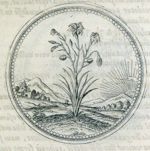
Iconclass: 25F711(DAY-FLY) insects: day-fly 31E213 'sudden death'
Loci Communes: Vita hominis misera et brevis (The life of man, wretched and short, La vie de l'homme, misérable et brève)
IV ii 88 Canis mendico auxilians A dog helping a beggar
Κύων τῷ πτωχῶ βοηθῶν. i. Canis mendico auxilians. Ubi quis nobis adversatur & diversis studet partibus is, cuius auxilio nitebamur. Nam canes infesti sunt mendicis velut ὁμοτέχνοις, nisi si quando frusto panis corrumpuntur.
Κύων τῷ πτωχῶ βοηθῶν, A dog helping a beggar. Used when we are faced by an enemy and the one whose help we were relying on supports the other side. For dogs are the enemies of beggars, being ὁμοτέχνοι 'practitioners of the same craft,' except when they are bribed with a bit of bread.
Facsimile:
Iconclass: 34B11 dog 46A151 beggar 52BB31 Improbability 54A6 Helpfulness 57AA6142 Betrayal
Loci Communes: Fraus ab amico (Deceit from a friend, Tromperie d'un ami)
IV ii 89 Jupiter aquilam delegit Jupiter chose the eagle
Ζεὺς ἀετὸν εἵλετο. i. Iuppiter aquilam delegit. Ubi quis adsciscit sibi praeclaros, suisque rebus accommodos. Poetae singunt aquilam Iovifulmen porrigere, quod haec avis omnium altislime subuolet, nec ictu fulminis laedatur. Eiusdem usus est opera in rapiendo catamyto puero.
Ζεὺς ἀετὸν εἵλετο, Jupiter chose the eagle. Said when someone takes into his service distinguished people who are suited to his purposes. The poets have invented the idea that the eagle places the thunderbolt in Jupiter's hand because this bird flies higher than all others and cannot be harmed by a lightning strike. He used the services of the same bird in abducting his catamite Ganymede.
Facsimile:
Iconclass: 46A24 relation between master and servant 53A11 Choice; 'Elettione' (Ripa) 54B5 Importance, Preponderance 92B18(EAGLE) attributes of Jupiter: eagle
Loci Communes: Dignitatis (Dignity, Dignité)
IV ii 90 Aut minus animi, aut plus potentiae Less ambition or more strength
Η φρονεῖν ἔλασσον ἢ δύνασθαι δεῖ μεῖζον. i. Oportet aut minus animsum esse, aut plus posse. convenit in feroces, quorum arrogantiae non suppetant vires. Aut qui non timent irritare, quem vincere non possint, fronei=n accipi potest pro sapere: qui sunt humili fortuna, iis multa dissimulanda sunt, quandoquidem quod vident perperam fieri, non queant vetare, et quod sentiunt fieri oportere, non possunt essicere. Plutarchus in Laconicis tribuit Archidamo Zeuridami filio, cum silium videret praecipitantius et inconsideratius pugnantem cum Atheniensibus: ἢ τῇ δυνάμει πρόσθες, ἢ τοῦ φρονήματος ὑφὲς. i. Aut adde viribus, aut detrahe animo.
Η φρονεῖν ἔλασσον ἢ δύνασθαι δεῖ μεῖζον, You must be either less ambitious or more capable. Suitable for high-spirited people whose pride is not matched by their strength. Or for someone who is not afraid to provoke people whom he may not be able to defeat. [greek] can be taken to mean 'to be sensitive': people who are of humble station have to be silent about many things because they cannot prevent the wrongs they see being done, and they cannot do what they feel should be done. In the 'Sayings of Spartans' Plutarch attributes this saying to Archidamus the son of Zeuxidamus, seeing his son rushing too hastily and thoughtlessly to fight the Athenians: 'Either add to your strength or subtract from your courage.'
Facsimile:
Iconclass: 51HH5:56F11 Decrease❧Ambition; 'Ambitione', 'Amor di Fama' (Ripa) 51H5:54A7 Growth, Increase❧Strength, Power; 'Fortezza', 'Fortezza d'Animo e di corpo', 'Fortezza del corpo congiunta con la generosità dell'animo', 'Fortezza & valore del corpo congiunto con la prudenza & virtù del animo', 'Forza' (Ripa)
Loci Communes: Philautia (Self-love, Amour-propre)
IV ii 91 Felicitas a Deo Success comes from God
Θεοῦ δὲ δῶρον ἐστιν εὐτυχεῖν βροτούς. id est, Felicitas datur Deum homini munere. Ut res nostrae bene cedant, id in nobis situm non est, sed a superum arbitrio pendet. Hominum est conatus, dei est eventus.
Θεοῦ δὲ δῶρον ἐστιν εὐτυχεῖν βροτούς, Success comes to mortals as a gift of the gods. The happy outcome of our affairs is not in us to determine, but depends on the will of the One above. It is for men to propose, but God disposes.
Facsimile: 
Iconclass: 54F121 Turn of Fate, Wheel of Fortune 92:55C2 gods ~ classical mythology❧Giving
Loci Communes: Bonae fortunae, copiae, felicitatis aut ominis (Of good fortune, abundance, happiness, or omen, Bonne fortune, abondance, bonheur ou présage)
IV ii 92 Hystricis seta A porcupine's spine
Θρὶξ ὕστριχος. i. Pilus hystricis dici poterit, dicterium acriter in quempiam tortum. Ab animante sumptu, cui mos irritato, pinnas aculeatas, quibus illi tergum inhorret, teli ritu eiaculari, etiam procul, idque facit intenta cute. His igitur ora canum urgentium figit. Est autem hystrix de genere Erinaceorum, nisi quod huic longiores aculei. India et Africa potissunum hystrices genetat, ut auctor est Plinius lib. 8. cap. 35.
Θρὶξ ὕστριχος, A porcupine's bristle. This could be used to mean a biting sarcasm directed against someone. The expression derives from the animal that has the habit when provoked of shooting the sharp-pointed spines bristling on its back like darts even to some distance, and it does this by drawing its skin tight. With these spines it transfixes the mouths of dogs that pursue it. The porcupine belongs to the same genus as hedgehogs though it has longer spines. India and Africa are the main places where porcupines breed, as Pliny tells us in book 8 chapter 35.
Facsimile:
Iconclass: 25F29(PORCUPINE) other mammals: porcupine 52A24 Precaution 57BB242 Sarcasm
Loci Communes: Bonae fortunae, copiae, felicitatis aut ominis (Of good fortune, abundance, happiness, or omen, Bonne fortune, abondance, bonheur ou présage); Obtrectatio et maledicentia (Disparagement and slander, Dénigrement et médisance)
IV ii 93 Alter Ianus Another Janus
Ιάνος ἄλλος. i. Ianus alter. Quadrabit vel in providum ac circumspectum, vel in ancipitem et perfidum. Persius: O lane à tergo cui nulla ciconia pinsis. Sumptum al Iano bifronte, cuius notior est fabula, quam ut sit hoc loco percensenda.
Ιάνος ἄλλος, Another Janus. This will be suitable either for someone who is prudent and cautious or for someone who is two-faced and untrustworthy. Persius: 'O Janus, whom no stork ever pecked / From behind.' The origin is the two-headed figure of Janus; the legend is too well known to be recounted here.
Facsimile:
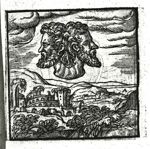
Prudentes: Alciatus, Emblemata (Padua, 1621), col. 109 a, emblem 18
Prudentes: Alciatus, Emblemata (Leiden, 1591), emblem 18
Pour vivre en paix et tranquilité: La Perrière, Le theatre des bons engins (Lyon, 1545), emblem 1 uses the imagery of Janus
Iconclass: 52A24 Precaution 57AA6141 Untrustworthiness, Unreliability 96A128(JANUS' HEAD) Janus' head, two-faced head
IV ii 94 Veste circumfers ignem You are putting a cloak round a fire
Εἰματίῳ τὸ πῦρ περιστέλλεις. i. Veste circumfers ignem, ubi quid ridicule fit. Aut ubi quis suum ipsius malum fovet, veluri scortum, aut adulatorem, aut fictum amicum.
[greek], You are putting a cloak round a fire. Used when something is thought to be absurd, or when someone promotes his own misfortune by favouring a prostitute or a flatterer or a false friend.
Facsimile:
Iconclass: 41B1 open fire (in general) 41D212 coat, cape 52AA511 Ridiculousness 52BB42 Impossibility
Loci Communes: Impossibilia (Impossible things, Choses impossibles)
IV ii 95 Erinnys ex Tragoedia A Fury from tragedy
Εριννὺς ἐκ τραγῳδίας. i. Erinnys ex tragoedia. De foedis aniculis. Sumptum ex Aristophanis Pluto, que loco dictum est de Penia: Ισως ἑριννύς ἐστιν ἐκ τραγῳδίας. id est, At forsan est Erinnys ex tragoedia. Strabo Geographiae li. 4. tradit insulas esse x. in oceano Gaditano, nomine Cassiteridas, quarum una prorsus incultra sit, in reliquis habitare homines colore fusco, tunicis utentes ad talos usque dimissis, pectoribus cingulo obvinctis, baculos manus gestantes, in summa, petsimiles furiis tragicis. Quibus ex verbis apparet hoc habitu furias in tragoediis induci solere.
[greek], A Fury from tragedy. A term for detestable old women. It comes from Aristophanes' Plutus where it is said of the figure of Poverty: 'But perhaps she is a Fury out of tragedy.' In book 4 of his Geography Strabo reports that there are ten islands in the Gaditan ocean called the Cassiteridae, of which one is completely uninhabited, on the others live people who are dark in colour, wear tunics that come down to their heels and a sword belt across their chests, and carry a staff in their hands - in short, are very like the Furies of tragedy. From this it is clear this is the garb in which the Furies appeared in tragedies.
Facsimile:
Iconclass: 31D172 ugly old woman, hag 92N3 Furies, Dirae (Erinyes), Eumenides; 'Furie' (Ripa)
Loci Communes: Tristitia, laetitia (Sadness, joy, Tristesse, joie)
IV ii 96 Aequalitas haud parit bellum Equality never gives rise to war
ἶσα πόλεμον οὐ ποιεῖ. i. Aequalitas bellum haud parit. Aequalitate continetur concordia. Inaequalitas discordiarum est mater. Est Solonis apophthegma, que admodu scribit Plutar. in huius vita, admonens dictum hoc fuisse vulgo celebre, το ἶσον πόλεμον οὐ ποιεῖ.
ἶσα πόλεμον οὐ ποιεῖ, Equality never gives rise to war. By equality we ensure peace; it is inequality that is the mother of discord. This is a maxim of Solon, as Plutarch writes in his life of Solon, informing us this saying was very popular: 'Equality never gives rise to war.'
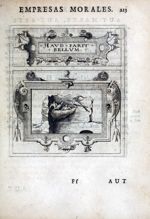
IV ii 97 Piscis primum a capite foetet The head of a fish is the first part to smell
Ιχθὺς ἐκ τῆς κεφαλῆς ὄζειν ἄρχεται. i. Piscis a capite primum incipit putere. Dictum in malos principes, quorum contagione reliquum vulgus inficitur. Apparet ab idiotarum vulgo sumptum.
[greek], The head of a fish begins to stink first. Used of bad rulers, whose contagion poisons the rest of the people. The expression seems to derive from the language of common people.
IV ii 98 Etiam Baetylum devorares You would eat even the baetylus
Καὶ βαίτυλον ἂν καταπίνοις. i. Etiam Baetylum deglutires. In voracem et omnia concoquentem. Nam Baetylus dicitur saxum illud fasciis obvinctum, quod pro love devoravit Saturnus, ut testatus & Hesychius.
[greek], You would swallow even the baetylus. Used of a voracious person who puts everything into his stomach at once. The baetylus was the stone wrapped in swaddling clothes that Saturn swallowed, believing it to be Jupiter, as Hesychius tells us.
IV ii 99 Malum vas non frangitur A cheap jar is never broken
Κακὸν ἄγγος οὐ κλᾶται. i. Malum vas non frangitur. Qui deterior, is nonnumquam vivacior, & in periculis tutior. Simili metaphora dicut & hodie vulgo, malam herbam non perire.
[greek], A cheap jar is never broken. The inferior man is often the longer lived and safer in dangerous situations. A similar figure is used commonly nowadays: 'Weeds do not die.'
Facsimile:
Iconclass: 31D91:46A13 long life❧commoners 41A77 containers 51AA4:54B6 Nothingness, Absence❧Worth, Value 51AA4:54BB31 Nothingness, Absence❧Damage, Disservice; 'Danno' (Ripa)
Loci Communes: Fortunata stultitia (Fortunate foolishness, Sottise heureuse)
IV ii 100 Etiam quercus bacchatur Even the oak dances for Bacchus
Καὶ δρῦς μαινὰς ἐγένετο. i. Etiam quercus Maenas facta est. De iis qui vix deliniuntur. ab Orphei fabula, quercus sua cithara demulcente. Maenades enim sunt mulieres afflatae Baccho.
[greek], Even the oak became a Maenad. An expression used of those who are not easily won over. It comes from the legend of Orpheus who charmed oak trees with his lute. Maenads are women inspired by Bacchus.
Facsimile:
Iconclass: 25G3(OAK):92L1911 trees: oak❧maenad(s), female bacchant(es) 54C21 Persuasion; 'Persuasione' (Ripa)
Loci Communes: Asperitas, morositas (Harshness, moroseness, Rudesse, morosité)