Guillaume de La Perrièrre, Le Theatre Des Bons Engins (Lyon, 1545)
Emblem 19
A rose bush with blossoms and thornsAI-generated
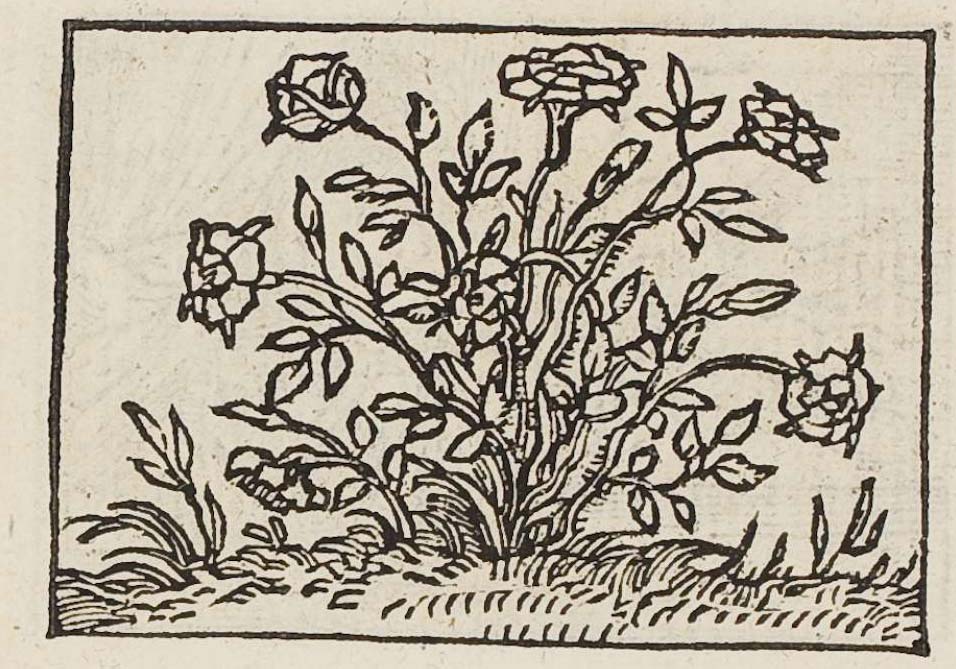
Du grand labeur, procede le doulx fruict.
From great labour proceeds the sweet fruit.AI-generated
Description of the woodcutAI-generated
A woodcut within a ruled rectangular frame showing a large rose bush growing from a grassy, hatched patch of ground. The bush has numerous thorny branching stems with serrated leaves, several fully open blossoms at the top and sides, and a few closed buds. Small tufts of grass and weeds grow at the base on either side.
Subscriptio

TranscriptionAI-generated
LA Rose sort de l'espine picquante,Combien que soit souueraine en valeur:L'espine est apre, à douleur prouoquante.La rose est doulce, excellente en odeur.Cecy demonstre à tout honneste cueur,Qu'apres labeurs, soucyz, peines, trauaulx,Prins à l'estude, auec dix mille maulx:Lesquelz fault prendre en bonne patience,Pour consumer & finir telz trauaulx,Vient le doulx fruict que lon nomme science.
TranslationAI-generated
The rose comes forth from the prickly thorn, however sovereign it may be in worth: the thorn is harsh, provoking pain; the rose is sweet, excellent in fragrance. This shows to every honest heart that after labours, cares, pains, travails, undertaken in study, with ten thousand ills — which must be borne with good patience, in order to use up and finish such travails — there comes the sweet fruit that men call knowledge.
Iconclass
86(DU GRAND LABEUR, PROCEDE LE DOULX FRUICT)proverbs, sayings, etc. (DU GRAND LABEUR, PROCEDE LE DOULX FRUICT)25G31(ROSE-BUSH)shrubs: rose-bush54DD41Drudgery; 'Fatica', 'Fatica estiva' (Ripa)55A12Reward, 'Praemium'; 'Premio', 'Remuneratione' (Ripa)49education, science and learning52A5Knowledge; 'Cognitione', 'Cognitione delle cose' (Ripa)
Suggested Iconclass codesAI-generated
Additional codes proposed for this emblem, not (yet) part of the indexing.
25G31(ROSE-BUSH)shrubs: rose-bushhighThe correlate 'shrubs: rose-bush' exactly matches the depicted large thorny rose bush growing from the ground.
25G41(ROSE)flowers: rosemediumThe correlate 'flowers: rose' fits the several fully open blossoms and buds shown on the bush.
Relationships to the Adagia of ErasmusAI-generated
Suggested relationships between this emblem and adages in Erasmus’ Adagia.
- I vi 62 Neque mel neque apes – thematic inventiomedium
The emblem's rose-and-thorn logic ('the thorn is harsh... the rose is sweet') is exactly Erasmus's point that one cannot have the honey without enduring the bees' sting, since 'heaven has so blended the affairs of mortals that gains are always accompanied by loss'; both conclude that pain must be borne to reach the sweet reward.
- II ix 35 Qui e nuce nucleum esse vult, frangit nucem – thematic inventiomedium
Erasmus applies this adage specifically to study ('he who seeks food for the mind'), noting the nut is hard and bitter outside but delicious within — the same structure as the emblem's prickly thorn yielding the sweet rose, and labour in study yielding the 'doulx fruict' of knowledge.
- III iii 59 Qui vitat molam, vitat farinam – thematic inventiolow
Same moral economy as the emblem: whoever shuns the disagreeable labour forfeits its profitable product; Erasmus explicitly links it to 'No bees, no honey'.
- III iii 42 Lutum nisi tundatur, non fit urceus – thematic inventiolow
Erasmus glosses it as 'without hard work no one becomes a really educated man', which is precisely the emblem's claim that only after toil in study comes the sweet fruit of science.
- II ii 53 Exercitatio potest omnia – thematic inventiolow
The essay's cluster of maxims ('Labor omnia vincit improbus', 'the gods sell good things for toil', 'nothing prospers without labour') supplies the general commonplace the French motto 'Du grand labeur procede le doulx fruict' articulates.
Sources
Record ID: embhab_162-3-eth-b_emblem019
This emblem on the Iconclass site: https://iconclass.org/view/embhab_162-3-eth-b_emblem019
Page in the digital copy of the Herzog August Bibliothek: http://diglib.hab.de/drucke/162-3-eth-b/start.htm?image=00032