II vi 1 Quid nisi victis dolor? Losers must expect to suffer
Τι ἄλλο ἢ τοῖς νενηκιμένοις ὀδύνη; id est, Quid aliud, quam victis dolor? Usurpandum ubi palàm fit in contumeliam quippiam. Sumptum à dicto Brenni palàm illudentis Romanos in appendendo auro, quod stipulatus fuerat ab illis desperantibus auxilium, ut è Romanis finibus abduceret Gallorum exercitum. Sed ipsius Plutarchi verba libitum est subscribere: Εἶτα δόξαν τοῖς κρατίστοις, συνελθεῖν εἰς λόγους Βρέννῳ καὶ Σουλπικίῳ τῷ χιλιάρχῳ ῥωμαίων, ὡμολογήθη, τοὺς μεν χιλίας λιτρας χρυσίου καταβάλλειν, τοὺς δὲ λαβοντας ἐκ τῆς πόλεος καὶ τῆς χώρας αὐτικα ἀπελθεῖν. ἐπὶ τούτοις γενο μένων ὅρκων, καὶ τοῦ χρυσίου κομισθέντος, τῶ δὲ Κέλτων περὶ τὸν σταθμὸν ἀγνωμονούντων, κρύφα τὸ πρῶτον, εἶτα φανερῶς ἀφελκόντων καὶ διαστρεφόντων τὴν ῥοπὴν, ἠγανάκτουν Ρωμαῖοι πρὸς αὐτοὺς. ὁ δὲ Βρέννος οἷον ἐφυβρίζων, καὶ καταγελῶν ἀποδυσάμενος τὴν μάχαιραν ἅμα καὶ τὸν ζωστῆρα προσέθηκε τοῖς σταθμοῖς. Πυνθανομένου δὲ τοῦς Σουλπικίου τί γὰρ; ἄλλο εἶπεν, ἢ τοῖς νενηκιμένοις ὀδύνη; τοῦτο μὲν ἤδη παροιμιώδης λόγος γέγονε. id est, Itaque cum placuisset, uti principes in colloquium venirent Brennus & Sulpicius Romanorum ductor, convenit ut Romani mille libras auri dependerent: hi simulatque accepissent aurum, ex urbe atque ex agris discederent. Super his cum iusiurandum intercessisset, iamque aurum esset adductum, Gallique pactae fidei immemores initio furtim, mox palàm deprimerent, detorquerentque lancem, Romanorum adversus illos coorta est indignatio. At vero Brennus tanquam per ludibrium & irridendi causa ensem unà cum baltheo exutum lancibus adposuit. Porro Sulpitio roganti, quid hoc esset rei, Quid enim aliud, inquit, nisi victis dolor? Atque id dictum iam in proverbium abiit. Cuius meminit Festus Pompeius, illud addens. Cum Camillus Brennum insidiis circumventum concideret, & ille quereretur contra foedus fieri, retorsit in eum suam vocem, Vaeh victis. Sic etenim Festus effert proverbium. Unde palàm est, dolorem, non opprobrium in Plutarcho vertendum fuisse. Lapus interpres aut lapsus est, aut usus est exemplari, in quo scriptum erat. pro ὀδύνη ὄνειδος. Huc allusisse videtur Plautinus Ballio: Vae victis. cum victus vel iniquis conditionibus parere cogitur. Et, ni fallor, Virgilius in Moeride, Nunc victi tristes, quoniam sors omnia versat, Hos illi, quod nec bene vertat, mittimus hoedos. Nonius Marcellus in dictione Cestus, citat titulum Satyrae Varronianae, Vae victis.
Τι ἄλλο ἢ τοῖς νενηκιμένοις ὀδύνη Losers must expect to suffer. Can be used when something is done publicly in order to show contempt. The source is a remark made by Brennus, intended to humilate the Romans publicly at the weighing of gold, when the Romans despaired of outside help, and he had made this a condition of the removal of his army of Gauls from Roman territory. But I would like to give Plutarch's own words. 'The authorities' he says 'then decided on a meeting between Brennus and Sulpicius the Roman commander, at which it was agreed that the Romans should pay down a thousand pounds weight of gold, and on the receipt of this the Gauls would forthwith vacate the city and leave Roman territory. This was confirmed on oath, and the gold duly produced; but while it was being weighed, disorder broke out among the Celts and they began, secretly at first and then openly, to pull down the scale-pan with the weights in it and thus distort the weighing. The Romans were furious; but Brennus, as though deliberately to show his contempt and scorn for them, took off his sword and sword-belt and flung them on top of the weights in the pan. And when Sulpicius asked what he meant by that, the reply was "Why of course, that the loser must expect to suffer." And this remark has now become proverbial.' This is mentioned by Festus Pompeius, who adds that when Camillus 'had caught Brennus in an ambush and cut him to pieces, and Brennus complained that this was in breach of the truce, 'Camillus retorted in Brennus' own words 'Woe to the vanquished!' Such is the form of the proverb in Festus. It is clear from this that ὀδύνη in Plutarch must be translated 'suffer,' not 'be disgraced.' Lapo [the translator] either made a mistake, or used a text in which ὀδύνη, 'suffering,' had been replaced by ὄνειδος, 'disgrace.' Ballio in Plautus was probably alluding to this with his 'Woe to the vanquished!' when the loser is obliged to do as he is told, even on conditions which are unjust. Also, if I am not mistaken, Virgil in Moeris: Defeated now and sad, for chance rules all,
I send these kids. God grant some ill befall!
Nonius Marcellus under the word Cestus cites 'Woe to the vanquished!' as the title of one of Varro's Satires.
Facsimile: 
Iconclass: 45I7 the defeated (after the battle) 54FF2 Defeat 57BB24 Humiliation 98B(BRENNUS)41 Brennus throws his sword onto the scales to raise the ransom of the Romans, crying 'Vae victis'; Camillus is shown arriving on horseback 98B(BRENNUS)68 (story of) Brennus - death of person from classical history
Loci Communes: Vincere et vinci (To conquer and to be conquered, Vaincre et être vaincu)
II vi 2 Aquam bibens nihil boni parias Water-drinkers are not powerful thinkers
Υδωρ δὲ πίνων, χρηστὸν οὐδὲν ἂν τέκῃς. id est, Aquam bibens probum & utile paries nihil. Huius autorem ferunt Demetrium Halicarnasseum: cuius sensus est, à poetis nihil praeclarum, aut posteritate dignum aut venustum proficisci, si biberint aquam, hoc est, si pauperes fuerint, & tenui victu. Horatius, Nulla placere diu, neque vivere carmina pessunt, Quae scribuntur aquae potoribus. Item Iuvenalis, Quod si Vergilio puer, & tolerabile desit Hospitium, caderent omnes à crinibus hydri, Surda nihil gemeret grave buccina. Idem, Satur est cum dicit Horatius, Ohe. Demetrii Halicarnassei distichon huiusmodi citatur à Zenodoto, etiam si in epigrammatis refertur Nicerati titulo, Οἰνος που χαριείν φέρει, ταχὺς ἵππος ἀοιδῶν, Υδωρ δὲ πίνων χρηστὸν οὐδὲν ἂν τέκῃς Quanquam apud Athenaeum secus refertur versus prior, Οἰνός τι χαρίεντι πέλει μέγας ἵππος ἀοιδῷ. id est, Sanè magnus equus lepido sunt vina poetae. Iidem versus referuntur ab Athenaeo, secundo Dipnosophistarum libro, ex epigrammate quodam, quod quidam scripserat in Cratinum, qui frequenter in comoediis taxatur ut vinosus. Quin & Horatius eloquentiam vino tribuit, Foecundi calices quem non fecere disertum? Martialis, Possum nil ego sobrius, bibenti Succurrunt mihi quindecim poetae. Aristoteles libro De naturis animantium octavo, Psittacum loquaciorem fieri putat, si vinum biberit.
Ὓδωρ δὲ πίνων χρηστὸν οὐδὲν ἂν τέκῃς, If you drink water, you will produce nothing good and useful. The author of this is said to be Demetrius of Halicarnassus, and the meaning is that no distinguished work, nothing beautiful or worthy of survival comes from poets if they drink water, if, that is to say, they are poor and have little to live on. Horace: 'No poems can live long nor hope to please / Written by water-drinkers.' Juvenal likewise: 'Take Virgil now: / Without his slave and his congenial home, / No snakes would bristle in his Furies' hair / All his deep-sounding trumpets would be dumb.' And again: 'On a full stomach Horace cries Ohè.' A couplet by Demetrius of Halicarnassus is cited by Zenodotus in the following form, though it is included in the Epigrams under the name of Niceratus: 'Wine is pleasant. What does the poets' swift horse bear? / But, drinking water, you will do no good.' Though in Athenaeus the first verse is different: 'Wine is a tall horse to the gifted poet.' The same lines are recorded by Athenaeus in book 2 of the Doctors at Dinner from an epigram which someone wrote on Cratinus, who is frequently criticized in comedy as too fond of the bottle. Horace also attributes eloquence to wine: 'Inspiring cups make all men eloquent.' Martial: 'Sober I'm helpless; give me wine, / And fifteen poets help me shine.' Aristotle in book 8 of his On the Nature of living Creatures, thinks that a parrot speaks more freely if it has drunk wine.
Facsimile: 
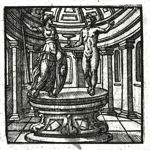
Vino prudentiam augeri: Alciatus, Emblemata (Padua 1621), col. 134 b, emblem 23
Vino prudentiam augeri: Alciatus, Emblemata (Leiden, 1591), emblem 23
Iconclass: 41C12:21D drinking❧water (one of the four elements) 51EE11 Restriction, Limitation 55BB1 Poverty; 'Povertà', 'Povertà del doni', 'Povertà in uno ch'habbia bell'ingegno' (Ripa)
II vi 3 Digna canis pabulo The dog is worthy of his dinner
Αξία ἡ κύων τοῦ βρώματος, id est, Digna canis pabulo. Fermè perinde valet ac si dicas: Dignus operarius mercede sua. Et, Vix quisquam est tam inutilis minister, quin si non amplo salario, certe victu dignus esse videatur. Refertur à Suida. Quadrabit in hominem non usquequaque reiiciendum atque inutilem, aut in hominem assentatorem, & ob id idoneum qui versetur in principum aulis: ubi nullo in precio sunt, qui nesciant adulari.
Ἀξία ἡ κύων τοῦ βρώματος, The dog is worthy of his dinner, means much the same as saying 'the labourer is worthy of his hire.' And there is hardly any servant so useless that he cannot be thought worthy at least of his food, though maybe not of good wages. Recorded by Suidas. It will suit a man who is not entirely despicable and useless, or one who is a toady and as such suitable for life in the courts of princes, where men have no value who do not know how to play the flatterer.
II vi 4 Canis digna sede The bitch is worthy of her basket
Αξία ἡ κύων θρόνου. id est, Canis digna sede. Cum novus honos obtigit cuipiam immerenti. Sumptum videtur à Melitaeis canibus, quibus nonnullae mulierculae maiorem habent honorem quàm ipsis maritis. Nisi mavis referre ad Anubim Aegyptiorum deum. Porrò constat, canibus à dominis tantum honoris habitum, ut defunctis etiam monumenta statuerint. Refertur à Diogeniano.
Αξία ἡ κύων θρόνου, The bitch is worthy of her basket. When fresh honour falls to the lot of someone who does not deserve it. Taken, it seems, from the lapdogs on which some foolish women lavish more affection than on their husbands. Unless you would rather refer it to the Egyptian god Anubis. In any case, as is well known, dogs have been so highly valued by their masters that they have actually had monuments raised in their honour after death. Recorded by Diogenianus.
Facsimile:
Iconclass: 34B11(+52) dog (+ female animal) 41A7751 container made of plant material other than wood: basket 54B6 Worth, Value 54BB6 Worthlessness
Loci Communes: Dignitatis (Dignity, Dignité)
II vi 5 Si vinum postulet pugnos illi dato If he asks for wine, give him your fists
Αν οἶνον αἴτῃ, κονδύλους αὐτῳ δίδου. id est, Si vina poscat ille, pugnos porrige. Ubi pro bonis rebus expectatis, diversa accipiuntur. Sumptus est hic senarius è tragoedia quapiam, de Cyclope & Ulysse. Est autem notissima fabula, quemadmodum apud Homerum Ulysses Polyphemo Cyclopi vinum petenti subinde porrigit, quo simul atque iam temulentus sopitusque iaceret, palo praeusto oculum illi perterebravit. Putant metaphoram à pueris ductam, qui petentes non petenda, nonnunquam colaphos recipiunt. Te rentius in Phormione: Pugnos in ventrem ingere. Pugnos, plagas ipsas vocat, itidem ut Graeci κονδύλους. Adagium refertur à Suida.
Ἂν οἶνον αἴτῃ, κονδύλους αὐτῳ δίδου, If wine is what he asks, show him your fists. When we expect a good reception and get the reverse. This iambic line is taken from some tragedy on the subject of Ulysses and the Cyclops. The story is very familiar, how Ulysses in Homer is asked by Polyphemus the Cyclops for wine. He is repeatedly given it; and as soon as he is drunk and lying asleep, Ulysses bores through his eye with a stake, the point of which he has hardened in the fire. The figure is supposed to be derived from children, who sometimes, when they ask for something they are not allowed, get smacked instead. Terence, in that phrase in the Phormio 'Ply your fists on his stomach/ uses fists when he means the actual blows, just as Greek uses kondyloi. The adage is recorded by Suidas.
Facsimile:
Iconclass: 31A25513(+9223) hand made into a fist (+ attacking somebody) 57AA77 Unfriendliness 94I133(+0) Ulysses offers wine to Polyphemus (+ variant)
Loci Communes: Inaequalis pensatio (Unequal compensation, Compensation inégale)
II vi 6 Pro perca scorpium Scorpion instead of perch
Αντὶ πέρκης σκορπίον, id est, Pro perca scorpium. Ubi quis optima captans, pessima capit. Nam perca piscis est vel maximè laudatus, cuius identidem meminit Athenaeus, gulonum delicias recensens. Scorpius letalis est: quanquam est & piscis huius nominis, contempti saporis, de quo magis sentire videtur adagium. Simili figura dixit Lycophron. Ο δ᾽ ἀντὶ πιποῦς σκορπίον λαιμῷ σπάσας. id est, At scorpium ille glutiens pipus vice. Est enim pipo avis genus.
Αντὶ πέρκης σκορπίον, Scorpion instead of perch. When somebody aims at the best and gets the worst. A perch is a highly popular fish, mentioned from time to time by Athenaeus when he is listing a gourmet's favourite dishes, and a scorpion is deadly poisonous. Though there is also a fish of that name, of no value as food, to which the adage seems more likely to refer. Lycophron uses a similar image: 'But in place of the woodpecker (pipo) he swallowed a scorpion'; for the pipo is a kind of bird.
Facsimile: 
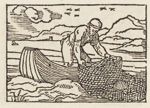
Par trop cuyder & esperer l'homme est deceu: La Perrière, Le theatre des bons engins (Lyon, 1545), emblem 23 uses the imagery of a fisherman catching a scorpion in his net
Iusta ultio: Alciatus, Emblemata (Padua, 1621), col. 723 a, emblem 173
Iconclass: 56BB34 Disappointment 57AA8 Ingratitude; 'Ingratitudine' (Ripa)
Loci Communes: Inaequalis pensatio (Unequal compensation, Compensation inégale); Ingratitudo (Ingratitude, Ingratitude)
II vi 7 Pro beneficentia Agamemnonem ulti sunt Achivi In return for kindness the Achaeans punished Agamemnon
Αντ᾽ εὐεργεσίας ἀγαμέμνονα τισαν ἀχαιοί. id est, Pro meritis male tractarunt Agamemnona Grai. Quidam ad hunc efferunt modum: Αντ᾽ εὐεργεσίας ἀγαμέμνονα δῆσαν ἀχαιοί. id est, Pro benefactis vinxerunt Αgamemnona Graii. Dicebatur in ingratos, qui pro summo beneficio summum remetiuntur maleficium. Agamemnon enim tot exhaustis laboribus in expugnanda Troia, pro dignitate Graeciae, domum reversus, veste inexplicabili involutus, interfectus est à Clytemnestra, auxiliante Aegistho adultero. Annotatum est, hoc ferè accidere viris de repub. bene meritis, ut pro benefactis pessimam gratiam tulerint à populo. Pindarus in Pythiis hymno iiii, φαντὶ δὲ ἔμμεν τοῦτο ἀνιαρότατον, καλὰ γινώσκοντ᾽ ἀνάγκα ἐκτὸς ἔχειν πόδα, id est, Aiunt autem hoc esse molestissimum, qui norit honesta necessitate foris habere pedem: hoc est, non frui bonis, cum ipse bene meritus sit de aliis, sed pro bene factis male audire.
Ἀντὶ πέρκης σκορπίον, In return for his services the Greeks ill-treated Agamemnon (some give the verse with 'bound' instead of 'ill-treated'). An expression used of ungrateful people, who repay a great service done them with some great disservice. Agamemnon expended so much effort on the capture of Troy, all for the honour of Greece, and when he reached home was caught in the folds of a robe from which he could not escape and murdered by Clytemnestra with the help of her paramour Aegisthus. It has been noted that this fate usually awaits those who have deserved well of their country: in return for their services they have met with great public ingratitude. Pindar in hymn 4 of the Pythians: They say that this is the most grievous thing of all, to know the good and yet perforce to keep one's foot outside,' not (that is) to enjoy good things when you have done good things for other men, but to be evil spoken of in return for good deeds.
Facsimile:
Iconclass: 57AA8 Ingratitude; 'Ingratitudine' (Ripa) 94K12 murder of Agamemnon by Clytaemnestra (and/or Aegisthus): he is killed after bathing, when he struggles with a robe without openings
Loci Communes: Ingratitudo (Ingratitude, Ingratitude)
II vi 8 Cane Tellenis cantilenas Sing Tellen's songs
Αειδε τὰ τέλληνος, id est, Cane cantiones Tellenis. Quidam dici putant de dicacibus, mordacibusque: quidam de inepte loquaculis. Nam Tellenem hunc, tibicinem quendam fuisse, poetam item carminum ineptissimorum. Alii tradunt, hunc iocos quosdam versibus lepidissimis descripsisse, non sine multo sale scommatum Meminit huius Tellenis Diarchus Messenius apud Zenodotum. Item Plutarchus in Apophthegmatis.
Ἄειδε τὰ Τέλληνος, Sing Tellen's songs. Some think this is used of people with sharp sarcastic tongues; some, of those who are always talking nonsense; for this Tellen, they say, was a flute-player and also wrote very bad verse. Others say he wrote humorous poetry of great elegance, spiced with a nice critical wit. This Tellen is mentioned by Diarchus of Messene, quoted by Zenodotus, and also by Plutarch in his 'Apophthegms.'
Facsimile:
Iconclass: 48C7525:48C7351 one person playing wind instrument❧flute, aulos, tibia 52BB53 Nonsense, Absurdity 57BB242 Sarcasm 98Β(TELLENIS)
Loci Communes: Garrulitas (Talkativeness, Bavardage)
II vi 9 Azanaea mala Azanian ills
Αζαναῖα κακὰ, id est, Azanaea mala. Dici solitum, ubi quis in re perdifficili & infrugifera plurimum sumeret laboris. Aut ubi res esset cuipiam cum homine difficili, moroso, intractabili, tenaci. Tradunt Azanaeam regionem quampiam esse Arcadiae, sterilem, & culturae inhabilem: in qua coloni multo sudore parum fructus referunt. Haec fermè traduntur à Graecarum paroemiarum collectoribus. Caeterum Stephanus de nominibus urbium, veluti fontem aperit nobis huius adagii. Siquidem is complures refert Azanias, unam quae sit Arcadiae pars: in hac fontem quempiam esse, cuius aquam qui gustarit, hunc usque adeo à vino abhorrere, ut nec odorem ferat. Alteram Massiliae, tertiam Phrygiae: cuius mentionem fecerit etiam Strabo lib. Geographiae xii. De hac Hermogenes, citante Stephano, huiusmodi quandam narrat fabulam. Cum illic frequentes essent villae rusticorum, orta ob sterilitatem agrorum fame, collecti pastores rem divinam fecerunt, fertilitatem à diis petentes. Caeterum cum dii non audirent illorum vota, perduraretque agrorum sterilitas, Euphorbus è pastoribus quidam novum sacrificii genus excogitavit. Immolavit enim οὐανοῦν καὶ ἔξιν, quia Phrygum lingua sonat, vulpem et echinum. Hac hostia placatis diis, agros feraces esse coepisse: quod ubi finitimis pastoribus esset cognitum, Euphorbo sacerdotium & imperium detulerunt: pòst loci nomen commutatum est, proque Azania ἐξανάγουν vocatum, quod perinde sonat Phrygio sermone: quasi Graece dicas, ἐχιναλώπεκα, Latine, Echinovulpem. Huiusmodi fermè Stephanus, ex quibus coniectari licet, ex ea fabula natam paroemiam.
Αζαναῖα κακὰ, Azanian ills, was in common use when someone expended a great deal of labour on some very difficult and unproductive task, or when one had to do business with a man who was difficult, hard to please, unmanageable, obstinate. They say that Azanaea is a district in Arcadia which is barren and unsuitable for agriculture, in which the husbandmen work hard for very little return. This is more or less what we get from the Greek collectors of proverbs. Stephanus however in his book on place-names opens up what looks like a source for this adage. There are, he says, several places called Azania, one of which is part of Arcadia; and there is a spring there, the water of which will give the man who tastes it such an aversion from wine that he will find even the smell intolerable. A second is in Massilia and a third in Phrygia, and the latter is mentioned also by Strabo in book 12 of his Geography. Of this, Hermogenes as cited by Stephanus tells the following story. In Azania were many farm houses and when the country suffered from famine owing to the poverty of the soil, the herdsmen banded together and offered sacrifices to the gods in search of greater fertility. When the gods failed to hear their prayers and the barrenness of the fields continued unabated, one of the shepherds, by name Euphorbus, invented a new form of sacrifice: he offered an anagous and an exis, which are the Phrygian names for a fox and a hedgehog. The gods were pleased, he says, with this sacrifice, and the fields began to be fertile; and when the neighbouring herdsmen heard the news, they offered Euphorbus the position of priest and sole ruler. Later the name of the place was changed from Azania to Exanagous, which means exactly the same in Phrygian as echinalopex would in Greek or echinovulpes, hedgehog-fox in Latin. Such is the account in Stephanus, from which we may conjecture that the proverb took its rise from this story.
Facsimile:
Iconclass: 12E2121:25F23(FOX) animal sacrifice ~ Greek religion❧beasts of prey, predatory animals: fox 12E2121:25F29(HEDGEHOG) animal sacrifice ~ Greek religion❧other mammals: hedgehog 54DD4 Difficulty 58A3 Fruitfulness, Productiveness, Fertility, Fecundity; 'Fecondità' (Ripa) 58AA3 Unproductiveness, Fruitlessness, Lost Labour, Wasted Labour 61E(AZANIA) names of cities and villages (AZANIA)
Collectanea (1500): 726
Loci Communes: Difficultatis (Difficulty, Difficulté)
II vi 10 Capra nondum peperit, haedus autem ludit in tectis The she-goat has not yet given birth, but the kid is playing on the roof
Αἴξ οὔπω τέτοκεν, ἔριφος δ᾽ ἐπὶ δώματα παίζει. id est, Nondum enixa capra, at iam ludit in aedibus hoedus. Qui postrema perfectaque iam aggrediuntur, praeteritis iis quae praecessisse oportuit, Aut qui gloriantur, iam assecutos sese, cuius ne fundamenta quidem sunt iacta. Aut qui rem agunt praepostere. Prius est enim peperisse, quam ut hoedus ludat in tectis. Refertur à Zenodoto.
Αἰξ οὔπω τέτοκεν, ἔριφος δ᾽ ἐπὶ δώματα παίζει, The she-goat has not yet given birth, but the kid is already playing in the house. Of those who are already attempting the final and finished stages of a task, passing over what ought to have come first; or who boast that they have achieved something when the foundations are not even laid, or who attack something in the wrong order. To bring forth is an earlier stage than to have the kid playing on the roof. Recorded by Zenodotus.
Facsimile:
Iconclass: 47I214(+92) goat (+ sex and age of animals; propagation of animals) 47I214(+921) goat (+ young animal) 47I214(+94) goat (+ animal behaviour) 57AA645 Boast; 'Iattanza' (Ripa)
Loci Communes: Absurda, indecora, seu praepostera (Absurd, unbecoming, or preposterous things, Choses absurdes, inconvenantes ou déplacées); Ultio malefacti (Vengeance for a wrongdoing, Vengeance d'un méfait)
II vi 11 Reperit Deus nocentem God finds the guilty
Εὗρε θεός τὸν ἀλιτρὸν, id est, Reperit deus nocentem. Cum tandem ultio contingit improbis, quasi divinitus immissa. Theocritus in Idyllio decimo, Εὗρε θεός τὸν ἀλιτρὸν, ἔχεις πάλαι ὧν ἐπεθύμεις. id est, Invenit deus impium, habes quae olim cupiebas. Theocriti Scholiastes indicat, proverbium & alia forma solitum efferri, εὗρε θεὸς αἴτιον. Simile est Homericum illud Iliados Δ. Εἴπερ γὰρ τε καὶ αὐτίκ᾽ ὀλύμπιος οὐκ ἐτέλεσσεν Εκ τε καὶ ὀψὲ τελεῖ, σύντε μεγάλῳ ἀπέτισσαν. id est, Quanquam etenim non punit Iuppiter ilico sontem, At saciet tandem, et luerint sua crimina magno. Huc pertinet illud Sophocleum, Οτ᾽ ἄν δὲ τὶς θεῶν Βλάπτῃ, δύναιτ᾽ ἄν οὐδὲν ἰσχύων φυγεῖν. id est, Ubi quis deorum laeserit, Nemo queat suffugere quamlibet potens. Astipulatur autem senarius ille proverbialis, Θεοῦ δὲ πληγην οὐχ ὑπερπηδᾷ βροτός. id est, Plagam deorum nullus hominum suffugit. Pindarus item in Pythiis. Θεὸς ὅ καὶ πτερόεντ᾽ αἰετὸν κίχε, καὶ θαλασσαῖον παραμείβεται Δελφῖνα, καὶ ὑψιφρόνων τίν᾽ ἔκαμψε βροτὼν. id est, Deus & alatam aquilam assequitur, & marinum praevertitur delphinum, & elatorum quempiam depressit mortalium. Astipulatur huic sententiae & in Olympiis, Εἰ δὲ θεὸν ἀνήρ τις ἔλπεταίτι λαθέμεν ἔρδων, ἁμαρτάνει. id est, Quod si deum homo quispiam sperat falsurum se, cum agit aliquid, errat.
Εὗρε θεός τὸν ἀλιτρὸν, God finds the guilty. When retribution at last overtakes the wicked, as though sent from on high. Theocritus in idyll 10: 'God finds the guilty; you have what you've long wanted.' The scholiast on Theocritus indicates that the proverb was also used in another form: Eὗρε θεὸς αἴτιον, God finds the doer. It is like that saying of Homer's in book 4 of the Iliad: 'For though Olympian Jove did not punish at once, punish he will in the end, and heavy the price they will pay.' Here belongs that saying in Sophocles: 'But when one of the gods decides to hurt, the powerful man has no means of escape.' And this is supported by that proverbial iambic line: 'No mortal man sidesteps the strokes of God.' Pindar too in the Pythians: 'God, who can catch the winged eagle and overtakes the dolphin in the deep, bends any proud mortal to his will.' This view finds support also in the Olympians: 'But if any man hopes that in doing something he will escape God's notice, he is wrong.'
Facsimile: 
Iconclass: 54A44 Patience; 'Patienza' (Ripa) 54AA52 Guiltiness 57AA741 Revenge, Requital, Retaliation; 'Vendetta' (Ripa) 92B1 (story of) Jupiter (Zeus)
Loci Communes: Ultio malefacti (Vengeance for a wrongdoing, Vengeance d'un méfait)
II vi 12 Ignavis semper feriae sunt For sluggards it is always holiday
Qui vacant ocio, feriari dicuntur, & ociosi feriati, & ocium feriae, quae metaphorae tanquam in proverbium receptae sunt. Theocritus in Bucolicis, Αέργοις ἀὲν ἑορτά. id est, Semper feria inertibus. Nam feriis etiam ethnici à prophanis negociis abstinebant. Qui fugitant laborem, optant dies festos, quo liceat ociari, ventrique & voluptatibus indulgere. Siquidem antiquitus in hoc dabantur agricolis feriati dies aliquot, ut lusu reficerent lassitudinem. Admiscuerunt autem religionem, quo moderatiores essent lusus. At hodie Christianorum vulgus feriis olim ad pietatis usum institutis, in compotationes, in scorta, in aleas, in rixas, in pugnas, abutitur: nec ullo tempore plus committitur flagitiorum, quam quo maxime conveniebat à flagitiis abesse. Nec unquam magis imitamur ethnicos, quam cum praecipue Christianos oportebat agere. Cumque palàm sit, rem iuvandae religioni repertam in religionis perniciem vergere: tamen haud scio quo consilio pontifices quotidie ferias addunt feriis, cum potius conveniat prudentes imitari medicos, qui pro ratione morborum mutant remedia, tantum illud ceu scopum spectantes, ut bonae valetudini conferant. Proinde cum videant rem olim pro temporum illorum ratione salubriter institutam, nunc mutatis Christianorm moribus, pestem esse pietatis, quae tandem religio est, constitutionem eodem mutare consilio, quo veteres illi constituerunt? Quod de festis diebus dico, de multis aliis sentiendum est: non quod damnandas existimem Christianorum ferias, sed quod in immensum nolim crescere: & paucas eas quas instituit priscorum autoritas, ad id converti cupiam, ad quod repertae sunt. Nam vere Christianis omnis dies festus est: malis vero, quae maxima turba est, festi dies minus festi quam prophani. Sed ut ad proverbium revertamur, apte accommodabitur in eos qui nunquam non causantur aliquid, quo sint in ocio: Veluti quibus insuaves sunt literae, nunc excusant valetudinem, nunc occupationes rei domesticae: nonnunquam obstat rigor hyemis, aliàs eastatis fervor, interdum autumni periculosum coelum. demum avocat à libris, veris amoenitas, mox fugitura. Pransi negant esse rem habendam cum libris antequam concoxerit stomachus. Impransis obstrepit fames, quo minus libeat. Luci dicunt ignavum esse, domi desidere. Caeterum ad lucernam vigilare, oculis inimicum. Si suppetit res domestica, quorsum opus, inquiunt, literis? Si deest, negant pauperem posse philosophari. Iuvenis negat, aevi florem curis senilibus absumendum. Provectior ait, valetudini parcendum.
Those who find time to do nothing are said feriari, to make holiday, and leisure is feriae, holidays, and those who enjoy it are feriati and these metaphors were in common use as though they were proverbial. Theocritus in his Bucolics: 'It's always holiday for those who have no work to do.' For on holidays pagans no less than Christians abstained from worldly business.
Those who fight shy of work wish for the feast-days on which it is permitted to do nothing, and gratify your wish to eat, drink and be merry. In Antiquity a certain number of holidays were allowed to country folk with the deliberate purpose of refreshing them with play instead of work when they were tired; but there was an admixture of religion to keep the play between bounds. Today the common run of Christians misuse the holy days, devised in old days for pious purposes, in drinking, wenching, gambling, quarreling and fighting; and at no season are more crimes committed than at those when crimes are most clearly out of place. Never do we so clearly imitate the pagans as on the days when we have a special duty to behave like Christians; and though it is clear that a practice designed for the advancement of religion now tends to put religion itself in peril, yet on some policy I do not understand the popes daily add new holidays on top of old. It would be more appropriate to follow the practice of prudent physicians and alter remedies to suit the pattern of diseases, with no object in view except to contribute to good health. Thus, when they see that a practice wisely instituted long ago to suit the pattern of those times is now, with the changes in Christians' way of life, a menace to religion, why these scruples about changing the established order with the same end in view as that with which our fathers established it?
What I say about holy days would make sense about many other things; not that I think the Christian practice of holidays should be condemned, but I would rather it did not grow to unmeasured lengths, and I should prefer to see the few festivals instituted by the authority of early times converted to the purpose for which they were invented. For to a true Christian every day is a holy day; while to the bad Christians who form the great majority, holy days are not so much holy as profane.
But to return to my proverb, it will be well adapted to those who always have some excuse why they should be at leisure; those, for example, who do not enjoy reading are at one moment in poor health, at another busied with domestic cares; sometimes the cold of winter is the obstacle and sometimes summer heat or the treacherous climate of autumn, or they are called away from their books by the lovely spring weather which will so soon be gone. After dinner they say one should have nothing to do with books until one's stomach has settled down, and when they have not yet dined the pangs of hunger remove the desire to read. In daylight, they say, it is lazy to sit doing nothing indoors, and to sit up by lamplight is bad for their eyes. If they have enough to live on, they say, why bother to read? A young man says he cannot spend the best years of his life on cares which are all right when you're old; and a man in later life says he must careful of his health.
Facsimile:
Iconclass: 11Q76:51H42 calendar of ecclesiastical feasts❧Abundance; 'Abondanza', 'Abondanza maritima' (Ripa) 32A46 sluggard 47E2521 'blue Monday' 54AA1 Inactivity
Loci Communes: Ignavia et inscitia (Cowardice and ignorance, Lâcheté et ignorance)
II vi 13 Catulae dominas imitantes A lapdog takes after its mistress
Τὰς δεσποίνας αἱ κύνες μίμούμεναι, id est, Dominas imitantes catellae. Ubi servi dominorum ferociam repraesentant, aut discipuli praeceptoris resipiunt arrogantiam, aut ministri principum fastum. Breviter quoties ii qui subsunt, eorum exprimunt mores, sub quorum imperio degunt. Unde & illud Iuvenalis. Maxima quaeque domus seruis est plena superbis. Videas autem & Melitaeas, opulentatum mulierum delicias, fastum, lasciviam, totamque fermè morum imaginem reddere. Usurpatur hoc adagium à Platone, libro de Repub. octavo, Ατεχνῶς γὰρ αἵ τε κύνες κατα τὴν παροιμΐαν ἷαί περ αἱ δέσποιναι. γίγνονταί τε δὴ καὶ ἵπποι καὶ ὅνοι πάνυ ἐλευθέρως καὶ σεμνὼς εἰθισμένοι πορεύεσθαι κατα τὰς ὁδοὺς, ἐμβάλλοντες τῷ αἰεὶ ἀπαντῶντι, ἐὰν μὴ ἐξιστηται. id est, Palàm enim tum catellae iuxta proverbium, tales quales sunt dominae. Tum & equi & asini tales redduntur, qui assuefacti fuerint admodum libere, fastuoseque per vias ingredi: semper incursantes in obvium, ni cedat.
Τὰς δεσποίνας αἱ κύνες μίμούμεναι, A lapdog takes after its mistress. Used when slaves reproduce the rudeness of their masters or pupils smack of the arrogance of their teacher or flunkeys ape the pride of princes; in a word, whenever subordinates adopt the character of those under whose orders they serve. Hence Juvenal's line 'Every great household's full of haughty slaves.' You may also see how lapdogs which are the darlings of rich women reflect their arrogance and wantonness and often their whole character. This adage is used by Plato in the eighth book of the Republic: 'Clearly a lapdog, as the proverb has it, takes after its mistress, and it is the same with horses and asses which have had no discipline but are accustomed to proceed in arrogant fashion down the street, jostling everyone they meet who does not get out of their way.'
Facsimile: 
Iconclass: 34B11 dog 46A18 slavery; serfs and enslaved persons 46A182 master ~ enslaved person 51B6 Imitation; 'Imitatione' (Ripa)
Loci Communes: Similitudinis et congruentiae (Similarity and congruence, Similitude et convenance)
II vi 14 Tantali poena The punishment of Tantalus
Ταντάλειοι τιμωρίαι, id est. Tantali supplicia. de iis dicendum, quibus adsunt quidem bona, verum his frui negatum est. A fabula Tantali sumptum, quem poetae fingunt, apud inferos assistere flumini sitientem: quod si quando admoverit se potaturus, repente aquam labris contactam refugere. Tum capiti imminire arborem pomis onustam, sed eam subito porrigenti manum aliò subducere sese, atque ita miserum praesente copia, inopia discruciari. Id olim in divites parcos & sordidos dici vulgo solere, testis est Horatius in Sermonibus, Tantalus à labris sitiens fugientia captat Pocula: quid rides? mutato nomine de te Fabula narratur. congestis undique saccis Indormis inhians, & tanquam parcere sacris Cogeris, aut pictis tanquam gaudere tabellis. Idem in Odis. Magnas inter opes inops. Gregorius Nazianzenus in epistola ad Basilium eleganter detorquet ad huius mundi delicias quae nunquam explent animum, Ταντάλειοι, inquit, τινὲς καὶ κατάκριτοι διψῶντες ἐν ὕδασι, τὴν ἐλεεινὴν καὶ ἄτροφον πανδαισίαν. id est Tantalii & execrabiles sitientes in aquis, miserandam illam & nihil alimoniae conferentem pandaesiam. πανδαισίαν autem Graeci vocant convivium ex omni genere deliciarum apparatum.
Ταντάλειοι τιμωρίαι, The torments of Tantalus, is to be used of those who have good things within reach but are forbidden to enjoy them. Taken from the myth of Tantalus, who is fancied by the poets in the nether regions standing by a river and suffering from thirst; and as soon as he approaches it in order to drink, the water, as he touches it with his lips, suddenly flows away. Over his head hangs a tree laden with fruit, but the moment he stretches out his hand towards it, it withdraws; and so the poor wretch is tormented by want in the midst of plenty. That this was commonly applied in the old days to rich men who were mean and avaricious is clear from Horace's Satires: In vain he grasps the cup he fain would quaff At you this story points: how dare you laugh? On your piled money-bags you lie and snore; 'Twere sacrilege to touch your sacred store, They pleases the eye like pictures, and no more. And again in the Odes: 'Amidst great riches poor.' Gregory of Nazianzus in a letter to Basil turns this elegantly to apply to the delights of this world, which never satisfy the mind: 'Like Tantalus condemned to suffer from thirst amid the waters and to a feast of plenty in which there is no food.' (He uses a Greek word pandaisia, a feast furnished with good things of every kind.)
Facsimile:
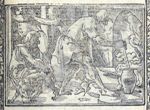
Magnas inter opes inops: Reusner, Aureolorum Emblematum (Strasbourg, 1587), emblem 97
Riche avaricieux: Valeriano, Hieroglyphiques (Lyon, 1615) Livre XXXV, Ch. XLIII
't Is Tantalus die hier in 't water wert gepijnt: Vondel, Gulden Winkel (Amsterdam, 1622), emblem 61
Magnas inter opes inops: Reusner, Aureolorum Emblematum (Strasbourg, 1587), emblem 97 quotes the comment
Avaritia: Alciatus, Emblemata (Leiden, 1591), emblem 84 uses the imagery of Tantalus
Avaritia: Whitney, A choice of emblemes (Leiden, 1586), emblem 80 uses the imagery of Tantalus
Res est magna tacere: Borja, Empresas morales (Bruxelles, 1680), emblem 177 uses the imagery of Tantalus
Iconclass: 93E81 Tantalus, suffering eternal hunger and thirst
Loci Communes: Sordes et parcimonia (Meanness and stinginess, Bassesse et avarice)
II vi 15 Viro seni maxilla baculus To the old man his jaws are a crutch
Ανδρὸς γέροντος αἱ γνάθοι βακτηρία, id est: Maxilla senibus scipionis est vice. Dici solitum de iis qui ob defectas aetate vires, lautiore pariter & copiosiore victu coguntur uti, quo quod senecta deterit, utcunque sarciant cibo. Manet & in hodiernum senile verbum: Ego me dentibus meis sustento. Est autem velut aenigmaticum, reliquos ingredi pedibus, senes dentibus. Etenim quod decessit nativo corporis succo, id cibi ac potus adminiculo sarciendum. Videmus illud evenire vulgo, posteaquam destituit senes edacitas illa, vitae finem imminere.
Ανδρὸς γέροντος αἱ γνάθοι βακτηρία, The aged find their teeth a second staff. Customarily said of those whose strength fails with age, and they are obliged to adopt a better and more plentiful diet to mend, as best they can, with food the ravages of time. Even today you may hear an old man say 'It's my teeth that keep me going.' There is almost a riddle in this: others proceed on their feet, old men on their teeth. As the natural sap of the body grows less, the loss must be made good with the support of food and drink. We often see it happen that, when an old man loses that increased appetite, the end of life is near.
Facsimile:
Iconclass: 31A2111:31A4153 jaw (human)❧crutches 31A2112 teeth 31D16 old man 31D91 long life 41C11 eating 41C12 drinking 54A7 Strength, Power; 'Fortezza', 'Fortezza d'Animo e di corpo', 'Fortezza del corpo congiunta con la generosità dell'animo', 'Fortezza & valore del corpo congiunto con la prudenza & virtù del animo', 'Forza' (Ripa)
Collectanea (1500): 162
Loci Communes: Longae vitae (A long life, Longue vie)
II vi 16 Ne verba pro farinis Flour, not fine words
Μὴ λόγος αὐτ᾽ ἀλφίτων. id est. Ne verba pro farinis. Adversus eos iaciebatur, qui beneficium verbis, non re dabant. Qui ferè magnatum mos est, uti suos splendidis promissis alant. Bene autem admonet in Pandectis Pomponius iureconsultus, peculium re, non verbis augendum esse. Quadrabit item in eos, qui beneficium pollicitis rependunt. Aut qui consolantur oratione, cum auxilio sit opus. Veteres quicquid ad victum pertineret, ἄλφιτα vocabant. Apparet è comoedia quapiam sumptum: est enim hemistichium carminis Iambici trimetri. De proverbio Aristophanico, οὐδὲν πρὸς τὰ ἄλφιτα, dictum est aliàs.
Μὴ λόγος αὐτ᾽ ἀλφίτων, that is, Do not [give us] words instead of barley-meal. This was a weapon for use against those whose generosity took the form of words, not things. This is a habit among grandees; they feed their hangers-on with splendid promises. Pomponius, the legal authority, is however quite right when he says in the Pandects that a man's property must be increased by things, not words. It will also suit those who repay a service with promises, or comfort a man with kind words, when what he needs is help. The Ancients used the word alphita, properly barley-meal, for anything that would support life. It looks as though it were taken from some comedy, for it forms the second half of an iambic trimeter. Of the proverb in Aristophanes, What has this to do with my daily bread [alphita], I have spoken elsewhere.
Facsimile:
Iconclass: 31B6235 speaking 41C111 giving food 41C61 flour 49K321 word 53D2:54BB3 Promise; 'Promissione' (Ripa)❧Inutility, Noxiousness; 'Nocumento', 'Nocumento d'ogni cosa' (Ripa) 55C21 Generosity, Liberality; 'Generosità', 'Liberalità' (Ripa)
Loci Communes: Inaequalis pensatio (Unequal compensation, Compensation inégale)
II vi 17 Ancoras tollere To weigh anchor
Nonnullam proverbii faciem habet, quod est apud M. Varronem in opere De re rustica, capite extremo: Ancoras tollere, pro eo quod est, moliri discessum: quod genus et illud: Talaria nectere. Haec sunt huius verba: Interea redit ad nos Pavo. Et si vultis, inquit, ancoras tollere, latis tabulis sortitio fit tribuum. hoc est, si vultis omissa disputatione hinc abire. Quanquam hic alluditur ad ambiguam tabularum significationem, quae tum nauticae sunt, tum forenses, quibus suffragia ferebantur. Huic simile Quinctilianicum illud, Oram solvere. nam ita plerique legunt.
There is a phrase in Varro, in the last chapter of his book On Agriculture, which looks something like a proverb: To weigh anchor, for to make preparations to depart. It is something like one we have already had, To put wings on one's feet. He writes as follows: 'Meanwhile Pavo came back to us and said "Are you ready to weigh anchor? The votes have been cast, and the tribes are casting lots."' He means, If you are willing to break off your discussion and depart. Though there is an allusion here to two senses of the word tabulae, either the planks used in shipbuilding or, in public life, the tablets used in voting. This is like Quintilian's To cast off from shore'; for so most people read.
Facsimile:
Iconclass: 46C511(+62) preparations ~ travelling (+ departure; weighing anchor)
Loci Communes: Conatus (Effort, endeavor, Effort)
II vi 18 Αμουσοι Strangers to the Muses
Inelegantes & indoctos Graeci vocant ἀμούσους, hoc est, à musis alienos. Antiquitus enim nihil eruditum habebatur sine musica. Unde apud comicos, qui literas se didicisse negant, aiunt se non didicisse musicam. Quintilianus libro primo, capite de musicae laudibus: Denique, inquit, in proverbium usque Graecorum celebratum est, indoctos à Musis atque à Gratiis abesse. Plato lib. De repub. viii ὑποαμουσότερον dixit improbiorem & rusticius inverecundum. Et Aristoteles lib. Rhetoricorum ii. ὥσπερ οἱ ποιηταί φασιν τοὺς ἀπαιδεύτους παρ᾽ ὄχλῳ μουσικώτερον λέγειν. id est, Quemadmodum aiunt poetae, indoctos apud multitudinem elegantius dicere. Hominem insigniter elegantem μουσικώτατον dicimus: denique quicquid est ,oderatum compositumque, ἔμμουον dicunt Graeci. Et Athenaeus ἀμουσολογίας appellat ineruditas parumque tempestivas fabulas. Aeschines adversus Timarchum, καὶ γὰρ πρὸς τοῖς ἀλλοις κακοῖς ἄμουσός τις οὗτος καὶ ἀπαίδευτος ἄνθρωπός ἐστιν. id est, Nam & praeter alia mala,alienus à musis, & ineruditus est homo. Aristophanes in Equitibus, Αλλ᾽ ὦ᾽ γαθ᾽ οὐδὲ μουσικὴν ἐπίσταμαι. id est, Imò nec ipsam musicam novi ô bone. Homines ab numanitate politioribus literis alienos iubebant Gratiis & Musis sacrificare, quemadmodum Plato Xenocratem subinde monere solitus est ut Gratiis litaret. Apud Athenaeum libro iiii. quidam Cynico inhumanitatem exprobans ait, οὐχ ὥσπερ σὺκυνικὲ, ὁ μηδὲ ποτε ταῖς Χάρισιν, ἄλλ᾽ οὐδὲ ταῖς μούσαις θύσας. id est, Non quemadmodum tu Cynice, qui nunquam Gratiis ac ne Musis quidem sacrificaris. Apud eundem libro decimotertio, citatur ex parodo quopiam: Οὕς ἐδίδαξαν ἀριστερὰ γράμματα μούσαι. id est, Literulas Musae quos edocuere sinistras. Videtur in pervese doctum aut maledicum congruere. Siquidem ibidem Ephippus in quendam dixit, ἐπαρίστερος ἐπι στόματι τὴν γλῶτταν φορεῖς. id est, Sinister linguam in ore gestas. nisi forte legendum censes ἐπ᾽ ἀριστερὰ. id est, in levam partem. Qui cuncta interpretatur in levam partem, omissis bonis, in leva parte gestat linguam. Unde & Sinistras suspiciones, et sinistras interpretationes dicimus. Celebratur & Philosophi cuiusdam dictum, ipsum philosophiae praecepta tradere desctra, auditores autem accipere sinistra. Plutarchus in vita Romuli, quem vult intelligi nec indoctum, nec inhumanum, dicit nec Musis carere nec Gratiis, Σέξτιος δὲ Σύλλας ὁ καρχιδόνιος οὔτε μουσῶν οὔτε χαρίτων ἐπιδεὴς ἀνὴρ. id est, Sextius Sylla Carthaginensis, neque Musarum neque Gratiarum expers.
Men of no refinement and of no education are called in Greek ἀμούσους, Strangers to the Muses; for in Antiquity there was thought to be no culture without [what they called] 'music,' and hence in Greek comedy those who disclaim all book-learning say they have never been taught 'music.' Quintilian in his first book, in a chapter in praise of music, says that 'in fact it passed into a proverb in Greece that people with no education are "far from the Muses and the Graces".' Plato in book 8 of the Republic uses hypamousos, 'somewhat of a stranger to the Muses,' of a selfish, brash, discourteous man. Aristotle in the second book of the Rhetoric: 'As the poets put it, it is the uneducated speakers who make better music in the ears of the mob.' We call a man of notable refinement 'very harmonious' (mousikos). In Greek, in short, anything that shows control and poise can be described as emmouson, 'blest by the Muses,' and Athenaeus has a word, amousologia, for crude stories told out of season. Aeschines in his speech Against Timarchus: Tor, apart from his other bad qualities, the man is a stranger to the Muses (amousos) and quite uneducated.' Aristophanes in the Knights: 'But, my good sir, music I never learnt.' People lacking in culture, who had none of the polish that comes from reading, were told that they should sacrifice to the Graces and the Muses; which recalls Plato's custom of telling Xenocrates from time to time that he should make some sacrifice to the Graces. In Athenaeus, book 4, one of the characters, complaining of the boorish habits of a Cynic philosopher, says 'Not like you, Cynic that you are, who have never sacrificed to the Muses, let alone the Graces.' The same author in book 13 quotes from some writer of parodies: 'Who learned their letters from some left-handed Muse.' This phrase is clearly suitable for anyone who makes a perverse or hypercritical use of his learning. Ephippus, quoted in the same passage, says of someone 'You have in your mouth the tongue of a left-handed man'; unless we should make a small change in the Greek, and read 'You keep your tongue on the left side of your mouth,' for the man who puts a sinister interpretation on everything, leaving out the good parts, may well be said to 'keep his tongue on the left side.' Thus we speak of sinister suspicions as well as interpretations. There is also the well-known saying of a certain philosopher, that he offered his pupils the principles of philosophy with his right hand, and they took them with their left. Plutarch in his life of Romulus, wishing to indicate that a man is neither uneducated nor uncivilized, says he lacks neither Muses nor Graces: 'Sextius Sulla, the Carthaginian,' he says, 'a man not unfamiliar with either the Muses or the Graces.'
Facsimile: 
Iconclass: 51D2 Harmony, Regularity 51DD2 Disharmony, Irregularity 52AA5:92D4 Ignorance; 'Ignoranza', 'Ignoranza di tutte le cose', 'Ignoranza in un ricco senza lettere' (Ripa)❧(story of the) Muses; 'Muse' (Ripa) 59AA2 Ill-breeding, Bad Taste
Loci Communes: Ignavia et inscitia (Cowardice and ignorance, Lâcheté et ignorance)
II vi 19 Vitilitigator A captious critic
Vitilitigatores M. Cato vocabat, litium avidos, & alienorum operum calumniatores. Eaque vox ob novitatem doctis in adagionem abiit, quemadmodum & Homeromastiges & Vergiliomastiges. Plinius in praefatione Historiae mundi: Ergo securi, etiam contra vitilitigatores: quos Cato eleganter ex vitiis & litigatoribus composuit. quid enim illi aliud quàm litigant, aut litem quaerunt? exequemur reliqua propositi.
Vitilitigatores was used by Marcus Cato for men who enjoyed a quarrel and were captious critics of other men's work, and the novelty of the word gave it currency as a adage among the learned, like Homeromastix and Virgiliomastix. Pliny in the preface to his History of the World: 'With some confidence therefore, even to face the vitilitigatores (what a clever idea that was of Cato's, to make a compound word of vitia, faults and litigatores, litigants; for how else do they spend their time but in litigation and looking for quarrels?) - with confidence I will go forward to the rest of my chosen task.'
Facsimile:
Iconclass: 33B1 quarrel, argument 48A221 negative criticism by (professional) critic 57BB25 Calumny, Detraction; 'Biasimo vitioso', 'Calunnia', 'Detrattione', 'Maledicenza' (Ripa)
Loci Communes: Obtrectatio et maledicentia (Disparagement and slander, Dénigrement et médisance)
II vi 20 Vino vendibili suspensa hedera nihil opus Good wine needs no bush
Vino vendibili suspensa hedera nihil opus, id est, Vera virtus non eget alienis praeconiis. aut, res praeclarae per se placent, neque desiderant exoticam commendationem. Sumptum apparet à cauponum more, qui vinariis tabernis signum hederaceum solent praetendere. Ita Plautus idem in Poenulo: Invendibili merci oportet ultro emptorem adducere, proba merx facile emptorem reperit. Horatius, Ubi largius aequo Laudat, venales qui vult extrudere merces.
Good wine needs no bush. True excellence, in other words, needs no outside advertisement. Good things please in their own right, and feel no lack of external commendation. Evidently taken from the inn-keepers' practice of hanging an ivy-bush as a sign over their wineshops. Plautus has the same idea in the Poenulus: 'For unsaleable goods you must go out and look for a buyer; good stuff finds its own buyer easily enough.' Horace: The salesman here no panegyric spares To find a market for his lingering wares.
Facsimile:
Iconclass: 43A(+12) festivities (+ wreath, garland ~ festive activities) 51E2:41C7113 Superiority❧kinds of wine 51CC19:57B1 No Result, Lack of Result, Inefficacy, Futility❧Praise, Approbation, Approval; 'Lode' (Ripa)
Collectanea (1500): 404
Loci Communes: Arrogantia jactantiaque (Arrogance and boastfulness, Arrogance et vantardise)
II vi 21 Canere ad myrtum To sing to the myrtle-branch
Αδειν πρὸς μυῤῥίνην, id est, Ad myrtum canere, proverbio iubebatur imperitus literarum et infacundus, quique non posset apud eruditos loqui. Hinc sumpta metaphora, quod apud veteres mos esset, ut in conviviis singuli suam cantionem canerent: quod si quis citharam accipere recusasset, utpote musices ignarus, is per iocum accepto ramo laureo seu myrteo, cogebatur ad eum canere. Porro priscis hunc canendi fuisse morem testatur & Fabius, libro Institutionum primo. Unde, inquiens, etiam ille mos, ut in conviviis post coenam, circum ferretur lyra: cuius cum se imperitum Themistocles confessus esset, ut verbis Ciceronis utar, habitus est indoctior. Sed veterum quoque Romanorum epulis fides, ac tibias adhibere moris fuit. Plutarchus primo Symposiacon libro scribit, olim fuisse morem, ut in convivio primum voce communi deum canerent παιανίζοντες, ut ait, deinde myrteum ramum unicuique tradi solere, quem ἄσαρκον vocatum existimat, quod is, qui eum accepisset, caneret. Pòst lyra circumlata, qui peritus artis fuisset, eam accipiebat, canebatque sonum chordarum ad vocem attemperans. Recusantibus autem musices imperitis, σκολιὸν carmen dicebatur, quia non esset vulgare, neque cuivis facile. Alii dicunt myrtum non solere ordine circumduci, sed à sponda ad spondam transferri, ut posteaquam cecinasset is qui in prima sponda primus sedebat, ei traderet, qui in secundo lecto primus accumberet, hic rursum tertii lecti primo: Deinde rursum primi lecti secundus, secundo loco in secunda accumbenti sponda traderet, eumque ad modum per omnes iret. Haec fermè Plutarchus.
A man of no literary education or powers of expression, incapable of conversation in learned company, was told proverbially Αδειν πρὸς μυῤῥίνην, To sing to the myrtle-branch. The image is taken from the custom, prevalent in Antiquity, by which at dinner-parties each man sang his own song; but if a man refused to take over the lyre on the ground that he knew no music, he was jokingly given a branch of bay or myrtle, and compelled to sing to that. That this was a method of singing in the old days we also learn from Quintilian in the first book of his Institutions: 'Hence he says 'came also that habit at parties, when dinner was done, of passing round a lyre; and when Themistocles confessed that he could not play, he was, to use Cicero's words, reckoned more or less uneducated.' But the ancient Romans too knew the custom of having stringed instruments and flutes played at dinner. Plutarch in book one of his 'Table-talk' writes that it used to be the practice at dinner, first of all to sing a chorus in honour of the god, which was called, he says, paianizein after which, each man was handed a branch of myrtle called asarkon, as he supposes, because the recipient sang. A lyre was then passed round, and anyone who had the necessary skill took it and sang, accompanying himself on the strings. For those who could not play and refused, there was a song called skolion, on the ground that it was no ordinary affair, nor did anyone find it easy. Others say that the myrtle was not usually passed round in order, but carried from one couch to another, in such a way that after the man had sung who sat in the first place on the first couch, he passed it to the man who sat first on the second couch, and he in turn to the first man on the third. Then on the second round the second man on the first couch passed it, he says, to the second man on the second couch, and in this way it went round them all. Such more or less is Plutarch's account.
Facsimile: 
Iconclass: 25G31(MYRTLE)(+22) shrubs: myrtle (+ branch, stick) 41C51 banquet of elegant company 48C7541 singer accompanying himself
Loci Communes: Infacundia (Lack of eloquence, Manque d'éloquence)
II vi 22 Admeti nenia Admetus' dirge
Αδμήτου μέλος. id est, Admeti naenia. De tristi lugubrique cantione. Accommodari poterit ad orationem querulam ac miserabilem, Accipitur enim cantilenae genus, quod σκολιὸν vocant, de quo multa Iulius Pollux. Dictum est autem obliquum, vel à tibiarum figuris, vel quod in conviviis, quemadmodum modo diximus, obliquo ordine à lecto in lectum flecterentur canendi vices. Quidam huiusmodi cantiones faciles & illaboratas intelligunt: nimirum quales oportet esse, quae inter pocula canuntur & ex tempore. Verum de iis, deque superiore proverbio, qui volet copiosius edoceri, legat Aristophanis interpretem, in eo quem mox indicabimus loco. Adagium ad huiusmodi fabulam referunt: Admetus rex fuit Pheraeorum, cuius armenta pavisse fingitur Apollo, mercede conductus, cum ex Olympo depulsus, humana specie exularet apud mortales. Exilii causam hanc adferunt: Aesculapius Apollinis filius Chirone praeceptore medicam artem perdidicerat, deinde sanguine qui ex Gorgonis fluxerat venis, à Pallade accepto, per hunc plurimos restituit sanitati. Porrò sanguine qui è sinistris defluxerat venis, ad perniciem hominum utebatur: qui è dextris, ad salutem. Quin fabulis vulgatum est, illum etiam vita defunctos quosdam in vitam revocasse. Quare ne pro deo haberetur apud mortales, cum id videretur praestare quod deorum est proprium, Iupiter illum fulmine percussit. Ob id indignatus Apollo,, Cyclopes qui Iovi fulmen illud fuerant fabricati, peremit. Quam rem indigne ferens lupiter, Apollinem destinarat è coelo ad inferos praecipitem dare, sed Latonae interventus precesque mitiorem poenam impetrarunt. Itaque coelo interdictum est, iussusque solum vertere, damnatus ut annum apud hominem mortalem mercede serviret. Igitur ad Admetum profectus Apollo regis armenta sicuti dictum est, pascebat: & ut erat artifex, effecit ut omnes vaccae gemellos parerent. Cumque apud Admetum per quam humaniter esset habitus, ut parrono gratiam officii referret, à Parcis impetravit, ut cum in illarum fusis Admeri fatalis dies volveretur, liceret hac lege mortem effugere: si quem alium reperisset, qui volens illius vice mortem oppetere vellet, suique capitis dispendio illius vitam redimere. Ergo cum adesset dies ille fatalis, neque quisquam inveniretur, qui mortis vicarius esse vellet, patre etiam ac matre recusantibus, una Alcestis uxor mariti vitam sua cariorem habuit. Qua defuncta stridulae quaedam & lugubres naeniae decantabantur assidue apud Admetum, donec mota Proserpina, remisit Alcestidem. aut, ut quidam dicunt, donec Hercules expugnato Orco, hanc ad superos reduxit. Meminit περὶ τοῦ μέλους etiam Euripides in Alcestide, Δισσά δ᾽ ἦν μέλη κλύειν. id est: At cantiones duplices audire erat. Notat enim Aristophanes in Vespis, Αδει Κλέωνος λαβόμενους τῆς δεξιᾶς Αδμήτου λόγον, ὦ ᾽ταῖρε μαθὼν, τοὺς αγαθοὺς φίλει Τούτῳ τί λέξεις σκολιὸν; Canit Cleonis apprehensa dextra, Verbum Admeti doctus, amice diligito probos. Huic quid obliquum loqueris? Miscet iambicis anapaestica. Interpres citat hos versiculos ex fabula Ciconiis: Ο μὲν ᾖδεν Αδμήτου λόγον πρὸς μυῤῥίνην Ο δ᾽ αὐτὸν ἠνάγκαζεν Αρμοδιου μέλος. id est: Atque is quidem canebat Admeti modos Ad myrtum, at alter adegit Harmodii melos. Ut caneret. Congerit & alia quaedam non indigna cognitu, quae licebit inde petere.
'Αδμήτου μέλος, Admetus' dirge, of sad and mournful song. It will be adaptable to any style of complaint and lamentation. For there is an accepted kind of singing called the skolion, of which Julius Pollux has much to say. It is called 'slanting,'obliquum, either from the shape of the flutes, or because at dinner-parties, as I have just said, the turn to sing was passed across in slanting fashion from couch to couch. Some suppose that singing of this kind was easy and not elaborate, as of course songs ought to be that are sung over the wine and with no practice. But he who wishes to learn more fully about these songs, and about the preceding proverb, should read the scholiast on Aristophanes, on a passage which I shall indicate in a moment. They trace the adage back to a myth, which runs as follows. There was a king of Pherae called Admetus, whose flocks Apollo is said to have tended as a hired shepherd when he was expelled from Olympus, and lived in exile among mortals in human shape. The reason for his exile is thus reported. Apollo's son Aesculapius had mastered the art of medicine with Cheiron as his teacher; after which, having been given by Pallas blood which had flowed from the veins of the Gorgon, he used it to effect many cures; indeed, he employed blood from the veins on the left side to destroy people, and blood from the right-side veins to save their lives. The myth further relates that he even restored to life certain people who had already died. Consequently, to prevent his being taken by mortals for a god, since he seemed to do something which is the gods' prerogative, Jupiter struck him with a thunderbolt. Apollo was furious, and destroyed the Cyclopes who had provided Jupiter with the bolt he used. Outraged by this, Jupiter had made up his mind to send Apollo headlong from the sky to the nether regions; but Latona intervened, and her prayers secured him a milder punishment. He was therefore forbidden the sky, and told to depart, condemned for one year to serve a mortal man for pay. Thus Apollo made his way to Admetus, and tended the king's herds, as I said, for a year; and such was his skill that all the cows had twins. Having been most kindly treated while he was with Admetus, and wishing to show gratitude to his master, he got the Fates to agree that when the day of Admetus' death should turn up on their spindles, he should be allowed to escape death on this condition, that he should find someone else willing to die in his place and redeem his life by the sacrifice of his own. So, when the fatal day came, and no one could be found willing to die as his substitute, even his father and mother refusing, his wife Alcestis alone was prepared to treat her husband's life as dearer to her than her own. After her death, Admetus' house was constantly full of shrill and melancholy dirges, until Proserpine was moved at length and sent Alcestis back; or (as some say) until Hercules took Orcus by storm and brought her back to the upper world. These dirges are also mentioned by Euripides in the Alcestis: 'Dirges twofold then might one hear.' Aristophanes also touches on them in the Wasps: 'He seizes Cleon's right hand, and sings the story of Admetus. Learn this, my friend, and love those who are good. What crooked answer will you make to this?' It is a mixture of anapaestic and iambic lines. The scholiast cites these lines from his play The Storks: 'He sang Admetus' story to the myrtle-branch; but the other made him sing the song of Harmodius.' He collects other evidence as well which is worth having, which can be found in his work.
Facsimile:
Iconclass: 42E42 dirge 48C7562 vocal popular music 92B351 Apollo tends Admetus' flock as penalty for having slain the Cyclopes 94L512 Hercules rescues Alcestis 95A(ADMETUS)61 Admetus, mortally sick, in vain begs his aged parents to die for him 95B(ALCESTIS)68 death of Alcestis: she generously consents to die instead of her husband Admetus
Loci Communes: Tristitia, laetitia (Sadness, joy, Tristesse, joie)
II vi 23 Bellum haudquaquam lachrymosum War without tears
Αδακρυς πόλεμος, id est, Bellum lachrymis carens, ubi victoria contigit citra caedem & sanguinem. Aut ubi quis è periculoso quopiam negocio sic extricavit sese, ut nullo suo malo discesserit: sive cum rixosi verbis inter se digladiantur, nec est quicquam periculi, ne veniatur ad manus. Aut ubi certamen agitur eiusmodi, ut neutri parti quicquam accidat incommodi, velut in conflictatione literaria, in qua victus discedit eruditior, victor amicior. Natum aiunt è vetusto quondam oraculo Dodonaeo, quo responsum Lacedaemoniis adversus Arcadas pugnaturis: ἄδακρυν πόλεμον ἔσεσθαι. id est, Bellum sine lachrymis futurum. Deinde contigisse illis victoriam, nemine prorsus interfecto. Nos item Incruentam victoriam vocamus, cum nulla caede contingit victoria: & apud Graecos, ἀναιμωτὶ νικᾷν. id est, Citra sanguinem vincere. Plutarchus in commentario de fortuna Romanorum, ἄδρακυν νίκην appellat eam, quam Paulus Aemilius de Persa reportavit. Effertur proverbium etiam ad hunc modum, ἀναίματον ἔστησε τρόπαιον, id est, Incruentum statuit trophaeum. Celebratur inter Pittaci oracula illud quoque: δεῖν τὰς νίκας ἄνευ αἵματος ποιεῖσθαι, Oportere victorias citra sauguinem fieri. Autor Laertius. Nec abhorret hinc illud quod in Graecorum commentariis reperio: πόλεμος τις ἀσίδηρος ἀνὰ τὴν ἑλλάδα κεκίνηται, id est, Bellum quoddam absque ferro motum est in Graecia. Significat autem bellum, quod oratione, non armis peragitur. Nam id demum viris sapientibus dignum. Alioqui ferro congredi ferarum est & gladiatorum, quos equidem infra ferarum genus pono. Et tamen nemo crediturus erat, nisi cerneremus oculis, quantopere haec bellandi ratio placeat principibus Christianis. Pugnatur machinis, quales nulla unquam ehtnicorum feritas, aut ulla barbaries excogitavit. Quin est apud Germanos populus, cuius haec pracipua gloria, quam plurimos mortales ferro trucidasse: Quod cum per se immane est, tum hoc etiam foedius, quod hoc faciunt mercede conducti: veluti carnifex quispiam ad lanienam precio emptus. Atque haec tum magis erunt proverbialia, si longius transferantur: utputa, ad litem forensem, contentionem, aut aliud id genus certamen.
Αδακρυς πόλεμος,, War with no tears, when victory is gained without slaughter and bloodshed; or when someone extricates himself from a perilous situation in such a way that he gets off without loss; or when two quarrelsome people wage a wordy battle, and there is no risk of their coming to blows; or when the contest is of a kind which can bring loss to neither side, as in some literary dispute from which the loser goes home better informed, and the winner more friendly disposed. They say it arose with some ancient oracle of Dodona in which the Spartans, who were minded to fight the Arcadians, were told that it would be a war without tears; and they then won a victory with no losses on either side. We also speak of a 'bloodless victory,' when a contest is won without bloodshed, and there is a similar phrase in Greek ἀναιμωτὶ νικᾷν, that is, to win without bloodshed. Plutarch in his essay 'On the Fortune of the Romans' uses the words 'a victory without tears' of the success won by Paulus Aemilius over Perses.
The proverb also takes the form ἀναίματον ἔστησε τρόπαιον, He set up a trophy without bloodshed. There is a well-known saying among those ascribed to Pittacus, that victories ought to be achieved without the shedding of blood. The authority is Laertius. And I find another like this in the Greek collections, that 'there has arisen in Greece a war without weapons.' This means a contest carried on by words, not arms. This alone is worthy of wise men; anything else is fit for wild beasts, and for gladiators, a species I myself set below the beasts. And yet no one would have believed, did we not see it with our own eyes, how much this method of making war appeals to Christian princes. They fight with machines such as no pagans with all their ferocity and no barbarians invented. There is actually in Germany a class of persons whose chief glory it is to have slaughtered the greatest number of their fellow-men; and this, while bestial in itself, is made all the more foul by their doing it for pay, like some butcher hired for money to run a slaughter-house. These will be still more effective as proverbs if transferred to more distant fields, to a legal contest, for example and disputes and other struggles of that kind.
Facsimile: 
Iconclass: 45A1 war 45A3 victory ~ armed conflict 51AA4:31A22611 Nothingness, Absence❧blood 51AA4:31B62141 Nothingness, Absence❧tears
Loci Communes: Malum vertens bono (Evil turning to good, Mal qui tourne en bien)
II vi 24 Flet victus, victor interiit The loser weeps, the winner's dead
Κλαίει ὁ νικηθεὶς, ὁ δὲ νικήσας ἀπόλωλειν. id est: Qui vicit, periit: plorant qui succubuere. Quoties utraque pars magno suo malo discedit: ita ut plerunque in bellis soler accidere. Item in litibus forensibus, in contentionibus. Nam Hesiodus duas facit Eridas, quarum altera pestifera sit mortalibus, altera frugifera. In priore certaminis genere qui vicerit, discedit improbior, victus fit infelicior. In posteriore qui superior evaserit, discedit clarior: qui superatus fuerit, discedit seipso melior. Tradunt hoc natum à Sybillae Erythraeae vaticinio, quod aedidit de pugna apud Cheronaeam commissa. Nam illic Athenienses cum Thebanis victi perterunt: Philippus victor protinus à Pausania sublatus est. Meminit huius Georgius Gemistus in Hellanicis. Quanquam idem olim usu venit Troianis & Graecis, post insanissimum bellum, pro mala muliercula tot annos gestum. Nam Troia funditus eversa est, Graeci victores, aut in reditu perierunt, aut domi reperere perniciem.
Κλαίει ὁ νικηθεὶς, ὁ δὲ νικήσας ἀπόλωλειν, The vanquished weep, the victor is no more. Whenever both sides issue from a contest having themselves suffered great loss, as commonly happens in war, and no less in lawsuits and disputes in general. Hesiod distinguishes two figures he calls Strife, one of whom is disastrous for mortals and the other a blessing. In the first kind, both sides have suffered when they leave the field, the winner in character and the loser in circumstances. In the other, he who comes off best has gained distinction, and the defeated party goes home a better man than he set out. They say that this arose from a prophecy of the Erythrean Sibyl regarding the battle of Chaeronea; for the Athenians, and the Thebans with them, were defeated in the field and perished, and Philip the victor was promptly removed by Pausanias. Georgius Gemistus tells the story in his Greek History. Though the same thing happened long before to the Trojans and Greeks after the most insane war which they waged for all those years about a worthless young woman: for Troy was overthrown utterly, and its Greek conquerors either perished on their way home or found destruction waiting when they got there.
Facsimile:
Iconclass: 11I2(ERYTHRAEAN) Erythraean sibyl 45I6:31E1 victor (after the battle)❧dying 45I7:31B6214 the defeated (after the battle)❧weeping 54EE3 Conflict; 'Contrasto' (Ripa)
Loci Communes: Victoria utrimque tristis (A victory sad on both sides, Victoire triste des deux côtés)
II vi 25 Timidi nunquam statuerunt tropaeum Faint hearts never set up a trophy
Αλλ᾽ οἱ γὰρ ἀθυμοῦντες ἄνδρες, οὔποτε Τρόπαιον ἐστήσαντο id est, At enim tropaeum nobile haud unquam viri Statuere pavidi. Suidas ex Eupolide citat. Usurpatur à Platone in Critia: Αλλὰ γὰρ ἀθυμοῦντες ἄνδρες οὔποτε Τρόπαιον ἐστήσαν. Apte dicetur in eos, qui per animi socordiam inertiamque nihil egregium, nihil arduum audent aggredi: aut qui periculi metu à magnis abstinent negociis, cum insignis gloria non nisi magnis periculis contingat. Neqeu triumphum egit quisquam, qui non sit ausus Martis eventum experiri. Est simile quidam apud Hebraeum illum concionatorem, non facere sementem, qui superstitiosius observet ventum: & qui consideret nubes, hunc haud unquam metere. Τηρῶν ἄνεμον οὐ σπερεῖ. καὶ βλέπων ἐν νεφέλαις οὐθερίσει. Profertur & illud in timidos è Sophocle: πάντα γὰρ τοι τῷ φοβουμένῳ ψοφεῖ.i. Formidoloso strepunt omnia.
Αλλ᾽ οἱ γὰρ ἀθυμοῦντες ἄνδρες, οὔποτε Τρόπαιον ἐστήσαντο, The poor of spirit ne'er set up a trophy. Suidas cites it from Eupolis, and Plato uses the same words in the Critias. It will be employed appropriately of those who from lack of energy and idleness dare attempt nothing difficult or out of the ordinary, or who refrain from great enterprises from fear of danger, though no distinction worth having is to be got without running great risks. Nor was a triumph ever won except by those who dared to chance the outcome of war. There is something like this in Hebrew, in the Preacher: 'He that considereth the wind will never sow, and he that watcheth the clouds will never reap.' There is also a good line on timid people in Sophocles: The coward hears noises everywhere.'
II vi 26 Una cum ipsis manipulis Sheaves and all
Αὐταῖς ἀμάλαις, id est, Cum ipsis manipulis. Cum omnia funditus pereunt, hoc est, cum ne gluma quidem fit reliquum. Proverbium à rusticis natum videtur. Refertur à Suida.
[greek], Sheaves and all. When all is utterly lost, so that not one ear of grain is left. The proverb looks as though it arose among countryfolk. It is recorded by Suidas.
Facsimile: 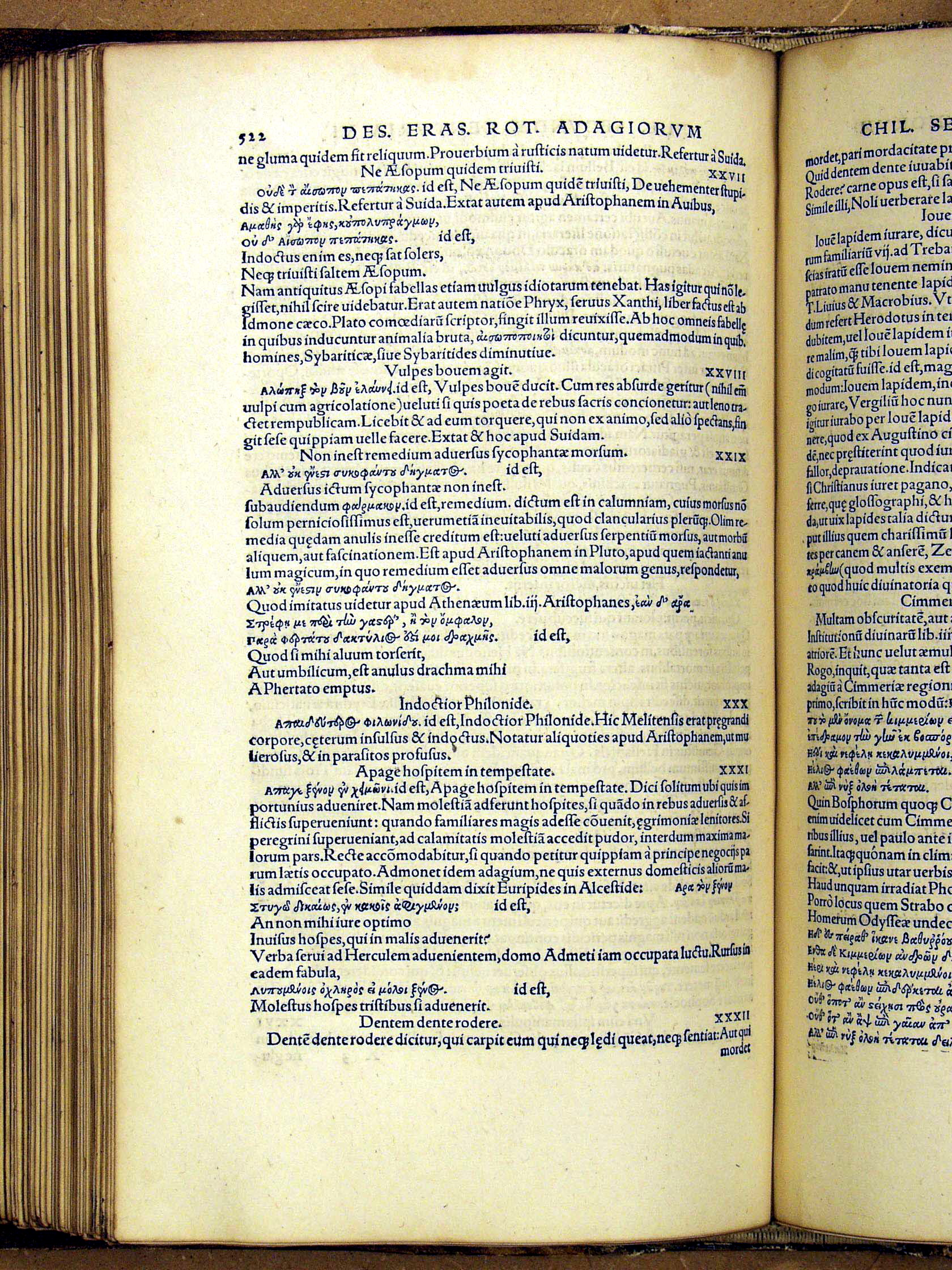
Iconclass: 45L3 plundering ~ soldiers 47I1111 ears of corn 47I1421 sheaf 56DD11 Despair; 'Disperatione' (Ripa)
Loci Communes: Rapacitas et avaritia (Rapacity and greed, Rapacité et avarice); Totum ut nihil reliqui (The whole, so that nothing remains, Le tout, sans rien laisser)
II vi 27 Ne Aesopum quidem trivisti You have not even thumbed your Aesop
Οὐδὲ τὸν αἴσωπον πεπάτηκας, id est, Ne Aesopum quidem trivisti. De vehementer stupidis & imperitis. Refertur à Suida. Extat autem apud Aristophanem in Avibus: Αμαθὴς γὰρ ἔφησ, κοὐπολυπράγμων, Οὐ δ᾽ Αἴσωπον πεπάτηκας. id est: Indoctus enim es neque sat sollers, Neque trivisti saltem Aesopum. Nam antiquitus Aesopi fabellas etiam vulgus idiorarum tenebar. Has igitur qui non legisset, nihil scire videbatur. Erat autem natione Phryx, servus Xanthi, liber factus est ab Idmone caeco. Plato comoediarum scriptor, fingit illum revixisse. Ab hoc omnes fabellae in quibus inducuntur animalia bruta, αἰσωποποιητοὶ dicuntur, quemadmodum in quibus homines, Sybariticae, sive Sybaritides diminutive.
[greek], You have not even thumbed your Aesop, was used of very stupid people with no experience of life. It is recorded by Suidas, and is found in Aristophanes, in the Birds: 'Without schooling and without knowledge of the world, you have not even thumbed your Aesop.' For in the old days even the uneducated mob knew Aesop's fables by heart; and so anyone who had not read the fables obviously knew nothing. Aesop was a Phrygian by race and the slave of a master called Xanthus, but was given his freedom by Idmon, a blind man. Plato the writer of comedies imagines his coming to life again. He has given his name to all the fables in which animals are the characters, while those in which men appear are called 'Sybaritic' or in the diminutive form Sybaritides.
Facsimile:
Iconclass: 51AA4:49A Nothingness, Absence❧education 52AA5 Ignorance; 'Ignoranza', 'Ignoranza di tutte le cose', 'Ignoranza in un ricco senza lettere' (Ripa) 85 fables 98B(AESOP) male persons from classical history (AESOP)
Loci Communes: Ignavia et inscitia (Cowardice and ignorance, Lâcheté et ignorance)
II vi 28 Vulpes bovem agit Fox driving ox
Αλώπηξ τὸν βοῦν ἐλαύνει. id est, Vulpes bovem ducit. Cum res absurde geritur (nihil enim vulpi cum agricolatione) veluti si quis poera de rebus sacris concionetur, aut leno tractet rempublicam. Licebit & ad eum torquere, qui non ex animo, sed aliò spectans, fingit sese quippiam velle facere. Extat & hoc apud Suidam.
'[greek], The fox drives the ox. When things are done in an absurd fashion; for a fox has nothing to do with husbandry. It would be like a poet lecturing on divinity or a brothel-keeper in public office. It can also be diverted to apply to someone who pretends that he wants to do something, but is not serious and has another purpose in mind. This too is found in Suidas.
Facsimile:
Iconclass: 25F23(FOX)(+891) beasts of prey, predatory animals: fox (+ animals used as substitute for man) 29A1 'mundus inversus', the reversed world, the topsy-turvy world, 'le monde bestourné' 47I123 ploughing 47I21111 ox 57AA66 Frivolity
Loci Communes: Absurda, indecora, seu praepostera (Absurd, unbecoming, or preposterous things, Choses absurdes, inconvenantes ou déplacées)
II vi 29 Non inest remedium adversus sycophantae morsum Against a blackmailer's bite there's no known remedy
Αλλ᾽ οὐκ ἔνεστι συκοφάντου δήγματος. id est: Adversus ictum sycophanta non inest. subaudiendum φαρμακον, id est, remedium. dictum est in calumniam, cuius morsus non solum perniciosissimus est, verum etiam inevitabilis, quod clancularius plerunque. Olim remedia quaedam anulis inesse creditum est: veluti adversus serpentium morsus, aut morbum aliquem, aut fascinationem. Est apud Aristophanem in Pluto, apud quem iactanti anulum magicum, in quo remedium esset adversus omne malorum genus, respondetur: Αλλ᾽ ουκ ἔνεστιν συκοφάντου δήγματος. Quod imitatus videtur apud Athenaeum lib. iii. Aristophanes, ἐὰν δ᾽ ἄρα Στρέφῃ με περὶ τὴν γαστερ᾽, ἢ τὸν ὀμφαλον, Παρὰ φερτάτου δακτύλιος ἐστί μοι δραχμῆς. id est: Quod si miht alvum torserit, Aut umbilicum, est anulus drachma mihi A Phertato emptus.
'[greek], But not against the sting of blackmail (we have to understand There's no remedy). This is directed against calumny, the bite of which is not only highly poisonous but impossible to avoid, because it usually attacks in secret. In the old days it was thought that rings served as a remedy against the bites of serpents for instance, or some disease, or witchcraft. This comes in Aristophanes in the Plutus, where one character boasts of a magic ring which contains, he says, remedies against evils of all kinds; and the reply is 'But not against the sting of blackmail.' Aristophanes seems to have imitated this, as cited by Athenaeus in his third book: 'If I have a pain in my stomach or round my navel, I have a ring that I bought from Phertatus for a drachma.'
II vi 30 Indoctior Philonide More ignorant than Philonides
Απαιδεύτερος φιλωνίδου. id est, Indoctior Philonide. Hic Melitensis erat praegrandi corpoρe, caeterum insulsus, et indoctas. Notatur aliquoties apud Arisiophanem, ut mulierosus, & in parasitos profusus.
'[greek], More ignorant than Philonides. He was a man from Melite, of great physical bulk and an uneducated boor. He is pilloried in several places by Aristophanes as lecherous and lavish with toadies.
Facsimile:
Iconclass: 31A421 giants, colossi 52AA55 Bluntness, Obtuseness, Dullness 98B(PHILONIDES) male persons from classical history (PHILONIDES)
Loci Communes: Contemptus et vilitatis (Contempt and worthlessness, Mépris et bassesse)
II vi 31 Apage hospitem in tempestate Off with you, stranger, in the storm
Απαγε ξένον ἐν χειμῶνι, id est, Apage hospitem in tempestate. Dici solitum ubi quis importunius adveniret. Nam molestiam adferunt hospites, si quando in rebus adversis & afflictis superveniunt. Quando familiares magis adesse convenit, aegrimoniae lenitores. Si peregrini superveniant, ad calamitatis molestiam accedit pudor, interdum maxima malorum pars. Recte accommodabitur, si quando petitur quippiam à principe negociis parum laetis occupato. Admonet idem adagium, ne quis externus domesticis aliorum malis admisceat sese. Simile quiddam dixit Euripides in Alcestide: Αρα τὸν ξένον Στυγῶ δικαίως, ἐν κακοῖς ἀφιγμένον; id est, An non mihi iure optimo Invisus hospes, qui in malis advenerit? Verba servi ad Herculem advenientem, domo Admeti iam occupata luctu. Rursus in eadem fabula: Λυπουμένοις ὀχληρὸς εἰ μόλοι ξένος. id est. Molestus hospes tristibus si advenerit.
"[greek], Off with you, stranger, in the storm, was often said when someone arrived at a very inconvenient moment. For strangers can cause trouble if they appear at a time of misfortune or mourning, when it is more convenient for friends to come, who will lighten the burden. If foreigners intrude, what we suffer from our misfortunes is increased by embarrassment, which can be the greatest of our troubles. It will be correct to adapt this, if someone makes a request of a prince who is already occupied with business which is far from pleasant. The same adage teaches us that an outsider should not involve himself in other people's domestic misfortunes. Euripides says something like this in the Alcestis: 'Do I not justly hate the stranger who has intruded on our troubles?' The words are spoken by a slave to Hercules, who arrives when the house of Admetus is already filled with mourning. Again in the same play: 'A guest is troublesome to those that mourn.'
Facsimile:
Iconclass: 26C3 storm 33A3 visiting; receiving guests; elegant company 51AA4:46C5141 Nothingness, Absence❧being welcomed ~ travelling 54AA33 Inability, Maladroitness, Awkwardness
Loci Communes: Intempestiva et inepta (Untimely and inept things, Choses inopportunes et ineptes)
II vi 32 Dentem dente rodere To grind one tooth on another
Dentem dente rodere dicitur, qui carpit eum, qui neque laedi queat, neque sentiar. Aut qui mordet pari mordacitate praeditum quempiam. Martialis lib. xiii. in obtrectatorem quendam: Quid dentem dente iuvabit Rodere? carne opus est, si satur esse velis. Simile illi, Noli verberare lapidem.
To grind one tooth on another is used of those who criticize someone they cannot hurt, and indeed he does not feel it; or who bite one equally equipped for biting back. Martial in book 13, of one of his critics: But why grind tooth on tooth in want of meat? It's steak you need, if you would feel replete. This resembles that other one: Do not belabour a stone.
Facsimile: 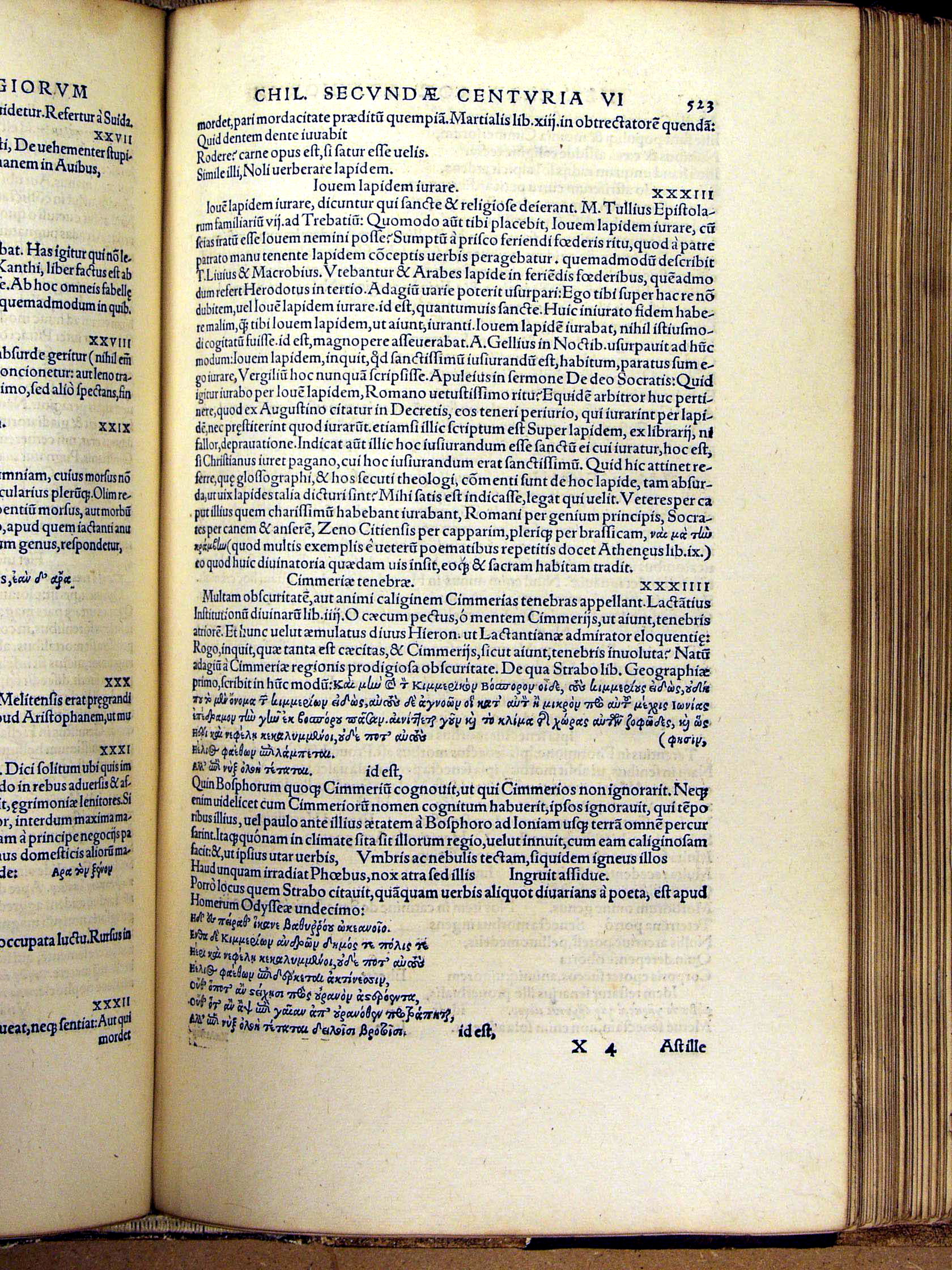
Iconclass: 31B62331 mouth wide open, teeth pressed together 54AA7 Weakness, Powerlessness, Helplessness; 'Infermità' (Ripa)
Loci Communes: Inanis opera (Vain effort, Effort vain)
II vi 33 Iovem lapidem iurare To swear by Jupiter the stone
Iovem lapidem iurare, dicuntur qui sancte & religiose deierant. M. Tull. Epistolarum familiarum vii. ad Trebatium: Quomodo autem tibi placebit, Iovem lapidem iurare, cum scias iratum esse Iovem nemini posse? Sumptum à prisco feriendi foederis ritu, quod à patre patrato manu tenente lapidem conceptis verbis peragebatur. quemadmodum describit T. Livius & Macrobius. Utebantur & Arabes lapide in ferendis foederibus, quemadmodum refert Herodotus in tertio. Adagium varie poterit usurpari: Ego tibi super hac re non dubitem, vel Iovem lapidem iurare. id est, quantumvis sancte. Huic iniurato fidem habere malim, quam tibi Iovem lapidem, ut aiunt, iuranti. Iovem lapidem iurabat, nihil istiusmodi cogitarum fuisse. id est, magnopere asseverabat. A. Gellius in Noctibus usurpavit ad hunc modum: Iovem lapidem, inquit, quod sanctissimmum iusiurandum est, habitum, paratus sum ego iurare, Virgilium hoc nunquam scripsisse. Apuleius in sermone De Deo Socratis: Quid igitur iurabo per Iovem lapidem, Romano vetustissimo ritu? Equidem arbitror huc pertinere, quod ex Augustino citatur in Decretis, eos teneri periurio, qui iurarint per lapidem, nec praestiterint quod iurarunt. etiamsi illic scriptum est Super lapidem, ex librarii, ni fallor, depravatione. Indicat autem illic hoc iusiurandum esse sanctum ei cui iuratur, hoc est, si Christianus iuret pagano, cui hoc iusiurandum erat sanctissimum. Quid hic attinet referre, quae glossographi, & hos secuti theologi, commenti sunt de hoc lapide, tam absurda, ut vix lapides talia dicturi sint? Mihi satis est indicasse, legat qui velit. Veteres per caput illius quem charissimum habebant iurabant, Romani per genium prinicpis, Socrates per canem & anserem, Zeno Citiensis per capparim, plerique per brassicam, ναὶ μὰ τὴν κράμβην (quod multis exemplis è veterum poematibus repetitis docet Athenaeus lib. ix.) eo quod huic divinatoria quaedam vis insit, eoque & sacram habitam tradit.
To swear by Jupiter the stone is used of those who take an oath of especial sanctity. Cicero writing to Trebatius, in book 7 of his Letters to Friends: 'But how will it satisfy you to swear by Jupiter the stone, when you know that Jupiter cannot be angry with anyone?' Taken from the primitive ritual of treaty-making, which was performed according to a fixed formula by the pater patratus, holding a stone in his hand, as described in Livy and in Macrobius. The Arabians also used a stone in making treaties, as recorded by Herodotus in book 3. The adage can be used in various ways. 'On this point I would not he sitate to swear even by Jupiter the stone/ that is, with all the solemnity you could desire. 'I would rather trust the other man though he were not upon oath, than you when you have sworn, as they say, by Jupiter the stone.' 'He swore by Jupiter the stone that there was no idea of any such thing,' that is, he asserted it with the greatest emphasis. Aulus Gellius in the Nights used it as follows: 'I am ready to swear by Jupiter the stone, which was regarded as the most solemn oath of all, that Virgil never wrote this.' Apuleius in his essay On the Deity of Socrates: 'What then shall I swear by Jupiter the stone, the most ancient Roman rite?'
I for my part would class here something that is quoted from Augustine in the Decreta: that those are guilty of perjury who have sworn 'by the stone' and not performed their sworn promise, although the text there has 'on the stone,' super lapidem, which is if I am not mistaken a scribal corruption. He makes it clear in that passage that this oath was valid to the man to whom it was sworn, if (that is) a Christian were to swear it to a pagan, in whose eyes this was a most solemn oath. Why need I record here the inventions of those who collect rare words, and the theologians who have followed them, concerning this stone, which are so absurd that stones themselves would hardly say such things? I am content to point them out; and let him read them who will.
The Ancients swore 'by the head' of the person they held most dear, the Romans by the 'genius' of the emperor, Socrates by dog and goose, Zeno of Citium by capers, many by green vegetables - 'By cabbage, no!' This we learn, with many examples repeated from the classical poets, in the ninth book of Athenaeus, because cabbage has a certain value in foretelling the future, and therefore he says that it was accounted sacred.
Facsimile:
Iconclass: 31A2245(+933):25D12 hand (+ holding something)❧kinds of non-precious stone 57A6142 Oath 92B1 (story of) Jupiter (Zeus)
Collectanea (1500): 462
Loci Communes: Fides et gravitas (Trust and seriousness, Confiance et gravité)
II vi 34 Cimmeriae tenebrae Cimmarian gloom
Multam obscuritatem, aut animi caliginem Cimmerias tenebras appellant. Lactantius Institutionum divinarum lib. iiii. O caecum pectus, ó mentem Cimmeriis, ut aiunt, tenebris atriorem. Et hunc velut aemulatus divus Hieron. ut Lactantianae admirator eloquentiae: Rogo, inquit, quae tanta est caecitas, & Cimmeriis, sicut aiunt, tenebris involuta? Natum adagium à Cimmeriae regionis prodigiosa obscuritate. De qua Strabo lib. Geographiae primo, scribit in hunc modum:Καὶ μὴν καὶ τὸν Κιμμερϊκὸν Βόσπορον οἶδε, τοὺς κιμμερίους εἰδὼς, οὐδήπου τὸ μὲν ὄνομα τῶ κιμμερίων εἰδὼς, αὐτοὺς δὲ ἀγνοῶν οἵ καρ᾽ αὐτὸν ἢ μικρὸν πρὸ αὐτοῦ μέχρις Ιωνίας ἐπέδραμον τὴν γῆν ἐκ βοσπόρου πᾶσαν. αἰνίττεται γοῦν καὶ τὸ κλίμα τῆς χώρας αὐτῶν σοφῶδες, καῖ ὥς φησιν Ηέρι καὶ νεφὲλῃ κεκαλυμμένοι, οὐδὲ ποτ᾽ αὐτοὺς Ηέλιος φαέθων ἐπι λάμπεται Αλλ᾽ ἐπὶ νὺξ ὀλοὴ τέταται. id est, Quin Bosphorum quoque Cimmerium cognovit, ut qui Cimmerios non ignorarit. Neque enim videlicet cum Cimmeriorum nomen cognitum habuerit, ipsos ignoravit, qui temporibus illius, vel paulo ante illius aetatem à Bosphoro ad Ioniam usque terram omnem percursarint. Itaque quónam in climate sita sit illorum regio, velut innuit, cum eam caliginosam facit: &, ut ipsius utar verbis, Umbris ac nebulis tectam, siquidem igneus illos Haud unquam irradiat Phoebus, nox atra sed illis Ingruit assidue. Porrò locus quem Strabo citavit, quanquam verbis aliquot divarians à poeta, est apud Homerum Odysseae undecimo: Ηδ᾽ ἐς πείραθ᾽ ἵκανε βαθυῤῥόου ὠκεανοῖο Ενθα δὲ Κιμμερίων ἄνδρῶν δημός τε πόλις τε Ηέρι καὶ νεφέλῃ κεκαλυμμένοι, οὐδέ ποτ᾽ αὐτοὺς Ηέλιος φαέθων ἐπιδέρκεται ἀκτίνεσσιν, Οὔθ᾽ ὅποτ᾽ ἂν στείχῃσι πρὸς οὐρανὸν ἀστερόεντα, Οὔθ᾽ ὅτ᾽ ἂν ἂψ ἐπι γαῖαν ἀπ᾽ οὐρανόθεν προτράπηται, Αλλ᾽ ἐπι νὺξ ὀλοὴ τέταται δειλοῖσι βροτοῖσι.. id est, Ast ille Oceani pervenit summa profundi. Illic sunt populique & moenia Cimmeriorum, Nubibus & caeca assidue caligine tecta. Illos haud unquam radiis sol aspicit ardens, Nec quando astriferum curru petit arduus axem. Nec rursum ad terras magno devectus olympo, Sed nox incumbit miseris mortalibus atra. Cimmeriorum mentionem facit etiam M. Tullius libro Academicarum quaestionum quarto. Et Cimmeriis quidem, quibus aspectum solis, sive deus aliquis, sive natura ademerat, sive eius loci quem incolebant situs, ignes tamen aderant, quorum illis uti lumine licebat. Isti autem, quos tu probas, &c. Et in hac regione Naso poeta Somno deo regiam aedificavit, libro Transformationum undecimo: Est prope Cimmerios longo spelunca recessu, Mons cavus, ignavi domus & penetralia Somni, Quò nunquam radiis oriens, mediusve, cadensve, Phoebus adire potest: nebulae caligine mixtae Exhalantur humo, dubiaeque crepuscula lucis. Apud Graecos constanter per duplex m scriptum invenitur: tamersi refragatur etymologia, quam adfert Eustathius, autumans κιμμερίους dictos, quasi ἐν τῷ ἀερι κειμένους. Sed vero propius est, κιμμερίους vocatos, quasi χειμερίους, quanquam hic quoque m simplex.
Deep obscurity or darkness of the mind they call Cimmerian gloom. Lactantius in book 4 of his Divine Institutions: 'What a blind heart, a mind with all the darkness of what they call Cimmerian gloom!' And as though in rivalry with him, St Jerome, a keen admirer of Lactantius' style: I ask you,' he says, 'what blindness have we here, plunged in the darkness of what they call Cimmerian gloom?' The adage takes its rise from the legendary darkness of the country of Cimmeria, of which Strabo in the first book of his Geography writes as follows: 'He also knows of the Cimmerian Bosphorus, seeing that he knows of the Cimmerians; for he could hardly know the name of the people and not know the people themselves, who in his time or not long before had made raids on all the lands between the Bosporus and Ionia. He also gives a hint at least of the latitude of their country, when he calls it murky and, as he puts it,' "shrouded in mist and cloud, nor does the bright Sun ever shine upon it but a dread night spreads over all".' The passage quoted by Strabo, though with some verbal differences from the poet, comes in Homer in Odyssey 11: Then came he to the boundary, the deep stream of Ocean, where are the people and city of Cimmerians, shrouded in mist and cloud, nor does the bright Sun glance at it ever with his rays, neither when he climbs up the starry heaven nor yet when he returns again from heaven to earth, but for wretched mortals a dread night spreads over all.' The Cimmerians are also mentioned by Cicero in book 4 of his Academic Questions: 'And the Cimmerians for their part, who had been deprived of a sight of the Sun either by some god or by nature or by the position of the country where they lived, yet possessed fire, which they could use for light. But those people of whom you approve' and so forth. And in this region the poet Ovid, in book 11 of his Metamorphoses, built a palace for the god of Sleep: near the Cimmerians, he says, There stands a mountain with deep hollow heart,
Of slothful Sleep the home and hiding-place;
Rising nor setting nor at mid-day height
Can Phoebus find an entry for his rays,
Such fogs and darkness mixed the ground exhales,
And dubious twilight takes the place of light.
In Greek I find the word constantly spelled with double m though the Etymologicon referred to by Eustathius is against this, averring that they were so called from lying (keimenoi) in the mist. It is more likely that they should have been called Cimmerians as being wintry (cheimerioi), though then too we have only one m.
Facsimile: 
Iconclass: 22C9 darkness 26B1 mist, fog 32B2(CIMMERIAN) historical peoples and nationalities (CIMMERIAN)
Loci Communes: Caecutientia (Poor eyesight, near-blindness, Mauvaise vue)
II vi 35 Frustra Herculi Hopeless against Hercules
Εἰκῇ τῷ ἡρακλεῖ. Frustra Herculi, subaudi calumniam struxeris. De his dici consuevit, qui sic omnia sua negocia gerunt, ut nemo queat aut audeat calumniari. Nam Herculi mos erat res alienas vi abducere, non dolo. Conveniet aut in vehementer laudatum, probatumque, aut in praepotentem, quem insimulare tutum non sit. M. Cato Censorinus plus quadragies in ius vocatus fuisse memoratur, semper iudicum absolutus sententiis. Hunc Caesar in Anticatonibus insimulavit avaritiae. Id Plutarchus perinde scribit esse, quasi si quis Herculem insimulet ignaviae. Nihil enim minus in Herculem quadrat, quam hoc criminis. Sunt qui putent congruere, cum aliquis omnia facit impune, nec à quoquam accusatur. Quemadmodum Hercules impune res alienas consuevit abigere.
[greek], Hopeless against Hercules; we must understand 'to bring false accusations' against him. This was customarily applied to those who so conduct all their affairs that no one can accuse them of dishonesty or would dare to. It was Hercules' habit to take other men's property by force, not fraud. This will suit either a man of the highest reputation, or one of such absolute power that to bring any accusation against him would not be safe. History relates that Cato the censor was sued in the courts more than forty times, and always acquitted by the jury. Caesar in his Anti-Catones accused him of avarice; and Plutarch writes that this was equivalent to accusing Hercules of cowardice, for nothing is as inappropriate to Hercules as such a charge. Some think it can fitly be used when a man does what he likes with impunity and no one dares accuse him, in the way that Hercules used with impunity to carry off other men's possessions.
II vi 36 Ne in nervum erumpat For fear it break the string
Terentius in Phormione, Verum hoc saepe Phormio vereor, ne ista fortitudo in nervum erumpat denique. Quadrat in temerariam, inconsideratamque audaciam, quae plerunque infelix esse solet, & in maximum malum aliquando adducere. Donatus interpres à sagittariis sumptam metaphoram existimat: qui dum nervum arculaem adducunt immodice, rumpunt nonnunquam, idque non sine suo periculo.
Terence in the Phormio: 'There's one thing, Phormio, I often fear: / Your courage in the end may break the string.' Suitable for those who are inconsiderate, rash and headstrong, a quality that is often unsuccessful and sometimes leads to great disasters. Donatus the scholiast thinks the metaphor is taken from archers who, by drawing their bowstring with excessive force, sometimes snap it, not without great risk to themselves.
Facsimile:
Iconclass: 31A2746 breaking something 45C15(BOW)(+63) archer's weapons: bow (+ handling of weapons) 52AA21 Rashness, Imprudence, Recklessness
Loci Communes: Discriminis (Danger, crisis, Danger)
II vi 37 Ipsa senectus morbus est Old age is sickness of itself
Terentius in Phormione: Ipsa senectus morbus est. Proverbialis figura dictum videtur. Nam in senibus, ut absit morbus, ipsa senecta per se mala valetudo est. Unde illud frequens apud Homerum, χαλεπὸν γῆρας. id est, Molesta senectus. Iliados Θ. Σὴ δὲ βίη λέλυται, χαλεπὸν δέ τε γῆρας ὀπάζει id est, Viribus effoetum, iam te premit aspra senectus. Et apud Vergilium, Subeunt morbi tristisque senectus. Horatius in Arte poetica, Multa ferunt anni venientes commoda secum, Multa recedentes adimunt. Iuvenalis, Circumsilit agmine facto Morborum omne genus. Nos item in carmine de Senectutis incommodis, Teterrima porrò Senecta morbus ingens Nullis arceríve potest, pellíve medelis, Quin derepente oborta Corporis epotet succos, animique vigorem Ebetet. Idem testatur senarius ille proverbialis, Φόβου τὸ γῆρας, οὐ γὰρ ἔρχεται μόνον. id est, Metue senectam, non enim sola advenit. Item Χαλεπὸν τὸ γῆρας ἐστὶν ἀνθρώποις βάρος. id est Pergrave senectus est onus mortalibus. Citatur ex Antiphane, Σφόδρ᾽ ἐστὶν ἡμῶν ὁ βίος οἴνῳ προσφερὴς Οταν ᾖ τὸ λοιπὸν μικρὸν, ὄξος γίνεται. id est, Est vita vino nostra quàm simillima: Ubi paululum restat, in acetum vertitur. Item ex eodem, Το γῆρας ὥσπερ βωμός ἐστὶ κακῶν, Πάντ᾽ ἐστ᾽ ἰδεῖν εἰς τοῦτο καταπεφευγότα. id est, Quaedam est malorum ara senectus omnium, Adeo videre est cuncta ad hanc recurrere. Rursus ex eodem, Πρὸς γὰρ τὸ γῆρας ὥσπερ ἐργαστήριον, Απαντα τ᾽ ἀνθρώπινα προσφοιτᾷ κακὰ. id est, Miseram ad senectam, ut ad officinam quampiam Mala universa confluunt mortalium. Huc allusit anus Plautina, quae tarditatem incessus excusans, ait se grave pondus gestare, Tantum, inquit, hoc oneris, quod fero. Quid oneris? Annos septuaginta et quatuor. Item M. Tullius in Catone maiore, Quae plerisque senibus sic odiosa est, ut onus se Aetna gravius dicant sustinere. Aristoteles v. De animalibus lib. senectutem appellat νόμον φυσινὴν. id est, Morbum naturalem: quemadmodum & morbus senectus est adventitia: propterea quod nonnulli morbi idem efficiant in homine quod senectus: & senectus similia gignat, qualia morbi. Seneca morbum insanabilem appellat. Donatus adscribit verba Apollodori ex Graeca comoedia, Τὸ γῆρας ἐστὶν αὐτὸ νόσημα. id est, Ipsa senectus morbus est.
Terence in the Phormio: 'Old age is sickness of itself.' This has the air of a proverbial expression; for in the aged, though there may be no sickness, age itself is a kind of ill-health. Hence that common expression in Homer, 'harsh old age.' Iliad 8: 'But your strength is undone, and harsh old age is your companion.' And in Virgil: 'Diseases come upon them and sad old age.' Horace in the Art of Poetry: 'Many good things advancing years will bring, / Many they will remove as they recede.' Juvenal: 'Diseases of all kinds in serried ranks are quick to gather round.' I too, in a poem on the troubles of old age: 'Age is indeed very grim, a massive sickness; no remedies can keep it away or drive it out, or stop its sudden onset from drinking dry the body's vital sap and weakening the vigour of the mind.' This is borne out by the proverbial iambic line: 'Beware of age; it never comes alone.' And again: To men a grievous burden is old age.' There is a quotation from Antiphanes: 'Our life is just like wine: when there's little left in the cask, it turns to vinegar.' Again from the same source: Tils of all kinds in age an altar find beneath whose shade they can take sanctuary.' And again: 'For in old age, as in a sort of workhouse, all human ills foregather.' There is an allusion to this in Plautus, when the old woman apologizes for walking so slowly, and says she is carrying a heavy burden. 'So heavy' she says 'is this burden that I bear. What burden? Threescore and fourteen years.' So too Cicero in the Cato maior. 'Which most old men find so hateful that they say they carry a burden heavier than Etna.' Aristotle in book 5 of the Animals describes old age as a disease that comes by nature, just as disease is a kind of accidental or premature old age; the reason being that some forms of sickness have the same effect on a man as age, and age produces similar effects to those of sickness. Seneca calls it 'a sickness for which there is no cure.' Donatus adds the words of Apollodorus13 in the Greek comedy: 'Old age is sickness of itself.'
Facsimile: 
Iconclass: 31A462 diseases affecting the whole body 31D160 Old Age, 'Senectus'; 'Vecchiezza' (Ripa)
Collectanea (1500): 567
Loci Communes: Insalubritas (Unhealthiness, Insalubrité)
II vi 38 Adrastia Nemesis. Rhamnusia Nemesis Nemesis of Adrastus, of Rhamnus
Αδράστεια νέμεσις. id est, Adrastia Nemesis, subaudiendum, adest, aut aderit, aut eiusmodi quippiam. Licebit uti vel in eos, quibus ob insolentiam arrogantiamque fortunae commutationem minamur, vel qui à rebus florentibus ad calamitosam fortunam redacti sunt. Hanc quidam Nemesim deam esse putant, insolentiae & arrogantiae vindicem, quaeque spes immoderatas & vetet & puniat. ἀδράστεια dicta ἀπὸ τοῦ ἀστερητικοῦ μορίου καὶ δρασμοῦ, quod nemo nocens meritam poenam usquam effugerit: etiam si quando serius assequitur. Lucianus in Meretriciis dialogis, Εστι τὶς θεὸς ἡ ἀδράστεια, καὶ τὰ τοιαῦτα ὁρᾷ, id est, Est dea quaepiam Adrastia, videtque ista. Euripides in Rheso: Αδράστεια μὲν ἁ Διὸς παῖς, Εργοις στομάτων φθόνον. id est, Adrastia, Iovis filia, arceas dictorum invidiam. Idem in eadem fabula, Σὺν δ᾽ ἀδραστείᾳ λέγων. id est, Volente vero dixerim hoc Adrastia. Idem testantur etiam Epigrammata, Η νέμεσις προλέγει τῷ πήχεϊ τῷ τε χαλίνῳ, Μήτ᾽ ἄμετρόντι ποιεῖν, μήτ᾽ ἀχάλινα λέγειν. id est, Innuit hoc Nemesis cubito, frenoque gerendis, Sit modus in rebus, dictaque frenum habeant. Item aliud: Η νέμεσις πῆχυν κατέχω. τίνος ὅνεκα; λέξεις Πᾶσιν ἀπαγγέλλω, μηδὲν ὑπὲρ τὸ μετρον. id est, Contineo Nemesis cubitum. Quae causa? requires. Nam cunctis tubeo rebus adesse modum. Strabo lib. Geographiae xiii. Adrastiam dictam tradit, non ab aufugiendo, sed ab Adrasto rege, qui primus huic templum constituerit, idque Antimachi poetae versibus confirmat, Εστι δὲ τις νέμεσις μεγάλη θεὸς, ἥ τάδε πάντα Πρὸς μακάρων ἔλαχεν. Βωμὸν δὲ οἱ εἴσατο πρῶτος Αδρηστος, ποταμοῖο παραὶ ῥόον Αἰσήποιο Ενθα τε τίμηταί τε καὶ ἀδρήστεια καλεῖται. id est; Est quaedam Nemesis dea magna, cui omnia quadam haec Sunt data sorte deûm. Ast huic primus condidit aram Adrastus iuxta Aesopi sacrata fluenta. Atque inibi coliturque, tenetque Adrastia nomen. Huius oppidi meminit Plinius libro quinto, capite trigesimosecundo, his verbis, Parium colonia, quam Homerus Adrastiam appellavit. Adrastiae deae mentionem facit & Plato in Phaedro. Ammianus lib. decimoquarto. Haec & huiusmodi innummerabilia ultrix facinorum impiorum, bonorumque praemiatrix aliquando operatur Adrastia, atque utinam semper: quam vocabulo duplici etiam Nemesim appellamus. Hanc aiunt ex opinione veterum theologorum lunae superpositam, generali potentia praesidete fatis, omnia terrena despectantem, ut reginam & arbitram rerum omnium: quae praecipuè fastui infensa, nunc erectas mentium cervices opprimit & enervat, nunc bonos ab imo suscitans ad bene vivendum extollit. Huic antiquitas addit pennas, celeritatis symbolum: dedit gubernaculum & rotam, significans illam per omnia discurrente, singula moderari. Idem libro vigesimosecundo: Ideo intolerabilem, humanorum spectatrix Adrastia, aurem, quod dicitur, vellens, monens ut castigatius viveret, &c. Zenodotus originem adagionis ad huius modi fabulam refert, quod equidem non admodum sanè lubens, adscribam tamen, ne lectorem avidum hac fraudasse videar. Eteocles & Polynices post interitum Oedipi patris de regno Thebanorum hac lege pacti sunt, ut imperium alternis annis administrarent. At Eteocles, nam huic sorte primus obtigerat annus, exacto tempore recusavit fratri vices regni tradere. Itaque Polynices repulsus, in Adrasti ditionem Argos profugit, noctuque appulit. Hic quum forte Tydeum esset nactus, qui ob caedem perpetratam è Calydone profugerat, cum eodem praelium conseruit: inter quos clamore, tumultuque coorto intervenit Adrastus, & pugnantes diremit. Atque ibi simul recordatus oraculi cuiusdam, quo monitus fuerat, ut apro & leoni filias suas in matrimonium collocaret, utrunque sibi generum ascivit. Habebant enim in clypeis, alter apri, alter leonis figuram: Pollicitusque est se utrunque restituturum in patriam, Cumque primum Polynicis nomine Thebas fuisset adortus, caesis Argivorum optimatibus, Adrastus solus effugit. Interfectorum cadavera cum Thebani insepulta abiicerent, neque sepultura dignarentur, liberi caesorum ad aram Misericordiae confugientes parentum cadavera reposcebant. Atheniensibus exercitum admoventibus Thebani cadavera reddiderunt. Quo tempore & Euadne Capanei uxor semet in rogum abiiciens, unà cum viri cadavere combusta est. Post id temporis filii Argivorum, qui perierant ad Thebas, nullam unquam reportarunt victoriam, suis partam auspiciis, sed stipendiarii pro externis militabant. Diogenianus paroemiam effert ad hunc modum, ἡ νέμεσις παρὰ πόδας βαίνει, id est, Nemesis ad pedes adest. Galenus denique libro De usu partium humani corporis sexto. μνημονεῦσαι καὶ δεῖξαι τὸν ἀδραστίας ὡς οὐδεὶς ἐκφευξεῖται θεσμὸν, id est, meminisse, ac declarare quod Adrastiae legem nullus effugiet. Ac paulo inferius, οὐκ ἐννοήσας οἶμαι τὸν τῆς ακδραστίας θεσμὸν. id est, Haud cogitans opinor Adrastiae legem. Minitatur medicis qui falsa pro veris docent. Eadem appellatur Rhamnusia, à Rhamnunte Atticae loco cognominata, ubi, quemadmodum ostendit Zenodotus, huic deae statua est, solido lapide, decem cubitorum magnitudine, Phidiae opus. Fingebatur autem olim Veneris specie, quamobrem & malum arborem dextra tenebat, ut autor est Eudemus. Hoc adagium quanquam separavit Zenodotus, tamen visum est cum superiore coniungere, quum nihil intersit praeter commutatam cognominis vocem. Plinius libro vigesimooctavo, capite secundo: Quur & fascinationibus adoratione peculiari occurrimus? alii Graecam Nemesim invocantes, cuius ob id Romae simulachrum in Capitolio est, quamvis Latinum nomen non sit.
'[greek], Adrastia Nemesis - we must supply 'is at hand' or 'will be here,' or something of the sort. It will be permissible to turn this against those whose insolence and arrogance moves us to threaten them with a change of fortune, or who have been brought down from prosperity to a disastrous situation. This Nemesis some suppose to be a goddess, the scourge of insolence and arrogance, whose province it is to forbid excessive hopes and punish them; and her name Adrasteia comes from the negative particle a and drasmos, which means running away, because no guilty person has ever escaped the punishment he deserves, although sometimes she is slow in overtaking. Lucian in the Dialogues of Courtesans: 'There is a goddess Adrasteia by name, and she watches over things like this.' Euripides in the Rhesus: 'O Adrasteia, daughter of Jove, mayest thou defend our words against ill-will.' And again in the same play: 'With Andrasteia's good leave I speak.' There is more evidence for this in the Epigrams, for instance: 'With bit and bridle Nemesis forewarns: / Do nought beyond the mean and keep a tight rein on your tongue.' And another: 'I, Nemesis, carry a bridle, and if your ask me why, / My warning to all men is to do nothing beyond the mean.' Strabo, in book 13 of his Geography, tells us that Adrasteia got her name, not from escaping, but from Adrastus, the king who first founded a temple in her honour; and he supports this with some lines from the poet Antimachus: There is a goddess Nemesis, a great goddess, to whom all this has been entrusted by the blessed gods. For her an altar was first set up by Adrastus on the banks of the Aesopus river, where she is honoured still, and is known as Adrasteia.' This city is mentioned by Pliny, book 5 chapter 32, in these words: 'The colony of Parium, which Homer calls Adrasteia.' The goddess Adrasteia is also referred to by Plato in the Phaedrus. Ammianus in book 14: This, and countless other things of the same kind, are the work from time to time of Adrasteia, she who avenges impious deeds and rewards the good; and would that she always did so! - she whom we also call Nemesis, giving her two names.' She is said, in accordance with the views of the ancient theologians, to have been appointed mistress of the moon and to have possessed a general power of supervising the fates, surveying from above all human affairs as queen and arbiter of all things. She is particularly inimical toward pride. Sometimes she humbles and degrades those who are bold and arrogant, at other times she raises up good people from the depths and lifts them to the heights of success. In Antiquity they also gave her wings, as a symbol of speed, and provided her with a rudder and a wheel, to signify that she speeds everywhere and has control of every single thing. Ammianus again in book 22: 'When he thus became unbearable, Adrasteia, she who watches over human affairs, plucking him (as the phrase goes) by the ear, to warn him to live a better regulated life,' and so forth. Zenodotus refers the origin of the adage to the following myth, which I for my part, though not very willingly, will give here, lest I should seem to have unfairly deprived the reader who has an appetite for such things. Eteocles and Polynices, after the death of their father Oedipus, came to an agreement about the kingdom of Thebes, that they would enjoy the government in alternate years. Eteocles however when his time was up (for it so happened that the first year had fallen to his lot) refused to hand the kingdom over to his brother, and so Polynices, thrown out, took refuge at Argos, which was then ruled by Adrastus, and arrived there by night. There by chance he fell in with Tydeus, who had gone into exile from Calydon after committing a murder, and joined battle with him; and in the resulting noise and tumult Adrastus intervened and separated the combatants. Recalling at the same time an oracle, by which he had been advised to give his daughters in marriage to a boar and a lion, he secured them both as sons-in-law, for one had a boar and the other a lion on his shield, and promised them both that he would restore each to his own country. He began by attacking Thebes in support of Polynices, but the Argive chieftains were killed, and Adrastus alone escaped. When the Thebans threw out the bodies of the slain unburied, and were not prepared to give them burial, their children took refuge at the altar of Mercy and demanded the bodies of their parents. The Athenians approached with an army, and the Thebans handed over the corpses. This was the occasion when Evadne, the wife of Capaneus, threw herself on the pyre, and was burnt with her husband's body. Thereafter the sons of the Argives who had been killed at Thebes never again won a victory fighting for their own land, but served as mercenary troops for some other power. Diogenianus gives the proverb in another form: Nemesis is at your feet. Galen, finally, in book 6 of his work On the Use of Parts of the Human Body has 'to remember and make clear that none can escape the law of Andrasteia,' and a little further on: 'giving no thought, I suppose, to the law of Adrasteia.' He is threatening physicians who teach falsehoods instead of truth.
The goddess is also called Rhamnusia, taking the name from a place in Attica called Rhamnus, where, as Zenodotus shows, she had a statue made of a solid block of marble fifteen feet high and carved by Phidias. She was at one time represented in the form of Venus, and therefore held an apple-tree in her right hand, as we learn from Eudemus. This adage, although separated by Zenodotus, seemed to me to be properly joined with the preceding, since there is nothing between them but the change of name. Pliny, book 28 chapter 2: 'Why do we take steps, by invoking some special patron, against the evil eye? Some invoke the Greek goddess Nemesis, who for this reason has a statue in Rome on the Capitol, although she has no name in Latin.'
Facsimile: 
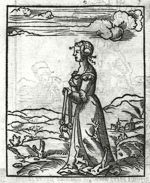
Nec verbo nec facto quenquam laedendum: Alciatus, Emblemata (Paris, 1534), emblem 13
Sit modus in rebus: De la Feuille, Devises et emblemes anciennes et modernes (Augsburg, 1697), emblem 446 quotes the comment
Iconclass: 46C131612 bit 57BB13:57AA644 Punishment; 'Castigo', 'Pena', 'Punitione' (Ripa)❧Arrogance; 'Arroganza' (Ripa) 57AA741 Revenge, Requital, Retaliation; 'Vendetta' (Ripa) 61E(RHAMNUS) names of cities and villages (RHAMNUS) 98B(ADRASTUS) male persons from classical history (ADRASTUS) 92G2 Nemesis (Adrastea)
Loci Communes: Ultio malefacti (Vengeance for a wrongdoing, Vengeance d'un méfait)
II vi 39 Risus syncrusius Shaking with laughter
Γέλως συγκρούσιος. Risum effusiorem, Graeci συγκρούσιον vocant, quod hominem quatiat, quem eundem quidam existimant Sardonium esse. Putant autem, & recte putant hunc risum gravi viro vehementer indecorum esse, propterea quod videatur abanimo impotente proficisci. Squidem ut turpe est viro gravi muliebri more eiulare, si quid doleat, ita gaudio immoderato in cachinnum effundi parum decorum est. Simili figura Philostratus in Sophistis aliquoties dixit, πλατὺ γελᾶν, id est, late diductoque ore ridere.
[greek]. Greek has a word synkrousios to describe immoderate laughter, because it shakes a man's sides as he laughs; some think it is the same as the Sardonic laugh. It is thought, and rightly so, that such laughter is highly insuitable for a man of character, because it is clearly the expression of a mind which has lost control. It is discreditable for a man of solid worth to cry out like a woman when he is hurt; and in the same way when overcome by joy it is unseemly to break out in loud guffaws. Philostratus uses a similar image sometimes in his Lives of the Sophists, when he speaks of laughing with wide-open mouth.
II vi 40 Rosam quae praeterierit ne quaeras iterum Seek no more for the rose that's overblown
Ρόδον παρελθὼν μηκέτι ζετει πάλιν. id est, Ne quaere rursum praeteritam semel rosam. Ne te maceres desiderio rerum, quae revocari, restituique non queunt, velut exactae iuventae, formae, virium, fortunae. Nam ut nihil est rosa gratius, ita nihil minus diuturnum. In eundem sensum dixit in Odis Horatius, Mitte sectari, rosa quo locorum Sera moretur. Habent enim rosae suum tempus, sed perbreve. At exquisitius delicati, etiam alieno tempore rosam quaerunt. Unde quadrabit & in eos, qui iam ἐξωροι voluptates sectantur: velut si nucibus ludat vir, aut amet potitetve senex.
'[greek], Seek not again the rose you have passed by; do not, that is, torment yourself with longing for the things that cannot be recalled or given back - youth, beauty, strength, good fortune. Nothing is lovelier than a rose, nothing more fleeting. Horace says to the same effect in the Odes: 'Seek not where lingers summer's latest rose.' For roses have their own season, all too short as it is; but persons of exquisite sensibility seek for roses even out of season. Hence this will also be suitable for those who pursue pleasures which they have outlived, the grown man playing with nuts, the greybeard pursuing women and wine.
Facsimile: 
Iconclass: 25G41(ROSE)(+371) flowers: rose (+ dead, withered plant) 31D16:33C32 old man❧pursuit of a woman, prowling 51K1 Change 54BB3:57A41 Inutility, Noxiousness; 'Nocumento', 'Nocumento d'ogni cosa' (Ripa)❧Regret
Loci Communes: Intempestiva et inepta (Untimely and inept things, Choses inopportunes et ineptes)
II vi 41 Rosam cum anemona confers You match a rose with an anemone
Ρόδον ἀνεμώνη συγκρίνεις. id est, Rosam cum anemona confers, ubi quis vehementer imparia inter se componit. Rosa priscis in preχio fuit. Anemona papaveris genus, cuius flos specie quidem rosam imitatur, ceterum nulla odoris gratia. Passim nascitur in agris, cum olim rosae summus sit habitus honos.
'[greek], You match a rose with an anemone. When a man compares two things which are emphatically unequal. The rose in old days was highly valued; the anemone is a kind of poppy, with a flower which imitates the rose in shape, but has no charm of scent. It is a common wild flower, while the rose from early times has been held in the highest esteem.
Facsimile:
Iconclass: 25G41(ANEMONE) flowers: anemone 25G41(ROSE) flowers: rose 51BB3 Imparity, Inequality, Difference
Loci Communes: Excellentia, inaequalitas (Excellence, inequality, Excellence, inégalité)
II vi 42 Rosas loqui To speak roses
Ρόδα μ᾽ εἴρηκας. id est, Rosas mihi locutus es. id est, verba gratissima, & rosarum instar amabilia. Suidas ex Aristophane citat, apud quem est ἐν νεφέλαις. Sic & Plautus in Poenulo, Obsecro hercle, ut multa loquitur. Hiuc affine Persianum illud, Non nunc è tumulo, non nunc è manibus istis, Nascentur violae. Ac rursum, Quicquid calcaverit hic, rosa fiat. cui diversum est illud ex Aulularia Plauti, Lapides loqueris. quod illi dicta quasi cerebrum excuterent.
'[greek], Your words are roses to me; they are, that is, highly gratifying, and have all the sweetness of the rose. Suidas cites it from Aristophanes, who has it in the Clouds. In the same way, Plautus in the Poenulus writes 'For pity's sake! How he does say things as sweet as syrup!' Close to this is that phrase in Persius: 'Sure, on that tomb, from that contented ghost, / Shall pansies bloom.' And again: 'Roses shall spring where'er he set his foot.' The opposite of this comes in the Aulularia of Plautus: 'Your words are stones,' so rough that they nearly knocked the hearer senseless.
II vi 43 Rhodii sacrificium A Rhodian sacrifice
Ρόδιοι τὴν θυσίαν, id est, Rhodienses sacificium. ubi res iurgiis & verbis male ominatis peragitur. Refertur à Diogeniano. Idem est cum eo quod paulo superius retulimus, Λινδιοι τὴν θυσίαν. id est, Lindii sacrum. Nam Lindus civitas in Rhodo est, teste Stephano, à qua deductum videri possit Londinum apud Britannos, quam urbem Stephanus Lindonium vocat, citatque Martianum autorem. Siquidem utraque insula est, Rhodus & Britannia. ac vetus eius gentis lingua, quae nunc Vualica dicitur, satis indicat, eam aut profectam à Graecis, aut certe mixtam fuisse. Ne mores quidem admodum dissident à Graecanicis.
'[greek], A Rhodian sacrifice. When business is conducted with wrangling and menaces. Recorded by Diogenianus. It is the same as one I have recorded a little earlier, A Lindian sacrifice; for Lindus is a city in Rhodes, on the evidence of Stephanus. This might seem to be the origin of the name Londinium, London in Britain. Stephanus calls that city Lindonium, and cites Martianus as his authority. Both Rhodes and Britain are islands, and the ancient language of that people, now called Welsh, is a sufficient indication that they either started as Greeks, or at least have a Greek admixture. Even their customs are not very much unlike Greek customs.
Facsimile:
Iconclass: 12E212 sacrifice ~ Greek religion 32B311(RHODIANS) indigenous European peoples (RHODIANS) 52E22 Bad Omen; 'Augurio cattivo' (Ripa)
Loci Communes: Rixosus (Quarrelsome, Querelleur)
II vi 44 Rhodiorum oraculum An oracle for the Rhodians
Ροδίων χρησμὸς, id est, Rhodiensium oraculum. Ubi quis de re minuta nimium crebro, nimiumque diligenter sciscitatur. Etenim Rhodienses Lindiae Minervae sacrificantes, dies aliquot apud aram deae convivia prorogabant, atque inibi perpetuò manebant. Quumque illis mos non esset, matulam in sacrificium inferre, ac super hac re deum consuluissent, atque ut inferrent, respondisset, illi rursus ambigere coeperunt, utrum aeream, an testaceam inferre deberent: ac denuo super hoc adeuntibus oraculum indignatus deus, neutram respondit. Refertur à Diogeniano.
'[greek], An oracle for the Rhodians. When someone asks too many and too meticulous questions about some minute point. For the people of Rhodes were performing a sacrifice to Minerva of Lindus, and prolonged their feasting round the altar of the goddess for several days, remaining there without a break. Since it was not their custom to bring a chamberpot to a sacrifice, they consulted the god on the subject, and were told that they should bring one. Whereupon they began to have fresh doubts, whether they ought to bring one of bronze or earthenware, and consulted the oracle again on this point. The god was indignant, and told them to bring neither. Recorded by Diogenianus.
Facsimile:
Iconclass: 12E25 oracle ~ Greek religion 31A611 chamber-pot 32B311(RHODIANS) indigenous European peoples (RHODIANS) 51B61 Repetition 52EE1:54BB5 Asking, Question, Interrogation❧Unimportance
Loci Communes: Taedium ex iteratione (Tedium from repetition, Lassitude due à la répétition)
II vi 45 Rusticanum oratorem ne contempseris Do not despise a country speaker
Αγροίκου μὴ καταφρόνει ῥητορος. id est, Rusticanum ne contempseris rhetorem. Admonet adagium ne quem ob imperitiam, infantiamve fastidiamus: Neque spectemus à quo, quóve pacto dicatur, sed quid. Qui valent eloquentia, non perinde curandum est, quid minentur, aut polliceantur. At penes quos rusticana veritas est, si quid vel inculte dixerint, haudquaquam oportebit negligere. Siquidem huiusmodi plus solent efficere quàm loqui. Autor Diogenianus.
'A[greek], Do not despise a country orator. The lesson of this adage is that one should not look down on anyone simply because he lacks experience or cannot express himself. Nor should we consider who says something and how he says it, but what he says. If a man's strength lies in his powers of self-expression, we need take no particular care to discover what his threats or promises amount to. But those who possess the truth, though in rustic dress, one ought on no account to overlook, even if they have spoken in uneducated style; for men of this sort are often more effective in deeds than words. The authority is Diogenianus.
Facsimile:
Iconclass: 33A34:46A132 person addressing a group, orator❧villagers; villeins (Dutch: 'dorpers') 57B2 Respect, Reverence, Esteem 51AA4:57BB21 Nothingness, Absence❧Contempt
Collectanea (1500): 346
Loci Communes: Contemptus et vilitatis (Contempt and worthlessness, Mépris et bassesse)
II vi 46 Rus civitas City turned country
Αγρὸς ἡ πόλις. id est, Rus civitas. Ubi quis in urbe neglectis legibus, vi proque sua libidine rem gerit. In civitatibus enim legibus ex aequo vivitur, in agris licentius agitur. Epicharmus apud Diogenianum, Αγρὸν τὴν πόλιν ποιεῖς. id est, E civitate rus facis. Quadrabit etiam in civitatem, in qua legum non magnus habetur respectus. Huc allusit Seneca in ludicro libello, quem lusit in Claudium Imperatorem: Vos mera mapalia fecistis, volo servetis disciplinam curiae.
'[greek], The city is now country. When someone in a city overrides the laws, and rules by violence just as he pleases; for in a civilized community men live in equality under the law, and in the country they are more free to act as they please. Epicharmus, cited by Diogenianus, has 'You turn the city into countryside.' It will also suit a community in which there is no great respect for the law. Seneca alludes to this in the humorous pamphlet which he wrote as a satire on the Emperor Claudius: 'You have made the place a mere collection of huts; I want to see court discipline properly kept.'
Facsimile:
Iconclass: 46A22 contrast between urban and rural life; city dweller versus country dweller 59C21 Equality, Equity, Fairness, Righteousness; 'Equalità', 'Equità', 'Giuditio giusto', 'Ordine dritto e giusto', 'Ugualità' (Ripa) 59CC21 Inequality, Inequity, Iniquity; 'Iniquità' (Ripa)
Loci Communes: Vis injustia (Unjust force, Force injuste)
II vi 47 Cinernus Bacchus A chickpea Bacchus
Ερεβίνθιος διόνυσος. id est, Cicernus Bacchus. De re vehementer contempta. Sumptum adagium à potu ex leguminibus confecto, qui vinum imitatur. Veteres autem diversis rationibus vinum effingebant, quarum nonnullas commemorat Plinius lib. decimoquar to capite decimosexto. Idem libro vigesimosecundo, capitevigesimoquinto, meminit de Zytho Aegyptiorum, Celia Hispanorum, Cervisia Gallorum. Erat id potus genus ex leguminibus coctum, quod inopia vini repertum est in his regionibus, quae vitem non ferunt. Hinc natum videri potest & illud quod alibi retulimus adagium, οὐδὲν πρὸς διονυσον, id est, Nihil ad Bacchum, ut id dixerit quispiam gustata cervisia. Porrò contemptam fastiditamque fuisse cervisiam iis, qui eatenus assueverant vino, vel Epigramma testatur, quod Iuliano Imperatori tribuunt: Id est huiusmodi: Τίς; πόθεν εἶς Δίονυσε; μὰ γὰρ τὸν ἀληθέα βάκχον Οὔ σ᾽ ἐπιγίνώσκω, τὸν διὸς οἶδα μόνον. Κεῖνος νέκταρ ὤδωδε, σὺ δὲ τράγου. ἡ ῥάσε Κελτοί Τῇ πενίῃ βοτρύων τέυξαν ἀπ᾽ ἀσταχύων. Τῷ σὲ χρὴ καλέειν, δημητριον, οὐ δίονυσον, Πυρογενῆ μᾶλλον, καὶ βρόμον, οὐ βρόμιον.. id est, Bacche quis? Unde Venis? Verum tibi deiero Bacchum, Te haud novi, tantum est cognitus ille Iovis. Is nectar redolet, hircum tu. dic age num te E spicis finxit Gallia vitis inops? Non igitur Bacchum te dixero, sed Cerealem, Et frumentigenam, nec Bromium, imò bromum. Est autem bromos hordei genus quoddam: sed à Theophrasto lib. De plantis octavo, inter ea ponitur, quae penè sylvestria sunt & immitia. Plinius potissimum usum eius generis putat, quod illius spuma cutem foeminarum in facie nutrit. Nam quod ad potum ipsum attinet, inquit, praestat ad vini transire mentionem. Neque vero repugnarim, si cui magis libeat ad ritum sacrorum Bacchi referre proverbium, in quibus imitamina membri obscoeni virilis capitibus ac foemoribus obligabant, atque ita saltabant in honorem dei. Eas figuras Graeci Phallos vocant, unde & apud Terentianum grammaticum cognomen Phallici carminis. Qui ferebant, φαλλοφόροι, & ἰθύφαλλοι dicebantur. Etiamsi Athenaeus lib. xiiii indicat alios fuisse Ithyphallos, alios Phallophoros: illos gessisse personam hominis te mulenti, hos sine persona fuisse, quanquam & aliis rebus differebant. Verum haec nihil ad proverbium. Alludit huc Aristophanes in Acharnensibus, Σφῶιν δ᾽ ἐστὶν ὀρθὸς ἑκτέος Ο φαλλὸς ἐξοπισθεν τῆς κανηφόρου, Εγὼ δ᾽ ἀκολουθῶν, ἄσομαι τὸ φαλλικόν. id est, Vobis quidem rectus tenendus phallus est, Eum sequendo qui canistrum baiulat: Post vos ego canam cantionem phallicam. Effingebatur autem olim hoc membrum è ligno ficulno, quod molliciei dedicavit antiquitas, unde & Horatius eodem è ligno suum Priapum exscalpsit. Servius existimat Maronem item Georgicorum lib. secundo, de iis phallis sensisse, quum sacra Bacchi describens de pensilibus oscillis facit mentionem, Oscilla ex alta suspendit mollia pinu. Ea scribit è floribus concinnari solere, ad imaginem obscoeni virorum membri, ac per intercolumnia suspendi, quo qui in ea incidissent, risum moverent. Hinc igitur Baccho cognomen Erebinthi, quem eundem simili de causa Morychum appellarunt, videlicet facilitate numinis contemptum invitante.
'[greek], A chickpea Bacchus. Of something quite contemptible. The adage is taken from a drink made out of pulses which imitates wine. The Ancients counterfeited wine in different ways, some of which Pliny speaks of in book 14 chapter 16. Again, in book 22 chapter 25, he mentions beer, the zythus of the Egyptians, the celia of the Spaniards, the cervisia of the French. This was a kind of drink brewed from leguminous crops, invented for want of wine in these regions, where the vine will not grow. This might seem also to provide an origin for another adage which I have recorded elsewhere, Nothing to do with Bacchus; it might have been said by someone who had tasted beer. Beer was in fact despised and disliked by those who had hitherto been used to wine, as appears from an epigram ascribed to the Emperor Julian, which runs as follows: 'What Bacchus pray are you, and where is your home? By Bacchus the true god I swear I do not recognize you; the son of Jupiter is the only one I know. He smells of nectar, you of goat. Was it Celts in want of grapes that made you from barleycorns? What name am I to give you? Demetrius surely, not Dionysius, born as you are of grain, and Bromus not Bromius.' Bromus is a kind of barley, but Theophrastus in book 8 of his Plants lists it among those which are virtually wild and not domesticated. Pliny thinks the principal use of this species is that 'the foam of it feeds a woman's complexion. When we consider its value as a drink,' he says, 'we shall do better to pass on and speak of wine.'
I myself should have no objection if anyone preferred to trace the proverb back to the ritual of sacrifices to Bacchus, in which they tied models of the male sexual organ to their heads and thighs, and in that fashion danced in honour of the god. Those models are called in Greek phalloi, whence we find in the grammarian Terentianus the title 'phallic metre.' Those who wore the phallus were called phallophori and ithyphalli. Athenaeus, in book 14, indicates a distinction between ithyphalli and phallophori: the former wore a mask representing a man intoxicated, and the latter had no masks, though there were other differences too. But this has nothing to do with the proverb. Aristophanes alludes to this in the Acharnians: 'Your part is to carry the phallus upright, following the basket-bearer, and I will come behind you and sing the phallic song.' This model of the male organ was made of figwood, which was specially connected in Antiquity with sexual licence; and that is why Horace likewise carved his Priapus out of it. Servius supposes that Virgil too was thinking of these phallic symbols in the second book of the Georgics, when in a description of the rites of Bacchus he speaks of little hanging figures: 'Hangs the soft figures from a lofty pine.' They were normally made, he says, of flowers to represent the male organ, and were suspended between the columns to provoke laughter in anyone who encountered them. Hence then Bacchus got the nickname Chickpea; and for a similar reason he was also called Morychus, presumably because, being an easy-going deity, he invited contempt.
Facsimile: 
Iconclass: 25G4(CHICKPEA) plants and herbs (CHICKPEA) 41C714 beer, ale 51B6:41C711 Imitation; 'Imitatione' (Ripa)❧wine ~ alcoholic drinks 57BB21 Contempt 59BB4 Despicableness 92L1 (story of) Bacchus (Dionysus), Liber
Loci Communes: Contemptus et vilitatis (Contempt and worthlessness, Mépris et bassesse)
II vi 48 Ne quaere mollia, ne tibi contingant dura Seek not soft things, for fear your lot may prove hard
Μὴ τὰ μαλακὰ μώεο, μὴ τὰ σκληρὰ ἔχῃς. id est, Ne quaere mollia, ne dura feras. Refertur à Phurnuto in opere De natura deorum, capite de Musis, & ita refertur, tamquam vulgo iactatum. Congruit in eos, qui dum nimis improbe ac morose petunt quae volunt, offensis iis à quibus petunt, accipiunt ea quae nolunt. Aut in eos qui dum praeter modum captant voluptatem, incidunt in molestiam.
[greek], Seek not soft things lest you are given hard. Recorded by Phurnutus in his work On the Nature of the Gods, in the chapter on the Muses; and he records it as though it were in common currency. Suitable for those who, by being too selfish and too hard to please in asking for what they want, offend those whom they approach and are given what they do not want, or for those who are too much devoted to the pursuit of pleasure and land themselves in trouble.
Facsimile:
Iconclass: 51G4 Hardness 51GG4 Softness (matter) 57AA65 Selfishness; 'Interesse', 'Interesse proprio' (Ripa)
Loci Communes: Frustrata spes (Frustrated hope, Espoir déçu)
II vi 49 Ne Execestides quidem rectam viam invenerit The right way not Execestides himself could find
Οὐδ᾽ Εξηκεστίδης ἄν εὔροι τὴν εὐθεῖαν ὁδόν. id est, Ne Execestides quidem rectam viam invenerit. De negocio perplexo atque inexplicabili. Execestides quidam vulgo male audiit, quod immodicus esset in peregrinationibus, ut omneis vias quàm maxime cognitas haberet. Idem taxatur ab Aristophane in Avibus, Εἰ δὲ δοῦλός ἐστι καῖ Κάρ, ὥσπερ Εχηκεστίδης. id est, Quod si servus est, & Car, quemadmodum Exsecestides. Rursum in eiusdem fabulae initio, Οὐδ᾽ ἄν μὰ δία γ᾽ ἐντεῦθεν ἐξηκεστίδης. id est, Non per Iovem hinc vel ipse viam Execestides, subaudiendum, invenerit. Unde dici coeptum de his, qui tota aberrassent via, aut qui difficili inexplicabilique negocio distringerentur.
[greek], But the right way not Execestides himself could find. Used of some complicated and insoluble problem. Execestides had a bad reputation for being an unreasonably ambitious traveller, so that he had an exceptional knowledge of all ways to get from place to place. The same man is criticized by Aristophanes in the Birds: 'But if he's a slave and a Carian like Execestides.' And again at the outset of the same play: 'The way from here, by god, / Would be too much for Execestides' (we must supply 'to find out'). Hence it came to be applied to those who had lost their way completely, or were caught up in some difficult and insoluble problem.
Facsimile: 
Iconclass: 41A634 labyrinth, maze ~ garden 46C519 getting lost; having lost one's way; losing one's way 98B(EXECESTIDES) male persons from classical history (EXECESTIDES)
Loci Communes: Perplexus (Perplexed, entangled, Perplexe)
II vi 50 Hermonium officium A kindness like Hermon's
Ερμώνιος χάρϊς, id est, Hermonium beneficium. Quoties aliquis studet officii causa videri facere, quod alioqui coactus facit, non quo commodet cuipiam, sed quod non liceat secus agere. Hanc paroemiam ad huiusmodi referunt fabulam: Gens quaedam Pelasgica, quae Lemnum incolebar, navibus transmisit in Baebronem, vel, ut Herodotus, Brauronem Atticae regionem, atque ex ea mulieres, raptas abduxerunt. Post ubi pestilentia laborarent, oraculo iussi sunt Atheniensibus satisfacere, atque ita futurum, ut pestilentia liberarentur. Athenienses rogati quo pacto placari vellent, denunciarunt, ut Lemno decederent. Hanc conditionem cum audissent Pelasgi, per iocum responderunt id facturos sese, si quis Borea vento unius diei navigatione domo profectus Lemnum trasmitteret. Evenot deinde ut cum Darius in Thracia agens, omnia undique subigeret, Militiades dux Atheniensium è Cherroneso solvens, Lemnum aggrederetur, Pelasgis denuncians se Borea uniusque diei cursu adesse domo profectum, nam Cherronesum tenebat, atque illic habitat. Itaque Hermon Pelasgorum princeps Lemno cessit. Idque cum Darii metu compulsus faceret, adsimulabat tamen se volentem cedere, quo gratum faceret Atheniensibus. Huiusmodi fermè comperimus in Graecorum collectaneis. Aemilius Probus in Miltiade aliquanto diversius rem narrat. Quum Athenienses decrevissent coloniam mittere in Chersonesum, quae tum à Thracibus tenebatur, consultus Apollo quem sibi ducem sumerent ad expelledos Thraces, iussit ut Miltiadem asciscerent. Is Lemnum aggressus, postulavit, ut se sponte dederent Atheniensibus. Lemnii per iocum responderunt, se id tum facturos, cum ille domo navibus proficiscens vento aquilone venisset Lemnum. Nam hic ventus adversus est Athenis proficiscentibus Lemnum. Miltiades ne illic tempus tereret, Chersonesum profectus est. Ea capta, rebusque illic ex animi sententia ordinatis, rediit Lemnum, & ex pacto postulavit insulam. Nam se vento Borea domo profectum venisse, quod in Chersoneso domum habeat, decreverat enim illic manere. Itaque qui Lemnum tenebant, cessere metu. Simplicius quidem Pamphilus ille Terentianus, negans liberi hominis officium esse, cum nihil mereatur, postulare id sibi gratiae apponi. Atqui in principum aulis atque adeo passim in omni mortalium coetu, Hermonum istiusmodi plena sunt omnia, qui cum maximè beneficium dare vident, tum maximè commodis serviunt suis. Proverbium meminit & Suidas & Hesychius.
'[greek], A kindness like Hermon's, used when a man very much wants it to be thought that he is doing something to oblige, which he does in any case under compulsion, not to give anyone pleasure but because he can't do anything else. This proverb is traced back to the following story. A Pelasgian tribe who lived in Lemnos crossed over by boat to Baebron (or, as Herodotus has it, Brauron), a district of Attica, seized the women there, and carried them off. Later, when they suffered from plague, they were told by the oracle that they must make reparation to the Athenians, and then the plague would leave them. The Athenians, when asked what form of satisfaction they expected, told them firmly to get out of Lemnos. When the Pelasgians heard this condition, they sent a humorous reply: they would leave Lemnos, if anyone could leave home and cross over to Lemnos in a single day on a north wind. It later happened, when Darius was campaigning in Thrace and overrunning everywhere, that Miltiades the Athenian commander set sail from the Chersonese and attacked Lemnos, officially informing the Pelasgians that he had arrived on a north wind in one day's sailing, having set out from home; for he held the Chersonese, and that was where he lived. So Hermon the prince of the Pelasgians retired from Lemnos; and though he had done so under compulsion from fear of Darius, he pretended none the less that he was leaving Lemnos voluntarily to oblige the Athenians.
Such, more or less, is the story I find in the Greek collections. Aemilius Probus in his life of Miltiades tells it rather differently. When the Athenians had decided to send a colony to the Chersonese, which was then held by the Thracians, they asked Apollo whom they should choose as their leader in driving them out, and he instructed them to send for Miltiades. Attacking Lemnos, he demanded that they should freely surrender to the Athenians. The Lemnians sent a humorous reply: they would do so as soon as he should reach Lemnos coming from home by ship on a north wind; for this is a head wind to anyone leaving Athens for Lemnos. Miltiades, to avoid wasting time there, sailed for the Chersonese. Having taken that, and settled things to his own satisfaction, he returned to Lemnos, and demanded the island in accordance with the agreement; for he had come from home, he said, on a north wind, because he had a home in the Chersonese (for he had made up his mind to settle there). So the occupants of Lemnos abandoned it in fear. This is put more straightforwardly by Pamphilus in Terence. 'It is no part of the duty of an honest man' he says 'to demand credit when he has done nothing to deserve it.' Yet in the courts of princes, and indeed anywhere where men are gathered together in any way, the world is full of people like this Hermon, who at the same time are most anxious to seem to render a service and to consider no one's advantage but their own.
The proverb is mentioned both by Suidas and by Hesychius.
Facsimile:
Iconclass: 53C21 Compulsion 55C21 Generosity, Liberality; 'Generosità', 'Liberalità' (Ripa) 57A77 Friendliness, Gentleness, Affability; 'Affabilità, piacevolezza, amabilità', 'Animo piacevole, trattabile & amorevole', 'Benignità' (Ripa) 98B(HERMON) male persons from classical history (HERMON)
Loci Communes: Munus non munus (A gift that is not a gift, Un présent qui n'en est pas un); Simulatio, dissimulatio (Pretense, dissimulation, Simulation, dissimulation)
II vi 51 Ex arena funiculum nectis You twist a rope of sand
Εξ ἄμμου σχοινίον πλέκεις, id est, Ex arena funem nectis. In stulte frustraque conantem quippiam dicebatur: aut ubi quis ea connectere laboret, quae nequaquam cohaereant. Apposite dicetur in orationem, aut syllogismum male cohaerentem. Ut affine sit illis, Arena sine calce, & Dissolutae scopae. In hanc ferè sententiam usurpavit Irenaeus libro primo, Veluti faciunt qui colligunt Homerocentones. In summa quadrabit in quiduis ἀδύνατον καὶ ἄτοπον, ut pertineat & ad illam formam, Laterem lavas, & Aethiopem dealbas.
'[greek], You twist a rope of sand, was said of anyone who attempts some vain and foolish action, or labours to connect together things that have no connection whatever. It will be properly used of a speech, or a syllogistic argument, that does not hold together; so that it is related to Sand without lime, and Brooms untied. It is used much in that sense by Irenaeus in his first book. An example is the activity of those who collect centos from Homer. Taken over all, it will fit anything impossible and absurd, so that it also belongs to the same category as You are washing a brick, and You are whitening an Ethiopian.
Facsimile:
Iconclass: 25D23 sand (soil type) 47H41 rope-making 54BB3 Inutility, Noxiousness; 'Nocumento', 'Nocumento d'ogni cosa' (Ripa)
Loci Communes: Inanis opera (Vain effort, Effort vain); Impossibilia (Impossible things, Choses impossibles)
II vi 52 Halcedonia sunt apud forum These are halcyon days in the market
Quod dixit in Cassina Plautus: Halcedonia sunt circa forum, proverbii speciem gerit. Significatur hac voce tranquillitas & silentium. Idem in Poenulo, Nisi mihi illam tam tranquillam facis, quam mare est olim, cum ibi halcedo pullos educat suos. Extat etiam in Graecorum commentariis huius modi proverbium, ἁλκυονίτιδας ἡμέρας ἄγεις. id est, Halcyonios agis dies, de tranquillam & ociosam agentibus vitam. Aristophanes in Avibus: Αλκυονίδας τ᾽ ἤγεθ᾽ ἡμέρας ἀεί. id est, Atque halcyonios duxit assidue dies. Ab ave quadam marina ductum adagium, quae Graecis Halcyon dicitur, Latinis halcedo, ut autor est M. Varro lib. De lingua Latina tertio, ne quis Plautinum verbum deprava tum esse putet. Fabula de Ceyce & Halcyone est apud Ovidium. de ave sic refert Plinius lib. decimo, capite trigesimosecundo, Halcyon paulo amplior est passere, colore cyaneo ex parte maiore, tantum purpureis & candidis admixtis pennis, collo gracili & procero. Ea foetificat bruma, qui dies Halcyonides vocantur. Neque apparent nisi mari tranquillo, maximè Siculo, Faciunt autem septem ante brumam diebus nidos, & totidem sequentibus pariunt. Hi dies & nautis sunt noti. Nam in his tempestatem non metuunt. Nidificant autem medio in mari: Nidi pilae figura, paulum eminenti ore perquam angusto, grandium spongiarum similitudine, ex spinis aculeatis compacti, tanta duricie, ut ferro incidi nequeant. Franguntur ictu valido, ut spuma arida maris. Hactenus Plinius. Lucianus de tranquillitate Halcyonidum dierum testatur in dialogo, cui titulus ἀλκυών. Vergilius inter prognostica futurae tempestatis hoc quoque refert: Non tepidum ad solem pennas in litore pandunt Dilectae Thetidi Halycones. Meminit harum & Theocritus Idyllio septimo: Χ᾽ ἁλκύονες στορεσεῦντι τὰ κύματα, τήντε θάλασσαν, Τόντε νότον, τόν τ᾽ εὖρον, ὅς ἔσχατα φυκία κινεῖ. Αλκύονες γλαυκαῖς Νηρηΐσι ταίτε μάλιστα Ορνίθων ἐφίλαθεν, ὅσαις τε περ ἐξ ἁλὸς ἄγρα. id est, Halcionesque undas sternunt, pelagusque Notumque Atque Eurum extremam motantem flatibus algam, Halycones, quas inter aves Nereides omneis Unice amant glaucae, quaecunque ex aequore pastum Venantur.
A remark made in the Casina of Plautus, These are halcyon days around the market,' looks like a proverb. The phrase indicates tranquillity and silence. Plautus has it again in the Poenulus: 'Unless you make this business as tranquil for me as the sea is when the halcyon is hatching her chicks.' There is a proverb like this in the Greek collections: '[greek], You're passing halcyon days, of those who live a peaceful lazy life. Aristophanes in the Birds: 'And lived continuous halcyon days.' The adage is drawn from a seabird called in Greek the halcyon, in Latin halcedo, as Marcus Varro tells in the third book of his On the Latin Language, so let no one think Plautus' word is a corruption. The story of Ceyx and Halcyone is in Ovid. Of the bird, Pliny, in book 10 chapter 32, gives the following account. The halcyon, he says, is 'a little bigger than a sparrow, of a dark blue colour for the most part, but with an admixture of red and white feathers, and it has a long thin neck. It breeds in midwinter, in what are called the halcyon days. Nor does it ever appear except when the sea is calm, and especially the Sicilian sea. For seven days before the winter solstice they build their nests, and for the same number of days after the solstice they lay.' (These days are well known to sailors too, for while they continue, there is no fear of storms. They build their nests out at sea.) The nest is shaped like a ball, and has a very narrow and slightly projecting entrance; it resembles a large sponge, and is built of sharp fish-spines, so hard that they cannot be cut with a knife, but are broken with a powerful blow, like dried sea-foam.' So Pliny. Lucian bears witness to the calm weather of the halcyon days in the dialogue he calls The Halcyon. Virgil among the signs of impending storm also records: 'Nor do the halcyon, Thetis' favourites, / Spread their wings on the shore to the warm sun.' Theocritus also mentions them in the seventh idyll: The halcyons calm the waves and tame the sea,
South wind and east, that stirs the fringe of weed;
The halcyons dearest to the Nereids
Of all the birds whose prey is in the deep.
Facsimile: 
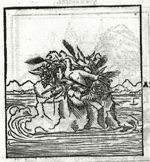
Ex pace ubertas: Alciatus, Emblemata (Paris, 1534), emblem 19 uses the imagery of kingfishers at sea
Bona conscientia in malis est secura: Schoonhovius, Emblemata (Gouda, 1618), emblem 49 uses the imagery of kingfishers at sea
Alcion: Manuscript Bestiary, The Hague MMW 10 B 25, 'Altion' (kingfisher)
Tranquillitas foecunda: Borja, Empresas morales (Bruxelles, 1680), emblem 18 uses the imagery of kingfishers at sea
Iconclass: 22D9 silence 25F39(KINGFISHER)(+4712) other birds: kingfisher (+ animals nesting; making nests, lodges, webs, etc.) 56D3 Confidence, Security, Tranquillity; 'Confidenza', 'Sicurezza e Tranquillità', 'Sicurtà', 'Sicurtà o Sicurezza', 'Tranquillità' (Ripa)
Loci Communes: Securitatis et tutae rei (Security and safety, Sécurité et sûreté)
II vi 53 Empedoclis simultas A feud worthy of Empedocles
Εμπεδοκλέους ἐχθρα, id est, Empedoclis simultas, dicebatur pertinax & irreconciliabilis. Empedoclem enim aiunt iis fuisse moribus, ut assidue simultatem cum aliquibus susciperet, easque pertinacissime exerceret. Quadrabit etiam, ubi quis levi de causa ex amico fit inimicus. Refertur à Diogeniano. Suidas ex Lysia citat haec verba, ᾤμην δι᾽ ἔγωγε τοιαύτῃ φιλίᾳ συνηρμώσθαι, ὥστε μήδ᾽ ἄν τὴν Εμπεδοκλέους ἔχθραν ἐμπεδὼν ἡμῖν γενέσθαι. i. Ego sanè putabam nos eiusmodi necessitudine copulatos esse, ut ne Empedoclis quidem simultas nobis possit obstare. Referendum ad illud quod alio dictum est loco. Odium Vatinianum, & Odium novercale.
Εμπεδοκλέους ἐχθρα, A feud worthy of Empedocles, was a name for obstinate and irreconcilable animosity. Such, they say, was Empedocles' character that he was constantly developing feuds with someone or other, and maintained them with the greatest obstinacy. It will also be suitable when somebody changes from friend to enemy for a trifling reason. Recorded by Diogenianus. Suidas cites these words from Lysias: 'I myself supposed that we were united by friendship so sure that it was proof even against a feud worthy of Empedocles.' This is to be related to one of which I have spoken in another place, Hate worthy of Vatinius, and also to Stepmotherly hatred.
II vi 54 Pluris est oculatus testis unus quam auriti decem One eye-witness is worth more than ten ear-witnesses
Plautus in Truculento, Pluris est oculatus testis unus, quàm auriti decem, hoc est, Longe maior est habenda fides referentibus ea quae viderint oculis, quàm iis, qui narrant ab aliis audita. Idem innuunt poetae, duas apud inferos insomniorum fingentes portas, alteram eburnam, per quam falsa insomnia veniant ad superos: alteram corneam, per quam vera. Vergilius Aeneidos sexto Homerum imitatus ex Odisseae Τ Sunt geminae somni portae, quarum altera fertur. Cornea, qua veris facilis datur exitus umbris, Altera candenti perfecta nitens elephanto, Sed falsa ad caelum hac mittunt insomnta manes, His ubi tum natum Anchises, unaque Sybillam Prosequitur dictis, portaque emittit eburna. Servius interpretatur per corneam portam, oculos intelligendos, quod colore sint corneo: per eburneam, dentes, nimirum osseos & candidos. Per corneam egredi veras umbras, quod ea demum certa sint quae conspicimus oculis. Per eburnam falsas, quod vana plerunque soleant esse quae fama percipiuntur. Itaque Aeneas per eburnam portam dimissus, significat pro falsis habenda, quaecumque de inferis narrarit poeta. Adagii meminit & Apuleius lib. primo Floridorum, narrans quemadmodum Socrates proverbium inverterit: Pluris est auritus testis, quam oculati decem. Nam cum conspexisset adolescentem decorum, sed diutile tacentem: Ut te videam, inquit, aliquid eloquere. Sensit itaque Socrates aurium indicium certius esse quam oculorum: quòd oculis non nisi corporis formam contueamur, ex oratione mentis habitum deprehendamus. Iustinianus Institutionum lib. 3. de gradibus cognationum, Oculatam fidem appellat, quum res subiicitur oculis. Unde Caecam diem appellant, cum non protinus exhibetur pactum: oculatam, quum praesente pecunia res agitur.
Plautus in the Truculentus has: 'One eye-witness is worth more than ten ear-witnesses,' in other words, those who report what they have seen are far more valuable than those who repeat what they have heard from others. The poets suggest the same idea, when they imagine two Gates of Dreams in the Nether World, one of ivory through which false dreams pass to the world above, and the other of horn for true dreams. Virgil in Aeneid 6, following Homer in the nineteenth Odyssey: Twin gates there are of Sleep, whereof the one
Of horn, 'tis said, gives true shades easy passage;
The other shines, of gleaming ivory wrought,
By which false dreams pass to behold the sky.
So with these words Anchises bids his son
Farewell, him and the Sibyl his companion,
And sends them onward through the ivory gate.
Servius takes the gate of horn to mean the eyes, because they are of the colour of horn, and the ivory gate to be the teeth, presumably because they are bone-hard and white; and he thinks true visions pass thought the gate of horn, because nothing can be trusted except what we see with our eyes, and false visions through the ivory gate, because so much of what we hear by word of mouth is usually false. Consequently, the fact that Aeneas is despatched through the gate of ivory is meant to convey that we should consider false whatever the poet has told us about the nether regions. Apuleius also mentions the adage in the first book of his Florida, where he tells how Socrates turned the proverb inside out, so as to run One ear-witness is worth more than ten eye-witnesses. He had espied a youth who was handsome, but remained silent, and addressed him with 'Say something, so that I can see you.' Evidently Socrates thought the ears gave more reliable verdict than the eyes, because the eyes show us only physical beauty, and it is through the ears that we get to know what the mind is like. Justinian, in book 3 of the Institutes. 'On the Degree of Consanguinity,' speaks of 'evidence by eye' when we can see the facts; and they talk of a 'blind day' when a promised sum is not immediately forthcoming, and a 'day with eyes' when a deal is done in cash.
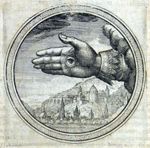
II vi 55 Vulpi esurienti somnus obrepit The hungry fox grows drowsy
Πεινῶσαν ἀλώπεκα ὕπνος ἐπέρχεται, id est, Esurienti vulpi somnus obrepit. Ubi quis inopia cibi dormit. Nam nonnullis pauperibus somnus loco pastus, testante versiculo illo proverbii instar celebrato, Υπνος δὲ πεῖναν τὴν κάκσχατον δαμᾷ id est, Somnus domat famem malorum pessimum. Pauperem autem vulpem appellat, quod callida sit inopia, & multarum repertrix artium, iuxta illud quod alibi retulimus, πενία τὴν σοφίαν ἔλαχε, id est, Paupertas sapientiam sortita est. Neque perperam dicetur & in illos qui dissimulant, conniventque ad quaedam, ut per occasionem aliquid commodi ferant. Siquidem vulpes urgente fame somnum assimulat, ut allectas aves capiat, devoretque. Fit autem hoc physica quadam ratione, ut famem ac sitim extinguat somnus. Adagium recensuit Diogenianus.
Πεινῶσαν ἀλώπεκα ὕπνος ἐπέρχεται, The hungry fox grows drowsy. When someone who has no food falls asleep. Many poor people use sleep instead of dinner, as that line bears witness which is current as a proverb: 'And sleep tames hunger, the worst plague of all.' The man who is in want is called a fox, because poverty is quick-witted and the inventor of many skills; which agrees with something I have recorded elsewhere, Poverty is the mother of wisdom. And one would not be far out in using it also of those who are apt at concealment, and turn a blind eye to some things in hope of an opportunity to profit later. For a fox under pressure of hunger pretends to be asleep, so that he can attract the birds, and then seize and eat them. There is some natural principle here, which makes sleep extinguish hunger and thirst. The adage is discussed by Diogenianus.
Facsimile: 
Iconclass: 25F23(FOX)(+451) beasts of prey, predatory animals: fox (+ animal in search of food) 25F23(FOX)(+46) beasts of prey, predatory animals: fox (+ sleeping animal(s)) 57AA611 Dissimulation, Hypocrisy; 'Hippocresia', 'Simulatione' (Ripa)
Loci Communes: Simulatio, dissimulatio (Pretense, dissimulation, Simulation, dissimulation)
II vi 56 Ad deorum aures pervenit It came to the ears of the gods
Εἰς θεῶν ὦτα ἦλθεν, id est, ad deorum aures pervenit. Ubi facinus aliquod clanculum patratum, resciscitur ab iis qui possunt vel remunerari recte factum, vel punire secus admissum. Sic enim imaginantur poetae, quae recte, secúsve gerantur in terris, ea per Mercurium explorata reserri Iovi. Is deinde concilio deorum convocato, de poena statuit. Et illud etiam nunc sollenne in principum & pontificum literis, Ad nostras aures pervenit. Paulo diversius pastor ille Vergilianus. Et quoties, & quae nobis Galatea locuta est, Partem aliquam venti divûm referatis ad aures. De rebus egregiis, quasque deorum auribus dignas iudices. Itidem Horatius: Et Iovis auribus ista, Servas.
[greek], It came to the ears of the gods. When some action which was performed in secret comes to the notice of those who can either reward it if it was right or punish it if it was wrong. This is how the poets like to think that what is done on earth, be it right or wrong, is discovered by Mercury and reported to Jupiter, who then calls a council of the gods and decides on the penalty. There is too that phrase which is now regularly found in the letters of princes and popes: 'It has come to our ears.' A slightly different expresssion is used by Virgil's shepherd, when he says: 'How oft has Galatea said such things to me! Some part of them I wish the winds may carry to the ears of the gods.' He speaks of wonderful things, such as one might judge worthy of the gods' attention. Horace in the same way: 'And this you keep for Jupiter's private ear.'
Facsimile:
Iconclass: 31A2213(+935):52A5 ears (+ receiving something)❧Knowledge; 'Cognitione', 'Cognitione delle cose' (Ripa) 57B11 Rewarding Goodness 57BB131 Punishing Badness 92B1 (story of) Jupiter (Zeus)
Loci Communes: Ultio malefacti (Vengeance for a wrongdoing, Vengeance d'un méfait)
II vi 57 Admirabiles in nectendis machinis Aegyptii The Egyptians have a wonderful gift for weaving webs
Δεινοὶ πλέκειν τὰς μηχανὰς αἰγύπτιοι. id est, Nectunt stupendas machinas Aegyptii. De versutis, & ut ait Plautus consutis dolis dictitatum. Torqueri potest, & in perplexas sophistarum argutias, ac syllogismorum inexplicabiles labyrinthos. Aut in sycophantas ac delatores qui vera falsis permiscendo nectunt calumnias. Ammianus 14. refert, Paulo cuidam qui plurimos admirandis technis deferebat apud Constantium, vulgo cognomen inditum cathenae, quod in complicandis delationibus nodos necteret insolubiles. Celebrabantur olim Aegyptiorum opera ex variis lignorum frustulis miro quodam artificio connexa, quorum est & Herculanus nodus. Adagium hoc cognatum est illi, quod alibi retulimus, Κασσιώτικον ἅμμα. i. Cassioticus nodus. Cassium enim in Aegypto est, quemadmodum paulo superius ostendimus.
Δεινοὶ πλέκειν τὰς μηχανὰς αἰγύπτιοι, Wondrous the webs that these Egyptians weave. Used of cunning wiles, what Plautus calls 'a patchwork of frauds.' It can also be diverted for use against the ingenious perplexities of sophists and the inexplicable labyrinths of syllogisms; or against blackmailers and informers, who weave their webs of calumny by mingling true and false. Ammianus in book 14 tells of a man called Paulus who betrayed numerous victims to Constantine with astonishing ingenuity, and was commonly nicknamed Chains, from the impenetrable systems of falsehoods in which he fettered them. Egypt was celebrated in old days for the marvellous maquetry-work it produced in different woods, which includes a Hercules-knot. This adage is related to one I have recorded elsewhere, the Cassius knot; for Cassium is in Egypt, as I have shown a little higher up.
Facsimile:
Iconclass: 25F713(+4712) spiders (+ animals nesting; making nests, lodges, webs, etc.) 32B32(EGYPTIANS) African peoples, Africans (EGYPTIANS) 52BB52 Sophism 52DD21 Confusion, Obscurity; 'Confusione' (Ripa) 57BB25 Calumny, Detraction; 'Biasimo vitioso', 'Calunnia', 'Detrattione', 'Maledicenza' (Ripa)
Loci Communes: Inconstantiae, perfidiae, versutiae (Inconstancy, treachery, cunning, Inconstance, perfidie, ruse)
II vi 58 Acesei et Heliconis opera Works worthy of Aceseus and Helicon
Ακέσεως, καὶ ἑλικῶνος ἔργα, id est, Acesei & Heliconis opera. Quae singulari artificio confecta viderentur, sic antiquitus appellabantur. Locum proverbio fecerunt duo quidam celebratae artis artifices, Aceseus natione Patarensis, & Helicon Carystius. Hi primi contexuisse dicuntur peplum Palladis Poliadis. id enim cognomen Minervae, quae in arce Atheniensium colebatur.
'[greek], Works fit for Aceseus and Helicon, was a phrase applied in Antiquity to works of art which were thought to show exceptional skill. The proverb owed its origin to two artists of the highest standing, Aceseus a native of Patara and Helicon of Carystus. These are said to have been the first to weave a robe for Pallus Polias, which was the name given to Minerva as she was worshipped in the citadel at Athens.
Facsimile:
Iconclass: 48(+4) art (+ the work of art and its production) 48B21 Fame ~ artist 51E2 Superiority 98B(ACESEUS OF PATARA) male persons from classical history (ACESEUS OF PATARA) 98B(HELICON OF CARYSTUS) male persons from classical history (HELICON OF CARYSTUS)
Loci Communes: Excellentia, inaequalitas (Excellence, inequality, Excellence, inégalité)
II vi 59 Acesias medicatus est Treated by Acesias
Ακεσίας ἰάσατο.i. Acesias medicatus est. dici solitum de re quae semper vergeret in deterius, quoque magis accuraretur, hoc peius haberet. Occasionem adagio dedit Acesias quidam medicus imperitus & stupidus, qui dum cuidam pedum dolore laboranti mederi studet, auxit dolorem. Unde Aristophanes, Ακεσίας, inquit, τὸν πρωκτὸν ἰάσατο. Quod ea pars, quantumvis cures, tamen per se semper inquinetur. Autor Diogenianus.
'[greek], Treated by Acesias, was customarily said of anything which got progressively worse, and the more it was treated the more it suffered. What gave rise to the adage was a certain unskilful and stupid physician called Acesias, who when trying to cure a patient of the gout, made the pain worse. Hence Aristophanes: 'Acesias treated the backside;' for however much care you expend on that part of the body, it always becomes filthy of its own accord. The authority is Diogenianus.
Facsimile:
Iconclass: 49G251 deterioration of sick person 52AA1:49G1 Stupidity, Poverty of Intellect; 'Stupidità overo Stolidità' (Ripa)❧physician, doctor 98B(ACESIAS) male persons from classical history (ACESIAS)
Loci Communes: Degenerantium in pejus (Degenerating for the worse, Dégénérer en pire); Malum immedicabile (Incurable evil, Mal incurable)
II vi 60 Agamemnonii putei Agamemnon's wells
Αγαμεμνόνεια φρέατα, id est, Agamemnonii putei. De novis & admitandis operibus dicebatur. Aiunt enim Agamemnonem & circa Aulidem, & passim in omni Graecia puteos effordisse, ne per aestum aquarum inopia laborari posset. Autor Zenodotus.
'[greek], Agamemnon's wells, was applied to new and striking undertakings, for they say that both around Aulis and in many other places all over Greece wells were dug by Agamemnon to prevent hardship in summer from lack of water. The authority is Zenodotus.
Facsimile:
Iconclass: 41A3911(+0) well (+ variant) 44E14 utilitarian, public pump or water fountain 62 visions of the future 95A(AGAMEMNON) Agamemnon
Loci Communes: Mira nova (Wonderful new things, Choses nouvelles et étonnantes)
II vi 61 De fera comedisti You have been eating venison
Αγρίου βέβρωκας. i. De fera comedisti. Dicebatur olim oscitanti. Nam vulgo creditum, carnem ferinam comesam crebras oscitationes excitare. Venustius erit, si commode transferatur ad supinos, oscitabundos & negligentes.
'[greek], You have eaten venison, was said in old days to anyone who yawned; for it was a common belief that the eating of venison caused prolonged yawning. It will be more elegant if applied in suitable contexts to idle, yawning, careless people.
II vi 62 Ruris fons A spring in the field
Αγροῦ πηγὴ. i. Ruris fons. De nimium laboriosis, & perpetuo operi assidentibus. Cuiusmodi fingit Menedemum Terentius. Convoniet item & de negocio laborioso, cuique nunquam exhausti satis est. Nam hoc ipsum verbum πηγὴ hyperbolem habet copiae, non tantum apud Graecos, verum etiam apud Latinos.
'[greek], A spring in the field. Of those who worked excessively hard and were constantly at their tasks, like that character Menedemus in Terence. It will also be suitable for any piece of business which is toilsome and 'never finds an end.' For this Greek word for 'spring' carries a notion of an excessive supply; and it is the same in Latin as in Greek.
Facsimile: 
Iconclass: 25H211 spring, source of river or stream 54A11 Industriousness, Assiduity; 'Assiduità', 'Industria', 'Zelo' (Ripa)
Loci Communes: Diligentiae (Diligence, Diligence)
II vi 63 Aesopicus sanguis Aesop's blood
Αἰσώπειον αἶμα. Aesopicus sanguis. Delphi Aesopum quendam nihil commeritum interemerunt, eamque ob causam iratum numen dira illis vaticinabatur. Sunt qui putent hunc Aesopum esse, cuius nomine seruntur apologi. Traduntque huiusmodi quaedam super illius interitu, tametsi fabulis quam vero propiora. Cum Delphos profectus gentis illius iram in se conviciis & contumeliosis apologis concitasset, Delphi sacra phiala in huius peram clanculum imposita, Phocidem consecuti, comprehensum sacrilegii damnarunt, obtestantemque, ac dira imprecantem, praecipitarunt. Mox oborta pestilentia, consultum oraculum, admonuit ut Aesopi manes placarentur, itaque Delphi monumentum Aesopo constituerunt. Caeterum Graeciae principes & eruditi, simulatque cognovissent indignam Aesopi mortem, Aesopicum sanguinem ulti sunt, sublatis iis, qui fuerant mortis autores. Unde dici solitum, aut ubi quis praeter meritum acerba pateretur, aut ubi propter laesam innocentiam irati superi poenam immittere viderentur. Meminit huius historiae Plutarchus in commentatio, cui titulus περὶ τῶν ὑπὸ θείου βραδέως τιμωρουμένων. Nempe Aesopum multam auri vim accepisse à Croeso, uti Delphis splendide sacrificaret, & Delphorum singulis quatuor minas distribueret. Verum cum incidisset illi nescio quid dissidii cum Delphis, sacrum quidem fecit, caeterum pecuniam quam acceperat distribuendam. Sardis misit, Delphos indignos iudicans eo beneficio. Quamobrem irati, sacrilegii condemnatum praecipitarunt è rupe quam Hyampeiam vocant. Eo facto deus indicavit terrae sterilitatem, & morborum prodigiosorum vim instare. Proinde territi Delphi, in publicis Graeciae conventibus assidue per praeconem clamabant, si quis esset qui poenas Aesopi nomine de se vellet sumere. Tandem tertia generatione Samius Idmon advenit, nihil affinis Aesopo, sed nepos eorum, qui Aesopum Sami emerant: huic cum poenas quasdam dedissent, malis levati sunt. Indicat eodem in loco Plutarchus, dici solere, quoties sero poena datur.
[greek], The blood of Aesop. The people of Delphi killed a man called Aesop who had done no wrong, and for this reason the god was angry with them and uttered terrible threats. Some think this was the Aesop under whose name the Fables circulate, and tell the story somewhat as follows about his death, although it looks more like fiction than history. He came to Delphi, and aroused public indignation there by his insulting language and contemptuous fables. So the Delphians hid a sacred vessel in his bag secretly, followed him to Phocis, and there seized him, convicted him of sacrilege and, in spite of his protests and curses, threw him over the cliff. Thereafter plague broke out; and when they consulted the oracle, they were told to appease the ghost of Aesop. The Delphians therefore erected a monument to Aesop. However, the princes and learned men of Greece, as soon as they heard of his outrageous death, avenged Aesop's blood by the slaughter of those who had been responsible for his death. Hence the use of the phrase, either when someone who did not deserve it was outrageously treated, or when an innocent person suffered, and the gods above seemed to be angry and to inflict some punishment.
This story is mentioned by Plutarch in the essay he entitled 'On the Delays of the Divine Vengeance.' Aesop, he says, had been given a large sum of gold by Croesus to make a splendid sacrifice at Delphi and give every individual Delphian four minas. However, he fell out with the Delphians for some reason I do not know and, though he offered the sacrifice, sent the money which he had received for distribution to Sardis, thinking the Delphians did not deserve such a benefaction. At this they were furious, convicted him of sacrilege, and threw him over the cliff they call Hyampeia. In return for this the god signified that their land was threatened with barrenness and a severe attack of appalling disease. Whereupon the Delphians were terrified, and enquired publicly by sending a herald to all the public assemblies of the Greeks, if there was anyone who wished to exact reparation in Aesop's name. At length in the third generation there came a Samian called Idmon, not a kinsman of Aesop but a grandson of those who had bought him in Samos; and after they had paid some penalty over to him, their troubles were relieved. In the same passage Plutarch indicates that this is often used when a penalty is paid very belatedly.
Facsimile:
Iconclass: 31A22611 blood 44G5111 murder 57BB131 Punishing Badness 92B3721 Delphic oracle 98B(AESOP)68 male persons from classical history (AESOP) - death of person from classical history
Loci Communes: Ultio malefacti (Vengeance for a wrongdoing, Vengeance d'un méfait)
II vi 64 Manum ferulae subduximus I have withdrawn my hand from the cane
Et nos manum ferulae subduximus, id est, nos quoque literas didicimus, & praeceptorum opera sumus usi. Nam antiquitus literatores discipulorum manus ferula caedebant, Est autem ferula fruticis genus, quo non aliud levius, ut indicat Plinius lib. decimotertio, capite 22. Graecis νάρθηξ dicitur, utilis ad fulciendos vacillantes aetate senes, Unde & Baccho Silenoque sacer, ut vino titubantes fulciat, nec oneret tamen. Est enim ligno durissimo foris, licet intus lignum non habeat. Hac exceptum ignem coelestem poetae fingunt Prometheum deportasse in terras. Postremo hinc fiunt sceptra paedagogorum, ut Martialis appellat, quo terreant magis quam laedant. Notavit id eleganter Columella in carmine, Nec manibus miteis ferulas. Et ibidem: Ferulaeque minaces Plantantur. Unde Manum ferulae subduxisse dicuntur, qui desierunt in ludo literario versari, neque iam pueri docendi, sed utcunque docti sunt. Iuvenalis in prima Satyra: Et nos ergo manum ferulae subduximus, & nos Consilium dedimus Syllae. Hieronymus Subduximus accipere videtur, pro eo quod est subiecimus, supposuimus. Sic enim scribit ad Domnionem. Et nos didicimus literas, & nos saepe manum ferulae subduximus. Nisi forte Manum ferulae subducere pueri dicuntur, cum metu plagae subtrahunt manum. Est similis apud Graecos sermonis color. Citatur apud Athaenaeum libro decimotertio Timocles: Δεῖν δ᾽ ἔπι Αγωνιᾶσαι, καὶ ῥαπισθῆναι γε, καὶ Πληγὰς λαβεῖν ἁπαλαῖσι χερσὶν ἡδύγε. id est: Opus esse ad huc Trepidare, & alapis caedi, & in teneras manus Recipere plagas res profecto suavis est.
I too have withdrawn my hand from the cane, that is, I also have learned my letters and have had the help of teachers; for elementary schoolmasters in Antiquity used to use the cane on their pupils' hands. This cane comes from a sort of shrub, and is the lightest thing of the kind there is, as Pliny tells us in book 13 chapter 22. The Greek word is narthex, and old men use it to support their tottering steps; hence too it is sacred to Bacchus and Silenus, being apt to support them when they are unsteady with wine, without burdening them with its weight. It has a very hard woody exterior, although there is no wood in the core. It was in this that fire from heaven was hidden, according to the poets' fancy, by Prometheus, and brought down to earth. Its ultimate use is to form what Martial calls 'the sceptre of pedagogues/ with which they can frighten rather than hurt. Columella has a neat phrase for this in the book he wrote in verse, 'And canes unkind to hands/ and in the same book 'Now threatening canes are planted.' Hence men are said 'to have withdrawn their hands from the cane' who have ceased to spend their days in the grammar-school, and are no longer children in search of education but, for better or worse, educated people. Juvenal in his first satire: 'I too have withdrawn my hand from the cane, I too have read Sulla a lesson.' Jerome seems to have taken the verb subducere, 'withdrawn ... from' to mean 'subjected ... to' or 'held out... for' for he says in a letter to Domnio: 'I too have learnt my letters, I too have often subducted my hand from the cane.' Unless perhaps to subduct one's hand from the cane is used of children withdrawing their hands from the stroke in fear. There is a similar turn of speech in Greek. Timocles, cited by Athenaeus in book 13: The need still to be frightened, to have one's ears boxed and to be given strokes upon one's tender hands, is no doubt sweet.'
II vi 65 Aetnaeus cantharus An Etna beetle
Αἰτναῖος κάνθαρος, i. Aetnaeus scarabeus. De magnis & foedis. Aristoph. in Pace, Οὐκ οἶδ᾽ ὅποι εἰσήγαγ᾽ αἰτναῖον μέγιστον κάνθαρον. Aetnaeum autem dixit, quasi praegrandem, quod in Aetna varii, maximique scarabei sint: vel Aetnaeus dixit, tanquam instar Aetnae montis maximus. Porrò scarabaeus insecti genus, quod è stercore ut nascitur, ita pascitur. Fabulis quoque ante proditum est, Aetnam unum è Gigantibus praecipuum complexam fuisse, ac servasse ne cum reliquis petiret fulmine. Unde & illud, Οὔτε πυ»ρ οὐράνιον ἐπ᾽ αὐτὸν ἦλθεν, οὔτε Αἴτνη πιέζει. id est, nec ignis coelestis illum attigit, nec Aetna illum premit. Autor Diogenianus.
[greek], An Etna beetle, of things which are large and filthy. Aristophanes in the Peace: 'I know not where he went, but he brought back / A monstrous Etna beetle.' He calls it an Etna beetle as being of exceptional size, either because there are various beetles there, all very big, or because it was enormous like Mount Etna itself. The scarabaeus, beetle, is a kind of insect that is born of excrement and feeds on excrement. There is also an ancient myth that Etna embraced a chief figure among the Giants and saved his life, so that he was not destroyed by a thunderbolt with the others. Hence too the saying Tire from heaven came not upon him, neither does Etna lie heavy on him.' The authority is Diogenianus.
Facsimile: 
Iconclass: 25C12 volcano 51G1:25F711(DUNG-BEETLE) Largeness, Magnitude❧insects: dung-beetle 51G1:25F711(SCARABAEUS) Largeness, Magnitude❧insects: scarabaeus 61D(ETNA) geographical names of countries, regions, mountains, rivers, etc. (ETNA) (ETNA)
Loci Communes: Forma, deformitas (Beauty, deformity, Beauté, difformité)
II vi 66 Ex tua officina From your workshop
Nihil iam hac figura tritius, Ex tua officina, ex aliena officina. Ex nostra officina de promi dicuntur quae à nobis inventa, nostroque ingenio perfecta sunt. Ex aliena, quibus ab alio mutuo sumptis utimur ut nostris. Nam officina locus ubi opifices suas exercent artes. Sumpta metaphora ab iis qui aliena opera in suis vendunt tabernis. Hoc quo longius traducetur ad res animi, hoc fuerit lepidius: ut, Hoc consilii quis non intelligat è tua prodisse officina? Totum hoc negocii tuae fuit officinae.
Nothing is more hackneyed than this metaphor, From your workshop, From another man's workshop. We say things 'are produced from our own workshop' which we have thought of for ourselves, and it was our own wits that conceived them: 'from another man's workshop,' when we have borrowed them from someone else and use them as our own. For the workshop is the place where craftsmen exercise their skills. The metaphor is taken from those who sell the products of other men's labours in their own stores. The further this can be adapted to the things of the mind, the more elegant it will be, for example 'Who can fail to see that this plan originated in your own workshop?' or 'This whole business was a product of your own workshop.'
II vi 67 Extra chorum saltare To dance outside the ring
Εκτὸς χοροῦ ὀρχεῖσθαι. i. Extra chorum saltare dicitur, qui dicit aut facit à re quam proposuit alienum aliquid. Etenim qui choros agunt, certis limitibus, certisque numeris adstricti moventur, ut liberum non sit, quò libet evagari. Quod si quis discrepet à lege chori, ridiculus habeatur.
'[greek], To dance outside the ring, is used of someone who says or does what is quite foreign to his purpose. A group of people dancing in a ring move within definite limits and to a definite rhythm, and it is not open to any of them to range free at his own sweet will. On the contrary, a dancer who failed to keep to the rules would look very foolish.
Facsimile:
Iconclass: 43C94 group dancing 51EE11:51E11 Restriction, Limitation❧Freedom, Liberty; 'Libertà' (Ripa) 51I1 Limited, Defined Space
Loci Communes: Aliena a re (Irrelevant to the matter, Étranger au sujet)
II vi 68 Exordire telam To set up a web
Pleraeque metaphorae quae dicuntur à textrina, proverbii faciem prae se ferunt. Plautus in Bacchidibus: Exorsa haec tela est non male omnino mihi. Idem in Pseudolo, Neque nunc quid faciam scio, Neque exordiri unde occipias, habeas, Neque ad detexundam telam certos terminos. M. Tullius lib. De oratore dixit, pertexere pro perficere. Pertexe modo, inquit, Antoni, quod exorsus es. Rem enim quam arte consilioque instituimus, Exordiri dicimur. Et Reteximus quae denuo refingimus. Item illud ad Herennium: Ego te iam detexam ab exordio. id est, ab initio vitae explicabo qualis sis. Cognatum illi quod alio commemoravimus loco, Ea tela texitur. στήμονα στῆσαι, Pollux citat ex Graecis autoribus.
Most metaphors derived from weaving have a proverbial look about them. Plautus in the Bacchides: 'So I've set up my web not at all badly.' Again in the Pseudolus: 'I do not know what to do now, nor would you have any point at which to set up your web nor any definite end to aim at in your weaving.' Cicero in the De oratore uses 'to finish the web' for to complete something: 'Just finish, my dear Antonius, the web you have set up.' For we are said to 'set up' an enterprise upon which we enter with skill and forethought, and we 'unravel' something which we remake from the beginning, And that phrase in the Rhetorica ad Herennium: 'I will now weave your whole tapestry from the beginning,' meaning I will reveal what sort of man you are from the very start. Related to the one of which I have treated in another place, Such is the web now woven. 'To set up a web' is cited by Pollux from Greek authorities.
Facsimile:
Iconclass: 47H46(+61) weaving (+ plan, design ~ production) 54D1 Preparation 54D3 Completion
Collectanea (1500): 791
Loci Communes: Perficiendi sive absolvendi - ab initio ad finem (Finishing, completing - from beginning to end, Achever, accomplir - du début à la fin)
II vi 69 In caducum parietem inclinare To lean on a tottering wall
Proverbiali figura, In caducum parietem inclinare dicimur, cum nitimur, confidimusque rei parum firmae, ducta metaphora ab aedificiis. Hadrianus imperator de Commodo adoptato, & imperii successioni destinato, dictitare consuevit, In caducum parietem inclinamus, & perdidimus quater millies sestertium, quod populo, & militibus pro adoptione Commodi dedimus. Caducum autem parietem vocabat, quod esset valetudinarius, & rebus gerendis inhabilis esse videretur. Item qui senis praesidio nititur, qui forma superbit, qui in caducis fortunae bonis vitae praesidia collocare, recte dicetur, in caducum inclinare pariectem. Hinc proximum est illud Maronis: In te omnis domus inclinata recumbit.
We are said in a proverbial metaphor 'to lean on a tottering wall,' when we rely on and put all our trust in something quite unstable, the image being taken from a building. The emperor Hadrian used to say of Commodus, his adopted son and the destined heir of his empire, 'We lean on a tottering wall, and have lost the four hundred million sesterces we gave to the people and the army for the adoption of Commodus.' He calls him 'a tottering wall/ because his health was poor and he was thought to be incapable of public business. It is the same with anyone who puts his trust in an old man, who presumes on his own good looks, who relies for his livelihood on the fleeting favours of fortune; he will rightly be said to lean on a tottering wall. This is very close to that phrase in Virgil: 'On thee the whole house rests though tottering.'
Facsimile:
Iconclass: 31A232 leaning figure 41A54:47G(+691) fence, wall, paling❧building activities (+ accidental destruction, failing of production) 57AA6141 Untrustworthiness, Unreliability
Loci Communes: Frustrata spes (Frustrated hope, Espoir déçu)
II vi 70 Scipioni arundineo inniti To lean upon a staff of reed
Ad eandem formam pertinet quod apud Hebraeos in proverbio fuisse videtur. Arundineo inniti baculo, de eo qui spes suas figit in his qui non solum non possunt esse praesidio, verum etiam noceant destituto. Siquidem arundineus scipio, non modo non sustinet innitentem, verumetiam manum penetrat, ac vulnerat. In libri Regum quarti, capite decimo octavo: & item apud prophetam Esaiam, capite trigesimosexto: ac rursum apud Ezechielem, capite vigesimonono, Aegyptus & Aegypti rex baculus arundineus dicitur, cuius fiducia bellum suscipiebatur, & futurum praedicitur, ut is confractus non solum non fulciat innitentem, verumetiam manum illius perterebret. Non admodum abludit ab illo quod alibi retulimus, Ficulnum auxilium.
To the same type belongs a phrase which seems to have been current as a proverb in Hebrew, To lean upon a staff of reed, used of a man who places his hopes in people who not only cannot help him but do him harm when they let him down. For a staff of reed, besides failing to support the man who leans on it, also pierces his hand and inflicts a wound. In chapter 18 of the fourth book of Kings, also in chapter 36 of the prophet Isaiah and again in Ezechiel in chapter 29, Egypt and the king of Egypt are called 'the staff of reed,' in reliance on which a war was being undertaken; and it is foretold that this will break, and not only fail to support him who leans on it, but pierce his hand. It is not far from one I have recorded elsewhere, A figwood prop.
Facsimile:
Spes inanis: Borja, Empresas morales (Bruxelles, 1680), emblem 15 uses the imagery of a hand leaning on a reed and cutting itself
Iconclass: 31A232 leaning figure 41D263:25G4(REED) walking-stick, staff, cane❧plants and herbs: reed 57AA6141 Untrustworthiness, Unreliability
Loci Communes: Frustrata spes (Frustrated hope, Espoir déçu)
II vi 71 Homo bombylius A bumbling man
Βομβύλιος ἄνθρωπος, id est, Bombylius homo, dicitur verbosus, multique strepitus, caeterum inutilis. Bombylius Graecis, apis aut vespae genus, à sonitu, sicuti videtur appellatum, ingens, sed ad mellificium inutile, favos sibi nectit è luto. Et ingens apis, ac musca, quam à strepitu sic dixerunt. Hesychius addit βομβυλίδιας Graecis dici bullas, quas nasci videmus ex aqua, quae mox evanescunt. Item bombylion dici poculi genus, quod paulatim extillante potu sonitum reddit in modum animantis, de quo dictum est, quanquam & huic a bombo vocabulum. Apud Suidam quidam tibicinem, pro bombylio, βομβαύλιον dixit, addita litera a, παρὰ τὸ αὐλοῖς βομβεῖν. Quin & M. Tullius Philippica tertia meminit cuiusdam Bambalionis, hominis nihili & impeditae linguae. Bambalio, inquit, quidam pater, homo nullo numero. Nihil illo contemptius, qui propter haesitantiam linguae, stuporemque cordis, cognomen ex contumelia traxerit. Hesychius ait Graecis βαμβαλεῖν esse labiis tremere. Nam id accidere solet hoc vicio linguae laborantibus, quemadmodum & frigore horrentibus. Quanquam autem haec vox variis modis describitur, tamen eadem est origo, nimirum à sono titubanter loquentium, aut vehementer algentium. Adagium refertur apud Zenodotum.
[greek], A bumbling man, describes one who is always talking and makes a great deal of noise, but for any other purpose is useless. Bombylius, a bumble in Greek, is a kind of bee or wasp so called evidently from the noise it makes; it is large, but of no use for honey-making, and makes its combs of mud. There is also a large bee and a large fly, bearing this name from the noise they make. Hesychius adds that bombylides is a Greek word for the bubbles we see forming in water, which soon disappear. Also that bombylion is a kind of drinking-cup, which as the drink slowly drips out of it produces a sound like the creature I have spoken of; though this too gets its name from bombos, buzzing. In Suidas someone calls a flute-player not bombylios but bombaulios with an a added, because he made a buzzing sound (bombein) on his aulos or flute. Cicero too in his third Philippic mentions a certain Bambalio, a worthless man with an impediment in his speech. 'Bambalio the father' he says 'was a man of no account; nothing was more despicable, and on account of his stammer and his stupidity, he had this insulting nickname.' Hesychius says that bombalein in Greek is to quiver at the lips; for this often happens to those who suffer from this speech-affliction, as it does to those who are shivering with cold. Although this word is described in various ways, they all have the same origin: the utterance of those who have an impediment in their speech or are shuddering with cold. The adage is recorded in Zenodotus.
Facsimile: 
Iconclass: 22D1 loud sound, noise 32A49(BUMBLING) other human types (BUMBLING) 52D4 Prolixity, Verbosity, Loquacity; 'Loquacità' (Ripa)
Loci Communes: Arrogantia jactantiaque (Arrogance and boastfulness, Arrogance et vantardise)
II vi 72 Buthus obambulat Buthus walks to and fro
Βοῦθος περιφοιτᾷ. i. Buthus oberrat. De levibus ac stolidis dicebatur. A moribus Buthi cuiusdam athletae, qui vicerat in Pythiis ludis. Huius meminit Cratinus, ἐν χείροσι, teste Zenodoto. Meminit & Hesychius, indicans & Aristotelem alicubi de huius victoria meminisse. Fieri potest, ut huic id nominis inditum fuerit ab edacitate, quod solidos boves vorare soleat. Nam cognominatus est & Hercules βουθοινας, quod aliquando esuriens quendam è bubus Theodamantis, quibus ille terram proscindebat abductum, occidit, ac voravit. Unde videtur dici posse in edaces, id est, βουφάγους.
[greek], Buthus strays about, was used of shallow-pated and stupid people, and was taken from the character of an athlete called Buthus, who had won a victory at the Pythian Games. According to Zenodotus, he is mentioned by Cratinus in his Cheirons. Hesychius also mentions him, and indicates that Aristotle also referred to his victory. It is possible that he was given this name from his enormous appetite, because he was accustomed to wolf down whole oxen. Hercules too had the nickname bouthoinas, ox-eater, because once when he was hungry he carried off one of the oxen of Theodamas with which he was tilling his land, killed it, and ate it. Hence, it seems, it could be used of greedy people, in the sense of bouphagi, eaters of oxen.
Facsimile:
Iconclass: 32A43 glutton 41C19 insatiable hunger or thirst 43C3(+1) athletics, gymnastics (+ sportsman, player, etc.) 56BB32 Insatiableness 98B(BUTHUS) male persons from classical history (BUTHUS)
Loci Communes: Rapacitas et avaritia (Rapacity and greed, Rapacité et avarice)
II vi 73 Bunas iudex est Bunas is the judge
Βούνας δικάσει, id est, Bunas iudicat. (In nonnullis codicibus scriptum est βουλίας, non βούνας, sed depravate, ni fallor.) Ubi lis in longum profertur, nec unquam explicatur. Qui mos nunc est perditissimis advocatis nostri temporis, ut subinde novam reperiant causam producendae litis, quo plus nummorum extorqueant à litigatoribus. Paroemia nata à Buna quodam Atheniensi. Cum esset controversia inter Calydonios & Eleos, utrique rem ad arbitrium Bunae detulerunt. Convenerat autem, ut a manibus temperarent, donec ille de negocio pronunciasset. Quod ubi sensisset Bunas, de industria audiebat quidem utranque partem, caeterum per fictas occasiones rem in longum distulit, nec unquam de lite voluit pronunciare. Autor Mnaseas apud Zenodotum.
[greek], Bunas is the judge. In some texts the name is written as boulias and not Bounas; but if I am not mistaken, this is a corruption. Used when a lawsuit is very much prolonged and never completed, which in our time is a practice of the most rascally attorneys: from time to time they find some new reason for proroguing the case, in order to extract more coin from the parties. The proverb took its rise from an Athenian whose name was Bunas. There was a dispute between Calydon and Elis, and both sides referred it to Bunas for arbitration, agreeing that they would refrain from military action until Bunas should have handed down his decision. When Bunas discovered this, he carefully heard both parties, but on some fictitious excuse made a long adjournment of the case, and was never willing to decide the question. The authority is Mnaseas, cited by Zenodotus.
Facsimile:
Iconclass: 44G16 lawyer, attorney at law 44G48 mediation, arbitration, conciliation ~ civil law 51FF521 Delay 51MM12 Lingering 98B(BUNAS) male persons from classical history (BUNAS)
Loci Communes: Tarditatis et cunctationis (Slowness and delay, Lenteur et retard)
II vi 74 Bos sub iugum An ox under the yoke
Βοῦς ἐπὶ ζυγὸν, id est, Bos sub iugum, ubi quis assidue laborat, aut ubi se quis laborioso involuit negocio. Ductum à bubus agricolis. Quin & hic erit locus utendi, cum negabimus aliquem ad id trahendum negocii, ad quod administrandum parum sit idoneus, sed eum, qui sit aptus: quod bos iugo ducendo natus videatur, non item canis, aut cervus. Proinde confine fuerit illi quod alio positum est loco, Bos clitellas. Recenset Zenodotus.
[greek], An ox under the yoke, when someone toils unceasingly or involves himself in some laborious piece of business. Taken from the draught-oxen used in farming. There will also be an opportunity to use it when we say that someone should not be forced to undertake a piece of business for the conduct of which he is not suitable; it should be a man who is fitted for the job. An ox is clearly born for straining at the yoke, and this is not true of a dog or a stag. Thus it will be akin to one I have placed elsewhere, Pack-saddles on the ox. Listed by Zenodotus.
Facsimile:
Iconclass: 46C14111 yoke 47I21111 ox 54A11 Industriousness, Assiduity; 'Assiduità', 'Industria', 'Zelo' (Ripa)
Loci Communes: Munus aptum aut ineptum (A gift fitting or unfitting, Un présent convenable ou inconvenant)
II vi 75 Tenui filo With slender thread
Tenui filo, pro stilo subtiliori, minusque grandiloqua oratione. Nam Rhetores treis faciunt orationis χαρακτῆρας, grandem, tenuem, & mediocrem, sumpta metaphora à nentibus, aut certe à textoribus. Horatius, Tenui deducta poemata filo. Ausonius in oratione, qua Gratiano Imperatori de consulatu gratias agit, Tenuiori, inquit, filo, ut dicitur, deducta libaverim. Cui diversum erit, Crasso filo, crassiore filo. Veluti si dicas, Barbaros crasso filo tractare rem theologicam. M. Tullius lib. De oratore secundo dixit, Uberiore filo, pro copiosius: & in Senectute, Aliud filum orationis, pro alio dicendi genere.
This phrase is used to denote a simple style, less rhetorical than the average; for the technical writers distinguish three types of style: grand, simple, and average. The metaphor derives from spinning, or from weaving at any rate. Horace speaks of 'Verses fine-spun with slender thread.' Ausonius in his speech of thanks to the emperor Gratian for his promotion to the consulship: 'I have drawn, as the saying goes, a thread fine-spun.' The opposite of this will be 'With coarse thread, of coarser texture,' One could say, for instance, that barbarians treat a theological subject 'with too coarse a thread.' Cicero in book two of the De oratore says 'coarse in texture' for 'too verbose,' and in his On Old Age uses 'of a different texture' for a different style of writing.
Facsimile:
Iconclass: 47H31 spinning (manufacture of yarn) 47H352 (ball of) yarn 52A55 Subtlety, Acumen, Lucidity, Wit; 'Acutezza de l'Ingegno', 'Sottilità' (Ripa)
Collectanea (1500): 755
Loci Communes: Mira nova (Wonderful new things, Choses nouvelles et étonnantes)
II vi 76 Tenui vena, divite vena, tenui canali A thin vein, a rich vein, a shallow channel
Rem eandem alia reddunt metaphora, cum aiunt: Paupere vena, benigna vena, divite vena. Venam autem appellant indolem, & vim genuinam ingenii: translatione ducta, vel à fontibus, quorum alii angustiore vena manant, alii tanta, ut flumen ingens efficiant: vel à metallis quorum etiam venae non genere tantum, sed & copia differunt. Similimum his est, quod ait Quintilianus libro undecimo, Pleniore tamen haec canali fluunt, Vos Albani tumuli atque luci.
They convey the same idea by another metaphor when they say 'poor vein,' 'generous vein/ or 'rich vein.' They use the word 'vein' of natural gifts and original powers of thought, taking the image either from springs of water, some of which flow in a narrow course and others in one so wide that they make a great river, or from metals, the veins or seams of which differ in quantity as well as kind. There is something very like this in Quintilian, book 11: 'Yet some things flow in a deeper channel "You too, ye peaks and forests of the Alban hills."'
Facsimile:
Iconclass: 25H212 brook 51BB6 Originality 52A55 Subtlety, Acumen, Lucidity, Wit; 'Acutezza de l'Ingegno', 'Sottilità' (Ripa)
Loci Communes: Excellentia, inaequalitas (Excellence, inequality, Excellence, inégalité); Facundia (Eloquence, Éloquence)
II vi 77 Υπερμαζᾶν To eat too much barley-bread
Μάζα Graecis genus est cibi è simila tritici, quod, ut apparet, in deliciis erat: unde vulga ri ioco dicebant, ὑπερμαζᾶν, pro opipare, splendideque vivere, sive ob egregias mazas, sive quod aliquid his etiam lautius sumerent. Eam vocem Iul. Pollux lib. 7. indicat fuisse veterum, pro qua recentiores dixerint κριθιᾷν, à iumentis ductum, quibus hordeum placentae sunt. Illud mirum, cum hoc verbum proferat ex Aeschylo & Sophocle, cur recentiorum esse dicat, nisi forte apud recentiores coepit usitatius esse, quam ὑπερμαζᾷν. Euplous ad Thalasserotem: ὑπερμαζᾶς ἤ μέμηνας, Ακούω γὰρ σε λοιδίορου γυναικὸς ἐρᾶν, i. Aut luxu diffluis, aut insanis. Nam audio te captum amore mulieris maledicae. Consimili forma dicebant ματτυάζειν, à mattya cibi genere, quod Athenaeus lib. 14. recenset inter secundae mensae delicias.
Maza in Greek is a thing one eats made from very finely ground wheat-flour, which clearly was regarded as a delicacy, because there was a humorous expression in common use, hypermazân, for rich luxurious living, either from the quality of the maza they ate or even more delicious things. Julius Pollux, book 7, says it was an old-fashioned word, replaced in modern times by krithiân, taken from beasts of burden, for which barley is a special treat. It is surprising, since he quotes the word from Aeschylus and Sophocles, that he should say it belongs to modern times, unless perhaps it was only recently that it came to be more used than hypermazân. Euplous to Thalasseros: 'Either too much good food has deranged you [hypermazas] - or you have gone mad; for I hear you are in love with a woman who has a scurrilous tongue.' In the same way they used mattyazein, derived from mattya, a kind of dish listed by Athenaeus in book 14 among rich desserts.
Facsimile: 
Iconclass: 25G4(BARLEY) plants and herbs: barley 41C623(+0) pancakes (+ variant) 55B2 Luxury, Luxuriousness
Loci Communes: Lautitiae (Sumptuousness, luxuries, Somptuosités)
II vi 78 Nec propius ferire Nowhere near the mark
Οὐδ᾽ ἵκταρ βάλλειν, id est, Ne proprius quidem ferire dicuntur, qui procul absunt à scopo, multoque intervallo aberrant à re proposita. Sumptum est ab imperitis sagittariis, cuiusmodi cum Diogenes ille Cynicus conspexisset, proxime scopum consedit: rogatus quid sibi vellet, Ne me feriat, inquit: innuens quidvis illum tacturum potius, quàm scopum. Ergo qui nimium aberrant à signo, οὐδ᾽ ἵκταρ βάλλειν dicebantur, perinde valet quasi dicas, οὐδὲν ὅμοιον, id est, Nihil simile. ἀπὸ σκοποῦ dixit Homerus. Usurpavit hoc adagium Plato libro de Republica nono: καὶ ταῦτα δὴ πάντα, πρὸς τύραννον πονηρίᾳ τε καὶ ἀθλίοτητι πόλεως παραβαλλόμενα, τὸ λεγόμενον οὐ δ᾽ ἵκταρ βάλλει. i. Haec quidem sanè omnia ad tyrannum collata, malitia miseriaque civitatis, haudquaquam accedunt ad scopum, ut proverbio dici solet. Suidas admonet, è linguae proprietate dictum proverbium, velut & illud quod proxime sequitur. Huc allusisse videtur Lucianus in Dialogo, quem inscripsit, ὑπερ τῶν εἴκνων. Μὴ εἶναι τῶν τηλικούτων ἀξίαν, μηδὲ ἐγγύς. id est, Neque enim esse me tantis laudibus dignam, ne prope quidem. Item Aristides in Miltiade, οὐκ ἐστι ταῦτα, οὐδὲ ἐγγὺς, id est, Multum abest, ut haec ita se habeant. Adagium hoc referendum in gregem illorum, quae commemoravimus alibi, τῆς θύρας ἁμαρτάνειν, & Toto errare coelo, & Tota errare via.
Οὐδ᾽ ἵκταρ βάλλειν, To be nowhere near the mark, is used of people who shoot wide of their target and end up a long way from what they intended. It is taken from unskilful archers, the kind who moved Diogenes the Cynic, when he saw them shooting, to sit as near the target as he could; and when asked the reason, he replied 'I don't want him to hit me,' suggesting that the marksman was likely to make contact with anything rather than the mark. In this way those who shoot very wide of the target were said to be 'nowhere near the mark,' and it has the same force as if you were to say 'Nothing like it.' Homer said 'Off the mark.' This adage was used by Plato in book 9 of the Republic: 'But all this, when compared to a tyrant in respect of the wickedness and misery of the city, is, as they say, nowhere near the mark.' Suidas points out that the proverb derives from an idiom, like the following. Lucian clearly referred to it in the dialogue which he called In defence of Images: 'For I did not deserve such praises, nowhere near it.' Aristides too in the Miltiades: 'This is not so, nowhere near it.' This adage is to be placed in the same group as those I have recorded elsewhere, To miss the gate, To be entirely astray (by the whole sky), and You are entirely on the wrong road.
II vi 79 Diolygium malum A resounding disaster
Διωλύγιον κακὸν, id est, Ingens malum, ipsa loquendi figura proverbialis est. Utitur hoc adagio Plato in Theaeteto, Οὐ μακρὰ μὲν καὶ Διωλύγιος φλυαρία. i. Haud longa quidem ac diolygia nugacitas. Apud Suidam referuntur haec ex autorequopiam, Damasco opinor, καὶ ταῦτα οὐ διωλύγιος φλυαρία δόξειεν εἶναι, τῆς δικαίως, οὐ κατὰ γραῶν ὕθλεν λεγόμενον, ἀλλὰ πέρα τοῦ μεγίστου φληνάφου. id est, Nonne haec vel maxima nugamenta videbuntur? Sanè videbuntur, & quidem merito. Non iuxta deliramenta, quae vocant anicularum, sed ultra maximas nugas. Chrysostomus adversus Iudaeos oratione prima ait, μέγα διωλύγιον ὀλολύξαντες, id est, clare iubilantes ut vox procul queat exaudiri. loquitur de pastoribus viso lupo inter se vociferantibus. Vocis originem bifariam indicant. διωλύγιον, quasi δίολου ἰὸν, quod clamor nusquam non penetret: & διωλύγιον, quasi διολλύον. id est, perdens & exitium adferens. Dicitur autem proverbium de eo qui malo quopiam ingenti ac diuturno tenetur.
Διωλύγιον κακόν, An immense disaster. The form of the phrase itself is proverbial. This adage is used by Plato in the Theaetetus: 'Is not this far-reaching and resounding nonsense?' Suidas gives the following quotation from some author or other, I suspect Damascius: 'And would not this appear to be resounding nonsense? It would, and rightly so. It is not just what they call an old wives' tale, it is beyond the farthest limits of absurdity.' Chrysostom in his first speech against the Jews says: 'Giving a loud resounding cry,' such that the sound can be heard a long way off. He is speaking of shepherds shouting to one another when they have seen a wolf. For the origin of the word two suggestions have been made. One is the Greek words diolou ion, going through all, as though the shout would penetrate anything; the other connects diolygion with diollyon, destroying, as though it meant 'that which brings disaster.' The proverb is used of anyone in the grip of some immense and long-lasting misfortune.
Facsimile:
Iconclass: 52BB53 Nonsense, Absurdity 54FF1 Failure
Loci Communes: Infortunii sive exitii (Misfortune or ruin, Malheur ou ruine)
II vi 80 Eadem tibi et Pythia et Delia For you Pythian and Delian mean the same thing
Ταῦτά σοι καὶ πύθια καὶ δήλια. i. Haec tibi & Pythia & Delia. Quoties supremum aliquod opus significamus. Perinde quasi dicas, Haec summa omnium quae gesturus es in vita. Citatur adagium ex Menandro. Natum aiunt ab oraculo quodam reddito Polycrati Samiorum tyranno. Nam is posteaquam Rheneam insulam cepisset, eamquae consecrasset Apollini, constitutis apud Delum ludis pulcherrimis Delphos misit consulturos, utrum oporteret eos ludos Delios an Pythios appellare. Respondit oracuculum ταῦτα σοι καὶ πύθια καὶ δήλια, futurum innuens, ut propediem excederet è vita, idque evenit. Itaque res in proverbium versa. Ceterum si scribas ταυτὰ, vertes eadem, si ταῦτα, vertes, haec. Neque enim ad sensum magni refert.
Ταῦτά σοι καὶ Πύθια καὶ Δήλια, These are your Pythia and your Delia. For use when we wish to convey that some piece of work is the last, as though one were saying 'This is the grand finale of all you are likely to do in this life.' The adage is quoted from Menander. They say it took its rise from an oracle once delivered to Polycrates, tyrant of Samos. He had captured the island of Rhenaea and dedicated it to Apollo; and having instituted the most splendid games on Delos, he sent a mission to Delphi to ask the oracle whether the games should be called Delian or Pythian. The oracle replied: These are your Pythia and your Delia,' indicating that he would very shortly reach the end of his life; and so it fell out. Thus the thing became proverbial. In any case, according to the accent you place on tauta, the sense will be either 'the same thing' or 'these;' but it does not make much difference to the meaning.
Facsimile:
Iconclass: 12E25:61D(DELOS) oracle ~ Greek religion❧geographical names of countries, regions, mountains, rivers, etc. (DELOS) (DELOS) 92B3721 Delphic oracle 98B(POLYCRATES) (story of) Polycrates, tyrant of Samos
Loci Communes: Subitum exitium (Sudden destruction, Ruine soudaine)
II vi 81 Clavi findere ligna et securi fores aperire To split logs with a key and open a door with an axe
Τῇ κλειδι τὰ ξύλα σχιζειν, τῇ δὲ ἀξίνῃ τὴν θύραν ἀνοίγειν πειρᾷς. i. Clavi ligna findere, securi vero fores aperire conaris, cum res praepostere geritur: veluti si quis liberos metu studeat emendare, servos beneficiis sibi adiungere. Aut si quis apud imperitos philosophicis rationibus agat, apud eruditos clamore & improbitate vincere conetur. Refertur à Plutarcho, libello, cui titulus, περὶ τοῦ ἀκούειν.
[greek], You try cleaving logs with the key and opening the door with the axe. Used of some topsy-turvy behaviour; when, for instance, a man tries fear as the way to correct his children and indulgence to win the love of his servants, or uses philosophical arguments to convince uneducated people and in learned company tries to win the day by shamelessly shouting them down. Recorded by Plutarch in the essay called 'How to Study.'
Facsimile:
Iconclass: 29A1 'mundus inversus', the reversed world, the topsy-turvy world, 'le monde bestourné' 41A321:47D8(AXE) opening the door❧tools, aids, implements ~ crafts and industries: axe 47I84(+53):41A3281 woodcutting, woodcutter ~ forestry (+ dividing ~ industrial processes)❧key 47I872 beam, log of wood
Loci Communes: Absurda, indecora, seu praepostera (Absurd, unbecoming, or preposterous things, Choses absurdes, inconvenantes ou déplacées)
II vi 82 Bellerophontes litteras A Bellerophon letter
Βελλεροφόντης τὰ γράμμματα. id est, Bellerophontes literas. Subaudiendum verbum aliquod accommodum sententiae, Adfert, aut aliud aliquod. Locus erit huic poverbio, cum quis literas velut commendaticias perfert, quae contra ipsum sint descriptae: Vulgo literas Uriae vocant. Neque dissimilis est historia apud Hebraeos. De Bellerophonteis literis huiusmodi fabulam commemorant Graeci. Bellerophontes propter occisum Bellerum Argos exilio mutans, in Tirynthem pervenit, Proetique regis hospitio est usus. Interim Antea regis uxor, adolescentis amore correpta, coepit illius animum ad stuprum sollicitare, & sui copiam obtulit. Ille ubi flagitium recusasset, videlicet hospitii religione permotus, illa prior occupans, versoque in odium amor muliebri, Bellerophontem apud maritum occulte defert, tanquam ab illo fuisset de stupro interpellata. Quod ubi persuasisset, quoad poterat regis animum in perniciem iuvenis instigabat, semper ad aurem occinens illud Homericum, Τεθναιης ὦ Προῖτ᾽ ἤ κάκτανε Βελλεροφόντην Aut morere Proete, aut interfice Bellerophontem. Proetus itaque vere regio ingenio, & ut Homeri utar verbo, ἀγκυλομῆτις, veluti officii causa Bellerophontem ad Iobaten hospitem mittit, additis literis velut in illius commendationem scriptis. In his mandabat Iobatae, ut iuvenem quoquo pacto tolleret è medio. Bellerophon, ut est minime suspicax innocentia, literas acceptas reddit, ut fuerant obsignatas. Quas ubi perlegisset Iobates, quo Proeto gereret morem, aggreditur adolescentem honesto titulo perimere. Nam hic fermè malorum principum mos. Animum iuvenis suapte sponte ferocem, ad periclitandas vires, gloriamque parandam inflammar. Ac primum persuadet, ut cum chimaeta congrediatur. Id erat monstrum triforme. Prima leo, postrema draco, media ipsa Chimera. Id est, Caprina specie. Hanc Bellerophontes equo insidens alato, telo confixit, confecitque. Post aliis, atque aliis periculis obiecit iuvenem, à quibus omnibus quum ille victor rediret, rex & vires admiratus, & ex eventu coniectans innocentiam, literas Proeti ostendit, generum ascivit, ac moriens eidem imperii successionem tradidit. Itaque quisquis imprudens aut nunciat, aut facit quippiam, quo se prodit, in eum recte dicetur, Βελλεροφόντης τὰ γραμματα, aut quicunque sub officii praetextu laeditur. Adagium recensetur à Zenodoto. Plautus in Bacchidibus: Tace, nullus homo dicit, hae tabellae te arguunt: Quas tu attulisti, hae te vinciri iubent. Aha Bellerophontem iam tuus me fecit filius. Egomet tabellas detuli, ut vincirer: sine. Effertur adagium in hunc etiam modum, Βελλεροφόντης κατα σαυτοῦ. id est, Bellerophontes adversus seipsum. Lucianus in Apologia τῶν ἐπὶ μισθῷ συνόντων. κατα σαυτοῦ ὁ βελλεροφόντης γεγραφὼς τὸ βιβλίον. id est, Qui Bellerophontes librum adversus teipsum scripseris. Simili commento Rex Pharnabazus imposuit Lysandro. Refert Plutarchus in ipsius vita.
[greek], A Bellerophen letter. We must supply some verb suitable to the sense, for instance 'carries' or something of the sort. There will be a place for this when someone brings a letter as though it were a recommendation, which in fact is written to secure his undoing. They commonly call this a Uriah letter, nor is the story current among the Jews very different. Of Bellerophon's letter the Greeks preserve the following account. Bellerophon, having killed Bellerus, had to leave Argos and go into exile; so he came to Tiryns and was hospitably entertained by King Proetus. Meanwhile the king's wife, Antea, fell in love with the young man, and set out to tempt him to commit adultery, offering him free access to her person. When he refused to do wrong, being no doubt highly conscious of his obligations as a guest, she took the initiative and, her love turning to hatred as women's love does, she denounced him secretly to her husband as having made illicit advances to her. When she had convinced the king of this, she encouraged him as far as she could to destroy the young man, whispering constantly in his ear what Homer gives in the line 'Either die, Proetus, or slay Bellerophon.' So Proetus with cunning truly worthy of a king (to use the Homeric word, ankylomêtis, with crooked thoughts) sent Bellerophon, as if it were a courtesy visit, to his friend lobates, giving him what purported to be a letter of recommendation. In this he told lobates to remove the young man somehow from the scene. Bellerophon suspecting nothing, as is the way of innocence, took the letter and delivered it, the seal still unbroken. lobates read it and, to satisfy Proetus, set about finding some honourable excuse for destroying the young man; for such is the way of wicked princes. So he fired Bellerophon, who was by nature brave, with the desire to test his strength and win a reputation, and persuaded him first of all to attack the Chimera. This was a triple monster, 'forepart lion, dragon behind, and in the middle true chimaera,' that is, he-goat. Bellerophon, riding on a winged horse, pierced it with his spear and killed it. After that, lobates exposed the young man to one peril after another, from all of which he returned victorious; so the king, astonished at his strength and guessing from his successes that he must be innocent, showed him Proetus' letter, made him his son-in-law, and left him at his death the succession to his throne. Thus of anyone who from imprudence either tells or does something that betrays him, one can rightly use the phrase A Bellerophon letter, or of anyone who suffers an injury under pretext of doing him a kindness. The adage is listed by Zenodotus. Plautus in the Bacchides: 'Be quiet! No man says this. It is these tales that show you up, which you brought with you; it is they that say you must be bound. O how your son has made a proper Bellerophon of me! I myself brought the order that I should be bound.' The adage is also expressed in another form: [greek] , Bellerophon against himself. Lucian in the defence of his Salaried Posts: 'You are like Bellerophon, but you have written your own death-warrant.' King Pharnabazus played a similar trick on Lysander; Plutarch records it in his life of Lysander.
Facsimile: 
Iconclass: 46E221 letter, envelope 57AA6142 Betrayal 94S211 Stheneboea falsely accuses Bellerophon before Proetus 94S3 most important deeds: Bellerophon with Iobates, king of Lycia, who sets him to various tasks
Loci Communes: Malum accersitum aut retortum (Evil brought upon oneself or turned back, Mal attiré ou retourné)
II vi 83 Coeno puram aquam turbans nunquam invenies potum Foul the clear water with mud and you'll never find any to drink
Βορβόρῳ ὕδωρ λαμπρὸν μιαίνων, οὔποθ᾽ εὑρήσεις πότον. id est: Si lympidam perrexeris. Coeno aquam spurcare, nunquam quod bibas inveneris. Carmen est Trochaicum, quod nos Hemistichio & carmine eiusdem generis expressimus. Dici solitum, ubi quis ea quae sunt per se pulcherrima, contaminat, admixtis iis quae sunt turpissima. Veluti si quis poeticae admisceat obscoenitatem, suo utique vitio. Nam ars perse syncera. Aut si quis theologicam eruditionem haereticis opinionibus depravet, aut spurcitia sermonis inquinet, aut prophanis contaminet literis: Aut amicitiam principis crebris offensis iritet. Conveniet in hos quoque quibus haec vita gravis est, idque ipsorum culpa, quod animi vitio, quae per se molesta non sunt, molestiam afferre videantur. Quod si adsit mens à stultis affectibus immunis, quicquid acciderit, voluptati futurum est.
[greek], If with mud continually / You befoul the limpid water, ne'er will you have aught to drink. The Greek is a trochaic line (rendered by me in a line and a half of the same metre), used customarily of anyone who spoils things very fair in themselves with an admixture of what is very foul. If for instance a poet were to let a streak of obscenity run through his verse (this must be his own fault, for the art of poetry is innocent enough); or a theologian were to distort his learning with heretical opinions, befoul it with indecent language, or contaminate it with pagan literature; or one were to irritate a friendly prince by constantly giving offence. It will be suitable also for those who find this life tedious, if this is their own fault, because by some defect of personality they feel things as a burden which are by no means burdensome in themselves. If only they had a mind immune from foolish fancies, they would be happy, whatever might befall.
Facsimile:
Iconclass: 25D26 mud (soil type) 51DD11:21D Contamination❧water (one of the four elements)
Loci Communes: Malum accersitum aut retortum (Evil brought upon oneself or turned back, Mal attiré ou retourné)
II vi 84 Charetis pollicitationes Chares and his promises
Αἱ Χάρητος ὑποσχέσεις, id est, Charetis pollicitationes. Dici solitum, ubi quis facile, ac benigne promittit, iuxta illud Nasonis, Promittas facito, quid enim promittere laedit? Pollicitis dives quilibet esse potest. Natum adagium à Charete quodam Atheniensium duce, qui quidvis cuivis pollicebatur, At non praestabat item quod receperat. Hunc Charetem nunc fermè reges & pontifices imitantur, dum omnibus omnia promittunt, neque recusant quicquam, ut saltem spe laetos à se dimittant: Atque ultro etiam invitant ut rogentur, spe vicelicet illectantes. Narrant & de Vespasiano filio, quum admoneretur ne tam facilis esset ad pollicendum, quod longe plura promitteret, quàm praestare posset, respondit, Non oportere quenquam ab Imperatoris conspectu tristem discedere. Adagium refertur à Suida, nec dubito quin sumptum sit ex Aristophane.
[greek], Chares and his promises, is used when someone makes ready and lavish promises in the spirit of Ovid's 'Be lavish with your promises, for what harm can they do? Promises are a currency in which anyone can be rich.' The adage comes from a man called Chares, an Athenian general, who used to promise anything to anybody, but did not also fulfil his undertakings. This Chares is now pretty well the model for our kings and princes, who promise everybody everything, and refuse nothing, so that they can send everyone away happy, at least in hope. They even encourage people to ask them, using these hopes as a bait. There is a similar story about the younger Vespasian. When he was warned not to be so free with his promises, for he was undertaking more than he could possibly perform, he replied 'No one should ever leave the emperor's presence with a long face.' The adage is recorded by Suidas, and I have little doubt that it comes from Aristophanes.
Facsimile: 
Iconclass: 53DD2 Breach of Promise 98B(CHARES) male persons from classical history (CHARES)
Loci Communes: Magnifica promissa (Magnificent promises, Promesses magnifiques)
II vi 85 Cescon habitas You dwell in Cescos
Κέσκον οἰκεῖς, i. Cescum habitas. In stupidum & bardum dicebatur. Cescos Pamphyliae civitas, cuius cives ob vecordiam stultitiamque vulgo male audiebant, Iuxta Cescum urbem fuvius erat, cui nomen ἄνους, id est, amens. Quanquam Suidas, qui & ipse proverbii meminit, Cescum ponit in Cilicia, non in Pamphylia. Unde & vulgari sermone iactatum est, πόλις κέσκος νοῦν οὐκ ἔχουσα. id est, Cescus civitas mentis inops. Quadrabit & in coetum, aut conciliabulum hominum stultorum. Convenit cum eo quod aliàs ostendimus, Boeotica sus. Adagium recenset Zenodotus. Illud obiter admonendum, locum hunc in Suida depravatum haberi in dictione κέσκος, & pro κέσκον οὐκ ἔχειν, legendum esse κέσκον οἰκεῖν.
[greek], You dwell in Cescos, was used of any stupid blockhead. Cescos was a city in Pamphylia, the citizens of which had a bad reputation for stupidity and folly. Near the city of Cescos there was a river called the Anous, the Brainless. Though Suidas, who also mentions the proverb, puts Cescos in Cilicia, not in Pamphylia. Hence there was also a common saying: 'Cescos is a city without brains.' It will also suit any company or gathering of foolish people. It agrees with one I have expounded elsewhere, Boeotian pig. The adage is listed by Zenodotus. Another point should be made in passing, that this passage is corrupt in Suidas under the word Keskos, and for ouk echein, have not, we should read oikein, dwell.
Facsimile:
Iconclass: 52AA1 Stupidity, Poverty of Intellect; 'Stupidità overo Stolidità' (Ripa) 61E(CESCOS) names of cities and villages (CESCOS)
Loci Communes: Vis injustia (Unjust force, Force injuste)
II vi 86 Circulum absolvere To complete the circle
Τὸν κύκλον ἀποτελεῖν. i. Circulum absolvere, est rem omnibus numeris omnibusque partibus perfectam reddere. Unde & κυκλοπαιδεία dicta, quae disciplinarum omnium velut orbem absolverit, & ἐκύκλος παιδεία. Metaphora sumpta videtur à mathematicis, apud quos circularis figura perfectissima absolutissimaque iudicatur. Unde illud non sine causa laudatum carmen de sapiente. Mundi instar habens teres atque rotundus, Externae ne quid labis per levia sidat. Confine illud, παντὶ ῥυθμῷ, id est, Omni numero. Ita Fabius in praefatione libri 8. Quam ut per omnes numeros, & penitus cognoscere, ad summam scientiae necessarium est, ita incipientibus simplicius ac brevius tradi magis convenit. Quod à musicis ductum videtur.
Τὸν κύκλον ἀποτελεῖν, To complete the circle, is to render something complete in every detail and in all its parts. Thus Greek uses kyklopaideia of a course which includes all branches of knowledge, as it were, in full cycle, and enkyklios paideia. The metaphor is evidently borrowed from the mathematicians, who regard the circle as the most perfect and absolute of geometrical figures. Hence in those lines on the wise man, which are rightly admired: 'Like the round world itself, so smooth and round, / No outside taint on its smooth face can settle.' This is related to another expression, [greek], In every rhythm. So Quintilian in the preface to book 8: 'While a complete knowledge of this in all its strains is necessary for a full understanding of the whole, at the same time beginners are better suited by a simpler and shorter account,' which clearly draws on the language of music.
Facsimile:
Iconclass: 49D36 circle (~ planimetry, geometry) 51A7 Perfection, Completeness; 'Perfettione', 'Operatione perfetta' (Ripa) 54D3 Completion
Collectanea (1500): 463
Loci Communes: Perficiendi sive absolvendi (Finishing, completing, Achever, accomplir)
II vi 87 Calidam veruti partem The hot end of the spit
Τὸ θερμὸν τοῦ ὀβελοῦ. i. Calidam veruti partem. Subaudiendum arripuit, aut simile quippiam: ubi quis per imperitiam negotii ea parte rem aggreditur, qua minime tutum fuerat aggredi. Aut ubi quis ob inscitiam pro melioribus eligit peiora. Zenodotus ait huius adagii meminisse Sophoclem. Sumpta metaphora ab iis qui per imprudentiam, eam veruti partem manu prehendunt quae calet, deinde offensi reiiciunt, & alteram partem apprehendunt. Non usquequaque dissimile huic, ἁλιεὺς πληγεὶς νόον οἴσει, id est, Piscator ictus sapiet. quod alio loco retulimus.
Τὸ θερμὸν τοῦ ὀβελοῦ, The hot end of the spit (we must supply 'he has grasped' or some such verb) is used when through lack of experience someone sets out on a piece of business at the point at which it was least safe to start, or through ignorance chooses the worse instead of the better. Zenodotus says that this adage was mentioned by Sophocles. The metaphor is taken from those who seize hold of a spit by the end that has been near the fire, and burn themselves; then drop it and pick up the other end. It is not so very unlike Once stung the fisherman will be wiser, which I have recorded in another place.
Facsimile:
Iconclass: 31A2745:22E1:41C2511 grasping something❧heat❧spit ~ cooking
Loci Communes: Malum accersitum aut retortum (Evil brought upon oneself or turned back, Mal attiré ou retourné)
II vi 88 Titanicus aspectus A titanic glare
Τιτανῶδες βλέπειν, id est, Titanicum tueri, hoc est vultu Titanico obtueri. Titanicum autem torvum vocant, ac tetricum, ac cuiusmodi fuisse feruntur verteres illi Titanes. Lucianus in Timone, Εκπετάσας γοῦν τὸν πώγωνα, καὶ τὰς ὀφρῦς ἀνατείνας, καὶ βρενθυόμενός τι πρὸς αὑτὸν ἔρχεται τιτανῶδες βλέπων. id est, Itaque promissa barba, reductisque superciliis, secum murmurans nescio quid, accedit Titanico vultu aspiciens. Idem in Icaromenippo, ὁ ζεὺς μάλα φοβερῶς δρυμύτε καὶ τιτανῶδες εἰς ἐμὲ ἐπιδὼν, i. At Iuppiter admodum terribiliter, acriterque & Titanico me intuens vultu.
Τιτανῶδες βλέπειν, To wear a titanic expression, to look at someone with a titanic glare; and by 'titanic' they mean fierce and terrible, the way those mythical Titans are supposed to have looked. Lucian in Timon: 'At any rate, with his beard down to his knees and towering eyebrows, and the swaggering way he walks, muttering to himself with a titanic glare.' Again in the Icaromenippus: 'Jupiter gave me a terrible bitter look, a real titanic glare.'
Facsimile:
Iconclass: 31B62:54AA4 morphology of facial expression❧Vehemence, Violence, Fierceness; 'Sforza con Inganno', 'Violenza' (Ripa) 91B1 Titans
Loci Communes: Torvitas (Grimness, fierceness, Air farouche); Tristitia, laetitia (Sadness, joy, Tristesse, joie)
II vi 89 Thraces foedera nesciunt The Thracians do not know the rules
Θρᾶκες ὅρκια οὐκ ἐπίστανται. i. Thraces foedera non norunt. Apud Thraces evenit, ut natu maximus quidam iaculo per pectus adacto interierit. Unde Ionibus & Aeolibus veluti per aenigma dici coeptum, Θρᾶκες ὅρκια οὐκ ἐπίστανται, quod natu grandibus honos magis debeatur apud hos qui legibus vivunt. Porrò Thracum barbariem & immanitatem perfidiamque satis arguit interemptus à Polymnestore Polydorus, hospitii iure violato. Et Euripides in Hecuba, Τάχ᾽ οὖν παρ᾽ ὑμῖν ῥάδιον ξενοκτονεῖν, Ημῖν δέγ᾽ αἰσχρὸν τοῖσιν ἕλλησιν τόδε. id est, Iugulare forsitan hospitem, vobis leve est, Nobis Achivis istud oppido est grave.
[greek], The Thracians do not know the rules. It happened in Thrace on one occasion that a very old man was killed by a javelin that pierced his chest. Hence the lonians and Aeolians took to saying in a riddling fashion that the Thracians do not know the rules because greater honour is thought to be due to the elderly among those who live under the rule of law. Besides which, the barbarity, ferocity and treachery of the Thracians is well illustrated in the murder of Polydorus by Polymnestor in defiance of the laws of hospitality. And Euripidesin the Hecuba has 'A stranger's murder may seem light to you; / We Greeks detest it as a wicked crime.'
Facsimile:
Iconclass: 32B2(THRACIANS) historical peoples: Thracians 57BB2:44G Mockery, Derision, Irreverence; 'Derisione', 'Dispreggio della Virtù' (Ripa)❧law and jurisprudence 59AA5 Inhospitality 94H24521 Polymnestor kills Polydorus and throws him into the water
Loci Communes: Inconstantiae, perfidiae, versutiae (Inconstancy, treachery, cunning, Inconstance, perfidie, ruse)
II vi 90 Thunnissare Spearing tunny-fish
Θυννίζειν, Graeci transferunt pro stimulare pungereque vel quod hic piscis, quo sit pala to gratior, pungi soleat, vel quod ipse piscis adurat, pungatque contactu. Plinius lib. nono, capite decimoquinto rem auditu novam memorat de thynno. Ait in mari animalculum esse perquam exiguum, aranei magnitudine, scorpionis effigie: id se delphino, & ei qui gladius vocatur, crebro delphini magnitudinem excedenti, sub pinna affigit aculeo, tantoque infestat dolore, ut in naves saepenumero exiliant. Athenaeus libro Dipnosophistarum se ptimo, prodidit thunnorum generi, quos Athenienses thynnidas appellant, subter ventrem pinnam affixam esse, quae vocetur athera. Addit pisci nomen inditum, παρὰ τὸ θύειν, quod impetu feratur, praesertim, cum oestro concitus agitur, id quod illi accidit circa solsticium aestivum. Id est animalculum in capite specie scorpii, magnitudine drachmae. Quo malo sic exagitantur, ut ex aquis subsiliant, non minus alte quam delphini. Atque huius rei testem adducit Aristotelem. Lucianus in Iove Tragoedo, Απαγε, θυννωδες τὸ ἐνθύμημα ὦ Πόσειδον, καὶ κομιδῆ παχὺ. i. Apage thunnicum enthymema Neptune, & supra modum pingue. Rursum in eodem Dialogo ad idem verbum alludens, Εἰ τ᾽ ἀμὰ ὅτως ὑμῖν ἀποτεθύνι σται. id est, Si mea vobis ita expuncta sunt. Adagium recensetur à Diogeniano.
[greek], To spear tunny-fish, is used in Greek as a metaphor for piercing and pricking, either because it is customary to prick a tunny to improve the flavour or because the fish itself stings and pricks when you touch it. Pliny, book 9 chapter 15, records something quite new about the tunny. He says there is a marine creature which is very small, the size of a spider, and shaped like a scorpion, which attaches itself to the dolphin and to the so-called swordfish (which is often larger than a dolphin) under the fin by means of a barb. There it causes such pain that the victims frequently jump out of the water into ships. Athenaeus in the Doctors at Dinner, book 7, tells us that a kind of tunny called by the Athenians thynnis has a creature attached to its belly, which is called the ather. (He adds that the fish gets its name from thyein, to rush, because it moves with such speed, especially when it is irritated by a parasite, which happens around the summer solstice.) The parasite is a small creature the size of a drachma with a head resembling a scorpion; and they are so much exasperated by this parasite that they jump out of the water as high as dolphins jump. For this he cites the evidence of Aristotle. Lucian in his Jupiter tragoedus: 'Be quiet, Neptune, you and your schemes, as thick-headed as any tunny-fish/ and elsewhere in that dialogue alluding to the same word: 'If you thus dismiss my ideas as so much tunny-fish.' The adage is listed by Diogenianus.
Facsimile: 
Iconclass: 25F62(TUNNY) bony fishes: tunny 43C12(+411) fishing (sports) (+ objects to be thrown or shot)
Loci Communes: Lacessentis (Provoking, Provoquer)
II vi 91 Citius usara currit quam Heraclitus Interest runs faster than Heraclitus
Θᾶττον ὁ τόκος ἡρακλείτω περινέω τρέχει. id est, Citius usura quàm Heraclitus celerrimus currit. Admonet adagium abstinendum à mutua pecunia quae credatur ad usuram. Nam opinione celerius recurrere diem usurarium. Sumptum proverbium ab Heraclito quodam celeritate currendi praeter caeteros eximio atque excellenti. luxta Doricam dialecton dictum est, ἡρακλείτω & περινέω pro ἡρακλείτου περινέου. Videtur carmen fuisse trochaicum tetrametrum catalecton, paucis syllabis depravatis.
Θᾶττον ὁ τόκος ἡρακλείτω περινέω τρέχει, Interest runs faster than that champion runner Heraclitus. The message of the adage is that we should refrain from borrowing money that is lent at interest, because the day when we have to pay the interest comes round faster than one could believe possible. The proverb is taken from a man called Heraclitus who was a champion runner of outstanding speed. The genitive forms in omega rather than ou are those of the Doric dialect. It seems to be a trochaic tetrameter catalectic line, with a few syllables corrupted.
Facsimile:
Iconclass: 43C211(+1) running, race (+ sportsman, player, etc.) 51H5:51M11:46B4711 Growth, Increase❧Swiftness, Speed; 'Agilità', 'Celerità', 'Velocità' (Ripa)❧interest (~ commerce) 98B(HERACLITUS) (story of) Heraclitus, the philosopher
Loci Communes: Usura (Interest, usury, Usure)
II vi 92 Celerius quam Butes As fast as Butes
Θᾶττον ἢ βούτης, i. Celerius quàm Butes. Hoc adagio significabant aliquid quàm primum absolvi, compendioque explicari. Quemadmodum solent ii qui paucis verbis, & iis trunce pronunciatis, longam sententiam significant. Aiunt hinc fuisse natum. Athenis inter picturas Stoae porticus, depictus erat Butes quidam, atque ita pictus, ut summa capitis pars cum oculis duntaxat videretur, videlicet ut spectator imaginaretur reliquum corpus tegi montis obiectu in quo ingrediebatur. In eius igitur pictura quoniam non multum operae sumpserat pictor, proverbio iactari consuevit de his quae facile perficiuntur. Autor Zenodotus.
Θᾶττον ἢ βούτης, Faster than Butes. They used this adage to convey that something was completed with all possible speed, and the end reached by a shortcut, as people commonly do who give the meaning of a long sentence in few words, and even those are slurred in their delivery. Its origin is said to have been this. In Athens, among the paintings in the portico called the Stoa, there was one that showed a certain Butes; and he was shown in such a way that only the top of his head and his eyes were visible, so as to make the spectator imagine that the rest of his body was concealed behind the mountain on which he was walking. And so, since in painting Butes the artist had not spent much time, his name came to be used proverbially of things very easily done. Zenodotus is the authority.
Facsimile:
Iconclass: 51AA7 Imperfection, Incompleteness; 'Imperfettione' (Ripa) 51M11 Swiftness, Speed; 'Agilità', 'Celerità', 'Velocità' (Ripa) 98B(BUTES) male persons from classical history (BUTES)
Loci Communes: Festinationis (Haste, Hâte)
II vi 93 Lydus ostium clausit A Lydian shut the door
Λυδὸς τὴν θύραν ἔκλεισε. i. Lydus ostium clausit. De furacibus dicebatur, quod Lydi non discederent, nisi re quapiam sublata. Quod si permittitur nobis divinare (cur autem non permittatur in re tam vetusta, cum nec autor exstet, nec interpres?) malim accipere de iis qui rem quampiam obscoenam aggressuri, fugitant arbitros, abduntque sese, propter Lydos molliciei notatos. Unde & Plautus Lydum volsum appellat. Allusit ad proverbium, atque utinam aperuisset etiam, Plutarchus in commentario quem scripsit adversus Colotam. Εμοι δὲ δοκεῖ, καθάπερ ὁ Λυδὸς ἐφ᾽ αὑτὸν ἀνοίγειν οὐ θύραν μΐαν, ἀλλὰ ταῖς πλείσαις τῶν ἀποριῶν, καὶ μεγισταις περιβάλλειν τὸν Επικουρον. i. At mihi videtur, quemadmodum Lydus adversus seipsum, non unam aperire ianuam, sed plurimis ac maximis difficultatibus Epicurum involvere. Nisi si cui magis placet, ut hic Plutarchi locus referatur ad illud, quia aliàs dicetur, Viro Lydo negocium non erat. Hesychius meminit proverbii, sed nihil addens praeter haec verba, Επὶ τῶν μωροκλεπτῶν, de stulte furacibus. Verum hic prodidit nobis depravatam in aliis libris scripturam, legendumque non ἔκλεισε, sed ἐκίκλισε. i. movit sive tentavit. Fures enim imperiti dum non sine strepitu movent ostium, sese produnt saepius. κιγκλίζειν enim Graecis, autore Suida, polysemon est. Sonat enim, σαλεύειν, μοχλεύειν, ἦχον ποιεῖν, κινεῖν, id est, movere, obdere pessulum, strepitum facere, attingere, Haec est autem praecipua furum ars, ut sive ingrediantur, sive egrediantur, absque sonitu moveant ostium. Ex his iam arbitramur esse perspicuum, quid sentiat Plutarchus.
Λυδὸς τὴν θύραν ἔκλεισε, A Lydian shut the door, was used of thieves, because no Lydian would leave without stealing something. If I may be allowed a guess (and why not, on such a charming subject, when both author and interpreter are wanting?), I would rather take it of those who have some lecherous enterprise in mind, and therefore shun eyewitnesses and conceal themselves, my reason being the Lydians' reputation for effeminacy. Hence Plautus too calls a Lydian 'smooth.' Plutarch alludes to the proverb, and I wish he had also explained it, in the essay he wrote 'Against Colotes.' 'But he seems to me' he says, like the proverbial Lydian, to open more than one door against himself, but to plunge Epicurus in many very serious and insoluble problems.' Unless anyone would rather refer this passage in Plutarch to another adage of which I shall speak elsewhere, A Lydian had no troubles.
Hesychius mentions the proverb, but adds nothing except the words 'Of stupid thieves.' This shows, however, that the reading in the other texts is corrupt, and we should read, not ekleise, shut the door, but ekinklise, moved, or tried. Unskilful thieves often give themselves away by the noise they make opening or shutting a door. Kinklizein in Greek, according to Suidas, is a word of many meanings: it can be to shake, to shoot the bolt, to make a noise, to move; and the skill of a thief consists above all else in moving a door, whether coming in or going out, without making a sound. From this it is, I think, already clear what Plutarch means.
Facsimile:
Iconclass: 32B2(LYDIANS) historical peoples: Lydians 41A322 closing, shutting the door 54AA33:44G54 Inability, Maladroitness, Awkwardness❧thief
Loci Communes: Diffidentia (Distrust, Méfiance)
II vi 94 Lydus in meridie A Lydian at noon
Λυδὸς ἐν μεσημβρίᾳ. i. Lydus in meridie. In hominem insatiatae, aut etiam intempestivae libidinis dictitabatur. Narrant Lydos adeo libidine perditos fuisse, ut non tantum noctu vacatent voluptati Venereae, verumetiam ipso meridie lascivirent, manibus foedum opus peragentes, unde λυδιάζειν dicunt Graeci, pro Lydorum more vitam agere. De gen tis huius luxu deliciisque multa commemorat Athenaeus lib. 12. Meminimus alibi, nimirum in proverbio, Sybaritica mensa, de convivio Sybaritico, in quo & Venus admiscebatur. Porrò nullum est tempus magis alienum à coitu, quàm vel meridiei ob aestuantem solem, vel convivii, propter spiritus circa stomachum & concoctionem occupatos.
Λυδὸς ἐν μεσημβρίᾳ, A Lydian at noon, was said of a man whose lust was insatiable or ill-timed. They say that the Lydians were so riddled with lust that, not content with spending the night in the pleasures of sex, they indulged in it even at high noon, using their hands to complete their filthy undertaking. Hence Greek has a word lydiazein, to play the Lydian, for to live the sort of life the Lydians live. Athenaeus gives a long account of their luxury and effeminacy in book 12. I have spoken elsewhere, on the proverb Sybaritica mensa, of the dinner-parties at Sybaris in which sexual licence had its place. Surely no time is more unsuitable for copulation than mid-day, when the sun is at its hottest, or dinner-time, when the vital spirits are occupied around the stomach with the process of digestion.
Facsimile: 
Iconclass: 22E1 heat 23R113 noon 32B2(LYDIANS) historical peoples: Lydians 33C46 masturbation, onanism 56BB32:33C4 Insatiableness❧coitus, cohabiting, sexual intercourse
Loci Communes: Intemperantia, libido (Intemperance, lust, Intempérance, désir)
II vi 95 Caprarius in aestu A goatherd in the heat
Αἰπόλος ἐν καύματι. i. Caprarius in aestu. Consimile habet sensum, videlicer intempestivae libidinis. Nam his horis caprarii, dum seductis gregibus in umbra latitant, lascivire soliti scribuntur. Zenodot. utrunque refert adagium, & item Suidas. Poterit ad quamvis voluptatem accommodari non in tempore adhibitam.
Αἰπόλος ἐν καύματι, A goatherd in the heat, carries a similar sense of ill-timed lust. It is at this time of the day, we read, that goatherds in remote places, having driven their flocks into the shade, indulge in sex. Zenodotus records both adages, and so does Suidas. It will be possible to adapt this to any pleasure indulged in at an unsuitable time.
Facsimile:
Iconclass: 22E1 heat 23R113 noon 47I221:47I214 herding, herdsman, herdswoman, shepherd, shepherdess, cowherd, etc.❧goat 56BB32:33C4 Insatiableness❧coitus, cohabiting, sexual intercourse
Loci Communes: Intemperantia, libido (Intemperance, lust, Intempérance, désir)
II vi 96 Lydus cauponatur The Lydian is a shopkeeper
Λυδὸς καπηλεύει. i. Lydus cauponatur. In effoeminatos & voluptatibus addictos iaciebatur. Ex huiusmodi natum historia tradunt. Cyrus Rex devictis Lydis imperavit ex consilio Croesi, ut cauponiam exercerent, neque tractarent arma, sed veste ad terram usque demissa uterentur, quae olim mollitiem indicabat, ut ad eum modum veluti in foeminas transformati, ad rebellionem fierent inutiles. Herodotus lib. 1. tradit, Lydos primos omnium caupones & institores exstitisse. Hesychius tradit ab his inventa spectacula, & hinc Romanos dixisse ludos. καπηλεύειν Graecis proprie dici, qui vendunt esculenta. Proverbium sapiunt & illa quae refert Suida, λυδιάζω seu λυδίζω, pro eo quod est, Lydorum more vivo. Refertur à Suida.
Λυδὸς καπηλεύει, Lydian shopkeeper, was a taunt levelled at effeminate people who lived a life of pleasure. The traditional explanation is as follows. King Cyrus after defeating the Lydians ordered them on the advice of Croesus to go in for retail trade and nothing to do with weapons; they were to wear long garments right down to the ground, which in old days was a sign of effeminacy, so that after being in this way virtually turned into women, they would be useless partners in a rebellion. Herodotus in book one tells us that the Lydians were the first who ever became shopkeepers and peddlars. Hesychius relates that they invented public spectacles, which is why the Romans called their public games ludi. The verb used means in Greek strictly 'to sell food.' There is a proverbial flavour about other words noted by Suidas: lydiazô or lydizô, for to live as the Lydians do. Recorded by Suidas.
Facsimile:
Iconclass: 32B2(LYDIANS) historical peoples: Lydians 31A719 womanish man, molly-coddle, milksop 46B24 shopkeeper 55B2 Luxury, Luxuriousness
Loci Communes: Intemperantia, libido (Intemperance, lust, Intempérance, désir)
II vi 97 Lydorum carycae Lydian black-puddings
Λυδῶν καρυκας. i. Lydorum carycas, antiquitus appellabant quicquid esset opiparum, & variis conditum cupediis. Nam caryca cibi genus Lydii, ex multiiugis lautitiis & sanguine confectum. Athenaeus Dipnosophistarum lib. 12. tradit, carycarum apparatum primum repertum à Lydis. Effertur adagium integre ad hunc modum, Μήτε λυδῶν καρύκας, μήτε μαστίγων ψόφους. i. Nec Lydorum carycas, nec flagrorum strepitus. Subaudiendum, volo, aut simile quidpiam. id est, nec blandimenta volo, nec convicia, nec nimium blanda, nec rursum aspera nimium, de quo plura dicentur aliàs.
Λυδῶν καρυκας, Lydian black-puddings, was in ancient times a name for any rich food, spiced with tit-bits of various kinds; for the caryca was a Lydian speciality, with all sorts of delicious things in it and also blood. Athenaeus, in book 12 of his Doctors at Dinner, tells us that how to make a caryca was a Lydian discovery. The full form of the adage is as follows: Μήτε λυδῶν καρύκας, μήτε μαστίγων ψόφους, Neither Lydian carycae nor the crack of whips. We have to supply 'do I wish' or something like it; that is, I want neither flattery nor abuse, things neither too smooth nor too rough, of which more will be said elsewhere.
Facsimile:
Iconclass: 32B2(LYDIANS) historical peoples: Lydians 41C692(BLACKPUDDING)(+0) kinds of meat (BLACKPUDDING) (+ variant) 57AA6121 Flattery; 'Adulatione' (Ripa) 57BB22 Insult; 'Ingiuria', 'Offesa' (Ripa)
Loci Communes: Lautitiae (Sumptuousness, luxuries, Somptuosités)
II vi 98 Lupinum potum A drink snatched from the wolves
Λυκεῖον ποτὸν. i. Lupinum potum dicebant, ubi quis voluptatem suo periculo capitis emeret. Narrant duos erupisse fontes sacros Apollini, quorum alter vino scateret, alter melle: ad quos cum aves advolarent, arcu feriebantur. Porrò Apollo super caetera cognomina dictus est & Lucius, sive à luce quam aperit, sive à lupis interfectis. Autores Zenodotus & Suidas, admonentes penultimam esse circumflectendam. Nam λύκειον prima acuta, gymnasium est Athenis, quia quidam à Pisistrato, quidam à Pericle constructum putant. Atque hinc ortum proverbium, confine illi, Ut canis è Nilo.
[greek], A drink snatched from the wolves, is a phrase used when someone bought pleasure at the price of risking his life. They say that two springs broke out which were sacred to Apollo, of which one ran with wine and one with honey; and when birds flew to drink, they were shot with bow and arrow. Moreover Apollo, apart from his other names, is also called Lucius, either from the light spreading from him or from his killing of wolves. The authorities are Zenodotus and Suidas, and they tell us that the penultimate syllable of the word should have a circumflex accent, because lykeion with an acute accent on the first syllable means the Lyceum, that gymnasium at Athens which some think was founded by Peisistratus and others by Pericles. And hence arose the proverb, which is akin to that other one, Like a dog drinking out of the Nile.
Facsimile:
Iconclass: 25F23(WOLF)(+45) beasts of prey, predatory animals: wolf (+ animals eating and drinking) 41C7 drinks, stimulants, drugs 44G544 theft 54DD51:56B1 Danger; 'Pericolo' (Ripa)❧Pleasure, Enjoyment, Joy; 'Allegrezza', 'Allegrezza da le medaglie', 'Allegrezza, letitia e giubilo', 'Diletto', 'Piacere', 'Piacere honesto' (Ripa)
Loci Communes: Festinationis (Haste, Hâte)
II vi 99 Lupi decas Lupus' gang of ten
Λύκου δεκὰς, id est, Lupi decas. Dictum apparet in eos ad quos inhonesti lucri pars aliqua tametsi pusilla rediret. Aut in eos, qui largitionibus essent corrupti, aliósve corrumperet. Nam Athenis in foro ubi causae agebantur, Lycus quidam genius scalptus stabat, lupina specie. Apud hanc statuam sycophantae pecunia corrupti versari consueverunt, velut apud deum quempiam sui quaestus praesidem, eique in dies singulos triobolus secabatur. Autore Zenodoto, quanquam attigit & Hesychius. Suidas addit, Sycophantas fuisse decem numero, veluti decem viros refererentes. Meminit huius Aristophanes in Vespis, Θ᾽ ἡρῶον εἴ πως ἐκκομίσαις τὸ τοῦ Λύκου. id est, Siquà simulacrum efferre posses Lyci. Erat hoc quaestus genus apud veteres invisissimum, eorum qui in ius vocabant, ut ex damnato dicta mulcta portionem aliquam praemii loco ferrent. Unde & Sectores dicti sunt, & quadruplatores.
[greek], Lupus' gang of ten, was applied apparently to those who received some part, though a small one, of ill-gotten gains, or to people corrupted by bribes or who corrupted others. At Athens, in the marketplace, where lawsuits were pleaded, there stood a statue of a semi-divine character called Lycus in the shape of a wolf. Round this statue normally gathered the sycophants, the professional informers who worked for pay, as though it were that of some god, the patron deity of their calling, and a deduction of three obols was made for his benefit every day. The authority is Zenodotus, although Hesychius touched on it too. Suidas adds that the informers were ten in number, a sort of prototype of the decemviri Aristophanes mentions this in the Wasps: 'If somehow you were able to produce the statue of Lycus.' This way of making a living was extremely unpopular in Antiquity, that of the men who took people to court with the intention of getting as a recompense some part of the fine imposed upon them when they were condemned. Hence they were also called sectores and quadruplatores.
Facsimile:
Iconclass: 31A314 spying on someone 44G9 tort; legal abuse; judicial murder 59CC221 Corruptibility, Venality, Corruption
Loci Communes: Improbi (The dishonest, Les malhonnêtes)
II vi 100 Verba importat Hermodorus Hermodorus is an importer of words
Λόγους γὰρ ἑρμόδωρος ἐμπορεύεται. id est, Sunt Hermodori verba mercimonium. In eum dicebatur, qui praeter verba nihil adferret. Quemadmodum Laches in Ecyra Terentiana Pamphilum filium rogat, num unam dumtaxat sententiam secum è Lemno reportasset. Aut in eos qui verba vendunt pecunia: quod in poetas, advocatos, fumi venditores, atque in id genus homines recte dici poterit. Natum aiunt ab Hermodoro quodam Platonis auditore, qui commentarios ab illo conscriptos, in Siciliam deportare consueverit, atque inibi venditare. Unde Siculi, ut sunt dicaces, rem in proverbium verterunt, dicentes, Hermodorum pro mercibus importare verba. Caeterum sophistae & philosophi lucubrationes suas, λόγους appellant: Allusit haud dubie huc M. Tullius lib. Epist. ad Atticum 13. Dic mihi, placétne tibi primum aedere iniussu meo? Hoc ne Hermodorus quidem faciebat is qui Platonis libros solitus est divulgare, ex quo λόγοισιν Ερμόδωρος. Porrò licet Cicero mutilum adduxerit proverbium, tamen si addas ἐμπορεύεται, constabit Graecus senarius. Hinc & λογέμπορος dictus, qui praeter verba nihil affert.
[greek], For words are Hermodorus' merchandise. Used to be said of a man who had nothing to show except words, in the way that Laches in Terence's Hecyra asks his son Pamphilus whether he had brought at least one wise saw back with him from Lemnos. Alternatively, it will be right to use it of anyone who sells words for money, poets, advocates, sellers of smoke, and others of the kind. They say it began with a man called Hermodorus, a pupil of Plato's, who was accustomed to carry off to Sicily the notebooks filled by Plato, and sell them there. So the Sicilians, who have sharp tongues, made a proverb of this: 'Hermodorus' they said 'imports words in place of goods.' In any case, sophists and philosophers call their works logoi, Words. Cicero alluded to this no doubt in book 13 of his Letters to Atticus: 'Tell me, are you satisfied first of all to publish with no instruction from me? Was not this what Hermodorus used to do, who was accustomed to sell books written by Plato, whence [greek], the words of Hermodorus. Though Cicero quoted the proverb in truncated form, yet if you add our verb, you get a valid iambic line. Hence the word logemporos, trader in words, for a man who has nothing to show except words.
Facsimile: 
Iconclass: 33A341 story teller; listening to story teller 46B412:52D41 selling❧Trifles, 'Nugae' 98B(HERMODORUS) male persons from classical history (HERMODORUS)
Loci Communes: Magnifica promissa (Magnificent promises, Promesses magnifiques)