III ii 1 Si quid mali, in Pyrrham If there's anything bad, on Pyrrha's head
Ει τὶ κακὸν, εἰς πύῤῥαν. id est, Si quid mali, in Pyrrham, subaudiendum recidat, aut abeat, aut eiusmodi quippiam. Ad hunc modum malum, si quod timeretur, deprecabantur abominantes, et in hostium caput imprecantes. Unde et illa figura Graecis pariter ac Latinis scriptoribus familiaris, hostibus nostris hoc eveniat. Ovidius: Hostibus eveniant convivia talia nostris. Idem tertio De arte amandi: Hostibus eveniat tamfoedi causa pudoris. Idem libro terrio Fastorum: Eveniat nostris hostibus ille color. Idem libro secundo Elegiarum: Hostibus eventat vacuo dormire cubili. Hostibus eveniat vita severa meis. Idem libro tertio Elegiarum: Eveniat nostris hostibus ille pudor. Rursum Virgilius libro iii. Georg. Dii meliora piis, erroremque hostibus illum. Idem in quarto Aeneidos de Mezentio: Dii capiti illius generique reseruent. Propertius: Hostibus eveniat lenta puella meis. Et Horatius in Odis: Hostium uxores, puerique caecos Sentiant motus orientis austri. Et Terentius in Heautontimorumeno, in sene se ipsum excruciante. Au. Obsecro te, isthuc inimicis siet. Idem in Eunucho: Utinam sic sint qui mihi male volunt. Originem proverbii tradunt huiusmodi. Quondam Pyrrhaeos, quotquot erant finitimi, gravi odio persequebantur. Unde si quod malum aliquando videretur impendere, id abominantes, precabantur, ut in Pyrrhaeos averteretur dicentes: εἰς τὴν πυῤῥαίων, id est, In Pyrrhaeorum regionem. Est autem Pyrrha, Lesbi insulae civitas auctore Stephano. Est & altera inter Prienen et Miletum. Nescim us an librariis sit imputandum, quod Plurarchus in Convivio sapientum pro Pyrrham refert Prienen. Verba Plutarchi sic habent, καὶ ὁ θάλης γελάσας, εἴτι κακόν εἶπεν αὖθις εἰς πρίηνήν. διαλύσει γὰρ ὁ βίας, ὡς δίελυσεν αὐτὸς τὸ πρῶτον. id est, Ac Thales ridens, si quid, inquit, mali rursus in Prienen. Solvet enim Bias, quemadmodum solvit prius. Nobis videtur loci nomen data opera mutatum, quod Bias esset Prienaeus, ita ioco Pytrha mutata est in Prienen.
Ει τὶ κακόν, εἰς πύῤῥαν, If there's anything wrong, on Pyrrha's head - we must understand 'be it' or let if fall,' or something of the kind. In this way, if they feared some impending evil, they sought to avoid it by turning it aside, and prayed that it might fall on their enemy's head. Hence too that form of words well known in both Greek and Latin authors, 'May this befall our enemies.' Ovid: 'Would that such parties might befall our foes.' Again, in book three of the Art of Love: 'May cause of such foul shame befall my foes'; in book three of the Fasti: 'Would that that colour might befall my foes'; in book two of the Elegies: 'Sleep in an empty bed befall my foes! And let my foes live such a Spartan life!' and again in book three: 'Such cause for shame befall my enemies!' Virgil too in book three of the Georgics: 'May the gods send good men a better fate, And send that error on our enemies!' and in the eighth Aeneid, speaking of Mezentius: 'May the gods keep this in store for him and for his race.' Propertius: 'May a cold-blooded wench await my foes!' And Horace in the Odes: 'Let enemies' wives and children feel / The gathering south-wind's angry roar.' And Terence in the Heautontimorumenos, that is, the old self-tormentor: 'Oh dear! I do beseech you, let that be for your enemies,' and again in the Eunuchus: 'Would that all those who wish me ill were in the same plight.' The traditional origin of the proverb is as follows. In old days the people of Pyrrha were intensely unpopular with all their neighbours, with the result that if they ever saw trouble threatening, they sought to avoid it by praying that it might fall on the Pyrrhaeans instead, saying 'On Pyrrha's head be it!' Pyrrha, according to Stephanus, is a town in the island of Lesbos; and there is also another Pyrrha between Priene and Miletus. I rather suspect we owe it to the scribes that Plutarch in the 'Dinner of the Sages' refers to Priene instead of Pyrrha. His words run like this: 'And Thales laughed, and said: "If it's anything bad, back to Priene again. Bias will solve it, as he solved the first problem.'" It seems to me that the name was changed deliberately; Bias came from Priene, and so it was a joke to put Priene in place of Pyrrha.
Facsimile: 

Iconclass: 12B211:54FF11:33B5 prayer ~ non-Christian religions❧Adversity, Misfortune, Bad Luck; 'Fortuna infelice', 'Infortunio' (Ripa)❧enemy 32B2(PYRRHAEANS ) historical peoples and nationalities (PYRRHAEANS ) 56BB21 Calamity, Distress; 'Calamità', 'Calamità o miseria' (Ripa)
Loci Communes: Deprecantis, abominantis (Pleading, abhorring, Qui implore, qui abhorre)
III ii 2 In tuum ipsius malum lunam deduces You will bring down the moon to your own hurt
Επὶ σαυτῳς τὴν σελὴνήν καθελεῖς, id est, Adversus teipsum lunam detrahis. Maleficae mulieres incantamentis quibusdam lunam in terram detrahere credebantur antiquitus. Unde Virgilius: Carmina vel caelo possunt deducere lunam. Et Horatius in Odis: Per atque libros carminum valentium Refixa caelo devocare sidera. Et rursum in Sermonibus, Lunamque rubentem Ne foret his testis, post magna latere sepulcra. Item iuvenalis: Una laboranti poterit succurrere lunae. Creditum est olim, huiusmodi sagas oculis ac pedibus privari solere. Aglaonice quaepiam, cum per Astrologiae cognitionem defectus praesciret, iactabat se lunam è coelo detracturam in terram. Atque eius iactantiae poenas dedit, de quo dicetur in proverbio, lunam detrahere. Proverbium igitur hinc sumptum, dicebatur de iis, qui suis ipsorum artibus sibi malum accerserent. Quod genus, si quis callidis rationibus effecisset, ut accerseretur aliquis, deinde eveniret ut ab eo, quem accersendum curasset, subverteretur.
Επὶ σαυτῳς τὴν σελὴνήν καθελεῖς, You bring down the moon on your own head. That witches by the use of certain spells could bring the moon down to earth was widely believed in Antiquity. Hence Virgil: 'Spells can bring down even the moon from heaven.' And Horace in the Odes: 'And by your books of magic, which have power / To loose the stars and call them from the sky,' and again in the Satires: And the blushing moon, in fear to see such sights, lies hid behind the massive tombs.' Juvenal too: 'Unaided she will save the labouring moon.' It was the ancient belief that witches of this type were customarily deprived of their eyes and feet. A certain Aglaonice, whose knowledge of astronomy enabled her to foretell eclipses, used to boast that she would drag the moon out of the sky and down to earth, and paid the penalty for her boasting, as I shall show in the proverb To drag down the moon. Thus a proverb derived from this practice was applied to those who brought disaster upon themselves by their own cunning. For instance, if a man had secured by skilful arts that someone should be sent for, and it then happened that the man he had arranged to be sent for supplanted him.
Facsimile:
Iconclass: 13B42 bewitching, cursing, casting spells 31A2747:24B drawing, pulling something❧moon as celestial body 58AA12 Self-destruction
Loci Communes: Malum accersitum aut retortum (Evil brought upon oneself or turned back, Mal attiré ou retourné); Ominandi (Foreboding, omens, Présager)
III ii 3 Corvus aquat A crow in search of water
Κόραξ ὑδρεύει. id est, Corvus aquat. Dici solitum, ubi quis non citra negotium, citraque ingenium consequeretur ea quae cuperer. Aut ubi ques rem novis artibus tentaret efficere. Ductum ab apologo de coruo cum sitiret, congestis lapillis aquam ex imo fundo in summam vasis oram cuocante. Quod Plinius ut rem gestam memorat libro decimo cap. xliiii. Sed probabilius videtur, ut adagium referatur ad eam fabulam, quam Fastorum libro secundo narrat Ovidius ad hunc modum: Forte Iovi Phoebus festum sollenne parabat, Non faciet longas fabula nostra moras. I, mea dixit avis, ne quid piasacra moretur, Et tenuem vivis fontibus affer aquam. Corvus inauratum pedibus cratera recurvis Tollit, et aereum pervolat altus iter. Stabat adhuc ficus duris densissima pomis, Tentat eam rostro, non erat apta legi. Immemor Imperii sedisse sub arbore fertur, Dum fierent tarda dulcia poma mora. Iamque satur nigris longum capit unguibus hydrum, Ad dominum que redit, fictaque verba refert: Hic mihi causa morae, vivarum obsessor aquarum, Hic tenuit fonteis, officiumque meum. Addis ait culpae mendacia Phoebus, et audes Fatidicum verlis fallere velle deum? At tibi dum lactens haerebit in arbore ficus, De nullo gelidae fonte bibantur aquae. Meminit huius et Hyginius, et Aelianus De naturis animantium libro primo. Proinde proverbium magis videtur convenire in cessatorem.
Κόραξ ὑδρεύει, A crow in search of water, was used customarily when someone got what he wanted, but not without trouble and ingenuity, or when he tried to achieve his end by some new-found scheme. Taken from the fable of the crow who was thirsty, and piled pebbles in the jar to bring up the water-level from the bottom to the brim. This is recorded as a fact by Pliny, book 10 chapter 43. It seems more likely however that the adage should be traced back to the fable told by Ovid in the second book of the Fasti, as follows: 'It chanced that Phoebus was getting ready a solemn feast for Jove (my tale will not detain you long). "Be off, my dear bird," he said, "and to avoid any delay in my solemnities, bring me clear water from a living spring." In her hooked talons the crow picked up a golden bowl and sped on her way high in the air. A fig-tree stood there thick-set with fruit that was still hard; she tested it with her beak, but it was not yet fit to pick. Forgetting her instructions, she settled (so the story goes) under the tree, to wait until lapse of time should have ripened the fruit. Once she had eaten her fill, she seized a long watersnake in her black claws, and returned to her master with a made-up tale: "It was this made me take so long, as it stood guard over the living water; it held the spring captive, and held up my task." "Do you add falsehood to fault?" Phoebus replied; "and dare you try to trick with lies a god who can read the fates? As long as juicy figs hang on the tree, you shall never drink water from a cool spring.'" This is mentioned also by Hyginius and by Aelian On the Nature of Living Creatures, book one. So the proverb seems to me more appropriate to a habitually dilatory person.
Facsimile: 
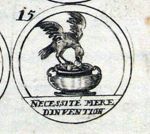
Necessité, mêre d'invention: Ripa, Essay d'un Dictionaire (Iconologia), (Amsterdam, 1700), emblem 510 uses the imagery of the raven's fable
Ingenii largitor venter: Rollenhagen, Nucleus emblematum (Arnhem, 1618), Cent. I, emblem 52 uses the imagery of the raven's fable
Ingenio experiar: Camerarius, Symbolorum et Emblematum Centuria(e) (Nürnberg, 1590, 1595, 1596, 1604), emblem 279 uses the imagery of the raven's fable
Ingenio experiar: De la Feuille, Devises et emblemes anciennes et modernes (Augsburg, 1697), emblem 313 uses the imagery of the raven's fable
Iconclass: 21D water (one of the four elements) 25D12 kinds of non-precious stone 25F32(CROW)(+47) song-birds: crow (+ animal psychology) 25F32(CROW)(+5241) song-birds: crow (+ animal(s) throwing something) 41A771 container of metal: bucket, can, canister, drum, tin, etc. 41C129 thirst 51C2 Necessity, Inevitability; 'Necessità' (Ripa) 51MM12 Lingering 52A43 Ingenuity; 'Ingegno' (Ripa)
Loci Communes: Tarditatis et cunctationis (Slowness and delay, Lenteur et retard)
III ii 4 Convenerat Attabas et Numenius Attabas and Numenias have met
Συνῆλθον ἀτταβάς τε καὶ νουμήνιος. id est: Coniunctus est suo Attabas Numenio. Quidam legunt Attagas. Dici solitum quoties improbus aggregatur cum improbo. Diogenianus tradit hos insigne par furum fuisse. Memi nit huius Diogenes Laertius in vita Timovis Nicei. Nam hoc proverbio notabat eos, qui putabant intellectu attestante sensibus esse credendum, cum ipse nec rationi nec sensibus assentiendum putaret. Similimum illi, quod alibi dictum est: Cum Bitho Bacchius.
[greek], Attabas has joined forces with Numenius (some read Attagas). used customarily when two rascals join forces; Diogenianus tells us that they were a famous pair of thieves. This is mentioned by Diogenes Laertius in his life of Timon of Nicea. For he used this proverb to express his opinion of those who thought that the senses could be trusted when supported by the judgment of the intellect, though he himself did not think one could credit either reason or senses. Very like one of which I have spoken elsewhere, Bithus and Bacchius.
Facsimile:
Iconclass: 44G54 thief 54E31 Agreement, Unity; 'Concordia', 'Concordia insuperabile', 'Concordia militare', 'Concordia di Pace', 'Unione civile' (Ripa) 98B(ATTABAS) male persons from classical history (ATTABAS) 98B(NUMENIUS) male persons from classical history (NUMENIUS)
Loci Communes: Similitudinis et congruentiae (Similarity and congruence, Similitude et convenance)
III ii 5 Colossi magnitudine The size of a Colossus
Κολοσσαῖος τὸ μέγεθος. id est, Colossea magnitudine. Proverbialis apud Lucianum hyperbole, in homines praegrandi corporis mole, A statuis ingentibus, quas Colossos appellant. Inter has in primis celebratur solis Colossus apud Rhodios, septuaginta cubitis altus, hoc est iuxta Festum Pompeium, pedes centum & quinque, cuius pollicem vix pauci potuerunt amplecti. Referentur & alii apud Plinium prodigiosae magnitudinis. Nam iis impendio delectabantur olim imperatores Romani, quibus, ut videtur, magis erat cordi maximos esse, quam optimos. Legimus & Aetnaeos dici praegrandes. De magnis ac vehementer molestis qui Athones dicti sunt, alibi meminimus, quemadmodum & Hamaxiaeis.
[greek], Of colossal size. A proverbial exaggeration in Lucian for men of exceptional physique, taken from the vast statues to which the name colossus is applied. Of these the most famous is the statue of the Sun, called the Colossus at Rhodes, which was 70 cubits high (according to Festus Pompeius, 105 feet), the toe of which few people could barely get their arms round. Others too of prodigious size are recorded by Pliny; for the Roman emperors were passionately fond of them, preferring (it seems) size to other forms of excellence. We also read that very large figures were called after Mount Etna. Of those that were large and very troublesome, and were called after Mount Athos, I have treated elsewhere, and also of those Big enough to fill a wagon.
Facsimile:
Iconclass: 25M6 Colossus of Rhodes (Wonder of the World) 31A421 giants, colossi 51G1 Largeness, Magnitude 61D(ATHOS) geographical names of countries, regions, mountains, rivers, etc. (ATHOS) (ATHOS) 61D(ETNA) geographical names of countries, regions, mountains, rivers, etc. (ETNA) (ETNA)
Loci Communes: Excellentia, inaequalitas (Excellence, inequality, Excellence, inégalité)
III ii 6 Mali commatis Of a bad stamp
Πονηροῦ κόμματος, id est, mali commatis, dicebatur improbus, contemptus & reiiculus quispiam. Sumpta metaphora a reprobatis nomismatis. Aristophanes in Pluto: Εοικε δ᾽ εἶναι τοῦ πονηροῦ κόμματος. id est: Videtur esse non probati commatis. In sycophantam dictum, iam ad paupertatem famemque redactum, posteaquam Plutus oculos receperat. Interpres ostendit, comma genus esse vilissimi nomismatis. Sonat autem perinde quasi dicas, malae monetae. Rursum in eadem fabula: Γνώσεται Οτ᾽ ἐστ᾽ ἐκείνου τοῦ πονηροῦ κόμματος. id est, Noverit Illius esse hunc improbati commatis. Apud eundem in Ranis, τῷ κακίστῳν κόμματι. Idem in Contionatricibus, Καὶ κακὸν γὲ μοι τὸ κόμμ᾽ ἐγένετ᾽ εκεῖνο. id est, At istud hercule comma mihi fuit malum. Reddit causam, quod cum abisset in forum empturus fatinas, iamque peram supposuisset, praeco clamavit, ne quis reciperet aereos nummos, sed argento venderentur omnia. Ad hanc formam pertment etiam illae, ceu proverbiales metaphorae, κίβδηλος ἄνθρωπος. et κιβδηλεύειν, pro eo quod est, imposturam facere, & κιβδηλία, pro impostura, quae voces reperiuntur cum alias frequentius, tum Platonis libro De legibus undecimo, si quis forte certius desiderabit testimonium. Proinde qui morib. sunt improbatis eos κιβδήλους vocant, quasi dicas adulterinae monerae. Appositius autem ad oris figuram, morum & indolis indicem referetur. Siquidem quemadmodum nummus inspecta imagine dignoscitur ilico, probatus ne sit an adulterinus, itidem ex ipsa statim hominis forma deprehenditur ingenium, vel Euripide teste, cuius haec sunt in Ione: Γνοίη δ᾽ ἂν ὡς τὰ πολλὰ γ᾽ ἀνθρώπων περὶ, Τὸ σχῆμ᾽ ἰδών τις εἰ πέφυκεν εὐγένης. id est: Plerumque spectes ipsa, simul aspexeris Hominem arguit, generosus is sit, an secus.
[greek], Of a bad stamp, was used of a rascal, or of anyone contemptible and absurd. The image derives from rejected coins. Aristophanes in the Plutus: 'And he looks to be of the bad stamp.' Said of an informer, now reduced to beggary and starvation since Plutus has recovered his sight. The scholiast shows that comma, stamp, was used for a coin of very small value. It is the same as if you said 'counterfeit coin.' Later in the play: 'He will discover that he is one of that bad stamp.' The same poet in the Frogs speaks of 'the worst stamp,' and again in the Ecclesiazusae And very bad that stamp turned out for me.' The reason he gives is that, when he had gone down to the market to buy flour and had already opened his sack to take it, the crier gave notice that no one was to accept copper coin but everything must be paid for in silver. To the same formula belong those metaphors, which are virtually proverbial, 'a counterfeit man' and the verb 'to counterfeit' for 'to impose on someone' and the noun 'A counterfeit,' for 'trick' words which are found fairly frequently elsewhere, and in Plato's Laws, book 11, if anyone needs more definite evidence. And so those who are of known bad character are called 'counterfeit,' as if one spoke of forged coin. But this will be more apt if referred to the look in a man's face as a guide to his nature and disposition. For just as by looking at the image on a coin one can tell at once whether it is current or forged, so from a man's facial expression one can gauge his disposition at once, as Euripides among others bear witness, when he says in the Ion: 'One can usually tell, where men are concerned, by looking at their faces whether or no they have a noble nature.'
Facsimile:
Iconclass: 44G551 counterfeit, forgery 46A152 'fahrende Leute', vagrants 46B311:54BB6 coin❧Worthlessness 47D8(COIN STAMP):51EE2 tools, aids, implements ~ crafts and industries: coin stamp❧Inferiority
Loci Communes: Improbi (The dishonest, Les malhonnêtes)
III ii 7 Benevolus trucidator Well-wishing murderer
Εὔνους σφάκτης, id est, Benevolus occisor. Convenit in hos, qui cum summam adferant perniciem, tamen benevolentiae speciem admiscent. Tractum aiunt ab Oreste, qui trucidata matre Clytemnestra, parentale convivium velut in illius honorem exhibuit. Quidam & ad Antrgonum Regem referunt, qui posteaquam Semelen e medio sustulisset, ossa tamen illius summo cum honore curavit ad matrem deportanda. Sunt quibus magis placet, ut adagium ad Ptolwmaeum Philopatoris filium referatur: is matrem Berenicem in palatio ipsius vinculis constrictam, Sosibio tradidit adservandam, ubi illa non ferens eam filii contumeliam, sumpto veneno interiit. At ille perturbatus insomniis, monumentum in medio urbis exstruxit, quod nunc sepulcrum appellatur. In hoc una cum matre maiores omneis suos composuit, et inter hos Alexandrum Magnum. Nec hoc contentus officio vir pius, templum eidem constituit in Aegialis, cui nomen inditum, Berenices servatricis. Haec ferme Zenodotus. Confine est illud, quod alibi recensuimus. Intempestiva benevolentia nihil a simulata differt. Ita Flaccus: Nil moror officium, quod me gravat. Nec parum scite dixit Ennius apud Ciceronem libro Officiorum ii. Benefacta male locata, malefacta arbitror.
[greek], The killer meant well, suits those who bring utter disaster, and yet mingle with that a show of good intentions. Taken, they say, from Orestes, who killed his mother Clytemnestra and then gave a funeral banquet as though in her honour. Some also refer it to king Antigonus who, after disposing of Semele, arranged to have her bones delivered with all ceremony to her mother. Some prefer to trace the adage to Ptolemy the son of Philopator; he put his mother Berenice in chains in his own palace, and then handed her over for safe keeping to Sosibius, where, being unable to endure such insulting treatment from her son, she killed herself by taking poison. Ptolemy, much disturbed by dreams, built her a tomb in the middle of the city, which is now called the Monument, and laid all his ancestors to rest there with his mother, and Alexander the Great among them. Nor did this act of filial piety content him, but he set up a shrine for her at Aegialae called the temple of Berenice the Saviour. Such is more or less the account in Zenodotus. Not far from one I have recorded elsewhere: Good will untimely differs not from hate. So Horace: 'Such aggravating favours I decline.' And there is much point in that line of Ennius cited by Cicero in the second book of his De officiis: 'Kindness ill-placed unkindness I would call.'
Facsimile: 
Iconclass: 44G511 murderer 57AA611 Dissimulation, Hypocrisy; 'Hippocresia', 'Simulatione' (Ripa) 95A(ORESTES)312 Orestes kills his mother Clytaemnestra, and Aegisthus
Loci Communes: Simulatio, dissimulatio (Pretense, dissimulation, Simulation, dissimulation)
III ii 8 Corytheo deformior As ugly as Corytheus
Κορυθέος εἰδεχθέστερος, id est, Corytheo deformior. Aiunt Corytheum quempiam fuisse hominem insignite stultum, ac vaecordem, ad hoc forma infelicissima foedissimaque, cui liberi item fuerint omnes patrem referentes: unde vulgaris dictus est iocus in hominem bardum, ac perinde deformem. Refertur adagium a Zenodoto.
[greek], As ugly as Corytheus. They say that there was a man called Corytheus who was exceptionally stupid and dull and, in addition, of a most unfortunate and revolting appearance, and his children too all took after their father. Hence this became a common jibe against any blockhead who was equally hideous. The adage is recorded by Zenodotus.
Facsimile:
Iconclass: 31A41 disabilities, deformations 51DD4 Ugliness 52AA1 Stupidity, Poverty of Intellect; 'Stupidità overo Stolidità' (Ripa) 98B(CORYTHEUS) male persons from classical history (CORYTHEUS)
Loci Communes: Forma, deformitas (Beauty, deformity, Beauté, difformité)
III ii 9 Contra torrentem niti To strive against the stream
Contra torrentem niti dicuntur, qui frustra certant cum iis, quos vincere non queant. Sumptum a natantibus, qui solent secundo natare flumine, maxime si torrens fuerit. Quod si contra nitantur, nihil promoverint. Usurpat hoc adagium Aurelius Augustinus in epistola quadam ad divum Hieronymum. Et laudatur a Iuvenale Crispi prudentia, qui Domitiani violentiae concesserit, et ingenio alioqui insanabili obsecundarit. Ille igitur numquam direxit brachia contra Torrentem. Item Ovidius: Stultus ab obliquo qui cum discedere possit, Pugnat in adversas ire natater aquas. Gregorius theologus ad Eudoxium rhetorem: Τὸ δὲ μὴ βιάζεσθαι ῥοῦν ποταμοῦ καὶ ἡ παροιμΐα παιδεύει, id est, non esse cogendum fluminis impetum, docet etiam proverbium.
People are said to strive against the stream who do battle in vain against those they cannot defeat. Taken from swimmers, who prefer to swim downstream, especially if it is a torrent; and if they strive against it, they make no progress. Augustine uses this adage in one of his letters to St Jerome. And Juvenal praises Crispus' prudence for giving way to the violence of Domitian and falling in with the vagaries of a character which was in any case past cure: 'Therefore he never plied his strokes against the torrent.' Ovid too: 'Foolish the swimmer who could slanting cross, / But strives to brave the current full head on.' Gregory the Theologian, writing to Eudoxius the teacher of rhetoric: 'But that one should not force one's way against the stream in a river, one learns even from a proverb.'
Facsimile:

Ne contra fluminis ictum: Printer's device 0408
Iconclass: 31A2773 swimming (movement in water) 51L42:25H2314 Motion Towards, Attractive Force, Attraction, Pull❧currents 51CC19 No Result, Lack of Result, Inefficacy, Futility
Collectanea (1500): 503
Loci Communes: Inanis opera (Vain effort, Effort vain)
III ii 10 Usque ad aras amicus A friend as far as the altar
Μέχρι τοῦ βωμοῦ φίλος εἰμὶ, id est, Usque ad aram sum amicus. Tametsi non est huius instituti quaelibet apophthegmata colligere, tamen hoc ita commode dictum, & specie usque adeo proverbiali, praeterea sic a magnis celebratum auctoribus, ut merito videatur in hunc ordinem cooptandum. Responsum est autem a Pericle, quem cum amicus quispiam rogaret, ut in causa quadam sua gratia falsum deieraret: δεῖ μὲ ἔφη συμπράττειν τοῖς φίλοις, ἀλλα μέχρι βωμῶν. id est, Oportet me commodare amicis, sed usque ad aras, ita refert Gellius. Commodius refert Plutarchus in libello, περὶ δυσωπίας, μέχρι τοῦ βωμοῦ φίλος εἰμὶ, id est, Usque ad aram sum amicus. Admonet proverbium, nonnumquam, quo consulamus amicorum commodis, eorumque voluntati morem geramus, fas videri paululum a recto deflectere, verum eatenus, ne propter hominem amicum numinis reverentiam violemus. Olim iurantes aram manu contingebant. Porro quatenus et quousque sit ab honesto deflectendum amici causa, copiose, docteque disputat Aulus Gellius lib. noctium Atticarum primo, capite tertio.
[greek], I'm your friend as far as the altar. Although it is not my present purpose to collect apophthegms of any and every kind, yet this is so aptly put and so much like a proverb in appearance, and is moreover used so freely in eminent authors, that it deservedly seems to be a candidate for a place in my list. It is the reply made by Pericles when asked by one of his friends to support him in a lawsuit by committing perjury. 'If s my duty' he said 'to oblige my friends, but only as far as the altar.' Such is the account in Gellius. More aptly recorded by Plutarch in his essay 'On False Shame': 'I'm your friend as far as the altar.' The message of the proverb is that sometimes, if we wish to consult our friends' advantage and to comply with their wishes, it may seem right to diverge a little from the straight path, but only so far as will not involve us in trespassing on our respect for the Deity to oblige a human friend. In old days men used to lay a hand on the altar when they swore an oath. In any case, how far one should go in diverging from what is right for a friend's sake, and where one should stop, is fully and learnedly discussed by Aulus Gellius in his Attic Nights, book one chapter three.
Facsimile:
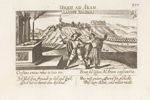
Usque ad Aram: Meisner, Politica Politica (Nürnberg, 1700), emblem 477
Iconclass: 12B62 altar ~ non-Christian religions 51EE11:56F231 Restriction, Limitation❧Fidelity in Friendship; 'Confermatione dell'Amicitia', 'Fede nell'Amicitia' (Ripa) 53BB1:52AA6 Rejection❧Falsehood 54E42 Protection; 'Custodia', 'Difesa contra nimici, malefici & venefici', 'Difesa contra pericoli', 'Riparo da i tradimenti' (Ripa)
Collectanea (1500): 807
Loci Communes: Amicitia (Friendship, Amitié)
III ii 11 Codali choenix Codalus' measure
Κοδὰλου χοίνιξ, id est, Codali choenix, sive demensum. De magnis mensuris dicebatur, autore Suida. Neque praeterea quidquam super hac re mihi repertum est adhuc apud autores. Coniectare licet, ortum a servo quopiam edaci, cui choenix fuerit altius capax, & hac arte fraudarit herum. In collectaneis quae titulo Hesychii circum feruntur, reperimus Condalum, piscem, aut eundem, aut certe adfinem Cestreo, quem Gaza vertit mugilem. Sed idem meminit alibi huius proverbii kwda/lou xoi/nic, subindicans fuisse quempiam aedilem, qui maioribus mensuris solitus sit uti.
[greek], The measure (or ration) of Codalus, was used of large measures, as we learn from Suidas; and beyond that I have so far discovered nothing on this subject in the authorities. One may guess that it arose from some greedy slave, whose measure for his ration was deeper than the normal, and by this trick he cheated his master. In the collection which circulates under the name of Hesychius, I find a fish called condalus, either identical with or at least close to the cestreus, which Gaza renders as the mullet. But he also mentions our proverb Codalus' measure elsewhere, suggesting that there was some market-clerk who habitually used larger measures.
Facsimile:
Iconclass: 25F62(CODALUS) bony fishes (CODALUS) 55CC11 Greed, Covetousness, Cupidity; 'Cupidità' (Ripa) 98B(CODALUS) male persons from classical history (CODALUS)
Loci Communes: Liberalitas (Generosity, Générosité)
III ii 12 Concha dignus Worth a shell
Κόγχης ἄξιος, id est Concha dignus, Rem nullius pretii concham dicunt Graeci, quem admodum Latini nauci aut floccum. Unde quod contemptissimum, nulliusque rei significabant, id κόγχης ἄξιον dicebant.
[greek], Worth a shell. A thing of no value was called in Greek a seashell, as Latin uses naucum or floccus. Hence that something was utterly negligible and worthless they conveyed by calling it Worth a shell.
Facsimile: 
Iconclass: 25F(+36) animals (+ shell, snail-shell etc.) 54BB6 Worthlessness
Loci Communes: Contemptus et vilitatis (Contempt and worthlessness, Mépris et bassesse)
III ii 13 Conto navigare To navigate with a pole
Κοντῳ πλεῖν, id est, Conto navigare, dicebantur, qui sic rebus uterentur, quemadmodum uti conveniebat, aut qui vitae genus suo accommodatum ingenio sequerentur. Neque enim contus ad ullum alium usum accommodatus, quàm ad navigationem. Itidem non ad quamvis vitam quivis idoneus est. Utaris licebit, si quem admonere voles, ut quaque re utatur ad id in quod inventa sit, ut, Quorsum servas nummos tuos, non in hoc natos ut spectentur, sed quo vitae subsidio sint: conto navigandum est. Refertur à Suida.
[greek], People were said To navigate with a pole, who used things in a way that suited them or followed a way of life that suited their own temperament; for a punt-pole can be used for no other purpose except to propel a boat. At the same time any given way of life does not suit everybody. It will be possible to use this if you ever wish to advise somebody to turn everything to the end for which it was invented; for example, 'Why sit on your money, which was not meant merely to be looked at, but to help you to live? Use your pole for navigation.' Recorded by Suidas.
Facsimile:
Iconclass: 46C2325 poling, punting 46C28 navigation and manoeuvering ~ ship 54B4 Efficiency
Loci Communes: Similitudinis et congruentiae (Similarity and congruence, Similitude et convenance)
III ii 14 Cydi poenam debet He owes a penalty for abuse
Κύδου δίκην ὀφείλει, id est, Cydi poenam debet. κῦδος prima producta, gloriam significat, eadem correpta, τὴν λοιδορίαν καὶ κὰκολογίαν, id est, maledictum & convicium. Unde et verbum deduxere κυδάζειν, pro eo quod est convitiari. Proinde cum quis ob rem frivolam veluti verbum aliquod temere dictum deferretur vexareturque, eum proverbio dicebant, κύδου δίκην ἐκτετικέναι, καὶ κύδου δίκην ὀφείλειν, hoc est, convitii poenam dependisse, & maledicti poenam debere. Nam antiquitus mulcta dicebatur iis, qui petulantius in quempiam aliquid dixissent.
[greek], He owes a penalty for abuse. Kydos with a long first syllable means 'glory'; with a short syllable it is cursing and jeering, whence they also derived a verb kydazein, to revile. Consequently, when someone was reported to the authorities and complained of for a trivial reason, perhaps some rash remark, they used a proverbial expression, 'He has paid the penalty for bad language' and 'He owes a penalty for cursing'; for in Antiquity a fine was levied on those who had used offensive language of another man.
III ii 15 Cnips in loco A flea in its place
Ο κνὶψ ἐν χώρᾳ, id est, Cnips in regione. Dictum in eos, qui subinde sedem mutarent et aliunde aliò demigrarent. Cui vitio sese obnoxium fuisse confitetur Horatius. Est au-[] tem, σκνὶψ, sive κνὶψ (nam utrumque reperio) vermiculus innascens materiis. Is eroso ligno, semper locum mutare nititur. Quidam efferunt proverbium hoc modo, κνὶψ ἐκ χώρας. id est, Cnips è regione. ut subaudias demigrat. Plinius lib. decimosexto, cap. quadragesimoprimo, inter pestes materiarum teredinem commemorat, vermem gravissimo ad portionem capite, sic appellatum, quod dentibus erodat, sed proprie vocari teredinem, quae in mari materiam infestet. Addit huius generis Cerasten vocari, qui simul atque tantum eroserit, ut circumagat sese, generat alium. Haec an huic proverbio congruant dubito, nam Graeci tradunt κνίπα esse animalculum volucre & ξυλοφάγον, non dissimile culici. Id si verum est, non video qui consistat, quod ab Aristotele proditum est, avem ξυλοκόπτην, quem Latini, ni fallor, picum Martium appellant, ob id rostro fodere arbores, ut κνίπας in ligno latentes evocet. Suidas ait à κνιπὸς, qui est genitivus casus huius nominativi κνὶψ, fingi nominativum κνιπὸς, eamque vocem significare, parcum, tenuique victu viventem, nimirum ad cnipis exemplum, qui lignorum arrosu pascitur, cibo non admodum lauto. Proinde consentaneum videtur, adagium dici posse in sordidos, duro, parcoque victu utentes.
'[greek], The flea in its place, used of those who suddenly changed their position and moved from one place to another, a fault to which Horace confesses himself subject. The sknips or knips (for I find both forms) is a grub which originates in timber, and when it has gnawed through the wood it always tries to move to a new place. Some express the proverb in the form A flea out of its place, so that you must understand 'migrates.' Pliny, book 16 chapter 41, names among pests in timber the teredo, a worm with a head very large in proportion, so called because it gnaws the wood with its teeth; but the name properly belongs, he says, to the worm that infects timber in the sea. He adds that there is one of this kind called the cerastes, which as soon as it has 'gnawed enough timber to have room to turn round, engenders another.' Whether these facts have any relevance to this proverb I rather doubt; for there is a Greek tradition that knips is a small winged creature that eats wood, not unlike a gnat. If this is true, I do not see how it is consistent with Aristotle's statement that a bird called xylokoptes, the woodpecker (called in Latin, if I am not mistaken, picus Martins) digs into trees with its beak in order to bring up the knips lurking in the wood. Suidas says that knipos, the genitive case of the word knips, is the origin of a word knipos in the nominative, and that this means sparing, living on a very scanty diet, evidently following the example of the knips, which exists on gnawing wood which is a by no means luxurious food. Hence it seems natural that the adage can be used of mean and hardy people who live very frugally.
Facsimile:
Iconclass: 25F711(FLEA) insects: flea 25F711(CERASTES) insects (CERASTES) 25FF73(TEREDO) worms (TEREDO) - FF - fabulous animals 53AA21 Inconstancy; 'Incostanza', 'Instabilità', 'Instabilità overo Incostanza' (Ripa)
Loci Communes: Inconstantiae, perfidiae, versutiae (Inconstancy, treachery, cunning, Inconstance, perfidie, ruse)
III ii 16 Cyclobori vox A voice like the Cycloborus
Κυκλοβόρου φωνὴ. id est, Cyclobori vox. De clamosis, & vehementer obstreperis dicebatur, aut quibus vox esset vitiosa raucaque. Cycloborus fluvius quidam Atticae, non perpetuus sed torrens, ingenti strepitu defluens, unde ductum proverbium. Aristophanes in Equitibus: Αρπαξ,κεκράκτης, κυκλοβόρου φωνὴν ἔχων. id est, Clamosus, avidus, voce Cycloberi obstrepens.
[greek], A voice like the Cycloborus, was applied to excessively noisy and obstreperous people, or those with an ugly harsh voice. The Cycloborus was a river in Attica, not a continuous stream but a seasonal torrent, which made a great roaring noise, and this was the source of the proverb. Aristophanes in the Knights: 'Rapacious, roaring like Cycloborus.'
Facsimile:
Iconclass: 22D1 loud sound, noise 25H213:61D(CYCLOBORUS) river❧geographical names of countries, regions, mountains, rivers, etc. (CYCLOBORUS) (CYCLOBORUS) 31B62350 voice 31B62351 crying, shouting
Loci Communes: Clamosus (Noisy, clamorous, Bruyant)
III ii 17 Thasium infundis You pour in Thasian
Θασιον ἐνέχεις, id est, Thasium miscuisti: Dici solitum videtur, ubi quis vinum non aqua, sed alio quopiam efficaciore vino dilueret. Nam Thasia vina laudatissima quondam fuisse, testatur & Apuleius apologia prima, Olitori, inquiens, et cauponi merito concessum est, olus & vinum ex nobilitate soli commendare, vinum Thasium, olus Phliasium. Et Plinius capi te vii. Naturalis historiae libro decimoquarto, inter transmarina vina Thasium Chiumque in summa gloria fuisse scribit. Est autem Thasus, insula iuxta Thraciam: unde proverbium, Thasus bonorum. In ea insula narrant fuisse Staphylum, quem deperierit Bacchus. Sumptum est ex Aristophanis Pluto, quo loco versus hic est, Εἰ θάσιον ἐνέχεις, εἰκότως γε νὴ δία. id est, Merito prefecto, si Thasion infuderas. Anus quaedam queritur adolescentem amatorem pridem ita sibi solitum adulari, ut dice ret illam suavissime olere. Ad id per iocum respondens Chremylus, negat esse mirum, si ita visum fuit adolescenti, cum illi vinum Thasium odoratissimum proponere sit solita. Interpres addit ἐνέχεις dictum pro ἐκίρνας, id est, infundebas, pro miscebas.
[greek], You mixed in Thasian. Apparently a customary expression when someone diluted wine, not with water but with some heavier wine. For Thasian wine in the old days had a high reputation, as Apuleius testifies in his first Apology, 'The greengrocer' he says 'and the wine-merchant are rightly allowed to praise green vegetables and wine for the nobility of their native soil, Thasos for wine and Phlius for greens.' And Pliny in the Natural History, book 14 chapter 7, writes that of imported wines the most famous were Thasian and Chian. Thasus, by the way, is an island off the coast of Thrace, and hence comes the proverb A Thasos of good things. They say this island was the home of Staphylus, with whom Bacchus was deeply in love. The phrase comes from the Plutus of Aristophanes, in which is the following line: 'If you poured in Thasian, you did right, in heaven's name.' An old woman complains of a youthful suitor who used to flatter her, to the extent of saying that she had a very sweet smell. To this Chremylus makes a humorous reply; no wonder, he says, the young man thought so, if she used to ply him with Thasian wine, which smells delightful. The scholiast adds that enecheis, poured in, is used for ekirnas, you mixed.
Facsimile: 
Iconclass: 41C263 mixing, combining (preparing food) 41C7113(THASIAN) kinds of wine (THASIAN) 54F13 Progress, Improvement, Recovery
Loci Communes: Lautitiae (Sumptuousness, luxuries, Somptuosités)
III ii 18 Κλειτοριάζειν To touch the clitoris
Κλειτοριάζειν vulgato convitio dicebantur ii, qui puerorum amoribus oblectarentur, aut, ut ait Diogenianus, mulieres immodice libidinosae. Unde natum sit proverbium, non satis liquet, nisi quod Hesychius docet κλειτορίς Graecis sonare naturae muliebris vicinam partem, unde receptum ut κλειτοριάζειν appellarent libidinosam contrectationem, attestante & Suida.
[greek], was a current word of abuse for the behaviour of those who were sexually attracted by boys or, as Diogenianus says, of excessively licentious women. The source of the proverb is not really clear, except for the statement in Hesychius that cleitoris in Greek is a name for a region adjacent to the female pudenda, so that it was the practice to use this verb for licentious fondling; and Suidas concurs.
Facsimile:
Iconclass: 31A22362(CLITORIS) 31A2549(+918) gripping someone by other parts of the body (+ caressing, courting, making love) 33C8110 'Libidine', 'Voluttà' (Ripa) 57AA51 Licentiousness, Lasciviousness; 'Lascivia', 'Licenza' (Ripa)
Loci Communes: Intemperantia, libido (Intemperance, lust, Intempérance, désir)
III ii 19 Claudiana tonitrua Claudian thunder
Festus Pompeius innuere videtur, Claudiana tonitrua in vulgi sermonem abiisse, scribens ideo vocata Claudiana tonitrua, quod Claudius Pulcher instituerit, ut ludis post scenam factis, lapidum coniectus ita fieret, ut veri tonitrus similitudinem imitaretur. Nam antea leves admodum & parvos sonitus fieri solitos, cum clavi & lapides in labrum aeneum coniicerentur. Quadrabit adagium, si modo videbitur in adagionum gregem recipiendum, in homines immodice clamosos, & odiose obstreperos. Simillimum illi, quod alibi retulimus, δωδωναῖον χαλκεῖον, id est, Dodonaeum aes.
Festus Pompeius seems to suggest that Claudian thunder had passed into common usage, when he writes that it got its name from 'the practice introduced by Claudius Pulcher at games played behind the stage of hurling stones in such a way as to produce a sound like real thunder. For it had been the custom previously to make very weak and feeble sounds by throwing keys and stones into a bronze pan.' The adage (provided we think it should be admitted to the family of adages) will suit men who make an excessive clamour and are insufferably noisy. Much resembles one I have recorded elsewhere, Dodonean bronze.
Facsimile:
Iconclass: 22D1 loud sound, noise 26E1(+0) thunder (+ variant) 98B(CLODIUS PULCHER, P.)5 non-aggressive activities of Publius Clodius (Claudius) Pulcher
Collectanea (1500): 544
Loci Communes: Clamosus (Noisy, clamorous, Bruyant)
III ii 20 Claudi more tenere pilam To grasp a pillar like a lame man
M. Tullius adversus Pisonem sctibit in hunc modum: Graecus primum distinguere illa atque dividere, quemadmodum dicerentur, iste claudus, quomodo aiunt, pilam retinere, quod acceperat testificari. Hactenus Cicero. Proverbium congruit in eos, qui quicquid a praeceptoribus acceperint, sive id doctum sit, sive indoctum, nullo delectu, nulloque iudicio tenere solent, ac sequi. Sumpta metaphora à claudo diffidente suis pedibus, & ob id pertinaciter columnis innitente. Nisi si cui magis referendum videtur ad lusum pilae, quam claudus ita demum accipit, si commode illi mittas. Alioqui pedibus tardus non potest utcunque missam accipere. Seneca lib. De beneficiis vii. Quid si me remittere pilam manco iubeas? hoc est, dare beneficium illi, qui non sit idoneus ad accipiendum. Plautus in Aulularia: Tum autem interdius, quasi claudus sutor domi sedet totos dies. Generatim conveniet in omneis qui de alieno pendent iudicio, alienaeque innituntur autoritati, quemadmodum isti, quibus satis est dixisse: αὐτὸς ἔφα.
Cicero in his speech Against Piso writes in this fashion: 'The Greek philosopher began by making distinctions, and analysing how the words were used; but our friend, like the lame man (as they say) grasping the pillar, swore his allegiance to what he had received from tradition.' So far Cicero. The proverb is suitable for those who habitually cling to what they have learned from their teachers and follow that, right or wrong, without choice or selection. The metaphor is taken from the lame man who, being unable to trust his own feet, clings firmly to the nearest column. Unless anyone would rather refer it to the game of ball, for a lame man will never catch the ball unless you send it just right; otherwise, if it is sent anyhow, he is too slow on his feet to be able to catch it. Seneca, in book seven of the De beneficiis, 'And suppose you instruct me to throw the ball to a cripple,' meaning, to confer a benefit on someone who is unfit to receive it. Plautus in the Aulularia: 'And then by day he sits at home like a crippled shoemaker the whole day long.' In general, this will be appropriate for all those who depend on another man's judgment and lean on another man's authority, like the people who are satisfied once they have uttered the words The Master said.
Facsimile:
Iconclass: 31A232 leaning figure 31A415 crippled 48C161 column, pillar ~ architecture 51EE11 Restriction, Limitation
Collectanea (1500): 288
Loci Communes: Ignavia et inscitia (Cowardice and ignorance, Lâcheté et ignorance)
III ii 21 Loripedem rectus derideat Let the healthy man mock the cripple
Et sanè quam elegans est, & plurimum habet figurae proverbialis illud apud Iuvenalem, Loripedem rectus derideat, Aethiopem albus. Quo conveniet uti, quoties aliquis id aliis opprobrat mali, cui sit ipse obnoxius, aut aliena castigat vita, à quibus ipse non sit immunis, perinde quasi claudus claudo claudicationis vitium per contumeliam obiiciat. Oportet eum quam maximè vacare culpa, qui in alium paratus est dicere: & stultissimum est, in alium iacere, quod in ipsum possit retorqueri, Quis enim tulerit Gracchos de seditione querentes? Si fur displiceat Verri, si homicida Miloni? Celebratur illud Leonis Byzantii, cui cum maledicus quispiam opprobasset vitium oculorum, ipse gibbo deformatus: Humanum, inquit, convicium in me iecisti, cum ipse Nemesim in dorso portes.
There is a phrase in Juvenal which is both very epigrammatic in itself and a perfect example of proverbial structure: 'Let the healthy man mock the cripple and the white man mock the black.' This will be appropriate whenever a man accuses other people of some defect from which he suffers himself or tirades against faults in others from which he himself is not free; just as if, for instance, one lame man were to taunt another with this limp. He who is ready to speak against others ought to be completely free from faults himself, and it is the height of folly to throw stones at someone else which he can throw back at you. 'Who can stomach a Gracchus declaiming against rebellion, Verres preaching against theft and Milo against murder?' There is a well-known saying of Leo of Byzantium, when some abusive person had reviled him for the weakness of his eyes, being himself a hunchback: 'You abuse me' he said 'for something which can happen to any man, while you carry the wrath of god on your own back.'
III ii 22 Clisthenem video I spy Cleisthenes
Κλεισθένην ὁρῶ. id est, Clisthenem video. Clisthenes hic male audiit, et comicorum conviciis laceratus est, quod parum vir haberetur, seseque cultu indecoro veluti in mulierem transfiguraret, Sardanapalum illum Assyrium imitatus. Aristophanes, ἐν θεσμοφορϊαζούσαις, Ορᾷς σεαυτὸν; οὐ μὰ δὶ ἀλλα κλεισθένην. id est, Teipsum vides? non per Iovem, sed Clisthenem. Suidas refert, & ait convenire in eos, qui levi, derasaque sunt cute. Nam hic mos Clistheni, barba derasa semper esse, quo iuvenis etiamdum videretur. Effertur & ad hunc modum, κλεισθένους ἀκρατέστερος. id est, Clisthene intemperantior, de cinaedo & deliciis effoeminato, contrarium illi, ζήνωνος ἐγκρατέστερος. id est, Zenone temperanttior.
[greek], I spy Cleisthenes. This Cleisthenes had a bad reputation, and was attacked with savage abuse by the comic poets, for he was thought to lack virility, and wore improper clothes as though he wished to turn himself into a woman, following the example of the famous Assyrian king Sardanapalus. Aristophanes in the Thesmophoriazusae: 'Do you see yourself? - Indeed I don't; but I spy Cleisthenes.' Suidas records it, and says it suits those who have a smooth, carefully shaven skin; for Cleisthenes habitually shaved his chin that he might look like a young man. This is also expressed in the form [greek] , As intemperate as Cleisthenes, of catamites and persons of soft, effeminate nature, the opposite of As temperate as Zeno.
Facsimile:
Iconclass: 31A719 womanish man, molly-coddle, milksop 33C7 potency and impotency 41D282 man dressed as woman, travesty 98B(SARDANAPALUS)3 (story of) Sardanapalus - representations to which the NAME of a person from classical history may be attached 98B(CLEISTHENES) male persons from classical history (CLEISTHENES)
Loci Communes: Intemperantia, libido (Intemperance, lust, Intempérance, désir)
III ii 23 Cleocritus Cleocritus
Κλεόκριτος. id est, Cleocritus. Id nominis contumelia causa iaciebatur in cinaedos ac molles & parum viros. Nam & hunc veteris comoediae maledicta nobilitarunt. Dictus est autem effoeminatus cinaedus, hospes, obscuro foedoque genere, Cybeles filius, quod Rheae mysteria ab exectis eviratisque peragerentur. Ne forma quidem à moribus discrepabat. Nam facie velut avem referebat. Suidas nominatim proverbii loco refert, alioquin ipse non retulissem inter adagia.
[greek], Cleocritus, was a nickname levelled by way of abuse at catamites, luxurious and effeminate men in general. He was another man who owes his renown to the abuse of the Old Comedy; effeminate, catamite, foreigner they called him, of obscure and discreditable origin, and a child of Cybele, because the mysteries of Rhea were conducted by eunuchs and men who had abjured their sex. Nor did his appearance belie his character, for he had a face like some kind of bird. Suidas records this expressly as a proverb; otherwise I myself should not have listed it among adages.
Facsimile: 
Iconclass: 31A719 womanish man, molly-coddle, milksop 33C711 castrated person 98B(CLEOCRITUS) male persons from classical history (CLEOCRITUS)
Loci Communes: Intemperantia, libido (Intemperance, lust, Intempérance, désir)
III ii 24 Coturnissare To feed on quails
Κιχλίζειν, proverbio dicebantur, qui pinguibus coturnicibus, aut turdis vescerentur, aut qui riderent lascive, parumque decore. Proinde & κιχλισμὸν, risum mollem & impudicum appellant. Quadrabit igitur, vel in liguritores & cupediis addictos, vel in lascivius ludentes. Sturni nihil non imitantur, & turdus à Plinio recensetur inter aves, quae sermonem humanum imitantur. Nam autores vocem hanc varie transferunt.
[greek], was proverbially used of those who ate fatted quails or thrushes, or who had a lascivious and wanton laugh. So too the noun [greek] is used of an effeminate and shameless titter. This will therefore suit either greedy men who are devoted to delicate food, or those who enjoy lecherous pleasures. Starlings imitate everything, and the thrush is listed by Pliny among the birds which imitate the human voice; for the authorities translate this word in different ways.
Facsimile:
Iconclass: 25F38(QUAIL) walker and runner birds: quail 32A43 glutton 41C692(QUAILS) kinds of meat (QUAILS) 57AA51 Licentiousness, Lasciviousness; 'Lascivia', 'Licenza' (Ripa)
Loci Communes: Lautitiae (Sumptuousness, luxuries, Somptuosités)
III ii 25 Cilicium exitium A Cilician ending
Κιλίκιος ὄλεθρος, id est, Cilicium exitium. De crudeli & immani dicebatur. Cilices enim ob piraticam quam exercebant, & assiduas hostium depraedationes infames erant immanitatis & crudelitatis nomine. Quapropter & Attici vindictas acerbiores, κιλικίους appellabant. Meminit praeter alios Hesychius. Similis formae est quod apud Iureconsultos legimus Isauricum, pro crudeli immanique latrone.
[greek], A Cilician ending, was said of a cruel and savage end; for the Cilicians, on account of the piracy by which they lived, and their constant forays against their enemies, had a very bad name for savagery and cruelty. This is why the Athenians called especially cruel punishments 'Cilician.' Hesychius among others mentioned this. The phrase may be compared with the use of 'Isaurian' in the lawbooks for a cruel and savage robber.
Facsimile:
Iconclass: 31E235 violent death ~ maltreatment, torture 32B311(CILICIANS) indigenous European peoples (CILICIANS) 44G562 piracy 57AA91 Cruelty, Ferocity; 'Crudeltà', 'Ferocità' (Ripa) 61D(CILICIA) geographical names of countries, regions, mountains, rivers, etc. (CILICIA) (CILICIA)
Loci Communes: Crudelitas (Cruelty, Cruauté)
III ii 26 Centaurice Centaur-like
Κενταυρικῶς. id est, Centaurice fieri dicebatur, quod immaniter, ferociter, inciviliterve fieret, sumpta voce à Centaurorum moribus. Aristophanes in Ranis, Τίς τὴν θύραν ἐπάταξεν ὡς κενταυρικῶς; id est, Quis ostium pulsavit ita Centaurice? Etenim Centauri viribus & vi peragebant omnia, legum & iuris omnis ignari: Tametsi quidam existimant hoc apud Aristophanem dictum εἰρονικῶς, in Bacchum mollem alioqui et imbellem.
[greek], Centaur-like, was applied to any action that was done savagely, fiercely or rudely, the word being derived from the behaviour of Centaurs. Aristophanes in the Frogs: 'Who battered on the door so Centaur-like?' For the Centaurs did everything by force and violence, being altogether ignorant of law and justice; though some people think that in Aristophanes there is irony in its application to Bacchus, who is otherwise so effeminate and un warlike.
Facsimile:
Iconclass: 56B42 Coarseness, Rusticity 57AA91 Cruelty, Ferocity; 'Crudeltà', 'Ferocità' (Ripa) 92L71 centaurs (in general)
Loci Communes: Vis injustia (Unjust force, Force injuste)
III ii 27 Cilicii imperatores Cilician generals
Κιλίκιοι στρατηγοὶ, id est, Cilicii duces. Dicebantur homines hirsuti, & pilis obsiti. Unde et saga pilis contexta Cilicia vocantur. Autor Diogenianus. Simpliciter autem κιλίκιοι dicebantur robusti, sordidi & magni, unde & κιλικίζωεσθαι dicuntur, qui pravis sunt moribus: et κιλίκιοι λόγοι barbarica suffragia, quod illi sortibus in galeam missis soleant decernere. Memorantur κιλλικύριοι, qui quum essent servi, heris eiectis occuparunt regionem. κιλλικὼν ἀγαθὰ alias recensuimus.
[greek], Cilician generals, was applied to hairy men who were thickset with bristles, and hence cilicia was the word for cloaks of woven goats' hair. Diogenianus is the authority. The epithet Cilician by itself was given to those who were strong, dirty, and large; hence also 'to behave in Cilician fashion' of criminals and 'Cilician words' for a barbaric system of voting, because the Cilicians customarily take decisions by casting lots into a helmet. There is also record of the Cillicyrians who, though only slaves, banished their masters and seized the countryside. Of Bona Cillicon I have treated elsewhere.
Facsimile:
Iconclass: 31A421 giants, colossi 31A539 tousled hair 32B311(CILICIANS) indigenous European peoples (CILICIANS) 45D311 commander-in-chief, general, marshal 56B42 Coarseness, Rusticity 61D(CILICIA) geographical names of countries, regions, mountains, rivers, etc. (CILICIA) (CILICIA)
Loci Communes: Frugalitas (Frugality, Frugalité)
III ii 28 Civitates ludimus We play cities
Πόλεις παιζομεν, id est, Civitates ludimus. Lusus genus quoddam est, in quo calculis ludebatur olim, quos antiquitus πόλεις, id est, urbes vocabant. Neoterici χώρας, hoc est, regiones appellare coeperunt. Usurpavit adagium Cratinus in Fugitivis. Hic nimirum locus est, ni fallor, quem Iulius Pollux citat libro de rerum vocabulis nono, παν διονίδα πο λιν βασιλέος τῆς περὶ κόλακος, οἶσθ᾽ ἣν λέγομεν, καὶ πόλιν, ἥν παιζουσιν, id est, Pandioniam civitatem regis, supra modum adulatricis. Nosti quam dicimus, & canem & civitatem quam ludunt. Genus autem lusus describit his verbis: ἡ δὲ διὰ πολλῶν ψήφων παιδιὰ, πλίνθιόν ἐστι, χώρας ἐν γραμμαῖς ἔχον διακειμένας. καὶ τό μὲν πλίνθιον καλεῖτα πόλις, τῶν δὲ ψήφων ἑκάστη, κύων. διῃρημένων δὲ εἰς δύο τὸν ψήφων κατα τὰς χρόας, ἡ τέχνη τῆς παιδιᾶς ἐστι περίληψσι τὸν δύο ψήφων ὁμοχρόων, τὴν ἑτερόχρουν ἀναιρεῖν. id est, Qui vero complurium calculorum dicitur lusus, laterunculus est regiones in se continens, in lineis sitas. Et laterunculus quidem ipse civitas appellatur. Caeterum unusquisque calculus canis. Porrò cum calculi sint duobus distincti coloribus, lusus haec ars est, ut comprehensis duobus calculis unicoloribus, eum qui diversi coloris est, tollas ê medio. Allusit ad hoc proverbium Plato libro De Republica quarto, ἐκάστη γὰρ αὐτῶν πόλεις εἰσι πάμπολλαι, ἀλλ οὐ πόλῖς, τὸ τῶν παιζοντων. id est, Nam illarum unaquaeque plurimae sunt civitates, non civitas quemadmodum dicere solent ludentes. Refert Zenodotus, quanquam idem adagii sensum non indicat. Quare cuique quod vero proximum videatur, coniectandum relinquo. Mihi quadraturum videtur, quoties suum quisque commodum quacunque sectatur via, & aemulo, competitorique modis omnibus tendit insidias. Ab hoc lusu manasse videtur, qui nunc vulgo scacarius dicitur.
[greek], We play at cities. This is a sort of game, played in the old days with counters, which the Ancients called poleis, cities and the moderns are now calling chôrai, places. The adage is used by Cratinus in The Runaways. This must, if I am not mistaken, be the passage cited by Julius Pollux in book nine of his On the Names of Things: 'A Pandionian city of a king, which utters flattery beyond measure; you know the one of which we speak, both the dog and the city of which they make a game.' The sort of game it was he describes as follows: 'The game, which is played with many counters, consists of a board with places on it, situated on lines. The counters are divided by colour into two sets, and the skill of the game consists in catching a counter of one colour between two of the other, and so removing it from the board.' Plato alludes to this proverb in book four of the Republic: 'Each of them is a great many cities, and not one city, as people say when they are playing the game.' Recorded by Zenodotus, though he does not indicate the meaning of the adage, and I therefore leave everyone free to guess what he thinks most like the truth. It seems to me likely to fit whenever someone pursues his own advantage by all possible means and lays traps for his rivals and competitors in every way he can. This is a game often played in the courts of princes and among those in public office. This game looks like the source of what is now called chess.
Facsimile:
Iconclass: 43C521(+0):61K(CITIES) chess (+ variant)❧(CITIES) historical names (CITIES) 45H130 'Stratagemma militare' (Ripa)
Loci Communes: Proprii commodi studium (Pursuit of one's own advantage, Recherche de son propre intérêt)
III ii 29 Cissamis cous Cissamis of Cos
Κίσσαμις κῶος, id est Cissamis Cous. Hunc aiunt pecuariis gregibus supra modum divitem. Verum anguillam quotannis apparere solitam, quae pulcherrimam omnium pecudem raperet. Ea cum in somnis apparens hominem commonuisset, ut sepeliret sese, & ille negligeret, evenit ut tum ipse tum universum illius genus radicitus interiret. Haec fermè Zenodotus. Et hoc quoque proverbium, Delium aliquem natatorem requirit. Apparet affine, quod alibi dictum est, Aderit Temessaeus genius.
[greek], Cissamis of Cos. The story goes that he was very rich indeed in flocks and herds, but that a snake used to appear every year and seize the finest of all his beasts. The snake appeared to the man in a dream and told him to bury it; and when he neglected to do so, the result was that both he and all his family perished root and branch. So, more or less, Zenodotus. Here is another proverb that needs some sort of Delian diver. It is clearly related to one of which I have spoken elsewhere: The Temessaean spirit will be there.
Facsimile: 
Iconclass: 25F42(+512) snakes (+ animal(s) attacking) 31E233331 violent death by snake-bite 46A163 protection of wealth 98B(CISSAMIS OF COS) male persons from classical history (CISSAMIS OF COS)
Loci Communes: Ultio malefacti (Vengeance for a wrongdoing, Vengeance d'un méfait)
III ii 30 Carcini poemata Carcinus' verses
Καρκίνου ποιήματα. id est, Carcini poemata. Dicebantur ea quae viderentur obscurius & instar aenigmatis dicta. Carcinus poeta quispiam fuit, cuius & aliàs meminimus in hoc opere, in quem iocatur Aristophanes in comoedia, cui titulus, εἰρήνη Εὐδαιμονέστερος φανεῖς τῶν καρκίνου στροβίλων.. id est, Qui visus est felicior vel Carcini strobilis. Is finxit Orestem ab Ilio coactum, ut matricidium confiteretur, per aenigmata respondentem, autore Suida, qui testatur proverbium à Menandro usurpatum in Falso Hercule. Stratonicus apud Athenaeum lib. viii. cum audisset quendam imperite canentem, rogavit, cuius esset cantio: cum is respondisset Carcini, πολύ γε μᾶλλον ἔφη ἤ ἀνθρώπου. id est, Multo sanè magis, inquit, quàm hominis. Nam κάρκινος Graecis & cancrum animal significat. Itaque iocus ex ambiguo captatus est.
[greek], Carcinus' verses, were proverbial for anything expressed obscurely and in riddling fashion. Carcinus was a poet of sorts, mentioned elsewhere in this work, at whom Aristophanes aims a jest in his comedy called Peace: 'Who appeared luckier than the Strobili of Carcinus.' Carcinus invented a story that Orestes was compelled by Ilius to admit in a riddling answer that he had murdered his mother; so Suidas tells us, who says that the proverb was used by Menander in his False Hercules. Stratonicus in Athenaeus, book 8, hearing a very important singer, asks who wrote the song; and when the reply is 'Carcinus,' he retorts 'Much more like a Crab singing than a man.' For karkinos in Greek also means 'crab' and so he makes a joke out of the double meaning.
Facsimile:
Iconclass: 48C91:98B(CARCINUS) writer, poet, author❧male persons from classical history (CARCINUS) 52DD21 Confusion, Obscurity; 'Confusione' (Ripa)
Loci Communes: Mira nova (Wonderful new things, Choses nouvelles et étonnantes)
III ii 31 Carica victima A Carian victim
Καρικὸν θῦμα. id est, Caricum sacrum. De macilenta hostia, minimeque esculenta dicebatur. Hinc ductum, quod Caribus populis mos fuerit, canem immolare. Non inconcinne torquebitur ad cibum adpositum, insipidum, & quem nemo velit attingere. Solent sordidi quidam, data opera, cibos putres, & ingratos palato, suis apponere, partim quod minoris emantur, partim quo minus absumatur epularum in convivio. Hos eleganter quis dixerit, τὸ καρικὸν θῦμα παρατίθεσθαι, id est, Caricum sacrum apponere.
[greek], A Carian sacrifice, was used of a sacrificial animal which was thin and far from attractive eating. It derives from a custom among the tribes in Caria of sacrificing a dog. It will be diverted neatly enough to food placed on the table which is tasteless, and the sort of thing no one willingly touches. There are some mean-minded people whose habit it is deliberately to set food before their guests which is going bad and has a nasty taste, partly because it costs less and partly to reduce the amount eaten at table. One might aptly say that such people 'offered a Carian sacrifice.'
Facsimile:
Iconclass: 12B2121:34B11 animal sacrifice ~ non-Christian religions❧dog 32B2(CARIANS) historical peoples: Carians 55CC1 Saving, Frugality, Parsimony; 'Parsimonia' (Ripa)
Loci Communes: Sordes et parcimonia (Meanness and stinginess, Bassesse et avarice)
III ii 32 Callicyriis plures More than the Callicyrians
Καλλικυρίων πλείους, id est, Plures Callicyriis. De maxima quidem illa, sed sordida hominum turba dicebatur. Callicyrii dicebantur exulum servi, qui Syracusis agricolationem exercebant, autore Timaeo. Quoniam autem ingens erat id genus hominum multitudo, proverbio receptum est, ut si quos admodum numerosos significare vellent, καλλικυρίους appellarent. Aristoteles in Republica Syracusanorum, ostendit eam servorum turbam ex omnigenis populis in unum confluxisse. Erant autem eodem loco Callicyrii apud Syracusanos, quo apud Lacedaemonios captivi, apud Thessalos penestae, qui vocantur apud Cretenses Elarotae, apud Aegyptios Hebraei. Solitum est adagium hoc potissimum usurpari, si quando significabant metuendam multitudinem, quae numero freta, nonnunquam opprimit dominos. Nam & hi servi plures erant dominis, quamobrem etiam expulerunt illos. Haec fermè referuntur a Suida.
[greek], More than the Callicyrians, was used of that large but worthless body of ordinary men. Callicyrians was the name given to the slaves of those in exile, who worked on the land at Syracuse, as we learn from Timaeus. There being an immense number of such people, it became an accepted proverbial expression to describe any very large body of persons as Callicyrians. Aristotle in his Constitution of Syracuse shows that this great number of slaves had come together from many different origins. The Callicyrians were in the same position in Syracuse as the Captives in Sparta, the Penestae in Thessaly, the Elarotae in Crete and the Hebrews in Egypt. It was normal to use this adage more particularly when they wished to indicate a sinister multitude of the sort that sometimes, relying on its numbers, overwhelms its masters. For these slaves too were more numerous than their masters, and for this reason had actually driven them out. Such, more or less, is the account in Suidas.
Facsimile:
Iconclass: 32B2(CALLICYRIANS)(+0) historical peoples and nationalities (CALLICYRIANS) (+ variant) 46A18 slavery; serfs and enslaved persons 51H3 Multitude
Loci Communes: Taedium ex iteratione (Tedium from repetition, Lassitude due à la répétition)
III ii 33 Cera tractabilior As pliable as wax
Κηροῦ εὐπλατέστερος, id est, Cera tractabilior. De vehementer docili dicebatur, aut de ingenio facili, tractabilique, & in quemvis habitum sequaci. Horatius: Cereus in vitium flecti, monitoribus asper. Persius quinta Satyra: Artificemque tuo ducit sub pollice vultum. Rursum Horatius, Argilla quid vis imitabitur uda. Est autem hoc cerae peculiare, ut manibus contrectata mollescat. Et hinc variae rerum formae solent effingi. Erat & picturae genus è ceris coloratis, quemadmodum è tessellis lapidum ac lignorum. Quanquam rudis aetas similior est argillae quàm cerae: primo quidem fingi potest dum tenera est, verum ubi duruit ingenium, non facile refingitur in aliam speciem, sed quemadmodum dixit Plato lib. de Republica iiii. κινδυνεύει γοῦν ἐκ τῆς παιδείας ὅποι ἄντις ὁρμήσῃ, τοιαῦτα καὶ τὰ ἑπόμενα εἶναι. id est, Periculum est, ne ad quaecunque se quis appulerit à pueritia, talia sint & quae sequuntur.
[greek], As pliable as wax, was said of an exceedingly docile person, or of a lively and pliable intelligence that could be led in any direction. Horace: Pliant as wax towards vice, but to good counsel rough.' Persius in his fifth satire: 'And assumes plastic features under your hand.' Horace again: 'In the moist clay will copy what you will.' It is a special property of wax to grow soft when worked in the hands, and hence the practice of using it to model various shapes. There was also a type of picture made of coloured waxes, mosaics made of pieces of stone, and various woods. Yet the unformed character of a child is more like clay than wax: it can be moulded to start with, while it is still soft, but once the character is hardened, it is not easily reworked into another shape but, as Plato says in book four of the Republic, "There is some risk at any rate that the direction in which a man sets out from childhood will dictate all that follows.'
Facsimile:
Iconclass: 47I2422 wax ~ bee-keeping 51GG4 Softness (matter) 52A43 Ingenuity; 'Ingegno' (Ripa) 56EE2 Meekness; 'Mansuetudine' (Ripa)
Loci Communes: Mansuetudo (Gentleness, Douceur)
III ii 34 Occisionis ala The wing of slaughter
Φόνου πτερὸν, id est, Interfectionis ala, de subito interitu dici solitum. Sumpta metapho ra ab alatis iaculis, quae repente mortem afferunt. Quanquam magis probat Zenodotus, ut accipiamus φόνου πτερὸν dictum περιφραστικῶς, id est, per circuitionem pro morte, quasi sit et ipsa alata.
[greek], The wing of slaughter, was a phrase for sudden extinction. The metaphor is taken from the feathered darts which suddenly bring death; though Zenodotus thinks it better to accept the words as a periphrasis for death itself, as though it came on wings.
Facsimile: 
Iconclass: 31F1:25F(+342) symbols of Death❧animals (+ wings of an animal) 45C15(ARROW) archer's weapons: arrow
Loci Communes: Subitum exitium (Sudden destruction, Ruine soudaine)
III ii 35 Celmis in ferro Celmis with sword in the hand
Κέλμις ἐν σιδήρῳ. id est, Celmis in ferro. Dici consuevit de iis, qui praeter modum suis fiderent viribus, tanquam inexpugnabiles, invictique ceteris. Celmis, ut scribit Zenodotus, unus fuit ex Idaeis Dactylis, qui cum matrem deorum Rheam violasset stupro, deinde à reliquis fratribus reiectus est. Ab hoc ferrum solidissimum cudi solebat. Ait huius historiae mentionem factam apud Sophoclem in Satyris. Enarratur Apollonii de Dactylis Idaeis inter quos & Celmis, refert hos versus autore Phoronide: ἔνθα γάητες Ιδαῖοι φρύγες ἄνδρες ὀρέστεροι, οἰκι᾽ ἔναιον Κέλμὶς, δαμναμενεύς τε μέγας καὶ ὑπέρβιος ἄκμων, Εὐπάλομοι θεράποντες ὀρείης ἀδρηστείης. Οἵ πρῶτοι τέχνην πολυμήτιος ἡφαίστοιο Εὗρον ἐν οὐρείῃσι νάπαις ἰοέντα σίδηρον Ες πῦρ τ᾽ ἤνεγκαν καὶ ἀρίπρεπες ἔργον ἔδειξαν. id est, Illic habitabant Montigenae Phryges Idaei, gens arte celebris, Celmis, Damnameneusque ingens, Aemonque superbus, Montanae docti cultores Adrasteae. A quibus ars Vulcania primis esse reperta Dicitur, & nigrum nemeroso in monte repertum In varios usus monstrarunt cudere ferrum, Impositumque igni miro splendescere cultu.
Κέλμις ἐν σιδήρῳ, Celmis with sword in hand, was customarily said of those who had an immoderate trust in their own strength, as though they were invincible and no one could defeat them. Celmis, says Zenodotus, was one of the Idaean Dactyls, who raped Rhea the mother of the gods, and so was disowned by the rest of the brethren. It was his practice to forge iron of exceptional strength. He says that this story is mentioned by Sophocles in his Satyrs. The scholiast on Apollonius, speaking of the Idaean Dactyls, of whom Celmis was one, cites the following lines from an author called Phoronis: "There dwelt the Idaean magicians, the Phrygian mountaineers, Celmis and huge Damnameneus and overweening Acmon, skilled servants of the mountain goddess Adrasteia. It was they first discovered the craft of cunning Hephaestus; they put the dark-hued iron on the hearth, and made thereof a famous work.'
Facsimile:
Iconclass: 33C49:91B121 rape, violation❧Rhea 47B111 smith, blacksmith 56D31 Self-confidence 92L296 Dactyls
Loci Communes: Excellentia, inaequalitas (Excellence, inequality, Excellence, inégalité)
III ii 36 Cestum habent Veneris They have the girdle of Venus
Τὸν κυπρίδος κεστὸν habere dicuntur, qui novis modis quemlibet in amorem sui pelliciunt. Sumptum est autem ex Homericae Iliados Ξ. quo loco Iuno concubitura cum suo Iove, Venerem adit, atque ab ea cingulum gratiarum & amorum conciliatorem commodato petit. Hunc poeta describit ad hunc modum, Η καὶ ἀπὸ στήθεσφιν ἐλύσατο κεστὸν ἱμάντα, Ποικιλον. ἐνθα δε οἱ θελκτήρια πάντα τέτυκτο. Ενθ ἔνι μὲν φιλότης, ἐνδ᾽ ἵμερος, ἐνδ᾽ ὀαριστὺς, Πάρφασις, ἥτ᾽ ἔκλεψε νόον πύκαπερ φρονεόντων. Τον ῥά οἱ ἔμβαλε χερσὶν, ἔπος τ᾽ ἔφατ᾽ ἔκτ᾽ ὀνόμαζε. Τῇ νῦν τουτὸν ἱμαντα, τεῷ δ᾽ ἐγκάτθεο κόλπῳ, Ποικιλον ᾧ ἐνί πάντα τετεύχαται, οὐδέ σε φημί Απρηκτον γενέσθαι, ὅ τι φρεσί σῇσι μενοινᾷς. id est, Sic ait, & solvit de pectore texile lorum Picturatum, in quo lenimina cuncta ferebat. Huic inerat desiderium, huic amer, huic muliebris Blandiloquentia, quae quidem & egregie sapientem Furtivis adiuta dolis, fallitque capitque. Quod manibus simul imposuit, sic ore locuta est: Hanc cape nunc, sinuique tuo succingito zonam. Contextam varie per quam quaecunque parabis Polliceor, nil tu frustra tentaveris unquam. Meminit huius & Theocritus in Adonidis epitaphio: Σοί δ᾽ ἅμα κεστὸς ὄλωλε. id est Tecum unà & cestus periit. Est igitur cestus Veneris, cingulus efficax ad illectamenta gratiarum et amorum, quo illa dicitur Martem sibi conciliare. Meminit huius & Martialis: Collo necte puer meros amores, Cestum de Veneris sinu calentem. Idem alibi, Sume Cytheriaco medicatum nectare ceston: Ussit amatorem balteus iste Iovem. Rursum alibi, A te Iuno petat ceston & ipsa Venus. Duplex erit huius usus adagii, sive cum dicemus cuipiam cestum esse Veneris, quod neminem non inflammet amore sui: sive cum dicemus iam opus esse Veneris cesto, aut ne illum quidem profuturum ei, cui per aetatem vires ac forma defluxerit, quique iam ἔξωρος esse factus videatur. Nam florens aetas suapte sponte suscitat amores, senectus aut muneribus aut pharmacis sibi conciliet oportet, quanquam nec his rationibus efficere potest ut ametur.
People are said to have τὸν κυπρίδος κεστὸν, the girdle of Venus, who employ new methods to entice anyone they please into falling in love with them. It is taken from Homer, Iliad, book 14, from the passage where Juno, before going to bed with Jupiter her husband, pays a visit to Venus, and asks for the loan of her girdle, which brings to its wearer great charm and sexual attraction. This the poet describes in the following lines: 'With these words she loosed from her bosom her embroidered girdle, in which were wrought all things that beguile the heart of man. Love was there and desire and fond discourse, all that sweet persuasion that steals the heart even of men of sense. This did she put into her hands, and spoke to her: "Take now this girdle and set it in your bosom, in the embroidery of which all things are wrought; and I do not think the plans you have in your heart will go astray.'" Theocritus too mentions it in his Lament for Adonis: 'Love's girdle perished with you.' The girdle of Venus therefore is a belt with magic powers of magnetism and enchantment, with which she is said to have won the affections of Mars. It is also mentioned by Martial: 'Wear this, dear child, affection's purest charm, / This circlet still from Venus' bosom warm.' And elsewhere: 'A girdle perfumed by the queen of love, / This belt to passion Jove himself did move.' And again elsewhere: 'Juno, and Venus herself, might ask you for a garland.' This adage will be useful in two ways: one, when we say that someone has the girdle of Venus, being capable of making anyone fall in love with them; the other, when we say that at this moment we need Venus' girdle, or that the girdle itself would be of no service to a person whose vigour and good looks have departed with age, and who is clearly now past the prime. For the flower of youth is enough of itself to arouse desire, which old age must arouse with gifts or love potions, though even these methods cannot secure desire in return.
III ii 37 Pontificalis coena A dinner for a pontiff
Olim cenas sumptuosas opiparasque pontificiales appellabant. Ad quod adludens Horatius in Odis: Absumet haeres Caecuba dignior Servata centum clavibus, & mero Tinguet pavimentum superbo Pontificum potiore coenis. Quo quidem in loco interpres admonet, praelautas cenas proverbio pontificiales appellari solitas. Macrobius libro Saturnalium tertio vetustissimam quandam pontificis coenam describit, summo apparatu, et omnigenis lauticiis affatim instructam. Id inde natum apparet, quod solennes, sacraeque coenae exquisitissimis epulis soleant instrui. Ab eo quod scripsit Horat. non abhorret quod hac tempestate apud Parisios vulgari ioco vinum theologicum vocant, quod sit validissimum, minimeque dilutum. Nec infestiviter quidam huiusce proverbii causam rogatus, respondit à iureconsultis occupari, quas vocant praebendas, decanatus, & archidiaconatus, theologis nihil reliquum fieri, praeter curata, quae vocant, sacerdotia. Caeterum quoniam de pastoribus scriptum est, Peccata populi comedetis, nimirum ad cibi tam duri concoctionem opus esse vino efficacissimo. Atque hinc esse natum vulgi dictum. Plautus in Menaechmis consimili figura Cereales cenas dixit, Cerealeis inquiens, coenas dat, ita mensam extruxit. Tantas patinarias struices concinnat. Standum est in lecto, si quid de summo petas. Legimus & adipales coenas, & adiposas, & aditiales. Terent. in Phormione, dubiam coenam dixit, pro lauta, copiosaque.
In the old days, expensive and elaborate suppers were called 'fit for a pontiff.' Horace writes in the Odes with this in mind: An heir more worthy of it than yourself will polish off the Caecuban wine that you have kept under a hundred keys, and stain the pavement with a lordly liquour, as fine as any banquet of pontiffs.' The scholiast on this passage points out that it was the custom to call very elaborate dinners 'fit for a pontiff.' Macrobius in book three of the Saturnalia describes a pontifical dinner with a long tradition behind it in the most elaborate style and richly furnished with luxuries of every kind. The origin of this would seem to be that ritual and religious feasts are customarily furnished with very special dishes. What Horace writes is not far from a phrase current in Paris in our own day: the wags call a wine of full body with very little water in it 'theological wine.' And there was some point in the answer when someone, asked the origin of this proverbial phrase, replied that all the so-called prebends, deaneries and archdeaconries being now occupied by lawyers, there was nothing left for any theologian except what they call a benefice with a cure of souls. And as Scripture says of pastors 'Ye shall eat the sins of my people,' they need of course a very vigorous vintage to enable them to digest such a tough diet. Hence, they say, arose this popular saying. Plautus uses a similar metaphor in the Menaechmi when he speaks of 'dinners fit for a feast of Ceres,' Cereales coenas: 'Dinners he gives you fit for a feast of Ceres. Such a well-piled board! Such heaps of dishes neatly stacked! You have to stand on the couch if you want something off the top layer.' We also find coenas adipales, adiposas and adiiciales. Terence in the Phormio uses 'a doubtful dinner' for something very rich and plentiful.
Facsimile: 
Iconclass: 12B91:51H42 feasts and festivals in honour of the gods ~ non-Christian religions❧Abundance; 'Abondanza', 'Abondanza maritima' (Ripa) 41C231 rich kitchen 41C5 celebration meal, feast, banquet
Loci Communes: Luxus et mollicies (Luxury and softness, Luxe et mollesse)
III ii 38 Cepas edere aut olfacere To eat, or to sniff, onions
Κρόμμυα ἐσθίειν, id est, Cepas edere, dicebantur ioco proverbiali, qui lacrimari viderentur. Natum à Biantis apophthegmate. Is enim Alyattae regi sibi per nuncium missum denuncianti, ut quam primum ad se veniret, respondit ad hunc modum, ἐγὼ ἀλυάττῃ κελεύω κρόμμυα ἐσθίειν. id est, Ego iubeo Alyattam cepas edere. hoc est, κλαίειν καὶ οἰμώζεσθαι. i. Flere & eiulare. Quibus verbis extremum regis contemptum indicabat. Ductum est hinc proverbium, quod ceparum odor, ut est acris, consueverit lachrymas oculis excutere. Aristophanes, κρόμμυον δ᾽ αῤ οὐκ ἔδη, innuens illum vel citra cepas fleturum. Quoniam autem idem efficit sinapi, nihil vetat & hinc proverbium ducere. Columella in carmine: Seque lacessenti fletum factura sinapis. Mox & cepae meminit: Atque oleris pulli radix, lacrimosaque cepa. Simili figura neque diversa sententia dicti sunt κρομμύων ὀσφραίνεσθαι, id est, Cepas odorari qui flerent. Aristophanes in Ranis, Τί δῆτα κλαίες; κρομμύων ὀσφραίνομαι. id est, Quid quaeso lacrimas? cepe odoror scilicet. Haec fermê Suidas. At Plinius lib. xx. cap. v. tradidit eas & delachrymationi, & caligini oculorum mederi. Nec hoc pugnat cum his quae diximus, siquidem educendo purgant. Xenophon in Symposio dixit, κρομμύων ὄζειν, id est, olere cepe, quod in sordidos & illotos congruit. Huic affine est, σκοροδίσειν, pro molestia adficere, sive ad lacrimas adigere. Aristophanes in Equitibus sub persona populi Atheniensis, φάσκων φιλεῖν μ᾽ ἐσκορόδισας, id est, Dum ais te diligere me, alliasti me. Quanquam ea vox à Comico risus gratia conficta est.
Κρόμμυα ἐσθίειν, To eat onions, was a proverbial expression humorously applied to those who seemed to be crying. It took its rise from a saying of Bias'. When King Alyattes sent a messenger to demand his immediate presence, he replied 'Tell Alyattes from me to eat onions,' meaning to shed tears and lament. Such language showed his deep contempt for the king. The proverb arises from the fact that the smell of onions, being acrid, has the faculty of bringing tears to the eyes. Aristophanes, when he says 'So there was no need of onions,' indicates that the man will shed tears even without their aid. And since mustard has the same effect, there is no reason why it too should not provide a proverb. Columella in his poetical book: 'And mustard that will make him cry that tampers with it'; later too he mentions onions: 'Roots of dark alexanders and the tearful onion.' They used a similar metaphor and conveyed the same meaning when those who weep were said to sniff onions. Aristophanes in the Frogs: 'Why weep then? -I smell onions.' So, more or less, Suidas. Pliny however, book 20 chapter 5, says they are a cure for running eyes and dim sight; nor does this conflict with what I have said, for they purge by provoking a discharge. Xenophon in the Symposium has 'to smell of onions,' which fits those in humble circumstances who need a bath. Close to this is [greek], 'to dose with garlic,' for aggravating someone or making him shed tears. Aristophanes in the Knights, putting the words into the mouth of the Athenian people: 'Saying you loved me, you dosed me with garlic,' - though this word was coined by the comic poet to raise a laugh.
Facsimile:
Iconclass: 25G22(GARLICK) (non-fruit) products of plants or trees (GARLICK) 25G22(ONION) (non-fruit) products of plants or trees: onion 31B6214 weeping 41C11 eating 41C663 mustard 56BB1 Pain, Sorrow, Sadness; 'Dolore', 'Dolore di Zeusi' (Ripa)
Loci Communes: Tristitia, laetitia (Sadness, joy, Tristesse, joie)
III ii 39 Scarabaeo nigrior As black as a beetle
Κανθαρου μελάντερος. id est, Scarabeo nigrior. In foedos & vehementer atros, ac fuscos. Nam scarabeus animal insigni & foedo nigrore est, de quo inferius plura dicentur.
Κανθαρου μελάντερος, As black as a beetle. Used of men who are ugly and exceptionally dark-complexioned and swarthy; for the scarab or dung-beetle is a creature remarkably and repulsively black, of which I shall have more to say further on.
Facsimile:
Iconclass: 22C4(BLACK) colours, pigments, and paints: black 25F711(DUNG-BEETLE) insects: dung-beetle 25F711(SCARABAEUS) insects: scarabaeus 51DD4 Ugliness 56B42 Coarseness, Rusticity
Loci Communes: Probrum, gloria (Disgrace, glory, Honte, gloire)
III ii 40 Chalcidissare To play the Chalcidian
Χαλκιδίζειν καὶ χαλκιδεύεσθαι, dicebantur, qui rapaciores, & plus satis ad rem attenti viderentur. Chalcidenses in insula Euboea populi, comoediae veteris conviciis notati sunt, quod avariores essent. Hesychius indicat eam gentem male audisse ob foedos puerorum amores, & hinc natum proverbii convitium in simili morbo obnoxios.
Χαλκιδίζειν and χαλκιδεύεσθαι described those who were thought to be greedy and overly intent on making money; for the people of Chalcis in the island of Euboea had a bad name for avarice in the outspoken abuse of the Old Comedy. Hesychius suggests that these same people lay under the stigma of immoral affection for boys, and hence the proverb arose as an offensive label for others subject to the same aberration.
Facsimile: 
Iconclass: 32B311(CHALCIDIANS) indigenous European peoples (CHALCIDIANS) 33C6 homosexual love 33C8110 'Libidine', 'Voluttà' (Ripa) 55CC11 Greed, Covetousness, Cupidity; 'Cupidità' (Ripa)
Loci Communes: Intemperantia, libido (Intemperance, lust, Intempérance, désir)
III ii 41 Phicidissare To 'phicidize'
Φικιδίζειν, id est, Phicidissare, dicebantur vulgo, puerorum obscoenis amoribus dediti. Quidam malunt ad eos referre, qui litera ρ immodice & ad fastidium usque consueverint uti. Siquidem ea gens literam σ solita est in ρ commutare. Quo quidem vitio notantur & Eretrienses, attestante proverbio, ἐρετρίεων ρ. id est, Eretriensium rho. Hodie iocus est vulgi in Picardos: cum Lutetianae feminae ob linguae delicias, ρ vertant in σ. Masia sonantes pro Maria.
Φικιδίζειν, was used in common speech of those who were abandoned to an immoral passion for boys. Some prefer to relate it to those who habitually make an excessive and tiresome use of the letter r; for the people I speak of normally turn the letter sigma (s) into rho (r). This fault is also attributed to the Eretrians, on the evidence of the proverb The Eretrians' rho. To-day this is a common jest against the people of Picardy: the women of Paris with their mincing pronunciation turn r into s, and say Masia for Maria.
Facsimile:
Iconclass: 31B6235 speaking 33C61 pederasty, sexual contact between man and boy 22D:49L12(R) sound❧Roman letter R 22D:49L12(S) sound❧Roman letter S 51K3:49L12(R):49L12(S) Substitution❧Roman letter R❧Roman letter S
Loci Communes: Intemperantia, libido (Intemperance, lust, Intempérance, désir)
III ii 42 Cantharo astutior As cunning as Cantharus
Καντώρου σοφώτερος, id est, Cantharo astutior, aut callidior. Zenodotus ait, Athenis cauponem fuisse quempiam, nomine Cantharum, quem ob maleficia & imposturas ac proditiones, capitis affecerint supplicio. proinde vulgo receptum, ut in versutos ac impostores diceretur. Mihi vero propius videtur, si referatur ad animantis naturam, & ad apologum Aesopicum, quo narratur, quemadmodum scarabeus tanto aquila inferior viribus, tamen ingenio superavit avium omnium reginam.
[greek], As cunning, or As wily, as Cantharus. Zenodotus says there was an innkeeper in Athens called Cantharus, whose misdeeds and frauds and confidence-tricks were such that they condemned him to death; and consequently it became the practice in common speech to use this phrase of tricksters and impostors. It seems to me less far-fetched if referred to the living creature, the beetle cantharus, and to the Aesopic fable which tells how the dung-beetle, although vastly inferior in strength, overcame by cunning none the less the eagle who holds the crown among all birds.
Facsimile:
Iconclass: 25F711(DUNG-BEETLE) insects: dung-beetle 43B31(+11) inn, coffee-house, public house, etc. (+ waiter, waitress, etc.) 57AA613 Cunning, Slyness; 'Astutia ingannevole' (Ripa) 57AA621 Cheat, Deceit; 'Fraude', 'Inganno' (Ripa) 98(CANTHARUS)
Loci Communes: Inconstantiae, perfidiae, versutiae (Inconstancy, treachery, cunning, Inconstance, perfidie, ruse)
III ii 43 Canis tanquam Delum navigans You sing as if you were sailing to Delos
Αδεις ὥσπερ εἰς δῆλον πλέων, id est, Canis tanquam in Delum navigans. In supinum, ociosum, securum, ac voluptuariam agentem vitam dicebatur. Nam Athenis facilis, ac tuta in Delum navigatio. Unde fiebat, ut qui illuc solverent, inter navigandum securi, nihilque periculi metuentes canerent. Mos autem erat Atheniensibus, ut quotannis navim sollenni apparatu religionis causa, Delum mitterent, id quod indicat Plato in Critone. Unde consentaneum est, qui hac vectabantur, hymnos quosdam in Apollinis laudem solitos decantare.
[greek], You sing as if you were sailing to Delos, was said of an idle, leisurely and carefree man, leading a life of pleasure. The sea-voyage from Athens to Delos was easy and safe, with the result that those who undertook it had nothing to worry about and, since they feared no danger, sang as they sailed. The Athenians also had a practice of sending a ship to Delos every year, ceremonially equipped, on a religious mission, as Plato shows in the Crito. Hence one can understand that the passengers habitually sang hymns in honour of Apollo.
Facsimile:
Iconclass: 25H14 island 46C24(+33) sailing-ship, sailing-boat (+ propulsion of vehicle, ship, etc. by wind) 48C7551 singer without accompaniment 54DD2 Idleness; 'Otio' (Ripa) 56B4 Amusement 61D(DELOS) geographical names of countries, regions, mountains, rivers, etc. (DELOS) (DELOS)
Loci Communes: Securitatis et tutae rei (Security and safety, Sécurité et sûreté)
III ii 44 Caunius amor A passion for Caunus
Καύνιος ἔρως. id est, Caunius amor. De foedo amore dicebatur, aut ubi quis ea desideraret, quae neque fas esset concupiscere, neque liceret assequi. Biblis Caunum fratrem impotenter adamavit, à quo cum esset repulsa, sibimet necem conscivit. Ovidius, Biblis in exemplo est, ut ament concessa puellae. Adagium refertur à Diogeniano, praeterea ab Eustathio in Dionysium.
[greek], A passion for Caunus, was applied to a disgraceful love-affair, or when a man longed for something which it was unlawful to desire and forbidden to achieve. Biblis passionately loved her brother Caunus, and committed suicide when he repulsed her. Ovid: 'Let Biblis prove / That girls should only what's permitted love.' The adage is recorded by Diogenianus, and also by Eustathius on Dionysius.
Facsimile:
Iconclass: 42G29 incest 95B(BYBLIS)21 Byblis falls in love with her brother Caunus, who scorns her love
III ii 45 Scarabei umbrae Shades of a dung-beetle
Καντάρου σκιαὶ. id est, Scarabei umbrae. Dictum est de inani metu, quod hoc insectum sub noctem repente advolans horribili bombo, nonnumquam terrere soleat paru attentum. Recensetur a Diogeniano.
[greek], Shades of a dung-beetle, was used of baseless fear, because this insect has a habit of suddenly flying in at nightfall with a horrible buzzing noise, and sometimes frightens a person taken unawares. Recorded by Diogenianus.
Facsimile:
Iconclass: 22C8 shadow 25F711(DUNG-BEETLE)(+5262) insects: dung-beetle (+ flying animal(s)) 56DD1 Fear, Dread; 'Paura', 'Timidità o Timore', 'Timore' (Ripa)
Loci Communes: Contemptus et vilitatis (Contempt and worthlessness, Mépris et bassesse)
III ii 46 Papyri fructus non postulat magnam spicam Papyrus seed asks not for a heavy ear
Βύβλου δὲ καρπὸς οὐκ αἰτεῖ μέγαν στάχυν. id est, Byblus virens haud postulat spicam gravem. Etiamsi Graecus senarius vitiatu est in αἰτεῖ. Apud Aeschylum in Supplicibus ita legitur: Βύβλου δὲ καρπὸς οὐ κρατεῖ μέγαν στάχυν μέγαν. id est, Fructus papyri haud sustinet spicam gravem. Dici solitum de iis, qui suis ipsorum bonis frui non possent, propterea quod byblus obculmos invalidos, spicam granis onustam ferre non potest. Proinde prodit quidem spicas, sed inanes. Byblus autem iunci species, quam Latini papyrum appellant. Apparet in Graeco carmine αἰτεῖ depravatum pro κρατεῖ, quod indicat vel ipsa metri ratio.
[greek], Papyrus seed asks not for a heavy ear. Though the iambic line in Greek is faulty in the word ahel, asks; the line is read in the Supplices of Aeschylus with [greek], supports. Habitually used of those who cannot enjoy what advantages they possess, because papyrus has weak stalks, which cannot hold up the ear when laden with seeds. Hence it produces ears, but they are empty. Byblus is the name of a kind of rush, for which the Latin is papyrus. In the Greek line [greek] is clearly a corruption for [greek], as the metre by itself is enough to show.
Facsimile:
Iconclass: 25G4(REED)(+3) plants and herbs: reed (+ characteristics of plant growth) 54AA7 Weakness, Powerlessness, Helplessness; 'Infermità' (Ripa)
Loci Communes: Cum auxilio ; citra auxilium (With help; without help, Avec aide ; sans aide)
III ii 47 Budoro more In ox-flaying style
Βουδόρῳ νόμῳ. aut ut alibi reperimus, βουδόρων νόμῳ, id est, Budororum more, seu lege. Suidas ac Zenodotus interpretantur de iis, qui digni sint, ut bovis ritu excorientur. Diogenianus exponit de admirandis. βούδωρον, autore Stephano, promontorium est oppositum Salamini. βούδεια Magnesiae civitas, quam Homerus βούδειον appellavit. βουδινοὶ populi sunt Scythiae, sic appellati, quod a bubus vehantur, utpote ἁμαξόβιοι. id est, plaustris aedium vice utentes. Unde videtur bifariam allusum ad etymologiam πρὸς τό, βοῦς δέρειν, καὶ τὸ βοῦς δοῦναι. id est, Ad Boum excoriationem, & boum donationem. Strabo libr. x. commonstrat Euboiae flumen Budorum. Idem indicat montem Salaminis prospectantem in Atticam. Rursus Plinius lib. iiii. cap. xii. inter Gelonos & Agathirsos refert Budinos. Caeterum quid haec ad proverbium faciant non videmus. Hesychius indicat βούδορον esse μοχλὸν, quo boves excoriantur. Locus erit proverbio, si quis dicat cum improbo non argumentis, aut legibus, sed βουδόρῳ νόμῳ, agendum quemadmodum apud Terentium audit Sanio: Nam si molestus pergis esse, iam intro arripiere, atque ibi usque ad necem operiere loris.
[greek], In ox-flaying style, or, as I find it elsewhere, [greek], In the fashion, or According to the law, of the Boudorians. Suidas and Zenodotus explain this as referring to men who deserve to be flayed like oxen, Diogenianus of people or things that arouse wonder. Boudoron, according to Stephanus, is a promontory opposite Salamis; Boudeia a town in Magnesia, which Homer calls Boudeion; the Boudini are Scythian tribes, so called because they use oxen as transport; for they are Hamaxobioi, that is, caravandwellers, and use waggons in place of houses. Thus there seems a double allusion to the etymology of the word, to bous derein, the flaying of oxen, and bous dounai, a giving of oxen. Strabo in book 10 mentions a river Boudron in Euboea, and also points to a hill in Salamis that looks towards Attica. Pliny again, in book 4 chapter 12, records Budini between the Geloni and the Agathirsi. But what reference all these have to the proverb I do not see. Hesychius shows that the boudoron was a mochlos or lever used in the flaying of oxen. The proverb will find a place if one wishes to say that a rascal must be dealt with not by arguments or legal process, but 'in ox-flaying style,' as in those words addressed to Sannio in Terence: 'For if you go on making a nuisance of yourself, you shall be carried straight off into the house, and there given a hiding until you're dead.'
Facsimile: 
Iconclass: 31E2363 violent death by flaying 47I21111(+9351) ox (+ skin, fleece, hide, fur, leather) 53C12 Severity; 'Severità' (Ripa)
Loci Communes: Crudelitas (Cruelty, Cruauté)
III ii 48 Boeotia auris A Boeotian ear
Βοιώτειον οὖς, id est, Auris Boeotica. In pingui iudicio hominem quadrat. Boeotorum stoliditas compluribus proverbiis locum fecit. Similimum illi: Auris Batava. Diogenianus meminit adagii. Sunt qui scribant, olim Anaxagoram recitantem apud Thebanos librum Thebaidos, cum vidisset attentum neminem, clauso codice dixisse, εἰκότως καλεῖσθε βοιωτοι, βοῶν γὰρ ὦτα ἔχετε. id est, Iure vocamini Boeoti, qui quidem aures habeatis boum, videlicet alludens ad etymologiam nominis. βοῦς enim bos, & ὦτα aures, atque ex his Boeotorum nomen videtur compositum. Quin Homerus Iliad. li. v. Boeotorum gentem pinguem appellat, Γὰρ δὲ οἱ ἄλλοι Ναῖον βοιωτοὶ μάλα πίονε δῆμον ἔχοντες. id est: Sed rura tenebant Proxima Boeoti, quorum crassissima gens est. Notavit & Horatius Boeotorum tarditatem in epistola ad Octavium Augustum, Quod si Iudicium subtile videndis artibus illud Ad libros, & ad haec musarum dona vocares, Boeotum in crasso iurares aere natum, Quo loco demiramur, neminem interpretum quaesisse quid sibi velit, quod Horatius pinguitudinem ingenii Boeotis tribuit, velut ei genti peculiarem, cum apud Latinos autores nullum sit huius rei testimonium. Cognatum huic est, quod alibi commemoravimus, Boeotica cantio, quae rusticana parumque modulata potest intelligi, ut crassis auribus crassa conveniat harmonia. Quanquam Eustathius in Iliad. β. de cantione nonnihil variantem narrat historiam. Sunt, inquit, qui putent Boeotiam dictam à bove. Nam quum Europa Phoenicis filia à love rapta esset è Sidone, Cadmus raptae frarer à patre missus est ad investigandum sororem. Eam ubi nusquam invenit, profectus est Delphos consulturus oraculum. Deus respondit, ne solicitus aut curiosus esset de Europa, sed sequeretur ducem bovem, ibique conderet civitatem, ubicunque bos defatigata procumberet. Hoc responso accepto per Phocensium regionem fecit iter. Dein quum incidisset in vaccam iuxta Pelagonis pascua hanc euntem sequutus est. Ea cum universam Boeotiam peragrasset, fessa procubuit, quo loco nunc est Thebanorum civitas. Cadmus cum eam iuvencam vellet immolare Palladi, misit aliquot è suis comitibus qui è fonte Aretiade haurirent aquam ad sacrificium. At draco eius fontis custos quem Marti sacrum esse creditum est, nam & fons ipse à Marte nomen habet, excitus strepitu complures ex his qui missi fuerant confecit. Quod indigne ferens Cadmus draconem interfecit, & admonitu Palladis interfecti dentes sevit, unde extiterunt illi terrigenae fratres. eam ob rem indignatus Mars quum pararet Cadmum inrerficere, vetitus est à Iove, qui Cadmo in matrimonium dedit Harmoniam, Martis ac Veneris filiam, hac lege ut priusquam sponsam attingeret, serviret apud illam serviturem annuam, Tum ut nuptiis epithalamium canerent musae, ac deorum quisque nuptiale munus daret Harmoniae. Haec Eustathius. Equidem arbitror hanc fuisse primum originem adagii, utcunque postea detortum est ad alius usus. Constat autem Thebanos olim musices fuisse studiosissimos. Argumento est illud quod refertur de Alcibiade, qui mirantibus quod negligeret musices studium, lyram hoc lemmate damnabat, quod hominis vocem imitaretur plectrum, quod habitum formamque liberalem mutaret in illiberalem. Tibiam gemino reiecit argumento, & quod sic immutaret os hominis, ut vis à familiarissimis agnoscerentur, & quod homini propriam adimeret vocem, loquendique facultatem eriperet: Mox adiecit, Cantent igitur Thebani, qui loqui nesciunt.
[greek], A Boeotian ear, suits a man of insensitive taste. The stupidity of the Boeotians gave rise to several proverbs. This is very close to A Dutch ear. Diogenianus mentions the adage. Some writers affirm that Anaxagoras was once giving a public recitation at Thebes from his Thebaid; and when he saw that no one was listening, he closed the book and said: 'How rightly you are called Boeotians! You have the ears of a cow.' He was alluding of course to the derivation of the name; Boe-from bous meaning cow and -otians from ôta meaning ears, the name being clearly a compound of the two. Homer too in the fifth Iliad calls the Boeotians a thick-headed race: 'And next to him dwelt other Boeotians, a thick-witted folk.' Horace also criticized the slowness of the Boeotians in his letter to Octavianus Augustus: 'But were you to recall this judgment, subtle in the study of works of art, to books and to the Muses' gifts of which I treat, you would swear he was a Boeotian, born in that thick air.' I wonder that none of the commentators on this passage has enquired why it is that Horace ascribes thick-wittedness to the Boeotians as though it were their national specialty, when there is no evidence to this effect anywhere in Latin authors. There is a connection between this expression and one of which I have spoken elsewhere, Boeotian music, which can be understood as meaning countrified and badly played - coarse melodies adapted to coarse ears. Though Eustathius commenting on the second Iliad tells a somewhat different story. Some people think, he says, that Boeotia gets its name from a cow. For when Europa, the daughter of Phoenix, had been carried off by Jove from Sidon, her brother Cadmus was sent by his father to look for his sister. Having failed to find her anywhere, he set off for Delphi to consult the oracle. The god replied that he must not be anxious or too much concerned about Europa, but should follow a cow as his guide, and found a city wherever the cow might lie down when she was tired. Having received this answer, he travelled on through the land of Phocis; and then, when he had found a cow, near the pastures of Pelagon, he followed her as she went. After wandering over the whole of Boeotia, she lay down when she was tired at the place now occupied by the city of Thebes. Cadmus, wishing to sacrifice the animal to Pallas, sent some of his companions to the spring of Aretias to draw water for the sacrifice. A serpent, however, which guarded the spring, which is thought to be sacred to Mars (for it is from Mars that it gets its name), aroused by the noise, killed several of the men who had been sent. Cadmus was angry and killed the serpent; then, on the advice of Pallas, he sowed its teeth, and from them the famous earth-born warriors sprang. At this Mars was indignant, but as he prepared to kill Cadmus, he was forbidden by Jove, who gave Cadmus as his wife Harmonia the daughter of Mars and Venus. But on two conditions: before he could touch his wife, he must serve as her slave for a whole year, and at the wedding the marriage-song was to be sung by the Muses and by any of the gods who might have given Harmonia a wedding-gift. Such is the account in Eustathius. I myself suppose this to have been the original source of the adage, however much it may have been twisted later to other purposes. That the Thebans in old days were devoted to music is well attested. In support, there is an anecdote of Alcibiades who, when they expressed surprise that he neglected the study of music, condemned the lyre on the ground that it imitated the human voice, the plectrum because it gave one the expression and attitude of a slave instead of a free man, and the flute for two reasons, because it distorts a man's face so much that his own friends cannot recognise him and prevents a man from using his own voice, thus depriving him of the power of speech. After which he added: 'Playing and singing are all right for the Thebans, who cannot speak.'
Facsimile:
Iconclass: 32B311(BOEOTIANS):31A2213 indigenous European peoples (BOEOTIANS)❧ears 61D(BOEOTIA) geographical names of countries, regions, mountains, rivers, etc. (BOEOTIA) (BOEOTIA) 52AA1 Stupidity, Poverty of Intellect; 'Stupidità overo Stolidità' (Ripa)
Loci Communes: Multi - in stupidos (Many people - against the stupid, Beaucoup de gens - contre les sots)
III ii 49 Botrus oppositus botro maturescit Graves ripen cluster against cluster
Βότρυς πρὸς βότρυν πεπαίνεται, id est, Botrus iuxta botrum maturescit. Huius proverbii varius esse potest usus. Vel ubi pares in negotio quopiam videri volunt aliqui, & tantundem adferre momenti, ut nullus alteri debeat concedere. Vel cum significabimus mu tuis officiis opus esse, ut sit similimum illi, quod alibi retulimus, χεὶρ χεῖρα νίπτει. Vel si quando dicemus, talem quenque evadere, cum qualibus habet consuetudinem. Habet enim hoc assiduitas, ut vicinis vitia faciat communia. Quemadmodum testificatur senarius ille, quem enarrator Pindari citat ex Aristarcho, Χωλῷ παροικεῖς κἂν ἑνὶ, σκάζειν μάθῃς. id est: Claudo propinquus si vel uni vixeris, Disces & ipse claudus ingredi brevi. Hoc quanquam alio loco nobis citatum est, nimirum in adagio, Si iuxta claudum, tamen quoniam scripturam offendimus nonnihil à priore diversam, libuit per occasionem denuo referre. Translatum est adagium ab uvis, quae mutuo oppositu maturitatem inter sevicissim & dant & accipiunt. Quò respicit illud Iuvenalis: Uvaque conspecta livorem ducit ab uva. Adagium recensetur à Suida.
[greek], Grapes ripen cluster against cluster. This proverb can have various uses. One is, when the parties in some piece of business wish to appear equal and to carry the same amount of weight, so that neither has to give way. Another, when we wish to convey that there is need for reciprocal action, so that it comes very close to one I have recorded elsewhere: One hand washes another. Or it can be when we wish to say that everyone ends by resembling those with whom he has been familiar. It is a result of familiarity that neighbours share common faults, as that iambic line bears witness which the scholiast on Pindar cites from Aristarchus: 'Live next to a cripple and you will learn to limp.' Though I recall quoting this in another place (in fact, on the adage Si juxta claudum); but having found a reading somewhat different from the earlier one, I decided to take the opportunity and refer to it once more. The adage is a metaphor drawn from bunches of grapes which, when juxtaposed, both give and receive ripeness by a sort of mutual exchange. This is alluded to in that line of Juvenal: 'And one bunch of grapes catches the blight from the sight of another.' The adage is listed by Suidas.
Facsimile: 
Iconclass: 47I4222 bunch of grapes 51B3 Parity, Equality 51KK3:51FF511 Interchange, Exchange❧Maturity 54C3 Influence 54E Reciprocal Action
Loci Communes: Pensatio beneficii vel officii (Repayment of a favor or duty, Rétribution d'un bienfait ou d'un devoir)
III ii 50 Immolare boves To kill oxen
Βουθυτεῖν, tanquam proverbialiter dicebantur, qui amplos magnificosque sumptus facerent. Divitium enim est, vel regum potius, boves immolare. Aristophanes in Pluto: Καὶ νῦν ὁ δεσπότης μὲν ἔνδον βουθυτεῖ. id est, Et nunc quidem intus immolat boves herus. Et βουθυσίαν pro magnifico apparatu usurpant.
[greek], To kill an ox. People were proverbially said to do this whose expenditure was on an expansive and magnificent scale; for to slaughter oxen is the prerogative of rich men, or rather, of kings. Aristophanes in the Plutus: And now my master is indoors, killing fat oxen.' And they use bouthysia, slaughter of oxen, for elaborate feasts.
Facsimile:
Iconclass: 34F12 man killing animal 47I21111 ox 55B1 Wealth, Opulence; 'Opulenza', 'Richezza' (Ripa)
Loci Communes: Profusio (Extravagance, Prodigalité)
III ii 51 Boves messis tempus exspectantes Oxen looking towards harvest time
Βοῦς ἄμητον ἐπιτηροῦντες, id est, Boves messem observantes. Dici solitum, ubi quis ingentium emolumentorum spe laborem sumeret. Quidam sic efferunt, Βοῦς εἴς ἀμητὸν. id est, Bos in messem. subaudiendum, respicit, aut eiusmodi quippiam. Inde ductum, quod boves messis tempore, maiore laborant fructu, propterea quod inter trituram pascuntur interim, & pabulum largius apponitur. Contra cum vere aut hyeme proscindunt arvum, hoc molestior est arandi labor, quod nullo praesente fructu leniatur.
[greek], Oxen waiting for harvest-time, was used customarily when a man undertook some laborious task in hopes of great rewards. Some put it in the form [greek], An ox towards harvest, leaving us to supply 'looks' or some such verb. Taken from the fact that at harvest-time oxen get a greater reward for their labour, because while threshing they can feed as they go along, and are supplied more generously with fodder. When, on the other hand, they plough the land in spring or in winter, the work of ploughing is made all the more laborious, because there is no immediate gain to lighten it.
Facsimile:
Iconclass: 47I21111 ox 47I148 threshing 54A11 Industriousness, Assiduity; 'Assiduità', 'Industria', 'Zelo' (Ripa) 55A12 Reward, 'Praemium'; 'Premio', 'Remuneratione' (Ripa) 57B11 Rewarding Goodness
Loci Communes: Bonae fortunae, copiae, felicitatis aut ominis (Of good fortune, abundance, happiness, or omen, Bonne fortune, abondance, bonheur ou présage)
III ii 52 Bos Homolottiorum An ox of the Homolottians
Βους ὁμολοττῶν, id est, Bos Homolottorum, dicebatur in plurima distractus, ac veluti dissectus negocia. Poterit & ad rem referri, ut si quis argumentum nimis minutatim dividat, ita ut conscindere & concerpere magis, quàm dividere videatur. Zenodotus prodidit Homolottos populos, dissecto in minimas patres bove, foedus iungere. Morem hunc Scythis fuisse testatur Lucianus in Toxaride.
[greek], An ox of the Homolottians, was used of a man distracted and as it were torn in pieces by a mass of business. It can also be applied to subject-matter, if for instance a man were to subdivide a topic too minutely, so that he seemed to shred it and pull it to pieces rather than to subdivide it. Zenodotus records that the Homolottians divide an ox into very small pieces before they make a treaty. That this was the practice among the Scythians we learn from Lucian in his Toxaris.
Facsimile:
Iconclass: 32B2(HOMOLOTTIANS) historical peoples and nationalities (HOMOLOTTIANS) 47C3(+0) dividing (industrial process) (+ variant) 47I21111 ox 51HH11 Divisibility
Loci Communes: Contemptus et vilitatis (Contempt and worthlessness, Mépris et bassesse)
III ii 53 Bos apud acervum An ox at the heap
Βοῦς ἐπὶ σωρῷ, id est, Bos in acervo. De splendide ampliterque viventibus, quique in ubere rerum affluentia, prolixius faciunt sumptum. Aut quemadmodum ait Suidas de iis, qui in media rerum copia constituti, non sinuntur praesentibus bonis frui. Translatum arbitramur à bubus trituram exercentibus, quibus quod os obligatum habeant, nam id faciunt quidam, non licet vesci tritico, quia excutiunt, ut simile sit illi: Tantalus inter undas sitiens. Simile quiddam refert Iulius Pollux libro septimo, de servis in pistrino laborantibus, quibus machina rotunda circa cervicem addebatur, ne manum ori liceret admovere. Id factum ne devorarent farinam. Machinam appellant πυνσικαπην sive καρδοπεῖον, quod arceret à devorando. Quod bubus non faciebant Iudaei, hoc illi faciebant hominibus.
[greek], An ox at the heap, is used of those who live for luxury and display, and who are very well off and spend money at leisure; or, as Suidas says, of those who having ample resources within easy reach, are not allowed to enjoy the advantages which they possess. He thinks the image is taken from oxen treading out the grain, who have their mouths muzzled (for this is some men's practice), and are not allowed to eat any of the wheat which they are threshing, so that it is like the familiar Tantalus, thirsty though surrounded by water. Julius Pollux has something of the sort in book seven, of slaves toiling at the mill, who had a circular device fitted round their necks to prevent them from lifting their hands to their mouths. This was done to prevent them from eating any flour. The device was called a pausikapê or kardopeion because it stopped them eating. What the Jews did not do to oxen, they did to human beings.
Facsimile:
Iconclass: 47I21111:31B623592(+0) ox❧band tied over the mouth (+ variant) 51H42 Abundance; 'Abondanza', 'Abondanza maritima' (Ripa) 55B1 Wealth, Opulence; 'Opulenza', 'Richezza' (Ripa) 93E81 Tantalus, suffering eternal hunger and thirst
Loci Communes: Bonae fortunae, copiae, felicitatis aut ominis (Of good fortune, abundance, happiness, or omen, Bonne fortune, abondance, bonheur ou présage)
III ii 54 Aut oportet tragoedias agere omneis aut insanire All men must either act tragedies or go mad
Η χρὴ τραγῳδεῖν πάντας ἢ μελαγχολᾶν. id est, Aut furere oportet, aut agere tragoedias. Dici solitum de iis, qui semper quasi stupent, frigentque, & nec gaudere possunt ex animo, nec dolere. Porrò tragoediae vehementissimis constat affectibus, ita ut tragoedias agere videatur esse quiddam insaniae similimum. Proinde Lucianus in commentario, cui titulus πῶς δεῖ τὴν ἰστορίαν συγγράφειν. narrat Abderitis ex Euripidis tragoedia recitante tragoedo Archelao publicitus febrim obortam: eam septimo post die transisse in insaniam, ita ut omnes ingenti voce versus quosdam ex Archelai Andromeda pronunciarent. Quanquam Plato poetis omnibus sacrum quendam tribuit furorem. Et Aristoteles in Problematis meminit de Maraco quopiam Syracusano, qui tum meliora fecerit poemata, cum mente esset alienatus. Eodem spectat illud Horatianum: Adde poemata nunc, hoc est, oleum adde camino. Finitimum videtur illi, quod alio rettulimus loco: Η δεῖ χελώνης κρέα φαγεῖν ἢ μὴ φαγεῖν. Quem senarium Athenaeus citat ex Terpsione doctore Archistrati. Nos alio retulimus loco.
[greek], All men must either act tragedies or go mad. Customarily said of those who are always in a sort of chill stupor, and can neither be sincerely happy nor whole-heartedly miserable. We must also remember that the basis of tragedy is violent emotion, so that to act tragedies might well seem allied to insanity. And so Lucian, in the essay he called How History Should Be Written, tells how the people of Abdera, when Archelaus the tragic actor gave a recital from the tragedies of Euripides, suffered an epidemic attack of fever, succeeded a week later by insanity, so that they all repeated some lines from Archelaus' Andromeda at the top of their voices. Plato, however, attributes a kind of sacred madness to all poets, and Aristotle in the Problems speaks of a certain Maracus, a Syracusan, who was supposed to write better poetry when he was out of his mind. That line in Horace looks in the same direction: 'Add verses now, that is, add oil to fire.' It is clearly related to one I have recorded in another place: 'Eat, or don't eat, your turtle; you must choose.' This iambic line is cited by Athenaeus from Terpsion, the teacher of Archestratus; I have recorded it in another place.
Facsimile: 
Iconclass: 31A4640 Madness 48C8545 tragedy 48C910 inspiration of the poet; 'Furore poetico' (Ripa) 54A42 Restraint
Loci Communes: Anceps et dubius (Doubtful and uncertain, Incertain et douteux)
III ii 55 Aufer mothonem a remo Keep a dancer of hornpipes away from the oar
Απαγε τὸν μώθωνα ἀπὸ κώπης. i. Aufer mothonem à remo. Admonet adagium non obstrependum, nec obturbandum importunius iis, qui rebus alioqui seriis sunt occupati, veluti, si quis reipublicae curis sollicito, musicam afferat, aut de capite periclitanti, versus amatorios recitet. Mothon enim saltarionis genus foedae, servilis ac tum ultuosae. Lacedaemonii vernas, hoc est, servos domi natos, μώθωνας appellant: aut eos qui ingenuorum filios instituunt, quos Athenienses vocant οἰκότριβας. Unde & in viles ac sordidos homines convicium esse coepit. Alii putant Mothonem hominem fuisse quempiam saltatorem & ebriosum. Sunt qui credant Atticos Mothones vocatos, quod hos domitos ad servilia ministeria compulissent. Ad hunc modum Graeci grammatici de Mothone nugantur. Iulius Pollux li. 4. tradit mothonem genus esse saltationis molestum ac nauticum. Atque hinc sanè crediderim ortum proverbium, ut accipiamus ἀπὸ κώπης, pro eo, quod est, à remo profectum.
[greek], Keep the dancer of hornpipes away from the oar. The lesson of this adage is that one should not disturb with noise or unnecessary interruption those who are otherwise occupied on serious business; if, for example, one were to bring musicians to play to someone busy with the cares of state or recite love-poetry to a man in peril of his life. For a mothon is a kind of dance, indecent, suitable only for slaves, and uproarious. The Spartans give the name mothônas to their home-bred slaves, or to those who instruct the children of freeborn citizens, called by the Athenians oikotribes. Hence it came to be an abusive name for worthless low-bred fellows. Others think that a mothon was some man who danced and drank too much. Some believe the Athenians were called mothônes, because they had conquered them and forced them to work as slaves. Such are the frivolous suggestions of Greek schoolmasters on the word mothon. Julius Pollux in book four tells us that mothon is a vulgar sailors' dance. And from this I am really prepared to think that the proverb took its rise; we should take it to mean 'Away with the mothon that began with the oar.'
Facsimile:
Iconclass: 22D1 loud sound, noise 46C2711(SAILOR) seaman: sailor 43C911:57AA5:61K(MOTHON) man dancing alone❧Indecency, Impudence; 'Sfacciatigine' (Ripa)❧(MOTHON) historical names (MOTHON) 59AA3 Vulgarity
Loci Communes: Dissimilitudinis et incongruentiae (Dissimilarity and incongruity, Dissemblance et incongruité)
III ii 56 Auribus arrectis With ears pricked up
Ωσὶν ἑστῶσιν. i. Auribus arrectis, A Diogeniano proverbii loco refertur. Quadrat in illos, qui sitienter atque avide ausculant, quae dicuntur, aut expectant quid dicendum sit. Ducta metaphora ab animatibus quorum plerisque mos est, si quando quid eminus audierint, aures surrigere. Nam uni animantium homini natura dedit auriculas immobiles. Plinius tradit hoc esse peculiare cervis, ut cum aures subrexerint, nihil sit illis auritius: rursum ubi demiserint, nihil surdius. Aristoteles item libro De naturis animalium nono, tradit cervos haudquaquam latere insidias, quoties arrectis sunt auribus propterea quod tum auditus sint acerrimi: contra cum demiserint aures, faciles capi. Terentius in Andria, Arrige aures Pamphile. Et Vergilius: Arrectisque auribus astant. Propertius libro tertio: Ab origine dicere prima Incipe, suspensis auribus ista bibam. Cui diversum videri potest quod scribit Horatius, Demitto auriculas ut iniquae mentis asellus, Quum gravius dorso subiit onus.
'[greek], With ears pricked up, is recorded by Diogenianus as a proverb. It is suitable for those who listen thirstily and greedily to what is being said or wait for what is coming. The image is taken from animals, of which the majority have a habit of pricking their ears if they hear some distant sound; for man is the only animal provided by nature with ears that will not move. Pliny tells us that it is characteristic of deer to be exceptionally sensitive to sound when they prick up their ears, and exceptionally deaf when they lower them. Aristotle too, in book nine of his On the Nature of Animals, says that deer never fail to detect a trap as long as their ears are pricked up, because their hearing is then exceptionally keen, but that when they lower their ears, they are easily taken. Terence in the Andria: 'Prick your ears up, Pamphilus.' And Virgil: They stand by with ears pricked up.' Propertius in book three: 'Commence your story from the first beginnings, / And I will drink it in with eager ears.' We might regard as the opposite of this that expression in Horace: 'I lay my ears down like a sulky ass, / That feels a load too heavy on its back.'
Facsimile:
Iconclass: 31A2213(+63) ears (+ upward) 31A32(+939):52A11 hearing, listening (one of the five senses) (+ other neutral connotations)❧Attention, Concentration
Loci Communes: Attentio et contra (Attention and its opposite, Attention et son contraire)
III ii 57 Aurum Colophonium Colophon gold
Χρυσὸς ὁ κολοφώνιος, id est, Aurum Colophonium. Zenodotus ostendit dici solitum de auro probatissimo, quod apud Colophonios aurum optimum soleat fieri. Citatque autores Aristophanem in Cocalo, & Herodotum, qui spectatissimum aurum, & purum putum, ut veteres dicebant, κολοφώνιον dixerint. Venustius fiet, si longius deflectetur, velut ad mores vehementer incorruptos, aut ingenium exquisitum & eximium.
[greek], Colophon gold. Zenodotus shows that this was applied to highly refined gold, because the gold produced in Colophon was normally of high quality, and for this he cites Aristophanes in his Cocalus and Herodotus, who both call highly refined gold, 'out-and-out' as the ancients used to say, 'Colophon gold.' This will gain in point if diverted to something quite different, high integrity of character, for instance, or an exceptional and outstanding intellect.
Facsimile:
Iconclass: 25D13(GOLD):51E2 minerals and metals: gold❧Superiority 57A63 Incorruption, Purity; 'Purità' (Ripa) 61E(COLOPHON) names of cities and villages (COLOPHON)
Loci Communes: Inculpatus (Blameless, Irréprochable)
III ii 58 Asini mortes The deaths of a donkey
Ονου θανάτους. i. Asini mortes, subaudiendum nartat. Dicebatur in eos, qui narrant absurda, ridiculaque dictu, cuiusmodi fuerit, si quis longa narratione persequatur asini pericula, quemadmodum Ulyssis descripsit Homerus. Apuleius in Metamorphosi sua, plane ὄνου θανάτους commemorat. Adagium refertur à Suida.
[greek], The deaths of a donkey (we must supply 'he describes'), was used of people who told long foolish and ridiculous stories, a lengthy narrative, for example, of the perils undergone by a donkey in the manner of Homer describing the perils of Ulysses. Apuleius in his Metamorphoses clearly narrates 'the deaths of a donkey.' The adage is recorded by Suidas.
III ii 59 Asinus compluitur An ass can stand the rain
Ονος ὕεται. i. Asinus compluitur. Cephisodorus apud Suidam in Amazonibus, Σκώπτεις μ᾽, ἐγὼ δὲ τοῖς λόγοις ὄνος ὕομαι. id est, Rides, at asini more ego verbis compluor. Unde dictum apparet in eos, qui maledictis nihil omnino commoverentur. Quemadmodum asinus ob cutis duriciem adeo pluvia nihil offenditur, ut vix etiam fustem sentiat.
[greek], An ass can stand the rain. Suidas cites Cephisodorus in his Amazons: You make fun of me; but like an ass, I can stand a rain of words.' This shows that it was used of those who were quite unmoved by execrations, like the ass, whose skin is so tough that it hardly feels the stick and so does not notice the rain.
Facsimile:
Iconclass: 46C13142(+7351) ass, donkey (+ skin, fleece, hide, fur, leather) 56AA1:26B Insensibility, Insensitivity❧rain
Loci Communes: Contemptus et vilitatis (Contempt and worthlessness, Mépris et bassesse)
III ii 60 Aspersisti aquam You've sprinkled me with water
Aspersisse aquam dicitur qui dicto quopiam reddiderit animum, ac metum ademerit. Mutuo sumptum ab iis, qui in deliquio quam Graeci λειποθυμΐαν appellant, aspersa in faciem aqua ad sui sensum revocantur. Plautus in Bacchidibus: Euax, aspersisti aquam. Idem in Truculento: Aspersisti aquam iam rediit animus. Quod Terentius simpliciter: Reddidisti animum.
The man who says something which raises someone's spirits and removes his fears is said to have sprinkled him with water. It is borrowed from those who in a fainting fit (the Greek for which is leipothymia) are restored to consciousness by sprinkling their faces with water. Plautus in the Bacchides: 'Hurrah! You've sprinkled me with water.' And again in the Truculentus: You've sprinkled me with water; I've regained my spirits.' Terence puts it more simply: 'You've restored me to life.'
Facsimile:
Iconclass: 21D water (one of the four elements) 31B181 fainting, swooning 54A6 Helpfulness 56D3 Confidence, Security, Tranquillity; 'Confidenza', 'Sicurezza e Tranquillità', 'Sicurtà', 'Sicurtà o Sicurezza', 'Tranquillità' (Ripa)
Collectanea (1500): 87
Loci Communes: Inanis metus (Groundless fear, Peur vaine)
III ii 61 Arcadiam me postulas You ask me for Arcadia
Αρκαδίην μ᾽ αἰτεῖς. i. Arcadiam me postulas. Diogenianus proverbii duplicem ostendit usum. Convenire enim vel in magna, vel inutilia petentem. Unde sit natum non indicat, qui huic scriptori fere mos. Caeterum Herodotus lib. primo satis docet natum ex oraculo, Αρκαδίαν μ᾽ αἰτεῖς, μεγα μ᾽ αἰτεῖς οὐδέτι δώσω. id est, Arcadiam me oras, magnum petis, haud dabo quicquam. Notat hoc proverbium Cicero in epistola ad Atticum lib. quarto, Quod mihi mandas de quodam regendo, ἀρκαδίαν, tamen mihil praetermittam.
Αρκαδίην μ᾽ αἰτεῖς, You ask me for Arcadia. Diogenianus shows that this proverb can be used in two ways, for it applies to someone who asks to be given something big, or something useless. Whence it is taken he does not say (as is almost habitual with him); but Herodotus in his first book makes pretty clear that it arises from an oracle: 'You ask me for Arcadia: you ask me for something big, and I will not give you anything.' Cicero touches on this proverb in book 4 of his Letters to Atticus: 'You give me the task of controlling a certain person. [This is] Arcadia; but I will not fail to do all I can.'
Facsimile: 
Iconclass: 52EE1:35 Asking, Question, Interrogation❧pastorals, Arcadian scenes 52EE1:54B2 Asking, Question, Interrogation❧Indispensability 52EE1:54BB3 Asking, Question, Interrogation❧Inutility, Noxiousness; 'Nocumento', 'Nocumento d'ogni cosa' (Ripa)
Loci Communes: Malum accersitum aut retortum (Evil brought upon oneself or turned back, Mal attiré ou retourné)
III ii 62 Arcadas imitans Doing as the Arcadians do
Αρκάδας μιμούμενοι. i. Arcades imitantes. Zenodotus indicat dictum in eos, qui aliis non sibi laborant, Plato Pisandro scribit illum Arcadas imitari, quod comoedias à se conscriptas aliis aedendas traderet ob inopiam. Adagium hinc ductum, quod Arcades olim inter Graecos bellicosissimi, suis auspiciis, suoque titulo numquam hostem ullum superarunt, verum aliis suppetias ferentes persaepe. Unde illud illis fatale videbatur, aliis vincere, non sibi.
Αρκάδας μιμούμενοι, Doing as the Arcadians do. Zenodotus indicates that this is applied to those who work for others not for themselves. Plato writes to Peisander that he is doing as the Arcadians do, because, being poor, he handed over the comedies he himself had written to be published by others. This adage derives from the fact that the Arcadians, who were the most warlike of the Greeks in the old days, never defeated any enemy when under their own control and in their own name, but often did so when bringing help to others. Hence it appeared to be their destiny to win victories always for others, never for themselves.
Facsimile:
Iconclass: 32B311(ARCADIANS) indigenous European peoples (ARCADIANS) 51B6 Imitation; 'Imitatione' (Ripa) 54A6 Helpfulness
Loci Communes: Multi - in stupidos (Many people - against the stupid, Beaucoup de gens - contre les sots)
III ii 63 A quinque scopulis desilire in fluctus To leap from five rocks into the waves
Απὸ πέντε ἅλλασθαι ἐς κῦμα. i. A quinque desilire rupibus in undam. Hoc usurpari solet ab iis, qui iam impatientes praesentium malorum minantur semet in quodvis potius malum praecipitaturos, quàm ut perpetiantur. Confine nimirum illi, quod aliàs retulimus. Suspendio deligendam arborem. Ad hoc allusit pastor ille Vergilianus: Praeceps aerii specula de montis in undas Deferar. extremum hoc munus morientis habeto.
Απὸ πέντε ἅλλασθαι ἐς κῦμα, To leap from five rocks into the waves. This is commonly used by those who can no longer endure their present misfortunes, and threaten that they would rather plunge into any disaster than go on as they are. It is of course close to one I have recorded elsewhere: Choose your tree and hang yourself. This is alluded to by the shepherd in Virgil: 'I'll cast myself headlong from the airy mountain's far-seen top into the waves. Take this as your last present from a dying man.'
III ii 64 Aqua praeterfluit Water pours by
Υδωρ παραῤῥέει. i. Perfluit aqua, sine praeterfluit. Zenodotus & Suidas admonent dici solitum de eo, qui nihil negocii recufaret, & quidlibet quia mandatum esset effecturum sese polliceretur, quippe usque adeo promptus ad quidvis suscipiendum, ut nec navim perfluentem ingredi gravaretur, contempto aquae influxu, cuius est affluere ac defluere.
Υδωρ παραῤῥέει, Water pours through, or pours past. Zenodotus and Suidas tell us that this was customarily used of a man who never refused any task, and promised to complete whatever might be entrusted to him, being so ready to undertake anything that he would not hesitate to board a leaking ship, making light of the water pouring in, because it is the nature of water to pour in and out.
III ii 65 Aquila non captat muscas An eagle does not hunt flies
Αετὸς οὐ θηρευει τὰς μυίας. i. Aquila non aucupatur muscas. Summi viri negligunt minutula quaepiam. Animus excelsus, res humiles despicit. Aut egregie docti nonnunquam in minimis quibusdam labuntur. Et maximis occupati negociis ad pusilla quaedam conivent. Effertur & citra negationem adagium, ἀετὸς μυίας θηρεύει. i. Aquila venatur muscas, quoties magnis minima sunt curae. Huic non absimile est, quod habet Gregorius theologus in Epistola ad Eudoxium rhetorem: μὴ ἀνάσχη ἀριστεύειν ἐν τοῖς κολοιοῖς ἀετοὺς. i. non sustineres tenere primas, inter graculos aquila.
Αετὸς οὐ θηρευει τὰς μυίας, An eagle does not go after flies. The greatest men neglect some questions of detail. A lofty mind despises things of no account. Or, the greatest scholars sometimes make slips on some insignificant points, and those who are busied in great affairs turn a blind eye to certain trivialities. The adage is also expressed without a negative, ἀετὸς μυίας θηρεύε, An eagle hunting flies, when the great concern themselves with the very small. Not unlike this is a phrase used by Gregory the Theologian in a letter to Eudoxius the professor of rhetoric: 'An eagle like you should not be content to hold first place among the jackdaws.'
Facsimile:
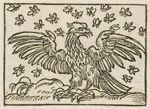
Ne faictz effort à plus moindre que toy: La Perrière, Le theatre des bons engins (Lyon, 1545), emblem 32 uses the imagery of the adage of an eagle irritated by flies
In detractores: Alciatus, Emblemata (Padua 1621), col. 693 a, emblem 164
In detractores: Alciatus, Emblemata (Leiden, 1591), emblem 163
Magno furor est in sanguine mergi: Zincgreff, Emblematum Ethico-politicorum (Heidelberg, 1619), emblem 10 applies the imagery of a worthy opponent to the lion attacking a bull
Iconclass: 25F33(EAGLE) predatory birds: eagle 25F711(FLY) insects: fly 52AA23 Inattention 54BB5 Unimportance
Loci Communes: Contemptus et vilitatis (Contempt and worthlessness, Mépris et bassesse)
III ii 66 Ανερίναστος εἶ You need artificial fertilization
Ανερίναστος εἶ.i. Incaprificatus es. Suidas putat in mollem & infrugiferum covenire. Sunt qui referant ad eos, qui tueri non queant id, quod nacti sunt boni. Adagium usurpavit Hermippus in Militibus. Eius rationem huiusmodi reddunt Suidas & Zenodotus. Aiunt mariscis, qui caprifici foetus est, innasci vermiculum, quem Graeci ψῆνα vocant: horum vim colligunt rustici, deque fici ramis suspendunt, ne videlicet foetus ante tempus, & immaturi defluant. Nam vermes protinus per rimas irrepunt, atque hoc modo maturescunt fici. Theophrastus li. De plantis 2. culices hos ficarios nasci putat è granis mariscarum, quod simulatque evolarint illi, nulla grana insint. Evolare penna fere, aut pede in pomo relicto. Sed complura de caprificandi ratione inibi, si cui libeat cognoscere. Idem similia fermè li. De causis plantarum 2. cap. 12. Plinius etiam lib. decimo quinto, cap. decimonono. Et Aristoteles libro De natura animalium quinto. Unde arborem, cui hoc maturitatis remedium adhibitum non fuerat, ἀνερίναστον appellabant, atque hinc deinde transferebant in hominem inutilem, à quo nihil bonae frugis esset exspectandum. Vox composita est: ἐκ τοῦ ἀ στερητικοῦ μορίου & ἐρινεοῦ, quasi dicas: incaprificatus.
'[greek], You need artificial fertilization. Suidas thinks this appropriate for an effeminate and unfruitful character. Some refer it to those who cannot retain what good things they do possess. The adage was used by Hermippus in his Men of War. The following explanation of it is offered by Suidas and Zenodotus. In the marisca, which is the fruit of the wild fig-tree, there grows, they say, a small worm called in Greek psên. The country folk collect a quantity of these and hang them from the branches of the cultivated fig, that its fruit may not fall off unripe before its time; for the worms crawl into them at once through crevices, and thus the cultivated figs ripen. Theophrastus, On Plants book two, thinks that these fig-gnats are born from the seeds of the wild fig, because after their emergence there are no seeds left; and as a rule, when they emerge, they leave a wing or a foot behind in the fruit. But there is more in that same passage about the principle of fertilization, if anyone wishes to learn. He gives much the same account in his Causes of Plants, book 2 chapter 12, and so do Pliny in book 15 chapter 19 and Aristotle in book 5 of the Nature of Animals. Thus it was that a tree to which this aid to ripening had not been applied was called anerinastos, not yet fertilized from the wild tree, and this was then transferred to a useless person, from whom nothing good was to be expected. The word is a compound of the negative alpha-prefix and erineos, the wild fig, and hence gets the sense we may render by incaprificatus, unfertilized.
Facsimile:
Iconclass: 25F73(FIG-GNAT) worms (FIG-GNAT) 31A719 womanish man, molly-coddle, milksop 42AA19 sterility; barren woman - AA - sterile man 47I121 fertilizing, manuring of the soil
Loci Communes: Cum auxilio ; citra auxilium (With help; without help, Avec aide ; sans aide)
III ii 67 Repariazare To break treaties like the Parians
Ανεπαρίαζαν. i.Repariassarunt. De iis dicebatur, quos paeniteret instituti, quique a conventis discederent, ab historia natum. Parii cum aliquando à Thebanis bello premerentur, petierunt ut à bello desisterent, se civitatem in potestarem illorum tradituros. Hac lege cum destitissent Thebani, & Pariis interea spes auxilii fuisset alicunde ostensa, pa ctum irritarunt, bellumque cum Thebanis integrarunt. Inde fictum proverbiale verbum ἀναπαρίαζειν, pro irritare pacta, Pariorum exemplo. Proverbii meminit & Stephanus in dictione πάρος referens ex autore Ephoro, nisi quod in historia variat. Quum enim Miltiades vehementer urgeret Parios, iamque tractari coeptum esset de delenda urbe, sylva quaedam circa Myconum ultro coepit ardere. Parii suspicantes quod Datis regiae classis praefectus excitato igni signum ipsis dedisset, rescissis conventis noluerunt tradere civitatem. Adstipulatur Aemilius in vita Miltiadis. Est aurem Paros una ex Cycladibus, quemadmodum & Myconus.
To break treaties like the Parians '[greek], They have broken treaties like the Parians, was applied to those who repented of an undertaking and withdrew from some agreement they had entered into. It arose from a historical event. On one occasion when the Parians were hard-pressed in a war against Thebes, they asked the Thebans to bring the war to an end, saying they would hand over the city to them. On this understanding the Thebans withdrew; but meanwhile the Parians had been shown hopes of help from some source or other, and they tore up their agreement and resumed war with Thebes. Hence the invention of this verb in a proverbial sense, [greek], to tear up treaties as the Parians did. The proverb is also mentioned by Stephanus under the word Faros, and the authority he quotes is Ephorus, except for variations in the story. Militiades, he says, was pressing the Parians very hard, and talks had already begun about the surrender of the city, when a forest near Myconos caught fire from natural causes. The Parians, suspecting that it was the admiral of king Dates' fleet who had started the fire to give them a signal, abandoned their agreement, and refused to hand over their city. Aemilius in his life of Miltiades agrees. Paros, like Myconos, is one of the Cyclades.
Facsimile: 
Iconclass: 32B311(PARIANS) indigenous European peoples (PARIANS) 32B311(THEBANS) indigenous European peoples (THEBANS) 53DD2 Breach of Promise 57AA6141 Untrustworthiness, Unreliability
Loci Communes: Inconstantiae, perfidiae, versutiae (Inconstancy, treachery, cunning, Inconstance, perfidie, ruse)
III ii 68 Mari e fossa aquam Water out of a ditch into the sea
Θαλάττῃ ἐκ χαράδρας ὕδωρ. i. Mari è lacu aquam, subaudiendum, infundis. Simile illi, βῶλος ἄρουρα, id est, Gleba arvum. Ovidius in Elegiis amatoriis: In freta collectas alta, quid addis aquas? Cognatum illi, quod alibi recensuimus: In silvam vehere ligna, & Oleum camino addere.
[greek], Water out of a pool into the sea; we must supply You pour. Resembles [greek], The clod and the field. Ovid in his love-poems: 'Why add pond-water to the deep blue sea?' Related to one I have listed elsewhere: To carry wood to the forest, and To pour oil on the fire.
Facsimile:
Iconclass: 21D water (one of the four elements) 25H224 small canal, ditch 25H2322 sea 46C121 carrying something 54BB2 Unnecessity, Superfluity
Loci Communes: Absurda, indecora, seu praepostera (Absurd, unbecoming, or preposterous things, Choses absurdes, inconvenantes ou déplacées)
III ii 69 Hamaxiaea Wagon-loads
Αμαξιαῖα. Proverbiali verbo dicebantur ampla, magnificaque. Perinde sonant, quasi Latine dicas, plaustralia. id est, tanta, ut iustum plaustri onus videri possint. Unde ἁμαξιαῖα ῥήματα dictitabant eo pacto, quo Flaccus dixit, sesquipedalia verba. Quod genus sunt illa apud Aristophanem in Vespis: Ορθοφοιτοσυκοφαντοδικοταλαιπώρων τρόπων. Apud Plautum in Curculione militis nomen Therapontigonoplatagidorus, quo se trapezita ait saepenumero quatuor totas explevisse ceras, dum scribit in suis rationibus. Extat iocus cuiusdam in Hermetem quempiam huiuscemodi sesquipedalium verborum affectatorem: Gaudet honorificabilitudinitatibus Hermes Consuetudinibus, sollicitudinibus. Athenaeus lib. 10. referens olim taxatam fuisse Thessalorum edacitarem, coenas illorum vocat ἁμαξιαίας, sive καπανικὰς. adfert carmen Aristophanis ἐν ταγηνισταῖς, Τί πρὸς τὰ λυδῶν δεῖπνα καὶ τὰ θετταλῶν; Et rursus, Τὰ θετταλῶν μὲν πολὺ καπανικότερα. id est: Ad Lyda quid seu Thessalica convivia? Thessalica sunt multo magis plaustralia. Porrò Thessali vehicula dicunt καπάνας. Item lib. 7. tradidit apud Sicyonios congros capi permultos ἀνδραχθεῖς, hoc est, tantae magmtudinis ut iusto pondere barulum onerent, nonnullos etiam ἁμαξιαίους, hoc est, iustum onus vehiculi. Quin & αἰγιναῖα dicta sunt ingentia, vel à talento quod apud illos habebatur maius caeteris: vel à sarcinis negociatorum, varias complectentibus merces, quae Hesychius testatur Graecis dici αἰγίναια, Sic enim scriptum est antepenultima acuta. Eas sarcinas qui commercantur, appellari αἰγιναπωλας. Addit & nomisma quoddam argenteum ingens dici Graecis αἰγίναιον.
'[greek], Big enough to load a waggon, was a proverbial expression for things that were large and splendid. The meaning is exactly what plaustralia, worthy of a waggon, would convey in Latin, things that might seem to make a proper waggon load. Hence they applied the phrase to words, in the same way that Horace speaks of 'words one and a half feet long.' An example of this would be that line in the Wasps of Aristophanes: [greek]. Plautus too in the Curculio has a soldier whose name is Therapontigonoplatagidorus, with which the money-lender says he has often had to fill four of his wax tablets in order to find room for it in his accounts. There is a humorous couplet in existence by a certain author on a man called Hermes who was fond of using foot-and-a-half words of this kind:
Gaudet honorificabilitudinitatibus Hermes,
Consuetudinibus, sollicitudinibus.
Athenaeus in book ten, after recording the Thessalians' ancient reputation for greed, called their dinners hamaxiaiai, as big as waggons, or kapanikai, chariot-sized, and cites a line from the Tagenistae of Aristophanes: 'How do the dinners of Thessalians compare with those of Lydians?' and again: "Thessalian dinners are far more chariot-sized;' for Thessalians call chariots kapanai. Again in book seven he says that at Sicyon many conger-eels are caught of such a size that they are all a porter can carry, and some are so big that they fill a cart. The word [greek] is also used for 'very large,' either from the talent, because the Aeginetan talent was heavier than the others, or from the bundles of travelling salesmen, containing assorted merchandise, which Hesychius tells us was called in Greek [greek]; for that is how it is written, with an acute accent on the third syllable from the end. Those who sold these bundles of goods were called aiginopôlai. He adds that there was also a very large silver coin in Greece called an aiginaion.
Facsimile:
Iconclass: 46C145(+612) (farm) wagon, freight wagon, cart (+ loading) 51G1 Largeness, Magnitude
Loci Communes: Arrogantia jactantiaque (Arrogance and boastfulness, Arrogance et vantardise)
III ii 70 Muscum demetere To mow the moss
Αμνια θερίζειν. i. Muscum demetere: dici solitum, ubi quis tener adhuc & intempestivus durius tractaretur, aut tolleretur emolumentum prius quam opportunum esset. Translatum ab iis, qui statim ut ager obduci coeperit herba, demetunt, nec sinunt adolescere gramen. μνίον enim muscus, & additione literae ἄμνιον, sicut a)/staxus2 pro sta/xus2.
[greek], To mow the moss, was customarily said of anyone who was cruelly treated when still young and not yet ready for it, or when some advantage was brought to an end before the right moment had come. The image is drawn from men who mow a field as soon as ever the grass has begun to grow, and do not allow the herbage to mature. For mnion is 'moss,' and becomes amnion by the addition of a single letter, as in astachys for stachys.
Facsimile:
Iconclass: 25G52 mosses 47I141 reaping, picking, mowing ~ harvest 51F521 Precocity 51M12 Haste
Loci Communes: Festinatio praepropera (Overhasty haste, Précipitation excessive)
III ii 71 Extis pluit It rains black-puddings
Αλασιν ὕει. i. Lucanicis pluit. Sermo proverbialis de prodigiosa rerum copia, qui iocus etiam hac tempestate durat apud idiotas. Siquidem ἁλὰς Graecis exti genus est, ex quo frustulatim conciso farta conficiuntur, quod cibi genus in comicum iocum abiisse videtur, unde viles et contempti ἁλαντοπώλαι vocantur adagio. Confinis illi, δραχμὴ χαλαζῶσα. i. Drachma grandinans.
[greek], It rains sausages. A proverbial expression for a time of miraculous plenty, a humorous formula that survives among the uneducated even in our own day. For [greek] is the Greek for entrails of a certain kind, which can be minced and made into sausages, a sort of food which seems to have become a regular joke in comedy, so that worthless and contemptible people are proverbially described as sausage-sellers. This is close to that other adage, A hail of drachmas.
Facsimile:
Iconclass: 26B:41C693 rain❧sausage 51H42 Abundance; 'Abondanza', 'Abondanza maritima' (Ripa)
Loci Communes: Bonae fortunae, copiae, felicitatis aut ominis (Of good fortune, abundance, happiness, or omen, Bonne fortune, abondance, bonheur ou présage)
III ii 72 Aliis lingua, aliis dentes Some have a tongue, others have teeth
Αλλοισι γλῶττ᾽ ἄλλοισίν εἰσι γόμφιοι. id est, His lingua, at illis sunt molares invicem. De loquacibus & edacibus dici consuevit. Quemadmodum non raro fit in conviviis: ut aliis garrientibus, & fabulis potius quàm cibis intentis, alii interim taciti, strenue quod appositum est, devorent. Venustius erit si longiuscule detorqueatur, veluti si quis minetur se fa cto nociturum ei, qui verbis duntaxat laeserit. Poetis est lingua, qua invehantur: at principibus sunt molares, quibus eos conficiant.
[greek], Some have a tongue, others in turn have teeth. Used customarily of those who talked or ate a great deal; for it often happens at dinner-parties that, while some people chatter away, more intent on conversation than on food, others sit silent all the time, strenuously devouring what is set before them. It will be more eloquent if diverted some way from its natural meaning; if, for instance, a man were to threaten reprisals in action against someone who has injured him in words only. Poets have a tongue which they can use for attack; but princes have molar teeth with which they can make short work of poets.
Facsimile: 
Iconclass: 31A2112 teeth 31A22141 tongue 33A35 conversation, dialogue; conversation piece 41C11 eating
Loci Communes: Divitum praerogativa (The privilege of the rich, Le privilège des riches)
III ii 73 Improbi consilium in extremum incidit malum The counsel of the wicked has incurred utter disaster
Απήντησε κακοῦ βουλὴ πρὸς ὑπέρτατον ἄτην. id est, Incidit extremam in noxam mens improba tandem. Heroicus proverbialis in eum, qui postea quàm diu peccavit impune, tandem in calamitatem incidit, ut poenas omnium scelerum semel dependat.
'[greek], Wicked designs have incurred utter destruction. A proverbial hexameter line, describing the man who, after many years of wrongdoing without punishment, falls at last into calamity, so that he pays the penalty at one time for all his misdeeds.
Facsimile:
Iconclass: 44G29 outlaw 44G3 criminal law; punishment 51FF52 Lateness 57AA741 Revenge, Requital, Retaliation; 'Vendetta' (Ripa)
Loci Communes: Ultio malefacti (Vengeance for a wrongdoing, Vengeance d'un méfait)
III ii 74 Aliud noctua sonat, aliud cornix The owl has one cry and the raven another
Αλλο γλαὺξ ἄλλο κορώνη φθέγγεται. i. Aliud noctua sonat, aliud cornix sonat. Vel, Alia noctuae, alia vox cornicis. Accommodari potest vel ad eos, qui decertant cum longe praestantioribus, vel ad illos, inter quos ob morum, ingeniique pugnantiam, minime convenit. Sive cum est alius alio longe facundior. Quemadmodum enim avem etiamsi non videas, tamen è cantu licet dignoscere, ita stilus diversus prodit ψευδεπιγραφίαν. Nullum enim est autorum genus, ubi non reperias notha quaedam & subdititia τοῖς γνησίοις admixta. Falsum titulum cuivis licet adscribere. Caeterum ipsa dictio, quae vix unquam eadem duobus accidit, prodit aut reiicit autorem.
[greek], The owl has one cry and the raven another, or The voices of owl and raven are not the same. This can be adapted either to those who compete with opponents far better than they are, or to people whose divergent characters and gifts make agreement impossible, or when one man has far greater powers of self-expression than another. For just as you can recognize a bird by its song though you cannot see it, so the difference of style betrays a work ascribed to the wrong author. There is no species of writers among whom you cannot find bastard and spurious pieces mixed in with their genuine words. A false title may be added by anyone; but the manner of writing, which is scarcely ever even by chance the same in two writers, confirms the attribution or rules it out.
Facsimile:
Iconclass: 25F32(RAVEN)(+49) song-birds: raven (+ audible means of communication of animal(s): roaring, crying, singing, barking, mewing, neighing, chirping, etc.) 25F34(+49) owls (+ audible means of communication of animal(s): roaring, crying, singing, barking, mewing, neighing, chirping, etc.) 48C91:51BB2 writer, poet, author❧Dissimilarity, Unlikeness 51BB3 Imparity, Inequality, Difference 51LL3 Deviation, Divergence
Loci Communes: Dissimilitudinis et incongruentiae (Dissimilarity and incongruity, Dissemblance et incongruité)
III ii 75 Reperire rimam To find a chink
Proverbiali figura dixit Plautus in Curculione: Aliquam reperietis rimam, in causatores ac tergiversatores, qui nulla in causa tot fidei vinculis astringi possunt, quin aliquid inveniant quo elabantur. Similiter Horatius: Centum adde catenas, Effugiet tamen haec sceleratus vincula Proteus. Ductum ab avibus, aut muribus captis.
Plautus used a proverbial form of expression when he said in the Curculio: 'You will find some chink,' of people who always find some pretext or excuse and, whatever the matter in hand, can never be restrained by such bonds of good faith that they cannot find some way of slipping out. In the same way Horace has 'Pile on a hundred chains, / Your cursed Proteus will slip through them all.' Drawn from birds or mice kept in captivity.
Facsimile:
Iconclass: 44G316 escape, escape attempts 92H4 Proteus
Collectanea (1500): 71
Loci Communes: Elabendi (Slipping away, escaping, S'échapper)
III ii 76 Album panem pinso tibi I knead you a white loaf
Λευκήν μάζαν φυρῶ σοι. i. Album panem pinso sive tempero tibi. Dici solitum, ubi quis magnarum rerum spes amplas ostendit. Est enim maza panis genus. Porrò Graecis album panem in deliciis fuisse, locis aliquot testatur Lucianus, nominatim in libello De mercede servientibus. οὐδ᾽ ὄναρ λευκοῦ ποτε ἄρτου ἐμφορηθεὶς, i. Ne per somnum quidem unquam albo pane saturatur. Et divus Hieronymus in epistola ad Nepotianum, similam inter delicias ponit. Quid prodest, inquit, oleo non vesci, & molestias quasdam difficultatesque ciborum quaerere, caricas, piper, nuces palmarum, similam, mel, pistacea? Ac ne fuisse quidem Romae pistores ad Persicum usque bellum, annis ab urbe condita, super quingentos octoginta: testis est Plinius lib. decimooctavo, capite undecimo, ubi rationes aliquot arte conditi panis ostendit. Porrò quod primum è triticea farina redditur, candidius est: rursum quod ex ordeacea postremum, id magis est album, ut indicat in Problematis Aristoteles Sectionis 21. probl. 3. & 7. eiusque rei causam reddit. Graeci panes elegantiores λευκοὺς appellabat, sordidiores, φαιοὺς. id est, fuscos seu nigros. Sic Alexis apud Athenaeum lib. tertio, Λευκοὺς μὲν ὀκτὼ, τῶν δὲ φαιῶν τοὺς ἴσους. id est, Panes quidem albos octo, dein totidem nigros. Huc pertinet illud, Ex iure hesterno panem atrum vorant. Narratur ibidem quiddam non illepidum de Diogene Cynico, qui quum placenta vesceretur, percontanti quid comederet, respondit se panem edere bene confectum. Hoc adiicere visum, ut intelligamus, olim miras fuisse delicias in panibus conficiendis. Apud eundem lib. quarto describitur convivium Atticum, in quo commemorantur & panes λευκέτεροι χίονος. id est, albiores nive.
[greek], I knead, or mix, you a white loaf. Customarily used when someone displays generous expectations of great things to come, for maza is a kind of loaf, and that the Greeks set a high value on white bread is shown by several passages of Lucian, especially in his essay On Salaried Posts: 'Having never, even in a dream, eaten your fill of white bread.' And St Jerome in his letter to Nepotianus puts fine white flour in a list of delicacies. 'What is the point', he says, 'of not using olive oil and seeking out things to eat that are troublesome and difficult, dried figs, pepper, palm-kernels, fine white flour, honey, pistachios?' And that 'bakers did not even exist in Rome before the war with Perseus, 580 years and more after the foundation of the city' is clear from Pliny, book 18 chapter 11, where he sets out several methods of making special kinds of bread. Another point: the first product of wheat-flour has more of a shining white colour, but from barley-flour it is the last fraction that is whiter, as Aristotle shows in the Problems, section 21 problems 3 and 7; and he gives the reason for this. In Greek choice loaves were called white bread, and the commoner sort dark or black; thus Alexis, cited by Athenaeus in book three: 'Of white loaves eight, of black loaves eight as well.' (Here belongs that line 'They wolf down black bread steeped in left-over broth.') In the same passage there is a rather nice story of Diogenes the Cynic, who was eating cake when someone asked him what he was eating; and he replied that he was eating 'well-baked bread.' I thought it well to add this, to make clear the extraordinary importance attached in the old days to the baking of bread. In the same author, book four, there is a description of an Attic dinner is which loaves are mentioned which were 'as white as snow.'
Facsimile:
Iconclass: 41C621:22C4(WHITE) bread, loaf❧colours, pigments, and paints: white
Loci Communes: Magnifica promissa (Magnificent promises, Promesses magnifiques)
III ii 77 Candidum linum lucri causa ducis You marry white flax for the sake of gain
Λευκώλενον λῖνον κερδογαμεῖς. i. Candidulum linum ob lucrum ducis uxorem. In eum quadrat, qui dotis causa ducit vel deformem vel anum. Porrò linum vocat uxorem, vel quod apud veteres solae mulieres lineis uterentur: vel quod viro alligetur matrimonio, & libera esse desinat. Nam linon Graeci nonnunquam usurpant pro vinculo. λευκώλενος autem Iunonis epithetum apud Homerum, ab albis ulnis. Refertur à Diogeniano.
[greek], You marry neat white flax for the sake of gain, is suitable for a man who marries an ugly woman or an old woman for the sake of her dowry. Furthermore, he calls the wife 'flax' either because in Antiquity linen garments were confined to women, or because in matrimony the woman is tied to her husband and ceases to be free; for Greek sometimes uses linon, the word for flax, in the sense of bond. Leukôlenos in Homer is an epithet of Juno, from her white arms. Recorded by Diogenianus.
Facsimile:
Iconclass: 42D172 dowry 42D31:31D172 unequal couple, ill-matched couple❧ugly old woman, hag 42DD311 married couple of unequal age - DD - woman older 47H111:22C4(WHITE) flax (material ~ textile and clothing industry)❧colours, pigments, and paints: white 55CC11 Greed, Covetousness, Cupidity; 'Cupidità' (Ripa)
Loci Communes: Rapacitas et avaritia (Rapacity and greed, Rapacité et avarice)
III ii 78 In capras sylvestres To the wild goats
Κατ᾽ αἶγας ἀρχίας. i. In capras feras. Abominantis est sermo, & malum deprecantis: inque sylvestres capras avertentis. Confine illi, quod alibi dictum εἰς πύῤῥαν. i. in Pyrrham. Item illi: Hostilus eveniant convivia talia nostris. Usus est adagione Athenaeus libro Dipnosophistarum secundo: μυρτίλιος γὰρ ἔφασκεν, ὥσπερ εἰς αἶγας ἡμᾶς ἀγρίας ἀποπέμπων τοὺς ζητοῦντας, ἡγήσανδρον τὸν δελφὸν ἐν τοῖς ὑπομνήμασιν αὐτοῦ μνημονεύειν τῆς λέξεως. i. Nam Myrtilius asseverabat, velut ad capras sylvestres nos relegans quaerentes, Hegesandrum Delphum in commentariis suis, eius dictionis meminisse. Ad capras sylvestres posuit pro eo, quod difficilimum esset inventu, aut quod nusquam est. Citaverat enim ex autore testimonium, quod mox Plutarchus negat apud illum extare. Ad hoc proverbium opinor, allusit Apuleius in Asino, fingens Psychen à Venere mitti ad arietes agrestes.
[greek], To the wild goats. The words of a man seeking to avert and turn aside some evil by directing it against the wild goats, related to one of which I have spoken elsewhere, On Pyrrha's head. Also to another, 'Would that such parties might befall my foes.' Athenaeus uses the adage in book two of the Doctors at Dinner: 'For Myrtilus, with the air of a man who would send us, the earnest enquirers, to the wild goats, said that Hegesander of Delphi has mentioned the word in his Commentaries.' He used the phrase for something which is very difficult to find or does not exist anywhere; for he had quoted evidence from his authority which Plutarch later says does not exist. It was to this proverb, I suppose, that Apuleius alluded in the Ass, when he imagines Psyche as sent by Venus to the wild rams.
Facsimile: 
Iconclass: 34F man and (wild) animal 51L3:47I214 Direction, Orientation❧goat 54FF11 Adversity, Misfortune, Bad Luck; 'Fortuna infelice', 'Infortunio' (Ripa)
Loci Communes: Deprecantis, abominantis (Pleading, abhorring, Qui implore, qui abhorre)
III ii 79 Adsint dii beati The blessed gods be on our side
Σὺν δὲ θεοὶ μάκαρες. id est, Felices adsint superi. Sermo est bene ominantis in re quapiam aggredienda. Sic enim praefari solent rhapsodi, hoc est, carminum Homericorum recitatores & interpretes. Quemadmodum & citharoedis cantaturis mos erat Apollinem, ut dexter adesset. carmine invocare, ἀλλὰ ἄναξ μάλα χαίρε. i. At multum salve rex. Quin & testamentum condituri praefabantur ominis causa, τοῦτο καλῶς ἔστω. id est, Hoc bene sit. Item apud Romanos dicturus in concione simili precatione utebatur, ut felix ac faustum esset Reipublicae, quod dicturus esset. Refertur apud Zenodotum.
[greek], The blessed gods be on our side. The words of a man who prays for the happy outcome of some undertaking; for this is the customary opening of the rhapsodes, the bards who recited and expounded the Homeric poems. So too it was a habit of lyre-players, when about to strike up, to call on Apollo to attend and bless their song: 'Be welcome then, O king!' And people drawing up their wills sought a good omen by opening with the words 'May it be for the best.' In Rome too a man before speaking in public would use a similar formula, praying that what he was about to say might bring good fortune and prosperity to the republic. Recorded by Zenodotus.
Facsimile:
Iconclass: 12B211 prayer ~ non-Christian religions 12E13(...)79 representations ~ gods, demi-gods, heroes, etc. (with NAME) (Greek religion) - veneration, honouring of non-Christian god or goddess 54F1 Success; 'Evento buono' (Ripa)
Loci Communes: Ominandi (Foreboding, omens, Présager)
III ii 80 In Aphannis At Aphannae
Εἰς ἀφάννας. i. In Aphannis. Stephanus tradit Aphannas locum quempiam esse Siciliae vehementer obscurum & ignobilem, unde & nomen adductum apparet. Hinc natum proverbium, ἢ εἰς ἀφάννας. i. Aut in Aphannis. de incertis, & quae nusquam sunt. Zenodotus ait natum ex huiusmodi casu. Sybaritae quondam oraculum adeuntes, orabant ut sibi victoriam adversus Crotoniatas concederet, idque Crotoniatis ipsis praesentibus. Quidam autem Crotoniatarum per iocum respondit ad hunc modum: Istam quidem consequemini in Aphannis. Sybarita credens id à deo responsum, admiratus est, quid sibi vellet hoc verbo Aphannae. Proverbium ait quadrare in eos, qui se putant invictos, & nulli tolerandos esse. Verum Stephani nobis magis probatur interpretatio.
[greek], At Aphannae. Stephanus tells us that Aphannae was a place in Sicily which was exceedingly obscure and mean, whence it also clearly derived its name. Hence came the proverb Or at Aphannae, used of things that are uncertain or non-existent. Zenodotus says it arose from the following incident. The Sybarites on one occasion went to the oracle and asked it to grant them victory over the people of Croton, who were present at the time. One of the Crotoniates gave them a jesting reply: 'You will win your victory at Aphannae.' A Sybarite, supposing this answer to emanate from the god, wondered very much what this word Aphannae could mean. He says the proverb is appropriate for those who think themselves invincible and more than anyone can withstand. But Stephanus' explanation seems to me more likely.
Facsimile:
Iconclass: 51AA1 Non-existence 52BB41 Uncertainty 61E(APHANNAE) names of cities and villages (APHANNAE)
Loci Communes: Nusquam (Nowhere, Nulle part)
III ii 81 Ad id quod erat opus For a necessary purpose
Εἰς τὸ δέον. i. In id quod opus erat. subaudiendum, insumpsi, aut simile quiddam. Natum aiunt ex oratione Periclis. Narrant hunc datis pecuniis impetrasse ab Astyanacte Lacedaemoniorum rege, qui iam bellum parabat, ut ex Attica discederet. Deinde cum esset populo rationem eius pecuniae redditurus, puderetque palam titulum insumptae pecuniae proloqui, tecte significavit, εἰς τὸ δέον, inquiens, ἀνήλωσα τοσαῦτα τάλαντα εἰς τὸ δέον. i. in usus necessarios tantum talentorum insumpsi. Haec fermè referuntur à Zenodoto. Notavit adagium & Aristophanes in Nebulis: Ωσπερ περικλέης εἰς τὸ δέον ἀπώλεσα. id est, Ita ut Pericles perdidi in quod oportuit. Quo loco interpres varias adfert historias, unde proverbium ortum putent: quae si quis requiret, unde petere possit, ostendimus. Eleganter torquebitur per iocum in eos, qui sic administrarunt pecuniam alienam, ut non possint idoneam rationemus reddere.
[greek], For a necessary purpose (we must understand I expended it, or something of the sort). It is said to be taken from a speech by Pericles. The story goes that by a gift of money he persuaded the Spartan king Astyanax, who was already preparing for war, to leave Attica. Later, when he had to account for this money to the public assembly, and was ashamed to confess openly the purpose on which he had spent the sum, he indicated this indirectly by saying 'I spent such and such a sum of talents for a necessary purpose.' Such more or less is the story in Zenodotus. The adage was also alluded to by Aristophanes in the Clouds: 'Like Pericles, I spent it on a necessary purpose.' The scholiast on this passage adduces several anecdotes from which the proverb is thought to arise; if anyone has a fancy to see these, I have told him where they can be found. It will have an elegant effect, if the sense is wrested to make a humorous comment on those who have been so careless in managing other people's money that they cannot present a satisfactory account of it.
Facsimile:
Iconclass: 46B44 paying (~ commerce) (here also repayment of debt, etc.) 51C2 Necessity, Inevitability; 'Necessità' (Ripa) 54BB2 Unnecessity, Superfluity 98B(PERICLES)5 non-aggressive activities of Pericles
Loci Communes: Mira nova (Wonderful new things, Choses nouvelles et étonnantes)
III ii 82 Adactum iusiurandum An imported, or imposed, oath
Επακτὸς ὅρκος. i. Adactum iusiurandum dicebatur, vel quod non vernaculum esset, sed peregrinum, & aliunde ascitum, ut indicat Zenodotus: ut si quis Graecus Scythico more iuret, νὴ τὸν ἀκινάκην καὶ νὴ τὸν ἄνεμον. i. Per ventum & acinacem. Nam per suos deos unaquaeque gens iurare consuevit: vel quod non spontaneum, sed adactum vi: vel quod sponte susceptum nemine cogente, si Suidae credimus, & Etymologico. Sunt enim tria iusiurandi genera, unum quod ἐπώμοτον vocant, alterum quod κατώμοτον, tertium quod ἐπατκόν. Hesychius contra ἐφ᾽ ὅν ἕτερος ἄγει, οὐκ αὐθαίρετος. id est, Ad quod alius adigit, non spontaneum. Hoc inter adagia non recensuissemus, nisi Zenodotus prior in hoc albo posuisset.
'[greek], An imported, or imposed, oath was a name for one that was not native but foreign and introduced from elsewhere, as Zenodotus makes clear; as for instance if a Greek were to swear like a Scythian by sword and wind, for each separate nation usually swears by its own gods. Or it is an oath not taken spontaneously but imposed by force; or one that is taken voluntarily and without compulsion, if we believe Suidas and the Etymologicum. For there are three kinds of oath, one called in Greek epômoton, another called katômoton, and a third called epakton. Hesychius, on the other hand, says: "That to which another man compels us, not spontaneous.' I should not myself have listed this among adages, had not Zenodotus before me put it 'on this roster.'
III ii 83 Scabrosior leberide As prickly as a snake's slough
Κεντροτερος λεβηρίδος. i. Asperior leberide. De vehementer asperis & insuavibus. Nam leberis Graecis dicitur exuvium illud vel serpentum, vel piscium exuentium senectam, quod & σύφαρ vocatur: id autem asperrimum esse constat, nimirum ob summam siccitatem. Refertur à Suida.
[greek], As prickly as a snake's slough. Of things which are exceptionally rough and unpleasant. For leberis in Greek is that discarded outside either of snakes or of fish which slough off their skins, also called syphar; and this is well known to be very rough, no doubt because it is extremely dry. Recorded by Suidas.
Facsimile:
Iconclass: 25F42(+4821) snakes (+ shedding of skin of animal(s)) 51GG6 Roughness
Loci Communes: Asperitas, morositas (Harshness, moroseness, Rudesse, morosité)
III ii 84 Procul auribus nuntius veniat May this news may be far from my ears
Απ᾽ οὔατος ἄγγελος ἔλθοι. id est, Procul absit nuntius aure. Sermo deprecantis nuntium male auspicatum. Suidas ex Callimacho citat. Homer. item Iliad. σ. Αἴ γὰρ δή μοι ἀφ᾽ οὔατος ὧδε γένοιτο. id est, Ista velim mihi sint procul auribus.
[greek], Be this news far from my ears. The words are those of someone hoping to be spared bad news; Suidas cites them from Callimachus. Homer too in Iliad 18: 'Would that such things might remain far from my hearing.'
Facsimile: 
Iconclass: 31A2213 ears 53CC2:52AA5 Voluntariness❧Ignorance; 'Ignoranza', 'Ignoranza di tutte le cose', 'Ignoranza in un ricco senza lettere' (Ripa) 53CC2:31A412 Voluntariness❧deaf, deafness
Loci Communes: Deprecantis, abominantis (Pleading, abhorring, Qui implore, qui abhorre)
III ii 85 A puro pura defluit aqua Water poured over what is clean stays clean
Theognis in sententiis Elegiacis, Εἴ μ᾽ ἐθελεις πλύνειν, κεφαλῆς ἀμΐαντον ἀπ᾽ ἄκρης Αἰεὶ λευκὸν ὕδωρ ῥεύσεται ἡμετέρης. id est, Rursum aqua de summo mihi vertice defluet usque Limpida, si innocuum forte lavare pares Hoc distichon, quoniam subesse proverbium videbatur, adscripsimus. Quadrabit in hominem usquequaque inculpatum & innocentem: quem etiam si quis aliquando vocet in crimen, tamen non solum fama illius non contaminatur, verumetiam illustrior redditur. Nec sine causa laudi tribuunt istud Catoni Censorio, quod toties accusatus & vocatus in ius, nempe quater & quadragies, semper iudicium sententiis fuerit absolutus,
Theognis in his book of moral sentiments in elegiacs: 'Wash me, if you will: from the top of my head the clear water will flow always undefiled.' I have added this couplet because I thought there was a proverb hidden in it. It will be suitable for a man who is innocent and above all suspicion: even if accusations are one day brought against him, his reputation is unblemished, and in fact emerges higher than before. With good reason it is thought highly to the credit of Cato the censor, that though so often accused and brought into court (actually four and forty times), he was always cleared by the verdict of the jury.
Facsimile:

Nil tamen haeret: Zincgreff, Emblematum Ethico-politicorum (Heidelberg, 1619), emblem 61 uses the adage's imagery that slander does not affect a person of integrity
Iconclass: 21D water (one of the four elements) 31A54 washing and bathing 57A632 Falsely accused Innocence 98B(CATO THE ELDER)3 (story of) Marcus Porcius Cato the Elder - representations to which the NAME of a person from classical history may be attached
Loci Communes: Inculpatus (Blameless, Irréprochable)
III ii 86 A lupi venatu From a wolf-hunt
Απὸ λύκου θήρας. i. A lupi venatu. Dici solitum, ubi quis protinus re infecta discedit. Aut de negocio molesto, & agresti. Neque enim tutum est lupum insequi, neque is facile capitur, cum reliquarum ferarum venatus non vulgarem afferant voluptatem. Meminit Suidas.
'[greek], From a wolf-hunt. Used ordinarily when a man abandons a task before he has finished it, or as an expression for a disagreeable and uncivilized business. Hunting the wolf is dangerous and it is not easily taken, while the hunting of other beasts is thought most enjoyable. Mentioned by Suidas.
Facsimile:
Iconclass: 34F1 animals threatening man 43C11:25F23(WOLF) hunting, chase❧beasts of prey, predatory animals: wolf 51AA7 Imperfection, Incompleteness; 'Imperfettione' (Ripa)
Loci Communes: Inanis opera (Vain effort, Effort vain)
III ii 87 A subeunte portum navi From a ship as she enters harbour
Απο καταδυομένης. i. A subeunte, subaudi, nave lucrum capias. Admonet adagium celeritatem ad quaestum plurimum valere. Et in negociatorem illud in primis competere, ὔπνος ἀπέστω, id est, Somnus abesto. Sumptum à mercatorum diligentia, qui merces statim emunt ab ipsis nautis in portum appellentibus Tum enim & minoris emuntur, & maiori distrahuntur lucro. Trahi poterit ad eam sententiam, ut si quis dicat statim arripiendam oblatam occasionem lucri. Aut tum rogandum quempiam, ubi fortuna recentem aliquam commoditatem obiecerit. Nam sumus plerique tum ad gratificandum benigniores. Persius in quinta Satyra metaphoram variavit, cum ait: Tolle recens primus piper è sitiente camelo. Id est, ilico cum adhuc de via sitit camelus, qui merces attulit. Proverbii meminit Suidas.
'[greek], As she enters harbour: we must supply the rest of the sense, Take your profit from the ship as she enters harbour. The point of the adage is that speed is of the greatest importance if you want to make money, and that the saying Be sleep far from your eyes is above all adapted to merchants. This is taken from the industrious dealers who buy up a cargo directly from the sailors as they reach harbour, for then they both pay less and sell at a larger profit. This could be varied to mean that any opportunity of making a profit should be seized at once; or that we should make a request of someone at the moment when fortune has just brought him some great windfall. At that moment we are all more generous givers. Persius in his fifth satire varied the image when he wrote: 'be the first to take the fresh-brought pepper from the camel's back before he has had his drink'; immediately, that is, while the camel which brought the merchandise is still thirsty after his journey. The proverb is mentioned by Suidas.
III ii 88 A bis septem undis By twice seven waves
Απὸ δὶς ἑπτὰ κυμάτων. i. A bis septem undis. In eos competit, qui à noxia quapiam purgati sunt, propterea quod antiquitus mos esset, homicidio pollutos vestes suas bis septem inundationibus, immersionibusque lavare. Testis Suidas.
'[greek], From twice seven waves. Suitable for those who have been cleared of some great stain on their characters, for in Antiquity it was the custom for those polluted by manslaughter to wash their garments by plunging them twice seven times in a flood of water. Suidas is our evidence.
Facsimile:
Iconclass: 25H2311 wave 41D42 laundering 49D11(2x7) numerals (2x7)
Loci Communes: Discriminis (Danger, crisis, Danger)
III ii 89 Exigit et a statuis farinas He makes even the statues give him food
Αἰτεῖγε καὶ τοὺς ἀνδρίαντας ἄλφιτα. id est, Sane cibum & signis ab ipsis exigit. In eum dicendum, qui nullius misertus, undecunque quod potest, avellit, vel ab ipsis mortuorum statuis. Similimum illi, κἀπὸ νεκροῦ φορεῖς, id est, Et à mortuo tributum colligis. Competit in principes expilatores plebis, qui nulla non ex re vectigal exprimunt, vel ex lotio. aut in avaros sacerdotes, apud quos ne sepulchrum quidem gratis conceditur.
[greek], He makes the very statues give him food. Can be used of a man who with no consideration for others rips off what he can take from any source, even from the statues of the dead. It is very like that phrase You exact tribute even from the dead. This applies to princes who fleece their people, extracting taxes from any possible source, even from urine; or to avaricious priests, who do not grant so much as the right to be buried without a fee.
Facsimile:
Iconclass: 11P31140 'Prelatura' 41C111 giving food 44B1 ruler, sovereign 44D211 tax payment 48C24 piece of sculpture, reproduction of a piece of sculpture 55CC11 Greed, Covetousness, Cupidity; 'Cupidità' (Ripa)
Loci Communes: Rapacitas et avaritia (Rapacity and greed, Rapacité et avarice)
III ii 90 Athos celat latera Lemniae bovis Athos darkens the flanks of the Lemnian cow
Αθως καλίπτει πλευρὰ λημνίας βοὸς. id est, Athos obumbrat latera Lemniae bovis. Ubi quis officit, aut molestus est, aut gloriam cuiuspiam obscurat, aut alioquin obsistit. Tradunt in Lemno bovis fuisse simulacrum ingens, candido factum lapide. Id Athos mons tametsi longo dissitus intervallo, tamen ob summam celsitudinem, obscurat umbra sua. Est autem Athos Thraciae mons ingens, adeo ut umbram iaciat ad stadia trecenta, teste Stephano. Meminit huius Apollonius Argonauticôn libro primo: Ηρι δὲ νισσομένοισιν ἄθω ἀνέτελλε κολώνη, Θρηκίη, ἥ τόσσον ἀπόπροθι λῆμνον ἐοῦσαν, Οσσν ἐς ἔνδείον κεν ἐΰστολος ὁλκὰς ἀνίσσαι Ακροτάτῃ κορυφῇ σκιάει, καὶ ἐς ἄχρι μυρίνης. id est, Solis ad exortum vada salsa secantibus alto Vertice sese ostendit Athos, mons Thracius, is qu Dissitus à sacra tanto discrimine Lemno, Quantum alata die valeat transmittere navis: Hanc tamen aerii contingit verticis umbra. Qui longinquam ettam pertingit ad usque Mirinen. Proverbii meminit & Plutarchus in Moralibus, cum aliàs tum in commentario, quem inscripsit De facie apparente in orbe lunae, testans umbram porrigi per septingenta fermè stadia. Theocriti Scholiastes versiculum hunc citat ex Sophocle: Αθος σκιάζει νῶτα λημνίας ἁλός. id est, Athos obumbrat terga Lemnii maris.
[greek], Athos overshadows the flanks of the Lemnian cow. When someone gets in the way, or makes himself a nuisance, or casts a shadow on another man's reputation, or becomes an obstacle in other ways. They say that in Lemnos there was an immense statue of a cow made of white marble; and Mount Athos was so high that, in spite of the great distance between them, it cast its shadow over this image. Athos is a mountain mass in Thrace, so huge that it casts a shadow three hundred stades long, as Stephanus tells us. This is mentioned by Apollonius in book one of his Argonautica:At dawn, as on they sailed, Athos arose,
The Thracian mount which, though it lies as far
From Lemnos as a well-girt merchant-ship
From morn till noon would sail, with airy tip
Right to Myrina overshades the isle.
Plutarch also mentions the proverb in the Moralia (in other passages and particularly in the essay to which he gave the title 'On the Face Which Appears in the Orb of the Moon'), testifying that the shadow stretches for nearly seven hundred stades. The scholiast on Theocritus cites the following line from Sophocles: Athos 'darkens the surface of the Lemnian sea.'
Facsimile: 
Iconclass: 22C81:25H1121:61D(ATHOS) shadow of an object❧mountain-top, peak❧geographical names of countries, regions, mountains, rivers, etc. (ATHOS) (ATHOS) 25H14:61D(LEMNOS) island❧geographical names of countries, regions, mountains, rivers, etc. (LEMNOS) (LEMNOS) 48C24:47I2112 piece of sculpture, reproduction of a piece of sculpture❧cow
Loci Communes: Molesti intolerabiles (Unbearable, troublesome people, Gens insupportables)
III ii 91 Praesentem mulge; quid fugientem insequeris? Milk the one that's handy; why pursue him that runs away?
Τὴν παρέουσαν ἄμελγε, τί τὸν φεύγοντα διώκεις; id est, Prasentem mulgeto, quid insequeris fugtentem? Heroicus proverbialis admonens praesens lucrum non omittendum spe commodorum, quae non item ad manum videntur esse. Sumptum ex Cyclope. Theocriti Scholiastes citat consimilis sententiae versum Hesiodium: Νήπιος ὅς τὰ ἕτοιμα λιπὼν τ᾽ ἀνέτοιμα διώκει. id est, Stultus qui non prompta sequens, iam prompta relinquit. Existimat eundem habere sensum quod alibi nobis dictum est, τὸν θέλοντα βοῦν ἔλαυνε.
Τὴν παρέουσαν ἄμελγε, τί τὸν φεύγοντα διώκεις;, Milk the one that's handy; why pursue him that runs away? is a proverbial hexameter line, the lesson of which is that we should not lose a present advantage in hope of some future gain which is not so clearly within our reach. Taken from the Cyclops of Theocritus. The scholiast cites a line from Hesiod to the same effect: 'The fool lets go what's handy and goes after what is not.' He takes it to have the same sense as one of which I have spoken elsewhere: Driving the willing ox.
Facsimile:
Iconclass: 47I223 milking 54B3:51I4 Utility, Usefulness; 'Utilità' (Ripa)❧Nearness
Loci Communes: Proximis utendum (One must make use of one's neighbors, Il faut se servir de son prochain)
III ii 92 Quid ad Mercurium? What's that to Mercury?
Τί πρὸς τὸν ἑρμῆν; id est, Quid ad Mercurium? Idem cum illo, οὐδὲν πρὸς ἔπος, &, Nihil ad Bacchum, Nihil ad rem. Nam Mercurius orationis auctor. Competunt in eos qui loquuntur aliena ab eo quod agebatur.
Τί πρὸς τὸν ἑρμῆν;, What's that to Mercury? The same as Nothing to do with the verse, and What has this to do with Bacchus? and Nothing to do with the subject; for Mercury was the patron of speech. Suitable for those whose talk is a long way from the point at issue.
Facsimile:
Iconclass: 51BB1 Absoluteness, Non-relatedness 51BB2 Dissimilarity, Unlikeness 52BB53 Nonsense, Absurdity 92B5 (story of) Mercury (Hermes)
Loci Communes: Aliena a re (Irrelevant to the matter, Étranger au sujet)
III ii 93 Quid Achivos a turre judicatis? Why judge the Achaeans from the tower?
Τί τοὺς ἀχαιοὺς ἀπὸ τοῦ πύργου κρίνετε; id est, Cur iudicatis Danaidas de moenibus? Dici conveniet, quoties quis pronunciat de re non satis accurate considerata. Aristides in Themistocle: τί ταῦτα τοὺς ἀχαιοὺς ἀπὸ τοὺ πύργου κρίνομεν;. i. Quid in his Achivos de turre iudicamus? Sumptum apparet ex Iliados γ. quo loco Priamus in moenibus Troianorum, accersitam Helenam perconctatur quinam essent, quos procul in Graecorum exercitu conspiceret, & Agamemnonis formam laudat ad hunc modum: Ος τις ὅδ᾽ ἐστὶν ἀχαιὸς ἀνὴρ ἠΰς τε μέγας τε; Η τοι μὲν κεφαλῇ καὶ μείζονες ἄλλοι ἔασιν, Καλὸν δ᾽ οὕτω ἐγὼν οὔπω ἴδον ὀφθαλμοῖσιν, Οὔδ᾽ οὕτω φεραρὸν, βασιλῆι γὰρ ἀνδρὶ ἐιοικεν. id est, Ille quis est cedo, Graius homo, magnusque bonusque? Sunt alii hunc, fateor, superantes vertice plures. Verum aeque pulchrum memini me cernere nunquam Nec reverendum aeque. regem praeferre videtur. Nec inconcinne torquebitur ad eos, qui in tuto constituti, de iis iudicant, qui in periculo versantur. Quemadmodum faciunt ii, qui in turre, aut vallo sedentes, otiosi spectant, iudicantque praeliantes, ac in multis animi robur aut consilium desiderant, quod ipsi nequaquam praestaturi forent, si in eodem discrimine versarentur. Aristides in Themistocle: οὐ μὴν, οὐχ ὅμοιον ἐν μέσῃ τῇ θαλάσσῃ περὶ τῶν ἐν τῳ πλοίῳ λέγειν, καὶ τὴν εὐψυχίαν τὴν αὐτοῦ δεικνύναι, καὶ καθήμενον ἔξω τῆς ζάλης ὑπὸ τῷ τειχίῳ. i. Atqui non parui refert, si quis medio in mari, de iis loquatur qui in navi sunt, animique praesentiam demonstret, sedensque procul à procella inter parietes.
Τί τοὺς ἀχαιοὺς ἀπὸ τοῦ πύργου κρίνετε;, Why do you judge the Danaans from the walls? will be suitable for use whenever someone pronounces on a topic to which he has not given sufficient attention. Aristides in Themistocles: 'Why on this point do we judge the Achaeans from the tower?' Evidently derived from the third book of the Iliad, where Priam, who is on the battlements of Troy, sends for Helen and asks her who the men were whom he could see in the distance in the Greek army, and praises Agamemnon's appearance in the following words: 'Who is this great fine man among the Achaeans? There are others a head taller than he, but none saw I so handsome and of such honourable aspect; he looks every inch a king.' Nor will it be unapt if turned to fit those who, placed in safety themselves, pass judgment on those who are in a post of danger, as those do who sit idly on a tower or wall and watch others fighting, finding in many a lack of courage or skill which they could not make good themselves, if they were exposed to the same dangers. Aristides in Themistocles: 'And yet it is by no means the same thing when far out at sea to speak of those who are in the ship and show your own courage, and when you are quite out of the storm under a wall.'
Facsimile:
Annotation: Compare: De beste stuurlui staan aan wal
Iconclass: 32B311(GREEKS) Europeans: Greeks 54D5:41A361 Safety❧tower (of house or building) 57BB25 Calumny, Detraction; 'Biasimo vitioso', 'Calunnia', 'Detrattione', 'Maledicenza' (Ripa)
Loci Communes: Securitatis et tutae rei (Security and safety, Sécurité et sûreté)
III ii 94 Quis usus cepis putridi? What use are rotten onions?
Τίς χρεία πυθομένου κρομμύου;. i. Quis usus putrefacti cepis? De rebus aut etiam hominibus reiiculis, & quorum nullus usquam est usus. Etenim cum cepe sit herba, per se vilissima, simul atque computruit, nihil esse potest abiectius. Cognatum illi Plautino, Vitiosa nuce non emam.
[greek], What use are rotten onions? is used of things, and even of people, who are cast out and have no possible use. Onions are a very cheap vegetable anyhow, and when they have gone bad, nothing could be more contemptible. Related to that phrase in Plautus: 'I would not buy it for a rotten walnut.'
Facsimile:
Iconclass: 25G22(ONION)(+39)(ROTTING) 57BB21 Contempt 54BB6 Worthlessness
Loci Communes: Contemptus et vilitatis (Contempt and worthlessness, Mépris et bassesse)
III ii 95 Philoxeni Non Philoxenus's No
Τὸ φιλοξένου οὐ, id est, Philoxeni non. Dicendum, ubi quis obstinate vel inficiatur, vel re cusat: aut ubi quis altcri nescit concedere, neque quicquam ad gratiam loqui. Quod genus homines à principum consuetudine debent abstinere, apud quos aut tacendum est, aut loquendum quod gratum sit auribus. Philoxenus poeta, quemadmodum alibi diximus, usqueadeo non potuit carmina Dionysii probare, ut maluerit reduci ad sodinas lapidarias.
[greek], Philoxenus's No. For use in cases of obstinate denial and refusal, or when someone does not know how to give way or to say anything that may give pleasure. Such men should keep well away from the society of princes, in whose presence one must either keep one's mouth shut, or say what will tickle their ears. Philoxenus the poet, as I have said elsewhere, found it so impossible to speak well of the poems of Dionysius, that he preferred to be sent back to the stone-quarries.
Facsimile: 
Iconclass: 48C91:98B(PHILOXENUS)6 writer, poet, author❧male persons from classical history (PHILOXENUS) - suffering, misfortune of person from classical history 53A211 Obstinacy; 'Ostinatione', 'Pertinacia' (Ripa) 53DD1 Refusal
Loci Communes: Pertinacia (Stubbornness, Obstination); Libertas, veritas (Freedom, truth, Liberté, vérité)
III ii 96 Meos corymbos necto I twine my ivy-clusters
Τοὺς ἐμοὺς κορύμβους πλέκω. id est, Meos necto cincinnos. Ubi quis respondet, quod nihil pertineat ad interrogata. Refertur ad hunc modum, χαίροις υψιπύλη. τοὺς ἐμοὺς κορύμβους πλέκω. οὔσοι λέγω περὶ τούτου. ὁ ὐμὸς ἄκοιτις ἐνταῦθα; id est, Salve Hypsipyle. Meos corymbos necto. Non tibi loquor illa de re. Maritus meus hic est? Ex aliquo comoediae loco sumptum apparet, in qua persona quaepiam per dissimulationem, diversa responderit. Quod genus est & illud apud Terentium in Phormione, cum Phaedria rogatus, ubi nam esset Antipho, respondens iterat salutationem, deinde ait illum recte valere. Est consimilis locus & apud Plautum in Mercatore: Iam machaera est in manu. Nam si eò te introducam. Tollo ampullam, atque hinc eo, & reliqua. Nam locus longior est, quàm ut citra taedium possit recenseri. Confine ei, quod alibi recensuimus, ἅμας ἀπῄτουν.
[greek], I twine my ivy-tendrils. When someone gives an answer which has nothing to do with the question. It is recorded in the following form:
Greetings, Hypsipyle.
I twine my ivy-clusters.
It was not of that I spoke.
My husband is here?
Clearly taken from some passage of comedy, in which one of the characters has something to hide and gives quite irrelevant answers. There is a thing very much like this in Terence, in the Phormio, when Phaedria is asked where Antipho is, and in reply first of all returns the greeting and then says he is in the best of health. Plautus too has a similar passage in the Mercator:
Now I've my sword in my hand.
For if I were to show you the way in, -
I take my oil-bottle and off I go.
And so it goes on, for the whole passage is too long to be quoted without risk of tedium. This is related to one I have discussed elsewhere: Sickles I asked for.
Facsimile:
Iconclass: 47H32:25G4(IVY)(+25) twining❧plants and herbs: ivy (+ tendril, twine) 52E1:52BB53 Response, Answer, Solution❧Nonsense, Absurdity
Loci Communes: Aliena a re (Irrelevant to the matter, Étranger au sujet)
III ii 97 Compendiaria res improbitas Rascality takes the short cuts
Σύντομος ἡ πονηρία, βραδεῖα ἡ ἀρετὴ, id est, Compendiaria res improbitas, virtus longa. Qui semel addixit animum vitiis, is quidvis flagitii facile patrabit. At singulae virtutes magno sudore parandae. Fitque quadam naturae corruptione, ut quae turpia sunt, vel αὐτοδίδακτοι protinus arripiamus, quae honesta, vix laboribus diutinis inculcentur. Plutarchus in Apophthegmatibus tribuit hoc dictum Cleomeni. Quum praedo quispiam in agrum Lacedaemoniorum fecisset incursionem, atque ubi captus esset dixisset, Ideo se haec fecisse, quod non esset quo aleret militem, proinde ad eos vertisse sese, quibus superesset nec impartirentur, Cleomenes σύντομος, ἔφη, ἡ πονηρία.
[greek], Rascality takes the short cuts, and virtue goes the long way round. A man who has once turned his mind to doing wrong will find any form of wickedness comes easily, while the individual virtues need great effort to acquire them. It is a fact that through some perversion of our nature we lay hold immediately and self-taught on what is shameful, and the course of honour is forced upon us with difficulty by continuous efforts. Plutarch in his 'Apophthegms' gives this saying to Cleomenes. Some robber chief had made a descent into Spartan territory, and said, when he was taken, that he had done so because he had no means of feeding his soldiers, and had therefore turned to those who had plenty and gave none of it away. 'Rascality' said Cleomenes 'always takes the short cuts.'
Facsimile:
Iconclass: 51M11:25I14 Swiftness, Speed; 'Agilità', 'Celerità', 'Velocità' (Ripa)❧public road 51MM11:25I14 Slowness, Tardiness; 'Tardità' (Ripa)❧public road 57A6:53B6 Virtuousness; 'Amor di Virtù', 'Attione virtuosa', 'Guida sicura de' veri honori', 'Virtù', 'Virtù insuperabile' (Ripa)❧Discipline 57AA6:53BB61 Viciousness, Naughtiness❧Laxity
Loci Communes: Improbi (The dishonest, Les malhonnêtes)
III ii 98 Umbra pro corpore Shadow instead of substance
Σκιὰ ἀντὶ τοῦ σώματος. i. Umbra pro corpore. Quoties aliquis magnum quiddam videbitur assecutus, cum nihil tandem auferat praeter titulum, aut spes meras. Mutuo sumptum ab Aesopica fabula de cane, qui dum umbram carnium, quod ea maior appareret, captat, veras amisit carnes. Eam quidem iambico carmine Gabrias quidam, utcunque complexus est hoc pacto: Φέρων γε ποταμοῦ πλησίον κύων κρέας, Κύψας ἑαυτὸν, ἄλλον εἰς ὕδωρ βλέπει. Χανὼν δὲ λοιπὸν τοῦ κάτω λαβεῖν κρέας, Απεστερεῖτο καὶ τοῦ, οὕπερ ἑκράτει. id est, Iuxta fluentem deferens carnes canis, Dum pronat os in amne conspicit alteras, Et hians deorsum, ut hasce carnes prenderet, Amisit has quoque, quas tenebat antea.
[greek], Shadow instead of substance. Whenever someone appears to have done some great thing, but in the end carries off nothing but a label, or mere expectations. Borrowed from Aesop's fable about the dog which pursued the reflection of some meat because it looked larger than the reality, and lost the meat itself. This was more or less embodied in iambic verse by a certain Gabrias, as follows: Bearing a piece of meat beside a stream A dog looks down and spies another dog; Opens his mouth to seize the other's meat, And loses what himself already has.
Facsimile:
Iconclass: 22A0 Matter (allegorical representation) 22C81 shadow of an object 34B11 dog 41C69 meat; still life of meat
Loci Communes: Inaequalis pensatio (Unequal compensation, Compensation inégale)
III ii 99 Sinopissas You behave like Sinope
Σινωπίζεις, id est, Sinopissas, id est, lascivis. A Sinope scorto quodam nobili, celebrataeque lasciviae, cui nomen hinc inditum videtur, quod noxiis esset oculis. Athenaeus libro 15. docet fuisse Aeginensem. Fuit & Sinope Aesopi filia, cui nihil carius fuit virginitate.
[greek], You behave like Sinope, you are lecherous. Taken from Sinope, a celebrated courtesan whose lechery was notorious, who seems to have been given the name because she had hurtful eyes. Athenaeus in book 15 tells us that she was from Aegina. There was also another Sinope, Aesop's daughter, who valued her virginity above everything.
Facsimile:
Iconclass: 33C521:98C(SINOPE) courtesan, hetaera❧female persons from classical history (SINOPE) 57AA51 Licentiousness, Lasciviousness; 'Lascivia', 'Licenza' (Ripa)
Loci Communes: Intemperantia, libido (Intemperance, lust, Intempérance, désir)
III ii 100 Vitiat lapidem longum tempus Length of time wears the marble
Σήψει καὶ πέτρην ὁ πολὺς χρόνος. id est, Saxa etiam longum faciet putrescere tempus. Nihil in rerum natura saxo durabilius. At id quoque temporum diuturnitas absumit. Quod poetae nimirum innuunt, cum fingunt Saturnum temporis Deum saxum Iovis loco suppositum devorasse. Ovidius libro De ponto 4. Gutta cavat lapidem, consumitur anulus usu, Et teritur pressa vomer aduncus humo.
[greek], Even rocks will be made to crumble by the lapse of time. Nothing in nature is more durable than rock, yet rocks too are consumed by the long passage of the years. This is no doubt what the poets are thinking of when they imagine that Saturn is a god of time and devoured the stones that were given him instead of Jove. Ovid in book four of his Letters from Pontus: Drops hollow stones, and rings with use decay; Hard-pressed in earth, curved ploughshares wear away.
Facsimile:
Iconclass: 23A441 Time causing the ruin of buildings, etc. 91B111411 Saturn devouring the stone, given to him by Rhea, instead of the new-born Jupiter
Loci Communes: Assiduitas (Diligence, persistence, Assiduité); Longae vitae (A long life, Longue vie)