II x 1 Mazam pinsuit a me pistam He baked the sponge cake I kneaded
Μαζαν γε μεμαχὼς τὴν ὑπ᾽ ἐμοῦ μεμεαγμένην, id est, A me antè pistam mazam iste pinsuit. De his dici solitum, qui sibi alienae industriae laudem vindicant, & magnam gloriam alieno labore partam, verbis in se transmovent, ut Terentianus ait Gnatho. Maza cibi genus ex lacte & farina, ferme panis instar confectum. Paroemia refertur & ad hunc modum, Μᾶζαν ὐφαρπάσας τὴν ὑπ᾽ ἐμοῦ μεμαγμένην. id est, Subre pta maza quam pinsueram, ubi quis alienis fruitur laboribus. Sumptum est autem ex Equitibus Aristophanis, quo loco carmen huiusmodi est, Καὶ πρώην γε μοῦ Μᾶζαν μεμαχότος ἐν πύλῳ λακωνικὴν, Πανουργότατά πως περιδραμὼν ὑφαρπάσας Αὐτὸς παρέθηκε τὴν ὑπ᾽ ἐμοῦ μεμαγμένην, Ημᾶς δ᾽ ἀπελαύνει. id est, Cumque ipse pridem pinsuerim mazam in Pylo Laconicam, iste accurrit astutissime. Raptamque mox apposuit, quam ego pinsui, At submovet nos. Demosthenes qui bello Peloponnesiaco dux fuit Atheniensium: is, collega Nicia, Pylum urbem diuturna obsidione in rerum omnium desperationem adduxit. Cui successit Cleon è coriario imperator, qui alieno labore partam gloriam in se transtulit, paucis post diebus Pylo capta. Quaeritur igitur in hac fabula Nicias ac Demosthenes, de laude sibi praerepta per Cleonem. Aristophanis historia narratur adeo non modo varie, verum etiam prolixe, ut non libeat referre. Indicatum est unde peti possit.
[greek] He baked the sponge cake I had already kneaded. Said of those who claim for themselves the credit of work done by someone else, and 'by cunning words unto themselves convey / The fruit of others' toil,' as Gnatho says in Terence. This sponge cake is a type of food made of milk and flour and somewhat like bread. The proverb is also recorded in the form [greek], Filching the sponge cake I had already kneaded, used when a man gets the benefit of someone else's labours. This is taken from the Knights of Aristophanes, from a passage that runs as follows:
Last year I kneaded a Laconian sponge
In Pylos, when this knave comes running up,
Seizes my sponge, the sponge of my own kneading,
And drives me off.
Demosthenes, the Athenian commander in the Peloponnesian War, with Nicias his colleague reduced the town of Pylos to desperate straits by a prolonged siege. His place was taken by Cleon, a tanner turned general, who usurped the credit earned by other men's labours, taking Pylos within a few days. So Nicias and Demosthenes in the play are complaining that Cleon has stolen the glory that was rightly theirs. Aristophanes' story is told not only in different ways but at some length, so that I do not choose to repeat it; I have indicated where it can be found.
Facsimile: 

Iconclass: 41C2631 preparing dough or batter 41C622 cake, tart, pastry 44G544:59B31 theft❧Honour, Glory; 'Ampiezza della Gloria', 'Gloria', 'Gloria de prencipi', 'Gloria & Honore', 'Honore', 'Sublimatà della Gloria' (Ripa)
Loci Communes: Commodum interversum (An advantage diverted, Avantage détourné)
II x 2 Nauson Naucrati Nauson to Naucrates
Ναύσον ναυκράτει, id est, Nauson Naucrati. Quoties aliqui similia invicem respondent. Veluti si quis herus salutatus herum resalutet: Et nebulo compellatus, nebulonem vicissim compellet. Nauson enim & Naucrates utrunque à nave dicitur: Perinde quasi dicas, nauta nautae. Hesychius indicat vocem hanc confictam à Cratino Nauson, à servandis navibus, & ναυκρατης à ναῦς & κρατεῖν. Sermonis color sumptus est ab epistolis ut indicat Suidas, perinde quasi dicas, Pompeius Pompilio salutem. aut, Iuvenis iuvenem appello. Huius formae sunt & illa, ἀγαθῶν ἀγαθίδες, & λεύκωνος λευκώτερος. Tale quiddam innuit, ni fallor, Aristophanes in Equitibus, οὐδὲ ναυφάντης γε τῆς νάυσωνος, ut subaudiatur ἄρξει. Arbitror autem in proverbio νάυσωνem esse non hominis nomen, sed civitatis, quemadmodum & Naucratis Aegypti civitas est.
[greek], Nauson to Naucrates. When two people exchange very similar forms of address, for example if one man is greeted as Master, and uses the same greeting in reply, or when addressed as You Rascal retorts with the same word. For Nauson and Naucrates both get their name from the word for a ship, so it is like saying Sailor to Sailor. Hesychius points out that the name Nauson is made up by Cratinus from keeping ships safe, and Naucrates from naus, a ship and kratein, to govern. The shape of the phrase is taken, as Suidas points out, from the heading used in letters, as one might say 'Pompeius to Pompilius greeting,' or 'I appeal to you as one young man to another.' A similar formation is seen in Agathon agathides, quantities of good things, and Leukônos leukoteros, Whiter than white. Something of the same sort, if I am not mistaken, is alluded to by Aristophanes in the Knights: 'Nor of Nauphanta, Nauson's child,' assuming that 'shall he be master' is supplied. But I think that in our proverb Nauson is the name not of a man but of a city, just as Naucratis too is a city in Egypt.
Facsimile:
Iconclass: 33A1 saluting 51B2 Similarity, Likeness
Loci Communes: Similitudinis et congruentiae (Similarity and congruence, Similitude et convenance)
II x 3 Tolle tolle mazam quam ocissime scarabaeo A dung-cake for the beetle, quick as quick!
Αἶρ᾽ αἰρε μᾶζαν ὡς τάχιστα κανθάρῳ. id est, Mazam sine mora pone pone cantharo. Hoc versiculo Aristophanes exorditur εἰρηνήν, quem eruditi proverbii loco referunt. Id usurpare licebit, quoties sordidus cibus immundo convivae adponitur. Quidam ministris panes furfuraceos apponunt, furfur autem tritici purgamentum est. Unde per furfuraceam mazam cibum alvo redditum innuit. Hinc enim ut nascuntur, ita & aluntur canthari: quos Latini scarabeos vocant. Aperit id cum addit, Δὸς μᾶζαν ἑτέραν ἐξ ὀνίδων πεπλασμένην. id est, Mazam alteram da, è stercore asini conditam. Porrò maza confectio quaedam erat ex farina & lacte, panem imitans. Similimum est illi, quod alio posuimus loco, Cyprio bovi merendam.
[greek], A dung-cake, quick quick for the dung-beetle. The first line of the Peace of Aristophanes, which scholars quote as a proverb. It may be used whenever filthy food is set before an unclean guest. Some people give their servants bread made with bran, bran being the rejected portion of the wheat. Hence by 'a sponge-cake made with bran' [Suidas] suggests food that has been rejected by the stomach; for that is both the place of origin and the food of cantharus, the dung-beetle, which in Latin is called scarabaeus. He makes this clear when he adds 'Another dung-cake, made from donkey-turds.' This cake or sponge, maza, is made of milk and flour and resembles bread. This is very much like another adage which I have put in another place, 'Luncheon for a Cyprus ox.'
Facsimile:
Iconclass: 25F711(DUNG-BEETLE) insects: dung-beetle 25F711(SCARABAEUS) insects: scarabaeus 41C622(+0):25F(+4591) cake, tart, pastry (+ variant)❧animals (+ excrement, dung of animal(s)) 51B2 Similarity, Likeness
Loci Communes: Sordes et parcimonia (Meanness and stinginess, Bassesse et avarice)
II x 4 Non est meum negotium, multum valeat This is none of my business; away with it!
Οὐκ ἔστ᾽ ἐμόν τὸ πρᾶγμα, πολλὰ χαιρέτω. id est, Multum valeat, haud est meum negocium. Quoties negabimus nos laborare de re quae nihil ad nos pertineat. Refertur à Diogeniano. Non dissimile ei. Aedibus in nostris quae prava aut recta gerantur. Item illud quod est apud Aristophanem in Equitibus, τἀλλότριον ἀμῶν θέρος, id est, Alienam metuens messem, quidam ad eandem accommodant sententiam, etiamsi comicus sentit de eo, qui alienis fruitur laboribus. Propius huc pertinet quod scribit Pindarus in Nemeis hymno primo, Τὸ γὰρ οἰκεῖον πιέζει πάνθ᾽ ὁμῶς, εὐθὺς δὲ απήμων καρδία κῆδος ἀμφ᾽ ἀλλότριον. i. Quod enim proprium est, premit unum quenque pariter. Caeterum protinus cor noxa vacat circa dolorem alienum.
[greek], Away with it! This is none of my business. When we wish to deny that we have any concern for something which does not belong to us. It is recorded by Diogenianus. Not unlike another: The good or ill that's wrought in our own halls. Or that phrase found in the Knights of Aristophanes: Reaping another's harvest. Some people adapt that to the same sense as our adage, though the writer of the play thinks of enjoying the fruit of other men's labours. Somewhere near here belongs the sentiment expressed by Pindar in the first hymn of the Nemeans: 'Because his own sorrow presses alike on every man; for other men's grief the heart is soon consoled.'
Facsimile:
Iconclass: 53BB1:44G544 Rejection❧theft
Loci Communes: Alieno periculo (At another's risk, Au risque d'autrui)
II x 5 Abominandus scarabaeus An abominable dung-beetle
Μύση κανθαρίς. i. Abominanda cantharis. De contemptissimo vilissimoque homunculo dicebatur. Cantharides vermiculi sunt letali veneno. Quanquam hoc loco magis con venit, ut sit diminutivum à cantharo scarabeo: quasi dicas scarabeolus. In sacris quoque literis vermis abiit in proverbium contemptus. Quod genus est illud in Psalmis mysticis, Ego autem sum vermis & non homo. Pro quo nonnulli vertunt scarabeum. Item illud Esaiae, Noli timere vermis Iacob, interprete Hieronymo. Apud Suidam legitur μυσὶ καντθαρὶς, i. muribus cantharis, quod quid sibi velit nescio, suspicor mendum in scripto esse. Si legamus μύση, sonat abominada: si μυσὴ, sonat Mysiam cantharidem. Mysos autem olim fuisse contemptui, docuimus aliàs. hoc commentum maximè probatur.
[greek], An abominable beetle, was used of the most contemptible and vile of worthless men. This word cantharis denotes a small worm equipped with deadly poison. Though in this passage it suits better to take it as a diminutive of cantharus, the dung-beetle or scarab, as one might say scarabaeolus. In Scripture too the word 'worm' has passed into a proverbial expression for contempt, as for instance in the mystical Psalms 'I am a worm and no man,' where some render the word by 'scarab.' Also those words in Isaiah 'Fear not, thou worm Jacob,' as Jerome renders it. In Suidas we [greek], A beetle for the mice, the sense of which escapes me, and I suppose there to be a fault in the text. If we were to read muse, the meaning is 'abominable'; if Muse, we get 'A Mysian beetle,' and that the Mysians in old days were objects of contempt, I have shown elsewhere. This is the suggestion I most favour.
Facsimile: 
Iconclass: 25F73 worms 25F711(DUNG-BEETLE) insects: dung-beetle 25F711(SCARABAEUS) insects: scarabaeus 57BB21 Contempt 59BB4 Despicableness
Loci Communes: Contemptus et vilitatis (Contempt and worthlessness, Mépris et bassesse)
II x 6 Molestum sapientem apud stultos loqui It is hard for a wise man to speak at length in foolish company
Αργαλέον φρονέοντα παρ᾽ ἄφροσι πολλ᾽ ἀργορεύειν. id est, Dicere multa grave est sapientem apud insipientes. Nihil intractabilius homine stulto, qui quicquid recte dicitur, in diversam partem rapit. Proinde apud huiusmodi aut silendum est viro cordato, aut ratio moribus illorum accommodanda. Recensetur à Diogeniano. Sed extat idem inter sententias Theognidis.
'[greek], 'Tis hard for the wise to say much in front of fools. Nothing is harder to manage than a fool, who seizes upon anything well said and makes it mean the opposite; so that when confronted by such a person, the wise man must either keep silent or adapt his words to their understanding. Listed by Diogenianus; but the identical words are found among the moral maxims of Theognis.
Facsimile:
Iconclass: 31B9 wise men versus fools 54DD4 Difficulty
Loci Communes: Intempestiva et inepta (Untimely and inept things, Choses inopportunes et ineptes)
II x 7 Modio demetiar May I measure by the peck
Μεδιμν᾽ ἀπομετρῶ, id est, Modio demetiar. Proverbialis hyperbole, ingens & cumulatum sperantis emolumentum. In magna siquidem rerum exuberantia, non heminis, neque congiis, sed modio metimur. Integre sic reddit Suidas, Μεδιμνῳ ἀπομετρῶ παρὰ τοῦ πατρὸς ἀργύριον. id est, Modio paternam metiar pecuniam. Tametsi sunt qui negent idem esse Latinis modium et Graecis μὲδιμνον.
[greek], May I measure by the peck. A proverbial exaggeration, for a man who hopes for some immense and massive increase in wealth; for when something is very plentiful, we measure it not by pints or quarts but by the peck. The complete phrase is thus given by Suidas: 'May I measure by the peck the silver coin I get from my father.' Although there are those who deny that the Latin modius is the same as the Greek medimnos.
Facsimile:
Iconclass: 49D52 measuring 54F121 Turn of Fate, Wheel of Fortune 56D1:55B1 Hope; 'Speranza', 'Speranza delle fatiche' (Ripa)❧Wealth, Opulence; 'Opulenza', 'Richezza' (Ripa)
Loci Communes: Magnifica promissa (Magnificent promises, Promesses magnifiques)
II x 8 Mens non inest Centauris Centaurs have no brains
Νοῦς οὐκ ἔνι κεντάυροισιν, id est, Mens non inest Centauris. In vaecordes & stultos dicebatur, & qui conarentur quia effici non posset. Nota est Centaurorum fabula. Adagium à Diogeniano refertur. Isque convenire putat in contentiosos, & alieni apperentes: propterca quod Centauris exitium attulerit rerum alienarum appetentia. Haud scio an huc respexerit Plato poeta, apud Athenaeum libro decimo, Υμῖν γὰρ οὐδεὶς καθάπερ ἡ παροιμία, Εν τῷ καπήλῳ νοῦς ἐνεῖναι μοι δοκεῖ. id est, Mens nulla vobis sicut habet proverbium, Cauponi inest mens, ut quidem visum est mihi. Loquitur de mulieribus vinosis. Aristophanes in Equitibus, νοῦς οὐκ ἔνι ταῖς κόμαις. i. mens non inest comis. Comas dixit pro Centauris, alludens interim ad studium alendi equos, qui iubas habent.
[greek], Centaurs have no brains, was used of crazy foolish people, and those who attempted the impossible. The story of the Centaurs is familiar. The adage is recorded by Diogenianus, who thinks it appropriate to the quarrelsome and those who covet other men's property; because the Centaurs' undoing was their appetite for what belonged to others. I suppose this was in the mind of the poet Plato, cited in the tenth book of Athenaeus: 'Just as the proverb says, you have no mind / In the bottle-shop - or so it seems to me.' He speaks of women who drink too much wine. Aristophanes in the Knights: 'No mind under that mane' uses 'mane' to indicate the Centaurs, with a side-glance at the mania for breeding horses, which have manes.
Facsimile:
Iconclass: 92L71:31B8 centaurs (in general)❧fool, simpleton, numskull 52AA1 Stupidity, Poverty of Intellect; 'Stupidità overo Stolidità' (Ripa)
Loci Communes: Multi - in stupidos (Many people - against the stupid, Beaucoup de gens - contre les sots)
II x 9 Melle temetipsum perungis You anoint yourself with honey
Εν μέλιτι σαυτὸν καταπάττεις. i. In melle teipsum obvoluis, oblinisque, hoc est, molliter suaviterque vitam agis, quasi parum sit vesci melle, nisi totus sis melleus. Extat apud Diogenianum.
Εν μέλιτι σαυτὸν καταπάττεις, You roll in honey and smear yourself with honey, means that you live a sweetly comfortable life, as though it did not suffice to batten on honey without being honey all over. Found in Diogenianus.
Facsimile:
Iconclass: 31A514:41C636 using scents, perfumes, ointments, etc.❧honey 33C8110 'Libidine', 'Voluttà' (Ripa)
Loci Communes: Intemperantia, libido (Intemperance, lust, Intempérance, désir)
II x 10 Mercurius infans Mercury tongue-tied
Ερμῆς ἀμύθητος, id est, Mercurius infans, elinguis, sive indoctus. Ironia proverbialis, ubi quis fingit se rudem eius artis, cuius est callentissimus. Mercurius enim eloquentiae disciplinarumque parens est. Non dissimulandum arbitror, in vulgatis exemplaribus haberi, ἑρμῆς ἀμύητος, i. Mercurius profanus & non initiatus. Quae lectio si cui magis probatur, ne mihi quidem admodum displicet. Quis enim mysteriorum peritior, quàm Mercurius interpres deorum, superis & inferis ex aequo communis: denique μυσταγωγὸς ipse, hoc est, mysteriis praefectus? Respondet illi quod est apud Aristidem in Pericle, ὁ κρῆς τὸν πόντον. id est, Cretensis male.
Ἑρμῆς ἀμύθητος, that is, Mercury tongue-tied, voiceless or illiterate. An ironical proverb, used of those who pretend to know nothing of an art in which they are experts, for Mercury is the parent of eloquence and the liberal arts. I should not, I think, conceal the fact, that the current texts read Ἑρμῆς ἀμύητος, that is, Mercury the outsider, the uninitiate; and if anyone prefers this, I do not dislike it either. For who in fact is more expert in the Mysteries than Mercury, the interpreter of the gods, who belongs equally to the upper and the nether worlds, and is himself chief mystagogue or leader of the Mysteries? It corresponds to the phrase used by Aristides in his Pericles: The Cretan and the sea.'
Facsimile:
Iconclass: 52AA511 Ridiculousness 92B573:31B62359 Hermes Logios, Mercury as god of eloquence❧being silent
Collectanea (1500): 351
Loci Communes: Absurda, indecora, seu praepostera (Absurd, unbecoming, or preposterous things, Choses absurdes, inconvenantes ou déplacées)
II x 11 Mendicorum loculi semper inanes Beggars' wallets are always empty
Πτωχῶν οὐλαὶ ἀεὶ κεναὶ, i. Mendicantium sacculi semper inanes. De petacibus dictum & insatiabilibus: cognatum ei, quod alio redditum est loco, πτωχοῦ πήρα οὐπίπλαται, id est, Mendici pera non impletur. Utrunque refert Suidas, quanquam οὐλάς pro peris non invenito, sed οὐλάδας invenio pro vasis farinariis, tametsi & ventres interdum eo verbo significantur, ob molliciem.
[greek], Beggars' wallets are always empty. Used of people who are always begging and are insatiable; related to one I have recorded elsewhere, The beggar's wallet is never filled. Both are in Suidas, though I do not find oulai in the sense of 'wallets'; I do find oulades for 'flour-jars,' though the word is sometimes used to mean 'stomachs' on account of their softness.
Facsimile:
Iconclass: 46A1511:51II2 begging bowl❧Emptiness, Void 55CC11 Greed, Covetousness, Cupidity; 'Cupidità' (Ripa) 56BB32 Insatiableness
Loci Communes: Rapacitas et avaritia (Rapacity and greed, Rapacité et avarice)
II x 12 Meliacum navigium A Melian vessel
Τὸ Μηλιακὸν πλοῖον. id est, Meliacum navigium. In futilem & rimarum, ut ait Terentius, plenum, hac atque illac perfluentem, dictitatum videtur. Paroemiam ad historiam quanpiam referunt. Ea sic habet. Aristoteles quidam Meliacus deducendae coloniae praefectus, cum multi detrectantes navigationem, varia causarentur, & alii dicerent uxores suas adversa valetudine teneri, alii naveis suas perstillare, atque his praetextibus domi manerent, ille indignatus, imprecatus est illis, ut nunquam haberent naves integras, & semper sub uxorum imperio viverent. Unde quadraturum videtur, ubi quis causas fingit, quo suffugiat officium. Est autem Melia Cariae civitas, autore Stephano. Suidas indicat, & arboris genus esse Meliam, proferens exemplum ex Avibus Aristophanis, Εζομενος μελίας ἐπὶ φυλλακόμου. id est, In Melia residens frondosa. Et fortassis huius arboris materia inutilis est ad fabricam navigiorum. Verum ut vera sit fabula de populo Meliaco, certe allusum est ad arborem.
[greek], A Melian vessel, seems to have been used of one that was worthless and, in Terence's phrase, 'full of chinks and leaking all over the place.' They trace the proverb back to an incident which ran as follows. A man called Aristotle of Melia was appointed head of an expedition to found a new colony. Many who wished to escape the long voyage produced a variety of excuses, some saying their wives were sick and others that their ships were leaky, and using these as pretexts to remain at home. Aristotle lost patience, and pronounced a curse on them: that they should never have sound ships, and always do as their wives told them. So this would clearly be suitable when anyone invents reasons to avoid doing his duty. Melia, according to Stephanus, is a city in Caria. Suidas tells us that melia is also a kind of tree, producing an example from the Birds of Aristophanes: 'In leafy melia perching.' It may be that the wood of this tree is useless for shipbuilding; in any case, though the story about the people of Melia may be true, there is certainly an allusion to the tree.
Facsimile: 
Iconclass: 46C24 sailing-ship, sailing-boat 57AA2 Evasion of Duty, Dereliction of Duty 61E(MELIA) names of cities and villages (MELIA)
Loci Communes: Garrulitas (Talkativeness, Bavardage)
II x 13 Melanione castior As chaste as Melanion
Μελανίωνος σωφρονέστερος. i. Melanione castior. Dicebatur, qui magnopere à mulierum congressibus abhorreret. Aiunt Melanionem quendam odio mulierum, in solitudinem demigrasse: perque avia montium & nemorum, cane, quo uno convictore utebatur, feras insectari solitum, nec unquam domum revocari potuisse. Meminit adagii Aristophanes in Lysistrata. Quanquam haec inter aeditas nondum habetur: nos scriptam legimus. Simili figura dicetur, Hippolyto castior: nam & huic simile venandi studium, simile odium foeminarum.
[greek], As chaste as Melanion, was applied to a man who showed the greatest abhorrence of female society. It is said that a certain Melanion from hatred of women departed for the wilderness, and there with the dog which was his only companion hunted wild beasts through pathless mountains and forests, and could never be persuaded to return home. The adage is mentioned by Aristophanes in the Lysistrata. This is not to be found among the published plays, but I have read it in manuscript. The same image will be used in As chaste as Hippolytus, for he had the same passion for hunting and the same hatred of women.
Facsimile:
Iconclass: 32A49(MISOGYNIST) other human types (MISOGYNIST) 33C812 chastity 82A(MELANION) male literary characters (MELANION)
II x 14 Matris ut capra dicitur He's called after his mother like a she-goat
Τῆς μητέρος ὡς αἲξ καλεῖται, i. Matris ut capra dicitur. In spurios dictum videtur, quorum pater incertus est, eaque gratia à matre denominantur. Ductum ab hoedis, qui in caprilibus à matre dignoscuntur: nam à patribus haudquaquam possis. Potest & in iocum verti proverbium, velut si quis per lusum neget se patrem agnoscere, matrem scire, τῆς μητρὸς ὡς αἲξ καλοῦμαι. i. Matris velut capra vocor. Manet etiam hodie vulgi iocus, quo dicunt, Sapientem esse filium qui patrem suum norit. Hoc ab Homero manasse videtur, apud quem Odysseae primo, Telemachus rogatus num Ulyssis esset filius, respondet ad hunc modum, Μήτηρ μὲν τ᾽ ἐμέ φησι τοῦ ἔμμεναι, αὐτὰρ ἔγωγε Οὐκ οἶδ᾽, οὐ γὰρ τοι τὶς ἑὸν γόνον αὐτὸς ἀνέγνω. id est, Esse quidem illius mater me ait, ast ego sanè Nescio, nemo suum patrem unquam noverit ipse.
[greek], that is, He's called after his mother like a she-goat, was apparently used of bastards, whose paternity is uncertain, so that they get their names from their mothers. Taken from kids in the goat-pen, which are known from the mother, since it is quite impossible to tell from the father. One can also make a joke of the proverb: for instance, if a man were to say humorously that he does not recognize his father but knows who his mother is - 'I take my name from my mother, like a she-goat.' Even in our own day a humorous saying is current, that 'It's a wise child that knows its own father.' Clearly this comes from Homer, for in the first book of the Odyssey, when Telemachus is asked whether he is Ulysses' son, he replies as follows: 'My mother says I am his, but I myself know not; for no man, I take it, has ever known his own parentage.'
Facsimile:
Iconclass: 31D8:42B362 personal name❧unmarried mother 42B36 illegitimate child 47I2142 she-goat, nanny-goat
Loci Communes: Nobilitas / obscuritas (Nobility / obscurity, Noblesse / obscurité)
II x 15 Quasi locum in balneis Like a place in the baths
Proverbii speciem habet, quod est apud Tertullianum libro adversus Marcionem tertio, Sed quia prior eis venit, & prior virtutum documenta signavit, idcirco quasi locum in balneis, ita fidem occupavit, posteris quibusque praeripuit. Conveniet uti, ubi non ex merito datur locus, sed ex vetustate. Qui quidem ordo servatur & hodie inter monachos & Canonicos atque item Theologos, nimirum ad excludendam contentionem de dignitate. Apud priscos unusquisque ex annorum numero aestimabatur. Iuvenalis: Atque uni cedit Homero Propter mille annos. Et Hotatius stomachatur in eos qui redeunt ad fastos, & virtutem aestimant annis. Non abhorret ab hoc quod hodie vulgo iactatur apud nostrates, sumptum ex lege molitoria, Qui primus venerit, primus molet.
There is a phrase which looks like a proverb in Tertullian, Adversus Marcionem, book 3: 'But because he came before them and made manifest the evidence of miracles before they did, that was why he secured men's convictions, like a place in the baths, and forestalled any successors.' This will be suitable for use when a place is allotted not on merit but by seniority, a principle preserved to this day among monks and canons, and theologians too, presumably to avoid disputes about precedence. In ancient times each man's value was assessed by the years of his age; so Juvenal has 'And yields to Homer only, who's a thousand years ahead.' Horace too is indignant with those who go back to the chronicles, and reckon merit in terms of years. Not far different from a saying still in common currency among my own people, and taken from the code of millers: 'He that comes first to the mill grinds first.'
Facsimile:
Iconclass: 31A5451 public baths 31D5 young versus old age; young and old 51F3 Priority, Pre-eminence 59B5 Merit; 'Merito' (Ripa)
Loci Communes: Honos indigno habitus (Honor given to the unworthy, Honneur accordé à qui ne le mérite pas); Dignitatis (Dignity, Dignité)
II x 16 Milium torno sculpere To turn millet on a lathe
Τὰς κέγχρους ἀποτορεύειν, i. Milii grana torno sculpere dicebantur, qui rem absurdam moliuntur. Milium enim minutius est, quàm ut inde quicquam descalpi possit: Suidas ad hunc modum effert paroemiam, Γελοιότερον ἀπεργάζῃ, τῶν τὰς κέγχρους ἀποτορεύειν ἐπιχειρούντων. id est, Magis ridicule facis, quàm ii qui milii granula torno polire conantur.
[greek], To turn millet grains on a lathe, was applied to those who attempt some absurd task; for millet grains are too small for it to be possible to carve anything from them. Suidas gives the proverb in the form 'You do something more ridiculous than those who try to turn millet grains on a lathe.'
Facsimile:
Iconclass: 47I17(GRAIN) agricultural products and by-products (GRAIN) 48C5311 woodcutter, wood-engraver 52AA511 Ridiculousness 54BB3 Inutility, Noxiousness; 'Nocumento', 'Nocumento d'ogni cosa' (Ripa)
Loci Communes: Inanis opera (Vain effort, Effort vain)
II x 17 Magnetum mala The misfortunes of the Magnesians
Μαγνήτων κακά. i. Magnetum mala. De malis ingentibus dictum videtur, aut iis quae in autores suos recidunt. Cum Termeriis enim malis Magnetum mala coniunguntur, in his verbis, quae citra autoris nomen referuntur apud Suidam, κἂν τὰ μαγνήτων κακὰ, κἂν τὸ τέρμέριον, κἂν πᾶσαν ἁπλῶς ἐπιφθέγξωμαι τὴν τραγῳδίαν. i. Nec si Magnetum mala, nec si Termerium, nec si totam in summa tragoediam eloquar. Quanquam in Suida legendum su spicor, τὰ Τερμερίων, id est, mala Termeriorum, de quibus aliàs nobis dictum est. Sumptum apparet ab historia, quae de Magnetibus afflictis meminerit, in quae feruntur incidisse, violato numine quopiam. Strabo Geographiae lib. decimoquarto, Magnetas commemorat olim opibus florentes, à Treribus gente Cimmerica funditus fuisse sublatos: anno deinde proximo à Milesiis locum fuisse occupatum, subindicans proverbium ex Archilocho sumptum esse, qui meminit de Magnetum malis.
[greek], The misfortunes of the Magnesians, seems to have been used either of very great misfortunes or of those which recoil on the heads of the men responsible for them. For the misfortunes of the Magnesians are joined with those of the Termerians in these words, which are quoted with no author's name by Suidas: 'Not if I were to tell of the misfortunes of the Magnesians and the Termerians and in brief the whole sad story.' Though I think that in the Suidas we should change two letters and make it 'and those of the Termerians,' that is, The misfortunes of the Termerians, of which I have spoken elsewhere. Taken evidently from a story which told of the troubles into which the Magnesians are said to have fallen as a result of offending some deity or other. Strabo in book 14 of his Geography records that the Magnesians, who were at one time highly prosperous, were utterly destroyed by a Cimmerian tribe called the Trerians, and that then, in the following year, the site was seized by the Milesians; and he suggests that the proverb was taken from Archilochus, who is said to have spoken of the misfortunes of the Magnesians.
Facsimile: 
Iconclass: 32B311(MAGNESIANS) indigenous European peoples (MAGNESIANS) 54FF11 Adversity, Misfortune, Bad Luck; 'Fortuna infelice', 'Infortunio' (Ripa)
Loci Communes: Infortunii sive exitii (Misfortune or ruin, Malheur ou ruine)
II x 18 Complura masculi canis cubilia Here there and everywhere, the randy dog will find his pair
Πολλαὶ κυνὸς ἄρσενος εὐναὶ. id est, Sunt canis infinita cubicula mascli. Hemistichium heroicum proverbiale. Recte dicitur in hominem mulierosum, peculiariter eum, qui non contentus certo thoro, passim per aliena cubilia volutari gaudear. Nam hoc sibi permittunt hac tempestate mariti. Porrò si quid humanum acciderit uxori, coelum terrae commiscent, tam inique severi in illas quàm turpiter in sese indulgentes
[greek], Countless are the male dog's bedfellows. Half of a heroic hexameter used as a proverb. It will be rightly applied to a man grossly addicted to the other sex, especially the sort that is not content with one definite union but indulges his casual fancy by wallowing in bed with other men's wives; for such is the behaviour which married men nowadays allow themselves. And then, if their own wives suffer at all from the weakness of the flesh, they confound sea and sky, their injustice and severity towards them matching their disgraceful leniency towards themselves.
Facsimile:
Iconclass: 33C8110 'Libidine', 'Voluttà' (Ripa) 34B11(+51) dog (+ male animal) 54AA43:57AA51 Intemperance, Immoderation❧Licentiousness, Lasciviousness; 'Lascivia', 'Licenza' (Ripa)
Loci Communes: Intemperantia, libido (Intemperance, lust, Intempérance, désir)
II x 19 Multa in bellis inania Many are the illusions of war
Πολλὰ κενὰ τοῦ πολέμου, id est, Multa belli inania. De inani suspicione, aut pavore sine causa oborto, quem Graeci πανικὸν vocant. Paroemiam hinc manasse putant, quod huiusmodi panici terrores plerunque solent in bellis accidere. Vel quia Lacedaemonii fundis quibusdam & nervis crepitantibus uti consueverint ad terrorem incutiendum hosti. Polybius apud Suidam, Cum luna defectum passa esset temporibus Persei Macedonum regis, vulgo rumor increbuit, regis interitum significari. Eaque res pariter & Romanis addidit animos, & Macedones consternavit. Deinde subnectens ad agium, οὕτως, inquit, ἀληθές ἐστι τὸ περιφερόμενον, ὅτι πολλὰ κενὰ τοῦ πολέμου. i. Itaque verum est, quod vulgo circumfertur. Multa esse inania belli. M. Tullius Epistolarum ad Atticum libro quinto, Interim scis esse quaedam πανικὰ, dici item τιμὰ κενὰ τοῦ πολεμου, rumore adventus nostri. Plutarchus in commentario περὶ τοῦ ἀκούειν, ὡς γὰρ πολέμου καὶ ἀκροάσεως πολλὰ τὰ κενά ἐστιν. id est, Ut enim belli sic & auditionis multa inania sunt. Respexit huc Q. Curtius lib. tertio, Fama bella stare, & cum qui recedat fugere credi. Ac rursum libro quinto, Ac fama maximum utique in bello momentum. Item libro octavo, Fama enim bella constant, & saepe etiam quod falso creditum est, veri vicem obtinuit. Sed apertius libro septimo, Ea res, sicuti pleraque belli vana & inania, barbaros ad deditionem traxit.
Πολλὰ κενὰ τοῦ πολέμου, Many are the illusions of war. Said of the baseless rumours, or the fear that arises without reason which is called panikon in Greek. They think this proverb arose from the fact that such panic terrors usually arise in wartime, or because it was a Spartan practice to use a kind of sling or bowstrings which made a noise, in order to strike terror into the enemy. Polybius, quoted by Suidas: 'After an eclipse of the moon in the time of Perseus king of Macedon, a rumour went the rounds that this portended the king's death. This both encouraged the Romans and equally depressed the Macedonians.' And then he adds the proverb, in these words: 'So true is the common saying, Many are the illusions of war.' Cicero in book 5 of his Letters to Atticus: Meanwhile (you know there are such things as panics, and that there is a saying about the illusions of war) on the rumour of my approach' etc. Plutarch in his essay 'On listening' says 'For there are as many illusions in listening as there are in war.' Quintus Curtius refers to this in book 3: 'Wars live on rumour, and he who retires is thought to be running away.' Again in book 5: 'And in any case rumour has more influence than anything in war.' In book 8 as well: 'For rumour is the making of war, and often what is falsely believed to be true has the force of truth,' but more explicitly in book 7: This, as so often happens with the empty illusions of war, persuaded the barbarians to surrender.'
Facsimile:
Iconclass: 52AA521 Illusion, Phantasm 52D5:45H Rumour; 'Rumore' (Ripa)❧battle, fighting in general 56DD33:45H Confusion, Bewilderment, Panic; 'Perturbatione' (Ripa)❧battle, fighting in general
Loci Communes: Inanis metus (Groundless fear, Peur vaine)
II x 20 Militavit cum Erasinades He fought under Erasinades
Εστρατήγησε μετ᾽ ἐρασινάδου. i. Militavit cum Erasinade. Vulgo per iocum dicebatur de his, quibus res undiquaque male procederent. Erasinades dux quidam Arginusam obsederat. Infeliciter autem pugnatum est, ad internecionem extinctis cum aliis quotquot resistebant, inter quos erant Thrasyllus & Pericles, tum ipso duce. Huius Erasinadae malis & illud accessit, quod accusatus est, quod pecunias Hellesponticas furatus esset. Huiusmodi fermè Suidas.
'[greek], He fought under Erasinades, was in common use as a humorous expression for those for whom things went badly at every point. Erasinades was a general who had laid siege to Arginusa. The campaign was, however, unsuccessful, for all those who held out (Thrasyllus and Pericles among them) were annihilated, including the commander himself. Another of the bad things about this Erasinades was his alleged embezzlement of funds from the Hellespont. Such, more or less, is the account in Suidas.
Facsimile:
Iconclass: 45D311 commander-in-chief, general, marshal 54FF1 Failure 98B(ERASINADES) male persons from classical history (ERASINADES)
Loci Communes: Infortunii sive exitii (Misfortune or ruin, Malheur ou ruine)
II x 21 Mulieri ne credas, ne mortuae quidem Never trust a woman, even when she's dead
Γυναικὶ μὴ πίστευε μηδ᾽ ἂν ἀποθανῇ. id est, Ne fidem habeas, nec emorienti foeminae. Hyperbole proverbialis. Usqueadeo non est fidendum mulieri, ut etiam si morientem videas, putes fingere. De noverca quae sepulta quoque privignum interemit, illapsa in pueri caput pyramide, meminimus alias. Refertur à Diogeniano.
[greek], No female should be trusted, even dying. A proverbial exaggeration. So essential is it to put no trust in a woman that, even if you were to see her on her deathbed, you should assume she's shamming. I have mentioned elsewhere the story of the stepmother who killed her stepson even when she was dead; the pyramid that marked her grave fell on him. Recorded by Diogenianus.
II x 22 Mulierum exitia Women's woes
Γυναικῶν ὄλεθροι. i. Mulierum exitia. De his qui funditus ac miserabiliter pereunt. Mulieres enim omnium ferè calamitatum autores fuisse viris dicuntur. Testis pandora Hesiodia, testis bellum Troianum, testis Hercules a Deianira extinctus, testis Danaidum fabula, testis Lemniarum mulierum historia, testis Cleopatra, testis Eva, prorsis infamis apus omneis Christianos. Quanquam haec magis conveniebat stultitiae virorum asscribere, qui tantum indulgeant mulierculis, ut velut amentes amore, in quodvis malum sequantur: cum par fuerit, ut illis moderantibus, mulier natura stultior, simul et imbecillior, minus desiperet. Quod enim animus est corpori, id virum oportebat esse mulieri. Verum quemadmodum vulgus sua vitia corpori imputat, cum ab animo proficiscantur, et stulti principes insanissimos bellorum tumultus imputant populo, quorum ipsi sunt auctores: ita viri reiciunt in feminas, si quid ipsi deliraverint.
[greek], Women's woes. Of those who meet an utter and pitiful end; for women are said to be the cause of almost all the calamities that befall men. Look at Pandora in Hesiod, look at the Trojan war, look at Hercules done to death by Deianira, look at the myth of the Danaids, look at the story of the women of Lemnos, look at Cleopatra, look at Eve who has such a bad name among all who are Christians. Yet it might be more sensible to ascribe all this to the folly of men, who give foolish women so much indulgence that, as though love had driven them mad, they follow them into every form of evil; though it would have been reasonable if, under man's guidance, woman, who is both more foolish and more weak-willed, were to lose some of her folly. For what the mind is to the body, man ought to be to woman. But just as uneducated people ascribe their faults to the body, though they stem from the mind, and as foolish princes make their subjects responsible for the crazy upheavals of war, of which they are themselves the cause, so do men blame women for their own mad actions.
Facsimile:
Iconclass: 11I63(EVE)3 (other) specific aspects ~ Eve 33C1 pernicious influence of women, 'femmes fatales' 52AA51:31D14 Folly, Foolishness; 'Pazzia', 'Sciocchezza', 'Stoltitia' (Ripa)❧adult man 52C41 Freeing (oneself) from Error or Illusion 91E6 (story of) Pandora 94C1 prelude to the Trojan war: the love-story of Paris (also called Alexander) and Helen 94L22 Hercules in love with Deianira, daughter of Oeneus 95B(DANAIDS)41 the Danaids, with the exception of Hyperm(n)estra, stab their husbands at night 95B(LEMNIAN WOMEN)4 the Greek heroic legends (LEMNIAN WOMEN): heroines (LEMNIAN WOMEN) - aggressive, unfriendly activities and relationships 98C(CLEOPATRA)4 (story of) Cleopatra - aggressive relationships of person from classical history
II x 23 Multa noris oportet, quibus Deum fallas You need great knowledge, if you would deceive God with it
Πολλά κεν εἰδείης οἷς τὸν θεὸν ἐξαπατήσαις. id est; Multa scienda, deo quibus ipsi imponere possis. Ubi quis fucum facere conatur ei, cui difficile sit dare verba, propter astutiam singularem. Ab oraculo natum adagium. Sententiam aliter extulit Pindarus in Pythiis, hymno tertio de Apolline loquens, ψευδέων οὐχ ἅπτεται, κλέπτει τέμιν οὐ θεὸς, οὐ βροτὸς, ἔργοις οὔτε βουλαῖς. i. Mendaciis non utitur. Fallit autem illum non deus, non homo, nec factis neque consiliis.
[greek], You need great knowledge, if you would use it to impose on God himself. When someone tries to throw dust in the eyes of a man whom it is hard to deceive because he is so sharp-witted. The adage took its rise from an oracle. The maxim is differently expressed by Pindar in the third hymn of his Pythians, where he says of Apollo that 'he has no use for lies, nor does anyone deceive him, neither god nor man, neither in deed nor word.'
Facsimile: 
Iconclass: 54DD4:57AA621 Difficulty❧Cheat, Deceit; 'Fraude', 'Inganno' (Ripa) 54B2:31B71 Indispensability❧genius
Loci Communes: Inconstantiae, perfidiae, versutiae (Inconstancy, treachery, cunning, Inconstance, perfidie, ruse)
II x 24 Multi Mannii Ariciae Many men called Mannius at Aricia
Mannius apud Festum Pompeium, Dianae Aricinae lucum, qui & ipse Aricinus dictus est consecrasse legitur. Ex hoc Mannio Aricio, viro laudatissimo, quàm plurimi exstiterunt viri item clarissimi, eodem nomine, ut hinc natum proverbium, Multos Ariciae Mannios esse. Sed longe dissentit Asinius Capito, existimans proverbium convenire in deformes: verum hic locus apud Festum ita mendis corruptus est, ut nihil certi possit elici, praeter haec quae retulimus.
Mannius is said by Festus Pompeius to have consecrated a grove in honour of Diana of Aricia, which itself takes its name from the town. This Mannius of Aricia, a man of high reputation, was the ancestor of a number of distinguished men who bore the same name, so that this gave rise to the proverb Many men called Mannius at Aricia. Asinius Capito, however, strongly disagrees, thinking the proverb appropriate for those who are deformed. In any case this passage in Festus is so corrupt that nothing certain can be got out of it except what I have recorded here.
Facsimile:
Iconclass: 31A41 disabilities, deformations 98B(MANNIUS OF ARICIA) male persons from classical history (MANNIUS OF ARICIA)
Collectanea (1500): 783
Loci Communes: Non solus ille (He is not the only one, Il n'est pas le seul)
II x 25 Murus aheneus A wall of bronze
Murus aheneus apud Horatium in Epistolis, usurpatur pro certo & immutabili animi decreto, schemate nimirum proverbiali: Hic murus aheneus esto, Nil conscire sibi, nulla pallescere culpa. Vegetius gravem armaturam murum ferreum exercitus appellat, veluti solidum & inexpugnabile munimentum. Adsimili figura Pindarus Olympiacon secundo, Hectorem appellat, ἄμαχον, ἀστραβῆ κίωνα, id est, inexpugnabilem, immobilem columnam.
The phrase A wall of bronze is used by Horace in the Epistles to mean a precise and immutable resolution, and the formula is of course proverbial: 'Be this your wall of bronze, / A conscience clear, no guilt at which to blench.' Vegetius calls heavy armour the 'iron wall' of an army, as though it were a strong fortification that could not be taken by storm. A similar image is used by Pindar in his second Olympian, where he calls Hector 'an invincible pillar that cannot be removed.'
Facsimile:
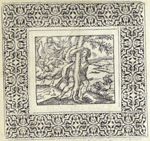
Murus aeneus, sana conscientia: Whitney, A choice of emblemes (Leiden, 1586), emblem 73
Iconclass: 41A54:25D13(BRONZE) fence, wall, paling❧minerals and metals (BRONZE) 51KK2 Immutability 53A22:53B2 Stability, Firmness; 'Fermezza', 'Stabilimento', 'Stabilità' (Ripa)❧Decisiveness, Decision
Collectanea (1500): 589
II x 26 Multi te oderint, si teipsum amas Many will hate you if you love yourself
Πολλοί σε τοι μισοῦσιν ἂν σαυτὸν φιλῇς. id est: Multi te oderint, si temetipsum diligas. Deterret à fastu proverbium & à philautia. Multis enim displiceat oportet, qui sibi nimium placet. Contrà modestia, praecipua favoris & benevolentiae conciliatrix. Suidas ait, nymphas fastiditas à Narcisso hoc dixisse quod modo retulimus. Concinit huic senarius ille, Λίαν φιλῶν ἑαυτὸν οὐχ ἕξεις φίλον. id est: Nemo erit amicus, ipse si te ames nimis. Nulli minus sunt appositi ad mutuum amorem ac benevolentiam, quàm qui sese vehementer amant.
[greek], Many will hate you if you love yourself, is a proverb that warns us against conceit and self-love, for many people are sure to have a low opinion of one who rates himself too highly, while modesty on the other hand is a sovereign way to win popularity and support. Suidas says that the nymphs used the words I have just quoted, when they were rejected by Narcissus. There is another iambic line to the same effect: 'No friend you'll have, if you're your own best friend.' None are less adapted for mutual affection and goodwill than those who suffer severely from love of self.
Facsimile:
Iconclass: 56F241 Narcissism 56FF2 Hate; 'Odio capitale' (Ripa)
Loci Communes: Philautia (Self-love, Amour-propre)
II x 27 Malorum panegyris A throng of misfortunes
Κακῶν πανήγυρις. Malorum panegyris. De malis agminatim ingruentibus, & invicem sibi succedentibus. Panegyris enim apud Graecos dicebatur sollennis ille populi conventus, ad ludos festos celebrandos, voce hinc composita, quod festis diebus universi convenirent. Pisides apud Suidam, Καὶ πάντες, ὥσπερ ἐν κακῶν πανηγυρει, Αλλος καθ᾽ ἄλλην συνμφορὰν ἐδυστύχει. id est, Omneis simul malorum ut in panegyre, Alios tenebat aliud infortunium. Homerus Iliados Τ. Ως μοι δέχεται κακὸν ἐκ κακοῦ αἰεὶ. id est, Tristia perpetuo ut mihi tristibus excipiuntur. Hipponax apud Athenaeum libro 15. Ανδρῶν οἱ καὶ νᾶν κίθι κακῶν κακὰ ῥαψωδοῦσι. Claudicat carmen, sed recta incedet, si tollas καὶ vel νῦν & pro κίθι legas κεῖθι. Ausonius in carmine non ineleganter appellat catenatos labores, quod molestia molestiam excipiat in vita mortalium.
[greek], A throng of misfortunes, of evils that come crowding in a stream and follow closely in their turn on one another. The word used, panegyris, was the Greek name for regular gatherings of the population to celebrate festival games, being a compound word derived from the gathering together of all the people. Pisidas, cited by Suidas: 'And all, as happens when misfortunes throng, / Suffered mishap, and each in his own way.' Homer in Iliad 19: 'How does one ill tread on another's heels!' Hipponax in Athenaeus, book 15: 'Of men there who even now make an epic of the evils of evils.' The line now limps, but it will run correctly if you delete either 'even' or 'now,' and read keithi, there, for kithi. Ausonius in one of his poems has the rather stylish expression 'links in a chain of toils,' for the way in which one trouble in the life of mortals succeeds another.
Facsimile:
Iconclass: 51H3:54FF11 Multitude❧Adversity, Misfortune, Bad Luck; 'Fortuna infelice', 'Infortunio' (Ripa)
Loci Communes: Infortunii sive exitii (Misfortune or ruin, Malheur ou ruine)
II x 28 Magis impius Hippomene As impious as Hippomenes
Ασεβέστερος ἱππομένους. i. Magis impius quàm Hippomenes. Hic Atheniensium princeps filiam à cive quopiam vitiatam, unà cum equo feroci conclusit in domicilio: nec huic nec illi cibum praebens. Equus igitur fame in rabiem actus, puellam adortus confecit, deinde periit ipse quoque pabuli videlicet inopia: post haec pater domum est demolitus, loco nomen inditum, equi & puellae. Recenset adagium Diogenianus.
'[greek], As wicked as Hippomenes. He was a leading figure in Athens, and when his daughter was corrupted by one of the citizens, he shut her up in a dwelling-house in company with a ferocious stallion, giving neither the girl nor the horse anything to eat. The stallion, driven to frenzy by lack of food, attacked and devoured the girl, and then itself also died, presumably of starvation. After this the father pulled the house down, but the place was called The Horse and the Maiden.' The adage is recorded by Diogenianus.
Facsimile:
Iconclass: 31D13 adolescent, young woman, maiden 33B6:42G2122 killing ~ aggressive relationships❧daughter (first degree family relationships) 46C13141 horse 98B(HIPPOMENES) male persons from classical history (HIPPOMENES)
Loci Communes: Improbi (The dishonest, Les malhonnêtes)
II x 29 Manivoro vinculo With fetters that gnaw the arm
Χειροβρῶτι δεσμῷ, id est, Manivoro vinculo. Sic quispiam appellavit manicas vestium Ponticarum, quod manus offendant, atterantque. Idem obiicitur Troianis apud Virgilium, Et tunicae manicas, & habent redimicula mitrae. Recenset Zenodotus.
[greek], With fetters that gnaw the arm. The expression was used by someone to describe the sleeves of dresses worn in Pontus because they handicap and rub the hands. It is the same as the taunt thrown at the Trojans in Virgil: 'Their tunics have sleeves, their bonnets strings to tie.' Recorded by Zenodotus.
Facsimile: 
Iconclass: 41D224 sleeves 44G3129 (person) in fetters, not imprisoned 56BB1 Pain, Sorrow, Sadness; 'Dolore', 'Dolore di Zeusi' (Ripa) 57AA91 Cruelty, Ferocity; 'Crudeltà', 'Ferocità' (Ripa)
Loci Communes: Molesti intolerabiles (Unbearable, troublesome people, Gens insupportables)
II x 30 Malum Hercules Hercules and the apple
Μῆλον ἡρακλῆς, id est, Malum Hercules. Dici conveniet, ubi quis munuscula, quantumvis pusilla boni consulit. Apollodorus apud Zenodotum in libris De diis prodidit, apud Athenienses Herculi Alexicaco, hoc est, depulsori malorum, peculiare quoddam victimae genus immolari solere. Cum enim evenisset aliquando, ut bos, quem erant mactaturi, profugisset, malo arrepto subditisque ceu crurum vice quatuor ramis, additis item cornuum loco duobus, bovis imaginem quandam repraesentarunt, atque id ridiculum simulacrum vice bovis immolarunt Herculi, quae quidem res in vulgi fabulam abiit. Idem est cum eo, quod ante retulimus, μήλιος ἡρακλῆς, id est, pomaceus Hercules, nisi quod unius voculae commutatione nonnihil immutatus est & usus proverbii: nam illud de contempto dicitur, hoc de boni consulente.
Μῆλον ἡρακλῆς, Hercules and the apple, may be used when someone accepts presents, however trifling, with a good grace. Apollodorus, cited by Zenodotus, told in his book On the Gods how it was the custom at Athens to sacrifice a special kind of victim to Hercules 'Alexicacus' (which means 'the averter of evil'). It happened on one occasion that the bull intended for sacrifice made its escape; so they snatched up an apple, and fitting it with four sticks by way of legs and two more for the horns produced a kind of toy bull. This absurd imitation they sacrificed to Hercules instead of the bull; and the thing gave rise to a current proverb. It is the same as Hercules eating apples, which I have already recorded, except that the change of one syllable has somewhat altered the application of the proverb; for we use that form ['eating apples'] when an offering is rejected, and this one ['and the apple'] when it is taken in good part.
Facsimile:
Iconclass: 25G21(APPLE):51K3:12E2121 fruits: apple❧Substitution❧animal sacrifice ~ Greek religion 57A8 Gratitude; 'Gratitudine', 'Memoria grata de beneficii ricevuti' (Ripa) 94L (story of) Hercules (Heracles)
Loci Communes: Contemptus et vilitatis (Contempt and worthlessness, Mépris et bassesse)
II x 31 Manum habere sub pallio To have one's hand in one's pocket
Manum habere sub pallio dicuntur, qui languent ocio. Quintilianus lib. xii damnat eos qui nunquam commoventur inter agendum, semperque manum, quod aiunt, habent sub pallio. Quapropter, inquit, mihi falli multum videntur, qui solos esse Atticos credunt tenues & lucidos & significantes, sed quadam eloquentiae frugalitate contentos, ac semper manum intra pallium continentes. Hactenus Fabius. Sumptum est à gestu rhetorum. Nam qui languent, manum occultant sub pallio, qui commoti sunt, proferunt: & agitatione manus brachiique pronunciabantur ea quae contentionis plusculum haberent. Subindicat hoc & Aeschines in oratione contra Timarchum, de sobriètate priscorum rhetorum loquens, ὥστε ὅ νυνὶ πάντες ἐν ἔθει πράττομεν, τὸ τὴν χεῖρα ἔξω ἔχοντες λέγειν, τότε τουτὶ θρασύτι ἐδόκει εἶναι, καὶ εὐλαβοῦντο αὐτὸ πράττειν. id est, Itaque quod nunc omnes ex more facimus, ut inter dicendum manum extra pallium habeamus, tum temporis confidentiae tribuebatur ac verebantur id facere. Addit, Salamine spectari statuam Solonis manum intra pallium habentis.
To have one's hands in one's pockets [literally, 'under one's cloak'] is used of people who are lazy and spiritless. Quintilian in book 12 has a bad word for those who never work themselves up while making a speech and, as the saying goes, keep their hands in their pockets. 'And so' he says T think those people make a great mistake who suppose that no one has a good Attic style unless he not only is terse, clear, and expressive, but also is content to husband his eloquence and keep his hands permanently in his pockets.' So Quintilian; it is derived from the use of gesture in speaking. A spiritless speaker keeps his hands in his pockets, one who works himself up uses his hands, and matter which needed a little more emphasis was delivered with free gestures of hand and arm. Aeschines points towards the same thing in his attack on Timarchus, when he says, with reference to the sober style of orators in former times, 'So that to speak, as we all do now as a matter of course, with one's hands free was in those days thought to show undue confidence, and people were afraid to do it.' He adds that at Salamis there was a well-known statue of Solon with his hand under his cloak.
Facsimile:
Iconclass: 11N37 Sloth, Indolence, 'Acedia', 'Desidia'; 'Accidia' (Ripa) ~ personification of one of the Seven Deadly Sins 31A25191 hand in the pocket 54AA11 Sluggishness, Inertia; 'Dapocaggine', 'Pigritia' (Ripa)
Loci Communes: Vehementia, languor (Vehemence, listlessness, Véhémence, langueur)
II x 32 In sinu manum habere To have one's hand in one's bosom
In sinu manum habere, dixit Theo critus, tenaces & ad largiendum pigros. Sic enim ait in Charitibus, Νενικηνται δ᾽ ὑπὸ κερδέων, Πᾶς δ᾽ ὑπὸ κέλπου χεῖρας ἔχων, πόθεν αὔξεται ἀθρεῖ ἄργυρος. id est: Lucrique cupidine victus Inque sinu unusquisque manus habet, illud & unum Spectat qua ratione sibi aucta pecunia crescat. Porrò quod ait Scevola lib. Pandect. xxii. Titulo De probationibus, In sinu meo habui, pro eo quod est, in potestate mea clàm habui: magis pertinet ad illud quod alibi nobis dictum est, In sinu gaudere. Verba Caii sunt haec, Titio centum do, lego, quae mihi pertulit, quae ideo ei non cavi, quod omnem fortunam & substantiam, si quam à matre susceperat, in sinu meo habui sine ulla cautione.
"They keep their hand in their bosom' says Theocritus of tight-fisted men who are slow to give anything away. As he puts it in his poem The Graces: Vanquished by greed, each keeps his hand shut tight Within his bosom, on one thing intent, What makes his money grow. At the same time, Scaevola's expression in book 22 of the Pandects, in the title De probationibus, 'I have kept it in my own bosom,' in the sense of 'I have kept it privately under my own control,' belongs more with the phrase I have discussed elsewhere, 'To rejoice in one's own bosom.' John Doe is made to say 'To Richard Roe I give and bequeath the hundred that he made over to me, for which I gave him no security with this in mind, that all and any the property and assets which he had inherited from his mother I have kept in my own bosom without giving any security.'
Facsimile:
Iconclass: 31A25161:31A25513 arm or hand held in front of the chest❧hand made into a fist 55CC1 Saving, Frugality, Parsimony; 'Parsimonia' (Ripa)
Loci Communes: Sordes et parcimonia (Meanness and stinginess, Bassesse et avarice)
II x 33 Praemansum in os inserere Spoonfeeding
M. Tullius in Oratore suo, lib. ii. proverbii vice usurpat, Praemansum in os inserere, pro eo quod est, rem in docendo nimis enucleate, nimisque frustulatim tradere. Quod facere quidam adsolent, qui velut ingeniis auditorum diffidant ita nihil omittunt, inculcantes etiam minutissimas nugas. Sumpta est figura à nutricibus, quae pueris adhuc edentulis cibum praemansum in os inserunt. Verba Tullii sunt haec, Ego autem si quem nunc planè rudem institui ad dicendum velim, his potius tradam, assiduis uno opere eandem incudem die noctuque tundentibus, qui omneis tenuissimas particulas, atque omnia minima mansa, ut aiunt nutrices, infantibus pueris in os inserant. Aulus Gellius Noctium Atticarum lib. iiii. cap. i. (etiam si locus hic depravatus sit. Sic enim habent codices vulgati, Nam hoc quidem pervulgatum est, diffinitionem omnem ex genere & differentia consistere.) Sed si item praemandare, quod aiunt, postulas, faciam sanè id quoque honoris tui gratia. Ego legendum ar bitror, Sed si idem me tibi praemandere, quod aiunt, postulas. Praemandere dixit, pro eo quod est, plus quam crasse explicare rem alioqui non difficilem, nisi si quis planè sit puer. Hoc adagii manet etiam hodie, cum aiunt, An non sat tibi datam occasionem esse. Nam postulas, ut tibi praemandatur etiam? Non dissimile est huic quod idem Cicero scripsit ad Atticum: Sed haec hactenus, ne videar περὶ μικρὰ σπουδάζειν. etsi nunc quidem maxima mihi sunt haec. Et Graeci μικρολογεῖν aiunt, pro eo quod est, circa minutula quempiam anxium esse.
Cicero in book 2 of his De oratore uses 'spoonfeeding' as a proverbial expression for teaching a subject in excessive detail and one scrap at a time. This is a habit of some people who, as though they distrusted the intelligence of their listeners, leave nothing to chance, dwelling on the smallest and most trifling points. The image is derived from nursemaids who, before children have cut their teeth, will soften their food into pap and put it into their mouths. Cicero's words are: 'For my part, if it were a complete ignoramus whom I wished to be taught the art of speaking, I should prefer to hand him over to those industrious people who hammer incessantly night and day on the same anvil, who will cram only the smallest pieces into his infant mouth, nice spoonfuls of pap, as they say in the nursery.' Similarly Aulus Gellius in his Attic Nights, in book 4 chapter 1 (but the text is corrupt, for the current codices have Sed si item praemandare, [but if, furthermore, to recommend beforehand] and I think we ought to read Sed si idem me tibi praemandere [but if... to spoonfeed you on this]): 'For that every definition consists in genus and species, is common knowledge. But if you want me to spoonfeed you, as they say, on this, I will do that too to oblige you.' He uses 'to spoonfeed' for the crude explanation of something not in itself difficult except for a mere child. This adage is still in daily use, when they say 'Isn't it enough to have given you your chance? Do you insist on being spoonfed as well?' There is a phrase not unlike this which Cicero also uses in a letter to Atticus: 'But enough of this, or you will think I am making a fuss over trifles, peri mikra; though I find these things far from trifles at the moment.' And mikrologein is used in Greek for anxiety over very small details.
Facsimile: 
Iconclass: 41C313 spoon 42A32 feeding a baby 51MM11 Slowness, Tardiness; 'Tardità' (Ripa) 52D41 Trifles, 'Nugae'
Collectanea (1500): 289
Loci Communes: Aperte et crasse (Openly and bluntly, Ouvertement et grossièrement)
II x 34 Mala proditio Treason without reason
Κακὴ πρόδοσις. id est, Mala proditio. Ubi quis pactam mercedem non accipit cum turpem praestiterit conditionem. Natum ab historia quapiam, quam tamen non indicant interpretes. Notum est illud dictum, Proditionem laudo, proditorem non laudo. Quum igitur per se res inhonesta sit proditio, tamen nonnunquam utilis est, & ei in cuius gratiam fit, & ei qui facit, Caeterum ubi non succedit, aut ubi proditor fraudatur suo praemio, κακὴ πρόδοσις dicitur. Refertur à Diogeniano.
[greek], Treason without reason. When a man does not get his agreed reward, because he has put forward some dishonourable stipulation. Derived from some historical event, but the commentators give no hint what it was. There is a well-known saying, 'I like the treason, but do not like the traitor.' Although therefore treachery in itself is something dishonourable, there are times none the less when it is profitable both to the man for whose benefit the deed is done and for the doer. When it fails, however, or when the traitor is cheated of his reward, it is called Treason without reason. Recorded by Diogenianus.
Facsimile:
Iconclass: 45F9 treason 51AA4:55A12 Nothingness, Absence❧Reward, 'Praemium'; 'Premio', 'Remuneratione' (Ripa) 57BB13 Punishment; 'Castigo', 'Pena', 'Punitione' (Ripa)
Loci Communes: Ultio malefacti (Vengeance for a wrongdoing, Vengeance d'un méfait)
II x 35 Mali thripes, mali ipes Worm's bad, grub's bad
Κακὰ μελν θρϊπὲς, κακὰ δὲ ἱπὲς, id est, Mala quidem thripes, mala rursum ipes. De duplici malo dici solitum, ut non magni referat, utrum elegeris. Thrips enim Graecis vermiculus est, qui lignis innascitur, materiasque vitiat. Ips item cornibus & viribus infestus. Extat apud eundem Diogenianum.
[greek], Bad is the worm, bad also is the grub. Used by custom of a double evil, where it makes little difference which one you have chosen. The thrips in Greek is a small worm which hatches out in wood and destroys timber; the ips is also destructive, to corn and to vines. This too is found in Diogenianus.
Facsimile:
Iconclass: 25F73 worms 51B2 Similarity, Likeness 54AA5 Badness
Loci Communes: Similitudinis et congruentiae (Similarity and congruence, Similitude et convenance)
II x 36 Mali bibunt improbitatis fecem Evil men drink the dregs of their wickedness
Κακοὶ πίνουσι πονηρίας τὴν ὀμίχλην. id est, Mali bibunt iniquitatis turbidum. Graecus versiculus videtur inversione dictionum depravatus, quod non raro nobis deprehensum est. Constabit hoc pacto, Πίνουσ᾽ ὀμίχλην τῆς πονηρίας κακοὶ, sive οἱ κακοὶ πονηρίας. Dici solitum, ubi poena maleficis digna meritis contigisset. Translatum apparet ab iis, qui vino limpido epoto, tandem ad fecem usque perveniunt. Itaque voluptatem ex malefactis perceptam dolor supplicii consequitur.
Κακοὶ πίνουσι πονηρίας τὴν ὀμίχλην Evil men drink the dregs of their wickedness. The Greek line is clearly corrupt because words have changed places, a thing I have not seldom observed elsewhere. It will scan in this fashion: Πίνουσ᾽ ὀμίχλην τῆς πονηρίας κακοὶ, sive οἱ κακοὶ πονηρίας. Used normally when wrongdoers had paid a penalty worthy of what they deserved. The image derives evidently from those who have drunk clear wine to the last drop and at length reach the dregs. So does the pain of punishment follow pleasure that results from crime.
Facsimile:
Iconclass: 32A49(EVIL MAN) other human types (EVIL MAN) 41C711 wine ~ alcoholic drinks 44G3 criminal law; punishment 51B3 Parity, Equality
Loci Communes: Ultio malefacti (Vengeance for a wrongdoing, Vengeance d'un méfait)
II x 37 Lydio more In Lydian fashion
Λυδίῳ νόμῳ, id est, Lydia lege, sive Lydia cantione. Convenit quoties ariolatur aliquis, & auguriis divinationibusque servit. Hac enim superstitione Lydi laborasse feruntur. Allusit ad harmoniae genus quod Lydium dicitur. Nam & magorum preces, incantamenta vocantur & carmina. Meminit Diogenianus, & item Hesychius, putans idem esse λυδίῳ νόμῳ, ac si dicas μυσῷ νόμῳ quod Lydi profecti sunt à Mysis, & ipsi divinationibus deditissimi. Addit aliam causam, quod Lydi flammeis muliebribus soleant ornare capita, unde quadrare videtur in effoeminatos. Atqui si nobis quoque divinare liceret, Lydi curribus & equitatu valuisse leguntur, ita λύδιος νόμος idem erit cum eo qui apud Suidam dicitur ἁρμάτιος νόμος, sive ἁρμάτιον μέλος, ita dictum quod primum inventum sit de Hectore, qui curru trahebatur, ut narrat Homerus.
[greek], In Lydian custom, or In the Lydian mode. Appropriate when a man turns soothsayer and becomes a slave of augury and divination; for the Lydians are said to have suffered from superstition of this kind. There is an allusion to the style of music called Lydian; for the litanies of magicians too are called enchantments and songs. Mentioned by Diogenianus (and also by Hesychius), who thinks that 'in the Lydian style' means the same as 'in the Mysian style,' because the Lydians are descended from the Mysians, who themselves were most devoted to various forms of divination. He adds another reason, that it is a Lydian custom for men to wrap their heads in veils as women do, which makes the phrase clearly suitable for effeminates. And yet, if I may be allowed a little divination on my own, The Lydians are said to have been very strong in chariots and cavalry, and so the 'Lydian style' in flute music will be the same as what Suidas calls the 'chariot-style' or 'chariot song,' so named because it was first invented to sing of Hector, who was dragged by a chariot in the story in Homer.
Facsimile:
Iconclass: 12F52(AUGUR) 'augur' ~ Roman religion 13B2 sorcerer, magician, wizard, warlock 13E divination, prognostication ~ magic 32B2(LYDIANS) historical peoples: Lydians
Loci Communes: Intemperantia, libido (Intemperance, lust, Intempérance, désir)
II x 38 Lydi mali, post hos Aegyptii, etc Lydians are rascals, and Egyptians second, etc
Λύδοι πονηροὶ, δεύτεροι δ᾽ αἰγύπτιοι. Τρίτοι δε πάντῶν κᾶρες εξωλέστατοι. id est, Lydi improbi, post hos secundi Aegyptii, Tertiique Cares perditissimi omnium. Tempestiviter utemur, si quando mali cum malis conferentur, & collatus cum sceleratioribus, ita demum minus illaudatus aliques videtur. Velut apud Athenaeum Antiphanes cum ἰχθυοπώλας fecisset omnium sceleratissimos, tamen excepit mensarios, his quoque nocentiores. Diogenianus.
[greek], / [greek], Lydians are rascals, and Egyptians second; / Carians the wickedest of all are reckoned. We shall use this aptly if we ever have to compare one set of villains with another, and if, when compared with greater rascals, a man is not as bad as he is painted. Antiphanes, for example, in Athenaeus, after calling fish-mongers the most villainous of men, makes an exception of moneylenders, who are even greater criminals than they are. Diogenianus.
Facsimile:
Iconclass: 32B2(LYDIANS) historical peoples: Lydians 32B32(EGYPTIAN) African peoples, Africans (EGYPTIAN) 44G5 criminals
Loci Communes: Improbi (The dishonest, Les malhonnêtes)
II x 39 Lutum sanguine maceratum Clay kneaded with blood
Theodorus Gadareus Tiberii Caesaris in arte rhetorica praeceptor, perspiciens in eo adhuc adolescente saevitiam quandam cum ingenii stupore coniunctam, inter obiurgandum illum, subinde vocare solet, πηλὸν αἵματι συμπεφυρμένον, id est, Lutum sanguine maceratum: luto tarditatem innuens, sanguine crudelitatem. Autor Suetonius. Non omnino dissimile, quod scurra quispiam Athenis iecit in Syllam, συκάμινόν ἐσθ᾽ ὁ σύλλας, ἀλφίτῳ πεπασμένον. id est, Morum est Sylla, farina variegatum. Quod enim Plutarchus dixit συκά μινον, interpres vertit morum. Notavit autem formam Syllae, in cuius facie alioqui candida, sublucebat rubor non perpetuus, sed veluti maculis inspersis
Theodorus of Gadara, tutor of the emperor Tiberius in the art of rhetoric, who perceived in his pupil while still a youth a strain of cruelty blended with stupidity by nature, used sometimes when rebuking him to call him 'Clay kneaded with blood,' the clay representing his slowness of wit and the blood his brutality. Our authority is Suetonius. This is not wholly unlike the taunt that some joker at Athens cast at Sulla: 'Sulla' he said 'is a mulberry sprinkled with meal.' (Plutarch uses sykaminon, which the translator renders by 'mulberry.') He was criticizing Sulla's appearance, whose face was pale for the most part, with an underlying flush which was not continuous but appeared in some sort of spots.
Facsimile: 
Iconclass: 25D24 clay (soil type) 31A22611 blood 52AA1 Stupidity, Poverty of Intellect; 'Stupidità overo Stolidità' (Ripa) 57AA91 Cruelty, Ferocity; 'Crudeltà', 'Ferocità' (Ripa) 98B(TIBERIUS) male persons from classical history (TIBERIUS)
Loci Communes: Crudelitas (Cruelty, Cruauté)
II x 40 Liberae caprae ab aratro She-goats are free from the plough
Ελεύθεραι αἰγες αῤότρων. id est, Immunes caprae ab aratris. Hemistichium heroici carminis proverbiale, dictum olim ab iis qui se ab onere quopiam, aut molestia liberatos glorientur. Veluti si quis parasitus iactet felicitatem suam, quod ab reipublicae munia non vocetur, cum ad nullam honestam functionem sit appositus. Zenodotus autor.
'[greek], She-goats are quit of the plough. The half of a hexameter line, used as a proverb in Antiquity by those who rejoiced to think that they were freed from some burden or interference. A parasite, for instance, might boast of his good fortune in not being summoned to hold any public office, since he was unsuited to perform any useful function. Zenodotus is the authority.
Facsimile:
Iconclass: 47I15(PLOUGH) agricultural implements: plough 47I2142 she-goat, nanny-goat 51E11 Freedom, Liberty; 'Libertà' (Ripa) 52AA52 Misjudgment
Loci Communes: Ignavia et inscitia (Cowardice and ignorance, Lâcheté et ignorance)
II x 41 Lis litem serit One quarrel breeds another
Ερις δ᾽ ἔριν ἀντιφυτευει. id est, At lis seritur de lite vicissim. Hemistichium est heroicum. Resecanda iniuria est, non retalianda. Alioqui quis erit reciprocandi malis finis, si vicissim contumelia contumeliae reddatur? Carmen extat inter praecepta Phocylidis, Πειθῶ μὲν γὰρ ὄνειαρ, ἔρις δ᾽ ἔριν ἀντιφυτεύει Germanum illi, quod alio commemoravimus loco, Δίκη δίκην ἔτικτε, καὶ βλάβην βλάβη. id est, Litem parit lis, noxa item noxam serit.
[greek],, But quarrel quarrel breeds. This is the half of a hexameter line. Wrongs done to us should be cut off at the root, not returned in kind; otherwise, what limit will there be to the exchange of evil-doing, if each offence is to be matched by another in return? The line survives among the maxims of Phocylides: 'Persuasion's good, but quarrel quarrel breeds.' Related to one I have recorded in another place: Quarrel will quarrel breed, and hurt breed hurt.
Facsimile:
Iconclass: 33B1 quarrel, argument 51C2 Necessity, Inevitability; 'Necessità' (Ripa) 51CC12 Negative Result, Bad Result
Loci Communes: Malum conduplicatum aut renovatum (Evil doubled or renewed, Mal redoublé ou renouvelé)
II x 42 Lignum tortum haud unquam rectum A twisted branch, never straight
Ξύλον ἀγκύλον, οὐδέποτ᾽ ὀρθόν. id est, Numquam rectum tortile lignum. Hemistichium Heroici carminis & hoc. Distorta, pravaque ingenia, vix unquam ad bonam frugem traducuntur. Qui semel inveteravit in vitiis, raro fit ut ad bonam mentem redeat. Effertur ad hunc modum, τὸ ξύλον σκαμβὸν, οὐδέποτ᾽ ὀρθὸν, id est, Lignum pravum nunquam rectum. Usurpavit Galenus lib. De pulsuum differentia quarto, ἐκείνοις μὲν οὐδέ ἀποκρινόμενοι, πρὸς δὲ ἡμᾶς αὐτοὺς λέγοντες τὸ τοῦ κωμικοῦ, ὡς οὔτε στρεβλὸν ὀρθοῦται ξύλον, οὔτε γεράνδρυον μετατεθὲν μοσχεύεται. id est, Illis quidem nihil respondentes, ceterum apud nos ipsos dicentes illud e comoedia, quod nec tortum lignum sit rectum, nec arbor annosa, si transferatur, emittit stolones. Hic pro ἡμᾶς, excusum erat ὑμᾶς, pro γεράνδρυον, γερύανδρον. Id admonuisse referebat, ne quis hanc scripturam corrumperet. Posterius hoc proverbium ante recensuimus. Horatius metaphoram unde ducta sit, ostendit: Naturam, inquiens, expellas furca, tamen usque recurrit. Indicat enim ductam esse ab iis qui furca admota conantur arboris distortae vitium emendare. Confirmat hoc et sententia proverbialis, Φύσιν πονηρὰν μεταβαλεῖν οὐ ῥάδιον. id est, Ingenia prava vertere haud proclive sit.
Ξύλον ἀγκύλον, οὐδέποτ᾽ ὀρθόν, A twisted branch, never straight. This too is half of a hexameter line. Twisted and distorted characters can hardly ever be brought to bear good fruit. When a man has once grown old in wrongdoing, it seldom happens that he returns to a right mind. Also expressed in the form [greek], that is, A crooked branch, never straight. Galen uses it in book 4 of his De differentiis pulsuum: 'Giving them no reply, but repeating to ourselves that saying in the comedy, that neither can the crooked branch be straightened nor will an old tree, if transplanted, send up new shoots.' (In this passage [greek] is printed for [greek] and [greek] for [greek]; this seemed worth a mention, to prevent any corruption of the reading given here.) This latter proverb I have treated of already. Horace makes clear the image from which it derives, when he writes "Though you cast out nature with a fork, it still returns,' for he shows that it comes from those who try to correct the defect of a twisted tree by supplying it with a prop. This is further confirmed by the proverbial maxim 'To change a twisted nature is not easy.'
Facsimile:
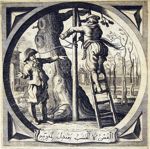
Rami correcti rectificantur, trabs minime: Cats, Spiegel (The Hague, 1632), emblem 1 uses the adage's imagery
Iconclass: 25G(+39):49D321 plants; vegetation (+ other characteristics of plant growth)❧straight line 25G3(+22) trees (+ branch, stick) 51KK2 Immutability 54D6 Custom, Habit; 'Consuetudine' (Ripa)
Loci Communes: Ingenii malitia et institutio (Malice of character and its formation, Malice d'esprit et son origine)
II x 43 Lesbiis digna Fit for Lesbians
Λεσβίων ἄξια, id est, Lesbiis digna. De rebus irritis dicebatur, ob id, quod Lesbii ob vanitatem vulgo male audirent. Fortassis non male quadrarit & in sordidos atque impuros. Nam haec etiam nota quondam illis inusta est. Unde λεσβιεῖν dictum, pro eo, quod est polluere et conspurcare. Aristophanes, Μέλλουσαν ἤδη λεσβιεῖν τοὺς ξυμπότας. id est, Spurcabit, ac iam polluet convivium.
[greek], Fit for Lesbians, was applied to things vain and foolish, the reason being, I take it, that the people of Lesbos were commonly reputed very silly. Perhaps too it may not be unsuitable for sordid and indecent characters, for this is another stigma that in old days was inflicted on them, whence comes the word lesbiein for to corrupt and defile. Aristophanes: "They're ready now to play a Lesbian trick on their fellow-drinkers.'
Facsimile:
Iconclass: 32B311(LESBIANS) indigenous European peoples (LESBIANS) 52AA51 Folly, Foolishness; 'Pazzia', 'Sciocchezza', 'Stoltitia' (Ripa) 57AA64 Pride, Loftiness; 'Alterezza in persona nata povera civile' (Ripa) 59CC221 Corruptibility, Venality, Corruption
Loci Communes: Intemperantia, libido (Intemperance, lust, Intempérance, désir)
II x 44 Lemnia manu With Lemnian hand
Λημνίᾳ χειρὶ. id est, Lemnia manu, dictum est, pro eo quod est, nefaria, impia, crudeli. Natum ab historia proverbium, quam alias retulimus in Lemnio malo.
[greek], With Lemnian hand, was used to convey the sense of wicked, impious, and cruel. The proverb arose from the story which I have related elsewhere under A Lemnian evil.
Facsimile:
Iconclass: 32B311(LEMNIANS) indigenous European peoples (LEMNIANS) 54AA5 Badness 57AA91 Cruelty, Ferocity; 'Crudeltà', 'Ferocità' (Ripa)
Loci Communes: Crudelitas (Cruelty, Cruauté)
II x 45 Lepus apparens infornutatem facit iter A hare appearing makes your path unlucky
Φανεὶς ὁ λαγὼς δυστυχεῖς ποιεῖ τρίβους. id est, Inauspicatum iter obvius facit lepus. Vulgo creditum etiam his temporibus, occursum leporis omen esse parum felix, iter ingressis. Torqueri potest ad interventum cuiuspiam, qui videatur incommodum aliquod allaturus. Meminit Suidas.
[greek], A hare across your way will make you rue the day. It is a popular belief even in our own day that to meet a hare when setting out on a journey is a bad omen. It can be adapted to fit the unexpected appearance of someone who looks like he is bringing bad news. Recorded by Suidas.
Facsimile:
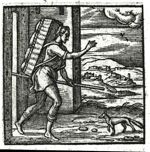
Bonis auspiciendum incipiendum: Alciatus, Emblemata (Leiden, 1591), emblem 126, N.B.: a weasel instead of a hare
Iconclass: 46C512 departure ~ travelling 52E22 Bad Omen; 'Augurio cattivo' (Ripa) 54DD3:52E21 Start❧Good Omen; 'Augurio buono' (Ripa)
Loci Communes: Infortunii sive exitii (Misfortune or ruin, Malheur ou ruine)
II x 46 Limen senectae The treshold of old age
Γήραος οὐδος. i. Senectae limen, antiquitus appellabant, velut extremum autumnum aetatis humanae, cum iam appetit hyems decrepitae senectae. Sumptum est ex Homero, apud quem id perquàm frequens est, ut Iliados χ. Ον ῥὰ πατὴρ κρονίδης ἐπὶ γήραος οὐδῷ Αἴσῃ ἐν αῤγαλέῃ φθίσει. id est, Quem fors Iuppiter ipse senectae in limine diris Conficiet fatis. Idem Iliados Ω. Τηλίκου ὥσπερ ἐγὼν ὀλοῷ ἐπὶ γήραος οὐδῷ. id est, Fermè mea hac aetate, senectae in limiine tristi. Idem in Odysseae: Ον κατέλειπεν ἰὼν ἐπὶ γήραος οὐδῷ. id est, Quem proficiscens ille senectae in limine liquit. Rursum Odysseae ψ Καὶ γήραος οὐδὸν ἱκέσθαι. id est, Atuqe senectae attingere limen. Usurpat et à Platone tanquam poetici proverbii vice. Rursum apud Hesiod. in Operis & diebus: Οσκε γονῆα γέροντα κακῷ ἐπὶ γήραος οὐδῷ Νεικείῃ. id est, Quique senectae in limine fessum aetate parentem. Irritarit.
[greek], The threshold of old age, was a name used in Antiquity for what might be described as the late autumn of human life, when the winter of old age and decrepitude is already approaching. It is taken from Homer, who uses the phrase very commonly, for instance in Iliad 22: 'Whom it may be that the son of Cronos, father of all, will bring to perdition by some cruel fate on the threshold of old age.' Homer again in Iliad 24: 'Very much of my own years, upon the gloomy threshold of old age,' and again in Odyssey 23: 'And reach the threshold of old age.' It is employed also by Plato as a poetical proverb, and again by Hesiod in the Works and Days: 'Who might upbraid his aged father on the sad threshold of old age.'
Facsimile: 
Iconclass: 31D160 Old Age, 'Senectus'; 'Vecchiezza' (Ripa) 41A325 threshold
Loci Communes: Longae vitae (A long life, Longue vie)
II x 47 Lingua bellare To fight with the tongue
Γλώττῃ πολεμίζειν, id est, Lingua bellare dicuntur, qui magnifice convitiantur, ac minantur hosti, sed cum tutum est. Sic enim Menelaus Graecorum ignaviam incusat Iliad. Η. Ωμοι ἀπειλητῆρες ἀχαΐδες οὐκ ἔτ᾽ ἀχαιοί. id est, Heu Graiae, neque iam Graii, tantumque minaces. Allusit huc & Virgilius in Aeneide, An tibi Mavors Ventosa in lingua, pedibusque fugagacibus istis Semper erit? Haec enim Turnus in Drancem lingua pollentem in consiliis, alioquin imbellem. Idem Rutulos maledicos facit, O verae Phrygiae, neque enim Phryges. Et tunicae manicas et habent redimicula mitrae. Sic autem loquitur Hector apud eundem Homerum Iliad υ. Καὶ κεν ἐγὼν ἐπέσσι καὶ ἀθανάτοισι μαχοίμην, Εγχεϊ δ᾽ ἀργαλέον. ἐπειὴ πολὺ φέρτεροι εἰσιν. id est, Sanè ego vel divis possim contendere lingua, Verum hasta durum, multo quia viribus illi Praecellunt. Porrò vera fortitudo neque maledica est, neque minax, id quod innuit Homerus Iliad. lib. v. Τὸν δ᾽ οὔτι προσέφη κορυθαίολος ἕκτωρ, Αλλά παρήϊξεν λελϊημένος. id est, Huic nihil omnino respondit belliger Hector, Quin mage cominus insiliit. Et eiusdem operis libro 3. fingit Graecos tacitos in proelium ire: Οἱ δ᾽ἀῤ ἴσαν σιγῇ μένεα πλείοντες ἀχαιοὶ Εν θυμῷ μεμαῶτες ἀλεξένεν ἀλλήλοισιν. id est, Ast ibant taciti, vim spirantes Danaidae, Atque animo prompti auxilium sibi ferre vicissim. Et Aristophanes in Nebulis, Πράττων, βουλεύων, καὶ τῇ γλώττῃ πολεμίζων. id est, Poscens consultans, & lingua proelia miscens. De hins eleganter apud Livium dictum lib. ab urbe cond. vii. In castris feroces, in acie pavidi. Apuleius verbo festiviter novato, verbigerari dixit, pro verbis digladiari. Et Hesychius indicat, glwssa/spidas2 dictos, qui pro armis lingua uterentur. Hoc nomine signari possent et qui aspidis venenum in lingua circumferunt. Heraclitus ad Hermodorum, ἐν ταῖς γλώτταις ἔχετε τὰ ὅπλα, ἀπεστερηκότες χρήματα, id est, In linguis habetis arma, posteaquam abstulistis pecunias. Causidicorum ac rhetorum est, γλώσσαις πολεμίζειν ηδὲ μάχεσθαι. id est, Linguis bellare atque pugnare.
[greek], To fight with the tongue, describes the actions of those who hurl abuse on the grand scale and threaten their enemy, but only when it is safe to do so. For thus Menelaus accuses the Greeks of cowardice in Ilad 7: 'Out on your threatening boasts, Achaean women and no longer men!' Virgil too alludes to this in the Aeneid: 'Will your strength in war / Lie always in that windy tongue, those nimble feet?' For that is how Turnus addresses Drances, who is a mighty man in counsel with his tongue, but otherwise no fighter. And he presents the Rutulians as abusive: True Phrygian women, Phrygian men no longer, / Whose tunics have sleeves, whose bonnets strings to tie!' Hector uses the same language, also in Homer, in Iliad 20: 'I too could fight even against the immortals, were it in words; but to fight with the spear is hard, for they are so much stronger.' What is more, true courage uses neither abuse nor threats, as Homer suggests in Wad 5: 'To him Hector of the shining helm answered not a word, but eagerly darted past him.' And in book 3 of the same work he represents the Greeks as advancing to battle silently: 'But on the Achaeans went, breathing as brave men breathe, / Each one at heart determined to stand by his neighbour.' And Aristophanes in the Clouds: 'Intriguing, and plotting, and using the tongue as a weapon.' Livy has a neat phrase for such people in book 7 of his Rome from the Foundation: 'Bold in camp, fearful in the battle-line.' Apuleius has verbigerari, a humorous invention, for verbis digladiari, to fight in words. Hesychius also shows that glôssaspides, with tongues for shields, was a name for those who used the tongue as a weapon; it could equally denote men who bear in their tongues the poison of an asp. Heraclitus, writing to Hermodotus: 'On your tongues you have your weapons, now that you have carried off the money.' It is characteristic of legal counsel and teachers of rhetoric to fight and do battle with the tongue.
II x 48 Larus hians A cormorant open-mouthed
Λάρος κεχῃνὼς, id est, Larus hians. Dicebatur, ubi quis avidius inhiaret praedae. Est enim Larus avis avida, voraxque, quam eandem Graeci κέπφον appellant. Aristoph. in Equitibus Λάρος κεχῃνὼς ἐπὶ πέτας δημηγορῶν. Quae Latine quidem commode reddi non possunt. Cleonem enim ob rapacitatem Larum vocat, quod quemadmodum avis in scopulis obversatur, si quid piscium possit venari, ita ille versaretur in Reipublicae negociis administrandis, suum interim agens negocium. Plutarchus apud Athenaeum lib. Convivialium tertio: Στῆ δ᾽ ἀῤ ἐπ᾽ οὐδον ἰὼν, σχεδόθεν δὲ οἱ ἦν παράσιτος Χαιρεφόων, πεινῶντι λάρῳ ὄρνιθι ἐοικώς. id est, At vero adveniens in limine stabat Chaerephoon parasitus ei vicinus, avi non Dissimilis, vulgo dicta est Larus, esurienti. Apud eundem lib. viii. refertur hic trimeter, Οψοφάωους ὥστε τοὺς εἶναι σύρους. id est, Esse uti laros opsoniorum avidos Syros. Larum Theodorus Gaza vertit Gaviam, cuius mentionem facit Plinius, inter maritimas Halcyonem & Mergum, lib. x. cap. trigesimosecundo.
[greek], A cormorant open-mouthed, was applied to someone who had an excessive appetite for spoils; for the cormorant is a greedy and voracious bird, the same as the Greek kepphos. Aristophanes in the Knights: 'A cormorant open-mouthed upon a rock, playing the demagogue.' In Latin at least there is no satisfactory translation for this; for he calls Cleon a cormorant on account of his rapacity because, like the bird, haunting the rocks in hopes of catching a fish, he spent his time in managing public affairs while keeping an eye open all the time for his own advantage. Plutarch in book 3 of Athenaeus' Dinner-talk: 'And he stood when he came to the threshold, and by him stood Chaerephon, a parasite, like a bird, a ravening cormorant.' And in book 8 of the same work he records the iambic line 'So that all the fish-eating cormorants become Syrians.' Larus is rendered gavia by Theodore Gaza, - a bird mentioned by Pliny, book 10 chapter 32, among sea-birds with the halcyon and the gull.
Facsimile: 
Iconclass: 25F37(CORMORANT)(+5733) shore-birds and wading-birds (CORMORANT) (+ animal with mouth wide open) 45L22 division of the spoils of war 55CC11 Greed, Covetousness, Cupidity; 'Cupidità' (Ripa) 59CC221 Corruptibility, Venality, Corruption
Loci Communes: Multi - in stupidos (Many people - against the stupid, Beaucoup de gens - contre les sots); Rapacitas et avaritia (Rapacity and greed, Rapacité et avarice)
II x 49 Laconismus Laconic
Λακονισμὸν, veluti proverbio breviloqentiam vocant, sive quod Lacedaemonii factis magis quàm eloquentia praecelluerunt, sive quod in Apophthegmatis praecipue valuerunt. Horum autem praecipua gratia, ut paucissimis verbis plurimum sententia complectantur. Cuiusmodi sun illa, αἴκα. id est, Si, repsonsum prolixae orationi legati. & οὐκ solum totam occupans epistolam. & ἢ τὰν, ἢ ἐπὶ τᾶς. id est, aut hunc, aut super hunc. M. Tullius aliquondo iocatur in Laconismum Bruti. & λακωνικῶς λέγειν, apud Graecos pro eo quod est, paucis, & compendio dicere. Et λακωνιζειν, affectare breviloquentiam. Gregorius theologus in epistola, τὸ λακωνίζειν οὐ τοῦτο ἐστὶν οιει, ὀλίγας συλλαβὰς γράφειν, ἀλλὰ περὶ πλείστων ὀλίγας. id est, Laconissare non esthoc quod arbitraris, paucas syllabas scribere, sed de rebus plurimis paucas. Proinde Homerus quoque Menelao cue Lacedaemonio argutam breviloquentiam affingit, Παῦρα μὲν, αλλὰ μάλα λυγέως. id est, Pauca quidem, verum plane argutissima. Quin & frugalitas & integritas Lacedaemoniorum prae caeteris Graeciae partibus tanta fuit, ut qui castigate casteque viverent, Laconice vivere dicerentur. Cimon quoties aliquid in Atheniensium suorum moribus reprehenderet, dicere solet, ἀλλ᾽ ου λακεδαίμονιοί γε τοιοῦτι. id est, At non tales Lacedemonii. Itidem & Massiliensium probitas abiit in proverbium, quod alibi retulimus. Sunt autem haec inter se cognata, pauca loqui, et probum esse virum. Huc spectabat Charillus, qui roganti quur Lycurgus tam paucas leges prodidisset: Quoniam , inquit, pauciloquis non est opus multis legibus. notans obiter Athenienses, quorum loquacitati nullae leges sufficiebant. Celebratur & hoc dictum inter Thaletis sententias apud Laertium. Pindarus hymno Istmiorum v. ἀργειων τρόπον εἰρήσεταί πουκὲν βραχίστοις. id est, Argivorum more dicetur paucissimis. Interpres admoent Ionum esse multiloquentiam. Caeterum breviloquentiam non tantum esse familiarem Laconibus, verum etiam Argivis, citans illud ex Ulysse furente Sophoclis, Μῦθος γὰρ ἀργολιστὶ συντέμνειν βραχύς. id est, Argiva paucis multa fert oratio. Laertius ex autoritate Aristagorae Milesii refert, & Chiloni peculiarem fuisse breviloquentiam, unde genus hoc dicendi Chilonium appellat, Huc pertinet versiculus ille, veluti proverbialis apud Athenaeum relatus, Τούς συνετοὺς δ᾽ ἄντις πείσειε τάχιστα λέγων εὖ. id est, Mox persuadebis cordato, si bene dicas.
Laconic is a quasi-proverbial epithet for the use of few words, either because the Spartans in Laconia excelled in deeds rather than words or because pithy aphorisms were a Spartan speciality. But the particular appeal of such aphorisms is that they should contain a great quantity of meaning in the fewest possible words. Well-known examples of this are 'If,' the reply to a long speech by an envoy; 'No,' one word filling a whole letter; and 'Either this or on this.' Cicero sometimes comments humorously on Brutus' laconic style, and lakonikos legein, to speak laconically, is the Greek expression for speaking briefly and in few words, lakônizein, laconizing, for adopting an economical style. Gregory the Theologian in one of his letters: 'To write laconically is not what you think it is, to use few words, but into your few words to put a great deal of meaning.' Thus Homer too credits Menelaus as a Spartan with a pointed economy of language: 'Few words, but flowing clear.' Besides which, the frugality and honesty of the Spartans, in comparison with all the other parts of Greece, were so great that those who lived a strictly disciplined life were said to live in Spartan fashion. Cimon, whenever he found something he did not like in the behaviour of the Athenians, his fellow-citizens, used to say 'The Spartans at least are not like that.' In the same way the honesty of the people of Massilia became proverbial, a fact I have reported elsewhere. Brevity of speech and honesty are inter-related. It was with this in mind that Charillus, when asked why Lycurgus had issued so few laws, replied that those who use few words do not need many laws, which was a sidelong criticism of the Athenians, who in their garrulity could never have enough laws. The saying also appears, as is well known, among the maxims of Thales in Laertius. Pindar in the fifth hymn of the Isthmians: 'In Argive style it shall be told, even in fewest words.' The scholiast there tells us that it was an Ionian characteristic to be voluble, but that in any case to use few words was a habit not only in Sparta but in Argos too; and he cites a line from Sophocles' Madness of Ulysses: 'In Argos speech is brief and cuts things short.' Laertius records, on the authority of Aristagoras of Miletus, that the use of few words was characteristic of Chilon also, and hence calls this style of speaking 'Chilonian.' Here belongs that line recorded as though proverbial by Athenaeus: 'If you speak well, you'll soon convince the wise.'
Facsimile:
Iconclass: 32A49(LACONIC) other human types (LACONIC) 52DD3 Taciturnity; 'Secretezza', 'Secretezza overo Taciturnità' (Ripa) 54D21 Practice; 'Prattica' (Ripa) 61E(SPARTA) names of cities and villages (SPARTA)
Loci Communes: Breviloquentia (Brevity of speech, Brièveté du discours)
II x 50 Late vivens Live in obscurity
Λάθε βιώσας, id est, Falle vivens. Admonet adagium in humili fortuna vitam esse feliciorem iis qui obscure vivunt, & à publicis negociis ita semoti, ut cum vita decessissent, nemo illos vixisse sentiret. Nam λάθε βιώσας, ad verbum commode non potest reddi, verum hanc habet sententiam, quasi dicas, nemo te sentiat in vita fuisse. De hoc adagio recte dictum sit nec ne Plutarchus commentarium conscripsit, si modo non fallit inscriptio. Allusit ad id Horatius Nec vixit male, qui natus moriesque fefellit, Id est, quem nemo sensit, nec prodeuntem in hanc vitam, nec excedentem è vita. Allusit huc, ni fallimur, Ovidius in libris Tristium: Crede mihi, bene qui latuit, bene vixit, & intra Fortunam debet quisque manere suam. Recensetur apud Suidam proverbii nomine.
Λαβύρϊνθον, Live a hidden life. The lesson of the adage is that for those in humble station life is happier if they live in obscurity and remote from public business, so that when their life comes to an end, no one is conscious that they ever existed. For the Greek cannot conveniently be rendered word for word; its meaning is something like 'Let no one be aware that you ever lived.' This adage, and the question whether or no it is good advice, is the subject of an essay by Plutarch, if the ascription is to be trusted; when I was translating it, the actual style struck me as somewhat at variance with the name of the author in the title. Horace alludes to it: 'Nor could his life be blamed, whose birth and death attracted no attention,' that is, whom no one noticed either when he came into this life or his going from it. Ovid alludes to this, if I am not mistaken, in the Tristia: Take my advice: he who lives hid, lives best. / Let each man with his lot contented rest.' Listed by Suidas specifically as a proverb.
Facsimile: 
Bene qui latuit bene vixit: Moralia Horatiana (Amsterdam, 1656), emblem 34 quotes the comment
Bene qui latuit: Camerarius, Symbolorum et Emblematum Centuria(e) (Nürnberg, 1590, 1595, 1596, 1604), emblem 398 quotes the comment
Iconclass: 52DD1 Secrecy, Latency, Concealment; 'Secretezza' (Ripa) 57A641 Discretion, Modesty; 'Discretione', 'Modestia' (Ripa) 59B1 Everyman, 'Elckerlyc'
II x 51 Labyrinthus A labyrinth
Λαβύρϊνθον id est, Labyrinthum olim vocabant orationem, aut rem quampiam vehementer impeditam et inextricabilem. Veluti si quis philosophiae studium Labyrinthum vocet, quod semel ingressis nullus umquam sit exitus. Aut voluptatis studium Labyrinthum vocet, quod aditus ad eam proclivis, exitus difficilimus. Sumptum a Labyrintho Daedali, quod antrum fabulae ponunt in Creta, sinuosum & inexplicabilibus ambagibus inextricabile, in quo servabatur Minotaurus. Dictum putat Suidas παρὰ τοῦ μὴ θύραν λαβεῖν, id est, quod ostium non habeat, indicans et in garrulos ac nugaces competere, qui sermonis nullum inveniunt exitum, si semel garrire coeperint. Gregorius Theologus in epistola ad Eusebium Caesariensem, torquet in versipellem: ἐπειδὴ πρὸς ἄνδρα ποιοῦμαι τοὺς λόγους οὔτε ἀγαπὼντα τὸ ψεῦδος, καὶ τὸ ἐν ἑτέρῳ φωρᾶσαι πάντων ὀξύτατον, κᾂν ὅτι μάλιστα σοφοῖς πλέκηται καὶ ποικίλοις λαβυρίνθοις, id est, Quoniam cum eo viro loquor, qui non solum non amet mendacium, sed et qui in alio possit quam ocissime deprehendere: etiansi vel maxime callidis variisque labyrinthis involuatur. Huic non dissimilis erat Maeander. Id erat picturae genus ortum ab exemplo labyrinthorum, cuiusmodi videmus et hodie in nonnullis pavimentis. Utitur Prudentius in carmine, cuius initium, Cultor Dei: O tortuose serpens Qui mille per Maeandros, Frondesque flexuosas Agitas quieta corda. Hinc et Maeandro Lydiae fluvio nomen, quod flexuosus erret.
[greek], A labyrinth, was a name in old days for any speech or course of action which was excessively complicated and hard to unravel, as for instance if one were to call the study of philosophy 'a labyrinth' because those who have once entered can never find the way out, or were to apply 'labyrinth' to the pursuit of pleasure, because the way thither is downhill but the way out very difficult. Taken from the labyrinth made by Daedalus, which according to the story was a cave in Crete so full of windings and insoluble complications that it was inextricable; there the Minotaur was confined. Suidas thinks it got its name from me labein, fail to obtain, and thyran, exit, because it had no exit, and shows that it also suits chatterboxes and people who talk a lot of nonsense, who once they are launched in their chattering can find no way out. Gregory the; Theologian in a letter to Eusebius of Caesarea twists it to be applicable to a cunning man: 'Since I have to do with a man who is no lover of falsehood himself, and is as quick as anyone to detect it in others, however much it is wrapped up in different cunning labyrinths.' Not unlike this is the use of meander. A meander was a kind of painted pattern derived from the idea of the labyrinth, such as we still see even to-day in some pavements. Prudentius uses it in a poem, of which the first words are Cultor Dei: Serpent in sinuous coilings rolled, Who by your web of treacherous arts And through meanders thousandfold Destroy the peace of quiet hearts. Hence too the river Maeander in Lydia got its name, from its wandering sinuous course.
Facsimile:
Iconclass: 13C24 labyrinth, maze ~ magic mathematical figures 52DD21 Confusion, Obscurity; 'Confusione' (Ripa) 52D4 Prolixity, Verbosity, Loquacity; 'Loquacità' (Ripa) 48A98111(+0) ornament ~ meander (+ variant) 95A(DAEDALUS)52 Daedalus builds the Labyrinth for Minos
Loci Communes: Perplexus (Perplexed, entangled, Perplexe)
II x 52 Labore laboriosus In labour laborious
Πόνῳ πονηρὸς, Id est, Labore laboriosus. Ipsa figura hyperbolen habet laboris immodici. Refertur à Suida proverbii titulo. Hac forma Theophilus apud Athenaeum lib. xiii. dixit de insigniter formosa & procera, κάλλει καλῆς, μεγὲθει μεγάλης, τέχνῃ σοφῆς, Quasi dicas, forma formosam, magnitudine magnam, arte artificem, sive sapientia sapientem. Similis tropus est apud Hebraeos, quoties vel exaggerant vel asseverant, Miserans miserabor, Laboravi laborans. Exstat autem apud Aristophanem in Lysistrata. Subest autem & iocus ob amphibologiam vocis. πονηρὸς enim Graecis ut laboriosum ac miserum, ita significat & malum astutumque.
[greek], In labour laborious. The shape of the phrase, to go no further, conveys an exaggerated idea of unrelenting toil. Suidas records it as a proverb. Theophilus, as cited by Athenaeus in book 13 used this formula of an outstandingly tall and lovely girl: 'In beauty beautiful, in stature stately, in art clever,' or maybe 'in wisdom wise.' There is a similar turn of speech in Hebrew, used for exaggeration or emphasis: 'In pity I will pity,' 'In toil I laboured.' It is also found in Aristophanes, in the Lysistrata. A further touch of humour underlies our proverb thanks to the double sense of the word; for poneros can mean not only laborious and miserable but criminal and crafty.
Facsimile:
Iconclass: 46A170 Labour 54A11 Industriousness, Assiduity; 'Assiduità', 'Industria', 'Zelo' (Ripa)
Loci Communes: Infortunii sive exitii (Misfortune or ruin, Malheur ou ruine)
II x 53 Laciadae Laciadae
Ω λακιάδαι, id est, Laciadae, vulgatum convicium in moechos. Populus quispiam est Atticae Laciadarum, tribus Oeneidis, apud quos ingens raphanorum copia. His autem utebantur in adulteros deprehensos ludibrii causa. Refertur apud Suidam.
[greek], O the Laciadae! A current term of abuse for adulterers. There was a clan in Attica called the Laciadae, belonging to the Oeneid tribe, and they grew an enormous quantity of radishes. And radishes were used in a humiliating form of punishment applied to men caught in adultery. Recorded in Suidas.
Facsimile:
Iconclass: 25G22(RADISH) (non-fruit) products of plants or trees: radish 32B2(LACIADAE) historical peoples and nationalities (LACIADAE) 42D391 adulterer
Loci Communes: Decretum - in deprehensos (Decree - against those caught in the act, Décret - contre les pris sur le fait)
II x 54 Laborem serere To sow hard work
Πόνον σπείρειν, id est, Laborem serere, vulgo dicebantur, qui frustra laborarent, quasi nihil fructus è labore reportaturi, praeter laborem ipsum. Autor Diogenianus.
[greek], To sow hard work, was commonly applied to those who laboured in vain, the idea being that they got no return from their work beyond the work itself. Diogenianus is the authority.
Facsimile:
Iconclass: 47I131 sowing 46A170 Labour 54A11 Industriousness, Assiduity; 'Assiduità', 'Industria', 'Zelo' (Ripa)
Loci Communes: Inanis opera (Vain effort, Effort vain)
II x 55 Labrax Milesius A Milesian bass
Λάβραξ μιλήσιος, id est, Labrax Milesius. In stolidum & avidum dicebatur. Labrax enim piscis genus lato oris victu, unde escam totam unà cum aere faucibus corripit, atque ob id facile capitur. Unde apud Plautum lenoni Labracis nomen. Aristoteles hunc annumerat inter eos, qui praeda laniatuque vivunt. Lingua est ossea, & affixa, cor triangulum. Aristophanes apud Athenaeum lib. vii. labracem piscium sapientissimum appellat, Λάβραξ ὁ πάντων ἰχθύων σοφώτατος Apud Miletum autem Asiae civitatem praegrandes, & item plurimi labraces esse dicuntur propter stagnum influens in mare. Gaudet enim hic piscis aqua dulci. Aristophanes in Equitibus, Αλλ᾽ οὐ λάβρακας καταφαγὼν μιλησίους Κολονήσειας. id est, Haud cum lupos voraveris Milesios, Facies tumultum. Nam quidam hunc piscem esse putant, qui Latine Lupus dicitur.
[greek], A Milesian bass, was applied to a stupid, greedy person; for the bass is a fish with a wide gaping mouth, so that it seizes the entire bait in its jaws, hook and all, and thus is easily caught, and hence Labrax, Bass, is the name of a brothel-keeper in Plautus. Aristotle numbers it among the fishes that live by plunder and rapine; its tongue is bony and attached, and its heart triangular. Aristophanes, quoted by Athenaeus, book seven, calls the bass the cleverest of fishes: 'Of all fishes bass the cleverest.' At Miletus, a city in Asia Minor, bass are said to be exceptionally large and very plentiful, on account of a marsh that drains into the sea; for this fish enjoys fresh water. Aristophanes in the Knights: 'Nor when you have gobbled up Milesian wolves, / Shall you go roystering.' For some think this is the fish called in Latin lupus, the wolf.
Facsimile: 
Iconclass: 25F62(BASS)(+5733) bony fishes (BASS) (+ animal with mouth wide open) 52AA1 Stupidity, Poverty of Intellect; 'Stupidità overo Stolidità' (Ripa) 55CC11 Greed, Covetousness, Cupidity; 'Cupidità' (Ripa) 61D(MILETUS) geographical names of countries, regions, mountains, rivers, etc. (MILETUS) (MILETUS)
Loci Communes: Rapacitas et avaritia (Rapacity and greed, Rapacité et avarice)
II x 56 Lavares Peliam You would give Pelias a bath
Λούσης τὸν πελίαν, id est, Laves Peliam. Dictum apparet, ubi quis salutem pollicitus, adfert exitium. Aut ubi quis prodesse conatus, ingens addit malum. Ductum à notissima Peliae fabula, quem dum filiae à Medea persuasae student ad iuventam revocare, lebeti ferventi impositum occiderunt. Fortassis non intempestiviter dicetur, ubi quis falsa spe ductus inanem sumit operam. Veluti si quis arte, quam vocant Alcimicam, fretus, sibi promittat futurum, ut è stanno fiat argentum, ex aere aurum. Refertur in adagiorum Collectaneis, quae Plutarchi feruntur nomine.
[greek], You would give Pelias a bath. Clearly this is used when someone promises recovery and delivers disaster, or when a man tries to help and makes the trouble infinitely worse. Derived from the very familiar fable of Pelias, whose daughters were persuaded by Medea to try and restore his youth, and in the process they plunged him in a boiling cauldron and killed him. It will perhaps be used not inappropriately when someone is deluded by false hopes and undertakes a fruitless task; for example, if he relies on the so-called art of alchemy and promises himself that he will turn tin into silver and bronze into gold. Recorded in the collection of adages which passes under the name of Plutarch.
Facsimile:
Iconclass: 52AA522:49E39 Delusion, Fallacy; 'Prima Impressione' (Ripa)❧alchemy 94A632 the daughters of Pelias kill their father in his bed; Medea plunges his body in boiling water
Loci Communes: Praeter spem bonum aut malum (Good or bad beyond expectation, Bien ou mal inattendu)
II x 57 Iterum atque iterum ad Pythum via Over and over again the Pytho road
Αὖθις αὖ πύθωδ᾽ ὁδός. id est, Iterum atque iterum Pythum versus via. Dictum de iis, qui molesti sunt eadem de re iterum atque iterum percunctando. Quemadmodum solent ignari viae, quencumque obvium habuerint, de via rogare. Porrò Pythus civitas Apollini sacra, quae visebatur à plerisque. Apparet è comoedia sumptum. Est enim hemistichium iambicum: verum ex qua, non indicat Diogenianus, et mihi non succurrit. Finitimum illi, ὁ διὸς κόρινθος. id est, Iovis Corinthus.
[greek], Over and over again the road to Pytho, used of those who become tedious by asking questions on the same topic again and again, as men do who do not know their way and ask everyone they meet. The city of Pytho was sacred to Apollo, and most people paid it a visit. Clearly taken from some comedy, for it is half an iambic line; but from which play, is not recorded by Diogenianus, nor does my memory serve me. Close to the adage: Corinthus son of Jove.
Facsimile:
Iconclass: 51B61 Repetition 56BB31 Boredom 46C5131:61D(PYTHO) asking the way❧geographical names of countries, regions, mountains, rivers, etc. (PYTHO) (PYTHO)
Loci Communes: Taedium ex iteratione (Tedium from repetition, Lassitude due à la répétition)
II x 58 Cum Delphis sacrificaverit, ipse carnes absumit After offering sacrifice at Delphi, he eats the meat himself
Plutarchus vii. lib. τῶν συμποσιακῶν, hunc senarium veluti proverbialiter citat, Δελφοῖσι θύσας αὐτὸς ὀψωνεῖ κρέας. id est, Carne ipse Delphis immolata vescitur. Ostendit dici solitum de iis, qui vocatis convivis ipsi cibos appositos devorant, ut illis spectare tantum liceat, non vesci. In Delphicis enim sacris, is qui immolarat victimam, ea vescebatur. Contrà fiebat his sacris, quae Hecatae inferebantur, ex quibus nihil redibat ad eum, qui offerebat, praeter fumum & tumultum. Quanquam & in diversum sensum accipi potest, ut intelligamus, Delphicum sacerdotem nihil impertiri de victima, ei qui victimam dedit: ita fit aliquoties, ut edax conviva, seu pluribus adductis edacibus umbris, velut harpyis, coenam omnem devoret, esuriente qui vocavit. Adagium torqueri potest etiam ad illos, qui beneficio, quod alii dedisse videntur, ipsi fruuntur. Ut episcopi nonnulli nepotibus suis sacerdotia magnifica donant nonnunquam, sed ad pueros solus titulus redit, ad episcopos proventus.
Plutarch in the seventh book of his Table-talk' cites as proverbial this iambic line: [greek], After sacrificing at Delphi he himself eats the meat, and shows that this was normally applied to those who invited guests and then themselves eat the food that is set before them, so that the guests can watch but cannot eat. For in sacrifices at Delphi, the man who sacrificed the victim had the eating of it; the opposite happened at those offered to Hecate, at which the man who made the offering got nothing but smoke and tumult. Though it can also be taken in the opposite sense, if we understand it to mean that the priest at Delphi offered no share in the victim to the man who gave it. It does sometimes happen that a greedy guest, or one who has brought with him a number of greedy 'shadows,' like Harpies, devours the whole dinner, while the host who invited them all goes hungry. The adage can also be adapted to apply to men who enjoy themselves what they appear to have given to someone else; thus there are bishops who sometimes confer splendid benefices on their nephews, but the boys get the title only, and the bishops get the revenues.
Facsimile:
Iconclass: 12E2121 animal sacrifice ~ Greek religion 41C11:41C69 eating❧meat; still life of meat 57AA612:33A4 Insincerity❧bringing gifts; exchanging gifts 55CC11 Greed, Covetousness, Cupidity; 'Cupidità' (Ripa) 57AA65 Selfishness; 'Interesse', 'Interesse proprio' (Ripa) 61E(DELPHI) names of cities and villages (DELPHI)
Loci Communes: Munus non munus (A gift that is not a gift, Un présent qui n'en est pas un)
II x 59 Ισθμιάζειν To visit the Isthmian games
Ισθμιάζειν olim dicebantur, qui parum commode, parumque salubriter viverent, propterea quod Isthmiorum ludorum tempus morbis esset obnoxium, ob ingentem hominum conventum. Meminit Suidas & Hesychius. Fortasse non absurde dicetur in hos, qui frustra conantur, propter Isthmi perfossionem à multis infeliciter tentatam. Qua de re dictum est nobis alibi copiosius.
'[greek], To visit the Isthmian games, was in old days a way of describing those who lived an uncomfortable and unhealthy life, because the season of the Isthmian games was favourable to sickness on account of the large crowds who attended. Mentioned by Suidas and Hesychius. It will perhaps not be absurd to apply it to men engaged in some hopeless undertaking, when we think of the unsuccessful efforts of so many people to cut through the Isthmus, of which I have spoken more fully elsewhere.
Facsimile:
Iconclass: 12E92(ISTHMIAN GAMES) Isthmian games, in honour of Poseidon 31A4690 Health, 'Sanitas'; 'Sanità' (Ripa)
Loci Communes: Insalubritas (Unhealthiness, Insalubrité)
II x 60 Ipsi curandum It's his own business
Αὐτῳ μελητέον, ἀλλ᾽ ἐπὶ τὸν οἰκον. id est, Ipsi curandum est, sed in domum. Zenodotus ait huius adagii mentionem fieri apud Aristophanem in Agricolis, praetera apud Platonem grammaticum. Natum autem ab aedibus quibusdam maximis, quae locabantur conducere volentibus. Unde convenire videtur (si quidem coniecturas sequi fas est, ubi nihil adferunt quod sequaris Graeci scriptores) in eos, qui rebus alienis liberius utuntur, ut solent qui in conducto habitant.
[greek], It's his own business, but into the house. Zenodotus says that a mention of this adage occurs in the Farmers of Aristophanes, and besides that in Plato the grammarian, and that it arose from certain very large dwellings, which were hired out to those who wished to rent them. Thus it seems suitable (if one may be allowed to follow guesswork when Greek authors provide one with nothing to follow) to those who make an unduly free use of other people's belongings, as they often do who live in rented property.
Facsimile:
Iconclass: 46B414:41A hiring, leasing❧housing 55CC3 Borrowing, Hiring 57AA6122 Sponging, Parasitizing
Loci Communes: Aliena curantis - ad rem pertinentia (Meddling in others' affairs - relevant matters, Qui se mêle des affaires d'autrui - choses pertinentes)
II x 61 Hyperberetaea Hyperberetaean
ὑπερβερεταῖα, i. Hyperberetaea, dicebantur olim admodum serotina, quaeque vix tandem advenirent. Apud Macedones extremus anni mensis, ὑπερβερεταιος appellabatur. Unde quae in longum proferebantur, Hyperberetaea dicebantur, perinde quasi apud La tinos dicas decembria. Et ὑπερβερεταίοι, comperendinatores. Suidas existimat eum esse mensem apud Macedones, quem nos octobrem vocamus, quod tum sera sit aestas, & quae tum proveniunt, post legitimum tempus provenire videantur.
'[greek], Hyperberetaean, was a word in old days for things which were much belated and came about with difficulty in the long run. In Macedonia the last month of the year was called Hyperberetaeus; and so what was long postponed was said to be Hyperberetaean, as one might say 'Decembrian' in Latin, and people given to postponement had the same name. Suidas thinks that in Macedonia it was the month which we call October, because summer is then at its latest stage and things which appear then are thought to appear out of due time.
Facsimile: 
Iconclass: 23I43 December; 'Decembre' (Ripa) 51FF521 Delay 51MM11 Slowness, Tardiness; 'Tardità' (Ripa)
Loci Communes: Tarditatis et cunctationis (Slowness and delay, Lenteur et retard)
II x 62 Ulyssis remigium Ulysses' crew
Homines nequam & voluptatibus addictos Horatius in epist. Ulyssis remigium appellavit, proverbiali nimirum figura, Remigium vitiosum Ithacensis Ulyssi. Ut qui nec à Circes poculis temperarint, nec à Lotophagis avelli potuerint, nec à Solis bubus abstinuerint. Unde Homerus Odysseae primo, Αὐτῶν γὰρ σφετέρῃσιν ἀτασθαλίῃσιν ὄλονος Νήπιοι. Ipsorum siquidem vaecordia perdidis illos Amentes, Non dissimili figura dixit, sponsos Penelopes, & Alcinoos, voluptarios & virtutis negligentes. Item alio loco Phaeacem appellat, nitidum & bene curata cute, Ut possim pinguis Phaeaxque reverti. De Phaeacibus Homerus Odyss. libro viii. Αἰεὶ δ᾽ ἡμῖν δαίς τε φίλη, κιθαρις τε, χοροίτε, Εἰματά τ᾽ ἐξημοιβὰ, λοετρά τε θερμά καὶ εὐναὶ. id est, Nos vero semper capiunt, citharaeque chorique, Et varia vestes, & balnea calda, torique Idem de procis Penelopes, Odysseae. lib. i. Τούτοισιν μὲν ταῦτα μέλει, κίθαρις καὶ ἀοιδὴ, Ρεῖ᾽, ἐπεὶ ἀλλότριον βίοτον νήποινον ἔδουσιν. id est, Istos sollicitant haec, concentus, citharaeque Et facile, ut qui aliena sient impune vorantes.
Worthless men devoted to a life of pleasure are called by Horace in his Epistles a 'Ulysses' crew,' the expression being no doubt proverbial: 'Vice-ridden crew of Ithacan Ulysses,' for they did not abstain from Circe's drinks, they could not be torn away from the Lotus-eaters, they would not keep their hands off the oxen of the Sun. Hence Homer in book 1 of the Odyssey: 'Fools! Their own reckless folly was their undoing.' Horace uses a rather similar figure when he calls devotees of pleasure with no thought for virtue 'Penelope's suitors and Alcinouses,' and in another passage applies 'Phaeacian' to a well-groomed dandy: 'A sleek Phaeacian I on my return.' On the Phaeacians Homer in Odyssey book 8: 'But feasting was ever dear to us and the music of strings and dancing and changes of raiment and hot baths and bed.' Again, on Penelope's suitors in Odyssey book 1: 'This is all they care for - the music of strings and song, since with impunity they eat another's sustenance.'
Facsimile:
Iconclass: 57AA51 Licentiousness, Lasciviousness; 'Lascivia', 'Licenza' (Ripa) 57AA68 Unworthiness 94I12 Ulysses and his men in the land of the lotus-eaters (Homer, Odyssey IX) 94I161 Circe invites Ulysses' men into her palace 94I183 in Thrinacria Ulysses' men devour some of the cattle of the Sun-god while Ulysses is asleep
Loci Communes: Improbi (The dishonest, Les malhonnêtes)
II x 63 Zaleuci lex A law of Zaleucus
Ζαλεύκου νόμος, id est, Zaleuci lex. De edicto mandatoque plus satis rigido, parumque humano dicebatur. Zaleucus quidam Locrensibus iis, qui vocantur Epizephyrii, leges tulit acerbiores, quales feruntur et Draconis fuisse leges apud Athenienses, vere Draconis, ut ille dixit, non hominis. Non dissimile illis, Manliana imperia, & Phalaridis imperium. Meminit historiae Valerius Maximus lib. vi. cap. v. Etenim quum filius Zaleuci secundum ius ab eo constitutum ob crimen adulterii utroque oculo carere deberet, ac tota civitas in honorem poenam adulescenti remitteret, repugnavit aliquandiu, postremo populi victus precibus, suo prius, deinde filii oculo eruto, salva lege, supplicii modum temperavit.
[greek], A law of Zaleucus, was applied to an officially published rule of excessive severity and too little concern for human life. A man called Zaleucus among the so-called Epizephyrian Locrians passed very harsh laws, resembling the code introduced, according to tradition, by Draco in Athens which was, as has been well said, the product of a dragon rather than a man. This bears some resemblance to Manlian orders, and To rule like Phalaris. The story is mentioned by Valerius Maximus, book 6 chapter 5: 'For when Zaleucus' son, in accordance with a law which he had introduced, was convicted of adultery and due to lose both eyes, the whole city, out of respect for his father, was willing to remit the young man's penalty. Zaleucus resisted this for some time; but yielding at length to popular demand, he modified the severity of the punishment by losing first one of his own eyes and then one of his son's, thus safeguarding the law.'
Facsimile:
Iconclass: 44G6 juridical examples; exemplary judges; 'Gerechtigkeitsbilder' 98B(ZALEUCUS)61 the judgement of Zaleucus: when Zaleucus' son is sentenced to be blinded in both eyes, Zaleucus has one of his son's eyes plucked out and one of his own
II x 64 Zopyri talenta The talents of Zopyrus
Ζοπύρου τάλαντα. i. Zopyri talenta. De praeclaris factis, magnoque aestimandis. Hic Zopyrus Darii regis amicus erat, qui sibi nares & aures conscidit, & omne corpus flagris cruentavit, ut his argumentis Babyloniis fidem faceret, se Dario male velle, à quo tam immaniter esset acceptus. Itaque Babyloniorum civitatem ingressus, eam Dario prodidit. Unde Darium dixisse ferunt, se unum Zopyrum integrum malle, quàm centum Babylonas capere. Et oblato malo granato, tantum optavit sibi Zopyrorum, quantum ibi granorum inesset, ut narrat Herodotus lib. iii. Meminit Plutarchus in apophthegmatis. Adagium recenset Zenodotus.
[greek], The talents of Zopyrus, of heroic actions which are of great value. Zopyrus was a friend of king Darius, who cut off his own nose and ears and had himself scourged until his whole body was covered with blood, as evidence to persuade the Babylonians that he must have a grievance against Darius, who was supposed to have treated him so brutally. So, having entered the city of Babylon, he betrayed it to Darius; which led Darius to declare, according to the story, that he would rather have one Zopyrus safe and sound than capture a hundred Babylons, and, when he was given a pomegranate, wished he had as many Zopyruses as there were seeds in the fruit, as Herodotus tells us in book 3, and Plutarch mentions in his 'Apophthegms.' The adage is listed by Zenodotus.
Facsimile:
Iconclass: 31A419 mutilated person 54A81 Fearlessness, Intrepidity; 'Intrepidità & Costanza' (Ripa) 98B(DARIUS)3 (story of) Darius, king of Persia - representations to which the NAME of a person from classical history may be attached 98B(ZOPHYRUS) male persons from classical history (ZOPHYRUS)
II x 65 Una scutica omneis impellit One whip drives them all
Μία μάστιξ πάντας ἐλάυνει. id est, Una scutica incitat omnes. Hemistichium Heroicum de negocio dictum, quod facile fieret, videlicet à promptis omnibus, & suapte sponte currentibus. Fortassis apte dicetur & in hos, quos eadem causa impellit, puta eadem spes lucri, studium commune, idem amor aut odium. Sumptum ab aurigis. Autor Suidas: Usurpat Psutarchus in vita Lycurgi scribens urbem Lacedaemoniorum: ἀπὸ σκυτάλης μιᾶς καὶ τρίβωνος ἄρχουσαν τῆς ἑλλάδος ἑκούσης καὶ βουλομένης. id est, Scytala ac sago imperantem Graeciae spontaneae volentique.
[greek], One whip drives them all. The second half of a hexameter, applied to a piece of business that was easily completed, everyone working readily because they were running with a will. It will perhaps be suitable also for those who are driven by the same motive, it may be hope of gain or a shared ambition or the same love or hate. Derived from those who drive a team. Suidas is the authority. Plutarch uses it in his life of Lycurgus, when he says that the city of Sparta 'with one staff and cloak enjoyed the glad and willing obedience of the whole of Greece.'
Facsimile:
Iconclass: 47I123 ploughing 54E31 Agreement, Unity; 'Concordia', 'Concordia insuperabile', 'Concordia militare', 'Concordia di Pace', 'Unione civile' (Ripa)
Loci Communes: Proclivitas (contra) (Propensity (against), Penchant (contre))
II x 66 Tanquam Chalcidica nobis peperit uxor My wife breeds like a woman of Chalcis
Ωσπερ χαλκιδικῆ τέτοκεν ἡμῖν γυνὴ, id est, Tanquam Chalcidica peperit nobis uxor. De ea dicebatur, quae liberos quàm plurimos peperisset. Tradunt heroinam quandam fuisse nomine Comben, cui cognomen fuerit Chalcidi, quod prima arma aerea confecerit. Ea viro coniuncta centum liberos enixa dicitur. Sicuti proditum est in Euboicis annalibus, & attestatur Aristus Salaminius. Quidam ad Chalcidem Euboeae civitatem referunt, quod è Chalcidensium officinis ingens armorum aereorum & quadrigarum vis prodiret. Stephanus enim ab officinis aerariis urbi nomen additum putat. Usurpare licebit, ubi significabimus, multum litium, bellorum, aut curarum aliunde natum.
[greek], My wife breeds like a woman of Chalcis, was used of the mother of a very large family. The tradition is that there was a semi-divine figure called Combe, who also bore the name Chalcis, because she was the first to make weapons of bronze. When she married, she is said to have borne her husband a hundred children, according to the annals of Euboea, as attested by Aristus of Salamis. Some refer this to the city of Chalcis in Euboea, from the immense quantity of weapons and four-horse chariots of bronze produced by Chalcidian workshops; for Stephanus thinks the city got its name from its bronze-foundries. It will be possible to use this when we wish to convey that some source has given rise to a quantity of disputes, wars or anxieties.
Facsimile: 
Iconclass: 31A431(100) very large number of births (100) 32B311(CHALCIDIANS) indigenous European peoples (CHALCIDIANS) 42A18 fertility 58A3 Fruitfulness, Productiveness, Fertility, Fecundity; 'Fecondità' (Ripa)
II x 67 His medus non insidiabitur The Persians shall not lie in wait for these
Τάδε μῆδος οὐ φυλάξει, id est, Haec Medus non observabit. Cum Xerxes exercitum in Graeciam traducere pararet, ut autor est apud Zenodotum Dicaearchus, Graeci desperatis rebus facultates suas absumpserunt, ne multum reliquum fieret, quod hostis tolleret, ita dicentes, Haec Medus non observabit. Eaque vox in adagium abiit, ubi quis largius impenderet sua, ne venirent in aliorum manus. Veluti si quis pecunias suas erogaret amicis, ut eas liberis turpiter absumpturis subducat, recte dixerit, ταῦτα μῆδος οὐ φυλάξει. Aut si civis opulentus pecunias exstruendis aedificiis absumat, ne his insidietur avarus princeps, & omnium fortunis imminens.
[greek], The Persians shall not cherish these. When Xerxes was preparing to take his army into Greece, as we learn from Dicaearchus cited by Zenodotus, the Greeks, who despaired of the outcome, used up all their stores for fear of leaving much that the enemy could remove, saying The Persians shall not cherish these'; and the saying became an adage, applicable to those who dissipate their resources to prevent their falling into the hand of strangers. If a man, for instance, were to distribute his money to his friends to keep it out of the hands of his children, who would make a scandalous use of it, he could rightly say 'The Persians shall not cherish this,' or if a rich citizen were to spend all his resources on building, to keep them safe from a greedy prince who was a menace to every man of fortune.
Facsimile:
Iconclass: 45G defensive measures (military) 54FF14:45A131 Disadvantage❧enemy ~ war 55C2 Giving
Loci Communes: Securitatis et tutae rei (Security and safety, Sécurité et sûreté)
II x 68 In Orci culum incidas May you fall into Orcus' anus
Αδου πρωκτῳ περιπέσοις. i. In Orci culum incidas. Sermo perniciem & extremum exitium imprecantis. Recensetur à Diogeniano. Cognatum illis: βάλλ᾽ ἐς κόρακας, βάλλ᾽ ἐς μακαρίαν.
[greek], May you fall into Orcus' anus. The words are those of a man wishing someone destruction and a final end. Listed by Diogenianus, it is related to Off with you to the crows, and To blessedness.
Facsimile:
Iconclass: 13B42 bewitching, cursing, casting spells 31A2764 falling through the air 92N1:31A22371(+0) (story of) Pluto (Hades), Dis Pater, Orcus❧anus (+ variant)
Loci Communes: Infortunii sive exitii (Misfortune or ruin, Malheur ou ruine)
II x 69 Invitus Jupiter novit Jupiter has no wish to know
Ακων μὲν ζεὺς οἶδεν, id est, Invitus quidem Iuppiter novit. Ubi quis pollicetur quippiam, sed invitus. In quibusdam codicibus legitur, ἄκων μὲν, ὡς ζεὺς οἶδεν. id est, Invitus tanquam Iupiter cognovit. Mihi videtur & recte quadraturum, ubi serius poenas dant nocentes, ut affine sit ei quod alibi referimus, ζεὺς κατεῖδε χρόνιος εἰς τὰς διφθέρας. Etenim qui sero dat, aut punit, gravatim id facere videtur.
[greek], Jupiter has no wish to know. When a man makes a promise, but reluctantly. In some texts I find the reading 'Like Jupiter, he has no wish to know.' I think it will also be suitable when wrongdoers pay the penalty belatedly, which makes it similar to one I record elsewhere, Jupiter was slow looking into his records. For he who pays late, or punishes late, clearly does so with reluctance.
Facsimile:
Iconclass: 51FF52:44G3 Lateness❧criminal law; punishment 52A5 Knowledge; 'Cognitione', 'Cognitione delle cose' (Ripa) 52AA5 Ignorance; 'Ignoranza', 'Ignoranza di tutte le cose', 'Ignoranza in un ricco senza lettere' (Ripa) 92B1 (story of) Jupiter (Zeus)
Loci Communes: Ultio malefacti (Vengeance for a wrongdoing, Vengeance d'un méfait)
II x 70 Excubias agere, aut ditari To keep watch or to become rich
Φρουρεῖν, ἤ πλουτεῖν, id est, Excubias oportet agere, aut divitem esse. De iis dicebatur, qui ampliter facerent sumptus de alieno. Nam ut divites, quibus ampla res domi est, large profundunt, ita milites non parcunt opibus alienis, sed prodigunt graviter, & scelere parta perdunt sceleratius. Athenienses excubiis agendis insulares magno stipendio conducere solebant. Non dissimile illis, Ιππος μὲ φέρει, βασιλεὺς με τρέφει. id est, Equus me portat, alit rex.
[greek], One must keep watch or be rich, was used of those who spent lavishly at other men's expense. Rich men with plenty of their own money spend generously, and soldiers in the same way do not spare other men's wealth but squander it busily, and waste even more criminally the proceeds of crime. The Athenians used to hire men from the islands for high wages to keep watch. This is not unlike A horse to carry me, a king to feed me.
Facsimile:
Iconclass: 46A16331 guarding of treasure by men 55C11:55B1 Squandering, Extravagance, Prodigality, Waste; 'Prodigalità' (Ripa)❧Wealth, Opulence; 'Opulenza', 'Richezza' (Ripa)
Loci Communes: Anceps et dubius (Doubtful and uncertain, Incertain et douteux); Infortunii sive exitii (Misfortune or ruin, Malheur ou ruine); Liberalitas (Generosity, Générosité)
II x 71 Intra septimam Before the seventh
Εντὸς ἑβδόμης, id est, Intra septimam. Subaudi lunam. Edictum erat Athenis, ne ante septimum diem mensis, exercitum educerent. Recte fortassis utemur hoc adagio, quoties admonebimus mature, suoque tempore negocium aggrediundum. Meminit Zenodotus, Suidas & Hesychius, nec praeterea quicquam adscribunt. Vide num allusum sit ad id, quòd alio retulimus loco, ἑβδομος βοῦς, id est, septimus bos, & Τὸν ἕβδομον βοῦν ἡ σοφὴ παροιμία. id est, Et septimum venustus adagio bovem. quod pueris sextum mensem egressis farinaceus bos fingi consueverit, qui lunae primum apparentis cornua repraesentaret.
[greek], Before the seventh (understand, day of the month). It was the law in Athens that no army might be put in the field before the seventh day of the month. We shall use this adage correctly, maybe, when we advise that some piece of business should be approached judiciously and at the appropriate moment. Mentioned by Zenodotus, Suidas and Hesychius, but with nothing further added. We should consider whether there may be an allusion to one I have recorded in another place, The seventh ox, 'That seventh ox the clever proverb tells of,' because it was the custom, when children were six months old, to make an ox of dough to represent the Moon's horns when she first appears.
II x 72 In cotyla gestaris You are carried piggy-back
Εν κοτύλῃ φέρῃ, id est, In cotyla portaris. Suspicamur dictum de iis, qui arbitrio alieno, quò libitum esset, huc atque illuc ducerentur. Aut ubi quis indulgentius foveretur. Tractum est adagium à genere lusus puerilis, qui dictus est, ἐν κοτύλῃ. Huius meminit Iulius Pollux lib. ix. De rerum vocabulis. Erat autem huiusmodi, Unus quispiam reductas in tergum manus coniungebat, stringebatque. Rursum alter impositis in eas genibus tollebatur, suis interim manibus oculos gestantis obtegens. Et ad hunc gestatus modum, ἐν κοτύλῃ portari dicebatur, quod manuum complexu gestaretur. Nam κοτύλη Graecis cum alia permulta, tum manus etiam cavam partem significat. Hunc lusum Iulius Pollux ait aliis item vocabulis appellari, velut ἱππάδαν & κυβησίνδαν.
'[greek], You are carried piggy-back. I suspect that this was used of those who were at someone else's mercy and were carried this way or that just as he might please, or when someone was treated with more indulgence than usual. The adage is taken from a kind of children's game called 'in a cotylê.' This is mentioned by Julius Pollux in book 9 of his On the Names of Things. It went like this. One of the players put his hands behind his back and clasped them tightly together. The second player then knelt on his hands and was lifted by him from the ground, while at the same time he put his hands over the eyes of the boy who was carrying him; and when supported in this fashion he was said to be 'carried in a cotylê,' because his support was the joined hands, and cotyle in Greek means among many other things the hollow of the hand. This game (so Julius Pollux tells us) has other names as well, for instance hippadan and kybesindan.
Facsimile:
Iconclass: 43C71841 pick-a-back, piggyback 46C1271 carrying a person on one's back 53CC1 Subordination
Loci Communes: Lautitiae (Sumptuousness, luxuries, Somptuosités)
II x 73 In apes irruisti You have charged into the bees
Εἰς μελίττας ἐκώμασας.i. In apes insilisti. Ubi quis praeter opinionem in ingens agmen, velut examen malorum immergitur, quemadmodum evenire solet iis, qui imprudentes in apum nidum incidunt. Circumvolantibus & impetentibus undique illis, & fugientem etiam insequentibus, haud facile discedit sine vulnere quisquis inciderit. Solent autem iuvenes commessabundi in convivium aequalium irruere, quemadmodum Alcibiades apud Platonem irruit in convivium Agathonis. Et Syrus in Adelphis de Demea qui se proripit in convivium filii: Abiit, commessatorem haud sanè commodum praesertim Ctesiphoni.
[greek], You have gone dancing into a bees' nest, was used when someone unexpectedly is plunged in a great army, a swarm we might say, of troubles, as commonly happens to those who without noticing it have trodden on a bees' nest: they fly all round the man who has trodden on them and attack him from every quarter, and even pursue him as he runs away, so that he does not easily escape unscathed. It is common for young men who have been drinking to break into a party being given by their peers, as Alcibiades in Plato breaks into Agathon's party. And Syrus in the Adelphoe says of Demea, who has rushed off to go to his son's party, 'He's off! My word, he won't be welcome at the feast, especially to Ctesiphon.'
Facsimile: 
Iconclass: 45H32(+0) charge ~ battle (+ variant) 47I244(+9421) bees ~ apiculture (+ nest, den, burrow) 52BB3:54DD4 Surprise, Wonder; 'Maraviglia' (Ripa)❧Difficulty
Loci Communes: Infortunii sive exitii (Misfortune or ruin, Malheur ou ruine)
II x 74 Orci galea The helmet of Orcus
Αϊδος κυνῆ. i. Orci galea; dictari solitum in eos, qui semet arte quapiam occultarent. Paroemiam ad huiusmodi fabulam referunt. Acrisio de masculis liberis tollendis oraculum consulenti responsum est, è Danae filia ipsius nasciturum filium, à quo occidendus esset, itaque tertius aereum thalamum subterraneum paravit, in quo filiam inclusam adservabat, ne cum viro quopiam rem habere possit. Iupiter autem amore virginis correptus, in aurum transformavit sese, atque ita per impluvium in Danaes gremium illapsus, eam gravidam fecit. Natus est Perseus. Quod simulatque rescisset pater, ipsam matrem unà cum infante, scrinio inclusam in mare praecipitem dedit. Porrò scrinio forte fortuna ad Seriphum insulam delato, Dictys sublatum ad se Perseum aluit. Polydectes autem, Dictys frater, qui Seriphiis imperitabat, Danaen amare coepit, Verum Perseo iam adulto, non potuit ea potiri. Proinde convocatis amicis, & inter hos Perseo, ait se velle certamen edicere super Hippodamiae Oenomai filiae nuptiis. Perseus autem existimans si cum Gorgonis capite pugnaret, neminem posse obsistere, praeter alia postulavit equos, ductuque Mercurii ac Palladis, perventi ad Phorci filias, Memphedem, Ennyò & Dinò. Has aiunt statim natas anus fuisse, tum unicum duntaxat oculum fuisse tribus, unicum item dentem, his vicissim inter se tres utebantur. Haec cum Perseus abstulisset, reposcentibus illis, ait redditurum sese, si viam commonstrassent, quae ad nymphas duceret. Erant his nymphis alata talaria, & cibisis quaepiam, quam arculam seu peram putant fuisse. Habebant & Plutonis galeam, quam qui gestaret, is quoscunque voluisset, videbat, ipse nemini conspicuus. His igitur instructus Perseus, volucer iam ob talaria, sicuti diximus, ad Gorgonas devolavit. Erant autem Gorgones tres sorores, Euryale, Sthenò, Medusa. Erant his capita, draconum squamis obsita, praeterea dentes maximi, suum instar, ad haec manus & alae, quibus per aera ferebatur. Aderat insuper ea vis, ut obtuentes sese, in saxa verterent. Porrò sola Medusa è tribus mortalis erat. Hanc igitur impetit Perseus. Et oculis defixis in clypeum aereum, per quem tamen ipsam Gorgonis imaginem aspiciebat, manum porrigens, quam Pallas in Medusam dirigebat, caput Medusae desecuit. Advolantes reliquae duae sorores, Perseum quidem insequebantur; verum cum illum ob galeam Plutonis videre non quirent, retro abiere. Itaque Perseus reversus in Seriphum, Polydecten aggressus est, amicorum auxilium implorantem. Quibus ad regiam concurrentibus, Perseus Gorgonis ostenso capite, quotquot obtuerentur, in saxa vertit. Sublato igitur Polydecta, & Dicty in fratris locum instituto, Gorgonis caput Palladi dedit, galeam Mercurio, cumque hac peram ac talaria, ille rursum nymphis restituit. Reliquum fabulae, quam longius prosequitur Zenodotus, quandoquidem ad enarrationem adagii nihil attinet, omittimus. Utitur hoc Plato lib. de Republica x. dicens, Semper honesta propter se sequi oportere, etiamsi quis Gygis anulum, vel Plutonis habeat galeam. Quibus ex verbis colligitur, eandem esse huius proverbii sententiam, et illius, ge/ gou daktu/lios2, id est, Gygis anulus. Utrunque enim à simili fabula natum est. Proinde recte accommodabitur et ad eos, qui rara quadam felicitate quidquid volunt efficiunt. Cuius generis est etiam illud, virgula divina. Usus est & Origenes libr. i. adversus Celsum haereticum, declarans magis convenisse ut Christus in Aegyptum fugiens subduceret sese Herodis insaniae, quàm si sub Plutonis casside latitans eundem fefellisset. Adagium manasse videtur ex Homero, apud quem Iliados quinto, Pallas sese Orci galea tegit, ne videretur à Marte, Τὸν μὲν ἄρης ἐνάριξε μιαιφόνος, αὐτὰρ ἀθήνη Δῦν ἄϊδος κυνέην, μή μιν ἴδοι ὄβριμος ἄρης.. id est, Ille quidem cecidit iugulatus Marte cruento. At se Orci texit galea Tritonia Pallas, Ne mars hanc virtute insignis cernere posset. Admonet interpres proverbio dici, εἰσδύνειν ἀΐδου κυνέην, id est, inducere Orci galeam, de homine qui occultis insidiis nocere molitur. Aristophanes ἐν ἀχαρνεῦσιν, Λαβε δ᾽ ἐμοῦ γ᾽ εἴνεκα παῤ ἱερωνύμου Σκοτοδασυπυκνότριχα τὴν ἄϊδος κυνῆν, Εἶτ᾽ ἐξάνοιγε μηχανὰς τὰς σισύφου. id est, Meaque causa sumito ab Hieronymo, Orci galeam hispidam nigrantibus pilis, Dein explicato dolos & artes Sisyphi.
[greek], The helmet of Orcus, was a current expression, used of those who by some cunning art concealed themselves. The proverb is traced back to the following story. When Acrisius consulted an oracle on the question whether he should raise children of the male sex, the reply was that his daughter Danae would have a son, by whom he himself would be killed. Terrified by this, he constructed an underground chamber of bronze, in which he kept his daughter imprisoned so that she could have no carnal connection with any man. Jupiter however, who was in love with the girl, turned himself into a shower of gold, and thus descending into Danae's lap through an opening in the roof, got her with child. Her son was Perseus; and as soon as her father heard the news, he shut up mother and child together in a chest, and threw them into the sea. Then the chest was washed up by pure chance on the island of Seriphus, and Perseus was taken to Dictys, who brought him up. However, Dictys' brother Polydectes, ruler of the Seriphians, fell in love with Danae, but could not have his way with her, because Perseus was already grown up. So he called his friends together, Perseus among them, and said he wished to announce a contest in connection with the wedding of Oenomaus' daughter Hippodameia. Perseus, thinking that if he fought with a Gorgon's head as a weapon he would be invincible, asked for horses and other equipment and, under the guidance of Mercury and Pallas, made his way to the daughters of Phorcys, Memphede, Ennyo, and Deino. These are said to have been old women from birth, and to have had only one eye and one tooth between the three of them, which they used in turn. Perseus stole the eye and the tooth, and when they demanded their return, said he would only give them back if he was first shown the way which would take him to the Nymphs. These Nymphs possessed winged sandals, and something called a kibisis, which is supposed to have been a small pouch or a wallet. They had also the helmet of Pluto, which enabled the wearer to see anyone he pleased, while remaining himself invisible to every one. So Perseus equipped himself with these, and being now able to fly, thanks to the sandals, as I have said, set off for the Gorgons. These Gorgons were three sisters, Euryale, Stheno, and Medusa; their heads were set thick with scaly serpents, and besides them they had enormous teeth, like wild boars' tusks, as well as hands and wings which enabled them to travel through the air. On top of these they possessed the power of turning anyone who looked upon them to stone. Medusa, furthermore, was the only one of the three who was mortal. It was she therefore whom Perseus attacked, and keeping his eyes fixed on his brazen shield, in which all the same he could see the Gorgon reflected, he stretched out his hand and Pallas guided it towards Medusa. Thus he cut off Medusa's head. The other two sisters flew to the rescue and pursued Perseus; but, as thanks to Pluto's helmet they could not see him, they made their way back again. Perseus thus returned to Seriphus and attacked Polydectes, who appealed to his friends for help; but when they gathered round the palace, Perseus displayed the Gorgon's head, and turned to stone all those who set eyes on it. Polydectes being thus removed, and Dictys installed in his brother's place, Perseus gave the Gorgon's head to Pallas and the helmet to Mercury, to which he added the wallet and the winged sandals; and Mercury gave these back to the Nymphs. The rest of the story, which Zenodotus tells at considerable length, does not concern the explanation of the adage, and so I omit it. This is used by Plato in book 10 of the Republic, where he says one ought always to pursue what is right for its own sake, even were one equipped with Gyges' ring or the helmet of Pluto. From these words it can be inferred that the purport of this proverb was the same as that of The ring of Gyges, for both are derived from very similar fables. And so it will rightly be applied to those people as well who accomplish whatever they wish with exceptional success, which puts it in the same class as The magic wand. It is also used by Origen in book 1 of his Against Celsus the heretic, where he declares that it was more suitable for Christ to escape from the madness of Herod by flight into Egypt than if he had outwitted him by hiding under some 'Pluto's helmet.' The adage appears to have come down from Homer, in whom, in the fifth Iliad, Pallas covers herself with the helmet of Orcus to avoid being seen by Mars: 'Him murderous Mars did slay, but Pallas put on Orcus' helmet, that mighty Mars might not see her.' The scholiast tells us that 'to put on Orcus' helmet' was a proverbial expression for a man who tries to do harm in treacherous and hidden ways. Aristophanes in the Acharnians: Take from Hieronymus, for all I care, His thickset-shaggy-darkling Orcus' helm, And open all the arts of Sisyphus.
Facsimile: 
Iconclass: 54F1 Success; 'Evento buono' (Ripa) 92B1217 Jupiter wooing Danae; she is usually lying in bed receiving a shower of gold 92N18(HELMET):51GG5 attributes of Pluto (HELMET)❧Invisibility 94P121 Acrisius puts Danae and Perseus, her child by Jupiter, in a chest and casts it into the sea 94P122 Danae and Perseus, borne to the island of Seriphos, are found by Dictys, who was fishing there 94P124 Perseus reared by Polydectes 94P32 Perseus goes to the three Graeae; while they are asleep he steals the one eye and the one tooth they share between them 94P33 Perseus beheading Medusa 94P343 Polydectes is turned into stone while banqueting 95B(DANAE)61 Danae is shut up in a bronze tower by her father Acrisius 98B(GYGES)51 from a corpse lying in a bronze horse Gyges takes a magic ring, which has the power of making someone invisible
Loci Communes: Bonae fortunae, copiae, felicitatis aut ominis (Of good fortune, abundance, happiness, or omen, Bonne fortune, abondance, bonheur ou présage)
II x 75 Initium belli The start of the war
Αρχὴ πολέμου. i. Origo belli, ubi quis prior lacessit iniuria seu convitio. Sumptum videtur ab historio graphis, quibus mos est, primum causas exponere, quibus bellum coeptum fuerit. Huc allusit Lucianus cum ait in Pseudomante, καὶ κατα τὸν θουκυδίδην, ἄρχεται ὁ πόλεμος ἐνθένδε ἤδη. id est, Et quemadmodum ait Thucydides, hinciam bellum oritur. Unde ἀπόλεμος laedere dicitur, qui nulla lacessitus iniuria simultatem exercet.
'[greek], The origin of the war. When one party takes the initiative in an attack, whether with injury or abuse. Clearly taken from the historians, whose custom is to start by explaining the reasons which led to the outbreak of war. Lucian alludes to this, when he writes in the False Prophet: 'And, as Thucydides puts it, this was already the start of the war.' Hence a man is said to take the offensive apolemos, without war, who actively pursues a quarrel when he has suffered no wrong.
II x 76 In fermento jacere To lie in the leaven
Εν τῇ ζύμῃ κεῖσθαι. i. In fermento iacere dicebantur, qui animo essent aegro, quique iracundia turgerent. Plautus in Mercatore, Uxor tua in fermento iacet. pro eo quod est, intumescit ira. Idem in Cassina, Nunc in fermento tota est. Ita turget mihi. Nota translatio. Fermentum enim & acorem habet et tumorem. Unde & in divinis literis, Fermentum malitiae rancorisque significationem habet.
Ἐν τῇ ζύμῃ κεῖσθαι, To lie in the leaven, was applied to those who were much upset in mind and were swollen with rage. Plautus in the Mercator: 'Your wife lies in the leaven,' to mean that she is in a ferment of anger, and again in the Casina: 'Now she's all in a ferment, she's so angry with me.' It is a familiar metaphor; for leaven or yeast has a touch of bitterness and it also swells up. Hence in Scripture too leaven carries a sense of malice and bitterness.
II x 77 In eo ipse stas lapide, in quo praeco praedicat You stand on the very block where the cryer cries his wares
Chrysalus servus in Bacchidibus Plauti, senem irridens, quem argento defraudabat: O stulte, inquit, nescis nunc venire te. Atqui in eo adstas lapide, ubi praeco praedicat. Quadrabit ubi quis praesens, videns, audiensque tamen deluditur. Nam vendi etiam hodie vulgo dicuntur, quibus fit impostura. Quod autem meminit lapidis, id traductum est à lapide quodam editiore, quem Romae fuisse complurium auctorum testimonio constat, unde praecones in auctionibus res venales nuntiabant. Unde M. Tullius vilissimos homunculos de lapide emptos appellat. De Colono dictum est alibi.
Chrysalus, the slave in Plautus' Bacchides, making fun of the old man whom he was defrauding of his money, says 'O foolish man, you do not see you're now being sold; yet you stand on the block where the cryer cries his wares.' This will be appropriate when someone, though present and with his eyes and ears open, is none the less deceived; for even nowadays people are said to be sold colloquially, when they're imposed upon. When he mentions the block, this comes from a certain raised stone, which we know from the evidence of many authorities to have existed in Rome, from which auctioneers at sales cried their wares. Hence Cicero calls the most worthless of men 'bought from the block.' Of the farm workman I have spoken elsewhere.
Facsimile:
Iconclass: 46B16 auction sale, public sale 46B221 street-trader 57AA621 Cheat, Deceit; 'Fraude', 'Inganno' (Ripa)
Collectanea (1500): 11
Loci Communes: Contemptus et vilitatis (Contempt and worthlessness, Mépris et bassesse); Derisio (Mockery, Moquerie)
II x 78 Inus dolores The sorrows of Ino
Ινοῦς ἄχη, id est, Inus dolores. Inò Cadmi filia, ex Athamante duos peperit filios, Learchum & Melicertam, praeterea filiam Eurycleam, Athamas autem versus in insaniam, reliquos liberos arcu percussit, occiditque. Inò unà cum Melicerta sese in mare abiecit: Et hanc quidem Megaras undis appulsam Megarenses multo cum honore exceperunt, iusta persolventes, Leucothoe nomine commutato: illum vero Corinthum delatum, Corinthii sepelierunt, & in eius honorem Isthmios ludos instituerunt: nomine item commutato vocantes Palaemonem. Hinc ortum adagium, ut intolerandum, & exanimantem, ut ita dixerim, dolorem significantes dicerent, ἰνοῦς ἄχη. Nam Achos proprie dolor dicitur apud Graecos, qui prorsus obstupefacit, suique sensum adimit homini. Melicrates Tyrius apud eundem Zenodotum, unde haec retuli, fabulam, quae paroemiae dedit occasionem, narrat ad hunc modum. Athamanti prius fuerat uxor Nephele, ex qua duos sustulit liberos, Hellen et Phrixum. Hac defuncta secundam duxit uxorem Inò. Ea veluti noverca tendens insidias Nepheles liberis, persuasit indigenis mulieribus, ut semina in terram iacienda prius frigerent, id est, adurerent in sartagine. Caeterum ubi res male evenisset, neque quicquam is annus produxisset, Athamas in hac rerum angustia Delphos misit, qui consulerent oraculum. Verum Inò legatos muneribus corrupit, ut domum reversi dicerent, respondisse deum, ita demum penuriam annonae depellendam, si Hellen & Phrixum occidissent. Itaque persuasus Athamas, Phrixum & Hellen ad aram admovit immolaturus. Verum dii miserti, aurei velleris ariete vectos illos per aera sustulerunt. Et Helle quidem cum sese in arietis tergo non satis teneret, delapsa est in mare, quod ab ipsa Hellesponticum appellatur. Phrixus autem in Colchicam regionem incolumis delatus est. Athamas ira deorum in rabiem versus, Inus liberos aggressus est, quemadmodum modo demonstravimus.
'[greek], The sorrows of Ino. Ino, daughter of Cadmus, had two sons by Athamas, Learchus and Melicertes, besides a daughter Eurycleia. Athamas, however, went mad, shot his other children with bow and arrow and killed them; so Ino threw herself with Melicertes into the sea. Ino herself was swept by the waves to Megara, where the Megarians received her with great respect and paid her funeral honours under the new name of Leucothoe; Melicertes was carried away to Corinth, and there the Corinthians buried him and instituted the Isthmian games in his honour, changing his name to Palaemon. Hence arose the adage, so that they called intolerable suffering, which almost put an end to life, sorrows like Ino's. For achos in Greek, properly speaking, means pain which absolutely stupefies and deprives a man of consciousness. Melicrates of Tyre, also quoted by Zenodotus from whom I have drawn all this, tells the story which gave rise to the proverb in the following form. Athamas first had a wife called Nephele, and by her had two children, Helle and Phrixus. After her death, as his second wife, he married Ino. She, as stepmothers will, laid a plot against Nephele's children, and persuaded the women of the country to kill the seed that was to be sown in the ground by boiling it in a pot. Then, when things turned out very badly and there was no harvest that year, Athamas in the emergency sent to Delphi to consult the oracle. Ino however bribed the members of the mission to give when they returned home as the god's answer that the shortage of grain could be averted only if Helle and Phrixus were put to death. So Athamas, believing this, took Phrixus and Helle to the altar to sacrifice them; but the gods had pity on them and lifted them away through the air on a ram with a golden fleece. Helle, not holding on tightly enough to the ram's back, fell off into the sea, which in memory of her is called the Hellespont; but Phrixus was carried safely to the land of Colchis. Athamas, driven to frenzy by the anger of the gods, attacked Ino's children, as I have shown above.
Facsimile:
Iconclass: 54FF11 Adversity, Misfortune, Bad Luck; 'Fortuna infelice', 'Infortunio' (Ripa) 56BB12 Torment; 'Tribulatione' (Ripa) 56BB21 Calamity, Distress; 'Calamità', 'Calamità o miseria' (Ripa) 95A(ATHAMAS)61 Athamas is driven mad by Tisiphone, one of the Furies, sent by Juno 95A(PHRIXUS)312 a ram with a golden fleece is sent to rescue Phrixus and Helle, either by Mercury, Jupiter or Nephele 95B(INO)68 death of Ino: she leaps with Melicertes from a rock into the sea, to escape Athamas
Loci Communes: Infortunii sive exitii (Misfortune or ruin, Malheur ou ruine)
II x 79 In omni fabula et Daedali exsecratio In every story there's a curse on Daedalus
Εν παντὶ μύθῳ καὶ δαιδάλου μῦσος, id est, In omni fabula & Daedali execratio. Quadrat in autores atrocium facinorum, aut ingentium calamitatum, ut frequenter illorum incidat mentio, sed non sine detestatione. Tradunt ab hac ortum fabula. Pasiphae regina Cretae, tauri amore capta, Daedalum exoravit, ut sibi vaccam ligneam ad proximam verae vaccae simulationem effingeret. In hac inclusa mulier, è tauro concepit, ac Minotaurum monstrum abominandum peperit. Minos autem certis de causis iratus, Atheniensibus indixit ut quotannis septem virgines, & totidem adolescentulos mitterent Minotauro obiciendos. Horum omnium quoniam Daedalus causam dedisse videretur, in eum vulgo dira imprecabantur, unde res in proverbium abiit.
'[greek], In every story there is also a curse on Daedalus, is suitable for those who have committed monstrous crimes or brought about great disasters, such that their names are often mentioned, but never without disgust. They say it arose from the following story. Pasiphae, queen of Crete, conceived a passion for a bull, and besought Daedalus to make her a wooden cow, as much like a real cow as he could. Shut up in this, the woman conceived a child by the bull, and brought forth that abominable monster, the Minotaur. Then Minos, having certain reasons to be angry with the Athenians, ordered them to send seven maidens every year and the same number of young men, to be fed to the Minotaur. Of all this Daedalus was thought to be the cause, so that he was commonly loaded with curses, and thus the thing became proverbial.
Facsimile: 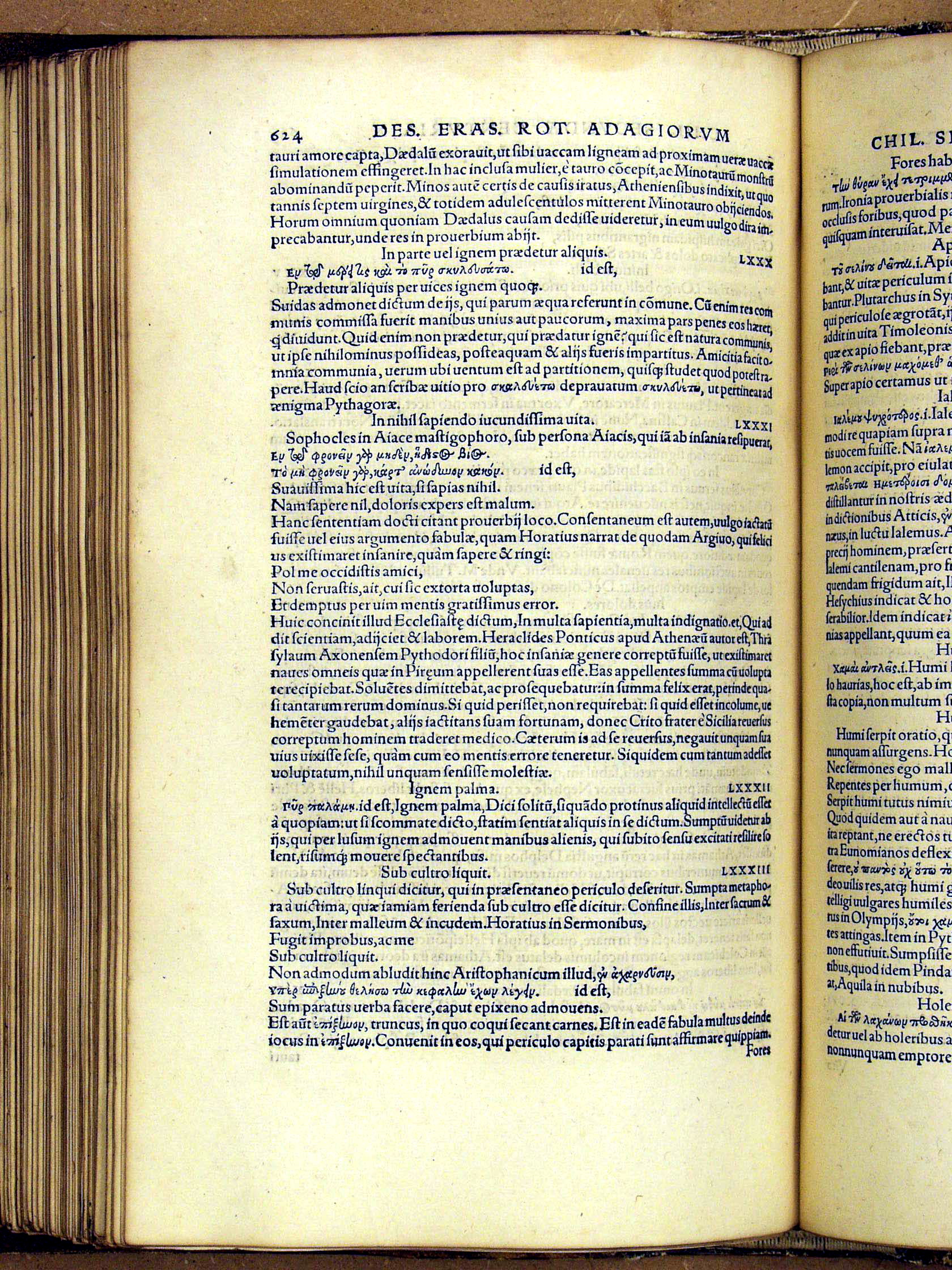
Iconclass: 44G51 crime 56BB21 Calamity, Distress; 'Calamità', 'Calamità o miseria' (Ripa) 95A(DAEDALUS)51 Daedalus fashioning a wooden cow for Pasiphae 95B(PASIPHAE)211 Pasiphae confides her unnatural passion for the bull to Daedalus 95B(PASIPHAE)212 Pasiphae climbing into the hollow cow
II x 80 In parte vel ignem praedetur aliquis Let each man steal the fire too in his turn
Εν τῳ μέρει τις καὶ τὸ πῦρ σκυλευσάτω. id est, Praedetur aliquis per vires ignem quoque. Suidas admonet dictum de iis, qui parum aequa referunt in commune. Cum enim res communis commissa fuerit manibus unius aut paucorum, maxima pars penes cos haeret, qui dividunt. Quid enim non praedetur, qui praedatur ignem? qui sic est natura communis, ut ipse nihilominus possideas, posteaquam & aliis fueris impartitus. Amicitia facit omnia communia, verum ubi ventum est ad partitionem, quisque studet quod potest rapere. Haud scio an scribae vitio pro σκαλευέτω depravatum σκυλευέτω, ut pertineat ad aenigma Pythagorae.
'[greek], Let each man steal the fire too in his turn. Suidas tells us that this was used of those who make an inadequate contribution to the common stock; for when what is common property has been entrusted to the management of one man or a few, the greater part remains in the hands of those who make the division. For what would a man not steal who is capable of stealing fire, a thing so much common property by nature that you yourself possess just as much after you have given a share to other people. Friendship makes all things common property; yet when it comes to a share-out, everyone tries hard to seize as much as he can. I rather suspect that the scribe by mistake has written styleuetô, let him steal, instead of skaleuetô, let him stir (the fire), so that this belongs with a riddle of Pythagoras.
Facsimile:
Iconclass: 44G544:21C theft❧fire (one of the four elements) 46A8211(+0) communal sharing of everything (+ variant)
Loci Communes: Inaequalis pensatio (Unequal compensation, Compensation inégale)
II x 81 In nihil sapiendo jucundissima vita In knowing nothing is the sweetest life
Sophocles in Aiace mastigophoro sub persona Aiacis, qui iam ab insania resipuerat, Εν τῷ φρονειν γὰρ μηδὲν, ἥδιστος βίος. Τὸ μὴ φρονεῖν γὰρ, κάρτ᾽ ἀνώδυνον κακόν. id est: Suavissima hic est vita, si sapias nihil. Nam sapere nil, doloris expers est malum. Hanc sententiam docti citant proverbii loco. Consentaneum est autem, vulgo iactatum fuisse vel eius argumento fabulae, quam Horatius narrat de quodam Argivo, qui felicius existimaret insanire, quàm sapere & ringi: Pol me occidistis amici, Non servastis, ait, cui sic extorta voluptas, Et demptus per vim mentis gratissimus error, Huic concinit illud Ecclesiastae dictum, In multa sapientia, multa indignatio.et, Qui addit sapientiam, adiiciet & laborem. Heraclides Ponticus apud Athenaeum autor est, Thrasylaum Axonensem Pythodori filium, hoc insaniae genere correptum fuisse, ut existimaret naves omneis quae in Piraeum appellerent suas esse. Eas appellentes summa cum voluptate recipiebat. Solventes dimittebat, ac prosequebatur: in summa felix erat, perinde quasi tantarum rerum dominus. Si quid perisset, non requirebat: si quid esset incolume, vehementer gaudebat, aliis iactitans suam fortunam, donec Crito frater è Sicilia reversus correptum hominem traderet medico. Caeterum is ad se reversus, negavit unquam suavius vixisse sese, quàm cum eo mentis errore teneretur. Siquidem cum tantum adesset voluptatum, nihil unquam sensisse molestiae.
Sophocles in his Ajax with the Scourge puts into the mouth of Ajax, who had by this time recovered from his fit of madness, 'Insensibility's the sweetest life; / He who's insensible is free from pain.' This aphorism is cited by scholars as a proverb. It is common knowledge, however, that it was in wide circulation, as is shown by, among other things, the story Horace tells of a certain Argive who thought madness a more blessed state 'than good sense with a snarling face': Dear friends, you've killed me and not saved my life: You tear my comfort from me, and by force Destroy the dear delusions of my mind. With this chimes in that saying in Ecclesiastes: 'For in much wisdom is much grief, and he that increaseth knowledge increaseth sorrow.' Heracleides of Pontus, cited by Athenaeus, is our authority for the story of Thrasylaus the son of Pythodorus of Axon. This man was seized with a form of insanity which made him think that all the ships which put into the Piraeus were his property. He greeted their arrival with the greatest delight, and when they departed bade them farewell and watched them sailing away. In a word, he was thoroughly happy, just as though he were really the owner of such great resources. If a ship was lost he did not miss it; if one arrived safe, he was full of glee and boasted of his good fortune to other people, until his brother Crito, returning from Sicily, took hold of him and handed him over to a physician. All the same, on returning to his senses, he maintained that he had never lived so pleasant a life as when he was in the grip of his delusion; for while enjoying so much happiness, he said, he had never suffered a moment's uneasiness.
Facsimile:
Iconclass: 51E11:56BB1 Freedom, Liberty; 'Libertà' (Ripa)❧Pain, Sorrow, Sadness; 'Dolore', 'Dolore di Zeusi' (Ripa) 51AA4:56BB1 Nothingness, Absence❧Pain, Sorrow, Sadness; 'Dolore', 'Dolore di Zeusi' (Ripa) 52AA5:56B2 Ignorance; 'Ignoranza', 'Ignoranza di tutte le cose', 'Ignoranza in un ricco senza lettere' (Ripa)❧Happiness, Felicity 56AA1 Insensibility, Insensitivity
Loci Communes: Fortunata stultitia (Fortunate foolishness, Sottise heureuse)
II x 82 Ignem palma Fire on the hand
Πῦρ παλάμῃ, id est, Ignem palma, Dici solitum, siquando protinus aliquid intellectum esset à quopiam: ut si scommate dicto statim sentiat aliquis in se dictum. Sumptum videtur ab iis, qui per lusum ignem admovent manibus alienis, qui subito sensu excitati resilire solent, risumque movere spectantibus.
[greek], Fire on the hand, was commonly used when a person understood something straightaway; if for instance someone made a joke, and the man felt instantly that it was directed against himself. This is apparently taken from those who by way of a game bring something burning close to other people's hands; aroused by the sudden sensation, they normally jump back, and make the bystanders laugh.
II x 83 Sub cultro liquit He left me under the knife
Sub cultro linqui dicitur, qui in praesentaneo periculo deseritur. Sumpta metaphora à victima, quae iamiam ferienda sub cultro esse dicitur. Confine illis, Inter sacrum & saxum. Inter malleum & incudem. Horatius in Sermonibus, Fugit improbus, ac me Sub cultro liquit. Non admodum abludit hinc Aristophanicum illud, ἐν ἀχαρνεῦσιν, Υπὲρ ἐπιξήνου θελήσω τὴν κεφαλὴν ἔχων λέγειν. id est, Sum paratus verba facere, caput epixeno admovens. Est autem ἐπίξηνον, truncus, in quo coqui secant carnes. Est in eadem fabula multus deinde iocus in ἐπίξηνον. Convenit in eos, qui periculo capitis parati sunt affirmare quippiam.
To be left under the knife is used of someone who is abandoned in a position of immediate danger. Related to Between the shrine and the stone and to Between the hammer and the anvil. Horace in the Satires: The selfish brute makes off, and left me under the knife.' There is a line in Aristophanes not very far from this: 'I'll gladly say my say with my head on a chopping-block.' (The epixenon is the large wooden block on which cooks chop up meat.) In the same play there is then much humorous talk about the chopping-block. It is appropriate for those who make a serious statement even at the risk of their lives.
Facsimile:
Iconclass: 31EE234632 violent death by dagger, knife - EE - death not certain; wounded person 54DD51 Danger; 'Pericolo' (Ripa)
Loci Communes: Discriminis (Danger, crisis, Danger)
II x 84 Fores habet tritas, ut pastorum casae He has a doorway as well trodden as a sheperd's cottage
Τὴν θύραν ἔχει τετριμμένην ὥσπερ αἱ ποίμναι. i. Ostium habet tritum, ut sunt casae pastorum. Ironia proverbialis in homines inhospitales, aditu difficiles, sibi viventes, semper occlusis foribus, quod pastores procul ab hominum commercio semotos vix unquam quisquam intervisat. Meminit Diogenianus.
[greek], He has a door as much frequented as are shepherds' cottages. A proverbial expression, used ironically of men who are inhospitable and hard to approach, who live for themselves alone and keep their doors always shut, because shepherds who live far from converse with their fellow-men are rarely visited by anyone. Mentioned by Diogenianus.
Facsimile: 
Iconclass: 41A163:47I221 cottage❧herding, herdsman, herdswoman, shepherd, shepherdess, cowherd, etc. 41A3221 closed door 59A5 Hospitality; 'Hospitalità' (Ripa) 59AA5 Inhospitality
Loci Communes: Hospitalitas (Hospitality, Hospitalité)
II x 85 Apio opus est It's celery he needs
Τοῦ σελίνου δεῖται, id est, Apio est opus. Ita loquebantur, quoties morbum capitalem innuebant, & vitae periculum imminere. Nam olim monumenta defunctorum apio coronabantur. Plutarchus in Symposiacis, καὶ τοῦς ἐπισφαλὼς νοσοῦντας δεῖσθαι τοῦ σελίνου φαμέν. i. Et qui periculose aegrotant, iis dicimus apio opus esse. Idem proverbii meminit & causam addit in vita Timoleonis. Subest autem adagio iocus, alludens ad coronas victorum, quae ex apio fiebant, praesertim in ludis Isthmiis, teste Diphilo apud Athenaeum lib. 6. Περὶ τῶν σελίνων μαχόμεθ᾽ ὥσπερ ἰσθμίοις. id est, Super apio certamus ut solet Isthmiis.
[greek], It's celery he needs. These words they used to convey that someone's illness was mortal, and that his life was in danger; for in ancient times celery was used to make garlands for the monuments of the dead. Plutarch in his 'Table-talk': 'And those who are dangerously ill need, we say, celery.' He also mentions the proverb and adds a reason for it in his life of Timoleon. The adage also conceals a humorous allusion to the garlands worn by victors which were made of celery, especially at the Isthmian games, as Diphilus bears witness in Athenaeus book 4: 'We fight for celery, as they do at the Isthmian games.'
Facsimile:
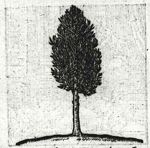
Cupressus: Alciatus, Emblemata (Padua, 1621), col. 850 a, emblem 199
Cupressus: Alciatus, Emblemata (Leiden, 1591), emblem 198
Iconclass: 12E92(ISTHMIAN GAMES) Isthmian games, in honour of Poseidon 42E441:41C652(CELERY) laying flowers or wreath on grave❧vegetables (CELERY) 54DD51 Danger; 'Pericolo' (Ripa)
Loci Communes: Discriminis (Danger, crisis, Danger)
II x 86 Ialemo frigidior Tedious as a dirge
Ιαλέμου ψυχρότερος, id est, Ialemo frigidior. De cantione, oratione, argumento, ioco, aut eiusmodire quapiam supra modum frigida, recte dicetur. Quidam aiunt Ialemon, lugentis vocem fuisse. Nam ἰαλεμίζειν Graeci dicunt pro complorare. Euripides in Troiadibus Ialemon accipit, pro eiulatione & luctu: οἷος ἰάλεμος, οἷάτε πένθη, Δακρύατ᾽ ἐκ δακρύων καταλείβεται Ημετέροισι δόμοισι. i. Qui eiulatus, quique luctus, lachrymaeque super lachrymas distillantur in nostris aedibus. Et Aristophanes apud Athenaeum, grammaticus opinor, in dictionibus Atticis, ἐν γάμοις, inquit, ὑμέναιος, ἐν δὲ πένθεσιν ἰάλεμος. i. In nuptiis Hymenaeus, in luctu Ialemus. Alii tradunt Ialemum Calliopes fuisse filium, infelicem, nulliusque precii hominem, praesertim in cantu supra modum frigidum, unde ἰαλέμου ᾠδὴν. id est, Ialemi cantilenam, pro frigida dicunt ac miserabili. Martialis item iocans in oratorem quendam frigidum ait, Illum unum idoneum esse, qui thermas refrigeret Neronianas. Hesychius indicat & hoc pacto efferri proverbium ἰαλέμου οἰκτότερος, id est, Ialemo miserabilior. Idem indicat ἰάλεμον dici quod nullius sit precii, quemadmodum Latini Naenias appellant, quum ea vox proprie sonet lugubres cantiones.
'[greek], As tedious as a dirge, will rightly be used of music, prose style, argument, humour and anything else of that sort which is tedious beyond bearing. Some say that this Greek word for dirge, ialemos, was the sound uttered by mourners; for ialemizein is Greek for to lament. Euripides in the Troades takes ialemos to mean cries of sorrow and lamentation: 'What dirges and what grief are in our house, what rain of tears on tears.' And Aristophanes cited by Athenaeus (the grammarian, I take it) says in his Attic Glossary 'The hymenaeus was sung at weddings, the ialemus in time of mourning.' Others record a tradition that Ialemus was a son of Calliope, an unfortunate character with no good qualities, and in particular intolerably tedious in the sphere of music, whence the phrase 'A song by Ialemus' for something tedious and pitiable. Likewise Martial, in a humorous attack on a frigid and tedious speaker, says that he is the only man capable of cooling the Baths of Nero. Hesychius tells us that the proverb was also current in the form As pitiful as Ialemus, and also that ialemus was used to indicate something worthless, in the same way that neniae in Latin is used to mean rubbish, though the proper sense of the word is songs of mourning.
Facsimile:
Iconclass: 42E42 dirge 56BB31 Boredom
Loci Communes: Infacundia (Lack of eloquence, Manque d'éloquence)
II x 87 Humi hauris You draw water from dry ground
Χαμαὶ ἀντλεῖς . i. Humi hauris. De inaniter laborante dicebatur. nihil est enim quod è solo haurias, hoc est, ab imo putei fundo, si is siccus sit. Apparet dici posse quoties exhausta copia, non multum superest quod haurias. Zenodotus meminit.
[greek], You draw water from dry ground, was applied to those who laboured in vain; for there is nothing that you can draw from dry ground, when that means the bottom of a well that has no water in it. This can clearly be used when supplies are exhausted, and there is not much left on which you can draw. Mentioned by Zenodotus.
Facsimile:
Iconclass: 41A3911:25K162 well❧wadi, dry river bed in desert 51AA4:21D Nothingness, Absence❧water (one of the four elements) 52BB42 Impossibility 54BB3 Inutility, Noxiousness; 'Nocumento', 'Nocumento d'ogni cosa' (Ripa)
Loci Communes: Inanis opera (Vain effort, Effort vain)
II x 88 Humi serpere To crawl on the ground
Humi serpit oratio, quae pressior humiliorque est, quàm oportet, semper quasi iacens, nunquam assurgens. Horatius, Nec sermones ego mallem Repentes per humum, quàm res componere gestas. Idem in Arte poetica, Serpit humi tutus nimium, timidusque procellae. Quod quidem aut à navigantibus translatum est, aut ab iis, qui procumbentes in terram ita reptant, ne erectos turbo ventorum auferat. Gregorius Nazianzenus in oratione contra Eunomianos deflexit ad homines, ostendens non esse cuiuslibet de rebus divinis disserere, οὐ παντὸς οὐχ ὅτω τὸ πρᾶγμα εὔωνον, καὶ τῶν χαμαὶ ἐρχομένων, id est, Non est cuiusvis nec adeo vilis res, atque humi gradientium. Quamquam nihil verat, et hic res aut actiones intelligi vulgares humilesque. Simillimum est huic, aut fortassis idem quod habent Pindarus in Olympiis: οὔτοι χαμαιπετέων λόγων ἐφάψῃ. i. Haudquaquàm sermones humi reptantes attingas. Idem in Pythiis: χαμαιπετές δ᾽ ἂρ ἔπος οὐκ ἀπέῤῥιψεν, id est, Humile vero verbum non effutivit. Sumpsisse metaphoram videtur ab avibus haud procul à terra subuolantibus, quod idem Pindarus tribuit graculis. κολοιοὶ ταπνεινὰ νέμονται. Ut huic respondeat, Aquila in nubibus.
A literary style 'crawls on the ground' when it is duller and meaner than style ought to be, as though it were always prostrate and never rose to any elevation. Horace: 'Nor would I rather write / Plain stuff that ever crawls along the ground / Than treat in epic style of noble deeds.' And again in the Art of Poetry: 'Too set on safety on the ground it crawls, / And fears the storm.' This is a metaphor taken either from a sea-voyage or from those who are bent to the ground and crawl along in that position, for fear that, if they stand up, a storm of wind may sweep them away. Gregory of Nazianzus in his speech Against the Eunomians turned it to apply to people, pointing out that discussion of topics in divinity was not within every man's reach: 'It is not for everyone, not an article so low in price, not for those who crawl upon the ground.' Though nothing prevents us, here too, from understanding it of things or actions which are common and mean. It is very much like, perhaps identical with, that phrase in Pindar, in the Olympians: 'With words that crawl along the ground may you have no contact,' and in the Pythians: 'He did not utter a lowly word.' He seems to have taken his image from birds flying not far above the ground, for Pindar also has the same idea of jackdaws: 'Jackdaws' he says 'that range in lowly places.' Thus the correlative of this is An eagle in the clouds.
Facsimile:
Iconclass: 31A2712 crawling, going on all fours 52AA551 Shallowness of Mind
Collectanea (1500): 743
Loci Communes: Infacundia (Lack of eloquence, Manque d'éloquence)
II x 89 Olerum appositiones Greens on the table
Αἱ τῶν λαχάνων προσθῆκαι, id est, Holerum additamenta. De re nullius momenti. Sumptum videtur vel ab holeribus appositis in mensa, vili nimirum cibo, vel auctariis holerum, quae nonnunquam emptores sordidi ac tenues requirunt. Autor Diogenianus.
[greek], A garnish of green stuff, was applied to something of no importance. Apparently taken either from a side dish of vegetables put on the table, which would of course be humble fare, or for the garnish for which poor destitute customers sometimes ask. Diogenianus is the authority.
Facsimile:
Iconclass: 41C6521:22C4(GREEN) processed vegetables❧colours, pigments, and paints: green 54BB5 Unimportance
Loci Communes: Accessio pusilla aut nimia (A trifling or excessive addition, Un ajout minime ou excessif); Contemptus et vilitatis (Contempt and worthlessness, Mépris et bassesse)
II x 90 Fictilis homo A man of clay
Κεράμιος ἄνθρωπος. i. Homo fictilis, id est, mollis, imbecillis, fragilis. Ductum à vasis testaceis, quae facile comminuuntur. Finitimum illi, Homo bulla. In quibusdam codicibus legitur, κεραμεὺς ἄνθρωπος. In nonnullis, κέραμος ἄνθρωπος. Quorum postremum mihi magis arridet. Cerameus enim figulum sonat, ceramos vas fictile. Sic et ficulnum hominem dicimus, ferreum, cereum, quernum, adamantinum. Contrà quia eximium videri volumus aureum dicimus. Inde illud poetis frequens, χρυσῆ ἀφροδίτη, id est, Aurea Venus. & τῆς δικαιοσύνης χρυσοῦν πρόσθπον, & χρύσεον ὄμμα τᾶς δίκας, id est, Iustitiae vultus aureus, & iustitiae oculus aureus, ut ex Pindaro, ni fallor, refert Athenaeus lib. 12. Itidem hodie quoque Aurea verba, Gemmeos mores dicimus. M. Tullius Academicarum quaestionum li. 2. de libello loquens, quem Crantor scripsit de luctu: Est enim, inquit, non magnus: verum aureolus, & ut Tuberoni praecepit Panaetius, ad verbum ediscendus libellus. Quicquid autem vile, κεραμεοῦν sive κεράμεινον, dicunt Graeci. Ita Paulus homines appellat vasa fictilia: ἐχομεν δὲ τὸν θησαυρὸν τοῦτον ἐν σκεύεσιν ὀστρακίνοις. M. Tullius actione in Verrem sexta, Tum illos coepisse praetori dicere, putasse se id quod audissent alicuius precii scyphos esse Pamphyli. Luteum negocium esse, non dignum quod in suo argento Verres haberet. Et alicubi Luteum hominem appellat, contemptum nulliusque precii: Interdum ipsum Lutum.
[greek], A man of clay: soft, weak and breakable. Taken from earthenware pots, which are easily smashed. Related to Man is a bubble. In some copies I read kerameus, in some keramos, of which the last appeals to me more; for kerameus means a potter, keramos a pot. In the same way we speak of a figwood fellow or a man of iron, wax, oak, adamant. Conversely, when we want something to sound very precious, we call it golden. Hence that phrase common in the poets, 'Golden Venus'; and 'the golden countenance of Justice' and 'the golden eye of Justice' are recorded, from Pindar if I am not mistaken, by Athenaeus book 12. In our own day too we speak of 'golden words' and 'a jewelled character.' Cicero in book 2 of his Academic Problems, speaking of a book on grief written by Crantor, says 'It is not very long, but it is a golden book and, as Panaetius told Tubero, should be learnt by heart word for word.' But anything worthless is called kerameoun or kerameinon, made of clay or earthenware, in Greek. Thus Paul speaks of men as 'earthen vessels': 'But we have this treasure' he says 'in earthen vessels.' Cicero in his sixth speech against Verres: They then proceeded to tell the praetor that, on the basis of what they had heard, they had supposed that Pamphilus owned cups of some value, but the stuff was mere dirt, not good enough for Verres to have in his collection of plate.' In another passage he calls a despicable and worthless character 'a dirty fellow,' and sometimes uses simply 'dirt.'
Facsimile: 
Iconclass: 31D14:25D24 adult man❧clay (soil type) 54AA7 Weakness, Powerlessness, Helplessness; 'Infermità' (Ripa) 54BB6 Worthlessness
Collectanea (1500): 616
Loci Communes: Vita hominis misera et brevis (The life of man, wretched and short, La vie de l'homme, misérable et brève)
II x 91 Hipparchorum tabula The hipparchs' list
Ιππάρχων πίναξ. i. Hipparchorum tabula dici conveniet, quoties haud impune futurum significamus, si quid peccetur. A Syracusams natum adagium. Apud hos enim mos erat, ut Hipparchi, hoc est, equitum praefecti in tabellis describerent militum nomina, qui ordinem deservissent. Meminit Zenodotus. Hesychius indicat, apud Lacedaemonios Hipparchum dici, qui iuvenibus praefectus esset. Is in tabula notabat eos, qui quippiam indecore fecissent.
'[greek], The hipparchs' list, will be suitable for use when we wish to convey that someone who has done wrong will by no means get off scot-free. The adage arose in Sparta, where it was the practice for the hipparchs - those, that is, who commanded the cavalry - to enter in lists the names of men who had deserted their posts. Mentioned by Zenodotus. Hesychius shows that in Sparta hipparch was the name for someone put in charge of the young men, and he used to list the names of those who had done anything improper.
Facsimile:
Iconclass: 44G3 criminal law; punishment 44G152 documents (~ witnesses) 45B9 desertion 45D311(+22) commander-in-chief, general, marshal (+ cavalry, horsemen) 61K(HIPPARCH) (HIPPARCH) historical names (HIPPARCH)
Loci Communes: Ultio malefacti (Vengeance for a wrongdoing, Vengeance d'un méfait)
II x 92 Heteromolia causa A one-sided case
Ετερομόλιος δίκη. i. Causa Heteromolia, dicitur apud Graecos, quae ab altera duntaxat agitur parte, nullo praesente qui contradicat, ἀπὸ τοῦ τὸν ἕτερον μολεῖν. id est, Quod alter duntaxat accedat. Similimum illi, ἐρήμη δίκη. i. Deserta causa. Usurpabitur non ineleganter, ubi quis damnat absentem, veluti cum defunctorum libros carpimus, recte ἑτερομόλιον δίκὴν quis dixerit. Apud Hesychium sic effertur ἑτερόμυνος δίκη. an integra scriptura, nescio.
' [greek], A heteromolian (that is, one-sided) case is a Greek name for one that is contended by only one of the two parties, with no one present to put the opposite view; it is derived from heteros, one of a pair, and molein, to come forward, because only one appears. It is very close to Case undefended. Will be used quite neatly if someone is condemned in his absence; when, for instance, we criticize the books of dead authors, this might well be called 'a one-sided case.' In Hesychius it takes the form' [greek], but whether the reading is correct, I do not know.
Facsimile:
Iconclass: 51AA4:54E4 Nothingness, Absence❧Defence 51AA4:54EE11 Nothingness, Absence❧Opposition, Counteraction, Resistance
Loci Communes: Causa indefensa (An undefended case, Cause indéfendue)
II x 93 Harmodii cantilena The Harmodius song
Αρμοδίου μέλος. i. Harmodii cantio: De luguribus ac tristibus dicebatur. Similimum illi, ἀδμήτου μέλος. i. Admeti melos. Aristophanes cum aliis aliquot locis, tum in fabula, cui titulus, ἀχαρνεῖς, Oὐ δὲ παῤ ἑμοί ποτε τὸν ἁρμόδιον ᾄσεται. id est: Nec unquam apud me carmen Harmodium canet. Interpres indicat cantilenae genus fuisse, quod in compitis cani consueverit in Harmodium & Aristogitonem, quod hi Pisistratidarum tyrannidem sustulissent. Eius carminis hoc erat initium, φίλτατε ἁρμόδιε, οὔτι που τέθνηκας. i. Charissime Harmodi, haud quaquam mortuus es. Refertur à Suida ac Diogeniano.
'[greek], The Harmodius song, was used of things sad and melancholy, and is very close to Admetus' dirge. Aristophanes has it in several places, among which is a line in the Acharnians: 'Nor will he ever sing in my house the Harmodius song.' The scholiast indicates that this was a form of song customarily sung at crossroads in honour of Harmodius and Aristogeiton, because they had abolished the despotism of the Peisistratids. The opening words of this were 'Dearest Harmodius, you are not yet dead.' Recorded by Suidas and Diogenianus.
Facsimile:
Iconclass: 32A14 melancholic temperament 48C7562 vocal popular music 56BB1 Pain, Sorrow, Sadness; 'Dolore', 'Dolore di Zeusi' (Ripa) 98B(HARMODIUS & ARISTOGITON)3 (story of) Harmodius and Aristogiton - representations to which the NAME of a person from classical history may be attached
Loci Communes: Tristitia, laetitia (Sadness, joy, Tristesse, joie)
II x 94 Haud canit paternas cantiones He does not play the same tune as his fathers
Οὐ πατρωϊκὰ αὐλεῖ μέλη, id est, Haud paternas canit cantilenas. De eo iactatum, qui à paternis moribus degeneraret. Solent liberi maiorum suorum cantiunculis, quas admodum pueri didicerunt, delectari. Terentius in Adelphis, Pol Aeschine, haud paternum istuc dedisti.
[greek], He does not play the same tune as his fathers, was a catch phrase for a man who did not maintain the standards of his father. Children are normally very fond of the traditional tunes of their forbears, which they learned in their infancy. Terence in the Adelphoe: 'O Aeschines, that was not worthy of your father's son.'
Facsimile:
Iconclass: 51BB2:48C7562 Dissimilarity, Unlikeness❧vocal popular music 54FF13 Regression, Deterioration, Relapse
Loci Communes: Degenerantium in pejus (Degenerating for the worse, Dégénérer en pire)
II x 95 Non certatur de oleastro No contest here for the wild olive
Οὐ φυλίας ὁ ἀγών. i. Hoc certamen non est de oleastro. Quoties non de nugis, neque de gloria aut corollis, sed de re seria ac pecunia ageretur. Siquidem in plerisque certaminibus victoriae praemium erat oleagina, aut querna, aut alioqui frondea corona. Meminit Diogenianus.
[greek], This is no contest for the wild olive. Used when the point at issue was no trifling matter, no question of reputation or a victor's garland, but something serious, something financial. For in most contests the prize of victory was a garland of olive or oak, or at any rate foliage of some sort. Recorded by Diogenianus.
Facsimile:
Iconclass: 43A(+12):25G3(OLIVE-TREE)(+22) festivities (+ wreath, garland ~ festive activities)❧trees: olive-tree (+ branch, stick) 57A66 Seriousness
Loci Communes: Discriminis (Danger, crisis, Danger)
II x 96 Hasta caduceum Spear and herald's staff
Δόρυ κηρύκειον Hasta caduceum. Dici solitum, quoties aliquis simul & minaretur, & ad concordiam invitaret. Ex oraculo natum, quod huiusmodi fertur: Ανδρὶ γεφυραίῳ φίλος οἶκος. id est: Viro Gephyraeo grata est domus. Admoniti erant Gephyraei, ut sequentes Atheniensium exercitum, ubi illos defessos conspicerent, ibi manerent. Itaque cum Athenienses ab Eumolpo oppugnarentur, ad Tanagram iter instituerunt, hac specie, ut dux caduceum praeferret, iuventus armata à tergo consequeretur, ut simul, & pacem petere viderentur, & ad bellum nihilo segnius parati, si quis lacesseret. Recenset Suidas, & meminit Polybius li. historiarum quarto. Legatum, inquit, ad Bizantios Aridicen misere, & cum eo Polemoclem cum tribus triremibus, volentes id quod est in proverbio, hastam simul & caduceum Byzantiis mittere. Simillimum est huic quod eleganter usurpavit D. Hieronymus, Scuto pacem petere.
[greek], Spear and herald's staff, was customarily used when someone at the same time uttered both threats and proposals of peace. It arose from an oracle which is reputed to have run 'A man from Gephyra finds his home sweet.' The Gephyraeans had been told to follow the Athenian army, and when they saw they were tired, to halt for the night. When therefore the Athenians were attacked by Eumolpus, they set off for Tanagra, in this formation: their leader proffered a herald's staff while the pick of their troops followed behind under arms, so as to make it clear that at the same time they sought peace and yet were none the less ready for battle, if anyone took the offensive against them. Suidas records this, and it is mentioned by Polybius in book 4 of the Histories. 'They sent Aridices' he says 'as envoy to the Byzantines, and with him Polemocles in command of three triremes, wishing to send the Byzantines, as the saying goes, both spear and herald's staff.' It is very like a phrase stylishly used by St Jerome, 'to seek peace sword in hand.'
Facsimile: 
Iconclass: 45C11(SPEAR) casting weapons: spear 44B192(+0) sceptre, staff (symbol of sovereignty) (+ variant) 46A123 herald
Loci Communes: Anceps et dubius (Doubtful and uncertain, Incertain et douteux)
II x 97 Gallorum incusare ventres To blame cocks' guts
Αλεκτρυόνων μέμφεσθαι κοιλίαν. i. Gallorum incusare ventrem. De edacibus, ac luxu multum absumentibus facultatum. Huic enim animanti venter mirifice calidus, ita ut omnia statim concoquat. Aristophanes in Vespis, Αλεκτρυόνος μ᾽ ἔφασκε κοιλίαν ἔχειν. Ταχὺ γὰρ καταπέψει τἀργύριον. id est: Mihi dixerat ventrem esse gallinacei, Velociter enim concoquet hoc argentulum. Hoc genus homines, Graeci dicunt καταπιεῖν τὴν οὐσίαν, id est, devorare substantiam, id enim est atrocius, quàm καταφαγεῖν: summam autem profusionem ac celerrimam indicant verbo ἀφανίζειν, id est, sic absumere, ut nusquam appareat vestigium. Utitur his omnibus, sed postremo frequentissime Aeschines in Timarchum, πάντ᾽ ἠφάνισεν.
'[greek], To blame cocks' guts, of heavy eaters and those who wasted much of their substance in luxurious living. A cock's stomach is astonishingly hot, with the result that it instantly digests everything. Aristophanes in the Wasps: 'He said I had the stomach of a cock, for it will soon digest this sum of money.' Men of this kind are said in Greek to swallow, catapiein, their property, for that is stronger than cataphagein, to eat it up; for the most severe and speedy extravagance the word was aphanizein, to cause to disappear, to get through it, that is, so quickly that not a trace was left. All these words, but the last one especially, are used by Aeschines in his speech Against Timarchus: Tie made all vanish.'
Facsimile:
Iconclass: 51M11:31A622 Swiftness, Speed; 'Agilità', 'Celerità', 'Velocità' (Ripa)❧digestion 34B232(+51):34B232(+9323) fowl (cock, hen, chicken, etc.) (+ male animal)❧fowl (cock, hen, chicken, etc.) (+ entrails, internal organs of an animal) 55B2 Luxury, Luxuriousness
Loci Communes: Profusio (Extravagance, Prodigalité)
II x 98 Ardens vestis A blazing robe
Αἴθεις πέπλος. i. Ardens vestis sive quemadmodum in aliis legitur exemplaribus, αἴθεις ἐν πέπλῳ, id est, Incensus in veste. Zenodotus prodidit dici solitum de iis, qui seditionem moverent, calumniasque sererent. Existimat autem adagium natum à veste Nessi Centauri sanguine infecta, quam à Deianira missam cum induisset Hercules, incensus igni sacro periit. Porrò fabulam idem recenset ad hanc fermè sententiam. Reliquis Centauris expugnatis ac confectis ab Hercule, Nessus unus omnium suffugerat. Is pervenit ad flumen Evenum, & in eius ripa versans, solitus est adeuntes transmittere. Deinde evenit, ut Hercules in Trachinem ad Ceycem, unà cum Deianira proficisceretur. Posteaquam igitur ipse iam fluvium transmisisset, Nesso mandavit, ut Deianiram transferret. At is inter transvehendum, vim coepit adferre mulieri Quod simul ac Hercules intellexisset, videlicet illa vociferante, Nessi praecordia iaculo perfodit. At is sentiens letale vulnus, neque se posse mortem effugere, mulierem arcessit: Si vis, inquiens, tibi am atorium efficacissimum parare, quo possis Herculem inflammare in amorem tui, & si quando deperibir aliam, in tui cupidinem revocare, fac illum meo sanguine perungas. Atque ea persuasa, Nessi sanguinem è vulnere fluentem apud sese servavit. Itaque postquam Trachinem adiisset, ac tursum inde profectus Oechaliam adortus civitatem cepisset, reliqua populatus, Iolen puellam captivam secum abduxit. Immolaturus autem Iovi parenti victimas ob res bene fortunatas, ad Deianiram mittit, iubens ut sibi vestem aliquam magnificam mitteret. Illa certior facta de Ioles raptu, veritaque ne Hercules illam pluris quam sese faceret, ut est zelotypum mulierum genus, vestem Nessi cruore tinctam, imbutamque mittit, philtrum se mittere rata. Hanc indutus Hercules, rem divinam peregit. Caeterum ubi calefacta veste, venenum excitatum corpus graviter adurere coepisset, avellere conatus est, verum iam ita penitus adhaeserat, ut non sine carnibus ipsis revelli posset. His itaque malis discruciatus Hercules, in Thrachinem deducitur. Interim illa, cognitis iis quae acciderant, suspendio spontaneam mortem sibi conscivit. At Hercules iussit Hyllo, nam hunc ex Deianira sustulerat natu iam grandem, Iolen duceret uxorem. Quo facto, in monte Oeta rogum extruxit, eumque conscendit. Porrò cum illo iubente, nullus ex Herculis comitibauderet ignem subdere, videlicet metu contagii, pastor quidam forte repertus, qui ignem immitteret, atque huic officii praemium sua tela dono dedit. Ardente iam rogo ferunt nubem non sine tonitru obsepisse Herculem, atque ita sublatum ad deorum consortium. Adagium referri non absurde poterit & ad vestem illam, quam Medea venenis imbutam, Iasonis novae nuptae dono misit: quidam existimant naphtha infectam fuisse. Itaque admotis undique ex nuptiarum ritu taedis, flamma transiliit, pa riter & puellam & patrem auxiliari cupientem exussit. Huius rei mentionem facit Euripides in tragoedia, cui titulus Medea. Huiusmodi fabellas, ut saepenumero testatus sum, nisi vererer, ne parum eruditis viderer incuria praeterisse, cum in vulgatis collectaneis habeantur, nequaquam asscripturus eram.
[greek], A blazing robe, or (as it is written in other copies) [greek] , Blazing in a robe. Zenodotus tells us that this used to be said of those who stirred up civil discord and spread false accusations. And he thinks the source of the adage was the robe stained with the blood of the centaur Nessus, which was sent by Deianira to Hercules, and when he put it on, he was burnt to death by the 'sacred fire.' In fact he tells the story very much as follows. The remaining Centaurs had been defeated and destroyed by Hercules, and Nessus alone had escaped. He made his way to the river Evenus, and establishing himself on its bank, made a practice of carrying passengers across. It then so happened that, on his way to Trachis to visit Ceyx, Hercules arrived with Deianira, and having already crossed the river himself, ordered Nessus to carry Deianira across. While they were crossing, however, he began to assault her, and Hercules, alerted by her cries for help, pierced Nessus to the heart with a javelin. Feeling himself mortally wounded and facing certain death, he appealed to the woman and said: 'If you wish to provide yourself with a most efficacious love potion, with which you can kindle passion in Hercules, and make him desire you again if he ever falls in love with someone else, be sure to anoint him with my blood.' Believing what he said, Deianira carefully kept some of the blood that flowed from Nessus' wound. So after visiting Trachis, he went on to attack Oechalia, captured the city and laid waste everything else, and carried off with him as a captive the maiden Iole. Proposing to sacrifice victims to his father Jupiter in gratitude for his success, he sent to ask Deianira to let him have a robe of suitable splendour. Deianira had heard of the rape of Iole and, fearing that Hercules would value her more highly than herself, with the jealousy typical of womankind, she sent him a robe dyed and soaked in the blood of Nessus, thinking she was sending him a love potion. Hercules put on the robe and performed his sacrifice; but as the robe grew warm, the poison came to life and began to burn his flesh terribly. He tried to tear it away, but by now it clung so tightly that it would not come off without tearing his actual flesh. In torment from the anguish, Hercules was taken to Trachis, and meanwhile Deianira, realizing what had happened, hanged herself. Hercules told Hyllus, his son by Deianira, who was already of age, to marry Iole, and then built a pyre on Mount Oeta, and mounted it. Then, when in response to his orders not one of Hercules' companions had the courage to set light to it, in fear no doubt of the contagion, a local shepherd was found by chance who would ignite it, and for this service Hercules gave him his weapons as a reward. The story goes that as the pyre was burning, a cloud accompanied by thunder covered Hercules, who was thus removed to join the company of the gods. It will also be possible to refer the adage, aptly enough, to the robe which Medea steeped in poison and sent as a gift to Jason's new bride (some think it had been soaked in naphtha), so that when it was surrounded closely by torches, as was the practice at weddings, the flame jumped across and burnt to death both the bride and her father, who tried to rescue her. The story is recorded by Euripides in his tragedy Medea. As I have often testified already, I should never have added fables of this description, were I not afraid that unlettered readers might think they had been left out by inadvertence, since they appear in the popular collections.
Facsimile: 
Iconclass: 41D21 clothes covering the entire body 44C42 (political) agitator 94A73 Creusa is consumed by flames when putting on the poisoned robe (or crown) 94L681 Deianira sends Hercules a robe smeared with Nessus' blood
Loci Communes: Infortunii sive exitii (Misfortune or ruin, Malheur ou ruine)
II x 99 Senecta leonis praestantior hinnulorum juventa A lion in old age is stronger than fawns in youth
Γῆρας λέοντος κρεῖσσον ἀκμαίων νεβρῶν, i. Leo senex vigente potior hinnulo. Citatur apud Stobaeum ex Hippothoonte poeta. Senectus viri fortis ac strenui praestantior est inventa quorundam ignavorum et imbecillium iuvenum. Venustius fiet, si longule transferatur. Veluti si quis ingenium docti senis & exercitati praeferat ingenio parum eruditi iuvenis. Dicetur non inepte & in senectutem crudam, viridemque, animique viribus adhuc pollentem, in quam competet illud Euripides ex lone, Τὸ τοῦ ποδὸς μὲν βραδὺ, τὸ δὲ νοῦ ταχύ. id est, Tardus quidem pes, animus est velox tamen. Eodem pertinet illud eiusdem in Andromacha, Πολλῶν νεῶν γὰρ κἄν γέρων εὔψυχος ᾖ Κρείσσων. id est, Gnavus senex & iuvenibus compluribus Praestat. Aristophanes alicubi, Εγὼ τοὐμὸν νομίζω γῆρας εἶναι κρεῖττον ἢ πολλῶν κικίνους νεανηῶν. id est, Meam senectam praeferendam existimo Complurium comis adolescentium.
[greek], An old lion is worth more than a fawn in the vigour of youth, is cited by Stobaeus from the poet Hippothoon. The old age of a brave and vigorous man is stronger than the green years of some cowardly and feeble youngsters. It will be more elegant if transferred to a somewhat different context: if, for instance, one were to prefer the mind of a well-taught and experienced old man to that of a youth with little education. It will not be inappropriate if applied to a forceful and green old age, still with some force of intellect, matched by that line in Euripides 'Slow now of foot, but swift in speed of mind.' Here also belongs the same poet's remark in the Andromache: 'A man of spirit, be he ne'er so old, / Is better far than many younger men.' Aristophanes in one place: I think my old age a far better thing that the curly heads of many youngsters.'
Facsimile:
Iconclass: 25F23(LION)(+21) beasts of prey, predatory animals: lion (+ young animal) 25F23(LION)(+24) beasts of prey, predatory animals: lion (+ very old animal) 31D5 young versus old age; young and old 51BB3 Imparity, Inequality, Difference 51E2:54A31 Superiority❧Experience, Mastery; 'Esperienza' (Ripa)
Loci Communes: Excellentia, inaequalitas (Excellence, inequality, Excellence, inégalité)
II x 100 Nudior paxillo As naked as a peg
Γυμνότερος παττάλου. i. Nudior paxillo: De extremae paupertatis homine dicebatur haec hyperbole. Nam paxillis corticem quoque detrahimus.
[greek], Naked as a peg, This exaggerated phrase was applied to a man in the depths of poverty, because in making a wooden peg, we remove even the bark.