III vii 1 Scarabaeus aquilam quaerit A dung-beetle hunting an eagle
Κανθαρος ἀετὸν μαίεται. id est, Scarabaeus Aquilam quaerit. Cum imbecillior, atque impotentior, mali quippiam molitur, struitque insidias inimico longe potentiori. Est & altera lectio, atque ea meo quidem iudicio verior, ὁ κάνθαρος ἀετὸν μαιεύεται. id est, Scarabaeus aquilae obstetricatur. Sensus fermè idem est, sive legas μαίεται sive μαιεύεται. Competit enim in humilem & imbecillum, qui viribus longe praepollenti, maliciosis insidiis, & clanculariis dolis perniciem machinatur. Aristophanes in Lysistrata, Υπερχολῶ γὰρ, ἀιετὸν τίκτὸντα κάνθαρός σε Μαιεύσομαι. id est, Supra modum irascor tibi, scarabeus aquilam ego te Quando ova paries obstetrix iuvabo. Super hac re fertur apologus quidam apud Graecus non inelegans, quem Lucianus indicat Aesopicum esse, cum ait in Icaromenippo, fabulatum fuisse Aesopum, quemadmodum aliquando scarabaei & cameli caelum conscenderint. Porrò quod ad fabulam scarabaei, & aquilae attinet, ad hunc habet modum. Est iam olim aquilarum generi, cum universa scarabeorum gente, vetus atque antiqua simultas, ac bellum prorsus internecinum, planeque quod Graeci solent dicere, ἄσπονδος πόλεμος. Nam odio dissident plus quam Vatiniano, adeo ut ne Iuppiter quidem ipse, οὕ κράτος ἐστὶ μέγιστον, & qui totum nutu tremefactat Olympum, rem inter eos componere, ac dissidium finire potuerit, si modo vera narrant apologi. Denique nihilo magis inter eos convenit, quam hodie quoque convenit inter deos istos aujlicos, & humilem obscuramque plebem. Sed erit fortassis, qui Aesopicarum fabularum rudis & ἀνήκοος admiretur, quid tandem negocii sit cum aquila scarabaeo. Quae cognatio, quae vicinitas, quae adfinitas usqueadeo dissimilibus intercedat: nam inter hos qui vinculis ciusmodi copulantur potissimum dissidia solent oriri, praesertim inter principes. Ad haec, quaenam tam atrocis odii causae, postremo unde tantum animorum scarabaeo, ut cum aquilarum populo bellum suscipere non dubitarit. Rursum, qua contumelia tantopere fuerit offensus aquilae θυμὸς ἀγήνωρ, ut hostem tam humilem non contempserit, ac suo vel odio iudicarit indignum. Videlicet argumentum ingens, longa est iniuria, longae ambages, ac res omnino maior, quam ut humana facundia queat explicari. Quod si Musae quae gravatae non sunt olim Homero dictare βατραχομυομαχίαν, mihi quoque relicto tantisper Helicone, dignentur adesse, rerum summam pro mea virili conabor exponere, Quid enim tam arduum esse possit, quod illis auspicibus non audeant homines? Sed quo res cognitu fiat illustrior, prius quam ad ipsum negocii caput veniam, ducis utriusque mores, formam, indolem, ingenium, quam potero paucissimis perstringam. Primum igitur illud succurrit admirari, quid olim Romanis viris alioqui sapientibus venerit in mentem, qui cum huius alitis symbolo sese praeter caeteras nationes iactent, ac diis proximos ducant, cumque huius auspiciis tot victorias reportarint, tot egerint triumphos, tantum abest, ut benemeritae gratiam referant, ut non toleranda etiam afficiant contumelia. Nam avem unam omnium maxime masculam & invicti roboris, emasculant evirantque, ac propemodum Tiresiam reddunt ipsi non admodum mates, siquidem apud Graecos planè mas est ἀετὸς, idque, ni fallor, longe magis quadrat in eum, cui summus ille pater & rex, hominumque deum que regnum in aves vagas permisit, expertus fidelem Iuppiter in Ganymede flavo: tum ei, qui caeteris diis procul absistentibus, solus irato Iovi, trisulca tela porrigat, nihil etiam proverbio deterritus, πόῤῥω διός τε καὶ κεραυνοῦ. Neque vero sine gravi ratione factum arbitramur, ut inter tam multas avium nationes, tamque numerosas tribus, aquila potissimum sit visa idonea, cui non solum avium φρῆτραι, verum etiam scnatus populusque poeticus, suffragiis omnibus monarchiam decerneret. Nam quantum ad avium iudicum attinet, ad hanc partem pleraeque propendebant, ut pavoni rerum summam committerent. Siquidem huius pulchritudini, splendori, sublimitati, fastuique plane regio, regnum deberi videbatur. Ac prorsum in hanc sententiam itum fuisset, nisi quaedam longo rerum usu callidae, cuiusmodi sunt cornices, corvique perpendissent, futurum ut si pavonem rebus praefecissent, eveniret, quod complures iam annos in monarchis quibusdam videre datum est, nimirum ut solo nomine strepituque regem ageret, aquila nihilo secius, vel sine populi suffragiis, regnum gereret. Caeterum poetas viros sapientissimos illud arbitror perspexisse, non alia magis imagine regum mores ac vitam effingi potuisse. Loquor de plerisque non de omnibus. In quovis enim rerum genere, semper fuit eritque bonorum paucitas. Et aliud saeculum alios gignit. Sed paucis si videtur, hinc atque hinc contentionem admoveamus. Iam primum si quid ominis est in vocabulo, ut certe est, apte profecto Graecis αἐτὸς dicitur παρὰ τὸ ἀΐσσω. quod est propemodum rapior impetu, & concitus feror. Quaedam aves natura placidae sunt, ac mites, tum quae ferae sunt, tamen arte cultuque cicurantur, ac mansuescunt. Sola aquila, nec est habilis ad ullam disciplinam, nec ullo studio potest mansuescere. Tantum impetu naturae praeceps fertur, & quicquid valde libuit, idem postulat sibi licere. Libétne spectare pullum animo vere aquilino? Graphice depinxit Horatius. Qualem ministrum fulminis alitem Olim iuventas & patrius vigor Nido, laborum propulit inscium, Vernique tam nimbis remotis Insolitos docuere nisus Ventt paventem, mox in ovilia Demisit hostem vividus impetus, Nunc in reluctantes dracones Egit amor dapis atque pugnae. Melius intelligunt hoc aenigma regiones expertae, quantis malis sibi constiterint huiusmodi indomiti iuvenum principum impetus. Philosophorum est moderati affectibus, ac rationis ductum in omnibus sequi. At nihil est, ait Satyra, violentius aure tyranni. Cui illud semper in promptu: Sic volo, sic iubeo, sit pro ratione voluntas. Deinde cum sex opinor, aquilarum genera commemorentur, tamen illud inter omnes convenit, quod rostro sunt vehementer adunco, nec minus aduncis unguibus, ut vel ex ipso corporis habitu possis intelligere, carnivoram esse avem, quietis ac pacis inimicam, pugnis, rapinis, ac praedationibus natam. Et quasi parum sit carnivoras esse, sunt & quae ossifragae dicantur, & sint. Sed hic protinus tacite mihi dicis optime lector, Quid haec imago ad regem, cuius propria laus est clementia, cumque plurimum possit, nulli tamen velle nocere, ac solum aculeo carere, seseque totum in populi sui commoditates impendere, adeo ut Niloxenus ille sapiens rogatus, quid esset utilissimus, responderit, Rex. Id esse proprium veri principis indicans, ut quantum in ipso sit, nemini noceat, prosit omnibus, sitque magis optimus, quam maximus. Quanquam non alia ratione potest esse maximus, nisi ut sit quàm optimus, hoc est, beneficentissimus in omnes. Equidem exemplar laudo non inscite depictum à philosophis, et haud scio, an eiusmodi principes administrent rempublicam in urbe Platonica. Verum in annalibus vix unum aut alterum reperias, quem ausis cum hac imagine componere. Porrò si quis recentiorum temporum principes expendat, vereor ne non ita passim reperiat, in quem non quadret foedissimum illud convitium, quod apud Homerum Achilles torquet in Agamemnonem δημοβόρος βασιλεύς. Nam Hesiodus δωροφάγους appellat, rectius tamen παμφάγους appellaturus. Et cum Aristoteles evidentissima nota distinxerit regem & tyrannum, quod hic suum ac privatum commodum spectat, ille populi rebus consulit: tamen quibusdam, regis appellatio, quae priscis illis ac tantis principibus Romanis immodica visa est, & ob invidiam refugienda, vix etiam satis est, nisi longam splendidissimorum mendaciorum addas coronidem: ut divi cognominentur, qui vix sunt homines: invicti, qui nunquam non victi discesserunt è prelio: augusti, quibusangusta sunt omnia: serenissimi, qui belli tempestatibus, et insanis rerum motibus orbem concutiunt: illustrissimi, qui profundissima omnium bonarum rerum ignorantia caligant: catholici, qui quovis spectant potius quam ad Christum. Atque his divis, inclytis, triumphatoribus, si quid est ocii ab alea, à poculis, à venatu, à scortis, id omne iam vere regiis cogitationibus dicant. Nec est ullum aliud studium, nisi ut leges, aedicta, bella, paces, foedera, consilia, iudicia, sacra, prophanaque eò conferant, ut omnes omnium fortunas in suum convertant fiscum, hoc est, in dolium pertusum congerant, & aquilarum in morem, innoxiarum avium visceribus se suosque saginent pullos. Age si quis mihi iam physiognomon non omnino malus, vultum ipsum & os aquilae diligentius contempletur, oculos avidos atque improbos, rictum minacem, genas truculentas, frontem toruam, denique illud quod Cyrum Persarum regem tantopere delectabat in principe grupo\n, nonne planè regium quoddam simulacrum agnoscet, magnificum ac maiestatis plenum? Accedit huc & color ipse funestus, teter et inauspicatus, fusco squalore nigricans. Unde etiam quod fuscum est ac subnigrum, aquilum vocamus. Tum vox inamoena, terribilis, exanimatrix, ac minax ille querulusque clangor, quem nullus animantium genus non expavescit. Iam hoc symbolum protinus agnoscit, qui modo periculum fecerit, aut viderit certe, quàm sint formidande principum minae, vel ioco prolatae. Et quantopere contremiscant omnia, quoties huiusmodi vox intonuit aquilina. Εἰ δὲ κε μὴ δώωσιν, ἐγὼ δέ κεν αὐτὸς ἕλωμαι Η τεὸν ἢ αἴανατος ἰὼν γέρας, ἢ ὀδυσῆος Αξω ἑλὼν, ὁ δὲ κεν κεχολώσεται ὅν κεν ἵκωμαι. Aut illa non minus βασιλικὴ, Μὴ νύτοι οὐ χραίσμωσιν, ὅσοι θεοὶ εἰσ᾽ ἐν ὀλύμπῳ, Ασσον ἰόνθ᾽, ὅτε κέν τοι ἀάπτους χεῖρας ἐφείω. Ad hunc inquam aquilae stridorem ilico pavitat omne vulgus, contrahit sese senatus, observit nobilitas, obsecundant iudices, silent theologi, assentantur iurisconsulti, cedunt leges, cedunt instituta: nihil valet, nec fas, nec pietas, nec aequitas, nec humanitas. Cumque tam multae sint aves non ineloquentes, tam multae canorae, tamque variae sint voces ac modulatus, qui vel saxa possint flectere, plus tamen omnibus valet insuavis ille & minime musicus unius aquilae stridor. Quanquam est unum aquilarum genus, quod impense placuit Aristoteli, fortassis ob id quod talem optarit pullum suum Alexandrum, haud multo minus praedabundum ac vorax, at paulo tamen tum modestius, tum taciturnius, & omnino plusculum habens humanitatis, quippe quod pullos etiam suos educet. Nam caeterae faciunt quod impii solent parentes, qui foetus suos exponunt, cum tigrides etiam catulos tollant suos, Atque eam ob causam γνήσιον appellant, quasi germanum ac vere ingenuum dicas. Vidit hoc genus Homerus & oculis captus. Nam μελάνωτον appellat, ac θηρευτὴν. id est, nigro tergo, ac venatricem, videlicet epithetis aptissime quadrantibus in tales principes qualis fuit Nero, qualis Caligula, aliique nimium multi. At horum aliquot, quanto per Iovem γνησιώτεροι, ac propè dixerim plusquam aquilini, qui cum diis proximi sint, ob sceptrum ac maiorum imagines, tamen aliquoties plebeis etiam homunculis blandiri quoque sustinent, ac propè dixerim, parasitos agere, modo praedae spes sit non apsernandae. Iam & vivacem esse aquilam, ab autoribus proditum est. Ea tamen cum ad extremam pervenerit senectutem, nihil adhuc sitit, nisi sanguinem, cuius suctu vitam omnibus invisam prorogat, nimirum rostro superiore adeo increscente, ut carnes depasci non possit. Atque hinc ortum est adagium illud notissimum, ἀετου γῆρας, in senes aetate vinosiores, cum alioqui omne fermè genus hoc avium, quibus adunci sunt ungues, aut non bibant omnino, aut certe perquam raro, siquidem Aristoteli credimus. Et tamen hae si quando bibunt, aquam bibunt. Sola aquila sanguinem sitit. Ergo rostro intorto natura certe non semper noverca reliquis animantibus utcunque consuluisse videtur, & inexplebili voracitati modum aliquem imposuisse. Quemadmodum & hac ratione prospexit, quod non sinat aquilam ova parere plura tribus, nec pullos alere plures duobus. Atque adeo si Musei versiculo credimus, quem testem adducit Aristoteles, Excludit binos, aedit ternae, educat unum. Atque per hos ipsos dies, quibus incubat, incubat autem fermè tricenos, naturae providentia cibum illis negavit, inversis interim & unguibus, ne videlicet omnium ferarum fetus raperentur. Itaque per id tempus pennae albescunt inedia. Atque hinc odium in fetus proprios. Verum hoc in Romanis aquilis optare magis licet, quàm cernere, quibus omnino nullus est compilandae plebis, neque finis, neque modus. Nam & aetate crescit exigendi sitis, & nunquam incumbunt gravius, quam cum pullus exclusus est. Tum vero populus alio atque alio ferit munere. Super haec omnia, plurimos hostes opposuit uni, de quibus mox dicturi sumus. Atque hanc naturae solicitudinem mirari desinet, cui persuasum sit esse verum, quod scripsit Plinius, prodigiosum quidem illud, & haud scio, an vel Democrito autore credendum, insatiabilis aviditatis argumentum, etiam si ceu compertum & confessum narrat Plutarchus autor cum primis gravis. Nempe aquilarum pennas quoque, si caeterarum avium plumis admisceantur, eas devorare, ac paulatim extenuatas conficere. Tanta vis nativae rapacitatis. Equidem arbitror idem eventurum, si tyrannorum ossa cum plebeiorum ossibus commisceantur, ne sanguinem quidem magis misceri posse, quam Aegithi & Flori. Iam vero vide mihi num illud satis quadret in quosdam principes. Nam de piis ac bonis non loquor, quod semel dictum ubique velim meminisse lectorem. Aquilarum unicum par, magno ad populandum tractu indiget, nec alterum in propinquo praedonem esse patiuntur, itaque spacia determinant. Porrò nostris aquilis, quae non angusta ditio? Quantum in immensum usque propagandi regni studium? Quanta cum finitimis aquilis, aut milviis de regni, hoc est, de praedandi terminis digladiatio? Verum illud fortasse non perinde congruit, quod avis haec tantopere rapax, non tamen praedatur in proximo, videlicet ne vices iniuriarum, in ipsius aliquando caput retorqueantur, sed è longiquo magis praedas in nidum convehit, cum interim tyranni nec ab intimis temperent, nec à maximè cognatis ac domesticis rapaces abstineant ungues, imò hoc quisque magis sit obnoxius periculo, quo principi ceu Iovi ac fulmini propior atque in sitam hanc & a perntibus ingenitam rapiendi famem, nonnihil auget & educatio. Quando quidem aquilam ferunt pullos vix dum satis volucres ad praedandum è nidis extrudere, quo statim & à teneris, ut aiunt, unguiculis consuescant rapto, suisque ipsorum unguibus vivere. At in nonnullis principibus, deum immortalem, quàm multi accedunt ad rapacitatem stimuli praeter corruptissimam educationem, tantum assentatorum examen, tot officiales perditi, tot corrupti consultores, tot stultissimi familiares, tot nequissimi congerrones, qui publicis incommodis vel gratis delectantur. Adde his fastum, voluptates, luxum, delitias quibus nullae rapinae satis esse possint. Adde stultitiam & imperitiam, qua nihil intractabilius, si cum felicitate copuletur. His itaque rebus cum vel benignissima corrumpi queant ingenia, quid censes futurum, si haec ad avidam & improbam naturam, velut oleum ad caminum ac cesserint? Sed parum βασιλικῶς erat instructa aquila, si tantum adunco rostro, si tantum aduncis unguibus ad praedandum esset armata, nisi additi fuissent oculi plusquam lyncei, & nec ad clarissimum solem conniventes, quo quidem experimento fetus suos an legitimi sint explorare dicuntur. Itaque praedam quamvis è longinquo speculantur, quam destinent invadere. Quanquam avium regi bini duntaxat sunt oculi, rostrum unicum, ungues pauci, venter item unicus. At nostris aquilis papè, quàm multae sunt Corycaeorum aures, quot exploratorum oculi, quot officialium ungues, quot praefectorum rostra, quot iudicium & advocatorum ventres, fame prorsus inexplebili, ut neque satis esse quicquam nec tutum ab his esse possit, ne ea quidem, quae in intimis penetralibus aut abditissimis etiam scriniis sunt abstrusa. Veruntamen esset eadem fortassis aliquanto minus noxia, nisi ad arma dotesque corporis astus accederet ingenii, hoc est nisi nocens per se ferrum veneno tingeretur. Ungues suos quoties ingreditur, contrahit, ne videlicet äaciem deterat, minusque valeant in praedando, id quod habet cum leonibus commune. Neque quemvis impetit, sed eum duntaxat, quo se credat viribus esse superiorem. Neque se repente praecipitem dat in terram, more ceterarum, cum praedam appetit, sed sensim demittit, ne impetu illisa offendatur. Ne leporem quidem, nam hunc maxime petit, aggreditur, nisi viderit in plana descendisse. Neque quovis grassatur tempore, ne quis opprimat fatigatam: sed à prandio ad meridianum ad praedandum provolat, reliquis horis ociosa sedet, donec hominum conventu fora compleantur. Tum quod occiderit non inibi statim devorat, ne quis subitus hostium incursus, incautam deprehendat in praeda. Sed exploratis prius ac subinde refectis viribus, praedam in nidum, velut in castra devehit. Nam quibus artibus cervum se praestantiorem capiat, mox dicetur. Illud in primis memorandum ingenii documentum, testudinem raptam, ex alto, speculata locum idoneum, in saxum aliquod demittit, ut ad eum modum rupta testa carne vesci possit. Quanquam in Aeschylo parum aquilinis fuit oculis, cum in huius albicantem calvariam, saxum esse rata, demissa testudine, miserum occideret, ut vel ob hanc unam causam, optimo iure poetis omnibus conveniat invisam esse. Atque id quidem nunc assidue veluti suo iure facit. Caeterum primitus testudinem dolis ad id pellexit, dum persuadet illi futurum, uti sua opera, volandi artem perdisceret. Atque hac spe sublatam in altum, deiecit in saxum, ut illius calamitatem tyrannico more verteret in suas delicias. Atqui si quis secum perpenderit, quam variis artibus quot technis, quot machinis, quot praestigiis, improbi principes instructi sint ad expilandam plebem, quaestuosis legibus, mulctis, fucatis titulis, simulatis bellis, delationibus, affinitatibus indignam propemodum fatebitur aquilam, cui regni nomen tribuatur. Superest, ut cum quibus potissimum hostibus huis generoso praedoni res sit, paucis exponamus. Nam verum est illud, quod proverbiis dicitur, aquilam non captare muscas nec aspicere thripas. Negligit, si qua praeda videatur regiis unguibus indigna, nisi si quae sint cognatae Vespasiano, cui visus est lucri bonus odor ex re qualibet. Sunt enim & degeneres aquilae, quae piscatu vivunt, & quas non pudeat cadaver alienum tollere. Sed quae generosiores sunt, veluti tyranni quaedam piratis ac latronibus concedunt, à quibus ut apud Alexandrum Macedonem nobilis ille dixit pirata, nihil differunt, nisi quod ipsi maiore classe maioreque manu magnam orbis partem suis divexant latrociniis, minutulas illas praedas accipitribus ac nisis reliquentes cum quadrupedibus belligerantur, nec id sanè sine periculo, nec rursum citra victoriae spem sicuti strenuo duce dignum est. Atque in his leporem potissimum, ut dixi, venatur aquila, unde & leporariae cognomen additum uni generi, perinde quasi ducem Africanum aut Numantinum appelles. Neque contemnit imbellem hostem, sed esculentum appetit, ut etiamsi parum gloriae veniat ex victoria, non parum tamen auferatur emolumenti. At fit aliquoties, ut cum maximè leporem captat, tum maximè capiatur, icta pennato iaculo, dicatque proverbium, quod illi ferimus acceptum, τοῖς ἰδίοις πτεροῖς ἐναποθνήσκω. Audet & cum cervo confligere, inferior tamen futura, nisi vulpinam adderet pellem. Nam astu supplet, quod viribus est diminutum. Comissura cum hoste, prius in pulvere volutat sese, Deinde cornibus insidens cervinis, pulverem pennis collectum, in oculos spargit, alis ora verberans, donec exoculatum in rupes det praecipitem. Sed est eidem acrior, multoque magis anceps cum dracone pugna etiam in aere. Draco maleficis artibus ova consectatur aquilae. Illa vicissim hostem ubicumque visum rapit. Nam quod illi cum vulpe simultas est irreconciliabilis, nemo mirabitur quisquis cognorit, quàm olim regaliter illam acceperit. Inierat cum vicina necessitudinem, cumque incubanti pastus deesset, proximae catulos in nidum sustulit. Reversa vulpes cum spectaret indignam suorum laniationem, quod unum poterat, testata deos est, atque inter hos praecipue Iovem φίλιον amicitiae violatae vindicem. Et audisse videtur ista vota deus aliquis. Pauculis post diebus evenit, ut aquila prunam carnibus è sacrificio raptis haerentem, in nidum devexerit imprudens. Igitur absente aquila, igni paulatim ventis excitato, nidus conflagrare coepit. Pulli territi, praecipites se dedere, nimirum adhuc involucres. Vulpes delapsos excipit, & in cavum delatos devorat. Ac post id quidem temporis, nihil omnino convenit inter aquilam & vulpem, quanquam id sanè non mediocri vulpinae gentis malo: Quo tamen haud scio an dignae videri debeant, quae quondam leporibus συμμαχίαν adversus aquilam petentibus auxilium negarint, ut refertur in annalibus quadrupedum, ex quibus Homerus βατραχομψομαχίαν est mutuatus. Iam vero acre dissidium est, & cum vulture, velut homotechno, & edacitatis aemulo, tametsi hoc quidem nomine, ut crudelior, ita et generosior aquila, quod non devorat animal, nisi quod occiderit, nec per ignaviam alienis insidit cadaveribus. Nam sittam iure habet exosam, quae miris artibus aquilae ova frangere studet. Pugnat & cum ardeolis, quod haec avis unguibus freta, non vereatur eam aliquoties adoriri, adeo dimicans acriter, ut in conflictu emoriatur. Neque vero iam mirum, quod illi parum convenit cum oloribus, ave nimirum poetica: illud mirum, ab iis saepenumero vinci tam pugnacem beluam. Nec admodum gratum esse consuevit poeticum genus male sibi consciis monarchis, utpote liberum & loquax, quodque nonnunquam cum Philoxemo in Latumias reduci malit, quam silere. Nam siquid dolet, id chartis illinunt atris, & regum mysteriam ad ipsos etiam posteros evulgant. Nec cum gruibus satis convenit, opinor ob id, quod illis impendio placeat Democratia, vehementer invisa monarchis, à quibus tamen ingenio superantur. Etenim cum grues è Cilicia demigrantes montem Taurum aquilis plenum parant transmittere, ingentibus lapidibus, quo vocem cohibeant in os sumptis, noctu tacite transvolant, atque ita deceptis aquilis tuto traiiciunt. Sed peculiaris quaedam cum Trochilo, nam id est avi nomen, simultas intercedit, non ob aliud, ut autumat magnus ille deambulator, nisi quod huic quoque regis ac βουληφόρου nomen tribuitur. Idque potissimum apud Latinos. Proinde ceu regni affectatorem extremo persequitur odio. Quanquam non is hostis est, cuius vires metuat aquila. Nam Trochilus imbecillis est ac fugax, sollertia tamen & ingenio praeditus, fruticetis & cavis abdit sese, ut quamvis à potentiore facile capi non possit. Quin olim cum certamen volandi cum aquila suscepisset, vicit astu magis quam viribus. Denique cum Cybindo bellum gerit internecinum, adeo, ut saepenumero cohaerentes prendantur. Est autem Cybindus nocturnus accipiter. Nec tyrannis est ullum hominum genus magis invisum, quàm horum qui à vulgi sententia longe lateque dissentientes, nimium acute cernunt per tenebras. Sed an non egregie stultus sim si omnes eius hostes percensere pergam, quae cum nullo non gerat bellum? Atque in reliquis animantium ordinibus aliis cum aliis partim bellum est, partim amicitia. Multos habet inimicos vulpes, attamen corvum habet amicum, cuius auxiliis adversus Aesalon avem, catulos suos divexantem adiuvatur. Eidem bene convenit & cum serpentibus, cum aeque cuniculis gaudeant. Crocodilus hostem habet Ichneumonem, sed cum Trochilo familiaritas est, adeo ut illi liceat, vel in ipsas beluae fauces impune penetrare. Uni aquilae cum nullo prorsus animante, nec amicitia, nec affinitas, nec sodalitas, nec consuetudo, nec foedus, nec induciae. Hostis est omnibus & neminem non habet hostem. Siquidem non potest non omnium esse hostis, qui omnium malo vivit ac saginatur. Proinde sibi conscia, non nidulatur in plano, sed in praeruptis & excelsis rupibus, aliquoties & arboribus, sed praealtis, videlicet tyrannicum illud secum voluens. Oderint dum metuant. Proinde cum Ciconiae sacrae sint Aegyptiis, adeo ut occidisse sit capitale: apud Romanos sacri Anseres, Milviis apud Britannos nemo noceat, suibus parcant Iudaei, nec Delphines venabantur antiqui, neque laedere fas erat, sed si quid in venatu peccassent, pauculis modo plagis puerorum more castigabantur. At in aquilas ubique gentium eadem lex est, quae in lupos & tyrannos, ut praemium sit, qui communem omnium hostem occiderit. Ergo nec amat ullum, nec amatur ab ullo animante aquila, non magis profecto quàm mali principes qui magno Reip. malo sibi gerunt imperium. Fortasse privatorum sunt affectus istiusmodi. Magni satrapae, usqueadeo sunt ab his alieni, ut interdum nec liberos ament, nisi emolumenti causa, saepenumero suspectos habeant & invisos. Leonem animal tam immane retulisse gratiam homini de se benemerito, & vitam dedisse, à quo pedis sanitatem acceperat, prope creditum est ab omnibus. Draconem servasse nutricium suum, & ad agnitam vocem accurrisse, credunt permulti. Quin & aspidem, ad mensam cuiusdam quotidie ventitare solitam, ubi sensit ab uno catulorum suorum hospitis filium interemptum, eum occidisse, violatique hospitii poenam & de suo partu sumpsisse, neque prae pudore demde in eas aedes reversam, retulit Philarchus, neque desunt qui credant, scribendum existimavit Demetrius Physicus, recensendum Plinius. Item Pantheram ob catulos eductos è fovea, hominem officiose, produxisse, donec egressus solitudines in viam publicam rediisset. Aristophani grammatico puellam Stephanopolidem adamanti, rivalis etat elephantus. Eamque rem ut omnibus notissimam, & omnium sermone celebratam retulit Plutarchus. Apud eundem draco quispiam perdite amat puellam Aetolidem. Nam Delphinum erga homines amor, erga Arionem servatum, erga Hesiodum in littus devectum, & virginem Lesbiam cum amatore servatam, erga puerum vectum & revectum officium, propemodum in confesso est. At virginem ab aquila adamatam, nec hi credunt, qui credunt omnia. Nam fatale quoddam huius & in homines odium, vel hinc colligas licebit quod Prometheo deorum omnium φιλανθρωποτάτῳ addita sit in Caucaso carnifex. Et tamen in tam multis vitiis est, quod laudare possis. Minime bibaces sunt, minimeque salaces, quae maximè sunt rapaces. Nam quod Ganymedem rapuit aquila, Iovi rapuit, non sibi. At vides nonnullos nostros ἀετοὺς, qui sibi rapiant, nec unum Ganymedem, sibi virgines, sibi matronas abducant, ut hac parte propemodum intolerabiliores sint, quàm rapinis, quibus maximè sunt intolerandi. Ergo cum innumerabiles sint avium species, atque inter has aliae plumarum opibus, ac picturis admirandae, sicuti pavones: aliae candore niveo insignes, ut olores: aliae contrà decenti nigrore lucentes, ut corvi: aliae corporum proceritate praeminentes, veluti struthiones: aliae fabulosis etiam miraculis celebres, ut phoenix: aliae fecunditate commendatae, ut columbae: aliae gratae lautorum mensis, ut perdices, ac phasides: aliae loquacitate incundae, ut psittaci: aliae cantu mitabiles, ut lusciniae: aliae fortitudine animi praestantes, ut galli gallinacei: aliae delitiis hominum natae, ut passerculi: tamen ex universis, una aquila viris tam sapientibus idonea visa est, quae regis imaginem repraesentet, nec formosa, nec canora, nec esculenta, sed carnivora, rapax, praedatrix, populatrix, bellatrix, invisa omnibus omnium pestis, quae cum plurimum nocere possit, plus tamen velit, quam possit. Nec alio iudicio leoni mandatum est regnum inter quadrupedes, quo non alia belua, vel immanior, vel putidior. Canes cum ad multa sunt usui, tum ad hoc praecipue, quod pro rebus hominum excubias agunt. Boves agricolatur. Equi & elephanti belligerantur. Muli & asini gestandis oneribus sunt utiles. Parasitatur simia. Draco vel hoc utilis nomine, quod usum marathri monstrarit ad oculorum aciem acuendam. Leo nihil nisi tyrannus, hostis ac devorator omnium, nec nisi viribus ac metu tutus, planeque regium animal, quemadmodum & aquila. Quod videntur perspexisse, qui nobiles illos clypeos leonibus quam maximè hiantibus & explicatis ad praedam unguibus insigniunt. At plus apparet vidisse Pyrrhum, qui sese aquilam vocari gaudebat, quam Antiochum, qui accipitris cognomine delectabatur. Sed minus iam mirum leonem in quadrupedum genere regnare: cum diis etiam poeticis, Iupiter administrando regno potissimum visus sit idoneus, impius execto & exacto patre, incestus sororis coniugio, tot stupris, tot adulteriis, tot raptibus exornatus, & post haec κυανέοις ὀφρῦσι, καὶ ψολοέντι κεραυνῷ territans universa. Nam apum politiam, in qua uni regi non licet gestare aculeum, etiamsi laudatur à multis, nemo tamen imitatur, non hercle magis quam Platonis. Sed ad aquilam redeamus, cui ob dotes quas commemoravi tam βασιλικὰς, ob tam egregia in omne animantium genus merita, senatus populusque poetarum, magno consensu decrevit, primum, ut rex omnium, atque etiam θεῖος, id est, divinus appellaretur. Deinde satis honestum inter sydera locum dederunt, ac stellulis aliquot insignierunt. Postremo munus inter coelites honorificum mandarunt, ut solus arma ministret irato Iovi, quibus orbem commovet universum. Quoque id impune possit, illud quoque tribuerunt, ut una animantium, nec metuat fulmen, nec laedatur à fulmine, sed iisdem oculis fulmen emicans obtueatur, quibus adversum aspicit solem. His addiderunt sapientissimi illi Cascique Romani, ut in legionum suarum vexillis, primas teneret aquila, essetque vexillorum ipsorum ceu vexillifera, posthabitis etiam lupis, Romanae gentis nutriciis, posthabitis Minotauris, & apris, non extremae rapacitatis beluis, posthabitis denique & equis. Nam his quatuor animatibus insignita vexilla, quondam aquilam sequebantur. Paulo post, nec comites eos est passa, sed illis in castris relictis, ipsa sola prodibat in praelium. Hanc inquam unam dignam censuerunt, quae totius orbis monarchae sceptra, signa, clypeos, domos, vestes, vasa, ministeria decoret, cum tamen vulturum, ni fallor, augurio conditum sit Romanum imperium, non aquilarum. Addidit hoc augurum collegium, ut si cuius aedibus insederit. Aquila, aut si pileum in caput alicuius immittat, imperium portendatur. Habes è ducibus alterum, nunc ad Scarabaeum veniam. Est animal, ac vix etiam animal, quippe cui sensus aliquot desint, ex insectorum infima gente, quod infami sane vocabulo Graeci κάνθαρον, Latini Scarabaeum appellant, aspectu tetrum, odore tetrius, sonitu teterrimum, alis crustacea vagina obtectis. Quin magis totus ipse Scarabaeus nihil est, nisi crustum. Nascitur in excrementis, hoc est animantium stercoribus, in iisdem vivit, versatur, obiectatur, deliciatur. Praecipuum huic studium pilas quàm maxime potest ingentes componere, ceu pastillos, non ex odoribus, sed stercore, potissimum caprino, nam id illi prorsus amaracinum olet. Eas miro conamine voluit aversus, pedibus posterioribus, quos habet longiores, superne iniectis, capite in terram prono. Quod si quando contingat, ut adversus collem aliquem onus protrudant, elapsis subinde pilis, ac deorsum recurrentibus, putes te Sisyphum voluentem saxum videre. Nec defatigantur, nec conquiescunt. Tantus operis ardor, donec in antrum suum devexerint. In his pilis, ut ipsi nati sunt, ita foetus etiam suos educant, & teneros adhuc adversus hyemis rigorem nidulantes fovent. Equidem scio nulli non esse notum Scarabaeum, ut qui passim sit obvius, nisi sicubi nulla omnino sunt stercora. Sed non est eadem omnium species. Etenim sunt, quibus nigro quodam virore luceat crusta. Plerique tetro nigrore horrent. Sunt non nulli grandiores, praelongis, ac bisulcis armati cornibus, cacumine forcipibus dentato, ea cum visum est ad morsum contrahunt, stringuntque. Sunt item rutili, & iidem praegrandes, qui terram aridam fodiunt, atque illic nidos ponunt. Sunt qui metuendo bombo formidabilique strepitu provolent, ut imprudentem non mediocriter territent. Sunt & alia formarum discrimina. Verum illud commune est omnibus, è stercore ortus, è stercore victus, in stercore vita deliciumque. Iam opinor futurum ut aliquis Romanis ducibus impense favens aquilae vicem deploret, cui cum tam humili, tamque plebeio hoste res inciderit, avi tam regali, quem vincere gloriosum non sit, à quo vinci turpissimum, & cui abunde multum laudis contingat, quod cum aquila decertarit, etiamsi victus discesserit. Apud poetas pudet Aiacem Ulyssis adversarii tam imbellis, & aquila cogitur cum Scarabaeo conflictari? Rursum alius magis etiam demirabitur, unde huic insecto vilissimo, tantum animorum, tantum audaciae, ut non sit veritum cum ave multo pugnacissima bellum suscipere. Tum unde opes, vires, facultates, auxilia, ut tot iam annos bellum ducere potuerit. Verum si quis hunc explicet Silenum, & contemptum hoc animalculum propius ac veluti domi contempletur, tam multas in eo dotes haud vulgares animadvertet, ut omnibus diligenter pensitatis, propemodum Scarabaeum se malit esse, quàm aquilam. Ne vero mihi reclamet & obturbet quisquam prius atque rem cognoverit. Primum in hoc aquilae praestat etiam Scarabaeus, quod senectam quotannis exuit, ac subinde repubescit. Iam hoc ipsum tanti est, ut existimem Romanos etiam pontifices aliquot, cum eis liceat recta in coelum immigrare, quippe cuius clavem gerunt, tamen ubi perventum est ad inamabilem illam senectutem, quae voluptatibus omnibus abdicat, malle cum Scarabaeis σῦφαρ abiicere, quàm pro triplici corona, septemplicem accipere. Deinde in tantulo corpore, quantum animi robur, quàm Heroica mentis vis, quantus ad invadendum impetus, ut nihil iam sit ad Scarabeum Homerica musca. Nam hinc, ni fallor, quibusdam Scarabaeis nomen etiam inditum, ut tauri dicantur. At cum tauris nec leones temere congrediuntur, tantum abest, ut id faciant aquilae. Iam vero nec ingenium vulgare, nisi quis sine causa, vel natum olim, vel ubique celebratum existimet Graecum illud proverbium, κανθάρου σοφώτερος, quo nimirum singularis quaedam & incomparabilis tribui videtur sapientia. Neque mea refert, si quis cavilletur eum parum bene habitare in domicilio deformi. Quanquam quod ad corporis quoque formam attinet, absit modo vulgaris & iudicium occupans imaginatio, non est quod contemni possit Scarabaeus. Etenim si vere proditum est à Philosophis, eam figuram quam vocant sphaericam, non modo pulcherrimam esse, verumetiam modis omnibus optimam, nec aliam magis demiurgo illi placuisse qua coelum hoc, rem omnium multo pulcherrimam fabricaretur, cur non & formosus videatur Scarabaeus, qui ad huius speciem longe propius accedit, quam aquila? Denique si equus in suo genere formosus est, si canis in suo, qui minus in suo placeat Scarabeaus? Nisi omnes omnium formas nostra metimur: ut quicquid ad hominis formam non accesserit, id continuo deforme iudicetur. Nam colorem Scarabaei nemo puto calumniabitur, ut qui gemmas etiam nonnullas commendet. Porrò quod animantium excrementis ad suam commoditatem abutitur, ingenii laus est, non crimen. Quasi vero non idem faciant Medici, qui cum multorum animatium, tum hominis etiam excrementa, non illinunt solum, verum in potione ministrant in morbis. Nec pudet Alcumistas, viros planè divinos, ad quintam illam essentiam eliciedam, uti fimo: Nec agricolas, quo quidem hominum genere nullum fuit olim honoratius, stercoribus arva saginare. Sunt & populi, quibus ad incrustandos domiciliorum parietes, fimus pro gypso est. Eodem contuso, & ad solem exiccato, ad ignis alimentum utuntur lignorum vice. Cyprii boves suos humano stercore saginant, nec saginant tantum, sed etia medentur. Sed illi, inquis, res tam putida bene olet. Stultum vero sit nasum hominis in Scarabaeo desiderare. Siquidem id homini peculiare, odore sui fimi offendi. Nec idem accidit in ullo caeterorum animantium. Felicior itaque nobis Scarabaeus, non immundior. Quanquam homines quoque non tam res offendit, quam opinio: nam priscis illis mortalibus, res ipsa non perinde atque nobis visa est abominanda, quam auspicatissimo vocabulo laetamen appellarunt. Nec dubitarunt Saturno deo, Sterculei cognomen addere, nimirum honoris causa, si quidem Macrobio credimus. Nam prodidit Plinius, Stercuto Fauni filio, hinc non nomen solum, verum etiam immortalitatem contigisse in Italia. Porrò in Graecia res eadem duobus regibus summam peperit gloriam. Augeae qui excogitarit, Herculi qui divulgarit. Denique nunquam abolebitur regii senis memoria, quem Homerus, ut in Catone tradit Cicero, manibus suis laetificantem agros, nec alia re quàm qua delectatur Scarabaeus, posteritati consecravit. Imperatorem Romanum nihil offendebat lotii pudor, cum emolumento coniunctus, cur Scarabaeum à tantis commoditatibus tam leve deterreat incommodum, ut iam demus incommodum esse? Denique cum videamus Scarabaeum in stercore purum esse, semperque crusta nitida, contrà aquilam etiam in aere putere, quaeso uter altero mundior? Equidem hinc etiam nomen inditum arbitror, ut κάνθαρος veluti καθαρὸς sit appellatus, nisi quis malit à Centauris dictum cantharum. Nam ne putes Scarabaeum ob natura sordidam à lautitiis abhorrere, idem rosis impensissime delectatur, easque unice appetit, siquidem Plinio credimus. Quod si quis forte dotes has leves ac vulgares existimet, illud certe nemo non fatebitur magnificum, & ingenti crista dignum, quod antiquitus inter sacras imagines, & in vatum mysteriis cum primis habitus est Scarabaeus, egregii bellatoris apertissimum symbolum. Siquidem ut refert Plutarchus in commentario De Iside & Osiride, in Hieroglyphicis Aegyptiorum picturis regis simulacrum erat oculus, addito sceptro, quo videlicet vigilantia, cum recta iustaque rerum administratione coniuncta, significabatur. Nam illis, opinor temporibus, adhuc eiusmodi reges erant, multum aquilae dissimiles. At Thebis ait idem imagines quasdam fuisse repositas, quae manibus carerent: eae iudices repraesentabant, quos oportet ab omni munerum corruptela quam maxime seiunctos esse. Atque inter has unam oculis quoque carentem, quae iudicii praesidem adumbrabat, quod hunc oporteat omni prorsus affectu vacare, tantumque rem ipsam spectare, personam non respicere. Aderat, non corchorus inter olera, quod proverbio dicunt, sed inter sacras imagines Scarabaeus, sigillo insculptus. Et quid tandem per hoc novum symbolum, nobis innuebant sapientissimi theologi? Rem videlicet haudquaquam vulgarem, nempe belli ducem egregium & invictum. Nam hoc quoque Plutarchus indicat, ne quis sic à nobis confictum existimet, quemadmodum allegorias aliquoties comminisci solent indoctie theologi. At dixerit imperitior aliquis. Quid Scarabaeo cum duce belli? Permulta sane congruunt. Principio vides, ut totus armis luceat Scarabaeus, nullaque pars corporis sit, non diligenter crustis ac laminis communita, ut non melius armatus videatur Mavors Homericus, cum illum maximè sua instruit panoplia. Adde nunc militarem assultum, cum horrendo ac Panico bombo, cantuque vere militari. Quid enim insuavius classicorum sonitu? Quid ἀμουσότερον tympanorum strepitu? Nam tubarum vocem qua nunc reges tantopere delectantur, olim Busiritae non ferebant, quod asino rudenti videatur adsimilis. At ei genti, inter abominanda habebatur asinus. Adde laboris in voluendis oneribus patientiam, invictum animi robur, ac vitae contemptum. Ad haec negant in Scarabaeorum gente foeminam inveniri, sed omnes esse mares. Quaeso, quid magis congruere potest in fortem imperatorem? Quin & illud ad rem apte quadrat, ut idem indicat Plutarchus, quod in delicatis illis pilis, de quibus dictum est, foetus suos aedunt, fovent, alunt, educant: nec alius est locus nascendi, quàm cibi. Verum hoc mysterii mihi non facile sit interpretari. Rectius exponent imperatorii milites, qui norunt quid sit ἐν ἀσπίδι ξενίζεσθαι, qui norunt χαμευνίας, qui in obsidione nudi duras hyemes duriorem famem saepenumero pertulerunt, qui vitam aegram, non iam herbarum radicibus, sed foedo victu produxerunt, qui menses aliquot in navibus exegerunt. Si quis huius vitae sordes perpendat, mundus erit Scarabaeus: si quis miseriam, est quod Scarabaeo invideat. At haec est laudatissimorum imperatorum sors & conditio, ne quis forte contemnat. Sed illud obiter demirari libet, quid acciderit nostris pyrgopolynicis, ut in suis insignibus, in quibus totam nobilitatem sitam esse putant, pardos malint, aut leones, aut canes, aut dracones, aut lupos, aut aliud animal, quod vel casus obiecit, vel ipsi sibi adoptarunt, cum proprium illorum symbolum sit Scarabeus: atque id quidem cum accommodatissimum, tum vero ab ipsa antiquitate, quae nobilitatis unica parens est, comprobatum dicatumque. Denique non usquequaque contemnendum existimabit Scarabaeum, quisquis secum reputarit, magos ac medicos maximis hominum malis ab hoc animante remedia petere. Siquidem cornua Lucanorum, sic enim appellant hoc genus, non modo gestantur in crumena, verum etiam de collo suspenduntur: nonnunquam & auro inclusa, adversus omnes infantium morbos. Quid quod in efficacissimis vixque credendis remediis, ni Plinius autor esset, parem cum aquila vim obtinebit Scarabaeus? Siquidem ὁ δεινὸς ἐκεῖνος Scarabeaus smaragdo gemmae insculptus: nec enim è quovis ligno fingitur Mercurius, iuxta proverbium, nec quamvis gemma se dignatur Scarabaeus, sed smaragdo gemmarum omnium nitidissima expressus, ut dixi, si de collo suspendatur: at non nisi Cynocephali capillis, aut certe plumis hirundinis, adversus omnia veneficia praesentaneum adfert remedium, nec omnino minus efficax, quàm moly, quod Ulyssi quondam dedit Mercurius. Nec solum adversus haec valet, verum etiam non vulgariter confert, si quis quocumque modo regem adire paret: ut huiusmodi anulus in primis gestandus sit his, qui constituerunt à rege sacerdotium aliquod non ieiunum, aut archidiaconatum, aut episcopatum, sic enim vocant, petere. Idem capitis gravedinem avertit, non mediocre per Iovem malum, praesertim potoribus. In his igitur tam mirandis remediis, sapientes illi magi nullum faciunt discrimen inter aquilam & Scarabeum. Proinde quis ipsum Scarabeum despiciat, cuius & imago lapillis insculpta, tantam habet vim? Admonet nos gemmarum mentio, ut illud etiam addiiciam, si quid aquila sibi placet cognomine gemma aetite, nec hac laudis portione cedere Scarabeum. Nam huic quoque nomen debet cantharias, totam animantis speciem mire referens, ut non effigiem expressam, sed vivum ac verum Scarabaeum intra gemmam conditum dicas. Postremo si quid hoc ad rem pertinet, non paucioribus adagiis nobilitatus est ille fimo prognatus Scarabeus, quam rex avium aquila. Nam si quis aquilae factioni studens, neget hac parte cum ea conferendum esse Scarabeum, quod olim apud Thebanos crassos homines inter numina habebatur, non admodum refragabor, modo meminerit hoc honoris aquilae cum Crocodilis & Cercopithecis, denique & cum cepis ac ventris crepitu esse commune, quandoquidem apud Aegyptios haec omnia portenta divinos honores invenerunt. Et si quo calculo dignum est, in hac collatione numinis inane vocabulum, non defuerunt, qui Scarabaeo quoque tribuerint divinitatem. Utrunque ducem utcunque depinximus. Superest iam, ut tam atrocis belli causas repetamus. Olim in Aetna monte leporem quempiam insectabatur aquila, iamque contractis unguibus, praedae sic imminebat ut afflatu propemodum exanimatum animal & alioqui timidum, ad proximum Scarabei cavum velut ad asylum confugerit. Quandoquidem in rebus desperatis, extremoque discrimine, praesidium undelibet & petitur & speratur. Erat autem is Scarabeus, quemadmodum inquit Homerus, ἤϋς τε μέγας τε. Nam in eo monte Scarabeorum natio, felicissimae sobolis esse perhibetur, adeo ut hinc ὁ αἰτναῖος κάνθαρος proverbio sit nobilitatus, videlicet ob insigne corporis magnitudinem. Ad huius igitur antrum confugiens lepus, supplex ad eius genua se provoluit, obsecrans atque obtestans, ut ipsius penates sibi vitae praesidio sint, adversus hostem immitissimum. Iam primum hoc ipso sibi nonnihil placebat Scarabeus, quod exstitisset qui ipsi suam vitam debere vellet, quique rem tantam à se praestari posse crederet. Denique cui suum antrum, quod omnes homines obturatis naribus execrantes praeterire solent, idoneum videretur ad quod salutis causa velut ad sacram aram aut principis statuam confugeret. Confestim igitur provolat obviam aquilae Scarabaeus, & huiusmodi dictis furentem lenire conatur. Quo maior est tua potestas, hoc magis convenit te parcere innoxiis. Noli lares meos innocentis animantis intetitu funestos reddere. Sic tibi tuus nidus semper ab huiusmodi calamitate sit immunis. Generosi regiique anlmi est, dare veniam & indignis. Prosit nihil commerito domicilii reverentia, quod cuique tutum & inviolatum esse vult aequitas, sinunt leges, approbat consuetudo: prosit deprecantis, si non autoritas, certe studium. Quod si genus nostrum & Scarabeia despicis arma, At sperato deos memores fandi atque nefandi. Si nihil te movent penetralium violatorum vices, in tuum caput aliquando rediturae, certe Iovem maximum revereare, quem in uno facto ter offendes. Meus est hic hospes, offendes ξένιον, meus est supplex, & ipse pro illo tibi, violabis ικετήσιον. Denique pro amico deprecor amicus, offendes φίλιον. Scis quam certas iras concipete soleat iratus Iuppiter, quam acriter vindicet lacessitus, qui saevienti ministras arma. Nec omnia permittit suis, nec omnia condonat affectibus. Sed plura parantem dicere Scarabeum, aquila vexatum alis, contemptim in terram praecipitat. Leporem frustra supplicem, sub oculis Scarabei crudelissime iugulat laniatque laniatum in immitem nidum deportat: neque vel tantillum valuerunt apud eam, nec preces, nec minae Scarabei: quem tamen haud aspernata fuisset, si quantum audacia viribusque pollet, tantundem polleret prudentia: aut si in mentem venisset, olim leonem in extremo vitae discrimine, à mure servatum fuisse, & omnium quadrupedum tyranno, quod dii vix dare poterant, id à tam infimo contemptoque animalculo per occasionem datum esse: si cogitasset formicam beneficio provocatam, columbae vitam dedisse, admorso aucupis calca neo. Adeo nullus est tam humilis, tam abiectae sottis, qui non possit per occasionem, & prodesse amicus & nocere inimicus, vel potentissimo. Verum id temporis nihil horum succurrebat aquilae, tantum praeda potitur, fruiturque. Ea contumelia descendit altius in pectus magnanimi Scarabei, quam quisquam credidisset. Stimulabat excelsum ac titanicum animum, hinc pudor, quod in causa tam aeque, parum sua valuisset autoritas: hinc misericordia, quod innoxium animal & imbelle, tam immaniter esset laniatum. Hinc dolor quod ab aquila tam ferociter, atque id tam impune contemptus esset, haudquaquam, ut ipsi videbatur contemnendus. Siquidem nulli sua levis est autoritas. Iam succurrebat & illud, fore ut universum Scarabeorum genus in contemptum veniret, si semel id factum aquilae cessisset impune. Ac tum quidem temporis, quoniam ulciscendi facultas non erat, omnino regium quiddam exhibuit Scarabeus. Nempe hoc ipsum, quod de Agamemnone, caeterisque regibus dixit Calchas, Εἴπερ γὰρ τε χόλον γε καὶ αὐτῆμαρ καταπέψῃ, Αλλὰ γε καὶ μετόπισθεν ἔχει κότον, ὀφρα τελέσσῃ Εν στηθεσσιν ἑοῖσι Omnes igitur artes, omnes dolos in pectus advocat. Nec vulgarem molitur poenam, internecionem, ac plane πανολεθρίαν in animo voluit. At cum ipsa quidem aquila hoste tam bellaci, Martem experiri, non satis tutum esse ducebat: non solum ob id, quod copiis esset inferior, verum etiam quod Mars stupidus deus ac vecors, nec minus caecus quam ipse Plutus, aut Cupido, plerunque faveat causae deteriori. Quod si maximè par viribus fuisset, si felicius pugnarent hi, quorum melior esset causa, tamen esse videbat, in quo gravius excruciaret aquilam, & odium suum pleniore vindicta satiaret, si posteritate sublata, vivam etiam & sentientem aquilam longa morte exanimaret. Nulla in re gravius discruciantur parentes, quam in liberis. Adeo ut qui sui corporis saevissimos negligunt cruciatus, filiorum tormenta non ferant. Viderat asinos per ignes obiectos, miro vitae contemptu, pullis suis succurrere: viderat exempla huius animi in animantibus permultis. Existimabat ab his communibus affectibus non esse alienam aquilam. Denique suo generi tutius esse iudicabat, si inimicum tam pertinacem ab ipsa, quod aiunt, stirpe perdidisset. Audierat, opinor, celebratum illud proverbium, Νήπιος ὅς πατέρα κτείνας παῖδας καταλείπει. Titillabat & blanda quaedam spes, si facinus successisset, futurum ut profligata aquila, ipse regno potiretur. Atque ut dolor non solum fortes facit, & intrepidos, verumetiam sagaces, diligenter explorat, quo loco spem suae posteritatis hostis recondidisset. Quo pervestigato, Vulcanum adit, qui cum illi nonnulla familiaritas est, ob coloris similitudinem. Exorat, ut arma sibi cudat, quae neque sint onerosa volanti, & tamen adversus mediocrem vim tueantur. Armat à summo vertice ad imum usque calcaneum Vulcanus Scarabaeum, his armis quibus adhuc utitur: nam antea muscarum more inermis erat. Nidus erat procul illinc semotus, in excelso praeruptoque scopulo, multa sarmentorum ac stipularum vi congestus & communitus. Huc mihi, protinus egregius Scarabeus advolaritne an direpserit, parum liquet, certe pervenit. Sunt qui dicant tum cum pennis aquilae feriretur, adhaerentem clanculum ab insciente aquila in nidum deportatum esse. Et quò nec homines, quibus non est aliud animal insidiosius, nec ad nocendum ingeniosius, pervenire potuissent, eò penetravit Scarabeus. Inter stipulas in insidiis abdit sese, ac tempus nactus idoneum, aquilae ova protrudit è nido, aliud post aliud, donec nullum reliquum faceret. Ea delapsa, comminuta sunt, ipsi pulli informes adhuc miserabiliter in saxa elisi, prius orbati vita sunt, quam vitae sensum accepissent: nec hac tam atroci poena contentus fuit Scarabei dolor. Est gemma cum primis nobilis, quam ab aquilae nomine Graeci vocant aëtiten: non dissimilis est ovo, sexu quoque distinguitur. nam in foemina foetum inclusum invenias, pulli propemodum specie. Mira vis, ad eliciendum partum. Quamobrem hodieque parturientibus admovetur, quo partum acceleret. Huius itaque generis par, aquila solet in nido suo ponere, alioquin nunquam positura ova, aut certe non exclusura pullos. Tantum etiam thesaurum deiicit è nido Scarabeus, quo pariendi facultatem in posterum eripiat, lapides acutis excepti saxis minutatim dissiliere. Ne haec quidem adhuc satis visa sunt irae Scarabei. Levem calamitatem putat, nisi dolore quoque ac lamentis hostis frueretur, itaque rursum abdit se penitus in stipulis. Redit aquila, novam sui generis cladem conspicatur, videt sua viscera frustulatim discerpta: videt nobilis gemmae non aestimabilem iacturam: queritur, clangit, fremit, stridet, eiulat, obtestatur deos: ac suis illis oculis, quos iam dolor etiam acuebat, hostem tam potentem circumspectat. Atque omnia potius in mentem veniunt reputanti, quàm Scarabeus ille contemptus. Dira minatur, dira precatur ei quisquis tantae calamitatis fuisser auctor. Quantam interea voluptatem animo persensisse credis Scarabeum, dum haec audit? Quid faciat misera? Rursum in Fortunatas insulas illi devolandum fuit, neque enim aliunde importatur ἀετίτης. alterum par inveniendum. Nidus in locum multo semotiorem aeditioremque transfertur. Rursus ova ponit, & huc nihilo secius ignotus hostis penetrat: populatur omnia, totam superiorem renovat tragoediam: Rursum hinc in tutiorem arcem demigrat aquila: alia deponit ova: alios adhibet aëtitas. Rursum adest Scarabeus. Nec modus nec finis fugiendi atque insequendi, donec delassata tot cladibus ales, constituit sacram movere ancoram, ac suis diffisa viribus ad deorum praesidia confugere. lovem adit, exponit calamitatis suae tragoediam, hostem tam potentem, eumque, quod esset gravissimum, ignotum: ut tanta passae, facultas etiam ulciscendi eriperetur. Addit hanc suam perniciem ad ipsum quoque Iovem pertinere, periturum imperii munus, quod ille donasset, mutandum armigerum: si quemadmodum instituit hostis, pergeret: esse nonnihil assuetis ac notis uti ministeriis, etiam si novitas in suffecto Ganymede feliciter successisset. Movet lovem satellitis sui periculum. praesertim cum tecens rapti Ganymedis officium haereret animo. Iubet, si videatur, in suo ipsius sinu deponat ova: Aut illic, aut nusquam omnino in tuto futura. Paret ales, ac in summi Iovis sinu, extremam gentis suae spem deponit, multum obtestata, per felicissima illa ova, quae quondam illi Leda pepererat, ut sua, bona fide tueretur. Quid non efficit pertinax animi dolor? Vereor ne cui res supra veri fidem esse videatur. Ad ipsam summi Iovis arcem invictus subvolat Scarabeus, haud scio an numinis alicuius favore adiutus. Pastillum in huc usum è stercoribus paratum in sinum illius demittit. Iuppiter ut est sordium insolens, quippe in purissima mundi parte habitans, & à terreno contagio longissimo semotus intervallo, dum offensus teterrimo odore, fimum è sinu studet excutere, ova aquilae deiicit imprudens, quae videlicet ex alto delapsa, perierunt, & prius quam terram contingerent. Atque ita tandem cognitus est, ille tot cladium artifex, & hoc ipsum voluptatis cumulum addidit Scarabeo: Iuvit agnosci. Contra aquilae, nam rem gestam ex ipso didicit Iove, non mediocre doloris pondus adiecit, tam contemptus suae calamitatis autor. Quandoquidem est & hoc non nullum mali solatium, si quis à magno superetur hoste. Hinc velut de integro dirum inter eos coortum bellum, aquila pro viribus ubicunque conspectam Scarabeorum gentem vexat, rapit, proterit, perdit. Vicissim Scarabeus in aquilae perniciem nervos intendit universos. Itaque praedandi, insidiandi, iugulandi, nec mora, nec requies, nec ullus omnino finis futurus videbatur, nisi utraque gente pariter sublata funditus, ut Cadmeam victoriam diceres: adeo gladiatoriis animis, uterque in alterum affectabat viam. Nec vinci poterat aquila, neque cedere novit Scarabeus. Tandem Iuppiter in tantis rerum periculis succurrendum putat, conatur privatim inter eos rem componere. Quo magis conatur, hoc magis horum incrudescit odium, gliscunt irae, fervescunt pugnae. Et erat ille quidem haud dubie propensior in aquilae partem: sed è diverso movebat exemplum longe perniciosissimum, si cui licuisset impune ἱκετήσιον, φίλιον, aut ξένιον contemnere. Proinde facit quod in extremo rerum discrimine solet, deos in concilium advocat: pauca praelocutus, rem, ut est gesta, proponit. Praeconio Mercurii fit dicendi potestas, rogantur ac dicuntur sententiae. Variatum est studiis. Dii contemptiores ferè favebant Scarabaeo, ex maximis etiam Iuno vehementer huic studebat, nimirum odio Ganymedis, aquilae rebus infensa. Tandem in hoc senatuscosultum pedibus itum est, quod arguta voce pronunciavit Mercurius, Vulcanus in aes incidit, uti bellum aeternum Scarabeus & aquila suo gerant arbitratu. Quod cuique acciderit incommodi, ob id in ius vocare non liceat, bello imputetur. Quod quisque rapuerit, id iure belli possessurum, tantum non placere diis internicionem ullius gentis. Proinde triginta dies, per quos incubat aquila, temperetur à manibus, serventur induciae. Nec fas sit Scarabaeis per id tempus in publicum prodire, ne videlicet ad inediam ac fovendi laborem, belli quoque taedium accederet aquilae. Addidit illud ex suo studio Iuppiter, idque reclamantibus nonnullis, Aequum est, inquit, ex tam immensis terrae spaciis, vel exiguum angulum, velut asylum superesse meo satelliti quo tutus sit à Scarabeorum incursu. Neque vero novum exemplu induco. Sunt loca quae lupu nesciunt: sunt in quae non immigrent venena: sunt in quibus non vivat talpae. Metabor & ipse in Thracia iugerum aliquot spacium apud Olynthum, in quod si quocumque modo prudens, imprudens, volens, nolens, pedem intulerit Scarabeus, capitalis esto: nec fas sit exire semel ingresso, verum inibi torqueat sese, donec emoriatur. Loco nomen tribuitur Cantharolethrus, ut vel ipso monitus vocabulo sciat Scarabeus actum fore de se, si contra nostrum senatusconsultum non vereatur in eum locum irrumpere. Rhodo exultat aquila, ne cui videatur inhumanum Olyntho excludi Scarabeum. Sic ait, & totum nutu tremefecit Olympum. Adfremebat omnis deorum confessus. Valet in hodiernum usque diem senatusconsultum, semperque valebit. Scarabeis & aquilis durat exitiale bellum, per eos dies, per quos incubat aquila, nusquam apparent Scarabeorum filii. Locum eum, quem designavit Iuppiter, summo studio vitat: quod si quis importet, protinus exanimatur. Eiusque rei, si quis forte requiret, testimonium perhibet Plinius libri undecimi cap. 28. Atque hoc quoque gravior autor Plutarchus in commentario De animi tranquillitate. Sed iamdudum sat scio, sic tecum cogitas optime lector: Quid isti venit in mentem, ut tantum nugarum de nihilo nobis effutiat: ac non quidem elephantum è musca, quod aiunt, sed è Scarabeo gigantem reddat. Quasi vero parum ingenii sit, tot adagiorum Chiliadas evoluere, nisi fabulis insuper tam verbosis nos enecet. Dicam equidem. Ut est sua cuique sententia, sunt quibus in explicandis adagiis inops videor, ac ieiunus. Existimant enim id demum esse magnificum, si quis volumen in immensum extendat. Istis nimirum libuit ostendere, me in caeteris data opera breviorem esse: alioqui non defuturum fuisse, quo rem locupletarem, si ostendae copiae, quàm iuvando lectori studere maluissem. Sed ut ad proverbiorum negocium redeamus, Meminit huius fabulae Comicus Aristophanes ἐν εἰρήνῃ, his quidem versibus: Εν τοῖσιν αἰσώπου λόγοις εξηυρέθη, Μόνος πετεινῶν εἰς θεοὺς ἀφιγμένος Απιστον εἶπας μῦθον, ὦ πάτερ πάτερ, Οπως κάκοσμον ζῶον ἦλθεν εἰς θεούς; Ηλθεν κατ᾽ ἔχθραν αἰετου πάλαι ποτέ Ω᾽ ἐκκυλίνδων, κἀντιλιμωρούμνος. ide est, In fabulis id est repertum Aesopicis, Adiisse divos unicum è volucribus. Haud credibilem ais fabulam pater pater, Adiisse divos animal obscoenum atque olens. Pervenit olim inquam, ob simultatem asperam, Quae illi fuit cum aquila, ova voluens illius, Et expetens poenas ab hoste mutuas. Admonet autem apologus, non esse cuiquam contemnendum hostem, quamvis infima fortuna. Sunt enim homunculi quidam, infimae quidem sortis, sed tamen malitiosi, non minus atri, quàm Scarabei, neque minus putidi, neque minus abiecti, qui tamen pertinaci quadam ingenii malitia, cum nulli omnino mortalium prodesse possint, magnis etiam saepenumero viris facessant negocium. Territant nigrore, obstrepunt stridore, obturbant foetore, circumvolitant, haerent, insidiantur, ut non paulò satius sit, cum magnis aliquando viris simultatem suscipere, quam hos lacessere Scarabaeos, quos pudeat etiam vicisse, quosque nec excutere possis, neque conflictari cum illis queas, nisi discedas contaminatior.
Κανθαρος ἀετὸν μαίεται, A dung-beetle hunting an eagle. Said when a weaker and less powerful person seeks to do harm to a far more powerful enemy and lays an ambush for him. There is another reading, one that in my judgment is more correct: ὁ κάνθαρος ἀετὸν μαιεύεται. The dung-beetle is midwife to the eagle.' The meaning is almost the same whether you read μαίεται sive μαιεύεται, for the adage is applicable to a weak and insignificant man who plots harm to someone far stronger by means of malicious traps and secret wiles. Aristophanes in the Lysistrata: 'I am furiously angry with you; when you the eagle lay your eggs, I shall be the dung-beetle serving as your midwife.' On this subject there is a rather fine Greek fable, by Aesop according to Lucian, when he says in Icaromenippus that Aesop related how once upon a time the beetles and the camels went up to heaven together. As far as the story of the beetle and the eagle is concerned it goes like this:
For a long time there has been, between the race of the eagles and the whole
tribe of beetles an old hostility, a long-standing, absolutely deadly feud; in fact
what the Greeks call a 'war without truce.'3 For they hate each other more than
people hated Vatinius; so much in fact that not even Jupiter himself, 'who
has the supreme power' and 'at whose nod all Olympus trembles,' has been
able to settle the matter between them and put an end to their strife - if the
fables tell the truth.
In short, there was no more agreement between them than there is between our palace gods and humble, obscure folk nowadays. But perhaps someone, ignorant of Aesop's fables or unfamiliar with them, will wonder what business a beetle could ever have with an eagle, what kinship, what similarity, what affinity there could be between two such different creatures; for it is between those who have close ties that enmity usually arises, especially between rulers. Besides, whatever could be the cause of such a terrible hatred? And then where did the beetle find courage enough to undertake without second thought a war with the eagle folk? What outrage offended the 'haughty spirit' of the eagle so deeply that he did not treat such a petty enemy with contempt and deem it unworthy of even his hatred? Clearly this is a vast subject, the injury is of long standing, the subsequent history long and tangled too, and the whole matter is beyond human eloquence to explain. But if the Muses, who were not reluctant at one time to dictate to Homer the 'Battle of the Frogs and Mice,' will condescend to leave Helicon for a moment and come to me, I shall try to give a complete account of the matter to the best of my ability. For nothing is too difficult for men to dare if the Muses help. But to provide a clearer light on the subject, before I come to the story itself, I shall describe in as few words as I can the habits, the appearance, the character, and the capabilities of the two protagonists. First then it occurs to me to wonder what came into the heads of the Romans - sensible people in other respects. Having taken this bird as their symbol, they extol themselves above all other peoples and count themselves closest to the gods, they win so many victories under its auspices and hold so many triumphs, yet far from being grateful to the well-deserving bird, they show an intolerable contempt for it. For this bird, of all birds the . most masculine and most vigorous, they emasculate and castrate, turn it into a sort of Tiresias, thereby making themselves less masculine, for in Greek [greek] is certainly masculine.
And this, if I am not mistaken, is much more fitting for one to whom the supreme father and king 'of men and of gods' 'gave dominion over the wandering birds, for Jupiter had found him trustworthy in the matter of flaxen-haired Ganymede.' He alone dares hand to angry Jove his 'triple bolt' while the other gods keep their distance; he is not frightened by the proverb 'Away from Jove and from the thunderbolt.' With good reason, I think, from among so many nations of birds and so many tribes the eagle has been considered the most suitable candidate for the monarchy, not only by the 'brotherhoods' of the birds but by the unanimous vote of the 'senate and people' of the poets. As far as the judgment of the birds is concerned, many were inclined to entrust the supremacy to the peacock; for kingship seemed to be its due because of its beauty, magnificence, exalted character, and quite regal loftiness. And the voting would have gone that way immediately if some birds with long experience, like the rooks and the crows, had not foreseen that, if they put the peacock in charge, things would turn out as we have seen for some years past in certain monarchies, namely that he would be king in name only and by the noise he made, and the eagle would rule just the same even without the popular vote. As for the poets, the wisest of men, I believe they realized that no better image to represent the conduct and life of kings could be conceived. I am speaking of most kings, not all (for in any field there always has been and always will be a scarcity of good people, and different times bring different men). But let me, if I may, look briefly at the dispute from the point of view of both parties. In the first place, if there is anything to be divined from a name (and there certainly is) the eagle is aptly called aero? in Greek, from [greek], which means roughly 'to rush violently along,' 'to plunge rapidly.' Some birds are quiet by nature and gentle, whilst some are wild but can be tamed and quietened by skill and training. The eagle alone is neither amenable to any training nor can be tamed by any effort. It is simply driven headlong by the force of instinct, and whatever it has conceived an appetite for it demands to be given. Would you like to see a picture of a chick of really aquiline spirit? It has been graphically painted by Horace:
'a winged servant of lightning ... Once youthfulness and inborn drive impel
him, unaware of hardships, from the nest, and the spring winds, sweeping
away the clouds, teach the startled bird their unaccustomed ways, then a swift
dive sends him down to attack the sheep-folds, then love of feast and battle
makes the writhing snakes his prey.'
This enigmatic simile is better understood by territories that have experienced the many evils that such unbridled violence in young rulers has cost them. It is philosophers who control their appetites and follow the guidance of reason in everything. 'But,' says the satirist, 'there is nothing more open to violence than the ear of a tyrant.' He is always ready with these words: 'This is what I want; this is what I order; let my will be the reason.' Then, while there are six kinds of eagle known, they all have in common a sharply hooked beak and no less sharply hooked claws, so that from the physical characteristics you can see the bird is a carnivore, an enemy of peace and quiet, born for fighting, rapine, and plunder. And as if it were not enough to be carnivores, there are some that are called bone-crushers - and well they may be. But at this point, dear reader, I hear immediately your unspoken question: what has this picture to do with a king whose proper claim to glory is to be merciful, to wish harm to no one despite being all-powerful, to be the only bee in the hive without a sting, and to devote himself entirely to the well-being of his people? This is so true that when the wise Niloxenus was asked what was the most helpful of all things he replied, 'A king,' signifying thereby that the proper quality of a true ruler is to harm no one as far as in him lies, to benefit everyone, and to be the best rather than the greatest. However, there is no way in which he can be the greatest other than by being the best, that is by being the most beneficent to all. For my part I admire the model ruler skilfully portrayed by philosophers, and I rather think the princes who administer Plato's state are of such a kind. But in history you will scarcely find one or two whom you would dare to compare with this portrait. Moreover if you consider the rulers of more recent times, I fear you may discover at every point they deserve the terrible reproach that Achilles hurls at Agamemnon in Homer: 'people-devouring king.' (Hesiod uses the expression 'gift-devouring' though he should have said 'all-devouring.')
Aristotle distinguished between a king and a tyrant by the very obvious sign that the latter thinks of his own private advantage and the former consults the good of his people. To the early and really great emperors of Rome the title of 'king' seemed excessive and one to be avoided for fear of envy, yet to some it is hardly enough unless it is accompanied by a long train of the most resounding lies: they must be called 'divine' when they are scarcely men; 'invincible' when they never came out of a battle except defeated; 'majestic' when they are petty-minded in everything; 'most serene' when they shake the world with the storms of war and mad political struggles; 'most illustrious' when they are enveloped in a black night of ignorance of all that is good; 'catholic' when they have anything in mind but Christ. And if these gods, these famous men, these victors have any leisure left from dicing, drinking, hunting, and whoring, they devote it to truly regal considerations. They have no other thought but how they may organize laws, edicts, wars, treaties, alliances, councils, and courts, ecclesiastical and lay, in such a way that they sweep the whole wealth of the community into their own treasury - which is like collecting it in a leaky barrel - and, like the eagle, cram themselves and their young with the entrails of innocent birds. Come now, if some honest reader of faces will take a careful look at the features and the mien of the eagle, the greedy, evil eyes, the menacing gape, the cruel eyelids, the fierce brow, and most of all the feature that Cyrus the Persian king found so pleasing in a ruler, the hook nose, will he not recognize a clearly royal likeness, splendid and full of majesty? Add to this the very colour, mournful, hideous, illomened, a filthy, dark grey. Hence anything dark or approaching black is called aquilus.
Then there is the harsh voice, the frightening, paralysing, threatening screech that every species of living thing dreads. Now this symbol is immediately recognized by anyone who has endured or indeed has seen the frightening nature of princes' threats, even when uttered in jest, and how all things tremble when this eagle's voice screeches out: 'If they do not give it, I shall come and help myself to your prize, or that of Aias; or I shall walk off with Odysseus'. And what an angry man I shall leave behind me!' Or this, which is no less 'kingly': 'Sit there in silence and be ruled by me, or all the gods in Olympus will not be strong enough to keep me off and save you from my unconquerable hands.' At this screech of the eagle, I declare, the common folk immediately tremble, the senate huddles together, the nobles fall into line, judges become obsequious, theologians are silent, lawyers assent, laws give way, and established custom yields: nothing can stand against it, not right, not duty, not justice, not humanity. However many eloquent, however many musical birds there are, however various are their voices and their tunes, which may even move stones, more powerful than all these is the harsh and unmusical screech of one single eagle. But there is one species of eagle that Aristotle approved of particularly, perhaps because he wanted Alexander, his own chick, to be like it: no less predatory and greedy than other species, but still a little more modest and quiet, and certainly having a little more compassion, because it rears its own chicks - others do the same as undutiful parents who abandon their young, though even tigers look after their cubs. And for this reason it is called [greek] meaning 'true-bred' and 'natural.' Homer saw this species, blind as he was; for he calls it [greek] and [greek], that is, 'black-backed' and 'a hunter,' words that would fit very well such rulers as Nero and Caligula and very many others. But some of these are much more like the true eagle, God knows, [greek] 'more aquiline' if I may say so; although close to the gods because of their sceptre and the images of their ancestors, yet sometimes they stoop to flatter even the common people and as it were play the sponger if they can expect some worthwhile plunder.
We are told in literature that the eagle is long-lived. When it reaches extreme old age it desires no other drink but blood and by drinking this it prolongs a life that is universally hated; in fact the 'upper beak grows so long' that it cannot eat flesh. This is the source of that very well-known adage 'An eagle's old age,' applied to old men who become addicted to wine, because all other birds of this genus that have hooked talons either do not drink at all or do so very rarely, if we are to believe Aristotle. When they do drink, however, they drink water. Only the eagle thirsts for blood. So by deforming the beak, Nature, who is certainly not always an unkind stepmother, seems to have taken thought for other animals and put some limit to this insatiable greed. For the same reason she has provided that the eagle should not be permitted to lay more than three eggs or to rear more than two chicks. In fact if we are to believe the line of Musaeus that Aristotle quotes as authority: 'It hatches two, lays three, and rears one.' And during the days in which it sits on its eggs - as it does for about thirty days - Nature's providence ensures that 'it has no food' by keeping the claws withdrawn, so that 'it cannot snatch the young of all the other wild creatures.' During that time 'their feathers become white through lack of food,' and therefore they come to hate their own young. (One can only wish for this constraint in the case of the Roman eagles, for it does not happen; they observe neither limit nor measure in pillaging the common people. Their thirst for spoil increases with age and they never oppress more heavily than when they have hatched a chick. Then indeed the population is struck with one tax after another.) As well as all these characteristics, Nature gave this one bird many enemies, about which we shall say more later. And no one will wonder at this careful provision of Nature if we accept as true what Pliny relates: this extraordinary evidence of insatiable voracity - hardly credible even on the testimony of Democritus, and even though Plutarch, one of the most serious of authors, tells it as established and acknowledged fact - namely, that even the feathers of eagles, if mingled with the plumes of other birds, eat them away and in a short time reduce them to almost nothing - such is the power of their innate greed. For myself I believe the same would happen if the bones of tyrants were mingled with the bones of common people, and that their blood can no more be mixed than that of the aegithus and the florus. Now just tell me whether this does not apply quite well to certain rulers. (I am not talking about the ones who are pious and good; and having said this once, I should like the reader to remember it at all times.) One pair of eagles needs a large tract of land to plunder, and they allow no other predator in the area, so they fix the limits of their territories.
And among our eagles too, what sovereignty is not thought to be too circumscribed? What zeal to keep enlarging their kingdoms! What sparring with neighbouring eagles or hawks about the limits of the kingdom, or rather of the area to be plundered! Perhaps the comparison is not quite exact in that this bird, however rapacious, does not plunder its neighbour, probably for fear that the harm it does will sooner or later fall back on its own head, but brings its plunder to the nest from much further away. Tyrants however do not spare even their own friends, or keep their greedy claws off their closest relatives or members of their household; indeed one is more exposed to this danger the closer one is to the prince, as if close to Jupiter and his thunderbolt.5 This ingrained greed for plunder, inherited from the parents, is much increased by upbringing too. For it is said that the eagle pushes its young out of the nest to hunt when they are barely able to fly, so that straight away and 'from the time their claws are soft,' as they say, they are accustomed to robbery and to living by their own talons. And in the case of many rulers, ye gods, how many incitements are added to this rapacity! In addition to a thoroughly corrupt upbringing, such a swarm of flatterers, so many unprincipled officials, corrupt advisors, stupid friends, and profligate companions who take delight in being able to do the public harm, even without provocation. Add to these pomp, pleasures, luxury, and entertainments, which no plundering can ever suffice to pay for; add silliness and inexperience, the most intractable of all evils if it is combined with wealth; and since even the most promising minds can be corrupted by these factors, what do you think will be the result if they are infused in a greedy and worthless nature like oil poured onto a fire? But the eagle would not have been equipped [greek] 'in kingly fashion' if it were armed only with hooked beak and hooked talons to carry off its prey; it had to have in addition eyes sharper than those of Lynceus, able to look unblinking at the brightest sunlight. It is said they use this ability as a test to decide whether their young are genuine. So any prey they intend to attack they can observe from a great distance. However the king of birds has only two eyes, one beak, a limited number of claws, and one stomach. But our eagles, wonderful to relate, have goodness knows how many eavesdroppers' ears, spies' eyes, officials' claws, governors' beaks, judges' and lawyers' stomachs with utterly unquenchable appetites, so that nothing can ever satisfy or be safe from them, not even things that are kept in the most private chambers or most secret drawers. Nevertheless, the eagle would perhaps not be so dangerous if its physical weapons and powers were not reinforced by a cunning mind - if, so to speak, the steel, deadly enough in itself, were not tipped with poison.
It retracts its claws when it walks in order not to blunt their points and make them less effective in hunting, something which it has in common with lions. And it does not attack at random, but only if it believes itself to be the stronger. Nor does it swoop suddenly down to the ground like other birds as it attacks but descends gradually so that the prey is not startled by a violent movement and frightened off. The eagle will not attack even a hare, its favourite prey, unless it sees that the hare has moved down onto level country. It does not rove about at all times, so that it cannot be caught out through weariness, but flies out hunting from breakfast time to noon, and sits idle for the rest of the time, until men gather again to do their business. Then it does not immediately devour what it has killed on the spot, lest a sudden hostile attack catch it off guard on its prey, but first tests its strength and, once it has recovered, carries off its prize to its nest, which is its fortress - I shall relate shortly the means by which it takes a stag, so much stronger than itself. One proof of its intelligence is particularly memorable: when it has caught a tortoise, it flies high, picks out a suitable place and drops the tortoise on a stone, so that it can eat the flesh from the broken shell. However, in the case of Aeschylus, the eagle that killed the poor man by dropping a tortoise on his shiny pate thinking it was a stone was scarcely 'eagle-eyed,' and for this one very good reason it has attracted the hatred of all the poets; and it still goes on doing it as if by right. In fact the eagle first tricked the tortoise, persuading it that it would learn to fly by itself. Then when the tortoise with this hope allowed itself to be carried up into the sky, the eagle dashed it down on a stone, so that, in the typical way of tyrants, it converted the tortoise's misfortune into its own pleasure. Nevertheless, anyone who considers the multifarious devices, the numerous contrivances, schemes, and juggling tricks that dishonest rulers make use of to despoil the common people - levies, fines, false titles, sham wars, denunciations, marriage duties - will declare the eagle is almost unworthy to be taken as an example of monarchy. It remains for us to describe in a few words what enemies this noble predator usually has to deal with. For it is true what the proverbs say: the eagle does not hunt flies, or look for worms. It disregards any prey that seems unworthy of its royal claws, unless there are some eagles related to Vespasian who thought 'profit smells good whatever it comes from.' There are some degenerate eagles that live on fish and that have no shame in taking carcasses left by others. But the more noble ones are like tyrants who leave something for the pirates and the robbers, from whom they are no different, as that famous pirate said in the presence of Alexander of Macedon, except in that tyrants ravage and plunder most of the world with their larger ships and greater forces.
Eagles leave small fry to hawks and sparrow-hawks while they do battle with the four-footed beasts. This they do, not without danger to themselves, but on the other hand not without hope of victory, as befits an enterprising leader. Among the quadrupeds, as I have said, the eagle hunts particularly the hare; whence one species has been given the additional name 'hare-hunter,' just as you might give a leader the title 'Africanus' or 'Numantinus.' It does not scorn unwarlike enemies, but hunts them as food, so that even if it gains little glory from the victory, it gets much benefit from it. But, as happens at times, it is especially when it is catching a hare that it is most likely to be caught itself, struck by a feathered arrow, and it may well utter the proverb we owe to it: 'We are shot with our own feathers.' It dares to do battle even with the stag, but is likely to be the loser if it does not 'put on a fox's skin'; for it makes up with craftiness what it lacks in strength. When it is about to engage in battle it first rolls in dust, then, alighting on the stag's antlers, it shakes the dust collected on its feathers into the stag's eyes and beats on its face with its wings until the stag is blinded and crashes into rocks. But with the snake the eagle has a fiercer, much more uncertain battle, even though it takes place in the air. The snake hunts for eagle's eggs with deadly cunning, whilst the eagle seizes a snake whenever it sees one. Now there is an irreconcilable feud between the eagle and the fox, and this will be no surprise to anyone who has heard how royally the one treated the other in days gone by. The eagle had formed a close friendship with her neighbour the fox, but when she was sitting on her eggs and had no food, she stole her neighbour's cubs and took them up to her nest. When the fox, on her return, saw the mangled remains of her brood, she did the only thing she could, which was to call on the gods and particularly on Jupiter Philios, avenger of violated friendship. And some god seems to have heard this prayer. A few days later the careless eagle chanced to deposit in her nest a live coal, which was stuck to some meat she had snatched from a sacrifice. When the eagle was away the wind fanned the fire and the nest began to burn. The chicks were terrified and threw themselves out, all unfledged as they were. The fox seized them when they fell, took them to her hole and ate them. From that moment no agreement of any sort has been possible between the eagle and the fox, although at great cost to the latter. I rather think the foxes deserve this, for at one time they refused help to the hares who sought an alliance against the eagle. This story is told in the chronicles of the quadrupeds, from which Homer took his 'Battle of the Frogs and Mice.' Then again there is bitter enmity between the eagle and the vulture, which uses the same methods and competes in greed; although in this respect the eagle is both more cruel and more noble because it eats only what it has killed and does not, out of laziness, settle on carcasses killed by others. It has reason to hate the nuthatch, which tries with marvellous cunning to break the eagle's eggs.
And it fights with herons, for this bird, relying on its claws, is not afraid to attack it sometimes, fighting so fiercely that it dies in the struggle. Nor is it surprising that there is little accord between the eagle and swans, truly birds of poetry; what is surprising is that they often get the better of such a warlike creature. The race of poets has not been too popular with kings who have a bad conscience, because they are free and talkative, and because sometimes, like Philoxenus, they prefer to be sent back to the quarries rather than keep silence. For if something pains them, they write it down in their black books, and divulge the secrets of kings to their own successors. Eagles have little liking for cranes too (I think because the latter have a strong preference for democracy, so hated by monarchs). Yet cranes are more intelligent, for when they migrate from Cilicia and are about to cross the mountains of Taurus, which are the haunt of many eagles, they carry large stones in their beaks to muffle their cries and fly in silence at night, thus deceiving the eagles and passing safely. But the eagle has a particular hostility toward the wren, as it is called, for no other reason, as that great old rambler thinks, than that it is also called king-bird and [greek] 'counsellor,' most commonly among the Latins. The eagle pursues it with extreme hate as a pretender to power, although this is not an enemy whose strength the eagle might fear, for the wren is weak and inclined to flee, but being skilful and intelligent it hides in thickets and holes so that it cannot easily be caught even by a more powerful enemy. And once, when it accepted a challenge to fly a race with the eagle, it won more by cunning than by strength. Finally the eagle wages war to the death with the cybindus, so deadly that they are often caught locked together.
The cybindus is a nocturnal hawk, and no kind of man is more hated by tyrants than those who do not conform in any way with commonly held opinion and can see all too clearly in the dark. But would I not be very foolish to try and enumerate all the enemies of a creature that is at war with everyone? Among the other species of living things there is sometimes war between them and sometimes friendship. The fox has many enemies, but it has a friend in the raven, who gives it help when the merlin harasses its cubs. It has a friendly relationship with snakes too, because they both like using rabbit-warrens. The crocodile has an enemy in the Nile rat, but a close intimacy with the crocodile-bird, so close that the bird is allowed to get right between the animal's jaws without harm. The eagle alone has no friendship with any animal at all, no kinship, no comradeship, no intercourse, no alliance, no truce. It is everyone's enemy and everyone is its enemy. For he who lives and gets fat by the misfortune of all cannot but be the enemy of all. Therefore, well aware of its guilt, it does not nest on the plain but on broken and lofty rocks, sometimes in trees, but only in the tallest, like one who repeats over and over to himself the tyrant's motto: 'Let them hate, as long as they are afraid.' And so, while storks are so sacred for the Egyptians that it is a capital offence to kill one, while geese were sacred for the Romans, while among the Britons no one will harm a kite, the Jews will not kill pigs, the ancients would not hunt dolphins (it was not permitted to harm one and if anyone did harm one by mistake while hunting, they were punished as if they were boys with a few lashes of the whip). For the eagle there is the same law among all nations as for the wolf and the tyrant, there is a reward for the one who kills the common enemy. Therefore the eagle has no love for, nor is loved by, any animal, any more than bad rulers are loved when they rule their empires for themselves and to the great harm of the state. Perhaps such affections are for private individuals; great satraps are so remote from them that sometimes they do not even love their own children, except for the gain they may bring, and often hold them in suspicion and hatred. Almost everyone believes that an animal as savage as the lion repaid a man who deserved well of it and saved his life because he had healed its paw. Many believe in the snake that rescued the man who had fed it and came swiftly at the call of his familiar voice.
There are some who believe the story told by Philarchus of the viper that used to come every day to a certain man's table; when it learned that its host's son had been killed by one of its own young, it killed its child to avenge the outrage to hospitality by its own offspring and out of shame never returned to that house.
Then there is a story of a panther, which Demetrius Physicus thought worth writing down and Pliny took the trouble to recount: because a man had rescued her cubs from a pit, she obligingly led him out of the desert and back to a road where people were to be found. Aristophanes the grammarian, who loved a girl of Stephanopolis, had an elephant as a rival; Plutarch recorded this as something well known to all and much talked about. He also speaks of a snake passionately in love with an Aetolian girl. The dolphins' love for man is generally acknowledged: one saved the life of Arion, one carried Hesiod to the shore, one saved the girl from Lesbos and her lover, and one gave a boy rides out of sheer friendliness. But even those who believe all these things do not believe that a virgin could be loved by an eagle. You may judge how ill-omened this creature is and what hatred it has for man by the fact that it was chosen to be the tormentor on Mount Caucasus of Prometheus, of all the gods the one who loved man the most. And yet with so many vices there is one thing we can approve. These most rapacious of creatures are not at all given to drink or lust. For when the eagle abducted Ganymede, it did so for Jupiter and not for itself. But you will find many of our 'eagles' who do commit abductions for themselves, and not just one Ganymede, but they abduct girls for themselves, they abduct married women for themselves, so that in this respect they are almost more insufferable than in their pillaging, for which they are already absolutely intolerable. So, there are innumerable species of birds, and among them some are admirable for their rich and brilliant plumage like the peacocks, others are remarkable for their snowy whiteness like the swans; some, by contrast, are a beautiful shiny black like the ravens, others are of extraordinary physical size like the ostriches, some are famous for legendary miracles like the phoenix, some are praised for their fertility like the doves, or appreciated at the tables of the great like partridges and pheasants; some are entertaining for their talk like parrots, or marvellous for their song like nightingales; some are outstanding for their courage like cockerels, others are born to be men's pets like sparrows. Yet of all of them the eagle alone has seemed to wise men to be a suitable image of the king, not beautiful, not melodious, not good to eat, but a carnivore, a raptor, a predator, a plunderer, a warmonger, solitary, hated by all, a universal bane, capable of the maximum of harm, yet seeking to do even more. On the same basis the lion is adjudged monarch of the quadrupeds, for there is no beast that is fiercer or more noisome. Dogs are useful for many purposes, and in particular for guarding people's property. Oxen till the soil. Horses and elephants go to war.
Mules and asses are useful for carrying loads. A monkey can play the scrounger. Even the snake is useful in that it showed the value of fennel for improving the eyesight. The lion has no quality but that of tyrant, enemy, and devourer of all, whose survival depends only on its strength and the fear it inspires - a right royal animal just like the eagle. This seems to have been understood by those who emblazoned on their noble shields lions with jaws agape and claws spread to catch their prey - though it seems Pyrrhus, who liked to be called an eagle, understood this better than Antiochus, who rejoiced in the nickname of the Hawk. But it is no surprise that the lion should rule over the four-footed kinds, since even among the gods invented by the poets it was Jupiter who was considered to be best fitted to exercise rule: undutiful son who castrated and drove out his father, incestuous husband of his sister, distinguished by so much debauchery, so many adulterous affairs, so many rapes, and despite all this, 'with sable brow and 'flaming bolt' striking terror into everyone.
Even if many praise the state system of the bees, in which the king is the only one who may not bear a sting, no one imitates it, any more than they do the state system of Plato. But I come back to the eagle; for the truly royal qualities I have described and the extraordinary services it has rendered to every kind of animal, the 'senate and people' of the poets have unanimously declared, first, that it should receive the title of 'universal king' and even be called [greek], that is 'divine.' Second, they gave it a quite important place among the constellations and decorated it with a few little stars. Finally they gave it the honourable divine task of alone bringing to angry Jupiter the arms with which he makes the whole world tremble. And so that it can do this with impunity, they also gave it the power, alone among living creatures, to be unafraid of the thunderbolt and not to be harmed by it, but to look on a flash of lightning with the same stare that it turns directly on the sun. To these attributes those very wise, ancient Romans added this, that the eagle should have first place among the standards of their legions, that it should be, as it were, the ensign-bearer of all their standards, taking precedence over wolves, the nurses of the Roman nation, over minotaurs and boars, not animals of the greatest rapacity, finally even over horses. For standards decorated with these four creatures followed the eagle in those times. In a short while it would not allow them even to accompany it, but leaving them behind in camp went forth to battle alone. This bird alone, I repeat, they considered worthy to be the ornament on everything belonging to the monarch of the whole world: sceptre, banner, shield, house, clothing, cups, and livery, although, if I am not mistaken, it was on an augury given by vultures, not by eagles, that Roman rule was founded.
The college of augurs added this: that if an eagle should perch on anyone's house,1 or drop a cap on his head, it was a portent that he would rule. So much for one of these leaders; I come now to the dung beetle. It is an animal - perhaps scarcely even an animal since it lacks some senses - belonging to the lowest order of insects, which the Greeks call by the notorious term kantharos and the Romans 'scarab,' nasty to look at, nastier to smell, and nastiest of all in the noise it makes; its wings are covered by a scaly sheath. Indeed it would be more exact to say this whole scarab is nothing but a shell. It is born in excrement, that is in the droppings of animals, and it is in these that it lives, makes its home, delights, and revels. Its chief occupation is to make balls as large as possible, like pastilles, not out of sweet-smelling materials but with dung, especially goat's dung, which smells to the beetle like marjoram. These it rolls backwards with tremendous efforts, thrusting upwards with its back legs, which are extra long, and with its head touching the ground. If, as happens sometimes when they are pushing their burden uphill, the balls slip away from them and run back down the slope, you would think you were watching Sisyphus rolling his stone. They never tire, they never rest, so eager are they to pursue their labour until they have got the ball down into their hole. They themselves were born in these balls, and they bring up their new-born in the same way, and continue to keep them warm in these nests against the winter's cold while they are young. I of course am aware that the dungbeetle is well known to everyone, for it is to be found everywhere, except perhaps where there is no dung. But they are not all of the same species; for there are some whose shell is a sort of shiny greenish black, and several are a repellent filthy black. Some are larger, armed with extra long twopronged horns with serrated tips like pincers; with these they can grip and squeeze to bite at will. Some are reddish, and these are very large; they dig in dry ground and make their nests there. There are some that make a terrible loud buzzing noise as they fly and give quite a fright to the unwary. There are others that differ by their shapes.
But this they all have in common: they are born in dung, they feed on dung, their life and their delight is in dung. I imagine there will be some eager supporter of Roman generals who will deplore the lot of the eagle, such a regal bird, destined to fight such a humble and low-born enemy, whom it would be no glory to conquer, by whom it would be utter disgrace to be defeated, and who would gain enormous credit by confronting the eagle even if he is beaten. According to the poets, Ajax was ashamed to have such an unwarlike opponent as Ulysses; was the eagle to be obliged to contend with the beetle? Another person will wonder rather where this basest of insects found such courage, such daring, that it was not afraid of beginning a war with this by far the most bellicose of birds. And where did it find the resources, the strength, the means, the allies to be able to carry on the war for so many years? But in truth, if anyone will open up this Silenus and look more closely at this despised creature, in its own setting as it were, he will see it has so many uncommon gifts that, all things well considered, he will almost prefer to be a scarab rather than an eagle. But let no one cry out or contradict me before he knows the facts. First of all, even the dung-beetle has an advantage over the eagle in this, that every year it casts off its old age and immediately regains its youth. This in itself is such an advantage that I imagine even certain Roman pontiffs, who may go straight to heaven because they have the keys, would nevertheless prefer, when they reach an unlovable old age, which obliges them to renounce all pleasures, to slough off their old shell like the scarab sooner than accept a sevenfold crown in place of the triple one. Second, what strength of heart it has in such a small body, what heroic mental powers, what energy in attack! Homer's fly is nothing compared to the dung-beetle! This is why, if I am not mistaken, some beetles are called bulls.
And since not even lions will rashly attack bulls, it is even less likely that eagles will. It is also endowed with no ordinary intelligence - or are we to think the Greek proverb 'As cunning as Cantharus,' which seems to assign to the beetle a quite unusual and unrivalled wisdom, arose and became universally known for no good reason? It makes no difference to my argument if someone objects that the beetle is poorly lodged in an ugly house. As far as even physical beauty goes, if we only keep our judgment free of vulgar prejudice, there is no reason to despise the scarab. For if the philosophers are right when they say that the shape they call a sphere is not only the most beautiful but in every way the best, and that the demiurge found this the most pleasing for the shape of the heavens, by far the fairest of all things, why should the scarab not seem beautiful, which comes far closer to this shape than the eagle? If a horse or a dog is beautiful among its kind, why should a beetle not be beautiful among its kind too? Or must we measure the beauty of all other things by our own, so that whatever does not conform to human beauty will always be judged ugly? The colour of the scarab, I think, no one will denigrate for it has the quality of jewels. The fact that it uses the droppings of animals for its own purposes is a matter for praise, not accusation. As if doctors do not do exactly the same, not only smearing their patients with various animal and even human excrement, but putting it in potions for the sick. Alchemists, obviously godlike men, are not ashamed to use dung in the search for their 'fifth essence'; nor farmers, who were at one time the most honoured sort of men, to feed their fields with manure. There are also some peoples who use dung instead of gypsum to plaster their walls. This same material, pounded and dried in the sun, is used to keep fires going instead of wood. The Cypriots fatten their cattle with human dung, and not only fatten them but doctor them even. But, you say, this stuff, however putrid, smells sweet to the beetle. Well, it would be stupid to expect the beetle to have the nose of a man. As a matter of fact man is peculiar in that he finds the smell of his own excrement offensive; this is not the case with any other creature. So the beetle is not dirtier than us, it is luckier. But it is also true that men are offended not so much by excrement itself as by the current view of it; to the earliest mortals this substance was not so disgusting as it is to us, for they called it by the very auspicious name of laetamen, and they had no hesitation in giving the god Saturn the nickname of Sterculeus, and this was a compliment if we believe Macrobius. According to Pliny, Stercutus the son of Faunus acquired not only a name from this source, but even an immortal memory in Italy. Further, in Greece the same substance brought fame to two kings: Augeas who devised the task and Hercules who made it famous. Then there is the unforgettable story of the regal old man whom Homer pictured for posterity (as Cicero tells in his Cato) fertilizing his fields with his own hands and with the very substance that is the beetle's delight.
The stench of urine did not trouble a certain Roman emperor if there was money attached to it. And why should a beetle be frightened away from a thing of so many uses by such a slight inconvenience? - if it is an inconvenience at all. Finally, seeing that the beetle in the midst of dung remains clean and always keeps its shell shining, whilst the eagle stinks even in the air, pray tell me which of the two is the cleaner? Indeed I think the name is derived from this; it is called [greek], as if it were [greek] 'clean, pure' (unless one prefers the derivation of cantharus from Centaurus). For you should not think, because it is of a squalid nature, that the beetle despises luxurious living; it has an extreme fondness for roses and covets them above all else - if we believe Pliny. These qualities may seem slight and commonplace, but there is one that no one will deny makes the beetle great, a real feather in its cap. In ancient times it was given first place among sacred images and in sacred rites as the most apt symbol of the eminent warrior. Plutarch tells us in his essay 'On Isis and Osiris' among the hieroglyphic images of the Egyptians the picture of the king was an eye placed on a sceptre, signifying watchfulness combined with just government of the state; in those days, I believe, kings were of this nature, very different from eagles. He says that at Thebes there were preserved images without hands representing judges, who must distance themselves as far as possible from all bribery by gifts; among these images there was one without eyes also, which signified the president of the court because he must be entirely without preference, and consider only the case itself without thought of the person. There too, not like 'blue pimpernel among the vegetables' as the proverb says, but among the sacred images, was the scarab, carved on a seal. And what pray did those wisest of theologians intimate to us by this new symbol? Not something banal at all, but a great and undefeated general. This too is in Plutarch, in case anyone thinks I have made it up, as some ignorant theologians sometimes contrive allegories. But some uninformed person will ask, 'What has a beetle to do with a military general?' In fact they have many points in common. In the first place you can see that the beetle is covered with gleaming armour and no part of its body is not carefully protected by scales and plates; Mars does not seem to be better armed when Homer equips him in his fullest panoply. Then there is its aggressive approach with terrifying, unnerving thrum and truly warlike voice. For what is harsher than the blare of trumpets, what is more vulgar than the roll of drums? The sound of trumpets, which delights kings so much nowadays, was intolerable to the Busiritae of old, because it seemed to them like the braying of an ass, and the ass was one of the things that nation considered detestable.
Then there is the beetle's patient labour in rolling its burdens along, its unconquerable courage and its disregard for its own life. Add to this that it is claimed no female scarabs are to be found but that all are males. What, I ask, could be more apt for a strong leader? Indeed it is also fitting, as Plutarch also reports, that they use those dainty balls I have described to give birth to, nurture, feed, and bring up their offspring; their birthplace is their food. Do not think this esoteric aptness is easy for me to explain. It could be better explained by military commanders who know what it is 'to be the guest of one's shield,' who are familiar with [greek] 'beds on the ground,' who have endured hard winters lightly clad during sieges and often harder famines, who have dragged out a grim life by eating not only roots of plants but rotten food, who have spent months at sea. If you consider the squalor of this life, the beetle will seem pure; if you consider its wretchedness, the beetle is to be envied. What I have described, in case anyone should sneer at it, is the lot and the condition of the most brilliant generals. In passing, I like to wonder why our sabre-rattlers prefer to have in their coats of arms, which they think are the foundation of their whole title to nobility, leopards, lions, dogs, dragons, wolves, or some other animal, which either chance has thrown in their way or they have adopted themselves; whereas their proper symbol is the beetle, which is both the most appropriate and is attested and consecrated by that very antiquity that is the sole begetter of nobility. Finally no one will think the dung-beetle is entirely despicable if they consider that wise men and doctors obtain remedies from the creature for the worst human ills. For example the horns of the stag-beetle, or 'lucanian beetle' as this species is called, are not only carried in purses, but hung around the neck, sometimes set in gold, as a protection against all childhood diseases. Shall not the beetle be granted equal power with the eagle for offering the most effective cures, and ones that would be hard to believe if it were not for the authority of Pliny? I mean 'that formidable type' of scarab that is carved on an emerald, for as the proverb says 'you can't carve a Mercury out of any and every wood'; the scarab does not consider every gem worthy of itself, but if carved on the emerald, the brightest of all gems, and hung from the neck as I said (but only with the hair of an ape or at least a swallow's feathers), it affords an immediate remedy against all poisons, and is no whit less effective than the 'moly' that Mercury once gave to Ulysses. It is not only effective against poisons, but also an uncommon asset for anyone seeking an audience somehow or other with a king, so this sort of ring should be worn especially by those who have it in mind to ask the king for some fat benefice or archdeaconry or bishopric, as they are called. Likewise it prevents headaches - not a minor ill, by heaven, especially for drinkers. As far as these quite remarkable curative powers are concerned, wise physicians make no distinction between the eagle and the scarab.
So who would scorn this beetle, whose very image carved on a stone has such power? The mention of gems suggests to me that I should add this too: if the eagle takes some pride in a gemstone called 'eagle-stone,' the scarab yields nothing to it in this respect either. For to the scarab the cantharias owes its name, presenting a wonderfully complete picture of the animal, so that you would say it is not a picture but the real living beetle set in the stone. To conclude with something which is perhaps also to the point, this beetle, born in dung, is distinguished by no fewer proverbs than the eagle, king of birds. If some supporter of the eagle's party should say that in this respect the scarab is not to be compared with it because the eagle used to be considered one of the divinities by those loutish fellows, the Thebans, I shall not deny it; but let him remember that this sort of honour is shared by the eagle with crocodiles and long-tailed apes, together with onions and the rumblings of the stomach, inasmuch as all these portents were honoured as divine among the Egyptians. And if the word 'divinity,' meaningless in this assemblage of things divine, is worth anything on this argument, many attributed divinity to the scarab also. Now we have painted both leaders, such as they are. It remains for us to examine the causes of such a ferocious war. Once upon a time on Mount Etna an eagle was pursuing a hare; its claws were poised and it was so close to grasping its prey that the hare, timid by nature and terrified by the eagle's hot breath, fled for refuge into the nearest beetle's hole. So it is at a critical moment, when things are desperate, we look and hope for shelter wherever we can. However, this scarab was, in Homer's words, 'good and great'; for on that mountain the scarab nation was considered to be of a particularly healthy stock, so that the 'Etna beetle' has become proverbial, probably because of its exceptional physical size. So the hare took refuge in this hole and threw itself at the beetle's feet begging and praying that his household gods should protect him against this cruellest of enemies. Now the beetle was not a little pleased by the very fact that someone existed who, first, was willing to owe his life to him and believed that such a great thing was in his power; and who, second, found his hole, which all men passed by cursing and holding their noses, suitable as a place in which to hide for safety, like a sacred altar or the king's statue. Without delay therefore the scarab flew to meet the eagle and sought to mollify the angry creature with these words: 'The greater your power the more becoming it is that you should spare the harmless. Do not defile my household gods with the death of an innocent animal. In return, may your nest be always safe from such disaster. It is the mark of a noble and kingly spirit to pardon, even the unworthy. One who has committed no crime should have the right to respect for his home, which should be safe and inviolate for everyone, as justice wills, the law allows, and custom approves. If the suppliant has no authority, at least let his zeal speak for him.
For though you may despise our race and scarabean arms,
Yet be certain the gods are mindful of good and ill.
If you are not worried that your own hearth may be violated - a fate that will befall you some day - at least respect supreme Jupiter, whom you will offend in three ways with the same deed. This is my guest, so you will offend against the law of hospitality; he is my suppliant and thereby he is also yours, so you will offend against the law of supplication; finally I am a friend supplicating for a friend, so you will offend against the law of friendship. You know how sure is the wrath that Jupiter conceives when he is angered, how sharp is his revenge when he is provoked, you who bring him his weapons when he rages. Not everything is allowed to his people, nor is everything condoned for those he loves.' The beetle was about to say more, but the eagle beat him with her wings and threw him contemptuously to the ground. The hare pleaded in vain; she slew it with the greatest cruelty before the beetle's eyes, tore it to pieces and carried the mangled remains away to her savage nest. Neither prayers nor threats from the beetle had the slightest effect on her. But she would not have scorned the beetle in this fashion if her good sense had been equal to her audacity and strength, nor if it had occurred to her that once upon a time a lion in immediate peril of its life had been saved by a mouse; the king of all the quadrupeds was given at the right moment a gift that was almost beyond the power of the gods by such a weak and despised little beast. Or she might have remembered that the ant was inspired by a kindness received and saved the life of the dove by biting the heel of the bird-catcher. In truth, none is so humble, so lowly, that he cannot on occasion be a beneficent friend or a dangerous enemy even to the most powerful. But at that time none of this occurred to the eagle, who was concerned only to take the present booty and to enjoy it. This outrage sank deeper into the heart of the generous scarab than anyone would have believed. His lofty and titanic soul was roused by shame that his authority had been worth little in such a just cause, by pity that a harmless and peaceful animal had been so savagely torn to pieces, and by grief that the eagle's savage contempt for him could go unpunished when, as it seemed to him, he deserved no contempt at all. For personal dignity is no slight matter to anyone. Already it occurred to him that the whole race of beetles would be put to shame if the eagle's deed should go at all unpunished. At that moment the beetle, though powerless to take his revenge, showed an altogether regal quality, the one that Calchas spoke of with respect to Agamemnon and other kings: 'Even if the king swallows his anger for the moment, he will nurse his grievance till the day he can settle the account.' And so he pondered all sorts of arts and tricks. It was no common punishment but extermination and 'total destruction' he contemplated. But he considered it too dangerous to risk war directly with such a fierce enemy as the eagle, not only because his forces were inferior, but because Mars is a stupid and frenzied god, as blind as Plutus himself, or Cupid, and usually backs the guiltier cause. For even if their forces were exactly equal, even if those who had right on their side were to win, he saw there was a way to torment the eagle more and to satisfy his hatred with greater vengeance, if she was deprived of descendants and suffered a slow death while still alive and fully aware. There is no means by which parents can be tormented more than through their children; those who can ignore the cruellest tortures of their own bodies cannot endure the sufferings of their children. He had seen asses plunge through fire to save their colts with marvellous disregard for their own lives, he had seen examples of this courage in many living creatures. He believed the eagle was no stranger to these common feelings. Finally he judged it would be safer for his species if he destroyed the very stock, as they say, of such a tenacious enemy. I think he had heard that well-known proverb 'He's a fool who kills the father and spares the children.' He was also tickled by a certain alluring hope that, if the act succeeded and the eagle were overthrown, he might himself take power. And since grief not only gives strength and courage but wisdom too he looked industriously for the place where his enemy had hidden her hope of posterity. When he had found it he went to Vulcan, who was something of a friend of his because of their similarity in colour. He persuaded the god to forge armour for him which, without being too heavy for a flying creature, would protect him against an attack of moderate force. Vulcan armed the scarab from the top of his head to his hindmost heels with the armour that he still wears (for before that he was unarmed, like a fly). The eyrie was far away from there, on a high, sheer crag, hedged around and defended with lots of branches and brushwood. Whether our extraordinary beetle flew there forthwith or crawled there is not clear, but he did reach it. Some say when he was struck by the feathers of the eagle he clung to them in secret and was carried unwittingly by her up into the nest. And so the beetle found a way into a place where not even man, who is more cunning and more ingenious at doing harm than any other creature, had been able to reach. He lay in ambush, hidden among the brushwood, and grasping his opportunity pushed the eggs out of the nest, one after the other, until not one was left. They were smashed by the fall, and the still unformed chicks were dashed pitifully on the rocks, deprived of life before they had any consciousness at all. With even this cruel punishment the beetle's wrath was not satisfied. There is a precious stone, one of the best known, called by the Greeks from the name of the eagle aetites 'eagle-stone'; it is not unlike an egg, and there is a male and a female form, for in the female you can find a foetus enclosed rather like a chicken.
It has a marvellous power to induce delivery at birth, and for this reason it is still placed nowadays on women in labour to speed delivery. So the eagle, who would otherwise never be able to lay eggs and certainly not to hatch them, usually places a couple of these stones in its nest. It was this great treasure that the scarab threw out of the nest, thereby destroying all power of bearing offspring; the stones were shattered into fragments as they struck the pointed rocks. Yet not even this was enough to assuage the beetle's anger; he thought it would be too slight an outrage unless he could enjoy the enemy's grief and lamentations, and so he hid again in the twigs. The eagle returned, perceived the calamity that had just struck her offspring, saw their mangled and torn entrails, and the incalculable loss of the noble stone. She moaned, she cried, she howled, she shrieked, she wailed, she called on the gods, and searched around with those eyes of hers, already sharpened even more by grief, for the enemy with such power. And as she thought, anything and everything came into her mind rather than the despised beetle. Terrible were her threats, terrible her curses on whoever was the author of this outrage. Imagine what delight meanwhile the beetle felt in his heart as he listened to this. What could the wretched eagle do? She had to fly off again to the Fortunate Isles to find another pair of eagle-stones, for it is not to be obtained anywhere else. The nest she removed to another much more isolated and lofty place. Once again she laid eggs, and here again, just the same, the unknown enemy penetrated; everything was destroyed and the whole preceding tragedy played again. Once again the eagle moved to a safer refuge, laid more eggs, obtained more eagle-stones. And once again the beetle was there. There was no limit to flight and no end to pursuit until, exhausted by so many disasters, the bird decided to 'let go the sheet anchor,' to stop trusting in her own powers and flee to the gods for protection. She went to Jupiter and explained the whole drama of her misfortune: how her enemy was powerful and, worst of all, anonymous, so that however much she suffered, she had no means of revenge. She added that this calamity of hers concerned Jove himself, for the imperial office that he had bestowed would cease to exist and he would have to change his armour-bearer, if the enemy continued to do what he had started; there was some value in using known and established servants, even if the novelty of Ganymede's appointment had turned out well. Jupiter was moved by the danger in which his attendant stood, especially as her recent service in the abduction of Ganymede was still in his mind. He commanded the eagle to lay her eggs, if she wished, in his very own bosom. There they would be absolutely safe, if nowhere else. The eagle complied and laid the last hope of her race in the bosom of supreme Jove, entreating him by the blessed eggs that Leda bore him long ago to guard her own faithfully. What can deep-seated grief of mind not do? I fear the story may seem to some beyond belief. Up to the very stronghold of supreme Jove flew the unconquerable beetle, helped, I rather think, by some divine power. Into his bosom he dropped a ball of dung specially made for the purpose. Jupiter is not used to squalor for he lives in the purest region of the world, separated from earthy contamination by a very wide space. Offended by the filthy smell he tried to shake the dung out of his bosom and carelessly dropped the eagle's eggs, which perished as they fell from that great height even before they hit the ground. Then at last the author of so many deaths became known; and this was the culmination of the beetle's joy, for he had the pleasure of being acknowledged.
On the other hand, for the eagle - she learned the whole story from Jupiter himself - there was the very heavy additional grief that the author of her calamity was such a contemptible creature. (It is no small consolation for misfortune if one is beaten by a noble enemy.) Hence the pitiless war broke out anew between them: the eagle harried the beetle race with all her strength wherever she found it, carrying them off, trampling them down, destroying them; the beetle for his part strained every nerve to ruin the eagle. And so it seemed 'there would never be pause or rest,' nor any end to predation, ambush, and slaughter, except by the complete and equal destruction of both races - a Cadmean victory, you might say - such was 'the gladiatorial spirit with which they attacked each other.' The eagle could not be defeated; the beetle did not know the meaning of surrender. In the end Jupiter thought he should intervene in such a dangerous state of affairs and tried to settle the matter between them privately. The harder he tried the more violent their hatred became, the hotter their anger, the fiercer their battles. He was himself, without a doubt, more inclined to the eagle's side; on the other hand, he was influenced by the fact that a very harmful example was set if anyone were to be allowed to hold the laws of supplication, friendship, and hospitality in contempt. So he did what he usually does at critical moments; he called a council of the gods. After making a few preliminary remarks, he explained the course of the affair. Through his herald Mercury, opinions were asked and given. Their inclinations were divergent. Almost all the lesser gods supported the beetle, and even among the greatest Juno was strongly on his side, being hostile to the eagle's cause out of hatred for Ganymede. Finally they agreed to the decree proclaimed in a clear voice by Mercury and carved in bronze by Vulcan: that the scarab and the eagle should wage eternal war as they wished; that if either suffered harm, he could not complain in law, it must be considered the fortune of war. Whatever each one seized, he would hold by right of conquest. Nevertheless the gods did not desire the extermination of any species. For this reason there was to be a cessation of fighting and a truce was to be observed for the thirty days in which the eagle sits on her eggs.
The beetle was forbidden to appear in public during that time so that the eagle should not be burdened with the fatigue of war as well as fasting and the labour of caring for her brood. Because of his partiality Jupiter also declared, despite the protests of not a few: 'It is fair that a small corner of this vast world should be a refuge for my attendant, where she may be safe from the scarabs' attacks. I am not creating a precedent. There are places where there are no wolves, where no poisons can enter, where moles cannot live. I myself will measure out an area of a certain number of acres in Thrace near Olynthus in which it shall be a capital offence for the beetle to set foot, deliberately or not, willingly or not; he shall not leave if once he has entered, but shall live in torment there until he die. The name that is given to this place is Beetlebane, so that, warned by this name, the beetle may know that it will be the end of him if he dares to intrude into that place against our decree. The eagle is banished from Rhodes, lest anyone should think it cruel that the beetle is shut out of Olynthus.' Thus he spoke and made all Olympus tremble at his nod. The whole assembly of the gods murmured their assent. The decree holds good to this day and always will. War to the death continues between scarabs and eagles; during the days when the eagle sits on her eggs, the descendants of the beetle are nowhere to be seen. The place that Jupiter designated is carefully avoided; any beetle taken there dies at once. This is a fact, and if anyone asks, Pliny is witness to it in book 11 chapter 28, as is Plutarch, a weightier author, in his essay 'On Tranquillity of Mind.' But I know well enough, dear reader, that you have been thinking for some time, 'What is this fellow thinking of, chattering on to us with so much nonsense about nothing and making, not exactly an elephant out of a fly as they say, but a giant out of a beetle? Has he not made enough work for us to go through all the pages of these thousands of proverbs without tormenting us as well with these never-ending fables?' But let me say a word. Everyone has his own opinion, and some will think that my explanations of these adages are pinched and starved, for they think that the really grand thing is to expand a volume to an immense size. I wanted to show these people certainly that I have chosen to be brief in the rest of the book; otherwise I would not have been short of matter to enrich it if I had thought more of showing off my eloquence than of giving pleasure to the reader. But let us come back to the business of proverbs: the comic poet Aristophanes recalls this tale in his Peace in these lines:
It is said in Aesop's fables
To be the only creature with wings that ever reached the gods.
O Father, Father, that's an incredible story,
That a filthy stinking brute should reach the gods.
Yet once he did get there, I say, because of the bitter feud
He had with the eagle, rolling out her eggs
And seeking revenge upon his enemy.
The fable teaches us that no one should despise an enemy however humble. There are some little men, of the meanest sort but malicious nevertheless, no less black than scarabs, no less evil-smelling, no less mean-spirited, but by their obstinately malicious spirit (since they can do no good to any mortal) they often make trouble for great men. Their blackness is terrifying, their noise is disturbing, their stench is an annoyance; they fly round and round, they cannot be shaken off, they wait in ambush. It is preferable by far sometimes to contend with powerful men than to provoke these beetles whom one may even be ashamed to beat. You cannot shake them off nor fight with them without coming away defiled.
Facsimile: 




In senatus boni principis: Alciatus, Emblemata (Lyon, 1551), emblem 144 uses the comment's story the handless judges of Thebes
Animus nobilitat: Schoonhovius, Emblemata (Gouda, 1618), emblem 56 uses the comment's story of the scarab pushing an eagle's eggs from its nest
Via no usitata vehor: Camerarius, Symbolorum et Emblematum Centuria(e) (Nürnberg, 1590, 1595, 1596, 1604), emblem 206 uses the comment's story of the wren hiding on the back of an eagle
A minimis quoque timendum: Alciatus, Emblemata (Lyon, 1551), emblem 168 uses the imagery of the feud between eagle and beetle
Les petits peuvent souventesfoyes nuyre: Corrozet, Hecatomgraphie (Paris, 1540), emblem 52 uses the comment's story of the scarab pushing an eagle's eggs from its nest
Iconclass: 25F33(EAGLE) predatory birds: eagle 25F711(DUNG-BEETLE) insects: dung-beetle 25F711(SCARABAEUS) insects: scarabaeus 53C11 Authority, Power; 'Dominio', 'Giurisdittione' (Ripa) 54AA7 Weakness, Powerlessness, Helplessness; 'Infermità' (Ripa)
Collectanea (1500): 581
Loci Communes: Ultio malefacti (Vengeance for a wrongdoing, Vengeance d'un méfait)
III vii 2 Timidus Plutus Plutus is a coward
Δειλὸς ὁ πλοῦτος Timidus Plutus. Huiusmodi enim et Aristophanes inducit Plutum, atque hunc imitatus Lucian. in Timone, omnia formidantem, nullique fidentem. Neque vero dissimilem animi habitum opes adferunt divitibus, cum contra paupertas secura in utranque dormiat aurem. Aristophanes vulgo iactatam indicat opulentiae timiditatem, cum ait: Αλλὰ λέγουσι πάντες ὡς Δειλότατόν ἐσθ᾽ ὁ πλοῦτος Quin id omnes dictitant, Timidissimum quiddam esse. divitiat. Interpres admonet, Comicum adlusisse ad illud Euripidis: Δειλόν θ᾽ ὁ πλοῦτος καὶ φιλόψυχον κακόν. id est, Res cupida vitae, sunt opes, pavidum malum. Id ideo dictum est, quod divitibus multi tendunt insidias: nempe latrones, heredipetae, principes, sycophantae, nonnumquam uxor, et liberi. Quam ob causam addidit Euripides filo/yuxon kako\n, vel quod ob divitias magis illis libeat vivere, quam his, qui tenui sunt fortuna: vel quod ob eas saepenumero de vita solliciti sunt: Id eleganter explicans Iuvenal. ait: Pauca licet portes argenti vascula puri, Nocte iter ingressus, gladium contumque temebis, Et motae ad lunam trepidabis arundinis umbram: Cantabit vacuus coram latrone utator. In summa in omni negotio formidolosior est dives, quam pauper. Cautius munit aedes furum metu. Metuit tempestates, propter frumenta, quae habet in agris, propter merces, quas habet in mari. Metuit amicos, ne quid rogantibus donare cogatur. Metuit inimicos ne quid noceant. Timidius convitiatur, metu mulctae. Omnia circumspectius, et facit et dicit, metu calumniae, quae potissimu divitibus strui solet, quippe quibus est quod auferri possit. Si bellum immineat, dives in primis discruciatur. Denique nec superstitione vacat, ne quod numen parum amicum, damnum immittat.
[greek], Plutus is a coward. This is how Aristophanes introduces his Plutus, as does Lucian imitating him in his Timon, as one who is afraid of everything and trusts no one. Wealth brings a very similar state of mind to the rich, whereas poverty, on the contrary, sleeps sound on either ear. Aristophanes indicates that the fearfulness of the wealthy was a common joke when he says: 'Nay all repeat it, / The most cowardly state of all is wealth.' The scholiast tells us the comic poet was alluding to this line of Euripides: [greek] 'Prosperity is a thing that is eager for life, an evil state full of fear.' The reason for this saying is that there are many who set traps for the rich: robbers, would-be heirs, rulers, flatterers, sometimes even a wife and children. This is why Euripides adds [greek] 'an evil state clinging to life': because of their wealth they want to live longer than people of meagre fortune, or are often in fear of their lives for the same reason. Juvenal explains it neatly when he says: Though you carry but few plain silver vessels
With you in a night journey, you will be afraid of the sword and cudgel of a freebooter,
You will tremble at the shadow of a reed shaking in the moonlight;
But the empty-handed traveller will whistle in the robber's face.
In short, in any business the rich man is more fearful than the poor. He is more careful in making his house secure for fear of thieves. He is afraid of storms because of the crops in his fields, and because of the cargoes that he has at sea. He fears his friends in case he is obliged to give them something when they ask; he fears his enemies who may do him harm. He is more timid in reviling others because he is afraid of being fined. All his words and deeds are more cautious for fear of the false accusations that are brought particularly against the rich because they have the resources that can be taken from them. If war threatens, it is the rich man who is most worried. And finally he is not free of the superstition that some unfriendly god intends him harm.
Facsimile: 
Iconclass: 92M191:32A42 Plutus (god of wealth), son of Ceres and Iasion❧coward 55B1:56DD1 Wealth, Opulence; 'Opulenza', 'Richezza' (Ripa)❧Fear, Dread; 'Paura', 'Timidità o Timore', 'Timore' (Ripa) 55BB1:56D3 Poverty; 'Povertà', 'Povertà del doni', 'Povertà in uno ch'habbia bell'ingegno' (Ripa)❧Confidence, Security, Tranquillity; 'Confidenza', 'Sicurezza e Tranquillità', 'Sicurtà', 'Sicurtà o Sicurezza', 'Tranquillità' (Ripa)
III vii 3 Panicus casus A panic attack
Πανικὸν, Veteres vocabant subitum animorum tumultum, sed inanem. Veteres enim existimabant Panem deum repentinos terrores, et animi consternationes immittere, lymphaticis simillimas, usque adeo impotentes, ut non ratione modo, verum et mente carcant. Sicuti non rarenter usu venit, cum in exercitu nulla comparente idonea causa, viri pariter atque equi perturbantur. Cuius rei meminit et Euripides in Rheso: Αλλ᾽ ἢ κρονίου πανὸς τρομερᾷ μάστιγι φοβῇ Verba sunt Hectoris ad custodes nuntiantis, novum tumultum in castris oriri: atque is motum Panicum esse respondet. Pindarus in Nemeis scribit non oportere fortibus viris vitio vertere, si fugiant in huiusmodi tumultu: Εν γὰρ δαιμονίοις φόβοις φευγοντι καὶ παῖδες θεῶν. In divinis terroribus fugiunt et filii deorum. Δαιμονίους φόβους appellans τοὺς πανικούς. Narratur idem deus concham illam tortilem ac turbinatam, quae Graece κόχλος, id est, testudo dicitur, primus reperisse, eaque personas olim titanas contra quos bellabat, in fugam egisse. Pausanias in Phocaicis: Εν δὲ τῇ νυκτὶ φόβος σφίσιν ἐμπίπτει πανικὸς, τὰ γὰρ ἀπὸ αἰτίας οὐδεμιας δείματα ἐκ τούτου φασὶ γίνεσθαι. id est, Ceterum noctu irruit in eos pavor panicus, siquidem terrores nulla de causa exortos, aiunt ab hoc immitti. Hac de re copiosius disserit citatis aliorum etiam Graecorum testimoniis, Angelus Politianus in Miscellaneorum annotatione 28. Hoc adagii subinde refertur a Cicerone in epist. ad Atticum: Ego, inquit, bellum foedissimum fururum puto, nisi qui, ut tu scis, panicus casus exstiterit. Rursum alibi: De Ventidio, panicon puto. Item alibi: Rumorem adferunt magnum, Romae dum ad Antonium frumentum omne portari, πανικὸν certe. Item alibi: Interim scis enim quaedam πανικὰ dici item τὰ κενὰ τοῦ πολέμου, rumore adventus nostri, et Cassio, qui Antiochiae tenebatur, animus accessit, et Parthis timor iniectus est. Idem ad Tyronem: Etsi Atticus noster, qui me quondam moveri πανικοῖς intellexit, idem semper putat: nec videt quibus praesidiis philosophiae septus sim. Et hercle quod timidus est ipse, θορυβοποιεῖ, id est, tumultum ciet, & panicis movetur. Huc allusisse puto & Apuleium in Asino suo, cum Psychae ad mortem spontaneam properanti, Panem obvium facit.
[greek] is what the ancients called a sudden but irrational confusion of mind. For the ancients believed that the god Pan inspired sudden terror and confusion of mind, very like insane ravings, which are so unrestrained that they are not just unreasonable but mindless. In fact it happens not uncommonly, as in an army when both men and horses are thrown into confusion with no apparent sufficient cause. This is something Euripides recalls too in the Rhesus: 'Hath Zeus' son Pan with the scourge of quaking / Struck thee' are the words that Hector speaks to the guards who bring the message that a new disturbance has occurred in the camp, and Hector replies that it is a panic impulse. In the Nemean Odes Pindar writes that brave men ought not to be blamed if they flee during such a disturbance: 'Faced with divine terrors even the children of the gods flee,' using the expression 'divine terrors' for panic. The same god is said in legend to have been the first to discover the twisted, cone-shaped shell that is called in Greek [greek] 'tortoise'; by blowing through this, he is said to have put the Titans to flight when he was waging war against them. In his book on Phocis Pausanias says: 'But at night a panic fear broke out among them, such groundless terrors as they say are inspired by this god.' The subject is discussed at greater length with quotations from other Greek sources by Angelo Poliziano in his Miscellanies, chapter 28. This proverbial expression is used several times by Cicero in his Letters to Atticus: 'I believe there will be a most terrible war, unless, to use an expression you are familiar with, there is a "wave of panic."' In another passage: 'In the case of Ventidius I believe there was a panic.' Again: 'They bring a strong rumour that all the corn is being taken to Antony at Rome, this is certainly a panic.' Elsewhere: 'Meanwhile (for you know such words as "panic" and "the uncertainties of war" are bandied about) at the rumour of my arrival even Cassius, who was besieged in Antioch, took courage, and fear was spread among the Parthians.' Likewise in the letter to Tyro: 'And yet our Atticus, who thought that I had at one time been upset by "panic," still thinks the same and does not see by what philosophical defences I am protected. And by Hercules, because he himself is a coward, [greek] "he makes an uproar," and is affected by panic.' I think Apuleius too alluded to this in his Golden Ass, when he causes Pan to meet Psyche as she is trying to commit suicide.
Facsimile:
In subitum terrorem: Alciatus, Emblemata (Leiden, 1591), emblem 122 uses the imagery of a 'Panic attack'
Iconclass: 56DD33 Confusion, Bewilderment, Panic; 'Perturbatione' (Ripa) 92L542 Pan terrifying people, so-called panic fear
Collectanea (1500): 779
Loci Communes: Inanis metus (Groundless fear, Peur vaine)
III vii 4 Nihil minus expedit quam agrum optime colere Nothing pays less well than really good farming
Apud priscos adagionis instar fuisse Plinius testatur lib. 18. ca. 6. Temerarium, inquit, videatur unam vocem antiquorum posuisse, et fortassis incredibile penitus existiment, nihil minus expedire, quam agrum optime colere L. Tatius rufus infima natalium humilitate, consulatum militari industria meritus, antiquae alias parsimoniae, circiter mille siclos (sive quae lectio quibusdam magis adridet, sestertium) liberalitate D. Augusti congestum, usque ad detractionem heredis exhausit, agros in Piceno coemendo, colendoque in gloriam: Internicionem ergo, famemque censemus? Imo hercle iudico modum, rerum omnium utilissimum. Bene colere necessarium est, optime damnosum. Hactenus Plin. Huc et Teren. adlusit, cum ait in Phor. Nostrapte culpa facimus, ut malos expediat esse, dum nimium dici nos bonos studemus, et benignos. Item illud Horatianum: In vitium culpae ducit fugae, si caret arte.
Pliny states in book 18 chapter 6 that among the ancients this was considered as good as a proverb. He says:
One dictum of the ancients it may seem rash to quote, and perhaps it will be
judged almost unbelievable; it is that nothing pays less well than really good
farming. Lucius Tatius Rufus was of the humblest birth, but won a consulship
by his efficiency as a soldier. Though he was in other respects a man of old-
fashioned thriftiness, he spent about one thousand sicli (or, as some prefer
to read it, sestertii), which he had accumulated through the generosity of the
emperor Augustus, even to the point of disadvantaging his heir, by buying up
land in Picenum and farming it with a view to making a name for himself. Do
I think then that this meant ruination and starvation? No indeed, but in my
judgment moderation in all things is the most useful criterion. It is essential
to be a good farmer, but to be the best is ruinous.
This is what Pliny has to say. Terence referred to this too when he says in the Phormio: 'It is our fault that it is profitable for men to be rogues, while we try too hard to be known as honest and generous.' Then there is this line of Horace: 'Avoiding a fault leads to error, if it is done without skill.' And finally there is the Hebrew proverb that warns us not to be too rigorous in justice.
Facsimile: 
Iconclass: 51E2:47I13 Superiority❧cultivation ~ agriculture 51E2:46B472 Superiority❧loss (~ commerce) 55AA1 Loss
Loci Communes: Modestia modusque (Modesty and moderation, Modestie et mesure)
III vii 5 Citius quam asparagi coquuntur As quick as boiled asparagus
Velocius quam asparagi coquuntur. De re vehementer properata. Sunt quaedam figurae proverbiales, quae Octavio Augusto peculiariter adriserunt: inter quas haec quoque refertur a Traquillo cum scribit eum ad exptimendum festinatae rei velocitate solere dicere: Velocius quam asparagi coquantur. Idque identidem in literis usurpat. Est autem asparagus herbae genus spinosum, et in medicinam utile, et in cibos gratum, cuius summa ptiusqua durescant, leviter coquuntur, tantum ut cruditas absit. Dicitur autem asparagus, quio qui sunt in his praecipui, non seruntur, ut Athenaeus dixit. Docti quidam admonent, simile quiddam dici de salsamentis. Citius, quam salsamenta coquantur, eo quod quidam pisces sale conditi, aut fumo ventove durati, crudi quoque comedantur, aut levissime cocti. Quamquam hoc proverbium apud Athenaeum, unde citant, nondum reperimus. Confine illi, quod alibi dicetur, ἀφύα ἐς πῦρ, id est, Aphya ad ignem.
Cooked as quick as asparagus. Said of something done with great speed. There are certain proverbial expressions that were particular favourites of Octavius Augustus, and among them this one is recorded by Suetonius, who writes that he used to talk of the speed of some rapid action by saying 'Cooked as quick as asparagus.' He often uses it in his letters too. Asparagus is a prickly type of grass, a useful medicine and pleasant food as well; before it grows hard, the top is cooked lightly, but only enough to take away the rawness. It is called asparagus because, as Athenaeus says, the finest types do not grow from seed. Scholars tell us that there is a similar expression about pickled fish, 'Cooked as quick as pickled fish,' because some sorts of fish that have been preserved in salt or dried in smoke or the open air are also eaten raw or lightly cooked, but I have not found the proverb in Athenaeus whom they give as their source. It is very close to a proverb that will be given elsewhere: 'Whitebait on the fire.'
Facsimile:
Iconclass: 41C253:25G22(ASPARAGUS) boiling❧(non-fruit) products of plants or trees: asparagus 51M11 Swiftness, Speed; 'Agilità', 'Celerità', 'Velocità' (Ripa)
Loci Communes: Festinationis (Haste, Hâte)
III vii 6 Amicitiae personam The mask of friendship
Τὸ προσώπειον ἀφελεῖν τῇ φιλίᾳ. i. Amicitiae personam detrahere dicimur, cum aperte, quae sentimus animo, tum facimus, tum loquimur apud amicos, et quidquid in pectore clausum est, id prae nobis ferimus. Vultus enim ab animo discrepans psona verius est, quam vultus. Et eleganter a Seneca dictum est in Caesarem, ut personam malit, quam faciem: id est, ut videri malit, quam esse. M. Tullius Tusculanarum quaestionum quinto scribit Epicurum tantummodo personam induisse philosophi. Martialis: Mentiris iuvenem tinctis Lentine capellis. Tam subieo corvus, qui modo cycnus eras. Non omneis fallis, scit te Proserpina canum, Fersonam capiti detrahet illa tuo. Neque semper tamen persona sonat in malam partem. Etenim cum scribit M. Tullius in officiis, Ponit enim personam amici, cum induit iudicis: non significat fictum amicum, aut fictum iudicem. Est autem traductum a personis histrionum.
Τὸ προσώπειον ἀφελεῖν τῇ φιλίᾳ, To remove the mask of friendship, as we are said to do when we act and talk frankly as we feel among friends, and show outwardly what is hidden in our heart. For a face that does not reflect the mind is more truly a mask than a face. Seneca had a very neat remark about Caesar: 'The mask he prefers rather than the face,' meaning how he prefers to appear rather than how he is. Marcus Tullius writes in the fifth book of his Tusculan Disputations that Epicurus did no more than wear the mask of philosophy. Martial says: 'You falsely ape youth, Lentinus, with dyed hair, / So suddenly a raven who were but now a swan. / You don't deceive all; Proserpine knows you are hoary: / She shall pluck the mask from off your head.' But the word 'mask' does not always have a pejorative sense. When Marcus Tullius writes in his On Moral Obligation: 'For he puts off the mask of a friend when he wears that of a judge,' he does not speak of a false friend or a false judge. The source of the saying is the masks of the theatre.
Facsimile:
Iconclass: 41D283:56F23 mask❧Friendship; 'Amicitia' (Ripa) 57A61 Honesty; 'Honestà' (Ripa)
Collectanea (1500): 405
Loci Communes: Amicitia (Friendship, Amitié); Simulatio, dissimulatio (Pretense, dissimulation, Simulation, dissimulation)
III vii 7 Utere curru, de asinis nihil laborans Use a cart and you won't have to worry about asses
Απονέμου τῆς σῆς ἁμαξης, τῶν δ᾽ ὄνων οὐδὲν μέλει. id est, Utere plaustris tuis, asinosque ne curaveris. Versus est trochaicus tetrameter. Hoc proverbio monebant, uti suarum quisque rerum curam ageret, hisque frueretur, alienarum negligens, atque incurius. Hinc ducta metaphora, quio quibus plaustrum est domi, nihil necesse habent deportandis oneribus asinos aliunde conducere.
Απονέμου τῆς σῆς ἁμαξης, τῶν δ᾽ ὄνων οὐδὲν μέλει, Use your own wagons and you won't have to worry about asses. The line is a trochaic tetrameter. The proverb counselled people to look after their own property and to enjoy it, without being concerned or worried for that of others. The figure is derived from the idea that those who have their own wagon at home have no need to hire asses from somewhere else to carry their loads.
Facsimile:
Iconclass: 46C13142 ass, donkey 51E1 Independence, Autonomy 51AA4:46B414 Nothingness, Absence❧hiring, leasing 55B:46C145 Possession❧(farm) wagon, freight wagon, cart
Loci Communes: Aliena curantis (Meddling in others' affairs, Qui se mêle des affaires d'autrui)
III vii 8 Libyca fera An African beast
Λιβυκὸν θηρΐον, id est, Lybica bestia. Refertur a Diogeniano. Dicebatur olim in homine vafrum, callidum, versipellem, variis moribus, ancipitique ingenio. Quod genus portentum Cicero Catilinam fuisse testatur. Inde natum quod in Lybia variae ferarum species saepenumero misceatur: atque ita nova quaedam hinc monstra spectaculo produci soleant, Romam a provinciae praesidibus deportata.
Λιβυκὸν θηρΐον, An African beast. This is recorded by Diogenianus. It used to be said of a cunning man, shrewd, changeable, equivocal, double-natured. Catiline was a monstrous prodigy of this sort according to Cicero. The origin is the practice they have in Africa of mixing different species and from them producing for the circus strange new monsters, which provincial rulers export to Rome.
Facsimile:
Iconclass: 25F23 beasts of prey, predatory animals 25F9 mis-shapen animals; monsters 53AA21 Inconstancy; 'Incostanza', 'Instabilità', 'Instabilità overo Incostanza' (Ripa) 57AA613 Cunning, Slyness; 'Astutia ingannevole' (Ripa) 61D(AFRICA) geographical names of countries, regions, mountains, rivers, etc. (AFRICA) (AFRICA)
Collectanea (1500): 621
Loci Communes: Inconstantiae, perfidiae, versutiae (Inconstancy, treachery, cunning, Inconstance, perfidie, ruse)
III vii 9 Semper adfert Libya mali quippiam Africa always produces something evil
Eodem fonte fluxit et illud: ἀεὶ φέρει τὶ λιβύη κακόν, id est, Semper affert Lybia mali quippiam, quod inde Romam, ut diximus monstra deportarentur. Hinc & in mores, ingeniumque gentis detorqueri potest, siquidem ut est regio venenorum ferax, ira gentis pestilens ingenium. Peculiariter conveniet in foedifragos, ac pactorum novatores.
From the same source comes this too: '[greek], Africa always produces something evil, because, as I have said, monsters were exported from there to Rome. From this sense it can be turned to apply to the customs and mentality of a race; for if a region is prolific in poisons, the people who inhabit it are malevolent by nature. It will be particularly appropriate for those who break alliances and make changes to agreements.
Facsimile:
Iconclass: 25F9 mis-shapen animals; monsters 46B492 export 54AA5 Badness 61D(AFRICA) geographical names of countries, regions, mountains, rivers, etc. (AFRICA) (AFRICA)
Collectanea (1500): 523
Loci Communes: Inconstantiae, perfidiae, versutiae (Inconstancy, treachery, cunning, Inconstance, perfidie, ruse)
III vii 10 Semper Africa novi aliquid apportat Africa always produces something novel
Huic similimum est illud Plinianum, quod in historia mundi refert, Libyam semper aliquid novi habere. Quod quide ideo dicebatur, quod in siticulosa regione ad unum ali quem rivum plurimae ferarum species bibendi gratia convenire cogantur: inibique varia mixtura violentae Veneris, varias monstrorum formas, subindeque novas nasci. Porro Plinius sumpsit ab Aristotele, apud quem refertur lib. de generatione animalium 2. c. 5. Anaxilas apud Athenaeum libro quarto festiviter ad rem detorsit: Η μουσικὴ δ᾽ ὥσπερ λιβύη πρὸς τῶν θεῶν Αείτι καινὸν, καθ᾽ ἑνιαυτὸν τίκτει θηρίον.id est, At musica itidem ut Afra terra per deos Semper quotannis bestiam aliquam edit novam. Scimus Graecum versum posteriorem non constare, sed ita habet editio aldina, nec satis divinamus, quomodo restitui possit, nisi forte pro καθ᾽ ἑνιαυτὸν legendum est ἐν αὐτῇ, tametsi ne sic quidem constat metrum, fortasse θηρίον omittendum, & pro καθ᾽ ἑνιαυτὸν reponendum, καθ᾽ ἡνιαυτὸν. Quadrabit in homines lubrica fide, semperque novandarum rerum avidos.
Very similar to that is this one from Pliny, which he records in his History of the World: 'Africa always produces something novel.' The saying came about because in a very dry region many species of wild animals were obliged to come together at one particular river bank to drink, and there, through various violent interbreedings, different forms of monsters were continually born. Moreover Pliny took this from Aristotle who relates it in book 2 chapter 5 of On the Generation of Animals? In Athenaeus book 14 Anaxilas turned it wittily to the subject in hand:[greek]
But music, by heaven, just like Africa
Always brings forth each year some new creature.
I know that the last Greek line does not hold good, but this is what is found in the Aldine edition, and I cannot make a satisfactory surmise about how it can be restored, unless perhaps we should read [greek], although even so the metre is still incorrect; perhaps [greek] should be left out and [greek] should be put in place of [greek]. It will be suitably applied to men of slippery faith who are forever greedy of change.
Facsimile: 
Iconclass: 25F9 mis-shapen animals; monsters 47I225(+0) breeding ~ cattle (+ variant) 51F51 Newness 61D(AFRICA) geographical names of countries, regions, mountains, rivers, etc. (AFRICA) (AFRICA)
Collectanea (1500): 46
Loci Communes: Inconstantiae, perfidiae, versutiae (Inconstancy, treachery, cunning, Inconstance, perfidie, ruse)
III vii 11 Afra avis An African bird
Λιβυκὸν ὄρνεον, id est, Libyca avis. Refertur a Suida de praegrandibus, quod ex ea regione deportetur aves immani magnitudine. Horatius de praelauta usurpavit: Non Afra avis descendat in ventrem meum Iucundior, quae lecta de pinguissimis Oliva ramis arborum. Nam gallinas praegrandes olim mittebat Africa, quas easde Numidicas aves appellant. Acron videtur de Struthione sentire, quae et ipsa avis mira mole corporis esse fertur. Nostra quidem sententia non inepte iacietur, et in hominem peregrino cultu notabilem. Et Plautus alicubi Poenum avem vocat, ob manicas alarum instarutrin que pensiles. Proverbium exstat in avibus Aristophanis. Interpres indicat convenire in barbaros, ac meticulosos. Sunt enim homines praegrandes fere timidiores. Teren. Hic nebulo magnus est.
[Λιβυκὸν ὄρνεον, An African bird. Applied according to Suidas to exceptionally big things, because birds of immense size are exported from that region. Horace used it of a particularly splendid one:
No African bird would make for me a meal
...
More pleasing than olives gathered
From the most fertile branches of the trees.
In former times Africa provided particularly big fowl, which are also called Numidian fowl. Acron seems to take it to mean the ostrich, a bird that is also said to have a marvellously large body. In my opinion it would not be inappropriate to use it of a man who is remarkable for his strange dress. Plautus somewhere calls his Carthaginian a bird because of his long sleeves hanging down on each side like wings. The proverb is recorded in Aristophanes' Birds. The scholiast indicates that it suits barbarians and timid people. Exceptionally big men are mostly rather timid, as in Terence: 'This big fellow is a good-for-nothing.'
Facsimile:
Iconclass: 25F3 birds 51G1 Largeness, Magnitude 61D(AFRICA) geographical names of countries, regions, mountains, rivers, etc. (AFRICA) (AFRICA)
Loci Communes: Lautitiae (Sumptuousness, luxuries, Somptuosités)
III vii 12 Boni pastoris est tondere pecus, non deglubere A good shepherd should shear his sheep, not skin them
Hodieque vulgo celebratum durat, ubi quis est exactor durior, atque instantior. Quid? Num et pellem vis? Quasi conveniat lana contentum esse. Id adagii Tiberius Caesar auctore Suetonio aut reperit, aut certe usurpavit: Nam is admonitus ab amicis, ut provincialibus augeret vectigalia, rescripsit, Boni pastoris esse tondere pecus, non deglubere. Est autem deglubere, detrahere pellem. Tractum a rusticis qui deglubere vocant, siliquam, aut folliculum excutere, et granum sua nudare tunica, unde et Catullus in obscenum sensum detorsit, ut dicat virum a muliere deglubi. Et Apuleiana Fotis ait se vivos homines solere deglubere. Tondent igitur, qui ita spoliant, ut sortem relinquant, unde res possit crescere. Deglubunt, qui nihil reliqui faciunt. Nam lana detonsa renascitur. Cute detracta nihil est, quod deinde possis auferre. Alexander Macedonum Rex, cognomento Magnus, sententiam eandem diversa extulit metaphora. Cum enim quidam admoneret, longe plus vectigalium a civitatibus auferri posse, respondit ad hunc modum: καὶ κηπωρὸμμισῶ τὸν ἐκ ῥιζῶν ἐκτέμνοντα τὰ λάχανα. id est, Et olitorem odi, qui radicitus herbas excidat. Denique hoc ipsum ἀπὸ ῥιζῶν καὶ ἀποῤῥιζειν, & item apud Latinos Radicitus, stirpium tenus, à stirpe, ab ima stirpe, atque id genus aliae metaphorae proverbii naturam resipiunt.
This is still commonly used even nowadays, when someone is too demanding, too hard and insistent: 'What? Do you want my skin as well?' - as if to say it would be enough to be satisfied with the wool. As a proverb it was invented or certainly used by Tiberius Caesar, according to Suetonius. When he was advised by friends that he should raise taxes in the provinces, he wrote back: 'A good shepherd should shear his sheep, not skin them.' Deglubere means to remove the skin, and the expression is derived from peasants who say deglubere for 'to tear open a shell or pod' and 'to strip the peel from a seed.' Because of this Catullus gave it an obscene sense, saying that a man is 'skinned' by a woman; and Fotis in Apuleius says she is accustomed to 'skin men alive.' Those who 'shear' therefore strip in such a way that they leave a portion from which growth can occur; those who 'skin,' leave nothing. For fleece that has been shorn grows again; when the skin is torn off there is nothing that you can subsequently remove. Alexander, king of the Macedonians titled the Great, expressed the same idea with a different metaphor: when someone proposed to him that much more tax could be extracted from the population, he replied thus: 'And I hate the herbalist who pulls out the herb root and all.' And to conclude there is this: [greek] and [greek] and likewise in Latin radicitus 'roots and all,' stirpium tenus 'down to the roots,' a stirpe 'by the root,' ab ima stirpe 'by the deepest root,' and other figures of this sort have something of a proverbial flavour.
Facsimile:
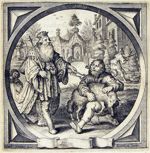
Boni pastores est tondere pecus non deglubere: Cats, Spiegel (The Hague 1632), emblem 94 uses the adage as its motto and uses the imagery of shearing versus flaying
Iconclass: 31E2363(+0) violent death by flaying (+ variant) 47I224 shearing (sheep) 46B5120 'Usura' (Ripa) 47B1711(+0) skinner (+ variant) 55CC11 Greed, Covetousness, Cupidity; 'Cupidità' (Ripa)
Loci Communes: Rapacitas et avaritia (Rapacity and greed, Rapacité et avarice); Rigor (Strictness, rigidity, Rigueur)
III vii 13 Lucri bonus est odor ex re qualibet Profit smells good whatever it comes from
Faceta quidem, sed tamen pestilens illa vox Vespasiani, qui cum ex lotio vectigal faceret, homo turpiter avidus, superque eo facto a filio admoneretur, quod e re tam putida lucrum faceret, paulo post collectam pecuniam, filii naribus admovit, rogavitque ecquid illa puteret? Unde Iuvenalis: Lucri bonus est odor, ex re Qualibet. Ad quod adludens Ammianus libro 22. dixit: Et lucrum ex omni odorantes occasione. Iam et Ennianus ille versiculus, non in sermonem modo, verum etiam in animos et vitam hominum penitus abiit. Unde habeas, curat nemo, sed oportet habere. Quin illud ab Horatio dictum: εἰρωνικῶς serio sequimur. O cives cives, quaerendae pecunia primum, Virtus post nummos. Cephisodorus apud Athenaeum libro 3. docet apud poetas celebres ac sapientes viros inveniri seutentias quasdam improbatas, velut illud apud Archilochum, πάντ᾽ ἄνδρ᾽ ἀποσκολύπτειν. id est, Quemvishominem excoriare sive spoliare. Apud Theodorum illud: κελευειν μὲν πλέον ἔχειν, ἐπαινεῖν δὲ τὸ ἶσον, id est, Quod iubet plus aequo habere, laudare tamen quod aequum est. Apud Euripidem τὴν γλῶτταν ὀμωμοκέναι φάναι, id est, quod dixerit, linguam iurasse, quo de nobis alias dictum est. Apud Sophoclem: Τοιαῦτα τοῖσι, πρὸς χάριν τε κοὐ βίᾳ Λέγω, σύδ᾽ αὐτὸς ὥσπερ οἱ σοφοὶ τὰ μὲν Δίκαι᾽ ἐπαίνει, τοῦ δὲ κερδαίνειν ἔχου. id est, Ad gratiam tibi ista dico, haud impero, At ipse, uti solent facere prudentes viri, Laudato iusta, ceterum lucro haereas. Idem alibi dixit: μηδὲν εῖναι σὺν κέρδει κακόν, id est, nullum esse malum, quod cum lucro coniunctum sit. Apud Homerum, quod facit Iunonem insidiantem Iovi, quod Martem fingit adulterum. Haec Athenaeus. Mirum autem populum indignari poetis aut histrionibus, si quando talia recitant in theatris, cum magis debuerit indignari quisque sibi, quod ea sequeretur in vita, quorum commemorationem in theatro ferre non poterat.
The following was a witty but disgusting mot of Vespasian; he put a tax on urine, being greedy to the point of baseness, and was reproved over what he had done by his son for making a profit out of such a malodorous thing. Shortly afterwards he waved the money so collected under his son's nose and asked him, 'Does this stink somehow?' Whence this line of Juvenal: 'Profit smells good whatever it comes from.' Ammianus alluded to this in book 22 when he said: 'And they smell out a profit from every opportunity .. .' And then there was that line of Ennius that not only entered into men's speech but right into the way they thought and lived: 'Where you get it from no one cares, but it is important to have it.' And why should we not take seriously what Horace said ironically: 'O citizens, citizens, seek money first, / Virtue after coin.' Cephisodorus in Athenaeus book 3 tells us in the writings of famous poets and wise men there are some blameworthy statements to be found, such as this one of Archilochus: 'Fleece (or despoil) any man.' In Theodorus: 'urging people to seek superiority of possessions, but to praise equality.' In Euripides: 'As for what he may have said, only his tongue has sworn,' which I have discussed elsewhere. In Sophocles:
I say these things to please you, I do not command,
But you yourself, do as wise men are accustomed to,
Praise just deeds, but keep the profit firmly in mind.
The same writer said somewhere else: 'Nothing is bad that brings profit with it.' Homer has Juno plotting against Jupiter, he pictures Mars as an adulterer. All this is in Athenaeus. It is surprising however that people become indignant at poets and actors whenever they speak of such things in the theatre; they should be more indignant at themselves, because they do things in real life that they could not tolerate being shown in the theatre.
Facsimile: 
Iconclass: 31A330 'Odorato' (Ripa) 44D21:31A61 tax collection❧urination 55CC11 Greed, Covetousness, Cupidity; 'Cupidità' (Ripa)
Loci Communes: Rapacitas et avaritia (Rapacity and greed, Rapacité et avarice)
III vii 14 Lucrum pudori praestat Profit before shame
Κέρδος αἰσχύνης ἄμεινον, id est, Lucrum pudori praestat. Plautus in Pseudolo: Nimio illud quod pudet facilius fertur, quam illud quod piget. Eundem sensum aliter extulit Trinummo: Pol pudere, quam pigere, praestat totidem literis. Sentetia bono viro indigna, eoque illic a lenone dicitur, hic a sene. Sed commode ad persuadendum sentetiam etiam parum probam arripuit. Alioqui longe satius rei iacturam, quam famae dispendium accipere. Huc allusit Terentius in Phormione; Non te pudet vanitatis? Non, dum ob rem. Quin et hodie vulgato proverbio iubent valere pudorem, ubi de pecunia res agitur. Plutarchus in commentario de audiendis poetis, refert e poeta quodam, senarios hos: Τοῦ μὲν δικαίου τὴν δοκησιν ἄρνυσο, Τάδ᾽ ἔργα τοῦ πᾶν δρῶντος, ἔνθα κερδανεῖς. id est, Opinionem spernito iusti, ac virum Quidvis agentem sequere, cum spes lucri. Refert et hunc ex Sophocle: Τὸ κέρδος ἡδὺ, κᾂν ἀπὸ ψευδῶν ἔη. id est, Dulce lucrum, prosectum et a mendaciis.
Κέρδος αἰσχύνης ἄμεινον, Profit is preferable to shame. Plautus in the Pseudolus: 'What causes shame is far easier to bear than what causes annoyance.' He expressed the same idea in another way in the Trinummus: 'By Pollux! Shame beats annoyance, and with the same number of letters.'- a sentiment unworthy of a good man, and that is why in the former case it is uttered by a pimp and in the latter by an old man. But the sentiment is aptly brought in to convince the audience even if it is dishonourable. In general it is far better to accept the sacrifice of a thing than loss of reputation. This is what Terence alluded to in the Phormio: 'Aren't you ashamed of your vanity? - No, as long as it's to my advantage.' Indeed even nowadays there is a common proverb that bids us say farewell to shame where money is concerned. In his essay 'On Listening to Poets' Plutarch quotes these lines from an unknown poet: 'Scorn the opinion of the just and follow the man / Who does whatever offers hope of profit.' He also records this from Sophocles: 'Profit is pleasant even when gained by lies.'
Facsimile:
Iconclass: 51F3:46B471 Priority, Pre-eminence❧profit (~ commerce) 51FF3:57A4 Posteriority❧Shame 55A1 Acquisition, Gain, Profit 57A4 Shame
Collectanea (1500): 522
Loci Communes: Rapacitas et avaritia (Rapacity and greed, Rapacité et avarice); Spes pertinax (Persistent hope, Espoir tenace)
III vii 15 Baeta tum hyeme tum aestate bona A baeta is fine in winter and in summer
Βαίτη κᾂν θέρει, καὶ ἐν χειμῶνι ἀγαθόν, id est, Baeta tum in aestate, tum hyeme hona. Suidas qui huius adagii meminit, adscribit Baetam vestis pelliceae genus, quod in utrumque tempus videatur adpositum. Nam hieme depellit vetos, aestate solem. Iulius Pollux libro de rerum vocabulis septimo, inter vestes coriaceas meminit & baetae, quam ait tunicam fuisse praelongam, quae totum contegeret corpus. convenit igitur de re ad multa usui futura, veluti de literis, quae iuvenes iuxta ac senes ornant. Aut philosophia, quae in rebus prosperis arcet ab insolentia, in adversis praestat, ne frangamur animo.
Βαίτη κᾂν θέρει, καὶ ἐν χειμῶνι ἀγαθόν, A baeta is fine in winter and in summer. Suidas recalls this adage and adds that a baeta is a type of leather garment that seems to be suitable for both seasons, for in winter it keeps out the winds and in summer the heat. Julius Pollux in book 7 of his Vocabulary mentions baeta when listing leather clothing; he says it was an extra long tunic, which covered the whole body. So the expression is suitable for something that will be useful for many purposes, such as learning, which is an ornament for both young and old, or philosophy, which in prosperity keeps us from arrogance, and in adversity protects us from discouragement.
Facsimile:
Iconclass: 22E temperature 23D41 winter, 'Hyems'; 'Inverno' (Ripa) 23D43 summer, 'Aestas'; 'Estate' (Ripa) 41D21(BAETA)(+42) clothes covering the entire body (BAETA) (+ leather used for clothes) 54B3 Utility, Usefulness; 'Utilità' (Ripa)
Loci Communes: Amicitia (Friendship, Amitié); Tempestiva (Timely things, Choses opportunes)
III vii 16 Anicularum deliramenta Ravings of silly old women
Γραῶν ὕθλος, id est, Anicularum deliramenta. De nugis inanibus, cuiusmodi solent effutiri vetulae, cum iam sexus vitio vitium aetatis accedens, nugacitatis morbum conduplicat. Ex: tat proverbium apud Platonem in Theaeteto: ταῦτα μὲν γὰρ ἐστιν ὁ λέγομενος γραῶν ὕθλος. id est, Nam haec quidem sunt, quod dici solet, anicularum nugae. Itidem Cicero in oratione pro domo sua dixit anilem superstitionem.
Γραῶν ὕθλος, Ravings of silly old women. Describes the meaningless trifles that old women babble about when the defect of age is added to the defect of their sex and multiplies their disease of talking nonsense. The proverb occurs in Plato's Theaetetus: 'For these are indeed what are usually called ravings of silly old women.' Likewise Cicero talked in the speech Concerning His House about 'old women's superstition.'
III vii 17 Ante pedes Before your feet
Ante pedes esse dicitur, quod obvium, quodque vel praesens adest, vel imminet. Terentius: Isthuc est sapere, non quod ante pedes modo est Videre, sed etiam illa, quae futurae sunt Prospicere. Sic Pindarus in hymno ultimo, τὸ δὲ πρὸς ποδὸς ἄρειον αἰεὶ χρῆμα πᾶν. id est, Quicquid ante pedes, est semper melius. Lucian. in Pseudologista: καὶ τὰ κοινὰ ταῦτα καὶ τὸ ἐν ποσὶν ἀγνοῶν. id est, Et quod haec communia, quodque haec passim obvia ignores. Philostratus in Phoenice: Βαδίζεις δὲ ποῖ; μετέωρός τε καὶ ὑπερ πάντα τὰ ἐν ποσί. id est, Quo vadis autem? sublimi vultu, cunctaque despicens, quae sunt ad pedes. Et παρὰ ποδὶ dicitur, quod iam instat, imminetque ἐμποδὼν esse dicitur, quod obstat, ἐκποδὼν contra, προκυλίνδεσθαι τῶν ποδῶν est aliquoties apud Platonem, id est, ante pedes provolui, quod veluti expositum est. Veluti de rep. iiii. πάλαι ὦ μα κάριε φαίνεται πρὸς ποδῶν ἐξ ἀρχῆς κυλινδεῖσθαι, καὶ οὐχ ἑωρῶμεν ἄρ᾽ αὐτὸ, ἀλλ᾽ ἦμεν καταγελαστότατοι, ὥσπερ οἱ ἐν ταῖς χερσὶν ἔχοντες, ζητουσιν ἐνίοτε ὃ ἔχουσι. id est, Iamdudum obeate videtur rursus ante pedes volui, nec videmus illud, sed fuimus ridiculi, quemadmodum solent, qui cum manibus teneant aliquid, tamen quaerunt quod habent. Non dissimili figura Maro dixit, In manibus. In manibus terrae, non hic te carmine longo, Atque per ambages & longa exorsa tenebo.
Something is said to be 'before your feet' when it is obvious, and present or about to appear. Terence: 'This is to be wise, to see not only what is before your feet but to foresee even things that are to come.' Likewise Pindar in his last ode: 'Whatever is before your feet is always better.' Lucian in the Pretended Critic: 'Because you are ignorant of these things both commonly known and everywhere in your way.' Philostratus in the Phoenix: 'But where are you going, with your nose in the air and despising what is before your feet?' And the expression 'at your feet' means what is close or imminent; to be [greek] means to be in the way, and [greek] the opposite. [greek] is found several times in Plato, meaning 'thrown at one's feet,' what has been revealed, as it were. For example in the Republic book 4: 'For a long time now, O happy one, it seems to lie before our feet ([greek]), and we do not see it; but we were silly, like people who hold something in their hands, yet search for what they already have.' Using a not dissimilar figure Maro said 'at hand': 'The land is near at hand; I shall not keep you here with a long ode, with digressions and lengthy preludes.'
III vii 18 Albo rete aliena capiant bona They use a white net to hunt for other people's goods
Proverbii speciem habet, quod ait Plautus in Persa: Nec isti faxim usquam appareant, qui hic albo reti aliena oppugnant bona. Rete vocat calumnias quadruplatotum, et parasitorum. Album dixit, alludens ad codicillos, et dicas, syngraphasque, quibus lis intenditur, peragiturque, Nec omnino displicet, ut ad album praetoris, quo leges et litium formulae proponebantur, respexerit. Nam leges etiam Solon aranearum textis fimiles esse dixit.
A proverb in appearance is this expression of Plautus in the Persian: 'I warrant those fellows would never appear, / Who attack other people's property with their white nets.' By 'net' he means the tricks of informers and spongers. 'White' refers to the petitions, actions, and summonses by which a dispute is instituted and conducted. And it would be quite amusing if it were to refer to the praetor's tablet on which laws and rules for disputes were published. For laws, according to Solon even, are like spiders' webs.
III vii 19 Ad suum quemque quaestum aequum est esse callidum Each for his own advantage is rightly hard-headed
Apud Plautum est proverbialis sententia in Truculento, tum in Asinaria: Ad suum quemque quastum aquum est esse callidum. Quae si transferatur paulo longius, plusculum habuerit gratiae. Velut alius est pecuniae appetens, alius famae studiosus, alius voluptatum avidus, alius literarum sitiens, alius pietatem sectatur. quisque advigilat ad id quod expetit.
This is a proverbial phrase in Plautus' Truculentus and in the Comedy of Asses too: 'Everyone ought to keep a sharp eye for his own advantage.' If this is used more broadly in a figurative sense, it will be rather more witty. For example one may be after money, another seeks fame, another is greedy for pleasures, another hungry for literature, another may strive after piety. Each one is watchful for what he desires.
Facsimile: 
Iconclass: 53A211 Obstinacy; 'Ostinatione', 'Pertinacia' (Ripa) 57AA65 Selfishness; 'Interesse', 'Interesse proprio' (Ripa)
Collectanea (1500): 60
Loci Communes: Proprii commodi studium (Pursuit of one's own advantage, Recherche de son propre intérêt)
III vii 20 Vel acum invenisses You would have found even a needle
Apud eundem Menaechmis proverbialis hyperbole, de re diligenter vestigata: Acum credo invenisses, si acum quaereros. Nam acus inventu difficilima, quod ob exiguitatem facile fallat oculos quaerentis.
In the The Two Menaechmuses by the same author there is a proverbial hyperbole for 'searching carefully for something': 'I believe you would have found a needle, if you were looking for a needle.' For a needle is an extremely difficult thing to find, because its fineness makes it easily invisible to the eye of the searcher.
III vii 21 Subventanea parit His progeny are full of wind
Υπηνέμια τίκτει, id est, Subventanea parit. De vanis ac frivolis inventis. Translatum ab avibus, quae Veneris imaginatione concipiunt ova, sed inania, hoc est, unde non gignatur fetus. Aristophanes in Avibus: Τικτει πρώτιστον ὑπηνέμιον νὺξ ἡμελανόπτερος ὠόν. id est, Parit primum subventaneum nox nigripennis ovum. Hos conceptus potissimum accidere in his avibus, quae sunt neque veloces, neque aduncis unguibus, cuiusmodi sunt perdix, gallina, demonstrat Aristoteles libr. de generatione animalium tertio, causam esse quod excremento magis abundant. Volaces & aduncas nec salaces esse, nec fecundas, quod in his excrementi seminalis pars, in pennas & in ungues abeat. Concipiuntur huiusmodi foetus aliquoties audita maris voce, sicuti fit in perdicibus, aliquoties ex affrictu pulveris, aliquoties feminis ob inopiam maris inter se salientibus. Auctor et Plinius. Eaque ova Graeci ὑπηνέμια, id est, subuentanea, sive ζεφύρϊα vocant, a vento favonio. Unde quae vana sunt, ἀνεμίδια dicuntur. Plato in Theaeteto: ἀλλὰ φέρε δὴ αὐτὸ κοινῆ σκεψώμεθα γόνιμον ἢ ἀνεμίδιον τυγχάνει, id est, Sed age iam illud communiter dispiciamus, solidus ne partus sit an subuentaneus. Et Homerus: Κακόν δ᾽ ἀνεμώλια βάζειν, dicta inania, et ventis similia significans. M. Tullius in Epistolis ad Atticum, ἀνεμοφόρητα vocat inania, quae ventis ferantur, de gladiatoribus: De ceteris, quae scribis ἀνεμοφόρητα, facias me quotidie certiorem.
Υπηνέμια τίκτει, His progeny are full of wind. Said of ideas that are empty and trivial, a figure derived from birds, which, in the false belief that they have had sexual intercourse, conceive eggs that are empty, that is, in which no foetus is formed. Aristophanes in the Birds: 'Blackfeathered night bears first a wind-egg.' These births happen mostly among birds that are not good fliers and do not have crooked claws, such as the partridge, and the cock, as Aristotle shows in book 3 of On the Generation of Animals; the cause is that they produce greater quantities of excrement. Birds that fly and have crooked claws are not lustful and not prolific, because in them a fertile part of the excrement goes to form feathers and claws. Such foetuses are conceived in some cases from the sound of the voice of the male, as in the case of partridges, in some cases when the birds rub themselves in the dust, and sometimes when the females, because of a shortage of males, cover each other. The authority for this is Pliny. Such eggs the Greeks call ὑπηνέμια 'wind eggs,' or ζεφύρϊα 'zephyr eggs,' after the west wind. From this useless ideas are said to be avejuifiia 'full of wind.' Plato in the Theaetetus: 'But come now let us look at this together and see whether it is a real conception or a wind egg.' And Homer: 'to speak words of wind,' meaning empty utterances like so much wind. Marcus Tullius in the Letters to Atticus uses 'airy nothings' of empty rumours that are carried by the wind: 'About the gladiators and the other things you call 'airy nothings,' keep me informed daily.'
III vii 22 Phrynondas alter Another Phrynondas
Φρυνώνδας ἄλλος, id est, Phrynondas alter. De improbo. Huius meminit Lucianus in Pseudomante, internobiles facinorosos. Phrynondas cum esset hospes Athenis, in negotiis Peloponnesiacis versabatur, homo versutus, maleficus, impostor, summus malarum rerum arrifex, ut hominis vocabulum in rei transierit appellationem. Etenim quoties insigniter malum et sceleratum accipi volebant, Phrynondam appellabant. Sic Aristophanes in Amphiareo, citante Suida. Ω μιαρὲ καὶ φρυνώνδα καὶ πονηρὲ σύ. id. est. Scelerate tu, ac Phrynonda, et impurissime. Usus est et Plato in Protagora. Meminit horum et Aeschines adversus Ctesiphontem: οὔτε φρυνώνδας, οὔτε εὐρύβατος, οὔτε ἄλλος οὐδεὶς πώποτε τῶν πάλαι πονηρῶν τοιοῦτος μάγος καὶ γόης ἐγένετο, id est, Nec Phrynondas, nec Eurybatus, nec alius quisquam veterum improborum unquam talis magus, et impostor fuit.
[greek], Another Phrynondas. Said of a dishonest man. Lucian in the False Prophet recalls this name among other wicked celebrities. Phrynondas, though a stranger in Athens, was involved in the Peloponnesian negotiations. He was crafty, maleficent, and mendacious, a masterly contriver of evil deeds, with the result that the name of the man became the term for the thing, and in fact whenever they wanted to characterize someone as particularly evil and wicked they referred to him as 'Phrynondas.' Thus we find Aristophanes in the Amphiareus, as Suidas quotes him: 'You abomination, you vilest Phrynondas.' Plato used it too in the Protagoras. Such men are recalled too by Aeschines in the speech against Ctesiphon: 'Not Phrynondas, not Eurybatus, nor any other of the old evil-doers was ever such a quack and a liar.'
Facsimile:
Iconclass: 57AA6131 Guile, Artfulness, Craftiness, Deceitfulness 98B(PHRYNONDAS) male persons from classical history (PHRYNONDAS)
Loci Communes: Improbi (The dishonest, Les malhonnêtes)
III vii 23 Sus per rosas A pig among the roses
Υς διὰ ῥόδων, id est, Sus per rosas. Quamquam in aliis exemplaribus scripium invenitur, Υς διὰ ῥοίδων. Mihi neutra scriptura satis probatur: sed legendum arbitror, διὰ ῥοιΐδων, ἀπὸ τῆς ῥοιᾶς, ut sit nomen diminutivum. Rhoeae vero Graecis dicutur mala punica. Eudemus proverbium citat ex Cratetis fabula, cui titulus γείτονες, indicans dici solere de agrestibus, & intractabilibus. Quemadmodum sus per mala commode duci non potest.
[greek], A pig among the roses. However in other sources I find [greek]. For me neither version seems right; I believe we should read [greek], from [greek], making a diminutive form of it. And rhoea is the Greek word for pomegranate. Eudemus quotes the proverb from the playby Crates entitled The Neighbours, where he indicates that it is usually said of rustic, or intransigeant people. They are like pigs that cannot easily be lead past apples.
Facsimile: 
Non bene conveniunt: De la Feuille, Devises et emblemes anciennes et modernes (Augsburg, 1697), emblem 598 uses the adage's imagery
Iconclass: 25G41(ROSE) flowers: rose 47I212 pig
Loci Communes: Intemperantia, libido (Intemperance, lust, Intempérance, désir)
III vii 24 Asinus avis The ass is a bird
Ονος ὄρνις. Asinus avis. Est apud Aristophanem in Avibus. Sumptum ab omine quodam. Quidam enim consultus de eo, quiadversa laborabat valetudine, forte fortuna conspexit asinum surgentem à lapsu, simulque alium quendam audivit dicentem: βλέπου πῶς ὄνος ὢν ἀνέστη. id est, Vide quo pacto asinus cum sit, surrexit. Id ominis arripiens ille, protinus respondit, fore ut valetudinarius ille revalesceret. Itaque iocatur Aristophanes, quasi et asinus avis esset, et augurii nonnihil haberet. Nec hoc proverbium e Comoedia natum est, sed a vulgo ad iocum detortum, & à comico usurpatum. Dicetur non intempestive, cum ex indicio quopiam ridiculo quippiam colligimus.
[greek], The ass is a bird. This is in the Birds of Aristophanes. It is derived from some augury. A certain man, consulted about a person who was in bad health, saw by chance an ass getting to its feet from a fall and at the same time heard someone else saying, 'See how he got up, even though he is an ass.' Seizing on this as an omen our man immediately takes it to mean that the sick man would recover. So Aristophanes' joke is that an ass is also like a bird in being something of an omen. The origin of this proverb is not the comedy but popular speech used for a humorous purpose by the comic poet. The right moment for it is when we infer something from some silly sign or other.
Facsimile:
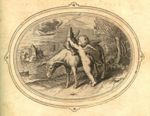
Amor addit inertibus alas: Vaenius, Amorum emblemata (Antwerp, 1608), emblem 58 uses the imagery of adding wings to an ass
Iconclass: 25F3 birds 46C13142 ass, donkey 52E2 Prediction, Prophecy; 'Augurio', 'Divinatione', 'Profetia' (Ripa)
Loci Communes: Absurda, indecora, seu praepostera (Absurd, unbecoming, or preposterous things, Choses absurdes, inconvenantes ou déplacées)
III vii 25 Sisyphi artes The wiles of Sysiphus
Σισύφου μηχαναὶ, id est, Sisyphiartes. Dicebantur vafra, versutaque consilia. Aristophanes ἐν ἀχαρνεῦσιν, Εἶτ᾽ ἐξάνοιγε μηχανὰς τὰς σισύφου. id est: Dein callidos deprome Sisyphidolos. Porro ut Sisyphus in astutiae proverbium abiret, Homericus ille versus in causa fuit: Σίσυφος ὅς κέρδιστος ἐπιχθονίων γένετ᾽ ἀνδρῶν. id est, Sisyphus in terris, quo non astutior alter. Rursus Iliados ζ. Ενθάδε σίσυφος ἔσκεν ὁ κέρδιστος γένετ᾽ ἀνδρῶν. Ab hoc genus duxit Ulysses, quem Homerus ubique vafrum & callidum facit.
[greek], The wiles of Sisyphus, a term for resourceful and cunning advice. Aristophanes in the Acharnians: 'Then bring out the clever tricks of Sisyphus.' Further, the reason why the name of Sisyphus should be proverbial for cunning is this line of Homer: 'Sisyphus, the craftiest man in the world.' And again in the Iliad book 6: 'Here lived a man called Sisyphus, as cunning a rogue as ever there was.' From him was descended Ulysses, whom Homer always portrays as crafty and clever.
Facsimile:
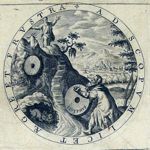
Ad scopum licet aegre et frustra: Wither, A collection of emblems (London, 1635), emblem 128 uses the imagery of Sisyphus
Ad scopum licet aegre et frustra: Rollenhagen, Nucleus emblematum (Arnhem, 1618), Cent. I, emblem 19 uses the imagery of Sisyphus
Iconclass: 57AA6131 Guile, Artfulness, Craftiness, Deceitfulness 95A(SISYPHUS) (story of) Sisyphus
Loci Communes: Inconstantiae, perfidiae, versutiae (Inconstancy, treachery, cunning, Inconstance, perfidie, ruse)
III vii 26 Homo Thales A man like Thales
Ανθρωπος θαλῆς, id est, Homo Thales. Ironia proverbialis in stultum, qui sapiens haberi studeat. Aristophanes in Avibus: Ανθρωπος θαλῆς μετων. id est, Homo Thales Meto. Idem in Nebulis: Τί δῆτ᾽ ἐκεῖνον τὸν θαλῆν θαυμάζομεν; id est, Qua gratia illum proinde suscipimus Thalem? Fuit enim Thales unus è septem Graeciae sapientibus. Est & apud Plautum: Salve Thales: cum stultum significet.
[greek], A man like Thales. A proverbial irony for a fool who strives to be thought wise. Aristophanes in the Birds: 'Meton is a man like Thales.' In the Clouds by the same author: 'What reason then had we for regarding this man as a Thales?' - for Thales was one of the seven wise men. In Plautus too there is 'Hail Thales!' though it designates a fool.
Facsimile:
Iconclass: 52AA51 Folly, Foolishness; 'Pazzia', 'Sciocchezza', 'Stoltitia' (Ripa) 57BB241 Irony 98B(SEVEN SAGES) the seven wise men of Greece: Bias, Chilon, Cleobulus, Periander (alternatively Myson), Pittacus, Solon, Thales 98B(THALES) male persons from classical history (THALES)
III vii 27 Sardanapalus A Sardanapalus
Σαρδανάπαλος, id est, Sardanapalus. Huius cognomen ob insignem hominis molliciem abiit in proverbium. Aristophanes in Avibus: τίς ὁ σαρδανάπαλος οὑτοσί;, id est, quis hic Sardanapalus? Fuit autem Sardanaplaus Anacyndaraxis filius, rex Nini Persicae regionis, qui eodem die Tarsum pariter, et Anchialem, duas Ciliciae civitates obtinuit: ceterum deliciis usqueadeo effeminatus, ut inter eunuchos & puellas, ipse puellari cultu desidere sit solitus. Apollodorus, ut citat Aristophanis interpres, tradit eius sepulcro epitaphium huiusmodi literis Assyriis insculptum fuisse: ἔσθιε, πῖνε, ὄχευε, ὡς τὰ ἄλλα οὐδενός ἐστιν ἄξια. id est, Ede, bibe, utere Venere, nam cetera sunt nihil. Suidas hac forma refert ex Callisthene: σὺ δὲ ὦ ξένε ἔσθιε καὶ πῖνε καὶ παῖζε, ὡς τά γε ἄλλα ἀνθρώπεια, οὐκ ὄντα τούτου ἄξια. id est, Tu vero hospes, ede, bibe, lude, tanquam caeteras res humanas, huius non faciens.
[greek], A Sardanapalus. His name became a proverb because of the man's extraordinary effeminacy. Aristophanes in the Birds: 'Who is this Sardanapalus?' Sardanapalus was the son of Anacyndaraxis and king of Nineveh, a region of Persia, who occupied both Tarsus and Anchialea, two cities of Cilicia, on the same day, but was so effeminate in his vices that he habitually lounged among his eunuchs and girls dressed as a girl himself. Apollodorus, who is quoted by the scholiast of Aristophanes, reports that the epitaph on his tomb, carved in Assyrian letters, said 'Eat, drink, make love, for all else is nothing.' Suidas recounts this version from Callisthenes: 'But you, my guest, eat, drink, play, and give not a fig for any other mortal thing.'
Facsimile:
Iconclass: 31A719 womanish man, molly-coddle, milksop 57AA51 Licentiousness, Lasciviousness; 'Lascivia', 'Licenza' (Ripa) 98B(SARDANAPALUS) (story of) Sardanapalus
Loci Communes: Intemperantia, libido (Intemperance, lust, Intempérance, désir)
III vii 28 Quid tandem non efficiant manus? What in the end cannot be done with hands
Aristophanes in Avibus: Τί δῆτα πόδες οὐκ ἂν ἐργασαίατο; id est, Quid est, quod haud effecerint demum pedes? Interpres ostendit allusum esse ad huiusmodi proverbium: Τί δῆτα χεῖρες οὐκ ἂν ἐργασαίατο; id est, Quid denique est, quod manibus effici haud queat? Admonet nihil esse rerum omnium, quod arte, quod industria non efficiatur. Ceterum quod scripsit Aristophanes, apte torseris in milites ignavos, quibus omne praesidium et spes salutis non in manibus, sed in pedibus sita est.
In the Birds Aristophanes says: 'What is there in the end that feet could not do?' The scholiast shows that this is an allusion to the proverb [greek] ; 'What is there finally that cannot be made with hands?' suggesting that there is nothing in the world that cannot be made with skill and labour. Aristophanes' version might aptly be applied to cowardly infantry for whom any protection and hope of safety lies not in their hands but in their feet.
Facsimile:
Iconclass: 47E12 craft-production, skilled handiwork 54A11 Industriousness, Assiduity; 'Assiduità', 'Industria', 'Zelo' (Ripa) 54A33 Skill, Ability; 'Artificio', 'Prontezza' (Ripa)
Loci Communes: Industria (Industriousness, Application, diligence)
III vii 29 Testa collisa testae One pot smashed against another
Testa testae collidi dicitur, cum duo conflictantur utriusque malo. Aristophanes in Pace: Καὶ πίθος πληγεὶς ὑπ᾽ ὀργῆς ἀντελάκτιστεν πίθῳ. id est, Ac recalcitrans per iram testa testam vulnerat. Talis est fere conflictatio regum, inter se belligerantium, qualis ollae cum olla collisio. Nonnunquam perit uterque. Certe neuter absque gravissimis damnis discedit, nisi quod illud mihi videtur iniquissime comparatum fatis, quod cum par sit incommoda belli in eorum recidere capita, qui belli sunt autores, & quorum refert vicisse, maxima pars malorum in hos ingruat, quibus invitis & abominantibus bellum suscipitur: & ad quos etiam si prosperrimo marte pugnatum fuerit, nec teruncius quidem sit rediturus.
We say 'One pot smashed against another' when two forces come into conflict to the ruin of both. Aristophanes in the Peace: 'And reacting in anger one pot damages another.' Disputes between warring kings are just like the dashing of one pot against another: frequently both perish. Certainly neither one escapes without very serious harm. But it seems to me fate disposes things most unfairly: although the misfortunes of war should fall on the heads of those who start the war and whose advantage is in conquest, the greater share of evil falls on those who take up the fight against their will and in detestation of it, and those to whom, even if they fight successfully, not a farthing will be paid in compensation.
Facsimile: 
Aliquid mali propter vicinum malum: Alciatus, Emblemata (Leiden, 1591), emblem 165 uses the adage's imagery
Bellorum eventus ut riusque partis malo: Lebey de Batilly, Emblemata (Frankfurt, 1596), emblem 11 uses the Alciatus emblem in the pictura's background
Aliquid mali propter vicinum malum: Whitney, A choice of emblemes (Leiden, 1586), emblem 175 uses the adage's imagery
Iconclass: 41A773 container of ceramics: jar, jug, pot, vase 51B3:54BB31 Parity, Equality❧Damage, Disservice; 'Danno' (Ripa) 58AA1 Destruction
Loci Communes: Victoria utrimque tristis (A victory sad on both sides, Victoire triste des deux côtés)
III vii 30 Animus est in coriis My mind is on hides
Aristophanes ἐν εἰρήνῃ, Ημάρτουμεν ταῦτ᾽ ἀλλὰ συγγνώμην ἔχε, Ο νοῦς γὰρ ἡμῶν ἦν τότ᾽ ἐν τοῖς σκύτεσι. id est, In his quidem sum lapsus, at veniam dabis: Nam mens profecto nostra tum in coriis erat. Quamquam alias huius proverbii meminimus. Similimum est illi Terentiano; animus est in patinis. Item illud, quod legimus apud Athenaeum libro Dipnosophistarum primo: Οὐδ᾽ ἂν λέγη τις, οὐδαμῶς μαθοιμεν ἂν, Ο νοῦς γὰρ ἐστι τῆς τραπέζης πλησίον. id est, Ne quis loquatur, capere numquam quibimus, Nam mens quidem ipsa mensae adhaeret proxima. Interpres admonet huius proverbii, ἐπὶ σκύτη βλέπει, de his, qui iam ad bellum spectant: quemadmodum alio demonstratum est loco. Licebit uti, cum ob sollicitudinem erit aliquis ad id, quod agitur in praesentia, parum attentus.
Aristophanes in the Peace:
I was indeed mistaken in this, but you will forgive me;
For my mind at that moment was entirely on hides.
However I have recalled this proverb elsewhere. It is very like Terence's expression 'My mind is on dishes.' Then there is what Athenaeus has in book 1 of the Doctors at Dinner: 'Let no one speak; we shall never be able to understand, / For the mind itself is too close to the table.' The scholiast reminds us of this proverb: 'He has hides before his eyes,' said of those who expect war, as we have shown elsewhere. A good moment to use it would be when someone is distracted by worry from the matter in hand.
Facsimile:
Iconclass: 31A4114(+0) near-sightedness, myopia (+ variant) 52AA552 Intellectual Blindness; 'Cecità della Mente' (Ripa)
Loci Communes: Sollicitudo (Anxiety, care, Souci)
III vii 31 Quibus nec ara, neque fides Fot those who hold to either altar nor oath
Aristophanes ἐν ἀχαρνεῦσιν, Οἶσιν οὔτε βωμὸς οὔτε πίστις, οὔθ᾽ ὅρκος μένει. id est, Quis nec ara, nec fides, nec ulla durant foedera. De vehementer perfidis. Dictum est in Spartanos, quorum perfidiam taxavit Euripides: Σπάρτης ἔνοικοι δόλια βουλευτήρια. id est, Spartae incolae, dolosa consultamina. Nuncin aulicos non omnino pesfime quadrat.
Aristophanes in the Acharnians: [greek], For them no altar, no faith, no agreement stands. Used of the utterly treacherous. It was said of the Spartans, who were reproached for their treachery by Euripides: 'Inhabitants of Sparta; counsels of treachery.' Nowadays it fits courtiers not at all badly.
Facsimile:
Iconclass: 51AA4:12E62 Nothingness, Absence❧altar ~ Greek religion 51AA4:52B2 Nothingness, Absence❧Admission, Belief 45F9 treason 57AA621 Cheat, Deceit; 'Fraude', 'Inganno' (Ripa)
Loci Communes: Inconstantiae, perfidiae, versutiae (Inconstancy, treachery, cunning, Inconstance, perfidie, ruse)
III vii 32 Agi et ferri Driving and carrying off
Tristissima quidem, sed tamen proverbialis apud Graecos autores figure est, ἄγουσι καὶ φέρουσι pro eo quod est, hostili more populantur, aut vexant. Id si traducatur ad animum, non paulo fiet festivius. Quemadmodum Aristophanes in Nebulis, Υπὸ γὰρ τόκων χρηστῶν τε δυσκολωτάτων Αγομαι, φέρομαι, τὰ χρήματ. id est, Diris ab usuris & usurariis Rapior miser, ferorque difficillimis, Possessiones pignori opponens meas. Lucianus dixit, ἄγει καὶ φέρει, pro eo quod est, suo arbitratu quò vult, trahit. Consimiliter usus est Cornelius Tacitus De oratoribus Nunc principes in Caesaris amicitia, agunt feruntque cuncta, atque ab ipso principe cum quadam reverentia diliguntur. Homerus Iliad. ε. Ατὰρ οὔτι μοι ἐνθάδε τοιον, Οἷον κ᾽ ἠὲ φέροιεν ἀχαιοιἤκεν ἄγοιεν. id est, Neque enim hic mihi quicquam Tale est à Danais ut ferri possit agíve. Verba sunt Sarpedonis excitantis Hectore ad bellum pro tuenda patria, cum ipse pugnaret, nihil habens quod Graeci possent auferre, nimirum Lycius patria. Item Verg. Aeneidos ii. Alii rapiunt incensa, feruntque Pergama. Pro, diripiunt ac populantur. Consimilem ad modum Livius dixit, libro De bello Maced. octavo, Tum demum fracta pertinacia est, ut ferri agique res suas viderunt. Apud Herodotum ita Croesus loquitur Cyro victori. οὐδὲν γὰρ ἐμοὶ ἔτι τούτῶν μέτα, ἀλλὰ φέρουσί τε καὶ ἄγουσι τὰ σά. id est, Iam enim nihil istorum meum est, sed tua diripiunt. Translatum videtur à more mili tari, quod illic homines & iumenta aguntur, sarcinae feruntur. Plato in libris De legibus τῶν ἀλλοτρίων μηδένα μηδὲν φέρειν, μηδὲ ἄγειν. id est, Ne quis quicquam alienarum rerum ferat, agátve. Unde color sermonis ex legum formulis ductus videtur. Q. Curtius lib. iiii. pro ἀγεσθαι καὶ φέρεσθαι dixit, volui agique: Eludant videlicet quibus fortè ac temere humana negocia volvi agique persuasum est. In eodem libro dixit, ferri agique, Adhuc lymphatos ferri agique, arma iacientes. His verbis inconditum tumultum militum declaravit.
This is very banal certainly but it is a proverbial expression in Greek writers; [greek] means figuratively 'they plunder or harass in a hostile manner.' If the expression is applied to a mental state, it will become much more humorous. Aristophanes does this in the Clouds: 'By heavy interest payments and cruellest creditors I am driven and carried off, wretch that I am, putting up my possessions as security.' Lucian used [greek] to mean 'He drags you wherever he wants, at his whim.' Cornelius Tacitus said something very similar in his Dialogue on Orators: 'Nowadays the leading men in the emperor's circle of friends agunt feruntque cuncta "get their own way in everything" and are esteemed by the emperor himself with a sort of reverence. Homer in book 5 of the Iliad: 'For I do not have anything here / Such as the Greeks could drive away and carry off.' These are the words of Sarpedon as he exhorts Hector to fight in defence of his country, for he himself was fighting even though he had nothing that the Greeks could take away, being from Lycia. Then there is Virgil in book 2 of the Aeneid: 'Others rape and rob burning Pergamum,' meaning they 'destroy and plunder it.' In a very similar expression Livy said in book 8 of his Macedonian War: 'Then at last their endurance was broken as they saw their possessions carried and driven away.' In Herodotus Croesus says the same thing to his conqueror Cyrus: 'Now not one of these things is mine, it is yours they plunder.' The expression seems to be borrowed from military custom, where men and beasts are driven off and burdens are carried off. In the Laws Plato says: 'Let no one drive or take away anything belonging to anyone else.' Quintus Curtius, in book 4, translated [greek] : 'Let them scoff who are persuaded that human affairs are guided and driven arbitrarily and rashly.' In the same book he used ferri agique: 'Still carried away and driven by frenzy, throwing down their arms .. .' The words give a clear picture of military disorder and confusion.
Facsimile: 
Iconclass: 45L3 plundering ~ soldiers 46C1 traffic on land 46C121 carrying something
Loci Communes: Molesti intolerabiles (Unbearable, troublesome people, Gens insupportables)
III vii 33 Salem lingere To lick salt
Αλα λείχειν. id est, Salem lingere dicuntur, qui perquam tenuiter vicitant. Sic enim Persius: Vare regustatum digtto terebrare salinum, Contentus perages, si cum Iove vivere pergis. Diogenes cum a Cratero praedivite quodam invitaretur, ut ad se veniret, usurus hospitio suo, suaque liberalitate, respondit se malle salem Athenis lingere, quam apud illum opiparis mensis frui. Itidem Plautus in Curculione: Hodie apud me numquam delinges salem.
[greek], To lick salt. People are said to lick salt if they live an extremely meagre life. In Persius, for example: 'Varus, if you mean to keep up with Jupiter, you will have to go on being content with scraping the salt cellar with your finger as you have often done before. When Diogenes was invited by a certain very rich citizen called Craterus to come and enjoy his hospitality and his liberality, he replied that he preferred to lick salt in Athens than to enjoy sumptuous meals in his house. Likewise Plautus in the Curculio: 'Today in my house you will have never a lick of salt.'
III vii 34 Pedere thus To fart frankincense
Βδέειν λιβανωτόν, id est, Pedere tus. Proverbii speciem habet. Accommodabitur in hos, quorum et vitia placent, aut ipsis, aut aliis impendio amantibus. Facit enim hoc φίλαυτια, ut unicuique sua placeant, arrideantque etiam si sint putidissima. Facit item hoc amor immoderatus, ut polypus etiam Agnae delectet Balbinum: veluti scripsit Horatius. Aristophanes in Pluto: Οὐ λιβανωτὸν γὰρ βδέω. id est, Non soleo thura pedere. Quadrabit & in assentatores, turpissima pro honestissimis laudantes.
Βδέειν λιβανωτόν, To fart frankincense, has the appearance of a proverb. It will be apt for those who enjoy their own vices or those who are deeply in love. The cause of the former is φίλαυτια 'love of self,' because everyone enjoys his own vices and finds them pleasant, even if they are of the most nauseous sort. The cause of the latter is extravagant love: 'Even Agnes' polyp delights Balbinus,' as Horace writes. And Aristophanes in the Plutus: 'I am not accustomed to farting frankincense.' The expression will also suit flatterers who praise the vilest things instead of the most noble.
Facsimile:
Iconclass: 31A621 flatulence 41C76:31A5142(FRANKINCENSE) scents, perfumes ~ stimulants, drugs❧perfumes (FRANKINCENSE) 56F241 Narcissism 57AA6121 Flattery; 'Adulatione' (Ripa)
Loci Communes: Philautia (Self-love, Amour-propre)
III vii 35 Pro caeco exoculatus est Not blind but eyeless
Omnes huiusmodi facetiarum formulae pertinent ad adagiorum naturam, cum videmur corrigere quod dictum est: sed altero verbo, quod vel idem polleat, vel magis etiam laedat: veluti si quis dicat: Non furatus est, sed rapuit. Aristophanes in Pluto: Μῶν οὐ κέκλοφας ἀλλ᾽ ἥρπακας; id est, Annon furatus es, sed rapuisti? Idem in eadem fabula: Αντὶ γὰρ τυφλοῦ ἐξωμμάτωται. Ludit enim servus ambigua voce ἐξωμμάτωται, quae declarat et oculis donatum Plutum, et exoculatum.
All humorous expressions of this sort have the character of adages; we appear to correct what is said, but with another word that either has the same meaning or has a stronger meaning. As when someone says 'He didn't steal, he purloined' or 'He didn't steal, he plundered.' Aristophanes in the Plutus: 'So you did not steal - You robbed?' And in the same play: ' [greek] 'Not blind, just eyeless.' The slave is playing on an ambiguous word, which says both that Plutus is endowed with eyes and that he does not make use of them.
Facsimile:
Iconclass: 31A4111 blind, blindness 51AA4:31A2212 Nothingness, Absence❧eyes
Loci Communes: Malum conduplicatum aut renovatum (Evil doubled or renewed, Mal redoublé ou renouvelé)
III vii 36 Prius lupus ovem ducat uxorem Sooner a wolf would mate with a sheep
Aristophanes ἐν εἰρήνη, Πρὶν κεν λύκος οἶν ὑμεναιοῖ. id est, Ante lupus sibt iunget ovem. De his, inter quos insanabile dissidium. Consimili figura dixit Horatius; Sed prius Apulis Iungentur capreae lupis: Plautus in Pseudolo: Ut mavelis lupos apud oves linquere, quam hos domi custodes. Ad rem relatum erit lepidius: quod genus si dicas, non cohaerere pecuniae studium, cum studio literario, adque eam sententiam accommodes proverbium.
Aristophanes in the Peace: [greek], Till the wolf mates with the sheep. Said of those who have an incurable discord between them. Horace used a very similar figure: 'Goats would sooner mate / With the wolves of Apulia.' Plautus in the Pseudolus: 'You would sooner leave wolves among your sheep than these fellows in charge in your house.' It will be more humorous if applied to an idea; for example you may say the pursuit of money and the study of literature do not belong together and adapt the proverb to that meaning.
Facsimile:
Iconclass: 25F23(WOLF)(+2) beasts of prey, predatory animals: wolf (+ sex and age of animals; propagation of animals) 47I213 sheep 52BB42 Impossibility 54EE31 Disagreement, Discord; 'Discordia' (Ripa)
Loci Communes: Impossibilia (Impossible things, Choses impossibles)
III vii 37 Sphondyla fugiens pessime pedit When the polecat flees it makes a dreadful smell
Idem in eodem fermè loco: Ὡς ἡ σφονδύλη φεύγουσα πονηρότατον βδεῖ. id est, Ut feles quoties fugitat, male pedere sueta est. In eos quadrabit, qui discedunt non citra infamiam. Sphondyla insecti genus, odoris teterrimi. Plinius lib. 27. cap. 13. meminit Sphondylae serpentis, quae radicibus arborum sit infestissima: ceterum genus quodnam sit, non explicat. Est autem serpentis huiusmodi species, exiguo corpore, et subnigro, quae emoriens gravissimum odorem emittit. Hesychius docet apud Atticos spondylen dici felem. Est apud Aristophanem γαλῆς δρυμίτερον, de acido ventris flatu.
The same author in almost exactly the same place: [greek] , When the polecat flees, it usually leaves a bad smell. Said of people who break ranks and bring shame on themselves. The sphondyla is a kind of insect with an absolutely filthy smell. In book 27 chapter 13 Pliny recalls a sphondyla serpens 'snake beetle,' which does enormous damage to tree roots, though he does not make it clear what kind it is. There is however a snake of this sort, slim bodied and blackish in colour, which emits a very oppressive smell when it dies. Hesychius tells us that among Attic people spondyle was a word for a polecat. In Aristophanes there is the phrase [greek] 'as pungent as a polecat,' said of acid wind from the stomach.
Facsimile:
Iconclass: 25F23(POLECAT)(+5212) beasts of prey, predatory animals (POLECAT) (+ running animal) 31A332 disagreeable, repellent smell
Loci Communes: Inconstantiae, perfidiae, versutiae (Inconstancy, treachery, cunning, Inconstance, perfidie, ruse)
III vii 38 Nunquam efficies, ut recte ingrediantur cancri You'll never make crabs walk forwards
Aristophanes in Pace: Οὔποτε ποιήσεις τὸν καρκίνον ὀρθὰ βαδίζειν, Οὐδ᾽ ἐπὶ τῷ πραχθέντι ποίησεις ὕστερον οὐδέν. id est, Ambulet ut cancer recta, haud effeceris Unquam, Nec quidquam efficies, ubi res erit ante peracta. Hoc velut oraculum poeta facetus pronuntiat, quod a natura sit insitum, nullo corriges negotio. Nam cancris genumum oblique ingredi. In quorum altero carmine tangit adagium, quod superius dictum cic Actum ne agas.
Aristophanes in the Peace:
If you try to make the crab walk forwards you will never succeed,
And you will never succeed in changing anything that has already been done.
The poet delivers this as a humorous oracle: what has been set by nature you cannot change by any effort. For crabs naturally walk sideways. The second of these lines is pertinent to an adage that was recorded earlier, 'To reopen a closed subject.'
Facsimile: 
Iconclass: 25F716(CRAB)(+521) crustaceans: crab (+ forward movement of animal(s)) 52BB42 Impossibility
Loci Communes: Impossibilia (Impossible things, Choses impossibles)
III vii 39 Κορυβαντιᾶν To be a Corybant
Κορυβαντιᾶν, pro insanire dixit Aristophanes in Vespis: Αλλ᾽ ἢ παραφρονεῖς ἐτεὸν ἢ κορυβαντιᾷς. id est. Aut Vere insanis, aut Corybantiaris. Hanc vocem frquenter usurpat Lucianus in timone, epistolis saturnalitiis, Lexiphane, Hermotimo. Sumptum est a Corybantibus Cybeles cultoribus, qui sacro correpti furore cymbala pulsant, alios item in similem agentes rabiem. quod idem alias vocat: κοκοδαιμονᾶν, quasi malo duci genio.
Aristophanes used [greek] for 'to be in a frenzy' in the Wasps: 'Either you are really insane or you are acting like a Corybant.' This term is often used by Lucian, in his Timon, in the Saturnalian Letters, in Lexiphanes, and Hermotimus. Its source is the Corybantes, the priests of Cybele who clashed their cymbals as they were seized with a sacred madness, and drove others into a similar madness. Elsewhere the same writer calls this [greek] 'being possessed by an evil demon.'
Facsimile:
Iconclass: 12E51 priest ~ Greek religion 31A4640 Madness 31A4641(+0) possession (by demons) (+ variant) 92L294 Corybantes
Loci Communes: Multi - in stupidos (Many people - against the stupid, Beaucoup de gens - contre les sots)
III vii 40 Calculo mordere To bite with a voting token
Ψήφῳ δάκνειν. id est, Calculo mordere, dicuntur qui suffragio laedunt, aut ulciscuntur hominem. Aristophanes ἐν ἀξαρνεῦσι: Βλέπουσιν οὐδὲν ἄλλο πλὴν ψήφῳ δακεῖν. id est, Spectant id unum, ut mordeant suffragio. Siquidem hac via potissimum plebeii vindicabant, si quid essent offensi, refragabantur in concione, cum calculis ferrentur suffragia. Proinde mordebant non dente, quod tutum non erat, sed calculo.
[greek], To bite with a voting token, as people are said to do when they injure or take revenge on a man by means of a vote. Aristophanes in the Acharnians: 'They are concerned only with biting with their vote.' For this was the commonest way for the ordinary people to avenge an offence. They expressed their opposition in the assembly when the votes were cast by means of tokens. So they could bite, not with their teeth, which would be unsafe, but with their tokens.
III vii 41 Charybdis. Barathrum A Charybdis. A Barathrum
Hyperbolae proverbiales sunt et hae, cum hommem maiorem in modum edacem, bibacem, rapacem, heluonem, Charybdim, aut Barathrum vocamus. Aristoph. in Equitibus: Καὶ τελώντην καὶ φάραγγα, καὶ χάρυβδιν ἁρπαγῆς. id est, Et telonen & barathron & rapinae gurgitem. Huc adscribendum opinor quod Diogenes, autore Laertio, ventrem, τοῦ βίου χάρυβδιν. id est, Facultatum Charybdim vocavit. Horatius de lurcone quodam: Ingluvies & tempestas barathrumque macelli.
These are also proverbial hyperboles: a man who is an exceptional glutton, drinker, robber, gourmand is called a Charybdis or a Barathrum. Aristophanes in the Knights: 'A tax-gatherer and a ravine and an abyss of plunder.' I think I should add here that Diogenes, according to Laertius, called the stomach the 'Charybdis of one's livelihood.' Horace said of some glutton: 'The maw and whirlwind, the barathrum of the market-place.'
Facsimile:
Iconclass: 25H23141 maelstrom 26C35 whirlwind, cyclone, hurricane, typhoon, tornado 32A43:5(+3) glutton❧Abstract Ideas and Concepts (+ symbolical representation of concept) 44G522:5(+3) robbery❧Abstract Ideas and Concepts (+ symbolical representation of concept) 55CC11(+3) Greed, Covetousness, Cupidity; 'Cupidità' (Ripa) (+ symbolical representation of concept) 92I752 Charybdis; 'Cariddi' (Ripa)
Loci Communes: Rapacitas et avaritia (Rapacity and greed, Rapacité et avarice)
III vii 42 Lingua seorsum inciditur His tongue is cut out separately
Aristophanes in Pace: Η γλῶττα χωρὶς τέμνεται. id est, Lingua ipsa seorsum inciditur. Interpres admonet proverbialiter dictum. Sumptum autem ex Homero Odysseae γ. Αλλ᾽ ἄγε τέμνετε μὲν γλώττας. id est, Eia age iam linguas incidite. Eiusque sententiae Callistratum citat autorem. Rursum in Pluto, Η γλῶττα τῷ κήρυκι τούτων τέμνεται. id est, Praeconibus horum lingua praecidi solet. Callistratum, ut citat interpres, tradit olim in sacrificiis linguam exsectam praeconibus dari solitam. Nam aliqui sunt qui dicant, ex victimis Mercurio deberi linguam. Est autem in Aristophanis verbis ἀμφιβολία, non infaceta, quod lingua utrolibet referri potest, vel ad boves, vel praecones. Interpres admonet allusum esse ad proverbiale dictum, ἡ γλῶττα τῷ κήρυκι. id est, lingua praeconi. Quo recte videbimur usuri, cum praemii nonnihil deberi significabimus, qui in conficiendo negocio pro sua virili in partem adiumento fuit, aut εὐαγγέλιον dandum laeta nuntianti. Sic enim vocat Homerus mercedulam, quae dari consuevit laetum adferentibus nuncium. Apud Plutarchum Antipater, cum incidisset metio de Demade iam senio imbecilli fractoque, velut, inquit, ex immolata victima, solus venter et lingua superest. Apparet linguam ceu profanum membrum sacris adhiberi non solere. Et Pittacus Amasidi regi mittit è victima linguam ut membrum pessimum & idem optimum. Praecones autem habent linguam venalem, & in sacrificiis admonebant populum ut linguis faveret. Plautus in prologo Poenuli, Exerce vocem, quam per vivis & colis: nam nisi clamabis, statim te obrepet fames.
Aristophanes in the Peace: '[greek], The tongue is cut out separately. The scholiast tells us this was used as a proverb and derived from Homer, book 3 of the Odyssey: 'Well, come now, cut out the tongues'; and he quotes Callistratus as author of the phrase. Again in the Plutus: 'For the heralds their tongues were cut out.' Callistratus, according to the scholiast, relates that in ancient sacrifices the tongue was cut out and given to the heralds. For there are those who say that the tongues of victims are Mercury's due. But Aristophanes' words contain an ambiguity, not without humour, because the 'tongues' may be either those of the oxen or of the heralds. The scholiast tells us there is an allusion to the proverbial saying 'The tongue for the herald.' We should be using this correctly if we want to signify that some recompense is due to someone who helped to the best of his ability to conclude an affair, or that [greek] 'a reward' is to be given to the messenger who brings glad news. [greek] is what Homer calls the small reward that was usually given to those who brought good news. In Plutarch, when Demades, already a weak and broken old man, was mentioned, Antipater says: 'He is like sacrificial victims, only the stomach and tongue remain' It seems that the tongue, being a profane organ, is not acceptable in sacred rites. And Pittacus sends to king Amasis the tongue of a victim as being both the worst and the best member of the body. Heralds however have venal tongues, and at sacrifices they admonished the people to 'be favourable with their tongues.' Thus Plautus in the prologue of the Carthaginian:
Raise your voice, by which you live and worship.
For unless you shout, famine will come upon you at once.
Facsimile:
Quo tendis: Paradin, Les devises héroïques (Antwerp, 1563), emblem 70
Iconclass: 31A22141 tongue 31E23622 violent death by tearing out of tongue 55A12 Reward, 'Praemium'; 'Premio', 'Remuneratione' (Ripa) 57A8 Gratitude; 'Gratitudine', 'Memoria grata de beneficii ricevuti' (Ripa) 98B(AMASIS)3 male persons from classical history (AMASIS) - representations to which the NAME of a person from classical history may be attached 98B(BIAS)3 (story of) Bias, one of the Seven Sages - representations to which the NAME of a person from classical history may be attached
III vii 43 Non capit somnum, nisi hoc, aut illud fecerit He gets no sleep if he hasn't done this or that
Sunt duae figurae proverbiales, quibus intemperantem, atque impotentem rei cuiuspiam cupiditatem significamus. Altera est apud Aristophanem in Vespis, huiusmodi: Ην μ᾽ ἠπὶ τοῦ πρώτου καθίζηται ξύλον Υπνουδ᾽ ὁρᾷ τῆς νυκτὸς οὐδὲ πασπάλην. id est, Ligno nisi fors primus ille assederit Somni videt nil nocte, non vel paspalam. Primum lignum, dixit primum gradum. Paspalam autem Graeci vocant minutissimum aliquem farinae pulvisculum. Ad eundem modum Iuvenalis: Quibusdam Somnumrixa facit. Altera est apud Maronem in Bucolicis: Quod si non aliquà nocuisses, mortuus esses. Priorem reperire est apud Hebraeum παροιμιογράφον. Non enim dormiunt nisi quum male fecerint, nec capitur somnus ab eis nisi supplantaverint.
There are two proverbial figures that are used to describe an excessive or uncontrollable desire for something. The first is in Aristophanes Wasps:
Unless he has by chance been the first to sit on the bench
He finds not a grain of sleep all night.
By 'first bench' he means the front row [at the theatre]. Paspale is a Greek word for the most finely ground cornmeal. Juvenal said similarly: 'A dispute makes some people sleep.' The second figure occurs in the Eclogues of Maro: 'For if you had not hurt him in some way, you would have died.' The first is to be found in the Hebrew paroemiographer: 'For they cannot sleep unless they have done wrong, and their sleep is taken away unless they have made someone stumble.'
Facsimile: 
Iconclass: 51AA4:31B1 Nothingness, Absence❧sleeping; unconsciousness 51H3:56F1 Multitude❧Desire; 'Desiderio' (Ripa)
Loci Communes: Improbi (The dishonest, Les malhonnêtes)
III vii 44 Ventre pleno melior consultatio You can think better on a full stomach
Plutarchus Symposiacôn lib. vii, citat hoc carmen: Γαστρὸς ἀπὸ πλείης βουλὴ καὶ μῆτις ἀμείνων. id est, Consultatio tum melior, cum expleveris alvum. Cum fames interpellat, non vacat deliberare, propterea quod consultatio moram desiderat, & animi tranquillitatem, at fames bilem acuit. Potest & huc torqueri, prius agendum quod instar & urget, deinde de futuro deliberandum. Congruet & in illos, qui bene poti consultant de rebus gravissimis, quem morem Herodotus lib. primo, tradit fuisse Persis. Item Persius, Ecce inter pocula quaerunt. Romulide saturi quid dia poemata narrent.
In book 7 of his 'Table-talk' Plutarch quotes this line of verse: [greek] , You will be able to think better when you have filled your belly. When hunger intrudes, we cannot stop for careful consideration; consideration requires time and calmness of mind, but hunger increases bile. This can be turned round to mean that we should do what is urgent and demanding, and deliberate about what comes later. It will also apply to those who consult about the most serious matters when they are drunk, as was the habit of the Persians according to Herodotus book 1. And Persius: 'See now, over their cups they seek to know, / These sated sons of Romulus, what divine poetry may have to say.'
III vii 45 Tenuis spes Slender hope
Spem infirmam, incertamque poetae tenuem vocant, eamque figuram ceu proverbialem annotarunt interpretes, nominatim Suidas. Aristophanes in Equitibus: Λεπτήτις ἐλπίς ἔστ᾽ ἐφ᾽ ἧς ὀχούμεθα. id est, Spes ista tenuis quaepiam est qua nitimur. Frigidam spem dixit Euripides in Iphigenia Aulidensi: Ψυχρὰ μὲν ἐλπίς. id est, Spes frigida quidem. M. Tullius pro Roscio comoedo: Inani & tenui spe te consolaris. Aristophanes metaphoram duxit à navigantibus, quum ait ὀχούμεθα. Unde M. Tullius dixit, Sperat hinc aflare auram aliquam, pro eo quod erat, ostendi spem. Ut in Verrem actione sexta: Video quid egerim, erigit se, sperat sibi auram aliquam posse afflare in hoc crimine. Id translatum à nautis, qui quum haerent mari nimium malacissante, è nubecula, aut è mari procul crispante divinant fore ventum. Plato De legibus tertio, simili figura dixit, λεπτὴν σωτηρίαν. id est, tenuem salutem. Apud Athenaeum lib. xiii. citatur ex Callimacho ὧδε ἐμόγησαν αἱ ἐλπίδες, ὥσε ἐχθρῶν συμμαχίας καλέσαι. id est, Adeo laborant spes, ut ab hostibus petantur suppetiae.
A feeble, uncertain hope is described as 'slender' by the poets, and the figure has been noted as a proverbial one by the commentators, particularly Suidas. Aristophanes in the Knights: [greek] 'That hope is a slender one in which we trust.' Euripides talked of a 'cold' hope in the Iphigenia in Aulis: 'This is cold hope indeed.' Marcus Tullius in the speech for Roscius the actor: 'It is with a vain, slender hope that you console yourself.' Aristophanes has derived the metaphor from sailors when he says [greek], and it was from them that Marcus Tullius took the expression 'He hopes some breeze will blow from this direction' to mean that some hope is held out; for example, in the sixth indictment against Verres: I see what I have done; he sits up, he hopes some breeze may blow his way in this accusation.' This is a figure borrowed from seamen, who, becalmed in a windless sea, predict from some little cloud or from some distant ripple on the water that a wind will come. Plato used a similar figure in book 3 of the Laws: 'a poor salvation.' In Athenaeus book 13 there is a quotation from Callimachus: 'Hopes so far troubled that they require help from the enemy.'
III vii 46 Anno senior fio I become a year older
Quoties aliquid nobis magnopere molestum significamus, senescere nos etiam vulgo dicimus. Aristophanes in Ranis: Μὴ νῦν ποίησῃ. ὡς ἐγὼ θεώμενος, Οταν τι τούτων τῶν σοφισμάτων ἴδω. Πλέον ἐνιαυτῷ πρεσβύτερος ἀπέρχομαι. id est: Faxis caveto. quippe quoties conspicor Istiusmodi negotiorum quippiam, Discedo, crede, senior anno protinus. Taedio vero, molestiaque conciliari senium indicat etiam Homerus: Αἶψα γὰρ ἐν κακότητι βροτοὶ καταγηράσκουσι. id est: Ilico mortales inter mala multa senescunt.
Whenever we want to say something is a great burden to us, we say even in the vernacular that we grow older. Aristophanes in the Frogs:
Take care what you do; for whenever I see
Any of this sort of business,
I come out of it, believe me, a year older immediately.
Weariness and dissatisfaction bring on old age, as Homer declares too: 'Quickly do mortals surrounded by many ills grow old.'
Facsimile:
Iconclass: 23C year, solar year 31D14(+941) adult man (+ being sad, suffering, sorrowing) 31D7 unnatural aging
Loci Communes: Molesti intolerabiles (Unbearable, troublesome people, Gens insupportables)
III vii 47 Tauricum tueri To glare like a bull
Βλέπειν ταυφηδὸν, id est, Tueri taurine, pro eo, quod est, torue. Aristophanes in Ranis: Βλέψεν οὖν ταυρηδὸν ἐγκύψας κάτω. id est: Itaque ore prono contuetur tauricum. Plaro demonstrat hunc Socrati fuisse motem taurinis oculis obtueri. Et Virgilius bovem toruam vocat: Optimae toruae Forma bovis.
[greek], To glare like a bull, meaning 'fiercely.' Aristophanes in the Frogs: 'And so with lowered head he glares up like a bull.' Plato indicates this was Socrates' habit, to stare with eyes like a bull. And Virgil uses the word torva 'wild' or 'fierce' of a cow: "The best type of cow is fiercelooking.'
Facsimile: 
Iconclass: 47I2111(+949) bull (+ audible means of communication of animal(s): roaring, crying, singing, barking, mewing, neighing, chirping, etc.) 54AA42 Wildness, Untamedness
Loci Communes: Tristitia, laetitia (Sadness, joy, Tristesse, joie)
III vii 48 Expedit habere plura cognomina It's useful to have several names
Aristophanes in Pluto: Ως ἀγαθόν ἐστ᾽ ἐπωνυμίας πολλὰς ἔχειν. id est: Ut expedit, si plura habeas cognomina. Convenit in eos, qui multa simul profitentur, quo quaestum faciant uberiorem. Aut qui diversarum sunt partium. Quemadmodum vespertilio in Apologis aliquando mus est, aliquando avis. Dictum est autem in Mercurium, cuius varia feruntur cognomina. Vocatur enim στροφαῖος, vel quod bene vertat negocia, vel quia subdolus sit ac versipellis: ἐμπολαῖος, quod auctionibus, ac mercimoniis praesit: ἡγεμόνιος, quod viae dux, ut apud Homerum Priamo: δόλιος, quod imposturae, praestigiarumque repertor: κερδῷος, quod lucris augeat negociatores: ἐναγώνιος, quod in certaminibus praeconis vice fungatur. διάκονος, quod deorum minister. Feruntur item et Bacchi permulta cognomina. Proverbium non inscite torquebitur & in istos, qui nusquam non habetur titulos, ac nominationes, ut vocant, & ceu laqueos instructos ad irretienda sacerdotia. Aut qui plurimas artes profitentur, ut aliqua ratione sibi parent fortunam, velut ii faciunt, qui in principum aulis iidem & sacrificum agunt, & ministrum, & oeconomum, & lenonem, & γελωτοποίον.
Aristophanes in the Plutus: '[greek], How convenient it is if you have several names. This is appropriate for those who carry on several professions at the same time, so that they can make greater profits, or who belong to various parties. Like the bat in the fables who is sometimes a mouse and sometimes a bird. But it is a saying used of Mercury, who is recorded as having manifold names: he is called Strophaios 'twister,' either because he brings business round to a good conclusion or because he is crafty and fickle; Empolaios 'merchant,' because he presides at auctions and trading; Hegemonios because he is a guide, as for Priam in Homer; Dolios 'deceitful,' because he is the inventor of lying and illusions; Kerdoos 'bringer of gain,' because he increases traders' profits; Enagonios because he acts as herald in disputes; Diakonos 'servant,' because he is the messenger of the gods. Bacchus is also said to have many names. The proverb could also be turned nicely against those who are never without titles and nominations, as they are called, and who are all set, like nets, to catch benefices. Or those who profess several skills, so that they can make their fortune by one means or the other, like the men at royal courts who act as priest, minister, steward, pimp, and buffoon.
Facsimile:
Iconclass: 25F28(BAT) flying mammals: bat 25F3:25F26(MOUSE) birds❧rodents: mouse 51H4:31D82 Plenitude❧the individual and his name 92B57:31A56 specific aspects, allegorical aspects of Mercury; Mercury as patron❧servant 92B57:46A123 specific aspects, allegorical aspects of Mercury; Mercury as patron❧herald 92B57:46B21 specific aspects, allegorical aspects of Mercury; Mercury as patron❧merchant, salesman 92B57:52A43 specific aspects, allegorical aspects of Mercury; Mercury as patron❧Ingenuity; 'Ingegno' (Ripa) 92B57:57AA621 specific aspects, allegorical aspects of Mercury; Mercury as patron❧Cheat, Deceit; 'Fraude', 'Inganno' (Ripa)
Loci Communes: Inconstantiae, perfidiae, versutiae (Inconstancy, treachery, cunning, Inconstance, perfidie, ruse)
III vii 49 Λιμοδωριεῖς Limodorians
Λιμοδωριεῖς. In proverbiorum collectaneis, quae Plutarchi nomine feruntur, huiusmodi reperitur fabula. Cum aliquando Peloponnesus annonae laboraret inopia, quidam urgente fame, collectis sarcinis, inde demigrarunt: ii cum incertis sedibus huc atque illuc vagarentur, recepti sunt in civitatem à Tripolitis. Tripolis autem ea in Rhodo est. Nomen igitur inditum illis, ut dicerentur λιμοδωριεῖς.Hesychius addit ex autoritate Didymi, eos qui iuxta Oetam accolebant, sic vocatos, quod ob terrae sterilitatem frequenter cum fame rem habebant. Δωριεῖς Graecè dici videntur à dono & eundo. Itaque qui vagantes famem adferebant λιμοδωριεῖς dicti sunt. Alioqui Dores non sunt in Peloponneso, sed inter Locros & Aetolos, autor Strabo lib. 9. Quadrabit igitur in eos, qui fame adacti, aliquo demigrant. Festus Pompeius admonet homines exili re, tenuique fortuna dictos olim Canalicolas, quia circa canales fori consisterent.
[greek], Limodorians. In the collections of proverbs that goes under the name of Plutarch I find the following story: At a time when the Peloponnese was suffering from a failure of the crops, certain people driven by hunger gathered together their goods and emigrated from the region; after wandering hither and thither with no fixed settlement, they were taken by the Tripoliti into their city, and this Tripoli is in Rhodes. They were therefore given the name Limodorians. Hesychius adds, on the authority of Didymus, that the Dorians who lived near Mt Oeta were so called because, given the infertility of the soil, they had to cope often with famine. The name 'Dorians' seems to be derived in Greek from words meaning 'gift' and 'going.' And so those who brought hunger as they moved about were said to be Limodorians (bringing the gift of hunger). Anyway, the Dorians do not live in the Peloponnese, but between the Locrians and the Aetolians, as Strabo says in book 9. The expression will be appropriate for people who are driven by famine to emigrate somewhere, just as the common people in Italy call almost all foreigners Limodorians, as if they were driven by hunger to visit that country. Festus Pompeius tells us that people of little substance and slender fortune were formerly called canalicolae 'gutter-snipes,' because they gathered around the canales 'gutters' in the forum.
III vii 50 Tribus bolis In three throws
Plautus in Curculione: Si vis tribus bolis, velim chlamydem. Tribus bolis, dixit pro compendio, quasi tribus verbis. Nam bolum Terentius accipere videtur pro eo, quod Graeci vocant βλωμόν. Quod autem continuo devoratur, tribus bolis edi dicitur.
Plautus in the Curculio: 'If you want it in three throws, I would like a cloak.' He used 'in three throws' to mean 'briefly,' like 'in three words.' I say this because Terence appears to take bolus to mean what the Greeks call [greek] 'a morsel of bread.' And indeed what is swallowed at once is said to be eaten tribus bolis 'in three bites.'
Facsimile:
Iconclass: 31A2741 throwing something 41C11 eating 52D21 Conciseness
Loci Communes: Breviloquentia (Brevity of speech, Brièveté du discours)
III vii 51 Velut umbra sequi Following like a shadow
Ωσπὲρ σκιὰ ἕπεσθαι, id est, Velut umbra sequi. Dicitur qui nusquam deest. Nam umbra corpus adsectatur, velit, nolit. Plaut. in Casina: Decretum est mihi quasi umbra quoquo ibis tute, persequi. Unde asseclas individuos, umbras vocamus, & ultro comitantes ad convivium, ut indicatum est alibi, in proverbio Umbrae. M. Tullius lib. Tusculanarum quaestionum primo: Etsi enim nihil in se habeat gloria, quur expetatur, tamen virtutem tanquam umbra sequitur.
[greek], To follow like a shadow. This is said of someone who is never absent. For the shadow attends the body, willy-nilly. Plautus in the Casina: 'I am resolved / To follow like your shadow, wherever you may go.' Hence individual attendants are called shadows, as are those who, without being asked, accompany others to banquets, as explained elsewhere in the proverb 'Shadows.' Marcus Tullius in the first book of the Tusculan Disputations: 'For if there is nothing in fame itself that it should be sought, it nevertheless follows virtue like a shadow.'
Facsimile:
Iconclass: 31A28 man and his shadow 51KK1:51A4 Permanence❧Presence 59B32:57A6 Fame; 'Fama', 'Fama buona', 'Fama chiara' (Ripa)❧Virtuousness; 'Amor di Virtù', 'Attione virtuosa', 'Guida sicura de' veri honori', 'Virtù', 'Virtù insuperabile' (Ripa)
Loci Communes: Assiduitas (Diligence, persistence, Assiduité)
III vii 52 Ne nummus quidem plumbeus Not a lead penny
Nummum plumbeum hyperbola proverbiali, pro minimo pecuniae ponunt. Plautus in Casina: Cui homini hodie peculi nummus non est plumbeus. Idem in Trinummo: Cui si capitis res siet, nummum nunquam credam plumbeum. Confine illi, quod est apud eundem in Captivi duo: Neque ridiculos iam terunci faciunt. Quanquam hoc alio dictum est loco.
A lead penny is a proverbial hyperbole, which stands for the smallest possible amount of money. Plautus in the Casina: 'Today this man has not a lead penny to his name.' The same author in the Trinummus: 'For the life of me, I would never trust him with a lead penny.' This is very closely related to what he also has in the Two Captives: 'Funny people don't rate a farthing with them any more' But this is described elsewhere.
Facsimile:
Iconclass: 46B311:25D13(LEAD) coin❧minerals and metals: lead 54BB6 Worthlessness
Loci Communes: Contemptus et vilitatis (Contempt and worthlessness, Mépris et bassesse)
III vii 53 Satietas ferociam parit Luxury breeds brutality
NIcolaus Stobaeus in Collectaneis suis hanc sententiam proverbii titulo citat: τίκτει κόρος μὲν ὕβριν, ἀπαιδευσία δὲ μετ᾽ ἐξουσίας ἄνοιαν .i. Parit satietas ferociam, imperitia cum potestate coniuncta, insaniam. Tollit animos opulentia, quod si ad inscitiam accedat potestas, iam res ad insaniam usque procedit. Concinit cum illo: Foenum habet in cornu. Pindarus in Olympiis invertit sententiam, dicens ὕβριν κόρου μητέρα. id est, ferociam matrem sacietatis. Sed reprehenditur ab interprete, qui magis approbat Homeri versum, Τικτει τοι κόρος ὕβριν, ὅταν κακῷ ὄλβος ἕποιτο. Id est, Fastum copia gignit, opes ubi pravus adeptus. Caeterum hunc versum non memini legere apud Homerum, nec videtur illi γνήσιος: certe, quod constat, extat in sententiis Theognidis.
In his anthologies Nicolaus Stobaeus quotes this statement as a proverb: [greek], Luxury breeds brutality, inexperience joined with power breeds madness. Wealth saps intelligence; and if power is joined to inexperience, then the situation can go as far as madness. It chimes in with that other one, 'He has hay on his horn.' In the Olympian Odes Pindar turns the idea round and says: 'Insolence is the mother of surfeit.' But he is reproached by the scholiast, who prefers to approve Homer's verse: 'Luxury breeds arrogance, when a wicked man acquires wealth.' I do not remember reading this line in Homer, and it does not seem to be genuinely Homeric; what is certain is that it is extant in the Maxims of Theognis.
III vii 54 Quid caeco cum speculo? What's a blind man doing with a mirror?
Τί ρυγλῷ καὶ καρόπτρῳ, id est, Quid caeco cum speculo? Finitimum illi: Nihil cum fidibus graculo. Citatur a Stobaeo versiculus ex Epicharmo, Τίς γὰρ κατόπτρῳ καὶ τυφλῶ κοινωνιγα;. id est, Luminibus orbo, cum speculo quid est res? Quorsum opus est libris illiterato? quò regnum iuveni stulto? quò divitias ei qui nesciat uti?
[greek]; What's a blind man doing with a mirror? This is very close to 'A jackdaw has no business with a lute.' The verse is quoted by Stobaeus from Epicharmus: 'To one deprived of eyes what use is there for a mirror?' What need for books for one who cannot read? To what end is a kingdom found for a fool, or riches for one who does not know how to use them?
Facsimile: 
Iconclass: 25F32(JACKDAW):48C7323 song-birds: jackdaw❧lute, and special forms of lute, e.g.: theorbo 31A4111:31A511 blind, blindness❧mirror 54AA33:49N:49M32 Inability, Maladroitness, Awkwardness❧reading❧book 54BB2 Unnecessity, Superfluity 54BB3 Inutility, Noxiousness; 'Nocumento', 'Nocumento d'ogni cosa' (Ripa)
Loci Communes: Dissimilitudinis et incongruentiae (Dissimilarity and incongruity, Dissemblance et incongruité)
III vii 55 Miseram messem metere To reap a wretched harvest
Malam metere messem, est pro malefactis luere poenas. Non admodum abhorret ab eo, quod alibi retulimus: Ut sementem feceris, ita & metes. Stobaeus hoc carmen citat ex Euripidis Ione: Καὶ νῦν ἐφέλκετ᾽ ὦ κακοὶ τιμὰς βροτοὶ, Καὶ κτᾶσθε πλοῦτον πάντοθεν θηρώμενοι, Σύμμικτ᾽ ἅ μὴ δίκαια καὶ δίκαι᾽ ὁμοῦ, Επειτ᾽ ἀμᾶσθε τῶν δὲ δύστηνον θέρος. id est, At nunc honores ó scelesti accersitis, Et opes paratis aucupantes undique Promiscue per fas nefasque, postea Messem metitis ob ista tristem, et asperam. Aeschylus in Persis: Υβρις γὰρ ἐξανθουσ᾽ ἐκάρπωσε στάχυν Ατῆς, ὅθεν πάγκλαυστον ἐξαμᾶ θερος. id est, Florens enim spicam tulit ferocia Noxae, unde prorsum flebilem messem metit. Plato in Phaedro: ποῖον τίνα οἴει μετὰ ταῦτα τὴν ῥητορικὴν καρπὸν ὅν ἔσπειρε θερίζειν, id est, qualem putas postea rhetorice messem messura est, quam seminavit. Aristoteles Rheto ricorum tertio, citat ex Gorgia: σὺ δὲ ταῦτα αἰσχρῶς μὲν ἔσπειρας, κακῶς δ᾽ ἐθέρισας. id est, tu quidem haec turpiter seminasti, & misere messuisti.
To reap a bad harvest is to pay the penalty for one's misdeeds. Not at all inconsistent with one we have recorded elsewhere, 'As you have sown, so also shall you reap.' Stobaeus quotes these verses from Euripides' Ion:
But at present, you scoundrels, you gather offices
And prize great wealth, striving to get it from any source
Indiscriminately by good or bad means; later
You reap for these deeds a grim and bitter harvest.'
Aeschylus in the Persians:
Flourishing arrogance bore a crop
Of calamities, whence it reaps a plenteous harvest of tears.
Plato in the Phaedrus: 'What sort of harvest do you think he will later reap from the oratory he sowed?' In his Rhetoric book 3 Aristotle quotes from Gorgias: 'You have sown foul seeds and reaped a wretched harvest.'
Facsimile:
Iconclass: 44G3 criminal law; punishment 54AA5:47I14 Badness❧harvest 57AA1 Bad Behaviour
Loci Communes: Ultio malefacti (Vengeance for a wrongdoing, Vengeance d'un méfait)
III vii 56 Venimus ad summam lineam We have come to the final line
Euripides in Antigone: Επ ἄκραν ἥκομεν γραμμὴν κακῶν. id est, Devenimus summam ad malorum lineam. Item Horatius, Venimus ad summum. De linea stadiorum & lusus, dictum est alibi non uno loco.
Euripides in the Antigone: '[greek] We have come down to the ultimate mark of evil. And Horace: 'We have come to the ultimate.' The line in the stadium and in games has been described elsewhere more than once.
Facsimile:
Iconclass: 49D32 line (~ planimetry, geometry) 51FF5 End; 'Fine' (Ripa)
Loci Communes: Perficiendi sive absolvendi - ab initio ad finem (Finishing, completing - from beginning to end, Achever, accomplir - du début à la fin)
III vii 57 Saburratus Full of ballast
Plautus in Cistellaria, nove quidem, sed admodum eleganter dixit saburratus, pro onustus cibo. Sumpta metaphora à navibus, quas onerant harenis aut argilla, ne iactentur, vacillentque in fluctibus. Quod equidem inter adagia non retulissem, nisi etiam vulgò passim diceretur. Plauti verba sunt haec: Idem mihi, magnae quod parti est vitium mulierum, quae nunc quaestum facimus. Quae ubi saburratae sumus, largiloquae extemplo sumus. Venustius fiet, si longius detorqueatur: veluti si quis aures saburratas dicat alicuius multiloquio. Aut, animus philosophiae praeceptis saburratus, ne rerum tempestate iactetur.
In his Little Chest Plautus used a term, original certainly but quite neat: 'ballasted,' for stuffed with food. The metaphor is derived from ships, which are loaded with sand or clay so that they are not tossed and rolled about in the waves. I would not have listed this as an adage, if it were not commonly used even in the vernacular. Plautus' words are as follows:
I too share what is the vice of a large portion of us women
Who are in business here. When we are well ballasted,
We become talkative immediately.
It will be more witty, if the image is taken further: if someone says, for example, that his ears are ballasted by someone else's endless chatter. Alternatively, someone's mind is ballasted with the precepts of philosophy so that he is not tossed about by the storms of circumstances.
Facsimile:
Iconclass: 51G2 Heaviness 52D4 Prolixity, Verbosity, Loquacity; 'Loquacità' (Ripa) 53A22 Stability, Firmness; 'Fermezza', 'Stabilimento', 'Stabilità' (Ripa)
Loci Communes: Garrulitas (Talkativeness, Bavardage)
III vii 58 Numero dicis et similia You talk like 1 2 3
Plautus in Casina, Numero dicis, dixit pro eo quod est, facile & compendio. Festus exponit pro cito ac celeriter, citans tum alios multos autores, tum hunc Plauti locum. Sed apud Festum adeo depravata est scriptura, ut referre pigeat, nisi quod illinc colligitur veteres non solum dixisse, numero dicis, sed Numero scis, numero facis, numero expungere, numero credere, numero venire, pro facile ac cito venire. Nonius Marcellus putat Numero dici pro multum, sed exempla quae adducit magis indicant accipi pro cito ac facile, sive statim. Quod ipsum ille fatetur in fine. Idem in Amphitryone, Numero mihi in mentem fuit. Usurpatur apud eundem & aliis aliquot locis.
In the Casino. Plautus used 'Talk like 1 2 3' to mean fluently and concisely. Festus explains it as 'quickly or rapidly,' quoting many other authors as well as this passage in Plautus. But in Festus the text is so corrupt that I would be reluctant to refer to him, if it were not that we learn there that the ancients not only said 'Talk like 1 2 3', but 'Learn like 1 2 3,' 'Do like 1 2 3', 'Rub out like 1 2 3,' 'Believe like 1 2 3,' and 'Arrive like 1 2 3' meaning to reach a place easily and quickly. Nonius Marcellus thinks numero is used for multum 'a great deal,' but the examples he gives show rather that it is taken to mean 'quickly and easily' or 'immediately' - something which he admits at the end. The same author in the Amphitryon: 'It came to my mind like 1 2 3.' It is used by him in several other places.
Facsimile:
Iconclass: 31B6235 speaking 49D11(1) numerals (1) 49D11(2) numerals: 2 49D11(3) numerals: 3 52D21 Conciseness
Loci Communes: Breviloquentia (Brevity of speech, Brièveté du discours)
III vii 59 Palpari in tenebris Groping in the dark
Ψηλαφεῖν ἐν τῳ σκότῳ, id est, Manu tentare in tenebris. Dicuntur qui rem obscuris vestigant coniecturis. Aristophanes in Pace: Εψηλαφῶμεν ἐν σκότῳ τὰ πράγματα, Νυνὶ δ᾽ ἅπαντα πρὸς λύχνον βουλεύσομεν. id est, Antehac negocia, Velut in tenebris manibus attentavimus, Nunc ad lucernam cuncta pensitabimus. Allusit poeta ad Hyperboli artificium, qui ex lychnopola, id est, lucernario factus fuit imperator. Usurpat idem proverbium Plato in Phaedone. Quod quidem & hodie dicitur de coniecturis incertis, ψηλαφεῖ.
[greek], To grope with the hand in the dark. This is what people are said to do who try to understand a matter by vague guessing. Aristophanes in the Peace: 'Previously we groped with our hands at this business as if in the dark. Now we shall be able to consider everything by the light of the lamp.' The poet has alluded to the trickery by which Hyperbolus, a 'lychnopole' or dealer in lamps, was made ruler. Plato uses the same proverbial saying in the Phaedo. And people say this nowadays about uncertain guesses: [greek].
Facsimile: 
Iconclass: 22C9 darkness 31A2512(+939):31A350 arm stretched forward (+ other neutral connotations)❧'Tatto' (Ripa) 54D11 Attempt, Trial
Loci Communes: Caecutientia (Poor eyesight, near-blindness, Mauvaise vue)
III vii 60 Muscas depellere Keeping off the flies
Muscas depellere, etiam hodie vulgato ioco dicitur, qui ocioso, atque inutili fungitur officio. Aristophanes in Vespis, Αλλὰ φυλάττει δία χειρὸς ἔχων καὶ τὰς μυίας ἀπαμύνειν. id est, Imo cavet prae manu habens, etiam muscas depellere curans.
Keeping off the flies is still said jokingly nowadays of someone who does an unnecessary and useless job. Aristophanes in the Wasps: 'Yes, he has a vigilant hand, even taking care [greek] "to drive away the flies." '
Facsimile:
Iconclass: 34D311(+0) fly swatter (+ variant) 54BB3 Inutility, Noxiousness; 'Nocumento', 'Nocumento d'ogni cosa' (Ripa) 54BB5 Unimportance
Loci Communes: Inanis opera (Vain effort, Effort vain)
III vii 61 Tenuiter diducis You're combing it out thinly
Λεπτὰ ξένεις. id est, Tenuiter diducis. Suidas scripsit dici solitum de iis, qui pauperum more tenuiter victitant. Translatum apparet à mulieribus lanam carminantibus. Nisi malumus legere ξέεις. Nam in vulgatis codicibus ξένεις habetur. Quae vox quid sibi velit, mihi sanè non liquet. Porrò sive ξαίνεις legas, sive ξέεις, utroque modo significabitur illa tenuium hominum in minutulis rebus diligentia, quam Graeci vocant μικρολογίαν, adeo ut etiam cuminum secare proverbio dicantur. Quin & apud Latinos, pauperes tenues appellant: & Terentius, sic tenuiter, dixit de iuvene amante citra pecuniarum adminicula. Interdum ad exactam curam referent, ac subtilitatem. Ut Horatius in Sermonibus, Utpote res tenues tenui sermone peractas. Aristophanes item in Nebulis, λεπτὴν φροντιδα dixit, & λεπτοτάτους λήρους, & λεπτολογεῖν, id est, Tenuem curam, & tenuissimas rationes, & tenuia loqui, nimirum anxias, ac nimium subtiles philosophorum ridens argutias: cuiusmodi acumen Seneca prodidit fuisse Chrysippo, quod pungeret modo, non penetraret. Porrò quemadmodum commoda rectaque divisio plurimum lucis adfert sermoni: ita curiosa illa & in frusta verius quam in membra sectio facit interdum, ut valde intelligendo nihil intelligamus. Unde qui vitant hanc immodicam subtilitate, παχυμερῶς καὶ παχυμερέστερον loqui dicuntur. Ulpianus lib Pandectarum XV. titulo De peculio, cap. Quam Tuberonis: Scire autem non utique singulas res debet ex necessitate, sed παχυμερέστερον, & in hanc sententiam inclinat Pomponius. Vox enim composita videtur à παχὺ, quod est pingue, & μερῖς partitio. Contrà qui excutiunt singula quaeque licet minuta, λεπτομερῶς λέγειν dicuntur. Pro παχυμερῶς Aristoteles lib. Ethicorum Nicomach.: dixit παχυλῶς καὶ τύπῳ. Αγαπητὸ δὲ περὶ τοιούτῶν και ἐκ τοιούτῶν λέγοντας, παχυλῶς καὶ τύπῳ τᾀληθὲς ἐνδείκνυσθαι. id est, gratum igitur fuerit de talibus & è talibus differentes crasse ac formula breviterque verum ostendere. Sentit exceptionum scrupulos omittendos apud inexercitatum auditorem, sed ita de rebus loquendum, ut plerunque sunt aut vulgò habentur. Rursus eiusdem operis lib. ii. πᾶς περὶ τῶν πρακτῶν λόγος τύπῳ καὶ οὐκ ἀκριβῶς ὀφείλει λέγεσθαι. id est, Omnis sermo de rebus agilibus, crassius non exacte fieri debet. Frequens & illud in Graecis autoribus, ὡς τύπῳ εἰπεῖν. id est, ut ita loquar, quum sentiunt se rem non ut est exacte proloqui, sed qualibuscunque verbis significare, ac notare verius quàm eloqui.
[greek], You're combing it out thinly. Suidas wrote that this used to be said of people who scrape a living like the poor. The metaphor appears to be derived from women carding wool. (Unless we prefer to read [greek], 'scrape'; for in the printed editions we find [greek], a word whose meaning is not apparent to me at all.) However, whether you read [greek] or [greek], it will refer either way to the carefulness of poor people about very small amounts, which the Greeks call [greek] 'pettiness' - so careful that they were said even to 'split cummin.' Moreover, in Latin too poor people are called tenues, and Terence said 'rather poorly' of a young man who is in love but has little money. Sometimes tenuis is applied to careful precision and fine distinctions, as in Horace's Satires: 'For these were subtle matters thoroughly discussed in subtle language.' Likewise in the Clouds Aristophanes used [greek] 'subtle speculation' and [greek] 'very slender arguments' and [greek] 'to talk subtleties,' when he was mocking the excessively careful and subtle conceits of philosophers. Seneca declared that Chrysippus' intellect was like this, in that he pricked a subject but did not penetrate it. Moreover, just as appropriate and correct analysis throws much light on language, so this indiscriminate cutting of things into what are more properly bits than organic parts sometimes means that, by seeking to understand too much, we understand nothing. Hence those who avoid this excessive refinement are said to speak 'roughly and broadly.' Ulpian, in book 15 of the Pandects, under the heading 'On Property,' in the section beginning Quam Tuberonis: 'One is certainly not obliged of necessity to know each and every detail, but to know it [greek] "roughly," and Pomponius inclines to this opinion.' The term seems to be composed from [greek] 'coarse' and [greek] 'division.' In the opposite sense, those who examine every detail however minute are said to talk in quibbles. Instead of [greek], Aristotle in book 1 of the Nicomachean Ethics said: 'It would be pleasing therefore when discussing such subjects and arguing from them to state the truth [greek] "roughly and in a summary outline." , He is of the opinion that doubts about exceptions should be left out when dealing with an inexperienced hearer, and that one should speak of things as they commonly are or as they are considered by ordinary people. Again in book 2 of the same work: 'Any statement about moral actions must be made in rough, not precise terms.' In Greek authors we frequently find the expression 'so to speak,' when they feel that they are not expressing the matter exactly as it is, but that they are indicating it with a word or two, alluding to it rather than designating it.
Facsimile:
Iconclass: 46A15 the poor 47H23 carding, combing ~ textile and clothing industry 52D2 Clarity, Precision 54A2 Carefulness, Diligence; 'Diligenza' (Ripa) 55CC1 Saving, Frugality, Parsimony; 'Parsimonia' (Ripa)
Loci Communes: Aperte et crasse (Openly and bluntly, Ouvertement et grossièrement); Sordes et parcimonia (Meanness and stinginess, Bassesse et avarice)
III vii 62 Simia fucata A painted monkey
Πίθηκος ἀνάπλεως ψιμυθίου. id est, Simia plena fuci. De deformi anu, fucata tamen, & meretriciis culta lenociniis. Nam ψιμύθιον Graecis appellatur color ille, quo quondam meretrices, nunc honestae etiam, si diis placet, matronae facie oblinunt, quo senectam, ac formae vitia dissimulent. Aristophanes ἐν ταῖς ἐκκλησιασούσαις, Πότερον πίθηκος ἀνάπλεως ψιμυθίου; Η γραῦς ἀνεστηκυῖα παράγε τῶν νεκρων; id est, Utrúmne variis picta fucis simia? An anus ab imis huc reversa manibus? Potest & ad rem accommodari, veluti si quis turpem causam, orationis phaleris adornet, ut honesta videatur. πιθηκίζειν est fucis aut blanditiis fallere. Unde πιθηκισμὸς. Aristophanes in Equitibus, Οἴμοι τάλας, οἵοις πιθηκισμοῖς μὲ περιελάυνεις. id est, Me miserum cuiusmodi pithecismis me circumagis.
[greek], A monkey covered with paint. Said of an old woman, ugly but painted and made up with a prostitute's enticements. [greek] is what the Greeks call the colouring with which once only prostitutes used to paint their faces and hide the defects of old age and features. Now, God help us, even respectable matrons do so. Aristophanes in the Women in Parliament:
Is a monkey painted with different colours?
Can an old woman return from deepest hell?
It can be adapted to an idea; for example, if someone dresses up an immoral argument with rhetorical trappings so that it seems honest. [greek] is 'to disguise with pretences and allurements,' whence [greek] 'aping.' Aristophanes in the Knights: 'O poor me! Would you get round me with these [greek] "monkey tricks"?'
Facsimile: 
Iconclass: 25F22 monkeys, apes 31AA513 making up - AA - (for) women 31D172 ugly old woman, hag 33C52 whore, prostitute 57AA611 Dissimulation, Hypocrisy; 'Hippocresia', 'Simulatione' (Ripa)
Loci Communes: Simulatio, dissimulatio (Pretense, dissimulation, Simulation, dissimulation)
III vii 63 Ζοφοροδόρπιδες et similia A Dusk-diner and similar expressions
Plutarchus in Symposiacis ostendit olim cognomina quaedam proverbiali ioco iactata fuisse in eos, qui serius ac cunctantius ad convivium accederent. Dictos enim tum κῶλυσιδεἴπους, tum ζοφοροδόρπιδας, tum τρεχεδείπνους. Quorum nominum rationem si coniectare licet, hanc esse putamus, quod qui cunctarentur adire, hi, quod allis essent in mora, impedimento esse videbantur, quo minus illis cenare liceret: deinde quod lentitudine sua efficerent, ut convivium ad noctem usque proferretur. Tertium cognomen κατ᾽ ἀντιφρασιν attributum apparet. Negat autem apud Plutarchum quispiam Pittacum ab Alcaeo Zophorodorpidem appellatum, quod serius iniret convivium, sed quod sordidis ac plebeis computationibus gauderet. Antiquitus autem inelegans, ac parum urbanum habebatur, si quis ad convivium rogatus, tardius advenisset. Unde Polycharmus in apologia, qua vitae suae rationem reddit Atheniensibus, illud in laudem suam interposuit: ἄνδρες ἀθηναῖοι καὶ πρὸς τούτοις οὐδέποτε κληθεὶς ἐπὶ δεῖπνον ὕστατος ἀφικόμην. i. Ad haec insuper Athenienses, nunquam ad coenam accersitus, post tempus accessi. Huius opionis Battus quidam scurra non illepide causam aperuit apud Caesarem. Consuevit enim is qui tardius venirent ad convivium, ἐπιθυμοδείπνους appellare, quasi dicas, conviviorum appetentes, propterea quod quum essent occupati negociis, ob coenarum tamen cupiditatem non excusarent iis, à quibus rogarentur. Huiusmodi fermè Plutarchus. At Terentius in Seipsum excrucian[te, indicat incivile fuisse, statim & ante tempus adesse convivam, cum Chremes ait illos iam dudum praesto esse domi suae, seque ipsum in mora convivis esse, nimirum indicans contra fieri solere. Apud Aristophanem in Concionatricibus huc alluditur aliquoties, ἐπὶ τὸ δεῖπνον ἔρχομαι. id est Ad coenam venio. In eadem, ἐπασομαι μέλος τι μελοδειπνικόν. i. Accinam melos aliquod coenaticum.
In his 'Table-talk' Plutarch declares that in olden times certain nicknames were given, by way of a proverbial joke, to those who arrived at a banquet rather late and in leisurely fashion; they were sometimes called [greek] 'hinder-dinners,' sometimes [greek] 'dusk-diners,' sometimes [greek] 'dinner-chasers.' If we may guess at the explanation of these names, I think those who delayed their arrival were seen to be a hindrance, because others were kept waiting and could not dine; in the second case, by their slowness they caused the banquet to be prolonged until nightfall. The third nickname seems to be given by way of 'an antiphrasis.' It is said by someone in Plutarch however that Pittacus was called 'Zophorodorpis' by Alcaeus, not because he arrived late at the banquet but because he enjoyed sordid, low-class drinking-parties. In ancient times, however, it was considered unfashionable and uncivil for a guest to arrive late at a banquet. Hence Polycharmus, in the defence in which he gave account of his life to the Athenians, included this in his favour: 'In addition to these things, Athenians, I have never arrived late at a meal.' A reason for this view about arriving late for dinner was rather wittily revealed by Battus, a court jester, in the entourage of Augustus Caesar. He used to call those who came late to banquets 'Epithumodipnoi,' 'dinner-devotees' you might say, because, although they were occupied with business, they had a great desire for meals and would not decline any invitations they received. All this is in Plutarch. But Terence in the Self-Tormentor indicates that it was impolite to arrive punctually or too early at a banquet, when Chremes says his guests have been in his house for some time and that he is keeping them waiting, no doubt indicating the opposite was usually the case. In Aristophanes' Women in Parliament there are several allusions to this: 'I'm coming to the feast.' And in the same play: T shall sing some dinner-time song.'
Facsimile:
Iconclass: 41C44:24A21 (late) supper❧dusk, evening twilight 51FF52 Lateness 51MM11 Slowness, Tardiness; 'Tardità' (Ripa)
Loci Communes: Tarditatis et cunctationis (Slowness and delay, Lenteur et retard)
III vii 64 Cui ista arrident, meis ne gaudeat Who enjoys such things can have no pleasure in what I do
Aristophanes in Nubibus: Ος τις οὖν τούτοισι γελᾶ, τοῖς ἐμοῖς μὴ χαιρέτω. id est, Proinde risum cui ista pariunt, is meis ne gaudeat. Proverbii speciem habet, quo licebit uti, cum ingens interesse discrimen significabimus inter nostras & aliorum rationes. Graecus versiculus claudicat una syllaba. Plenus erit, si pro γελᾳ legas γελαει. Contrarium huic illud Maronis: Qui Bavium non odit, amet tua carmina Maevi. De iis quae eiusdem sunt farinae, & ex aequo contemnenda.
Aristophanes in the Clouds: [greek] 'So anyone who finds such things amusing cannot enjoy what I do.' This has the air of a proverb which could be used when we want to indicate that there is a large difference between our thinking and that of others. The Greek line limps, being one syllable short; it will be complete if we read [greek] instead of [greek]. Maro has the opposite of this: 'Any one who does not hate Bavius could like your poems, Maevius.' About two poets who were of the same ilk and equally despicable.
III vii 65 Βωμολοχός, βωμολοχεύεσθαι An altar-scrounger. To Lurk around the altar
Βωμολοχοὶ, proverbiali convitio dicebantur scelesti, et improbi. Quod nominis olim inditum videtur iis, qui obversantes circum aras, victimis tendere consueverunt insidias: aut qui ob id rem divinam facerent, quod ex aliorum accusatione compendii nonnihil auferrent. Nam huiusmodi mortalium vota Iuppiter audit apud Lucianum in Icaromenippo. Dicuntur item βωμολοχοὶ, qui cum res divina peragitur, non faciunt vota diis, sed nugas inanes deblaterant. Qui mos hodie magnatibus praecipue placet, & illud admodum civile putant, si inter sacrificandum assidue cuipiam ad aurem obganniant. Aristophanes in Nebulis: καὶ βωμολοχὸς. Idem in eadem fabula: Εἰ δέ τις αὐτῶν βωμολοχεύσε τ᾽, ἢ κὰνψείε τινα καμπὴν. id est, Si quis eorum bomolochum egerit, & flexum aliquem flexerit. Quanquam in hoc ipso καμπήν τινα κάμπτειν subest proverbii color. Idem in Equitibus ὢ θυμὲ, νυνὶ βωμολόχον ἐξευρὲτι, sentiens adversarium excogitasse quiddam egregie scelestum, quod βωμολόχον appellat quasi insigniter adulatorium. Vox deducta videtur à βωμὸς altari, & λόχος insidiis, quod nec illic desint, qui cibos suffurentur, aut mendicando petant. Hinc translatum est ad abiecte adulantes ventris gratia. Unde dicta sunt βωμακεύματα καὶ βωμολοχεύματα pro sordidis adulationibus. Interdum βωμολόχου vox tribuitur aruspicibus, divinis, tibicinibus, & huic hominum generi, quod nidorem altaris sequitur. Deni que vocis usus transiit ad omnes, qui improbis artibus venantur quaestum.
[greek] was a proverbial reproach for knaves and villains. The term seems to have been used in former times of those who were in the habit of lurking about around altars and setting traps to snatch the victims, or who made sacrifices and prayed for a good return from making accusations against others. In the Icaromenippus of Lucian, Jupiter hears the prayers of this sort of mortal. Likewise [greek] is a term for those who, when a sacred rite is being performed, do not pray to the gods but gossip about trivialities - a habit which nowadays is indulged particularly by great personages who think it is perfectly good manners if, during a mass, they busily fill someone's ear with chatter. Aristophanes in the Clouds has 'And an altar scrounger.' And in the same play: 'If any one of them should act the altar-scrounger and ring some changes.' There is the suggestion of a proverb in 'ring some changes' too. The same author in the Knights: 'Now for some mountebank device, my soul' - meaning that his adversary has conceived some unusual villainy, which he calls [greek] as if it were extraordinarily flattering. The word is derived from [greek] 'altar' and [greek] 'a snare' - for even there, there are those who steal food or seek it by begging. From this sense it is transferred to those who use abject flattery to fill their stomachs, and so base flatteries are called [greek] and [greek]. Sometimes the term [greek] is used of soothsayers, seers, flute-players and the sort of people who follow the scent of altar smoke. Finally the use of the word spreads to all sorts of people who seek gain by dishonest tricks.
Facsimile: 
Iconclass: 12B21 worship and devotion ~ non-Christian religions 12B62 altar ~ non-Christian religions 31B62352 whispering 44G5 criminals
Loci Communes: Improbi (The dishonest, Les malhonnêtes)
III vii 66 Prius quam gallus iterum cecinerit Before the cock crows twice
Πρὶν ἢ τὸ δεύτερον ἀλεκτρεὼν ἐφθέγγετο. id est, Prius atque gallus cantet iterum cristiger. Graecus versiculus constabit, si pro ἀλεκτρυὼν legas ἀλέκτωρ, id est, Admodum mane & antelucano. A prisca consuetudine sumptum, qua noctis deliquium & accessum diei, gallicantu metiebantur, gnomonibus horariis nondum repertis. Gallus autem tribus intervallis canit, praenuncians diem. Qua de re Plinius li. 10. cap. 21. Et hi nostri vigiles nocturni, quos excitandis in opera mortalibus rumpendoque somno natura genuit. Norunt sydera, & ternas distinguunt horas interdiu cantu. Cum sole eunt cubitum. Quartaque castrensi vigilia ad curas laboremque revocant. Nec solis ortum incautis patiuntur obrepere. Diemque venientem nunciant cantu, ipsum vero cantum plausu laterum. Hactenus Plinius. Cur autem id accidat gallis,Democritus apud M. Tullium concoctionem in causa esse putat, quod id temporis cibus a pectore depulsus in omne corpus digeritur. Poetae ad fabulam referunt, cuius meminit Lucianus in Gallo. Sed magis arridet Ambrosii Leonis Nolani ratio: quem virum equidem non dubitem in pervestigandis naturae mysteriis, vel cum quo vis veterum philosphorum conferre. Hic in quaestionibus suis gallorum cantum à peculiari quadam salacitate proficisci putat. Esse enim hoc animal prae ceteris gallinis deditum ac velut uxorium, mireque sollicitum de sobole quam maxime propaganda, adeo ut unus gallus compluribus gallinis praeficiatur, tantamque turbam unicus maritus impleat, tum pro foeminis ac pullis acerrime depugnet. Porrò cantum gallorum ab imaginatione Veneris proficisci, vel illud satis arguit, quod prius quam ineundis gallinis maturi sint, sileant. Ex reliquis item avibus pleraeque in coitu, coitúsve desiderio vocem aedunt, ut anates, passeres, hirundines, perdices. Vox autem maris in avium genere, tantam vim habet ad incitandam Venerem, ut quaedam hac audita tantum, concipiant ova. Quo in numero sunt perdices. Gallus itaque dilabente iam per viscera cibo somnoque discedente, quo tempore corpora sua sponte concitantur ad Venerem, statim gallinarum meminit, quoque copiosior sit foetura, cantus illecebra provocat. Quod autem subinde canit, in causa est, quia galli somnus est intersectus, minimeque perpetuus, maximeque cum vigent aetate, ut intelligas & hoc à salacitate proficisci. Sed ut ad interpretationem adagii recurramus, veteres initium diei à prima mediae noctis inclinatione ordiebantur: proximum tempus gallicinium vocabant, quod id temporis lucem multo ante praesentientes incipiunt canere. Tertium conticinium, cum & galli conticescunt, & homines etiam tum quiescunt. Quartum diluculum, cum incipit dignosci dies. Quintum mane, cum clarus iam dies exorto sole. Itaque secundus gallorum cantus, multo solis exortum antevenit. Hinc Iuvenalis: Quod tamen ad galli cantum facit ille secundi Proximus ante diem caupo sciet. Consimiliter Aristophanes in Concionatricibus: Πόθεν; Οὐ δ᾽ εἰ μὰ δία τότ᾽ ἦλθες, ὅτε τὸ δεύτερον Αλεκτρυὼν ἐφθέγγετο. id est, Minime gentium. Ne si quidem te illo appulisses tempore. Cum gallus iterum caneret. Huius rei mentio fit & in Evangelicis literis.
[greek], And first let the crested cock crow twice. (This will constitute a line of Greek verse if we read [greek] instead of [greek].) That is quite early, before daybreak. It is derived from the ancient custom of marking the end of night and the approach of day by the crowing of the cock, since time-keeping sundials had not yet been invented. The cock crows three times to announce the day. Pliny talks about this in book 10 chapter 21: 'And these night watchmen of ours, which Nature created to waken mortals to their work and to put an end to their sleep, know the stars and mark the time of day every three hours with their crowing. They go to sleep with the sun, and recall us to business and labour in the fourth watch, preventing sunrise from stealing up on us unprepared, announcing the approaching day with their call, and the call itself with the flapping of their wings.' All this is in Pliny. The reason why cocks do this is thought by Democritus, quoted by Marcus Tullius, to be that it serves their digestion, their food being propelled at that time from their craw and carried throughout the body. The poets allude to the fable that Lucian recalls in his Cockerel. I prefer the reason given by Ambrogio Leoni of Nola, a man whom I do not hesitate in truth to compare, for his researches on the mysteries of Nature, with any of the ancient philosophers. In his Quaestiones this writer gives it as his opinion that the cock's crowing arises from its exceptional lasciviousness. For this bird more than all others is devoted to its hens, and extraordinarily anxious to procreate as much as possible; so much so that one cockerel can rule a large number of hens, can satisfy such a crowd on his own as husband, and will fight with the utmost vigour for his hens and chicks. Moreover there is sufficient support for the idea that the cockerel's crowing is caused by the prospect of intercourse in the fact that before they are mature enough to mate with hens they are silent. Among the other birds likewise there are several that give voice during coitus or when they desire it, such as ducks, sparrows, swallows, and partridges. And indeed the call of the male among birds has such power to stimulate the desire for intercourse that some hens conceive eggs at the mere sound of it. Among these are the partridges. And so the cock, as his food spreads through his entrails and as he wakes up - at a time when bodies are stirred naturally to intercourse - he immediately thinks of his hens and stimulates them with the allurement of his song so that his offspring shall be the more plentiful. The reason for his repeated crowing is that the cock's sleep is intermittent and not at all continuous, especially as they reach mature age, and this, as you will understand also springs from lasciviousness. But to come back to the interpretation of the adage, the ancients set the beginning of the day immediately after the passing of midnight and call the following period gallicinium 'cock-crow,' because at that time cocks have a presentiment of daylight long in advance and begin to crow; the third hour was called conticinium 'quiet time,' since the cocks were silent and men slept at that time; the fourth hour was called diluculum 'break of day,' because daylight begins to appear. The fifth was called mane 'morning,' when the day is already bright and the sun risen. So the cock's second call precedes the rising of the sun by a long time. Hence Juvenal:
But what he does at the second cock-crow
The nearest shop-keeper will know before daylight.
Very similar is this in Aristophanes' Women in Parliament:
Not in the least.
Not even if you had been there at the time
When the cock had crowed a second time.
This expression occurs in the gospels.
Facsimile:
Iconclass: 23R2 day from sunrise to sunset 24A11 dawn 34B232(+949) fowl (cock, hen, chicken, etc.) (+ audible means of communication of animal(s): roaring, crying, singing, barking, mewing, neighing, chirping, etc.) 51F52 Earliness
Loci Communes: Festinationis (Haste, Hâte)
III vii 67 Ne allii quidem caput Not even a head of garlic
Proverbialis hyperbole. Οὐδὲ σκορόδου κεφαλὴν δέδωκεν. i. Ne allii quidem caput dedit. Aristophanes in Vespis: Οὐδεὶς οὐδὲ σκορόδου κεφαλὴν τοῖς ἐψητοῖσι δίδωσι. id est, Nemo vel allii caput addit coctis. Conveniet in sordidum, & impendio parcum.
A proverbial hyperbole [greek], He gave not even a head of garlic. Aristophanes in the Wasps: 'No one adds even a head of garlic to the stew.' Appropriate for one who is mean and parsimonious in the extreme.
Facsimile:
Iconclass: 51AA4:25G4(GARLIC) Nothingness, Absence❧plants and herbs: garlic 55CC1 Saving, Frugality, Parsimony; 'Parsimonia' (Ripa)
Loci Communes: Contemptus et vilitatis (Contempt and worthlessness, Mépris et bassesse)
III vii 68 Ruminare negocium To ruminate the business
Αναμάσσεσθαι τὸ πρᾶγμα. i. Ruminare seu remandere negocium: dicitur qui suo cum animo versat, etiam atque etiam expendens. Sumpta metaphora ab animantibus, qui cibum in os revocatum denuo mandunt, atque ita demum in alterum ventrem traiiciunt. Nam id non accidit nisi iis quibus duo sunt ventres. Aristophanes in Vespis: Μολὶς τὸ πρᾶγμ᾽ ἔγνωσαν ἀναμασσόμενοι. id est, Vix causa cognita est ubi ruminaverant. Id etiam appellant ἀναπεμπάζειν. Usurpat hoc adagium & Lucianus quodam in loco.
'[greek], To ruminate the business, or chew the cud, is said of someone who turns a matter over in his mind, weighing it up again and again. The metaphor originates with animals who bring their food back into their mouths and chew it again, and then transfer it to another stomach. This occurs of course only in those that have two stomachs. Aristophanes in the Wasps: 'The case was scarcely known, when they had ruminated.' This is also called [greek]. Lucian too uses this adage somewhere.
Facsimile: 
Iconclass: 31B6234 chewing 52B12 Brooding
Loci Communes: Diligentiae (Diligence, Diligence)
III vii 69 Mordere labrum To bite one's lip
Εσθίειν τὰ χείλη, id est, Comedere labra, vel hodiernis temporibus vulgo dicitur, qui stomachatur, animoque ringitur, sumptum ab indignantium gestu. Aristophanes in Vespis: Υπ᾽ ὀργῆς τὴν χελήνην ἐσθίων. id est, Comedens labra prae iracundia. Sic & Homerus Odysseae ν. Οἵ δ᾽ ἄρα πάντες ὀδάξ ἐν χείλεσι φῦντες. id est, Ast hi labra suis presserunt dentibus omnes.
'[greek] chew one's lips. Even nowadays someone is said to do this when he is irritated and angry in his mind. Taken from the action of those who are impatient. Aristophanes in the Wasps: 'Chewing his lips with anger.' The same in Homer too, Odyssey book 20: 'But they all held their lip with their teeth.'
III vii 70 Lesbiari To behave like a Lesbian
*les1bia/zein antiquitus polluere dicebatur. Aristophanes in Vespis: *me/llous1an h)/dh les1biei=ntou\s2 cumpo/tas2. id est, Quae combibones iam suos contaminet. Aiunt turpitudinem, quae per os peragitur, fellationis, opinamur, aut irrumationis, primum a Lesbiis auctoribus fuisse profectam, et apud illos primum omnium feminam tale quiddam passam esse. Interpres huius rei testem citat Theopompum in Ulysse: i(/na mh\ to\ palaio\n tou=to kai\ qrullou/menon di9) h(mete/rwn stoma/twn ei)/pw s1o/fis1ma, o(\ fas1i pai=das2 les1bi/wn eurei=n, id est, Ut ne vetus illud, ac vulgo iactatum inventum ore nostro proloquar, quod aiunt Lesbios reperisse. Citat et Stratidem in Troilo: *mh/pot) w)= pai= zhno\s2 e)s2 t) au)to\ mo/lh|s2 *alla\ paradou\s2 toi=s2 les1bi/ois2 xai/rein e)/a. id est, Ne quando fili Iovis hucusque pervenias, verum hoc Lesbiis relinquas, ac valere sinas. Senarii duo videntur, sed nonnihil depravati. Innuit idem Aristophanes: e)n e)klhs1iazou/s1ais2. *dokei=s2 de/ moi kai\ la/bda kata tou\s2 les1bi/ous2. id est, Mihi at videre labda iuxta Lesbios. Allusit autem ad communem literam, quae prima est et Lesbiis, et obsceno verbo leixa/zein. id, ni fallimur, tale quiddam est Graecis, quale fellare Latinis. Nam vox etiamnum manet, tametsi rem iam olim e medio sublatam arbitramur.
[greek] was a word in ancient times for 'to defile.' Aristophanes in the Wasps: 'She who already pollutes her drinking companions.' The infamous vice, which is performed with the mouth, called fellatio, I think, or irrumatio, is said to have originated with the people of Lesbos, and among them it was first of all something which women had to perform. The scholiast cites as witness to this Theopompus in his Ulysses: 'Let me not speak aloud with my own lips of that ancient practice, that the vulgar prate about, which the Lesbians are said to have invented.' He also quotes the Troilus of Strattis: 'Do not ever, O son of Jove, come to this point, / Leave this to the Lesbians and let them bid farewell to it.' These appear to be two senarii, but somewhat corrupt. Aristophanes points to the same in the Women in Parliament: 'But you seem to me to be the lambda of Lesbians.' alluding to the ordinary letter lambda, which is the first letter of both 'Lesbians' and the obscene verb [greek] . This, if I am not mistaken, is Greek for what the Latins call 'performing fellatio.' The term remains of course, but I think the practice has been eliminated.
Facsimile:
Iconclass: 32B311(LESBIAN) indigenous European peoples (LESBIAN) 33C412 fellatio 49L13(Λ) Greek script (Λ) 61D(LESBOS) geographical names of countries, regions, mountains, rivers, etc. (LESBOS) (LESBOS)
Loci Communes: Intemperantia, libido (Intemperance, lust, Intempérance, désir)
III vii 71 Pyrrichen oculis prae se ferens To cast a Pyrrhic look
*pur)r(i/xhn ble/pein, i. Tumultum ac bellum vultu prae se ferre, inde dictum, quod Pyrrhiche saltationis genus est, quod ab armatis pueris peragebatur, ut testis est Athenaeus libro Dipnosophistarum 14. ostendens in ea belli imaginem repraesentari, impetum et ardorem adorientium, et celeritatem fugientium. Et Aelius Spartianus in Adriano, Militares, inquit, pyrrhichas populo frequenter exhibuit. Tranquillus item Pyrrhiches meminit: Pyrrhichen saltaverunt Asiae Bithyniaeque principum liberi. Iulius Pollux libr. quarto, capite 14. inter varia saltationum genera commemorat e)mme/leian tragicorum, korda/ka comicorum, s1ikinni/da satyricorum, pur)r(ixhn\ ac teles1i/an, quas e)nopli/ous2 vocat, quod armati saltarent, unde cifis1mo\n dictum indicat, quod gladiis perageretur, et podis1mo\n, quod mira pedum celeritate corpus circumgerent. Idem commemorat et alia saltationum genera quae belli habebant. imaginem: kw=mon et tetra/kwmon, quam ait Herculi fuisse sacram. Rursus aliam quam karikhn\ dixere, quae et pisa armis peragebatur. Plato De legib. septimo, docet duo potissimum saltationis genera fuisse, alterum bellicum ac tumultuosum, quia Pyrrhiche dicebatur, alterum moderatius, quia e)mme/leia. Pyrrhichen describit his verbis: *pur)r(i/xhn a)/ntis2 o)rqw=s2 pros1agoreu/oi ta\s2 te eu/labei/as2 pas1w=n plhgw=n, kai\ bolw=n e)kneu/s1es1i kai\ u(pei/cei pa/s1h|, kai\ e)kph/dhs1in e)n u(/yei, kai\ s1untapeinw/s1ei mimoume/nhn. kai\ ta\s2 toiau/tais2 e)nanti/as2 ta\s2 e)pi\ ta\ drasika\ ferome/nas2 au)= xh/mata, e)/nte tai=s2 tw=n to/cwn bolai=s2 kai\ a)konti/wn kai\ pas1w=n plhgw=n mimh/mata e)pixeirou/s1as2 mimei=sqai, to/te o)rqo\n e)n tou/tois2 kai\ to\ eu)/tonon tw=n a)gaqw=n s1wma/twn kai\ yuxw=n, o(po/tan gi/gnhtai mi/mhma eu)qufere\s2 w(|s2 to\ polu\ tw= tou= s1w/matos2 melw=n gigno/menon, o)rqo\n men to\ toiou=ton, to\ de\ tou/tois2 enanti/on, ouk o)rqo\m a)podexo/menon, id est, Pyrrhichen recte appellaveris, quae vitationes omnium plagarum ac iaculorum deflectione corporum, omnique cedendi ratione, submissione ac subsultibus in altum imitatur. Rusum his contrarios gestus, qui conducunt ad corporis motus, agilitati parandae idoneos, qui tum in arcuum iaculationibus, tum in hastilium missionibus, denique in omni um plagarum impetitionibus simulacra pugnae student imitari, simulque rectitudinem interim et robur bonorum corporum atque animorum, quoties fit imitatio, quae adhibita plerumque confert ad corporis membrorum firmitatem, rectum quidem hoc, quod autem his contrarium est, non ut rectum approbatur. Meminit et scholiates in Iliados Homericae p. commemorans tria saltationum genera, pyrrhichen, Sicinnim, quae pertinet ad sacra, et Scordacismum, qui sit indecorus et profanis conveniens. Pyrrhiche Cretensium erat, et in armis peragebatur. Unde Homerus virum in belli muniis agilem intelligi volens, saltatorem appellat o)rxhsthn/per e)o/nta. Hoc pugnae genus eleganter depingitur ex Xenophonte apud Athenaeum libro primo. *ane/sths1an prw=toi qra=kes2, kai\ pro\s2 au)lo\n w)rxoun=tu s1u\n o(/plois2, kai\ h(/llonto, u(yila/te kai\ kou/fws2 kai\ tai=s2 maxai/rais2 e)xrw=nto. te/los2 de\ o( e(/teros1 to\n e(/teron pai/ei, w(s2 pa=s1i dokei=n peplhge/nai to\n a)/ndra o( de\ e)/pes1e texnikw=s2 pws2, kai\ pa/ntes2 a)ne/kragon. kai\ o( men s1kuleu/s1as2 ta\ o(/pla e(te/rou e)ch/ei a)/dwn s1ita/lkan, a)/lloi de\ tw=n qrakw=n, to\n e(/teron e)ce/feron, w(s2 teqnhko/ta, hn)= de\ ou)de\n peponqw\s2, id est, Surrexerunt aunt primi Thraces, et ad tibiam saltabant, subsiliebantque in altum, idque leviter interim utentes gladiis. Tandem alter alterum feriebat, sic ut omnib. videretur hominem percussisse. Ille vero artificio quodam cadebat, moxque omnes exclamabant. Tum is qui percussisse videbatur cum alterum armis spoliasset, exibat, canens Sitalcam. Porro ceteri Thraces, alterum efferebant veluti mortuum, cum nullo esset affectus malo. Refert illic et alia saltationum genera, si quis avet ea cognoscere. Denique Homerus Iliados p. Cretensem quempiam bello strenuum, o)rxhsthn\ appellat, hoc est, saltatorem, ob Pyrrhichen, de qua diximus, Thracibus familiarem. Ita scholiastes commemorans tria saltationum genera, Pyrrhichen bellicam, Sicinnim sacris accommodam, et s1kordakis1mo\n sordidam ac profanam. Aristoph. in Auib. - *aggelos *elqei= pro\s2 h(ma=s2 dedro pur)r(i/xhn ble/pwn. id est, - Nuntius Accurrit ad nos, Pyrrhichen oculis tuens. Unde et pedi Pyrrhichio nomen, quod impetum habet militis ruentis in proelium, et vel a Pyrrho Achillis filio, quod Plin. lib. 7. c. 56. sentire videtur, scribens, Armatam saltationem Curetes docuere, pyrrhichen Pyrrhus, utramque in Creta. Vel ut putat Athenaeus, a Pyrrhicho quodam Lacedaemonio: sunt enim bellacissimi Lacones, apud quos peculiaris erat haec saltatio, quam mox a quinto anno pueri discebant, quod illi vocant pur)r(ixi/zein: et Pyrrhichistae dicuntur hoc genus exercentes. Vel ab ignea vi nomen habet. Iulius Pollux co quem mox citavimus loco, ait Pyrrhichen eandem esse cum Telesia, et utrosque fuisse iudices hoc genus certaminum. Quin hoc ipsum, si quis tumultuantem, et ita excandescentem dicat pur)r(ixi/zein, non carebit proverbii specie. Simili trope Timocles apud Aristophanem. *mis1w=n lo/gous2 a)/nqrwpos2, ou)depw/pote *anti/qeton ei)pw\n ou)de\n, a)/ll) a)/rh ble/pwn. id est, Sermonis osor homo, nihil contra loquens Unquam, sed ore praeferens Martem truci. Itidem poetae dicunt torua tuens: et Graeci a(po/dra ble/pwn.
[greek], To have a fierce and warlike expression. This derives from the pyrriche, a dance that is performed by armed youths. Athenaeus testifies to it in the Doctors at Dinner book 14, where he explains that it represents an image of fighting, the drive and fierceness of those advancing and the haste of those retreating. And Aelius Spartianus in his Hadrian says, 'He often put on displays of military pyrriche dances for the people.' Tranquillus likewise recalls the pyrriche dances: 'The children of the princes of Asia and Bithynia performed Pyrrhic dances.' Julius Pollux, book 4 chapter 14, among several kinds of dance records the emmeleia of the tragedians, the cordax of the comedians, the sicinnis of the satirical drama, and the pyrriche and the telesia, which he calls enoplioi 'war dances,' because they were danced by armed men. He also indicates here that the xifismos was so called because it was performed with swords, and the podismos because they made their bodies spin with wonderfully fast steps. The same author also records other sorts of dance that represented war, the komos and the tetrakomos, which he says was sacred to Hercules. And another, called the Karike 'Carian,' which was also performed with weapons. In book 7 of the Laws Plato tells us that there were two principal types of dance, one warlike and frenzied, which was called the pyrriche, the other was more restrained, which was the emmeleia. He describes the pyrriche thus: 'You are right to call this the pyrriche, which imitates movements to avoid blows and missiles by the bending of bodies and every sort of pliancy, by crouching down and leaping up, and on the other hand the opposite actions to these, which train the body to movements designed to make it agile, which seek to represent images of fighting, first with the firing of bows and the hurling of spears, and then striking all sorts of blows. At the same time the uprightness and strength seen in all these representations of healthy bodies and minds, which do a great deal for the physical fitness of those who take part, is held to be right, and whatever spoils it wrong.' The scholiast of Homer's Iliad book 16 too recalls three kinds of dances, the pyrriche, the sicinnis (which is performed at sacred rites) and the cordax, which is not respectable and is suitable for lay people. The pyrriche was Cretan and was performed with weapons. Hence Homer, when he wants to signify a man who is nimble in warlike actions, calls him a dancer: [greek]. This sort of fighting is neatly described in a passage from Xenophon quoted by Athenaeus, book 1: 'First the Thracians got up and danced to the tibia and leapt in the air, very lightly and brandishing their swords. At the climax one struck another, so that he seemed to everyone to have landed the blow. The man struck pretended to fall, and everyone immediately cried out. Then the one who appeared to have struck the blow, having stripped the other of his arms, went off singing the Sitalcas, and the other Thracians carried off the fallen man as if he were dead, though he was not harmed at all.' Athenaeus also describes three other sorts of dance, if anyone would like to know about them. Finally Homer, in the Iliad book 16, calls a Cretan who is a vigorous fighter a 'dancer,' because of the pyrriche we have talked about which is familiar to the Thracians. The scholiast describes the three sorts of dance thus: the pyrriche is a war-dance, the sicinnis was suited to sacred rites, and the cordax was base and profane. Aristophanes in the Birds: 'The messenger / Runs up to us looking like one dancing the pyrriche.' Hence the name of the 'pyrrhic' measure, because it has the rhythm of soldiers rushing into battle, either from Pyrrhus the son of Achilles (which Pliny in book 7 chapter 56 seems to accept when he writes: 'The Curetes taught dancing with weapons, Pyrrhus taught the pyrriche, both in Crete'), or, as Athenaeus thinks, from a Spartan called Pyrrhichus (for there are some very warlike Spartans to whom this dance was special and they learned it as children right from the age of five; they called it [greek] and the dancers pyrrichistae), or it gets its name from its fiery vigour. Julius Pollux, in the passage that I have just quoted, says the pyrriche is the same as the telesia and that both men were judges of competitions of this sort. Indeed this expression too will look like an adage, if someone who is raging and burning with anger is said to be 'dancing the pyrriche.' Using a similar figure Timocles in Athenaeus book 6 says:
A man who hates speech, never contradicting
Anything, but speaking war in his ferocious mien.
The poets also say torva tuens 'looking daggers,' and the Greeks [greek] 'looking fierce.'
Facsimile: 
Iconclass: 31B621 morphology of facial expression ~ eyes
Loci Communes: Arrogantia jactantiaque (Arrogance and boastfulness, Arrogance et vantardise); Torvitas (Grimness, fierceness, Air farouche); Vehementia, languor (Vehemence, listlessness, Véhémence, langueur)
III vii 72 Non est oleum in lecytho There's no oil in the bottle
*elaion ouk e)/nestin en tw| lhku/qw|. id est, Olei liquor nequaquam inest in lecytho. Scilicet cum significamus non esse precibus locum apud inexorabilem. Refertur apud Aristophanem in Avibus. Est autem adlusio ad vocem. Nam e)/laion olcum significat, e)/leos2 misericordiam, et haud scimus an altera ab altera sit derivata.
[greek], There's not a drop of olive oil in the bottle. Used of course when we want to say that prayers are useless with a pitiless man. It is found in Aristophanes' Birds. However, there is a play on the word, because [greek] means 'oil' and [greek] 'pity,' and I rather think one is derived from the other.
Facsimile:
Iconclass: 51AA4:41C671 Nothingness, Absence❧oils and vegetable fats 51AA4:41B12(OIL) Nothingness, Absence❧burning as process: oil 54BB3:53CC32 Inutility, Noxiousness; 'Nocumento', 'Nocumento d'ogni cosa' (Ripa)❧Pleading 57AA75 Mercilessness
Loci Communes: Crudelitas (Cruelty, Cruauté)
III vii 73 Magis gaudet eo qui senectam exuit As happy as someone casting off old age
*ge/ghqe ma=llon h)\ to\ gh=ras1 e)kdu/s2, id est, Gaudet magis, quam qui senectam exuit. De vehementer hilari, ac gestienti gaudio. Aristophanes in Pace: *hdomai ga\r kai\ ge/ghqa, kai\ pe/porda kai\ ge/lw *ma=llon h)\ to\ gh=ras2 e)kdu\s2, e)kfugw\n th\n a)spi/da. id est, Gaudeo siquidem, atque laetor, atque pedo, et rideo, Qui clypeum suffugerim, magis ac senectam qui exuit. Ductum est a serpentibus et cicadis, qui statis temporibus exuunt senectutem, ac veluti renascuntur.
[greek], He is happier than someone who sloughs off old age. Of someone who is extremely happy and exulting in his enjoyment. Aristophanes in the Peace:
Indeed I am happy at having got rid of my shield; I rejoice, I fart,
I laugh more than someone who has cast off old age,
It is derived from snakes and grasshoppers, which periodically slough off old age and are, as it were, reborn.
Facsimile:
Iconclass: 51H42:56B2 Abundance; 'Abondanza', 'Abondanza maritima' (Ripa)❧Happiness, Felicity
Loci Communes: Tristitia, laetitia (Sadness, joy, Tristesse, joie)
III vii 74 Hic bonorum virorum est morbus This is a malady of good men
*au(/th ge xrhstw=n e)sti\n a)ndrw=n h( no/s1os2. At iste sane morbus est probi viri. Suidas propemodum ut proverbiale citat. Exstat autem apud Aristophanem in Vespis. Uti licebit, cum id probro datur, quod magis laudi duci oportebat. Finitimum illi ex Euripidis Aulidensi Iphigenia: *kalo/n ge moi= tou)/neidos2 e)cwnei/dis1as2. id est, Mihi opprobrasti probrum honestum scilicet. Aut εἰρωνικῶς, in tristia quaedam & severa vitia, quae cum atrociora sint, tamen minus obnoxia sunt infamiae, quod his magnates ac probati laborent. Quis enim non execratur furem? At longe foedius est adulterium, quod tamen proceres sibi propemodum laudi tribuunt. Invidere, obtrectare, studere congerendis opibus longe sceleratius est, quam puellam habere, quicum cubites, ob nocturnos, ut divus ait Hieronymus, metus. At hoc qui facit sacerdos, vappa vocatur ac sterquilinium: & integri sanctique habentur, qui ambitione tument, avaritia contabescunt, invidentiae virus afflant omnibus, quod videlicet hi bonorum virorum morbi sunt.
[greek], But this is plainly the malady of an honest man. Suidas quotes this as more or less a proverb, and indeed it is to be found in Aristophanes' Wasps. It could be used when something is held to be shameful which ought rather to be considered praiseworthy. It is very close to this from Euripides' Iphigenia in Aulis: 'You have upbraided me with an honourable reproach.' Or it can be used ironically of dreadful deeds and serious vices, which although they may be quite terrible, are yet less likely to cause scandal because great and respected men are afflicted with them. Who, for example, would not deplore theft? But adultery is far more detestable, yet princes almost congratulate themselves on it. To be envious, to slander, to seek to accumulate wealth, is far more heinous than to have a girl whom you take into your bed because of her fear of the dark, as St Jerome says. But the priest who does this is called a good-for-nothing and a cesspit, whilst those who are swollen with ambition, who waste away with avarice, who breathe the poison of envy on everyone, are considered wholesome and holy because, if you please, these are the maladies of good men.
Facsimile: 
Iconclass: 31A46 diseases 57A4 Shame 57B1:55CC11 Praise, Approbation, Approval; 'Lode' (Ripa)❧Greed, Covetousness, Cupidity; 'Cupidità' (Ripa) 57BB11:42D39 Admonition, Reprehension; 'Riprensione', 'Riprensione giovevole' (Ripa)❧adultery 57A613 Integrity
Loci Communes: Probrum, gloria (Disgrace, glory, Honte, gloire)
III vii 75 Ne guttam quidem Not even a drop
Manet etiam hodie vulgo tritissimum, Ne gutta quidem ὑπερβολικῶς, pro minimo. Aristophanes, ἐν ἀχαρνεῦσιν, Σύ δ᾽ ἀλλά μοι σταλαγμὸν εἰρήνης ἕνα. id est, At tu mihi da pacis unam guttulam. Idem in Vespis adsimili forma dixit, Υπνου οὐδὲ πασπάλην. id est, Ne paspalam quidem somni. Pro eo quod erat, ne minimum quidem somni. Nam paspalam Graeci vocant minutissimam micam aeris, aut farinae, quemadmodum & ante diximus. Plautus in Pseudolo: Cui neque parata gutta consilii, neque adeo argenti. Nam haec plus habent veneris ad animi res translata: ut, Guttam, aut micam, aut pilum bonae mentis non habet.
'Not even a drop' remains even nowadays a very banal hyperbole for 'very little.' Aristophanes in the Acharnians: 'But give me one little drop of peace.' The same author in the Wasps had an expression of similar form: [greek] 'Not even a grain of sleep,' meaning 'Not even the least sleep.' For paspale is the Greek word for the smallest particle of copper or grain, as we have said before. Plautus in the Pseudolus: 'Not one drop of sound advice ready, / Let alone a silver coin.' These expressions, of course, are more pleasing if they are used figuratively of abstract things; for example, 'He has not a drop, or a crumb, or a single hair, of good sense.'
Facsimile:
Iconclass: 51AA4 Nothingness, Absence 51GG1 Littleness, Smallness
Loci Communes: Contemptus et vilitatis (Contempt and worthlessness, Mépris et bassesse)
III vii 76 Βατταρίζειν To be a Battarist
Βατταρίζειν dicebantur vulgo qui balbutirent, quibusque haesitans esset et impedita lingua, quia Graeci trauli/zein appellant. M. Tullius ad Atticum libro sexto: th=s2 cunago/rou th=s e)mh=s2 o( a)peleu/teros2 e)/doce/ moi ta\ e)ma\ battari/zein. Quod vitium ex humore immodico nasci docet Hippocrates. Pro bat Galenus comment. 6. unde in pueris ac temulentis fere accidit, quamquam addit et alias causas, indicans potissimum fieri in t, et r, pro quibus sonant tl, unde fit ut aegre suum ipsorum vitium pronuntient, tra/ulws1in. De pueris cur magis balbutiant, quam viri, quaerit Aristoteles, Sectionis 11. problemate 30. Distinguit autem illic philosophus, traulo/thta, yello/thta, et i)xnofwni/an. Traulosin autem definit, cum quis literam quampiam non potest exprimere, non quamlibet, sed certam aliquam. Hanc Theodorus vertit blaesitatem. yello/thta vero, cum litera quaepiam aut syllaba supprimitur, veluti cum pitteu/ei, dicitur pro pisteu/ei, hanc Theodorus vertit balbutiem. i)xnofwni/an vero, cum non valent expedite syllabam syllabae contexere pronuntiando, quam Theodorus vertit linguae haesitantiam. Quae vitia frequentius accidunt pueris, ut dictum est, quam senibus ac vinolentis. unde Flaccus balbam senectutem vocat. In causa putat Aristoteles virium imbecillitatem, quae non queat animo subseruire. Etiamsi Tullius battari/zein accipere videtur propemodum pro effutire. Inde translatum ad eos, qui nugas deblaterant. Unde battaris1mo\n nugcitatem vocant, vocem a Batto quopiam Thebano mutuati, cui vox fuerit exilis, linguaque parum articulata. Cui Pythia dixerit, ba/tt9 e)pi\ fwnhn\ h)=lqes2, id est, Batte ad vocem venisti. Auctor Hesychius, addens quibusdam videri vocem imitatitiam, qualis est floi=s1bos2, aliaeque innumerae. Dicunt et battologi/an multiloquentiam, a Batto quopiam poeta, cui mos erat in poematis eadem subinde inculcare. Utriusque meminit Suidas. Verum haec nihil ad sensum Ciceronis. Nobis magis apparet dictum fuisse battari/zein, pro dolo malo agere, quod apud Cyrenaeos vulpes dicatur, ba/s1s1aros2, teste Herodoto, ut Latini quoque dicunt Vulpinari. Battarus enim dux fuit deducendae in Cyrenen coloniae. De psellismo dictum est nobis aliàs.
[greek] was a popular word used of those who stuttered and whose tongue was hesitant and hampered, something the Greeks call [greek]. Marcus Tullius in the Letters to Atticus book 6: 'I infer from the [greek] "stuttering" of my wife's freedman .. .' This defect arises from an excess of humours, according to Hippocrates, and Galen confirms this in his sixth Commentary. Hence it often occurs in children and in intoxicated people; although he says there are other causes, pointing out that it happens most frequently with the letters t and r, which are pronounced as tl, so that they proclaim their own defect painfully, [greek] 'stuttering.' The question of children and why they stutter more than adults, is examined by Aristotle in problem 30 of section 11. The philosopher distinguishes there between 'lisping,' 'defective speech,' and 'stammering.' Traulosis 'lisping' he defines as when someone cannot pronounce a letter, not any letter but some particular one (this is what Theodorus renders as blesitas); 'defective speech' is when some letter or syllable is omitted, as when people say [greek] for [greek] (this Theodorus renders as balbuties); and 'stammering' when people are unable to link one syllable to another smoothly as they speak (which Theodorus renders as linguae hesitantia 'being tonguetied'). These defects occur more frequently, as we have said, in children, old people and the intoxicated, so that Flaccus talks of 'stammering old age.' The cause, Aristotle thinks, is a physical weakness that cannot be brought under the control of the mind. Yet Tullius seems to take [greek] to mean almost 'chatter.' In this way it can be applied to those who babble trifles, and so [greek] is a word for triviality, a word borrowed from the name Battus, a certain Theban who had a weak voice and barely articulate speech. The Pythian priestess said to him, 'Battus, you have come to ask for a voice.' Hesychius recounts this, adding that some take the word to be an onomatopoeia, like [greek] 'din' and many others. They also use the term [greek] 'verbosity' from Battus a certain poet who was in the habit of padding out his poems with repetitions. Suidas recalls both of them. But this adds nothing to what Cicero means. It seems to me rather that he said [greek] for 'to act deceitfully,' because among the Cyrenians the fox is called [greek], as Herodotus testifies, just as Latin speakers also say vulpinari 'to play the fox.' Battarus was the leader of a colony sent to Cyrene. We have talked about psellismus elsewhere.
Facsimile:
Iconclass: 51B61:22D Repetition❧sound 54EE2:31B6235 Hindrance, Obstruction❧speaking
Loci Communes: Infacundia (Lack of eloquence, Manque d'éloquence)
III vii 77 Unde excoquat sevum He could get dripping from it
Plautus in Captivi duo, proverbiali dixit hyperbole. Unde excoquat sevum senex, opes significans copiosissimas. Tametsi locus hic non videtur vacare mendo. Ratio trochaici carminis admonet opimae legendum, non optimae. Plautinus versus hic est ita ut in vulgatis circumfertur codicibus: Quid divitiae, sunt ne optimae? Unde excoquat sevum senex. Sevum autem, vel ut alibi sebum, est pingue pecudum durius, quod Graeci ste/ar appellant.
In the Two Captives Plautus used a proverbial hyperbole: 'The old man could get dripping from it,' meaning enormous riches. However the passage seems to be corrupt. The measure of the trochaic line tells us we should read opimae 'fertile,' 'rich,' not optimae 'best.' This is Plautus' line as it appears in the printed editions:
Quid divitiae, suntne optimae? Unde excoquat sevum senex.
How about his property? Pretty fat one, eh?
Old Goldfields could get dripping from it.
Sevum, or as others have it sebum, is the harder fat of animals, which the Greeks call [greek] 'stear.'
III vii 78 Iactare iugum To shake the yoke
Iactare iugum, est incommode ferre seruitutis necessitatem. Translatum a bubus nondum assuetis iugo. Iuvenalis: Nec tactare iugum vita didicere magistra. Simile illi: Contra stimulum calcitrare. Congeminatur enim infortunium, quod feras impatientius, minuitur animi aequitate. Quemadmodum ait Plautus: In mala, animo si bono utaere, adiuvat.
'To shake the yoke' is to bear the obligation of service improperly. A figure derived from oxen insufficiently trained to the yoke. Juvenal: 'They have learned under the schooling of life not to fret against the yoke.' Rather like 'You are kicking against the goad.' The misfortune that you bear too impatiently is doubled, but diminished by tranquillity of mind. As Plautus says: 'In an evil pass it helps if you face it with courage.'
Facsimile: 
Iconclass: 31A2741:46C14111 throwing something❧yoke 54AA47 Disquietude of Mind; 'Inquietudine d'animo' (Ripa)
Loci Communes: Aequanimitas (Equanimity, Équanimité)
III vii 79 Ut in velabro olearii Like oil merchants in the Velabrum
Ut in Velabro olearii: Proverbialis similitudo de iis, qui conspirarunt, remque gerunt ex composito. Plautus in Captivi duo: Una res, Omnes compacto rem agunt, quasi in Velabro olearii. Velabrum aunt, auctore Varrone, locus erat Romae, quo olearii distrahebant oleum. Mos est aunt huic hominum generi, ut inter se de pretio conspirent, quo pluris vendant.
Like oil merchants in the Velabrum. A proverbial comparison for people who have conspired and carry on a business by collusion. Plautus in the [greek] Captives: 'It's the same story. They collude to do all their business, like the oil merchants in the Velabrum.' Varro tells us that the Velabrum was the place in Rome where the oil merchants put up their oil for sale. It is the custom of this class of individuals to collude among themselves about the price and so to sell at a higher price.
Facsimile:
Iconclass: 41B12(OIL) burning as process: oil 41C671 oils and vegetable fats 46B11:61F(VELABRUM) market❧names of historical buildings, sites, streets, etc. (VELABRUM) 46B21(OIL MERCHANT) merchant, salesman (OIL MERCHANT) 57AA621 Cheat, Deceit; 'Fraude', 'Inganno' (Ripa)
Loci Communes: Concordia (Harmony, Concorde); Rapacitas et avaritia (Rapacity and greed, Rapacité et avarice)
III vii 80 Imi subsellii Belonging to the lowest bench
Idem in eadem fabula, Imi subsellii viros appellat parasitos, qui ita in convivium admittuntur, ut imo sedeant loco, Nihil, inquit, morantur iam Lacones, imi subsellii viros. Apud eundem in Sticho, parasitus inducitur ita loquens: Haud postulo equidem in summo lecto accumbere. Scis me dudum esse imi subsellii virum. Item Horatius, Et imi Derisor lecti, scurram significans. Quadrabit etiam in tenues convivas, quos divites isti nonnunquam recipiunt, sed infimo loco. Lepidius erit, si transferant longius, hoc est, ad eos qui inter aulicos proceres, extremo sunt loco, aut inter eruditos postrem sunt, quos & infra classem & extremae classis, & infimae notae licebit appellare. Quorum posterius hoc a mercibus sumptum videtur, quibus addita nota testature precii modum, prius illud à censu veterum. Nam qui primae classis erant, centum & viginti milia aeris possidebant, atque hi soli classici vocabantur, reliqui omnes, nam classes erant complures, infra classem dicebantur. Autor Gellius lib. 7. cap. 13. Tametsi nonnulli codices pro 20. habent 25. Et Titus Livius ait, Aeris centum milia.
The same author in the same play talks of parasites as 'men belonging on the lowest bench,' because they were admitted to feasts provided they sat in the lowest places. He says: 'Not a bit of use have they nowadays for Spartans, men of the lowest bench.' And in his Stichus the parasite comes on saying, 'I do not demand to be seated on the highest couch. You know that for some time I have been a man of the lowest bench.' Horace too says: 'And a mocker of the lowest couch,' meaning a jester. It will be appropriate for the humble sort of guests whom these wealthy people never invite except to the lowest places.
The figure will be wittier if it is extended further, for example to those who are of the lowest rank among nobles at court or the last among scholars, those whom we might call lower class, the bottom class, and those of lowest quality. The last of these expressions seems to derive from merchandise having a label attached that shows the maximum price; the first comes from the ancient Romans' census. For those who belonged to the first class possessed one hundred and twenty thousand asses in bronze, and these alone were known as classici - all the rest, for there were several classes, were said to be infra classem 'lower class.' The authority for this is Aulus Gellius book 7 chapter 13. However, some versions of the text have xxv instead of xx, and Titus Livy says 'one hundred thousand asses in bronze.'
Facsimile:
Iconclass: 32A45 parasite, sponger 41A723:51II6 bench❧Low, Bottom 46A15 the poor
Loci Communes: Contemptus et vilitatis (Contempt and worthlessness, Mépris et bassesse)
III vii 81 Manticulari Rifling wallets
Festus Pompeius ostendit poetas hoc verbo manticulari usos pro fucum facere, ac subdole agere. Citatque Pacuvium ita loquentem: Ad manticulandum astu aggreditur. Tractum autumat a manticulis, quas fures attrectare solent, nimirum quo furentur. Equidem magis arbitramur hinc sumptam metaphoram, quod qui in convivio dissimulant, mantilibus tegunt faciem, velut extergentes. Unde in Sermonibus Horatius: Mappa compescere risum. Plautus item in Captivi duo, pro pallio latebraque posuit, qua dolus tegi possit: Nec mendaciis subdolis mihi usquam mantellum est meis: Nec sycophantis, nec fucis ullum mantellum obvium est. Equidem nescimus num ad hanc pertineat formam, quia legitur apud Orgenem homilia in Ezechielem quinta: Qui dixit proximo suo: Ignoscit nobis peccata nostra Deus. Siquidem et in talibus sacramentis ludimus vicissim nobis pollicentes: Mappam mittet Deus: id est, teget nostra flagitia, missa mappa. Verum quoniam Graeci codicis non adest copia, super hac re praestiterit Academicum agere. Docti, quibus adest, locum hunc excutient a nobis admoniti. Utitur eodem dicto Tertullianus libro adversus Valentinianos: Sed mappa, quod aiunt, missa.
Festus Pompeius shows that the poets used this word manticulari for 'to deceive,' or 'to act slyly,' and he quotes Pacuvius as saying: 'Adroitly he moves closer to rifle the wallet.' It is derived from manticulae, the 'wallets' that thieves run their fingers over in order, of course, to steal from them. As for myself, I am inclined to think the metaphor is derived from the fact that people who wish to dissemble at feasts cover their faces with their napkins as if wiping their mouths. As Horace says in his Satires: 'Using a napkin to stifle laughter.' Plautus too in the Two Captives uses mantellum for a cloak and hiding place by which a piece of trickery could be covered:
There is no cloak anywhere for my crafty lies.
No cloak is ready at hand for my flatteries and deceits.
For my part I rather think this figure is what we have in Origen's fifth Homily on Ezekiel: 'He says to his neighbour "God forgives us our sins." For even in these sacraments we make a joke, promising each other in turn "God will provide a napkin," ' that is, He will cover our infamies by placing a napkin over them. But since I do not have access to the Greek manuscript, it would be better to play the sceptic on this point. Let the scholars who do have access to it examine this passage now I have called their attention to it. Tertullian uses the same expression in his book Against the Valentinians: 'But with the drop of a napkin, as they say.'
Facsimile:
Iconclass: 41D267 purse, money-bag 44G541 pickpocket 57AA611 Dissimulation, Hypocrisy; 'Hippocresia', 'Simulatione' (Ripa)
Loci Communes: Rapacitas et avaritia (Rapacity and greed, Rapacité et avarice)
III vii 82 Auro habet suppactum solum He has gold-plated soles
Proverbiali figura dixit Plautus in Bacchidibus: Sed dives ne est isthic Theotimus? Etiam rogas? qui soccis habeat auro suppactum solum. De praedivite, cui tanta suppetat auri vis ut pedibus calcet. Solum enim pro infima crepidarum parte posuit, aut certe pro pavimento.
A proverbial figure used by Plautus in the Bacchis Sisters:
But isn't this Theotimus a rich man? - How can you ask?
The soles of his sandals are fastened with gold.
Said of an exceptionally rich person who has such an immense quantity of gold that he wears it on his feet. He used the word solum 'sole' for the bottom of the sandals, or at least for the flooring.
III vii 83 Ad aras At the altars
Επὶ βωμοὺς. i. Ad aras. Refertur in collectaneis, quae Plutarchi titulo feruntur, nec explicatur. Equidem opinamur perinde valere, quasi dicas, ipso in negotio, iuxta proverbium, quod nobis alio dictum est loco, quo vetamur ad aras consultare.
'[greek], At the altars. This is contained in the Collected Proverbs that are ascribed to Plutarch in the title, but without explanation. For my part I think it means much the same as if one says 'once the business is actually in hand,' as in the proverb we have quoted elsewhere in which we are forbidden to have discussions at the altar.
Facsimile: 
Iconclass: 12B62 altar ~ non-Christian religions 51MM11 Slowness, Tardiness; 'Tardità' (Ripa) 52B41:54D3 Certainty❧Completion
Loci Communes: Tarditatis et cunctationis (Slowness and delay, Lenteur et retard)
III vii 84 Samiorum laura The Laura at Samos
Σαμΐων λαῦρα. i. Samiorum laura. Dictitabatur in turpib. addictos voluptatib. Laura apud Samios angiportum quoddam erat, in quo cupediae, popinariaeque lautitiae venditabantur a mulierculis in hoc paratis. Exstat et hoc adagium in commentariis, quae Plutarcho inscribuntur. Refert idem Athenaeus ex Clearcho lib. 12. addens hoc inventum fuisse Polycratis Samiorum tyranni, eamque civitatis corruptelam fuisse commentum ex Sardium cubito, qui Dulcis proverbio dictus est, Auctore Platone.
[greek], The Laura at Samos. A saying commonly directed against those given to shameful pleasures. The Laura at Samos was a narrow street in which the luxuries of eating houses and cabarets were sold by prostitutes trained for this purpose. This adage too is extant in the commentaries attributed to Plutarch, and Athenaeus repeats it from Clearchus in book 12 adding that it was introduced by Polycrates, the tyrant of Samos, and that he planned this corruption of the city on the model of the Elbow at Sardis, which was proverbially called the Sweet Elbow according to Plato.
Facsimile:
Iconclass: 25I1411 lane, alley 33C51 brothel 43B31 inn, coffee-house, public house, etc. 61D(SAMOS) geographical names of countries, regions, mountains, rivers, etc. (SAMOS) (SAMOS) 61F(LAURA) names of historical buildings, sites, streets, etc. (LAURA) 61E(SARDIS) names of cities and villages (SARDIS) 61F(SWEET ELBOW) names of historical buildings, sites, streets, etc. (SWEET ELBOW)
Loci Communes: Intemperantia, libido (Intemperance, lust, Intempérance, désir)
III vii 85 Taenarium malum A Taenarian bane
Ταιναρΐον κακὸν. i. Taenarium malum. Si quid crudelius saevitum esset in famulos, Tae[narium malum vocabant, propterea quod olim Lacaedaemonii captivos, qui in Taenarum confugerant, reductos capitis adfecerunt supplicio. Est autem hoc loco Taenarus oppidum quoddam Laconicae, cuius incolae Taenaritae vocentur, et eiusdem regionis promontorium, in quo spelunca, per quam aditus erat ad inferos.
[greek], A Taenarian bane. If some exceptionally cruel punishment was inflicted on slaves it was called a Taenarian bane, because in former times the Spartans put to death recaptured slaves who had fled to Taenarus. In this case Taenarus is a city of Laconia, whose inhabitants are called Taenaritae, and a headland of that country with a cave that is an entrance to the underworld.
Facsimile:
Iconclass: 44G34 death penalty, execution 46A1833 escape, escape attempts (of an enslaved person) 57AA91 Cruelty, Ferocity; 'Crudeltà', 'Ferocità' (Ripa) 61E(TAENARUS) names of cities and villages (TAENARUS)
Loci Communes: Infortunii sive exitii (Misfortune or ruin, Malheur ou ruine)
III vii 86 Lesbius Prylis Lesbius Prylis
Ο λέσβιος πρύλις. i. Lesbius Prylis: Plutarchus in adagiorum collectaneis, si modo non fallit titulus, tradit hoc proverbium per similitudinem sum ptum. Prylin enim fuisse Mercurii filium, ac divinandi peritum. Quamquam pru/lis2 Graece, militem peditem significat.
'[greek], Lesbian Prylis. In the Collected Proverbs Plutarch, if the title is not wrong, informs us that this proverbial expression is derived from an allegorical figure. Prylis was the son of Mercury and skilled in divination. However [greek] means in Greek a foot soldier.
Facsimile:
Iconclass: 13E7 diviner, soothsayer 92B59 offspring, companion(s), train etc. of Mercury
Loci Communes: Internitio (Utter destruction, Extermination totale); Prudentia (Prudence, Prudence)
III vii 87 Agas asellum You can drive the ass
Agas asellum. Hoc adagii quoniam mutilum refertur, non satis liquet, quid sibi velit. Refertur autem a Cicerone lib. De oratore 2. ad hunc quidem modum: In hoc genus coniciuntur proverbia, ut illud Scipionis, cum Asellus omnes provincias stipendia merentem se peragrasse gloriaretur, agas asellum, et cetera. Hactenus Tullius. Neque vero libet referre, quae in hunc locum affert Omnibonus, interpres alioqui non omnino malus. Tamen visum est ipsum adagium in medium proponere, quo doctis saltem vestigandi ministraremus occasionem. Fortasse legendum: Agaso asellum. Nam veteres elidebant vocales more Graecorum etiam in scriptura. Atque ita sensus erit, unumquemque facere quae se digna sint. Depotant nepotes, decoquit lurco, digladiatur miles, peierat leno, mentitur advocatus. Siquidem hoc ipsum agasonis vocabulum, in contemptus abiit proverbium, id quod apud Graecos festivius est, ob sermonis i)di/wma. Nam Dores asinum vocant, non o)/non, ut ceteri, sed ki/llon, et agasonem, non o)nhla/thn, sed killikth=ra, veluti testatur Iulius Pollux libro De rerum vocabulis 7. Fortassis huc pertinet quod scripsit Flaccus Epist. 19. ad Lollium, - Ad imum Thrax erit, aut olitoris aget mercede caballum.
This adage is recorded in an amputated form and it is not completely clear what it means. It is recorded by Cicero in book 2 of The Making of an Orator thus: In this class are included proverbs like the one used by Scipio, when Asellus boasted that he had visited every province while he was a soldier: "You can drive the ass, etc." That is all Tully says, and I do not want to repeat what Omniboni proposes here, though he is otherwise a good commentator. However it seemed proper to put this adage on the table so that I could at all events offer scholars an occasion for research. Perhaps the reading should be agaso asellum 'A stable boy for an ass,' for the ancient Romans elided vowels, like the Greeks, even in writing. Then the meaning would be that each man does the things that are appropriate to him: prodigals get drunk, the glutton eats himself to ruin, the soldier fights, the pimp commits perjury, the lawyer tells lies. This word agaso became a proverbial term of contempt, which is more humorous in Greek because of the nature of the language. For the Dorians call an ass not ovos like the others but [greek], and a stable-boy not [greek] but [greek], as Pollux affirms in the Vocabulary book 7. Relevant to this perhaps is what Flaccus wrote in his epistle 19 to Lollius: 'In the end / He will become a gladiator, or the hired driver of a greengrocer's nag.
Facsimile:
Iconclass: 46C13142 ass, donkey 47I2271(+23) stall, stable (+ children (labourers))
Loci Communes: Festinationis (Haste, Hâte); Mira nova (Wonderful new things, Choses nouvelles et étonnantes)
III vii 88 Samium comatum A long-haired Samian
Τὸν ἐν σάμῳ κομήτην. i. Samium comatum, dicebant cum, qui ante ignavus habitus, praeclarius exspectatione sese gessisset in negotio. Aiunt pugilem quempiam apud Samios fuisse, qui cum ab adversariis haberetur ludibrio, quod comatus esset, commissus cum illis, vicit. Unde in proverbium abiit, quoties quis certamen suscipit cum iis, quos praeter opinionem experitur sese viribus superiores. Non dissimile quod admonuit Sylla. Cavendum a puero male cincto. Recensetur in Plutarchi collectaneis.
[greek], A long-haired Samian. This was said of someone, considered naive at first, who conducted himself in an affair more cleverly than expected. It is said that some boxer in Samos was treated as a joke by his opponents because he had long hair, but he won his bouts when matched with them. Hence the expression became proverbial whenever anyone undertakes to compete with people who turn out to be stronger than expected. Not unlike Sulla's warning: 'Beware the ill girt boy.' The adage is included in the Collected Proverbs of Plutarch.
Facsimile:
Iconclass: 31A533(LONG HAIR) styles of hairdress (LONG HAIR) 52A1 Intellect, Intelligence; 'Intelletto', 'Intelligenza' (Ripa) 52A1 Intellect, Intelligence; 'Intelletto', 'Intelligenza' (Ripa) 52BB3 Surprise, Wonder; 'Maraviglia' (Ripa) 61D(SAMOS) geographical names of countries, regions, mountains, rivers, etc. (SAMOS) (SAMOS)
Loci Communes: Intemperantia, libido (Intemperance, lust, Intempérance, désir)
III vii 89 Servum haud veho I maintain no servant
Δοῦλον οὐκ ἄγω, Εἰ μὴ νεναυμάχηκε τὸν περὶ τῶν κρεῶν. id est, Servum haud veho, Nisi qui prius pro carnibus certaverit, Certamine in navali. Id est, non admitto servum, nisi multis magnisque spectatum experimentis. Est autem carmen hoc apud Aristophanem in Ranis, a nobis alio citatum loco. Admonent interpretes duplicem esse lectionem: peri\ tw=n krew=n, et peri\ tw=n nekrw=n id est, pro carnibus, et pro cadaveribus. Pro carnibus accipiunt, pro vita, carnem enim corpus appellant. Porro serui cum pugnant, quoniam nullas habent possessiones, pro vita duntaxat dimicant. Qui legunt nekrw=n, hanc afferunt fabulam. In praelio navali, quod actum est apud Arginusas, superiores ex stiterunt Athenitenses vetueruntque ne cadavera caesorum tollerentur, et hac quoque de re digladiatum est. In hoc autem bello serui egregiam operam navasse leguntur, quapropter et libertate donati sunt. Recensetur proverbium in Plutarchi collectaneis.
[greek], I maintain no servant, / Unless he fought to save his flesh / In the sea battle. That is: I accept no servant unless he is proved by a lot of serious tests.' This verse is in Aristophanes' Frogs, and is quoted by me elsewhere. The commentators point out that there are two readings, 'for his flesh' and 'for the bodies.' 'For his flesh' is taken to mean 'for his life,' 'flesh' being used for the body, and when slaves fight, since they have no possessions, they are struggling only for their life. Those who read 'bodies' adduce this story. In the naval battle that took place at Arginusae the Athenians were the victors; they ordered that the bodies of the dead should not be taken away, and there was a quarrel over this. In this battle we read that the slaves acted so zealously that they were given their freedom. The proverb is recorded in the Collected Proverbs of Plutarch.
Facsimile: 
Iconclass: 33B3 fighting 42F5 house personnel, servants 54A8 Courage, Bravery, Valiance, Manliness; 'Ardire magnanimo et generoso', 'Gagliardezza', 'Valore', 'Virtù heroica', 'Virtù dell'animo e del corpo' (Ripa) 61I(ARGINUSAE, Battle of) names of historical events and situations (ARGINUSAE, Battle of)
Loci Communes: Approbandi (Approving, Approuver)
III vii 90 Tertium caput A third head
Τρίτη κεφαλὴ, καὶ τριτῳ ἐγκεφάλῳ, id est, Tertium caput et tertio cerebro. In onerum baiulos dictum, qui non humeris modo, verum et capite gestant onera. Extat in iisdem, quae modo citavimus, collectaneis. Apte torquebitur in homines variis distractos negotiis.
[greek], A third head and For a third brain. Said of porters who carry their loads not only on their shoulders but on their head. Recorded in the same Collected Proverbs that I have just mentioned. It could be fittingly adapted to men torn this way and that by diverse affairs.
Facsimile:
Iconclass: 46C1215 carrying something on the head or on the shoulders 46C5136 porter, bearer 49D11(3) numerals: 3 52BB2 Doubt; 'Dubbio' (Ripa)
Loci Communes: Anceps et dubius (Doubtful and uncertain, Incertain et douteux)
III vii 91 Ut Corinthia videris You seem like a Corinthian woman
Α κορινθία ἔοικας χοιροπωλήσειν. i. Corinthia videris corpore quaestum factura. In mulierem intempestivius libidinantem. De mulieribus Corinthi prostantibus dictum est alibi. Dictum est autem χοιροπωλῶ, novo quidem verbo, quod nobis indicat quaestum facere corpore. χοῖρος enim naturam muliebrem significat. Exstat et hoc in iisdem collectaneis.
'[greek], You seem to want to sell yourself like a Corinthian woman. Against a woman behaving wantonly at an unsuitable age. We have spoken elsewhere of the women prostitutes at Corinth. [greek] is a neologism, which I take to mean 'to sell one's body for money,' since [greek] means a woman's sex. This adage too is recorded in the same Collected Proverbs.
Facsimile:
Iconclass: 31D15 adult woman 33C5 prostitution 57AA51 Licentiousness, Lasciviousness; 'Lascivia', 'Licenza' (Ripa) 59BB31 Disgrace; 'Infamia', 'Scorno' (Ripa) 61E(CORINTH) names of cities and villages (CORINTH)
Loci Communes: Intemperantia, libido (Intemperance, lust, Intempérance, désir)
III vii 92 Cyrnia iactura A Cyrnian disaster
Κυρνία ἄτη. i. Cyrnium malum. De magnis dispendiis et explicationibus dicebatur. Cyrnus insula quaepiam est, e regione Apuliae, cuius incolae longaevi perhibentur esse propter mel, quo plerumque vescuntur, vicini Sardonicae insulae. Nam eius illic summa copia, quemadmodum auctor est Stephanus. Haec olim navigantibus erat inaccessa, propter praedonum, ac piratarum circa illa frequentiam. Atque hinc vulgo proverbium increbuit. Plinius libro 4. cap. 12. nominat Cyrnum, sed diversam a Corsica, cum Strabo tradat Cyrnum esse, quam Romani dicunt Corsicam, insulam aegre habitatam, ob locorum asperitatem, et regionem multis locis imperuiam, sed praecipue quod qui montes obtinent, ac latrociniis vivunt, feris ipsis sint efferatiores. E quibus si quando aliquot capti per duces Romanos, Romam deducantur, dictu mirum quam ferinum quiddam ac belluinum prae se ferant. Nam aut sibi mortem consciscunt, aut si vivunt, stoliditate et amentia sic fatigant dominos, ut quantulocumque emptos, tamen emisse paeniteat. Talis olim Corsica, nunc vinis laudatissimis instruit Romnas delicias. Ob immanitatem igitur latrociniroum ac gentis feritatem dicta est kurni/a a)/th, quemadmodum dictum est Cilicium exitium, quod alibi retulimus. Meminit huius adagii superius in Cyrnia terra.
[greek], A Cyrnian disaster. Used of great losses and plunderings. The island of Cyrnus is off the coast of Apulia, and its inhabitants are believed to be long-lived because of the honey that they eat commonly (they are neighbours of the island of Sardinia) of which there is a great supply there, according to Stephanus. This island was formerly inaccessible to sailors because of the robbers and pirates that frequented the waters around it. Hence the popular proverb. In book 4 chapter 12 Pliny speaks of Cyrnus but as distinct from Corsica, though Strabo tells us Cyrnus is the place that the Romans call Corsica, a sparsely populated island because of the roughness of the terrain and inaccessibility of much of the area, but particularly because the people who control the mountains and live by robbery are more savage than the very beasts. If on occasion some of them were captured by Roman commanders and taken to Rome, it was a source of wonder how wild and bestial their behaviour was. For they either killed themselves or, if they lived, they so exhausted their masters with their sullenness and stupidity that, however little the latter had paid for them, they still regretted the purchase. This was Corsica in former times; now it supplies the pleasureseekers of Rome with the most highly praised wines. So it was because of the barbarity of the robber bands and the wildness of the people that the saying 'A Cyrnian disaster' arose, just like 'A Cilician ending,' which we have noted elsewhere. We mentioned this present adage earlier in 'A land like Cyrnus.'
Facsimile:
Iconclass: 41C636 honey 44G522 robbery 54AA42 Wildness, Untamedness 61D(CORSICA) geographical names of countries, regions, mountains, rivers, etc. (CORSICA) (CORSICA) 61D(CYRNUS) geographical names of countries, regions, mountains, rivers, etc. (CYRNUS) (CYRNUS)
Loci Communes: Infortunii sive exitii (Misfortune or ruin, Malheur ou ruine)
III vii 93 Rapina Cotytiis Pillage at the Cotytia
*arpaga\ kotuti/ois2, id est, Rapina Cotytiis. Cotytia festum quoddam erat apud Siculos, in quibus ex more placentulae quaepiam, et arborum fetus ramis alligabantur, eaque diripienda proponebantur. Refertur in Plutarchi collectaneis, nec exponitur. Quamquam facile liquet dici solitum de bonis temere profusis, direptisque.
[greek], Pillage at the Cotytia. The Cotytia was a festival of the Sicilians in which traditionally little cakes and the fruits of trees were bound up with twigs and these bundles were offered up and torn apart. The expression is recorded in the Collected Proverbs of Plutarch without explanation. However it is easily seen that it would be said of good things heedlessly squandered and pillaged.
Facsimile:
Iconclass: 12E91(COTYTIA) feasts and festivals in honour of the Greek gods (COTYTIA) 41C6221 fancy-cakes, fancy-pastries 55C11 Squandering, Extravagance, Prodigality, Waste; 'Prodigalità' (Ripa)
Loci Communes: Rapacitas et avaritia (Rapacity and greed, Rapacité et avarice)
III vii 94 Quae ex antiqua What comes from the old city
Τὰ ἐκ πὰλαιᾶς. i. Quae ex antiqua, subaudiendum Tyro. Perinde valet, quasi dicas summam molestiam, extremumque malum. Tyrum enim, quae cognominata est vetus, dictione composita, palai/turos, Alexander expugnatam, et ex insula comportatis aggeribus redditam continentem, crudeliter tractavit, plurimisque affecit incommodis, unde proverbium, τὰ ἐκ πὰλαιᾶς, quo significabant tantum malorum, quantum antiqua Tyrus pertulisset. Recensetur et in Plutarchi collectaneis, atque item Zenodoti. Historia est apud Q. Curtium.
[greek], What comes from the old city, 'of Tyre' being understood. This amounts to exactly the same as saying the greatest trouble and the worst evil. Tyre, which was called the 'Old' (the words are put together in the form Palaityros), was cruelly treated by Alexander when he captured it and joined the island to the mainland by creating a dyke. He inflicted many penalties on it, giving rise to the proverb 'What comes from the old city,' meaning wrongs as numerous as those suffered by ancient Tyre. It is recorded in the Proverbs of Plutarch and in Zenodotus. The story is to be found in Quintus Curtius.
Facsimile:
Iconclass: 51FF51:61E(TYRUS) Oldness❧names of cities and villages (TYRUS) 54FF11 Adversity, Misfortune, Bad Luck; 'Fortuna infelice', 'Infortunio' (Ripa) 56BB22 Misery; 'Miseria mondana' (Ripa)
Loci Communes: Inconstantiae, perfidiae, versutiae (Inconstancy, treachery, cunning, Inconstance, perfidie, ruse); Infortunii sive exitii (Misfortune or ruin, Malheur ou ruine)
III vii 95 Triceps Mercurius Three-headed Mercury
Τρικέφαλος ἑρμῆς. i. Triceps Mercurius. Dictum videtur in ambiguos ancipitesque, aut vehementer astutos. Ad hunc modum fingebatur antiquitus Mercurius, vel quod plurimam vim habeat oratio, vel quod idem Deus index viae, proinde in singulis capitibus inscriptionem habebat, quo duceret haec via, quo rursum illa. Huiusmodi Mercurii simulacrum primus posuit Proclides, autore Philochoro.
[greek], Three-headed Mercury. Seems to have been said about people whose nature or intention is uncertain or who are extremely cunning. Mercury was represented thus in ancient times either because of the great power of the spoken word or because this same god is the one who indicates the road to take. So on each head he had an inscription showing where this or that road would lead. According to Philochorus, the first to portray this sort of Mercury was Proclides.
Facsimile:
Iconclass: 31A44211:92B57 'caput triciput', 'signum triceps'❧specific aspects, allegorical aspects of Mercury; Mercury as patron 57AA6131 Guile, Artfulness, Craftiness, Deceitfulness 57AA6141 Untrustworthiness, Unreliability
Loci Communes: Anceps et dubius (Doubtful and uncertain, Incertain et douteux)
III vii 96 Danace A copper
Δανάκη. i. Danace, sic appellabatur nummulus ille, qui Charonti persolvitur, naulum pro transmissione Stygiae paludis, cuius meminit Lucianus in Charonte. Apuleius item in fabula Psyches. Refertur in collectaneis Plutarchi, nec indicatur usus. Nobis videtur recte usurpandum, si quis iubeat senem parare dana/khn, innuens prope esse, ut emigret e vita. Aut si quem usque adeo nihil reliquisse dicat, ut de Danace quidem superfuerit. In hunc sensum usurpat Iuvenalis Satyra tertia, qui hunc nummulum trientem vocat. Nec sperat coenosi gurgitis alnum Infelix, nec habet quem porrigat ore trientem.
[greek], A danake. This was the name of the small copper coin that was the fare paid to Charon for transport across the Stygian marsh; Lucian recalls it in his Charon and Apuleius in the tale of Psyche. It is recorded in the Collected Proverbs of Plutarch but the use is not indicated. I think it is used correctly when an old person is told to get his danake ready, signifying that it is time for him to leave this life. Or, if someone has left absolutely nothing, that not a danake remained to him. Juvenal has an expression with this meaning in his third Satire, though he calls the coin a triens: 'The unhappy man has no hope of a ferry to cross the murky flood, no copper in his mouth to tender.'
Facsimile: 
Iconclass: 31E11 settlement of affairs ~ dying 46B311:25D13(COPPER) coin❧minerals and metals: copper 93E21 Styx (river of Hades); 'Stige' (Ripa) 93E3 Charon, the ferryman
Loci Communes: Longae vitae (A long life, Longue vie)
III vii 97 Ut Bagas constitisti You stood like Bagas
Βάγας ἔστηκας. i. Ut Bagas stabas. In stupidum & elinguem dicebatur. Bagas erat quispiam adsimilis attonito, stupidoque et insulso. Commemoratur in Plutarchi Collectaneis, haud scimus num legendum sit Bagoas pro Bagas: is Eunuchus fuit. Et est hoc genus timidum & imbelle.
[greek], You were standing like Bagas. Said of someone dull and speechless. Bagas was like someone struck dumb - dull and insipid. He is mentioned in the Collected Proverbs of Plutarch. I think the name should be Bagoas rather than Bagas; Bagoas was a eunuch and this sort is fearful and cowardly.
Facsimile:
Iconclass: 42Z113 eunuch 52AA55 Bluntness, Obtuseness, Dullness 98B(BAGAS) male persons from classical history (BAGAS) 98B(BAGOAS) male persons from classical history (BAGOAS)
Loci Communes: Multi - in stupidos (Many people - against the stupid, Beaucoup de gens - contre les sots)
III vii 98 Cancrum ingredi doces You're teaching a crab to walk
καρκίνον ὀρθὰ βαδίζειν. i. Cancrum recte ingredi doces. De eo, qui docet indocilem. Refertur in iisdem collectaneis. Finitimum, vel idem potius cum illo, quod paulo superius retulimus ex Aristophane, in proverbio: Numquam efficies. Pertinet ad genus ἀδυνάτων. Aethiopem dealbas, etc. Siquidem animal hoc non ingreditur nisi obliquo corpore, et in omnem partem movet gressum. Dictum putant καρκινον quasi καράκινον, à movendo capite. Dicitur & capite gignere.
[greek], You're teaching a crab to walk forwards. Of someone who teaches the unteachable. It is recorded in the same Collected Proverbs. Very similar to, or rather the same as, the one I noted not far back from Aristophanes in the proverb, 'You'll never make crabs walk forwards.' It belongs to the class of [greek] 'impossibles': 'You are washing an Ethiopian,' etc. For this animal walks only with its body turned sideways and moves thus in all directions. It is thought that it is called [greek] from [greek] 'by moving the head.' It is said to give birth through the head.
Facsimile:
Iconclass: 25F716(CRAB)(+5211):51L4 crustaceans: crab (+ walking animal)❧Progression, Forward Movement 49A education 52BB42 Impossibility 54BB3 Inutility, Noxiousness; 'Nocumento', 'Nocumento d'ogni cosa' (Ripa)
Loci Communes: Inanis opera (Vain effort, Effort vain)
III vii 99 Mare exhauris You are emptying out the sea
Θάλασσαν ἀντλεῖς. id est, Mare exhauris. De eo qui conatur, quod effici non possit. Nam montes utcumque perfodiuntur, at mare non possit exhauri.
[greek], You are emptying out the sea. Said of someone who attempts what cannot be done. For mountains can be penetrated by some means or other, but the sea cannot be emptied.
Facsimile:
Iconclass: 25H2322 sea 52BB42:51II2 Impossibility❧Emptiness, Void
Loci Communes: Inanis opera (Vain effort, Effort vain)
III vii 100 Canes timidi vehementius latrant Nervous dogs bark louder
Q. Curtius lib. 7. demonstrat huiusmodi proverbium apud Bactrianos vulgo iactatum fuisse: Canis timidus vehementius latrat, quam mordet. Thrasonum est turgidis minis dira moliri: At Chremes ad rem gerendam promptior. Sic et Athenienses ad bene dicendum, quam ad graviter agendum accommodatiores fuisse leguntur. Nec Aiaci promptum fuit dicere, nec Ulyssi bellare. Et Lacedaemonii verbis parcissimi, virtute longe praecelluerunt. Et apud Homerum Graeci taciti pugnam ineunt, sed vim spirantes, cum barbari immani clamore accurrerent. Denique mulieres lingua melius, quam viri belligerantur. Q. Curtius eodem in loco subicit allegoriam huic similem: Altissima quaeque flumina minimo sono labi.
Curtius declares in book 7 that a proverb commonly used by the Bactrians went something like this: 'A nervous dog barks more violently than he bites.' It is the role of a Thraso to hurl exaggerated threats of calamities but a Chremes is quicker to get something done. History records too that the Athenians were more adept at speaking eloquently than at acting energetically. Ajax was not a ready speaker nor Ulysses a ready fighter. And the Spartans were very sparing of words but outstanding in courage. In Homer the Greeks go into battle silently but breathing fury, whilst the barbarians rush forward with a frightful noise. And finally women wage war with their tongues better than men. Quintus Curtius adds in the same passage an allegorical figure similar to this: "The deepest rivers flow with the least sound.'
Facsimile:
Iconclass: 34B11(+949):22D1 dog (+ audible means of communication of animal(s): roaring, crying, singing, barking, mewing, neighing, chirping, etc.)❧loud sound, noise 54A21 Anxiety, Solicitude; 'Sollecitudine' (Ripa) 56DD1 Fear, Dread; 'Paura', 'Timidità o Timore', 'Timore' (Ripa)
Collectanea (1500): 724
Loci Communes: Inanis metus (Groundless fear, Peur vaine)