I x 1 Αντιπελαργεῖν To cherish in one's turn
Αντιπελαργεῖν. apud Graecos est, mutuam officii vicem rependere, maxime nutricandi, fovendique eos, a quibus aliquando fueris enutritus, aut institutus, ut si liberi parentes aetate fessos vicissim alant, foveantque: aut si discipulus praeceptorem invicem erudiat. A ciconiae natura sumptum, quae Graece pelargus dicitur. Ea inter aves una pietatis symbolum obtinet. Exstat autem lex pietatis magistra, quae edicit, ut liberi parentes alant, aut vinciantur. Ad id respexisse videtur Homerus iliad. Δ. cum ait: Οὐδὲτοκεύσι Θρέπτα φίλοις ἀπέδωκε, μινυνθάδιος δὲ οἱ ἀιών. id est, Nec nutricandi officium genitoribus unquam Persolvit charis, breve at illi contigit aevum. Eodem allusit Euripides in Oreste: Καὶ μὴν τίνοι γ᾽ ἀν τῇ τεθνηκυίᾳ τροφάς. id est, Atqui rependet mortuae alturae vicem. Hanc itaque leem, quam plerique etiam mortates negligunt, sola ciconia inter omnia animantium genera exprimit. Siquidem reliqua tantisper amant, agnoscuntque parentes, dum egent illorum ad nutricationem opera: Una ciconia parentes senecta defectos, vicissim alit, et volandi impotentes humeris gestat. Quorum posterius laudatur in Aenea, cui inde Pii cognomen: alterum miris laudibus fertur in puella, quae matrem captivam complures dies suis uberibus aluit. Hanc ob causam, ut auctor est Suidas, antiquitus in regum summo sceptro ciconiae figura ponebatur, in imo hippopotamus: ut ipso gestamine admonerentur, pietatem plurimi facere oportere, violentiam cohibere. Nam hippopotamus animal efferum est, ac violentum: atque adeo impium, quippe quod interfecto patre matrem init, teste Plutarcho in commentario, cui titulus, Utra animantia sint prudentiora, terrestria an aquatilia. Laborant infamia impietatis et viperae, quod perfracta matris alvo nascantur. Item scorpiones, et aranei, qui post incubatus officum a suis fetibus interimuntur. Testis Aristo. lib. De natura animalium 5. De ciconiarum pietare Plinius lib. 10. cap. 23. testatur his verbis, Ciconiae nidos eosdem repetunt. Genitricum senectam invicem educant. Quin et divus Basilius ciconiarum nobis pietatis erga parentes exemplam proponit. Eodem allusit Crates Cynicus, scribens Hipparchiae xvori de filio nato, cum pollicetur sibi curae futurum, ut illum matri ciconiam pro cane remittat in senecta. Canes enim vocantur Cynicae sectae philosophi. Significat igitur, puerum fore pium, qui paren tem iam decrepitam mutuo foveat. De ciconiarum pietate meminit & Aristophanes in Avibus: Αλλ᾽ ἔστιν ἡμῖν τοῖσι ὄρνισιν νόμος Παλαιὸς ἐν τοῖς τοῦ πελαργῶν κύρβεσιν, Επὴν ὁ πατὴρ ὁ πελαργὸς ἐκπετησίμους Πάντας ποιήσῃ τοὺς πελαργιδεῖς τρέφων Δεῖ τους νεοττοὺς τὸν πατέρα πάλιν τρέφειν. id est, Nobis quidem avibus pervetusta lex viget, Ciconiarum inscripta tabulis, ut simul Ciconiaparens educaverit suos Ciconiadas, et iam volucres evaserint, Fulli vicissim nutriant patrem suum. Utitur eodem Plato in Alcibiasse primo. Sed nemo profecto venustius, nemo felicius, quam Angelus Politianus in quodam epigrammate: Κοὔτι γε θαῦμα Εἰγε νέοι τὴν γραῦν ἀντιπελαργέομεν. id est, Si nos Latini, olim Graecorum literis educati, nunc Graeciam, velut anum, atque effetam vicissim suas doceamus literas. Porro huiusmodi officium, quod liberi vicissim in parentes collocant, Graeci unico verbo dicunt, γηροβοσκεῖν, seu γηροτροφεῖν & γηροκομεῖν. Extat in hanc sententiam huiusmodi senarius: Ικανῶς βιώσεις γηροβοσκῶν τοὺς γονεῖς. id est, Vivax eris, senes parentes confovens.
Antipelargein in Greek means to repay kindness you have received, and especially to look after and cherish those by whom you were at one time raised or taught; for instance, if children were to maintain and cherish their aged parents in their turn or if a pupil were in return to instruct his teacher. It is taken from the natural behaviour of the stork, pelargos in Greek, which is the one great emblem among birds of family affection. There is a law in existence to enforce this affection, the terms of which are that children must maintain their parents or be sent to prison. Homer seems to refer to this in Iliad 4, in the words:
Nor did he repay
The price of nurture to his parents dear.
Few were his years.
Euripides also alludes to it in the Orestes: 'Yet he'd repay his nurture to her that's dead.' This law, then, neglected as it is for the most part even by mortals, is typified by the stork alone among all living creatures. The rest love their parents and acknowledge them for just so long as they need their help to find food; the stork alone feeds its parents in its turn when they are overcome by age, and carries them on its shoulders when they cannot fly. This latter action won praise for Aeneas, and he is called 'pious Aeneas' as a result; the former earned great renown for a young woman who supported her mother in prison for several days on her own milk. This is the reason, as Suidas tells us, why in Antiquity a stork was represented on the upper end of a king's sceptre and a hippopotamus at the lower end, that even the object in his hand might remind him to set the highest value on the natural affections and to hold violence in check. For the hippopotamus is a ferocious and violent creature, devoid indeed of all natural feeling, for it will kill its father and have carnal connection with its mother, as Plutarch records in the essay he calls 'Whether Land or Water Animals are Cleverer.' Vipers too are notorious for their impiety, because at birth they burst their mother's womb; and so are scorpions and spiders which, when they have duly hatched their offspring, are murdered by them. The authority is Aristotle in book 5 On the Nature of Animals. The family feeling of storks is attested by Pliny, book 10 chapter 23, in these words: 'Storks return to the same nest. When their parents are old, they look after them in their turn.' St Basil too puts the stork forward as an example to us of piety towards parents. Crates the Cynic philosopher alludes to it in a letter to his wife Hipparchia when she has borne him a son: he promises to see to it that the child shall be sent back to his mother as a stork and not a dog in her old age. Philosophers of the Cynic school are referred to as 'dogs,' and he means that the boy will show proper affection and cherish his mother in return when she is stricken in years. This filial affection of storks is mentioned by Aristophanes too in the Birds:
There is an ancient law among us birds,
Writ in the code of storks: when once the cock
Has reared his storklets till they all can fly,
The new-fledged storks in turn must feed their father.
Plato too uses it as an example in the First Alcibiades. But no one has made a more elegant and felicitous use of it than Angelo Poliziano, in one of his epigrams: 'Nor is it strange, / If we like storks do cherish her old age,' - if we Latin speakers, that is, who had our schooling from Greek literature so long ago, teach Greece her own literature in return, now that she is old and worn. Moreover, this service which children render to their parents in their turn is expressed in Greek by a compound verb, geroboskein or gerotrophein and gerokomein, to feed, cherish, look after the aged. There is an iambic line of verse to the same effect that runs like this: 'Cherish thy parents and long life is thine.'
Facsimile: 
Iconclass: 25F37(STORK) shore-birds and wading-birds: stork 42B4 filial love, 'Pietas filiorum' 59A1 Sociality 57A77 Friendliness, Gentleness, Affability; 'Affabilità, piacevolezza, amabilità', 'Animo piacevole, trattabile & amorevole', 'Benignità' (Ripa) 57A8 Gratitude; 'Gratitudine', 'Memoria grata de beneficii ricevuti' (Ripa) 96B113 'Pius Aeneas': Aeneas, leading Ascanius, escapes from burning Troy, carrying his father Anchises with the Penates; his wife Creusa, who sets out with them, is lost on the way
Collectanea (1500): 163
I x 2 Uno tenore Even tenor
Tenorem, rei progressum vocant. Unde quae sui similia, sibique veluti perpetua quadam succedunt serie, horum eundem esse tenorem dicimus. M. Tullius lib. De oratore perfecto: Isque uno tenore, ut aiunt, in dicendo fluit. Loquitur de aequabilitate dictionis, nulla varietate reficientis auditorum aures. Idem in lib. De claris Oratoribus: Unus enim tonus est orationis & idem stilus. Quo quidem loco haud scio, an pro tono tenor legere praestiterit.
'Tenor' is a word for the forward movement of something. Things of the same sort, which follow as though in some kind of continuous series, are said to have a 'uniform tenor.' Cicero in his book on the perfect orator: 'In speaking he keeps what they call an even tenor.' He is thinking of a uniform flow of language which has no variety to refresh the listener's ear. Again in his book on famous orators: 'They have an even tone in speaking and the same style.' In this passage I rather think it may be better to read 'tenor' instead of 'tone.'
Facsimile:
Iconclass: 48C755 vocal music, singing 52D3 Eloquence; 'Eloquenza', 'Fermezza & Gravità dell'Oratione' (Ripa) 51B2 Similarity, Likeness
Loci Communes: Similitudinis et congruentiae (Similarity and congruence, Similitude et convenance)
I x 3 In quadrum regigere To square up
In quadrum redigere dixit M. Tullius in De claris oratoribus, pro eo, quod est, in ordinem aptamque structuram concinnare. Sumptum ab iis, qui arbores aut lapides mathematicis gnomonibus exaequant, ut undequaque congtuant inter sese: proinde, quod convenit, quadrare dicimus. Virgilius Georgicon libro tertio: Indulge ordinibus, nec setius omnis in unguem Arboribus positis, secto via limite quadret.
'To square things up' was used by Cicero in the same book for reducing them to order and to a proper system. It is derived from those who even up trees or stones with surveying instruments, so that they correspond exactly in all directions; and so, when something is a good fit, we say 'It squares.' Virgil in book 3 of his Georgics:
Give your rows room;
Yet every alley, when your trees are set,
Should square precisely where it cuts the path.
Facsimile:
Iconclass: 51D2 Harmony, Regularity 49D342(SQUARE) regular quadrilateral: square
Loci Communes: Diligentiae (Diligence, Diligence)
I x 4 De fece haurire To drain the dregs
M. Tullius in catalogo illustrium oratorum, figura mirum ni proverbiali, dixit: De faece haurire, pro eo, quod est, sordida quaepiam, ac plebeia, nimisque humilia persequi. Usurpat hoc proverbium Atticus eo, quo diximus, libro, in Ciceronem, qui tempus tereret in commemoradis oratoribus quibusdam obscuris, ac nullius pene nominis. Mutuo sumptum à sordidis istis, qui vinum una cum ipsa faece hauriunt, ne quid omnino reliquum faciant in dolio, unde et plebis infimam faecem dicimus.
Cicero in his review of distinguished orators uses a metaphor which must surely be proverbial when he speaks of 'draining the dregs,' to express the pursuit of mean, vulgar, and unduly pedestrian things. Atticus turns this proverb against Cicero in the book of which I speak, on the ground that he wasted his time in recording certain obscure speakers who were almost unheard-of. It is borrowed from those mean individuals who drink wine dregs and all, for fear of leaving anything whatever in the cask. Hence too we speak of 'the lowest dregs of the population.'
Facsimile:
Iconclass: 57BB21 Contempt
Loci Communes: Contemptus et vilitatis (Contempt and worthlessness, Mépris et bassesse)
I x 5 In laqueum inducere To draw into the net
In laqueum inducere, et In casses inducere, est, arte sic concludere quempiam, ut iam nullum sit effugium. Qui mos fuit Socrati Platonico, suis illis rogatiunculis eo depellere sophistas, ut negarent, quae prius affirmaverant; quae negaverant, affirmarent; denique nihil non dicerent. Quintilianus lib. Institutionum 5. Turbantur enim, et a patronis diversae partis in laqueum inducuntur. Graeci, qui iam capti teneantur, ἐμβρόχους vocant. Ovidius: Decidit in casses praeda petita meos, Euripides in Hippolyto coronato: Κρεμαστοῖς ἐν βρόχοις ἠρτημένη. id est, Pensilibus irretita cassibus. Ibidem paulo post: Λῦσαι τ᾽ ἄνασσαν ἐξ ἐπισπαστῶν βρόχων. id est, Heram e tenacibus expedire cassibus.
'To draw into the net' and 'To draw into the toils' is to close in upon someone cunningly in such a way that he no longer has any means of escape. This was a habit with Plato's Socrates: by those innocent questions of his he would reduce the sophists to denying what they had previously asserted and asserting what they had previously denied, until they did not know what they were saying. Quintilian in the fifth book of his Institutiones: 'For they are thrown into confusion, and drawn by the advocates on the other side into a net.' In Greek, people already held captive are called embrochoi. Ovid: 'The prize I sought has fallen into my toils.' Euripides in the Hippolytus: 'Fast held in hanging noose,' and again a little farther on: 'To free my mistress from the tight-strung toils.'
Facsimile:
Iconclass: 57AA613 Cunning, Slyness; 'Astutia ingannevole' (Ripa)
Loci Communes: Imposturae (Impostures, Impostures)
I x 6 Boeotica sus Boeotian pig
Η βοιωτία ὗς. id est, Boeotica sus. Vetustissimum adagium, olim in stolidum, et indoctum hominem iaci solitum, usurpatur à Pindaro in Olympiacis, Επειτ᾽ ἀρχαῖον ὄνειδος ἀλαθέσι λόγοις φεύγομεν βοιωτίαν ὗν. Admonet Aeneam Choro didascalum, ita curet canendum hymnum, ut vetus illud probrum veris rationibus liceat effugere, quod in amusos dici consueverit, βοιωτία ὗς. Interpres originem proverbii refert ad hunc modum. Qui priscis temporibus Boeoticam regionem incolebant, ὕαντες appellabantur, gens barbara & agrestis: proinde quidam depravata voce, pro ὕαντας ὕας, id est, sues appellabant. Idque scomma cessit in proverbium, ut primum in Boeotos diceretur: ab his in quosuis indoctos, inconditos, moribusque rusticanis homines torqueretur, βοιωτία ὗς. Interpres citat eundem Pindarum ex Dithyrambis: Ην ὅτε σύας τὸ βοιώτιον ἔθνος ἔλεγον. id est, Erat, cum Boeoticam gentem sues vocarent. Citat et ex Cratino: Αὗτοι δ᾽ εἰσὶ συβοιωτικὸν πεζοφόρον γένος ἀνδρῶν, id est, Isti sunt Syboeoticum pedestre genus virorum, dictione ridicula composita ex sue et bove. In Commentariis Graecorum invenitur, βοιώτιος νοῦς, id est, Boeoticus animus, pro stupido, brutoque. Plutarchus in commentario: περὶ τῆς σαρκοφαγίας indicat Atticos stupidi, bardi, insulsi, denique et suis cognomen indidisse boeotis, potissimu ob edacitatem. Cui adstipulatur Athenaeus lib. decimo referens hos versus ex Eubulo: Πονεῖν μὲν ἄμμες καὶ φαγεῖν μὲν ἀνδρικοὶ, Καὶ καρτερῆσαι, τοῖς δ᾽ ἀθηναίοις λέγειν Καὶ μικρὰ φαγέμεν, τὶ δὲ θηβαίοι μέγα. id est, Sumus ad bibendum, atque ad vorandum strenui, In his valemus. Athenienses dicere Prompti, edere pauca, multa Thebani solent. In Graecis versibus apparet πονεῖν scriptum pro πίνειν aut πιεῖν, & μὲν prius pro γὰρ & τοὶ pro οἱ. Idem Eubulus in Europa: Κτίζε βοιωτῶν πόλιν Ανδρῶν ἄρίστων ἐσθίειν δὶ ἡμέρας. id est, Urbem paravit ille Boeotis viris, Diem per omnem ingurgitare strenuis. Rursus ex Eubuli altera fabula: Οὕτω σφόδρ᾽ ἔστι τοὺς τρόπους βοιώτιος. id est, Usque adeo mores obtinet Boeoticos. Idem approbat multis multorum auctorum testimoniis. Sunt autem inter se cognata vitia πολυφαγία, et stoliditas. Atque hinc Herculem Thebanum edacem faciunt, sed eundem a literis alienissimum, adeo ut praeceptorem suum trucidarit. Fuit autem et hic Boeotus, nimirum Thebis natus. Rursum Plutarchus De daemonio Socratis: Ανεγείρειν τὸ κατα βοιωτῶν ἀρχαῖον εἰς μισολογίαν ὄνειδος, id est, Refricare vetus illud adversus Boeotios de literarum odio probrum. Quamquam ipse Plutarchus Boeotus fuit, homo quiduis citius, quam stupidus. Denique quoniam constat vel ob Romanum imperium latissime propagatum, vel ob commercia negotiatorum, voces Germanicae, Gallicae, Britannicaeque linguae fuisse mixtas, suspicor à Graecis ad nos dimanasse, quod hominem stupidum, ac nullo mentis acumine praeditum vulgo dicimus Bot, pro Boeoto, proprium enim huic linguae, voces quamvis multarum syllabarum in unam syllabam contrahere.
Ἡ βοιωτία ὗς., The Boeotian pig. A very ancient adage which was commonly used in old days to taunt any stupid and uneducated man. Pindar has it in his Olympians: 'Then we escape in very truh that ancient slur, Boeotian pig.' He is telling Aeneas the chorus-master to ensure that his hymn is so well sung as to escape for sound reasons the ancient taunt that used to be levelled at unmusical people, Boeotian pig. The scholiast relates the origin of the proverb as follows. The early inhabitants of the Boeotian region were called Hyantes, and they were barbarous and boorish; so some people, playing on the name, called them Hyes, which is the Greek for pigs. This taunt became proverbial; first it was used of the Boeotians, from whom it spread to any uneducated and uncivilized people of boorish habits, Boeotian pigs. The scholiast cites another passage of Pindar, from his Dithyrambs: 'Time was when they called the people of Boeotia pigs.' He also cites from Cratinus: 'These are they, the Styboeotians, a pedestrian race,' inventing a comic compound name to convey both pig and ox. In the Greek proverbcollections I have found 'A Boeotian wit' for a stupid and brutish person. Plutarch in his essay 'On the Eating of Flesh' suggests that it was the people of Attica who gave the Boeotians the nicknames of stupid, dullard, blockhead, and even pig, mainly because they ate so much. In this Athenaeus, book 10, concurs, citing these lines from Eubulus:
Eating and drinking we our valour show,
In these unflinching, while the Athenians
Are valiant talkers, feeble trenchermen,
Not mighty eaters like the men of Thebes.
In the Greek of these lines it is clear that ponein has been written instead of pinein or piein, and the first men for gar, and toi for hoi. Eubulus again in his Europa: 'Founded a city of Boeotians, / Those manful eaters all the livelong day.' And again from another Eubulus play: 'A true Boeotian he, and no mistake.' This he supports with much evidence from many sources. The faults of over-eating and stupidity are nearly akin, and hence they make out that Hercules, as a Theban, was a heavy eater and at the same time so much averse from education that he killed his teacher. But he too was a Boeotian, having been born in Thebes. Plutarch again in his 'On the Divine Sign of Socrates': 'To revive that ancient reproach against the Boeotians that they hate book-learning'; though Plutarch was himself a Boeotian and stupid is the last thing you could call him. Lastly, it is common knowledge that, as a result either of the very great extension of the Roman empire or of their commercial contacts, ancient words were mixed with the local language in Germany, Gaul, and Britain; and I suspect therefore that we derived from the Greeks the popular use of the word bot, short for Boeotian, to describe a stupid man with no cutting edge to his mind, for it is characteristic of German to contract words of any number of syllables into monosyllables.
Facsimile: 
Iconclass: 47I212 pig 52AA1 Stupidity, Poverty of Intellect; 'Stupidità overo Stolidità' (Ripa) 61D(BOEOTIA) geographical names of countries, regions, mountains, rivers, etc. (BOEOTIA) (BOEOTIA)
Loci Communes: Multi - in stupidos (Many people - against the stupid, Beaucoup de gens - contre les sots)
I x 7 Impossibilia captas You pursue the impossible
Αδύνατα θηρεῖς. id est, Quae fieri non possunt, venaris. In eum, qui molitur, quod efficere non queat. Sumptum an aucupio seu venatu praedarum, quas consequendi non sit facultas. Quod quidem inter adagiones non recensuissem, nisi reperissem in collectaneis Graecorum. nam praeter metaphoram θηρεῖς, nihil sapit proverbii. Caeterum praeceptum est haud inutile. Siquidem si recte praecipiunt Graeci, non esse tentandum de quo dubites, multo minus quod certum sit, te non assecuturum. Veluti si quis animi tranquillitatem opibus, aut voluptatibus istis vulgaribus sibi comparare conetur, aut veram eruditionem citra linguarum cognitionem, hic ἀδύνατα θηρεῖ. Pindarus in Nemeis, κενεᾶν δ᾽ ἐλπίδων χαῦμον τέλος. id est, Inanis spei sterilis exitus. Idem in Pythiis hymno tertio, Χρὴ δὲ καθ᾽ αὑτὸν αἰεὶ παντος ὁρᾶν μέτρον. id est, Oportet autem apud sese semper cuiusque rei Videre modum Interpres indicat hunc esse sensum, ne quis tentet maiora suis viribus. Commemoratur inter Chilonis apophthegmata, non esse tentandum quod efficere non possis. Quaedam enim consilia magnifica sunt, sed ob hoc ipsum inutilia, quod ἀδύνατα.
Αδύνατα θηρεῖς, You pursue the impossible. Of a man who attempts what he cannot perform. Taken from fowling or hunting, where the quarry is such as you have no means of catching up with. This I should not have listed among adages, had I not found it in the Greek proverb-collections; for, apart from the metaphor that underlies 'pursue,' there is no smack of the proverb about it. As a maxim however it is not without its uses; for if the Greeks are right in laying down that one ought not to attempt anything in which success is doubtful, still less should one try anything in which one is sure to fail. For instance, if one tried to secure peace of mind from riches or ordinary common pleasures, or true learning without a knowledge of the ancient tongues, this would be to 'pursue the impossible.' Pindar in the Nemeans: 'But of empty hopes vain is the issue.' Again in the third hymn of his Pythians: 'But one should ever observe the limit in all things, each man according to his own condition.' The scholiast says this means that a man should not attempt things too hard for him. It is one of the reported sayings of Chilon that you should not attempt what you cannot accomplish; for some schemes are grand but for that very reason useless, because they are impracticable.
Facsimile:
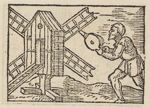
L'homme discret, n'entreprend l'impossible: La Perrière, Le theatre des bons engins (Lyon, 1545), emblem 85 uses the imagery of a man trying to get a windmill into motion with bellows, to express the idea that you should not try the impossible
Iconclass: 52BB42 Impossibility
Loci Communes: Impossibilia (Impossible things, Choses impossibles)
I x 8 Cribo divinare To divine by a sieve
Κοσκίνῳ μαντεύεσθαι, id est, Cribro divinare, et coniectura sagaci rem deprehendere, Aut stulte de rebus occultis divinare. Lucianus in Pseudomante: κοσκίνῳ τὸ τοῦ λόγου μαντεύομενος. id est, Cribro, quod aiunt, vaticinans. Meminit & Theocritus in Idyllio tertio: Εἶπε καὶ ἀγροιὼ τ᾽ ἀλαθέα κοσκινόμαντις. id est, Cribro vaticinans, verum mihi dixit Agraeo. Porro genus hoc divinandi suspenso cribro in hodiernum usque tempus durat apud quos dam superistitiosos. Apud veteres vaticinia peragebantur cribro, lauro, et tripode.
Κοσκίνῳ μαντεύεσθαι, To divine by a sieve, is to detect a thing by skilful inference, or to make foolish guesses about things concealed. Lucian in his False Prophet: 'Divining what had happened, as they say, by a sieve.' Theocritus also mentions it in his third idyll: 'Agroeo that divines by a sieve told me the truth.' In fact, this method of divination by shaking a sieve continues among certain superstitious folk to the present day. In Antiquity the future was foretold by sieve, bay-leaf, and tripod.
Facsimile: 
Iconclass: 13E2 divination ~ objects or substances 41C27(SIEVE) kitchen-utensils: sieve
Loci Communes: Conjecturae (Conjectures, Conjectures)
I x 9 Hydram secas You cut off a hydra's heads
Υδραν τέμνεις, id est, Hydram secas. Es tapud Platonem lib. De repub. iiii. ἀγνοῦντες, inquit, ὅτι τῳ ὄντι ὡς ὕδραν τέμνουσι. id est, Ignari se revera tamquam hydram secare. Est autem hydram incidere, ita unum aliquod incommodum tollere, ut in eius locum alia plura recipias. Adagium natum a fabula hydrae Lernaeae, quam alii centum fuisse capitum aiunt, alii octo, è quibus unum erat immortale. Cum hoc monstro multum, diuque conflictatus est Hercules, propterea quod uno reciso capite, plura renascerentur. Plutarchus in commentario De fortuna Alexandri, ὕδραν τέμνων ἀεί τισι πολέμοις ἀναβλαστάνουσαν, id est, Hydram secans semper aliquibus bellis repullulantem. De Alexandro loquitur, cui, uno bello confecto, subinde aliud, atque aliud exoriebatur. Cyneas cognita Romanorum multitudine identidem post acceptam cladem copias instaurantium dixit, Pyrrhum sibi videri adversus Lernaeam hydram pugnare. Hinc Horatius in Odis: Non hydra secto corpore firmior Vinci dolentem crevit in Herculem. Accommodari poterit ad eos, qui litib. involvuntur numquam finiendis. Lis enim litem parit, et saepenumero pro una enecta tres subnascuntur. Seneca quodam in loco scribit, negotia sordida, quae nos avocant a studio sapientiae, abrumpi posse, explicari non posse, quod negotium ex negotio seratur, et occupationi occupatio, velut unda succedat undae.
Ὕδραν τέμνεις, You cut off a hydra's heads, is in Plato's Republic, book 4: 'Not perceiving that in reality they are cutting off a hydra's heads.' To cut off a hydra's heads is to overcome one obstacle only to be faced with many others in its place. The adage takes its rise from the myth of the hydra at Lerna, which some say had a hundred heads, some eight, of which one was immortal. With this monster Hercules had a long and bitter struggle, because when he cut off one head, several heads sprouted in its place. Plutarch in his essay 'On the Fortune of Alexander': 'Cutting off a hydra's heads that always grew again with fresh wars.' He speaks of Alexander, who was faced continually, when one war was finished, with a series of new ones. Cyneas, when he saw how the large population of Rome constantly put fresh forces in the field after every defeat, observed that Pyrrhus seemed to him to be fighting against a Lernaean hydra. Hence Horace in the Odes: 'No hydra, gaining strength from severed heads, / Faced Hercules, that chafed to lose the day.' It will be possible to adapt it to those who are involved in unending lawsuits; for one suit leads to another, and often if one is killed off three take its place. Seneca writes somewhere that the everyday business that calls us away from the pursuit of philosophy can be broken off short but can never be disentangled, because one piece of business generates another and one task another task, as wave succeeds to wave.
Facsimile:
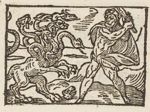
Tel cuyde estre à repos, à qui vient grand affaire: La Perrière, Le theatre des bons engins (Lyon, 1545), emblem 99 uses the imagery of Hercules fighting the hydra to convey the idea that in life there will always be a next obstacle
Iconclass: 31E23621 violent death by beheading 51BB4 Multiformity, Variety 94L3221 the Hydra is killed by Hercules assisted by Iolaus, who sears the roots of the severed heads with burning brands; an enormous crab nips Hercules' foot
Loci Communes: Inanis opera (Vain effort, Effort vain); Malum conduplicatum aut renovatum (Evil doubled or renewed, Mal redoublé ou renouvelé)
I x 10 Ne ramenta quidem. Ne festuca quidem Not a splinter. Not even a straw
Ne ramenta quidem ditior, hyperbole proverbialis, cum alias aliquoties apud Plautum, tum in Rudentibus: Numquam hercle hinc hodie ramenta fies fortunatior, perinde quasi dicas stupa ditior, ita, ut vulgo loquuntur. Simili sigura dixit Aristophanes in Lysistrata: Λιποῦσα μηδὲν ἐνθαδὶ, κινοῦσα μηδὲ κάρφος. id est, Nihil hic cum reliquerit, moverit ne festucam quidem. Idem in Vespis: Υπνου δ᾽ ὁρᾷ τῆς νυκτὸς οὐδὲ πασπάλην. id est, Noctu haud Videt somni ne paspalam quidem. Interpres ait, πασπάλην significare minutissimum quippiam. Quibusdam ea vox magnetem lapidem declarat. Subnectit eodem in loco consimilem figuram, Ην δ᾽ οὖν καταμύσει κᾷν ἄχνην. id est, Quod si vel achnen flexerit somno caput. ἄχνη vero significat minutissimum, ac levissimum illud, quod e spicis excussis evolat. Qua voce usus est et Homerus Iliados ε. Ως δ᾽ ἄνεμος ἄχνας φορέει ἱερὰς κατ᾽ ἀλωάς. id est, Ut vento tenues sacra area iactitat achnas. Hebraicarum periti literarum afsirmant, illam, quam vocem Hieronymus vertit pulverem, secutus septuaginta, qui transtulerunt χνοῦν, idem Hebraeis sonare, quod Graecis ἄχνη.
'Not a splinter richer,' an exaggeration which became proverbial. It occurs a few times elsewhere in Plautus, and in particular in the Rudens: 'Never shall you find yourself one splinter richer by this day's work,' just as one might say 'one stijver richer' in our modern vernacular. Aristophanes uses the same metaphor in the Lysistrata: 'Leaving nothing here, she did not move a straw,' and again in the Wasps: 'By night he sees not a paspale of sleep,' where the scholiast tells us that paspale means a tiny scrap. Some think the word indicates a magnet. In the same passage he adds a similar metaphor: 'But if he nods his head so much as an achne,' where achne means the very small and light fragments of chaff that fly from ears of corn as they are threshed. Homer too uses the word in Iliad 5: 'And as the wind drives chaff over the sacred threshing-floor.' Experts in Hebrew tell us that [hebrew] which Jerome renders 'dust,' following the Septuagint which has chnoun, has the same meaning in Hebrew as achne has in Greek.
Facsimile:
Iconclass: 47G543 wood, timber ~ building material 47I17(STRAW) agricultural products and by-products: straw 51GG1 Littleness, Smallness 51GG2 Lightness; 'Leggierezza' (Ripa)
Loci Communes: Contemptus et vilitatis (Contempt and worthlessness, Mépris et bassesse)
I x 11 Sacrum sine fumo A smokeless sacrifice
Ακαπνος θυσία, id est, Sacrificium absque fumo, de nimium tenui convivio, & in quibus nihil cocti obsonii apponitur. Translatum a pauperculorum sacris, molas, thusculum, lac, aut corollas offerentium, cum dii nidorem illum exspectent una cum fumo subuolantem, iuxta Homerum. Lucianus in Amoribus, Βουφάγος μὲν ὁ δαΐμων ὦ λυκῖνε, καὶ ταῖς ἀκάπνοις, ὥς φασι, τοῦ θυσϊῶν ἥκιστα τερπόμενος. id est, Sane perquam edax deus est Lucane, quique fumi expertibus sacris haudquaquam gaudeat. In eum sensum usus est et Athenaeus, ἄκαπνα γὰρ ἀεὶ ἀοιδοι θύομεν, id est, Nam poetae semper sacra sine fumo sacrificamus.
Ἄκαπνος θυσία,, A smokeless sacrifice, of an excessively economical entertainment, in which no cooked food is set before one. Drawn from the offerings of the poor, who tender meal, a bit of incense, milk, or garlands, while the gods are waiting for the well-known savour of burnt-offering that flies up with the smoke, as in Homer. Lucian in his Amores: 'The god is a great eater, Lucian, and takes very little pleasure in what they call smokeless sacrifices.' Athenaeus too uses it in the same sense: 'For we poets always offer smokeless sacrifices.'
Facsimile:
Iconclass: 12E212 sacrifice ~ Greek religion 51AA4:41B162 Nothingness, Absence❧smoke 55CC1 Saving, Frugality, Parsimony; 'Parsimonia' (Ripa) 57A642 Simplicity; 'Simplicità' (Ripa)
Loci Communes: Sordes et parcimonia (Meanness and stinginess, Bassesse et avarice)
I x 12 Non est cura Hippoclidi Hippocleides doesn't care
Οὐ φροντὶς ἱπποκλείδῃ id est, Non est Hippoclidi curae. Sive, ut carmen reddamus, Non curat Hippoclides. Est enim versus iambicus, dimeter catalecticus. Hoc adagio significabant se quippiam negligere, neque magnopere laborare. Natum autem est ex historia, quam pluribus verbis narrat Herodotus in Eratone. Ut autem in pauca conferamus, hic Hippoclides erat Tisan dri filius, qui cum multi aliis iuvenibus Clisthenis Sicyonii filiam ambiebat. Verum cum Clisthenes procos toto anno probaret, et Hippoclides in convivio indecoram quandam saltationem edidisset, sublatis in altum pedibus, pater offensus inhonesto iuvenis lusu, ait, Ωπαῖ τισάνδρου ἀπορχήσαόγε μὴν τὸν γάμον. id est, Fili Tisandri, a nuptiis tua saltatione excidisti. At ille protinus respondit, Οὐ φροντὶς ἱπποκλείδῃ, id est, Haud curat Hippoclides. Ea vox, ut testatur Herodotus, in proverbium abiit. Id dictum in ipsum retorquet Herodotum Plutarchus in libello, quem adversus eum scripsit, Δοκεῖ μοι καθάπερ ἱπποκλείδης, ὁ τοῖς σκέλεσι χειρονομῶν ἐπὶ τῆς τραπέζης, εἰπεῖν ἂν ἐξορχούμενος τὴν ἀληθείαν, οὐ φροντὶς ἱπποκλείδῃ. id est, Videtur mihi, velut Hippoclides cruribus manuum vice in mesa gesticulans, postquam a veritate desultavit, dicere, non est curae Hippoclidi. Lucianus in apologia, Ικανον ἂν εἰη μοι τὸ, οὐ φροντὶς ἱπποκλείδῃ. id est, Mihi suffecerit illud, quod dicitur, haud curat Hippoclides. Idem in Hercule, Καὶ ὁ ἱπποκλείδης οὐ φροντιεῖ, id est, Neque laborabit Hippoclides. Mentione huius adagii facit et Eustathius in Iliados Homericae primum librum scribens. Allusit huc Aristophanes in Vespis, saepius repetens illud, ὀλίγον μοι μέλει, id est, Leviter mihi curae est.
Οὐ φροντὶς Ἱπποκλείδῃ, Hippocleides doesn't care, or, if am to reproduce the rhythm, 'All's one to Hippocleides,' for it is a catalectic iambic dimeter. This adage was used to convey that they were neglecting something and not greatly concerned. It is derived from a story told at some length by Herodotus in the Erato. To put it briefly, this Hippocleides was a son of Teisander, who along with many other young men sought the hand of a daughter of Cleisthenes of Sicyon. Cleisthenes tested the suitors for a whole year, during which there was a party at which Hippocleides gave an unseemly exhibition by dancing on his hands with his feet in the air. The father took great offence at the young man's improper levity, and said: 'Son of Teisander, you have danced yourself out of your marriage.' To which he promptly replied 'Hippocleides doesn't care'; and the remark, as Herodotus tells us, passed into a proverb. Plutarch turned the saying against the author himself, in the essay which he wrote 'Against Herodotus': 'He seems to me like Hippocleides, the man who danced on the dinner-table gesticulating with his legs: after dancing himself out of the truth, he would say Hippocleides doesn't care.' Lucian in his Apologia: 'I should be satisfied with the old saying Hippocleides doesn't care.' And again in the Hercules: Nor will Hippocleides care.' This adage is mentioned by Eustathius too in his commentary on the first book of Homer's Iliad, and Aristophanes referred to it in the Wasps, when he constantly repeats the phrase 'Little I care.'
Facsimile: 
Iconclass: 31A2717 walking on the hands 52AA24 Carelessness 54AA21 Indifference 57AA5 Indecency, Impudence; 'Sfacciatigine' (Ripa) 98B(HIPPOCLEIDES) male persons from classical history (HIPPOCLEIDES)
Loci Communes: Contemptus et vilitatis (Contempt and worthlessness, Mépris et bassesse)
I x 13 Canis in praesepi Dog in the manger
Η κύων ἐν τῇ φάτνῃ, id est, Canis in praesepi. In eos dicitur, qui nec ipsi fruuntur re quapiam, neque rleiquos item sinunt uti, veluti si quis egregios codices inclusos diligenter adseruet, quos nec ipse unquam evoluat, nec aliis evoluendi faciat copiam. Quemadmodum canis in praesepi nec ipse vescitur hordeo, et equum vetat vesci. Lucianus adversus indoctum, Αλλὰ τὸ τῆς κυνὸς ποιεῖς, τῆς ἐν τῇ φάτνῃ κατακειμένης, ἥ οὔτε αὐτὴ τῶν κριθῶν ἐσθίει, οὔτε τῷ ἴππῳ δυναμένῳ φαγεῖν ἐπιτρέπει. id est, Verum haud aliter facis, quam canis ille in stabulo cubans, qui cum ipse non edat hordeum, tamen haud sinit equum, qui posset edere, id facere. Utitur eodem in Timone. Citatur apud Suidam in proverbio, οὐδὲν πρὸς τὸν δίονυσον, sed tacito auctoris nomine, τῇ φάτνῃ προσάγεις τὸν κύνα, καὶ πρὸς τὸν δίονυσον ἄγεις οὐδὲν. id est, Ad praesepe ducis canem, nihil autem adducis ad Bacchum: hoc est, adfers quae ad rem nihil atti nent, ex his vero, quae pertinebant ad causam propositam, nihil adfers. Simile quiddam refert Athenaeus libro sexto, de gente quadam Galatarum, qui dicuntur Cordistae: abominantur aurum, nec important in suam regionem, nihilo setius tamen alios non desinunt eo spoliare. aiunt eam gentem esse reliquias Galatarum, qui sub duce Brenno spoliarunt oraculum Delphicum, quos insecutus Bathanatus dux, inclementer tractavit. Hinc auri odium, cuius gratia tantum passi sint malorum, quod tamen aliis invident.
Η κύων ἐν τῇ φάτνῃ, The dog in the manger, is said of those who neither enjoy something themselves nor allow other people to get any benefit from it; for instance if a man were to keep valuable manuscripts tightly locked up, which he never opens himself nor allows anyone else to read them, just like a dog in a manger that does not eat the barley itself and prevents the horse from eating it. Lucian Against an Ignoramus: 'But you behave like the dog that lies in the manger, neither eating the barley itself nor making way for the horse that could eat it.' He uses it again in his Timon. It is cited by Suidas in his article on the proverb Nothing to do with Dionysus, but no source is named: 'You bring the dog to the manger, and bring forward nothing to do with Dionysus,' that is, you adduce something quite off the point, and of what was relevant to the point at issue you adduce nothing. Athenaeus in book 6 reports something similar of a tribe of Galatians called the Cordistae: they abominate gold and do not import it into their own country, but none the less do not cease to seize gold from other people. This tribe is said to be the remnant of the Gauls who ravaged the oracle at Delphi under their leader Brennus, who were pursued and dealt with mercilessly by their leader Bathanatus. Hence their hatred of gold, for the sake of which they have suffered so much; and yet they grudge it to anyone else.
Facsimile:
Iconclass: 34B11(+9536) dog (+ lying animal) 54B3 Utility, Usefulness; 'Utilità' (Ripa) 54CC2 Discouragement 56B1 Pleasure, Enjoyment, Joy; 'Allegrezza', 'Allegrezza da le medaglie', 'Allegrezza, letitia e giubilo', 'Diletto', 'Piacere', 'Piacere honesto' (Ripa)
Loci Communes: Dissimilitudinis et incongruentiae (Dissimilarity and incongruity, Dissemblance et incongruité)
I x 14 Captantes capti sumus We were made prisoners as we prisoners made
Αἱροῦντες ᾑρήμεθα, id est, Captantes capti sumus. Cum res praepostere evenit, ut ipsi circumveniamut ab iis, quibus conebamur imponere. Id quod non raro solet usu venire, ut in eas incidamus pedieas, quas aliis struxeramus. Saepe sit, ut qui simulat amorem, quo puellam in amorem pelliciat, ipse vere incipiat amare. Et qui dat operam, ut invitatiunculis alium conetur efficere temulentum, ipse reddatur ebrius: et qui finitimum moliatur imperio depellere, ipse suum amittat imperium. Sic et Horatius: Graecta capta ferum victorem cepit. Videtur eodem allusisse Plato, cum ita scribit in Theaeteto, Δοκεῖ μοι ὦ Σώκρατες μάλιστα ἁλίσκεσθαι ὁ λόγος ἁλισκόμενος. id est, Mihi videtur ò Socrates, maxime capi ratio quae captabat. Sophocles in Oedipo Coloneo, Γνῶθι δ᾽ ὡς ἔχων ἔχῃ, καὶ σ᾽ εἷλε θηρῶνθ᾽ ἡ τύχη. id est, Scito quod tenens teneris, teque captantem, invicem Fortuna cepit. Plautus in Epidico, Iam captoripse captus est. Lucianus in mere triciis dialogis, Καὶ ἑάλωκα ὁ κακοδαίμων καὶ συνείλημμαι πρὸς αὐτῆς. id est, Et cepi miser, et simul ab illa captus sum. Translatum aut a bello, aut piscatione, seu venatu.
Αἱροῦντες ᾑρήμεθα, We were made prisoners as we prisoners made, when things go topsy-turvy, and we are taken in ourselves by those whom we were trying to impose upon. It is a common experience to fall into the traps that we had set for others. It often happens that he who pretends to be in love in order to secure a girl's affections begins himself to love her in earnest; the man who tries to make someone else tipsy by constantly offering him liquor ends up drunk himself; the prince who tries to drive a neighbour from his throne loses his own instead. So too Horace: 'Thus captive Greece took her rude victor captive.' Plato seems to have had the same thing in mind when he wrote in the Theaetetus: 'It seems to me, Socrates, that the argument which tries to entrap others is most often trapped.' Sophocles in the Oedipus Coloneus: 'See how while grasping you yourself are grasped, / And while you fish, are caught in fortune's net.' Plautus in the Epidicus: 'Now is the taker taken.' Lucian in his Dialogues of Courtesans: 'I, alas, took her fancy, and at the same time fell into her trap.' A metaphor either from war, or from fishing or hunting.
Facsimile:
Iconclass: 29A1 'mundus inversus', the reversed world, the topsy-turvy world, 'le monde bestourné' 44G25 arrest (of criminal) 44G312 prisoner; in fetters
Loci Communes: Malum accersitum aut retortum (Evil brought upon oneself or turned back, Mal attiré ou retourné)
I x 15 In venatu periit The hunt was her undoing
Festivius dixit Lucianus in Toxaride, Αὐτή τε ἀπώλετο ὑπὸ τῆς ἄγρας. id est, Et ipsa venatu periit, hoc est, dum adolescentem venatur, studetque irretire, etiam ipsa sese perdidit. Quin etiam illa ipsa: Venari laudem, aucupari famam, proverbiales sunt metaphorae, velut, Expiscari, pro sciscitari, atque exquirere.
Lucian puts this with more wit in the Toxaris: 'The hunt was her undoing,' while (that is) she pursued the young man and tried to get him into her toils, she was herself undone. Phrases moreover, such as 'to hunt for praise,''to set traps for fame' are proverbial metaphors, and so is 'to fish for' something, meaning to make enquiries and try to discover it.
Facsimile:
Iconclass: 31D12 youth, young man, adolescent 31D17 old woman 33CC32 pursuit of a woman, prowling - CC - pursuit of a man 43C11(+0) hunting, chase (+ variant) 58AA12 Self-destruction
Loci Communes: Malum accersitum aut retortum (Evil brought upon oneself or turned back, Mal attiré ou retourné)
I x 16 In laqueos lupus The wolf's fallen into the trap
Εἰς πάγας ὁ λύκος. id est, In laqueos lupus. Cum improbus quispiam tandem in extremum adducitur discrimen. Etenim cum lupus animal sit insidiosissimum, applauditur ab omnibus, si quando contingat illum irretiri, ac protinus acclamant omnes, εἰς πάγας ὁ λύκος.. Refertur à Zenodoto.
Εἰς πάγας ὁ λύκος., The wolf's fallen into the trap. When some rascal is at last reduced to extreme peril. For as the wolf is the most crafty of all living creatures, everyone is delighted if by any chance he is caught in a trap, and they all shout, 'The wolf's in the trap!' Recorded by Zenodotus.
Facsimile:
Iconclass: 25F23(WOLF) beasts of prey, predatory animals: wolf 43C1151(+414) catching animals (+ trap) 52A42 Invention, Inventiveness; 'Inventione' (Ripa) 54F1 Success; 'Evento buono' (Ripa)
Loci Communes: Decretum - in deprehensos (Decree - against those caught in the act, Décret - contre les pris sur le fait)
I x 17 Annosa vulpes haud capitur laqueo An old vixen is not caught in a trap
Γέρων ἀλώπηξ οὐχ ἁλίσκεται πάγῃ, id est, Vulpes anus laqueis capi haud ullis potest. Senarius proverbialis dicendus in eum, qui longa aetate, multaque rerum experientia callidior est, quam ut arte, dolisque capi queat.
Γέρων ἀλώπηξ οὐχ ἁλίσκεται πάγῃ,, An aged vixen cannot be caught in a trap. An iambic line current as a proverb, applicable to a man who by age and wide experience has become too skilful to be caught in some cunning trap.
Facsimile: 
Iconclass: 25F23(FOX)(+23) beasts of prey, predatory animals: fox (+ female animal) 25F23(FOX)(+24) beasts of prey, predatory animals: fox (+ very old animal) 43C1151(+414) catching animals (+ trap) 54A31 Experience, Mastery; 'Esperienza' (Ripa) 54FF1 Failure
Loci Communes: Prudentia senilis (The prudence of old age, Prudence de la vieillesse)
I x 18 Vulpes haud corrumpitur muneribus A fox takes no bribes
Αλώπηξ οὐ δωροδοκεῖται. id est, Vulpes non corrumpitur muneribus. Suidas huius adagii Cratinum citat auctorem. De callidis, ac versutis, quos haud facile sit obiecto munusculo, aut assentatiuncula, pollicitisve fallere. Larus enim, et aliae quaedam aves esca capiuntur, vulpes non item. Verbum autem, δωροδοκεῖν, sumptum est a contionibus, aut iudiciis, in quibus nonnulli pecunia corrupti dicunt sententiam.
Αλώπηξ οὐ δωροδοκεῖται., A fox takes no bribes. Suidas cites Cratinus as the authority for this adage. Used of experienced and wily people, who are not easily taken in by the offer of some modest present or a bit of flattery, or by promises. Gulls and some other birds can be taken with bait; but not foxes. The Greek verb dorodokein, to take bribes, is borrowed from political speeches or law-courts, where some have taken bribes before expressing an opinion.
Facsimile:
Iconclass: 25F23(FOX) beasts of prey, predatory animals: fox 29A animals acting as human beings 51AA4:46B911 Nothingness, Absence❧bribery 59CC221 Corruptibility, Venality, Corruption
Loci Communes: Munerum corruptela (Corruption by gifts, Corruption par les présents)
I x 19 Atticus in portum An Athenian entering harbour
Αττικὸς εἰς λιμένα, id est, Atticus in portum. In eos dicebatur, qui illic virtutem ostentare solent, ubi tutum est, atque ubi nihil opus. A nautis Atticis sumptum, qui portum ingressuri ostentandi sui gratia magnifice sese gerebant, in ipsa re, hoc est, in praelio navali, non perinde strenui.
Αττικὸς εἰς λιμένα, An Athenian entering harbour, used to be applied to those who make a display of heroism where all is safe and it has no point at all. Taken from Athenian sailors who, when about to enter harbour, used to put on a splendid show by way of self-advertisement, but in action, that is, in a sea-battle, were not nearly so energetic.
Facsimile:
Iconclass: 32B311(ATHENIANS) indigenous European peoples (ATHENIANS) 44C31 political propaganda 46C221 ship bound for the harbour 52AA6:54A8 Falsehood❧Courage, Bravery, Valiance, Manliness; 'Ardire magnanimo et generoso', 'Gagliardezza', 'Valore', 'Virtù heroica', 'Virtù dell'animo e del corpo' (Ripa) 57AA644 Arrogance; 'Arroganza' (Ripa)
Loci Communes: Arrogantia jactantiaque (Arrogance and boastfulness, Arrogance et vantardise)
I x 20 Capra Scyria A Scyrian she-goat
Αἰξ σκυρία, id est, Capra Scyria. Zenodotus huius proverbii Chrysippum citat, tum autorem tum interpretem. Convenit in eos, qui beneficium maleficio corrumpunt, aut qui virtutes adiunctis vitiis contaminant, atque obscurant, quive recte in stituta non recte finiunt. Veluti capra Scyria, quod fera sit, mulctrum, quod lacte impleverat, ipsa rursus evertit, atque hoc modo beneficium, quod dederat, eadem perdidit. Alii putant dici in eos unde plurimum emolumenti capitur, propterea quod eius regionis caprae maximam lactis vim reddere dicantur. Id quod affirmat et Athenaeus Dipnosophistarum lib. i. citans hoc Pindari carmen. Σκυρίας δ᾽ ἐς ἄμελξιν γάλακτος αἶγες ἐξοχώτατοι. id est, Scyrtae vero ad emulgendum lac caprae praestantissimae.
Αἰξ σκυρία, A she-goat from Scyros. Zenodotus derives both this proverb and its explanation from Chrysippus. It is appropriate for those who spoil some good action by its opposite, or whose good qualities are tainted and thrown into the shade by an admixture of faults, or who begin on the right lines and end wrong. This is like a she-goat in Scyros, which is very wild, and after filling the pail with milk kicks it over, herself undoing in this way the good service she has rendered. Others think it is used of those who are benefactors of their fellow-men, because the she-goats of that part of the world are said to be very heavy milkers. This is stated also by Athenaeus in the first book of his Doctors at Dinner, where he cites this line of Pindar: 'And Scyrian she-goats for the milking best of all.'
Facsimile:
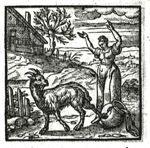
In desciscentes: Alciatus, Emblemata (Leiden, 1591), emblem 140 uses the adage's imagery
In desciscentes: Whitney, A choice of emblemes (Leiden, 1586), emblem 203 uses the adage's imagery
Χαρισ αχαρισ: Boissard, Emblematum liber (Frankfurt, 1593), emblem XXXIIII uses the adage's imagery in the background
Qui donne tost il donne doublement: Boissard, Emblemes (Metz, 1595), emblem XXXIIII uses the adage's imagery in the background
Exitus acta probat: Schoonhovius, Emblemata (Gouda, 1618), emblem 54 uses the adage's imagery
Iconclass: 25H14 island 41C6413 milk 47I2142(+95):31A2744 she-goat, nanny-goat (+ animal(s) in motion; positions, expressions of animals)❧kicking something 61D(SCYROS) geographical names of countries, regions, mountains, rivers, etc. (SCYROS) (SCYROS)
Loci Communes: Beneficium correptum (A favor withdrawn, Bienfait retiré)
I x 21 Suspendio deligenda arbor Choose your tree and hang yourself
In re vehementer indigna, neque ullo pacto toleranda, veteres arborem suspendio deligendam esse dicebant. Inde natum, quia olim in Theophrastum philosophum praecipuum meretricula quaedam nomine Leontium ausa sit scribere. Plinius secundus in praefatione historiarum naturae: Ceu vero nesciam adversus Theophrastum, hominem in eloquentia tantum, ut nomen divinum inde invenerit, scripsisse etiam feminam, et proverbium inde natum, suspendio arborem eligendam. Hactenus Plinius. Finitimum huic est illud apud Euripidem in Alcestide, Αξια καὶ σφαγᾶς τάδε Καὶ πλεῖον, ἤ βρόχῳ δέρην Οὐρανίῳ πελάσαι. id est, Heus ista caede digna sunt, Vel potius, ut laqueo gulam Praesocet aliquis pendulo. Plautus in Curculione, Mea praeda illa est, Proin tu te in laqueum duas. Iuvenalis, Ferre potes dominam salvis tot restibus ullam? Et apud Plautum, qui vitae taedio tenebatur, optat nummum, quo restim emat. Quum haec aederem anno 1525. forte incidi in commentarios Caelii Rhodigini. Is dicit in huiusmodi explicatione caecutire multos, ac se iactat omnem difficultatem explicuisse, cum nec ulla sit difficultas, & si qua esset, nihil explicent ea quae commemorat de suspendio crucis. Nec enim sontes sibi deligunt arborem, sed aguntur iu crucem. Caeterum qui cogitant de consciscenda nece, solent alii aliud suspendii genus eligere, ut appareat illos hoc agere non impotentia mentis, sed certo, destinatoque consilio.
When something perfectly monstrous and quite intolerable happened, the Ancients used to say that one should choose a tree and hang oneself. This comes from an attack on Theophrastus the eminent philosopher once published by a courtesan called Leontium. Pliny the elder in the preface to his Natural History: 'As though I were unaware that Theophrastus, a writer so eminent that he achieved an immortal reputation, was attacked in writing by a mere woman, and this gave rise to a proverbial expression that one should choose a tree and hang oneself.' So Pliny; and there is something very like it in Euripides, in the Alcestis: 'Such things call for the knife, or for a noose high as heaven around one's neck.' Plautus in the Curculio: 'She is my prize. Pray go and hang yourself.' Juvenal: 'How can you bear a mistress when ropes are to be had?' And in Plautus a character who was tired of life wishes he had a coin to buy a rope with. When I was about to publish this, in the year 1525, I happened by chance on the collections of Caelius Rhodiginus. He says that in expounding things like this many people miss the point, and boasts that he has solved every difficulty; whereas there is no difficulty, and if there were, nothing would be solved by what he tells us about hanging on the cross. Criminals do not 'choose their tree,' they are led off to the gallows. Whereas those who contemplate suicide do choose different forms of hanging, so it is clear that they are not out of their minds but know just what they are doing.
Facsimile:
Iconclass: 25G3 trees 31E2355(+7) violent death by hanging (+ seeking death, suicide) 53A11 Choice; 'Elettione' (Ripa)
Collectanea (1500): 576
Loci Communes: Desperatio (Despair, Désespoir)
I x 22 Minervae felem Minerva against a cat
Αθηνᾷ τὸν αἴλουρον, id est, Minervae felem, subaudiendum, comparas. Cum multo inferiora cum praestantioribus comparantur, quod levicula quapiam in re conveniant. Quid enim habet Minerva dea cum fele commune, praeter glaucorem oculorum? Nam is oculorum color Minervae tribuitur, qui et noctuis adest, et felibus. Unde apud Homerum etiam epitheton, γλαυκῶπις ἀθήνη. Est et hoc felibus commune cum noctuis, quod et noctu cernunt, et pariter insidiantur muribus. Refertur apud Zenodotum et Suidam. Etymologus indicat discrimen orthographiae, quo ἔλουρος pro gente, est enim Scythiae à pa ludibus dicta, scribitur per e. pro animante, per diphthongum εἴλουρος, quasi dicas Torquicaudam, aut Trahicaudam, quod tamen apud auctores negligitur.
Ἀθηνᾷ τὸν αἴλουρον, Minerva against a cat - we must supply 'You match.' When vastly inferior things are paired with what is far better on the ground that they agree in some small particular. What has the goddess Minerva in common with a cat, except that both have grey-green eyes? For that is traditionally the colour of Minerva's eyes, as it is in the owl and the cat; whence already in Homer the epithet 'grey-eyed Athena.' Cats share another feature with owls: they can see by night as well as by day, and like them they lie in wait for mice. This is recorded by Zenodotus and Suidas. The author of the Etymologicum points out a difference in spelling. Elouros, the name of the tribe (who lived in Scythia and get their name from the marshes) is written with an e; when it stands for an animal, it is written with a dipthong, eilouros, as though to indicate that the tail is twisted or pulled, though I find that authors neglect this distinction.
Facsimile: 
Iconclass: 34B12 cat 51B2:51HH1 Similarity, Likeness❧Part, Section, Aspect 51BB2:51H1 Dissimilarity, Unlikeness❧Totality, the Whole 92C2 (story of) Minerva (Pallas, Athena)
Collectanea (1500): 577
Loci Communes: Excellentia, inaequalitas (Excellence, inequality, Excellence, inégalité)
I x 23 Versuram solvere To pay by a switching-loan
Vorsuram solvere dicitur, qui sic è praesentibus malis extricat sese, ut aliis gravioribus impediatur. nam Donato, vorsuram facere, est aes alienum alieno aere solvere, aut minore foenore maiorem acceptam pecuniam occupare. Hinc ducta voce, ut autor est Festus Pompeius, quod vertant creditorem. Terentius in Phormione: In eodem luto haesitas, vorsuram solvis. praesens quod fuerat malum, in diem abiit, plagae crescunt. Cicero ad Atticum Admirabilis abstinentia ex tuis praeceptis, ut verear, ne illud quod tecum permutavi, versura mihi solvendum sit. In orationem pro L. Flacco, Negavit sese omnino ullam versuram fecisse Romae. Seneca De beneficiis lib. v. Domi quod aiunt versura fit, & velut lusorium nomen statim transit. Idem lib. ii epistola ultima: Ut ut se res habet, ab Epicuro versura facienda est. id est, ab Epicuro sumendum est mutuum, quo tibi satisfaciam. Idem simili tropo dixit libro i. epistola quarta, Sed ut epistolae finem imponam, accipe quod hodierno die mihi placuit, & hoc quoque ex alienis hortis sumptum est. Lactantius lib. ii. Institutionum usus est hoc proverbio. Cum igitur, inquit, ortum rerum tribuis naturae, ac detrahis deo, in eodem haesitans luto, versuram solvis. Explicuit eleganter hanc metaphoram Demosthenes in Olynthiaca prima, Δέδοικα, ὦ ἄνδρες ἀθηναῖοι, μὴ τὸν αὐτὸν τρόπον, ὥσπερ οἱ δανειζομενοι ῥαδίως ἐπὶ τοῖς μέγαλοις τοκοῖς, μικρὸν εὐπορήσαντες χρόνον, ὕστερον καὶ τῶν ἀρχαίων ἀπέστησαν, οὕτω καὶ ἡμεῖς ἄν ἐπὶ πολλῷ φανῶμεν ἐῤῥαθυμηκότες, καὶ Ἅπαντα πρὸς ἡδονὴν ζητοῦντες, πολλὰ καὶ χαλεπὰ, ὧν οὐκ ἠβουλόμεθα ὕστερον εἰς ἀνάγκην ἔλθωμεν ποιεῖν, καὶ κινδυνεύσωμεν περὶ τῶν ἐν αὐτῇ τῇ χώρᾳ. id est, Vereor Athenienses, ne quemadmodum hi, qui contrahunt aes alienum, facile magnis usuris, ad breve tempus divites sunt, paulo post etiam à principali summa excutiuntur: itidem & nos, si diutius videamur negligentes, cunctaque ad voluptatem quaerentes, paulopost in necessitatem veniamus, ut nobis multa etiam acerba, sint facienda, quae nequaquam volverimus, deque hoc ipso loco periclitemur.
To pay by a switching-loan is used of the man who finds a way out of his present difficulties, but only by binding himself to face more and heavier trouble later. For Donatus says that to arrange a switching-loan is 'to pay off one debt by contracting another, or to borrow money at a higher rate of interest and employ it at a lower rate.' So called, according to Festus Pompeius, because they switch from one creditor to another. Terence in the Phormio: 'You stick in the same mud; you pay by switching. The trouble that hung over you is gone for the moment, but the burden grows.' Cicero in a letter to Atticus: 'The economy which you recommended to me is remarkable; so much so that I fear that the swap I arranged with you may have to be paid off by a switching-loan.' And in his speech Pro Flacco: 'He denied that he had raised any switching-loan at all in Rome.' Seneca De beneficiis, book 5: 'Switching begins at home, they say; like a loan made in play, it is instantly transferred.' Again in the last letter of book 2: 'Whatever the state of the case, I must raise a switching-loan from Epicurus.' I must, that is, borrow something from him to pay you what I owe you. And he uses a similar metaphor in the fourth letter of book one: 'But I must draw to a close, so here is something I found today much to my liking, though this flower too was plucked in another man's garden.' Lactantius uses the proverb in book two of his Institutiones: 'But when you ascribe the origin of things to Nature and take it away from God, you are sticking in the same mud; you pay by switching.' Demosthenes neatly explained this metaphor in his first Olynthiac: 'You know how it is when men borrow easily at a high rate of interest: for a short time they have plenty of money, but later they find their capital has gone too. I very much fear, men of Athens, that it will be the same with us: if we sit here much longer in idleness, seeking merely to please ourselves, we shall find ourselves later on obliged to do many unpleasant things which we had no wish to do, and may run great risks of losing the place itself.'
Facsimile:
Iconclass: 46B44:55CC3 paying (~ commerce) (here also repayment of debt, etc.)❧Borrowing, Hiring 51H5:54DD4 Growth, Increase❧Difficulty
Collectanea (1500): 569
Loci Communes: Inanis opera (Vain effort, Effort vain)
I x 24 Animam debet He owes his own soul
Τὴν ψυχὴν ὀφείλει, id est, Animam debet, Donatus proverbium esse admonet, de eo, qui immodico aere alieno teneatur, ut plus quam omnes facultates debeat, ac denique seipsum debeat. Terentius in Phormione: Quid si animam debet. Erat enim antiquitus lex, ut qui solvendo non esset, is nexus addiceretur creditori, luiturus corpore, id est, opera, quod aere non posset. Exstat apud Gellium lex duodecim tabularum, quae iubebat dissecari corpus eius, qui multis creditoribus deberet, nec esset solvendae rei.
Τὴν ψυχὴν ὀφείλει, He owes his own soul. Donatus points out that this is a proverbial expression, referring to anyone who is under such an immense burden of debt that he owes more than all his possessions are worth, and will end by owing himself. Terence in the Phormio: 'Suppose he owes his own soul?' For there was a law in Antiquity that a man unable to pay his debts should be put in chains and handed over to his creditor, to pay with his own body - by manual labour, that is - what he could not pay in coin. Gellius quotes a law from the Twelve Tables which laid it down that the body of a man who was in debt to many creditors and could not pay should be cut in pieces and distributed.
I x 25 Summum jus, summa injuria Extreme right is extreme wrong
Summum ius summa iniuria, hoc est, Tum maxime disceditur ab aequitate, cum maxime superstitiose haeretur legum literis. Id enim summum ius appellatur, cum de verbis iuris contenditur, neque spectatur quid senserit is, qui scripsit. Nam voces, ac literae, quasi legum summa cutis est. Eam ineptiam quorundam superstitiosorum iuris interpretum, copiose simul, et eleganter illudi M. Tull. in actione pro Murena. Terent. Verum illud Chreme dicunt, ius summum saepe summa malitia est. M. Tullius Officiorum libro i. Ex quo illud, summum ius, summa iniuria, factum est iam tritum sermone proverbium. Columella 1. rei rusticae lib. Nec sane est vindicandum nobis, quidquid licet. Nam summum ius antiqui summam putabant crucem. Citatur et Celsus adolescens lib. Pandect. quadragesimo quinto, titulo De verborum obligatione. Capit. Si servum Stichum: qui scripserit quaestionem esse de bono et aequo, in quo genere plerumque sub autoritate iuris scientiae periculose erratur. Itidem Paulus libro 15. titulo, De regulis iuris: In omnibus quidem, maxime tamen in iure aequitas spectanda est. Simili figura Seneca libro De ira primo dixit, summo animo, Si intelligis non ex alto venire nequitiam, sed summo, quod aiunt, animo inhaerere.
Extreme right is extreme wrong means that men never stray so far from the path of justice as when they adhere most religiously to the letter of the law. They call it 'extreme right' when they wrangle over the words of a statute and pay no heed to the intention of the man who drafted it. Words and letters are like the outer skin of the law. The folly of some pedantic interpreters of the law is fully and brilliantly shown up by Cicero in his speech Pro Murena. Terence: 'But the saying is, Chremes, that extreme right is often extreme injustice.' Cicero in the first book of the De officiis: 'Hence came that proverb which is now so familiar, Extreme right is extreme wrong.' Columella in book one of his Agriculture: 'Nor for the matter of that should we always exact whatever we have a right to; for our forefathers thought that extreme right was extreme torment.' Celsus too as a young man is reported in the Pandects, book 45, title De verborum obligatione, in the chapter Si servum Stichum, as saying: 'For this is a question of justice and equity, a field in which dangerous mistakes are frequently made under authority from the science of the law.' Paulus too in book 50, in the title De regulis juris: 'In all things, but in the law especially, regard should be had to equity.' Seneca uses a similar metaphor, summo animo, in the first book of his On Anger, where he says: 'If you understand that the wickedness is not deep-seated, but resides, as they say, in the surface levels of the heart.'
Facsimile:
Iconclass: 44G112 judicial verdict 51BB1:59C2 Absoluteness, Non-relatedness❧Justice; 'Forza alla giustitia sottoposta', 'Giustitia', 'Giustitia retta', 'Giustitia rigorosa', 'Impietà e violenza soggetta alla giustitia' (Ripa) 51BB1:59CC2 Absoluteness, Non-relatedness❧Injustice; 'Ingiustitia' (Ripa)
Loci Communes: Rigor (Strictness, rigidity, Rigueur)
I x 26 Ne ignifer quidem reliquus est factus No one was left even to carry fire
Οὐδὲ περφόρος ἐλείφθη, i. Ne ignifer quidem superfuit, ubi significamus, omnes ad unum interiisse adeo, ut ne quidem sit parcitum, qui ignem praeferat exercitui. Nam priscis mos erat, ut vates aciem praecederet, lauro coronatus, ac facem gestans. Ab hoc belli vim abstinebant utrinque, quod nefas ducerent, in virum sacrum ferrum stringere. Proinde si crudelem aliquam stragem significare voluissent, ne ignifero quidem parcitum aiebant. Meminit huius adagii Eustathius Iliados μ. enarrans hos Homeri versus: Οὐκ ἔτ᾽ ἔπειτ᾽ ὀΐω οὐδ᾽ ἄγγελον ἀπονέεσθαι Αψοῤῥον ποτὶ ἄστυ. id est, Haud equidem fore credo, uti sit redituruo ad urbem Hinc posthac aliquis vel nuntius. Admonet hoc quoque figuram habere proverbialem, οὐδὲ ἄγγελος ὑπέλειφθαι. id est, Ne nun tius quidem relictus est, quoties significamus ad unum omnes exstinctos, ut ne unus quidem effugerit, qui rem gestam renuntiaret. Nam is vel dedita opera relinqui solet ab hoste.
Οὐδὲ περφόρος ἐλείφθη, No one remained even to carry fire. When we wish to convey that an army was wiped out, so that not even the man who went in front of it to carry fire was spared. For it was the custom in ancient times for a priest to precede an army into battle, wearing a wreath of bay and carrying a torch; and both sides refrained from using violence against him, because it was thought sacrilege to draw the sword against a holy man. And so, if they had wished to indicate that there had been some cruel massacre, they would say 'No one was spared, not even the fire-carrier.' This adage is recalled by Eustathius on the twelfth book of the Iliad, when he is explaining those lines in Homer: 'Never thereafter, I think, will even a man with tidings / Find his way home to the city.' He reminds us that there was another phrase of proverbial form, 'Not a man was left to tell the tale,' whenever we wish to convey that every single man was killed, so that not one got away to bring the news; for a man to carry the news is often spared by the enemy deliberately.
Facsimile: 
Iconclass: 12B51 priest ~ non-Christian religions 45A4 defeat ~ armed conflict 46C121 carrying something 51AA4:21C Nothingness, Absence❧fire (one of the four elements) 58AA11 Extirpation
Loci Communes: Internitio (Utter destruction, Extermination totale)
I x 27 Πανολεθρία i.e. internecionem Root and branch
Huic affine est, πανολεθρία, qua voce significabant internicionem, & eiusmodi perniciem ut nihil omnino reliquum fieret. Thucydides in septimo historiae suae lib. κατὰ πάντα γὰρ πάντες νικηθέντες, καὶ οὐδὲν ὀλιγον ἐν οὐδενὶ κακοπαθήσαντες, πανολεθρία δὴ τὸ λεγόμενον, καὶ πεζὸς, καὶ νῆες καὶ οὐδὲν ὅτι οὐκ ἀπώλετο.. i. In omnibus omnino victi, et nihil mediocre ulla in re passi, sed internicione iam, quod dici solet, & pedites, & naves, & denique nihil erat, quod non periret. Venustius erit si à bello, naufragio, incendio, ac similibus casibus, aliò detorqueatur. Veluti si dicas, libidinem magnam quidem esse pestem Christianae religionis, verum avaritiam prorsus πανολεθρίαν esse pietatis. Et Graecarum literarum imperitiam omnium bonarum disciplinarum fuisse πανολεθρίαν. Non dissimili forma Cicero in Pisonem, templum Castoris appellat bustum omnium legum ac religionum, quòd ibi fuerit oppressa legum autoritas ac religionum cultus.
Related to this is πανολεθρία, Root and branch, words which conveyed annihilation and the sort of utter destruction that leaves no survivors. Thucydides in the seventh book of his History: 'For they were utterly defeated and at no point was the disaster other than complete, but it was what they call root and branch: land forces, ships, and everything perished.' It will be more effective if transferred from battle, shipwreck, conflagration, and similar disasters to other fields. If, for instance, you were to say that 'Lechery is a great plague among Christians, but what destroys the Christian life root and branch is avarice,' and 'Ignorance of Greek destroyed all humane learning root and branch.' Cicero uses a similar formula in his In Pisonem, when he calls the temple of Castor 'the grave of all law and all religion,' because that was the place where the authority of the laws and the sanctity of religion had been overwhelmed.
Facsimile:
Iconclass: 25G(+22) plants; vegetation (+ branch, stick) 25G(+24) plants; vegetation (+ root, tuber) 58AA11 Extirpation
Loci Communes: Internitio (Utter destruction, Extermination totale)
I x 28 Thracium commentum A Thracian stratagem
Θράκεια παρεύρεσις. id est, Thracium commentum, sive inventum. Apud Zenodotum legitur, torquendum in eos, qui pacta eludunt callido vafroque aliquo commento. Porro un de id proverbium natum fuerit, indicat Strabo libro Geographiae non, ex Ephoro aucto re. Thraces pactis cum Boeotiis aliquot dierum induciis nihilo segnius incursiones age bant nocturno tempore. Hos cum propulsassent Boeotii, atque expostularent, quod viola ssent inducias, responderunt Thraces, se nihil praeter facta fecisse, pactos enim esse de die bus, noctibus incursasse. His ferme similia refert Zenodotus, nempe Thraces constitu tis decem dierum induciis, noctu impressionem fecisse in Boeotios, iam negligentius agentes induciarum siducia, atque ex his nonnullos trucidasse, aliquot vivos, abduxisse, deinde expostulantibus de violatis pactis Boeotiis, respondisse, dies, non noctes, pacto contineri. Ea res proverbio locum fecit, Θράκεια παρεύρεσις., id est, Thracium inventum. Est enim proprie παρεύρεσις., excogitata cavillatio, qua pactum eludimus, quas Plautus sutelas vocat. Et Terentius: Ne quid suo assuat capiti. Addunt enim extra pactionem commenti quippiam, quo rem omnem subvertunt.
Θράκεια παρεύρεσις, A Thracian stratagem or invention. Found in Zenodotus, and may be twisted to apply to those who evade their promises by inventing some skilful and cunning stratagem. Moreover, an origin for this proverbial expression is suggested by Strabo in book nine of his Geography, with Ephorus as his authority. The Thracians, having arranged a truce of some days' duration with the Boeotians, continued their nightly forays none the less. When the Boeotians had driven off their attacks, and were protesting against the violation of the truce, the Thracians replied that they had done nothing contrary to their undertaking; for their undertaking spoke of days, and they had attacked at night. Zenodotus gives a very similar story. The Thracians had established a ten-day truce, and then made raids by night into Boeotia, where the people had relaxed their vigilance, relying on the truce; and they left a number of casualties and carried off some prisoners. The Boeotians protested against this breach of the agreement, and they replied that it spoke of days and not nights. Hence the proverb, A Thracian stratagem; for pareuresis, which we render by stratagem, is properly an ingenious quibble, by which we escape from the terms of an undertaking; what Plautus calls 'a bit of stitchery.' Terence too has 'For fear he stitches a cap for his own head.' They add outside the agreement some invention that makes nonsense of the whole thing.
Facsimile:
Iconclass: 32B2(THRACIANS) historical peoples: Thracians 52A41 Idea, Concept; 'Idea' (Ripa) 57AA6223 Ambuscade, Trap; 'Insidia' (Ripa)
Loci Communes: Inconstantiae, perfidiae, versutiae (Inconstancy, treachery, cunning, Inconstance, perfidie, ruse)
I x 29 Romanus sedendo vincit Rome wins by sitting still
Romanus sedendo vincit. Vetus proverbium in eos, qui tranquilli, atque otiosi, tamen quae volunt efficiunt, aut qui non viribus, sed arte rem gerunt. Marcus Varro libro De re ru stica primo, capite secundo, Vultis igitur interea vetus proverbium, quod est, Romanus sedendo vin cit, usurpemus, dum iste venit. Ex historia Fabii cunctatoris natum arbitramur, qui Hanni balem iuveniliter exsultantem sua patientia fregit, de quo exstat versus ille Ennianus: Unus qui nobis cunctando restituit rem. Citatur apud Ciceronem in Catone maiore. Usurpatus est divinitus a Marone lib. 6. Quamquam Livius libro de bello Macedonico primo refert simile quiddam de Sulpi cio consule. Quibus, inquit, si undique circumventus copiis foret, sedentem Romanum debellaturum credi potuerit.
Rome wins by sitting still, is an ancient proverb, referring to those who remain in peace and idleness and yet get what they want, or who achieve their results by skill rather than force. Marcus Varro in the first book of his Agriculture, chapter 2: 'I suggest then that meanwhile we follow the old proverb, Rome wins by sitting still, until he comes.' I suppose it is taken from the story of Fabius Cunctator, whose dogged patience broke down the youthful exuberance of Hannibal, and is immortalized in that line of Ennius: 'That same man, / Whose slow, slow tactics saved the Roman state.' This is quoted by Cicero in his Cato major, and adapted with a touch of genius by Virgil in book 6. Not but what Livy, in the first book of his Macedonian War, gives a similar account of the consul Sulpicius: 'And were he to be entirely surrounded by those forces,' he says, 'it might have been thought that Rome would win by sitting still.'
Facsimile:
Iconclass: 45A30 'Victoria'; 'Vittoria', 'Vittoria navale', 'Vittoria degl'antichi' (Ripa) 45F11 plan of battle 51MM11 Slowness, Tardiness; 'Tardità' (Ripa) 54A44 Patience; 'Patienza' (Ripa) 61E(ROME) names of cities and villages (ROME) 98B(FABIUS MAXIMUS, Q.)3 (story of) Quintus Fabius Maximus Cunctator - representations to which the NAME of a person from classical history may be attached
Loci Communes: Tarditatis et cunctationis (Slowness and delay, Lenteur et retard)
I x 30 Scopum attingere To hit the target
Τυγχάνειν τοῦ σκοποῦ, id est. Scopum attingere. Est voti compotem fieri, aut coniectura rem ipsam assequi. Lucianus in Icaromenippo, Καὶ οὐκ ἀπὸ σκοποῦ εἰκασας. id est, Tuaque coniectura haud procul abest a scopo. & ἀποτυγχάνειν τοῦ σκοποῦ. id est, Non attingere scopum: & διαμαρτάνειν τοῦ σκοποῦ, id est, Aberrare à scopo, atque id genus aliae figurae omnes proverbium sapiunt. Hoc adagio festiviter usus est Diogenes in puerum saxa in crucem iaculantem. Euge, inquit, continges tandem aliquando scopum. Pindarus in Nemeis hymno nono, ἀκοντίζων σκοποῦ ἄγχιστα μοισᾶν. id est, Proxime iaculans ad scopum Musarum. Idem hymno sexto, ἔλπομαι μέγα εἰπὼν, ἄντα σκοποῦ τυχεῖν, id est, Spero quod magna poilicirus scopum attingam. Dicitur & ἔξω σκοποῦ βάλλειν, hoc est, extra scopum iaculari, ubi quis loquitur aliena ab eo quod agitur. Usus est Gregorius Nazianzenus in Monodia.
Τυγχάνειν τοῦ σκοποῦ, To hit the target, is to achieve your aim, or to arrive by guesswork at the right answer. Lucian in his Icaromenippus: 'And your guess is not far from the target.' Similarly, Not to hit the target, To miss the target, and other metaphors of the kind all have a proverbial ring. Diogenes made a witty use of this adage when he saw a small boy throwing stones at a gallows. 'Stick to it' he said; 'you'll get there one day.' Pindar in the ninth of his Nemean Odes: 'Aiming close to the heart of the Muses' target.' And again in his sixth ode: 1 hope, great though my promises may be, to hit the target.' There is also a phrase 'To speak wide of the mark' used of a man whose remarks are far from the point at issue; it is used by Gregory of Nazianzus in his Monodia.
Facsimile: 
Iconclass: 43C424 target (~ sharpshooting) 54F1 Success; 'Evento buono' (Ripa)
Loci Communes: Conjecturae (Conjectures, Conjectures)
I x 31 Simia non capitur laqueo No monkey was ever caught in a trap
Ο πίθηκος οὐκ ἁλίσκεται βρόχῳ. i. Simia non capitur laqueo. In callidos tergiversatores dici solitum, qui coargui non queunt. Id olim dictum est in Heraclidem, qui per imprudentiam perperam citarat ex Dionysio, quod erat apud Sophoclem. Missum est exemplar, ut ibi conspecto carmine agnosceret suum errorem. Hic quoque tergiversanti, nec lapsum agnoscenti, dicentique casu sieri posse, ut in diversis poetis versus consentiant, scripsit quis piam, simiam haud capi laqueo. Auctor Diogenes Laertius. Carmen Graecum sic habet: Πέρων πίθηκος οὐχ ἁλίσκεται πάγῃ, Αλίσκεται μὲν, μετὰ χρόνον δ᾽ ἁλίσκεται. id est: Laqueo vetustus simius non prenditur, Capitur quidem ille, capitur autem serius.
Ο πίθηκος οὐχ ἁλίσκεται βρόχῳ, No monkey was ever caught in a trap. Often applied to clever and slippery talkers who cannot be caught out. It was once used of Heracleides, who had carelessly quoted something by Dionysius when it was really from Sophocles. He was sent a copy of the text, so that he could look up the line and confess he was wrong. Even then he shilly-shallied and would not admit his mistake. 'It might happen by chance' he said 'that the same line should occur in different poets.' At which someone's comment was 'No monkey was ever caught in a trap.' Diogenes Laertius is the authority. The lines run as follows in Greek: 'No aged monkey e'er was caught in trap; / Or if he's caught, 'tis after many days.'
Facsimile:
Iconclass: 25F22 monkeys, apes 43C1151(+414) catching animals (+ trap) 54FF1 Failure
Loci Communes: Inconstantiae, perfidiae, versutiae (Inconstancy, treachery, cunning, Inconstance, perfidie, ruse)
I x 32 Largitio non habet fundum Bounty has no bottom
M. Tullius lib. Officiorum ii. Omnino, inquit, meminisse debemus, id quod a no stris hominibus saepissime usurpatum, iam in proverbii consuetudinem venit, largitionem fundum non habere. Quo dicto significabant stulta liberalitate quantaslibet opes exhauriri, vel effluere potius. Translatum videtur a pertuso dolio Danaidum apud in feros. Quae fundo carent Graeci vocant ἀπύθμενα. Unde Parthenius apud Athenaeum libro xi. ἀπύθμενον φιάλην dixit.
Cicero in the second book of the De officiis says 'We must always remember the saying which has been so often used by our countrymen that it now passes for a proverb: Bounty has no bottom.' By this they meant that imprudent generosity can exhaust the most ample resources; in fact they simply flow away. The figure looks as though it were taken from the daughters of Danaus in the nether regions with their great jar full of holes. Bottomless things are called in Greek ἀπύθμενα, and so Parthenius in Athenaeus, book 11, speaks of an ἀπύθμενον φιάλην, a bottomless cup.
Facsimile:
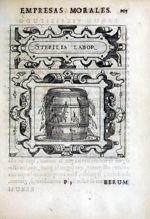
Sterilis labor: Borja, Empresas morales (Bruxelles, 1680), emblem 52 uses the imagery of the vessel of the Danaids
Non habet fundum: Zincgreff, Emblematum Ethico-politicorum (Heidelberg, 1619), emblem 87 quotes Cicero just like the adage's comment
Iconclass: 46A212 giving alms or other charity, e.g.: handing out food 51AA4:51II6 Nothingness, Absence❧Low, Bottom 52AA21:55C21 Rashness, Imprudence, Recklessness❧Generosity, Liberality; 'Generosità', 'Liberalità' (Ripa) 93E85 the Danaids pouring water into a perforated vessel
Loci Communes: Profusio (Extravagance, Prodigalité)
I x 33 Inexplebile dolium A great jar that cannot be filled
Απληστος πίθος, id est, Inexplebile dolium. Varius est huius adagionis usus. Quadrat enim primum εἰς τοὺς ἀδδηφάγους, id est, in glutones, edacesque, congruentius autem in istos bibacitate inexplebili, qui quo plus biberint, hoc plus sitiunt, quemadmodum olim di ctum est de Parthis. Sic enim Festus sensisse videtur: nam locus mutilus est, qui dolium pertusum dixerit, cum ventrem significaret, quamquam natura quoque venter inexplebilis est, quod quidquid per os infuderis, id aliis viis excernitur. Quadrabit et in obliviosum, cui si quid eruditionis infundas, protinus effluit, quique pri us obliviscatur, quam perdidicerit, cuiusmodi Stepsiadem facit Aristophanes in Nebulis: Ος τις σκαλαθυρματι᾽ ἄττα μικρὰ μανθάνων, Ταῦτ᾽ ἐπιλέλησται πρὶν μαθεῖν. id est: Huius modi minutulas qui argutias Prius, atque didicit, dedidicerit immemor. Sic propemodum usus est Plautus in Pseudulo, In pertusum ingerimus dolium, operam ludimus. Competet etiam in homines praeter modum profusos, quemadmodum indicavit Aristoteles libro Oeconomicorum primo: καὶ γὰρ τὸ κτῆσθαι δυνατὸν χρὴ εἶναι καὶ φυλάττειν, εἰδὲ μὴ οὐδὲν ὄφελος τοῦ κτᾶσθαι. τῷ γὰρ ἠθμῷ ἀντλεῖν τοῦτ᾽ ἐστιν, ὁ λεγόμενος, πίθος τετρημμένος. id est, Si quidem oportet eiusmodi esse, qui norit et parare, et parata tueri. Alioqui nihil profuerit parasse, propterea quod hoc sit cribro haurire, quodque proverbio dicunt, pertusum do lium. Congruit item in avaros, quorum cupiditatibus nihil est satis; verum quo magis im pletur opibus, hoc magis inanes esse videntur Quod eleganter illo Solonis carmi ne testatum est apud Plutarchum in libello περὶ φιλοπλουτείας, Πλούτου δ᾽ οὐδὲν τέρμα πεφασμένον ἀνθρώποισι. id est: Non est fixus opum finis mortalibus ullus. Zenodotus et tartarum ipsum recte accipi inexplebile dolium putat, quod tot milibus de functorum numquam expleatur. Quadrabit et in eos, qui male ab aliis rapiunt, quae male item profundant in alios. Usurpatur et de frustra laborantibus, quemadmodum alio demonstratum est loco, velut apud Catullum. Dolia virgineis idem ille repleverit urnis. Adagium natum à notissima fabula puellarum Danaidum, quae ob sponsos necatos has poenas apud inferos dare dicuntur, ut situlis perstillantibus aquam hauriant, atque in do lium item pertusum infundant, gravi nimirum, sed inutili labore. Cuius fabulae mentio nem facit Horatius in Odis: Et inane lymphae Dolium fundo pereuntis imo. Item Tibullus: Et Danai proles, Veneris quae numina laesit, In cava Lethaeas dolia portat aquas. Meminit huius Lucianus in Timone. Et Aristoteles libro Politicorum sexto. Rursus Lucia nus in Hermotimo, Επιῤῥεῖ γὰρ κατα τὴν παροιμίαν τὸ πρᾶγμα ἐξαντλούμενον, ἐς τὸ ἐμπάλιν, ἤ ὁ τῶν δαναΐδων πίθος. id est, Affluit enim, dum exhauritur negotium, laborque, et contra fit, atque in Danaidum dolio. Usurpavit et Plato, cum aliis aliquot locis; tum in Gorgia.
Απληστος πίθος, A great jar that cannot be filled. This adage has various applications. It fits, first of all, gluttons and heavy eaters; but even more closely those who drink to excess and grow thirstier, the more they drink, as used to be said of the Parthians. So Festus seems to have thought, for he cites some author (I know not whom; the text is mutilated) as using 'a great jar with holes' when he meant the belly; though in any case nature has made it impossible to fill the belly, because whatever you put into it by way of the mouth is excreted by other passages. It will also suit a forgetful person, one of those who, if you tell them anything, let it slip immediately, and forget a thing before they have learnt it properly, like Strepsiades in the Clouds of Aristophanes: 'Who learns some little bits, I know not what, / And then forgets, ere he has them by heart.' This is much how Plautus uses it in the Pseudolus: 'We put it into a great jar with holes, and waste our labour.' This will also suit men who are generous beyond measure, as Aristotle suggests in the first book of the Oeconomica: 'For the ability to acquire ought to go with the ability to preserve what one has acquired. Otherwise it serves no useful purpose, for it is fetching water in a sieve, and a great jar with holes, as the phrase goes.' It is applicable also to grasping men whose avarice knows no bounds, and the more they are filled with riches, the emptier they seem to be. This is elegantly expressed in that line from Solon, quoted by Plutarch in his essay 'On Love of Wealth': 'Of riches mortal men no limit know.' Zenodotus thinks that Tartarus itself can rightly be thought of as 'a great jar with holes,' because all the thousands of the dead cannot fill it; and the Hebrew sage names it in his list of insatiable things. It will be suitable also for those men who wrongfully seize from some of their fellow-men what they can wrongfully waste on others. It is used also of those who labour in vain, as has been shown elsewhere; for instance, in Catullus: 'He'll fill those virgins' jars with their own pitchers.' The adage takes its rise from the well-known fable of the daughters of Danaus, who killed their husbands, and are said to have been punished in the nether regions by having to draw water in leaky pitchers and pour it into a great jar which itself is full of holes, a burdensome and useless task. The story is mentioned by Horace in the Odes: 'That great jar, of water never full, / That through its leaky bottom runs away.' Tibullus too: 'And Danaus' daughters, for that they did Venus once offend, / Pour Lethe water into jars empty without an end.' Lucian speaks of this in his Timon, and Aristotle in the sixth book of the Politics. Lucian again in the Hermotimus: 'For, as the proverb has it, the labour and toil that you ladle out flows back again - the converse of the Danaids' great jar.' Plato also uses it in several passages, especially in the Gorgias.
Facsimile: 
Sterilis labor: Borja, Empresas morales (Bruxelles, 1680), emblem 52 uses the imagery of the vessel of the Danaids
Iconclass: 31B521 drunkard 32A43 glutton 41C122 pouring 41C326 jar, jug (used as drinking-vessel) 52BB42:51I2 Impossibility❧Fullness 93E85 the Danaids pouring water into a perforated vessel
Loci Communes: Rapacitas et avaritia (Rapacity and greed, Rapacité et avarice)
I x 34 Cum adsit ursus, vestigia quaeris Confronted with the bear you go looking for his tracks
Αρκτου παρούσης τὰ ἴχνη ζητεῖς, id est, Ursi praesentis vestigia quaeris. De iis dicitur, qui timiditate praesens negotium declinant, atque ad alias nugas dilabunrur. Translatum à formido losis venatoribus, qui se dissimulant sensisse ursum, et vestigia persequi fingunt, quo absint à periculo. Hoc genus homines Plato de Republ. libro quinto scripsit similes esse τοῖς κυνιδίοις, ἃ τοὺς λίθους δάκνει, τῶν βαλόντων οὐχ ἁπτομενα. id est, Catulis, qui lapides mordent, cum eos, qui iecerint, non ausint attingere. Ab hoc non est alienum, quod scribit Plutarchus in vita Luculli. Nam illum cum hortaretur Achelaus, ut relicto hoste in Pontum traice ret (sic enim fore, ut protinus omnium rerum potiretur.) Οὐκ ἔφη δειλότερος εἶναι κυνηγῶν, ὥστε τὰ θηρία παρελθὼν ἐπὶ κενοὺς αὐτῶν φωλεοὺς βαδίζειν. id est, Negavit se timidiorem esse vena toribus, ut praeteritis feris, ad inania illarum lustra vellet ire.
Αρκτου παρούσης τὰ ἴχνη ζητεῖς, You go hunting for the tracks of a bear that is there in front of you. Used of people who are too timid to face up to the problem that confronts them, and turn aside to easy things that don't matter. The image is taken from cowardly huntsmen, who pretend they have not observed the bear and act as though they were following its tracks, as an excuse for getting away from the danger-point. Men like this are described by Plato, in the Republic, book 5, as resembling dogs which will bite a stone, and dare not touch the man who throws it. This is not far from something in Plutarch's life of Lucullus. When Archelaus was urging him to abandon the enemy and cross over into Pontus, on the ground that he would thus make himself master of everything forthwith, Lucullus replied that he was as brave as the average huntsman, and unlikely to pay no attention to the beasts and go in search of their empty lairs.
Facsimile:
Iconclass: 25D12 kinds of non-precious stone 25F23(BEAR)(+511) beasts of prey, predatory animals: bear (+ animal(s) threatening) 31A2741 throwing something 34B11(+9512) dog (+ animal(s) attacking) 43C11123 hunt ~ predatory animals (fox, lion) 43C115:25F23(BEAR)(+349) searching for game❧beasts of prey, predatory animals: bear (+ track, trail of an animal) 54AA8 Cowardice 56DD1 Fear, Dread; 'Paura', 'Timidità o Timore', 'Timore' (Ripa)
Collectanea (1500): 332
I x 35 Boni ad bonorum convivia ultro accedunt Good men with good men dine, nor wait for an invitation
Αὐτόματοι δ᾽ ἀγαθοὶ ἀγαθῶν ἐπῒ δαῖτας ἴενται. id est: Sponte bonis mos est convivia adire bonorum. Hexameter proverbialis, tum usurpandus, ubi vir bonus, fiducia virtutis & amicitiae, quae generalis inter omnes probos intercedit, ad sui similem accedit, non exspectatis vulgaribus istis invitatiunculis, Quidam natum putant ab Hercule, qui cum Ceti Trachinii domum invocatus inviseret, hunc versiculum primus dixerit. Fertur & trimeter Iambicus in eandem sententiam. Ακλητοὶ κωμάζουσιν εἰς φίλους φίλοι. id est: Conviva amico amicus ultro etiam venit. Tacite notavit adagium Homerus in secundo Iliados: Αὐτόματος δὲ οἱ ἦλθε βοὴν ἀγαθὸς μενέλαος. id est. Illi vocalis Menelaus venerat ultro. Scholiastes indicat, hoc verbo fuisse significatam Menelai fortitudinem in bello. Exilis enim vox formidolosum arguit, & βοὴ apud Graecos interdum bellum declarat, quem admodum et hodie apud Germanos. Zenodotus in collectaneis diversa sententia ci tat hoc adagium ex Eupolidis comoedia, cui titulus Chrysogenes, Αὐτόματοι δ᾽ ἀγαθοὶ δειλῶν ἐπὶ δαῖτας ἴασιν. id est: Ultro adeunt hominis timidi convivia fortes. Idem ferme significat Plato in Symposio, Ινα καὶ τὴν παροιμίαν διαφθείρωμεν μεταβαλόντες, ὡς ἄρα καὶ ἀγαθῶν ἐπὶ δαῖτας ἴασιν αὐτόματοι ἀγαθοὶ. id est, Ut et proverbium perdamus, hunc ad modum invertentes: Boni ad bonorum convivia ultro veniunt. Sentire videtur Plato, Homerum fecisse Menelaum deteriorem ad praestantioris accessisse convivium, quod Agamemnon bello valuerit, Menelaus fuerit imbellis. Citatur hic locus et ab Athenaeo libro quarto. Tametsi non hanc opinamur Homeri mentem fuisse, cum virtutis addat elogium: Βοὴν ἀγαθὸς μενέλαος. id est: Voce bonus Menelaus. Et cum aliquot locis illum fortissimerem gerentem inducat, alicubi etiam ἀρηϊφίλου cognomento honestet. Apud Athenaeum lib. 1. ex Cilatino, quidam qui invocatus ad convivium accesserat, ita loquitur, Αγαθὸς ἄν πρὸς ἀγαθοὺς ἄνδρας ἑστιασόμενος ἧκον, κοινὰ γὰρ τὰ τῶν φίλων. id est, Bonus enim ad bonos viros convivaturus veni. Nam res amico rum communes.
Αὐτόματοι δ᾽ ἀγαθοὶ ἀγαθῶν ἐπῒ δαῖτας ἴενται., Good men with good men dine, nor wait for an invitation. A proverbial hexameter line, which can be used whenever a good man, relying on his personal merit and on the friendship which exists in principle between all honest men, approaches another like himself without waiting for the common formality of an invitation. Some think it goes back to Hercules, who is said to have been the first to use this line when he went unbidden to the house of Cetus in Trachis. An iambic line is also current to the same effect: 'Unbidden friends to their friends' parties go.' Homer tacitly alludes to the adage in the second Iliad: 'Came to his help unasked Menelaus good at the war-cry.' The scholiast points out that this word is meant to convey Menelaus' courage in battle; for a small voice indicates a poor spirit, and 'war-cry' in Greek is sometimes equivalent to 'battle,' as it still is today in Germany. Zenodotus in his collection quotes a use of this adage in the opposite sense from a comedy by Eupolis called Chrysogenes: 'Brave men with cowards dine, nor wait for an invitation.' Plato conveys much the same meaning in the Symposium: 'Let's make nonsense of the old proverb about the good going to dine with the good unasked, and give it a new meaning.' Plato seems to have felt that Homer had made a lesser man, in the shape of Menelaus, come to dine with a much better one, because Agamemnon was a mighty warrior and Menelaus was unwarlike. This passage is also quoted by Athenaeus in book four. Though I do not myself think Homer meant this, because he testifies to Menelaus' courage in his epithet 'good at the war-cry,' and introduces him in several passages as giving a very good account of himself. Elsewhere too he gives him the honourable epithet 'dear to the god of war.' In the first book of Athenaeus, who quotes from Cilatinus, a character who had appeared uninvited at a party is made to say: 'I have come to dinner as one good man to others; for friends have all things in common.'
Facsimile:
Iconclass: 41C11 eating 54A5 Goodness; 'Bontà' (Ripa) 57A9 Humanity, Politeness; 'Cortesia', 'Humanità' (Ripa)
Loci Communes: Similitudinis et congruentiae (Similarity and congruence, Similitude et convenance)
I x 36 In puteo cum canibus pugnare To fight with dogs in a well
Εν φρέατι κυσὶ μάχεσθαι, id est, In puteo cum canibus pugnare. Dici solitum, ubi cuipiam negotium incidit cum homine rixoso, et contentioso, a quo se nequeat extricare. Effertur etiam hoc pacto ἐν φρέατι κυνομαχεῖν, voce composita.
'Εν φρέατι κυσὶ μάχεσθαι, To fight with dogs in a well, used to be said when anyone had to deal with a quarrelsome and contentious man, from whom he could not shake himself free. It is also expressed in the form ἐν φρέατι κυνομαχεῖν, where the 'fighting with dogs' is given by a single compound verb.
Facsimile:
Iconclass: 25H115 pit, hole 33B1 quarrel, argument 34B11(+9511) dog (+ animal(s) threatening) 41A3911 well 57AA7 Malevolence, Maliciousness; 'Malevolenza', 'Malignità', 'Malvagità' (Ripa)
Loci Communes: Infortunii sive exitii (Misfortune or ruin, Malheur ou ruine)
I x 37 Mihi ipsi balneum ministrabo I'll fix my own bath
Εμαυτῳς βαλανεύσω, id est, Ipse mihi balneator ero, ubi quis suis ipsius inseruit commodis. Aut ubi quis, non exspectato alieno officio, ipse suum agit negotium. Aristo phanes in Pace: Αλλ᾽ εἰ ταῦτα δοκεῖ, κἀγὼ μαυτῳς βαλανευσω. id est: Balneum et ipse mihi, si haec vobis grata, pararo. Interpres admonet translatum a balneis, in quibus cessante balneatore, ipsi qui lavant, aquam huriunt, atque infundunt. Zenodotus putat et ad eos referri posse, qui glandes in ignem iniectas coquunt. Fortassis haud absurde referetur ad glandium excussores. Nam Graecis βαλανεὺς , balnearium cauponem significat, βάλανος glandem, atque hinc anceps proverbii interpretatio.
Εμαυτῳς βαλανεύσω, I will be my own bathman. When someone is devoted to his own interests, or when he conducts his own affairs without waiting for outside help. Aristophanes in the Peace: 'But, if you please, I'll fix my bath myself.' The scholiast tells us that this derives from the practice in the public baths in which, when the bathman went off duty, the bathers themselves drew the water and poured it over themselves. Zenodotus thinks it can also refer to those who put acorns in the fire to roast them. It may perhaps be applied without absurdity to those who shake acorns off a tree. For in Greek balaneus means a bath attendant and balanos an acorn; and thus the adage admits of two interpretations.
Facsimile: 
Iconclass: 31A545 taking a bath 51E1 Independence, Autonomy
Loci Communes: Proprii commodi studium (Pursuit of one's own advantage, Recherche de son propre intérêt)
I x 38 Vir fugiens haud moratur lyrae strepitum But the man who runs away won't stop to hear the fiddler play
Ανὴρ δὲ φευγων οὐ μένει λύρας κτυπὸν. id est: Hunc qui fugit strepitus lyrae haud remor abitur. Senarius proverbialis in eos, qui in rebus periculosis, ac seriis, properandi studio negli gunt leviota. Nam qui fugit in bello non putat sibi liberum, ac vacuum, ut cantorem ali quem auscultet. Idque ad complures res accommodari potest.Veluti si dicas non esse rebus fiiu olis, ac voluptuariis nugandum, vum haec vita tot periculis sit obnoxia. In hanc senten tiam eleganter Seneca in epistola quadam ad Lucilium. Transcurramus, inquit, sollertissi mas nugas, et ad illa, quae nobis aliquam opem sunt latura, properemus. Nemo, qui obste tricem parturienti filiae sollicitus accersit, edictum, et ludorum ordinem perlegit. Nemo, qui ad incendium domus suae currit, tabulam latrunculariam perspicit, ut sciat quomodo alliga tus exeat calculus. At me hercle undique tibi omnia nuntiantur, et incendium domus, et pe riculum liberorum, et obsidium patriae, et bonorum direptio. Adice his naufragium, mo tusque terrarum, et quid quid aliud timeri potest. Intet ista districtus, rebus nihil aliud, quam animum oblectantibus vacas. Plutarchus in libello, quem scripsit de ει Delphico: Οὐ ναῦβλα κωκυτοϊσιν, οὐ λύρα φίλη. id est: Ingrata naubla, ingrata lugentilyra.
Ανὴρ δὲ φευγων οὐ μένει λύρας κτυπὸν., But the man who runs away won't stop to hear the fiddler play. A proverbial iambic line, referring to those who are in a dangerous and serious situation, and in their need to make haste ignore less important things. The fugitive from a battlefield does not think he has time and leisure to listen to some musician. And this has many applications: for instance, if you were to say that one ought not to waste time on frivolous pleasures when our life here is exposed to so many dangers. On this topic Seneca writes elegantly in one of the Letters to Lucilius: 'Let us skip these most ingenious trifles, and hasten on to things that are likely to be of real use to us. No one who is hurrying, full of anxiety, to fetch the midwife for his expectant daughter stops to read the legal notices and the programs for the games. No one running home on the news that his house is on fire pauses to survey a chessboard to see how some piece that is shut in can be rescued. But take my word for it: bad news is pouring in on you from all sides, your house is on fire, your children in danger, your country beleaguered, your property pillaged. Throw in shipwrecks and earthquakes and all that is frightful. With all this to distract you, have you really time for things which are purely entertaining?' Plutarch in his essay 'On the E at Delphi': 'Those who lament love neither harp nor lyre.' This squares with that saying in Ecclesiasticus: 'A tale out of season is as music in mourning.'
Facsimile:
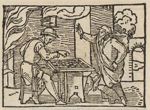
Soys diligent au faict de ton mesnage: La Perrière, Le theatre des bons engins (Lyon, 1545), emblem 59 uses the imagery of two men at a game of chess in front of a burning house, described in the adage's comment
Iconclass: 33B9 flight, running away; pursuing 48C7311 violin, fiddle 48C7521 one person playing string instrument (bowed) 48C78 listening to music 51M12 Haste 54DD51 Danger; 'Pericolo' (Ripa)
Loci Communes: Intempestiva et inepta (Untimely and inept things, Choses inopportunes et ineptes)
I x 39 Caninum prandium A dog's dinner
Caninum prandium proverbio dicebatur abstemium, et in quo nullum vinum bibere tur, propterea quod peculiari naturae proprietate canes a vino abhorrent. Id adagii refer tur ab A. Gellio libro Noctium Atticarum 13. capite ultimo, his quidem verbis. Eius au tem loci, in quod id proverbium est, verba haec sunt, nimirum ex M. Varronis Satzrarum libro, qui ὕδωρ κρυὸν, id est, Aqua ingens inscribitur. Non vides apud Mnesteum scribi, tria genera esse vini, nigrum, album, medium, quod vocant, κιῤῥὸν, id est, giluum: novum, vetus, medium? Et efficere nigrum virus: album urinam, medium pe/yin, id est, conco ctionem. Novum refrigerare, vetus calefacere, medium vero esse prandium caninum. Quid significet, inquit Gellius, prandium caninum, rem leviculam diu, et anxie, quaesivimus. Prandium autem abstemium, in quo nihil vini potatur, caninum dicitur, quoniam canis vino caret. Cum igitur medium vinum appellasset, quod neque novum, neque vetus esset, et plerunq, homines ita loquantur, ut omne vinum aut novum esse dicant, aut ve tus, nullam vim habere significavit neque novi, neque veteris, quod medium esset: idcirco pro vino non habendum, quia neque refrigeraret, neque calefaceret. Hactenus Gellius. Plu tarchus in Symposiacis scribit, Theophrastum ioco vocare solitum, ἄοινα συμπόσια τὰ κουρεῖα, quemadmodum alias admonuimus.
'A dog's dinner' was used proverbially of an abstemious meal and one at which no wine was drunk, because by some natural property dogs hate wine. This adage is recorded by Aulus Gellius in the last chapter of book 13 of his Attic Nights, as follows: 'The passage in which that proverb occurs runs like this' (it comes from a satire by Marcus Varro called 'ὕδωρ κρυὸν, Water frozen stiff).' You observe no doubt that Mnesteus says there are three sorts of wine - black, white, and intermediate, called in Greek kirros, which means tawny; new, old, and intermediate. The black, he says, generates poison, the white is a diuretic, and the intermediate promotes digestion; new wine is cooling, old wine heating, and the intermediate is a dog's dinner. The meaning,' says Gellius, 'of the phrase "a dog's dinner," though of small importance, was the subject of long and anxious discussion. An abstemious meal, at which no wine is drunk, is called a dog's dinner, because dogs do without wine. Once he had applied the term intermediate wine to that which was neither new nor old, then, in view of the fact that as a rule men speak as though all wine is to be called either new or old, his point was that what is intermediate does not exert the effect of either new or old, and is therefore not to be regarded as wine at all, because it neither cools nor heats.' So Gellius. Plutarch in his Table-talk' was accustomed humorously to call barbers' shops 'teetotal drinking-parties,' as I have pointed out elsewhere.
Facsimile:
Iconclass: 34B11(+945) dog (+ animals eating and drinking) 41C43 evening meal, dinner, supper 51AA4:41C711 Nothingness, Absence❧wine ~ alcoholic drinks
Collectanea (1500): 168
Loci Communes: Sordes et parcimonia (Meanness and stinginess, Bassesse et avarice)
I x 40 Vir fugiens et denuo pugnabit He that fights and runs away may live to fight another day
Ανὴρ ὁ φεύγων καὶ πάλιν μαχήσεται. id est, Qui fugerit, rursum ille praeliabitur. Senarius proverbialis, quo monemur non protinus abicere animum, si quid parum fe liciter successerit. Nam victos posse vin cere contingit. Proinde Homerus ἑτεραλκέα νίκην vocat, id est, vicissim, nunc apud hos, nunc apud illos pollentem. Apud eundem Iliados Θ. Alexan der sic loquitur Hectori: νίκη δ᾽ ἐπαμείβεται ἄνδρας. id est, Alterna viris victoria cedit. Idem alibi Iliados γ. Νῦν μέν γὰρ μενέλαος ἐνίκησεν ξὺν ἄθάνῃ, Κεῖνον δ᾽ αὖθις ἐγώ. id est: Palladis auxilio nunc victor abit Menelaus. Illum ego sed posthac pugna superaro vicissim. Demostheni probro datum est ab inimicis, quod in eo praelio, quo Philippus Macedonum rex Athenienses apud Cheroneam vicit, clypeo abiecto fugisse, eaque gratia ῥίψασπις ig nominioso cognomine vocatus est. Verum id probri Demosthenes, homo non admodum verecundus, proverbiali, notissimoque versiculo legitur eludere solitus: Ανὴρ ὁ φεύγων καὶ πάλιν μαχησεται. Huic confine est illud Davi Terentiani. Hac non successit, alia agrediundum est via. Usur pat adagium Tertullianus in lib. De fuga in persecutione. Sed omissis,inquit, quidam divinis exhortationibus, illum magis Graecum versiculum saecularis sententiae sibi adhi bent. Qui fugiebat, rursum proeliabitur, ut et rursus forsitan fugiat. Et quando vincet, qui cum fugerit victus est?
Ανὴρ ὁ φεύγων καὶ πάλιν μαχήσεται, The man who runs away will fight again. A proverbial iambic line, which tells us not to lose heart at once if things have not gone well, because those who have lost one battle can win the next. So Homer, who gives the epithet heteralkes to victory, meaning that which sides in turn now with one party and now with the other. And in Homer again, in Iliad 8, Alexander says to Hector 'But victory changes sides from man to man.' Elsewhere, in Iliad 3, 'For now with Pallas' help was Menelaus victor, and now again it was I.' Demosthenes was thought by his enemies to have disgraced himself, because in the victory of Philip king of Macedon over the Athenians at Chaeroneia he had thrown away his shield and taken to his heels, and thus earned the very discreditable nickname of Rhipsaspis. But Demosthenes, a man not noted for modesty, is said to have always countered this reproach with that most familiar proverbial line 'He that fights and runs away will live to fight another day.' This is close to Davus' remark in Terence: 'No success here: we'll try another way.' Tertullian uses the adage in his book on running away from persecution: 'But some people pay no attention to the divine command, and prefer to apply to themselves that Greek line that contains the wisdom of the world, He that fights and runs away may live to fight another day. In order, maybe, to run away a second time? And when can a man win who has already confessed defeat by running away?'
I x 41 Ex stipula cognoscere To judge by the stubble
Εκ τῆς καλάμης γινώσκειν, id est, Ex stipula iudicate, dicimus, quoties e vestigiis quibusdam in senects reliquis, coniecturam facimus,cuiusmodi quis fuerit in adolt scentia, trans lata metaphora ab segetibus. Homerus in ξ. Odisseae. Αλλ᾽ ἔμπης καλάμην γε σ᾽ ὀΐομαι εἰς ὁρόωντα Γινώσκειν. id est: Attamen inspecta stipulae te suspicor illud Coniicere. Utitur hoc adagio Lucianus in Pseudomante, quem nos olim Latinum fecimus. Aristo teles in Rhetoricis kala/mhn senectam interpretatur. Οταν γὰρ, inquit, τὸ γῆρας εἶπε καλάμην, ἐποιησε μάθησιν καὶ γνῶσιν διὰ τοῦ γέροντος. ἄμφω γὰρ ἀπηνθηκότες. id est. Etenim cum sene ctam dixit culmum, senem ostendit, ac repraesentavit. Nam utrique defloruerunt. Aristo phanes in Vespis non dissimili figura usus est: Αλλὰ ἐκ τῶν λειψάνων Δεῖ τῶν δε ῥώμην νεανικὴν ἔχειν. id est: Verum e reliquiis robur horum colligi Iuvenile oportet. Dicimus item, ex fragmentis, ex ruina rem cuiusmodi fuerit comectare.
Εκ τῆς καλάμης γινώσκειν, To judge by the stubble, is used when we infer from certain traces which remain in old age what a man was like when he was young, the metaphor being taken from a cornfield. Homer in Odyssey 14: 'Yet this I think you can tell, if you do but look at the stubble.' Lucian uses this adage in his False Prophet, which I long ago turned into Latin. Aristotle in the Rhetoric explains 'stubble' as meaning old age: 'When he calls old age stubble,' he says, 'he makes us understand and recognize the old man; for both have lost their bloom.' Aristophanes in the Wasps uses a very similar figure: 'You must gauge their strength when they were young from what remains.' We say too that we infer what something was like from the fragments or the ruin of it.
Facsimile: 
Iconclass: 31D160 Old Age, 'Senectus'; 'Vecchiezza' (Ripa) 47I17(STUBBLE)(+0) agricultural products and by-products (STUBBLE) (+ variant) 51FF3:47I14 Posteriority❧harvest 52A52 Judgement, Discrimination; 'Giuditio' (Ripa)
Loci Communes: Conjecturae (Conjectures, Conjectures)
I x 42 Eodem cubito With the same yardstick
Αὐτῷ πήχει, id est, eodem cubito, hoc est, eadem regula, eadem mensura. Utitur hoc aliquoties Lucianus, cum aliâs, tum in libello De ratione conscribendae historiae, καὶ ὅλως πῆχυς εἷς, καὶ μέτρον ἀκριβὲς, id est, In summa cubitus unus, atque exacta regula. Aristophanes in Ranis. Καὶ γὰρ ταλάντῳ μουσικὴ σταθμήσεται, Καὶ κανόνας ἐξ οἴσουσι καὶ πήχεις ἐπῶν. In lance enim librabitur poetica, Promentque regulas, cubitosque carminum. Non dissimili figura dixit Cornelius Tacitus libro De oratoribus in pnfatione, cum ait, se quae a praestantissimis vitis acceperat, iis dem numeris iisdemque rationibus persequi velle. Pli. Epis lib. 8. dixit, pari libra. Illud fortasse παρεργότερον, at non inutile fuerit, admonere, plerasque meraphoras a mensuris ductas esse proverbiales, ut pensiculate rem, pensitate factum, rependere beneficium, remetiri grariam, librare negotium, expendere cautam, renumerare beneficium, aequilibrium officii, retaliare convitiam, atque id genus alias.
Αὐτῷ πήχει With the same yardstick, that is, the same rule, the same standard of measurement. Lucian uses it sometimes; apart from other places, it is in his How History Should Be Written: 'And in short there is one yardstick, one accurate measure.' Aristophanes in the Frogs: 'For on the balance music shall be weighed; / Yardsticks and rules be found for poetry.' Cornelius Tacitus uses a not dissimilar image in the preface to his book On Orators, when he says that he wishes to set out what he had learned from men of great distinction by the same numbers and same lines of argument that they had used. And Pliny in book 8 of his Letters uses the phrase 'an even balance.' It may be off the point, but it will be useful to point out, that most metaphors drawn from measurement are proverbial: 'to weigh the matter up,' 'to give what has been done its due weight,' 'to restore the balance of goodwill,' 'an adequate measure of thanks,' 'the balance of a transaction,' 'to size up the reasons' for a thing, 'to equate one kindness with another,' 'to equalize services rendered,' 'to pay off old scores,' and other phrases of the same sort.
Facsimile:
Iconclass: 49D521(YARDSTICK) measuring-instruments (YARDSTICK) 51B3 Parity, Equality
Loci Communes: Pensatio beneficii vel officii (Repayment of a favor or duty, Rétribution d'un bienfait ou d'un devoir)
I x 43 Monstrari digito To be pointed out
Δείνυσθαι τῷ δακτύλῳ. id est, Monstrari digito, pro eo quod est, insignem esse, hodie quoque proverbio vulgari dictitant. Horatius in Odis: Quod monstror digito praetereuntium. Persius: At pulchrum est digito monstrari, & dicier, Hic est. Lucianus in Harmonide, Καὶ τὸ ἐπίσημον εἶναι ἐν πλήθεσι, καὶ δεικνυσθαι τῷ δακτύλῳ.. id est, In turba insignem esse, digitoque demonstrari. Natum videri potest ab eo, quod in vita Diogenis narrat Laertius. Cum hospites quidam Athenas advenissent, ut Demosthenem cuius famam acceperant domi, conspicerent, Diogenes τὸν μέσον δάκτυλον ἐκτείνας, οὗτος ὑμῖν ἔφη ἐστιν ὁ ἀθηναίων δημαγωγὸς. . id est, Medio porrecto digito, Hic est vobis, inquit, ille Atheniensium concionator. Simul significans Demosthenem & gloriae avidum & moribus contaminatis.
Δείνυσθαι τῷ δακτύλῳ, To be pointed out, as a way of saying 'to be a distinguished person,' is in common use as a proverb even today. Horace in the Odes: 'The pointing finger of the passers-by.' Persius: 'And grand it is / To see them point, and hear them say "That's he!"' Lucian in his Harmonides: 'And in a crowd to be a very important person and have people point you out.' A possible source for this is an anecdote told of Diogenes by Laertius. Some tourists had come to Athens in hopes of seeing Demosthenes, of whose fame they had heard so much at home. Diogenes stretched out his middle finger. 'There you have the man,' he said, 'the great Athenian demagogue,' thus conveying by the same gesture that he had a great appetite for applause and was given to obscene practices.
Facsimile:
Iconclass: 31A25552(+91) index finger forwards, pointing, indicating (+ relations with friendly, non-aggressive character (expressive connotations)) 54B5 Importance, Preponderance
Loci Communes: Excellentia, inaequalitas (Excellence, inequality, Excellence, inégalité)
I x 44 Ne altero quidem pede Not one foot
Μηδὲ τὸν ἕτερον πόδα. i. Ne alterum quidem pedem disce dere. Lucianus in Harmonide. Idem in Sectis, Οὐδὲ πώποτε ἐξ αἰθιοπίας τὸν ἕτερον πόδα προελθὼν. i. Qui ex Aethiopia numquam vel alterum promoverit pedem. Annumerandum illis, quae retulimus alibi, latum digitum, et latum pedem, latum unguen, quibus vel consensus opinionum, vel studii assiduitas significatur, velut illo, nocte, dieque: quod aliter extulit T. Livius belli Macedonici primo: Alii in castris sine stationibus per somnum, vinumque diem noctibus aequabant.
Μηδὲ τὸν ἕτερον πόδα., to depart Not one foot. Lucian in the Harmonides. Again in his Sects: 'Who has never set one foot outside Ethiopia.' This is to be classed with those I have recorded elsewhere, 'a finger-breadth,' 'a foot's breadth,' 'a nail's breadth,' which can be used to indicate very close agreement or zealous support; as one can with the phrase 'night and day.' This is rather differently expressed by Livy in the first book of his Macedonian War. 'Others remained in camp without posting sentries, and with sleeping and drinking made no difference between night and day.'
Facsimile: 
Iconclass: 31A2255 foot 51AA4 Nothingness, Absence
Loci Communes: Assiduitas (Diligence, persistence, Assiduité)
I x 45 E diametro opposita. Diametro distans Diametrically opposite. Distant by a diameter
Εκ διαμέτρου id est, Ex diametro, De vehementer inter se pugnantibu olim dicebatur, sumpta metaphora a geometris, apud quos pfectissima oppositio ex diametro est. Lucianus in Tyranno, ἐκ διαμέτρου γὰρ οἱ βίοι φασίν. id est, Nostra enim et illorum vita, ex diametro, quemadmodum aiunt, inter se distat. Athanasius in libro quodam de synodo Nicaena, οἱ κατα διάμετρον ὡς ἔπος εἰπεῖν ἀντίκεινται τῇ σαβελλΐου γνώμῃ. id est, Qui iuxta diametrum, ut ita loquamur, adversantur Sabellii sententiae. Basilius in epistola quadam ad Athanasium, κατα διάμετρον dixit. Diametrus enim est recta linea, figuram,qua longissime patet, ex aequo secans, velut diametrus orbis est, quae sic a summo ad summum tenditur circulum, ut per centrum eat, definitore Macrobio in Somnium Scipionis libro 2. Nec ab hoc dissentit Euclidis diffinitio. Latini lineam hanc, dimetientem vocant. Nam Graecis διάμετρος παρὰ τὸ διαμετρεῖν. i. à dimetiendo. Nominis causam reddit Aristoteles in Problematis, Sectione 15. problema. 2. Cognatum est illi, quod alio recensuimus loco, δὶς δὶα πασῶν.
Εκ διαμέτρου, Diametrically, was formerly used of things in violent contrast, the metaphor being taken from geometry, in which the maximum possible degree of opposition is called 'diametrical.' Lucian in the Tyrant: 'For our life is, as they say, the diametrical opposite of theirs.' Athanasius in a book of his on the synod of Nicaea: 'Who are, if I may so put it, diametrically opposed to the opinion of Sabellius.' Basil uses the same phrase in a letter to Athanasius. For a diameter is a straight line that bisects a figure equally in its longest dimension; the diameter of a circle, for instance, runs from the highest point of the circle to its lowest, passing through the centre. So Macrobius defines it in the second book of his commentary on the Dream of Scipio, and Euclid's definition concurs. In Latin this line is called the dimetiens, that which gives the through measurement, for the Greek word diametros comes from the verb for measuring from one end to the other. Aristotle gives the reason for the name in his Problems, section 15 problem 2. This is related to Dis dia pason, of which I have treated elsewhere.
Facsimile:
Iconclass: 51BB5 Contrariety; 'Contrarietà' (Ripa) 51H1 Totality, the Whole 51II4 Farness
Loci Communes: Dissimilitudinis et incongruentiae (Dissimilarity and incongruity, Dissemblance et incongruité)
I x 46 Audi quae ex animo dicuntur Listen to a man who speaks from the heart
Ακουε τ᾽ ἀπὸ καρδίας. id est, Audi quae dicuntur ex animo. Nam seria, quaeque citra dissimu lationem dicuntur ex animo dici dicuntur, eaque ex corde proficisci vulgus ait. Lucianus in Iove Tragoedo, Οὐκοῦν ἀκούετε ὦ θεοὶ, τά γε ἀπο καρδίας φασὶν. id est, Itaque audite dii nimirum ex animo dicenda, sicut proverbio dicitur. Nam adulatorum et simulantium ora tio in faucibus nascitur, non in corde. Plutarchus in commentario, quem inscripsit, quo pacto quis possit assentatorem ab amico dignoscere, refert hos senarios: Εμοὶ γὰρ εἴη πτωχὸς, εἰ δὲ βούλεται Πτωχοῦ κακιων ὅστις ὢν εὔνους ἐμοὶ Φόβον παρελθὼν τ᾽ ἀπὸ καρδίας ἐρεῖ. id est, Mendicus utinam sit mihi, vel si libet Mendicum et infra, qui mihi volens bene Timore posito, possit ex animo loqui. Addit hoc haud facile dici à divitibus, ac principibus, quibus modis omnibus est invisa veritas: neque quicquam ferunt aures delicatae, nisi quod assentatione multa conditum sit & adulationem sapiat. Ad hanc figuram pertinet illud Plautinum, corde amare: item illud persequi corde, animo, & viribus, utrunque est in Captivi duo. Contrarium est huic, A summis labris. pro eo quod est, non ex animo. Seneca in Epist. ad Lucilium, Non à summis labris ista veniunt.
Ακουε τ᾽ ἀπὸ καρδίας., Listen to a man who speaks from the heart. Serious remarks made with no attempt at concealment are said to come from the heart, and this expression is in common use of a man who speaks his mind. Lucian in his Jupiter tragoedus: 'Listen then, ye gods, to one who speaks his mind, as the saying is.' Flattery and pretence speak from the throat and not the heart. Plutarch, in the essay he entitled 'How to Tell a Flatterer from a Friend,' quotes these iambic lines:
Would I had some poor man, or if he please,
One baser yet, who out of mere goodwill
Would leave his fear and speak straight from the heart.
He adds that these words do not come easily to rich men and princes, who utterly hate the truth; nor can tender ears endure what is not heavily sweetened with flattery and spiced with adulation. Under the same metaphor we should class that phrase in Plautus, 'to love from the soul,' and he also has 'to pursue with heart and soul and strength'; both are in the Captivi. Its opposite is 'only from the lips,' for 'not from the heart'; Seneca in his Letters to Lucilius: 'This does not come only from the lips.'
Facsimile:
Sine gratia & sine metu: Borja, Empresas morales (Bruxelles, 1680), emblem 74 is about counsellors who dare to speak the truth to princes, just like the adage
Iconclass: 31A2221 heart 31A32 hearing, listening (one of the five senses) 31B6235 speaking 57A612 Sincerity; 'Purità et Sincerità d'animo', 'Sincerità' (Ripa) 57AA6121 Flattery; 'Adulatione' (Ripa)
Loci Communes: Libertas, veritas (Freedom, truth, Liberté, vérité)
I x 47 Aut bibat aut abeat He must either drink or quit
Aut bibat, aut abeat. AUT bibat, aut abeat. Quo quidem adagio monemur, ut aut tempori, locoque nos accom modemus, aut ab hominum consuetudine nos subducamus. Quemadmodum Cato fecisse legitur, qui, cum non posset sumere vultum Floralium licentiae convenientem, discessit e thea tro, Natum a priscis illis Graecorum symposiis, hoc est, compotationibus, in quibus mos erat, talis sortiri quempiam, qui convivio quasi praesideret, ac decreta convivialia praescribe ret, quae νόμους, id est, leges appellabant. De hisce legibus Valerius Valentinus iocoso carmine conscripsit, cui titulum fecit Tapullae, teste Festo Pompeio. Porro praefectum βασιλέα hoc est, regem nominabant. Plutarchus συμποσίαρχον vocat. Varro apud No nium, Modiperatorem à Latinis vocatum scribit, quasi modum imperantem, ne quis aut plus satis biberet, aut parum. Athenaeus libro 10. ex Eupolidis auctoritate docet huic praefectos rei οἰνόπτας dictos, ab aliis ὀφθαλμούς. Huius consuetudinis meminit et Hora tius in Odis: Nec regna vini sortiere talis, Ex legibus iocosis haec una fertur, aut bibat, aut abeat. Commemoratur a Cicerone, libro Tusculanarum quaestionum 5. Mihi quidem, inquit, in vita servanda videtur illa lex, quae in Graecorum conviviis obtinet. Aut bibat, inquit, aut abeat. Et recte. Aut enim fruatur ali quis pariter cum aliis voluptate potandi, ne sobrius in violentiam vinolentorum incidat, aut discedat. Sic iniurias fortunae, quas ferre nequeas, defugiendo relinquas. Hactenus il le. Quidam sic efferunt, ἢ πῖθι, ἢ ἂπιθι, id est, aut bibe, aut abi. Quanto civilior haec lex, quam ea quam Empedocli in convivio praescripsit convivii praefectus, ut aut biberet, aut vinum in caput illius effunderetur. Eam rem tam indigne tulit Empedocles, ut postridie coacto concilio, et invitatorem cuius opera id erat factum, et symposiarcham reum peregerit, dam nandosque curarit. Refert Diogenes Laertius. At nostri Mnamones has quoque leges magis Scythicas praescribunt: Aut bibe, inquiunt, aut hunc cantharum quantus est, in caput impingam tuum. Itaque non raro fit ex compotatione monomachia
He must either drink or quit is an adage that instructs us either to adapt ourselves to time and place or to withdraw from human society, as Cato is said to have done when, being unable to assume the cheerful air appropriate to the feast of Flora, he left the theatre. This comes from those symposia or drinking-parties that were traditional in Greece, in which it was customary to elect someone by throwing knucklebones to be a sort of chairman of the party, and lay down rules for it, which they called 'laws.' These 'laws' were the subject of a humorous poem by Valerius of Valentia, which he called Tapullae, as Festus Pompeius tells us. And so the chairman was called the basileus or king; Plutarch's name is symposiarch. Varro, quoted by Nonius, says that the Latin for this was modiperator, as though from modum imperans, prescribing a limit, which the drinkers should not exceed or fall short of. Athenaeus, book 10, on the authority of Eupolis tells us that those in charge were called oinoptai, wine-watchers, or opthalmoi, eyes. Horace too mentions the custom in the Odes: 'Nor shall you cast the bones to choose / A ruler of the feast.' From this merry code of laws one still survives: He must either drink or quit. Cicero speaks of it in the fifth book of his Tusculan Questions. 'It seems to me' he says 'that in life one should maintain the same law as held good in Greek drinking-parties: He must either drink, it said, or quit. And rightly. A man should either enjoy the pleasure of drinking on an equal footing with the others, and thus avoid the risk of being roughly handled when they are flown with wine and he is still sober, or he should leave. Thus the wrongs of fortune, which you cannot endure, can be left behind you in your flight.' Thus far Cicero. Some use the form Drink or go. How much more humane this is than the law which Empedocles was made to obey at a drinking-party by the party-chairman! Either he drank, or the wine was poured over his head. Empedocles was so furious at this that next day he called together the council and laid a complaint against the man who had invited them, who was responsible, and the symposiarch, and secured the condemnation of both. The story is in Diogenes Laertius. But our chairmen go further and lay down laws more suitable for Scythians: Either drink up, they say, or I will break this stoup, large as it is, over your head. So it is not unusual for social drinking to develop into single combat.
Facsimile: 
Iconclass: 41C71(+1) alcoholic drinks (+ taking (particular) foodstuffs: eating, drinking, smoking, chewing, etc.) 46A communal life 53A11 Choice; 'Elettione' (Ripa) 59AA1 Loneliness; 'Solitudine' (Ripa)
Collectanea (1500): 115
Loci Communes: Servire tempori (To serve the times, Se plier aux circonstances)
I x 48 Domi conjecturam facere To draw a home-grown conclusion
Οἴκοθεν εἰκάζειν. id est, Domi coniectare. Quod non aliunde petitur, id domi fieri proverbio dicitur. Plautus in Cistellaria, Hanc ego de me coniecturam domi facio. hoc est, meopte experimento comperio. Seneca de beneficiis lib. quinto, Domi, quod aiunt, versura fit, & velut lusorium nomen statim transit.
Οἴκοθεν εἰκάζειν, To draw a conclusion at home, from one's own resources. What is not brought in from some outside sources is said proverbially to be home-grown. Plautus in the Cistellaria: 'This conclusion is home-grown, all my own work,' that is, it is drawn from my own experience. Seneca De beneficiis, book 5: 'Switching begins at home, they say; like a loan made in play, it is instantly transferred.'
Facsimile:
Iconclass: 51AA4:55CC3 Nothingness, Absence❧Borrowing, Hiring 52A5 Knowledge; 'Cognitione', 'Cognitione delle cose' (Ripa)
Collectanea (1500): 767
Loci Communes: Conjecturae (Conjectures, Conjectures)
I x 49 Domi habet. Domi nascitur He has it at home. It's home-grown
Ad eandem pertinet metaphoram: Domi habere: Nam id domi dicimus habere, quod in nobis situm est, nec necesse est ab aliis mutuo sumere. Translatum apparet ab ea con suetudine foris rogandae supellectilis, quam domi desideres. Terentius in Adelph. Phy, domi habet, unde discat. M. Tullius ad Varronem, Sed quid ego nunc haec ad te, cui do mi talia nascuntur? Idem Academicarum quaestionum lib. ii. Desine quaeso communi bus locis, domi nobis ista nascuntur, id est, haec oratorum sunt propria. Proinde dixeris eleganter: Quid in rebus istis felicitatem venaris? domi habes, unde beatus esse queas. Regum est domi consilium habere, non ab aliena pendere sententia.
To the same metaphor belongs To have at home. For we say that 'we have something at home,' when it is to be found in us and there is no need to borrow it from others. This is evidently derived from the practice of borrowing tackle from others which you do not possess at home. Terence in the Adelphoe: 'What nonsense! He has plenty to learn from at home.' Cicero writing to Varro: 'But why do I say all this to you now, when you have it all home-grown?' And again in the Academic Questions, book 2: 'And pray desist from your generalities; I have plenty of those home-grown'; they are, that is, part of the orator's stock-in-trade. And so you could say with some point 'Why seek for happiness in things like that? You have the materials for blessedness at home already' or 'It is a king's business to get home-grown advice, and not to depend on the opinions of outsiders.'
Facsimile:
Iconclass: 51AA4:55CC3 Nothingness, Absence❧Borrowing, Hiring 52A5 Knowledge; 'Cognitione', 'Cognitione delle cose' (Ripa)
Collectanea (1500): 764
Loci Communes: Elabendi - ex sese (Slipping away - from oneself, S'échapper - de soi-même)
I x 50 Confringere tesseram To break one's token
Apud Plautum in Cistellaria confregisse tesseram dicitur, qui sibi reditum in domum ali quam praeclusit. Siquidem cum amans dixisset se iureiurando adstrictum, ut lenae filiam du ceret, orans ne se periurum fieri pateretur, illa respondens, Abi, inquit, quaerere, ubi tuo iuriiurando satis sit subsidii. Hic apud nos iam Alcesimarch, confregisti tesseram. Est autem tessera symbolum hospitale, quo prolato cognoscebantur hospites, si quando redissent.
In Plautus in the Cistellaria someone is said to have broken his token when he has cut himself off from returning to a house. When a lover says that he had taken an oath to marry the bawd's daughter, and begs her not to let him commit perjury, her reply is 'Be off with you, and find a place where there is backing for your oath. With us here, Alcesimarchus, you have broken your token.' This token is a symbol of friendship, which a former guest could produce to secure recognition if he ever came back again.
Facsimile:
Iconclass: 46B3111(+0) trade token, private coin (+ variant) 46C514 arrival and return ~ travelling 52BB42 Impossibility 53DD2 Breach of Promise
Collectanea (1500): 76
Loci Communes: Diffidentia (Distrust, Méfiance)
I x 51 Frigidam aquam suffundere To pour cold water
Frigidam aquam suffendere, Plautus in Cistellaria videtur usurpasse pro eo, quod est, instigare clanculum. Sic enim in ea fabula meretrix queritur de matronis maritos suos in meretricum odium, quoad possunt, inflammantibus. Ita nostro ordini palam blandiuntur, clam, si occasio usquam est, aquam frigidam subdole suffundunt. Viris cum suis prardicant nos solere, suas pellices esse aiunt. Translatum apparet ab iis, qui certaminibus equestri bus aquam equis aspergebant, quo refocillati currerent acrius, atque hoc pacto ad cursum instigabant. Cuius ministerii meminerunt etiam Pandectae ruris Caesarei lib. iii. titulo de iis, qui infamia notantur, ex Ulpiano, his quidem verbis: Et generaliter, ita omnes opinantur, et utile videtur, ut neque thymelici, neque xystici, nec agitatores, nec qui aquam equis spargunt, ceteraque eorum ministeria, qui certaminibus sacris deserviunt, ignomi niosi habeantur. Hactenus Ulpian. Id fiebat,opinamur, in Olympicis, aut similibus cer taminibus, nonnumquam et ob hanc causam, ne rocae agitatione fervescentes, flammam concipeent. Nisi si cui magis probatur, ut traductum putetur ab iis, qui ioci, ludibtiive causa, clanculum aquam infundunt in convivii locum, aut ab his, qui ludibrii causa, aqua conspergunt aliquem, qui balneatorum iocus est. Unde et Iulius Pollux lib. 7. docet πλύνειν interdum usurpari pro convitiari Sic Aristophanes in Pluto, πλύνον με ποιῶν ἐν τοσούτοις ἀνδράσιν. Queritur quispiam quod contumeliae causa consperus sit aqua multis praesentibus. Sed probabilius est translatum ab officinis aerariis, ubi fabri subinde frigi dam in ignem aspergunt, quo ignis sit vehementior.
To pour cold water seems to be used by Plautus in the Cistellaria for secret provocation. For in that play a woman of the town complains of respectable married women who inflame their husbands, as far as they can, with hatred of her and her class. 'They're civil enough to our class in public,' she says, 'but in secret, if they ever get a chance, they treacherously pour cold water. They say we're too familiar with their husbands, call us their rivals.' Clearly derived from the men at the races who used to pour cold water over the horses so that thus refreshed they might run faster, and thus provoked them to race. This employment is also mentioned in the Pandects of the civil law, book 3, title De iis qui infamia notantur, citing Ulpian, in the following words: 'And in general all agree on this, and it seems desirable that neither actors nor athletes nor charioteers nor those who throw cold water over the horses nor those employed in any other capacity in the service of the public games should be subject to public ignominy.' So Ulpian. This was done also, I believe, at the Olympic games or similar contests, sometimes for this further purpose, to prevent the wheels, as they got hot through revolving so fast, from catching fire. Unless anyone prefers to think it taken from those who as a joke or to make fun of their victims sprinkle water unexpectedly over the place where a party is being held, or those who sprinkle water over someone to make him a laughing-stock, which is a favourite joke of bath-men. Hence it is that Julius Pollux tells us in his seventh book that plunein, to scrub, is sometimes used in the sense of abusing a person, 'dressing him down.' So Aristophanes in the Plutus: 'dressing me down before so many men,' spoken by a character complaining that he has been soaked in water to make him ridiculous before a large crowd. But it seems more likely to be an image taken from bronze-foundries, where the smiths sprinkle cold water from time to time over the hearth to make the fire burn more vigorously.
I x 52 In senem ne quod collocaris beneficium Never do a kindness to an old man
Γέροντι μηδὲ ποτε μηδέν χρηστὸν ποιεῖν. id est, Ne quid unquam beneficii collocaris in senem. Refertur nominatim proverbii vice, ab Aristotele, lib. Rhetoricorum ii. χ᾽ ὅς τις συμ- βουλεύει μὴ ποιεὶσθαι φίλον γέροντα, τούτῳ μαρτυρεῖ ἡ παροιμΐα, μή ποτ᾽ εὖ ἕρδειν γέροντα. id est, Qui consulit, ne quis cum sene ineat amicitiam huic testimovii loco est proverbium, Ne quando bene merearis de sene. Dicitur hodieque vulgo. Neque in senem, neque in puerum col locandum esse beneficium, propterea quod alter non refert, alter non meminit. Extat & huiusmodi quoddam apud Diogenianum adagium, Μή ποτ᾽ εὖ ἕρδειν γέροντας, μὴ δὲ γυναῖκα, μὴ δὲ παῖδας, μη δὲ κύνα τινὸς, μηδὲ λάλον κωπηλάττην. id est, Ne quid beneficii colloces, neque in senes, neque in mulierem, neque in puerum, neque in canem cuiuspiam, neque in garrulum remigem, propterea quod perire videatur, quod in eius modi genus hominum insumi tur. Seneca de beneficiis tertio: Sic fit, ut praeceptores, eorumque beneficia intercidant, quia totam pueritiam relinquimus: sic fit, ut in adolescentiam nostram collata pereant, quia ipsa numquam retractatur.
Γέροντι μηδὲποτε μηδέν χρηστὸν ποιεῖν., Never do a kindness to an old man, is recorded expressly as a proverb by Aristotle in the second book of the Rhetoric: 'And he who advises us not to make friends with an old man can claim the support of the proverbial saying that one should never do an old man a kindness.' It is still a common saying today that one should not waste a kindness on an old man or a child, because the one does not repay and the other does not remember it. There is also an adage of the same sort in Diogenianus: 'Never be kind to old men or to a woman or a child or to someone else's dog or to a boatman who never stops talking,' because what is expended on such people is clearly lost. Seneca in the third book of the De beneficiis: 'Thus it comes about that we forget our teachers and what we owe to them, because we leave our childhood completely behind us; thus benefits that we received as adolescents slip from our minds, because we never pass in review what happened to us then.'
Facsimile: 
Iconclass: 31D16 old man 51AA4 Nothingness, Absence 52AA3 Forgetfulness 54BB3:57A77 Inutility, Noxiousness; 'Nocumento', 'Nocumento d'ogni cosa' (Ripa)❧Friendliness, Gentleness, Affability; 'Affabilità, piacevolezza, amabilità', 'Animo piacevole, trattabile & amorevole', 'Benignità' (Ripa)
Loci Communes: Ingratitudo (Ingratitude, Ingratitude)
I x 53 Stultus est qui patre caeso liberis pepercit He's a fool who kills the father and spares the children
Superiori protinus illud subtexuit, & quidem proverbii nomine, καὶ τοὺς υἱοὺς ἀναιρεῖν ὧν καὶ τοὺς πατέρας. Νήπιος, ὅς πατέρα κτείνας, παῖδας καταλείποι. id est, Et qui suadeat occidere liberos, quo rum patrem occideris, huic attestatur hoc proverbi um. Stultus qui patre occiso libefos relinquat. Refert idem postea inter sententias: Fatuus qui occiso patre liberis pepercit. Est autem versus proverbialis: Νήπιος ὅς πατέρα κτείνας υἱοὺς ὑπολείπει. id est, Est facuus, qui patre perempto pignora linquit. Usus est et Herodotus in Clione, ὁμοίως γὰρ μοι νῦν φαίνομαι πεποιηκέναι, ὡς εἴτις πατέρα ἀποκτείναςτῶν παίδων αὐτου φείσαιτο id est, Nam mihi nuc perinde fecisse videor, ac si quis occiso patre, liberis illius parcat. Hoc adagium usurpasse scribitur Philippus Macedo, cum liberos etiam e medio tolleret, quorum parentes occiderat. Fertur vox militum, qui Maximinum Imp. trucidarunt una cum filio, ex pessimo genere, ne catulum quidem esse relinquendum. Huc pertinet Homericum illud ex Odysseae γ. Ως ἀγαθὸν καὶ παῖδα καταφθιμένοιο λιπέσθαι. Ανδρὸς. id est, Ut bene habet caeso prolem superesse parenti. Erit usus adagio, quoties admonebimus, aut non esse provocandos homines, aut ita con ficiendos, ne in posterum reliquiae nos exerceant.
Immediately after the preceding he adds, expressly as a proverb, 'And he who advises you to kill the sons whose fathers you have killed, has the support of the old saw: Fool is he who kills the father and the children leaves behind.' He records the same thing later among proverbial sayings: He's a fool who killed the father and spared the children. It is a proverbial line of verse: 'Fool is he who kills the father and the sons allows to live.' Herodotus uses it in Clio: 'For I now feel I have acted like a man who should kill a father and spare his sons.' This adage is said to have been used by Philip of Macedon when doing away with some children whose fathers he had killed. For one ought either to refrain in the first place from killing the parents, or else to remove the sons also, who later on will avenge their father's death. There is a memorable remark on record, made by the soldiers who assassinated the emperor Maximinus and his son, to the effect that from a worthless litter not one puppy should be left alive. Here belongs that sentence in Homer, in the third Odyssey: 'How good it is that, when the sire is slain, / The son should yet be left.' The adage will have its uses when we have to point out that one should either not provoke people at all, or should make a job of them, so as to leave no remnant to cause us trouble in the future.
Facsimile:
Iconclass: 23A33:57AA741 future❧Revenge, Requital, Retaliation; 'Vendetta' (Ripa) 42B113 father with son(s) and daughter(s) (father-love) 44G5111 murder
Loci Communes: Ultio malefacti (Vengeance for a wrongdoing, Vengeance d'un méfait)
I x 54 Χρηστολόγος Fair-spoken
Χρηστολόγοι dicebantur, atque hodie quoque vulgo dicuntur, qui probe loquuntur, & improbe faciunt. Dictum autem peculiariter in Pertinacem Imp. quemadmodum in huius vita testatur Iulius Capitolinus. Paulus in epistola ad Romanos, huiusmodi blandiloquentiam, χρηστολογίαν vocat, καὶ διὰ τῆς χρηστολογίας, καὶ εὐλογίας, ἐξαπατῶσι τὰς καρδίας τῶν ἀκάκων. id est, Qui per blandiloquentiam ac benedicentiam seducunt corda innocentium.
Χρηστολόγος, Fair-spoken, was used, and today is still commonly used,of those whose words are good and their actions bad. It was an accusation levelled particularly against the emperor Pertinax, as Julius Capitolinus records in his life. Paul in his epistle to the Romans uses χρηστολογία this kind of fair-spoken behaviour: 'And by their fair speech and smooth words beguile the hearts of the innocent.'
Facsimile:
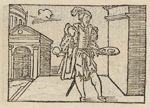
Traistre & Flatteur disent l'vn & font l'autre: La Perrière, Le theatre des bons engins (Lyon, 1545), emblem 73 uses the imagery of a courtier who holds his tongue in front of him and his heart behind his back - to express the duplicity of a flatterer at court
Iconclass: 33A341 story teller; listening to story teller 57AA611 Dissimulation, Hypocrisy; 'Hippocresia', 'Simulatione' (Ripa)
I x 55 Pulchre dixit. Belle narras Fine words! A likely story!
Huc pertinere videntur ironiae illae proverbiales, passim in comoediis obviae: Dixti pulchre, Belle narras, καλῶς ἔλεξας.. de re dictu vehementer absurda. Plato in Euthydemo nominatim pro proverbio commemorat. Verba Platonis sunt, τὸ γὰρ λέγομενον, καλά δὴ πάντα λεγεις.. id est, Etenim quod dici solet, omnia pulchra dicis. Item in Gorgia, ἄκουε δὴ φασι μάλα καλοῦ λόγου. id est, Audi iam, ut aiunt, valde pulchrum sermonem.
This seems to be the place for those ironical comments which have become proverbial, such as are frequent in comedy: Dixti pulchre, Fine words! Belle narras, A likely story! Καλῶς ἔλεξας., What you say is splendid, when something has been said that is quite absurd. Plato in the Euthydemus expressly calls it proverbial. Plato's words are: 'As the saying goes, this is all very splendid.' Again in the Gorgias: 'Now let me tell you, as they say, a very pretty story.'
I x 56 Figuli opes A potter's wealth
Κεράμειος πλοῦτος, id est, Fictiles divitiae. De rebus incertis, fragilibus ac neutiquam duraturis. Quemadmodum figulorum vasa facile comminuuntur quolibet casu. Refer tur adagium à Diogeniano.
Κεράμειος πλοῦτος, Wealth made of clay. Of undependable and fragile things that cannot possibly last long, comparable to potters' vessels which any mishap can so easily break. The adage is recorded by Diogenianus.
I x 57 Lepus dormiens A hare asleep
Λαγὼς καθεύδων. id est, Lepus dormiens. Quadrat in eum, qui, quod non facit, id facere sese adsimulat, aut quod facit, id se facere dissimulat. Qualem quidam arbitrantur fuisse Ulyssis somnum, cum à Phaeacibus in Ithacam insulam exponeretur, auctore Plutarcho. Nam leporem patentibus genis dormire, cum alii permulti tradunt auctores, tum Plinius libro undecimo, cap. trigesimoseptimo, id quod etiam hominibus nonnullis ait accide re, quos Graeci κορυβαντιεῖς appellant. Neque perperam, opinor, dicetur & in timidos. Adagium a multis auctoribus refertur.
Λαγὼς καθεύδων., A hare asleep, is suitable for the man who pretends to do what he is not doing or conceals the fact that he is doing what he does. Some think this was the sort of sleep enjoyed by Ulysses when he was put ashore on the island of Ithaca by the Phaeacians; so we learn from Plutarch. The fact that a hare sleeps with its eyes open is recorded by a great many other authors, and particularly by Pliny, book 11 chapter 37, who says that this is known in human beings also; in Greek they are called Corybants. Nor will it be wrong, I think, to use it of timid persons. The adage is recorded by many authorities.
Facsimile:
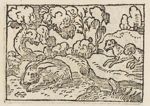
Le mal vivant n'est iamais asseuré: La Perrière, Le theatre des bons engins (Lyon, 1545), emblem 61 uses the imagery of a hare pursued by hunting dogs; the subscriptio mentions how hares sleep with their eyes open
Iconclass: 25F26(HARE)(+46) rodents: hare (+ sleeping animal(s)) 25F26(HARE)(+571):31A31 rodents: hare (+ morphology of facial expression of animal(s) ~ eyes)❧sight, looking (one of the five senses) 52DD1 Secrecy, Latency, Concealment; 'Secretezza' (Ripa)
Collectanea (1500): 618
Loci Communes: Simulatio, dissimulatio (Pretense, dissimulation, Simulation, dissimulation)
I x 58 Sero Jupiter diphtheram inspexit Jupiter was slow looking into his records
Ο ζεὺς κατεῖδε χρόνιος εἰς τὰς διφθέρας. id est, Inspexit, et si sero, pellem Iuppiter. Senarius proverbialis in eos, qui sero quidem, sed aliquando tamen pro malefactis dant poenas. Au tiquitas enim credidit Iovem omnia in sua diphthera, hoc est, pelle caprina scribere, ac mul ta quidem pro tempore dissimulare, verum aliquando de improbis poenas sumere. Belle quadrabit et in principes, qui diu dissimulata maleficia tandem puniunt.
Ὁ ζεὺς κατεῖδε χρόνιος εἰς τὰς διφθέρας., Jupiter has looked up the record, but after long delay. It is a proverbial iambic line, referring to those who do at length pay the penalty for their misdeeds, though late in the day. For Antiquity believed that Jupiter wrote everything down on this diphthera, which is goatskin used for keeping records, and for the time being overlooked many transgressions, only to exact penalties from the guilty later. It will also fit very nicely for princes who overlook offences for a long time and punish them in the end.
Facsimile: 
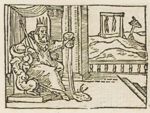
Officiers larrons, fault mettre en roue: La Perrière, Le theatre des bons engins (Lyon, 1545), emblem 40 uses the imagery of a king squeezing a sponge with gallows in the distance to express that rulers will eventually punish those that steal from them
Iconclass: 49M91(+0) archive (+ variant) 51MM11:44G3 Slowness, Tardiness; 'Tardità' (Ripa)❧criminal law; punishment 92B14 aggressive, unfriendly activities and relationships of Jupiter
Loci Communes: Ultio malefacti (Vengeance for a wrongdoing, Vengeance d'un méfait)
I x 59 Aut mortuus est aut docet litteras He must be either dead or teaching school
Η τέθνηκεν, ἤδιδάσκει γράμματα. id est, Aut periit, aut profecto literas docet. Senarius proverbialis, quo significabant olim, cuipiam omnino male esse, tametsi parum liqueret, quid rerum ageret. Is autem hac occasione venit in vulgi sermonem, auctore Zeno doto. Athenienses duce Nicia parum feliciter aliquando pugnaverunt adversus Siculos, permultis occisis, plerisque captivis in Siciliam abductis, qui Siculorum filios literas docere coacti sunt. Proinde pauci, qui fuga elapsi redierant Athenas, rogati quid hic, aut ille face ret in Sicilia, modo memorato versiculo respondebant. Aut periit, aut docet literas.
Η τέθνηκεν, ἤδιδάσκει γράμματα, He must be either dead or teaching school. An iambic line current as a proverb, and used in old days to convey that a man was in great misfortune, though it was not clear what he was doing. This passed into common speech, as Zenodotus tells us, on the following occasion. The Athenians, under command of Nicias, had on one occasion fought and lost a battle against the Sicilians; they suffered heavy casualties, and many prisoners were taken and carried off to Sicily, where they were compelled to teach Sicilian children their elements. And so the few who escaped and returned to Athens, when asked what so-and-so was doing in Sicily, used to reply with the line I have quoted above: 'He must be either dead or teaching school.'
Facsimile:
Iconclass: 31E death of human being 49B24 teacher and pupil 54FF11 Adversity, Misfortune, Bad Luck; 'Fortuna infelice', 'Infortunio' (Ripa)
Loci Communes: Anceps et dubius (Doubtful and uncertain, Incertain et douteux)
I x 60 Oportet testudinis carnes aut edere aut non edere When you are offered turtle-meat, either eat or do not eat
Η δεῖ χελώνης κρέα φαγεῖν, ἢ μὴ φαγεῖν. id est, Testudinis carnem aut edas, aut non edas. Trimeter proverbialis in eos, qui negotium susceptum frigide ducunt, neque explicantes, neque relinquentes. Sunt qui putent hoc dictum ab auctore Terpsione profectum esse: quo rum est Athenaens lib. 8. declarans hunc primum praecepisse de gastrologia, editis regulis, per quas liqueret, a quibus esset abstinendum, quibus contra vescendum: inter quas erat et haec de testudine, ἤ φαγεῖν, ἤ μὴ φαγεῖν. Addunt, testudinis carnem si modice edatur, ventris tormina facere: rursum, si copiose, lenire. Cuiusmodi quiddam & de lactucis refert Plinius. Perinde quasi dicas: aut bellandum est, aut non bellandum,aut studendum, aut non studendum. Nam pleraeque res sunt quas si facias acriter, plurimum conducunt: sin ignaviter, officiunt. Velut eae, quae mediocritatem non reicpiunt, quod genus est musica, poeticaque. Sunt rursus quaedam, quae degustasse sit satis. Quo de genere putavit esse philosophiae studium Ennianus ille Neoptolemus, & Callicles Platonicus. Non abhorret ab eo quo est in Apocalypsi: Utinam aut calidus esses, aut frigidus.
Η δεῖ χελώνης κρέα φαγεῖν ἢ μὴ φαγεῖν, Eat, or don't eat, your turtle: you must choose, is a proverbial iambic line, directed against those who, having taken up some piece of business, go through with it slowly, neither finishing nor giving it up. Some think the saying derives from an author called Terpsion; and among them is Athenaeus, book 8, who says he was the first to lay down rules about eating, and published a code which made clear what one ought to abstain from and what one ought to eat, in which was this rule about turtle, 'eat or don't eat.' They say further that turtle-meat eaten in moderate quantities causes griping of the bowels, which is relieved by larger amounts; very much what Pliny tells us about lettuce. It amounts to a way of saying: Make up your mind. Either go to war or don't go to war; either study or don't study. Remember how many activities there are which are admirable if you throw yourself into them, and do harm if you are lukewarm; or which do not admit of mediocrity, like music and poetry. Again, there are some things of which a taste is sufficient, to which class the study of philosophy was assigned by Neoptolemus in Ennius and Callicles in Plato. It is not far from that text in the Apocalypse: 'I would thou wert hot or cold.'
Facsimile:
Iconclass: 25F44 tortoises, turtles 41C11 eating 53A11 Choice; 'Elettione' (Ripa)
Loci Communes: Anceps et dubius (Doubtful and uncertain, Incertain et douteux)
I x 61 Bonae leges ex malis moribus procreantur Ill manners produce good laws
Macrobius Saturnalium libro 3. Vetus verbum est, inquit, Leges bonae ex malis mo ribus procreantur. Nam sicuti medicorum pharmacis nihil opus foret, nisi morbis laboraretur, ita legibus ferundis nihil opus esset, nisi perperam viveretur. Unde apud Aeginetas olim pecuniaria poena mulctabatur is, qui legis instituendae dedisset occasionem. Austor Aristoteles li. Rhetoricorum 2. Cornelius Tacitus lib. 15. Usu probatum est, leges egregias, exempla honesta, apud bonos ex delictis aliorum gigni. Huc pertinet quod Solon ἐρωτη θεῖς, διά τί κατα πατροκτόνου νόμου οὐκ ἔθηκε, διὰ τὸ ἀελπίσαι εἶπεν, id est, Rogatus quam ob causam non tulisset legem in parricidas, respondit quod non sperasset futurum parricidam.
Macrobius in the third book of his Saturnalia: 'It is an old saying that ill manners make good laws. We should have no need of physicians and their physic unless people fell ill; and in the same way we should have no need to make laws unless people led wicked lives.' Hence there was in Aegina in the old days a special penalty inflicted on the man who had given rise to the passing of a new penal statute. Our authority is Aristotle in the second book of the Rhetoric. Cornelius Tacitus, book 15: 'Experience proves that excellent laws and honourable precedents originate among good men from the misdeeds of others.' Here belongs that remark of Solon who, when asked why he had enacted no law against parricide, replied that he had not expected it would be necessary.
I x 62 Bos alienus subinde foras prospectat A borrowed ox is always looking over the edge
Βοῦς ἀλλότριος τὰ πολλὰ ἔξω βλέπει. id est, Bos alienus subinde foras prospectat. De iis qui apud alienos non satis ex animi sententia tractantur, eoque saepius suos desiderant. Unicuique domi, ac velut in suis praesepibus iucundissima vita, peregre permulta sunt, quae laedant, plurima desunt. Allusisse videtur ad hoc proverbium Plutarchus in Symposiacis, decade octava, problemate secundo: ὅπως δὲ ἑαυτῶν μὴ καταφρονῆτε, μηδ᾽ ἔξω βλέπητε παντάπασιν id est, Verum ne vos ipsos contemnatis, neve foras prospiciatis, id est, Ne aliunde petatis, quod ab ipsis Platonis interpretibus sumi potest. Proinde recte dicetur, ἔξω βλέπειν qui non contentus suis aliunde pendet. Usurpat et in libello, περὶ τῆς ἀρετῆς καὶ κακίας.
Βοῦς ἀλλότριος τὰ πολλὰ ἔξω βλέπει., A borrowed ox is always looking over the hedge. Of those who when in strange company do not get the treatment they think they deserve, and often wish they were in their own circle. Everyone finds life more enjoyable at home, like a sheep in its familiar fold; when not at home, there are many things we do not like, and much that we feel the need of. Plutarch seems to have been alluding to this proverb in his 'Table-talk,' decade 8 problem 2, when he says 'But do not despise your own powers; don't be always looking elsewhere,' meaning Do not seek from some outside source what you can derive from the interpreters of Plato. And so we can properly use the phrase 'look elsewhere' of a man who is not content with what he has and relies on something outside. He also uses it in his essay 'On Virtue and Vice.'
I x 63 Septimus bos The seventh ox
Εβδομος βοῦς, id est, Septimus bos. Olim in stupidos, brutosque dicebatur, unde celebratus senarius: Τὸν ἕβδομον βοῦν ἡ σαφὴ παροιμία. id est, Venustum adagium septimum narrat bovem. Id hinc ortum esse tradunt, quod antiquitus post sextam lunam bovis imaginem e farina pinsere consueverint, qui septimam lunam cornibus referret. Sunt qui malint hinc natum, quod, cum apud veteres sex animantium genera mactari diis soleant, ovis, sus, capra, bos, gallina, anser: pauperes non habentes vivum animal, quod immolarent, bovis simulacrum e farina fingere consueverunt: is, quoniam sensu, vitaque careret, in stoliditatis abiit prover bium. Citatur apud Suidam Euripides in Erechtheo, & Achaeus in Iride, qui proverbin um hoc usurpaverint, tametsi versus illorum non refert.
Εβδομος βοῦς, The seventh ox, was used in old days of stupid and brutish people, whence came a current iambic line 'That seventh ox the clever proverb tells of.' This is said to have arisen from a practice in Antiquity, when the first six days of a lunar month were past, of modelling an ox in dough and baking it, with the idea that its horns would reproduce the moon's first quarter, due on the seventh day. Some prefer another explanation. Among the Ancients there were six animals normally used for sacrifice to the gods, sheep, pig, she-goat, bull, domestic fowl, and goose; and poor people who could not afford a live animal for sacrifice used to make a model of an ox out of dough. Since this had neither life nor feeling, it became proverbial for stupidity. Suidas quotes the Erechtheus of Euripides and the Iris of Achaeus as containing examples of this proverb in use, though he does not give their actual words.
Facsimile: 
Iconclass: 47I21111 ox 49D11(7) numerals: 7 52AA1 Stupidity, Poverty of Intellect; 'Stupidità overo Stolidità' (Ripa)
Loci Communes: Contemptus et vilitatis (Contempt and worthlessness, Mépris et bassesse); Honos indigno habitus (Honor given to the unworthy, Honneur accordé à qui ne le mérite pas)
I x 64 Summis naribus olfacere To smell with the tip of one's nose
Τῇ ἄκρῃ ῥινὶ ὀσφραίνεσθαι. id est, Summa nare olfacere. pro eo quod est, levi experimento, coniecturaque qualicunque deprehendere. Extat apud Lucianum in Iove redarguto.
Τῇ ἄκρῃ ῥινὶ ὀσφραίνεσθαι, To smell with the tip of one's nose, for to detect on very light contact and an inference of the slightest, is found in Lucian in his Jupiter Confuted.
Facsimile:
Iconclass: 31A22111(NOSE) parts of the face: nose 31A33 smell, smelling (one of the five senses) 56A1 Sensation, Sensibility, Sensitivity
Loci Communes: Indiligentiae (Carelessness, Négligence)
I x 65 Si meus ille stilus fuisset Had I held the pen
Si meus stilus fuisset, dixit M. Tullius in secunda Philippica, pro eo quod est, si hoc negocii meo arbitrio, meoque artificio commissum fuisset. Translata metaphora à fabularum autoribus, quorum stilo & calamo fabula tota conficitur. Verba Ciceronis haec sunt: Sed unam rem vereor ne non probes. Si enim fuissem, non solum regem, sed regnum etiam de Rep. fustulissem. Et si meus ille stilus fuisset, ut dicitur, mihi crede non solum unum actum, sed totam fabulam confecissem. Porrò stilus est cuspis illa graphiaria, qua scribimus in tabulis ceratis. Transfertur autem ad characterem & filum quoddam orationis, ad quod allusit Cicero.
'Had I then held the pen' says Cicero in the second Philippic for Had this business been entrusted to my judgment and my management, the metaphor being drawn from playwrights by whose stylus and pen the play is written right to the end. Cicero's words run as follows: 'But I fear there is one point you will not make good. Had I been one of their group, I should have swept not merely a king but the whole idea of kingship out of our public life. Had I held the pen, as the saying goes, take my word for it, I should have finished off not only one act, but the whole play.' The stylus is the sharp-pointed metal implement which we use for writing on wax tablets; it is transferred metaphorically to the character and general 'feel' of a man's literary style, to which Cicero refers.
Facsimile:
Iconclass: 49L11 handwriting, writing as activity 49L51 pen 53B2 Decisiveness, Decision
Loci Communes: Perficiendi sive absolvendi (Finishing, completing, Achever, accomplir)
I x 66 Indus elephantus haud curat culicem An Indian elephant does not notice a gnat
IN epistolis, quae Phalaridis nomine feruntur, exstat huiusmodi quoddam adagium, κώνωπος ἐλέφας ἰνδὸς οὐκ ἀλεγιζει, id est, Culicem haud curat elephantus Indicus. Dictum est autem ob singularem duritiem cutis elephantinae, qua fertur etiam iacula excutere, tantum abest, ut culicis morsu possit ostendi. Adhiberi poterit, quoties significabimus excelsis animis leves & vulgares iniurias esse negligendas.
In the letters which pass under the name of Phalaris can be found an adage which goes something like this: An Indian elephant does not notice a gnat. The reason for this is the exceptional toughness of the elephant's hide, which is said actually to repel javelins, so far is it from being sensitive to a gnat's bite. It will be possible to use this whenever we wish to convey that slight and casual injuries should be overlooked by lofty minds.
Facsimile:
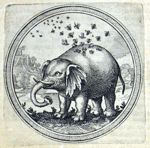
Ego vero haud mordeor: Zincgreff, Emblematum Ethico-politicorum (Heidelberg, 1619), emblem 60 uses the adage's imagery of the exceptionally tough skin of the elephant
Iconclass: 25F25(ELEPHANT) trunked animals: elephant 25F711(GNAT)(+512) insects: gnat (+ animal(s) attacking) 56AA1 Insensibility, Insensitivity
Loci Communes: Aequanimitas (Equanimity, Équanimité)
I x 67 Lutum luto purgare To purge away mud with mud
Πηλῷ πηλὸν καθαίρεσθαι. id est, Lutum luto purgari, dicitur, ubi res sordida sordibus tolli tur, hoc est, cum sordes non tolluntur, sed aut mutantur, aut augentur etiam. Apollonius in epistola quadam, ἀλλ᾽ οὐδ᾽ ἐκεῖνος ἐφεσίους ἔπεισε, μὴ πηλῷ πηλὸν καθαίρεσθαι. Loquitur de sacerdotibus, qui deorum aras sanguine polluerent, eamque expiationem esse ducerent. Huc pertinet Diogenis dictum. Is ingressus balneum sordidum, qui hoc, inquit, lavant, ubi lavant? indicans talibus balneis conspurcari corpora potius, quam purgari. Idem accidit Alexandrinis, qui in urbibus alunt vim ibidum in hunc usum, quod serpentes, ac macellorum sordes devorent, verum suis immunditiis omnia tursus conspurcant.
Πηλῷ πηλὸν καθαίρεσθαι., Mud is said to be purged away with mud when something dirty is removed with dirty means, with the result that the dirt is not removed but either altered or actually made worse. Apollonius in one of his letters: 'Not even he could persuade the Ephesians not to purge away mud with mud.' He speaks of the priests who were polluting the altars of the gods with blood, and supposed this was a means of expiation. Here belongs a remark made, if I am not mistaken, by Diogenes. Having gone into some very dirty public baths, he asked 'The people who bathe here, where do they go to get a bath?' - the suggestion being that they left such baths dirtier than when they came in. The same thing happens in Alexandria, where the townsfolk keep large flocks of ibises in the city with the idea that they will eat up the snakes and the refuse from the slaughter-houses; but they then befoul everything once again with their own filthy droppings.
Facsimile:
Iconclass: 25D26 mud (soil type) 31A54 washing and bathing 31A59 absence of hygiene, uncleanliness 51KK2 Immutability
Loci Communes: Malum conduplicatum aut renovatum (Evil doubled or renewed, Mal redoublé ou renouvelé)
I x 68 Quocunque pedes ferent Wherever your feet take you
Ενθ᾽ ἄν οἱ πόδες φέρωσιν. id est, Quocunque ferant pedes. pro eo quod est, quovis. Quadrabit ubi nihil certum spectatur, ad quod nostri dirigantur conatus. Lucianus in Hermotimo: Οὐδὲ τοῦτο δὴ τὸ τοῦ λόγου ποίησομεν, ἔνθ᾽ ἂν ἡμᾶς οἱ πόδες φέρωσιν ἐκεῖσε ἄπιμεν.. id est, Neque iuxta proverbium, quocunque nos pedes tulerint, illuc ibimus. Horatius in Epodis: Ire pedes quocunque ferunt, quocunque per undas Notus vocabit aut protervus Africus. Rursus in Odis: I, pedes quò te rapiunt & aurae. Ita & Theocritus in Hyla: Α πόδες ἄγον ἐξώρει.. id est, Ducebant quocunque pedes, ibat. Rursus in Thalysiis: Πᾶ δὴ τὸ μεσαμέριον πόδας ἕλκεις.. id est, Quo tandem te quaeso pedes medio trahis aestu? Et Vergilius: Quò te Moeri pedes? an quo via ducit in urbem? Nec dissimili forma Plato lib. de Rep. tertio, ἀλλ᾽ ὅπη ἂν ὁ λόγος ὥσπερ πνεῦμα φέρει, ταύτῃ ἰτέον. id est, sed quocunque ratio ceu ventus tulerit, hace eundum est.
Ενθ᾽ ἄν οἱ πόδες φέρωσιν, Wherever your feet take you, a way of saying 'in any direction whatever.' This will be suitable whenever we have no definite mark to which to direct our efforts. Lucian in the Hermotimus: 'Nor shall we do as the proverb says, and go wherever our feet take us.' Horace in the Epodes:
To go where'er our feet may stray,
Or south or rude south-wester o'er the waves
Sweep us away.
Again in the Odes: 'Go whither feet and breezes call.' So too Theocritus in Hylas: 'Where his feet led, he went.' Again in Thalysia: 'Whither this noontide do you drag your feet?' And Virgil: 'Whither do your feet take you, Moeris? Where the road takes you, to town?' Plato uses a not dissimilar formula in the third book of the Republic: 'But wherever the argument carries us, as a wind might, we must follow.'
Facsimile:
Iconclass: 31A2255 foot 31A2711:51L3 walking❧Direction, Orientation 51E11:53A11 Freedom, Liberty; 'Libertà' (Ripa)❧Choice; 'Elettione' (Ripa)
Loci Communes: Anceps et dubius (Doubtful and uncertain, Incertain et douteux)
I x 69 Cyclopica vita To live like the Cyclops
Κυκλώπειος βίος. id est, Cylopica vita, pro vita vehementer effera, ac barbara, quae ne que legibus, neque disciplina civili constet, neque religione deorum gubernetur. Qualem describit Homerus Odysseae libr. 9. sub persona Polyphemi: Νήπιος εἶς ὦ ξεῖν᾽, ἢ τηλόθεν εἰλήλουθας, Ος με θεοὺς κέλεαι ἢ δειδέμεν, ἢ ἀλέασθαι. Οὐ γὰρ κύκλωπες διὸς αἰγιόχου ἀλέγουσιν, Οὐδὲ θεῶν μακάρων. id est, Desipis, aut cerie longinquis, hospes, ab oris Hic ades, ut qui me iubeas curave moveri. Sive timore Deum, neque enim Cyclopica turba Curamus, summumve Iovem, divosve beatos. Eodem in libro: Τῶν δ᾽ ἀνδρῶν πειρήβομαι, οἵ τινὲς εἰσιν, Η οἵ γ᾽ ὑβρισταί τε καὶ ἄγριοι οὐδὲ δίκαιοι, Ηε φιλόξεινοι καίσφιν νοος ἐστὶ θεουδής. id est, Quod genus hoc hominum experiar iam, sintne feroces, Agrestes, aequiqus rudes, an et hospitit ius Obseruent, animo reverentes numina divum. Homerum aemulatus Euripides Cyclopem hoc pacto loquentem facit: Ζηνὸς δ᾽ ἐγὼ κεραυνὸν οὐ φρισσω ξένε, Οὐ δ᾽ οἶδ᾽ ὅτι ζεύς ἐστ᾽ ἐμοῦκρείσσων θεός. id est, Atque hospes ego fulmen Iovi non horreo, Neque me Iovem praestantiorem habeo Deum. Strabo lib. Geographiae xi. scribit, hoc vulgo dictum in Albanorum gentem, quod Cyclopum agerent vitam, utpote neque culturae studiosi, & ad omnem vitae cultum inertes & rudes.
Κυκλώπειος βίος, To live like the Cyclops, stands for a very wild and barbarous life, governed by no law or civil discipline and guided by no worship of any gods. Such is the life described by Homer in the ninth book of the Odyssey through the mouth of Polyphemus: 'Foolish art thou, stranger, or thou comest from far away, when thou commandest me to fear or reverence the gods. We Cyclopes care nothing for Jove that bears the aegis nor for the blessed gods.' And in the same book: 'I will take soundings of the men, if there are any, whether they are brutal and fierce and have no justice in them, or are hospitable to strangers and godfearing at heart.' Euripides follows Homer when he makes his Cyclops speak as follows: 'I shake not, stranger, at Jove's thunderbolt, / Nor know I Jove a stronger god than I.' Strabo in book 11 of his Geography writes that the Albanians were commonly said to live like the Cyclops, because they took no interest in agriculture and were idle and primitive where all the arts of life were concerned.
Facsimile: 
Iconclass: 32B36 'primitive', 'pre-modern' peoples 51GG6 Roughness 91B2 the Cyclopes 91E3 primitive stages of mankind; men rise from their brutish condition to civilization
Loci Communes: Vis injustia (Unjust force, Force injuste)
I x 70 Longe lateque Far and away
Cum ingens discrimen significant, longe lateque distare dicunt. Aulus Gellius: Sic existimo, nisi me scriptoris istius, omnisque antiquae orationis amoratque veneratio, caeco esse iudicio facit, longe lateque esse amplius, prolixius, fusius, in significanda totius civitatis multitudine mortales, quàm homines dixisse. Citantur in Pandectis haec ex Ulpiano: Si usus fundi sit relictus, minus utique esse quàm usufructum, longe lateque distare nemo dubitat. Translatum videtur ab agrorum mensoribus.
When they wish to convey the idea of a considerable difference, they do so by using the words 'far and away.' Aulus Gellius: 'I think myself, unless my judgment is blinded by my partiality and deep respect for this particular author and for traditional habits of style in general, that it is far and away wider in scope, longer in time, and in general more extensive to refer to the population of an entire city by the word "mortals" rather than "men."' In the Pandects these words are cited from Ulpian: 'If the bequest is of the use of a piece of land, no one doubts that this is far and away less than the use and enjoyment and something of a quite different nature.' The image looks as though derived from land-surveying.
Facsimile:
Iconclass: 51BB2 Dissimilarity, Unlikeness 51II4 Farness
Loci Communes: Differentiae (Differences, Différences)
I x 71 Similes habent labra lactucas Like lips like lettuce
Similes habent labra lactucas. Ubi similia similibus contingunt, veluti praeceptori parum docto discipulus indocilis: improbo populo magistratus improbus: contumelioso patrono contumeliosus actor: uxori morosae maritus morosus: breviter quoties ma la malis, digna dignis eveniunt. Natum adagiuma ab asino carduos pascente. Est autem lactuca her ba mollis, ac tenera, quae tamen non admodum sit dissimilis carduo, praesertim silvestri. Itaque quemadmodum carduus spinosus est, atque maiorem in modum asperis foliis, et caule, de nique ipso etiam flore, itidem et asini labris nihil durius, ac petricosius, ut illis non alia lactuca magis apta videatur. Porro carduos lactucarum vice etiam in conviviis a nonnullis ap poni solere, testis est Iulius Capitolinus in vita Pertinacis Imperatoris. Plinius item lib. 19. de carduis in hunc modum: Poterant videri dicta omna, quae in pretio sunt, nisi restaret res maximi quaestus, non sine pudore dicenda. Certum est quippe cardous apud Carthaginem magnam, Cordubamque praecipue, sestertium sena milia e paruis his reddere, quoniam portenta quoque terrarum in ganeam vertimus, etiam ea, quae refugiunt quadru pedes consciae. Usurpat, simulque interpretatur proverbium divus Hieronymus, scribens ad Chromatium in hunc modum. Secundum illud quoque, de quo semel in vita Crassum ait risisse Lucilius: Similem habent labra lactucam, asino carduos comedente, videlicet ut perforatam navim debilis gubernator regat, et caecus ducat in foveam, & talis sit re ctor, quales illi qui reguntur. Hactenus ille. Fuit autem hic Crassus avus eius Crassi, qui pu gnans adversus Parthos interiit, cuius signa postea retulit Augustus. Numeratur is inter eos, qui numquam in vita risisse feruntur, eaque gratia ἀγέλαστοι, id est, irrisibiles cognomina ti. M. Tull. in actionibus, Crassum Licinium, auctore Lucilio, semel duntaxat in vi ta risisse testatur. Plinius libro Naturalis historiae septimo, capite decimo nono: Ferunt, in quit, Crassum avum Crassi in Parthis interempti, nunquam risisse, ob id agelastum vocatum, si cuti nec flesse multos. Divus Hieronymus contra Ruffinum: Ego certe ut homini severissi mo risum moveam, ut imiteris aliquando Crassum, quem semel in vita risisse scri bit Lucilius. Meminit et Macrobius libro Saturnalium secundo.
Like lips like lettuce: whenever like falls to the lot of like - when an ill-taught teacher gets an unteachable pupil, when a public with low standards of honesty gets a dishonest government, when an abusive counsel for the prosecution meets an abusive defending counsel, when a cantankerous husband has a cantankerous wife - in a word, whenever bad things befall bad people, and men get what they deserve. The adage took its rise from a donkey eating thistles. Lettuce is a soft and juicy plant, yet not so very unlike a thistle, especially the woodland kind. So then thistles on the one side are thorny and prickly above the average in leaf and stem and even in flower, and on the other a donkey's lips are as hard and rough as could be, so that nothing in the way of lettuce could be more appropriate to them than this. Moreover, that some people used to serve thistles instead of lettuce even at dinner-parties is asserted by Julius Capitolinus in his life of the emperor Pertinax. Pliny too in book 19 gives the following account of thistles: 'It might be thought that I had mentioned all the vegetables that are of any importance, did there not remain one of high commercial value, about which one cannot speak without some sense of shame. It is well known that thistles, especially round metropolitan Carthage and Cordova, bring in six thousand sesterces from quite small plots; for we convert even the oddest products of different regions to serve our gormandizing, and even grow things which sensible animals will not touch.' Saint Jerome uses and at the same time explains the proverb in a letter to Chroma this as follows: 'Following the precdent set by the only thing (according to Lucilius) in his whole life that made Crassus laugh - like lips like lettuce, when the donkey was eating thistles - that a feeble helmsman should steer a leaking ship, and a blind man lead the blind into the ditch, and the ruler take his cue from those he rules.' So Jerome. This Crassus was the grandfather of the Crassus who died in battle against the Parthians, and whose standards were later recovered by Augustus. He is included in the list of those who are said never to have laughed once in a lifetime, and are therefore called agelastoi, laughless. Cicero in his speeches tells us that Licinius Crassus according to Lucilius laughed once in his whole life. Pliny in the Natural History, book 7 chapter 19, says: 'It is reported that Crassus, the grandfather of Crassus who was killed fighting the Parthians, never laughed and was therefore called Agelastus, just as many people, we know, are unable to cry.' St Jerome in the Adversus Rufinum: 1 at least, to make a very strait-laced man laugh, that you may one day imitate Crassus, who according to Lucilius only laughed once in his life.' Macrobius also mentions it in the second book of his Saturnalia.
Facsimile:
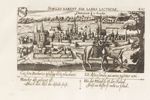
Similes habent sua labra lactucas: Meisner, Politica Politica (Nürnberg, 1700), emblem 25
Iconclass: 25G4(LETTUCE) plants and herbs: lettuce 25G4(THISTLE) plants and herbs: thistle 31A22111(LIPS) parts of the face: lips 41C652(LETTUCE) vegetables (LETTUCE) 46C13142(+745) ass, donkey (+ animals eating and drinking) 51B2 Similarity, Likeness
Collectanea (1500): 1
Loci Communes: Similitudinis et congruentiae (Similarity and congruence, Similitude et convenance)
I x 72 Dignum patella operculum The cover is worthy of such a cup
Huic similimum est illud, quod ad eodem Hieronymo refertur in epistola ad Chromatium: Dignum patella operculum. In mea enim, inquit, patria rusticitas vernacula. Deus venter est, et in diem vivitur, et sanctior est ille, qui ditior est. Accessit huic patellae iuxta tritum populi sermone proverbium, dignum operculum. Idem adversus Rufinum. Quod librum Eusebii pro Pamphili verteres, quod tuum quasi operculum venenatae patellae imponeres. Plato in Hippia maiore disserens de pulchro ac decoro, quiddam habens non abhorrens ab hoc proverbio, πότερον πρέπει, φήσει, ὅταν τις τὴν χύτραν, ἣν ἄρτη ἐλέγομεν τὴν καλὴν ἐψῇ ἔτνους κα- λοῦ μεστὴν χρυσῇ αὐτῇ ἢ συκίνῃ; id est, Utrum inquiet, ubi quis ollam illam pulchram, de qua modo loquebamur, igni admoverit, pulchris fabis plenam, decet illam aurea torynne, aut ficulna? Quod Graece dictum est, τορύνη, Platonis interpres vertit tudeculam. Etymo logus indicat, τορύνην vocem esse Atticis peculiarem, quae illis significat εὐεργέτιν. Suidas ait instrumentum esse, quo movetur olla.
Something very like this is used by Jerome again in his letter to Chromatius: The cover is worthy of such a cup. 'In my native country,' he says, 'boorish rusticity is the natural thing. Men's god is their belly, they live from day to day, and the man who has most money is the most respected. And the cover, to use a well-worn popular saying, is worthy of such a cup.' He refers to a bishop who is well adapted to the dishonest behaviour of his flock. Jerome again in the Adversus Rufinum: 'That you should be translating that book of Eusebius in support of Pamphilus, that you should be putting your cover on that poisonous cup.' Plato in the Hippias major, discussing the difference between the beautiful and the appropriate, has something not very far from our proverb: 'Which is more appropriate, he will say, when you put on the fire that admirable pot of which we spoke, full of admirable pease-pottage - a gold toryne or one made of fig-wood?' The word toryne in the Greek is rendered by Plato's translator as indecula. The author of the Etymologicum suggests that toryne is a word peculiar to Attic, and meant the same to the Athenians as eusegetis. Suidas calls it the tool with which the pot was stirred.
Facsimile: 
Iconclass: 41C321 cup 51B2 Similarity, Likeness 51B3 Parity, Equality
Collectanea (1500): 537
Loci Communes: Similitudinis et congruentiae (Similarity and congruence, Similitude et convenance)
I x 73 Si juxta claudum habites, subclaudicare disces If you live next to a cripple, you will learn to limp
Plutarchus in libello de liberis educandis, ἂν χωλῷ παροικήσῃς, ὑποσκάζειν μαθήσῃς. id est, Si iuxta claudum habitaris, disces subclaudicare. Pindari interpres extulit hunc in modum: Χωλῷ παροικεῖς κᾂν ἑνὶ, σκάζειν μάθοις. id est, Claudo vel uni si propinquus manseris, Disces et ipse claudicare protinus. Huc pertinet illud Hesiodium, nobis alibi dictum: πῆμα κακὸς γείτων &c. Ea vero rerum humanarum est infelicitas, quod facilius transiliunt vitia, quam bona. Et tamen verum est, quod ait Hesiodus, ὥσπερ κᾀγαθός μέγ᾽ ὄνειαρ. Ita Pindarus in Nemeis hymno 7. εἰ δὲ δεύεται ἀνδρὸς ἀνὴρ, τί φαῖμεν κε γείτων ἔμμεν νόῳ φιλήσαντά γ᾽ ἀτενεῖ γείτονι; χάρμα πάντων ἐπάξιον, id est, Si vir viro eget, quid dicemus vicinum esse vicino, animo constanti amicum? Gau dium omni re dignum. Quamquam videmus nec lectionem, nec interpretationem huius loci constare Graecis. Quidam enim pro δεύεται legunt γεύεται, referuntque ad commodorum, aut incommodorum communicationem, quam homo capit ab homine, maxime a vicino. Et legendum videtur γείτον᾽ ἔμμεν, ut respondeat participio φιλήσαντα. Interpres adducit et illud ex Hesiodo: Γείτονες ἄζωστοι ἔκιον, ζώσαντο δὲ πηοί. id est, Vicini incincti, cincti venere propinqui. Notum est et illud Themistoclis, qui procripto agro iussit et hoc praecone addere reli quis dotibus, quod bonum haberet vicinum. Proverbium admonet, perniciosam impro borum hominum consuetudinem, propterea quod cum corporis, tum maxime animi vitia contagio serpunt in vicinum. Naso: Dum spectant oculi laesos, laeduntur et ipsi. Multaque corporibus transitione nocent. Id Aristoteles existimat potissimum usu venire in morbis oculorum, quod ea corporis pars maxime sit mobilis. ltem in scabie, quod in summa sit cute, et humore glutinoso, ad vicinum permanet. Postremo in omnib. morbis, qui e spirit corrupto nascuntur, ut pestis, quod spiritus facile ab alio in alium traiciatur. Denique est occultus quidam naturae consensus, qui fit ut oscitare incipiat, qui viderit oscitantem, et micturiat, qui meientem conspexerit, auctor est Alexander Aphrodisaeus. Et balbutire discit, quisquis assidue cum balbo vivit. Mo rum autem scabiem affricat convictor convictori. Aristoteles sectione 6. problem. 4 quaerit, quare lippitudo, tabes,et scabies contagio migrent ad alios, nec idem accitlat in om nibus morbis. Plutarchus in commentario, De ratione dignoscendi verum amicum ab adu latore, scribit tantam habere vim assiduam consvertudinem, ut imprudentes etiam imitemur vitia eorum, quibuscum vivimus. Quemadmodum Platonis familiares eius gibbum imi tabantur, Aristotelis amici balbutiem eiusdem exprimebant. Alexandri Macedonum re gis familiares cervicis inflexum, et vocis in dicendo asperitatem effingebant. Plato de le g. 2. eleganter indicat, quomodo fallat contagium: πότερον εἰκὸς, εἰ καὶ ἀναγναῖον ταυτὸν εἶναι, ὅπερ ὅταν τις πονηροις ἤθεσι ξυνὼν κακῶν ἀνθρώπων, μὴ μισῇ, χαίρει δὲ ἀποδεχόμενος, ψέγη δὲ ὡς ἐν παιδιᾶς μοιρᾳ, ὀνειρώττων αὐτοῦ τὴν μοχθηρίαν, τοτε ὁμοιοῦσθαι δηπου ἀνάγκη τὸν χαίροντα ὁποτέροις ἂν χαίρει. id est, Utrum probabile, an potius necessarium hoc ipsum esse, quod cum quis cum pravis hominum improborum moribus conflictatur, non odit, sed gaudet magis ap probans, quamquam veluti per iocum reprehendit, somnians suam ipsius malitiam, tunc profecto necesse est, ut similis evadat gaudens utriscumque gaudeat.
Plutarch in his essay 'On the Education of Children': Ἂν χωλῷ παροικήσῃς, ὑποσκάζειν μαθήσῃς , If you live next to a cripple, you will learn to limp. The scholiast on Pindar gives this in the form 'Live next a cripple; you will learn to limp.' Here belongs also that line from Hesiod which I have quoted elsewhere: 'An evil neighbour is as great a bane' etc. Such indeed is the unhappy state of human affairs, because faults pass from man to man more easily than good qualities; yet there is truth in what Hesiod adds: 'as a good neighbour is a boon.' So Pindar in the seventh of his Nemean Hymns: 'If one man has need of another, what shall we say one neighbour is to another, if he loves him with steadfast heart? A joy beyond all price.' Though I find the Greeks are not agreed on either the reading or the interpretation of this passage. Some of them read γεύεται (partakes of) instead of δεύεται (has need of) and refer this to the way one man shares good and bad fortune with another, and especially with a neighbour. And clearly one should read γείτον᾽ ἔμμεν, so that it agrees with the participle φιλήσαντα. The scholiast quotes another line from Hesiod: 'Neighbours come just as they are, while kinsmen are putting their belts on.' And there is a well-known story of Themistocles who, when he put a piece of land up for sale, told the auctioneer to add to its other merits that it had an excellent neighbour. The point of the proverb is that association with wicked men is very dangerous, because faults of the body and still more faults of the mind pass like an infection from one man to another. Ovid: 'Watching the captives you yourself are caught; / Full many a fault is by contagion taught.' Aristotle thinks this most likely to happen in diseases of the eyes, because that part of the body is so easily moved. Again in skin diseases, being on the surface of the skin and in the glutinous humour and passing easily to another person by contact. Last but not least, all diseases which arise from the corruption of the breath, plague for example, because the breath easily passes from one man to another. There is also a kind of underlying natural sympathy, which makes a man yawn when he sees someone else yawning, and wish to make water when he sees another doing so. The authority for this is Alexander of Aphrodisias. And if you live constantly in the society of someone who stammers, you learn to stammer yourself. A man's moral corruption rubs off on those who live in his company. Aristotle, section 6 problem 4, enquires why ophthalmia, consumption, and skin diseases pass to other people by contagion, but this does not happen in all diseases. Plutarch in his essay 'How to Tell a Flatterer from a True Friend' says that such is the force of continuous association, we imitate unconsciously even the faults of those with whom we live; so Plato's friends used to copy his stoop, Aristotle's associates echoed his lisp, the friends of Alexander the Great his twisted neck and his harsh voice in conversation. Plato in the second book of the Laws elegantly describes how contagion leads a man astray: 'Is it not likely, or even inevitable, that it should be the same as when a man lives among men of bad character and does not abhor their behaviour but is content to accept it, though he may rebuke them humorously, as though his own wickedness were merely a dream? I presume that in such a case the man who is content will end up by resembling whatever it is that contents him.'
Facsimile:

Pomme pourrie gaste sa compagnie: Cats, Spiegel (The Hague, 1632), emblem 2 uses the imagery of a bad apple infecting its company and its comment quotes the adage in a Dutch translation
Iconclass: 31A415:33A7 crippled❧neighbour 31A4623 (other) contagious diseases 51B6 Imitation; 'Imitatione' (Ripa) 54C3 Influence
Loci Communes: Contagio morum (The contagion of habits, Contagion des mœurs); Malus vicinus (A bad neighbor, Un mauvais voisin)
I x 74 Corrumpunt mores bonos colloquia prava Evil communications corrupt good manners
Eodem pertinet ille Menandricus senarius, quem divus Paulus apostolus haudquaquam gravatus est in prima ad Corinthios epistola citare: Φθείρουσιν ἤθη χρῆσθ᾽ ὁμιλίαι κακαὶ. id est, Mores bonos convictus inficit improbus. Tertullianus ad uxorem vertit Graecum carmen, sed libertate Latinae comoediae: Convictum, inquit, atque commercia deo digna sectare, memor illius versiculi sanctificati per Apostolum: Bonos corrumpunt mores congressus mali. Consimilem huic sententiam refert Aristoteles nono Moralium lib. Celebratur & hic senarius à Graecis: Κακοῖς ὁμιλῶν κ᾽ αὐτὸς ἐκβήσῃ κακός. id est, Malus ipse fies, si malis convixeris. Quanquam autem alienius ab hoc instituto videtur huiusmodi conquirere, tamen non mihi tempero, quin illud adscribam ex Senecae De ira lib. tertio, si non magnopere pertinens ad proverbii declarationem, certe ad vitam instituendam in primis conducibile. Sumuntur, inquit, à conversantibus mores. Et, ut quaedam in contactis corpore vitia transiliunt, ita animus mala sua proximis tradit. Ebriosus convictores in amorem vini traxit. Impudicorum coetus fortemque & si liceat, virum emollit. Auaritia in proximos virus suum transtulit. Eadem è diverso ratio virtutum est, ut omne quod secum habent, mitigent. Nec tam valetudini profuit utilis regio, & salubrius caelum, quàm animis parum firmis in turba meliorum versari. Quae res quantum possit, intelliges, si videris, feras quoque convictu nostro mansuescere, nullique immani bestiae vim suam permanere, si hominis contubernii diu passa est. Huc usque Senecae verba reddidims. Porrò cum omnis contubernii conflictatio, plurimum habet momenti ad corrigenda, depravandaque mortalium ingenia, tum praecipue valet oratio, quae quidem ex arcanis illis animi penetralibus deprompta, genuina quandam, & occultam vim, atque, ut Graece dicamus melius, ἐνερφγειαν secum affert, eumque in auditoris animum, in quem illabitur transfundit, praesentaneum venenum, si pestilens fuerit: remedium efficax, si salutaris. Proinde nullum adhuc apophthegma philosophorummemini legere quod mihi videatur cum illo conferendum, quod Ioannes Coletus meus, vir pariter & eruditus & incorruptus, subinde dictitare consuevit: Tales nos esse, qualia sunt quotidiana colloquia: tales evadere, qualia frequenter audimus. Iam vero, quod de colloquio dictum est, idem oportet & de studiis accipere. Qui vitam omnem in Ethnicis conterunt literis, gentiles evadunt. Qui praeter obscaenos autores nil evoluunt, moribus obscaenis reddantur oportet, Etenim lectio colloquium quoddam esse videtur.
There is an iambic line of Menander which belongs here, the line which the Apostle St Paul did not disdain to quote in his first epistle to the Corinthians: 'Evil communications corrupt good manners.' Tertullian in his Ad uxorem translates the Greek line, but freely and in the style of Roman comedy: 'Let the way of life you follow and the company you keep be godly, mindful of that line of verse sanctified by the Apostle: Bad company corrupts good character.' A similar maxim is recorded by Aristotle in book 9 of the Ethics. There is also an iambic line current in Greek: 'Bad company will make you bad yourself.' Though it seems a little far from my purpose to collect such material, I cannot refrain from adding the following from the third book of Seneca's On Anger, which may not contribute much to our understanding of the proverb, but is full of lessons for the conduct of life: 'We take our character' he says 'from the company we keep, and the spirit passes on its defects to its neighbours, much as some bodily ailments pass by contagion. A man addicted to drink draws his associates into a love of the bottle; the society of effeminates can soften a strong man, and, if they are given the chance, a brave one; the poison of avarice seeps across into those who have anything to do with it. It is the same, in the opposite direction, with virtue; it can make everything better with which it is associated, and a suitable country and more healthy climate have never had such a good effect on ill-health as the company of better men can have on the poor-spirited. How great this influence can be you will understand, if you consider how even wild beasts grow tame through living with human beings and that no animal however fierce retains its ferocity when it has long endured the society of men.' For all this I have been quoting Seneca's own words. What is more, while the intercourse of daily life in all its contacts has very great power to mend or mar the characters of men, this is especially true of the spoken word. Brought forth as it is from the inner recesses of the human mind, it has a secret natural force, better conveyed by the Greek term energeia, which it can pour into the mind of any hearer, bringing an instant venom if it is poisonous and a powerful remedy if it is wholesome. And so I never remember reading an utterance by any famous philosopher which seems to me fit to be compared with words my friend John Colet, a man of equal scholarship and integrity, used to repeat: 'We are, what we are made by our daily conversation: we are shaped by what we hear round us every day.' And what he said about conversation is also to be understood of what we read. Those who spend their whole lives on gentile literature end up as pagans; those who read nothing but filthy books must needs develop in their own characters a streak of filth. For reading surely is a kind of conversation.
Facsimile: 
Pomme pourrie gaste sa compagnie: Cats, Spiegel (The Hague, 1632), emblem 2 uses the imagery of a bad apple infecting its company and its comment quotes the same Greek proverb as the adage's comment
Iconclass: 33A35 conversation, dialogue; conversation piece 33A59 bad companions 44B1531 courtesy, manners; etiquette 59CC221 Corruptibility, Venality, Corruption
Loci Communes: Contagio morum (The contagion of habits, Contagion des mœurs)
I x 75 Annnus clibanum Annus and the oven
Αννος κρίβανον, id est, Annus clibanum. In eos olim dicebatur, qui novae quippiam rei reperissent. Nam Annus quidam Aegyptius clybanorum usum, in quibus panes coquerent, fertur excogitasse. Siquidem prisci pulte, polentaque victitabant, cocti panis usum nescientes. De ratione coquendi panis in furnis, permulta Plinius lib. decimooctavo, capite undecimo, & hinc rei vocabulum etiam inditum. Nam Plautus in Aulularia artoptesiam vo cat. Seneca in epistola quadem ad Lucilium ostendit, antiquitus panem manuum tracta tione subactum, ferventi cinere, testaque percoqui solere, deinde paulatim repertos furnos, et alia genera, quorum feruor seruiret arbitrio. Hic panis dicebatur κριβανίτης. Meminit huius adagii tum Suidas, tum Aristophanis interpres ἐν ἀχαρνεῦσι. Quamquam exempla ria pleraque ἄνθρωπος habent, in uno duntaxat loco ἄννος scriptum reperitur, quod quidem magis arridet, ut vocabulum sit proprium.
Ἄννος κρίβανον, Annus and the oven, was applied in old days to those who had made some new invention, Annus being an Egyptian credited with the invention of ovens to bake bread in. For in very early times they lived on porridge and polenta, and the use of baked bread was unknown. On the theory of baking bread in ovens Pliny has much to say in book 18 chapter 11. And hence the thing also gets its name. Plautus in the Aulularia calls it artoptesia. Seneca in one of his Letters to Lucilius points out that in the beginning bread was kneaded by hand and baked in hot ashes in an earthenware pot; 'Ovens and other devices for controlling the heat at will were gradually discovered later.' Bread so baked was called kribanites. This adage is mentioned both by Suidas and by the scholiast on Aristophanes' Acharnians. Though the texts mostly have anthrôpos; only in one place have I found it written Annos, but personally I think it is better regarded as a proper name.
Facsimile:
Iconclass: 32B32(EGYPTIANS) African peoples, Africans (EGYPTIANS) 41C62 bread, cake, pastry, etc. 47B1811 baker 52A42 Invention, Inventiveness; 'Inventione' (Ripa)
Loci Communes: Mira nova (Wonderful new things, Choses nouvelles et étonnantes)
I x 76 Magistratus virum indicat 'Tis the place that shows the man
Αρχὴ τὸν ἄνδρα δείκνυσιν, id est, Imperia demonstrant virum. Dimeter iambicus poruer bio celebratur. Quidam Pittaci Mitylenaei putant apophthegma. Sunt qui Soloni tri buant, quorum d numero Sophocles est, ut ferunt. Aristoteles quinto Moralium librio Biantis nomine citavit. Item Theophrastus in proverbiis, quamquam ea non exstant, Bian ti adscribit Hoc adiciendum putavimus, ne ne quis cavilletur, sententiam esse, non proverbium. Quamquam et Plutarchus in vita Cicertonis ostendit et fuisse proverbio celebratum dictum, loquens hunc in modum: ὃ δὲ δοκεῖ μάλιστα καὶ λέγεται τρόπον ἀνδρὸς ἐπιδεικνύναι καὶ βασανίζειν, ἐξουσία καὶ ἀρχὴ πᾶν πάθος κινοῦσα, καὶ πᾶσαν ἀποκαλύπτουσα κακίαν, δημοσθένει μὲν οὐχ ὑπῆρχεν. id est, Quod autem videtur, ac dicitur, maxime mores hominis ostendere, atque explorare, nimirum potestas ac magistratus, omnem movens affectum, et omnem aperiens malitiam, id Demostheni quidem non adfuit. Sophocles in Antigone: Αμήχανον δὲ παντὸς ἀνδρὸς ἐκμαθεῖν Ψυχήν τε καὶ φρόνημα, καὶ γνώμην, πρὶν ἂν Αρχαῖς τε καὶ νομοισιν ἐντριβὴς φανῇ. id est, Fieri haud potect, cuiuspiam ut pernoveris Animum, atque mentum, sive sen sum, ni prius. Imperia nactus gesserit civilia. Sensus est, in vita privata vix satis perspici posse mores et ingenium hominis. Verum si committas imperium, ut quod libeat, idem liceat, tum demum apparere, quo sit animo. Ele ganter invertit Epaminondas, cui cum Thebani per contumeliam magistratum quempi am sordidum, et contemptum mandassent, non contempsit, sed ea cura gessit, ut mune ri prius contemptissimo dignitas, et auctoritas accederet, dicens: Οὐ μόνον ἡ ἀρχὴ τὸν ἄνδρα δείκνυσιν, ἀλλὰ καὶ ἀρχὴν ἀνὴρ. id est, Non solum magistratus virum ostendit, sed magistra tum vir. Meminit Plutarchus in praeceptis civilibus.
Αρχὴ τὸν ἄνδρα δείκνυσιν, Command displays the man. An iambic dimeter that circulated as a proverb. Some think it was a saying of Pittacus of Mitylene; some attribute it to Solon, Sophocles among them, or so they say. Aristotle in the fifth book of the Ethics cites it under the name of Bias. Theophrastus too in his Proverbs (though they are no longer extant) ascribes it to Bias. I thought it best to add this, to prevent any complaints that this is a maxim and not a proverb. Though Plutarch too in his life of Cicero shows that this was current as a proverb, when he writes as follows: 'But what is thought and commonly said to exhibit and test a man's character better than anything - power and official position, which arouses all his passions and displays all his bad qualities - this never fell to the lot of Demosthenes.' Sophocles in the Antigone:
'Tis hard to learn the soul of any man,
His thoughts and feelings, ere he shows himself
On the touchstone of power and government.
The point is that private life hardly gives sufficient scope for an insight into a man's character and natural qualities; put him in a position of power, where he can do what he likes, and then it will be clear what sort of man he is. Epaminondas turned this rather nicely upside down. To show their low opinion of him the Thebans had given him some mean and negligible office. He did not despise it; he took such pains over his duties that the post which had previously been of no account whatever gained immensely in dignity and importance; for, said he, 'It's not only that place shows the man; sometimes the man shows the place.' The story is in Plutarch's 'Precepts of Statecraft.'
Facsimile: 
Iconclass: 32A4 various human types 59B:53C11 Social Position❧Authority, Power; 'Dominio', 'Giurisdittione' (Ripa)
Collectanea (1500): 148
Loci Communes: Incertus eventus - ex eventu judicium (Uncertain outcome - judging by the outcome, Issue incertaine - jugement d'après l'issue)
I x 77 Idem Accii quod Titii Accius and Titius take alike
Extabat olim adagium, apud M. Varronem satyra, cui titulus. Testamentum, refer turque apud A. Gellium in Noctibus Atticis. Idem Accii, quod Titii. Quod si quis, inquit, undecimo mense κατ᾽ ἀριστοτέλην natus est, Accio idem, quod Titio ius esto. Nimirum si gnificans eodem sibi iure futurum, filium decimo mense natum, quo eum, qui natus sit un decimo: Sumptam videtur a iurisconsultorum consuetudine Titii, et Accii vocabulum pro quibuslibet duobus subinde usurpantium.
There was once an adage quoted by Marcus Varro in a satire called The Testament, and reported by Aulus Gellius in his Attic Nights: 'Accius and Titius take alike.' 'If one is born' he says 'in the eleventh month, as Aristotle suggests, then let Accius and Titius take alike.' His point of course was that he would give a son born in the tenth month of pregnancy exactly the same rights as one born in the eleventh. The source is no doubt the lawyers' custom of using the two names Titius and Accius to stand for any two litigants.
Facsimile:
Iconclass: 44G41 litigation, legal proceedings, lawsuit 51B3 Parity, Equality 98B(ACCIUS) male persons from classical history (ACCIUS) 98B(TITIUS) male persons from classical history (TITIUS)
Loci Communes: Longae vitae (A long life, Longue vie); Similitudinis et congruentiae (Similarity and congruence, Similitude et convenance)
I x 78 Muta persona A walk-on part
Κωφὸν πρόσωπον.. id est, Muta persona. Martialis in sexto Epigrammatum libro: Comoedi tres sun, sed amat tua Paula Luperce Quatuor, & κωφὸν Paula πρόσοπον amat. Quadrabit in eos, qui in confessu deliberantium, aut disputantium, aut etiam in conviviis caeteris loquentibus, soli tacent. Traductum apparet à lege comoediarum, in quibus non temere plures tribus personae solent induci in eadem scena. Quod si quando quarta accesserit, aut muta prorsus est, aut perpauca loquitur. M. Tullius ad Atticum lib. xiii. Si Cottam & Varronem fecissem inter se disputatntes, ut à te proximis literis admoneor, meum κωφὸν πρόσωπον esset. Mutas nuptias dixit alicubi Pindarus, pro clanculariis, & in quibus non decantetur hymenaeus, ἄφθογγον γάμον. De doryphoremate dictum est aliàs.
Κωφὸν πρόσωπον, A walk-on part. Martial in the sixth book of his Epigrams:
Three actors hold the comic stage:
How can it be that Paula's heart,
Lupercus, four do now engage?
Your Paula loves the walk-on part.
This will suit those who in the deliberations of a committee, in a dispute, or even at a dinner-party alone sit silent while everyone else is talking. It is clearly drawn from the rules of the comic stage, on which it was exceptional to introduce more than three characters in any one scene. If a fourth is sometimes added, he is either a walk-on part, or he says very little. Cicero in the Letters to Atticus, book 13: 'Had I made Cotta and Varius dispute among themselves, as you say I should have in your last letter, I should have left nothing but a walk-on part for myself.' Pindar somewhere uses A silent wedding, ἄφθογγος γάμος., for a secret one, a wedding at which there is no hymeneal anthem. Of the doryphorema I have spoken elsewhere.
Facsimile:
Iconclass: 31B62359 being silent 48C8521 actor (on the stage)
Loci Communes: Taciturnitas illaudata (Unpraised silence, Silence non loué)
I x 79 Caput sine lingua No tongue in your head
Ab hoc non admodum abludit ille Liberianus trimeter, Caput sine lingua pedaria est sententia. Competit in eos, qui in consultationibus, aut disceptationibus ipsi quidem nihil habent, quod dicant, verum aliorum sententiis annuunt. Nam pedarii senatores dicebantur ii, qui in se atu quidem sedebant, verum sententiam non rogabantur, sed in aliorum sententias pedibus discedebant. Unde referente Festo Pompeio in dictione Pedatius, a Lucilio dicti sunt Agipedes, quod pedum discessione dicerent sententiam. Refertur a Gellio Noctium Atticarum libro tertio capite decimooctavo. Habet & crocodilus caput sine lingua, sed den tibus, armatum, quales nunc videmus multos, qui quum bene dicere nesciant, tamen mordent letaliter. Nilus procul abest à nobs, sed hoc genus Crocodilis plena sunt omnia.
There is not much difference between that and a trimeter from Laberius 'If you've no tongue in your head, you must vote with your feet.' It suits those who in consultation or discussion have nothing of their own to contribute but agree with the opinions of other people. For pedarian, foot-slogging, senators were those who sat in the senate but were not asked to give their opinions; they went into the voting lobbies in support of other men's views. Hence, as we learn from Festus Pompeius under the word pedarius, Lucilius called them agipedes, foot-workers, because they expressed an opinion by walking to one side or the other. It is recorded by Gellius in the Attic Nights, book 3 chapter 18. The crocodile too has no tongue in its head, but its mouth is well set with teeth; and we see many men like that nowadays, who have no idea how to speak well, but can give one a deadly bite. The Nile is a long way away, but this species of crocodile is a very common animal.
Facsimile:
Iconclass: 51AA4:31A22141 Nothingness, Absence❧tongue 51AA4:52C11 Nothingness, Absence❧Opinion
Collectanea (1500): 127
Loci Communes: Taciturnitas illaudata (Unpraised silence, Silence non loué)
I x 80 Corpus sine pectore Body without soul
Proverbiali figura dixit Horatius in Epistolis ad Albium: Non tu corpus er as sine pectore: dii tibi formam, Dii tibi divitias dederant, artemque fruendi. Item Ovidius in Heroinis. Hunccine tu speras hominem sine pectore, dotes Posse satis formae, Tyndari, nosse tuae? Perinde vero dictum est corpus si ne pectore, quasi dicas, sine mente. Nam sapientiam, et ingenium in pectore, atque in corde constituunt. Unde & Cordatos appellamus prudentes. Et Iuvenalis, tardum, ac stolidum significans. Cum laeva in parte mamillae Nil salit Arcadico iuveni.
Horace uses a proverbial metaphor in his Epistle to Albius: 'Never were you body without soul. The gods have given you good looks, and money and the art to enjoy it.' Ovid too in his Heroides: 'O Helen, how can you hope this man without a soul can possibly appreciate your gift of beauty?' In fact, 'body without soul' is used just like 'without mind'; for both wisdom and wit are lodged in soul and heart; and so we say a prudent man has a wise heart. And Juvenal, referring to a slow-witted stupid person says: 'That Arcadian youth, / 'Neath whose left pap no beating organ stirs.''
Facsimile: 
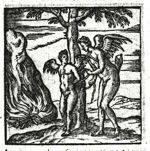
Αντέρως Amor virtutis alium Cupidinem superans.: Alciatus, Emblemata (Leiden, 1591), emblem 110's epigram quotes the adage
Iconclass: 31A the (nude) human figure; 'Corpo humano' (Ripa) 51AA4:31G Nothingness, Absence❧the soul
Loci Communes: Multi - in stupidos (Many people - against the stupid, Beaucoup de gens - contre les sots)
I x 81 Cerite cera dignus Fit to be registered in Caere
Olim notari indignos, atque improbos, et nequam homines, Caetite cera dignos, proverbio vocabant, nimirum Caeritem ceram insignem ignominiam appellantes. Hotatius: Quid deceat, quid non obliti, Caerite cera. Digni, remigium vitiosum Ithacensis Ulyssis. Acron, et Porphyrion huiusmodi tradunt originem adagii. Romani, Caeritibus bello sub actis, eam dixere conditione, Ne suffragii ius haberent, ne leges ullas aut ederent, aut ha berent. Eamque ignonimiam in adagium abiisse. Meminit de tabnlis Caetitibus et Aulus Gel lius li. 16 cap. 13. Primos autem municipes, inquit, sine suffragii iure Caeites esse factos accipimus. Concessumque illis, ut civitatis Romanae honorem quidem caperent,sed negotiis tamen atque oneribus vacarent, pro sacris bello Gallico receptis, custo ditisque. Hinc tabulae Caerites appellatae versa vice, in quas censores referri iubebant, quos notae causa suffragiis privabant. Confine videtur illi, quod alibi diximus, Sutorium atramentum.
In old days men who deserved a black mark, dishonest worthless men, were said to be 'fit to be registered in Caere,' proverbially, because it was a great disgrace to be entered on the wax tablets on which the people of Caere were registered. Horace: 'Of honour and dishonour alike oblivious, fit for the Caere register, like that vice-ridden crew of Ithacan Ulysses.' Acron and Porphyrion give the following explanation of the adage. When Rome had defeated Caere, the inhabitants were deprived of any right to vote and forbidden to make or to possess any laws of their own; and this humiliation passed into an adage. Aulus Gellius also refers to the Caere register, book 16 chapter 13: 'The first townsmen without the right to vote were, we are told, the people of Caere. They were allowed not to share the privilege of Roman citizenship but to take part in the business and burdens of the citizen body in return for their giving hospitality and protection to sacred objects from Rome during the Gallic war. Thus it came about that the name "register of Caere" was inverted, and used for the list of persons deprived of the vote by the censors for disciplinary reasons.' It seems related to Sutorium atramentum, of which I have spoken elsewhere.
Facsimile:
Iconclass: 44C1:32B2(ROMANS) nationality, citizenship❧historical peoples: Romans 44D1 registration bureau, civil registry 61E(CAERE) names of cities and villages (CAERE)
Collectanea (1500): 595
Loci Communes: Probrum, gloria (Disgrace, glory, Honte, gloire)
I x 82 Dii laneos habent pedes The gods have feet of wool
Macrobius libro Saturnalium primo, capite sexto, scribit in hunc modum: Cur autem Saturnus ipse in com pedibus visatur, Verrius Flaccus causam se ignorare dicit. Verum Apollodori lectio suggerit: Saturnum Apollodorus alligari ait per annum laneo vin culo, et solvi ad diem sibi festum, id est, mense hoc Decembri. Atque inde proverbium dictum, Deos lancos pedes habere: significari vero decimo mense semen in utero animatum in vi vam grandescere: quod donec erumpat in lucem mollibus naturae vinculis detinetur. Ha ctenus Macrobius. Lucianus item in Cronosolone, Saturnum in compedibus fingi solere significat. Atque huius figmenti rationem reddit in libro de Astrologia, nempe, quod orbis Saturni longissime a nobis semorus sit, ob hoc in tartara coniectum finxere, ex aeris pro funditate sumpta occasione. Deinde quemotus sit omnium tardissimi, ut quasi stare vi deatur, compedibus alligatum finxerunt. Plutarchus in Problematis scribit, Tyris fuisse morem, ut deorum statuis vincula inicerent. Aenigma proverbii indicat, deos ad scele rum ultionem lente quidem procedere, sed tamen aliquando de malefactis poeenam su mere vel inopinato. Sic interpretatur Porphytio, demonstrans, quod scribit Horatius libro Odarum tertio, oda secunda: Raro antecedentem scelestum Deseruit pede poena claudo: affine esse proverbio, quo dicitur, deos iratos, pedes lanatos habere, quia nonnumquam tarde veniunt nocentibus.
Macrobius in his Saturnalia, book 1 chapter 6, writes as follows: 'Why Saturn himself is represented in fetters was unknown (as he tells us) to Verrius Flaccus, but is suggested to me by my reading of Apollodorus. Apollodorus says that Saturn is bound in woollen bonds throughout the year, but released for his festival - that is, in this month of December. Hence, he says, the proverb that the gods have feet of wool, the meaning of which is that in the tenth month the embryo in the womb grows into a living creature, which is confined in soft bonds by nature until it is ready to come forth suddenly into the light.' So Macrobius. Lucian too in his Cronosolon indicates that Saturn is commonly shown in fetters. And in his book On Astrology he gives a reason for this fanciful idea: since Saturn's orbit is furthest from the Earth, the great depth of air intervening gave them an excuse for saying that he had been cast into Tartarus. Also the fact that the planet's movements are the slowest of all, so much so that it almost seems to stand still, made them imagine that he was bound in fetters. Plutarch in his 'Problems' says it was customary in Tyre to chain the statues of the gods. The riddle of this proverb means that the gods move slowly to punish crime, but sooner or later do make evil-doers pay the penalty, it may be unexpectedly. So Porphyrion explains it, pointing out that what Horace says in Odes 3.2: 'Rarely does Punishment, although she limps, / Let go the guilty, though they're well ahead,' is related 'to the proverb The gods have feet of wool, because they are sometimes slow in catching up with wrongdoers.'
Facsimile:
Iconclass: 31A2255:47H14 foot❧wool (material ~ textile and clothing industry) 31A2711 walking 51MM11:57BB131 Slowness, Tardiness; 'Tardità' (Ripa)❧Punishing Badness
Loci Communes: Ultio malefacti (Vengeance for a wrongdoing, Vengeance d'un méfait)
I x 83 Zenone moderatior As temperate as Zeno
Ζήνωνος ἐγκρατέστερος, id est, Zenone temperantior. Testatur & Laertius in Zenonis vita philosophum hunc, tum in victu, tum in voluptatibus Venereis usque adeo patientem ac parcum fuisse, ut crudis duntaxat vesceretur, ac pallio praetenui tegeretur. Unde & Philemon in comoedia taxat hominem, qui post panem obsonii loco caricis uteretur, aquam vini loco biberet, ac discipulos esuriem doceret. Hinc et in vulgi sermonem abiit, Zenone temperantior. Philemonis versus apud Diogenem ex fabula, cui titulus Philosophi, sunt huiusmodi: Εἰς ἄρτον ὄψον ἰσχάδας, ἐπιπιεῖν ὕδωρ, Φιλοσοφίαν καινὴν γὰρ οὗτος φιλοσοφεῖ, Πινεῖν διδάσκει καὶ μαθητὰς λαμβάνει. id est: Post panis esum, cariceumque obsonium Aquam bibens perdurat inde simplicem. Novum enim philosophiae celebrat hic genus. Docet esurire, ac discipulos ita illicit. Quamquam sunt, qui versus hos Posidippo tribuant, non Philemoni, velut idem admonet Laertius.
Ζήνωνος ἐγκρατέστερος, As temperate as Zeno. Laertius also states in his life of Zeno that both in food and sexual pleasures the philosopher was so tolerant and so economical that he lived exclusively on uncooked food and was covered by a very thin blanket. Hence he is criticized by Philemon in one of his comedies for eating dried figs by way of a relish after his dry bread, and drinking water in place of wine, and teaching his pupils to go hungry. From this there arose a popular expression, As temperate as Zeno. Philemon's lines, which are quoted by Diogenes from his play The Philosopher, run as follows:
On his dry bread a relish of dried figs,
Water to wash them down - this is indeed
A new philosophy: he teaches hunger,
And yet gets pupils.
Though some ascribe these lines to Posidippus rather than to Philemon, as we are warned by Laertius.
Facsimile:
Iconclass: 31B59 sobriety; 'Sobrietà', 'Astinenza' (Ripa) 32A41 ascetic 54A43 Temperance, Moderation; 'Misura' (Ripa) 98B(ZENO)5 male persons from classical history (ZENO) - non-aggressive activities of person from classical history
Loci Communes: Temperantia (Temperance, Tempérance)
I x 84 Sylosontis chlamys Syloson's cloak
Η συλόσωντος χλαμὺς, id est, Sylosontis chlamys. Refertur à Diogeniano, dici solitum inhos, qui se cultu, vestituque iactiant, ac venditant. Videtur haud absurde dici posse & in eos, quibus munus exiguum in tempore, magno cum foenore rediit. Historiae, quae proverbii dederit occasionem, meminit Herodotus in Thalia, quamquam apud hunc χλανὶς legi tur, non χλαμὺς. χλανὶς autem vestis militaris. Meminit & Strabo Geographiae libro 14. Historia sic habet: Syloson quidam, cum sensisset Darium Hystaspis filium, cum adhuc privatus ageret, chlamyde quadam sua ad modum bella impensius fuisse delecta tum, eam ultro dono misit. Cuius tam tempestivae liberalitatis memor Darius, cum iam rebus esset praefectus totam & urbem, & in sulam Samiorum Sylosonti in manus tradidit, unius vestis munus tam opulento regno compensans. Mentionem facit huius rei Vale rius quoque Maximus, lib. Memorabilium quinto, titulo de gratitudine. Porro, quod alii chlamydem seu chlanidem vocant, hic amiculum appellat, id est, pallii genus.
Ἡ συλόσωντος χλαμὺς, Syloson's cloak. Recorded by Diogenianus. Used normally of people who take pride in wearing grand clothes; but it would make sense also of those who give a small present at the right moment and get it back with interest. The anecdote which gave rise to the proverb is related by Herodotus in Thalia, though in his text the word is chlanis, which is a garment worn by soldiers, and not chlamys: and also by Strabo in book 14 of his Geography. It runs as follows. There was a man called Syloson, who perceived that Darius the son of Hystaspes, while he was still a private individual, very greatly admired a very handsome cloak that he was wearing, so he gave it to him as a present. Darius did not forget this well-placed generosity, and when he became supreme he handed over to Syloson the whole city and island of Samos, thus rewarding the gift of one garment with a flourishing kingdom. Valerius Maximus also mentions the story in book five of his Memorabilia in the chapter on gratitude. Only what others call a chlamys or chlanis, he names as an amiculum, a kind of mantle.
Facsimile: 
Iconclass: 41D212 coat, cape 44B119 tyrant, dictator 55C2 Giving 57AA611 Dissimulation, Hypocrisy; 'Hippocresia', 'Simulatione' (Ripa) 57AA65 Selfishness; 'Interesse', 'Interesse proprio' (Ripa) 25H14:61D(SAMOS) island❧geographical names of countries, regions, mountains, rivers, etc. (SAMOS) (SAMOS) 98B(DARIUS)5 non-aggressive activities of Darius I 98B(SYLOSON)5 male persons from classical history (SYLOSON) - non-aggressive activities of person from classical history
Collectanea (1500): 363
I x 85 Opera Sylosontis ampla regio Plenty of room thanks to Syloson
Εκητι συλοσῶντος εὐρυχωρία. id est: Per Sylosontem regio facta est amplior. Senarius in proverbium versus, quem refert Strabo lib. Geographiae 14. Nam Syloson, munificentia Darii, mortuo Policrate, Samiorum adeptus tyrannidem, cum accerbius ex erceret imperium, ita ut fere solent ii, qui ab humili fortuna repente ad res amplas prove huntur, et ob hanc causam insula desereretur ab incolis, proverbio dici coeptum: Εκητι συλοσῶντος εὐρυχωρία. id est: Spatiosa regio est Sylosontis gratia. Counenit in acerbe gerentem magistratum aut in principem malum, cuius vitio desera tur ab incolis regio. Venustius reddetur longiore deflexu, veluti si in hominem πλεονέκτην qui domum aliquam compilarit, dicatur: aut in profusum ac prodigum, cuius luxu loculi facti sunt inanes.
Ἓκητι Συλοσῶντος εὐρυχωρία, Plenty of room here, thanks to Syloson. An iambic line turned into a proverb, which is recorded by Strabo in book 14 of his Geography. Thanks to the generosity of Darius, Syloson was made tyrant of Samos on the death of Polycrates. He was a very strict ruler, as men often are who have risen to grandeur from a humble position in life, and the inhabitants therefore began to leave the island; which gave rise to the proverbial saying 'Plenty of room here, thanks to Syloson.' Appropriate to a severe governor or a wicked prince, whose faults cause the inhabitants to leave. It will gain in elegance if used further afield, for instance if applied to an avaricious man who has pillaged a house, or to a wastrel whose spendthrift habits have emptied the coffers.
Facsimile:
Iconclass: 33B90 'Fuga', 'Fuga popolare', 'Persecutione' (Ripa) 44B119 tyrant, dictator 61D(SAMOS) geographical names of countries, regions, mountains, rivers, etc. (SAMOS) (SAMOS) 98B(SYLOSON)4 male persons from classical history (SYLOSON) - aggressive relationships of person from classical history
Loci Communes: Crudelitas (Cruelty, Cruauté)
I x 86 Phalaridis imperium To rule like Phalaris
Φαλάριδος ἀρχὴ, id est, Phalaridis principatus. Refertur inter Graecas paroemias. Re cte dicetur in eos, qui crudelius exercent Imperium, aut potestatem sibi delegatam. Ortum adagium a Phalaride, Agrigentinorum tyranno, quem sua crudelitas nobilitavit. Inter mul ta autem crudelitatis exempla celebratur in primis aeneus ille taurus Perilli, sive Perilai (nam sic appellat Lucianus) inventum, quo subiecto igni mortales vivi sic exurebantur, ut pro eiulatu humano mugitum ederent morientes. Eum taurum exusto primum in eodem a rtifice, Delphos misisse legitur, ut Phoebo dicatus, in eius templo reponeretur, monumen tum futurum, simul et artis exquisitissimae, et inventi crudelissimi, et poenae merito in au ctorem retortae. Verum Delphi munus, ut a tyranno missum repudiarunt. Haec ferme legun tur apud Lucianum. Simili figura dictum legimus φαλαρισμὸν, pro immani crudelitate. Cicero ad Atticum libro septimo. Nam istum quidem, cuius φαλαρισμὸν times, omnia te terrime facturum puto. Idem in actione contra Pisonem: Quoniam, inquit, Phalarin grammaticum habemus. id est, qui perperam scripta etiam capite punit.
Φαλάριδος ἀρχή, The tyranny of Phalaris, is in the list of Greek proverbs. It will rightly be used of those who make a cruel use of absolute power or of some authority entrusted to them. The adage takes its rise from Phalaris tyrant of Agrigentum, whose cruelty has made him immortal. Among many instances of his ferocity, the most famous is the bronze bull made for him by Perillus (or Perilaus, for so he is called by Lucian), in which human beings were enclosed, and a fire lit beneath it, so contrived that the screams of men in agony sounded like the bellowing of the bull. Having first burnt the inventor to death in it, he then sent this bull to Delphi as an offering to Phoebus, that it might be placed in his temple as a monument both to its brilliant technique and to the cruelty of the invention and the punishment rightly turned against the inventor. The Delphians however refused it, as the offering of a tyrant. Such more or less is the story told by Lucian. The same image underlies Φαλαρισμὸς, Phalarism, which I find used to express frightful cruelty. Cicero in his Letters to Atticus, book 7: 'As for the man whose Phalarism you fear, I think all he does will be frightful.' Again in the In Pisonem: 'Since we have a Phalaris for our schoolmaster,' a man, that is, who metes out capital punishment to books he does not like.
Facsimile:
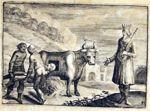
Malum consilium consultori pessimum: Schoonhovius, Emblemata (Gouda, 1618), emblem 21 uses the adage's imagery
Hij heeft een roede tot zijn eigen aars gemaakt: Pers, Bellerophon (Amsterdam, 1614), emblem 18 uses the adage's imagery
Malum consilium consultori pessimum - il nuy à soy qui conseille injustice: Boissard, Emblemes (Metz, 1595), emblem XXIX uses the adage's imagery
Malum consilium consultori pessimum: Boissard, Emblematum liber (Frankfurt, 1593), emblem XXIX uses the adage's imagery
Malum consilium consultori pessimum: Schoonhovius, Emblemata (Gouda, 1618), emblem 38 uses the adage's imagery
Malum consilium consultori pessimum: Carleton, A thankfull remembrance of Gods mercie (London, 1630), uses the adage's imagery for a background scene
Invidia tormentorum maximum: Meisner, Politica Politica (Nürnberg, 1700), emblem 727 uses the adage's imagery
Ingenio experior funera digna meo: Giovio, Dialogo dell' Imprese (Lyon, 1574), emblem 32 uses the adage's imagery
Perillus - Qui ruit laetatur alterius, non erit impunitus: Valvasor, Theatrum mortis (Laibach, 1682), emblem 72 uses the adage's imagery
Grande malum invidia: Vaenius, Emblemata Horatiana (Antwerp, 1612), emblem 45 uses the adage's imagery for a background
Des mauvais conseils & que ceux qui les donnent s'en trouvent mal: Baudoin, Recueil d'emblemes (Paris, 1639), emblem 8 uses the adage's imagery
De Perillo et tauro aeneo: Meyer, Homo Microcosmus (Frankfurt, 1670), emblem 28 uses the adage's imagery
Iconclass: 52B5112 Bad, Evil, Wrong 57AA75:52E3 Mercilessness❧Counsel; 'Consiglio' (Ripa) 57AA91 Cruelty, Ferocity; 'Crudeltà', 'Ferocità' (Ripa) 98B(PERILLUS)68 death of Perillus: he is thrown into a heated bronze bull by order of Phalaris
Collectanea (1500): 691
Loci Communes: Crudelitas (Cruelty, Cruauté)
I x 87 Manliana imperia Manlian orders
Ut hoc proximum recte congruit in hos, qui saeviunt in eos quos ius nacti sunt, ita Manliana imperia confine illi proverbium, probe torquebitur in eos, qui nimis rigida iuris observatione, humanitatis & aequitatis obliviscuntur. Historia quae proverbio causam dedit, narratur à Tito Livio primae decadis viii. libro. Extat & apud Valerium Maximum, aliosque complures scriptores. Et ad hunc fermè habet modum. T. Manlius cum consul bellum cum Latinis gereret, edictumque esset ne quis extra ordinem pugnaret, T. Manlius consulis filius turmae praefectus, provocatus à Genutio, sive ut Valerius, à Geminio Metio Tusculanorum equitum praefecto, oblitus edicti consularis conflixit, & provocatorem hasta confodit. Deinde ubi comitante turma, ac velut ovante spoliis ornatus ad patrem tenderet, ille mox in conspectu omnium, filium quod extra ordinem pugnasset, ad palum deligari, deinde virgis ex more caedi, postremo securi feriri iussit. Salubri quidem in posterum exemplo, quemadmodum ait Livius, sed in praesentia nimium invidioso consuli. Siquidem, ut autor est Valerius libro Memorabilium nono, capite de ira, cum victor Romam reverteretur, nemo iuvenum obviam iit, in tantum totius iuventutis odium venerat. Hinc & cognomen additum vulgo Imperioso. Refert simile severitatis exemplum Valerius Ma ximus, lib. secundo, capite de disciplina militari, de Posthumio Tiburto, cuius filius fortissimus adolescens, quod feliciter quidem, sed iniussu patris, cum hoste commisisset, à patre securi percussus est. Quanquam Titus Livius primae decadis, libro quarto, maluit hoc de Manlio Torquato, quam de Posthumio credere: atque in variis scriptorum opinionibus hoc potissimum argumento sese uti testatur, quod vulgato proverbio Manliana imperia dicta sint, non Posthumiana, cum tamen Posthumius aetate praecesserit Manlium. Quod si prior tam saevi exempli fuisset autor, occupasset nimirum insignem titulum crudelitatis: praeterea quod Manlio cognomen inditum esset imperioso, non Posthumio. Meminit et Seneca De beneficiis, lib. tertio de Manlio sive Manilio quodam, qui relegatus à patre, reversus eum à molestia litis intentatae liberavit. Tecte ad proverbium allusit M. Tullius, libro De finibus secundo, Vide ne ista sint Manliana nostra aut maiora etiam, si imperes quod facere non possim. Fortasse pro nostra, scriptum erat iussa.
My last adage rightly fitted those who show great cruelty towards men over whom they have power; and the very similar proverb 'Manlian orders' may well be turned against the over-rigid observance of the letter of the law which ignores humanity and justice. The story which gave rise to the proverb is told by Livy in book 8 of his first decade; it is also in Valerius Maximus and many other authors, and it runs something like this. Titus Manlius during his consulate was fighting a war against the Latins, and had issued orders that there was to be no attacking outside the regular line of battle. The consul's son Titus Manlius, who commanded a squadron of cavalry, was challenged by Genutius (or, as Valerius has it, Geminius) Metius, who commanded the cavalry of Tusculum; forgot the consul's orders and engaged him; and ran the challenger through with his spear. Surrounded by his squadron and carrying his spoils, he was making something like a triumphant return to his father - who, because his son had fought outside the line, had him fastened to a stake and flogged in the usual way before them all, and then beheaded. It was 'a valuable precedent for the future,' as Livy says, but made the consul highly unpopular at the time. In fact, as Valerius tells us, in the ninth book of his Memorabilia in the chapter on anger, when he returned to Rome victorious, 'none of the younger men went out to escort him, such was the hatred he inspired in them all.' Hence he was commonly nicknamed 'the Imperious.' There is a similar example of severity in Valerius Maximus, book 2, in the chapter on military discipline: Posthumius Tiburtus, whose son, a youth of outstanding courage, was executed by his father because he had engaged the enemy successfully, but without his father's orders. Though Livy, in book 4 of his first decade, prefers to believe this of Manlius Torquatus rather than of Posthumius, and says that in choosing between the different opinions of his authorities he has followed the argument that the current proverb calls these 'Manlian orders' and not 'Posthumian,' though in date Posthumius came before Manlius, and had he been the first to set such a ferocious example he would presumably have pre-empted 'the distinguished position of being proverbial for cruelty'; besides which, he says, it was Manlius and not Posthumius who was nicknamed 'the Imperious.' Seneca too in the De beneficiis, book 3, recalls a certain Manlius or Manilius who, having been exiled by his father, returned to save him from the perils of a threatened lawsuit. Cicero has a covert allusion to the proverb in the second book of the Definibus: 'Make sure that ours are not Manlian orders, or something even worse, if you give me commands which I am quite unable to obey.' Perhaps 'ours,' nostra, should be jussa, 'commands.'
Facsimile: 
Iconclass: 53C12 Severity; 'Severità' (Ripa) 57AA75 Mercilessness 98B(TORQUATUS, T.M.)42 Torquatus has his son beheaded because he has fought an enemy in single combat against the strict orders of his father 98B(TUBERTUS, A.P.)41 A. Postumius Tubertus has his son decapitated for fighting against his orders
Loci Communes: Crudelitas (Cruelty, Cruauté)
I x 88 Complurium thriorum ego strepitum audivi I have heard the sound of many fig-leaves
Πολλῶν ἐγὼ θρίων ψόφους ἀκήκαο. id est: Thriorum ego strepttum audii complurium. Senarius est proverbialis, quo minas, et inanem clamorem nos contemnere significamus. Quemadmodum Thais illa Terentiana saevas, et gloriosas Thrasonis minas pro nihilo ducit, magnum nebulonem appellans. Aristophanes in Vespis: Ως ἐγὼ πολλῶν ἀκούσας, οἶδα θριων τὸν ψόφον. id est: Thria novi quid strepant, ut saepius qui audiverim. Porro thria a Graecis dicuntur ficulna folia, quae, cum incenduntur, minacem quendam edunt strepitum, et formidandum iis, quibus ante non sit auditus, alioquin inanem, et contem nendum. Nisi mavis legere θριῶν, sic enim Graeci vocant calculos, quos in urnam mittunt sortilegae, cum divinant, quemadmodum admonuimus alibi. Solent huiusmodi divinatri ces aliquando e sortibus dira praedicere, quo stultos, ac credulos territent, cum saepenu mero nihil eveniat eorum, quae minantur.
Πολλῶν ἐγὼ θρίων ψόφον ἀκήκαο, Of many fig-leaves have I heard the sound. This is an iambic line current as a proverb, by which we express our contempt for threats and empty bluster, as Thais did in Terence, when she snapped her fingers at Thraso's fierce and bombastic threats and called him 'a great noisy rascal.' Aristophanes in the Wasps: 'Well I know the sound of fig-leaves; often have I heard the same.' Thrion is the Greek for a fig-leaf; and when fig-leaves are put on the fire they make a curiously formidable noise, which well might startle anyone who had never heard it before, though otherwise it is empty crackling not worth a thought. Unless you prefer to change the accent and take the word from thriai, the Greek name for pebbles put into an urn by soothsayers when fortune-telling, as I have pointed out elsewhere. These fortune-tellers have a habit sometimes of foreseeing terrible events in order to frighten their foolish and credulous clients, though often none of their threats come true.
Facsimile:
Iconclass: 22D2 soft sound 25G3(FIG-TREE)(+27) trees: fig-tree (+ leaf) 31A32 hearing, listening (one of the five senses) 53C22 Menace, Intimidation; 'Minaccie' (Ripa) 57BB21 Contempt
Collectanea (1500): 722
Loci Communes: Minantis (Threatening, Menacer)
I x 89 Ne inter apia quidem sunt They are not even in the celery
Οὐδ᾽ ἐν σελίνοις εἰσὶν, id est, Ne in apio quidem sunt, pro eo, quod est, ne ingressum quidem aut initium rei attigerunt. Sumpta metaphora ab iis, qui hortos ingrediuntur. Nam antiquitus extremus ille hortorum ambitus, apio conserebatur, quem qui nondum prae teriissent, velut in horti limine adhuc esse videbantur. Aristophanes in Vespis: Οὐδὲ μὲν γ᾽ οὐδ᾽ ἐν σελίνῳ π᾽ οὐστὶν, οὐδὲ ἐν πηγάνῳ. id est: In apto nondum est vel ipso, sed nec in rutis abhuc. Hoc est, nec initium habet eorum, quae sunt futura. Interpres et aliam quandam hoc loco refert sententiam, volens adagium ad gymnicum agonem pertinere, ad quod qui praepara rent infantes, statim ut essetn nati, in apio collocare consueverunt. Itaque perinde dicutm videtur, Ne in apio quidem, quasi dicas, ne in primis quidem rudimentis. Rutam autem comicus addidit risus causa, quod apium praelocutus fuerat. Porro morem apio coronandi putant iam olim ab Hercule inductum, post interfectum Nemeae leonem, quod et Pindarus indicare videtur alicubi. Nam in Nemeis hymno quarto dicit: ἳνα ἐν ἀγῶνι βαρυκτύπου θάλησε κορινθίοις σελίνοις. i. Ubi in certamine tumultuosi floruit Corinthiacis apiis. Significat quendam in certamine Neptuni Isthmico coronatum fuisse a Corinthiis.
Οὐδ᾽ ἐν σελίνοις εἰσὶν, They are not even in the celery, in the sense that they have not even reached the first steps and beginning of the matter. The metaphor derives from people entering a garden; for in ancient times the outside circuit of a garden was planted with celery, and those who had not yet got beyond that seemed to be as it were still on the threshold of the garden. Aristophanes in the Wasps: 'He's not yet in the celery, nor yet in the rue,' that is, he has no idea what's coming. The scholiast also reports quite a different opinion on this passage: the adage would refer to a gymnastic contest, and those who prepared infants for such a future were accustomed as soon as they were born to lay them in celery. Thus to say 'Not yet even in the celery' was equivalent to 'Not even in the first stage'; and the comic poet added rue by way of a joke, because he had just mentioned celery. Moreover they think that the custom of using celery for garlands was introduced long ago by Hercules after he had killed the Nemean lion, as Pindar seems to suggest somewhere. In the fourth of his Nemean Hymns he says: 'Where in the contest of him that roars aloud he was conspicuous in his wreath of Corinthian celery,' meaning that in the contest sacred to Neptune at the Isthmus he was crowned by the Corinthians.
Facsimile:
Iconclass: 41C652(CELERY) vegetables (CELERY) 51F1 Precedence 51F511 Immaturity
Loci Communes: Perficiendi sive absolvendi - ab initio ad finem (Finishing, completing - from beginning to end, Achever, accomplir - du début à la fin)
I x 90 Podex lotionem vincit The arse beats all efforts to wash it
Πρωκτὸς λουτροῦ περιγίνῃ, id est, Podex lotionem vincis. Callistratus apud Aristophanis intepretem, adagium hoc retulit ad eos, qui sese in malum aliquod adigunt, propterea quod ea corporis pars, etiam si lavetur, semet rursum inquinat, ita, ut ipsa sit in causa, quo minus lavari possit. Quadrabiz etiam, ubi quid frustra significabimus, veluti si quis nocentem carcere redimat, atque ille moxiterato commisso semet eodem praecipitet. Aut, si quos reconcilies, mox in pristinam relapsuros simultatem, aut castiges incorrigibile ingenium, quod genus est mulierum. Conveniet et in illos. qui suo ipsius vincunt malo. Veluti, si quis morum intractabilitate obtineat, ne posthac obiurgetur a praeceptore. Putant, adagium videri sumptum ab iis, potissimum, qui cita sunt alvo, quos Nonius Foriolos appellat. Ari stophanes in Vespis: Πρωκτὸς λουτροῦ περιγένομενος. id est, Podex pervincens loturam. Itidem & morbus dicitur vincere artem, curamve medici, cum est immedicabilis. Ex veterum monumentis deprehendes, fuisse morem publicum, ut post exoneratam alvum ad hiberetur eius partis lotio, quae, tamen subinde erat repetenda. Martialis inter Issae catellae laudes commemorat, quod post depositum ventris onus rogaret lavari. Legimus & barbarum quendam, seruitutis impatientem, ligno, cui spongia erat addita tergendo podici, in gulam adacto sibi conscivisse necem.
Πρωκτὸς λουτροῦ περιγίνῃ, You are an arse that beats all efforts at washing. Callistratus, quoted by the scholiast on Aristophanes, refers this adage to those who get themselves into some sort of trouble, because that part of the body, however much it's washed, dirties itself afresh, so that it is itself to blame if it cannot be washed clean. It will also fit when we wish to convey that some action is fruitless, such as paying for a criminal's release from gaol who immediately repeats the offence and hurries back there again, or trying to reconcile two people who will soon relapse into their ancient quarrel, or correct someone by nature incorrigible, a woman for instance. It will also suit those who get their own way through their own bad qualities, a pupil for instance of such bad character that his tutor gives up trying to improve him. They think the adage seems to derive from people of loose bowels, whom Nonius calls forioli. Aristophanes in the Wasps: 'An arse that beats all efforts at washing.' In the same way a disease is said to beat the art of the physician when it is incurable. You will find in ancient sources that there was a public custom, after voiding the bowels, of washing that part of the body, though this had to be often repeated. Martial records among the pretty tricks of Issa, a lapdog, that after relieving herself she would ask to be washed. We read also of a barbarian so unwilling to endure slavery that he committed suicide by forcing down his throat the stick with a sponge attached to it which was provided for wiping the arse.
Facsimile: 
Iconclass: 31A22371 anus 31A54 washing and bathing 52BB42 Impossibility 54BB3 Inutility, Noxiousness; 'Nocumento', 'Nocumento d'ogni cosa' (Ripa)
Loci Communes: Ingenii malitia et institutio (Malice of character and its formation, Malice d'esprit et son origine); Malum immedicabile (Incurable evil, Mal incurable)
I x 91 Conscientia mille testes Conscience is a thousand witnesses
Quintilianus Oratoriarum institutionum libro quinto hanc sententiam, ut proverbia lem citat: Conscientia mille testes. Sensus interprete non eget. Quis enim nescit conscientiam rem esse unam omnium essicacissimam, adeo, ut nulla tormenta melius prodant maleficium, quam conscientia, nullus carnifex severius puniat, quam haec? Unde & illud: Heu quam difficile est, crimen non prodere vultu. Exstat & Graecanica sententia, συνείδησις πλήττει τὴν ψυχὴν. id est, Conscientia verberat animum. Iuvenalis item: Et surdo verbere caedit. Hanc sensere pooetae, cum de diris, et ultricibus furiis fabulantur.
Quintilian in the fifth book of his Institutiones oratoriae quotes this as a proverbial saying: Conscience is a thousand witnesses. The sense needs no interpreter. Everyone knows that conscience is more powerful than anything else, so that no tortures are so effective in bringing wrongdoing to light as a bad conscience, nor can any hangman apply more cruel punishment. Hence that line: 'How hard for guilt to wear a guiltless face!' There is also a maxim in Greek: συνείδησις πλήττει τὴν ψυχὴν., Conscience belabours the spirit. Juvenal too: 'And flogs with silent lash.' This is what poets mean when they produce their fables about avenging Furies.
Facsimile:
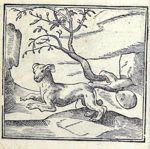
Conscientia mille testes: Reusner, Aureolorum Emblematum (Strasbourg, 1587), emblem 116
Conscientia mille testis: Vaenius, Emblemata Horatiana (Amsterdam, 1684), emblem 26
Fugis, sed frustra: Cramer, Octoginta emblemata nova (Frankfurt, 1630), emblem 48 uses the imagery of Reusner's emblem as a background
Conscientia mille testis - Tyrones false submission afterwards rebelling: Carleton, A thankfull remembrance of Gods mercie (London, 1630), illustration 20 quotes the adage in a background scene
Iconclass: 44G15 witnesses 49D11(1000) numerals (1000) 57A3 Conscience; 'Coscienza' (Ripa)
Loci Communes: Metus ex conscientia (Fear from a guilty conscience, Peur due à la conscience coupable)
I x 92 Mysorum praeda The Mysians are fair game
Μυσῶν λεία, id est, Mysorum praeda. In eos olim dicebatur, qui impune à quibuslibet laeduntur, ac diripiuntur. Ortum adagium a Mysis quos aiunt quondam finitimorum incursationibus male vexatos fuisse, quo tempore Telephus rex peregre agebat. Utitur hoc adagio Aristoteles libro Rhetoricorum primo tractans de locis coniecturalibus, καὶ τοὺς ὑπὸ πολλῶν ἀδικηθέντας, καὶ μὴ ἐπεξελθόντας, ὡς ὄντας κατα τὴν παροιμίαν μυσῶν λείαν. id est, Eos item, inquit, qui a compluribus affecti iniuria, non curant de ulciscendo. Nam ut trito dicitur proverbio, Mysorum hi praeda sunt. Hoc est, passim ab omnibus incessuntur, propterea quod, veterem ferendo iniuriam, invitant novam. Usus est Demosthenes adversus Aeschi nem. Quo quidem in loco scioli depravarunt pro Mysorum, miserorum, in translatio ne Leonardi Aretini. Citatur et ex Stratidis Medea, et Iambis Simonidis.
Μυσῶν λεία, The Mysians are fair game, used to be used of those who are wronged and plundered with impunity by the first comer. The adage derives from the Mysians, who were once, it is said, much exposed to raids by their neighbours, while their king Telephus was abroad. Aristotle uses this adage in the first book of the Rhetoric, where he deals with arguments derived from conjecture: 'And those who are wronged by many and take no steps to get their revenge, but are (as the proverb puts it) fair game like the Mysians.' His point is that everyone attacks them freely, because by the way they endure their earlier wrongs they seem to invite fresh ones. Demosthenes uses it in his attack on Aeschines, a passage in which ignorant scribes have altered 'Mysian' to 'miserable' in Leonardo Aretino's version. It is cited from the Medea of Stratis and the Iambi of Simonides.
Facsimile:
Iconclass: 32B311(MYSIANS) indigenous European peoples (MYSIANS) 45I7 the defeated (after the battle) 54A45 Peaceableness 61E(MYSIA) names of cities and villages (MYSIA)
I x 93 Ultra septa transilire To overleap the pit
Υπὲρ τὰ ἐσκαμμένα πηδᾶν, id est, Septa transilire. Congrait vel in eos, qui rem quampiam novam & incredibilem designant, longeque supra vulgarium hominum facultatem. Vel in hos, qui a re proposita digrediuntur. Vel in illos, qui praescriptos sibi terminos, et pote statis mandatae modum transeunt. Natum adagium a Phayllo quodam pentathlo Opun tio, ut quibusdam placet, Grotoniata, qui tum saltu, tum disco mirum in modum valuisse legitur. Hac ferme Suidas. Exstat et inscriptio statuae illius huiusmodi: Πέντ᾽ ἐπὶ πεντήκοντα πόδας πήδησε φάϋλλος. Δισκεύει δ᾽ ἑκατὸν, πεντ᾽ ἀπολειπομένων. id est: Quinque supra quinquaginta pedes saliit Phayllus: Discum autem iacit centum, exceptis quinque. Meminit huius adagii Plato in Cratilo, καὶ ὑπὲρ τὰ ἐσκαμμένα ἅλεσθαι. id est, Et ultra septa salire. Refert & Iulius Pollux libro De rerum vocabulis tertio. Lucianus in Somnio, ὑπὲρ τὰ ἐσκαμμένα ἤδη πηδᾷ, id est, Ultra septa iam transilit. De somnio cuius finis cum sit somnus, iam etiam vigilanti duraret. Chrysostomus Homil. in ii. Cor. iii. τὰ σκάμματα παρέβη. id est, septa transcendit: de Paulo loquitur, qui cum gratis doceret Evangelium, plus praestitit quam ab Apostolis exigebatur. Cicero de Oratore libro primo: Et quasi certarum artium forensibus cancellis circumscriptam scientiam. Idem in actionibus: Ab his cancellis, quibus me circumscripsi, declinavero. Locus enim is, in quo celebrabantur ludi forenses, fossis, cancellis, aut aliis id genus septis erat circumscriptus.
Υπὲρ τὰ ἐσκαμμένα πηδᾶν, To leap beyond the pit, is suitable for those who plan some new and incredible enterprise far beyond the capacity of ordinary men, or who depart from the plan which has been laid down, or who transgress the appointed limits and the bounds of the power entrusted to them. The adage comes from a certain Phayllus, a performer in the pentathlon, an Opuntian or, as some think, a native of Crotona, who is said to have shown astonishing prowess in both the long jump and the discus. Such is the account in Suidas. There is extant an inscription written for a statue of him: 'Full five and fifty feet Phayllus leapt, / And for five score less five the discus threw.' This adage is mentioned by Plato in the Cratylus: 'And to overleap the pit.' Julius Pollux also records it in book 3 of On the Names of Things. Lucian in The Dream: 'It overleaps the pit,' of a dream which continues into a man's waking moments though sleep is its normal limit. Chrysostom in his third homily on Second Corinthians: 'He overleapt the pit.' He speaks of Paul who, since he taught the Gospel without recompense, did more than was expected of an Apostle. Cicero in the first book of his De oratore: 'And a knowledge, as it were, of definite professional subjects with a legal fence round it.' Again in his speeches: 'If I stray outside the fence I have erected round myself.' For the place in which the ludi forenses were held was fenced in with ditches, railings, and similar boundaries.
Facsimile:
Iconclass: 25H115 pit, hole 43C32 long-jumping, broad-jumping 56F11 Ambition; 'Ambitione', 'Amor di Fama' (Ripa)
Collectanea (1500): 793
Loci Communes: Aliena a re (Irrelevant to the matter, Étranger au sujet)
I x 94 Psyrice facta As they do in Psyra
Psyra, insula quaepiam est, haud procul a Chio, cuius meminit et Homerus libro Odysseae tertio, Psyriam appellans: Η καθύπερθε χίοιο νεοίμεθα παιπαλοέσσης Νήσου ἐπὶ ψυρίης, αὐτὴν ἐπ᾽ ἀριστέρ᾽ ἔχοντες. id est, Certe supra Chium redibamus aspetam. iuxta insulam Psyram, ipsam Chium a sin st is habentes. Strabo Psyra pronuntiat plurative, et neutrali genere. Meminit huius et Pli nius lib. mundanae historiae 5. Ea insula, quoniam esset et perpusilla, et ignobilis, in contemptus, ac vilitatis proverbium abiit, ut, quae sordide, parumque magnifice fie rent, Psyrice facta dicerentur. Haec ferme Stephanus. idem citat Cratinum: Ψύρα τὸν δίονυσον ἄγοντες. id est: In Psyra Bacchum ducentes. Eundem rursus in Nemesa: Ψύρα τε τὴν σπάρτην ἄγεις. id est: In Psyra Spartam dacis.
Psyra is an island not far from Chios, mentioned by Homer in the third book of the Odyssey, where he calls it Psyria: 'At least we were returning on the upper side of rocky Chios past the isle of Psyria, keeping Chios itself on our left hand.' Strabo uses the word Psyra as a neuter plural. Pliny also mentions it in book five of his History of the World. This island, being very small and quite undistinguished, came to be a proverb for something despicable and worthless, so that things done in a mean and unworthy fashion were said to be done 'as they do in Psyra.' So more or less Stephanus. He also cites Cratinus: 'Taking Bacchus to Psyra' and another phrase from his Nemesis: 'You take Sparta to Psyra.'
Facsimile: 
Iconclass: 54BB6 Worthlessness 54D6 Custom, Habit; 'Consuetudine' (Ripa) 61D(PSYRA) geographical names of countries, regions, mountains, rivers, etc. (PSYRA) (PSYRA)
Collectanea (1500): 695
Loci Communes: Sordes et parcimonia (Meanness and stinginess, Bassesse et avarice)
I x 95 Bos Cyprius A Cyprus ox
Κύπριος βοῦς. id est. Cyprius bos. In brutum ac stolidum iaci solitum, propterea quòd Cyprii boves magis bruti ferantur, quippe qui stercore humano pascantur. Refertur a Suida, ac Diogeniano. Interptes Aristophanis in Plutum, scribit Boeotios boves s1katofa/gous2 fuisse, i. oletum edentes. Hoc autem nomine Aristophanes medicos appellat, quod in curandis aegrotis sordida quaedam tractent, lotium, aur ventris excrementa con templantes. Sed de Cypriis bubus consentit Plin. lib. 28. capite ultimo, narrans Cyprios boves hominum excrementa appetere, non pastus causa, sed ut hoc remedio torminibus medeantur.
Κύπριος βοῦς, A Cyprus ox was a taunt aimed at a brutish and stupid man, since the oxen in Cyprus were thought to be more brutish than the average, feeding as they did on human excrement. Recorded by Suidas and Diogenianus. The scholiast on Aristophanes' Plutus writes that oxen in Boeotia were scatophagous, that is, they ate dung. Aristophanes applies the word to physicians, because in the course of curing the sick they must handle various filthy substances and narrowly examine urine or faeces. As to the oxen in Cyprus, Pliny in the last chapter of book 28 agrees, reporting they they seek human excrement not simply as food but as a remedy for pain in their intestines.
Facsimile:
Iconclass: 31A62 defecation 47I21111(+945) ox (+ animals eating and drinking) 59AA3 Vulgarity 61D(CYPRUS) geographical names of countries, regions, mountains, rivers, etc. (CYPRUS) (CYPRUS)
Collectanea (1500): 305
Loci Communes: Ignavia et inscitia (Cowardice and ignorance, Lâcheté et ignorance)
I x 96 Cyprio bovi merendam Luncheon for a Cyprus ox
Festus Pompeius versum hunc Sotadicum citat ex Ennio. Cyprio bovi merendam. Ostenditque convenire, quoties conviva sordidus, et in sipidus sordido atque insipido acci pitur convivio. Origniem adagii refert eandem, qua nos modo commemoravimus. Festivius erit, si ad res animi deflectatur, ut si quis apud spurcos spurce loquatur, apud indoctos indocte.
Festus Pompeius cites this sotadean line from Ennius: 'Luncheon for a Cyprus ox,' and makes clear that it is in place whenever a mean and tedious guest is entertained at a mean and tedious party. Of the origin of the adage he gives the same account as I have just given here. It will be more humorous if diverted to things of the mind, and applied to a man making a speech full of obscenities to an audience who live that kind of life, or an ignorant speech to a party of ignoramuses.
Facsimile:
Iconclass: 31A62 defecation 41C42 midday meal, lunch 47I21111(+945) ox (+ animals eating and drinking) 59AA3 Vulgarity 61D(CYPRUS) geographical names of countries, regions, mountains, rivers, etc. (CYPRUS) (CYPRUS)
Collectanea (1500): 711
Loci Communes: Sordes et parcimonia (Meanness and stinginess, Bassesse et avarice)
I x 97 Equum habet Sejanum He must keep Sejus' horse
Equum habere Seianum, olim proverbio dicebatr in calamicosum, et ad extremam inopiam redactum. Allegoria sumpta est ab equo quodam fatali, cui a Cn. Seio domino nomen inditum est Seiano. is ex Diomedeis equis prognatus fuisse creditus est. Fuit insi gni quidem specie, verum eiusmodi quodam fato, ut quisquis eius equi possessor esset, is cum omni domo ad internecionem usque deperiret. Id quod Cn. Seius ipse capitis damna tus, ac miserando affectus supplicio, deinde & Dolabella bello intefectus, post hunc Cassius ab hostibus occisus, deinceps Antonius detestabili exitio perditus, probavit. Hunc equum C. Bassius Argis se vidisse refert, haud credibili pulchritudine, vigoreque, et calore exsuperantissimo, nempe puniceo Hoc adgium et refert, et copiosius explicat Aulus Gellius, libro Noctium Atticarum tertio, capite nono. Fieri potest, ut haec de e quo superstitio manarit ab equo illo durateo, cuius Odysseae Θ. meminit Homerus, qui fatalem interitum attulit Troianis. Ad quod alludens Maro. Scandit, inquit, fatlis machina muros. E diverso quae dam fataliter esse felicia credidit veteum superstitio. Nam auctor est Trebel lius Pollio in librio de triginta tyrannis, vulgo persuasum fuisse, res iis feliciter cedere, qui Alexandri Magni imaginem, auro argentove expressam gestarent. Nec hodie desunt, qui gladios in bello fortunatos, & huiusmodi quasdam nugas pollicentur principibus. At magis mirandum, esse, qui istiusmodi impostoribus credant.
To keep Sejus' horse was said in old days proverbially of anyone who had suffered misfortunes and been reduced to the depths of penury. It is an allegory, derived from a horse which had a curse on it, called Sejus' horse from the name of its owner, Gnaeus Sejus. It was believed to be descended from the horses of Diomede, and it was a very handsome animal; but the curse on it took the form that its owner at any time was fatally destined for extinction with his whole household. Sejus himself was sentenced to death and was horribly executed; next came Dolabella, who was killed in battle; then Cassius, killed by the enemy; after him Antonius, who died a horrible death: all proved the truth of it. 'This horse was seen by Gaius Bassus (so he says) in Argos; it was incredibly handsome and of a spirit and colour to beat all, for its coat was red.' This adage is both recorded and explained at length by Aulus Gellius in his Attic Nights, book 3 chapter 9. It is possible that this superstition about the horse is an echo of the wooden horse of which Homer tells in Odyssey 8, which brought final disaster upon Troy, and to which Virgil alludes in 'the fatal engine climbs the walls.' Conversely, there was an ancient superstition that some things were destined to bring success. Trebellius Pollio in his book on the Thirty Tyrants says it was commonly supposed that people who carried a likeness of Alexander the Great in gold or silver would be successful. Even today there are those who promise princes swords which are lucky in battle and suchlike nonsense. It is still more suprising that some people believe these impostors.
Facsimile:
Iconclass: 13B42 bewitching, cursing, casting spells 46C13141 horse 54FF12 Fate, Doom 55B Possession 98B(GNAEUS SEJUS) male persons from classical history (GNAEUS SEJUS)
Loci Communes: Infortunii sive exitii (Misfortune or ruin, Malheur ou ruine)
I x 98 Aurum habet Tolossanum He has gold from Toulouse
HVIC similimum est illud, Aurum habet Tolosanum. In eum, qui magnis, ac fatalibus afficitur malis, novoque, ac miserando exitio perit. Refertur ab Aulo Gellio eodem loco, quem modo citavimus, in hunc modum. Eadem sententia est illius quoque veteris proverbii, quod ita dictum accipimus. Aurum habet Tolosanum. Nam cum oppidem Tclosanum in ter ra Gallia, Q. Cepio consul diripuisset, multumque auri in eius oppidi templis fuisset, quis quis ex ea direptione aurum attigit, misero, cruciabilique exitu periit. In plerisque codicibus Gellianis hactenus legebatur in terra italia, sed mendose, cum Strabo et Iustinus Tolos am ponant in Gallia. Meminit auri Tolosani M. Tullius lib. De natura deorum 3, Cognose, inquit, alias quaestiones auri Tolosani, coniurationis Iugurthinae. Strabo lib. Geographiae quarto admonet hanc pecuniam Tolosanam, Delphicae pecuniae partem fuisse. Brennus enim, Prausus natione, Tectosagis auxiliantilbus Delphos incursaverat: deinde quemadmodum refert Iustinus lib. xxii. cum Tectosagi se in antiquam patriam To losam recepissent, pestilentia laborare coeperunt: a qua non prius sunt liberati, quam haruspi cum responsis moniti, aurum, argentumque sacrilegio quaesitum, in Tolosensem lacum mergerent: quod omne magno post tempore Cepio Romanus consul abstulit. Quod qui dem sacrilegium exitium attulit tum ipsi Cepioni, tum illus copiis. Erant autem auri pon do cx. milia, argenti pondo quinquies decies centum milia. Scribit denim Strabo, Tolosa nos ex privatis fortunis auxisse sacram pecuniam, ut magis deum sibi reconciliarent. Nar rantur & alia quaedam hoc loco a Strabone de auro Tolosano ex Posidonio: verum, quo niam ad adagionis enarrationem non magnopere pertinere videbantur, sat habuimus lo cum indicasse. Durat hodieque apud vulgus haec opinio, ut existiment omneis miser perire, quicunque à sacris rebus non abstinent manus violentas.
Another adage very close to that is Aurum habet Tolossanum,He has gold from Toulouse. This is said of a man who suffers great and inescapable disasters and dies a strange and pitiable death. It is recorded by Aulus Gellius in the passage cited above, in the following words: 'The same sense is conveyed by another ancient proverb which, I understand, runs thus, He has gold from Toulouse. When the town of Toulouse in Gaul had been put to the sack by Quintus Cepio the consul and quantities of gold had been found in the temples there, anyone who had handled gold originating from the sack died a pitiful and agonizing death.' In most texts of Gellius the reading hitherto has been 'in Italy,' but this is wrong, for both Strabo and Justin put Toulouse in Gaul. Cicero mentions gold from Toulouse in his On the Nature of the Gods, book 3; 'Consider' he says 'other problems, gold from Toulouse or the conspiracy of Jugurtha.' Strabo in book.4 of his Geography tells us that this money at Toulouse was part of what had belonged to Delphi. Brennus, who was a Prausian in origin, had raided Delphi with the help of the Tectosagi. Then, as Justin says in book 22, the Tectosagi returned to their ancestral home at Toulouse, and there began to suffer from pestilence; nor could they find any relief until, as instructed by soothsayers, they had taken all the gold and silver they had collected by sacrilege and sunk it in the lake at Toulouse. All of this was removed long afterwards by Cepio the Roman consul; and this act of sacrilege brought destruction not only to him but to his forces. There were 110,000 pounds of gold and 1,500,000 pounds of silver; for Strabo says that the people of Toulouse had increased the temple treasure out of their private fortunes in hopes of a closer reconciliation between themselves and the deity. Further details of the gold in Toulouse derived from Posidonius are given by Strabo in the same passage; but as they did not seem to contribute very much to the understanding of the adage, I have thought it sufficient to give the reference. Even today a belief still exists among the common people which makes them think everyone will come to a bad end who has laid violent hands on sacred things.
Facsimile: 
Iconclass: 11N44 Sacrilege; 'Sacrilegio' (Ripa) 13B42 bewitching, cursing, casting spells 25D13(GOLD)46B311 46B311 coin 54FF12 Fate, Doom 61E(TOULOUSE) names of cities and villages (TOULOUSE)
Loci Communes: Infortunii sive exitii (Misfortune or ruin, Malheur ou ruine)
I x 99 Polypi caput An octopus' head
Πολύποδος κεφαλὴ, id est, Polypi caput In hominem varium, et in quo pariter et vitia quaedam, et virtutes invenias, cuiusmodi Catilinam describit Salustius. Competit et in rem ex qua non parum commoditatis capere queas, sed quae eadem nonnullis incom modis noceat. Allegoria ducta est ab eius piscis capite, quod (sicuti testatur Plutarchus in libello, cui titulus, quomodo sint adolescentibus audiedi poetae) esu quidem suavissi mum et esculentum, ceterum somnia parit tristia, ac prodigiosa. Unde huius esum inter dicebant iis, qui cuperent ex insomniis praescire futura: quemadmodum et fabarum, ut testis est idem Plutarchus in Symposiacis. Proinde poeticen Polypi caput vocat, in qua sicuti sunt permulta cognitu, tum iucunda, tum frugifera, ita sunt nonnulla, nisi caveas, pestilentia. Porro ex huius modi rebus, id, quod inest commoditatis, conveniet excerpe re; quod noxium, vitare. Iuxta Simonidis doctrinam apiculas imitari, quae, praeteritis re liquis, ad ea dun taxat advolant, unde possint aliquid ad mellificium idoneum excerpe re, nec aliud colligunr, quam quod sit usui futurum. Proverbium integre refertur apud Plutarchum hoc pacto: Πουλύποδος κεφαλῇ ἐνὶ μὲν κακὸν ἔνδε καὶ ἐσθλὸν. id est, In polypi capite inect quidem malum, inest et bonum. Itidem Theognis in sententiis de vino praedicat: Εσθλὸς καὶ κακός ἐσσι. id est, Bonum ac malum es. Posset ad hanae formam torqueri fabula de hasta Achillis, quae vulneris auxilium tulit, eadem, quae vulnus inflixerat.
Πολύποδος κεφαλὴ, An octopus' head. Used of a man who is inconsistent and has both faults and virtues at the same time, like Catiline in Sallust's description. It also suits anything from which you can derive plenty of advantage not unmixed with harmful features. The image is taken from the head of this animal which, as Plutarch tells us in his essay called 'How Young Men should Study Poetry,' is delicious eating but provokes appalling nightmares. Those who wished to foretell the future from dreams were thus forbidden to eat it, and beans too, as Plutarch again tells us in his 'Table-talk.' So he calls poetry an octopus' head, as containing much that is entertaining and useful, and yet some things that will do harm unless one takes precautions. So we should try to select the good out of such things and avoid what is harmful. As Simonides teaches, we should model ourselves on bees, which ignore everything else and fly only to the places where they can collect what they can use for making honey, and gather nothing for which they will have no use. The complete proverb is given in Plutarch as follows: 'In the octopus' head is much evil and much good.' Theognis likewise in his maxims says of wine 'It is both good and bad.' One might divert to the same effect the story of the spear of Achilles, which could cure the wound it had inflicted in the first place.
Facsimile:
Iconclass: 25F72(OCTOPUS)(+33) molluscs: octopus (+ head of an animal) 48C901 symbolic representations, allegories and emblems ~ poetry; 'Poesia' (Ripa) 53AA21 Inconstancy; 'Incostanza', 'Instabilità', 'Instabilità overo Incostanza' (Ripa)
Loci Communes: Anceps et dubius (Doubtful and uncertain, Incertain et douteux)
I x 100 Aestate penulam deteris You wear out your greatcoat in summer
Εν θέρει τὴν χλαῖναν κατατρίβεις, id est, Aestate penulam deteris. Refertur à Zenodoto, Diogeniano, Suida. Recta dicetur in eum, qui res necessarias temere, nec in tempore pro fundit, aliquando futuras usui, si seruentur. Id quod vulgo factitant adolescentes, qui fa cultates patrias stulte prodigunt in iuventa, quibus sustinenda fuerat imbecilitas sene ctae. Neque male quadrabit in eos, qui corporis vires in voluptatib. frustra consumunt, quas in obeundis negotiis seriis postea sunt desideraturi. Nam χλαῖνα summa vestis est, quae pro tempore sumitur ad ventos, pluviam, frigusve depellendum, quasi Latine di cas penulam. Iuvenalis: - Et multo stellaret penula nimbo. Quamquam et Latini Laenae vocabulo utuntur, pro eo, quod Graeci χλαῖναν appellant. Nonius indicat esse genus vestis militaris, quae sit omnium extima, veluti chlamys, pallium, & penula. Apud Diogenem Laertium tale quiddam obicit Philemon comicus in Craterem, quod aestate gereret pallium crassum, hieme laceram tunicam, videlicet quo disceret temperantiam, ac tolerantiam.
Εν θέρει τὴν χλαῖναν κατατρίβεις, You wear out your greatcoat in summer, is recorded by Zenodotus, Diogenianus, and Suidas. It will be used appropriately of anyone who wastes heedlessly and on the spur of the moment essential things which would one day be of great use if they were preserved. This is common among the young, who foolishly dissipate their patrimony in early life, which should have been their support when old and feeble. Nor will it be a bad fit for those who use up their bodily strength in pointless pleasures, only to feel the lack of it later in serious business. For the chlaina or overcoat is a top garment worn according to the weather as a protection against wind, rain, and cold, the Latin for which is paenula. Juvenal: 'And my paenula dripped with the heavy rain.' Though Latin also uses the word laena for the Greek chlaina; Nonius shows that it is an outer garment worn in the army, like chlamys, pallium, and penula. In Diogenes Laertius Philemon the comic poet makes a similar criticism of Crates, that he wore a thick cloak in summer and in winter a ragged tunic, presumably to teach himself moderation and endurance.
Facsimile:
Iconclass: 23D22 summer half-year 41D21(GREATCOAT) clothes covering the entire body (GREATCOAT) 55C11 Squandering, Extravagance, Prodigality, Waste; 'Prodigalità' (Ripa)
Collectanea (1500): 349
Loci Communes: Festinatio praepropera (Overhasty haste, Précipitation excessive); Intempestiva et inepta (Untimely and inept things, Choses inopportunes et ineptes)