IV i 1 Dulce bellum inexpertis War is a treat for those who have not tried it.
ET elegans cum primis, & multorum literis celebratum adagium est, γλυκὺς ἀπείρῳ πόλεμος. i. Dulce bellum inexperto. Id ita reddit Vegetius lib. De re militari 3. cap. 14. Nec confidas satis, si tyro proelium cupit, inexpertis enim dulcis est pugna. Citatur ex Pindaro γλυκὺ δὲ πόλεμος ἀπείροισιν, ἐμπείρων δέ τις ταρβεῖ προσίοντά νιν καρδία περισσῶς. i. Dulce bellum inexpertis, ast expertus quispiam horret, si accesserit cordi supra modum. Sunt quaedam in rebus mortalium, quae quantum habeant discriminis ac malorum, non intelligas, nisi facto periculo. Dulcis inexpertis cultura potentis amici, Expertus metuit. Bella res & splendida videtur, inter aulicos obambulare proceres, in regiis versari negociis, at senes, quibus usu penitus cognita res est, ab ea felicitate libenter abstinent. Suave videtur, amare puellas, sed iis, qui nondum senserunt, quantum amori insit amari. Ad eundem item modum accommodari poterit, ad quodvis negocium multo cum periculo, multisque coniunctum malis, quod nemo velit capessere, nisi iuvenis, & rerum imperitus. Siquidem Ari stoteles in Rhetoricis hanc adfert causam, cur iuventa sit audacior, contrà senecta timidior, quod illis imperitia rerum confidentiam pariat, his multorum experientia malorum timiditatem, & contationem. Quod si quicquam est in rebus mortalium, quod contanter aggredi conveniat, imò quod oporteat modis omnibus fugere, deprecari, propellere, certe bellum est, quo non alia res vel magis impia, vel calamitosior, vel latius perniciosa, vel haerens tenacius, vel tetrior, & in totum homine indignior, ut ne dicam Christiano. At dictu mirum, quàm hodie passim, quàm temere, quam quavis de causa suscipitur, quàm immaniter ac barbarice geritur, non tantum ab ethnicis, verum etiam à Christianis: nec prophanis modo, verumetiam à sacerdotibus & episcopis: nec solum à iuvenibus & imperitis, verumetiam à senibus, & toties expertis: nec à plebeis tantum, & vulgo natura mobili, sed potissimum à principibus, quorum officium erat, temerarios stultae multitudinis motus, sapientia rationeque componere. Neque desunt iureconsulti ac theologi, qui ad ista tam nefaria, faces admovent, & frigidam, quod aiunt, suffundunt. Quibus rebus fit, ut nunc bellum adeo recepta res sit, ut demirentur homines, esse cui non placeat. Adeo probata, ut impium, ac pene dixerim, haereticum sit, improbasse rem unam omnium ut sceleratissimam, ita miserrimam quoque. At quanto iustius erat illud demirari, quis malus genius, quae pestis, quae intemperia, quae furia primum in hominis mentem immiserit rem usqueadeo beluinam ut placidum illud animal, quod natura paci benevolentiaeque genuit, quod unum omnium saluti prodidit, tam ferina vesania, tam insanis tumultibus in mutuam rueret perniciem. Id quod magis etiam admirabitur quisquis animum à vulgo receptis opinionibus, ad ipsam rerum vim ac naturam perspiciendam converterit, ac seorsum hinc hominis imaginem, hinc belli simulacrum vere philosophicis oculis aliquantisper contempletur. Primum igitur, si quis habitum modo, figuramque corporis humani consideret, an non protinus intellecturus est, naturam vel potius deum, animal hoc non bello, sed amicitiae: non exitio, sed saluti, non iniuriae, sed beneficentiae genuisse? Nam caeterorum animantium unumquodque suis instruxit armis. Taurorum impetus armavit cornibus, Leonum rabiem unguibus. Apris fulmineos affixit dentes. Elephantos praeter cutem & molem promuscide quoque tutatus est. Crocodilum crustis velut laminis communivit, Delphinis teli vice pinnas addidit. Histricem spinis, Raiam aculeis defendit, Gallis calcar affixit. Alia testis, alia corio, alia cortice communivit. Sunt quorum incolumitati, pernicitate prospexit, veluti columbis. Sunt rursum quibus venenum teli vice tribuit. Addidit his speciem tetram ac beluinam, addidit oculos truces, vocis stridorem. Insevit nativa quaedam dissidia. Solum hominem nudum produxit, imbecillem, tenerum, inermem, mollissima carne, cute levi. Nihil usquam in membris, quod ad pugnam aut violentiam datum videri possit, ut ne dicam interim, quod caetera ferè statim ut nata sunt, sibi sufficiunt ad vitam tuendam: solus homo sic prodit, ut multo tempore totus à subsidio pendeat alieno. Nec fari novit, nec ingredi, nec cibum capere, vagitu tantum implorat opem: ut vel hinc coniici possit, solum hoc animal totum amicitiae nasci, quae mutuis officiis & coit, et cohaeret potissimum. Proinde natura voluit hominem vitae munus non tam sibi, quàm benevolentiae acceptum ferre, quo videlicet intelligeret sese gratiis esse dicatum, ac necessitudini. Tum speciem dedit non tetram & horridam, uti caeteris, sed mitem ac placidam, amoris ac benevolentiae notas prae se ferentem. Tribuit oculos amicos, & in his animi signa. Dedit brachiorum sinus ad complexum. Dedit osculi sensum, quo ceu copularentur, & sese contingerent animi. Uni risum attribuit, alacritatis indicium. Uni lachrymas clementiae & misericordiae symbolum. Quin & vocem dedit, non minacem & horrendam sicuti beluis, sed amicam et blandam. Nec his contenta natura, sermonis & rationis usum uni tribuit, quae quidem res ad parandam & alendam benevolentiam in primis valet, ne quid omnino per vim inter homines gereretur. Insevit odium solitudinis, amorem sodalitatis. Indidit penitus benevolentiae semina. Fecit ut quod est saluberrimum, idem sit et suavissimum. Quid enim amico iucundius? At rursum, quid aeque necessarium? Proinde si maxime liceret absque mutuo commercio commode vitam agere, nihil tamen iucundum videri possit absque socio, nisi si quis prorsus hominem exuerit, & in feram degenerarit. Addidit insuper liberalium disciplinarum studium, & cognitionis ardorem: quae res ut potissimum abducit hominis ingenium ab omni feritate, ita ad conciliandas necessitudines praecipuam vim habet. Siquidem nec affinitas, nec sanguinis propinquitas, arctioribus aut firmioribus amicitiae vinculis astrin git animos, quam societas honestorum studiorum. Super haec admirabili quadam varietate, dotes tum animorum tum corporum inter mortales partita est, nimirum ut singuli in singulis invenirent, quod vel amarent ac suspicerent ob excellentiam, vel ob usum & necessitatem ambirent et amplecterentur. Denique indidit divinae mentis scintillulam, ut nullo etiam ostenso praemio, tamen per se iuvet benemereri de omnibus. Id enim deo maximè proprium ac naturale, suo beneficio consulere universis. Alioqui, quid illud est quod haud vulgarem animo sentimus uoluptatem, ubi quempiam per nos servatum intelligimus? & ob hoc ipsum homo charus est homini, quod insigni quopiam beneficio obstrictus est? Proinde deus in hoc mundo velut simulacrum quoddam sui constituit hominem, ut ceu terrenum quoddam numen saluti prospiceret omnium. Sentiunt hoc ipsa etiam bruta, cum videamus non mitia solum, verumetiam pardos & leones, & his immitiores bestias in magnis periculis ad hominis opem confugere. Hoc extremum omnibus asylum, haec ara est sanctissima universis, haec nulli non sacra est ancora. Hominis effigiem utcunque depinximus. Nunc belli simulacrum ex adverso, cum hac, si videtur, componamus. Iam igitur videre te puta, barbaras cohortes, ipso vultu sonoque vocis horrendas, hinc atque hinc instructas ferratas acies, formidabilem armorum crepitum simul & fulgorem: inamabilem tantae multitudinis fremitum, oculos minaces, rauca cornua, terrificum taratantarae cantum, bombardarum tonitrua, non minus formidolosa veris, sed magis noxia: clamorem insanum, concursum furiosum, immanem laniationem, cadentium & occidentium crudeles vices, congestas strages, undantes cruore campos, fluvios humano tinctos sanguine. Fit interea nonnunquam, ut frater incidat in fratrem, affinis in affinem, amicus in amicum, & communi furore iam debacchante, in eius viscera stringat ferrum, à quo ne verbo quidem unquam fuerat laesus. Denique tantum malorum habet illa tragoedia, ut à commemoratione quoque pectus humanum abhorreat. Ut interim non referam, illa vulgaria prae his, leviaque, protritas passim segetes, exustas villas, incensos pagos, abacta pecora, constupratas virgines, tractos in captivitatem senes, direpta phana, latrociniis, praedationibus, violentia plena confusaque omnia. Utque taceam illa, quae felicissimum etiam ac iustissimum bellum consequi solent: Expilatam plebem, oneratos proceres, tot senes orbos, & simul in caede liberorum infelicius occisos, quam si hostis mali sensum unà cum uita sustulisset: tot anus destitutas & crudelius quam ferro peremptas, tot matronas viduas, tot liberos orphanos, tot domus funestas, tot opulentos ad inopiam redactos. Nam de morum pernicie quid attinet loqui, cum nemo nesciat universam vitae pestem semel e bello proficisci? Hinc pietatis contemptus, hinc legum neglectus, hinc ad quidvis audendum sceleris promptus animus. Hoc fonte nobis tam ingens latronum, raptorum, sacrilegorum, percussorum turba scatet. Et quod est omnium gravissimum, haec tam exitialis pestilentia, nescit se suis continere spaciis, sed in uno quopiam angulo nata, non solum finitimas regiones veluti contagio pervadit, verumetiam procul semotas, vel mercede, vel per affinitatis, aut foederis occasionem, in communem tumultum, ac rerum tempestatem pertrahit. Quinetiam bellum è bello seritur, è simulato verum, e pusillo maximum exoritur, neque raro solet in his accidere, quod de Lernaeo monstro fabulis proditum est. Hisce de causis, opinor, veteres illi poetae, qui rerum vim ac naturam, & sagacissime perspexerunt, & aptissimis figmentis adumbrarunt, tradidere bellum ab inferis immitti, idque furiarum ministerio, neque quamlibet furiam ad hoc negocii conficiendum esse idoneam. Deligitur omnium pestilentissima, Cui nomina mille, Mille nocendi artes. Haec innumeris armata colubris tartarea buccina praecinit. Pan insano tumultu complet universa. Bellona furiosum quatit flagellum. Furor impius, ruptis omnibus vinculorum nodis, evolat horridus ore cruento. Neque non viderunt haec grammatici, quorum alii bellum, κατ᾽ ἀντίφρασιν dictum volunt, quod nihil habeat neque bonum, neque bellum: nec alia ratione bellum esse bellum, quàm Furiae sunt Eumenides. Alii malunt à belua deductum, quod beluarum sit, non hominum, in mutuum exitium congredi. At mihi sanè plusquam ferinum, plusquam beluinum esse videtur armis confligere. Primum enim pleraque brutorum animantium in suo quodque genere concorditer & civiliter degunt, gregatim incedunt, ope mutua sese tuentur. Ne ferae quidem omnes dimicant (Sunt enim & innoxiae, sicut damae & lepores) sed omnium efferatissimae, veluti leones, lupi, tigrides. Quanquam nec hae belligerantur inter sese, quemadmodum nos. Canis caninam non est, leonum inter se feritas non dimicat: draconi cum draco ne pax est, inter venena convenit. At homini nulla fera perniciosior, quam homo. Rursum illae, cum pugnant, suis pugnant armis; nos praeter naturam arte cacodaemonum excogitatis, instruimur homines in hominum perniciem. Nec illae quibuslibet de causis saeviunt, verum ubi vel fames stimulat in rabiem, vel se peti sentiunt, vel foetui suo timent. Nos, deum immortalem, quàm frivolis de causis, quas bellorum tragoedias excitamus. Ob inanissimos ditionum titulos, ob puerilem iram, ob interceptam mulierculam, ob causas his quoque multo magis ridiculas. Ad haec inter feras, uni cum una bellum est, idque perbreve. Et ut cruentissima pugna sit, una aut altera vulnerata discedit. Quando auditum est id quod passim faciunt homines, centum milia beluarum mutuo laniatu concidisse? Adde, quod ut feris quibusdam naturale dissidium est cum aliis diversi generis, ita rursum habent, cum quibus genuina firmaque cohaerent amicitia. At homini cum homine, & cuilibet cum quolibet, iugis pugna est nec ullum satis firmum foedus inter ullos mortalium. Adeo quicquid à sua recessit natura, in peiorem degenerat speciem, quàm si natura malitiam ingenuisset. Vis scire quam ferina, quàm foeda quam non digna homine res sit bellum? Spectastí ne aliquando leonem cum urso commissum? Qui rictus, qui rugitus, qui fremitus, quae immanitas, quae laniatio? Inhorrescit qui spectat etiam in tuto. At quanto foedius spectaculum, quanto immanius, videre hominem cum homine, tot armis, tot telis instructum confligere! Quaeso te, quis homines crederet, nisi consuetudo mali sustulisset admirationem? Ardent oculi, pallent ora, furorem praefert incessus, frendet vox, clamor insanus, totus homo ferreus est, crepant arma, fulminant bombardae. Mitius erat, si cibi causa homo hominem devoraret, si sanguinem hauriret; quanquam huc quoque ventum est à quibusdam, ut id odii gratia faciant, quod excusatius faceret usus aut necessitas. At nunc idem fit crudelius, telis veneno tinctis, tartareis machinis. Nullum usquam hominis vestigium. An credas hic ipsam naturam agnituram quod condidit? Et si quis admoneat, an non merito huiusmodi uerbis sit execratura facinus impium? Quod novum spectaculum ego video? Quis Tartarus hoc nobis portentum aedidit? Sunt qui me novercam appellent, quod in tam immensa rerum summa, venena quaedam genuerim, quanquam & haec in hominis commodum cessura; quod aliquot animantia parum mitia finxerim, etiamsi nulla fera tam immitis est quin arte & officiis possit cicurari. hominis cura mansuescunt leones, mitescunt dracones, serviunt ursi. Quae tandem est ista plusquàm noverca, quae novam hanc beluam, totius mundi pestem nobis dedit? Unum animal totum genui benevolentiae, placidum, amicum, salutare. Quid accidit, ut in huiusmodi feram degenerarit? Nihil agnosco hominis illius, quem finxi. Quis malus genius vitiavit opus meum? Quae saga mentem humanam excantavit et incantaviit beluinam? Quae Circe nativam vertit formam? Iuberem ut ad speculum sese contemplaretur infelix, sed quid cernant oculi, cum mens absit? Tamen aspice teipsum si potes furiose bellator, si quo pacto contingat resipiscere. Unde tibi minax crista verticis? unde fulgens galea? unde ferrea cornua? unde pinnati cubiti? unde squamae? unde dentes aerei? unde laminae? unde tela letifera? unde vox plusquam ferina? unde vultus iste plus quam beluinus? unde tonitru & fulmen, ipso Iovis fulmine tum formidabilius, tum nocentius? Ego te divinum quoddam animal finxi, quid venit in mentem, ut teipsum in tam immanem beluam transformares, ut nulla iam belua futura sit belua, si cum homine componatur? Haec atque id genus alla permulta diceret opinor, architectrix illa rerum natura. Proinde cum sic conditus sit homo quemadmodum ostensum est, cum huiusmodi res sit bellum, quemadmodum nimium crebro sentimus, haud mediocriter admirandum videtur, quis deus, quis morbus, ait qui casus primum in humanum pectus immiserit, ut letale ferrum in hominis stringeret viscera. Multis gradibus ad tam insignem vesaniam ventum sit oportet. Nemo siquidem repente fuit turpissimus, ut inquit poeta Satyricus. Semperque malorum maxima, sub umbra ac specie boni subrepserunt in vitam hominum. Olim igitur cum rudes illi priscique mortales, nudi, sine moenibus absque tecto, vitam in sylvis agerent, evenit aliquoties ut a feris ac beluis offenderentur. Cum his igitur primum homini bellum susceptum est, & vir fortis habebatur, ac dux qui ferarum vim ab hominum genere depulisset. Quin & aequissimum videbatur iugulare iugulantes, trucidare trucidantes, praesertim cum nulla lacessitae iniuria ultro nos impeterent. Ea res cum summae laudi duceretur, hinc enim deus factus est Hercules, coepit animosa iuventus passim venari bestias, exuvium ceu tropheum ostentare. Deinde non contenti iugulasse, pellibus illarum sese munierunt adversus rigorem hyemis. Haec erant prima homicidia, haec spolia. Post haec longius progressi rem ausi sunt, quam Pythagoras vehementer impiam arbitratus est, & nobis poterat prodigiosa videri, nisi vetaret consuetudo, quae tantam ubique vim habet, ut apud nationes quasdam pium fuerit habitum parentem grandaevum, plagis obrutum in fossam depellere, & eripere vitam illi per quem vitae munus contigerat: sanctum haberetur, carnibus affinium amicorum vesci: pulchrum existimaretur, virginem in Veneris phano prostare populo: multaque iis absurdiora, quae si quis nunc referat tantum, nemo non sit abominaturus. Adeo nihil est tam scelerosum, nihil tam atrox quod & non probetur, si id commendet assuetudo. Ergo quod ausi sunt facinus? Non veriti sunt vesci ferarum extinctarum cadaveribus, dentibus laniare carnem exanimem, haurire sanguinem, exugere saniem, & viscera, ut ait Ovidius, in uiscera condere. Id facinus tametsi mitioribus ingeniis tum immane videretur, tamen commendavit usus et commoditas. Placuit et in delitiis cadaveris species. Carnes insepeliuntur crustis, condiuntur aromatibus, inscribitur titulus: Hic situs est aper, hic sepultus est ursus. O cadaverosas voluptates! Processum est longius. A noxiis feris itum est ad pecudes innoxias. Saevitum est passim in oves, Animal sine fraude doloque, saevitum in leporem, non ob aliud crimen nisi quod esculentus esset. Nec temperatum à bove domestico, qui suo sudore diu familiam aluerat ingratam; nulli volucrum, nulli piscium generi parcitum est, & eò processit gulae tyrannis, ut nullum animal usquam tutum esset ab hominis crudelitate. Verum hoc quoque persuasit consuetudo ut saevitia non videretur in ullum animantis genus, modo ab hominis caede temperaretur. Sed in nobis fortasse situm est, vitia quemadmodum mare non admittere, verum ut admisso limitem praescribamus, id non est cuiquam in manu. Semel receptum utrumvis, haud nostro ducitur arbitrio, sed suo fertur impetu. Postea quàm his rudimentis essent ad caedem exercitati, persuasit ira, ut homo hominem fuste, saxóve, aut pugno peteret. Siquidem iis adhuc armis tum pugnabatur opinor, & iam occidendis pecudibus didicerant, hominem quoque minimo negocio posse perimi. Verum ista crudelitas diu constitit intra monomachias. Unius iactura bellum dirimebatur, nonnunquam uterque cadebat, sed uterque vita indignus. Ad haec nonnullam etiam aequi speciem habebat sustulisse inimicum: laudi quoque coeptum est dari, si quis violentum & pestilentem hominem', cuiusmodi ferunt fuisse Cacum & Busiridem, confecisset, orbemque monstris istiusmodi liberasset. Siquidem videmus hos etiam titulos, in Herculis extare laudibus. Deinde concursum est à pluribus, ut quosque vel affinitas, vel vicinia, vel necessitudo coniunxerat. Et quod nunc latrocinium est, tum bellum erat. Saxis & sudibus praeustis etiamnum res gerebatur. Rivulus occurrens, aut rupes, aut simile quippiam obvium praelia dirimebat. Interea dum crescit usu feritas, dum gliscunt irae, dum magis ardescit ambitio, furorem suum armant ingenio. Excogitantur arma qualiacunque, quibus se communirent, & excogitantur tela, quibus hostem perderent. Iam passim, iam frequentiore manu, iam armati conflictari coeperunt. Nec huic manifesto furori, suus defuit honos. Bellum appellarunt, & virtutem esse voluerunt, si quis sui capitis periculo vim hostium, à liberis, ab uxore, à pecore, à domesticis latebris propelleret. Atque ita paulatim unà cum rerum cultu crescente malitia, bellum indicere coepit, civitas civitati, regio regioni, regnum regno. Quanquam in re per se crudelissima, tamen remanebant adhuc humanitatis pristinae vestigia. Repetebantur res per fecialem, citabantur testes superi, velitatione praeludebatur ad pugnam. Telis vulgaribus & virtute non dolo, res agebatur: Nefas erat ferire hostem, nisi signo dato: non licebat pugnare, ubi receptui cecinisset imperator. Denique virtutis et gloriae certamen erat, magis quam occidendi cupiditas. Nec dum arma movebantur, nisi in exteros, quos ob id hostes, velut hospites appellabant. Hinc nata sunt imperia, quorum nullum unquam fuit in ulla natione, quod non fuerit multo generis humani sanguine paratum. Deinceps assiduae bellorum vices, dum vicissim alius alium ab imperio depellit & sibi vindicat. Post haec cum imperia quoque ad sceleratissimos mortales devenissent, iam in quoslibet pro libidine mota sunt arma; neque male meriti, sed bene fortunati ,coeperunt maxime belli periculis esse obnoxii, & iam praelii scopus, non laus esse, sed sordidum lucrum, aut hoc etiam sceleratius aliquid. Non dubito quin haec prospexerit sapientissimus ille Pythagoras, cum philosophico commento multitudinem hominum imperitam à laniandis pecudibus deterreret. Videbat futurum, ut qui nulla lacessitus iniuria, pecudis innoxiae sanguinem fundere consuevisset, idem commotus ira, & iniuria provocatus non metueret hominem interimere. Porrò bellum quid aliud est, quàm multorum commune homicidium, & latrocinium, hoc sceleratius, quo latius patens? Sed ridentur haec ceu deliramenta scholasticorum à crassis proceribus nostri temporis, qui cum praeter figuram nihil habeant hominis, tamen ipsi sibi plane dii videntur. Et tamen ab iis initiis, huc videmus esse peruentum insaniae, ut tota vita nihil aliud agatur. Belligeramur assidue, gens cum gente colliditur, regnum cum regno, civitas cum civitate, princeps cum principe, populus cum populo, & quod Ethnici quoque fatentur impium, affinis cum affini, cognatus cum cognato, frater cum fratre, filius cum patre. Denique quod ego sanè puto his omnibus atrocius, Christianus cum homine: addam invitus, quod est atrocissimum, Christianus cum Christiano.Et ô caecitatem mentis humanae, haec nemo miratur, nemo detestatur. Sunt qui applaudant, qui vehant laudibus, qui rem plusquam tartaream, sanctam appellent, ac principes ultro furientes instigant, oleum quod aiunt addentes camino. Alius è sacro suggesto promittit omnium admissorum condonationem, qui sub eius principis signis pugnarint. Alius clamat, invictissime princeps, tu modo serva mentem istam religioni faventem, deus pugnabit pro te: alius promittit certam victoriam, prophetarum voces ad rem impiam detorquens, interpretans illa, Non timebis à timore nocturno, a sagitta volante in die, à daemonio meridiano: &, Cadent à latere tuo mille, & decem milia à dextris tuis: &, Super aspidem & basiliscum ambulabis, & conculcabis leonem & draconem. Denique totus hic mysticus psalmus ad res prophanas, ad hos & illos principes detorquebatur. Nec deerant utrique parti tales prophetae, nec deerant talibus prophetis applausores. Tam bellaces audivimus conciones monachorum, Theologorum, episcoporum. Itaque bellatur à decrepitis, bellatur à sacerdotibus, bellatur à monachis, & cum te tam diabolica Christum miscemus. Concurrunt acies utrinque crucis insigne praeferentes, quae vel ipsa poterat admonere, quo pacto conveniat vincere Christianos. A sacro illo coelesti, quo perfecta illa & ineffabilis Christianorum coniunctio repraesentatur, curritur ad mutuam caedem, & rei tam impiae Christum facimus & spectatorem & autorem. Ubinam diaboli regnum est, si in bello non est? Cur huc pertrahimus Christum, cui citius cum quovis lupanari conueniat, quàm cum bello? Indignatur Paulus Apostolus, ullam esse controversiam inter Christianos, ut iudex sit adeundus qui litem dirimat. Quid si conspiceret nos toto orbe belligerantes, & quamlibet levi de causa, immanius quàm ulli bellarint Ethnici, crudelius quàm ulli barbari? idque fieri autoribus, hortatoribus, adiutoribus his, qui pacificum illum & omnia conglutinantem pontificem repraesentant, quique pacis omine salutant populum? Neque me clam est, quid iamdudum mihi reclament Cares isti, quorum messis est è malis publicis. Bellum suscipimus inviti, aliorum coacti malefactis. Ius nostrum persequimur. Quicquid malorum habet bellum, illis feratur acceptum qui belli dedere causas. Sed quiescant interim paulisper, & horum causationes suo loco refellemus, ac fucum hunc, quo morbum nostrum praeteximus, detrahemus. Iam sicut hominem cum bello, hoc est animal placidissimum, cum re longe immanissima composuimus, quo magis perspicua fieret atrocitas: sic bellum cum pace, rem miserrimam pariter & sceleratissimam cum re felicissima simul & optima comparemus, atque ita demum apparebit, quantae dementiae sit, tanto tumultu, tantis laboribus, tanto sumptu, tanto discrimine, tot calamitatibus affectare bellum, cum multo minoris emi possit concordia. Principio quid in rerum natura dulcius aut melius amicitia? Nihil profecto. Atqui quid aliud est pax, quàm multorum inter ipsos amicitia? Sicuti contra bellum nihil aliud est quam plurium simultas. Bonorum autem ea ratio est, ut quo latius pateant, hoc plus adferant commoditatis. Proinde cum unius cum uno necessitudo, res sit adeo suavis et salutaris, quàm ingens erit felicitas, si regnum cum regno, si natio cum natione necessitudinis vinculo copuletur! E diverso, malarum rerum ea est natura, ut quo latius manarint, hoc magis sint suo dignae vocabulo. Itaque si miserum, si sceleratum, est hominem cum homine ferro congredi, quanto calamitosius, quantoque sceleratius est, idem à tot hominum milibus fieri? Concordia res parvae crescunt, discordia dilabuntur & magnae. Pax omnium bonarum rerum & parens est & nutrix. Bellum repente semelque quicquid est laetum, quicquid est pulchrum, obruit, extinguit, abolet, omniumque malorum Ler nam quandam in vitam mortalium effundit. Pacis tempore, non secus ac si novum quoddam ver rebus humanis adfulserit, coluntur agri, vernant horti, pascuntur laetae pecudes, aedificantur villae, extruuntur oppida, instaurantur collapsa, ornantur & augentur extructa, crescunt opes, aluntur voluptares, vigent leges, floret reipublicae disciplina, fervet religio, valet aequitas, pollet humanitas, calent artes opificum, uberior est quaestus pauperum, splendidior opulentia divitum. Efflorescunt honestissimarum disciplinarum studia, eruditur iuventus, tranquillo fruuntur ocio senes, bonis auspiciis nubunt virgines, Laudantur simili prole puerperae, florent boni, minus peccant mali. At simul atque belli saeva tempestas ingruerit, deum immortalem, quàm ingens malorum pelagus occupat, inundat, obruit universa. Abiguntur armenta, proteruntur segeres, trucidantur agricolae, exuruntur villae, tot seculis extructae florentissimae civitates una procella subvertuntur. Adeo proclivius erat laedere quam benefacere. Civium opes ad execrandos latrones ac sicarios transferuntur, Moerent domus metu, luctu, & querimoniis, lamentis complentur omnia. Frigent artes opificum, pauperibus aut ieiunandum, aut ad impias confugiendum artes. Divites aut ereptas deplorant facultates, aut timent relictis, utroque modo miserrimi. Virginum aut nullae aut tristes & funestae nuptiae. Desolatae matronae domi sterilescunt: silent leges, ridetur humanitas, nullum habet locum aequitas: religio ludibrio est, sacri & prophani nullum omnino discrimen. Corrumpitur omni vitiorum genere iuventus, damnant longaevitatem suam luctuosi senes. Nullus honos honestis literarum studiis. In summa plus malorum sentimus in bello, quam ullius sermo possit assequi, nedum meus. Forte tolerari poterat, si bella calamitosos modo nos facerent, non etiam nocentes & impios: si pax feliciores tantum redderet, non meliores quoque. Impius autem est quisquis bellum accersit. Nimium heu nimium malorum erat, quibus assidue velit nolit, vexatur, atteritur, absorbetur erumnosa mortalitas. Ante bis mille fermè annos trecenta morborum nomina medicis sunt animadversa, praeter species, iam & quotidie subnascentes novos, & et senectutem ipsam, morbum immedicabilem. Legimus alibi totas urbes terrae quassatione subrutas, alibi conflagrasse fulmine, alibi solidas etiam hiatu terrarum absorptas regiones, oppida suffossione cuniculorum corruisse, ut ne commemorem, quantam hominum multitudinem iam ob assuetudinem contempti casus absumant, exundatio maris & fluminum, ruinae montium & aedificiorum, venena, lapsus, ferae, cibus, potus, somnus. Alium haustus in potu lactis pilus, alium acinum uvae, alium os piscis inhaerens gutturi praefocavit. Sunt quos subitum exanimarit gaudium, nam de vehementi dolore minus est mirum. Adde nunc fatales pestilentias non raro passim saevientes. Nulla pars orbis est unde non immineat periculum humanae vitae, alioqui per se quoque fugacissimae. Tantum undique malorum obturbat, ut non sine causa Homerus hominem animantium miserrimum pronunciaverit. Verum haec mala, quoniam nec vitari facile possunt nec nostro accidunt vitio, calamitosos tantum faciunt, non item facinorosos. Quid iuvat tam innumeris obnoxios calamitatibus, ultro sibi malum, perinde quasi desit, accersere? Et accersere non quodvis malum, sed malum omnium multo teterrimum: tam perniciosum ut unum vincat omnia, tam foecundum, ut unum in se complectatur universa, tam pestilens ut non minus impios efficiat, quàm erumnosos, ut miserrimo reddat, nec tamen miserandos, nisi hos qui minime volunt & maxime sentiunt? Adiice iam his omnibus, quod pacis commoda latissime sese diffundunt, & ad plurimos pertinent. In bello, si quid feliciter cecidit, (quanquam, ô superi, quid hic potest dici felix?) id ad paucos pertinet et eos indignos. Alterius salus alterius est exitium: alterius opes, alterius sunt spolia: huius triumphus, illius est luctus: ut acerba sit infelicitas, immanis & cruenta felicitas. Quanquam plerunque fit, ut iuxta Cadmeam, quam vocant, victoriam utraque pars ploret. Et haud scio an unquam bellum adeo cesserit feliciter, ut cordatum victorem suscepti non poenituerit. Ergo cum pax res sit omnium tum optima, tum iucundissima: bellum contrà res omnium miserrima, simul & sceleratissima: num hos sanae mentis arbitrabimur, qui cum illam mediocri negocio parare queant, hoc malint summis etiam difficultatibus accersere? Primum quam insuavis res primus ille belli rumor, deinde quantum invidiae subeundum principi, dum crebris decimationibus expilat suos. Quantum negocii in adiungendis aut retinendis auxiliis, quantum in accersendis barbaricis cohortibus & mercennario milite. Quantum impendii simul & curarum in apparandis classibus, in extruendis aut sarciendis arcibus & praesidiis, in adornandis tentoriis, in fabricandis & comportandis machinis, armis, telis, sarcinis, vehiculis, commeatu, Quantum laboris exhauriendum, in compingendis vallis, in evacuandis fossis, in suffodiendis cuniculis, in excubiis, in stationibus, in exercitamentis. Omitto iam metus, omitto pericula, Quid enim non metuendum in bello? Quis enumerare valeat incommoda vitae, quae stultissimi milites in castris perferunt, & ob id maioribus digni quod sponte perferant? Victum, quem bos quoque fastidiat Cyprius, cubile quod aspernetur scarabeus, somnos raros, nec hos tuo datos arbitrio. Tentorium undique ventis pervium, ac ne tentorium quidem. Durandum sub dio, cubitandum humi, standum in armis, ferenda inedia, frigus, aestus, pulvis, imber: serviendum ducibus, vapulandum ferulis: quandoquidem nulla est ullius mancipii servitus indignior, quàm militum. Ad haec ad triste signum eundum in mortem, ut aut occidas immaniter aut cadas infeliciter. Tantum malorum suscipitur ut ad rem omnium miserrimam liceat pervenire. Tam immensis malis nos ipsos prius affligimus, ut alios possimus affligere. Quod si velimus rem ad calculum vocare, & veris rationibus expendere, quanti bellum constet, quanti pax, profecto comperiemus, hanc vel decima parte curarum, laborum, molestiarum, periculorum, sumptuum, denique sanguinis posse comparari, quibus bellum accersitur. Tantam hominum turbam educis in periculum, ut oppidum aliquod evertas: at horum opera, vel citra periculum, aliud extrui poterat multo praeclarius oppidum. Sed nocere vis hosti. Iam hoc ipsum inhumanum. Attamen illud expende, num illi nocere non possis, nisi prius noceas tuis. Et furiosi videtur hominis tantum certi mali sumere, cum incertum sit, quò sit alea belli casura. Verum esto, rapuerit ad hanc vesaniam ethnicos, vel stultitia, vel ira vel ambitio vel avaritia, vel immanitas, sive quod magis arbitror, ab inferis immissae furiae, unde hoc nobis in mentem venit ut Christianus in Christianum cruentum stringat ferrum? Parricidium vocatur, si frater occidat fratrem. At Christianus coniunctior Christiano, quàm ullus germanus germano, nisi firmiora sunt naturae vincula, quam Christi. Quàm absurdum est eos pene continenter inter se belligerari, quos una domus habet ecclesia, qui eiusdem corporis membra communi capite gloriantur, nempe Christo: communem habent patrem in coelis, communi vegetantur spiritu, iisdem initiati sunt mysteriis, eodem redempti sanguine, eodem renati fonte, iisdem aluntur sacramentis, eidem militant imperatori, eodem vescuntur pane, eiusdem participes sunt calicis: communem habent hostem diabolum, postremo ad eandem omnes vocati sunt haereditatem. Ubi sunt tam multa perfectae concordiae sacramenta, ubi tam innumera pacis documenta? Unum praeceptum Christus appellavit suum, nempe charitatis. Cum hac quid aeque pugnat atque bellum? Felici pacis omine salutat suos. Discipulis praeter pacem nihil donat, praeter pacem nihil relinquit. In sacris illis precibus illud praecipue patrem orat, ut quemadmodum ipse idem erat cum eo, ita & sui, hoc est, Christiani, idem essent secum. Iam plus audis, quàm pacem, plus quam amicitiam, plus quam concordiam. Christi typum habebat Solomon, quod Hebraeis pacificum sonat, ab hoc sibi templum extrui voluit. David alioqui diversis virtutibus egregie clarum, tamen hoc elogio submovit ab extructione templi, quod sanguinarius esset. Et tamen is autore deo bella fere gessit adversus impios, atque id sane eo seculo quo nondum docuerat ille Mosaicae legis absolutor, etiam inimicos esse diligendos. Nato Christo, non bellum, neque triumphos, sed pacem canunt angeli. De nondum nato praecinuit vates ille mysticus: & factus est in pace locus eius. Universam illius doctrinam excute, nihil usquam reperies, quod non spiret pacem, quod non sonet amicitiam, quod non sapiat charitatem. Et quoniam intelligebat pacem aliter non posse constare, nisi penitus contemptis his, pro quibus mundus hic digladiatur, iussit ut ab ipso disceremus esse mites. Beatos vocavit, qui divitias & harum filiam superbiam pro nihilo ducerent, nam hos vocat pauperes spiritu: beatos, qui voluptares huius mundi spernerent, quos lugentes appellat, qui se paterentur suis exturbari possessionibus scientes hic nihil aliud esse, quàm exilium, veram patriam, veram possessionem in coelo sitam esse piis. Beatos, qui benemerentes de omnibus impune & male audirent, & malis afficerentur. Vetuit, ne quis malo resisteret. Breviter, ut omnis illius doctrina, tolerantiam & amorem praecipit, ita tota vita nihil aliud docet, quam mansuetudinem. Sic ille regnauit, sic bellavit, sic vicit, sic triumphavit. Nec aliud inculcant Apostoli, qui purum adhuc Christi spiritum imbiberant, & musto illo feliciter erant temulenti. Quid undique sonant omnes Pauli literae, nisi pacem, nisi lenitatem, nisi charitatem? Quid Ioannes loquitur, quid iterat, nisi dilectionem? Quid aliud Petrus? quid aliud omnes vere Christiani scriptores? Unde tantus bellorum tumultus inter filios pacis? An fabula est, quod Christus se vitem appellat, suos palmites? Quis unquam vidit palmitem pugnare cum palmite? An vanum est quod non semel scripsit Paulus, Ecclesiam nihil aliud esse quam unum corpus è diversis membris connexum, adhaerens uni capiti, Christo? Quis vidit oculum pugnare cum manu aut ventrem cum pede? In hoc universo, rerum omnium tam dissimilium, harmonia est. In animalis corpore, pax est membro cum membro: quod quaeque pars dotis habet, non uni sibi habet, sed in commune omnibus. Si quid accidit unicuilibet, opitulatur universum corpus. An plus porest in perituro corpore naturae connexio, quam in mystico & immortali, copula spiritus? An frustra precamur illud ex praescripto Christi, Fiat voluntas tua, quemadmodum in coelo, sic & in terra? In illa civitate summa concordia est. At Christus nihil aliud esse voluit suam ecclesiam, quàm coelestem quendam populum in terris ad illius imaginem, quoad fieri potest, viventem, illò properantem, ab illa pendentem. Age, finge iam mihi nunc novum aliquem hospitem, vel è lunaribus illis civitatibus, quas inhabitat Empedocles vel ex uno quopiam mundo eorum, quos innumerabiles fabricatus est Democritus, in hunc nostrum venisse, quid rerum agatur cupientem cognoscere. Cumque de singulis edoctus, audierit esse unum quoddam animal, mire commixtum ex corpore, quod cum brutis habeat commune, ex animo, quo divinae mentis referat imaginem, Id adeo esse generosum, ut quanquam hic exulet, tamen caeteris omnibus imperet animantibus, quod ob coelestem originem semper ad coelestia nitatur & immortalia: quod in tantum curae fuerit aeterno numini, ut quoniam neque naturae viribus, neque philosophiae rationibus assequi poterat, quod affectabat, unicum filium suum huc delegarit, qui novum doctrinae genus inveheret. Deinde simul atque totam Christi vitam, ac decreta perdidicerit, cupiat ex aedita quapiam specula, videre quod audisset. Ubi conspexerit caetera animantia probe in suo genere degere, ac naturae legibus duci nihil appetere, nisi quod dictet natura, unum animal inter se cauponari, negociari, rixari, belligerari, nónne, quodvis animal potius suspicabitur hominem esse, de quo audierat, quàm ipsum hominem? Deinde admonitus ab indice, quis sit homo, iam dispiciat, ubi sit grex ille Christianorum, qui coelestis illius doctoris institutum sequentes, angelicae civitatis simulacrum exhibeant, an non ubivis potius iudicabit habitare Christianos, quàm in hisce regionibus, in quibus tantam videret opulentiam, luxum, libidinem, fastum, tyrannidem, ambitionem, fraudem, invidiam, iracundiam, discordiam, rixas, pugnas, bella, tumultus, breviter omnium rerum, quas Christus damnat, maiorem penè Lernam, quàm apud ullos Turcas aut Saracenos? Unde igitur pestis haec irrepsit in populum Christianum? Nimirum paulatim hoc quoque malum, sicuti caetera pleraque, receptum est ab incautis. Siquidem omne malum, aut sensim obrepit in hominum vitam, aut sub praetextu boni sese insinuat. Primum igitur irrepsit eruditio, velut idonea res ad confutandos haereticos, philosophorum, poetarum, & oratorum literis armatos. Et initio quidem non ista discebantur à Christianis, sed quibus forte contigerant ante Christum cognitum, hi quod iam partum erat, in pios conferebant usus. Eloquentia quoque dissimulata magis quàm spreta primum, deinde palàm etiam comprobata. Proinde sub praetextu profligandi haereticos subrepsit ambitiosa rixandi libido, quae non mediocrem Ecclesiae pestem invexit. Tandem huc processum est, ut in mediam Theologiam totus sit receptus Aristoteles, & ita receptus, ut huius autoritas penè sanctior sit, quam Christi. Nam si quid ille dixit, parum accommodum ad vitam nostram, licet interpretamento detorquere: caeterum exploditur ilico, qui vel leviter ausit Aristotelicis oraculis refragari. Ab hoc didicimus non esse perfectam hominis felicitatem, nisi corporis & fortunae bona accesserint. Ab hoc didicimus non posse florere Rempublicam in qua sint omnia communia. Huius omnia decreta, cum Christi doctrina conamur adglutinare, hoc est aquam flamis miscere. Recepimus nonnihil & à Caesareis legibus, propter aequitatem quam prae se ferunt; & quo magis convenirent, Evangelicam doctrinam ad eas quoad licuit detorsimus. At hae permittunt vim vi repellere, suum quenque ius persequi: probant negociationem, recipiunt usuram, modo moderatam, bellum ceu rem praeclaram efferunt, modo iustum. Iustum autem esse definiunt quod indictum sit à principe, quamlibet puero aut stulto. Denique tota iam Christi doctrina, dia lecticorum, sophistarum, mathematicorum, oratorum, poetarum, philosophorum, & iureconsultorum, ethnicorum literis ira contaminata est, ut maxima pars aevi consumenda sit, priusquam vacet arcanas scrutari literas, ad quas ut aliquando venias, tot tamen opinionibus mundanis infectus accedas oportet, ut Christi iam decreta, aut prorsus offendant, aut ad illorum dogmata torqueantur. Atque haec res adeo non improbatur, ut nefas sit eum de Christianis loqui literis, qui sese nugis Aristotelicis, vel potius sophisticis totum ad ambas usque, quod aiunt, aures non expleverit. Quasi vero Christi doctrina sit eiusmodi, ut non vel maxime possit esse communis omnium, vel ullo pacto cum philosophorum sapientia consentiat. Post haec recepimus honoris nonnihil, sed ultro delatum, quem deinde, veluti debitum coepimus exigere; id visum est non iniquum. Deinde recepimus opes, sed in pauperum subsidium distribuendas, post etiam in usus nostros. Quid ni, posteaquam didicimus hunc esse charitatis ordinem, ut sibi quisque sit proximus? Neque deerant praetextus huic malo. Pium consulere liberis, aequum prospicere venturae senectuti. Postremo cur reiiciam opes, inquiunt, si citra fraudem contingant? His gradibus paulatim eò ventum est, ut is optimus habeatur, qui sit locupletissimus: nec unquam maior fuerit honos divitiis apud ethnicos quam hodie sit apud Christianos. Quid est enim omnino, vel sacrum, vel prophanum quod non harum geratur arbitrio? Videbatur his ornamentis convenire nonnihil imperii. Neque defuit, qui voluerit cedere. Receptum est hoc quoque, sed gravatim & parce. Demum ira, ut solo titulo contenti, rem libenter in alios reiicerent. Postremo paulatim huc itum est, ut episcopus sibi non videatur episcopus, nisi mundanae aliquid ditionis accesserit. Parum honestus abbas, si nusquam possit quod possunt tyranni. Tandem perfricta facie pudorem omnem abstersimus, omnia verecundiae repagula discussimus. Quicquid unquam apud ethnicos fuit avaritiae, quicquid ambitionis, quicquid luxus, quicquid fastus, quicquid tyrannidis, id imitamur, aequamus, vincimus. Et ut de levioribus interim sileam, an unquam apud ethnicos bellatum est, aut aeque perpetuo, aut crudelius quàm inter Christianos? Quas tempestates, quos bellorum aestus, quoties discissa foedera, quas strages his paucis annis conspeximus? Quae natio cum qua non conflictata est ferro? Et postea Turcam execramur, quasi possit ullum spectaculum esse Turcis iucundius, quam quod illis quotidie mutuis cladibus exhibemus ipsi. Insaniebat Xerxes, cum ingentem illam multitudinem Graeciam invasurus educeret. An tibi constitisse animo videtur, qui Atho monti minaces scripserit epistolas, ni cederet: qui mari Hellesponto, quod parum commodum fuisset navigare volenti, plagas iusserit infligi? Furebat Alexander ille magnus. Quis negat? Optabat semideus ille plureis mundos, quos devinceret: tanta gloriae febris iuvenilem obsederat animum. Et tamen isti, quos Seneca non dubitat furiosos appellare latrones, bellabant humanius nobis, bellabant maiore fide nec similibus machinis nec similibus artibus nec tam frivolis titulis quam bellamus Christiani. Si revolves ethnicorum historias, quam multos reperies duces, qui miris artibus bellum declinarint? qui hostem officiis devincire quam armis devincere maluerint! Quidam etiam cedere principatum prius habuerunt quam experiri Martem. Nos pseudochristiani nihil non rapimus ad occasionem belli. Ethnici bellatores priusquam venirent ad arma, veniebant in colloquium. Apud Romanos omnibus tentatis mittebatur Fecialis cum patre patrato, peragebantur ceremoniae: nimirum morae quaerebantur, quae bellandi furorem temperarent. Atque his quoque peractis non licebat manum conserere cum hoste, nisi signo dato, quod ita dabatur ut miles nesciret, quando dandum esset. Ac ne hoc quidem dato, licebat cuiquam hostem vel lacessere, vel ferire, qui quanquam in castris versaretur, tamen sacramento militari non esset obstrictus: adeo ut Cato senior filium in castris cessantem per literas admonuerit, ut Romam redeat, aut si mallet in exercitu manere, veniam petat à duce, ut sibi cum hoste congredi liceat. Iam ut belli signum non faciebat potestatem pugnandi, nisi sacramento astrictis: ita signum quo canebatur receptui, omnibus adimebat occidendi facultatem: adeo ut à Cyro laudatus sit miles quidam, qui quum sublato gladio fuerat hostem interfecturus, mox ut sensit cani receptui, dimiserit hostem. Haec eò pertinebant, ne quis crederet sibi licere occidere hominem, nisi necessitas eò compelleret. Nunc inter Christianos vir fortis habetur, si quis eius gentis quicum bellum est hominem, forte obvium in nemore, non armatum, sed pecuniis onus tum, nec bellum molientem, sed aliquò fugientem ne bellet, occiderit, occisum spoliaverit, spoliatum defoderit. Et milites vocantur qui spe lucelli ultro provolant ad pugnam, & in utraque acie ceu gladiatores pugnant germani adversus germanos, ad eiusdem principis ditionem pertinentes. Et hi cum à talibus praeliis redeunt domum, veluti milites narrant sua facinora, nec interim ut praedones ac patriae perduelles, ac principis sui desertores puniuntur. Carnificem abominamur, quod conductus, ex legum autoritate nocentes damnatosque iugulat: & qui relictis parentibus, uxoribus ac liberis, ultro procurrunt in bellum, non conducti, sed ambientes ut ad impiam lanienam conducantur, ubi domum redierint, gratiosiores penè sunt quàm si nusquam abfuissent. Ex facinoribus aliquid nobilitatis putant accedere. Infamis est, qui vestem furto sustulit: qui & proficiscens in militiam, & militans, & rediens à militia, tot immeritos spoliavit, inter probos cives habetur. Ex militibus autem qui sese gessit immanissime, dignus habetur qui proximo bello ducem agat. Itaque si veteris militiae disciplinam contempleris, Christianorum militia latrocinium ferè est, non militia. Quod si monarchas Christianos cum ethnicis conferas, quanto nostra causa deterio? Illi praeter gloriam nihil ambiebant. Gaudebant florentiores reddere provincias, quas bello subegissent: populos agrestes, sine literis, sine legibus ritu ferarum viventes, civilibus artibus expoliebant. Regiones incultas extructis oppidis reddebant celebres. Parum tuta communiebant, pontibus, littoribus, aggeribus, milleque id genus commoditatibus, vitam hominum adiuvabant, ut tum expedierit devinci. Quin in mediis etiam bellis, quàm multa feruntur, ab his vel dicta sapienter, vel gesta temperate. Caeterum quae geruntur in bellis Christianorum, & obscoeniora sunt & atrociora quam ut sint hic commemoranda. Proinde quod in illis erat pessimum, id solum exprimimus, imò superamus. Sed iam operae precium fuerit audire, quibus modis hanc tantam insaniam nostram tueamur. Si nullo, inquiunt, pacto fas esset bellare, deus non fuisset Iudaeis autor bellandi adversus hostes. Audio, sed illud addas oportet Iudaeos vix unquam bellasse inter se, verum adversus alienigenas & impios. Nos Christiani pugnamus cum Christianis. Illis diversa religio, & non eadem numina, dissidii causa fuit: nos aut puerilis ira, aut pecuniae fames, aut gloriae sitis, saepenumero foeda merces huc adducit. Illi iussu divino pugnabant; nobis animi perturbatio ferrum dat in manum. Quanquam si usqueadeo placet exemplum Iudaeorum, quin eadem opera, praeputium recidimus? Quin immolamus pecudes? quin abstinemus a carne suilla? cur non ducimus singuli plures uxores? Cum haec execremur, cur solum bellandi placet exemplum? Cur hic denique literam sequimur occidentem? Iudaeis permissum est bellum, sed ita quemadmodum & repudium, nimirum ob duritiam ingenii. At postea quam Christus iussit recondi gladium, non decet pugnare Christianos, nisi pulcherrimum illud praelium, cum teterrimis hostibus ecclesiae, cum studio pecuniae, cum iracundia, cum ambitione, cum metu mortis. Hi sunt Philistei nostri, hi Nabugodonosores, hi Moabitae & Ammonitae, cum quibus nullas nobis inducias esse oportet: assidue conserendae manus, donec excisis funditus hostibus succedat tranquillitas. Quos nisi subegerimus, neque cuiquam secum, neque cum alio vera pax constare poterit. Solum hoc bellum, veram gignit pacem. Hic qui vicerit, cum nemine mortalium belligerari velit. Nihil enim me movet, quod quidam duos gladios interpretantur utranque potestatem, civilem & ecclesiasticam, quam utranque vindicant Petri successoribus, cum Christus in hoc ipsum passus sit Petrum errare, ut posteaquam iussus esset gladium recondere, nemini dubium relinqueretur, quin vetitum esset bellum, quod antea videbatur esse licitum. Sed Petrus, inquiunt, pugnavit. Pugnauit, sed Iudaeus adhuc, nondum accepto spiritu vere Christiano. Pugnavit non pro suis titulis, aut praediis, uti nos, ne pro sua quidem vita, sed pro vita Magistri. Denique pugnavit is, qui paulo post abnegavit. Si placet exemplum pugnantis, placeat & inficiantis. Et cum simplici laberetur affectu, tamen reprehensus est. Alioqui, si probat huiusmodi defensionem Christus, sicut quidam insulsissime interpretantur, cur omnis illius & vita & doctrina nihil aliud quàm tolerantiam praedicat? Cur suos baculo tantum & pera armatos, tyrannis obiicit? Si gladius ille, quem divenditis omnibus iubet emi Christus, est moderata adversus persecutores defensio, quemadmodum impie quidam interpretantur, non tantum inerudite, cur hac nunquam usi sunt martyres? Hic proferuntur illae Rabinicae definitiones, licet bellare militi conducto, non aliter quàm licet lanioni ex arte sua parare victum. Siquidem hic didicit laniare pecudes, ille homines: licet et civibus bellare, sed bello iusto. Iustum autem, quodcunque quomodocunque quibuscunque indixit princeps qualiscunque. Sacerdotibus & monachis vibrare ferrum non licet, interesse tamen & praeesse bello licet. Nec fas est animo vindicandi bellare, sed studio iustitiae. Cui autem sua causa non videtur iusta? Christus absque praesidiis emisit suos, sed donec aderat ipse, non egebant praesidiis. Quum instaret tempus abitus, admonuit illos ut peram pararent & gladium, peram adversus inopiam commeatus, gladium adversus hostes, Caeterum illa, nolite esse solliciti de crastino, benefacite iis qui oderunt vos, atque id genus alia, usque ad tempus discessus valent. Porrò sicubi similia docet Paulus, aut Petrus, consilii sunt non praecepti. Huiusmodi praeclaris dogmatibus alimus principum cupiditates, ac porrigimus quo sibi blandiantur. Et perinde quasi periculum sit ne quando mundus conquiescat à bellis, ex Christi verbis bellum asserimus: & perinde quasi metuamus, ne relanguescat in congerendis opibus mortalium avaritia, Christum facimus autorem congerendae rei, huc detorquentes illius verba, quasi praeceperit non permiserit ea quae prius interdixerat. Mundus habebat suas leges, antequam exoriretur Evangelium, puniebat, bellabat, congerebat in aerarium ac penum. Non ideo venerat Dominus ut admoneret quid esset nobis permissum, hoc est ad quam usque lineam liceret à perfectione discedere, sed ad quem scopum esset pro viribus enitendum. Haereseos suspectus est, qui vehementer dehortatur à bello: & qui talibus commentis diluunt vigorem Evangelicae doctrinae, principibusque suggerunt occasiones per quas suis cupiditatibus blandiantur, orthodoxi sunt, & pietatis Christianae doctores. Doctor vere Christianus nunquam bellum probat, fortassis alicubi permittit, sed invitus ac dolens. At dictat hoc, inquiunt, ius naturae, legibus comprobatum est, consuetudine receptum, ut vim vi propellamus, & vitam quisque suam tueamur, tum & pecuniam, quandoquidem animae loco est, ut inquit Hesiodus. Fateor. At his omnibus efficacior Evangelica gratia, dictat, ne remaledicamus maledicentibus: ut de malemerentibus benemereamur, ut tollenti partem possessionum, totam concedamus, ut deprecemur pro his quoque, qui mortem intentant. Ad Apostolos, inquiunt, ista pertinent. imò ad universum Christi populum. & corpus, ut diximus, quod totum adsolutum esse oportet, etiam si in dotibus aliud membrum alio sit insignius. Ad eos nihil pertineat doctrina Christi, qui non sperant praemium cum Christo. Illi pro pecunia, praediisque et imperio digladientur, qui rident quod dixit Christus, beatos pauperes spiritu: hoc est, eos divites, qui nihil in hoc mundo concupiscerent divitiarum aut honorum. Qui felicitatis summam in his collocarunt opibus, dimicant pro tuenda vita, sed ii qui non intelligunt hanc mortem esse potius quàm vitam, & piis immortalitatem esse paratam. Iam obiiciunt nobis Romanos aliquot pontifices, qui bellandi fuerint autores simul et adiutores. Obiiciunt decreta patrum, in quibus bellum approbari videtur. Sunt quidem huiusmodi quaedam sed apud recentiores, Christi vigore iam relanguescente, sed ea perpauca, cum sint innumera apud probatae sanctitatis scriptores, quae à bello deterreant. Cur haec paucula nobis potissimum in mentem veniunt? Cur à Christo ad homines deflectimus oculos. & incerta exempla quam indubitatum autorem sequi malumus? Romani pontifices primum homines fuerunt. Deinde fieri potest, ut fuerint male persuasi, ut fuerint parum attenti, denique ut parum prudentes aut pii. Quanquam ne in istis quidem comperies hoc genus bellorum, quo nos assidue conflictamur, approbatum fuisse. Id quod clarissimis evincerem argumentis, ni fugerem digressioni longius immorari.Laudavit divus Bernardus bellatores, sed ita laudavit ut nostram omnem damnet militiam. Quanquam cur me moveat potius Bernardi scriptum, aut Thomae disputatio, quàm Christi dogma, qui in totum vetuit, ne malo resistamus, nimirum eo more, quo vulgus resistit? Sed licet, inquiunt, unum maleficum afficere supplicio, licet igitur & civitatem ulcisci bello. Quid hoc loco responderi possit, prolixius est, quàm ut sit replicandum. Illud modo dicam, hoc interesse, quod in iudiciis convictus dat poenas legibus, in bello utraque pars alteram ream agit. Illic ad eum modo redit malum, qui laesit, exemplum ad omneis pervenit; hic maxima pars malorum in eos redundat, qui minime digni sunt malo, nempe ad agricolas, ad senes, ad matronas, ad pupillos, ad virgines. Caeterum si ex re omnium pessima quicquam omnino commodi potest colligi, id totum ad sceleratissimos aliquot latrones derivatur: ad militem mercenarium, ad strennuos praedones, ad pauculos forte duces, quorum artificio bellum in hoc ipsum fuerat excitatum, & quibuscum nunquam melius agitur, quàm in summo reipublicae naufragio. Illic uni non parcitur, ut omnium consulatur saluti: hic ut paucorum, aut unius fortassis vicem ulciscamur, tot hominum milia nihil commeritorum crudeliter affligimus. Praestat paucorum admissum impunitum omitti, quàm dum unum, aut alterum in poenam deposcimus incertam, nostros pariter & finitimos, & innocentes hostes, sic enim vocamus, in certum adducere discrimen. Satius est relinqui vulnus, cui sine gravi totius corporis pernicie, mederi non queas. Quod si quis clamat iniquum, non dare poenas, qui peccarit: respondeo multo esse iniquius, tot innocentum millia, citra meritum in extremum vocari calamitatem. Quanquam his temporibus omne ferè bellum è titulis, nescio quibus nasci videmus, & ex principum ambitiosis foederibus, dum ut unum aliquod oppidulum suae vindicent ditioni, totum imperium adducunt in extremum discrimen. Deinde hoc ipsum, quod tanto sanguine vindicatum est, rursum aut revendunt, aut donant. Dixerit aliquis: Non vis igitur principes suum ius persequi? Scio non esse mei similium, de principum negociis audacius disputare: quod ut tutum sit, prolixius tamen est, quam ut huic loco conveniat. Tantum illud dicam, si titulus qualiscunque, videbitur idonea suscipiendi belli causa, in tantis rerum humanarum vicibus, tantis commutationibus, nulli posse titulum deesse. Quae gens non aliquando suis sedibus & pulsa fuit & pepulix? Quoties aliunde demigratum est alio? Quoties huc & illuc vel casu, vel ex foedere translata imperia? Repetant scilicet hodie Patavini Troianum solum, quod Antenor olim fuerit Troianus: repetant Africam & Hispaniam Romani, quod hae provinciae quondam fuerint Romanorum. Ad haec dominium vocamus, quod est administratio. Non est idem ius in homines natura liberos, & in pecudes. Hoc ipsum ius quod habes, populi consensus dedit. Eiusdem autem, ni fallor, est tollere qui contulit. Vide porrò quàm non magna res agitur. Non illud decertatur, ut haec aut illa civitas bono principi pareat, potius quàm tyranno serviat, sed utrum Ferdinandi censeatur titulo, an Sigismundi: Philippo censum pendat, an Lodovico. Hoc est illud egregium ius ob quod universus orbis bellis caedibusque miscetur. Sed esto, valeat quantumlibet hoc ius, nihil intersit inter privatum agrum & civitatem: nihil inter pecudes tuo aere emptas, & homines non solum ingenuos, verum etiam Christianos: attamen prudentis est expendere, num tanti sit, ut tam immensis tuorum malis persequaris. Si principis animum praestare non potes, at saltem negociatoris adhibe. Contemnit ille dispendium, si perspexerit vitari non posse, nisi graviore iactura, & lucri loco ducit, quod paululo damno cum fortuna deciderit. Saltem illud privatum exemplum, in reipublicae periculo imiteris, de quo vulgo non infestiva fabula celebratur. Parum conveniebat inter duos quosdam cognatos, de re dividenda. Cumque neuter alteri vellet concedere, res eò spectabat, ut iretur in ius, & iudicum sententiis controversia finiretur. Adibantur advocati, parabantur dicae, res erat cum iureconsultis. Aditi iudices, contestata lis, coepit agi causa, hoc est, bellum susceptum est. Ibi alter mature resipiscens, adversarium privatim accersitum his verbis alloquitur: Principio parum decorum est, ut quos natura copulavit, pecunia dissociet: deinde incertus est litis eventus, haud minus quàm belli. Suscipere nobis in manu est, finire non est. De centum aureis tota lis est. Eius summae duplum in notarios, in promotores, in advocatos, in iureconsultos, in iudices, in iudicum amicos expendetur, si legibus experiamur. His erit inserviendum, adulandum, dandum: interim taceo curas, ambiendi cursitandique labores, Denique ut maxime vincam, plus tamen est incommodi quàm commodi. Quin potius ipsi nobis sapimus, quàm istis praedonibus: & in hos male collocandam pecuniam, inter nos partimur? Concede dimidium de tuo, ego tantundem de meo concedam. Ita & amicitiam nostram, alioqui perituram lucrifaciemus, & tantam molestiam effugiemus. Quod si recusas quicquam concedere, ego vel universum negocium tuo permitto arbitratui. Malo penes amicum sit haec pecunia, quàm penes insatiabiles illos praedones. Abunde magnum fecero lucrum, si & famae pepercero, & amicum servavero, & tantum effugero molestiarum. Movit adversarium tum rei veritas, tum cognati festivitas. Rem inter se transegerunt, iratis advocatis & iudicibus, quos corvos deluserant hiantes. Vel horum igitur prudentiam, in re tanto periculosiore studeas imitari. Neque solum spectes quid velis assequi, sed quanta bonarum rerum iactura, quantis periculis, quantis calamitatibus sis assecuturus, ut assequaris. Quod si ceu lancibus hinc atque hinc expensis commodis & incommodis, comperis, multo potiorem esse pacem iniquam, quàm bellum aequum, cur mavis Martis aleam experiri? Quis enim nisi demens aureo piscetur hamo? Si vides multo plus impendii quàm lucri, etiam si feliciter cadant omnia, nonne praestat aliquid de tuo iure concedere, quàm paululum commodi tam innumeris mercari malis? Malo penes quemcunque sit titulus, si mihi tanta Christiani sanguinis iactura vindicandus est. Ille quisquis est, multis iam annis possedit, assuevit habenis, agnoscitur à suis, fungitur munere principis, & exorietur aliquis qui veteri quopiam titulo ex annalibus, aut obliteratis monumentis reperto, bene compositum rerum statum, sursum ac deorsum misceat. Praesertim cum videamus in rebus mortalium nihil diu suo loco consistere, sed ludibrio fortunae, velut aestu quodam affluere ac defluere. Quorsum attinet tanto tumultu vindicare, quod mox quolibet casu sit aliò demigraturum? Postremo si ista tam levicula non possunt contemnere Christiani, quorsum opus est, protinus ad arma rapi? Tot habet mundus episcopos graves & eruditos, tot habet venerabiles abbates, tot optimates grandaevos, & longo rerum usu sapientes, tot concilia, tot senatus non frustra à maioribus institutos. Cur non potius horum arbitrio, pueriles istiusmodi principum querimoniae componuntur? Sed honestior est illorum oratio, qui praetexunt ecclesiae defensionem: quasi vero populus non sit ecclesia, aut quasi tota ecclesiae dignitas in sacerdotum opibus sita sit; aut quasi bellis ac stragibus orta, provecta, constabilita sit ecclesia, ac non potius sanguine, tolerantia, vitaeque contemptu. Mihi sanè ne hoc quidem adeo probandum videtur, quod subinde bellum molimur in Turcas. Male profecto agitur cum religione Christiana, si illius incolumitas à talibus pendet praesidiis. Neque consentaneum est, his initiis bonos gigni Christianos. Quod ferro paratum est, ferro vicissim amittitur. Vis Turcas ad Christum adducere? Ne ostentemus opes, ne militum manum, ne vires, Videant in nobis non titulum tantum, sed certas illas hominis Christiani notas, vitam innoxiam, studium benemerendi etiam de hostibus, invictam omnium iniuriarum tolerantiam, pecuniae contemptum, gloriae neglectum, vitam vilem: audiant coelestem illam doctrinam, cum huiusmodi vita congruentem. His armis optime subiguntur Turcae. Nunc saepenumero mali pugnamus cum malis. Dicam aliud, & utinam audacius quam verius, si titulum crucisque tollas insigne, Turcae cum Turcas digladiamur. Si militum manu constituta est religio, si ferro confirmata, si bellis aucta, tueamur eam iisdem praesidiis. Quod si diversis rationibus peracta sunt omnia, cur veluti Christi praesidio diffisi, ad ethnicas confugimus suppetias? At cur non iugulem, inquiunt, eos qui nos iugulant? Itane putas indignum, si quis sit te sceleratior? Cur non spolias spoliantem? Cur non conviciaris convicianti? Cur non odisti odio habentem? An Christianum facinus esse putas, si trucidatis impiis quidem, ut nos arbitramur, sed tamen hominibus, pro quibus servandis mortuus est Christus, gratissimam diabolo victimam mactes, bisque delectes hostem, & quod occiditur homo, & quod occidit Christianus? Plerique dum volunt videri valde Christiani, student Turcis quam plurimum facere mali: & quod facere non possunt, execrantes imprecantur, cum hoc ipso argumento, parum Christianum liceat deprehendere. Ita nonnulli dum videri volunt vehementer orthodoxi, diris execrationibus devovent, quos vocant haereticos, ipsi fortassis digniores hoc vocabulo. Qui vult orthodoxus videri, mansuetis rationibus adnitatur, ut qui errat resipiscat. In Turcas expuimus, & ita nobis videmur pulchre Christiani, fortassis abominabiliores apud deum, quam ipsi Turcae. Quod si veteres evangelii praecones hoc animo fuissent in nos, quo nos sumus in Turcas, ubi nos nunc essemus, qui illorum tolerantia sumus Christiani? Succurre Turcis, ex impiis si potes reddito pios: si non potes, opta, & agnoscam mentem Christianam. Tam multi sunt in orbe, monachorum mendicato viventium ordines, qui se columnas ecclesiae videri volunt: ex tot millibus quotusquisque est, qui pro religione Christi propaganda vitam suam vilem habeat? Sed spes non est, inquiunt. Imò summa spes esset, si mores adferrent maiorum suorum Dominici & Francisci, in quibus viris summum mundi huius contemptum fuisse arbitror: ne quid interim commemorem de moribus apostolicis. Ne miracula quidem nos destitutura sint, si quidem id postularet Christi gloria. Nunc qui se Petri principis ecclesiae, qui caeterorum apostolorum vicarios ac successores gloriantur, plerunque totam fiduciam in humanis praesidiis constituunt. Illi vero rigidi ac verae religionis professores, versantur in urbibus opulentis, ac luxu perditis: ubi citius corrumpantur ipsi, quam alios reddant emendatiores: & ubi est affatim pastorum, qui populum doceant, ac sacerdotum qui laudes deo canant. Versantur in aulis principum, ubi quid agant in praesentia non referam. Utinam ne quid peius quam canis in balneo. Inhiant testamentis, venantur lucrum, subserviunt principum tyrannidi: et ne nihil agere videantur, notant articulos erroneos, suspectos, scandalosos, irreverentiales, haereticos, schismaticos. Malunt enim ipsi regnare malo populi Christiani, quam suo periculo Christi regnum propagare. Atqui quos nos vocamus Turcas, magna ex parte semichristiani sunt, & fortassis propriores vero Christianismo, quam plerique nostrum sunt. Quot enim sunt apud nos, qui nec resurrectionem corporum credunt, nec animam credunt corpori superstitem? Et interim per istos saevitur in haereticulos, qui dubitant, an Romanus pontifex habeat ius in animas igne purgatorio cruciatas. Eiiciamus primum trabem ex oculo nostro, mox eiecturi festucam ex oculo fratris. Evangelicae fidei finis, sunt mores Christo digni. Cur urgemus ea, quae nihil ad mores faciunt, his neglectis, quibus ceu columnis subductis, tota fides semel collabitur? Postremo quis credet nobis praetexentibus crucem, & evangelii titulum, si tota vita nihil aliud undique prae se fert quam mundum? Ad haec Christus, in quo nihil erat imperfectum, tamen linum fumigans non extinguit, et baculum confractum non comminuit, iuxta prophetiam, sed quod imperfectum est fovet, ac tolerat, donec proficiat in melius. Nos totam Asiam & Africam ferro paramus extinguere, quum plurimi sint illic vel Christiani, vel semichristiani? Quur non illos agnoscimus potius, hos fovemus & clementer emendamus? Quod si studemus imperio propagando, si inhiamus illorum opibus, quur rei tam prophanae Christi titulum praeteximus? Quid quod interim, dum humanis opibus tantum adorimur illos, hoc ipsum quod superest nobis ex orbe totum in manifestum discrimen adducimus? Quantulus orbis angulus nobis reliquus est? Quantam barbarorum multitudinem quàm pauci provocamus! At dicet quispiam: Si deus pro nobis, quis contra nos? Istuc merito dicet, qui solius dei praesidiis fretus est. Caeterum his, qui diversis nituntur praesidiis, quid dicit imperator noster Christus Iesus? Qui gladio percutit, gladio peribit. Si volumus Christo vincere, accingamur gladio sermonis Evangelici: assumamus galeam salutis, & scutum fidei: reliquamque veram apostolicam panopliam. Ita fiet, ut tum maxime vincamus, quum vincemur. Sed finge nobis feliciter cadere Martis aleam, quis unquam vidit ferro, caede, incendiis, praedationibus reddi vere Christianos? Minus mali est palàm esse Turcam, aut Iudaeum, quàm hypocritam Christianum. Sed depellenda est illorum vis à capitibus nostris. Cur igitur illorum vim, mutuis dissidiis in nostra capita provocamus? Certe concordes nos non facile impetent, & nostris officiis citius ad fidem convertentur, si serventur, quam si perimantur. Malo Turcam ingenuum, quam fucatum Christianum. Nostrum est seminare semen evangelicum, Christus dabit proventum. Messis est copiosa, si non desint operarii. Et tamen ut ex Turcis reddamus aliquot male ficteque Christianos, quot ex bonis Christianis reddemus malos, ex malis peiores? Quid enim aliud gignet tantus belli tumultus? Nolim enim hic suspicari: quod tamen heu nimium saepe compertum est: praetexi belli Turcici rumorem: ut hoc titulo spolietur populus Christianus, ut omnibus modis pressus fractusque servilius ferat principum utriusque generis tyrannidem. Non haec dixerim, quod in totum damnem expeditionem in Turcas, si nos ultro impetant, sed ut bellum cui Christum autorem praeteximus, animis Christianis Christique praesidiis geramus. Sentiant sese ad salutem invitari, non peti ad praedam. Adferamus ad illos mores Evangelio dignos, si lingua deerit, quibuscum illis congrediamur. Magnam habebit eloquentiam & ipsa vita. Adferamus fidei professionem simplicem vereque apostolicam: non tam articulis humanitus additis oneratam. Ea potissimum exigamus ab illis, quae nobis aperte sacris voluminibus & apostolorum literis tradita sunt. In paucis facilior erit consensus, & facilius constabit concordia, si in plerisque liberum erit in suo cuique sensu abundare, tantum ut absit contentio. Verum hisce de rebus omnibus aliquanto copiosius audietur, cum aedemus librum, cui titulum fecimus Antipolemo, quem olim Romae vitam agentes ad Iulium secundum Romanum pontificem comscripsimus: eo tempore, quo de bello in Venetos suscipiendo consultabatur. Illud deplorandum potius, quam refellendum. Si quis exactius rem excutiat, reperiet omnia ferè Christianorum bella, vel è stultitia, vel è malicia nasci. Nonnulli iuvenes, & rerum imperiti, maiorum malis exemplis, historiarum, quas de stultis prodidere stulti monumentis, ad hoc inflammati: dehinc instigantibus adulatorum hortatibus, extimulantibus iuereconsultis ac theologis, assentantibus aut conniventibus episcopis, fortassis & exigentibus: temere magis quàm malitiose bellum suscipiunt: & tanto totius orbis malo discunt, bellum rem esse modis omnibus fugiendam. Alios occultum odium, alios ambitio, alios animi feritas, in bellum impellit. Quandoquidem ne nostra quidem Ilias quicquam, praeterquàm stultorum regum & populorum continet aestus. Sunt qui non aliam ob causam bellum movent, nisi ut hac via facilius in suos tyrannidem exerceant. Nam pacis temporibus, senatus autoritas, magistratuum dignitas, legum vigor, nonnihil obstant, quo minus liceat principi, quicquid libet. At bello suscepto, iam omnis rerum summa ad paucorum libidinem devoluta est. Evehuntur, quibus bene vult princeps: deiiciuntur quibus infensus est. Exigitur pecuniae quantum libet. Quid multis? Tum demum sentiunt se vere monarchas esse. Colludunt interim duces, donec infelicem populum usque ad radicem arroserint. Hoc animo qui sint, an eos putas gravatim arrepturos, oblatam quamcunque belli occasionem? Deinde morbum nostrum honestis titulis praeteximus. Inhio Turcarum opibus, & obtendo religionis defensionem: obsequor odio meo, & praetexo ius ecclesiae. Servio ambitioni, sequor iram, rapit animus ferox & impotens, & ruptum foedus, violatam amicitiam, omissum nescio quid de sponsalium legibus, aut simile quippiam causor. Iam dictu mirum est, quàm non assequantur hoc ipsum, quod affectant: & dum stulte vitant hoc aut illud malum, in aliud aut etiam in idem multo gravius incidunt. Etenim si gloria ducuntur, non paulo magnificentius est servare, quàm perdere: multo pulchrius extruere civitatem, quàm demoliri. Deinde ut prosperrimo Marte res geratur, quantula gloriae portio redibit ad principem, unde magnum partem sibi vindicat populus, cuius pecunia res confecta est, maiorem miles exterus, ut plerunque fit, & conductitius, nonnullam duces, maximam fortuna, quae cum in omni negocio, tum in bello valet plurimum. Si sublimitas animi stimulat in bellum, vide quaeso quam non recte tibi consulis ista ratione. Dum uni non vis cedere, puta vicino principi, forrassis affini, forsitan olim bene merito, quanto abiectius te supplicem facis, dum suppetias imploras barbarorum: & quod est indignius, omni facinorum genere contaminatorum hominum, si modo homines oportet vocare huiusmodi beluas? Dum incestis, homicidis, praedonibus, per hos enim potissimum bellum geritur, polliceris, adularis, palparis. Et dum in aequalem feroculus esse studes, infimae mortalium feci teipsum cogeris submittere. Dumque paras qualencunque finitimum suis sedibus deiicere, pestilentissimam nebulonum colluviem in tuas sedes admittas oportet. Non fidis affini, & armatae multitudini credis teipsum? Quanto tutiorem poterat reddere concordia? Si lucro traheris, calculos adhibe. Placeat bellum, nisi videris non aestimandis dispendiis, compendium peti, non solum longe minus, sed etiam incertum. At consulis reipublicae imò non alia via citius ac perditius pereunt respublicae quam bello. Prius quam incipias, iam plus nocuisti patriae, quam sis profuturus victor. Exhauris civium opes, luctu funestas domos, omnia latronibus, furibus, stupratoribus imples. Has enim reliquias parit bellum. Et cum ante licuisset universa frui Gallia, à multis regionibus teipsum excludis. Si vere tuos amas, quin tibi illa veniunt in mentem? Cur ego hanc tam floridam iuventutem omnibus malis obiiciam? Cur tot matronas suis maritis, tot liberos suis orbabo parentibus? Cur titulum, nescio quem & anceps ius, meorum asseram sanguine? Vidimus, cum praetextu defendendae ecclesiae, bellum esset susceptum, crebris decimationibus sic expilari sacerdotes, ut nullus hostis potuerit hostilius. Itaque dum stulte vitamus foveam, ultro nos ipsos in foveam praecipitamus. Dum levem iniuriam pati non possumus, ipsi nos summis afficimus contumeliis. Dum pudet morigerum videri principi: supplices reddimur infimis, Dum libertatem imprudenter affectamus, gravissimae servituti nosmet irretimus. Dum paululum venamur lucri, damnis immensis nos ac nostros afficimus. Prudentis erat haec secum expendere: Christiani, si modo vere Christianus sit, rem tam tartaream, tam alienam à vita simul & doctrina Christi, modis omnibus fugere, deprecari, propellere. Quod si vitari nullo pacto potest ob multorum improbitatem, ubi nihil intentatum reliqueris, posteaquam pacis studio omnem moveris lapidem, tum proximum erit dare operam, ut mala res per malos geratur, & quam minimo dispendio humani sanguinis conficiatur. Nam si damus operam, ut re simus id quod audimus, hoc est, nihil admiremur, nihil ambiamus, quod est huius mundi, si tantum hoc agimus ut hinc quam maxime expediti evolemus, si toto nisu rapimur ad coelestia: si felicitatis nostrae summam in uno Christo collocamus: si quicquid est vere bonum, vere splendidum, vere iucundum in hoc uno situm esse credimus: si persuasum habemus hominem pium à nemine laedi posse: si perpendimus quam inania sint, quàm fugacia, rerum humanarum ludibria: si penitus intuemur, quam ardua res sit, hominem quodammodo transformari in deum, & hic ira meditatione quadam infatigabili repurgari ab huius mundi contagiis, ut mox abiecto corporis exuvio, in angelorum demigret consortium: in summa si praestamus haec tria, sine quibus nemo Christiani cognomen promeretur: innocentiam, ut puri simus à vitiis: charitatem, ut bene mereamur quantum fieri potest de omnibus: patientiam, ut malefacientes toleremus, & si licet, iniuriam beneficiis obruamus: quaeso quod bellum possit inter nos de nugis existere? Si fabula est Christus, cur non explodimus ingenue? Cur illius titulo gloriamur? Sin is vere est, & via et veritas et vita, cur omnes nostrae rationes ab hoc exemplari tantopere dissident? Si Christum autorem agnoscimus, qui charitas est: et nihil docuit, nihil tradidit, nisi charitatem & pacem: agedum non titulis & insignibus, sed factis hunc exprimamus & vita. Amplectamur pacis studium, ut Christus vicissim agnoscat suos. In hoc pontifices, in hoc principes, in hoc civitates, consilia sua conferant. Satis hactenus fusum Christiani sanguinis, satis uoluptatum exhibuimus Christiani nominis hostibus, Quod si quid suo more tumultuatur populus, à principibus cohibeatur, quos hoc oportet esse in republica, quod oculus est in corpore, quod in anima ratio. Rursum si quid turbant principes, certe pontificum est, sua prudentia, suaque autoritate, rerum motus componere. Vel tandem satiati bellis tam diutinis, pacis tangamur desiderio. Trahit huc ipsa calamitas, efflagitat orbis defessus malis, invitat Christus, adhortatur Pontifex Maximus Leo nominis huius Decimus, qui vere pacifici Solomonis Iesu Christi vices gerit in terris, agnus ad nocendum, leo rugiens adversus ea quae sunt adversa pietati, cuius omnia vota, omnia consilia, omnes conatus huc tendunt, ut quos communis copulat fides, eos & communis iungat concordia. Hoc molitur ut ecclesia, non opibus aut imperio, sed suis ac propriis dotibus efflorescat. Pulcherrimum profecto munus, ac prorsum tali dignum heroe, clarissimis illis Medicibus prognato, quorum civili prudentia factum est, ut inclyta Florentinorum civitas, diutina pace fuerit florentissima: quorum domus omnium bonarum disciplinarum fuit praesidium. Ipse placidum ac mite sortitus ingenium, à teneris, ut aiunt, unguiculis, humanis literis, ac mansuetioribus musis est initiatus: inter eruditissimos viros, ac velut in musarum gremio educatus, vitam ac famam inculpatam, & ne in liberrima quidem civitate Roma, ulla unquam sinistri rumoris aspersam macula, ad summum pontificium attulit. Ad quod hic non ingessit sese, sed nihil minus quàm hoc expectans, veluti divina voce nominatim ascitus est, quo rebus humanis longa bellorum tempestate fessis succurreret. Sit penes Iulium belli gloria: habeat ille sibi suas victorias, habeat sibi magnificos triumphos. Quae quam deceant Christianum pontificem, haud est mei similium pronunciare. Dicam hoc modo: Gloriam illius, qualiscunque fuit, cum plurimorum exitio doloreque coniunctam fuisse. Longe plus verae gloriae pariet Leoni nostro pax orbi reddita, quàm Iulio pepererunt tot bella per universum orbem vel excitata fortiter, vel gesta feliciter. Sed longius quàm par est huic digressioni videbimur immorati, his qui de proverbiis, quàm de pace belloque malunt audire.
This is one of the finest of proverbs and is widely used in literature: [greek], War is a treat for one who has not tried it. In book 3 chapter 14 of his Art of War Vegetius puts it this way: 'Do not put too much trust in a novice who is eager for battle, for it is to the inexperienced that fighting is attractive.' From Pindar we have: 'War is sweet for those who have not tried it, but anyone who knows what it is is horrified beyond measure if he meets it in his heart.' You can have no idea of the dangers and evils of some aspects of human affairs until you have tried them.
It is pleasant, for those who have never tried, to seek the favour of a
powerful friend,
But the experienced dread it.
It seems fine and glorious to move among nobles at court and to busy oneself with the affairs of kings, but old men who know all about the business from experience willingly deny themselves this pleasure. It seems delightful to be in love with girls, but only to those who have not yet tasted the bitter in the sweet. The adage could be applied in the same way to any affair carrying great risk and attended by suffering such as no one would face unless he were young and inexperienced. In his Rhetoric Aristotle suggests that youth is bolder and age is diffident because the former are given confidence by their inexperience and the latter are made diffident and hesitant by their long acquaintance with suffering. If there is any human activity that should be approached with caution, or rather that should be avoided by all possible means, resisted and shunned, that activity is war, for there is nothing more wicked, more disastrous, more widely destructive, more persistently ingrained, more hateful, more unworthy in every respect of a man, not to say a Christian. Yet it is remarkable how widely these days, how rashly, for what trivial reasons war is begun, how cruelly and barbarously it is waged, not only by pagans, but even by Christians, not only by laymen, but even by priests and bishops, not only by the young and inexperienced, but even by older people who have known it already so many times, not only by common folk and the naturally fickle mob, but most especially by princes whose duty is to restrain with prudence and reason the rash impulses of the foolish mob. And there are plenty of lawyers and theologians who add fuel to the fire of these outrages and, as the saying goes, 'sprinkle them with cold water.' Because of this war is now such an accepted thing that people are astonished to find anyone who does not like it, and such a respectable thing that it is wicked and, I might almost say, 'heretical' to disapprove of this, which of all things is the most abominable and the most wretched.
How much more reasonable it would be to marvel at what evil genius, what plague, what excess, what madness first put into the mind of man something so beastly that this gentle animal, which Nature created to be peaceful and well disposed to its fellow creatures, the only one she intended for the preservation of all the others, should plunge with such savage insanity, such mad clamour, into mutual slaughter. This will cause even more wonder to anyone who has rejected popularly accepted opinions and turned his thoughts to discerning the real meaning and nature of things, looking with a truly philosophical eye on the one hand at the image of man and on the other at the picture of war. First then, if we consider just the condition and appearance of the human body, is it not apparent at once that Nature, or rather God, created this animal not for war but for friendship, not for destruction but for preservation, not for aggression but to be helpful? For he gave every other living thing its own weapons. He armed the charging bull with horns, the raging lion with claws; he fitted the boar with slashing tusks; he protected elephants not only with their hide and their size but with their trunk as well. The crocodile is armour-clad at every point with plate-like scales, dolphins are equipped with flippers as weapons; porcupines have the defence of quills, the ray has a sting; the cock is equipped with spurs. Some Nature fortified with a shell, others with a hide, others with a scaly covering. There are some whose safety she provided for by giving them speed, like the doves; again there are others to whom she gave poison as a weapon. To these features she added hideous, savage appearance, fierce eyes, and harsh voices, and implanted inborn enmities. Man alone she produced naked, weak, delicate, unarmed, with very soft flesh and a smooth skin. No part of his body seems to be intended for fighting and violence, not to mention the fact that other animals are capable of protecting themselves almost as soon as they are born; only man is born in such a state that he must be long dependent entirely on the help of others. He cannot speak, he cannot walk, he cannot feed himself, he only wails for help, so that we may conclude that this creature alone was born entirely for friendship, which is formed and cemented most effectively by mutual assistance. It follows that Nature wanted man to owe the gift of living not so much to himself as to the good will of others, so that he should learn that his end was thankfulness and friendship. Then she gave him an appearance that was not hideous and terrifying, as with the others, but mild and gentle, bearing the signs of love and goodness. She gave him friendly eyes, revealing the soul; she gave him arms that embrace; she gave him the kiss, an experience in which souls touch and unite.
Man alone she endowed with laughter, the sign of merriment; man alone she endowed with tears, the symbol of mercy and pity. To him she also gave a voice that was not threatening and fierce as with the beasts, but friendly and caressing. Not content with these gifts Nature gave to man alone the use of speech and reason, the thing that is able above all else to create and nourish good will, so that nothing should be managed among men by force. She implanted a dislike of solitude and a love of companionship. She sowed deep in his heart the seed of goodwill. She arranged that what is most salutary should also be the most pleasant. For what is more agreeable than a friend, and at the same time what equally necessary? So, even if it were possible to lead a comfortable life without the society of others, still nothing would seem pleasant without a companion - unless one were to put off human nature altogether and sink to the level of a wild animal. Further she added the pursuit of learning and the desire for knowledge, the most effective means of drawing the mind of man away from all savagery, just as it has special power in forming friendships. For neither close family nor blood relationships bind souls together with stronger or firmer chains of friendship than does a shared interest in worthwhile studies. In addition to these she distributed among mankind a wonderful variety of gifts both intellectual and physical, so that everyone could find in someone else something to love and respect for its excellence, or to pursue and prize for its usefulness and necessity. Finally she implanted in man a tiny spark of the divine mind so that, even with no prospect of reward, he would take pleasure in deserving well of everyone. For this above all is the property and nature of God that by his benefits he has regard for all. Otherwise, what is that exquisite pleasure that we feel in our souls when we learn that we have been the means of someone's salvation? And this is why one man is dear to another, that he is bound by some great benefit bestowed. Therefore God placed man in this world as an image in some sense of himself, so that he should, like a sort of earthly divinity, take thought for the salvation of all. Even the brute beasts feel this, for we see not only the gentle ones, but leopards and lions and fiercer animals than these, fly for help to man when in great danger. He is the final refuge for all creatures, he is the most hallowed sanctuary for all, he is without exception their sheet anchor. We have sketched some sort of portrait of man. Now let us compare with this on the other hand, if you will, a picture of war. Imagine now that you see the barbarous cohorts that inspire terror by their very faces and the sound of their voices. On both sides iron-clad battle lines, the fearful clash and glitter of arms, the hateful roar of a great multitude, the threatening looks, harsh bugles, the terrifying blare of trumpets, the thunder of bombardons, no less frightening than real thunder but more harmful, the mad uproar, the furious clash of battle, the monstrous butchery, the merciless fate of the slain and those who kill, the slaughtered lying in heaps, the fields running with gore, the rivers dyed with human blood. Sometimes brother falls on brother, kinsman on kinsman, friend on friend, as the general madness rages, and plunges his sword into the vitals of one who never harmed him even by a word.
In short a tragedy like this contains such a mass of evils that the heart of man is loath even to remember it. I refrain from recounting other evils, common and trivial by comparison, such as crops trampled far and wide, farms burnt out, villages set on fire, cattle driven away, virgins raped, old men dragged off in captivity, churches sacked, and robbery, pillaging, violence and confusion everywhere. And I say nothing of the consequences of even the most successful and just war: peasants plundered, land-owners oppressed; so many old men left desolate, more tormented by the slaughter of their children than if the enemy had killed them and taken away the knowledge of their grief; so many old women left destitute, condemned to a crueller death than by the sword; so many wives left widows, children left orphans, homes filled with mourning, rich folk reduced to poverty. As for the harm it does to the way people behave, what use is it to speak of that when everyone knows that general moral standards are ruined once and for all by war? It is the cause of contempt for duty, disregard for law, readiness to dare any sort of crime. It is the source of the huge teeming flood we have of mercenaries, robbers, despoilers of churches and assassins. Worst of all, this deadly pestilence cannot be contained within its original limits, but, having begun in one quarter, it infects not only neighbouring regions like a contagious disease but even, through the effects of trade, of family or political alliances, drags remote ones into the general uproar and turmoil. In fact war is born from war, a real war from a counterfeit one, a huge war grows from a tiny one, and it is not unusual to see the same thing happen in these cases as the fables tell us about the Lernaean monster. It was for these reasons, I believe, that the ancient poets, who penetrated with the greatest discernment into the significance and nature of things and also pictured them in the most suggestive images, have related that war was sent into the world from the infernal regions by means of the Furies and that not just any Fury was suitable to carry through this work - it was the most deadly one of all that was chosen:
she who has a thousand names,
A thousand ways of causing harm.
Armed with countless serpents she blows her hellish horn. Pan fills everything with mindless tumult. Bellona cracks her furious whip. Godless Rage, breaking all his knotted chains, flies out with gory mouth, hideous to see. This has not escaped grammarians either, some of whom would have it that war is called helium by antiphrasis because it has nothing good or helium 'beautiful' about it; war is 'beautiful' in the same way that the Furies are the Eumenides 'the Kindly Ones.' Other grammarians prefer to think it is derived from bellua 'beast' because it is an act of brute beasts not of men to come together to destroy each other. But to me it seems worse than savage, worse than brutish, to resort to armed conflict. In the first place, most animals live in harmony and good order with their own kind, moving in herds and ensuring mutual protection. Not even all wild animals are fighters by nature (there are harmless ones as well, like deer and hares), it is only the most savage like lions, wolves, and tigers. But even these do not make war on each other as we do. Dog does not eat dogflesh, lions do not inflict their ferocity on each other, snake lives in peace with snake, between venomous creatures there is an understanding. But for man no wild beast is more dangerous than man. And then, when they do fight, animals fight with their own weapons; we men equip ourselves to destroy men with unnatural instruments devised by the art of devils. And animals do not become fierce for trivial reasons, but when hunger drives them mad, or when they feel they are being hunted, or when they fear for their young. But, God in heaven, we humans, what tragedies of wars we stir up, and for what frivolous causes! For the emptiest of territorial claims, out of childish anger, because some woman we intended to marry has been denied us, for reasons even more ridiculous than these. And then among animals combat is always one to one, and very brief, and however bloody the fight may be, one or the other breaks away when wounded. When did anyone hear of a hundred thousand animals falling dead together after tearing each other to pieces, as men do everywhere? Remember too that just as some animals have a natural hostility for others of a different species, so conversely with some they have a real and permanent friendship. But between man and man, any man and any other, warfare is perpetual, and no treaty is capable of holding between any mortals - so true is it that anything that has departed from its own nature degenerates into a species worse than if Nature herself had implanted the vice. Do you want to know what a savage, foul thing war is, how unworthy of man? Have you ever seen a lion forced to fight a bear? What grimaces, what roaring, what growling, what ferocity, what tearing of flesh! It strikes horror in anyone who sees it even from a safe distance.
But how much more loathsome, how much more savage, is the sight of a man fighting a man armed with so many weapons and so many missiles. I ask you, who would believe these were human beings if familiarity with the evil had not taken away our sense of wonder? Their eyes burn, their faces are pale, their step betokens madness, the voice grates, the shouting is mindless, the man is entirely turned to iron; their weapons clang, their cannons spout flashes of lightning. It would be more humane if man devoured man for food and drank his blood; some indeed have even gone this far, doing out of hatred what custom or necessity would have rendered more excusable. But now the same thing is done in a crueller way, with poisoned darts and hellish machines. There is no trace of man in it anywhere. Do you think Nature herself would recognize here what she created? And if anyone were to point it out to her, would she not be right to curse her deed as wicked, saying: 'What new sight is this I see? What hell has produced this monstrosity for us? There are some who call me a harsh stepmother because in the whole grand total of things I made a few poisonous creatures - although even these were meant to yield benefit to man - because I made a few animals that were not gentle - although no beast is so savage that it cannot be tamed by skill and kindness. The art of man can make lions tame, serpents gentle, and bears obedient. Who then is this, worse than a stepmother, who has given us this new beast, a plague to all the world? There was one creature I brought forth made entirely for kindly actions - peaceful, friendly, helpful. What has happened to make him degenerate into a beast like this? I recognize nothing in him of the man I created. What evil genius has degraded my work? What sorceress has conjured away his human mind and called up an animal's in its place? What Circe has changed his native shape? I would order the unhappy creature to look at himself in a mirror; but what can the eyes see when the mind is gone? But look at yourself, you raging warmonger, if you can somehow come to your senses. Where did you get that threatening crest on your head, that glittering helmet, those iron horns, those winged elbow-pieces, those scales, those brazen teeth, that plate-armour, those deadly arrows, that more than savage voice, that more than bestial face, that thunder and lightening more terrifying and more deadly than Jupiter's own bolt? I made you a creature in some sense divine; what came into your head to change yourself into a brute so monstrous that no beast will be a brute in future if compared to man?' I think Nature, the great builder of all things, would say all this and much more. This then is how man is constituted, as we have shown, and this is what war is like, as we experience it all too often.
So it seems a matter for considerable wonder what god, what sickness or what chance first put it into the heart of man to plunge a deadly sword into human vitals. It must have been by many stages that he descended to such an extraordinary madness. Indeed, 'No one ever fell all at once to the worst depths of shame ...' as the satirist says, and the greatest evils have always crept into the lives of men in the shadow and semblance of good. Long ago therefore when the first primitive men lived in the forests, naked, without fortifications or homes, they were sometimes attacked by savage beasts. It was with these that man first went to war, and a man was considered brave and a leader if he had driven off attacking beasts from his fellow humans. Moreover it seemed entirely just that slayers should be slain and butchers should be butchered, especially when they suffered no harm from us and attacked our kind without provocation. Since such deeds won high praise - this was the reason Hercules was deified - spirited young people began to hunt wild animals everywhere and to show off the skins as trophies. Then, not content with having killed, they protected themselves with the skins against the cold of winter. Such were the first murders and the first spoils. After this they went further and dared to do a thing that Pythagoras deemed thoroughly wicked and that might seem unnatural to us if custom did not tell us otherwise. Custom has such force everywhere that among certain peoples it was considered a matter of duty to beat up an aged parent, throw him into a pit and so deprive of life the one who had given it; it was thought pious to eat the flesh of one's intimate friends; it was held to be a fine thing that a virgin should become a common prostitute in the temple of Venus; and there were many other things more absurd than these that would be shocking to anyone if they were so much as mentioned here, so true is it that nothing is too villainous, or too cruel to gain approval if custom recommends it. So, what was the crime they dared to commit? It was that they did not shrink from taking the carcasses of slain animals for food, to tear dead flesh with their teeth, to drink the blood and suck the gore, to 'stuff their entrails with other entrails' as Ovid says. That crime, however monstrous it might seem to gentler minds, was nevertheless sanctioned by usage and convenience. It has even become a pleasure to see, among the luxuries of the table, the semblance of a corpse. Meats are covered under crusts like buried corpses, they are embalmed with scents, an inscription is placed on them: 'Here lies a boar,' 'This is the grave of a bear' - What carrion pleasures! And they went further: from dangerous beasts they moved to harmless animals. There was a general onslaught on sheep, 'a creature without trickery or guile' There was an onslaught on the hare, whose only crime was to be edible. Nor did they refrain from eating the domestic ox who had supported the ungrateful family for so long with his hard labour; no species of bird or fish was spared, and this tyranny of the stomach reached the point that no animal was ever safe from the cruelty of man. But custom also induced them to believe that this was not cruelty to any species providing it was not men they slaughtered. Vice however is like the sea: we may have the choice of shutting it out, but to let it in and then contain it, no one has that power; once admitted, neither is controlled by our will but is driven by its own momentum. After they had had some practice in killing with these beginnings, anger convinced them that man should assault man with clubs or stones, or their fists. For up till then it was with such weapons that they fought, I imagine, and by killing beasts they would have learned that a man too can be slaughtered with very little trouble. But this kind of barbarity remained for a long time a matter of fighting between individuals. When one was defeated, the war was over; sometimes both fell, but then both were unworthy to live. Moreover there was some appearance of right in having killed an enemy, and it began to be a matter for praise if one killed some violent or pernicious man, such as Cacus and Busiris were said to be, and freed the world of such monsters.
We see such titles to praise among the achievements of Hercules. The next step was that numbers of people banded together according to kinship, neighbourhood, or close connection, and what is now called brigandage was then called war. Up till then it was a matter of stones and stakes with fire-hardened points; a stream in the way or a crag or some such obstacle would put an end to the fighting. Meanwhile, as savagery increased with habit, as anger rose and ambition became more and more inflamed, ingenuity provided weapons to match their violence. Men invented any sort of arms they could to defend themselves and missiles to destroy the enemy. Now they began to make war everywhere, now in greater numbers, now with weapons. But this obvious madness had its own code of honour: they called it bellum 'beautiful' or 'war,' and sought to make it a virtue if a man defended children, wife, herds, or places of retreat from enemy attacks at the risk of his own life. And so malice grew gradually side by side with civilization; city began to declare war on city, region on region, kingdom on kingdom, although there still remained at this time, in something that was excessively cruel in itself, traces of the humanity of the earliest times. Priests were sent to demand satisfaction, they called the gods to witness, they skirmished with words before they came to blows. The battle was fought with ordinary weapons, and courage, not trickery. It was a crime to strike the enemy if the signal for battle had not been given; it was forbidden to go on fighting when the general had ordered the retreat to be sounded. In short, it was a contest in bravery and honour rather than a desire to kill. And as yet there was no resort to arms except against foreigners, who because of this were called hostes 'enemies,' a word like hospites 'strangers.' From these beginnings empires were born - and no nation ever achieved empire without great shedding of human blood. Since then there has been constant warfare back and forth, as one man drives another out of the seat of empire and seizes it for himself. Subsequently, as power had fallen into the hands of the most criminal sorts of mortals, armed attacks were made on anybody at will, and it was not the evildoers but the wealthy who began to be most exposed to the dangers of war, and the aim of fighting was no longer glory but filthy lucre or something even more base than that. I have no doubt that Pythagoras, wisest of men, foresaw this when he sought by his philosophical teaching to deter the inexperienced multitude from slaughtering flocks. He could see that someone who, without any provocation or injury, was accustomed to shedding the blood of harmless animals, would not hesitate to kill a man when angry or roused by insults. What is war anyway but murder and brigandage committed by many, all the more criminal because it is more widespread? But these ideas are laughed at as the ravings of schoolmen by the boorish lords of our own time, who have nothing human beyond the appearance of men but think themselves gods. And yet from these beginnings we find the madness has reached such a point that life consists of nothing else. We are continually at war, nation clashes with nation, kingdom with kingdom, city with city, prince with prince, people with people and, as even the heathen admit is wicked, relative with relative, kinsman with kinsman, brother with brother, son with father; finally, worse in my opinion than all these, Christian with fellow man, and worst of all, I must add reluctantly, Christian with Christian. And men are so blind in their thinking that no one is surprised at this, no one denounces it.
There are some who applaud it, make a glorious parade of it, call it 'holy' when it is worse than hellish, and inflame rulers already crazed with fury, pouring oil on the fire, as they say. One uses the sanctity of the pulpit to promise pardon for all sins committed by those who fight under his prince's flag. Another declaims, 'Invincible prince, if you only continue your present support of religion, God will fight on your side.' A third promises certain victory, and distorts the words of the prophets to a wicked purpose with his interpretations of 'You will not be afraid of the terror by night nor of the arrow that flies by day, nor of the demon of midday,' and 'A thousand will fall at your side, and ten thousand on your right,' and 'You will walk upon the asp and the basilisk, and tread underfoot the lion and the dragon.' In short, the whole of this mystical psalm was perverted to apply to profane things, to fit the case of this or that ruler. There were plenty of such prophets on both sides, and plenty of people to applaud such prophets. We have heard bellicose sermons of this sort from monks, theologians, and bishops. So the decrepit make war, priests make war, monks make war, and we involve Christ in something so diabolical! Two armies advance on each other and both carry the standard of the cross, which in itself could teach them how appropriate it is to conquer Christians. From that heavenly banner, which represents the complete and ineffable union of all Christians, they rush to mutual slaughter; and of this wicked deed we make Christ the witness and the author. Where is the kingdom of the devil if it is not in war? Why do we drag Christ into this when he would be more at home in any brothel than in a war? Paul the Apostle considers it unworthy that any dispute should arise among Christians that needs a judge to settle the case. What if he could see us making war the whole world over, for such trivial reasons, more savagely than any pagans fought, more cruelly than any barbarians? What if he could see that this is done with the authority, encouragement, and help of representatives of the popethe peacemaker, the unifier of all things - of those who greet the people with the sign of peace? I am not deaf to what has long been shouted at me by the Carians who reap their profit from public misfortune.
'We did not want war! We were forced into it by the crimes of other people! We are taking our rights! Whatever evil war brings, the responsibility should lie with those who gave cause for it.' But let them keep quiet for a moment; I will refute their special pleadings and remove this cosmetic we use to hide our disease. Just as I have contrasted man and war, that is, the most peaceable of animals with what is by far the most barbarous activity, so that the horror of it should be clearer, let me now contrast war and peace, the most wretched and wicked of conditions with the happiest and best; it will then be clear what madness it is to resort to war with so much clamour, so much effort, so much expense, so much danger, and so many disasters, when concord could be bought at much less cost. In the first place, what is there in the whole world better and sweeter than friendship? Absolutely nothing. But what is peace if not friendship among many people? Conversely, war is likewise nothing but hatred between large numbers. It is the characteristic of good things that the more widespread they are the more advantage they bring. Therefore since friendship between one person and another is such a pleasant and salutary thing, how great the happiness will be if kingdom is united with kingdom and nation with nation in bonds of friendship. Conversely it is in the nature of evils that the wider they spread the more they deserve their appellation. Therefore if it is deplorable, if it is criminal for a man to attack another with the sword, how much more destructive it is, how much more criminal for the same deed to be done by so many thousands of men? In concord, small things grow; in discord, even great things decline. Peace is the mother and the nurse of all that is good. War immediately and once and for all buries, extinguishes and destroys all that is joyous and beautiful, and pours out a veritable Lerna of evils into the lives of men. In times of peace it is just as if a fresh spring sun has begun to shine on human affairs; fields are cultivated, gardens turn green, flocks graze contentedly, farms are established and towns rise, fallen buildings are restored, others ornamented and enlarged, wealth increases, pleasures are nurtured, law is in repute, statecraft flourishes, religion is fervent, justice reigns, goodwill prevails, artisans practise their crafts with skill, the earnings of the poor are greater and the opulence of the rich more splendid. The study of the most noble subjects thrives, youth is educated, old age enjoys a peaceful leisure, girls are happily married, 'Young mothers are praised for children who resemble their fathers.' Good men prosper, bad men are less bad. But as soon as the raging storm of war irrupts, ye gods, what a monstrous sea of troubles rushes in, flooding and overwhelming everything. Flocks are driven off, crops trampled, farmers slaughtered, farms burned, flourishing cities built over so many centuries are overturned by a single onslaught, so much easier is it to do harm than good! Citizens' wealth falls into the hands of damnable brigands and assassins; homes grieve with fear, mourning, and complaints; everything is filled with lamentations. The skills of craftsmen grow cold, the poor must starve or resort to wicked means. The rich either mourn their plundered wealth or tremble for what they have left, much to be pitied in either case. If girls marry, they do so with sadness and foreboding.
Deserted wives remain childless in their homes, the laws are silent, goodwill is mocked, there is no place for justice, religion is a subject of scorn, there is no distinction at all between sacred and profane. Youth is corrupted with every sort of vice, the old weep and curse the length of their days. Study and learning are without honour. In short, we find more evils in war than any man's words can express, still less any words of mine. Perhaps it could be borne if wars only made us miserable and not malevolent and wicked too, if peace only made us happier and not better too. But it is a wicked man who resorts to war. There are already, alas! too many evils that never cease to worry hard-pressed mortals whether they will or no, wearing them down and consuming them. About two thousand years ago there were some three hundred names of illnesses noted by physicians, not including sub-types - the new diseases that develop every day - and old age itself, the malady with no cure. We read of whole cities in one place destroyed by an earthquake, set on fire by lightning in another, solid areas of ground in yet another swallowed up by a gaping hole, towns undermined by excavations and collapsing, not to mention the vast number of people carried off by events so common as to be ignored: flooding of seas and rivers, avalanches and collapsing buildings, poisonings, falls, attacks by wild animals, eating, drinking, sleeping. One person chokes on a hair while drinking milk, another on a grape-seed, a third on a fish-bone stuck in his throat. Some have died of sudden joy - though to die of great sorrow is less extraordinary. Then there are the fatal epidemics that rage quite commonly everywhere. There is no part of the world where human life, in any case so brief in itself, is not in danger. It is prey to so many woes that Homer was right to declare man the most wretched of living creatures. But these woes cannot easily be avoided and do not happen by our own fault, so they make us wretched but not guilty. What is it that makes creatures exposed to such a multitude of calamities go looking for further trouble as if they had none already? And looking not for just any trouble but the most terrible of all: so destructive that it alone beats all the others, so fertile that it alone contains all the others, so deadly that it makes people as wicked as it makes them tormented, utterly wretched yet not to be pitied, except those who want war the least and suffer from it the most. Add to all this that the advantages of peace spread very widely and most people have a share in them. In war, if anything turns out happily - though heaven knows whether anything in war could be called happy! - it affects only a few, and unworthy ones at that. The salvation of one is the ruin of another; one man's wealth is the spoils taken from another; this man's triumph is that man's grief, with the result that the unhappiness is bitter, but the happiness is monstrous and bloody. Most often both sides weep over 'a Cadmean victory,' as it is called. I wonder whether any war has ever ended so successfully that a sensible victor did not regret having undertaken it.
So, since peace is of all states both the best and most joyful, and since war, conversely, is the most wretched and most unjust, how can we believe that people are in their right mind when they can ensure peace with little trouble yet prefer to resort to war, even at the cost of the greatest difficulties? What an unpleasant thing it is in the first place, that first rumour of war. And then what resentment the ruler must face as he strips his subjects bare with frequent taxes, how much trouble in raising and keeping extra troops, in bringing in foreign troops and mercenaries. What trouble and expense too fitting out ships, building and repairing fortresses and camps, furnishing tents, constructing and moving machines, weapons, missiles, baggage, transport, provisions. What labours must be put into raising walls, digging trenches and underground passages, in setting watches, posting sentries, holding manoeuvres. I am still saying nothing of alarms and dangers - for what is not to be feared in war? Who could possibly tell how many hardships these idiots of soldiers put up with in their camps? And they deserve worse just for being willing to put up with them: food at which a Cyprian ox would turn up its nose, sleeping quarters that would be scorned by a dung-beetle, few hours of sleep and those not of their own choosing, a tent that lets in the wind from every direction, or no tent at all. They have to endure an open-air life, sleep on the ground, stand in their arms, bear hunger, cold, heat, dust, rain. They have to obey their commanders, they have to bear floggings with rods; for no slave's bondage is more humiliating than soldiers' service. Add to this that when the fatal signal is given you have to go and face up to death, either to kill mercilessly or to fall miserably. We undergo all these woes in order to get to the most wretched part of all. We afflict ourselves first with these countless woes, just in order to inflict them on others. If we will only do the arithmetic and weigh up in honest terms the cost of war and the cost of peace, we shall soon discover that the latter can be bought for a tenth part of the worry, effort, distress, risk, expense, and bloodshed that war involves. You lead forth into danger a huge host of men to demolish some town; but with the labour of these men, and with no danger at all, you could have built another town, and a far finer one! But you want to harm the enemy. That alone is inhumane, but just think: Could you harm them without first harming your own men? And it seems the act of a madman to accept such certain trouble when it is uncertain which way the dice of war will fall. But admitting that the heathen might have been brought to this state of madness by stupidity, anger, ambition, greed, or barbarity, or, as I more readily suppose, by the Furies sent from Hell, where did we get the idea that Christian should draw a bloody sword on Christian? It is called parricide if one brother kills another, but Christian is united with Christian more closely than any blood brother, unless the bonds of nature are tighter than those of Christ. What an absurdity that there should be almost continuous warfare between those whom the church holds under one roof, who boast of being members of the same body with the same head, who is Christ. They have one father in heaven, they are given life by the same spirit, initiated into the same mysteries, redeemed by the same blood, reborn in the same baptism, nourished by the same sacraments; they serve the same commander, eat the same bread, share the same cup; they have a common enemy in the devil and finally are called every one to the same inheritance. Where else are there so many symbols of perfect concord? So many lessons of peace? One commandment Christ called his own - the commandment of love. What is more opposed to love than war? He greets his own with the blessed sign of peace. To his disciples he gives nothing but peace and leaves nothing but peace.
In those holy prayers of his, he prays to the Father particularly that, as he was one with God, so his own (that is, Christians) should be one with him. As you can hear, this is something more than peace, or friendship or concord. The prefiguration of Christ was Solomon, whose name means 'Peacemaker' in Hebrew; he was chosen by God to build the temple. David, who was greatly beloved for his other virtues, was nevertheless kept away from the building of the temple because he was a man of blood. But he made war at God's command usually against the wicked and that in an age which had not yet learned from Him, who came to complete the law of Moses, that we should love even our enemies. When Christ was born, it was not of war or triumphs that the angels sang, but of peace. Even before he was born, the mystic prophet sang of him: 'And his place was made in peace.' Search the whole of his teaching; nowhere will you find anything that does not breathe peace, that does not ring of friendship, that does not savour of love. And since he knew that peace cannot exist except when we sincerely despise the things for which this world is prepared to fight, he commanded us to learn from him to be meek. 'Blessed' was his word for those who thought nothing of riches and of their daughter Pride, for he called them the 'poor in spirit'; 'blessed' were those who reject the pleasures of this world - he called them those that mourn; those who allow themselves to be turned out of their property knowing that this world is nothing but an exile and that the real homeland and the real treasure of the devout are in heaven. 'Blessed' are those who do good to everyone, and yet men revile and persecute them with impunity. He forbad anyone to resist evil. To keep the matter short, just as the whole of his doctrine teaches tolerance and love, so his whole life is a lesson in gentleness. This was how he reigned, how he fought, how he conquered, how he triumphed. The apostles, who drank the spirit of Christ in its purest form and were gloriously drunk with that wine, have no other teaching. What is the sound that rings everywhere in Paul's letters but peace, gentleness and charity? What does John talk of, repeatedly, but love? What else does Peter say? What else do all truly Christian writers say? Where does all this noise of wars come from among the sons of peace? Is it nothing but a fable when Christ calls himself the vine and his followers the branches? Who ever saw a branch fighting with a branch? Is it meaningless, the figure that Paul used more than once: that the Church is nothing if not one body composed of different members, joined to one head, who is Christ? Who ever saw the eye fighting with the hand, or the stomach with the foot? In this universe there is a harmony of all the very different elements. In the body of a living creature, there is peace between one member and another, and the gift that each part has, it has not for itself alone but for all in common. If anything happens to one part, the whole body comes to its aid. Is the bond of nature in a perishable body more powerful that the spiritual bond uniting the mystical and immortal body?
Is it in vain that we pray as Christ taught us: 'Thy will be done on earth, as it is in heaven'? In the heavenly city there is complete concord, and Christ wanted his church to be no less than a heavenly people on earth living, as far as possible, in the image of that city, hastening towards him and depending on it. Let me ask you to picture now some strange visitor, from the cities on the moon where Empedocles lives or from one of those innumerable worlds that Democritus imagined, who had come to this world of ours seeking to learn what goes on here. Suppose that he has learned a lot about different things and has heard that there is one animal that is a wonderful combination of a body, which it has in common with the beasts, and a soul which is an image of the divine mind. This creature is so noble that although it lives here in exile it rules over all other animals because, owing to its heavenly origin, it always strives towards heavenly and immortal things. He has heard that God cared for it so much that, seeing that it could not achieve what it strove for either by its own natural strength or by philosophical reasoning, he sent his only son here to bring a new kind of teaching. Suppose then that, having learned everything about the life and teachings of Christ, he wishes to observe from some lofty observatory what he had heard about. When he observes all the other animals behaving properly, each following the laws of nature according to its own kind and seeking nothing except what Nature prescribes, and one animal trafficking, bargaining, quarrelling, and warring, will he not surmise that the 'man' he has heard about is any animal but man himself? Finally when man is pointed out to him and he tries to discern the whereabouts of the Christian flock that follows the teaching of its heavenly master and offers an image of the angelic city, will he not judge that the Christians live anywhere but in those countries in which he has seen such opulence, luxury, licence, pomp, tyranny, ambition, deceit, envy, anger, dissension, brawls, fights, wars, and tumults; in short a Lerna of all those things that Christ condemns, worse than any to be found among the Turks or Saracens? Where did it creep in from then, this plague that has infected the people of Christ? Doubtless this evil, like most others, found acceptance gradually with the heedless. For every bad thing either slips by degrees into the life of men or insinuates itself under the pretext of something good. The first thing to creep in in this case was erudition, apparently ideal for confuting heretics, armed as they were with the writings of philosophers, poets and orators. At the very beginning such things were not studied by Christians, but people who had to do with them before they knew Christ turned what they had acquired to pious uses. Eloquence too, at first disguised rather than spurned, was later openly approved.
Then, on the pretext of overthrowing heresy, an ostentatious love of controversy crept in, which was a major scourge to the church. Finally things went so far that the whole of Aristotle was accepted into the heart of theology, and accepted to the extent that his authority was almost more sacred than that of Christ. For if anything Christ said is not easily seen as fitted to the way we live, we are permitted to interpret it differently, but anyone who dares to oppose in the slightest degree the oracles of Aristotle is immediately hissed off the stage. From the latter we have learned that human happiness is not complete without bodily comforts and worldly goods. From him we have learned that a state in which all property is held in common cannot flourish. We try to fuse together all his decrees and the teachings of Christ, which is like mixing fire and water. We have also accepted some things from Roman law because of their obvious fairness, and in order to reconcile the two better we have twisted gospel teaching as far as we could to fit them. But Roman law allows us to meet force with force and each person to pursue his own rights; it sanctions bargaining, it allows usury, providing it is moderate, and describes war as praiseworthy, providing it is just. 'Just,' however, is defined as what has been ordered by the ruler, even if he is a minor or a fool. In fact the whole teaching of Christ is so contaminated by the writings of pagan dialecticians, sophists, mathematicians, orators, poets, philosophers, and lawyers that the greater part of a lifetime must be spent before you are free to investigate the sacred scriptures; and when you do get to them you are inevitably so corrupted with all these worldly ideas that the precepts of Christ either seem utterly repugnant or they are distorted to fit the teachings of the pagans. And we are so far from condemning this state of affairs that it is regarded as a sin for anyone to speak about Christian scriptures if he has not first crammed himself 'up to both ears,' as they say, with nonsense out of Aristotle, or rather out of the sophists. As if the teachings of Christ were not truly something that could be entirely shared by all, or had any kind of common ground with the wisdom of the philosophers. The next stage was that we were accorded much honour, but spontaneously offered; then we began to demand it as our due. That seemed not unfair. Then we were given money, but to be distributed as alms to the poor; then it was given even for our own use. Why not? For we have learned that this is the order of charity, that each must be his own neighbour.
There was no lack of excuses for this fault: it is one's duty to consider the needs of one's children, it is fair that one should prepare in advance for old age. Finally 'Why should I refuse riches,' they say, 'if they are gained honestly?' By these stages it has gradually reached the point where the richest is considered the best, and never was wealth held in greater honour among pagans than it is nowadays among Christians. What is there anywhere, either sacred or profane, that is not controlled by wealth? It seemed some power should go with these honours; and there was no lack of people willing to cede it. This also became an accepted thing, but somewhat reluctantly and sparingly. Then they were satisfied with the title alone and willingly left the business to others. In the end, bit by bit, it has reached the point where a bishop does not think he is a bishop unless he has some worldly power; and an abbot who can never do what tyrants do is scarcely a proper abbot. Finally, brazen-faced, we have thrown away all shame and broken down all the barriers of modesty. Whatever sort of avarice existed among the heathen - whatever ambition, luxury, pomp, tyranny - we imitate, equal and outdo. I say nothing of less important things, but was there ever war among the heathen as continuous and as cruel as among Christians? What storms have we not seen these past few years, what waves of war, what broken treaties, what bloodshed! What nation has not clashed swords with what other? And then we abominate the Turk; as if there could be any spectacle more agreeable to the Turks than what we ourselves provide for them daily with our massacres of each other. Madness seized Xerxes when he led that huge multitude to invade Greece; does he seem sane to you, writing threatening letters to Mount Athos commanding it to move aside, ordering the Hellespont to be whipped because it did not favour him when he wanted to sail across? Rage overcame Alexander the Great; who denies it? That demigod wished for more worlds to conquer, such was the fever for glory that obsessed his immature mind. And yet these men, whom Seneca does not hesitate to call raving bandits, made war more humanely than we do, made war in better faith, without such machines, without such techniques and not for such frivolous causes as we Christians. If you read the histories of the pagans you will find many leaders who resorted to extraordinary tactics to avoid war, who preferred to fetter the enemy by obligations rather than to defeat them by force of arms. Some even considered it better to give up their power than to go to war. But as for us pseudo-Christians, there is nothing we do not snatch at as a pretext for war. Before pagan warriors resorted to arms, they would meet to talk. Among the Romans, when everything else had been tried, a fetialis was sent forward with the paterpatratus; certain ceremonies were performed; undoubtedly, they were trying to find means of delay, so that the war fever could be cooled. And when all this was completed it was not permitted to engage the enemy until the signal was given, and this was given in such a way that the ordinary soldier would not know when it was to be given. And even when it was given, anyone who was not bound by the military oath was not allowed to challenge or strike the enemy, even if he were living in the camp.
Thus Cato the Elder wrote to his son, who was idling in camp, to tell him either to come back to Rome or, if he preferred to remain with the army, to seek the commander's permission to engage in fighting with the enemy. Just as the signal for battle gave the power to fight only to those who were bound by the oath, so the signal by which the retreat was sounded took away from everyone the right to kill. This is why Cyrus praised a certain soldier who had his sword raised to kill his enemy and, hearing the retreat sounded, forthwith let his opponent go. These practices had the effect that no one thought he had the right to kill a man unless necessity forced him to. Nowadays if, by chance in a wood, a man meets one of the people with whom he is at war - not carrying arms but money, not seeking to fight but running away somewhere to avoid fighting - if he kills him, and having killed him strips him, and having stripped him buries him, this is held to be valour among Christians. 'Soldiers' are those who rush into a fight of their own accord in the hope of some small loot, and fight on either side like gladiators, brothers against brothers, and subjects of the same ruler. Such men come home from battles like these and tell the story of their exploits like soldiers; yet they are not punished as robbers and traitors to their country and deserters of their prince's cause. We loath an executioner because he is hired by the legal authority and puts to death the guilty and the condemned; but men who abandon their parents, wives and children and rush off to war of their own accord, not hired but asking to be hired for some wicked butchery, are almost more welcome when they go home than if they had never been away. They think they have won some sort of nobility from their villainies. The man who has stolen a garment is infamous; the man who has robbed so many innocent people while he was on his way to join his army, while he was serving as a soldier and when he was coming back is considered a respectable citizen. And the soldier who has conducted himself with the most brutality is thought worthy to play the commander in the next war. So, if you consider the rules of military service in olden times, you will see that military service among Christians is not military service at all but brigandage. If you compare Christian monarchs with pagan ones, how weak our own cause is! They had no ambition but glory; they took pleasure in increasing the prosperity of the provinces they had subjugated in war; where rustic peoples were without education or law and living like wild beasts, they brought refinement and the arts of civilization; they populated uncultivated regions by building towns; they fortified unsafe places, and made men's lives easier by building bridges, wharves, embankments, and a thousand other such amenities, so that it turned out beneficial to be conquered. How many stories are told of things wisely said or soberly done by them, even in the midst of war! But the things done in wars between Christians are too disgusting and too cruel to be mentioned here. The fact is that we copy only the worst practices of the pagans, or rather we outdo them. But it would be worthwhile to hear how we justify this great madness of ours. 'If it were always a sin to make war,' we are told, 'God would not have commanded the Jews to fight against their enemies.' I hear you, but you should take into account the fact that the Jews hardly ever went to war among themselves, only against foreigners and unbelievers. We Christians fight with Christians. Their reason for fighting was a difference of religion, different gods; we are drawn into it by childish anger, by hunger for money or thirst for glory, often by sordid wages.
They fought by divine command, but it is passion that makes us draw the sword. However, if the example of the Jews is so attractive, why do we not by the same token practise circumcision? Why do we not make animal sacrifices? Why do we not abstain from pig's flesh? Why do we not each marry several wives? Since we condemn these practices, why is their example in war alone acceptable? Why in a word do we here follow 'the letter that kills'? War was allowed for the Jews, but like divorce, doubtless 'because of the hardness of their hearts.' But after Christ ordered the sword to be put away, it is not proper for Christians to fight, except in the noblest of all battles against the most shameful enemies of the church, against love of money, against anger, against ambition, against the fear of death. These are our Philistines, our Nabuchodonosors, our Moabites, and our Ammonites, with whom we must make no truce, with whom we must be unceasingly at war until the enemy is completely eliminated and peace is installed in their place. Unless we subdue these, there can be no real peace for anyone either with himself or with anyone else. This is the only war that can produce true peace. Anyone who has conquered in this war can have no wish to engage in war with any other mortal. I am not influenced by the fact that some interpret the 'two swords' as the two powers, ecclesiastical and civil - which are both claimed for the successors of Peter - for Christ allowed Peter to err on this very point, so that after he was ordered to put up his sword, no one should be left in any doubt that war, which seemed permissible before, was now forbidden. 'But Peter fought,' we are told. He fought, but still as a Jew who had not yet received the truly Christian spirit. And he fought, not for his rights or his property as we do, nor for his own life, but for the life of his master. And lastly, the man who fought was the one who a little later made the denial. If the example of his fighting attracts you, then so should his denial. And though he erred out of honest affection, he was still reproved. Moreover, if Christ approved this sort of defence - a quite absurd interpretation adopted by certain people - why is it that his whole life and teaching proclaim nothing but tolerance? Why does he send his disciples to meet tyrants armed only with their staff and their pouch? If the sword that Christ ordered them to buy after selling everything else stands for temperate defence against persecutors - as some interpret it, not only ignorantly but wickedly - why did the martyrs never use it? This is where those Rabbinical distinctions are brought forward: 'It is lawful for a paid soldier to fight, just as it is lawful for a butcher to exercise his skill in preparing meat. For the latter has learned to cut up animals, and the former men; even citizens may fight, but in a just war' ('just,' however, means any war declared in any way against anybody by any prince). 'Priests and monks are not allowed to brandish a sword, but they are allowed to be present and take command. It is a sin to make war in a spirit of vengeance, but not out of concern for justice.' But who does not think his own cause is just?
'Christ sent out his disciples without means of defence, but while he was still with them they had no need of defence. When the time came for him to depart, he told them to take a pouch and a sword, the pouch against lack of food, the sword against their enemies. Anyway the words "Take no thought for the morrow," "Do good to them that hate you," and others of that sort were valid up to the time of his departure. Similar teachings of Paul or Peter are advice, not instructions.' It is with brilliant teachings of this kind that we feed the greed of princes and offer them the means of self-flattery. As if there were a danger that the world would have a rest from war one day, we defend war with the words of Christ; and as if we were afraid that men in their greed would get tired of piling up riches, we make Christ our authority for it, twisting his words to the point that it seems he commanded, not tolerated, the practices he had previously forbidden. Before the gospel came, the world had its laws; it punished, made war, gathered stores of wealth and food. Our Lord came not merely to tell us what was allowed - how far we might fall below perfection - but what goal we must strive for with all our might. Anyone who tries earnestly to dissuade men from war is suspected of heresy; and those who water down the strength of gospel teaching with falsehoods like these and offer princes opportunities to flatter their own desires, they are orthodox and 'doctors of divinity.' A doctor who is truly Christian never approves of war; perhaps he admits it is permissible sometimes, but with reluctance and sorrow. But this is dictated, we are told, by the law of nature, it has legal sanction, it is accepted by custom that we should meet force with force, that each of us should defend our own life, and our money too since it is 'our very life,' as Hesiod says. I admit that. But the grace of the gospel is more effective than all these, and prescribes that we should not curse those who curse us, that we should repay evil with good, that if someone takes away part of our possessions, we should give the whole, that we should pray even for those who try to kill us. 'These sayings are addressed to the apostles,' we are told; but they apply still more to the whole people of Christ, and to the body, as we have said, which must be whole and complete, even if one member excels another in endowments. It may be that the teaching of Christ is not addressed to those who do not hope for their reward in Christ; fighting for money, lands and power is for those who scoff at Christ's words, 'Blessed are the poor in spirit' - that is, the rich are those who desire nothing of wealth or honour in this world. Those for whom the greatest happiness is in riches fight to save their own lives, but they are people who do not understand that this is death rather than life, and that for the faithful immortality is prepared.
The objection is raised that some Roman pontiffs have both instigated and abetted wars, that there are pronouncements of the church fathers in which war is apparently mentioned with approval. There are indeed some like this, but they are from the later period, when the vigour of the Christian spirit was waning; and they are very few, whereas there are countless examples, among writers of proven sanctity, which argue against war. Why do those few come to mind rather than the rest? Why do we turn our eyes from Christ towards men and prefer to follow uncertain examples rather than the unquestioned authority? In the first place the popes were men. Second, it is possible that they were badly advised, or not attentive, or lacking in prudence or piety. However, even in these cases, you will find there was no approval of the sort of war we are constantly waging. I could prove this with the clearest documentation if I did not want to avoid any longer delay in such a digression. St Bernard praised warriors, but in terms that condemn all our forms of soldiering. But why am I influenced by a work of Bernard, or an argument of Thomas, rather than by the teaching of Christ, who forbids us absolutely to resist evil, certainly in the way that the common man resists? 'But,' it is said, 'it is legitimate to sentence one criminal to punishment; therefore it is legitimate to take revenge on a state by war.' The answer that can be given to this is too long to be set out here. I shall say only that there is this difference: that in the courts a convicted criminal is punished in accordance with the laws, in war each side treats the other as guilty. In the first case, only the one who did wrong suffers and the example is visible for everyone. In the second case the greatest part of the suffering falls on those who least deserve to suffer, namely on farmers, old people, wives, orphans and young girls. Moreover, if there is any advantage to be gained from this most evil of all activities, it goes entirely to a small number of utterly criminal bandits, to the mercenary soldiery, to the brazen profiteers, perhaps to the few leaders who connived to stir up the war for this very purpose and who are never better off than when the state is on the rocks. In the courts, an individual is not spared in order to ensure the safety of all; in war, in order to take revenge on a few, or even on one person perhaps, we inflict cruel suffering on so many thousands of people who in no sense deserve it. It is better for the fault of a few to go unpunished than to demand some vague punishment of one individual or another and in the process draw ourselves and our loved ones, as well as our 'innocent enemies' - as we call them - into certain danger. Better leave the wound alone if you cannot treat it without serious harm to the whole body. If anyone cries out that it is unjust not to punish a sinner, my answer is that it is much more unjust to call down utter disaster on so many thousands of innocents who have not deserved it. But these days almost every war we see is caused by some 'title' or other and by the ambitious alliances of princes who, in order to assert their dominion over some small town, seriously imperil their whole realm. Then this same thing that they have laid claim to with so much blood they sell or give away. Someone will say, 'Would you have princes fail to assert their rights?' I know it is not for someone like me to argue boldly about the business of princes, and even if it were safe to do so, it would take longer than I have time for here. I will say this only: if some claim or other seems to constitute a cause for war, then human affairs are in such a confused state, and there have been so many changes, that there can be no one who does not have a claim.
What nation has not at some time both been driven out of its homeland and driven others out? How many migrations have there been from one place to another? How many times has there been a transfer of power this way and that, either by chance or by treaty? The Paduans should try to recover the site of Troy because Antenor was once a Trojan. The Romans should try to recover Africa and Spain because these were once provinces of Rome. In addition, what we call 'rule' is administration; rights over men, free by nature, are not the same as rights over cattle. This same 'right' that you have was given by the consent of the people, and the same people who gave it, if I am not mistaken, have the power to take it away. Moreover, look what petty affairs are in question: it is not a matter of whether this or that state is to be subject to a good prince or slave to a tyrant, but whether it is reckoned to be Ferdinand's or Sigismund's, whether it pays tax to Philip or to Louis. This is the allimportant right for which the whole world is to be entangled in war and slaughter. But let us admit that this 'right' is worth something, that there is no difference between a privately owned field and a state, no difference between the cattle bought with your money and men who are not only free but Christians. Still it is prudent to give some thought to whether this right is worth so much that you should pursue it at the cost of such huge detriment to your people. If you cannot show that you have the mind of a prince, at least act like a man of business. This man takes no account of expense if he has seen clearly that it cannot be avoided except at the cost of heavier loss, and he considers it a gain if he has the good fortune to cut off a business with very small loss. At all events, in the case of a danger to the state you might follow the example from private life about which there is a popular, rather amusing story. There was a disagreement between two kinsmen about the division of property and since neither would yield to the other it looked as if the affair would go to court and the quarrel would be settled by the decision of the judges. Counsel were being consulted, the action was prepared, it was in the hands of the lawyers. The judges were addressed, the case opened, and the pleading began - that is, war was declared. At this moment one of them came to his senses just in time, invited his opponent to visit him privately, and spoke to him in these words: 'To start with, it is indecent for those whom Nature has joined to be separated by money. In the second place the outcome of legal action is almost as uncertain as war. We have the power to start this but we cannot put an end to it. This whole case is about a hundred gold pieces. We shall spend twice that amount if we go to law on clerks, on investigators, on barristers, on solicitors, on judges, and on judges' friends. We shall have to be polite to them, flatter them, and give them presents; and I say nothing of the worry of canvassing and the effort of running here and there. Even if I win on all possible points, it is still more trouble than gain. Why don't we think more of ourselves, rather than of these robbers, and share between us the money that would be wasted on them? You give up half of yours, and I will give up the same of mine. In this way we shall enrich our friendship, which would otherwise be destroyed, and we shall avoid a great deal of trouble. And if you refuse to give up anything, I cede the whole case to you. I prefer to see this money go to a friend, not to those insatiable robbers. I shall have made an ample profit if I preserve my reputation, keep a friend, and avoid such a host of troubles.' His opponent was moved both by the truth of this and by his kinsman's good humour. The matter was settled between themselves, to the rage of those gaping crows, the lawyers and the judges, whom they had tricked. In a matter of much greater danger, you should try to imitate the good sense of these men.
Do not consider only what you may hope to gain, but the sacrifice of so many amenities, the dangers, the disasters you will also incur in order to gain it. If you weigh, as in a balance, advantages and disadvantages and find that an unjust peace is preferable by far to a just war, why should you prefer a throw of the dice with Mars? Who but a madman would fish with a golden hook? If you see that the cost is far greater than the profit, even if everything falls out well for you, is it not better to give way a little on your rights than to buy a small advantage for such countless ills? I would rather anyone had the title if my claim must be justified by the sacrifice of so much Christian blood. One man, whoever he may be, has held possession for many years, has become accustomed to the reins of government, is acknowledged by his subjects and carries out the office of ruler; then up will come another who has discovered some old claim from the chronicles or from some worn inscriptions, and turns a settled state of affairs upside down. In these times especially, when we see that nothing in human affairs keeps its place for long, but is the plaything of chance and ebbs and flows like the tide, what is the use of asserting one's claim with so much noise to something that will soon, by some quirk of chance, pass to someone else? Finally, if Christians cannot bring themselves to despise such trivialities as these, what need is there to fly immediately to arms? There are so many earnest and learned bishops in the world, so many venerable abbots, so many nobles of great age with the wisdom of long experience, so many councils, so many assemblies set up, not without reason, by our ancestors. Why are the childish disputes of such princes not settled by means of their arbitration? 'But the argument of those who make the pretext of defending the Church is more "honourable"' - as if indeed the people were not really the Church, or as if the whole dignity of the Church were in the wealth of the clergy, or as if the Church had originated, grown, and become established by means of wars and slaughter instead of by the blood of the martyrs, by their tolerance, and by their scorn for life. To me it does not even seem such a commendable matter that we repeatedly prepare war against the Turks. The Christian religion is indeed in a bad way if its safety depends on this sort of defence. Nor is it reasonable to expect good Christians to be born from such beginnings: what is obtained with the sword is also lost by the sword. Would you bring the Turks to Christ? Let us not display our wealth, our armies, our strength. Let them see in us not just the name 'Christians' but the sure marks of Christians: an innocent life, the desire to do good even to our enemies, an unshakeable tolerance of all injuries, a scorn for money, a disregard for glory, a life held cheap; and let them hear the heavenly teaching that accords with this sort of life. The best way to subdue the Turk is with these weapons. All too often nowadays we are wicked people fighting other wicked people. I will put it another way - and would that it were too daring rather than too true! - if you take away the name and sign of the cross, we are Turks fighting with Turks. If it is by armies that religion has been established, if it has been strengthened by the sword, and increased by wars, then let us defend it by the same means. But if everything has been achieved by different means to these, why do we adopt pagan ways as if we distrusted Christ's protection? 'Why should I not cut the throats of those who cut ours?' they say. Do you feel inferior if someone is more of a criminal than you are? Why do you not rob the robber, or revile the man who reviles you, or hate the man who hates you?
Do you think it is a Christian act to kill even the wicked - as we judge them to be, but who are still men whom Christ died to save - and so make a welcome sacrifice to the devil? You would give double pleasure to the enemy, because a man has been killed and because it was a Christian who did the killing. Most people, wishing to seem truly Christian, try to do as much harm as possible to the Turks; and what they cannot do they call down in the form of curses, although one might perceive this, on this very evidence, as unchristian. In the same way some who wish to appear strictly orthodox heap fearful curses on those they call heretics when they themselves are perhaps more deserving of the name. If someone wants to appear orthodox, let him do his best to bring back the erring to a right mind by gentle reasoning. We spit on the Turks and think we are by this action fine Christians, when perhaps we are more detestable to God than the Turks themselves. If the first messengers of the gospel had had the same attitude towards us as we have towards the Turks, where should we be now who are Christian because of their forbearance? Help the Turks! Make the ungodly godly, if you can; if you cannot, then pray and I will recognize your Christian spirit. There are so many orders of monks in the world who live by begging and who want to be thought of as pillars of the church; but out of all these thousands how many are there who hold life cheap when it comes to spreading the religion of Christ? 'But there is no hope of that,' they say. On the contrary there would be the greatest hope if they followed the ways of their founders, Dominic and Francis; they were men who, I think, held the life of this world in supreme contempt, to say nothing meanwhile of apostolic morals. There would be no lack of miracles among us; indeed the glory of Christ would require it. At present those who pride themselves on being the vicars and successors of Peter, the prince of the church, and the other apostles, generally put their whole trust in human defences. They are in truth strict proponents of the true religion; they live in wealthy cities given over to luxury, where they are corrupted themselves more quickly than they can reform others and where there is an ample supply of pastors to teach the people and priests to sing God's praises. They dwell in Princes' courts - and this is not the place to tell what they do there. If only it were nothing worse than 'a dog in a bath.' They sniff around for wills, they hunt for money, they are subject to the tyranny of princes; and in order not to appear idle they censure passages in books as erroneous, suspect, scandalous, irreverent, heretical, or schismatic. The fact is they prefer to rule to the detriment of the Christian people than to extend the kingdom of Christ at any risk to themselves. But those whom we call Turks are in large part half-Christian and perhaps nearer to true Christianity than most of our own folk. How many are there among us who do not believe in the resurrection of the body and do not believe either that the soul survives the body? And meanwhile it is through them that an attack is directed against petty heretics who question whether the Roman pontiff has jurisdiction over souls tormented by the fires of purgatory. Let us first cast out the beam from our own eye, then we can cast out the mote from our brother's eye. The purpose of gospel faith is conduct worthy of Christ. Why do we insist on things that have no effect on morality and neglect others that are like pillars of faith and will cause the whole structure to collapse at once if they are removed? Finally, who will believe us when we bear the cross as our device and the name of the gospel, if our whole life speaks at every moment of nothing but the world? Add to this that Christ, in whom there was no imperfection, nevertheless does not quench the smoking flax nor break the bruised reed, as the prophecy said, but cherishes and tolerates the imperfect until it could become better.
We are preparing to quench the whole of Asia and Africa with the sword, though most of the population there is either Christian or half-Christian. Why do we not rather acknowledge the first and cherish the second, reforming them mercifully? But if we are seeking to expand the Empire, or if we crave their wealth, why to such a worldly enterprise do we put the name of Christ? What of the fact that, at the same time, we attack them with purely human means and bring into obvious peril the whole of that very thing which remains to us in the world? What a small corner of the world is left to us! What a multitude of barbarians, and what a few we are to challenge them! But someone will say, 'If God be for us, who can be against us?' And he will have the right to say this if he relies on the protection of God alone. But what does Jesus Christ our commander say to those who rely on other forms of protection? 'He who strikes with the sword shall perish by the sword.' If we wish to conquer for Christ, let us gird on the sword of the gospel word; let us take the helmet of salvation and the shield of faith, and the rest of the truly apostolic armour. This is how it will come about that when we are conquered we shall make our greatest conquest. But suppose that we are successful in war, who ever saw people being made true Christians by the sword, by slaughter, fire, and pillage? It is a lesser evil to be openly Turk or Jew than to be a Christian hypocrite. 'But their assault on us must be driven off.' Why then do we invite them to assault us by our quarrels with each other? Certainly, if we are in agreement, they will not be able to attack us easily, and they are more likely to be converted to the faith by our good offices if they are spared than if they are killed. I would rather have a genuine Turk than a fake Christian. It is our business to sow the seed of the gospel; Christ will give the increase. The harvest is plentiful, if the labourers are not lacking. And yet for the sake of making a few Turks into bad and false Christians, how many good Christians will we make bad, and how many bad ones worse? For what else can be the result of such a turmoil of wars? I am reluctant to voice here the suspicionwhich has all too often turned out to be true, alas! - that the rumour of war with the Turks has been put forward as an excuse for robbing the Christian population, so that it is broken with every sort of oppression and therefore is more servile to the tyranny of both sorts of princes. I say these things, not because I would entirely condemn an expedition against the Turks if they attack us of their own accord, but in order to ensure that we prosecute the war, which we claim to wage in the name of Christ, in a Christian spirit and with Christ's own protection. Let them feel that they are being invited to be saved, not attacked for booty. Let us show them conduct worthy of the gospel.
If we do not have the language to converse with them our manner of life itself will have considerable eloquence. Let us offer them a simple and truly apostolic profession of faith, not loaded with superfluous transient riders. Let us demand of them most of all those things that are plainly taught us by the sacred books and writings of the apostles. Agreement will be easier to reach on a few points and harmony will be more easily established if each is free to make his own sense of most questions, providing there is no contention. But I shall have rather more to say about all these matters when I publish my book, which I have entitled Antipolemus, and which I wrote some time ago during my stay in Rome, addressing it to Pope Julius II during deliberations about whether to make war against the Venetians - something to be deplored rather than refuted. If you examine the matter more closely you will find that almost all wars between Christians have arisen either from stupidity or from malice. A few youths, with no experience, have been inflamed by the bad examples of their forbears and by the records of the histories that fools have spread about fools. Then they have been encouraged by the calls of flatterers, goaded by lawyers and theologians, with the consent or connivance of bishops, perhaps even at their demand, and, rashly, rather than wickedly, they go to war; and to the enormous suffering of the whole world they learn that war is something to be avoided at all costs. Some are driven to war by a secret hatred, others by ambition, others again by their ferocity of mind. For it is true that even our Iliad contains 'nothing but the feverish doings of stupid kings and peoples.' There are some whose only reason for inciting war is to use it as a means to exercise their tyranny over their subjects more easily. For in times of peace the authority of the assembly, the dignity of the magistrates, the force of the laws stand in the way to some extent of the ruler being allowed to do what he likes. But once war is declared then the whole business of state is subject to the will of a few. Those whom the prince regards with favour are promoted; those with whom he is angry are cast down. They demand as much money as they like. Why say more? It is only then that they feel they are really kings. Meanwhile the generals act in collusion to pick the bones of the unhappy population. With people of this mentality, do you think they would be slow to seize any opportunity offered of making war? Then we cloak our disease with respectable names. I crave the riches of the Turks and hide this with the defence of religion; I do what my hatred dictates and use the rights of the Church as an excuse. I am the slave of ambition, I gratify my anger, carried away by my wild, undisciplined character, and I give as an excuse some treaty broken, some friendship violated, some omission in regard to the laws of betrothal, or something else of the kind. It is astonishing how they can fail to achieve the very thing they are striving for, and while they are stupidly dodging this or that misfortune, they fall into another, or even much deeper into the original one. For really, if they are led by desire for glory, it is much more splendid to preserve than to destroy, much finer to construct a city than to demolish it. Then, even supposing the war has the best possible outcome, it is a very small share of the glory that can be given to the prince, whereas a large part is due to the people whose money paid for the whole thing, a greater part usually to foreign soldiers and mercenaries, some to the generals, and the greatest part to luck, which is always the greatest factor, in war as in all other business.
If it is high-mindedness that incites you to war, think, I beg you, how mistaken you are to act on that basis. You are not willing to yield to one person, a neighbouring ruler for instance, perhaps a kinsman, perhaps one who has deserved well of you in the past, yet how much more humiliating it is for you to make yourself a suppliant, begging for help from barbarians - and what is even more unworthy, from men besmirched with every sort of crime, if indeed brutes of this sort can be called menpersuading, flattering, and wheedling blackguards, murderers, and robbers, for these are the people through whom war is most commonly waged. You try to look rather fierce to your equal, and you have to force yourself to be servile to the lowest dregs of humanity. You get ready to drive some close neighbour out of his territory, and you have to let a rabble of the dirtiest scoundrels into your own. You don't trust your kinsman, yet you trust yourself to an armed mob? How much safer peace would have made you! If you are lured by the idea of gain, make some calculations. War may seem attractive as long as you have not realized that you are incurring immeasurable expenditure for a return that is not only much smaller but uncertain too. But you are thinking of the interests of the state? There is no other way by which states go more quickly and completely to ruin than by war. Before you start, the harm you have already done to your country is greater than the good you would do if you were victorious. You exhaust the wealth of your citizens, you defile their homes with mourning and fill the whole country with robbers, thieves and rapists. For these are the waste that war produces. And whereas before you could have enjoyed control of the whole of France, you are now excluded by your own act from many parts of it. If you really love your people, why do you not think of questions like these? 'Why should I expose this flower of youth to all these evils? Why am I going to deprive so many wives of their husbands, so many children of their parents? Why should some title or other, some uncertain right, be claimed at the price of my people's blood?' When war was undertaken on the pretext of defending the church, we have seen the clergy so crushed by frequent tithes that no enemy could have treated them with greater enmity. So because we use some silly means to avoid one pitfall, we throw ourselves of our own accord into another. Because we cannot suffer some slight insult, we subject ourselves to the greatest humiliations. Because we are ashamed to seem compliant to a prince, we become the suppliants of the basest of men. Because we rashly demand freedom, we entangle ourselves in the heaviest servitude. Because we chase after a little gain, we inflict immense losses on ourselves and on our people. A prudent man would weigh all this up in his mind; for a Christian, if he is truly Christian, a thing so hellish, so alien to both the life and teachings of Christ, is something to be avoided, averted and excluded by all possible means. If, because of general perversity, there is no way of avoiding it, when you have left nothing untried and no stone unturned in your search for peace, then the best expedient will be to ensure that, being an evil thing, it is the exclusive responsibility of evil people, and is settled with a minimum of bloodshed. For if we strive to be in fact what is said of us, that is, admiring or desiring nothing of this world, seeking only to take flight from it with as little burden as possible, striving with all our might towards heavenly things, placing our whole happiness in Christ alone, believing that whatever is truly good, truly glorious, truly joyful is founded only on him, holding firmly that the faithful cannot be harmed, pondering how empty and fleeting are the playthings of mortal existence, reflecting deeply what a difficult thing it is for man somehow to become like God and by a sort of untiring meditation be so purged here of the contagion of this world that, once this bodily cloak is laid aside, he can pass directly into the company of the angels - in short, if we show we have those three qualities without which no one deserves the name of Christian - innocence, so that we may be free of all vice, charity, so that we may do good as far as we can, and patience, so that we may bear with the wicked and, if possible, overcome evil with good - what war over trifles, I ask you, could possibly exist between us? If Christ is merely a story, why do we not frankly spurn it? Why do we glory in his name?
If he is really 'the way, the truth and the life' why is there such a difference between this model and our whole way of thinking? If we acknowledge Christ as our authority, and if he is love, if he taught nothing, handed down nothing but love and peace, well, let us declare him, not by wearing his name and badge, but in our deeds and lives. Let us embrace the cause of peace, so that Christ in return may acknowledge his own. It is to this end that popes, princes, and states must take counsel together. There has been enough shedding of Christian blood now. We have provided enough amusements for the enemies of the name of Christ. If the populace is in something of an uproar, as it usually is, it must be restrained by the rulers, who should be to the state what the eye is to the body, or reason to the mind. Or again, if the rulers make trouble, then it is up to popes to settle the disturbance with their wisdom and authority. Or rather may we become sated in the end of everlasting wars and be touched by the desire for peace. Calamity itself draws us to it; the world, exhausted by wrongs, begs for it; Christ beckons us to it; and to it we are exhorted by Pope Leo, tenth of this name, representative on earth of Jesus Christ, the true peacemaking Solomon, a lamb when it comes to doing harm, but a roaring lion against all that is opposed to piety, whose every wish, every counsel, and every effort are directed to uniting those joined by a common faith in a common bond of harmony. He is endeavouring to make the Church flourish, not by wealth or power, but by its own proper gifts. A magnificent task indeed, and one worthy of such a hero, descendant of the illustrious Medici whose civic wisdom brought the famous city of Florence its great flowering with a long period of peace, whose house was the fortress of all good learning. Leo himself was endowed with a serene and gentle character and was introduced, from earliest childhood, as they say, to the humanities and the gentler Muses; he was educated among the most learned men, as if in the very lap of the Muses, and brought to the office of pontiff a life and reputation quite unsullied, unstained by the slightest suspicion of slander even in that freest of all cities, Rome. Leo did not thrust himself forward for this office but, when he least expected it, his name was called as by a divine voice to bring help to a world grown weary with a prolonged turmoil of war. Let Julius have the glory of making war; let him keep his victories; let him keep his splendid triumphs. Whether such things are fitting for a Christian pontiff is not for such as myself to declare. I shall say only this: that man's glory, such as it was, was accompanied by the ruin and misery of a very great number of people. The return of peace to the world will produce far more true glory for our Leo than all those wars valiantly undertaken or successfully waged all over the world could produce for Julius. But this digression will seem to be an undue delay for those who prefer to hear about proverbs rather than about peaceand war.
Facsimile: 
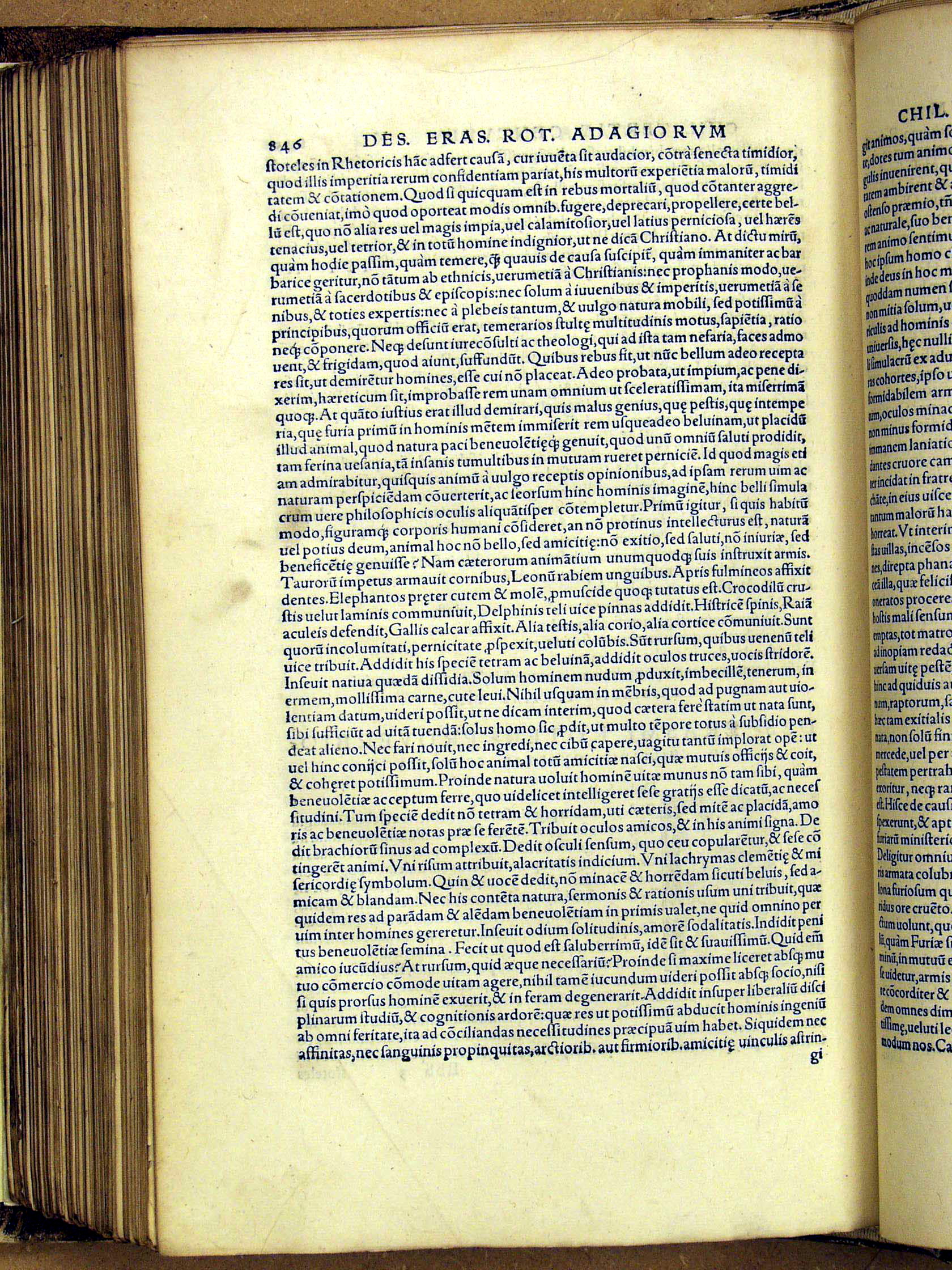


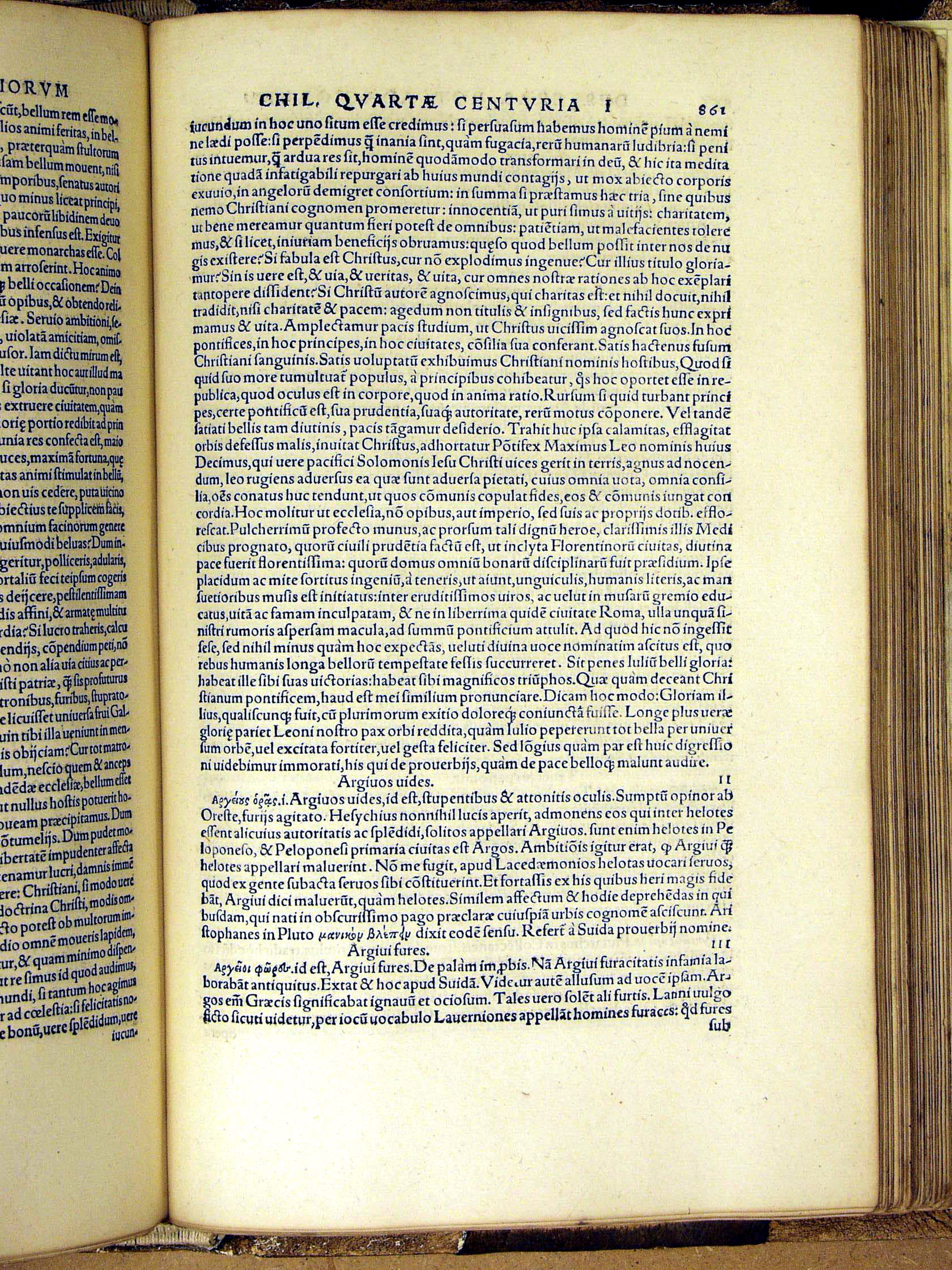

Dulce bellum inexpertis: Martyn, The historie and lives of the kings of England (London, 1638), emblem illustration 9
Eiice primum trabem: De Montenay, Cent Emblèmes Chrestiens (Frankfurt, 1619), emblem 18
Si deus nobiscum, quis contra nos?: Whitney, A choice of emblemes (Leiden, 1586), emblem 175 quotes the comment
Quis contra nos?: Paradin, Les devises héroïques (Antwerp, 1563), emblem 131 quotes the comment
La guerre duolce aux inexperimentez: Corrozet, Hecatomgraphie (Paris, 1540), emblem 75
Iconclass: 56F13:45A1 (Feeling of) Attraction❧war 54AA31 Inexperience
Loci Communes: Imperitia (Inexperience, lack of skill, Inexpérience)
IV i 2 Argivos vides You are seeing Argives
Αργείους ὁρᾷς, id est, Argivos vides, id est, stupentibus & attonitis oculis. Sumptum opinamur ab Oreste, furiis agitato. Hesychius nonnihil lucis aperit, admonens eos, qui inter helotes essent alicuius autoritatis, ac splendidi, solitos appellari. Argivos, sunt enim helotes in Peloponneso, & Peloponnesi primaria civitas est Argos. Ambitionis igitur erat, quod Argivi quam helotes appellari maluerint. Non me fugit, apud Lacedaemonios helotas vocari servos, quod ex gente subacta servos sibi constituerint. Et fortassis ex his quibus heri magis fidebant, Argivi dici maluerunt, quàm helotes. Similem affectum & hodie deprehendas in quibusdam, qui nati in obscurissimo pago, praeclare cuiuspiam urbis cognomen adsciscunt. Aristophanes in Pluto μανικὸν βλέπειν dixit eodem sensu. Refertur à Suida proverbii nomine.
[greek], You are seeing Argives, that is, 'You look with stupefied and dazed eyes.' I think the source is Orestes driven mad by the Furies. Hesychius sheds some light on this when he informs us that those who were distinguished and of some authority among the Helots were customarily called 'Argives,' for the Helots are inhabitants of the Peloponnese and the principal city of the Peloponnese is Argos. It was a sign of ambition among them therefore that they preferred to be called Argives rather than Helots. I am not forgetting that among the Spartans the slaves were called Helots because the Spartans conquered them and made them their slaves. And perhaps of these the ones trusted more by their masters preferred to be called Argives rather than Helots. You can find a similar feeling even nowadays in certain people who were born in some quite obscure village but take a surname from some famous city. Aristophanes in his Plutus used the expression 'to look mad,' in the same sense. It is referred to as proverbial by Suidas.
Facsimile:
Iconclass: 31A31:32B2(ARGIVES) sight, looking (one of the five senses)❧historical peoples and nationalities (ARGIVES) 31A4640 Madness 95A(ORESTES)313 Orestes is harassed by the Furies
Loci Communes: Tristitia, laetitia (Sadness, joy, Tristesse, joie)
IV i 3 Argivi fures Argive thieves
Αργεῖοι φῶρες, id est, Argivi fures. De palàm improbis. Nam Argivi furacitatis infamia laborabant antiquitus. Extat & hoc apud Suidam. Videtur autem allusum ad vocem ipsam. Argos enim Graecis significat ignavum et ociosum. Tales vero solent ali furtis. Latini vulgo, ficto, sicuti videtur, per iocum vocabulo Laverniones appellant, homines furaces, quod fures sub tutela Lavernae deae essent: in cuius luco obscuro atque abdito, soliti sunt furto sublata praedamque defodere. Autor Festus.
'[greek], Argive thieves. Said of those who are openly dishonest. In ancient times the Argives suffered from a bad reputation for their inclination to steal. This is recorded in Suidas; but there seems to be an allusion to the word itself, for argos in Greek means 'lazy' and 'unoccupied.' Such people in fact are in the habit of living by theft. The Romans, using a word humorously derived as it seems, commonly call thieves Laverniones, because they are under the protection of the goddess Laverna, in whose dark and secret grove they are accustomed to bury their booty and the gains of their thieving. The authority for this is Festus Pompeius.
Facsimile: 
Iconclass: 32B2(ARGIVES) historical peoples and nationalities (ARGIVES) 44G54 thief 57AA61 Dishonesty, Falsety
Loci Communes: Rapacitas et avaritia (Rapacity and greed, Rapacité et avarice)
IV i 4 Mars Rex Mars is king
Αρης τύραννος. id est, Mars rex. Suidas interpretatur congruere in principem, qui vi, non legibus Rem publicam tractat. Zenodotus ortum putata Timotheo Atheniensium Imp. qui multa felicissime gessit adversus Persas & Asianos, & cuius ductu florebat Attica. Unde dictum est Mars rex. Hesychius proverbium recenset tantum. Indicat Suidas aliquando Graecis ἄρη dici ferrum ipsum. Itaque potest hic esse sensus proverbii: ferrum rex, quoties res vi geritur.
[greek], Mars is king. Suidas explains this as applying to a ruler who controls the state by force, not by law. Zenodotus believes the origin may have been Timotheus, ruler of the Athenians who achieved many successes against the Persians and Asian forces, and whose leadership brought prosperity to Attica. The expression 'Mars is king' comes from this. Hesychius merely records the proverb. Suidas tells us that the Greeks sometimes called iron itself 'Ares,' so this could be the meaning of the use of the proverb 'Iron is king' whenever something is done by force.
Facsimile:
Iconclass: 92B4:44B113 (story of) Mars (Ares)❧king 44B17:57AA91 bad ruler❧Cruelty, Ferocity; 'Crudeltà', 'Ferocità' (Ripa)
Loci Communes: Justitia (Justice, Justice); Vis injustia (Unjust force, Force injuste)
IV i 5 Attagen Woodcock
Αττᾶγας. Suidas indicat hoc cognominis proverbiali ioco dici solere in servos stigmaticos, quod haec avis plumas habeat, variis colorum notis distinctas. Aristoph. in Avibus: Εἰ δὲ τυγχάνει τὶς ὑμῶν δραπέτης ἐστιγμένος, Ατταγᾶς οὗτος παῤ ἡμῖν ποικίλος κεκλήσεται. id est, Si quis è vobis erit fugitivus atque ustus notis. Attagen is sanè apud nos varius appellabitur. Quamobrem eam avem ibidem appellat πτεροποίκιλον. Ad eundem modum ταὼς, id est, pavones appellant Graeci nitidius cultos, et versicoloribus amictos. Caeterum de Attagena plura dicemus in proverbio: Attagenis novilunium.
'[greek], Woodcock. Suidas tells us that branded slaves were called by this nickname as a sort of proverbial joke, because the woodcock has feathers distinguished by diverse patches of colour. In the Birds Aristophanes says:
If anyone among you is going to be a deserter and branded with marks,
Among us he will certainly be called a variegated woodcock.
For this reason, in the same play, he calls this bird 'motley feathered.' In the same way the Greeks call 'peacocks' people who adorn themselves brilliantly and wear multi-coloured clothes. However I shall have several things to say about the woodcock in the proverb 'The woodcock's new moon.
Facsimile:
Iconclass: 25F37(WOODCOCK) shore-birds and wading-birds: woodcock 46A18 slavery; serfs and enslaved persons 54BB12 Profanation
Loci Communes: Contemptus et vilitatis (Contempt and worthlessness, Mépris et bassesse)
IV i 6 Tenedius homo A man of Tenedos
Τενέδιος ἄνθρωπος. i. Tenedius homo. Plutarchus in adagionum collectaneis, ait dici solitum de homine tetrico, formidabilique aspectu. Originem, sicuti plerumque aliàs varie tradunt. Suidas ait regem quempiam Tenedi fuisse, cui nomen tenes, qui legem tulerit, atque induxerit morem, ut a tergo iudicis, adstaret quispiam securim tenens, vi delicet in hoc paratus, ut qui perperam quidin iudicio dixisset, opinamur mendacium aut falsum testimonium, eum protinus securi feriret. Hoc interpretamenti fermè convenit cum eo, quod ante commemoravimus in adagio: Tenedia securis. Alii tradunt in hunc modum, haud tamen cum his pugnantia. Cygnus Neptuni filius, pater Hemitheae & Tenae, novercam liberis suis induxit. Evenit autem ut Tenes apud patrem insimularetur à noverca, quod sese de stupro interpellasset, id cum ille verum esse crederet, iuvenem in capsam inclusit, unaque Hemitheam sororem, quod fraterni fati comes esse desideraret, simulque in mare praecipitavit. Id scrinium delatum est Leucophrynem, cui postea Tenedo commutatum vocabulum, videlicet à Tene, Cygni filio. Qui progressu temporis nactus imperium eius loci, quod modo diximus exemplum induxit, ut in tribunalibus adsisteret, qui securim in caput accusantis vibratam sustineret. Quod si quis fuisset calumniae convictus, eum protinus vivum securi dissecaret. Id spectaculi quoniam formidabile videbatur, in proverbium abiit: ut Tenedius homo diceretur, qui minaci trucique esset aspectu. Pausanias in Phocis variat nonnihil in narratione, qua de re nobis dictum est alio loco in proverbio, Tenedia securis M. Tullius lib. ii. epist. ad Q. fratrem: Tenediorum igitur libertas Tenedia securi praecisa est, quum eos praeter me & Bibulum & Calidium & Favonium, nemo defenderit. Sentit libertatem rigide, & in totum negatam.
[greek], A man of Tenedos. In the Collected Proverbs Plutarch says this was used of a man of severe and formidable appearance. The source, as is generally the case for other proverbs, is variously reported. Suidas says there was a certain king of Tenedos, called Tenes, who made a law and brought in the custom that behind the judge there should stand someone holding an axe clearly ready to strike immediately anyone who said anything untruthful during a trial - meaning, I believe, a deliberate lie or false testimony. This sort of interpretation fits clearly with what I have recalled in the adage 'An axe from Tenedos.' Others tell the story in the following way, which is, however, not incompatible with this. Cygnus, the son of Neptune and father of Hemithea and Tenes, introduced to his children a stepmother. Subsequently however Tenes was accused by the stepmother before his father of having importuned her to commit adultery. The father, believing this to be true, shut the young man up in a chest with his sister Hemithea, because she wanted to be with her brother in his fate, and threw them both into the sea. The box was thrown up on Leucophrys, whose name was later changed to Tenedos, after Tenes the son of Cygnus, of course. In the course of time, Tenedos obtained power on the island and, as we have just said, introduced the warning custom whereby there should be a person in the courts who held a quivering axe over the head of an accuser. For if anyone were convicted of making false accusation he would be immediately cut down as he stood. Since this was seen as a fearful spectacle, it became proverbial to call 'a man of Tenedos' anyone who was of threatening and fierce appearance. In his book on Phocis Pausanias tells a somewhat different story, as I have recounted elsewhere in the proverb 'An axe from Tenedos.' In the second book of his Letters to his brother Quintus Cicero says: 'So the freedom of the Tenedians was cut off by the Tenedian axe, when, apart from myself, Bibulus, Calidus, and Favonius, no one would defend them.' He means that freedom had been strictly and entirely denied.
Facsimile:
Iconclass: 44G3:44G159 criminal law; punishment❧perjury 44G321(AXE) instruments of torture, execution or punishment (AXE) 53C12 Severity; 'Severità' (Ripa) 61D(TENEDOS) geographical names of countries, regions, mountains, rivers, etc. (TENEDOS) (TENEDOS)
IV i 7 Tenedius patronus A Tenedian defender
Τενέδιος συνήγορος, id est, Tenedius advocatus. Eodem è fonte profectum est, et hoc dici solitum de eo, qui compendio causam expedit, litisque nodum ocius dissecat. Ductum a Tenedia securi, de qua prius dictum est, Suidas ait apud Tenedios duas secures suspensas ostendi. Aristoteles apud eundem, illud addit, praeter ea quae recensuimus, in Asserina, is est locus quispiam in Tenedo, fluviolum esse, in quo cancrorum testis, navigiorum utantur vice. Eas ita dissecant, ut securis speciem prae se ferant. Proverbii meminit & Stephanus in locorum catalogo, addens dici solitum de advocato rigido duroque, quod illic non esset tutum quidvis garrire in iudicio.
[greek], a Tenedian advocate. This has come from the same source and was usually said of a lawyer who dispatches a case with economy and cuts through the tangle of a dispute swiftly. The origin is the Tenedian axe, which I spoke of in the previous adage. Suidas states that among the Tenedians two axes were hung on display. According to the same author Aristotle says, in addition to the points I have noted, that in Asserina, which is some place in Tenedos, there is a stream where they use the shells of crabs as boats. They cut these open in such a way that they look like an axe. Stephanus recalls the proverb in his Catalogue of places where he adds that the expression was used of a lawyer who was stern and austere, for in Tenedos it was not safe to babble on in any way you liked in the courts.
Facsimile:
Iconclass: 44G3:44G159 criminal law; punishment❧perjury 44G321(AXE) instruments of torture, execution or punishment (AXE) 51M11:44G41 Swiftness, Speed; 'Agilità', 'Celerità', 'Velocità' (Ripa)❧litigation, legal proceedings, lawsuit 61D(TENEDOS) geographical names of countries, regions, mountains, rivers, etc. (TENEDOS) (TENEDOS)
IV i 8 Εγκεῶτις ἡμέρα Which day in Ceos?
Εγκεῶτις ἡμέρα. Plutarchus in collectaneis. si modo verax est titulus, tradit hoc dici solitu de his, qui convivium agunt, aut exhibent. Idque hinc manasse, quod olim apud Ceos mos fuerit, ut qui magistratum inirent, epulum exhiberent populo. Quod si quando plures fuissent magistratus, dies inter sese distribuebant. Itaque cum sibi occurrerent, rogabant τίς ἡμέρα; id est, Quis dies? Ea vox in vulgi iocum cessit. Videtur autem vox ἐγκεῶτις, data opera ridicule conflata ex his verbis, ἐν κείῳ, id est, in Ceo quis, subaudi dies.
[greek]. In his Collected Proverbs Plutarch (if the title is correct) reports that this used to be said of those who propose or offer a feast, and that it comes from the fact that among the Ceans it was the custom for anyone who went into the magistracy to offer a banquet to the people. When several people became magistrates they shared out days among themselves, and so, when they met each other they asked [greek] 'Which day is it?' The expression became a popular joke. It seems however that the word [greek] was a deliberate, absurd contraction of the words [greek] 'In Ceos which?' - 'day' being understood.
Facsimile: 
Iconclass: 25H14:61D(CEOS) island❧geographical names of countries, regions, mountains, rivers, etc. (CEOS) (CEOS) 41C5 celebration meal, feast, banquet 44G13 magistracy, judges 51D1 Order, Arrangement, Organization
Loci Communes: Vices officii (The vicissitudes of duty, Les vicissitudes du devoir)
IV i 9 Versatilis Artemon An Artemon, going the rounds
Ο περιφόρητος ἀρτέμων. i. Versatilis Artemon. Extat in iisdem Collectaneis. Aiunt dici solitum de his, quorum gratia vehementer decertatur. Nam Artemonem adolescentem fuisse quempiam certatim adamatum à mulieribus ob insignem formam, quem suspicor ob id dictum περιφόρητον, vel quod circumferretur in ore omnium versans, vel quod passim obambularet, velut ostentans sese. Alii malunt Artemonem machinarium fuisse fabrum, in arte praecellentem, temporibus fermè Periclis. Qui cum claudus esset, passim suas machinas circumferebat. Athenaeus in duodecimo Dipnosophistarum libro referens hoc proverbium citat autorem Chamaeleontem Ponticum, qui testatur Artemoni περιφόρητου, cognomen additum, quod praedeliciis in lecto circumferretur, sive quod is postea coeperit voluptuariam ac mollem agere vitam, cum antea pauper fuisset. Ex Anacreonte citat haec de eodem: Ψιλὸν μέν ἔχων περὶ πλευρῇσι βοὸς νεόπλουτον εἴλημα κακῆς ἀσπίδος, ἀρτόπολοισιν καὶ ἐθελοπόρνοισιν ὁμιλέων κίβδηλον εὑρίσκων βίον, πολλὰ περᾶν μὲν ἐν δουρὶ τιθεὶς αὐχένα, πολλὰ δὲ ἐν τροχῷ, πολλὰ δὲ κόνην πώγωνάτ᾽ ἐκτετιλμένος. id est, Tenuem quidem habens circum latera bovis recentem amictum mali clypei, cum panum cauponibus & prostibulis consuetudinem agens, insinceram inveniens vitam: saepe ut superet, in hasta ponens cervicem, saepe rursum in rota, saepe vero coma barbaque revulsus. Quibus ex verbis apparet dictum in hominem sui dissimilem, ac moribus in aequalibus praeditum, qualem perhibent fuisse Alcibiadem, qui, ut refert Satyrus, apud Iones deliciabatur, ut illos quoque vinceret, apud Thebanos exercitamentis corporis erat quovis Boeoto Boeotior. Apud Thessalos equestris rei studio superabat ipsos: Apud Lacedaemonios temperans ac patiens, magis ipsis Lacedaemonibus: in Thracia Thraces superabat vinolentia. Id & cum laude fieri potest. Ceterum περίτριμμα probrose dicitur, qui se per omne rerum genus voluit. Indicat Pollux lib. vi. Plutarchus indicat, fuisse claudum quempiam qui vehiculo circumferretur, quum alioqui meticulosus esset ac plerunque desideret domi, duobus famulis scutum aereum supra caput sustinentibus, ne quid ex alto decideret in caput. Quod si quando cogebatur exire, vehiculo utebatur, sed humili, metu ruinae. Huiusmodi quaedam refert Plutarchus in vita Periclis. Proinde dictum videtur in molles, ac meticulosos. Quin & Plinius lib. xxxiiii. cap. viii. inter Polycleti opera meminit Artemonis, qui dictus sit περιφόρητος. Allusum autem est ad artemonem nauticum, quo vela circumferuntur, & onera tolluntur è navibus, Nam hodie nautae ad utrunque utuntur antemna. Nam Artemon Graece proprie est machina tollendis oneribus apta, quam Latini, ni fallor, trochleam appellant. Ea sic composita est, ut facile circumvoluatur.
[greek], An Artemon, 'rotating.' This is found in the same Collected Proverbs. It is stated there that it was customarily said about those whose good looks are the object of much competition, that this Artemon was a certain young man who was greatly loved by women for his outstanding beauty. I suspect that he was said to be 'rotating,' either because his name was bandied about on everyone's lips or because he walked around to show himself off. Others prefer to believe that Artemon was a maker of machines in the time of Pericles, who was outstanding in his craft, and, being lame, carried his machines around everywhere. In book 12 of his Doctors at Dinner Athenaeus refers to this proverb and quotes the authority of Chameleon of Pontus who states that Artemon was given the nickname 'rotating' because he had himself carried around in a litter for the pleasure of it, or because, having at first been poor, he subsequently began to lead a life of ease and luxury. Athenaeus quotes the following about the same person from Anacreon:
He wore at his side the thin ox-hide covering
Of a poor shield and associated with dealers in loaves
And prostitutes, making a fraudulent living; often,
To survive, he had to submit his neck to the spear, or else
To the wheel, often his hair and beard were plucked.
From these words it seems the adage refers to a man who is inconstant and changeable in his habits, such as Alcibiades was reputed to be. He, as Satyrus tells us, when he was among the Ionians was more luxurious than the Ionians; when among the Thebans he was more Boeotian in physical exercise than any Boeotian; among the Thessalians he was more devoted to horsemanship than they; among the Spartans more temperate and hardy than the Spartans; in Thrace more of a wine-bibber than the Thracians. He could even earn praise in becoming these things. But [greek] is an abusive term for someone who is a shuffler in every sort of matter. This is shown by Pollux in book 6. Plutarch tells us Artemon was a certain lame man who was carried around in a litter and who was somewhat fearful and inclined to remain most of the time at home with two slaves holding a bronze shield over his head in case something fell on it from above. Whenever he did have to go out, he was carried in a litter, but close to the ground for fear of falling. Plutarch relates something like this in his life of Pericles. The word seems therefore to be used of soft-living and fearful people. Indeed Pliny too, in book 34 chapter 8, recalls an Artemon among the works of Polycletus called [greek]. There is also a play here on the word artemo, a tackle-block on a ship by which the sails can be turned and cargo lifted out of ships - sailors still use the yard-arms for both purposes nowadays. Artemon in Greek is, properly speaking, a device for raising loads which Latin speakers, if I am not mistaken, call a troclea. It is constructed so that it can be rotated easily.
Facsimile:
Iconclass: 31A2733(+66) being carried (+ circular) 31D14:51D41 adult man❧Grace, Charm; 'Gratia', 'Venustà' (Ripa) 41D131 dandy, beau 47B1:52A42 handicrafts, craftsman at work❧Invention, Inventiveness; 'Inventione' (Ripa) 53AA21 Inconstancy; 'Incostanza', 'Instabilità', 'Instabilità overo Incostanza' (Ripa) 98B(ARTEMON) male persons from classical history (ARTEMON)
Loci Communes: Asperitas, morositas (Harshness, moroseness, Rudesse, morosité)
IV i 10 Placiadae Placiadae
Πλακίαδαι καὶ στέλαιον. id est, Placiadae etiam stelaeum. Plutarchus in iisdem commentariis ostendit dici consuevisse de deprehensis adulteris, et contumeliose, sicuti merentur, tractatis. Vicus est quidam Atticae regionis, cuius incolae Placiadae vocantur. Apud hos moris erat, ut qui fuisset in adulterio deprehensus, ignominiosas poenas daret, impactis inpudendam corporis partem raphanis, qui apud illos mirae magnitudinis esse dicuntur. Quod si raphani forte non fuissent ad manum, stelaeo utebantur, id est, ligonis ligno. Non ignoramus hoc alio nobis dictum loco, sed mutilatum, eoque diximus operae pretium hic integre repetere.
[greek], Placiadae and a hoe handle. In the same collection Plutarch declares this used to be said of those taken in adultery and dragged off, as they deserved, with insults. There is a village in the territory of Attica whose inhabitants are called Placiadae. It was their custom to inflict punishment and disgrace on those taken in adultery by pushing radishes up the anus; the radishes in their country are said to be of extraordinary size, and if radishes were not available they used the handle of a hoe. I am aware that I have spoken of this elsewhere, but incorrectly, and I thought it was necessary to set it down here afresh.
Facsimile:
Iconclass: 31A2748:25G22(RADISH):31A22371 pushing something❧(non-fruit) products of plants or trees: radish❧anus 42D392 adultery revenged
Loci Communes: Ultio malefacti (Vengeance for a wrongdoing, Vengeance d'un méfait)
IV i 11 Iustitiae oculus A paragon of justice
Δίκης ὀφθαλμός. id est, Iustitiae oculus, dicitur sincerus & incorruptus iudex, aut ipsum etiam iudicium. Adagii meminit Suidas, Sumptum apparet ex illa Chrysippi descriptione apud Aulum Gellium lib. 14. cap. 4. in qua iustitiae oculos tribuit acres, rectos atque immotos: quod eum qui recte sit iudicaturus, non oporteat huc aut illuc ab honesto oculos deflectere. Celebratur hic senarius proverbialis: Εστιν δίκης ὀφθαλμὸς ὅς τὰ πάνθ᾽ ὁρᾷ. id est, Est oculus aequitatis omnia intuens
[greek], An eye of justice, is an expression used of an upright and uncorrupted judge, or of a judgment itself. The adage is recalled by Suidas. It seems to derive from the description by Chrysippus in Aulus Gellius book 14 chapter 4 in which he attributes to Justice penetrating, direct, and unmoving eyes. It is important that one who is to judge rightly should not allow his gaze to be diverted this way or that from what is honest. This proverbial verse is famous: 'There is an eye of justice which perceives all.'
IV i 12 Iustitia iustior More just than justice
Δίκης δικαιότερος. id est, Iustitia iustior. Proverbialis hyperbole de ve hementer integris et incorruptis. Ve teres enim iustitiam deam faciebant cuius imaginem eleganter depinxit Chrysippus apud Aulum Gellium.
[greek], More just than justice. This is a proverbial hyperbole for the rigorously upright and uncorrupted. The ancients made Justice a goddess, and there is an elegant description of her image by Chrysippus, as I have just said, in Aulus Gellius.
IV i 13 Quantum ex Bacchanalibus As old as the Bacchanalia
Οσον ἐκ διονυσίων. i. Quantum ex Dionysiis sive Bacchanalibus. Suidas proverbii loco re fert, sed perturbatius, ut adsolet. Antiquitus apud Atticos consueverunt annos ac numerum accedentem a Dionysiis numer re, quemadmodum ex Olympiadibus. Iterabatur autem Dionysiorum festum tertio quoque anno. Unde Virgilius Trieterica vocat. Suidas sic integre recenset ἐξ αὐτοῦ σχεδὸν τοσοῦτον ὅσον ἐκ διονυσίων, id est, Ex hoc prope tantum, quantum ex Bacchanalibus addit dictum de rebus vehementer expetendis, atque exspectatis. Ad hoc facit quod refert ex auctore quodam ὦ διονύσια, αὐτὰ μὲν ὄζουσ᾽ ἀμβροσίας καὶ νέκταρος. id est, O Bacchanalia, ipsa quidem redolent ambrosiam & nectar.
[greek], As old as the Dionysia or Bacchanalia. Suidas records this as a proverb, but somewhat confusedly as usual. In ancient times the Athenians used to calculate the years and the number attached to them from the Dionysia, as they did from the Olympiads. The festival of the Dionysia was repeated every third year. This is why Virgil calls them trieterica. The complete phrase used by Suidas is as follows: 'Almost as far from that as from the Bacchanalia.' He adds that it is said about things that are very desirable and fervently awaited. This is supported by what he relates from some unknown author: 'O the Bacchanalia, they are fragrant with ambrosia and nectar.'
Facsimile: 
Iconclass: 12E84(DIONYSUS) Dionysian mysteries 51FF51 Oldness
Loci Communes: Ingrata ob vetustatem (Unpleasant because of age, Déplaisant à cause de l'ancienneté)
IV i 14 Mercator est He's a shopkeeper
Εμπορός ἐστι σκηπτόμενος, id est, Mercatore se assimulat. Dicedum in eum, qui ob timiditatem causas commentitias praetexit, ne cogatur subire discrimen. Suidas ex Aristophane citat, apud quem tum in Pluto, tum in Ecclesiazusis quispiam inducitur, loquens in hunc modum, ur dicat sese fingere mercatorem esse, quoties ad bellum ire iubetur, quod negotiatores non cogerentur exire: quoniam expediebat illos relinqui, quo de commeatu prospiciant. In Pluto sic habet locus: Γεωργὸς εἰ; μελαγχολᾶν μ᾽ ὅτως οἴει᾽ Αλλ᾽ ἔμπορος; ναὶ σκήπτομαίγ᾽ ὅταν τύχω.. id est, Num cultor agri es? me ne sic furere putas? Negotiator? Simulo si quando est opus. Alter sic habet: Αλλ᾽ ἔμπορος εἶναι σκήπτομαι. id est, Quasi sim negociator, ita memet gero. Non usquequaquam discrepat hinc evangelica parabola de his, qui invitati ad nuptias, variis causationibus excusant.
[greek], He pretends to be a shopkeeper. Can be said of someone who is fearful and makes up false reasons to avoid being put in danger. Suidas quotes it from Aristophanes; in both the Plutus and the Women in Parliament by this author someone is introduced who says something like this: that he pretends to be a shopkeeper whenever he is ordered to go to war, because business men were not obliged to turn out. It was useful to release them so that they could look after provisioning. In the Plutus the passage is as follows:
Are you a tiller of the field?
Do you think I am so mad?
Are you a business man?
I pretend I am when it's necessary.
The other passage is: 'I behave as if I were a business man.' This is not entirely different from the gospel parable about those who are invited to a wedding and excuse themselves for various reasons.
Facsimile:
Iconclass: 32A42 coward 46B24 shopkeeper 54AA8 Cowardice 57AA6221 Lie; 'Bugia' (Ripa)
Loci Communes: Proprii commodi studium (Pursuit of one's own advantage, Recherche de son propre intérêt)
IV i 15 Donum quodcunque dat aliquis proba For any gift that is given be grateful
Δῶρον δ᾽ ὅτι δῷ τις ἐπαίνει. id est, Donum quodcunque probato. Proverbium admonet boni consulendum esse munus, aut officium consiliumve, quod offertur ab amico. Unde natum sit indicat Strabo geographus libro sexto. Cum Achivi iussissent oraculo Crotonem condere, missus est Myscellus quidam, qui civitatis futurum locum consideraret. Is cum iam Sybarim aedificatam cerneret, videreturque is locus magis idoneus, repetiit oraculum, consuluitque deum, num fas esset hanc pro illa condere. Numen ad hunc modum respondit: Μύσκελλε βραχύνωτε πάρες σέθειν ἄλλο ματεύων, Κλάσματα θηρεύεις, ὀρθὸν δ᾽ ὅτι δῷ τις ἐπαίνει . Eos versus interpres vertit in hunc modum: Terga brevis Myscelle tuo de pectore omitte. Cetera perquirens, frustra en venaris intqua. At rectum quodcumque datur, tu laude probato. Exstat idem in collectaneis adagiorum, sed multo depravatissimum. Quamquam ex vocum veluti ruinis huiusmodi lectio colligi poterit: Μύσκελλε βραχύνωτε παρὲκ θεὸν ἀλλὰ μαρεύων, Οὔδαλα θηρεύεις, δῶρον δ᾽ ὄτι δῷ τις ἐπαίνει . Diversa inquirens a numine Myscele gibber, Captas frtuola, quod datur, aequi consule donum. Miscellus dictus videtur ob crurum exilitatem, quae habeat murinis similia, Brachynotus ob dorsum contractum. Diximus alias Crotonem saluberrimam fuisse, Sybarim pestilentem. Refert et alia Suidas de oraculis Myscello redditis, sed quae non ad modum faciant ad enarrationem proverbii.
[greek], For any gift be grateful. The adage tells us that a gift, a service or advice offered by a friend is to be appreciated. The source is indicated by Strabo the Geographer in book 6. When the Greeks were commanded by the oracle to establish the city of Croton a certain Myscellus was sent to inspect the future site of the city. When he saw Sybaris already built and thought the site was the most suitable, he returned to the oracle and consulted the god as to whether it was permitted to found Sybaris instead of Croton. The god answers thus: [greek] . These lines are rendered by the translator thus:
Expel it from your breast, short-backed Myscellus;
When you seek other answers, see! you strive in vain for what is unjust.
But take whatever is rightly given with appreciation.
This is also extant in the Collected Proverbs, but in a very corrupt state; however, from the ruins of words, if I may use the expression, the following reading might be put together: [greek] . When you ask the god for something different, hump-backed Myscellus,
You may get something worthless; be happy with the gift that is given.
He was called Myscellus, it seems, because of his thin legs, which were like those of a mouse, and Brachynotus because of his bent back. I have said elsewhere that Croton was a very healthy place, and Sybaris was insalubrious. Suidas relates other things concerning oracles given to Myscellus, but not relevant to the explanation of this proverb.
Facsimile:
Iconclass: 33A41 gifts being accepted 57A8 Gratitude; 'Gratitudine', 'Memoria grata de beneficii ricevuti' (Ripa)
Loci Communes: Munus boni consulendum (A gift to be taken in good part, Un présent à prendre en bonne part)
IV i 16 Ithorus Ithorus
Ιθορος Suidas ait vocem proverbialem fuisse, in eum qui veluti instigator hortatorque foret aliis. Translatum opinamur a nautis, quos remigantes naucleri vox animat ad gnaviter laborandum: sive ab equorum cursu. Plutarchus in Symposiacis decade septima, problemate quinto scribit, ἱππόθορον appellatam cantionem ad incitandas equas. Consimilia tradit de praeceptis connubialib. Nam θορεῖν Graecis est impetu insilire. Unde & apud Homerum θούριος ἄρης appellatur ab adsultu citato. Apparet Graecam vocem compositam ex ἰθὶ, & ὀρεὶν incitare.
[greek]. Suidas affirms this expression was proverbial for someone who stimulated and encouraged others. I think it is taken from the usage of sailors, who are exhorted to work hard when they are rowing by the voice of the captain, or from horse racing. In decade 7 question 5 of his 'Tabletalk' Plutarch writes that the chant for encouraging horses was called the [greek]. He relates very similar things in the 'Precepts on Marriage.' In Greek [greek] means 'to leap in with a rush.' So too in Homer Ares is called [greek] 'impetuous' from his swift assault. It seems the Greek word is made up from [greek] 'exceedingly' and [greek] 'to exhort.'
Facsimile:
Iconclass: 46C23221 trireme, galley 46C2711(CAPTAIN) seaman (CAPTAIN) 54C22 Appeal
Loci Communes: Diligentiae (Diligence, Diligence)
IV i 17 Ne allia comedas et fabas Eat neither garlic nor beans
Ινα μὴ φάγῃ σκόροδα, μηδὲ κυάμους. i. Ne edas allia & fabas. Proverbiali videtur aenigmate dictum, pro eo quod est, ne bellis, néve in iudiciis adsis. Nam in bellum inferebantur allia commeatus militaris, Atque utinam ita fatis comparatum esset, ut hoc pestilentissimum hominum genus, qui bellis delect In iudiciis fabas esitabant, ne obdormiscerent. Haec quidem Suidas. Etiam. si magis putamus referendum ad calculos fabarios, quibus antiquitus ferebantur suffragia.
[greek], Eat neither garlic nor beans. This seems to have been said by way of a proverbial riddle, meaning 'Do not go either to war or to court.' Garlic used to be carried into battle as part of the soldiers' provisions. (If only it were in such abundant supply, that those who delight in wars, the foulest of men, should have nothing but garlic to eat - or whatever is worse!) In the courts people commonly ate beans to stop themselves going to sleep. This is what Suidas says in fact, though I think it is rather a reference to the bean-shaped pebbles that were used as votes in ancient times.
Facsimile: 
Iconclass: 25G4(BEAN) plants and herbs: bean 25G4(GARLIC) plants and herbs: garlic 41C652(BEANS) vegetables (BEANS) 44G1211 court-room 45A1 war
Loci Communes: Rixosus (Quarrelsome, Querelleur)
IV i 18 Mortuus per somnum vacabis curis If you dream that you die, you will be free of your cares
Θανὼν καθ᾽ ὕπνους φροντίδων ἔσῃ δίχα. id est, Curis vacabis mortuus per somnium. Versiculus vulgo iactatus apud Graecos, ex superstitiosa insomniorum observatione. Existimabant enim eum, qui se mori somniasset, a curis molestiisque liberatum iri. Quod mors finem doloribus imponere videatur, planeque imponit his, qui hinc in meliorem demigrant vitam. Fortassis ad eande pertinet sententiam, quod alibi retulimus. Νεκροὺς ὁρῶν, νέκρωσιν ἕξεις πραγμάτων.
[greek], If you dream that you die, you will be free of your cares. This is a line of verse commonly recited by the Greeks, and arising from superstitious observation of dreams. They believed that someone who dreamed he died would be freed from his cares and troubles, because death seems to mark an end to griefs, and clearly does so for those who depart from this life for a better one. Relevant to this same idea perhaps is the line I have recorded elsewhere: 'Your business will fail if you dream of the dead.'
Facsimile:
Iconclass: 31B33:31E prophetic dream❧death of human being 51AA4:56DD1 Nothingness, Absence❧Fear, Dread; 'Paura', 'Timidità o Timore', 'Timore' (Ripa)
Loci Communes: Conjecturae (Conjectures, Conjectures)
IV i 19 Animus heptaboëus A heart of seven ox-hides
Θυμὸς ἑπταβοειος, id est, Animus heptaboeus, sive ira heptaboea, de forti magnoque & invicto dictum. Epithetum sumptum a clypeo Aiacis, quem Homerus e(ptaboeion appellat, quod septem boum tergoribus esset obductus, atque ob id impenetrabilis. Et Ovidius: Dominus clypei septemplicis Aiax. Sumptum est adagium ex Ranis Aristophanis: Αλλὰ πνέοντας δόρυ καὶ λόγχας καὶ λευκοφόρους τριφαλείας. Καὶ πήλακας καὶ κνημΐδας, καὶ θυμοὺς ἑπταβοείους. id est, Sed pspirantes spicula & hastas, albasque in vertice cristas. Adde his galeas, adde his ocreas, animosque septibovinos.
[greek], A heart of seven ox-hides; another version is 'a sevenhide rage.' Said of someone who is big and strong, and invincible. The epithet originates with the shield of Ajax, which Homer calls [greek] because it was covered with the hides of seven oxen and therefore impenetrable. Ovid too has: 'Ajax, Lord of the seven-fold shield.' The adage comes from the Frogs of Aristophanes:
But belching javelins and spears, white plumes on their heads,
With helmets and greaves, and hearts of seven ox-hides.
Facsimile:
Iconclass: 49D11(7):47I21111(+451) numerals: 7❧ox (+ skins, fur, leather, etc. ~ crafts, industries, agriculture) 54A81 Fearlessness, Intrepidity; 'Intrepidità & Costanza' (Ripa) 54A71 Invincibility 95A(AJAX THE GREAT) Ajax the Great
Loci Communes: Audacia (Boldness, Audace); Clamosus (Noisy, clamorous, Bruyant)
IV i 20 Semper Ilio mala Troy is ill-fated ever
Αεὶ ἰλίῳ κακά. i. Semper Ilio mala. De vehementer calamitosis & afflictis. Troianorum excidium poetis multa tragoediarum argumenta ministravit, atque hinc proverbium. Refertur ab Eustathio in quartum Iliados librum. Stratonicus rogatus, cur nollet apud Ilienses vivere, respondit: ἀεὶ ἰλίῳ κακά. i. Semper Ilio mala. Autor Athenaeus lib. Dipnosophistarum octavo. Quamquam is locus non vacat mendo.
'[greek], Troy is ill-fated ever. Said of those who are exceedingly wretched and distressed. The fall of Troy offered the poets many subjects of tragedies, and this is how the proverb arose. It is mentioned by Eustathius in his commentary on the fourth book of the Iliad. And when Stratonicus was asked why he did not wish to live with the Trojans he replied, 'Troy is ill-fated ever.' The authority for this is Athenaeus in book 8 of the Doctors at Dinner (though this passage is not entirely without error).
Facsimile:
Iconclass: 54FF12 Fate, Doom 61E(TROY) names of cities and villages (TROY)
Loci Communes: Infortunii sive exitii (Misfortune or ruin, Malheur ou ruine)
IV i 21 Libera Corcyra, caca ubi licet Corcyra is free, shit where you will
Ελευθέρα κόρκυρα, χέζ᾽ ὅπου θέλεις. i.Corcyra libera, proin caces, ubi velis. Cum significabimus libertatem quidvis agendi. Citatur ab Eustathio in Dionysium, sed magis quadrabit, ubi significabimus impunitatem esse maleficis. Hic non absurde putamus referri posse quod Plutarchus narrat. Chii quidam cum apud Spartanos peregrinarentur, à coena non solum vomuerut, verum etiam incacarunt in sellas ephororum. Primum diligenter inquisitum est, quinam essent tanti facinoris auctores, daturi nimirum poenas si cives fuissent. Ceterum ubi compertum est factum a Chiis, Spartani dicebant: Chiis licere intemperanter agere.
Ελευθέρα κόρκυρα, χέζ᾽ ὅπου θέλεις, Corcyra is free, shit where you will. Said when we want to indicate that one is free to do anything. It is cited by Eustathius in his commentary on Dionysius, but it would be more apt when we want to signify that there is no punishment for the wicked. Here, I think, we can appropriately relate what Plutarch says. Certain Chians, sojourning with the Spartans, not only vomited after a banquet but emptied their bowels on the ephors' couches. At first there was a careful inquiry about who had committed such a villainy, for they would certainly be punished if they were citizens. But when it was found that it had been done by the Chians, the Spartans went about saying, 'Chians have permission to behave outrageously.'
Facsimile:
Iconclass: 25H14:61D(CORFU) island❧geographical names of countries, regions, mountains, rivers, etc. (CORFU) (CORFU) 31A62 defecation 51E11 Freedom, Liberty; 'Libertà' (Ripa)
Loci Communes: Libertas, veritas (Freedom, truth, Liberté, vérité)
IV i 22 Decernetur equa Thessalica The prize will be the Thessalian mare
Επικρινεῖται ἵππος θεσσαλική. i. Decernetur equa Thessalica, de summo praemio dicebatur, propterea quod antiquitus prima laus fuerit equarum Thessaliae. Id quod satis indicat oraculum Aeginensibus redditum. Citat Eustathius in secundum Iliados librum. Suidas refert, haud dum scimus ex quonam auctore: ἱππεῖς μὲν ἐν θετταλίᾳ καὶ θράκῃ, τοξόται δὲ καὶ τά κουφότερα τῶν ὅπλων ἐν ἰνδίᾳ καὶ κρήτῃ καὶ καρίᾳ i. Equites in Thessalia Thraciaque, sagittarii atque armatura levior in India, Creta & Caria. Finitimum est illi, quod alio dictum est loco: Pellenea tunica. Lepidius erit per ironiam.
'[greek], The prize will be the Thessalian mare. This expression was used for winning the first prize, because in ancient times Thessalian mares had the best reputation. This is clearly indicated by the oracle given to the Aeginetans. Eustathius quotes it with reference to the second book of the Iliad. Suidas, following I know not which author, says: 'Cavalry in Thessaly and Thrace, archers and lighter-armed infantry in India, Crete and Caria.' This adage is closely related to one discussed elsewhere: 'A tunic Pellene-style.' It will be wittier if used ironically.
Facsimile:
Iconclass: 43C2121(+31) horse-racing (+ the winner, victor, of a contest (sports, games, etc.)) 46C13141(+723) horse (+ female animal) 55A12 Reward, 'Praemium'; 'Premio', 'Remuneratione' (Ripa) 61D(THESSALY) geographical names of countries, regions, mountains, rivers, etc. (THESSALY) (THESSALY)
Loci Communes: Dignitatis (Dignity, Dignité)
IV i 23 Canis vivens e magdalia A dog living on a breadcrumb
Κύων ζῶν ἀπὸ μαγδαλίας. i. Canis vivens e magdalia. Eustathius in Iliados librum quartum ostendit dici solitum in parasitos, et alieno victitantes cibo. Magdaliam dicit, quasi furfurem, et manuum purgamentum. Ceterum apud alios auctores comperimus scriptam unicam dictionem, velut apud Hesychium: ἀπομαγδαλιὴ, inquit, στέαρ ἐν ᾧ τὰς χεῖρας ἀπεμάττοντο ἐν τοῖς δείπνοις, βαλόντες δὲ τοῖς κυσὶν ἀναλύοντες ἀπὸ δειπνων. i. Apomagdalia adeps, in quo abstergebant manus in conviviis, id proiciebant canibus, cum a cena discederent. Iulius item Pollux libro De rerum vocabulis sexto, capite decimoquarto: οἱ δὲ πάλαι ταῖς καλουμέναις ἀπομαγδαλίαις ἐχρῶντο,αἵ ἦσαν τὸ ἐν τῶν ἄρτῳ μαλακόν καὶ σταιτῶδες, εἰς ὃ ἐποψησάμενοι, τοῖς κυσὶν αὐτὸ παρέβαλον, ὅθεν καὶ λακεδαιμόνιοι κυνάδα τὴν ἀπομαγδαλίαν καλοῦσιν. i. Veteres autem utebantur apomagdaliis, sic enim vocabant id, quod est in pane molle ac pinguius, in quod absterso obsonio ipsum canibus abiciebant, unde et Lacedaemonii apomagdaliam appellant cynada. Aristophanes in Equitibus: ὑπερβαλεῖσθάι σε οἴομαι τούτοισιν, ἢ μάτην᾽ γἂν Απομαγδαλίας σιτούμενος, τοιοῦτος ἐκτραφείην. Iactat Halantopola superaturum se Cleonem impudentia et malis artibus, aut alioqui frustra pastum apomagdaliis evasisse tantum. Cui respondet Cleon: Απομαγδαλίας, ὥσπερ κύων, ὧ παμπόνηρε; πῶς οὖν Κυνὸς βορὰν σιτούμενος μαχῃ σὺ κυνοκεφάλῳ; id est, Apomagdalias ritu canis, sceleste, quo ergo pacto tu victitans canis cibo, cunocephalo repugnas? Apomagdaliarum mentio fit et apud Plutarchum in Lycurgo, quo quidem loco an interpres assecutus sit sensum sermonis, non satis nobis liquet. Graeca sich habent, δοκιμάζεσθαι δὲ τὸν βουλόμενον τοῦς συσσιτίου μετασχεῖν οὕτω φασί. λαβὼν συσσίτων ἔκαστος ἀπομαγδαλίαν εἰς τὴν χεῖρα, τοῦ διακόνου φερόντος ἀγγεῖον ἐπὶ τῆς κεφαλῆς, ἔλαβε σιωπῇ καθάπερ ψῆφον, ὁ μὲν δοκιμάζων ἁπλῶς, ὁ δὲ κρίνων σφόδρατῇ χειρὶ πιέσας. ἡ γὰρ πεπιέσμένη τῆς τετρημμένης ἔχει δύναμιν, κἂν μΐαν εὕρωσι τοιαύτην, οὐ προσδέχονται τὸν προσίοντα, βουλόμενοι πάντας ἡδομένους ἀλλήλοις συνιέναι. τὸν δὲ οὑτως ἀποδοκιμασθέντα κεκαδδεῖσθαι λεγουσι, κάδδος γὰρ καλεῖται τὸ ἀγγεῖον, εἰς ὅ τὰς ἀπομαγδαλίας ἐμβάλλουσι Reddat utcunque Graeca. Eum vero qui vellet esse convivii particeps, aiunt hunc in modum probare solitos: Unusquisque convivarum apomagdaliam in manum sumptam, veluti calculum tacite coniciebat in vas, quod minister gestabat in capite, alius quidem simpliciter probans, alius vero iudicans, vehementer manu premendo. Nam pressa tantundem valet, quantum calculus perforatus. Quod si vel unam talem compererint, non admittunt ingressum, volentes ut omnes lubentes inter sese convivant. Porro qui hoc modo probatus erat, caddissatum appellabant. Nam caddus dicitur vas, in quod coniciunt apomagdalias. Lapus autem vertit hunc in modum: Qui autem se convivii participem fieri velit, sic probari. Deinde singuli apomagdaliam sumentes in manum ministro vas super capite ferente, silentio quasi calcolum immittebant, qui reprobaret simpliciter, qui vero approbaret, manu vehementer imprimens. Nam quae apomagdalia pressa fuerit, perforati calculi vim habet. Quod si quam ex iis minus pressam offenderint, non admittunt ingredientem: quippe qui velint omnes invicem iucunde congredi. Qui vero sic reprobatus fuerit caddiscatum dicunt. Caddiscus namque vas vocatur, in quod apomagdalias immittunt. Haec si quis conferat cum his quae scribit Plutarchus, intelliget Graecum exemplar quod secutus est Lapus, fuisse diversum ab eo quod nobis dedit nuper officina Aldi. Ceterum de apomagdaltis quae ante convivium dabantur abstergendis manibus, meminit nonnihil et Athenaeus libro 9. Item lib. 4. tradit, apud Arcadas fuisse moris, ut a cena sacrificarent, non quidem lotis manibus, sed iure seu offa abstersis, et quo se absterserat quisque, id secum auferebat: id faciebant ob terrores nocturnos, qui in compitis solent accidere. Sic ille. Et arbitramur sane non inutile remedium adversus canes in compitis adorientes viatorem. Arbitramur huc respexisse Aristophanem in Equitib., cum Cleoni obicit quia aliis egregiis viris in exilium actis ipse delicatissimo hordeo abstergeret manus: Κᾀκεῖνος μὲν φεύγει τὴν γῆν, σὺ δ᾽ ἀχιλλείων ἀπομάττεις. id est. Atque ille quidem patriam liquit, dum tu abstergeris Achillcis. Interpres addit hordei genus Achilleum dici, veluti generosius, quo minus mirum est Theologis Achilleum argumentum vocari quod efficax sit, ac refutatu difficile.
[greek], A dog living on breadcrumb. Eustathius, commenting on the Iliad book 4, shows that this expression was used of parasites and those who lived on food provided by others. He says magdalia has something like the meaning of 'scurf or 'scrapings from the hands.' But among other authors I find the phrase is written as one word, as in Hesychius. He says: 'Apomagdalia is the adeps "soft crumb" on which they wiped their hands at banquets; they threw this to the dogs when they left the table.' Then we have Julius Pollux in book 6 chapter 14 of his Vocabulary: 'But the ancients made use of the apomagdaliai, which is what they called the soft, fatty part of bread; they wiped up their food with it and then threw it to the dogs. Hence the Spartans call apomagdalia Kvvas "dog food."' In the Knights of Aristophanes, the halantopola 'sausage-seller' declares that he will surpass Cleon in shameless and wicked tricks, or else his diet of apomagdaliai has been to no avail. Cleon answers him:
Apomagdaliai, like a dog? You villain; if you live on dog's food,
How can you defend yourself against this dog-faced monkey?
Apomagdaliai are mentioned in Plutarch too in the Lycurgus, though I doubt if the translator has followed the meaning of the passage. The Greek words are as follows: [see n6]. I would translate the Greek more or less thus:
A person who wanted to take part in a banquet was tested, so it is said, in
the following manner. Each of the guests took a piece of breadcrumb in his
hand and placed it in silence, like a voting pebble, into a [greek] "bowl" which
a servant was carrying on his head. Those who approved did simply that, oth-
ers passed condemnation by squeezing it hard in their hand. Such a flattened
piece of bread was the equivalent of a perforated pebble. If even one such vote
was found, they did not allow the applicant to join, for they wanted every-
one to have pleasure in eating together. But the person who was rejected
in this way was said to be caddissatus "caddied" for cadus was the word for
the bowl into which they put the pieces of bread.
Lapus however translates thus:
Anyone who wanted to be a participant in a banquet was tested as follows:
first each person took a piece of breadcrumb in his hand and put it like a
voting pebble, without saying anything, into a bowl which a servant carried
on his head; those who reprobaret 'disapproved' did simply that, but those
who approbaret 'approved' squeezed it hard with their hand. If any piece of
bread were flattened it had the same meaning as a perforated pebble. If they
found just one piece which was not flattened they did not admit the applicant,
because they wanted everyone to enjoy themselves together. But the person
who was thus reprobatus 'rejected' was said to be 'caddied,' for caddiscus [sic]
was the word for the bowl into which the pieces of bread were put.
If you compare this with what Plutarch wrote, you will see that the Greek text that Lapus followed was different from that which the Aldine press gave us recently. Be that as it may, Athenaeus also recalls some points in book 9 about pieces of bread which were offered before meals for wiping hands. He also relates in book 4 that among the Arcadians, if I am not mistaken, it was the custom to make a sacrifice after the meal, without actually washing their hands but simply wiping them with some broth and a piece of bread, and whatever they wiped their hands with each one took away with him. This they did to ward off the night-time terrors that tend to haunt crossroads. This is what Athenaeus says. I think this is obviously also a useful remedy for the dogs that assault travellers at crossroads. This is what Aristophanes was remembering, I think, in the Knights when he charges Cleon with the fact that while other outstanding people are driven into exile he wipes his hands with the most delicate barley cakes: 'And he is in exile while you wipe your hands on cakes of [greek] "finest barley."' The scholiast adds that this sort of barley is called Achilleum, as if it were more noble." It is not surprising then that an argument is called an 'Achillean argument' by theologians if it is effective and difficult to refute."
Facsimile: 
Iconclass: 34B11(+9451):41C621 dog (+ animal in search of food)❧bread, loaf 57AA6122 Sponging, Parasitizing
Loci Communes: Contemptus et vilitatis (Contempt and worthlessness, Mépris et bassesse)
IV i 24 Ficus post piscem Figs after fish
*su=kon met) i)xqun=, o)/spreon meta\ kre/a, id est, Apisceficum, a carnibus legumina. Athenaeus in Dipnosophistarum libro tertio meminit huius. Quadrabit, ubi dicemus aliis alia congruere. Quemadmodum et vulgo iubent ab esu carnium apponi caseum: ab esu piscium, nuces.
[greek], After fish figs, after meat vegetables. This one is recalled by Athenaeus in the third book of the Doctors at Dinner. It will be applicable when we want to say that different things suit different people. Just as it is common for people to like to have cheese after eating meat, and after fish nuts.
Facsimile:
Iconclass: 25G21(FIG) fruits: fig 25F6 fishes 41C68 fish; still life of fishes 51B2 Similarity, Likeness
Loci Communes: Similitudinis et congruentiae (Similarity and congruence, Similitude et convenance)
IV i 25 Ficus avibus gratae Birds like figs
Σῦκα φίλ᾽ ὀρνίθεσσι, φυτεύειν οὐκ ἐθέλουσιν. id est, Fici gratae avibus sunt, quae plantare recusant. Carmen heroicum citatur ab Athenaeo continenter eodem quo modo diximus loco. Quadrare videtur in voluptarios, ac fugitantes honesti laboris, cum tamen appetant emolumentum.
[greek], Birds like figs, but they will not plant them. This heroic hexameter is quoted by Athenaeus immediately after in the same passage as I have just mentioned. It seems to be applicable to lovers of pleasure or those who avoid honest work, though they want the advantages of it.
Facsimile: 
Iconclass: 25G21(FIG) fruits: fig 54AA11 Sluggishness, Inertia; 'Dapocaggine', 'Pigritia' (Ripa) 55B2 Luxury, Luxuriousness
Loci Communes: Luxus et mollicies (Luxury and softness, Luxe et mollesse)
IV i 26 Ingredi Iunonium Marching in the Junonium
Βαδίζειν ἡραῖον ἐμπεπλεγμένον. i. Incedere complicatum Iunonis sacrum. Exstat et hoc apud Athenaeum libro Dipnosophistarum duodecimo. Dictum apparet in fastuosum, ac lentum quorundam incessum, quem notat et Horatius in Sermonibus: Ut si Iunonis sacra ferret.
[greek], Marching in the sacred procession of Juno. This too is found in Athenaeus, book 12 of the Doctors at Dinner. It seems to have been uttered on the occasion of some splendid, slow procession, which Horace too mentions in his Satires: 'As if he were carrying the sacred objects of Juno .. .'
Facsimile:
Iconclass: 12B216:92C1 procession ~ non-Christian religions❧(story of) Juno (Hera)
Loci Communes: Arrogantia jactantiaque (Arrogance and boastfulness, Arrogance et vantardise)
IV i 27 Volentem bovem ducito Lead a willing ox
Τον θέλοντα βοῦν ἔλαυνε. i. Volentem bovem agito. Utere illorum opera, qui ex animo faciunt. Stultitia est, venatum ducere invitas canes, ut ait Plautus. Refertur ab interprete Theocriti. Diximus in proverbio, Praesentem mulge.
[greek], Drive a willing ox. Make use of the efforts of those who work willingly. It is madness to 'lead unwilling hounds to hunt' as Plautus says. The adage is recorded by the scholiast of Theocritus. I have mentioned it in the adage 'Milk the one that's handy.'
IV i 28 Habet He's got it!
Habet, proverbialiter dicitur, cum obtigit alicui quod expetivit, aut quo dignus est. Habet quod amet, similes habent labra lactucas. Sumptum autumant ab aucupantibus, piscantibus, aut venantibus: quibus reversis, sic aiunt: e)/xeis2 ti\: id est, Habes ne aliquid? Citatur ex Aristo phanis Nebulis. Seneca tragicus in Agamemno ne: Habet, peractum est. Terentius in Andria: Egomet continuo mecum, certe captus est, habet. Donatus ostendit, proprie de gladiatoribus dici, quos prius alii vident, quam ipsi se sentiant esse percussos. Ex ea acclamatione natum videtur proverbium.
He's got it! is a proverbial expression uttered when someone achieves what he was longing for or what he deserves: 'He's got what he wants; like lips like lettuce.' It is thought to be derived from fowlers, fishermen or hunters who, when they come home, are greeted with [greek]; 'Have you caught anything?' This is quoted from Aristophanes Clouds. In his Agamemnon Seneca the tragedian says: 'He has it. The deed is done.' In the Andria Terence has 'Immediately I say to myself. Indeed he's caught. He's had it.' Donatus shows this is said 'properly of gladiators when others notice they are wounded before they feel it themselves.' The adage seems to have originated with this cry.
Facsimile:
Iconclass: 43C1131 the kill (~ hunting) 54F1 Success; 'Evento buono' (Ripa) 55B Possession
Loci Communes: Votum (A vow, a wish, Vœu); Ultio malefacti (Vengeance for a wrongdoing, Vengeance d'un méfait)
IV i 29 Hercules hospitatur Being a host to Hercules
*hraklh=s2 ceni/zetai, id est, Hercules accipitur. Dictitatum, ubi quis diutius in convivio commorari videretur: propterea quia qui recepissent Herculem hospitio, convivioque, his multum temporis erat opperiedum, donec ille satur esset. Nam famelicum commovere parum crat tutum. Nec facile saturabatur edax, adeo, ut legatur solidos etiam boves uno devorasse convivio. Unde Graecis a)ddhfa/gos dictus est: et huic Larum avem consecrarunt, et ipsam boufa/gon. Legitur et certamen inisse cum Lepreo quodam uter citius bovem conficerer. Haec, aliaque permulta refert Athenaeus libro 10. de huius cdacitate, addens, et Thasio cuidam athletae, cui nomen Theagenes, tum et Miloni Crotoniatae bovem uno die confectum fuisse. Tales convivae contingant hostibus.
[greek], Being a host to Hercules. Often said when someone seemed to be outstaying his welcome at a feast, because those who received Hercules into their house and to a feast had to wait a long time before he was sated. It was not safe to disturb him while he was still hungry, nor was the glutton easily satisfied; we even read that he ate whole oxen at one meal. This is why he was called [greek] 'the glutton' by the Greeks who consecrated to him the seagull calling it the [greek] 'the oxeater.' We also read that he competed with a certain Lepreus to see which of them could finish an ox more quickly. These and many other stories about his greed are recounted in book 10 by Athenaeus, who adds that a certain athlete of Thasos, named Theagenes, and Milo of Croton finished an ox in one day. May our enemies have such guests!
Facsimile:
Iconclass: 32A43 glutton 51MM11:56BB41 Slowness, Tardiness; 'Tardità' (Ripa)❧Satiety 94L (story of) Hercules (Heracles)
Loci Communes: Tarditatis et cunctationis (Slowness and delay, Lenteur et retard)
IV i 30 Etiam in Deorum coetu Even in the assembly of the gods
*ka)\n qew=n a)gora=|, id est, Etiam in Deorum coetu seu contione. Quidam interpretantur de maiorem in modum probis, et aequis: quidam de vehementer maledicis. Addunt locum quempiam esse in Eleusine, vicinum Anactoro, vocatum qew=n a)gora\n, in quem non ingrediebantur, nisi bene ominantes: unde de quopiam praeter modum maledico dicebant, ou(=tos2 ka)\n qew=n a)gora=| dus1fhmh/s1ei, id est, Hic vel in Deorum contione male ominata loquetur.
[greek], Even in the assembly, or meeting of the gods. Some take this to refer to persons who are particularly good and just, others to the utterly scurrilous. It is said in addition that there is a place in Eleusis, near the Anactorum, called the Forum of the Gods, which people would not go into without speaking words of good omen. Hence they would say of someone who was outrageously scurrilous, 'This man would speak evil even in the assembly of the gods.'
Facsimile:
Iconclass: 59AA3 Vulgarity 59BB33 Ignobility, 'Vulgus'; 'Vulgo overo ignobilità' (Ripa) 93A meetings of the gods
Loci Communes: Maledicentia (Slander, abusive speech, Médisance)
IV i 31 Calliphanes Calliphanes
*kallifa/nhs2, i. Calliphanes. Ridicula quaedam huius hominis ambitio, proverbiali ioco fecit locum. Aiunt enim, huic fuisse poetae morem, ut diversorum carminum et orationum initia conscriberet, ad tres, aut quatuor versus, eaque pronuntiaret,ostentaretque, quo commentum ignorantibus, multiscius, et eruditus videretur. Meminit huius Athenaeus Dipnosophistarum libro primo, aitque cognomen fuisse Parabrycontis. Neque vero desunt his nostris temporibus id genus impostores literarii, quibus hoc modo studium est, ex summis aliquot diversae professionis auctoribus locos aliquot insignes, nec eos admodum vulgatos, ediscere. Quibus instructi, non verentur in conciliabulis quemvis quantumlibet eruditum adoriri. Atque illud assequuntur ptompte decantandis illis locis suis, ut imperitis plane Solones esse videantur. Cum quibus tamen Solonibus, si tertium aut quartum congrediare, Deum immortalem, nihil infantius, nihil indoctius, videlicet thesauris illis semel effusis. Vix haec scribens à risu tempero, cum recordor Calliphanis cuiusdam, quem olim cognovi, cum in familia clarissimi patris Henrici Bergensis episcopi Cameracini versarer. Sed nomini parcetur, propter convictum domesticum. Is permulta volumina concinnabat exornabatque: sed chartis inanibus, nisi quod in fronte videre erat magnificos quosdam titulos: velut carminum, orationum, epistolarum. Singulis praescriptum erat hominis tergeminum nomen, ut qui titulos forte legissent, crederent eruditum, & in literis multa magnaque molientem.
[greek], Calliphanes. It was this poet's ridiculous way of canvassing favour that gave rise to a proverbial joke. It is said that it was his custom to put together in writing the beginnings of various odes and speeches, up to three or four lines, and to declaim them and show them off in order to seem knowledgeable and learned to people who did not know of the deception. Athenaeus recalls him in book 1 of the Doctors at Dinner and says his nickname was Parabrycontis, son of Parabrycon. Such literary impostors are not unknown in our own times; their method is to learn by heart a few notable passages, not widely published, from some of the best authors of different disciplines. Armed with these they are not afraid to speak in assemblies and attack anyone however learned. And they carry this off, with their ready recitation of these passages, so well that they seem to the inexperienced to be veritable Solons. But these Solons, if it is the third or the fourth time you have encountered them - Heavens above! - there is no one less capable of speech, no one more uneducated than they once their little hoards have been exhausted. I can hardly avoid laughing as I write this remembering a certain Calliphanes I knew once when I was staying in the family of that most distinguished man Hendrik van Bergen, bishop of Cambrai. But I will spare his name because he was a fellow-guest. This man put together and bound a great many volumes, but with empty pages except that at the front there were certain rather grand titles to be seen, such as 'Odes,' 'Orations,' 'Epistles.' Before each title there was written his full three-part name, so that anyone who happened to read the titles would think this was a learned man producing multiple great works of literature.
Facsimile:
Iconclass: 48C91 writer, poet, author 57AA4 Shamelessness 57AA621 Cheat, Deceit; 'Fraude', 'Inganno' (Ripa) 57AA645 Boast; 'Iattanza' (Ripa) 98B(CALLIPHANES) male persons from classical history (CALLIPHANES)
Loci Communes: Arrogantia jactantiaque (Arrogance and boastfulness, Arrogance et vantardise)
IV i 32 Cauda blandiri Wagging the tail
*ke/rkw| s1ai/nein, id est, Cauda blandiri, dicuntur, qui spe commodi cuipiam adulantur. Aristophanes in Equitibus: *os2 ke/rkw| s1ai/nwn, o(po/t) a)\n deipnh=s1 a)pi thrw=n, *ece/detai/ s1out) ou)yo\n o(/pou s1u/ pou a)/llos1e xa/s1keis2. id est, Qui cauda adludens, cum caenam observat, amica, Te spectante alio, tua edulia devorat ille. Pro eodem frequenter usurpat ai)ka/llein, quod canum est, auribus, cauda, totoque corpote blandientium, in Equitibus: *ta\ me\n lo/gi) ai)ka/llei me\. id est, Oraculae quidem blandiuntur haec mihi. *qwpeu/ein item ab animante dictum est, si Graeco Etymologico credimus. Thos Graecis lupi genus est. Blandiuntur enim et lupi quidam more canum. Thoas refert Plinius libro 8. capite 34. de luporum quidem genere, sed quod homini sit amicum animal. An hinc dicatur qwpeu/ein, dubito.
[greek], Wagging the tail, is said of those who fawn on a person in the hope of some gratification. Aristophanes in the Knights:
The one who wags his tail as he watches the meal, my friend,
While you are looking elsewhere, he is the one who eats your food.
He often expresses the same idea with [greek] 'fawn,' which is said of dogs fawning with their ears, their tails, and their whole body. In the Knights we have: 'These oracles fawn upon me.' [greek] 'to wheedle' was also derived from the name of an animal, if we believe the Greek etymologist. Thos is Greek for a type of wolf, and some wolves fawn in the manner of dogs. Thoes is used by Pliny in book 8 chapter 24 for one kind of wolf, but one that is friendly to man. Whether [greek] comes from this, I am doubtful.
IV i 33 Crater litium A basinful of disputes
*krath\r kakw=n, id est, Cratera malorum. De re praemolesta, sive de homine litium auctore. Aristophanes in Acharnensibus: *krath\r kakw=n, tripth\r dikw=n. id est, Crater malorum, sector litiuns. Calumniatorem signisicans, et quadruplatorem.
[greek], A basinful of evils. Said of something extremely troublesome or of a man who causes disputes. Aristophanes in the Acharnians has: 'A basinful of evils, a trafficker in disputes,' meaning a slanderer and an informer.
IV i 34 Lampon jurat per anserem Lampon swears by a gander
*la/mpwn o)/mnus1i to\n xhn=a, i. Lampon iurat per anserem. Ita loquebantur, ubi quis decipere tentaret iureiurando. Lampon sacrificus quis piam fuit, ac vates, et oraculorum auctor. Is solitus est per anserem iurare, tanqum per avem auguralem. Vel quod olim ita instituerat Rhadamanthus, ne per Deorum aliquem iuraretur, sed per canem, anserem, id quod Socrati familiare apud Platonem. Tradunt, hoc Lampone auctore factum, ut Athenienses coloniam miserint in Sybarim. Adagii meminit Aristophanes in Auibus: la/mpwn d) o)/mnus1in e)/ti kai\ nun= to\n xh=n) o(/tan e)capata=| ti\s2 ti/, id est, Lampon etiam nunc iurat per anserem, ubi quis fallit in aliquo.
[greek], Lampon swears by a gander. This expression was used when someone tried to cheat by swearing an oath. Lampon was some sort of priest, a prophet, and a speaker of oracles. He was in the habit of swearing by a gander, as if it were an oracular bird, or because this was formerly so ordained by Rhadamanthus, that there be no swearing by one of the gods, but by a dog, or a gander, something which Socrates does commonly in Plato. It is said that it was on Lampon's proposal that the Athenians sent a colony to Sybaris. The adage is recalled by Aristophanes in the Birds: 'Lampon even now swears by a gander when someone deceives him in some matter.'
Facsimile: 
Iconclass: 12E51 priest ~ Greek religion 25F36(GOOSE)(+22) water-birds: goose (+ male animal) 57A6142 Oath
Loci Communes: Inconstantiae, perfidiae, versutiae (Inconstancy, treachery, cunning, Inconstance, perfidie, ruse)
IV i 35 Palpo percutere Piercing with a caress
Palpo percutere dicitur, qui blanditur, ac spem inanem verbis inicit. Plautus in Mercatore: Liberum caput tibi faciam, paucos menses. Palpo percutis. Egon' ausim usquam quidquam facinus falsum proloqui?Idem alibi: Mihi obtrudere non potes palpum. Translatum ab equisonibus, qui plausu manus blandiuntur equis. Virgilius tertio Georgicon libro: Tum magis atque magis blandis gaudere magistri Laudibus, et plausae sonitum cervicis amare. Horatius in Satyris: Cui male si palpere, recalcitrat undique tutus.
'Piercing with a caress' is said of anyone who cajoles, or inspires vain hope with words. Plautus in the Merchant:
'I will make a free man of you in a few months.
You pierce me with a caress.
Would I ever dare to tell you an untruth?'
The same author elsewhere: 'You cannot force me with your caresses.' The image is borrowed from grooms who pacify horses by patting with the hand. Virgil in the third book of the Georgics:
Then more and more to delight in his trainer's
Caressing praise and to love the sound of patting his neck.
And Horace in his Satires:
Stroke the steed clumsily and back he kicks, at every point on his guard.
IV i 36 Eximere e manu manubrium To strike the handle out of his hand
Figura proverbiali dixit Plautus: Eximere e manu manubrium, pro eo, quod est, iam paranti facere quippiam, extorquere peragendi facultatem. Locus est in Aulularia, Capio fustem, obtrunco gallum, furem manifestarium. Credo ego aedepol illi mercedem gallo pollicitos coquos, si id palam fecisset, exemi ex manu manubrium. Translatum ab eo, cui iam vibrato gladio percussuro, repente capulus excutitur e manibus.
Plautus was using a proverbial figure when he said, 'To strike the handle out of his hand,' meaning to wrest the ability to do something from the person about to do it. The passage is in the Pot of Gold:
I took the cudgel and slew the cock, a red-handed thief.
By heaven! I think the cooks had promised that cock a reward
To show them where it is. I struck the handle out of their hand.
The figure is derived from one who has already raised the sword to strike and has the handle struck suddenly out of his hands.
Facsimile:
Iconclass: 31A2743 hitting at something 45C13(SWORD) hacking and thrusting weapons: sword
Loci Communes: Occasio (Opportunity, Occasion)
IV i 37 Alybantis hospitis munera Gifts of an Alybantian host
Τὰ δῶρα τοῦ ἐξ ἀλύβαντος ξένου, ἢ τὰ τοῦ ἀλυβαντίου ἑταίρου ξένια. id est, Munera Alybantis hospitis, aut Alybantii amici xenia. Eustathius, interpres Homeri, putat recte proverbio dici posse, quoties fit, ut aliquis falso iactet se magna largitum esse, seu verbis dumtaxat, non re praestet beneficium. Nam apud Homerum ultimo Odysseae libro Ulysses ignoto habitu cum Laerte patre colloquens, adsimulat se Alybantium esse Aphidantis opulentissimi viri filium, et quondam Ulyssem exceptum hospitio, muneribus amplissimis donatum a se dimisisse: *ei)mi ga\r, inquit, e)c a)lu/bantos, ???qi kluta\ dw/mata nai/w *uio\s2 a)fei/dantos2 poluphmoni/dao a)/naktos. *au)ta\r e)moi\ g) o)/nom) e)stin e)ph/ritos. id est, Sum ex Alybante oriundus, ubi mihi splendida tecta, Regis Aphidantis proles Polypemonidai, Est mihi nomen Eperitus. Ac panlo superius: Τὸν μὲν ἐγὼ πρὸς δώματ᾽ ἄγων εὖ ἐξείνισσα, Ενδικέως φιλέων πολλῶν κατὰ οἶκον ἐόντων, Καὶ οἱ δῶρα πόρον ξεινηϊα οἷα ἐώκει. Χρυσοῦ μὲν οἳ δῶκ᾽ εὐεργέως ἑπτὰ τάλαντα, Δῶκα δὲ οἱ κρητῆρα πανάργυρον ἀνθεμόεντα, Δώδεκα δ᾽ ἁπλοΐδας χλαίνας, τόσσους δὲ τάπητας. Τόσσα δὲ φάρεα καλὰ, τόσους δ᾽ ἐπὶ τοῖσι χιτῶνας, Χωρὶς δ᾽ αὖτε γυναῖκας ἀμύμονας, ἔργα εἰδυίας Τέσσαρας, εἰδαλίμας, ἅς ἤθελεν αὐτὸς ἑλέσθαι id est, Hunc equidem tecto induxi, accepique benigne, Solliciteque fovens; ex his, quae plurima nostris Aedibus exsuperant, atque hospita munera deinde Adieci, tuli dare quae decuisset amico. Auri calati tribui septena talenta, Donavi pateram ex solido depictam argento. Bis senas textu donavi simplice laenas, Pallia ad haec totidem adieci, totidemque subuclas: Insuper uncillas nitidas, atque arte manuque Quattuor egregias, sibi quas delegerat ipse.
[greek], Gifts of an Alybantian host, or Hospitality of an Alybantian friend. Eustathius the commentator of Homer thinks this can be properly used as a proverb whenever anyone boasts falsely that he has bestowed great gifts, or if kindness is shown only in words and not in deeds. In the last book of Homer's Odyssey Ulysses, in disguise, talks to his father Laertes; he pretends he is from Alybas, is the son of the very wealthy Aphidas, and that he had earlier given hospitality to Ulysses and sent him away loaded with generous gifts. He says, T am from Alybas, where I have a grand house; / I am the son of King Aphidas, son of Polypemon. / My own name is Eperitus.' And shortly before this:
I took this man into my home and made him welcome,
Showering him with all the luxuries
That overflowed in our house, adding to them
Guest gifts fit for such a friend.
Seven talents of wrought gold I gave him,
A solid silver, engraved wine-bowl,
Twelve cloaks of single weave,
As many long mantles I added and as many tunics,
And besides all this four servant girls handsome and skilled
In arts and hand crafts whom I allowed him to choose for himself.
Facsimile: 
Iconclass: 33A4 bringing gifts; exchanging gifts 52AA6:57AA645 Falsehood❧Boast; 'Iattanza' (Ripa) 55C21 Generosity, Liberality; 'Generosità', 'Liberalità' (Ripa)
Loci Communes: Magnifica promissa (Magnificent promises, Promesses magnifiques)
IV i 38 Fungus A mushroom
Plautus in Bacchidibus, fungum dixit, pro stupido, impenseque credulo. Vel quia fangus per se insipida quaepiam res est, vel quod mollis, ac fragilis, vel quod subito prorumpat. Plautina verba sunt haec: Adeo me fuisse fungum, ut qui illi crederem? Idem in eadem fabula. Quicumque ubi sunt, qui fuere, quique futuri sunt posthac stulti, stolidi, fatui, fungi, Bardi, buccones, blenni, solus ego omnes anteeo stultitia.
In the Bacchis Sisters Plautus uses 'mushroom' to mean someone who is stupid and too readily trusting. This is perhaps because the mushroom itself is a rather tasteless thing, or because it is soft and fragile, or because it bursts suddenly. Plautus' words are as follows: 'Could I have been such a mushroom as to trust him?' The same author in the same play:
Of all the fools, dullards, idiots, mushrooms, half-wits,
Babblers, ninnies anywhere, who are, were, or will be,
I alone am far ahead for stupidity.
Facsimile:
Iconclass: 25G541 mushrooms 52AA1 Stupidity, Poverty of Intellect; 'Stupidità overo Stolidità' (Ripa) 52B21 Credulity
Loci Communes: Multi - in stupidos (Many people - against the stupid, Beaucoup de gens - contre les sots)
IV i 39 Eurycles Eurycles
Εὐρύκλης, Eurycles vulgato cognomine dicebatur, qui de se suisque incommodis aliquid divinaret. Nam hoc nomine vates fuit quispiam, e)ta\stri/muqos cognominatus, hinc ni fallimur, quod ex astris vera praediceret: para\ to\ e)ta/zein. Meminit et Suidas, quamquam apud hunc e)ggastri/muqos scriptum est, id est, divinus, sive ventriloquus. Refertur in collectaneis adagionum Plutarcho inscriptis. Usurpatur autem a Platone in Sophista. Taxans enim eos, qui perplexis et absurdis rationibus produnt suam ineptiam, addit: ouk a)/llwn deontai tw=n e)celegxontwn, a)lla\ to\ le go/meon oikoqen to\n pole/mion kai\ enantiws1o/menon e)/xontes2, ento\ns2 u(pofqeggo/menon w(/sper to\n a)/topon en)pukle/a, perife/rontes2 a)ei\ poreu/ontai, id est, Non opus est aliis, a quibus redarguantur, sed domi, quod dici solet, habet hostem, qui contradicat, intus submurmurantem, tamquam absurdum illum Euryclem, circumferentes semper incedunt.
[greek], Eurycles, was a popular nickname for someone who foresaw anything concerning himself and his own troubles. There was a certain seer of this name also called Etastrimythos because, if I am not mistaken, he foretold true things from the stars, the name being derived from [greek] 'to examine.' He is mentioned by Suidas too, although in his case the nickname is written Engastrimythos, 'prophet' or 'ventriloquist.' It is listed in the Collected Proverbs ascribed to Plutarch. It is also used by Plato in the Sophist. Having criticized those who betray their own foolishness with their tangled and absurd arguments, he goes on: 'There is no need of others to refute them; they have an enemy at home, as the saying goes, to contradict them, and they always go marching about carrying with them some spirit muttering within like the absurd Eurycles.'
Facsimile:
Iconclass: 12B52 seer, prophet ~ non-Christian religions 98B(EURYCLES) male persons from classical history (EURYCLES)
Loci Communes: Malum accersitum aut retortum (Evil brought upon oneself or turned back, Mal attiré ou retourné)
IV i 40 Si quis juxta civitatem clypeus Some shield for the town!
*ei)/tis2 peri\ po/lin ai)gi\s2, id est, Si quis circum urbem clypeus. Hoc scommatis iaciebant in eos, qui sparsim ac dissolute civitatem obirent palantes. Refertur in Plutarchi collectaneis, nec explicatur.
[greek], Some shield around the city! This was shouted by way of a joke at people who roved about the city here and there in a dissolute manner. It is listed in the Collected Proverbs of Plutarch, but is not explained.
Facsimile:
Iconclass: 45C19(SHIELD) protective weapons: shield 56B131 Joke; 'Giuoco (dall'antico)' (Ripa)
Loci Communes: Indiligentiae (Carelessness, Négligence)
IV i 41 Rupta ancora His hook has broken
Κράδης ῥαγείσης. i. Rupta crada. Dicebatur de his, qui repente tamquam magnum quiddam facturi prodissent: deinde falsa omnium exspectatione, turpiter et indecore se gessissent in negotio. Translatum a tragoediarum histrionibus, qui, si quando numen inducendum est, derepente machinis quibusdam sublati, in summa scena apparere consueverunt, veluti in aere pendentes, hamo quopiam a tergo in cingulum affixo suspensi. Nam his nonnumquam eveniebat, ut forte fortuna rupta ancora, qua sustinebantur, deciderent, non sine magno spectatorum risu, suoque tum malo, tum dedecore. Porro crada hoc loco non ficulnum ramum indicat, quemadmodum alias: sed uncum illud aes, quo vincti tenebantur actores in machina. Iulius Pollux libro 4. cap. 19. docet kra/dhn appellari solitum in comoedia, quod in tragoediis dicebatur mhxanh\. Fuisse vero non dissimile ficui, siquidem Attici ficum arborem kra/dhn vocant. Quamquam quarumlibet arborum rami nonnumquam cradae dicuntur.
[greek], His hook has broken. This used to be said about people who had put themselves forward hastily as intending to do some great deed and then, to everyone's disappointment, behaved in a disgraceful and unseemly manner when it came to the deed. The figure is taken from tragic actors; when a god was to be brought on, they used to be raised quickly by certain machinery and appeared high up on the stage building as if suspended in the air, hanging by a rope tied in their belt. Sometimes the hook to which these people were tied happened to break and they fell, much to the amusement of the spectators and to their own hurt and loss of dignity. Crada here does not mean a branch of a fig-tree as it does elsewhere, but the bronze hook by which the actors were secured to the machinery. Julius Pollux in book 4 chapter 19 tells us, [greek] was the word used in comedy for what was called [greek] in tragedy. It was like a "fig-tree," since in Attic Greek a fig tree is [greek],' but the branches of any tree are sometimes called cradae?
Facsimile:
Iconclass: 47C242(+32) vertical transport, hoisting (industrial processes) (+ tools and appliances ~ crafts, industries, agriculture) 48C811 stage design 48C8521:31A2763 actor (on the stage)❧floating in the air
Loci Communes: Infortunii sive exitii (Misfortune or ruin, Malheur ou ruine)
IV i 42 Suam quisque homo rem meminit Each man thinks of his own business
Plautus in Mercatore, Suam quisque homo rem meminit. Sententia proverbialis, notans communem hominum morem, qui in alieno negotio dormitant, in suo quisque et vigilat, et attentus est. Unde recte monet apud Gellium Ennius: Hoc tibi sit argumentum semper in promptu situm, Ne quid exspectes amicos, quod per te facere possies. In eandem sententiam exstat bellissimus Aesopi apologus de Cassita avicula: quae negavit, ullu esse periculum, donecres alienis manib. esset commissa. Allusit ad proverbium Plautus in Poenulo: Ita ne tentas, an sciamus nos meminisse nostra? Eodem allusit Terentius in Phormione: At si talentum rem reliquisset decem, etc. Quidquid cordi est, facile meminimus, et plerumque oblivionis mater est negligentia.
This is Plautus in the Merchant: 'Each man thinks of his own business.' It is a proverbial phrase expressing men's usual habit of nodding through another man's business, but each is wide awake and attentive to his own. Hence the good advice of Ennius quoted in Aulus Gellius:
Let this saying be always ready to your mind:
Don't expect your friends to do what you can do for yourself.
The same idea is the subject of a very fine fable by Aesop about the crested lark who knew she was not in danger as long as the harvest was left to other people. Plautus alludes to the adage in the Carthaginian:
Is this how you try to see whether we can remember our own affairs?
Terence alludes to it too in the Phormio: 'But if he had left an estate of ten talents, etc.' Whatever is dear to us we remember easily, and negligence is generally the mother of forgetfulness.
Facsimile: 
Iconclass: 25F32(LARK) song-birds: lark 52AA3 Forgetfulness 54AA2 Negligence; 'Negligenza' (Ripa)
Loci Communes: Proprii commodi studium (Pursuit of one's own advantage, Recherche de son propre intérêt)
IV i 43 In utrumvis dormire oculum To sleep on either eye
Plautus in Pseudolo: De isthac re in oculum utrumuis conquiescito. Sensum habet cundem cum eo, quod superius rerulim us: In utramuis dormire aurem. Captatus est autem a Comico iocus ex novatione verborum. Proinde consequitur ilico. Oculum utrum, an ne in aucem? Et respondet novator? At hoc pervulgatum est nimis. Notatur interim commune hominum studium in huiusmodi dictis subinde novandis:
Plautus in the Pseudolus: 'As to that, you may sleep on either eye.' It has the same meaning as the one we noted earlier: 'To sleep sound on either ear.' The comic playwright aimed at humour through his novelty of expression. This is why the dialogue goes on at that point: 'Either eye! Don't you mean "ear"?' And the inventive Pseudolus answers: 'But that's too common.' At the same time the passage draws attention to the fact that men often try to invent new sayings of this sort.
Facsimile:
Iconclass: 31A2212 eyes 31B16 going to sleep 56D3 Confidence, Security, Tranquillity; 'Confidenza', 'Sicurezza e Tranquillità', 'Sicurtà', 'Sicurtà o Sicurezza', 'Tranquillità' (Ripa)
Loci Communes: Securitatis et tutae rei (Security and safety, Sécurité et sûreté)
IV i 44 Corinthiis non indignatur Ilium Troy is not angry with the Corinthians
Κορινθίοις δ᾽ οὐ μέμφεται τὸ ἴλιον. id est, Incusat haudquaquam Ilium Corinthios. Hoc carmine clam exprobramus ignaviam alicui, qui ita se gesserit, ut hostes nihil habeant, quod illi magnopere indignentur. Est autem carmen Simonidis, quod velut in contumeliam suam scriptum iniquo animo tulisse Corinthios scripsit Aristoteles libro Rher. primo, quod in bello Troiano non admodu egregiam operam nanasse viderentur. Potest et huc detorqueri, veluti si quis ita insulsc scripsisset adversus bonas literas, ut eas sua infantia commedasset potius, quam infamasse: kori/nqi/ois2, etc. Plutarchus in vita Dionis aliquanto diversius in terpretatur adagium: *ara/ge w(/sper o( s1imwni/dhs2 fhs1i\n w)= s1ossie s1enekiwn, toi=s2 kori/nqiois2 ou) mhniei=n to\ ilion, e)pistrateu/s1as1i meta\ to\n a)xaiw=n. o(/ti ka)kei/nois2 oi( peri\ glauko\n e)c a)rxh=s2 kori/nqioi gegono/tes2 s1unema/xoun proqu/mws2, id est, Sane quemadmodum inquit Simonides, Sossie Senecio, Cotinthiis non indignatur Ilium, quod una cum Achivorum copiis venissent ad bellu: propterea quod illis quoque promptis animis fuissent auxilio, Glauti comites, et ipsi e Corinthiis oriundi. Ex his Plutarchi verbis liquet, illud sentire proverbium, levius offendi oportere, si quando laeserint, qui quondam sint benemeriti, sed praesentem offensam superioribus officiis condonare.
[greek], Troy places no blame on the Corinthians. With this verse we can covertly reproach the cowardice of someone who has acted in such a way that the enemy has nothing for which it may seriously blame him. It is a verse of Simonides, which, according to Aristotle in book 1 of the Rhetoric, the Corinthians were vexed about, believing it to be something composed as an insult to them because in the Trojan War they had not made any great effort to assist. It could be adapted to use when somebody has written in such a gauche way against good letters that his want of eloquence speaks for them rather than against them, 'On the Corinthians etc.' In his life of Dion Plutarch interprets the adage somewhat differently: 'Just as Simonides says, O Sosius Senecio, "Troy is not angry with the Corinthians" for having come to the war with the Greek forces, because the Trojans also had resolute allies in the companions of Glaucus who were themselves descendants of the Corinthians.' From these words of Plutarch we may understand the proverb as meaning that we should feel less hurt if we are harmed by those who were formerly our benefactors, and should forgive the present offence for the sake of earlier services.
IV i 45 Maras Maras
Μάρας. i. Maras. Hoc nomine ferunt fuisse quempiam apud Beroeam, Syriae civitatem, ditissimum quidem illum, verum nihilominus humanum, et officiosum in omnes tum cives, tum hospites. Unde vulgo receptum, ut id vocabuli tribueretur viris, qui ad multorum utilitatem nati viderentur. De hoc longiuscula narratur fabula in Graecorum collectaneis, sed nobis sat visum est attigisse, ne male colocaremus operam. Nam provet bium adulterinum, et supposititium esse videtur.
[greek], Maras. This name is said to have been that of a certain man of the Syrian city of Beroea, very rich but nonetheless humane and kind to everyone, citizens and strangers. Hence it became popularly accepted to apply the term to men who seemed to be born for the benefit of the many. There is a rather long story about this man in the Greek Collected Proverbs, but I think it is sufficient for me just to have mentioned it in order not to waste time, for 'Maras' does not appear to be a genuine or authentic proverb. If anyone really wants to learn about the story, the work is available, published by Aldus when my Adagia had already been finished.
Facsimile:
Iconclass: 57A77 Friendliness, Gentleness, Affability; 'Affabilità, piacevolezza, amabilità', 'Animo piacevole, trattabile & amorevole', 'Benignità' (Ripa) 98B(MARAS) male persons from classical history (MARAS)
Loci Communes: Liberalitas (Generosity, Générosité)
IV i 46 A Nannaco Since Nannacus
Απὸ ναννάκου *apo\ nanna/kou, id est, A Nannaco, Cum sigoificamus rem ab extrema usque antiquitate repetitam. Nannacus rex ante Deucalionem fuisse narratur, qui diluvium futurum praeviderit. De quo mentionem fecimus et alibi. Meminit huius et Stephanus in dictione i\ko/nioi, referens alterum ab eodem ortum proverbium, e)pi kannakou klau/s1ein, id est, Sub Cannaco flere. Etiamsi in Stephano pro kanna/kou legimus a)nna/kou. Latini consimili figura dicunt, Ab Aboriginum saeculo repetita, et Perinde quasi cum Euandri matre loquaris. Non discrepat ab hoc illud, pres1bu/teros2 ko/drou. kai\ a)rxaio/tera th=s2 difqeras2 le/geis2, id est, Antiquior Codro, et antiquiora diphthera loqueris.
'[greek], Since Nannacus - when we mean that something goes back to the most remote antiquity. Nannacus, so the story says, was a king before Deucalion who foresaw the flood to come. I have mentioned him elsewhere. He is also recalled, under the word [greek], by Stephanus who reports that he was the source of another proverb: 'To weep in the time of Cannacus,' even though there we read 'Annacus' for 'Cannacus.' Latin speakers use a similar figure when they say, 'Going back to the time of the Aborigines' and 'Just as if you were talking to Evander's mother.' This is not very different from 'As old as Codrus' and 'You are talking of things older than the diphthera.'
Facsimile:
Iconclass: 51F3:91E7 Priority, Pre-eminence❧Deucalion's flood; Jupiter sends a great flood to destroy mankind; Deucalion and Pyrrha afloat 51FF51 Oldness 98 classical history
Loci Communes: Ingrata ob vetustatem (Unpleasant because of age, Déplaisant à cause de l'ancienneté)
IV i 47 Asinus ad tibiam An ass to the flute
Ονος πρὸς αὐλόν. i. Asinus ad tibiam. Dicendum, ubi quis ea, quae scite dicuntur, nec animadvertit, nec intelligit, nec laudat. Sunt enim animantia quaedam, quibus nonnullus musices sensus inesse videtur, ut equis, quibus, serpentibus. Asinum nihil movet cantus. Germanum est illi: Ὄνος πρὸς λύραν, id est, Asinus ad lyram.
[greek], An ass to the flute. This is to be used for someone who does not notice or understand or approve clever remarks. There are certain animals in whom there seems to be some sensitivity to music, such as horses, birds, and serpents. The ass is unmoved by any song. This adage is closely related to 'An ass to the lyre.'
Facsimile: 
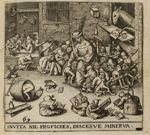
Asinus ad lyram: De Bry, Proscenium Vitae Humanae (Frankfurt, 1627), emblem 69 quotes the comment
Asinus ad lyram: Meisner, Politica Politica (Nürnberg, 1700), emblem 795 quotes the comment
Iconclass: 46C13142 ass, donkey 48C7351 flute, aulos, tibia 52AA55 Bluntness, Obtuseness, Dullness
Loci Communes: Dissimilitudinis et incongruentiae (Dissimilarity and incongruity, Dissemblance et incongruité)
IV i 48 Oresti pallium texere To weave a mantle for Orestes
Ορέστῃ χλαῖναν ὑφαίνειν. id est, Oresti texere laenam. Dicebatur qui munus pararet abusuro. Nam Orestes per insaniam vestes dilacerabat. Est hemistichium heroici carminis decerptum ex Aristophane in Avibus: Εἶτα δ᾿ Ὀρέστῃ χλαῖναν ὑφαίνειν, ἵνα μὴ ῥιγῶν ἀποδύῃ. id est, Postea Oresti texere laenam, ut ne borridulus spoliet quem. Scholium admonet Orestem lwpodu/thn quempiam simulando insaniam in tenebris aggredi solere homines, eosque vestitu spoliare. Unde non inepte dicetur, ubi quis admonet dandum aliquid homini furaci, ne rapiat. Adagium non est natum ex Aristoph. sed ab illo est affectatum. Nam hac periphrasi notat hiemem.
[greek], To weave a cloak for Orestes. Said of one who made a gift for someone who would waste it. For Orestes in his madness would tear his clothes to pieces. It is a hemistich of heroic verse taken from the Birds by Aristophanes: 'And then to weave a cloak for Orestes so that he may not feel cold and strip people of their clothes.' The scholion says that Orestes was a [greek] 'a stealer of other people's clothes,' who, pretending insanity, used to approach men in the dark and rob them of their apparel. Hence it will be quite aptly applied when we are warned to give something to a man threatening to steal so that he does not take it by force. The adage did not originate with Aristophanes but is adapted by him, for by this circumlocution he means the winter.
Facsimile:
Iconclass: 47H46 weaving 54BB2 Unnecessity, Superfluity 95A(ORESTES)4 (story of) Orestes - aggressive, unfriendly activities and relationships
Loci Communes: Inanis opera (Vain effort, Effort vain)
IV i 49 Pandeletias sententias Pandeletian maxims
Πανδελετίου γνώμας. i. Pandeletiam sententiam, appellat in deterioribus Cratinus, ut citant, morosam ac molestam. A Pandeleto quopiam sycophanta, ex eorum genere, qui quo quaestum faciant, dicas impingunt grandes, ut ait Phormio Terentianus, et simili studio ferunt suffragia.
[greek], A Pandeletian maxim, is how Cratinus in his Low-class Men describes a peevish and annoying saying that people cite. It derives from some informer or other called Pandeletus, of the sort who, in order to make money, 'thrust great law-suits upon you,' as Terence's Phormio says; and they get votes by similar methods.
Facsimile:
Iconclass: 44G41(+53) litigation, legal proceedings, lawsuit (+ accusation) 44G49 barratry (excessive litigation, vexatious litigation or incitement to it) 86 proverbs, sayings, etc. 98B(PANDELETUS) male persons from classical history (PANDELETUS)
Loci Communes: Asperitas, morositas (Harshness, moroseness, Rudesse, morosité)
IV i 50 Sibylla vivacior More long-lived than the Sibyl
SIbyllae vivacitas proverbio locum fecit. Propertius Elegiarum libro secundo, At me non aetat mutabit tota Sibyllae. Sibyllae aetatem pro quantumvis longa posuit. Hanc Virgilius Aeneidos li. 6. longaevam sacerdotem vocat. Et Servius eum enarrans locum. adscribit Apollinem amore Sibyllae captum, ei poscendi quod vellet arbitrium dedisle, illam haustis arenis, tantum poposcisse vitae. Id Apollo fieri posse respondit, si Erythraeam insulam relinqueret, numquam eam revisura. Venit itaque Cumas, ubi corporis viribus defecta in sola voce vitam retinuit. Quod ubi cognovissent illius cives, incertum invidia, an commiseratione, epistolam ad eam miserunt, creta antiquo more signatam. At illa visa terra patria, in mortem resoluta est. Ita vati suae verba dedit Phoebus.
The longevity of the Sibyl gave rise to this proverb. Propertius in book 2 of his Elegies: 'But a Sibyl's whole lifetime shall never alter my love.' He used 'a Sibyl's lifetime' to mean 'a very long time.' The Sibyl is called the 'long-lived priestess' by Virgil in book 6 of the Aeneid. Servius, explaining this passage, adds that Apollo fell in love with the Sibyl and gave her the choice of asking for anything she wanted. She demanded to live as many years as there were grains of sand in a heap she had scooped up. Apollo replied that this could be done if she left the island of Erythrea and never looked on it again. And so she came to Cumae where she lost her bodily strength and retained life in her voice alone. When her fellow citizens learned this, whether out of envy or pity, they sent her a letter signed in the ancient manner with chalk. But she, seeing the soil of her native land, was finally freed in death. This is how Phoebus deceived his priestess.
Facsimile:
Iconclass: 11I2 sibyls 31D91 long life
Loci Communes: Longae vitae (A long life, Longue vie)
IV i 51 E flamma cibum petere Snatching a dinner out of the fire
Terentius in Eunucho dixit in parasitum, eiusmodi esse, ut vel e flamma cibum peteret, hoc est, quiduis cibi causa passurum, facturumque Explicat proverbium Catullus in epigrammatis: Boneniensis Rufa rufulum fcllai, Uxor Menent, saepe quam in sepulcretis Vidistis ipso carpere e rogo cenam. Cum devolutum ex tgne, proseques panem Asemiraso tonderetur ustore.
In the Eunuchus Terence says of a parasite that he is the sort who would even 'snatch a dinner out of the fire,' that is, that he would suffer or do anything for the sake of food. Catullus explains the adage in his Epigrams:
Rufa from Bologna, wife of Menenius,
Deceives Rufulus. You have seen her often
In the cemeteries snatching food out of the very pyre,
Even though she was cudgelled by a half-shaved corpse-burner As she chased a loaf that fell out of the fire.
IV i 52 Reddidit Harpocratem He turned him into Harpocrates
Catullus in Epigrammatis proverbiali specie dixit: Reddidit Harpocratem, pro eo quod est: Imposuit silentium. Carmen est huiusm odi: Gellius audierat patruum obiurgare solere, Si quis delicias diceret aut faceret. Hoc ne ipsi accideret, patrui perdespuit ipsam Uxorem, et patruum reddidit Harpocratem. Quod voluit fecit: nam quamvis irrumet ipsum Nunc patruum, verbum non faciet patruus. Harpocrates Deus ita apud veteres fingebatur, ut digito admoto ori, silentium indiceret, qualis et apud Romanos dea Angerona.
In his Epigrams Catullus said by way of a proverb: 'He turned him into Harpocrates,' meaning 'He imposed silence.' The poem goes like this:
Gellius had heard that his uncle was in the habit of reproving loudly
Anyone who enjoyed love's pleasures or talked about them.
Determined that this should not happen to himself, he scorned his own
uncle's wife
And turned his uncle into a figure of Harpocrates.
He did whatever he liked, for now even if he made his uncle himself
Perform fellatio, Uncle would not utter a word.
Harpocrates was pictured in ancient times as a god who, by a finger raised to his lips, enjoined silence, rather like the Roman goddess Angerona.
Facsimile:
Iconclass: 31B62359 being silent 33C412 fellatio 96A33 Harpocrates
Collectanea (1500): 172
Loci Communes: Taciturnitas illaudata (Unpraised silence, Silence non loué)
IV i 53 Qui probus Atheniensis An Athenian who is honest
Plato lib. De legibus primo refert proverbium, τότε ὑπὸ πολλων λεγόμενον, ὡς ὅσοι ἀθηναίων εἰσὶν ἀγαθοὶ, διαφερόντως εἰσὶ τοιοὐτοι, δοκεῖ ἀληθέστατα λέγεσθαι id est, Et quod vulgo dicitur, ex Atheniensibus qui probi sint, eos egregie probos esse, verissime dictum videtur. Sentit autem Plato, in male instituta, maleque morata Republica qui boni sint, eos natura et insignite bonos esse. Quippe qui neque fingere putandi sunt probitatem, nimirum inter improbos, quibus morum similitudine poterant etiam commendari: neque corrumpi queant depravatis aliorum moribus, & vitiorum contagio. Idem dici potest de civitate Romana, in qua non corrumpi, eximiae cuiusdam integritatis argumentum est. Simili argumento Simo Terentianus colligit probitatem filii sui. Deflecti potest ad vitam aulicam, aut studii genus ad perniciem invitans.
Plato mentions this proverb in book 1 of the Laws: 'And the popular saying that "those of the Athenians who are good are exceptionally good" seems to be very true.' Plato feels that, in a republic which is badly governed and corrupt, those who are good are instinctively so and to an extraordinary degree. For they are not to be thought of as feigning honesty, certainly not when they are living among dishonest people with whom they would actually find favour if they conducted themselves in the same dishonest way; nor can they be corrupted by the degenerate morals of others and contact with vice. The same can be said of the Roman state in which it is a proof of exceptional integrity to be uncorrupted. By a similar argument Terence's Simo infers the good morals of his son. The adage can be adapted to life at court or the sort of pursuit that offers temptations to ruin.
Facsimile: 
Iconclass: 32B311(ATHENIANS) indigenous European peoples (ATHENIANS) 57A61 Honesty; 'Honestà' (Ripa)
Loci Communes: Excellentia, inaequalitas (Excellence, inequality, Excellence, inégalité)
IV i 54 Digna Cedro Worthy of cedar
DIgna Cedro dicunt, quae promerentur immortalitatem, et eiusmodi iudicantur, ut posteritati consecrari debcant. Horatius in arte poetica: Speramus carmina fingi Posse linenda cedro. Persius item, Et cedro digna locutus. Sum ptum ab arboris natura, cuius succo, quae sunt illita, non sentiunt cariem. Nam hac arte Numae libros cum essent chartacei, durasse ad annos 535. terrae infossos, narrat Plin. lib. 13. cap. 13. Idem lib. 16. cedrum inter aeternas materias commemorat. Dioscorides ait maxime probari sucum huius arboris, crassum, pellucidum, et odore vehementiore, quique non defluit, sed guttis concrescit, manetque. Vim habet diversam, viva corpora corrumpit, mortua servat incorrupta. Unde a nonnullis dictam esse tradunt, nekrou= zwh\n, id est, Cadaveris vitam. Eodem pertinet illud: Non scombros metuentia carmina, nec tus. Item Martialis: Ne nigram cito raptus in culinam, Cordylas madida tegas papyro. Et Horatius: Aut fugias Uticam, aut vinctus mitteris Ilerdam.
Things are said to be 'worthy of cedar' when they deserve to be remembered in perpetuity and are considered to be such as should be bequeathed to posterity. Horace in the Art of Poetry
We hope for poems to be fashioned,
Worthy to be smeared with cedar oil.
And Persius: 'who has uttered words worthy of cedar oil.' The origin is the nature of the tree; anything smeared with its sap does not rot. Pliny tells us in book 13 chapter 13 that it was by this means that the books of Numa, although made of paper, lasted five hundred and thirty-five years buried in the ground. The same author in book 16 mentions cedar as being among the materials that last for ever. Dioscorides affirms the sap of this tree is mainly valued for its thickness, clarity, and rather strong smell; it does not run down but forms into solid drops. It has a power which can act in opposite ways: it corrupts living bodies, and preserves dead ones. This is why it is said that some call the tree [greek]j 'The life of a carcass.' Relevant to this is 'poems that will have nothing to fear from mackerel or from spice.' And in Martial:
Lest, hurried off to a sooty kitchen,
You wrap tunny fry in your sodden papyrus .. .
And Horace: 'Or you'll take refuge in Utica, or be despatched in a greasy parcel to Ilerda.'
Facsimile:
Iconclass: 25G3(CEDAR) trees: cedar 54B6:23A2 Worth, Value❧Eternity, 'Aeternitas'; 'Eternità','Eternità o Perpetuità' (Ripa)
Loci Communes: Dignitatis (Dignity, Dignité)
IV i 55 Telemachi olla A Telemachus pot
Τελεμάχου χύτρα. i. Telemachi olla. Meminit huius adagionis Athenaeus libro 9. tradens Telemachum Acharnensem fuisse quempiam, qui plerumque victitarit fabis. Unde conicere licet in sordidos dici consuevisse.
[greek], A Telemachus pot. This adage is recalled by Athenaeus in book 9 where he says that Telemachus was a certain Acharnian who lived for the most part on beans, from which we may suppose that the expression was used of miserly people.
Facsimile:
Iconclass: 41C4:25G21(BEANS) (family) meal❧fruits: beans 32A44 miser 98B(TELEMACHUS) male persons from classical history (TELEMACHUS)
Loci Communes: Sordes et parcimonia (Meanness and stinginess, Bassesse et avarice)
IV i 56 Alia res sceptrum, alia plectrum A sceptre is one thing, a plectrum is another
Haud omnino contenderimus esse proverbium, sed tamen ipse sermonis habitus colorque adeo similis est proverbio, ut vix similior sit ficus ficui, quod Stratonicus citharoedus regi Ptolomaeo respondit, pertinacius secum arte canendi disputanti: ἕτερόν ἐστιν ὦ βασιλεῦ σκῆπτρον, ἕτερον δὲ πλῆκτρον. i. Alia res est, ô rex, sceptrum, alia vero plectrum. Locus erit utendi, quoties dives ac potens, fortuna sua fretus, velut ex aequo disputat cum erudito, cum multo aliud sit divitem, aut fortunatum esse, aliud literatum.
I would not personally assert with complete confidence that it is a proverb, this answer Stratonicus the lyre-player gave to king Ptolemy, who was disputing with him hotly about the art of singing, but still as a turn of speech and figure it is so similar to a proverb that one fig is scarcely more like another. [greek]. 'A sceptre is one thing, o king, a plectrum is another.' The phrase can be used whenever some wealthy and powerful person, relying on what fortune has given him, argues as if on equal terms with a scholar, though it is one thing to be rich or fortunate and something very different to be educated.
Facsimile:

Non sceptro sed plectro ducitur: Rollenhagen, Nucleus emblematum (Arnhem, 1618), Cent. I, emblem 7 paraphrases the adage
Non sceptro sed plectro ducitur: Wither, A collection of emblems (London, 1635), emblem 7 paraphrases the adage
Iconclass: 44B113 king 48C72 musician 48C7321 lyre, cithara, psaltery 49C4(+0) discussion, dialogue, dispute ~ scholar, philosopher (+ variant) 51BB2:44B192 Dissimilarity, Unlikeness❧sceptre, staff (symbol of sovereignty) 98B(STRATONICUS) male persons from classical history (STRATONICUS)
Loci Communes: Dissimilitudinis et incongruentiae (Dissimilarity and incongruity, Dissemblance et incongruité)
IV i 57 Quae dolent, ea molestum est contingere It is unkind to touch on things that give pain
Amphis in Ampelurgo apud Stobaeum. Εν οἶς ἂν ἀτυχήση ἄνθρωπος τόποις, Ηκιστα τούτοις πλησιάζων ἥδεται. id est, In quibus homo est non admodum felix locis, Minime suave est admovere ad hac manum. Unusquisque invitus audit sua incommoda, maxime ea, quae sint cum aliqua infamia coniuncta. Veluti turpitudinem generis, vitium formae: proinde civilitatis est, nemini suum refricare vulnus, nec ulcus tangere.
Amphis in the Ampelurgus, quoted by Stobaeus:
On places where a man is not entirely happy
It is most unkind to lay a hand.
Each one of us is unwilling to hear about our own misfortunes especially those that have gained some notoriety, such as a disgrace in the family or a deformity. Accordingly it is a politeness not to rub anyone's wound or to touch a sore spot.
IV i 58 Aurum igni probatum Gold tested in the fire
Ο χρυσὸς τῷ πυρὶ δοκιμασθεὶς. i. Aurum igni probatum dicitur is, cuius fides rebus adversis explorata sp ectatque est. Utitur hac similitudine M. Tull. in epist. famil. libro 9. Pindarus item in Nemeis hymno quarto, Ο χρυσὸς ἑψόμενος αὐγὰς ἔδειξεν ἁπάσας. i. Aurum coctum omnem nitorem ostendit. Rursum in Pythiis hymno decimo, πειρῶντι δὲ χρυσὸς ἐν βασάνῳ τρέπει καὶ νόος ὀρθὸς. i. Experienti vero aurum in indice relucet, et mens recta. Theognis: Εὑρήσεις δὲ με πᾶσιν ἐπ᾽ ἐργμασιν, ὥσπερ ἄπεφθον Χρυσὸν, ἐρυθρὸν ἰδεῖν, πριβομενον βασάνῳ. id est, Omnibus in rebus me comperies velui aurum Purum, dulce, rubens, indice cum atteritur. Idem alibi, Εἰς βάσανον δ᾽ ἐλθὼν παρατριβομένος τε μολιβδῳ Χρυσὸς ἄπεφθος ἐὼν, καλὸς ἅπας ἂν ἔσῃ. id est, Venit ubi ad cotem, et confertur in indice plumbo, Purum aurum cum sit, totum erit egregium. Usurpat hanc collationem & divus Petrus apostolus epistola priore, πολὺ τιμιώτερον χρυσίου τοῦ ἀπολλυμένου διά πυρὸς δὲ δοκιμαζομένου. i. Multo preciosus auro, quod perditur, sive auro pestifero, quod tamen per ignem probatur. Est autem illud auro non citra miraculum peculiare, ut igni non solum non fiat deterius, sed magis ac magis enitescat. Itidem is, qui vere bonus est, obiectus malorum procellis, illustrat animi virtutem, non amittit. Plinius libro 33. scribit ob eam praecipue causam aurum omnibus metallis praelatum, quod uni rerum nihil igni depereat, tuto etiam in incendiis durante materia. Quin imo, quo saepius arserit, hoc magis proficiat ad bonitatem. Idque argumentum esse probi auri, si similiter rubeat, ut ignis, atque ipsum obrizum appellant.
[greek], Gold tested in the fire, is an expression used of someone whose loyalty has been tested and confirmed by adversity. Marcus Tullius uses this figure in book 9 of his Letters to Friends. Pindar too in the fourth Nemean: 'Gold which has been through the fire shows all its brilliance.' Again in the tenth Pythian Ode: 'But gold shines when rigorously tested, and so does a true mind.' Theognis:
In all things you will find me like pure gold,
Gently blushing when rubbed with the touchstone.
And the same author elsewhere:
When it comes to the touchstone and is compared in the test to lead,
Then it will be completely clear that it is pure gold.
This comparison is used also by St Peter the Apostle in his first letter: 'Much more precious than gold which perishes (or "ruinous gold") although it is through fire that it is tested.' It is nothing short of a wonderful miracle that gold is not only not dulled by fire but becomes brighter and brighter. Likewise the man who is genuinely good, when he is exposed to the storms of misfortune, does not lose his strength of mind but brings it to light. In book 33 Pliny writes that gold was esteemed above all metals particularly because it was the only thing in no way damaged by fire, surviving safely by its very nature even in conflagrations. Indeed, as a matter of fact, it improves in quality the more often it is fired. It is a proof of the purity of gold if it glows red like fire, and this is called obrizum 'assayed gold.'
Facsimile: 
Iconclass: 48C34(TOUCH-STONE) tools, implements of craftsman: touch-stone 49E9:25D13(GOLD) experiment, test ~ science and technology❧minerals and metals: gold 57A611 Frankness, Loyalty; 'Lealtà', 'Realtà' (Ripa)
Loci Communes: Inculpatus (Blameless, Irréprochable)
IV i 59 Lunam detrahere To pull down the moon
Τὴν σελήνην κατασπᾷ. i. Lunana detrahit. Consuevit dici de eo, cui res vehementer adversae viderentur. Interpres Apollonii in librum quartum, natum autumat ab Aglaonice Hegem nis filia, quae cum ob astrologiae peritiam, lunae defectus praesciret, iactabat sese lunam e caelo deducturam in terras. Eam vocem tam arrogantem audivit Nemesis, moxque poenas sumpsit. Atque hinc proverbii origo.
[greek], He pulls down the moon. Customarily said of someone whose prospects seemed utterly desperate. The scholiast of Apollonius, on book 4, asserts that the saying originated with Aglaonice daughter of Hegemon, who because of her skill in astrology knew in advance of an eclipse of the moon and boasted that she was going to bring the moon down from heaven to earth. This excessively arrogant declaration was heard by Nemesis who soon took her revenge. And this was how the proverb arose.
Facsimile:
Iconclass: 13E divination, prognostication ~ magic 31A2747:24B drawing, pulling something❧moon as celestial body 52E2:24B4 Prediction, Prophecy; 'Augurio', 'Divinatione', 'Profetia' (Ripa)❧eclipse of the moon 92G2 Nemesis (Adrastea)
Loci Communes: Malum accersitum aut retortum (Evil brought upon oneself or turned back, Mal attiré ou retourné)
IV i 60 Leonis vestigia quaeris It's only the tracks of the lion you look for
Τοῦ λέοντος ἴχνη ζητεῖς. i. Leonis vestigia quaeris. Dicterium in eum, qui verbis ferox esset, re timidus. Ductum ab apologo quopiam Aesopico, quo narrant venatorem quendam pastorem obvium rogasse, nuncubi leonem vidisset, ut eum sibi commonstraret. Atque eum respondisse: Equidem tibi leonis vestigia mox ostendero, neque enim procul absunt. Tum ille, satis est, inquit, neque enim ultra quidquam requiro. Convenit cum eo, quod alio positum est loco: a)/rks1ou parou/s1hs2 ta\ i/xnia zhtei=s2, id est, Cum ursus adsit, vestigia quaeris.
[greek], It's the tracks of the lion you look for. A sarcasm against someone who speaks bravely and acts timidly. From some fable of Aesop in which the story is told of a certain hunter who asked a shepherd he met whether he had seen a lion anywhere and to point him out. The shepherd replied, 'I can soon show you the tracks of a lion for they are not far from from here.' Whereupon the hunter said, 'It's only the tracks that I'm interested in; I do not need any more than that.' This adage matches one recorded elsewhere: 'Confronted with the bear you go looking for his tracks.'
IV i 61 Non una vehit navis More than a single ship can carry
Οὐ μΐ ναῦς ἄγει, id est, Non una vehit navis. Proverbii personam ante se gerit. Quo conueniet uti, quoties maiorem hominum multitudinem significamus, quam ut eos una navis possit capere. Veluti si quis dicat, tou\s2 a)pedeu/tous2 ou) mi/a nads2 a)/ge, id est Indoctos non una navis vehit. Est autem apud Theognidem: Τοὺς δ᾽ οὐχ᾽ εὑρήσεις διζήμενος, οὐδ᾽ ἐπὶ πάντας Ανθρώπους, οὕς ναῦς μὴ μία πάντας ἄγει. id est, Hos non invenies homines scrutatus et inter Omnes, quos sane non vehit una ratis.
[greek], More than a single ship can carry. This shows all the character of a proverb, one that it will be appropriate to use whenever we mean a greater number of men than a single ship can hold. One might say, for example, 'The ignorant are more than a single ship can carry.' It is to be found in Theognis: 'Even after searching among them all you will not find / More men than a single ship can carry.'
Facsimile:
Iconclass: 46C21 ships (in general) 51H3 Multitude
Loci Communes: Multi (Many people, Beaucoup de gens)
IV i 62 Horna messis This year's harvest
Plautus in Mostellaria, hornam messem proverbiali figura dixit, pro maximo emolumento, quasi tantum lucri, quancum eo anno sit proventurum in agris. Comici verba sunt haec: Iampridem me Castor frigida nox lavi magis lubenter, Nec unde me melius mea Scaphae rerer aedificatum. Haec dicuntur a persona puellae. Tum lena, optans ut ex eius forma, quam plurimum commodi capiatur. Euentus, inquit, omnibus velut horna messis fuat. Id puella quippe simplex, quid sibi vellet, non satis intelligens. Quid, inquit, ea messis attinet ad meam lavationem? Huic figurae confine est illud eiusdem in Curculione: Vindemia haec huic anui non satis est soli: significat adeo bibacem, ut universum vinum, quod eo sit proveturum anno, parum sit illius siti.
In the Haunted House Plautus uses 'this year's harvest' as a proverbial figure to mean a very large profit, equivalent to 'as much gain as there was to be made this year from the fields.' The comic poet says: 'Heavens! I haven't enjoyed a cold bath more for a long time, / Nor one in which, believe me Scapha, there was better refreshment for me.' These words are spoken by a girl character. Then the procuress says, hoping to take advantage as much as possible of the other's beauty, 'May the outcome be like this year's harvest for everyone.' The girl who is rather naive does not understand what this means and says, 'What has this harvest to do with my bath?' The figure is very close to the same author's phrase in the Curculio: 'This grape harvest is not enough for this one old woman,' meaning that she is such a drinker that all the wine from that year's harvest is not enough to satisfy her thirst.
Facsimile:
Iconclass: 46B471 profit (~ commerce) 47I14 harvest 55A1 Acquisition, Gain, Profit
Loci Communes: Bonae fortunae, copiae, felicitatis aut ominis (Of good fortune, abundance, happiness, or omen, Bonne fortune, abondance, bonheur ou présage)
IV i 63 Glaucus comesa herba habitat in mari Glaucus has eaten grass and lives in the sea
Γλαῦκος φαγὼν πόαν οἰκεῖ ἐν θαλάσσῃ. id est, Glaucus comesa herba habitat in mari. Dictum apparet per iocum de iis, qui cum perierint, tamen vulgo creduntur vivere, qualis opinio complureis annos nostratium animos occuparat ad insaniam usque de principio Carolo Burgundionum De Glauco Graeci fabulam adferunt huiusmodi. Glaucus quispiam fuit Anthedonius piscator, notandi peritia longe omnium primus. Is quo magis esset miraculo, commentus est im posturam huiusmodi. Enatabat e portu spectantib. Anthedoniis, donec iam extra prospectum esset. Ibi reversus in terram secessit in locum aliquem semotum, atque in eo dies complures commorabatur Deinde cum videretur redibat nans in portum spectantibus iis, qui stabant in lit tore: Mirantibus autem amicis ac sciscitantibus, ubinam gentium tamdiu commoratus esset, adsimulabat in marinis fluctib. interim versatum esse sese. Auxit miraculum altero commento. Hibernis mensibus, cum ceteri piscatores nihil piscium capere possent, ille cives rogabat, quosnam pisces adduci vellet. Quosque iussissent, advehebat, videlicet iam ante paratos in hunc usum, atque alibi concluscs. Evenit tandem, ut hic impostor a bellua quadam marina devoraretur. Is que fuit eius comoediae finis. Porro cum non rediret ex more, populari fama iactatum est, Glaucum gustata herba factum immortalem, et in mari vitam agere. Interpres Apollonii poetae consimilia tradit de Glauco, piscatorem fuisse, qui cum aliquando multitudine piscium, quos ceperat, defatigatus esset, onus in media abiecit via. ibi vero res accidit mira dictu, unus e piscibus iam moriens gustata herba revixit. Id Glaucus observans, eadem herba comesa, immortalis est redditus. Tandem taedio vitae semet abiecit in mare. Sunt qui prodant eum versum in Deum marinum, sunt qui in piscem: de quo complura tradidit Athenaeus lib. 7. apud quem alicubi citatur Alexis ἐν ἀπεγλαυκωμένῳ. Quod si reliquas fabulas Graeculorum de Glauco cupis cognoscere, lege 7. Athenaei lib.qui usque ad nauseam vomitumque garrit de Glauco pisce, de Glauco daemone, sed non licet tantum nugarum hic repetere. Hoc commentum animo pene reclamante adscripsimus; subolet enim Graecum scriptorem. quis quis is fuit, in hoc finxisse proverbium, quo fabulam hanc liceret commemorare. Maluimus tamen hoc opere ludere, quam quibusdam parum eruditis ansam calumniandi praebere, quod praeterierimus id, quod inexcusis etiam Graecorum commentariis habeatur.
[greek], Glaucus has eaten grass and lives in the sea. This appears to be said by way of a joke about people who, though dead, are still alive according to popular opinion. This belief occupied the minds of our nation for many years, to the point of madness, in the case of Prince Charles, Duke of Burgundy. When he died in battle there were many who did not hesitate to assert, at great risk to their own interests, that he was still alive. Concerning Glaucus the Greeks tell a story which goes like this:
Glaucus was a certain fisherman of Anthedon who was by far the best swim-
mer of all. To inspire greater wonder this man conceived the following de-
ception: he swam out of the harbour with the Anthedonians watching him
until he was out of sight. At that point he turned back to land, hid in a re-
mote spot and stayed there for many days. Then, when he judged it was
right, he swam back into the harbour watched by those who were standing
on the shore. To friends and enquirers who wondered where on earth he
had stayed all that time he pretended that he had lived for a while on the waves.
He raised further wonder with another deception. During the winter months, when other fishermen could catch no fish at all, he asked the citizens what sort of fish they would like to be provided, and whatever they ordered he brought, for he had already prepared a supply of them for this purpose and kept them enclosed in another place. Finally it came about that this deceiver was eaten by a sea monster, and that was the end of his comedy. But since he did not return as was his custom, a popular legend spread about that Glaucus had tasted grass, become immortal, and lived in the sea. The scholiast of the poet Apollonius tells very similar stories about Glaucus, that he was a fisherman who on one occasion was worn out by the weight of fish he had caught and threw them away when he was half-way home. But then a wonderful thing happened: one of the fish which was already dying ate some grass and revived. This was seen by Glaucus who ate the same grass and became immortal. Finally, wearied of life, he threw himself into the sea. According to some he was turned into a marine god, according to others into a fish, something on which there are many details in book 7 of Athenaeus, who also quotes from the Man with a Cataract of Alexis. If you want to learn all the other stories about Glaucus in minor Greek authors you can read the seventh book of Athenaeus who chatters on enough to put you off and make you sick about Glaucus the fish and Glaucus the demon; for my part I have no desire to repeat all these trifles here. It was almost against my better judgment that I included this fanciful story here; for if I may say plainly what I feel, I suspect this Greek writer, whoever he was, made up the proverb as a pretext for recalling this story. However I preferred to amuse myself with this effort rather than offer some halfeducated individuals an excuse to say that I had ignorantly omitted what was to be found even in the published commentaries on Greek authors.
Facsimile: 
Iconclass: 52CC41:58B3 Error; 'Errore' (Ripa)❧Immortality, Imperishableness; 'Immortalità' (Ripa) 95A(GLAUCUS)68 death of Glaucus, the fisherman: he eats the grass on which he has laid his fishes and leaps into the sea
Loci Communes: Dignitatis (Dignity, Dignité)
IV i 64 Pergraecari To live like a Greek
Si apud Graecos proverbia sunt: xalkidi/zein, les1bia=n, krhti/zein, et id gen' alia complura, quid esto quo minus habeatur adagium apud Latinos, quod in Mollestaria dixit Plautus: Pergraecari, pro eo quod est, genialem agere vitam? Nam quid sit Pergraecari, ipsa Plauti verba satis indicant. Dies, inquit, noctesque bibite, pergracamini. Amicas emite, liberate, pascite Parasites, obsonate pollucibiliter. Hactenus ille. Marcus Tullius in Verrem, actione 3. Fit sermo inter eos, et invitatio, ut Graeco more biberetur. Graecorum gens male audit passim apud poetas Latinos, et item apud Ciceronem, non solum quasi voluptatibus addicta et esfeminata deliciis, verumetiam quasi lubrica fide. Sive quod olim Romanis adhuc rudibus, et antiquam illam obtinentibus severitatem, Graecorum elegantia luxus videbatur. Sive quod studiorum aemulatio, ac mutuum odiu in causa fuit, ut eiusmodi probra de Graecis conscriberent. Sive quod vere Graecorum nonnulli tales fuerunt, quales eos depingit Iuvenal. id quod non inficiatur et Lucianus in libro de mercede servientibus, ut ex illis gentem omnem aestimaverint.
Since 'To play the Chalcidian,' To behave like a Lesbian,' 'To play Cretan,' and several other expressions of this sort are proverbs in Greek, why should the Romans not take as an adage the word that Plautus uses in the Haunted House, that is pergraecari, meaning 'to lead a pleasant life'? Plautus' own words show clearly enough what pergraecari means:
Get fuddled day and night, live like Greeks,
Buy girls and set 'em free, feed parasites,
Go in for fancy catering!
That's what Plautus says. Marcus Tullius, in the third speech against Verres, says: 'They had a conversation and an invitation was given to drinks in the Greek manner.' The Greeks are spoken of badly everywhere in the Latin poets, and likewise in Cicero, not only as given to pleasures and softened by luxuries, but also as untrustworthy. This was either because to the somewhat uncivilized Romans of early times, holding to that ancient severity of theirs, the refinement of the Greeks seemed to be extravagance, or because rivalry in their purposes and mutual hatred caused them to write such outrageous things about the Greeks, or because there were in. fact not a few Greeks in Italy such as Juvenal describes, something which is not denied by Lucian too in his book On Payment to Servants, so that men judged the whole nation on the basis of Greeks such as these.
Facsimile:
Iconclass: 32B311(GREEKS) Europeans: Greeks 46A communal life 55B2 Luxury, Luxuriousness 51H4:59A2 Plenitude❧Refinement, Taste
Collectanea (1500): 650
Loci Communes: Contemptus et vilitatis (Contempt and worthlessness, Mépris et bassesse); Luxus et mollicies (Luxury and softness, Luxe et mollesse)
IV i 65 Conos artoxya Bangles and baubles
Κόνος ἀρτοξύη. i. Conos artoxya. De similibus et inter sese respondentibus, quidam eruditi putant Conon pistorium esse instrum entum, non dissimile Artoxyae, quod pana. rium scalprum vidacur significare. Carterum ex his, quae mox sequuntut apud Suidam, apparet, Conos munuscula quaepiam fuisse, quae pueris dono darentur apta aetati, cuiusmodi sunt armillae. Proinde vide, ne competat in eos, qui vili levique munusculo compensant operam alicuius.
[greek], Bangles and baubles. Said of things that are alike and interchangeable. Some scholars believe a conos is a baker's instrument, not unlike an artoxya, which seems to mean a baker's knife. But from what follows shortly after in Suidas it appears that conoi were small gifts given to children, suitable to their age, like bracelets. So does it not fit the case of those who reward someone's effort with some mean and petty gift?
Facsimile:
Iconclass: 41D2662 bracelet, wristlet 44B152412 bauble 51B2 Similarity, Likeness
Loci Communes: Inaequalis pensatio (Unequal compensation, Compensation inégale)
IV i 66 Ne ligula quidem dignus Not worth a tiddler
Κορδύλης οὐκ ἄξιος, id est, Ne ligula quidem dignus, dicebatur homo nequam, et nullius pretii. Quod proverbii durat etiam hodiernis diebus, apud Latinos vulgo iactatum. Tametsi magis arbitramur piscis cordulae vilitatem proverbio fecisse locum. Is est pelamis, nisi quod minor, ut testis est Plin. lib. 32. c. 11. Cordylarum vilitatem ostendit Martialis lib. 11. Epigram. 50. Prima tibi dabitur ventri lactuca movendo Utilis, et porris fila resecta suis. Mox vetus et tenui maior cordyla lacerto, Sed quam cum ruta frondibus ova tegant. Mox poeta pretiosa memorat, ut fallat sodalem: Mentiar ut venias, pisces, conchylia, sumen, Et cortis saturas atque paludis aves.
[greek], Not worth a tiddler. Said of a useless, worthless man, it survives in common parlance among Latin speakers even nowadays. However I am of the opinion that it was the cheapness of tunny fry that gave rise to the proverb. Cordylae are young tunny, but even smaller, as Pliny tells us in book 32 chapter 11. The cheapness of tunny fry is also evident from Martial in book 11:
First there will be given you lettuce useful for relaxing
The bowels, and shoots cut from, their parent leeks;
Then tunny salted and bigger than a small lizard fish,
And one which eggs will garnish in leaves of rue.
Shortly afterwards the poet mentions luxuries, so that he can deceive his companion:
I will deceive you to make you come; fish, mussels, sow's paps,
And fat birds of the poultry-yard and the marsh.
Facsimile: 
Iconclass: 25F62(TUNNY)(+21) bony fishes: tunny (+ young animal) 54BB3 Inutility, Noxiousness; 'Nocumento', 'Nocumento d'ogni cosa' (Ripa) 54BB6 Worthlessness
Loci Communes: Contemptus et vilitatis (Contempt and worthlessness, Mépris et bassesse)
IV i 67 Iuxta navem Ship-shape
Κατά ναῦν, i. Iuxta navem dicuntur, quae digesta sunt ordine, quaeque quadrant ac congruunt, propterea quod in strumenta navium suo quaeque loco reponi soleant. Addubitamus quidem, num in his verbis sit proverbium, quae adscribuntur, kata naun= a)/rmena, id est, iuxta navem carbasa. Neque enim omni navigio quaevis vela congruunt.
[greek], Ship-shape, is said of things that are arranged in good order, and that fit in or fit together, because the fittings of ships are always put in their proper place. For myself I am inclined to doubt whether the phrase that follows is proverbial: 'Rigging to suit the ship.' Not all sails suit every ship.
Facsimile:
Iconclass: 46C21 ships (in general) 51A7 Perfection, Completeness; 'Perfettione', 'Operatione perfetta' (Ripa)
Loci Communes: Munus aptum aut ineptum (A gift fitting or unfitting, Un présent convenable ou inconvenant)
IV i 68 Iuxta cubitum profecit He has progressed by the cubit
Κατὰ πῆχην ἐπεδίδου. i. Iuxta cubitum profecit. De eo dicebatur, qui promotus esset ad meliora, sive cum quis ordine legitimo progreditur, sive cum magnis proficit accessionibus. Cubitus enim & modum significat, ut intelligas nihil transiliendum, & modum grandiusculum, ut accipias incrementum amplius. Nam minuta latis digitis, aut palmorum porrectu metiri consuevimus.
[greek], He has progressed by the cubit. Said of someone who has risen to a better status, either progressing by regular steps, or advancing by great strides. For cubitus means both 'measure' in the sense of nothing excessive and 'a rather large measure,' in the sense of a fairly big increment. We commonly measure very small things either by finger's breadths or by hand's breadths.
Facsimile:
Iconclass: 51H5 Growth, Increase 51L4 Progression, Forward Movement
Loci Communes: Proficientium in melius (Improving for the better, Progresser vers le mieux)
IV i 69 De tuo capite aguntur comitia Your status is at stake in this meeting
Proverbiali figura dixit Plautus in Aulularia: Ibo intro, ubi de capite meo sunt comitia. Deliberatur. n. ducturus ne esset puellam, nec ne, quam amabat. Sumptum est a comitiis Romanorum, in quibus populi suffragiis novi magistratus creabantur. Itaque cum statuitur de re quapiam, a qua pendeat felicitas alicuius, tum de capite illius fieri comitia recte dicentur.
There is a proverbial figure used by Plautus in his Pot of Gold, I am going to a meeting where my status is at stake. The discussion was about whether or not he should marry the girl he was in love with. The origin is the Roman meetings in which new magistrates were created by the votes of the citizens. So when a decision is made about anything on which someone's happiness may depend then the words 'The meeting is about his status' will be appropriately uttered.
Facsimile:
Iconclass: 46A63 meeting, assembly 53B2:59B Decisiveness, Decision❧Social Position
Loci Communes: Discriminis (Danger, crisis, Danger)
IV i 70 Usque ad ravim Till I'm hoarse
Quem admodum Graeci dicunt, ἄχρι κόρου, id est, Usque ad satietatem, ita Plautus, & quidem lepidius dixit, usque ad ravim, pro eo quod est, improbe, saepius, clamose, adeo ut vox etiam toties vociferanti raucescat. Est in Aulularia ad hunc modum: Huccine detrusisti me ad senem parcissimum, Ubi si quid poscamus, ad ravim pescamus prius, Quàm quicquam detur.
Much as the Greeks say, [greek], 'To the point of satiety,' so Plautus somewhat more wittily says, 'To the point of hoarseness' meaning 'excessively,' or more often, 'too noisily,' so that the voice even of the person who shouts so much becomes hoarse. The phrase is in the Pot of Gold as follows: 'Have you been pushing me off on this miserly old man? / If we ask anything of him, we may ask until we're hoarse / Before anything is given.'
IV i 71 Cereri sacrificant They sacrifice to Ceres
Quemadmodum Graeci dicunt, e(sti/a| qu/ous1in, id est, Lari sacrificant, ita Plautus propemodum indidicat apud Latinos dici solere, Cereri sacrificant, si quando in convivio vinum deesset, prop terea quod in huius sacris nefas esset inferre vinum, sicut apud Graecos in quarundam dearum sacrificiis, ut ostendimus in proverbio, nhfa/lia cu/la. Locus. est in Aulularia his ferme verbis. Cererin' mi Strobile hi sunt facturi nuptias? Qui? Quia temeti nihil adlatum intelligo.
Again just as the Greeks say [greek], 'They sacrifice to the Lar,' so Plautus shows more or less that Latin speakers used 'They sacrifice to Ceres' at any time at a feast when there is a shortage of wine. In her rites it was forbidden to introduce wine, as it was in the sacrifices of certain goddesses among the Greeks, as I have shown in the adage 'Nephalian wood.' The passage is in the Pot of Gold, in these words roughly: 'Are these people going to celebrate a marriage to Ceres, dear Strobilus? / - Why? - Because I notice that no alcohol has been brought.'
Facsimile:
Iconclass: 12F2123:92M171 sacrificial feast ~ Roman religion❧Ceres, patroness of agriculture 31B591 temperance, teetotalism 92M179 specific aspects, allegorical aspects of Ceres; Ceres as patroness - veneration, honoured by
Loci Communes: Sordes et parcimonia (Meanness and stinginess, Bassesse et avarice)
IV i 72 Inutilior blace As useless as a catfish
Βλακὸς ἀχρηστότεροσ. i. Blace inutilior, aut nequior. In hominem nihili, nulliusque bonae frugis dicebatur. Sumptum a pisce usque adeo vili, insipido, ac male olenti, ut a canib. quoque fastidiatur. Est autem piscis non dissimilis Siluro, si quid credimus Graecarum etymologiarum farragini. Numquam enim audivimus canes esse piscium avidos. Et si silurus is est, quem vulgus appellat Sturionem, hic inter pisces vel primas tenet. Addit locum esse iuxta Cumas, palustrem opinamur ac sterilem, cui nomen Blacia, unde suspicamur ortum proverbium. Hesych. et piscem pro blace blaciam vocat. Adicit, in Alexandria tributum esse, dictum blakkenno/mon, quod illic pendunt astrologi, eo quod blaces, hoc est, fatui ad illos commeent, petentes ex astris oracula. Illud constat, etiam homines stupidos, ignavos, molles et insipidos dici blakas2, unde blaaeu/ein, molliter et ignaviter agere, et blakikw=s2 pro stulte et insulse. Apparet ab hac voce Latinos dixisse Flaccos, et flacidos, et flaccescere, a)lla\ wnri\ blako\s2 a(/lis2.
[greek], As useless, or as bad, as a blax. Said of a good-fornothing, and someone of no virtue at all. The expression derives from a fish that is so bad, tasteless, and evil-smelling that it is rejected even by dogs. However this fish is rather like the catfish if we are to believe the ramblings of the Greek Etymologies. But I have never heard that dogs were eager for fish. And if the catfish is what is popularly called 'sturgeon,' this is considered to be among the best of fish. The etymologist also says there is a place near Cumae, a marsh I suppose and infertile, called Blacia, which he suspects was the source of the proverb. Hesychius too calls the fish blacia instead of Max. He says in addition that in Alexandria there is a tax, called the [greek], paid by astrologers because blaces, that is, fools, go constantly to them asking for oracles from the stars. It is certain that silly, lazy, effeminate, and dull people are called blaces, hence [greek] 'to be effeminate or lazy,' and [greek] 'stupidly, dully.' It seems that it was from this word that Latin speakers took the words flaccus, flaccidus, and flaccescere. But that's enough about catfish.
Facsimile:
Iconclass: 25F62(BLACE)(+0) bony fishes (BLACE) (+ variant) 31A3412 disagreeable taste 54BB3 Inutility, Noxiousness; 'Nocumento', 'Nocumento d'ogni cosa' (Ripa)
Loci Communes: Contemptus et vilitatis (Contempt and worthlessness, Mépris et bassesse)
IV i 73 Αλιτήριος A mugger
Αλιτήρϊος, vulgo dicebatur, qui per vim raperet aliena. Natum ex eventu huiusmodi. Temporibus Aetolici belli, tanta frumentariae rei penuria incidit Atheniensibus, ut pauperes coacti fame captivorum farinam diriperent, inde vox traduci coepit ad hominem quocumque modo sceleratum. Plutarchus in commentario de curiositate, diversam huius nominis originem reddit. Nempe cum Athenis fame vehementer laboraretur, et qui iussi fuerant, frumentum non efferrent in publicum, sed domi clanculum molerent ac noctu, curiosi quidam obambulantes observato molarum strepitu, eos prodiderunt, atque hi quidem Aliterii dicti sunt, quemadmodum et sycophantae. Verum ab hoc commento diversa memorat in Problematibus; volens Aliterium a fugiendo dictum. Nam Graecis a)le/w, utrumque significar, molo et fugio, eoque vocabulo scribit notatum eum, qui tantae fuisset improbitatis, ut quisquis eum effugere valuisset, is felix haberetur. Aristophanes in Equitibus , Aliterios appellat eos, qui violarunt templum Palladis, ἐκ τῶν ἀλιτηρίων σε φημὶ γεγονέναι τῶν τῆς θεοῦ. i. aio te esse de numero Aliteriorum, qui deae arcem invaserunt. Interpres multa recensens hoc quoque commemorat. Cylon quidam per tyrannidem occupavit arcem, ac deprehensus est spoliare templum Minervae. At ipse quidem effugit nactus opportunitatem, ceterum illius amicos qui ad aram deae confugerant, inde retractos occiderunt Athenienses. Unde qui violassent supplices, ἀλιτήριοι dicebantur. Etenim qui violatae deae templo supplices interfecerant, postea supplicio capitis affecti sunt. Denique et Ceres dicta est ἀλιτήρϊα, et Iuppiter ἀλιτήριος, quia in publica fame servassent molitores ne farina diriperetur. Quin & illud admonent, ἀλιτήρίους dici, qui frustrantur spe sua, nec perficiunt quod tentarunt. Ambiguitas hinc est, quod ἀλέω duo significat, molo, et aberro, unde & ἀλιτής erro. Porro ut ἀλιτήρϊος usurpatur pro sacrilego et impio, ita ἀλιτραίνειν dicuntur, qui sacrilegium committunt.
[greek] was popularly used of someone who seized the property of others by force. It arose from an incident as follows. At the time of the Aetolian wars the Athenians were the victims of such a shortage of grain that poor people, driven by hunger, stole the prisoners' flour by force, and from that incident the term began to be used of any person who was a criminal. In his essay 'On Curiosity' Plutarch gives a different origin for the word, namely that when Athens was suffering extreme starvation and those who had been ordered to do so were not supplying the public with grain but were grinding it secretly in their houses at night, some curious passers-by noticed the noise of the millstones and betrayed them; it was these passersby who were called aliterioi like the sycophants. However he mentions a different explanation to this in the Problems, deriving aliterium from the verb 'to flee' (in Greek aAeco means both 'to grind' and 'to escape') and writes that this term was used to denote a man who was so wicked that anyone who managed to avoid him was considered fortunate. In the Knights Aristophanes calls aliterii those who violated the temple of Pallas: 'I declare you are one of the aliterii who invaded the citadel of the goddess.' The scholiast, among the many things he records, also recalls this: a certain Cylon, wishing to become sole ruler, occupied the citadel and was caught in the act of robbing the temple of Minerva. He himself escaped at an opportune moment but his friends who fled together to the altar of the goddess were dragged away by the Athenians and killed. From this incident the term was applied to those who had violated the supplicants, for those who had violated the temple of the goddess and killed the supplicants later suffered capital punishment. Finally Ceres is called 'Aliteria' and Jupiter 'Aliterius' because when public starvation threatened they guarded the millers so that the flour would not be stolen. Further, we are told that aliterii is a term applied to those who are disappointed in their hopes and do not achieve what they sought. There is an ambiguity in the fact that [greek] means two things: 'to grind' and 'to wander off.' Hence too [greek] 'a vagabond.' Moreover as aliterios means a sacrilegious and wicked person, so [greek] means 'to commit sacrilege.'
Facsimile: 
Iconclass: 44G52 robber
Loci Communes: Improbi (The dishonest, Les malhonnêtes); Inanis opera (Vain effort, Effort vain)
IV i 74 Piscis nequam est, nisi recens A fish is no good unless it is fresh
Piscis nequam est, nisi recens, manet in hunc usque diem vulgo celebre. Dicitur autem peculiariter in hospitem, aut vulgarem amicum, qui primo quidem adventu non ingratus est, ceterum ante triduum exactum putet. Plautus: Quasi piscis itidem est amator lenae, nequam est, nisi recens. Iocatur apud Alexidem quispiam citante Athenaeo, quod cum nonnulli frugaliores abstinerent ab iis quibus esset anima, ipse nihil huiusmodi attulisset, nempe mercatus pisces mortuos. At hodie qui vendunt, tremore manus assimulant vivere, ante biduum mortuos.
'A fish is no good unless it is fresh' is a very common and popular saying that has survived to this day. It is said especially however of a guest or ordinary friend who is not unwelcome when he first arrives but spoils before the third day. Plautus: 'For a procuress a lover is just like a fish - he's no good if he's not fresh.' In Alexis, quoted by Athenaeus, someone makes a joke that since some rather virtuous people would not eat things that had a soul, he had never brought anything of this kind, that is, the fish he purchased were dead. But nowadays vendors, by shaking their hands, pretend that fish dead for two days are still alive.
Facsimile:
Iconclass: 41C68 fish; still life of fishes
Collectanea (1500): 59
Loci Communes: Ingrata ob vetustatem (Unpleasant because of age, Déplaisant à cause de l'ancienneté)
IV i 75 Nihil homini amico est opportuno amicius Nothing is more friendly for a man than a timely friend
GRatissimum est officium, quod praestatur in tempore. Contra intempestivum officium, plerumque molestum esse solet. Plautus: Nil homini amico opportuno amicius. Ediverso nihil differt ab inimicitia, intempestiva benevolentia.
A service that is offered in good time is most welcome. On the other hand, untimely attention is usually troublesome. Plautus: 'Nothing is more friendly for a man than a timely friend.' To put it the opposite way, 'Untimely kindness is no different from hostility.'
Facsimile:
Iconclass: 33A5 friends
Collectanea (1500): 79
Loci Communes: Tempestiva (Timely things, Choses opportunes)
IV i 76 Asinum in rupes protrudere To push an ass over a cliff
Proverbium olet, quod scribit Horatius in Epistolis: Qui male parentem in rupes protrusit asellum. Quadrabit in quosdam perverso natos ingenio, qui cum ipsi non sapiant, nolint tamen bene consulentium monitis obtemperare. Hi sunt etiam ultro, quo tendunt impellendi, ut vel malo docti tandem agnoscapt stultitiam suam. Natum est a rustico quopiam, qui cum asinum suum per Alpes nivibus obtectas duceret, isque freno non obediret, iratus in rupes protrusit: Et merito, quis enim invitum servare laboret?
There is an air of a proverb in something Horace writes in his Letters: 'A man who pushed his stubborn ass over a cliff.' This will be suitable for certain people of naturally perverse mentality who have no judgment themselves and yet are unwilling to submit to prudent advisers. Such people have to be pushed even further than they wish, so that they learn through punishment and acknowledge their own stupidity. The source was some peasant or other who was leading his ass over snow-covered mountains; the ass would not obey the reins, and he pushed it over a cliff. And rightly so: 'For who would care to save an ass against his will?'
Facsimile:
Iconclass: 25H121 inland cliff face 31A2748 pushing something 31E2348(+0) violent death ~ being thrown (from a height), being thrown into a pit (+ variant) 46C13142 ass, donkey
Collectanea (1500): 159
Loci Communes: Multi - in stupidos (Many people - against the stupid, Beaucoup de gens - contre les sots); Vis injustia (Unjust force, Force injuste)
IV i 77 Videre mihi labda I think you are a lambda
Δοκεῖς δέμοι καὶ λαβδα κατα τοὺς λεσβίους. i. Mihi videre et labda iuxta Lesbios, fellatricem indicat velut aenigmate primae literae, quae communis Lesbiis, et vitio quod ei tribuitur genti, quemadmodum indicavimus alibi. Sumptum ex Aristophanis Contionatricibus.
[greek], I think you are a Lesbian lambda. This signifies a woman who performs fellatio, through a riddle based on the first letter, which 'Lesbians' and the vice attributed to them have in common, as I have mentioned elsewhere. The source is Aristophanes' Women in Parliament.
Facsimile:
Iconclass: 32B311(LESBIAN) indigenous European peoples (LESBIAN) 33C412 fellatio 49L13(Λ) Greek script (Λ)
Loci Communes: Intemperantia, libido (Intemperance, lust, Intempérance, désir)
IV i 78 Postica sanna A face behind your back
Persius posticam sannam, proverbialiter appellat clanculariam irrisionem, a gestu ridentium aliquem a tergo: - Posticae occurrite sannae. Idem: O Iane a tergo quam nulla ciconia pinsit, Nec manus auriculas imitata est mobilis albas, Nec linguae tantum sitiat canis Appula quantum. Nam huiusmodi gestibus ab occipitio derident quidam.
Persius makes a proverbial expression, 'A face behind your back,' for concealed mockery, from the action of those who laugh at someone behind his back: 'Meet the face being made behind your back.' And the same author:
O Janus, whom no stork ever pecked from behind,
Behind whom no agile hand ever mimicked white donkey-ears,
At whom no tongue ever protruded as much as a thirsty Apulian dog's.
For these are the sort of gestures by which some folk express mockery from behind people's backs.
Facsimile:
Iconclass: 31A25562(+9):46C13142(+7333) index finger and middle finger raised, spread out; V-sign (+ expressive connotations)❧ass, donkey (+ ears of an animal) 57BB2 Mockery, Derision, Irreverence; 'Derisione', 'Dispreggio della Virtù' (Ripa)
IV i 79 Corvus serpentem Crow and serpent
Κόραξ τὸν ὄφιν. i. Corvus serpentem, ubi quis suo ipsius invento perit. Sumptum ex Apologo quodam Aesopi. Corvus esuriens serpenpentem in aprico dormientem conspicatus rapuit, a quo morsus periit. Cognatum ei, quod alias retulimus, korw/nh to\n s1korpi/on. id est, Cornix scorpium. Torquere licebit et in hominem ob edacitatem periclitantem, veluti Diogenes Cynicus, comeso polypo crudo periit.
Κόραξ τὸν ὄφιν, Crow and serpent. When somebody is killed by his own discovery. It originates in some fable of Aesop. A hungry crow noticed a snake sleeping in the sun and seized it but died from its bite. This is very close to one I have noted elsewhere: 'Crow and scorpion.' We can turn this against the man who suffers because of his greed, like Diogenes the Cynic, who died after eating raw octopus.
Facsimile: 
Iusta ultio: Alciatus, Emblemata (Padua, 1621), col. 723 b, emblem 173
Par trop manger, plus meurent, que par glaiue: La Perrière, Le theatre des bons engins (Lyon, 1545), emblem 56 uses the imagery of a raven eating a snake - borrowed from the adage's comment - to express the dangers of gluttony
Iconclass: 25F32(CROW)(+512):25F42(+46) song-birds: crow (+ animal(s) attacking)❧snakes (+ sleeping animal(s)) 25F32(CROW)(+63) song-birds: crow (+ dying animal; death of animal; dead animal) 55CC11 Greed, Covetousness, Cupidity; 'Cupidità' (Ripa)
Loci Communes: Malum accersitum aut retortum (Evil brought upon oneself or turned back, Mal attiré ou retourné)
IV i 80 Caenei hasta Caeneus' spear
Τὸ καινέως δόρυ, id est, Caenei hasta. Caeneus Elati filius, Lapitharum rex prius fuerat elegans puella, e puella conversus est in virum, adnuente Neptuno, quem ad coitum admiserat. Cui illud etium donatum est, ne saucius ullis vulneribus fieri, ferróve occumbere posset, quemadmodum refert Ouid. 12. Transformationum libro. Ferunt hunc certasse cum Apolline. Praeterea morem huic fuisse, ut qui ad sese venirent, iuberet per suam hastam iurare, unde proverbium arreptum, ut indicat enarrator Apollonii in argonauticon primum librum. Quem locum adducit Eustathius in primum Iliados librum. Is addit illum cum esset aetatis suae hominum praestantissimus, fixo in medio foro iaculo, praecepisse diis, ut numerarent, qua ferocia offensus Iuppiter poenas de illo sumpsit. Cum enim bellum gereret cum Lapithis, essetque invulnerabilis, hoc pacto devicit hominem, Lapithae quercus et abietes in eum iaculantes deiecerunt illum in terram.
Τὸ καινέως δόρυ, Caeneus' spear. Caeneus was the son of Elatus, king of the Lapiths. He was formerly a beautiful girl, but was changed from a girl to a man with the consent of Neptune whom she had allowed to lie with her. As a man it was granted to him that 'he could not be harmed by any wound or perish by the sword,' as Ovid relates in book 12 of the Metamorphoses. There is a story that he fought with Apollo and also that it was his habit to command those who approached him to swear by his spear, whence the proverb, as the scholiast of Apollonius on the first book of the Argonautica indicates. This passage is cited with reference to the first book of the Iliad by Eustathius, who adds that Caeneus, having become the most notable man of his times, planted his javelin in the middle of the market-place and called on the gods to count him in their number. Angered by this arrogance, Jupiter took revenge on him, and when he was fighting in a battle with the Lapiths, invulnerable as he was, the god found a way to destroy the man: the Lapiths, throwing oak-trees and pines at him, pounded him into the ground.
Facsimile:
Iconclass: 45C14(JAVELIN) helved weapons, polearms (for striking, hacking, thrusting): javelin 92L714113 the invulnerable hero Caeneus, the Lapith (i.e. the girl Caenis metamorphosed), is overwhelmed by a huge pile of wood 97K1 Caenis changed to Caeneus: when Neptune has ravished Caenis, he changes her at her request into the invulnerable hero Caeneus (Ovid, Metamorphoses XII 201)
Loci Communes: Arrogantia jactantiaque (Arrogance and boastfulness, Arrogance et vantardise)
IV i 81 Pepones Water-melons
Πέπονες. id est, Pepones, proverbiali convicio dicuntur homines molles & effeminati, parumque viri. Homerus Iliados B. Ω πέπονες, κακ᾽ ἐλέγχε᾽, ἀχαιΐδες, οὐκ ἔτ᾽ ἀχαιοί. id est, O pepones, mala probra, Achivae, non enim Achivi. Eustathius in septimum hius operis librum, ostendit similirudinem sumptam ab eo fructu, qui simulatque maturuit, dulcis quidem est, verum flaccidus & inutili. Quanquam eadem vox aliquoties non conviciantis est, sed blandius et amicius appellantis, velut Iliados Ζ. Ω πέπον ὦ Μενέλαε. id est, O pepon ó Menelae.
Πέπονες, Water-melons, a proverbial insult applied to weak, effeminate men, scarcely masculine. Homer in the Iliad book 2: 'You water-melons, miserable objects of scorn, Achaean women, not men at all.' Eustathius, commenting on the seventh book of this work, indicates that the figure is taken from the fruit, which, at the moment it ripens, is sweet certainly but soft and inedible. However the same word is on occasion used not to insult but to address someone in a rather gentle, affectionate manner, as in book 6 of the Iliad: [greek] 'Soft-hearted Menelaus'
Facsimile:
Iconclass: 25G21(WATER-MELON) fruits (WATER-MELON) 31A719 womanish man, molly-coddle, milksop
Loci Communes: Intemperantia, libido (Intemperance, lust, Intempérance, désir)
IV i 82 Ρὑποκόνδυλος Dirty knuckles
Graeci proverbiali convicio sordidos et impendio parcos, ῥυποκνδύλους appellant, ducto cognomine ab iis, quibus sordes in unguibus insident, nec tantillum sumptus facere volunt, ut tonsori dent nummulum, qui repurget ungues. Nam ῥύπος proprie sordes eas significat, quae in summis unguibus manuum ac digitorum colliguntur, & κονδυλος articulum digitorum. Iul. Pollux lib. 6. c. 4. eosdem vocat τρυγοβίους quasi faece viventes. Quidam adagium sic efferunt ἄχθομαι αὐτου τῶν ῥύπῳ, id est, Molestae sunt mihi illius sordes. Latini item immoderatam parsimoniam hoc est vitium luxui contrarium, sordes appellant: hominem ei vitio obnoxium, sordidum.
It is a proverbial insult among the Greeks to call sordidi 'dirty' and miserly people 'dirty-knuckles,' the epithet deriving from people who have sordes 'dirt' in their nails and who will not even spend the small coin needed to have a barber clean their nails. For [greek] means properly the dirt that gathers in the tips of the nails of the hands and toes, and [greek] the joints of the fingers and toes. Julius Pollux in book 6 chapter 4 calls these same people [greek] 'living on dregs,' as it were. Some give the adage as follows: [greek] 'His dirtiness offends me.' Latin-speakers use sordes to mean excessive miserliness - that is, the vice that is the opposite of ostentation - and a man addicted to that vice is called sordidus.
Facsimile:
Iconclass: 31A2144 phalanges of the fingers 31A2247:25D26 nails (fingers)❧mud (soil type) 32A44 miser 55CC1 Saving, Frugality, Parsimony; 'Parsimonia' (Ripa)
Loci Communes: Sordes et parcimonia (Meanness and stinginess, Bassesse et avarice)
IV i 83 Iuvenari Behaving like an adolescent
Iuvenari dixit Horatius, tum nove, tum proverbialiter, in Arte poetica. Gra ci item nea/zein, neani/zein, neaneu/ein, consimili modo usurpant, pro eo quod est iuvenum more iactantius, inconsideratius, inconsultius agere, aut si quid aliud ei aetati peculiare videtur. Quod quo longius traducetur, hoc fuerit venustius: ut si quis orationem floridam phaleratamque dicat neani/zein. Eiusdem est formae gunaiki/zein, pro gestu cultuque repraesentare mulierem. Ob inscitam rerum et impotentes affectus aetas illa magis est lubrica, unde neanikw=s2 factum dicunt Graeci, quod maiore impetu, quam iudicio gestum est. Basilius in epistola quadam: *kai\ e)ntau=qa dh=lon o(/ti tou\s2 ou)/pw kathrtis1me/nous2 to\n e)/s1w a)/nqrwpon ou)de\ ei)s2 to\ te/leion e)fqako/tas2 th=s2 h(liki/as2 me/tron, tou/tous2 perife/resqai kai\ s1aleu/esqai, h( paroimi/a fhs1i\n, id est, Et hic nimirum, qui nondum perfecti sunt secundum interiorem hominem, nec adhuc ad perfectum aetatis modum pervenerunt, circumagi, ac fluctuare dicit proverbium. Reperitur et a)kma/zein, pro eo quod est iuvenilia facere. Sic usus est Hyperides, in oratione contra Mantithaeum, et Lysias adversus Nicarchum tibicinem. Laberius citante Nonio pro eodem dixit, Adolescenturire. Inadolescenturire, et nescio quid nugarum facere.
Iuvenari is used by Horace in both a novel and proverbial way in his Art of Poetry. The Greeks likewise use [greek] and [greek] in the same way to mean 'acting in a rather boastful, thoughtless, impetuous way,' or any other way that seems to be peculiar to that age-group. The less literal the application the wittier it will be; for example if someone says that flowery and luxuriant speech is 'adolescent.' The same form is shown by [greek], meaning 'to look like a woman in manner and dress.' Because of ignorance and lack of control over their emotions young people are more unstable, which is why the Greeks also say [greek] 'impetuously' for something that is done with more energy than judgment. Basil in one of his letters says: 'And here certainly those who have not yet completed their inner development and have not reached the fullness of maturity, the proverb says they go round in circles and vacillate.' You will also find [greek] used to mean 'doing youthful things.' This is the way Hyperides used it in his speech Against Mantitheus and Lysias against the flute-player Nicarchus. Laberius, quoted by Nonius, uses adolescenturire, incipio adolescenturire, and nescio quid nugarum facere 'doing some nonsense or other' with the same meaning.
IV i 84 Laudant ut pueri pavonem Like children admiring a peacock
Proverbii faciem habet, quod scribit Iuvenalis in avaros, qui carmina laudant duntaxat, nihil autem largiuntur poetae. Dicit laudator avarus Tantum admirari, tantum laudare disertos, Ut pueri Iunonis avem. Idem alibi, Probitas laudatur & alget. Notior est metaphora quam ut oporteat explicare. Ovidius alicubi de pavo. Laudatas ostendit avis Iunonia pennas. Si tacitus spectes, illa recondit opes.
There is the appearance of a proverb in what Juvenal writes about misers who confine themselves to praising songs and give nothing to the singers:
When he gives praise the miser
Has learned to give nothing but admiration, to give the eloquent nothing
but praise,
Like children admiring Juno's bird.
And the same author elsewhere: 'Goodness is praised and grows cold.' The figure is so well known that it is not necessary to explain it. Ovid says somewhere about the peacock:
If they are admired, Juno's bird shows its feathers;
But if you look in silence it hides its wealth.
Facsimile: 
Probitas laudatur et alget: Reusner, Aureolorum Emblematum (Strasbourg, 1587), emblem 88 quotes the comment
Iconclass: 25F35(PEACOCK) ornamental birds: peacock 31D112 child 32A44 miser 55C2:56C2 Giving❧Admiration 92C18(PEACOCK) attributes of Juno (PEACOCK)
Loci Communes: Rapacitas et avaritia (Rapacity and greed, Rapacité et avarice)
IV i 85 Δευκηπατίας Liver-pale
Λευκηπατίας, olim appellabatur formidolosus. Clearchus in Vitis, ut citat Zenodotus, ait quorundam epati vitium quoddam accidere, quod eos timidos reddat, atque hinc proverbio iactatum cognominis scomma. Videtur autem composita vox, ἀπὸ τοῦ λευκοῦ καὶ ἤπαρ, quod palleant plerumque quibus epar est vitiatum, id quod apparet in amantibus. Pallor autem formidolosis convenit.
Λευκηπατίας, Liver-pale was once a term for a timid person. Clearchus, in his Lives, quoted by Zenodotus, says that a certain sickness occurred in some people's liver which made them timid and this was how a humorous epithet came to be used proverbially. The word seems to be made up from [greek] 'pale' and [greek] 'liver,' because for the most part people whose liver is affected go pale, something which also appears in animals. And pallor is typical of the timid too.
IV i 86 Emori risu To die laughing
Proverbiales hyperbolae sunt et illae: Emori risu, Defluere risu, pro vehemeter ridere. Homerus Odysleae Σ. Ἀτὰρ μνηστῆρες ἀγαυοί Χεῖρας ἀνασχόμενοι γέλῳ ἔκθανον. id est, Deinde procorum splendida turba Prae risu emoriens nimio sustollit ad alta Astra manus. Usurpavit et Terentius in Eunucho: Omnes risis emori.
Two proverbial hyperboles are 'To die laughing' and 'To fall down laughing' meaning to laugh heartily. Homer in the Odyssey book 18:
Then the brilliant crowd of suitors,
Χεῖρας ἀνασχόμενοι γέλῳ ἔκθανον 'Nearly dying with laughter,' threw up their hands
To the stars above.
Terence uses this too in the Eunuchus: 'They all died laughing.'
IV i 87 Hipparchi murus A wall of Hipparchus
Ιππάρχου τειχίον. id est, Hipparchi murus, dicebatur res quaepiam, quae magnis constaret impensis. Hinc natum, quod Hipparchus Pisistrati filius Academiam muro sepsit. Atque huius rei nomine, magnam pecuniae vim ab Atheniensibus exegit. Autor Suidas.
Ιππάρχου τειχίον, A wall of Hipparchus. This was said of anything that cost a great deal. It arose from the fact that Hipparchus the son of Pisistratus surrounded the Academy with a wall, and on this account exacted a great deal of money from the Athenians. The source is Suidas.
Facsimile:
Iconclass: 41A54 fence, wall, paling 55C11 Squandering, Extravagance, Prodigality, Waste; 'Prodigalità' (Ripa) 98B(HIPPARCHUS) male persons from classical history (HIPPARCHUS)
Loci Communes: Sumptuosa (Costly, sumptuous things, Choses somptueuses)
IV i 88 Hodie nullus, cras maximus Today a nobody, tomorrow the greatest
Ο νῦν μὲν οὐδεὶς, αὔριον δ᾽ ὑπερμέγας. id est, Qui nullus hodie, cras erit vel maximus. De co, cui repente, praeterque spem ingens aliquis honos accesserit. Et vulgo, qui ex infima conditione ad dignitatem evehuntur, ex nihilo dicuntur emersisse. Exstat apud Aristophanem in Equitibus.
Ο νῦν μὲν οὐδεὶς, αὔριον δ᾽ ὑπερμέγας, He who is a nobody today will be perhaps the greatest tomorrow. Said of the man to whom, suddenly and beyond all hope, some very high honour comes. And those who are raised from the lowest status to high office are commonly said to have emerged from nothing. The line is in Aristophanes' Knights.
Facsimile:
Iconclass: 59BB1:23A32 Nobody, 'Nemo'❧present 53C11:23A33 Authority, Power; 'Dominio', 'Giurisdittione' (Ripa)❧future
Loci Communes: Proficientium in melius (Improving for the better, Progresser vers le mieux)
IV i 89 Samiorum mala metuis You fear the punishment of the Samians
Τὰ σαμΐων ὑποπτεύεις. id est, Samiorum metuis mala. Dictitatum de iis, qui metuerent proditionem. Narrant, Athenienses olim in Samios, quoscumque cepissent, inclementius saevisse, atque alios interemisse, alios confizisse sama, id est supplicii genus. Samii vicissim, si quos coepissent Atheniensium, hos ad eundem modum excruciabant. Unde proverbium Samii literati. Nam Suidas indicat hoc dici solitum de his, qui metuerent immedicabiles calamitates. Idem indicat Samen dici genus calamitatis Samiae, quod Athenienses notas infames inusserint Samiis captis, mox Samii vicissim Atheniensibus. Duris Samius scriptor multa tragice exaggerat de crudelitate Periclis, et Atheniensium in Samios, quae Plutarchus putat magna ex parte conficta in invidiam Periclis et Athenien sium. Simili figura dictum est illud τὰ μάγνητων κακὰ.
Τὰ σαμΐων ὑποπτεύεις, You fear the punishments of the Samians. Commonly said of those who feared betrayal. The story is that, whenever the Athenians captured Samians, they dealt with them violently and mercilessly, that they killed some and others they pierced with a sama, which is an instrument of torture. For their part, if they captured any Athenians, the Samians made them suffer in the same way. This is where the adage 'Men of letters from Samos' arose; for, as Suidas tells us, it used to be said of people who feared incurable injuries, and the same author says that samê was the word for a particular type of Samian injury because the Athenians branded their Samian captives with infamous signs and the Samians soon did the same to the Athenians. Duris, a Samian writer, says many exaggerated things, in the tragic mode, about the cruelty of Pericles and the Athenians towards the Samians, things that Plutarch believes were largely made up to stir up hatred of Pericles and the Athenians. A similar figure is found in the adage 'The misfortunes of the Magnesians.'
Facsimile:
Iconclass: 32B311(SAMIANS) indigenous European peoples (SAMIANS) 44G33 torture 56DD1 Fear, Dread; 'Paura', 'Timidità o Timore', 'Timore' (Ripa)
Loci Communes: Metus poena (Fear as punishment, La peur comme châtiment)
IV i 90 Pygmaeorum acrothinia Colosso adaptare Using the spoils of the pygmies for the Colossus
Ακροθίνια τῶν πυγμαίων κολοσσῷ ἐφαρμόζειν. id est, Acrothinia Pygmaeorum colosso accommodare dicebantur, qui inanem ac stultam sumerent operam, aut qui praeter decorum minima maximis adaptarent. Veluti si quis rem frivolam et minutam amplissimis copiosissimisque laudib. prosequeretur. Philostratus in Nicerta: ἠγνόησε δὲ ἀκροθίνια πυγμαῖα κολοσσῷ ἐφαρμόζων. id est, Non intelligebat autem sese Pygmaea acrothinia colosso accommodare. Quamquam Suidas hunc locum citans pugmai/wn. dicit, non pugmai=a. Meminit adagii Euitathius in Odysseae f. Colossi dicuntur vasiae prodigiosaeque magnitudinis statuae. Nam hinc vox Graecis dicta putatur, quod illarum proceritatem visus humanus non adse quatur. Pygmaeorum qui longissimi sunt, duos pedos et quadrantem non excedunt. Unde et nomen in ditum putant a cubitali proceritate. Est autem gens extremas Aegypti partes inhabitans, agticolationi dedita, bellum subinde gerens cum gruibus. Belli causa est, quia grues sublegunt semina, famemque inducunt ei regioni. Ita scholiastes in tertium Iliados. Horum feminae quinto anno pariunt, octavo sterilescunt. Pygmaeorum meminit Iuvenalis Saty. 13. Et in hos plurimus iocus in Graecorum epigrammatibus. Porro acrothinia Graecis primitiae dicuntur, quod hae soleant e summo aceruo tolli. a)/kron summum, & θίνες frumentorum acerui dicuntur.
Ακροθίνια τῶν πυγμαίων κολοσσῷ ἐφαρμόζειν, People were said to 'use the spoils of the pygmies for the Colossus' if they undertook some work that was vain and silly or if they fitted the very small with the very large; for example if someone greeted some frivolous and petty deed with the highest and most fulsome praise. Philostratus in the Nicetes: 'But he could not understand that he was fitting very good but [greek] "small" parts on to the Colossus.' However when Suidas quotes this passage he says [greek] not [greek]. Eustathius recalls this adage in his commentary on the Odyssey book 21. Colossi is the word for statues of enormous, wonderful size. The word is thought to be used by the Greeks because the height of these statues was further than a man could see. The tallest pygmies are not more than two and a quarter feet tall, so their name is thought to have come from [greek], meaning 'about a forearm's length.' They are a people inhabiting the most distant parts of Egypt, occupied in agriculture, who wage a constant war with the cranes. The cause of the war is that the cranes carry off seed and create famine in that region; this is what the scholiast says, in his commentary on the third book of the Iliad. Their women bear children in their fifth year and become infertile in the eighth. The Pygmies are recalled by Juvenal in Satire 13. And there is much joking about them in Greek epigrams. I may add that acrothinia is the Greek word for the first offerings, because these are usually taken from the top of the heap; acron means 'top,' and thines 'heaps of grain.'
Facsimile:
Iconclass: 25F37(CRANE) shore-birds and wading-birds: crane 25M6 Colossus of Rhodes (Wonder of the World) 32B371 African pygmy peoples 45L31 booty, spoil 51G1 Largeness, Magnitude 51GG1 Littleness, Smallness 54BB3 Inutility, Noxiousness; 'Nocumento', 'Nocumento d'ogni cosa' (Ripa)
Loci Communes: Munus aptum aut ineptum (A gift fitting or unfitting, Un présent convenable ou inconvenant)
IV i 91 Dii tibi dent tuam mentem May the gods give you the mind you deserve
Dii tibi dent tuam mentem, in insanum congruit. Quid enim precemur infelicius scelestis hominibus? Martialis, Dii mentem tibi dent tuam Phileni. Horatius, Quid facias illi? iubeas miserum esse libenter, Quatenus id facit. Contrà Demea Terentianus, Mentem meliorem vobis dari.
May the gods give you the mind you deserve. This is suitable for a mad person and one who deserves his state of mind. For what greater misfortune could we pray for wicked men? Martial says: 'May the gods grant to you, Philoenis, a mind that suits you.' And Horace: 'What can you do with him but bid him be miserable, / Since that is his whim.' On the other hand Demea in Terence says, 'Get yourself a better mind.'
Facsimile: 
Iconclass: 31A4640 Madness 31B mind, spirit 44G3 criminal law; punishment
Collectanea (1500): 252
Loci Communes: Improbi (The dishonest, Les malhonnêtes)
IV i 92 Cura esse, quod audis Take care to be what you are said to be
Ad proverbii speciem accedit Horatianum illud: Cura esse quod audis. Convenit in divites, qui ita demum felices fuerint, si id studeant esse, quod audiunt ab adulatoribus. Carmen Horatii sic habet: Tu recte vivis, si curas esse quod audis. Iactamus iam pridem omnis te Roma beatum, Sed vereor, ne cui de te plus, quam tibi credas.
This expression of Horace comes into the category of proverbs: 'Take care to be what you are said to be.' It fits the wealthy who were happy precisely insofar as they tried to be what they heard from their flatterers. Horace's verse is as follows:
You are living a true life if you take care to be what you are said to be.
All we in Rome have long boasted that you are happy,
But I fear you may give more credit to others than to yourself.
IV i 93 Cautus enim metuit, etc. The cautious wolf goes in fear, etc.
Qui non ex animo, sed mali metu, continent a maleficio, in eos quadrabunt hae proverbiales eiusdem metaphorae: Cautus enim metuit foveam lupus, accipiterque Suspectos laqueos, adopertum miluius haemum. Nam aliis aliae tenduntur insidiae, lupi fovea frondibus contecta capiuntur. Unde apud Plautum servus minatur se lenoni, cui nomen Lycus, foveam effossurum. Similis est illa de fuste, Vertere modum formidine fustis.
People who refrain from committing misdeeds not on principle but through fear of punishment will be suitably described by these proverbial phrases all using a similar metaphor: 'For the cautious wolf goes in fear of the pit, and the hawk / Of the suspected nets, the pike of the hidden hook.' For different traps are set for different animals. Wolves are caught in a pit covered with leaves, and this is why in Plautus a slave threatens he will dig a pit for the pimp whose name is Lycus. This one about a stick is similar: 'To change tune for fear of the stick.'
Facsimile:
Iconclass: 25F23(WOLF) beasts of prey, predatory animals: wolf 25F33(HAWK) predatory birds: hawk 25F62(PIKE) bony fishes: pike 43C11(+4142) hunting, chase (+ pitfall) 43C11(+415) hunting, chase (+ net) 43C121(+41614) angling (+ fish-hook) 52A24 Precaution 56DD1:44G3 Fear, Dread; 'Paura', 'Timidità o Timore', 'Timore' (Ripa)❧criminal law; punishment
Collectanea (1500): 437
Loci Communes: Metus poena (Fear as punishment, La peur comme châtiment)
IV i 94 Si corvus possit tacitus pasci If the crow can eat quietly
Si brevis apologus, auctore Fabio paroemiae genus est, cur non illud etiam proverbiis annumeremus, quia scripsit Horatius: Sed tacitus pasci si posset corvus, haberet Plus dapis, & rixae multo minus, invidiaeque. Quidam existimant mutuo sumptum ex Apologo, quem in libro de Deo Socratis refert Apuleius, de coruo praedam nacto, quam vulpes ita intercepit, dum arte persuadet illi, ut canere incipiat. Quadrat in eos, qui, si quid bonae rei nacti sunt, continuo iactant, ostentantque, atque ad eum modum efficiunt, ut alii tum obsistant, quo minus eiusmodi plura commoda nanciscantur, tum quae nacti sint, intervertant.
If, as Fabius says, a short fable is a type of proverb, why should we not include among proverbs this one composed by Horace?
But if the crow could eat quietly he would get
More of the feast and much less quarrelling and envy.
Some believe this is borrowed from the fable, which is told by Apuleius in the book On the God of Socrates, about the crow that found a prize, which a fox snatched away when he artfully persuaded her to start singing. It applies to people who, finding something good, boast about it constantly and show it off, and in this way bring it about that others either prevent them from deriving any advantages from it or defraud them of what they have found.
Facsimile:

Corvus et vulpes: Aesop's fables (London, 1687), fable 101 about the fox persuading the crow to sing
Iconclass: 52D4 Prolixity, Verbosity, Loquacity; 'Loquacità' (Ripa) 54A4 Calmness, Equanimity, Imperturbability 57AA6121 Flattery; 'Adulatione' (Ripa) 85(FOX AND CROW) fables (FOX AND CROW)
Collectanea (1500): 440
Loci Communes: Garrulitas (Talkativeness, Bavardage)
IV i 95 Clavam extorque Herculi To snatch Hercules' club
Qui sibi vindicare conatur, quod alius iam potentior occupavit, non infacete dicetur clavam velle Herculi extorquere. Idque iam pridem apud eruditos proverbii vice celebratur. Natum est autem ab apophthegmate Maronis, cui cum. Zoili quidam vitio darent, quod non paucos versus Homeri pro suis usurpasset, respondit, hoc ipsum magnificum esse facinus, vel Iovi fulmen eripere, vel clavam extorquere de manu Herculis. Macrobius libro Saturnalium quinto, de Marone, qui sic usurpavit Homerica, ut fecerit sua: Quia cum tria haec ex aequo impossibilia putentur, vel Iovi fulmen, vel Herculi clavam, vel versum Homero subtrahere, quod et si fieri posset, alium tamen nullum deceret, vel fulmen praeter Iovem iacere, vel certare praeter Herculem robore, vel canere quod cecinit Homerus, hic opportune in opus suum, quae priorvates dixerat, transferendo, fecit, ut sua esse credantur.
A man who tries to take for himself what someone stronger has already taken possession of can be said not without humour to 'want to snatch Hercules' club.' This has been well known as a proverb among scholars for a long time. It arose from an aphorism of Maro who, when certain emulators of Zoilus found fault with him because he had used many verses of Homer as his own, replied that this was in itself a splendid achievement to seize the thunderbolt of Jupiter or to snatch Hercules' club from his hand. Macrobius in book 5 of the Saturnalia says of Maro that he used Homeric verses in such a way that he made them his own: 'Three things were thought to be equally impossible: to steal a thunderbolt from Jupiter, a club from Hercules, or a verse from Homer, and even if it were possible it would not be proper for anyone but Jupiter to throw the thunderbolt, anyone but Hercules to wield the oaken club, or anyone to sing what Homer sang, yet Virgil, by translating suitably into his own work what the earlier poet had said, made people believe it was his own.'
Facsimile:
Iconclass: 44G544:94L8(CLUB) theft❧attributes of Hercules: club 48C9(+4311) literature ~ arts (+ plagiary ~ work of art)
Loci Communes: Difficultatis (Difficulty, Difficulté)
IV i 96 Bis interimitur, qui suis armis perit He dies twice who dies by his own arms
Mimus est proverbialis, incertum, cuius, (Senecae titulo celebratur, sed falso) Bis interimitur, qui suis armis perit. Magis dolent incommoda, quibus ipsi dedimus occasionem. Natum apparet ex Aesopico apologo. Hunc Gabrias quidam versibus Iambicis complexus est ad hunc modum: *ble/pei to\ sth=qos2 ai)eto\s2 trwqe\n pa/lai, *algw=n de\ loipo\n h(=sto polla\ dakru/wn. *ble/pwn d) o)i+sto\n ei)=pen e)pterwme/non, *babai\, pte/ron me\ to\n pterwto\n o)llu/ei. id est, Quondam icta pectus Aquila vulnus inspicit, Multumque lacrimans, prae dolore constitit. Pennatum ut autem spiculum cernit, papa. Ait, ala me aligeram gravi exitio dedit. Adagium Graecum, quod ex hoc item apologo sumptum est, alio diximus loco.
This is a proverbial line from a mime; it is of uncertain authorship, though falsely attributed to Seneca: 'He dies twice who dies by his own arms.' Greater hurt is caused by the troubles we bring on ourselves. It appears to come from an Aesopic fable and was put into iambic verse by a certain Gabrias thus:
Once upon a time an eagle, struck in the breast, looked at his wound,
And weeping many tears for the pain could not go on flying.
But when he saw the feathered arrow he exclaimed 'Woe is me,
Feathered as I am, it is by my feathers I am brought to grievous ruin.'
I have mentioned the Greek adage that is derived from this passage elsewhere.
Facsimile: 
Ostons de nous cela qui nous deçoit: La Perrière, Le theatre des bons engins (Lyon, 1545), emblem 52 uses the imagery of the eagle being shot with an arrow of its own feathers
Ibit, non redibit: Weigel, Gedankenmuster (Nürnberg, 1700), emblem 205
Bis pereo: Camerarius, Symbolorum et Emblematum Centuria(e) (Nürnberg, 1590, 1595, 1596, 1604), emblem 213
So kann der Undanck Zinsen - Ingratus precipitat: Woytt, Emblematischer Parnassus (Augsburg, 1727), emblem 578
Bis pereo: Borja, Empresas morales (Bruxelles, 1680), emblem 9 uses the adage's imagery
Iconclass: 25F33(EAGLE)(+352) predatory birds: eagle (+ feathers) 25F33(EAGLE)(+63) predatory birds: eagle (+ dying animal; death of animal; dead animal) 58AA12 Self-destruction
Loci Communes: Malum accersitum aut retortum (Evil brought upon oneself or turned back, Mal attiré ou retourné)
IV i 97 Mulierem ornat silentium Silence becomes a woman
Sophocles in Aiace flagellifero: Γυναιξι κόσμον ἡ σιγὴ φέρει. Id est, Decus addit usque feminis silentium. Sententia proverbialis, quam Servius in primum Aeneidos citat ex Sophocle. Mulier animal natura loquax, nulla re magis cohonestatur, quam silentio; maxime apud viros, cum de rebus seriis agitur. Sumptum est ex Homero, apud quem est non semel illud: Μῦτος δ᾽ ἄνδρεσσι μελήσει. id est, Fueritque viris eratio curae.
Sophocles in his Ajax the Whipbearer: [greek] 'Silence is always a seemly ornament for women.' This is a proverbial expression which Servius quotes from Sophocles in his commentary on book 1 of the Aeneid. Woman is by nature a talkative animal and is respected for nothing as much as for her silence, especially in the company of men when the talk is of serious matters. The source is Homer who says several times: 'Speech shall be for men.' And St Paul does not give women the right to speak even in church, but says they should question their husbands at home.
Facsimile:
Iconclass: 31B6235:31D14 speaking❧adult man 31B62359:31D15 being silent❧adult woman 59A3:52DD3 Propriety, Decorum; 'Decoro' (Ripa)❧Taciturnity; 'Secretezza', 'Secretezza overo Taciturnità' (Ripa)
Loci Communes: Laudata (Praised things, Choses louées)
IV i 98 Imitabor Nepam I shall imitate the crab
Imitari Nepam dicitur, qui retrocedit. Id erit proverbialius, si torqueatur in eum, qui in dererius usque degenerat, e)pi\ ta\ mandrabou/lou. Nam Nepa, quemadmodum auctor est Festus Pompeius, Afrorum sidus, appellatur cancer, vel, ut quidam putant, scorpius, qui et ipse retrogradus est. Nonius Marcellus negat eam vocem aliud significare, quam scorpium, ex M. Tullio De finibus libro quinto, Serpere anguiculos, natare anaticulos, volare merulas, cornibus uti videamus boves, nepas aculeis, suam denique cuique naturam esse ad vivendum ducem. Citat et Manilium: Ad sydera vectam Erigionen, ictuque nepam, spolioque leonem. Haec Nonius. At si nepa nihil aliud est, quam scorpius, mirum, cur Cicero maluerit dicere nepam. Quamquam scorpio quoque peculiare est retrocedere, si quid offendat, et cancer ictu vulnerat. Plautus in Cassina, Retroversum cedam ad parietem. Imitabor nepam.
'Imitating the crab' is said of someone who goes backwards. This will be more like a proverb if it is applied figuratively to one who sinks to worse and worse 'Mandraboulus' fashion.' For Nepa, as Festus Pompeius tells us, is what Africans call the constellation Cancer (or, as some think, Scorpio, which also goes backwards). Nonius Marcellus says this word means simply 'scorpion' and quotes Cicero Definibus book 5: 'We may see snakes crawl, ducklings swim, blackbirds fly, oxen using their horns, scorpions their stings, each follows its own nature in living.' He also quotes Manilius: 'Erigone raised among the stars, / The nepa "scorpion" by its sting, and the lion by his skin.' This is what Nonius says. But if nepa is no more than 'scorpion' it is surprising that Cicero should prefer to use the word nepa. However it is a characteristic of the scorpion also to go backwards if it attacks something, and the crab attacks by striking [with its claws]. Plautus in the Casina: 'I shall retreat to the wall. I shall imitate the nepa 'crab.'
Facsimile:
Iconclass: 31A2719 backward movement 51B6:25F716(CRAB)(+525) Imitation; 'Imitatione' (Ripa)❧crustaceans: crab (+ some other movements of animal(s)) 51LL4 Regression, Backward Movement
Loci Communes: Mutandae sententiae (Changing one's opinion, Changer d'avis)
IV i 99 Quod alius condivit coquus, aliter condiam What one cook has seasoned I shall season in another way
Ubi quis rem omnem novat, ac perturbat, conveniet Plautinum illud ex eadem fab??? non dubium, quin proverbiali dictum forma: Ibo tntro, ut id, quod alius condivit coquus, ego nunc vicessim Ut alio pacto condiam: quidquid prandii est; ut paratum ne siet, Sietque ei paratum, quod paratum non erat.
When someone changes and disturbs everything, a suitable adage will be this phrase of Plautus from the same play, which is undoubtedly proverbial in its form:
I shall go in, and what one cook has seasoned
I shall in my turn season in another way,
Whatever is for lunch, will not be for lunch,
And he will have got what was not prepared.
Facsimile:
Iconclass: 41C221 cook 51K1:41C66 Change❧seasonings, spices 54DD31 Interruption, Cessation 54F122 Vicissitudes of Life
Loci Communes: Fortunae commutatio (Change of fortune, Changement de fortune)
IV i 100 Odi puerulos, praecoci sapientia I hate striplings who are precociously wise
Apuleius in apologia secunda, versiculum hunc nescio ex quo poeta citat, ceu vulgo celebrem: Odi puerulos praecoci saepientia. Vulgo invaluit opinio, ut credat puerulos maturius sapientes, aut non fore vitales, aut dementes futuros, simulatque ad aetatem maturam pervenerint. Plinius lib. vii. refert Catonem Censorium velut ex oraculo prodidisse, senilem iuventam praematurae mortis esse signum. Et apud Senecam libro Controversiarum secundo, controversia prima, Cestius de ingenio Alfii Flavii praedicare consuevit, tam mature magnum ingenium non esse vitale. Talem puerum Sophocles ἀνδράπαιδα vocat. Citatur autem hic versiculus ab interprete Pindari in Pythiis hymno secundo, τὸν ἀνδραπαιδα δεσπώτης ἀπώλεσα, id est, Puerum virilem, dominus ipse perdidi. ἀνδράπαιδα vocat, quod aetate puer, viri sapientia praeditus esset. Adapatare licebit ad discipulum qui in ipsis statim rudimentis sibi placeat. Aristoteles libro Rhet. ii. refert hanc sententiam ex poeta nescio quo: Οὐ χρὴ πόθ᾽ ὅστις ἀρτίθρων πέφυκ᾽ ἀνὴρ, Παῖδας περισσῶς ἐκδιδάσκεσθαι σοφούς. id est, Quisquis sapit, non unquam oportet, plus satis Docendo pueros, mox philosophos reddere.
In the second book of his Apologia Apuleius quotes this line from some unknown poet, as if it were very commonly used: 'I hate striplings who are precociously wise.' A common belief has taken root that children who become wise too early will either not be long-lived or will be mad as soon as they reach adulthood. Pliny relates in book 7 that Cato the Censor proclaimed as if from an oracle 'To be old while still a youth is a sign of early death.' And in Seneca book 2 of the Controversies, Controversy 1, Cestius used to prophesy of the intelligence of Alfius Flavius 'that great intelligence, mature at that age, was not long-lived.' A boy like that Sophocles calls [greek] [sic] 'A grown-up child'; the verse is quoted by the scholiast on Pindar's second Pythian ode: 'A grown-up child that I his master have myself ruined.' 'Avbpairais is his word for one who is a child in age but endowed with mature wisdom. The adage may be used for a pupil who takes pleasure immediately in the elementary things. In book 2 of his Rhetoric Aristotle quotes this aphorism from an unknown poet:
Good sense tells us one should never,
By teaching boys too much, turn them early into philosophers.
Facsimile:
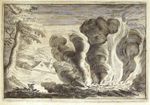
Quo cito, fit cito perit: Schoonhovius, Emblemata (Gouda, 1618), emblem 21
Es musz ein ieder ein par narren schuhen vertretten, wo nicht mer: Cats, Spiegel (The Hague, 1632), emblem 6 uses the imagery of a young man in all too fashionable shoes to convey the idea of precocious youth
Iconclass: 51F521:52A51 Precocity❧Wisdom; 'Sapienza', 'Sapienza humana', 'Sapienza vera' (Ripa) 51F52:31E Earliness❧death of human being
Loci Communes: Absurda, indecora, seu praepostera (Absurd, unbecoming, or preposterous things, Choses absurdes, inconvenantes ou déplacées); Festinatio praepropera (Overhasty haste, Précipitation excessive)