I ii 1 Diomedis et Glauci permutatio Exchange between Diomede and Glaucus
QUAE refertur apud Homerum Diomedis & Glauci permutatio, in proverbium abiit, quoties inaequalem commutationem significamus, hoc est, deteriora pro melioribus reddita, χρύσεα χαλκείων. id est, Aurea pro aereis. Nam lib. ro Iliad. sexto poeta Glaucum quempiam inducit, Hippolochi filium, Lyciorum ducem, iactantiusculum et ostentatorem magis quam pugnacem. Contrà Diomedem vafrum callidumque. Hi duo congrediuntur μονομαχηόμενοι, id est, singulari certamine inter se dimicaturi. At Glaucus rogatus à Diomede, quisnam hominum aut deorum esset, longa oratione natalium suorum seriem exposuit, patriam Lyciam, civitatem Ephyram indicavit. Mox Diomedes, utpote Graecus, hominis barbari stuporem ex orationis arrogantia intelligens, illudendum magis ratus quam occidendum, respondit suis maioribus cum illius progenitoribus vetus hospitium ac necessitudinem intercessisie, muneraque hospitalia, quae xenia vocant, inter ipsos ultro citroque data. Iamque desixa humi lancea, coepit hortari, ut omissa pugna, maiorum suorum amicitiam inter ipsos renovarent, alterque alteri in Lycia, alter in Argo hospitem praestaret simul atque incolumes in patriam redissent. Interim si quando forte fortuna occurrissent, armis invicem abstinerent, inter se duntaxat religionem hospitii custodientes, in reliquos nihilominus iure belli usuri. Tum, Ne id videamur, inquit, proditione magis, quam hospitii observantia facere, arma inter nos permutemus, quo reliquus exercitus intelligat, nos maiorum necessitudine devinctos esse. Quibus dictis uterque ex equo desiliit, datis dextris, ac fide pacta, veluti foedus quoddam hospitii sanxerunt, permutatis armis, sed admodum inaequalibus. Ενθ' αὗτε γλάυκῳ, inquit Homerus, κρονίδης φρένας ἐξέλετο Ζεὺς, Ος πρὸς τυδείδην διομήδεα τεύχε ἄμειβε Χρύσεα χαλκείων, ἑκατόμβοι ἐννεαβοίων.. id est, Iuppiter hic stupidum spoliavit pectore Glaucum, Qui cum Tydide mutarit protinus arma, & Aurea donarit, sibi reddenti aerea, centum Bubus emenda daret demens, pro vilibus, atque Quae vix esse novem dicas redimenda iuvencis. Usurpatum est adagium passim à laudatissimis auctoribus. Plato in Phaedro faciens Socratem Alcibiadi suo more respondentem, quod lucri cupidus formam corporis, forma mentis meliore commutare vellet, Καὶ τῷ ὄντι χρύσεα, χαλκείων διαμείβεσθαι νοεῖς, id est, Et cum his quae vere aurea sunt, aereis commutare cogitas. Quanquam interpres pro aereis, vertit aurichalcum. Item Aristot. 5. Moral. lib. de iustitia, Qui vero dat sua, quemadmodum Diomedi arma sua dedit Glaucus, ut dicit Homerus, χρύσεα χαλκείων, & reliqua. Plutarchus adversus Stoicos scribens, eleganter huc torquet, ut dicat, non admodum iniquam fuisse permutationem Glauci, propterea quod arma ferrea non minus usui sint pugnaruris, quam aurea: sed qui corporis valetudinem anteponit honesto, aut virtutem relinquit ob bonam corporis valetudinem, is vere permutat χρύσεα χαλκείων. Cicero in Epistolis ad Atticum lib. vi.. Habes ad omnia non ut postulasti χρύσεα χαλκείων, sed paria paribus respondimus. Utrunque pro verbium esse significat Cicero, par pari, de aequali pensatione, χρύσεα χαλκείων, de inaequali commutatione. Plinius iunior in epistola ad Flaccum: Recipies epistolas steriles, & simpliciter ingratas, ac ne illam quidem sollertiam Diomedis in permutando munere imitantes. Martialis in epigrammatis: Tam stupidus numquam nec tu puto Glauce fuisti, χρύσεα donanti, χάλκεα qui dederas. A. Gell. Noct. Attic. lib. 2. Caecilianam translationem, cum ipso Menandro, quem verterat, componens atque expendens, ostendensque quantum à Graecanica venustate degeneret: Diomedis, inquit, hercle arma & Glauci, non dispari magis pretio aestimata sunt. Fit huius adagii mentio etiam in prooemio Pandectarum iuris Caesarei, his quidem verbis, Nostris temporibus talis legum inventa est permutatio, qualem apud Homerum patrem omnis virtutis, Glaucus & Diomedes inter se faciunt, dissimilia permutantes. Hactenus Iustinianus, homo, ut ingenue dicam, nimium φιλαυτὸς, sibique plus aequo placens, qui centones illos suos, & inaequales legum rhapsodias, tot eruditissimorum virorum integris voluminibus praetulerit. Iam vero nihil quidem admiror, sed maximopere me pudet, haud scio cuius interpretis in eum locum commenti. Quid enim mirum, si hoc ignoratum est ab iis, qui semel universam contemnunt antiquitatem? Caeterum pudenda est vel ipsi iuris professioni plusquam scurrilis impudentia, in eo, qui iuris interpretem profiteatur, non vereri in re prorsus ignota, fabulam insulsissimam non ex autoribus sed è somniis adferre. Maximè autem & pudet, et miror inveniri doctores, qui nugamentum, non dicam tam indoctum, sed tam absurdum, in publicis scholis perinde quasi praeclarum inventum serio doceant, nec vel illud animadvertant, figmentum minime convenire cum verbis Iustiniani. Nam ille significat pro relictis inutilibus, ac fastidiendis voluminibus, recepta tum meliora, tum breviora, hoc est, permutationem factam vehementer inaequalem. Iste quisquis fuit, fabulam commentus est, aequalia permutantium, nimirum utroque donante quod superaret, recipiente cuius egebat. Ergo conveniet uti, quoties officium aut munus longe impari munere pensatur, aut contra. Aut quoties aliquis rem pecuniariam auxit, sed dispedio famae: magistratum assecutus est, sed iactura bonae mentis: lautam fortunam reperit, sed amisit animi tranquillitatem. Admissus est in amicitiam principis, sed excidit ab amicitia Christi.
The story told in Homer of the exchange between Diomede and Glaucus has become a proverb, used whenever we wish to describe an unequal bartering, in which something less valuable is repaid for something worth more, χρύσεα χαλκείων, 'gold for bronze.' For in book 6 of the Iliad, the poet brings in a certain Glaucus the son of Hippolochus, who is ruler of the Lycii, but a braggart and a boaster rather than a fighter. Diomede, on the other hand, is wily and clever. These two came together in a monomachia, that is to meet each other in single combat. But Glaucus, when asked by Diomede who, among gods and men, he might be, made a long speech in which he expounded the line of his family and descent, and alluded to his native country Lycia, and his city Ephyra. Then Diomede, being a Greek, perceived the stupidity of the barbarian from the arrogance of his speech, and judged that he was a man to make fun of rather than kill. So he replied that there had been of old a friendly and familiar relationship between his forefathers and Glaucus' progenitors, and that gifts in token of alliance (which they call xenia) had been reciprocally exchanged between them. Now, sticking his spear into the ground, he began to suggest that they should leave fighting alone, and renew between themselves the old friendship of their ancestors; one would entertain the other, now in Lycia, now in Argos, as soon as they had returned, each into his own country. Meanwhile, if chance brought them together, they were to abstain from attacking each other, but they would preserve the oath of friendship between them - though with others they would abide by the rules of war. 'Now,' he said, 'to make it quite clear that we are maintaining our pact of friendship and this is not treachery, let us exchange our armour, so that the rest of the army may understand that we are linked in the same alliance as our forefathers.' On these words, each leapt from his horse; they took each other by the right hand, and swore fidelity, pledging themselves to friendship and exchanging their armour. But the value of their arms was unequal: Homer says, Then Jove robbed foolish Glaucus of his wits,
To change his arms with Tydeus' son, and give
Gold for the other's bronze, a mad exchange,
Giving a hundred oxen's worth to gain
Hardly the value of nine worthless heifers.
The adage is used throughout the most celebrated authors.
Plato in the Phaedrus makes Socrates reply to Alcibiades in his usual way, saying that he was greedy enough for gain to be willing to exchange bodily beauty for the better moral beauty, 'In truth you are intending to exchange bronze for gold.' (But the translator gives 'brass' instead of 'bronze.') Aristotle too, in the Ethics, book 5, on justice, says: 'One who gives what is his own, as Glaucus gave to Diomede, gold for bronze, as Homer says.' Plutarch writing'Against the Stoics' gives this an elegant twist, when he says that the exchange of Glaucus was not really unequal because iron arms are no less useful to fighters than gold ones; but to prefer bodily well-being to honourable living, or abandon virtue for the sake of physical health, is truly to exchange 'gold for bronze.' Cicero in his Letters to Atticus, book 6: 'Well, there is all answered, not in "gold for bronze" as you asked, but we are giving back like for like.' Cicero indicates that each expression is a proverb, 'like for like' meaning equal balance, 'gold for bronze' meaning unequal exchange. The younger Pliny writes in a letter to Flaccus: 'You will receive arid letters, barefacedly ungrateful ones, not even carrying out the ingenious plan of Diomede in exchanging gifts.' Martial in the Epigrams: `You, Glaucus, were never so stupid, I think, / When you gave gold for bronze.' Aulus Gellius in his Attic Nights, book 2, when comparing and evaluating the translation by Caecilius with Menander himself, whom he had translated, shows how much it fell short of the beauty of the Greek: 'On my word, he says, there was no greater disparity between the armour of Diomede and Glaucus.'
There is also a mention of this adage in the introduction to the Pandects of Roman law, in these words: 'In our times a change in the laws has been devised, like that which in Homer, father of all virtue, Glaucus and Diomede effect between themselves, exchanging dissimilar things.' Thus far Justinian; a man, if I may speak frankly, too full of self-love and unjustifiably conceited, who valued his own patchwork and uneven flights of fancy about the laws higher than so many complete volumes by the most learned men. As to the comment on this passage by some commentator or other, it does not surprise me, but it fills me with shame. What wonder is there, if ignorance is shown here by those who have the whole of antiquity in contempt? But what the legal profession itself ought to be ashamed of is the clownish impudence of one who claims to interpret the law, but is not afraid to adduce the most foolish story, not from the authorities but from his own fancies, in a matter completely unknown. Most of all do I find it shameful and extraordinary to meet doctors who will teach in all seriousness, and as a noble invention - and teach in our universities - a blunder so crass (I won't say merely ignorant) and never see that this figment does not at all square with the words of Justinian. For he means that the useless boring volumes have been abandoned, and better and shorter writings have been adopted, that is to say, a really unequal exchange has been effected. The commentator, whoever he may have been, interpreted this story as meaning that the gifts of the exchangers were equal, but each gave what he had in superfluity and received what he needed.
The adage may therefore be used when a good service or a gift is repaid with a much less valuable gift, or the other way round. Or when someone increases his income but with the loss of his honour; he wins his place, but at the expense of his conscience; he gains a rich fortune, but loses his peace of mind. He found his way into the friendship of his prince, but fell away from the friendship of Christ.
Facsimile: 
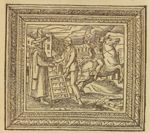
Plus quam Diomedis et Glauci permutatio: Sambucus, Emblemata (Antwerp, 1564), emblem 14
Grooter vermangelinge dan Diomedis ende Glauci: Sambucus, Emblemata (in Dutch) (Antwerp, 1566), emblem 14
Iconclass: 33A4 bringing gifts; exchanging gifts 94F424 Diomedes and Glaucus exchange arms (Iliad VI)
Loci Communes: Inaequalis pensatio (Unequal compensation, Compensation inégale)
I ii 2 Multae regum aures atque oculi Many are the eyes and ears of kings
Ωτα καὶ ὀφθαλμοὶ βασιλέων πολλοί. id est, Aures atque oculi regum multi, quod per exploratores observent, quid quisque dicat faciátve. Idem refertur à Luciano in libello, cui titulus, De mercede servientibus, ac rursus, Adversus ineruditum. Eiusdem meminit & Aristoteles in iii. Politic. Hoc genus homines Graeci vocant ὠτακουστὰς, quos primus Darius minor adhibuit, sibi diffisus. Dionysius Syracusanus addidit προσαγωγίδας, id est, exploratores, autore Plutarcho. Allegoria inde ducta est, quòd regibus quamplures ubique sunt exploratores, atque ob id oculi regum dicuntur, complures auscultatores, quibus velut auribus utuntur. Neque desunt manus & pedes quamplurimi, fortassis ne ventres quidem. Vide cuiusmodi portentum sit tyrannus, & quam formidandum, tot oculis, iisque emissitiis, tot auribus, iisque tam asininis, ac longis, tot manibus, tot pedibus, tot ventribus, ne reliqua parum honesta commemorem, instructum. Aristophanes in Acharnensibus. Pseudartabam, regis oculum appellat, quod per eum cognosceret quid ageretur. Aliter autem Andromache apud Euripidem, filium vitae oculum vocat: Εἶς παῖς ὅδ' ἧν μοι λοιπὸς ὀφθαλμὸς βίου. id est: Erat relictus gnatus hic mihi unicus, Vitae oculus. Propterea quòd unicum esset in vita oblectamentum. Nam oculo nihil charius. Unde, quos adamamus, oculos vocamus.
Ὦτα καὶ ὀφθαλμοὶ βασιλέων πολλοί, Many are the eyes and ears of kings, because they watch through their spies what each man says or does. This is referred to by Lucian in the work called On Salaried Posts, and again in Against An Ignoramus. Aristotle also recalls it in the Politics, book 3. This kind of man is called in Greek ôtakoustes, and it was Darius the Younger who first employed them, having no confidence in himself. Dionysius of Syracuse added prosagôgidae, that is 'tale-bearers,' according to Plutarch. The allegory is derived from the fact that kings have spies everywhere, and they are called the king's eyes, with a number of listeners whom he uses as ears. Nor are hands and feet lacking, plenty of them, and even bellies, maybe. See what a monstrous creature a tyrant is, and how much to be feared, since he is supplied with so many eyes (and prying ones too), so many ears (and long ones too, like an ass's), so many hands and feet and bellies, not to mention less decent items. Aristophanes in the Acharnians calls Pseudartabas 'the king's eye,' because it was through him that he knew what was happening. Andromache, in Euripides, speaks differently when she calls her son the eye of her life: 'This one son was left to me, / The eye of life,' because he was the unique delight of her Iife, for nothing is dearer than the eye. Hence we call those we love, our eyes.
Facsimile: 
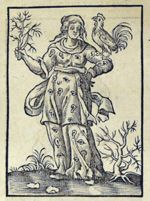
Ieloursheyt, Minyver: Ripa, Iconologia, of uytbeeldingen des verstands (Amsterdam, 1644), personification of Gelosia
Gelosia: Ripa, Iconologia (Florence, 1613), personification of Gelosia
Iconclass: 31A314 spying on someone 31A2212 eyes 31A2213 ears 44B113 king 45F22(+0) (military) espionage (+ variant) 52A12 Curiosity, Inquisitiveness, Desire of Knowledge; 'Curiosità' (Ripa)
Loci Communes: Curiositas (Curiosity, Curiosité)
I ii 3 Longae regum manus Kings have long hands
Quod ab Ovidio scriptum est: An nescis longas regibus esse manus? etiam vulgo in ore est: A regibus cavendum, quod eis praelonga sint brachia. Nimirum, quod per suos, quibus brachiorum vice utuntur, possint etiam procul dissitos affligere. Potest & ad tempus referri, quòd reges etiam si diutius dissimulent, soleant tamen aliquando poenam sumere de iis, quibus infensi fuerint: vel Homero teste, apud quem Iliados. α. Calchas ad hunc loquitur modum: Κρείσσων γὰρ βασιλεὺς, ὅτε χώσεται ἀνδρὶ χέρηϊ. Εἰ περ γὰρ τε χόλον γε καὶ αὐτῆμαρ καταπέψῃ, Αλλά γε καὶ μετόπισθεν ἔχει κότον ὄφρα τελέσσῃ.. id est, Rex Deus est, quoties succensuit inferiori. Quanquàm etenim in praesens ferventem concoquit iram, Post odit tamen, usque odium dum expleverit ultus.
What Ovid wrote, 'Do you not know that kings have long hands?' is still a saying in common speech: 'Be wary of kings, their arms are very long,' - because of course through their servants, who are like arms to them, they can do harm even to those who are at a great distance. This can also apply to length of time, because even if kings dissimulate over a long period they usually extract a penalty sometime or other from those with whom they are angry, as Homer witnesses in the Iliad, book 1. Calchas speaks as follows:
A king, angry with a lesser man, is a god,
For though for a moment he swallows his wrath
He still hates on, till vengeance clears his grudge.
Facsimile:
Iconclass: 31A42(+14) human beings (legendary or not) of abnormal proportions, size, strength, etc. (+ arms) 44B113 king 56CC11
Loci Communes: Ultio malefacti (Vengeance for a wrongdoing, Vengeance d'un méfait)
I ii 4 Clavum clavo pellere To drive out one nail by another
Ηλῳ τὸν ἦλον ἐκκρούειν. id est, Clavum clavo pellere. καὶ πάτταλον παττάλῳ ἐξέκρουσας. id est, paxillum paxillo pepulisti, id est, malum alio malo depulisti. Lucian. in Philops. καὶ ἦλῳ φασὶν ἐκκρούεις τὸν ἦλον. id est, Et clavo, quod aiunt, extundis clavum. Idem in Apolog. Δέδοικα μὴ πρὸς τῇ ἐπιφερομένῇ κατηγορίᾳ κολακείας αἰτίαν προσλαβὼν κᾷτα εὑρίσκωμαι, ἥλῳ φασὶν ἐκκρούων τὸν ἦλον, τῳ μείζονι τὸν σμϊκρότερον. id est, Vereor, ne si ad intentatum crimen, etiam adulationis accusationem adiunxero, clavum, quod aiunt, clavo pellere videar, maiore minorem. Aristot. lib. Politic. v.cap. penult. scribit, tyrannis amicos esse viros improbos & adulatores. Nam hos demum illis utiles esse, quippe malos ad mala. καὶ χρήσιμοι οἱ πονηροὶ, εἰς τὰ πονηρά. ἦλῳ γὰρ ὁ ἦλος, ὥσπερ ἡ παροιμία. id est, Clavus enim clavo, subaudi truditur, ut habet proverbium. Synesius ad Olympium: Λυποῦσι τὴν ἐκκλησίαν ἀλλότριοι .id est, Ecclesiam vexant externi improbi, illos invade. nam paxilli paxillos excutiunt. D. Hieron. ad Rust. monachum: Philosophi seculi, inquit, solent amorem veterem amore novo, quasi clavum clavo pellere. M. Tullius Tusc. quaest. lib. iiii. Loci denique mutatione tamquàm aegroti non convalescentes saepe curandus est. etiam novo quodam amore veterem amorem tanquam clavum clavo eiiciendum putant. Iulius Pollux in ix. lib. scribit, adagium esse natum à lusu quodam, qui κινδαλισμὸς vocetur, quo paxillum argillosae terrae infixum, altero impacto paxillo excutiebant: Citatque senarium hunc proverbialem: Ηλῳ τὸν ἦλον, παττάλῳ τὸν πάτταλον. id est, Clavumque clavo, perticamque pertica. Locus igitur adagio, non modo cum vitium vitio, malum malo, dolum dolo, vim vi, audaciam audacia, maledicentiam maledicentia retundimus: verumetiam quoties rem utcunque molestam, diversa molestia profligamus: ut cum libidinum incitamenta laboribus obruimus: curam amoris aliis maioribus curis domamus. Eusebius in Hieroclem: Δαίμονας γὰρ ἀπελαύνει ἄλλον ἄλλῳ ᾖ φασὶ δαίμονι.id est, Daemones enim abigit, alium alio, quemadmodum aiunt, daemone, mirum ni alludens ad hoc proverbium. Nec abhorret his ille Publii Mimus: Numquàm periclum sine periclo vincitur.
Ηλῳ τὸν ἦλον ἐκκρούειν, To drive out one nail by another, and Πάτταλον παττάλῳ ἐξέκρουσας, You drove out one peg with another peg, that is, you expelled one evil by another. Lucian in Philopseudes: 'And as they say, you are driving out one nail with another.' Again in the Apologia: `I am afraid that in addition to the accusation brought against me I might further find myself accused of flattery, knocking out one nail with another, as they say, a smaller with a greater.' Aristotle writes in the last chapter but one of book 5 of his Politics, that wicked men and flatterers are friends to tyrants, for they are the ones who can be useful to them, bad people for bad ends, 'one nail with another, as the proverb says.' Synesius to Olympius: 'Wicked foreigners are attacking the church; attack them. For pegs drive out pegs.' St Jerome to Rusticus the monk: 'The philosophers of the world,' he says, 'are accustomed to drive out an old love by a new love, as one nail with another.' Cicero in book 4 of the Tusculan Questions: 'A cure may often be effected by change of scene, as is done with sick people who are slow in making recovery. Some think too, that the old love can be driven out by a new, as one nail may be driven out by another.' Julius Pollux, book 9, writes that the adage is derived from a certain game, which is called kindalismos; in this a peg stuck into clayey soil is driven out by another peg being struck against it. He quotes the proverbial line: 'one nail with another, peg with peg.'
There is then a place for this adage, not only when we check one fault with another, an evil by another evil, guile with guile, force with force, boldness with boldness or slander with slander; but also when we overcome some troublesome thing by another sort of trouble, as when we subdue the incitements of desire by hard work, or master the anxiety of love by other greater cares. Eusebius against Hierocles: 'He drives out demons, one demon by another as they say,' surely referring to this proverb. And that moral maxim of Publius is not unlike these allusions: 'Never is danger conquered without danger.'
Facsimile:
Iconclass: 31A2743 hitting at something 47D8(NAIL) tools, aids, implements ~ crafts and industries: nail
Collectanea (1500): 50
Loci Communes: Similitudinis et congruentiae (Similarity and congruence, Similitude et convenance)
I ii 5 Malo nodo malus quaerendus cuneus A hard wedge must be sought for a hard knot
Ad hanc sententiam alludit & illud: Malo nodo malus est quaerendus cuneus. Ita divus Hieron. ad Oceanum: Interim iuxta vulgare proverbium, malo arboris nodo ma lus cuneus requirendus est. Eo licebit uti, quoties malum simili malitia retundimus. Sumptum à sectoribus roborum, qui siquando durior in ligno nodus inciderit, nolunt in eo periclitari securim, verum cuneum quempiam durum magis quam bonum inserunt. Congruit huic illud Sophoclis apud Plutarchum: ἐν τῳ περὶ τῆς εὐθυμίας. Πικρὰν χολὴν κλύσουσι φαρμάκῳ πικρῷ id est, Remedio amaro bilem amaram diluunt.
This alludes to the same thought: 'A hard wedge must be sought for a hard knot.' So says St Jerome to Oceanus: 'Meanwhile, as the common proverb says, a hard knot in the tree requires a hard wedge.' This may be used whenever we blunt the power of something bad by malignity of the same kind. It is taken from the woodmen who split oak; when they meet a somewhat stiffer knot in the wood they are unwilling to spoil an axe on it, but insert some wedge, more hard than good. In agreement with this is what is said by Sophocles in Plutarch in his essay 'On Tranquillity of Mind': `The bitter bile they purge with bitter drugs.'
Facsimile: 
Iconclass: 47C4291 untying a knot 47D8(WEDGE) tools, aids, implements ~ crafts and industries: wedge
Collectanea (1500): 51
Loci Communes: Similitudinis et congruentiae (Similarity and congruence, Similitude et convenance)
I ii 6 Malum malo medicari To heal one evil with another
Τὸ κακὸν κακῷ θεραπεύειν. id est, Malum malo medicari. Est malum aliud alio malo tollere. Sophocles in Aiace Mastigophoro: Εὔφημα φώνει, μὴ κακὸν κακῷ διδοὺς Ακος, πλέον τὸ πῆμα τῆς ἄτης τίθει. id est, Bene ominata loquere, ne malum malo Medicans, & hancce noxam adaugeas tibi. Dehortatur Aiacem Tecmessa, ne malo insaniae addat alterum maius malum, spontaneam caedem sui. Et Herodot. in Thalia: μὴ τὸν κακὸν τῷ κακῷ ἰῶ. id est, Ne malo medearis malo.
Τὸ κακὸν κακῷ θεραπεύειν, To heal one evil with another, is to use a second evil to cure the first. Sophocles in the Ajax Mastigophoros: 'Peace, peace! Seek not the ill to remedy / With further ill, and make fate's wound yet worse.' Tecmessa warns Ajax not to add to the misfortune of his madness by yet another and greater misfortune, his voluntary suicide. And Herodotus in Thalia: 'Do not cure evil by evil.'
Facsimile:
Iconclass: 52B5112 Bad, Evil, Wrong 51B3 Parity, Equality
Loci Communes: Malum conduplicatum aut renovatum (Evil doubled or renewed, Mal redoublé ou renouvelé)
I ii 7 Morbum morbo addere To add sickness to sickness
Morbum morbo addere, id est, conduplicare malum. Euripides in Alcestide: Μὴ νοσοῦντί μοι νόσον Προσθῆς. ἅλις γὰρ συμφορᾷ βαρύνομαι. id est Ne tu mihi morbo laboranti alterum Appone morbum; nam sat hoc premor malo. Eiusdem figurae est Homericum illud Iliad. ξ. Μήπου τίς ἔφ' ἕλκει ἕλκος ἄρηται. id est, Vulneri utinequis vulnus tibi forsitan addat. Sophocles item: Δευτέραν ἔπαισας ἐπὶ νόσῳ νόσον. id est, Morbo quidem morbum addidisti tu alterum. Non alienum est ab hac forma, quod est apud Homerum Iliados. Η. αἰνόθεν αἰνῶς, cum indicamus acerbis addi acerbiora. Sic enim ibi loquitur Menelaus, Η μὲν δὴ λώβη τάδε γ' ἔσσεται αἰνόθεν αἰνῶς. id est, Dedecori res ista prosecto dedecus addit.
To add sickness to sickness, that is, to double the trouble. Euripides in the Alcestis: 'Do not thrust sickness on the sick. Misfortune weighs me down heavily enough.' There is the same figure in Homer's Iliad, book 14: 'Lest anyone add wound to wound.' Sophocles again: 'You added a second ailment to the first.' Not far removed from this formula is what we find in Homer's Iliad, book 7: αἰνόθεν αἰνῶς, by which we mean, to add even more bitter things to what is already bitter. For so speaks Menelaus: 'Surely this adds dishonour to dishonour.'
Facsimile:
Iconclass: 31A46 diseases 49D121 addition
Loci Communes: Malum conduplicatum aut renovatum (Evil doubled or renewed, Mal redoublé ou renouvelé)
I ii 8 Ignem igni ne addas Do no add fire to fire
Μὴ πῦρ ἐπὶ πῦρ. id est, Ne incendium incendio addas. Usurpatur à Platone. Sensus liquet. Ne calamitatem adiungas calamitati, ne commotum magis etiam commoveas. Diogenianus putat à carbonario quodam esse natum, qui invalescente incendio conflagrarit, clamans interim μὴ πῦρ ἐπὶ πῦρ. Plato lib. De legib. ii. vetat, ne pueri ad annum usque duodevigesimum vinum bibant, ne si vini calor accesserit ad fervorem aetatis, ignem igni suggerere videantur. Idem Plutarchus in praeceptis coniugalibus: ἵνα oὗν μὴ πῦρ ἐπὶ πῦρ γένηται. id est, Ne ignis ad ignem accedat. Utitur idem cum aliis aliquot Iocis, tum in Praeceptis De valetudine, ἵνα oὗν μὴ πῦρ ἐπὶ πῦρ, ὥς φασι, πλησμονή τις ἐπὶ πλησμονῇ, καὶ ἄκρατος ἐπὶ ἄκρατῳ γένηται. id est, Ut ne igitur ignis ad ignem, quemadmodum proverbio dicitur, expletio ad expletionem, merum ad merum addatur.
Μὴ πῦρ ἐπὶ πῦρ, Do not add fire to fire. This is used by Plato. The sense is clear. Do not join one calamity to another, lest you stir up an even greater commotion. Diogenianus thinks this originated from some charcoalburner, who as the fire burnt up caught fire himself, shouting meanwhile 'Do not add fire to fire.' Plato in the Laws, book 2, forbids boys to drink wine before the age of eighteen, for fear that, if the warmth of the wine is added to the ardour of their age, they may seem to be piling fire on fire. Plutarch too in 'Advice to Bride and Groom': `Let not fire be added to fire.' He makes use of it in some other places, for instance in the 'Advice on Keeping Well': 'Therefore let not fire be added to fire, as the proverb says, nor repletion to repletion, nor neat wine to wine.'
Facsimile:
Iconclass: 41B1 open fire (in general) 41B13 stirring up a fire
Collectanea (1500): 646
Loci Communes: Malum conduplicatum aut renovatum (Evil doubled or renewed, Mal redoublé ou renouvelé)
I ii 9 Oleum camino addere To pour oil on the fire
Affinem huic haber sententiam: Oleum camino addere, pro eo quod est, malo fomentum, ac velut alimoniam suppeditare, quo magis ac magis augescat. Horat. in Satyris, Adde poemata nunc, hoc est, oleum adde camino. id est, Adde maioris insaniae materiam. Usurpat hoc divus Hieron. ad Eustochium: Vinum & adolescentia duplex est incendium voluptatis. Quid oleum flammae adiicimus?
A close relation to the foregoing is, To pour oil on the fire, meaning to supply a bad thing with nourishment and support, so that it may increase more and more. Horace in the Satires: 'Add verses now, that is, add oil to fire,' ie add food for greater madness. St Jerome uses it, to Eustochium: 'Wine and youth fan the fires of pleasure twice over. Why should we add oil to the flames?'
Facsimile:
Iconclass: 41B12(OIL) burning as process: oil 41B13 stirring up a fire
Collectanea (1500): 294
Loci Communes: Malum conduplicatum aut renovatum (Evil doubled or renewed, Mal redoublé ou renouvelé)
I ii 10 Oleo incendium restinguere To quench fire with oil
Ελαὶῳ πῦρ σβεννύεις. id est, Oleo restinguis incendium, dici solitum, ubi quis ea admovet remedia, quae malum magis ac magis exacerbent. Veluti si quis animi tristitiam foedis voluptatibus obruere conetur. Aut si quis offensum, iurgiis & conviciis velit placare. Quod si dicatur εἰρονικῶς, nihil differet à proximo. Huc respexit Lucianus in Timone, cum ait: Si quem aspexerit incendio conflagrantem, pice atque oleo se velle restinguere.
Ελαὶῳ πῦρ σβεννύεις, You quench fire with oil. This is said when remedies are applied which exacerbate the trouble more and more. For instance, when someone tries to overcome sadness of heart by disgusting pleasures. Or if a man wishes to placate someone he has offended, and does it with quarrelling and abuse, though if he had said these things in a peaceful way he would have no difference with his neighbour. This is what Lucian was thinking of in Timon, when he says: `As if one saw a man on fire, trying to put himself out with pitch and oil.'
Facsimile:
Iconclass: 41B12(OIL) burning as process: oil 41B13 stirring up a fire
Loci Communes: Malum conduplicatum aut renovatum (Evil doubled or renewed, Mal redoublé ou renouvelé)
I ii 11 Ululas Athenas Owl to Athens
Γλαῦκας εἰς ἀθήνας. id est, Ululas Athenas: subaudiendum, portas aut mittis. Conveniet in staltos negociatores, qui merces eò comportant, ubi per se magis abundant, ut si quis in Aegyptum frumentum, in Ciliciam crocum invectet. Venustius fiet, si metaphora ad res animi transferatur, ut si quis doceat doctiorem, carmina mittat poetae, consilium det homini consultissimo. Cic. ad Torquatum, Sed rursus γλαῦκας εἰς ἀθήνας, qui haec ad te. Idem ad fratrem: Et tibi versus quos rogas, hoc est, Athenas noctuam mittam. Aristophanes ἐν ὄρνισιν, Τί φῆς; τίς γλαῦκ' ἀθήναζ' ἤγαχε;. id est, Quid ais? quis, oro, vehit Athenas noctuam? Usurpat idem atque exponit Lucian. in Epist. ad Nigrinum. Porrò paroemia inde fluxit, quod noctua in Atrica plurima est ei regioni quasi peculiaris. Fertur autem versari in Laureo Atticae loco, ubi auri metalla sunt: unde & Laureoticae noctuae vocantur. Haec avis Atheniensium populo quondam erat gratissima, ac Minervae sacra habebatur, propter oculos caesios, quibus etiam in tenebris perspicit, quae vulgus avium non videt. Unde & auspicata consiliis credebatur, id quod indicat proverbium, Γλαὺξ ἵπταται. id est, Noctua volat. Dictum est & illud de Minerva, quod Atheniensium male consulta, in bonum exitum verteret. Daemon autem apud Aristophanis interpretem existimat, non ob id solum dici, noctuas Athenas, quod Athenis noctuarum sit copia, sed quod innummis etiam tum aureis, tum argenteis Atheniensium noctua inscalpi soleat, unà cum facie Minervae. Porrò nummus is appellabatur τετράδραχμον. id est, quatuor drachmarum, cum antea soliti fuissent uti nomismatibus didrachmis, quorum insigne erat bos, unde etiam natum est proverbium illud, Bos in lingua. Sunt qui tradunt apud eosdem fuisse triobolum, quod et hemidrachmium appellant. Nam drachma senos obolos continet. Trioboli nomisma, ex una parte Iovis effigiem habebat, ex altera noctuae. Proinde absurdum videbatur noctuam Athenas deportare, cum illic passim omnia noctuis abundarent. De nomismate Atheniensi testatur & Plutarch. in Vita Lysandri, cum de servo meminit, qui domini sui furtum αἰνιγματικῶς indicans, ait: multas sub tegulis cubare noctuas, ostendens illic abditas pecuniat, noctuis insignitas.
Γλαῦκας εἰς ἀθήνας, Owls to Athens ('you carry' or 'send' understood). This will fit stupid traders who transport their wares to a place where they are more abundant anyway, as if a man were to take grain to Egypt or saffron to Cilicia. It will be more attractive if the metaphor is transferred to the things of the mind: so-and-so teaches a man wiser than himself, he sends poems to a poet, he gives advice to a man wise in counsel. Cicero to Torquatus: 'But again in writing thus to you I am only sending owls to Athens.' And to his brother: `I will send you the verses for which you ask - owls to Athens.' Aristophanes in the Birds: 'What do you say? Who, pray, brought an owl to Athens?' Lucian uses and explains this in his epistle to Nigrinus. The proverb derives from the fact that there is a species of owl peculiar to Attica, and abundant there. It is said that they live in a place called Laureum in Attica, where there are gold-mines, and hence they are also called Laureotic owls. In old times, this bird was specially beloved by the Athenians, and held to be sacred to Minerva, owing to the grey eyes with which it sees even in the dark, and sees what ordinary birds do not see. Hence it is believed to be a good augury in counsel, and this is what is meant by the proverb 'The owl flies.' It is also said of Minerva that she turned the rash plans of the Athenians to a favourable outcome. However Daemon, quoted by the annotator of Aristophanes, thinks that the phrase 'owls to Athens' does not only come from the fact that there are plenty of owls there, but that the owl used to be stamped on the gold and silver coins of Athens together with the head of Minerva. This coin is called a tetradrachm, four drachmas; earlier on they used to have two-drachma pieces, the distinguishing.mark of which was an ox, whence the proverb comes'An ox on the tongue.' Some relate that there was also a triobolus, which they also call a half-drachma, for the drachma is worth six obols. The coin called the triobol had on one side the effigy of Jove, on the other the owl. Hence it seemed absurd to take an owl to Athens, since the whole place was full of owls. Plutarch refers to the Athenian coinage in his life of Lysander, where he tells the story of the slave who made an enigmatic allusion to a theft of his master's, when he said there were 'many owls sleeping under the tiles,' giving away the fact that there was money hidden there, stamped with the owl.
Facsimile: 
Iconclass: 25F34 owls 61E(ATHENS) names of cities and villages (ATHENS) 54BB3 Inutility, Noxiousness; 'Nocumento', 'Nocumento d'ogni cosa' (Ripa)
Collectanea (1500): 131
Loci Communes: Inanis opera (Vain effort, Effort vain)
I ii 12 Memorem mones, doctum doces, et similia You are reminding the mindful, teaching the taught, etc
Identidem in Plautinis, ac Terentianis comoediis occurrit: Memorem mones, & doctum doces. Idem pollet Graecanicum illud: λαλεῖς πρὸς ἔχοντα τὴν ἐπιστήμην. id est, Loqueris ei qui ipse rem calleat, καὶ εἰδότι λέγεις. id est, Scienti natras. Plato in Hippia maiore, εἰδότι μὲν ἐρεῖς ὧ σώκρατες.. id est, Haec scienti Socrates narrabis. Euripid. in Hecuba: Οὐ καινὸν εἷπας, εἰδόσι δ' ὀνείδισας. id est, Dixti novum nil, sed probe scientibus Haec opprobrasti. Homerus cum aliàs aliquoties, tum Odyssysseae ρ. Γινώσκω, φρονέω, τάγε δὴ νοέοντι κελεύεις. id est, Et novi, & teneo, iam narras ista scienti. Idem Iliad. ψ de Nestore admonente filium, Μυθεῖτ' εἰς ἀγαθὰ φρονέων νοέοντα καὶ αὐτῷ. id est, Dixit amico animo, licet haec per se sapienti. M. Tullius lib. epist. ad Attic. ix. Mirandum enim in modum Cn. noster Syllani regni similitudinem concupivit εἰδότι λέγω.
This is to be found in identical form in the comedies of Plautus and Terence. There is a Greek phrase with the same force: `You are talking to the one who knows all about it,' and 'You are telling the one who is informed.' Plato in the Hippias Major: 'O Socrates, you will speak to one who knows.' Euripides in the Hecuba: 'You speak no news, / But cast this in the teeth of those who know.' Homer in Odyssey 17 and in some other places: 'I know, I understand, you speak to one, / Who comprehends.' Again in Iliad 23 about Nestor admonishing a son: 'He spoke with friendly heart, though knowing well, / These things himself.' Cicero in the Letters to Atticus, book g: 'For our Gnaeus is marvellously anxious for despotism on Sullan lines, I speak to one who knows.'
Facsimile:
Iconclass: 57BB11 Admonition, Reprehension; 'Riprensione', 'Riprensione giovevole' (Ripa) 54BB3 Inutility, Noxiousness; 'Nocumento', 'Nocumento d'ogni cosa' (Ripa)
Loci Communes: Inanis opera (Vain effort, Effort vain)
I ii 13 Si crebro iacias, aliud alias ieceris If you throw often, you'll throw this way and then that
Aristoteles in libello De divinat. quae fit ex insomniis, versum huiusmodi proverbialem citat: Si crebro iacias, aliud aliàs ieceris. Quo significatum est, oportere rem saepius tentare, neque defatigari protinus, si quando parum ex animi sententia ceciderit. Futurum enim ut iterum atque iterum periclitanti, felicius aliquando cadat. Aristot. verba sunt haec: ὥσπερ μὲν καὶ λέγεται. ἂν πολλὰ βὰλλης ἄλλοτ' ἀλλοῖον βαλεῖς. Agit autem de insomniis melancholicorum, in quibus non existimat esse divinationem ullam, tametsi fit nonnunquam, ut quidem eventus somniis illorum respondeant: Sed non esse mirandum, cum vitio naturae plurima ac varia somnient, aliquando existere συμπτώματα. id est, casus qui fortè pariter sic eveniant, ut est ab illis somniatum. Themistius hunc locum sic circunloquitur (interprete Barbaro, nam Graecus codex ad manum non erat.) Nam qui totum diem iaculantur, aliquando collimant, & praemium capiunt. Vetus adagium est: Si saepe iactaveris, aliquando Venerem iacies. Sunt qui putent, nec id mea quidem sententia absurde, metaphora à sagittariis, non ab aleatoribus esse ductam. Nam & hoc significat βάλλειν. Subesse vero argutiam in eo verbo, quod in priore parte significat mittere sagittam, in posteriore ferire. Fit autem ut qui crebrius iaculentur, vel fortuito aliquando scopum attingant. Tametsi M. Tullius lib. De divinatione ii. de symptomatis agens, de quibus modo dictum est à nobis, ad utrumque refert metaphoram. Quis est enim, inquit, qui totum diem iaculans non aliquando collimet? Totas noctes somniamus, neque ulla ferè est qua non dormiamus, & miramur aliquando id quod somniamus evadere? Quid est tam incertum quam talorum iactus? Tamen nemo est, quin saepe iactans, Venerem iaciat aliquando, nonnunquam etiam iterum ac tertium. Porrò Veneris iactum in hoc lusus genere fuisse quondam felicissimum, palàm arguit apud Suet. Octavius Augustus in epistola quadam ad Tiberium: Inter coenam, inquit, lusimus γεροντικῶς & heri & hodie. Talis enim iactaris, ut quisque canem aut senionem miserat, in singulos talos singulos denatios in medium conferebat, quos tollebat universos qui venerem iecerat. Hactenus Augustus. Quadrabit & in eos qui casu, non arte quippiam assequuntur. Extat & hodie vulgo iocus proverbialis in caecum, qui cornicem iaculo fixerit.
Aristotle in his book on Divination From Dreams quotes a proverbial line as follows: 'If you throw often enough, your luck will change.' This means that we must often make an attempt, and not be immediately discouraged, if sometimes the result is not much to our liking. It may turn out that a person scores a success after trying over and over again. Aristotle's words are these: 'as the saying goes' and then follows the line. His subject is the dreams of the melancholic type of person, in which he thinks there is no divination, and yet it sometimes happens that some events fulfil their dreams; but since they are prone by a weakness of nature to much and varied dreaming, there is no wonder if coincidences arise or cases which fall out by chance exactly according to their dream. Themistius paraphrases this passage thus (I use the translation of Barbaro because the Greek book was not to hand): 'For those who spend all day throwing sometimes aim right and take the prize. The old adage says: If you throw often, some time you'll throw a Venus.'
There are those who think (and it does not seem absurd to me) that the metaphor comes from archers, not from gamblers, for ballein can also mean to shoot; and that there is a subtle difference in meaning contained in this word, in the first part indicating 'to shoot an arrow,' in the latter 'to strike.' It does happen that those who throw often hit the target occasionally by chance. Though Cicero, in book 2 of the On Divination, talking about the coincidences which I mentioned just now, refers to both metaphors: he says, 'For who is there who spends all day shooting and never hits the target? All night long we dream, there is hardly ever a night when we do not sleep, and should we be surprised when sometimes our dreams come true? What is more uncertain than the throw of the dice? Yet there is no one who throws often who does not sometimes throw a Venus, maybe twice or thrice.' Venus was at one time the luckiest throw in this kind of game, as we see in Suetonius (in a letter of Octavius Augustus to Tiberius): 'During the meal,' he says, 'we played games gerontikos' (like old men), 'both yesterday and today. When the dice were thrown, whoever threw a dog or a six put into the pool one denarius for each die, and the one who threw Venus took the lot.' Thus far Augustus. This proverb will fit also people who are trying to gain their end through chance and not through skill. There is also today a popular joke about the blind man who shot a crow with a dart.
Facsimile: 
Iconclass: 31A2741 throwing something 51AA5 Circumstance, Accident 51B61:54D11 Repetition❧Attempt, Trial
Loci Communes: Incertus eventus (Uncertain outcome, Issue incertaine)
I ii 14 Malum consilium Bad advice
Malum consilium consultori pessimum. Senarius est proverbialis in eos in quorum caput recidit, quod aliis perperam consuluerunt. Siquidem, ut dicunt Graeci, ἱερὸν ἡ βουλὴ. id est: Sacra quaedam res est consilium: Atque ut est libenter accipiendum cum res postulat, ita est religiose citraque fraudem dandum, si quis egeat. Alioquin non defuturum est numen aliquod, quod poenas repetat ab eo, qui rem sacram ac divinam perfidia violarit. A. Gellius Noct. Attic. lib. iiii. cap. v. putat adagium hoc ex historia quadam natum, eamque ex annalibus Maximi, narrationibusque Verrii Flacci refert ad hunc modum. Statua Romae in comitio posita Horatii Coclitis viri fortissimi de coelo tacta est. Ob id fulgur piaculis luendum, aruspices ex Hetruria acciti, inimico atque hostili in populum Ro. animo, instituerant eam rem contrariis religionibus procurare: atque illam statuam suaserunt in inferiorem locum perperam transponi, quem sol oppositu circum undique aliarum aedium nunquam illustraret. Quod cum ita fieri persuasissent, delati ad populum proditique sunt: & cum de perfidia confessi essent, necati. Constititque eam statuam perinde, ut verae rationes post compertae monebant, in locum aeditum subducendam: atque ita in area Vulcani sublimiore loco statuendam. Eaque res bene & prospere reip. cessit. Tunc igitur quod in Hetruscos aruspices animadversum vindicatumque fuerat, versus hic scite factus, cantatusque à pueris, urbe tota fertur, Malum consilium, consultori pessimum est. Hactenus quidem Gellius. Porrò Valerius Max. lib. vii. rem quandam haud dissimilem memorat de Papyrio Cursore: qui cum consul Aquiloniam obsideret, velletque praelium committere cum hostibus, nisi si quid auspicia refragarentur, ac consultus pullarius suaderet uti commiteret, cum aves infausta nuntiassent, re cognita pullarium in prima acie constituit. Is primo traiectus telo violatam religionem expiavit. Meminit huius rei T. Livius Decad. primae lib. x. Nec dissimile est quod refert Socrates in historia tripartita, Eutropius Eunuchus dum studet in quosdam qui ad templum confugerant, animadvertere, persuasit Imperatori ut ferretur lex, qua templi religio nulli prodesset nocenti. Lata lege factum est, ut Eutropius, cum offendisset Caesarem, confugeret sub altare, unde protractus capite plexus est, suo ipsius consilio perditus. Vergilius tacite notavit paroemiam in Aeneid. xii. lib. cum ait: Cadit ipse Tolumnius augur, Primus in adversos telum qui torserat hostes. M. Varro lib. De re rust. iii. cap. i. palàm citat adagium his verbis: Opinor, inquam, non solum quod dicitur, Malum consilium consultori esse pessimum, sed etiam bonum consilium ei qui consuluit, & qui consulitur, bonum habendum. Sophocles in Electra: Βουλῆς γὰρ οὐδέν ἐστιν ἐχθίον κακῆς.. id est, Res nulla consilio nocentior malo. noxam ad eum referens, cui consilium datur. Apparet autem senarium hunc Latinum, id quod & Gellius admonuit, de Graecis illis Hesiodi versibus expressum esse, qui leguntur in opere, cui titulus ἔργα καὶ ἡμέραι: Οἱ αὐτῷ κακὰ τεύχει ἀνὴρ ἄλλῳ κακὰ τεύχων. id est, Ipse sibi nocet is, alium qui laedere quaerit. Consultum male consisltori pessima res est. Plutarch. in comment. De audiendis poetis, existimat huius versiculi eandem esse sententiam, quae sit dogmatis Platonis in Gorgia: ubi Socrates dicit, peius iniuriam facere quam iniuriam pati, & damnosius esse malo afficere quam affici. Atque adeo totidem ferè verbis invenitur haec sententia apud Ecclesiasticum Hebraeum autorem, cap. xxvii. Facienti nequissimum consilium, super ipsum devolvetur. Extat in hanc sententiam & Apologus Graecus non invenustus, nec omnino indignus quem his commentariis adiungamus. Leonem ob senectam aegrotantem, & ea causa suo in lustro continentem sese, caetera quidem animantia officii gratia visebant regem suum, excepta vulpe. Proinde lupus nactus opportunitatem, accusavit vulpem apud Leonem laesae maiestatis, quae pro nihilo haberet eum, penes quem rerum erat summa, nec ob contemptum ad visendum accessisset: atque interea intervenit in lupi fabula vulpes, & extremam sermonis partem audivit. Itaque leo conspecta vulpe, protinus adversus eam infremuit. At illa postulato ad purgandum sese spatio, Et quis, inquit, omnium qui huc convenerunt, tantum tibi profuit quantum ego, quae quoquo versum circumcursitavi, tibique morbi remedium à medicis reperi? Cumque leo protinus edixisset, ut remedium aperiret: Si vivum, inquit, lupum excories, & illius pellem induas, convalesces. Leo credulus, continuo lupum invasit, & interemit. Quo extincto risit astuta vulpes, calumniatoris malum consilium in ipsius recidisse caput. Carmen autem refertur à Plutarcho, & hunc in modum: Ος ἄλλῳ κακὰ τεύχει, ἑῷ κακὸν ἥπατι τεύχει. id est, Damna parans aliis, proprio parat epati damna.
Malum consilium consultori pessimum, Bad advice is worst for the adviser. This is a proverbial line of verse about people who give wrong advice to others, which rebounds on their own head. Indeed, as the Greeks say, Counsel is a sacred thing. Just as it should be freely accepted when the situation demands it, so it should be conscientiously and honestly given if it is needed. Otherwise there will not be lacking a Power which will exact amends from anyone who treacherously violates a sacred and divine thing. Aulus Gellius in his Attic Nights, book 4 chapter 5, thinks that this adage grew out of a certain story which he tells out of the annals of Maximus and the anecdotes of Verrius Flaccus. According to this: `The statue of Horatius Cocles, that valiant man, placed in the comitium at Rome, was struck by lightning. This needed atonement by sacrifice, and augurs were summoned from Etruria, who decided (being themselves of an unfriendly and hostile mind to the Roman people) to take care of this matter by reversing the religious rites; and they wrongly prompted the removal of the statue into a lower site, where because it was surrounded on all sides by other buildings the sun never shone. After they had gained their point that this should be done, they were denounced before the people and betrayed; and when they had admitted their treachery, they were put to death. It was decided that the statue should be removed into a high place, as genuine computations later ascertained dictated, and erected in a loftier place in the square of Vulcan. This action proved favourable and prosperous for the state. So the accusation and punishment of the Etruscan augurs was vindicated, and this aptly-written verse was spread through the whole town and sung by the children: "Who suffers most from bad advice, is the adviser."' Thus far Gellius. Moreover Valerius Maximus, book 7, tells a similar story about Papyrius Cursor, when he was besieging Aquilonia as consul. He wished to go into battle against the enemy, unless there were some deterring factor in the auspices, and consulted the keeper of the chickens, who persuaded him to give battle, although the birds had given a bad augury. When Papyrius found this out he posted the keeper of the chickens in the front line, where he expiated his crime against religion by being transfixed by the first javelin. This is recorded by Livy in his first decade, book 10.
Much the same story is told by Socrates in the Tripartite History. Eutropius the eunuch was seeking a means to punish some men who had taken refuge in a temple, and persuaded the emperor to pass a law forbidding the temple sanctuary to be available for evil-doers. The law was passed, and then it came about that Eutropius himself offended Caesar and took refuge under the altar, from which he was dragged out and executed; his own advice had ruined him.
Virgil tacitly noted the proverb in the Aeneid, book 12, where he says 'Himself Tolumnius the augur fell, / The first to hurl a dart against the foe.' Varro in his Agriculture, book 3 chapter i, quotes it openly in these words: 'In my opinion, it is not only true, as they say, that bad advice is worst for the adviser, but also that good advice is to be regarded as of value both to the one who asks for it and the one who gives it.' Sophocles in the Electra: 'For nothing is more harmful than evil counsel.' Here he takes the harm to belong to the one who is advised. But it is clear that this Latin line (as Gellius too remarks) is a rendering of the Greek verses of Hesiod which we read in the work entitled Works and Days: 'He harms himself who seeks another's harm. / Worst is bad counsel for the counsellor.' Plutarch in his essay 'On How to Study Poetry' thinks the notion in these lines is the same as the teaching of Plato in the Gorgias, where Socrates says that it is worse to inflict an injury than to suffer one, and more grievous to do harm than to receive it. And this opinion is to be found in almost so many words in the Hebrew writer Ecclesiasticus, chapter 27: 'The man who gives evil counsel shall have it recoil on his own head.'
There is a Greek fable on these lines, not without charm, and not altogether unworthy to be included in these notes. The lion was old and ill, and keeping to his den. The other animals came, as in duty bound, to visit their king - all but the fox. The wolf, seizing the opportunity, accused the fox in the lion's presence of lese-majeste, saying 'He thinks nothing of you, all-powerful as you are, and it is out of scorn that he has not been to visit you.' Meanwhile, the fox came in during the wolf's story and heard the last words he spoke. When the lion saw the fox, he immediately flew into a rage against him. The fox, however, asked for time to clear himself. 'Which of all these animals here,' he said, 'has been as useful to you as I have? I have been running hither and thither all over the place and I have found a remedy for your illness from the doctors.' The lion eagerly ordered him to produce this remedy, and he said: 'If you flay a wolf alive and wrap yourself in the skin, you will recover.' The credulous lion at once leapt on the wolf and killed him. When he had been destroyed the cunning fox laughed to see how the evil counsel of the slanderer had recoiled on his own head. Plutarch records a line to this effect: 'Ill planned for others strikes at your own heart.'
Facsimile: 
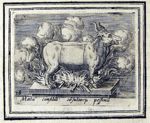
Hij heeft een roede tot zijn eigen aars gemaakt: Pers, Bellerophon (Amsterdam, 1614), emblem 18
Malum consilium consultori pessimum: Schoonhovius, Emblemata (Gouda, 1618), emblem 21
Malum consilium consultori pessimum - il nuy à soy qui conseille injustice: Boissard, Emblemes (Metz, 1595), emblem XXIX
Malum consilium consultori pessimum: Boissard, Emblematum liber (Frankfurt, 1593), emblem XXIX
Malum consilium consultori pessimum: Schoonhovius, Emblemata (Gouda, 1618), emblem 38
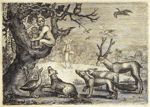
Malum consilium consultori pessimum: Carleton, A thankfull remembrance of Gods mercie (London, 1630), illustration 4 quotes the adage for a background scene
Iconclass: 52B5112:52E3 Bad, Evil, Wrong❧Counsel; 'Consiglio' (Ripa) 58AA12 Self-destruction
Collectanea (1500): 169
Loci Communes: Malum accersitum aut retortum (Evil brought upon oneself or turned back, Mal attiré ou retourné)
I ii 15 Suum cuique pulchrum What is one's own is beautiful
Proverbialis sententia, Suum cuique pulchrum, in eos quibus sua, qualiacunque sunt, ta men studio quodam magis quam iudicio placent. Est autem à communi mortalium ingenio sumpta, quibus usque insita est illa Φιλαυτία. id est, amor sui, ut neminem tam modestum, tam attentum, tam oculatum invenias, quin in propriis aestimandis, quadam animi propensione corruptus caecutiat atque hallucinetur. Et quem unquam vidimus in tam barbara regione natum, cui sua patria non vel optima videatur? Quae gens tam effera, tam horrida lingua, quae non alias prae sua contemnat? Quae tam ferina corporis specie, quae sibi non appareat formosissima? Proinde vere scripsit Aristot. lib. Rhet. ii. ἐπὶ δέ φίλαυτοι πάντες, καὶ τὰ αὐτῶν ἀνάγκη ἡδέα εἷναι πᾶσιν. οἶον ἔργα, λόγους. διὸ καὶ φιλοκόλακες ὡς ἐπιτοπολύ id est, Quoniam autem omnes sui sunt amantes, & sua cuique iucunda esse necessum est, ut facta dictaque: idcirco plerunque etiam assentatoribus gaudent, Id tametsi omnibus in rebus generaliter verum est, ut sit quemadmodum ait Horat. Caecus amor sui: tamen in artifices atque ex his potissimum in poetas, ad haec in amantes praecipue quadrare videtur. Etenim rectissime scripsit Aristot. iiii. Moral. lib. Suo quenque artificem opere impense delectari, non aliter quam rebus quibusdam ex sese prognatis. Neque secus adamant sua carmina poetae, quam parentes liberos. Est enim artificis opus, quasi quidam ingenii foetus, de quo Socrates ait rectius iudicare obstetricem quam matrem ipsam. Sponsis item amantibus mos est, suam cuique sponsam certatim extollere. Cuius rei sat magnum exemplum extat de Tarquiniis adulescentibus. Unde & hodie vulgo scite dicunt: nullum reperiri deformem amasium. Propterea quod amanti vel non pulchra pulcherrima videantur. Quam sententiam eleganter extulit Theocritus in Ecloga vi. Η γὰρ ἔρωτι Πολλάκις, ὧ Πούφαμε, τὰ μὴ καλὰ πέφανται. id est, Etenim haud raro Polypheme, Quae minime sunt pulchra, ea pulchra videntur amori. Plato proverbium extulit in Lyside, sed inverse, καὶ κινδυνεύει, inquit,κατὰ τὴν ἀρχαῖαν παροιμίαν, τὸ καλὸν φίλον εἷναι. id est, Periculum est ne iuxta vetus adagium, amicum sit, quod pulchrum est. Quasi non ideo pulchrum haberi debeat aliquid, quod sit amicum, sed ideo oporteat esse amicum, quòd sit pulchrum. Huc pertinet & illud quod scribit M. Tullius libro De finibus v. Suo enim quisque studio maxime ducitur. Et rursum in primo Offi ciorum: Quorum uterque suo studio delectatus contempsit alterum. Quanquam hoc venia dignum, hactenus communem illam Φιλαυτίαν valere, ut suis quisque liberis, suis artibus, suo instituto, suis inventis, suae patriae paulo impensius faveat, nisi eousque caecitatis nos rapiat, ut & virtutes alienas calumniemur, & nostris blandiamur vitiis, eaque virtutum nomine donemus. ac sibi quisque sit, quod sibi fuit Suffenus Catullianus, aut Mevius Horatianus. Quod vitii Flaccus in Epistolis notans: Dum mala, inquit, delectent mea me, vel denique fallant. Atque hoc loco Porphyrion indicat Horatium respicere vulgatam sententiam, quod homines suis malis non solum non doleant, verumetiam delectentur: Eaque de re Graecum adagium esse celebratum, verum id adagiam vitio librariorum desideratur in scriptura. Eodem pertinet quod alibi dixit Horatius: Turpia decipiunt caecum vitia, aus etiam ipsa haec Delectant, veluti Balbinum polypus Agnae. Nam Balbino stulto amanti, etiam polypus Agnae amicae, suave quiddam olere videbatur. Est autem polypus vitium narium grave olentium, itidem ut hircus alarum. Unde & polyposos & hircosos dicimus. M. Tullius ad Attic. lib. xiiii. Accipe, inquit, à me, mi Attice, καθολικὸν θεώρημα earum rerum in quibus exercitati sumus satis. Nemo unquam, neque poeta, neque orator fuit, qui quenquam meliorem se arbitraretur. Hoc etiam malis contingit. Quid tu Bruto putas ingenioso & erudito, de quo etiam experti sumus? Nuper in edicto scripseram rogatu tuo. Meum mihi placebat, illi suum. Quinetiam quum ipsius precibus adductus penè scripsissem ad eum de optimo genere dicendi, non modo mihi, sed etiam tibi scripsit, sibi illud quod mihi placeret, non probari. Quare sinamus quaeso quenque sibi scribere. Suam cuique sponsam, mihi meam: Suum cuique amorem, mihi meum. Non scite. Hoc enim Attilius poeta durissimus. Hactenus Cicero. Cuius ex verbis apparet hos duos versiculos, Suam cuique, & cetera, ex Attiliana quapiam fabula sumptos esse. Idem Tullius lib. Tusc. quaest. v. Musicorum vero perstudiosum accepimus, poetam etiam Tragicum, quam bonum, nihil ad rem. In hoc enim genere nescio quo pacto magis quam in aliis suum cuique pulchrum est. Adhuc neminem cognovi poetam, & mihi fuit cum Aquinio amicitia, qui sibi non optimus videretur. Sic se res habet. Te tua, me delectant mea. Eandem sententiam Plautus in Sticho, diversis verbis, sed nimis quam eleganter extulit. Suus, inquit, rex reginae placet, Sua cuique sponsa sponso. Huc referendum & Theocriticum illud. Καὶ γὰρ θὴν, οὐκ εἷδος ἔχω κακὸν, ὥς με λέγοντι. id est, Nec mihi profecto forma mala est, si vera loquuntur. Id imitans Maro: Nec sum adeo informis, nuper me in littore vidi, Cum placidum ventis staret mare. Apertius allusit ad adagium Flaccus, in epistola quadam. Iovis auribus ista Servas. fidis enim manare poetica mella Te solum, tibi pulcher. Tibi pulcher dixit, pro tibi ipsi placens. Non dissidet ab hac forma, quod divus Augustinus cum aliis aliquot locis, tum in Epist. xlviii. adducit ex Tychonio quodam. Quod volumus, sanctum est. Est autem hemistichium carminis heroici. Quod dictum utinam non perinde locum haberet in moribus eorum, qui hodie sibi arrogantius vindicant pietatem quàm unquam fecerint Pharisaei, qui cum vitiis nec ferendis, nec nominandis madeant, miro tamen supercilio debacchantur in vitam alienam.
Suum cuique pulchrum is a proverbial saying about people who prefer what is their own, whatever it may be like, and rather out of prejudice than judgment. It arises from the usual attitude of mind among the human race, with whom philautia, or self-love, is so deeply rooted that you will find no one so modest, so thoughtful, or so clear-sighted that he will not be blind or suffer from delusions, misled by some mental bias, when it comes to putting a value on something of his own. Have we ever seen anyone born in such a barbarous land that he does not think his home country the best of all? What race is so savage, or has a tongue so uncouth, as not to consider all others beneath it? What bodily form is so brutish as not to appear most beautiful to itself? Aristotle wrote truly in his Rhetoric, book 2: `And besides all men are self-lovers, and whatever is their own is of necessity sweet to each, eg their deeds and words; on this account they are as a rule fond of flatterers.' This is true in general and universally (as Horace says, 'self-love is blind'), but it particularly applies to artists, and among them specially to poets, and also to lovers. Aristotle wrote most rightly in his Ethics, book 4, that every craftsman is greatly delighted by his own work, as if these were things sprung from himself. Poets love their own poems as parents love their children. A work is to the craftsman something like the offspring of the mind, and Socrates said that the midwife was a better judge of progeny than the mother herself. It is the way of loving husbands to vie with each other in singing the praises each of his own bride. An outstanding example of this is found in the youthful Tarquins. Even today there is a shrewd and common saying, 'there's no such thing to be found as an ugly sweetheart,' because to him who loves them even homely things must seem very beautiful. Theocritus expressed this idea with elegance in his sixth Eclogue: '- for often in love, O Polyphemus, the least fair seems fair.' Plato expressed this proverb in the Lysis, but contrariwise: 'There is a danger lest, according to the old proverb, that should be dear which is beautiful,' as if we should not find a thing beautiful because it is dear, but dear because it is beautiful. To this belongs what Cicero writes in the fifth book of the De finibus: 'Everyone is most influenced by his own particular interest,' and again in book 1 of the De officiis: 'Each of whom, engrossed in his own profession, undervalued that of the other.'
However, it can be forgiven if that common self-love goes just so far as to make each of us tend a little to favour our own children, our own arts or business or discoveries, our own country, so long as it does not sweep us to that point of blindness which makes us libel the virtues of others and flatter our own vices, giving them the name of virtues - so that we see ourselves like Suffenus in Catullus or Maevius in Horace. In his Epistles Horace observes this failing: 'While my faults please me,' he says, 'or deceive me in the end.' At this place Porphyrio points out that Horace is alluding to the widespread opinion that men not only fail to be sorry for their faults but actually find them pleasing. He says there was a well-known Greek proverb on this subject, but this proverb is lacking in the texts owing to the fault of the copyists. Another remark of Horace applies to this too: 'Base vices dupe the blind, or even please: / Balbinus loves the polyp that on Agne's nose he sees.' To Balbinus, a stupid lover, even the pol.yp of his darling Agne seemed to smell sweet. (A polyp is an affection of the nostrils which smells strong, like the goaty smell of the armpits; so we talk about sufferers from the polyp and the goat.) Cicero to Atticus, book 14: 'My dear fellow, let me give you a general rule on matters in which I have a fair amount of experience. There was never a poet or orator yet who thought anyone better than himself. This applies even to the bad ones. How much more to one so gifted and erudite as Brutus! I actually made the experiment the other day in connection with the edict. I composed a draft at your request. I liked mine, he preferred his own. Indeed, when, at his own entreaty, I might almost say, I addressed to him an essay on the best style of oratory, he wrote not only to me but to you too, that he could not agree with my preference. So pray let every man write as best suits himself. "For every man his own bride, mine for me. For every man his own love, mine for me." Not a very elegant distich. Atilius wrote it, a most clumsy versifier.' Thus far Cicero. It appears from his words that the two verses, 'For every man' etc come from some play by Atilius. Again, Cicero says in the Tusculan Questions, book 5: 'He was, in fact, an enthusiastic musician, a tragic poet too - how good, matters little: for in this art, more than in others, it somehow happens that everyone finds that what is his own is beautiful. So far I have never known the poet (and I have been friends with Aquinius) who did not think himself the best; this is the way with them: You are charmed with your work, I with mine.' The same idea is expressed by Plautus in the Stichus, in different words but with great elegance: 'To every queen her king is fair, to every bridegroom his bride.' With this we can also connect that line of Theocritus: 'Nor am I so unbeautiful, if truth be told.' And Virgil imitating it:
Nor am I so ill-favoured; once of late
I saw myself reflected on the shore
When dying winds had left the water calm.
Horace alludes to the adage more openly in one of his epistles:
You are keeping them for Jove's ears.
Beautiful in your own eyes, you believe that you
And you only, drip the whole honey of poetry
'Beautiful in your own eyes' means self-admiring. This phrase is little different from what St Augustine says in several places, for instance in Letter 48, drawing it from a certain Tychonius: `What we wish is sacred.' (It is a half-line from an heroic poem.) One could wish that this saying were not so applicable to the ways of some people today, who lay claim to piety more arrogantly than ever the Pharisees did, and, while they are steeped in vices neither to be tolerated nor mentioned, show astonishing self-satisfaction in their savage criticism of the way other men live.
Facsimile: 
Suum cuique pulchrum: Schoonhovius, Emblemata (Gouda, 1618), emblem 61
Censura Amoris: Van Leuven, Amoris divini et humani antipathia (Antwerp, 1629), emblem 11
Chastier fault les Enfans eu ieune aage: La Perrière, Le theatre des bons engins (Lyon, 1545), emblem 47 uses the imagery of an ape embracing its young too tightly
Elck meynt sijn uyl een valck te zijn: Cats, Spiegel (The Hague, 1632), emblem 12 uses the imagery of a fowler selling owls to convey the idea of love's prejudice; the comment also quotes the adage and its comment
Iconclass: 42B1 parental love 51D4 Beauty; 'Bellezza' (Ripa) 56F24 Self-love; 'Amor di se stesso' (Ripa)
Collectanea (1500): 297
Loci Communes: Alia aliis placent (Different things please different people, Chacun ses goûts)
I ii 16 Patriae fumus igni alieno luculentior The smoke of home, brighter than others' fire
Proverbii faciem habet, atque ad eandem pertinet sententiam, quod eleganter scripsit Lucian. in Encomio patriae: καὶ ὁ τῆς πατρίδος αὐτῷ καπνὸς λαμπρότερος ὀφθήσεται τοῦ περ' ἄλλοις πυρὸς. id est, Ac patriae fumus luculentior homini videtur quam ignis alibi. Philostratus in Ariadne: ὁ θησεὺς δέ ἐρᾷ μὲν, ἀλλὰ τούτων ἀθηνῶν καπνοῦ. ἀριαδνην δέ οὐδέ οἷδεν ἔτι, οὐδὲ ἔγνω ποτέ. id est, Theseus vero amat quidem, sed Athenarum fumum. Nam Ariadnen neque vidit adhuc, neque etiamdum cognovit. Apud Homerum, terrae natalis fumum Ulysses optat videre surgentem, unde & ductum proverbium. Sic enim legitur Odyssea. Α. Ιέμενος τὸν καπνὸν ἀποθρώσκοντα νοῆσαι, ἦς γαίας. id est. Exoptans oculis surgentem cernere fumum, Natalis terrae.
The well-turned phrase of Lucian in his Praise of the Homeland has the look of a proverb, and carries on the same thought: 'And the smoke of his fatherland will seem brighter to him than fire elsewhere.' Philostratus in Ariadne: 'Theseus loves, but he loves the smoke of Athens; Ariadne he has not yet seen, nor has he ever known her'. In Homer, Ulysses longs to see the smoke rising from his native place, hence the proverb. So we read in the Odyssey, book 1: 'Longing to see the smoke rising from his native land.'
I ii 17 Viva vox The living word
Viva vox olim dicebatur, non scripta, sed ab ipso pronunciantis ore percepta, quasi vivida, atque efficax. Nam viva nonnunquam dicuntur quae nativa sunt, non factitia. ut, vivo de marmore, &, vivoque sedilia saxo. Inest autem rebus nativis aliquid gratiae genuinae, quod ars nulla queat imitatione consequi. Porrò scriptura vox quaepiam est, sed quasi factitia, veraeque vocis utcunque imitatrix. Deest actus motusque, hoc est, vita. Siquidem actio, ut autor Fabius, orationis quasi vita est. Rerum inventio, ossium instar est: ordo nervos imitatur: elocutio carnem, cutem coloremque. Memoria spiritus vice fungitur: qui bus omnibus accedit pronunciatio, velut motus quidam vitalis. Nullum enim certius argumentum vitae quàm motus. Unde & flumina viva dicuntur, & argentum vivum. Contrà mortua quae torpent, languentque. Cicero lib. Tuscul. quaest. ii. Licet enim satis exemplorum ad imitandum ex lectione suppeditet, tamen viva illa, ut dicitur, vox alit plenius, praecipueque praeceptoris. Idem ad Atticum lib. ii. Ubi sunt nunc, qui aiunt ζώσης φωνῆς; Quanto magis vidi ex tuis literis quam ex illius sermone, quid ageretur. Porrò quod Cicero protulit abruptum ac mutilum, hoc quidam supplerunt de suo ad hunc modum: ζώσης φωνῆς μείζω ἐνέργειαν εἷναι. Plinius Iunior in epistola quadam ad Nepotem: Praeterea magis, ut vulgo dicitur, viva vox afficit. Nam licet acriora sint quae legas, altius tamen in animo sedent quae pronunciatio, vultus, habitus, gestus etiam dicentis adfigit. Seneca epistola quinta: Plus tamen tibi & viva vox & convictus quàm oratio proderit. Divus Hieronymus in praefatione generali: Habet nescio quid latentis energiae viva vox, & in aures discipuli de doctoris ore transfusa, fortius sonat. Hactenus ille. Unde celebratum, illud Aeschinis, de Demosthene, Τί δὲ εἰ αὐτοῦ θηρίου ἠκηκόειτε. id est, Quid autem si ipsam audissetis beluam? Et illud: In scriptis Demosthenis, magnam Demosthenis partem abesse.
Viva vox, The living word, was the term used in old times for anything not written, but taken straight from the mouth of the speaker, lifelike, as it were, and effectual. Often the term 'living' is applied to things when they are in their native condition, not artificial, as 'from the living marble,' and 'seats cut in the living rock.' Natural things, in fact, have some quality of genuine grace which no artistic imitation can hope to copy. Writing is indeed a kind of voice, but as it were an artificial one, somehow mimicking the real voice. Gesture and movement are lacking; in a word, life. Delivery, as Quintilian tells us, is the life of oratory, invention of the subject-matter is its bones; order takes the place of sinews, elocution is flesh, skin and colouring, memory stands for breath, and added to all that there is the art of speaking, pronunciatio, which is like the movement of life. For there is no more certain proof of life than movement. So they talk of 'living streams' and 'quicksilver.' On the other hand things are called dead when they are torpid and inactive. Cicero says in Tusculan Questions, book 2, `Certainly many examples for imitation can be obtained from reading, but fuller nourishment comes from the living voice, as they say, especially the voice of the teacher.' So in the Letters to Atticus, book z: 'Where are those now who talk of the living voice? How much better I see what it was all about from your letter than from his speech!' But what Cicero gives here in a mutilated and shortened form, some people extend from their own invention, as 'that greater vividness is found in the living voice.' The younger Pliny in a letter to Nepos: 'Besides, the living voice, as they say, has more power to move us. For even if the things you read are more acute, yet those which are impressed on the mind by pronunciation, expression, appearance, and gesture of the speaker penetrate more deeply.' Seneca, in Letter 5: 'The living voice and the intimacy of a common life will help you more than the written word.' St Jerome in a general preface: 'The living voice has some kind of hidden force, and sounds more strongly in the pupils' ears when it comes out of the mouth of the teacher.' So far Jerome. And hence the celebrated phrase of Aeschines, about Demosthenes: 'But what if you had heard the beast himself?' And that other one: 'In the writings of Demosthenes, a great part of Demosthenes is lacking.'
Facsimile: 
Iconclass: 31B6235 speaking 31B62350 voice
Collectanea (1500): 222
Loci Communes: Divitum praerogativa (The privilege of the rich, Le privilège des riches)
I ii 18 Muti magistri Silent teachers
Quod modo retulimus, usurpavit & A. Gellius: atque huic alterum quoddam diversum adiecit: Quoniam, inquit, vocis ut dicitur, vivae penuria erat, ex mutis, quod aiunt, magistris cognoscerem. Mutos magistros libros sentiens, qui loquuntur quidem nobis, ut apud Platonem ait Socrates, sed dubitanti non satis commode respondent. Nec illepide profecto literae, muti vocantur praeceptores. propterea quod mutorum est non voce, sed nutibus, signisque loqui. Identidem & libri, notulis quibusdam, & significantibus figuris nobiscum fabulantur. Quemadmodum enim voces, sensorum animi, velut εἴδωλα quaepiam sunt autore Aristotele, sic literarum figurae, vocum simulacra quaedam recte dicuntur. Neque mirandum: si quidem ἀρχέτυπον illud pectoris exemplar efficacius repraesentat, ac transfundit affectus animi, quam alterum illud, quod non rem ipsam, sed imitationem imitatur. Neque illud temere quaeri solet à multis, utrum sit ad eruditionem comparandam conducibilius ζώσῃ φωνῇ χρῆσθαι, ἢ τοῖς ἀφώνοις διδασκάλοις. hoc est, plús ne conferat lectio, an auscultatio. Et habet res utraque sua quaedam peculiaria commoda, Nam ex libris tum eruditiora fermè sunt quae discuntur, tum plura. Tantum enim quisque discit, quantum ingenii celeritate consequi, memoriae fidelitate complecti potest. Adde quod hi praeceptores numquam gravantur operam suam nobis impertire. Atque horum ut uberior, ita paratior copia. Accedit huc & ocium illud & cogitationis secretum. Licet pressius inspicere singula, licet retractare, licet expendere. At è diverso minore iactura, tum ingenii, tum oculorum, tum valetudinis constant quae à praeceptore disserente percipimus, maximè si is dicat, quem & miremur & amemus. Deinde insidunt alitius animo, & haerent tenacius, & occurrunt promptius. Quare consultum erit, alterum studii genus cum altero coniungere: & ubi vivae vocis erit copia, libentius auscultare quàm legere, si modo mediocri sit eruditione quem audis. Ubi non erit, libenter quasi non minus operae precium facturus sis, ad libros confugere, sed optimos. Denique ut illud quoque adiiciam, ea figura libri dicti sunt muti magistri, qua M. Tullius legem appellat mutum magistratum, magistratum legem loquentem: & qua Plutarchus poesim appellat picturam loquentem, & picturam mutam poesim.
What we have just mentioned is also used by Aulus Gellius, but he adds another and opposite thought. 'Since there was a dearth of the living voice, as they say, I learnt from what they call silent teachers.' By silent teachers he meant books, which do indeed speak to us, as Socrates says in Plato, but they are no good at answering our questions when in doubt. So good books are not inelegantly called silent masters. This is apt, because dumb people speak by nods and signs, not with the voice; and so books talk with us at times by means of marks and shapes which bear a meaning. Just as spoken words, according to Aristotle, are a kind of image of the meaning in the mind, so the shapes of letters can properly be called reflections, as it were, of the sounds of speech. Nor is it to be wondered at if that direct image of the heart proves a better way of reproducing and communicating the soul's intentions than that other method, writing, which imitates the imitation rather than the thing itself. The question is often asked, and very sensibly, which is the more useful in the acquisition of knowledge, to use the living voice or silent masters. Each has its own particular advantages. What we learn from books is often more recondite, and there is more of it; for each reader learns as much as his quickness of mind will allow and the faithfulness of his memory retain. There is also the point that these teachers are never tired of sharing their efforts with us. Their store is as rich as it is ready. They are read at leisure, one can think them over in private. One can look more closely at individual parts, go back over the ground and ponder it.
On the other hand what we learn from listening to a teacher costs us less in mental effort, in eyesight, in health - particularly if the one who speaks is someone we admire and love. What we learn in this way sinks more deeply into the mind, stays with us longer, is recalled more promptly. So the best plan will be to combine one type of study with the other, and when there is ample opportunity for oral instruction prefer to listen rather than read, always given that the person to whom you are listening is of moderately sound learning. Where this is not so, you may gladly turn to books (but they must be the best books) as to something of no less value. To conclude, I may add that books are called silent teachers by the same metaphor as Cicero uses when he calls the law 'a silent judge,' the judge a 'speaking law'; and Plutarch when he calls poetry a'speaking picture' and a picture `silent poetry.'
Facsimile:
Iconclass: 22D9 silence 49B(+3) scholastic education, tuition (+ teacher, professor) 49M32 book
Collectanea (1500): 465
Loci Communes: Taciturnitas illaudata (Unpraised silence, Silence non loué)
I ii 19 Frons occipitio prior Forehead before occiput
Priscis agricolis celebratum adagium, atque instar aenigmatis iactatum: Frons occipitio prior. Quo significavit antiquitas rectius geri negocium, ubi praesens ac testis adest is cuius agitur negocium. Prior dictum est pro potior meliorque. Alioqui quis ignorabat frontem priorem esse capitis partem, occipitium posteriorem? Tametsi haec amphibologia commendat nonnihil dicti gratiam, quod ob antiquitatem oraculi instar habebatur. Extat autem apud Catonem lib. De re rust. cap. iiii. Si bene inquit, aedificaveris, libentius & saepius venies, fundus melior erit, minusque peccabitur: fructi plus capies: frons occipitio prior. Plinius item in eandem fermè sententiam, lib. Historiae mundi xviii, cap. v. Eum tamen, inquit, qui bene habitet, saepius ventitare in agrum, frontemque domini plus prodesse quam occipitium non mentiuntur. Rursum eiusdem libri cap. vi. Et ideo maiores fertilissimum in agro oculum domini esse dixerunt. Aristotel. Oeconomicorum lib. i. videtur hanc sententiam apud Persam quempiam referre, subnectens alteram huic similem, quae à Libe quo- dam sit profecta. Sed satius fuerit ipsius ascribere verba, si quis fortè desiderabit: καὶ τὸ τοῦ πέρσου καὶ λίβυος ἀπόφθεγμα εὗ ἄν ἔχοι. ὁ μὲν γὰρ ἐρωτηθεὶς τί μάλιστα ἵππον πιαίνει; ὁ τοῦ δεσπότου ὀφθαλμὸς ἔφη. ὁ δὲ λίβυς ἐρωτηθεὶς, ποία κόπρος ἀρίστη; τὰ τοῦ δεσπότου ἴχνα ἔφη. id est, Atque illud Persiae Libysque responsum, recte servabitur. Nam alter interrogatus, quae res potissimum saginaret equum?: respondit, oculus domini. Alter rogatus, quod stercus esset optimum: domini vestigia, inquit, Uterque significavit, domini praesentiam plurimum habere momenti ad rem bene gerendam. Item Columella putat rem malam esse, frequentem fundi locationem, peiorem tamen urbanum colonum, qui per familiam mavult agrum quàm per se colere. Huc pertinet illud quod refertur à Gellio, quod cum quidam corpulentus ac nitidus, equum haberet macilentum ac strigosum, rogatus quid esset in causa: respondit, mirum non debere videri, si equo suo esset habitior, quando quidem ipse se pasceret, equum curaret servus. Plutarchus in commentario De liberis educandis, Κᾀνταῦθα δὴ ῥηθὲν ὑπὸ τοῦ ἱπποκόμου χάριεν, ὡς οὐδὲν οὕτω πιαίνει τὸν ἱππον, ὡς βασιλέως ὀφθαλμὸς, id est, Hinc & illud eleganter dictum ab equisone, nihil perinde saginare equum, ut regis oculum. Huius figurae est quòd Aeschylus in tragoedia, cui titulus Persae, domini praesentiam oculum domus vocat: Ομμα γὰρ δόμων, νομίζω δεσπότου παρουσίαν. id est, Nam domus oculum esse domini iudico praesentiam. Eodem pertinet quod per quam venuste dixit T. Livius, non satis feliciter solere procedere quae oculis agas alienis. Innuit tale quiddam & Terentius in Eunucho, cum ait: Ita ut fit, domini, ubi absunt: significans absentibus heris ministros omnia facere indiligentius, & peccare licentius: nempe haec omnia eò tendunt, ut quisque suum negocium praesens curet, neque magnopere fidat alienae industriae. Id nulli magis observandum quam principi, si modo principis animum gerat, non praedonis, hoc est si publicum commodum cordi habet. Ad hodie ferè episcopi & reges omnia alienis manibus, alienis auribus atque oculis agunt, neque quicquam minus ad se pertinere putant quàm rempublicam aut privatis suisque distenti, aut voluptatibus occupati.
A proverb in common use among countrymen in the old days, which circulated like a riddle: Forehead before occiput. This is the way they conveyed in Antiquity that a man's business is better looked after when he himself is present and attending to it. 'Before' here means better, more effective than; who could be ignorant anyhow that the forehead is the front part of the head and the occiput the back part? Although this riddling quality of the saying gives it a certain charm, and owing to its age it was treated like an oracle. It can be found in Cato On Agriculture, chapter 4: 'If you have built well, you will come more freely and frequently, and your farm will be all the better for it. Fewer mistakes will be made, and you will get a larger return: forehead before occiput.' Pliny too says much the same thing in his History of the World, book 18 chapter 5: 'But the man who has a good house to live in visits his property oftener, and the master's forehead does it more good than his occiput - so they say, and truly.' Again in the same book, chapter 6: 'And our forebears used to say that the master's eye is the best fertilizer for his ground.' Aristotle in his Economica, book 1, seems to trace this saying to a certain Persian, and connects with it a similar image once produced by a Libyan. But I had better quote his words, in case anyone regrets their absence: 'And what the Persian and the Libyan said to one another will be rightly kept in mind. For one of them, asked what food best keeps a horse in condition, replied The master's eye. And the Libyan, when asked what was the best manure, answered The master's footsteps.' Both of them meant that the presence of the master was the most important thing in the successful conduct of affairs.
Similarly Columella thinks it is a bad thing for a farm to be often let, and a worse thing when the tenant is a townsman who intends to leave the cultivation to his workpeople and not attend to it himself. This is rather like the story told by Gellius, about the fat sleek man with the lean stringy horse; when asked about it he said no one need be surprised if he was in better trim than his horse, since he saw to his own meals himself and the horse was looked after by a slave. Plutarch in his essay 'On the Education of Children' says: 'Here and there one finds an elegant proverb coming from the stable: that nothing fattens the horse like the King's own eye.' The same simile is used by Aeschylus in his tragedy the Persians, when he calls the master's presence the eye of the house: 'The eye of the house I take to be the presence of the master.' In the same vein Livy has a happy phrase: 'There is not often much success for the things you do through the eyes of others.' Terence in his Eunuchus has the same idea when he says 'That's what happens when the masters are away,' meaning that when the masters are absent the servants are slack in their work and lax in their morals; in a word, all these add up to the same thing; if you want a thing well done, you must do it yourself, and not trust much in the diligence of others.
The person who should most take note of this is the prince, if he really has the mind of a prince and not of a pirate, that is if he has the public good at heart. But in these days bishops and kings do everything through other people's hands, ears and eyes, and think the common good is what concerns them least, kept busy as they are with their own private possessions or entirely bent on pleasure.
Facsimile: 
Iconclass: 31A221(+1) head (human) (+ front view) 31A221(+2) head (human) (+ back view) 46A182 master ~ enslaved person 46A24 relation between master and servant 52A23 Alertness, Vigilance; 'Guardia', 'Vigilanza', 'Vigilanza per difendersi & oppugnare altri' (Ripa) 53B6 Discipline
Loci Communes: Diligentiae (Diligence, Diligence)
I ii 20 Aequalis aequalem delectat Everyone loves his own age
Similitudo mater est benevolentiae, consuetudinisque & familiaritatis conciliatrix. Unde videmus iuvenes inter se libenter convenire, senes cum senibus congregari, doctos doctorum conventu capi, improbos congredi cum improbis, bibones cum bibonibus, nautas amare nautas, divitibus esse necessitudinem cum divitibus, atque in universum si milia similibus gaudere. In hanc sententiam extant aliquot veterum proverbia, quorum est illud: ἥλιξ ἥλικα τέρπει. id est, Aequalis aequalem delectat. Quod usurpans M. Tull. in Catone maiore, Pares autem, inquit, cum paribus, ut est in vetere proverbio, facillime congregantur. Nam prima familiaritatis conciliatio proficiscitur ab aetatis aequalitate, quam Graeci vocant ὁμηλικίαν. Ad quod adludens Homerus in Odysseae Ο . Ατὰρ καὶ ὁμήλικεσ εἷμεν. id est, Quinetiam sumus aequaevi. Huc respexit Plato primo De repub. lib. apud quem Cephalus, qui se testatur iam pervenisse ἐς γήραος ὗδος, id est, ad senectae limen, ait, πολλάκις γὰρ συνερχόμεθά τινες εἰς ταὐτὸ παραπλησίαν ἡλικίαν ἔχοντες, διασώζοντες τὴν παλαιὰν παροιμίαν. i. Saepe numero plerique con venimus fermè aequales, antiquum illud servantes proverbium Aristot. ii. Rhet. lib. recensens quae quibus sunt iucunda, scribit in totum ea natura sese invicem delectari, quae genere sint coniuncta, aut similia, ut hominem homine, equum equo, adolescentem adolescente. Atque huc tendere proverbia vulgo iactata: ἥλιξ ἥλικα τέρπει. Item id genus alia quaedam. Verba illius haec sunt: τὰ συγγενῆ δὲ κατὰ φύσιν ἀλλήλοις ἐστὶν ἅπαντα τὰ συγγηνῆ καὶ ὅμοια ἡδέα ὡς ἐπιτοπολὺ, οἶον ἄνθρωπος ἀντρώπῳ, καὶ ἵππος ἵππῳ, καὶ νέος νέῳ, ὅθεν καὶ αἱ παροιμίαι εἴρηνται, ὡς ἥλιξ ἥλικα τέρπει καὶ ὡς ἀεὶ τὸ ὁμοῖον. καὶ ἔγνω δὲ θὴρ θὴρα. καὶ ἀεὶ κολοιὸς πρὸς κολοιόν. καὶ ὅσα ἄλλα τοιαῦτα. Theognis ait amicitiam cohaerere inter aequales, vicinos & senes, Πάντες μὲν τιμῶσιν ὅμως, ἴσοι οἱ τε κατ' αὐτὸν Οἰκοῦσι χώρις, οἵτε παλαιότεροι. id est, Omnes hi sese venerantur, amantque vicissim, Vicini, aequales viribus, atque senes. Nec alienum est ab hoc proverbio, quod Empedocles ait apud Aristot. lib. De anima primo, animam esse quiddam ex omnibus elementis conflatum, imò ipsam horum quidvis esse, & unumquodque cognoscere, eo quod habet affine quiddam cum singulis. Unde & Plato in Timaeo dicit, animam ex elementis constare. Empedoclis versus sic habent: Γαίῃ μὲν γὰρ γαῖαν ὀπώπαμεν, ὕδατι ὕδωρ, Αἰθέρι δ' αἰθέρα δῖον, ἀτὰρ πυρὶ πθρ ἀΐδηλον, Στοργῇ δὲ στοργὴν, ωείκος δέτε νείκει λυγρῳ . Quos versus quoniam initio desperabamus commodius verti posse, ab Argyropylo versos subiecimus: Terram nam terra, lympha cognoscimus aquam, Aetheraque aethere, sanè ignis dignoscitur igni, Sic & amore amor, ac tristi discordia lite. Quanquam in primo versu suspicor à librariis undam versam in aquam. Pòst amicorum rogatu nostra addidimus qualiacumque. Terra quidem terra sentitur, lymphaque lympha, Aetherque aethere purus, at igni noxius ignis, Dulcis amore amor, atque odio funesta simultas. Argyropylus explendi carminis gratia, pro uno verbo ὀπώπαμεν duo reddidit, cognoscimus & dignoscitur, duo epitheta praetermisit, δῖον καὶ ἀΐδηλον. Deinde voci repetitae gratiam bis perdidit, in aquam & undam, in discordia & lite, ut ne commemorem duritiem compositionis in Terra nam. Sic & sanè adverbium de suo attexuit. Nos amori addidimus epitheton, sed quod fuerat additutus poeta, si per metri leges licuisset, quandoquidem voci contrariae addidit suum νείκει λυγρῳ. Non haec mihi dicuntur, ut sugillem virum de studiis optimis optime meritum, sed ut iudicio proficiant adolescentes, quibus haec potissimum scribuntur. Philosophorum quispiam, Zeno ni fallor, apud Augustinum prodidit, animam ipsam esse numerum seipsam moventem, atque hanc ob causam rebus numerosis natura capi delinirique: veluti musicis modis afficiuntur & pueri, cognato quodam naturae sensu, cum prorsus nesciant, quid sit music. Aristoteles hoc ipso quem modo retulimus loco definitionem hanc adducit, tacito auctoris nomine.
Similarity is the mother of good will, and links people together by habit and way of life. So we see young people liking to come together and old men congregating with old men, scholars having a taste for meeting with other scholars, ruffians getting together with other ruffians and drinkers with drinkers, sailors taking to sailors, rich men hobnobbing with other rich men, and everywhere like being attracted to like. There are a number of proverbs expressing this idea among the Ancients, such as ἥλιξ ἥλικα τέρπει, Everyone loves his own age. Cicero uses it in the Cato major: 'Like readily comes together with like, as the old proverb has it.' For the first beginnings of intimacy come from equality in age, in Greek homelikia. Homer alludes to this in Odyssey 15: 'Since we are of the same age.' Plato was thinking of it in the Republic, book 1, where Cephalus, who admits that he has reached 'the threshold of old age,' says 'For often many of us who are more or less of the same age come together, keeping the old proverb.' Aristotle in his Rhetoric, book 2, considers what is most pleasing to whom, and writes that'in general those who are related or similar in kind naturally take pleasure in each other, such as man and man, horse and horse, adolescent and adolescent, and that this is the sense of proverbs generally quoted, Everyone loves his own age, Like will to like, Beast knows beast, Jackdaw sits by jackdaw, and others of the same kind.' Theognis says that there is close friendship between contemporaries, neighbours and old men: 'All these share mutual respect and love, neighbours, equals in strength and old men.' There is some connection between this proverb and what Empedocles says in Aristotle's On the Soul, book 1, that the soul 'is something made by combination out of all elements'; indeed that it is in itself something of them, and recognizes each of them, for the reasons that it has some affinity with each individual element. Hence Plato says in the Timaeus that the soul consists of elements. The lines of Empedocles are as follows:
For by earth we see earth, and by water water,
By ether we see divine ether, by fire destructive fire,
By love sweet love, and hate by baneful hate.
At first we despaired of finding any better translation of these lines than that of Argyropoulos (although I suspect that in the first line the copyists have changed undam into aquam). Later, at the request of friends I have added my own, such as it is. (Argyropylos gives two words for one, for the sake of the metre, and leaves out two epithets. Then he spoils the grace of repetition, by using aquam and undam, discordia and lite, to say nothing of the harshness of the collocation in Terram nam. And he added the adverb sane on his own. I have added an epithet to 'love,' but such as the poet himself would have added if the metre had permitted, as he added his own epithet to the contrasting word. I am not saying this to cast aspersions on a man whose scholarship deserves the thanks of scholars, but so that young readers may profit by the criticism - for this is mainly written for them.)
One of the philosophers, Zeno I think, relates (in Augustine) that the soul herself is a self-moving harmony, and for this reason can be caught up and carried away by harmonious things (this is its nature) just as children too are affected by the modes of music through some natural affinity, even when they have no idea what music is. Aristotle produces this definition in the very place I have just quoted, without giving the author's name.
Facsimile: 
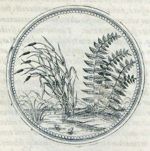
Birdes of one faether VVil flocke togeder: Cats, Spiegel (The Hague, 1632), emblem 25 uses the imagery of a woman warning a suitor that they are too different - and in its comment Cats quotes the same source as the adage's comment
Iconclass: 31D5 young versus old age; young and old 51B3 Parity, Equality 56F13 (Feeling of) Attraction
Collectanea (1500): 177
Loci Communes: Conjecturae (Conjectures, Conjectures); Similitudinis et congruentiae (Similarity and congruence, Similitude et convenance)
I ii 21 Simile gaudet simili Like rejoices in like
Ομοιον ὁμοιῳ φίλον. id est, Simile gaudet simili. Aristoteles libro Moralium octavo: ὅμοιον ὁμοίου ἐφίεται. id est, Simile appetit simile. Item libro nono: Ομοιον ὁμοιῳ φίλον. id est, Simile simili amicum. Unde est & illud: ὁμοιότης τῆς φιλότητος μήτηρ. id est, Similitudo mater amoris. Quare ubi absoluta similitudo, ibi vehementissimus amor, id quod indicat fabula Narcissi. Agathon in convivio Platonis: ὁ γὰρ παλαιὸς λόγος ἐὖ ἔχει, ὡς ὅμοιον ὁμοιῳ ἀεὶ πελάζει. id est, Scite quidem veteri proverbio fertur, simile simili semper haerere. Plutarchus in commentario, cui titulus, Quo pacto sit amicus ab adulatore dignoscendus, refert huiusmodi senarios: Γέρων γέροντα γλῶταν ἡδίστην ἔχει Παὶς παιδὶ, καὶ γυναικὶ πρός φορον γυνὴ Νοσῶν τ' ἀνὴρ νοσοῦντι, καὶ δυσπραξίᾳ Δηφεὶς ἐπωδὸς ἐστὶ τῷ πειρωμένῳ. id est, Seni senilis lingua iucundissima est, Pueroque puer, & mulier apta foeminae. Aegrotus itidem aegroto, & in malis situs, Exercito malis placet, atque congruit. Diogenes Laertius ostendens quaedam imitatum Platonem ex Epicharmi scriptis, adducit & illud, Quòd canis cani videtur pulcherrima, & bovi bos, & asina asino, & sus sui. Diximus alibi, Suum cuique reginae placere regem. Plato lib. De legib. viii. Φίλον μέν που καλοῦμεν ὁμοιον ὁμοιῳ, κατ' ἀρετὴν, καὶ ἴσον ἴσῳ, id est, Amicum quidem vocamus simile simili, quod ad virtutem, & aequale aequali. Quanquam adagium recte transferetur & ad illos quos similitudo conciliat vitiorum. In quos est illud Catulli: Pulchre convenit improbis cinaedis. Item illud Martialis, Uxor pessima, pessimus maritus, Miror non bene convenire vobis. Illud item Iuvenalis: Magna inter molles concordia.
Ομοιον ὁμοιῳ φίλον, Like rejoices in like. Aristotle in the Ethics, book 8: 'Like seeks like,' and in book 9: 'Like is a friend to like.' Hence that other phrase: 'Similarity is the mother of affection.' So where there is absolute similarity there is the most violent love, and this is the meaning of the fable of Narcissus. Agathon in the Symposium of Plato: `For the old saying is right, that like always cleaves to like.' Plutarch in the essay called 'How To Tell A Friend From A Flatterer,' quotes the following iambic lines:
The speech of age is pleasant to the old,
Boy suits with boy, woman with woman too,
A sick man with the sick, and one in grief
With one who suffers is in dear accord.
Diogenes Laertius, showing that Plato imitated some things from the writings of Epicharmus, quotes his saying that 'a bitch seems most beautiful to a dog, a cow to a bull, a she-ass to an ass, a sow to a boar,' I have said elsewhere 'To every queen her king is fair.' Plato in the eighth book of the Laws: 'We say that like is a friend to like as far as virtue is concerned, and equal to equal.' But the adage can rightly be transferred also to those who are linked by a likeness in vice. Directed against those is the line of Catullus 'Well agreed are the abominable profligates,' and Martial's 'Worst of wives and worst of husbands, I am surprised that you do not agree,' and Juvenal's 'Great is the concord among catamites.'
Facsimile: 
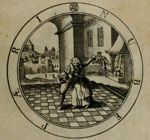
Similis simili gaudet: Meisner, Politica Politica (Nürnberg, 1700), emblem 412
Birdes of one faether VVil flocke togeder: Cats, Spiegel (The Hague, 1632), emblem 25 uses the imagery of a woman warning a suitor that they are too different - conveying the adage's moral in a direct way
Iconclass: 51B3 Parity, Equality 56F13 (Feeling of) Attraction
Loci Communes: Philautia (Self-love, Amour-propre); Similitudinis et congruentiae (Similarity and congruence, Similitude et convenance)
I ii 22 Semper similem ducit deus ad similem God always leads like to like
Potest autem adagium ex Homero natum videri, apud quem Odysseae ρ Melanthius caprarius conspicatus Eumaeum subulcum, ipsum Ulyssem secum adducentem, sed habitu specieque pannosi, scomma iacit in utrunque, quasi duo inter se similes bene convenissent: Νῦν μὲν δὴ μάλα πάγχυ κακὸς ἡγηλάζει Ως ἀεὶ τὸν ὁμοῖον ἄφει θεὸς ὡς τὸν ὁμοῖον. id est, Nunc adeo malus ecce malum comitatur, ut usque Ad simile deus adducit, similemque paremque. . Aristoteles lib. Moral. viii. proverbii loco refert: Οθεν τὸν ὅμοιον φασὶν ὡς τὸν ὅμοῖον. id est, Unde similem aiunt ad similem.
This adage may be derived from Homer's Odyssey, book 17, line 217, where Melanthius the goatherd sees Eumaeus the swineherd bringing Ulysses with him, tattered and torn, and makes a jest about both of them, as if the two of them were well matched: 'Now the worthless leads the worthless; / Thus always God brings like to like.' Aristotle in the Ethics, book 8, quotes as a proverb `Whence they say "like will to like."'
Facsimile:
Iconclass: 12B13 representations ~ gods, demi-gods, heroes, etc. (non-Christian religions) 51B3 Parity, Equality 54E2 Guidance 56F13 (Feeling of) Attraction
Loci Communes: Similitudinis et congruentiae (Similarity and congruence, Similitude et convenance)
I ii 23 Semper graculus adsidet graculo Jackdaw always sits by jackdaw
Αεὶ κολοιὸς πρὸς κολοιόν ἱζάνει, id est, Assidit usque graculus apud graculu. Refertur à Diogeniano proverbialis senarius; notaturque ab Aristot. lib. Rhet quem mo\ do citavimus: ubi inter alia complura huius sententiae proverbia, hoc quoque commemorat. Item lib. Moralium viii. καὶ κολοιὸς ποτὶ κολοιὸν. id est, Εt graculus, inquit, ad graculum. Grae[-}λβ cis est trochaicus dimeter, haud dubium quin ex poeta quopiam decerptus. Eleganter usurpavit adagium Gregorius in quadam ad Eudoxium epistola, Κολοιὸν δὲ ποτὶ κολοιὸν ἱζάνειν καὶ τῆς παροιμίας ἀκούεις. id est, Graculum autem assidere graculo, audis & à proverbio. Porrò graculorum conventus olim notos fuisse testatur M. Varro lib. De re rust. iii. Unde Plutarchus in lib. De Polyphilia, οὐκ ἀγελαῖόν ἐστιν οὐ δὲ κολοιῶδεσ. id est, Non armentarium est, neque graculeum. Quin huic avi nomen inditum, à κολάω, quod est, conglutino. M. Varro graculos quoque Latinis inde dictos vult, quod gregatim volent. Quintilianus non probat, asseverans dictionem ab avium voce confictam.
Αεὶ κολοιὸς πρὸς κολοιόν ἱζάνει, Jackdaw always sits by jackdaw. This proverb, an iambic line, is found in Diogenianus, and it is noted in the book of Aristotle's Rhetoric which I have just quoted, where he calls it to mind among other proverbs of the same nature, and also in book 8 of his Ethics: `And jackdaw to jackdaw.' (This is a trochaic dimeter in Greek, no doubt taken from some poet.) Gregory made use of the adage with some elegance in a letter to Eudoxius: 'That jackdaw sits by jackdaw you hear the proverb say.' Varro in book 3 of his Agriculture attests that gatherings of jackdaws have long been known, whence Plutarch says, in 'On Having Many Friends,' 'It is neither like a herd of cattle nor like a flock of daws.' The bird's name in Greek comes from the word kolao, I glue together, and Varro thinks with him, tattered and torn, and makes a jest about both of them, as if the two of them were well matched: 'Now the worthless leads the worthless; / Thus always God brings like to like.' Aristotle in the Ethics, book 8, quotes as a proverb 'Whence they say "like will to like."'
Facsimile:

Birdes of one faether VVil flocke togeder: Cats, Spiegel (The Hague, 1632), emblem 25 uses the imagery of a woman warning a suitor that they are too different - and in its comment Cats quotes the adage
Iconclass: 25F32(JACKDAW)(+441) song-birds: jackdaw (+ herd, group of animals) 51B3 Parity, Equality 56F13 (Feeling of) Attraction
Collectanea (1500): 721
Loci Communes: Similitudinis et congruentiae (Similarity and congruence, Similitude et convenance)
I ii 24 Cicada cicadae cara, formicae formica Cicada loves cicada, ant is dear to ant
Caeterum, quod Aristoteles in eo loco quem modo citavimus, addidit, Et si qua sunt id genus alia, dubium non est, quin senserit illa quae sunt apud Theocritum Idyllio nono, Τέττιξ μὲν τέττιγι φίλος, μύρμακι δὲ μύρμαξ, Ιρηκες δ' ἵραξιν, id est, Formicae grata est formica, cicada cicadae, Accipiter placet accipitri. Porrò nota est formicarum politia, & cicadarum conventus.
When Aristotle added (in the place I have just mentioned) 'and whatever other proverbs of this kind there are,' he was no doubt thinking of a passage in the ninth Idyll of Theocritus: 'The cricket is dear to the cricket, the ant to the ant, the hawk to the hawk.' The social behaviour of the ant is well known, and the concert of the crickets.
Facsimile:
Iconclass: 25F711(ANT)(+441) insects: ant (+ herd, group of animals) 25F711(CICADA)(+441) insects: cicada (+ herd, group of animals) 51B3 Parity, Equality 56F13 (Feeling of) Attraction
Loci Communes: Similitudinis et congruentiae (Similarity and congruence, Similitude et convenance)
I ii 25 Figulus figulo invidet, faber fabro Potter envies potter and smith envies smith
Ab hac forma velut excipiendi sunt qui in eadem arte versantur, propterea quod inter hos artificii similitudo magis aemulationem conciliat quam benevolentiam. Quorum mutuam inter ipsos invidiam Hesiodus in opere, cui titulus, Opera & dies, compluribus metaphoris indicavit, haud tamen damnans id genus artificum concertationem, imò probans ac laudans. Proposuerat enim poeta duplex aemulationis genus, quorum alterum sit utile pulchrumque mortalibus, alterum foedum ac perniciosum. Hoc homines ad rixas ac bella concitari, propter opum honorumque certamina: illo vero tanquam exemplis propositis ad industriam & honestas artes expergefieri. Honestam igitur aemulationem his verbis describit: Ζηλοῖ δέ τε γείτονα γείτων Εἰς ἄφενον σπεύδοντ'. ἀγαθὴ δ' ἔρις ἥδε βροτοῖον Καὶ κεραμεὺς κεραμεῖ κοτέει, καὶ τέκτονι τέκτων, Καὶ πτωχος πτωχῳ φθονέει, καὶ ἀοιδὸς ἀοιδῷ. Quos versus longe elegantissimos in hoc duntaxat vertimus ut intelligantur. Nam venustatem vix quisquam assequatur, nedum ego: Semper vicinus vicino est aemulus, hunc ut Condere cernit opes properantem gnaviter, atqui Concertatio conducit mortalibus ista. Odit ita fabrum faber, figulosque molestus Est figulus: canter cantorem lividus odit. Usurpantur cùm aliàs frequenter apud diversos autores, tum apud Aristotelem lib. Moralium secundo. Rursum eiusdem operis lib. viii. paroemiae vice refertur, κεραμεῖς πάντας τοὺς τοιούτους ἀλλήλοις φασίν εἷναι. id est, Omnes eiusmodi figulos inter sese aiunt esse. Figulos invidos dixit, nimirum alludens ad Hesiodium adagium. Item Rhetoricorum lib. iii. ὅθεν εἴρηται, καὶ κεραμεὺς κεραμεῖ. id est, Unde dictum est, & figulus figulo. Citat ibidem & hunc senarium, haud scio ex quo poeta, Τὸ συγγενὲς γὰρ καὶ φθονεῖν ἐπίσταται. id est, Etenim invidere didicit ipsa affinitas. At est similitudo quam in Symposiacis Plutarchus μάχιμον dicit, hoc est, bellacem ac pugnacem, qualis est gallorum gallinaceorum: qualisque est inter sophistas, mendicos, poetas, cantores: & ob hoc vetat id genus hominum in conviviis coniungi, ne quid oriatur rixae. Est altera: quam ἐπιεικῆ vocat, cuiusmodi est graculorum inter se. Ad hanc pertinent nautae, agricolae, venatores, aliptici. Atque ob id recte copulantur in accubitu. Ad haec amantes, nisi contingat eos eandem amare.
An exception to the foregoing must be made for those who are engaged in the same trade, because with them the similarity of their occupation brings about more competition than good will. Hesiod, in his poem entitled Works and Days, gave several metaphorical descriptions of this mutual envy, but without condemning competition between craftsmen - in fact, he approved and praised it. The poet had set forth two kinds of emulation, one useful and honourable for mankind, the other nasty and pernicious. The latter, he said, drove men to quarreling and warfare as they strove for wealth and honours, while the former encouraged them to industry and creditable skills by putting before them examples to follow. He describes honourable emulation in the words below. I translate these very exquisite lines only to make them intelligible; for hardly anyone could achieve their beauty, and certainly not I.
Neighbour envies neighbour, to see him work hard and prosper -
Richer and richer he gets; and good is this strife for mortals.
And potter vies with potter and one smith vies with another;
Beggar is jealous of beggar and singer of singer is jealous.
These lines are often made use of by different authors, and notably by Aristotle in the second book of his Ethics. Again, in book 8 of the same work he quotes them as proverbial: 'They say that all such men behave like potters to one another,' meaning that they are jealous, with an allusion of course to the adage in Hesiod. Again in the third book of the Rhetoric, `And so they say, potter vies with potter.' He quotes there a line from some poet or other: `And so close cousinship brought jealousy.' But there is a likeness which Plutarch in his 'Table-talk' calls machimos, that is, quarrelsome and bellicose, - cocks have it, and sophists, mendicants, poets, singers; and for this reason he excludes this kind of men from meeting at feasts, for fear that quarrels should break out. There is another sort of similarity, which he calls epieikes, reasonable, like that between jackdaws. To this kind belong sailors, tillers of the soil, hunters, wrestlers, who may properly recline at the same table. To these we may add lovers, unless they happen to love the same girl.
Facsimile: 
Iconclass: 47B111 smith, blacksmith 48C313 potter, ceramist 54EE33 Competition, Rivalry, Emulation; 'Emulatione' (Ripa) 57AA76 Jealousy; 'Gelosia', 'Rammarico del ben'altrui' (Ripa)
Loci Communes: Invidia, aemulatio (Envy, rivalry, Envie, rivalité)
I ii 26 Cretensis Cretensem Cretan and Cretan
Ο Κρῆς τὸν Κρῆτα. Cretensis Cretensem, subaudi, quod erit commodum sententiae, provocat, conatur circumvenire, aut tale quippiam. Quoties improbus agit cum improbo, perfidus cum perfido. Sumptum adagium à Cretensium moribus, quos plurimis conviciis incessuit antiquitas.
Ο Κρῆς τὸν Κρῆτα, Cretan ... Cretan; one may understand whatever verb is suitable, like Cretan incites Cretan, tries to trick him, or something of the sort, whenever it is a matter of one rogue having dealings with another rogue, or one trickster with another. The adage is taken from the ways of the Cretans, which were severely criticized in Antiquity.
Facsimile:
Iconclass: 32B311(CRETAN) indigenous European peoples (CRETAN) 57AA6131 Guile, Artfulness, Craftiness, Deceitfulness 61D(CRETE) geographical names of countries, regions, mountains, rivers, etc. (CRETE) (CRETE)
Loci Communes: Similitudinis et congruentiae (Similarity and congruence, Similitude et convenance)
I ii 27 Cretensis cum Aegineta A Cretan with a man of Aegina
Eandem obtinet sententiam, Κρῆς πρὸς ἀιγινήτην, id est, Cretensis cum Aegineta, subaudiendum, agit. Quadrat in pariter improbos, qui mutuis inter se fallaciis agunt. Nam Aeginetae quoque olim male audierunt, in quos etiam oraculum illud quidam aeditum putant: οὒτε τρίτοι, οὒτε τέταρτοι. id est, Neque tertii, neque quarti.
Κρῆς πρὸς Ἀιγινήτην A Cretan (acts) with a man of Aegina. This has the same meaning, applied to two equally bad characters who hoax each other. For the Aeginetans also had a bad reputation in old days; some think it was against them that the oracle was delivered, 'Neither third nor fourth.'
Facsimile:
Iconclass: 32B311(CRETAN) indigenous European peoples (CRETAN) 32B311(AEGINETAN) indigenous European peoples (AEGINETAN) 57AA6131 Guile, Artfulness, Craftiness, Deceitfulness 61D(AEGINA) geographical names of countries, regions, mountains, rivers, etc. (AEGINA) (AEGINA) 61D(CRETE) geographical names of countries, regions, mountains, rivers, etc. (CRETE) (CRETE)
Collectanea (1500): 612
Loci Communes: Similitudinis et congruentiae (Similarity and congruence, Similitude et convenance)
I ii 28 Vulpinari cum vulpe To play the fox with the fox
Αλωπεκίζειν πρὸς ἑτέραν ἀλώπεκα. id est, Cum vulpe vulpinare tu quoque invicem. Senarius est proverbialis: Cum astutis astutiis agito. Horatius: Nunquam te fallant animi sub vulpe latentes. Aristophanes in Vespis: οὐκ ἔστιν ἀλωπεκίζειν. id est, Non licet vulpinari. Quod autem nos ἀλωπεκίζειν vertimus vulpinari, ne quis hoc verbi tanquam nostrum ac novum aspernetur, citatur ex M. Varrone à Nonio Marcello. Sic enim ausus est dicere Varro vulpinari pro ἀλωπεκίζειν, quemadmodum Horatius Iuvenari dixit pro νεανίζειν. Vide Proverbium βατταρίζειν.
Αλωπεκίζειν πρὸς ἑτέραν ἀλώπεκα Confronted with a fox be fox yourself. A proverbial iambic line: be cunning with the cunning. Horace says, 'May the designs that lie hidden in the fox never fool you.' Aristophanes in the Wasps: 'It is not right to play the fox.' If I have translated the Greek word by vulpinari, it is not to be despised as a coinage of my own or a neologism, because Nonius Marcellus quotes it out of Varro; and Varro was bold to say vulpinari for the Greek alopekizein, to play the fox, just as Horace used iuvenari, to behave like a young fool, for neanizein; see the proverb battarizein.
Facsimile:
Iconclass: 25F23(FOX) beasts of prey, predatory animals: fox 57AA613 Cunning, Slyness; 'Astutia ingannevole' (Ripa)
Collectanea (1500): 414
Loci Communes: Similitudinis et congruentiae (Similarity and congruence, Similitude et convenance)
I ii 29 Cretiza cum Cretensi To play Cretan with a Cretan
Πρὸς Κρῆτα Κρητίζειν. id est, Adversum Cretensem Cretiza, id est, adversus mendacem mendaciis utere. Usus est Plutarchus in vita Lysandri, πρὸς κρῆτα δὲ ἄρα τοῦ λόγου κρητίζων. Rursus in vita Pauli Aemilii, Τοὺς μὲν ἐπισταμένους ἀκριβῶς αὐτὸν, οὐκ ἔλαθεν κρητίζων πρὸς κρῆτας. id est, Eos quidem, qui hominem penitus norant, haud latuit, quod cum Cretensibus arte Cretica uteretur: propterea quod Cretensium vanitas, de Iovis apud se sepulchro, multaque id genus mentientium, in vulgi fabulam abierit: id quod palàm testatur Epimenidis ille versiculus, quem Paulus etiam Apostolus citat: Κρῆτες ἀεὶ ψεῦσται, κακὰ θηρία, γαστέρες ἀργοί. id est: Cretenses semper mendaces, malae bestiae, ventres pigri.Divus Hieronymus in commentariis quos in hanc scripsit epistolam, indicat hunc versiculum repertum in opere Epimenidis, cui titulam fecit, De oraculis. Unde & Paulus prophetam vocat, sive per iocum, sive ob argumentum. Huius autem carminis initium, Κρῆτες ἀεὶ ψεῦσται, usurpavit Callimachus poeta Cyrenensis in hymno scribens adversus Cretenses in laudem Iovis ac vanitatis eos arguens, quod iactitarent illius sepulcrum esse apud se, cum is esset immortalis. Quò respiciens Ovidius: Nec fingunt, inquit, omnia Cretes. Unde κρητίζειν Graeci pro mentiri dicunt. Suidas aliam adagionis causam indicat, scribens Idomeneum Cretensem, cum illi negocium esset datum, ut aes quod è spoliis ab hostibus detractis collectum erat, distribueret, sibi partem longe optimam delegisse. Unde congruere videtur etiam in illos, qui fraudat alios, suisque commodis impensius ubique student. Idem putat adagium quadrare etiam in eos, qui frustra mendaciis agunt adversus artificem mentiendi. Quemadmodum vulgo dicunt, difficillimum esse furari apud fures, ita difficillimum mendaciis imponere mendacibus.
Πρὸς Κρῆτα Κρητίζειν, To play Cretan against a Cretan, ie use lying against a liar. Plutarch used it in the life of Lysander: 'Play Cretan against the Cretan, as the saying is,' and again in the life of Paulus Aemilius, 'It was not at all hidden from those who knew him well that he was playing Cretan with the Cretans.' The vanity of the Cretans, as for instance about the sepulchre of Jove which they claimed to have, with many other lies of the same sort, became a common proverb; the line of Epimenides quoted by the Apostle Paul testifies to this: 'Cretans are always liars, evil beasts, slow bellies.' St Jerome in his commentary on this Epistle indicates that this line is to be found in a work of Epimenides entitled On Oracles. Hence Paul also calls him a prophet, either in jest or because the subject warrants it. The opening of this poem, 'Cretans are always liars,' was used by the poet Callimachus of Cyrene in a hymn which he wrote against the Cretans and in honour of Jove, accusing them of absurdity because they boasted that they could show Jove's tomb, although he was immortal. Thinking of this, Ovid remarks, 'Cretans do not invent everything.' Hence the verb kretizein, to play Cretan, is used in Greek to mean 'tell lies.'
Suidas gives another origin for the adage, when he writes that the Cretan Idomeneus, who was given the job of distributing money collected from the spoils taken from the enemy, allocated far the best part of it to himself. So it seems to fit those who defraud others and always consider their own advantage more zealously. He thinks the adage is applicable to those who try in vain to use lies against a specialist in lying. As the common saying goes, it is most difficult to rob thieves, and equally difficult to get away with lying to liars.
Facsimile: 
Iconclass: 32B311(CRETANS) indigenous European peoples (CRETANS) 57AA6221 Lie; 'Bugia' (Ripa)
Collectanea (1500): 151
Loci Communes: Similitudinis et congruentiae (Similarity and congruence, Similitude et convenance); Vanitas (Vanity, Vanité)
I ii 30 Cum Care Carizas You are Carizing with a Carian
Huic simillimum refert Diogenianus, πρὸς κάρα καρίζεις, id est, cum Care carissas: Rustice agis cum rustico, barbare loqueris barbaro, crasse cum crasso. Cares populi sunt Asiae,Phrygiae de quibus alio loco dicemus, quorum mores proverbiis aliquot fecere locum.
Diogenianus list something very similar to this: πρὸς κάρα καρίζεις, You are Carizing with a Carian, that is to say, you are acting the rustic with a rustic, talking barbarous language to a barbarian, or stupidly to the stupid. The Carians are a people of Phrygia, whom we shall mention in another place; their way of life gave rise to several proverbs.
Facsimile:
Iconclass: 32B2(CARIANS) historical peoples: Carians 56B42 Coarseness, Rusticity
Loci Communes: Similitudinis et congruentiae (Similarity and congruence, Similitude et convenance)
I ii 31 Cretensis mare The Cretan and the sea
Ο κρῆς τὴν θάλασσαν. id est, Cretensis mare, subaudiendum nescit, aut metuit. Hanc paroemiam refert pariter, atque exponit Strabo Geograp. lib. x. scribens olim Cretenses navigandi peritia, rerumque maritimarum usu principatum tenuisse: atque hinc antiquitus increbruisse proverbium: Cretensis mare nescit: in eos qui nescire fingerent, quod egregie callerent. Etenim quî consentaneum est, Cretenses cum sint insulares, ignorare mare, quo cinguntur undiquaque? Usus est eodem & Aristides in Pericle: ὁ κρῆς τὸν πόντον. Zenodotus scribit apud Alcaeum extare. His affine est quod habet Horat. in epist. ad Octavium: Ipse ego qui nullos me affirmo scribere versus, Invenior Parthis mendacior. quòd Parthi tum maximè pugnent, cum fugam simulant.
Ο κρῆς τὴν θάλασσαν, The Cretan (supply, is ignorant or frightened of ) the sea. This proverb is quoted and explained at the same time by Strabo in his Geography, book 10, where he writes that the Cretans took a foremost place through their skill in navigation and their experience in maritime matters; and hence a proverb grew up in ancient times, `a Cretan knows nothing of the sea,' applied to people who pretend to be ignorant of something they are particularly skilled in. For how could the Cretans, island-dwellers as they are, be ignorant of the sea which completely surrounds them? Aristides also made use of this in Pericles, The Cretan and the sea, and Zenodotus writes that it is to be found in Alcaeus. It is like what Horace says in his Epistle to Octavius, 'Even I who say I never wrote a line am found a bigger liar than a Parthian.' This is because the Parthians are at their fighting best when they simulate flight.
Facsimile:
Iconclass: 32B2(PARTHIANS) historical peoples and nationalities (PARTHIANS) 32B311(CRETANS) indigenous European peoples (CRETANS) 33B3 fighting 46C28 navigation and manoeuvering ~ ship 57AA611 Dissimulation, Hypocrisy; 'Hippocresia', 'Simulatione' (Ripa) 57AA6131 Guile, Artfulness, Craftiness, Deceitfulness
Loci Communes: Simulatio, dissimulatio (Pretense, dissimulation, Simulation, dissimulation)
I ii 32 Ad umbilicum ducere To bring to the scroll's end
Extant apud autores aliquot absolvendi paroemiae, quarum de numero est illa: Ad umbilicum ducere, pro eo, quod est, librum finire, atque absolvere. Sunt enim umbilici, interprete Porphyrione, ornamenta quadam ossea, aut lignea corneáve, umbilici nostri formam imitantia, quae voluminibus iam absolutis addebantur, atque hinc proverbialem figuram esse natam, ad umbilicum pervenit, id est, ad finem. Horatius in Epodis: Deus deus nam me vetat Inceptum celeres promissum carmen iambos Ad umbilicum ducere. Martialis in quarto Epigrammatum libro, Ohe iam satis est, ohe libelle Iam pervenimus usque ad umbilicos, Tu procedere adhuc & ire quaeris. Idem libro quinto: Quae cedro decorata purpuraque Nigris pagina crevit umbilicis. Idem in tertio, Cedro nunc licet ambules perunctus, Et frontes gemino decens honore, Pictis luxurieris umbilicis, Rursum in undecimo, Explicitum nobis usque ad sua cornua librum, Et quasi perfectum, Septitiane refers. Verum equidem haud scio, possitne proverbium hoc aliò, quàm ad librum aut carmen transferri, nisi durior fiat metaphora.
In a number of authors we find proverbs about bringing things to a close, and one of these is Ad umbilicum ducere, To bring to the scroll-end, meaning to complete and finish a book. The 'navels,' or scroll-ends, according to Porphyrion, are those ornaments made of bone, wood or horn, in the shape of the human navel, which were added to a finished scroll, and hence the proverbial metaphor 'he got to the navel,' that is, to the end. Horace in the Epodes:
For the god, the god forbids me
To bring to an end the swift measures begun,
The song promised of yore.
Martial in the fourth book of the Epigrams:
Ho there! 'tis enough, my little book.
We have now come to the very end; you still
Want to go on further and keep on going.
Again in book 5: '[a book] which, spruce with cedar oil and purple, has fully grown with its black knobs.' Again in book 3:
Now you may strut abroad, anointed with cedar-oil,
And bright with the twin garnish of your brows,
Run riot with your painted bosses.
Again in book 11: 'You return me my book unrolled to its very horns, /And as if, Septitianus, you had read it through.' I am not sure whether this proverb could be transferred to something other than a book or a poem - it might strain the metaphor.
Facsimile:
Iconclass: 31A22311(+0) navel (+ variant) 49LL71 scroll - LL - scroll unfolded 49N reading 54D3 Completion
Collectanea (1500): 774
Loci Communes: Perficiendi sive absolvendi (Finishing, completing, Achever, accomplir)
I ii 33 Summum fastigium imponere To put on the coping-stone
Illud generalius est: Summum fastigium imponere, pro eo quod est rem omnibus suis partibus absolvere. Exempla reperies apud Ciceronem libro Officiorum iii. apud Plin. in Epist. aliquoties. Translatum ab aedificatoribus, qui perfecto demum aedificio fastigium aliquod solent imponere: quibus sicuti fundamentum prima instituendi operis pars est, ita fastigium suprema est iam absoluti. Unde quemadmodum fundamenta iacere, transferunt ad id, quod est instituere quippiam: itidem fastigium addere, traducunt ad rei perfectionem, summamque ut vocant, manum. Huic confine quod à Graecis dicitur, τὸν κολοφῶνα ἐπέθηκε. id est, Colophonem imposuit.
A more general metaphor is 'to put on the coping-stone,' meaning to finish something in all its parts. You will find instances in Cicero, De officiis, book 3, and sometimes in the letters of Pliny. This comes from builders, who on finishing a building, usually place some sign of completion on the top. Just as the foundation is the very beginning of their work, so the coping-stone is the last point of the finished building. So 'to lay the foundations' comes to mean to start on something, and 'to put on the coping' means to complete something, to add the final touch, as they call it. This is close to the Greek expression, 'he set down the colophon' (full stop).
Facsimile: 
Iconclass: 47G532 tiles, bricks ~ building material 54D3 Completion
Loci Communes: Perficiendi sive absolvendi (Finishing, completing, Achever, accomplir)
I ii 34 Summam manum addere To add the final touch
Eandem vim habet: Summam manum addere. Mirum ni metaphora ab artificibus translata, qui primum rude quoddam operis simulacrum effingunt, atque hanc primam appellant manum, deinde formant expressius, postremo summa cura expoliunt, atque hanc supremam, seu summam manum vocant. Ovidius: Nec tamen illa legi poterunt patienter ab ullo, Nesciat his summam si quis abesse manum. Mox pro eodem dixit ultimam limam: Ablatum mediis opus est incudibus illud, Defuit & scriptis ultima lima meis. Seneca ad Lucilium: Vino deditos delectat potatio extrema, illa quae mergit, quae ebrietati summam manum imponit. Eade figura dicimus, nihil deesse praeter extremam manum. Exempla crebriora sunt apud scriptores, quàm ut hic referat repetere.
To add the final touch has the same sense, and is obviously taken from craftsmen who rough out a first attempt or mock-up of the work and call this the first touch [ prima manus], then shape it more exactly, and finally polish it with the utmost care; and this they call the suprema or summa manus, the final touch. Ovid says, `No patient reading will those works receive, / Unless it's known they lack the final touch.' Just afterwards he uses the 'file' for the same meaning: 'Taken untimely from the anvil, that; / My writings lack the last touch of the file.' Seneca to Lucilius: 'Devotees of wine are particularly : pleased by the last drink, the one which sinks them, which puts the final touch to their intoxication.' By the same metaphor we say, nothing is lacking but the'extreme' touch. Instances of this are too frequent in literature for any other references to be necessary.
Facsimile:
Iconclass: 47C511 polishing (industrial process) 54D3 Completion
Loci Communes: Perficiendi sive absolvendi (Finishing, completing, Achever, accomplir)
I ii 35 Supremum fabulae actum addere To add a last act to the play
In eandem formam referendum est illud: Supremum fabulae actum addere, pro eo quod est, extremum finem imponere, à poetis comoediarum, aut tragoediarum scriptoribus ascitum, qui fabulas suas in actus quosdam distribuunt. Unde illud Horatianum: Nec sit quinto productior actu. Solent autem in extremo actu, plurimum artis addere, sicuti scribit M. Tullius ad Quintum fratrem, Illud te ad extremum & oro & hortor, ut tanquam poetae boni, & actores industrii solent, sic tu in extrema parte et conclusione muneris ac negocii tui diligentissimus sis: ut hic tertius annus imperii tui, tanquam tertius actus perfectissimus atque ornatissimus esse videatur. Idem ad Atticum lib. xiii. Etenim haec decantata erat fabula, sed complere paginam volui. Cicero in Catone transfert ad vitam peractam. Quemadmodum & Apuleius lib. Floridorum iii. de Philemone comico loquens: Renunciaverunt, inquit, Philemonem poetam qui expectaretur, ut in theatro fictum argumentum finiret, iam domi veram fabulam consummasse. Enimvero iam dixisse rebus humanis valere & plaudere. Opinor ad hanc formam pertinere, quod apud Nonium ait Lucilius: Sarcinatoris est, summum suere centonem optime.
This comes in the same category: to add a last act to the play means to bring to a termination, arising from the poets who write comedies and tragedies and cut up their plays into acts. So Horace says, 'Five acts, no more.' They usually take most care with the last act, as Cicero writes to his brother Quintus: 'I end my letter by imploring and urging you that - after the fashion of good poets and hard-working actors - you should take particular pains with the last phase and finale of your office and employment; so that this third year of your rule may, like the third act of a play, be recognized as having been the most highly finished and brilliantly staged of the three.' Again to Atticus, book 13: 'At this point the play was over, but I wanted to fill up the page.' In his Cato Cicero transfers the metaphor to the end of life. In the same way Apuleius in his Florida, book 3, speaking of Philemon the playwright, says 'They announced that the poet Philemon, who was waited for to finish off a fictitious plot on the stage, had already completed the true story at home. For he had already said "Farewell, and give me your applause" to human affairs.' I think the remark of Lucilius in Nonius belongs to this class: 'It is for a stitcher of patches to sew his last bit of patchwork best.'
Facsimile:
Iconclass: 48C85 theatre, theatrical performance 54D3 Completion
Loci Communes: Perficiendi sive absolvendi (Finishing, completing, Achever, accomplir)
I ii 36 Catastrophe fabulae The dénouement of the play
Cuiuslibet exitum rei, proverbiali figura, catastrophen vocamus. Porrò inter figuras proverbiales illud admonuimus, unicuique disciplinae atque artificio sua quaedam esse peculiaria vocabula, quae quemadmodum in sacrorum ceremoniis ac magicis precaminibus fieri consuevit, penè superstitione quadam usurpantur. Ea quoties in aliud quippiam trahuntur, ferè proverbii speciem obtinent: velut ex militari disciplina, receptui canere, & locum deserere, & prima acies, & res ad triarios rediit. Ex musica, praeludium pro praefatione, aut ingressu negotii: summa & ima chorda, pro clamosa & gravi voce. &, eadem oberrare chorda, pro eo quod est, in eadem re peccare saepius. Porrò fabula omnis, ut ostendit Donatus, in treis partes distribuitur, in πρότασιν, ἐπίτασιν, καταστροφήν. Protasis est primus ille tumultus iam quasi gliscens. Epitasis, turba fervidissima. Catastrophe, subita rerum commutatio. Unde Lucianus eleganter exitum eventumque negocii catastrophen appellat, cum aliàs, tum in commentario De mercede servientibus: ἐπι πᾶσι δὴ ἥτις αὐτοις ἡ καταστροφὴ τοῦ δράματος γίνεται. id est, Post omnia denique quae illis catastrophe fabulae contingit, hoc est, quis exitus servitii. Et in Alexandro Pseudomante: τοιοῦτο τέλος τῆς ἀλεξάνδρος τραγῳδίας. i. Eiusmodi finis tragoediae Alexandri. Idem in vita Peregrini: αὐθις ὁρῶ γελῶντα σε, ὦ καλὲ κρόνιε, τὴν καταστροφὴν τοῦ δράματος. i. Rursus video te ô bone Cronie ridentem fabulae catastrophen.
We call the outcome of anything, in proverbial language, the catastrophe or denouement. Speaking of proverbial metaphors, I have pointed out that each discipline or type of craftmanship has its own set of terms, which are used out of superstition, I might say, as is usually done in rites and ceremonies and magical incantations; and when these are diverted to another use, they take on the look of a proverb. For instance, from military discipline we get to sound the retreat, to give ground, the first line, they fell back on the old guard [triarii]. From music, we get prelude for preface, or for the start of something; top string, lowest string, for loud or deep tone; to strike the same wrong note, for to make the same mistake often. Every plot, as Donatus shows, is divided into three parts, protasis, epitasis and catastrophe. The protasis is the first excitement, swelling as it goes on. The epitasis is a flurry of complications. The catastrophe is a sudden transformation of the whole thing. So Lucian elegantly calls the outcome or result of an affair its catastrophe in several places, and particularly in his work On Salaried Posts: 'And in the end of all what the catastrophe of the drama is' (that is, what outcome there is to their servitude). And in Alexander the False Prophet: 'This is the conclusion of the tragedy of Alexander.' And in the Life of Peregrinus: 'I see you again, good Cronius, laughing at the denouement of the play.'
Facsimile:
Iconclass: 48C85 theatre, theatrical performance 51CC1 Effect, Result
Loci Communes: Fortunae commutatio (Change of fortune, Changement de fortune)
I ii 37 A capite usque ad calcem From head to heel
Cum rem totam significamus, à capite usque ad calcem dicimus. Cuius adagii triplex esse potest usus. Aut enim ad corpus referetur, aut ad animum, aut ad rem, qui duo posteriores plus obtinent venustatis, nimirum quo plus habent figurae. Ad corpus, apud Homerum Iliados ψ. Ες πόδας ἐκ κεφαλῆς. i. A capite usque pedes. Item Theocritus in Bucolico: Καὶ μ' ἀπὸ τᾶς ποτὶ τὼ πόδε συννεχὲς εἷδεν. id est, Me à capite usque pedes lustravit lumine totum. Plautus in Epidico, Contempla Epidice ab unguiculo ad capillum summum. Horatius: Talos à vertice pulcher ad imos. M. Tullius pro Roscio Comoedo: Non ipsum caput & supercilia illa penitus abrasa, olere malitiam & clamitare calliditatem videntur? Nonne ab imis unguibus usque ad verticem summum, si quam coniecturam adfert hominibus tacita corporis figura, ex fraude, fallaciis, mendaciis, totus constare videtur? Ad rem, ut apud Aristophanem in Pluto: Ακοῦε τοίνυν, ὡς ἐγὼ τὰ πράγματα Εκ τῶν ποδῶν ἐς τὴν κεφαλήν σοι πάντ' ἐρῶ. Audi ergo, quando totum ego negotium A pedibus usque tibi ad caput percenseo. Quanquam hic comicus ioci causa praepostere posuit pedes & caput. Divus Hier. in praefatione libri, quem Dierum inscribunt Hebraei: Contuli cum eo à vertice, ut aiunt, usque ad extremum unguem. Ad animum hoc pacto poterit transferri: Ego tibi mores & ingenium illius, breviter, hominem quantus est à summo, ut aiunt, capillo ad imum usque calcaneum depingam. Quanquam exemplum M. Tullii, quod modo retulimus, magis ad animum, quàm ad corpus videtur pertinere. Quinetiam dividitur adagium, cum caput negocii vocamus, praecipuum autorem: perinde ut & fontem dicimus. Terentius: Te esse huic rei caput. Item apud Graecos, το κεφάλαιον τοῦ πράγματος. Lucianus in Tyrannicida, τῆς τυραννίδος κεφάλαιον, Id est, tyrannidis caput. Et Plato lib. De legibus iii. τὴν τῶν στάσεων πηγὴν, dixit, id est, seditionum fontem. & Ad calcem venire. In calce operis. In extremo literarum tuarum calce, Ab ipso exordiri capite. A calce ad caput recurrere. Atque id genus aliae loquendi formulae, quae passim apud autores obviae sunt. Plutarchus adversus Stoicos: ἐκ παρόδου καὶ ἀρχῆς ἄχρι κορωνίδος. id est, Ab ingressu & initio usque ad coronidem.
When we mean the whole of something, we say From head to heel. There are three ways of using this proverbial expression. It may refer to the body, the mind, or the circumstances; the two last are the more pleasing, doubtless because they are more metaphorical. Homer applies it to the body, Iliad 23: 'From head to feet,' and so does Theocritus in the Boukoliskos: 'And she looked me over from head to toe.' Plautus in the Epidicus, 'Look, Epidicus, from the toenail to the topmost hair.' Horace: 'Beautiful from head to heel.' Cicero, in his Pro Roscio comoedo, says: 'Does not his very head, and those completely shaven eyebrows, seem to breathe out malice, and proclaim cunning? If any indication is given to men by the physical appearance, without words, does he not seem entirely made up of fraud, deceit and lies, from his very toenails to the top of his head?'
Aristophanes in the Plutus applies it to circumstances: 'Listen then, since I shall tell you the whole thing, From the feet up to the head', though here the comic poet amusingly transposes head and feet. St Jerome, in the preface to the book called in Hebrew the Book Of Days, says: 'With his help I collated it from the head, as they say, down to the last toenail.'
This can be transferred to the mind, in this way: 'I will describe his ways and his mind, in a word the very man himself, from the topmost hair, as they say, to the tip of his very heel'; though the instance from Cicero we have just quoted seems to belong to the mind more than to the body. The adage is used differently again when we speak of the 'head of the business,' meaning the chief originator, just as when we speak of the fount of something. Terence says 'You are the head of this affair,' and the Greeks το κεφάλαιον τοῦ πράγματος, 'the gist (head) of the matter.' Lucian in the Tyrannicide talks about the 'head of tyranny,' and Plato in the third book of the Laws said 'the fount of sedition.' Then we have 'to arrive at the heel, in the heel of the work, at the very heel of your letter'; 'to start from the very head,' 'to run back from heel to head,' and other forms of this way of speaking, which are to be found in all the authors. Plutarch 'Against the Stoics': 'From the opening and beginning right to the crown.'
Facsimile: 
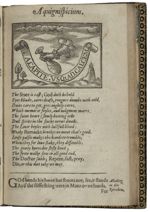
A capite usque ad calcem: Scot, Philomythie or Philomythologie (London, 1616), Illustration 5
Iconclass: 31A221 head (human) 31A22551 heel 51A7 Perfection, Completeness; 'Perfettione', 'Operatione perfetta' (Ripa)
Collectanea (1500): 82
Loci Communes: Perficiendi sive absolvendi - ab initio ad finem (Finishing, completing - from beginning to end, Achever, accomplir - du début à la fin)
I ii 38 Cursu lampada trado I hand on the torch in the race
Cursu lampada tradere, proverbialis metaphora, pro eo, quod est: partes tuas quasi successione in alium atque alium transferre. Lucretius: Et quasi cursores vitai lampada tradunt. De animantibus agit, quae successione propagantur, vita per vices ab aliis in alia transfusa. M. Varro lib. De re rustica iii. capite xv. Sed ô Merula Axius noster, ne dum hoc audit, physicam addiscat, quòd de fructu nihil dixi, nunc cursu lampada tibi trado. Quibus verbis significat, se alteram sermonis partem Merulae tradere, isque in dicendi vicem succedit. Lucretius videtur imitatus Platonem, qui lib. De legibus vi. scribit, cives oportere liberis generandis atque educandis operam dare, ut vitam, quam ipsi a maioribus accepissent, vicissim quasi taedam ardentem posteris tradant. Eodem pertinet Persianum illud: Qui prior es, cur me in decursu lampada poscis? Aristophanes in Ranis: Λαμπάδα δ' οῦδεὶς οἶος τε φέρειν Υπ' ἀγυμνασίας ἔπι νυνί id est, Iam nemo queat gestare facem, Quòd non curant exerceri. Taxat ignaviam atque inertiam civium. Quo loco interpres addit, in trib. certaminibus solere veteres gestare faces, id est, ut illi dicebant, λαμπαδουχεῖν, in Prometheis, in Vulcaniis, & Panathenaicis. Porrò Prometheus creditur primus hoc ludorum genus instituisse, hunc quidem ad modum, ut currentes facem ardentem gestarent. Eam defatigatus proximo in manum dabat: Is item defessus alii, ac deinceps alius alii, successione tradebant invicem, historiae Prometheae quasi simulacrum repraesentantes, quemadmodum ferulam, qua coelestem ignem exceperat, ne rursus extingueretur, perpetuo motu iactarit, in terram devolans. Huius rei mentionem facit Plato lib. De rep. i. significans daduchias etiam in honorem Minervae solere celebrari. Pausanias autem in Atticis, ritum horum ludorum describit copiosius. Meminit & Herodotus, sed obiter, in Urania, ostendens eum morem à Persis repertum, ut dispositis equis atque cursoribus, alius alii mandata velut lampada traderent, quo celerius perferri possent. Autor rhetorices ad Herennium, Non enim quemadmodum in palaestra, qui taedas ardentes accipit, celerior est in cursu continuo, quam ille, qui tradit: ita melior Imperator novus, qui accipit exercitum, quam ille qui discedit. Propterea quod defatigatus cursu, integro facem, hic peritus Imperator imperito exercitum tradit. Itaque lampadem tradere dicetur, qui iam vel delassatus, vel emeritus, in alios munus gerendum ab se transfert. Et invicem lampada tradere, qui, quod ait Terentius, tradunt operas mutuas, & aliis alii vicissim suppetias ferunt.
Cursu lampada tradere, To hand on the torch in the race, is a proverbial metaphor, meaning to pass on the part you have played, as it were, to different people in succession. Lucretius: 'Like runners they hand on the torch of life.' The reference is to living creatures which propagate themselves by succession, so that life is passed on from one to another turn by turn. Varro in his Agriculture, book 3 chapter 15: 'But, my dear Merula, for fear that our friend Axius may learn some natural history while listening to this, as I have made no mention of profit, I am handing over to you the torch in the race.' By these words he indicates that he is handing over the other part of his speech to Merula, and the latter takes his turn in speaking. Lucretius seems to have imitated Plato, who writes in the Laws, book 6, that the citizens should take care in begetting and educating children, so that they may pass on, like a burning torch, that life which they themselves received from their forebears. That phrase of Persius comes in here: 'You who are before me, why beg me to hand on the torch in the race?' Aristophanes in the Frogs: 'But the torch no one can carry yet, / Because of lack of training.' He is rebuking the idleness and inertia of the citizens. The commentator adds here that the ancients used to carry torches in three sets of games, those sacred to Prometheus, to Vulcan, and to Athena (the Panathenaia). Prometheus is believed to have been the first to institute this kind of games, in which the runners carried lighted torches. Each runner when tired handed the torch to the next, and he in his turn, wearied, gave it to another, and so it was successively handed on, thus symbolically re-enacting the story of Prometheus; and how, as he flew down to earth, he kept perpetually waving the fennel-stalk in which he had taken some of the celestial fire, to prevent its going out again. Plato mentions this in the Republic, book 1, indicating that torch-processions were held in honour of Minerva too.
Pausanias, however, gives lengthier description of the ceremony of these games in his Attica. Herodotus also recalls it, but briefly, in Urania, where he says that this custom was established by the Persians; horses and men were posted at intervals and one handed on the despatches to another, like torches, so that they might be passed along more quickly. The writer of the Rhetorica ad Herennium says: 'It is not the same thing as in the palaestra, where the runner who receives the burning torch is swifter as he takes up the race than the one who hands it over; if it were the same, the general who takes over the army would be a better general than the one who gives it up. In the race it is the tired man who hands the torch to the fresh one; here it is the experienced general who gives the army to a raw successor.' Thus a man will be said to 'hand on the torch' when, tired out or at the end of his time, he gives up his office to be carried on by others. And on the other hand they also 'hand on the torch' who, in the words of Terence, 'help each other out,' and render assistance one to the other.
Facsimile: 
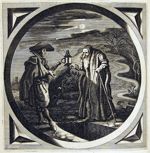
Annotation: De fakkel doorgeven
Cursu lampada trado: Cats, Spiegel (The Hague, 1632), emblem 120
Iconclass: 31A(+9341) the (nude) human figure; 'Corpo humano' (Ripa) (+ reaching, handing, giving) 41B32(+1) torch (+ kindling a light; lit, burning light, lamp, candle) 43C211 running, race 46E13 relay dispatch service, estafette 49A education
Collectanea (1500): 10
Loci Communes: Perficiendi sive absolvendi (Finishing, completing, Achever, accomplir)
I ii 39 Principium dimidium totius Well begun is half done
Αρχὴ ἥμισυ παντός. id est, Principium dimidium totius. Hoc adagio significatum est, maximam difficultatis partem in aggrediundo negotio sitam esse. Hemistichium est Hesiodi, citante Luciano in Hermotimo. Refertur & ab Aristot. lib. v. Polit. Η δὲ ἀρχὴ λέγεται ἥμισυ εἷναι παντός. Plato lib. De legib. vi. ἀρχὴ γὰρ λέγεται μὲν ἥμισυ παντός, ἐν ταῖς παροιμίας ἔργου, καὶ τόγε καλῶς ἄρξασθαι πάντες ἐγκωμιάζομεν ἑκάστοτε. Τὸ δ' ἐστίν τε, ὡς ἐμοί γε φαίνεται, πλέον ἢ τὸ ἥμισυ, καὶ οὐδεὶς αὐτὸ καλῶς γενόμενον ἐγκεκωμίασεν ἱκανως.id est, Nam in proverbiis quidem initium totius facti dimidium dicitur. Atque illud nimirum recte coepisse, omnes undique laudibus ferimus. At istud, ut mihi quidem videtur, plus est quam dimidium. Neque quisquam hoc, ubi recte fit, satis pro merito laudarit. Suidas haec ex Marino quodam refert: Γέγονε δὲ ὑμῖν ἡ ἀρχὴ, οὐκ ἀρχὴ μόνον, οὐ δὲ κατὰ τὴν παροιμίαν, ἥμισυ τοῦ παντὸς, αὐτὸ δὲ ὅλον τὸ πᾶν. id est, Fuit autem nobis initium illud, non tantum initium, neque iuxta proverbium dimidium totius, sed ipsum in solidum totum. Aristoteles item lib. Moralium i. Principium enim plus, quàm dimidium totius esse videtur. Horatius in Epistolis: Dimidium facti, qui coepit, habet. sapere aude. Ausonius, Incipe, dimidium facti est coepisse. supersit Dimidium: rursum hoc incipe, & efficies. Plutarchus in libello, cui titulus, Quo pacto sint audiendi poetae, citat ex Sophocle car(men hoc: Εργου δὲ παντὸς ἤν τις ἄρχηται καλῶς, Καὶ τὰς τελευτὰς εἰκός ἐσθ' οὕτως ἔχειν. id est, Negocii cuiusque, si bene coeperis, Et finem item bonum fore, probabile est.
Αρχὴ ἥμισυ παντός, Well begun is half done. This adage signifies that it is in the tackling of a task that the greatest difficulty lies. It is a half-line from Hesiod, quoted by Lucian in Hermotimus. Aristotle also refers to it in the Politics, book 5, and Plato in the Laws, book 6: 'For in proverbs it is said that the beginning is half of a whole action, and everyone always praises a good beginning. But, as it seems to me, it is more than half, and no one has ever praised sufficiently a beginning well made.' Suidas quotes from a certain Marinus: 'That was the beginning for us, and not only the beginning, nor as the proverb has it half of the whole, but the complete thing itself.' Aristotle in the Ethics, book 1: 'The beginning is said to be more than half of the whole.' Horace in the Epistles: `Who sets about hath half performed his deed; / Dare to be wise.' Ausonius: 'Begin, for half the deed is in beginning; / Begin the other half, and you will finish.' Plutarch, in his essay 'On How to Study Poetry,' quotes these verses from Sophocles: 'For someone who begins well every deed, /'Tis likely that's the way the end will be.'
Facsimile:
Annotation: Een goed begin is het halve werk
Iconclass: 51F5 Beginning; 'Principio' (Ripa) 51H1 Totality, the Whole 51HH1 Part, Section, Aspect
Collectanea (1500): 298
Loci Communes: Perficiendi sive absolvendi - ab initio ad finem (Finishing, completing - from beginning to end, Achever, accomplir - du début à la fin)
I ii 40 Satius est initiis mederi quam fini Doctoring is better first than last
Αρχὴν ἰᾶσθαι πολὺ λώϊον ἠὲ τελευτήν. id est, Multo quam finem, meditari initia praestat. Refertur à Suida proverbii loco. In eandem sententiam Theognis, Ζητῶμεν δ' ἕλκει φάρμακα φυομένῳ. id est: Pharmaca nascenti sunt adhibenda malo. Similiter Persius satyra tertia. Elleborum frustra, cum iam cutis aegra tumebit, Poscentes videas. venienti occurrite morbo. Atque item Ovidius: Sero medicina paratur, Cum mala per longas invaluere moras. Admonet adagium, minore negocio tolli malum statim initio, cum adhuc recens est, quàm postea quam inveteraverit: Pueros à vitiis arcendos, dum adhuc tenera ac tractabilis aetas: sarciendas protinus offensas, ne in simultatem exolescant: Minima vitanda mala, ex quibus maiora solent pullulascere: Occasiones evitandas, quae mali quippiam pariturae videantur.
Αρχὴν ἰᾶσθαι πολὺ λώϊον ἠὲ τελευτήν, Doctoring is better first than last. Suidas quotes this as a proverb. Theognis says the same thing: 'Apply the treatment when disease begins.' Similarly, Persius, in the third Satire: 'In vain you'll see them cry for hellebore, / When the sick flesh swells up; forestall the ill.' And also Ovid: 'Doctoring comes too late, / When evils have grown strong through long delay.' The adage warns us that it takes less trouble to remove an evil at the beginning, when it is still fresh, than after it has existed for a long time; that children must be sheltered from vices when they are at a tender and tractable age, and animosities must be healed at once, lest they grow into strife. The smallest ills must be shunned, from which greater often spring up. Occasions must be avoided which are likely to bring to birth any kind of evil.
Facsimile:
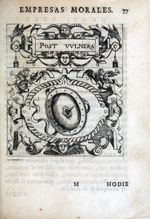
Post vulnera: Borja, Empresas morales (Bruxelles, 1680), emblem 38 uses the imagery of help or protection that is offered too late
Leviter si tangis adurit: Camerarius, Symbolorum et Emblematum Centuria(e) (Nürnberg, 1590, 1595, 1596, 1604), emblem 68 uses the imagery of a stinging-nettle to convey the idea that problems should be addressed quickly and firmly
Waer de Slanghe 'thooft in krijght, daer krijgtse 't lijf in: Cats, Spiegel (The Hague, 1632), emblem 3 uses the imagery of a snake crawling head-first into a narrow space and its comments cites Persius, like the adage's comment
Het Schaep dient voor den dam geschut: Cats, Spiegel (The Hague, 1632), emblem 8 uses the imagery of a farmer preventing his sheep from entering the field with his crop to convey the idea that problems should be addressed quickly, also quoting the same classical sources Erasmus quotes in his comment
Chastier fault les Enfans eu ieune aage: La Perrière, Le theatre des bons engins (Lyon, 1545), emblem 47 uses the imagery of an ape embracing its young too tightly to express the idea that children should be corrected at a young age, conveyed by both emblem and adage
Iconclass: 49G24 administering, taking medicine 51F5 Beginning; 'Principio' (Ripa) 51FF5 End; 'Fine' (Ripa)
Loci Communes: Serum remedium aut tempestivum (A late remedy or a timely one, Remède tardif ou opportun)
I ii 41 Serere ne dubites Do not hesitate to plant
Rusticanum adagium, sed non indignum, quod in hoc volumen referatur: Serere ne dubites. Quo monemur, ne quando pigeat eiusmodi rerum aliquid moliri, à quibus nihil omnino dispendii, plurimum emolumenti, possit proficisci, si non in praesens, certe in posterum: si non nobis, at saltem posteris. Columel. lib. De re rust. xii. Quare vulgare illud de arborum positione, rusticis usurpatum: Serere ne dubites. Nam aedificatio nonnunquam exhaurit fructus, negotiatio pendet à fortuna, neque paucis male cessit. Eundem ad modum, ex aliis aliud atque aliud est vel incommodi vel periculi, sed ex arboribus conserendis plurimum capitur commoditatis, neque magno tamen impendio constat. Eandem sententiam Vergilius, addita figura sic extulit, libro Georgicôn secundo: Et dubitamus adhuc serere, atque impendere curam?
This is a country adage, but not unworthy to be included in this book: Do not hesitate to plant. It warns us not to be lazy about attempting any of those things from which a great result can come for very little outlay, if not at once, at least later on; if not for ourselves, at least for posterity. Columella in the twelfth book of his Agriculture: 'And so that common saying about planting trees is used by countrymen, "Do not hesitate to plant."' For building often exhausts an income, commerce depends on chance and many a man has lost by it; similarly most things have their disadvantages or dangers, but from the planting of trees the greatest advantage is to be obtained, and it is done at little cost. Virgil expresses this figuratively when he says in the second book of the Georgics: 'Do we still doubt to plant, and spend our care?'
Facsimile:
Iconclass: 47I132 transplanting, setting out plants 53B2 Decisiveness, Decision 53BB2 Hesitation
Loci Communes: Industria (Industriousness, Application, diligence)
I ii 42 Talaria induere To put wings on one's feet
Extat apud M. Tullium proverbialis allegoria, Talaria induere, pro eo quod est fugam adornare, quasique velle quopiam avolare. Sic enim scribit ad Atticum lib. decimoquarto: Nemo est istorum, qui ocium non timeat. Quare talaria induamus. Sumptum ab Homero, qui Mercurium avolaturum aliquò, frequenter adornat talaribus: Αὐτίκ' ἔπειθ' ὑπὸ ποσσὶν καλὰ πέδιλα Αμβπρόσια χρύσεια, τά μιν φέρον ἢ μὲν ἐφ' ὑγρὴν, Η δ' ἐπ' ἀπείρονα γαῖαν ἅμα πνοίῃς ἀνέμοιο.. id est, Mox ubi iam pedibus talaria subdidit aurea, Pulchraque & ambrosiam spirantia: quae simul illum Aera per liquidum, simul ampla per aequora vastae Telluris, venti flatu dominante ferebant. Quem Homeri locum Vergilius veluti interpretans, in quarto Aeneidos: Et primum, inquit, pedibus talaria nectit Aurea, quae sublimem alis, sive aequora supra Seu terram rapido pariter cum flamine portant. Itaque Talaria induere dicemus eos, qui parant aufugere. Nam hoc ipsum Avolare et Revolare, apud M. Tullium pro fugere & redire frequens est.
There is a proverbial allegory in Cicero, 'to put on winged sandals,' meaning to get ready to flee, and to be willing, as it were, to take flight somewhere: so he writes to Atticus, book 14, 'That lot are scared of peace, every man of them. So I had best find wings for my boots.' It comes from Homer, who often puts wings on the heels of Mercury as he takes flight:
Straight then he shod his feet with lovely sandals,
Golden, ambrosial-scented and they bore him
Through limpid air and over boundless lands
Swift as the wind.
It is this passage in Homer which Virgil more or less adapts in the Aeneid, book 4:
And first he buckled on
His golden shoes, which high o'er earth and sea
Winged him along as rapid as the wind.
So we say those who prepare to run away 'put wings on their feet.' For the very terms avolare and revolare [fly off, fly back] are often used by Cicero for 'to flee' and `to return.'
Facsimile: 
Iconclass: 25F(+342) animals (+ wings of an animal) 31A2255 foot 92B58(WINGED SANDALS) attributes of Mercury: winged sandals
Loci Communes: Festinationis (Haste, Hâte)
I ii 43 Tricae; apinae Stuff and nonsense
Tricas & apinas vulgo res futiles ac nugatorias dicebant. Martialis: Quaecumque lusi iuvenis, & puer quondam, Apinasque nostras. Idem alibi, Sunt apinae, tricaeque & si quid vilius istis. Unde & Tricari simili figura dicebant nugas agere. Cicero cum alias, tum ad Atticum lib. xv. Tricatur scilicet, ut homo talis. Et rursum: Balbus, inquit, tricatur. Adagium ab eventu natum. Nam Tricam & Apinam oppida fuisse quondam Apuliae, demonstrat Plin. lib. Naturalis hist. iii. cap. xi. referens Europae sinus: Diomedes, inquit, ibi delevit gentes Monadorum Dardorumque & urbes duas, quae in proverbii ludicrum vertere, Apinam & Tricam. Stephanus ostendit Tricam urbem fuisse Thessaliae, sortitam id nominis à Trica Penei filia. Nonius Marcellus tricas impedimenta & implicationes interpretatur, ἀπὸ τῶν τριχῶν, id est, à pilis, quibus involuuntur pulli gallinacei. unde dictum sit extricare & intricare. Lucilius apud eundem, Tricones appellat, qui nugis homines remorentur. Et tricinus quaestus, pro tardo seu sicco: Et Varro tricas Attellanas, nugas impeditissimas. Equidem non negaverim in voce allusum ad pilos. Caeterum ab oppido dictum proverbium, vero propius est. Plinius lib. vii. cap. xlviii. ostendit oves laudari solitas brevitate crurum & ventris vestitu, quibus is nudus esset, eas apicas appellavit, ceu reiiculas damnatasque.
Tricae and apinae, stuff and nonsense, were popular names for trifling worthless things. Martial: 'The games I played in youth and childhood once, / My nonsense-tricks,' and again "Tis stuff and nonsense - worse, if worse there be.' Hence they used tricari, which is the same metaphor, of wasting time on nonsense. Cicero has it in several places, for instance in the Letters to Atticus, book 15: 'He's full of nonsense of course, like the man he is.' And again: 'Balbus is full of nonsense.' This adage arose from an actual event. Trica and Apina were once towns in Apulia, as Pliny shows in his Natural History, book 3 chapter iz, where he is speaking of the bays on the coast of Europe: 'There Diomede wiped out tribes called Monadi and Dardi, and two towns which proverbially have become a byword, Apina and Trica.' Stephanus indicates that Trica was a town in Thessaly, the name being derived from Trica, a daughter of Peneus. Nonius Marcellus takes tricae to mean hindrances and complications, from the Greek word for hair, in which chickens are wrapped up; hence our words 'extricate' and 'intricate.' Lucilius, whom he also quotes, has a word tricones for those whose nonsense wastes people's time, and tricinus quaestus for late or meagre, and tricae Attellanae in Varro for very complicated nonsense. I would not rule out the allusion to hair, but the derivation from the town is more likely to be right. Pliny, book 8 chapter 48, points out that sheep are valued for shortness in the leg and well-clad underparts, and those with bare underparts he called apicae, as rejects to be weeded out.
Facsimile:
Iconclass: 52BB53 Nonsense, Absurdity 52D41 Trifles, 'Nugae'
Collectanea (1500): 654
Loci Communes: Contemptus et vilitatis (Contempt and worthlessness, Mépris et bassesse)
I ii 44 Corycaeus auscultavit A Corycaean was listening
Κωρυκαῶος ἠκροάζετο. id est, Corycaeus auscultavit. Ubi quis id quod agit, conatus dissimulare, tamen à curiosis deprehenditur. Unde natum sit adagium, ex autoribus asscribam. Corycus mons est Pamphyliae praecelsus ac portuosus, atque ob id piratarum insidiis opportunus, quos ab eo monte Corycaeos vocabant. Hi novam insidiandi rationem excogitarant. Siquidem dispersi per portus Coryci montis, miscebant sese negociatoribus, ut quisque forte appulerat, subauscultantes, & quid rerum portarent, & quò navigare destinassent, denique quo tempore decrevissent solvere. Quae simulatque cognoverant, renunciabant piratis, cum quibus societatem maritimorum latrociniorum exercebant. Atque ita per occasionem simul adorti, navigantes spoliabant. Quae res ubi mercatoribus esset comperta, pleraque occultabant, ac dissimulabant, insidiarum metu. Sed cum ne sic quidem laterent, subodorantibus omnia Corycaeis, res in proverbium abiit, τούτου Κωρυκαῖος ἠκροάζετο, id est, Hunc Corycaeus auscultavit. De re vehementer dissimulata, deprehensa tamen. Suidas ait, Corycon Pamphyliae promontorium esse, cui subiecta sit urbs Atalea. Eius urbis cives, ne vexarentur ipsi à praedonibus, qui sese in promontorii arcem receptabant, per alios portus dissipati subauscultabant, qui nam appulissent, & quò tenderent, eaque praedonibus renuntiabant. Idem ex Ephoro refert Corycaeos convenas quospiam fuisse, qui condiderint oppidulum in Lydia sub cacumine Coryci in mare prospectantis, finitimos Myonesso. Hos solitos sese negotiatoribus in portum appellentibus admiscere, quasi negociatores essent & ipsi, mercium aliquid empturi: deinde quae cognovissent Myonessiis renunciabant. Myonessii navigates adoriebantur, praedam ablatam, aut precia quibus sese negociatores re dimebant, quae Graeci λύτρα vocant, cum Corycaeis partientes. At Stephanθσ tradit, Corycum montem esse altissimum, finitimum Teo Ioniae oppido, cui subiectus sit eiusdem nominis portus. Quo loco meminit & de Piratarum insidiis & proverbio. De Lydiae Coryco sentit & Strabo cuius verba subscribam ex lib. xiiii. πρὶν δὲ ἐλθεῖν ἐπὶ ἐρυθρας, πρῶτον μὲν ἔραι πολίχνιόν ἐστι τήϊον, εἷτα κώρυκος ὄρος ὑψηλὸν καὶ λιμὴν ὑπ' αὐτῷ κασύστης, καὶ ἄλλος ἐρυθραὶ λιμὴν καλούμενος, καὶ ἐφεξῆς πείους ἕτεροι. φασὶ δὲ τὸ παραπλοῦν τοῦ κωρύκου πάντα λῃστήρια ὑπάρξαι τῶν κωρυκαίων καλουμένων. εύραμένων τρόπον καινὸν τῆς ἐπιβουλῆς τν πλοϊζομένων κατεσπαρμένους γὰρ ἐν τοῖς λιμὲσι τοῖς καθορμιζομένοις ἐμπόροις προςφοιτᾶν, καὶ ὠτακουστεῖν τί φέροιεν καὶ τοῦ πλέοιεν, εἷτα συνελθόντας ἀναχθείσι τοῖς ανθρώποις ἐπιτίθεσθαι καὶ καθαρπάζειν. ἀφ' οὖ δὴ πάντα τὸν πολυπραγμονα καὶ κατακούειν ἐπιχειροῦντα τῶν λάθρα καὶ ἐν ἀποῤῥήτῳ διαλεγομένων, κωρύκαῖον καλοῦμεν, καὶ ἐν παροιμίᾳ φαμὲν, τοῦ δ' ἂν ὁ κώρυκαῖος ἠκροάζετο, ὅταν δοκῇ τις πράττειν δι' ἀποῤῥήτων, μὴ λαιθάνῃ δὲ, διὰ τοὺς κατασκοποῦντας καὶ φιλοπευστοῦντας τὰ μὴ προσήκοντα. id est, Priusquam perveniatur Erythras, primum occurrit oppidulum Erae Teium, deinde Corycus mons excelsus, atque huic subiectus portus Casystas, mox alius portus dictus Erythrae, dein alii complures. Narrant autem Corycum praeternavigantibus omnia plena latrociniis esse quorundam quos Corycaeos appellant. Hi novum insidiarum genus commenti fuerant in navigantes. Siquidem dispersi per portus, negociatores qui fortè appulerunt adibant, subauscultabantque quid rerum ferrent, quò navigarent: deinde illos in altum reversos, collecti adoriebantur ac spoliabant: unde factum est ut quemvis curiosum, avidum auscultandi quae clanculum & in occulto dicuntur, Corycaeum vocemus, proverbioque dicamus, hunc Corycaeus auscultavit, quoties aliquis sibi visus est egisse dixisseve clàm, cum tamen non latuerit, propter eos qui subauscultant & sciscitari student, quae non oportet. Hactenus Strabo. In cuius verbis non videtur abesse depravatio: una tolletur, si pro ληστήρια legas λῃστῶρ: altera si legas τῶν λάθρα καὶ ἐν ἀποῤῥήτῳ πραττομένων καὶ διαλεγομένων, sic enim legisse videtur interpres. Itaque cum duae sint civitates eiusdem nominis, ad utranque referunt proverbium auctores. Stephanus ostendit & in Cilicia civitatem Corycum esse, quae portu saloque cingitur, ut ait Pomponius Mela, angusto tergore continenti adnexa, cui vicina specus illa multorum literis nobilitata. Iam Cilices piratas fuisse accepimus. Hanc eandem arbitror esse cum ea quam in Pamphylia ponunt Zenodotus & Suidas, quod Pamphylia Ciliciae sit contigua, atque olim bona Ciliciae pars imputabatur in Pamphyliam. Idem Stephanus indicat & insulam fuisse eius nominis. rursus Cretae promontorium esse Coryciam, et eiusdem nominis portum Aethiopiae. Inducunt & comici deum quempiam Corycaeum, exaudientem atque auscultantem quae gerantur, sicuti Menander in Enchiridio, Dexippus in thesauro, apud Suidam. quod tribus verbis attigit & Hesychius, indicans Corycum Graecis sonare vas coriaceum, aut navim, aut lanceam. Usurpat hoc adagium M. Tullius lib. ad Atticum x. epist. ultima, Itaque posthac non scribam ad te quid facturus sim, sed quid fecerim. Omnes κωρυκαῖοι videntur subauscultare, quae loquor.
Κωρυκαῶος ἠκροάζετο, A Corycaean was listening. This is used when someone has tried to conceal what he is doing but is found out by the inquisitive. How this adage arose, I will explain from the authorities. Corycus is a mountain in Pamphylia, very high and well supplied with harbours, and for this reason it offers great opportunities for lurking pirates, who were called Corycaeans after this mountain. These people had invented a new system of secret attack. They scattered out among the harbours of Mount Corycus, and mingled with the merchants on their arrival, so as to learn by eavesdropping what kind of cargo they carried, what their destination was, and at what time they had decided to weigh anchor. As soon as they knew this, they reported it to the pirates, with whom they were in partnership for robbery on the high seas. And so at the right moment they attacked together and looted the ships. When the merchants found this out they kept their arrangements quiet and under cover, for fear of ambush. But even so they did not succeed in keeping their affairs dark, as the Corycaeans smelt out everything, and hence the proverb arose: 'A Corycaean was listening to him.' It expresses something closely covered up and yet found out.
Suidas says that Corycus is a promontory in Pamphylia, and the city of Attalea is adjacent to it. The citizens of this town took steps not be harried themselves by the robbers who used the promontory as their stronghold: they spread out among the other harbours and listened to find out who had put into port and where they were going, and gave this information to the robbers. The same author quotes Ephorus as saying that the Corycaeans were a mixed gang of people who founded a little town in Lydia under the peak of Corycus, which looks out to sea; they were close to Myonessus. These used to mingle with the merchants who landed at the port, as if they were also merchants, wishing to buy some commodities; and then they reported what they had come to know to the Myonessians. These latter went in to the attack against the seamen and shared out with the Corycaeans either the booty taken or the ransom paid by merchants, the Greek for which is lytra. But according to Stephanus, Corycus is a very high mountain close to the town of Teos in Ionia, and the harbour of the same name is adjacent to it. He comments here on the stratagems of the pirates and on the proverb. Strabo too gives an opinion about the Lydian Corycus; I give his words out of book 14: 'Before coming to Erythrae you come first to Eras, a small town of the Teians and then to Corycus, a lofty mountain, and to a port below it, Casystes, and to another port called Erythras and a number of others after that. They say the coastline of the mountain was frequented by pirates, the Corycaeans, so-called, who had devised a new way to attack ships. Scattering themselves among the ports they would follow the merchants whose ships were anchored there, and overhear what they had on board and where they were going, and then they would come together and attack them after they were at sea and plunder the ships. Thus we call every busybody who is eager to hear whatever is said in secret "a Corycaean," and say proverbially "the Corycaean was listening" whenever someone seems to himself to have acted or spoken in private and yet has not kept himself hidden, owing to the people who eavesdrop and want to know things which are no business of theirs.' So far Strabo. In these words there seems to be some corruption of the text; one will be cured by reading ληστῶρ for ληστήρια the other by inserting πραττομένων καὶ before διαλεγομένων as the translator seems to have done. As there are two cities of the same name, the authorities trace the proverb to both of them. Stephanus explains that in Cilicia also there is a city called Corycus, 'surrounded by a harbour and the open sea,' as Pomponius Mela says, 'and joined to the mainland by a narrow isthmus'; close by it is that famous cave celebrated in literature. Now we have been told that the Cilicians were pirates. I think this is the same city as the one which Zenodotus and Suidas place in Pamphylia, because Pamphylia borders on Cilicia, and formerly a good part of Cilicia was attributed to Pamphylia. The same Stephanus indicates that there was also an island of the same name; and again that Corycia was a promontory of Crete, and that there was a harbour of that name in Ethiopia.
The writers of comedy introduce a certain Corycaeus, a god, who lends an ear and listens to what goes on: so Menander in his Enchiridion and Dexippus in his Thesaurus, according to Suidas. Hesychius also had a few words about it, explaining that in Greek corycus means a leather bottle, a boat, or a javelin. Cicero uses this adage in the tenth book of his Letters to Atticus, the last letter: 'So henceforward I won't write to you what I am going to do, only what I have actually done. Every spy in the country ("all the Corycaeans") seems to have an ear to catch what I say.'
Facsimile: 
Iconclass: 31A329 eavesdropper 44G56 pirate, corsair, buccaneer 45F22 (military) espionage 46B7 economic espionage 61D(CORYCUS) geographical names of countries, regions, mountains, rivers, etc. (CORYCUS) (CORYCUS)
Collectanea (1500): 112
Loci Communes: Curiositas (Curiosity, Curiosité)
I ii 45 Fortes fortuna adiuvat Fortune favours the brave
Cicero Tusc. quaest. lib. ii. Fortes enim non modo fortuna adiuvat, ut est in veteri proverbio, sed multo magis ratio. Citatur alibi ex Ennio. Usurpatur in Aeneide Maronis, atque adeo passim ab omnibus. Ovidius Fast. lib. ii. Audentes forsque deusque iuvat. Idem allusit: Audaces adiuvat ipsa Venus. Rursum T. Livius belli Macedonici lib. iiii. Fortes fortunam adiuvare aiebant. Admonet adagium fortiter periclitandam esse fortunam, nam his plerunque res prospere cedere. Propterea quòd id genus hominibus fortuna quasi faveat, infensa iis qui nihil audent experiri, sed veluti cochleae perpetuo latent intra testas.
Cicero, Tusculan Questions, book 2: 'For it is not only Fortune which favours the brave, as the old proverb has it, but still more, reason.' This is quoted elsewhere out of Ennius. It is used in the Aeneid of Virgil, and pretty well everywhere by everybody. Ovid in book 2 of the Fasti: 'Chance and God help those who dare.' And again he alluded to it with: 'Venus herself favours the bold.' Then Livy in the Macedonian War, book 4: 'They used to say that Fortune favours the brave.' The adage advises us to make a strong bid for Fortune; for it is for people who do this that things go well. For Fortune seems to favour that kind of man, but to be inimical to those who dare make no experiments, but for ever hide away in their shells like snails.
Facsimile:
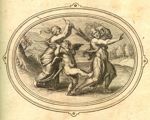
Annotation: Compare the emblem mottoes "Audaces fortuna iuvat" and "sors audaces iuvat" especially with regards to the locus
Audaces fortuna iuvat: Vaenius, Amorum emblemata (Antwerp, 1608), emblem 54
Audaces fortuna iuvat - Marcus Scaeva: Whitney, A choice of emblemes (Leiden, 1586), emblem 122
Sors audaces iuvat: Sambucus, Emblemata (Antwerp, 1564), emblem 28
Audentes fortuna iuvat: Oppelt, Sammlung geist-und sinnreicher Gedancken (Prague, 1749), emblem 36
Adspirat fortuna labori: Zincgreff, Emblematum Ethico-politicorum (Heidelberg, 1619), emblem 19 paraphrases the adage and uses the imagery of a favourable wind helping a ship that is already rowed forward to illustrate its moral
Iconclass: 54A6 Helpfulness 54A7 Strength, Power; 'Fortezza', 'Fortezza d'Animo e di corpo', 'Fortezza del corpo congiunta con la generosità dell'animo', 'Fortezza & valore del corpo congiunto con la prudenza & virtù del animo', 'Forza' (Ripa) 54F12 Luck, Fortune, Lot; 'Fato', 'Fortuna', 'Fortuna aurea', 'Fortuna buona', 'Fortuna pacifica overo clemente', 'Sorte' (Ripa)
I ii 46 Currentem incitare To cheer on the runner
Τὸν τρέχοντα ὀτρύνειν. id est, Currentem incitare, est adhortari quempiam ad id, ad quod iam suapte sponte tendit. Atque hac figura mitigamus, vel praecludimus magis offensam admonitionis. Cicero ad Cassium: Ut Caesarem in Italia viderem, sic enim arbitrabamur, eumque multis honestissimis viris conservatis, ad pacem currentem, ut aiunt, incitarem. Idem ad Quintum fratrem li. ii. Quare facis tu quidem fraterne, quod me hortaris. Sed me hercle, currentem nunc quidem. Rursus ad Atticum: Quod me hortaris ut eos dies consumam in philosophia explicanda: currentem tu quidem. Idem in Oratore, Facilius enim est, currentem, quod aiunt, incitare quam commonere languentem. Plin. ad Cannium: Scio te stimulis non egere: me tamen tui charitas evocat, ut currentem quoque instigem. Ducta est metaphora ab his, qui cursu certant, quibus acclamatio solet addere velocitatem. Lucianus ex Homero citat ad Nigrinum: Θάῤῥει ὧ γαθὲ, τοῦτο γὰρ τοι τὸ τοῦ ὁμήρου, σπεύδοντα καὶ αὐτὸν παρακαλεῖς. id est, Bono es animo, quando quidem, iuxta Homericum illud, hortaris eum, qui ipse sua sponte properet. Exstat autem Iliados θ Ατρίδη κύδιστε, τί με σπευδόντα καὶ αὐτὸν. Οτρύνεις; id est, Quid me sponte mea properantem maxime Atrida Exstimulas? Eodem allusit Odyss. ω ὡς εἰπὲν ώτρυνε πάρος μεμαυῖαν ἀθήναν. id est, Iamdudum promptam, ac cupientem, his Pallada dictis Excitat. Itaque currentem incitamus, cum ad id vocamus aliquem, ad quod suapte cupiditate fertur, ac propendet. Quemadmodum meminit Dion, Timotheum cantorem quempiam certa quadam cantione, quae Palladis vocatur, Alexandri Magni animum repente ad belli cupiditatem incitare solitum. Atque incitabat ille quidem, sed sponte currentem, utpote natura sanguinarium & belli sitientissimum. Alioqui Sardanapalum illum πάναβρον, i. mollissimum, iisdem modis haud unquam commmovisset. Terent. in Andria torsit in malam partem, omissa metaphora: Age si hic non insanit satis sua sponte instiga. Huc pertinent illa M. Tullio familiaria. E cursu revocare. In principio Topicorum, E cursu ipso revocavit voluntas tua. Et, In cursu esse, &, Cursum interrumpere.
Τὸν τρέχοντα ὀτρύνειν, To cheer on the runner, is to encourage someone to do the very thing he is inclined to do of his own accord. By using this metaphor we lessen, or indeed remove, the danger of offending by exhortation. Cicero to Cassius: 'So as to meet Caesar in Italy (for that is what I supposed) and to cheer on the runner as the adage has it, when after sparing so many of our most distinguished men, he was actually returning to the ways of peace.' Again to his brother Quintus, book z: 'You are therefore acting indeed like a brother in urging me (though at the present moment, upon my honour, you are cheering on a willing runner).' Again to Atticus: 'When you exhort me to spend those days in the exposition of philosophy you are urging a willing runner.' Again in the De oratore: 'For it is easier to urge on the willing runner, as they say, than to stir up an inert one.' Pliny to Cannius: 'I know you have no need of the goad, but my affection for you leads me to spur on the willing runner.' The metaphor is drawn from runners who contend in a race and are usually lent speed by the cheering. Lucian, writing to Nigrinus, quotes from Homer: 'Courage, for as Homer says, you are urging on him who hastens willingly.' This is found in the Iliad, book 8: 'Why do you urge me on, great son of Atreus, / Hurrying so fast of my own accord?' There is an allusion to the same thing in the Odyssey, book 24: 'Speaking thus he urged on Athena, / Already very eager.' Thus we are 'cheering the willing runner' when we call a person to a task to which he is drawn by his own desires, for which he has a bent. Dion, for instance, recalls that Timotheus the singer often used a certain tune called'the song of Pallas' to incite the spirit of Alexander the Great to a sudden lust for war. He did indeed incite him, but he was on the way already, being by nature sanguinary and with a great thirst for battle. Had it not been so, he would never have been capable of stirring up Sardanapalus, that most effeminate of mortals, by the same music. Terence in the Andria turns this to a bad sense, leaving out the metaphor: 'If he's not mad enough of his own accord, give him a push.' That favourite phrase of Cicero's comes in here, 'to check in mid-career.' At the beginning of the Topica: 'Your own will-power checked you in mid-career.' Also 'to be in mid-career' and 'to interrupt in mid-career.'
Facsimile: 
Iconclass: 43A(+91) festivities (+ cheers, applause ~ festive activities) 43C(+221) sports, games and physical performances (+ seconds or supporters (sports, games, etc.)) 43C211 running, race 54BB2 Unnecessity, Superfluity
Loci Communes: Proclivitas (contra) (Propensity (against), Penchant (contre))
I ii 47 Calcar addere currenti To spur on the running horse
Eandem sententiam aliunde ducta metaphora, extulit Plinius iunior in epist. quadam ad Pompeium Saturninum: Flagitabas ut tibi aliquid ex meis scriptis mitterem, cum ego id ipsum destinassem. Addidisti ergo calcaria sponte currenti. Translatione sumpta ab equitibus, qui nonnumquam etiam sponte currentibus equis, quo currant celerius, calcar addunt. Ita nobis calcar addit, qui extimulat languentes: addit currentibus, qui cupiditatem ac studium nostrum auget acuitque. Ovidius: Non opus admisso subdere calcar equo. Sunt autem fermè proverbiales in totum illae metaphorae: Subdere calcar, subdere stimulos. quemadmodum & illae: Iniicere frenum, compescere freno, revocare freno. M. Tullius ad Atticum: Adscribit etiam & quasi calcar admovet. Idem ad eundem lib. vi. Sed alter, ut dixit Isocrates in Ephoro & Theopompo, frenis eget, alter calcaribus. Plato lib. De legib. ix. ἄρις' ὦ κλεινία, σχεδόν τι με ὥσπερ φερόμενον ἀντικούσας ἀνέγειρες. id est, Opportune me Clinia, impetu currentem retudisti. Et illud Ciceronis: E medio cursu revocavit.
The same thought, in a metaphor drawn from elsewhere, is expressed by the younger Pliny in a letter to Pompeius Saturninus: 'You begged me to send you something I had written, when I had determined to do that very thing myself. So you spurred on a horse already running with a will.' The metaphor is taken from riders, who sometimes apply the spur to a horse when he is already running with a will, to make him run still faster. Thus a man spurs us on who stimulates us when we are relaxed; but to spur on the running horse, applied to us, is to increase and sharpen the desire and interest we already have. Ovid has 'No need to spur the horse in full career.' These metaphors as a class are almost always proverbial: To put spurs to, to ply the goad, together with their opposites: To rein in, to keep on a tight rein, to tighten the reins. Cicero to Atticus: 'He adds his support too and, one might say, applies the spur.' Again, to the same correspondent, in book 6: 'But, as Isocrates said about Ephorus and Theopompus, one of them needs the rein, the other the spur.' Plato in the ninth book of the Laws: 'You did very well, Cleinias, to check me as I was almost carried away, and make me attentive.' And Cicero s phrase: 'He recalled him in mid-career.'
Facsimile:
Iconclass: 46C13183 galloping horse 46C1462 spur 54BB2 Unnecessity, Superfluity
Loci Communes: Proclivitas (contra) (Propensity (against), Penchant (contre))
I ii 48 In trivio sum I am at the crossroads
Εν τριόδῳ εἰμὶ λογισμῶν. id est, In trivio sum consilii. In eos, qui dubitant, quique incerti sunt animi, haesitantes quid potissimum eligant. Translatum ab iis, qui faciunt iter, & si quando trivium occurrit, addubitant quam viam oportet ingredi. Nam viam pro ratione consilii frequenter apud Graecos autores reperies, ut apud Euripidem in Hecuba: σῶν ὁδὸν βουλευμάτων, id est, Tuorum viam consiliorum. Theognis, ἐν τριόδῳ ἕστηκα, id est, ιn trivio con sisto. Alludit huc & Plato lib. De legib. vii. vetans ne si qua res admiranda atque inusitata occurrerit, protinus ad eam amplectendam accurramus, sed perinde quasi ad trivium aliquod venerimus, ignari viae, consistamus, neque ante pergamus, quàm pervestigatum sit, quò quaeque ducat via, καθάπερ, inquit, ἐν τριόδῳ γενόμενος.
Εν τριόδῳ εἰμὶ λογισμῶν, I am at the crossroads of decision. This is applied to those who are in doubt and of uncertain mind, hesitating as to which alternative to choose, like travellers who come to a place where three roads meet, and are doubtful about which way to take. 'Way' or 'path' is often used by Greek authors to mean a choice of plan, as Euripides uses it in the Hecuba: 'The path of your deliberations.' Theognis says `I am standing at the crossroads.' Plato too has a reference to this in the Laws, book 7: he warns us that if some strange and unusual thing occurs, we should not rush at it with open arms, but stop as if we had come to a crossroad and did not know the way, nor should we push on until some investigation has been made to show where each road leads; 'like,' he says, 'a man at a crossroads.'
Facsimile:
Bivium virtutis et vitii: Junius, Emblemata (Antwerp, 1565), emblem 44
De tweeweg des deugds en der zonde: Junius, Emblemata (in Dutch) (Antwerp, 1575), emblem 44
Iconclass: 46C1160 cross-roads, bifurcation (represented allegorically or symbolically) 94L72(+0) Hercules at the cross-roads, 'Herkules am Scheidewege': the choice of Hercules (+ variant)
Collectanea (1500): 350
Loci Communes: Anceps et dubius (Doubtful and uncertain, Incertain et douteux)
I ii 49 Bis ac ter, quod pulchrum est Beauty bears repeating twice and thrice
Δὶς καὶ τρὶς τὸ καλὸν. id est, Iterum ac tertio, quod pulchrum est. subaudi, dicendum est. Usurpatur à Platone cum aliis in locis, tum in Philebo, ἃ καὶ πρότερον ἐμνήσθημεν, εὗ δ' ἡ παροιμία δοκεῖ ἔχειν, τὸ δις και τρὶς τόγε καλῶς ἔχον ἐπαναπολεῖν τῷ λογῳ δεῖν. id est, De quibus & ante meminimus. Caeterum bene videtur proverbio dictum, quod egregium sit, id iterum ac tertio in sermone repeti oportere. Idem in Gorgia: καὶ δὶς γὰρ τοι καὶ τρὶς φασι καλὸν εἰναι τὰ καλὰ λέγειν καὶ ἐπισκοπεῖσθαι . id est, Atqui pulchrum aiunt ea quae pulchra sunt, iterum ac tertio tum dicere, tum considerare. Rursum lib. De Legibus vi. λέγω δὲ καθάπερ εἷπον νῦν δή. δὶς γὰρ τόγε καλὸν ῥηθὲν οὐδὲν βλάπτει. id est, Dico autem, quem admodum modo dicebam. Nam nihil laedit quod pulchrum sit bis dicere. Lucianus in Dipsadibus, citans eundem Platonem, κόρος inquit, οὐδεὶς τῶν καλῶν. i. Nulla satietas rerum honestarum. Omnino ea vis inest rebus egre giis, ut, quo saepius, ac pressius inspiciantur, hoc magis ac magis placeant, ut ait Horat. Quae, si propius stes, Te capiet magis, ac decies repetitae placebit. Contrà, quae fucata sunt, aut vulgaria, nonnunquàm initio adrident novitate ipsa, mox repetita sordescunt. Quemadmodum Plinius lib. xv. cap. xiiii. meminit de sylvestri quodam pomi genere, quod unedonem vocant, propterea quod unum tantum edi possit. Est etenim inhonorum, ut ait, atque hinc nominis ratio.
Δὶς καὶ τρὶς τὸ καλὸν, Twice and three times over what is beautiful (supply, should be repeated). Plato makes use of this in various places, for instance in the Philebus: 'I have mentioned this before; but the proverb seems to be apt, that it is right to repeat what is beautiful two and three times in conversation.' And again in the Gorgias: 'And they say it is a beautiful thing to speak and consider beautiful things two and three times over.' Again in the Laws, book 6: 'I say again what I said just now, for there is no harm in stating what is beautiful twice over.' Lucian in the Dipsades quoting the same Plato: 'Never too much of the beautiful.' In general, there is such a power in excellent things that the more often and the more closely they are examined the more they please, as Horace says: 'This, the nearer you stand, / Will charm the more, and please you ten times over.' On the other hand, things which are falsely coloured or commonplace sometimes have a charm to begin with, through sheer novelty, but soon grow ugly on repetition. So Pliny, book 15, chapter 14, mentions a kind of wild fruit which they call one-bite (unedo) because only one can be eaten: it is `worthless,' he says, and hence the reason for the name.
Facsimile: 
Iconclass: 51B61 Repetition 51D4 Beauty; 'Bellezza' (Ripa)
Loci Communes: Iteratio citra taedium (Repetition without tedium, Répétition sans lassitude)
I ii 50 Fratrum inter se irae sunt acerbissimae The bitterest quarrels are between brothers
Si quando simultas inciderit inter fratres, ea solet esse atrocior quam vulgarium inimicorum. Suppetunt abunde multa ex historicis exempla: Cain & Abel: Romuli & Remi: Iacob & Esau. Antonini Severi imperatoris filii in Getam odium, usque adeo saevum ac pertinax fuit, ut ne morte quidem illius atrocissima potuerit saturari, quin & in omnes illius amicos saeviret. Qua de re fertur adagium, idque commemoratur ab Aristot. lib. Politicorum vii. παρ' οἶς γὰρ ὀφείλεσθαι δεῖν τὴν εὐεργεσίαν ὑπολαμβάνουσιν, πρὸς τῷ βλάβει, καὶ ταύτης ἀποστερεῖσθαι νομίζουσιν. ὅθεν εἴρηται, χαλεποὶ γὰρ πόλεμοι ἀδελφῶν. Καὶ οἱ τὸ πέρα στέρξαντες οἵδε καὶ πέρα μισοῦσιν. id est, A quibus, inquit, deberi beneficium existimant, ab iisdem non solum fraudari beneficio, sed insuper laedi se putant. Unde proverbio dicitur, acerba enim bella fratrum. Et qui supra modum amant, iidem & supra modum oderunt. Hactenus Aristoteles. Huc respexit Euripides in Iphigenia Aulidensi, Δεινὸν κασιγνήτοισι γίγνεσθαι λόγους Μάχας θ' ὅταν ποτ' ἐμπέσωσιν εἰς ἔριν. id est, Res dira, verbis invicem altercarier, Dictisque fratres dimicare mutuis, Si quando lis inciderit aut contentio.
If strife arises between brothers, it is usually more bitter than between ordinary enemies. Many examples of this can be found in history: Cain and Abel, Romulus and Remus and their like, Jacob and Esau. The son of the emperor Antoninus Severus had such a dire and persistent hatred of Geta that it could not be appeased by his most terrible death, but wreaked its fury on all his friends as well. This is the subject of our adage, which is recorded by Aristotle in the seventh book of the Politics: 'For they think that these people should be under a duty to oblige them, and therefore, over and above the loss they suffer, they feel defrauded of what was owed them. Hence the proverb "There's no hate like brothers' hate," and those who loved beyond measure hate beyond measure too.' Thus Aristotle. Euripides had this in mind in the Iphigeneia in Aulis: 'Wretched it is for brothers to come to words, / Wrangling in speech when they fall into strife.'
Facsimile:
Iconclass: 33B1 quarrel, argument 42G2221 brothers (second degree family relationships) 56FF2 Hate; 'Odio capitale' (Ripa) 71A8 the story of Cain and Abel (Genesis 4:3-17) 71C24 Isaac's children (Esau and Jacob) (Genesis 25:19-34) 96C(ROMULUS)4 (story of) Romulus and Remus - aggressive, unfriendly activities and relationships
I ii 51 Taurum tollet, qui vitulum sustulerit He may bear a bull that hath borne a calf
Adagium in fornice natum, uti videtur, sed quod ad usum verecundiorem commode torqueri possit, si quando significabimus maiora peccaturum adultum, qui puer vitiis minoribus assueverit. Extat in fragmentis Arbitri Petronii, his quidem verbis: Obstupui ego, & nec Gitonem verecundissimum puerum sufficere huic petulantiae affirmavi, nec puellam eius aetatis esse, ut muliebris patientiae legem possit accipere. Itaque, inquit Quartilla, minor est quàm ego fui, cum virum passa sum? Iunonem mean iratam habeam, si me unquam meminerim virginem fuisse. Nam infans cum paribus inquinata sum, & subinde prodeuntibus annis, maioribus me pueris applicui, donec ad hanc aetatem perveni. Hinc etiam puto natum proverbium illud, ut posse dicatur taurum tollere, qui vitulum sustulerit. Non absurdum videtur, adagium ad Milonis Crotoniatae factum referri, qui quotidie vitulum aliquot stadiis gestare solitus, eundem taurum factum, citra negocium gestasse legitur. Atque ita quadrabit in eos, qui paulatim rebus etiam maximis assuescunt.
This adage was born in the brothel, as it seems, but it can be turned to a more modest usage, if we wish to say that a grown man will commit greater offences if he has been used to small vices as a boy. It can be found in the fragments of Petronius Arbiter, in these words: 'I was astounded, and declared that Gito, a most bashful boy, could never be a party to this wantonness, and that the girl was not of an age to take over the role of womanly submission. Well, said Quartilla, is she younger than I was when I submitted to a man? May I call down the rage of my guardian Juno, if I ever remember having been a virgin. As a little child I was defiled with those of the same age, and as the years went on I attached myself to older boys, until I came to the age I am at now. It is from this, I think, that the proverb arose, He can bear the bull who has already borne the calf.' There seems no absurdity in tracing the adage to the exploit of Milo of Croton, of whom we read that he used to carry a calf for some distance every day, and when it grew into a bull he carried it without difficulty. And thus it will fit those who gradually become accustomed to things, however difficult.
Facsimile:
Iconclass: 47I2111(+95232) bull (+ animal(s) being carried) 47I2113(+95232) calf (+ animal(s) being carried) 51K4 Evolution 98B(MILON)51 Milon of Croton carries a young bullock on his shoulders
Collectanea (1500): 321
Loci Communes: Assiduitas (Diligence, persistence, Assiduité); Degenerantium in pejus (Degenerating for the worse, Dégénérer en pire)
I ii 52 Vivorum oportet meminisse One should remember the living
Vivorum meminisse oportet. Vetus adagium in eos, qui plurimu de vita defunctis loquuntur, id quod vulgo putant ominosum, mortuos in ore habere, eosque velut citatos in sermonem adducere. Unde & M. Varro lib. De lingua Lat. iii. putat letum ἀπὸ τῆς λήθης, id est, oblivione dictum, quasi in oblivionem abire conveniat, qui vita excesserit: atque in funeribus sic quondam à praecone dici solere: Ollus leto datus est. Refertur adagium à Cicerone lib.v. De finibus bonorum & malorum. Ubi cum Piso, deinde Q. Cicero dixissent, se vehementer commoveri recordatione clarorum virorum, ex contemplatione locorum, in quibus aliquando vivi versati fuissent, & uterque recensuisset, quorum memoria potissimum delectaretur: tum Pomponius Atticus quasi iocans: at ego, inquit, quem vos ut deditum Epicuro, insectari soletis, sum multum equidem cum Phaedro, quem unice diligo, ut scitis, in Epicuri hortis, quos modo praeteribamus, sed veteris proverbii admonitu vivorum memini: nec tamen Epicuri licet oblivisci, si cupiam, cuius imaginem non modo in tabulis nostri familiares, sed etiam in poculis & anulis habent. Hactenus Cicero. Plautus item in Truculento: Dum vivit, hominem noveris: dum mortuus est, quiescas. At nunc vulgus ne beneficium quidem amicorum meminit, quum Thaletis dictum iure celebretur, Oportere non minus absentium amicorum, quam praesentium memores esse.
One should remember the living. An old adage about people who talk all the time of the deceased; it is commonly thought unlucky to have the name of the dead always on one's lips, and to call them as witnesses in conversation. Hence Varro in the third book of his On the Latin Language thinks the word lethum, death, comes from the Greek Lethe, the river of oblivion, as if it were right that one who has departed this life should go into oblivion; and at funerals it used to be the custom to announce publicly: 'That man has been given up to death.' Cicero refers to this adage in the fifth book of his De finibus bonorum et malorum. In this Piso and then Quintus Cicero said how deeply they were moved by the memory of famous men, and by the contemplation of the places where once they had dwelt when alive, and each of them recalled those whose memory particularly delighted him. Then Pomponius Atticus said, as if in jest: 'For my part, you are fond of attacking me as a follower of Epicurus, and I do spend much of my time with Phaedrus, who as you know is my dearest friend, in the gardens of Epicurus which we passed just now; but I obey the old saw "I remember the living." Still I could not forget Epicurus, even if I wanted; the members of our body not only have pictures of him, but even have his likeness on their drinkingcups and rings.' Thus far Cicero. Plautus in the Truculentus: 'While he lives, you may know a man: when he is dead, you may keep silence.' But nowadays the common people do not even remember the services rendered by their friends, though the saying of Thales is justly famous, that we should be mindful of absent friends no less than of those who are present.
I ii 53 Cum larvis luctari To wrestle with ghosts
Cum larvis luctari, dicuntur ii, qui vita defunctos insectantur maledictis, que re hihil esse potest indignius ingenuo viro. Suidas Aristophanem citat, qui scripserit: Παῦε παῦ' ὧ δέσποθ' ἑρμῆ Νεκρὸν γὰρ ὄντα τὸν κλέων ἐλοιδόρει. id est, Compesce, compesce here Mercuri, mortuo enim Cleoni convitiatus est. Lucianus in Sectis: Σκιομαχῶσι πρὸς ὑμᾶς ἀπόντας. id est, Umbraticam pugnam adversus nos absentes pugnant. Sentit autem de mortuis & absentibus. Meminit huius Plinius in praefatione histor. mundi, ad hunc modum: Nec Plancus illepide, qui cum diceretur Asinius Pollio orationes in eum parare, quae ab ipso, aut liberis post mortem Planci aederentur, ne respondere posset: Cum mortuis non nisi larvas luctari. Quo dicto sic repercussit illos, ut apud eruditos nihil impudentius videretur. Aristot. in rhetor. citat Platonem ex Politia, qui scripserit eos, qui mortuos allatrarent, videri similes catellis, qui lapides iactos morderent, ipsos qui laesissent non attingerent.
Cum larvis luctari, Wrestling with ghosts, is said of those who heap blame on the dead: nothing could be more unworthy of an honourable man. Suidas quotes Aristophanes as saying: 'Stop, stop, Lord Mercury! / For his reproach was against Cleon who is dead.' Lucian in The Sects: 'They fight a shadowy fight against you when you are absent.' He means both the absent and the dead. Pliny recalls this in the preface to his History of the World in this way: 'Plancus made a witty remark when it was said that Asinius Pollio was preparing speeches against him which would be published either by himself or by his children after the death of Plancus, so that he could not reply, and he retorted "Only ghosts wrestle with the dead."' By this remark he dealt them such a blow that educated opinion found them the last word in impudence. Aristotle in his Rhetoric quotes Plato in the Republic as saying that those who bark at the dead are like puppies which bite the stones that are thrown at them, but never touch the people who have injured them.
Facsimile: 
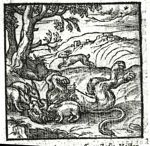
Cum larvis non luctandum: Alciatus, Emblemata (Leiden, 1591), emblem 153
Mortuo leoni etiam lepores insultant: Cats, Spiegel (The Hague, 1632), emblem 114
Mortuo leoni et lepores insultant: De la Court, Sinryke Fabulen (Amsterdam, 1685), emblem 40
Iconclass: 13A1 spirit, ghost 33B3 fighting 57BB1 Disapprobation, Disapproval, Rebuking 54BB3 Inutility, Noxiousness; 'Nocumento', 'Nocumento d'ogni cosa' (Ripa)
Collectanea (1500): 586
Loci Communes: Inanis opera (Vain effort, Effort vain); Obtrectatio et maledicentia (Disparagement and slander, Dénigrement et médisance)
I ii 54 Iugulare mortuos To cut a dead man's throat
Huic simile videtur iugulare mortuos, pro eo quod est, insectari defunctos, & pugnare cum iis, qui iam extincti sint. Translatum à bellis, in quibus ignavum ac ridiculum sit, prostratos atque interfectos iugulare: rursus cum vivis congredi, forte. Refertur à Laertio in Menedemo. Is Bionem, cum divinos studiose insectaretur, ait iugulare mortuos, nimirum iam explosos, et omnium sententia reprobatos. Aristophanes ἐν ὄρνισιν, scripsit, τοὺς τεθνηκότας ἀποκτείνειν. id est, defunctos occidere. Fiet lepidior metaphora, si paulo longius detorqueatur. Ut si quis dicat eum iugulare mortuos, qui librum impugnet, à nullo non damnatum: aut disputet adversus sententiam, omnium suffragiis iam olim reiectam: aut si quis vituperet rem, omnibus per se detestatam.
Much the same seems to be iugulare mortuos, To cut a dead man's throat, meaning to censure the dead and fight with those who are already no more. It is adopted from war, in which it would be a cowardly and absurd thing to cut the throat of men prostrate and already dead, just as it is brave to contend with the living. Laertius quotes this in his life of Menedemus. He says that Bion, when he was at pains to attack the soothsayers, was cutting dead men's throats, those in fact who were already hissed off the stage and universally rejected by public opinion. Aristophanes in the Birds wrote 'to kill the dead.' This is a metaphor which is much pleasanter when it is farther removed from its literal meaning: for instance if one says that it is 'cutting a dead man's throat' to attack a book which all condemn, or to argue against an opinion which everyone has voted down long ago, or to find fault with something which is in itself abominated by everybody.
Facsimile:
Iconclass: 31E234632(+9) violent death by dagger, knife (+ finding of dead or dying person) 31E2364 violent death by opening of arteries 31E5 life versus death
Loci Communes: Absurda, indecora, seu praepostera (Absurd, unbecoming, or preposterous things, Choses absurdes, inconvenantes ou déplacées); Obtrectatio et maledicentia (Disparagement and slander, Dénigrement et médisance)
I ii 55 Cygnea cantio Swan-song
Κύκνειον ᾆσμα. id est, Cygnea cantilena. Refertur inter Graecanica proverbia. Notatur et ab Aeliano in opere De naturis animalium, proverbii vice. Convenit in eos, qui supremo vitae tempore facunde disserunt, aut extrema senecta suaviloquentius scribunt, id quod ferè solet accidere scriptoribus, ut postrema quaeque minime sint acerba, maximeque mellita, videlicet per aetatem maturescente eloquentia. Porrò cycnos, instante morte mirandos quosdam cantus edere, tam omnium literis est celebratum, quàm nulli vel compertum, vel creditum. Nam Lucianus negat, se vel vidisse cygnos, cum in Pado flumine navigaret. Aelianus addit cygnos non canere, nisi flante zephyro vento, quem Latini favonium dicunt. Martial. Dulcia defecta modulatur carmina lingua, Cantator cygnus funeris ipse sui. Neque desunt philosophi, qui huius rei causam etiam addere conantur, affirmantque id accidere propter spiritus per collum procerum & angustum erumpere laborantes. Divus Hier. in quodam laudans senilem eloquentiam, commemoratis aliquot scriptoribus: Hi omnes, inquit, nescio quid cygneum vicina morte cecinerunt. Idem in epitaphio Nepotiani: ubi est ille ἐργοδιώκτης noster, & cygneo canore vox dulcior. Nos item in Epigrammate quodam, quod olim ex tempore lusimus, ad nunquam satis laudatum studiorum omnium Moecenatem, Guilelmum archiepiscopum Cantuariensem: Vates videbis exoriri candidos, Adeo canoros atque vocaleis, uti In alta fundant astra cygneum melos, Quod ipsa & aetas posterorum exaudiat. Meminit adagii & Athenaeus lib. Dipnosoph. xiiii. ex autore Chrysippo: referens quendam adeo impense delectatum fuisse dicteriis, ut cum esset à carnifice trucidandus, dixerit se velle mori, decantata cygnea cantione: sentiens, opinor, dictum aliquod salsum, quod simul atque proloquutus esset, non contaretur emori. M. Tullius praefans in librum De oratore tertium, de L. Crasso ita loquitur, Illa tamquam cygnea fuit divina hominis vox & oratio, quam quasi exspectantes post eius interitum veniebamus in curiam, ut vestigium illud ipsum, in quo ille postremum institisset, contueremur.
Κύκνειον ᾆσμα Swan-song. Found among the Greek proverbs. Aelian also mentions it in his work On the Nature of Animals, as a proverb. It is suitable to those who speak with eloquence at the very end of their lives, or write with great sweetness in extreme old age; this is something which usually happens to writers, their last works being the least bitter and the most honeyed, as if their eloquence matured with age. Swans are said to break into wonderful song at the point of death, and this is celebrated in literature by everybody but no one has either verified it or believed it. Lucian declares he never even saw any swans when he sailed along the Po. Aelian adds that swans only sing when the soft west wind blows, the zephyr for which the Latin is favonius. Martial: 'Sweet are the songs he sings with failing voice, / Makes his own funeral music like a swan.' There are even philosophers who try to produce a reason for this, and assert that it happens because of the efforts of the breath of life to escape through that long narrow neck. St Jerome speaks in praise of a certain old man's eloquence, after mentioning several writers: 'All these,' he says, 'sang a kind of swan-song at the approach of death.' And he writes in the epitaph on Nepotianus: 'Where is he, that taskmaster of ours, a sweeter voice than any singing swan.' I used it too, in an epigram, which I threw off long ago, addressed to that universal Maecenas of studies, never to be praised enough, William, archbishop of Canterbury:
Radiant singers thou shalt see arise,
With voices sweet and tuneful that have power
To fling swan's music to the distant stars,
And men shall hearken in the age to come.
Athenaeus also remembers this adage in the Doctors at Dinner, book 14, quoting Chrysippus, where he mentions a man who took such extraordinary delight in witty sayings that he said, just as he was about to be executed, 'I'm ready to die when I've sung my swan-song,' meaning, I imagine, that the remark had a point to it because as soon as he had spoken he would lose his life. Cicero writes in the preface to the third book of his De oratore, speaking of L. Crassus: `The man's voice and words were divinely beautiful, like a swan-song, and we were almost expecting to hear it when we came into the senate-house after his burial, to look upon that very spot where he last stood.'
Facsimile:
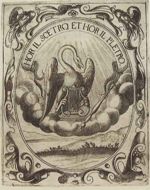
Hor il scetro et hor il pletro: Saavedra, Idea de un principe (München, 1640), emblem 6
Insignia poëtarum: Alciatus, Emblemata (Leiden, 1591), emblem 183
Epitaphium generosi adolescentis Georgii Bonae Transylvani: Sambucus, Emblemata (Antwerp, 1564), emblem 166
Iconclass: 25F36(SWAN)(+49) water-birds: swan (+ audible means of communication of animal(s): roaring, crying, singing, barking, mewing, neighing, chirping, etc.) 31D160 Old Age, 'Senectus'; 'Vecchiezza' (Ripa) 48C755 vocal music, singing 52D3 Eloquence; 'Eloquenza', 'Fermezza & Gravità dell'Oratione' (Ripa) 57A7 Benevolence, Beneficence; 'Beneficio', 'Benevolenza o Affettione' (Ripa)
I ii 56 Nestorea eloquentia The eloquence of Nestor
Consimilem ad modum Nestoris Pyliorum ducis facundia in proverbium abiit, si quan do senilem suaviloquentiam significamus. Nam huic Homerus, ut tria saecula, ita plus quàm mellitam quandam facundiam affingit. Sic enim ait in Iliad. α. Τοῖσι δὲ νὲστωρ Ηδυεπὴς ἀνόρουσε λιγὺς Πυλίων ἀγορητὴς, Τοῦ καὶ ἀπὸ γλώσσης μέλιτος γλυκίων ῥέεν αὐδή. id est, Post hos assurgit Pylius dux ille disertus Nestor, cuius ab ore fluit vox melle liquenti Dulcior. Quem locum imitans Theocritus, autore Plutarcho, scripsit in Bucolicis: Οὕνεκά οἱ γλυκὺ μοῦσα κατὰ σόματος χέε νέκταρ. id est, Propterea quòd in os illi praedulce camena Infudit nectar. Huc spectat & Horatianum illud: Fidis enim manare poetica mella Te solum.
In the same way the fluency of Nestor the leader of the Pylians became proverbial, to indicate an old man's mellifluous speech. For Homer says he lived through three generations, and credits him with more than honeyed eloquence. For thus he says in Iliad i. 'After them rose Nestor, the eloquent Pylian leader, / And from his tongue flowed speech more sweet than honey.' Theocritus copied this in the Bucolics, according to Plutarch: 'Because the Muse bedewed his lips with sweet nectar.' And that phrase of Horace's tends the same way: 'With your own beauties charmed, you surely know / Your verses with a honey'd sweetness flow.'
Facsimile: 
Iconclass: 52D3 Eloquence; 'Eloquenza', 'Fermezza & Gravità dell'Oratione' (Ripa) 95A(NESTOR)7 Nestor - specific aspects, allegorical aspects, as patron of
I ii 57 Lepos Atticus, Eloquentia Attica Attic wit, Attic eloquence
Inter reliquos Graeciae populos, lepos quidam, & festivitas quasi vernacula ac peculiaris adest Atticis, adeo ut & in proverbium abierit, Atticus lepos: Attica eloquentia, pro summa. Terent. in Eunucho: Dixin' in hoc Atticam esse eloquentiam? Cum insulsum atque invenustum militem rideret. Divus Hieronymus ad Pammachium, Iovinianum, ut opinor, irridens: Haec, inquit, Plautina eloquentia, hic lepos Atticus, & musarum, ut dicitur, eloquio comparandus. Quanquam illud de musarum eloquio ad M. Varronis elogium de Plauto celebratum respicit, qui dixit, Musas ipsas, si Latine loqui voluissent, Plautino ore fuisse locuturas. Huc allusit & Lucianus in libello De mercede servientibus κᾂv ἔτι σολοικίσαντες τύχωσιν, αὐτὸ τὸ τῆς ἀττικῆς καὶ τοῦ ὑμηττοῦ. id est, Quod si quando quid etiam rustice dixerint, hoc ipsum mere Atticum, atque ab Hymetto profectum videri volunt. Est autem Hymettus mos Atticae, mellificio nobilis, Unde & mel Atticum, & Hymettia mella: quae prae- cipua fuisse testatur & Martialis in Xeniis, Hoc tibi Thesei populatrix misit Hymetti Palladis à sylvis nobile nectar, apis.
Among other peoples of Greece, it is to the people of Attica that a special native wit and humour is ascribed, to such an extent that 'Attic wit' and 'Attic eloquence' have become a proverbial way of saying 'the best.' Terence in the Eunuchus: 'Did I not say he had Attic eloquence?' (making fun of a bungling graceless soldier). St Jerome to Pammachius (I think he is laughing at Jovinianus): 'This is the eloquence of Plautus, this is Attic wit, comparable, as they say, to the eloquence of the Muses.' The remark about the Muses' eloquence is a reference to Varro s well-known praise of Plautus, in which he said 'the Muses themselves, if they had wished to speak Latin, would have spoken with the lips of Plautus.' And Lucian alludes to this in the essay On Salaried Posts: 'Furthermore if they have said something in a rustic way, they wish that very thing to seem a pure Atticism and drawn from Hymettus.' Hymettus is a mountain of Attica famed for its honey, and hence we have 'Attic honey' and 'the honey of Hymettus.' These were of special value, as Martial testifies in his Xenia: 'This the bee, spoiler of Thesean Hymettus, has sent you, / Noble nectar from the woods of Pallas.'
Facsimile:
Iconclass: 52A55 Subtlety, Acumen, Lucidity, Wit; 'Acutezza de l'Ingegno', 'Sottilità' (Ripa) 52D3 Eloquence; 'Eloquenza', 'Fermezza & Gravità dell'Oratione' (Ripa) 61D(ATTICA) geographical names of countries, regions, mountains, rivers, etc. (ATTICA) (ATTICA)
Collectanea (1500): 277
I ii 58 Mandrabuli more res succedit Things go to Mandraboulos' fashion
Επὶ μανδραβούλου χωρεῖ τὸ πρᾶγμα. i. Res Mandrabuli ordine succedit, hoc est, indies in peius labitur. Inde natum, quod Mandrabulus quidam cum thesaurum reperisset, primum auream ovem posuit Iunoni Samiae, proximo anno argenteam, tertio aeream. Lucianus De mercede servientibus, Αλλὰ χαίρεις γε, καὶ σεαυτὸν ἐξαπατᾶς, καὶ ἀεὶ τὰ μέλλοντα βελτίω γενήσεν νομΐζεις. τὸ δὲ ἔμπαλιν ἢ σὺ ἢλπισας, γίγνεται, καὶ ὡς ἡ παροιμία. φησὶν, ἐπὶ μανδραβούλου χωρεῖ τὸ πρᾶγμα, καθεκάστην, ὡς εἰπεῖν, ἡμέραν ἀναποδίζον. id est, Tu tatamen utcumque gaudes, tibique ipsi imponis, semperque credis meliora futura, quae sequentur atqui id contra quam speraras evenit, planeque iuxta proverbium, ad morem Mandrabuli tibi negocium procedit, dum in singulos, ut ita dixerim, dies fit minus ac deterius, atque in tergum retrocedit. Alciphron in epist. quadam: Καὶ κατὰ τὴν παροιμίαν ἐπὶ τὰ μανδραβούλου χωρεῖ τὸ πρᾶγμα. id est, Iuxtaque proverbium, ad exemplum Mandrabuli res succedunt. Non intempestiviter itaque dicitur in eos, qui in deterius abeunt. Quemadmodum Menedemus apud Plutarchum, permultos Athenas venire studii causa: principio sapientes, deinde philosophos, postea rhetoras, postremo idiotas evadere. Nec alienum fuerit hic nobilem illam Platonis sententiam adscribere, ex libr. De legib. i. Tò νικᾶν αὑτὸν πασῶν νικῶν πρώτη τε καὶ ἀρίστη, τὸ δὲ ἡττᾶςθαι αὐτὸν ὑφ' ἑαυτοῦ, πάντων αἴσχιστόν τε ἅμα καὶ κάκιστον. id est, Si quis ipse seipsum vincat, omnium victoriarum tum prima, tum optima est. Rursum ipsum seipso inferiorem esse, omnium & turpissimum est & gravissimum. Vincit enim seipsum, qui proficit in melius: at seipso inferiorem evadere, est deteriorem reddi.
Επὶ μανδραβούλου χωρεῖ τὸ πρᾶγμα, The affair goes on in Mandraboulus' fashion - that is to say, day by day it gets worse. This comes from a certain Mandraboulus who found a treasure, and first of all dedicated a golden sheep to Juno of Samos; the following year he offered a silver one, and the next year a bronze one. Lucian in On Salaried Posts: 'But you rejoice and deceive yourself and you always think the future is going to be better. But the opposite of what you hoped for comes about, and as the proverb says, things go Mandraboulus' fashion, growing smaller and worse day by day so to speak, and stepping backward.' Alciphron in one of his letters: 'As the proverb says, things go in Mandraboulus' fashion.' This is appropriate for those who change for the worse. Just as Menedemus says in Plutarch, many people come to Athens to study; first they turn out wise men, then philosophers, then rhetoricians, and finally uneducated people. It would not be out of place here to add that fine thought of Plato's, in the Laws, book 1: 'To conquer oneself is the first and best of all victories. On the other hand to be inferior to oneself is the most shameful and slothful thing that could happen.' The man conquers himself who goes forward to better things; but to turn out inferior to oneself is to become worse.
Facsimile:
Iconclass: 54FF13 Regression, Deterioration, Relapse 98B(MANDRABOULOS) male persons from classical history (MANDRABOULOS)
Loci Communes: Degenerantium in pejus (Degenerating for the worse, Dégénérer en pire)
I ii 59 Mature fias senex Be old early
Mature fias senex, si diu velis esse senex. Latinorum proverbium, quo monemur, ut integra adhuc aetate desistamus à laboribus iuvenilibus, ac valetudinis curam agere incipiamus, si velimus esse vivaci ac diuturna senecta. Nam senectutis sors, ocium & quies. Usurpatur à Catone maiore apud Cicer. Neque enim, inquit, unquam assensus sum veteri illi laudatoque proverbio, quod monet mature fieri senem, si diu senex esse velis. Hoc quanquam Catoni non probatur, homini duro, quique sibi nec extrema senecta remittendis laboribus indulserit, tamen audiendum nobis, maxime si de vitiis iuventae sentias, puta libi dine, bibacitate, turbulentia vitae: quae nisi quis mature reliquerit, aut nunquam perveniet ad senectam, aut brevem habiturus est senectam.
Mature fias senex, si diu velis esse senex, Be old early, if you want to be old long, is a Latin proverb which reminds us that while we are still unimpaired we should cease from the exertions of youth, and begin to take care of our health, if we wish to enjoy a long and vigorous old age. For the lot of old age is leisure and rest. This is spoken by the elder Cato in Cicero: 'For I have never given my assent to that ancient and much-praised proverb, Be old early, if you want to be old long.' It may not win the approval of Cato, tough character that he was, allowing himself no respite from toil even in extreme old age; but we should take notice of it, especially if it is applied to the vices of youth, such as lust, drunkenness, wild behaviour, for unless a man gives these up in good time he will either never reach old age at all, or will have but a short one.
Facsimile: 
Iconclass: 31D7(+0) unnatural aging (+ variant) 31D91 long life
Loci Communes: Longae vitae (A long life, Longue vie)
I ii 60 Senis doctor A teacher of the old
Γεροντοδιδάσκαλος, id est, Senis doctor. Citatur saepicule titulus hic à Nonio Marcello, inter titulos fabularum Varronis, quem dubium non est proverbialem esse sicuti sunt alii plerique. Convenit in eum, qui in re sera atque intempestiva frustra sumit operam. Siquidem ut est iuventa docilis, atque in quemvis habitum sequax, ita senecta intractabilis, tarda, atque obliviosa. Proinde Theognis: Μή με δίδασκ', οὕτοι τηλίκος εἰμὶ μαθεῖν. id est, Ne doceas me, aetas iam facit indocilem. Euripides in Bacchis: Γέρων γέροντα παιδαγωγήσω σ' ἐγώ. id est, Senem senex & ipse te erudivero. Atque hic quidem versus inventus est in Sophoclis Philocteta, quem celebrem ac proverbialem fuisse testatur Gellius lib. Noctium xiii. Varro titulum suum sumpsisse videtur ex Euthydemo Platonis, ubi Socrates narrat Connum praeceptorem suum, à quo senex fidibus canere didicit, ludibrii causa à pueris vocatum fuisse γεροντοδιδάσκαλον. Ad hanc sententiam pertinet, quod dixisse ferunt Diogenem: Νεκρὸν ἰατρεύειν καὶ γέροντα νουθετεῖν ταὐτὸν εἰναι. id est, Mortuo mederi, & senem admonere, idem esse. Quanquam inutilis est sententia, quae senes deterret à discendis iis, quae nescire turpe est.
Γεροντοδιδάσκαλος, A teacher of the old. This is a title quoted often by Nonius Marcellus among the titles of Varro's plays, and there is no doubt that like most of the others it is proverbial. It is apt for the person who spends his trouble on something tardy and untimely, and spends it in vain. just as youth is teachable, and adaptable to any condition, so old age is intractable, slow and forgetful. As Theognis says: 'Teach me not, age makes me unteachable.' Euripides in the Bacchae: 'I, old as I am, shall guide you, also old.' This line is found indeed in the Philoctetes of Sophocles, and Gellius in the Nights, book 13, testifies that it was widely used and proverbial. Varro seems to have taken his title from the Euthydemus of Plato, where Socrates relates how his teacher Connus, from whom he learnt as an old man to play the lyre, was called mockingly by the boys 'the old man's schoolmaster.' An alleged remark of Diogenes comes in here: 'Doctoring a dead man and teaching an old one are the same thing.' However it is a useless saying, which deters old men from learning things which it is disgraceful not to know.
Facsimile:
Iconclass: 31D160 Old Age, 'Senectus'; 'Vecchiezza' (Ripa) 49B scholastic education, tuition 54BB3 Inutility, Noxiousness; 'Nocumento', 'Nocumento d'ogni cosa' (Ripa)
Loci Communes: Inanis opera (Vain effort, Effort vain); Sera paenitentia (Late repentance, Repentir tardif); Serum remedium aut tempestivum (A late remedy or a timely one, Remède tardif ou opportun)
I ii 61 Senis mutare linguam To teach an old man a new language
Cum ad omnem disciplinam tardior est senectus, tum potissimum ad discendam linguam, quae facultas maxime pueris à natura data est. Quapropter etiam vulgo compertissimum, pueros facile quamvis exprimere linguam: contrà natu grandiores, aut non assequi, aut parum feliciter imitari. Inde proverbium, senis mutare linguam, de frustra, atque intempestive laborantibus. Divus Hieronymus praeloquens in quatuor Evangelia: Pius, inquit, labor, sed periculosa praesumptio, iudicare de caeteris, ipsum ab omnibus iudicandum, senis mutare linguam, & canescentem mundum ad initia retrahere parvulorum. Quo significatur adultam aetatem ad omnia minus esse tractabilem, quàm rudes illos ac teneros annos. id quod eleganti metaphora dictum est à Nasone: Quae praebet latas arber spatiantibus umbras, Quo posita est primum tempore, virga fuit. Tunc poterat manibus summa tellure revelli, Nunc stat, in immensum viribus aucta suis. Quare tunc formandi mores, cum mollis adhuc aetas: tunc optimis assuescendum, cum ad quidvis cereum est ingenium. Nam, posteaquam annis iam ceu diriguit animus, & vix dediscimus, quae perperam didicimus: & quae nescimus, non sine maximo negocio nobis inculcantur. Neque haec dixerim, ut adultiores à discendo deterream, cum nulla sit aetas ad discendum sera, sed ut pueros ad discendi studium acuam. Ne hoc quidem praetermittendum, quamquam vulgo iactatum: Senex psittacus negligit ferulam. Adagii sensus tametsi per se non est obscurus, tamen magis liquebit ex Apulei verbis, quae sunt in lib. Floridorum ii. de psittaco: Quae rusticum nostrum sermonem cogitur aemulari, ferrea clavicula caput tunditur, imperium magistri ut persentiscat. Haec ferula discenti est. Discit autem statim pullus usque ad duos aetatis suae annos, dum facile os uti conformetur, dum tenera lingua uti convibretur. Senex autem captus, & indocilis est, & obliviosus. Hactenus Apuleius. Indicat & Plinius lib. x. cap. xlii. miram esse docilitatem huic avi, verum non nisi primis duobus vitae annis. His finitimum est, quod vulgo quidem, attamen haud quaquam ineleganter dicitur: Serum esse, canes vetulos loris assuefacere.
Age is slow at any kind of learning, but especially at learning a language, a faculty which is given by nature to children. It is generally well known that children can learn to speak any tongue, while older people do not achieve it or imitate it very badly. Hence the proverb 'to teach an old man a new language,' applied to those who labour at the wrong time and in vain. St Jerome says in the preface to the four Gospels: 'It is a worthy task, but one of dangerous presumption, to judge others when one is open to be judged by all, and to teach an old man a new language, and turn back a world that is growing grey to its childish beginnings,' by which he means that the adult age is less amenable in all ways than those unformed and tender years, and Ovid puts this in an elegant metaphor:
The tree spreading wide its shade to the walkers beneath it
Once was a wand, when first it was planted in earth.
Then a mere hand's turn could pull it from shallow ground simply,
Now it stands firm, by its own strength grown huge.
For this reason the character must be formed while the age is malleable; the mind accustomed to the best, while it is impressionable as wax. For later on, by the force of years, the mind becomes rigid, and we can hardly unlearn what we have learnt wrong; what we do not know can only be taught us with infinite trouble. I am not saying this to deter older people from learning, since it is never too late to learn, but in order to urge children to study. We must not leave out the saying, common though it is, 'the old parrot takes no notice of the rod.' Although the meaning of the adage is not obscure, it will become clearer from the words of Apuleius, in the Florida, book 2, about the parrot: 'When being trained to imitate our country speech, it is tapped on the head with an iron key so that it really feels who is master. This takes the place of the cane while it is learning. The young bird learns at once, up to the age of two years, while the mouth is pliable and can be moulded, and the tongue is tender and vibrates quickly. But if an old one is caught, it is both unteachable and forgetful.' Thus far Apuleius. Pliny also mentions, book 10 chapter 42, the wonderful teachableness of this bird, but only up to two years old. Close to these remarks is a common but not inelegant expression: 'it is too late to accustom old dogs to the leash.'
Facsimile:
Iconclass: 31D16 old man 46A5 linguistic communication 49B scholastic education, tuition 54BB3 Inutility, Noxiousness; 'Nocumento', 'Nocumento d'ogni cosa' (Ripa) 54BB4 Inefficiency
Loci Communes: Inanis opera (Vain effort, Effort vain)
I ii 62 Cascus cascam ducit An old man takes an old bride
Neque longe hinc dissidet illud, quod Varro refert libro de lingua Latina iii. Cascus cascam ducit, quoties similis similem delectat, vetulus vetulam, deformis deformem, barbarus barbarum, improbus improbum. Nam antiquitus cascum dicebatur, quod nos vetus appellamus: idque, ut autor est idem Varro, lingua Sabinorum, quae in Oscam usque linguam radices egerit, qua Casnar senex dicitur: eoque Ennium, ut Oscae linguae peritum, scripsisse: Quam primum casci populi genuere Latini. Cascos Latinos priscos appellat M. Tullius Tusculanarum quaestionum lib. i. Itaque unum illud erat insitum priscis illis, quos appellat cascos Ennius. Citat autem Varro adagium, tanquam à Manilio quodam profectum, qui dixerit, non esse mirum, si cascum casca duxisset, quoniam is canoras faciebat nuptias. Videtur esse iocus in anum vetulo nuptam, allusumque ad vocem casci, perinde quasi deducatur a canendo. Refertur ibidem epigramma Papinii cuiusdam, quod scripsit in adolescentem nomine Cascam, Ridiculum est, cum te Cascam tua Casca dicit. Opinor adolescentem duxisse vetulam, proinde absurdum videri, quoties casca, id est, vetula, maritum iuvenem, veluti suo ipsius nomine Cascam vocaret. Fortasse proverbii iocus ad priscum nuptiarum morem spectat, quem refert Plutarch. in Problematis. Qui deducebant sponsam in domum sponsi, iubebant his verbis alloqui, Ubi tu Caius, ego Caia.
Very similar is what Varro records in the third book of his On the Latin Language: An old man takes an old bride, used whenever like delights in like, an old fellow in an old woman, a cripple in a cripple, a barbarian in a barbarian, a rogue in a rogue. For the ancients used the word cascus for what we call 'old'; and the authority for this is that same Varro, who says that in the Sabine tongue, which has its roots far back in the Oscan language, casnar is the term for an old man, and that Ennius, skilled in Oscan, wrote: 'Which first the ancient (casci) Latin peoples bore.' Cicero in book z of his Tusculan Questions calls the ancient Latins casci: 'That one thing was fixed in the minds of the men of old whom Ennius styled the ancients' (casci). However, Varro quotes the adage as proceeding from a certain Manilius, saying 'it was no wonder if an old woman had married an old man, since he gave her such a tuneful wedding.' This seems to be a joke at the expense of the elderly bride of an old man, alluding to the sound of the word cascus as if it came from singing (canendo). In the same place there is a reference to the epigram of a certain Papinius, which he wrote about a youth named Casca: 'Absurd it sounds, when your old woman calls you Casca.' I imagine the youth had married an old woman, and so it seemed ridiculous whenever the crone (casca) called her young husband by his own name, Casca. Perhaps the jest in the proverb recalls the early marriage custom mentioned by Plutarch in his 'Problems': those who led the bride to her bridegroom's house told her to say these words, 'Where you are Gaius, I am Gaia.'
Facsimile: 
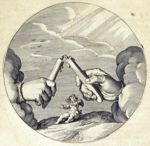
Cascus cascam: Cats, Maechdenplicht (Middelburg, 1618), emblem 36
Iconclass: 31D16 old man 31D17 old woman 33C21 courting 42D3 marriage, married couple, 'matrimonium' 51B2 Similarity, Likeness 51B3 Parity, Equality
Loci Communes: Similitudinis et congruentiae (Similarity and congruence, Similitude et convenance)
I ii 63 Dis dia pason Double diapason
Δὶς διὰ πασῶν. id est, Bis per omnia. Hoc proverbio discrimen ingens ac longissimum intervallum significabant. Unde quae pugnantissima inter sese viderentur, totoque dissidere genere. ea δὶς διὰ πασῶν. inter se discrepare dicebant. Lucianus in lib. De conscribenda historia: Καὶ τὸ τῶν μουσικῶν δὴ τοῦτο, δὶς διὰ πασῶν ἐστὶ πρὸς ἄλληλα. hoc est, Denique iuxta musicorum proverbium, δὶς διὰ πασῶν. intervallo sese mutuo respiciunt. Idem in Apologia: Αλλά μοι ἐκεῖνο ἐννόησον, ὡς πάμπολυ τὰ τοιαῦτα διαφέρει, ἐς οἰκίαν τίνὸς πλουσίου ὑπόμισθον παρελθόντα δουλεύειν, καὶ ἀνέχεσθαι ὅσα μοί φησι τὸ βιβλίον, ἢ δημοσίᾳ πράττοντά τι τῶν κοινῶν, καὶ ἐς δύναμιν πολιτευόμενον, ἐπὶ τούτῳ παρὰ βασιλέως μισθοφορεῖν. διελθὼν δὴ καὶ ἰδίᾳ καταθεὶς ἑκάτερον, σκόπει. εὑρήσεις γὰρ τὸ τῶν μουσικῶν δὴ τοῦτο, δὶς διὰ πασῶν τὸ πρᾶγμα. καὶ τοσοῦτον ἐοικότας ὰλλἤοις τοὺς βίους ὅσον μόλυβδος ἀργύρῳ, καὶ χαλκὸς χρυσῷ, καὶ ἀνεμώνη ῥόδῳ, καὶ ἀνθρώπῳ πίθηκος. μισθὸς μὲν γὰρ δὴ κᾀκεῖ, κᾀνταῦθα, καὶ τὸ ὑπ᾽ ἄλλῳ τάττεσθαι. τὸ δὲ πρᾶγμα παμπόλην ἔχει τὴν διαφωνίαν.i. Quin illud mihi iam considera, quam maximo haec inter sese discrimine distare, videlicet in opulen ti cuiuspiam aedes adscriptum, servire servitutem, et ea omnia perferre, quae libellus ille meus commemorat, & publice populi negocium gerentem, ac pro virili rempublicam. administrantem, hoc nomine ab imperatore salarium accipere. Age perpende haec, & utrunque per se, privatimque contemplare. Reperies nimirum, iuxta illud musicorum, proverbium, δὶς διὰ πασῶν. negotio discrimen inesse: & has duas vitae rationes tantum inter se convenire, quantum affinitatis est plumbo cum argento., aeri cum auro, anemonae cum rosa, homini cum simia. Nam merces quidem accipitur & illic, quemadmodum hic quoque, & utrobique contingit, ut aliis subiectus pareas: caeterum ipsius negocii non mediocris est dissonantia. Hactenus Lucianus. Adagium, ut is etiam indicavit, ex arte musica mutuo sumptum est. Nam Macrobius commen tario in Somnium Scipionis secundo, quinque species harmoniarum commemorat: δὶα τεσσάδιὰ πέντε, διὰ πασῶν, διὰ πασῶν καὶ διὰ πέντε, & δὶς διὰ πασῶν. Ex compositis harmoniis δὶα τεσσάρων & διὰ πέντε, constituitur διὰ πασῶν., cui nominis hoc inditum est, quòd absolutam reddat symphoniam, ut mihi videatur huc etiam illud respicere proverbium, quod alio loco commemorabimus, ἅπαντ᾽ ὀκτώ. Similiter Plutarchus, & quicunque veterum, vel apud Graecos, vel apud Latinos, de musicae disciplina conscripserunt, harmo niarum metam figunt in ea, quae vocatur δὶς διὰ πασῶν. Boetius item lib. De musica primo tradit, antiquitus harmonicam rationem heptachordo duntaxat constitisse, hoc est, fidibus septem, quarum ima, ὑπάτη dicebatur, summa νήτη. Deinde alias chordas adiicientibus aliis, ita crevit vocum numerus, ut ad duplicatum heptachordum perveniretur. Atque hic progrediendi finis futurus videbatur, nisi quòd ipse symphoniarum ratio μέσην illam, quae in heptachordo locum nomini congruentem obitnuerat, & utroque ad extremam relata chordam, harmoniam δὶα τεσσάρων, edebat, desiderare videretur. Hac igitur adiecta, & in suum immissa locum, ad quindecim chordas perventum est, quarum extremam alteram, προσλαμβανόμενον dixere, alteram νήτην ὑπερβολαῖον. Ita fit, ut μέση utroque relata, reddat harmoniam διὰ πασῶν: rursum extremarum utralibet ad μέση relata, eandem constituat harmoniam. Porrò summa relata ad imam, symphoniam reddat quam vocant δὶς διὰ πασῶν, propterea quòd hac, qua dixi ratione, bis complectatur eam harmoniam, cui nomen, διὰ πασῶν. Quoniam autem hac fini constitit harmonica ratio, nec ulterius procedere licuit, tractum est in popularem sermonem, ut quae longissimo discrimine inter se dissita essent, ea δὶς διὰ πασῶν distare dicerent, perinde quasi dicas adeo seiuncta, ut magis seiungi non queant. Cui similimum illud, ἐκ διαμέτρου, id est, ex diametro. Verum quoniam velut imprudentes, nostrique penè dixerim obliti, paulo altius musicam ingressi sumus, quam operis instituti ratio postulabat, libet obiter & illud subnectere, quod equidem arbitror nec admodum vulgo cognitum, nec iniucundum scitu fore. Etenim cum haec meis illinirum commentariis, forte fortuna supervenit Ambrosius Leo Nolanus philosophus huius tempestatis eximius, & in pervestigandis disciplinarum mysteriis, incredibili quadam diligentia solertiaque praeditus: neque vero mediocriter exercitatus evolvendis & excutiendis utriusque linguae scriptoribus. Is igitur postea quam scribentibus nobis intervenisset, recitatis iis, quae iam scripseram: vereor, inquam, Ambrosi, ne vulgus hoc musicorum huic adagio nostro, δὶς διὰ πασῶν, negocium facessat, obstrepatque, ac prorsum δὶς διὰ πασῶν à mea discrepet sententia: quippe qui non dubitarint harmoniarum limitem vel ad vigesium vocis gradum proferre. Quare tu problematum autor, & musices non modo scientissimus, verumetiam peritissimus, hoc mihi paucis, nisi molestum est, expedias velim, quam ob causam antiquitas tantopere metuerit ultra decimam quintam vel tantillum progredi, ut etiam proverbio res ea iactata fuerit: aut qui factum sit, ut hi neoterici non vereantur tanto spacio symphoniarum proferre pomoeria, praeteritisque veterum metis, & quemadmodum dici consuevit, ὑπὲρ τὰ ἐσκαμμένα πηδῶντες, non vereantur etiam ad vigesimam chordam procedere. Ad quae ille familiariter arridens: Nae tu, inquit, homo es plus satis diligens, ut quem hoc quoque solicitum habeat, quid cantorum συμπόσια de tuis sentiant Adagiis. Quanquam ad propellendas musicorum calumnias unus ille sat erat clypeus, te vetus adagium referre. Id utique conveniebat cum veterum musicorum, à quibus ductum est, ratione quadrare. Verum tamen ut tibi magis quam illis faciam satis, quid ego super hac re vel observarim, vel sentiam, paucis accipe. Principio quae res commoverit recentiores musicos, ut antiquitatis limites praeterierint, ipsi sanè viderint. At equidem duplicem video causam, quom ob rem antiquitas in δὶς διὰ πασῶν constituendum duxerit. Primum quòd ipsa natura videatur hanc symphoniarum veluti metam praestituisse, quippe quae modum hunc humanae tribuerit voci, ut ad decimum quintum modo gradum intendatur: ultra quem si quis conetur progredi, non iam illa vox genuina, sed coacta factitiaque, & gannitus magis quam vox videatur. Rursus si altius nitaris eam deprimere, protinus à ratione vocis in screatum quempiam degeneret. Proinde cum ubique conveniat artem quoad licet naturae respondere, non abs re mihi videntur veteres iisdem cancellis circumscripsisse rationem artis, quibus natura vocem humanam circumscripserat. Satis erat ad persuadendum haec, opinor, causa. quanquam altera magis urget. Ea est huiusmodi: Scis esse apud Boetium lib. De musica iiii. harmoniam musices, non rationem tantum, verum & sensu perpendi oportere. Quapropter Ptolemaeus apud hunc, quo dixi libro, Pythagoricorum quorundam sententiam reiicit, qui in diiudicandis harmoniis plurimum tribuerint rationi, minimum sensui, cum dicerent sensum semina modo quaedam cognitionis ministrare, at ratione perfectam constare scientiam. Rursum Aristoxeni refellit opinionem, qui plus satis tribuerit sensibus, perpusillum autem rationi, cum musicam harmoniam ita tempera tam esse oporteat, ut neque sensui ratio refragetur, neque sensus rationi reclamet. Neque dissentit à Prolemaeo Aristoteles ii. Physicorum lib. negans musicam mere mathematicam esse, sed partim ratione, partim sensibus constare. Quod fieri nequaquam potest, si semel ultra decimamquinta, intentionem, hoc est δὶς διὰ πασῶν processum fuerit. Nihil autem vetat ratio, quo minus vel ad millesimum usque tonum progrediare, recurrentibus subinde videlicet iisdem harmoniis, quas complectitur διὰ πασῶν. Neque secus hic procedere liceat, quam fit in numeris arithmeticis, ubi non aliter agnoscitur ἡρμιόλιος, in duodecim milibus & octo milibus, quam in quatuor & sex. Caeterum harmoniae sensus ultra decimamquintam vocem velut evanescit, iamque non magnopere refert, quae sit harmoniae ratio, quam non approbat sensus, & ideo non approbat sensus, quia non evidenter percipit. Porrò quo minus percipiat, intervallum aequo longius in causa est, Rationis vis in immensum se porrigit: at è diverso sensus corporis admodum angustis limitibus cohibetur. Quod enim accidit in oculorum sensu, ut si longius aequo semota sint ea in quae fertur videndi vis, obtundatur ac deficiat visus, eoque magis deficiat, quo maiore distent intervallo: id multo magis accidit aurium sensui, quippe minus agili quam oculorum. Iam vero quod usu venit sensibus in percipiendis iis quae obiiciuntur, idem usu venit animo per sensum diiudicanti. Si colorem colori propius admoveas, & quemadmodum Graeci dicunt, πορφύραν παρά τὴν πορφύραν, nonne protinus dignoscit ex collatione sensus, quantum alter ab altero discrepet, aut alteri cum altero conveniat? Itidem si vocem voci vicinam auribus exhibeas, incunctanter diiudicant, quae sit alterius cum altera, vel concordia, vel discor dia: sin plus iusto dissitas intervallo, mox incipit anceps esse iudicium. Porrò quemadmodum citius hebetatur aurium sensus quam oculorum, itidem citius obtunditur illarum quam horum iudicium: propterea quod altera res ex altera pendeat. Id ita esse, non est cur pluribus argumentis confirmem, cum protinus ipsum experimentum fidem unicuique facere possit. Pulsa chordam quampiam in organo: simulque tange quae sit ab hac octava, statim rationi suffragans sensus, plene percipiet harmoniam, & absolutissimam esse, suo quoque comprobabit calculo. Rursum pulsata quapiam, simul move aliam, quae sit ab illa decimaquinta, statim & percipiet, & approbabit sensus symphoniam, agnoscens eam quam pauloante senserat in διὰ πασῶν. At vero si tacta ima, moveris ab hac decimamnonam, nihil quidem obstrepit ratio, quo minus sit harmonia, quae fuerat in διὰ πασῶν cum διὰ πέντε, verum auris, acceptis vocibus non perinde percipit harmoniae rationem. Quod nisi sensus certos quosdam terminos haberet, intra quos certum illius & exploratum iudicium sepiretur, nihil te vetuerit, si libeat vel usque ad χιλιάκις διὰ πασῶν symphoniam procedere. Neque enim ratio quicquam offenditur numero, modo eandem agnoscat analogiam. Verum corporis sensibus natura suos quosdam limites praescripsit, ultra quos progressi, sensim iam incipiunt quasi caligare, hallucinarique neque iam certo sicuti solent, sed ceu per nebulam, ut aiunt, ac per somnium iudicare. Non conveniebat autem, ut cuius incertum esset iudicium, id ad artis praecepta traheretur. At quoniam ultra decimumquintum vocis gradum veteres intellexerunt evanescerer iudicium aurium, ibi metam harmoniarum figendam esse iudicarunt, ne merito quis illud tuum adagium obiicere posset, ὰφανοῦς μουσικῆς οὐδὲν ὄφελος. id est, Occultae musices nulla est utilitas. Iam igitur neoterici, qui contra veterum autoritatem ultra summam chordam τετράχορδον adiecere, ad imam item adiecta una, non perinde flagitium fecissent, si in decimanona chorda terminassent harmoniarum progressum: propterea quod haec ima ad summam relata, si non auribus, certe rationi perfectam symphoniam repraesentat. Atqui in vigesima neque sensus est harmoniae, neque harmonia perfecta. Quare nihil est Erasme, quod adagio tuo ullam metuas calumniam. Haec cum mihi tum argute, tum admodum probabiliter ab Ambrosio meo dicta lucubrationibus adiungere futurum auctarium, haudquaquàm, ut arbitror, ingratum lectori non omnino fastidioso.
Δὶς διὰ πασῶν., Double diapason. By this proverb was signified a great difference or very long interval; hence things which seemed most incompatible with each other, and totally different in kind, were said to differ dis dia pason. Lucian in his essay How History Should Be Written: 'And this is, as the musicians' proverb says, a case where they are a double diapason apart from each other.' Again in the Apology: 'But realize this: there is a very great difference between entering a rich man's house as a hireling, where one is a slave and endures what my essay describes, and entering public service, where one administers affairs as well as one can, and is paid by the emperor for doing it. Consider every detail and examine it for yourself. You will find the two lives a double diapason apart, to use a musical proverb, and as like each other as lead and silver, bronze and gold, anemone and rose, monkey and man. You are paid in the first case as in the second, and in both you are under a master's orders; but there is no small discrepancy between one position and the other.' So far Lucian. The adage, as he indicates, is borrowed from the art of music. Macrobius, in his Commentary On the Dream of Scipio, book 2, mentions five kinds of harmony: diatessaron, diapente, diapason, diapason and diapente, and finally double diapason. The combination of the diatessaron and the diapente constitutes the diapason, which has been given this name because it gives complete harmony, so that there seems to me to be a connection between this proverb and another which I shall mention elsewhere, A full octave. Plutarch and all the ancient writers, Greek or Latin, who have written about musical theory, similarly fix the limit of harmony at what is called the 'double diapason.' Boethius too, in the first book of his treatise On Music, records that in ancient times harmonic proportion depended entirely on the heptachord, that is to say on seven strings, the lowest being called hypate and the highest nete. Later when different people added other strings, the number of notes was increased to the point of doubling the heptachord. And this was apparently to be the end of the development, except that harmonic theory seemed to require the mese or middle string which had occupied the place in the heptachord agreeing with its name and which, in its relation to the furthest string in either direction, gave the diatessaron. This string was thus added and given its due place, and the result was fifteen strings, the furthest at one end being called proslambanomenos, and at the other end nete hyperbolaios. So it came about that the mese in its relation to the two extremes gave the harmony diapason; and each of the two extremes in relation to the mese produced the same harmony. Moreover the highest, taken with the lowest, gave the harmony called double diapason, because the ratio I have described covered twice that harmony which is called the diapason. So, since the harmonic ratio stopped at this point and could not proceed any further, the expression passed into popular speech to describe things as widely as possible different from each other, which were said to be a double diapason apart, exactly as if one were to say, so far apart that a greater separation would be impossible. An exactly similar phrase is ἐκ διαμέτρου, diametrically opposite.
But since I have rashly - and as it were forgetting myself - gone further into musical matters than the nature of the work undertaken required, I should like to add by the way some further information, which is not, I think, very widely known, and will not be uninteresting to know. For at this point, just as I was scribbling all this down in my notes, it so happened that by great good luck along came Ambrogio Leone of Nola, an outstanding philosopher of our time, and one endowed with incredible diligence and expertise in exploring the intricacies of intellectual disciplines; he has also had no little experience in reading and examining the works of writers in both Latin and Greek. As he arrived just when I was writing, I read him what I had already written, and then I said, 'I am afraid, Ambrogio, that the general mass of musicians will make trouble over my adage "double diapason," and strongly oppose it, being "at the other end of the scale" from my way of looking at it; these people do not hesitate to extend the limits of harmony to the twentieth note of the gamut. Now you are an authority on difficult cases and you are also experienced not only in the theory but in the practice of music. I should like you to explain to me in a few words, if it is not too much trouble, why the ancients were afraid of going any further, even the least little bit, past the fifteenth interval, even to the extent of the thing becoming a proverb; and why these moderns have no hesitation in pushing the boundary out to such a wide range of consonances, setting aside the limits of the ancients, and as the saying goes "jumping the bounds"; they are not afraid to go on to the twentieth interval.'
He laughed in friendly fashion. 'What a scrupulous fellow you are,' he said, 'to add to your worries the fear of what the singers will say about your adage in their drinking parties! To repel the slanders of the musicians, one shield would be enough for you: say you are repeating the old adage. It was in any case sure to agree with the theory of the old musicians from whom it came. But so as to satisfy you rather than them, here in a few words is what I have observed, and what I think, about this subject.
'To start with, the reason which has prompted modern musicians to exceed the limits of the ancients is something they must look to themselves. For myself, I see two reasons why antiquity should have preferred to stop at the "double diapason." First, that nature herself seems to have fixed this sort of limit to consonances, by arranging that the human voice should not reach beyond the fifteenth interval; if one tries to go higher the result is not a natural voice, but forced and artificial, and seems more like a squeak than a voice. If one strains on the contrary to push it lower, one gets out of the vocal register into something like a hawking noise. Thus, since art should always as far as possible agree with nature, it seems to me that the ancients were not wrong in circumscribing the realm of art within the barriers which nature had set to the human voice. This would be a sufficient reason to convince anyone, I think, but the second is more imperative.
'It is this. You know that in Boethius, On Music, book 4, the view is found that musical harmony should be considered not only in relation to reason, but also in relation to the senses. For this reason Ptolemy, in the book 1 have mentioned, rejects the opinion of certain Pythagoreans who have given greater importance to the reason than to the senses when they discriminate between harmonies; they say that the senses only supply the germ, as it were, of knowledge, while the perfect understanding depends on reason. Again, he refutes the opinion of Aristoxenus who attributed more than their due proportion of importance to the senses, and very little to the reason; musical harmony should be so ordered that neither the reason should resist the senses nor the senses contradict the reason. Aristotle does not disagree with Ptolemy (Physics, book 2) for he says that music is not solely a mathematical science but depends partly on reason and partly on the senses. This is impossible if the musical progression once goes beyond the fifteenth interval, that is, the "double diapason." Now reason does not in any way forbid a progression to the thousandth note, since the same harmonies contained in the octave would recur at regular intervals. The procedure would be no different from what it is in mathematical calculations, where the proportion of "one and a half" would be the same between twelve thousand and eight thousand as between four and six. But musical sensitivity vanishes, so to speak, beyond the fifteenth note, and it is not of much importance to consider a rational harmony unaccepted by the senses, because it is not perceptible to them. The reason why it is imperceptible is because the interval is too long. The power of reason has an immense range; but physical experience, on the contrary, is contained in very narrow limits. It is the same as what happens to the sense of sight, when vision is blurred and fails if the objects on which the power of sight is trained are far removed, and the greater the distance the more this occurs. This is much more pronounced with the sense of hearing, which is less acute than that of sight. Now what happens in the use of the senses as they perceive objects which come into their field, happens in the use of the mind as it judges by the senses. If you place one colour beside another, and as the Greeks say, "put purple to purple," does not the sense of sight immediately distinguish by this comparison how the colours differ from each other and how like they are to each other? In the same way, if you present to the ear one sound followed by another sound, it will unhesitatingly distinguish the accord or discord which exists between them; if they are separated by an undue interval, the judgment soon begins to waver. Moreover, just as auditive sensitivity is sooner dulled than ocular, so the judgment resulting from the ear is sooner blunted than that resulting from the eye; one conclusion depends on the other.
Facsimile: 

Iconclass: 51BB2 Dissimilarity, Unlikeness 51BB5 Contrariety; 'Contrarietà' (Ripa)
Loci Communes: Differentiae (Differences, Différences); Excellentia, inaequalitas (Excellence, inequality, Excellence, inégalité)
I ii 64 Ubi timor, ibi et prudor Where there is fear, there is modesty
Ινα δέος, ἔνθα καὶ αἰδὼς. id est. Ubi timor, ibi & pudor. Proverbialis sententia, quae hodie quoque vulgo manet, cui similis illa Terentiana: Omnes deteriores sumus licentia. Et maxima pars hominum formidine fustis à male factis temperat. Plato lib. De legibus v. Η δ᾽ ἄδεια ἀναισχυντίαν ἐνέτεκεν. id est, Audacia vero parit impudentiam. ἄδειαν autem vocant, cum abest metus. Item in Euthyphrone citat ex poeta quopiam. Est enim hemistichion carminis heroici, Ινα γὰρ δέος, ἔνθα καὶ αἰδώς. id est, Ubi enim timor, & pudor illic. Suidas indicat esse Epicharmi.
Ινα δέος, ἔνθα καὶ αἰδὼς, Where there is fear there is modesty. A proverbial saying which is still common today, and like that remark of Terence, 'We are all made worse by licence.' The greater part of mankind abstains from misdeeds 'for fear of cudgelling.' Plato in the Laws, book 5: 'But audacity breeds impudence.' The word used for audacity, adeia, means absence of fear. He quotes also in the Euthyphro from some poet or other, for it is a half-line from a heroic poem): 'Where there is fear, there modesty is too.' Suidas says it is from Epicharmus.
Facsimile:
Iconclass: 56DD1 Fear, Dread; 'Paura', 'Timidità o Timore', 'Timore' (Ripa) 57A641 Discretion, Modesty; 'Discretione', 'Modestia' (Ripa)
Loci Communes: Pudor (Shame, modesty, Pudeur)
I ii 65 Foras Cares, non amplius anthisteria Out you go, slaves, the festival's over
Θύραζε κᾶρες, οὐκ ἔτ᾽ ἀνθιστήρια. id est: Cares foras: peracta enim anthisteria. Dici consuevit, ubi quis semper eadem sibi sperat commoda, aut idem semper licitum fore credit, quod aliquando pro temporis ratione fuerit permissum. Veluti si quis semel expertus cuiuspiam liberalitatem, subinde redeat aliquid muneris petens: aut cum pueri permissam sibi ad tempus feriandi ludendique facultatem ultra tempus prorogant. Originem proverbii tradunt ad hunc modum. Atheniensibus mensis quidam anthisterion appellabatur, quod is plurimos flores progigneret. In hoc festa quaepiam agebantur, & convivia liberiora, quemadmodum in Saturnalibus fieri consuevit apud Romanos, in quibus & servis accumbere licebat, feriatis interim ab opere. Exactis autem feriis, cum iam ad solitas operas revocarentur, hoc pacto dicebant heri, Foras Cares, non iam amplius anthisteria. Cares autem servos appellabant, quod ea gens mercenariis operis quaestum factitaret, velut onium servi quicumque conduxissent. Sunt qui dicant, Cares olim Atticae regionis partem obtinuisse, Athenienses autem cum anthisteriorum sollennitatem agerent, solere Cares in civitatem atque in domos receptos ad festi communionem admittere: deinceps peracto sollennitatis tempore, si quos è Caribus offendissent in urbe cessantes, per iocum dicebant, Θύραζε κᾶρες, οὐκ ἔτ᾽ ἀνθιστήρια.id est: Exite Cares, acta enim anthisteria. Sonat autem ea vox Graeca perinde, quasi dicas Floralia Latine, quorum licentia multorum literis notissima. Non diversum est quod ait Seneca in ludicro in Claudium scripto, Non semper erunt Saturnalia. Nam Saturnalibus servis quoque libertas erat.
Θύραζε κᾶρες, οὐκ ἔτ᾽ ἀνθιστήρια, Out you go, slaves, the Anthesteria is over. This is usually said when a person always expects to have the same advantages, or considers that he is always free to do something which has been permitted for a certain limited length of time. For instance, if one who had once experienced a man's liberality should go on coming back to ask for something else; or when children spin out longer the time they are allotted for holidays and play. The origin of the proverb is said to be as follows. Among the Athenians a certain month was called anthisterion, because it gave birth to the most flowers. During this month there were festivals and banquets of a freer sort, just as the custom was at the Saturnalia among the Romans, and the slaves also were allowed to be guests at table, and take a holiday from their work. When the holiday was over and they were recalled to their usual tasks, the masters would speak in this fashion, 'Out you go, Carians, the festival's over.' They called the slaves Carians, because that race got its living by working for hire, and becoming the servants of anyone who would pay them wages. Some say that the Carians once held part of Attica. When the Athenians were conducting the ceremonies of the Anthesteria they used to allow the Carians to come into the city and into their houses and to join in the feast; but once the solemnities were over, if they found any of the Carians idling about the town, they would say jokingly, `Out you go, Carians, the festival's over.' This Greek word has the same meaning as the Latin Floralia, a festival of which the licentiousness is commented on by many authors. Something of the same sort is said by Seneca in his skit on Claudius: 'It will not always be Saturnalia.' For the Saturnalia also gave a time of liberty to slaves.
Facsimile: 
Iconclass: 12E91(ANTHESTERIA) 'Anthesteria', festival of Dionysus 43C769 chased off during game, play broken up 46A18 slavery; serfs and enslaved persons
Loci Communes: Intempestiva et inepta (Untimely and inept things, Choses inopportunes et ineptes)
I ii 66 Fures clamorem Thieves fear a noise
Οἱ φῶρες τὴν βοὴν. id est, Fures clamorem. subaudiendum, timent aut senserunt. Quadrabit in eos qui sibi conscii, metuunt ne deprehendantur, aut qui peracto maleficio fugitant pavitantque. Habet autem hoc cum omnis malefacti conscientia, tum praecipue furti, ut hominem trepidum reddat ac lucifugam. Hoc allusit Virgilius: Et cum clamarem, quó nunc se proripit ille? Tityre coge pecus, tu post carecta latebas.
Οἱ φῶρες τὴν βοὴν, Thieves (supply, fear or, have heard) a noise: This will fit people who have a sense of guilt and are afraid of being caught, or who have committed some crime and run away in terror. The consciousness of wrongdoing, particularly of theft, has the result of making a man tremble and fear the light. So we find among the Hebrew sayings, 'The wicked flee when no man pursueth.' Virgil alluded to it: 'And when I shouted, Where is the fellow running to now? / Tityrus, round up your flocks: you were lying hidden in the rushes.'
Facsimile:
Iconclass: 22D1 loud sound, noise 44G54 thief 56DD1 Fear, Dread; 'Paura', 'Timidità o Timore', 'Timore' (Ripa) 57A3 Conscience; 'Coscienza' (Ripa)
Loci Communes: Metus ex conscientia (Fear from a guilty conscience, Peur due à la conscience coupable)
I ii 67 Funiculum fugiunt miniatum They flee from the reddened cord
Τὸ σχοινίον φεύγουσι τὸ μεμιλτωμένον. id est: Vitant sinopi collitam restim rubra. Apte dicetur, ubi quis properat officio suo fungi, non ex animo, sed ne in mulctam incidat. Carmen sumptum ex Aristoph. cuius interpres, & item Suidas huiusmodi fermè commemorant. Atheniensium magistratus variis modis conati sunt efficere, ut populus quam maxime frequens ad concionem ventitaret: obiectis enim repagulis quibusdam vias reliquas occludebant, quae non ducerent ad forum: tum merces tollebant ex mercatu, ne quid hac gratia ibi cessaretur: denique funem pararant rubro colore, quem μίλτον, id est, interprete Plinio, minium vocant Latini, nonnulli cinabarim appellant, oblitum. Hoc duo ministri publici populum cingentes, agebant in concionem. Studebat quisque funiculum effugere, propterea quod quisquis colore notatus appareret contagio funis, is mulctam pendere cogebatur. Unde qui notam metuunt, eos eleganter dicemus φεύγειν τὸ σχοινίον μεμιλτωμένον. id est, fugere funiculum miniatum.
Τὸ σχοινίον φεύγουσι τὸ μεμιλτωμένον, They dodge the rope that's raddled with red-ochre. This can be aptly applied to a man who hastens to do his job, not because he wants to, but for fear of incurring a fine. It is a line from Aristophanes, which his commentator, and Suidas too, record more or less in this form. The magistrates of Athens tried in various ways to compel the populace to make their appearance at the public assembly as often as possible; they barricaded the rest of the streets which did not lead to the market-place; they removed merchandise from the market so that there should be no idling there on that excuse; and they prepared rope smeared with a red colour, which is called miltos (Pliny translates it by minium), which some call in Latin cinnabar. With this two officials went round roping in the people and driving them to the assembly. Everyone tried to avoid the cord, because any person who clearly bore a red mark from contact with the rope was forced to pay a fine. So we may elegantly say, about anyone who is afraid of a bad mark, 'running away from the red rope.'
Facsimile:
Iconclass: 22C4(RED) colours, pigments, and paints: red 33B9 flight, running away; pursuing 47D8(ROPE) tools, aids, implements ~ crafts and industries: rope
Loci Communes: Metus poena (Fear as punishment, La peur comme châtiment)
I ii 68 Fortuniatur Strobilis Carcini Luckier than the Strobili of Carcinus
Εὐδαιμονέστερος καρκίνου στροβίλων. id est. Fortunatior Carcini Strobilis. Ironia proverbialis, in infelicem & improbum. Carcinus poeta quispiam fuit, cuius filii dicti sunt Strobili ab Aristophane, quos & γλυκυτραχήλους vocat, id est, dulcicervicos. Iocus autem sumptus est à nominum allusione. Nam Graece Carcinus cancrum, Strobili cochleas significant. Utrumque genus distortum ac foedum. Adagiu recensetur apud Suidam & Zenodotum. extat apud Aristophanem in Pace.
Εὐδαιμονέστερος Καρκίνου Στροβίλων, Luckier than the Strobili of Carcinus. An ironical saying about an unlucky and wicked man. Carcinus was a poet whose sons were called Strobili by Aristophanes; he also calls them 'glukutrachelos,' or sweet-necked. The joke comes in the meaning of the names, for in Greek, carcinus means crab, and strobili snails, both misshapen and ugly creatures. The adage is listed by Suidas and Zenodotus; in Aristophanes it is in the Peace.
Facsimile:
Iconclass: 31A44 anthropomorphic beings (legendary or not) with heads, limbs or organs of an abnormal number, in abnormal places or of an abnormal shape) 42B111 father with son(s) (father-love) 98B(CARCINUS) male persons from classical history (CARCINUS) 98B(STROBILI) male persons from classical history (STROBILI)
Loci Communes: Infortunii sive exitii (Misfortune or ruin, Malheur ou ruine)
I ii 69 Festo die si quid prodegeris Wasteful in holiday time
Plautus in Aulularia sub persona senis Euclinonis: Festo die si quid prodegeris, profesto egere liceat, nisi peperceris. Schema proverbiale. Admonet autem, ne in sumptibus solennibus ita profusi simus, ut non suppetat quo feramus quotidianos. Nam festi dies vel sacris offerendis, vel diurnis epulationibus, vel ludis in honorem deorum, vel feriis observandis celebrabantur: profesti ad rei privatae publicaeque administrationem concedebantur. Accommodabitur non perperam, & in eos, qui iuvenes rem prodigunt, esurituri senes, quíve intempestive profundunt, postea desideraturi.
Plautus in the Aulularia puts into the mouth of the aged Euclio: 'If you are wasteful at holiday time, you may be in want at ordinary times, unless you live sparingly.' A proverbial figure, which warns us not to be so lavish at festivals that we have nothing left for everyday expenses. Days of festival were celebrated by the offering of sacrifices, by feasts in daytime, games in the honour of the gods, or public holidays; non-festal days were given to the management of public and private business. This can be suitably adapted to people who waste their substance in youth and go hungry in old age, or who squander money unseasonably and will long for it later on.
Facsimile:
Iconclass: 43A1 periodic celebrations, popular feasts 55C11 Squandering, Extravagance, Prodigality, Waste; 'Prodigalità' (Ripa)
Collectanea (1500): 64
Loci Communes: Profusio (Extravagance, Prodigalité)
I ii 70 Feles tartessia A Tartessian cat
Γαλῆ ταρτησσία, id est, Feles Tartessia. De magnis & ridiculis dicebatur. Tartessii sunt in Iberia, apud quos feles maximae nasci dicuntur. Fortasse non inepte dicitur & de rapacibus. Aristophanes in Vespis, Ωσπερ με γαλῆν κρέα κλέψασαν Τηροῦσιν ἔχοντ᾽ ὀβελίσκους. id est, Nunc uti felem rapta carne, Observant gestantem verua. Item Lucianus, cum ait, ἁρπακτικώτεροι τῶν γαλῶν. id est, rapaciores felibus: nimirum & ipse felium significat rapacitatem vulgo notam fuisse.
Γαλῆ ταρτησσία, A Tartessian cat. This was a term for something huge and ridiculous. The Tartessians are in Spain, and it is said that their cats grow very large. Possibly it may be applied to the rapacious as well. Aristophanes in the Wasps: 'They watch me holding spits as if I were a cat who'd stolen meat.' Lucian, when he says 'as rapacious as cats,' also suggests that the greediness of cats was a general opinion.
Facsimile: 
Iconclass: 34B12 cat 51G1 Largeness, Magnitude 61D(TARTESSIA) geographical names of countries, regions, mountains, rivers, etc. (TARTESSIA) (TARTESSIA)
Loci Communes: Multi - in stupidos (Many people - against the stupid, Beaucoup de gens - contre les sots); Rapacitas et avaritia (Rapacity and greed, Rapacité et avarice)
I ii 71 Ferre iugum To bear the yoke
Plautus in Curculione, Iam ne fert iugum? De puella percunctatur quispiam, num iam per aetatem virum reciperet. Id enim significari satis arguunt ea quae sequuntur, Tam à me pudica est, quasi soror mea sit. Horatius in Odis, de puella nondum viro matura, Nondum subacta ferre iugum valet Cervice. Videlicet indicans, unde ducta sit translatio, nimirum à iuvenco, cui nondum suppetunt vires, ut ducendo aratro pares operis vices sustineat. Nam & coitus duorum ex aequo negocium est, itidem ut in iugo. Unde dictum etiam coniugium.
Plautus in the Curculio: 'Does she yet bear the yoke?' Someone is enquiring about a girl, whether she is of an age to receive a man. That this is the meaning is sufficiently borne out by what follows: 'She is as pure, as far as I'm concerned, / As if she were my sister.' Horace writes in the Odes of a girl not yet ripe for a husband: 'Not yet can she bow her neck and bear the yoke,' thus showing the transference of the metaphor from the young ox who has not yet got the strength to do his share of work in pulling the plough. For to sleep together demands two people on equal terms, just as it is with a pair of oxen. That is why marriage is called coniugium, a yoking together.
Facsimile:
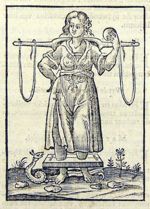
Matrimonio - Houwlijck: Ripa, Iconologia, of uytbeeldingen des verstands (Amsterdam, 1644), personification of Matrimonio
Matrimonio: Ripa, Iconologia (Florence, 1613), personification of Matrimonio
Gratum amanti iugum: Vaenius, Amorum emblemata (Antwerp, 1608), emblem 37
Iconclass: 42D betrothal and marriage 46C1212 carrying something with yoke 46C14111 yoke
Collectanea (1500): 65
Loci Communes: Improbi (The dishonest, Les malhonnêtes)
I ii 72 Feli crocoton A party-frock for the cat
Γαλῇ κροκωτὸν. id est. Feli crocoton, subaudiendum, das aut addis. Dici solitum, quoties honos additur indignis, & quos haudquaquam decet. Aut cum datur quippiam iis, qui munere non norunt uti: veluti si quis à musis alienissimo bellissimum donaret librum. Crocoton vestis genus est rotundae ac fimbriatae, qua divites utebantur matronae: Apud Nonium in dictione Richa, refertur inter vestes delicatas et crocoton. Sic enim arbitror legendum, mollicinam crocotam, chirodatam richam. Ac teste Plutarcho, quidam Herculem pingebant Κροκωτοφόρον, Omphale servientem. Sumptum adagium ab apologo Stratidis, quem alio loco narravimus. Porrò vox haec γαλῆ, felém ne significet, an mustelam, an quem vulgo catum appellant, quoniam inter eruditos controversum esse video, relinquo aliis iudicandum.
Γαλῇ κροκωτὸν (understand, You supply) a party-frock for the cat. This is often said when an honour is bestowed on those who are unworthy of it, and whom it does not suit at all; or else when something is given to those who do not know how to use it, for instance if a most beautiful book were given to someone entirely foreign to the Muses. The crocoton is a kind of dress, of circular shape with fringes, which was worn by rich ladies. In Nonius, under the word richa, the crocoton is included among luxury garments. This is how I take it that the text should be read, 'a party frock, a rich-embroidered richa.' But according to Plutarch, some used to paint Hercules as 'wearing the crocoton' when he was serving Omphale. The adage comes from a fable of Stratis, which I have related in a different place. But whether the word used in Greek, gale, means a cat or a weasel, or what is vulgarly called catus, I leave to others to decide, since I see there is an argument about it among the learned.
Facsimile:
Iconclass: 34B12 cat 41D242 party clothes, festive attire 54AA33 Inability, Maladroitness, Awkwardness
Loci Communes: Dissimilitudinis et incongruentiae (Dissimilarity and incongruity, Dissemblance et incongruité); Intempestiva et inepta (Untimely and inept things, Choses inopportunes et ineptes)
I ii 73 Mustelam habes You have a weasel in your house
Γαλῆν ἔχεις. id est, Mustelam habes. In eum quadrat, cui omnia sunt inauspicata tanquam fatis ac diis iratis, ut aiunt. Olim creditum est, hoc animal inauspicatum infaustumque esse iis qui haberent, domique alerent: ut non admodum dissideat ab illis, Equum habet Seianum, &, aurum habet Tolosanum. Unde nunc etiam apud quasdam gentes, nominatim apud Britannos, infelix omen habetur, si cum paratur venatio, aliquis mustelam nominet, cuius etiam occursus vulgo nunc habetur inauspicatus. Adagium refertur à Diogeniano.
Γαλῆν ἔχεις, You have a weasel in your house. This suits the person for whom everything goes wrong, as if the fates and the gods were angry, as they say. In old days this animal was thought to be inauspicious and unlucky to those who had it and kept it in the house, so the saying is not very different from those other proverbs, 'He must have Sejus' horse,' or 'He has gold from Toulouse.' And even now in some countries, notably among the English, it is held to be an evil omen if while they are getting ready to go out hunting someone mentions a weasel. Even to have it running across your path is now commonly accounted unlucky. The adage is mentioned by Diogenianus.
Facsimile:
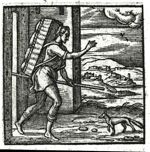
Bonis auspiciis incipiendum: Alciatus, Emblemata (Leiden, 1591), emblem 126
Iconclass: 25F23(WEASEL) beasts of prey, predatory animals: weasel 41A2 interior of the house 52E22 Bad Omen; 'Augurio cattivo' (Ripa) 54FF11 Adversity, Misfortune, Bad Luck; 'Fortuna infelice', 'Infortunio' (Ripa)
Loci Communes: Infortunii sive exitii (Misfortune or ruin, Malheur ou ruine)
I ii 74 Fastuosis Maximus Haughty Maximus
Κόμπος μάξιμος, id est, Fastuosus Maximus. In eum dicebatur, qui sibi plus satis arrogasset in sapientia. Sumptum à moribus Maximi cuiuspiam arrogantis, & sibi immodice placentis. In nonnullis exemplaribus invenio κόμπᾶς μάξιμος. Graecis κόμπος arrogantiam, insolentiamque significat, unde κομπεῖν καὶ κομπάζειν. Proinde & Euripides γλώσσης τε κόμποι, id est, Linguaeque fastus. Recensetur & hoc in Diogeniani Collectaneis.
Κόμπος μάξιμος, Haughty Maximus. This was said about a person who proudly thought himself wiser than he was. It was taken from the behaviour of a certain Maximus, an insolent fellow full of his own conceit. In some texts I find a variant: kompas Maximos. In Greek kompos means arrogance and insolence, and it gives kompazein (to talk big) and kompein (to boast). Euripides says 'insolence of tongue.' This too is found in the collections of Diogenianus.
Facsimile:
Iconclass: 57AA644 Arrogance; 'Arroganza' (Ripa) 98B(MAXIMUS) male persons from classical history (MAXIMUS)
Loci Communes: Arrogantia jactantiaque (Arrogance and boastfulness, Arrogance et vantardise); Temeritas (Recklessness, Témérité)
I ii 75 E multis paleis paulum fructus collegi From a lot of chaff I got little grain
Εκ πολλῶν ἀχύρων ὀλίηον καρπὸν συνήγαγον. id est, ex multis paleis parum fructus collegi, id est, multo labore non multum emolumenti sum consecutus: aut è verboso sermone paululum bonae sententiae percepi: ex ingenti volumine minimum doctrinae retuli. Translatum ab excussoribus tritici.
Εκ πολλῶν ἀχύρων ὀλίηον καρπὸν συνήγαγον, From a lot of chaff I got little grain. That is, from a great deal of work I gained a very small advantage; or from a wordy speech I extracted little in the way of a sound idea, or out of aa huge volume I gained only the least bit of learning. The metaphor is from winnowers of wheat.
Facsimile:

Tribulatio optima: Borja, Empresas morales (Bruxelles, 1680), emblem 68 uses the imagery of a flail threshing grain
Tribulatio optima: Camerarius, Symbolorum et Emblematum Centuria(e) (Nürnberg, 1590, 1595, 1596, 1604), emblem 84 uses the imagery of a flail threshing grain
Iconclass: 47I1111 ears of corn 47I1111(+0) ears of corn (+ variant) 47I17(CHAFF) agricultural products and by-products (CHAFF) 47I148(+8) threshing (+ agricultural processes) 51HH3 Paucity, Fewness 51H4 Plenitude 54BB3 Inutility, Noxiousness; 'Nocumento', 'Nocumento d'ogni cosa' (Ripa)
Loci Communes: Inanis opera (Vain effort, Effort vain)
I ii 76 Portet remum ducere qui didicit The man who has learned to row should take the oar
Δεῖ κώπην ἐλαύνειν μαθόντα. id est, Oportet remum impellere eum, qui didicerit. Unumquenque decet eam artem exercere, quam antea doctus sit: Refertur à Plutarcho in commentariolo, cui titulus, ὄτι διδακτὸν ἡ ἀρετή. Idem admonet Horatianum illud in Arte poetica, Ludere qui nescit, campestribus abstinet armis: Indoctusque pilae discive, trochive, quiescit, Ne spissae risum tollant impune coronae. Qui nescit, versus tamen audet fingere. Quin & hodiernis temporibus huius modi vulgo iactatur adagium, Qui lusus non novit legem, abstineat.
Δεῖ κώπην ἐλαύνειν μαθόντα, It should be the man who has learnt, who wields the oar. The proper person to exercise a skill is the one who has previously learnt it. This is mentioned by Plutarch in his essay 'Can Virtue Be Taught?' and Horace also in the Art of Poetry:
The Man, who knows not how with Art to wield
The sportive weapons of the martial field,
The bounding Ball, round Quoit, or whirling Troque
Will not the laughter of the Crowd provoke
But every desperate Blockhead dares to write ...
In our own time too there is a similar proverb going round: 'Anyone who does not know the rules of the game can keep out.'
Facsimile:
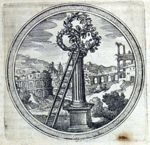
Iconclass: 46C2323 oaring, sculling 46C2852 at the helm (manoeuvering) 54A31 Experience, Mastery; 'Esperienza' (Ripa)
Loci Communes: Exercitatio (Practice, exercise, Exercice)
I ii 77 Ex ipso bove lora sumere To make the leash from the bull's own hide
Εκ τοῦ βοὸς ἱμάντας λαμβάνειν. id est, Ex ipso bove lora sumere dicuntur, qui quo laedant quempiam, id ab ipso que laedunt accipiunt. Veluti si quis versibus incesseret eum, à quo carminis componendi rationem didicisset: aut tyrannus pecuniam extorqueat à civi bus, qua satellitium ad opprimendam civitatem alat: aut si quis rhetorices praesidiis rhetoricem oppugnaret. Metaphora sumpta ab agricolis, qui lora caedunt è boum tergoribus quibus boves vinciunt. Plutarchus in commentario, cui titulus, ὄti οὐκ ἐστὶ ζῆν ἡδέως: Τί ἄν λέγοι τις; ἀρκεῖ γὰρ ἡ φύσις τῆς σαρκὸς ὕλην ἔχουσα νόσων ἐν ἑαυτῇ, καὶ τοῦτο δὴ τὸ παιζόμενον, ἐκ του βοὸς τοὺς ἱμάντας λαμβάνουσα, τὰς ἀλγηδόνας. id est, Quid igitur dixerit quispiam? Satis est ipsa corporis natura, morborum materiam in se continens, ac iuxta quia ioco dici solet, tanquam ex ipso bove lora sumens, ita ex ipso corpore dolores.
Εκ τοῦ βοὸς ἱμάντας λαμβάνειν, Making the Ieash from the bull's own hide, is what people are said to do, when for the purpose of injuring somebody they use something received from that very person. For instance, a man might write verse attacking the person who had taught him the rules of prosody; or a tyrant might extort money from the citizens for the support of an armed guard intended to suppress them; or someone might make an attack on rhetoric with the very weapons of rhetoric. The metaphor comes from husbandmen, who cut thongs of ox-hide with which they tie up their oxen. Plutarch in his essay 'A Pleasant Life Is Impossible :'What could anyone say? For the nature of the flesh has in itself the material of disease, and as is jokingly said, making its leash from the bull's own hide, takes its pains from the body.'
Facsimile: 
Iconclass: 47I2111(+9351) bull (+ skin, fleece, hide, fur, leather) 54E2 Guidance
Loci Communes: Malum accersitum aut retortum (Evil brought upon oneself or turned back, Mal attiré ou retourné)
I ii 78 Ex uno omnia specta From one learn all
Εξ ἑνὸς τὰ πάνθ᾽ ὄρα, id est, Ex uno omnia specta. Vergilius item, Et crimine ab uno Disce omneis . Admonet adagium ex unius eventus experimento, reliquorum similium coniecturam oportere facere. Refertur à Suida. Tametsi is ostendit in eos dictum qui perperam ex uno quopiam aestimant omnia. Legit enim non ὄρα sed ὄρᾶ. Veluti si quis unum Gallum expertus perfidum, iudicaret omnes esse tales.
Εξ ἑνὸς τὰ πάνθ᾽ ὄρα, From one learn all. So Virgil: `From one crime learn them all.' The adage teaches that from the experience of one event we ought to learn to foresee such things next time. It is recorded by Suidas. He maintains, however, that it is said of those who wrongly judge everything from a single instance; for his verb is not 'learn' but 'he learns,' as if having found one Frenchman false, one should judge them all to be so.
Facsimile:
Iconclass: 49A education 51H3 Multitude 51HH3 Paucity, Fewness 54A32 Preparedness
Loci Communes: Conjecturae (Conjectures, Conjectures)
I ii 79 Ex adspectu nascitur amor Love comes by looking
Εκ τοῦ εἰσορᾶν γὰρ γίγνεται ἀνθρώποις ἐρᾶν. id est:, Amor ex videndo nascitur mortalibus. Senarius proverbialis, admonens, oculos amorem potissimum conciliare. Non enim amatur incognitum: ex convictu nascitur amor mutuus. Et oculi praecipue sunt ad amandum illices. In his enim peculiaris animi sedes. Et in his aiunt poetae, Cupidinem excubantem sua iacula mittere. Maro velut indicavit adagium, cum ait, Ut vidi, ut perii, ut me malus abstulit error. Rursum in Georgicis: Uritque videndo Foemina. Item apud Terent. Chaerea visa duntaxat virgine, quam impotenter coepit ardere. Iuvenalis prodigii loco refert de caeco amante, Qui nunquam visae flagrabat amore puellae. Legimus philosophos quosdam & inter hos Democritum, sibimet oculos ademisse, tanquam omnium malarum cupiditatum autores. Quapropter piorum hominum est meminisse, haudquaquam esse tutum videre, quod non licet concupiscere. Proverbii meminit Diogenianus.
Εκ τοῦ εἰσορᾶν γὰρ γίγνεται ἀνθρώποις ἐρᾶν, In mortals, 't is from seeing love is born. A proverbial line of verse, telling us that love comes mainly by looking. For the unknown is not loved; mutual love is born from association. And it is especially the eyes which lure one on to love, for they are particularly the seat of the soul. The poets say that in them Cupid lies in wait to send out his darts. Virgil suggested this adage when he says: 'When I saw, how I was lost, how wild delusion seized me!' And again in the Georgics, 'She fires him as he looks.' So in Terence, Chaerea falls helplessly in love with a girl he has only just seen. Juvenal cites as a marvel the case of the blind lover: 'He never saw the girl for whom his passion blazed.' We read that some philosophers, and among them Democritus, put out their own eyes because they were the instigators of evil desires. And so it is for pious men to remember that it is not safe to look upon that which it is not lawful to desire. Diogenianus records this proverb.
Facsimile:

Principiis obsta: Cramer, Octoginta emblemata nova (Frankfurt, 1630), emblem 56
Periculosum est incidere in amore sui: De la Feuille, Devises et emblemes anciennes et modernes (Augsburg, 1697), emblem 492
Amor ex oculis oriens in pectus cadit: De la Feuille, Devises et emblemes anciennes et modernes (Augsburg, 1697), emblem 684
Amor, ut lacryma, ex oculis oritur, in pectus cadit: Vaenius, Amorum emblemata (Antwerp, 1608), emblem 76
Nec vidisse sat est: Vaenius, Amoris divini emblemata (Antwerp, 1615), emblem 47
Femme ne prendz pour beaulté ny richesse: La Perrière, Le theatre des bons engins (Lyon, 1545), emblem 93 uses the imagery of a blindfolded man, whose hands, tied together, are chained to a woman to express that he should not be tempted by her beauty nor a dowry
Iconclass: 31A31 sight, looking (one of the five senses) 33C211 love at first sight 56F2 (personifications and symbolic representations of) Love; 'Amore (secondo Seneca)' (Ripa)
I ii 80 E sublimi me derides You are mocking me from your lofty heigth
Αφ᾽ ὑψηλοῦ μοῦ καταγελᾷς. id est, E sublimi me derides. De eo qui cum fastu ridet quempiam ac despectim. Translatum ab iis, qui ex aedito loco verba faciunt. Unde & despicere dictum à Latinis pro contemnere, quòd quisquis in eminenti loco est, is veluti tutior negligit eum, qui stat in humiliore loco.
Αφ᾽ ὑψηλοῦ μοῦ καταγελᾷς, You are mocking me from your lofty height. Said of a person who laughs at another, with pride and contempt. The metaphor is taken from those who stand on a high place to speak; and therefore 'look down' [despicere] is used in Latin for 'despise,' because whoever is in a lofty place is safer, and can disregard the person who stands in a lower spot.
I ii 81 Extra lutum pedes habes You have your feet out of the mire
Εκ τοῦ πηλοῦ πόδας ἔχεις. i. Extra lutum pedes habes, hoc est, emersisti è periculo, aut extra periculum constitutus es. A viatoribus sumptum. Simile illi, ἔξω βέλους. i. extra iaculum. Et in luto dicuntur haesitare, qui molestis involuuntur negociis, unde se nequeant explicare.
Εκ τοῦ πηλοῦ πόδας ἔχεις, You have your feet out of the mire. That is, you have escaped from the danger, or you are safely established out of danger. Taken from travellers. It is like that other proverb, Out of range. People are said to 'stick in the mud' when they are involved in troublesome business from which they cannot extricate themselves.
Facsimile:
Iconclass: 25D26 mud (soil type) 31A2255 foot 54DD51 Danger; 'Pericolo' (Ripa)
Loci Communes: Securitatis et tutae rei (Security and safety, Sécurité et sûreté)
I ii 82 Ex umbra in solem Out of the shadow into sunlight
Ex umbra in solem educere, est rem prius abditam & ociosam, in publicum & in communem vitae usum deducere. Translatum ab athletis, quibus mos, solis & pulveris patientia confirmare corporis robur. Delicatorum autem est, in umbra latitare. Venustius fiet, si ad animi rem torqueatur: veluti si quis dicat, philosophiam à Socrate ex umbra in solem esse productam. Exempla passim apud scriptores obvia.
Ex umbra in solem educere, To bring something out of shadow into sunlight, is to bring out a thing which has been hidden and lain idle into open use by the public and for the common good. It is taken from athletes, whose habit it is to strengthen the body's forces by endurance of sun and dust. It is the weaklings who lie in the shade. This would be more attractive when applied to the things of the mind: if one said, for instance, that Socrates had brought philosophy out of the shadow into the light of the sun. There are examples to be met with everywhere in literature.
Facsimile:

Post tenebras spero lucem: Printer's device 1641
Post tenebras spero lucem: Printer's device 0356
Iconclass: 22C8 shadow 24A8 sunlight
Loci Communes: Industria (Industriousness, Application, diligence)
I ii 83 Excubias agere in Naupacto To keep watch in Naupactus
Φρουρῆσαι ἐν ναυπάκτῳ. i. Excubare Naupacti. Achivi capta Naupacto Pausaniam excubiis, custodiaeque praefectum interfecerunt, autore Theopompo. Unde res in iocum vulgi videtur abiisse, adversus eos, qui pereunt ignavia sua, aut qui munus odiosum, ac plenum discriminis administrant. Refertur à Zenodoto. Suidas effert ad hunc modum. φρουρῆσεις ἐν ναυπάκτῳ. i. Excubabis Naupacti. Is adfert & aliam adagionis originem. Quum iis, qui Naupactum praesidio tuebantur, perpusillum salarii dependeretur, atque illi plurima quae ad rem pertinebant, emerent, militari ioco iactatum est, ut apparet, in eos qui frustra sudarent, quosque sua spes frustraretur. Naupactus autem Aetoliae civitas, quam tum Philippus obtine bat, à compingendis navibus dicta, quòd illic Heraclidae primum navim exstruxerint.
Φρουρῆσαι ἐν ναυπάκτῳ, To keep watch in Naupactus. When the Achaeans took Naupactus, they killed Pausanias, the captain of the guard and in charge of the watch; so says Theopompus. This seems to have become a joke among the people, against those who perish by their own inertia, or who hold an office which is odious and full of danger. It is mentioned by Zenodotus. Suidas gives it in this form, `you shall keep watch in Naupactus.' He provides a different origin for the adage. Since those who formed the guard for Naupactus were paid a very small wage, and bought a great deal which was necessary for the purpose, it became a soldiers' jest, it seems, at the expense of those who toiled in vain, and whose hope was not realized. Naupactus was a town in Aetolia, which Philip held at the time; the name is derived from ship-building, because it was there that the Heraclidae first constructed a ship.
Facsimile:
Iconclass: 45B31 guard duty, keeping sentry 54FF1 Failure 61E(NAUPACTUS) names of cities and villages (NAUPACTUS) 98B(PAUSANIAS)68 male persons from classical history (PAUSANIAS) - death of person from classical history
Loci Communes: Discriminis (Danger, crisis, Danger)
I ii 84 Devotionis templum Temple of cursing
Αρᾶς ἱερὸν. i. Execrationis templum. In eos dicebatur, qui crebris execrationibus uti consueverunt. Qui mos nunc vulgo plerique plurimum improbandus, ut nihil dicant, nisi diras admisceant devotiones & imprecamina, vel ipso horrenda auditu. Erant autem antiquitus etiam publicae quaedam detestationes, velut apud Athenienses, in eum, qui viam non monstrasset erranti. in quarum locum Christianis successit ea, quam vocant excommunicationem. Item devotiones hostium, quarum meminit Macrobius, & Horat. in Odis, Diris agam vos, dira deprecatio Nulla expiatur victima. Hesychius indicat, templum execrationis fuisse Athenis, cuius meminerit Aristoph. in Horis. dici porrò de gravi calamitate. Alibi, ni fallor, nobis dictum est de exsecrationibus tragicis, quas Diogenes philosophus iocabatur sibi occurrisse, quòd viveret ἀνέστιος, ἄπολις, ἄπατρις, ἀχρήματος, ἄστατος, καὶ ἐφημερόβιος. i. Carens domo, civitate, patria, pecunia, nullam habens certam sedem, & in diem vivens. Proverbium refertur à Diogeniano.
Αρᾶς ἱερὸν, A temple of execration, was said about people who had a habit of frequent cursing. It is a custom much to be blamed nowadays, among the common people, many of whom never speak without introducing oaths and curses, dreadful even to hear. In ancient times there were certain kinds of execration, even publicly, as for instance among the Athenians against anyone who had refused to point out the way to a person who had gone astray. For Christians these have been replaced by what is called excommunication. There was also the curse laid on the enemy, mentioned by Macrobius, and by Horace in the Odes: 'With curses I will hound you; / No sacrifice shall purge my execration.' Hesychius states that there was a temple of execration in Athens, of which Aristophanes makes mention in the Horae, but curses were uttered only for grave calamity. Elsewhere, if I am not mistaken, I have spoken of curses represented in tragedy, which Diogenes the philosopher jokingly said had happened to him, because he lived 'houseless and stateless, without country, without money, having no fixed dwelling and living from day to day.' The proverb is given by Diogenianus.
I ii 85 Expertes invidentiae Musarum fores The doors of the muses are free from envy
Αφθονοι μουσῶν θύραι. id est, Candidae musarum ianuae. De his dictitatum qui literaturam suam candide libenterque impertiunt aliis, & ad docendum prompti, propensique sunt. Neque male congruet etiam in dociles, iuxta id, quod alibi commemoravimus, ἀνεῳγμέναι μουσῶν θύραι. id est, Apertae musarum ianuae.
Αφθονοι μουσῶν θύραι The doors of the Muses are free from envy. Often said about people who freely and frankly communicate their learning to others, and are ready and willing to teach. It will be applicable too to those who are ready to learn, like the saying we have mentioned elsewhere, 'the doors of the Muses are open.'
Facsimile: 
Iconclass: 41A3211 open door 49B scholastic education, tuition 57A71 Magnanimity; 'Grandezza e robustezza d'animo', 'Magnanimità' (Ripa) 92D4 (story of the) Muses; 'Muse' (Ripa)
Loci Communes: Invidia, aemulatio (Envy, rivalry, Envie, rivalité)
I ii 86 Eurybatizare To play Eurybatus
Εὐρυβατεύεσθαι. i. Eurybatizare, est improbis uti moribus. Eurybatus ex Cercopibus unus fuit, insignitae improbitatis homo. Huius meminit Lucianus in Pseudomante: ὑπὲρ τοὺς κέρκωπας, ὑπὲρ τὸν εὐρύβατον, ἢ φρυνώνδαν, ἢ ἀριστόδημον, ἢ σώστρατον. id est. Ultra Cercopas, ultra Eurybatum, aut Phrynondam, aut Aristodemum, aut Sostratum. Neque vero unus duntaxat huius nominis fuit, infamis versutia, morumque improbitate. Nam & Ephesius quidam Eurybatus fuit, qui cum à Croeso cum multa pecuniarum vi missus esset, ut exercitum contraheret, ad Cyrum defecit, ut autor est Ephorus. Alii malunt ad Eurybatum referre, qui fuisse perhibetur aliter è Cercopibus, ut dixi. Duris ad Eurybatum refert Ulyssis socium. Nicander prodidit Eurybatum quendam Aeginensem fuisse longe versutissimum, scelestissimumque. Neque vero desunt qui dicant hoc nomine furem fuisse quempiam astutia singulari: is cum deprehensus, captusque servaretur, custodes in convivio animi causa iusserunt ut ostenderet, quibus nam modis consueverit domos conscendere. Cumque illum initio renuentem, scilicet tanquam invitus facturus esset, rogarent instantius, ac vix tandem persuasissent, Ille aptatis spongiis ac stimulis, ferreisque retinaculis, quas ἐγκεντρίδας Graeci vocant, parietem coepit conscendere. Porrò suspectantibus illis, & artificii novitatem admirantibus, Eurybatus prehenso laqueari, per tegulas aufugit, priusquam illi domum circumire potuerint. Atque hunc ad modum delusis custodibus, periculum evasit. Meminit huius & Eustathius in primum Iliados, admonens eam vocem ambigue pronunciari εὐρύβατον καὶ εὐρύβάτην, dictum autem παρὰ τὸ εὐρυβάζειν, quod late grassaretur. Itaque peculiariter conveniet in eum, qui deprehensus, arte quapiam elabitur.
Εὐρυβατεύεσθαι, To play Eurybatus, means to have bad morals. Eurybatus was one of the Cercopes, a man of notable wickedness. Lucian mentions him in his False Prophet: 'beyond the Cercopes, beyond Eurybatus, or Phrynondas, or Aristodemus, or Sostratus.' There was more than one person of this name, notorious for cunning and wicked ways; for there was also an Ephesian Eurybatus, who was sent by Croesus to raise an army, with a large amount of money, and he defected to Cyrus, as Ephorus tells. Others think it more likely to refer to the Eurybatus who was one of the two Cercopes, as I said. Duris refers it to the Eurybatus who was a companion of Ulysses. Nicander put on record that a Eurybatus of Aegina was by far the most cunning and criminal. There are those who say that there was a thief of this name, a particularly shrewd man. When he was caught and kept a prisoner, his guards were carousing and ordered him, for their amusement, to show them the methods he had used to scale houses. He refused at first, as if he were extremely unwilling to do it, but their demands became more pressing and in the end, with great difficulty, they persuaded him. So the fellow got ready his sponges and stakes, and grappling-irons, which are called engkentrides in Greek, and began to climb the wall. But as they watched, and admired the originality of the technique, Eurybatus caught hold of the fretted ceiling and escaped across the tiles before they could run round the building. In this way he tricked his guards and got out of danger. Eustathius mentions him in his commentary on the Iliad, book 1, with a reminder that there are two ways of pronouncing the name, Eurybatus and Eurybates, and that it is derived from a word meaning to go far afield. Thus it is particularly suitable to one who is caught, but by some trick makes his escape.
Facsimile:
Iconclass: 44G316 escape, escape attempts 46B91 fraudulence, swindling 57AA621 Cheat, Deceit; 'Fraude', 'Inganno' (Ripa) 98B(EURYBATUS)(+0) male persons from classical history (EURYBATUS) (+ variant)
Loci Communes: Improbi (The dishonest, Les malhonnêtes)
I ii 87 Faciunt et sphaceli immunitatem Aches and pains too give exemption
Καὶ σφάκελοι ποιοῦσιν ἀτέλειαν. id est, Faciunt & sphaceli immunitatem. Athenis celebratum proverbium de his, qui quovis praetextu quod volunt assequuntur. Natum aiunt ab eventu huiusmodi. Pisistratus tyrannus decimas exigebat ab Atheniensibus eorum quae in agris provenissent. Itaque cum aliquando obambularet, videretque senem quendam in saxis quibusdam, hoc est, loco petricoso laborantem, rogabat quosnam fructus inde colligeret. At is, respondens: Dolores, inquit, & sphacelos, atque horum decimas exigit Pisistratus. Porrò tyrannus admiratus hominis libertatem, decimas Atheniensibus remisit. Ea res in vulgi sermonem abiit, etiam sphacelos immunitatem parere. Sphacelus autem morbi genus est, quod ex immodica defatigatione solet accidere. Quidam putant esse tormina articulorum, quidam ossium tabem. Theophrastus lib. De causis plantarum v. demonstrat & plantarum radicibus vicium accidere, quod ab hominum morbo σφακελισμὸς appelletur. Adagium recenserur à Suida. Hesychius indicat, quemlibet dolorem gravem sphacelum dici.
Καὶ σφάκελοι ποιοῦσιν ἀτέλειαν, Aches and pains too give exemption. This is a proverb in common use in Athens, referring to people who get what they want on any pretext whatever. It originated from the following event, so they say. Peisistratus the tyrant used to exact a tithe from the Athenians on whatever they grew in the fields. One day when he was out for a walk, he saw an old man working among the rocks, that is to say on a stony soil, and asked him what profit he hoped to raise from that. 'Aches and pains,' he said, 'and Peisistratus fines us a tenth of those.' The tyrant, astonished at the man's frankness, abolished the tithes on the Athenians. The thing went into common parlance: 'even aches can gain exemption.' Sphacelus, however, is a kind of illness, which usually results from excessive fatigue. Some think it is pain in the joints, some say decay of the bone. Theophrastus in book 5 of the Causes of Plants, explains that a defect occurs also in the roots of plants which is called sphakelismos from the human disease. The adage is recorded by Suidas. Hesychius points out that any severe pain is called sphacelus.
Facsimile:
Iconclass: 31A461 pain 44D211(+0) tax payment (+ variant) 54A72 Invulnerability
Loci Communes: Praeter spem bonum aut malum (Good or bad beyond expectation, Bien ou mal inattendu)
I ii 88 Et meum telum cuspidem habet acuminatam My weapon too has a sharpened point
Ipsissimam proverbii speciem habet, quod scriptum est apud Homerum Iliadis Υ sub Hectoris persona: Επειὴ καὶ ἑμὸν βέλος ὀξὺ πάροιθεν. id est, Telum quando meum quoque cuspide acuta est. Recte utemur, quoties fatebimur nos inferiores quidem esse, verum non deesse tamen, quo queamus nocere. Cui simile Vergilianum illud, Et nostro sequitur de vulnere sanguis. Item illud apud Ovidium: Et mihi sunt vires, & mea tela nocent.
A phrase with the strongest appearance of a proverb is that put into the mouth of Hector by Homer in Iliad 20: 'Since my weapon too has its sharp point.' We may properly use this whenever we admit that we are indeed the weaker, but nevertheless do not lack the power to hurt. Similar to this is that Virgil in phrase: '- from our wound too, blood flows.' And again in Ovid: 'I have some power too, and my darts can wound.'
I ii 89 Ignavi vertitur color The coward changes color
Τοῦ κακοῦ τρέπεται χρὼς. id est, Ignavi vertitur color. Plutarch. in causis naturalibus, problemate, Quam ob rem polypus colorem mutet, hoc tanquam proverbio iactatum adducit. Διὸ καὶ λέλεκται τοῦ μὲν κακοῦ τρέπεται χρὼς. i. Ignavi vertitur color. Nam id accidit in metu, ut vultus exalbescat, maxime timidis, videlicet sanguine ad vitalia refugiente. Plusculum accedit Veneris, si ad animum transferatur: veluti si dicas, philosophum nihil omnino formidare eorum, quae vulgus horret, Τοῦ μὲν γὰρ φε κακοῦ τρέπεται χρώς. i. Vertitur ignavi sanè color. Porrò proverbium natum est ex Homericae Iliados Ν. Carmen sic habet, Τοῦ μὲν γάρ γε κακοῦ τρέπεται χρώς ἄλλυδις ἄλλῃ Οὐδέ οἱ ἀτρέμας ἧσθαι, ἐρητύετ᾽ ἐν φρεσὶ θυμὸς Αλλὰ μετοκλάζει, καὶ ἐπ᾽ ἀμφοτέρους πόδας ἴζει, Εν δὲ τέ οἱ κραδίη μεγάλα στέρνοισι πατάσσει Κῆρας οἰομένῳ. πάταγος δὲ τὲ γίγνετ᾽ ὀδόντων Τοῦ δ᾽ ἀγαθοῦ, οὔτ᾽ ἄρ᾽ τρέπεται χρὼς οὔτε τι λίην Ταρβεῖ. id est, Vertitur ignavi color, evariatque subinde, Nec mens certa manet, verum huc illucque vacillat. Ac migrans è corde pedes in utrosque residit. Palpitat & valide cor ei praecordia subter Fata putanti animo, occipiunt quoque stridere dentes. Contrà forti, nec variat color, at neque valde Horrescit.
Τοῦ κακοῦ τρέπεται χρὼς The coward changes colour. Plutarch in his 'On Natural Causes,' in the problem: Why does the polyp change colour? quotes as a well-known proverb 'Hence the saying that the coward's colour changes.' It happens in fear that the face goes white, especially with the timid, as if all the blood were retreating to the vitals. This has more beauty if applied to the mind: as one might say, the philosopher is not at all afraid of those things which the common people have in horror, 'it is the coward who changes colour.' The proverb was born from book 13 of Homer's Iliad. The poem goes thus:
For the coward's colour changes and varies continually,
Nor does his mind stay steady, but runs hither and thither
And losing his head he shifts from one foot to another,
His heart beats wildly as his thoughts dwell on doom,
His teeth begin to chatter. Not so the brave;
No change of colour for him, nor violent terror.
I ii 90 Ad consilium ne accesseris antequam voceris Come not to counsel before you are called
Μὴ πρότερον εὶς βουλὴν παρέλθῃς, πρὶν ἂν κληθείης. i. Ad consilium ne accesseris, prius quam voceris. Haec sententia, quae nunc nomine Catonis celebratur, proverbialis fuisse videtur, vel Plutarcho teste, cuius haec verba sunt lib. συμποσιακῶν I. Ατοπος μὲν οὖν, ἔφη, καὶ παροιμιώδης μενέλαος, εἴ γε σύμβουλος ἐγένετο μὴ παρακεκλημένος. id est, Ridiculus igitur, inquit, & proverbio obnoxius Menelaus, siquidem consultor factus est non accersitus. Nisi quis mavult haec ad illam referre paroemiam: Ακλητοι δειλοὶ ἀγαθῶν ἐπὶ δαῖτας ἴονται quod aliàs referemus.
Μὴ πρότερον εὶς βουλὴν παρέλθῃς, πρὶν ἂν κληθείης, Come not to counsel before you are called. This saying, now familiar under the name of Cato, seems to have been proverbial, as Plutarch bears witness: his words in the 'Table-talk,' book 1, are these: 'Surely therefore it was out of place and proverbially wrong for Menelaus to become an adviser without being asked.' But some may prefer to connect this with another proverb: 'Uncalled the cowards go to good men's feasts,' which I shall mention in another place.
Facsimile: 
Iconclass: 31A(+9112) the (nude) human figure; 'Corpo humano' (Ripa) (+ inviting) 51F521 Precocity 52E3 Counsel; 'Consiglio' (Ripa) 57A23 Calling, Vocation, Mission
Loci Communes: Absurda, indecora, seu praepostera (Absurd, unbecoming, or preposterous things, Choses absurdes, inconvenantes ou déplacées)
I ii 91 Jucundissima navigatio iuxta terram, ambulatio iuxta mare The most delightful sailing is by the land, and walking by the sea
Plutarchus i. Sympos. lib. veluti vulgo iactatum citat, Πλοῦς μὲν ὁ παρὰ γῆν, περίπατος δὲ ὁ παρὰ θάλατταν ἥδιστος. id est, Navigatio iuxta terram, rursum ambulatio, quae fit iuxta mare, iucundissima est. Recte torquebitur ad eam sententiam, ut dicamus ita demum esse iucundissimum unumquodque, si diversi generis admixtu temperatum adhibeatur: veluti si in lusibus nonnihil eruditionis aspergas, rursum in studiis aliquid ludicrum admisceas. Simillimum est huic, quod ex Philoxeno poeta citat idem in commentario quem inscripsit, Quomodo sint audiendi poetae: Τῶν κρεῶν τὰ μὴ κρέα ἥδιστά ἐστι, καὶ τῶν ἰχθύων οἱ μὴ ἰχθύες. id est, Ex carnibus quae carnes non sunt, suavissimae: item ex piscibus, qui non sunt pisces. Itidem philosophia admixta poematis, magis delectat: & poesis admixta philosophiae, magis capit animum.
Plutarch in his 'Table-talk,' book 1, records as a popular saying: `The most delightful sailing is by the land, and walking by the sea.' This will be rightly adapted to carry the sense that everything is most delightful when tempered by some admixture of an opposite kind; as for instance if you mingle a little learning in your pastimes, and mix light relief with your studies. Similar to this is the phrase quoted by the same writer from the poet Philoxenus, in the essay which he called 'On How To Study Poetry': 'The most delicious meat is what is not meat, and the most delicious fish what is not fish.' In the same way we get more pleasure from philosophy when mingled with poetry, and poetry with an admixture of philosophy is more attractive.
Facsimile:
Iconclass: 25H133 beach 31A2711 walking 41C263 mixing, combining (preparing food) 43C224 sailing (sport) 46C1 traffic on land 51BB4 Multiformity, Variety 54EE11 Opposition, Counteraction, Resistance 56B1 Pleasure, Enjoyment, Joy; 'Allegrezza', 'Allegrezza da le medaglie', 'Allegrezza, letitia e giubilo', 'Diletto', 'Piacere', 'Piacere honesto' (Ripa)
Loci Communes: Modestia modusque (Modesty and moderation, Modestie et mesure)
I ii 92 Cupidinum crumena porri folio vincta est The purse of desire is fastened with a leaf of leek
Πράσου φύλλῳ τὸ τῶν ἐρώτών δέδεται βαλάντιον, id est, Porri folio amorum vincta est crumena. Refertur eodem in loco, quem modo citavimus, sed praestat ipsius verba subscribere: Ο δὲ ἄν τις μάλιστα θαυμάσειεν, φειδωλὸς ἀνὴρ καὶ μικρόλογος ἐμπεσὼν εἰς ἔρωτα, καθάπερ εἰς πῦρ σίδηρος, ἀνεθεὶς καὶ μαλαχθεὶς, ἁπαλὸς, καὶ ὑγρὸς, καὶ ἡδίων. ὥς τε του τὶ τὸ παιζόμενον μὴ πάνυ φαίνεσθαι γελοῖον. ὅτι πράσου φύλλῳ τὸ τῶν ἐρώτων δέδεται βαλάντιον. ἐλέχθη δὲ καὶ ὅτι τῷ μεθώειν τὸ ἐρᾶν ὅμοιόν ἐστι. ποιεῖ γὰρ θερμοὺς, καὶ ἱλαροὺς, καὶ διακεχυμένους. id est, Quodque vel maxime miretur aliquis vir parcus & sordidus, simul ac in amorem inciderit, non aliter quam igni impositum ferrum, fit mollior ac tener, lentus ac suavior, ut non usquequaque deridiculum videatur illud, quod ioco populari dicitur, Cupidinum crumenas porri folio vinctas esse. Dictum est autem ob eam causam, quod amor adsimilis sit ebrietati. Reddit enim calidos & hilares, & effusos. Plutarchus itaque sentire videtur, proverbium alludere ad porri naturam, cuius vis est calefacere, ciere urinam, irritare Venerem, movere menses, & alvum inflare, quemadmodum docet Dioscorides libro ii. Suidas ostendit hoc adagium dictum, de iis qui per amorem immoderatos faciunt sumptus, luxuique indulgent, quemadmodum solent in comoediis amantes. Plutarch. in libello, quem inscripsit ἐρωτικὸν, hoc quoque inter caeteras Cupidinis, sive amoris laudes commemorat, quod è sordido splendidum, è parco liberalem, è tristi civilem, è timido audacem reddit hominem. Proinde Cupidinis loculi, porri folio vincti dicuntur, quod facile solvantur, vel quòd admodum fragile sit porri folium, vel quòd huius genuina vis, solvere corpus, ac movere.
Πράσου φύλλῳ τὸ τῶν ἐρώτών δέδεται βαλάντιον, With a leaf of leek the purse of the Loves is tied. This is mentioned by the same author in the book we have just quoted, but it is best to give his own words: 'And one would wonder especially at this: a man sparing and mean, once he has fallen in love, not unlike iron put into the fire, becomes soft and malleable, pliant and more agreeable, so that the old humorous saying does not seem so ridiculous, that the purse of the Loves is fastened with a leaf of leek. And this is why it is said that love is like drunkenness; it makes men hot and gay and dissolute.' Plutarch thus seems to think that the proverb alludes to the nature of the leek, which has the power to produce heat, to stimulate urine, to rouse sexual passion, activate the menses and inflate the bowels, as we learn from Dioscorides, book 2. Suidas explains that this adage is used of those who go to enormous expense because they are in love, and indulge in excess, like the usual lovers in comedy. Plutarch, in the essay he entitled `Eroticus,' notes among the other commendations of Cupid or Love, that it makes the sordid fine, the miser lavish, the churlish polite, and the timid bold. So the pockets of Cupid are said to be tied up with a leek-leaf, because they are easily untied, either owing to the fragile character of the leaf, or because of its inherent power to relax and stimulate the body.
Facsimile: 
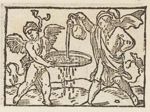
Qui suyt Amour en fin aura disette: La Perrière, Le theatre des bons engins (Lyon, 1545), emblem 77 uses the imagery of a man pouring liquid from a jug into a sieve held by blindfolded Cupid to express the idea that spending too much on Love will lead to ruin which is also the core moral of the adage
Iconclass: 33C8 amorousness, desire 41C652(LEEK) vegetables (LEEK) 41D267 purse, money-bag
Loci Communes: Profusio (Extravagance, Prodigalité)
I ii 93 Quem Fortuna pinxerit Black-listed by Fortune
Ον τύχη μέλανα γράφει, τοῦτον οὐ πᾶς χρόνος δύναται λευκάμαι. id est, Quem fortuna nigrum scripserit, hunc non universum aevum candidum reddere potest. hoc est, cui fortuna refragatur, huic quidquid tentaverit, infeliciter cedet. Allusum est ad nigros & albos calculos suffragiorum. Recensetur in Collectaneis Apostolii.
Ον τύχη μέλανα γράφει, τοῦτον οὐ πᾶς χρόνος δύναται λευκάναι, The man whom Fortune writes black, can never in all time turn white: that is, if Fortune is opposed to a man, whatever he attempts will turn out badly. The allusion is to voting by black and white stones. This is found in the collections of Apostolius.
Facsimile:
Iconclass: 53BB1 Rejection 54F121 Turn of Fate, Wheel of Fortune
Loci Communes: Probrum, gloria (Disgrace, glory, Honte, gloire)
I ii 94 Qui mori nolit ante tempus Unwilling to die before his time
Athenaeus in sermonibus convivialibus, de Sybaritis huiusmodi refert proverbium: Ο βουλόμενος ἐν συβάρει, μὴ πρὸ μοίρας ἀποθανεῖν, οὔτε δυνόμενον, οὔτε ἀνίσχοντα τὸν ἥλιον ὁρᾶν δεῖ. hoc est, Qui non velit apud Sybaritas ante diem fatalem mori, eum haud oportet solem conspicere, nec occidentem, nec orientem. Hoc ideo vulgo iactatum scribit, quod Sybaritarum civitas in humili loco, ac velut in convalle sita fuerit, ut aestatis tempore mane pa riter ac vesperi frigus immensum sentirent, meridie intolerandum ardorem. Cicero libro De finibus bonorum ii. docet idem dictum in quosdam Asotos, cui genti nomen inditum est à luxu vitae. Nam sub solis occasum erant ebrii, mane stertebant. Columella in prooemio retum rusticarum, usurpart in ganeones, qui noctes libidinibus & ebrietate, dies somno vel ludo consumunt. Mox deinde, inquit, ut apti veniamus ad ganeas, quotidianam cruditatem Laconicis excoquimus & exusto sudore sitim quaerimus, noctesque libidinibus & ebrietatibus, dies ludo vel somno consumimus. Ac nos dicimus fortunatos, quòd nec orientem solem videmus, nec occidentem.
Athenaeus in his dinner-table talk quotes a proverb about the Sybarites: 'The man who is unwilling to die before his appointed time in Sybaris must not look upon the setting or the rising sun.' He writes that this was a common saying, due to the fact that the city of Sybaris was situated in a low place, in a sort of enclosed valley, so that in the summer, morning and evening alike, they felt a terrible cold, and at midday an intolerable heat. Cicero in the De finibus book 2 informs us that the same was said of certain Asoti, a race so named for their luxurious living; for at sunset they were drunk and in the morning they were snoring. Columella in the preface of his Agriculture applies it to debauched fellows who spend their nights on lust and drunkenness and their days on sleep and gambling: 'And presently, then, that we may come to our gluttonous feasts in proper fettle, we steam out our daily indigestion in sweat-baths, and by drying out the moisture of our bodies we seek to arouse a thirst: we spend our nights in licentiousness and drunkenness, our days in gaming or sleeping, and account ourselves blessed by fortune in that we behold neither the rising of the sun nor its setting.'
Facsimile:
Iconclass: 31E143 death of a young person 51F521 Precocity 53BB4 Unwillingness
Loci Communes: Insalubritas (Unhealthiness, Insalubrité)
I ii 95 Barba tenus sapientes Bearded, therefore wise
Εκ πώγωνος σοφοὶ, καὶ ἀπὸ πώγωνος σοφισταὶ, καὶ ἀπὸ πώγωνος φιλόσοφαι. id est, Barbae tenus sapientes & sophistae, & philosophi. Sic appellabantur qui praeter barbam & pallium nihil haberent philosophi. Usurpatur aliquoties apud Plutarch. in Symposiacis. Huc allusit Horatius, cum ait: Iussit sapientem pascere barbam. Lucianus item subinde iocatur in philosophorum τὸν βαθὺν πώγωνα, id est, profundam barbam. In Eunucho Bagoas ait: Si philosophum oporteat ex barba metiri, hircos primam laudem ablaturos. Similiter Martialis: Propendet mento nec tibi barba minor. Recte torquebitur in hos, qui universam vitae sanctimoniam non in animo, neque in moribus, sed in cultu constituunt.
Εκ πώγωνος σοφοὶ, καὶ ἀπὸ πώγωνος σοφισταὶ, and καὶ ἀπὸ πώγωνος φιλόσοφαι, Bearded, therefore wise, and sophists and philosophers as far as the beard goes. So they were called, who apart from beard and cloak had nothing of the philosopher. Sometimes Plutarch uses this in his 'Table-talk.' Horace alludes to it when he says: 'What time he bade me nurse my reverend beard.' Lucian also often jokes about philosophers with'profound beards,' and in the Eunuch Bagoas says 'If we are to judge a philosopher by his beard, the goats would carry off first prize.' Martial likewise: 'No negligible beard hangs from your chin.' This may rightly be turned against those whose holiness of life consists entirely in their dress, not in mind or conduct.
Facsimile:
Iconclass: 31A534 beard 31B7 wise man 52A51 Wisdom; 'Sapienza', 'Sapienza humana', 'Sapienza vera' (Ripa)
Loci Communes: Simulatio, dissimulatio (Pretense, dissimulation, Simulation, dissimulation)
I ii 96 Inter lapides pugnabant, mec lapidem tollere poterant They fought among stones but could not pick one up
Plutarchus iiii. decadis Symposiacae, primo problemate: ἰδὼν δὲ τὸ παιδίον ἅμα τῷ φίλωνι τὸν ἄρτῳ χρώμενον, ἄλλου δὲ μηδενὸς δεόμενον, ὡς ἡράκλεις, ἔφη, τοῦτο ἄρα ἦν τὸ λεγόμενον. Εν δὲ λίθοις ἐμάχοντο, λίθον δ᾽ οὐκ ἦν ἀνελέσθαι. id est, Ubi vero videret ministrum puerum una cum Philone utentem pane, neque praetera quicquam requirentem: Papae, inquit, hoc nimirum erat illud, quod vulgo dici solet, Pugna erat in saxis, neque saxum tollere quibant. Apparet dictum in eos, qui praesenti commodo non fruantur, vel ob ignaviam, vel ob perversam de rebus opinionem, ut qui vel saxum graventur ex aceruo tollere, quo repellant adversarium. Refertur idem carmen apud Athenaeum libro x. & aliud subiicit, veluti consimilis sententiae, Δίψῃ δ᾽ ἐξόλλυντο, ὕδως δ᾽ ὑπερεῖξε γενείου. id est, Deperire siti, superante ad labra liquore.
Plutarch in the fourth decade of his'Table-talk,' problem i: 'Seeing the young servant who came with Philo taking bread, but wanting nothing else, he said How strange! This is what the proverb means: The battle was among rocks but not a rock could they lift.' This seems to be said about people who do not make use of present advantages, either from laziness or from a false idea of their condition, like those who cannot be bothered to pick up a stone off a heap to repel an enemy. The same line is quoted in Athenaeus, book zo, and he adds another as though it had a similar meaning: 'They died of thirst, while water came up to their lips.'
Facsimile: 
Iconclass: 25H1124 boulder, stone 33B3 fighting 54BB4 Inefficiency
Loci Communes: Inanis opera (Vain effort, Effort vain)
I ii 97 In alio mundo In another world
Ως ἐν ἄλλῳ κόσμῳ, id est, Tanquam in alio mundo. Schema proverbiale est, quo nunc etiam vulgus utitur: de iis qui longe lateque dissident à moribus aliorum, aut quibus omnia nova videntur: aut qui longe dissiti sunt à patria. Plutarch. in Symposiacis: Τὸ δὲ τῶν ἔκφυλον ὄλως καὶ ἄποικον ἡμῶν ὤσπερ ἐν ἄλλῳ τινὶ κόσμῳ γεγονότων καὶ ζώντων. id est, At Graecorum genus prorsus alienum ac peregrinum à nobis, velut in alio quopiam mundo natorum, ac viventium. Non dissimili figura dixit Horatius in Odis: Quid terras alio calentes Sole mutamu? Et Macrobius in praefatione Saturnalium: Nisi sicubi nos sub alio ortos coelo, Latinae linguae vena non admittet. cum enim solum sit omnibus commune, figuratum sit necesses est, sub alio coelo nasci. Et de campis Elysiis apud Verg. Solemque suum, sua sidera norunt. Suum dixit, tanquam à nostro diversum. Item Claudianus: Sunt altera nobis Sidera, sunt orbes alii, lumenque videbis Purius. Rursum Virgilius in Bucolicis: Et penitus toto divisos orbe Britannos. Solet autem hoc usu venire plerisque mortalibus: ut si quando novi hospites in regionem longule à suo nido dissitam pervenerint, nihil non horreant, non stupeant, non admirentur, perinde quasi in alium delati orbem.
Ως ἐν ἄλλῳ κόσμῳ, As if in another world. This is a form of proverb which is still in common use, about people who are different, far and away, from the lives of others; or to whom everything seems new; or who are far away from their native land. Plutarch in his 'Table-talk': 'But the race of Greeks is completely alien and remote from us, as if they were born and lived in another world.' Horace said in the Odes, with a similar metaphor: 'Why change we our own land / For other lands warmed by a foreign sun?' And Macrobius in the preface to the Saturnalia: 'Except where the true ring of the Latin tongue is not allowed to us, born as we are somewhere under a different sky.' As the sky is common to all, the phrase 'to be born under a different sky' must necessarily be a metaphor. And Virgil says regarding the Elysian Fields, 'They have their sun, and their own stars they know.' He said 'their own meaning different from ours. So Claudian says '- we have other stars, / And other orbs; purer the light you'll see.' Again Virgil, in the Bucolics: 'And Britons, cut off by the width of the world.' It usually happens to the generality of mortals, that when they are new arrivals in a region fairly distant from their own corner of the world, there is nothing which does not alarm them, or amaze them, or arouse their wonder, as if they had been carried off into another sphere.
I ii 98 Piscis repositus A fish put by
Αποκείμενος ἰχθὺς, id est, Repositus piscis, in proverbium abiisse videtur, adversus eos qui nihil servant in posterum. Nam pisces olim in deliciis erant. Et prudentis est, è cibis semper aliquid habere sepositum, quo subitum excipiat hospitem: nec Achillem Homericum imitari, ad quem cum accedunt oratores, aut Priamus, domum inanem ac famelicam offendunt. Videtur autem sic efferendum adagium: Τὸν ἀποκείμενον ἰχωὺν οὐ δεῖ ἐς τὸ μέσον ἔλκειν. id est, Piscem repositum non oportet in medium retrahere. Plutarch. in Symposiacis: Εγὼ δὲ γελάσας, ἐκεῖνον δὲ εἶπον, ὦ ἑταῖρε, τὸν ἐκ τῆς παροιμίας ἀποκείμενον ἰχθὺν οὐχ ἑλκόμενον εἰς μέσον μετὰ τῆς πυθαγορικῆς χοίνοκιος. id est, At ego ridens: quin illum, inquam, de quo proverbium fertur, repositum piscem, qui in medium non trahitur unà cum choenice Pythagorica. Licebit accommodare ad sermonem, aut fabulam, per se non admodum venustam, quae tamen iteretur non sine taedio. Conveniet in parcum ac de crastino solicitum.
Αποκείμενος ἰχθὺς, A fish put by, seems to have become a proverb against those who reserve nothing for a future occasion. For fish used to be a great delicacy. The prudent man always has something in the way of food put by, to bring out for an unexpected guest; and it does not do to imitate Achilles in Homer, for when Priam's envoys go to him they find the house empty and starveling. The adage, it seems, should take this form: 'A fish put by should not be brought out again in front of all.' Plutarch in his'Table-talk':'But I smiling said, O friend, this is like dragging in the proverbial fish put by along with the Pythagorean peck-measure.' This can be applied to a speech, or a story, not particularly attractive in itself, which none the less is repeated not without boredom. It suits the mean man, and the one who worries about the morrow.
Facsimile:
Iconclass: 41C68 fish; still life of fishes 45C32 food reserves
Loci Communes: Ingrata ob vetustatem (Unpleasant because of age, Déplaisant à cause de l'ancienneté)
I ii 99 Non est eiusdem et multa et opportuna dicere Speaking much and speaking well are not the same thing
Χωρὶς τό τ᾽ εἰπαῖν πολλὰ καὶ τὰ καίρια. id est, Seiuncta sunt haec, multa & apta dicere. Senarius proverbii vice celebratus, admonet vitandam multiloquentiam, quod ferè labi necesse sit, quisquis multum loqui conetur. Extat & in Hebraeorum proverbiis, In multiloquio non abesse peccatum.
Χωρὶς τό τ᾽ εἰπαῖν πολλὰ καὶ τὰ καίρια, Different are these, to speak well and speak aptly. An iambic line in use as a proverb, which warns us to avoid verbosity: one is almost bound to fall into error if one tries to say a great deal. In the Hebrew proverbs we find 'In the multitude of words there wanteth not sin.'
Facsimile:
Iconclass: 51BB2 Dissimilarity, Unlikeness 52D3 Eloquence; 'Eloquenza', 'Fermezza & Gravità dell'Oratione' (Ripa) 52D4 Prolixity, Verbosity, Loquacity; 'Loquacità' (Ripa)
Loci Communes: Garrulitas (Talkativeness, Bavardage)
I ii 100 Psaphonis aves Psapho's birds
Ψάφωνος ὅρνιθες. id est, Psaphonis aves. Ubi quis nova quapiam arte famam captat, ut cum aliquis subornat, à quibus laudetur, eisque veluti dictat encomia, quibus apud vulgus celebrari velit. Narrant in Libya fuisse quendam nomine Psaphonem qui divinitatis opinionem affectans, quamplurimas aves cepit vocales, & humani sermonis dociles, eas sonare docuit haec verba, Μέγας θεὸς Ψάφων, id est, Magnus deus Psaphon: atque ita doctas emisit in montes. At illae quae didicerant, canebant: ac reliquas item aves sonare docebant. Porrò Libes cum ignorarent commentum, credentes id divinitus accidere, Psaphoni rem divinam facere instituerunt, ipsumque in deorum numerum retulerunt. Proverbium in collectaneis Apostolii reperitur.
Ψάφωνος ὅρνιθες, Psapho's birds. This is used when someone achieves fame by a new method, as when a person bribes others to praise him and as it were dictates to them speeches of praise, through which he wishes to become a public figure. They tell that in Libya there was a man called Psapho, who had a mind to be considered divine; so he caught a number of birds which could be taught human speech, and trained them to say these words, 'Great God Psapho.' When he had trained them he let them go in the hills. They sang what they had been taught, and from them the rest of the birds learnt to sing it too. The people of Libya, who did not know how this had been contrived, believed it to be a divine occurrence, and set about worshipping Psapho and including him among their gods. I have found the proverb in the collections of Apostolius.
Facsimile:
Iconclass: 25F3 birds 98B(PSAPHO) male persons from classical history (PSAPHO)
Loci Communes: Imposturae (Impostures, Impostures); Arrogantia jactantiaque (Arrogance and boastfulness, Arrogance et vantardise)