I viii 1 Aequalem uxorem quaere Seek a wife of your own sort
Την κατὰ σαυτὸν ἔλα. id est, Aequalem tibi uxorem ducito. Adagium admonet, ne quis cupiditate aut ambitione allectus, se potentiorem ducat uxorem. Nam eiusmodi fermè connubia inauspicato cedere. Plutarc. in libello de liberis educandis parentes admonet, ut eiusmodi liberis suis uxores despondeant, quae non sint multo vel ditiores, vel potentiores. Prudenter enim dici proverbio, Tuae sortis uxorem ducito. Celebratur & hoc inter sapientum apophthegmata, atque à nonnullis Pittaco adscribitur, Γάμει ἐκ τῶν ὁμοίων, id est, Uxorem ducito ex aequalibus. Nam si duxeris ex potentioribus te prognatam, dominos tibi parabis, non affines. Diogenes Laertius in vitis philosophorum huiusmodi quiddam commemorat, quod quidem affirmat et Callimacho non ineleganti epigrammate celebratum esse. Adolescens quidam Atarnetes, Pittacon consuluit, utra sibi è duabus ducenda esset uxor. Nam duae offerebantur: altera par opibus ac genere: altera utroque superior. At ille, sublato scipione quo nitebatur, admonuit, uti pergeret ad trivia civitatis quo pueri lusus causa conveniunt: eos consuleret, & quod illi dedissent consilii, id sequeretur. Pueri ex proverbiali cantione responderunt. Aequalem uxorem esse ducendam. Itaque adolescens altera praeterita, duxit aequalem. Idem Dioni suadet Callimachus. Haec autem sententia hoc impensius placuit Pittaco, quod ipse nobiliorem se duxerat, Draconis sororem, cuius imperium, fastidiaque molestissime legitur tulisse: ut hoc dictum non in tempore, sed suo malo videatur reperisse. Exstat autem epigramma, tametsi illis ἰὼν, non διὼν legitur, mendose opinor: id est huiusmodi: Ξεῖνος ἀταρνείτης τὶς ἀνείρετο πιττακὸν οὕτω, Τὸν μιτυληναῖον παῖδα τὸν ὑῤῥαδίου, Αττα γέρον, δοιός με καλεῖ γάμος, ἡ μΐα μὲν δὴ, Νύμφη, καὶ πλούτῳ καὶ γενεῆ κατ᾽ ἐμὲ, Η δ᾽ ἑτέρη προβὲβηκε. τί λώϊον; εἰ δ᾽ ἄγε μοι σὺ Βούλευσον ποτέρην εἰς ὑμέναιον ἄγω. Εἶπεν ὁ δὲ σκιπίωνα γεροντικὸν ὅπλον ἀείρας Ηνι δὲ κεῖνοι σοι πᾶν ἐρέουσιν ἔπος. Οἱ δ᾽ ἄρ᾽ ὑπὸ πληγῃσι θοὰς βέμβηκας ἔχοντες Εστρεφον εὐρείῃ παῖδες ἐνὶ τρίοδῳ Κείνων ἔρχεο φησι μετ᾽ ἴχνια. χ᾽ ὁ μὲν ἐπέστη Πλησίον, οἱ δ᾽ ἔλεγον, τὴν κατα σαυτὸν ἔλα. Ταῦτ᾽ ἀΐων ὁ ξεῖνος ἐφείσατο μείζονος οἴκου Δράξεσθαι, παίδων κλήδονι συνθέμενος, Την δ᾽ ὀλίγην ὡς κεῖνος ἐς οἴκον ἐπήγετο νύμφην, Οὕτω καὶ σὺ δίων τὴν κατα σαυτὸν ἔλα. Quos versus, quoniam Ambrosius Camaldulensis, Diogenis interpres, non omnino infeliciter Latinos fecit, haud gravabimur adscribere: Hospes Atarnites rogavit Pittacon olim, Sic Mitylenaeon, Hyrradioque satum, Magne senex, geminae cupiunt mihi nubere, quarum Et genere atque opibus convenit una mihi: Altera praecellit. quid praestat consule, dicque, Utra ex his potius sit capienda mihi? Hic, baculum tollens, sic, tela senilia, dixit, Consilium pueri, quod petis, expedient, Quis celer in gyrum iactatus verbere turbo Assiduo, latis vertitur in triviis. I, sequere illorum monttus. sic fatur, at ille Scitatur, referunt, Tu tibi sume parem. Quae postquam audivit, monitis puerilibus haerens, A magnis hospes abstinuit thalamis. Atque parem parvas laetus traduxit in aedes: Sic Dion aequalem, si sapis, ipse cape. Est autem allegoria à turbine puerili, qui flagellis circumagitur. Agebat enim quisque pro suis viribus turbinem sibi congruentem. Deianira apud Ovidium ad suum sexum transtulit proverbium, Quàm male inaequales veniunt ad aratra iuvenci, Tam iuveni magno coniugo nupta minor. Non honor est, sed onus, species laesurae ferentes: Si quae voles apte nubere, nube pari. Plutarchus De liberis educandis, τὸ γὰρ τὴν κατα σαυτὸν ἐλεῖν, σοφὸν. id est: Sapientis est uxorem sibi parem, congruamque ducere. Huc adscribendum putavi carmen illud ex Thesmophoriazusis Aristophanis titulo inscripta, Δέσποινα γὰρ γέροντι´υμφίῳ γυνή. id est, Regina siquidem mulier est sponse seni. Idem admonet versus ille Euripideus in Rheso, Οὐκ ἐξ ἐμαυτου μειζονων γαμεῖν θέλω. id est, Nolim ex potentioribus me coniugem. Neque vero solum id spectari conveniet, ut par sit uxor generis claritate, aut modo rei familiaris, verum ut aetas non admodum discrepet, ut forma, ut vitae genus. Potest & longius trahi nimirum ad negocium suscipiendum, cui sis conficiendo par & idoneus. Item ad vitae genus aptum, & ad amicum tuis accommodum moribus.
Τὴν κατὰ σαυτὸν ἔλα., Marry a wife of your own sort. The adage reminds us that no man ought to be misled by love of money or ambition into marrying a wife who is grander than himself; for such marriages tend to turn out badly. Plutarch in his essay 'On the Education of Children' tells parents to 'betroth wives to their sons who are not much richer or more influential than they are; for there is much wisdom in the proverb Take a wife of your own station.' This is also circulated among the maxims of the Sages, and is ascribed by some to Pittacus: Marry a wife of your own kind. For if you marry one whose family are grander than you are, you will be acquiring masters to order you about, not kinsmen. Diogenes Laertius in his Lives of the Philosophers tells the following anecdote, which he assures us was also given currency by Callimachus in a brilliant epigram. A young man from Atarneus once consulted Pittacus as to which woman he should marry; for he had the choice of two, one of them his equal in birth and property and the other his superior in both. Pittacus lifted the staff on which he leant, and told him to go to the square in the middle of the city where the children gather to play, and ask their advice, and then to follow whatever they might give him. The children, in agreement with the familiar proverb, replied Seek a wife of your own sort. And so the young man rejected one, and chose the other who was his equal. Callimachus advises his friend Dion to do the same. This principle appealed to Pittacus especially 'because he had married a wife more high-born than himself, the sister of Draco,' who ordered him about and was difficult to please, which he found very trying, so that he seems to have learnt this wise saying not from theory but from his own unfortunate experience. There is also an epigram, though the name in it is Ion and not Dion (wrongly, I think), which runs as follows: 'A stranger from Atarneus once asked Pittacus, son of Hyrrhadius, of Mitylene the following question. "Aged sir, two marriages are offered me, one with a girl who is in wealth and birth my equal, while the other is far above me. Which is the better course? Pray give me your advice, which I had better marry." He raised his staff, the old man's weapon, and replied: "Those over there will tell you all you need." Now there were children who whipped their whirling tops as they spun them in the wide street. "Follow their lead" he said. So the young man went and stood near the boys and heard them cry "Stick to your own!" When he heard this, he refrained from grasping the grander marriage, for he took a hint from what the children said. He chose to live with him the humbler bride; and even so you, Dion, should stick to your own.' These lines were rendered into Latin verse not wholly without success by Ambrosius Camaldulensis in his version of Diogenes, and I shall add them without hesitation: [Here follow eight Latin couplets, the sense of which has been given already in translating the Greek original]. The image is taken from a child's top, which he spins by whipping it; for each child drove as hard as he could the top that belonged to him. Deianira in Ovid transfers the proverb to her own sex:
As bad as ill-matched oxen at the plough
Are a grand husband and a lesser bride.
She who will spoil the splendid show he makes
Brings him no honour; she is just a burden.
Let her who wishes for a well-tuned marriage
Marry her equal.
Plutarch 'On the Education of Children': 'There is much wisdom in the saying Take a wife of your own station.' I have thought it right to add at this point that line from the Thesmophoriazusae that passes under the name of Aristophanes: 'An aged groom is mastered by his bride.' There is the same message in that line of Euripides in the Rhesus: T would not marry one grander than I.' And it will be appropriate to see that one's wife is equal not only in lineage and in property; there should be only a moderate difference in age, good looks, and style of life. This can be taken still further, and applied to the undertaking of business which you are equal to and fit for. Also to the choice of the right style of life and a congenial friend.
Facsimile: 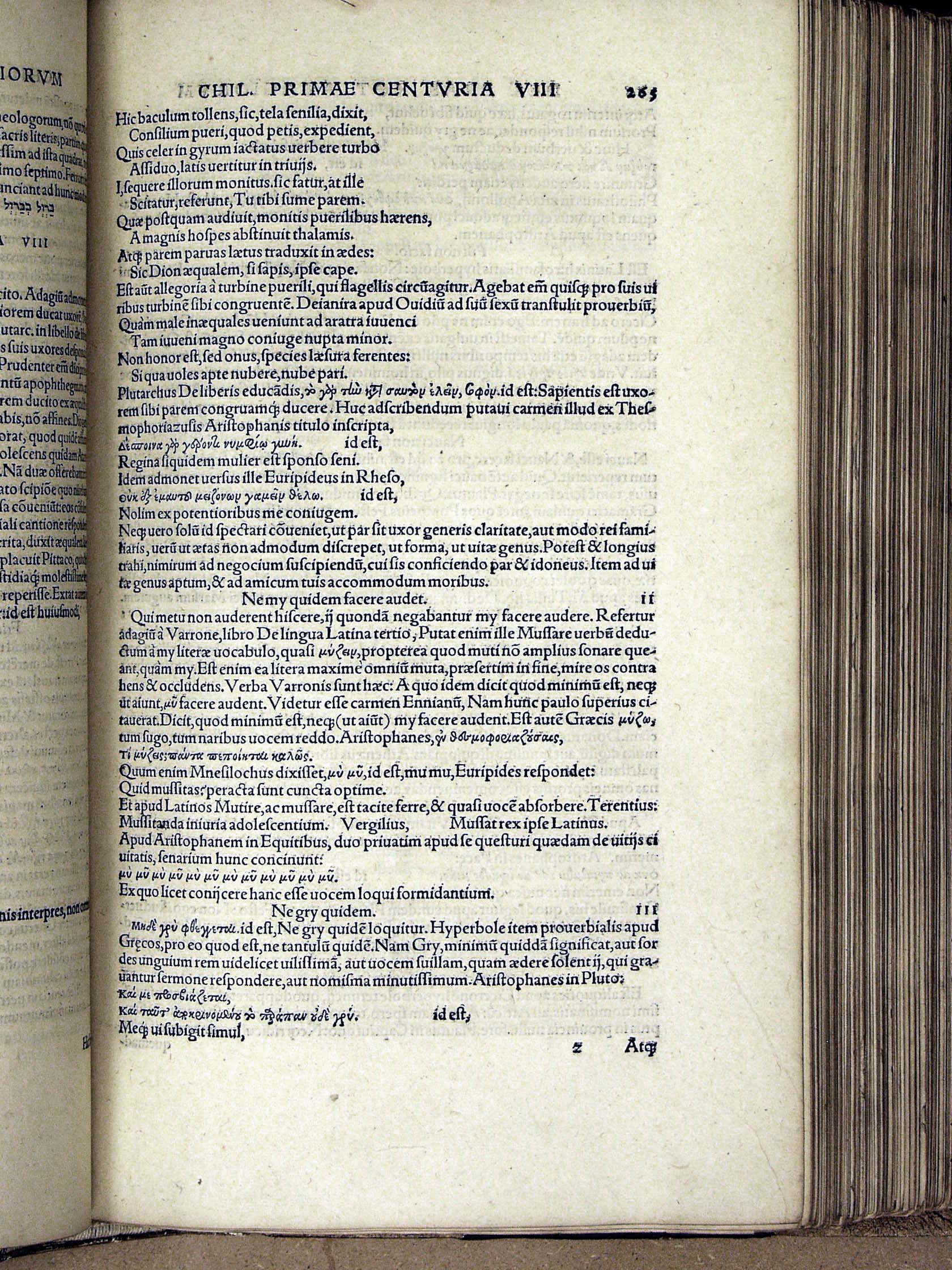
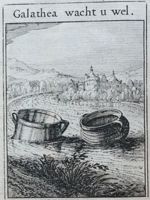
Galathea wacht u wel: Visscher, Sinnepoppen (Amsterdam, 1614), emblem 50 uses the imagery of a metal and an earthenware pot floating in a river to symbolize an ill-matched couple
Birdes of one faether VVil flocke togeder: Cats, Spiegel (The Hague, 1632), emblem 25 uses the imagery of a woman warning a suitor that they are too different - and in its comment Cats quotes the same source as the adage's comment
Iconclass: 42D3 marriage, married couple, 'matrimonium' 42D31 unequal couple, ill-matched couple 51B3 Parity, Equality 51BB3 Imparity, Inequality, Difference
Loci Communes: Similitudinis et congruentiae (Similarity and congruence, Similitude et convenance)
I viii 2 Ne my quidem facere audet He does not even dare say mu
Qui metu non auderent hiscere, ii quondam negabantur my facere audere. Refertur adagium à Varrone, libro De lingua Latina tertio, Putat enim ille Mussare verbum deductum à my literae vocabulo, quasi μύζειν, propterea quod muti non amplius sonare queant, quàm my. Est enim ea litera maximè omnium muta, praesertim in fine, mire os contrahens & occludens. Verba Varronis sunt haec: A quo idem dicit, quod minimum est, neque ut aiunt, μῦ facere audent. Videtur esse carmen Ennianum: Nam hunc paulo superius citaverat. Dicit, quod minimum est, neque (ut aiunt) my facere audent. Est autem Graecis μύζω, tum sugo, tum naribus vocem reddo. Aristophanes, ἐν θεσμοφοριαζούσαις, Τί μύζεισ; πάντα πεποίηται καλῶς. Quum enim Mnesilochus dixisset, μὺ μῦ, id est, mu mu, Euripides respondet: Quid mussitas? peracta sunt cuncta optime. Et apud Latinos Mutire, ac mussare, est tacite ferre, & quasi vocem absorbere. Terentius: Mussitanda iniuria adolescentium. Virgilius, Mussat rex ipse Latinus. Apud Aristophanem in Equitibus, duo privatim apud se questuri quaedam de vitiis civitatis, senarium hunc concinunt: μὺ μῦ μὺ μῦ μὺ μῦ μὺ μῦ μὺ μῦ μὺ μῦ. Ex quo licet conicere hanc esse vocem loqui formidantium.
Those who were too frightened to utter a sound were said at one time not to dare say mu. The adage is recorded by Varro in the third book of his On the Latin Language. He thinks the verb mussare, to mutter is derived from the name of the letter mu, as an equivalent to the Greek verb muzein, because dumb people (mutes, as we call them) can make no sound except mu. For m is the most silent letter in the alphabet, especially when final, for it draws the lips together and closes them to a surprising degree. Varro's words are: 'From which the same author calls the least utterance mu: "nor, as the phrase goes, dare any say him mu."' It seems to be a line from Ennius, for he had quoted him shortly before. In Greek muzein means both to suck and to speak through one's nose, to mutter. Aristophanes in the Thesmophoriazusae: 'Why mutter, when all has gone well?' For this is Euripides' reply when Mnesilochus had said mu mù. In Latin mutire and mussare mean to bear something in silence and as it were swallow your protests. Terence: 'The wrongs of the young must be endured in silence (mussitanda).' Virgil: 'In silence king Latinus hesitates (mussat).' In Aristophanes in the Knights two characters who wish to complain about the evils of their city repeat in unison the line mu mù, mu mù, mu mù, mu mù, mu mù, mu mù, from which we may infer that this was the sound made by those who did not dare speak out.
I viii 3 Ne gry quidem Not a grunt
Μηδὲ γρὺ φθέγγεται. id est, Ne gry quidem loquitur. Hyperbole item proverbialis apud Graecos, pro eo quod est, ne tantulum quidem. Nam Gry, minimum quiddam significat, aut sordes unguium, rem videlicet vilissimam, aut vocem suillam, quam aedere solentii, qui gravantur sermone respondere, aut numisma minutissimum. Aristophanes in Pluto: Καί με προσβιάζεται, Καί ταῦτ᾽ ἀποκρινομένου τὸ παράπαν οὐδὲ γρύ. id est: Meque vi subigit simul, Atque interim rogatus, haec quid sibi velint. Prorsum nihil respondet, ac ne gry quidem. Hinc & verbum deductum γρύζειν. Idem in eadem fabula: Γρύζειν δὲ καὶ τολμᾶτον ὦ καθάρματε; id est: Grunnire vero audetis etiam perditi? Philostratus in vita Apollonii, Οὐδαμοῦ ἐφθέγξατο, οὐδ᾽ ὑπήχθη γρύξαι. id est, Haud quaquam loquutus est, neque adduci potuit ut vel hisceret. Huius vocis usus admodum frequens est apud Aristophanem.
Μηδὲ γρὺ φθέγγεται., He utters not a grunt. An exaggeration with proverbial status in Greek, indicating not even a very little. For gru means something very small, either dirt under the nails (than which nothing could be more worthless) or a grunt like a pig's (commonly uttered by those who cannot be bothered to reply in words) or an extremely small coin. Aristophanes in the Plutus: 'And makes me follow too, / Although the man gives not a grunt in answer.' Hence too the verb gruzein, to grunt or grumble. The same poet and the same play: 'You filthy jailbirds, do you dare to grunt?' Philostratus in his Life of Apollonius: 'He said nothing, and could not be induced to utter even a grunt.' This word is used frequently by Aristophanes.
Facsimile: 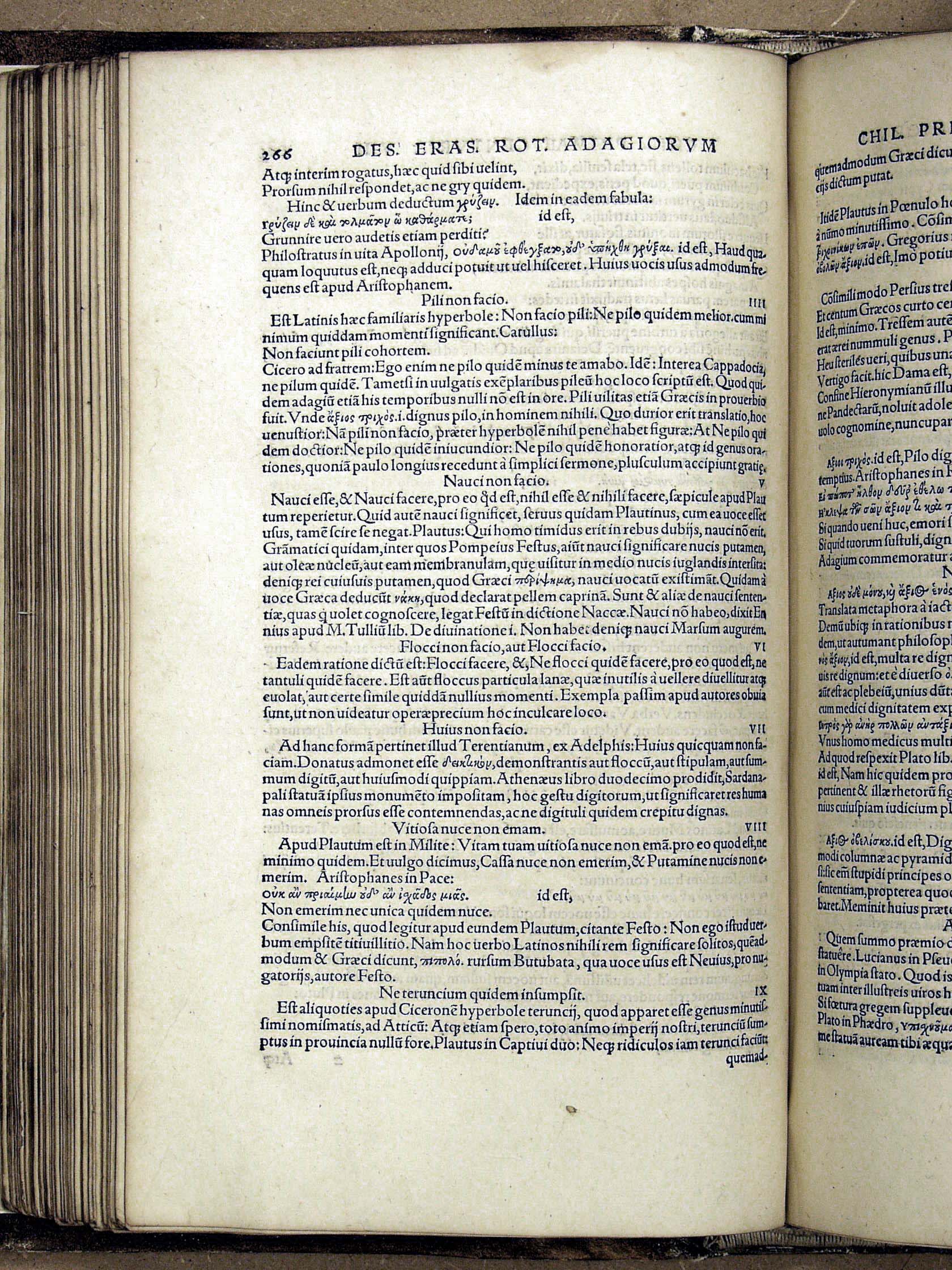
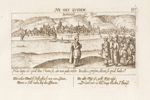
Ne gry quidem: Meisner, Politica Politica (Nürnberg, 1700), emblem 307
Iconclass: 51GG1 Littleness, Smallness 22D sound
Loci Communes: Taciturnitas illaudata (Unpraised silence, Silence non loué)
I viii 4 Pili non facio I count it not worth a hair
Est Latinis haec familiaris hyperbole: Non facio pili: Ne pilo quidem melior, cum minimum quiddam momenti significant. Catullus: Non faciunt pili cohortem. Cicero ad fratrem: Ego enim ne pilo quidem minus te amabo. Idem: Interea de Cappadocia, ne pilum quidem. Tametsi in vulgatis exemplaribus pileum hoc loco scriptum est. Quod quidem adagium etiam his temporibus nulli non est in ore. Pili vilitas etiam Graecis in proverbio fuit. Unde ἄξιος τριχὸς. i. dignus pilo, in hominem nihili. Quo durior erit translatio, hoc venustior: Nam pili non facio, praeter hyperbolen nihil penè habet figurae. At Ne pilo quidem doctior: Ne pilo quidem iniucundior: Ne pilo quidem honoratior, atque id genus orationes, quoniam paulo longius recedunt à simplici sermone, plusculum accipiunt gratiae.
'I count it not worth a hair,' 'Not a hairsbreadth to choose' is an exaggeration in common use in Latin when it wishes to express a very small degree of importance. Catullus: 'They count their staff not worth a hair.' Cicero, writing to his brother: 'I shall not love you one hairsbreadth the less,' and in another passage 'And all this time from Cappadocia not a single hair,' though ordinary copies there read pileum, a cap, not pilum. And this adage in our own day too is on everyone's lips. A hair was proverbial for something worthless in Greek as well as Latin. Hence the expression ἄξιος τριχός., 'worth a hair,' of a man of no account. The bolder the metaphor, the better the effect; for the phrase 'I count the man not worth a hair' contains almost nothing in the way of a rhetorical figure except the exaggeration, while 'Not a hairsbreadth the better scholar,' 'Not a hairsbreadth less attractive,' 'Not a hairsbreadth more distinguished' and similar expressions, going as they do a little further beyond the simple statement, acquire rather more power to please.
Facsimile:
Iconclass: 31A22621 hair 49D53 counting, calculating 54B6 Worth, Value 51GG1 Littleness, Smallness 54BB5 Unimportance 54BB6 Worthlessness 57BB21 Contempt
Collectanea (1500): 397
Loci Communes: Contemptus et vilitatis (Contempt and worthlessness, Mépris et bassesse)
I viii 5 Nauci non facio I care not a mite
Nauci esse, & Nauci facere, pro eo quod est, nihil esse & nihili facere, saepicule apud Plautum reperietur. Quid autem nauci significet, servus quidam Plautinus, cum ea voce esset usus, tame scire se negat. Plautus: Qui homo timidus erit in rebus dubiis, nauci non erit. Grammatici quidam, inter quos Pompeius Festus, aiunt Nauci significare nucis putamen, aut oleae nucleum, aut eam membranulam, quae visitur in medio nucis iuglandis intersita: denique rei cuiusvis putamen, quod Graeci περίψημα, nauci vocatum existimant. Quidam à voce Graeca deducunt νάκη, quod declarat pellem caprinam. Sunt & aliae de Nauci sententiae, quas qui volet cognoscere, legat Festum in dictione Naccae. Nauci non habeo, dixit Ennius apud M. Tullium lib. De divinatione i. Non habet denique nauci Marsum augurem.
To be worth a mite, and To count worth a mite, for to be worthless or think worthless, will be found fairly often in Plautus. As to the meaning of this word nauci, a mite, one of the slaves in Plautus who has just used it admits that he has no idea what it means. Plautus: 'A faint heart in a tight place will not be worth a mite.' Some of the grammarians, Pompeius Festus among them, say that nauci means the shell of a nut, or an olive-stone, or the fine membrane that one can see making the partitions in the inside of a walnut; in a word, they think it is the husk of anything, the Greek peripsema, that is called nauci. Some derive it from the Greek word nake, a goatskin. Other views on the word nauci will be found by those who wish to learn them in Festus under the heading naccae. 'I care not a mite' was used by Ennius, as quoted by Cicero in book 1 of the On Divination: 'I care not a mite in fact for your Marsian soothsayer.'
Facsimile:
Iconclass: 54BB5 Unimportance 54BB6 Worthlessness 25F714 mites 57BB21 Contempt
Loci Communes: Contemptus et vilitatis (Contempt and worthlessness, Mépris et bassesse)
I viii 6 Flocci non facio, aut Flocci facio I care not a wisp of wool, or, a wisp of wool and no more
Eadem ratione dictum est: Flocci facere, &, Ne flocci quidem facere, pro eo quod est, ne tantuli quidem facere. Est autem floccus particula lanae, quae inutilis à vellere divellitur atque evolat, aut certe simile quiddam nullius momenti. Exempla passim apud auctores obvia sunt, ut non videatur operae precium hoc inculcare loco.
In the same way they used the phrase flocci facere and ne flocci quidem facere, To think worth a wisp of wool or, not even worth a wisp of wool, for something of no value. Floccus is a scrap of wool that is torn as being of no purpose from the fleece and flies away, or something at least like that of no importance. Examples are so common everywhere in ancient authors that it does not seem worth while to find room for them here.
Facsimile:
Iconclass: 54BB5 Unimportance 54BB6 Worthlessness 47I1422 wisp 47H14 wool (material ~ textile and clothing industry) 57BB21 Contempt
Loci Communes: Contemptus et vilitatis (Contempt and worthlessness, Mépris et bassesse)
I viii 7 Huius non facio I make it not worth a snap of the fingers
Ad hanc formam pertinet illud Terentianum, ex Adelphis; Huius quicquam non faciam. Donatus admonet, esse δεικτικὸν, demonstrantis aut floccum, aut stipulam, aut summum digitum, aut huiusmodi quippiam. Athenaeus libro duodecimo prodidit, Sardanapali statuam ipsius monumento impositam, hoc gestu digitorum, ut significaret res humanas omneis prorsus esse contemnendas, ac ne digituli quidem crepitu dignas.
To the same shape of phrase belongs a remark in Terence in the Adelphoe: 'I shall make it not worth that!' Donatus points out that this is what Greek calls deiktikon, accompanied by a gesture, and the speaker means either a wisp of wool or a straw or a finger-tip, or something of the sort. Athenaeus tells us in his twelfth book that there was a statue of Sardanapalus on his tomb, making this kind of gesture with his fingers, to show that all human affairs are despicable and not worth a snap of the fingers.
Facsimile:
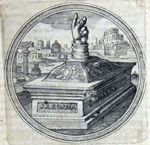
Omnia nec tanti: Zincgreff, Emblematum Ethico-politicorum (Heidelberg, 1619), emblem 93 illustrates the comment
Iconclass: 54BB5 Unimportance 54BB6 Worthlessness 31A2246 fingers 31A25543 snapping one's fingers 57BB21 Contempt
Loci Communes: Contemptus et vilitatis (Contempt and worthlessness, Mépris et bassesse)
I viii 8 Vitiosa nuce non emam I would not buy it for a rotten walnut
Apud Plautum est in Milite: Vitam tuam vitiosa nuce non emam, pro eo quod est, ne minimo quide. Et vulgo dicimus, Cassa nuce non emerim, & Putamine nucis non emerim. Aristophanes in Pace: Οὐκ ἄν πριαίμην οὐδ᾽ ἄν ἰσχᾶδος μιᾶς. id est: Non emerim nec unica quidem nuce. Consimile his, quod legitur apud eundem Plautum, citante Festo: Non ego istud verbum empsitem titivillitio. Nam hoc verbo Latinos nihili rem significare solitos, quemadmodum & Graeci dicunt, πιπολό. rursum Butubata, qua voce usus est Nevius, pro nugatoriis, autore Festo.
In the Miles of Plautus T wouldn't buy your life for a rotten walnut,' meaning 'for no sum however small.' And we say in current speech 'I would not swap that for an empty nut' and 'not worth a nutshell.' Aristophanes in the Peace: 'I would not buy it, not for one dried fig.' Close to this are some words quoted, also from Plautus, by Festus: 'I would not value what you say at a titivillitium,' a word used in Latin to signify something absolutely worthless, like pipolo in Greek. There is also butubata, an expression for 'rubbish' used by Naevius, as we know from Festus.
Facsimile:
Iconclass: 25G21(WALNUT) fruits: walnut 51GG1 Littleness, Smallness 54BB6 Worthlessness 57BB21 Contempt
Loci Communes: Contemptus et vilitatis (Contempt and worthlessness, Mépris et bassesse)
I viii 9 Ne teruncium quidem insumpsit He did not spend a farthing
Est aliquoties apud Ciceronem hyperbole teruncii, quod apparet esse genus minutissimi nomismatis, ad Atticum: Atque etiam spero, toto animo imperii nostri, teruncium sumptus in provincia nullum fore. Plautus in Captivi duo: Neque ridiculos iam terunci faciunt: quemadmodum Graeci dicunt ἡμιοβόλιον, pro re vilissima. Varro teruncium à tribus unciis dictum putat.
Cicero sometimes uses as an exaggeration the word farthing, which clearly meant some sort of very small coin. In a letter to Atticus: T even hope that during the whole of my year as governor not a farthing of expense will fall on the province.' Plautus in the Captivi: 'Now they won't pay a farthing for a man who makes them laugh,' just as Greek uses the word half-obol for something of no value. Varro thinks the word teruncius is derived from 'three ounces.'
Facsimile: 
Iconclass: 51GG1 Littleness, Smallness 54BB6 Worthlessness 46B311 coin 57BB21 Contempt
Loci Communes: Contemptus et vilitatis (Contempt and worthlessness, Mépris et bassesse)
I viii 10 Homo trioboli A three-ha'penny fellow
Itidem Plautus in Poenulo hominem trioboli dixit, pro nequissimo, planeque nullius precii. à nummo minutissimo. Consimili figura dixit Aristophanes in Vespis, pro vilibus versibus, τριχοινίκων ἐπῶν. Gregorius in epist. de vili contemptoque dixit, μᾶλλον ἀνδράποδον ὀλίγων ὀβολῶν ἄξιον. id est, Imò potius mancipium paucis obolis dignum. Dicuntur & Triobolares.
Plautus again in the Poenulus uses 'a three-ha'penny fellow' of a rascal whose value is clearly nil. Derived from a very small coin, Aristophanes uses a very similar metaphor in the Wasps, when he calls worthless verses 'three-quart lines.' Gregory in his letters says of a worthless and contempt- ible person 'or rather a slave worth a few ha'pence.' There is also a word triobolares which conveys the same meaning.
Facsimile:
Iconclass: 51GG1 Littleness, Smallness 46B311 coin 57BB21 Contempt
Loci Communes: Contemptus et vilitatis (Contempt and worthlessness, Mépris et bassesse)
I viii 11 Homo tressis A threepenny man
Consimili modo Persius tressem agasonem appellat, contemptissimum homuncionem. Idem: Et centum Graecos curto centusse licetur. Id est, minimo. Tressem autem dixit nove, quasi tribus assibus aestimandum. Assis autem erat aerei nummuli genus. Persianum carmen sic habet in quinta satyra, Heu steriles veri, quibus una quiritem Vertigo facit. hic Dama est, non tressis agaso. Confine Hieronymianum illud: Quis te dupondio supputabat? Iustinianus in praefatione Pandectarum, noluit adolescentes legum studiosos, veteri non minus ridiculo, quàm frivolo cognomine, nuncupari dupondios, sed Iustinianos novo.
Persius in the same vein speaks of some contemptible creature as 'a stable-boy dear at threepence,' and in another passage of 'bidding a hundred clipped pennies,' which would be the smallest possible sum, 'for a hundred Greeks.' The word tressis was a new one, equivalent to 'worth threepence,' the as or penny being a small bronze coin. Persius' lines are in the fifth satire and run as follows:
'Barren indeed of truth my countrymen!
One twirl makes any Jack a citizen.
Take Dama now, no threepenny stable-boy.'
There is a related phrase in Jerome: 'Who priced you at two pounds?' Justinian in the preface to the Pandects expressed the wish that law-students might lose their ancient nickname 'twopounders,' which was both contemp- tuous and absurd, and take the new name of 'Justinians.'
Facsimile:
Iconclass: 51GG1 Littleness, Smallness 46B311 coin 57BB21 Contempt
Loci Communes: Contemptus et vilitatis (Contempt and worthlessness, Mépris et bassesse)
I viii 12 Dignus pilo Worth a hair
Αξιοι τριχὸς. id est, Pilo digni, dicuntur Graecis, nulla bona re digni, quod pilo nihil contemptius. Aristophanes in Ranis: Εἰ πώποτ᾽ ἦλθον δεῦρ᾽ ἐθέλω τεθνηκέναι, Η᾽ κλεψα τῶν σῶν ἄξιον τι καὶ τριχός. id est: Si quando veni huc, emori sane volo, aut Si quid tuorum sustali, dignum pilo. Adagium commemoratur à Diogeniano.
Ἄξιος τριχός., Worth a hair, is used in Greek of men who are worthy of nothing good, because nothing is more contemptible than a hair. Aristopha- nes in the Frogs: 'Death take me if ever I was here before / Or stole aught of yours that was worth a hair.' The adage is recorded by Diogenianus.
Facsimile:
Iconclass: 31A22621 hair 54BB6 Worthlessness 57BB21 Contempt
Loci Communes: Contemptus et vilitatis (Contempt and worthlessness, Mépris et bassesse)
I viii 13 Nec uno dignus Not worth a one
Αξιος οὐδὲ μόνου, καὶ ἄξιος ἑνὸς. id est, Ne uno quidem dignus. & Uno dignus, de vilissimo, Translata metaphora à iactu talorum, in quo μονὰς, id est, unionis numerus infimus erat. Demum ubique in rationibus numerorum minimum quiddam est unio, ac ne numerus quidem, ut autumant philosophi. Ex adverso, quem multi precii significant, hunc πολλοῦ τινὸς ἄξιον, id est, multa re dignum, trita figura Graeci dicunt, & τοῦ παντὸς ἄξιον, id est, qua vis re dignum, et è diverso ὀλίγου ἄξιον, id est, paulo dignum, quem contemnunt. Gregarium autem est, ac plebeium, unius duntaxat hominis vice supputari. Proinde Homerus Iliados Λ. cum medici dignitatem explicare vult, ait: Γητρὸς γὰρ ἀνὴρ πολλῶν ἀντάξιος ἄλλων. id est: Unus homo medicus multis aequandus honore est. Ad quod respexit Plato lib.De legibus quinto, Ο μὲν γὰρ ἑνὸς, ὁ δὲ πολλῶν ἀντάξιος ἑτέρων. id est, Nam hic quidem pro uno, ille pro pluribus aliis aestimandus est. Ad hanc formam pertinent & illae rhetorum figurae, cum aiunt, Unum aliquem sibi pro theatro esse, & Unius cuiuspiam iudicium pluris se facere, quàm infinitae multitudinis.
Ἄξιος οὐδὲ μόνου, καὶ Ἄξιος ἑνός., Not worth even a one, or Worth a one and no more, used of something quite worthless. The metaphor is taken from the casting of dice, in which the one is the lowest throw. In fact the one is the least in all systems of numbering, and is itself (so the philosophers tell us) not even a number. Conversely, when the meaning is that a man is highly valued, it is a familiar expression in Greek to say he is 'worth a great deal' and 'worth everything,' and the opposite, 'worth very little,' if a man is despised. It is ordinary and plebeian to be valued solely as one individual; and thus Homer in Iliad 11, wishing to convey the importance of a physician, says that he is the equivalent of many other men. Plato looks back to this in book 5 of the Laws, when he says of two people that one is worth his own value as an individual while the other is the equivalent of many other men. To the same shape of phrase belong those figures of the teachers of rhetoric which run that One man finds an audience in himself, and that They value the judgment of one particular man more than that of an infinite multitude.
Facsimile:
Iconclass: 54BB6 Worthlessness 51GG1 Littleness, Smallness 57BB21 Contempt 49D11(1) numerals (1) 43C55 dice-games
Loci Communes: Contemptus et vilitatis (Contempt and worthlessness, Mépris et bassesse); Dignitatis (Dignity, Dignité)
I viii 14 Dignus obelisco He deserves an obelisk
Αξιος ὀβελίσκου. id est, Dignus obelisco, dignus quovis honore. Summis enim viris eius modi columnae ac pyramides erigebantur, magnificis inscriptae titulis, aut ingentes colossi: sic enim stupidi principes olim fingi gaudebant. Tametsi proverbium ancipitem habet sententiam, propterea quod Aristarchus obeliscis iugulare sit solitus, quae parum probaret. Meminit huius praeter alios Suidas.
Ἄξιος ὀβελίσκου., Worthy of an obelisk, worthy of any honour you can think of. For the very greatest men had this kind of thing, columns and pyramids, erected in their honour, with grandiloquent inscriptions, or huge colossal figures; for that was how in old days stupid princes loved to be represented. Not but what the proverb is double-edged, for Aristarchus used an obelisk, or obelus, to cut to pieces anything he disapproved of. This is recorded by Suidas among others.
Facsimile:
Iconclass: 54B6 Worth, Value 25I153 obelisk, needle
Loci Communes: Dignitatis (Dignity, Dignité)
I viii 15 Aureus in Olympia stato You shall be set up at Olympia in gold
Quem summo praemio dignum Graeci significant, ei dicere solent: Aureus in Olympia statuêre. Lucianus in Pseudologista, χρυσοῦς φασὶν ἐν ὀλυμπίᾳ στάθητι. id est, Aureus, ut aiunt, in Olympia stato. Quod is honos id aetatis praecipuus haberetur, loco tam celebri, statuam inter illustreis viros habere. Huc allusit Vergilius, cum ait: Si foetura gregem suppleverit, aureus esto. Plato in Phoedro, Υπισχνοῦμαι χρυσῆν εἰκόνα ἰσομέτρητον εἰς δελφοὺς ἀναθήσειν. id est, Polliceor me statuam auream tibi aequalem Delphis collocaturum. Ibidem paulo post, Παρὰ τῶν κυψε λιδῶν ἀνάθημα σφυρήλατος ἐν ὀλυμπίᾳ στάθητι id est. Inter statuarum Cypselidarum monimenta, in Olympia fabrefactus stato. Interpres fortassis χρυσήλατος, legit, aut certe somniavit, ut qui verterit aureum. Porrò reges Corinthii dicuntur Cypselidae à Cypselo, qui, pulsis Bacchidis è Corintho, ibidem imperio est potitus, summasque coegit divitias, cuius rei argumentum, inquit Strabo τὸ ὀλυμπιάσιν ἀνάθημα κυψέλου, σφυρήλατος χρυσοῦς ἀνδριὰς εὐμεγεθης. Allusit huc & Philostratus in Apollonii vita, καὶ στεφανώσουσι σε ὀλυμπίᾳ. id est, & coronabunt te in Olympia. Non dissimili figura dixit Persius, satyra secunda: Praecipui sunto, sitque illius aurea barba. Quibusdam enim signis aurea barba consuevit addi.
When Greek wants to convey that a man deserves the highest honours, it is customary to say to him You shall be set up at Olympia in gold. Lucian in Pseudologista: 'You shall, as they say, be set up at Olympia in gold,' for in those days it was held to be the highest honour to have a statue among the illustrious in such a famous place. Virgil alludes to this when he says 'If lambs fill up my flock, you shall be gold.' Plato in the Phaedrus: 1 promise to set up a statue of you in gold at Delphi life size.' And a little further on: 'You shall stand in hammered metal at Olympia by the offering of the Cypselids.' The translator perhaps read chryselatos (of beaten gold), not sphurelatos (hammered), or at the least he must have been asleep, for he gives 'in gold.' It should be added that the kings of Corinth were called Cypselids from Cypselus, who drove the Bacchidae out of Corinth, took over the govern- ment and acquired great wealth; as evidence of which Strabo cites 'the dedication of Cypselus at Olympia, a statue of a man of large size in hammered gold.' Philostratus alludes to this in his Life of Apollonius: 'They will crown you in Olympia.' Persius uses a rather similar image in his second satire: 'Let them rank first, and give them golden beards.' For it was customary to give certain statues a beard of gold.
Facsimile: 
Iconclass: 61D(OLYMPIA) geographical names of countries, regions, mountains, rivers, etc. (OLYMPIA) (OLYMPIA) 59B31 Honour, Glory; 'Ampiezza della Gloria', 'Gloria', 'Gloria de prencipi', 'Gloria & Honore', 'Honore', 'Sublimatà della Gloria' (Ripa) 25I152 monument, statue 25D13(GOLD) minerals and metals: gold
Loci Communes: Dignitatis (Dignity, Dignité); Magnifica promissa (Magnificent promises, Promesses magnifiques)
I viii 16 Quavis re dignus Worth everything
Αξιος τοῦ παντὸς. id est. Quavis re dignus. Refertur ab omnibus Graecorum adagiorum collectoribus. Utitur Plato in Sophista, καὶ τοῖς μὲν δοκοῦσιν εῖναι τοῦ μηδενὸς τίμιοι, τοῖς δὲ ἄξιοι τοῦ παντὸς id est, Aliis videntur nulla re digni, aliis rursus quantavis: Similiter dixit Terentius: Hominem quantivis pretii. Quanquam huius adagionis modo est facta mentio.
Ἄξιος τοῦ παντός., Worth everything you like to mention. Recorded by all the Greek collectors of adages. Plato uses it in the Sophist: 'Some find them quite valueless, to others they are worth everything.' Terence in the same way speaks of a 'man worth anything you please.' Though this adage has just been mentioned.
Facsimile:
Iconclass: 54B6 Worth, Value 59B4 Dignity; 'Dignità' (Ripa)
Loci Communes: Dignitatis (Dignity, Dignité)
I viii 17 Dignus Argivo clypeo Worthy of the shield at Argos
Αξιος εἶ τῆς ἐν ἄργει ἀσπίδος. id est. Dignus es Argivo clypeo. De generoso ac maiorem in modum venerando: inde sumptum, quod olim apud Argivos ex more pueri incorrupti purique clypeos quosdam gestantes, pompas agebant. Isque honos erat illi aetati, prisco quodam instituto decretus.
Ἄξιος εἶ τῆς ἐν Ἄργει ἀσπίδος., You are worthy of the shield at Argos. Of a well-bred man for whom one has exceptional respect. Taken from an old custom at Argos, that boys of unblemished character and breeding should go in procession, carrying some particular shields. This privilege had been granted to boys of that age in accordance with some ancient tradition.
Facsimile:
Iconclass: 45C19(SHIELD) protective weapons: shield 54B6 Worth, Value 59B4 Dignity; 'Dignità' (Ripa) 61E(ARGOS) names of cities and villages (ARGOS)
Loci Communes: Dignitatis (Dignity, Dignité)
I viii 18 Dignum propter quod vadimonium deseratur Worth breaking bail for
Ubi rem maximi momenti volemus significare, quaeque vel quantovis dispendio debeat expeti, dignam esse dicemus, cuius gratia vadimonium deseratur. Nam qui vadati sunt, non nisi summo suo periculo abesse possunt. Plinius secundus praefatione Naturalis historiae: Inscriptiones, inquit, propter quas vadimonium deseri possit, hoc est, quarum gratia omnia sint posthabenda, vel maxime seria. Seneca de benefieiis libro quarto: Vadimonium promittimus, tamen deseritur. Non in omnes datur actio. Deserentem vis maior excusat. Haec Senecae verba declarant, vehementer urgens esse oportere, quod excuset vadimonii promissi desertorem. Horatius: Et casu iam respondere vadato Debebat. Ridet improbum garrulum, qui maluerit periclitari de causa, quàm a nugis discedere. Consimi lis est forma. Quasi pro aris focisque dimicare, quum de re chara seriaque certamen est. Nec dissimili schemate dixit Celsus, lib. Pand. sexto, tit. De rei vendicatione, Laribus sepulchrisque avitis carere. Finge, inquit, pauperem, qui si reddere id cogatur, laribus, sepulchrisque avitis carendum habeat: sufficit tibi permitti tollere ex his rebus quae possis, dum ita ne deterior sit fundus, quàm si initio non foret aedificatum.
When we wish to indicate something of the greatest importance, which ought to be secured however great the expense, we shall say that it is worth breaking bail for; for those who have entered into recognizances cannot fail to appear without great personal risk. Pliny the Elder in the preface to his Natural History speaks of 'titles for which one might break one's bail,' so attractive, that is, that for their sake everything else though of the greatest value might well take second place. Seneca in the De beneficiis, book 4: 'We give our recognizances, and yet fail to keep them; but not every failure is a ground for legal action, for it can be excused on the ground of force majeure.' Seneca's words make it clear that a reason adequate to excuse a man who has broken his bail must be very urgent indeed. Horace: 'Just then by chance he had to answer bail.' He is making fun of a tiresome chatterbox, who would rather risk losing his suit than have to suspend his flow of nonsense. There is a similar formula which runs 'To fight as though for hearth and altar,' when the object of the struggle is something precious and important. Celsus uses a like form of words in the Pandects, book 6 title De rei vindicatione: 'To forego household gods and tombs of ancestors.' 'Imagine a poor man,' he says, 'who if he were forced to give it up would forego household gods and tombs of ancestors. It is enough for you to be allowed to take as much of the property as you can take and yet leave the estate in no way worse than if there had been no building done in the first place.'
Facsimile:
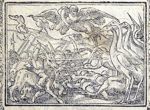
Pro aris et focis: Reusner, Aureolorum Emblematum (Strasbourg, 1587), emblem 120 quotes the comment
Pro aris focisque: Isselburg, Emblemata politica (Nürnberg, 1617) emblem 23 quotes the comment
Iconclass: 54B6 Worth, Value 53DD2:54B5 Breach of Promise❧Importance, Preponderance 44G3191 release from prison on bail
Collectanea (1500): 291
Loci Communes: Dignitatis (Dignity, Dignité); Magni momenti (Of great importance, Grande importance)
I viii 19 In utravis dormire aurem To sleep sound on either ear
In utramvis dormire aurem, est, animo otioso, securo, vacuoque esse. Terentius in Heauton. Ademptum tibi iam faxo omnem metum, in aurem utramvis otiose ut dormias. Utitur eo & Basilius in epistola quadam, sed malam in partem, ita ut supinam securitatem intelligi velit. Menander in Plotio apud Gellium: Επ᾽ ἀμφοτέραν ἵν᾽ ἐπίκληρος ᾖ μέλλει καθευδήσειν. id est, In aurem utranque quandoquidem dotata est, cubet. Sic enim vertit nescio quis.
To sleep sound on either ear is to have an easy mind, unconcerned and free from care. Terence in the Heauton: 'I'll see that all your fears are done away; / Then soundly shall you sleep on either ear.' Basil too uses it in one of his letters, but in a bad sense, to convey idle self-confidence. Menander in the Plocium, quoted by Gellius: 'She has her dowry; she may sleep sound on either ear.' So someone has translated it, I know not who.
Facsimile:
Iconclass: 31B16 going to sleep 31A2213 ears 56D3 Confidence, Security, Tranquillity; 'Confidenza', 'Sicurezza e Tranquillità', 'Sicurtà', 'Sicurtà o Sicurezza', 'Tranquillità' (Ripa)
Collectanea (1500): 232
Loci Communes: Securitatis et tutae rei (Security and safety, Sécurité et sûreté)
I viii 20 In dexteram aurem On the right ear
Eodem sensu dixit Plinius, In dexteram aurem. Ita enim scribit Romano suo: Nihil quod in dexteram aurem, fiducia mei dormias, non impune cessatur. id est, nihil est quod sis securus. Sic enim admonent medici, ut in primo somno, qui profundissimus esse consuevit, in aurem dexteram incumbamus: Cum experrecti redormire cupimus, in sinistram. Porrò, qui levi somno vult uti, in neutram incumbit aurem, quo facilius expergefiat.
In the same sense Pliny used 'on your right ear,' for he says in a letter to his friend Romanus: 'But there's no call to leave it to me and sleep on your right ear; idleness does not go unpunished,' meaning, there is no reason not to worry. In the same way physicians tell us that for our first sleep, which is generally the deepest, we should lie on the right ear; when we have woken up and wish to get to sleep again, on the left ear; and the man who wishes to sleep lightly lies on neither ear, in order to wake up more easily.
Facsimile:
Iconclass: 31A2213 ears 31B16 going to sleep 56D3 Confidence, Security, Tranquillity; 'Confidenza', 'Sicurezza e Tranquillità', 'Sicurtà', 'Sicurtà o Sicurezza', 'Tranquillità' (Ripa)
Loci Communes: Securitatis et tutae rei (Security and safety, Sécurité et sûreté)
I viii 21 Porrectis dormire pedibus To sleep a full stretch
Huic affine est illud, ἀποτείναντα τὼ πόδε καθεύδειν. id est, Porrectis pedibus dormire. Lucianus De mercede servientibus, καὶ τοῦτο δὴ τὸ τῆς εὐχῆς ἀποτείναντα τὼ πόδε καθεύδειν. id est, Iamque tandem quod optari solet, obtigit, ut porrectis pedibus dormias. Ad eandem figuram pertinet, quod in Aristophanis Pluto dixit Mercurius, ἀναβάδην ἀναπάυομαι. id est, Sublatis pedibus requiesco, & supinus per ocium. Et Supinitatem, negligentiam, incogitantiamque significamus. Et Conserere manus, in Hebraeorum proverbiis in ignavum, Pau[-] lum dormies, paululum dormitabis, paululum conseres manus, ut dormias.
Related to this is Ἀποτείναντα τῶ πόδε καθεύδειν., To sleep at full stretch. Lucian On Salaried Posts in Great Houses: 'And now you have at last got what everyone prays for, to sleep at full stretch.' To the same image belongs a phrase used by Mercury in Aristophanes' Plutus: 'I rest anabaden, with my feet up,' and supinus, 'supine' for 'at ease,' and we use 'to be supine' for being negligent and thoughtless; and to fold the hands in the Hebrew proverbs of the sluggard: 'A little sleep, a little slumber, a little folding of the hands to sleep.'
Facsimile: 
Iconclass: 31B16 going to sleep 56D3 Confidence, Security, Tranquillity; 'Confidenza', 'Sicurezza e Tranquillità', 'Sicurtà', 'Sicurtà o Sicurezza', 'Tranquillità' (Ripa)
Loci Communes: Ignavia et inscitia (Cowardice and ignorance, Lâcheté et ignorance); Securitatis et tutae rei (Security and safety, Sécurité et sûreté)
I viii 22 Naso suspendere To turn up the nose
Naso suspendere, est vafre ac subdole irridere Plinius lib. xi. cap. xxxii. docet à suae ae tatis hominibus nasum subdolae irrisioni fuisse dicatum. Nam apud veteres auctores nihil huiusmodi legitur. Verba Plinii subscribam: Et altior homini tantum, quem novi mores subdolae irrisioni dicavere, nasus. Horatius in Sermonibus: Naso suspendis adunco. Idem alibi: Balatro suspendens omnia naso. Persius de Horatio, qui vafre tecteque rideat: Callidus exterso populum suspendere naso. Idem alibi: Disce, sed ira cadat naso, rugosaque sanna. Unde nasuti vocantur, qui docte norint alios irridere. Martialis: Non cuicunque datum est habere nasum, Idem: Et pueri nasum rhinocerotis habent. Idem rursum: Nasutus sis usque licet, sis denique nasius. Persius: Rides, ait, & nimis uncis Naribus indulges. Graeci simplici efferunt verbo, μυκτηρίζειν, ἄντιμυκτηρίζειν, id est, irridere, vicissim irridere, ἀπὸ τοῦ μυκτῆρος, id est, naso. Cassius ad Ciceronem, libro Epistolarum familiarium decimoquinto: Quosque ubi ridiculo, aut scommatico dicterio laeseris, velint rustice gladio, ἀντιμυκτηρίοσαι, id est, vicissim naso suspendere.
To turn up your nose at something is to mock it in a sly sneering fashion. Pliny, book 11 chapter 32, tells us it was his own generation that gave the word nose this special sense of sly derision; for we find nothing like it in earlier authors. I will give Pliny's actual words: 'And man alone has the projecting nose to which our modern habits have given the special sense of sly derision.' Horace in the Satires: 'You turn up your nose and catch them on it,' and in another passage: 'A tiresome fellow who turns up his nose at everything.' Persius, speaking of Horace as a master of skilful and well-hidden mockery: 'with a sly talent for turning up his nose and catching the public on it'; and elsewhere 'Attend then, but drop that angry wrinkled snarl from your nostrils.' Hence clever critics of other men were said to have 'a sharp satirical nose.' Martial: 'All are not gifted with the critic's nose,' and 'And children have the nose of a rhinoceros,' and again 'Sharp-nosed you may be, you may be all nose.' Persius: 'You laugh, he says, and let your nostrils curl / More than they should.' Greek expresses this with a plain verb mukterizein and its opposite antimukterizein, for mockery and counter- mockery, derived from a word that means nostril. Cassius to Cicero, in book 15 of his Letters to Friends: 'And when you have hurt their feelings by some humorous or teasing remark, they wish to return your mockery in boorish fashion with a drawn sword,' to turn up their noses at you in their turn.
I viii 23 Dignus quicum in tenebris mices A man with whom you could play morra in the dark
Qui certissima esset fide, eum dignum dicebant, qui cum in tenebris micaretur. Cicero libro Officiorum tertio: Hoc nónne est turpe, dubitare philosophos, quae ne rustici quidem dubitant, à quibus natum est, id quod tritum est vetustate proverbium. Cum enim fidem alicuius, bonitatemque laudant, dignum esse dicunt, qui cum in tenebris mices. Idem De finibus libro secundo, Cur iustitia laudatur, an verum est tritum vetustate proverbium, qui cum in tenebris mices? Est autem Micare, lusus genus quoddam, quod adhuc apud Italos durat, ut repente porrectis digitis, certantium uterque numerum divinet. Huius Cicero mentionem facit, lib. De divinatione secundo: Quid est enim sors? Idem propemodum, quod micare, quod talos iacere, quod tesseras. M. Varro: Micandum erit cum Graeco, utrum ego illius numerum, an ille meum sequatur. Nemesianus in carmine Bucolico: Digitos iactate micantes. Meminit Divus Augustinus lib. de trinitate octavo, capite quinto: Nam id, inquit, ubi volumus, facile habemus, ut alia omittam, vel micando digitis tribus. Porrò qui cum micas in tenebris, ei liberum est, si velit fallere. Proinde dignus, qui cum in tenebris mices, dicitur, qui sit usque adeo certa fide, ut nec si tuto possit, velit quempiam mendacio fallere. Habent Graeci simile quiddam: Dignus hic est, cui vel iniurato fidem habeas: Ο δὲ ἀνὴρ κ᾽ ἀνώμοτος πιστεύειν ἄξιος. id est, Hic vir dignus, cui credas etiam iniurato. Cui diversum, Ne iurato quidem illi crediderim.
They used to say of a really honest man that you could play morra with him in the dark. Cicero in book 3 of the De officiis: 'Surely it is a disgrace that philosophers should find any problems where the veriest rustic finds none at all, for it was country people invented the proverb, now threadbare with age: when they praise a man's honesty and good faith, they say he's the sort of man with whom you could play morra in the dark.' Again in book 2 of the De finibus: 'Why do we praise justice? Is there some truth in the old threadbare proverb, "with whom you could play morra in the dark"?' Morra is a kind of game which still survives in Italy, in which the two competitors each hold up a number of fingers suddenly, and each has to guess how many. Cicero speaks of it in the second book of the On Divination: 'For what is chance? The same, almost, as playing morra and throwing knucklebones and shooting dice.' Marcus Varro: 'One must play morra with the Greek to decide whether I follow his number or he mine.' Nemesianus in a pastoral poem: 'Up with your fingers in the morra!' Augustine mentions it in his De Trinitate, book 8 chapter 5: 'We have that when we please, to say nothing else, even by playing morra with three fingers.' The point is that a man with whom you play it in the dark is at liberty to cheat if he wishes, and so the man with whom you can safely play in the dark must be so dependably honest that he would not wish to cheat anyone even when it is safe to do so. There is a similar phrase in Greek: 'This is a man you can trust even when he is not on oath,' with its opposite 'Even were he on oath I would not trust him.'
Facsimile:
Iconclass: 43C7154 finger games 22C9 darkness 57A61 Honesty; 'Honestà' (Ripa)
Loci Communes: Dignitatis (Dignity, Dignité); Fides et gravitas (Trust and seriousness, Confiance et gravité)
I viii 24 Ex Jovis tabulas testis Evidence from Jove's own files
Εκ τῶν διὸς δέλτων ὁ μάρτυς. id est, Ex Iovis tabulis testis. Apud Graecos dicebatur, pro certo & indubitabili teste. Lucianus in libello De mercede servientibus, Εἴ τις εἴπῃ μοὶχὸν ἤ παιδεραστὴν, τοῦτο ἐκεῖνο ἐκ τῶν διὸς δελτων ὁ μάρτυς. i. Si quis te adulterum, aut paederasten dixerit, is protinus, iuxta id quod dici solet, ex Iovis tabulis testis. Allusum est, ni fallor, ad diphtheram, in qua Iupiter omnia mortalium acta describere fingitur à poetis.
Ἐκ τῶν Διὸς δέλτων ὁ μάρτυς., literally, The witness from Jove's own tablets. This was used in Greek of a reliable witness whose word could not be doubted. Lucian in his essay On Salaried Posts in Great Houses: 'And if anyone accuses you of adultery or pederasty, without more ado this is evidence, as they say, from Jove's own files.' The allusion, if I am not mistaken, is to the sheet of parchment on which the poets imagine that Jupiter records all that mortals do.
Facsimile:
Iconclass: 57A6141 Trustworthiness, Reliability 92B1 (story of) Jupiter (Zeus) 44G15 witnesses
Loci Communes: Fides et gravitas (Trust and seriousness, Confiance et gravité)
I viii 25 Atticus testis An Attic witness
Αττικὸς μάρτυς. id est, Atticus testis, legitur in collectaneis Diogeniani, pro probatissimo, atque incorruptissimo teste. Quod si quis per Ironiam torqueat in testem vanum, non inconcinne dixerit.
Ἀττικὸς μάρτυς., An Attic witness, is given in the collection of Diogenianus for one of the highest reputation who is quite incorruptible. If one were to turn this round and use it ironically of a worthless witness, one would make a nice point.
Facsimile:
Iconclass: 44G15 witnesses 57A6141 Trustworthiness, Reliability 61E(ATHENS) names of cities and villages (ATHENS)
Collectanea (1500): 299
Loci Communes: Fides et gravitas (Trust and seriousness, Confiance et gravité)
I viii 26 Attica fides Athenian honesty
Αττικὴ πίστις. id est, Attica fides, legitur apud eundem, de minime vanis minimeque periuris: inde natum quod apud Atticos templum esset Fidei deae constructum. Cuius meminit etiam Plautus in Aulularia. Velleius Paterculus meminit his quidem verbis: Si quis hoc rebellandi tempus quo Athenae à Sylla captae sunt, imputat Atheniensibus, nimirum veri, vetustatisque ignarus est. Adeo enim certa Atheniensium in Romanos fides fuit, ut semper, & in omni re, quicquid syncera fide gereretur, id Romani Attica fide fieri praedicarent. Quintilianus lib. xii. cap. De genere dicendi, scribit hunc in modum: Quos ego existimo, si quod in his finibus uberius invenerint solum, fertiliorémve segetem, negaturos Atticam esse, quod plusquam acceperit seminis reddat, quia hanc eius terrae fidem Menander eludit. Ex his colligimus Atticam fidem dictam, quod nec detraherent pactis nec adderent. Talis erat & soli fides non admodum feracis, cum agrorum fides laudetur, si cum foenore reddant quod creditum est.
Ἀττικὴ πίστις., Athenian honesty, is applied in the same source to those who are never irresponsible and never break their word, derived from the existence in Athens of a temple built in honour of the goddess Honesty, which is also mentioned by Plautus in the Aulularia. Velleius Paterculus speaks of it in the following words: 'If anyone thinks the Athenians are to be blamed for this period of rebellion during which Athens was captured by Sulla, he is quite ignorant of truth and history. The loyalty of the Athenians to Rome was so dependable that at all times and in every field what was done in genuine good faith was said by the Romans to be done with Athenian honesty.' Quintilian, book 12 in the chapter on style, puts it like this: 'For I suppose that if they had found a patch of more fertile soil in this area or a more productive field, they would say that it cannot be Attic because it yields more seed than has been put into it, and the honesty of Attic soil in this regard has been made fun of by Menander.' From this I infer that Athenian honesty meant neither falling short of what you had promised nor going beyond it. Even a not very fertile soil could show this form of loyalty, though normally a field is praised for reliability which returns what has been entrusted to it with interest.
Facsimile: 
Iconclass: 44G15 witnesses 57A61 Honesty; 'Honestà' (Ripa) 57A6141 Trustworthiness, Reliability 61E(ATHENS) names of cities and villages (ATHENS)
Collectanea (1500): 181
Loci Communes: Fides et gravitas (Trust and seriousness, Confiance et gravité)
I viii 27 Graeca fide On Greek credit
Ελληνικῇ πίστει. id est, Graeca fide, reperitur, pro certa idem fide. Fortassis idem cum proximo: nisi malumus perironiam accipere. Ausonius ad Paulum: Nobiscum invenies κατενόπλϊα, si libet uti Non Poena sed Graeca fide. Idem de Philone, villico suo: Mutuatur ad Graecam fidem. Plautus Graecam fidem dixit, ubi non verbis, neque stipulationibus, sed praesente pecunia res agitur. Sic enim apud eum loquitur Clareta lena in Asinaria, Diem, aquam, solem, lunam, noctem, haec argento non emo, Caetera quae volumus uti, Graeca mercamur fide. id est, numerata pecunia. Euripid. in Iphigenia Taurica: πιστὸν ἑλλὰς οἶδεν οὐδὲν, id est, Graecia nequaquam novit fidem. Hoc sanè nomine ea natio pessime audiit olim.
Ἑλληνικῇ πίστει., On Greek credit, is found likewise to express something absolutely reliable. Perhaps identical with the preceding, unless we prefer to take it ironically. Ausonius writing to Paulus: 'In my house you shall find the opposite, if you are willing to do business on Greek credit, not Punic' Similarly of Philo his farm-bailiff: 'He borrows on Greek credit.' Plautus used 'Greek credit' when business is done not by spoken promise or written contract, but for cash down. For this is how he makes Clareta the bawd speak in the Asinaria: 'Daylight and water, sun and moon and night - for these I pay no money. Everything else I need I buy on Greek credit,' that is, for ready cash. Euripides in the Iphigeneia in Tauris: 'There's nothing honest in the whole of Greece.' Under this head the Greeks in old days had a very bad reputation.
Facsimile:
Iconclass: 57A6141 Trustworthiness, Reliability 61D(GREEK) geographical names of countries, regions, mountains, rivers, etc. (GREEK) (GREEK) 46B452 credit
Loci Communes: Inconstantiae, perfidiae, versutiae (Inconstancy, treachery, cunning, Inconstance, perfidie, ruse); Perfidia (Treachery, Perfidie)
I viii 28 Punica fides Punic faith
Poenorum perfidia in proverbium abiit, quod ea gens peculiariter periurii, vanitatisque notata sit, quemadmodum abunde testatur T. Livius. Cuius haec verba sunt libro secundo de bello Punico: Quae Punica religione servata est fides ab Hannibale. Idem belli Punici secundi lib. primo: Has tantas viri virtutes ingentia vitia aequabant, inhumana crudelitas, perfidia plusquam Punica, nihil veri, nihil sancti, nullius dei metus, nullum iusiurandum, nulla religio. His coloribus depingit Annibalem. Subindicat idem Q. Curtius, in Tyriis Poenorum auxilio destitutis. Rursum Maximinus apud Iulium Capitolinum: Afri, inquiens, fidem Punicam praestiterunt. & quod modo citavimus ex Ausonio, Poena fide. Salustius in Iugurthino: Comperio Bocchum magis Punica fide, quàm ob ea quae praedicabat, simul Romanos & Numidam spe pacis detinuisse. Plautus, Nemo me Poenus Punior, alludens ad morum perfidiam. Poeni foedifragi semper habiti. Idem in poenulo, Et is omnes linguas scit, sed dissimulat sciens, se scire, Poenus plane est, quid verbis opus?
The perfidy of the Carthaginians passed into a proverb, because as a nation they had a singularly bad reputation for perjury and falsehood, as Livy bears abundant witness. He writes as follows in the second book of his Punic war: 'a promise which was kept with Punic scrupulosity by Hannibal.' Again in the first book of his Second Punic war: 'These outstanding qualities were matched by the greatest faults, inhuman cruelty, treachery beyond Punic standards, no respect for truth or religion, no fear of any god, no regard for oath or conscience.' It is in these colours he paints Hannibal. Quintus Curtius suggests the same thing when he speaks of the Tyrians as deserted by their Carthaginian supporters. So too does Maximus, as quoted by Julius Capitolinus, saying 'the Africans kept true Punic faith,' and also the phrase I have cited above from Ausonius, 'on Punic credit.' Sallust On the Jugurthine War: T understand that Bocchus kept both the Romans and the king of Numidia in suspense, hoping for a peaceful solution, more from Punic faith than for the reasons he put forward.' Plautus: 'None has more Punic blood in his veins than I,' alluding to their habitual treachery. The Carthaginians were always held to be treaty-breakers. Plautus again in the Poenulus: 'He knows all tongues although pretending not to; he's a true Carthaginian. Why say more?'
Facsimile:
Iconclass: 61E(CARTHAGE) names of cities and villages (CARTHAGE) 57A6141 Trustworthiness, Reliability 57A62 Fidelity; 'Fedeltà' (Ripa) 57AA62 Infidelity, Perfidy; 'Perfidia' (Ripa)
Loci Communes: Inconstantiae, perfidiae, versutiae (Inconstancy, treachery, cunning, Inconstance, perfidie, ruse); Perfidia (Treachery, Perfidie)
I viii 29 Altera manu fert lapidem, altera panem ostentat He bears a stone in one hand and offers a loaf in the other
Qui coràm blandiuntur, clàm obtrectantes, palàm amicos agunt, clanculum nocent: aut qui hic prosunt, illic laedunt, falsam beneficii spem ostentant, ut nacti occasionem funditus perdant, ii dicuntur altera manu portare lapidem, altera panem ostentare. Translatum ab iis, qui canes, ostentato pane, pelliciunt: deinde accedentibus saxum illidunt. Euclio Plautinus in Aulul. Nunc petis cum pollicetur, aurum inhiat, ut devoret: Altera manu fert lapidem, panem ostentat altera. Divus Hieronymus ad Rufinum: Haec apud te amice potius expostulare volui, quam lacessitus publice desaevire, ut animadvertas me reconciliatas amicitias pure colere, & non iuxta Plautinam sententiam, altera manu lapidem tenere, panem offerre altera. Eódem eleganter allusit, scribens ad eundem Rufinum: An tibi ideo panem non damus, quia haereticorum cerebro lapidem illidimus? Simile quiddam habet Gregorius Theologus in epistola ad Eusebium episcopum Caesariensem, ὥσπερ εἴ τις ἑνὸς ἀνδρὸς τῇ μὲν τῶν χειρῶν καταψή- χοι τὴν κεφαλην, τῇ δὲ παίοι τὴν παρειὰν. id est, Perinde quasi quis eiusdem viri altera manu scabat caput, altera malam feriat.
Those who flatter a man to his face and criticize him privately, openly playing the part of friends and hurting him under cover, or those who help at one moment and hinder at another, arousing misguided hopes that they will help him, in order to destroy him utterly when they get a chance - such people are said to bear a stone in one hand and offer a loaf in the other. It is a metaphor from those who attract dogs by pretending to throw them bread, and hit them with a stone when they come close. Euclio in Plautus' Aulularia: 'While he makes promises, it's now he means to snatch, his mouth wide open to swallow up my gold. He bears a stone in one hand though he offers a loaf in the other.' St Jerome, writing to Rufinus: 'I wanted, my friend, to protest to you about this privately, rather than vent in public my resentment at this attack; for this will show you that once I have repaired a friendship I respect it honourably and do not follow that quip in Plautus, "He bears a stone in one hand and offers a loaf in the other."' He makes a neat allusion to this in a letter to the same Rufinus: 'Do I refuse you a loaf simply because I bring a stone down on the brains of heretics?' Gregory the Theologian has something similar in a letter to Eusebius bishop of Caesarea: 'for all the world as though one were to scratch the same man's head with one hand and box his ears with the other.'
Facsimile:
Iconclass: 25H1124 boulder, stone 41C621 bread, loaf 57AA61 Dishonesty, Falsety 57AA621 Cheat, Deceit; 'Fraude', 'Inganno' (Ripa)
Collectanea (1500): 182
Loci Communes: Inconstantiae, perfidiae, versutiae (Inconstancy, treachery, cunning, Inconstance, perfidie, ruse); Perfidia (Treachery, Perfidie); Simulatio, dissimulatio (Pretense, dissimulation, Simulation, dissimulation)
I viii 30 Ex eodem ore calidum et frigidum efflare Out of one mouth to blow hot and cold
Εκ τοῦ αὐτοῦ στόματος τὸ θερμόν καὶ τὸ ψυχρὸν ἐξάγειν. id est, Eodem ex ore calidum ac frigidum proferre. Bilingues & qui eundem modo laudant, modo vituperant, ex eodem ore calidum ac frigidum spirare dicuntur. Natum ex Apologo quopiam Aniani fabulatoris. Satyrus quidam cum vehementer algeret, hyberno gelu supra modum saeviente, à rustico quodam inductus est in hospitium. Admiratus autem cur homo inflaret in manus ori ad motas, rogavit, cur ita faceret: is respondit, ut frigidas manus halitus tepore calefaceret. Deinde ubi exstructo foco, apposita mensa, in pultem fervidam rursum inflaret, magis etiam admiratus, sciscitatus est, quid hoc sibi vellet: Ut pultem, inquit, nimium ferventem halitu refrigerem. Tum Satyrus surgens à mensa: Quid ego audio? inquit, Tún' eodem ex ore pariter & calidum & frigidum efflas? Valebis, neque enim mihi ratio est, cum eiusmodi homine commune habere hospitium. At huiusce rei, quam Satyrus admirabatur, causam reddit Aristot. in Problematis, Sectione xxxiiii. problemate septimo. idque ideo fieri putat, quod qui vehementius efflat, is non moveat universum aerem, sed ore contractiore paululum venti exspiret, ut calor ab ore profectus, à reliquo aere, quem ob impetum plurimum movet, continuo evanescat, atque in frigus abeat. Id quod secus fit in eo, qui faucibus apertis universum aerem exhalat. Est huic confine quiddam inj epistola Iacobi apostoli, nam huius nomine legitur: ἐκ τοῦ αὐτοῦ στόματος βρύει τὸ γλυκὺ καὶ τὸ πικρὸν. id est, Ex eodem ore emanat dulce & amarum. Huc adscribi poterit, quod refert secundo libro Plinius, plus quàm prodigiosum, fontem esse quendam in Dodona, qui cum sit frigidissimus, & faces si quis ardentes immergat, exstinguat: si exstinctae admoveantur, accendit. Quae omnia torquere licebit in rhetores, qui eadem norunt laudare & vituperare, elevare atque attollere. Item in iureconsultos, qui causam eandem nunc tuentur, nunc impugnant. Ad eum sensum detorsit Plutarchus, quod Circe eadem virga mentem adimit, ac reddit: pecudes facit, & ho- mines. Exstat apud Graecos hic senarius proverbialis, Τὸν αὐτὸν αἰνεῖν καὶ ψέγειν, ἀνδρὸς κακοῦ. id est, Laudare eundem, carpereque viri est mali. Et Hebraeus vates, nempe Esaias; male ominatur iis, qui dicunt bonum malum, malum bonum: dulce amarum, & amarum dulce. Athenaeus libro quarto docet esse fistulae genus. à Graecis dicitur μάγαδις, sive παλαιομάγαδις, quod idem & gravem & acutam vocem reddit. Unde versum adducit ex Alexandride, Μάγαδιν λαλήσω, μικρὸν ἅμασι καὶ μέγαν. id est, Grande, ac pusillum Magade proloquar simul. Id Graecis dicitur μαγαδίζειν, sonare simul duas voces, gravem & acutam, δία πασῶν ut vocant musici. Aristoteles sectionis decimaenonae, problemate iuxta Graecos codices decimooctavo, iuxta Theodori versionem xvii. utitur eo verbo μαγαδίζειν, quaerens quur haec sola harmonia quam diximus, sonetur magade. Rursus in problem xxxix. iuxta Graecos codices, μαγαδίζουσι δὲ ἐν διὰ πασῶν συμφωνιᾳ. id est, Magadissant in concentu diapason.
Ἑκ τοῦ αὐτοῦ στόματος τὸ θερμόν καὶ τὸ ψυχρὸν ἐξάγειν., To blow hot and cold from one mouth. Those given to double talk, and those who praise a man one minute and vilify him the next, are said to blow hot and cold from the same mouth. This originates in one of the stories in Avianus the writer of fables. A satyr who was suffering severely from the cold in an exceptionally hard winter was invited by a countryman to take refuge in his house. When he saw the man put his hands to his mouth and blow into them, he was astonished, and asked why he did so. 'To warm my frozen hands' he replied 'with the heat of my breath.' The man then made up a good fire, produced a meal, and blew again, this time on his hot porridge; whereat the satyr, still more astonished, asked him what the point of that was. 'So that my breath may cool my porridge, which is too hot' was the reply. At which the satyr jumped up from the table, crying: 'What is this I hear? Out of one mouth you can blow both hot and cold? I wish you goodbye, for it does not seem to me in reason to share a lodging with a man like that.' Yet the fact which astonished the satyr is explained by Aristotle in the Problems, section 34 problem 7; and this, he thinks, happens because the man who blows hard does not displace all the air in front of him, but contracts his mouth and breathes out a fairly small quantity of air, so that the heat issuing from his mouth is at once dissipated by the rest of the air which he sets in motion by exhaling so forcibly, and turns into cold. It is different in the case of a man who opens his mouth and breathes out fully all at once. There is something related to this in the epistle of James the Apostle, for it passes under his name: 'From the same mouth cometh forth sweet and sour.' We can add at this point a more than miraculous fact recorded by Pliny, book 2: that in Dodona there is a spring which itself is intensely cold and extinguishes a blazing torch plunged into it, and yet, 'if torches that have been extinguished are brought close to it, it rekindles them.' All this it will be possible to divert for use against professional speakers who have the skill to both praise and vilify, exalt and debase the same object; against lawyers who at one point support and at another attack the same case. Plutarch diverted to this purpose the story of how Circe with the same magic wand both takes away the reason and restores it, making beasts of men and men of beasts. There is a proverbial line in Greek that runs as follows: 'To praise and blame the same man shows the rascal.' And a Hebrew prophet, Isaiah, in fact, forebodes ill for those who 'call good evil and evil good, that put bitter for sweet and sweet for bitter.' Athenaeus in his fourth book informs us that there is a kind of musical pipe called in Greek magadis or palaiomagadis, which gives both a high and a low note at the same time; for which he quotes from Alexandrides the line T will speak you magadis-f ashion, soft and loud both at once.' The Greek word for this is magadizein, to play two notes together low and high, the octave or diapason as musicians call it. Aristotle, in the problem which is section 19 number 18 in the Greek copies and number 17 in the version by Theodorus, uses this word magadizein, asking why the harmony I have mentioned is the only one played on a magadis. Again, in problem 39 according to the Greek copies, 'They play the magadis in the harmony of the octave.'
Facsimile: 
Iconclass: 31A2214 mouth 22E1 heat 22E2 coldness 57AA61 Dishonesty, Falsety 57AA621 Cheat, Deceit; 'Fraude', 'Inganno' (Ripa)
Loci Communes: Inconstantiae, perfidiae, versutiae (Inconstancy, treachery, cunning, Inconstance, perfidie, ruse); Perfidia (Treachery, Perfidie)
I viii 31 Oculatae manus Hands with eyes in them
Oculatas manus dixit Plautus, quae promissa velint exhiberi re, non oratione promitti. Nam oculos habere, quibus videant exhibita: aures non habere, quibus audiant pollicitationes. Ita lena quaedam in Asinaria, adolescenti montes aureos pollicenti, cum illa nihil commoveretur promissis: Semper, inquit, oculatae nostrae sunt manus, credunt quod vident. In eadem erat sententia leno ille Terentianus Sannio: Nunquam, inquit, ego adeo astutus fui, quin quicquid possem, mallem auferre in praesentia potius. Huc allusit Chaerea in Eunuch: Fac nunc promissa ut appareant.
Plautus speaks of 'Hands with eyes in them,' which prefer promises to be made good in kind, not dangled before them in words only; they have eyes, he says, and can check delivery of the goods, but no ears with which to listen to offers. So a bawd puts it in the Asinaria, when the young man promises her mountains of gold, and she remains quite unmoved by his undertakings. 'My hands always have eyes in them' she says; 'they believe what they see.' And Sannio, that pimp in Terence, was of the same opinion: 'Never' he says 'was I so cunning that I would not rather make what profit I could in ready cash for choice.' Chaerea alludes to this in the Eunuchus: 'Now let your promises be visible.'
Facsimile:
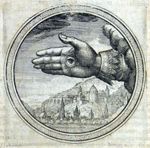
Oculata fides: Zincgreff, Emblematum Ethico-politicorum (Heidelberg, 1619), emblem 88 uses the adage's imagery
Νῆφε καὶ μὲμνησ᾽ ἀπιστεῖν. ἄρθρα ταῦτα τῶν φρενῶν: Alciatus, Emblemata (Leiden, 1591), emblem 16
Iconclass: 31A2245 hand 31A2212 eyes 53D2 Promise; 'Promissione' (Ripa) 53DD2 Breach of Promise
Collectanea (1500): 180
Loci Communes: Absurda, indecora, seu praepostera (Absurd, unbecoming, or preposterous things, Choses absurdes, inconvenantes ou déplacées); Diffidentia (Distrust, Méfiance)
I viii 32 Caeca dies, et Oculata dies A blind day, and A day with eyes
Plautus item caecam diem & oculatam, pro die qua non numeratur praesens pecunia, & qua numeratur. Sic enim leno quidam loquitur in Pseudolo: Eme die caeca hercle oleum, id vendito oculata die: iam Hercule vel ducentae fieri possunt praesentes minae. Hoc est, eme non praesente pecunia, sed in diem pacta, revende pecunia praesente. Vocant & Iurisconsulti caecam diem, & caeca testimonia, quae scripto perhibentur absentibus. Nam caeca sunt non tantum quae non vident, sed quae non videntur & absunt.
Plautus also speaks of 'A blind day' and 'A day with eyes' for one on which one does not, or does, pay in ready cash. Such is the wording used by a pandar in the Pseudolus: 'Buy oil on a blind day and sell it on one with eyes. Why, man, you can put two hundred in the ready in your pocket,' meaning Pay nothing when you buy, but fix a day for settlement, and sell for cash. 'A blind day' is also used by lawyers, and 'blind evidence' for what is given in writing by absent witnesses; for 'blind' can mean not only what cannot see but also what is not seen and not present.
I viii 33 Lentiscum mandere Munching mastic
Σχῖνον διατρώγειν. id est, Lentiscum mandere, vel arrodere, Graeco proverbio dicuntur ii, qui nimio comendi corporis studio superfluunt: Nam ex lentisco dentifricium fieri consuevit. Is est pulvisculus quidam candidandis dentibus comparatus. Fiebant & dentiscalpia ex lentisco, hoc est, cuspides quaedam purgandis dentibus accommodae. Martialis in Apophoretis: Lentiscum melius, sed, si tibi frondea cuspis Defuerit, dentes penna levare potest. Quin & Dioscorides lib. primo indicat, lentisci succum ex aqua decoctae figere vacillantes dentes, si eo colluantur: tum & cuspides hinc factas si affricentur, utiles esse dentibus abstergendis. Huiusmodi igitur, quibus denti scalpium semper in ore est, lentiscum arrodere dicuntur, & σχινοτρῶγες, id est, Lentisci ar rosores appellantur. Nam dentium cura, olim ut delicatis probro dabatur, & Apuleio inter reliqua crimina obiectum est, quod dentifricium parasset. Recte transfertur adagium & ad reliquum totius corporis cultum.
Σχῖνον διατρώγειν., To munch, or chew, mastic is a proverbial expression in Greek used of those who go too far in an excessive interest in their toilet, since mastic was commonly employed in making dentifrice. It is a kind of fine powder prepared for whitening the teeth; and mastic-wood was also used for making toothpicks, which are a sort of sharp instrument adapted for picking the teeth. Martial in his Apophoreta:
Mastic for choice: if leafy spike you lack,
A quill will pick your teeth, both front and back.
Moreover Dioscorides, book 1, states that an infusion of mastic in boiling water fixes loose teeth if rinsed in it, and that pointed splints of the wood rubbed against the teeth are useful for cleaning them. Thus it is that those who have a toothpick permanently in their mouths are said to nibble mastic and are called schoinotrôges, mastic-munchers. To take care of one's teeth was in old days a reproach levelled at dandies, and among the charges laid against Apuleius was his preparation of a dentifrice. The adage will rightly be extended to cover the whole world of the toilet.
Facsimile: 
Iconclass: 31B6234 chewing 31A51 making toilet 25G31(MASTIC) shrubs (MASTIC) 54DD2 Idleness; 'Otio' (Ripa)
Collectanea (1500): 119
Loci Communes: Intemperantia, libido (Intemperance, lust, Intempérance, désir)
I viii 34 Unico digitulo scalpit caput He scratches his head with a single finger
Molles atque effoeminati uno digito caput scalpere dicuntur, nimirum solliciti, ne comam studiose compositam perturbent. Id primum dictum putant à Calvo poeta in Pompeium, hinc in omnes parum viros translatum. Iuvenalis satyra nona: Qui digito scalpunt uno caput. Molles & impudicos ex gestu notans. Porrò gestum eum antiquitus impudicitiae habitum argumentum, testatur in epistolis Seneca: Rerum, inquiens, omnium, si observentur, indicia sunt. Et argumentum morum ex minimis quoque licet capere. Impudicum, & incessus ostendit, & manus mota, & unum interdum responsum, & relatus ad caput digitus, & flexus oculorum. Improbum interdum risus, insanum vultus, habitusque demonstrat.
Effeminate and womanish men are said to scratch their heads with one finger, being anxious presumably not to disturb the exquisite arrangement of their hair. The phrase is supposed to have been first used by the poet Calvus in an attack on Pompey and thence to have been extended to all those whose virility is under suspicion. Juvenal in his ninth satire: 'Who with a single finger scratch their heads,' using this gesture as a way to identify effeminates and perverts. That this gesture in fact was taken in early times as evidence of perversion is shown by the Letters of Seneca, who writes: 'Everything to a careful observer has its telltale marks, and evidence of a man's character can be derived from the smallest signs. A pervert is betrayed by the way he walks or moves his hands, sometimes by one answering remark, by his raising his hand to his head and by his shifting eyes. A rascal is sometimes given away by his laugh, a lunatic by his expression and bearing.'
Facsimile:
Iconclass: 31B6263 scratching one's head 31A2246 fingers 57AA52 Perversion
Collectanea (1500): 39
Loci Communes: Intemperantia, libido (Intemperance, lust, Intempérance, désir)
I viii 35 Summo digito caput scalpere To scratch one's head with the tip of one's finger
Τὸ ἄκρῳ δακτύλῳ τὴν κεφαλὴν κνᾶν. id est, Summo digito caput scalpere. Idem est cum proximo. Lucianus in Rhetorum praeceptore, deliciis effoeminatum hominem describit his verbis: Εν τούτοις δὲ πάνσοφόν τινα, καὶ πάγκαλον ἄνδρα, διασεσαλευμένον τὸ βὰδισμα, ἐπικεκλασμένον τὸν αὐχένα, γυναικεῖον τὸ βλέμμα, μεληχρὸν τὸ φώνημα, μύρον ἀποπνέοντα, τῷ δακτύλῳ ἄκρῳ τὴν κεφαλὴν κνώμενον. id est, Inter haec autem virum quendam egregie sapientem atque insigni forma, lubrico incessu, fracta cervice, muliebri aspectu, voce mellita, olentem unguenta, caput summo digito scalpentem.
Τῷ ἄκρῳ δακτύλῳ τὴν κεφαλὴν κνᾷν., To scratch one's head with the tip of one's finger, is the same as the preceding. Lucian in his Teacher of Public Speaking gives the following description of a dissolute and effeminate person: 'And among them a very clever man and very pretty, with a mincing walk, an affected poise of the head, an effeminate air, and a sickly sweet way of speaking, who reeks of scent and scratches his head with his finger-tip.'
Facsimile:
Iconclass: 31B6263 scratching one's head 31A2246 fingers 57AA52 Perversion
Loci Communes: Intemperantia, libido (Intemperance, lust, Intempérance, désir)
I viii 36 Phryx plagis emendatur It takes blows to mend a Phrygian
Phryx plagis emendatur. In barbaros servilique ingenio homines dicitur, qui non pudore, neque monitis, sed verberibus redduntur meliores. Cum contra generosus animus, ut ait Seneca, rectius ducatur quàm trahatur. Cicero pro L. Flacco in testes Asiaticos: Asia vestra constat ex Phrygia, Mysia, Caria, Lydia. Utrum igitur nostrum, an vestrum est hoc proverbium? Phrygem plagis fieri solere meliorem. Adagium ita refertur apud Suidam versu trochaico: Φρὺξ ἀνὴρ πληγεὶς ἀμείνων καὶ διακονέστερος. id est, Verberatus Phryx melior & obsequens erit magis. Ostendit Athenaeus è Phrygia mitti solere mancipia laudatissima. Ανδράποδ᾽ ἐκ φρυγίας, ἀπὸ δ᾽ ἀρκαδίας ἐπικούρους. id est, Mancipia ex Phrygia, sed ab Arcadia auxiliares.
It takes blows to mend a Phrygian is used of boors and men fitted by nature to be slaves, to whom moral standards and rebukes mean nothing; only corporal punishment improves them, while 'a free-born spirit,' on the other hand, in Seneca's words, 'is more easily led than driven.' Cicero in his Pro Flacco, speaking of natives of Asia minor in the witness-box: 'This Asia of yours is made up of Phrygia, Mysia, Caria, Lydia. Is it then you or we who have a proverbial saying that a Phrygian is commonly made better by a good beating?' The adage is recorded by Suidas in the form of a trochaic verse: 'Better man and better servant is a Phrygian soundly drubbed.' Athenaeus shows that slaves exported from Phrygia were highly esteemed: 'From Phrygia slaves, from Arcady recruits.'
Facsimile:
Iconclass: 46A18 slavery; serfs and enslaved persons 46A180 'Servitù', 'Servitù per forza' (Ripa) 44G3731:57A1 flogging, scourging (in public)❧Good Behaviour 61D(PHRYGIA) geographical names of countries, regions, mountains, rivers, etc. (PHRYGIA) (PHRYGIA)
Loci Communes: Multi - in stupidos (Many people - against the stupid, Beaucoup de gens - contre les sots)
I viii 37 Nihil sacri es You're nothing sacred
Οὐδὲν ἱερὸν ὑποαρχεις. id est, Nihil es sacri. Sermo contemnentis, proverbialiter. Siquidem Graeci quicquid praeclarum ac vehementer conducibile videri vellent, id sacrum appellabant, ut ἱερὸν βουλὴ, Sacra res consilium, & ἱερὰν πόλιν, id est, Sacram civitatem dixit Aristides, tanquam omnium tutatricem, et quod alio citavimus loco, ἱερὰν ἄγκυραν, id est, Sacram ancoram. Plutarchus in vita Pelopidae, Sacri praesidii mentionem facit. Theocritus in Hodoeporis, Αλλ᾽ οὖν αἴκα λῇς ἔριφον θέμεν, ἔντι μὲν οὐδὲν ἱερὸν. id est, Hoedum igitur, si vis, age iam deponito, quanquam Nil sacri est. Verba sunt contemnentis pignus. Qui proverbii tradunt originem, aiunt, Herculem conspecta Adonidis imagine contempsisse his verbis, οὐδὲν ἱερὸν εἶ, id est, Nihil es sacri. Seu quod existimaret, iis duntaxat habendum esse divinitatis honorem, qui de genere mortalium essent benemeriti: sive quod fures, qui in eius templum aufugissent, non essent in tuto, propter loci religionem, quemadmodum in aliorum deorum sacellis. Nunc accommodatur ad quamvis rem despicatui habitam. Ab hac interpretatione non discrepant quae refert Theocriti scholiastes, huius commenti autorem citans Cleandrum.
Οὐδὲν ἱερὸν ὑπάρχεις., You're nothing sacred. A phrase used by those who wish to express scorn in proverbial language, for in Greek anything was called sacred which they wished to represent as outstanding and highly expedient - 'counsel is a sacred thing,' for example, and 'a sacred city' in Aristides as a place where all men can take sanctuary, and one I have cited elsewhere, 'a sacred anchor.' Plutarch in his life of Pelopidas speaks of a 'sacred guard.' Theocritus in his Wayfarers: 'Come, wager me a kid, if you so please, though 'tis no sacred matter,' where the speaker wishes to show his contempt for the object offered. Those who give an origin for the proverb say that Hercules saw a statue of Adonis and expressed his scorn of it in the words 'You're nothing sacred'; either because he thought that divine honours should be paid only to those who have been benefactors of the human race, or because thieves who might have taken sanctuary in his temple should not be protected by the sanctity of the place, as they would be in the shrines of other deities. Nowadays it is applied to anything that is an object of scorn. There is no discrepancy between this and the remarks of the scholiast on Theocritus, who gives Cleandrus as authority for the story.
Facsimile:
Iconclass: 44G371 public ridicule, scorn
Loci Communes: Contemptus et vilitatis (Contempt and worthlessness, Mépris et bassesse)
I viii 38 Nihil sanum Rotten to the core
Summam morum corruptionem, & nullum honesti respectum his verbis Graeci signifrcant, οὐδὲν ὑγϊες, id est, Nihil sanum. Exempla passim in comoediis, tragoediisque Graeco rum sunt obvia. Aristophanes in Pluto, Πευσόμενος εἰ χρὴ μεταβάλλοντα τοὺς τρόπους, Εἶναι πανοῦργον, ἀδικον, ὑγιὲς μηδὲν, Ως τῷ βίῳ τοῦτ᾽ αὐτὸ νομίσας ξυμφέρειν. id est, Scitatum an expediret, ut in contrarium Verso instituto pristinisque moribus, Iniquus esset, subdolus, sani nihil, Ratus ista vitae commodis conducere. Andromache in sui nominis tragoedia apud Euripidem ita describit Spartanorum mores. Ω πᾶσιν ἀνθρώποισιν ἔχθιστοι βροτῶν, Σπάρρτης ἔνοικοι, δόλια βουλευτηρϊα, Ψευδῶν ἄνακτες, μηχανόῤῥαφοι κακῶν, Ελικτὰ, κ᾽ οὐδὲν ὑγιὲς. id est, Heus omnium mortalium invisisimi, Spartam incolentes, fraudulenti consili, Mendaciorum principes, & opifices Tecti malorum, tortiles, sani nihil. Aristophanes, ἐν θεσμοφοριαζούσαις, si modo non fallit titulus: de foeminis: Τὰς οἰνοπότιδας, τὰς προδότιδας, τὰς λάλους, Τὰς οὐδὲν ὑγιὲς, τὰς μεγ᾽ ἀνδράσιν κακόν. id est, Vini bibaces, proditrices, garrulas, Nihilque sanum, maximum viris malum. Ubi planè proverbialiter dixit οὐδὲν ὑγιὲς, pro perditissimis. M. Tullius ad Atticum libro decimoquinto: Quid quaeris? οὐδὲν ὑγϊὲς. Id velut interpretans in epistola, quae praecessit ab hac tertia: Quid quaeris? nihil synceri.
Great depravity of character with no regard for right and wrong is indicated in Greek by the words Οὐδὲν ὑγιές,, Rotten to the core. Examples are to be found everywhere in Greek comedy and tragedy. Aristophanes in the Plutus:
To ask if he should change his way of life,
Be rascal, swindler, rotten to the core;
Just this, I find, makes life enjoyable.
Andromache in the tragedy by Euripides which bears her name describes the Spartan character in these words:
Detested bane of all your fellow men,
Dwellers in Sparta, treacherous counsellors,
Ye lords of lies who weave your evil web,
Twisting and turning, rotten to the core.
Aristophanes in his Thesmophoriazusae, if the title does not mislead, speaking of women: 'Sots, traitors, chatterers, rotten to the core, / Plaguing our husbands,' where it is clear that he has used 'rotten to the core' as a proverbial equivalent for 'utterly depraved.' Cicero in book 15 of his Letters to Atticus: 'In a word, rotten to the core.' And two letters earlier, as though to make his meaning clear, he has used the expression in its Latin form.
Facsimile: 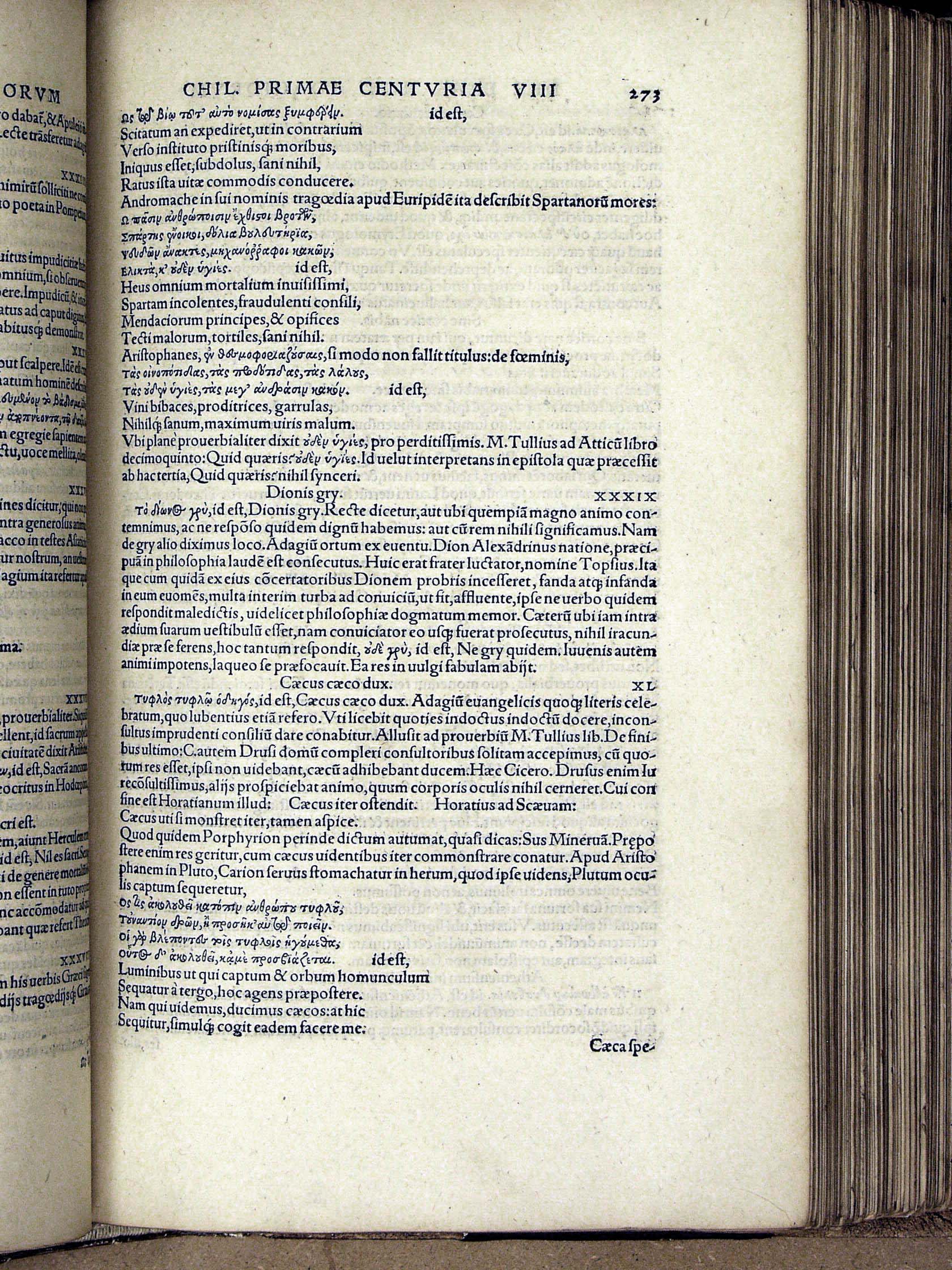
Iconclass: 52B511 Distinction between Good and Bad; 'Distintione del bene & del male' (Ripa) 57AA Good and Bad Behaviour, Moral Qualities (opposing concepts)
Loci Communes: Contemptus et vilitatis (Contempt and worthlessness, Mépris et bassesse)
I viii 39 Dionis gry Dion's grunt
Τὸ δίωνος γρὺ, id est, Dionis gry. Recte dicetur, aut ubi quempiam magno animo contemnimus, ac ne responso quidem dignum habemus: aut cum rem nihili significamus. Nam de gry alio diximus loco. Adagium ortum ex eventu. Dion Alexandrinus natione, praecipuam in philosophia laudem est consecutus. Huic erat frater luctator, nomine Topsius. Itaque cum quidam ex eius concertatoribus Dionem probris incesserit, fanda atque infanda in eum evomens, multa interim turba ad convicium, ut fit, affluente, ipse ne verbo quidem respondit maledictis, videlicet philosophiae dogmatum memor. Caeterum, ubi iam intra aedium suarum vestibulum esset, nam conviciator eo usque fuerat prosecutus, nihil iracundiae prae se ferens, hoc tantum respondit, οὐδὲ γρὺ, id est, Ne gry quidem. Iuvenis autem, animi impotens, laqueo se praefocavit. Ea res in vulgi fabulam abiit.
Τὸ Δίoνος γρύ, Dion's grunt, will properly be used either when we treat someone with lofty scorn and do not even think him worth an answer, or when we wish to convey that a thing is worthless. Of gry, a grunt, I have treated in another place. The adage arose from an incident. Dion, an Alexandrian by origin, achieved distinction in philosophy. He had a brother who was a professional wrestler, whose name was Topsius. One of the brother's opponents made an abusive attack on Dion, pouring out torrents of obloquy; a large crowd gathered to listen to the abuse, as they always do; and he himself, bearing in mind no doubt the principles of his philosophy, answered to all this vituperation not one word. However, when he was already in the entry of his own house (for the man had followed him with his insults as far as that), he showed no overt sign of indignation, but merely answered 'Not a grunt.' The man went out of his mind and hanged himself; and the story became a popular tradition.
Facsimile:
Iconclass: 98B(DION) male persons from classical history (DION) 51GG1 Littleness, Smallness 54A4 Calmness, Equanimity, Imperturbability
Loci Communes: Contemptus et vilitatis (Contempt and worthlessness, Mépris et bassesse)
I viii 40 Caecus caeco dux The blind leading the blind
Τυφλὸς τυφλῷ ὁδηγός, id est, Caecus caeco dux. Adagium evangelicis quoque literis celebratum, quo lubentius etiam refero. Uti licebit quoties indoctus indoctum docere, inconsultus imprudenti consilium dare conabitur. Allusit ad proverbium M. Tullius lib. De finibus ultimo: C. autem Drusi domum compleri consultoribus solitam accepimus, cum quorum res esset, ipsi non videbant, caecum adhibebant ducem. Haec Cicero. Drusus enim Iureconsultissimus, aliis prospiciebat animo, quum corporis oculis nihil cerneret. Cui confine est Horatianum illud: Caecus iter ostendit. Horatius ad Scaevam: Caecus uti si monstret iter, tamen aspice. Quod quidem Porphyrion perinde dictum autumat, quasi dicas: Sus Minervam. Praepostere enim res geritur, cum caecus videntibus iter commonstrare conatur: Apud Aristophanem in Pluto, Carion servus stomachatur in herum, quod ipse videns, Plutum oculis captum sequeretur. Ος τις ἀκολουθωῖ κατοπιν ἀνθρώπου τυφλοῦ, Τοὐναντίον δρῶμ, ἤ προσῆκ᾽ αὐτῷ ποιεῖν Οἱ γὰρ βλέποντες τοῖς τυφλοῖς ἡγούμεθα, Οὗτος δ᾽ ἀκολουθεῖ, κᾀμὲ προσβϊάζεται. id est, Luminibus ut qui captum & orbum homunculum Sequatur à tergo, hoc agens praepostere. Nam qui videmus, ducimus caecos: at hic Sequitur, simulque cogit eadem facere me.
Τυφλὸς τυφλῷ ὁδηγός, The blind leading the blind. An adage to which the Gospel text has given a wider circulation, and it is therefore a special pleasure to record it. It may be used whenever one ignorant man attempts to instruct another, or an unwise man tries to give advice to an imprudent one. Cicero alluded to the proverb in the last book of the De finibus: 'History relates that Gaius Drusus' house was often beset by those who came to him for a legal opinion; the people concerned could not see their own way clear, and chose a blind man to be their guide.' Such are Cicero's words; Drusus was a highly expert jurist, and for the benefit of others looked forward with his mental vision though with his bodily eyes he could see nothing. Close to this is Horace's phrase about a blind man showing the way. Horace, writing to Scaeva: 'Though he were blind who shows you where to go, / Yet listen none the less.' Porphyrion opines that the expression is equivalent to 'A sow teaching Minerva'; for it is to stand the thing on its head if a blind person tries to show the way to a sighted one. In the Plutus of Aristophanes the slave Carion is indignant at the way his master, who can see, followed the god of wealth, Plutus, who is blind:
He does the opposite of what he should
Who follows a blind man. Tis we who see
Who guide the blind; yet he must follow them,
And make me do the like.
Facsimile:
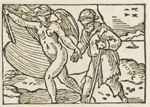
Cestuy est fol qui se conduict par Fortune: La Perrière, Le theatre des bons engins (Lyon, 1545), emblem 20 uses the imagery of a blindfolded man being led by the hand by blindfolded Fortuna
Iconclass: 31A41111 the blind leading the blind (Matthew 15:14) 52AA5:49A Ignorance; 'Ignoranza', 'Ignoranza di tutte le cose', 'Ignoranza in un ricco senza lettere' (Ripa)❧education
Loci Communes: Caecutientia (Poor eyesight, near-blindness, Mauvaise vue)
I viii 41 Caeca speculatio A blind man's watch
Αλαοσκοπιὴ, id est, Caeca speculatio, composita Graecis est dictio, ἀπὸ τοῦ λάειν, quod est, videre, inde ἀλαὸς caecus, & σκοπεῖν, id est, inspicere. Ita Suidas, ex Homero citans. Etymologus addit alias coniecturas ex Methodio citans idem dictum. Suidas proverbialem dictionem admonet, quoties aut connivent, quibus datum est negocium, aut ipsi nihil vident, quibus observandi partes sunt delegatae. Translatum ab iis, qui è speculis sublimibus diligenter circumspectant undique, & quod viderint, aliis renunciant. Homerus aliquoties hoc habet, Οὐ δ᾽ ἀλαοσκοπιὴν εἶχε, quod Etymologus citat ex Methodio. Pro eo, quod est, haudquaquam caecutienter speculatus est. Uti conveniet, quoties significabimus aliquem rem sagaciter odoratum, ac deprehendisse. Tanquam si dicas, episcopos ad caetera supinos ac caecutientes, si quid extiterit unde speretur quaestus nonnihil, ibi οὐχ᾽ ἀλαοσκοπιην ἔχειν. Aut contra, si quis erat falsus, aut hallucinatus, ταυτῃ μὲν ἀλαοσκοπιὴν εἰχες..
Ἀλαοσκοπίη, A blind man's watch, is a Greek compound noun alaoskopie formed from laein to see, whence alaos unseeing or blind, and skopein to look or keep watch. So Suidas, citing Homer. The author of the Etymologicum adds other suggestions, citing the same expression from Methodius. Suidas tells us that it is a proverbial way of referring to those who either close their eyes when some task has been entrusted to them or observe nothing when they have been posted to keep watch. The metaphor comes from men who from some lofty watch-tower keep a careful look-out all round and report to others what they have seen. Homer in several places has the phrase oὐδ᾽ ἀλαοσκοπίην εἶχε, which the Etymologicum cites from Methodius, for 'Nor did he keep a blind man's watch.' This will be suitably used when we wish to convey that some clue has been skilfully followed up and the thing laid bare; if, for instance, you were to say that bishops, inactive and short- sighted in other respects, 'keep no blind man's watch' where there is any prospect of material advantage, or in the opposite sense to a victim of deception or hallucination, 'In this you were keeping a blind man's watch.'
Facsimile: 
Iconclass: 31A4111 blind, blindness 45B31 guard duty, keeping sentry 52AA23 Inattention
Loci Communes: Caecutientia (Poor eyesight, near-blindness, Mauvaise vue)
I viii 42 Sine cortice nabis You shall swim without cork
Sine cortice nare dicuntur, qui iam per aetatem non egent custode morum; aut qui eò doctrinae processerunt, ut iam praeceptorum opera non habeant opus. Horatius: Simul ac duraverit aetas Membra, animumque tuum, nabis sine cortice. id est, Citra custodem ac paedagogum ipse te reges ac moderaberis. Acron proverbii admonet: putatque metaphoram mutuo sumptam à iuvenibus, qui cum primitus natare discunt, corticibus, aut suberibus ventri subligatis natant: deinde exercitatiores citra huiusmodi adminicula natare incipiunt. Plautus in Aulularia: Quasi pueris qui nare discunt, scyrpea induitur ratis, Qui laborent minus, facilius ut nent, & moveant manus. Est autem Graecis φελλὸν sive φέλλος, nam varie scribunt, quod Latini vertunt suber, sic enim vertit Theodorus. Cortex est arboris semper fluitans, & ob id aptus navibus praesertim ancoralibus, (indicat enim ancorae locum, ut à nautis caveatur) & piscantium tragulis: sustinet enim summos retium funes: utilis & cadorum obturamentis, postremo & foeminarum calceatui mensibus hybernis, unde ioco proverbiali apud Graecos cortices arborum dicuntur: nunc non pudet viros aestivis mensibus tali uti calceatu. Meminit Plinius libro xvi. cap. viii. Lucianus in Veris narrationibus narrat φελλόποδας, unde Graeci φελλεύειν dicunt supernatare. Et φελ- λεῖς loca quae paullulo terrae tegunt saxa.
People are said to swim without cork who are old enough not to require a supervisor for their conduct, or who have reached a level of knowledge at which they no longer need the help of teachers. Horace:
Once time's matured your body and your mind,
You shall swim free and leave your cork behind,
meaning, you shall govern yourself, be your own master, with no tutor and supervisor. Acron points out the proverb, and thinks the image borrowed from young people who in their first swimming-lessons take to the water with sheets of cork tied round their waists and then, when they have gained more experience, begin to swim with no such supports. Plautus in the Aulularia: 'As boys learning to swim have a raft of reeds to halve their trouble; they can swim more easily and use their arms.' The Greek phellon or phellos (the spelling varies), the Latin suber (so Theodorus renders it), is the bark of a tree which always floats, and is therefore useful especially for ships at anchor, for it marks the position of the anchor so that sailors can avoid it; also for fishermen's dragnets, for it supports the cords at the edge of the net. It is used also for the bungs of casks, and for the shoes women wear in the winter, which are therefore traditionally given the humorous name of tree-bark in Greek; nowadays men are not ashamed to wear similar footgear in summer. This is mentioned in Pliny, book 16 chapter 8. Lucian in his Verae historiae tells of a people called Corkfeet, and hence the word phelleuein, to float like a cork, and phelleis are regions where a thin layer of soil overlies the rock.
Facsimile:
Iconclass: 31A2773 swimming (movement in water) 25GG22(CORK) (non-fruit) products of fabulous plants or trees (CORK) 51E1 Independence, Autonomy
Collectanea (1500): 441
Loci Communes: Cum auxilio ; citra auxilium (With help; without help, Avec aide ; sans aide); Prudentia senilis (The prudence of old age, Prudence de la vieillesse)
I viii 43 Ut possumus, quando ut volumus non licet As best we can, since as we would we may not
Ζῶμεν γὰρ οὐκ ὡ θέλομεν, ἀλλ᾽ ὡς δύναμεθα. id est, Non uti libet, sed uti licet sic vivimus. Senarius proverbialis, quo monemur tempori, ac necessitati serviendum esse. Terentiana Mysis in Andria rogata, quam Athenis vitam agerent, verecunde seni meretricium quaestum confitens, Ut quimus aiunt: quando ut volumus non licet. Caecilius in Plotio, apud Donatum: Vivas ut possis, quando non quis ut velis. Item Plato in Hippia maiore: Τοιαῦτα ὦ ἱππία τὰ ἡμέτερά ἐστιν οὐχ οἷα βούλεταί τις (φασὶν ἄνθρωποι ἑκάστοτε παροιμιαζομενοι) ἀλλ᾽ οἷα δυνάται. id est, Eiusmodi sunt Hippia res nostrae, non quales quis optaret, sicuti proverbio dicitur usquequaque, sed quales esse possunt. Allusit eodem & in Cratylo: ὅπως ἄν δυνώμεθα προεί- ποντες. id est, Praefati, utcunque potuerimus. Sic enim modestiae gratia praefantur, qui negocium aliquod suscipiunt. Huc pertinent & illae Graecorum sententiae: Βουλόμεθα πλουτεῖν πάντες, ἀλλ᾽ οὐ δυνάμεθα. id est, Omnes cupimus, at non licet ditescere. Et, Πάντες καλῶς ζῆν θέλομεν, ἀλλ᾽ οὐ δυνάμεθα. id est, Bene vivere omnes volumus, at non possumus. Nemini sua fortuna satisfacit, & aliud votis destinat, quod tamen haud scio an quisquam unquam sit assecutus. Usus erit, ubi significabimus nostra nobis parum placere, verum facultatem deesse, non animum: videlicet fortunam esse parum commodam, aut vitam non satis integram, aut epistolam non satis eruditam.
Ζῶμεν γὰρ οὐκ ὡς θέλομεν, ἀλλ᾽ ὡς δυνάμεθα., We live not as we would but as we can. An iambic line in use as a proverb, which reminds us that we are the slaves of time and necessity. Mysis in Terence's Andria, when asked what sort of life they were living in Athens, modestly confessed to the old man that she was making her living as a street-walker in the words: 'As best we can, since as we would we may not.' Caecilius in the Plocium, quoted by Donatus: 'You can't live as you would; live as best you can.' Plato too in the Hippias major: 'Our way of life, my dear Hippias, is, as people always say, quoting the proverb, not as we would but as we can.' He alludes to it in the Cratylus too: 'Saying first, As best we can'; for so people often start by saying when they begin on something, in order not to sound presumptuous. Here too belong those proverbial sayings in Greek 'We all would fain be wealthy, if we could' and 'We all wish to live well, but cannot so.' No one is happy with his lot; he has his eye on something else, yet I doubt if anyone ever achieves it. This we can use when we wish to indicate that we are not satisfied with what we have, and that it is opportunity and not ambition that is lacking: fortune is not as kind as we could wish, or life is not really honourable, or the letter we have written not really stylish.
Facsimile:
Iconclass: 54F Fortune and Misfortune 54F1:54FF1 Success; 'Evento buono' (Ripa)❧Failure 54F12 Luck, Fortune, Lot; 'Fato', 'Fortuna', 'Fortuna aurea', 'Fortuna buona', 'Fortuna pacifica overo clemente', 'Sorte' (Ripa) 54F122 Vicissitudes of Life
Collectanea (1500): 410
Loci Communes: Proximis utendum (One must make use of one's neighbors, Il faut se servir de son prochain)
I viii 44 Atheniensium inconsulta temeritas Thoughtless and headstrong like Athenians
Η τῶν ἀθηναίων δυσβουλία. id est, Atheniensium inconsulta temeritas. Quadrat in eos, quibus male consulta vertunt bene. Nam id olim vulgo tributum est Atheniensibus, quod ipsi quidem socorditer consultarent, parumque prospicerent, verum Minerva civitatis prae ses, illorum male instituta, bene vertere consuevit. Simile est huic, quod hodieque vulgo dicunt: Est fortunatior quàm prudentior, de quopiam non suapte industria, sed fortunae commoditate successu rerum utente. Eupolis apud Suidam & Athenaeum libro decimo, in Atheniensium mores: Οὕς δ᾽ οὐκ ἄν εἴλεθ᾽ οὐ δ᾽ ἄν οἴνπτας πρὸ τοῦ, Νηνὶ στρατηγοὺς λεύσομεν. ὦ πόλις πόλις Ως εὐτυχὴς εἶ μᾶλλον ἢ καλῶς φρονεῖς. id est, Quos antehac nec praefici convivio Quisquam tulisset, nunc videmus scilicet Belli duces. ô civitas, ô civitas, Fortuna ut es feliciore quàm sapis. Porro Atheniensium incogitantiam notat & Aristophanes hoc versu in Nubibus: Φασὶ γὰρ δυσβουλίαν τῇδε τῇ πόλει προσεῖναι. id est, Laevae consiliae ferunt huic adesse civitati. Quo loco interpres adscribit fabulam huiusmodi, Cum Neptunus à Minerva victus, non posset Attica regione potiri, iratus immisit illis δυσβουλίαν. id est, laeva stultaque consilia: hoc deinde vitium Atheniensibus ἐπιχώριον, hoc est, vernaculum fuisse. Idque Minervam non mutasse: caeterum quod illi male statuissent, illa in bonos exitus vertebat. Allusit huc idem Aristophanes in Vespis, Γλαῦξ γὰρ ἡμῶν πρὶν μάχεσθαι τὸν στρατὸν διέπτατο. id est, Ululae nostras ante pugnam pervolarat copias. Eodem leviter allusisse videtur Demosthenes, cum ait in Olynthiaca prima, in ipsa statim fronte: Αλλὰ καὶ τῆς ὑμετέρας τύχης ὑπολαμβάνω, πολλὰ τῶν δέοντῶν ἐκ τοῦ προαχρῆμα ἐνίοις ἄν ἐπελθεῖν εἰπεῖν. id est, Sed & vestrae fortunae arbitror, nonnullis ex tempore venire in mentem, ut dicant ea, quae ad rem pertinent. Verum hoc vitii manifestius exprobrat illis in alia quadam oratione, dicens, alios homines solere consultare prius, ac deinde rem aggredi: contrà Athenienses post rem factam tum consultare. Theognis: Πολλοί τοι χρῶνται δειλαῖς φρεσὶ, δαίμονι δ᾽ ἐλθῷ, Οἷς τὸ κακὸν δοκέον γίγνεται εἰς ἀγαθόν id est, Multis laevae quidem mens est, sed numina dextra, Quis bene vertit & id quod temere instituunt. Aristophanes in Concionatricibus: Λόγος τέ τοι τίς ἐστὶ τῶν γηραιτέρων, 0σ᾽ ἄν ἀνόητα καὶ μωρὰ βουλευσώμεθα, Απαντ᾽ ἐπι τὸ βέλτιονἡμῖν ξυμφέρειν. id est, Est sermo quidam ductus à maioribus Fatua licet statuamus ac vaecordia In melius attamen omnia nobis cedere. Medium carmen Graecum carebit vitio, si tollatur coniunctio καὶ, quanquam editio Aldina habebat. Et apud Livium subinde nominatur fortuna Romana. Nec abhorret hinc, quod alibi retulimus, ἕδοντι κύρτος αἱρεῖ, id est, Dormienti rete tollit.
Ἡ τῶν Ἀθηναίων δυσβουλία., Thoughtless and headstrong like Athenians, is suitable for those whose designs are not well thought out, but turn out well. It used to be commonly said of Athenians that they took no trouble when making plans and used little foresight, but that Minerva the city's patron goddess usually gave their ill-advised policies a happy outcome. It resembles a phrase which is still in popular use, 'He does it more by good luck than good management,' when a man enjoys success not through his own hard work but by the favour of fortune. Eupolis, quoted by Suidas and by Athenaeus book 10, speaking of the Athenian character:
Those whom of old no man would have elected
Wine-tasters at a party, now we see
Chosen as generals. O city, city!
How fortunate you are, rather than wise!
The fecklessness of the Athenians is also blamed by Aristophanes in this line in the Clouds: 'For unwisdom, so they say, ever waits upon this city.' On which passage the scholiast contributes the following story. When Nep- tune, having been defeated by Minerva, could not possess himself of Attica, in his resentment he sent upon them the curse of dysboulia, folly and unwisdom, and thereafter this defect was endemic in the Athenians, nor did Minerva alter this; instead, she saw to it that whenever they made a wrong decision, it turned out all right. Aristophanes alluded to this again in the Wasps: 'Before the fray was seen an owl that flew between our ranks.' And I think I see a passing allusion to the same thing in Demosthenes, when he says in his first Olynthiac, at the very beginning: 'But I suppose it to be part of your good fortune that some people take it into their heads on the spur of the moment to say many of the things that need saying.' But he criticizes them for this fault more directly in another speech, when he says that other men normally consider before they act, but the Athenians, reversing this, act first and consider afterwards. Theognis: 'And many fools find fortune is their friend, / When bad decisions come to a good end.' Aristophanes in the Ecclesiazusae:
There is a story that old people tell:
Fatuous and foolish as our plans may be,
All turn to our advantage in the end.
The middle line in the Greek will run correctly if we remove the conjunction kai, though it was in the Aldine text. And Livy from time to time speaks of 'the fortune of Rome.' This does not differ greatly from one I have recorded elsewhere: The sleeper's net makes a catch.
Facsimile: 
Iconclass: 54F1 Success; 'Evento buono' (Ripa) 54F12 Luck, Fortune, Lot; 'Fato', 'Fortuna', 'Fortuna aurea', 'Fortuna buona', 'Fortuna pacifica overo clemente', 'Sorte' (Ripa) 54F122 Vicissitudes of Life 61E(ATHENS) names of cities and villages (ATHENS) 52DD2 Unclarity, Imprecision
Loci Communes: Fortunata stultitia (Fortunate foolishness, Sottise heureuse)
I viii 45 Ubi non sis qui fueris, non est cur velis vivere When you are not the man you were, why wish to go on living?
Cicero in epistola quadam lib. vii. Familiarium, sententiam huiusmodi veteris proverbii citat. Vetus est, inquiens, Ubi non sis qui fueris, non esse cur velis vivere. Sumptum est à communi mortalium affectu, qui nihil minus tolerandum putant, quam ut inter eos neglecti, aut etiam notati vivant, apud quos aliquando cum splendore atque autoritate sint versati. Adeo ut exilium ubivis praeoptent potius, aut etiam è vita decedere, quam mutatae fortunae pudorem perpeti. Id quod notavit Euripides in Hecuba, quam ita facit loquentem, ut dicat, sibi pudorem in causa esse, quo minus obtueatur Polymnestorem. Pudere enim in tam calamitoso rerum statu, conspici ab eo cui aliquando visa sit florens. Idem in Alcestide: Τί μοι ζῆν δῆτα κύδιον, φίλοι, Κακῶς κλύοντι, καὶ κακῶς πεπραγότι; id est, Post hac, amici, cur mihi sit vivere Cordi, male audienti, & affecto male? Ad eandem facit sententiam, quod apud Sophoclem ait Aiax, Αἰσχρὸν γὰρ ἄνδρα τοῦ μακροῦ χρήζειν βίου, Κακοῖσιν ὅς τις μηδὲν ἐξαλλάσσεται. id est, Est turpe, vitam prorogare longius Quisquis malis nil explicat sese suis. Item paulo post in eadem tragoedia, Αλλ᾽ ἢ καλῶς ζῆν,ἢ καλῶς τεθνηκέναι Τὸν ευγγενῆ χρη. id est, Verum aut decore vivere ingenuum virum Decet, aut decore oppetere mortem. Fertur hic quoque senarius, Ζῆν αἰσχρὸν οἷς ζῆν ἐφθόνησεν ἡ τύχη. id est, Fortunae quibus invidit aspera vivere, Hos indecorum ac turpe velle vivere. Sed propius ad Ciceronis sententiam accedit locus ille apud Euripidem in Hecuba, ubi Polyxena ratiocinatur, sibi non esse causam cur optaret vivere, quod omnibus ornamentis pristinae fortunae iam esset spoliata. Τί γὰρ με δεῖ ζῆν; ᾗ πατὴρ μὲν ῆν ἄναξ Φρυγῶν ἁπάντων, τοῦτό μοι πρῶτον βίου. Επειτ᾽ ἐθρέφθην ἐλπίδων καλῶν ὑπὸ Βασιλεῦσι νύμφη. id est. Quae nanque vitae causa iam superest mihi? Ut cui pater rex omnium fuerit Phrygum. Etenim rudis mi lucis hoc initium, Dein spes in amplas educabar, regibus Desponsa. Et reliqua quae sequuntur. Sunt enim longiora quàm ut hic putem esse percensenda.
Cicero in one of his letters, in book 7 of his Letters to Friends, cites the advice of an old proverb which runs like this: 'There is an old saying, When you are not the man you were, why wish to go on living?' It is drawn from a common experience in the life of men; they think nothing is harder to bear than to live neglected or even discredited in a society in which they were once distinguished and influential, so much so that they would choose any form of exile or even extinction, rather than support the disgrace of a change of status. This is remarked by Euripides in the Hecuba, when he puts words into her mouth to the effect that shame is the reason why she does not look Polymnestor in the face; for she is ashamed to be seen in her present distressful state by the man who once knew her in prosperity. Again in the Alcestis: 'What profits it me then, my friends, / To live alike dishonoured and distressed?' The same sentiment is expressed in Sophocles by Ajax' words: 'Base is the man who would prolong his life, / When there's no respite in his misery.' And a little further on in the same play: 'But it befits the noble-minded man / To live with honour or with honour die.' Then there is a proverbial line: 'When fortune grudges life, 'tis base to live.' But Cicero's feelings are more closely approached by that passage in Euripides in the Hecuba where Polyxena argues that she had no reason to wish to go on living when she had already been deprived of all the privileges of her original station in life:
Why must I live? My father once was king
Of all the Phrygians: thus my life began.
By what fair prospects was I nurtured then,
Bride of a royal house.
and what follows; for it is too long, I think, to be set out here.
Facsimile: 
Iconclass: 54F122 Vicissitudes of Life 59BB3 Dishonour, Disrepute
Collectanea (1500): 276
Loci Communes: Fortunae commutatio (Change of fortune, Changement de fortune)
I viii 46 Premere pollicem. Convertere pollicem Thumbs down. Thumbs up
Antiquitus in pollice favoris erat studiique significatio. Qui faveret, pollicem premebat: qui minus faveret, pollicem convertebat. Qui gestus in proverbium abierunt, ut iam premere pollicem dicatur, qui quoque pacto favet: convertere qui male vult. Plinius lib. xvii. cap. ii. Pollices, cum faveamus, premere etiam proverbio iubemur. Iuvenalis Converso pollice vulgi, Quemlibet occidunt populariter, Horatius Utroque pollice dixit, pro, summo favore, Consentire suis studiis qui crediderit te, Fautor utroque tuum laudabit pollice ludum. Porphyrion enarrat hunc ad modum: Utroque pollice, id est, utraque manu, συνεκδὸχικῶς, Synecdoche à parte totum. An qui vehementius laudat, manus iungens, iungit pollicem cum proximo? Acron hoc pacto, Utroque pollice, συνεκδὸχικῶς, manu utraque, sublataque pariter ac saepius mota. Hic enim gestus valde laudantium est. Sanè utrunque, sicut ex iis coniici licet, proverbii origo fugit.
In ancient times the thumb was used as an indicator of interest and support. The supporter used to turn his thumb down; the man who did not support turned his thumb up. These gestures passed into a proverb, so that now to turn the thumb down is used of support in any context, and to turn it up of hostility. Pliny, book 27 chapter 2: 'Our thumbs should be turned down when we support someone, and there is actually a proverb which prescribes this.' Juvenal: 'And if the mob have given their Thumbs up, / They kill whome'er they like to please the crowd.' Horace uses 'both thumbs' to express whole-hearted support: 'And if he thinks that you his taste approve, / With both his thumbs he'll sponsor what you love.' Porphyrion expounds as follows: 'With both his thumbs means With both hands, the part being put for the whole by the figure of speech called synecdoche. Perhaps because a speaker who delivers an encomium closes his hands, joining the thumb to its next neighbour.' Acron in this fashion: 'With both his thumbs means by the figure of speech synecdoche With both hands, raised equally and moved to and fro; for this is the gesture of those who deliver a panegyric' It is pretty clear, as we can infer from their words, that both of them have missed the origin of the proverb.
I viii 47 Faciem perfricare. Frontis perfrictae To wipe off your blushes. To put a bold front on it
Frons habita est antiquitus pudori sacra. Et facies item, id quod & proverbio testatum est, quo dicunt, Pudorem esse in oculis. Inde Frontem aut faciem proverbio perfricuisse dicuntur, qui pudorem omnem dedidicerunt, velut absterso manu à vultu pudore. Translatum apparet à gestu quorundam, qui dicturi facturive quippiam apud ignotos, manu faciem perfricant: id quod rusticani cuiusdam pudoris indicium est, quem coneris pervincere. Hunc gestum Quintilianus notat inter vitia pronunciationis libro undecimo: Vitiosa enim, inquiens, sunt illa, intueri lacunaria, perfricare faciem, & quasi improbam facere. Plutarchus scribit hunc gestum peculiarem fuisse M. Tullio, ut dicturus, laeva faciem demulceret. Alioqui non inficias it ipse Cicero, initio dicendi trepidantiorem fuisse sese. Fabius libro nono, citat haec ex Calvo: Perfrica frontem, & dic te digniorem qui praetor fieres, quam Catonem. Significat id esse dictu vehementer improbum. Plinius in praefatione naturae historiarum: Perfricui faciem, nec tamen profeci, quando alia via ingens occurris. M. Tullius Tuscul. quaest. lib. iii. in eundem sensum dixit, Perfricare os: Quid tergiversamur Epicure? nec fatemur eam nos dicere voluptatem, quam tu idem, quum os perfricuisti, soles dicere? Seneca libro v. epistola xl. Perfrices frontem oportet, & ipse te non audias. Huc pertinent etiam illa, quod Effrontes appellamus inverecundos. Et, Qua fronte audebis haec facere? Quod enim Horatius dixit: Clament perisse pudorem Cuncti penè patres. Id Persius imitatus: Exclamet, inquit, Melicerta perisse Frontem de rebus. Item illa: Quo ore obiurgabis filium? Et, Os impudens, os durum, os ferreum, cum impudentiam indicamus. Ovidius: Non tibi plus cordis, sed minus oris adest. Non plus audes aut sapis, sed minus pudet. M. Tullius in Verrem, Os hominis insignemque impudentiam cognoscite. Idem in Philippica quinta, Sed illud os, illam impuritatem. Idem pro C. Rabirio Posthumo, Quod habent os, quam audaciam? Rursus in Oratore, Quod tamen os est illius patroni, qui ad eas causas sine ulla scientia iuris audet accedere. In Philippica undecima, Audisset furentis introitum Dolobellae, vocem impuram, atque os illud infame. Martialis libro 9. Santonica medicata dedit mihi pocula virga, Os hominis, mulsum me rogat Hippocrates. Homericus Achilles Agamemnonem κυνώπην appellat, id est, canino aspectu. & apud eundem: Κυνὸς ὄμματ᾽ ἔχων, κραδίην δ᾽ ἐλαφοιο. id est: Canis habens oculos, cor cervi: impudentiam significans cum timiditate coniunctam. Denique, haud scio an huc pertineat, quod apud Athenaeum in Dipnosophistis adducitur è Cyrenaeo poeta: Τρὶς δ᾽ ἀπομαξαμένοισι θεοὶ διδόασιν ἄμεινον. id est: Porrò ter abstersis divi donant meliora. Subindicat, ni fallor, impudentius id postulare, ut quae sint acta in convivio, narret.
The forehead or front was in old days held to be the seat of modesty, and so was the face, as is shown by the proverbial saying that modesty sits in the eyes. Hence those people are proverbially said to have wiped off the blushes from forehead or face, who have abandoned all modesty, as though they had passed a hand over their faces and removed all sense of shame. The origin clearly is a gesture used by some men who, when they have to say or do something in front of people they do not know, pass a hand over the face, which is a sign of some sort of countrified shyness which you are trying to overcome. Quintilian criticizes this gesture among faults of delivery in book 11: 'Among other tricks to be avoided,' he says, 'are gazing at the ceiling and rubbing your face as though to wipe away your blushes and leave it brazen.' Plutarch writes that it was a gesture characteristic of Cicero to pass his left hand over his face as he began; and in any case Cicero himself does not deny that he was somewhat nervous when beginning to speak. Quintilian in his ninth book cites from Calvus the words 'Wipe off your blushes and confess that you are more worthy than Cato to be elected praetor/ his point being that to say such a thing would be highly arrogant. Pliny in the preface to his Natural History: 'I put a bold face on it, but I made no progress, for I am brought up face to face with your greatness in another way.' Cicero in book three of his Tusculan Questions used the words perfricare os, to put a bold face on something: 'Why do we beat about the bush, Epicurus? Why not admit that we use the word pleasure in the same way as you habitually do when you put a bold face on it?' Seneca in his Letters, number 40: 'You must wipe off your blushes, and pay no attention to your own words.' Here too belongs that use of 'effrontery,' having as it were no forehead, which we apply to shameless people, and expressions like 'How will you have the face to do this?' When Horace writes 'The fathers almost to a man would cry, / How have we lost all sense of decency!' the echo in Persius takes the form 'Melicertes would exclaim / "No forehead's left in things!"' Also such phrases as 'How will you have the face to rebuke your son?' 'a bold countenance,' 'a harsh face,' 'a countenance of iron,' to suggest lack of a sense of decency. Ovid: "Tis not more heart you have; you have less face,' meaning, you have not more courage or intelligence than other men, but less modesty. Cicero in the Verrines: 'Just see what a cheek the man has, what astonishing impudence!' Again in the fifth Philippic: 'But that cheek, that indecency!' Again in the Pro C. Rabirio Postumo: 'What a brazen face they have, what effrontery!' Again in the De oratore: 'What a face the advocate must have who dares to undertake these cases without any knowledge of jurisprudence!' In the eleventh Philippic: 'He would have heard how Dolabella entered in a rage, his disgusting voice and foul shameless face.' Martial in book 9: 'My doctor gave me drink with wormwood spiced, / And asked (confound his cheek!) sweet wine instead.' In Homer, Achilles calls Agamemnon 'dog-eyed,' meaning shameless as a bitch; and elsewhere he has 'with the eyes of a bitch and the heart of a hind,' to convey a combination of the shameless and the fearful. Lastly, I think perhaps that line belongs here that is quoted by Athenaeus in the Doctors at Dinner from 'the poet of Cyrene': 'To men with face thrice washed god gives good luck.' His suggestion, if I am not mistaken, is that it shows a certain lack of modesty to ask a man to repeat what passed at a wine-party.
Facsimile: 
Iconclass: 57A641 Discretion, Modesty; 'Discretione', 'Modestia' (Ripa) 57AA641 Immodesty 31B625 morphology of facial expression ~ forehead
Loci Communes: Impudentia (Shamelessness, Impudence)
I viii 48 Frontem exporrigere. Frontum contrahere To smooth the forehead. To wrinkle the forehead
Frontem explicare, cum hilarescimus: contrahere, cum ringimur, hoc est, ubi quid molestum est, dicimur. Plinius in lib. 11. Frons & aliis, sed homini tantum tristitiae, hilaritatis, clementiae, severitatis index. Terentius, Exporge frontem. Horatius in Odis, Sollicitam explicuere frontem. Idem alibi, Deme supercilio nubem. Exporrecta fronte, hilariter. Porrectiore fronte necum loquaris oportet, apud Plaut. Obducta fronte, corrugata fronte, contracta fronte, caperata fronte. Plautus: Caperat frons severitudine. Quod quidem à caprinis cornibus translatum volunt. Et, Nubila frons, serena frons, explicata frons.
We are said to smooth the forehead when we are cheerful and wrinkle it when we are vexed, which means that something has annoyed us. Pliny in book 11: 'Other creatures have a forehead, but man alone uses it as an indicator of sadness and cheerfulness, of mercy and severity.' Terence: 'Take those wrinkles from your forehead.' Horace in the Odes: 'Have smoothed care's furrowed forehead,' and in another passage: 'Take that stormcloud from your brow.' 'With unwrinkled brow,' cheerfully. 'With brow unfurrowed you should speak with me' in Plautus. With brow overcast, furrowed, close-drawn, wrinkled. Plautus: 'He wrinkles his brow with severity.' The image is supposed to be that of a he-goat lowering its horns. Also: With cloudy forehead, clear forehead, open forehead.
Facsimile:
Iconclass: 31B625 morphology of facial expression ~ forehead 56BB1 Pain, Sorrow, Sadness; 'Dolore', 'Dolore di Zeusi' (Ripa) 56B1 Pleasure, Enjoyment, Joy; 'Allegrezza', 'Allegrezza da le medaglie', 'Allegrezza, letitia e giubilo', 'Diletto', 'Piacere', 'Piacere honesto' (Ripa)
Loci Communes: Tristitia, laetitia (Sadness, joy, Tristesse, joie)
I viii 49 Attollere supercilium, ponere supercilium To raise the brows, to relax the brows
Plinius, Supercilia, inquit, homini & pariter & alterne mobilia. Et in his pars animi. Negamus, annuimus. Haec maximè indicant fastus. Superbia aliubi conceptaculum, sed hic sedem habet: in corde nascitur, huc subit, hic pendet. Nihil altius simul abruptiusque invenit in corpore ubi solitaria esset. Hactenus ille. Inde proverbio. Attolli supercilium dicimus, arrogantiam significantes: adduci supercilium, fastidium indicantes. Citat & Suidas, ἀνασπῶντες τὰς ὀφρῦς, καὶ τὰς γνάθους φυσῶντες. id est. Contractis superciliis & inflatis buccis. Quod Graeci unico verbo dicunt κατοφρυᾶσθαι. Lucianus à persona ad rem transtulit, sermonem arrogantem, ac superciliosum appellans κατωφρυωμένος λόγους. Poni dicitur supercilium, cum à fastu receditur. Et Fastosos homines superciliosos nominamus. Denique simpliciter ipsum Supercilium pro fastu atque arrogantia ponitur. Philosophorum supercilium quis ferat? Porrò quod Plinius ait, superciliis annuere nos, atque renuere, Homerum secutus est, apud quem versus hic aliquoties legitur: Η καὶ κυανέῃσιν ἐπ᾽ ὄφρυσι νεῦσε κρονίων. id est: Sic ait, atque superciliis pater annuit atris. Id aemulatus Maro: Sic ait, & totum nutu tremefecit Olympum.
'The eyebrows in man' say Pliny 'are movable, both together and separately, and in them is some share of the mind: with them we signify No and Yes. The brows are the chief gauge of disdain. Pride has its place of origin elsewhere, but in the eyebrow it is at home; born in the heart, it moves upwards and haunts the brows. It has found no part of the body at once so lofty and so steep in which to live its lonely life.' So Pliny. Hence we speak proverbially of raising the brows, when we wish to convey arrogance; of knitting the brows when we wish to indicate contempt. Suidas too cites a phrase 'knitting the brows and inflating the cheeks.' Greek has a single word for it, katophruasthai, which Lucian transferred from the person to the thing when he called arrogant and supercilious language 'brow-knit words.' 'To relax the brow' is used when a man abandons his disdain. And we call disdainful people 'supercilious.' In fact, Latin uses supercilium, the word for 'eyebrow,' by itself for disdain and arrogance. 'Who can tolerate supercilium' they say 'in philosophers?' As for Pliny's saying that we use our brows to say yes and no, he is following Homer, in whom we find several times the line 'So spake the son of Cronos and nodded in assent with his deep dark brows.' Which Virgil imitated in 'He spake, / And all Olympus trembled at his nod.'
Facsimile:
Hoc omnis caro: Camerarius, Symbolorum et Emblematum Centuria(e) (Nürnberg, 1590, 1595, 1596, 1604), emblem 98: its subscriptio quotes the adage
Iconclass: 31B6215 frowned eyebrows 31B6216 lifted eyebrows 57AA644 Arrogance; 'Arroganza' (Ripa) 57AA645 Boast; 'Iattanza' (Ripa) 57BB21 Contempt
Collectanea (1500): 246
Loci Communes: Arrogantia jactantiaque (Arrogance and boastfulness, Arrogance et vantardise)
I viii 50 Connivere To wink
Proverbiali metaphora connivere dicuntur, qui prudentes culpam, quam intelligunt, indulgentia tamen ac studio dissimulant, quasique non vident id quod vident, quemadmodum vulgo loquuntur: Ut parentes ad leviora quaedam liberorum vitia connivent. Et, Natura ad quaedam adolescentiae vitia quasi connivet. Et maritis ad quaedam uxorum errata connivendum. & corrupti iudices, in causa connivent. Hallucinamur imprudentes, caecutimus nolentes, connivemus data opera. Exempla crebra sunt in actionibus Ciceronis. Est autem connivere, subinde claudere oculos, quemadmodum faciunt ii, qui propter imbecillitatem visus non ferunt lumen solis, at ii facile falluntur. Contra, qui ἀτενὲς ἐσορῶσι. id est, qui fixis aspiciunt oculis, hos nihil potest suffugere. Quod nos connivere dicimus, Graeci vocant tum σκαρδαμυκτεῖν, tum ἰλλοπεῖν. Unde est illud apud Aristophanem in Equitibus: βλέψον ες ἐμ᾽ ἀσκαρδάμυκτος:. id est, Aspice in me inconniventer, aut nihil connivens. Quod nos hallucinari, illi παραβλέπειν: quod nos caecutire, illi ἀμβλυώττειν. Quae quidem omnia, si transferantur ad res animi, pertinebunt ad proverbiorum rationem.
To wink at something is a metaphor which has become proverbial, used of those who knowingly conceal a person's guilt, which they clearly appreciate but through prejudice or partisanship pretend it does not exist, and who, as the phrase goes, seem not to see what they do see. Parents, for example, wink at some of the faults of adolescence, and husbands ought to wink at some of the errors of their wives, and corrupt judges wink in the hearing of a case. Hallucination comes on one unawares, blindness strikes an unwilling victim, one winks deliberately. There are examples in plenty in Cicero's speeches. To wink is to close the eyes intermittently, as people do who have weak sight and cannot stand direct sunlight; and they are easily deceived. On the other hand, those who gaze fixedly at an object do not miss anything. What we call winking is in Greek sometimes σκαρδαμυκτεῖν, sometimes ἰλλοπεῖν; whence Aristophanes' phrase in the Knights 'Look at me ἀσκαρδάμυκτος:, without winking.' Hallucination is παραβλέπειν, blindness ἀμβλυώττειν. All of these, if transferred to the things of the mind, will fall to be treated as proverbs.
Facsimile: 
Iconclass: 31B62171 one eye closed, winking 54AA1 Inactivity 54AA2 Negligence; 'Negligenza' (Ripa)
Collectanea (1500): 247
Loci Communes: Simulatio, dissimulatio (Pretense, dissimulation, Simulation, dissimulation)
I viii 51 Bibe elleborum Drink hellebore
Aristophanes in Vespis, πῖθ᾽ ἐλλέβορον. id est, Bibe elleborum. Quo dicto significat insanire quempiam. πῖθι vero dixit, non πῖνε: quod, ut admonet interpres, hoc ad simplicem potum referunt grammatici, illud ad potionem pharmacorum. Idem ostendit & verbum hinc esse fictum, ἐλλεβοριᾷν καὶ ἐλλεβορίζειν, pro insanire. Quique parum animo constant, ἐλλεβορου δεῖσθαι, id est, Elleboro opus habere dicuntur. Atque iidem apud Latinos etiam autores, elleborum edere, & helleboro sese purgare proverbio iubentur: propterea quod antiquitus plurimus usus fuerit huius herbae ad levanda mentis, & capitis vitia. Plinius libro Naturalis historiae vicesimoquinto, capite quinto, ellebori duo facit genera, sicut & Dioscorides libro quarto: Candidum, quod Italia veratrum album appellat: & nigrum, quod alii vocant entomon, etiam si in Dioscoride atomon legimus. Alii polyrrhizon, plerique Melampodion vocant, ab inventore Melampode vate,vel eiusdem nominis pastore, quod is animadvertisset eo purgari capras: deinde dato eorum lacte sanavit Proetidas furentes. Sed Aulus Gellius Plinium secutus ait, coloris discerniculum non in semine, neque in virgultis, sed in radice apparere. Candido vomitiones cientur, eoque stomachum & ventrem superiorem purgat. Nigro alvus inferior diluitur: utriusque periculosa sumptio, sed albi ut praestantior, ita periculosior. Quod ipsum tamen adeo vulgatum esse coepit, ut plerique, studiorum gratia, ad pervidenda acrius, quae commentabantur, saepius sumptitaverint. Nominatim autem Carneades Academicus scripturus adversum Stoici Zenonis libros, candido elleboro superiora corporis purgare solitus legitur, ne quid ex corruptis in stomacho humoribus, ad domicilia usque animi redundaret, & instantiam, vigoremque mentis labefaceret. Nigri vero religiosum etiam usum fuisse testatur Plinius. Siquidem hoc & domos suffiebant, purgabantque, aspergentes & sese, & pecora. Tum sollenni cum precatione colligebatur & superstitiosius, ut meminit etiam Theophrastus. Primum enim gladio circumscribebatur: deinde, qui succisurus erat, exortum solis spectabat, precabaturque, ut id sibi liceret, diis concedentibus, facere. Observabat & aquilae volatum, quae si propius advolasset, moriturum eo anno qui succiderat, augurium erat. Ex Plinio igitur colligere licet, utrumque genus, tum candidum, tum nigrum, cum ad alia complura mala, tum adversus melancholiam remedium efficax habere. Unde et proverbium natum, quod tamen varie effertur. Plautus in Menaechmis, Non potest haec res trium iugerum elleboro obtinerier. Demosthenes Aeschinem in actione monet, ut sese purget elleboro. Lucianus in Dialogo Menippi ac Tantali: ληρεῖς ὦ τάνταλε, καὶ ὡς ἀληθῶς ποτου δεῖσθαι δοκεῖς ἀκρατουγε ἐλλεβόρου νὴ δία. id est, Desipis Tantale, &, ut vere dicam, elleboro poto tibi est opus, eoque sanè meraco. Et apud eundem Rhadamanthus, in secundo Verarum narrationum libro, ita pronunciat, ut Aiax traditum ab Hippocrate elleborum bibat, prius quàm in heroum consortium recipiatur, alludens ad eius insaniam. Ibidem legitur, non licuisse Chrysippo in beatorum insulam immigrare, nisi quartum iam sumpto elleboro. Nimirum illuc alluditur, quod ter in vita bibisse memoratur, ut testatur etiam Petronius in carmine quodam. Horatius, Expulit elleboro morbum bilemque meraco. Ovidius in epist. Ponticis lib. 4. I bibe, dixissem, purgantes pectora suecos, Quicquid & in tota nascitur Anticyra. Persius: Anticyras melior sorbere meracas. Insanum significans. Ausonius ad Theonem: Elleborumque bibas Samii Lucumonis acumen.
Aristophanes in the Wasps: πῖθ᾽ ἐλλέβορον, Drink hellebore; by which remark he indicates that someone is mad. He uses pithe and not pine because, as the scholiast tells us, the latter form of the imperative is referred by scholars to ordinary drinking, and the former to the drinking of medicine. He also shows that two verbs, elleborian and elleborizein, were formed from this, indicating insanity, and those who are nearly out of their minds are said to 'need hellebore.' In Latin authors too such people are proverbially told to eat hellebore and to purge themselves with hellebore, because of the free use made of this herb in Antiquity for treatment of disorders of the mind and head. Pliny in his Natural History, book 25 chapter 5, makes out that there are two kinds of hellebore, as Dioscorides does in his fourth book; white, which in Italy is called white veratrum, and black, called by others entomon, though Dioscorides' name for it is atomon. Others call it polyrrhizon, but most authors melampodion, from its discoverer the seer Melampus, or from a shepherd of the same name, who had observed that she-goats ate it to purge themselves, and had then cured Proetus' daughters of their insanity by making them drink the milk of these goats. But Aulus Gellius, following Pliny, says that the difference of colour appears 'not in the seed or in the stems, but in the root.' White hellebore provokes vomiting, and thereby purges the stomach and upper intestine; the black form relaxes the lower digestive tract. Both are taken with some risk; but doses of the white, being more powerful, are also more dangerous. Yet this very fact has come to be so familiar that many people for the benefit of their intellectual work have taken fairly frequent doses to clear their ideas. In particular, 'Carneades the Academic philosopher, when preparing to write an attack on the work of Zeno the Stoic,' is said to have had the habit of 'taking white hellebore to purge the upper parts of the body, for fear that some overflow from the corrupt humours in the stomach into the seat of the mind might sap his originality and mental force.' Pliny records that black hellebore was also used in ritual, for they fumigated and purified their homes with it, sprinkling both themselves and their livestock. It was also gathered with solemn prayers and superstitious rites, as we learn from Theophrastus too. First a line was drawn round it with a sword, and then the man who was to cut it faced the sunrise, and prayed that the gods might give him leave to perform the operation. He also watched for the flight of an eagle; for if this should have flown too near him, it was a sign that he who had cut the plant should die within the year. We can therefore infer from Pliny that both kinds, the white and the black, had strong remedial properties against many troubles but especially against the melancholy. Hence too came the proverb, though there are various forms of this. Plautus in the Menaechmi: 'Three acres of hellebore would not settle this.' Demosthenes tells Aeschines in a speech to purge with hellebore. Lucian in a dialogue between Menippus and Tantalus: 'Tantalus, you're mad; you need a drink all right, but my goodness, it ought to be neat hellebore.' Elsewhere, in the second book of his Verae historiae, Rhadamanthus passes judgment that Ajax must drink hellebore administered by Hippocrates before he is allowed to join the company of heroes, alluding to his having gone mad. In the same passage we read that Chrysippus was not allowed as an immigrant into the Island of the Blest until he had finished his fourth course of hellebore. The allusion of course is to the tradition that he had taken it three times while still alive, which is also confirmed by Petronius in verse. Horace: 'Drove off his bile with unmixed hellebore.' Ovid in book four of the Epistulae ex Ponto: 'Try a good purging dose, I would have said, / Anticyra's whole crop, to clear your head.' Persius: 'When neat Anticyras should be your tipple,' meaning the man is mad. Ausonius in his epistle to Theon: 'And drink the hellebore that made / The Samian sage's wits so sharp.'
Facsimile:
Annotation: http://en.wikipedia.org/wiki/Hellebore
Iconclass: 41C12 drinking 25G4(HELLEBORE) plants and herbs: hellebore 31A4640 Madness
Collectanea (1500): 264
Loci Communes: Multi - in stupidos (Many people - against the stupid, Beaucoup de gens - contre les sots)
I viii 52 Naviget Anticyras Let him take ship for Anticyras
Πλεύσειεν εἰς ἀντικύρας. id est, Naviget Anticyras. Horatius eleganter novavit adagii quasi faciem, cum ait in Sermonibus: Naviget Anticyras. Quibus verbis Stoicum insanum significat, quique mentis morbo laboraret, essetque sapientis in dignus nomine, cum nemo sapiens nisi sanus. Dictum est autem eadem figura, qua Graeci dicunt πλεύσειας εἰς μασσυλίαν, id est, Naviges Massyliam. Strabo lib. Geographiae nono, duas Anticyras commonstrat, & in altera, quae sit post Crissam oppidum, elleborum nasci: in altera eiusdem nominis, quae sit ad sinum Maliacum & Oetam montem, optime temperari. Atque in eam quàm plurimis è regionibus adnavigari sanitatis gratia. Pausanias in ultimo libro scripsit, supra Anticyram montes esse magnopere petricosos, in his copiose provenire elleborum: nigro purgari alvum, albo vomitum cieri, ac superiora corporis purgari. Stephanus addit, Anticyrensem quempiam fuisse, qui Herculem, elleboro dato liberarit insania. Horatius: Si tribus Anticyris caput insanabile unquam Tonsori Licino commiserit. Treis Anticyras dixit pro universo elleboro, significans deploratam & immedicabilem insaniam. Simili figura, quos indicant esse parum integrae mentis, & hodie iubent deportari Ghelam. Ad hanc formam pertinent illa, Tonsoris eget, aut curatore est opus. Horatius, Nec tonsore putas nec curatoris egere. Tutores enim dabantur pupillis, curatores mente captis. Sic & Columella lib. primo, capite tertio scribit, Catonem dicere solitum, eum qui agrum incoleret, nec salubri coelo, nec fertilem, velut commotae menti ad agnatos ac gentiles esse deducendum. Varro libro De re rustica 1. cap. 2. Qui salubrem locum negligit, mente captus est, atque ad agnatos & gentiles deducendus. Cicero li. 2. De inventione: Si furiosus existet, agnatorum gentiliumque in eo pecuniaque eius potestas esto. Nam duodecim tabulae furiosis ius adimunt administrandi res suas, & ad gentiles agnatosque transferunt, quemadmodum legimus libro Institutionum primo, titulo de curatoribus, & Pandectarum lib. vigesimoseptimo, titulo ultimo de curatore furiosi. Rursum eiusdem operis lib. primo, titulo duodecimo octavo, de officio praesidis. Et apud Ciceronem lib. 3 Tusculanarum quaest. Qui ita sit affectus, eum dominum esse rerum suarum, vetant 12. tabulae. Verba 12. tabularum sunt haec: Prodigo & furioso bonorum suorum administratio interdicta esto, & in curatione agnatorum sunto.
Πλεύσεις εἰς Ἀντικύρας, Take ship for the Anticyras. Horace gave the adage an elegant face-lift, so to say, when he wrote in the Satires 'Let him take ship for the Anticyras,' using these words to indicate that a Stoic was mad, being mentally deranged and unworthy to be called a wise man, because no one can be wise who is not sane. The expression has the same shape as the Greek Πλεύσειας εἰς Μασσαλίαν,, You should take ship for Marseilles. Strabo in the ninth book of his Geography shows that there are two places called Anticyra, in one of which, beyond the town of Crissa, hellebore is found, while in the other, which has the same name and lies on the Malian gulf near Mount Oeta, it is very well prepared, and people go there from many parts of the world to recover their health. Pausanias in his last book writes that above Anticyra there are very rocky mountains in which hellebore grows in great quantities; the black sort, he says, purges the intestines, the white provokes vomiting and purges the upper parts of the body. Stephanus adds that it was a native of Anticyra who released Hercules from his madness with a dose of hellebore. Horace: 'Who's ne'er asked barber Licinus to crop / A head past cure by three Anticyras.' He has put 'three Anticyras' for 'all the hellebore in the world,' indicating hopelessly incurable insanity. Using a similar metaphor, people still say, when they wish to indicate that someone is not right in the head, that he should be removed to Chela. Under the same formula fall phrases like 'He needs the barber' and 'He needs a trustee.' Horace: 'Needs, as you think, no barber, no trustee'; guardians were provided for infants and trustees for the mentally deficient. So too Columella, book 1 chapter 3, tells us a saying of Cato's that a man who farmed land with an unhealthy climate and low fertility should be reported to his kith and kin as being of unsound mind. Varro Agriculture, book 1 chapter 2: 'He who pays no heed to a healthy climate has something wrong with his head, and should be referred to his kith and kin.' Cicero in book 2 of the De inventione: 'It he prove insane, his kith and kin shall have rights over him and his estate.' For the Twelve Tables deprive the insane of the right to manage their own affairs and transfer this to their kith and kin, as we read in the first book of the Institutes, title De curatoribus, and the twenty-seventh of the Pandects, title De curatore furiosi, and again in book 1 of the same work, title 18 De officio praesidis. Also in Cicero in book 3 of the Tusculan Questions: 'A man so affected is prohibited by the Twelve Tables from being master of his own possessions.' The wording of the Twelve Tables runs thus: 'The spendthrift and the lunatic shall be debarred from disposing of his own estate, and it shall be administered by his kinsmen.'
Facsimile: 
Iconclass: 46C21 ships (in general) 61E(ANTICYRAS) names of cities and villages (ANTICYRAS) 31A4640 Madness
Loci Communes: Multi - in stupidos (Many people - against the stupid, Beaucoup de gens - contre les sots)
I viii 53 Strychnum bibit He has drunk strychnum
Στρύχνον ἔπινεν. id est, Strychnum bibit, in insanos item competit, à strychni herbae natura, quae, vel gustata, statim insaniam parit. Dioscorides in quarto, quatuor strychni genera facit. E quibus postremum μανὶκον vocat. id est, insanum. Plinius lib. vigesimoprimo, cap. trigesimoprimo, cum duo strychni genera salutaria demonstrasset: Tertio, inquit, folia sunt ocymi, minime diligenter demonstranda. Remedia enim non venena tractamus, quippe insaniam facit, parvo quoque succo. Quanquam & Graeci autores in iocum vertere. Drachmae enim pondere lusum pudoris gigni dixerunt, species varias, imaginesque conspicuas obversari demonstrantes. Duplicatum hunc modum, legitimam insaniam facere: quicquid vero adiiciatur ponderi, repraesentari mortem. Hoc est venenum, quod innocentissimi autores simpliciter Dorycnion appellavere ab eo, quod hoc cuspides in praeliis tingeretur, passim nascente. Dioscorides scribit, Strychni radicem cum vino potam, mensura V visa quaedam, ac ludibria non iniucunda parere: duplicato modo sumptam, stuporem triduanum inducere: quadruplicato potam, adimere vitam: remedio esse, si multum ac largiter biberis ac revomueris. Unde mihi magis videtur congruere in φιλάυτους,, & sibi placentes, et, ut Flaccus inquit, sibi pulchros. Nam Theophrastus tradit, qui strychnum ederint, sibi videri pulcherrimos. Cuiusmodi multos homines videmus, qui sibi nulla in re displicere possunt, perinde quasi strychno victitent. Est diversum insaniae genus, quo quidam sibi displicent in omnibus, sed alterum vulgatius est & immedicabilius. Neque vero hoc ego recensuissem in hoc opere, ne videlicet adagia non colligi à me, sed nasci quis calumniaretur, nisi quod Plinius dicens, Graecos in iocum vertisse, satis indicaret, herbae huius naturam in proverbium abiisse.
Στρύχνον ἔπινεν., He has drunk strychnum. Also applicable to the insane, from the properties of the plant strychnon, which if it is so much as tasted causes insanity immediately. Dioscorides in book 4 makes out four kinds of strychnon, of which he calls the last manic, as producing insanity. Pliny, book 21 chapter 31, after showing that two kinds of strychnon are medicinal, continues: 'The third kind has leaves like basil, and need not be described in detail here, for my subject is remedies and not poisons, and this plant causes insanity even with a small quantity of its juice. Though Greek authors have found a humorous side to it; for they have reported that one drachm by weight has comic effects on a man's modesty, and he is haunted by hallucinations of different kinds and vivid images. Double this quantity, they say, causes insanity in the full sense, and any addition to that weight means immediate death. This is the poison which authorities in all innocence have called simply dorycnium, from the fact that it was used in battle for poisoning the points of spears; and it grows everywhere.' Dioscorides writes that the root of strychnon, drunk in wine to the amount of one drachm, produces visions of a sort, and comic effects which are not unpleasant; but doubling the dose induces coma of three days' duration, and to quadruple it causes death. The antidote, he says, is to drink a large quantity freely and vomit it up. This makes me think it a better fit for the self-satisfied and those who are pleased with themselves and, as Horace puts it, 'see a fine fellow in the looking-glass.' For Theophrastus records that those who have eaten strychnon are much taken with their own appearance; and we see plenty of that sort, whose admiration of themselves is unfailing, just as if strychnon were their staple diet. The opposite form of insanity also exists, the victims of which are continually dissatisfied; but this is the commoner kind and the more incurable. I would not in fact have listed this in my work (for I would not like anyone to accuse me of inventing adages rather than collecting them), except that Pliny, by saying that the Greeks thought there was a humorous side to it, showed clearly enough that the properties of this plant had passed into a proverb.
Facsimile:
Annotation: http://collecties.meermanno.nl/handschriften/showillu?id=16399
Iconclass: 41C12 drinking 25G4(STRYCHNON) plants and herbs (STRYCHNON) 31A4640 Madness
Loci Communes: Multi - in stupidos (Many people - against the stupid, Beaucoup de gens - contre les sots)
I viii 54 Ede nasturtium Why can't you eat cress?
Εσθιε κάρδαμον. id est, Ede nasturtium. In socordem, ignavum, hebetem, stupidum, olim dicebatur, propterea quod huic efficaciam inesse credant, erucae contrariam: vim enim vigoremque animi suscitare, Venerem coercere, quum illa ediverso Venerem acuat, vim mentis ebetet. unde & nomen apud Graecos habere videtur κάρδαμον, quasi cor domans. Plinius lib. 19. cap. 8. Nasturtium, inquit, nomen accepit à narium tormento. Et inde vigoris significatio, proverbio id vocabulum usurpavit, veluti torporem excitantis. Graecis à corde nomen habet. Dioscorides tradit, nasturtio vim esse similem erucae & sinapi, quod attinet ad acrimoniam in nares erumpentem. Caeterum quod ait, nasturtio stimulari Venerem, dissentit à Plinio. Aristophanes ἐν θεσμοφοριαζούσαις, ἐχθὲς ἔφαγον κάρδαμα. τί καρδαμίζεισ; id est, Edi heri nasturtia. Quid nasturtiaris? Idem in Vespis, Οξυθύμων καὶ δικαίων καὶ βλεπόντων κάρδαμα. id est, Acrium ac iustorum, & oculis qui exhibent nasturtia.
Εσθιε κάρδαμον, Why can't you eat cress? This was said in old days to a spiritless, lazy, and stupid man, because cress is supposed to contain a principle opposite to that in the plant called rocket. It is thought to excite the powers and activity of the mind and inhibit sexual desire, while rocket is an aphrodisiac and retards the power of thought, whence supposedly its name in Greek, kardamon, the equivalent of cor domans, that which tames the heart or intelligence. Pliny, book 19 chapter 8, says: 'Cress gets its name nasturtium from nostril-torture; and hence to express the idea of energy we have come to use it proverbially, as the name of something that arouses the slothful.' In Greek it gets its name from the word for heart. Dioscorides relates that nasturtium has powers like those of rocket and mustard, so far as concerns the burning sensation that concentrates in the nose. In saying however that cress is a sexual stimulant, he differs from Pliny. Aristophanes in the Thesmophoriazusae: 'I ate cress yesterday; why ply me with cress?' And again in the Wasps: 'Men high-spirited and just men, with the clear cress-eater's eye.'
Facsimile: 
Annotation: http://en.wikipedia.org/wiki/Garden_cress
Iconclass: 25G4(GARDEN CRESS) plants and herbs (GARDEN CRESS) 41C11 eating 52AA1 Stupidity, Poverty of Intellect; 'Stupidità overo Stolidità' (Ripa)
Collectanea (1500): 265
Loci Communes: Multi - in stupidos (Many people - against the stupid, Beaucoup de gens - contre les sots)
I viii 55 Porcum immola Sacrifice a pig
Neque praetereundum existimo, quod Plautus in Menaechmis, porcum syncerum, & sacrum immolare iubet eum, quem mente captum significat. Adolescens, quibus hic preciis porci veneunt sacres, synceri, nummum unum en à me accipe. Iube te piari de mea pecunia: Nam ego quidem insanum esse te certo scio. Opinor quod veterum usu, qui cuiuspiam irati numinis intemperiis ageretur, hoc piaculo se soleat purgare. Idem paulo post in eadem fabula: Nam tu quidem hercle certo non sanus satis Menaechme, qui nunc ipsus maledicas tibi. Iube si sapias, porculum afferri tibi. Horatius in Sermonibus: Immolet aequis Hic porcum laribus. Loquitur de eo, qui iam ab insania resipuisse videretur.
Nor should I fail to mention that Plautus in the Menaechmi tells a character whom he represents as mentally defective to offer a sound pig suitable for sacrifice:
Young man, what is the price of porkers here,
Sound porkers suitable for sacrifice?
A silver coin? Then let me give you this:
Get yourself exorcized at my expense,
For that you're raving mad I have no doubt.
I take it that in the practice of the Ancients a man pursued by the assaults of an angry deity used to purge himself with a pig as a sort of sin-offering. Again, a little further on in the same play:
Menaechmus, now it's you are clearly mad,
Cursing yourself like that. If you've any sense,
Send for that porker and offer it yourself.
Horace in the Satires: 'He owes the kindly Lares a pig for that.' The man he speaks of seems to have recovered from a fit of madness.
Facsimile:
Iconclass: 12E2121 animal sacrifice ~ Greek religion 12F2121 animal sacrifice ~ Roman religion 47I212 pig 31A4640 Madness
Loci Communes: Multi - in stupidos (Many people - against the stupid, Beaucoup de gens - contre les sots)
I viii 56 Multa Syrorum olera Syria is not short of herbs
Πολλὰ σύρων λάχανα. id est, Multa Syrorum olera. Dicetur aut in magicae artis peritos, & herbis maleficis eam exercentes, aut in eos qui rebus vilibus abundant. Fortassis recte dicetur & in eos, qui in rebus non multae frugis, nimium insumunt operae: quippe non in agris exercendis, sed in hortis colendis occupati, quae plus afferant voluptatis quàm emolumenti. Proverbium refertur à Plinio libro vigesimo, capite quinto, ubi commemoratis variis remediis herbae Staphylini, quam eandem & pastinacam erraticam vocant, haec subnectit: Syria in hortis operosissima. inde quoque proverbium est Graecis: Multa Syrorum olera. Similimam staphylino herbam serit, quam alii gigidion vocant. Hactenus Plinius. Ut autem existimem paroemiam in maleficos quadrare posse, illa me coniectura commovet, quod paulo antè Orpheum citaverat autorem, staphylino amatorium inesse. Neque Syrorum mores vulgo nota caruisle, vel adagium illud testatur: σύροι πρὸς τοὺς φοίνικας. id est, Syri contra Phoenices. Atque in hoc proverbio miseretur nostri Caelius Rhodiginus, qui tam insigniter torqueamur, neque quicquam tamen ipse sublevat.
Πολλὰ Σύρων λάχανα., Syria is not short of herbs, can be applied to those skilled in magic arts who use baleful herbs in the practice of them, or to people well-supplied with things of little value. Perhaps too it will be right to apply it to those who spend too much effort on things of small practical use, busying themselves, for instance, not in agriculture but in gardening which brings in more pleasure than profit. The proverb is recorded by Pliny, book 20 chapter 5, where after registering various remedies derived from a plant called staphylinus, also known as wandering parsnip, he goes on: 'In Syria they take great trouble with their gardens, whence the Greek proverb Syria is not short of herbs. They sow there a vegetable very like staphylinus, which some call gigidion.' So Pliny. I am induced to think that the proverbial phrase may be suitable to magicians by observing that shortly before he had cited Orpheus as the authority for the presence of a love-philtre in staphylinus. That the character of the Syrians was not without blemish appears, if nowhere else, from the adage Σύροι πρὸς τοὺς Φοίνικας., Syrians against Phoenicians. On the subject of this proverb Caelius Rhodiginus is so good as to sympathize with me for the exceptional difficulties I have had, without himself providing any assistance whatever.
Facsimile:
Iconclass: 25G4 plants and herbs 61E(SYRIA) names of cities and villages (SYRIA) 51G1:51GG1 Largeness, Magnitude❧Littleness, Smallness
Collectanea (1500): 672
Loci Communes: Contemptus et vilitatis (Contempt and worthlessness, Mépris et bassesse)
I viii 57 Melle litus gladius A sword smeared with honey
Melle litus gladius. In perniciosam adulationem dici solitum. Divus Hieronymus ad Aurelium Augstinum: Nonnulli familiares mei, & vasa Christi, quorum Hierosolymis & in sanctis locis permagna copia est, suggerebant, non simplici animo à te factu, sed laudem atque rumusculos & gloriosam populi requirente, ut de nobis cresceres, ut multi cognoscerent, te provocare, me timere: te scribere ut doctum, me tacere ut imperitum, & tandem reperisse qui garrulitati meae modum imponeret. Ego autem, ut simpliciter fatear, dignationi tuae primum idcirco respondere nolui, quia tuam liquido epistolam non credebam, &, ut vulgi de quibusdam proverbium est, melle litum gladium. Si locus hic mendo vacat, Hieronymus Augustini epistolam melle litum gladium appellat, propterea quod pariter & reprehensionem haberet, quasi gladium quo iugularet, & blandimenta, quibus reprehensionis asperitatem dissimularet. Porrò proverbium, Augustinus respondens, palam explicat, videlicet deprecans atque abominans insidiosum blandiloquium. Plinius li. vigesimoprimo tradit, Heracleae in Ponto, ab iisdem apibus aliquando mella reddi perniciosissimum habentia venenum. Quae qui ederint, abiiciunt se humi, refrigerium quaerentes. Nam sudore diffluunt. Id quur fiat, pabulum in causa est. Ea est herba alba, quam aegolethron appellant. Allusum est autem ad morem barbaricum, qui solent tela venenis tingere, quo vulnus esset immedicabile: praesentissimum malum erat oleum incendiarium, quod illitum telo, sicubi haesisset in corpote, tenaciter cremabat: incendium aqua iniecta irritabatur, solo pulvere insperso consopiri poterat. Autor Marcellinus lib. 23.
A sword smeared with honey is applied to flattery that can do real harm. St Jerome, writing to Augustine: 'Several men who are my friends and vessels of Christ, of whom there is a large number in Jerusalem and the holy places, made the suggestion that you had a double motive in all this, and were seeking credit for yourself and some sort of reputation and popular acclaim, in the hope of growing greater at my expense. They thought you wanted it to be generally recognized that when you issued a challenge I was too frightened to reply; that you wrote as a scholar and I kept silence as an ignoramus; and that you had at last found someone to put a stop to my endless chatter. For my part, to speak frankly, I was at first unwilling to answer your reverence, because I did not think you were clearly responsible for the letter, this sword smeared with honey as the current proverb goes.' If this passage is free from errors, Jerome calls Augustine's letter a sword smeared with honey, because it contained at the same time a rebuke - a sword with which to cut his throat - and civil words intended to overlay the rough edge of the rebuke. Augustine too in his reply makes the sense of the proverb clear when he rejects with disgust civilities that conceal an attack. Pliny in book 21 records that at Heraclea in Pontus the same bees sometimes make honey that contains a most dangerous poison; those who eat it throw themselves on the ground in search of something cool, for sweat pours from them. This is caused by what they have been eating - a white plant which is called aegolethron. There is also a reference to the barbaric practice of dipping weapons in poison to make the wound incurable, the most effective of these evil substances being an incendiary oil applied to a missile which, once the weapon had sunk into a man's body, burned inextinguishably; water only made the fire worse, and nothing could put it out except to cover the place with earth. The authority is Marcellinus, book 23.
Facsimile: 
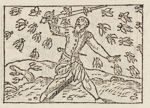
Contre les Hypocrites: La Perrière, Le theatre des bons engins (Lyon, 1545), emblem 21 uses the imagery of a man brandishing a sword smeared with honey, hypocritically covering sharpness with sweetness
Iconclass: 45C13(SWORD) hacking and thrusting weapons: sword 41C636 honey 57AA6121 Flattery; 'Adulatione' (Ripa) 57AA1 Bad Behaviour
Collectanea (1500): 183
Loci Communes: Simulatio, dissimulatio (Pretense, dissimulation, Simulation, dissimulation)
I viii 58 Letale mulsum A deadly honey-brew
Θανάσιμον μελίκρατον. id est, Letale mulsum. Eandem cum superiori habet sententiam. Diogenes, formosa scorta, θανάσιμον μελίκρατον. id est, Letiferum mulsum, appellare consuevit, tametsi nihil vetabit, & in assentationem, in foedas voluptates torquere, breviter, quicquid ita iucundum est, ut idem sit perniciosum. Legimus & Mellitum venenum apud Plinium. Et idem Diogenes orationem ad gratiam comparatam, auriumque pruritum, μελιτίνην ἀγχόνην. i. Melleam praefocationem appellabat, quod assentatione quidem delectaret, caeterum mendacio strangularet admittentem. Quod videlicet illi Hieronymiano simillimum est, adeo ut suboleat mendum subesse exemplaribus, & pro gladio laqueum legi debere. Quis enim solet gladium oblinire melle? Ad hanc formam attinet, quod refert Irenaeus li. 3. cap. 19 Lacte gypsum male misceri. praesens enim venenum habet gypsum, & additum lacti fallit.
Θανάσιμον μελίκρατον., A deadly honey-brew, conveys the same sense as the preceding. Diogenes used to call a handsome whore a deadly honey- brew, though nothing will prevent us from applying the phrase to flattery or dishonourable enjoyments of any kind or in a word to anything which pleases but cannot fail to harm at the same time. We read of 'poisoned honey' in Pliny; and Diogenes of whom we have just spoken used to call language designed to give pleasure and tickle the listener's ear 'like being choked with honey,' because it would delight with its flattery and suffocate with its falsehood anyone willing to listen to it. This of course is very close to the phrase from Jerome we have been considering; and I have a suspicion that something may be wrong with the text, and we ought to read laqueus instead of gladius, not a sword smeared with honey but a noose. For whose practice is it to smear a sword with honey? To the same species belongs a phrase used by Irenaeus, book 3 chapter 19, 'to make a dangerous mixture of gypsum and milk,' for gypsum is a dangerous poison, and when added to milk it is very difficult to detect.
I viii 59 Linum lino nectis You join thread with thread
Λίνον λίνῳ συνάπτεις. id est, Linum lino connectis. Huius adagii duplicem apud Graecos interpretes sensum invenio: quorum alter est: Infirmis infirma copulas, frivola frivolis: alter, Eadem non iisdem rationibus facis aut dicis. Ctesippus in Platonis Euthydemo: Haud tu quidem linum, uti proverbio dicitur, lino connectis, si pater tuus, pater est omnium. Est autem ironia in sophistam, qui frivolis argutiis id sibi collegisse videbatur. Aristoteles in tertio libro τῆς φυσικῆς ἀκροάσεως,, disputans de infinito, ubi Parmenidis sententiam praefert sententiae Melissi. Melissus enim ipsum infinitum totum dixerat. At Parmenides totum dixit esse finitum, à medio aeque distans. Fieri enim, inquit, non potest, ut infinitum cum toto atque universo, perinde atque cum lino linum nectatur. Ipsa philosophi verba subscribam, si quis fortè requiret: διὸ βέλτιον οἰητέον περμενίδην μελίσσου εἰρηκέναι. ὁ μὲν τὸ ἄπειρον ὅλον φη- σὶν, ὁ δὲ τὸ ὅλον πεπεράνθαι, μεσόθεν ἰσοπαλὲς. οὐ γὰρ λίνον λίνῳ ἐστὶ συνᾳπτειν, τῶν ἅπαντι και ὅλῳ τὸ ἄπειρον. Suidas hoc adagium ex Stratidis citat Politia. Proculus item in discutiendis quaestionibus, quae exoriuntur ex dictis Platonis, quodam in loco sic utitur, ut videatur convenire in eum, qui copulet inter se pugnantia, ostendens quemadmodum Plato de Homero diversa pugnantiaque dixerit: οὐ γὰρ λινον λίνῳ συνάπτειν ἐστὶ τὸ ταῦτα ἀλλήλοις συμπλέκειν; id est, An non enim linum lino connectere est, ista inter se copulare? Huic affine est quod apud Athenaeum li. 6. ex Thebano poeta, Pindaro ni fallor citatur: ποτικολλῶν ἅτε ξύλον παρὰ ξύλῳ. id est, Agglutinans ceu lignum ligno. Prior enim dixerat de parasitis: is qui hoc dicit, sermonem suscipit de adulatoribus superiori congruentem.
Λίνον λίνῳ συνάπτεις., You join thread with thread. I find this adage used in the Greek commentators in a double sense. One is: You attach one weak thing to another, join together things which are alike worthless. The other is: You do or say the same things, but not in the same way. Ctesippus in Plato's Euthydemus: 'You are perhaps not joining thread with thread, as the saying goes, if your father is everybody's father.' There is irony in this, directed against the sophist, who thought his foolish hair-splitting had led him to this as a logical conclusion. Aristotle in the third book of the Physics, in a discussion of the infinite, where he prefers Parmenides' opinion to that of Melissus (for Melissus had held that the universe as a whole was infinite, while Parmenides said it was finite, equidistant from the centre), says 'For it is impossible that the infinite should be connected with the universe as a whole, just as thread is with thread.' I will add the philosopher's actual words, in case anyone would like them: 'And so we must suppose that Parmenides spoke better sense than Melissus. For one said that the universe is infinite, and the other that the whole sum of things is finite and balanced about the centre; for it is not joining thread with thread to link the sum of things with the infinite.' Suidas quotes this adage from the Republic of Strattis. Proculus in discussing the questions raised by statements in Plato, uses it in one passage in a way that makes it seem applicable to a man who couples together incompatible things; showing how Plato quotes opposite and incompatible things from Homer, he says 'It is not joining thread with thread to couple such things together.' Related to this is a quotation in Athenaeus, book 6, from some Theban poet, Pindar if I am not mistaken: 'Like one gluing wood to wood'; for the previous speaker had spoken of parasites, and the man who says this gives a discourse on flatterers which agrees with what has already been said.
Facsimile:
Iconclass: 54AA7 Weakness, Powerlessness, Helplessness; 'Infermità' (Ripa) 51B2:51BB2 Similarity, Likeness❧Dissimilarity, Unlikeness 41D2(+45) clothes, costume (+ other materials used for clothes)
Collectanea (1500): 624
Loci Communes: Inanis opera (Vain effort, Effort vain); Taedium ex iteratione (Tedium from repetition, Lassitude due à la répétition)
I viii 60 Senesco semper multa addiscens Age comes upon me learning all the time
Γηράσκω δ᾽ ἀεὶ πολλὰ διδασκόμενος. id est, Discenti assidue multa, senecta venit. Hic pentameter ex elegiis Solonis in proverbium abiit: significat autem usu vitae multaque rerum experientia parari prudentiam. Convenit cum ea, quae citatur apud Gellium, sententia: Usus me genuit, peperit mater memoria. Citatur à Platone libro de repub. 7. Rursum in Dialogo De philosophia, quaerens quispiam, num philosophia sit πολυμαθία. Quid aliud, inquit, est philosophari, quàm id facere, quod dixit Solon? Dixit autem: Discenti assidue multa, senecta venit. At mihi quidem videtur semper aliquid discendum ei, qui in philosophum sit evasurus, sive iunior sit, sive senior, ut quàm plurima discat in vita. Citat & in Lachete. Seneca in epistola quadam ad Lucilium: Tam diu discendum est, quàm diu nescias, &, si proverbio credimus, quam diu vivas. Citatur semel atque iterum apud M. Tullium in Catone maiore. Quinetiam Terentianus ille Demea Solonis sententiam retulit, cum ait: Nunquam ita quisquam bene subducta ratione ad vitam fuit, quin res, aetas, usus semper aliquid apportet novi: Aliquid moneat, ut illa, quae credas scire, nescias: & quae tibi putaris prima, in experiundo repudies. Alludit huc cuiuscum que est versiculus ille, neque inscitus, neque inelegans, Senecae nomine celebratus. Equidem è Publianis mimis unum esse suspicor, hac adductus coniectura, quod in hoc numero quosdam reperimus, qui nominatim ab Aulo Gellio sub Publii titulo referuntur. Senarius autem hic est: Discipulus est prioris posterior dies.
Γηράσκω δ᾽ ἀεὶ πολλὰ διδασκόμενος. , Age comes upon me learning all the time. This pentameter line from Solon's elegies passed into a proverb. Its point is that experience of life and long familiarity with affairs are the way to get wisdom. It agrees with the maxim cited by Gellius: 'Experience sired me, memory was my mother.' Plato quotes it in book seven of the Republic, and again in a dialogue on philosophy, where one of the characters who wants to know whether philosophy is the same as wide knowledge says 'Can philosophy be anything else than what Solon described in the words "Age comes upon me learning all the time"? I think myself that constant learning is essential to anyone who wants to end up as a philosopher, whether he be old or young, so that in the course of his life he may acquire as much knowledge as possible.' He quotes it also in the Laches. Seneca in one of his letters to Lucilius: 'One must go on learning as long as there is anything one does not know and, if we are to believe the proverb, as long as one lives.' It is quoted more than once by Cicero in the Cato major. Demea in Terence moreover was thinking of Solon's maxim when he said:
No man so balanced his account with life
That facts and years and practice taught him nothing;
Thus warned, you know not what you think you know,
Reject in act what you thought mattered most.
There is an allusion to this in that well-known line, skilful and neatly turned whoever may be the author, which is popularly ascribed to Seneca.I think myself it may be one of the moral maxims of Publius; this is an inference, but I follow it, because I find several lines in the list which are recorded expressly under Publius' name by Aulus Gellius. The line of which I speak is 'Tomorrow learns its lesson from today.'
Facsimile:
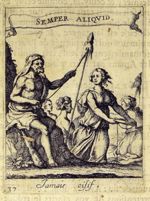
Semper aliquid [discendum] - Jamais oisif: Flamen, Devises et emblesmes d'amour (Paris, 1648), emblem 18 quotes the comment
Non matura prius quam putria: Zincgreff, Emblematum Ethico-politicorum (Heidelberg, 1619), emblem 76 uses the imagery of a medlar tree with ripening fruit to convey the idea that wisdom increases by continuous learning
Iconclass: 52A51 Wisdom; 'Sapienza', 'Sapienza humana', 'Sapienza vera' (Ripa) 31D160 Old Age, 'Senectus'; 'Vecchiezza' (Ripa) 49A education 54A31 Experience, Mastery; 'Esperienza' (Ripa)
Collectanea (1500): 746
Loci Communes: Prudentia senilis (The prudence of old age, Prudence de la vieillesse)
I viii 61 Vita doliaris Life in a tub
Ζωὴ πίθου. id est, Vita dolii, proverbio dicitur vita frugalis, parca, & ab omni strepitu atque ambitione semota. Breviter talis, qualem Diogenes nobilis ille Cynicus Athenis egisse legitur, unico contentus pallio, baculo, quo canes abigeret, dolio de palo suspenso pro domicilio libenter utens, crudis herbis & aqua simplici victitans, pane excavato pro catino, manu cava poculi vice solitus uti: idque à puero quodam didicisse se praedicabat, quem forte ad eum modum aquam haurientem viderat. Porrò ut in dolio habitaret, inde sibi dicebat in mentem venisse, quod cochleas contemplatus, nullum aliud aeque commodum domicilium iudicasset, unde proreperet ad solem, & ubi se conderet à ventis atque aestu. Poterit torqueri & in eos, qui nimium sordide, nimisque dure, atque immunde vivunt. Hos ita depingit Eubulus comicus apud Athenaeum libro secundo, Ανιπτοποδες, χαμαιευνά- δες, ἀερίοικοι. id est, Illotis pedibus, humicubantes, in aere domicilium habentes. Idem libro quarto de Pythagoricis, ex Antiphane: Εδει ὑπομεῖναι μικρὸν, ἀσιτίαν, ῥύπον, Ρίγος, σιωπὴν, στυγνότητ᾽, ἀλουσίαν. id est, Inedia, sordes sunt ferendae paululum, Silentium, tristitia, frigoris rigor, Simul ferendum corpus expers balnei. Ad hanc formam toρqueri poterit Hamaxobiorum, ea gens est Sarmatiae, appellatio, ut Hamaxobii dicantur, qui dure sordideque vivant. Nomen hinc inditum genti, quod iis plaustra aedium vice sint.
Ζωὴ πίθου., Life in a tub, is a proverbial expression for a frugal and abstemious life, far from all noise and competition - in a word, the sort of life that was led, we are told, in Athens by Diogenes, the famous Cynic philosopher, sufficiently provided with one cloak, a stick to drive away the dogs, cheerfully using a tub fixed to a stake as a place to live in, raw vegetables and plain water as his diet, accustomed to a piece of bread hollowed out for a platter and the hollow of his hand for a cup; and he used to say he had learnt to do this from a child whom he had seen taking up water in his hand to drink. He said moreover that the idea of living in a tub had come to him from watching snails, when he had decided that no other form of dwelling could be so convenient to creep out of into the sun and to take refuge in from the wind or the heat of summer. It can also be diverted for use against those in whose style of living there is too much meanness, too much hardship, too much dirt. Such people are described by Eubulus the comic poet, as cited by Athenaeus in his second book, in the words 'with unwashed feet, sleeping on earth and dwelling in the air.' Again, in book 4, speaking of the Pythagoreans he cites from Antiphanes:
Then for a short time one must learn to face
Hunger and dirt and cold, silence and gloom,
Therewith a strict economy of baths.
It will be possible to divert to the same effect the name of the Hamaxobii, the 'Caravan-dwellers,' who are a tribe in Sarmatia, and call Caravanners those whose way of life is harsh and mean. The tribe have earned this name, because they use wagons or caravans in place of houses.
I viii 62 In diem vivere. Ex tempore vivere To live from one day to the next. To live for the moment
In diem vivere, est, praesentibus rebus contentum vivere atque ex parato, minime solli-ς citum de futuris. Quae vita Graecis dicitur καθημερίος βίος. et καθημερόβιοι, qui ad eum vivunt modum. Theocritus in Idyllio Ν. Οἱ θνατοὶ πελόμεσθα, τὸ δ᾽ αἤριον οὐκ ἐσορῶμες. id est, Mortales sumus, haud sunt nobis crastina curae, Aristophanes in Equitibus: Κριθὰς ποριῶ σοι, καὶ βίον καθ᾽ ἡμέραν. id est, Ego affatim tibi suppeditavero ordeum, & Victum diurnum. Homerus Odyss. Φ Νήπιοι, ἀγροιῶται, ἐφημέρια φρόνοντες. id est, Agrestes, stolidi, tantumque diurna scientes. Persius: Atave ex tempore vivis. Id est, citra sollicitudinem futurorum. Unde & Ex tempore dicere, id est, citra praemeditationem. M. Tullius Philippica 5. simili forma dixit, In horam vivere. Quae non faciebat Hannibal, qui multa ad usum reservabat, haec ii, qui in horam vivererent, non modo de fortunis, & de bonis civium, sed ne quidem de utilitate sua cogitaverunt. Nec abludit ab hac specie, quod scribit Horatius in Arte poetica. Et mutatur in horas. hoc est, subinde. Hanc vitam, ceu felicissimam omnium, probavit Christus, ut quam & ipse semper secutus sit, & apostolis sequendam proposuerit. At dictu mirum, quàm hodie non probetur, etiam his qui plus quàm Christiani postulant videri.
To live from one day to the next is to be content with your present lot and live on what you have at hand, without thought for the future. Such a life is called in Greek καθημερίος βίος., and those who live like that are καθημερόβιοι. Theocritus in Idyll 13: 'We who are only mortal, and do not look to the morrow.' Aristophanes in the Knights: 'I'll keep you in barley, feed you day by day.' Homer in Odyssey 21: 'Fools, bumpkins, thinking only of to-day.' Persius: 'And live but for the moment,' that is, with no thought for the future. Whence also 'to speak extempore, on the spur of the moment,' meaning with no thought beforehand. Cicero in his fifth Philippic uses a similar formula, to live from hour to hour: 'What Hannibal never did, who kept much back for future use, these men have done. Living as they do from hour to hour, they have not spared a thought for the fortunes and property of their fellow-citizens, and not even for their own advantage.' Horace's phrase in the Art of Poetry does not differ much from this: 'And changes hour by hour,' meaning from time to time. Such a way of life was approved as the best of all by Christ, for He both followed it Himself and prescribed it for His Apostles. It is quite remarkable how little it commends itself nowadays, even to those who expect to be thought better Christians than the rest of us.
Facsimile: 
Iconclass: 23R1 day of 24 hours, natural day 23A32 present 56B1:23R1 Pleasure, Enjoyment, Joy; 'Allegrezza', 'Allegrezza da le medaglie', 'Allegrezza, letitia e giubilo', 'Diletto', 'Piacere', 'Piacere honesto' (Ripa)❧day of 24 hours, natural day 58B2 Life
Loci Communes: Securitatis et tutae rei (Security and safety, Sécurité et sûreté)
I viii 63 Vita macerata Living softly
Βίος μεμαλαγμένος. id est, Vita macerata, seu permollita. De molliter viventibus, quibus ex facili omnia suppetunt. Refertur à Diogeniano, Zenodotó, & Suida. Translatum arbitramur à leguminibus., aut salsamentis maceratis, iamque ad esum accommodatioribus: aut à tritico iam molito, pisto, ac subacto. Cui diversum est, Βίος ἀκανθώδης, id est, Vita spinosa.
Βίος μεμαλαγμένος., A soft or tender way of life, used of those who live in comfort and have all they want within their reach. It is recorded by Diogenianus, Zenodotus, and Suidas. The metaphor comes, I think, from vegetables or salt meat which have been softened by boiling and are now easier to eat, or from grain which has been milled, pounded, and worked into dough. The opposite of this is Βίος ἀκανθώδης,, Living on a bed of thorns.
Facsimile:
Iconclass: 51GG4 Softness (matter) 55B2 Luxury, Luxuriousness 11R:51GG4 the life of man❧Softness (matter) 58B2 Life
Loci Communes: Luxus et mollicies (Luxury and softness, Luxe et mollesse)
I viii 64 Ipsa dies quandoque parens, quandoque noverca One day's a stepmother and one's a mother
Versus est Hesiodi in li. De observatione dierum auspicatorum, atque inauspicatorum, qui deinde in proverbium abiit, longo hominum aevo probatus, ut apud Gellium refert Phavorinus philosophus: is est huiusmodi: Αλλοτε μητρυιὴ πέλει ἡμέρη, ἄλλοτε μήτηρ. id est, Ipsa dies quandoque parens, quandoque noverca est. Eo versu significatum est, non omni die bene esse posse, sed isto bene, atque alio male. Inde translatum quod matres bene volunt liberis, novercae oderunt privignos. Proinde Plinius dubitare se dicit, utrum natura saepius noverca sit, an mater, ut quae tot venena, tot item remedia progignat.
There is a line of Hesiod in his work on the importance of observing days of good and evil omen, which later passed into a proverb and 'won the approval of many generations of men,' as the philosopher Favorinus puts it in Gellius. It runs as follows: 'One day's a stepmother and one's a mother,' and the meaning is that 'it is impossible for things to go well every day; one day they go well, and another day badly.' Drawn from the fact that mothers are well disposed towards their children, and stepmothers hate their stepchildren. Pliny in the same way says he is not sure whether nature shows herself more often as a stepmother or as a mother, considering the way she produces so many poisons and at the same time so many remedies.
Facsimile:
Iconclass: 23R1 day of 24 hours, natural day 42B222 stepmother 42B12 mother-love 54F12 Luck, Fortune, Lot; 'Fato', 'Fortuna', 'Fortuna aurea', 'Fortuna buona', 'Fortuna pacifica overo clemente', 'Sorte' (Ripa) 54FF11 Adversity, Misfortune, Bad Luck; 'Fortuna infelice', 'Infortunio' (Ripa) 54F122 Vicissitudes of Life
Collectanea (1500): 129
Loci Communes: Fortunae commutatio (Change of fortune, Changement de fortune)
I viii 65 Nunc pluit et claro nunc Jupiter aethere fulget So Jove now rains, now shines in cloudless sky
Diversa metaphora rem eandem explicuit Theocritus in Batto: Χ᾽ ὡ ζεὺς ἄλλοκα μὲν πέλει αἴθριος, ἄλλοκα δ᾽ ὕει. id est, Nunc pluit, & claro nunc Iuppiter aethere lucet. Id est: Aliquando res adversae sunt, aliquando secundae, quemadmodum coelum nunc serenum est & placidum, nunc turbidum ac tempestuosum. Huic affinis est allegoria Pindarica, è Pythiis hymnis: non semper eosdem flare ventos, sed nunc hos, nuc alios, Αλλοτ᾽ ἀλλοῖαι πνοαι ὑψιπετῶν ἀνέμων. id est, Aliâs alii flatus, sublimiter volantium ventorum. Idem in Isthmiis, hymno 4. Αλλοτε δ᾽ ἀλλοῖος ὀρος πάντας ἀνθρώπους ἐπαΐσσων ἐλαύνει.. id est, Sed aliàs alius ventus omnes adflans agit.
Theocritus in his Battus uses a different metaphor to make the same point: 'So Jove now rains, now shines in cloudless sky.' Sometimes, that is, all goes badly and sometimes well, just as the sky is clear and calm at one time, dark and stormy at another. There is an image close to this in Pindar, in the Pythian Odes, to the effect that the winds are not fixed, but sometimes one blows, sometimes another: The winds that wing their way on high do change their course, now here, now there.' Pindar again in his fourth Isthmian Ode: 'Now from this quarter, now from that sweeps the gale that drives all men before it.'
Facsimile: 
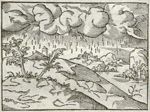
Ceu rutilis idem qui dissilit igni: de Bèze, Icones (Genève, 1580), emblem XII uses the theme of changeable skies
Iconclass: 26B rain 24A sun as celestial body 92B1 (story of) Jupiter (Zeus) 54F12 Luck, Fortune, Lot; 'Fato', 'Fortuna', 'Fortuna aurea', 'Fortuna buona', 'Fortuna pacifica overo clemente', 'Sorte' (Ripa) 54FF11 Adversity, Misfortune, Bad Luck; 'Fortuna infelice', 'Infortunio' (Ripa) 54F122 Vicissitudes of Life
Loci Communes: Fortunae commutatio (Change of fortune, Changement de fortune)
I viii 66 Plus aloes quam melis habet More aloes than honey in it
Plus aloes quàm mellis habet. Proverbialis metaphora, perinde declarans ac si dicas, plus molestiae, quàm voluptatis. Nam aloe frutex quidam est, odore gravi, gustu amarissimo, cuius meminit Disoscorides lib. 3. Plautus in Amphitryone, Ita cuique comparatum est in aetate hominum, ita diis placitum, voluptati ut moeror comes consequatur. Quin incommodi plus malique adsit, boni si obtigit quid. Apud eundem alicubi legitur, vitam hominis plus aloes quàm mellis habere. Et Iuvenalis de uxore: Plus aloes, quàm mellis habet. Apuleius citra metaphoram sic extulit in Floridis: Sed verum verbum est profecto, quod aiunt, nihil quicquam tam prospere divinitus hominibus datum, quin & tamen admixtum sit aliquid difficultatis. Has rerum humanarum vices, ac tristium laetorumque mixturam, Homerus Iliados ultimo li. perquam eleganter indicavit, figmento duorum doliorum, quae scribit in Iovis limine sita esse, quorum alterum sit plenum tristibus, alterum laetis. Ex quibus ille mortalium fortunas temperans, Αλλοτε μὲν τε κακῷ ὅγε κύρεται, ἄλλοτε δ᾽ ἐσθλῷ. id est, Nunc laetis vitam miscet, nunc tristibus idem. Quemadmodum & superius indicavimus. Verum admodum maligne temperat Iupiter Homericus, nimio plus admiscens malorum, quàm bonorum, ut si suam quisque fortunam ad calculos vocet, minima sit futura ratio eorum, quae nobis ex animi sententia evenerunt. id quod eleganter dictum est à Pindaro in Pythiis humnis: ἔν γὰρ πὰρ ἐσθλὸν πήματα συνδύο δαίονται βροτοῖς ἀθάνατοι.. i. Ad unum enim bonum duo pariter incommoda distribuunt mortalibus immortales. Plinius li. 27. sententiam invertit, cum ait, Nihil esse tam malum in rerum natura, cui non boni quippiam sit adiunctum. Quandoquidem compertum est, etiam aconito, quo non aliud venenum nocentius, inesse remedium, cum ad alia, tum ad oculorum vitia. Ad eundem modum Euripides citante Plutarcho: Οὐκ ἄν γένοιτο χωρὶς ἐσθλὰ καὶ κακὰ, Αλλ᾽ ἐστίτις σύγκρασις. id est, Bona separare non licet malis, sed est Mixtura quaedam.
A metaphor which has become proverbial, conveying the same sense as 'more trouble than pleasure.' For the aloe is a shrub with an unpleasant smell and a very bitter taste, which comes in Dioscorides, book 3. Plautus in the Amphitryo:
For such is each man's lot
In human life, so have the gods decreed:
That pleasure must go hand in hand with pain,
And if some good befall, your share of evil
And of misfortune must go up to match.
In Plautus too it says somewhere that man's life has more aloes in it than honey. And Juvenal of a wife: 'More aloes than honey in her.' Apuleius expresses this, without the metaphor, in his Florida: 'But it is indeed a true saying that the gods never gave man anything on such favourable terms that there was no trouble mixed in with it.' Homer in the last book of the Iliad expressed this alternation in human affairs, this mixture of sorrow and joy in man's lot brilliantly in the image of the two jars which stand, he says, on Jove's threshold, one full of sad things and the other of gay ones. Out of these he mixes the fortunes of mortal men, who 'now meet with evil fortune, now with good,' as I have set forth above. But Homer's Jupiter is highly ungenerous in his mixing, for he puts in far more bad than good; so that if every individual were to cast up the account of what fortune has come his way, he will find only a very small total for the things that have turned out as we wished. This has been admirably expressed by Pindar in his Pythian Odes: 'For every blessing, the immortals allot to mortal men a pair of woes.' Pliny in book 27 reverses the meaning when he says that there is nothing too bad in nature to have no good attached to it somehow. For it is well known that even aconite, the deadliest of poisons, contains a remedy valuable especially for troubles in the eye. To the same effect Euripides, cited by Plutarch: 'Good things and bad cannot be separated; / But they are somehow mixed.'
Facsimile:
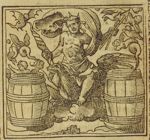
Plus aloes quam mellis habet vita humana: Holtzwart, Emblematum Tyrocinia (Strasbourg, 1581), emblem 32
Plus aloes quam mellis: Reusner, Aureolorum Emblematum (Strasbourg, 1587), emblem 61
Un peu de miel couvre beaucoup d'aigreur: Boissard, Emblemes (Metz, 1588), emblem 39 uses the adage's imagery
Iconclass: 25G12(ALOE) 41C636 honey 31A345 bitter (taste) 31A342 sweet (taste) 56B1 Pleasure, Enjoyment, Joy; 'Allegrezza', 'Allegrezza da le medaglie', 'Allegrezza, letitia e giubilo', 'Diletto', 'Piacere', 'Piacere honesto' (Ripa) 56BB11 Bitterness; 'Amaritudine' (Ripa) 56BB Joy and Sorrow (opposing concepts)
Collectanea (1500): 55
Loci Communes: Anceps et dubius (Doubtful and uncertain, Incertain et douteux)
I viii 67 Naves onustae conviciis Shiploads of abuse
Adsimili figura dixit Homerus Iliados Υ, convicia, quorum onus, navis centiremis non queat portare: cuiusmodi Lucianus dixerat, ὅλας ἁμαξας βλασφημιῶν, ut ante dictum est. Carmen Homeri sic habet: Εστι γὰρ ἀμφοτέροισιν ὀνείδεα μυθήσεσθαι Πολλὰ μάλ᾽, οὐδ᾽ ἄν νηῦς ἑκατόνζυγος ἄχθος ἄροιτο. id est, Probrorum superest ambobus copia summa, Quorum onus haud portet centum ratis incita remis. Affine & illi, quod alio dicetur loco, οὕς οὐκ ἄν αἴρηντ᾽ οὐδ᾽ ἑκατὸν αἰγύπτιοι. id est, Quos tollere nec centum queant Aegyptii. Hermippus apud Athenaeum libro primo describens, quid à quaque regione soleat importari, versiculum hunc ioco admiscet. Καὶ παρὰ περδίκου ψούδη, νηυσὶν πάνυ πολλαῖς. id est, Atque à Perdica ratibus mendacia multis. Notans, ni fallor, Lyciorum mores. Nam Perdicia pars est ac portus Lyciae. Lycias sortes notat & Vergilius Aeneidos quarto, veluti vanas.
A similar image is used by Homer in Iliad 20, when he speaks of abuse which would be a load too heavy for a ship of a hundred oars, in the same way that Lucian put 'whole cartloads of abuse,' as I mentioned previously. Homer's lines run as follows: 'We both have plenty of abuse to utter - / A hundred-oar ship would not take the load.' It is related also to a phrase I shall speak of elsewhere: 'Which even a hundred Egyptians could not lift.' Hermippus, quoted by Athenaeus in his first book, describing the different things imported from various countries, slips in by way of a jest the line 'Lies from Perdicas, many and many a shipload,' reflecting I think on the standard of behaviour in Lycia. For Perdicia is a district and harbour in Lycia. Virgil too in the fourth Aeneid speaks of 'Lycian soothsaying' as something not to be trusted.
Facsimile:
Iconclass: 54BB11 Misuse, Misemployment 46C21 ships (in general) 51G2 Heaviness
Loci Communes: Obtrectatio et maledicentia (Disparagement and slander, Dénigrement et médisance)
I viii 68 Tollere cornua To lift one's horns
Tollere cornua, pro eo quod est, animo efferri, nunc quoque vulgo tritissimum est. Horatius de Baccho: Et addis cornua pauperi. Ovidius item de ebrietate: Tunc veniunt risus, tunc pauper cornua sumit. Translatum à pecoribus, quae cornibus oppositis minantur. Horatius in Epodis: Nanque in malos acerrimus, Parata tollo cornua.
'To lift one's horns' for 'to be exhilarated' is still a very common expression in our own day. Horace, speaking of Bacchus: "Tis you lift up the poor man's horn.' Ovid too, of indulgence in strong drink: 'Then laughter comes, / And then the poor man lifts unwonted horns.' A metaphor from animals which confront one another horns against horns. Horace in the Epodes: 'The wicked feel my onslaught, as I raise my ready horns.'
Facsimile: 
Iconclass: 41C3211 drinking-horn 57AA64 Pride, Loftiness; 'Alterezza in persona nata povera civile' (Ripa)
Loci Communes: Arrogantia jactantiaque (Arrogance and boastfulness, Arrogance et vantardise)
I viii 69 Tollere cristas To lift one's crest
Tollere cristas. Diversa metaphora, sensus idem. Iuvenalis: Quid apertius? & tamen illi Surgebant cristae. id est, Sibi placebat. Translatum ab avibus cristatis, in quibus cristae erectiores alacritatis atque animorum indicia sunt: nisi ad militum cristas referre malumus. quo sanè hominum genere nihil nec insolentius, nec stolidius. In hanc sententiam Aristophanes in Pace dixit, Detrahere cristas, ἡπερ ἡμῶν τοὺς λόφους ἀφεῖλε. id est, quae nobis cristas detraxit. Videlicet reddita pace. Contra Sub mittere fasces dicuntur, qui de iure suo contendunt, ac legitimam potestatem ultrò ad privatam mediocritatem demittunt. Plinius lib. 7. cap. 30. Cn. Pompeius, confecto Mithridatico bello, intraturus Posidonii professione sapientiae clari domum, fores percuti de more à lictore vetuit, & fasces lictorios ianuae submisit, is cui se oriens occidensque submiserat. M. Tullius in Bruto: Cum enim in maximis causis versatus esses, et cum tibi aetas nostra iam cederet, fascesque submitteret. Et apud T. Livium in secundo ab urbe condita, Publicola submissis fascibus in concionem ascendit. Tropus addit gratiam dicto, velut si dicas, philosophiam theologiae submittere fasces.
The metaphor is different, the sense the same. Juvenal: 'What could be more bare-faced? and yet his crest / Began to rise,' he began to plume himself. The metaphor comes from birds with a crest, which when it is erected is a sign of eagerness and pugnacity; unless we prefer to see a reference to the crests worn by military men, the most insolent and stupid sort there is. It is in this sense that Aristophanes uses the phrase 'to take down crests' in the Peace: 'She has taken down our crests,' on the return of peace. On the other side, men are said to 'lower their fasces' who give up their legal position and of their own free will resign their official status and return to the modest standing of a private person. Pliny, book 7 chapter 30: 'Gnaeus Pompeius at the end of the war against Mithridates, when proposing to visit the house of Posidonius the eminent philosopher, told his lictor not to knock on the door in the traditional way and laid down the fasces in the doorway - he before whom East and West alike had laid down their arms.' Cicero in the Brutus: 'After you had gained experience in cases of great importance, and I at my age was already giving way to you and lowering my fasces.' And in Livy in the second book of his Rome from the Foundation, Publicola 'lowered his fasces and went up to speak.' The phrase gains in point when used metaphorically: for instance, if one were to say philosophy 'lowers its fasces' to theology.
Facsimile:
Iconclass: 57AA64 Pride, Loftiness; 'Alterezza in persona nata povera civile' (Ripa) 25F3(+343) birds (+ tail of an animal)
Collectanea (1500): 339
Loci Communes: Arrogantia jactantiaque (Arrogance and boastfulness, Arrogance et vantardise)
I viii 70 Animus in pedes decidit My heart is in my boots
Qui vehementer consternantur atque expavescunt, iis animus in pedes decidere dicitur. Quin hodie vulgo audimus: Totus animus mihi erat in genibus. pro eo quod est, vehementer eram exanimatus, Homerus Iliados Ο Τάρβησαν, πᾶσιν δὲ παραὶ ποσὶ κάππεσε θυμὸς. id est, Pavor ingruit ingens Omnibus, inque pedes animus mox decidit imos.
When people are in a state of great fear and foreboding, we say their heart is in their boots. Even today we hear the expression 'My whole heart was in my knees,' in the sense 'I was thoroughly frightened.' Homer in Iliad 15: 'Fear seized them all; their hearts were in their heels.'
I viii 71 Vespa cicadae obstrepens Wasp buzzing against cricket
Σφὴξ βομβῶν τέττιγος ἐναντίον. Scilicet obstrepitans argutae vespa cicadae. Apud Theocritum est in Hodoeporis. Nam his verbis contemnit quidam pastor pastorem, à quo provocatur. Quadrabit in eum, qui certat longe impar cum superiore. Aut qui negocium facessit longe se praestantioribus. Quod genus est illud: Catulus leonem allatrans.
Σφὴξ βομβῶν τέττιγος ἐναντίον, I the shrill cricket, you the buzzing wasp. From Theocritus' Wayfarers. In these words one shepherd expresses his contempt for another who challenges him to a contest. Suitable for someone who takes on an opponent far superior to himself, or makes himself a nuisance to his betters. Of the same kind is A puppy barking at a lion.
Facsimile:
Note: "A puppy barking at a lion"
Iconclass: 25F711(CRICKET) insects: cricket 25F711(WASP) insects: wasp 51BB3 Imparity, Inequality, Difference
Collectanea (1500): 823
Loci Communes: Absurda, indecora, seu praepostera (Absurd, unbecoming, or preposterous things, Choses absurdes, inconvenantes ou déplacées)
I viii 72 Pica cum luscinia certat, epopa cum cygnis Jay strives with nightingale, hoopoe with swans
Consimilem habent sententiam, quae leguntur apud eundem in eadem Ecloga: Οὐ θεμιτὸν λάκων πότ᾽ ἀηδόνα κίσσας ἐρισδεν. Οὐ δ᾽ ἔποπας κύκνοισι. id est, Haud fas est Lacon, philomelam ut provocet unquam Pica, nec argutis epopa obstrepat improba cygnis.
Of similar import are the following lines by the same poet and from the same eclogue: Οὐ θεμιτὸν, Λάκων πότ᾽ ἀηδόνα κίσσας ἐρισδεν. / oὐδ᾽ ἔποπας κύκνοισι. 'Lacon, 'tis wrong for jays with nightingales, / Hoopoes with tuneful swans in song to strive.'
Facsimile:
Iconclass: 51BB3 Imparity, Inequality, Difference 25F39(HOOPOE) other birds: hoopoe 25F32(NIGHTINGALE) song-birds: nightingale 25F36(SWAN) water-birds: swan 25F39(JAY) other birds (JAY) 51E2 Superiority 59CC21 Inequality, Inequity, Iniquity; 'Iniquità' (Ripa)
Loci Communes: Absurda, indecora, seu praepostera (Absurd, unbecoming, or preposterous things, Choses absurdes, inconvenantes ou déplacées); Excellentia, inaequalitas (Excellence, inequality, Excellence, inégalité)
I viii 73 Pilos pro lana Bristles for wool
Τρίχας ἀντ᾽ ἐρίων. i. Pilos pro lana. Proverbialiter apparent dicta etiam illa, apud eundem poetam in Hodoeporis, de re vehementer inaequali, aut de negocio supra modum absurdo: Τίς τρίχας ἀντ᾽ ἐρίων ἐποκιξατο; τίς δὲ παρεύσας Αἰγὸς πρωτοτόκοιο κακὰν κύνα βούλετ᾽ ἀμέλγειν; id est, Quis vice lanarum setas detondeat unquam? Quis capra pro primipara vilem velit amens Emulgere canem? Capra pilos habet potius quàm lanam, ovis lanigera est. Haec dicuntur in pastorem, qui certaturus hoedum opponebat agno.
Τρίχας ἀντ᾽ ἐρίων., Bristles instead of wool. There seems to be a proverbial colouring in these lines too, which are found in the same poet's Wayfarers and refer to an extremely unfair transaction or one which is patently absurd: 'Who bristles shears for wool? Who milks a bitch, / Having at hand a goat with her first kid?' A she-goat has bristly hair rather than wool, a sheep has a woolly fleece. The words are directed at a shepherd who wanted to put up a kid as his stake in a singing-match against the other man's lamb.
Facsimile:
Iconclass: 47H14 wool (material ~ textile and clothing industry) 59CC21 Inequality, Inequity, Iniquity; 'Iniquità' (Ripa) 51GG4:51G4 Softness (matter)❧Hardness
Loci Communes: Inaequalis pensatio (Unequal compensation, Compensation inégale)
I viii 74 Tibiam tubae comparas You match flute against trumpet
Αὐλὸν σάλπιγγι συγκρίνεις. id est, Tibiam tubae comparas. Refertur à Diogeniano. Convenit in res supra modum impares, propterea quod exilem vocem aedat fistula, tuba praegrandem.
Αὐλὸν σάλπιγγι συγκρίνεις., You match flute against trumpet. Recorded by Diogenianus. Appropriate to things which are more than usually unequal, the pipe making a thin sound and the trumpet a very loud one.
Facsimile:
Iconclass: 59CC21 Inequality, Inequity, Iniquity; 'Iniquità' (Ripa) 48C7351 flute, aulos, tibia 48C7352 horn, trumpet, cornet, trombone, tuba 22D1:22D2 loud sound, noise❧soft sound 51E2 Superiority
Collectanea (1500): 250
Loci Communes: Excellentia, inaequalitas (Excellence, inequality, Excellence, inégalité)
I viii 75 Cicadae apem comparas You match a cricket against a bee
Τέττιγι τὴν μέλιτταν συγκρίνεις. id est, Cicadae comparas apem. Nam cicada cum maior, tum canora, cum apis sit non modo minuto corpusculo, verum etiam penè muta. Lucianus in Rhetorum doctore, proverbium utrunque attingit: τοσοῦτον ὑπερφωνοῦντα εὑρήσεις, ὁποσον ἡ σάλπιγξ τοὺς αὐλοὺς καὶ οἱ τέττιγες τὰς μελίττας. id est, Invenies tanto voce superiorem, quanto tuba superat tibias, apes cicadae.
Τέττιγι τὴν μέλιτταν συγκρίνεις., You match a cricket against a bee. A cricket is larger and also makes a considerable noise, while a bee not only has a small body but is almost silent. Lucian in his Teacher of Public Speaking brings in both proverbs in passing: 'You will find his voice as much louder than the rest as a trumpet is louder than flutes and crickets than bees.'
Facsimile: 
Iconclass: 59CC21 Inequality, Inequity, Iniquity; 'Iniquità' (Ripa) 25F711(CRICKET) insects: cricket 25F711(BEE) insects: bee 22D1:22D2 loud sound, noise❧soft sound 51E2 Superiority
Loci Communes: Excellentia, inaequalitas (Excellence, inequality, Excellence, inégalité)
I viii 76 Testudinem Pegaso comparas You match a tortoise against Pegasus
Χελώνην πηγάσῳ συγκρίνεις. id est, Testudinem pegaso comparas. De rebus nequaquam inter sese conferendis. Pegasus equus erat volucer, si fabulis credimus, testudine nihil tardius. Vergilius in Tityro aliquot dissimilitudinis formulas congessit: Sic canibus catulos, similes sic matribus hoedos Noram, sic parvis componere magna solebam. Verum haec tantum alias inter caput extulit urbes, Quantum lenta solent inter viburna cupressi.
Χελώνην Πηγάσῳ συγκρίνεις., You match a tortoise against Pegasus. Of things that cannot be compared in any way. Pegasus, if we may credit the myths, was a winged horse, and a tortoise is the slowest thing that moves. Virgil in Tityrus has put together several ways of expressing unlikeness:
Litter like bitch and kid like dam I knew,
Comparing thus small things with great; but she
'Midst other cities holds her head as high
As cypresses o'er sprawling guelder-rose.
Facsimile:
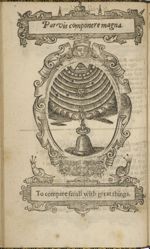
Parvis componere magna: Farley, Lychnocausia (London, 1638), emblem 10 quotes the comment
Iconclass: 59CC21 Inequality, Inequity, Iniquity; 'Iniquità' (Ripa) 25F44 tortoises, turtles 51M11:51MM11 Swiftness, Speed; 'Agilità', 'Celerità', 'Velocità' (Ripa)❧Slowness, Tardiness; 'Tardità' (Ripa) 93D1 Pegasus, the winged horse 51E2 Superiority
Collectanea (1500): 487
Loci Communes: Excellentia, inaequalitas (Excellence, inequality, Excellence, inégalité)
I viii 77 Aliter catuli longe olent, laiter sues Dogs and hogs smell very different
Apud Plautum legitur in Epidico sordidior quidem metaphora, sed tamen ad rem significandam apta: Aliter catuli longe olent, aliter sues. Quo dicto significatum est, non veste dignosci hominem ab homine, verum inesse nativum quiddam, genuinum ac proprium in unoquoque, quod in ipso vultu oculisque eluceat, quo liberum à servo, generosum à rustico, probum ab improbo, facile discernas. Atque hic est hominis veluti peculiaris quidam odor, quo deprehenditur, si quis modo sit sagaci nare. Huc allusit Martialis lib. 6. Oum bene se tutam per fraudes mille putavit. Omnia cum fecit, Thaida Thais olet. Huc pertinet etiam illud cuiusdam apud Fabium: Ne faciem quidem liberi hominis habet. Quod cum à quodam esset dictum deformi specie, retorsit adversarius, affirmans recte dictum, eum non esse liberum, cui non sit facies liberalis.
In Plautus, in the Epidicus, we find an unattractive but most expressive image: Dogs and hogs smell very different. The words signify that one man is distinguished from another, not by his clothes but by some inborn quality, special and peculiar to each individual, which shines out (to look no further) in his face and the look in his eye and discriminates easily between free man and slave, well-born man and peasant, good man and rascal. This is, as it were, a kind of smell peculiar to the man, by which if you have a keen nose you can tell what he is like. Martial is thinking of it in book six, when he says:
A thousand arts she did essay
And thought that she had saved the day:
But let her try what tricks she will,
Thais smells of Thais still.
Here belongs the remark of an advocate quoted by Quintilian: 'He does not have even the face of a man of free birth.' The speaker was himself extremely hideous, and counsel for the other party threw it back at him, saying he was quite right; he who did not have a free man's face could not be free-born.
Facsimile:
Iconclass: 34B11 dog 47I21211 hog (castrated male pig) 31A33 smell, smelling (one of the five senses) 59CC21 Inequality, Inequity, Iniquity; 'Iniquità' (Ripa)
Collectanea (1500): 81
Loci Communes: Dissimilitudinis et incongruentiae (Dissimilarity and incongruity, Dissemblance et incongruité)
I viii 78 Ut sementem feceris, ita et metes As you have sown, so also shall you reap
Elegantissima metaphora dixit Cicero: Ut sementem feceris, ita & metes. id est, reportabis praemium tuis factis dignum. Plautus in Epidico, Sed ut acerbum est, pro benefactis cum malam messem metas. id est, cum pro beneficio maleficium reportes. Et apud Platonem: Quam hic messem facturus est? Haud sanè bonam. Haec metaphora communis est etiam sacris literis: Qui seminant in lachrymis, in exultatione metent. Et divus Paulus: Qui seminat in carne, de carne metet corruptionem. Qui seminat in spiritu, de spiritu metet vitam aeternam. Et, Si vobis seminavimus spiritualia, magnum si vestra carnalia metamus? Huc respicit illud Euripidis in Hecuba: Υμεῖς δὲ εχηθ᾽ ὅμοια τοῖς βουλεύμασιν. id est, Habeatis at vos instituto congrua. Denique illud penè solenne est apud Graecos poetas, κακῶς κακόν. Aristoph. in Equitibus Οὐ δὲ μουσικην ἐπισταμαι Πλὴν γραμμάτων, καὶ ταῦτα μὲν κακῶς κακά. id est, Neque Musicam doctus scio, Sed literas tantum, atque eas malas male. Illud item frequens, ἀπό σ᾽ ὁλῶ κακῶς κακόν. id est, Te malum perdam male. Interpres admonet figurae proverbialis, qua de re dictum est in huius operis vestibulo. Rursum Euripides in Hecuba: τὸν μὲν κακόν Κακόν πάσχειν, τὸν δὲ χρηστὸν εὐτυχεῖν. id est, Bonis bene evenire, sed malis male. Idem in eadem fabula: Αλλ᾽ ἐπεὶ τὰ μὴ καλὰ Πράσσειν ἐτόλμας, τλῆθι καὶ τὰ μὴ φίλα. id est, Quin ubi quae non decent Haud veritus es patrare, fer quae non libent. Perquàm festivum est, quod de Diogene refert Laertius: Super coenam quidam illi obiiciebant ossa, veluti cani, quod Cynicus esset. eam contumeliam ille sic pensavit. Accessit propius, & iuxta illos stans mingebat, vicissim illis canem agens. Sed propius huc pertinet, quod idem refert in Zenone, qui servum in furto deprehensum caedebat. Servus interim clamabat, in fatis fuisse, ut suraretur. At Zeno: Illud etiam, ut caedereris. Servus quoniam audierat herum disputantem de necessitate fatorum, eam praetexuit suo commisso: sed scite retorsit philosophus.
Cicero used a most elegant metaphor, As you have sown, so also shall you reap, in the sense that you will receive the reward appropriate to what you have done. Plautus in the Epidicus: 'A bitter pill indeed, for work well done / To reap a harvest of calamity,' meaning ill-treatment in return for kindness. And in Plato: 'What harvest will this man reap? A wretched one, I am sure.' The image is shared with Scripture too: 'They that sow in tears shall reap in joy,' and St Paul: 'He that soweth to his flesh shall of his flesh reap corruption; but he that soweth to the Spirit, shall of the Spirit reap life everlasting,' and 'If we have sown unto you spiritual things, is it a great thing if we shall reap your carnal things?' Euripides has it in mind in that line in the Hecuba: 'And you may reap what your designs deserve.' In fact, there is almost a regular phrase in Greek poetry of the form 'bad things badly.' Aristophanes in the Knights: 'No culture have I but to read and write / A few poor rudiments and very poorly.' And one often finds the threat to bring an evil man to an evil end. The scholiast points out that this is a proverbial turn of speech, on which something has been said in the introduction to this work. Euripides again in the Hecuba: 'Bad men to have bad fortune, good men good,' and further on in the same play 'For since you dared to do what is not right, / What is not welcome you shall suffer now.' Laertius tells an amusing anecdote about Diogenes. At dinner some of them were throwing him bones as one would to a dog, because he was a Cynic. His method of avenging this insult was to go up close to them, and as he stood by them to lift a leg, treating them as a dog might in return. But even nearer is a story he tells in his life of Zeno. Zeno one day was beating a slave who had been caught thieving. The slave cried out all the time that it was his fate to steal; to which Zeno replied: 'Yes; and your fate to be beaten.' The slave had heard his master arguing for the inevitability of fate, and made this his excuse for his offence; but the philosopher prettily reversed the argument.
Facsimile: 
Iconclass: 47I131 sowing 47I141 reaping, picking, mowing ~ harvest 55A12 Reward, 'Praemium'; 'Premio', 'Remuneratione' (Ripa)
Collectanea (1500): 84
Loci Communes: Pensatio beneficii vel officii (Repayment of a favor or duty, Rétribution d'un bienfait ou d'un devoir)
I viii 79 Carica musa Carian music
Καρϊκὴ μοῦσα. id est, Carica musa, καρικὰ αὐλήματα, id est, Caricae cantiones. De lugubri aut rustica, atque indocta, seu molesta cantione dici solitum. Quadrabit in poetam aut oratorem indoctum. Antiquitus de tristi stridulaque & inamoena cantione dicebatur, propterea quod, ut tradit Athenaeus lib. Dipnosophiston 4. Cares itidem ut Phoenices in luctu tibiis uti solent magnitudine palmi, lugubre quiddam & stridulum sonantibus. Eas autem tibias, Phoenicum lingua, gringos vocari, quod iis in Adonidis luctu soleant uti. Porro Adonidem γρίγγην, id est, Gringen appellant. Hinc iisdem verbum γιγγραίνω. His confinia tradit Iulius Pollux lib. 4. nisi quod ibi γίγγραν invenimus scriptum. Caricam musicam notant Aristophanes in Ranis: Σκολιῶν μελίτοῦ καὶ καρικῶν αὐλημάτων. id est, Obliqua Meliti, et Caricorum carmina, Modosque tibiarum. Eadem καρικὰ αὐλήματα veteres σκολιὰ, id est, oblique, vocabant: vel à tibiarum specie, vel ab obliquo in conviviis canendi ordine, de quo meminerimus in proverbio: Ad myrtum canere. Meminit & Plato apud Athenaeum in Laconibus: Αὐλοὺς δ᾽ ἔχουσά τις κορίσκα καρικόν μέλος μελίζεται. id est, Calamos habens pulla, Caricum melos Modulabitur. Plato quoque Philosophus libro De legibus septimo, mentionem facit Caricae nusae, quam interpretatur ἐπικηδίαν ᾠδὴν, id est, Lugubrem cantionem. Hesychius indicat inde ductum, quod ad pompas funebres conduci soleant, è Caria foeminae, quae lamentantium personam agerent. Itaque orationem indoctam & inamoenam recte dixeris καρικὴν μοῦσαν. In quam convenit illud Sopatri apud Athenaeum libro quarto, Πηκτίς δὲ μούσῃ γαυριῶσα βαρβάρᾳ. id est, Pectis camoena iactitans se barbara. Pectis autem organi genus est, duabus chordis instructum. Idem Athenaeus dubitat, an Caria sit eadem dicta Phoenice. Nam Phoenices fistulas, sive calamos, γίγγους appellant, vocabulo, ut videtur, à stridore soni efficto. Cum his consentiunt quae Plato scribit lib. De legibus, quem modo citabam septimo: καὶ εἴποτ᾽ ἄρα δεῖ τοιούτων οἴκτων γίγνεσθαι τους πολίτας ἐπηκόους, ὁπόταν ἡμόταν ἡμέραι μὴ καθαραίτινος, ἀλλ᾽ ἀποφράδες ὦσι, τόθ᾽ ἥκειν δέον ἄν εἴη μᾶλλον χορούς τίνας ἔξωθειν μεμισθωμένος ᾠδοὺς, οἷον περὶ τοὺς τελευτήσαντας μισθούμενοι καρικῇτινι μούσῃ προπέμουσι τούς τελευτήσαντας, & caetera. id est, Et si quando oportet cives istiusmodi lugubrium auditores fieri, quum dies fuerint non puri, sed nefasti, tum magis conveniet venire choros aliquos musicos aliunde conductos, quemadmodum hi qui ad funera conduci solent, Carica quadam musa, deducunt vita defunctos. Carum barbariem in dicendo taxat Homerus secundo Iliados libro, Νάστης αὖκαρῶν ἡγήσατο βαρβαροφώνων. id est, Nastes ducebat Cares, quis barbara vox est. Unde & populari dicto Graecis καρβάζειν, sive καρβαΐζειν, aut καρβανίζειν, dicuntur, quibus barbarus est & agrestis sermo. Et M. Tullius apud Quintilianum in capite de pronunciatione dicit, illos ex Lycia & Caria oratores in epilogis bene canere, nimirum reprehendens illorum pronunciationem. Strabo libro Geographiae 14. ostendit Cares occasione frequenter fuisse mixtos Graecis, & tamen barbare crasseque sonuisse linguam Graecorum, quod idem evenit Graecis in lingua Romana, & nobis in lingua Britannica. Hoc vitium Strabo παχυστομίαν, κακοστομίαν, & βαρβαροστομίαν vocat. De cantionibus Carum & Phrygum meminit & Marcus Tullius in Bruto. Erat & saltationis genus tumultuosum ac militare, unde nonnunquam saucii discedebant, nam ab armatis peragebatur, quod Iulius Pollux libro quarto, καρικόν appellat.
Καρικὴ μοῦσα., Carian music; καρικὰ αὐλήματα, Dirges on a Carian flute. Applied to mournful or countrified and crude or tiresome forms of music. It will suit an unskilled poet or speaker. In ancient times it was used of sad shrill unattractive music because, as Athenaeus tells us in the fourth book of his Doctors at Dinner, the Carians, just like the Phoenicians, are accustomed in times of mourning to employ a kind of flute or fife which is about a palmsbreadth in size and makes a shrill funereal sound. These flutes, he tells us, are called gringoi in Phoenician, as being habitually used in the mourning for Adonis, and they call Adonis Gringes. Hence also their verb gingraino. Julius Pollux has something very like this in his fourth book, except that there I find the form gingra. Aristophanes also gives a bad mark to Carian music in the Frogs: 'Drinking-catches by Meletus, dirges on the Carian flute.' This same Carian flute-music was called by the Ancients scolia, which means crooked or slanting, either from the shape of the flute or from the order in which they sang back and forth, aslant as it were, at drinking-parties, of which I have said something under the proverb Ad myrtum canere. Plato too in his Laconians, quoted by Athenaeus: 'Some damsel with a flute strikes up a Carian strain.' Plato the philosopher also speaks of Carian music in book seven of the Laws, and explains it as what is played at funerals. Hesychius explains that it derives from the practice of hiring women from Caria to play the part of mourners at funerals; and so an unskilful and unattractive speech might well be called 'Carian music' This fits in with Sopater's remark, quoted by Athenaeus in his fourth book: 'The pektis glorying in its barbarous notes,' the pektis being a kind of instrument with two strings. Athenaeus also expresses doubts whether Caria and Phoenicia are two names for the same thing, for the Phoenicians call recorders or pipes gingroi, a word derived it seems from their shrill sound. This agrees with what Plato tells us in the Laws, in book 7 which I was quoting just now: 'And if the citizens must form an audience for such lamentations, when days come which are not clear days but unlucky ones, then it would be desirable to secure some hired bands of singers from elsewhere, in the same way as those who are customarily hired for funerals send the dead on their way with some sort of Carian music' and so forth. The barbarous nature of the Carian language is noted by Homer in the second book of the Iliad: 'Nastes led Carians of barbarian tongue.' Hence in popular speech too those whose native tongue is barbarian and boorish are said in Greek karbazein or karbaizein or karbanizein. And Cicero, quoted by Quintilian in his chapter on rhetorical delivery, speaks of 'the sing-song style of those orators from Lycia and Caria in their perorations,' when what he dislikes is their delivery. Strabo in book 14 of his Geography shows how Carians on occasion have often been intermingled with Greeks, and yet have had a barbarous thick way of speaking Greek, just as Greeks have when talking Latin and we when talking English. This defect Strabo calls pachystomia, cacostomia and barbarostomia. Cicero too speaks of the sing-song delivery of Carians and Phrygians in the Brutus. There was also a riotous and warlike form of dance in which they sometimes ended up with injuries, for it was performed by men fully armed, which Julius Pollux in his fourth book calls Carian.
Facsimile:
Iconclass: 48C7 music 42E2 funerary ceremonial 61D(CARIA) geographical names of countries, regions, mountains, rivers, etc. (CARIA) (CARIA) 51DD4 Ugliness
Collectanea (1500): 752
Loci Communes: Contemptus et vilitatis (Contempt and worthlessness, Mépris et bassesse)
I viii 80 Attica musa The Attic muse
Cui diversum, ἀττικὴ μοῦσα. id est, Attica musa, pro venusta lepidaque oratione. Nam inter dicendi genera laudatur in primis Atticum. Diogenes Laertius & Plutarchus in vita Platonis scribit id cognominis vulgo tributum fuisse Xenophonti, ut Attica musa vocaretur, propter admirabilem quandam hominis in dicendo venustatem. Unde & Atticam eloquentiam, & Atticum leporem appellant, quemadmodum indicavimus alibi. Sed ad hominem accommodatum, erit venustius, praesertim si accedat ironia: veluti, si inelegantem aliquem, & ab omnibus literis & gratiis alienissimum, Atticam musam voces. Nam amusi vocantur omnes huiusmodi.
The opposite of this is Ἀττικὴ μοῦσα., The Attic Muse, used of an elegant but graceful way of writing. Among the various types of style the highest place was given to Attic. Diogenes Laertius and Plutarch in his life of Plato tells us that Xenophon was commonly nicknamed 'the Attic Muse' on account of the exceptional elegance of his language. Hence they also speak of Attic eloquence and Attic charm, as I have shown elsewhere. When applied to a person it will be more elegant, especially if a touch of irony is added, if for instance when speaking of some very awkward man who is a perfect stranger to culture and the graces you were to call him an Attic muse; for all such people are said to be amousoi, untouched by the Muses.
Facsimile: 
Iconclass: 92D4 (story of the) Muses; 'Muse' (Ripa) 61D(ATTICA) geographical names of countries, regions, mountains, rivers, etc. (ATTICA) (ATTICA) 61E(ATHENS) names of cities and villages (ATHENS) 59A4 Elegance 49C113 'Rhetorica', 'Eloquentia' (~ trivium); 'Rettorica' (Ripa) 49L writing and letters
I viii 81 Eodem bibere poculo To drink of the same cup
Eodem bibere poculo, est iisdem affici incommodis, malisque communibus obnoxium esse Plautus in Casina: Ut senex eodem hoc poculo quo bibi biberet. Translatum vel à bibendi certaminibus, vel ab iis, qui metuunt venena. Idem hodieque nostrati vulgo tritissimum manet. Etenim si quando minantur, se parem gratiam relaturos, aiunt se de eodem porrecturos poculo. Taxat Martialis quendam, qui convivis vinum dilutum & acerbum apponebat, cum ipse de exquisitissimo biberet, qui mos & hodie plerisque divitibus. atque hinc proverbium natum videri potest. Fit autem interdum ut qui imprudentes poculum acerbum gustarint, studeant & alios illicere, ut ex eodem bibant. Est aliquoties & in divinis literis mentio de calice Babylonis, cum significatur aliqua calamitas irroganda. Denique dominus noster in evangelio rogat filios Zebedaei, num possent de eodem poculo bibere, unde ipse destinarat bibere, addens alterum simile proverbiale. De eodem baptismo. Nec enim dubius est quin utrunque fuerit vulgari sermone celebratum. Paulo diversius est, quod ait Aristophanes in Equitibus: Οὔποτ᾽ ἐκ ταυτου μεθ᾽ ἡμῶν πίεται ποτηρίου. id est, Ille nobiscum haud eodem potat unquam poculo. Taxat fellatorem.
To drink of the same cup is to suffer from the same disadvantages and be exposed to troubles which you share with others. Plautus in the Casina: 'That the old man might drink of this same cup that I have drained.' The image comes either from drinking-contests or from men who are afraid of poison. The same phrase remains in very common use in our own day in my native country. For if they ever threaten to repay a man in his own coin, they say they will give him a drink of the same cup. Martial pillories a person who used to set watered and acid wine before his guests while he drank the most exquisite vintages (a habit still found in most rich men), and this seems a possible origin for the proverb. But it sometimes happens that those who have drunk from a corked bottle unintentionally do their best to persuade others to do the same. In several places in Holy Scripture there is mention of the cup of Babylon, to signify some adversity that must come to pass. And again our Lord in the Gospels asks the sons of Zebedee whether they could drink of the same cup from which he proposed to drink himself, adding a similar proverbial expression about the same baptism; nor is there any doubt that both were well known in popular usage. There is a slight difference between this and the phrase used by Aristophanes in the Knights: 'Never does he use his lips to drink from the same cup as we,' when he is attacking a man for sexual deviation.
Facsimile:
Iconclass: 41C12 drinking 41C321 cup 54FF14 Disadvantage
Loci Communes: Mali retaliatio (Retaliation of evil, Rendre le mal pour le mal)
I viii 82 In planiciem equum The horse to the plain
Ες πεδίον τὸν ἵππον, id est, In planiciem equum. Quoties quis ad id provocatur, in quo plurimum valet, quoque vel maximè gaudet. Equus in campo, tanquam in sua est harena. Apud Lucianum in Captivo, cum ipse iudices postularet, Plato respondet, τοῦτο ἐκεῖνο εἰς πεδίον τὸν ἵππον. id est, Hoc ipsum, quod dici solet: equum in planitiem, videlicet hominem Rhetorium significans, & in agendis causis exercitatum. Plato in Theaeteto, ἱππέας εἰς πεδίον προκαλεῖς, σωκράτην εἰς λόγους. id est, Equites in planiciem provocas, Socratem ad disputandum. Tametsi quidam codices ἵππον habent hoc loco, non ἱππέα. Synesius in epistola quadam: Επ᾽ αὐτὸ δὴ τοῦτο παρακαλῶ, ἵππον εἰς πεδίον, τοῦτο δὴ τὸ του λόγου, προτρέπειν ἡγεούμενος. id est, Ad hoc ipsum certe provoco, equum in planiciem iuxta id quod dicitur, adhortari me putans. Translatum videtur à malitia. Nam quoties res est pediti cum equite, pedes fugit campestria, sectaturque loca impeditiora.
'Ες πεδίον τὸν ἵππον, The horse to the plain. Used whenever a man is encouraged to do the thing he is best at and most enjoys doing. A horse on open level ground is, as it were, in its natural sphere of action. In Lucian's Captive, when he himself asks to be tried by a court of law, Plato replies: 'That's just what they call The horsemen to the plain,' meaning that as a skilled rhetorician Lucian is a practised pleader in the courts. Plato in the Theaetetus: 'You are inviting horsemen to the plain, if you ask Socrates to argue.' Though some manuscripts have 'horse' in this passage, not 'horseman.' Synesius in one of his letters: 'In asking you to do this, I am, I think, urging the horse to the plain, as the saying goes.' This looks like a military metaphor; for when infantry are engaged with cavalry, they avoid level ground and keep to more difficult country.
Facsimile:
Iconclass: 46C13141 horse 25H16 plain
Loci Communes: Proclivitas (contra) (Propensity (against), Penchant (contre))
I viii 83 Acanthida vincit cornix The raven sings sweeter than the finch
Acanthidem superat cornix. Calphurnius Bucolicus poeta, ecloga 6. Astyle credibile ect, si vincat acanthida cornix, Vocalem superet si turpis aedona bubo. Acanthis enim vocalis est avis, & in primis canora. Cornix obstrepera quidem, sed minime canora: Achantidem Theodorus nunc spinum vertit, nunc ligurinum, quin & aedona Graece dixit. Sic autem pronunciandum, ut ae faciunt duas syllabas. Nam Graecis ἀηδὼν lusciniam significat. Plinius Graeca voce dixit acantidem, quasi dica spinulam, eo quod in spinis vivat, eoque asinos habet invisos, quod hoc animal spinae florem devoret. Est autem avium minima, tantae foecunditatis, ut pariat duodena. Autor Plinius libro decimo, capitibus sexagesimotertio, & septuagesimoquarto.
The finch is outsung by the raven. Calphurnius the bucolic poet in his sixth eclogue:
O Astylus! This will I then believe,
When sings the raven sweeter than the finch
And grisly owls than tuneful nightingales.
The acanthis or finch is a songbird with a very musical note; the raven noisy enough, but far from musical. Theodorus renders acanthis sometimes by spinus, sometimes by ligurinus, and gives the nightingale the Greek form aedon. And that is how it should be pronounced, with the ae as two syllables. For aedon is the Greek for nightingale, luscinia. Pliny uses the Greek word acanthis as though it were equivalent to spinula, thorn-finch, because it lives in thorn-bushes, and it has a great dislike of donkeys, which eat the flowers of thorn. It is the smallest of all birds, and so productive that it lays twelve eggs. Pliny is the authority, book 10 chapters 63 and 74.
Facsimile:
Iconclass: 25F32(RAVEN) song-birds: raven 25F32(FINCH) song-birds: finch 51BB2 Dissimilarity, Unlikeness 51BB3 Imparity, Inequality, Difference 51E2 Superiority 59CC21 Inequality, Inequity, Iniquity; 'Iniquità' (Ripa)
Loci Communes: Excellentia, inaequalitas (Excellence, inequality, Excellence, inégalité)
I viii 84 Prius testudo leporem praeverterit Ere that, the tortoise shall outrun the hare
Πρώτερον χελώνη παραδραμεῖται δασύποδα, id est, Prius testudo leporem cursu praeterierit. De re neutiquam verisimili. Testudine nihil tardius. Unde & testudineum incessum dicimus: & apud Ciceronem in libris de divinatione, quispiam testudinem, tardigradam, & domiportam vocat. Lepus autem celeritate praecellit. Meminit huius adagii Diogenianus. Huius generis sunt illa apud Theocritum in Thyrside: Νῦν ἴα μὲν φορέοιτε βάτοι, φορέοιτε δ᾽ ἄκανθαι, Αδὲ καλὰ νάρκιασσος ἐπ᾽ ἀρκεύθοισι κομάσαι, Πάντα δ᾽ ἔναλλα γένοιντο, καὶ ἁ πίτυς ὄχνας ἐνείκαι, Δάφνις ἐπεὶ θνάσκει. καὶ τὼς κύνας ὥλαφος ἕλκοι, Κἄξ ὀρέων τοι σκῶπες ἀηδόσι γαρύσαιντο. id est, Nunc violas proferte rubi, producite spinae, Iuniperusque comet narcisci flore decenti: Omnia vertantur, portet pyra mitia pinus Postquam obiit Daphnis, trahat & iam cerva molossos, Montibus in summis philomenae noctua cantet.
Πρώτερον χελώνη παραδραμεῖται δασύποδα, Ere that, the tortoise shall outrun the hare, is used of something grossly improbable. The tortoise is the slowest thing that moves. We speak of 'progressing like a tortoise,' and in Cicero's On Divination someone calls a tortoise a 'slow-paced house-carrier.' The hare, on the other hand, is exceptionally fast. This adage is reported by Diogenianus. That passage of Theocritus is comparable, in his Thyrsis:
Let violets now on thorns and brambles bloom
And fair narcissus clothe the juniper,
Let all things change, ripe pears on pine trees hang -
Daphnis is dying! Stag shall harry hound;
Owls from the mountains call to nightingales.
Facsimile: 
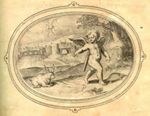
Festina lente: Vaenius, Amorum emblemata (Antwerp, 1608), emblem 50 illustrates the adage
Iconclass: 25F44 tortoises, turtles 25F26(HARE) rodents: hare 43C211 running, race 52BB42 Impossibility 51BB3 Imparity, Inequality, Difference 51M11:51MM11 Swiftness, Speed; 'Agilità', 'Celerità', 'Velocità' (Ripa)❧Slowness, Tardiness; 'Tardità' (Ripa)
Collectanea (1500): 118
Loci Communes: Impossibilia (Impossible things, Choses impossibles)
I viii 85 Cancros lepori comparas You match crab against hare
Καρκίνους δασύποδι συγκρίνεις. id est, Cancros lepori comparas, de supra modum dissimilibus. Etenim ut leporum celeritas, ita & cancrorum tarditas nota est. Similimum est illi, quod proxime retulimus. Refertur & hoc apud eundem. Suidas addit καρκίνος λαγὼν αἰρεῖ. id est, Cancer leporem capiet: de absurdis, quaeque fieri nullo modo possunt.
Καρκίνους δασύποδι συγκρίνεις., You match crab against hare, of two things that are entirely unlike. For the speed of the hare is well known, and so is the slow pace of the crab. It bears a very close resemblance to the preceding, and is also recorded in the same source. Suidas adds καρκίνος λαγὼν αἰρεῖ, The crab shall catch the hare, of absurd things that cannot possibly happen.
Facsimile:
Iconclass: 25F26(HARE) rodents: hare 25F716(CRAB) crustaceans: crab 51M11:51MM11 Swiftness, Speed; 'Agilità', 'Celerità', 'Velocità' (Ripa)❧Slowness, Tardiness; 'Tardità' (Ripa) 51BB3 Imparity, Inequality, Difference 51E2 Superiority 59CC21 Inequality, Inequity, Iniquity; 'Iniquità' (Ripa)
Loci Communes: Excellentia, inaequalitas (Excellence, inequality, Excellence, inégalité)
I viii 86 Terrae filius A son of earth
Olim homines obscuro ignotoque genere prognati, terrae filii dicebantur, propterea quod terra sit omnium communis parens. Vel quod iuxta quorundam etiam historias, primitus mortales è terra nascebantur. Tertullianus in apologetico adversus gentes: Nam & terrae filios vulgus vocat, quorum genus incertum est. Apud Athenaeum lib. decimo legitur, γηγενὴς ἄνθρωπος. id est, è terra genitus homo. M. Tullius ad Atticum libro primo: Et huic terrae filio, nescio cui, committere epistolam tantis de rebus non audebam. Idem ad Trebatium libro Familiarium epistolarum septimo: Gn. Octavius tuus familiaris summo genere natus, terrae filius. Persius, Praesto ect mihi Manius haeres, Progenies terrae. quaere ex me quis mihi quartus Sit pater: haud prompte, dicam tamen: adde etiam unum, Unum etiam, terrae est iam filius. Iuvenalis: Unde fit, ut malim fraterculus esse gigantum. Ad proverbium palàm alludens. Nam gigantes è terra progenitos poetae fabulantur. Huc pertinet, quod apud Euripidem Ion Xuthum percontatur: Πῆς ἄῤ ἐκτέφυκα μητρός; id est. Num satus tellure matre? Atque ille respondet: Οὐ πέδον τίκτει τέκνα. id est, Non parit natos solum. Apud Pausaniam, Strabonem, atque alios id genus autores, legimus populos quosdam αὐτοχθονας appellatos, qui non adeò referant originem suam, quemadmodum plerique faciunt, verum ex ipso solo nati videri velint, quorum de numero sunt Athenienses. Qui sibi nobilitatem virtute peperissent, nullis maiorum imaginibus illustres, novi homines dicebantur. Porrò ignoti, & subito apparentes incertum qua regione profecti, Coeli filii vocabantur, quasi è coelo demissi. Inducit & in Mosaicis literis Melchisedech ἀπάτωρ καὶ ἀμήτωρ sine patre, sine matre: neque dissimili ratione οὐρανοτπετεῖς. id est, de coelo lapsi dicebantur. Iuvenalis: Tertius è coelo cedidit Cato. Quanquam hoc magis convenit in homines eximia virtute. Plutarchus in invectiva, quam scipsit adversus Herodotum, de navi quadam unde subito vox est aedita Adimanto: ὁ δὲ κέλης οὗτος ἦν ὡς ἔοικειν οὐρανοπετὴς. id est, Navis autem illa erat, ut videtur, è coelo delapsa. Atque hic sermonis color sumptus est è tragoediis, in quibus machinis quibusdam sic repente ostendebantur personae populo, ut è coelo venisse videri vellent. Apud Romanos Novi homines dicebantur, qui maioribus obscuris nati suis virtutibus innotuissent, quod M. Tullius ab inimicis probro obiectum, ipse gloriae sibi vertit.
In the old days men of obscure and unknown parentage were called 'sons of earth,' because the earth is the common parent of us all, or because, according to accounts in other sources, mortals originally sprang from the ground. Tertullian in his Apologeticum against the Gentiles: 'For in common parlance those whose lineage is uncertain are called sons of earth.' Athenaeus in book 10 has the phrase 'a man born from the earth.' Cicero in his Letters to Atticus, book 1: 'And to this son of earth, whoever he may be, I did not dare entrust a letter on such important subjects.' Again, in a letter to Trebatius in book 7 of his Letters to Friends: 'Gnaeus Octavius, your high-born friend, that son of earth.' Persius:
Manius shall be my heir. A son of earth?
Yes: but who was my great-great-grandfather?
I'll tell you (give me time). One further back?
And yet one further still? All sons of earth.
Juvenal: 'Hence I'd much rather be / The giant's little brother.' This is a clear allusion to our proverb, for according to the myths in poetry the giants were sprung from the earth. It is part of the same thing when Ion in Euripides asks Xuthus 'Were you born of mother earth?' and the reply is 'The ground bears no children.' In Pausanias, Strabo, and other authors of the kind we read that certain peoples were called autochthonous because they did not trace their origin to some other part of the world, as most do, but wished to be thought to have grown out of the actual soil. The Athenians are of their number. Those who had earned a famous name by their valour, with no family portraits to lend them distinction, were called new men, novi homines. Unknown people moreover who emerged suddenly, even their place of origin being uncertain, were called sons of heaven as though they had dropped down from the sky. Melchizedech too in the books of Moses is introduced as without father or mother. Nor is the thinking very different by which they spoke of men fallen from the sky. Juvenal: 'Here's a third Cato, fallen from the skies!' Though this is more appropriate to men of outstanding virtue. Plutarch, in the attack which he wrote 'Against Herodotus,' speaks of the ship from which Adimantus heard a sudden voice 'This ship had, it seemed, fallen from heaven.' And this style of writing is taken from the tragedians, in whose works characters were suddenly revealed to the audience by stage-machinery in such a way that they were meant to seem fallen from heaven. In Rome the phrase 'new men' was used of those who had become known by their good qualities though born of an undistinguished family. And when this was thrown as a taunt at Cicero, he claimed it himself as a distinction.
Facsimile:
Iconclass: 25 earth, world as celestial body 20:25 'Natura' (allegorical figure or scene; or as Diana of Ephesus, with many breasts); 'Natura' (Ripa)❧earth, world as celestial body 91E origin of man 59BB3 Dishonour, Disrepute
Collectanea (1500): 43
Loci Communes: Nobilitas / obscuritas (Nobility / obscurity, Noblesse / obscurité)
I viii 87 Ex quercubus sive saxis nati Born of oaktrees or rocks
Huic finitimum est illud Homericum: E quercu, è saxis prognatus, quod quadrabit, vel in hominem obscuro genere, vel in eum, qui sit agresti, atque effero ingenio, moribusque immanibus. Inde ductum adagium, quod antiquitus in cavis quercubus, tectorum vice victitarent homines, atque hinc è quercubus nati fingebantur. Inde illud: Et duro robore natos. Praeterea creditum est, ex saxis à Deucalione Pyrrhaque proiectis, mortalium genus ab sumptum diluvio, instauratum fursse. Homerus in Odyss. Τ. Οὐ γὰρ ἀπὸ δρυός ἐσσι παλαιφότου, οὐδ᾽ ἀπὸ πέτρης. id est: Nam neque fatidica quercu satus es, neque saxo. Id imitatus Pallada in epigrammate. Οὐ γὰρ ἀπὸ δρυός εἶ οὐδ᾽ ἀπὸ πέτρης φασὶν. id est: Neque te quod atiunt quercus aut lapis aedidit. Allusit ad id festiviter Plato lib. de Republica viii. ἢ οἴει ἐκ δρυός ποθειν, ἢ ἐκ πέτρας τὰς πολιτειάς γίγνεσθαι, ἀλλ᾽ οὐχὶ ἐκ τῶν ἠμῶν ἐν ταῖς πόλεσιν; id est, An existimas è quercu quacunque, aut rupe, respublicas nasci, ac non potius ex moribus eorum, qui in republica versantur? In crudeles & immites convenit illud Theocritum in Aepolo de Cupidine: ἠ ῥα λεαίνας μασδὸν ἐθηλαζε, δρυμῷ τέμιν ἔτρεφε μάτηρ. id est: Sicilicet ille leaenae Uberae suxit, & in nemore hunc genitrix fera pavit.
Related to this is that expression in Homer 'sprung from oaktrees or from rocks,' which will fit either a man of lowly birth or one who is boorish and rough by nature and of uncivilized habits. The adage derives from the practice in ancient times of living in hollow oaks instead of houses, and that was why they were supposed to be 'born from oaktrees.' Hence the poet's 'born of the stubborn oak.' Besides which, it was believed that the human race, after being wiped out in the flood, was restored from stones thrown by Deucalion and Pyrrha. Homer in Odyssey 19: 'You sprang from no prophetic oak, no rock.' Palladas imitates this in an epigram: 'No oak it was, no rock (as they say) that sired you.' Plato alludes to this humorously in the eighth book of the Republic: 'Or do you suppose a polity is born from rocks and oaktrees, and not from the character of people in cities?' Theocritus in his Goatherd turns it to apply to those who are cruel and heartless, when he says of Cupid: 'It was a lioness gave him her dugs to suck, / And in the thickets did his mother rear him.'
I viii 88 Deorum cibus Food of the gods
Θεῶν τροφὴ, id est, Deorum cibus. De praelautis epulis dicebatur, propterea quod Homerus fingit deos nectare, atque ambrosia victitare, nec ob id unquam senescere. Tranquillus in Nerone. Parricidia, inquit, & caedes à Claudio exorsus est. Cuius necis etsi non autor, at conscius fuit. Neque dissimulavit, ut qui boletos, in quo cibi genere venenum is acceperat, quasi deorum cibum, proverbio Graeco collaudare sit solitus. Horatius in epistolis: O noctes, caenaeque deûm. Aristophanes in Ranis ἐς μακάρων εὐοχίας, Regum aulica convivia significans.
Θεῶν τροφή, Food of the gods, was used of very splendid banquets, because Homer represents the gods as feasting on nectar and ambrosia, and therefore never growing old. Suetonius in his life of Nero: 'His record of parricide and murder began with Claudius, whose death he was privy to though not responsible for it, nor did he try to conceal this. Claudius had swallowed poison in a dish of mushrooms, and Nero, using a Greek proverb, habitually called them the food of the gods, and said what a good thing they were.' Horace in his Epistles: 'Evenings and suppers of the gods!' Aristophanes in the Frogs: 'To the banquets of the Blessed,' meaning to dine richly at the courts of kings.
Facsimile: 
Iconclass: 93A14 food of the gods 57B1 Praise, Approbation, Approval; 'Lode' (Ripa)
Loci Communes: Lautitiae (Sumptuousness, luxuries, Somptuosités)
I viii 89 Tertius Cato A third Cato
Tertius Cato, proverbialis est ironia. In viros impendio tetricos, atqu alienae vitae censores. Nam duorum Catonum, senioris, cui nomen Censorio, et minoris, cui nomen Uticensi, gravitas pariter atque integritas, vulgo celebratissima quondam fuit, Adeo, ut è coelo demissi dicerentur, ut bellum cum vitiis gererent: Iuvenalis: Habeat iam Roma pudorem, Tertius è coelo cecidit Cato.
'A third Cato' is an ironical expression which was proverbial, used of extremely strait-laced men who were severe critics of the way others live. There were two Catos, the elder called Cato the censor, and the younger Cato of Utica, and they were both equally famous in old days for their serious austere life and their integrity, so much so that they were described as sent down from heaven to wage war on vice. [For in Antiquity men of unknown origin who had appeared suddenly among mortals and were admired for their high qualities were commonly said to have come down from heaven and to be sons of heaven. Heracleides held that man had fallen from the moon, exactly as though mortals lived in the moon just like another earth. On the other hand Menippus the Cynic philosopher pretended that he had returned from the lower world in order to have more freedom to criticize the way men live. The evidence is in Laertius and Lucian.] Juvenal:3 'Now Rome may well feel shame: / Here's a third Cato, fallen from the skies!'
Facsimile:
Iconclass: 98B(CATO THE ELDER) (story of) Marcus Porcius Cato the Elder 98B(CATO THE YOUNGER) (story of) Marcus Porcius Cato the Younger 53C12 Severity; 'Severità' (Ripa) 49D11(3) numerals: 3
Collectanea (1500): 314
Loci Communes: Asperitas, morositas (Harshness, moroseness, Rudesse, morosité); Aliena curantis (Meddling in others' affairs, Qui se mêle des affaires d'autrui)
I viii 90 Sapientum octavus Eighth of the Sages
Huic per omnia similimum est illud Horatianum in Sermonibus: Sapientum octavus. In eum, qui sibi multum tribuat in sapientia. Numerantur enim apud Graecos septem sapientes, eorumque apophthegmata oraculorum vice celebrantur, etiamsi de nominibus magna inter scriptores varietas est. De numero certe constat inter omnes: unde per ironiam sapientum octavum dicebant, dignum qui septem illis adderetur. Horatius, Haec mihi Stertinius sapientum octavus. Item Ausonius, Sapiensque supra Graeciae septem viros Octavus accessit sophos.
Very close to this in every way is that phrase in Horace's Satires 'Eighth of the Sages,' used of a man who prides himself on his philosophy. For the Greeks have a list of seven Sages, whose wise remarks are well known and regarded as oracles, although the authors differ greatly as to their names. But on their number at any rate everyone agrees; and so 'eighth of the Sages' is used ironically of someone who might be added to the famous seven. Horace: 'Stertinius taught me this, eighth of the Sages.' Ausonius too: 'Wise as he is beyond the Grecian seven, / Here's an eighth Sage.'
Facsimile:
Iconclass: 98B(SEVEN SAGES) the seven wise men of Greece: Bias, Chilon, Cleobulus, Periander (alternatively Myson), Pittacus, Solon, Thales 49D11(8) numerals: 8 49C2 philosophy 59B4 Dignity; 'Dignità' (Ripa)
Loci Communes: Dignitatis (Dignity, Dignité)
I viii 91 Bis dat qui cito dat He that gives quickly gives twice
Memini, ni fallor apud Senecam alicubi legere, Bis dat, qui cito dat. Idem lib. De beneficiis ii. Ingratum est beneficium, quod diu inter manus dantis haesit. Quae sentenita monet, haud cunctanter, haud gravatim opitulandum amicis, cum opus est, sed ultro non exspectatis precibus deferendum officium. Inter epigrammata Graeca fertur & hoc distichon, nomine tituloque Luciani. Ωκεῖαι χάριτες γλυκερώτεραι, ἢν δὲ βραδύνῃ Πᾶσα χάρις κεινεὴ, μὴ δὲ λέγοιτο χάρις. Id carmen Latine non potest commode verti, propterea quod lepos & argutia epigrammatis sita sit in hac voce χάρις, quae Graecis aliquando beneficium significat, aliquando gratiam, qua commendatur aliquid, aliquando deam ipsam. Citatur similis apud Ausonium sententia Graeca. Α χάρις ἁ βραδύπους, ἄχαρις χάρις. Est autem initium carminis Heroici, ex epigrammate quopiam, Tardum beneficium, ingratum est. Eam ille sic vertit. Gratia quae tarda est, ingrata est: gratia nanque, Cum fieri properat, gratia grata magis. Rursum aliter vertit idem, Si bene quid facias, facias cito: nam cito factum Gatum erit, ingratum gratia tarda facit. Unde & Hector apud Euripidem in Rheso contemnit ac danat auxilium sero delatum amicis, Μισῶ φίλοισιν ὕστερον βοηδρομεῖν. id est: Odi equidem amicis serius succurrere. Exstat & Mimus non invenustus in hanc eandem sententiam, Bis est gratum, quod opus est, ultro si offeras. Item alter huic adsimilis, Beneficium inopi bis dat, qui dat celeriter.
I remember reading somewhere, in Seneca if I am not mistaken, that 'He who gives quickly gives twice.' Seneca too in the second book of the De beneficiis has 'A gift is less welcome that has long stuck to the giver's fingers.' The lesson of this maxim is that we should not be dilatory or reluctant in helping our friends when they need it, but should do what we can for them on our own initiative without waiting to be asked. Among the Greek epigrams there is a couplet that bears the name of Lucian: 'Swift gifts are sweetest, and the good / That tarries earns no gratitude.' The lines cannot be turned adequately into Latin, because the charm and wit of the epigram lies in the word charis, which in Greek sometimes means a kindness, sometimes the grace that makes a thing acceptable, sometimes an actual goddess, one of the Graces. Ausonius cites a similar maxim in Greek: 'Favour slow-footed is favour without favour.' It is the beginning of a hexameter line, taken from some epigram. His rendering is: 'Favour that tarries loses its savour; / Favour done promptly wins answering favour.' And he offers an alternative: 'A good deed should be done with speed; / What is tardy, though kind, no thanks will find.' So it is that Hector in Euripides, in the Rhesus, condemns delay in helping friends: 'In helping friends I like not to be late.' There is also an elegant moral maxim to the same effect: 'Twice welcome what we need, when offered free,' and another like it: 'He helps the needy twice whose help is swift.'
Facsimile: 
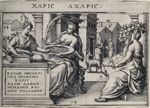
Χαρισ αχαρισ: Boissard, Emblematum liber (Frankfurt, 1593), emblem XXXIIII quotes the Latin adage
Bis dat qui cito dat: Giovio, Dialogo dell' Imprese (Lyon, 1574), emblem 35 (Symeoni)
Bis dat qui cito dat: Paradin, Les devises héroïques (Antwerp, 1563), emblem 211
Bis dat qui cito dat: Whitney, A choice of emblemes (Leiden, 1586), emblem 205
Qui donne tost il donne doublement: Boissard, Emblemes (Metz, 1595), emblem XXXIIII
Gratiae: Alciatus, Emblemata (Leiden, 1591), emblem 162 quotes the adage in its own comment
Iconclass: 33A4 bringing gifts; exchanging gifts 51M11 Swiftness, Speed; 'Agilità', 'Celerità', 'Velocità' (Ripa) 54A6 Helpfulness
Loci Communes: Liberalitas (Generosity, Générosité)
I viii 92 Honos alit artes Honours nourish arts
Id quod est apud Marcum Tullium, Honos alit artes, videtur esse sumptum ex Aristophanis Pluto: Οὔτε γὰρ ὁ μισθὸς, οὐδὲν ἐστ᾽ οὔθ᾽ ἡ τέχνη. id est: Neque praemium ullum est, ars noc ipsa item viget. Colligit enim non esse consentaneum, Athenis ullos esse bonos medicos, cum medicis nulla sint praemia. Diogenianus autem hoc intra adagia commemorat. Huc allusit Martialis, cum ait, Sint Moecenates, non deerunt, Flacce Marones, Virgiliumque tibi vel tua rura dabunt. Et Aristoteles scribit honorem esse praemium virtutis. Ac priscorum leges, non solum comminabantur poenan maleficis, sed & praemiis & honoribus invitabant ad recte agendum. Pindarus in Isthmiis, hymno nono, tanquam vulgo celebrem sententiam citat, Εστι δέτισ λόγος ἀνθρώπων, τετελεσμένος ἐσλὸν μὴ χαμαὶ σιγᾷ καλύψαι. id est, Est autem dictum quoddam inter homines celebre, Bonum peractum non esse in terra occultandumm silentio. In hoc autem praedicanda sunt recte facta virorum illustrium, ut caeteris praeluceant ad capessandam virtutem.
That sentence in Cicero, 'Honours nourish arts,' seems to be taken from Aristophanes' Plutus: 'There's no reward, and so there is no art.' For his argument is that one cannot expect good physicians in Athens when they get no recompense. Diogenianus records this among his adages. Martial alludes to it when he writes: 'Give us more patrons like Maecenas, Flaccus, and there will be more poets like Maro; even your rough countryside will give you a new Virgil.' Aristotle also writes that honour is the reward of virtue, and the laws of the Ancients not only threatened wrongdoers with punishment, but also encouraged right actions by the offer of rewards and honours. Pindar in the Isthmians, in the ninth hymn, cites as generally familiar 'There is a saying among men that good well done ought not to be hid in silence in the earth.' Here too belongs the parable in the Gospel of the light that should not be hidden beneath a bushel. The object of praising the good deeds of famous men is to make them a guiding light for lesser men in the pursuit of excellence.
Facsimile:

Honos alit artes: Printer's device 0816
Honos alit artes: Printer's device 0817
Honos alit artes: Printer's device 0822
Iconclass: 54A6 Helpfulness 59B31 Honour, Glory; 'Ampiezza della Gloria', 'Gloria', 'Gloria de prencipi', 'Gloria & Honore', 'Honore', 'Sublimatà della Gloria' (Ripa) 41C111 giving food 48A art and the public; styles and ornaments 55A12 Reward, 'Praemium'; 'Premio', 'Remuneratione' (Ripa)
Loci Communes: Probrum, gloria (Disgrace, glory, Honte, gloire); Incitare (To incite, Inciter)
I viii 93 Vel caeco appareat A blind man might see that
Proverbialis hyperbole frequens apud autores, Vel caeco appareat, de re vehementer perspicua. Aristophanes in Pluto, Τῷ τοῦτο κρίνεις; δηλονότι ἤ καὶ τυφλῷ Γνῶναι δοκεῖ τοῦτο. id est, QUi scis ita esse? scilicet vel caecus hoc Videat. Eusebius adversus Hieroclem, ἀλλά γὰρ καὶ τυφλῷ φασὶ δῆλον. id est, Quinetiam vel caeco perspicuum aiunt esse. Plato lib. De Repub. viii. καὶ τυφλῷγε δῆλον, ὡς μεταβαίνει. id est, Sanè & caeco perspicuum est transmutari. Idem in Sophista, πῶς γὰρ οὐ φαίνεται, καὶ τὸ λεγομενον δὴ τοῦτο, καὶ τυφλῷ. id est, Qui fieri potest, ut hoc non appareat, quemadmodum proverbio dicitur, vel caeco? Sumptum videri potest ex octavo lib. Odyss. Homericae, Καὶ κ᾽ ἀλαός τοι ξεῖνε διακρίνειε τὸ σῆμα.. id est, Hanc etiam caecus metam discerneret hospes. Quintil. lib. xii. Nam quis ignorat, quin illud longe sit honestissimum, & liberalibus disciplinis, & illo quem exigimus animo dignissimum, non vendere operam, nec elevare tanti beneficii autoritatem: cum pleraque hoc ipso possint videri vilia quod precium habent. Caecis hoc, ut aiunt, satis est. Neque quisquam, qui sufficientia sibi, modica autem haec sunt, possidebit, hunc quaestum sine crimine sordium fecerit. In his verbis Fabii, vox quaepiam deesse videtur, ut legas, Caecis hoc, ut aiunt, satis perspicuum est. Allusit ad hoc adagium Antigonus rex unoculus, cum allato instrumento praegrandibus scripto literis, ταυτὶ μὲν καὶ τυφλῷ δῆλα. id est, Haec quidem vel caeco perspicua sunt, inquit. Recensuit Plutarch. τῶν συμποσιακῶν Decade ii. Apud Titum Livium lib. belli Macedon. ii. quum Phaneas Philippum violentius in Aetolos dicentem interfatus dixisset, Rem in verbis non verti, aut bello vincendum, aut parendum melioribus: Philippus respondit, Apparet id quidem etiam caeco, iocatus in valetudinem oculorum Phanae.
An exaggeration often found as a proverb in good authors is 'A blind man might see that,' of something extremely obvious. Aristophanes in the Plutus: "'What makes you say so?" "Sure this would be clear / Even to a blind man."' Eusebius in his Adversus Hieroclem: 'This would be clear, as they say, even to a blind man.' Plato in the eighth book of the Republic: 'Surely it is clear to a blind man that it changes.' And in the Sophist: 'How could even a blind man not see this, as the saying goes?' It seems to be taken from the eighth book of Homer's Odyssey: 'Surely a blind man might discern the mark.' Quintilian in book 12: 'Everyone surely knows that it is far the most honourable course and most characteristic both of a liberal education and of the spirit which we expect to find, not to take money for one's assistance or reduce the value of so great a service; for it often happens that things begin to seem worth little, merely because a price is put on them. This will be enough, as they say, for a blind man. Nor will anyone who has enough to live on (and very little will suffice for that) do this for gain without being thought mercenary.' In this passage from Quintilian some word seems to be missing: we must read 'will be clear enough.' King Antigonus, who had only one eye, alluded to this saying when they brought him a document written in very large letters, and his reaction was 'This would be clear even to a blind man.' Plutarch records this in the second decade of his 'Table-talk.' In Livy, in the second book of his Macedonian War, when Philip was delivering a violent attack on the Aetolians and Phaneas interrupted him, saying that it was not a matter of words; one must either win the war or do the bidding of better men, Philip's reply was 'Even a blind man can see that,' which was a jesting reference to Phaneas' weak sight.
I viii 94 Multis ictibus dejicitur quercus Many strokes fell great oaks
Πολλαῖσι πληγαῖς δρῦς στερὰ δαμάζεται. id est, Multis rigida quercus domatur ictibus. Senarius hic extat in Diogeniani collectaneis, de re factu quidem ardua, quae tamen assidua industria pervincatur. Huic non dissimile videtur Hesiodium illud: Εἰ γάρκεν τὸ σμικρὸν ἐπὶ σμικρὸν καταθεῖο, Καὶ θαμὰ τουτ᾽ ἕρδοις, ταχάκεν μέγα καίτι γένοιτο. id est, Si paulum paulo adiicies, faciesque ita crebro, Mox magnum quiddam tibi conficietur & ingens. Id quod non tantum ad lucri naturam pertinet, quod ex minutissimis saepe maximum conflatur, verum etiam ad industriam assiduam, quae si vehemens non sit, tamen si perpetua, atque in indefatigata fuerit, res difficilimas quoque facile conficit. Quemadmodum unicus ictus nihil adferre momenti videtur ad deiiciendum molem querni roboris, verum ea crebris ictibus facile prosternitur.
Πολλαῖσι πληγαῖς δρῦς στερὰ δαμάζεται, Many strokes fell great oaks. This iambic line is found in the collection of Diogenianus, and is applicable to anything which is difficult to achieve but can be mastered by energy and persistence. It is not much unlike those lines in Hesiod: 'Piling little on little and often repeating the process, / Likely enough in the end something great will reward your efforts.' This applies not only to money, of which by its nature a great pile is often made out of very small contributions, but to persistent work; which need not be very laborious provided it is constant and unflagging, and, if so, often achieves very difficult targets. A single blow seems to contribute nothing to the falling of a great massive oak; but frequent blows easily lay it low.
Facsimile: 
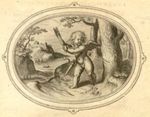
Durate: Vaenius, Amorum emblemata (Antwerp, 1608), emblem 106 uses the adage's imagery
Durate: Printer's device 0880 uses the adage's imagery
Durate: Ayres, Emblems of love (London, 1750), emblem 35 uses the adage's imagery
Non uno sternitur icto: Wither, A collection of emblems (London, 1635), emblem 29 paraphrases the adage and uses its imagery
Non uno sternitur icto: Rollenhagen, Nucleus emblematum (Arnhem, 1618), Cent. I, emblem 29 paraphrases the adage and uses its imagery
De parvis grandis acervus: Camerarius, Symbolorum et Emblematum Centuria(e) (Nürnberg, 1590, 1595, 1596, 1604), emblem 91 uses ears of corn and a large sheaf of corn to express the adage's imagery; it also quotes the same saying by Hesiodus as the adage's comment
De boom en valt ten eersten slagh niet: Cats, Spiegel (The Hague, 1632), emblem 24 uses the adage's imagery: two friends are looking at a felled tree while a woodcutter continues to cut off branches - conveying the idea of perseverance
Iconclass: 25G3(OAK) trees: oak 53A2 Perseverance, Resolution, Determination; 'Perseveranza' (Ripa) 53B6 Discipline 47I84 woodcutting, woodcutter ~ forestry
Loci Communes: Assiduitas (Diligence, persistence, Assiduité)
I viii 95 Caudae pilos equinae paulatim vellere To pull out the mare's tail slowly hair by hair
Caudae pilos equinae paullatim vellit, qui quod viribus atque impetu fieri nequit, id tempore atque assiduitate conficit. Horatius in Epistolis: Utor permisso, caudaeque pilos ut equinae Paulatim vello, demo unum, demo etiam unum, Dum cadat elusus ratione ruentis acerui, Qui redit ad fastos, & virtutem aestimat annis. Natum è facto quodam ducis Sertorii, cuius rei meminit Plutarchus in eius vita. Hic enim cum suis copiis, ex barbata turba conflatis, rationibus persuadere non posset, in re militari plus habere momenti consilium, quàm vires temerarias, postea quam illi parum feliciter pugnassent, duos proponit equos, alterum macilentum, atque invalidum, alterum vegetum, cauda pilosa. Atque invalido illi iuvenem adhibet praegrandi corpore, & admirandis viribus. Contra, vegeto illi pusillum, & imbecillum admovet homuncionem. Hic singulos pilos paul-a tim vellens, brevi spatio totam depilavit caudam. Iuvenis è diverso caudam omnem simul manibus utrisque comprehensam, vi atque impetu conatur revellere. Qui cum frustra sudaret, risui fuit circumstantibus. Sub haec assurgens Sertorius, cuius consilio, iussuque haec fuerant acta, Videtis, inquit, commilitones, quanto plus possit ingenium, quàm vires.
He pulls out the mare's tail slowly hair by hair who performs by taking time and trouble a task that brute force and violence cannot accomplish. Horace in his Epistles:
I take what's offered, slowly hair by hair
Pull out the mare's tail, as a heap of sand
Falls grain by grain; and thus that man is foiled
Who thumbs the annals, counting worth by years.
This arises from something Sertorius the general once did, of which we are told by Plutarch in his life. Sertorius had tried and failed by the use of arguments to persuade his soldiers, who were a barbarous and motley lot, that strategy is more effective in war than brute force. Later, when they had fought a battle unsuccessfully, he produced two horses, one a thin feeble creature and the other a powerful animal with a bushy tail. To the feeble jade he assigned a man in the prime of life, a great big fellow with tremendous muscles; and an undersized and feeble little chap to the powerful horse. This latter pulled out the horse's tail slowly hair by hair, and soon there wasn't a hair left. The strong man, on the other hand, grasped the whole tail with both hands and tried to pull it out by main force; he struggled in vain, and was a laughing-stock. Sertorius, who had planned and arranged all this, jumped up and said: 'Now, fellow-soldiers, you can see how much more strategy can do than strength.'
Facsimile:
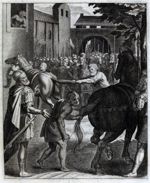
Festina lente: Vaenius, Doctrine des Moeurs - Moralia Horatiana (Paris, 1646), emblem 19 illustrates the adage
Festina lente: Vaenius, Emblemata Horatiana (Antwerp, 1612), emblem 31 illustrates the adage
Melius si singula: Zincgreff, Emblematum Ethico-politicorum (Heidelberg, 1619), emblem 27 uses the adage's imagery of a horse having its tail pulled, one hair at a time
Iconclass: 46C13141(+7343) horse (+ tail of an animal) 52A22 Tact 52AA21 Rashness, Imprudence, Recklessness 53A2 Perseverance, Resolution, Determination; 'Perseveranza' (Ripa) 51MM11 Slowness, Tardiness; 'Tardità' (Ripa) 98B(SERTORIUS, Q.)51 Quintus Sertorius orders two men to pull the hair from a horse's tail: one tries to pull all the hairs in one time, and fails, the other pulls the hairs one by one and succeeds (an example of the advantage of perseverance over violence)
Loci Communes: Absurda, indecora, seu praepostera (Absurd, unbecoming, or preposterous things, Choses absurdes, inconvenantes ou déplacées); Tarditatis et cunctationis (Slowness and delay, Lenteur et retard)
I viii 96 Virum improbum vel mus mordeat Even a mouse will fasten its teeth in a rascal
Κᾀν μῦς δάκοι ἄνδρα πονηρὸν. id est, Scelerosum mordeat & mus. Hemistichium heroicum. Quo significatum est, quacunque ratione vindictam non deesse malis, sed eos aliquo pacto meritas dare poenas. Competit & in eos, qui de re quantumvis frivola rixam movent, seque laesos queruntur, & offensos simulant, ne quid dent. Id quod nuper cuidam accidit apud Britannos, medico, mihi ut patria communi, ita & amicitia coniunctissimo. libet enim obiter hanc fabulam inserere. Civem quendam Londoniensem, virum egregie nummatum, & habitum adprime probum, arte curaque sua liberarat, non sine suo ipsius periculo. Nam is pestilentissima febre tenebatur. Et, ut fit in periculis, medico montes aureos fuerat pollicitus, si non gravaretur sibi, in tanto vitae discrimine, dexter adesse, obtestatus & amicitiam, quae illi cum eo intercedebat. Quid multis? persuasit & iuveni, & Germano. Adfuit: nihil non fecit. Revixit ille. Ubi verecunde de pecunia medicus admonuisset, elusit nugator, negans de mercede quicquam addubitandum, caeterum arcae nummariae clavem penes uxorem esse. Et nosti, inquit, mulierum ingenium. Nolo sentiat tantam pecuniae summam à me datam. Deinde post dies aliquot hominem obvium forte factum, iam nitidum, & nulla morbi vestigia prae se ferentem, appellavit, & nondum datae mercedis admonuit. Ille constanter asseverare pecuniam suo iussu ab uxore numeratam esse. Medicus negare factum. Hic vide quam ansam bonus ille vir arripuerit. cum forte medicus eum latine numero singulari appellasset, ibi velut atroci lecessitus iniuria, Vah, inquit, homo Germanustuissas Anglum? moxque velut impos animi, prae iracundia caput movens, diraque minitans, subduxit sese. Atque ad eum modum honestus ille civis elusit, dignus profecto quem sua pestis repetat. Risimus quidem fabulam, nec tamen sine dolore, propter indigne frustratum amicum, nec sine tam insignis ingratitudinis admiratione. Referunt gratiam leones in periculis adiuti, meminerunt officii dracones: homo homini, amicus amico sic merito, pro mercede, quae nulla satis digna rependi poterat, ludibrium reponit. At que haec in facti detestationem diximus, non gentis odium. Nec enim par est, ex hoc uno nebulone Britannos omneis aestimari. Refertur adagium inter Graeca epigrammata: Φασὶ παροιμιακῶς, κᾷν μῦς δάκοι ἄνδρα πονηρὸν. id est: Vulgo aiunt, vel murem etiam mordere scelestum. At is quisquis est, nam incertus autor, invertit proverbium, dicens bonos viros vel à mure morderi, malis ne draconem quidem audere dentes admoliri. hoc est, insontibus passim noceri, propterea quod ii impune laedi posse videantur, utpote non relaturi iniuriam.
Κἂν μῦς δάκοι ἄνδρα πονηρόν, Even a mouse will fasten its teeth in a rascal. Part of a heroic hexameter, indicating that somehow or other the wicked do not escape punishment but pay the proper penalty in some way. It applies also to those who start a quarrel on some frivolous pretext and complain that they have suffered loss, pretending that they have received an injury in order to avoid paying what they owe. This happened lately in England to a man I know, a physician with whom I am closely linked both by our common country and by the ties of friendship. I should like to tell the story in passing. There was a citizen of London, an extremely rich man and supposed to be highly respectable, whom my friend by his skill and care, and not without some personal risk, had restored to freedom; for he was the victim of a most pestilent fever. As happens in the moment of danger, he had promised the physician mountains of gold if he would attend him without stint in such a desperate situation, appealing also to the friendship there was between them. To cut the story short, my friend agreed. He was young, and a German. He attended him, he did all he could, and the man recovered. When the physician shyly raised the question of payment, the worthless fellow wriggled out of it. He must not worry about his fee; 'but as a matter of fact my wife keeps the keys of the chest where I keep my money, and you know what women are. I should not like her to notice that I had parted with such a large sum.' A few days later he happened to meet the man, who was now in very good shape and showed not a trace of his recent illness; so he appealed to him, reminding him that the fee had not yet been paid. In reply the fellow stoutly asserted that the money had been paid over by his wife in cash on his instructions. The physician said this was not so. Now see what a handle this worthy man seized! The physician happened to address him in Latin in the second person singular; whereat he flared up as though grossly insulted. 'How dare you,' he cried, 'a German like you, use your thou and thee to an Englishman?' and as though he had lost all self-control, shaking his head in a rage and uttering frightful threats, he was off in a trice. And that was how this honourable citizen gave him the slip, richly deserving another attack of his complaint. I laughed at the story, but it was a bitter laugh when I thought how unfairly my friend had been let down, and I was astonished at such surpassing ingratitude. Lions return thanks for help given them in peril, serpents remember a kindness done them; between man and man, friend and friend, when such a service has been rendered that no return could be adequate, an insult is the only recompense. I say this to show my hatred of the deed, not my dislike of the doer's countrymen; for it is unfair to judge all Englishmen from this one worthless specimen. The adage is recorded in a Greek epigram: 'So they say, even a mouse will fasten its teeth in a rascal.' But the author whoever he was (his name is uncertain) turns the proverb upside down, saying that good men get bitten by the merest mouse, while before bad men even dragons dare not show their teeth: the innocent always suffer, because there seems to be no risk in attacking those who will not retaliate.
Facsimile: 
Iconclass: 25F26(MOUSE) rodents: mouse 57BB131 Punishing Badness 57AA741 Revenge, Requital, Retaliation; 'Vendetta' (Ripa)
Loci Communes: Ultio malefacti (Vengeance for a wrongdoing, Vengeance d'un méfait)
I viii 97 Vel capra mordeat nocentem Even a she-goat will bite a villain
Κᾷν αἴξ δάκῃ ἄνδρα πονηρὸν. id est: Mordebit vel capra nocentem. Ita reperitur in collectaneis Diogeniani. Sensus nihil discrepat à proximo. Nam capra minime alioqui mordax est, nisi quod improbis omnia sunt infesta. Suidas indicat orthographiam: cum enim ad coprus refertur, hoc est, cum significat hominem affictum ac miserum, vult primam acui, πόνηρος, unde & πονήρος ἔχειν dicuntur, quibus res sunt adversae: & Aristophanes in Pluto: Πονήρος γ᾽ εἶπας ἡμιν ξυμμάχους. id est: Auxilia nobis misera sanè praedicas. Cum ad animum, ultimam acui, πονηρὸς, id est, improbus, & πονηρῶς improbe. Nam cum dicimus πονηροῦ κόμματος, καὶ πονηρὸν ὕδωρ, quod hominis, est, ad rem inanimam transferimus, quemadmodum frigus sceleratum, & fallaces divitias dicimus.
Κἂν αἲξ δάκοι ἄνδρα πονηρόν, Even a she-goat will bite a villain. This is found in the collection of Diogenianus. The sense does not differ from the preceding; for the she-goat is not in general given to biting, except that everything hates a wicked man. Suidas makes the spelling clear; for when the adjective refers to something physical, when it is applied, that is, to a man suffering from some affliction and deserving of pity, he thinks the accent should be on the first syllable, πόνηρος,, and the word is so used in the phrase πονήρος ἔχειν, which means 'to be in a bad way'; when fortune is against you; and so Aristophanes in the Plutus: 'Poor indeed are our allies, of whom you speak.' When however it means bad at heart, there should be an acute accent on the last syllable, πονηρός. For when we speak of 'a bad stamp' or of 'bad water,' we are transferring to inanimate objects an epithet appropriate to human beings, as when we say 'accursed cold weather' or 'deceitful riches.'
Facsimile:
Iconclass: 47I2142 she-goat, nanny-goat 57BB131 Punishing Badness 57AA741 Revenge, Requital, Retaliation; 'Vendetta' (Ripa)
Loci Communes: Ultio malefacti (Vengeance for a wrongdoing, Vengeance d'un méfait)
I viii 98 Litem movebit, si vel asinus canem momorderit He will have the law on you, if an ass has so much as bitten his dog
Celebratur Graecis & hic senarius proverbialis, Δίκην ὑφέξει κᾄν ὄνος δάκῃ κύνα. id est: Litem movebit, si vel asinus mordeat canem. Quadrabit in eos, qui de re quantumvis exigua litem suscitant. Natum videtur ab eventu quopiam. Extat autem apud Iureconsultos actio ex lege, Si quadrupes damnum dederit. Refertur à Zenodoto & Suida, quanquam ad utrumque scriptum est, μακροῖς pro μικροῖς, quorum hoc mihi videtur sensus exposcere.
There is another well-known proverbial line in Greek: Δίκην ὑφέξει κἂν ὄνος δάκῃ κύνα, He'll have the law on you, if an ass has so much as bitten his dog. This will be appropriate for those who go to law on the slightest provocation. It looks as though it must have started with some actual incident. Lawyers are familiar with a statutory action when damage has been caused by a quadruped. Recorded by Zenodotus and Suidas, though in both the text gives 'greatest' instead of 'slightest,' which is what the sense seems to me to demand.
Facsimile:
Iconclass: 33B12 accusing 46C13142 ass, donkey 34B11 dog
Loci Communes: Rixosus (Quarrelsome, Querelleur)
I viii 99 Litem parit lis, noxa item noxam parit Quarrel will quarrel breed, and hurt breed hurt
Δίκη δίκην ἔτικτε, καὶ βλάβην βλάβη. id est: Litem parit lis, noxa item noxam parit. Senarius in rixosos & litium avidos dici solitus, quibus lis ex lite, alis ex alia nascitur: negocium seritur ex negocio, iniuria propagat iniuriam. Extat apud Suidam.
Δίκη δίκην ἔτικτε, καὶ βλάβη βλάβην., Quarrel will quarrel breed, and hurt breed hurt. An iambic line commonly used against quarrelsome people with a passion for litigation, for whom one lawsuit always breeds another, one affair is the seed-bed of another, and wrongs are self-perpetuating. It survives in Suidas.
Facsimile:
Iconclass: 33B12 accusing 33B1 quarrel, argument 56BB2 Unhappiness; 'Infelicità' (Ripa)
Loci Communes: Malum conduplicatum aut renovatum (Evil doubled or renewed, Mal redoublé ou renouvelé)
I viii 100 Bonus dux bonum reddit comitem A good leader makes for good following
Ο καλῶς ἄγων, ἐποιεῖ τὸ καλῶς ἕπεσθαι. id est, Qui bonum ducem praestat, is bonum reddit comitem. In principe situm est, ut sit bene morata civitas, si modo ipse bonus sit imperator. In episcopi positum, ut piam efficiat plebem, si tamen ipse piam & integram agat vitam. Prudens & incorruptus magistratus, & probos, & integros reddit cives. Bonus paterfamiliâs domum efficit bene institutam. Doctus ac diligens praeceptor eruditum reddit discipulum. Frugi maritus uxorem in suos trahit mores. Unde quisquis praefectus est negocio, debet in primis operam dare, ut ipse suo fungatur officio, prius quàm ab aliis officium exigat. At nunc videas nonnullos principes, qui legum observationem exigant à populo, cum ipsi vivant prorsus ἀνόμως, velut omnibu soluti legibus: à magistratibus & officiali integritatem requirant, cum ipsi palàm vendant, aut ad gratiam mandent officia. Nonnullos videas episcopos, qui à grege suo religionem & pietatem exigant, cum ipsi procul absint ab omni pietate. Sumpta est metaphora à militia, in qua ferè qualiscunque fuerit dux, eiusmodi solet esse miles. Refertur in Graecorum collectaneis, sed ἀδέσποτον. Extat autem apud Plutarchum autorem minime vulgarem in vita Lycurgi, ἀλλ᾽ ἡ πειθαρχία μάθημα μὲν ἐστὶ ἄρχοντος, ἐμποιεῖ γὰρ ὁ καλῶς ἄγων, τὸ καλῶς ἕπερσθαι. id est, ut populus dicto sit audiens, hoc discit à principe. Nam qui bonum praebet ducem, is facit, ut alii bene sequantur.
Ὁ καλῶς ἄγων ἐμποιεῖ τὸ καλῶς ἕπεσθαι., A good leader makes his followers good. It lies in a prince to make his subjects behave well, provided he himself is a good ruler. It is in a bishop's power to make his people good, provided he himself leads a pious and honourable life. A wise and upright ruling class makes virtuous and honest citizens. A good head of a family means a well-run household. A learned and hardworking teacher produces a well-educated pupil. A careful husband draws his wife into his way of living. And so every man appointed to be head of something ought in the first place to take pains to fulfil his own obligations before he expects others to do the same. But, as it is, you may see several princes who expect their people to obey the law, while living themselves a life that is quite lawless, as though they were above the law; who demand integrity in their office- bearers and subordinates, while themselves openly selling those offices or granting them at their good pleasure. You may see some bishops who expect religion and piety in their flock, while far from all piety themselves. The image is taken from military life, in which a general's quality is reflected in his soldiers. This is reported in the Greek collections, but anonymously. It is to be found however in Plutarch, an authority well above the common herd, in his life of Lycurgus: 'But obedience is a lesson to be learnt from a ruler; for agood leader makes for good following.'
Facsimile:
Iconclass: 57A1 Good Behaviour 54C31 Example
Loci Communes: Divitum praerogativa (The privilege of the rich, Le privilège des riches)