II iii 1 Aut quinque bibe aut treis aut ne quatuor Drink either five or three or anything but four
Athenaeus libro decimo de bibacitate disputans, scribit adagium huiusmodi vulgo fuisse celebratum, ἢ πέντε πίνειν, ἢ τρία, ἢ μὴ τέτταρα. id est, Aut quinque bibe, aut tria, aut ne quatuor. Praescribit modum diluendi vini. Haec autem temperatura maximè placebat antiquis: ut quinque vini cyathis duo adderentur aquae, aut duobus unus. Huius rei testem citat Ionem poetam, qui scripserit, vatem quendam Palamedi praedixisse Graecos navigaturos, qui treis cyathos ad unum biberent. Idem Nicocharem in Amymone, Χαῖρε πέντε καὶ δύο. id est, Salve quinque & duobus. Praeterea Amypsiam, Εγὼ δὲ Δίονυσος πᾶσιν ὑμῖν εἰμὶ πέντε καὶ δύο. id est, Ego autem Bacchus omnibus vobis quinque & duo. Verum hac de re copiosius aliquanto Plutarchus, τῶν συμποισακῶν Decade tertia, testans convivialibus cantiunculis celebratum fuisse, ἢ πέντε πίνειν ἢ τρία, ἢ μὴ τέσσαρα, ne quis temere Plauti verba commutet, nam apud hunc quoque referuntur. Atque in hanc rem iocatur Ariston, quemadmodum in musica hemiolii proportio symphoniam reddit diapente, dupla symphoniam efficit, quae dicitur diatessaron, at eam quae vocatur diatessaron, symphoniam esse praeter caeteras hebetem & obscuram, & epitrito constare: Itidem & in bibendi harmoniis treis esse symphonias vini ad aquam, diapente, δὶα τριῶν, & diatessaron. Nam Diapente symphoniam ex hemiolio constitui, si tres aquae cyathi duobus vini cyathis admisceantur. Quod si duobus admisceas duos, dupli proportionem existere: diatessaron harmoniam fore, si uni vini cyatho treis aquae cyathos addideris, atque hic esse epitritum: quae proportio pertineat ad tres magistratus in Prytaneo sapientes ac sobrios, aut ad dialecticos, cum adductis superciliis de suis anxiis argutiis disputant. Iam si duos uni admisceas, tonum nasci maxime turbulentum, & ut appellat ipse, ἀκροθώρακα, chordas moventem non movendas mentium. Propterea quod per hunc nec omnino sobrios esse licet, nec stultitiam mero immergere. Quod si duo tribus addideris, harmoniam exsistere omnium maximè musicam, ut quae somnos invitet, tranquillitatem ac summam quietem inducat. His ita per iocum dictis, adiecit Plutarchi pater, priscos Iovi duas addidisse nutrices, Iten & Adrastiam: Iunoni unam, nempe Euboeam: Apollini duas, Alethiam & Corythalam: Baccho vero plures, quod hunc deum oporteat pluribus nympharum mensuris mansuefactum ac domitum, moderatiorem, ac mitiorem reddere. Significat autem, vinum multa aqua diluendum. Meminit huius adagii Plautus in Sticho, servos compotantes inducens: Sed interim, stratege noster, cur hic cessat cantharus? Vide, quot cyathos hos bibimus. Tot quot digiti sunt tibi in manu. Cantio est Graeca. Καὶ πέντε πῖνε, καὶ τρία πίνε, ἢ μὴ τέτταρα. Quanquam hic Plauti iocus non caret suspicione mendi. Quod autem prohibet Graeca cantio, ne quatuor biberet, ad veterum superstitionem pertinet, qua creditum est, impares numeros ad omnia efficaciores esse, id quod Plinius intelligi putat in febribus dierum observatione. Porrò de quaternione vitato in poculis, idem libro 28. cap. 6, scribit ad hunc mo dum: Numerum quoque quaternarium Democritus, condito volumine, et quare quaterni cyathi, sextariive non essent potandi. Huc nimirum allusit Horatius libro Odarum tertio: Da lunae propere novae, Da noctis mediae, da puer auguris Murenae. tribus, aut novem, Miscentur cyathis pocula commodis. Qui musas amat impares, Ternos ter cyathos attonitus petet Vates. tres prohibet supra. Rixarum metuens tangere Gratia, Nudis iuncta sororibus. Item Ausonius: Ter bibe, vel toties ternos, sic mystica lex est. Id est, Aut tres cyathos, ad numemerum Gratiarum; aut novem, ad numerum Musarum.
Athenaeus in book 10, in a discussion of drinking to excess, writes that there was an adage in popular circulation of the form Ἤ πέντε πίνειν, ἢ τρία, ἢ μὴ τέτταρα, Drink either five or three or anything but four. This lays down a standard for the dilution of wine; for the most commonly used proportion in Antiquity was two ladles of water to five of wine or one of water to two of wine. As evidence of this he cites the poet Ion, who told (he says) how a seer once prophesied to Palamedes that the Greeks would have a favourable wind who drank three ladles to one; Nicochares, who in the Amymone has 'Your health in a bumper of five and two;' and Ameipsias 'I Dionysus come to you, / All in the form of five and two.'
A somewhat fuller discussion of this, however, is given by Plutarch in the third decade of his 'Table-talk/ and he is evidence for the occurrence among songs sung at drinking-parties of 'Drink either five or three or anything but four;' so let no one be in a hurry to alter the text of Plautus, where the same thing is on record. And Ariston in the dialogue gives a humorous development. In music, he suggests, the ratio of three to two produces the interval called diapente, and the ratio of two to one that called diatrion; and the one called diatessaron is weaker and more obscure than the others and is formed by the ratio of four to three. It is the same with the intervals in drinking: there are three ratios of wine to water, diapente, diatrion, and diatessaron. The diapente ratio is produced by putting three to two, if three ladles of water are mixed with two of wine. If you mix two and two, you get the double ratio; and the interval will be a diatessaron 'if to one ladle of wine you add three of water. Here you have your ratio of three to two, which is suitable for three magistrates in the city hall, sapient and sober men, or for logicians with furrowed brows, disputing on their favourite knotty points. Again, if you mix two to one, you get the most unruly pitch of all, what Plutarch himself calls ἀκροθώρακα, surface-drunk, "moving the heart-strings that should not be moved," the reason being that this mixture neither leaves a man entirely sober nor lets him drown his folly in strong drink. If however you add two to three, you get (he says) the most harmonious of all proportions, seeing that it induces sleep and encourages relaxation and perfect ease.' After this playful discourse, Plutarch's father added that 'the Ancients gave Jove two nurses, Ite and Adrastia; Juno one, Euboea; Apollo two, Alethia and Corythala; but Bacchus several, because he is a deity who needs to be sobered and tamed by association with a number of Nymphs, and so rendered milder and more civilized.' What he means to convey is that wine should be diluted with plenty of water.
Plautus mentions this adage in the Stichus, where he puts a slaves' drinking-party on the stage: 'But all this time, master chairman, why does this bottle pass so slowly round? Notice how many ladles we are drinking. - As many as you have fingers on one hand. There is an old Greek catch, Drink either five or three or anything but four.' Though this jest in Plautus is not above all suspicion of a flaw in the text. As for the ban in the Greek catch on drinking four, this is connected with a superstition current in Antiquity, which held that odd numbers were in all respects more effective, which Pliny thought was a deduction 'from the observation of days in cases of fever.' With regard to the avoidance of the number four in mixing wine, he also writes as follows in book 28 chapter 6: The number four too is condemned by Democritus in a volume on the subject, and on the reasons why mixtures with four and six ladles are not good to drink.' Horace of course alluded to this in book three of the Odes: 'Quick! Here's to the new moon, here's to midnight, here's to our new augur Murena! Fill, boy, fill! Three or nine ladles in the bowl, just as you please. Your lover of the uneven Muse, your moonstruck poet, may down three times three; more than three is forbidden by the bare-limbed sisterhood of Graces who are afraid of quarrels.' Ausonius too: 'Drink three or three times three: so runs the rule mysterious,' meaning either three ladles, the number of the Graces, or nine, the number of the Muses.
Facsimile: 

Iconclass: 41C711(+1) wine ~ alcoholic drinks (+ taking (particular) foodstuffs: eating, drinking, smoking, chewing, etc.) 49D11(3) numerals: 3 49D11(4) numerals: 4 49D11(5) numerals: 5 49D53 counting, calculating 54A43 Temperance, Moderation; 'Misura' (Ripa)
Loci Communes: Anceps et dubius (Doubtful and uncertain, Incertain et douteux)
II iii 2 Siculus mare The sicilian and the sea
Σικελὸς θάλασσαν. id est, Siculus mare, subaudi prospectat. De his qui denuo sollicitantur ad subeundum periculum. Natum aiunt à Siculo quodam, qui cum ficos navi portans, naufragium fecisset, ac deinde sedens in littore, mare placidum ac tranquillum videret, velut invitans ad iterandum navigationem, dixisse fertur, Οἶδ᾽ ὅ θέλεις, σῦκα θέλεις. id est, Novi quid velis, ficos vis. Recensetur ab omnibus fermè proverbiorum Graecorum collectoribus.
Σικελὸς θάλασσαν, The Sicilian and the sea (we must understand that he is gazing out over it), is used of those who are tempted to expose themselves to some risk a second time. It is said to be derived from a Sicilian who had been shipwrecked when sailing with a cargo of figs. Later he was sitting on the shore surveying the sea, which was so calm and tranquil, it seemed to be inviting him to repeat his voyage; and he is reported to have said 'I know what you want: you want some more figs.' This is recorded by almost all the collectors of Greek proverbs.
Facsimile:
Iconclass: 25H2322 sea 31A31 sight, looking (one of the five senses) 32B311(SICILIAN) indigenous European peoples (SICILIAN) 54DD52:51B61 Risk; 'Ardire ultimo & necessario' (Ripa)❧Repetition
Loci Communes: Illecebra mali (The allurement of evil, L'attrait du mal); Prudentia (Prudence, Prudence)
II iii 3 Ficut cupit It's figs he wants
Σῦκον αἰτεῖ, id est, Ficum petit. In eum dicebatur, qui commoditatis alicuius gratia blandiebatur. Inde natum tradunt, quod olim Athenienses agricolis blandiri soleant, ut ab illis ficos praecoquos acciperent, bene ominantes ac precantes, ut in annum sequentem fici feliciter provenirent. Rustici vero, posteaquam senserunt civium blandiloquentiam eò spectare, ut ficos acciperent, in proverbium verterunt, ut commodi spe adulantem, ficos petere dicerent. Aristophanes in Vespis, Σὺ δὲ νῦν σῦκά μ᾽ αἰτεῖς. id est, Tu vero nunc ficos à me petis.
Σῦκον αἰτεῖ, He asks for figs, was applied to a man who used flattery in order to get something that he wanted. The source is said to be an old Athenian practice of buttering-up the farmers in order to get the first ripe figs from them, wishing them well and praying that they might have a heavy fig harvest the following year. The country folk however, once they noticed that this display of good will by the city people was simply designed to secure their figs, made a proverb of it, and used to say of anyone who made himself agreeable in hopes of getting some advantage 'It's figs he wants.' Aristophanes in the Wasps: 'But now you ask me for figs.'
II iii 4 Longum valere jussit He bade a long farewell
Μακρὰν χαίρειν φράσας ταῖς ἐνταῦθα τιμαῖς, id est, Honoribus, qui hic sunt, longum valere iussis. Ea figura quoties ad rem, non ad hominem refertur, haud dubie proverbialis est. Rem igitur à qua nos abdicamus, ei renunciare dicimur, ac longum valere iubere. Sumpta metaphora ab iis qui discedunt diutius abfuturi, seu nunquam redituri. Est saepicule apud Lucianum, & item apud alios. M. Tullius in epistolis ad Atticum lib. 8. At ille πολλὰ χαίρειν τῷ καλῷ dicens, contulit se Brundusium. Incertum utrum de philosopho quopiam loquatur, qui cum solitus esset multa praeclara de honesto loqui, quod in ipso situm esset, postea veluti renuncians philosophiae, sibi consuluerit: an de Pompeio, qui Caesarem fugit in Graeciam, incolumitatis rationem habens potius, quàm dignitatis. Item Hippolytus apud Euripidem, τὴν σὺν δὲ Κύπριν πόλλ᾽ ἐγὼ χαίρειν λέγω. id est, Veneri tuae multum valere renuncio. Usurpat Lucianus in Iove tragoedo. Idem in apologia ὑπὲρ τοῦ ἐν τῇ προσαγορεύσει πταίσματος interpretatur proverbium his quidem verbis, τὸ γοῦν μακρὰν χαίρειν, τὸ μηκέτι φροντιεῖν δηλοῖ, id est, Hoc dictum, Longum valere, declarat nobis non amplius curae futurum. M. Tullius Epistolarum familiarium libro decimoquinto, pro μακρὰν χαίρειν dixit, nuncium remittere: Virtuti, inquit, nuncium remisisti, delinitus illecebris voluptatis. Eadem forma dicimur Repudiare, aut renunciare, aut nuncium mittere iis quae spreta relinquimus, metaphora sumpta à sollemni more divortii. Quo qui divertebat, dicere solet, Tua tibi habe. Sic enim Caius libro vigesimoquarto, titulo secundo de divortiis & repudiis, capite Divortium. In repudiis autem, id est, in renunciationibus conprobata sunt haec verba, Tuas res tibi habeto: item haec verba, Tuas res tibi agito. His igitur verbis peragebatur divortium in matrimonio. In sponsalibus autem, inquit, discutiendis, placuit renuntiationem intervenire oportere: In qua re haec verba probata sunt: Conditione tua non utar. Ita Alcmena apud Plautum, Valeas, tibi habeas res tuas, reddas meas. Huc alludens Cicero in Antonium, Frugi factus est, inquit: illam suas res sibi habere iussit. Apud iureconsultos frequens est Nuncium mittere, quod fit pariter in matrimoniis atque in sponsalibus, licet diversa verbo rum formula, quemadmodum diximus. De rebus animi fiet iucundius, veluti si quis dicitur ab aulica vita aliove studio recedere, de eo sic loquamur, Aulam suas sibi res habere iussit, philologiae suas res sibi habere iussit.
Μακρὰν χαίρειν φράσας ταῖς ἐνταῦθα τιμαῖς, Having bidden a long farewell to the honours which are to be had here. The metaphor, when applied to things not people, is unquestionably proverbial. Thus if we give up something, we are said to renounce it and to bid it a long farewell. The image is derived from those who go on a journey with the prospect of being away for a longish time or of never returning. It occurs fairly often in Lucian as well as other authors. Cicero in his Letters to Atticus, book 8: 'But he has bidden a long farewell to all sense of honour and has made for Brindisi.' It is not clear whether he speaks of some philosopher who, though accustomed to say many fine things about honourable conduct, on which he thought himself a great authority, has later more or less abandoned his philosophy and thinks only of himself, or of Pompey, who fled to Greece to escape Caesar, and thought of saving his own skin rather than his reputation. Hippolytus too in Euripides: To your dear Cypris I bid a long farewell.' Lucian uses it in Jupiter tragoedus. Again in his Apology for a Slip of the Tongue in Greeting he explains the proverb in the following words: 'At least, to bid someone a long farewell makes it clear that you will take no further interest in him.'
Cicero in book 15 of his Letters to Friends for 'a long farewell' uses 'to give notice;' 'You are bewitched by the wiles of Pleasure,' he says, 'and have given notice to Virtue.' The idea is much the same when we are said to 'repudiate' or 'renounce' or 'give notice to' anything we abandon with scorn, using a metaphor derived from the legal formula for divorce; it was a custom for the man divorcing his wife to say 'Take your things and go.' So also Gaius in book 24, the second title De Divortiis et Repudiis, in the chapter on divorce: 'In cases of repudiation, which is equivalent to withdrawal, there is an accepted form of words, Take your things and go, and also Manage your own affairs.' These, then, were the words which effected the divorce of a married couple. ('In the dissolution of a contract of betrothal' he continues 'it is established that an act of withdrawal ought to intervene, for which the approved formula is I will not accept your offer.' Thus Alcmena says in Plautus 'Farewell, take your things and go, and give me mine.' Cicero alludes to this in an attack on Antony: 'He became an honest man/ he says: 'He told her to take her things and go.' The phrase 'to give notice' is often used in legal authorities: it is applied equally to both marriage and betrothal, though the formula differs, as I have said. It will give more pleasure when used of things of the mind; for example, if it is reported that someone is quitting life at Court or some other profession, and we say of him 'He has told court life' let us say, or 'classical scholarship to take its things and go.'
Facsimile: 
Iconclass: 42D5 divorce 46C5121 waving farewell ~ departure on a journey 51F2 Continuity
Loci Communes: Mutati instituti (A changed custom, Une coutume changée)
II iii 5 Ficus ficus, ligonem ligonem vocat He calls figs figs and a spade a spade
Τὰ σῦκα σῦκα, τὴν σκάφην σκάφην λέγων. id est, Ficusque ficus, ac ligonem nominans Ligonem. Senarius è comoediis Aristophanis in adagionem traductus. Quadrat in eum, qui, simplici & rusticana utens veritate, rem ut est narrat, nullis verborum ambagibus ac phaleris, obvoluens. Sunt enim apud Rhetores figurae quaedam, quibus fit, ut turpia honeste, aspera molliter, superba modeste, mordacia blande dicantur. At qui crassiore sunt Minerva, rudius ac planius eloquuntur, suo quicque nomine signantes. Lucianus in Iove tragoedo, Εγὼ γὰρ ὡς ὁ κωμικὸς ἔφῃ, ἄγροικός εἰμι, τὴν σκάφην σκάφην λέγων. id est, Nam ego, quemadmodum ait Comicus, rusticanus sum, & ligonem ligonem appello. Rursum in praeceptis historiae conscribendae, vult scriptorem, liberum & incorruptum esse, qui rem, ut est gesta, narrans, ficus ficus appellet, ligonem ligonem. Invenitur ad hunc quoque modum, τα σῦκα σῦκα λέγω, καὶ τὴν κάρδοπον κάρδοπον. id est, Ficus ficus voco, panarium panarium. Aristophanes in Nebulis: Οὐκ ἂν ἀποδοιήν οὐδ᾽ ὀβολὸν ἂν οὐδενὶ Ος τις καλέσειε, κάρδοπον τὴν καρδόπην. id est, Ego nec obolum cuipiam persolverim, Qui cardopum, tantum vocarit cardopam. Cardopus arca panaria. Caeterum poeta facit Socratem nugantem, qui contendat, non esse dicendum κάρδοπον,quemadmodum dicebat Cleonymus, sed καρδόπην, ὥσπερ καλεῖς, inquit, τὴν σωστράτην.
Τὰ σῦκα σῦκα, τὴν σκάφην σκάφην λέγων, Calling the figs figs, calling a spade a spade, is an iambic line from the comedies of Aristophanes adapted for use as an adage. It suits a man who speaks the truth in a simple and countrified style, who tells of things as they are, and does not wrap them up in ornamental verbiage. The technical writers on rhetoric describe figures of speech which enable one to clothe obscenities in seemly language, to make rude things sound gentle and proud things modest, and to say biting things so as to win approval. Men of more homely mother-wit speak more crudely and more plainly, and call things by their true names. Lucian in the Jupiter tragoedus: 'For I'm a rustic fellow, as it says in the comedy, and call a spade a spade.' Again, in his How History Should Be Written, he thinks a writer should be uncommitted and incorruptible, reporting things as they really happened, and calling figs figs and a spade a spade. It is also found in another form: I call figs figs and a dough-trough a dough-trough. Aristophanes in the Clouds: 'I'd never give a man a ha'penny / Who called a kardopos a kardopê.' Kardopos means a trough for making bread in. The poet makes Socrates a great quibbler, maintaining that one ought not to use the form kardopon, as used by Cleonymus, but kardopên, as (says he) 'you speak of Sostraten.'
Facsimile:
Iconclass: 25G21(FIG) fruits: fig 47I15(SPADE) agricultural implements: spade 52A6 Truth; 'Verità' (Ripa) 57A61 Honesty; 'Honestà' (Ripa) 57A642 Simplicity; 'Simplicità' (Ripa)
Loci Communes: Libertas, veritas (Freedom, truth, Liberté, vérité)
II iii 6 Domesticus testis Home-grown evidence
Οἴκοθεν ὁ μάρτυς, id est, Domesticus testis. Ubi quis ipse sese laudat, quasi domi testem habeat, non aliunde adductum. Huic autem testium generi quam minima fides haberi solet, ac legibus ceu suspecti reiiciuntur. Paulus Pandectarum libro 2. titulo de testibus, capite penultimo: Testes, quos accusator de domo produxit, interrogari non placuit. Rursum Codic. lib. 4. eodem titulo. Etiam iure civili domestici testimonii fides improbatur. Lucianus in Iove tragoedo, Εὐγε, οἴκοθεν ὁ μάρτυς φασίν, id est, Euge, domo adductus testis, ut dici solet. Huc allusisse videtur Seneca ad Lucilium, cum scribit in hunc modum. Exspecta me pusillum, & de domo fiet remuneratio, nisi quis malit illic Dono legere. Sunt Graeci scriptores, qui dicant hoc adagium convenire in eos, qui prius mentiti, postea verum confitentur: veluti adacti conscientia, quae pectoris testis est. Sic Plutarchus τὴν οἴκοθεν κρίσιν, vocat, animi iudicium, quod non corrumpitur. Nec hinc multum abhorret quod est apud M. Tullium De oratore libro secundo: Tertium vero illud, clamare, contrà quàm deceat, & quàm possit, hominis est, ut tu Catule de quodam clamatore dixisti, stultitiae suae quam plurimos testes domestico praeconio colligentis. Domesticum praeconium appellavit, quod ipse suam stulticiam traduceret. Idem in eius libri principio: Quos tum ut pueri refutare domesticis testibus, patre & C. Aculeone propinquo nostro & L. Cicerone patruo solebamus. Hic simpliciter domesticos testes appellat, propinqua cognatione iunctos. Nihil autem magis domesticum esse potest quàm sua cuique conscientia. Idem M. Tullius Cicero libro Epist. famil. 2. ad Caelium, epist. cuius initium, Raras tuas: Mea verò officia ei non de fuisse tu es testis: quoniam οἰκοθεν ὁ μαρτυς, ut opinor, accidit Phania. Nam ita legendum suspicor, tametsi nonnulli lacunam expleverant his vocibus κωμικός μάρτυς. nisi forte pro κωμικός magis placet, οἰκιακὸς. Idem in oratione pro L. Flacco, Neque in toto Aemonensium testimonio, sive hic confictum est, ut apparet, sive missum domo est, ut dicitur, commovebor. Terentius. Ego hanc domi coniecturam facio.
Οἴκοθεν ὁ μάρτυς, A home-grown witness, used when a man praises himself, as though he has evidence under his own roof and not brought in from outside. Witnesses of this sort are usually given very little credit, and they are rejected as suspect by the law. Paulus in book 2 of the Pandects, title De testibus, in the last chapter but one: 'Witnesses produced by the prosecutor from his own household are not acceptable for examination.' Again in book 4 of the Code, in the same title: 'Civil law also rejects the credibility of domestic evidence.' Lucian in his Jupiter tragoedus: 'Excellent! Home-grown evidence, as the saying goes.' It was this that Seneca seems to have had in mind when he wrote in these terms to Lucilius: 'Wait a little and you shall have your recompense from my domestic resources.' (Unless anyone prefer to read dono here for domo: 'you will get your reward by way of gift.')
There are Greek writers who take this adage to apply to those who told lies to start with, and later confess the truth, as though driven to it by conscience, which is the witness in a man's breast. Thus Plutarch calls it 'the internal judge,' which cannot be corrupted. It is not far from this to the phrase in Cicero's De oratore, book 2: 'That third course, to declaim beyond the limits of propriety and beyond his own capacity, is the act of a man who, as you, Catulus, have said of one of these noisy fellows, is collecting as many witnesses as he can of his own folly by the way he advertises his domestic wares.' By advertising his own wares, Cicero meant that he made a public exhibition of himself as a booby. Again, at the beginning of that book: 'At the time, being only boys, we used to disprove what they said with evidence from our home circle, my father and our kinsman Gaius Aculeo, and Lucius Cicero our uncle.' Here he uses the phrase 'evidence from home' quite simply of near relations; and nothing could be nearer or more at home in a man than his own conscience. Cicero again in the second book of his Letters to Friends, in the letter to Caelius that begins Raras tuas: 'That he has had no lack of help from me you yourself can confirm, for Phania is available as home-grown evidence, I suppose.' So I suspect we ought to read, though others had filled the gap in the text with the words 'like the witness in the old play,' unless perhaps for kômikos, in the play, we prefer oikiakos, domestic, home-grown. Further in his speech in defence of Lucius Flaccus: 'Nor will the entire evidence of the Aemonensians, whether fabricated here, as it clearly was, or sent from home, as we are asked to believe, move me in the least.' Terence: 'I make this guess at home.'
Facsimile:
Iconclass: 44G151 swearing an oath (with two fingers raised) 51EE11 Restriction, Limitation 54E41 Self-defence 57AA65 Selfishness; 'Interesse', 'Interesse proprio' (Ripa)
Loci Communes: Decretum (Decree, Décret); Fides et gravitas (Trust and seriousness, Confiance et gravité)
II iii 7 Boeoticum ingenium Boeotian brains
Boeotii apud antiquos male audierunt vulgo, stoliditatis nomine, quemadmodum superius ostensum est. Unde quicquid insulsum esset ac stultum, id Boeoticum dicebant. Lucianus in Iove tragoedo, ἄγροικον τοῦτο εἴρηκας καὶ δεινῶς βοιωτικόν, id est, Istud, quod dixisti, prorsus agreste est, & vehementer Boeoticum. Invenitur & βοιωτικὸς νοῦς, id est, Boeoti cum ingenium, pro stupido, ac stolido. Horatius in Epistolis: Boeotum in crasso iurares aere natum. Plutarchus ipse Boeotus cum aliis aliquot locis, tum in commentario de carnium esu, scribit ab Atticis notatos Boeotos, tanquam brutos & stupidos, ac pingues: idque propter edacitatem, quemadmodum alibi meminimus, quod ea gens magis studuit exercendis corporibus, quàm animis excolendis. Unde teste Stephano, quidam putaverunt nomen regioni inditum. Idem citat Ephorum, qui scripserit, Athenienses rei nauticae fuisse studiosos. Thessalos equestris, Boeotos corporum exercitamentis, Cyrenaeos curribus valuisse, Lacedaemonios circa leges fuisse diligentes.
The Boeotians had a bad reputation in Antiquity for their stupidity, as I have shown above. As a result, everything pointless and doltish was called Boeotian. Lucian in the Jupiter tragoedus: 'That was a boorish and downright Boeotian remark of yours.' The phrase βοιωτικὸς νοῦς, Boeotian brains, is also found for blockheaded and stupid. Horace in the Epistles: 'You'd swear he was a Boeotian, born in that thick air.' Plutarch, himself a Boeotian, tells us in several other passages, and especially in his essay 'On the Eating of Meat,' that the Boeotians were stigmatized in Athens as being brutish stupid and gross, and this was due to the amount they ate, as I have recorded elsewhere; for they were a people more concerned with bodily exercise than with the culture of the mind. It was from this, according to Stephanus, that some people thought the region derived its name. He also quotes Ephorus as saying that the Athenians were devoted to navigation and the Thessalians to horsemanship, that the strength of the Boeotians lay in their bodily fitness and that of the people of Cyrene in their chariots, and that the Lacedaemonians devoted particular attention to law.
Facsimile: 
Iconclass: 32B311(BOEOTIANS):31A22151 indigenous European peoples (BOEOTIANS)❧brains 52AA1 Stupidity, Poverty of Intellect; 'Stupidità overo Stolidità' (Ripa) 61D(BOEOTIA) geographical names of countries, regions, mountains, rivers, etc. (BOEOTIA) (BOEOTIA)
Loci Communes: Multi - in stupidos (Many people - against the stupid, Beaucoup de gens - contre les sots)
II iii 8 Boeotica cantilena A Boeotian tune
Βοιώτιος νόμος, Boeotica cantio dicebatur, si quibus rerum initia tranquilla, ac prospera fuissent, posteriora turbulenta, ac tristia. Unde Sophocles scripsit. Οτ᾽ ἄντις ἄδῃ τὸν βοιώτιον νόμον. id est: Ubi quis cecinerit cantionem Boeoticam. Natum ex historia. nam Boeotii primum liberam ac pacatam agebant vitam, deinde mortuo Laio in varias calamitates inciderunt, ut illorum cantilena à laeto initio in luctum desiisse videatur. Citatur à Zenodoto. Aristophanes in Acharnensibus usurpare videtur pro cantione rudi, atque indocta. Δεξίθεος εἰσῆλθ᾽ ᾀσόμενος βοιώτιον. id est, Dexitheus intrat, qui canet Boeoticum.
Βοιώτιος νόμος, A Boeotian tune, was used of those who had enjoyed a peaceful and prosperous beginning in some enterprise and then run into trouble and distress. Hence the phrase in Sophocles: 'When any man sings the Boeotian strain.' This arose from a historical event; for the Boeotians at first lived in freedom and peace, and later, after the death of Laius, fell victims to various misfortunes, so that any song they sang might well be thought to have a cheerful beginning and a mournful end. This is cited by Zenodotus. Aristophanes in the Acharnians seems to use it of any rough and unskilled singing: 'In came Dexitheus to sing a Boeotian tune.'
Facsimile:
Iconclass: 45A232:54DD3 peace and prosperity, 'Pax et Abundantia'❧Start 48C7 music 56BB22:54D3 Misery; 'Miseria mondana' (Ripa)❧Completion 61D(BOEOTIA) geographical names of countries, regions, mountains, rivers, etc. (BOEOTIA) (BOEOTIA)
Loci Communes: Multi - in stupidos (Many people - against the stupid, Beaucoup de gens - contre les sots)
II iii 9 Boeotica aenigmata Boeotian riddles
Βοιώτια αἰνίγματα. id est, Boeotica aenigmata, dicebantur oblique atque obscure dicta, quaeque perdifficile percipi possent. Sumptum à fabula Sphingis monstri Thebani. Ea proposuit Oedipo aenigma huiusmodi, Τετράπους, δίπους, καὶ πάλιν τρίπους. id est, Quadrupes, bipes, ac rursum tripes. Id Oedipus interpretatus est hominem esse, qui puer manibus quoque pedum vice nititur: deinde confirmato gradu duobus pedibus se sustinet, donec aetas decrepita baculum, ceu tertium pedem addat. Extat epigramma Sphingis aenigma complectens ad hunc modum, Εστι δίπουν ἐπὶ γῆς καὶ τέτραπον, οὐ μΐα φωνὴ, Καὶ τρίπον. ἀλλάσσει δὲ φυὴν μόνον, ὅσσ᾽ ἐπιῒ γαῖαν Ερπετὰ κινεῖται, ἀνάτ᾽ αἰθέρα καὶ κατὰ πόντον. Αλλ᾽ ὁπόταν πλείστοισιν ἐπειγόμενον ποσὶ βαίνῃ, Ενθα τάχος γύοισιν ἀφαυρότατον πέλει αὐτοῦ. id est, Est bipes in terris & quadrupes, haud eadem vox, Et tripes. immutat speciem hoc ex omnibus unum Quaecunque in terris reptant, volat aethera circum, Perque mare: ast ubi iam pedibus compluribus auctum Accelerat gressum, vietis tum maxima membris Segnities ac torpor adest, minimumque vigoris. Hesiodus itaque in 2. Georg. lib. vetulum, ac senio iam incurvum, tripedem hominem appellat, Τότε δὴ τρίποδι βροτῷ ἶσοι. id est, Tunc iam tripedi mortali similes.
Βοιώτια αἰνίγματα, Boeotian riddles, was applied to oblique allusive statements which could be understood only with the greatest difficulty. It is taken from the story of that Theban monster, the Sphinx. She put a riddle to Oedipus, which ran as follows: 'What is it that has four legs and then two legs and then again three legs?' Oedipus guessed it; he saw it meant a man, who when he is young uses his hands too as if they were feet; then, when he learns to walk properly, supports himself on two legs; and eventually old age adds a stick, like a third leg. An epigram survives which embodies the Sphinx's riddle in the following words:
Earth has a biped and a quadruped
With different voice; a triped too she has.
This only changes shape, what things soe'er
Move o'er the ground or through the sky or sea.
When with most legs it hastens on its way,
Then do its limbs most lose the gift of speed.
Thus it is that Hesiod in the second book of his Georgics calls an old man already bowed with years a three-legged man: 'Then like a mortal that goes on three legs.'
Facsimile:
Iconclass: 43C59 puzzle, riddle, conundrum, enigma 52DD21 Confusion, Obscurity; 'Confusione' (Ripa) 61D(BOEOTIA) geographical names of countries, regions, mountains, rivers, etc. (BOEOTIA) (BOEOTIA) 94T33 Oedipus and the sphinx; he solves the riddle
Loci Communes: Obscuritas (Obscurity, Obscurité)
II iii 10 Bovem in faucibus portat He carries an ox in his mouth
Βοῦν ἐπῒ γνάθοις φέρει. id est, In faucibus portat bovem. In edacem olim dicebatur, ut indicant Zenodotus & Suidas. Natum uti coniicio, vel à Theagene athleta Thasio, vel à Milone Crotoniata, quorum alter bovem solidum solus comedit, teste etiam Graeco epigrammate, tum autore Posidippo apud Athenaeum, alter (ut narrat apud eundem Theodorus Hieropolites) in olympiis taurum quadrimum humeris sustulit, ac stadii spacio gestavit, eumque eodem die solus comedit. Cuius rei meminit & Aulus Gellius in Noctibus Atticis.
Βοῦν ἐπὶ γνάθοις φέρει, He carries an ox in his mouth, was said in old days of a greedy man, as we learn from Zenodotus and Suidas. It took its rise, as I suppose, either from Theagenes the Thracian athlete or from Milo of Croton, one of whom ate an entire ox single-handed, the evidence for which is a Greek epigram and the authority of Poseidippus cited by Athenaeus; while the other as reported by Theodoras of Hieropolis, also in Athenaeus, lifted a four-year-old bull on his shoulders at the Olympic games, carried it round the stadium, and on the same day ate it single-handed. This story is also mentioned by Aulus Gellius in his Attic Nights.
Facsimile:
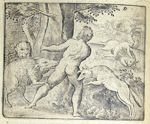
De stercke Milon hier een yeder wil ontluycken dat elck verhoeden sal sijn gaven te misbruycken: Vondel, Gulden Winkel (Amsterdam, 1622), emblem 60 uses the imagery of Milo of Croton
Quibus rebus confidimus, iis maxime evertimur: Lebey de Batilly, Emblemata (Frankfurt, 1596), emblem 18 uses the imagery of Milo of Croton
Iconclass: 41C11 eating 47I21111 ox 55CC11 Greed, Covetousness, Cupidity; 'Cupidità' (Ripa)
Loci Communes: Munerum corruptela (Corruption by gifts, Corruption par les présents)
II iii 11 Boeotis vaticinare Prophesy to the Boeotians
Βοιωτοῖς μεντεύσαιο. id est, Boeotis vaticinare. Abominantis est sermo, perinde, ut dicimus, Hostibus ista vaticinare. Capiti cane talia demens Dardanio. Et, Hostium uxores puerique caecos Sentiant motui orientis austri, & Aequoris nigri. Et, Hostibus eveniant convivia talia nostris. Aptius autem dicetur in eum, qui tristia vaticinatur, si quando precabimur, ut ea in ipsius caput recidant. Zenodotus ab eventu natum scribit, Heraclidem allegans autorem. Olim, inquit, cum Thebani de belli eventu consulerent oraculum, vates quae tum Dodonae responsitabat, ait eos fore victores, si quid impie patrassent. Itaque consultorum quidam arreptam Myrilam, nam id mulieris fatidicae nomen, in lebetem, aqua calida ferventem, qui forte inibi aderat, iniicit. Sunt qui narrent, Bombum divinum quendam Thebanis de belli successu sciscitantibus, respondisse futurum, ut quamplurimos vincerent, si prius quempiam è ducibus immolassent. At illos Bombum ipsum interemptum immolasse, atque hinc ortum proverbium.
Βοιωτοῖς μεντεύσαιο, Go and prophesy to the Boeotians, is the language of a man who seeks to turn some evil away from him, just as we might say 'Foretell that to our enemies.' 'Madman, go sing that tune to your Dardanian prince,' and 'Let foemen's wives and children feel / The gathering south-wind's angry roar, / The black wave's crash,' and 'Would that such parties might befall my foes!' But it will have more point when directed against a man who prophesies disaster, and we pray that it may fall on his own head. Zenodotus writes that its origin was a historical event, for which he gives Heracleides as his authority. Once upon a time, he says, when the Thebans consulted an oracle about the outcome of a war, the prophetess who in those days gave the responses at Dodona said that they would win the war if they did something wicked. So one of those who had come to consult the oracle seized Myrtile, which was the name of the woman who foretold the future, and threw her into a cauldron of boiling water that happened to be handy. Others say it was a soothsayer named Bombus, who replied to the Thebans, when they asked about the issue of a war, that they would win a signal victory if first they sacrificed one of their generals. However, they killed Bombus himself and sacrificed him; and hence came the proverb.
Facsimile: 
Iconclass: 12E25 oracle ~ Greek religion 32B311(BOEOTIAN) indigenous European peoples (BOEOTIAN) 52B5112 Bad, Evil, Wrong 52E2 Prediction, Prophecy; 'Augurio', 'Divinatione', 'Profetia' (Ripa) 52E22 Bad Omen; 'Augurio cattivo' (Ripa)
Loci Communes: Malum accersitum aut retortum (Evil brought upon oneself or turned back, Mal attiré ou retourné)
II iii 12 Arietem emittit He sends out a ram
Αρνα προβάλλει, id est, Arietem obiicit. In rixae pugnaeque cupidum dicebatur. Antiquitus enim bellu suscepturi foecialem mittebant, qui arietem adductum in hostium fines immitteret: hoc significans pacto civitatem & agros illorum hostibus compascuos fore. Auctor Diogenianus.
Ἄρνα προβάλλει, He confronts them with a ram, was used of anyone who wanted to pick a quarrel and fight. In old days those who intended to declare war used to despatch a herald to release a ram, which he had brought with him, into their enemies' territory, by which he signified that their city and their fields would become grazing land for their opponents. The authority is Diogenianus.
II iii 13 Argenti fontes The springs of silver
Αργύρου κρῆναι λαλοῦσιν, id est, Argenti fontes loquuntur. Hoc adagio notabantur ii qui stolide quidem atque indocte, sed arroganter tamen & confidenter loquerentur, opibus videlicet suis freti. Vulgus enim divitum dulci, ut ait Horatius, fortuna ebrium, hoc quoque putat suis divitiis deberi, ut quicquid dixerint, id protinus velut eruditum omnes suspiciant & approbent. Quod notans Flaccus, inquit, Meae (contendere noli) Stulticiam patiuntur opes. Item alibi, Et quicquid volet, hoc veluti virtute paratum, Speravit magnae laudi fore. Huc pertinet & mimus ille neutiquam invenustus, Fortuna quem nimium fovet, stultum facit. Item illud ex Antiphane apud Stobaeum, Ο δὲ πλοῦτος ἡμᾶς, καθάπερ ἰατρὸς κακὸς, Τυφλοὺς βλέποντας παραλαβὼν πάντας ποιεῖ. id est, Opes enim nos, sicuti medicus malus, Ubi receperint reddunt videntes ilico caecos. In eandem sententiam Menander in se ipsum lugente, Τυφλὸς ὁ πλοῦτος, καὶ τυφλοὺς ἐμβλέποντας εἰς αὐτὸν δείκνυσιν. id est, Caecae divitiae, atque eos qui se intuentur, caecos reddunt. Rursum illud eiusdem, Υπερήφανόν που γίγνεται λίαν τρυφὴ, Οτε πλοῦτος, ἐξώκειλε τὸν κεκτημένον Εἰς ἕτερον ἦθος, οὐκ ἐν ᾧ τὸ πρόσθεν ἦν. id est, Nimis insolens tum redditur lascivia, Quoties opes qui possidet, mores repens Mutat in alienos pristinis contrarios. Diximus alias, Foenum habet in cornu. Felicitatis comes esse solet ferocia. Pindarus in Isthmiis, hymno tertio, εἴτις ἀνδρῶν εὐτυχάσας, ἢ σὺν εὐδόξοις ἀέθλοις, ἢ σθένει πλούτου, κατέχει φασίν ἐανῆ κόρον, ἄξιος εὐλογίαις ἀστῶν μεμΐχθαι. i. Si quis vir fortunatus fuit vel in gloriosis certaminibus, vel in opulentia obtinet, ut aiunt, magnificam saturitatem, dignus, qui laudibus civium admisceatur. Quadrabit in eos quoque, quorum oratio propter opum fiduciam, plus satis libera, atque audax videbitur. Nam quemadmodum paupertas timiditatem adfert, itidem opulentia παῤῥησίαν, id est, loquendi confidentiam, adducere solet.
Ἀργύρου κρῆναι λαλοῦσιν, The springs of silver speak. This adage was used in criticism of men whose talk was stupid and ignorant, but full of arrogance and self-confidence, because they could rely on their wealth. For the common run of rich men, 'intoxicated with fortune's favours' as Horace puts it, think that one of the privileges of wealth is to have everything they say universally admired and approved forthwith as eloquent and well-informed. Horace put his finger on it, when he wrote: 'Don't you compete with me; / Fool as I am, my riches give me leave,' and again in another passage: 'And whatever he may wish, he hoped would bring him fame, as the result of his own merit.' Here belongs that well-known moral maxim, which has a good deal of point: 'Whom Fortune loves too much, she makes a fool.' And another from Antiphanes, preserved by Stobaeus: 'Wealth's an unskilled physician, and like him / Finds us all sighted, and then makes us blind.' And to the same effect Menander in The Man in Mourning for Himself: 'Riches are blind, and those whose eyes / Are fixed on riches they will render blind.' And another quotation from the same source:
O then indeed is wantonness too proud,
When wealth its captive owner headlong drives
And makes him what he never was before.
I have spoken elsewhere of He has hay on his horns, and Insolence is oft the companion of success. Pindar in the third hymn of his Isthmians: 'If any man is fortunate, either in glorious athletic contests / or in wealth, and possesses, as the saying goes, a magnificent sufficiency, he deserves his share of the plaudits of his fellow-citizens.' This will also suit those people who in reliance on their wealth seem to speak more freely and boldly than they should; for just as poverty breeds timidity, so do riches often bring with them self-confident utterance.
Facsimile:
Iconclass: 25H211:25D13(SILVER) spring, source of river or stream❧minerals and metals: silver 52AA1 Stupidity, Poverty of Intellect; 'Stupidità overo Stolidità' (Ripa) 55B1 Wealth, Opulence; 'Opulenza', 'Richezza' (Ripa) 56F241 Narcissism 57AA644 Arrogance; 'Arroganza' (Ripa)
Loci Communes: Philautia (Self-love, Amour-propre)
II iii 14 Terram pro terra Land beyond land
Γῆν πρὸ γῆς ἐλαύνεσθαι. Proverbialis est figura in hominem exulem, erronem, & incertis vagantem sedibus. Aristophanes in Acharnensibus, Κᾂν διώκειν γῆν πρὸ γῆς. id est, Terram ante terram persequi. Item alibi, Εγὼ δὲ φεύγων γῆν πρὸ γῆςφοβούμενος. id est, Solum at ego fugiens prae solo trepidus metu. Lucianus in Pseudomante, Αλλ᾽ ἔδει γῆν πρὸ γῆς ἐλαύνεσθαι. id est, Sed oportebat ad terram pro terra vehi. Apud Latinos Solum vertere dicuntur, qui exilii causa migrant aliò. Alciphron in epistolis, Αναστᾶσα ὀπήποτε γῆν πρὸ γῆς φεύξομαι μᾶλλον. id est, Demigrans quo libet fugiam potius, terram terra commutans. M. Tullius in epistolis ad Atticum, libro decimo quarto, Haec & alia ferre non possum: itaque γῆν πρὸ γῆς cogito. significat se de fugiendo cogitare.
Γῆν πρὸ γῆς ἐλαύνεσθαι, To be driven land beyond land, is a proverbial phrase used of exiles and wanderers and those who stray in uncertainty from one place to another. Aristophanes in the Acharnians: 'And pursue land beyond land.' Again elsewhere: 'But I in trembling flee land beyond land.' Lucian in The False Prophet: 'But he had to endure being driven land beyond land.' In Latin those who are in exile and therefore have to move to another place, are said solum vertere, to change their country. Alciphron in his Letters: 'I shall for choice cut loose and make my escape no matter where, fleeing land beyond land.' Cicero in his Letters to Atticus, book 14: 'This and other things I cannot bear, and so "land beyond land" is in my mind.' He means that he is planning to make his escape.
II iii 15 Ne ad aures quidem sculpendas otium est He has no leisure even to scratch his ear
Proverbialis est hyperbole. Cum ne minimum quidem ocii superesse significamus: dicimus nec tantillum vacui temporis esse, quod ad scalpendas aures sit satis. Lucianus in bis accusato, Οὐδ᾽ ὅσον κνήσασθαι τὸ οὖς, φασὶ, σχολὴν ἄγων. id est, Ac ne tantis per ociosus, ut aurem, sicut aiunt, scalpere vacet.
This is a proverbial exaggeration: when we wish to convey that not one moment of leisure remains, we say that there is not a scrap of spare time in which one could scratch one's ear. Lucian in his Twice accused: Οὐδ᾽ ὅσον κνήσασθαι τὸ οὖς, φασὶ, σχολὴν ἄγων, Without enough leisure, as the saying goes, to scratch one's ear.
Facsimile: 
Iconclass: 51AA4:31A25372 Nothingness, Absence❧scratching one's ear 51AA4:54AA1 Nothingness, Absence❧Inactivity 54D2 Action; 'Operatione manifesta' (Ripa)
Loci Communes: Occupatio (Occupation, business, Occupation)
II iii 16 Citius in navi cadens a ligno exciderit Sooner would a man fall in a ship and not fall on wood
Θᾶττον ἄντις ἐν πλοίῳ πεσὼν διαμάρτοι ξύλου, id est, Citius alicui in navigio cadenti lignum defuerit. Hyperbole proverbialis, qua tantam ubique copiam significamus, ut quocunque te vertas, occurrat, quod quaeris. Etenim cum navis ipsa undique sit lignea, non potest non in lignum incidere, quisquis in ea cadit, Lucianus in bis accusato: Ως τε κατα τὴν παροιμΐαν, θᾶττον ἄν τις ἐν πλοίῳ πεσὼν διαμάρτοι ξύλου, ἢ ἔνθ᾽ ἀν ἀπίδῃ ὁ ἀφθαλμὸς ἀπορήσῃ φιλοσόφου. id est, Itaque iuxta proverbium citius fiet, ut in navi lapsus, non incidat in lignum, quam ut quocunque aspexerit oculus, philosophum desideret. Taxat Lucianus philosophorum turbam tantam, ut omnia ubique plena videantur, nec liceat effugere.
Θᾶττον ἄντις ἐν πλοίῳ πεσὼν διαμάρτοι ξύλου, Sooner will wood be out of reach of a man falling down in a ship. A proverbial exaggeration, by which we convey the idea of something so plentiful everywhere that, whichever way you turn, you will find what you seek; for a ship being entirely built of wood, it is impossible for anyone who falls down in a ship not to fall on wood. Lucian in his Twice Accused: 'So that, as the proverb runs, a man who fell in a ship would sooner not fall on wood than your eye fail to see a philosopher, whichever way you look.' Lucian is criticizing the crowd of philosophers, which is so great that everything everywhere seems full of them and it is impossible to get away.
Facsimile:
Iconclass: 31A2731 falling 46C21:47G543 ships (in general)❧wood, timber ~ building material 52BB42 Impossibility
Loci Communes: Impossibilia (Impossible things, Choses impossibles)
II iii 17 Episcythizare To drink like a Scythian
Επισκυθιζεσθαι. Lacedaemoniorum adagio dicitur, pro eo quod est, vinum merum intemperantius bibere. Et Achaeus in Aethone Satyrico σκυθιπιεῖν, sive ut in quibusdam exemplaribus legitur, σκυθιστὶ πιεῖν dixit, pro eo quod est ἀκρατοπιεῖν, hoc est, meracius bibere. Athenaeus libro decimo Dipnosophistarum, ex Herodoto & Chamaeleonte autoribus refert Cleomenem regem Spartanum cum Scythis agentem consuetudinem, & illorum ἀκρατοποσίαν, id est, meripotationem imitantem in insaniam versum fuisse, quemadmodum interpretantur Spartani. Locus est apud Herodotum lib. 6. cui titulum fecit Erato, addens hinc natum apud eosdem Spartanos vulgare dictum, ut si quando velint ζωρότερον πίνειν, hoc est, intemperantius bibere, dicant, ἐπισκύθισον, hoc est minimum infundito aquae: pro eo, quod dicendum erat, ἐπίχυσον, id est, infunde aquam. Apud eundem libro undecimo, Hieronymus Rhodius docet, σκυθίσαι dictum, pro μεθίσαι, et Athenaeus dubitat num à Scythis Scyphus, id est poculi genus, habeat nomen, ut σκύφος dictum sit quasi σκύθος. Nam vocem sic immutatam ostendit apud auctores extare. Quin & illud addit, Lacedaemonios quum sentirent barbaros Asiaticos omnia dolis agere, vice Thimbronis eò legasse Dercyllidam, quod is nihil haberet synceritatis Laconicae, sed ingenium subdolum ac ferum, existimantes huic non posse dari verba: quem ob id σκύθον appellarunt Lacedaemonii, quasi σκύφον. Scythae autem & Thraces ἀκρατοπόται vocantur, id est, meribibi: unde plerunque convivia illorum sanguinolenta sunt & tumultuosa. Apud eundem Anacreon, ni fallor, ἀκρατοποσίαν, σκυθικὴν πόσιν appellat, quod Callimachus, verbo composito, dixit ζωροποτεῖν. Eleganter apud Athenaeum libro decimo dixit Sophocles, Τὸ πρὸς βίαν πίνειν Ισον κακὸν πέφυκε τῷ διψᾷν βίᾳ. id est, Cogi ad bibendum non minus grave est malum. Quàm si quis acrem perpeti cogat sitim. Commode deflectas licebit ad cuiusvis rei intemperantem & immodicum usum.
Επισκυθιζεσθαι, To drink like a Scythian. An adage in use among the Spartans for intemperance and the drinking of unmixed wine. Achaeus too, in his satyric play Aethon, uses σκυθιπιεῖν, or, as some copies read, σκυθιστὶ πιεῖν, to drink Scythian fashion, for the drinking of wine unmixed. Athenaeus in book 10 of the Doctors at Dinner, giving Herodotus and Chamaeleo as his authorities, records that Cleomenes the Spartan king, who had many friends among the Scythians and adopted their practice of drinking neat wine, was driven mad; such is the Spartans' explanation. The passage is found in the sixth book of Herodotus, which he called Erato; and he adds that this is the origin of a phrase common in Sparta: when they wish to drink at greater strength than usual, they say episkythison, Scythian fashion, instead of the usual epichyton, pour in the water. In the same author, book 11, Hieronymus of Rhodes maintains that skythisai is used for methysai, be intoxicated; and Athenaeus wonders whether skyphos, a drinking-cup, gets its name from the Scythians, having been originally skythos, for he shows that the word in this altered form is still found in the texts. He also adds that the Spartans, being of the opinion that the barbarians in Asia are invariably untrustworthy, sent Dercyllidas as their representative in place of Thim-bron, because he had none of the straightforward simplicity of a Spartan but was devious and ruthless by nature, and therefore unlikely to be cheated; and for this the Spartans called him skythos or skyphos. The Scythians and Thracians are called 'neat-drinkers'; and this often fills their parties with bloodshed and noise. In the same author, Anacreon, if I am not mistaken, calls akratoposia, the drinking of neat wine, 'Scythian drinking,' and Callimachus has a compound verb for it, zôropotein.
And how one could wish that this more than barbarian custom had been confined to Scythia and Thrace, and had not spread to us! We not only drink to excess; we compel others to drink, and attack a man who refuses with an edged weapon, though it is almost more inhuman to compel a man to drink who is not thirsty than to keep a thirsty man out of reach of drink. As Sophocles elegantly puts it, cited by Athenaeus, book 10: To be forced to drink is as great an evil as to be forced to go thirsty.' This can conveniently be diverted, and applied to intemperance and excess of any kind.
Facsimile:
Iconclass: 31B52 drunkenness 32B2(SCYTHIANS) historical peoples: Scythians 44B113 king 54AA43 Intemperance, Immoderation 61D(SPARTA) geographical names of countries, regions, mountains, rivers, etc. (SPARTA) (SPARTA) 98B(CLEOMENES) male persons from classical history (CLEOMENES)
Loci Communes: Luxus et mollicies (Luxury and softness, Luxe et mollesse)
II iii 18 Vinum claret clavo Wine hath no rudder
Athenaeus eodem libro, de potationibus disserens, huiusmodi proverbium eleganter vulgo dici solere scribit, τὸν οἶνον οὐκ ἔχειν πηδάλια. id est Vinum non habere clavum. propterea quod ebrietas nihil consulte, neque moderate, vel dicit, vel facit: Obruitur enim ratio, quae clavi vice sobrios moderatur ac gubernat. Huc pertinet Ovidianum illud: Nox & Amor, vinumque nihil moderabile suadent: Illa pudore vacat, Liber Amorque metu. Non illepidum est, quod apud Athenaeum lib. II. refert Xenophon, apud Persas fuisse vetitum, ne προχοΐδας inferrent in convivium: id apparet fuisse vasculi genus, quo vinum è cratere ministri effunderent in cyathum: id factum est, ne supra modum bibentes & animi, & corporis viribus destituerentur: & addit eum morem adhuc apud illos servari, nec enim inferri prochoidas, sed nihilo secius tantum illos bibere, ὥστε ἀντὶ τοῦ εισφέρειν αὐτοι ἐκφέρονται, ἐπειδάν μηκέτι δύνωνται ὀρχούμενοι ἐξιεναι, id est, pro eo quod non inferuntur prochoides, ipsi efferuntur, postea quam non amplius possunt exire saltantes. Itaque vinolentia nullis minus ignoscenda est quam qui Reipublicae clavum moderantur, hoc est, regibus & magistratibus. Et divinae literae vetant vinum dari regibus. Nec vinum, nec somnus convenit assidentibus clavo: sed interdum nulli magis indulgent vino somnoque.
Athenaeus in the same book in a dissertation on drinking tells us that a pithy proverb was in common circulation to the effect that Wine has no rudder, Τὸν οἶνον οὐκ ἔχειν πηδάλια, because there is neither counsel nor moderation in anything that drunkenness either says or does, seeing that it overwhelms the reason, which like a rudder guides and governs sober men. That couplet in Ovid is relevant here: 'Night, Love and Wine no moderate counsels bear: / Night knows no shame, and Wine and Love no fear.' There is a rather charming story in Xenophon, quoted by Athenaeus in his second book. It was forbidden in Persia to bring prochoïds to a dinner-party, a prochoid being evidently some sort of ladle with which the servants poured wine out of the mixing-bowl into the cups. The object of this was to prevent them from losing their mental and physical powers by excessive drinking; and he adds that the custom was still observed in Persia, and no procho'ids were introduced. None the less, he says, they drink so much that they compensate for not bringing them in by being carried out themselves, when they are already unable to leave the party dancing.
This is why drunkenness is nowhere more inexcusable than in those who sit at the helm of a commonwealth, monarchs and magistrates; and the Scriptures forbid the giving of wine to kings. Neither wine nor sleep is proper for those who are in charge of the rudder; yet sometimes no one indulges more than they in wine and sleep.
Facsimile: 

Nox et amor vinumque, nihil moderabile suadent: Hans Sebald Beham, print 'Die Nacht' (1548), quotes Ovid's verse as in the comment
Iconclass: 31B52 drunkenness 41C711 wine ~ alcoholic drinks 44B62 bad government 46C215(RUDDER):51AA4 parts of ship's exterior: rudder❧Nothingness, Absence 57AA21 Irresponsibility
Loci Communes: Luxus et mollicies (Luxury and softness, Luxe et mollesse)
II iii 19 Vinum senem etiam vel nolentem saltare compellit Wine compels an old man to dance even against his will
Ac rursus ibidem hoc item carmen proverbio iactarum scribit. Οἶνος ἄνῳγε γέροντα καὶ οὐκ χορεύειν, id est, Vina senem, ut nolit, cogunt ductare choreas. Admonet nihil esse tam ineptum, neque tam alienum, ad quod non incitet ebrietas. Subiicit & aliud carmen non dissimilis sententiae, Οἶνος καὶ φρονέοντας ἐς ἀφροσύνην ἀναβαλλει. id est, Insanire facit sanos quoque copia vini. Idem libro quarto Dipnosophistarum adducit proverbium ex Eripho quodam comoediarum scriptore, Λόγος γὰρ ἐστ᾽ ἀρχαιος, οῦ κακῶς ἔχων, Οινον λεγουσι τοῦς γέροντας ὦ πάτερ Πειθεῖν χορεύειν οὐ θέλοντας. id est, Recte vetusto dicitur proverbio, Quod vina senibus persuadent ô pater, Uti velint nolint, choreas ductitent. Huc pertinet illud Platonis lib. De legibus primo, Οὐ μόνον ἀῤ ὡς ἔοικε ὁ γέρων δὶς παῖς γίγνοιτ᾽ ἂν, ἀλλὰ καὶ ὁ μεθυσθεὶς. Itaque ut videtur, non solum senex fuerit bis puer, verumetiam temulentus. Item Horatius, Quod me Lucanae iuvenem commendet amicae.
And again in the same passage he tells us that there was another line in common use as a proverb: 'Wine bids the old man dance, will he or no.' The lesson of this is that there is nothing so foolish or so unsuitable that drink will not incite a man to do it. He also adds another line to very much the same effect: 'Wine makes e'en wisdom into folly fall.' In the fourth book of his Doctors at Dinner he adduces a proverb from a certain Eriphus, a writer of comedies:
There's an old saying (and how true it is!)
That wine, dear father, can persuade old men,
Whether they will or no, to join the dance.
There's a sentence in the first book of Plato's Laws that is relevant here: 'Not only will the old man, as it seems, be a child twice over, but so will the drunkard.' Horace too: 'To make me young again and win me the good graces of some kind Lucanian girl.'
Facsimile:
Iconclass: 31B52 drunkenness 31D16 old man 41C711 wine ~ alcoholic drinks 43C911 man dancing alone 52AA511 Ridiculousness
Loci Communes: Luxus et mollicies (Luxury and softness, Luxe et mollesse)
II iii 20 Ranis vinum praeministras You are offering wine to frogs
Βατράχοις οἰνοχοεῖς, id est, Ranis vinum infundis. In eum dicebatur, qui id ministraret, quo nihil esset opus ei cui exhiberetur: veluti si quis apud indoctos multa de philosophia disserat. Ranis enim nihil opus vino, aqua palustri magis gaudentibus. Explicatur adagium à Zenodoto, Suida, Diogeniano. Pherecrates apud Athenaeum in Coriano, Εῤῥ᾽ ἐς κόρακας, βατράχοις οἰνοχοεῖν σε δεῖ. id est, Abi in malam rem, ranis pocillari te oportuit. obiurgat enim pincernam, quod quatuor vini cyathis duos infuderit aquae. Unde licet con iicere, proverbium in hos quoque convenire, qui vinum immodica diluunt aqua, ita ut aquam, non vinum, bibere videantur ranarum ritu.
Βατράχοις οἰνοχοεῖς, You pour wine for frogs, was said of a man who offered something for which the recipient of the offer had not the slightest use; if, for example, one were to hold forth at length on philosophy to an ignorant audience. Frogs have no use for wine; they enjoy the water of their marsh much more. The adage is expounded by Zenodotus, Suidas and Diogenianus. Pherecrates in his Coriano, cited by Athenaeus: 'To hell with you! You should be offering wine to frogs.' He is cursing the wine-waiter, who has put two ladles of water into four of wine. From which we may infer that the proverb also applies to those who dilute their wine with excessive quantities of water, till they seem to be drinking water rather than wine, like frogs.
Facsimile:
Iconclass: 21D water (one of the four elements) 25F51(FROG) tailless amphibians: frog 41C121 giving drink 41C263 mixing, combining (preparing food) 41C711 wine ~ alcoholic drinks 52AA511 Ridiculousness 54BB3 Inutility, Noxiousness; 'Nocumento', 'Nocumento d'ogni cosa' (Ripa)
Collectanea (1500): 306
Loci Communes: Munus aptum aut ineptum (A gift fitting or unfitting, Un présent convenable ou inconvenant)
II iii 21 Ovo prognatus eodem Hatched from the same egg
Fortassis simpliciter dictum est ab Horatio, Ouo prognatus eodem. Quandoquidem ad fabulam respicit Ledae, quae gravida ex Iove in cycnum converso, ovum peperit, unde gemini prognati Castor & Pollux. Id ovum Pausanias in Laconicis refert ostendi apud Lacedaemonios suspensum taeniis à testudine templi. Verum si quis hoc dictum deflectat ad iisdem natos parentibus, aut ab eodem eruditos praeceptore, aut ita consimilibus ingeniis, ut eodem ovo nati videri possint, nihil aeque fuerit proverbiale: veluti si dicas, Vultus, ingenium, mores, facta, ac prorsus omnia sic huic cum hoc conveniunt, ut iures codem prognatos ovo. Aristoteles libro de generatione animalium quinto, ostendit id iuxta naturam fieri, ut ex eodem ovo duo pulli nascantur: & quidem perfecti, si vitelli membrana dirimantur. Iidem si cohaereant & confundantur, foetum aedi monstrosum.
Used perhaps in its literal meaning by Horace: 'Hatched from the self-same egg,' because he is thinking of the myth of Leda, who was got with child by Jove in the form of a swan and brought forth an egg, from which were hatched the twins Castor and Pollux. This egg is said by Pausanias in his account of Laconia to be exhibited in Sparta, hung by ribbons from the ceiling of a temple. If however one were to divert this phrase to apply to children of the same parents or to pupils of the same teacher, or to two people whose characters are so much alike that they might seem to be 'born of the same egg,' no expression could have more of the proverb about it; for instance, if you were to say 'In looks, brains, character and record, and in absolutely everything, these two agree so closely that you could swear they were hatched from the same egg.' Aristotle in book 5 of his On the Generation of Animals shows that it is quite in accordance with nature for two chicks to be hatched from the one egg, and perfect chicks too, provided there is a membrane dividing the yolks; if however they are not separate but are fused together, the result is a monstrous birth.
Facsimile: 
Iconclass: 51B2 Similarity, Likeness 51B4 Uniformity 94R11 birth of the Dioscuri: the twins, Castor and Pollux, emerge from one of Leda's eggs; simultaneously Helen, or Helen and Clytaemnestra, hatch from a second egg
Loci Communes: Similitudinis et congruentiae (Similarity and congruence, Similitude et convenance)
II iii 22 De curru delapsus Fallen from his chariot
Εξημαξωμένος, id est, De curru delapsus. In hodiernum quoque vulgo durat adagium, in eum qui, oblitus propositi, alio se transfert, aut qui in sententia labascit, ut de curru delapsus dicatur, quemadmodum Ab asino delapsus. Aristophanes in Ranis, Εξημαξωμένη φρὴν. id est, Animus à curru decidens. hoc est, aberrans ab instituto. Natum apparet à fabula Phaethontis, quem ferunt curru excussum. Siquidem animus velut auriga corporis est, & corpus ceu vehiculum. Est & apud Platonem de animabus è coelo delapsis, quod curribus suis essent excussae.
Ἐξημαξωμένος, Fallen from his chariot. The adage continues in common use down to the present day, applied to a man who forgets what he set out to do and adopts another plan, or who weakens in his resolve, so that he can be described as fallen from his chariot, as one says 'fallen from his ass.' Aristophanes in the Frogs: 'A mind that has fallen from its chariot/ meaning, is wavering in its purpose. Apparently derived from the myth of Phaethon, who according to the story was thrown from his chariot. For the mind is, as it were, the charioteer of the body, and the body is its vehicle. There is also a phrase in Plato about souls fallen from heaven, that they have been 'thrown from their chariots.'
Facsimile:
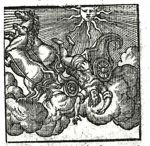
In temerarios: Alciatus, Emblemata (Leiden, 1591), emblem 56
Alciatus, 'Temeritas': Alciatus, Emblemata (Padua 1621), 55, col. 262B
Iconclass: 52AA2 Absent-mindedness 54AA7 Weakness, Powerlessness, Helplessness; 'Infermità' (Ripa) 92B39117 fall of Phaethon; he is struck by a thunderbolt of Jupiter
Loci Communes: Aliena a re (Irrelevant to the matter, Étranger au sujet)
II iii 23 Numerus A mere cypher
Homines nullius bonae rei, numerus proverbio dicuntur, etiam idiotis horum temporum. Aristophanes in Nebulis, Οντες λίθοι, Αριθμὸς, πρόβατ᾽ ἄλλως, νενασμένοι ἀμφορᾶς. Horatius, Nos numerus sumus, & fruges consumere nati. Translatum videri potest à calculis, ad nihil aliud utilibus, nisi ad numerum. Anacharsis, Plutarcho teste, taxavit Athenienses, qui nummis ad rationem dumtaxat uterentur. Quamquam magis arridet, ut ita numerus dicatur, quemadmodum dicunt ἐτώσιον ἄχθος ἀρούρης, & εἰς τῶν πολλῶν. i. unus è plebe. Ita Flaccus, 1. Serm. Sum paulo infirmior, unus Multorum. etiam Graecam exprimens figuram. Et Seneca lib. 1. Epistola 10. Iste homo non est unus è populo. Insignes nominantur. Qui nihil habent insigne, turba sunt, & numerantur tantum. Unde Flaccus, Nos numerus sumus. Et Vergilius, Cadit & sine nomine vulgus.
Men who serve no useful purpose are proverbially called 'cyphers/ even by uneducated people in our own day. Aristophanes in the Clouds: 'Blockheads as you are, / Mere cyphers, sheep, a stack of empty jars.' Horace: Mere cyphers we, born to consume the fruits of the earth.' This may be thought a metaphor from the counters on an abacus, which serve no purpose except in adding up. Anacharsis, according to Plutarch, criticized the Athenians for using their money solely as something to count. Though I prefer the theory that cypher is used in the spirit in which they say 'a useless burden on the earth' and 'one of the many' for a member of the common herd. So Horace: I am a little weaker, one of the many,' using the Greek metaphor. And Seneca, in letter 10 of his first book: 'That man is not one of the common herd.' We give the label 'honourable' to men who have nothing of honour in them; they are a crowd, and can only be counted. Hence Horace's 'Mere cyphers we,' and Virgil's Then falls a nameless throng.'
Facsimile:
Iconclass: 46A7 crowd, mob 49D11 numerals 51B4 Uniformity 57BB21 Contempt 59BB1 Nobody, 'Nemo'
Loci Communes: Contemptus et vilitatis (Contempt and worthlessness, Mépris et bassesse)
II iii 24 Summis uit velus To hoist topsails
Ακροις χρῆσθαι τοῖς ἱστίοις. id est, Summis uti velis. Proverbiali metaphora dicuntur, qui maximo conatu adnituntur, atque incumbunt: aut qui omnem captant occasionem. Mutuo sumptum à nautis, quibus mos est velum in altum tollere, quo currant celerius. Aristophanes in Ranis, Ακροισι χρώμενος τοῖς ἱστίοισιν. id est, Utens supremis carbasis. Pindarus in Nemeis, hymno quinto, Δίδου φωνὰν, ἀνὰ δ᾽ ιστία τεῖνον πρὸς ζυγὸν καρχασίου. id est, Da vocem, sursum autem tende vel ad summum antennae iugum. Ut cuique res sunt secundae, aut adversae, ita velum in altum tollitur.
Ἀκροις χρῆσθαι τοῖς ἱστίοις, To use the top of the sail, To use topsails, is a proverbial metaphor, applied to those who are using the greatest efforts and working as hard as they can, or who seize every opportunity. Borrowed from sailors, whose custom is to hoist their sails as high as they can in order to make better speed. Aristophanes in the Frogs: 'Using your topmost sails.' Pindar in the Nemeans, hymn 5: 'Lift up your voice; raise your sails to the sailyard's full height.' The height to which a man raises his sails is dictated by his good or bad fortune.
II iii 25 Summum cape et medium habebis Grasp the summit, and halfway will be yours
Ακρον λάβε, καὶ μέσον ἕξεις. id est, Summa cape, & medio potieris. Hemistichium carminis Heroici: Ubi quod obscurius & perplexius dictum significabant, admonentes, rem attentius expendendam, hoc proverbio consueverunt uti. Zenodotus hinc natum tradit: Aeginetis patria pulsis, de quaerenda sede consulentibus oraculum, responsum est hoc aenigmate, Ακρον λάβε, καὶ μέσον ἕξεις. atque illos, cacumine quodam montis occupato, circa medium incoluisse. Potest & in hanc accommodari sententiam, ut admoneamur ad res summas & egregias eniti. sic enim futurum, ut ad mediocritatem perveniamus. Summum animo destinandum, ut saltem modicis potiamur. Fit enim plerunque nescio quo modo, ut exitus citra spem & scopum praestitutum consistant. At hodie theologi quidam Aristotelici docent, quatenus liceat admittere divitias, quatenus ludere aleam, quatenus belligerari, quatenus ulcisci. Cum longe satius esset divitiarum bellique & voluptatum studium modis omnibus detestari. Ita fieri poterat, ut hoc moderatius sequeremur. Nunc dum mediocribus sumus contenti, longe infra mediocritatem dilabimur.
Ἄκρον λάβε, καὶ μέσον ἕξεις, Grasp the summit, and you will win the halfway. This is the second half of an epic hexameter, used as a proverb when they wished to convey that something was badly expressed and unintelligible, the point being that it deserved particular attention. Zeno-dotus gives the following origin: the people of Aegina had been driven from their native city, and consulted the oracle to know where they should settle. They were given this riddling reply: Grasp the summit, and halfway will be yours; so they seized the top of a certain mountain, and built a settlement half way up. It can also be adapted to another meaning: the lesson is, that we should strive to attain the highest goals, for the result will be that we achieve a middle state. We must fix our minds on the top, so that we may at least achieve halfway; for it usually happens, I know not how, that the results fall short of our hope and the aim we had set ourselves. But nowadays some theologians I could name, pupils of Aristotle, tell us exactly how far it is permissible to aim at riches, to play at hazard, to make war or to seek revenge; though it would be far better to attack the love of riches, war and pleasure in all its forms. The result might then be, that we should be more moderate in our pursuit of them. As it is, while we are content with a middle course, we slip and fall far short of the middle.
Facsimile:
Iconclass: 25H1121 mountain-top, peak 51I5 Middle; 'Mezo' (Ripa) 51I6 High, Top 56F11 Ambition; 'Ambitione', 'Amor di Fama' (Ripa)
Loci Communes: Modestia modusque (Modesty and moderation, Modestie et mesure)
II iii 26 Iniquum petendum ut aequum feras Ask an unfair share to get a fair share
Huic affine quod recenset Quintilianus Institutionum oratoriarum libro quarto, Nec omnino sine ratione est, quia vulgo dicitur, Iniquum petendum, ut aequam feras. A negociatoribus ductum videri potest, qui callide merces longe minoris licentur, & multo plu ris indicant quàm pro dignitate, quo precium saltem aequum accipiant. Non fugit haec sententia Syrum illum Terentianum in Adelphis, cum Sannionem lenonem astu tractans postulat ut puellam Aeschino dimidio precii tradat, atque hac arte efficit, ut leno sortem solidam percupide & rogans etiam accipiat. Iactatur & vulgo verbum huiusmodi. Qui annititur ut auream quadrigam sibi comparet, unam certe rotam assequetur. Equidem arbitramur huc allusisse Senecam lib. De beneficiis septimo: Quae, inquit, ideo petimus ultra modum, ut ad versum suum redeant. Quum dicimus, meminisse non debet, hoc volumus intelligi, Praedicare non debet, nec iactare, nec gravis esse. Pulchre Seneca depinxit naturam hyperboles.
Something close to this is reported by Quintilian in book 4 of his Principles of Rhetoric: 'Nor is that popular saying altogether unreasonable that you should ask an unfair share in order to get a fair one.' It might be thought to derive from merchants, who shrewdly offer far less for goods than they're worth and put far too high a price on them, in hopes of getting at least the fair price. This principle was not overlooked by Terence's Syrus, in the Adelphoe, when he plays a trick on Sannio the brothel-keeper, and by demanding that he should hand over the girl to Aeschinus for half the price he was asking, ensures by this ruse that he will accept her capital value in full with great delight and as a special favour. There is also a saying in popular currency to this effect, that the man who tries hard to buy himself a golden chariot will at least get one wheel. I personally think that Seneca was alluding to this in book 7 of the De beneficiis, where he says: 'We make these excessive demands on purpose to bring things back into line. When we say that he ought not to remember it, what we mean is that he ought not to talk about it, and boast, and make himself a burden.' Seneca gives a clear picture of the nature of hyperbole.
Facsimile: 
Iconclass: 46B21 merchant, salesman 46B43 bargaining 55CC11 Greed, Covetousness, Cupidity; 'Cupidità' (Ripa) 59C21 Equality, Equity, Fairness, Righteousness; 'Equalità', 'Equità', 'Giuditio giusto', 'Ordine dritto e giusto', 'Ugualità' (Ripa)
Loci Communes: Modestia modusque (Modesty and moderation, Modestie et mesure)
II iii 27 Ad ambas usque aures Up to both ears
Μέχρι τῶν ἀμφωτίδων, id est, Usque ad aures ambas impleri dicuntur, qui supra modum ingurgitant sese. Sumpta metaphora à vasculis, ad ansas usque impletis. Extat apud Suidam.
Μέχρι τῶν ἀμφωτίδων, Full to both ears, was said of people who drink too much. The metaphor is taken from jars filled right up to their handles. It is to be found in Suidas.
II iii 28 Servilis capillus A slave haircut
Ανδραποδώδη τρίχα ἐπιδεικνύειν, id est, Servilem capillum prae se ferre dicuntur, qui agrestibus & inelegantibus sunt moribus. Inde ductum, quod Athenis serui manumittendi capitis pilos deradebant. Plato scribit in Alcibiade, quosdam serviles pilos in animo gestare, indoctos & stupidos fignificans. Citantur apud Suidam haec ex autore nescio quo, πολλῶν συνειλεγμένων ἀνδρῶν οὐδὲ τὰ πάθη κατεσταλμένων, ἀλλ᾽ ἔτι τὴν ἀνδραποδώδη τρίχα φασιν ἐπιδεικνυμένων, id est, Multis collectis viris, neque compositis affectibus, sed qui servilem, ut aiunt, capillum adhuc prae se ferrent. Plinius libro undecimo, capite trigesimoseptimo, rem prodigiosam tradit, homines quosdam hirsuto corde nasci. Pliniana verba sunt haec. Hirto corde gigni quosdam homines produnt, nec alios fortiores esse industria: sicut Aristomenem Messenium, qui trecentos occidit Lacedaemonios, ipse convulneratus, & captus, semel per cavernam latomiarum evasit, angustos vulpium aditus secutus: iterum captus sopitis custodibus somno, ad ignem advolutus lora cum corpore excussit. Tertio capto, Lacedaemonii corpus dissecuere causa videndi, hirsutumque cor repertum est.
'Ανδραποδώδη τρίχα ἐπιδεικνύειν, To wear a slave haircut, was applied to people of boorish and uncivilized character. It is taken from the practice in Athens of shaving the head of a slave who was to be given his freedom. Plato speaks in the Alcibiades of certain people as having 'a slave-haircut mind,' meaning ignorant and stupid. Suidas cites the following words from an author whose name I do not know: 'When a large crowd of men had collected, whose feelings were deeply roused and who wore a slave haircut, as the saying goes.' Pliny, book 11 chapter 37, recounts as something of a prodigy that some men are born with hairy hearts. 'It is on record' he says 'that some men are born with hairy hearts and that they are of prodigious energy. One such was Aristomenes of Messene, who after killing three hundred Spartans was himself severely wounded and taken prisoner. He made his escape once through a cave in the stone-quarries, threading the narrow tunnels used by foxes; when recaptured, he waited till his guards were overcome with sleep, rolled himself over a fire, and burnt through his bonds, burning his body too in the process; and when he was taken a third time, the Spartans cut open his body out of curiosity, and found he had a hairy heart.'
Facsimile:
Iconclass: 31A533 styles of hairdress 46A18 slavery; serfs and enslaved persons 52AA5 Ignorance; 'Ignoranza', 'Ignoranza di tutte le cose', 'Ignoranza in un ricco senza lettere' (Ripa)
Collectanea (1500): 574
Loci Communes: Improbi (The dishonest, Les malhonnêtes)
II iii 29 Amyris insanit Amyris is off his head
Αμυρις μαίνεται. id est, Insanit Amyris. Allegoria proverbialis, qua recte utemur, ubi quis sub insaniae praetextu rebus suis consulit. Aut, ubi quis solus periculum prospiciens, in tempore sibi cavet, creditus interim vulgo desipere: deinde rerum eventus docet illum unum sapuisse. Ut haec sit vox velut opprobrantis socordiam iis qui sibi non prospexerint mature: neque sapere coeperint, nisi accepto vulnere. Zenodotus ab historia natum ait huiusmodi: cum Sybaritae florerent opibus, quendam Delphos emandarunt, qui de rerum suarum successu sciscitaretur oraculum. Responsum est evertendam Sybaritarum fortunam, ubi plus honoris habere coepissent hominibus quam diis. Evenit deinde ut servus à domino vapulans, nequicquam ad deorum aras confugisset, post ad heri monumentum confugiens, liberaretur à plagis, ut alibi dictum est. Quod simul atque conspexisset Amyris, collectis rebus suis, in Peloponnesum demigravit, reliquis interim Sybaritis hominem velut insanum ridentibus. Postea idem ob fictam insaniam miraculo fuit, & proverbio locum fecit. Citatur ab Eustathio in secundo Iliados libro: citatur autem ex Pausaniae rhetorico dictionario. Addit quosdam Thamyrim hunc appellare, quosdam Amyrim, abiecto thita. Solet autem more hominum evenire, ut vati tum demum habeatur fides, ac laudetur, posteaquam ipsis iam premimur malis. Proinde Cassandra in tragoedia quapiam loquitur ad hunc modum, citante Plutarcho, Καὶ πρὸς παθόντων, κᾂν κακοῖσι κειμένων Σοφὴ κέκλημαι, πρὶν παθεῖν δὲ μαίνομαι. id est, Sapiensque dicor his, malum qui sentiunt: Porrò antequam illudsentiant, insanio.
Ἄμυρις μαίνεται, Amyris is off his head, is a proverbial allegory which we shall find much to the point when someone under a mask of pretended insanity looks after his own interests, or when one man alone foresees a danger and takes timely steps to protect himself, being commonly thought at the time to be off his head; and then the outcome shows that he was the only one to keep his wits about him. So this phrase is useful for anyone who wants to expose the idleness of those who did not take timely steps to protect themselves, or who did not begin to learn sense until they had already suffered damage. Zenodotus says it is derived from an incident on the following lines. At a time when the people of Sybaris were rich and prosperous, they sent someone to Delphi to enquire of the oracle about their future prospects. The reply was that Sybaris would suffer a reversal of fortune, when they began to hold men in more honour than the gods. It happened some time after that a slave who was being flogged by his master took sanctuary in vain at the altars of the gods, but when he took refuge at his master's family monument, his punishment was remitted, as I have recounted elsewhere. Amyris no sooner saw this than he got all his possessions together and emigrated to the Peloponnese, leaving the rest of the people of Sybaris to laugh at him as a lunatic. Later, his pretended insanity was thought something wonderful, and gave rise to a proverb. This is cited by Eustathius on the second book of the Iliad, and also in the rhetorical dictionary of Pausanias. He adds that some call the man Thamyris, others Amyris without the initial theta. It is human nature to give a prophet no credit and no honour, until we are already in the grip of the actual evils he foretold. In the same way Cassandra in some tragedy or other, quoted by Plutarch, speaks as follows: 'When the blow falls and evils overwhelm them, /I am called wise; but now they think me mad.'
II iii 30 Sophocles. Laudiceni Sophocleses. Laodiceans
Qui ad ostentationem dicebant aut recitabant, vulgato convicio Sophocles & Laudiceni dicebantur: adagium natum, ut apparet, aetate Plinii minoris, cuius verba paulo altius repetemus, quo planius proverbii sententiam intelligere liceat. Nam in epistola quadam, adolescentium quorundam ridiculam in agendis causis arrogantiam & ambitionem taxans, sic ait, At hercule ante memoriam meam, (ita maiores natu solent dicere) ne nobilissi mis quidem adolescentibus locus erat, nisi aliquo consulari producente. Tanta veneratione pulcherrimum munus colebatur. Nunc refractis pudoris & reverentiae claustris, omnia patent omnibus: nec inducuntur, sed irrumpunt. Sequuntur auditores actoribus similes, conducti & redempti mancipes. Convenitur à conductis & redemptis in media basilica, ubi tam palàm sportulae, quàm in triclinio dantur. Ex iudicio in iudicium pari mercede transitur. Inde iam non inurbane, σοφοκλεῖς ἀπὸ τοῦ σοφοὺς καλεῖσθαι, vocantur. Iisdem Latinum nomen impositum est, Laudiceni. Hactenus Plinius. Utroque verbo notantur, qui facundi dici malebant & videri quàm esse. Sophocles enim Graece dicitur ἀπὸ τοῦ σοφὸς καὶ κλέος. At illi, dedita opera, perperam interpretabantur ἀπὸ τοῦ σοφοὺς καλεῖσθαι, id est, ab eo quod sapientes vocarentur. In hoc igitur est allusio festiva ad poetae tragici nomen: in Laudiceni vocabulo ad gentis nomen alluditur.
Those who held forth or recited as a means of self-advertisement were given the unflattering names of Sophocleses or Laudiceans. Apparently the adage came into being in the time of the younger Pliny, whose words I will give at some length to make the meaning of the proverb more intelligible. In one of his letters he is criticizing the ridiculous arrogance and ambition of some of the young men as shown in their conduct in court. 'Before my time, to use an old man's phrase,' he writes, 'there was no place for young men even of the highest rank, unless some ex-consul introduced them. Such was the respect in which such a very distinguished profession was held. Nowadays all the barriers of modesty and reverence are down, and it is free for all. No introducing them; they burst in. They are followed by an audience of the same class as the speakers, a hired claque. It is a business arrangement made in open court, and money changes hands there as openly as it might across the dinner-table; they pass from one court to the next at the same fee. So some wag called them Sophocleses, and in Latin too they were given the name of Laudiceans.' These are Pliny's words. Both names mark those who would rather be called and thought to be good speakers than speak well. The name Sophocles in Greek comes from sophos, wise, and kleos, honour, and they deliberately misinterpreted it to come from sophos, wise, and kaleisthai, to be called. There is thus a neat allusion here to the name of the great tragedian, and another in the name of Laudicean1 to the people of Laodicea.
Facsimile: 
Iconclass: 56F24 Self-love; 'Amor di se stesso' (Ripa) 57AA65 Selfishness; 'Interesse', 'Interesse proprio' (Ripa) 98B(SOPHOCLES)3 male persons from classical history (SOPHOCLES) - representations to which the NAME of a person from classical history may be attached
Collectanea (1500): 48
Loci Communes: Arrogantia jactantiaque (Arrogance and boastfulness, Arrogance et vantardise)
II iii 31 Quot servos habemus, totidem habemus hostes We have as many enemies as we have slaves
Macrobius in coenis Saturnalibus. Unde putas arrogantissimum illud manasse proverbium quod iactatur, Totidem nobis hostes esse, quot servos? Non habemus illos hostes, sed facimus. Meminit & Seneca epistola quadragesimaseptima, cuius verba sublegisse videtur Macrobius, ut est omnium autorum vere fucus. Admonet adagium, ne quid fidamus illis, neve ex animo nobis amicos arbitremur, qui nos metu colunt. Admonet idem Plato libro De legibus sexto, propterea quod servorum animus nequaquam integer sit, sed mentis dimidium iis ademerit Iupiter, Homero teste, quos servituti fecit obnoxios. Verus autem amor, libertatis est alumnus. Odit vero quisquis metuit. Unde genuinum quoddam odium insitum videtur servis in dominos. Quadrabit & in principes tyrannidem in suos exercentes. Verba Platonis sunt haec: Οὐ γὰρ ὑγιὲς οὐδὲν ψυχῆς δούλης. οὐ δεῖ γὰρ οὐδὲ πιστευειν αὐτοῖς τὸν νοῦν κεκτημένον. ὁ δὲ σοφώτατος τῶν ποιητῶν φησίν, Ημισυ γὰρ τε νόου ἀπαμείρεται εὐρύοπα ζεὺς Ανδρῶν οὒς ἂν δὴ κατα δούλιον ἦμαρ ἕλῃσι. id est, Nihil enim integrum, neque sanum habet animus servilis. Nam nihil oportet credere his, hominem qui sapiat. Siquidem poeta doctissimus ait, Dimidio mentis deprivat Iupiter illos, Servilis quoscunque viros sors ceperit unquam. Ad hunc modum referuntur à Platone. Caeterum aliter habentur apud Homerum Odysseae ρ, nimirum hunc in modum, Ημιστυ γὰρ τ᾽ ἀρετῆς ἀπαίνυται εὐρύοπα ζεὺς Ανέρος, εὖτ᾽ ἂν μιν κατα δούλιον ἦμαρ ἕλῃσι. Asinius Capito apud Festum Pompeium (nam is quoque proverbii facit mentionem) existimat hominum errore perperam fuisse pronunciatum, propterea quod verisimilius sit, sic esse dictum initio. Quot hostes, tot servi. Quod capti victique ad servitutem adducebantur. Unde etiam dicta mancipia.
Macrobius in his Saturnalian Feast: 'What do you suppose was the origin of that very arrogant proverb that is current nowadays, "We have as many enemies as we have slaves"? We do not "have" these enemies; we make them.' Seneca too mentions it in Letter 47; and it looks as though Macrobius had stolen his wording, for he is a proper drone where all other authors are concerned. The purport of the adage is that we should not trust people, nor suppose them to be our true friends, whose motive for their services is fear. Plato reads us the same lesson in the sixth book of the Laws, on the ground that a slave's feelings cannot possibly be uncorrupted; Jupiter, says Homer, has taken away half the wits of those whom he has subjected to slavery. True love is the foster-child of liberty, and he who fears must hate; and so some kind of natural hatred towards their masters seems to be implanted in all slaves. The adage will also fit any princes who hold despotic rule over their subjects. Plato's words run as follows: Tor there is nothing sound or healthy in the spirit of a slave, nor should a sensible man put any trust in them. As the wisest of poets puts it, 'Far-seeing Jove robs those of half their wits / On whom the day of slavery has descended.'
That is how the lines are quoted by Plato. In Odyssey* 16 however they run differently, in fact as follows: 'Far-seeing Jove robs men of half their valour / When once the day of slavery comes upon them.' Asinius Capito, as cited by Festus Pompeius (for he too alludes to the proverb), thinks that it is more likely to have been originally 'We have as many slaves as we have enemies,' because defeated and captured enemies are reduced to slavery; whence the Latin word for them is mancipia, taken by force.
Facsimile:
Iconclass: 33B5 enemy 46A18 slavery; serfs and enslaved persons 56DD1 Fear, Dread; 'Paura', 'Timidità o Timore', 'Timore' (Ripa) 56F2 (personifications and symbolic representations of) Love; 'Amore (secondo Seneca)' (Ripa)
Collectanea (1500): 47
Loci Communes: Diffidentia (Distrust, Méfiance)
II iii 32 Vocatus atque non vocatus deus aderit God will be there whether you summon him or no
Oraculum olim Lacedaemoniis redditum abiit in proverbium, Καλούμένος τε κᾄκλητος θεὸς παρέσται. id est, Vocatus & invocatus deus aderit. Usus erit, ubi quid significabimus, etiam non accersitum, neque curatum, tamen eventurum velimus nolimus, puta senectam, mortem, malefactorum poenam. Horatius huc allusit in Odis, Nec satelles Orci Callidum Promethea Revexit, auro captus. hic superbum Tantalum atque Tantali Genus coercet, hic levare functum Pauperem laboribus, Vocatus, atque non vocatus audit. Fortassis respexit huc & Teren. in Eunucho, Ut vocato mihi atque invocato, sit locus semper.
An answer given long ago by an oracle to the Spartans passed into a proverb: Καλούμένος τε κἄκλητος θεὸς παρέσται, God will be there whether you summon him or no. A use will be found for this when we wish to convey that something we have not sought for or taken trouble to secure will happen all the same, whether we will or no, old age, for example, or death or punishment for our misdeeds. Horace alludes to this in the Odes:
No messenger of Orcus, bribed by gold,
Brought back Prometheus, cunning though he was,
Proud Tantalus he holds and all his line.
Yet to the toiling poor, whose work is done,
Summoned or no, he comes and brings relief.
Terence too was perhaps thinking of this in the Eunuchus: That there may always be a place for me, invited or uninvited.'
Facsimile:
Iconclass: 12E13 representations ~ gods, demi-gods, heroes, etc. (Greek religion) 51C2 Necessity, Inevitability; 'Necessità' (Ripa)
Loci Communes: Necessitas (Necessity, Nécessité)
II iii 33 Influit quod exhauritur What you ladle out flows back again
Επιῤῥεῖ τὸ ἐξαντλούμενον. id est, Adfluit quod exhauritur. Ubi quis frustra sumit operam in re quapiam. Lucianus in Sectis, Επιῤῥεῖ κατα τὴν παροιμΐαν τὸ πρᾶγμα ἐξαντλούμενον, ἐς τὸ ἄμπαλιν ἢ τῶν Δαναΐδων πίθος. id est, Influit, iuxta proverbium, negocium dum exhauritur, ac diversum quiddam accidit, atque in Danaidum dolio. De philosophiae studio loquitur, in quo quantumlibet operae sumpseris, nunquam tamen deest quod te laboribus exerceat, & labor laborem serit: & iuxta Sophoclem, Πόνος πονῳ πόνον φέρει. id est, Labore laborem fert labor. Zenodotus carmen proverbiale recenset huiusmodi, Αλλην μὲν ἐξηντλοῦμεν, ἡ δ᾽ ἐπεισρέει. id est, Exhausimus quidem illam, at influit altera. Sumptum à nautis, navi pertusa frustra sentinam exhaurientibus, tantum humoris accipientibus fissuris, quantum ab illis educitur. Videtur ad hanc paroemiam allusisse Plato lib. De legibus septimo, Τί οὖν πολλὴ αὐξη, ὅτ᾽ ἂν ἐπιῤῥέη;, id est, Quid igitur multum augumentum cum affluat? Quem sanè locum adducit Athenaeus libro Dipnosophistôn quinto, Κατὰ γὰρ αὐτὸν δὴ τὸν Πλατωνα ειπιῤῥεῖ δὴ ὄχλος μοι τοιούτων γοργόνων. id est. Siquidem iuxta ipsum iam Platonem affluit mihi turba talium Gorgonum. Seneca libro De ira secundo, Nunquid ille cuius navigium multam undique laxatis compagibus aquam trahit, nautis ipsique navigio irascitur? Occurrit potius & aliam excludit vim, deinde aliam egerit, manifesta foramina praecludit, latentibus & ex occulto sentinam ducentibus, labore continuo resistit: nec ideo intermittit, quia quantum exhaustum est subnascitur. Apud Athenaeum libro quarto, quum in convivio post lentem rursus aliter cocta lens apponeretur, quidam alludens ad proverbium ait, Καὶ τὴν μὲν ἐξηντλοῦμεν φακὴν, ἡδ᾽ ἐπεισρέει. id est, Exhauseramus lentem, at influit altera. Non dissidet ab illo, τοῦ πρώκτου περιγιομένου.
Ἐπιῤῥεῖ τὸ ἐξαντλούμενον, What is ladled out flows back again. When someone expends his labour on some project in vain. Lucian in The Sects: 'For, as the proverb has it, the labour that you ladle out flows back again -the con verse of the Danaids' great jar.' He speaks of the study of philosophy: work at it as hard as you like, yet there is always something left to keep you busy and one task leads on to another; as Sophocles puts it, 'Toil upon toil breeds toil.' Zenodotus lists a proverbial line to this effect: 'While one we ladle out, in flows another,' taken from sailors vainly emptying out the bilge water when their ship is holed, because as much water as they can get away flows through the leaks. Plato seems to have had this proverb in mind in the seventh book of the Laws: 'What then when some great increase flows in?' This must be the passage adduced by Athenaeus in book 5 of his Doctors at Dinner: 'For to use the words of Plato himself, a crowd of such gorgons comes upon me.' Seneca in book 2 of his On Anger: 'Surely the man whose ship is letting in a lot of water everywhere, as the seams give way, does not lose patience with the sailors and the ship herself? No, he tackles the danger, shuts out one flow of water and bales out another, stops up visible leaks, and fights relentlessly against the hidden leaks which let in water unperceived. He does not relax his efforts simply because as much as he bales out comes in again.' In Athenaeus, book 4, when one dish of lentils at a dinner-party is promptly followed by another, someone recalls the proverb with the words 'We had ladled out the lentils and they flow back again.' It is not at variance with 'the arse that beats all efforts.'
Facsimile: 
Iconclass: 41C27(LADLE) kitchen-utensils: ladle 41C27(SIEVE)(+0) kitchen-utensils: sieve (+ variant) 54BB3 Inutility, Noxiousness; 'Nocumento', 'Nocumento d'ogni cosa' (Ripa) 58AA3 Unproductiveness, Fruitlessness, Lost Labour, Wasted Labour
Loci Communes: Inanis opera (Vain effort, Effort vain)
II iii 34 Tibicinis vitam vivis You live the life of a flute-player
Αὐλητου βίον ζῇς, id est, Tibicinis vitam vivis. In eum iaciebatur, qui laute quidem, sed alieno viveret sumptu. Tibicines enim quoniam in sacris olim adhibebantur, adesse solent & in coenis pontificialibus, idque immunes. De hoc hominum genere, ni fallor, sentit Aristoteles, quaerens in problematis, quamobrem τεχνιται διονυσιακοι, id est, artifices bacchanales, vim unquam bonae frugis esse consueverint. Reddit autem triplicem rationem. Sive quod necessariis artibus magnam vitae partem occupati, non dant operam philosophiae praeceptis: Sive quod assidue in deliciis ac voluptatibus vitam agunt. Sive quod egestas etiam ipsa ad vitia propellit. Problema refertur à Gellio, lib. Noctium Atticarum 20. De tibicinibus, qui Roma Tibur secesserant, narrat T. Livius primae decadis lib. nono. Posteaquam perpelli nequibant, inquit, consilio haud abhorrente ab ingeniis hominum, eos aggrediuntur. Die festo alii alios, per speciem celebrandarum cantu epularum, invitant: & vino, cuius avidum fermè genus est, oneratos sopiunt, atque in plaustra somno victos coniiciunt, ac Romam deportant. Nec prius sensere, quam plaustris in foro relictis, plenos crapulae lux eos reliquit. Refert à Diogeniano & Suida. Musice vivere dixit Plautus, pro eo quod est, voluptariam & ociosam agere vitam. Huc respexit Terentius, Vide ocium & cibus quid faciat alienus. Item Alexis apud Athenaeum in Commorientibus: Οὔτω τὶ τ᾽ ἀλλότρῖ ἐσθίειν, ἐστὶ γλυκὺ. id est, Usque adeo dulce est devorare non tua. Et illud apud eundem Theopompi, Εὐριπιδου τ᾽ ἄριστον οὐ κακῶς ἔχον, Τἀλλότρια δειπνεῖν τὸν καλῶς εὐδαίμονα. id est, Sanè eleganter dixit hoc Euripides, Felicem eum esse, aliena qui usque coenitet.
Αὐλητου βίον ζῇς, You live the life of a flute-player, was a taunt levelled at a man who lived in great comfort, but at other people's expense. Flute-players were employed in the old days at sacrifices, and so they were habitually present at those grand dinners enjoyed by the priests, and what is more, they had nothing to pay. Aristotle, if I am not mistaken, was thinking of men of this class when he enquired in his Problems why it is that as a rule those connected with the stage are hardly ever respectable. He gives three reasons: either their professional skills absorb a great part of their lives and they have no time to spare for the principles of philosophy, or they live a life of unbroken luxury and self-indulgence, or their poverty by itself drives them to vice. The problem is referred to by Gellius in book 20 of his Attic Nights. Flute-players who had withdrawn from Rome to Tibur are the subject of a story in Livy, in book 9 of his first decade. 'When they could not make them change their minds,' he says, 'they brought pressure to bear with a stratagem not out of character for the sort of men they are. On a festival they invited the flute-players to dine at different houses in the expectation of a good dinner with music; they plied them with wine, to which that sort of person is much addicted, until they fell asleep; then loaded them in their stupor into wagons and carried them off to Rome. Nor did they come to their senses until nightfall found the wagons abandoned in the Forum, full of men recovering from their debauch.' Recorded by Diogenianus and Suidas.
Plautus uses 'a life of pure music' for a life of pleasure and idleness. Terence had the same thing in mind: 'See the results of idleness and eating other men's food.' Similarly Alexis in his Dying Together, cited by Athen-aeus: 'So sweet it is to eat other men's food.' And a quotation he gives from Theopompus: 'Euripides' remark was not far wrong: / The happy man is always out to dinner.'
Facsimile:
Iconclass: 48C721:48C7351 musician at work❧flute, aulos, tibia 53BB3 Self-indulgence 54DD2 Idleness; 'Otio' (Ripa) 55B2 Luxury, Luxuriousness
Loci Communes: Intemperantia, libido (Intemperance, lust, Intempérance, désir)
II iii 35 Scytharum oratio Scythian language
Scytharum feritas, apud Graecos in proverbium cessit, ut, quicquid agreste, quidquid barbarum ac saevum intelligi vellent, id Scythicum appellarent. Est apud Lucianum cum aliis aliquot locis, tum in meretricio dialogo Chelidonii & Drosae, τὰ μὲν ἄλλα ἡ ἀπὸ σκυθῶν ῥῆσις id est, Reliqua quidem Scytharum oratio. sentit in calce literarum fuisse quiddam mitius dictum, reliqua nihil prae se ferre humanitatis. Quidam inde natum existimant, quod Scythae Da rio regi nihil aliud responderint, quàm κλαίειν, id est, ut ploraret, quae quidem ipsa etiam vox in proverbium abiit, ut plorare iubeamus, quos contemnimus. Aelianus in Epistolis: Εστω σοι τοινην, ἡ ἀπὸ Σκυθῶν λεγομένη ἀπόκρισις, αὕτη, Εγὼ μαίνομαι καὶ φρονῶ, καὶ μισῶ τό τῶ ἀνθρώπων γένος. id est, Itaque Scytharum, sicuti vocant, responsum hoc tibi sit, Ego insanio et sapio, et odi mortalium genus. Diogenes Laertius in Vitis Philosophorum putat hoc proverbium natum esse ab Anacharsidis asperitate. Nam is Scytha natus inter celebres philosophos habitus est Athenis. Sed vero proximum est quod refert Athenaeus lib. xii. Scythas olim opibus ac deliciis florentes in tantam venisse ferociam, ut quoscunque populos adissent, summas nares viris amputarent, horum mulieres Thracum uxoribus corpora subulis pungerent, denique cunctis sub illorum dominatu lachrymosa fuerit servitus, ut in posteros derivatum sit proverbium, ἡ ἀπὸ Σκυθὼν ῥῆσις, id est, Scythica iussio sive praescriptio; & ἁποσκυθισαι dicatur ferro caesariem amputare, quod praeter Athenaeum indicat & Stephanus. Denique σκυθρωψ & σκυθρωπὸς, pro toruo, tristi, austero, ac truculento, ab eius gentis moribus dictum videtur, & σκύζεσθαι irasci, quod ea gens sit supra modum iracunda.
The cruelty of the Scythians became proverbial in Greek: when they wanted to convey that something was boorish or barbarous and ferocious, they called it 'Scythian.' This occurs in several places in Lucian, among them in the Dialogues of Courtesans, in the conversation between Chelidonium and Drosa: The rest is in real Scythian language.' She means that at the end of the letter there was some trace of kindness, but the rest of it was completely inhuman. Some see the origin of this in the reply which the Scythians made to King Darius, which was simply klaiein, 'Go away and howl.' And this word by itself became proverbial: we tell people we scorn to 'go away and howl.' Aelian in the Letters: 'You can take this as your answer, the Scythian answer they call it. I am mad and I talk sense, and I hate the whole human race.' Diogenes Laertius in his Lives of the Philosophers thinks this proverb arose from the rough language of Anacharsis; for he was a Scythian by birth, and was ranked at Athens among famous philosophers. But the most likely explanation is that given by Athenaeus, book 12, that the Scythians, who in old days enjoyed wealth and luxury, reached such a pitch of cruelty that when they invaded another tribe, they cut off the tip of the nose of all the men; while their wives tattooed the bodies of the Thracian wives with large needles, and in short all the people who came their way suffered the most pitiable servitude. Hence later times derived the proverbial expression 'a Scythian order' or 'command,' and aposkythisai meant 'to scalp' your enemies, Which Stephanus tells us as well as Athenaeus. Finally, it looks as though skythrôps and skythrôpos for 'fierce,' 'gloomy,' 'austere' or 'truculent' derived from the Scythian character, and skyzesthai, 'to be angry,' because this tribe is exceptionally prone to anger.
Facsimile: 
Iconclass: 32B2(SCYTHIANS) historical peoples: Scythians 32B36 'primitive', 'pre-modern' peoples 49K32 language ~ philology 57AA91 Cruelty, Ferocity; 'Crudeltà', 'Ferocità' (Ripa)
Loci Communes: Asperitas, morositas (Harshness, moroseness, Rudesse, morosité)
II iii 36 Accipit et glebam erro A wanderer is thankful even for a clod of earth
Δέχεται καὶ βῶλον ἀλήτης. id est, Accipit & glebam erro. Hemistichium carminis heroici dici solitum in eos, qui nihil gravantur aut aspernantur: sed quicquid datur, quantumlibet pusillum, id boni consulunt. Neque intempestive dicetur etiam in illos, qui rerum inopia laborantes, quidvis undecunque libenter accipiunt, donec ad fortunam commodiorem emergant. Originem adagionis ad huiusmodi casum referunt. Aletes quidam Corintho pulsus, adhortante oraculo, tentavit, si posset in patriam redire. Atque interim rustico cuipiam factus obvius, cibum mendicavit. Ille, ludibrii opinor causa, glebam ex agro sublatam porrexit. Aletes eam, tanquam felix omen accipiens, effatus est, Δέχεται καὶ βῶλον ἀλήτης. Huius Aletae mentionem facit & in Corinthiacis Pausanias. Plutarch. in Problematibus haud omnino dissimilem historiam recenset, unde proverbium ortum videri queat. Aenianes inquit, post sedes iam saepius aliunde aliò transmutatas, tandem in agrum Inacho vicinum descenderunt, quem id tempus Inachienses & Achaei obtinebant. Oraculum autem proditum erat, si in agrum eos recepissent, futurum ut veteres incolae pellerentur: novi vero, si quid à volentibus accepissent, agrum retinerent. Temo quidam igitur inter Aenianes vir solers & cautus, sumpta pera, mendici habitu ad Inachienses accessit. Ibi cum per risum et contumeliam rex mendicanti cibum, cespitem dedisset, in peram coniecit, ac velut eo contentus, statim è conspectu se subduxit: nec praeterea quicquam rogavit. Seniores tum rei novitate, tum oraculi recordatione submoniti, rege adito censent hominem neutiquam esse negligendum, nec è manibus omittendum. Quod ubi sensisset ille, fuga sibi consuluit, votaque protinus hecatombe, & Apolline invocato, furtim abiit. Postea congressi praelio, Aenianes pulsis Achaeis & Inachiensibus, illorum agros occupaverunt. Haec fermè Plutarchus. Itaque competet in illos quoque, qui magnum quiddam molientes, quidvis et patiuntur & faciunt, ut voti sui compotes aliquando fiant.
Δέχεται καὶ βῶλον ἀλήτης, Half a hexameter line, used habitually of those who scorn nothing and refuse nothing, but take in good part whatever they are offered, however small it may be. Nor will it be out of place when used also of men in great poverty, who gratefully accept anything from any source, in hopes of working their way up into easier circumstances. The origin of the adage is traced to the following incident. A man called Aletes, who had been exiled from Corinth, attempted with encouragement from an oracle to return to his native land. On his way he fell in with a countryman, from whom he begged for some food. The man, to make a mock of him I suppose, picked up a clod of earth and offered him that. Aletes accepted it as a good omen, and said 'A wanderer is thankful even for a clod of earth.' This Aletes is also mentioned in his book on Corinth by Pausanias.
Plutarch in the 'Problems' tells a story not wholly unlike this, from which the proverb might be thought to derive. The Emanians, he says, after changing their place of abode several times, at length came upon a piece of ground near Inachus, which at that time was held by the people of Inachus and the Achaeans. Now an oracle had been published to the effect that if any people should have received them into their territory, those former inhabitants would lose it all, while if the new arrivals should have received any part from willing donors, they would retain possession of the whole; so a certain Temo, one of the Emanians who was intelligent and shrewd, took up a satchel and disguised himself as a beggar and made his way to join the people of Inachus. There he asked for food, and the king, to raise a laugh by making game of him, gave him a clod of earth. He put it into his satchel and, pretending to be quite satisfied, made off at once out of the king's presence without begging any further. This surprising result, and some memory of the oracle, put the older counsellors on their guard, and they went to the king and advised him by no means to take the man's visit lightly or let him out of his power. Temo detected this, and took refuge in flight, making his escape secretly after vowing a public sacrifice and appealing for help to Apollo. The Emanians then joined battle with the Achaeans and Inachians, put them to flight, and seized their territory. Such, more or less, is Plutarch's story. So the adage will also be suitable for those who undertake some major enterprise and do and suffer anything in order some day to achieve their goal.
Facsimile:
Iconclass: 25D21 earth (soil type) 32B2(ACHAEANS) historical peoples and nationalities (ACHAEANS) 32B2(EMANIANS) historical peoples and nationalities (EMANIANS) 46A151 beggar 46A152 'fahrende Leute', vagrants 46A81 wandering communities 57A8 Gratitude; 'Gratitudine', 'Memoria grata de beneficii ricevuti' (Ripa)
Loci Communes: Libenter (Willingly, Volontiers)
II iii 37 Stentore clamosior Noisier than Stentor
Proverbialis hyperbole, Stentore clamosior. Iuvenalis, Ut Stentora vincere possit. Sumptum à fabula Stentoris: cuius meminit Homerus Iliados ε, eique ferream, hoc est, invictam attribuit vocem, Στέντορι εἰσαμένη μεγαλήτορι χαλκεοφώνῳ Ος τόσον αὐδήσας χ᾽ ὅσον ἄλλοι πεντήκοντα. id est. Stentoris in specie validi, cui ferrea vox, qui Quinquaginta alios aequans clamore, sonoque. Graeci μεγαλοφώους appellant.
An exaggeration that has become proverbial, Noisier than Stentor. Juvenal: 'Loud enough to outdo Stentor himself.' Taken from the story of Stentor, mentioned in the fifth book of the Iliad by Homer, who gives him 'a voice of iron,' in the sense of 'louder than all others.' 'Like to bold Stentor with his iron voice, / Shouting as loud as fifty lesser men.' Greek has a word for such people: megalophônoi, bawling.
Facsimile:
Iconclass: 22D1 loud sound, noise 31B62351 crying, shouting 82A(STENTOR) male literary characters (STENTOR) 94F4 first battle of the Greeks and the Trojans; heroic deeds of Diomedes (Iliad IV-V)
Loci Communes: Clamosus (Noisy, clamorous, Bruyant)
II iii 38 In orbem circumiens Making a round tour
Lucian. in Hermotimo, Απαντας ἐν κύκλῳ περιελθὼν. id est, Omnes in circulo obiens, dixit, mirum ni proverbiali figura, quae durat etiam in hodiernum apud vulgus illiteratum, pro eo quod est, usque ad unum omneis, nemine praeterito. Unde & Latinis dictum est, Ambire, quod singulos prensarent: & Obire provinciam, quod qui suscipit administrationem, nusquam non adesse oporteat. Lepidius erit si accommodetur ad res animi, veluti si dicas, In consultando, πάντα ἐν κύκλῳ commoda atque incommoda circumspicienda.
Lucian in the Hermotimus writes Ἄπαντας ἐν κύκλῳ περιελθὼν, If you were to make a round tour of them all; and the phrase must surely be proverbial, for it is still in use to this day among uneducated people in the sense of 'all to a man,' with no exceptions. Latin too used ambire, to go round, for canvassing individuals, and obire provinciam, to make the rounds of a province [for taking up the administration] because the man who undertakes the administration must show his face everywhere. It will be more elegant if applied to things of the mind; for instance, if you were to say that in making a decision one should make a round tour of all the arguments for and against.
Facsimile:
Iconclass: 31A271 forward movement of the human body 51L3:49D36 Direction, Orientation❧circle (~ planimetry, geometry) 52B1 Thinking, Thought, Reflection; 'Pensiero' (Ripa)
Loci Communes: Inanis opera (Vain effort, Effort vain)
II iii 39 Optimum aliena insania frui It is best to profit by another man's madness
Optimum aliena insania frui. Plinius Secundus Naturalis historiae lib. xviii. cap. v. nominatim proverbii loco citat. Eôdem, inquiens, pertinet, quod agricolam vendacem oportere esse dixit, fundum in adolescentia conserendum sine cunctatione, aedificandum non nisi consito agro, tunc quoque cunctanter. Optimum est, ut vulgo dixere, aliena insania frui: sed ita ut villarum tutela non sit oneri. Hactenus Plin. Idem totidem verbis refertur à Plinio iuniore in epistolis, de Reguli stultitia loquente, hominis ridicule ambitiosi, sed tamen ad excitanda studia non inidonei. Admonet adagium, ut ex aliorum erratis ipsi cautiores efficiamur, & alienis periculis reddamur prudentiores: & aliorum desipientia nobis sapiendi praebeat occasionem. Vulgo iactatus versus est in eandem sententiam, Felix, quem faciunt aliena pericula cautum. Cicero in epistola quadam, bellum esse scripsit, ex aliorum erratis suam vitam in melius instituere. Plautus item, Feliciter sapit, qui alieno periculo sapit. Extat & huiusmodi quidam mimus, Publianus, uti coniicio, Ex vitio alterius sapiens emendat suum. Et Demea Terentianus iubet ex aliis exemplum capere. Potest & in hunc accipi sensum, ut is dicatur aliena frui insania, qui alienis fruitur malis, ipse in tuto consistens. Nulla enim voluptas minoris constat, neque ulla solet esse iucundior. Sumptum videri potest proverbium ex Sophoclis tragoedia, cui titulus, Aiax flagellifer. Apud quem, Aiace per insaniam gloriante, quod hostes sustulisset, cum saevisset in pecudes, Pallas Ulyssem ad hoc spectaculum invitat his verbis, Οὐκοῦν γέλως ἥδιστος εἰς ἐχθροὺς γελᾷν. id est, Ridere de hoste, risus est suavissimus.
It is best to profit by another man's madness is cited expressly as a proverb by the elder Pliny in book 18 chapter 5 of his Natural History. 'It points in the same direction' says Pliny 'when he states that a farmer ought to be a ready seller; that in his youth he should plant up his farm without loss of time, but should not build until his land is all planted, and even then he should be in no hurry. It is best, as the popular saying goes, to profit by another man's madness, but to make sure, all the same, that the upkeep of the buildings will not be a burden.' So much for Pliny. Pliny the Younger says the same thing in so many words in his Letters, writing about the follies of Regulus, a man whose ambition made him ridiculous, but not incapable of arousing an interest in intellectual things. The point of the adage is that we should learn caution ourselves from other men's mistakes and prudence from the risks run by others: other men's folly should be our opportunity to learn wisdom. There is a line in common currency to this effect: 'Happy is he who learns caution from the risks run by others.' Cicero writes in one of his letters that it is nice to amend one's own way of life by learning from other people's mistakes. Plautus too has: 'Wisdom's a bargain when bought at other men's expense.' And then there is a proverbial line something like this (one of Publius', I should guess): 'By others' faults the wise correct their own.' And Demea in Terence says one should 'take example by others.' It can also be taken in this sense: we can say that someone uses another man's madness, who profits by the misfortunes of others while remaining safe and sound himself; for no pleasure costs less, and none is more enjoyable. The source of this might well be that scene in a tragedy by Sophocles called Ajax with Scourge in Hand, where Ajax, who had lost his reason, was boasting that he had destroyed his enemies, when he had only spent his rage on flocks and herds. Pallas invites Ulysses to survey the scene in the words 'No laugh so sweet as laughing at one's foes.'
Facsimile: 
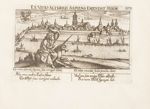
Ex vitio alterius sapiens emendat suum: Meisner, Politica Politica (Nürnberg, 1700), emblem 378 quotes the comment
Iconclass: 52CC41 Error; 'Errore' (Ripa) 54A2 Carefulness, Diligence; 'Diligenza' (Ripa) 54FF11 Adversity, Misfortune, Bad Luck; 'Fortuna infelice', 'Infortunio' (Ripa)
Collectanea (1500): 150
Loci Communes: Sera paenitentia (Late repentance, Repentir tardif)
II iii 40 Ingens telum necessitas Necessity's a mighty weapon
Ingens telum necessitas. De re inevitabili. Livius primae Decadis libro iiii. Necessitate quae ultimum ac maximum telum est, superiores estis. M. Tullius lib. De amicitia, Nec vero negligenda est fama, nec mediocre telum ad res gerendas existimare oportet benevolentiam civium. Utitur eodem adagio quodam in loco Plinius avunculus. Est aliquoties apud Livium, Huic rei aliud invenietur telum. Et, Eam rem hoc telo maximè parabant. ut pro consilio, rationeque ac via gerendi negocii capi videatur, fortasiis sumpta metaphora à venantibus, qui telo appetunt, quod capere volunt. Unde & Certa dicentur tela, consilia, quae nunquam fallunt.
Of something inevitable. Livy, in book 4 of his first decade: 'Necessity that last and greatest weapon, gives you the advantage.' Cicero in his book On Friendship: 'Not that one should be careless of reputation, and one must reckon the goodwill of one's fellow-men as no trivial weapon in the conduct of affairs.' The same adage is used somewhere by the elder Pliny. We find several times in Livy 'Another weapon will be found to deal with this,' and 'This was their principal weapon in attempting this.' So that 'weapon' seems to stand for policy and strategy and method of handling business, the image being taken perhaps from huntsmen, who use their weapons against the quarry which they wish to capture. Hence ways of acting which never disappoint one can be called 'unfailing weapons.'
Facsimile:
Iconclass: 45C1 weapons 51C2 Necessity, Inevitability; 'Necessità' (Ripa)
Loci Communes: Necessitas (Necessity, Nécessité)
II iii 41 Adversum necessitatem ne dii quidem resistunt Against necessity even the gods can make no stand
Ανάγκῃοὐδὲ θεοὶ μάχονται. i. Necessitati ne dii quidem resistunt. Haec sententia Simonidi tribuitur: sumpta est ex Homero. Refertur duobus locis à Platone, libris de legibus septimo, & quinto, ἀλλ᾽ ἔοικεν Ὁ τὸν θεὸν πρῶτον παροιμιασάμενος εἰς ταύτ᾽ ἀπόβλψας εἰπεῖν, ὡς οὐδὲ θεὸς ἀνάγκῃ μήποτε φανῇ μαχόμενος. id est, Sed apparet eum qui primum admiscuit deum proverbio, haec spectasse quum dicit, quod ne Deus quidem unquam visus est cum fato pugnare. Idem in convivio, πολλὰ δὲ καὶ δεινὰ τοῖς θεοῖς ἐγίγνετο, ὡς λέγεται, διὰ τὴν τῆς ἀνάγκης βασιλείαν. id est, Multa vero & acerba diis acciderunt, ut dicitur, ob necessitatis regnum. Item lib. De legibus v. scribit, τὴν ἀνάγκην οὐδὲ τοὺς θεοὺς βιάζεσθαι. id est, Ne deos quidem cogere posse necessitatem. T. Livius, Pareatur necessitati, quam ne dii quidem superant. Palladius, Necessitas feriis caret. Euripides in Helena, Λόγος γὰρ ἐστιν οὐκ ἐμὸς, σοφῶν δ᾽ ἔπος, Δεινῆς ἀνάγκης οὐδὲν ἰσχύειν πλέον. id est, Nanque illud est sapientium dictum, haud meum, Nihil necessitate dira fortius. Extat apud Graecos versus proverbialis: Υπὸ τῆς ἀναγκης πάντα δουλοῦνται τάχα. id est, In servitutem cuncta agit necessitas. Euripides in Hecuba, Στερὰ γὰρ ἀνάγκη. id est, Rigida namque necessitas. Horatius: Si figit adamantinos Summis verticibus dira necessitas Clavos. Poetae Necessitatem deam faciunt, Parcarum matrem, quae & ipsae ineluctabiles atque inex orabiles vocantur. Hanc necessitatem philosophi fatum appellant, quae est aeterna rerum series, necessario cohaerentium: cui veluti cedens Iupiter apud Maronem, Fata, inquit, viam invenient. Et tragicus quidam apud Senecam, Ducunt volentem fata, nolentem trahunt.
Ανάγκῃοὐδὲ θεοὶ μάχονται, Necessity even the gods cannot resist. This aphorism is ascribed to Simonides, and is taken from Homer. Plato records it in two places in the Laws, in books 7 and 5: 'The man who first put God into a proverb must have thought of this when he said that God himself is never seen to fight against fate.' And again in the Symposium: 'The gods themselves had much to suffer, so it is said, from the rule of Necessity.' Again in book 5 of the Laws he writes that even the gods cannot bring force to bear upon Necessity.' Livy: 'We must obey Necessity, whom the gods themselves cannot overcome.' Palladius: 'Necessity knows no holidays.' Euripides in the Helen: 'Not mine the saying; 'tis a wise man's word: / Nought has more power than dread Necessity.' In Greek there is a proverbial line: 'All things Necessity soon makes her slaves.' Euripides in the Hecuba: 'Hard is Necessity.' Horace: 'If harsh Necessity into their crowns / Fixes quite fast her adamantine nails.' The poets make Necessity a goddess, mother of the Fates, who are in their turn called inescapable and inexorable. This Necessity is called Fate by philosophers, and she is the eternal succession of events that necessarily form an unbroken chain. Jupiter seems to yield to this, when he says in Virgil that 'Fate will find a way.' And some tragic poet quoted by Seneca: 'Fate draws the willing, but the unwilling drags.'
II iii 42 Squillas a sepulchri vellas Pluck squills from a grave
Σκίλλας ἀπὸ σήματος τίλλειν, id est, Squillas à sepulcro vellere iubebantur, qui parum sanae mentis esse viderentur. Hac enim herba malum hoc expiabatur antiquitus. Theocritus in Bucolicis, Σκίλλας ἰὼν γραίας ἀπὸ σάματος αὐτίκα τίλλοις. id est: I, squillas ab anus quàm primum velle sepulchro. Innuit, illum quod in certamine canendi superatus sit, adeo iracunde ferre, ut periculum sit, ne vertatur in insaniam. Et alter simile quiddam refert, Ενθὼν τὸν κυκλάμινον ὄρυσσέ νιν εἰς τὸν ἁλέντα. id est: Hinc abiens fluvio infodias cyclaminon Halenti. Dioscorides lib. ii. demonstrat, Cyclaminon Romanis dici rapum, efficacem detrahendo è capite phlegmati. Atque inter caetera eius remedia hoc quoque commemorat, succum illius melli admixtum inseri naribus, ac lanam hoc imbutam digito imponi, ad purgandam capitis pituitam. Huius radicem dissectam reponi, asservarique, non secus ac squillae. Denique contusam & in pastillos redactam, valere adversus veneficia, quae Graeci philtra vocant.
Σκίλλας ἀπὸ σήματος τίλλειν, To pluck squills from a grave. People were told to do this who did not seem quite right in the head, for squills, seaplants, were used in Antiquity as a remedy for this complaint. Theocritus in the Bucolics: 'Off with you! Gather squills from some old hag's grave.' The suggestion is that the defeated candidate in the singing-contest is so angry at his failure, he is in some danger of losing his reason. And the other character replies in similar vein: 'Be off then and plant cyclamen in the river Haleis.' Dioscorides shows in book 2 that cyclamen is what the Romans called turnip, and was a specific for reducing phlegm in the head. Among other remedies for this complaint he also records that the juice of it was mixed with honey and inserted into the nostrils, and wool soaked in this was wrapped round a finger to purge bile in the head. Its root is cut up small, he says, and kept in store as squills are kept. It is then pounded and made up into pellets, and is a valuable antidote for the dangerous drugs called in Greek love-philtres.
Facsimile: 
Iconclass: 25G4(SQUILL) plants and herbs (SQUILL) 31A4640 Madness 42E31 grave, tomb 43B144 picking flowers 49G81 medicament, medicine
Loci Communes: Multi - in stupidos (Many people - against the stupid, Beaucoup de gens - contre les sots)
II iii 43 Jucundi acti labores Past labour is pleasant
Iucundi acti labores. M. Tullius lib. De finibus bonorum & malorum ii. Quid, si etiam iucunda memoria praeteritorum malorum? ut proverbia nonnulla veriora sint, quàm vestra dogmata: vulgo enim dicitur, Iucundi acti labores. Ex ipsa hominum natura sumptum adagium: est enim hoc insitum omnibus, ut iucunda cuique sit anteactorum malorum aut periculorum secura recordatio, commemoratioque praesertim insignium fatalium, & quae cum turpitudine coniuncta non sint, veluti bellorum, naufragiorum, atque id genus discriminum. Unde dictum est ab Horatio: Gaudent ubi vertice raso Garrula securi narrare pericula nautae. Hoc proverbium ortum ab Homero ceu fonte, à diversis deinde scriptoribus varie est usurpatum. Extat autem apud hunc Odysseae libro xv. Νῶϊ δ᾽ ἐνὶ κλισίῃ πίνοντέ τε δαινυμένῳ τε, Κύδεσιν ἀλλήλων τερπώμεθα λευγαλέοισιν Μνωομένω. μετὰ γὰρ τε καὶ ἄλγεσι τέρπεται ἀνὴρ, Ος τις δὴ μάλα πολλὰ πάθῃ καὶ πολλ᾽ ἐπαλήθῃ. id est: At nos in scamnis vescentes atque bibentes Tristibus inter nos recreemus pectora fatis, Commemorando. etenim fit, uti post gaudeat actis, Aspera quisquis multa tulit per multa vagatus. Citatur & locus hic, & proverbium ab Aristotele Rhetoricorum lib. i. ubi commemorat, quae cuique natura vel iucunda sint, vel molesta. Vergilius Homerum aemulatus: Forsan & haec olim meminisse iuvabit. Item in tragoediis Seneca: Quod fuit durum pati, meminisse dulce est. Circufertur Graecis & huiusmodi trimeter proverbialis: Ως ἡδὺ τοῖς σοφοῖσι μεμνῆσθαι πόνων. id est, Memoria dulcis iam peracti olim mali. Cicero videtur indicare sumptum ex Euripide. Nec male, inquit, Euripides. concludam si potero Latine. Graecum enim hunc versum nostis omnes, Suavis est laborum praeteritorum memoria. Constat versus, si pro suavis legas suave, nisi malis priscorum more clidere; aut quod est commodissimum, omittere verbum Est, nisi mavis subiicere post Laborum.
Cicero in the second book of his On the Definitions of Good and Evil: 'What if the memory of misfortunes past is actually pleasant? - granting that some proverbs may be nearer the truth than your philosophical principles; for it is a common saying that past labour is pleasant.' The adage clearly takes its rise from human nature; all men have the same inborn faculty for finding it pleasant to remember past misfortunes or dangers in tranquillity and pass them in review, especially great blows of fate and experiences which have no associations of discredit, such as wars and shipwrecks and other perils of the kind. Thus Horace tells how 'long-winded seamen with their shaven polls / Rejoice, their perils o'er, to tell the tale.' This proverb, which started from the Homer as its source, is used by different later writers in various ways. It is to be found in Homer in book 15 of the Odyssey: 'We two at ease reclined, eating and drinking, / Shall cheer each other with sad tales of old; / For even sorrows bring a man some joy / Who has borne much and wandered far and wide.' This passage, and the proverb, are cited by Aristotle in the first book of the Rhetoric, where he lists what every man by nature finds pleasant or unpleasant. Virgil, emulating Homer, writes 'One day, perchance, this memory will be sweet.' Seneca too in his tragedies: 'What was hard to suffer is sweet in the remembrance.' There is also an iambic line current in Greek, to this effect: 'Sweet to the wise are memories of toil.' Cicero seems to indicate that it was taken from Euripides: 'Euripides' he says 'puts it well (I will make Latin verse of it if I can, for you all know the line in Greek), Suavis est laborum praeteritorum memoria Sweet is the memory of labours past.' The line scans, if for the traditional suayis you write suave, unless your prefer in the archaic fashion to elide the final s or (the simplest solution) to delete est, unless you prefer to put it after laborum.
II iii 44 Auloedus sit qui citharoedus esse non possit Let him be a flute-player who could not play the lyre
M. Tullius in oratione pro Murena, comparationem faciens iureconsultorum & oratorum, Itaque mihi plerique videntur, inquit, initio hoc multo maluisse: pòst cum id assequi non potuissent, isthuc potissimum sunt delapsi. Ut aiunt in Graecis artificibus eos auloedos esse, qui citharoedi fieri non potuerint: Sic nonnullos videmus, qui oratores evadere non potuerunt, eos ad iuris studium devenire. Hactenus Cicero. Recte dicetur in eos, qui malunt in multo inferiore ordine alicuius haberi momenti, quam inter excellentes negligi. Quemadmodum Iulius Caesar maluit in frigido oppidulo primus esse, quam Romae secundus. Nec male quadrabit in eos, qui, desperatione meliorum ad humiliora sese conferunt. Citatur idem adagium in Decretis ex Augustino, in monachos malos, ad clericorum gregem desciscentes.
Cicero in his speech in defence of Murena, comparing legal specialists and practising counsel, says: 'And so it seems to me that most people at the outset much preferred this alternative, and later, when it had proved to be beyond their reach, they settled for the other, just like those Greek musicians (so the saying goes) who are flute-players because they have not proved good enough to play the lyre; in the same way we see some men who have not been able to shine as practising counsel, and relapse into the study of the law.' Such are Cicero's words; and we shall use the phrase to good effect of those who would rather be thought of some importance in a much inferior role than be overlooked among men of distinction. This is like Julius Caesar, who said he would rather be the leading man in some dormant small town than take second place in Rome. Nor will it be a bad fit for those who apply themselves to humble tasks in despair of greater things. The same adage is cited in the Decreta from Augustine, as applied to bad monks who lapse into the common crowd of secular clergy.
Facsimile: 
Iconclass: 48C7351 flute, aulos, tibia 48C7351(+1) flute, aulos, tibia (+ artist at work) 48C7525 one person playing wind instrument 54AA33 Inability, Maladroitness, Awkwardness
Loci Communes: Proximis utendum (One must make use of one's neighbors, Il faut se servir de son prochain)
II iii 45 Colphonem addidit He added the colophon
Τὸν κολοφῶνα ἐπέθηκεν. i. Colophonem addidit. Dici consuevit, cum summa manus rei cuipiam imponitur: aut cum accedit id, sine quo negocium confici non potest. Originem adagionis indicat Strabo lib. Geographiae suae xiiii. scribens Colophonios olim cum navalibus copiis abundasse, tum equestribus usque adeo praecelluisse, ut, ubicunque gentium bellum gereretur quod confici non posset, Colophoniorum equitum auxilio profligaretur. Atque inde vulgo natum proverbium, κολοφῶνα ἐπέθηκεν, id est, Colophonem addidit. Refertur à Diogeniano proverbium. Indicavit & Festus Pompeius, scribens, colophonem dici solere, cum aliquid finitum significaretur. tametsi locum eum arbitror non vacare mendo. In eum sensum usus est Plato De legibus ii. Επὶ τοίνυν τῆς μέθης χρείᾳ τὸν κολοφῶνα πρᾶτον ἐπιθῶμεν, id est, Itaque de usu temulentiae primum Colophonem imponamus. etiam si apud Platonem legimus χορεία, praecessit enim de chorea mentio. Ac mox, οὖτος ὦ ξένοι ἡμῖν, εἰ ξυνδοκεῖ, κολοφῶν ἐπὶ τῷ περὶ οἴνου λόγῳ ῥηθέντι εἰρήσθω. i. Hic nobis, hospites, si vobis idem videtur, colophon sermoni de vino habito dictus esto. Idem in epistola ad Dionysium tertia, τὸν κολοφῶνα ὦ θαυμάσιε ταῖς ὑποσχέσεσινἁπάσαις, νεανικώτατον ἐπέθηκας. id est, Colophonem vir praeclare, pollicitis omnibus maximè iuvenilem imposuisti. Rursus in Theaeteto, καὶ ἐπὶ τούτοις τὸν κολοφῶνα ἀναγκάζω προσβιάζων τὴν χρυσῆν σειρὰν. id est, Et ad haec adigo colophonem, vi compellens auream illam catenam. Sentit enim Socrates, Homerum per auream catenam significasse solem, cuius motu servantur omnia, protinus interitura, si steterit. Praecipuum igitur argumentum quo probet quiete corrumpi universa, motu servari, appellat Colophonem. Item Aristides in Themistocle: κᾀνταυθα κολοφὼν τοῦ λόγου, id est, Atque hic orationis summa. Plutarchus in libello De musica, tametsi stilus propè clamitat illius non esse: Τούτους τοὺς στίχους ἀγαθὲ διδάσκαλε κολοφῶνα τῶν περὶ της μουσικῆς λόγων πεποίημαι. id est, Hos versus bone praeceptor Colophonem eorum, quae de musica disputata sunt, feci. Idem in libello De prudentia animantium dixit κορυφην. Ινὰ δὲ κορυφὴν ὁ λογος ἐπιθεὶς ἑαυτῳ παύσηται. id est, Ut autem oratio sibi fastigium imponens, finem faciat. Gregorius Theologus in libello de fuga sua, εἶμι γὰρ ἐπ᾽ αὐτὸν ἤδη τὸν κολοφῶνα τοῦ λόγου. id est. Iam enim venio ad ipsum sermonis Colophonem. Sunt qui admoneant, proverbium usurpari de extremis malis. Ad eum modum usus videtur Chrysostomus in epistola ad Innocentium Romae episcopum. Hesychius admonet, Colophonem interdum dici graculum, quod, ut opinor, summis aedium fastigiis avis ea soleat imponi, velut admonens, iuxta cornicem Hesiodiam, ut homines sibi componant nidos, neque enim semper fore aestatem. Latinis item dictum est, Apicem imponere. M. Tullius in Catone maiore. Apex autem senectutis est autoritas. Reliqua pete à proverbio quod alibi retulimus, Colophonium suffragium. Coronidem addere diximus alibi.
Τὸν κολοφῶνα ἐπέθηκεν, He added the colophon. This came to be used when the finishing touch is added to something, or when some addition is made without which a piece of business cannot be concluded. The origin of the adage is pointed out by Strabo in book 4 of his Geography, where he says that the people of Colophon in old days had such a powerful navy, and with it an advantage in cavalry so great, that whenever a war was being waged without hope of a decision, it was the aid of the cavalry of Colophon that finished it off. Hence came the current proverb, He added the colophon. The proverb is recorded by Diogenianus.
Festus Pompeius makes another suggestion, when he says that the word colophon was commonly used to convey that something was finished, though I think the passage is not free from error. In this sense it is used by Plato in the second book of the Laws: 'And so to the use of drunkenness let us first put a colophon' (though for chreia, use, we find in Plato's text choreia, dancing, for he was speaking of dancing previously), and a little further on: 'Let this, my friends, if you agree, be the colophon we set to our discussion on wine.' And in his third Letter to Dionysius: 'And you have set a most ambitious colophon, my good sir, on all your promises.' Again in the Theaetetus: To this I impose as a colophon that famous golden chain.' Socrates' point is that by the 'golden chain' Homer meant the Sun, by whose motion all things are preserved, and they will come to an end at once if he stands still. This is thus his principal argument to prove that all things are corrupted by standing still and preserved by motion, and so he calls it his colophon. Aristides too in his Themistocles: 'And then as a colophon to the argument.' Plutarch in the essay 'On Music' (though the style almost cries aloud that it is not his): These lines then, my dear teacher, I have made the colophon for my remarks on music.' Plutarch again, in the essay 'On the Cleverness of Animals', uses another word, koryphê, when he says 'But that my argument may apply the finishing touch to itself and come to an end.' Gregory the Theologian in the piece he wrote on his exile has 'Now I come to the very colophon of what I have to say.'
Some tell us that the proverb is used of ultimate disasters, and that is how it seems to be used by Chrysostom in a letter to Innocent, bishop of Rome. Hesychius tells us that colophon sometimes means a jackdaw, because, I suppose, a bird is often fixed on the topmost ridge of a house, as if to warn men, like Hesiod's crow, to build themselves nests because it will not always be summer. Latin also uses apicem imponere, to set a cap or crown on something. Cicero in his Cato major: The crown of old age is the influence it can exert.' Further details may be found under a proverb I have recorded elsewhere, Colophonium suffragium. Coronidem addere I have touched on elsewhere.
Facsimile:
Iconclass: 51A7 Perfection, Completeness; 'Perfettione', 'Operatione perfetta' (Ripa) 54D3 Completion 61E(COLOPHON) names of cities and villages (COLOPHON)
Collectanea (1500): 680
Loci Communes: Perficiendi sive absolvendi (Finishing, completing, Achever, accomplir)
II iii 46 Nullum ocium servis Slaves have no leisure
Οὐ σχολὴ δούλοις. id est, Non ocium servis. Refertur ab Aristotele lib. Politicorum vii. Sumptum à servorum conditione, quibus heri nullum concedunt otium: imò paulo plus etiam imponunt operae quàm illi praestare possint: ut quàm sunt in dimenso parci, tam sint in operarum pensis liberales. Dicetur in eos, quibus propter obnoxiam ministeriis sordidioribus conditionem, non vacat honestis disciplinis operam dare. Nam artes liberales hinc dicuntur, quod iis ingenui incumberent: utpote quibus & ocium & res suppetebat. Accommodabitur haudquaquam inscite & in improbos, quorum ingenium ita vitiis occupatur, ut non possint egregias artes perdiscere. Nihil enim occupatius servitute. Nulla autem seruitus gravior, quàm si quis vitiis serviat. Maxime cum is plurimos habeat dominos, eosque plurimum inter se dissidentes: & ob id neutiquam eadem imperantes. Etenim si quando segnities iubet in medios dormire dies, avaritia contra iubet, prima luce adesse in portu, cum tenacitas indicit parsimoniam, amor iubet profundere. Solus itaque sapiens & liber est, & in ocio vivit.
Οὐ σχολὴ δούλοις, Slaves have no leisure, is recorded by Aristotle in the seventh book of the Politics. Taken from the status of slaves, who are allowed no leisure by their masters; in fact, they actually give them a little more work than they can manage, so that meanness in rewarding them is matched by a lavish allocation of work to be done. It will be used of those whose social status subjects them to the meaner sort of obligation, and who therefore have no leisure to devote themselves to honourable studies. For the liberal arts are so called because they were pursued by the free-born, who alone possessed both free time and resources. It will also be quite elegant if applied to bad men, whose natures are so dominated by vice that they cannot master the noble arts. Nothing is more fully occupied than a slave's life, and no slavery is heavier than that of the man who is the slave of his own vices, particularly because he has so many masters, and masters who differ greatly among themselves, and so never give him the same orders. For if laziness ever bids him 'sleep till the depths of noon,' greed tells him the opposite: he must be down at the docks by daybreak; meanness orders him to be economical, and love says 'Be extravagant.' Thus the wise man alone is free, and he alone leads a life of leisure.
Facsimile: 
Iconclass: 46A18 slavery; serfs and enslaved persons 51AA4:43 Nothingness, Absence❧recreation, amusement
Loci Communes: Occupatio (Occupation, business, Occupation)
II iii 47 Titanas imploras You beg the help from the Titans
Τιτᾶνας καλεῖς. id est, Titanas invocas. Ubi quis suis diffisus viribus, alienum implorat auxilium. Sumptum à gigantum fabula, in qua Iupiter suo timens Olympo, Titanas in auxilium accersivit. Id quod proverbiali quoque metaphora Latini veteres Quiritari dicebant, autore Nonio Marcello. Tractum à more Romanorum, qui vi oppressi Quirites invocabant. Sic enim appellant cives Romanos. Refertur adagium à Diogeniano. Lepidior fiet allegoria, si longius à simplici figura recedat. Veluti si quis theologus non potens se divinis tueri literis, ad philosophorum rationes sese transferat, τιτᾶνας καλεῖ.
Τιτᾶνας καλεῖς, You summon the Titans. When a man distrusts his own powers and begs others to help him. Taken from the fable of the Giants, which tells how Jupiter feared for his throne in Olympus and summoned the Titans to help. In early Latin, according to Nonius Marcellus, this was expressed by another proverbial metaphor, quiritari, taken from the Roman custom, when violently assaulted, of summoning your fellow-citizens, the Quirites as they were called. The adage is recorded by Diogenianus. The image will be more elegant if its straightforward sense is left behind; for instance, if a theologian were unable to defend his position out of Scripture and had recourse to arguments from philosophy, he is 'asking help from the Titans.'
Facsimile:
Iconclass: 33A61(+0) help (to an endangered fellow man) (+ variant) 52EE1 Asking, Question, Interrogation 54A6 Helpfulness 54AA7 Weakness, Powerlessness, Helplessness; 'Infermità' (Ripa) 91B1 Titans 92B1 (story of) Jupiter (Zeus)
Collectanea (1500): 684
Loci Communes: Cum auxilio ; citra auxilium (With help; without help, Avec aide ; sans aide)
II iii 48 Homo bulla Man is but a bubble
Πομφόλυξ ὁ ἄνθρωπος. i. Homo bulla. Proverbium hoc admonet, humana vita nihil esse fragilius, nihil fugacius, nihil inanius. Est enim bulla tumor ille inanis, qui visitur in aquis momento remporis enascens simul & evanescens. M. Terentius Varro in praefatione, quam scripsit in libros De agricultura: Cogitans, inquit, esse properandum, quod si, ut dicitur, homo est bulla, eo magis & senex. Annus enim octogesimus admonet me, ut sarcinas colligam, antequam proficiscar è vita. Lucianus item in Charonte, vitas hominum bullis huiusmodi similes facit, quarum aliae simul atque natae sunt, protinus evanescunt, aliae paulo diutius durant, omnes brevissimis quibusdam intervallis, aliae succedunt aliis. Neque quicquam profecto potuit excogitari, quod melius representaret, quam nihil sit haec vita nostra. Primum quanto discrimine prodimus in lucem? deinde quam destituta, quantis obnoxia periculis infantia? Quàm fugax adolescentia, quam praeceps iuventa? Aristoteles in libris Politicis, itemque Rhetoric. libro .iii. vigorem humani corporis tradit iam evanescere anno fermè XXXV. animi, undequinquagesimo. Hippocrates extremam hominis aetatem terminat quadragesimonono. Iam si pueritiam & senectam deducas de ratione aevi, quaeso quantulum est hoc, quod relinquetur? Et hoc ipsum tantis circumscriptum angustiis, sexcenta morborum genera quotidie infestant: nec pauciores impetunt casus, ruinae, venena, naufragia, bellum, terraemotus, lapsus, fulmen, & quid non: Alius acini granum glutiens, praefocatus est. Est quem potus cum lacte pilus strangularit. Neque defuit, cui stiria gelu durata delapsa tecto, subitum attulerit exitium. Et hoc est animal illud, quod tantos molitur tumultus, cuiusque cupiditatibus orbis hic angustus est. Nec mihi temperare possum, quin hoc loco Plinii verba adscribam ex lib. vii. vitae fragilem brevitatem scite depingentis, Incertum ac fragile nimirum est hoc munus naturae, quicquid datur nobis, Malignum vero & breve, in iis etiam quibus largissime contingit, universum utique aevi tempus intuentibus. Quid quod aestimatione nocturnae quietis, dimidio quisque spacio vitae suae vivit: pars aequa morti similis exigitur, aut poenae, nisi contingit quies, nec reputantur infantiae anni, qui sensu carent: nec senectae in poenam vivacis: tot periculorum genera, tot morbi, tot metus, tot curae, toties invocata morte, ut nullum frequentius sit votum. Natura vero nihil hominibus brevitate vitae praestitit melius. Hebescunt sensus, membra torquentur, praemoritur visus, auditus, incessus: dentes etiam ac ciborum instrumenta. Et tamen vitae hoc tempus annumeratur. Ad bullarum similitudinem accedit nobilis illa Homeri comparatio de caducis arborum foliis. Sic enim Glaucus apud hunc loquitur Iliados sexto, Οἷηπερ φύλλων γενεὴ, τοίη δὲ καὶ ἀνδρῶν, Φύλλα τὰ μεν᾽ τ᾽ ἄνεμος χαμάδις χέει, ἄλλα δέθ᾽ ὕλη Τυλεθόωσα φύει, ἔαρος δ᾽ ἐπιγίγνεται ὥρη. id est, Tale quidem genus est hominum, quale est foliorum: Quorum haec ventus humi fundit, rursum illa virescens Profert sylva, simul veris iam afflaverit aura. Hoc carmine Pyrrhonem Academicum peculiariter delectatum fuisse, testatur Diogenes Laertius. Rursus Homerus Iliados φ Οἳ φύλλοισιν ἐοικότες, ἄλλοτε μέντε Ζαφλεγέες τελέθουσιν, ἀρούρης καρπὸν ἔδοντες, Αλλοτε δ᾽ ἆυ φθινύθουσιν ἀκήριοι. id est, Frondibus arboreis similes, nunc ubere foetu Exuperant laetique satis vescuntur agrorum, Nunc rursum intereunt, evanescuntque caduci. Idem alio rursum loco quopiam: Οὐδὲν ἀκιδνότερον γαῖα τρέφει ἀνθρώποιο. id est, Nil homine enutrit tellus infirmius alma. Menander apud Plutarchum in libello consolatorio ad Apollonium: Τὸ δὲ κεφάλαιον τῶν λόγων, ἄνθρωπος εἶ, Οὗ μεταβολὴν θᾶττον πρὸς ὕψος καὶ πάλιν Ταπεινότητα ζὼον οὐδὲν λαμβάνει. Καὶ μάλα δικαίως, ἀσθενέστατον γὰρ ὄν Φύσει μεγίστοις οἰκονομεῖται πράγμασιν. id est, Caput atque summa orationis haec, Homo es, Quo non aliud est animal usquam, quod modo Surgat, modo cadat, citius atque crebrius. Ac iure sanè, quippe debilissimum Cum sit, negocia administrat maxima. Euripides apud eundem: Οδ᾽ ὄλβος, οὐ βέβαιος, ἀλλ᾽ ἐφήμερος, καὶ ἡμέρα μία τὰ μὲν καθεῖλεν ὕψοθεν Τάδ᾽ ἦρ᾽ ἄνω. id est, Nec stabilis est felicitas, Sed in diem durans, & unicus dies Et haec ab alto traxit, haec & sustulit Ab imo in altum. Quo quidem in loco Demetrius Phalereus poetam alioqui laudatum ob elegantiam taxasse legitur, qui non ἡμέραν μίαν, id est, unum diem, sed στὶγμὴν χρόνου, id est, temporis punctum dicere debuerit. Pindarus vicit etiam Homericam similitudinem: ut qui hominem non frondes, sed umbrae somnium vocarit. Locus est in Pythiis hymno viii. Επάμεροι. τί δὲ τίς; τὶ δὲ οὔτις; σκιᾶς ὄναπ ἄνθρωπος. i. Diurni. Quid autem aliquis? Quid autem nullus? Umbrae somnium homo. Nihil inanius umbra. Videtur enim esse, cum nihil sit. At hac quoque repperit quiddam inanius, nimirum umbrae somnium. Ut nemo possit dicere: hic est aliquis. neque rursum, hic est nullus, quod tam subita sit rerum humanarum immutatio, ut qui videtur aliquid esse, mox sit nullus: & qui videtur perisse, mox sit aliquis. Aeschylus apud Stobaeum, umbrae fumi similem facit hominis vitam: Τὸ γὰρ βρότειον σπέρμ᾽ ἐφήμερα φρονεῖ, Καὶ πιστὸν οὐδὲν μᾶλλον ἢ καπνοῦ σκιά. id est, Caduca molitur genus mortalium, Neque certa res est ulla, nec tuta, haud magis Atque umbra fumi. Sophocles item in Aiace: Ανθρωπός ἐστι πνεῦμα καὶ σκιὰ μόνον. id est, Nil aliud ac umbra atque flatus est homo. Pindarus in Nemeis hymno undecimo, εἰδέτις ὄλβον ἔχων, μορφᾷ παραμεύσεται ἄλλων, εντ᾽ ἀέθλοισιν ἀριστεύων ἐπὲδειχεν βίαν, θνατὰ μεμνάσθω περιστέλλων μέλη, καὶ τελευτὰν ἁπάντων γᾶν ἐπιεσσόμενος. id est, Si quis autem opes possidens, forma praecellat caeteris, & in certaminibus fortiter se gerens ostendit robur, meminerit quod membra circumfert mortalia, quod finem omnium terram aditurus est. Hac sententiam inscribi conveniebat aulis, poculis, auleis, & insignibus principum, potius quam illa gloriosa, Qui volet, & Adhuc longius, aliaque huius generis. Nil autem venustius illa comparatione, rosarum repente nascentium, senescentium, & intereuntium, cum hominum vita. Carmen extat titulo Maronis, quod etiam si Vergilianam venam non admodum resipit, tamen ita scatet gratiis, leporibusque, ut ab autore non solum eruditissimo, verum etiam festivissimo, quisquis is fuit, profectum appareat. Huc pertinet, quod poetae fingunt, mortales omneis à Parcarum filis pendere, quibus insectis protinus decidant. Atque alios quidem à candidis, alios à pullis suspendit filis. Rursum alios in sublime sublatos pendere, alios terrae vicinos. Omnium tamen hanc eandem esse sortem, ut simul atque inexorabilis Atropos pollice filum secuerit, ilico decidat, is qui pende bat. Nec ullum esse discrimen, nisi quod maiore tumultu decidit is, qui pendebat altius. Rides, & hos lusus esse, iocosque poeticos existimas? Lusus quidem, sed saevus ille nimiumque procax fatorum lusus: quem utinam in gregarios & inutiles homines dumtaxat exercerent, (in quos convenit Homeri illud: Ετώσιον ἄχθος ἀρούρης;) ac non etiam viros coelesti praeditos ingenio, tum autem principes optimos ante diem è medio tollerent. A quibus non solum non abstinent hanc ludendi licentiam: verumetiam his quasi dedita opera videntur insidiari, nimirum ambitiosa quadam invidentia, ut hoc ipsum sibi licere declarent, palamque faciant, omnem mortalem, quicunque is fuerit, ex aequo bullam esse. Quanta rei literariae nuper mors immatura terris eripuit Paulum Canalem, patricium Venetu, iuvenem quidem illum vixdum annos natum vigintiquinque, sed deum immortalem, quàm felici ingenio, quàm acti iudicio, quàm ubere facundia, quanta linguarum, quanta disciplinarum omnium scientia praeditum? Nihil sua referre putavit inexorabile fatum, quod tantum adferret dispendium bonis literis, quibus ille iam succurrere non instrennue coeperat: quod tam grave desiderium excitaret literarum cultoribus, quod tantos fructus, tantas studiosorum spes repente incideret. Iam vero Philippi principis mei tam immaturum interitum, equidem nec memorare possum ob acerbissimum illius desiderium, neque rursus quando quidem locus admonuit, praeterire fas est, propter singularem etiam illius in me benignitatem. Hunc unum fortuna, principum omnium, quos unquam sol vidit, optimum, maximum, ornatissimum terris ostendit: sed, heu facinus, ostendit tantum, ac protinus subduxit. Nam quaenam sunt vel naturae dotes, vel ornament fortunae, quid divinitus à superis dari potest mortalibus, quod in illo non fuerit & eximium, & cumulatissimum? Primum quàm heroica corporis proceritas, quanta formae tum dignitas, tum gratia? quis oculorum vigor? Quàm felix indoles, quae firmitas membrorum, quod robur, qui status, quae habitudo? Nam de natalium splendore, quid attinet dicere? In quibus tot reges, tot imperatores, tot heroas invenies, ut ne fingi quidem possit quicquam illustrius, amplius, luculentius. Accedebat ad haec arcana vis quaedam divinitus insita, qua fiebat, ut non secus ac magnes quidam, regum, gentium, suorum, externorum, breviter omnium mortalium animos in sui raperet amorem: adeo ut non solum conspectus, congressusque, sed vel auditum modo Philippi nomen, nescio quomodo miram quandam excitaret benevolentiam, Qua quidem re quid potest summo principi contingere felicius? Augebat fatalem hand amabilitatem singularis quaedam morum comitas, dexteritasque. Itaque regum ac nationum omnium tam mirus in hoc amando consensus erat, ut etiam qui paulo ante bello conflictabantur, iam positis armis, pari studio ad ornandum Philippum incumberent. Adeo pacis, concordiae, gratiarum, ac gaudiorum plena erant omnia, ubicunque terrarum affulsisset ille. Quem veterum ducem, quem triumphum non contemnat is, qui spectarit, quantum verae benevolentiae, quantum studiorum, quantum ornamentorum duabus illis in Hispaniam profectionibus certatim contulerunt, tot reges, tot proceres, tot nationes, Gallia, Sabaudia, Hispania, Germania, Britannia. Multum ornamenti sibi putabat adiungi, quisquis in Philippum ornamenti quippiam contulisset. Quibus de rebus noster extat Panegyricus. Adiunge ad haec uxoris foecunditatem, liberos omneis incolumes, patrem, ut infinita decora verbo conplectar, Maximilianum: adde tot reges adfinitatis etiam vinculils adglutinatos. Adde imperii magnitudinem, in qua natus: adde regni luculentiam, in quod apaternae maiestatis successionem, adde tantarum rerum spes, quae tali indoli, talibus fatis, talibus debebantur moribus, certas, siquid omnino certum esse superi voluissent in rebus mortalium. Quae iam contigerant, erant maxima, atque hoc maiora, quod non quemadmodum plerisque, vi, sanguine, & alienis calamitatibus accreverant. Vix enim aliter ingentia possidentur imperia. Nihil erat in tot felicitatis Philippi nostri calculis cruentum, nihil cum ullius dolore iacturáve coniunctum. Quae vero impendebant, sic impendebant, non ut invasurus ea videretur, sed ut recusare non liceret. tot inquam, dotes, tot ornamenta, tot gentium studia, tot regum optata tam iusta, tam pia patris amantissimi vota, tot patriae gaudia, tam amplas spes, tantam orbis expectationem repente properata mors intersecuit, nimisque crudeli docuit exemplo, neminem esse mortalem usqueadeo coelitibus vicinum, quin bulla sit. Sed iam dudum tempus est, ut his omissis ad institutum negocium recurrat oratio, ne quis merito calumniari possit, nos in mediis adagiis declamare. Quanquam video Plinium in huiusmodi locos causa voluptatis frequenter digredi. Me dolor à proposito nonnihil transversum egit, non illectavit amoenitas.
Πομφόλυξ ὁ ἄνθρωπος, Man is but a bubble. The lesson of this proverb is that there is nothing so fragile, so fleeting and so empty as the life of man. A bubble is that round swollen empty thing which we watch in water as it grows and vanishes in a moment of time. Thus Marcus Terentius Varro in the preface to his book on agriculture: 'Bearing in mind' he says 'that I must make haste; for if, as they say, man is but a bubble, much more is this true of an old man. My eightieth year reminds me to pack my baggage, before I bid farewell to life.' Lucian too in his Charon makes men's lives something very like this kind of bubble: some vanish at once as soon as they are born, some last a little longer, but all of them at very brief intervals take the place of others. Nor could one think of anything, in fact, which would give a better picture of the utter nothingness of this life of ours. Consider first what risks we run when we see the light of day. How destitute, how much exposed to great perils is our infancy! How fleeting is our adolescence! How our prime hastens by! Aristotle in the Politics and again in book 3 of the Rhetoric states that a man's bodily powers begin to fade about his thirty-fifth year and his mental powers about his forty-ninth. Hippocrates brings the peak of a man's life to an end at forty-nine; and if you deduct childhood and old age from the sum of life, just think how little will be left, and that little beset with such great emergencies. Unnumbered kinds of sickness threaten us every day, and no fewer are the mishaps to which we are exposed, collapsing houses, poison, shipwreck, war, earthquakes, landslides, lightning, anything. One man is suffocated by swallowing a grape-pip, another strangled by drinking a hair in a cup of milk. There are cases of men meeting sudden death, when an icicle hardened by frost has fallen from a roof. And this is the same creature that sets such commotions afoot, and for whose appetites this world is too narrow.
I cannot refrain from transcribing at this point a passage from book 7 of Pliny, where he skilfully depicts the frailty and shortness of our life. 'Fragile truly and uncertain is this gift, such as it is, that nature gives us; brief and niggardly is our portion, even for those who get the most generous share, at any rate if we consider the whole span of time. In fact, if we take account of the nights spent in slumber, each man is alive for no more than half of his allotted term, and an equal portion is spent in a state like death, or is punishment if one cannot sleep. Nor does this take account of the years of infancy, which have no sense, nor of old age when long life is a punishment; all the dangers of many kinds, the sickness, fears, anxieties, the appeals to death, so frequent that it is the most common object of prayer. Nature indeed has given men nothing more precious than shortness of life. The senses fail, the limbs are tormented, our sight hearing and walking before we fail ourselves, and so do our teeth and the organs by which we feed. Yet all this time is counted as a part of life.'
The comparison with bubbles finds a parallel in Homer's famous image of the leaves falling from the tree. These are the words of Glaucus in Homer, in the sixth Iliad:
Like leaves upon the tree, the life of man:
One race of leaves the wind strews on the ground
And another the wood puts forth at the call of spring.
These lines, so Diogenes Laertius tells us, were a particular favourite with Pyrrho the Academic philosopher. Homer again, in Iliad 21:
Like leaves, they now are green and flourishing,
Eating earth's plenty, and now they fall and die.
And in another passage, I forget where: Tor earth breeds nothing less robust than man.' Menander, cited by Plutarch in his 'Consolation addressed to Apollonius':
Hear the whole tale in brief: you are a man.
No creature climbs so quickly to the heights,
Changes, and sinks again into the depths
And rightly so for, weakest as he is
Of living things, he takes great tasks in hand.
Euripides, cited in the same author: 'Happiness is not steadfast; it lasts but for a day. One day tears down what yesterday exalted, and raises the low on high.' In that same passage Demetrius of Phalerum is said to have criticized the poet, otherwise renowned for the elegance of his style, on the ground that instead of 'one day' he ought to have written 'a print of time.'
Pindar outdid even the image used by Homer, for he called mankind not 'leaves' but 'a shadow in a dream.' The passage will be found in the eighth hymn of the Pythians: 'Creatures of a day, what is anyone? What no one? Man is a shadow in a dream.' Nothing is as empty as a shadow, for it appears to be something, and is nothing; but he has found what is emptier even than that, a shadow in a dream. As a result, no one can say 'This man is somebody,' or its opposite, 'This man is nobody'; for so sudden are the changes in human affairs that the man who seems to be something the next moment is nobody, and he who seemed to have perished is in a moment somebody. Aeschylus, in a fragment preserved by Stobaeus, makes man's life like the shadow of smoke: The seed of man thinks thoughts that last a day, / No more to be trusted than the shadow of smoke.' Sophocles too in the Ajax: 'Man is but wind and shadow, nothing more.'
Pindar in the eleventh hymn of the Nemeans: 'If a man is rich, and in bodily grace surpasses others, and if by victory in the games he has shown heroic strength, let him remember that the limbs he bears round with him are mortal, and that he must be clad in earth, the end to which all men come.' This truth might properly be written up in the courts of princes, on their drinking-cups and in their tapestries and their banners, rather than such boastful words as 'He can that will' and 'Further yef and other things of the kind.
But nothing can be more exquisite than the well-known comparison between roses, which open so quickly and so quickly grow old and die, and the life of man. A poem survives under Virgil's name which, though it does not particularly recall Virgil's style of writing, is yet so full of elegance and charm that it clearly stems from some author who was not only a polished scholar but, whoever he was, a very gifted man.
Here too belongs that myth beloved of poets, which depicts all mortals as suspended from threads spun by the Fates, and when those threads are cut, down they fall forthwith. Some too hang from white threads and some from threads of a mornful hue, some hang high in air and some near the ground, but all have the same lot: the moment Atropos, who hears no man's prayer, snaps a thread with her thumb, down falls the man who hung from it, nor is any distinction made except that the man who hung higher makes more disturbance when he falls. You may smile, and think is a mere fable, a game that poets play. A game it may be, but pitiless and cruel is the game played by the Fates. And if they would but confine it to ordinary ineffectual men who are covered by Homer's phrase 'a useless burden on the earth,' and would not take from us before their time men gifted by heaven and the very best of our princes! It is not merely that they do not refrain from playing their unprincipled game even with such as these; they seem to lie in wait for them of set purpose as though they were jealous of their power and meant to leave no doubt that this is within its range, and to make it clear that every mortal, whoever he may be, is equally nothing but a bubble.
What a loss the world of letters lately suffered, when early death snatched from us Paolo Canal, patrician of Venice, a young man scarcely yet twenty-five years old but, in heaven's name, so gifted, so prolific, with such keen judgment, such ready utterance, such knowledge of every language and of every subject! Inexorable Fate thought it not her business if she inflicted such a loss on humane studies, to which he had already begun to contribute so effectively, or if she left such a sense of bereavement in the devotees of good literature by suddenly cutting off that great harvest and the high hopes of scholars everywhere.
And now there is the unexpected death of my Prince Philip of which I cannot speak, so bitter is my sorrow for his loss, yet it is not right for me, prompted by such a context, to say nothing of one who showed me such outstanding generosity. Of all the princes upon whom the Sun ever shone he was unique, the best, the greatest, the most gifted. Fortune gave the world a glimpse of him, and, alas, it was only a glimpse and she snatched him away. Whether natural endowments or the splendours of exalted rank, what can heaven give to mortals which was not his in highest excellence and greatest plenty? Physically of heroic stature, how noble, and yet how winning, was his air, and how bright his eye! His was a happy disposition, vigorous health and strength, a noble stance and bearing. Of his distinguished ancestry why need I speak? Kings, emperors, famous captains are to be found in it in such plenty, that nothing could be imagined so grand, so illustrious and so noble. With these there went some secret heaven-sent power, which acted like a magnet, and won him instantly the affection of kings and peoples, of his own nation and of foreigners and, in a word, of all mankind, so that not merely to see him or to talk with him, but even the sound of Philip's name, somehow aroused exceptional goodwill. And could the greatest prince hope for a happier gift than that? This charm, which was part of his destiny, was enhanced by his singular courtesy and flexibility of manner, such that all kings and all nations were remarkably unanimous in their affection for him, and even those who were at war not long before, were equally zealous, once they had laid down their arms, in doing honour to Prince Philip. Such were the universal peace and concord, the gratitude and joy, wherever he had sown the light of his countenance. Well might the generals of Antiquity and classical triumphs seem of no account to anyone which all those kings, princes and nations - France, Savoy, Spain, Germany, England - competed with one another in contributing to those two expeditions into Spain. Anyone who had contributed anything to Philip's glory felt that he had much enhanced his own. On all this my Panegyricus is there to testify. Then there is the wife who has borne him a family, his children all alive and well, his father (to put limitless glory in a single word) Maximilian. There are all those kings closely bound as well by ties of kinship; the greatness of the empire in which he was born and the wealth of the kingdom to which he was summoned, the succession to his father's majesty, and all the great hopes inspired by the gifts, the destiny and the character that were his - hopes that were sure and certain, had heaven been willing to allow any certainty in mortal affairs. The success he had already enjoyed was very great, and all the greater because it did not come, as it does to most men, through violence and bloodshed and the sufferings of others; for there is scarcely any other way to acquire supreme power. Among all the elements of our Philip's achievements, not one was stained with blood, not one brought with it misery or loss for anyone else. And what the future held was offered on such terms that he would not seem to be grasping it for himself; he would be in no position to refuse it. These were the gifts, these the distinctions, the international popularity, the goodwill of so many monarchs, the just and affectionate prayers of a devoted father, the enthusiasm of his own countrymen and their unbounded hopes, the whole world's expectations - all this, as I say, was suddenly cut short by his untimely death. It was a needlessly cruel demonstration of the truth that no mortal man, however close he may come to the heavenly powers, is other than a bubble.
But it is more than time for me to leave this topic and return to the subject on which I am engaged, for I would not give anyone cause to complain that I have abandoned my adages in mid-career and turned to declamation; though I see that Pliny frequently digresses on similar topics to please himself. It was grief drove me somewhat off course, and not the charm of the subject-matter.
Facsimile: 


Homo bulla: Nieuwen Ieucht Spieghel (1617), emblem 49
O Mensch! ... dein Leben ist ein Kinder-Spiel: Abraham a S. Clara, Allgemeiner Todten-Spiegel (Würzburg, 1711), emblem 52
L'estat de l'homme est moins qu'autre durable - Homo bulla: Boissard, Emblemes (Metz, 1595), emblem 7
Nil aliud ac umbra atque flatus est homo: Vaenius, Emblemata Horatiana (Antwerp, 1612), emblem 101 quotes the comment
Iconclass: 11R511(+0) (children or putti) blowing bubbles, 'Homo Bulla' ~ scene symbolizing 'Vanitas' (+ variant) 31A54611 soap-bubble 31D920 'Velocità della vita humana', 'Vita breve' (Ripa) 51GG3 Fragility; 'Fragilità' (Ripa) 61B2(PHILIP THE HANDSOME, Duke of Burgundy)3 historical person (PHILIP THE HANDSOME, Duke of Burgundy) - other representations to which the NAME of a historical person may be attached (PHILIP THE HANDSOME, Duke of Burgundy) 61B2(CANAL, PAOLO)3 historical person (CANAL, PAOLO) - other representations to which the NAME of a historical person may be attached (CANAL, PAOLO)
Loci Communes: Vita hominis misera et brevis (The life of man, wretched and short, La vie de l'homme, misérable et brève)
II iii 49 Optimum non nasci Not to be born is best
Venustissima & omnium literis celebratam sententiam usurpat Plinius Secundus in praefatione septimi libri, ubi collectis innumerabilibus, tum nativitatis nostrae periculis, tum vitae incommodis, ita concludit: Itaque multi extitere, qui non nasci optimum censerent, aut quàm ocyssimi aboleri. Hanc M. Tullius à Sileno profectam scribit, quàm libro De consolatione sic extulit, teste Lactantio: Non nasci longe optimum, nec in hos scopulos incidere vita": proximum autem, si natus sis, quàmprimum mori, & tanquam ex incendio effugere violentiam fortunae. Citat idem Lactantius duos hos senarios Graecos, quos Athenaeus libro Dipnosophistarum tertio ostendit esse Alexidis comici: Τὸ μὴ γενέσθαι μὲν κράτιστόν ἐστ᾽ ἀεὶ, Επὰν γένηται δ᾽, ὡς τάχιστ᾽ εἶναι τέλος. id est Haud unquam in auras prodiisse potissimum est: Aboleri ubi sis natus ilico, proximum est. Adducit & Theognidem, Αῤχὴν μὲν μὴ φῦναι ἐπιχθονΐοισιν ἄριστον, Μηδ᾽ ἐσιδεῖν αὐγὰς ὀξέος ἡελίου, Φύντα δ᾽ ὅπως ὤκιστα πύλας ἀΐδαο περῆσαι. id est, Non nasci omnino, primum est mortalibus, atque Haud unquam solis cernere triste iubar: Verum ubi sis natus, quamprimum invisere manes. Citatur & ex Euripide, Εγὼ τὸ μὲν δὴ πανταχοῦ θρυλλούμενον Κράτιστον εἶναί φημι, μὴ φῦναι βροτῷ. id est, Quod ubique celebre est, dictum ego verum puto, Homini esse prorsus optimum non nascier. Succinit huic Menander, Ον οἱ Θεοὶ φιλοῦσιν ἀποθνήσκει νέος. id est, Quem diligunt dii, iuvenis ille tollitur. Extat in hanc sententiam epigramma Posidippi,sive, quemadmodum aliis placet, Cratetis Cynici, & huic è diverso repsondens, Metrodori. Quae quoniam elegantissima sunt, non gravabor adscribere. Cratetis est huiusmodi: Ποίην τίς βοιότοιο τάμοι τρίβον; εἰν ἀγορῇ μὲν Νείκεα,καὶ χαλεπαὶ πρήξιες. ἐν δὲ δόμοις Φροντίδες. ἐν δ᾽ ἀγροῖς καμάτων ἅλις. ἐν δὲ θαλάσσῃ Τάρβος. ἐπὶ ξείνης, ἢν μὲν ἔχεις τι, δέος. Ην δ᾽ ἀπορῇς, ἀνιηρόν. ἔχεις γάμον; οὐκ ἀμέριμνος Εσσεαι. οὐ γαμέεις; ζῇς ἔτ᾽ ἐρημότερον. Τέκνα, πόνοι. πήρωσις, ἄπαις βίος. αἱ νεότητες Αφρονες, αἱ πολιαὶ δ᾽ ἔμπαλιν ἀδρανέες. Ην ἄρα τοῖν δϋοῖν ἑνὸς αἵρεσις. ἢ τὸ γενέσθαι Μηδὲ ποτ᾽, ἢ τὸ θανεῖν αυτίκα τικτόμενον. Id nos ex tempore sic utcunque vertimus: Quodnam iter humanae cupias insistere vitae? Quoquo te vertas, omnia plena malis. Litigiis causisque forum strepit usque molestis. Perpetua cruciat sollicitudo domi. Enecat assiduis rus triste laboribus: undas Et freta si sulces, mille pericla premunt. Viventi peregre, si res tibi suppetit ampla, Cuncta miser metues, nec bene tutus ages. Rursum si vacuae pendebut aere crumenae, Ut durm ac miserum est hospitem egere virum. Coniugium sequeis? quanta hic te cura sequetur? Desolatus eris, si sine coniuge eris. Si tollis sobolem, multo educenda labore est. Non tolles? orbi lumine vita vacat. Si iuvenis fueris, vaga & inconsulta iuventa est. Viribus effoeta est cana senecta suis. Ergo quid reliquum est, quaeso, nisi sanus ut optes, Alterutrum, aut nunquam tristibus è sinibus Materni prodisse uteri, aut ubi protinus illinc Exieris, Stygias abdier in latebras? Metrodori sic habet huic diversum: Παντοίην βίοτοιο τάμοις τριβον. εἰμ ἀγορῇ μὲν Κύδεα καὶ πινυταὶ πρήξιες, ἐν δὲ δόμοις Αμπαυμ᾽ ἐν ἀγροῖς, φύσιος χάρις, ἐν δὲ θαλάσσῃ Κέρδος. ἐπὶ ξείνης, ἢν μὲν ἔχεις τί, κλέος. Ην δ᾽ ἀπορῆς, μόνος οἶδας. ἔχεις γάμον, οἶκος, ἄριστος Εσσεται. οὐ γαμέεις, ζῇς ἔτ᾽ ἐλαφρότερος. Τέκνα. πόθος. ἄφροντις ἄπαις βίος. αἱ νεότητες ρωμαλέαι. πολιαὶ δ᾽ ἐμπαλιν εὐσεβέες. Οὐκ ἄρα τῶν δισσῶν ἑνὸς αἵρεσις. ἢ τὸ γενέσθαι Μηδέ ποτ᾽, ἢ τὸ θανεῖν. πάντα γὰρ ἐσθλὰ βίου. Quamlibet imò viam vitae ingediare licebit, Undique blanditur plurima commoditas. Concio si placet, atque forum, hinc uberrima famae materia, hinc ingens gloria colligitur. Hic bene tractandis prudentia callida rebus Exeritur: rursum vita quieta domi est. Rura petis? vario illic oblectamine mentem, Naturae facies pascet amoena tuam. Dulcia praedives lucra suppeditaverit aequor. Si peregre vivis, resque tibi superest, Multus honos comitatur: habes nihil? ergo pudoris Est minus, ipse tibi conscius unus eris. Uxor ducta tibi est? domus optima proinde futura est. Non ducta est? curis exoneratus ages. Si tibi dulce patris cognomen pignora nata Donant, & quod ames, unde & ameris erit. Orbus ages? orbi est sine sollicitudine vita, Quam patribus sobolis ferre alitura solet. Ut constant viridi, roburque vigorque iuventae, Commendat pietas sic sua caniciem. Nil igitur video causae, cur alterutrum optes Aut nasci nunquam, aut interiisse statim. Quandoquidem humanae quae tandem est portio vitae Non optanda bonis atque adamanda suis? Extat in hanc sententiam & Ausonii carmen non inelegans, in quo collectis omnibus huius vitae malis, concludit ad hunc modum: Ergo Optima Graiorum sententia: quippe homini, aiunt, Non nasci esse bonum, aut natum cito morte perire. In hac opinione videntur & Thraces fuisse, quibus mos erat in lucem aeditos lachrymis prosequi, mortuos conviviis & tripudiis. Huius rei meminit Quintilianus Institutionum oratoriarum lib. v. Item Plinius & Valerius Maximus. Herodotus in quinto historiae suae libro, à quo haec fabula profecta est, ait Trausos gentem esse Thracibus finitimam, Quae caetera quidem cum Thracum moribus concordet, unum illud habeat peculiare, quod aedito infante propinqui circumsidentes cum ploratu commemorent, quantum calamita tum illi sit perferendum, vitam ingresso: Contrà defunctu hominem cum lusu laetitiaque efferant, recensentes quàm multis malis subductus sit. Plutarchus De audiendis poetis è tragico quopiam hos senarios refert, quos Aristides in Themistocle Euripidis esse docet, Τὸν φύντα θρήνεῖν εἰς ὅσ᾽ ἔρχεται κακὰ, Τὸν δ᾽ αὖ θανόντα καὶ πόνων πεπαυμένον Χαίροντας εὐρημοῦντας ἐκπέμπειν δόμων.. id est, Plorare natum, ut maxima ingressum mala, At mortuum, vitaeque subductum malis Efferre laetos gratulantesque aedibus. Senserunt veteres vitam humanam per se miseram & calamitosam esse. Proinde Homerus passim, δειλοὺς βροτοὺς, id est, miseros mortales appellat. Et hunc aemulatus Maro: Optima quaeque dies miseris mortalibus aevi Prima fugit. Menander apud Stobaeum, sufficere putat ad calamitosi nomen, ut homo sis. Ανθρωπος ἱκανὴ πρόφασις εἰς τὸ δυστυχεῖν. Ως γὰρ ἐπεκλώσαντο θεοὶ δειλοῖσι βροτοῖσι Ζώειν ἀχνυμένους. id est, Sic etenim statuere dei mortalibus aegris, Ut vivant curis districti. Idem Iliados ρ Οὐ μὲν γὰρ τί ἐστὶν ὀϊζυρώτερον ἀνδρὸς, Πάντων ὅσσα τε γαῖαν ἐπιπνείει τε καὶ ἕρπει. Nil aeque miserum est, ut homo, quaecunque animantum Vitalesque trahunt auras, serpuntque per arva. Sophocles in Oedipo Colonaeo: μὴ φῦναι τὸν ἅπαντα νικᾷ λόγον. id est, Non nasci omnem superat rationem. Eleganter & Menander apud Plutarchum libello De animi tranquillitate, Αρ᾽ ἐστὶ συγγενές τι λύπη καὶ βίος. id est Cognata sunt haec sibi, dolere ac vivere. quod hominum vita suapte natura multis molestiis sit obnoxia. Nec illepide Plautus in Bacchidibus: Vixisse nimio satius est, quàm vivere.
A most elegant aphorism, widely current in literature, is used by the elder Pliny in the preface to his seventh book, where he puts together the countless perils which beset our birth and equally the troubles of our later life, and says in conclusion: 'And so there have been many who maintained that it is best not to be born at all, or to be extinguished as soon as possible.' Cicero writes that this started with Silenus, and in his book On Consolation he expressed it, according to Lactantius, as follows: 'Not to be born is far the best, and not to be cast up on the rocky coast of life; second to that, if you have been born, is to die as soon as you can, and escape from the violence of fortune as you might from a blazing house.' Lactantius also cites these two iambic lines in Greek, which Athenaeus in book 3 of the Doctors at Dinner shows to be from Alexis the comic poet: 'The best of all is never to be born; / The next, when born, to die as soon as you can.' He also adds from Theognis: 'Ne'er to be born is best for mortal men, / Ne'er to set eyes upon the Sun's bright rays; / Or, soon as born, to pass the gates of Death.' There is also a quotation from Euripides: 'I hold it true, as the old saying runs, / 'Tis better never to be born at all.' Menander agrees with him: 'Whom the gods love, die young.'
An epigram survives to this effect by Poseidippus or, as others hold, by Crates the Cynic philosopher, and a reply to it by Metrodorus from the opposite point of view. They are stylish pieces, and I shall give myself the pleasure of transcribing both. This is Crates: 'What should a man follow for his path of life? The market-place is full of strife and business cares. At home is anxiety, the farm has its fill of labour and the sea of terrors. On foreign soil, if you have possessions, all is fear, and if you have none, it is a sorry business. Have you a wife? You will have your share of worry; and if you have none, life will be lonely. Children are hard work; and life without children is frustration. Youth is all folly, and gray hairs again are impotent. You must therefore choose one of these two: either never to be born, or as soon as you are born, to die forthwith.' I have translated it as best I could on the spur of the moment. Metrodorus takes the opposite view (and of this too I have produced a version), as follows: 'Choose any and every path of life. The market-place for reputation and for business skills. At home is peace, on the farm the pleasures of the country, in seafaring is profit. On foreign soil, if you have possessions, men look up to you, and if you have none, no one knows it but you. Have you a wife? There is no place like home; and if you have none, life will be less committed. Children are darlings; and life without children is free of anxiety. Youth means strength; gray hairs mean piety and wisdom. There is no reason, therefore, for choosing one of the two, not to be born or to die forthwith - life is good every way.' There is also a poem of some elegance to this effect by Ausonius, in which after putting together all the evils of this life he concludes as follows: 'How right then were the Greeks, who say that it is good for man not to be born, or else, once born, to die forthwith.' This opinion seems to have been shared by the Thracians, whose custom was to welcome those newly born into the world with tears, but to bid the dead farewell with feasting and dancing. Quintilian refers to this in book 5 of his Principles of Oratory. Pliny and Valerius Maximus do the same. Herodotus in book 5 of his History which is the original source of this story, says that the Trausi were a people living near the Thracians, whose customs they followed in other points, but they had one peculiar to themselves: when a child was born, the relatives sat round it and recalled with lamentation all the miseries it would have to endure, now it had entered this life, and on the other hand, when a man died, they played games and rejoiced at his funeral, remembering how many evils he was now out of reach of. Plutarch in his 'How to Study Poetry' quotes these iambic lines from an unspecified tragic poet, who is shown by Aristides in his Themistocles to be Euripides:
To mourn the babe, with such great woes in store
But him that dies, whose toils are finished now,
To send forth with rejoicing from his home.
The ancients felt that human life in itself was pitiful and full of calamity. Thus Homer speaks habitually of 'wretched mortals/ and Virgil emulating him has 'The best days of life for wretched mortals are the first to pass them by.' Menander, preserved in Stobaeus, thinks that in order to earn the name of being exposed to calamity, it is enough to be a mortal: 'A man, a valid passport to misfortune.' Homer: 'Thus have the gods assigned to wretched mortals / A life of sorrow.' Homer again in Iliad 17: 'Nothing so pitiful, I think, as man / Of all that breathes and moves upon the earth.' Sophocles in the Oedipus at Co/onus: 'Not to be born is the best course of all.' Menander too puts it neatly, in a quotation in Plutarch's essay 'On Tranquillity of Mind': 'Sorrow and Life are surely close akin/ because the life of man by its very nature is exposed to so many troubles. And Plautus puts it nicely in the Bacchides: 'O how much better to have lived than to live!'
Facsimile: 

Iconclass: 31D920 'Velocità della vita humana', 'Vita breve' (Ripa) 32A140(+0) 'Malenconico (per la terra)', 'Malinconia' (Ripa) (+ variant) 51AA4:42A2 Nothingness, Absence❧confinement, birth 54F122 Vicissitudes of Life 54FF12 Fate, Doom
Collectanea (1500): 699
Loci Communes: Vita hominis misera et brevis (The life of man, wretched and short, La vie de l'homme, misérable et brève)
II iii 50 Tanquam in speculo. Tanquam in tabula As though in a mirror. As though in a picture
Hyperbolae proverbiales sunt & hae: καθάπερ ἐν κατόπτρῳ, καὶ ὥσπερ ἐν γραφῇ. id est, Tanquam in speculo, tanquam in tabula. De re vehementer evidente perspicuaque. Terentius in Adelphis: Denique inspicere tanquam in speculum vitas omnium iubeo. Plato lib. De legibus x. ὡς ἐν κατόπτροις. i. Tanquam in speculis. Propterea quod inter multa, quae rerum referunt imagines, velut aqua, aes politum, gemmae quaedam, nihil aeque perspicue reddit simulachra, ut vitrum plumbo sublitum. Nam vitrum quidem ut rarum ac pellucidum maximè capax est imaginum, verum acceptas non perinde continet ob pellucentiam: proinde sublitum plumbum, ob nigrorem aliquem naturaeque densitatem sistit impressam imaginem, neque dilabi sinit. Evanescunt enim simulachra, non secus atque candelae lumen in sole, quoties excipiuntur in corpore nimium tenui perspicuoque, velut in aere, pura aqua, crystallo, vitroque non obscurato corporis alicuius oppositu. Rursum in nimium densis & obscuris non haerent, velut in silice, lignóve. Proinde natura sollertissima rerum omnium architectrix, oculum animantium ad speculorum imaginem finxisse videtur, quippe parti pellucenti nigrorem quendam adiunxit à tergo, quo sublato, protinus tollatur & videndi facultas. Unde scite dictum est illud, Ut speculum oculus est artis, ita oculum esse naturae speculum. Illud miraculo dignum, speculum non modo clarissime repraesentare simulacra rerum omnium, quaecunque obiecta sunt, verumetiam intervalla, colores, motus, breviter res ipsas penè dixerim evidentius quam sunt, hoc uno discrimine, quod adversa refert. Cuius causa haec est, quod species quae à corpore solido per aerem manat ad speculi superficiem, simplex puraque est, unde fit, ut non alia sit aversa, quàm adversa. Quibus de rebus acutissime multa disseruit Ambrosius Leo Nolanus noster in quaestionibus suis. Iam ars picturae à rudibus initiis profecta, eò subtilitatis excrevit, ut non oculis hominum, sed etiam avibus, imposuerit, effeceritque, ut veras res esse crederent, quae coloribus erant fucata.
There are two other proverbial exaggerations, Καθάπερ ἐν κατόπτρῳ, As though in a mirror, and Ὥσπερ ἐν γραφῇ, As though in a picture, which are used of anything entirely clear and obvious. Terence in the Adelphoe: 'In short, I bid you watch the lives of all men, as though in a mirror.' Plato has 'As though in mirrors' in book 10 of the Laws, because, among the many surfaces which reflect an image, such as water, polished bronze and certain gems, nothing gives so clear a reflection as glass underlaid with lead. Glass itself, being open in texture and translucent, admits images with the greatest freedom, but its translucency does not permit it to retain them to the same extent; it is the film of lead applied to it which has a sort of natural blackness and density, which halts the image that has fallen on the glass and does not let it slip through and vanish. For images disappear like a candle-flame in the sunlight when they fall on a body which is too thin in texture and transparent, such as air, clear water, crystal and glass, which is not obscured by some body that prevents their passage; and on the other hand they do not remain caught in substances which are too dense in texture and too dark, such as stone or wood. Thus Nature, that most cunning designer of all things, has clearly constructed the eye in living creatures on the pattern of a mirror, for at the back of its translucent element she has fixed a dark layer, the removal of which immediately removes the faculty of vision. Hence the pointed saying that as the mirror is the eye of art, so the eye is the mirror of nature. One thing is truly marvellous, the way in which the mirror reflects so very clearly not only the shapes of all the things placed in front of it, but the distances between them, their colours and their motions, in a word the things themselves, one could almost say more vivid than they really are, with the one reservation, that they are the wrong way round. The reason for this is, that the image which passes from a solid body through the air to the surface of a mirror, is uniform and pure, so that it is the same going as it was coming. Of all these questions there is a most subtle discussion by my friend Ambrogio Leoni3 of Nola in his Quaestiones. And by now the art of painting, so rude in its beginnings, has reached such a pitch of subtlety that it can deceive not only men's eyes but even birds, and can make things be taken for real which are illusions in paint.
Facsimile:
Iconclass: 2 Nature 31A511 mirror 48 art 48C514 picture, painting 51B6 Imitation; 'Imitatione' (Ripa) 54EE33 Competition, Rivalry, Emulation; 'Emulatione' (Ripa) 98B(ZEUXIS)51 the painting contest between Zeuxis and Parrhasius: birds try to pick the grapes on Zeuxis' painting, but Zeuxis himself is deceived by the curtain on Parrhasius' painting
Loci Communes: Perspicuitas (Clarity, Clarté)
II iii 51 Salsitudo non inest illi There is no saltiness in him
Αλμη οὐκ ἔνεστιν αὐτῷ, id est, Salsitas non inest illi. In infacetos et fatuos ac stupidos. Sal enim primum, maximeque commune condimentum videtur. Plinius lib. xxxi. indicat, metaphoram esse sumptam ab usu salis, quod in omnibus cibis sit condimenti vice, & aviditatem invitet. Ergo hercle inquit, vita humana sine sale nequit degere: adeo necessarium elementum est, ut transierit intellectus ad voluptates animi quoque. Nam ita sales appellantur: omnisque vitae lepos & summa hilaritas, laborumque requies, non alio magis vocabulo constat. Atque hinc insulsa oratio, quae nihil habeat leporis, & insulsus homo, moribus inelegantibus. Contra salsum dicterium, quod acrimonia quadam mordeat. Et sales vocant festiviter & argute dicta, non sine illecebra quadam mordacitatis. Seneca non vult sales nostros dentatos esse. Quintilianus Institutionum libro vi. cap. de risu: Salsum, inquit, in consuetudine pro ridiculo tantum accipimus. Natura non utique hoc est, quanquam & ridicula oporteat esse salsa. Nam & Cicero, omne quod salsum, ait esse Atticorum, non quia sint maxime ad risum compositi. Et Catullus cum dicit, Nulla in tam magno est corpore mica salis, non hoc dicit, nihil in corpore eius esse ridiculum. Salsum igitur erit, quod non erit insulsum, velut quoddam simplex orationis condimentum, quod sentitur latente iudicio, & velut palatum excitat, quod & à taedio defendit orationem. Sanè tamen, ut ille in cibis paulo liberali aspersus, si tamen non sit immodicus, affert aliquid proprie voluptatis, ita hi quoque in dicendo habent quiddam, quod nobis faciat audiendi sitim. Hactenus ille. Por ro Catulli carmen quod Fabius citat sic habet: Quinctia formosa est muliis, mihi candida, longa, Recta est, haec et ego singula confiteor, Totum illud, formosa, nego: nam nulla venustas, Nulla in tam magno corpore mica salis. Quo quidem in loco stultissime carpit Fabium Catullianus interpres, quasi poetae verba parum perpenderit, cum ipse dormitans Fabii verba parum perpenderit. Negat enim Fabius salsum vocari, quicquid ridiculum sit, etiam si vulgo sic usurparent indocti. Allusit ad hoc adagium Terent. in Eunucho: Qui habet salem, qui in te est. fatuum militem & insipidum, intelligi volens. cui postea, simili ironia, Atticam tribuit eloquentiam. M. Tullius Philippica ii. At etiam quodam loco facetus esse voluisti. Quàm id, dii boni, non decebat? in quo est tua culpa nulla: aliquid enim salis ab uxore mima trahere potuisti. Salem dixit festivitatem. Refertur à Diogeniano & Zenodoto.
Ἅλμη οὐκ ἔνεστιν αὐτῷ, There is no salt in him, is said of witless fatuous or stupid people. Salt is clearly the first and most widespread of all condiments. Pliny in book 31 makes it clear that the metaphor is derived from the use of salt as a seasoning for all food and a stimulus to the appetite. 'In fact,' he says, 'human life cannot go on without salt; it is such an essential element that the meaning has been extended to include pleasures of the mind as well. For we use the word salt of them, and all the charm of life and true cheerfulness and relief from our labours is as well summed up by that word as by any other.' Hence 'a style without salt' if it has no charm, and 'a man without salt' of coarse character. On the other hand, 'a salty remark' has a biting sharpness about it, and we apply the word 'salty' to wit and humour which owe their charm to their having something of a sharp point. Seneca does not like our witty remarks to have teeth. Quintilian4 in book 6 of his Institutions, in the chapter on laughter, says that 'by salty in ordinary conversation we mean only something laughable. This is not the natural meaning, though what is laughable ought to have something salty about it too. For Cicero says that salt in this sense is an Attic speciality, and he cannot have meant that the Athenians are more given to laughter than other people. And Catullus, when he says "In that great body not a grain of salt," does not mean that there is nothing in her body that one could laugh at. A thing will therefore be salty which does not lack salt, a sort of straightforward seasoning of style which is detected by a subconscious judgment and as it were stimulates the appetite and also prevents style from becoming tedious. We must remember, however, that just as salt sprinkled with a certain freedom over food adds an attraction of its own provided there is not too much of it, so too this salt in style has something about it that makes us want to go on listening.' So Quintilian. The poem of Catullus to which he refers is as follows: 'Many think Quintia beautiful. That she is fair and tall and stately and the rest, I allow. But beauty in the whole I deny, for there is no charm, in that great body not a grain of salt.' On this passage the commentator of Catullus passes a very foolish criticism on Quintilian for having though too little about what the poet says, when it is he who was half asleep and has not paid attention to Quintilian; whose point is that anything laughable is not therefore 'salty,' although the ignorant may so misuse the word. Terence alluded to this adage in the Eunuchus 'A man with salt in him; and this applies to you/ wishing to show that the soldier is a tasteless blockhead. Later, with the same irony, he credits him with Attic eloquence. Cicero in the second Philippic: 'At one point you even tried a touch of humour, and heaven knows what a bad fit it was! Yet this was partly your fault, for you might have picked up a certain amount of salt from that chorus-girl wife of yours.' He uses 'salt' here to mean wit and liveliness. Recorded by Diogenianus and Zenodotus.
Facsimile:
Iconclass: 51AA4:31A343 Nothingness, Absence❧salt (taste) 52AA1 Stupidity, Poverty of Intellect; 'Stupidità overo Stolidità' (Ripa) 52A55 Subtlety, Acumen, Lucidity, Wit; 'Acutezza de l'Ingegno', 'Sottilità' (Ripa)
Loci Communes: Multi - in stupidos (Many people - against the stupid, Beaucoup de gens - contre les sots)
II iii 52 Acetum habet in pectore He has vinegar in his bossom
Huic germanum est Plautinum illud in Bacchidibus: Nunc experiar, sit ne acetum tibi cor acre in pectore. Legitur & aliàs apud hunc ipsum: Ecquid habet acetum in pectore? pro eo quod est: Num sapit? Num quid habet astutiae? Nam ut salsa, itidem et acida, palatum iuvant, acuuntque, & irritant stomachum. Horatius in Serm. acetum pro mordacitate dixit. At Graecus postquàm est Italo perfusus aceto. Persius exclamat. Et hoc ipsum, aceto perfundere, proverbii speciem habet, sicut & illud ex Sermonibus Horatianis: At idem quod sale multo Urbem defricuit, charta laudatur eadem.
Related to this is that phrase of Plautus in the Bacchides: 'Now I will test whether there is any vinegar, and a sour heart, within your bosom.' In another passage in the same author we find 'Has he vinegar in his bosom?' in the sense of Is he an intelligent man, has he any finesse? For acid things, like salt things, aid and sharpen appetite and arouse digestion. Horace in the Satires uses 'vinegar' for biting comments: 'But Persius, our Greek, drenched by this flood of true Italian vinegar, cries out.' And his actual phrase 'to drench with vinegar' has a proverbial air, recalling that other passage in Horace's Satires: 'But in that same document he is praised for rubbing salt into the city's sore places.'
II iii 53 Solus sapit He alone is wise
Narrat Diogenes Laertius, Chrysippum philosophum usque adeo sibi placuisse, ut consultus à quodam, cui potissimum filium suum philosophiae praeceptis instituendum traderet, sibi committendum responderit. Nam si quem, inquit, alium me praestantiorem arbitrarer, ipse apud hunc philosophiae darem operam. Unde & illud Homericum de eo vulgo iactatum fuisse, quod solus saperet, reliqui vero umbrae ferrentur. Est autem apud Homerum Odysseae Κ. de vate Tiresia, cui uni Proserpina dederit ut etiam vita defunctus saperet, reliquas umbras volitare, et eas quidem nihil aliud, quàm umbras: Τῷ καὶ τεθνεῶτι νόον πόρε Πέρσεφόνεια, Οἴῳ πεπνύσθαι, τοὶ δὲ σκιαὶ ἀΐσσουσιν. id est, Huic etiam extincto dederat Proserpina mentem. Solus uti saperet, reliquis volitantibus umbris. Usurpatur & à Platone, tanquam proverbii loco. Unde licet coniicere, carmen hoc Homeri unum fuisse ex iis, quae plurima Macrobius scribit, adagionum instar solere celebrari. Sic & Cato senior de Scipione Iuniore pronunciavit, ut narrat Plutarchus in Praeceptis civilibus: ac rursum in Apophthegatis Romanorum, Οἷος πέπνυται, τοὶ δὲ σκιαὶ ἀΐσσουσι. id est, Ille sapit solus, volitant alii velut umbrae. Apte dicitur de iis, qui tanto intervallo reliquos omnes post se relinquunt, ut illi nihil nisi umbrae prae his esse videantur, planeque quemadmodum Graeci dicunt, λῆρος καὶ φλυαρία, id est, Nugae, deliriaque.
Such was the conceit of the philosopher Chrysippus (so Diogenes Laertius tells us) that, when asked by someone to whom he should entrust his son to be taught the elements of philosophy, he replied 'Send him to me. If I thought any philosopher more distinguished than myself, I should be in his class studying philosophy.' Hence, he says, that Homeric tag was often applied to Chrysippus, that he alone was wise and the rest drifted by like shadows. This comes in book 10 of the Odyssey, and was said of the seer Teiresias, the only man who was allowed by Prosperpine to retain the use of his understanding even after death, while the other shades flitted about and were no more than shades: To him alone, even in death, Proserpine gave intelligence; he alone is wise, and the rest are fluttering shadows/ It is also used by Plato as though it were proverbial. Hence we may fairly suppose it to be one of the very numerous Homeric lines which, according to Macrobius, achieved currency as proverbs. So too the elder Cato used it of the younger Scipio, as Plutarch tells us in his 'Precepts of Statecraft,' and again in the 'Sayings of Romans': 'He alone is wise, and the rest are fluttering shadows.' It will be aptly used of those who leave everyone else so far behind them that they seem only shadows in comparison, and what in Greek is called λῆρος καὶ φλυαρία, Stuff and nonsense.
Facsimile: 
Iconclass: 22C8 shadow 49C3 scholar, philosopher 51BB61 Singularity, Uniqueness 52A51 Wisdom; 'Sapienza', 'Sapienza humana', 'Sapienza vera' (Ripa)
Loci Communes: Excellentia, inaequalitas (Excellence, inequality, Excellence, inégalité)
II iii 54 Canem excoriatam excoriare To skin a dog that's skinned already
Κύνα δέρειν δεδαρμένην, id est, Canem excoriare excoriatam. Suidas ait, dici solere de iis qui iterum ea patiuntur, quibus aliquando fuerunt afflicti. Aristophanes in Lysistrata, nam hanc quoque nomine huius inscriptam invenio, Τὸ τοῦ φερεκράτου κύνα δέρειν δεδαρμένην. id est, Iuxta Pherecratem detrahere cutem cani, Detracta cui iam est. Diogenianus ait, convenire in eos, qui frustra sumunt operam. Sunt qui putent magis convenire, cum quis affligit afflictum. Confine est illi, quod alibi diximus, ἄσκον δέρεις, id est, Utrem excorias. Quod usurpat Aristophanes in Nebulis.
Κύνα δέρειν δεδαρμένην, To skin a dog that's skinned already. Suidas says it is often used of people who endure a second time the afflictions they have suffered in the past. Aristophanes in the Lysistrata (another play which I find attributed to him) has 'To skin a dog, as saith Pherecrates, / That's skinned already,' Diogenianus says it is appropriate for those who labour in vain. Some think it fits better when fresh afflictions are piled on one afflicted already. It is related to something of which I have spoken elsewhere, You flay a wineskin, which is used by Aristophanes in the Clouds.
Facsimile:
Iconclass: 31E2363(+0):34B11(+94821) violent death by flaying (+ variant)❧dog (+ shedding of skin of animal(s)) 54BB3:51B61 Inutility, Noxiousness; 'Nocumento', 'Nocumento d'ogni cosa' (Ripa)❧Repetition
Loci Communes: Absurda, indecora, seu praepostera (Absurd, unbecoming, or preposterous things, Choses absurdes, inconvenantes ou déplacées)
II iii 55 Perque enses perque ignem oportet irrumpere Through sword and fire we needs must break our way
Διὰ καὶ μαχαιρῶν, καὶ πυρὸς ῥιπτεῖν δέει. id est, Perque ignem eundum est, & per enses impetu. Cum significamus quidvis periculi subeundum. Aristoph. in comoedia, cui titulus, Lysistrata, Κᾂν με χρὴ διὰ τοῦ πυρός Εθέλω βαδίζειν. id est, Et si per ignem siet opus, Transire cupio. Et Terent. ait, parasitum non gravaturum, vel è flamma cibum petere. Calliae adulatores taxavit comoedia, ὅτι οὐ πῦρ, οὐ σίδηρος, οὐδὲ χαλκός εἴργει μὴ φοιτᾷν ἐπὶ δεῖπνον. i. Quod non ignis, non ferrum, neque aes prohibuerit illos, quo minus ventitarent ad coenam. Haec citat Plutarch. ex Eupolide. Refert eadem in libello De discrimine adulatoris & amici. Horatius item, Per mare pauperiem fugiens, per saxa, per ignes. Impiger extremos currit mercator ad Indos, M. Tullius Tusculanarum quaestionum libro secundo, Quae flamma est, per quam non cucurrerint, qui haec olim punctis singulis colligebant? id est, Quid non vel fecerunt, vel perpessi sunt?
Διὰ καὶ μαχαιρῶν καὶ πυρὸς ῥιπτεῖν δέει, Through sword and fire we needs must make our way. When we wish to convey that any and every degree of peril must be faced. Aristophanes in the comedy entitled Lysistrata: 'If need so be, I'll gladly walk the fire.' And Terence says that a parasite will have no objection 'to snatching his dinner even out of the fire.' Callias' hangers-on were criticized in the comedy because 'nor fire nor steel nor bronze may them prevent / From going in search of dinner.' The words are cited by Plutarch from Eupolis, and he also quotes them in the essay 'How to tell a Flatterer from a Friend.' Horace too: 'Fleeing from poverty over the seas, through rocks, through fire, the zealous merchant hastes to farthest Ind.'
Cicero in book 2 of the Tusculan Questions: 'What fire is there through which they did not run in the old days, as they gathered these honours vote by vote?' meaning, what achievements and what endurance can they not show?
Facsimile:
Iconclass: 21C fire (one of the four elements) 45C13(SWORD) hacking and thrusting weapons: sword 53A21 Constancy, Tenacity; 'Costanza', 'Tenacità' (Ripa) 54A8 Courage, Bravery, Valiance, Manliness; 'Ardire magnanimo et generoso', 'Gagliardezza', 'Valore', 'Virtù heroica', 'Virtù dell'animo e del corpo' (Ripa)
Loci Communes: Contemptus et vilitatis (Contempt and worthlessness, Mépris et bassesse); Discriminis (Danger, crisis, Danger)
II iii 56 Non impetam lingua I will not attack with my tongue
Οὐκ ἐπιγλωττήσομαι. id est, Non incessam lingua. Figurae novitas in proverbium abiisse videtur, autore Diogeniano. Aristophanes in Lysistrata, περὶ τῶν Αθηνῶν δ᾽ οὐκ ἐπιγλωττήσομαι. id est, At lingua Athenas neutiquam incessam mea. Hesychius citat Aeschylum in Heraclidis. Graecis, ἐπιγλωττεῖσθαι, est linguae conviciis incessere, quasi dicas, inlinguare, quemadmodum à vola dicimus involare. Proprie vero pertinet ad male ominantes. Rapiuntur enim dicta in omen, velut in augurium venturi mali, boníve. Unde semper à maledictis temperandum. Pindarus in Pythiis hymno quarto, inter caeteras virtutes laudat & linguam à maledictis temperantem. Ορφανίζει μὲν κακὰν γλῶσσαν φαειννᾶς ὀπὸς. id est, Privans malam linguam voce dilucida. Interpres citat in hanc sententiam carmen Hesiodi, Μηδὲ κακῶν ἑτάρων, μὴ δ᾽ ἐσθλῶν νικητῆρα. id est, Haud solitum sociis certare bonisve malisve. Uti licebit, cum significabimus nos de re quapiam periculosa nolle verba facere, veluti de rebus principum aut potentum οὐκ ἐπιγλωττήσομαι. Verbum inde ductum, quod qui temere loquuntur, ὅτι ἂν ἐπὶ γλώτταν ἔλθοι loqui dicuntur, sicut alibi monstravimus.
Οὐκ ἐπιγλωττήσομαι, I will not attack with my tongue. The novelty of the expression, according to Diogenianus, seems to have acquired it the status of a proverb. Aristophanes in the Lysistrata: 'As for Athens, I will not attack her with my tongue.' Hesychius cites Aeschylus in the Heraclidae. Greek uses epiglottaisthai for attacking with verbal insults, as one might use in Latin inlinguare, derived from lingua, the tongue, in the same way that involare is derived from vola. Properly it applies to those who forebode ill-fortune; for words can be seized upon as an omen of future evil or good. This is a good reason for always abstaining from evil-speaking. Pindar in the fourth Pythian commends among other virtues that of a tongue that refrains from evil-speaking: 'He robs an evil tongue of its clear utterance.' The scholiast cites for this sense that line in Hesiod: 'Not one to win a victory over his friends, be they bad or good.' It will be possible to use this when we wish to convey that we refuse to discuss any dangerous subject, for instance 'On the affairs of princes or potentates I will make no attack with my tongue.' Hence comes the saying that rash talkers speak 'whatever comes first upon the tongue,' as I have shown elsewhere.
Facsimile:
Iconclass: 31A22141 tongue 51AA4:57BB22 Nothingness, Absence❧Insult; 'Ingiuria', 'Offesa' (Ripa) 51AA4:57BB25 Nothingness, Absence❧Calumny, Detraction; 'Biasimo vitioso', 'Calunnia', 'Detrattione', 'Maledicenza' (Ripa) 51AA4:57BB3 Nothingness, Absence❧Accusation, Incrimination
Loci Communes: Obtrectatio et maledicentia (Disparagement and slander, Dénigrement et médisance); Paupertas (Poverty, Pauvreté)
II iii 57 Arena sine calce Sand without lime
Ut autor est Suetonius, Caligulae Caesari usque adeo placebat ardor, ac vis in dicendo, ut Senecae orationem, sine calce arenam sit solitus appellare, tanquam dissolutum ac nervis carentem & ordine, quae quodammodo compages est totius sermonis suo quicque loco disponens. Quanquam autem Caligula multa parum integrae mentis dedit argumenta, tamen in hoc iudicio minimum aberravit à scopo. Seneca fertur impetu quodam, minime serviens ordini. Hoc inter egregias virtutes habet nevi. Male cohaeret arena, ni calcem admisceas. Confine illi quod alio dictum est loco, Scopae dissolutae.
As we learn from Suetonius, the emperor Caligula had such a taste for fire and force in literary style that he used to call Seneca's way of writing 'sand without lime,' as though it were slack and nerveless, and lacked that sense of order which acts, one might say, as the cement of a whole fabric of discourse by setting everything in its proper place. Caligula, it is true, showed many signs of mental aberration, but all the same in this judgment he was very near the mark. Seneca has a sort of impetuous forward movement, and pays very little respect to the arrangement of his matter; and among his outstanding merits, this is a blemish. This is close to that adage of which I have spoken in another place, A broom untied.
Facsimile: 
Iconclass: 25D23 sand (soil type) 47B232(+41) lime works (+ metals, minerals ~ crafts, industries, agriculture) 47B233 cement works 47G53 clay and sand, etc. ~ building material 51DD1 Disorder, Confusion, Derangement, Disorganization, Chaos
Loci Communes: Dissimilitudinis et incongruentiae (Dissimilarity and incongruity, Dissemblance et incongruité); Infacundia (Lack of eloquence, Manque d'éloquence)
II iii 58 Lupus hiat The wolf's jaws are gaping
Λύκος ἔχανεν. id est, Lupus hiat. dicebatur, si quis re multum sperata, multumque appetita frustratus, discederet. Aiunt enim lupum praedae inhiantem ritu late diducto accurrere, qua si frustretur, obambulare hiantem. Aristophanes in Lysistrata, Οἶς πιστὸν οὐδὲν, εἰμήπερ λύκῳ κεχῃνότι. id est, Queis nihil fidum ac tutum est, inhianti nisi lupo. Item Lucianus in Gallo, εἰσῄειν οὖν, μάτην λύκος χανὼν παρὰ μικρὸν, id est, Ingrediebar itaque, cum parum abfuisset ut lupus hians discederem. Dionysius sophista in epistola quapiam: ἄρα μὴ λέληθα ἐμαυτὸν εἰς παραοιμΐαν ἐλθὼν, καὶ λέγονα λύκος χανὼν διὰ κεινῆς; id est, Num insciens in proverbium incidi, factusque sum lupus frustra hians? Apud Athenaeum libro decimoquarto, citantur haec ex Eubulo: Επειγ᾽ ἔπειγε, μήποθ᾽ ὡς λύκος χανὼν Καὶ τῶν δ᾽ ἁμαρτὼν, ὕστερον συχνὸν δραμῆς. id est, Properato propera, more ne lupino hians Frustratus his, in posterum curras diu.
Λύκος ἔχανεν, The wolf's jaws are gaping, was said of anyone who hoped for something and made great efforts to get it, but was sent away frustrated. They say that the wolf when set on his prey pursues it with wide-open mouth, and if he misses it wanders to and fro with his jaws gaping. Aristophanes in the Lysistrata: Those who trust nothing save a wolf with gaping jaws.' Lucian too in the Gallus: 'So in I went, though I came very close to being a wolf with vainly gaping jaws.' Dionysius the sophist in one of his letters: 'Have I stumbled without knowing it upon a proverb, and become a wolf with jaws gaping in vain?' In Athenaeus, book 14, the following lines are cited from Eubulus: 'Haste, haste, or like a wolf with gaping jaws / You'll lose them, and later have a long way to run.'
Facsimile:
Iconclass: 25F23(WOLF)(+5733) beasts of prey, predatory animals: wolf (+ animal with mouth wide open) 54BB2 Unnecessity, Superfluity 54BB3 Inutility, Noxiousness; 'Nocumento', 'Nocumento d'ogni cosa' (Ripa) 54FF1 Failure 56BB35 Frustration
Loci Communes: Frustrata spes (Frustrated hope, Espoir déçu)
II iii 59 Porcellus Acarnanius An Arcananian sucking-pig
Χοιρίσκος Ακαρνάνιος, id est, porcellus Acarnanius. In mollem & amabilem, atque in deliciis habitum dicebatur. Lucianus in Dialogis meretriciis, λεῖος μοί φασι Χαιρέας, καὶ χοιρισκος Ακαρνάνιος. id est, Lenis mihi, ut aiunt, Chaereas, & porcellus Acarnanius. Allusum opinor, ad porcellum, quem inducit Aristophanes ἐν Αχαρνεῦσιν, symbolum eorum membrorum, quibus obscoenae voluptates peraguntur.
Χοιρίσκος Ἀκαρνάνιος, An Acarnanian sucking-pig, used of someone soft and lovable and dearly loved. Lucian in his Dialogues of Courtesans: 'I find Chaereas, as they say, so smooth; he's an Acarnanian sucking-pig.' This I supposed to be an allusion to the piglet introduced by Aristophanes in the Acharnians as a symbol of those parts of the body which are the seat of sexual pleasures.
Facsimile:
Iconclass: 47I212(+921) pig (+ young animal) 51GG4 Softness (matter) 57A77 Friendliness, Gentleness, Affability; 'Affabilità, piacevolezza, amabilità', 'Animo piacevole, trattabile & amorevole', 'Benignità' (Ripa) 83(ARISTOPHANES, Acharnians) (ARISTOPHANES, Acharnians) specific works of literature (with AUTHOR, Title)
Loci Communes: Adulatio - in deliciis (Flattery - among favourites, Flatterie - parmi les favoris)
II iii 60 Megaricum machinamentum A Megarian device
Μεγαρικὴ μηχανὴ, id est, Ars Megarensis dicitur, cum dolo & astu res agitur, non syncera fide. Olim enim Megarenses vulgo male audiebant, tanquam fraudulenti ac ficti, quod aliud sentire soleant, aliud loqui, ut indicat Aristophanis interpres. Citatur apud Suidam hic Senarius, Αλλ᾽ ἐστι γὰρ μοι Μεγαρικάτις μαχανὰ. id est Sed enim ars adest mihi quaepiam Megarensium. Est autem apud Aristophanem in fabula cui titulus, Αχαρνῇς. Celebrantur Megarensium vascula fictilia: vide num huc spectet proverbium: deinde constat, Euclidem Socraticum fuisse Megarensem, qui suscepit scholam Megaricam. Hic fuit insignis machinarum artifex. Fieri potest, ut hinc natum sit adagium. Ad haec est civitas eiusdem nominis in Thessalia Pontica. & de Thessalico commento dictum est alias. Sphinges Megaricas post referemus.
Μεγαρικὴ μηχανή, A Megarian contrivance, is used when some end is gained by deception and cunning instead of truth and honesty; for in old days the Megarians had a bad reputation for trickery and fraud, being supposed to think one thing and say another, as the scholiast on Aristophanes suggests. Suidas cites the following iambic line: 'Yes; but for this I've a Megarian trick.' It is found in Aristophanes, in the play called Acharnians. Megarian pottery jars had a reputation, and one might consider whether the proverb alludes to them. And then it is known that Socrates' pupil Euclides was a Megarian, who took over the headship of the Megarian School, and was a distinguished designer of mechanical contrivances. This is a possible source for the adage. Besides which, there is a city of the same name in Pontic Thessaly, and of Thessalian tricks I have spoken elsewhere. Megarian Sphinxes I shall tell of later.
Facsimile:
Iconclass: 57AA613 Cunning, Slyness; 'Astutia ingannevole' (Ripa) 57AA621 Cheat, Deceit; 'Fraude', 'Inganno' (Ripa) 61E(MEGARA) names of cities and villages (MEGARA)
Loci Communes: Inconstantiae, perfidiae, versutiae (Inconstancy, treachery, cunning, Inconstance, perfidie, ruse)
II iii 61 Servus servo praestat, dominus domino Slave surpasses slave and master master
Δοῦλος πρὸ δούλου, δεσπότης πρὸ δεσπότου. id est, Servoque servus potior est, herusque hero. Senarius est proverbialis, admonens in eodem hominum genere non statim omnes aequales esse, verum hominum habendam esse rationem, non tantum conditionis. Veluti generosus antecellit suopte genere plebeium. Verum est non mediocre discrimen inter generosum & generosum, itidem inter plebeium & plebeium, adeo ut quosdam plebeios non nullis ingenuis anteponas. Aristoteles libro Politicorum primo, τὰ μὲν ἐντιμότερα ἔργα, τὰ δὲ ἀναγκαίοτερα, καὶ κατὰ τὴν παροιμΐαν, Δοῦλος πρὸ δούλου, δεσπότης πρὸ δεσπότου. id est, Quaedam ministeria honoratiora, quaedam autem magis necessaria. & iuxta proverbium, Heroque herus, servoque servus est prior.
Δοῦλος πρὸ δούλου, δεσπότης πρὸ δεσπότου, One slave is better than another slave, and one master than another master. A proverbial iambic line, the lesson of which is that in any class of men all are not invariably like one another, but account must be taken of individuals and not merely of their circumstances. A man of noble birth, for example, is always above a common man by virtue of his proper rank; but there is no small difference between one man of noble birth and another or between any two common men; so much so that you might well put certain commoners above some of the nobles. Aristotle in book 1 of the Politics: 'Some activities are more honourable, others more necessary; and, as the proverb says, slave surpasses slave and master master.'
Facsimile:
Iconclass: 46A12 nobility and patriciate; chivalry, knighthood 46A13 commoners 46A18 slavery; serfs and enslaved persons 46A182 master ~ enslaved person 51BB3 Imparity, Inequality, Difference
Loci Communes: Excellentia, inaequalitas (Excellence, inequality, Excellence, inégalité)
II iii 62 Daedali opera The works of Daedalus
Δαιδάλεια ποιήματα, id est, Daedalea opera dicuntur, quae novo artificio fabricata sunt, & admirando. Hinc natum, quod cum veteres illi plastae formas animalium caecas finge rent, & immobiles, Daedalus insolito artificio primus & oculos induxit, & nervis quibusdam additis effecit, ut huc atque illuc moverentur, adeò scite ut spectantibus vivere, atque ingredi viderentur. Unde ferunt quaedam Daedali signa vinciri pedibus, ne aufugiant. Huius rei meminit Plato in Menone: his quidem verbis: ὅτι τοῖς Δαιδάλου ἀγάλμασιν οὐ προσέσχηκας τὸν νοῦν. Ισως δὲ οὐ δ᾽ ἐστι παρ᾽ ὑμῖν. πρὸς τί δὲ τοῦτο λέγεις; ὅτι καὶ ταῦτα ἐὰν μὲν μὴ δεδεμένα, ᾖ, ἀποδιδράσκει καὶ δραπετεύει, ἐὰν δὲ δεδεμένα παραμένει. τί οὐν δη; τῶν ἐκείνου ποιημάτων λελυμένον μὲν ἐκτῆσθαι οὐ πολλῆς τινος ἄξιόν ἐστι τιμῆς ὥσπερ δραπέτην ἄνθρωπον. οὐ γὰρ παραμένει. δεδεμένον δὲ, πολλοῦ ἄξιον. id est, Quoniam non anim animadvertisti Daedali signa. Fortassis ne sunt quidem apud vos. Quorsum istuc dicis? Quoniam illa quoque ni revincta fuerint, discedunt atque aufugiunt. Sin vincta sint, consistunt. Quid tum postea? Si quod ex illius operibus solutum possideas, haudquaquam magno aestimandum, perinde quasi servum possideas fugitivum. Neque enim apud te manet. Sin autem vinctum, id magno aestimandum sit. Idem in Hippia maiore sic refert, quasi de priscis & obsoletis dici soleat, εἰ ἄρα νῦν ὦ Ιππία ὁ Βίας ἀναβιῴη, γέλωτ᾽ ἂν ὄφλοι πρὸς ὑμᾶς. ὥσπερ καὶ τὸν Δαίδαλόν φασιν, οἱ ἀνδριαντοποιοὶ νῦν, εἰ γενόμενος τοιαῦτ᾽ ἐργάζοιτο, οἷα ἦν ἀφ᾽ ὧν τοὔνομα ἔχε, καταγέλαστον ἄν εἰναι. Si sane nunc, ô Hippia Bias reviviscat, risum apud nos tulerit: quemadmodum & horum temporum statuarii de Daedalo narrant, si nunc vivens talia proferat opera, qualia erant illa unde famam ac nomen adeptus est, deridiculum fore. Meminit & Aristoteles libro Politicorum primo, de seruis loquens, quos ait nihil aliud esse quam instrumenta viva: Εἰ γὰρ, inquit, ἠδύνατο ἕκαστον τῶν ὀργάνων κελευθένἢ προαισθανόμενον ἀπο τελεῖν τὸ αὐτοῦ ἐργον, ὥσπερ τὰ Δαίδαλου φασίν, ἢ τοὺς τοῦ Ηφαίστου τρίποδας, οὕς φησιν ὁ ποιητὴς αὐτομάτους θεῖον θύεσθαι ἀγῶνα, οὕτως αἱ κερκίδες ἐκέρκιζον αὗται, καὶ τὰ πλῆκτρα ἐκιθάρισεν, οὐδὲν ἂν ἔδει οὔτε τοῖς ἀρχιτέκτοσιν ὑπηρετῶν, οὐτε τοῖς τῖς δεσπόταις δούλων. id est, Etenim si fieri posset, ut unumquodque instrumentum vel iussum, vel per se praesentiens, suum opus perageret, quemadmodum aiunt Daedali statuas facere, & Vulcani tripodes, quos poeta scribit ultro in divinum certamen prodiisse, itidem & pectines per se texerent, & plectra cithara canerent, haudquaquam opus haberent, neque architecti ministris, neque domini servis. Locus quem citat Aristoteles, est apud Homerum Iliados sexto. Meminit idem De anima lib. primo, refellens opinionem Democriti censentis animam ita movere corpus, ut ipsa prius mota, moveret. Ait enim Democritum tale quiddam adferre, quale sit apud Philippum comoediarum scriptorem. Is enim scripsit à Daedalo ligneam Venerem fabricatam fuisse, quae moveretur argento vivo infuso: οἷον, inquit, Δημόκριτος παραπλησίως λέγων Φιλίππῳ τῷ κωμῳδιοδιδασκάλῳ. φησὶ γὰρ τὸν Δαίδαλον κινουμένην ποιῆσαι τὴν ξυλίνην Αφροδίτην, ἐγχέαντα ἄργυρον χυτόν. Proinde proverbium ad varios usus poterit accommodari. Vel ubi res inusitata arte confectas significabimus. Nam Homerus artificiosa Daedala vocat: Ος χερσὶν ἐπιστατο Δαίδαλα πάντα, τεύχειν. id est, Qui manibus norat fabricari Daedala cuncta. Item Pindarus in Olympiacis: Καὶ δεδαιδαλμένι ψεύδεσι ποικίλοις ἐξαπατῶντι μῦθοι. i. Et arte confictae mendaciis variis fallunt fabulae. Et Virgilius Daedalam Circen vocat, quod novis & admirandis artibus homines verteret in feras. Quin & orationis poliendae artifices λογοδαιδάλους, & opsoniorum peritos ὀψοδαιδάλους appellant Graeci. Vel cum inconstantiam & instabilitatem cuiuspiam significabimus. Sic enim apud Platonem in Eutyphrone, Socrates argumenta non consistentia, Daedaleis operibus similia videri dicit. Eutyphron autem respondet, Socratem sibi pro Daedalo esse, quippe qui rationes suas non sinat consistere, rursus coarguens & evertens quod paulo ante visus sit approbare.
Δαιδάλεια ποιήματα, Works of Daedalus, is the name for the creations of any novel technical skill which compels our admiration. It arose as follows. The early sculptors made images of living creatures that were blind and motionless; Daedalus with his newly-invented skill was the first to give them eyes and fit them with some sort of sinews which enabled them to be moved this way and that, so expertly that to the beholder they seemed to live and move. Hence the story goes that some statues by Daedalus had their feet fastened to the ground to prevent them running away. This is mentioned by Plato in the Meno in the following words: 'Because you have not turned your attention to the statues made by Daedalus; and perhaps there are none in your part of the world. - What makes you say that? - Because these too, unless they are fastened, get up and run away; but if they are fixed, they stay there. - What of that? - To acquire one of his works which is not fastened down will not cost you very much; it's like a runaway slave, and does not stay there. But a fixed statue would be very expensive.' Plato again, in the Hippias major, uses the phrase as though it was commonly applied to old-fashioned worn-out things: 'But if Bias were to come to life again now, my dear Hippias, you would all laugh at him, just as modern sculptors say of Daedalus that, if he were alive now and produced the sort of works by which he made his reputation, he would make himself ridiculous.' Aristotle also mentions him in the first book of the Politics, speaking of slaves who are, he says, only living tools: 'For if every tool were capable of fulfilling its own task, either on receipt of an order or by foreseeing the need for itself, as they say Daedalus' creations could, or those tripods made by Vulcan which according to the poet came forward into the assembly of the gods of their own accord, if shuttles could weave in this way and plectra play the lyre, architects would no longer need workmen and masters would not need slaves.' The passage to which Aristotle refers is in Homer, in the sixth [book of the] Iliad. He also mentions this in the first book of the De anima, refuting the opinion of Democritus, who held that the soul moved the body by first being moved itself and then passing the motion on. The theory of Democritus, he says, would be like what we find in Philippus the author of comedies, who writes that Daedalus made a wooden figure of Venus that moved when quicksilver was poured into it.
So it will be possible to adapt the proverb to various uses. One will be when we wish to convey that something is done or made with unusual skill. Homer uses 'daedal' to mean cunningly-wrought: 'Whose hands were skilled to make all manner of daedal things.' Pindar too in his Olympians: 'And daedal tales deceive men with their dappled lies.' Virgil speaks of 'daedal Circe,' because with her new and wonderful black arts she could turn men into beasts. Skilled craftsmen too in words are logodaedal in Greek, and expert cooks are opsodaedal. Another occasion will be when we wish to convey that someone is unreliable and inconstant. Thus in Plato, in the Euthyphro, Socrates says that arguments that will not stand firm are like 'the works of Daedalus'; to which Euthyphro replies that Socrates himself is the Daedalus, because he will not allow Euthyphro's arguments to remain valid, but is always disproving and overthrowing what a moment before he seemed to accept.
Facsimile: 
Iconclass: 43A33 exercise of skill and strength (~ pleasure fair) 47D691(+0) automaton (+ variant) 48C24 piece of sculpture, reproduction of a piece of sculpture 53AA21 Inconstancy; 'Incostanza', 'Instabilità', 'Instabilità overo Incostanza' (Ripa) 54A33 Skill, Ability; 'Artificio', 'Prontezza' (Ripa) 95A(DAEDALUS)3 (story of) Daedalus - most important deeds 95A(DAEDALUS)7 (story of) Daedalus - specific aspects, allegorical aspects, as patron of
Loci Communes: Inconstantiae, perfidiae, versutiae (Inconstancy, treachery, cunning, Inconstance, perfidie, ruse)
II iii 63 Furemque fur cognoscit et lupum lupus Thief knoweth thief and wolf to wolf is known
Εγγω δὲ φῶρ τε φῶρα καὶ λύκος λύκον. id est, Furemque fur cognovit, & lupum lupus. Aristoteles septimo lib. Moralium Eudemiorum hunc quoque senarium citat inter adagia similitudinis. Amant enim vulgo se mutuo, qui similibus vitiis laborant, praecipue fures. Et lupi latronum instar collecti grassantur. Videmus in quibusdam ob arcanam ingeniorum cognationem protinus amorem nasci: contra adversus alios odium ob naturae dissimilitudinem. Ad hanc similitudinem & dissimilitudinem Democritus referebat omnes omnium rerum causas, adeò ut interrogatus de cane semper eidem lateri incubante, quamobrem id faceret, responderit, ὅτι ἔχει τὶ κεραμΐδι ὅμοιον ἡ κύων, id est, quoniam habet canis aliquid cum illo latere simile. Id obiter narrat Aristoteles lib. Magnorum moralium secundo, inter proverbia similitudinis, irridens Democritum. Quid enim simile habet later cum cane? Nec tamen à Democrito multum absunt medici quidam, qui ad omnem percunctationem obiiciunt nobis, nescio quam, occultam rerum proprietatem.
Ἔγγω δὲ φῶρ τε φῶρα καὶ λύκος λύκον, Thief knoweth thief and wolf to wolf is known. This is another iambic line quoted by Aristotle in book 7 of the Eudemian Ethics among adages expressing likeness. Some mutual affection is commonly found between those who suffer from similar failings, and specially among thieves; and wolves like robbers hunt in packs. We can see affection developing immediately between certain people because their natures are in some secret way akin, and how conversely some grow to hate each other because they are different. On this likeness and unlikeness Democritus based his whole theory of causation. There was a dog once that always lay on the same floor-tile; and when Democritus was asked why this was so, he actually replied that the dog had some kinship with the tile. Aristotle tells the story in passing in the second book of the Magna moralia among proverbs expressing likeness, and pokes fun at Democritus; for how can a dog and a tile be akin? Yet Democritus is not so very far from some physicians I could name, who parry every question by referring to some secret affinity in Nature.
Facsimile: 
Iconclass: 25F23(WOLF) beasts of prey, predatory animals: wolf 44G54 thief 51L42 Motion Towards, Attractive Force, Attraction, Pull 54E:56F13 Reciprocal Action❧(Feeling of) Attraction 54E:56F23 Reciprocal Action❧Friendship; 'Amicitia' (Ripa)
Loci Communes: Similitudinis et congruentiae (Similarity and congruence, Similitude et convenance)
II iii 64 Terra amat imbrem Earth loves the rain
Ερᾷ μὲν ὄμβρου γαῖα. id est, Nam terra gaudet imbre. Ubi quis desiderat ea quae sibi novit accommoda conducibiliaque. Citat hoc hemistichium, veluti proverbiale Aristoteles libro Moralium Eudemiorum septimo, ostendens non solum similitudinem conciliatricem esse amicitiae, velut inter fures, graculos & lupos: verumetiam dissimilitudinem nonnunquam benevolentiae causam exsistere: contra, similitudinem odii. Nam terra cum suapte natura sit sicca, amat imbrem, & figulus odit figulum, indoctus amat literatum, mulier virum. Ibidem narrat ab Heraclito reprehensum poetam, qui scripsit hoc carmen, Ως ἕρις ἐκτε θεῶν καὶ ἀνθρώπων ἀπόλοιτο. id est, Lis utinam sublata, deos hominesque relinquat. Athenaeus libro decimotertio carmen ex Euripide citat: Ερᾷ μὲν ὄμβρου γαῖ᾽ ὅταν ξηρὸν πέδον. id est, Tellus quidem imbrem amat, solum quum est aridum. Aristoteles libro Moralium Nicomach. viii. citat eandem ex Euripide sententiam, sed perturbato metro: Εὐρϊπίδης μὲν φάσκων, Ερᾷν μὲν ὄμβρου γαῖαν ξηρανθεῖσαν Ερᾷν δὲ σεμνὸν οὐρανὸν πληρούμενον Ομβρου, πεσεῖν εἰς γαῖαν. id est, Euripides cum ait, Requirere imbrem terram, ubi siti aruit, Dium vicissim coelum ubi iam nubibus Impletur, optat in solum delabier. Hoc adfert ad confirmandam quorundam opinionem, qui dicebant secus, quàm haberent proverbia, dissimile à dissimili, contrarium à contrario appeti. Terra enim frigida & sicca appetit imbrem, qui iuxta aeris naturam unde venit, est calidus & humidus, ac imber vicissim appetit terram.
Ἐρᾷ μὲν ὄμβρου γαῖα, The earth rejoices in rain. Used when a person longs for things which he knows are suitable and good for him. The half-line is cited, as though it were proverbial, by Aristotle in the seventh book of the Eudemian Ethics, where he shows that resemblance is not the only source from which friendship arises, as it does between thieves, jackdaws and wolves; but that differences too can sometimes be a cause of goodwill, and resemblance a cause of hatred. For earth, though dry by nature, has a love for rain, and one potter hates another, while the ignorant love an educated man, and women love men. In the same place he tells how a poet was rebuked by Heracleitus for writing the line 'Would that strife might be done away from among gods and mortal men.' Athenaeus in book 13 cites a line from Euripides: 'Earth loves the rain when all the ground is dry.' Aristotle in book 8 of the Nicomachean Ethics cites the same aphorism from Euripides, but with defective metre: 'Euripides is saying "Earth loves the rain when she is dry with thirst, / And the proud heaven, when it is full of rain, / Loves to fall down to earth."' He adduces this in support of the view of certain thinkers, who disagree with the proverbs and believe that unlikes are attracted by unlikes and opposites sought by opposites. Earth is cold and dry, and seeks rain, which in accordance with the nature of the air whence it comes is hot and moist; and rain in turn seeks earth.
Facsimile:
Iconclass: 21B earth (one of the four elements) 25D21 earth (soil type) 26B rain 54E:56F13 Reciprocal Action❧(Feeling of) Attraction
Loci Communes: Similitudinis et congruentiae (Similarity and congruence, Similitude et convenance)
II iii 65 Herculanea balnea Hercules' baths
Ηράκλεια λουτρὰ, id est, Herculana balnea. De impendio ferventibus balneis dicebatur, quales legimus & thermas Neronianas. Aristophanes in Nebulis: Ποῦ ψυχρὰ δῆτα πώποτ᾽ εἶδες ἡράκλεια λουτρά; id est, Ubi nam frigida unquam vidisti Herculana balnea? Interpres adscribit, Ibycum autorem esse, Vulcanum muneris vice submisisse Herculi fervida balnea. Atque inde omnia calida balnea, Herculana dici coepta testatur idem Athenaeus lib. xii. Porrò Aristoteles in Problemat. Sectionis xxiiii. probl. ultimo, ostendit huiusmodi balnea apud veteres habita sacra, propterea quod ex sulphure ac fulmine, rebus natura sacris proveniant. Pisandrus autem tradit, Minervam Herculi fesso calidum balneum suppeditasse. Unde fit verisimile, proverbium recte dici posse, quoties aetate aut labore quopiam fatigatis ministerium paulo diligentius ad refocillandas vires adhibetur. Nam Plato lib. De legibus vi. γετοντικὰ λουτρὰ, id est, Senilia balnea calida vocat, eaque senibus exhiberi iubet. Siquidem veteres frigida lavabant, calida balnea valetudinariis duntaxat exhibebantur. At his temporibus aurigae quoque & nautae lavant in thermis. Ac Germani maximam vitae partem in hypocaustis transigunt, pyraustarum instar. Pindarus quoque Olymp. xii. meminit horum balneorum, θερμὰ νυμφᾶν λουτρὰ βαστάζεις, id est, Calida nympharum balnea frequentas: sive quod in ea civitate locus esset, cui nomen calida balnea: sive quod ipse more Herculis post multa certamina exhausta iam refocillaretur calidis balneis, quas nymphae Herculi laboribus fatigato submisisse feruntur. Porrò corpus hominis magnopere revocari calidis balneis declarat in Nemeis Oda iiii. οὐδὲ θερμὸν ὕδωρ τόσον γε μάλθακα τεύει γυῖα, ὅσον εὐλογία φόρμιγγι συνάορος. id est, Ne calida quidem aqua aequè mollit ac refocillat membra, quantum laudatio citharae aptata.
Ἡράκλεια λουτρὰ, Hercules' baths, was a name given to baths which were excessively hot, as the books tell us that Nero's were. Aristophanes in the Clouds: 'Where did you ever see Hercules' baths that were cold?' The scholiast notes, on the authority of Ibycus, that Vulcan caused hot springs to appear as a present for Hercules, so that he could have a bath, and hence arose the practice of calling all hot baths after Hercules. Athenaeus supports this in book 12. Aristotle moreover in the Problems, in the last problem of section 24, shows that baths of this kind were held sacred by the Ancients, as being the product of two things which are sacred by nature, sulphur and lightning. Peisander records that it was Minerva who provided a hot bath for Hercules when he was weary. Hence I think it probable that the proverb could rightly be used when people are tired as a result of old age or hard work, and particular pains are taken to restore their strength. For Plato in book 6 of the Laws calls hot baths 'old mens' baths,' and says they should be provided for the aged; normally the Ancients used cold baths, and hot baths were provided for invalids only. In our own day, even waggoners and bargemen take hot baths; and the Germans spend the greatest part of their lives in stove-heated rooms, like fire-worms. Pindar too in the twelfth Olympian mentions these baths: 'You ennoble the hot baths of the Nymphs;' either because there was a place in that city called Hot Baths, or because the man himself, having won his way like Hercules through many contests, was now being refreshed by the hot baths which according to the legend the Nymphs had provided for Hercules when he was weary after his labours. He asserts moreover that a man's body is greatly restored by hot baths in ode 4 of the Nemeans: 'Even hot water does not make the limbs so supple as do words of praise linked with the lyre.'
Facsimile:
Iconclass: 22E1 heat 25C13 hot spring, geyser 31A545:22E1 taking a bath❧heat 94L (story of) Hercules (Heracles)
Loci Communes: Lautitiae (Sumptuousness, luxuries, Somptuosités)
II iii 66 Aut ter sex aut tres tesserae Either three times six dice, or three
Η τρὶς ἓξ, ἢ τρεῖς κύβοι. id est, Aut ter sex, aut tres tesserae. Si quando significabimus nos extrema periclitari velle, & aut plane vincere, aut prorsum vinci, hoc adagio tempestiviter utemur. Sumptum est à vetusto tesserarum lusu, in quo qui novem iecisset, is modis omnibus superabat: qui tres, is longissime aberat à victoria. Nam antiquiores tribus tesseris uti consueverant, non quemadmodum nunc duabus. Tesseram autem etiam iactum ipsum appellant, qui nonnunquam plenus est, interdum inanis. Itaque iactus ter trium felicissimus erat, trium inanis. Meminit huius adagionis Iulius Pollux, lib, De rerum vocabulis nono. Porrò tesseras easdem esse cum iis quos Graeci, κύβους, appellant, testis est A. Gell. lib. i. cap. xx. κύβους enim, inquiens, est figura ex omni latere quadrata. Quadrantales sunt, inquit M. Varro, tesserae, quibus in alveolo luditur, ex quo ipsae appellatae κύβοι. Zenodotus paroemiam hanc citat ex Pherecratis fabula, cui titulus Myrmecanthropi: Est enim clausula carminis trochaici. Suidas & Aeschylum adducit ex Agamemnone, Τὰ δεσποτῶν γὰρ εὖ πεσόντα θήσομαι, Τρὶς ἕξ βαλοῦσα τῆς ἐμῆς φρυκτωρίας. id est, Nam res herorum faxo ut optime cadant, Ter sex ubi phryctoriae iaciam meae. Usurpatum est à Platone libro De legibus ultimo, Τί οὖν δεῖ ποιητέον ἐχόντων τούτων οὕτως ὧ ξένε; τὸ λεγόμενον ὦ φίλοι ἐν κοινῷ καὶ μεσῳ ἔοικεν ἡμῖν κεῖσθαι, καὶ ὑπερκινδυνεύειν περὶ τῆς πολιτείας ἐθέλομεν ξυμπάσης, ἢ τρίς ἕξ, φασὶν, ἢ τρεῖς κύβους βάλλοντας, πάντα ποιητέον. id est, Itaque cum hoc in loco res fuerint, quid faciendum censes hospes? Iuxta id quod vulgo dicitur, amici, visum est nobis par esse, uti rem in publicum, & in commune conferamus, velimusque de universa rep. supremum subire discrimen, nihilque non facere, ita ut vel ter sex, vel tres talos iaciamus.
Η τρὶς ἓξ, ἢ τρεῖς κύβοι, Either three times six dice or three. We shall find this adage convenient, whenever we wish to convey that we are willing to run extreme risks and either win outright or be utterly defeated. It is taken from the ancient game of dice, in which the player who had thrown nine was the winner on every count, and he who had thrown a three was the farthest from winning; for in earlier days it was the custom to play with three dice, not two as it is now. The word 'dice' is also applied to the actual throw, which is sometimes 'full' and from time to time 'empty'; so three times three was the most fortunate, and three was empty. Julius Pollux mentions this adage in book 9 of On the Names of Things. Moreover that dice are the same as what are called kyboi, cubes, in Greek is shown by Gellius, book \ chapter 20: 'A cube' he says 'is a figure of which every face is a square. The dice with which we play using a dicebox have, as Marcus Varro observes, square sides, and are therefore called cubes.' Zenodotus cites this proverb from a play by Pherecrates called The Antmen, for it is the close of a trochaic line. Suidas also quotes Aeschylus in the Agamemnon: 'I will see to it that my masters' business turns out well, now that my beacon-watch has thrown me a treble six.' It is used by Plato in the last book of Laws: - 'If this is the state of affairs, Stranger, what do you think we should do? - It seems to me right, my friends, to make this, as the phrase goes, a matter of common concern and be willing to run extreme risks for the sake of the whole commonwealth, doing all we can to throw either three sixes or a three.'
Facsimile: 
Iconclass: 43C552 dice 49D11(3) numerals: 3 49D11(6) numerals: 6 49D11(9) numerals: 9 54F2 Victory 54FF2 Defeat
Collectanea (1500): 362
Loci Communes: Experientae seu pericliationis (Experience or risk-taking, Expérience ou mise à l'épreuve)
II iii 67 Quanta Mus apud Pisam The same as Mus at Pisa
Οσα μῦς ἐν πίσσῃ id est, Quanta mus apud Pisam, subaudi tulit, aut simile quippiam. De iis qui vincunt, & optatis potiuntur, sed non sine summo negotio, neque citra magnum incommodum suum. Suidas natum ait ab Athleta quodam, seu pugile Tarentino, qui in Olympiacis certaminibus, apud Pisam semel duntaxat victor discessit, idque plurimis acceptis plagis. Plutarch. Symposiacon commentario quinto, docet apud Pisam μονομαχίας, id est, singularia certamina celebrari solere, in quibus etiam ad caedem usque affligebantur ii qui succubuissent.
Ὅσα Μῦς ἐν Πίσσῃ, The same as Mus at Pisa (we must supply 'endured' or some such verb). Used of those who win the day and get what they want, but not without great trouble and immense effort. Suidas says it arose from an athlete or boxer from Tarentum, who won only one victory in the Olympic games at Pisa, and then it was after receiving extensive injuries. Plutarch in the fifth essay of his Table-talk' tells us that monomachies or single combats were staged at Pisa, in which those who had fallen were brutally treated, even to the point of losing their lives.
Facsimile:
Iconclass: 12E92(OLYMPIC GAMES) Olympic games, in honour of Zeus 31A4632 infections and wounds 43C39(+31) fighting contest (sport) (+ the winner, victor, of a contest (sports, games, etc.)) 43C391(+1) boxing (sport) (+ sportsman, player, etc.) 54F2 Victory 61E(PISA) names of cities and villages (PISA) 98B(MUS) male persons from classical history (MUS)
Loci Communes: Experientae seu pericliationis (Experience or risk-taking, Expérience ou mise à l'épreuve)
II iii 68 Mus picem gustans A mouse tasting pitch
Μῦς ἄρτι πίσσης γεύομενος. id est, Mus nunc picem gustans. Quidam aiunt dici solere in eos qui cuμ antea fυerint audaculi et confidentes, postea periculo degustato, planè timidi videntur. Nondum satis liquet, utrum à mure in pice deprehenso sit translata allegoria, sicuti placet Diogeniano: an ab illo de quo meminit Herodotus i. libro in pice deprehenso, atque ita poenas dante: an à pugile illo Tarentino de quo dictum est: ut in πέσσῃ sit allusio ad nomen urbis, apud quam celebrantur certamina Theocritus in Idyllio ξ. Νῦν δὲ πόθ᾽ ὡς μῦς, φαντὶ, θεώνυχε, γεύμεθα πισσης. id est: Nunc tandem sicuti mus, ut aiunt, Theonyche, gustavimus picem. Porrò sive ad animal referas, sive ad pugilem nomine murem, eadem fermè manet adagii significatio, videlicet, experientiam male cessisse. Siquidem mus imperitus, si quando in picem inciderit, aut perit, aut vix eluctatur, ac deinde periculi memor timet contingere. Et pugil ante ferox, et iactabundus, simulatque certamen Olympiacum expertus est, sensitque quanti constiterit ea victoria, deinceps abstinuit. Huc spectat illud Horatianum: Dulcis inexpertis cultura potentis amici, Expertus metuit. Itidem iuvenes bellorum imperiti, facile bellum suscipiunt. Senes experti, quantum malorum agmen secum trahat bellum, reformidant. Quare non intempestive dicetur in eum, quem poenitet experimenti, aut qui rem parum feliciter tentatam, iterum aggredi refugit. Finitimum illis alibi dictis, Sero sapiunt Phryges, &, Cumani sero sapiunt, &, Piscator ictus sapiet. Est autem haec una praecipua pestis vitae mortalium, quod non perinde discimus cavere malum, atque admisso mederi. Queritur hoc Plato libro De legibus decimo, οὐκ ἐπὶ τὸ μὴ δρᾷν τὰ ἄδικα τρεπόμεθα οἱ πλεῖστοι, δράσαντες δὲ εξακεῖσθαι πειρώμεθα. id est, Non huc incum bimus plerique, ne committamus iniusta, sed ut postea quam fecerimus medeamur. Atqui, iuxta Plautum, Nimio satius est non admittere malum, quàm admisso mederi.
Μῦς ἄρτι πίσσης γεύομενος, A mouse newly tasting pitch. Some say that this is commonly applied to those who formerly had some degree of courage and confidence, but later, when they have had a taste of danger, turn out proper cowards. It is not yet clear whether the image is taken from a mouse caught in pitch, as Diogenianus thinks, or from the mouse mentioned in the first book of Herodotus, which was caught in pitch and so paid the penalty, or from the celebrated boxer from Tarentum of whom I have just spoken; in which case pissa, the word for pitch, is an allusion to Pisa, the place where the athletic contests are held. Theocritus in Idyll 14: 'But now, Theonychus, I'm like the mouse in the fable that has tasted pitch.' In any case, whether you refer it to the animal or to the boxer whose name was Mus, the force of the adage remains much the same: it means that an experiment has gone wrong. For an inexperienced mouse, if it has fallen into some pitch, either perishes or gets out with great difficulty; and thereafter it remembers the danger it was in and is afraid to touch the stuff. The famous boxer, on the other hand, who to start with was so bold and boastful, when he tried his hand at the contest at Olympia and discovered how high was the price of victory, kept away from it thereafter. This is the bearing of that tag in Horace: 'Sweet to those who have never tried it is the prospect of cultivating a friend in power; he who has tried, is wary.' In the same way young men with no experience of wars go to war easily; the aged, who have experienced all the evils war brings in its train, shun it. So our adage will not be out of place, used of a man who has tried something and regrets it, or who has made an unsuccessful attempt and is afraid to try again.
Related to those I have given elsewhere: The Phrygians learn wisdom too late, The people of Cumae learn wisdom late, and Once stung, the fisherman will be wiser. This more than others is the great plague of mortal life, that we do not learn so readily how to avoid evil as how to cure it when we have let it happen. Plato complains of this in book 10 of the Laws: 'We do not devote ourselves, most of us, to not committing injustice, but when the deed is done we try to put it right.' And according to Plautus, it is much better not to do wrong than to cure it afterwards.
Facsimile: 
Iconclass: 25F26(MOUSE) rodents: mouse 43C8 grounds, fields and accomodations for sports, games and physical performances 54A31 Experience, Mastery; 'Esperienza' (Ripa) 54A8 Courage, Bravery, Valiance, Manliness; 'Ardire magnanimo et generoso', 'Gagliardezza', 'Valore', 'Virtù heroica', 'Virtù dell'animo e del corpo' (Ripa) 54AA8 Cowardice 98B(MUS) male persons from classical history (MUS)
II iii 69 Delphicus gladius A Delphian sword
Δελφικόν ξίφος, id est, Delphicus gladius. De re dicebatur ad diversos usus accommodabili. Quemadmodum iisdem vasculis, & poculorum vice in conviviis, & clypeorum vice in bellis utebantur. Nam Delphicus gladius ad eum modum erat fabrefactus, ut eodem simul & sacras mactarent victimas, & nocentes afficerent supplicio. Meminit huius gladii, cum Euripides in tragoediis, tum Aristoteles Politicorum lib. i. disserens, naturam non gignere singula ad plures usus, sed unum quodque ad suum peculiarem propriumque finem, Οὐδὲν γὰρ ἡ φύσις ποιεῖ τοιοῦτον, οἷον χαλκοτύποι μάχαιραν Δελφικὴν πενιχρῶς, ἀλλ᾽ ἕν πρὸς ἓν. id est, Neque enim natura tale quippiam facit, quemadmodum aerarii fabri gladium Delphicum, quasi per inopiam, sed unumquodque ad singula. Meminit itidem huius rei, libro De partibus animalium iiii. tractans de linguis insectorum, quae pluribus funguntur officiis, simul & tentantes cibum, & attrahentes, & spiculi vice adversus iniurias defendentes, id quod negat facere naturam, nisi coactam inopia, ut idem instrumentum ad usus dissimiles accommodet, quandoquidem ad defendendum magis appositum videatur, quod sit acutissimum, ad gustandum, quod sit fungosum. Ubi enim, inquit, licet duobus uti ad duo opera, nec aliud impedit, nihil tale natura facere solet, quale per inopiam ars excusoria obeliscolychnium ex veru lucernaque componit. Attamen si id fieri non potest, eodem ad plura opera abutitur. Unde videtur ὀβελισκολύχνιον iucundius quadraturum proverbio, quàm Delphicum gladium, nisi forte hic ipse Delphicus est gladius. Item Euripides in Oreste: Θανεῖν γὰρ αὐτῷ μοῖρα Δελφικῷ ξιφει. id est, Fatale enim illi est, ense Delphico mori. Quadrabit igitur vel in pauperes, qui ob penuriam eandem vestem, aut aliam rem quampiam ad varios usus accommodant: aut in vitiosum prooemium, et diversis causis applicabile. Licebit & in serium sensum accommodare proverbium, ut si quis eruditionem Delphicum appellet gladium, quod in omni aetate, omni vitae conditione sit usui. Nam literae iuvenibus sunt necessariae, senibus iucundae: pauperibus opes suppeditant, opulentis adiungunt ornamentum: in rebus adversis solatio sunt, in secundis gloriae, claro natis genere splendorem augent, obscuro genere natis, claritatis initium conciliant.
Δελφικόν ξίφος, A Delphian sword, was used of something that could be adapted to different purposes, in the way that, for example, they used the same vessels both as drinking-cups at feasts and as shields in battle. For a Delphian sword was forged in such a way that with the same weapon they could at the same time both sacrifice victims and execute criminals. This sword is spoken of both by Euripides in his tragedies and by Aristotle in the first book of the Politics, where he is arguing that nature does not produce one thing to serve many purposes, but each individual thing for its own particular and proper end: 'For nature produces nothing like the Delphian sword made by coppersmiths, as if they had a lack of material, but one thing for one purpose.' Aristotle mentions this again in book 4 of his On the Parts of Animals, where he treats of the tongues of insects, which perform several functions, equally tasting their food and drawing it towards them, and defending themselves against attack like a pointed weapon; which, he says, nature would not do unless compelled by poverty to adapt one and the same organ to different uses, for that which has the sharpest point would seem more fitted for defence and a porous organ for tasting. 'For' he says 'when it is possible to use two to perform two tasks, and nothing else stands in the way, nature normally does nothing of the kind; and so it is through poverty that the coppersmith's art makes that compound object, a spit-lampholder, out of a spit and a lamp. But if this is not possible, she makes the same object serve many purposes.' From this it seems to me that a 'spit-lampholder' would be a more agreeable fit for my proverb than a Delphian sword, unless maybe it is itself a Delphian sword. So too Euripides in the Orestes: 'It is his fate to die by the Delphic sword.' It will thus fit either poor people who because of their poverty adapt the same garment or whatever it may be to different uses, or an ill-written exordium which is applicable to different cases. It will also be possible to adapt the proverb to a serious purpose: for instance, if one were to call learning a Delphian sword, because it is of value to men of all ages and all walks of life. For good literature is a necessity to the young and a source of pleasure to the old; it is the poor man's riches, and an ornament to the rich man; it is a comfort in adversity, and confers distinction on success; it adds to the splendours of noble birth, and provides men of low degree with their first steps on the path to honour.
Facsimile:
Iconclass: 45C13(SWORD) hacking and thrusting weapons: sword 51H3:54C12 Multitude❧Purpose, Aim 61E(DELPHI) names of cities and villages (DELPHI)
Loci Communes: Anceps et dubius (Doubtful and uncertain, Incertain et douteux)
II iii 70 Antequam incipias, consulta Think before you start
Antequam incipias consulto, ubi consulueris, mature facto opus est. Hanc sententiam Salustianam Aristoteles ut proverbialem refert libro Moralium Eudemiorum quinto, & Nicomachiorum sexto, καὶ φασὶν πράττειν μὲν δεῖν ταχὺ τὰ δόξαντα, βουλεύεσθαι δὲ βραδέως. id est, Et aiunt quidem mature faciunda quae decreta sint: caeterum lente, cuncta'terque deliberandum. Diogenes Laeritius huius dicti autorem facit Biantem. In hanc sententiam copiosius diximus in proverbio, σπεῦδε βραδέως. Laudatur hoc nomine Datames apud Aemylium Probum, quod ubi cogitasset, facere audebat cogitata, solitus cogitare prius quam conari.
Think before you start; but once you have thought, you must act without delay. This aphorism from Sallust is referred to as proverbial by Aristotle in book 5 of the Eudemian Ethics and book 6 of the Nicomachean; They say you should do promptly what you have decided, but be slow and hesitant while making up your mind.' Diogenes Laertius makes out that Bias is the author of this dictum. On this aphorism I have spoken at greater length in the proverb Make haste slowly. Datames is praised on this account by Aemilius Probus, that when he had thought out a situation, he had the courage to act on his thinking, being accustomed to think before taking action.
Facsimile:
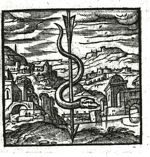
Maturandum: Alciatus, Emblemata (Padua 1621), col. 117 a, emblem 20
Maturandum: Alciatus, Emblemata (Leiden, 1591), emblem 20
Iconclass: 51F3 Priority, Pre-eminence 51M1 Fast Motion 51MM11 Slowness, Tardiness; 'Tardità' (Ripa) 52A24 Precaution 52B1 Thinking, Thought, Reflection; 'Pensiero' (Ripa) 54DD3 Start
Loci Communes: Consilium (Counsel, advice, Conseil); Prudentia (Prudence, Prudence)
II iii 71 Margites Margites
Margiten pro stupido dixit Lucianus in Hermotimo: Αλλ᾽ οἴει Μαργείτῃ τινὶ διαλέγεσθαι. id est, Sed existimas te cum Margite quopiam loqui. Hunc ita describit Homerus, citante Aristotele libro Moralium Nicomachion sexto: Τὸν δ᾽ οὔτ᾽ ἂρ σκαπτῆρα θεοὶ θέσαν, οὔδ᾽ ἀροτῆρα, Οὔτ᾽ ἄλλως τὶ σοφόν. id est, Hunc neque fossorem voluerunt numina diuûm Esse, nec agricolam, nec in ulla praeterea re Scitum aut egregium. Suidas docet, Margiten fuisse quempiam ob insignem stultitiam celebrem, qui non potuerit numerare supra quinque: sponsam ductam non ausus est attingere, veritus ne se apud matrem incusaret. Quum iam esset factus iuvenis, rogavit matrem, an ex eodem patre nata esset. Quanquam haec alii tribuunt Melitidi, alii Coroebo, de quibus suo dicetur loco. Satis apparet, vocem esse fictam à μὴ & ἔργον, quod ad nullam actionem esset utilis. Erat autem Margites titulus operis, quod à quibusdam tribuebatur Homero: id, ut videtur, in tercidit. Indicat haec interpres Aristophanis in Avibus. Convenit cum illo Hesiodio, Nulla in parte utilis, qui nec ipse sapit, nec aliis obtemperat: & Nullo in numero.
Margites is used for a stupid man by Lucian in his Hermotimus: 'But you think you are talking to a Margites.' He is described as follows by Homer, in a passage cited by Aristotle in book 6 of the Nicomachean Ethics: 'But him the gods made neither digger nor ploughman, nor gave him any other skill.' Suidas tells us that Margites was a person famous for his remarkable stupidity: he could not count above five, when he had married a wife he dare not touch her for fear she might complain of him to her mother, and when he was already grown up he asked his own mother whether her father was the same as his. Though some tell these tales of Melitides and others of Coroebus, of whom I shall speak in their proper places. It is clear enough that the name Margites is derive from me, not and ergon, work, because he was no good at anything. Dargites was the title of a work attributed by some to Homer; but this, it seems, has perished. This is made clear by the scholiast on the Birds of Aristophanes. This agrees with Hesiod's remarks about the man who 'neither thinks for himself nor listens to another, and is no use' and 'of no account.'
Facsimile: 
Iconclass: 51H4:52AA1 Plenitude❧Stupidity, Poverty of Intellect; 'Stupidità overo Stolidità' (Ripa) 98B(MARGITES) male persons from classical history (MARGITES)
Loci Communes: Multi - in stupidos (Many people - against the stupid, Beaucoup de gens - contre les sots)
II iii 72 Quod factum est, infectum fieri non potest What's done cannot be undone
Nihil hac sententia vulgatius, Quod factum est, infectum fieri non potest. Extat apud Terentium in Phormione. Aristoteles libro Moralium Eudemiorum quinto: τὸ δὲ γεγονὸς οὐκ ἐνδέχεται μὴ γενέσθαι. id est, Fieri non potest, ut quod factum est, sit infectum. Mox citat carmen ex Agathonis tragoedia, Μόνου γὰρ αὐτοῦ καὶ θεός στερίσκεται, αγέντα ποιεῖν, ὅσσ᾽ ἂν ᾖ πεπραγμένα. id est, Etenim illud unum ipsi negatum est & deo, ut Infecta reddat, facta quae fuerint semel. Usurpatur in Epistolis Ciceronis ad Atticum non semel versus ille Homericus, ex Iliados σ. τ. Αλλὰ τὰ μὲν προτετύχθαι ἐάσομεν, ἀχνύμενοί περ. id est, Ista molesta licet anteacta valere sinamus. Nec inscitum Phocylidis carmen: Μηδὲ παροιχομένοισι κακοῖς τρύχου τεὸν ἦτορ. Οὖκ ἔτι γὰρ δύναται τὸ τετυγμένον εἶναι ἄτυκτον. id est: Néve malis iam praeteritis animum excruciaris. Quod semel est factum, fieri infectum haud queat unquam. Eandem sententiam habet Pindarus Olympiorum hymno secundo, Τῶν δὲ πεπραγμένων ἐν δίκᾳ τε καὶ παρὰ δίκαν, ἀποιητον οὐδ᾽ ἂν χρόνος ὁ πάντων πατὴρ δύνατο θέμεν ἔργων τέλος. id est: Eorum quae facta sunt, sive iure sive praeter ius, nihil ut sit infectum, nec tempus quidem efficere possit opere perfecto.
Nothing is more hackneyed than the aphorism What's done cannot be undone. It is found in Terence in the Phormio. Aristotle in book 5 of the Eudemian Ethics: 'It is not possible that what is done should be undone.' And he then cites lines from a tragedy by Agathon: 'One thing alone is banned even for God, / To make undone that which has once been done.' Cicero in his Letters to Atticus uses more than once a line from Homer, Iliad 18 and 19: 'What's done is done, and we will let it be, / Though grieved at heart.' And there are some elegant lines of Phocylides: 'Grieve not thy heart for evils past and done, / For what is done can never be undone.' Pindar has the same aphorism in the second hymn of his Olympians: 'Of what is now accomplished, whether in right or wrong, even Time father of all things could not undo what is once done and finished.'
Facsimile:
Iconclass: 54D3 Completion 51FF5 End; 'Fine' (Ripa)
Loci Communes: Necessitas (Necessity, Nécessité)
II iii 73 Justitia in se virtutem complectitur omnem Justice comprises in itself all virtue
Εν δὲ δικαιοσύνῃ συλλήβδήν πᾶσ᾽ ἀρετ᾽ ἐστίν. id est, Iustitia in se virtutem complectitur omnem. Aristoteles quum aliàs, tum libro Moralium Nicomachiorum quinto, versum hunc ut proverbialem refert. Extat qutem in Elegiis Theognidis. Chaeremon bonorum omnium summam prudentiae tribuit. Cuius hic versiculus citatur à Graecis, Ο γὰρ φρονῶν εὖ, πάντα συλλαβὼν ἔχει. id est, Cuncta universim, qui sapit recte, obtinet. Et Socrates putavit omnes virtutes esse scientiam: id Aristoteles ita discutit, ut fateatur esse verum, nullam virtutem esse absque prudentia, neget tamen omnem virtutem esse prudentiam, quum sint habitus distincti. Sed Iustitia frequenter accipitur non pro specie, sed pro genere: quemadmodum & in sacris literis Iustus dicitur, qui caret omni vitio.
'Ἐν δὲ δικαιοσύνῃ συλλήβδήν πᾶσ᾽ ἀρετ᾽ ἐστίν, Justice comprises in itself all virtue. Aristotle records this line as proverbial in, among other places, book 5 of the Nicomachean Ethics. It is found in the elegies of Theognis. Chaeremon ascribes the sum of all good things to prudence; a line of his cited by the Greek authorities runs as follows: 'The wise man at one stroke has all he needs.' And Socrates thought that wisdom comprehended all virtues; Aristotle however, after discussion, admits the truth of the saying that there is no virtue without wisdom but denies that all virtue is wisdom, because they take different forms. But 'justice' is often used to denote the genus rather than the species, in the same way that Scripture calls 'just' the man who is free from all faults.
Facsimile:
Iconclass: 51A7 Perfection, Completeness; 'Perfettione', 'Operatione perfetta' (Ripa) 57A6 Virtuousness; 'Amor di Virtù', 'Attione virtuosa', 'Guida sicura de' veri honori', 'Virtù', 'Virtù insuperabile' (Ripa) 59C2 Justice; 'Forza alla giustitia sottoposta', 'Giustitia', 'Giustitia retta', 'Giustitia rigorosa', 'Impietà e violenza soggetta alla giustitia' (Ripa)
II iii 74 Mendacem memorem esse oportet A liar should have a good memory
Quintilianus Institutionum oratoriarum libro quarto, sententiam hanc proverbii vice citat: Mendacem memorem esse oportere. Item Apuleius in Apologia Magiae secunda: Saepe, inquit, audivi, non de nihilo dici: Mendacem memorem esse oportet. Divus Hieronymus, Oblitus veteris proverbii: Mendaces memores esse oportere. Satis liquet adagii sensus, nempe perdifficile esse, ut qui mentitur, semper sibi constet, nisi sit summa memoria. Est autem fictarum rerum memoria non paulo difficilior quam verarum. Proinde plerunque deprehenduntur hoe pacto mendaciorum architecti, dum obliti quae prius dixerint, diversa à superioribus loquuntur. Sic deprehenditur apud Terentium Davus, sic Psyches Apuleianae commentum à sororibus sentitur.
Quintilian in book 4 of his Principles of Oratory cites as proverbial this aphorism: A liar should have a good memory. Apuleius too in his second Defence against a charge of witchcraft: 'I have often heard it said, and much to the point, that a liar should have a good memory.' St Jerome: 'Forgetting the old proverb, that liars should have a good memory.' The meaning of the adage is clear enough, that it is very difficult for a liar to be always consistent, unless he has an extremely good memory; for it is much more difficult to remember falsehoods than the truth. And so this is how those who build a fabric of lies are usually caught out: they forget what they said before and produce a discrepant story. This is how Davus in Terence is detected, and thus Psyche's invention in Apuleius is detected by her sisters.
II iii 75 Malus cum malo colliquescit voluptate Bad man with bad man fused in mutual glee
Κακός κακῷ γὰρ συντέτηκεν ἡδονῇ. id est: Etenim improbo vir est voluptati improbus. Refertur ab Aristotele inter similitudinis adagia, lib. Moralium Eudemiorum septimo, Malus malo iucundus ob vitiotum commercium & societatem. Iuvenalis item, Magis inter molles concordia. Ab eodem in Magnis Moralibus adducitur ex Euripide. Aeschines adversus Timarchum citat ex Euripidis Phoenice eandem sententiam, Οστις δ᾽ ὁμιλῶν ἥδεται κακοῖς ἀνὴρ, Οὐ πώποτ᾽ ἠρώτησα, γινώσκων ὅτι Τοιοῦτός ἐστιν οῖστιν οἶσπερ ἕδεται ξυνών. id est, At cum malis quicunque gaudet vivere, Nunquam rogavi: novi eum, quod talis est, Cuius modi sunt, quis amat convivere.
Κακός κακῷ γὰρ συντέτηκεν ἡδονῇ, For a villain is a source of pleasure to a fellow-villain. Recorded by Aristotle among adages of resemblance in the seventh book of the Eudemian Ethics: 'Wicked men enjoy each others society because they share a common stake in evil.' Juvenal too: 'Great is the concord among catamites.' Aristotle also cites the line as from Euripides in the Magna Moralia. Aeschines Against Timarchus cites the same view from the Phoenix of Euripides: 'But whoever enjoys the society of wicked men, I never asked, knowing that he will be such a man as those are, in whose company he delights.'
Facsimile: 
Iconclass: 33A59 bad companions 54AA5 Badness 56F13 (Feeling of) Attraction
Loci Communes: Similitudinis et congruentiae (Similarity and congruence, Similitude et convenance)
II iii 76 Amicitia stabilium, felicitas temperantium Friendship is for the steadfast and happiness for those of moderate desires
Aristoteles libro Moralium Eudemiorum septimo, sententiam hanc velut è medio sumptam refert, Amicitiam esse stabilium, & felicitatem eorum qui sua sorte contenti sunt. Ορθῶς λέγεται ὅτι ἡ φιλία τῶν βεβαίων, ὥσπερ ἡ εὐδαιμονία τοῶν αὐτάρκων. Amicitia virtute, non pecuniis, aut forma concilianda est. Etenim si rebus caducis concilietur, caduca sit et ipsa necesse est. Nihil autem in rebus humanis stabile praeter unam virtutem, quae sola fortunae ludibriis obnoxia non est. Deinde felicitas hominis non est in facultatibus sita, quae cupiditatem animi non explent, sed iritant: verum in hoc, ut suam quisque fortunam boni consulat. Aristoteles libro Rhetoricorum secundo pro exemplo sententiae simplicis, ac dilucidae, si quis incipiat, ponit hunc versiculum, Οὐδεὶς ἐραστὴς ὅστις οὐκ ἀεὶ φιλεῖ. id est: Haud quisquam amator est, ni amarit iugiter. Huic astipulatur illud Senecae, Amicitia quae desinere potuit, nunquam vera fuit.
Aristotle in book 7 of the Eudemian Ethics records this aphorism as one in common use: 'It is rightly said that friendship is for the steadfast, just as happiness is for those contented with their lot.' Friendship should be founded on character, not on possessions or physical beauty, for if based on perishable things, it must of necessity itself be perishable. And in human affairs nothing is steadfast save only virtue, for virtue alone in not exposed to the vagaries of fortune. And then man's happiness is not to be found in possessions, which do not satisfy his desires but stimulate them, but in the contentment of each man with what he has.
Aristotle in book 2 of the Rhetoric, as an example of a sentence which is simple and on inspection perfectly clear, gives the line 'No lover he whose love can ever cease.' This is supported by that saying of Seneca: 'Friendship that could come to an end was never true friendship.'
II iii 77 Leonis catulum ne alas Rear not a lion's whelp
Aeschyli sententia proverbialis refertur apud Aristophanem in Ranis, Οὐ χρὴ λὲοντος σκύμνον ἐν πόλει τρέφειν, Μάλιστα δὲ λέοντα μη᾽ μ πόλει τρέφειν, Ην δ᾽ ἐκτραφῇ τις, τοῖς τρόποις ὑπηρετεῖν. id est, Catulum ne alas leonis in republica, Ac maxime ipsum ne leonem alas ibi: Quod si quis alitur, obsequendum moribus. Refert huc locum Valerius Maximus lib. vii, capite De sapienter dictis. Admonet aenigma, non esse fovendam potentiam, quae leges possit oprimere: quod si forte talis quispiam extiterit, non esse è Republica decertare cum illo, quem nequeas nisi magno Repub. malo devincere. Tyrannus aut ferendus est, aut non recipiendus.
A proverbial aphorism of Aeschylus is recorded by Aristophanes in the Frogs: Rear not a lion's whelp within the city. 'Tis best to rear no lion there at all; But those that do so must obey his whims. This passage is referred to by Valerius Maximus, book 7 in the chapter on 'Sayings of the wise'. The lesson of the adage is that one should not encourage any power which may prove able to overcome the laws; but that if such a power has come into existence, it is not to the state's advantage to struggle against a man whom you cannot overcome except at the cost of doing great damage to the state itself. A tyrant must either be endured, or not admitted.
Facsimile:

Aequari pavet alta minor: Camerarius, Symbolorum et Emblematum Centuria(e) (Nürnberg, 1590, 1595, 1596, 1604), emblem 76 uses the imagery of Tarquinius striking poppies to convey the warning not to harbour the deceitful child of a tyrant
Iconclass: 25F23(LION)(+21) beasts of prey, predatory animals: lion (+ young animal) 34C1 feeding wild animals
Loci Communes: Vis injustia (Unjust force, Force injuste)
II iii 78 Qui bene conjiciet, hunc vatem He who guesses right is the prophet
M. Tullius in opere De divinatione lib. ii. scribit, Graecum versiculum vulgo iactatum extare in hanc sententiam: Qui bene coniiciet, vatem hunc perhibeto optimum. Citat autem eum versiculum Plutarchus in libello De responsis Pythiae, ὁ μὲν εἰκαζων καλῶς, ὅν ἄριστον μάντιν ἀνηγέρευκεν ἡ παροιμΐα. id est, Bene coniectans, quem optimum vatem appellavit proverbium. Quanquam hic in Plutarcho locus mutilus erat & lacer: attamen colligi potest carmen huiusmodi fuisse, Μάντις γ᾽ ἄριστος, ὅστις εἰκάζει καλῶς. Atque ita citat ex Euripide in libro De defectis oraculis. Citat & M. Tullius libro ad Atticum vii. A te, inquit, exspecto futura, μάντις γ᾽ ἄριστος. Huc allusit Theocritus in Piscatoribus, si modo Theocriti sunt illa: οὗτος ἄριστος Εστιν ὀνειροκρίτας, ὁ διδάσκαλός ἐστι παρ᾽ ᾧ νοῦς. id est, Nemo Somnia coniectat melius, quàm mente magistra Qui regitur. Admonet adagium, futurorum praescientiam non è sortibus, aut auguriis petenda esse, sed à prudentia. Siquidem, qui prudentia sit praeditus, is ex praeteritorum, praesentiumque coniecturis facile prospiciet, quid sit eventurum. Proinde non iniuria scripsit Aristoteles libro Moralium Eudemiorum septimo, Φρονίμων καὶ σοφῶν ταχεῖαν εἰναι τὴν μαντικην, καὶ μόνων. id est, Prudentium atque sapientium hominum celerem esse divinationem, & horum tantum. Utinam hanc divinandi rationem amplecterentur principes, quorum hodie bona pars à prognostis & astrologis pendet, hominum genere, ut nunc sunt plerique, vano pariter ac seditioso, & Reipub. pestilente.
Cicero in book 2 of his work On Divination writes that there was a line in general circulation in Greek to the effect that 'he who guesses right should be reckoned the best prophet.' The line is cited by Plutarch in his essay 'On the Pythian Oracles': 'He who guesses well has been said by the proverb to be the best prophet,' though this passage in Plutarch was damaged and incomplete. All the same, one can infer that the verse went something like this: The best of seers is he that guesses well.' And in that form he cites it from Euripides in his essay 'On the Obsolescence of Oracles.' Cicero also quotes it in book 7 of his Letters to Atticus: 'From you I expect to learn what will happen; "the best of prophets," you know.' Theocritus alludes to it in the Fishermen (if that is really his work): 'He is the best interpreter of dreams whose teacher is his own commonsense.' The lesson of the adage is that foreknowledge of the future should be sought, not from the casting of lots or taking of omens, but from prudence. The man equipped with prudence will easily foresee by judging from the past and the present what is likely to happen. So it was with good reason that Aristotle wrote in the Eudemian Ethics, book 7: 'Prudent and wise men possess immediate foresight, and only they.' If only this method of foreseeing the future would commend itself to princes, of whom in our day a good number depend on soothsayers and astrologers, a class of men who, to judge by the majority of them nowadays, are not merely futile but subversive, and a pestilent influence in the community!
Facsimile: 
Iconclass: 43C59 puzzle, riddle, conundrum, enigma 43C717(+0) guessing games (children) (+ variant) 52E2 Prediction, Prophecy; 'Augurio', 'Divinatione', 'Profetia' (Ripa)
Loci Communes: Conjecturae (Conjectures, Conjectures); Prudentia (Prudence, Prudence)
II iii 79 Panus lacer Shreds and tatters
Hominem iam fastiditum, et reiectum, ῥακὸς πολυσχιδες appellant Graeci, id est, pannum undique lacerum. Sumpta metaphora aà veste longo usu detrita, atque ob id reiecta, cum nova fuerit in precio. Sic autem quidam amicis utuntur uti vestibus: dum usui sunt ac vigent, amplectuntur, curant, ostentant: simulatque vel aetate defecti sunt, vel alioquin utiles esse desierunt, negligunt ac reiiciunt. Lucianus, Αχρι δή σε τὸ τοῦ λόγου τοῦτο ῥάκος πολυσχιδὲς ἐργα σάμενος, ἐξέωσε, id est, Donec, ubi te iam iuxta id quod dici solet, pannum undique lacerum reddiderit, expulerit. Idem in eodem dialogo, nempe De Mercede servientibus, similitudinem adfert de novis calceis, qui tantisper in precio sunt, dum novi nitent: iidem, ubi luto sorduerunt, in angulum abiiciuntur aliquò, atque ibi nullo curante, situ, cimicibusque opplentur. Solon eos qui exercerentur ad Olympiaca certamina, primum dicebat esse sumptuosos, & ob id Reip. graves: ubi vicissent, ob fastum esse detrimento civitati: postremo quum senuissent, iam prorsus esse inutiles. Ad id exprimendum Laertius citat versiculum Euripidis, Τρίβονες ἐκλιπόντες οἴχονται κρόκας. id est, Filis solutis lacera pereunt pallia.
Anyone who has become an object of scorn and an outcast can be described in Greek as ῥακὸς πολυσχιδες, A thing of shreds and tatters. The image is taken from a garment worn out by long use and therefore discarded, though when new it was valued. Some men treat their friends like that, as they would old clothes: as long as they have the power to be of service, they are welcomed and looked after and made much of, but the moment they are too old or for any other reason cease to be of use, they are neglected and cast off. Lucian: 'Until, having reduced you, as the saying goes, to a thing of shreds and tatters, he threw you out.' And in the same dialogue, On Salaried Posts, he introduces a comparison with new shoes, which are valued so long as they are new and shiny, but when they are covered with mud they are thrown into some corner, where no one looks after them and they are filled with dirt and insects. Solon said of those who trained for the contests at Olympia that to begin with they were expensive, and therefore a burden on society; when they won a victory, their conceit made them a burden to their fellow-citizens; and finally, when they grew old, they served no useful purpose whatever. To convey this idea Laertius cites a line from Euripides: 'Cloaks that have lost their nap are thrown away.'
Facsimile:
Iconclass: 41D(+7) fashion, clothing (+ worn or torn clothes) 46A155 outcasts, pariahs
Loci Communes: Contemptus et vilitatis (Contempt and worthlessness, Mépris et bassesse)
II iii 80 Metum inanem metuisti You were afraid where no fear was
Αδεὲς δέδιας δέος, Inanem metuisti metum. Ubi quis formidat in re tuta. Vergilius, Omnia tuta timens. Inest autem in ipsa Graecanici dicti figura proverbiale quiddam propter ἀντίθεσιν. Velut in his quoque: Αδωρα δῶρα, δεσμὸς ἄδεσμος, παρθένος ἀπάρθενος, νύμφη ἄνυμφος, κῆπος ἄκηπος, atque id genus aliis, de quibus iam non semel admonuimus. Graeci dicunt μορμολύπτειν, nam μορμολύκειον Graecis persona est, larvae aut malo genio similis, qua pueros territant quidam. Basilius Athanasio, ᾖ κομιδῆ γᾂν παῖς εἴην, τὰ τοιαῦτα μορμολύκεια δεδοικὼς. id est, Sanè vehementer essem puer, si talibus terriculamentis expavescerem. Refertur adagium in collectaneis Plutarchi, si modo titulo est habenda fides.
Ἀδεὲς δέδιας δέος, You are afraid where there is nothing to fear. Used when a man is frightened who is in safety. Virgil: 'Afraid when all was safe.' Even the shape of the Greek phrase has a certain element of the proverbial about it, in the antithesis, of which further examples are Αδωρα δῶρα, Gifts that are no gifts, δεσμὸς ἄδεσμος, A bond that is no bond, παρθένος ἀπάρθενος, Maid that is no maid, νύμφη ἄνυμφος, Bride and no bride, κῆπος ἄκηπος, Garden that is no garden, and others of the kind, as I have already pointed out more than once. Greek has a word mormolyttein, to frighten, for mormolykeion is the Greek for a mask resembling a ghost or evil spirit, with which certain people terrify children. Basil in a letter to Athanasius: 'I should indeed be a child if I were frightened off by such bogies as these.' The adage is recorded in the collection made by Plutarch, if the title is to be trusted.
Facsimile:
Iconclass: 54BB2:56DD1 Unnecessity, Superfluity❧Fear, Dread; 'Paura', 'Timidità o Timore', 'Timore' (Ripa)
Collectanea (1500): 262
Loci Communes: Inanis metus (Groundless fear, Peur vaine)
II iii 81 Sycophanta A sycophant
Συκοφάντου, id est, Sycophantae cognomen, vulgo probri loco tribuebatur. Aristophanes in Pluto, Ως σοβαρὸς ὦ δάματερ εἰσελήλυθεν, Ο συκοφάντης. id est, Vultu ut severo ingressus est ô dii boni Hic sycophanta. Convicium proverbiale in calumniatores, & quamvis pusilla de causa litem moventes. Inde natum arbitrantur, quod olim apud Atticos fici essent in precio, multarenturque ii, qui eas furto tollerent. Hos qui observabant, aut deferebant, Sycophantae vocari coepti,ludibrii causa. Quos eosdem φιλεγκλήμονας, συκοβίους, συκουροὺς, συκολόγους, φιλοσύκους, συκώδεις, καὶ συκόπαιδας vocabant. id est, ut sententiam magis quam verba reddam: De ficis calumniantes, ficis viventes, ficorum custodes, ficos numerantes, ficorum studiosos, ficosos, ficis puerorum instar gaudentes. Plutarchus in commentario De curiositate ostendit, hoc cognominis hinc natum, quod cum lege cautum esset, ne quis Athenis ficos efferret, quidam observatos nonnullos, qui furtim exportabant, detulerunt. Hinc populari ioco sycophantae vocati, παρὰ τὸ σῦκα φαίνεσθαι. id est, quod ficos proderent. Huius rei meminit & in vita Solonis. Festus Pompeius ostendit apud Athenienses poenam capitis constitutam iis, qui ficos furtollerent. Idem affirmat Athenaeus lib. Dipnosophistarum iii. addens eum locum ubi primum ficus reperta fuit, ἱερὰν συκῆν, id est, sacram ficum vocatam ab Atticis. Est autem sycophantarum genus, quod non solum defert dicta factaque hominum, verumetiam hominum somnia. cuiusmodi delatoribus aurem patulam praebuit Constantius, ut prodit Ammianus lib. xiiii. Praecipue vero indulsit Mercurio cuidam, qui vulgo ob id Mercurius solenniorum est dictus, quòd se specie familiaritatis conviviis admisceret, & si quis noctunum visum effutisset, depravata narratione ad principem deferebat: adeo ut vix quisque apud ignotos auderet fateri se dormisse, ac docti nonnulli sortem suam deplorarent, quod apud Atlanteos nati non essent, ubi negant videri somnia, quod fatetur & Stephanus in dictione Atlantes. Observatores somniorum Graeci vocant ὀνειροσκόπους. interpretes ὀνειροπόλους sive ὀνειροκρίτας, qui terrentur ὀνειροπληκτους.
The nickname συκοφάντης, Sycophant, was commonly conferred as a term of abuse. Aristophanes in the Plutus: 'With what a swaggering rush this sycophant, / Ye gods, invades the scene!' It was a proverbial expression of disgust for those who brought false accusations, and dragged people to court on the most trifling charges. Its origin was supposed to be that at one time the price of figs was high in Attica, and those who stole them were fined; and anyone who detected or reported a theft was called a sycophant, a fig-detector, as a term of contempt. There were other names, too, for men fond of bringing accusations, of which it is easier to give the sense than a literal translation: fig-scandalmongers, living on figs, fig-watchers, counters of figs, fig-lovers, fig-minded, as fond of figs as a child. Plutarch in his essay 'On Curiosity' shows that this nickname has the following origin: when the export of figs from Athens was prohibited by law, certain people kept watch on those who despatched them secretly, and reported them to the authorities. Hence the popular sense of humour gave them the name of 'sycophants,' from syka, figs and phainesthai, to show up, because they showed up this fig-trade. He also mentions this in his life of Solon. Festus Pompeius declares that in Athens capital punishment was the penalty for those who stole figs. The same statement is made by Athenaeus in book 3 of the Doctors at Dinner, and he adds that the place where the fig-tree was first discovered was called by the Athenians Holy Fig.
There is a special kind of sycophant, who reports not only what people say and do, but even their dreams; and this type of informer was very readily listened to by Constantius, as Ammianus tells us in book 15. He paid particular attention to a creature called Mercury, who as a result was commonly called 'the messenger of dreams,' who under the pretext of friendship used to worm his way into a dinner-party, and if anyone blurted out some dream he had had, this would be retailed in a distorted form to the emperor. This reached such a pitch that hardly anyone dared confess that he had fallen asleep, unless he knew everyone present, and several well-informed men lamented their misfortune in not having been born among the Atlanteans, who are said never to dream; as Stephanus too says under the word Atlantes. Greek has a word oneiroskopoi for those who observe dreams, oneiropoloi or oneirokritai for those who interpret them, and oneiroplêktoi for those who are frightened by them.
II iii 82 Multis parasangis praecurrere To be many parasangs ahead
Πολλοῖς παρασάγγαις ὑπερδραμεῖν. id est, Multis parasangis praecurrere, dicitur, qui longo intervallo praecedit, multisque partibus superior est. Est apud Athenaeum libro Dipnosophistarum tertio, Πολλοῖς παρασάγγαις ὑπερδραμόντες τὸν Σικελιώτην διονύσιον. id est, Multis parasangis superantes Siculum illum Dionysium. Id quo magis ad animires transferetur, hoc erit venustius. Parasangam autem Persae triginta stadiorum spacium vocant, ut locis aliquot indicat Herodotus: qua voce usus est Lucianus in Icarómenippo: quem dialogum nos olim Latinitate donavimus.
Πολλοῖς παρασάγγαις υπερδραμεῖν, To be many parasangs ahead, is used of a man who is a long way in front of the rest and is in many respects superior. In Athenaeus, in book 3 of the Doctors at Dinner, is 'Outstripping by many parasangs the famous Dionysius of Sicily.' The more this is applied to the things of the mind, the more it will gain in interest. A parasang is the Persian name for a distance of thirty stades, as Herodotus indicates in several passages; and the word is used by Lucian in his Icaromenippus, a dialogue I myself once translated into Latin.
Facsimile: 
Iconclass: 51BB3 Imparity, Inequality, Difference 51E2 Superiority 51II4 Farness
Loci Communes: Excellentia, inaequalitas (Excellence, inequality, Excellence, inégalité)
II iii 83 Putre salsamentum amat origanum Rotting salt fish is fond of marjoram
Clearchus apud Athenaeum libro tertio, Σαπρὸς τάριχος τὴν ὀριγανον φιλεῖ. id est: Putrida salsamenta amant origanum. Origanum autem herba est acri succo, qualis& thymbra. Quin & hodie frugi patres familias carnibus iam obolentibus addunt acetum origani loco, ne sentiatur putris odor. Apte dicetur de re per se parum honesta, aut iucunda, atque ob id exoticis condimentis & honestamentis egente. Qui mos etiam hodie sordidis, ut piscibus supputribus, ne quid offendat dentes putor, acida admisceant. Veritas per se placet, honesta per se decent. Falsa fucis, turpia phaleris indigent. hoc est, putre salsamentum origano.
Clearchus, quoted by Athenaeus in book 3, has Σαπρὸς τάριχος τὴν ὀριγανον φιλεῖ , Rotting salt fish is fond of marjoram. Marjoram is a culinary herb with a sharp juice something like savory. Even in our own day, frugal housekeepers add vinegar in place of marjoram to meat that is going off, to conceal the bad smell. It will be aptly applied to anything which left to itself is dishonourable or disagreeable, and therefore needs to be dressed up and made acceptable with some external appetiser. Mean people still have a custom of adding something that tastes acid to fish that is going bad, so that those who eat it may not be disgusted by the flavour of decay. Truth is welcome for its own sake; honourable dealing is accepted in its own right. Falsehood must be painted over and baseness must be smartly dressed; rotting salt fish is fond of marjoram.
Facsimile:
Iconclass: 25G4(MARJORAM) plants and herbs: marjoram 31A332 disagreeable, repellent smell 31A343 salt (taste) 41C68 fish; still life of fishes 52DD1 Secrecy, Latency, Concealment; 'Secretezza' (Ripa)
Loci Communes: Munus aptum aut ineptum (A gift fitting or unfitting, Un présent convenable ou inconvenant)
II iii 84 Voracior purpura Greedier than purple
Athenaeus lib. tertio Dipnosophistarum ex Apollodoro huiusmodi quoddam refert proverbium, λιχνότερα τᾶν πορφυρᾶν, id est, Edaciora purpuris. idque ductum existimat, vel à tincta purpura, quae omnia, quibus admota fuerit velut ad sese rapit, suoque colore res vicinas inficit additque lucem: vel ab animante ipso, quod, quicquid nactum fuerit, retinet ac devorat. Utrunque propemodum licet è Plinii verbis colligere. Siquidem libro nono, capite trigesimosexto, de colore scribit in hunc modum, Sed purpurae florem illum tingendis expetitum vestibus, in mediis habent faucibus. liquoris hic est minimi in candida vena. Unde preciosus bibitur nigrantis rosae colore sublucens, reliquum corpus sterile. Ac paulo post, Hinc, aut, ut alii legunt, Huic, fasces securesque Romanae viam faciunt. idemque pro maiestate in pueritia est: distinguit ab equite curiam. Diis advocatur placandis, omnemque vestem illuminat: in triumphali miscetur auto. Quapropter excusata & purpurae sit insania. De voracitate mox haec subiicit. Lingua purpurae longitudine digitali, qua pascitur devorando reliqua conchilia. tanta duritia aculeo est. Conveniet in in edaces: aut in eos, qui omnia in suum compendium vertunt. Fortasse durius, sed non ineleganter accommodabitur ad reges δημοβόρους, aut advocatos, qui purpurati omnia convertunt in fiscum suum, & quocunque se conferunt, abradunt aliquid. Tale quiddam cogitasse videntur poetae, qui Midam finxerunt contactu corporis omnia vertentem in aurum.
Athenaeus in book 3 of the Doctors at Dinner cites from Apollodorus a proverb of the form λιχνότερα τᾶν πορφυρᾶν, Greedier than purple, and suggests two possible sources: one is the purple dye, which seizes, as it were, upon everything with which it comes in contact, spreading its colour over all nearby objects and giving them added brilliance, while the other is the creature itself, which seizes and devours everything within its reach. Either can be inferred pretty well from Pliny's words, who in book 9 chapter 36 writes of the colour as follows: 'But the quality of purple so much sought after for the dyeing of fabrics they have in the middle of their throats, where a small quantity of the liquid is found in a white vein. From this the valuable substance is extracted which shows the dark purplish-red colour, and the rest of the body is unproductive.' And a little further on: 'Hence' (or, as some read, 'for this') 'the rods and axes of Rome clear the way. It is a symbol of the reverence due to children, and sets the senate apart from the knights; it is called upon to secure the favour of heaven, adds brightness to every garment, and blends with gold in a triumphal procession. So that a mad passion even for purple could be excused.' Of its greed he later has this to say: The tongue of the purple-fish is as long as a man's finger, and provides it with food by piercing other shellfish; such is the hardness of its point.' This will be suitable for greedy men, or those who turn everything to their own advantage. It will be a little more harsh, but not without point, to adapt it to kings who 'feed on their people,' or to advocates who are dressed in purple and sweep everything into their own pockets, making something out of it whichever way they turn. Something of this sort seems to have been in the minds of the poets who invented the story that Midas turned all that he touched into gold.
Facsimile:
Iconclass: 22C4(PURPLE) colours, pigments, and paints: purple 55CC11 Greed, Covetousness, Cupidity; 'Cupidità' (Ripa)
Loci Communes: Rapacitas et avaritia (Rapacity and greed, Rapacité et avarice)
II iii 85 Tarichus assus est simul atque viderit ignem Salt fish is baked as soon as it has seen the fire
Τάριχος ὀπτὸς εὐθὺς ἂν ἴδῃ τὸ πῦρ. id est, Tarichus assus mox ut ignem viderit. Athenaeus libro tertio, proverbii loco citat. Est autem Tarichus piscis salsus, de quo nonnulla in proverbio, Si non assunt carnes. Opinor idem est cum illi, ἀφύα ἐς τὸ πῦρ. Quod ante iam exposuimus in proverbio, Aphya in ignem. Eodem in loco refert & hunc versum ceu proverbialem, Οὐκ ἂν πάθοι τάριχος, ὧν περ ἄξιος. id est, Tarichus haud laturus est, queis dignus est.
Τάριχος ὀπτὸς εὐθὺς ἂν ἴδῃ τὸ πῦρ, Salt fish is baked as soon as it has seen the fire. Athenaeus in book 3 cites this as a proverb. The tarichos of which he speaks is a kind of salt fish, of which something is said under the proverb Those who have no meat. I suppose it to be the same as the whitebait, which I have already explained in the proverb Whitebait on the fire. In the same passage he also records this line as being proverbial: Salt fish could not endure what it deserves.
Facsimile:
Iconclass: 21C fire (one of the four elements) 41C26 preparation of food 41C68(WHITEBAIT)(+7) fish (WHITEBAIT) (+ cooked foodstuffs) 51M11 Swiftness, Speed; 'Agilità', 'Celerità', 'Velocità' (Ripa)
Loci Communes: Proclivitas (contra) (Propensity (against), Penchant (contre))
II iii 86 Non sunt amici, amici qui degunt procul Friends dwelling far away are no true friends
Τηλοῦ φίλοι ναίοντες οὐκ εἰσὶν φίλοι. id est, Haud est amicus, amicus absit si procul. Hanc paroemiam recenset Athenaeus lib. Dipnosoph. quarto. eamque omnium μισανθρωποτάτην. id est, inhumanissimam vocat, videlicet quod absentium amicorum memoriam obliterare videatur. Est omnino ex amicis, qui adsunt, uberior amicitiae fructus, propter officia mutua consuetudinemque quottidianam. Praeterea vulgo fit, ut simul atque è conspe ctu necessariorum seiuncti sumus, nescio quomodo obrepat oblivio quaedam familiarium, ut id iam omnibus in ore sit, Qui semotus sit ab oculis, eundem ab animo quoque semotum esse. Aristoteles lib. Moralium Nicomachiorum viii. fatetur locorum seiunctionem non dirimere quidem amicitiam, sed tamen officia interrumpere. Et, quoniam vulgus amicitias utilitate probat, sublatis officiis, velut alumnis amicitiae, emoritur & amicitia. Proinde Hesiodus, vicinos potissimum ad convivium vocandos esse monet, Καλεῖν, inquiens, ὅς τις σέθεν ἐγγύθι ναίει. Fatentur & Hebraeorum proverbia, potius esse, amicum habere vicinum, quam fatrem qui procul absit. Terentianus item Chremes in propinqua amicitiae parte ponit vicinitatem. Nec abludit hinc Propertius libro tertio, Quantum oculis, animo tam procul ibit amor. Quanquam non apparet, quamobrem Athenaeo videatur adagium hoc usque adeo ab humanitate alienum. Quandoquidem, ut opinor, non tam docet quid nobis faciundum sit, quam admonet, quid vulgo factitetur. Quotum autem quenque reperias amicum tam certum, qui si absis, non sui dissimilis esse incipiat? Proinde proverbio hoc veluti Delphico gladio utrolibet pacto utaris licebit: ut intelligas, aut non esse fidendum amicis, qui longo locorum intervallo seiuncti sunt, aut non esse colendos amicos longinque dissitos, unde non queas multum sentire commoditatis, sed hos potius quibus praesens praesentibus fruare.
Τηλοῦ φίλοι ναίοντες οὐκ εἰσὶν φίλοι, Friends who dwell far away are no true friends. This proverb is passed in review by Athenaeus in his Doctors at Dinner, book 4, and he calls it of all proverbs 'the most inhuman,' because it seems to wipe out the memory of absent friends. It is quite true that the returns from friendship are far greater when the friends are near at hand, for there is a mutual to and fro of friendly actions and daily intercourse. Besides which, it is a common experience that once we are prevented from actually seeing those with whom we have this relationship, it somehow happens that some degree of forgetfulness of our friends creeps over us, so that there is a saying now on everyone's lips: Out of sight, out of mind. Aristotle in book 8 of the Nicomachean Ethics admits that physical separation does not dissolve friendship, but it does interrupt the services friendship can render. And since 'the crowd assesses friendship by its use,' when the mutual services fostered by friendship are done away the friendship also dies. And so Hesiod tells us that we should for choice invite our neighbours to dinner: 'Invite' he says 'him who dwells near you.' Jewish proverbs too admit that a friend who is near is better than a brother far off. Chremes in Terence likewise thinks that to be a neighbour is 'near the bone' in friendship. Propertius in book 3 concurs: 'Love out of sight will soon be out of mind.' Though I for my part do not see why Athenaeus should think this adage so far removed from ordinary human feelings. In my view it is not telling us how we ought to react so much as what normally happens. How few friends can you find so reliable that separation will not make them begin to change from what they were? And so you will be able to use this proverb in either of two ways, like a Delphian sword. You could understand it to mean that one should not trust friends from whom one is separated by a great distance, or that one ought not to make friends of those who live a long way off, from whom little benefit is to be expected, but if possible of those whose friendship one can enjoy face to face.
II iii 87 Persaepe sacra haud sacrificata devorat Offerings unblest full oft devours
Αθυτα δ᾽ ἱερὰ πολλάκις κατεσθίει. id est, Persaepe sacra haud imolata devorat. Senarius est apud Athenaeum lib. iiii. Simonidis in mulierem quandam male moratam et avidam in conviviis. Concinne dicetur in eos qui ventris impulsu statim ad devorandas epulas irrumpunt, non expectatis caeremoniis & elegantiolis illis, quibus civiles utuntur inituri convivium, puta, ut imprecationibus quibusdam piis consecretur cibus: deinde de accubitus ordine urbana quaedam adhibeatur cunctatio: praeterea ne statim appositis escis ungues iniiciamus. Neque intempestiviter dicetur in eos qui non expectata iuris ratione, haereditatem invadunt, & aliena per vim occupant. Ductu à victimis, quas fas non erat contingere, nisi mysteriis peractis. Et Plato vult etiam in conviviis praelibari diis: & mensam rem sacram existimavit antiquitas, teste Plutarcho. unde fit, ut his etiam temporibus nefas putent, ἀνίπτοις χερσὶν, id est, Illotis manibus accedere. Licet huiusmodi caeremonias neglexerit Christus prae iis quae unice ad rem nostram pertinent.
Ἄθυτα δ᾽ ἱερὰ πολλάκις κατεσθίει, And offerings unblest full oft devours. An iambic line, cited by Athenaeus in book 4 from Simonides, which refers to some ill-mannered woman who showed her greed at dinner-parties. It will be a neat fit for those whose stomachs drive them to fall at once upon their dinner and devour it, without waiting for those ceremonies, those minor civilities which are practised by civilized people at the beginning of the meal: the pious prayers, for example, with which they ask a blessing on the food, and then some degree of polite hesitation is shown in choosing a place to sit, nor do we sink our talons into the dish the moment it is placed before us. Nor will it be out of place to use this of heirs who fasten upon an inheritance without waiting for the legal formalities, and firmly seize what is not theirs. It derives from the victims at a sacrifice, which it was not permitted to touch until the liturgy had been completed. Plato too thinks there should be a preliminary libation to the gods, even at a drinking-party, and the Ancients thought there was something sacred about a dinner-table, as Plutarch testifies. Hence it comes that even in our own day people think it wrong to come to table with 'unwashed hands. Though Christ neglected ceremonies of this class in comparison with those which alone are of importance to our well-being.
Facsimile: 
Iconclass: 11N35 Gluttony, Intemperance, 'Gula'; 'Gola', 'Ingordigia', 'Ingordigia overo Avidità', 'Voracità' (Ripa) ~ personification of one of the Seven Deadly Sins 41C19(+0) insatiable hunger or thirst (+ variant) 41C6 foodstuffs; still life of foodstuffs 51M1 Fast Motion 54AA43 Intemperance, Immoderation 54AA44 Impatience 55CC11 Greed, Covetousness, Cupidity; 'Cupidità' (Ripa)
Loci Communes: Intemperantia, libido (Intemperance, lust, Intempérance, désir); Rapacitas et avaritia (Rapacity and greed, Rapacité et avarice)
II iii 88 Chius dominum emit The man from Chios has bought his master
Χῖος δεσπότην ὠνήσατο, id est, Chius dominum mercatus est. In eos quadrabit, qui sibiipsi malum accersunt. Usus est hoc adagio Eupolis in Amicis, Athenaeo teste, lib. Dipnosophistarum vi. Natum ait inde, quod cum Chii primi servis mercenariis instituissent uti, postea subacti à Mithridate Cappadoce, propriis servis vincti sunt traditi, ut in Colchorum regionem deportarentur: idque illis aliquando eventurum oraculum praedixerat. Huius historiae autores citat Nicolaum Peripatericum, & Posidonium Stoicum. Nec Stephanus tacuit, hanc gentem primum usam famulis θεράπουσι, quemadmodumn Lacedaemonii utebantur, quos vocabant εἴλωτας, id est, captivos: Sicyonii quos dicebant κορυνηφόρους, id est, clavigeros, à clava: Itali Pelasgis: Cretes quos appellant δμωίτας. Est autem χίος clarissima Ionum insula, habens eiusdem nominis civitatem, Possessivum circumflexe scribitut χῖος.
Χῖος δεσπότην ὠνήσατο, The man from Chios has purchased his master, will fit those who bring evil on their own heads. This adage was used by Eupolis in his Friends, on the evidence of Athenaeus in book 6 of the Doctors at Dinner. It arose, he says, as follows: the people of Chios were the first to employ servants to whom they paid wages, and later, when they were conquered by Mithridates, king of Cappadocia, they were handed over in fetters to their own servants to be deported to the neighbourhood of Colchis, an oracle having already foretold that this would one day happen to them. As authorities for this story he cites Nicolaus the Peripatetic and the Stoic Poseidonius. Nor does Stephanus fail to tell us that they were the first people to employ servants in the way in which the Spartans used to employ what they called helots, which means captives, and the Sicyonians what they called corynêphoroi, club-bearers from corynê, a club, while the Italians used Pelasgians and the Cretans the so-called dmoitês. Chios is a very well-known Ionian island, with a city of the same name; it is spelled Chios with an acute accent, while the possessive adjective, Chiote, has a circumflex.
Facsimile:
Iconclass: 29A1 'mundus inversus', the reversed world, the topsy-turvy world, 'le monde bestourné' 46A182 master ~ enslaved person 46A1831 liberation (of an enslaved person) 46B411 buying 61D(CHIOS) geographical names of countries, regions, mountains, rivers, etc. (CHIOS) (CHIOS)
Loci Communes: Malum accersitum aut retortum (Evil brought upon oneself or turned back, Mal attiré ou retourné)
II iii 89 Anima et vita Life and soul
Ζωὴ και ψυχὴ, id est, Anima & vita, dere supra modum suavi. Proverbium natum in cubilibus, atque inde deductum in communem sermonem. Videtur autem peculiare fuisse mulieribus. Iuvenalis, Ζωὴ καὶ ψυχὴ, modo sub lodice relictus Uteris in turba. Item Martialis epigrammatum libro decimo in Laeliam, Ζωὴ καὶ ψυχὴ lascivum congeris usque, Pro pudor Hersiliae civis & Aegeriae. Huc respexit Iuvenalis, quum ait, Concumbunt Graece. Hesiodus pecuniam animam mortalibus esse dicit, Χρήματα γὰρ ψυχὴ πέλεται δειλοῖσι βροτοὶσι. id est, Pecunia enim anima est miseris mortalibus. Et Aristoteles pecunias velut alteram hominis animam esse scripsit. Nihilautem est vita neque iucundius, neque carius.
Ζωὴ και ψυχὴ, Life and soul, used of something sweet beyond measure - a proverb born in the bedchamber, and taken from thence into everyday speech. It seems to have been the special property of the female sex. Juvenal: 'My life, My soul, till now heard only between the sheets, you use in public places.' Martial in book 10 of his Epigrams, addressing Laelia: 'You talk like a tart, always My life, My soul, / And breathe the air Hersilia and Egeria breathed.' It was of this Juvenal was thinking when he wrote They fornicate in Greek.' Hesiod says that money is the soul of mortal men: 'Coin is the soul of that poor creature, man.' And Aristotle wrote that money is like man's second soul. After all, nothing is more enjoyed, or more valued, than life.
Facsimile: 
Iconclass: 31G the soul 58B2 Life
Loci Communes: Lautitiae (Sumptuousness, luxuries, Somptuosités)
II iii 90 Qui amant ipsi sibi somnia fingunt Lovers weave their own dreams
Vergilius in Pharmaceutria, Credimus, an qui amant, ipsi sibi somnia fingunt. Servius proverbialiter admonet dictum à poeta. Nam quod quisque sperat, facile credit. Et tarde quae credita laedunt, credimus, ut ait Ovidius. Metus autem & spes, ut eleganter & vere scripsit Lucianus in Pseudomante, divinationem & auguria repererunt. Qui impense cupiunt, suis votis undecunque blandiuntur, & quidvis in omen optati eventus trahunt. Rursum, qui misere metuunt, quavis ex re solatium formidinis aucupantur. Non usquequaque discripat ab hoc Terentianum illud, Mihi non fit verisimile. atqui ipsis commentum placet. Non videtur alienum ab hac forma Theocriticum illud: Πᾶσα κύων ἄρτως μαντεύεται, ἰχθύα κᾐγὼν. id est, Somnia cuncta canum panes, ego somnio piscem. Qui suis votis blandiuntur, ii Graecis dicuntur ἑαυτοῖς ὀνειροπολεῖν, id est sibi ipsis sua interpretari somnia, quia omnia rapiunt in alimentum spei suae.
Virgil in The Sorceress: 'Can I believe it? Or do lovers shape their own dreams?' Servius points out that the poet is using the proverbial formula; for all men are ready to believe what they hope is true. And 'How slowly we believe what, once believed, / We know will hurt!' as Ovid has it. It was fear and hope, as Lucian puts it so neatly and with so much truth in his False Prophet, that invented divination and augury. Those who desire something passionately take every chance to flatter their own wishes, and seize on anything in reach as a foreshowing of the result for which they long. Conversely, those in a pitiful state of apprehension seek for some consolation in their fear from any and every source. There is not much difference between this and that remark in Terence: 'It doesn't make sense to me. It's their scheme; that's how they like it.' There seems little discrepancy between this and that line in Theocritus: 'Every bitch dreams of bread; I dream of fish.' Those who flatter their own wishes are said in Greek 'to make up their own dreams,' because they seize hold of anything as food for their hopes.
Facsimile:
Iconclass: 31B3 dream 33C2 lovers; courting, flirting 52A44 Fantasy, Caprice; 'Capriccio' (Ripa) 52A6 Truth; 'Verità' (Ripa) 56D1 Hope; 'Speranza', 'Speranza delle fatiche' (Ripa) 56DD1 Fear, Dread; 'Paura', 'Timidità o Timore', 'Timore' (Ripa)
Loci Communes: Amor (Love, Amour); Spes pertinax (Persistent hope, Espoir tenace)
II iii 91 Polypi Polyps
Polypi proverbio dicebantur olim vel stupidi stolidique, vel rapaces, & uncis unguibus homines. Siquidem ob eam causam polypo stultitiam tribuunt, quod ad manum captantis ultro movetur, nec aliter capitur, nisi quod non cedat, autore Athenaeo. Adscribitur autem rapacitas tenacitasque, quod quicquid brachiorum flagellis nactus fuerit, suctu trahat ac retineat. Plautus in Aulularia: Ego istos novi polypos, qui ubi quicquid attigerint, tenent. Nihil autem vetabit quo minus polypos appellemus eos, qui semet in omnem habitum vertunt, omnibus assentantes. Quos eleganter notat Phocylides, Μηδ᾽ ἕτερον κεύθῃς κραδίῃ νόον, ἄλλ᾽ ἀγορεύων. Μηδ᾽ ὡς πετροφυὴς πολύπους κατὰ χῶραν ἀμείβου. id est, Pectore néve aliud celes, altuaque loquare, Proque loco variere, petris uti polypus haerens. Ion apud Athenaeum libro septimo, Στυγῶ μεταλλακτῆρα πουλύπουν χροὸς. id est, Odi colore subinde vario polypum. Huc pertinet, quod admonet Plautus, ut qui sapit, bonus sit bonis, malis malus. Hoc nomine laudat Pindarus in Nemeis hymno quarto quendam, Μαλθακὰ μὲν φρόνων ἐσλοῖς, τραχὺς δὲ παλυγκότοῖς ἔφεδρος. id est, Mollis erga bonos, asper vero insidiator erga molestos adversarios. Non abludit hinc quod ibidem habetur hymno tertio, Εν παισί νέοισι παῖς, ἐν δ᾽ ἀνδράσιν ἀνὴρ, τριτον ἐν παλαιοτέροισι μέρος, ἕκαστον οἷον ἔχομεν βρότεον ἔθνος. id est, Inter pueros teneros puer, inter viros autem vir. Tertia inter seniores pars, quodque ut habemus mortale genus. Laudat Prindarus hominem omnium moribus & aetatibus sese attemperantem. Dodem titulo laudat quempiam in Pythiis hymno octavo, Τὺ γὰρ τὸ μαλθακόν ἔρξαι τε καὶ παθεῖν ὁμῶς ἐπίστασαι, καιρῷ σὺν ἀτρεκεῖ. id est, Tu enim & humaniter agere nosti, & affectum sumere tempori congruentem. Rursum eiusdem operis hymno quarto, Κεῖνος γὰρ ἐν παισὶ νέος, ἐν δὲ βουλαῖς πρέσβυς. id est, Nam ille inter pueros iuvenis, in consiliis vero senex. Idem eiusdem operis hymno secundo, φίλον εἴη φιλεῖν, ποτὶ δὲ ἐχθρὸν ἅτε ἐχθρὸς ἑὼν λύκοιο δίκαν ὑποθεύσομαι. id est, Amicum contingat amare, Caeterum adversus inimicum tanquam inimicus, lupi more incurram, sive insidiabor.
The polyp or octopus provided a proverbial name in old days, either for stupid blockheads or for grasping men with crooked talons. The reason why the polyp is thought stupid is its habit of moving of its own accord towards the hand of the man who is trying to catch it, and it is never caught except through its reluctance to retreat; so Athenaeus tells us. And it is said to be greedy and tenacious because, whatever it gets within the scope of its whip-like arms, it draws in by suction and holds it fast. Plautus in the Aulularia: 'I know those polyps of yours, which never let go what they have once touched.'
There will be nothing to prevent us from applying the name 'polyps' to those who turn themselves into any and every shape in their wish to stand well with everyone. They are elegantly criticized by Phocylides: 'Nor hide one opinion in your heart while you offer another, / Nor change to suit your setting like the polyp on its rock.' Ion, quoted by Athenaeus in book 7: 'I hate the polyp, always changing colour.' Here belongs that piece of advice in Plautus, that we should do good to those who are good to us, and hurt those who hurt us. On this account Pindar praises someone in the fourth hymn of the Nemeans: 'Gentle towards the good, but a stubborn adversary lying in wait for the forward.' And we find something like this in the third hymn of the same book: 'A child among children, among grown men a man, and a third part among the aged, as we, the human race, possess each in turn.' Pindar is praising the man who adapts himself to the characters and ages of all other men. On the same grounds he praises a man in the eighth hymn of the Pythians: 'For thou knowest that gentleness alike in giving and receiving that suits the moment,' and again in the fourth of the same: 'For he is a young man among boys, and in council an elder,' and in the second: 'Be it mine to love my friends; but against an enemy like a wolf, foe against foe, I will deliver my attack in secret.'
Facsimile:
Iconclass: 25F72(POLYP) molluscs: polyp 52AA1 Stupidity, Poverty of Intellect; 'Stupidità overo Stolidità' (Ripa) 53A21 Constancy, Tenacity; 'Costanza', 'Tenacità' (Ripa) 55CC11 Greed, Covetousness, Cupidity; 'Cupidità' (Ripa)
Collectanea (1500): 788
Loci Communes: Rapacitas et avaritia (Rapacity and greed, Rapacité et avarice)
II iii 92 Nullus malus magnus piscis No bad big fish
Οὐδεὶς κακὸς μέγας ἰχθύς. id est, Nullus malus magnus piscis. Aenigma proverbiale, dici solitum in homines praegrandi quidem corpore, caeterum ingenio nullo. Clearchus in commentario de proverbiis apud Athenaeum lib. viii. hinc ortum scripsit. Stratonicus citharoedus, cum Porpin vidisset Rhodium citharoedum ingenti corporis mole, verum arte non perinde magnum, percunctantibus quibusdam, quis nam is esset, hunc ad modum respondit, οὐδεὶς, κακός, μέγας, ἰχθὺς. an cipiti dicto significans illum, nullum, id est, nullius esse precii, malum & improbum, magnum corpore, denique piscem, quia mutus esset & infacundus, ac male canorus. Theophrastus De risu, fatetur dictum quidem esse à Stratonico, sed non in Porpin, verum in Simylam histrionem, μέγας, οὐδεὶς, σαπρὸς, ἰχθὺς. id est, Nullus, magnus, putris, piscis. Sed elegantius quod retulit Clearchus, propter amphibologiam non invenustam. Aristoteles in eodem mox loco apud Athenaeum super hoc adagio fabulam huiusmodi refert, in Repub. Naxiorum. Apud Naxios, locupletes quidem plerique urbem habitabant, caeteri vero sparsi per vicos agebant. In quodam itaque vico, cui nomen Lestadae, Telegoras habitabat praedives ac nobilis, multaeque apud plebem autoritatis, cui cum alii complures honores habebantur, tum praecipuè muneribus quotidianis civium honorabatur, adeo, ut qui vendebant, si quis minoris liceretur quam vellent, dicere soliti sint, se malle dono dare Telegorae, quàm tanti vendere. Quidam igitur adolescentes cum piscem ingentem licitarentur, ac piscator ex more diceret: se malle Telegorae dono mittere, quam tanti vendere, moleste ferentes eadem audire toties, simulata benevolentia ad Telegoram adduxerunt emptum piscem. Quem cum ille libenter accepisset, tum ipsum adorti sunt, tum filias iam nubiles constuprarunt. Quod factum, indigne ferentes Naxii, arreptis armis invadere conati sunt adoscentes, tantaque hinc orta seditio, ut Lygdamis huius tumultus praefectus, post arrepta tyrannide patriam oppresserit. Hactenus Aristoteles. At haec non video quid ad proverbium faciant, nisi duo faciamus proverbia, quorum hoc posterius sic efferatur. Citius Telegorae donarim, quàm tanti vendam. Nam Athenaeus indicat Aristotelem de proverbio disseruisse. Videtur esse senarius, sed inverso dictionum ordine perturbatus. Constabit si legas: οὐδεὶς μέγας ἐχθὺς κακὸς.
Οὐδεὶς κακὸς μέγας ἰχθύς, No bad big fish. A riddle circulating as a proverb, which was applied to men with big bodies but no brains. Clearchus in his work on proverbs, cited by Athenaeus book 8, gives it the following origin.
Stratonius the lyre-player once caught sight of Porpis of Rhodes, another player, who was physically immense but not a very great performer; and when some people asked him who it was, he replied in these words, "No bad big fish," which he used with a double meaning, to convey that he was a nobody, a rascal, a hulking brute, and a wet fish in the sense of being dumb, inarticulate and quite unmusical. Theophrastus in his treatise on The Ridiculous concurs that Stratonicus was the speaker, but says the target was Simylas the actor and not Porpis, and gives the wording as 'A big nothing no-good rotten fish.' But the form given by Clearchus is neater, because of the ambiguity, which has some charm. A little further on in the same passage of Athenaeus, Aristotle records the following incident to illustrate this adage; it is in his Constitution of Naxos. In Naxos most of the well-to-do lived in the city, and the remainder were scattered in villages. In one of these villages, called Lestada, lived a man called Telegoras, who was very rich, and well-born, and had great influence among the common people. This man enjoyed many privileges, and in particular he was honoured every day with gifts from his fellow-citizens, to such an extent that those who had anything to sell, and were offered less for it than they wanted, were accustomed to say that they would rather give it to Telegoras than sell if for such a poor price. Thus it happened that some young men tried to buy an enormous fish, and the fisherman said in the usual way that he would rather give it to Telegoras than accept such an offer. Tired of hearing the same reply so often, they bought the fish and with a show of spurious generosity took it to Telegoras themselves. Though it had been gratefully accepted, they then attacked the man himself, and raped his daughters, who were of marriageable age. This action roused such indignation that the Naxians seized their arms and set about attacking the young men, and such a civil war ensued that Lygdamis, the leader of the insurrection, was later able to seize supreme power and oppress his native land. Such is Aristotle's narrative. But I do not see what this had to do with the proverb, unless we suppose that there are two proverbs, of which the second took the form I would rather give it to Telegoras than sell it for so little. For Athenaeus indicates that Aristotle discussed the proverb. It looks like an iambic line which has been corrupted by a change in the order of words. This will be mended if we put kakos at the end of the line.
Facsimile: 
Iconclass: 25F6 fishes 51G1 Largeness, Magnitude 52AA1 Stupidity, Poverty of Intellect; 'Stupidità overo Stolidità' (Ripa) 54AA5 Badness
Loci Communes: Praelongi (Very long, protracted things, Choses très longues)
II iii 93 E squilla non nascitur rosa No rose blooms on a squill
Proverbiali figura dixit Theognis: Οὔτε γὰρ ἐκ σκίλλης ῥόδα φύεται, οὔθ᾽ ὑάκινθος Οὐ δέ ποκ᾽ ἐκ δούλης τέκνον ἐλευθέριον. id est, Non etenim è squilla rosa nascitur, aut hyacinthus, Sed neque ab ancilla filius ingenuus. Admonet adagium, è probis parentibus nasci liberos probos, ex improbis improbos. Simili forma dixit Horatius in Odis: Neque imbellem feroces Progenerant aquilae columbam. Venustius erit, si ad indocti doctoris indoctum discipulum referatur, ad improbi nutricii improbum alumnum. Pertinet adagium ad illam classem, κακοῦ κόρακος κακόν ὠὸν. id est, Mali corvi malum ovum. Et, Οὐκ ἂν γένοιτο χρηστὸς ἐκ κακοῦ πατρός. id est, Prolem probam haud pater progignet improbus. Est autem Scilla herbae genus non dissimilis aloe, de qua multa Plinius in diversis locis.
There is a proverbial air about that couplet in Theognis: 'No rose, no hyacinths on squills appear; / No servant-girl a freeborn son will bear.' The lesson of the adage is that honourable parents produce honourable children, and the reverse. Horace uses a similar expression in the Odes: 'Fierce eagles do not hatch the unwarlike dove.' This will have more point if applied to the ignorant pupil of an ignorant teacher or the discreditable product of a disreputable upbringing. The adage belongs to the same class as An ill crow lays an ill egg and An evil father ne'er begat good sons. Squill, by the way, is a kind of plant not unlike the aloe, on which Pliny in various passages has much to say.
Facsimile:
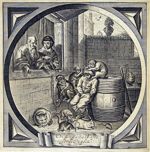
Chi di gatta nasce, sorci piglia: Cats, Spiegel (The Hague, 1632), emblem 21 uses the imagery of cats chasing mice and monkey delousing a boy to convey the concept of heredity and social background; the emblem's comment also quotes the adage
Iconclass: 25G4(SQUILL) plants and herbs (SQUILL) 25G41(ROSE) flowers: rose 42G1 family lineage, pedigree, genealogical tree or table
II iii 94 Non omnia possumus omnes We cannot all do everything
Non omnia possumus omnes, apud Virgilium in Pharmaceutria. Proverbialis sententia, qua vix tritiorem aliam reperies. Sumpta videtur ex Homero, apud quem Iliados Ν. Polydamas sic alloquitur Hectorem, Αλλ᾽ ὄπως ἅμα πάντα δυνήσεαι αὐτὸς ἑλέσθαι. Αλλῳ μὲν γὰρ ἔδωκε θεὸς πολεμήϊα ἔργα, Αλλῳ δ᾽ ὀρχιστὺν , ἑτέρῳ κιθαρὴν καὶ ἀοιδὴν, Αλλῳ δ᾽ ἐν στήθεσσι τίθει νόον εὐρύοπα ζεὺς Εσθλὸν, τοῦ δέ τε πολλοὶ ἐπαυρίσκοντ᾽ ἄνθρωποι.. id est, Haudquaquam poteris sortirier omnia solus. Nanque aliis divi bello pollere dederunt, Huic saltandi artem, voce huic citharaque canendi. Rursum alii insevit sagax in pectore magnus Iuppiter ingenium, at multis est utilis ille. Item Odysseae θ. Οὕτως οὐ πάντεσσι θεοὶ χαρίεντα διδοῦσι Ανδράσιν, οὔτε φυὴν, οὔτ᾽ ἂρ φρένας, οὔτ᾽ ἀγερητὴν Αλλος μὲν γάρτ᾽ εἶδος ἀκιδνότερος πέλει ἀνὴρ, Αλλὰ θεὸς μορφὴν ἔπεσιν στέφει. id est, Non ita coelestes tributt sua dona quibus vis. Seu formam, sive ingenium, vires ve loquendi. Est etenim informis species cui contigit, atqui Linguae dote deus pensat dispendia formae. Euripides in Rheso, Αλλ᾽ οὐ γὰρ ὡυτὸς πάντ᾽ ἐπιστασθαι βροτῶν Πέφυκεν, ἄλλῳ δ᾽ ἄλλο πρόσκειται γέρας.. id est, Ut cuncta norit, nemini mortalium Datum est, at alia dos adest alii viro. Eodem pertinet quod scribit Theognis: Πάυροις άνθρώπων ἀρετὴ καὶ κάλλος ὀπηδεῖ, Ολβιος ὅς τούτων ἀμφοτέρων ἔλαχεν. id est, Sunt pauci, quibus iisdem & virtus suppetit & res Felix cui simul haec sunt data sorte deûm. Titus Livius libro 22. Non omnia eidem dii dederunt. Vincere scis Hannibal, victoria uti nescis. Videtur Livius retulisse illud ex Iliados ψ. Οὐδ᾽ ἄρα πῶς ἦν Εν πάντεσσ᾽ έργοισι δαήμονα φῶτα γενέσθαι. id est, Haud illud contigit unquam, ut Omnibus in factis callens appareat idem. Huc pertinet & Pindaricum illud ex Nemeis, Τέχναι δ᾽ ἑτέρων ἕτεραι. id est, Artes aliis aliae. Interpres ostendit, illud Atticis proverbii loco dictum fuisse, ἄλλαι δ᾽ ἄλλων ἐπιτεχνήσιες. id est, Aliae aliorum inventiones. Item alibi, Φυᾷ δ᾽ ἕκαστος διαφέρομεν, βιοτὰν λαχόντες, ὁ μὲντὰν, τὰν δὲ ἄλλοι. Τυχεῖν δ᾽ ἕν᾽ ἀδύνατον εὐδαιμονίαν ἅπασαν.. id est, Natura differimus, vitam sortientes, hic hanc, illam alii. Porrò fieri non potest, ut omnis felicitas uni contingat. Idem Olympiorum hymno primo, ἐπ᾽ ἄλλοισι δ᾽ ἄλλοι μεγάλοι. id est, In aliis alii magni sunt. Idem expressius Encomio octavo: ἄλλα δ᾽ ἔπ᾽ ἄλλον ἔβαν ἀγαθῶν. πολλαὶ δ᾽ ὁδοὶ σὺν θεοῖς εὐπραγίας. id est, Alia ad alium venerunt bona, sed diis faventibus multae sunt viae felicitatis. Rursus eiusdem tituli hymno nono, ἐντὶ γὰρ ἄλλαι ὁδῶν ὁδοὶ περαίτεραι, μΐα δ᾽ ἅπαντας ἄμμε θρέψει μελέτα. id est, Sunt enim aliae viae aliis efficaciores, sed non omnes nos alet unum studium.
This is from Virgil, from his Sorceress: a proverbial aphorism, and as trite a one as you will easily find. The source seems to be Homer, for in Iliad 13 Polydamas addresses Hector as follows: 'You will never be able to think of all things for yourself at the same time; for one man God has endowed with the arts of war, to another he has given dancing, to another skill in song and playing on the lyre; but he is yet another in whose breast great Jupiter has set sound sense, and many are the men that profit from it.' Again in Odyssey 8: 'So true it is that the gods do not give their delightful gifts to all men, whether beauty of form or sound sense or the power of speech. For one man may be nothing at all to look upon, but God compensates his lack of beauty with the gift of words.' Euripides in the Rhesus: 'But no mortal man is born to know everything; different men have different gifts.' To the same effect are these words in Theognis: 'Few are the men who have both virtue and good looks; happy indeed is he who has a share of both.' Livy in book 22: The gods have not given all gifts to the same man. You know how to win a battle, Hannibal; you do not know how to use your winnings.' It looks as though Livy had recalled this from Iliad 23: 'Never did it come to pass, that the same man should acquire skill in every activity.' Here too belongs that phrase of Pindar's in the Nemeans: 'Different men possess different skills,' where the scholiast shows that there was a proverb current in Athens: 'Different men make different inventions.' Pindar again in another place: 'Each of us differs by nature, as we are allotted our way of life; one man gets this, others get that, and that one man should get a share in all kinds of felicity is impossible.' Again, in the first hymn of the Olympians: 'Some men are great in one thing and some in others,' and more clearly in the eighth: 'Different blessings fall to the lot of different men; but by God's mercy many are the roads to success.' Again, in the ninth hymn of the same collection: 'Some roads lead further than others, and one single path of life will not support us all.'
Facsimile: 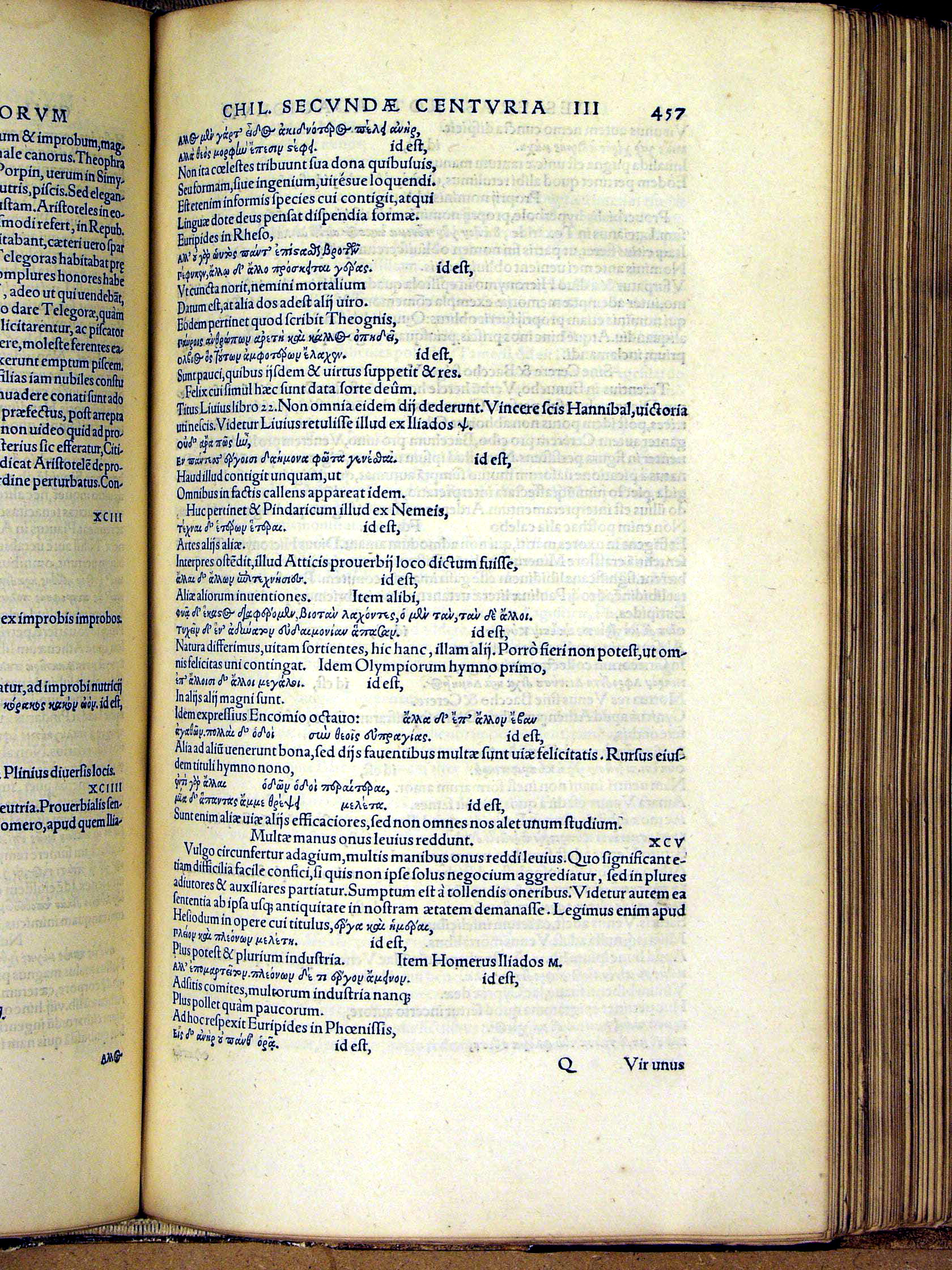
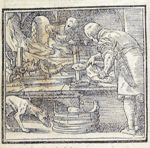
Non omnia possumus omnes: Reusner, Aureolorum Emblematum (Strasbourg, 1587), emblem 16
Non omnia possumus omnes: Zincgreff, Emblematum Ethico-politicorum (Heidelberg, 1619), emblem 80
Iconclass: 51BB4 Multiformity, Variety 51H1 Totality, the Whole 51H4 Plenitude 52BB42 Impossibility
Collectanea (1500): 466
Loci Communes: Alibi diminutum alibi redditum (Diminished in one place, restored in another, Diminué ici, rendu là); Excellentia, inaequalitas (Excellence, inequality, Excellence, inégalité)
II iii 95 Multae manus onus levius reddunt Many hands make light work
Vulgo circunfertur adagium, multis manibus onus reddi levius. Quo significant etiam difficilia facile confici, si quis non ipse solus negocium aggrediatur, sed in plures adiutores et auxiliares partiatur. Sumptum est à tollendis oneribus. Videtur autem ea sententia ab ipsa usque antiquitate in nostram aetatem demanasse. Legimus enim apud Hesiodum in opere cui titulus, ἔργα καὶ ἡμέραι, Πλείον καὶ πλεόνων μελέτη. id est, Plus potest & plurium industriae. Item Homerus Iliados Μ. Αλλ᾽ ἐπομαρτεῖτον. πλεόνων δέ τι ἔργον ἄμεινον. id est, Adsitis comites, multorum industria nanque Plus pollet quàm paucorum. Ad hoc respexit Euripides in Phoenissis, Εἶς δ᾽ ἀνὴρ οὐ πάνθ᾽ ὁρᾷ. id est, Vir unus autem nemo cuncta dispicit. Rursum in Heraclidis, Μιᾶς γὰρ χειρὸς ἀσθενὴς μάχη. id est, Invalida pugna est unicae tantum manus. Eodem pertinet, quod alibi retulimus, εἴς ἀνὴρ οὐδεὶς ἀνὴρ. id est, Unus vir, nullus vir.
There is an adage in common circulation to the effect that many hands make light work, by which they mean that even difficult tasks can be accomplished easily, if a man does not attempt the business single-handed but divides it among several helpers and assistants. It is taken from the lifting of burdens. This maxim seems to have come down to us all the way from Antiquity; for we read in Hesiod, in the book which is called Works and Days: 'More men pay more heed to the task,' and again in Homer, Iliad book 12: 'Lend me your aid; more hands do better work.' Euripides has this in mind in the Phoenissae: 'One man does not see all,' and again in the Heraclidae: The single-handed man is weak in fight.' The same point is made by one I have recorded elsewhere, 'One man, no man.'
Facsimile: 
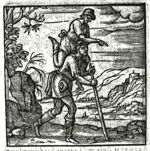
Mutuum auxilium: Alciatus, Emblemata (Padua, 1621), col. 682 a, emblem 161
Mutuum auxilium: Alciatus, Emblemata (Leiden, 1591), emblem 160 (161)
Iconclass: 51H3:31A2245 Multitude❧hand 54A6 Helpfulness
Loci Communes: Cum auxilio ; citra auxilium (With help; without help, Avec aide ; sans aide)
II iii 96 Proprii nominis oblivisci To forget one's own name
Proverbialis hyperbole, proprii nominis oblivisci, in hominem supra modum obliviosum. Lucianus in Toxaride, θᾶττον γοῦν τὄυνομα ἕκαστος αὐτῶν ἐπιλάθοιτο τοῦ πατρὸς. id est, Itaque citius fieret, ut patris sui nomen oblivisceretur quisque. Ovidius, Nominis ante mei venient oblivia nobis. Usurpatur & à divo Hieronymo in epistola quadam. Plinius libro historiae mundi septimo, inter ademptae memoriae exempla commemorat & Corvinum Messalam oratorem, qui nominis etiam proprii fuerit oblitus: Quum id defunctis etiam agnosci creditum sit aliquandiu. Atque hinc mos priscis, priusquam rogo imponerent cadavera, nomen proprium inclamandi.
The proverbial exaggeration To forget one's own name is used of a man with an exceptionally bad memory. Lucian in the Toxaris: 'Each one of them would forget his own father's name first.' Ovid: 'Sooner let me my proper name forget.' It is used by St Jerome too in one of his letters. Pliny in book 7 of his History of the World among examples of loss of memory recalls the case of the orator Messalla Corvinus, who even forgot his own name. Though even the dead were believed to be able for a limited time to recognize their names; and hence came the ancient practice of calling the deceased by name before bodies were put on the pyre.
II iii 97 Sine Cerere et Baccho friget Venus Without Ceres and Bacchus Venus grows cold
Terentius in Eunucho, Verbum hercle hoc verum est, sine Cerere & Libero friget Venus. Dicuntur haec sub persona Chremetis, adolescentis rustici, qui sobrius oderat meretrices, postidem potus non abhorret. Cibus enim & potus irritamenta sunt libidinis. Eleganter autem Cererem pro cibo, Bacchum pro vino, Venerem pro libidine dixit, continenter in figura persistens. Nam illud ipsum verbum, friget, metaphoram habet, quam Donatus à picatione vasorum mutuo sumptam autumat, quod frigida pix non adhaereat. Frigida profecto nimiumque affectata interpretatio, quod quidem tanti viri pace dixerim, si modo illius est interpretamentum. Ardent amantes, & frigent quae languent. Horatius, Non enim posthac alta calebo Foemina. Et frigent in uxores mariti, qui non admodum amant. Divus Hieronymus Terentianam sententiam crassiore Minerva explicans, Distento ventre (ait) distenduntur ea quae ventri adhaerent. significans libidinem esse gastrimargiae comitem. Peculiariter autem vinum iritat libidinem, ideoque Paulinae literae vetant ne vino inebriemur, quod in eo sita sit libido. Euripides, Οἴνου δὲ μὴ παρόντος οὐκ ἔστιν Κύπρις. id est, Absente vino, nulla tunc adest Venus. In Graecorum collectaneis ita lego, Νεκρὸν Αφροδίτη Διονύσου δίχα καὶ Δήμητρος. id est, Mortua res Venus sine Baccho & Cerere. Cynicus apud Athenaeum libro Dipnosophistarum sexto, refert eandem sententiam his ferè verbis: Εν τῇ κενῇ γὰρ γαστρὶ τῶν καλῶν ἔρως Οὐκ ἔστι. πεινῶσιν γὰρ ἡ Κύπρις πικρά. id est, Nam ventri inai non inest formarum amor. Amara Venus est dira quos premit fames. Ac mox subiicit carmen Euripidis, quod ille mutuatus sit ab Achaeo Satyrico, Εν πλυσμονοῦντι Κύπρις, ἐν πεινῶντι δ᾽ οὐ. id est, Saturo Venus adest, famelico nequaquam adest. Athenaeus lib. Dipnosophist. 1. distichon adducit eandem complectens sententiam, Εν πλησμονῇ γὰρ Κύπρις, ἐν δε τοῖς κακῶς Πράττουσιν οὐκ ἔνεστιν Αφρωδίτη βροτοῖς. id est, Saturis Venus adest, caaterum infelicibus Miserisque nulla adest Venus mortalibus. Apud hunc ipsum lib. 10. Aristophanes vinum, lac Veneris appellat, quod alat libidinem, Ηδύς τε πίνειν οἶνος, ἀφροδίτης γάλα. id est, Vinum bibenti suave, lac Cypria deae. Huc pertinet epigramma, quod fertur incerto autore, Ερωτα παύει λιμὸς, εἰ δὲ μὴ, χρόνος. Εἂν δὲ μηδὲ ταῦτα τὴν φλόγα σβεσῃ, Θεραπεῖα σοὶ τὸ λοιπὸν ἠρτήσθω βρόχος. id est, Fames amoren sedat: id si sit minus, Tempus medetur: sin nec ista extinguere Flammam queant, tum restat ut funem pares. Idem intelligi voluit Apuleius, cum Veneri ebriam coenam affingit, cum interim esuriat Psyche. Quanquam Aristoteles indicat, immodicam vini potionem inutiles reddere ad coitum. Nam dilui vim seminalem, atque ob eam causam Alexandrum Magnum in Venerem pa rum fuisse strentuum, quod esset vinosus. Idque Theophrastum dixisse narrat Athenaeus.
Terence in the Eunuchus: 'How true indeed is that old saying, that without Ceres and Bacchus Venus grows cold.' This is put into the mouth of Chremes, a countrified young man, who hated courtesans when sober, but was by no means against them later when he had some drink inside him; for food and drink are the things that stimulate desire. The way he puts Ceres for food, Bacchus for drink, and Venus for sexual desire, maintaining the same form of expression throughout, is very neat. And the verb itself friget, grows cold, enshrines a metaphor, which Donatus says is derived from the practice of coating wine-jars with pitch, because pitch when it is cold does not stick. What a frigid and over-ingenious explanation! - with all respect to such a good scholar, if the interpretation is really his. Lovers are full of fire, and things which have lost their interest are said to cool off. Horace: 'Never again shall I be fired / By any other female form,' and husbands who are not especially fond of their wives are said to 'grow cool' towards them. St Jerome explains Terence's aphorism on rather cruder lines: 'When the stomach is distended, the parts of the body adjacent to it are distended too; we indicate that lust is greed's boon-companion.' Wine in particular arouses sexual desire, and that is why the Pauline Epistles forbid us to be 'drunk with wine, wherein is excess.' Euripides: 'When wine's not present, Venus isn't there.' In the Greek collections I find 'Without Bacchus and Ceres, Venus is a corpse.' A Cynic, quoted by Athenaeus in book 6 of the Doctors at Dinner, records the same aphorism in the following words: 'In an empty stomach there's no room for love of beauty, for the Cyprian goddess is bitter to hungry men.' And he then adds a line from Euripides, said to have been borrowed by him from Achaeus the satyric poet: 'The Cyprian? Yes, when full; when empty, no.' Athenaeus in book i of the Doctors at Dinner cites a couple of lines containing the same thought: 'Cypris loves plenty, but the unfortunate / Find Venus hard of hearing to all their prayers.' In book 10 of the same work, Aristophanes calls wine 'Venus' milk,' because it encourages desire: 'It's a sweet wine to drink, it's Venus' milk.' Here belongs an epigram of uncertain authorship:
Hunger's the cure for love; or, if that fails,
Then time. If none of these will quench your flame,
One sole resource remains, the knotted rope.
Apuleius wished to convey the same message when he represented Venus as under the influence of wine while Psyche was hungry. Though Aristotle suggests that drinking wine to excess makes men unfit for coition; wine, he says dilutes the strength of the semen, and that is why Alexander the Great was sexually so ineffective: he drank too much wine. Athenaeus tells us that this was also in Theophrastus.
Facsimile: 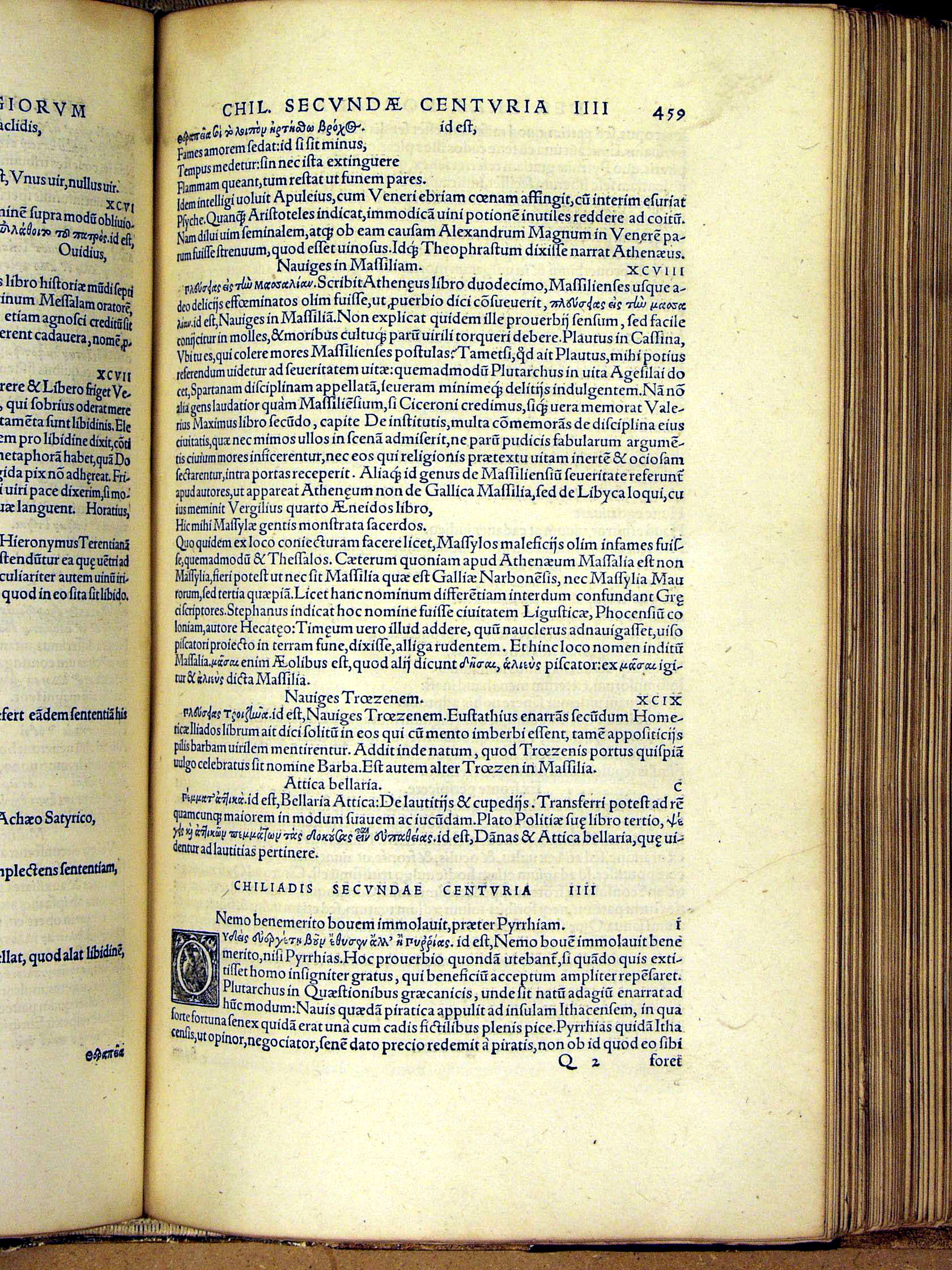
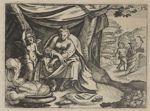
Sine Cerebro et Baccho friget Venus: Meyer, Homo Microcosmus (Frankfurt, 1670), emblem 15
Sine Cerere et Baccho: Peacham, Minerva Britanna (London, 1612), emblem 174
Iconclass: 92C455 'sine Cerere et Baccho friget Venus'
Loci Communes: Luxus et mollicies (Luxury and softness, Luxe et mollesse)
II iii 98 Naviges in Massiliam You should take ship for Massilia
Πλεύσειας εἰς τὴν Μασσαλίαν. Scribit Athenaeus libro duodecimo, Massilienses usque adeo deliciis effoeminatos olim fuisse, ut proverbio dici consueverit, πλεύσειας εἰς τὴν μασσαλίαν. id est, Naviges in Massiliam. Non explicat quidem ille proverbii sensum, sed facile coniicitur in molles, & moribus cultuque parum virili torqueri debere. Plautus in Cassina, Ubi tu es, qui colere mores Massilienses postulas? Tametsi, quod ait Plautus, mihi potius referendum videtur ad severitatem vitae: quemadmodum Plutarchus in vita Agesilai docet, Spartanam disciplinam appellatam, severam minimeque delitiis indulgentem. Nam non alia gens laudatior quàm Massiliensium, si Ciceroni credimus, sique vera memorat Valerius Maximus libro secundo, capite De institutis, multa commemorans de disciplina eius civitatis, quae nec mimos ullos in scenam admiserit, ne parum pudicis fabularum argumentis civium mores inficerentur, nec eos qui religionis praetextu vitam inertem & otiosam sectarentur, intra portas receperit. Aliaque id genus de Massiliensium severitate referuntur apud autores, ut appareat Athenaeum non de Gallica Massilia, sed de Lybica loqui, cuius meminit Vergilius quarto Aeneidos libro, Hic mihi Massylae gentis monstrata sacerdos. Quo quidem ex loco coniecturam facere licet, Massylos maleficiis olim infames fuisse, quemadmodum & Thessalos. Caeterum quoniam apud Athenaeum Massalia est non Massylia, fieri potest ut nec sit Massilia quae est Galliae Narbonensis, nec Massylia Maurorum, sed tertia quaepiam. Licet hanc nominum differentiam interdum confundant Graeci scriptores. Stephanus indicat hoc nomine fuisse civitatem Ligusticae, Phocensium coloniam, autore Hecataeo: Timaeum vero illud addere, cum nauclerus adnavigasset, viso piscatori proiecto in terram fune, dixisse, alliga rudentem. Et hinc loco nomen inditum Massalia. μᾶσαι enim Aeolibus est, quod alii dicunt δῆσαι, ἁλιεὺς piscator: ex μᾶσαι igitur & ἀλιεύς dicta Massilia.
Πλεύσειας εἰς τὴν Μασσαλίαν, You should take ship for Massilia. Athenaeus writes in book 12 that the people of Massilia were in old days so luxurious and effeminate, there was a common saying to this effect: You should sail to Massilia. He does not explain what the proverb means, but we can easily guess that it ought to be directed against effeminate people whose character and dress are unmanly. Plautus in the Casina: 'Where are you, you who expect to behave like a Massilian?'
Though what Plautus says would be better referred, it seems to me, to a puritan style of life, in the same way that, as Plutarch tells us in his life of Agesilaus, a severe way of life that left no scope at all for luxuries was called 'a Spartan regime.' For no city had a higher reputation than Massilia, if we can believe Cicero, and if Valerius Maximus in book 2, in the chapter on different manners of life, is speaking the truth when he gives a long account of their way of life in that city, where no mimes were allowed on the stage for fear they might undermine the moral standards of the citizens by the improper subjects represented, and none were admitted within the gates who followed an idle and useless way of life under the pretext of religion. Similar details of the strictness of the people of Massilia are found in ancient authors; so that clearly Athenaeus was thinking, not of the Massilia in Gaul but of Massilia in Libya, mentioned by Virgil in the fourth book of the Aeneid: 'Here have they told me of a sorceress, / Massylian by race.' From this passage it is permissible to suppose that the Massylians once had a great reputation for witchcraft, like the Thessalians. But since in Athenaeus it is Massalia, not Massylia, it may be that this is neither the Massilia in Narbonese Gaul nor the Massylia in Morocco, but some third place. Though these different names are sometimes confused in Greek authors. Stephanus states that there was a city of this name in Liguria, a colony of Phocaea, on the authority of Hecataeus; Timaeus adds, he says, that when some ship's captain had made land there, he caught sight of a fisherman, threw a rope to the shore, and told him to make fast, and that this is how the place got the name Massalia. For masai in Aeolic Greek is the same as the ordinary dêsai, and means to make fast, and halieus means fisherman, and the two put together give Massilia.
Facsimile:
Iconclass: 31A719 womanish man, molly-coddle, milksop 46C21(+621) ships (in general) (+ getting in; mounting; embarkation) 61D(MASSILIA) geographical names of countries, regions, mountains, rivers, etc. (MASSILIA) (MASSILIA)
Loci Communes: Luxus et mollicies (Luxury and softness, Luxe et mollesse)
II iii 99 Naviges in Troezenem Take ship for Troezen
Πλεύσειας Τροιζῆνα. id est, Naviges Troezenem. Eustathius enarrans secundum Homericae Iliados librum ait dici solitum in eos qui cum mento imberbi essent, tamen appositiciis pilis barbam virilem mentirentur. Addit inde natum, quod Troezenis portus quispiam vulgo celebratus sit nomine Barba. Est autem alter Troezen in Massilia.
Πλεύσειας Τροιζῆνα, Take ship for Troezen. Eustathius in his commentary on the second book of Homer's Iliad tells us that this was said to those who, though they had no beard on the chin, wore false hair to look like a beard. It arose, he adds, from the existence of some harbour at Troezen which was commonly called Barba, the Beard. There is however a second Troezen in Massilia.
Facsimile:
Iconclass: 31A5349 false beard or moustache 46C21(+621) ships (in general) (+ getting in; mounting; embarkation) 51AA4:31A534 Nothingness, Absence❧beard 61D(MASSILIA) geographical names of countries, regions, mountains, rivers, etc. (MASSILIA) (MASSILIA) 61D(TROEZEN) geographical names of countries, regions, mountains, rivers, etc. (TROEZEN) (TROEZEN)
Loci Communes: Forma, deformitas (Beauty, deformity, Beauté, difformité)
II iii 100 Attica bellaria Attic dainties
Πέμματ᾽ ἀττικὰ. id est, Bellaria Attica: De lautitiis & cupediis. Transferri potest ad rem quamcunque maiorem in modum suavem ac iucundam. Plato Politiae suae libro tertio, ψέγεις καὶ ἀττικῶν πεμμάτων τὰς δοκούσας εἶναι εὐπαθείας. id est, Damnas & Attica bellaria, quae videntur ad lautitias pertinere.
Πέμματ᾽ ἀττικὰ, Attic dainties, of delicacies and titbits. Can be transferred to anything which is beyond measure sweet and delightful. Plato in book 3 of his Republic: 'And among Attic dainties you disapprove of those that seem to you to smack of luxury.'
Facsimile:
Iconclass: 31A342 sweet (taste) 55B2 Luxury, Luxuriousness 61D(ATTICA) geographical names of countries, regions, mountains, rivers, etc. (ATTICA) (ATTICA)
Loci Communes: Lautitiae (Sumptuousness, luxuries, Somptuosités)