III i 1 Herculei labores The labours of Hercules
Ηράκλειοι πόνοι, id est, Herculei labores, bifariam accipiuntur, partim plurimi atque ingentes, quique vires desiderent Herculanas, quem admodum usurpavit Catullus, Sed te, inquit, quaerere iam Herculis labos sit. Item Propertius, Deinde ubi pertuleris, quos dicit fama labores Herculis. Ac rursum alibi, Non labor Alcidae. M. Tullius li. De finibus 2. At quum de omnibus gentibus optime mererere, cum opem indigentibus salutemque ferres, vel Herculis perpeti erumnas (Sic enim maiores nostri labores non fugiendos tristissimo verbo erumnas etiam in deo nominaverunt:) exigerem ex te &c. Partim Herculei labores dicuntur, qui sunt eiusmodi, ut aliis quidem maximas adferant commoditates, caeterum autori suo nihil fermè fructus adducunt, praeter aliquantulum famae, plurimum invidiae> Idque ita fato quodam accidisse putant, quod ἐν τετράδι γεννηθὴναι, id est, quarta natus luna credatur, sicut alio dictum est loco. Homerus poetico more, causam in Aten deam & Iunonem reiicit, quae infesta Herculi, tanquam ex pellice nato, periculis omnibus illum obiecerit. Celebrantur igitur, atque etiam enumerantur à poeris Herculani labores, quorum omnium longe difficilimus ac maximus hydra Lernaea, malum pertinax, ac propemodum inexpugnabile illi, qui iam omnia devicerat. Cuius symbolo veteres invidiam exprimere voluisse, satis indicat Horatius in Epistolis, cum ait, Diram qui contudit hydram Notaque fatali portenta labore subegit, Comperit invidiam supremo fine domandam. Consuevit enim haec teterrima pestis pulcherrimorum facinorum esse comes, eximiamque virtutem non aliter quam umbra corpus assequi, ut apposite dixerit Iosephus in opere De ludaea capta, ἀμήχανον δ᾽ ἐν εὐπραγίαις φθόνον διαφυγεῖν. i. Nulla ratione fieri potest, ut in recte factis effugias invidiam. Quis enim umbram effugiat invidiae, nisi pariter & virtu tis lucem effugerit? Cohaerent invicem haec duo, ac rem omnium optimam res omnium pessima comitatur. Proinde Pindarus videtur non sine causa scripsisse, Τό δ᾽ ἄχνυμαι φθόνον ἀμειβόμενον τὰ καλὰ ἔργα. Graviter & indigne ferens, nimirum quod est indignissimum, praeclara facta invidiae praemio pensari. Neque vero parum concinne veteres illi videutur invidentiae symbolum Excetrae tribuisse, primum palustri malo, quod, quemadmodum tradunt etiam naturalium causarum vestigatores, magis huic morbo sint obnoxii, qui humili abiectoque animo proraediti sunt: sunt autem quibus sanguis inest frigidior. Eamque ob causam & apud Nasonem: Invidiae domus est in vallibus imis Abdita, sole carens, non ulli perviae vento, Tristis, & ignavi plenissima frigoru, & quae Igne vacet semper, caligine semper abundet. Neque vero cum simplici portento res, sed centum armato capitib. quorum si quis unum aliquod execuerit, in eius locum protinus duo suppullulent. Ea videlicet invidentiae natura est, ut si contra lucteris, magis ac magis irites: si quando coneris splendore virtutis opprimere, tum insurgat acrior, & intumescat. Hic si recidas, illic maior oboritur. Carptim extingui non potest, vix tandem obruitur. Verum id perpaucis contigit, ac vix etiam ipsi Herculi. Quanquam enim livor velut ignis, alta petit, est tamen omnino aliquid usque adeo perfectum & illustre, ut eò non possit attingere. Quò loci pervenisse sese gloriatur Horatius, cum ait, Invidiaque maior. Ac rursum alibi, Et iam dente minus mordeor invido. Iam vero quid aliud est, quod obtrectatores isti clancularii solent in eos evomere, qui pulcherrimis sudoribus orbi prodesse conantes, praeclarum aliquid moliuntur, quàm merum virus, ac venenum plusquam letale? Quandoquidem generosis & excelsis animis sua fama quam impetunt isti, non paulo carior antiquiorque solet esse, quam ipsa vita. Porrò quod gentilium fabulae sub Herculis aenigmate significarunt, idem Hebraeorum historia sub Ioseph involucro nobis innuit. Nam quod illi Lerna, id huic fuit fratrum invidentia. Sic enim interpretatur Philon in libro, cui titulus πολιτικός βίος. Existimat autem Ioseph eorum representare personam, qui rerum publicarum gubernacula tractant, hoc videlicet argumento, quod is pastor adhuc quum esset, iam tum recte factis simul et patris favorem emeruit & germanorum in se concitavit aemulationem. Quid autem aliud est Rempu. administrare quam pastorem agere? Quandoquidem & Homerus, quem inibi citat etiam Philon, regem ποιμένα λαῶν subinde vocat. Siquidem nullorum benefactis malignius respondet gratia quàm eorum, qui de vulgo bene merentur. Sed quod Hercules assecutus est igni Graecanico, id Ioseph magnitudine benefactorum, ac divini numinis favore consecutus est, ut invidiam obrueret, & eosdem aliquando supplices haberet, quos antea pertulerat aemulos, seque iam illi uitam debere faterentur, cuius vitae pridem tetenderant insidias. Proinde principes, qui publicum agunt negocium, hoc animo praeditos esse oportet, ut ad hoc exemplar communem modo spectent utilitatem nec magistratum, perinde quasi cauponatio sit, sibi gerant, non aliis, nec legum veluti laqueis insidiari velint iis, unde perspexerint emolumentum aliquod auferri posse, sed gratis de bonis bene mereantur, cum monstris, hoc est, cum vitiis assiduum bellum gerant, sola recti conscientia, tanquam abunde magno recte factorum praemio contenti. Quod si meritis tuis fama maligne responderit, si clanculum obsibilaverit livor, si Lernae belua, vel trecentis capitibus undique venenum afflaverit, tum illud demum animi vere sublimis et invicti fuerit documentum, nihilo segnius ad immortalem eniti laudem ac vel maximis incommoditatibus suis aliorum consulere commodis, & hunc pulcherrimum maximumque virtutis fructum ducere, si quàm plurimis quàm maxime prodesse liceat atque hac parte, quoad mortali fas est, immortale numen imitari. Ad quod cum nulla gratia, nullum officium à nobis redire queat, tamen nativa genuinaque bonitate, solis in morem, omnibus, gratis & ingratis, dignis iuxta atque indignis, suam impertit munificentiam, hunc unum spectans fructum, si quam plurimos sui participes efficiat. Verum ut ad deum nullum emolumentum benefactorum refluere potest, ita nec ingratitudinis molestia potest attingere. Mortalibus illud saepenumero evenit, ut pro summis meritis sum mam invidiam summumque reportent incommodum. Quod si ullis hominum laboribus hoc cognominis debetur, ut Herculani dicantur, eorum certe vel maxime deberi videtur, qui in restituendis antiquae veraeque literaturae monimentis elaborant. Quippe qui, cum sudores incomparabiles suscipiant propter incredibilem negocii difficultatem, tamen vulgi summam in se concitant invidiam. Cui cum res praeclarae semper obnoxiae fuerunt, tum vero praecipue novitas non solum apud imperitos, verumetiam apud eruditos. Adeo nusquam magis ingrati sumus, magis invidi, magis morosi, nusquam minus candidi quàm in pensitandis eorum laboribus, quibus meo quidem animo nulla unquam satis digna gratia referri queat. Indocti negligunt, semidocti rident, docti, si paucos exceperis (praecipuos quidem illos, sed tamen paucos), partim invident, partim morosius carpunt ac dissimulatis tam multis quae recte dicta sint, sicubi forte fortuna semel aut iterum lapsus fuerit autor (quis autem non labitur aliquando?), id solum annotant, id solum meminerunt. I nunc, & hoc tam magnificum praemium tot tamque diuturnis vigiliis, tot sudoribus, tot incommodis redime. Abdica te communibus humanae vitae voluptatibus, neglige rem familiarem, ne parce formae, ne somno, ne valetudini. Boni consule iacturam oculorum, accerse praematurum senium, contemne vitae detrimentum, ut plurimorum odium in te concites, plurium invidiam, ut pro tot vigiliis ronchos aliquot auferas. Quem quaeso haec non deterreant à capessendis huiusmodi laboribus, nisi si quis sit animo planè Herculeo, qui possit alios iuvandi studio, quidvis & facere & pati? Commovit haec cogitatio nonnihil animum meum, ut verum fatear, atque in mediis huius operis exantlandis laboribus lassitudo quaedam oborta est, cogitanti nimirum, qualibus viris, quos nostra vidit aetas, quàm maligne fama respondeat etiam aliquanto iam tempore defunctis, quam irreverenter despiciantur ab iis, quos vere dixeris indignos, qui illis matellam, ut dicitur, porrigant, quàm ingrate carpantur à semidoctis, quàm pauci etiam inter eruditos, qui candide, plenoque laudent ore. Alius desiderat aliquid, alius invenit quod non probet, alius vitam incessit, alius fastidienter laudat, ut praestiterit vituperasse. Porrò nulli iudicant iniquius, quam vel semidocti, qui doctrinam alienam sua metiuntur, & reprehendendum existimant quicquid ipsi non didicerunt: vel eruditi, qui nondum hoc laboris genus degustarunt. Nam hi planè iuxta Graecorum proverbium ἀπο πύργου κρίνουσιν ἀχαιοὺς, & ipsi stantes in littore, navigantis artem ac discrimen spectant ociosi. Quod si fecissent periculum, ut minore fastidio, ita maiore cum venia legerent aliorum lucubrationes. Hoc itaque cum videam tantis in re literaria proceribus, vel heroibus magis accidere, quid tandem augurer futurum de me, cuius omnia quàm ad illos mediocria, vel, uti verius dicam, nulla sint, equidem non sum nescius, praesertim in hoc scripti genere, in quo multo plus est laboris, quam quisquam facile coniectet, qui periculum ipse nunquam fecerit? Deinde multis de causis lapsus facillimus. Postremo nusquam citius invenerit quivis quod desideret. Quare non arbitror futurum alienum, si, postea quàm ipse locus admonuisse videtur, super hisce rebus pauca disseram, non quo meum iactitem ingenium, aut ostentem industriam, sed ut lectorem mihi reddam aequiorem. Erit autem certe multo minus iniquus quisquis perpenderit, quàm immensis sudoribus, quàm infinitis difficultatibus haec adagiorum quantumlibet rudis sylva mihi constiterit. Iam hic igitur primus esto calculus, rerum ipsarum antiquitas, non ab Evandro, aut Aboriginibus, sed ἀπὸ καυνάκου, quemadmodum dicunt Graeci, sed ab ipso usque Saturni seculo, & si quid est hoc etiam antiquius repetita. Unde fit, ut pleraque sint à nostrorum temporum consuetudine δὶς δὶα πασῶν, quod aiunt, semota. Proinde quid sibi velit adagium, aut divines oportet & Delium aliquem natatorem requiras, aut ex antiquis autoribus petas enarrationem. Et quibus tandem autoribus? Non ex uno alteróve, aut certis aliquot, quemadmodum usu venit in aliis argumentis. Velut, si quis instituat de arte dicendi conscribere, certos quosdam habet & idoneos autores, & eos non admodum sanè multos, quos imitari suffciat. At hic quicquid est scriptorum, veterum recentium, bonorum simul & malorum, in utraque lingua, in omniiugi disciplina, breviter in omni scripti genere, necessum fuit, non dicam evoluere, sed curiosius ac penitus excutere, rimarique. Siquidem adagia, ceu gemmulae, quod minuta sint, fallunt nonnunquam venantis oculos, ni acrius intendas. Praeterea nec obvia sunt, sed pleraque retrusa, ut prius eruenda tibi sint quam colligenda. Quis autem satis aestimet, quàm infiniti laboris sit, res tam minutulas ceu per omnia maria terrasque rimari? Vix aetas huma na suffecerit, ut tot utriusque linguae poetas, tot grammaticos, tot oratores, tot dialecticos, tot sophistas, tot historicos, tot mathematicos, tot philosophos, tot theologos, quorum vel titulis recensendis defatigetur aliquis, excutias ac revoluas, neque id semel, sed sursum ac deorsum in his, utcunque res postularit, Sisyphi saxum voluere. Iam hoc opinor nemo non videt, nemo non fatetur esse maximum. At ea quota portio quaeso nostri sudoris? En tibi restat agmen pene maius interpretum, in quibus aliorum supinitas atque indiligentia, nonnullorum etiam imperitia (nam hi quoque sunt evoluendi, nimirum ut aliquando legas aurum è stercore) non mediocrem sarcinam adiunxere nostris laboribus. Age vero quid ego nunc allegem prodigiosam librorum depravationem, quae sic Latinorum pariter & Graecorum codices omneis occupavit, ut quicquid attigeris citaturus, vix unquam contingat, quin aut manifestum mendum offendat, aut suboleat occultum? Ibi vero sudor novus, exploranda, corrogandaque exemplaria, nec ea sanè pauca, quo videlicet è multis unum aliquod contingat emendatius aut multorum collatione, quod verum ac germanum sit, quasi divines. Ferendum hoc quoque, nisi penè toties accideret, quoties citaveris aliquid. Citandum autem passim. His tam multis appone & illum calculum haudquaquam opinor aspernandum, quod opera veterum, ex quibus ceu fontibus hausta sunt proverbia, magna ex parte desiderantur. Siquidem utraque Graecorum Comoedia funditus intercidit, uno excepto Aristophane. Latinorum item tragoedia, praeter unum Senecam. Fortassis & hoc tolerari poterat, si modo lucubrationes illorum extarent, qui proverbia ab illis collecta commentariis sunt interpretati. Quorum de numero sunt Aristoteles, Chrysippus, Clearchus, Didymus, Tarrhaeus, cumque his alii nonnulli, quorum ne tantulum quidem fragmentum ad nos pervenit. Supersunt igitur nobis recentiores quidam ut indiligentes nulloque delectu, ita ieiuni quoque mutilique, velut Zenobius, Diogenianus, Suidas, quibus haud dum constitui malámne gratiam debeamus, qui ex tam absolutis tamque copiosis autoribus, tam paucula quaedam tamque nuda nobis tradiderint, an bonam, quod illorum studio qualiacunque fragmenta vetustatis ad nos permanarint: nisi si quis id etiam horum epitomis acceptum ferat, quod illi neglecti perierunt. Quemadmodum Latini quidam Livii interitum Floro, Trogi Pompeii Iustino, Iuris Caesarei Iustiniano, Theologiae, Sententiarum, ut vocant, autori, solent imputare, neque id prorsus ab re, mea quidem sententia. Quid quod inter hos usqueadeo non convenit, ut saepenumero secum pugnantia scribant, ut hoc denique pondus accedat tuis laboribus non evoluendi solum eadem de re varios interpretes, verumetiam iterum atque iterum inspiciendi, conferendi, perpendendi, iudicandi. Nunc illud etiam mihi cogita, in aliis libris saepe locum esse ingenio, ut adsit inveniendi, ceu pariendi voluptas, possisque quovis loco, quovis tempore, mentis agitatione portionem aliquam operis absolvere, quantumque valueris ingenii celeritate, tantum maturare quod institueris: hic velut alligatus pistrino, non sineris vel latum, ut aiunt, pedem à codicibus discedere. Totum enim ferè negocium pendet à codicum copia, praecipue Graecorum, quorum iam quanta sit inopia, nemo nescit. Unde fit, ut partim oculos conteras in voluminibus cariosis, situ obsitis, laceris, mutilis, à tineis ac blattis undique derosis: tum autem non raro lectu etiam difficillimis, breviter eiusmodi, ut qui in eis diutile versetur, facile cariem & senium quoddam sibi contrahat, partim etiam alienis. Quod ipsum quanti referat, vel me tacente, protinus agnoscunt ii, qui fecere periculum. Ut ne dicam interim illud, si quid in huiusmodi commentariis voluptatis est, id totum esse lectoris, ad scriptorem nihil attinere praeter odiosum illum ac semper eundem colligendi, converrendi, explicandi, vertendique laborem. Atqui voluptas una res est, ut vere dixit Aristoteles, quae praestat, ut in labore diu perseverare possimus. Alibi licet ingenio ludere, licet eloquentiae flosculis aliquando lascivire. Sunt excessus amoeni, in quibus lassus desideas, ingeniique vires refocilles. Cum in omni negocio, tum praecipue in literis varietas satietatem arcet, neque patitur oboriri taedium. At hic mihi non δὶς κράμβη, quemadmodum est in Graecorum proverbiis, sed ter millies eadem illa repetenda fuerunt, quid sibi vellet adagium, unde natum esset, & quem in usum conveniret, ut non alibi magis quam hic locum haberet illud Graecis tritum adagium, ὑπερου περιστροφή. Postremo nonnulla voluptatis pars est, huiusmodi tractare res, quae tractatu nitescant quaeque ultro splendorem et orationis copiam autori suppeditent. Hic quae tractantur, omnia sunt eiusmodi, ut usu, non tractatione splendescant, ac tum demum genuinam suam ostendant gratiam, cum gemmarum instar commode inserta orationi visuntur. Separata frigent, ac minutula leviaque quaepiam esse videntur. Adde nunc, quod alibi summa rerum opus aestimatur, & lector non aliter quàm scriptor laborat: huiusmodi quoniam carptim leguntur, qui legit, ad unum quodlibet proverbium animum adfert integrum, ociosum, nonnulli fortassis avidum etiam, alius contra fastidientem. Quàm autem iniqua interim mea conditio, à quo illud requiritur, ut in singulis adagionibus expleam ociosum, satiem avidum, satisfaciam fastidioso? Accedit ad haec omnia Graeca vertendi labor, quem profecto nemo non difficillimum iudicabit, nisi qui nunquam annixus sit, ut ex bene Graecis bene Latina faceret. Hic mihi rursum perpende tantam autorum varietatem, quorum unicuique suus reddendus stilus: cogita tot carminum genera, quorum in hoc opere tam ingens incidit turba; nam arbitror esse non pauciora decem millibus: ut si quis hoc mensium spacio, quibus laborem hunc absoluimus, tantum carmina tam multa Latine reddidisset, idque carmine, non videatur usquequaque insimulandus ignaviae. Porrò quid alii sensuri sint, nescio. Equidem etiam illud arbitror esse nonnihil, in tam immenso proverbiorum numero meminisse, quid quo loco dixeris, neque rerum turba confundi. Proinde qui in tantis difficultatibus versetur, quas omneis vel percensere sit difficillimum, quid mirum si quando labi contingat maxime festinantem? Cur autem mihi festinandum fuerit, mox reddetur ratio. Quodsi Flaccus etiam in aliis argumentis, in quibus haec absunt incommoda, dat ueniam maculis, quas aut incuria fudit, Aut humana parum cavit natura, si concedendum putat, ut in opere longiusculo somnus obrepat, si non indignatur Homero alicubi dormitanti, quid tandem causae est, cur mare coelo misceamus, si pauculi forte errores in huiusmodi deprehendantur opere, in quo praeter communes illas labendi causas nec liberum sit rem tuis auspiciis peragere, & eiusmodi duces habeas, qui subinde praebeant ansam errandi? Ut ne quid dicam interim de codicum mendis, quae nonnunquam doctissimis viris imponunt: ut sileam de taedio, quod vel praecipue consuevit ingenii vigorem hebetare: ut taceam de tam varia rerum omniiugarum quasi farragine, qua fit ut animus huc atque illuc in tam multa distractus, non possit semper sibi praesens esse. Reliquum esse videtur, ut paucis occurramus & iis, quos auguror in hac nostra sylva curae diligentiaeque plusculum desideraturos. Nam quosdam hoc animo esse video, ut libros mole, non eruditione metiantur, & id demum absolutum existiment, ubi nihil adiungi possit, supersint pleraque, quibus nihil satis, nisi quod impendio nimium, atque ibi denique copiam esse iudicant, cum ad satietatem ubique dicuntur omnia. Horum igitur quispiam dicet quaedam à me copiosius locupletiusque tractari potuisse. Tum autem in evoluendis autoribus occurret alicui locus aliquis, qui ad proverbium faciat, aut non faciat, sed illi facere videatur: hunc protinus cavillabitur praeteritum à nobis. Principio quis rogo tam arrogans, qui istud ausit profiteri? quis tam iniquus, ut exigat, in huiusmodi scripti genere ne quis omnino praetereatur locus? Ut nihil non legeris, nihil non annotaris, nihil non apparaveris, itáne statim in tam immensa rerum turba succurrit, quod oportuit quoque oportuit loco? Deinde quae tandem futura fuerat ista molesta diligentia undecunque conquirere, quicquid quocunque modo poterat ad proverbii locupletationem accommodari? Quis tandem futurus fuerat voluminum, aut modus aut finis, si Sardonium risum, ut hoc exempli causa ponam, explicans, totius huius insulae descriptionem è Geographorum omnium libris repetere voluissem, loci situm, gentis antiquitatem, originem à capite, quod aiunt, usque ad calcem percensere? Deinde quae sit eius herbae species, quae vis, quicquid apud ullum medicorum super hac literis proditum inveniatur, in unum converrere? Ad haec qui risus ille gignatur, quibusque de causis appareat in moriente, ex physicorum sententia commemorare? Deinde quibus hoc risus genus aliquando fuerit familiare, ex omnibus historiarum monimentis perquirere? Tum autem, quàm hic risus virum probum dedeceat: In summa quicquid de laudato aut illaudato risu legatur apud morales philosophos, ac poetas, id omne in eundem congerere acervum? Postremo si quod apophthegma, si quid urbane dictum, si quod memorabile factum, si quis apologus, si qua fabula, si qua sententia, si quid omnino vel affine vel contrarium, quod ad explicationem adagionis utcunque trahi queat, id universum accumulare? Hoc propositi si mihi fuisset, quis non videt ex singulis adagiis singula volumina reddi potuisse? Qui minus absurdum hoc, quam si proverbium ἰλιὰς κακῶν enarraturus, universum bellum Tro ianum, à gemino, sicut ait Flaccus, ovo pergam ordiri? aut explicaturus ὀδύσσειον μηχάνημα universum Odysseae retexam argumentum? Deinde quàm frequenter hic incidunt loci communes de morte, de vita, de amicitia, de simultate, de iusto atque iniusto. Sed inepte facio, qui eos recensere pergam, cum totidem penè numero sint quot ipsa proverbia, quos haud magni negocii fuerat ita declamatoriis locupletare rationibus ut singuli vel in voluminis magnitudinem fuerint exituri. At istam sanè diligentiam, praeterquam quod ea stultissima futura fuerit, ne praestare quidem possit qui scribit Chiliadas, neque ferre qui legit. Itaque magis arbitratus sum, in hoc opere modum esse quaerendum mihi quam copiam, exitum potius quam progressum. Quanquam si quid properantibus nobis velut obiter in mentem venit, quod & dignum cognitu videretur, & a proverbio non alienum, id quidem non sumus gravati ceu auctarium adiicere. Denique sunt aliquot loci (cur enim non ingenue fatear?) sed hi non admodum multi, in quibus & ipsi desideramus nonnihil, quos tamen non existimavimus omnino silentio praetereundos, tametsi nobis non usquequaque satisfacerent ea, quae super his apud autores adhuc reperissemus, sed vel in hoc recensere visum est, ut aliis, quibus seu plus est ocii, seu maior librorum copia, seu memoria felicior, & uberior eruditio, diligentius vestigandi ministraremus occasionem, ipsi comicum interim illud usurpantes, οὐχ ὡς θελόμεθα, ἀλλ᾽ ὡς δυνάμεθα. Videbam & ordinem nonnullum induci posse, si similium, dissimilium, contrariorum confiniumque rationem secutus titulos quamplurimos proposuissem et unumquodque proverbium, velut ad suam classem retulissem. Verum hunc prudens omisi, partim quod in huiusmodi miscellaneis hoc ipsum mihi videretur, nescio quo pacto decere, si nullus adsit ordo, partim quia videbam, si omnia eiusdem sententiae velut in eandem classem infulsissem, futurum ut ex aequalitate lectori taedium oboriretur ac subinde nauseans clamaret illud, δὶς κράμβη θάνατος, καὶ ὁ διὸς κόρϊνθός ἐστιν ἐν τῳ βιβλίῳ. Partim quod me deterruerit magnitudo laboris. Cur enim mentiar? Perspiciebam id fieri non posse, nisi totum opus denuo, à capite usque ad calcem retexuissem, neque cogitandum de aeditione, nisi iam supremum illum colophonem addidissem, ut vere iam opus futurum fuerit Horatiano novennio. At nunc licuit etiam inter aedendum adiungere, si quid occurreret indignum quod praetermitteretur. Porrò autem, vix adducor ut credam ullos tam iniquos futuros (quanquam & hos futuros arbitror), ut eloquentiam etiam exigant, primum ab homine Hollando, hoc est plus quàm Boeoto, sed extra iocum, in opere, quod totum ac proprie sit ad docendum accommodatum, & ad docendum res, non illas quidem indignas cognitu, sed ita minutas atque humiles, ut non modo non flagitent orationis ornamenta, copiamque, verumetiam repellant ac repudient. In tam varia rerum consarcinatione, in tam assidua nomenclatura scriptorum etiam humilium, quae mihi docendi causa crassius etiam & pinguius erat adhibenda, in tam frequenti Graecanici sermonis interiectione, in tam crebra traductione, quis erat splendori locus, qui nitor, quae aequabilitas, qui fluxus orationis esse poterat? M. Tullius non requirit eloquentiam à philosopho, & quisquam eam requirat à paroemiographo? Seneca nusquam desiderat eam, nisi cum parvo constat, cum ultro adest, ut res magnas magnifice prosequatur: at hic affectare rhetorum suppellectilem, obsecro, quid aliud erat quàm quod aiunt, ἐν τῇ φακῇ μύρον; & τῶν πυγμαίων ἀκροθίνια κολόσσῳ ἐφαρμόζειν;, ut ne dicam, τὴν χύτραν ποικίλλειν. Me quidem, quanquam in aliis non aspernor, nunquam magnopere coepit eloquentiae studium: sed nescio quo pacto magis semper arrisit cordata, quàm picta fucis oratio, dum absint sordes, dum mihi sententiam animi non incommode repraesentet. Quod si qua nobis dicendi virtus aliquando comparata fuisset, eam necessum erat, in tam diutina, tam varia, tam tumultuaria Graecorum & Latinorum autorum evolutione perire. Quandoquidem ubertas haec, vel Tullio teste, brevi etiam intermissiuncula solet sterilescere. Tum si res ipsa maximè reciperet ornamenta dicendi, ne vacabat quidem. Quin omne tempus tot evoluendis libris, tot annotandis locis, tot rebus memoria complectendis angustum etiam erat. Quanquam haec ipsa verbis non omnino malis efferre, nonnullam, opinor, eloquentiae partem existimabit is, cui vere cognitum fuerit, quid sit eloquentia. Nihil enim moror istos quosdam eloquentiae penè dixerim simios, qui dicendi virtutes inani quodam ac puerili vocum tinnitu metiuntur, atque ubi multorum denique dierum lucubratione unum aut alterum flosculum suis intertexuerint scriptis, & quatuor è Cicerone, ac totidem è Salustio voculas asperserint, protinus apicem Romanae facundiae assecutos se credunt. Tum displicet divi Hieronymi stilus, tum putet Prudentius, tum elingue, mutum, infans esse videtur, ubicunque non viderint quatuor illas M. Tullii voculas. His si quando factum esset periculum, quid sit huiusmodi, sicut videntur, nugas libris prosequi, fortassis & suam agnoscerent infantiam, & alienam eloquentiam minus impudenter contemnerent. Sed dixerit mihi quispiam monitor haud aspernandus: Atqui hoc ipsum elegans erat artificio dicendi rebus minutis nonnihil amplitudinis addere, humilibus adiungere dignitatis aliquid, &, ut inquit Vergilius, Exiguis hunc addere rebus honorem. Neque vero non vacasset, si modo separasses colligendi & expoliendi operam, ac iustum his rebus temporis spacium impertisses. Quae necessitas erat ut iuxta Plautinum dictum, simul & sorberes & flares? Quis adegit, ut praecipitares aeditionem? & opus tam ingens, tam operosum, ut ita dixerim, sesquianno perficeres, perfectum statim evulgares? Quod si Flacci praeceptum secutus, vigilias tuas in nonum pressisses annum, fieri poterat, ut non solum eloquentiae gratiam adiungeres, verumetiam ut & copiosius & emendatius opus in lucem exiret, nec esset cuius te poeniteret, nec cui quicquam apponi velles. Alioquin aut non oportuit suscipere provinciam, aut erat susceptae per omnia satisfaciendum. Hic ego profecto (neque enim mihi moris est refragari veris) nonnullam culpae partem agnoscam necesse est. Neque enim me clam erat, opus hoc requirere, non theologum hominem, qui literas antiquas leviter ac veluti praetercurrens degustasset, sed qui vitam omnem evoluendis, interpretandis, excutiendis id genus autoribus contrivisset, cuique non tantum immorari, sed immori quaque studiis huiusmodi licuisset. Plane perspiciebam hunc laborem nec unius esse hominis nec unius bibliothecae nec paucorum annorum, quem nos soli, nostroque, ut aiunt, Marte brevius sesquianno absolvimus, una duntaxat adiuti bibliotheca, nimirum Aldina, copiosissima quidem illa, quaque non alia bonis libris, praecipue Graecis instructior, ut ex qua, ceu fonte omnes bonae bibliothecae per omnem usque orbem nascuntur ac propagantur. Itaque locupletissima quidem, non diffiteor, sed tamen una. Verum est quo culpam hanc, si non purgare, certe minuere possim: primum quod olim me ad hoc muneris suscipiendum non tam incitavit ratio quàm induxit casus, & amicorum preces impulerunt, quibus equidem cum nec alias unquam magnopere repugnare possim, tum vero Moecenas ille meus Guilielmus Montioius, inter aulae Britannicae proceres eximius, hoc à me contendebat, sic meritus, sic charus, ut omnia mihi posthabenda ducam, quoties illius mos gerundus est uoluntati. Quod si philosophorum etiam dogmata concedunt ut in gratiam amicorum nonnunquam aliquantulum à recto deflectamus, mihi dandam esse veniam arbitror, qui, dum tanto amico gratum facere studeo, provinciam suscepi pulcherrimam quidem illam, sed mihi fortasse non perinde aptam, praecipue cum viderem eruditorum neminem hoc negocii capessere: non quod impares sese iudicarent, ut equidem opinor, sed quod vigilias illas immensas viderent atque refugerent, maxime cum intelligerent gloriae proventum laboribus minorem futurum. Deinde cum videremus hanc esse operis suscepti naturam, ut ipsum in se nullum haberet modum, videlicet necessum habuimus modum illius non ipsius ratione, sed nostris occupationibus metiri, ut tantum impenderemus operae, non quantum postulabat, sed quantum à nostris studiis citra vitium decidere posse videbamur. Itaque paulo festinantius absolvimus, partim quod in hoc opere nobis veluti peregrinari videremur: partim quo liceret bis absolutis, toto pectore reverti ad ea, quae nostrae sunt propria professionis, quaeque ad menses aliquot intermisimus, amici voluntatem magis, quàm nostrum iudicium secuti. Quanquam Horatiano praecepto non ita valde commoveor. Hoc enim ille praecepit iis, qui ad ingenii laudem scriberent; nos praeter utilitatem lectoris nihil spectavimus. Praecepit iis, qui carmen conscriberent, in quo, teste Plinio, summa desideratur eloquentia, nos adagiorum commentaria colligimus. Denique novennem istam curam, quam tamen nec ipse praestitit in carmine, fortassis praestiterit aliquis in centuria. Verum eandem in Chiliadibus, tum perquàm arduum esse videatur praestare tum requirere parum humanum, cum hoc ipsum abunde laboriosum sit vel scribere Chiliadas, ut ne adiungas toties mutandi laborem, qui priore videtur non paulo difficilior. Quanquam equidem arbitror curam, quam requirit Horatius, non temporum spaciis, sed intentione metiendam. esse. Qua quidem de re, vere possum affirmare, me summis annixum viribus, ut, quod tempori detractum videretur, id vigilantia atque assiduitate studii pensarem, ut sperem candidos lectores nec hanc partem omnino desideraturos. Nam si spatii rationem habeas, praecipitavimus opus: si noctes diesque infatigabili studio desudatas aestimes, maturavimus. Quod si non modis omnibus nostra cura respondet operi, illud certe constabit, me quicunque unquam de proverbiis conscripsere vel apud Graecos vel apud Latinos (loquor de iis quorum extant commentarii) diligentia, non mediocri spatio praecessisse. Postremo quoniam & infinitum est opus, & ad communem utilitatem paratum, age quid vetat, quo minus operam partiti, communi studio perficiamus? Ego meum persolui pensum, & fessus lampada trado: succedat, qui vices operis excipiat. Ego sylvam ministravi, non omnino, sicut opinor, malignam: accedant qui dolent, qui perpoliant, qui variegent. Ego partem eam absolui, in qua plurimum fuit laboris, gloriae minimum; non pigeat alios adiungere, quod & facillimum erit & splendidissimum. Mea nihil referet, quocunque nomine legatur: non laborabo, penes quencunque summa gloriae futura est, modo nos occasionem dederimus, ut ad studiosos tanta manarit utilitas. Neque vero vel tantillum offendar, si quis nostra castigabit eruditior, locupletabit diligentior, digeret exactior, illustrabit eloquentior, expoliet ociosior, vindicabit felicior: dum id cum publica studiosorum commoditate fiat, quam unam usque adeo spectavimus in hoc opere, ut nostri nullam rationem habuerimus. Alioqui poteram & ipse, quod plerique faciunt, eiusmodi laborem deligere, qui longe minoribus sudoribus mihi constitisset, idemque longe maiorem gloriae fructum attulisset. Quis enim non iudicasset egregium ac magnificum facinus, si totum Demosthenem aut Platonem aut alium aliquem huiusmodi Latinis auribus tradidissem? Atqui dictu difficile sit, quanto minore temporis, vigiliarum oleique impendio munus hoc conficere licuisset quam has, sicuti videntur, nugas congerere. Poteram ex tanto numero duas aut treis centurias mihi deligere, atque in his expoliendis, locupletandis, elimandis, omneis ingenii nervos intendere, non paulo minore laborum semente, multo tamen uberiorem famae messem mihi paraturus. Verum hoc fuerat meum privatim, non publicum studiosorum agere negocium. Atqui, sicut ego quidem arbitror, oportet in restituenda literaria re animum Herculanum praestare, hoc est nullo tuo incommodo a communi utilitate curanda vel deterreri vel defatigari. Sed his de rebus plus satis, ac iam dudum vereor, ne quibus Herculani laboris instar esse videatur, hunc tam prolixum sermonem, in quem nos Herculani laboris adagium induxit, perlegere. Quare finem faciam, sed si illud addidero, cum haec primum aederentur, me labores omneis Herculeos superasse. Siquidem ille semper alias invictus, duobus simul monstris par esse non potuit. Itaque fugiens, proverbium nobis relinquere maluit, quàm Martem experiri, satius esse ducens, rideri incolumem, quàm laudari extinctum. Nobis autem eodem tempore cum duobus monstris immanibus fuit congrediendum, quorum utrumvis tantum habebat negocii, ut multos Hercules requireret, tantum abest, ut unicus homuncio duobus par esse possit. Nam Basileae simul typis excudebantur Adagiorum Chiliades, sic emendatae, locupletataeque, ut non minoris mihi constiterit instauratio quam prior aeditio, quam Venetiae apud Aldum Manutium peregimus, et universae divi Hieronymi lucubrationes, è quibus ut maximam ita difficillimam quoque partem mihi proprie sumpsi, nempe libros epistolares, haud levem per Musas provinciam, si cui tantum voluminum vel evoluendum modo sit. Nunc deum immortalem, quàm gravis cum mendarum portentis, quibus illic scatebant omnia, mihi fuit lucta. Quanto sudore reponenda Graeca, quae vir ille passim admiscet. Nam ea plerunque vel deerant vel perperam erant addita. Neque vero mediocribus mihi vigiliis constiterunt qualiacunque illa scholia, quae cum suis argumentis adiecimus, non solum ob id, quod in re primum à nobis tentata non esset quem sequerer, cuius inventis adiuvarer, verum etiam quod, ut Romulum narrant non minus magnificum fuisse suorum facinorum ostentatorem, quàm rerum egregiarum gestorem: Ita divus Hieronymus, ut divitem quandam ex omni disciplinarum & autorum genere constructam penum habuit in pectore: ita nemo doctrinae suae opes in scriptis ambitiosius, ut ita dicam, ostentat. Adeo sancta quadam gloria, quicquid in vetere, quicquid in novo Instrumento retrusum, quicquid in fabulis, in historiis, quicquid in Graecis, quicquid in Hebraicis literis exquisitum, id obiicit, infulcit, inculcat. Iam in ordine digerendo, qui varie à diversis erat confusus, etsi nulla est ingenii laus, ta men haud parum fuit molestiae, Tanta rerum moles huic homuncioni sustinenda fuit, & quidem uni. Nisi quod in vocibus aliquot Hebraicis, quod eas literas leviter, ac primoribus modo, quod dici solet, labris degustassemus, Brunonis Amerbachii, doctissimi pariter ac modestissimi iuvenis, opera sumus nonnihil adiuti. Cui vicissim reliquam huius operis portionem exequenti, in Graecis ac Latinis restituendis locis aliquot adfuimus, operam opera pensantes. Ut ne commemorem interim nonnihil fuisse negocii, ut quae Hieronymianis lucubramentis falso titulo fuerant admixta, partim erudita, partim iuxta indocta & infantia, nonnulla dementiae quoque speciem prae se ferentia, certis coniecturis ceu vestigiis quibusdam deprehenderemus, atque exempta suis redderemus locis. Dein ut hominis sanctissimi vitam, ab aliis non vanissime modo, verum etiam insulsissime proditam, ex omnibus ipsius monumentis colligeremus. Adde iam, quod huiusmodi laborum ea ratio est, ut fructus et utilitas ad omnes perveniat, molestiam nemo sentiat, nisi unus ille qui sustinet. Neque enim illud animadvertit lector, qui totos libros inoffensus decurrit, nobis aliquoties ad unam voculam dies aliquot resistendum fuisse, nec intelligit, aut si intelligit, certe non meminit, quantis difficultatibus nobis constiterit illa, qua legens fruitur, facilitas quantisque molestiis ea molestia sit adempta caeteris. Proinde soleo & ipse mihi quarta luna videri natus, cui nescio quo fato contigit in huiusmodi plusquam Herculaneos labores incidere.
'[greek], The labours of Hercules, can be taken in two ways. Sometimes it means continuous and very great exertions, and such as demand Herculean strength, and it was so used by Catullus: 'But to seek you' he says 'would be already a task for Hercules.' Propertius too has Then, when you have endured to the end the fabled toils of Hercules,' and again elsewhere 'Not all Alcides' toils.' Cicero in the second book of his De finibus: 'But while earning the gratitude of all nations, while bringing help and well-being to those in need, actually to suffer the afflictions of Hercules - for aerumnas, afflictions is the very gloomy name which our forefathers gave to labours from which there was no escaping, even in the case of a god -I should exact from you/ and what follows. Sometimes 'the labours of Hercules' means tasks of the kind that bring very great blessings to other people, but almost no return to the man who undertakes them, except a little reputation and a great deal of ill-will. And they think that this was somehow destined to happen to Hercules, because he is supposed to have been born on the fourth day of the "new moon, as I have said in another context. Homer, as poets will, puts the responsibility on the goddess Atê, and on Juno. Juno, he says, hated Hercules because he was the son of her husband's mistress, and therefore she exposed him to perils of every kind. No wonder the poets speak continually of the labours of Hercules, and even draw up lists of them; and of them all by far the greatest and most difficult was the Lernaean hydra, an indomitable plague which was almost too much even for the hero who had already despatched all the rest. That the Ancients used this as a symbol of ill-will is sufficiently clear from a passage in Horace's Epistles:
He who the hydra crushed, he who subdued
With toils predestined all those famous monsters,
Learnt that ill-will is tamed the last of all.
For this most pestilent of beasts is always in attendance upon noble deeds, and follows close on outstanding excellence as a body is followed by its shadow, so that there was point in Josephus' remark in his work on the fall of Judaea: 'There is no device by which he who does good can escape ill-will.' For who can avoid ill-will that follows like a shadow, unless he equally avoids the light that is cast by excellence? The two things have a close mutual connection, and that which is the best of all things has the worst of all things as its inseparable companion. And so it was clearly not without reason that Pindar wrote 'One thing grieves me, that envy should be the reward of deeds well done,' for he was indignant (and it is of course a very proper subject for indignation) that noble actions should be rewarded with envy as their recompense. And indeed the Ancients of whom I speak were clearly not far off the mark when they chose the hydra as the emblem of envy. It was, for one thing, a plague that lived in a marsh; for, as we learn from those who research into natural causes, men are more liable to suffer from this disease who have a low and grovelling spirit, and these are people of a more cold-blooded type. This too is the reason why Ovid says of Envy that her home
Is in the valley-bottoms sunless hid,
Where no wind blows, but gloom and sluggish chill
Fill all the place; no fire is ever kindled,
And darkness reigns.
Nor is it a simple monster that one has to face, but one armed with a hundred heads; and if a man cuts off any one of the heads, two instantly sprout in its place. Such, to be sure, is the nature of ill-will: if you strive against it, you arouse it more and more; if you try to overwhelm it by the bright light of excellence, that is the moment when it rises swelling more bitterly than ever. Cut it down in one place, and it come up stronger in another; to put it out by stages is impossible, and it can hardly in the end be overcome. But this success has befallen very few, hardly Hercules himself. For though 'envy, like fire, makes for the summits,' there is all the same something which is so perfect and so grand that it is out of reach. This is the position which Horace prides himself on having attained, when he writes 'And out of reach of envy,' and in another passage 'And am no less gnawed by envy's tooth.' And indeed what is the filth with which these baneful undercover critics bespatter those who, in the attempt by their noble endeavours to do good to the world, engage in some noble enterprise, - what is it but unmixed venom and a more than deadly poison? For to generous and lofty minds their honour, which these men attack, is as a rule not a little dearer and more precious than life itself. Remember too that what gentile mythology conveyed under the symbol of Hercules is suggested to us in Jewish history, wrapped up in the story of Joseph; for what Lerna was to Hercules, Joseph found in the jealousy of his brothers. This is how Philo interprets it in the essay called Political Life. He thinks the figure of Joseph represents those who hold the reins of public affairs, as is indicated by the fact that, while he was still a shepherd, Joseph by well-doing both won his father's favour and aroused jealousy among his brothers. And to rule a commonwealth is surely nothing else but to play a shepherd's part. Homer too, who is actually cited in Philo's work, calls a king several times 'the shepherd of his people.' No men get a more niggardly return of thanks for their good deeds than those who do a service to the common people.
But what Hercules achieved by the use of Greek fire, Joseph secured by the greatness of his public services and the favour of heaven to overwhelm his rivals and to see those same men, from whose jealousy he had once suffered, kneeling before him on a later day and confessing now that they owed their lives to a man against whose life they had once conspired. Princes therefore, who have public business in their hands, ought to be animated by this spirit, so that they follow this example and look only to the public good, not using their office, for all the world as if it were some kind of mercantile activity, as a source of profit for themselves rather than other people; not trying to lay some kind of legal snares for those in whom they see a possible source of profit for themselves, but to do good service without recompense to men of good will, engaged in a continual struggle against monsters (which are the vices) and content with nothing save a good conscience as a more than adequate reward for work well done. And if public opinion grudges your actions the response that they deserve, if you hear the secret serpent-hiss of envy and that monster of Lerna assails you on every side with the poisonous breath of all its heads, be they never so many, that is when you will find one proof, and one only, of a truly lofty and unconquerable spirit: to battle on undaunted for praise that will not die, to think what you can do for others no matter how great the cost to yourself, and to reckon it the finest and greatest reward of virtue, if you can promote the greatest happiness of the greatest number, imitating in that respect, as far as any mortal can, the immortal deity.
Notwithstanding that no thanks, no service on our part can reach the deity in return, yet with the fundamental goodness which is a part of his nature he lavishes his bounty, like the sun, on all men grateful and ungrateful, deserving and undeserving alike, with one sole result in view, the giving to as many men as possible some portion of himself. But not only can God receive no benefit from his generosity; no annoyance from ingratitude can touch him while for mortals it is a common experience to be rewarded for a high degree of well-doing by a high degree of ill-will and of loss. But if any human toils deserve to be awarded the epithet 'Herculean,' it seems to belong in the highest degree to those at least who devote their efforts to restoring the monuments of ancient and true literature. Incomparable as are the labours they undertake on account of the incredible difficulty of the subject, they arouse none the less the greatest unpopularity among the common herd; for the herd have always objected to distinction in any form, and novelty in particular has always been objectionable, not only to simple minds but even among the educated. So true is it that we are nowhere more ungrateful, more jealous of others, more difficult to please, nowhere less open-minded, than in evaluating the labours of these men, to whom, in my opinion, it is impossible to make an adequate and suitable return.
The uneducated pay no attention, the half-educated regard them as a joke, the educated (with few exceptions, men of distinction indeed but few of them all the same) are jealous, some of them, and some are needlessly hard to please and critical, which makes them overlook the many merits of the writing; and if by any chance the writer has made one or two slips (and who does not slip up sometimes?), that is the only thing they notice and the only thing they remember. Here's your chance then, here's a splendid reward on offer for all those protracted nights of study, all those efforts, all those sacrifices. Cut yourself off from the pleasures of human life that all men share, neglect your worldly affairs, have no mercy on your appearance, sleep or health. Never mind loss of eyesight, bid old age come before its time, think nothing of the life you've lost; and the result will be to arouse the dislike of very many people and the ill-will of even more, and in return for all those nights of toil to win a few snorts of contempt. Who would not be deterred by this from undertaking labour of the kind I speak of, unless he had the spirit of a true Hercules, and in his zeal to help others could 'do and suffer anything'? This train of thought, to tell the truth, has somewhat roused my feelings and, full in the course of my efforts to discharge the burden of this work, a kind of weariness comes over me as I think, of course, of the quality of men we have seen in our time, and how ungenerous the response of public opinion even when they have already been dead for some time; how irreverently they are despised by men whom you might truly call unworthy, as the saying goes, to hold their chamber-pot; with what ingratitude they are criticized by the half-educated, and how few there are even among the learned who sincerely and openly give them their due. One critic discovers shortcomings, another finds something with which he disagrees; one attacks their way of life, and another praises them with such obvious distaste that abuse might have been preferable. What' s more, no judges are so unjust as the half-educated, who measure a man's learning by their own, and think themselves entitled to criticize anything they have not learned themselves, or as learned men who have not yet sampled this new kind of labour.
These people simply 'judge the Achaeans from the tower,' as the Greek proverb puts it; they stand on shore themselves, watching at leisure the skill of a ship's captain and the risks he runs. Had they made any such attempt themselves, they would read the results of other men's work with less contempt and greater readiness to make allowances. Seeing then, as I do, that this is the fate of such great princes (heroes, rather) in the field of literature, what can I expect to happen to myself, all whose productions when compared with theirs are, as well I know, mediocre or, to speak more truly, null and void, particularly in this kind of writing which is far more laborious than anyone could easily guess who had himself never tried it - in which too, for many reasons, it is very easy to make a mistake and, last but not least, nowhere can one's shortcomings be more easily detected. And so I do not think it will be out of the way if, now that the context itself seems to have suggested it, I say a little more on these topics, not to boast of my intelligence or advertize my own industry, but to make my reader more sympathetic. And anyone will be much less unsympathetic, at any rate, who has considered the immense labours and the infinite difficulties that this collection of adages, however crude, has cost me. Right from the start then, let my first point be the extreme antiquity of the things themselves, which can be traced not from Evander or the Aborigines but, as they say in Greek, from Cannacus - right from the age of Saturn himself and anything still more ancient; as a result of which the majority are, as the phrase goes, a whole diameter remote from the customs of our own day, so that you must either guess the meaning of your adage and send for some sort of Delian diver, or hunt for an explanation in the ancient authorities. And what sort of authorities, if you please?
Not just two or three or some definite number, as normally happens in other subjects; as, for instance, if a man sets out to write on the art of oratory, he has a definite and appropriate list of authorities, and not such a long list either, to be sure, and it would be enough to follow them. But here it is all the writers that ever were, ancient and modern, good and bad alike, in both Latin and Greek and in every known subject - in short, it is the whole range of the written word that a man must, I will not say, run through, but analyse and examine with particular care and attention; for adages, like jewels, are small things, and sometimes escape your eye as you hunt for them, unless you keep a very sharp lookout. Besides which they do not lie on the surface, but as a rule are buried, so that you have to dig them out before you can collect them. And who can make an adequate estimate of the infinite labour required to seek out such small things everywhere, one might say, by sea and land? One lifespan would scarcely suffice for the inspection and analysis of all those poets in both languages, those grammarians, those orators, those dialecticians, those sophists, those historians, those mathematicians, those philosophers, those theologians, when the mere listing of their titles would exhaust a man; and all this not once and for all, but as often as the context demands that like Sisyphus you roll your stone up the hill all over again. Everybody, I imagine, must see this by now, everybody must agree that it is a colossal task. But, I ask you, how small a part is it of all my labours? An almost larger army of commentators lies in wait for you, some of whom by their idleness and inaccuracy and a certain number by pure ignorance (for they too must be worked through, in hopes of course of one day picking some gold off the dunghill), have added not a little to the burden of my labours. And another thing: need I now plead the prodigious corruption of the texts, which has acquired such a hold upon all our copies of both Latin and Greek authors that, whatever you touch in hopes of quoting it, you hardly ever have the good fortune not to stumble over some obvious error or suspect one below the surface? So here's a fresh field of toil: you must hunt out and get together copies of the text - and plenty of them, I assure you - in hopes of course that among so many you may have the luck to find one that is more correct, or that in comparing a large number you may discover something true and genuine by some process of divination. This too one could put up with, did it not happen nearly every time you have quoted something; and you must be quoting all the time.
To all these many counters here's another to be added which is, I think, far from negligible: the fact that the works of the Ancients, which are as it were the springs from which proverbs are drawn, are in great part lost. Greek comedy, for instance, in both its forms has perished entirely except for Aristophanes, and so has tragedy in Latin, with the sole exception of Seneca. Perhaps this too might have been tolerable, if only we still had the works of the men who collected the proverbs to be found in them and provided explanatory notes, Among their number are Aristotle, Chrysippus, Clearchus, Didymus, Tarrhaeus, and other men as well of whom not the smallest fragment has come down to us. We are left therefore with some later writers, who are not only careless and uncritical but ill-informed and mutilated into the bargain, such as Zenobius, Diogenianus, Suidas; and in regard to them I have not yet made up my mind, whether they deserve our ill-will for having handed down to us, in place of such accomplished and well-supplied authorities, materials so scanty and so bald, or our gratitude for the zeal which did secure for us the survival of such fragments of Antiquity as we possess. Unless, that is, one were to hold their epitomes responsible also for the neglect and loss of the originals, just as some Latin scholars commonly ascribe the loss of Livy's work to Florus, of Trogus Pompeius to Justin, of the civil law of the Empire to Justinian, and of theology to the author of the so-called Sentences - a charge which, in my view at least, is not far from the truth. What is more, there is so little agreement among these compilers that their work is often contradictory, with the result that a further weight is added to your labours: you must not only work through various commentators on the same topic, but must also repeatedly consult, collate, evaluate, and judge between them. And here is another thought I would put before you.
In other literary work there is often scope for using one's wits, so that there is some pleasure to be gained from creative and original thought, and in any context and at any moment you may be able by nimbleness of mind to polish off some portion of your task, the rate at which you finish being directly dependent on your natural speed of thought. But here, like a slave bound to the mill, you are not allowed to diverge one foot's breadth, as the saying goes, from the texts. For the whole business depends almost entirely on a good supply of texts, Greek texts especially; and how scarce these are is common knowledge. This has two results. One is that you wear out your eyes on crumbling volumes covered with mould, torn, mutilated, gnawed all round by worms and beetles and, besides that, often highly illegible as well; in such a state, in short, that anyone who spends a long time on them easily develops some sort of decay and old age in his own person. The other result is that many of them belong to other people; and the importance of that simple fact is recognized at once, though I were to say nothing, by those who have made the experiment.
All this time I need hardly say that any pleasure to be derived from compilations of this kind is entirely confined to the reader; nothing comes the writer's way except the unpopular and unvarying toil of collecting, of sweeping together, explaining, and translating. Yet pleasure, as Aristotle has truly said, is the one thing which makes it possible for us to remain at work for long spells of time. In other fields one can seek relaxation in flights of fancy, one can sometimes divert oneself with lively flowers of speech; there are agreeable byways in which to rest when one is tired and refresh one's mental powers. In all business, and especially in literary work, change keeps satiety at bay and does not allow weariness to raise its head. But in this task it has not been 'twice-served cabbage,' as the Greek proverb has it; I have had to repeat the same things three thousand times - what does an adage mean, what was its origin, and for what purposes was it suitable - so that never was there a context more suitable than this for that hackneyed Greek adage The twirling of a pestle. Last but not least, it contributes to our pleasure when we handle the sorts of things that gain in polish from the handling and confer a brilliance and fullness of their own on a writer's style. The things dealt with here are all of the sort that get their shine from daily use, not craftsmanship, and do not reveal their innate power to please until they are displayed in context like jewels in their proper setting. Separately they lose interest, and give the impression of being small and unimportant. Add to this that in other cases a work is judged by the total of what it contains, and the reader as well as the writer has to do some work. Things of this kind are read in snatches, and to each adage, no matter what, the reader brings a fresh mind, a mind at leisure, in some cases actually eager and in others the opposite, full of disdain. How unjust then, in view of all this, are the conditions in which I labour and the demands I have to meet! On every single adage I must content the leisured reader, give the hungry man what he needs, and satisfy the disdainful. On top of all this, there is the labour of translating the Greek, which I am sure everyone will think a most difficult task except those who have never addressed themselves to turning good Greek into good Latin. Here again let me ask you to consider the great variety of authors, each one of whom should be given his particular style. Think of all the kinds of verse, of which this work confronts us with such an immense multitude (not fewer, I suppose, than ten thousand lines) that, if anyone in the space of a few months, which is all I have had for finishing this work, had produced a Latin rendering of all those verse-lines and nothing else, and a verse rendering at that, it is not altogether clear that he could be accused of idleness. Furthermore, what other men will think, I do not know; for my own part I find it also quite an achievement to bear in mind, in such an immense number of adages, what you have said and where and not to be confused by crowding materials. If a man, then, is engaged in such great difficulties that even to make a full list is the greatest of them all, is it surprising if he sometimes slips, especially if he is in a hurry? And why I have had to hurry shall be explained in the sequel. After all, if Horace, even in other subjects which are free from these disadvantages, is ready to pardon the scattered blemish born of carelessness, which slipped through human nature's faulty guard, if he thinks that in a longish work sleep may be permitted to creep over one, if he does not lose patience with Homer because he sometimes nods, what reason, I ask you, can there be for us to mingle sea and sky if a handful of mistakes happen to be detected in a work like this? - a work in which, over and above the common causes of error to which I have referred, you are not even left free to finish your task as you may think best, and must follow guides who are quite capable from time to time of giving you a handle for going wrong. To say nothing at this point of faults in your texts, which sometimes impose on excellent scholars; to pass over in silence the tedium which, perhaps more than anything else, is apt to dull the powers of the mind; and not to mention that complex brew, so to call it, of things of every sort and kind which distracts the mind in so many directions that it cannot always be in attendance when required. It remains, I suppose, to say a few further words in answer to those who will, I foresee, find my collections in need of somewhat more care and diligence. Some people, I perceive, are of a disposition to measure books by their size, rather than by the learning they contain, and think a thing finished only if nothing can be added to it and much is superfluous, nothing adequate that is not greatly overdone, and fullness never achieved except where everything is repeated ad nauseam. Among these gentry, someone will say that there are points to which I might have given fuller and richer treatment. And then in reading the authorities someone will happen on a passage which may or may not contribute to a proverb, but he thinks it does; and at once he will start complaining that I have left it out. Who, I ask you to begin with, is so arrogant that he dare maintain such a thing? So unfair as to demand that in this kind of literary work no passage shall ever be passed over? Suppose you have read everything, made notes of everything, have everything ready at hand: is it all, in this vast medley of materials, instantly available, just what you needed and where you needed it? Then think what tedious pedantry it would have been to collect from every quarter all that could in any way have been adapted to the enrichment of a proverb! Think what limits and what conclusion could have been found for my volumes, had I been willing, when expounding the 'Sardonic laugh' (to take this as an example), to repeat a description of the whole island of Sardinia out of the works of all the geographers, and to survey the layout of the country, and the early history and origins of the inhabitants from head to heel, as the saying goes! Then to sweep together into one pile the appearance of the relevant plant and its effects, and all the information about it that could be found in any work on medicine, besides combing the physicians for evidence on the mechanism of this kind of laughter, and the reasons behind its appearance in the dying! Then to do some research in all our historical authorities on the peoples among whom this form of laughter was at one time traditional; and thereafter to pile into the same heap how unbecoming such laughter is for an honourable man and whatever, in short, is to be found in moral philosophers and poets on the question of laughing properly or improperly. Last but not least, to make an exhaustive collection of everything in the way of an apophthegm or a witty comment or a memorable action, every anecdote or fable or moral maxim, anything whether sympathetic or hostile, which can somehow or other be dragged in to help explain the adage. Had this been my intention, anyone can see that each individual adage might have been given a volume to itself. How could this have been less absurd than to start my explanation of the proverb An Iliad of troubles by proceeding to tell the whole history of the Trojan war, beginning (as Horace puts it) 'from that twin egg,' or to illustrate An invention worthy of Ulysses by unfolding the whole narrative of the Odyssey? And then how often in this field we are met by commonplaces on death, on life, on friendship, on quarrelling, on justice and injustice! But it is foolish of me to set about listing them when they are nearly as numerous as the proverbs themselves; nor would it have been difficult to multiply them on good rhetorical principles, until each one ended up long enough to fill a volume on its own. But any such labour would not only be very foolish; it would be beyond the capacity of a man who writes in chiliads, measured by the thousand, and beyond the endurance of the reader. I have therefore thought it best in this work to seek moderation rather than fullness, and to look for a way out rather than a way forward. All the same, if, as I hurried on my way, anything came into my mind in passing which seemed at the same time worth knowing and not unrelated to my proverb, I have not been reluctant to add it as a kind of bonus. There are moreover some passages (Why should I not speak frankly?), but not very many of them, in which I myself find something lacking. These, however, I have not thought it right to pass over in silence, although I was not entirely satisfied with what I had hitherto found said of them in my authorities. It seemed best to list them, for this purpose if no other, as a means of supplying a reason for research to others who have either more leisure or a larger supply of books or a better memory and more productive learning, while I content myself with that phrase in the play 'As best we can, since as we would we may not.' I saw too that it would be possible to introduce some sort of order, if I had put forward as many headings as possible, following the principle of like and unlike, opposite and closely akin, and had assigned each proverb to some supposed proper class. But this I deliberately did not do, for several reasons. Partly because in miscellaneous materials of this kind it seemed to me somehow right and proper that there should be no order; partly because I saw that if I had crammed everything that expressed the same opinion into the same class (so to call it), the resulting uniformity would be a source of tedium for the reader, who would cry out periodically in his disgust Twice served cabbage is death and Corinthus son of Jove is in the book; partly because I was daunted by the size of the task. Why not tell the truth? I saw clearly that that could not be done without rewriting the whole book afresh from head to heel, and there could be no thought of publication until I had added the proverbial colophon, so that I really should need the whole of Horace's nine years. As things are now, it has been possible to add even during publication anything that might turn up which did not deserve to be passed over. Again, I can hardly bring myself to believe (though I suppose even this will happen) that any people will be so unjust as to demand eloquence, of all things, from a Hollander in the first place (something worse, that is, than a Boeotian), and, joking apart, in a work entirely and properly adapted to convey information, of a kind worth having, to be sure, but so fragmented and so prosaic that it not merely makes no demands for stylistic ornament and fullness, but actually repudiates and rejects them. In such a miscellaneous jumble of materials, with such constant naming of authors even of low degree (a necessary though somewhat clumsy and prosaic part of my task of instruction), with the continual divergences into Greek and the frequent versions, what scope was there for brilliance, for elegance, for a smooth and flowing style? Cicero does not demand eloquence from a philosopher; and how can anyone demand it from a collector of proverbs? Seneca never finds it desirable, except when it comes cheaply, when it presents itself unbidden, so as to set forth some great subject with a touch of greatness. But to look for the stock-in-trade of the schools of rhetoric here! What more is it, I ask you, than Perfume on the lentils (as the saying goes) and Fitting pygmies' limbs on a colossus, to say nothing of Decorating a cooking-pot? Personally, though in other fields I do not despise it, I have never been much attracted by the pursuit of fine writing; somehow I have always taken more kindly to sincerity in style rather than to ornament, provided there is nothing mean in the writing and it is adequate to convey my meaning. And had I at some stage acquired the power to write well, it would inevitably have been lost in the lengthy, miscellaneous and disorganised leafing through of Greek and Latin authors; for, as Cicero himself tells us, even a short interruption can make this readiness in writing dry up. And then, even if the matter in itself offered plenty of scope for good writing, I had in any case no leisure; all the time that there was was too short for reading all those books, noting down all those passages, and getting so many things by heart. Not but what the expression of this same material in not wholly inadequate language will be regarded, I think, as a by no means negligible form of eloquence by anyone who has truly learned what that word means. I have no time for some people I could name, those apes of eloquence as I could almost call them, who measure the virtues of a style by a sort of empty and puerile jangling of sounds and, when at length after many days' labour they have woven two or three childish blossoms into what they have written and sprinkled it with four words from Cicero and four more from Sallust, are at once persuaded that they have attained the pinnacle of Roman eloquence. After that, they dislike the style of St Jerome, Prudentius stinks in their nostrils, and everything seems tongue-tied, dumb and inarticulate in which they have not found their four precious words from Cicero. Had these men ever made an experiment to discover what it means to devote whole books to this rubbish (as they think it), perhaps they would recognize how inarticulate they are themselves and show less impudence in despising the eloquence of other people. Some critic, however, whom I must take seriously, may well say 'All the same, this might have been the very place for artistry, conferring a greater dimension on these small-scale topics by literary skill, giving humble material a touch of nobility, and in Virgil's words "adding this honour to a lowly theme." And for this you could have found the time, if only you had separated the labours of collecting and polishing and allotted a proper space of time to each. What need was there, as Plautus puts it, to suck and blow at the same time? Who compelled you to publish in such a hurry, to finish labours so immense and so elaborate, if I may use the word, in a year and a half, and having finished them to rush them into print? Had you observed Horace's rule and sat on the produce of your nightly vigils for nine years, it might have been possible to add a welcome note of eloquence and, what is more, to put out a work of greater fullness and accuracy, with nothing which you might regret or to which you might wish to add. In any case, you ought either not to have undertaken this task, or to have performed it adequately in all respects.' Here of course (for it is not my habit to fight against the truth) I must of necessity accept some part of the blame. I was not unaware that what this work needed was not someone basically a theologian who might have sampled ancient literature superficially and as it were in passing, but a man who had expended his whole life in reading, expounding, and analysing authors of that sort, and who would have been able not merely to spend his life on studies of that description but to die at his desk. I perceived quite clearly that this was no job for one man or one library or a few years' work; and I have finished it single-handed and by my own prowess, as the phrase goes, in less than a year and a half with the assistance of only one library. It was of course the library at Aldus', and so as rich and well supplied with good books as any anywhere, particularly Greek, being as it were the source from which all good libraries world-wide spring and increase; so it was very well supplied, I do not deny, but it was all I had. But if I cannot escape the blame altogether, I can at least much reduce it. In the first place, I was long ago not so much urged by reason to undertake this task as led to do so by chance and egged on by the appeals of my friends, to which I never find it very easy to put up much resistance on other occasions, and in this case it was my great Maecenas, William Mountjoy, distinguished among the leaders of the English court, who urged me to it, a man so generous to me and so dear that I think all else must take second place whenever I am able to comply with his wishes. And if even the doctrines of philosophy allow us sometimes to bend the rules of right and wrong to please our friends, I think I should be forgiven if it was in hopes of pleasing so great a friend that I undertook a task most admirable in itself though perhaps not so well suited to me, especially since I saw no one in the learned world prepared to undertake it, not (I imagine) because they thought themselves unequal to it but because they saw the immense labour involved and would not face it, especially in the knowledge that the reward in reputation would fall short of the effort. Secondly, I saw that the nature of the enterprise was such as in itself would have no limits and therefore felt it essential to measure the scale of it not by the logic of the task but by my own commitments, spending on it not the labour it required but as much as I thought could be spared without doing wrong from my own researches. I have therefore finished my task in rather too much of a hurry, partly because in this field I felt myself to be, as it were, off my beat; partly so as to be able when this was finished to return with my whole heart to the subjects proper to my profession, which I had interrupted for some months in compliance with the wishes of a friend rather than with my own judgment. All the same, I am not too deeply moved by Horace's principle, for when he laid it down he was thinking of those who sought to win a reputation for their gifts, whereas I have never had any hopes except of being useful to the reader. He laid down a law for writers of poetry, in which, as Pliny tells us, the highest degree of eloquence is needed; I am making a collection of adages. Finally, those nine years of care (which he himself, all the same, did not provide in poetry) might perhaps have been provided by someone concerned only with a hundred proverbs; but when dealing with thousands, it seems a tall order to provide it and pretty hard-hearted to expect it, for even the writing of chiliads is highly laborious, without adding the effort of so many changes, which is clearly not a little more difficult than the original. Though I myself think that the care demanded by Horace is to be measured not by the duration of time but by its intensity; and on this point I can affirm in all sincerity that I have tried with might and main to make up the time denied to the enterprise by watchful care and taking pains, so that I hope fair-minded readers will not find it wholly deficient even under this head.
If you consider its length, my work was done in a hurry; consider the busy nights and days spent in unwearied toil, and it was finished in good time. And though my industry may not be in all respects equal to my task, one thing at least will be clear, that all those who have ever written on proverbs in either Greek or Latin (I speak of those whose compilations are still extant) have been far outdone by me in diligence. Last but not least, since the work knows no limits and aims at being generally useful, is there any reason why we should not share the labour and by our joint efforts finish it? I have completed my task, I am tired and hand on the torch; let me have a successor who is ready to take his turn. I have supplied a mass of material on an, I think, not wholly ungenerous scale; now for men who will hew it to shape and polish it and inlay it. I have finished the part which offered most work and least reputation; I should be content to watch others adding what will be both easiest and most rewarding. It will make no difference to me whoever's name it bears, I shall not take it amiss whoever is left with the principal credit, as long as it is I who have provided the opportunity to put such a blessing in the way of all who wish to learn. Nor shall I take offence in the slightest degree if a better scholar corrects my work, a more diligent student enriches it, a more precise mind puts it in order, a better stylist makes it shine, a person with more leisure polishes it, a more successful one carries off the prize, if only this goes hand in hand with the greater convenience of readers in general; for that has been so much my one object in this enterprise that I have taken no account of myself. Otherwise I too, like most people, might have chosen a task which would have cost me far less exertion, and at the same time would have brought a far greater reward in reputation. Everyone would have thought it an outstanding and splendid achievement, had I made the whole of Demosthenes or Plato or some similar author available to Latin readers. And yet it would be hard to say how much less expenditure of time and midnight oil it would have required to finish this task compared with this collection of what seem to be such trifles. I might have chosen for myself two or three centuries out of such a large number, and used every sinew of my mind at full stretch in polishing and enriching them and filing them to a fine edge, sowing a good deal less in the way of labour to secure a much heavier harvest of reputation in the future; but to do this would have been to pursue my own private ends and not the general advantage of all who wish to learn. But, in my opinion at any rate, in rebuilding the republic of letters one must display the spirit of a second Hercules, and no fear of weariness at the prospect of your own loss should discourage you from serving the common good. But more than enough on these topics; I have been fearing for some time that my readers may find it a Herculean task to read through the discourse of inordinate length into which I have been drawn by an adage which has proved a task for Hercules.
And so I will make an end, but after adding a further point - that when this was first published I had surpassed all the labours of Hercules. For he, though he won every other battle, was unequal to a contest with two monsters at once, and so preferred to run away and leave us a proverb rather than risk an engagement, thinking mockery and survival better than death and glory. I on the other hand had to engage with two frightful monsters at the same time, either of which by itself demanded so much effort that it demanded many a Hercules, so unlikely was it that a mere mortal by himself could be equal to the two. For in Basel were being printed at the same moment both the Adagiorum Chiliades, so much corrected and enriched that the revision cost me no less than the earlier edition which I completed in Venice in the house of Aldus Manutius, and the complete works of St Jerome, of which I had taken on my own shoulders the largest and also most difficult part, the books of his Letters - no light task, in the Muses' name, even if one only had to read so many volumes. But, as things were, in God's name what a heavy struggle I had with monstrous corruptions, of which all Jerome was full! What an effort it was to restore the Greek words which the author mixes in from time to time, for most of them were lacking or added wrongly! And no inconsiderable nights of toil must needs be expended on the notes (such as they are) which I added with their summaries, not only because, in a field in which I was a pioneer, there was no one I could follow whose researches might be a help to me; there was another reason. Romulus, they say, was as much an ostentatious publicist for his own achievements as a doer of noble deeds; and in the same way St Jerome had in his head a rich storehouse filled from subjects and authors of every kind, and no one, if I may so express it, makes a more showy display than he does in his writings of his wealth of learning.
Such is the pious pride (so to call it) with which he confronts us as he thrusts forward and drives home abstruse points from the Old Covenant or the New, from mythology and history, and the finer problems in the Greek and Hebrew texts. Then again the establishment of the order, which had been confused in various ways by different people, although it earned no praise for one's abilities, was not a little tedious. Such was the load of work that a poor simple person like me had to carry - to carry single-handed, except that on certain Hebrew words, having had only a brief taste of Hebrew with the tip of my tongue as the saying goes, I had some help from Bruno Amerbach, a young man as modest as he is learned. Later, when he in turn was engaged on the remainder of the work, I helped him in several passages with the restoration of Greek or Latin in the text, thus repaying one good turn with another. I say nothing for the moment of the considerable work involved in identifying on definite evidence, as though by recognizable tracks, what had been included among Jerome's works under a false attribution (some of them scholarly, some equally ignorant and badly written, and a few also showing obvious signs of mental derangement), and in assigning the excluded pieces each to its proper place; and then in putting together out of the works he himself left behind the life of that great saint, of which others had given such untruthful and unintelligent accounts. On top of this remember that the nature of this work is such as to be profitable and useful to the general public, while nobody feels the tedium of it except the sole individual who bears the burden of it. For the reader who runs through whole books without interruption does not observe that I was sometimes at a stop for several days over a single word; he does not understand, or if he does, at any rate he forgets, the price I had to pay in terms of problems for the easy read that he enjoys, the troubles that it cost me to save my readers trouble. And so I think sometimes that I too must have been born on the fourth of the month, since for some unknown reason much more than Herculean labours have fallen to my lot.
Facsimile: 


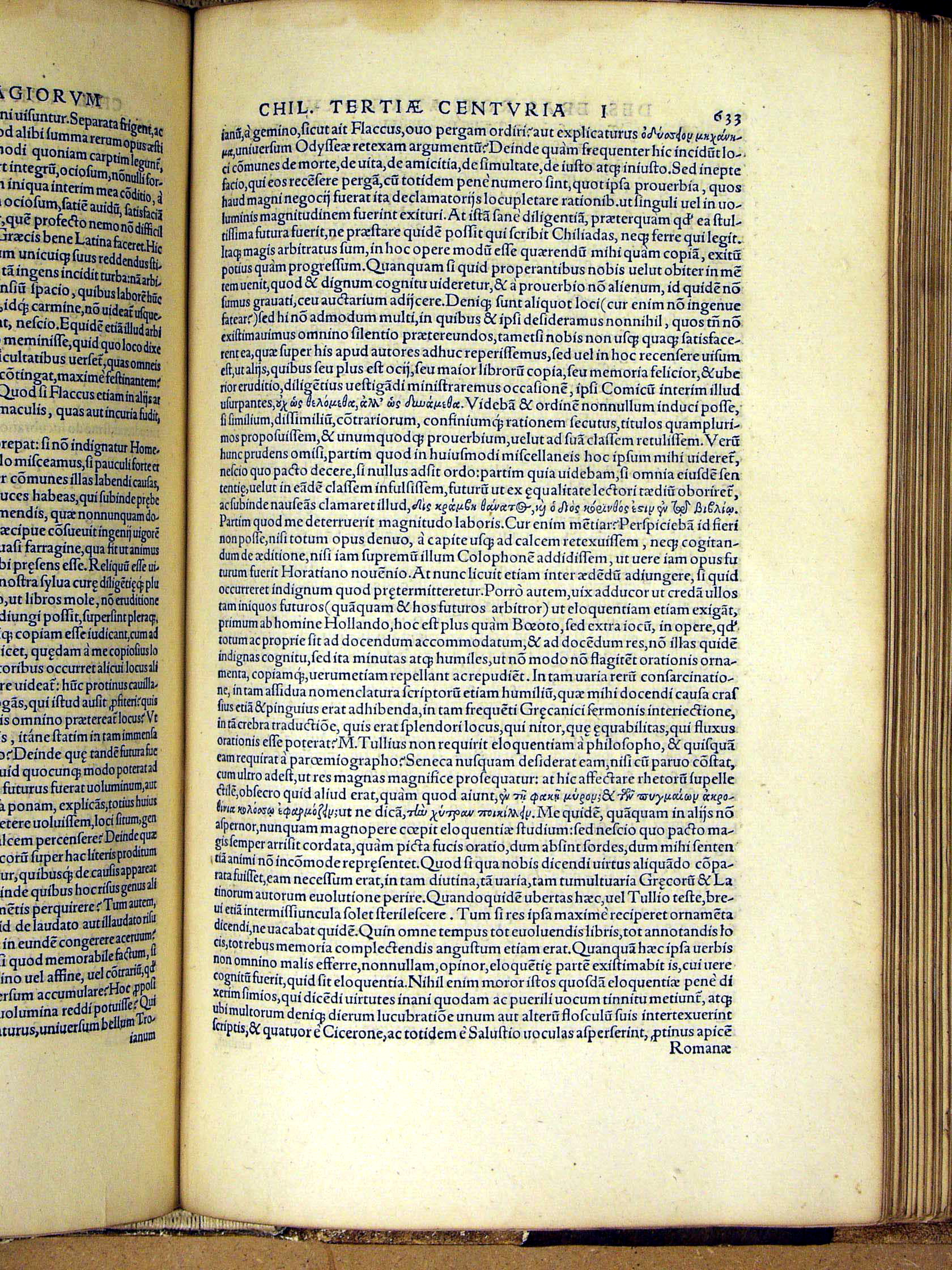


Iconclass: 54BB3 Inutility, Noxiousness; 'Nocumento', 'Nocumento d'ogni cosa' (Ripa) 57AA8 Ingratitude; 'Ingratitudine' (Ripa) 94L3 most important deeds of Hercules: the Twelve Labours 94L322 (2) the Hydra of Lerna is killed by Hercules
Collectanea (1500): 13
Loci Communes: Inanis opera (Vain effort, Effort vain)
III i 2 Effugi malum, inveni bonum I have escaped evil, I have found good
Εφυγον κακὸν, εὗρον ἄμεινον. id est, Euasi mala, sum nactsu meliora. Hemistichium proverbiale, dici solitum, si quando fortuna lautior cuipiam contigisset. Natum aiunt à caeremoniis nuptialibus. Nam Athenis mos erat, ut in nuptiis puer quispiam induceretur undique spineis frondibus, & quernis glandibus opertus, coronatusque cunas gestans panibus im pletas. Dicebat autem haec: Εφυγον κακὸν, εὗρον ἄμεινον Ea vox bene ominabatur sponso, sponsaeque tanquam ad meliorem usque fortunam profecturis. Malum enim vocabat spinas & glandes, panes bonum, propterea quod steriles spinae, iuxta proverbium, quod alio posuimus loco, οὐ γὰρ ἄκανθαι. Et glandibus victitabant agrestes illi prisci, iuxta illud, ἄλλος βίος, ἄλλη δίαιτα. Reperto frumentorum usu, glandium esus fastidiri coeptus. Demosthenes in oratione pro Ctesiphonte, significat id dici solere ab iis qui initiabantur, cum peractis iniuriis, quibus agitabantur ante mysteria, iam ad honorem initiationis admitterentur. Nam Aeschyni obiicit, quod noctu ministrans initiandis, absterso luto iussit eos dicere: Εφυγον κακὸν, εὗρον ἄμεινον. Aristophanes in Pluto, Επειτα πλουτῶν οὐκ ἔθ᾽ ἥδεται φακῇ.. id est, Ubi dives est, haud lente gaudet amplius. De iuvene qui nactus Plutum fastidiit anum, cui pauper morem gesserat. Diversum est huic, quod Iulius Pollux lib. 6. refert ex Eupolide, Οἴνου παρόντος, ὄξος ἠράσθη πιεῖν. id est, Praesente vino bibere acetum maluit. Adagium è Zenodoto refertur.
[greek], I have left evils behind, better things have come my way. A proverbial half-line, used when a stroke of good fortune had befallen someone. It arose, they say, from a marriage ceremony. It was the custom in Athens at weddings for a boy to be brought in, covered all over with thorn-branches and acorns, with a garland on his head and carrying a cradle filled with loaves. He uttered the words I have just quoted: I have left evils behind, better things have come my way; and this promised well for the bride and bridegroom, as though they were setting out on the road to better things. 'Evils' meant the thorns and acorns and 'good' the bread, because thorns bear no fruit, as in the proverb (which I have put in another place) No more thorns; and acorns were the food of those primitive country-people, as in the adage Change your life and change your style. Once cereal crops had been discovered, they began to tire of eating acorns. Demosthenes in his defence of Ctesiphon shows that the phrase was used by candidates for initiation in the Mysteries, when the abuse was over with which they were assailed before the rites began, and they were now admitted to the privilege of initiation. He taunts Aeschines with having performed menial services for the candidates by night, wiping the mud off them and telling them to say 'I have escaped evil, I have found good.' Aristophanes in the Plutus: 'Now that he's rich, lentils have lost their charm,' of a young man who, having become rich, scorned the old lady whom he had been so ready to oblige when he was poor. This is the opposite of a sentiment quoted by Julius Pollux in book 6 from Eupolis: 'With wine at hand, vinegar was his passion.' The adage is recorded by Zenodotus.
Facsimile:
Iconclass: 25G21(ACORN) fruits: acorn 25G3(+222) trees (+ thorny twig) 33A13:54A5 meeting❧Goodness; 'Bontà' (Ripa) 33B9:54AA5 flight, running away; pursuing❧Badness 41C621 bread, loaf 42D24 civil marriage ceremony 54F121 Turn of Fate, Wheel of Fortune
Loci Communes: Bonae fortunae, copiae, felicitatis aut ominis (Of good fortune, abundance, happiness, or omen, Bonne fortune, abondance, bonheur ou présage)
III i 3 Aegypti nuptiae Aegyptus' wedding
Αἰγύπτου γάμος. i. Aegypti nuptiae, inauspicatae & infelices dicebantur. Sumptum à notissima fabula Aegypti, qui filios quinquaginta, totidem fratris filiabus maritos dedit. At hi praeter unum omnes à sponsis iugulati sunt. Torqueri poterit in simulatam amicitiam, aut in munus honoris gratia datum in speciem, quum revera quaeratur pernicies ei cui datur. Ita nonnunquam ex affinitatibus aut foederibus principum atrocia nascuntur exitia.
[greek], Aegyptus' wedding, was applied to marriages which were ill-omened and unsuccessful. Taken from the very well-known story of Aegyptus, who had fifty sons, and married them off to his brother's fifty daughters, whereupon all except one were murdered by their brides. It will be possible to divert this to apply to a false show of friendship, or to an office conferred on someone as if to do him honour, when the true object is his destruction. Thus it sometimes happens that those who are related or allied to princes are brought thereby to some cruel end.
Facsimile:
Iconclass: 52E22 Bad Omen; 'Augurio cattivo' (Ripa) 95A(AEGYPTUS)6:42B7411(50) the Greek heroic legends (AEGYPTUS): heroes (AEGYPTUS) - suffering, misfortune❧father and son(50) (50) (50) 95A(DANAUS)6:42B7412(50) the Greek heroic legends (DANAUS): heroes (DANAUS) - suffering, misfortune❧father and daughter(50) (50) (50) 95B(DANAIDS)41 the Danaids, with the exception of Hyperm(n)estra, stab their husbands at night
Loci Communes: Infortunii sive exitii (Misfortune or ruin, Malheur ou ruine)
III i 4 Aedilitatem geris sine populi suffragio A self-appointed aedile
Plautus in Sticho: Sine populi suffragio, tamen aedilitatem hic quidem gerit. Ubi quis imperiosior est in alieno negocio, aut in aedibus alienis. Nam Plautus ad parasitum respicit in domo non sua mandantem & imperantem, non aliter ac sua. His confine est quod habetur apud Ciceronem libro tertio De legibus: Sed quaero quid hac re sit turpius, quàm sine provocatione senator, legatus sine mandatis. Item in xiii. Philippica: Senator voluntarius lectus ipse à se.
Plautus in the Stichus: 'He's never been elected, but he seems to think he's aedile.' When someone starts giving orders about things that are not his business or in another man's house. Plautus describes a flatterer giving commands and exercizing authority in a house which is not his, as though it belonged to him. Close to this is a phrase of Cicero's in his work On the Laws, book three: What, I ask you, can be more disgraceful than this - a senator with no right of appeal, and an envoy without a mission?' And again in his thirteenth Philippic: 'A volunteer senator, chosen by himself.'
Facsimile:
Iconclass: 44B1619(+0) usurpation (+ variant) 44D4(AEDILE) official; civil servant; functionary (AEDILE) (AEDILE) 55C4:53C2 Taking❧Command
Loci Communes: Temeritas (Recklessness, Témérité)
III i 5 Pax redimenta Peace is worth paying for
Divus Augustin. Homilia decima, narrat apud Poenos huiusmodi vetus proverbium fuisse celebre: Ut habeas quietum tempus, perde aliquid. Raro carent lite, qui nusquam sustinent de suo iure concedere. Magnum interdum est lucrum, iactura rei molestiam et inquietudinem exclusisse.
St Augustine in his tenth Homily tells us that an old proverb was current in Carthage to this effect, 'If you want a quiet time, let something go.' Those men are rarely free from quarrels who cannot bear to concede anything that is rightfully theirs. It sometimes pays very well to accept a loss, and so cut short vexation and disturbance.
III i 6 E duobus tria vides You see three in place of two
Εκ δυοῖν τρία βλέπεις. i. E duobus tria vides. Iocus proverbialis in eos, qui vel aetate, vel ebrietate, vel alio quopiam oculorum vitio caecutiunt. Huc pertinet illud Maronis: Et solem geminum, & duplices se ostendere Thebas: Item illud Iuvenalis: Et geminis consurgere mensa lucernis. In antiquis quibusdam exemplaribus invenio scriptum hoc pacto, ἐν δυοῖν τρία βλέπεις, id est, In duobus tria vides, idque dici solitum, ubi quis aliud pro alio videt, fallentibus oculis. Venustius fiet, si ad animi iudicium deflectatur.
'[greek], You see three in place of two. A quip which is proverbially used against those who see badly, either from age or liquor or some other trouble in their vision. Virgil's line is relevant here: 'A doubled sun he sees, and doubled Thebes.' And Juvenal's 'Sees doubled lamps, and all the table swims.' In some ancient copies I find it runs [greek] 'You see three things in two,' said to be often used when a person sees one thing in place of another, because his eyes deceive him. It will have more point, if transferred to the judgment of the mind.
Facsimile: 
Iconclass: 31A411 disabilities affecting the eyes 49D123 multiplication
Loci Communes: Caecutientia (Poor eyesight, near-blindness, Mauvaise vue)
III i 7 Edentulus vescentium dentibus invidet The toothless man looks askance at those who have teeth to eat with
Divus Hieronymus epistolam illam eruditissimam, quam Ad magnum oratorem inscripsit, huiusmodi clausit proverbio: Cui quaeso, ut suadeas, ne vescentium dentibus edentulus invideat, & oculos caprearum talpa contemnat. hoc est, ne quod ipsi non contigit, aliis invideat. Sic enim est fermè hominum quorundam ingenium, ut quisque laudet quantum se sperat assequi posse: si quid ultra vires suas esse senserint, id negant disci oportere. Breviter paucos invenias, qui quod in sese desperent, in aliis probent: idque non alia in re magis quàm in literarum studiis. Hieronymus videtur Graecam illam reddidisse sententiam: Αὐτὸς πενωθεὶς ἔχουσι μὴ φθόνει. id est, Ne pauper ipse iis invide, qui possident.
St Jerome ends his celebrated and most learned letter to Magnus the orator with a proverbial passage that runs like this: 'Urge him, I beg, not to behave like the toothless man who looks askance at those who have teeth to eat with, or the mole which thinks the roe-deer's eyesight not worth having,' that is, not to grudge others what he does not himself possess. For such is the nature of some people, that a man will praise what he has hopes of achieving himself; if they feel that something is beyond their powers, they say that it is not worth learning. In a word, you will find few men who praise in others what they despair of in themselves; and nowhere is this more true than in literary pursuits. Jerome seems to have rendered the Greek aphorism 'Poor you may be, but envy not the rich.'
Facsimile:
Iconclass: 25F24(DEER)(+337) hoofed animals: deer (+ eyes of an animal) 25F29(MOLE) other mammals: mole 51AA4:31A2112 Nothingness, Absence❧teeth 57AA76 Jealousy; 'Gelosia', 'Rammarico del ben'altrui' (Ripa)
Collectanea (1500): 273
Loci Communes: Invidia, aemulatio (Envy, rivalry, Envie, rivalité)
III i 8 Iisdem vescentium cepis Eating the same onions
Ταὐτον θύμον φαγόντες, id est, Qui idem ederunt thymum. Proverbiali figura dictum ab Aristophane in Pluto. Congruit in pauperes ac bonos viros inter sese amicos. θύμον enim vilissimum herbae genus, quo tenues & agrestes, utcunque vitam sustinent: quidam cepam agrestem esse putant, etiamsi dissentiant Plinius & Dioscorides. Suidas admonet agrestis ac vilis herbae genus esse, cuius esu Comicus paupertatem vescentium voluerit intelligi. Quemadmodum Hesiodus per malvam & asphodelum tenues significavit. Huic affine, quod scriptum est apud Iuvenalem: Quis tecum sectile porrum Sutor, & elixi veruccis labra comedit?
[greek], Who eat the same thyme, is a proverbial expression, used by Aristophanes in the Plutus, suitable to poor and honest folk who agree among themselves. Thyme is a very ordinary sort of herb, on which country people with no resources support life somehow or other. Some think it a sort of wild onion, though Pliny and Dioscorides are of a different opinion. Suidas points out that it is a kind of common country herb, the eating of which was intended by the author of the comedy to be understood as a sign of poverty, just as Hesiod uses 'mallow and asphodel' as an indication of the poor. Related to this is Juvenal's 'What cobbler shared with you the finechopped leek / Or slobber lips of your boiled mutton-head?'
Facsimile:
Iconclass: 25G22(ONION) (non-fruit) products of plants or trees: onion 25G4(THYME) plants and herbs: thyme 41C11 eating 51B2:55BB1 Similarity, Likeness❧Poverty; 'Povertà', 'Povertà del doni', 'Povertà in uno ch'habbia bell'ingegno' (Ripa)
Loci Communes: Similitudinis et congruentiae (Similarity and congruence, Similitude et convenance)
III i 9 Solidos e clibano boves Whole pot-roast oxen
Aristophanes in Acharnensibus? Παρετίθει δ᾽ ἡμῖν ὅλους εκ κριβάνου βοῦς Καὶ τίς εἶδεν πώποτε βοῦς κριβανίτας; id est, Deinde nobis praebuit E clibano totos boves: & quis rogo Conspexit unquam clibano coctos boves? Antiphanes apud Athenaeum lib. iiii. facit quendam querentem de frugalitate Graecorum, qui paululum carnium apponerent, quum maiores soleant totos boves, cervos et arietes assos apponere. Quin & regi Persarum coquum, totum camelum assum, atque etiamnum calidum apposuisse. At ego mihi malim perdiculam assam & calidam apponi. Idem in eodem libro tradit ex Herodoto, apud Persas diebus nataliciis fuisse morem, ut divites bovem, asinum, equum & camelum apponerent totos in clibano aut camino coctos. Proverbialis hyperbole de barbarica rerum copia, sive de lauticiis affatim subministratis. Antiquitus enim in deliciis erant cibi in clibano cocti. Primum enim panis in clibano decoqui coeptus, quem κριβανίτην, id est, clibanarium vocabant, eaque res usque adeo visa est nova, ut etiam proverbio locum fecerit: deinde carnes & pisces eodem modo coqui coeperunt. Unde & thunni, & id genus alia, in clibano cocta, xeniorum vice missitabantur amicis.
Aristophanes in the Acharnians: 'Then he set before us / Whole pot-roast oxen. / And who ever saw / Oxen pot-roast?' Antiphanes in book four of Athenaeus has a character who complains of the Greeks for their parsimony, because they serve so little meat, while their ancestors used to set on the table oxen, deer and rams roasted whole. Why, the king of Persia's cook, he says, served up a whole roast camel, and piping hot too. (Personally, I would prefer to see in front of me a nice tender hot roast partridge.) In the same book, citing Herodotus, he says it was the custom among the Persians on birthdays for the rich to serve up a whole ox or ass or horse or camel, roasted in the pot or in the oven. A proverbial exaggeration, used of a barbaric superfluity, or of good things in unlimited supply; for in Antiquity pot-roasted food was highly thought of. First they began to bake bread in the pot, which they called kribanitês, pot-baked, and this was such a novelty that it even gave rise to a proverb; then meat and fish began to be cooked in the same way. Hence tunny-fish, and other things of the same sort cooked in the pot, were habitually sent to one's friends as presents.
Facsimile:
Iconclass: 41C251:41C692(OX) roasting, grilling❧kinds of meat (OX) 55C21 Generosity, Liberality; 'Generosità', 'Liberalità' (Ripa) 55CC1 Saving, Frugality, Parsimony; 'Parsimonia' (Ripa)
Loci Communes: Magnifica promissa (Magnificent promises, Promesses magnifiques)
III i 10 Drachmae grando A hail of drachmas
Δραχμὴ χαλαζῶσα. id est, Drachma grandinans. De lucro, quod tanquam coelitus emis sum obtigit. Nam olim theatrale praemium drachma, quae velut grandinis in morem in populum spargebatur. Id à Diophanto tradunt institutum. Unde si quando grando accidisset, per iocum aiebant, δραχμὴ χαλαζῶσα. Missilium mos nec hodie totus exstinctus est. Auctor Zenodotus. Meminit & Hesychius.
[greek], It's hailing drachmas, of gain which has come to one as though heaven-sent; for in the old days largesse in the theatre consisted of drachmas which were scattered among the audience like hail. (This is said to have been started by Diophanrus.) Hence, whenever it began to hail, they used to say 'It's hailing drachmas.' This custom of throwing money into the adoring crowd is even now not wholly extinct. Zenodotus is the authority, and Hesychius also mentions it.
Facsimile: 
Iconclass: 26D2(+0) hail (+ variant) 31A27412(+91) throwing down something (+ relations with friendly, non-aggressive character (expressive connotations)) 46B311 coin 55C21 Generosity, Liberality; 'Generosità', 'Liberalità' (Ripa)
Loci Communes: Profusio (Extravagance, Prodigalité)
III i 11 Duodecim artium Up to a dozen tricks
Δωδεκαμήχανον. i. Duodecim artium, appellabant callidum, versutum, versipellem, vafrum, ac variis instructum dolis. Narrant scortum quoddam fuisse nomine Cyrenen, cui cognomentum inditum δωδεκαμηχάνου, propterea quod in peragenda Venere duodecim figuris usa fuisse dicatur. Imitatum est autem ex Hypsipyle Euripidis tragoedia, in qua δωδεκαμήχανον ἄστρον scripsit, citante Suida. Refertur & in Ranis Aristoph. tametsi interpres pro ἄστρον legisse videtur ἄντρον, ut intelligamus de membro pudendo muliebri. Aristophanes sic habet, τολμᾶς τᾀμὰ μέλη ψέγεινμ ἀνα τὸ δωδεκαμήχανον κυρήνης μελοποιῶν. i. Audes tu mea vituperare carmina, qui per duodecim artes Cyrenes poemata fingis?
[greek], Up to a dozen tricks, was a name for someone who was skilful, ingenious, versatile, cunning, and equipped with various artful devices. The story goes that there was a courtesan called Cyrene, who was given the nickname of Mistress Twelvetricks because in the art of copulation she is said to have been skilled in twelve positions. This is imitated from Euripides' tragedy, the Hypsipyle, in which, according to a quotation in Suidas, he used the phrase 'A star that knows twelve tricks.' This is also referred to in the Frogs of Aristophanes, although the scholiast seems to have read antron, cave, for astron, star, so that we must understand it of a woman's private parts. The lines in Aristophanes run as follows: 'How dare you find fault with my lyrics, when you yourself write stuff in Cyrene's twelve-trick style?'
Facsimile:
Iconclass: 52A43 Ingenuity; 'Ingegno' (Ripa) 31A239(+89) other postures of the human figure, not meant or mentioned above (+ nude human being) 31A239(+918) other postures of the human figure, not meant or mentioned above (+ caressing, courting, making love) 33C41:51BB4 man and woman cohabiting❧Multiformity, Variety 33C521:98C(CYRENE) courtesan, hetaera❧female persons from classical history (CYRENE)
Loci Communes: Inconstantiae, perfidiae, versutiae (Inconstancy, treachery, cunning, Inconstance, perfidie, ruse)
III i 12 Duplices viros Double men
Διπλοῦς ἄνδρας. i. Duplices viros proverbiali ioso vocabant, qui essent lubrica & insyncera fide, quos nunc vulgo bilingues appellant, & Vergilius Tyrios bilingues appellat. Dictum est autem per allusionem, quod pleraque virorum, nomina dissyllaba sint, praesertim servorum, quorum gens vafrum & fraudulentum habetur. Unde sensus ambiguus est, potest enim accipi vel de eo, qui duabus sederit sellis, vel cui nomen sit dissyllabum. Zenodotus huiusmodi citate epigramma: Μισῶ τὸν ἄνδρα τὸν διπλοῦν πεφυκότα, Χρηστὸν λόγοισι, πολέμιον δὲ τοῖς τρόποις. id est, Equidem virum odi duplicem, sermonibus Probis amicum, ceterum hostem moribus. Est aliquoties & apud Homerum Odysseae Σ Οἵτ᾽ εὖ μὲν βάζουσι, κακῶς δ᾽ ὄπιθεν φρονέουσιν. id est, Qui bene cum dicant, retro mala mente volutant. Rursum Odysseae Ρ. Εσθλ᾽ ἀγορεύοντες, κακὰ δὲ φρεσὶ βυσσοδόμευον. Qui bene cum loquerentur, atrocia mente premebant. Iterum eiusdem operis Σ. Θέλγε δὲ θυμὸν Μειλιχίοις ἐπέεσσι, νόος δέ οἱ ἄλλα μενοίνα. id est, Pectora blandis Lenibat dictis, at mens diversa parabat. Apud Platonem in Hippia minore citat aliquis hos Homeri versus, qui dicuntur ab Achille ad Ulyssem, Χρὴ μὲν δὴ τὸν μῦθον ἀπηλεγέως ἀποειπεῖν Ωσπερ δὴ φρονέω τε και ὡς τετελέσθαι ὀΐω. Εχθρὸς γάρ μοι κεῖνος ὁμῶς ἀΐδαο πύλῃσιν, Ος ἕτερον μὲν κεύθῃ ἐνὶ φρεσὶν, ἄλλο δὲ εἴπη. id est, Nam decet ingenue quod sentis vece profari. Haud secus atque Orci portas hominem execror illum Quisquis corde aliud celans, aliud sonat ore.
[greek], Double men, was proverbially a name for those who were slippery and could not be trusted, who in common speech even today are called double-tongued. (Virgil too uses double-tongued of the Tyrians.) The phrase contains an allusion, for most men's names are of two syllables, especially those of slaves, who are supposed to be a crafty and deceitful lot. Thus the meaning is ambiguous, for it might refer either to a man who has sat on two stools or to one with two syllables in his name. Zenodotus cites the following epigram: I hate the man of nature double, / Who speaks you fair and stirs up trouble.' It also occurs sometimes in Homer. Odyssey 18: 'Whose words are kindly, but their heart within is evil.' Again in Odyssey 17: 'Who spoke fair, but pondered evil in their minds.' And again in book 18 of the same work: 'She charmed their hearts with honeyed words, but in her mind had quite other plans.' In Plato's Hippias minor someone cites these lines from Homer, which are spoken by Achilles to Ulysses: 'Needs must I simply speak the truth, things as I see them, and as I think they have come to pass. For I hate as I hate the gates of Death the man who hides one thing in his heart and says another.'
Facsimile:
Iconclass: 31A442(+4141):49D11(2) anthropomorphic beings with parts in greater number than normal (+ tongue)❧numerals: 2 33A8 double 57AA6141 Untrustworthiness, Unreliability
Loci Communes: Inconstantiae, perfidiae, versutiae (Inconstancy, treachery, cunning, Inconstance, perfidie, ruse)
III i 13 Domi manere oportet belle fortunatum He who is well off should stay at home
Οἴκοι μένειν δεῖ τὸν καλῶς εὐδαίμονα. id est, Domi manendum est, cuncta cui sint prospera. Cui suppetit copia facultatum, is si velit felicem agere vitam, domi vivat. Nusquam enim vivitur commodius, nusquam liberius. Qui eget, peregrinando rem quaerat, ac fortutunae experiatur aleam. Ita Menander, Οἴκοι μένειν χρὴ καὶ μένειν ἐλεύθερον, Η μηκέτ εἶναι τὸν καλῶς εὐδαίμονα. id est, Domi manere oportet, ut liber siet, Aut liber esse desinat qui dives est. Potest in hunc quoque detorqueri sensum: Qui sibi bene conscius est, ne captet ex alienis laudibus gloriam, sed sit suarum virtutum conscientia contentus,
[greek], He for whom all goes well should stay at home. Let the man who has adequate resources, if he wishes to live a happy life, live at home. Nowhere else will he find the same comfort and the same freedom. Let the man who is in want go abroad to find a living and venture a game of luck. So Menander: 'The man who is well off should stay at home / And keep his freedom, or be no longer free.' It can also be turned to quite another sense: The man who has a good conscience should not seek credit from other men's applause, but rest content with the sense of his own merit.
Facsimile:
Iconclass: 46A16 the rich 51AA4:46C5 Nothingness, Absence❧travelling; tourism 54A46 Rest; 'Quiete' (Ripa) 55B1 Wealth, Opulence; 'Opulenza', 'Richezza' (Ripa)
Loci Communes: Domi vivere (To live at home, Vivre chez soi)
III i 14 Per hastae cuspidem currere To run through a spear-point
Δι᾽ ὀξείας δραμεῖν. i. Per acutam currere dicebantur, qui in re magnopere periculosa versarentur. ὀξεῖαν enim hastam, sive hastae cuspidem vocant. Translatum videtur vel à circulatoribus, qui per summas hastarum & gladiorum cuspides ingrediuntur. Vel à militari consuetudine, qua fieri solet, ut qui mortem commeritus videretur, is nudus per medias copiarum hastas, hinc atque hinc intentas, ire cogeretur. Nec absurdum, si de Thracia saltatione intelligatur, de qua nobis aliàs dictum est.
[greek], To run along the edge (oxeia), was used of those engaged in some perilous enterprise; for they call a spear oxeia, or a spear-point. This seems to be a metaphor, either from circus-artistes who walk on the sharp points of spears and swords, or from a custom in the army that a man who was thought to deserve the death-penalty should be compelled to run the gauntlet, naked, between two lines of spears aimed at him on each side. Nor would it be absurd to understand it as a reference to the Thracian dance, of which I have spoken elsewhere.
Facsimile: 
Iconclass: 45B42331(+0):45C11(SPEAR) running the gauntlet (+ variant)❧casting weapons: spear
Loci Communes: Discriminis (Danger, crisis, Danger)
III i 14A Macerata vita Soft living
This adagium (number 2014A in ASD and CWE), was added in 1508 and removed again in 1515, as explained in CWE, note on p. 376. [HB]
Some apply this to the food used by men of old, which consisted of acorns. Others apply it to food ready at hand and easy to obtain without effort. Others again apply it to a great abundance of things.
Facsimile:
Iconclass: 25G21(ACORN) fruits: acorn 51AA4:54DD4 Nothingness, Absence❧Difficulty
Loci Communes: Luxus et mollicies (Luxury and softness, Luxe et mollesse)
III i 15 Alia Menecles, alia porcellus loquitur Menecles tells one story and the pig another
Αλλα λέγει μενεκλῆς, ἄλλα τὸ χορίδιον. id est, Non eadem loquitur succula, quae Menecles, Ubi quis multum verborum effutit, quae nihil ad rem pertineant. Nobis subesse proverbium videtur, tametsi nondum satis liquet unde natum sit. Alludit ad illud Lucillius in epigrammate, quod quoniam est argutum & elegans, non pigebit subscribere: Χοιρίδιον καὶ βοῦν ἀπολώλεκα καὶ μΐαν αἶγα Ων χάριν εἴληφας μισθάριον μενέκλεις Οὔτε δὲ μοι κοινόντι πρὸς Οὔτ᾽ ἀπάγω κλέπτας τοὺς ἀπὸ θερμοπυλῶν. Αλλα` πρὸς εὐτυχίδην ἔχομεν κρίσιν, ὥστε τὶ ποιεῖ Ενθάδε μοι ξέρξης, καὶ λακεδαιμόνιοι; Πλὴν, κᾀμοῦ μνήσθητι νόμου χάριν, ἢ μέγα κράξω, Αλλα λέγει μενεκλῆς,αλλα τὸ χοιρίδιον. id est, Succula bos, et capra mihi periere Menecles, Ac merces horum nomine pensae tibi est, Nec mihi cum Othryade quidquam estve fuitve negoti, Nec fures ullos huc cito Thermepylis. Sed contra Eutychidem nobis lis, proinde quid hic mi Aut Xerxes facit, aut quid Lacedaemonii? Ob pactum et de me loquere, aut clamavero claere, Multo aeliud dicit sus, aliud Menecles. Cum huius epigrammatis argumento convenit et illud, quod est apud Martialem lib. 6. Nen de vi, neque caede, nec veneno, Saed lis est mihi de tribus capellis, Vicini queror has abesse furto. Hoc iudex sibi postulat probari. Tu Cannas, Mithridaticumque bellum, Et periuriae Punici furoris, Et Syllas, Mariosque Mutiosque, Magnae voce sonas, manuque totae. Iam dic posthume de tribus capellis. In Martialis epigrammate hoc ipsum tota manu, proverbii speciem gerit. Solent enim rhetores in contentione manu rotata gesticulari. Utrumque igitur in eum recte datur, qui ἐξαγώνια καὶ ἀπροσδίονυσα, hoc est, extra causam quae sunt, et ad rem nihil attinent, dicit. Aliud sus, aliud loquitur Menecles: et, dic de tribus capellis.
[greek], Menecles tells one story and the pig another. When someone produces a flood of words which are quite off the point. It seems to me there is an underlying proverb here, though its source is not yet clear. Lucilius alludes to it in an epigram which, as it is witty and elegant, I shall give myself the pleasure of transcribing: 'A pig, a cow and one she-goat I lost, and you, Menecles, have had a fee for them. I've never done any business with Othryades, the thieves I keep at bay are not the heroes of Thermopylae; it is Eutychides against whom I have a claim, so what can Xerxes in these parts or the Spartans do for me? Do but just mention me, to please the law, or I shall cry out loud and clear "Menecles tells one story, but my pig tells another".' The theme of this epigram is matched by that of one in book six of Martial: 'Violence, homicide, poisoning? Not at all: the matter of my case is three she-goats, which I complain were stolen by a neighbour. It is of this that I must persuade the judge; but you... Cannae, the Mithridatic War, the mad rage and perjury of Carthage, Sulla and Marius and Mucius and their like come rolling out with all your power of voice and skill of hand. O Postumus, the time has come to say a word about my three goats.' In Martial's epigram the actual phrase Tota manu, ['skill of hand,' literally, With all your hand], looks like a proverb, for orators under pressure often gesticulate with whirling hands. So you could rightly use either phrase of a man who talks exagônia and aprosdionysa: The pig says one thing and Menecrates another' or 'A word about three goats.'
Facsimile:
Iconclass: 33A341 story teller; listening to story teller 54BB3:52D4 Inutility, Noxiousness; 'Nocumento', 'Nocumento d'ogni cosa' (Ripa)❧Prolixity, Verbosity, Loquacity; 'Loquacità' (Ripa) 47I212 pig 82A(MENECLES) male literary characters (MENECLES)
Loci Communes: Aliena a re (Irrelevant to the matter, Étranger au sujet)
III i 16 Haud annuncias bellum Your news is not of war
Οὐ πόλεμον ἀγγφέλλεις. i. Non annuntias bellum. Dici solitum, ubi quis rem oppido laetam annuntiat, quod bellum sit res omnium calamitosissima, et tamen ad huius rumorem hodie plerique mortales hilarescunt, nimirum sceleratissimum illud Carum genus, qui malis humani generis aluntur. iulianus in epistola ad Basilium, ἡ μὲν παροιμία φησὶν, οὐ πόλεμον ἀγγέλεις, ἐγὼ δὲ προσθείην ἐκ τῆς κωμῳδίας, ὦ χρυσὸν ἀγγείλας ἐπῶν. id est, Proverbio dicunt, haud bellum annuntias. Ego vero illud addiderim ex comoedia: O aureorum nuntius verborum. Conduplicavit proverbium Iulianus, quandoquidem et hoc proverbiale, χρυσὸν ἀγγείλας ἐπῶν. Sumptum est autem ex Aristophanis Pluto. Verba sunt senum chorum explentium ad Carionem, qui Pluti annuntiarat adventum. Usurpavit et Plato in Phaedro: οὐ πόλεμον γε ἀγγέλλεις. id est, Haud sane bellum annuntias. Ac rursum libro de legi bus tertio. Pindarus in Pythiis hymno quarto, τῶν δ᾽ ὁμήρου, καὶ τόδε συνθέμενος πόρσυν᾽ ἄγγελον ἐσλὸν ἔφα τιμὰν μεγίσταν πράγματι παντὶ φέρειν. i. Quin ex Homeri dictis & illud conferens orna. Nuntium bonum ait honore` maximum in omni negotio ferre. Versus autem quem citat Pindarus, hic adfertur ab interprete: Εσθλὸν καὶ τὸ τέτυκται ὅτ᾽ ἄγγελος αἴσιμα εἰδῇ. id est, Hoc quoque praeclarum est, ubi nuntius optimanovit. Exstat autem Iliados Ο.
[greek], Your news is not of war, is used by custom when someone brings news which is exceptionally good, for war is the most disastrous thing there is - and even so there are plenty of people nowadays whose faces brighten at the mere rumour of it, especially of course that accursed tribe of Carians who batten on the miseries of the human race. Julian in a letter to Basil: The proverb runs "Your news is not of war" and I would add, as it says in the play, "You whose tidings are words of gold.'" Julian has given him two proverbs instead of one, for 'Your tidings are words of gold' is also proverbial; it is taken from the Plutus of Aristophanes, where the words are put in the mouth of the old men who form the chorus, addressing Cario, who had told them that Plutus, the god of wealth, is coming. Plato also used it in the Phaedrus: 'Your news to be sure is not of war,' and again in book three of the Laws. Pindar in the fourth hymn of the Pythians: 'Among Homer's sayings take this to heart and cherish it; a good messenger, he says, confers the greatest honour on any piece of business.' The line which Pindar quotes is cited as follows by the scholiast: This too is a good thing, when a messenger is discreet.' This is to be found in Iliad 15.
Facsimile: 
Iconclass: 46E2321 receiving good news, good message 51AA4:45A1 Nothingness, Absence❧war
Loci Communes: Nuntius laetus (Happy news, Heureuse nouvelle)
III i 17 Machinas post bellum adferre To bring up the artillery when the war is over
Τὰς μηχανὰς μετὰ τὸν πόλεμον κομΐζειν. id est, Machinas post bellum adferre dicebantur, qui peracto negotio, sero adhiberent apparatum. Brutus in epistola quadam ad Lycios: αἱ μηχαναὶ ὑμῶν μετὰ τὸν πόλεμον, ὡς ἡ παροιμία, ἐκομίσθησαν. id est, Veftrae machinae post bellum, uti proverbio dicitur, adductae sunt. Adludit ad illud Platonis, quod alio reddidimus loco, οὕτως χρὴ τοῦ πολέμου μεταλαγχάνειν. id est, Ad istum modum oportet ad bellum accedere. De Melitide dicetur suo loco, quem aiunt in Troiam venisse, quo Priamo ferret suppetias, civitate iam capta.
[greek], To bring up the artillery when the war is over, was used to describe those who produced the necessary tackle too late, when the work was already done. Brutus in one of his letters to the Lycians says Tour artillery was brought up, as the proverb puts it, when the war was over.' He has in mind that phrase of Plato's, which I have given in another place: That's the best way to take part in the war.' When the time comes I shall have something to say of Melitides, who is supposed to have come to Troy to bring help to Priam, when the city had already fallen.
Facsimile:
Iconclass: 45I(+24) after the battle (+ artillery) 51FF52 Lateness 51MM11 Slowness, Tardiness; 'Tardità' (Ripa)
Loci Communes: Tarditatis et cunctationis (Slowness and delay, Lenteur et retard)
III i 18 Levissima res oratio Words are the lightest of things
Κουφότατον πρᾶγμα λόγος. id est, Levissima res oratio. Synesius in epistola quadam ad Theophilum, προπετὴς ἄνθρωπος γλῶτταν, ἐνέτυχεν ἀνδρὶ προπετεστέρῳ τὴν χεῖρα, καὶ τοῦτο δὴ τό λεγόμενον, κουφοτάτου πράγματος, βαρυτάτην τιμωρίαν ἐξέτισε. id est, Homo praecipiti lingua cum incidisset in virum manu magis praecipiti, iuxta id, quod dici solet, rei levissimae, nempe sermonis, gravissimas poenas dedit. Porro quod Synesius adducit, propemodum videtur esse apud Platonem libro De legibus iiii. δίοτι κούφων και πτηνῶν λόγων βαρυτάτη ζημία. i. Propterea quod levium ac volatilium verborum gravissima sit poena. Refertur & apud Plutarchum in libello περὶ ἀοργησίας, ex auctore Platone. Apud Homerum passim obvium est illud, Επεα πτερόεντα προσήυδα. id est, Verba volucria dixit. Verba alata cognominat, quod facile evolent, ac revolare nesciant. Proinde Horatius: Et semel emissum volat irrevocabile verbum. Eam sententiam citat ex Menandro: Οὔτ᾽ ἐκ χερὸς μεθέντα καρτερὸν λίθον Ρᾶον κατασχεῖν, οὔτ᾽ ἀπὸ γλώσσης λόγον. id est, Nec durus ulli emissus è manu lapis, Neque sermo lingua, facile compesci valet. Alibi indicavimus ἀπτέρους λόγους dici Graece, id est, verba sine pennis, quae premit apud se qui audivit, nec sinit ad alios evolare.
[greek], Words are the lightest of things. Synesius in one of his letters, addressed to Theophilus: 'A man hasty with his tongue fell in with a man even more hasty with his hands and, as the saying goes, for something very light,' his words, in fact, 'paid a very heavy penalty.' The saying cited by Synesius looks very much the same as one in Plato, in the fourth book of the Laws: 'Because for light and winged words there is a very heavy penalty.' It is also recorded by Plutarch in his essay 'On the Control of Anger,' with Plato as his authority. In Homer we frequently meet the phrase 'Addressed him with flying words!' He calls words 'winged' because they take flight so easily, but do not know how to fly back. And so Horace: 'Once sent, the word irrevocably flies.' They cite the same maxim from Menander: 'A great stone from your hand, and from your tongue / A word sent forth, not easy 'tis to stop.' Elsewhere I have pointed out that there is a Greek expression, Words without wings, for those which the hearer keeps close within himself and does not allow to take flight to other people.
Facsimile:
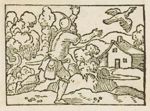
Ce qu'on a dict, ne peult estre à redire: La Perrière, Le theatre des bons engins (Lyon, 1545), emblem 90 uses the imagery of a man releasing a bird to express that a word once spoken can not be unspoken, compliant with the adage's comment
Iconclass: 49K321:25F3(+342) word❧birds (+ wings of an animal) 51GG2:49K321 Lightness; 'Leggierezza' (Ripa)❧word 52D4 Prolixity, Verbosity, Loquacity; 'Loquacità' (Ripa)
Loci Communes: Garrulitas (Talkativeness, Bavardage)
III i 19 Non omnia eveniunt, quae in animo statueris All does not come to pass that you have set your heart on
Homerus Iliados Σ Αλλ᾽ οὐ ζεὺς ἄνδρεσσι νοήματα πάντα τελευτᾷ. id est, Iuppiter haud quidquid animo conceperis, illud Perficit exemplo. Hoc equidem carmen inter adagia adscribendum existimavi, propterea quod eadem sententia etiam hodie vulgo dicitur. Et Pindarus in Olympiis, Πολλὰ δὲ ἀνθρώποις παρὰ γνώμαν ἔπεσον. id est, Multa mortalibus praeter animi sententiam eveniunt, quod ipsum citavimus et alibi. Recte utemur, quoties significabimus, non evenire protinus quidquid spe votisque conceperimus.
Homer in Iliad 18: 'But Jupiter does not grant men the fulfilment of all their ideas.' I for my part thought that this line should be included in the list of adages, because the same saying is current even now. Pindar too in the Olympians: 'Many things fall out as men did not expect.' I have quoted the same line elsewhere. We shall rightly use this whenever we wish to convey that the content of our hopes and prayers does not straightaway come to pass.
Facsimile:
Note: 'You can't always get what you want'
Iconclass: 51CC19 No Result, Lack of Result, Inefficacy, Futility 54FF1:56F1 Failure❧Desire; 'Desiderio' (Ripa)
Loci Communes: Frustrata spes (Frustrated hope, Espoir déçu)
III i 20 Murem ostendit pro leone He displayed the mouse instead of the lion
Μῦν ἀντὶ λέοντος ἀπέδειξε, id est, Murem pro leone ostendit, proverbiali schemate dictum, pro eo quod est, ingentia pollicitus et fortia, longe diversa exhibuit Synesius in epistola quadam ad Anastasium: ἐκκραγὼν γὰρ αὐτῷ δίς του καὶ τρὶς καὶ τοῖς ἐξ ἁμάξης λοιδορησάμενος, καὶ πάντα ἐπανατεινάμενος ἅπερ ἂν εἰρῆσθαι καὶ παρ᾽ ἐμοῦ, παντὸς ἂν ἐτιμησάμην, ἀπέδειξε τό κάθαρμα μῦν ἀντί λέοντος. id est, Cum inclamasset in illum bis aut ter, ac de plaustro, quod aiunt, convitiis insectatus, nihilque non in eum esset vociferatus, cum eiusmodi vel a me ipso dicta fuisse, maximi secerim, deinde murem pro leone exhibuit scelus. Sumptum apparet a bestiariis, qui ridiculi gratia multa polliciti, quasi leonem immanem et insolitae magnitudinis emissuri, mox murem emittunt in caveam.
[greek], He displayed the mouse instead of the lion, is an expression in proverbial form for the case when someone has made enormous and brave promises, and delivered very different results. Synesius in one of his letters, addressed to Anastasius: 'He shouted at him two or three times, I suppose, and assailed him with all the expletives one expects 'from a waggon,' saying all the things I should dearly have liked to say myself; and then the wretched fellow displayed the mouse instead of the lion.' Clearly derived from the man who keeps a menagerie and, by way of a joke, makes huge promises - he means to display a fierce lion of exceptional size - and when the time comes sends a mouse into the arena.
Facsimile:
Iconclass: 25F26(MOUSE) rodents: mouse 25F23(LION) beasts of prey, predatory animals: lion 53DD2 Breach of Promise
Loci Communes: Frustrata spes (Frustrated hope, Espoir déçu)
III i 21 Pugnis et calcibus Punching and kicking
Πὺξ καὶ λὰξ. id est Pugnis & calcibus. Proverbiali figura dictum reperitur, pro eo quod est, omni contumeliae genere, totisque viribus. Synesius in epistola quadam ad fratrem, οὐδὲ πὺξ ἐντενεῖν, οὐδὲ λὰξ ἐναλεῖσθαι τῶν ἐπιεικεστέρων τινὶ. id est, Neque pugnos impignet, neque calcibus impetet quempiam meliorem. Aristophanes in Pace: Παίειν, ὀρύττειν, πὺξ ὁμοῦ καὶ τῷ πέει. id est, Ferire, fodere, pugno, itemque & mentula. Quo loco interpres admonet proverbii, πὺξ ὁμοῦ καὶ τῷ σκὲλει. i. Pugno simul & tibia. Nam comicus risus causa, pro tibia mentulam mutavit. M. Tullius in oratione pro Sylla dicit, quendam non solum verbis uti improbissimis solitum, verum etiam pugnis & calcibus.
[greek], Punching and kicking, is found used as a proverbial formula to express every kind of insult and all possible effort. Synesius in one of his letters to his brother: 'He will never punch nor kick a better man.' Aristophanes in the Peace: 'At once to strike with fists and pierce with prick.' The scholiast on this passage reminds us of the proverb 'With fists and feet,' for the comic poet, to raise a laugh, has put the male organ in place of the leg. Cicero in his speech in defence of Sulla says that someone was 'adept at using not only the filthiest language but punching and kicking as well.'
III i 22 Inimicus et invidus vicinorum oculus Unfriendly and spiteful is the neighbour's eye
Alcippus in epistola quadam ad Encymonem: δυσμενὴς καὶ βάσκανος ὁ τῶν γειτόνων ὀφθαλμὸς, φησὶν ἡ παροιμία. id est, Inimicus & invidus vicinorum oculus, ut dictum est proverbio. Exstat autem apud Aristotelem libro Rhetoricorum secundo, Vicinus invidet vicino, iuxta Hesiodi sententiam. Nec invidemus iis, a quibus longo absumus intervallo, sed quos propemodum speramus adsequi. Unde Flaccus: Invidia, quiae maior. Et alibi: Et iam dente minus mordeor invido.
Alcippus in one of his letters addressed to Encymon: Unfriendly and spiteful, as the proverb has it, is the neighbour's eye.' It is also found in the second book of Aristotle's Rhetoric. 'Neighbour envies neighbour' is Hesiod's maxim. Nor do we envy those who are separated from us by a great distance, but those whom we have some hopes of overtaking. Hence Horace's 'Above envy I am' and elsewhere 'No more by envious tooth am I assailed.'
Facsimile: 
Iconclass: 33A7 neighbour 57AA76 Jealousy; 'Gelosia', 'Rammarico del ben'altrui' (Ripa)
Loci Communes: Invidia, aemulatio (Envy, rivalry, Envie, rivalité)
III i 23 Totum subvertere Total overthrow
Ολον ἀνατρὲπειν. i. Totum evertere dicitur, qui funditus perdit quempiam & velut ab ipsis radicibus funditusque. Acinietus in epistola quapiam ad Phoebianam, οὑτως ὅλον μὲ αὐτῆ κατα τὴν παροιμίαν ἀνατρέψασα δουλεύειν ἀπηνὰγκασας. id est, Ita tu me totum, quod aiunt, subversum eò redegisti, ut mihi sit serviendum. Cicero lib. Rhetoricorum i. Vertit ad extremum omnia. Ductum ab aedificiis quae subvertuntur à fundamentis.
[greek], To overthrow totally, describes the action of a man who entirely destroys another, as it were root and branch and entirely. Acinetus, in a letter he wrote to Phoebiana: 'You have, as the proverb runs, caused my total overthrow and reduced me to slavery.' Cicero in the first book of his Rhetoric: Turns everything to extremes.' Taken from buildings, which are overthrown from their foundations.
Facsimile:
Iconclass: 58AA1:31D14 Destruction❧adult man
Loci Communes: Internitio (Utter destruction, Extermination totale)
III i 24 Bona terrae Earth's bounty
Τὰ τῆς γῆς ἀγαθά, id est, Terrae bona. De bonis immensis & omnigenis, quasi dicas, quicquid terra progignit, omnium rerum parens, Menander in epistola ad Glyceram: βασιλικῶς ὑπισχνούμενος τὸ δὴ λεγόμενον τοῦτο, τὰ τῆς γῆς ἀγαθά. id est, Regaliter pollicens, iuxta illud quod vulgo dicitur, Terrae bona. Finitimum illi, Montes auri pollicens.
[greek], Earth's bounty, of blessings countless and of every kind, as if one meant all that the earth brings forth, the common parent of all things. Menander in a letter to Glycera: 'Making royal promises, earth's whole bounty as the phrase goes.' Close to that other proverb: Promising mountains of gold.
Facsimile:
Iconclass: 51H42 Abundance; 'Abondanza', 'Abondanza maritima' (Ripa) 55B1:250 Wealth, Opulence; 'Opulenza', 'Richezza' (Ripa)❧'Mondo', 'Machina del mondo' (Ripa)
Loci Communes: Bonae fortunae, copiae, felicitatis aut ominis (Of good fortune, abundance, happiness, or omen, Bonne fortune, abondance, bonheur ou présage)
III i 25 Palumbem pro columba A pigeon instead of a dove
Φᾶτταν ἀντὶ περιστερᾶς. id est, Palumbem pro columba, subaudi verbum ad sententiam accommodatum. In epistola Mormiae cuiusdam ad Chremetem: αὐλητρίδα δὲ λυσάμενος ἧ ἔτυχεν ἐρῶν, νύμφης στολὴν αὐτῇ περιβαλὼν ἐπανήγαγέ μοι φᾶττα ἀντὶ περιστερᾶς φασὶν, ἑταίραν ἀντὶ νύμφῆς. id est, Redemptam tibicinam quam forte amabat, sponsaeque stolam amictam mihi induxit columbae loco palumbem, ut aiunt, meretricem pro sponsa. Usus est Plato in Theaeteto: λαβὼν οἷον φᾶτταν ἀντὶ περιστερᾶς. id est, si velut accipiat palumbem pro columba. Error est in re, non in ipsa scientia. Palumbes autem columbis sunt adsimiles. Conveniet, ubi quid deterius est & adulterinum pro eo, quod est praestantius, ac legitimum supponitur.
[greek], A pigeon instead of a dove; we must supply some verb suitable to the sense. It comes in a letter from someone called Mormias, written to Chremes: 'He bought the freedom of a flute-girl for whom he chanced to have a passion, dressed her up like a married woman, and foisted on me a pigeon instead of a dove, as the saying goes - not his wife but his mistress.' Plato uses it in the Theaetetus: 'If he were to take as it were a pigeon instead of a dove. The error is in the facts, not the underlying knowledge: pigeons are closely related to doves. This will be suitable when some counterfeit object of less value is offered in place of a better one which is the real thing.
Facsimile:
Iconclass: 25F39(DOVE) other birds: dove 25F39(PIGEON) other birds (PIGEON) 44G551 counterfeit, forgery 51B2 Similarity, Likeness
Loci Communes: Inaequalis pensatio (Unequal compensation, Compensation inégale)
III i 26 Cilix haud facile verum dicit A Cilician finds it hard to speak the truth
Κίλιξ οὐ ῥαδίως ἀληθεύει. id est, Cilix haud facile verum dicit. Dionysius in Epistola ad Rufum scholasticum, λόγος ἐστὶ παλαιὸς, μὴ ῥᾳδίως ἀληθεύειν τοὺς κίλικας. id est, Vetus verbum est, Cilices haud facile verum dicere. Quamquam ἀληθεύειν aliquoties est re praestare quod dixeris. Quadrabit in hominem avidum lucri, et ob id saepenumero dicentem non quae vera sint, sed quae utilia. Natum adagium a moribus eius gentis, quo nomine nunc vulgo notant Ultratraiectinos.
[greek], A Cilician finds it hard to speak the truth. Dionysius, writing to Rufus, a teacher: "There is an old saying that Cilicians find it hard to speak the truth.' Though the verb he uses, aletheuein, sometimes means to be as good as one's word. This will suit a man who is keen on making a profit, and therefore often says things which are not true but may be profitable. The adage derives from the character of the Cilicians; a similar charge is often levelled nowadays against the people of Utrecht.
Facsimile:
Iconclass: 32B311(CILICIANS) indigenous European peoples (CILICIANS) 46B21 merchant, salesman 46B471 profit (~ commerce) 57AA6221 Lie; 'Bugia' (Ripa) 61E(UTRECHT) names of cities and villages (UTRECHT)
III i 27 Culicem elephanti conferre To match a gnat against an elephant
Κώνωπα ἐλέφαντι παραβάλλειν. id est, Culicem elephanti conferre dicuntur, qui minima maximis comparant. Libanus ad Casilum, τὸ δὲ ἐμὸν τοιοῦτον, οἷον κώνωψ ἐλέγαντι παραβαλλό-] μενος. id est, Ego vero perinde sum, quasi culex cum elephante collatus. Huius generis est et Virgilianum illud: Sic canibus catulos similes, sic matribus haedos Noram, sic paruis componere magna solebam: Et, Si parva licet componere magnis.
[greek], To compare a gnat with an elephant. People are said to do this who match very small things with great ones. Libanius, writing to Casilus: 'But I am in exactly the same position as a gnat matched with an elephant.' On the same lines is that thing of Virgil's: 'Litter like bitch and kid like dam I knew, / Comparing thus small things with great/ and 'If that small things with great one may compare.'
Facsimile:
Iconclass: 25F25(ELEPHANT) trunked animals: elephant 25F711(GNAT) insects: gnat 51BB3 Imparity, Inequality, Difference
Loci Communes: Excellentia, inaequalitas (Excellence, inequality, Excellence, inégalité)
III i 28 Dum clavum rectum teneam As long as I my tiller fortright hold
Dum clavum rectum teneam, id est, dum meo fungar officio. Significat autem, non imputandum eventum parum prosperum artifici, modo is praestiterit quod artis est. Quintilianus lib. 2. Institutionum, proverbiale fuisse demonstrat. Nam et gubernator, inquiens, vult salva nave in portum pervenire: si tamen tempestate fuerit abreptus, non ideo minus erit gubernator, dicetque notum illud: Dum clavum rectum teneam. Videtur hemistichium e poeta quopiam sumptum. Nonnulli citant ex Ennio: Dum clavum rectum teneam, navimque gubernem. Hoc adlusit M. Tullius libr. epist. fam. 12. Una navis estiam bonorum omnium, quam quidem nos damus operam, ut rectam teneamus, utinam prospero cursu. Sed quicunque venti eunt, ars nostra certe non aberit. Itidem Pindarus Pythiorum hymno i. νώμα δικαίῳ παδαλίῳ στρατὸν. id est, Guberna iusto clavo exercirum.
As long, that is, as I do my duty. This means that an unsuccessful outcome is not to be laid to the discredit of the craftsman, provided he has done all that his craft requires. Quintilian in book two of his Principles shows that this was proverbial: 'For the helmsman' he says 'wishes to make harbour with his ship intact; but if he is swept away by a storm, he is for all that no less a helmsman, and can repeat that well-known line "As long as I my tiller forthright hold.'" It looks like a half-line taken from some poet. Some cite it from Ennius: 'As long as I my tiller forthright hold, / and steer my ship.' Cicero alludes to this in book 12 of the Letters to Friends: 'There is but one ship now for all honest men, and I do all I can to hold her on a forthright course - if only we might have a prosperous voyage. But whatsoever winds may blow, my skill at least shall not be found wanting.' Pindar in the first hymn of the Pythians: 'Steer your host with the rudder of justice.'
Facsimile: 

Dum clavum rectum teneam: Wither, A collection of emblems (London, 1635), emblem 37
Dum clavum rectum teneam: Rollenhagen, Nucleus emblematum (Arnhem, 1618), Cent. I, emblem 37
Tempestate probatur: Zincgreff, Emblematum Ethico-politicorum (Heidelberg, 1619), emblem 44 uses the adage's imagery about problems testing a ruler like a storm testing the helmsman
Iconclass: 46C215(TILLER) parts of ship's exterior (TILLER) 57A21 Duty
III i 29 Incus maxima non metuit strepitus The heaviest anvil has no fear of noise
Ακμων μέγιστος οὐ φοβεῖται τοὺς ψόφους. id est, Nihil tumultus metuit incus maxima. Excelsus animus non commovetur minis aur fortunae saevientis procellis. Translatum ab incudibus fabrorum aerariorum, quae tamersi hinc atque inde tundantur crebris malleorum ictibus, tamen haudquaquam loco commoventur. Virgilius huiusmodi constantem animum querno robori similem facit. Idem de animo inexorabili, Quam si dura silex, aut stet Marpesia cautes, Exstat apud Graecos distichon integrum huiusmodi Ακμων μέγιστος οὐ φοβεῖται τοὺς ψόφους, Καὶ νοῦς ἐχέφρων πᾶσαν ἕλκουσαν βιαν. id est, Strepitum ac tumultum maxima incus haud timet, Constans nec animus quamlibet violentiam.
Ακμων μέγιστος οὐ φοβεῖται τοὺς ψόφους, The heaviest anvil has no fear of noise. A lofty spirit is not shaken by threats or by the raging storms of fortune. Taken from the anvils of coppersmiths which, pounded as they are on this side and that by the constant impact of hammers, never move an inch from their place. Virgil compares an unshakeable spirit of this sort to a solid oak; of a spirit deaf to all appeals he says: 'Hard as Marpesian marble, stern as flint.' The complete couplet survives in Greek: The heaviest anvil has no fear of noise, / Nor has the steadfast heart of any violence that would drag it from its place.'
Facsimile:
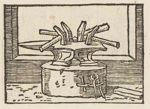
A cueur Constant, chose n'est qui puist nuyre: La Perrière, Le theatre des bons engins (Lyon, 1545), emblem 67 uses the imagery of an anvil hit by four hammers to express the value of constancy
Iconclass: 47D8(ANVIL) tools, aids, implements ~ crafts and industries: anvil 51KK2 Immutability 53A22 Stability, Firmness; 'Fermezza', 'Stabilimento', 'Stabilità' (Ripa) 51AA4:56DD1:22D1 Nothingness, Absence❧Fear, Dread; 'Paura', 'Timidità o Timore', 'Timore' (Ripa)❧loud sound, noise
Loci Communes: Contemptus et vilitatis (Contempt and worthlessness, Mépris et bassesse)
III i 30 Veneri suem immolavit He has sacrificed a pig to Venus
Αφροδίτῃ ὗν τέθυκεν. id est, Veneri suem immolavit. Dici solitum, ubi quis munus offert minime gratum. Invisus enim Veneri sus propter Adonidem illius amasium apri dente peremptum. Aut contra, cum quis alium in gratiam alterius laedit. Quemadmodum caper mactatur Libero, non quia gratus, sed quia nocuit.
Αφροδίτῃ ὗν τέθυκεν, He has sacrificed a pig to Venus, was customarily used when someone made an offering which was highly acceptable; for Venus hates pigs on account of her favourite Adonis, who was killed by the tusk of a wild boar. Or on the other hand when a man hurts someone else for the benefit of a third party, in the way that a he-goat is sacrificed to Bacchus, not because it is acceptable but because it has done him harm.
Facsimile:
Iconclass: 47I212 pig 53B1:12F2121 Acceptance❧animal sacrifice ~ Roman religion 92C49151 Venus mourning Adonis
Loci Communes: Munus aptum aut ineptum (A gift fitting or unfitting, Un présent convenable ou inconvenant)
III i 31 Non licet bis in pello peccare In war it is not permitted twice to err
Αμαρτεῖν οὐκ ἔνεστι δὶς ἐν πολέμῳ, id est, In bello bis errare non licet, in rebus periculosis non tutum est labi. Nam si semel erretur, actum est de capite, nec est secundo errori locus. Vel quod in bello, quia cuncta tumultu peragantur, non detur spatium revocandi restituendique si quid perperam sit institutum. Unde Homerus, cum alibi, tum Iliados Π. Ολιγη δὲ τ ἀνάπνευσις πτολέμοιο. id est, At vero exigua est interspiratio bells. Proinde in his rebus, in quibus si semel erratum fuerit, non est quod inposterum sarcias, cautim ac circumspecte agendum, admonente vel Mimo illo non infestivo: Deliberandum est diu, quidquid statuendum est semel. puta de sacerdotio, de matrimonio, deque id genus aliis: quae si temere fuerint instituta, non est quo priores cogitationesn posterioribus, ut aiunt, melioribus emendes. Huc pertinet quod e Catone citat Vegetius. In aliis rebus si quid erratum est, potest postmodum corrigi, praeliorum delicta emendationem non recipiunt, cum statim poena sequatur errorem. Aut enim confestim pereunt qui ignave imperiteque pugnaverunt, aut in fugam versi, victoribus ultra pares esse non audent. Adagium videtur natum ex apophthegmate: cum Lamachus quendam manipuli ducem increpasset, quod perperam quiddam egisset, isque responderet, se non iterum commissurum quod commiserat: In bello, inquit Lamachus, ne licet quidem peccare bis: quod primus error saepe vitam adimat.
Αμαρτεῖν οὐκ ἔνεστι δὶς ἐν πολέμῳ, In war a second mistake is not allowed. In dangerous business a slip is not safe; if one makes one mistake, it is all over, and there is no room for a second; or because in war, where disorder reigns supreme, there is no space in which to recall and regroup one's forces if one has started out on the wrong lines. Hence Homer in Iliad 16 and other places: 'Small is the respite in war.' And so in matters in which a mistake cannot be put right for the future, one should act cautiously and with circumspection; even that not inelegant writer, the moral poet, has his lesson for us: 'Give long thought to decisions that can be taken only once.' Good examples are ordination and matrimony and other things of the kind which, if rashly undertaken, cannot be set right, as they say, by second thoughts. Here belongs a saying of Cato's cited by Vegetius: In other fields, if one makes a mistake, it can be corrected afterwards; but error in war admits of no correction, for the penalty follows at once on the mistake. Those who have been idle or incompetent in battle either face immediate destruction or they are put to flight and never thereafter dare face their conquerors.' The adage clearly takes its rise from an apophthegm: when Lamachus had abused a subordinate for doing something wrong, and the man replied that he would never make the same mistake again, the general's reply was 'In war you cannot even make a mistake twice, for the first error often costs you your life.'
Facsimile:
Iconclass: 45A1 war 51B61:52CC41 Repetition❧Error; 'Errore' (Ripa) 54DD51 Danger; 'Pericolo' (Ripa)
Loci Communes: Iteratus error (A repeated error, Erreur répétée)
III i 32 Panidis suffragium The judgement of Panides
Πανίδου ψῆφος, id est, Panidis suffragium. In eos torquebatur, qui stulte atque inerudite iudicarent. Aiunt Panidem hunc Chalcidis regem fuisse, qui Hesiodum Homero praetulerit: perinde quasi dicas, Midae suffragium, quod is quoque Panis agrestem cantionem an teposuerit Apollinis musicae. In genere conveniet in iudicia vulgi, cui fere semper pessima pro optimis plaoverunt. Huius suffragiis Menandrum aliquoties superavit Philemon. Euripides cum quinque et septuaginta tragoedias scripserit, in solis quinque vicit. Nec aliud est hodie quoque populi de sacris concionatoribus iudicum, quam quod Plinius aetate sua de recitatoribus fuisse scribit: Si quando transibis, inquit, per basilicam, & voles scire quomodo quisque dicat, nihil est quod tribunal ascendas, nihil quod praebeas aurem: facilis divinatio, scito eum pessime dicere, qui laudabit maxime. Quapropter Socrates in Critone Platonis, illud in primis vult esse sapienti fixum decretumque, ne quid opinione vulgi commoveatur, imo suspectum habeat, quidquid senserit vulgo vehementer adridere. Scitum est illud antisthenis apud Diogenem Laertium, cui cum dixisset quispiam, Multi te laudant, Quid, inquid, male feci? Huic similimum quod Plutarchus in Apophthegmatis refert de Phorcione, cui dicenti cum populus Atheniensis praeter morem alacribus studiis assentiretur, conversus ad amicos, Quid hoc, inquit, est rei? Numquid imprudens perperam?
Πανίδου ψῆφος, The judgment of Panides, was diverted to apply to those who made foolish and ignorant criticisms. The story goes that this Panides was a king of Chalcis who preferred Hesiod to Homer; just as one might speak of 'the judgment of Midas/ because he likewise thought Pan's rustic notes better than the exquisite music of Apollo. In general it will suit public opinion, which nearly always chooses the worst in place of the best. In the judgment of the public, Menander was several times defeated by Philemon. 'Euripides, though he wrote seventy-five tragedies, won the prize with only five.' It is just the same in our own day with the public estimate of preachers as it was when Pliny wrote about the recitations of his contemporaries: 'If you ever pass through the basilica and have a mind to compare the quality of the various speakers, you need not go up on the platform or listen for a while. It is easy to guess: you can be sure that the worst speaker will be the man who gets the loudest applause.' That is why Socrates in Plato's Crito thinks that a wise man should adopt as his first principle never to be moved by public opinion, and indeed to suspect anything that he finds is excessively popular with the multitude. There is a good remark of Antisthenes, quoted by Diogenes Laertius. Someone said to him 'You are a popular figure, you know'; to which he replied 'What have I done wrong?' Plutarch records a very similar thing in his Apophthegms about Phocion. When a speech of his was received with wild enthusiasm by the Athenian public, he turned to his friends and said 'What is the meaning of this? Have I unconsciously made some bad mistake?'
III i 33 Pattaecione calumniosior A worse blackmailer than Pattaecion
Πατταικίωνος συκοφαντικώτερος. id est, Pattaecione calumniosior. Ab eventu natum. Nam Pattaecion quispiam infamis calumniator, cui cum mos esset bonis viris calumnias struere, atque hoc tam foedo quaestu parare rem, tandem deprehensus, convictusque poenas dedit capire. Huic praecipuum studium fuit, probati nominis iuvenibus negotium facessere. Idem popularibus convitiis lapidatus est, quod fur esset, et aedium perfossor. Talis fuit apud Athenienses Hyperbolus. Refert Suidas.
Πατταικίωνος συκοφαντικώτερος, A worse blackmailer than Pattaecion, is taken from something that happened. There was a notorious blackmailer called Pattaecion, whose custom was to invent false accusations against men of high standing, and from this disgusting trade he made a good living. At length, however, he was caught and convicted, and punished with death. His particular delight was to cause trouble for young men of well-known families. At the same time he was bombarded with open accusations of theft and housebreaking. Hyperbolus at Athens was another of the same sort. Recorded by Suidas.
III i 34 Omni pede standum One must put one's best foot forward
Ολῳ ποδί. id est, Omni sive toto pede, pro eo quod est, Summa vi, summoque nisu. Refertur a Suida. Quintilianus Institut. Orator. lib. 12. Itaque in his actionibus, omni, ut agricolae dicunt, pede standum est. Videri poterat traductum ab iis, qui in acie constanter partes suas tuentur, neque locum deserunt: aut a palaestritis, quorum artis est, scite pedem figere: nisi Quintilianus ab agricolis profectum esse testaretur.
[greek], literally, With one's whole foot, in the sense of 'with all one's might.' Recorded by Suidas. Quintilian, in book 12 of his Principles of Oratory: 'And so in these cases we must be prepared, as farmers say, to put our best foot forward.' This might be thought to be derived from those who stand firmly in the battle-line to do their duty, and do not desert their posts, or from wrestlers, part of whose skill it is to put their feet in the right place, if Quintilian hadn't told us that it arose among farmers.
Facsimile: 
Iconclass: 31A2255(+61) foot (+ forward) 54A11 Industriousness, Assiduity; 'Assiduità', 'Industria', 'Zelo' (Ripa) 54D11 Attempt, Trial
Loci Communes: Conatus (Effort, endeavor, Effort)
III i 35 Callum ducere To grow thick-skinned
Proverbiales metaphorae sunt, Callum ducere et occallescere, siquidem ad animum detorqueantur. Quintilianus libro 12. Et ingenio adhuc alendo callum inducere. Saepicule legimus apud M. Tullium, occalluisse aures, cum assuetudo sensum mali adimit.
To grow thick-skinned, and To harden are proverbial metaphors when applied to the things of the mind. Quintilian in book 12: 'And for the talent which still needs nursing to grow thick-skinned.' We find several times in Cicero the idea that a man's ears can become hardened, when habit removes the sense of what is wrong.
Facsimile:
Iconclass: 51G4:31A2262(+923) Hardness❧skin (human) (+ defending oneself) 56AA1 Insensibility, Insensitivity
Loci Communes: Malum assuetum (Habitual evil, Mal habituel)
III i 36 Extra organum Beyond the instrument
Quintilianus libro undecimo. Et his diversa vox, et pene extra organum: cui Graeci nomen amaritudinis dederunt, supra modum ac pene naturam vocis humanae acerba. Extra organum dicetur, quod immodicum est, et extra vulgarem mensuram. Veluti si quis leges Platonis huius aetatis civibus proponeret. Ductum est ab organo musico, quod intra vigesimam vocem consistit. Conveniet item in vehementer clamosum.
Quintilian in book 11: 'And a tone of voice the opposite of this, almost beyond the instrument, called in Greek harshness; and harsh indeed it is beyond reasonable limits and almost outside the natural range of the human voice.' We can use 'beyond the instrument' of anything that is unreasonable and outside the standards of measurement in common use; for instance, if one were to propose to citizens of our own day the laws of Plato. [The expression] is taken from a musical instrument, the limits of which fall within range of twenty notes. It will be suitable also for an extremely noisy man.
Facsimile:
Iconclass: 22D12 disharmonious sound, dissonance 48C73 musical instruments; group of musical instruments 51DD2 Disharmony, Irregularity 57AA67 Unreasonableness
Loci Communes: Dissimilitudinis et incongruentiae (Dissimilarity and incongruity, Dissemblance et incongruité)
III i 37 Demulcere caput To stroke a man's head
Demulcere caput, allegoria proverbii vice recepta, pro blandiri: sumpta ad adulantium gestu. Quanquam hunc inter moras commemorat Fabius li. xi. In hac, inquit, cunctatione sunt quaedam non indecentes, ut appellant scenici, morae, caput mulcere, manum intueri, infringere articulos. Chremes in Heautontimorumeno, negat se sibi temperare posse, quin Syro caput demulceat. Est subinde & apud Plautum. Divus Hieron. ad Augustinum: Praetermitto salutationis officia, quibus meum demulces caput. In eundem sensum usurpavit Lucilius Scabere caput apud Nonium: Hic ubi me videt, subblanditur, palpatur, caput scabit.
To stroke a man's head is an allegorical expression in use as a proverb for flattering him, taken from an action characteristic of toadies. Though this is one of the delaying tactics mentioned by Quintilian in book two: 'In this art of going slow are included certain tricks of pausing which are, as playwrights say, not out of character - to stroke one's head, to inspect one's hand, to crack one's knuckles.' Chremes in the Heautontimorumenos says he cannot refrain from 'stroking Syrus' head.' It occurs now and again in Plautus. St Jerome writing to Augustine: 'I pass over the respectful greetings with which you stroke my head.' In the same sense Lucilius, cited by Nonius, used scabere caput, To scratch a man's head: 'This man when he sees me is all flattery and fawning and scratching my head.'
III i 38 Toto organo With a full range
Quintilianus lib. xi. Est enim quaedam ad auditum accommodata non magnitudine, sed proprietate ad hoc velut tractabilis: utique habens omnes in se qui desiderantur, sonos, intentionesque, et toto, ut aiunt, organo instructa. Hactenus ille. Proinde toto organo instructa recte dixeris, quae numeris omnibus constant, et undique quadrant. Sumptum et hoc a musicorum instrumentis.
Quintilian, book 11: 'For there is a certain kind of voice specially adapted to attract the hearer, not by its volume but by its adaptability; besides which it is as it were manageable, and in any case possesses in itself all the range of sound and volume which is desirable, and is, as they say, equipped with the full range.' So Quintilian; and thus you will use 'equipped with the full range' correctly of things which are complete at all points and in perfect adjustment. This too is taken from the instruments used by musicians.
Facsimile:
Iconclass: 22D11 harmonious sound, harmony, consonance 31B62350 voice 51D2 Harmony, Regularity 51A7 Perfection, Completeness; 'Perfettione', 'Operatione perfetta' (Ripa)
Loci Communes: Perficiendi sive absolvendi - ab initio ad finem (Finishing, completing - from beginning to end, Achever, accomplir - du début à la fin)
III i 39 Ultra linum Beyond the thread spun
Υπὲρ τὸ λῖνον. i. Ultra linum. Lucianus in love redarguto: Οὐδὲ γὰρ οὕτω γένοιτ᾽ ἂν ἔξω τοῦ νομου τῶν μοιρῶ οὐδὲ ὑπὲρ τὸ λῖνον. id est, Neque enim quidquam ita fieri poterit, praeter Parcarum legem, et ultra linum. Ultra linum dixit pro eo quod est, extra decretum fata le. Allusum est autem ad fila trium Parcaru. Confine illi, quod alias retulimus: ὑπὲρ τὸν ἄτρακτον. id est, Ultra fusum.
'[greek], Beyond the thread spun. Lucian in Jupiter refuted: 'For nothing could happen like that, outside the Fates' jurisdiction and beyond the thread they spin.' When he says 'beyond the thread' he means outside the limits decreed by fate, and there is an allusion to the thread spun by the three Fates. Related to one I have recorded elsewhere, Beyond the spindle.
Facsimile: 
Iconclass: 92G1 Fates, Parcae (Moirae) 92G13(+0) Atropos, usually with shears (+ variant)
Loci Communes: Longae vitae (A long life, Longue vie)
III i 40 Omnia secunda: saltat senex All's well: the old man dances
Omnia secunda, saltat senex. Iocus proverbialis, quo conveniet uti, quoties res prius in periculum adducta, praeter exspectationem feliciter exsicrit. Servius enarrans illum Maronis versiculum ex tertio Aeneidos libro, Lustramurque Ious, votisque incendimus aras: adagium refert explicatque his verbis. Sciendum sane moris fuisse, ut piaculo commisso, ludi celebrarentur. Nam cum iracundia matris Deum Romani laborarent, et eam nec sacrificiis nec Iudis placare possent, quidam senex statis ludis Circensibus saltavit, quae sola fuit causa placationis. Unde et natum proverbium: Omnia secunda, saltat senex. Idem Servius erplicans locum eiusdem poetae in Aeneidos octavo. Ut celsas videre rateis, atque inter opacum Allabi nemus, et tacitis incumbere remis, Terrentur visu subito, cumctique relictis Consurgunt mensis, audax quos rumpere pallas Sacra vetat. Cum aliquando, inquit, Romae ludi Circenses Apollini celebrarentur, et Hannibal nuntiatus esset citca portam Collinam ingruere, omnes raptis armis concurrunt. Reversi postea cum piaculum formidarent, invenerunt saltantem in circo lenem quendam, qui cum interrogatus, dixisset se non interrupisse saliationem, ductum est hoc proerbium, Salva res saltante sene. Verrius apud Festum Pompeium huiusmodi fabulam affert: C. Sulpitio, et C. Fuluio consulibus M. Calpurnio Pisone praetore urbis faciente ludos, subito nuntiato hostium adventu, e foro ad arma concursum est. Sed postquam victores redissent in thearrum, ne ludi intermissi religionem afferret, et instaurari oportere dicerent, inventum est ibi C. Pomponium libertinum, hominem grandem natu, ad tibicinem saltasse. Itaque gaudio non interruptae religionis editam vocem, nunc quoque celebrari. Sunt qui C. volumnium arbitrentur appellatum fuisse, qui ad tibicinem saltarit. Meminit huius et T. Livius alicubi, ni nos fallit memoria. Huic finitimum est illud, quod alio diximus loco, γλαῦξ ἱπτατος. id est, Noctus volavit. Aristophanes in Vespis, Γλαύξ γὰρ ἡμῶν πρὶν μάχεσθαι τὸ στρατὸν διέπτατο. id est: Nostra enim ante proelium ulula pervolavit agmina. Significat victoriam non virtute militum, sed Minervae dexteritate contigisse.
All's well: the old man dances is a humorous comment which has become proverbial; it will be used appropriately when something that was earlier in peril has, contrary to expectation, ended happily. Servius records the proverb in his comment on that line of Virgil in book three of the Aeneid: 'We purify ourselves in honour of Jupiter, and make the altars blaze with offerings,' and explains it in the following words: 'We must remember that it was the custom, when some offence had been committed that required expiation, for games to be celebrated. When the Romans had incurred the anger of the Mother of the gods, and could appease her neither by sacrifices nor by games, there was an old man who danced at the regular games in the Circus, and this alone was responsible for appeasing her. Hence arose the proverb All's well: the old man dances.' Servius again, when expounding a passage in the eighth book of the Aeneid: 'When they caught sight of the tall ships, and the men gliding through the shadowy forest, pulling silently upon their oars, they were terrified at this sudden vision and all rose from the tables and abandoned them; but Pallas kept his courage and forbade them to break off the sacred rites.' 'One day,' says Servius, 'when games in the Circus were being held in Rome in honour of Apollo, and news arrived that Hannibal was approaching the Colline gate, all seized their arms and ran to their places. When they returned later, and were afraid that they might have committed an offence requiring expiation, they found an old man dancing in the Circus. Upon enquiry, he assured them that he had danced on without intermission; and hence arose the proverb 'Things are all right as long as the old man dances.'" Festus Pompeius cites Verrius for the following story. 'In the consulship of Gaius Sulpitius and Gaius Fulvius, when Marcus Calpurnius Piso the praetor of the city was holding games, news suddenly arrived of the approach of the enemy, and all ran from the forum to take up arms. When they returned victorious to the theatre, they were afraid that this break in the ceremony might create a ritual objection and they would be told that it must be repeated; but they found there one Gaius Pomponius, a freedman, a man advanced in years, who had been dancing to the music of a flute. Delighted therefore to find that the formalities had not been interrupted, they used the expression still familiar today.' Some think that the man who danced to the flute-music was called Gaius Volumnius. Livy also mentions this somewhere, unless my memory deceives me. This is related to the saying of which I have spoken in another place: The owl has flown. Aristophanes in the Wasps: 'For before we joined battle an owl flew through our ranks.' He wishes to convey that the victory was owed not to the valour of the soldiers so much as to Minerva's cleverness.
Facsimile:
Iconclass: 31D16 old man 43C911 man dancing alone 54E42 Protection; 'Custodia', 'Difesa contra nimici, malefici & venefici', 'Difesa contra pericoli', 'Riparo da i tradimenti' (Ripa)
Loci Communes: Praeter spem bonum aut malum (Good or bad beyond expectation, Bien ou mal inattendu)
III i 41 Gladium dedisti, qui se occideret You have given him a sword with which he could kill himself
Adagii formam habet, quod scripsit Plautus in Trinummo. Gladium dedisti, qui se occideret, id est, ministrasti materiam & adiumentum ad perniciem. Veluti si quis amanti adulescenti pecuniam det in manum: aut iuveni temerario mandet magistratum: aut mulieri permittat quo lubeat eundi licentiam. Dedit & Aeneas Didoni gladium quo se occidit. Quo quidem loco multa Serviur, quae nobis alio loco dicta sunt in proverbio: ἐχθρῶν ἄδωρα δῶρα.
The form of an adage is to be seen in some words in Plautus, in the Trinummus: 'You have given him a sword with which he could kill himself; you have, that is, provided help and materials for his destruction. If, for example, one were to hand over money to a youth in love or entrust office in the state to a headstrong young man or let a woman go wherever she pleases. Aeneas too gave Dido a sword with which she killed herself; on which passage Servius has much to say, of which I have spoken in another place, on the proverb Gifts of enemies are no gifts.
Facsimile:
Iconclass: 31E234631(+7) violent death by sword (+ seeking death, suicide) 33A41:45C13(SWORD) gifts being accepted❧hacking and thrusting weapons: sword 96B332 death of Dido; she climbs the funeral pyre and falls upon the sword of Aeneas
Collectanea (1500): 519
Loci Communes: Occasio (Opportunity, Occasion)
III i 42 Alienum arare fundum To plough another man's land
Αλλοτρίαν ἄρουραν ἀροῦν, id est, Alienum arvum arare. Proverbiali metaphora dictum est pro eo quod est, alienum agere negotium, aut cum alienis uxoribus habere rem. Theognis in sententiis: Εχθαίρω δὲ γυναῖκα περίδρομον, ἄνδρα δὲ μάργον. Ος τὴν ἀλλοτρίην βούλετ᾽ ἄρουραν ἀροῦν. id est: Est invisae mihi mulier vaega inersque maritus, Alterius fundum quisquis arare cupit. Plautus item de marito adultero: Fundum alienum arat, suum incultum deserit. Huic similis color est apud iureconsultos. Alienos irrigare agros, tuis sitientibus. C. de servit. & aqua. cap. praeses. Durum est et crudelitati proximum, ex tuis praediis aquae agmen ortum, sitientibus agris tuis, ad aliorum usum, vicinorum iniuria propagari.
' [greek], To plough another man's field, is a proverbial image for minding other people's business or meddling in things that are nothing to do with you. Theognis in his moral maxims: I hate a roving wife and an idle husband, who longs to plough another man's field.' Plautus too says of an adulterous husband 'He ploughs another man's land, leaving his own untilled.' There is an expression similar to this in the law-books: To water other men's fields while your own are thirsty. It can be found in the Code, On servitudes and water-supply, in the chapter beginning Praises: 'It is a hard thing, and close to cruelty, for a head of water arising on your own property while your own fields are thirsty to be developed for the benefit of others by the wrongful conduct of your neighbours.'
Facsimile:
Iconclass: 47I123 ploughing 33A7:25H18 neighbour❧cultivated land 52A12 Curiosity, Inquisitiveness, Desire of Knowledge; 'Curiosità' (Ripa)
Loci Communes: Inanis opera (Vain effort, Effort vain)
III i 43 Fluvius quae procul absunt irrigat A river waters what is far away
Ποταμὸς τὰ πόῤῥω ποτίζων, τὰ δ᾽ ἔγγιον καταλείπει, id est, Fluvius quae longe dissita sunt, irrigar, quae proxima sunt, praeterit. De his dici convenit, qui bene merentur de externis, et nihil ad se pertinentibus, suos negligunt. Refert Diogenianus. Apparet inde ductum, quod ubi fluvius oritur minor esse solet, minusque argillae secum trahens: et quo longius recessit a fonte, hoc est copiosior v beriorque.
[greek], A river waters distant places and passes by what is near. Will be appropriate for people who do good to strangers and those with whom they have no connection, and neglect their own kin. Recorded by Diogenianus. Evidently derived from the fact that a river near its source is normally smaller and carries less deposit with it; the greater the distance from the spring, the greater its size and fertilizing power.
Facsimile: 
Iconclass: 25H213 river 33A5 friends 33A61 help (to an endangered fellow man) 54A6 Helpfulness 54AA2 Negligence; 'Negligenza' (Ripa)
Loci Communes: Absurda, indecora, seu praepostera (Absurd, unbecoming, or preposterous things, Choses absurdes, inconvenantes ou déplacées)
III i 44 Magno flumini rivulum inducis You lead a rivulet into a great river
Ποταμῳ μεγάλῳ ὀχετὸν ἐπάγεις, id est, Magno flumini canalem inducis, id est, maximis rebus pusillum & inutile momentum addis. Commemoratur a Suida. Finitimum est illis: Silvae addere ligna, mari aquam, soli lucernam.
[greek], You lead a drainage-channel into a great river. You add a weak and useful force to great affairs. Preserved by Suidas. Close to To carry wood to the forest, water to the sea, and To hold a candle to the sun.
Facsimile:
Iconclass: 51GG1:25H212 Littleness, Smallness❧brook 51G1:25H213 Largeness, Magnitude❧river 54BB3 Inutility, Noxiousness; 'Nocumento', 'Nocumento d'ogni cosa' (Ripa)
Loci Communes: Accessio pusilla aut nimia (A trifling or excessive addition, Un ajout minime ou excessif)
III i 45 Ne patris quidem nomen dicere possit He could not even tell you his father's name
Synesius in epistola quapiam adversus Andronicum: ἄνθρωπος οὐκ ἔχων εἰπεῖν ὄνομα πάππου, ἀλλ᾽ οὐδὲ πατρός φασι. i. Homo qui avi nomen dicere non possit, imo ne patris quidem, ut aiunt. Quadrat in vehementer obscuros et spurios, incertoque patre natos. Quod genus est et illud luvenalis: Quorum nemo queat patriam menstrare parentis. Unde Plutarchus existimat spurios dictos nothos, quod duabus his literis praenotari soleant, S. P. hisque significari, sine patre.
Synesius in one of his letters, attacking Andronicus: 'A man who cannot tell you his grandfather's name, nor his father's for that matter, as the saying is.' Suitable for excessively obscure people and bastards, and those whose father is uncertain. An example would be that line in Juvenal 'Whose fathers' native land no man could tell.' Hence Plutarch's theory that sons of unknown fathers are given the first name Spurius, because the usual abbreviation for this is the two letters S and P, and these stand for sine patre, with no father.
Facsimile:
Iconclass: 51AA8:42G2111 Things Unknown, the Unknown❧father (first degree family relationships)
Loci Communes: Nobilitas / obscuritas (Nobility / obscurity, Noblesse / obscurité)
III i 46 Ne si bos quidem vocem edat Not if an ox were to speak
Alciphron in epistola Glycerae ad Menandrum: Αλλὰ τοῦτο μὲν οὐδενὶ προπῳ μὰ τὰς θεὰς οὐδ᾽ εἰ βοῦς μοι, τὸ λεγόμενον, φθέγξαιτο, πειθείην ἂν. id est, Hoc autem nullo pacto crediderim, ne si bos quidem fuerit elocuta. Hinc dictum est quod in annalibus frequenter commemoratur bos humanam vocem reddidisse. Legimus, nisi fallimur, apud Platonem non dissimili figura dictum, etiam si quercus eloqueretur. Nam olim e quercubus Dodonaeis reddebantur oracula.
Alciphron in a letter from Glycera to Menander: 'But this, in god's name, I will on no account believe, not if an ox were to tell it me, as the saying is.' The source of this is the frequent record in the history-books of oxen speaking with a human voice. I remember reading, in Plato if I am not mistaken, a rather similar expression, 'Even if an oak were to speak'; for in old days oracles were given by oak-trees at Dodona.
III i 47 Aegaeum navigat He sails the Aegaean
Τὸν αἰγαῖον πλεῖ, id est, Aegaeum navigat, ut subaudias κόλπον. Aelianus in epistola quadam: Γεωργίαν καὶ γεωργεῖν ἀπολειπὼν ὁ γείτων λάχης ἐπέβη νεὼς, καὶ πλεῖ τὸν αἰγαῖον φασι, καὶ ἄλλα πελάγη μετρεῖ, ἐπικυματίζει, καὶ λάρου βίον ζῇ, καὶ ἀνέμοις μάχεται διαφόροις. id est, Vicinus Laches relicta agricultura et agricolationis usu, navem conscendit, atque Aegenm, ut aiunt, navigat, reliquaque metitur maria, et in fluctibus agens, lari vitam vivit, cumque variis ventis dimicat. Perisus item in quinta Satyra: Ocius ad navem, nihil obstat quin trabe vasta Aegeum rapias. Arbitror hoc mare ceteris esse periculosius ob frequentes scopulos. Hinc est illa M. Tullii metaphora, in Divinatione: Intelligo quam scopuloso difficilique loco verser. Nec infrequens apud Hieronymum: Escopulosis locis enavigavit oratio, quoties sentit expeditam quaestionum difficultatem. Quadrabit igitur in hominem ob lucri studium nihil omnino periculi recusantem.
[greek], He sails the Aegean (we must understand the word Gulf). Aelian in one of his letters: 'My neighbour Laches has abandoned farming and his farming skill, boarded a ship, and now sails the Aegean, as the saying is, and other seas, riding the waves, living a seagull's life, as he fights with the different winds.' Persius too in his fifth satire: 'Quickly take ship! What hinders you from racing o'er the Aegean in some vast hulk?' I suppose this sea was more dangerous than others from the frequency of rocks. Hence that metaphor of Cicero's in the Divinatio: I see clearly how rocky and how perilous is my sphere of operations.' Nor is it uncommon in Jerome: 'My words have now made a safe passage through rock-infested seas,' when he means that he has unravelled the difficulty of the questions. So this will suit a man who does not refuse to face any and every peril for the sake of gain.
Facsimile:
Iconclass: 25H2322(AEGAEAN) sea (AEGAEAN) 46C285 manoeuvering a ship 54A81 Fearlessness, Intrepidity; 'Intrepidità & Costanza' (Ripa)
Loci Communes: Discriminis (Danger, crisis, Danger)
III i 48 Liberi poetae et pictores Poets and painters are not subject to audit
Lucianus in Dialogo quem inscripsit, ὑπὲρ τῶν εἰκόνων. Καὶ τι παλαιὸς οὗτος ὁ λόγος, ἀνευθύνους εἶναι ποιητὰς καὶ γραφέας. i. Atqui vetus hoc dictum est, liberos esse poetas ac pictores. Idem in Demosthenis Encomio, τὸ μὲν δὴ ποιητικὸν φῦλον ἐλεύθερον. id est, Atqui poeticum genus liberum. sentit autem liberum esse poetis et pictoribus impune quicquid velint fingere. εὐθύνη Graecis est causa sive accusatio. Magistratum itaque de quo cogebatur rationem reddere qui susceperat, ὑπεύθυνον appellabant. Liberum autem & de quo non exigebatur ratio ἀνεύθυνον. In dicat hoc Aeschinis oratio adversus Ctesiphontem. Diphilus apud Athenaeum libro sexto de poetis: οἷς ἐξουσία Εστιν λέγειν ἅπαντα καὶ ποιεῖν μόνοις. id est: Quibus licet, Et facere solis quidlibet atque dicere. Ad quod allusit Horatius, cum ait: Pictoribus atque poetis Quidlibet audendi semper fuit aequa potestas. Nam poetae numine aguntur, eoque illis frustra praescribas. Seneca libro De vita beata primo. Sive Platoni, inquit, credimus frustra poeticas fores compos sui pepulit, sive Aristoteli, nullum magnum ingenium sine mixtura dementiae fuit. Est autem plurimum cognationis inter poeticen, et picturam. Hinc est quod Simonides auctore Plutarcho: τὴν μὲν ζωγραφίαν ποίησιν σιωπῶσαν προσηγόρευσεν, τὴν δὲ ποίησιν ζωγραφίαν λαλοῦσαν. id est, Picturam tacitam poesim appellavit: poesim autem loquentem picturam. Proinde Horatius: Ut pictura poesis erit. Torqueri potest in eos, qui pertinaci et obstinato sunt ingenio, quosque necesse sit suis moribus relinquere. Aut in mulieres quibus nihil non permittitur, aut in principes quibus omnia laudi dantur.
Lucian in the dialogue which he called In Defence of Images: 'And yet there is an old saying that poets and painters are not subject to audit.' Again in the Encomium on Demosthenes: 'And yet the tribe of poets is free.' His point is that poets and painters are free to invent with impunity whatever they please. Euthynê in Greek is a public examination or a charge that must be met; and so they called any public office, the holder of which was compelled to render an account of his tenure, hypeuthynos, subject to audit, and one which was free and of which no account was called for was aneuthynos, not so subject. This is shown by the speech of Aeschines Against Ctesiphon. Diphilus in Athenaeus, book six, speaking of poets: 'Who alone / Have power to say and do whate'er they please.' Horace alludes to this when he says: 'Painters and poets always have enjoyed / An equal power to take what risks they choose.' For poets are carried away by a divine power, and so you would prescribe rules for them in vain. Seneca in his first book 'On the Happy Life' says 'If we believe Plato, a man in full control of himself knocks in vain at the gates of poetry; if Aristotle, no great wit is ever free from an admixture of madness.' And there is of course a very close kinship between poetry and painting. Hence Simonides, as we know from Plutarch, 'called painting silent poetry and poetry a speaking picture.' And so Horace: 'Poetry will be like painting.' This can be turned against those who are persistent and obstinate by nature, and who must of necessity be abandoned to their own natural bent; or to women, to whom all things are permissible, or princes who are given credit, whatever they do.
Facsimile: 
Iconclass: 44C5(+0) freedom of the press, freedom of speech (+ variant) 48C91 writer, poet, author 48C51 painting (including book-illumination, miniature-painting) 51E11:31B6235 Freedom, Liberty; 'Libertà' (Ripa)❧speaking
Loci Communes: Libertas, veritas (Freedom, truth, Liberté, vérité)
III i 49 Per transennam inspicere To see through a lattice
Per transennam inspicere. Proverbiali nimirum figura dictum est, pro eo quod est, non propius neque singillatim, sed procul et summatim inspicere. Translatum a negotiatoribus, qui mercibus quas contrectari nolunt, cancellos obiciunt: quidam etiam vitrum pellucidum opponunt, ut praetereuntibus procul modo contemplari liceat: nec explicant eas nisi licitatori idoneo. M. Tullius De oratore libro primo. Si in aliquam domum plenam ornamentorum, vel in villam venisses, si ea seposita, ut dicis, essent, tuque valde spectandi cupidus esses, non dubitares rogare dominum, ut proferri iuberet: praesertim si esses familiaris: similiter nunc petas a Crasso, ut eam copiam ornamentorum suorum, quam constructam uno in loco, quasi per transennam praetereuntes strictim aspeximus, proferat, et suo quidque in loco collocer.
To see through a lattice was a metaphor, no doubt proverbial, for a sight of things which is not close and detailed but distant and in outline. It is derived from shopkeepers who erect some sort of screen before articles which they do not wish to be handled; some even put clear glass in front of them, so that the passers-by can only inspect them from a distance, and do not unfold them except to a likely purchaser. Cicero in book one of the De oratore: 'Suppose you had entered some house, or a country seat, full of works of art; if they were kept in some separate place, as you say, and you very much wanted to inspect them, you would not hesitate to ask the master of the house to have them brought out, especially if he was a friend of yours. In the same way you might now ask Crassus if he would bring out the store of fine things of which we have had only a passing glance, through the lattice as it were, piled up as they were in one place, and would put each of them in its appropriate position.'
Facsimile:
Iconclass: 31A319:41A333 interference with sight❧window shutters 46B132 shop-window, show-window
Loci Communes: Indiligentiae (Carelessness, Négligence)
III i 50 Ne de lite pronuncies Judge not a cause
M. Tullius libro Epistolarum ad Atticum septimo, Obsecro μήτε δίκην, praesertim in re, à quo nihil unquam vidi temere fieri. Notavit Cicero carmen proverbiale, quod citatur cum ab aliis multis, tum a Luciano libello De calumnia. Μήτε δίκην δικάσῃς, πρίν ἀμφοῖν μῦθον ἀκούσῃς. id est, Ne iudex fueris, partes ni audiveris ambas. Nonnulli tribuunt Hesiodo, sed falso. Unde Tullius ψεύδησίοδειον appellat, eum sit Phocylidis. Admonet autem non temere pronuntiandum de quopiam, nisi re ultro citroque diligenter cognits. Citatur apud Aristophanem in Vespis: Η που σοφὸς ἦν ὅστις ἔφασκε, πρὶν ἂν ἀμφοῖν μῦθον ἀκούσῃς, Οὐκ ἂν δικάσαις Sapiens fuit is, quisquis dixit: Prius ac partem audieris utramque Ne iudicem agas. Eandem sententiam sic extulit Euripides in Heraclidis: Τίς ἂν δίκην κρίνοιεν, ἢ γνοίη λόγον, Πρὶν ἂν πάῤ ἀμφοῖν μῦθον ἐκμάθη σαφῇ. id est, De lite qui nam iudices, aut qui queas Pernosse rem, prius atque partem audsueris Utramque? Allusit huc Seneca in Medea: Qui statuit aliquid parte inaudita altera, Aequum licet statuerit, haud aequus fuit. Fertur inter Graecanicas sententias et hic senarius: Ανεξέταστον μὴ κόλαζε μηδένα. id est, Ne quempiam punito, rem ni expenderis.
Cicero in book seven of his Letters to Atticus: 'Judge not a cause, I beg you, you in particular, whom I have never seen to do anything rash.' Cicero alluded to a proverbial line, cited by many authors and in particular by Lucian in his Calumny: 'Judge not a cause till you have heard both sides.' Some ascribe this to Hesiod, but wrongly; hence Cicero calls it 'pseudo-Hesiod,' since it is really by Phocylides. Its message is that we should not be in too great a hurry to pronounce on any question, until we have diligently reviewed it from both sides. It is also cited by Aristophanes in the Wasps: 'How wise was that man who said that before you have heard both sides tell their tale, you should not play the judge.' The same opinion was thus expressed by Euripides in the Heraclidae: 'Who would pass sentence in a suit or judge an argument before he has heard their story clearly from both sides?' Seneca alludes to this in his Medea: 'He who gave judgment with one side unheard, / Though he judged rightly, was an unjust judge.' And in the collection of Greek aphorisms there also occurs this line: 'Punish no man before his case is heard.'
Facsimile:
Iconclass: 52A52 Judgement, Discrimination; 'Giuditio' (Ripa) 54A2:52C42 Carefulness, Diligence; 'Diligenza' (Ripa)❧Interpretation 59C21 Equality, Equity, Fairness, Righteousness; 'Equalità', 'Equità', 'Giuditio giusto', 'Ordine dritto e giusto', 'Ugualità' (Ripa)
Loci Communes: Causa indefensa (An undefended case, Cause indéfendue)
III i 51 Duobus pariter euntibus When two go together
M. Tullius Epist. ad Atticum libro nono. Una fuissemus, consilium certe non defuisset, σύντ δύ᾽ ἐρχομένω. Idem epist. famil: libro nono ad M. Varronem. Volebam prope alicubi esses. Si quid bonae salutis, σύντ δύ᾽ ἐρχομένω. Apposite citatur apud Platonem in Protagora, doces opinionem reddi firmiorem, si fuerit ab altero comprobata. Locus est apud Homerum Iliados K. ubi Diomedes ituros exploratum, quid agant Troiani, comitem postulat. Id enim fore tum iucundius, tum tutius. Carmen sic habet: Αλλ᾽ εἴτις μοι ἀνὴρ ἅμ᾽ ἔποιτο καὶ ἄλλος, Μᾶλλον θαλπωρὴ, καὶ θαρσαλεώτερον ἔσται, Σύντε δύ᾽ ἐρχομένω, καὶ τε πρὸ ὅ τοῦ ἐνόκσεν, ὅππως κέρδως ἔῃ, μοῦνος δ᾽ εἴπερ τε νοήσῃ Αλλὰ τε οἱ βράσσων δὲ νόμος, λεπτὴ δὲ τε μῆτις. id est, At mihi si qui alius veniat comes, ille futurus Solamen, fueritque simul fiduciae mutor, St duo contuncti veniant. Dein hic prsor illo, Si quid opus facto videt. At qui solus et unus, Quam vis per spiciaet, tamen est mens segnter illi, & Consilium tenue. Apulcius in libello De daemonio Socratis, autumat allegoriam non infrugiferam huic Homerico subesse figmenro, videlicet periculosis in rebus adhibenda duo, consilium et opem. Ulysses quoniam pruden tissimus fingitur, consiln symbolum haber. Diomedes, utpote iuvenis viribus antecellens, auxilii sustinet imaginem. Apulei ex eo loco verba sunt haec: Itidem cum rebus creperis et afflictis speculatores deligendi sunt, qui nocte intempesta, castra hostium penetrent, nonne Ulysses cum Diomede deliguntur, veluti consilium et auxilium, mens et manus, animus et gladius.
Cicero in book 9 of his Letters to Atticus: 'We should have been together, we should at least have made some plan, two of us going together.' Again in book 9 of his Letters to Friends, writing to Marcus Varro: 'I wished you were somewhere near by. If there is any honourable solution, the two of us going together...' The expression is aptly quoted by Plato in the Protagoras to show that an opinion is rendered more likely to be right if approved by a second person. The passage is to be found in Homer, in book 10 of the Iliad, where Diomede, who is off on a mission to discover what the Trojans are doing, asks for a companion, on the ground that this will be more agreeable and safer. The lines run as follows: 'But if someone else would come with me, this would be more cheerful and would give me confidence, when two go together. One man sees quicker than another what it were best to do; but if a man is all by himself, when he thinks things over, his mind is slower and his counsel has no weight.' Apuleius in his book On the Divine Sign of Socrates asserts that an allegory of some value underlies this fiction in Homer - that in a dangerous situation two things are required, wisdom and strength. Ulysses, who in the story is the most intelligent of men, he takes to be a symbol of wisdom, while Diomede, who is a young man of exceptional strength, represents physical assistance. The wording of the passage in Apuleius runs like this: 'In the same way, in a dark and difficult situation, when men are to be chosen to reconnoitre, who must penetrate the enemy camp at dead of night, does not the choice fall on Ulysses and Diomede, as if on wisdom and physical assistance, courage and sword, brain and brawn?'
Facsimile: 
Mutuum auxilium: Alciatus, Emblemata (Leiden, 1591), emblem 160 uses the theme of mutual helpfulness
Unum nihil, duos plurimum posse: Alciatus, Emblemata (Leiden, 1591), emblem 41 uses the theme of mutual helpfulness and quotes the comment's exemplum of Ulysses and Diomedes
Iconclass: 52A51 Wisdom; 'Sapienza', 'Sapienza humana', 'Sapienza vera' (Ripa) 52C2:52C11 Affirmation, Confirmation; 'Confermatione' (Ripa)❧Opinion 54A6 Helpfulness 54A7 Strength, Power; 'Fortezza', 'Fortezza d'Animo e di corpo', 'Fortezza del corpo congiunta con la generosità dell'animo', 'Fortezza & valore del corpo congiunto con la prudenza & virtù del animo', 'Forza' (Ripa) 94F62 Ulysses and Diomedes raid the Trojan lines at night
Loci Communes: Cum auxilio ; citra auxilium (With help; without help, Avec aide ; sans aide)
III i 52 Manu serendum, non thylaco Sow with the hand and not with the whole sack
Τῇ χειρὶ δεῖ σπείρειν, ἀλλὰ μὴ ὅλῳ τῳ θυλάκῳ, id est, Manu sementem facere oportet, non autem tota corbe. Dictum Corinnae ad Pindarum poeram, ut autor est Plutarchus in commentario quem inscripsit, πότερον ἀθυναῖοι κατὰ πόλεμον, ἢ κατὰ σοφίαν ἐνδοξώτεροι. Modus in omni reservandus, et pedetentim ab aliis ad alia transeundum. Ab agricolis ductum est, qui cum serunt, non semel effundutipso vase, sed manu rara spargunt semina, ut universo arvo occupando sofficiant. Ad eundem modum ita dispensanda est benignitas, ut multis suppeditare possis. Ita moderandus est labor in literis, ut ad alia quoque vitae munia suppetat animi vigor.
[greek], One must sow with the hand and not with the whole sack. Corinna's remark addressed to Pindar the poet, as we learn from Plutarch in the essay he entitled 'Were the Athenians More Famous in War or in Wisdom?' Restraint should be observed in all things, and transitions from one thing to another should be gradual. Taken from husbandmen who, when they sow, do not pour out the seed all at once from its actual container but scatter the grain loosely with the hand, so that there is enough to cover the whole field. In the same way you ought to moderate your generosity, so that you may be able to help many people in need. It is the same with one's studies: they ought to be rationed, that enough mental energy may be available for life's other duties.
Facsimile:
Iconclass: 31A2245 hand 41A777 container of textile material: bag, sack, net 47I131 sowing 54A42 Restraint 54A43 Temperance, Moderation; 'Misura' (Ripa)
Loci Communes: Modestia modusque (Modesty and moderation, Modestie et mesure); Tarditatis et cunctationis (Slowness and delay, Lenteur et retard)
III i 53 A fronte atque a tergo Forward and backward
Πρόσω καὶ ὀπισω. A fronte atque à tergo. Proverbii vice receptum, pro eo quod est, diligenter inspicere, & praeterita cum praesentibus ac futuris conferre. Sumptum est autem ex Iliados lib. i. ubi Achilles Agamemnonis incogitantiam accusans, sic ait: Οὐδὲ τι οἶδε νοῆσαι ἅμα πρόσσω καὶ. id est, Nec novit simul à tergo atque à fronte videre. Rursum in eiusdem operis lib. iii. Αμὰ πρόσσω καὶ ὀπισσω Λεύσει. id est, A tergo simul atque à fronte videbit. Iterum Iliados σ. Ο γὰρ οἷος ὁρᾶ πρόσσω καὶ ὀπίσσω. id est, Solus enim hic à fronte simul tergoque tuetur M. Tullius proverbii vice usurpavit lib. Familiarium epistolarum xiii. quem versum senex Praecilius laudat egregie, & ait posse eundem ἅμα πρόσσω καὶ ὀπισσωvidere. Huic affine videtur illud Hesiodium: Πάντα μάλ᾽ ἀμφὶς ἰδὼν μὴ γείτοισι χάρματα γήμῃ. id est, Cuncta bene undique discipiens, ne gaudia ducas Vicinis. Plato in Cratylo monens ea quae dicta fuerant, etiam atque etiam qualia sint discipi, usurpat hoc Homeri dictum, βλέπειν ἅμα πρόσσω καὶ ὀπίσσω. M. Tullius Philippica iii. usurpat pro undique A tergo, à fronte, à lateribus tenetur. Hoc sermonis colore non semel utitur & aliàs. Antiquitas Ianum bifrontem fingens, regum prudentiam indicabat, quorum est & praeterita meminisse perpendereque, & futura prospicere: quamobrem & divinitati duas comites addebant, Antevortam & Postuortam, quas olim religiose colebant Romani, ut indicat Macrobius in Somnium Scipionis lib. i.
[greek], Forward and backward, is in use as a proverb to convey careful inspection, and the comparison of past with present and future. It is taken from the first book of the Iliad, where Achilles blames Agamemnon for being thoughtless, and says 'Nor knows he how to look forward and backward both at once.' Again, in book 3 of the same work, 'He will keep watch forward and backward both at once.' Also in Iliad 18: 'For he alone looks before and behind.' Cicero used it as a proverb in book 13 of his Letters to Friends: 'A line most highly praised by the elder Praecilius, who also says that the same man is able to look forward and backward both at once.' Close to this clearly is that line in Hesiod: 'Looking at all things keenly from every side, lest he give his neighbour cause for triumph.' Plato in the Cratylus, when he tells us to examine again and again the quality of what has been said, uses this phrase from Homer, 'to look forward and backward both at once.' Cicero in the third Philippic for the sense 'on all sides' uses 'He is held fast in the rear, in front and on the flanks,' and employs similar language more than once elsewhere. The Ancients, when they imagined Janus with two faces, suggested the wisdom that belongs to kings, whose duty it is both to remember and assess the past and to foresee the future; and this is why they also assigned to the deity two companions, Antevorta and Postvorta (Foresight and Aftersight), who in the old days were devoutly worshipped by the Romans, as is shown by Macrobius in the first book of his Commentary On the Dream of Scipio.
Facsimile:
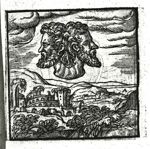
Prudentes: Alciatus, Emblemata (Padua, 1621), col. 109 a, emblem 18
Prudentes: Alciatus, Emblemata (Leiden, 1591), emblem 18
Iconclass: 51L4 Progression, Forward Movement 51LL4 Regression, Backward Movement 52A52:23A3 Judgement, Discrimination; 'Giuditio' (Ripa)❧past, present and future 54A2 Carefulness, Diligence; 'Diligenza' (Ripa) 96A12 (story of) Janus 96A5(ANTEVORTA) Roman personifications of abstract concepts (ANTEVORTA) 96A5(POSTVORTA) Roman personifications of abstract concepts (POSTVORTA)
Collectanea (1500): 796
Loci Communes: Perficiendi sive absolvendi - ab initio ad finem (Finishing, completing - from beginning to end, Achever, accomplir - du début à la fin); Prudentia (Prudence, Prudence)
III i 54 Gallos quid exsecas? Why castrate Galli?
Γάλλους τί τεμνεις; i. Gallos quid exsecas? Quid actum agis? Nam Galli Cybelis sacerdotes sua sponte sunt erectis testibus. Quid spolias nudum? Cur affligis afflictum? Cur senile corpus ieiuniis attenuas? Quanquam id ad quantumvis inanem operam significandam conveniet. Quemadmodum illa: Laterem lavas, Actum agis.
[greek], Why castrate Galli? Why do again what has been done already? - for the Galli are eunuch priests of Cybele who have voluntarily castrated themselves already. Why strip a naked man? Why make a wretched man miserable? Why bring an old man's body low with fasting? Though this will be suitable for conveying any form of wasted effort; parallels are To wash a brick, and To reopen a closed subject.
Facsimile:
Iconclass: 33C711:12F51(GALLUS) castrated person❧priest (GALLUS) ~ Roman religion 51H43 Redundance 54BB2 Unnecessity, Superfluity
Loci Communes: Absurda, indecora, seu praepostera (Absurd, unbecoming, or preposterous things, Choses absurdes, inconvenantes ou déplacées)
III i 55 Quanto asinis praestantiores muli How much better mules are than asses
Theognidis illud ipsissimam proverbii faciem habe: Γνοίης δ᾽ ὄσσον ἄνων κρείσσονες ἡμΐονοι. id est: Noris uti quamto muli asinos superent. Dicendum ubi quis longo intervallo praecedit. Refertur apud Arhenaeum libro Dipnosophistarum septimo. Sumptum videtur ex Homero, cuius hi versus sunt Iliados κ. Αλλ᾽ ὅτε δήρ᾽ ἀπέην ὅσσον τ᾽ ἐπίουρα πέλονται Ημιόνων, αἱ γάρ τε βοῶν προφερέστεραι εἰσιν, Αλκέμεναι νειοῖο βαθείης πηκτὸν ἄροτρον. id est: Verum ubi tantum aberat, quantum pars ultima sulci Mularum Stquidem hae bubus longe potiores Ducere per pinguem segetem compactile aratrum. Rursum Odysseae θ Τῶν δὲ θέειν ὅχ᾽ ἄριστος ἔην κλυτόνηος ἀμύμων, Οσσον τ᾽ ἐν νειῷ οὖρον πέλει ἡμίονοιϊν, Τόσσον ὑπεκροθέων λαοὺς ἵκεθ᾽ οἵδ᾽ ἐλίποντο. id est: Hos cursu anreibat Clytoneus splendidus omnes, Quantum mularum sulcus praecedit in aivo Tantum is praecurrens populos, metam attigit, illos Atergo linquens. Olim bubus, asinis et mulis proscindebant arva. Hinc illa lex Mosaica Deut. xii. quae vetat arandi gratia bovem & asinum sub idem iugum mittere. Aratrum igitur quod a mulis trahebatur, multo celerius perveniebat ad sulci finem, cum arator invertit aratrum. quam quod trahebatur a bubus. Hesiodus item mulos ταλαέργους vocat.
There is a phrase in Theognis which has the most typical look of a proverb: 'You would discover how much better mules are than asses.' To be used when one person is a long way ahead of the rest. Recorded by Athenaeus in book 7 of the Doctors at Dinner. Taken evidently from Homer, who has these lines in book 10 of the Iliad: 'But when he was as far away as is the width of a stretch ploughed by mules, which are far better than oxen at drawing the jointed plough through the deep fallow ground,' and again in Odyssey 8: 'But the fastest runner of them all was brave Clytonus; and he outran the field by the width of a stretch ploughed in a fallow by mules, and came in first, leaving them behind.' In the old days they used to break up the fallow land with oxen, asses and mules. Hence that law of Moses in Deuteronomy 12 which forbids the putting of an ox and an ass under one yoke for ploughing. So the plough drawn by mules reached much more quickly than an ox-drawn plough the end of the furrow, when the ploughman turns his plough. Hesiod also calls mules 'patient in labour.'
Facsimile: 
Iconclass: 46C13142 ass, donkey 46C13143 mule 47I21111 ox 51E2 Superiority
Loci Communes: Excellentia, inaequalitas (Excellence, inequality, Excellence, inégalité)
III i 56 Difficilis vir A formidable man
Δεινὸς ἀνὴρ ταχά κεν καὶ ἀναίτιον αἰτιόωτο. id est, Forsan & innocum culpet vir saevus & acer. Hunc Homeri versiculum olim in Demosthenem vulgo iactatum fuisse, multorum autorum testimoniis constat, propterea quod accepta pecunia nonnunquam & malos defenderet, & oppugnaret bonos. Eundem ad Varronem torsit M. Tullius lib. Epistolarum ad Atticum xiii. Dicitur autem apud Homerum Ilia. λ. sub persona Patrocli, Εὖ δὲ σὺ οἶσθα γεραίε βιοτρεφές, οἶος ἐκεῖνος Δεινὸς ἀνὴρ, ταχάκεν καὶ ἀναίτιον αἰτιόωτο. id est, Ipse probe nosti senior, quod ut est ferus ille, Culparit facile innocuum, culpaque vacantem. Rursum Iliad. ν. Εκτορ ἐπείτοι θυμὸς ἀναίτιον αἰτιάασθαι. id est, Hector, quando libet culpa culpare vacantem.
[greek], Perchance a formidable man might blame the blameless. It is well known from the evidence of many authorities that this line of Homer was used in old days as a common taunt against Demosthenes, on the ground that in return for money he sometimes both defended the guilty and attacked the innocent. Cicero in his Letters to Atticus, book 13, turned the same line against Varro. In Homer, Iliad 11, these words are put into the mouth of Patroclus: 'And your aged majesty knows well what sort of man that formidable person is; easily might he blame the blameless.' And again in Iliad 13: 'Since you've a mind, Hector, to blame the blameless.'
Facsimile:
Iconclass: 57AA75 Mercilessness 59CC221:98B(DEMOSTHENES) Corruptibility, Venality, Corruption❧(story of) Demosthenes
Loci Communes: Asperitas, morositas (Harshness, moroseness, Rudesse, morosité)
III i 57 Unum augurium optimum tueri patriam One omen is best of all: to fight for one's country
Abiit in proverbium etiam hic versus Homericus, Εἶς οἰωνὸς ἄριστος ἀμύνεσθαι περὶ πάτρης. id est, Una avis optima, pro patria pugnare tuenda. Usurpatur à M. Tullio in Epistolis ad Atticum. Item à Plinio minore in epistolis familiaribus. Citatur ab Aristotele in Rhetoricis lib. ii. inter sententias. Sumptus est autem ex Iliados μ. ubi Hecto auguria reliqua negligens, loquitur ad hunc modum, Τύνη δ᾽ οἰωνοῖσι ταννυπτερύγεσσι κελεύεις Πείθεσθαι, τῶν οὔτι μετατρέπομ᾽ οὐδ᾽ ἀλεγίζω, Εἰτ᾽ ἐπὶ δέξι᾽ ἴωσι πρὸς ἠώτ᾽ ἠελιόντε Ητ᾽ ἐπ᾽ ἀριστερὰ τοίγε ποτὶ ζοφον ἠερόεντα Ημεῖς δὲ μεγάλοιο διὸς πειθώμεθα βουλῇ, Ος πᾶσι θνητοῖσι καὶ ἀθανάτοισιν ἀνάσσει Εἶς οἰωνὸς ἄριστος ἀμύνεσθαι περὶ πάτρης. id est, Aligeris avibus tu me parere iubes nunc, Quarum nulla mihi cura aut respectus, utrûmne Ad dextram Eoi veniant mihi solis ad ortum, An laevam, ad solem occiduum, noctisque tenebras. Verum nos Iovis arbitrio parére necessum est Altitonantis: hic imperium tenet unus in omneis, Quotquot mortales, quotquot sunt morte carentes. Una avis optima, pro patria pugnare tuenda. Hanc Homeris sententiam expressisse videtur Q. Fabius Maximus apud M. Tullium lib. De senectute. Is enim cum esset augur, dicere ausus est, Optimis auspiciis ea geri, quae pro Reipub. salute fierent: quae contra Rempub. ferrentur, contra auspicia ferri. Apud Athenaeum Heniochus detorquet ad parasitum, ex Metagene Comico versiculum hunc citans, Εἶς οἰωνὸς ἄριστος ἀμύνεσθαι περὶ δείπνου. id est, Una avis optima, pro coena pugnare tuenda.
There is another line too in Homer which has passed into a proverb: 'One omen is best of all, to fight for one's country.' It is used by Cicero in his Letters to Atticus; also by the younger Pliny in letters to his friends; it is quoted by Aristotle in the Rhetoric, book 2, among moral maxims. It is taken from Iliad 12, where Hector, rejecting all other omens, speaks like this: You bid me follow birds with their long wings: For them I care not and give them no thought, Whether they come on the right against dawn and sunrise Or on the left against the murky dark. No, let me follow the counsel of great Jove, Ruler of all both mortal and immortal: One omen's best of all, to fight for one's country. The principle thus expressed by Homer is clearly reproduced by Quintus Fabius Maximus in Cicero's essay On Old Age where, 'though an augur, he makes bold to say that what is done for the safety of the republic is done under the best possible auspices, and decisions taken against the republic are taken against the auspices.' Heniochus in Athenaeus twists the words to apply them to a parasite, citing from the comic poet Metagenes the line 'One omen's best of all, to fight for one's dinner.'
III i 58 Ne quid suo suat capiti For fear he might stitch a cap for his own head
Terentius in Phormione proverbiali figura dixit, Ne quid suo suat capiti, pro eo quod est, ne quid mali illi conciliet. Expressum est ad illud Homericum Iliados sexto. Οὐκ ὄφελοον τρώεσσι κοτεσσαμένη κακὰ ῥαψαι; An suere invisae non debebam mala Troiae? Idem Odysseae τ. Εἰνάετες γάρ σφιν κακὰ ῥάπτομεν ἀμφίεποντες Παντιοισι δολοισι. id est: Annum illis nonum mala iam suimus, tentantes Fraudibus omnigenis. Rursum Odysseae π. Τίη δέ σὺ τηλεμάχῳ θάνατόν τε μόρον τε Ρἅπτεις;. id est: Cur tu Telemacho mortem suis, exitiumque?
Terence in the Phormio uses a proverbial formula when he says 'For fear he might stitch a cap for his own head,' in the sense of bringing misfortune on it. This reproduces an expression in Homer, Iliad 18: 'Was I not right in my wrath to sew a web of evil for the Trojans?' Again in Odyssey 3: 'Nine years we sewed a web of evil for them with all sorts of guile,' and in Odyssey 16: 'Why do you sew a web of death and destruction for Telemachus?'
Facsimile: 
Iconclass: 41D221(CAP) head-gear: cap 41D441 sewing 54FF11 Adversity, Misfortune, Bad Luck; 'Fortuna infelice', 'Infortunio' (Ripa)
Collectanea (1500): 429
Loci Communes: Malum accersitum aut retortum (Evil brought upon oneself or turned back, Mal attiré ou retourné)
III i 59 Terra mihi prius dehiscat Sooner may the earth open beneath me
M. Tullius Epist. ad Atticum nono, Aberit non longe, quin hoc à me decerni velit: neque sit contentus, Galba, Scaevola, Cassio, Antonio, Τότε μοι χάνο εὐρεῖα χθών. id est, Tellus ipsa mihi tunc ampla dehiscat. Est autem hemistichium Homericum ex Iliad. 4. Lucianus in Lapithis, καὶ τοῦτο δὴ τὸ τοῦ λόγου, χανεῖν μοι τὴν γῆν ἠυχόμην. i. Iamque iuxta id quod vulgo dici solet, optabam ut mihi terra dehisceret. Aristides in Themistocle, Οὐδ᾽ ἠπόρει, οὐδ᾽ ἐξεπλάγη, οὐδ᾽ ἤυξατο αὐτῳ χανεῖν τὴν γῆν, οὐδ᾽ ἠυδαιμόνησε τοὺς πάλαι κειμένους. i. Neque perplexus erat, neque consternabatar animo, neque optabat, ut sibi terra dehisceret, neque beatos dicebat illos, qui iam olim fuissent defuncti. Et Vergilius in quarto, Sed mihi vel tellus optem prius ima dehiscat, Vel pater omnipotens adigat me fulmine ad umbras Pallenteis umbras Erebi, noctemque profundam, Ante pudor quàm te violem, aut tua iura resolvam
Cicero in book 9 of his Letters to Atticus: 'It will not be long before he wants me to ratify this, and is not satisfied with Galba, Scaevola, Cassius, Antonius. Τότε μοι χάνο εὐρεῖα χθών, Then may the wide earth gape beneath me.' This is a Homeric half-line out of Iliad 4. Lucian in the Lapithae: Then, as the saying goes, I prayed that the earth might gape beneath me.' Aristides in his Themistocles: 'He was neither perplexed nor terrified, nor did he pray that the earth might gape beneath him nor call those blessed who died long ago.' And Virgil in book 4: 'But I could wish that earth might sooner gape to the depths beneath me, or the Almighty Father with his thunderbolt hurl me to the shades, to Erebus with its pale shades and deepest night, before I stain my conscience or breach the laws of honour.'
Facsimile:
Iconclass: 25H115 pit, hole 31A2731(+0) falling (+ variant)
Loci Communes: Deprecantis, abominantis (Pleading, abhorring, Qui implore, qui abhorre)
III i 60 Vestis virum facit Clothes make the man
Εἴματα ἀνὴρ, id est, Vestis virum. Id hodie quoque vulgo tritissimum est. Aiunt enim ad hunc mo dum: Vestitus virum reddit, qui habet, induat. Idem affirmat Quintilian. lib. Instit. 8. Et cultus, inquiens, concessus atque magnificus, addit hominibus, ut Graeco versu testarum est, auctoritatem. Hunc autem versum, quem citat Fabius, opinamur esse illum apud Homerum Odysseae ζ. Εκ γάρ τοι τούτων φάτις ἀνθρώπους ἀναβαίνει Εσθλή. id est: Quippe homini ex istis surgit bonae fama decusque. Paullo infetius in eodem libro quantum momenti cultus vestium adferat, ad concilian dam homini formam dignitatemque, satis indicat, cum Nausicam puellam ita de Ulysse loquentem facit: Πρόσθεν μὲν γὰρ δή μοι ἀεικέλιος δόατ᾽ εἶναι, Νῦν δὲ θεοῖσιν ἔοικε, τοὶ οὐρανὸν εὐρὺν ἔχουσιν. id est, Ante videbatur specie foedissimus esse, Nunc divis similis, magnus quos pascit Olympus. Nam ante nudus, iam vestes nitidas induerat Ulysses, ac protinus alius esse visus est: Εζετ᾽ ἔπειτ᾽ ἀπάνευθε κιὼν ἐπὶ θῖνα θαλάσσης Κάλλει καὶ χάρισι στίλβων. id est: Deinde procul, veniens aed litora pontica sedit, Fulgescens forma, atque leporibus.
[greek], Clothes make the man. This is still a very popular and well-known saying in our own day: 'Apparel setteth out a man; / Clothe yourself as best you can.' Quintilian confirms this in book 8 of his Institutions: 'To dress within the formal limits and with an air gives men, as the Greek line testifies, authority.' I suppose this line which Quintilian cites to be that one in Homer, in Odyssey 6: 'From these things, you may be sure, men get a good report.' And a little later in the same book, the importance of care in one's dress as a means of improving one's appearance and standing is made clear enough, when he makes the maiden Nausicaa speak as follows about Ulysses: 'At first I thought his appearance was unseemly, but now he has the air of the gods who dwell in the wide heaven.' For Ulysses, who had previously been naked, is now dressed in shining garments and looks at once like a different person: 'Then went he and sat aloof on the sea-shore, a radiant figure handsome and full of grace.'
III i 61 Teneri calidis balneis Softened by hot baths
Απαλοὶ θερμολουσίαις. i.Teneri calidis lavacris, in molles et luxu diffluentes dicebatur. Nam antiquitus calida balnea deliciarum nomine taxata fuisse, vel Homerus testis est Odysseae θ. inter voluptariae vitae delicias ea commemorans, Αεί δ᾽ ἡμῖν δαίς τε φίλη κίθαρίς τε χοροίτε, Εἴματα τ᾽ ἐξημοιβὰ, λοετρά τε θερμὰ καὶ εὐναί. id est: At semper cords nobus, epulaeque chorique, Cantusque et variae vestes, et balnea calda, Concubitusque. Refertur adagium ab Eudemo his quidem verbis, Απαλοὶ θερμολουσίαις, ἁβροὶ μαλθακεύνίαις. Teneri calidis lavacris, delicati lectorum mollicie. Huc allusit Persius, cum ait, Elixasque nates labefactat sorcipe adunca.
'[greek], Softened by hot baths, was applied to effeminate people unmanned by luxury, for in Antiquity hot baths were criticized as luxurious, as Homer among others bears witness in Odyssey 8, when he mentions them among the delights of a life devoted to pleasure: 'But feasting was ever dear to us and the music of strings and dancing and changes of raiment and hot baths and bed.' The adage is recorded by Eudemus in the words 'Softened by hot baths, unmanned by comfortable beds.' Persius had it in mind when he wrote 'With pointed tweezers those boiled buttocks tame.'
Facsimile: 
Iconclass: 31A5451:21D3 public baths❧steam 31A719 womanish man, molly-coddle, milksop 55B2 Luxury, Luxuriousness
Loci Communes: Luxus et mollicies (Luxury and softness, Luxe et mollesse)
III i 62 Dextrum pedum in calceo, sinistrum in pelvi Right foot in a sandal, left foot in a basin
Δεξιὸν εἰς ὑπόδημα, ἀριστερον εἰς ποδόνιπτρον. i. Dextrum pedem in calceum, sinistrum in pelvim. Subaudi verbum ad sententiam accommodum, mittit, aut ponit. Suidas ex Aristophane citat, aitque dici solere in eos qui se norunt commode ad rei praesentis conditionem applicare, proque loco, tempore, negociis, aliam atque aliam sustinere personam: Est autem carmen hexametrum heroicum, Dextrum in calceolo, laevum vero in podoniptro. Podoniptrum vas in quo pedes lavantur, unde & vocabulum inditum à Graecis.
[greek], Right foot into a sandal, left foot into a basin (supply a suitable verb, such as 'he puts' or 'places'). Suidas cites this from Aristophanes, and says that it was customarily used of those who know how to adapt themselves to things as they find them and wear a different mask at different times to suit place, time, and business. The words form in fact a dactylic hexameter. Podoniptrum [literally, foot-bath] is the basin in which people wash their feet, and from this got its name in Greek.
Facsimile:
Iconclass: 31A2255(+31):41A2415 foot (+ left side visible; left - (l. hand, l. foot, etc.))❧jug and basin; wash-basin 31A2255(+32):41D2332 foot (+ right side visible; right - (r. hand, r. foot, etc.))❧shoes, sandals
Loci Communes: Inconstantiae, perfidiae, versutiae (Inconstancy, treachery, cunning, Inconstance, perfidie, ruse)
III i 63 Dea impudentia Impudence is a goddess
Θεὸς ἡ ἀναίδεια. i. Dea impudentia: Dici solitum, ubi quis ex audacia inverecundiaque sua lucrum atque emolumentum ferret. Nam inutilis, ut ait Homerus, verecundia viro egenti, compluresque mortales videas, quibus magno bono fuerit, nihil omnino puduisse: Si quidem nullus unquam rem ausus est adeo stultam, aut absurdam, quae non invenerit & fautorem & admiratorem, multoque maxima pars mortalium, quae stultissima sunt, ea miratur maximè. Refertur à Zenodoto & à Diogeniano. Theophrastus in libro De legib. prodidit, apud Athenienses aras fuisse Contumeliae & Impudentiae dicatas: Idem attestatur Istrus lib. 14. Item M. Tullius lib. De legibus 2. Nam illud vitiosum Athenis, quod Cylonio scelere expiato, Epimenide Cretensi suadente fecerunt Contumeliae fanum & Impudentiae: virtutes enim non vitia consecrare decet. Menander in Gnomologiis appellat illam omnium dearum maximam: Ω μεγίστη τῶν θεῶν Νῦν οὖσ᾽ ἀναίδει᾽, εἰ θεὸν καλεῖν σε δεῖ Δεῖ, τὸ κρατοῦν γὰρ νῦν νομΐζεται θεὸς. id est, O dearum maxima, Hoc seculo, si te vocare fas deam, Fas, quando nunc vicisse habetur pro deo.
[greek], Impudence is a goddess. Used customarily when a man secured some advantage or profit from his shameless and immodest conduct. For modesty, as Homer says, is unprofitable to a man in need, and you may see plenty of mortals to whom it would have been a great blessing, had they been completely devoid of shame. No man ever attempted a project so foolish or absurd that it could not meet with support and admiration, and by far the larger number of mortals admire particularly the most foolish projects. Recorded by Zenodotus and Diogenianus. Theophrastus in his book On the Laws tells us that in Athens there were altars dedicated to Contumely and Impudence, and the same thing is attested by Istrus, book 14. Cicero too in his work On the Laws, book 2: 'For the Athenians made a great mistake, when Cylon's crime had been expiated, in accepting a proposal of Epimenides the Cretan, and erecting a temple to Contumely and Impudence; for it is virtues and not faults that should be hallowed.' Menander in the collections of moral maxims calls her the greatest of all goddesses: 'Greatest of deities in this our day, O Impudence, if deity I may call thee - and well I may: Success is now a god.'
Facsimile:
Iconclass: 54F1 Success; 'Evento buono' (Ripa) 57AA4 Shamelessness 57AA5:12BB13 Indecency, Impudence; 'Sfacciatigine' (Ripa)❧representations ~ goddesses, demi-goddesses, heroines, etc. (non-Christian religions) 57AA641 Immodesty
Loci Communes: Impudentia (Shamelessness, Impudence)
III i 64 De possessione deiicere To eject from possession
De possessione deiicere, ex sermon Iurisconsultorum in vulgi sermonem abiit, pro eo quod est, famam cuipiam eripere, quam iam omnium consensu obtinuerit: aut adimere quippiam, quod suo quasi iure tenere videatur. Nam ius semper favet possidenti, interdictumque ferebatur, ne quis vi quempiam deiiceret. Extat edictum in Pandect. lib. 43. Tit. De vi & vi armata, & refertur à M. Tullio in oratione pro A. Cecinna. Plato libro cui titulus Gorgias, ἐπιχειρεῖς ἐκβάλλειν μὲ τῆς οὐσίας καὶ ἀληθοῦς. i. Conaris me de possessione ac vero deiicere. Est aliquoties apud M. Tullium. Et apud eundem illud quoque, Quasi in suam possessionem venerit, cum quis imperiosius agit, aut plus aequo immoratur. Quintilianus li. 2. de rhetorica, Quae dum opere cedit, iam penè possessione depulsa est. Fit enim iucundius dictum, quoties ad res animi transfertur.
To eject a man from his right to possession has passed from legal language into common speech, as an equivalent for to deprive him of the reputation which by common consent he has already come to enjoy or to deprive him of something to which he seems to have some sort of legal right. For law always favours the party in possession, and a prohibition circulated to the effect that no man might eject another by force. The edict stands in the Pandects, book 43 title De vi et vi armata, and it is referred to by Cicero in his oration Pro A. Caecina. Plato in the book entitled Gorgias: 'You are trying to eject me from my possession of reality and truth.' It occurs several times in Cicero. In Cicero too there is another phrase, 'As though he had taken possession of his own property,' when a man acts in a lordly manner, or usurps more than his fair share of attention. Quintilian in book 2, speaking of rhetorical theory: 'which by abandoning its task has almost been evicted from its proper territory.' For a saying becomes more effective when applied to things of the mind.
III i 65 Daedali alae The wings of Daedalus
Δαιδάλου πτερὰ, id est, Daedali alae: Dici solitum, ubi quis alioqui non satis idoneus ad negotium conficiendum, artis alicuius, aut auxilii accessionem adiungeret. Aut cum quis urgente necessitate, ad nova confugit consilia. Nota fabula, quae proverbii ministravit occasionem nempe de Daedalo, qui novo commento adsutis alis elapsus est e manibus Minois.
[greek], The wings of Daedalus, was commonly used when someone in other respects not wholly suited to perform a task secured the assistance of some skill or some helping hand, or when under pressure of necessity a man took refuge in new devices. The story which supplied an occasion for the proverb is well known - how Daedalus by a new invention of fitting himself with wings escaped from the clutches of Minos.
Facsimile:
Medio tutissimus ibis: Schoonhovius, Emblemata (Gouda, 1618), emblem 12 uses the imagery of the fall of Icarus
Iconclass: 54A6 Helpfulness 95A(ICARUS)511 Daedalus makes the wings while Icarus looks on
Loci Communes: Auxilium (Help, Aide); Necessitas (Necessity, Nécessité)
III i 66 Deinde expergiscebar And then I awoke
Εἶτα ἐξηγρόμην. i. Deinde expergiscebar. Hoc dicto significabant vana fuisse quae dicerentur. Aristophanes, κᾆτ᾽ ἔγωγ᾽ ἐξηγρόμενην. i. Deinde ego expergiscebar. Bacchus in Ranis iactat apud Herculem se navalem pugnam exercuisse, & duodecim aut tredecim hostium naveis demersisse. Id cum Herculi neutiquam verisimile videretur, Bacchum imbellem & deliciis effoeminatum deum, gnaviter in bello gessisse sese, per iocum subiicit, κἆτ᾽ ἔγωγ᾽ ἐξηγρόμην. Quanquam interpres admonet hunc sermonem à nonnullis, non ad Herculem, sed ad Xantiam referri, à nonnullis ad ipsum Bacchum, ut significarit se dedita opera mentitum fuisse quae narrarat. Carmen Aristophanis adscribam. Hercules, Κἀναυμάχησας. Bacchus. καὶ κατεδύσαμέν γε ναῦς Τῶν πολεμΐων, ἢ δώδεκ᾽ ἢ τρεῖς καίδεκα. Hercules, Σφῷ; Bacchus. νὴ τὸ ἀπόλλω. Hercules, κᾆτ᾽ ἔγωγ᾽ ἐξηγρόμην. id est, Et praelium navale gessisti obsecro? Quin duodecim hostium rateis, aut tredecim Submersimus. Vos quaeso? Nos videlicet. Ac postea sanè reliquit me sopor. Hic iocus proverbialis etiam hodiernis temporibus familiaris est vulgo, quoties quae memorantur, vana somniisque simillima videntur. Res enim frivolas ὀνείρατα vocamus. πάν τη σχεδὸν οἷον ὀνείρατα λέγων. i. Passim ferè veluti somnia narrans. Unde & frivolarum rerum observatores ὀνειροσκόπους appellant Graeci. Videtur ad hoc facete allusisse M. Tullius, dum somnium Scipionis, in quo multa fabulosa commemorat de concentu orbium, de animabus, ita claudit, Ille discessit, ego somno solutus sum.
[greek], And then I awoke. When they said this, they made it clear that what was said was untrue. Aristophanes: 'At that point I woke up.' Bacchus in the Frogs is boasting to Hercules of a naval battle which he fought, and the sinking of twelve or thirteen enemy ships. Hercules found it highly improbable that an unwarlike womanish and dissolute god like Bacchus could have shown such prowess in battle, and to make fun of him broke in with At that point I woke up.' Though the scholiast tells us that some people assigned these words not to Hercules but to Xanthias, and others to Bacchus himself, so that he is making it clear that his narrative is a deliberate invention. I will add Aristophanes' lines: Hercules You fought a sea-battle? Bacchus I did, and sank Twelve or thirteen ships of the enemy. Hercules You! Bacchus Yes, by Apollo. Hercules At that point I woke up. This humorous proverbial expression is familiar in common speech even in our own day, when we are told something which sounds false and very like a dream; for we apply the word 'dreams,' oneirata, to things of no substance. 'Everywhere telling what are virtually dreams.' Hence too those who take an interest in insubstantial ideas are called in Greek 'dream-watchers,' oneiroskopoi. Cicero was evidently making a light-hearted allusion to this when he ended Scipio's dream, in which he records much imaginary lore about the music of the spheres and about souls, with the words 'So he departed; and I awoke, and beheld it was a dream.'
III i 67 De lapide emptus Bought off the block
De lapide emptus. In vilissimum & vehementer obscurum hominem dicebatur. Nam inter servorum genera, siquidem iuxta proverbium, καὶ δοῦλος πρὸ δούλου, extremae notae habebantur emptitii, potissimum qui palàm in foro divenditi fuissent. M. Tullius adversus Pisonem: De me cum omnes magistratus promulgassent, praeter unum praetorem, à quo non fuit postulandum, fratrem inimici mei, praeterque duos de lapide emptos. Simillimum est illi Graeco quod alio reddidimus loco, ἁλώνητον ἀνδράποδον, Sale emptum mancipium. Consimilem ad modum Columella, vilem minimique precii servum significans, Quem vulgus quidem, inquit, parvi aeris, vel de lapide noxium, comparari posse putat. Sed ego plurimorum opinioni dissentiens, preciosum vinitorem in primis esse censeo. Quo quidem loco, aut noxium, noxae deditum, & ob id venire iussum, aut nexum legendum arbitror. Nam Nexi dicebantur, qui quod solvendo non essent, addicenbantur creditoribus. Tametsi nexi non continentur appellation servorum proprie, nec veneunt. Iulius Pollux, libro de rerum vocabulis tertio, lapidem unde quondam vendebantur mancipia, τὸ πρατῆρα λίθον, καὶ πωλητήριον appellat.
Bought off the block was applied to a quite worthless and utterly obscure man; for among the different kinds of slave (since, according to the proverb, One slave is better than another), purchased slaves were held to be of the lowest quality, and especially those who had been sold openly in the market. Cicero in his speech against Piso: When all the magistrates had put forward a proposal on my account, with an exception of one praetor, who could not be asked because his brother was my personal enemy, and two who were bought off the block.' Very close to the Greek proverb which I have recorded in another place, A slave not worth his salt. In the same way Columella, referring to a worthless slave of small value: 'who is commonly regarded as worth very little (one might even buy a rascal off the block); but I disagree with the majority, and I think a vine-dresser especially valuable.' In this passage I think we should read either noxium, a rascal devoted to doing damage (noxae deditum) and therefore put on the list for sale, or nexum; for nexi, bondmen was a word for people who could not pay their debts and were made over to their creditors. Though nexi are not properly covered by the word 'slave,' nor can they be sold. Julius Pollux in book 3 of his On the Names of Things calls the block on which slaves used to be sold the 'buying and selling stone,' pratêr and pôlêtrios lithos.
Facsimile: 
Iconclass: 46A181 slave-trade 46B16 auction sale, public sale 46B451 debit, debt 54BB6 Worthlessness
Collectanea (1500): 328
Loci Communes: Contemptus et vilitatis (Contempt and worthlessness, Mépris et bassesse); Servitus (Slavery, Servitude)
III i 68 Date mihi pelvim Give me a basin
Δότε μοι λεκάνην, id est, Porrigite mihi peluim, ubi quid vehementer molestum esset, ita ut ferri iam diutius non posset, peluim sibi porrigi iubebant, quasi prae bile nauseaque, & fastidio rerum vomituri: veluti si quis orationem supra modum indoctam non ferens, aut sophisticis naeniis offensus dicat, δότε μοι λεκάνην, id est, Porrigite mihi peluim. Refertur à Suida. Extat autem apud Aristophanem ἐν νεφέλαις. Et Plutarchus in Politicis citat è Platone comico.
[greek], Fetch me a basin. When something became quite insufferable, so that it could not longer be endured, they told someone to fetch them a basin, as though they had a bilious attack and were about to vomit from nausea and disgust; if, for example, a man could not endure an exceptionally illiterate speech or were disgusted by some sophistical rubbish, he would say 'Fetch me a basin.' Recorded by Suidas. Found in Aristophanes, in the Clouds, and Plutarch in his Tolitics' cites it from Plato the comic poet.
Facsimile:
Iconclass: 31A63 vomiting 41A2415 jug and basin; wash-basin 41A771 container of metal: bucket, can, canister, drum, tin, etc. 56BB4 Disgust, Dislike, Repulsion, Nausea
Loci Communes: Taedium ex iteratione (Tedium from repetition, Lassitude due à la répétition)
III i 69 Dares Entellum provocas You are Darus challenging Entellus
Dares Entellum provocas, et proverbii speciem habet, et apud eruditos videtur in ius proverbii cessisse. Sic enim Hieronymus ad Augustum, Memento, inquit, Daretis & Entelli. Conveniet uti, si quando quis piam iuvenili temeritate lacesset aliquem non perinde promptum ad suscipiendum certamen, verum intolerandum, si semel inierit. Qui senum ferme mos, ut libenter suffugiant negotia, suscepta pertinaciter geranr. Sumptum est ex quinto Aeneid. libro, ubi Dares quispiam viribus fretus, et ferox iuventa, ultro prosiliens in medium quemuis ad certamen provocat: adsurgente nemine, deterritisque reliquis, iam perinde quasi victor, praemium flagitat ab Aenea. At Entellus senex, et iam pridem ab huiusmodi genere certaminum feriatus, instigante partim Aceste, partim veterum victoriarum memoria, tandem surgit cestibus dimicaturus. Is diu suo consistens loco iuvenem insolentius circumsilientem tulit, donec frustrato ictu lapsus, pudore sic recanduit, ut Daretem iam longe imparem plane confecturus fuerit, nisi eum Aeneas intercedens eripuisset. Carmen ipsum Maronis adscriberem, est enim longe lepidissimum, ni & longiusculum esset & im promptu situm.
You are Dares challenging Entellus has the shape of a proverb, and clearly achieved proverbial status among the learned. Thus Jerome in a letter to Augustine says 'Remember Dares and Entellus.' It will be suitable for use when someone in the rashness of youth attacks an opponent who is not particularly ready to take up the challenge, but will be invincible if he once enters the fray. It is often the way with old men that for preference they avoid business, but pursue it obstinately if they once take it on. Taken from the fifth book of the Aeneid, where a character called Dares, young and brash and confident in his own strength, leaps out into the ring unbidden and challenges the first comer; and when no one stands up to him and the rest are all too frightened, he demands the prize from Aeneas as though he had already won. But Entellus, an old man who has long since retired from contests of the kind, is roused partly by Acestes and partly by memories of his former triumphs, and at length stands up to don the gloves and fight. For some time he remained in his corner and endured the young man insolently dancing round him; then one of his blows missed its mark and he fell flat, and the shame of this so fired him with shame that he would have absolutely destroyed Dares, who was already far his inferior, had not Aeneas interposed and rescued him. I would add Virgil's actual lines, for it is an extremely good story, were it not both rather long and easily accessible.
Facsimile:
Iconclass: 31D5 young versus old age; young and old 52AA21 Rashness, Imprudence, Recklessness 96B4221 the boxing contest: Dares and Entellus
Loci Communes: Malum accersitum aut retortum (Evil brought upon oneself or turned back, Mal attiré ou retourné)
III i 70 Ad Cynosargus Off with you to Cynosarges
Ες κυνόσαργες, id est, Ac Cynosarges, proverbiali convitio dicebatur, quemadmodum εἰς μακαρίαν, καὶ εἰς κόρακας. Erat autem Cynosarges locus in Attica quispiam, in quo nothi, spuriique exercebantur, cui nomen inditum, ἀπὸ κυνὸς ἀργοῦ, id est A cane albo, seu veloci. Nam Graecis ea vox ἀργος utrumque significat. Qui collegit historias ex orationibus stelieuticis Gregorii Nazianzeni, tradit Cynosarges dictum ἀπὸ τοῦ κυνος καὶ σαρκὸς, commu tato κ in γ. Nominis causam hanc adscribunt Cum olim Diomus quidam Atheniensis, autore Stephano, nam Suidas Didymum ponit, sacrificaret Herculi, canis quidam albus, aut ut alii dicunt, velox aquila, victimae partem abreptam in locum quendam deposuit. Quo prodigio territus, cum deum consuluisset, responsum est, ut eo in loco Herculi sacellum exstrueret, in quem victima deportata fuisset. Nam eum Herculi placere. Porrò, quoniam Hercules nothus fuit, utpote ex adultera natus, et tamen virtute sua diis aequum honorem adsecutus: idcirco visum est, ut inibi qui spurii fuissent, et neque patris neque matris nomine cives, exercerentur. Nec abhorret ab his, quod scribit Plutar. in libello, quem inscripsit ἐρωτικόν, Εὶ δὲ οὖν καὶ τοῦτο τὸ πάθος δεῖ καλεῖν ἐρωτα θῆλυν καὶ νόθον ὥσπερ εἰς κυνόσαργες συντελοῦντα, τῆν γυναικωνίτιν, μᾶλλον δὲ ὥσπερ ἀετόν τινα λέγουσι γνήσιον καὶ ὀρεινὸν, ὅν ὅμηρος μέλανα καὶ θηρευτὴν προσεῖπεν. i. Quod si igitur hunc quoque morbum oportet vocare amorem femineum ac nothum, veluti in Cynosarges conicientem nos in muliebre conclave, magis autem, sicut aquilam quandam dicunt gnesion, id est, ingenuam germanamque ac montanam, quam Homerus nigram et venatricem appellat. Unde vel contumeliae causa dicebatur, εἰς κυνόσαργες, velut in spurium, vel imprecando, quasi dicas, in malam crucem. Postea consentaneum est hoc quoque loco garrire coepisse philosophos, et sophistas. Nam Suidas testatur tria fuisse gymnasia, Lyceum, Cynosarges, et Academiam. Meminit huius rei et plutarchus in Themistoclis vira, quem aiunt fuisse nothum. Erat autem extra portas Atheniensium Herculis gymnasium, quo spurii adolescentes sese conferebant exercitii gratia, quod et ipse deus nothus ac matre mortali natus esset. Huc Themistocles adhuc adolescens arte pelliciebat, et ingenuos aliquot adolescentes, quo paulatim tolleret nothorum et legitimorum discrimen.
Ες κυνόσαργες, Off with you to Cynosarges, was a proverbial formula of insult, like To blessedness and Off with you to the crows. Cynosarges was a place in Attica used by illegitimates and bastards for taking exercise, which got its name apo kynos argou, from a dog that was either white or fast-running, for argos in Greek can mean both. The writer who collected the incidents in the Stelieutic Sermons of Gregory of Nazianzus tells us that Cynosarges got its name from kynos, dog and sarkos, meat (the k being changed into a g). The reason for this name is given as follows. Once upon a time an Athenian called Diomus (on the authority of Stephanus; Suidas calls him Didymus) was sacrificing to Hercules, when a white dog, or as some say a swift eagle, seized part of the victim and carried it off to a certain place. Terrified by this prodigy, he consulted the oracle, and the reply was that in the place to which the victim had been carried he should build a shrine in honour of Hercules, because it was a favourite haunt of his. Thereafter, since Hercules was a bastard, being the child of an adulterous union, who had none the less by his valour achieved equal status with the gods, it was thought appropriate that illegitimates and those who could not claim citizenship by the right of either father or mother should use the place for taking exercise. Nor does this conflict with what Plutarch writes in the essay he entitled 'Eroticus': 'If then this passion too is to be called love, a female and bastard love that consigns us to the women's quarters, as it might to the Cynosarges; or rather, as there is one eagle which they call gnesios (that is, true-born and genuine) and mountain-eagle, known to Homer as the black or hunting-eagle.' Hence it was an insult to say Off with you to Cynosarges, as though one were speaking to a bastard, or it was a form of curse, like Plague take you. Later, as is well known, the same place came to be used for the chatter of philosophers and sophists; for Suidas testifies to the existence of three gymnasia, the Lyceum, Cynosarges and the Academy. The point is also mentioned by Plutarch in life of Themistocles, who is said to have been a bastard. There was a gymnasium outside the gates of Athens dedicated to Hercules, which was a resort of young illegitimates who wished to take exercise, because the god himself was also illegitimate and born of a mortal mother. To this place Themistocles, while still a young man, used artfully to attract other youths as well who were of gentle birth, in hopes of gradually abolishing the distinction between bastard and legitimate.
Facsimile: 
In nothos: Alciatus, Emblemata (Padua, 1621), col. 601 a, emblem 139
Iconclass: 12E64(CYNOSARGES):94L79 other holy places (CYNOSARGES) ~ Greek religion❧specific aspects, allegorical aspects of Hercules; Hercules as patron - veneration, honoured by 42B36 illegitimate child 57BB22 Insult; 'Ingiuria', 'Offesa' (Ripa) 61F(CYNOSARGES) names of historical buildings, sites, streets, etc. (CYNOSARGES)
Loci Communes: Infortunii sive exitii (Misfortune or ruin, Malheur ou ruine)
III i 71 Cythnicae calamitates Cythnian disasters
Κυθνώδεις συμφοραί, id est, Cythnicae calamitates. Zenodotus Aristotelem auctorem citat. Cythnios usqueadeo divexatos afflictosque fuisse ab Amphitryone, ut in proverbium abierint, κυθνώδεις συμφοραί, pro maximis cladibus et immensis calamitatibus. Est autem Cythnus ex insulis Cycladibus una, contra Dryopidem sita, teste Stephano.
Κυθνώδεις συμφοραί, Cythnian disasters. Zenodotus, citing Aristotle as his authority, says that the Cythnians were so harried and ill-treated by Amphitryon that Cythnian disasters passed into a proverb for major loss of life and unlimited calamities. Cythnus is an island, one of the Cyclades, lying off Dryopis, according to Stephanus.
Facsimile:
Iconclass: 25H14:61D(CYTHNOS) island❧geographical names of countries, regions, mountains, rivers, etc. (CYTHNOS) (CYTHNOS) 31E235 violent death ~ maltreatment, torture 95A(AMPHITRYON)4 aggressive, unfriendly activities and relationships of Amphitryon
Loci Communes: Infortunii sive exitii (Misfortune or ruin, Malheur ou ruine)
III i 72 Cythonymi probrum Cythonymis' disgrace
Κυθωνύμου αἶσχος. i. Cythonymi dedecus. In hominem dicebatur vehementer infamem, foedique nominis, cuiusque nomen iure supprimi debeat, vel ob malefacta vel ob calamitates. Unde et Graeca vox a celando nomine dicta. Et hodie dictitant vulgo, tegendam ollam, quoties innuunt foedius esse facinus, quam ut auctoris facienda sit mentio. Autor Zenodotus.
Κυθωνύμου αἶσχος, Cythonymus' disgrace, was used of an excessively disreputable man with a foul record, whose name ought by rights never be mentioned for its associations of crime and disaster. Hence the Greek word, which is derived from 'concealing a name.' Even today there is a common saying 'Cover the pot,' when they suggest that some action is so foul that the doer should not be mentioned. Zenodotus is the authority.
Facsimile:
Iconclass: 52DD1:31D8 Secrecy, Latency, Concealment; 'Secretezza' (Ripa)❧personal name 44G5:62B2(CYTHONYMUS) criminals❧?
Loci Communes: Probrum, gloria (Disgrace, glory, Honte, gloire)
III i 73 Cyziceni stateres Cyzicene staters
Κυζικηνοὶ στατῆρες, id est, Cyziceni stateres. De re scite scalpta. Hoc enim subindicant παροιμιολόγοι. Nam hi nummi olim celebres erant, quod eleganter scalpti viderentur. Repraesentabant altera parte Cybelem deorum matrem, facie muliebri, altera leonis imaginem. At magis videtur fore locus proverbio, cum hominem significamus inaequalem, ac sui dissimilem: aut qui longe aliud agat, quam prae se ferat. Quemadmodum nummi Cyziceni ex uno latere Cybelen ostendebant effeminatam, ex altero leonem. Stater is valebat 28. drachmas Atticas, unde et de re magni pretii videtur posse dici. Cyzicus autem erat civitas Propontidis. Quidam eiusdem nominis urbem ponunt in Sicilia. Proverbii praeter alios meminit Suidas.
Κυζικηνοὶ στατῆρες, Cyzicene staters, was used of something expertly engraved (for that is the suggestion found in the proverb-collections), because these coins had in old days a great reputation for the elegance of the engraving. They displayed Cybele, mother of the gods, on one side, shown by a female head, and on the other a lion. It seems to me that there will be more scope for the proverb, when we wish to convey that a man's actions are unequal and inconsistent, or that his performance is very different from his promises like coins of Cyzicus which showed the effeminate head of Cybele on one side and a lion on the other. This stater was worth twenty-eight Attic drachmas, so that the words could also be applied to an object of great value. Cyzicus was a city in the Propontis, and some say there was another of the same name in Sicily. The proverb is mentioned by, among others, Suidas.
Facsimile:
Iconclass: 25F23(LION)(+1) beasts of prey, predatory animals: lion (+ animals used symbolically) 46B311:61K(STATER) coin❧(STATER) historical names (STATER) 51BB3 Imparity, Inequality, Difference 53AA21 Inconstancy; 'Incostanza', 'Instabilità', 'Instabilità overo Incostanza' (Ripa) 61E(CYZICUS) names of cities and villages (CYZICUS) 92L2 (story of) Cybele, Rhea Cybele, Great Mother of the Gods (Berecynt(h)ia)
Loci Communes: Mira nova (Wonderful new things, Choses nouvelles et étonnantes)
III i 74 Cyrnia terra A land like Cyrnus
Κυρνία γῇ. i. Cyrnia tellus, dicebatur regio latrociniis infamis, cuiusmodi ferunt olim fuisse Cyrnum. Est autem Cyrnus insula quaedam ad boream opposita Iapygiae mellificio nobilis, auctore Stephano, verum ob latrocinia fuit inaccessa navigantibus. Plinius autumat hanc esse Corsicam, In Ligustico, inquit, mari est Corsica, quam Graeci Cyrnon appellavere. Gens haec et hodie male audit. Proverbium non inepte detorquebitur in hominem alieni rapacem ac violentum. In collectaneis Zenobii per Aldum editis reperitur, κυρνία ἄτη id est, Cyrnia noxa.
[greek], A land like Cyrnus, was used of a region notorious for brigandage, as Cyrnus is said to have been in the old days. This Cyrnus is an island over against Iapygia to the north, famous as a source of honey according to Stephanus, but piracy made it inaccessible to sailors. Pliny declares that it is the same as Corsica: 'In the Ligurian sea' he says 'lies Corsica, called by the Greeks Cyrnos.' Its inhabitants have a bad name in Italy down to the present day. The proverb will be diverted quite neatly to apply to a man who lives by robbery and violence. In Zenobius' collections, as published by Aldus, I find [greek], Cyrnian disaster.
Facsimile:
Iconclass: 25H14:61D(CYRNUS) island❧geographical names of countries, regions, mountains, rivers, etc. (CYRNUS) (CYRNUS) 44G522 robbery 54AA4 Vehemence, Violence, Fierceness; 'Sforza con Inganno', 'Violenza' (Ripa)
Loci Communes: Vis injustia (Unjust force, Force injuste)
III i 75 Cinyrae opes The riches of Cinyras
Κινύρου πλουτος, id est, Cinyrae opes. De immensis divitiis dicebatur. Similimum illi, Midae opes. Nam huius regionem opulentissimam fuisse, Naso satis indicat Metamorphoseos libro 10. Gratulor huic terrae, quod abest regionibus illis, Quae tantum genuere nefas. sit dives amomo, Cinnamaque, costumque suam, sudataque ligno Tura ferat, floresque alios Panchaica tellus, Dum ferat et myrrham. Pindarus in Nemeis meminit Cinyrae praedivitis: σὺν θεῷ γὰρ φυτευθεὶσ ὄλβος ἀνθρώποισι παρμονώτερος, ὅσπερ καὶ κινύραν ἔβρυσε πλούτῳ ποντίᾳ ἔνποτε κύπρῳν. i. Deo favente, felicitas hominibus stabilior, quae sane et Cinyram opibus cumulavit olim in marina Cypro. Proverbii meminit & Plato lib. De legibus secundo, Εἄν δ᾽ ἄρα πλουτῇ μὲν κινύρα καὶ μίδα μᾶλλον, ἦ δὲ ἄδικος, ἄθλίος τε ἐστὶν καὶ ἀνιαρῶς ζῇ. i. Quod si ditior quidem fuerit, quam Cinyra aut Mida, sit autem iniustus, et miser est, et moleste vivit. Suidas in dictione καταγηράσκω, refert hunc ad modum, καταγηράσαις τιθωνοῦ βαθύτερον, καὶ τοῦ κινύρου πλουσιοτερον, καὶ σαρδανα πάλου τρυφηλότερον, ὅπως τὸ τῆς παροιμίας ἐπίσοι πληρωθῇ δὶς παῖδες οἱ γέροντες. id est, Consenescas Tithono profundius, Cinyra ditius, Sardanapalo deliciosius, ut in te compleatur proverbium: bis pueri senes.
[greek], The riches of Cinyras, was applied to immense wealth. Very like another adage, The riches of Midas. For the very great wealth of this part of the world is made pretty clear by Ovid in book 10 of the Metamorphoses: 'This land I reckon happy in being so far from those regions which gave rise to such a monstrous deed. The land of Panchaia is welcome to its wealth of spice, its vaunted cinnamon and spikenard, the incense that oozes from the woody trunks and its other flowers, if the price is that myrrh must grow there too.' Pindar in the Nemeans mentions Cinyras as a very rich man: 'For prosperity planted with god's blessing lasts longer among men, such as once weighed down Cinyras with wealth in sea-girt Cyprus.' The proverb is also mentioned by Plato in book 2 of the Laws: 'But if he is richer than Cinyras and Midas, but is unjust, he is wretched and lives a life of trouble.' Suidas under [greek] records it as follows: 'May you grow old more tumbledown than Tithonus, richer than Cinyras, more dissolute than Sardanapalus, and may we see fulfilled in you the proverb Old men are children twice over.'
Facsimile: 
Iconclass: 55B1 Wealth, Opulence; 'Opulenza', 'Richezza' (Ripa) 98B(CINYRAS) male persons from classical history (CINYRAS)
III i 76 Minus de istis laboro quam de ranis palustribus These things trouble me less than frogs in the marsh
Μέλει μοι τῶν τοιούτων οὐδὲν, ἧττον τῶν ἐν τοῖς τέλμασι βατράχων. i. Nihilo maior mihi rerum istarum cura, quam ranarum in limo versantium. Proverbialis hyperbole qua significamus nihil omnino ad nos pertinere negotium. Recte dicetur et in obtrectatores, qorum oblocutiones dicemus nos fortiter contemnere. Siquidem ranae tametsi assidue obganniant, oblatrentque praetereuntibus, et odiosam illam cantionem iterent sine fine, βρεκεκεκὲξ, κοὰξ κοὰξ, tamen nemo commovetur. Ad hoc facit quod Origenes Aegyptias ranas Dialecticorum & sophistarum garrulitatem interpretatur in decretis pontificiis.
Μέλει μοι τῶν τοιούτων οὐδὲν, ἧττον τῶν ἐν τοῖς τέλμασι βατράχων, I care no more for such things than for frogs in the marsh. A proverbial exaggeration, by which we convey that some business is nothing at all to do with us. It will also be used rightly of critics when we wish to say that we emphatically despise their attacks; for frogs may chatter and croak without stopping at the passers-by and endlessly repeat their dreary chorus 'brekekekex koax koax,' yet no one is moved in the slightest. It points in the same direction when Origen interprets the frogs in Egypt as the chattering of logicians and sophists in papal decrees.
Facsimile:
Invidia integritatis assecla: Camerarius, Symbolorum et Emblematum Centuria(e) (Nürnberg, 1590, 1595, 1596, 1604), emblem 24 uses the imagery of croaking frogs as irrelevant critics
Invidia integritatis assecla: Junius, Emblemata (Antwerp, 1565), emblem 9 uses the imagery of croaking frogs as irrelevant critics
Invidia integritatis assecla: Whitney, A choice of emblemes (Leiden, 1586), emblem 123 uses the imagery of croaking frogs as irrelevant critics
Invidiae integritatis assecla: Printer's device 0403
Invidiae integritatis assecla: De la Feuille, Devises et emblemes anciennes et modernes (Augsburg, 1697), emblem 205 uses the imagery of croaking frogs as irrelevant critics
Iconclass: 25F51(FROG) tailless amphibians: frog 25H191 swamp, inland marsh, fens 54BB5 Unimportance
Loci Communes: Contemptus et vilitatis (Contempt and worthlessness, Mépris et bassesse)
III i 77 Cucurbita sanior Healthier than a pumpkin
Κολοκύντης ὑγιέστερος, id est, Cucurbita salubrior. Suidas & Zenodotus pro adagio referunt. Athenaeus lib. 3. citat hunc versiculum ex Epicharmo, Υγιέστερον τ᾽ ἦν ἔτι κολοκύντας πολύ. id est, Eratque longe sanius cucurbita. Versus Graecus constabit, si legas ἔτιγε. Nam ut nos adduximus, habetur in Athenaeo edito per Aldum. Unde sit natum non indicat. Proinde divinandum id inde ductum, vel quia cucurbita non facile laeditur aeris vitio, propter crustum quo tegitur, vel quod ea variis remediis efficax esse perhibetur, quemadmodum indicat Dioscor. lib. 2. item Plin. lib. 20. cap. 3. Nec una tantum species ad remedia, valet et sativa, quam Graeci κολοκύνθην appellant, valet inanis intus silvestris, quam Graeci somphon, ut ait Plinius, dicunt, valet et sativa minor κολοκυνθις, quasi dicas cucurbitulam. Mihi videtur non absurde ductum hinc proverbium, quod cucurbita undique turgeat integra, nec rims hians, nec vermiculis obnoxia. Est autem integritas & obesitas corporis, sanitatis argumentum. Cognatum illi quod alias recensuimus: κρότωνος ὑγίεστερος, id est, Crotone salubrior.
More healthful than a pumpkin. Suidas and Zenodotus record this as an adage. Athenaeus in book 3 cites this line from Epicharmus: 'And it was far more healthful than a pumpkin,' It will make a verse in Greek if you read eti ge for eti; the form I have given is found in Aldus' edition of Athenaeus. On the source he makes no suggestion. And so we may conjecture that it arises either from the fact that a pumpkin is not easily damaged by bad weather thanks to the tough skin by which it is protected, or because it is supposed to be effective in various remedies, as Dioscorides suggests in book 2. So too Pliny, book 20 chapter 3. Nor is it only one species that is used for remedies; there is value also in the cultivated kind, called in Greek kolokynthê, in one that is hollow inside and grows wild called in Greek (as Pliny says) somphos, and in a smaller cultivated sort called kolokynihis, which one might render by 'little pumpkin.' It seems to me quite reasonable to derive this proverb from the uniformly rounded shape of a gourd and its unbroken surface, neither broken by cracks nor attacked by grubs; for to be unblemished and well filled-out are symptoms of bodily health. Related to one I have listed elsewhere, [greek] , As healthy as Croton.
Facsimile:
Iconclass: 25G21(PUMPKIN) fruits: pumpkin 31A4690 Health, 'Sanitas'; 'Sanità' (Ripa) 54A7 Strength, Power; 'Fortezza', 'Fortezza d'Animo e di corpo', 'Fortezza del corpo congiunta con la generosità dell'animo', 'Fortezza & valore del corpo congiunto con la prudenza & virtù del animo', 'Forza' (Ripa)
Loci Communes: Salubritas (Wholesomeness, Salubrité)
III i 78 Cum Deo quisque gaudet et flet Laughter and tears come by the will of God
Ξύν τῷ θεῷ πᾶς καὶ γελᾷ κ᾽ ὠδύρεται. id est, Deo volente quisque ridet, atque flet. Admonert adagium rerum humanarum celerem esse commutationem, neque in nobis situm, ut res perpetuo secundae sint, verum utcumque fortunae libitum fuerit, ita vel secundis rebus attollimur, vel adversis affligimur. Exstat hic versiculus apud Sophoclem in Aiace flagellifero. Idem sibi vult illud Euripideum ex Iphigenia Aulidensi, Οὐκ ἐπὶ πᾶσι σ᾽ ἐφύτευσ᾽ ἀγαθοῖς Αγάμεμνονο ἀτρεύς. Δεῖ δέ σε χαίρειν καὶ λυπεῖσθαι. Θνητὸς γὰρ ἔφυς, κἂν μή συ θέλῃς, Τὰ θεῶν ὅτω βουλόμεν᾽ ἔσται. id est, Nonte sevit ad monia laeta Agamemnon Atreus. Gaudere atque dolere necesse est. Mortalis enim es. Sin tu nolis, Tamen eveniet, sic diis placitum. Cum deo fit Graecis, quod fit favente numine. Contra sine deo, quod absque deorum favore. Pindarus in Pythiis hymno quinto, οὐ θεῶν ἄτερ, id est, Non sine diis. Idem eiusdem operis hymno nono. Ωκεῖα δ᾽ ἐπειγομένων ἤδη θεῶν πρᾶξις, ὁδοίτε βραχεῖαι. id est, Velox actio iam diis accelerantibus brevesque viae. Rursus hymno decimo, Θεῶν τελεσάντων, Οὐδέν ποτε φαίνεται ἔμμεν ἄπιστον. id est, Quum dii peregerint nihil videtur esse incredibile. Et Virgilius: Haud equidem sine mente reor, sine numine divûm, Ita quod praeter spem ultro obtingit, divinitus fieri dicitur. Aristophanes in Equitibus, Αλλ᾽ ὁ δὶ προσέρχεται, Ωσπερ κατὰ θεῶν εἰς ἀγορὰν. id est, Sed ipse in contionem prodit huc Tanquam Deo volente. M. Tullius in Verrem actione 5. Qui Metello divinitus hoc venit in menntem? Et Horatius lib. 3. Oda 4. Non sine diis animosus infans. Et σὺν ταῖς μούσαις, id est, musis faventibus, σὺν τοῖς θεοῖς, id est, diis bene iuvantibus. Festivum est quod de Stratonico refert Athenaeus libro. 8. Is quum esset parum insignis citharoedus, haberetque in ludo suo novem Musarum imagines, & Apollinis unam, discipulos duos, rogatus a quopiam quot haberet discipulos, σὺν θεοῖς, inquit, δώδεκα, ludens amphilbologia, σὺν θεοῖς, accipi potest, annumeratis diis, aut diis faventibus. Porro veteres praecipuum numen tribuebant fortunae, cui tribuitur quicquid feliciter aut secus evenit: de qua Demosthenes in oratione ad Philippi epistolam: μεγάλη γὰρ ῥοπὴ, μᾶλλον δὲ τὸ ὅλον ἡ τύχη ἐστὶ πρὸς ἅπαντα τὰ τῶν ἀνθρώπων πράγματα. i. Magnum enim momentum, imo verius totum est ipsa fortuna ad omnes hominum actiones. item Aeschynes in Apologia: περὶ παραπρεσβείας, ἡ τύχη πάντων ἐστὶ κυρία. id est, In fortunae manu sunt omnia.
Ξύν τῷ θεῷ πᾶς καὶ γελᾷ κ᾽ ὠδύρεται, As God may please [literally 'with God'], all men both laugh and weep. The message of the adage is that change is swift in human affairs and that it is not in our power to secure perpetual success, but we are exalted by prosperity or afflicted with adversity as Fortune may please. The line is found in Sophocles in Ajax Bearing the Scourge. To the same purport is that sentence in Euripides in the Iphigeneia in Aulis: 'Atreus did not beget you, Agamemnon, for unbroken bliss; you must face both joy and grief, for you were born a mortal, and even though you would have it otherwise, this is the god's will and it will be fulfilled.' 'With God' in Greek means something done under divine favour; 'without God' on the other hand means without God's favour. Pindar again in hymn 9 of the same work: 'Swift is the action of the gods when they make haste, and short their paths,' and in hymn 10: 'When the gods have accomplished their purpose, nothing ever seems incredible.' And Virgil: 'Not, I would think, without the purpose and power of the gods.' Thus anything that happens unexpected and unsought is said to happen by the divine will. Aristophanes in the Knights: 'But here he comes himself into the market place as though god willed it so.' Cicero in the fifth of his speeches against Verres: 'How did this come by divine inspiration into Metellus' head?' And Horace, book 3 ode 4: 'A child of spirit; and the gods were with me.' So 'With the Muses' means with their favour, and 'With the gods' with their help. There is an amusing story of Stratonicus in Athenaeus, book 8. He was a lyre-player of no great distinction, and had in his school nine busts of the Muses, one bust of Apollo, and two pupils. When asked by someone how many pupils he had, he replied 'With the gods, twelve,' making a joke of the ambiguity, for 'with the gods' can mean either counting them in or with their help. The Ancients moreover attached special influence to Fortune, ascribing to her anything that turned out well or the reverse. Demosthenes says of her in his speech On Philip's letter 'For great weight in human affairs, and perhaps the sole weight, is exercised by Fortune.' Aeschines too in his defence On Misconduct on an Embassy: 'All things are in Fortune's hands.'
Facsimile: 
Iconclass: 11A Deity, God (in general) ~ Christian religion 12B13 representations ~ gods, demi-gods, heroes, etc. (non-Christian religions) 31B62321 laughing 31B62141 tears 54F121 Turn of Fate, Wheel of Fortune
Loci Communes: Fortunae commutatio (Change of fortune, Changement de fortune)
III i 79 Cum Coryco luctari To wrestle with Corycus
Πρὸς κώρυκον γυμναζεσθαι. i. Adversus Corycum luctari dicebatur, qui sumeret inamen operam, opinamur Corycum palaestriten fuisse quempiam invictum. Nisi malumus Corycum esse manticam coriaceam, ut adagium adfine sit illi, Utrem vellis. Verum hoc sensu Hesychius scribit per ω & υ. Suidas scribit per ο & ι. Porro talis pugna pugnata est Apuleio in Thessalia.
[greek], To wrestle with Corycus, was applied to those who laboured in vain. I suppose Corycus must have been some unbeatable wrestler; unless we prefer to think that a corycus is a leather wallet, so that the adage is akin to You are plucking a wineskin. But in this sense Hesychius writes the word with a long o and a y; Suidas writes it with a short 0 and an i. This is the sort of battle that Apuleius fought in Thessaly.
Facsimile:
Iconclass: 43C392(+1) wrestling (sport) (+ sportsman, player, etc.) 51CC19 No Result, Lack of Result, Inefficacy, Futility 54A71 Invincibility 54BB3 Inutility, Noxiousness; 'Nocumento', 'Nocumento d'ogni cosa' (Ripa) 98B(CORYCUS) male persons from classical history (CORYCUS)
Loci Communes: Inanis opera (Vain effort, Effort vain)
III i 80 Curetum os So speak the Curetes
Κουρήτων στόμα, id est, Curetum os. Dici solitum si quando quis numine afflatus loqui videretur, propterea quod Curetes Cybeles comites Furore quodam sacro perciti, divinare viderentur. Refertur à Zenodoto. Meminit & Hesychius.
[greek], So speak the Curetes. Used customarily when a man appeared to be speaking under some divine inspiration, because the Curetes, companions of Cybele, were thought to prophesy when struck with some sort of divine frenzy. Recorded by Zenodotus. It is also mentioned by Hesychius.
Facsimile:
Iconclass: 12BB52 seer, prophet ~ non-Christian religions - BB - seeress, prophetess 92L295 Curetes
Loci Communes: Libertas, veritas (Freedom, truth, Liberté, vérité)
III i 81 Melius nobis est quam heri We're better off than yesterday
Proverbialem habere figuram videtur illud Aristophanis in Pluto: Ω βλεψίδημ᾽ ἄμεινον ἢ χθές πράττομεν. id est, O Blepsideme melius atque heri mihi est. Cum significamus fortunam in melius commutatam. Item illud Theocriticum, quod alio citavimus loco, Τάχ᾽ ἄυριον ἔσσετ᾽ ἄμεινον. id est, Melius cr as forsan habebit. Nam Heri & cras, pro praeterito futuroque tempore posita sunt.
There is a proverbial shape about that line of Aristophanes in the Plutus: 'O Blepsidemus, we're better off than yesterday,' used when we wish to convey that our fortunes have changed for the better. The same is true of those words in Theocritus: To-morrow perchance it may be better,' for both yesterday and to-morrow are used to signify past and future time.
Facsimile:
Iconclass: 23A3 past, present and future 54F13 Progress, Improvement, Recovery 54F121 Turn of Fate, Wheel of Fortune
Loci Communes: Proficientium in melius (Improving for the better, Progresser vers le mieux)
III i 82 Cretenses sacrum Cretans (perform) the sacrifice
Οἱ κρῆτες τὴν θυσίαν, id est, Crerenses sacrum, subaudi faciunt, aut simile quidpiam. Adagium Zenodotus ad huiusmodi refert fabulam: Tempestate iactatus Agamemnon, delatus est in Cretam, ingressusque Polyrrhenen (nam id est Cretae insulae oppidum, ab ovium copia sic appellatum, auctore Stephano) rem divinam fecit. Interea vero captivi conscensis navibus aufugerunt. Quae res cum illi renuntiaretur, fertur dimidiatum et imperfectum sacrificium, et iam incensam victimam reliquisse, curriculoque ad maris litus properasse perturbatum maiorem in modum animoque consternatum. Ibi vix unam reperisse navem reliquam, qua devectus est, multum imprecatus malorum eius insulae cultoribus. Unde si qua res per tumultum, ac turbulente fieret, κρυτικὴν θυσίαν, id est, Cretense sacrum voca bant. Nobis videtur quadraturum, ubi quis non fruitur his, quae paravit. Quemadmodum usu venit Agamemnoni, cuius victimas devoravere Cretenses.
[greek], Cretans the sacrifice (we must supply 'perform' or something of the sort). Zenodotus refers the adage to a story on the following lines. Agamemnon after being storm-tossed was carried to Crete, and there entered Polyrrhene (which is a town on the island of Crete which gets that name from its large numbers of sheep, as Stephanus tells us), and there offered sacrifice. Meanwhile his prisoners boarded the ships and made good their escape. When the news reached Agamemnon, he is said to have left his sacrifice half-done and unfinished, and to have run down to the shore in a state of great confusion and consternation. There he found but one ship left, in which he departed, loading the inhabitants of the island with curses. Hence, if anything was done with great disorder and uproar, they called it A Cretan sacrifice. It seems to me likely to be useful when a man does not get the benefit of the preparations he has made, as happened to Agamemnon, when his sacrificial animals were devoured by the Cretans.
Facsimile: 
Iconclass: 12E2121 animal sacrifice ~ Greek religion 32B311(CRETANS) indigenous European peoples (CRETANS) 51DD1 Disorder, Confusion, Derangement, Disorganization, Chaos 56DD33 Confusion, Bewilderment, Panic; 'Perturbatione' (Ripa)
Loci Communes: Frustrata spes (Frustrated hope, Espoir déçu)
III i 83 Simul et misertum est et interiit gratia No sooner is he pitied than his gratitude is dead
Αμ᾽ ἠλέηται καὶ τέθνηκεν ἡ χάρϊς. id est, Simul et misertum est interiitque gratia. Senarius proverbialis apud Zenodotum, dici solitus in ingratum, qui simul atque levatus est malis, desinit meminisse beneficiorum eius, cuius opera restitutus est; iuxta illud, Si dolet meminit: si placet obliviscitur: cum contra admoneat proverbium: Χάρϊν λαβὼν μὲμνησο, δοὺς ἐπὶλὰθου. id est, Memineris accepit, dati obliviscere. Idem docet in Moralibus Seneca: Beneficii accepti meminisse oportere, dati oblivisci. At nunc ita est ingenium vulgi, ut fragilis sit beneficiorum memoria, iniuriarum tenax. Et iuxta Plautum: Si quid iuves, pluma levior gratia: si quid offendas, plumbeas iras gerunt. Celebrantur in eandem sententiam hi quoque versus, Αεὶ δ᾽ ὁ σωθείς ἐστὶ ἀχάρϊστος φύσει. id est, Servatus usque ingratus est, & immemor. Et, Μετὰ τὴν δόσιν τάχιστα γηράσκει χάρις. id est, Post munus ilico consenescit gratia.
[greek] No sooner is he pitied than his gratitude is dead, is a proverbial iambic line in Zenodotus, often used of an ungrateful person who, as soon as his load of trouble has been lifted, loses all memory of the kindness he has received from the person whose help gave him a fresh start - an example of the familiar saying 'Hurt a man and he remembers; please him and he forgets,' while the opposite is the message of the proverb 'Remember kindness received, forget kindness done.' Seneca teaches the same lesson in his Moralia, that we ought to remember a kindness we have received and forget one we have ourselves conferred. Nowadays the character of ordinary people is such that for kindnesses their memory is perishable and for injuries it is tenacious; as Plautus puts it, if you do a man a service, 'his gratitude is lighter than a feather,' and if you offend people, 'their resentment is heavy as lead.' There are lines of verse in circulation to the same effect: 'The rescued man's innate ingratitude' and 'Thanks grows old quickly for a gift received.'
Facsimile:
Iconclass: 52AA3 Forgetfulness 57AA8 Ingratitude; 'Ingratitudine' (Ripa)
Loci Communes: Ingratitudo (Ingratitude, Ingratitude)
III i 84 Frustra currit He runs in vain
Εἰς κενὸν τρέχει. i. Frustra currit, pro eo quod est, frustra laborat. Sic usus est divus Paulus apostolus compluribus locis. Sumptum ab his qui in stadio cursu certant. Celebris est hic senarius, Αβουλος ἀνὴρ εἰς κενὸν μοχθεῖ τρέχων. id est, Temerarius labore currit irrito. Celebratur & illud cuiuspiam ἄπόφθεγμα, τράχουσιν ἔξω τῆς ὁδοῦ. id est, Currunt extra viam. ubi quis sedulo quidem molitur, sed nulla certa ratione quae praemonstret, quid quatenusque sequendum sit.
Εἰς κενὸν τρέχει, He runs in vain, in the sense He toils to no purpose. It was used in this sense by St Paul in several places. Taken from men who run races in the stadium. There is a well-known iambic line: 'He toils in vain who without counsel runs.' Also the familiar remark once made by someone: "They run, but not on the right road,' when a man toils industriously, but on no settled plan which can tell him in advance which path to follow and how far.
Facsimile:
Frustra curris: De Montenay, Cent Emblèmes Chrestiens (Frankfurt, 1619), emblem 24
Iconclass: 43C211 running, race 51DD1 Disorder, Confusion, Derangement, Disorganization, Chaos 54BB3 Inutility, Noxiousness; 'Nocumento', 'Nocumento d'ogni cosa' (Ripa)
Loci Communes: Inanis opera (Vain effort, Effort vain)
III i 85 Morsus aspidis The bite of an asp
Δῆγμα ἀσπίδος, id est, Morsus aspidis. De malo immedicabili, aut de lingua vehementer virulenta. Refertur adagium ab Apostolio Byzantio, non admodum memorabili autore, nisi nos meliorum inopia compelleret. Quamquam hunc nec Politianus gravatus est quodam in loco citare testem. Circumfertur Graecus versiculus, adagio concinens, Ιὸς πέφυκεν ἀσπίδος κακὴ γυνὴ. id est, Telum aspidis profesto mulier improba. Aelianus primo de naturis animantium libro tradit adversus viperarum, omniumque serpentium morsus remedium inveniri, aspide una excepta, praecipue si de rana gustarit, ut ait libro proximo. Solius huius ictum omni cura potentiorem esse. Nec ab ullo vinci, praeterquam a muliere, quae vel aspectu contractuque solo necet, quorum alterum cum regulo, alterum cum aconito commune. Nicander item in Theriacis, Ασπίδα φοινήεσσαν ἀμυδρότατον δάκος ἄλλων. id est, Aspida crudelem, cuius super omniae mor sus Immedicabtlis est. Plinius prodidit, aspidem numquam vagari sine compare, quod si contigerit alteram interimi, protinus altera persequitur percussorem, in mediis quoque fori turbis agnitum. Addunt quidam ab hoc ictum serpentem intra quatuor horas emori. Nihil autem vetat, quo minus trahatur adagium ad hostem clancularium, et tanto pestilentiorem, quod clanculum citraque dolorem infundat venenum haec serpens, neque post morsum appareat vulnus in corpore: tantum somnus letalis obrepit, quemadmodum describit Nicander, atque hinc existimant quidam morsum illius ἀμυδρότατον ab eodem poeta vocari.
Δῆγμα ἀσπίδος, The bite of an asp. Of an incurable evil, or of an exceptionally poisonous tongue. The adage is recorded by Apostolius of Byzantium, not a very notable authority, were I not driven to him by the lack of anything better; though in one passage even Poliziano was not ashamed to cite him as a witness. A Greek line is in circulation which is in harmony with our adage: 'Like an asp's venom is a wicked wife.' Aelian in book 1 of his On the Nature of Living Creatures tells us that a remedy can be found for the bites of vipers and of all serpents, asps being the only exception, especially if they have eaten frogs, as he says in the next book; this is the only creature whose bite resists all treatment, and is surpassed by no other except a woman, who can kill simply by looking and touching, powers which she shares respectively with the basilisk and with aconite. So too Nicander in the Theriaca: The murderous asp, whose bite is incurable beyond all others.' Pliny informs us that the asp never roams abroad without its mate, and if by chance one of them is killed, the other at once pursues the killer and identifies him even in a crowded market-place. Some add that anyone bitten by this serpent dies within four hours. Nothing prevents our extending the adage to apply to a secret enemy, the more venomous because this serpent injects its poison secretly and without causing pain, nor does any wound appear on the body after death; just sleep resulting in death comes over the victim, as described by Nicander, and some think that is why the poet calls its bite amydrotaton
Facsimile:
Iconclass: 25F42(ASP)(+512) snakes (ASP) (+ animal(s) attacking) 31EE23333 violent death by bite or sting of poisonous animal - EE - death not certain; wounded person 42D36 bad wife 52DD11:33B5 Secret❧enemy 54AA5 Badness
Loci Communes: Obtrectatio et maledicentia (Disparagement and slander, Dénigrement et médisance)
III i 86 Arbore dejecta quivis ligna colligit When the tree is felled, everyone gathers the firewood
Δρυὸς πεσούσης πᾶς ἀνὴρ ξυλεύεται. id est, Ruente quivis ligna colligit arbore, Meminit hius proverbii Theocriti Scholiastes, sed pro πεσούσης scriptum est παρούσης, mendose. Si quem fortuna praecipitem dederit, in hunc passim omnes incurrunt, et quisque quod potest diripit. Iam enim sibi putant impune fore. Exemplum huius adagionis est apud Iuvenalem de Seiano.
Δρυὸς πεσούσης πᾶς ἀνὴρ ξυλεύεται, When the oak falls, all help themselves to wood. This proverb is mentioned by the scholiast on Theocritus, but for πεσούσης, is felled, he reads παρούσης is present, wrongly if I am not mistaken. If anyone is thrown down headlong by fortune, everybody gathers at speed, and each snatches what he can, thinking that he can now do this with impunity. An example of this adage exists in Juvenal's words about Sejanus.
Facsimile: 
Iconclass: 25G3(OAK)(+37) trees: oak (+ dying plant) 44G522 robbery 47I84 woodcutting, woodcutter ~ forestry 54FF11 Adversity, Misfortune, Bad Luck; 'Fortuna infelice', 'Infortunio' (Ripa)
Loci Communes: Divitum praerogativa (The privilege of the rich, Le privilège des riches)
III i 87 Nihil est ab omni parte beatum Nought is at all points blessed
Quod scripsit in Odis Horatius, Nihil est ab omni Parte beatum. Proverbialem habet sententiam, quam Graeci sic efferunt, Οὐκ ἔστιν ὄστις πάντ᾽ ἀνὴρ εὐδαιμονεῖ. id est, Felix per omnia nemo est mortalium. Hunc senarium citat Aristoteles lib. Rhet. 2. inter exempla sententiarum. Est aliquoties et apud Theognidem. Clearchus apud Athenaeum adducit hunc versum, Αμώμητον δ᾽ οὐδὲν ἔγρυτο βροτοῖς. id est, Nil usquam est hominum carpere quod nequeas. Menander apud Plutarchum, περὶ εὐθυμΐας, Αρ᾽ ἐστὶ συγγενές τι λύπη καὶ βίος; id est, Num quaepiam intercedit his cognatio, Vitae ac dolori. Ad hanc sententiam pertinet quod alibi diximus, omnibus galeritis innasci cristam. Theseus priusquam veniret in atticam, instituit sacra quaedam, quae ludis ac laetitia peragerentur, quaedam contra, quae maerore luctuque. Ceterum cum adpulisset in Atticam quoniam multos reperit squalidos, ac maestos ob mortem Regis Aegei, qui desperato silii reditu prae dolore semet e saxo praecipitem dedit, multos contra laetitia gestientes ob silii reditum, institutum est, ut in ὠσχοφορίᾳ, id est nomen festo a gestandis ramis, non nuntius ipse, sed caduceum coronaretur, deinde qui sacris interfuerunt, emitterent has voces, εἶα ἀὶ, id est, eia heu, quarum prior gratulationis est, & in bellicis paeanibus cani solet (quod liquet ex Aristophanis Pace, ubi crebro repetuntur illa, ὦ εἶα, εἶα μάλα, ὦ εἶα, εἶα ὦ) altera luctus est. Unde & αἴας dictus Graecis, & αἰάζειν. Haec videlicet est imago vitae mortalium. Historia refertur à Plutarcho in vita Thesei. Pindarus in Isthmiis hymno 3, ad tempus torquet sententiam, aἰὼν δὲ κυλινδομέναις ἁμέραις ἄλλ ἄλλοιτ ἐξάλλαξεν, Ατρωτοίγε μὲν παῖδες θεῶν. i. Saeculum autem voluendis diebus, nunc huc, nunc illuc sese flectit. Ceterum dii extra telorum iactum sunt. Nam interpres admonet hic παῖδες θεῶν esse dictum pro θεοὶ. Simile quiddam habet in Pythiis hymno 7. φαντὶ γεμὰν οὕτω κεν ἀνδρὶ πὰρ μονίμαν θάλλοισαν εὐδαιμονίαν, τὰ καὶ τὰ φερέσθαι, id est, Aiunt sane sic viro stabilem florere felicitatem, si haec et haec ferat, hoc est, si ferat tum prospera, tum adversa. Perpetua felicitas minatur subitum exitium, quod temperatum est, solet esse diuturnius. Interpres in hanc sententiam adduxit versum Homericum. Τὸν περὶ μοῦσ᾽ ἐφίλησε, δίδουσ᾽ ἀγαθὸν τε κακόν τε. id est, Unice amans dederat cut musa bonumque malumque. Exstat autem hoc carmen Odysseae θ. de Demodoco. Rursum Pindarus hymno 5. πόνων δ᾽ οὔτις ἀπόκλαρός ἐστιν, οὐτ᾽ ἔσεται Laborum autem exsors nullus est nec erit. Ac mox, τὰ καὶ τὰ νέμων. i. haec sortiens, videlicet bona cum malis. Interpres adducit et alium Pindari locum, qui est in Pythiis hymno 3. ἕν παρ᾽ ἐσλὸν πήματα σὺν δύο δαίνονται βροτοῖς ἀθάνατοι.. id est, Ad unum bonum duo simul mala partiuntur mortalib. immortales. Adducit et illud Homerioum, quia alibi retulimus ex Odysseae ω Δοιοὶ γὰρ τε πίθοι κατακείαται ἐν διὸς οὐδει. id est, Dolia namque Iovis duo sunt in Limine posta. Huc pertinent et illa, de quibus nobis alias dictum est. Ubi mel, ibi fel: ubi uber, ibi tuber, & huius generis alia. Nec alienum arbitramur ab hac sententia, quod prisci Romani duas divas coluerunt, Angeroniam atque Volupiam, alteram ab angoribus dictam, alteram à voluptate, et Angeroniae quidem pontifices in sacello Volupiae sacrum faciunt, significantes dolores ac voluptates in vita hominum invicem mixtas esse. Addunt Angeroniae simulacrum in ara Volupiae fuisse collocatum, quod dolor comes sit voluptati, et voluptas dolori, hac figura, ut os habeat obligatum atque signatum, hoc aenigmate significantes, eos qui dolores et anxietates animi dissimulant, patientiae beneficio ad maximam pervenire voluptatem. Huiusmodi ferme Macrobius lib. in Somnium Scipionis primo. Desinam si Aeschyli versum asscripsero, quem Iulius Pollux lib. 6. cap. 11. testatur extare apud Aristophanem: Οξυγλυκυῖαν τ᾽ ἄρα κοκκιεῖς ῥοὰν. id est, Et dulciter acre temperabis punicum. Huius enim pomi grana gratam quandam habent acrimoniam. Ad eundem modum temperata est vita mortalium.
Horace's words in the Odes 'Nought is at all points blest enshrine a proverbial maxim, expressed in Greek by the line 'No mortal creature is in all things blest.' This line is cited by Aristotle in book 2 of the Rhetoric among examples of a moral maxim. It is also found several times in Theognis. Clearchus, quoted by Athenaeus, adduces the line 'But nothing men have done is free from blame.' Menander, quoted by Plutarch 'On Tranquillity of Mind': 'Sorrow and life are surely close kin. To the same line of thought belongs one of which I have spoken elsewhere: Every crested lark must have a topknot. Theseus, before his arrival in Attica, founded a festival which was to be celebrated with athletic contests and rejoicing, and another by way of contrast for grief and lamentation. On his landing in Attica, moreover, he found many people dressed in mourning and lamenting the death of King Aegeus, who despairing of his son's return had thrown himself headlong from a rock, overcome with grief, and on the other hand many joyfully celebrating that son's return. Hence it was decided that at the oschophoria (the name given to the feast from the practice of carrying boughs) the messenger's wand should be garlanded instead of the messenger himself, and then that those present at the rites should utter cries of eia ai; of which the first is a shout of rejoicing, much used in singing paeans of victory (this is clear from the Peace of Aristophanes, where there are oft-repeated cries of o eia eia mala, o eia eia o), and the second a cry of grief, the source of the Greek words Aias and aiazein. This is indeed an image of the life of mortals. The story is told by Plutarch in his life of Theseus. Pindar in the third hymn of the Isthmians turns the maxim to apply to time: Time as the days roll by changes different things this way and that; but the gods remain out of range' (for the scholiast points out that 'sons of gods' in the Greek here is put for 'gods'). He has something similar in hymn 7 of the Pythians: 'Yet they say that enduring felicity would blossom for a man in this way, to bear now this now that,' if (that is) one were to endure sometimes prosperity and sometimes adversity. Continual felicity threatens sudden disaster; what is moderate usually lasts longer. The scholiast added to the same effect a line from Homer: 'Him the Muse greatly loved, giving him both good and ill.' This line is found in Odyssey 8, and refers to Demodocus. Pindar again in the fifth hymn: 'But no man is without his share of troubles, or ever shall be,' but then follows 'allotting now this, now that,' meaning good as well as bad. The scholiast adduces another passage from Pindar which is in the Pythians, hymn 3: 'For every blessing, the immortals allot to mortal men a pair of woes.' He also adduces that other line in Homer which I have cited elsewhere, from Odyssey 24: 'For on Jove's threshold two great jars are placed.' Here belong those expressions of which I have spoken elsewhere: Where there's honey, there's gall; where there's a breast, there's a hard swelling, and others of the kind. Nor do I think it irrelevant to this principle that the ancient Romans should have worshipped two deities, Angeronia and Volupia, one of whom took her name from 'anguish' and the other from 'voluptuous.' 'To Angeronia the pontiffs offer sacrifice in the shrine of Volupia,' wishing to convey that pains and pleasures are all mixed together in the life of men. They also say that an image of Angeronia 'was placed on the altar of Volupia,' because pain keeps company with pleasure and pleasure with pain, with this touch of allegory, that she has her 'mouth gagged and sealed'; for by this riddling symbol they meant to convey that 'those who conceal their troubles and anxieties arrive, thanks to the patience they practise, at the greatest happiness.' So, more or less, Macrobius in his first book On the Dream of Scipio. I will conclude by adding a line of Aeschylus, which, on the evidence of Julius Pollux, book 6 chapter 11, is found in Aristophanes: 'So you will mingle the bitter-sweet in your pomegranate.' For the seeds of this fruit have a pleasant touch of acidity about them; and the same kind of mingling is found in the life of mortals.
Facsimile: 
Nihil est ab omni parte beatum: Meisner, Politica Politica (Nürnberg, 1700), emblem 729
Et dulciter acre temperabis: Borja, Empresas morales (Bruxelles, 1680), emblem 198 quotes the comment
Ubi mel, ibi fel: Meisner, Politica Politica (Nürnberg, 1700), emblem 194 quotes the comment
Grand bien n'auons, sans quelque desplaisir: La Perrière, Le theatre des bons engins (Lyon, 1545), emblem 30 uses the imagery of the rosebush's mixture of beautiful flowers and sharp thorns to express that pleasure and pain go together in life
L'homme est ioyeux, puis soubdain deuient triste: La Perrière, Le theatre des bons engins (Lyon, 1545), emblem 57 uses the imagery of Jupiter mixing sweet and bitter, visualizing the mixture of pain and happiness in life
Iconclass: 56B:33A7 Joy and Sorrow❧neighbour 94M37 Theseus' ship, with black sails, approaches Athens; Aegeus casts himself into the sea 96A22 Angerona 96A29(VOLUPIA) other female Roman deities (VOLUPIA)
Loci Communes: Mixta (Mixed things, Choses mêlées); Vita hominis misera et brevis (The life of man, wretched and short, La vie de l'homme, misérable et brève)
III i 88 Felicium multi cognati The fortunate have many kinsmen
Τῶν εὐτυχούντων πάντες εἰσὶ συγγενεῖς. id est, Cognatus unus quilibet felicium. Id hodieque vulgo dicunt, locupletum plurimos esse cognatos. Huc allusit Terentius in Phormione. At si talentum rem reliquisset decem, primus esses, memoriter progeniem vestram usque ab avo atque atavo proferens. Pindarus in Nemeis hymno x. sic extulit, γνώμην. Οἴχεται τιμὰ, φίλων πατωμένῳ φωτὶ, παῦροι δ᾽ ἐν πόνῳ πιστοὶ βροτῶν. i. Perit honos, viro privato amicis, pauciautem mortales in rebus asperis fidi. Plato in epigrammate: ἢ μολις ἔγνως Τοῦτ᾽ ἔπος, ὡς οὐδεὶς οὐδὲν ἔχοντι φίλος. id est, At tandem expertus nosti verbum vetus illud, Quod qui nil habet, huic nullus amicus adest.
[greek], To those who prosper all men are akin. It is a common saying nowadays that rich men have many relatives. Terence1 alludes to it in the Phormio: 'But had he left an estate worth ten talents, you first of all men would be reeling off your pedigree from memory, grandfather and great-grandfather.' Pindar in his tenth Nemean expressed the maxim in the following words: 'For a man deprived of friends loses all respect; few are the mortals who are faithful in the hour of trouble.' Plato in an epigram: 'Now you have learnt that word of old: / He who has nothing has no friends.'
III i 89 Amantium irae The falling-out of lovers
Τῶν φιλούντων ὀργαὶ, id est, Amantium irae. Ubi qui non ex animo indignantur invicem, aut de iracuudia neutiquam duratura. Terentius in Andria. Amantium irae, amoris redintegratio est. Et iuxta Graecam sententiam, Οργὴ φιλούντων μικρὸν ἰσχύει χρόνον. id est, Pusillo amantum durat ira tempore. Atque huiusmodi dissidiola, quae nonnumquam incidunt inter amicos, modo absit amaritudo, quasi renovant amicitiam excusso diuturnae consuetudinis toedio. Quod eleganter indicat et Mimus ille Publianus. Discordia sit carior concordia.
[greek], The falling-out of lovers. When the quarrel between them is not whole-hearted, or springs from anger that will surely not last long. Terence in the Andria: 'The falling-out of lovers is a renewing of love.' And, as the Greek maxim has it, 'A lovers' quarrel lasts a little space.' And similar differences, which sometimes arise between friends, generate as it were a new friendship, provided there is no bitterness, by shaking off the boredom that comes with long familiarity. Which is elegantly expressed, again, by that elegant maxim due, if I am not mistaken, to Publius: 'Concord by discord is more precious made.'
III i 90 Primum recte valere, proxima forma, tertio loco divitiae Good health first, next good looks, and in the third place wealth
Plato libro de Legib. secundo: λέγεται γὰρ, ὡς ἄριστον ὑγιαίνειν, δεύτερον δὲ κάλλος, τρίτον δὲ πλοῦτος. i.Aiunt enim optimum, ac potissimum esse bonam valetudinem, proximum formam, tertium divitias. Meminit huius adagii aliis quoque locis. Stobaeus citat haec ex Sclerio quodam ὑγιαίνειν μὲν ἄριστον ἀνδρὶ θνατῶ, δεύτερον δὲ φυὰν καλὸν γενέσθαι, τρίτον δὲ πλουτεῖν ἀδόλως, εἶτα τέταρτον ἡβᾶν μετὰ τῶν φίλων. id est, Bona valetudine esse optimum est homini mortali. Proximum specie honesta praeditum esse. Tertium opes habere citra fraudem. Quartum aetate vigere cum amicis. Plato autem libro De legibus primo effert ad hunc modum, ἡγεῖται μὲν ὕγιεια, κὰλλος δὲ δεύτερον, τὸ δὲ τρίτον ἰσχύς, τέταρτον δὲ πλοῦτος, οὐ τυφλὸς ἀλλ᾽ ὀξὺ βλέπων. id est, Primum locum obtinet bona valetudo, secundum forma, tertium robur, quartum opes, haud caecae, sed acutum cernentes. Hic ordo votorum olim popularibus etiam cantilenis celebrabatur, teste Platone in Gorgia, Fertur inter Graecas sententias huiusmodi senarius. Οὐκ ἔσθ᾽ ὑγείας κρεῖττον οὐδὲν, ἐν βιῳ. id est, Quàm bene valere, melius in vita nihil. Item alter huic similis, Υγίεια καὶ νοῦς ἐσθλὰ τῳ βίῳ δύω. id est, Recte valere et sapere, duo vitae bona. Quò spectat etiam illud Iuvenalis: Ut sit mens sana in corpore sano. Et Horatius, Valeat possessor oportet. Aristo Sicyonius paeana scripsit in laudem sanitatis, ut refert Athenaeus libro 15. Υγίεια πρεσβίστα μακάρων Μετά σου ναίαιμι τὸ λειπόμενον βιοτᾶς, Σύ δὲ μοι πρόφρων σύνοικος εἴης. id est, Sanitas antiquissima dearum, Tecum vivam quod reliquum est virae. Tu vero mihi propitia convictrix esto. Ac mox, μετὰ σεῖο μάκαιρα ὑγίεια, τέθηλε πάντα, καὶ λάμπει χαρίτων ἔαρ, Σέθεν δὲ χωρὶς οὔτις εὐδαίμων, i. Tecum diva sanitas florent omnia, ac renidet gratiarum ver. Absque te vero nemo felix. Aristoteles libro Rhetoricorum secundo, exemplum sententiae, quae non egeat epilogo, hoc est, addita ratione, quod sic omnibus persuasum sit, refert, Ανδρὶ δὲ ὑγιαίνειν ἄριστον ὡς γέ μοι δοκεῖ, id est, homini bene valere optimum est, ut mihi quidem videtur. Videtur esse senarius, sed corruptus. Aristoteles Moralium ad Eudemium lib. 2. narrat aliquem in vestibulo templi, quod est in Delo Apollinis, hanc scripsisse sententiam, Eidem non adesse omnia, bonitarem, honestatem, ac iucunditate: ac quod iu stissimum est fecisse honestissimum, optimum autem bene valere, omnium vero iucundissimum, potiri quod quis amat. Philosophus vero felicitatem cum sit optima & pulcherrima, tamen eandem iudicat esse iucundissimam. Haec enim dividit vulgus, quum re vera sint coniunctissima. Locus erit proverbio, quoties significabimus aliud alio prius esse, et iis, quae potiora sunt, maiorem curam deberi.
Plato in the second book of the Laws: 'For it is said that good health is the best of all, second good looks, and thirdly wealth.' He mentions this adage in other places too. Stobaeus cites the following from a certain Sclerius: 'Good health is the best thing there is for mortal men, the second is to be born with good looks, the third to be rich without dishonesty, the fourth to be young with one's friends.' Plato in the Laws, book 1, puts it like this: 'Health leads the way, good looks comes second, strength is the third, the fourth is wealth if not blind but keen-sighted.' This order of things to wish for was at one time familiar as a subject of popular song, as Plato tells us in the Gorgias. The following line is current among Greek maxims: 'Nothing in life is better than good health,' and there is another like it: 'Health and sound sense are two good things in life.' Juvenal points in the same direction with his 'Sound mind in body sound,' and Horace with 'An owner must enjoy good health.' Aristo of Sicyon wrote a paean in praise of Health; Athenaeus quotes it in book 15: 'Health, eldest of the blessed gods, with thee may I dwell for the remainder of my life, and do thou come in kindly mood to share my house.' Then, further on: 'Under thy favour, blessed Health, all things flourish, and the springtide of the Graces gleams; but without thee no man is happy.' Aristotle in book 2 of the Rhetoric, as an example of the maxim which needs no 'epilogue,' no added justification, because it already enjoys universal consent, puts forward 'For a man good health is best, it seems to me.' It looks like an iambic line, but a corrupt one. Aristotle in the first book of the Eudemian Ethics tells how in the vestibule of the temple of Apollo in Delos someone had written up the following opinion: That the same man cannot possess everything at once, the good, the noble and the pleasant; the noblest thing is to have done what was just, the best is to be in good health, and the most pleasant of all is to enjoy the possession of what one loves. But the Philosopher's view is that 'happiness, though best and noblest, is yet at the same time the most pleasant'; for public opinion separates these things, which are really in the closest possible union. There will be an opportunity to make use of this proverb whenever we wish to convey that one thing has priority over another, and that greater care is due to those things which are more worth having.
Facsimile: 
Iconclass: 31A4690 Health, 'Sanitas'; 'Sanità' (Ripa) 51D4 Beauty; 'Bellezza' (Ripa) 55B1 Wealth, Opulence; 'Opulenza', 'Richezza' (Ripa)
Loci Communes: Bonae fortunae, copiae, felicitatis aut ominis (Of good fortune, abundance, happiness, or omen, Bonne fortune, abondance, bonheur ou présage)
III i 91 Foenum esse. Ambrosia alendus To eat hay. He should be fed on ambrosia
Foenum esse, et Ambrosia alendus. Utrumque proverbiali figura dixit M. Tull. alterum in indoctos, ac brutos homines, alterum in egregios, ut intelligas illos pecudibus, hos diis aequandos. Nam foeno victitant boves. Ambrosia cibus est apud Homerum, deorum αἰὲν ἐόντων. Cicero libro de Oratore secundo. Sic ego, Crasso audiente, primum loquar de facetiis, et docebo sus, ut aiunt, oratorem eum, quem cum Catulus nuper audisset, foenum alios aiebat esse oportere. Rursum idem eodem libro. Iocabatur, inquit, Catulus, praesertim cum ita dicat ipse, ut ambrosia alendus esse videatur. Horatius, praelautas opiparasque coenas, Deum cenas vocat. O noctes, cenaeque deûm. nectar & ambrosiam indicans. Nam haec illis tantum a poetis tribuuntur, si quando domicibum capiunt, alioqui si contingat, aliquo ad optimam victimam invitari, nidore carnium magis delectantur.
To eat hay, and To be fed on ambrosia, are two expressions of proverbial form used by Cicero, one for ignorant and stupid people and the other for men of distinction, to convey the idea that one lot are not better than farm animals and the others level with the gods; for hay is the food of oxen, and ambrosia, according to Homer, the food of the gods 'who live for ever.' Cicero in book 2 of the De oratore: 'So in the hearing of Crassus I will speak first of humour, and play the proverbial sow teaching the great orator, of whom Catulus said, when he heard him recently, that the other speakers ought to eat hay.' And again in the same book 'Catulus' he says 'was not being serious, especially as he himself speaks so well that you would think he should be fed on ambrosia.' Horace uses 'suppers of the gods' for those which are very rich and splendid: 'Evenings and suppers of the gods!' hinting at nectar and ambrosia. For this is all they are allowed by the poets, if they ever feed at home; on other occasions, if they have the luck to be invited out anywhere to enjoy a prime quality victim, they get much more pleasure out of the smell of sacrificial meats.
Facsimile:
Iconclass: 41C11:47I17(HAY) eating❧agricultural products and by-products: hay 41C11:93A142 eating❧ambrosia (food of the gods) 51BB3 Imparity, Inequality, Difference 52AA5 Ignorance; 'Ignoranza', 'Ignoranza di tutte le cose', 'Ignoranza in un ricco senza lettere' (Ripa) 59B31 Honour, Glory; 'Ampiezza della Gloria', 'Gloria', 'Gloria de prencipi', 'Gloria & Honore', 'Honore', 'Sublimatà della Gloria' (Ripa)
Loci Communes: Excellentia, inaequalitas (Excellence, inequality, Excellence, inégalité); Multi - in stupidos (Many people - against the stupid, Beaucoup de gens - contre les sots)
III i 92 Spes alunt exules Hopes are the food of exiles
Αἱ ἐλπίδες βόσκουσι φυγάδας, id est, Spes pascunt exules. Ubi quis excussus a pristina fortuna semper id agit ut restituatur. Ab humano sumptum ingenio, quo fieri videmus, ut nullus ita sit exul, quin et velit, et speret futurum, ut aliquando postliminio redeat in patriam. Id ita esse, nos quque complurium exulum exemplo cognovimus, nominatim Ioannis Bentivoli Bononiensis, quem cum illic estatur Ovidius apud Tomitanos exulans. Ne Iudaeos quidem hodie spes destituit. Euripides proverbialem sententiam fuisse significat. Citatur autem a Plutarcho, libello quem De exilio conscripsit, Αἱ δ᾽ ἐλπίδες βόσκουσι φυγάδας, ὡς λόγος Καλῶς βλέπουσί γ᾽ ὄννασις, μελλουσι δὲ. id est, Spes exules alunt, ut habet adagium, Oculisque spectant blandulis, cessant tamen.
[greek], Hopes are the food of exiles. When a man has been forcibly driven from his original position in life, and thinks of nothing all the time but to regain it. Taken from human nature which is, we can see, the cause why there is no exile who does not both wish and hope that the day will come when he may return again to his native country. The truth of this I too have learned from the example of many exiles, and specially from Giovanni Bentivoglio of Bologna, who when I was there was driven out by the king of France to please Julius the Roman pontiff. Ovid bears witness that he felt the same when he was in exile at Tomi. Even the Jews in our own day have not abandoned all hope. Euripides makes it clear that the saying was proverbial; he is cited by Plutarch in his essay 'On Exile': 'Hopes are the food of exiles (so 'tis said); / Their eyes are kindly, but their pace is slow.'
Facsimile:

Spes alit agricolas: Printer's device 0011 paraphrases the adage
Spes alit agricolas: Printer's device 0014 paraphrases the adage
Spes alit agricolas: Printer's device 0592 paraphrases the adage
Spes alit agricolas: Printer's device 1135 paraphrases the adage
Esperance conforte l’homme.: Corrozet, Hecatomgraphie (Paris, 1540), emblem 46 paraphrases the adage
Spes alit agricolas: Meisner, Politica Politica (Nürnberg, 1700), emblem 594 paraphrases the adage
Spes alit agricolas: Rollenhagen, Nucleus emblematum (Arnhem, 1618), Cent. I, emblem 94 paraphrases the adage
Spes alit agricolas: Wither, A collection of emblems (London, 1635), emblem 94 paraphrases the adage
Amantes spes alit: Ayres, Emblems of love (London, 1750), emblem 9 paraphrases the adage
Amantes spes alit: [Anonymous], Thronus Cupidinis (Amsterdam, 1620), emblem 4 paraphrases the adage
Iconclass: 41C6 foodstuffs; still life of foodstuffs 44G38 banishment, exile 56D1 Hope; 'Speranza', 'Speranza delle fatiche' (Ripa) 61B2(GIOVANNI BENTIVOGLIO) historical person (GIOVANNI BENTIVOGLIO)
Loci Communes: Spes pertinax (Persistent hope, Espoir tenace)
III i 93 Et nati natorum And children's children
Παῖδες παίδων. i. Nati natorum. Proverbialis figura, qua longam rei cuiuspiam propagationem significamus: eam adagii vice fuisse usurpatam, satis indicat Plato cum aliis aliquot locis, tum libro De legibus tertio, καὶ παίδων παῖδας ὅ λέγομεν. i. Filios filiorum, ut dicimus. Sumptum è carmine illo Homerico, quod est Iliados Υ sub persona Neptuni de Aenea ad Iunonem, Καὶ παίδων παῖδες, καὶ τοι μετόπισθε γένωνται. Quod Vergilius ita reddidit, Et nati natorum, & qui nascentur ab illis. Allusit ad Homericam figuram Aristophanes in Avibus, Δώσομεν ἡμῖν αὐτοις, παισὶ, παίδων παισὶν. id est, Dabimus nobis ipsis, natis, ac natorum natis. In Nebulis eandem figuram per iocum torsit ad usuras, alias ab aliis nascentes: Αὐτοίτε καὶ τ᾽ ἄρχεῖα καὶ τόκοι τόκων. id est, Ipsi atque sortes, foenorumque foenora. Nimirum alludens ad illud quod alibi retulimus: Εστὶ τόκος πρὸ τόκοιο, τόκος δὲ γε ἐστὶ καὶ ἄλλος.
[greek], Children's children, is a proverbial image, used to convey that something takes a long time to develop. That it was in service as an adage is made quite clear by Plato in, among other passages, the third book of the Laws: 'And children's children, as we say.' Taken from a well-known line in Homer, in Iliad 20, where Neptune is made to say, when speaking of Aeneas to Juno, 'And children's children and all that ensue thereafter.' Reproduced by Virgil in 'His children's children and their offspring in time to come.' Aristophanes alluded to the Homeric image in the Birds: 'On you, your children and your children's children will we bestow.' In the Clouds he twists the same formula to apply humorously to moneylenders' interest, where one sum due breeds another: 'You and your capital and interest, interest on interest,' which alludes of course to one I have recorded elsewhere: 'Interest there is before interest, and interest a third there is also.'
Facsimile:
Iconclass: 42G223 grandchildren (second degree family relationships) 46B4711 interest (~ commerce) 51F7 Regularity of Recurrence 51MM11 Slowness, Tardiness; 'Tardità' (Ripa)
Loci Communes: Diuturnum (Long-lasting things, Ce qui dure longtemps)
III i 94 Ιππομανεῖν To go a-horsing
Ιππομανεῖν, dicebantur proverbiali convitio feminae virosae ac libidine praeter modum prurientes. Aristoteles li. De animalibus 6. αἱ μὲν οὖν αἱ ἵπποι θήλειαι ἱππομανοῦσιν, ὅθεν καὶ ἐπὶ τὴν βλασφημίαν τὸ ὄνομα αὐτῶν ἐπιφέουσιν, ἀπὸ μόνου τῶν ζώων τὴν ἐπὶ τῶν ἀκολάστων περὶ τὸ ἀφροδισιάζεσθαι. i. Igitur equae furiunt in equos. Unde ab uno animante ductu est vocabulum, quod in mulieres convitio dicitur, circa Venerem intemperantes.
[greek], To go a-horsing, was a proverbial term of abuse applied to women with a strong sexual craving for men and exceptionally aroused by lust. Aristotle in book 6 of his On Animals: 'So mares go a-horsing in frenzy. Hence this is the only animal whose name is used as a term of abuse applicable to human beings whose sexual appetites are under no control.'
Facsimile:
Iconclass: 33CC32 pursuit of a woman, prowling - CC - pursuit of a man 33C8110 'Libidine', 'Voluttà' (Ripa) 46C13141 horse 53BB3 Self-indulgence
Loci Communes: Intemperantia, libido (Intemperance, lust, Intempérance, désir)
III i 95 Ovium mores The character of a sheep
Προβάτων ἦθος, id est, Ovium mores. In stupidos ac stolidos iaci solitum. Aristoph. in Pluto, Αλλὰ προβατίου βίον λέγεις. id est, Mihi immo vitam praedicas oviculae. Aristoteles libro De natura animalium nono, quamobrem ita proverbio dici consueverit, indicat: διαφέει κατὰ τε δειλείαν καὶ πραότητα, καὶ ἀνδρείαν καὶ ἡμέροτητα, καὶ νοῦν τε καὶ ἄνοιαν. τότε γὰρ τῶν προβάτων, ἦθος, ὥσπερ λέγεται, εὔηθες καὶ ἀνόητον. πάντων γὰρ τῶν τετραπόδων κάκιστόν ἐστι. ἕρπει εἰς τὰς ἐρημΐας πρὸς οὐδὲν. καὶ πολλάκις χειμῶνος ὄντος, ἐξέρχεται ἔνδοθεν, καὶ ὅταν ὑπὸ τοὺ νιφετοὺ ληφθῶσιν, ἂ μὴ κινήσῃ ὁ ποιμὴν, οὐκ ἐθέλουσιν ἀπιέναι, ἀλλ᾽ ἀπόλλυνται καταλειπόμενα, ἐὰν μὴ ἄῤῥενας κομίσωσιν οἱ ποιμένες, τότε δὲ ἀκολουθοῦσιν. i. Differunt autem et timiditate, mansuetudineque, et ferocia placiditateque, intelligentia ac stoliditate. Nam et ovium ingenium, quemadmodum aiunt, simplex ac stultum. Siquidem est omnium quadrupedum inertissimum. Prorepit in deserta, nulla de causa, ac saepenumero hibernis mensibus foras e septis digreditur. Cumque a nivibus occupatum fuerit, ni pastor compulerit, discedere non vult, sed relictum cessansque perit, nisi pastores mares adduxerint. Nam ita demum consequuntur. Proinde Aristophanes taxans vaecordiam populi Atheniensis, oves illos vocat in Vespis, Εκκλησιάζειν πρόβατα συγκαθήμενα. id est, In contione pecus ovillum considet. Nec hoc praetereundum loco, quod Diogenes Cynicus opulentum quendam, ceterum indoctum, πρόβατον χρυσόμαλον. i. Ovem aureo vellere dixit. Et Plautus in Bacchidibus, Quis has huc oves adegit? in senes stultos. Huc respiciens Origenes enarrans Leviticum, ovis immolationem interpretatur affectuum stultorum et irrationabilium correctionem.
[greek] The character of sheep, was a customary taunt levelled at dull and stupid people. Aristophanes in the Plutus: 'Why, this is a sheep's life of which you speak.' Aristotle in The Nature of Animals, book 9, shows why this became a proverbial expression: 'Animals differ in respect of timidity and gentleness and ferocity and tameness and intelligence and stupidity. The character of sheep is (so they say) simple and mindless; for of all quadrupeds it is the most inactive. It wanders off to desert places with no purpose, and often in stormy weather it goes out from under cover, and when they are caught in a snowstorm, unless the shepherd drives them they refuse to move, but die where they are left, unless the shepherds bring up the rams, and then they follow.' And so Aristophanes in the Wasps, when criticizing the stupidity of the Athenian public, calls them sheep: 'Sheep sitting huddled in the assembly.' Nor should we omit in this context how Diogenes the Cynic called a man who was rich but uneducated A sheep with a golden fleece,' and Plautus in the Bacchides has 'Who drove these sheep here?' of stupid old men. With this in mind Origen in his commentary on Leviticus interprets the sacrifice of a sheep as the correction of foolish and unreasoning desires.
Facsimile: 
Iconclass: 47I213(+947) sheep (+ animal psychology) 52AA55 Bluntness, Obtuseness, Dullness 57A642 Simplicity; 'Simplicità' (Ripa)
Loci Communes: Multi - in stupidos (Many people - against the stupid, Beaucoup de gens - contre les sots)
III i 96 Muris interitus To die the death of a mouse
Κατὰ μυὸς ὄλεθρον. i. Iuxta muris interitum. Aelianus lib. De naturis animalium 12. cap. 10. tradit murem minime vivacem esse, sed sua sponte defluentibus interstinis ocyus emori, atque hinc natum proverbium, κατὰ μυὸς ὄλεθρον, id est, Iuxta muris interitum. Addit hoc usum Menandrum in Ithade. Quadrare videtur in homines imbecilla valetudine, aut in μικροβίους. i. Brevis aevi, quos μινυνθαδιους appellat Homerus. Aut in eos qui paulatim extabescunt. Verisimile est enim, mures sic emori quemadmodum nascuntur in Aegypto: ut aliqua pars sit vivus mus, altera nihil nisi limus.
[greek], To die like a mouse. Aelian in his work On the Nature of Animals, book 12 chapter 10, says that mice are the reverse of long-lived but die rapidly from a spontaneous dissolution of their internal organs, a fact which has given rise to the proverb To die like a mouse. He adds that this was used by Menander in his Thais. This is clearly appropriate for men of weak health or short life, of whom Homer uses the word minynthadios. Or for those who waste away little by little; for it is probable that mice die like this in the same way that in Egypt they come into existence, one half a living mouse and the other just mud.
Facsimile:
Iconclass: 25F26(MOUSE)(+63) rodents: mouse (+ dying animal; death of animal; dead animal) 31D92 short life 54AA72 Vulnerability
Loci Communes: Subitum exitium (Sudden destruction, Ruine soudaine)
III i 97 Ante lentem augere ollam To exalt one's dish beyond lentils
Πρὸ τῆς φακῆς αὐξάνειν τὴν λοπάδα, id est, Ante lentem augere ollam. Proverbiali figura dictum, pro eo quod est, spes ingentes in animo concipere priusquam res ipsa teneatur. Aut polliceri quod ipse nondum habeat, aut praepropere sibi placere, quasi iam possideat ea quae procul etiamdum absunt, ut teneantur. Veluti si quis spe sacerdotii sumptus iam incipiat facere quod nondum acceperit. Aut si quis vitae strepitum augeat spe magistratus, quem incercum est an sit impetraturus. Citatur adagium ex Cratete apud Athenaeum: μὴ πρὸ φακῆς λοπάδ᾽ αὔξων εἰς στασιν ἄμμες βάλῃς. i. Ne ante lenticulam augens ollam, aut patinam, in seditionem nos mittas. Citatur et a Plutarcho commentario De praeceptis bonae valetudinis, eiusdem Cratetis nomine, his quidem verbis: ὁ μὲν οὖν κρὰτης διὰ τρυφὴν καὶ πολυτέλειαν ἴομενος οὐχ ἥκιστα τὰς σταστεις καὶ τυραννίδας ἐμφύεσθαι ταῖς πόλεσι, μετὰ παιδιᾶς παρὴνει, μὴ πρὸ φακῆς λοπάδα αὔξων ἐς στάσιν ἄμμες βάλς. Αὐτὸς δὲ τις ἑαυτῳς παρακελεύεσθω, μὴ πρὸ φακῆς λοπάδα αὔξων ἀεὶ, μὴ δὲ πάντως ὑπερβαίνων τὴν καρδαμίδα καὶ τὴν ἐλαίαν, ἐπὶ τὸ θρίον καὶ τὸ ἰχθῆν εἰς στάσιν ἐκ πλησμονῆς τὸ σῶμα καὶ ταραχὸς ἐμβάλλειν καὶ διαῤῥοιας. i. Crates igitur cum existimaret in civitatibus seditiones ac tyrannides potissimum e deliciis ac luxu nasci, per iocum admonuit, ne prae lenticula semper augens patinam, in seditionem nos coniicias. Sed se ipsum adhortetur quisque, ne semper prae lente augens patinam, neve modis omnibus, praeterito nasturtio et olea, ad farcimen et piscem desciscens, ex repletione corpori seditionem concitet, ac tumultum et diarrhoeas. Crates co detorsit dictum, ut apparet, poetae cuiuspiam, ut pertineat, ad homines impendio sumptuosos. Allusit autem ad morem plebis, quae solida sit excitare seditiones, si conspiciat optimates sibi praeponi. Nam lopade adponebantur cibi lautiores, id quod licet colligere ex Luciani Saturnalibus. Lens legumen est vilissimum ac plebeium.
[greek], To exalt one's dish beyond lentils, was an expression proverbial in form used of the man who conceives enormous hopes before the thing itself is in his grasp; or of promising something which you yourself do not yet possess; or of him who is prematurely satisfied as though he already owned things which he is still very far from possessing, as when for example someone starts to incur great expense in hopes of a benefice which he has not yet received; or if a man lives at an increased pace of life in hopes of public office which it is uncertain if he will ever achieve. The adage is cited from Crates by Athenaeus: 'Do not exalt your stewpot or dish beyond lentils, and plunge us all in discord.' It is also quoted by Plutarch in his essay 'Advice on Keeping Well,' under Crates' name again, in the following words: 'Thus Crates, thinking that luxury and extravagance are not least of the sources of discord and despotism in cities, used to give this humorous advice, Do not exalt your dish beyond lentils, and plunge us all in discord. Let everyone form this resolution for himself, not, by always exalting his dish beyond lentils and by upgrading on every opportunity from cress and olives to rich stuffed figleaves and fish, to drive his body through overeating into discord, into stomach-upsets and fits of diarrhoea.' Crates evidently twisted the words of some poet or other to apply to men who are grossly extravagant; but he alluded to a habit of the common people, who often arouse disorder if they see the upper classes better treated than themselves. For this dish, called lopas, was used for more expensive food, as we learn from Lucian's Saturnalia, while lentils were a very cheap and plebeian vegetable.
Facsimile:
Iconclass: 25G2111(LENTIL) seed (LENTIL) 51F521 Precocity 51M12 Haste 56A2 Excitation
Loci Communes: Festinatio praepropera (Overhasty haste, Précipitation excessive)
III i 98 Pudebat recusare et non audebant suscipere They were ashamed to refuse and did not dare accept
M. Tullius in epistolis ad Atticum versum hunc Homericum, ceu proverbialem non semel usurpavit; Αἴδεσθεν μὲν ἀνὴασθαι, δεῖσαν δ᾽ ὑποδέχθαι. id est: Detrectare pudor, formido subire vetabat. Quo licebit uti, quoties incidit eiusmodi negotium, ut aliud suadeat honestas, aliud utilitas: et dedecorosum sit non suscipere provinciam, rursum periculosum suscipere. Potest accommodari etiam ad illos, qui rogati neque negare audent ob pudorem, neque praestare tamen volunt quod rogantur, ob diversum animi vitium. Est autem hic versus apud Homerum Iliados H. Ubi Hector quem libet e Graecorum ducibus ad singulare certamen provocat, et reliquis omnibus cunctantibus surgit Menelaus, Ος ἔφαθ᾽, οἱ δ᾽ ἄρα πάντες ἀκὴν ἔγένοντο σιωπῇ Αἴδεσθεν μὲν ἀνὴνασθαι, δεῖσαν δ᾽ ὑποδέχθαι. id est: Sic ait, interea tenuere silentia cuncti, Detrectare pudor, formido subire vetabat.
Cicero in his Letters to Atticus used this line from Homer more than once as though it were proverbial: 'Shame did not dare refuse, nor fear accept.' It will be possible to use this whenever the sort of business arises in which honour suggests one course and expediency another, when it would be dishonourable not to play one's proper part and on the other hand dangerous to do so. It can also be adapted to fit those who, when asked to do something, dare not say no out of embarrassment, and yet are unwilling to do what they are asked to do out of the opposite failing. The line comes in Homer in book 7 of the Iliad, where Hector challenges any one of the Greek chieftains to single combat and, when all the others are hanging back, Menelaus stands up: 'So he spoke, and they all kept silence; they were ashamed to refuse the challenge, and yet feared to accept it.'
III i 99 Sphaeram inter sese reddere To throw the ball from one to another
Plutarchus in libello De cognoscendo profectu: μάλιστα δὲ εἰ τὸ φιλόνεικον καὶ δυσερὶ περὶ τὰς ζητήσεις ὑφεῖτται, καὶ πεπαύμεθα τοὺς λόγους ὥσπερ ἱμάντας καὶ σφαιρας ἐπιδούμενοι πρὸς ἀλλήλους, τῳ πατάξαι καὶ καταβαλεῖν μᾶλλον, ἢ τῳ μαθεῖν καὶ διδάξαι χαίροντες. i. Maxime si quaestionum ambitio contentioque remittitur, ficque desinimus argumenta, ceu lora sphaerasque sie vicissim inter nos reddere, ut magis gaudeamus ferire, aut deicere, quam discere aut docere. Est apud Platonem in Euthydemo: ὁ δὲ διονυσόδωρος ὥσπερ σφαῖραν ἐκδεξάμενος τὸ λόγον, πάλιν ἐστοχάζετο τοῦ μειρακίου. i. Dionysodorus tamquam sphaeram exceptum sermonem rursus iaculabatur in adolescentem. Meminit de lusus genere Iulius Pollux, libro De rerum vocabulis nono. Seneca quod Graeci de sphaera tradunt, ad pilae lusum refert, ostendens eam commoditatem requiri inter dantem beneficium et accipientem, quae est inter mittentem pilam et excipientem. Volo, inquit, Chrysippi nostri uti similitudine de pilae lusu, quam cadere non est dubium, aut mittentis studio, aut accipientis. Tunc cursum suum servat, ubi inter manus utriusque apte ab utroque et iactata et excepta versatur. Necesse est autem lusor bonus, aliter illam collusori longo, aliter brevi mittat. Eadem beneficii ratio est, nisi utrique personae dantis et accipientis aptatur, nec ab hoc exibit, nec ad illum perveniet ut debet. Si cum exercitato et docto negotium est, audacius pilam mittemus: utcumque enim venit, manus illam expedita et agilis repercutiet. Si cum tyrone et indocto, non tam rigide, nec tam excusse, sed languidius, et in ipsam dirigentis manum remisse occurremus. Idem faciendum est in beneficiis, etc. In eodem libro aliquanto post: Sicut in lusu est aliquid, pilam scite ac diligenter excipere, sed non dicitur bonus lusor, nisi qui apte et expedite remisit quam acceperar. Non dissimile est, quem hodie pilae vocant, cuius meminit Horatius: Namque pila lippis inimicum & ludere crudis. Athenaeus libro primo docet, sphaerae lusum olim dictum φαινινδα ἀπὸ τῆς ἀφέσεως τῶν σφαιριζοντων, quae verba quid sibi velint, non satis intelligimus, magis arbitramur dictum, ἀπὸ τοῦ φαίνομαι, quod sphaera missa emicet. Ibidem citatur carmen Antiphanis: Σφαῖραν λαβὼν Τῷ μὲν διδοὺς ἔχαιρε, τόν δ᾽ ἔφευγ᾽ ἅμα, Τόν δ᾽ ἐξεκρουσε, τὸν δ᾽ ἀνέστησεν πάλιν, Κλαγκταῖςι φωναῖς. id est, Sumptapila Gaudebat huic dedisse, at hunc fugit simul. Excussit hunc, at erigebat alterum Tubae in modum sonante voce. Quadrabit adagium in eos, qui se vicissim dicteriis incessunt. Confine, sicut opinamur, illi Persiano, Caedimus, inque vicem praebemus crurae sagittis. Iuxta Senecae sententiam, quadrabit etiam in eos, qui sibi mutuo adsentantur, et colludunt in disputatione, velut quum Scotista respondet scotistice, Nominalis iuxta decreta nominalium, ut non quaeratur veritas, sed theatrica quaedam fabula peragi videatur.
Plutarch in his essay 'How to become aware of Progress': 'In particular, whether in our discussions we repress the spirit of contention and strife, and have ceased to equip ourselves with arguments as if they were thongs or spheres to use against one another, the pleasure of battering and knocking out rather than learning or imparting knowledge.' It comes in Plato in the Euthydemus: 'But Dionysodorus caught what he said like a ball, and threw it straight back at the young man.' This kind of game is mentioned by Julius Pollux in his On the Name of Things, book 9. The traditional Greek expression concerning 'spheres' is applied by Seneca to the Roman game of ball, when he shows that the same kind of skill is required between the doer and the recipient of a kindness as exists between him who throws and him who catches a ball. I should like, he says, to use the parallel drawn by our master Chrysippus with the game of ball: unquestionably, if the ball drops, this must be the doing of either the thrower or the player who receives it, and it retains its flight from one player's hand to the other's only if it is thrown and caught with skill on both sides. So a skilful player must throw the ball quite differently, according as his opponent is a long way away or close to him. It is the same with a kind action: unless it is adapted to both parties, the doer and the recipient, the kindness will not pass from the one nor be received by the other as it should be. If we confront a practised and skilful opponent, we shall throw the ball with greater freedom, for, however it reaches him, his ready and nimble hand will throw it back; if he is a beginner and unskilful, our throw will not be so strict and vigorous but more relaxed, and aiming gently straight for his hand, we shall meet him halfway. In conferring kindnesses we should do the same, and what follows. In the same book somewhat later: Just as in a game of ball it is something to catch the ball with skill and care, but we do not call a man a good player unless his return of a catch is rapid and well-judged.' What is called 'ball-game' nowadays in Italy is much the same; it is mentioned by Horace: 'For the ball-game does not agree with short sight and indigestion.' Athenaeus in book 1 tells us that an old name for his ball-playing was phaininda, 'from the way in which the players propelled the ball' (aphesis), though I do not really get the sense of what he says; I think it more likely to be connected with phainomai, I appear, from the way in which the ball appears in a flash when it is thrown. In the same passage some lines are quoted from Antiphanes: 'Seizing the ball he gave it gladly to one man while at the same time dodging another; one he pushed out of his way and another lifted to his feet, shouting in a voice like a trumpet.' The adage will be suitable for those who attack each other with mutual insults. Close, in my opinion, to that remark in Persius: 'By turns we lay about us, and by turns / Expose our own legs to the critic's shafts,' In Seneca's opinion it will also suit those who are all mutual admiration, and in a disputation play into one another's hands, as when a Scotist gives a Scotistical reply, or a nominalist replies in accordance with the decrees of Nominalism, in such a way that there is no search for truth, but some sort of stage-play seems to be acted in front of you.
Facsimile: 
Iconclass: 43C417 ball-throwing 54E11 Necessity of Mutual Co-operation
Loci Communes: Obtrectatio et maledicentia (Disparagement and slander, Dénigrement et médisance)
III i 100 Animo aegrotanti medicus est oratio To a sick spirit speech is a physician
Celebratur hic versus apud Graecos proverbii vice, citaturque a Plutarcho ad Apollonium, Ψυχῆς νόσούσης εἰσὶν ἰατροὶ λόγοι. id est: Aegroto animo medicus est oratio. Sumptum appatet ex Aeschyli Prometheo: Οὐκοῦν προμηθεῦ τοῦτο γινώσκεις, ὅτι Οργῆς νοσούσης εἰσὶν ἰατροὶ λόγοι. id est: Non hoc quidem te praterit Promethee, Morbo quod ira medicus est oratio. Et ira, iuxta Stoicos, nihil aliud est quam futor brevis. Huc allusit Horatius in epistolis: Sunt verba et voces, quibus hunc lentre dolorem Possis, et magnam morbi depellere partem. Ex opinione Stoicorum, cupiditates animi morbos appellat. His philosophia medetur pharmacis verborum, id est, monitis salubribus. Et apud Terentium arguit sese Menedemus, qui non ut decuit tractarit aegrotum animum adolescentis. Ut enim in corporum morbis pro ratione valerudinis, alia atque alia adhibentur pharmaca, itidem in animi malis non eadem adhibenda oratio. Sed interim blandius monendum, interim acrius iurgandum, nonnunquam dissimulandum, et imprudenti pharmacon admovendum. Iuxta Pauli monitum, Argue, obsecra, increpa. Feruntur in eandem sententiam & hi senarii, Λόγος γάρ ἐστι φάρμακον λύπης μόνος. id est, Dolori enim medetur una oratio. Et, Λόγῳ μ᾽ ἔπεισας φαρμάκῳ σοφωτάτῳ. id est, Sermone flexisti optimo me pharmaco. Et, Ο λόγος ᾽ατρὸς τοῦ κατὰ ψυχὴν πάθους. id est: Animo laboranti medicus oratio est. Isocrates in oratione De pace, eleganter usurpavit hanc sententiam: ὑμᾶσς δὲ χρὴ, πρῶτον μὲν τοῦτο γινώσκειν, ὅτι τῶν περὶ τὸ σῶμα νοσημάτων πολλαὶ θεραπεῖαι καὶ παντοδαπαὶ τοῖς ἰατροῖς εὗρηνται, ταῖς δὲ ψυχαῖς ταῖς νοσούσαιςκαὶ γεμούσαις πονηρῶν ἐπιθυμιῶν οὐδὲν ἐστὶν ἄλλο φάρμακον, πλὴν λόγος ὁ τολμῶν τοῖς ἁμαρτανομένοις ἐπιπλήττειν. ἔπειθ᾽ ὅτι καταγέλαστόν ἐστι τὰς μὲν κάυσεις καὶ τὰς τομὰς τὸν ἰατρῶν ὑπομένειν, ἵνα πλειόνων ἀλγηδόνων ἀπαλλαγῶμεν, τοὺς δὲ λόγους ἀποδοκιμάζειν πρὶν εἰδέναι σαφῶς, εἰ τοιάυτην ἔχουσι τὴν δύναμιν, ὥς τ᾽ ὠφελῆσαι τοὺς ἀκούοντας, id est, Vos autem illud in primis scire oportet, quod adversus corporismorbos mul ta variaque remedia à medicis reperta sunt, animis vero aegrotantibus, ac pravis cupidita tibus oppletis, non est aliud remedium, quam oratio, quae non vereatur errantes increpare. Dein le deridiculum esse, quum medicorum usturas ac sectiones perferamus, ut a gravioribus cruciatibus liberemur, orationem reicere priusquam liqueat an huiusmodi vim habeat, ut utilitatem adferat audientibus. Verum ut amica, salubris, et in tempore adhibita oratio, remedium est efficax ac praesentaneum, ita sermo inimicus ac pestilens, aut non in tempore dictus, letale venenum est.
In Greece this line was familiar as a proverb, and it is cited in Plutarch's 'To Apollonius' 8: 'Words are physicians to an ailing mind, [greek] . It is taken clearly from Aeschylus' Prometheus: 'Surely, Prometheus, this you know full well, / That words are physic to a mind diseased.' For, as the Hebrew sage puts it, 'A soft answer turneth away wrath,' and anger, according to the Stoics, is simply 'a short madness.' Horace alludes to this in his Epistles: There are magic words and spells with which you can assuage this pain and drive away a large part of your sickness.' Following Stoic theory he calls desires diseases of the mind; and these are treated by philosophy with drugs made of words, its health-giving prescriptions. In Terence too Menedemus rebukes himself for not having treated the young man's unhealthy state of mind as he should have done. In bodily sickness various different medicines are prescribed, as may suit the patient's state of health; and in the same way one should not always use the same language to a troubled mind, but at one time one should give a friendly warning, at another a more severe rebuke, and now and then one should pretend not to have seen the trouble, and apply some remedy without the patient's knowledge, following Paul's advice: 'Reprove, exhort, rebuke.' Several hexameter lines are also in circulation to the same effect: 'Reason's the only remedy for grief,' and 'your words, subtlest of drugs, have changed my mind,' and 'Language, physician of the troubled spirit.' Isocrates made elegant use of this maxim in his speech On the Peace: 'But this you must remember first of all, that for sickness of the body physicians have discovered remedies many and various; but for spirits that are sick and are burdened with wrongful desires there is no other medicine except the words of one who has the courage to rebuke the people who are going wrong. Also this further point, that it is ridiculous to endure the cauteries and amputations of the medical profession, in hopes of being freed from further pain, and to reject argument before one knows for certain whether it has the kind of power that will do good to those who listen to it.' But while friendly, salutary, well-timed words are a powerful and prompt remedy, speech that is ill-intentioned or corrupting or out of season is a deadly poison.
