III vi 1 Priusquam sortiaris, communia devoras You devour the commons even before you get your share
Πρὶν λαχεῖν, τὰ κοινὰ κατεσθίεις. i. Priusquam sortitio facta sit, communia devoras. In eum competit, qui non exspectata partitione, rem invadit. Ductam metaphoram indicat Suidas a conviviis, in quibus antiquitus mos erat, e cibis suam cuique portionem distribuere, quemadmodum ex compluribus Homeri locis licet conicere, apud quem illud oppido quam frequens. Καὶ οὔτις ἐδεύετο δαιτὸς ἐΐσης. Deinde receptum apud nonnullos, ut citra distributionem propositis in commune cibis, quisque quantum vellet, sumeret. Id quod indicat Plautus: Patinarias struit struices. Huius rei mentionem facit et Plutar. in Symposiacis, excutiens utra consuetudo magis probanda videatur. Porro proverbium sumptum est ex Equitibus Aristophanis: Επεὶ τὰ κοινὰ πρὶν λαχεῖν κατεσθιεις Quando publica, antequam illa sortiaris, devoras.
[greek], You devour the commons even before the distribution is made. This is appropriate for one who plunges into an affair without waiting for a part to be allocated. Suidas informs us it is a figure derived from banquets at which it was the custom in ancient times to distribute a share to each person, as we may deduce from several passages in Homer. He has this very frequently: 'And none missed the equally shared feast.' We also learn from several authors that food was put out for all without any apportioning and each person took as much as he wanted. This is shown by Plautus: 'He piles up heaps of dishes.' Plutarch mentions this fact too in his 'Table-talk,' discussing which of the two customs might be more commendable. However, the proverb is taken from the Knights of Aristophanes:
When, before you get your share, you devour the commons.'
Facsimile: 
Iconclass: 32A43 glutton 55CC11 Greed, Covetousness, Cupidity; 'Cupidità' (Ripa)
Loci Communes: Rapacitas et avaritia (Rapacity and greed, Rapacité et avarice); Vis injustia (Unjust force, Force injuste)
III vi 2 Res in foro nostro vertitur There is activity in our market
Plautinus Tranio in Mustellaria: Ubi egomet video rem verti in meo foro. Proverbialiter dictum, pro eo, quod est, posteaquam intelligo fortunas nostras commutari in diversum. Traductum a mercatoribus, in quibus rerum pretium pro tempore saepenumero commutatur. Aut certe a iudiciorum formulis, et explicandarum litium. Cui diversum est illud, In alieno foro litigare. Cognatum illi, Uti foro, quod alibi dictum.
Plautus' Tranio in the Haunted House says: 'When I see there is activity in our market.' This is a proverbial expression for 'After I see that our fortunes are turning around entirely' - a figure taken from the markets where the price of goods changes very often according to the circumstances. Or, of course, from the formulae of judgments or of legal explanations. It is the opposite of 'To plead in a strange court,' but it is related to 'Taking the market as you find it,' which is dealt with elsewhere.
Facsimile:
Iconclass: 46B11 market 51K1 Change 54F121 Turn of Fate, Wheel of Fortune
Collectanea (1500): 186
Loci Communes: Fortunae commutatio (Change of fortune, Changement de fortune)
III vi 3 Quodcunque in solum venit Whatever falls on the ground
Quodcumque in solum venit, id est, Quidquid in rerum natura producitur. M. Tull. libro De natura deorum 1. Hinc quodcumque in solum venit, ut dicitur, effingis atque efficis. Ridet atomos Epicureorum, ex quibus illi cuncta progigni credunt, quidquid usquam nascitur in universo.
Whatever falls on the ground, Whatever is created by nature. Marcus Tullius in book 1 of On the Nature of the Gods: 'From these you form and produce "whatever falls on the ground," as they say.' He is ridiculing the Epicureans' atoms, from which they believe all things are engendered, whatever is born anywhere in the universe.
Facsimile:
Iconclass: 13A322 objects and artefacts falling from the air 58A3 Fruitfulness, Productiveness, Fertility, Fecundity; 'Fecondità' (Ripa)
Collectanea (1500): 573
Loci Communes: Perficiendi sive absolvendi - ab initio ad finem (Finishing, completing - from beginning to end, Achever, accomplir - du début à la fin)
III vi 4 Quando id fieri non potest When it cannot be done
NIhil dici potest nec venustius, nec moralius ea sententia, quae exstat apud Terentium in Andria: Quoniam id fieri, quod vis, non potest, id velis, quod possit: οὐ δυνάμενος ὅ θέ λεις, θέλῃς ὅ δύνασαι, Plurimum decoris adiunxit ea verborum conversio. Qualis est in illis: Non vivendum ut edas, sed edendum ut vivas. Est autem adagium hoc finitimum illi: δεῖ τὸ πρὸν εὖ ποιεῖν. i. Oportet id quia adest boni consulere. Et Martialis inter felicitatis calculos commemorat, ut Quod sis, esse velis.
There is no saying more elegant or more useful than this aphorism which is to be found in Terence's Andria: Quoniam id fieri quod vis non potest, /Id velis quod possit 'Since what you want cannot be done, you should wish for what can be done' Ov [greek]. This conversio 'repetition and interchange of words' is very ornamental, for example in this phrase: 'You should not live to eat, but eat to live.' And indeed this adage is very close to [greek] 'Accept things as they are in good part.' And Martial counts among his considerations of happiness 'Be content with what you are.'
Facsimile:
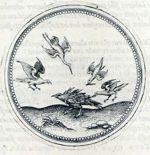
Quod sis, esse velis: Camerarius, Symbolorum et Emblematum Centuria(e) (Nürnberg, 1590, 1595, 1596, 1604), emblem 281 quotes the comment
Iconclass: 52B42 Possibility 56F11 Ambition; 'Ambitione', 'Amor di Fama' (Ripa)
Collectanea (1500): 283
Loci Communes: Aequanimitas (Equanimity, Équanimité)
III vi 5 Quantum non milvus oberret More than a hawk could fly around
Quantum non miluus oberret. Proverbialis est hyperbole, de homine supra modum locuplete, cui tantum sit agrorum, quantum nec miluus pervolet. Persius: Dives arat Curibus, quantum non miluus oberret. Id imitatus Iuvenalis Sat. 9. hunc in modum: Tot msluos, intra tua pascua lassos: Sic & apud Plutarchum tragicus quispiam, Σπείρω δ᾽ ἄρουραν δώδεχ᾽ ἡμέρων ὁδὸν, Βερέκυντα χῶρον. id est, Aruum colo bis sex dierum iter, solo Berecyntho. Plinius lib. 18. latifundia vocat, a quibus ait Italiae perniciem invectam fuisse, proinde veteres ita censuisse: Satius esse minus serere, et melius arare.
So much that a hawk could not fly around it. This is a proverbial hyperbole about the excessively wealthy man who has so much land that not even a hawk can fly around it. Persius: 'At Cures there is a rich man who / Farms more than a hawk can fly around.' Juvenal imitated this in Satire 9: 'Within your pastures so many exhausted hawks.' So too some writer of tragedies quoted in Plutarch: 'I farm a field twice six days / Journey round, the Berecynthian land.' In book 18 Pliny speaks of the latifundia, large estates which he says were the beginning of the ruin of Italy. Accordingly the ancients thought 'it is more satisfactory to sow less and to plough better.'
III vi 6 Caedimus inque vicem praebemus crura sagittis Now we strike, and now expose our shins to arrows
Persius Satyra quarta: Caedimus, inque vicem praebemus crura sagittis. id est, Vicissim carpimus & carpimur, ridemur & ridemus, mordemus & mordemur, laedimus & laedimur. Sumptum à militia. Ad eundem modum Horatius: Caedimus, & totidem plagis consumimus hostem. Plutarchus in commentario De profectu cognoscendo, similem adfert metaphoram, de sphaera ultro citroque missa ac remissa, καὶ πεπάυμεθα τοὺς λόγους ὥσπερ ἱμάντας ἢ σφαίρας ἐπιδούμενοι πρὸς ἀλλήλους, quemadmodum alio retulimus loco, proverbio Sphaeram inter se reddere.
Persius in his fourth Satire: 'Now we strike, and now expose our shins to arrows.' Alternately we criticize and are criticized, we are mocked and we mock, we bite and are bitten, we wound and are wounded. Derived from warfare. Likewise Horace: 'We are struck, and wear out our enemy with just as many wounds.' In his essay on 'Progress in Virtue' Plutarch introduces a similar metaphor of a ball thrown back and forth: καὶ πεπάυμεθα τοὺς λόγους ὥσπερ ἱμάντας ἢ σφαίρας ἐπιδούμενοι πρὸς ἀλλήλους 'And have ceased to equip ourselves with arguments as if they were thongs or spheres to use against one another' as in the proverb we have noted elsewhere, 'To throw the ball from one to another.'
Facsimile: 
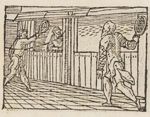
Le mocqueur doibt endurer mocquerie: La Perrière, Le theatre des bons engins (Lyon, 1545), emblem 41 uses the imagery of a game of tennis to express that who says whatever he wants must expect a reply, a metaphor also found in a saying by Plutarchus that Erasmus quotes in his comment
Iconclass: 31A2743(+9223) hitting at something (+ attacking somebody) 31EE23461 violent death by arrow(s) - EE - death not certain; wounded person 43C415 ball games in which ball is hit with racket (or hand) 54EE4 Attack 54E4 Defence
Collectanea (1500): 267
Loci Communes: Mali retaliatio (Retaliation of evil, Rendre le mal pour le mal)
III vi 7 Ptolemaica lis Ptolemaic dispute
Πτολεμαΐς ἡ δίκη. i. Ptolemaica lis. Diogenianus indicat dici solitum in litium avidos. Anus quaepiam fuit Ptolomais, quae quoad vixit, lites agitabat, nec unquam a causis agendis erat feriata.
[greek], Ptolemaic dispute. Diogenianus informs us this was said to reproach those who are eager for quarrels. Ptolemais was some old woman who, during her whole life, was engaged in disputes and never stopped pleading cases.
Facsimile:
Iconclass: 33B1 quarrel, argument 98C(PTOLEMAIS)3 female persons from classical history (PTOLEMAIS) - representations to which the NAME of a person from classical history may be attached
Loci Communes: Rixosus (Quarrelsome, Querelleur)
III vi 8 Provolvitur ad milvios He kneels to the kites
Προκυλινδεῖται ἰκτῖνος, id est, Adorat milvium. Initio veris prodeunt milvii, qua re laeti tenues, quod iam hieme sint levati, provoluuntur, eosque velut adorant. Accommodari potest in eos, qui nova spe gestiunt. Suidas proverbii loco commemorat. Item Iuvenalis: Durate, atque expectate cicadas. Sumptum est autem ex Avibus Aristophanis προκυλιν δεῖσθαι τοῖς ἰκτίνοις. Causam adscribit interpres in eadem, docens quatuor partes anni per aves denuciari hominibus. Ver attribuit milvis.
[greek], He worships the kite. At the beginning of spring the kites reappear, an event at which poor people, released from winter, kneel and rejoice, and as it were worship them. This can be adapted to describe those who are made happy by a new hope. Suidas recalls it as a proverb. And Juvenal has 'Endure, and wait for the cicadas.' In fact it comes from the Birds of Aristophanes: [greek] 'to prostrate oneself to the kites.' The scholiast traces the origin to the same circumstances, explaining that the four seasons of the year are announced to men through birds, and he attributes the spring to hawks.
Facsimile:
Iconclass: 23D42 spring, 'Ver'; 'Primavera' (Ripa) 25F33(KITE) predatory birds: kite 31A233(+911) kneeling figure (+ saluting, showing reverence) 46A15 the poor
Loci Communes: Nuntius laetus (Happy news, Heureuse nouvelle)
III vi 9 Prienensis iustitia Prienian justice
Πρϊηνή δίκη. i. Prienensis iustitia. Suidas ostendit convenire cum significamus, aliquem in iudicando plurimum excellere. A Biante Prienensi sumptum, cuius integritas in iudicandis agendisque causis in proverbium abiit, ut dicatur, δικάζεσθαι βίαντος τοῦ πρϊήνεως κρείσσων. i. In iudicando praestantior Biante Prienensi. Citatur ex Hipponacte iambographo, a Strabone libro geographiae decimoquarto, & in vita Biantis a Diogene Laertio. Etiam Demodici Lerii Trochaicus, Εἰ τύχης τινῶν, δικάζευ τὴν πριηνήων δίκην. id est, Si quam agas causam, Prienes fac uti tum more agas. Hipponactis Scazon sic habet: Αικα δικάζευ βίαντος τοῦ πριηνέως κρεῖσσον. id est, Si qua iudicas, Biantem fac Prieneum vincas. De Bochoris & Rhadamanti iudicio diximus alias.
[greek], Prienian justice. Suidas declares that this is appropriate when we want to say that someone is the most outstanding in judgment. It originated with Bias of Priene whose integrity in judging and pleading cases became proverbial, so that one can say, 'In judgment more eminent than Bias of Priene.' It is quoted from Hipponax, the iambic poet, by Strabo in book 14 of his Geography, and in the life of Bias by Diogenes Laertius. Likewise the trochaic line of Demodicus Lerius: 'If you plead any case, make sure you plead in the manner of Priene.' The scazon of Hipponax goes like this: 'Whenever you make a judgment, make sure you surpass Bias of Priene.' I have talked elsewhere about the judgment of Bochoris and of Rhadamanthys.
III vi 10 Primum Mars in filiis laudatus est Mars was honoured initially in his sons
Τὰ πρῶτα ἄρης εἰς τοὺ παῖδας ἐπῃνεῖτο, id est, Initio Mars laudabatur ob filios. De iis, qui initio specimen aliquod indolis egregiae prae se ferunt, deinde paulatim in alios degenerant mores. Quemadmodum evenit Romanis olim strenuis, et Martem generis auctorem virtute referentibus, post in degenerem prolapsis molliciem, ut non sine causa Iuvenalis exclamarit. Sed unde Haec tetigit Gradive tuos urtica nepotes? Proverbium refertur à Suida.
[greek], At first Mars was praised because of his sons. Said of those who set an example of exceptional nature at first, then gradually slip into other habits. This is what happened to the Romans. Once they were vigorous and showed by their courage that Mars was the founder of their race; later they slipped into unmartial softness, so that Juvenal was right to thunder: 'But whence, O Gradivus, this lust that has infected your grandsons?' The proverb is recorded by Suidas.
Facsimile:
Iconclass: 54FF13 Regression, Deterioration, Relapse 57B1 Praise, Approbation, Approval; 'Lode' (Ripa) 92B49:32B2(ROMANS) offspring, companion(s), train etc. of Mars❧historical peoples: Romans
Loci Communes: Initium laudatum (A praised beginning, Un commencement loué)
III vi 11 Phrynichi lucta Fighting like Phrynichus
Τὸ φρυνίχου πάλαισμα. i. Phrynichi luctatio. Diogenianus indicat dictitari suetum de iis, qui astu, dolisque negotium peragunt. Fuit is Phrynchus Lacedaemonum proditor, quem vetus Comoedia carbone notavit,
[greek], Fighting like Phrynichus. Diogenianus declares this was commonly said of people who do business by cunning and tricks. This Phrynichus betrayed the Spartans and got a black mark in old comedy.
Facsimile:
Iconclass: 57AA613 Cunning, Slyness; 'Astutia ingannevole' (Ripa) 98B(PHRYNICHUS) male persons from classical history (PHRYNICHUS)
Loci Communes: Inanis opera (Vain effort, Effort vain)
III vi 12 Pro malo cane suem reposcis You demand a sow for a sick dog
Αντὶ κακῆς κυνὸς σῦν ἀπαιτεῖς. i. Pro malo cane suem reposcis, id est, pro re vili pretiosam. Sus enim esculentus, canis haudquaquam vescus est. Refertur à Diogeniano.
[greek], You demand a sow for a sick dog, that is, something valuable for something worthless, for the pig is food, but dogs are never edible. Recorded by Diogenianus.
Facsimile:
Iconclass: 34B11:49G2(+0) dog❧patient, sick person (+ variant) 47I2122 sow 51KK3:54B6:54BB6 Interchange, Exchange❧Worth, Value❧Worthlessness
Loci Communes: Inaequalis pensatio (Unequal compensation, Compensation inégale)
III vi 13 Prudens in flammam mitto manum To put one's hand in the flame intentionally
Divus Hieronymus quodam in loco proverbium usurpat huiusmodi: Prudens in flammam manum immitto, pro eo, quod est: Sciens expono me discrimini, malisque obicio. Sumptum videri potest ab historia Mutii Scevolae. Extat et apud Ciceronem.
St Jerome uses a proverb like this somewhere: 'I insert my hand into the flame intentionally,' meaning 'I expose myself knowingly to danger and face evils.' It seems it may be derived from the story of Mutius Scaevola. It is to be found in Cicero too.
Facsimile:
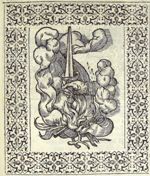
Pietas in patriam: Whitney, A choice of emblemes (Leiden, 1586), emblem 116 uses the Scaevola imagery
Iconclass: 41B121 flame 54A8 Courage, Bravery, Valiance, Manliness; 'Ardire magnanimo et generoso', 'Gagliardezza', 'Valore', 'Virtù heroica', 'Virtù dell'animo e del corpo' (Ripa) 98B(SCAEVOLA, C.M.)61 Gaius Mucius Scaevola before Porsena: he thrusts his right hand into the flames (the body of the king's secretary who erroneously had been killed instead of Porsena may be seen lying on the ground)
Collectanea (1500): 529
Loci Communes: Malum accersitum aut retortum (Evil brought upon oneself or turned back, Mal attiré ou retourné)
III vi 14 Proba est materia, si probum adhibeas artificem The material is good, if only you engage a good workman
A Plauto dictum in Poenulo non sine proverbii specie: Proba est materia, si probum adhibeas fabrum. Egregia quidem indoles, si recte instituatur. Felix ingenium, si praeceptor contingat idoneus, Aut, magnificum negocium, si modo scite tractetur. Metaphora notior est, quam ut sit indicanda.
Used by Plautus in the Carthaginian with the appearance of a proverb: "The material is good, if only you engage a good workman.' A talent is exceptional if only it is taught well, a mind is productive if a suitable teacher is found, or a business is rewarding if only it is negotiated skilfully. The figure is too well known to need to be pointed out.
Facsimile: 
Iconclass: 47C12 preparing of material 54A11:47B1 Industriousness, Assiduity; 'Assiduità', 'Industria', 'Zelo' (Ripa)❧handicrafts, craftsman at work
Collectanea (1500): 213
Loci Communes: Industria (Industriousness, Application, diligence)
III vi 15 Illo respiciens, sed hic remitte bona You may look back that way, but pass the goods this way
Aeschylus in Ranis Aristophanis, cupiens redire ad superos: Εκεῖ φράσαιμ᾽ ἂν, ἐνθαδὶ δ᾽ οὐ βούλομαι. id est, Dicturus illic, nam hic quidem haud volo eloqui. Cui Bacchus ad hunc modum respondet, Μὴ δῆτα σὺ γ᾽ ἀλλ᾽ ἐνθαδὶ ἀνίει τ᾽ ἀγαθά. id est, Minime profecto, quin mage hic profer bona. Interpres admonet allusum ad paroemiam: Εκεῖ βλέπουσα δεῦῤ ἀνίει τἀγάθά. id est, Illuc tuens, at huc remitte commoda. Conveniet cum aliud prae nobis ferimus, aliud facimus, aut cum aliis blandimur, in alios re beneficium conferimus. Quidam à Charitibus mutuo sumptum existimant, quarum una a tergo respicit, et alteri munus offert, adridens alteri.
Aeschylus, in Aristophanes' Frogs, wishing to return to the upper world, says: 'I shall speak there, for I do not wish to speak out here.' And Bacchus answers him thus: 'Not a bit of it, why not rather tell us the good news here.' The scholiast informs us this is an allusion to the proverb ' [greek] 'You may be looking that way, but pass the goods this way.' This will be appropriate when we hold out the promise of one thing and do something else, or when we flatter some people and give a benefit in fact to others. Certain authors say this is borrowed from the Graces, one of whom looks over her shoulder, offers a gift to the second, and smiles at the third.
Facsimile:
Iconclass: 31AA247 looking over the shoulder - AA - female human figure 57AA611 Dissimulation, Hypocrisy; 'Hippocresia', 'Simulatione' (Ripa) 92D3 Graces (Charites), generally three in number; 'Gratie' (Ripa)
Loci Communes: Simulatio, dissimulatio (Pretense, dissimulation, Simulation, dissimulation)
III vi 16 Ranae aquam Water to a frog
Βατράχῳ ὕδωρ. i. Ranae aquam, subaudiendum ministras. Ubi quid exhibetur, quo vel praecipue gaudet is qui accipit. Veluti si quem natura bibacem ad bibendi certamen provoces, aut homini loquaculo narrandi materiam et occasionem subministres. Diversum ab illo, βατράχῳ οἰνοχοεῖς. Recte accommodabitur, ubi quid datur abundanti. Nam ranis affatim est aquae. Apud Athenaeum refertur hoc carmen in Syracusanos: Οἵ πίνουσι μόνον βατράχων τρόπον οὐδὲν ἔδοντες. id est, Qui absque cibo vivunt ranarum more bibantes. Theocritus in Ergatinis: Εὐκτὸς ὁ τῶ βατράχω παῖδες βίος, οὐ μελεδαίνει Τὸν τὸ πιεῖν ἐκχεῦντα, πάρεστϊ γὰρ ἄφθονον αὐτῷ. id est, O pueri ranae vita est optabilis, ut quae Non metuat, potans effundere, copia nanque Larga subest illi. Pastor taxat parsimoniam Ergodotae, quod sudantibus maligne praeberet potum, cum ranis in otio viventibus liceat bibere quantum libet. Sunt et hodie bibones quidam, qui sibi videntur perire siti, quod non in ipsis doliis habitent. Huic non dissimile est illud, Equum in planiciem, Illud autem diversum: ἀσπάλακα εἰς κορωνείαν, id est, Talpam Coroneam. Est autem Coronea Boeotic civitas, quae talpam non gignit, et si aliunde inferatur, emoritur. Ita Stephanus, quemadmodum scarabeus in loco Thraciae iuxta Olynthum, auctore Plinio.
[greek], You are offering water to a frog. When something is presented which particularly pleases the recipient. For example if you challenge someone who is a drinker by nature to a drinking competition, or if you offer a talkative man the matter and the chance to tell a story. It is the opposite of [greek] 'You are offering wine to a frog.' It will be properly applied when someone is given what he has in abundance, for frogs have water in abundance. In Athenaeus there is recorded this verse about Syracusans: 'Who live without food drinking like frogs.' Theocritus in the Reapers:
Boys, the life of a frog is desirable, because
He has no fear of drinking himself dry; for ample
Supplies lie below him.
The shepherd is criticizing the meanness of a contractor, because he offered a miserly drink to sweating men when frogs living in idleness may drink as much as they like. There are some drunkards today who think they will die of thirst if they cannot live in the very barrels. This is different from 'The horse to the plain,' and the opposite of [greek] 'A mole to Coronea.' Coronea is a town in Boeotia, where there are no moles, and if one is brought in from somewhere else, it dies. This is what Stephanus says, and it is rather like the dung-beetle at a place near Olynthus in Thrace according to Pliny.
Facsimile:
Iconclass: 41C121:21D:25F51(FROG) giving drink❧water (one of the four elements)❧tailless amphibians: frog 54BB2 Unnecessity, Superfluity
Loci Communes: Absurda, indecora, seu praepostera (Absurd, unbecoming, or preposterous things, Choses absurdes, inconvenantes ou déplacées); Bibacitas (Excessive drinking, Penchant pour la boisson)
III vi 17 Post bellum auxilium Help when the war is over
Μετὰ τὸν πόλεμον ἡ συμμαχία, id est, Post bellum suppetiae. Quoties serius adhibetur remedium. Refertur à Suida. Natum est, aut certe usurpatum à Diogene Cynico. De quo Laertius huiusmodi fabulam narrat. Adolescens quispiam iactantior nuper uxore ducta titulum huius modi inscripsit aedibus suis: ὁ τοῦ διὸς παῖς καλλινικος ἡρακλῆς ἐνθάδε κατοικεῖ, μηδὲν εἰσίτω κακὸν Iovis filius Callinicus Hercules hic habitat, ne quid introeat mali. Diogenes adscripsit: μετὰ τὸν πόλεμον ἡ συμμαχία Post bellum auxilium, videlicet indicans, iam tunc receptum in eas malum, cum ipse malus immigrasset. Convenit cum Platonico illo, quod alibi commemoravimus, μετὰ τὸν πόλεμον ἥκειν, id est, Post bellum adesse. Brutus in epist. ad Lycios, αἱ μηχαναὶ ὑμῶν μετὰ τὸν πόλεμον, ὡς ἡ παροιμΐα, ἐκομίσθησαν. i. Machinae vestrae post bellum, ut habet proverbium, allatae sunt. Item in epist ad Myrenses, ἡ γὰρ ἐν πολέμῳ βραδύτης ἴσον ἔχει τῷ μηδόλως γενομένῳ τὸ ἀπράκτον. i. Nam tarditas in bello perinde est, ac si nihil omnino sit factum, quod frustra factum est. Quintilianus in declamatione cadaveris pasti, duas habet sententias non absimiles proverbio: Quid quod medicina mortuorum sera est? Quid quod nemo aquas infundit in cineres? Sic indicat serum remedium. Siquidem aegroto mortuo sero venit medicus. Et aedibus in cinerem redactis sero infunditur aqua.
[greek], Support when the war is over. Said whenever a remedy comes too late. It is recorded by Suidas. It originated with, or at least was used by Diogenes the Cynic. Laertius tells a story about him like this. A young man was being rather boastful about the wife he had recently taken and put the following inscription on his house: 'The son of Jupiter, victorious Hercules, lives here. Here let no evil enter.' Diogenes wrote after this: 'Help when the war is over,' meaning, that is, that evil had already been received into the house, when the man, who was evil himself, moved in. This belongs with that expression of Plato which I have recorded elsewhere: 'To arrive after the war is over.' Brutus in the letter to the Lycians: 'Your machines have been brought in, as the proverb has it, when the war is over.' Likewise in the letter to the Myrians: 'For delay in war is the same as doing nothing at all; what is done late is done in vain.' In his 'Declamation on Feeding a Dead Body,' Quintilian has two phrases rather like this proverb: 'Is not medicine for the dead too late? Does anyone pour water onto ashes?' This is how he denotes a remedy that comes too late, since for the mortally sick a doctor comes too late, and it is too late to pour water on a building reduced to ashes.
Facsimile:
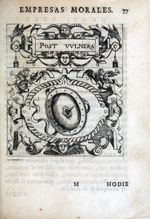
Post vulnera: Borja, Empresas morales (Bruxelles, 1680), emblem 38 uses the imagery of help or protection that is offered too late
Iconclass: 54A6:45I Helpfulness❧after the battle 51FF52 Lateness
Loci Communes: Sera paenitentia (Late repentance, Repentir tardif); Serum remedium aut tempestivum (A late remedy or a timely one, Remède tardif ou opportun)
III vi 18 Pinguis venter non gignit sensum tenuem Fat stomach never bore fine feeling
Divus Hieronymus in epist. quadam citat huiusmodi proverbium apud Graecos celebratum: Pinguis venter non gignit sensum tenuem. Quamquam fatetur id elegantius sonare Graece quam Latine Graecus autem senarius extat apud Graecos huiusmodi: Παχεῖα γαστὴρ λεπτὸν οὐ τίκτει νόον. id est, Subtile pectus venter obseus non parit. Refert & Galenus contra Thrasybulum, velut vulgo iactatum, καὶ τοῦτο ἁπάντων σχεδὸν ἂνθρώπων ἄδεται, διότι πάντων ἐστὶν ἀληθέστατον, ὡς γαστὴρ ἡ παχεῖα τὸν νοῦν οὐ τίκτει τὸν λεπτὸν. i. Et hoc ab omnibus prope hominibus canitur, eo quod omnium verissimum est, quod venter obesus non gignit mentem subtilem. Apud Lacedaemonios infame erat, si quis corpore fuisset vehementer obeso. Agatharchides apud Athenaeum lib. 12. refert Ancli em ob delicias supra modum corpulentum, in contionem adductum fuisse, atque illic a Lysandro vehementer obiurgatum, minimumque abfuisse quin in exilium ageretur, idque futurum minitatos Lacedaemonios, ni vitam frugalius institueret. Et ibidem Menander de quodam obeso loquitur, παχὺς γὰρ ὗς ἔκειτ᾽ ἐπὶ στόμα, id est, Obesus etenim sus premebat os viri. Admonet adagium, luxu corporis hebetescere mentis aciem. Quemadmodum scribit etiam Horatius: Nam corpus onustum Hesternis vitiis animum quoque praegravat ipsum. Atque affigit humo divinae particulam aurae. Plutarchus apud Gellium ostendit pueros multo pastu stupidioris ac tardioris ingenii evadere.
In one of his letters St Jerome quotes a proverb well known among the Greeks which goes like this: 'Fat stomach never bore fine feeling.' But one must admit that it runs more neatly in Greek than in Latin. And a Greek senarius survives in the Greek writers which goes like this: [greek] 'A gross stomach never bears a subtle heart.' Galen too records in Against Thrasybulus that this was commonly repeated: 'And this is chanted by almost everyone, for it is one of the truest of all things, that a fat stomach does not bear a subtle mind.' By the Spartans it was held to be disgraceful if someone was excessively fat. Agatharchides, as reported in book 12 of Athenaeus, says that Anclides, having become extraordinarily corpulent through luxurious living, was summoned to the council and there sharply reprimanded by Lysander; he was very close to being sent into exile, and the Spartans threatened him with this if he did not live more frugally. In the same passage Menander says of some obese person: 'For a fat pig all but hid the man's mouth.' The adage warns us that the keenness of the mind grows dull through indulgence of the body. As Horace writes too: 'For a heavy body / Also weighs down the mind itself with yesterday's excesses, / And traps the wisp of divine spirit in earth.' Plutarch, quoted in Gellius, declares that heavy feeding produces children who are quite dull and slow of mind.
Facsimile: 
Iconclass: 32A21 fat (human type) 59BB31 Disgrace; 'Infamia', 'Scorno' (Ripa)
Loci Communes: Multi - in stupidos (Many people - against the stupid, Beaucoup de gens - contre les sots); Praelongi (Very long, protracted things, Choses très longues)
III vi 19 Piscem natare doces You are teaching a fish to swim
Ιχθὺν νήχεσθαι διδάσκεις. i. Piscem natare doces. Perinde est, ac si dicas, doctum doces. Confine illi, quod alibi retulimus, δελφῖνα νήχεσθαι διδάσκεις. i. Delphinum natare doces. Quod idem ad hunc effertur modum, τῇ δελφῖνι κολυμβᾶν συμβουλεύῃ. ι. Delphinem quemadmodum natare oporteat consulis. Autor Diogenianus
Ιχθὺν νήχεσθαι διδάσκεις, You are teaching a fish to swim. This is just as if you were to say, 'You are teaching the learned.' Very close to one we have recorded elsewhere: 'You teach a dolphin to swim.' Which is also expressed thus: 'You are giving advice to a dolphin on how to swim.' The authority is Diogenianus.
Facsimile:
Iconclass: 25F6 fishes 31A2773 swimming (movement in water) 43C221(+11) swimming (sport) (+ training (sports, games, etc.))
Loci Communes: Absurda, indecora, seu praepostera (Absurd, unbecoming, or preposterous things, Choses absurdes, inconvenantes ou déplacées)
III vi 20 Pitana sum I am Pitana
Πιτάνη εἰμὶ, id est, Pitana sum. Zenodotus indicat dici solitum de iis, qui in extremas redacti calamitates ab iisdem denuo in pristinam felicitatem restituuntur. Sic enim evenisse quondam Pitanae Aeoliae civitati. Nam hanc a Pelasgis in seruitutem redactam, Erythraei in libertatem pristinam vindicarunt.
[greek], I am Pitana. Zenodotus declares this used to be said of people who had been reduced to extreme misfortune and restored again to their former happiness. For this is what happened once to Pitana, a town in Aetolia. It was reduced to servitude by the Pelasgians and freed to enjoy its former liberty by the Erythraeans.
Facsimile:
Iconclass: 54F122 Vicissitudes of Life 61E(PITANA) names of cities and villages (PITANA)
Loci Communes: Fortunae commutatio (Change of fortune, Changement de fortune)
III vi 21 Pistillo retusius As blunt as a pestle
Proverbialis est hyperbole, quam in epistolis usurpavit D. Hieronymus, Pistillo retusius, pro eo, quod est, minime acutum. Timon Misanthropus Cleanthem ob ingenii tarditatem appellat, ὅλμον ἄτολμον, id est, Pistillum sive mortarium ignavum. Et Chrysippeum acumen, apud eundem per ironiam usurpatur in stupidum. Et Cornutus syllogismus, pro ratione ridicula, frivolaque.
There is a proverbial hyperbole which St Jerome used in his Letters: 'As blunt as a pestle,' for something which is far from sharp. Timon the misanthropist calls Cleanthes 'an idle pestle' or 'mortar,' because of his slowness of wit. And 'the sharpness of Chrysippus' is used ironically in the same author for a stupid person - and 'a syllogism with horns' for a ridiculous and frivolous argument.
Facsimile:
Iconclass: 49G831 pestle and mortar 52AA552 Intellectual Blindness; 'Cecità della Mente' (Ripa) 57BB241 Irony
Loci Communes: Multi - in stupidos (Many people - against the stupid, Beaucoup de gens - contre les sots)
III vi 22 Partitio non praefocatio Don't choke, share
Μερίς οὐ πνὶξ, id est, Sortitio, non praefocatio. Olim cum ii, qui viribus praepollerent, cibum eriperent imbecillioribus, manus interim in illos inicientes, excogitatum est, ut sorti bus ex aequo divideretur epulum, iamque ab omnib acclamari coeptum, μερίς οὐ πνὶξ, i. Partitio, non strangulatio. Eaque vox in proverbium abiit. Quo licebit uti, si quando signifi cabimus, non esse locum violentiae, sed ex aequitate iuris oportere tractari negotium. Plutarchus in collectaneis, si modo illius sunt, citat his verbis, μερὶς οὐ μὴ πίνγει, i. Partitio est, non strangulat. Admonet et Suidas hac forma proverbium efferri.
[greek], A casting of lots, not a throttling. Formerly, because those who were strongest laid hands on the weaker ones and snatched food from them, a scheme was devised so that food should be divided equally by lots and immediately it became accepted to shout: [greek] 'Don't strangle, share.' The expression became proverbial, and we can use it when we want to say that there is no place for violence, but that the business must be dealt with equitably and legally. Plutarch, in the Collected Proverbs, if indeed they are his, quotes it in these words: [greek] 'It is a sharing, there's no strangulation.' Suidas too tells us that the proverb usually has this form.
Facsimile:
Iconclass: 46A8211 communal sharing of everything 51AA4:31E23141 Nothingness, Absence❧deprivation of air, choking 51AA4:54AA4 Nothingness, Absence❧Vehemence, Violence, Fierceness; 'Sforza con Inganno', 'Violenza' (Ripa) 55CC11 Greed, Covetousness, Cupidity; 'Cupidità' (Ripa)
Loci Communes: Justitia (Justice, Justice); Rapacitas et avaritia (Rapacity and greed, Rapacité et avarice)
III vi 23 Paries dealbatus A whited wall
Τοῖχος κεκονϊαμένος. i. Paries dealbatus aut incrustatus. Paulus apostolus in Actis apostolicis, Ananiam sacerdotem fictum & fucatum, parietem dealbatum appellat, quod longe alius esset intus, quàm cultu habituque externo prae se ferret. Christus item in Evangelicis literis, sanctimoniae simulatores sepulchra dealbata vocat, quae cum foris niteant, intus sunt cadaverum ossibus referta. Sic enim est apud Matthaeum, Οὐαὶ ὑμῖν γραμματες καὶ φαρισαῖοι, ὅτι παρομοιάζεσθαι τάφοις κεκονιαμένοις, οἵ τινες ἔξωθεν μὲν φαίνοντες ὡραῖοι, ἔσωθεν δὲ γέμουσιν ὀστέων νεκρῶν καὶ πάσης ἀκαθαρσίας. vae vobis scribae & pharisaei, qui similes sitis sepulchris dealbatis, quae foris quidem apparent pulchra, intus autem referta sunt ossibus cadaverum, omnique spurcitia. Lucianus, Myronis et Praxitelis colossos ad huiusmodi ferme similitudinem trahit in Gallo, quia foris multo niterent ebore, multo fulgerent auro, variisque coloribus arriderent: praeterea Iovis, aut Neptuni repraesentarent imaginem, aut ridentem dextra tenentes, ut plane numen aliquod esse viderentur, cum intus nihil appareret, praeter picem, clavos, araneas, mures, atque id genus sordes alias, haudquaquam ad exteriorem illam imaginem respondentes. Atque huiusmodi principum esse vitam affirmat, quorum si strepitum, et apparatum inspicias, nihil felicius, nihil deorum vitae similius, sin curas, suspiciones, odia contemplere, quibus intus discruciantur, nihil calamitosius. Seneca Philosophos, qui cum docerent honesta, turpiter viverent, similes esse scripsit quorundam medicorum pyxidulis, quarum tituli remedium pollicerentur, cum intus venenum occultarent. Ediverso, qui meliores sunt intus, quam oratione, quamque prima illa vitae specie, quasique fronte prae se ferunt, hos Plato Silenis assimiles facit, de quibus alio diximus loco.
[greek], A whitewashed or plastered wall. The apostle Paul, in the Acts of the Apostles, calls the false and pretentiously dressed high priest Ananias a 'whited wall,' because inwardly he was far different from what he appeared to be outwardly by his dress and bearing. Likewise Christ in the gospels calls those who make a pretence of holiness 'whited sepulchres' for though these sparkle on the outside, on the inside they are full of the bones of the dead. This is what is found in Matthew: 'Woe unto you, Scribes and Pharisees, for such as you are like [greek] 'whited sepulchres,' which outwardly appear beautiful but inwardly are full of the bones of the dead and every sort of filth.' Lucian brings in the colossi of Myron and Praxiteles as a simile of this sort in his Cockerel, because outwardly they gleamed with much ivory, flashed with much gold, and were bright with diverse colours, and because, moreover, they were images of Jupiter and Neptune holding the lightning bolt or the trident in the right hand so that they seem to be in truth something divine, when inside there was nothing but pitch, nails, spiders, mice and other such rubbish which corresponded not at all to the exterior image. And such is the life of Princes, he declares: if you reckon by the noise and pomp, there is nothing more happy, more like the life of the gods than theirs; but if you consider the anxieties, the suspicions, the hatreds with which they are secretly tormented, there is no life more wretched. Seneca wrote that philosophers who teach virtue yet live scandalously are like the little caskets of certain physicians whose labels promise cure though they conceal poison within. On the other hand, those who are better within than they show by their speech, by the immediate appearance of their lives, by their exterior, as it were, these Plato likens to sileni of which we have spoken elsewhere.
Facsimile: 
Iconclass: 41A41 wall-covering 47G333(+432) plastering ~ building activities (+ glass ~ crafts, industries, agriculture) 48C24 piece of sculpture, reproduction of a piece of sculpture 57AA611 Dissimulation, Hypocrisy; 'Hippocresia', 'Simulatione' (Ripa)
Loci Communes: Simulatio, dissimulatio (Pretense, dissimulation, Simulation, dissimulation)
III vi 24 Ollam alere To keep the pot full
Χύτραν τρέφειν, i. Ollam alere dicebantur, qui metum ostenderent, quo deterrerent quempiam. Velut si quis praesidium alicubi collocatum habeat, quo minus vicini res novas moliantur. Sumptum id est a more civitatis Atheniensis, in qua ollas in tectis disponere consueverunt, ad deterrendas ululas, quarum illic maxima vis. Nam illarum strepitum omne genus avium reformidat. Adagium refertur tum a Suida, tum a Diogeniano. Sumptum est ex Aristophanis Comedia, cuititulus: Aves. Οτι μέντε δεῖ μάχεσθαι λαμβάνειν τε τῶν χυτρῶν. Τί δε χύτρα ὠφελήσει; Γλαὺς μὲν οὐ πρόσεισι νῶϊν. id est, Pugnare sane oportet simul et ollas sumere. Sed quid iuvabit olla? Ulula nos tum non adibit.
[greek], To keep the pot full, was said of those who made a show of fear so that they could discourage someone - for example if someone places defences somewhere so that the neighbours are less likely to commit acts of aggression. This originates with the custom of the city of Athens, where they used to place pots on the roofs to deter screech-owls which were very numerous there. For birds of every sort shun the noise made by [the wind in] these pots. The adage is recorded both by Suidas and by Diogenianus. It comes from the comedy of Aristophanes called the Birds: We must fight and have pots to hand at the same time.
But what good is a pot?
The screech owl won't come to bother us then.
III vi 25 Oleum et salem oportet emere Buy both oil and salt
Τοὔλαιον καὶ τὸν ἅλα δεῖ ὠνεῖσθαι, id est, Oleum et salem oportet emere. Refert adagium hoc Aristoteles Rhetoricorum libro secundo, tractans de locis et enthymematis. Proponit autem huiusmodi exemplum Antistrephontis: Sacerdos quaedam dissuadebat filio, ne quando verba faceret apud populum. Nam si iniusta suaseris, inquit, deos habebis iratos: sin iusta, homines. Id hoc pacto ἀντιστρέφει, id est, reciprocat filius. Imo expedit orationem habere apud populum. Quandoquidem si iusta dixero, dii me amabunt, si iniusta, homines. Atque huiusmodi genus argumentationis confine putat proverbio, quo iubemur, oleum, ac salem emere: τουτί δ᾽ ἐστὶ ταυτὸ τῷ λεγομένῳ τὸ ἔλαιον πρίασθαι καὶ τοὺς ἅλας. i. Hoc autem idem est cum eo quod dici solet, oleum emere et salem, significans opus esse nonnumquam remediis contrariis, nunc acrimonia, nunc lenitudine. Sal enim mordet ac siccat. Oleum lenit ac humectat. Sic medici oleum addunt sali, ne plus satis erodat: & qui sapiunt, admonitionis acrimoniam bonis verbis leniunt. Non me clam est, in aeditione Aldina, pro ἔλαιον haberi ἕλκος, quasi ex eodem di- cto colligi possit & malum & mali remedium, sed quis solet vulnus emere?
[greek], It is essential to buy both oil and salt. Aristotle records this adage in book 2 of his Rhetoric when he is dealing with topoi and enthymemes. He offers this example of the antistrephon: 'A priestess was advising her son against speaking in public at any time. "For if you recommend something unjust," she says, "you will have the gods angry with you; but if something just, then men will be angry." This the son [greek] "turns round" like this: "No rather, it is an advantage to speak in public. Because if I say just things, the gods will love me, if unjust, then men will love me."' Aristotle thinks this sort of argumentation is very similar to this proverb, in which we are commanded to buy both oil and salt: 'But this is the same as the common expression [greek] "Buy both oil and salt"' meaning that sometimes opposite remedies are necessary, now sharp, now mild. For salt is biting and drying; oil soothes and moistens. Thus physicians add oil to salt, lest it be too corrosive, and wise people soften the sharpness of rebuke with kind words. I am aware that in the Aldine edition you will read [greek] 'wound' for [greek] 'oil,' as if to say the evil and the cure for the evil can be gathered from the same place. But who normally buys a wound?
Facsimile:
Iconclass: 41C661 salt 41C671 oils and vegetable fats 46B411 buying
Loci Communes: Tempestiva (Timely things, Choses opportunes)
III vi 26 Tanquam suber Like cork
Ως φελλὸς. i.Tanquam suber. de iis, qui non norunt dissimulare, aut qui nesciunt mergi adversis fortunae quiacellis. Extat apud Pindarum. Tractum à natura ligni, quod non solum ipsum non mergitur: verumetiam alligatum aliis ne sidant, sustinet. Unde retibus assuitur, & natantibus subditur.
[greek], Like cork. Said of those who do not know how to dissimulate, or of those who cannot be sunk by the storms of fortune. It occurs in Pindar and is derived from the nature of this wood, which not only does not sink itself, but when tied to other things holds them up so that they do not sink. So it is threaded onto nets and is used to support swimmers.
Facsimile:
Iconclass: 25G22(CORK) (non-fruit) products of plants or trees (CORK) 31A2774 floating (movement in water)
Loci Communes: Garrulitas (Talkativeness, Bavardage)
III vi 27 Obtrudere palpum To smother with caresses
Obtrudere palpum apud Plautum, est arte, fucoque decipere. Ego, inquit, istuc aliis dare condidici, mihi obtrudere non potes palpum. Unde et Palpari pro adulari, et Palpones adulatores vocamus a simili metaphora. Metaphora tracta est ab equisonibus, qui ferocientibus equis, plausu manus adblandiuntur, ut ostendimus alibi.
To smother with caresses, in Plautus, is to deceive by skill and trickery. He says: I am a master of handing that to others; you can't smother me with caresses.' Hence we also say palpari for 'to flatter,' and palpones for 'flatterers' by a similar figure. The metaphor is drawn from grooms, who try to calm down fiery horses by a pat of the hand, as we have explained elsewhere.
Facsimile:
In adulari nescientem: Alciatus, Emblemata (Leiden, 1591), emblem 35's epigram quotes the adage
Iconclass: 33C234 (lovers) caressing each other 46C1317 grooming 57AA6121 Flattery; 'Adulatione' (Ripa)
Collectanea (1500): 234
Loci Communes: Imposturae (Impostures, Impostures)
III vi 28 Ne quis unquam Megarensibus Never anyone more than the Megarians
Μηδέ ποτε μηδεὶς μεγαρέων γένοιτο σοφώτερος. i. Nunquam quisquam sapientior sit Megarensibus. Scomma proverbiale iaci solitum in stupidos. Dictum est autem per adulationem de Megarensibus, autore Diogeniano.
[greek], Never let anyone be wiser than the Megarians. A proverbial joke customarily uttered against stupid people. But it was said to flatter the Megarians according to Diogenianus.
Facsimile:
Iconclass: 32B311(MEGARIANS) indigenous European peoples (MEGARIANS) 52AA1 Stupidity, Poverty of Intellect; 'Stupidità overo Stolidità' (Ripa)
Loci Communes: Multi - in stupidos (Many people - against the stupid, Beaucoup de gens - contre les sots)
III vi 29 Nulla candidorum virorum utilitas White-skinned men are no use
Οὐδὲ λεύκων ἀνδρῶν ὄφελος ἢ σκυτοτομεῖν. i. Nullus candidorum virorum usus nisi ad cerdonicam. In molles et effeminatos dictum, ac veluti voluptatibus natos. Id enim innuit opinamur, per cerdonicam, iuxta illud Martialis: - Quid ad te, De cute quid faciat ille, vel illa sua. Ceterum ii negotiis gerendis inutiles. Contra qui nigra sunt cute, et hispidi, hi magis alle gendi sunt ad administrandam Rem publicam. Unde et Herculem mela/mpugon appellarunt, tamquam strenuum, et a mollicie alienum, quemadmodum alibi demonstratum in proverbio: Ne in Melampygum.
[greek] White-skinned men are no use except as cobblers. A jibe at soft and effeminate men, and those born to luxury. This is what is implied, I think, by cerdonica 'shoemaking,' as in Martial: 'What is it to you what this one or that may do with his own leather?' In any case, such people are useless in managing affairs. On the other hand, those who are dark-skinned and hairy are better choices for governing the nation. Hence even Hercules was called [greek] 'blackbottom,' as someone energetic and by no means effeminate, as is explained elsewhere in the adage 'Mind you don't fall in with Blackbottom.'
III vi 30 Nox humida A damp night
Νὺξ ὑγρὰ, id est, Nox humida. De malis ingruentibus dici solitum, auctor est Diogenianus. Quemadmodum de laetiore fortuna dicimus, exoriri lucem. Apud eundem est nu\c das1ei=a, id est, Nox spissa, de nocte hiberna. Quae si cui non videbuntur in adagiorum numerum referenda, is ea rescribat Diogeniano, si libet.
[greek], A damp night. Customarily said when misfortunes befall, according to Diogenianus. In the same way, in happier circumstances, we say 'Dawn is breaking.' In the same author we find [greek] 'a thick night,' for a winter night. And if anyone thinks these should not be classed as adages, he can blame Diogenianus, if he wishes.
Facsimile: 
Iconclass: 23R14 night 26B1 mist, fog 54FF11 Adversity, Misfortune, Bad Luck; 'Fortuna infelice', 'Infortunio' (Ripa)
Loci Communes: Caecutientia (Poor eyesight, near-blindness, Mauvaise vue)
III vi 31 Quid ad farinas? How does that help with daily bread?
Τί πρὸς τ᾽ ἄκφυτα; i. Quid ad farinas? id est, quid attinet ad parandas facultates? Nam ἄλ- φιτα pro victu, proque re familiari ponere, poetis est familiare. Aristophanes in Nebulis: Τί δέ μ᾽ ὠφελήσουσ᾽ οἱ ῥυθμοὶ πρὸς τ᾽ ἄλφιτα; id est, Quid me numeri tan dem ad farinas iuverint? Id recte detorquebitur ad artes steriles, ut poeticen, οὐδὲν πρὸς τ᾽ ἄλφιτα, quod vulgo dicunt de pane lucrando, sermone celebri magis, quam erudito.
[greek] How does that help with daily bread? That is, How does this help to make a living? For the poets commonly say [greek] for daily bread, and for household goods. Aristophanes in the Clouds: [greek]; 'How would tunes help me gain my daily bread?' This can be applied appropriately to unpractical arts, like poetry: [greek] 'nothing to do with daily bread,' or as the common people say 'with earning bread,' an expression which is more well known than learned.
Facsimile:
Iconclass: 41C621 bread, loaf 46A172 paying of wages
Loci Communes: Aliena a re (Irrelevant to the matter, Étranger au sujet)
III vi 32 Numeris Platonicis obscurius As obscure as Plato's math
Proverbialis hyperbole videtur, quam usurpat M. Tullius in epistolis ad Atticum, libro 7. Aenigma Oppiorum ex Velia, plane non intellexi. Est enim numero Platonis obscurius. Id ideo dictum, quod Plato numeris Pythagoricis obscurat suam philosophiam, ac veluti nebulas quasdam offundit, praecipue in Timaeo. Nam Pythagoras omnem ferme philosophiae rationem ad numeros traxit. De quibus permulta Macrobius in commentariis, quos edidit in Somnium Scipionis.
Apparently a proverbial hyperbole used by Marcus Tullius in book 7 of his Letters to Atticus: 'I could not understand at all the riddle of the Oppii from Velia; it is more obscure than Plato's maths.' This is said because Plato obscures his philosophy with Pythagorean numbers and covers it as with clouds, especially in the Timaeus. For Pythagoras brought almost all philosophical reasoning back to numbers. Macrobius wrote a great deal on this in the commentaries he published on the Dream of Scipio.
Facsimile:
Iconclass: 49D mathematics 52DD21 Confusion, Obscurity; 'Confusione' (Ripa) 98B(PLATO)3 male persons from classical history (PLATO) - representations to which the NAME of a person from classical history may be attached
Loci Communes: Obscuritas (Obscurity, Obscurité)
III vi 33 Nihil ex agro dicis Your words are never rustic
Οὐδὲν ἐξ ἀγροῦ λέγεις. i. Nihil e rure loqueris, id est, Nihil humile, neque triviale. Quod enim parum elegans, parum expolitum, id ex agro profectum dicitur. Contrà quod festivum, quia lepidum, id urbanum ac civile vocant. Meminit Suidas.
[greek], Your words are never from the fields; that is, never base or common. For anything inelegant or unpolished is said to have come 'from the fields.' On the other hand anything witty or graceful is called urbane or city talk. Recalled by Suidas.
III vi 34 Nihil grave passus es, nisi etc. You have not been badly hurt unless ...
Οὐδὲ πέπονθας δεινὸν εἰ μὴ προσποιεῖς. id est, Nihil grave accidit, nisi tibi vindicas. Meminit Diogenianus. Nemo laeditur, nisi a se ipso. Nemini fit iniuria, si eam existimat ad se non pertinere.
[greek], There is no serious harm except what you do to yourself. Recalled by Diogenianus. No one is hurt, except by himself. There is no insult to anyone if he believes it does not concern him.
Facsimile:
Iconclass: 58AA12 Self-destruction
Loci Communes: Elabendi - ex sese (Slipping away - from oneself, S'échapper - de soi-même); Malum accersitum aut retortum (Evil brought upon oneself or turned back, Mal attiré ou retourné)
III vi 35 Ne spina quidem vulnerabit bonos Not even a thorn will harm the good
Μηδ᾽ ἄκανθα ἀμύξῃ τοῦς ἀγαθοὺς. i. Ne spina quidem vulnerabit bonos. Nemo molestus fuerit innocenti. Nam spina natura pungit quemlibet. Sed ubique tuta est innocentia vitaeque integritas.
[greek], Not even a thorn will harm the good. No one will be troublesome to the innocent. Although the thorn by its nature pricks everyone, innocence and purity of life are always safe.
Facsimile:
Iconclass: 25G1(+223):54D5 plants (in general) (+ thorn, prickle)❧Safety 54D5:57A631 Safety❧Innocence; 'Innocenza', 'Innocenza o purità' (Ripa)
Loci Communes: Ultio malefacti (Vengeance for a wrongdoing, Vengeance d'un méfait)
III vi 36 Naaera et Charmione Naaera and Charmione
Νάαιρα καὶ χαρμιόνη. i. Naaera et Charmione. De fidis amicis dici solitum scripsit Zenodotus, quique non dubitarent vel mortis esse comites amicis. Erat autem hoc amicitiae genus laudatum apud Aegyptios, quod appellabant συναποθνησκόντων, id est, commorientium. Quibus hoc necessitudinis genus placebat, ii hac lege copulabantur, ut si alteri fatale quidpiam accidisset, alter ultro mortis socium sese adiungeret. Hoc foedere chaeserant Antonius et Cleopatra. Significat et Horatius libro secundo, Oda decimaseptima, simile quiddam erga Maecenatem: Ille dies utranque Ducit ruinam, non ego perfidum Dixi sacramentum, thimus, ibtmus, Utcumque praecedes, supremum Carpere iter comites parati. Rursum alio loco: Quid nos? quibus te vita sit superstite Iucunda, si contra gravis. Sed ut redeamus ad proverbium, Naaera & Charmione, duae erant Cleopatrae reginae pedissequae, quae spontaneam Cleopatrae mortem sunt imitatae: ac semiuivae repertae sunt, dominae iam mortuae coronam capite delapsam reponentes. Est quidem historia memoratu cum primis digna, nec iniucunda cognitu, verum eam si quis forte requiret, petat lice bit ex Plutarcho in vita M. Antonii. Ego nec adagium hoc fueram adscripturus ni veritus essem ne, quoniam extat in Zenodoti collectaneis semel atque iterum excusis, publicatisque, parum eruditus aliquis calumniaretur à me praeteritum. Nam mihi, si modo non fallit nasus, subolet hoc proverbium haud esse profectum ab antiquitate, sed in Zenodoti natum officina.
[greek], Naaera and Charmione. Zenodotus wrote that this used to be said of faithful friends who did not hesitate to keep company with their friends even in death. This type of friendship was highly thought of among the Egyptians; they called it [greek] 'of those who die together.' Those who found satisfaction in this sort of intimacy bound themselves together by this rule, that if some fatal accident happened to one, the other would join him in death. Antony and Cleopatra bound themselves to each other by such a covenant. Horace speaks in poem 17 of the second book of Odes of some such alliance with Maecenas: 'That day will bring the doom of both. / I am not one to have pronounced a faithless oath. / We shall both go, we shall both go, / Wherever you lead, companions / Ready to hasten on the final journey.' And again, in another passage: 'What of us? to whom life while you survive may be / Enjoyable, grievous if not.' But let me come back to this proverb. Naaera and Charmione were two waiting women of queen Cleopatra who copied her in her voluntary death, and they were seen, when they were still half-alive, putting back the crown which had fallen from the head of their already dead mistress. A story worthy to be remembered especially, and pleasant to know, but if anyone perchance questions it, he can find it in Plutarch's life of Antony. I would not have included this adage, if I had not been afraid that, since it appears more than once in the printed editions of Zenodotus' Collectanea, some uneducated individual would accuse me of having overlooked it. For to me, if my nose does not betray me, this adage smells as if it were not produced by antiquity at all but were born in Zenodotus' study.
Facsimile: 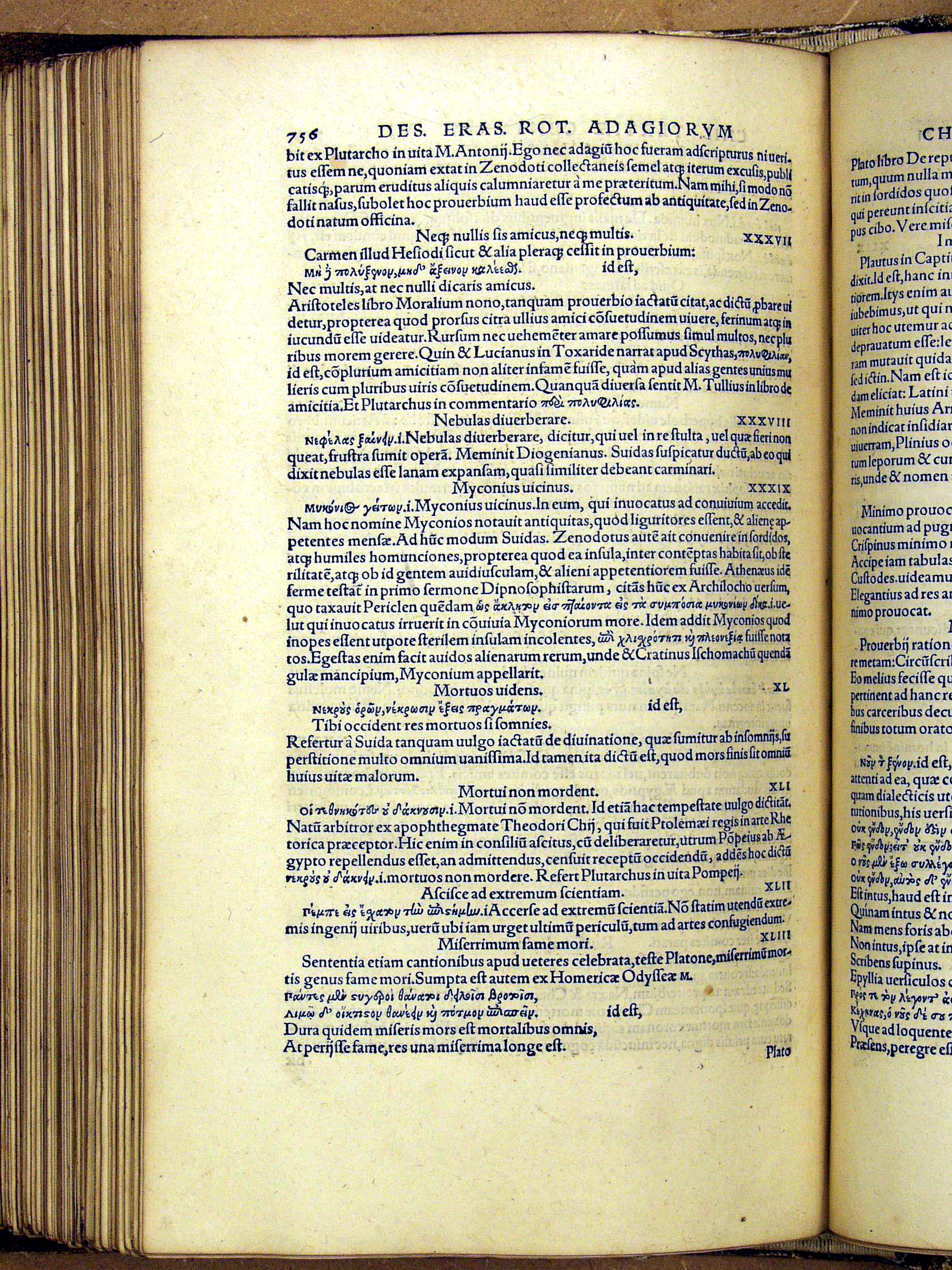
Iconclass: 31E2381:56F231 self-sacrifice, death in the service of a higher purpose❧Fidelity in Friendship; 'Confermatione dell'Amicitia', 'Fede nell'Amicitia' (Ripa) 42F51 maid ~ house personnel 98C(NAAERA & CHARMIONE) female persons from classical history (NAAERA & CHARMIONE) 98C(CLEOPATRA)68 death of Cleopatra: she commits suicide by holding to her breast an asp, which she has taken from a basket of figs
Loci Communes: Amicitia (Friendship, Amitié)
III vi 37 Neque nullis sis amicus, neque multis Be not a friend to none, nor to many
Carmen illud Hesiodi, sicut et alia pleraque cessit in proverbium: Μὴ δὲ πολύξενον, μηδ᾽ ἄξεινον καλέεσθαι. id est, Nec multis, at nec nulli dicaris amicus. Aristoteles libro Moralium nono, tamquam proverbio iactatum citat, ac dictum probare videtur, propterea quod prorsum citra ullius amici consuetudinem vivere ferinum atque iniucundum esse videatur. Rursum nec vehementer amare possumus simul multos, nec pluribus morem gerere. Quin & Lucianus in Toxaride narrat apud Scythas, πολυφιλίαν, id est, complurium amicitiam non aliter infamem fuisse, quam apud alias gentes, unius mulieris cum pluribus viris consuetudinem. Quamquam diversa sentit M. Tullius in libro De amicitia. Et Plutarchus in commentario: περὶ πολυφιλίας.
This verse of Hesiod, like many others became a proverb: [greek] 'Be not a friend to many, but not to none either.' In book 9 of his Ethics Aristotle cites this as a proverb, and appears to approve what it says, because it seems to be uncivilized and joyless to live without the society of any friends at all. On the other hand we cannot love many deeply at the same time or please a lot. And does not Lucian tell us in the Toxaris that among the Scythians polyphilia, that is, friendship with many, was just as shameful as it is among other peoples for one woman to have intercourse with many men? But Marcus Tullius has the opposite opinion in his book On Friendship. And Plutarch in his essay 'On Multiple Friendships.'
Facsimile:
Iconclass: 54A431 the Golden Mean; 'Mediocrità' (Ripa) 56F231 Fidelity in Friendship; 'Confermatione dell'Amicitia', 'Fede nell'Amicitia' (Ripa)
Loci Communes: Amicitia (Friendship, Amitié)
III vi 38 Nebulas diverberare To divide the clouds
Νεφέλας ξαίνειν. i. Nebulas diverberare, dicitur, qui vel in re stulta, vel quae fieri non queat, frustra sumit operam. Meminit Diogenianus. Suidas suspicatur ductum ab eo qui dixit nebulas esse lanam expansam, quasi similiter debeant carminari.
[greek], To card clouds. This is said of someone who vainly strives to do something stupid or impossible. It is recalled by Diogenianus. Suidas suspects that it originated with the person who said that the clouds were stretched out like fleeces. The image suggests that they had to be carded in the same way.
Facsimile:
Iconclass: 47H23:26A carding, combing ~ textile and clothing industry❧clouds 52AA1 Stupidity, Poverty of Intellect; 'Stupidità overo Stolidità' (Ripa) 52BB42 Impossibility
Collectanea (1500): 647
Loci Communes: Inanis opera (Vain effort, Effort vain)
III vi 39 Myconius vicinus A Myconian neighbour
Μυκόνιος γείτων. i. Myconius vicinus. In eum, qui invocatus ad convivium accedit. Nam hoc nomine Myconios notavit antiquitas, quod liguritores essent, & alienae appetentes mensae. Ad hunc modum Suidas. Zenodotus autem ait convenire in sordidos, atque humiles homunciones, propterea quod ea insula, inter contemptas habita sit, ob sterilitatem, atque ob id gentem avidiusculam, et alieni appetentiorem fuisse. Athenaeus idem ferme testatur in primo sermone Dipnosophistarum, citans hunc ex Archilocho versum, quo taxavit Periclen quendam, ὡς ἄκλητον εἰσ πταίοντα εἰς τὰ συμπόσια μυκονίων δίκα. i. Velut qui invocatus irruerit in convivia Myconiorum more. Idem addit Myconios, quod inopes essent, utpote sterilem insulam incoletes, ἐπὶ χλισχρότητι καὶ πλεονεξίᾳ, fuisse notatos. Egestas enim facit avidos alienarum rerum, unde et Cratinus Ischomachum quendam gulae mancipium, Myconium appellarit.
[greek], A Myconian neighbour. A jibe at someone who comes to a banquet uninvited. For the Myconians had a reputation in ancient times for being gourmandisers and for greedily seeking out other peoples' tables. This is what Suidas says. Zenodotus however says that it suits mean, base men, because the island of Myconos was among the most despised by reason of its infertility, which made its people rather miserly and covetous of others' goods. Athenaeus asserts almost the same thing in the first conversation of the Doctors at Dinner where he quotes this verse of Archilochus who criticized someone called Pericles: 'For bursting uninvited into banquets like a Myconian.' The same author adds that the Myconians were known 'for their stinginess and their covetousness' because they were poor, inhabiting as they did an infertile island. For extreme poverty makes people greedy of others' possessions; hence Cratinus called a certain Ischomachus, who was a slave to greed, a Myconian.
Facsimile:
Iconclass: 32A44 miser 32B311(MYCONIANS) indigenous European peoples (MYCONIANS) 33A7:55CC11 neighbour❧Greed, Covetousness, Cupidity; 'Cupidità' (Ripa)
Loci Communes: Intemperantia, libido (Intemperance, lust, Intempérance, désir)
III vi 40 Mortuos videns Seeing the dead
Νεκροὺς ὁρῶν, νέκρωσιν ἔξεις πραγμάτων. id est, Tibi occident res, mortuos si somnies. Refertur a Suida tamquam vulgo iactatum de divinatione, quae sumitur ab insomniis, superstitione multo omnium vanissima. Id tamen ita dictum est, quod mors finis sit omnium huius vitae malorum.
[greek], Your business will fail, if you dream of the dead. This is recorded by Suidas as something commonly uttered from divination based on dreams, the most vain by far of all superstitions. But this is said in such a way as to suggest that death is the end of all the evils of this life.
Facsimile:
Iconclass: 31B33:31E prophetic dream❧death of human being 31B34 interpreting a dream
Loci Communes: Conjecturae (Conjectures, Conjectures)
III vi 41 Mortui non mordent Dead men do not bite
Οἱ τεθνηκότες οὐ δάκνουσιν, i. Mortui non mordent. Id etiam hac tempestate vulgo dictitant. Natum ex apophthegmate Theodori Chii, qui fuit Ptolemaei regis in arte Rhetorica praeceptor. Hic enim in consilium adscitus, cum deliberaretur, utrum Pompeius ab Aegypto repellendus esset, an admittendus, censuit receptum occidendum, addens hoc dictum: νεκροὺς οὐ δάκνειν, i. mortuos non mordere. Refert Plutarchus in vita Pompeii.
[greek], Dead men do not bite. This is still commonly said these days. I believe it originated with the saying of Theodore of Chios who was king Ptolemy's teacher of rhetoric. Being co-opted to the council when it was discussing whether Pompey should be driven away from Egypt or admitted, he expressed the opinion that he should be received and then killed, adding this saying: 'Dead men do not bite.' Plutarch tells the story in the life of Pompey.
Facsimile:
Iconclass: 31E3 the corpse 33B6 killing ~ aggressive relationships 54D5 Safety 51AA4:31B6234(+9223) Nothingness, Absence❧chewing (+ attacking somebody) 51AA4:54DD52 Nothingness, Absence❧Risk; 'Ardire ultimo & necessario' (Ripa)
Loci Communes: Obtrectatio et maledicentia (Disparagement and slander, Dénigrement et médisance)
III vi 42 Ascisce ad extremum scientiam Use knowledge in the last resort
Πέμπε εἰς ἔσχατον τὴν ἐπὶστήμην, id est, Accerse ad extremum scientiam. Non statim utendum extremis ingenii viribus, verum ubi iam urget ultimum periculum, tum ad artes confugiendum.
[greek], Call on knowledge in the last resort. You should not use immediately the ultimate powers of your mind, but when extreme peril presses, then you should resort to your skills.
Facsimile:
Iconclass: 51FF52 Lateness 54B11:52A1 Use❧Intellect, Intelligence; 'Intelletto', 'Intelligenza' (Ripa)
Loci Communes: Discriminis (Danger, crisis, Danger)
III vi 43 Miserrimum fame mori Nothing worse than death by starvation
Sententia etiam cantionibus apud veteres celebrata, teste Platone, Miserrimum mortis genus, fame mori. Sumpta est autem ex Homericae Odysseae Μ. Πάντες μὲν στυγεροὶ θάνατοι δειλοῖσι βροτοῖσι, Λιμῷ δ᾽ οἴκτιστον θανέειν καὶ πότμον ἐπιστεῖν. id est, Dura quidem miser is mors est mortalibus omnis, At periisse fame, res una miserrima longe est. Plato lib. De republica tertio refert hoc carmen, veluti pestilens moribus adolescentum, cum nulla mors sit misera, quae honestatis gratia oppetitur. Accommodari poterit in sordidos quosdam, qui quo parcant nummis, defraudant genium suum: aut in eos, qui pereunt inscitia veri.
According to Plato it was a saying repeated even in songs among the ancients that the most wretched sort of death was to die by starvation. However, it comes from book 12 of Homer's Odyssey: 'Any death is hard indeed for wretched mortals. / But to perish of hunger is by far the most wretched thing of all.' Plato quotes these lines in book 3 of the Republic as unhealthy for the morals of young people, since no death is wretched which is encountered in a noble cause. It could be used against miserly people who deprive themselves of pleasure in order to save their money, or those who die without knowledge of the truth, because the mind of man is nourished by the word of God no less than the body by food. Death by such hunger is indeed the most wretched of all.
III vi 44 I modo venare leporem, nunc itym tenes Go hunt for a hare, now you have a pheasant
Plautus in Captivi duo: I modo venare leporem, nunc Itym tenes, proverbiali figura dixit. Id est, hanc interim cenam, qualemcumque certam habes, quaere alteram, si potes potiorem. Itys enim avis, quem a Phaside Scythiae flumine Phasianum vocant. Proinde cum iubebimus, ut qui nactus sit commodi quidpiam, ad aliud sese accingat, non intempestiviter hoc utemur adagio. Verum opinamur hunc Plauti locum, ut sunt alii plerique, depravatum esse: legendum autem, nec Itym, ut habent codices, nec Ichthyn, ut perperam mutavit quidam, cum nec avis, nec piscis quidquam faciat ad venationem leporis, sed Ictin. Nam est id animal de genere mustelarum, quod in cuniculos immittitur, ut praedam eliciat. Latini Viverram appellant. Suidas ostendit idem animal insidiari piscibus. Meminit huius Aristoteles libro de naturis animantium nono, capite sexto. Quamquam non indicat insidiari leporibus, sed avibus et alvearibus. Quod si recte constat ictin esse viverram, Plinius octavo libro indicat praecipuam viverris gratiam fuisse, propter venatum leporum et cuniculorum. Iniciunt, inquit, eas in specus, qui sunt multifores in terris, unde et nomen animali, atque ita eiectos superne capiunt.
Plautus said in the Two Captives by way of a proverbial figure: 'Go hunt for a hare, now you have itys "a pheasant"'; that is, 'You have this meal here which is safe, however modest it may be; go seek another, bigger if you can.' The pheasant is a bird so called from 'Phasis' a river in Scythia. Therefore when we want to order someone who has found something good to take on something else, we can use this adage quite opportunely. But I think this passage in Plautus, like many others, is corrupt. The reading should be, not itym, as the codices have, nor ichthyn, an erroneous change I see one editor has made, since neither a bird nor a fish have anything to do with the hunting of a hare, but ictin 'ferret.' For this is an animal belonging to the family of the weasels which is put into rabbit-warrens to chase out the prey. The Romans call it viverra. Suidas declares that the same animal traps fish. Aristotle recalls this in book 9 chapter 6 of his Nature of Animals, although he does not state that it traps hares, but birds and bees. If there is general agreement that ictis is the viverra, Pliny in book 8 states that this was particularly prized for hunting hares and rabbits. He says: 'They introduce them into the warrens which have many surface openings, whence the name of the animal, and thus they catch them above as they are forced out.'
Facsimile: 
Iconclass: 43C111261 hare-hunting, rabbit-hunting 43C1113:25F38(PHEASANT) bird hunting❧walker and runner birds: pheasant
Loci Communes: Proficientium in melius (Improving for the better, Progresser vers le mieux)
III vi 45 Minimo provocare To challenge with the little finger
Minimo provocare, est contemptim ad certamen provocare. Sumptum à gestu provocantium ad pugnam minimo digito porrecto. Horatius in Sermonibus: Ecce Crispinus minimo me provocat. accipe, si vis, Accipe iam tabulas. detur nobis locus, hora, Custodes, videamus uter plus scribere possit. Elegantius ad res animi torquebitur. ut, Unus hic grammatistes theologos omnes minimo provocat.
'To challenge with the little finger' is to challenge to a contest contemptuously. It comes from the gesture of those who challenge to a fight by raising the little finger. Horace in his Satires:
Behold,
Crispinus challenges me with his little finger: 'Take these, if you wish,
Take these tablets now; let's have a place, a time,
Judges; let's see who can write the most.'
It can be most wittily applied to intellectual situations; for example, "This grammar teacher on his own challenges all theologians with his little finger.'
Facsimile:
Iconclass: 31A22465(+9212) little finger (+ challenging) 57BB21 Contempt
Collectanea (1500): 704
Loci Communes: Contemptus et vilitatis (Contempt and worthlessness, Mépris et bassesse)
III vi 46 Minore finire pomoerio, et his similia To enclose with a smaller pomoerium, and sayings like these
Proverbii rationem sapiunt huiusmodi fermè metaphorae: Finire pomoerio: Praestituere metam: Circumscribere cancellis, & si quae sunt consimiles. Varro in libris De re rustica: Eo melius fecisse quosdam, qui minore pomoerio finierunt, exclusis partibus, quae non pertinent ad hanc rem. Idem eiusdem operis libro primo: Ars sit, an quid aliud, & à quibus carceribus decurrat ad metas. Cicero lib. de Oratore 1. Exiguis quibusdam finibus totum oratoris munus circumdedisti.
There is a flavour of the nature of the proverb in almost all metaphors of this sort: 'To enclose in a pomoerium,' 'To prescribe the goal,' 'To surround with barriers,' and any that are similar. Varro in On Agriculture: 'It was all the better done by certain people who confined the subject in narrower limits, excluding those areas which are not pertinent.' And again in book 1 of the same work: 'Whether it is an art or not, and from what starting points it evolves towards its goal.' Cicero in book 1 of On the Orator. 'You have constrained the whole profession of the orator within rather narrow boundaries.'
Facsimile:
Iconclass: 44D31 marking boundaries 52D21 Conciseness
Loci Communes: Breviloquentia (Brevity of speech, Brièveté du discours); Perficiendi sive absolvendi - ab initio ad finem (Finishing, completing - from beginning to end, Achever, accomplir - du début à la fin)
III vi 47 Mens peregrina A mind elsewehere
Νοῦν τὸν ξένον, id est, Mentem peregrinam habere dicuntur cogitabundi, nec satis ob id attenti ad ea, quae coram aguntur. Iocus Aristophanis, ἐν ἀχαρνεῦσιν, in Euripidem tamquam dialecticis utentem argutiis, id quod indicat etiam Fabius Quintilianus in Institutionibus, his versibus: Οὐκ ἔνδον, ἔνδον ἐστὶν εἰ γνώμην ἔχεις. Πῶς ἔνδον; εῖτ᾽ οὐκ ἔνδον; ὀρθῶς ὦ γέρον. Ο νοῦς μὲν ἔξω συλλέγων ἐπύλλια, Οὐκ ἔνδον, αὐτὸς δ᾽ ἔνδον ἀναβάδην ποιεῖ Τραγῳδίαν. id est: Est intus, haud est intus idem si sapis. Qui nam intus et non intus? optime senex. Nam mens foris abest colligens epyllia Non intus, ipse at intus est, tragoediam Scribens supinus. Epyllia versiculos dicit, voce diminutiva ab epos. Idem in Equitibus: Πρός τε τὸν λέγοντ᾽ ἀεὶ Κέχῃνας, ὁ νοῦς δέ σου παρὼν ἀποδημεῖ. id est: Usque ad loquentem inhias, at ipsa menstua, Praesens, pergere est. In eundem sensum Terentius: Praesens, absens ut sies.
[greek]. People are said to have their mind elsewhere when they are lost in thought and so not attentive enough to what is being done in front of them. Aristophanes has a joke in the Acharnians against Euripides for using dialectical quibblings (something which even Fabius Quintilian notes in the Institutes) in these lines:
The same man is in there, and he is not in there, if you know what I mean.
How can anyone be in there and not in there?
Perfectly well, old man. For his mind is outside, far away, collecting little scraps of poetry, not inside, but he himself is inside, composing a tragedy, flat on his back. He calls his little poems epyllia, making a diminutive from epos. The same author in the Knights: 'You are always gaping at the speaker, but for all that you are present your own mind is far away.' And Terence with the same meaning: 'When you are with him, be as if you are not with him.'
Facsimile:
Iconclass: 31B:46C519 mind, spirit❧getting lost; having lost one's way; losing one's way 52AA23 Inattention
Loci Communes: Attentio et contra (Attention and its opposite, Attention et son contraire)
III vi 48 Mitior columba As gentle as a dove
Πρᾳότερος περιστερᾶς, i. Mansuetior columba. Columbina simplicitas, ac mansuetudo, laudatur etiam in divinis literis. Nam hoc est columba in avibus, quod ovis in quadrupedibus. Ipsa nulli animantium meditatur noxam, nec aliunde praesidium habet adversus miluios, quàm à celeritate volandi. Adagii meminit Diogenianus.
[greek], As gentle as a dove. The guilelessness and gentleness of the dove is praised even in sacred scriptures. For the dove is among birds what the sheep is among quadrupeds. She contemplates no harm to any living thing and has no other defence against the hawk but the speed of her flight. The adage is recalled by Diogenianus.
Facsimile: 
Iconclass: 25F39(DOVE) other birds: dove 56EE2 Meekness; 'Mansuetudine' (Ripa) 57A77 Friendliness, Gentleness, Affability; 'Affabilità, piacevolezza, amabilità', 'Animo piacevole, trattabile & amorevole', 'Benignità' (Ripa)
Loci Communes: Mansuetudo (Gentleness, Douceur)
III vi 49 Ad porcellum da mihi mutuo tres drachmas Give me a loan of three drachmas to buy a piglet
Εἰς χοιρίδιον μοι νῦν δάνεισον τρεῖς δράχμας. id est. Ad porcellum da mthi mutuo tres drachmas. Dicebatur ab eo, qui mori decrenisset, aut qui vellet initiari. Nam initiandi consueverunt immolare sorcum. Suidas ex Aristophane citat. Est autem in Pace, Εἰς χοιρίδιον μοι νῦν δάνεισον τρεῖς δράχμας, Δεῖ γὰρ μυηθῆναί με πρὶν τεθνηκέναι. id est: Qui porcum emam mihi mutua nunc tres drachmas. Initiandus sum prius, ac mortem oppetam.
[greek], Now, give me a loan of three drachmas to buy a piglet. This was said by one who was resolved on dying or who wanted to be initiated. For initiates used to sacrifice a pig. Suidas quotes Aristophanes. It is in the Peace: 'Lend me now three drachmas with which I may buy a pig; / I am to be initiated, before I go to meet with death.'
Facsimile:
Iconclass: 55C3:46B31 Lending, Letting❧money 46B315(DRACHMA) 46B411:47I2123 buying❧piglet, suckling pig
Loci Communes: Desperatio (Despair, Désespoir)
III vi 50 Mulieris podex A woman's rump
Γυναικὸς πυγή, id est, Mulieris podex. In ignavum ac desidiosum dicebatur. Ignavum animal mulier, et quo minus habet mentis, hoc inhonestis voluptatib. est addictius. Amat otium, et fucorum in morem, quemadmodum ait Hesiodus, virorum laboribus quaesita sibi insumit, id quod indicat etiam illud proverbium, ὄκνος ὄνος. Et omnino tales permultas habet Gallia. Atqui Hollandia innumeras habet, quae sua industria viros otiosos & voluptarios alunt.
[greek], A woman's rump. This used to be said of a slothful and idle person. Woman is an idle creature and the less intelligence she has, the more she is given to ignoble pleasures. She is fond of idleness and like the drone, as Hesiod says, she takes for herself what is gained by the labour of men. This is what is meant by the proverb 'Ocnus the ass.' France has many such women, and yet Holland has uncounted numbers of women who support lazy and pleasure-loving men with their labour.
Facsimile:
Iconclass: 31D150 Womanhood 54AA11 Sluggishness, Inertia; 'Dapocaggine', 'Pigritia' (Ripa) 54DD2 Idleness; 'Otio' (Ripa) 93E86(+0) Ocnus, usually twisting a cord which is eaten by an ass as soon as it is being made (+ variant)
Loci Communes: Ignavia et inscitia (Cowardice and ignorance, Lâcheté et ignorance)
III vi 51 Mulieris animus Heart of a woman
Γυναικὸς φρένες id est, Muliebre ingenium. Diogenianus ostendit dici solitum in stultos. Videtur autem magis quadrare in imbelles & inconstantes. Unde est illud Ennianum. Vos etenim iuvenes, animos geritis muliebres, Illaque virgo utri. Et Terentius: Novi ingenium mulierum. Nolunt, ubi velis, ubi nolis, cupiunt ultro.
[greek], A womanish nature. Diogenianus states that this was said of stupid people. But it seems to apply better to those who are cowardly and changeable. Hence the remark of Ennius: 'For you young men have womanish hearts, / And that virgin has a man's.' And Terence: I have learned what a woman's nature is. When you will, they won't; when you won't, they want.'
Facsimile:
Iconclass: 31AA2221 heart - AA - female human figure 52AA1 Stupidity, Poverty of Intellect; 'Stupidità overo Stolidità' (Ripa) 53AA21 Inconstancy; 'Incostanza', 'Instabilità', 'Instabilità overo Incostanza' (Ripa) 54AA8 Cowardice
Loci Communes: Inconstantiae, perfidiae, versutiae (Inconstancy, treachery, cunning, Inconstance, perfidie, ruse)
III vi 52 Perendinum ventum praedicere To learn what the wind will be the day after tomorrow
Τὸν τριταῖον ἄνεμον προγινώσκειν, id est, Perendinum ventum praescire dicuntur, qui coniecturis, quod multo post eventurum sit, colligunt. Sumptum à nautis, aut à negociatoribus: Pindarus: Σοφοὶ δὲ μέλλοντα τριταῖον ἄνεμον ἔμαθον. id est, Sapientes futurum perendie ventum noverunt. Id enim demum est sapere, non solum quod ante pedes est videre, verum id quoque, quod procul abest, prospicere.
[greek], To know what the wind will be the day after tomorrow. This is said of people who guess what is going to happen at a much later time. It originates with sailors or merchants. Pindar says: 'Wise men know what the wind will be the day after tomorrow.' For this is wisdom, to see not only what is in front of your feet but to foresee what is further away.
Facsimile:
Note: 23Q81 the day after tomorrow, is a candidate notation
Iconclass: 23Q81 the day after tomorrow 52A2 Forethought, Deliberation; 'Previdenza', 'Providenza' (Ripa) 52E2:26F Prediction, Prophecy; 'Augurio', 'Divinatione', 'Profetia' (Ripa)❧good and bad weather
Loci Communes: Prudentia (Prudence, Prudence); Conjecturae (Conjectures, Conjectures)
III vi 53 Caute loquacior As garrulous as a reef
Ραχίας λαλίστερος, id est, Caute loquacior. Proverbialis hyperbole, in hominem immodice, ac permoleste garrulum. Sumpta metaphora a cautibus, quae quoniam assiduis fluctibus tunduntur, multo resonant fragore.
'[greek], As garrulous as a reef. A proverbial hyperbole applied to an intemperate man who is unbearably talkative. The figure is derived from reefs that, continuously beaten by the waves, make a great roaring noise.
Facsimile:
Iconclass: 25H1312 reef ~ coast 52D4 Prolixity, Verbosity, Loquacity; 'Loquacità' (Ripa)
Loci Communes: Garrulitas (Talkativeness, Bavardage)
III vi 54 Lepori esurienti etiam placentae fici To a starving hare even cakes are figs
Λαγῷ πεινῳντι καὶ πλακοῦντες εἰς σύκα. id est, Lepori esurienti et placentae pro ficis. Suidas tradit dictum de iis, qui compulsi necessitate, res etiam pretiosissim as absumunt. Fortassis natum ab huiusmodi quapiam fabula, qualem de se narrat Apuleius, quod adactus fame, placentas primum lambere, deinde etiam comesse didicerit.
[greek], To a starving hare even cakes serve for figs. According to Suidas this was said of those who, when driven by necessity, consumed even their most precious possessions. Probably derived from the sort of story which Apuleius tells of himself, that driven by hunger he first learned to lick the cakes then to consume them.
Facsimile:
Iconclass: 25G21(FIG) fruits: fig 25F26(HARE)(+63):41C119 rodents: hare (+ dying animal; death of animal; dead animal)❧hunger 41C6221 fancy-cakes, fancy-pastries 51C2 Necessity, Inevitability; 'Necessità' (Ripa) 55BB1 Poverty; 'Povertà', 'Povertà del doni', 'Povertà in uno ch'habbia bell'ingegno' (Ripa)
Loci Communes: Necessitas (Necessity, Nécessité)
III vi 55 Lex et regio Law and country
Νόμος καὶ χώρα, id est, Mos sive lex et regio. Admonet proverbium quemadmodum et alias obiter indicavimus, serviendum et obsecundandum esse moribus regionis, in qua verseris. Zenodotus asscribit, unicuique genti suas quasdam esse leges, et instituta vivendi. Nam Persarum mos est, ut inter pocula temulenti consultent, ac reges suos pro numine adorent. Deinde qui sunt pares osculantur invicem: inferiores genam modo contingunt potentiorum. Natos pueros post quadriennium demum inspiciunt. Gordii regem creant eum, qui sit inter ipsos quam maxime corpulentus. Syrraci coronam deferunt ei, qui proceritate corporis reliquos antecellat, atque, ut quidam natrant, cui caput sit longissimum. Stymphali, mulierem eam in honore habent, quae cum pluribus viris habue rit consuetudinem. Montani Messagetae, in viis coeunt. Sauromatae inter pocula filias vendunt. Mazusius abstinet a mulierum congressu, nisi si quam bello coeperit. Tibareni, post uxoris partum, ipsi pinde quasi pepererint, revincto capite cubant. Apud Cecertaeos opifices onera gestant, donec occurrat, qui emat. Sidones parentes devorant excepto capite. Nam hoc inaurant. Caesiae, aut iuxta alios Heniochi, natos lacrimis prosequuntur, defunctos gaudio. Bachini si quando a morbo revaluerint, canibus semetipsos obiciunt. Orgenipei, neque domos habent, nec animante vescuntur. Sunt autem calui, non ipsi modo, verumetiam mulieres, idque aiunt accidere propter aquae vim nativam, quam bibunt. Thysetae diis ossa sacrificant, ipsi vescuntur carnibus. Tauroscythae homines immolant. Byzoni mediterranei lacte bubulo victitant, nec ullo praeterea vescuntur cibo. Iberes ovium loco, canum greges alunt. Aethiopes, qui dicuntur Colcenses, hyaenas. Quin hodie non pauciora ingeniorum et morum discrimina. Ad ea quoad fieri potest accommodare sese, polypumque piscem imitari, non minima prudentiae pars est.
[greek], Custom, or law, and country. A proverb which tells us, as I have shown elsewhere with other illustrations, that you must follow and obey the customs of the region into which you go. Zenodotus writes that all peoples have their own laws and principles for living. It is the custom of the Persians for one thing to take counsel in their cups when they are drunk, and to worship their kings as gods. For another, equals kiss each other; lower class folk only touch the knee of higher class people. They set eyes upon their male children only after four years. The Gordians crown as king the one who is the most corpulent among them. The Syrraci grant the crown to the one who is slimmest in body, and, according to some, the one who has the longest head. The Stymphali honour a woman who consorts with many men. The mountain Massagetae copulate in the streets. The Sauromatae sell their daughters when they are drunk. The Mazusian refrains from intercourse with women unless it is one he has captured in battle. The Tabareni, after their wives have given birth, lie with their heads bound just as if they themselves have given birth. Among the Cecertaei artisans carry their work around until someone approaches to buy it. The Sidones eat their parents, except the head, which they cover with gold. The Caesiae, or according to others the Heniochi, weep for the new-born and rejoice for the dead. The Bachiri, if they have recovered from an illness, present themselves to dogs. The Orgenipei have no houses and do not eat flesh; but they are hairless, not only the men but the women too, and they say this happens because of the nature of the water they drink. The Thysetae sacrifice bones to their gods and themselves eat the meat (and these, in my opinion, are really the most sensible). Tauroscythians make human sacrifice. Mediterranean Byzoni live on cow's milk and never eat any other food. Iberians, instead of sheep, keep herds of dogs. The Africans who are called Colcenses have hyenas. And the differences in our cultures and customs nowadays are no smaller than these. To adapt ourselves to them as far as possible, imitating the octopus, is no small part of wisdom.
Facsimile: 
Iconclass: 32B peoples; ethnic groups; nationalities 44G law and jurisprudence 49H3 ethnology, cultural anthropology 51BB4:54D6 Multiformity, Variety❧Custom, Habit; 'Consuetudine' (Ripa)
Loci Communes: Obsecundantis (Complying, being obliging, Se conformer, obéir)
III vi 56 Aegis venit There's a storm coming
Αἰγὶς ἐρχεται, id est, Aegis venit. Suidas indicat proverbio dici solitum de iis, qui petulanter et impudenter agerent. Refertque ex Pherecrate, οἴμοι κακοδαίμων αἰγὶς ἔρχεται. Aegis autem Graecis significat, pelliceum tegmen quod gestant Afri, praeterea maris intumescentis undas, ac procellas ventorum, idque lingua Dorica: unde ἐπαιγίζειν reperitur, pro vehementer flare. Alii malunr esse quid e coronis contextum, aut rete ex coronamentis contextum. Sic ait usurpatum apud Herodotum lib. 4. et apud Lycurgum. Nec desunt, qui putent significare sacerdotem, quae Athenis solita sit ferre sacram Aegidem, itaque ingredi ad eos, qui nuper duxissent uxores. Apparet in huiusmodi sacris multum fuisse licentiae, quemadmodum & apud Christianos multis ineptiis celebrantur nuptiae, simulque allusum est ad procellam.
[greek], There's a storm coming. Suidas states this was customarily said of those who acted wantonly and shamelessly, and takes it from Pherecrates: 'Alas, woe is me, a storm is coming.' Aegis means several things to the Greeks: the shield made of hide that is carried by Africans; then the waves of a rising sea and hurricanes, and this latter in Doric, whence we find [greek] for 'to blow hard.' Others prefer to say it means what is woven from wreaths or a net woven from creepers. He says this is how it is used in book 4 of Herodotus, and in Lycurgus. And there are some who believe that it means the priestess who carries the sacred aegis at Athens, and goes with it into the homes of those who have recently taken a wife. It seems that in these rites there was much licence, just as even among Christians marriages are celebrated with much foolery, with allusions to hurricanes at the same time.
Facsimile:
Iconclass: 26C3:23A33 storm❧future 57AA4 Shamelessness
Loci Communes: Impudentia (Shamelessness, Impudence)
III vi 57 Multam sylvam gestas You're carrying a lot of undergrowth
Λόχμην πολλὴν φορεῖς, id est, Silvam multam portas. Dictum in Phormionem militem quendam hirsutum, densaque pilorum obsitum silva, cuius et alibi facta mentio. Quadrabit in agrestem et stupidum, cuiusmodi fermè sunt milites. Refertur à Suida.
[greek], You're carrying a lot of undergrowth. A jibe at Phormio, a soldier who was apparently shaggy and covered with a thick forest of hair. We have mentioned him elsewhere. It would apply to someone rustic and stupid, such as almost all soldiers are. It is recorded by Suidas.
Facsimile:
Iconclass: 31A4441 excessive hairiness 45B the soldier; the soldier's life 52AA1 Stupidity, Poverty of Intellect; 'Stupidità overo Stolidità' (Ripa) 56B42 Coarseness, Rusticity
Loci Communes: Forma, deformitas (Beauty, deformity, Beauté, difformité)
III vi 58 Leonem videre hostium proelia portendit To see a lion portends battle with the enemy
Λέοντας ἰδεῖν, δυσμενῶν δηλοῖ μάχας. id est, Cernere leones, hostium pugnam indicat Translatum vel a somniorum coniecturis, vel ab observantibus auguria: Meminit Suidas. Huiusmodi versiculos indicantes quid quodque portendat somnium, videmus diligenter commemoratos à Suida et Hesychio, quum nihil inanius. Et tamen probabile est utrunque fuisse monachum.
[greek] To see lions indicates a battle with the enemy. A metaphor taken either from the interpretation of dreams or from the observation of omens. It is recalled by Suidas. I notice that verses like these saying what every dream foretells are carefully recorded by Suidas and Hesychius, though there is nothing more vain. Yet it is likely that both were monks.
Facsimile:
Iconclass: 62:25F23(LION) visions of the future❧beasts of prey, predatory animals: lion 45H3 battle 52E2 Prediction, Prophecy; 'Augurio', 'Divinatione', 'Profetia' (Ripa)
Loci Communes: Conjecturae (Conjectures, Conjectures)
III vi 59 Larus in paludibus A gull in the swamps
Λάρος ἐν ἕλεσι, id est, Larus in paludibus. Suidas scribit dictitatum de iis, qui faciles sunt ad dandum. Ductum à Laro ave, quam eandem κέπφον appellari putant, quanquam Theodorus Gaza hanc fulicam vertit, illam gaviam. Ea quoniam facile decipitur, illiciturque, proinde proverbio locum fecit.
[greek], A gull in the swamps. Suidas writes that this was commonly said of those who are easily enticed into giving something. It is derived from the bird, the gull, which is also thought to be called [greek] 'the petrel,' although Theodorus of Gaza translates the latter as fulica 'coot' and the former as gavia 'gull.' This bird is easily deceived and enticed, and gave rise to the proverb because of this characteristic.
Facsimile:
Iconclass: 25F37(GULL) shore-birds and wading-birds: gull 25H191 swamp, inland marsh, fens 52B21 Credulity 56D29 Misplaced Trust, False Confidence, 'Pax Falsa'; 'Speranza fallace' (Ripa)
Loci Communes: Liberalitas (Generosity, Générosité)
III vi 60 Issa Issa!
Ισσα, id est, Issa. Proverbialis erat acclamatio in eos, quibus ζ litera sorte cecidisset, quique modis omnibus essent infortunati. Haec Suidas, qui proverbium citat ex Mesena Menandri, testatus, & alibi usurpatum apud autores. Coniectare licet, eam literam in sortibus inauspicatam fuisse. Martianus Capella in nuptiis Philologiae et Mercurii, testatur hanc literam invisam fuisse Appio Claudio, quod dentes mortui, dum exprimitur, imitetur.
[greek], Issa! was a proverbial taunt shouted at those to whom the letter 'Z' fell when lots were drawn, and at those who were in any way unfortunate. This according to Suidas, who quotes the proverb from the Messenia of Menander, and who states that it is used by writers in other places. We may suppose that this letter was inauspicious in the drawing of lots. Martianus Capella, in the Marriage of Philology and Mercury, tells us this letter was hated by Appius Claudius because, when it is pronounced, it sounds like the grinding of a dead man's teeth.
Facsimile:
Iconclass: 43C581 drawing lots ~ betting 54FF11 Adversity, Misfortune, Bad Luck; 'Fortuna infelice', 'Infortunio' (Ripa)
Loci Communes: Infortunii sive exitii (Misfortune or ruin, Malheur ou ruine)
III vi 61 Ipso horreo By the granaryful
Quod prolixe & affatim datur, ipso horreo dari dicitur, quemadmodum ipso canistro, propterea quod ex horreo plenius depromitur, quam è choenice. Simile illi, ἐκ πιθοῦ ἀντλεῖς. id est, E dolio hauris.
When anything is given abundantly and sufficiently it is said to be given 'By the granaryful'; it is just like 'By the basketful,' because more can be supplied from the granary than from a choenix. It is similar to 'You draw from the cask.'
Facsimile:
Iconclass: 47F31 large-scale structure for storage, e.g.: warehouse, depot, silo 51H42 Abundance; 'Abondanza', 'Abondanza maritima' (Ripa)
Loci Communes: Liberalitas (Generosity, Générosité); Profusio (Extravagance, Prodigalité)
III vi 62 In tua ipsius harena In your own arena
In tua ipsius harena, id est, In tua ipsius arte Sumptum a gladiatoribus, solitis in harena digladiari. Neque vero parui referebat horum, nota an ignota dimicarent harena.
In your own arena, that is, 'In your own craft.' Derived from the gladiators who used to fight in the arena. And it was a matter of no small importance to them, whether they fought in a familiar or a strange arena.
III vi 63 In saltu uno duos apros capere To capture two boars in one copse
In saltu uno duos apros capere. Est eadem in re duos pariter deprehendere. Plautus in Casina, Iam ego uno in saltu lepide apros capiam duos.
To capture two boars in one copse, means to catch two people in the same way in the same action. Plautus in the Casina:
Now I shall capture two boars neatly in one copse.
Facsimile: 
Iconclass: 25F24(BOAR):49D11(2) hoofed animals: boar❧numerals: 2 43C111243 boar-hunting
Collectanea (1500): 74
Loci Communes: Decretum - in deprehensos (Decree - against those caught in the act, Décret - contre les pris sur le fait); Citra laborem (Without effort, Sans effort)
III vi 64 Ignis ad torrem Fire to a torch
Πῦρ ἐπὶ δαλὸν ἐλθόν, id est, Ignis ad torrem veniens. De negocio, quod raptim facileque conficitur, quasi cum ultro ignis ad torrem transuolat, ob materei siccitatem. Meminit Diogenianus. Simile fuerit: Ignis ad Naphthan. Est autem naphtha bituminis genus, ad quod flamma vel è longinquo transvolat.
[greek], Fire meeting a torch. Said of a deal which is speedily and easily completed, like fire jumping spontaneously to a torch because of the dryness of the materials. Recalled by Diogenianus. It would be the same as saying 'Fire to naphtha,' for naphtha is a type of pitch to which fire jumps, even across a wide gap.
Facsimile:
Iconclass: 41B1 open fire (in general) 41B32 torch 51M11 Swiftness, Speed; 'Agilità', 'Celerità', 'Velocità' (Ripa)
Loci Communes: Proclivitas (contra) (Propensity (against), Penchant (contre))
III vi 65 Hippolytum imitabor I shall imitate Hippolytus
Ιππόλυτον μιμήσομαι. id est, Hippolytum imitabor. Diogenianus in proverbiorum collectaneis ait dictitatum de iis, qui statuissent pure, casteque vivere. Nota est fabula, vel apud Euripidem, vel apud Senecam, quemadmodum is iuvenis odio feminei generis, Dianae studiis sese totum addixerit, despecto Veneris numine. Sic enim loquitur apud Euripidem: Τὴν σὴν δὲ κύπριν πολλ᾽ ἐγὼ χαίρειν λέγω. id est, Veneri tua, longum valere renuntio.
'[greek], I shall imitate Hippolytus. In his collections of proverbs Diogenianus says this was customarily said of those who had resolved to live pure and chaste lives. The legend is well known from Euripides or Seneca of how this youth, out of hatred for the female sex, devoted himself entirely to the service of Diana, despising the power of Venus. This is how he speaks in Euripides: I declare that I shall take no pleasure in your Venus for a long time.
III vi 66 Nihil agere To achieve nothing
Suidas hunc versiculum citat e Cratini fabula, cui titulus Horae: Καὶ ταῦτα πράττων φάσκ᾽ ἀνὴρ οὐδὲν ποιῶν. id est, Atque ista faciens quidam ait, faciens nihil. Admonetque subesse proverbium, quod quadret in eos, qui frustra laborent. Apud Latinos item nihil agunt, qui sumunt inanem operam, ut apud Terentium. Caeterum hoc nihil agit. Celebratur & illud Attilii: Satius est ociosum esse, quam nihil agere.
Suidas quotes this line from a play by Cratinus called Home: 'And someone doing these things says he is achieving nothing.' Suidas informs us that underlying this there is a proverb which can be applied to people who labour in vain. Among Latin speakers, likewise, people who undertake useless labour are 'doing nothing,' as in Terence: 'Besides, this achieves nothing.' And the remark of Attilius is famous: 'It is more satisfying to be idle than to achieve nothing.'
Facsimile:
Iconclass: 54BB3 Inutility, Noxiousness; 'Nocumento', 'Nocumento d'ogni cosa' (Ripa) 58AA3 Unproductiveness, Fruitlessness, Lost Labour, Wasted Labour
Loci Communes: Inanis opera (Vain effort, Effort vain)
III vi 67 Herculis cothurnos aptare infanti To put Hercules' boots on a baby
Herculis personam, aut cothurnos aptare puero, est minimis applicare maxima, quae nequaquam vel congtuant, vel deceant, veluti si quis rem humilem oratione tragica prosequatur. Quinctilianus libro 6. de peroratione. Nam in paruis quidem litibus, has tragoedias movere, tale est, quasi personam Herculis & cothurnos aptare infantibus velis. Plutarchus commemorat apophthegma quoddam Agesilai, non ad modum ab hoc alienum. Cui cum sophista quispiam hoc nomine laudaretur, quod res minimas dicendi artificio maximas efficeret, negavit is vel cerdonem bonum sibi videri, qui paruo pedi magnum induceret calceum: significans orationem oportere cum re congruere, non aliter, quam vestis convenire debet corpori.
To put Hercules' mask or boots on a baby is to treat very small matters with very weighty means that are entirely inappropriate or unbecoming, as for example if someone speaks of a trivial subject in the tragic style. In book 6, on the peroration, Quintilian says:
For adopting these tragic tones in petty cases is like wanting to fit Hercules'
mask and boots on babies.
Plutarch recalls a saying of Agesilaus which is not very different from this. When some sophist was being commended to him because he made the smallest matters seem important by his oratorical skill, he said he did not think a cobbler was good if he put a big shoe on a small foot, meaning that speech should be adapted to the subject, just as clothes should be fitted to the body.
Facsimile:
Iconclass: 41D23321 boots 42A4 infant, baby 52AA511 Ridiculousness 94L8(BOOTS) attributes of Hercules (BOOTS)
Collectanea (1500): 781
Loci Communes: Absurda, indecora, seu praepostera (Absurd, unbecoming, or preposterous things, Choses absurdes, inconvenantes ou déplacées)
III vi 68 Grues lapidem deglutientes Cranes that swallow a stone
Αἱ γέρανοι λίθους καραπεπωκυῖαι, id est, Grues lapillos deglutientes. Suidas ex Aristophane citat, ostendens dici solitum de iis, qui summa providentia gerunt negotium. Idque inde in vulgi sermonem venisse, quod gruibus hic mos sit, ut quoniam admodum sublimes volant, magnoque ferantur impetu, neque possint deorsum aspicere, lapillos gestent, quos si quando fatigari coeperint inter volandum, ex alto deiciant, quo videlicet e cadentium strepitu percipiant, utrum supra terram, an supra mare volent. Quod si lapillus in mare deciderit, pergunt viam, sin in terram, interquiescunt. Nec his dissimilia refert Plinius lib. 10. cap. 23. Quando proficiscuntur, inquit, consentiunt. Volant ad prospiciendum alte, ducem quem sequantur, eligunt. In extremo agmine per vices qui acclament, dispositos habent, et qui gregem voce contineant: excubias habent nocturnis temporibus, lapillum pede sustinentes, qui lassatis somno decidens, indiligentiam sono coarguat. Ceterae dormiunt capite subter alam condito, alternis pedibus insistentes. Dux erecto providet collo, ac praedicit. Ac paulo post. Certum est, inquit, Pontum transuolaturas primum omnium angustias petere, inter duo promontoria Criumetopum & Carambim, mox saburra stabiliri. Cum medium transierint, abici lapillos: cum attigerint continentem, et egutture arenam. Hactenus Plinius. Porro locus, quem Suidas citat, est in Avibus Aristophanis: Εκ μέν γε λιβύης ἧκον ὡς τρις μυρίαι Γέρανοι θεμελίους καραπεπωκυῖαι λίθους. id est, Venere gruum terdena ferme milia, Libycis ab oris, devoratis maximis Saxis. Interpres hoc loco eadem ferme quae Suidas.
[greek], Cranes that swallow stones. Suidas quotes this from Aristophanes stating that it was said of those who conduct their business with the greatest forethought, and that it entered into popular speech because cranes, since they fly at a great height and at great speed and cannot look downwards, have the habit of carrying stones which they drop, if they begin to get tired as they fly; by this means apparently they can tell from the noise of the falling stones whether they are flying over land or over the sea. If the stone falls into the sea they carry on their way, but if on land they stop to rest. Pliny relates things very like this in book 10 chapter 23. He says: 'They agree when they will set out. They fly at a great height so that they can see far ahead; they choose a leader whom they can follow. At the end of the line they post birds by turns who utter cries and keep the flock together. At night time they have sentries who hold a stone in their claw; this betrays their inattention by the noise of its fall if they relax in sleep. The others sleep with their heads under their wings and standing first on one foot then on the other. The leader, with head raised, keeps watch and gives warning.' Shortly after Pliny says: 'It is known that when they are about to cross the Black Sea they seek first of all the narrowest point, between the two promontories of Criumetopon [Cape Sarich] and Carambis [Cape Inca], then take on a ballast of sand. When they have passed the mid-point of the sea, they drop the stones, and when they reach the continent the sand from their throats as well.' This is what Pliny says. The passage which Suidas quotes is in Aristophanes' Birds:
There came some thirty thousand cranes
From the shores of Africa, having swallowed huge
Stones .. .
The scholiast has the same to say on this passage as Suidas.
Facsimile:
Πῇ παρέβην; τί δ᾽ἔρεξα; τί μοι δέον ὀυκ ἐτελέσθη: Alciatus, Emblemata (Leiden, 1591), emblem 17 uses the imagery of the crane for vigilance
Typus regis: Schoonhovius, Emblemata (Gouda, 1618), emblem 22 uses the imagery of the crane for vigilance
Officium natura docet: Neugebauer, Selectorum Symbolorum Heroicorum Centuria (Frankfurt, 1619), emblem 25 uses the imagery of the crane vigilance
Officium natura docet: Giovio, Dialogo dell' Imprese (Lyon, 1574), emblem 60 uses the imagery of the crane for vigilance
Officium natura docet: Hulsius, Epitome Emblematum (Nürnberg, 1602), emblem 9 uses the imagery of the crane for vigilance
Labore et vigilantia: Printer's device dpd_0015 uses the imagery of the crane for vigilance
Tuta merces: Borja, Empresas morales (Bruxelles, 1680), emblem 20 uses the imagery of the crane for vigilance
Comment ilz signifioient celuy qui se garde des aguetz & trahisons de ses ennemis: Horapollo, Hieroglyphes (Paris, 1543), emblem 160 uses the vigilant crane imagery
Iconclass: 25F37(CRANE)(+45):25D12 shore-birds and wading-birds: crane (+ animals eating and drinking)❧kinds of non-precious stone 44B10 virtues of the ruler 52A23 Alertness, Vigilance; 'Guardia', 'Vigilanza', 'Vigilanza per difendersi & oppugnare altri' (Ripa) 52A24 Precaution
Loci Communes: Diligentiae (Diligence, Diligence)
III vi 69 Fortuna aestuaria Fortune is like a tidal channel
Τύχη εὐριπος, id est, Fortuna Euripus, sive volubilis, quod vicissim nunc huic favere soleat, nunc illi. De qua Boeotius: Exaestuantis more fertur Euripi. De mari Euripo alio diximus loco. Quemadmodum autem mare habet accessus ac recessus aestuarios, ita nihil est in rebus humanis perpetuum. Nullum autem mare crebrius aut celerius recurrit, quam Euripus. Pindarus in Pythiis hymno tertio metaphoram sumpsit a ventis: χρὴ πρὸς μακάρων τυγχάνοντ᾽ εὖ πασχέμεν. ἄλλοτε δ᾽ ὰλλοῖαι πνοαὶ ὑψιπετᾶν ἀνέμων. ὄλβος δὲ οὐκ ἐς μακρὸν ἀνδρῶν ἔρχεται. id est, Oportet ubi contigerit a diis, frui. Caeterum alias alii sunt ventorum flatus. Felicitas autem mortalium, non venit diu mansura. Interpres citat versus Euripidis: Κάμνουσι γὰρ τοι καὶ βροτοῖς αἱ συμφοραί, Καὶ πνεύματ᾽ ἀνέμων οὐκ ἀεὶ ῥώμην ἔχει. id est, Quin et laborant calamitates hominibus, Nec habent vigorem semper aura flamina.
[greek], Fortune is Euripus, or changeable, because she is accustomed to favour now this one now that in turn. About her Boethius says: 'Carried like the boiling tide of Euripus.' We have spoken of the sea of Euripus elsewhere. Just as the sea has its tidal flows and ebbs, so nothing in human affairs is permanent. No sea, however, changes its flow more frequently or more swiftly than Euripus. Pindar in the third Pythian ode took his metaphor from the winds: 'It is right, when it happens, to accept benefits from the gods. For the rest, at other times the winds blow other ways. The happiness of mortals does not come to stay for long.' The scholiast quotes some lines of Euripides: 'Nay rather, even disasters can be eclipsed for men, / And blasts of wind do not always keep their force.'
Facsimile: 
Iconclass: 25H2312 tide 25H2324(EURIPUS) straits, narrows (EURIPUS) 54F122 Vicissitudes of Life 61D(EURIPUS) geographical names of countries, regions, mountains, rivers, etc. (EURIPUS) (EURIPUS)
Loci Communes: Fortunae commutatio (Change of fortune, Changement de fortune)
III vi 70 Fores aperire To open doors
Ανοίγειν τὴν θύραν. id est, Fores aperire: proverbio dicebatur, qui rei cuiuspiam ingressum initiumque patefaceret. Plinius avunculus lib. ii. cap. vii. Obliquitatem eius intellexisse, hoc est, rerum fores aperuisse Anaximander Miliesius traditur. Indicavit hoc adagium Plutarchus in Symposiacon Decade secunda, ἐλαθες γὰρ ὦ φίρμε, τὸν κόσμον ἀντὶ τῆς παροιμιακῆς θύρας ἐπὶ σεαυτὸν ἀνοιξας.id est, Imprudens Firme, mundum pro ianua proverbiali, in teipsum aperuisti. Fenestram aperire, in eandem sententiam est apud Terentium.
[greek]. Someone was said 'To open doors' if he revealed the way into some matter or its beginning. The elder Pliny in book 2 chapter 8: 'Anaximander of Miletus is said to have understood its obliquity, that is, to have opened the doors of this science.' Plutarch indicated this was a proverb in the second decade of his 'Table-talk': 'Unwisely, Firmus, instead of the proverbial door you have opened up the world to your own undoing.' 'To open a window' is found in this particular sense in Terence.
Facsimile:
Iconclass: 41A321 opening the door 52C42 Interpretation 52D2 Clarity, Precision
Collectanea (1500): 160
Loci Communes: Perficiendi sive absolvendi - ab initio ad finem (Finishing, completing - from beginning to end, Achever, accomplir - du début à la fin)
III vi 71 Tua res agitur, cum proxibus ardet paries It is your concern when next door's wall is burning
Et hodiernis temporibus indocto vulgo passim in ore est, tum nobis esse cavendum, cum vicini domus ardet. Admonet proverbium, ut ex alterius malo sumamus exemplum, alienoque periculo discamus nostris rebus consulere. Sumptum est ex Horatianis epistolis: Ecquid Ad te post paulo ventura pericula sentis? Nam tua res agitur, paries cum proximus ardet. Et Virgilius: Iam proximus ardet Ucalegon.
Nowadays too this is commonly heard from ordinary people, that it is time for us to beware when the neighbour's house is burning. The proverb warns us to learn from the example of another's misfortune, and to take thought for our own concerns when others are in danger. It comes from Horace's Epistles: 'Do you feel any danger about to come upon you soon? / For it is your concern when next door's wall is burning.' And Virgil: 'Even now his neighbour Ucalegon blazes.'
Facsimile:
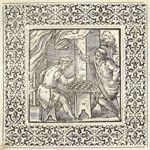
Tunc tua res agitur, paries cùm proximus ardet: Whitney, A choice of emblemes (Leiden, 1586), emblem 222
Iam proximus ardet: Zincgreff, Emblematum Ethico-politicorum (Heidelberg, 1619), emblem 28 quotes the comment
Iconclass: 33A7 neighbour 41B12:41A1 burning as process❧civic architecture; edifices; dwellings 52CC41 Error; 'Errore' (Ripa) 54F13 Progress, Improvement, Recovery
Collectanea (1500): 156
Loci Communes: Discriminis (Danger, crisis, Danger)
III vi 72 Fontibus apros, floribus austrum Pigs to springs, the south wind to flowers
Dubium non est, quin ad proverbiorum classem pertineat, quod est apud Maronem in carmine Bucolico, Eheu quid volui misero mihi, floribus austrum Perditus, et liquidis immisi fontibus apros. Ubi quis optat nocitura. Nam ventus floribus inimicissimus, praecipue auster, ob violentiam.
There is no doubt that this, which is in Virgil's Eclogues, belongs to the category of proverbs: 'Alas, alas! what wish, poor wretch, has been mine? Madman, I have let in the south wind to my flowers, and boars to my crystal springs!' Used when someone makes choices that will be harmful. For the wind is the greatest enemy of flowers, especially the south wind because of its violence.
Facsimile:
Iconclass: 26C113:25G41 south wind (one of the four main directions)❧flowers 47I212:25H211 pig❧spring, source of river or stream 53B2:52CC41 Decisiveness, Decision❧Error; 'Errore' (Ripa) 53A11:52CC41 Choice; 'Elettione' (Ripa)❧Error; 'Errore' (Ripa)
Collectanea (1500): 811
Loci Communes: Malum accersitum aut retortum (Evil brought upon oneself or turned back, Mal attiré ou retourné)
III vi 73 Ollaris deus An earthenware god
Χυτρεοῦς θεός, id est, Ollaris Deus. Dicebatur in hominem humilem et contemptae sortis. Aristophanes in Nubibus: Οτε καὶ σε χυτρεοῦν ὄντα θεὸν ἡγησάμην. id est, Quando arbitrabar te quoque ollarem Deum. Magni Dii, ebore, auro, et argento sculpebantur. At plebei illi et minutuli, quod genus sunt Silenus & Priapus, qualibet materia fingebantur, ligno nonnunquam & luto, quo videlicet argento finguntur et ollae. Unde non inepte quadrabit in eum, que studeat haberi inter aulicos optimates, sed nec opibus pollens, nec auctoritate valens apud principem. Cognarum est illi, καὶ κόρκορος ἐν λαχάνοις. id est, Corcorus inter olera: aut illi, οὐδὲ ἱερὸν. id est, Nihilsacri. Refertur in Zenodoti collectaneis.
[greek], An earthenware god. A jibe at a poor man of despised condition. Aristophanes says in the Clouds: 'When I thought you too, a piece of earthenware, were a god.' The great gods were sculptured in ivory, gold, and silver. But the ordinary gods, the petty ones, such as Silenus and Priapus, were portrayed in any sort of material - wood, sometimes, and clay - the same costly material as pots are made of. Hence it can be applied quite aptly to one who seeks to be accepted among the greatest courtiers but has no power through wealth nor influence with the prince through authority. It is akin to this one: 'Blue pimpernel too is a vegetable'; or this one: 'Nothing sacred.' It is recorded in the Collectanea of Zenodotus.
Facsimile:
Iconclass: 46A15 the poor 92:48C24(+631) gods ~ classical mythology❧piece of sculpture, reproduction of a piece of sculpture (+ ceramics ~ arts)
Loci Communes: Contemptus et vilitatis (Contempt and worthlessness, Mépris et bassesse)
III vi 74 Oetaeus genius The Oetaean spirit
Οἰταῖος δαίμων. id est, Oetaeus genius. Diogenianus ait ferociam et arrogantiam huic daemoni vehementer invisam fuisse, nec inultam sinere solitum: unde tumidis ac praeferocibus minitabantur Oetaeum daemonem. Collectanea vulgata proverbium referunt ad auctorem Clearchum. Est autem Oeta mons finitimus Trachini atque eodem nomine civitas Meliensium. Proinde similis erit huius usus proverbii, qualis est illius; Aderit Temessaeus genius.
[greek], The Oetaean spirit. Diogenianus says that this spirit had a passionate hatred of brutality and arrogance and would not allow them to go unavenged. Hence haughty and impetuous people were threatened with the Oetaean spirit. The published Collectanea attribute the proverb to the writer Clearchus. However, Oeta is a mountain close to Trachis, and there is a city of the Melienses of the same name. So the application of this proverb will be similar to 'The Temessian spirit will be there.'
Facsimile:
Iconclass: 13A1:61D(OETAEA) spirit, ghost❧geographical names of countries, regions, mountains, rivers, etc. (OETAEA) (OETAEA) 57AA741:57AA9 Revenge, Requital, Retaliation; 'Vendetta' (Ripa)❧Brutality
Loci Communes: Ultio malefacti (Vengeance for a wrongdoing, Vengeance d'un méfait)
III vi 75 Vel hosti miserandus To be pitied even by an enemy
Suidas huiusmodi verba ex autore quopiam citat, ὡς τε κατα τὴν παροΐαν, κᾂν ἔχθρον ἐλεῆ σαι θεασάμενον τὴν τότε παριπέτειαν τοῦ ἀνθρώπου. id est, Ut iuxta proverbium etiam miseraturus fuerit hostis, si praesentem vidisset hominis casum. Est autem hyperbole, nam hostis non facile commovetur misericordia. Ita Vergilius in duodecimo, Vel Priamo miseranda manus. Item in secundo: Quis talia fando Myrmidonum Dolopûmve, aut duri miles Ulyssi, Temperet à lachrymis? Confine illi, Quod vel ipse probet Momus.
Suidas quotes the following words from an unnamed author: 'As the proverb has it, even an enemy would have taken pity, if he had seen the present state of the man.' This is a hyperbole, for an enemy is not easily moved to pity. Virgil in book 12: 'A hand to be pitied even by Priam.' And in book 2: 'What Myrmidon or Dolopian or soldier of stern Ulysses could in telling such a tale refrain from tears?' Very similar to 'What even Momus himself would approve.'
Facsimile: 
Iconclass: 33B5 enemy 57A75 Mercy, Compassion; 'Compassione', 'Misericordia' (Ripa)
Loci Communes: Infortunii sive exitii (Misfortune or ruin, Malheur ou ruine)
III vi 76 Aequales calculi Votes equal
Ισαι ψῆφοι, id est, Aequales calculi, si quando parum abest ut condemnetur aliquis, et tamen absolvitur, aut cum nutat animus, ambigitque utram in partem se deflectat, rationibus hinc atque hinc velut ex aequo adhortantibus, ac deterrentibus. Quemadmodum est apud Terentium, Cum in dubio est animus, paullo momento huc vel illuc impellitur. Suidas ostendit metaphoram sumptam a prisca consuetudine iudiciorum, qua reus aequalibus iudicum sententiis absolvebatur, at non citra periculum. Cur autem potius absolvendum, quam damnandum reum veteres existimarint, cum pares essent sententiae, multas causas reddit Aristoteles in problemate quodam. Multis enim nominibus visum est convenire, ut reliquis paribus, reo magis, quam actorifaveatur: vel quod accusator accedit paratus, ac praeme ditatus. Reus ad multa non praevisa compellitur respondere. Vel quod consentaneum sit reum, ut qui maiore periculo dicat, ob metum quaedam praetermisisse potius quam actorem. Vel quod in ancipiti negotio potius ad eam partem oporteat vergere, ubi si forte erratum, peccetur levius. At minus est malum absolvere nocentem, quam innocentem damnare, praesertim in capitalibus causis, ubi si contingat errare iudicem, non est quo sarciat in posterum erratum suum, exstincto iam hominc. Contra, si elabatur nocens, poterit alio iudicio poenas dare. Vel quod accusatio propior est suspicioni malevolentiae, quam defensio, quare cum in ceteris nihil appareat discriminis, de actore potius male iudicamus, quam de reo. Haec & alia quaedam huiusmodi tradit Aristoteles. Igitur ut tutissimo liberatur a causa, qui calculis omnibus absolvitur, ita periculo proximus fuisse videtur, qui paribus calculis, iam quasi favore quodam elabitur.
[greek], Votes equal, said whenever someone is close to being condemned and yet is acquitted, or when the mind wavers and hesitates about which way to turn for reasons which persuade and dissuade equally one way or the other. Such as in Terence: 'When the mind is in doubt, a small impulse pushes it one way or the other.' Suidas declares that the metaphor is taken from the ancient custom of the courts whereby an accused man was acquitted if the judges' votes were equal, but was still at risk. In one of his Problems Aristotle gives many reasons why the ancients thought that an accused should be acquitted rather than condemned when the votes were equal. For it seemed appropriate for many reasons that, all other things being equal, the accused should be favoured rather than the accuser. In the first place the accuser comes prepared and with forethought, while the accused is obliged to answer many unforeseen questions. Then it is generally agreed that the accused, being the one who is at greater risk in speaking, is more likely to leave certain things out through fear than the accuser. Then again in an uncertain matter it is important to lean towards the solution where, if there is a mistake, there is less wrong. It is a lesser evil to acquit the guilty than to condemn the innocent, especially in capital cases where, if it happens that the judge errs, there is no way in which he can mend his mistake for the future, once the man has been executed. On the other hand, if a guilty man is released, he can be punished in another trial. Finally an accusation is more liable to the suspicion of malice than a defence, so that, since in other respects there is no apparent means of discrimination, we judge harshly of the accuser rather than of the accused. This, with a few other such things, is what Aristotle has to say. Therefore, just as the one absolutely sure to be released from the accusation is the one who is acquitted by unanimous vote, so the closest to danger seems to have been the one who is released by a sort of special favour because the votes were equal.
III vi 77 Lusciniae deest cantio A nightingale without a song
Lusciniae deest cantio. Proverbialis allegoria. perinde quasi dicas, Mulieri desunt verba, poetae versus, oratori color, sophistae cavillum. Nulla enim avium aeque canora, atque luscinia, etiam femina, sicutrtestatur Plinius lib. x. cap. xxix. Sed haud fuerit alienum ipsius verba subscribere. Lusciniis, inquit, diebus ac noctibus continuis quindecim garrulus sine intermissu cantus, densante se frondium germine non in novissimum digna miratu ave. Primum tanta vox, tam paruo in corpusculo, tam pertinax spiritus, deinde in una perfecta musicae scientia, modulatus editur sonus. Et nunc continuo spiritu trahitur in longum, nunc variatur inflexo, nunc distinguitur conciso, copulatur intorto, promit titur, revocatur, infuscatur ex inopinato: interdum & secum ipsa murmurat: plenus, gravis, acutus, creber, extentus, ubi visum est, vibrans, summus, medius, imus. Breviterque omnia tam parvulis in faucibus, quae tot exquisitis tibiarum tormentis ars hominum excogitavit. Plautus in Bacchidibus: Ego quoque polmetuo ne lusciniolae defuerit cantio,
A nightingale without a song. A proverbial allegory, just the same as if you say, 'A woman without words,' 'A poet without verses,' 'An orator without ornaments,' 'A sophist without quibbles.' For no bird equals it in melodiousness; even the female nightingale is more melodious than any other bird, as Pliny attests in book 10 chapter 29. But it would not be at all inappropriate to set out here his own words:
The nightingale - not, after all, a bird of notable appearance - sings its chat-
tering song for fifteen successive days and nights as the leaf-buds thicken. On
the one hand there comes such a powerful voice from such a tiny body, such
a long breath; on the other a sound modulated and uttered in complete mas-
tery of music. Now it is drawn out in length in one continuous breath, now
varied with inflections, now marked off staccato, linked with a turn; it is pro-
longed, withheld, unexpectedly hushed. Sometimes she murmurs, or is full,
deep, high, rapid, slow; trilling notes, when this seems right, high, middle,
low. And in short, in these tiny throats everything that the art of men has
devised with the elaborately wound pipes of the flute.
Plautus in the Bacchis Sisters: 'In truth, I too am afraid the nightingale may lose its song.'
Facsimile:
Difficile est de veoir femme sans teste: La Perrière, Le theatre des bons engins (Lyon, 1545), emblem 16 uses the imagery of a headless woman to humorously express "impossibility", where Erasmus uses a "wordless woman" to convey the same idea
Iconclass: 22D9 silence 25F32(NIGHTINGALE)(+49) song-birds: nightingale (+ audible means of communication of animal(s): roaring, crying, singing, barking, mewing, neighing, chirping, etc.) 51AA4:48C7562 Nothingness, Absence❧vocal popular music
Collectanea (1500): 85
Loci Communes: Impossibilia (Impossible things, Choses impossibles)
III vi 78 Ego ex bono in bonum traductus sum I have been led from one good to another
Εγὼ μὲν ἐκ τοῦ καλοῦ εἰς καλὸν μετηνεγκα. id est, Ego quidem e bono in bonum transii. Suidas indicat dici solitum de his, qui bonum institutum, bono commutant. Innuit autem natum a quodam, qui ex bono citharoedo factus sit poeta tragicus. Est enim poeta musicae confinis arti, unde & musicam artem poeticen vocavit Terentius. Sumptum est adagium ex Ranis Aristophanicis.
Εγὼ μὲν ἐκ τοῦ καλοῦ εἰς καλὸν μετηνεγκα. I have indeed gone from one good to another. Suidas tells us this used to be said of those who exchange one good occupation for another. He implies that it arose from someone who was a good cithara-player and then became a tragic poet. Poetry is very akin to the art of music, which is why Terence called poetry music. The source of the adage is Aristophanes' Frogs.
Facsimile:
Iconclass: 48C7 music 48C901 symbolic representations, allegories and emblems ~ poetry; 'Poesia' (Ripa) 51KK3 Interchange, Exchange 54A5 Goodness; 'Bontà' (Ripa)
Loci Communes: Proficientium in melius (Improving for the better, Progresser vers le mieux)
III vi 79 Anguillas captare To hunt eels
Εγχέλεις θηρᾶσθαι. id est, Anguillas venari dicuntur, qui privati compendii causa, cient cumultus. Inde ducta similitudine, quod cum aqua stat immota, nihil capiunt, qui captant anguillas: cum vero sursum ac deorsum miscent ac perturbant aquam, ita demum capiunt. Quadrabit in eos, quibus tranquillo Rei pub. statu, nihil est emolumenti. Proinde seditiones gaudent exoriri, quo civitatis publicum malum, in suum privatum vertant commodum. Proverbium exstat apud Aristophanem in Equitibus: Οπερ γὰρ οἱ τὰς ἐγχέλεις θηρώμενοι πέπονθας, Οταν μέν ἡ λίμνηκαταστῆ, λαμβάνουσιν οὐδὲν, Εὰν δ᾽ ανω τε καὶ κάτω τὸν βορβορον κινῶσιν, Αιρουσι. καὶ σὺ λαμβάνεις, ἢ τὴν πόλιν ταράττῃς. id est, Namque accidit tibi, quod anguillas qui aucupantur. Ubi quieta stat palus, nil piscium reportant, Contra lutum si moverint sursum, atque item deorsum, Capiunt, ita ipse capis, ubi rem publicam inquietas. Hanc cartem heu nimium callent principes quidam, qui consilio tyrannico dissidia serunt inter civitates, aut bellum aliquod alicunde suscitant, quo licentius mulctent miseram plebeculam, & innocentissimorum civium fame, suam expleant ingluviem.
Εγχέλεις θηρᾶσθαι. People are said 'To hunt eels' when they stir up trouble for the sake of a private advantage. The metaphor arises from the fact that those who hunt eels catch nothing if the water remains still, only when they stir the water up and down and thoroughly muddy it do they catch them. It will be suitable for those for whom there is no profit when the nation is in a peaceful state. Therefore they are glad if rebellions arise whereby they can turn the state's public disaster to their private advantage. The proverb is found in Aristophanes' Knights:
For your case is like those who hunt for eels
When the fen remains still, they come away with no fish,
But if they stir the mud up and down,
They make catches; thus you yourself make catches when you make public trouble.
This art, alas, is understood only too well by certain princes, who, because of their desire for power, sow discord between states or stir up war on some pretext so that they can more freely tax the wretched common people and satisfy their greed by starving absolutely innocent citizens.
Facsimile: 
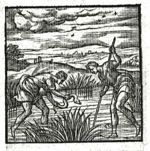
In divites publico malo: Alciatus, Emblemata (Padua, 1621), col. 383 a, emblem 89 uses the adage's imagery
In divites publico malo: Alciatus, Emblemata (Leiden, 1591), emblem 88 uses the adage's imagery
Wat de seuge doet moeten de biggen ontgelden: Cats, Spiegel (The Hague, 1632), the comment of emblem 113 quotes the adage
Guerre & debat temps propice aux meschants: La Perrière, Le theatre des bons engins (Lyon, 1545), emblem 44 uses the imagery of a man muddying the waters to catch an eel to convey the adage's moral that private people profit from public unrest and war
Iconclass: 21D water (one of the four elements) 25D26 mud (soil type) 43C12:25F63(EEL) fishing (sports)❧eels: eel 54AA45 Pugnacity 54F14:54AA46 Advantage❧Unrest, Restlessness, Inquietude; 'Inquietudine' (Ripa)
Loci Communes: Proprii commodi studium (Pursuit of one's own advantage, Recherche de son propre intérêt)
III vi 80 Ego faciam omnia more Nicostrati I shall do everything as Nicostratus did
Εγὼ ποίησω πάντα κατα νικόστρατον. id est Ego cuncta more fecero Nicostrati. Pro eo, quod est egregie. Nam hunc Nicostratum aiunt comoediarum actorem fuisse talem, qualis apud Romanos praedicatur fuisse Roscius. Itaque propter artis famam in vulgi sermonem abiit. Suidas proverbii titulo recenset.
Εγὼ ποίησω πάντα κατα νικόστρατον, I shall do everything as Nicostratus did. Said of whatever is extraordinary. For this Nicostratus is said to have been a comic actor with the sort of reputation Roscius had among the Romans. So he became proverbial in popular language because of his fame as an artist. It is Suidas who describes it as a proverb.
Facsimile:
Iconclass: 48C8546:48C8521 comedy❧actor (on the stage) 98B(NICOSTRATUS) male persons from classical history (NICOSTRATUS)
Loci Communes: Magnifica promissa (Magnificent promises, Promesses magnifiques)
III vi 81 Duplex cappa Double kappa
Διπλοῦν κάππα, id est, Duplex cappa, velut aenigma, quo malum aliquod significabant. Siquidem gemino cappa, scribuntur κακά. Simili figura Plautus furem, trium literarum hominem appellavit.
Διπλοῦν κάππα, Double kappa, that is, a riddle by which some evil is signified, for KaKa 'evils' is written as two kappas. Using a similar figure Plautus called a thief 'a three-letter man.'
Facsimile:
Iconclass: 49L13(ΚΚ) Greek script (ΚΚ) 54AA5 Badness
Loci Communes: Improbi (The dishonest, Les malhonnêtes)
III vi 82 Tria cappa pessima Nothing worse than three 'C's
Τριά κάππα κάκιςτα, id est, Tria pessima cappa. Iactatum & hoc olim aenigmatis vice, quo trium gentium mores notati sunt, Cappadocum, Cretensium, et Cilicum. Augustinus in grammaticis indicat fuisse tortum in Cornelium Syllam, Cornelium Cinnam, & Cornelium Lentulum. Creditumque est in libris Sibyllinis horum nomina tribus hisce literis fuisse designata. Est item clausula carm. heroici.
Τριά κάππα κάκιςτα, Nothing worse than three 'C's. This too was formerly spoken as a riddle in which the customs of three peoples were censured, the Cappadocians, the Cretans and the Cilicians. In his Rules of Grammar Augustine tells us it was shifted to mean Cornelius Sulla, Cornelius Cinna and Cornelius Lentulus. And it was believed that in the Sybilline books the names of these three men were designated by these three letters. The Greek forms the ending of a heroic verse.
Facsimile:
Iconclass: 49L13(ΚΚΚ) Greek script (ΚΚΚ) 49L13(CCC) Greek script (CCC) 54AA5 Badness
Loci Communes: Improbi (The dishonest, Les malhonnêtes)
III vi 83 Temulentus dormiens non est excitandus Let a sleeping drunk lie
Proverbii speciem habet, quodadmonet theognis, Sopitum ebrium non oportere excitari somno. Similimum est autem illi: ka\ko\ eu) kei/menon menh\ kinein, id est, malum bene conditum ne moveas. Non est refricandum odium, cui iam tempus induxit oblivionem. Non estrenovandum animi vulnus, cui iam obduci cicatrix coepit. Theognidis carmen sic habet: Μήδ᾽ εὔδοντ᾽ ἐπέγειρε σιμθνίδη. ὅν τινα ἡμῶν Θωρυχθέντ᾽ οινῳ μάλθακος ὕπνος ἔχει. id est, Ne cuiquam è nobis somnum depelle Simonida, Oppressum vino quem sopor altus habet.
Proverbial in appearance is this advice given by Theognis, that a sleeping drunk should not be woken from his sleep. It is very similar to 'Do not disturb a well concealed evil.' You should not reawaken the hatred of someone whom time has already persuaded to forget. You should not reopen a wound in the mind which a scar has already begun to cover. Theognis' ode goes like this:
Do not drive away slumber from any one of us, Simonides,
Whom deep Sleep holds stifled with wine.
Facsimile:
Iconclass: 31B521:31B1 drunkard❧sleeping; unconsciousness
Loci Communes: Lacessentis (Provoking, Provoquer)
III vi 84 Utroque nutans sententia Wavering both ways in his opinion
Δίσχολοι γνῶμαι. id est, Utroque claudicantes sententiae, aut animus huc atque illuc versatilis. Sic enim arbitramur legendum δίσχωλος per ω magnum, ut sit, utroque claudicantes. Nam in vulgatis libris per ο micron scriptum reperitur. Conveniet igitur in hominem lubricae fidei & incertarum partium, in quem congruet illud Homericum: Αλλὰ μετοκλάζει, καὶ ἐπ᾽ ἀμφοτέρους πόδας ἴζει. id est, Claudicat incessu, pedibusque vacillat utrisque. Refertur à Zenodoto.
Δίσχολοι γνῶμαι, Swaying both ways in his opinion, or, A mind turning this way and that. This is how I think it must be read: δίσχωλος with an omega (ω), so that it means 'swaying both ways.' In the published editions I find it spelled with an omicron (o). It will be applicable then to a man of slippery faith and uncertain allegiances, one whom this line of Homer fits: 'He has a wavering gait and he totters on both feet.' It is reported by Zenodotus.
Facsimile:
Iconclass: 52BB2 Doubt; 'Dubbio' (Ripa) 53AA21 Inconstancy; 'Incostanza', 'Instabilità', 'Instabilità overo Incostanza' (Ripa)
Loci Communes: Anceps et dubius (Doubtful and uncertain, Incertain et douteux); Inconstantiae, perfidiae, versutiae (Inconstancy, treachery, cunning, Inconstance, perfidie, ruse)
III vi 85 Dictum ac factum Said and done
Ρεχθὲν καὶ πραχθέν. id est, Dictum ac factum. Proverbialis figura, qua nihil in negocio procurando praetermissum significamus. Terentius, Dictum ac factum reddidi. Donatus in Andria indicat esse proverbium celeritatis. Dictum ac factum, invenerit aliquam causam. Rursum in Seipsum excruciante, Dictum ac factum, huc abiit Clitipho. Sanè quam familiaris est hic sermonis colos Graecis poetis, οὔτε ἔπος, οὔτ᾽ ἔργον. id est, neque dictum neque factum: pro eo quod est, nulla ratione. Homerus Iliad. lib. Ι Εσθλὸν δ᾽ οὐδέπω εἰπας ἔπος, οὐδ᾽ ἐτέλεσσας. id est, Nec dictum factumque probum ex te prodiit unquam. Euripides in Hecuba, Σύ δ᾽ ἡμῖν μηδὲν ἐμποδὼν γίνῃ Λέγουσα μηδὲ δρῶσα. id est, Tu vero ne quid obsistas mihi Verbóve, factóve. Diversum in sensum qui modis omnibus dextri strennuique sunt, dictis ac factis valere dicuntur. Ita Phoenix docuerat Achillem iuxta Homerum, Μύθων τε ῥητῆρ᾽ ἔμεναι, πρηκτῆρα τε ἔργων. Itidem Pindarus in Nemeis hymno primo, σέο δὲ ἀμφὶ τρόπῳ, τῶν τε καὶ τῶν χρήσιες. id est, Tui vero mores & in his & illis usui sunt: praecessit enim πράσσει γὰρ ἔργῳ μὲν σθένος, βουλῆσι δὲ φρὴν. id est, Agit enim facto quidem robur, consiliis autem mens.
Ρεχθὲν καὶ πραχθέν, Said and done. A proverbial figure which signifies that nothing has been omitted in taking care of an affair. Terence: I have carried it out, said and done.' Donatus, in his commentary on the Andria asserts this is a proverb for speed: 'He will have found some cause, no sooner said than done.' Again in the Self-Tormentor: 'Clitipho went in there, no sooner said than done.' And how familiar is this figure of speech in the Greek poets: 'Neither said nor done,' for what is in no way true. In the Iliad book 1 Homer has: 'Neither a good word nor a deed has ever come from you.' Euripides in the Hecuba: 'As for you, do not stand in my way / Either by word or by deed .. .' In the opposite sense, those who are skilful and energetic in every respect, are said to avail 'in words and deeds.' According to Homer Phoenix taught Achilles thus: 'To be both a speaker of words and a doer of deeds.' Likewise Pindar in the first Nemean Ode: 'But your character has the use of one and the other.' This was preceded by: 'For strength displays itself in action, but intelligence in counsel.'
Facsimile: 
Iconclass: 31B6235 speaking 51M11 Swiftness, Speed; 'Agilità', 'Celerità', 'Velocità' (Ripa) 54D2 Action; 'Operatione manifesta' (Ripa)
Collectanea (1500): 559
Loci Communes: Fides et gravitas (Trust and seriousness, Confiance et gravité)
III vi 86 De grege illo est He is from that flock
De grege illo est, eiusdem factionis, aut contubernii. Terentius in Adelphis, At hic Hercule de grege illo est. Idem in Eunucho, Ut me in vestrum gregem recipiatis. M. Tullius ad Atticum, At vellem te in tuum veterem gregem retulisses. Idem Oratione in Verrem prima, Quartum quem sit habiturus non video, nisi fortè de illo grege oratorum, qui subscriptionem sibi postularunt, &c. In eundem Actione quarta pro eodem, dixit De illo conventu, Turpio quidam illius excursor & emissarius, homo omnium ex illo conventu quadruplatorum deterrimus. Allusit autem ad id quod alibi diximus, ἀτιμαγελεῖν: Sic & Flaccus, Scribe tui gregis hunc, & fortem crede bonumque. Verum hoc frequenter & in bonam partem usurpatur. Beatus Hieronymus adversus Iovinianum libro secundo: De tuo, inquit, armento sunt, imò inter tuos cives grunniunt. M. Tullius gregales appellat familiares & eiusdem sodalitii: velut in oratione pro domo sua ad pontifices. Quod vos ad Catilinae gregales de me dicere solebatis.
He is from that flock, He belongs to that party or group. Terence in the Adelphoe says: 'But this one, by Hercules, is from that flock'; and in the Eunuchus: 'So that you will accept me into your flock.' Marcus Tullius in his Letters to Atticus has: 'But I wish you had returned to your old flock'; and in the first speech against Verres: 'Whom he will find as the fourth one I cannot see, unless perhaps it is one of that herd of orators, who demanded to support the prosecution .. .' In the fourth action against the same man he used de illo conventu 'from that gang' in the same sense: 'A certain Turpio, his scout and spy, was the basest man of all the informers from that gang.' He was alluding to what we have described elsewhere as [greek]. Flaccus, too, says: 'Enrol him in your circle, and believe him brave and good.' But this expression is often used in a good sense too. St Jerome says in his second book Against Jovinian: 'They are from your herd. Yes, they go around grunting among your citizens.' Marcus Tullius calls friends and those belonging to the same society 'members of the herd,' as in the speech to the pontiffs in defence of his house: 'What you used to say about me to the members of Catilina's herd.'
Facsimile:
Iconclass: 47I2211 herd, flock 51B2 Similarity, Likeness
Loci Communes: Similitudinis et congruentiae (Similarity and congruence, Similitude et convenance)
III vi 87 Dentata charta A document with teeth
Dentata dicuntur mordacia. M. Tull. ad fratrem lib. 2. Calamo et atramento temperato. Dentata etiam charta res agetur. Et Seneca dentatos sales esse non vult. Rursus Edentula, quae morsu careant.
Language is said to 'have teeth' when it is biting and witty. Marcus Tullius in the second book of letters to his brother: I shall deal with the matter with a good pen and well-mixed ink, and in a document that has teeth. Seneca does not want jokes to be cutting. On the other hand things that are 'toothless' are things which lack bite.
Facsimile:
Iconclass: 31A2112 teeth 49L7 handwriting, written text 52A55 Subtlety, Acumen, Lucidity, Wit; 'Acutezza de l'Ingegno', 'Sottilità' (Ripa) 57BB242 Sarcasm
Loci Communes: Obtrectatio et maledicentia (Disparagement and slander, Dénigrement et médisance)
III vi 88 Daulia cornix A Daulian crow
Δαυλίαν κορώνην, Dauliam cornicem, lusciniam vocant poetae: sive quod Tereus in Daulide Phocidis cum ea vixerit, sive quod illic Philomena mutata sit in avem. Non videmus quid sibi velit adagium, nisi forte dictum est in garrulos, aut canoros. Magis autem suspicamur Zenodotum, sive Zenobius is, sive quisquis alius fuit, hoc proverbium fuisse commentum, quo locum faceret narrandae fabulae, quod idem in nonnullis aliis ab eo factum conicimus.
[greek], A Daulian crow, is what the poets call a nightingale, either because Tereus lived with Philomena in Phocian Daulis or because it was there that she was changed into the bird. I cannot see what the adage might mean, unless perhaps it is used of talkative people or those given to singing. I am more inclined to suspect that Zenodotus (whether this is Zenobius or someone else) pretended this was a proverb so that he could introduce a story, something which I have a notion he did in several other cases.
Facsimile:
Iconclass: 25F32(NIGHTINGALE) song-birds: nightingale 52D4 Prolixity, Verbosity, Loquacity; 'Loquacità' (Ripa) 61E(DAULIS):25F32(CROW) names of cities and villages (DAULIS)❧song-birds: crow
Loci Communes: Garrulitas (Talkativeness, Bavardage)
III vi 89 Cum Musis With the Muses
Μετὰ μουσῶν, id est, cum Musis: hoc est, Musis bene fortunantibus, de doctis, aut iis, quae docte dicuntur: queadm odum ostendit Suidas, cum illiteratus inter eruditos vivit, ut per Ironiam efferatur
[greek], With the Muses, that is with the favour of the Muses. Said of learned people or anything expressed in a learned manner, or, as Suidas asserts, of an illiterate man living among scholars, as an ironical expression.
Facsimile:
Iconclass: 54A6 Helpfulness 92D4 (story of the) Muses; 'Muse' (Ripa)
Loci Communes: Ominandi (Foreboding, omens, Présager)
III vi 90 Amicos tragoedos aemulatur He's imitating his tragic friends
Τοὺς ἑταίρους τραγῳδοὺς ἀγωνεῖται, id est, Amicos tragoedos aemulatur. Suidas e Didymo citat, addens dici solitum de his, qui se accommodarent, et morum severitatem sumerent, ad aemulationem aliorum. Sumptum ab histrionibus tragoediarum, qui cum sint levissimi nebulones, tamen ubi Deum aut regem agunt in fabula, tum cultu, voce gestuque maiestatem quandam imitantur.
[greek], He's imitating his tragic friends. Suidas quotes this from Didymus, adding that it was said of people who were compliant and adopted stern morals in imitation of others. Derived from tragic actors who may be shallow good-for-nothings, but when they are taking the part of a god or a king in a play, they put on an appearance of majesty by means of dress, voice and gesture.
III vi 91 Aesopicus graculus Aesop's jackdaw
Αἰσώπιος κολοιὸς, id est, Aesopicus graculus, dicitur, qui aliena sibiusurpat, aliorumque bonis sese venditat. Usurpat Lucianus in Pseudologista. Horatius: Moveat cornicula risum Furtivis nudata coloribus. Extat apologus inter alios, qui Aesopi nomine circumferuntur. Pindarus in Nemeis hymno tertio, οὐδ᾽ ἀλλοτρίων ἔρωτες ἀνδρὶ φέρειν κρέσσονες, εἴκοθεν μάτευε. id est, Neque rerum alienarum cupiditates viro meliores sunt ad ferendum, e domesticis inquire. Reprehendit suam digressionem poeta, iubetque ut quem suscepit celebrandum, laudet è propriis virtutibus, potius quàm ex alienis.
[greek], Aesop's jackdaw. This is said of someone who appropriates other people's goods for himself, or promotes himself with other people's virtues. Lucian makes use of it in the Pretended Critic. Horace has:
The little crow inspires laughter
When deprived of his stolen colours.
The fable circulates among the others under Aesop's name. Pindar in the third Nemean Ode: 'And it is no better for a man to foster greed for other people's goods; seek from your own resources.' The poet is blaming himself for digressing and orders himself to praise the person he undertook to celebrate for his own virtues rather than for others.
Facsimile:
Iconclass: 25F32(JACKDAW) song-birds: jackdaw 57AA611 Dissimulation, Hypocrisy; 'Hippocresia', 'Simulatione' (Ripa)
Collectanea (1500): 593
Loci Communes: Simulatio, dissimulatio (Pretense, dissimulation, Simulation, dissimulation)
III vi 92 Aries cornibus lasciviens A ram frisking with its horns
Κριὸς ἀσελγόκερως. i. Aries cornibus lasciviens. diogenian. ostedit convenire in magnos, ac lascivos. Pruriunt cornua arietib. bene pastis, quod idem accidit bubus. Virgil. Iam cornu petat, et pedibus qui spargat arenam. vitulum lascivientem indicans. Hesych. indicat originem proverbii. In arce Palladis aries erat repositus ingens aereus, quem Plato comicus dixit, ἀσελγόκερων, non tam ob lasciviam, quam ob ingentem molem. Confertur enim cum equo Durateo. veteres enim non solum ἀσελγὲς dixisse, quod esset lascivum et indomitum, verumetiam quod esset praegrande: quemadmodum Eupolis ἄνεμον ἀσελγῆ dixit pro magno vento. Hae sunt grammaticorum cruces, ne aereus ille aries sit formidabilis ob ingentia cornua. At quid vetat etiam ventum dici lascivum et intemperantem, quod suo arbitrio ludit ubi velit? Nobis videtur adagium convenire et in stolidos, praeter meritum evectos ad dignitatem.
[greek], A ram frisking with its horns. Diogenianus states that this is suitably used against wealthy and lustful people. The horns of wellfed rams itch, and the same happens to oxen. Virgil describing a bull calf being frisky:
Already one who attacks with his horn and scatters the sand with his hooves.
Hesychius indicates the origin of the proverb. In the temple of Pallas there was kept an immense bronze ram, which Plato the comic writer said was 'frisking with its horns,' not so much because it was lascivious but because of its immense size, for it is comparable to the Wooden Horse. He says the ancients used [greek] 'licentious,' 'extravagant' not only of what was frisky and untamed but of what was extraordinarily large, just as Eupolis said [greek] for 'a strong wind.' These are torments for grammarians who do not want to admit that this bronze ram might be formidable because its horns were large. But what prevents us from saying even that the wind is frisky and unrestrained, because it plays as it will, where it will? To me it seems that the adage could also be suitably used about stupid people raised to offices beyond their merits.
Facsimile: 
Iconclass: 51G1:47I2131(+9332) Largeness, Magnitude❧ram (+ antlers; horn) 57AA51 Licentiousness, Lasciviousness; 'Lascivia', 'Licenza' (Ripa) 57AA66 Frivolity
Loci Communes: Intemperantia, libido (Intemperance, lust, Intempérance, désir)
III vi 93 Ductus per phratores canis A dog among the phratry members
Αγόμενος διὰ φρατόρων ὁ κύων, id est, Ductus per Phratores canis. Ubi quis inciderit in cos, quibus poenas det. Canis enim apud hos protinus cciditur. Apud Athenienses populus in tribus erat distributus, uniuscuiusque tribus tertia pars fratri/a dicebatur, et huic praefectus φρατρίαρχος. In comitiis igitur si quis canis intercurrisset, continuo petebatur a populo.
'[greek], A dog among the phratry members. Said when someone falls among those by whom he may be punished; for a dog in these meetings is immediately killed. Among the Athenians the people were divided into tribes, a third part of each tribe was called a phratria and the leader of this the phratriarchos. If a dog ran into their meetings, it was at once attacked by the people.
Facsimile:
Iconclass: 46A93 clans, tribal relationships
Collectanea (1500): 584
Loci Communes: Ultio malefacti (Vengeance for a wrongdoing, Vengeance d'un méfait)
III vi 94 Calabri hospitis xenia Gifts of a Calabrian host
Proverbium subesse videtur in his Horatii versibus, quos scripsit in Epistolis: Non quo more pyris vesci Calaber iubet hospes, Tu me fecists locupietem, vescere sodes. Iam satis est. at tu, quantum vis tolle. benigne. Non invisa feres pueris munuscula paruis. Tam teneor dono, quam si dimittar onustus. Ut lubet, haec hodie porcis comedenda relinques. Itaque Calabri hospitis munera recte dixeris, rusticana, leviaque quaeque magis onerent accipientem, quam iuvent, aut quae donantur contempta. Siquidem Calabri, quod pyris abundent, consueverunt ea hospitibus affatim apponere, deinde saturos, bellariorum vice domum adferre iubent. Quod si recuses, eade porcis obiciuntur. Atqui istud haud est dare munus, sed abicere. Is demum dat, qui simul et pretium muneris expendit, quod largitur, & eius meritum quem co donat. Notatus est apud Athenaeum Antiochus cognomento Illustris, qui quod erat reliquum pecuniae solet effundere verius quam largiri, interdum in viis publicis stans dicere consuevit: τίνι ἡ τύχη δίδωησι λαβετω, id est, Cui fortuna dat, capiat, & abiecta pecunia discedebat.
There appears to be a proverb underlying these lines of Horace in his Epistles:
'Twas not in the way a Calabrian host invites you to eat his pears
That you have made me rich.' 'Eat some, pray.'
'I've had enough.' 'Well take away all you please.' 'No, thanks.'
'Your tiny tots will love the little gifts you take them.'
'I'm as much obliged for your offer as if you sent me away loaded down.'
'As you please; you'll be leaving them for the swine to gobble up today.'
So you could rightly call 'gifts of a Calabrian host' rustic and naive things and things which are more of a burden than a pleasure to the receiver, or are despicable gifts. The Calabrians, having plenty of pears, were in the habit of setting them before their guests, then when they were sated they invited them to take them home as dessert. If you refused, they were thrown to the pigs. However this is not the giving of a gift but a throwing away of waste. The true giver is one who is aware of the value of the gift he is offering and of the merit of the person he gratifies with it. In Athenaeus, Antiochus is accorded the title of 'Illustrious,' because he used not so much to give away any surplus of money as to pour it away. Sometimes, standing in the public streets, he would say, 'This is for the one that chance gives it to'; then he would throw the money away and leave.
Facsimile:
Iconclass: 25G21(PEAR) fruits: pear 33A4 bringing gifts; exchanging gifts 41C111:31A3412 giving food❧disagreeable taste 61D(CALABRIA) geographical names of countries, regions, mountains, rivers, etc. (CALABRIA) (CALABRIA)
Collectanea (1500): 421
Loci Communes: Contemptus et vilitatis (Contempt and worthlessness, Mépris et bassesse)
III vi 95 In ostio formosus 'Good-looking' on the doorpost
Εν θύρᾳ καλός, id est, In ostio formosus. De iis, qui adamantur, vulgoque gratiosi habentur. Sumptum a veterum consuetudine, qui formosorum aut amasiorum nomina, arboribus, foliis ac parietibus inscribant, ὁ δεῖνα καλός. Ad id alludens Aristophanes in Vespis: Καὶ νὴ δί ἂν ἴδῃ γὲ που γεγραμμένον Τὸν πυρϊλάμπους ἐν θύρᾳ δῆμον καλὸν, Ιὼν παρέγραψε πλησίον κημὸς καλός. id est, Ac per Iovem scriptum uspiam si viderit Demum venustum in Pyrilampus ostio, Adcurrit ac Cemum venustum proxime Adscribit. Idem ἐν ἀχαρνεῦσιν. Υμῶν ἐραστὴς ἦν ἀληθῶς, ὥς τε καὶ Εν τοῖσι τοίχοις ἔγραφον ἀθηναῖοι καλοί. id est, Is vestri amans haud ficte erat, nam in aedium Muris, venusti Athenienses scripserat. Alteri versui Graeco superest syllaba, tametsi sic habet Aldina editio. suspicamur inversum ordinem dictionum. Constabit si legas hoc modo, ἐν τοῖς ἔγραφον τοίχοις ἀθηναῖοι καλοί, nisi magis placet, ut legamus, ἐν τοῖσι τοίχοις ἔγραφον ἀθῆναι καλαί, quasi blandientes civitati, hoc in illius moenibus scripsissent. Apud Athenaeum libro sexto refertur ex autore quopiam, quod qui Atheniensium rem publicam administrabant, assentabantur populo, dicentes cetera quidem omnia esse Graecorum communia, verum illud esse proprium Atheniensibus, quod viam nossent, quae perduceret in caelum. Quisquis legerit encomium Aeschynis, et Menonis apud Platonem, intelliget quam formosos pinxerint Athenienses, miro dicendi artificio illis blandientes. Interpres distichon hoc citat ex Callimacho: Αλλ᾽ ἐνί δὴ φύλλοισι κεκομμένα τόσσα φέροιτε Γράμματα, κυδίππην ὅσσ᾽ ἐρέουσι καλὴν. id est, Litterulas tot ferte insculptas frondibus hisce, Cydippem pulchram quot memorare queant. Id imitatus Maro: Teneris, inquit, incidere amores Arboribus: crescent illae, crescetis amores. Torquere licebit & in eos, qui falso per assentationem laudantur, aut in mendacissimos principum quorundam titulos, quod genus sunt, Pater patriae, deliciae orbis, amor mundi, serenissimus, inclytus, clementissimus, cum meri sint rei publicae praedones.
Ἐν θύρᾳ καλός, 'Good-looking' on the doorpost. Said of those who are beloved and popular with the common people. Derived from the ancients' custom of writing the names of handsome men or lovers on trees, leaves or walls: 'So-and-so is good-looking.' Aristophanes alludes to this in the Wasps:
But if, by Jupiter, Pyrilampus sees
'Demus is good-looking' written anywhere in a doorway,
He hastens up and writes 'Cemus is good-looking'
Next to it.
And the same author in the Acharnians:
Ὑμῶν ἐραστὴς ἦν ἀληθῶς, ὥςτε καὶ Εν τοῖσι τοίχοις ἔγραφον ἀθηναῖοι καλοί. This man was never a false lover to you, for he had written
"The Athenians are good-looking' on the walls of your buildings.
There is one syllable too many in the second line of the Greek, but this is what the Aldine edition has. I suspect the order of the words should be changed. It will be correct if you read it thus: 'Ἐν τοῖς ἔγραφον τοίχοις ἀθηναῖοι καλοί'On the walls they wrote: "The Athenians are good-looking."' Unless we prefer to read: 'Ἐν τοῖσι τοίχοις ἔγραφον ἀθῆναι καλαί' 'On the walls they wrote: "Athens is beautiful,"' as if it was to flatter the city that they had written this on its walls. In Athenaeus book 6 it is related from some unnamed author that those who governed the Athenian state flattered the people by saying that everything else was the common property of the Greeks but that this was peculiar to the Athenians that they knew the way which led to heaven. Anyone who has read the eulogies of Aeschines and Meno in Plato understands how handsome they made the Athenians out to be, flattering them with marvellous oratorical skill. The scholiast quotes this distichon from Callimachus: Inscribe here on these fronds as many letters
As are necessary to recall that Cydippe is beautiful.
Maro imitated this with:
and carve my love on the young
Trees. They will grow; thou too, my love, wilt grow.
This adage could also be turned against those who are falsely praised for flattery's sake, or against the thoroughly mendacious titles given to certain princes, such as Father of his country, Delight of the earth, Beloved of the world, Most serene Highness, Renowned, Most merciful, when they are really just plunderers of the public estate.
III vi 96 Caput scabere, et consimilia To scratch one's head, and similar phrases
Caput scabere, ungues arrodere, gestus hominis sunt cogitabundi, et de mutando, cuius paeniteat, secum agitantis. Unde trahuntur in usum proverbialem. Horatius libro primo, Satyra decima: Sed ille Siforet hoc nostrum fato delapsus in aevum, Detereret sibi multa, recideret omne, quod ultra Perfectum traheretur, & in versu faciendo Saepe caput scaberet, vivos & roderet ungues. Saepe stylum vertas, iterum quae digna legi sint Scripturus. Id imitatus Persius: Nec pluteum, inquit, caedit, nec demorsos sapit ungues. Idem alibi: Crudum Chaerestratus unguem Arrodens ait hoc. In superiore taxat poetarum in scribendo negligentiam. In altero describit adolescentem de mutanda anteactae vitae ratione cogitantem.
Scratching one's head, gnawing one's nails, these are the gestures of one who is thoughtful and one who is thinking about making a change which he may regret. From gestures they become proverbial expressions, as in Horace's tenth satire, book 1: 'Yet, if fate had dropped him into our times, he would smooth away much of his work, would prune off all that trailed beyond the proper limit, and as he wrought his verse he would often scratch his head and gnaw his nails to the quick. Often you must turn your stilus to erase, if you hope to write something worth a second reading.' Persius imitated this when he said: 'He does not thump his desk nor taste his torn nails.' And the same author elsewhere: 'Choerestratus gnawing his nails to the quick says this.' In the first passage he is criticizing poets' lack of care in writing; in the second he is describing a young man thinking of changing his past way of life.
III vi 97 Caricus hircus A Carian goat
Καρϊκός τραγος, id est, Caricus hircus. Diogenianus indicat dictitatum de vilibus et contemptis. Hesychius indicat usurpatum a Sophocle. Carum populus quod passim in bellis mercenariam locarent operam, ceu vili vita, in contemptus proverbium abiit. Unde et Plato καρικόν ἀνθρώπιον, id est, Caricum homuncionem dixit, pro vili nihilique, quemadmodum alio dictum est loco. Fieri potest, ut proverbium eò respiciat, quod Cares pro hirco solent immolare canem, ut indicatum est in proverbio, Caricum sacrificium.
[greek], A Carian goat. Diogenianus indicates that this was applied to base and despicable people. Hesychius tells us it was used by Sophocles. Because the Carian people commonly served as mercenary troops in wars and held life to be cheap, they became a byword of contempt. Hence Plato too said, 'Carian midget,' for someone who is worthless and of no account, as we have said elsewhere. It is possible that the proverb derives from the fact that the Carians used to sacrifice a dog in place of a goat, as explained in the proverb 'A Carian victim.'
Facsimile: 
Iconclass: 47I214 goat 54BB6 Worthlessness 61D(CARIA) geographical names of countries, regions, mountains, rivers, etc. (CARIA) (CARIA)
Loci Communes: Contemptus et vilitatis (Contempt and worthlessness, Mépris et bassesse)
III vi 98 Bullatae nugae Trifles and bubbles
Ventosa, atque inania bullata dicuntur. Sumpta metaphora, παρὰ τῶν πομφολύγων, de quibus alias dictum est in proverbio, Homo Bulla. Persius: Bullatis ut mihi nugis Pagina turgescat. Bullatas nugas appellans inanem perstrepentium vocum congeriem, in quibus nihil subsit solidioris sententiae. Horatius nugas canoras vocavit in arte poetica: Quam versus inopes rerum, nugaeque canorae.
Language that is windy and senseless is said to be bullata, full of bubbles. The source of the metaphor is [greek] 'bubbles in water,' which we have described elsewhere in the proverb 'Man is but a bubble.' Persius says: 'that my page should swell with trifles and bubbles' - what he calls 'trifles and bubbles' being a meaningless mass of noisy utterances in which there is no trace of solid sense. Horace used the expression 'melodious trifles' in his Art of Poetry: Than verses void of thought, melodious trifles.
Facsimile:
Iconclass: 31A54611 soap-bubble 52BB53 Nonsense, Absurdity 52D41 Trifles, 'Nugae'
Collectanea (1500): 269
Loci Communes: Arrogantia jactantiaque (Arrogance and boastfulness, Arrogance et vantardise)
III vi 99 Bolus eruptus e faucibus The morsel snatched from one's throat
Bolus è faucibus eripi dicitur, quoties commoditas aliqua, quae iam propemodum tenebatur, praeter exspectationem subito praeripitur. Terentius in seipsum excruciante. Crucior bolum tantum mihi esse ereptum subito è faucibus. bolum autem dixit, quod Graeci vocant βλωμόν. Metaphora per se liquet.
We say 'The morsel snatched from one's throat' whenever some gain which was almost within our grasp is suddenly and unexpectedly snatched away. Terence in the Self-Tormentor: 'I am enraged that such a morsel is suddenly snatched from my jaws.' He used bolus for what the Greeks call [greek] 'a morsel of bread.' The metaphor is clear enough.
Facsimile:
Iconclass: 54FF1:31A2745 Failure❧grasping something
Collectanea (1500): 557
Loci Communes: Frustrata spes (Frustrated hope, Espoir déçu)
III vi 100 Bene sit May it be for the best
Καλῶς ἔστω. id est, Bene sit. Ominis vox, cum quis rem quampiam novam & arduam auspicaretur, ut in testamentis, praefabantur, τοῦτο καλῶς ἔσται. id est, hoc bene erit. Sed si quid acciderit humanitus. Item in concionibus, Quod faustum felixque sit. Id futurum est salsius si per ironiam proferatur de re ridicula, nulliusque momenti, perinde quasi maxima. Quemadmodum Persius de divite avaro cadum resignaturo, Hoc bene sit. Frequens est apud autores, Bene vertat, & Male vertat. Vergilius in Bucolicis, Hos illi, quod nec bene vertat, mittimus hoedos Et dii bene vertant, quod agas. Servius grammaticus existimat hanc figuram mutuo sumptam ab Hectore & Aiace, quorum utrique suum munus in perniciem cessit.
Καλῶς ἔστω, May it be for the best. A word of omen uttered when someone begins some new and difficult undertaking, as they used to say at the beginning of wills: 'τοῦτο καλῶς ἔσται' 'This will be for the best.' 'But if human nature takes its course .. .' Likewise in speeches: 'Let my words be propitious and fortunate.' The expression is likely to be more piquant if used ironically about something ridiculous and of no moment as if it were of the greatest importance, like Persius' rich miser about to open a winejar: 'May this be for the best.' Often found in literature is 'May this turn out well' or 'May it turn out badly.' Virgil says in the Bucolics: 'We send him these kids - our curse go with them!' And 'May the gods bring good fortune to what you do.' Servius the grammarian thinks this figure is borrowed from Hector and Ajax, whose gifts brought ruin to each other.
