II viii 1 Servatori tertius A third to the Deliverer
Τον τρίτον τῷ σωτῆρι, id est, Tertium servatori. Proculus Diadochus in commentario de tribus animi partibus, iuxta Platonis divisionem, deque quatuor virtutum generibus, usurpavit adagium hoc, his quidem verbis, Αλλὰ τούτων διαλυθέντων, καὶ τῶν τῆς ψυχῆς μερῶν κατ᾽ οὐσίαν διακριθέντων, τὸ τρίτον τῷ σωτῆρι φασί. i. His dissolutis, animique partibus iuxta suam rationem distinctis, tertium servatori, quod aiunt. Sentit autem Proculus, absolutis duobus restare tertium, videlicet quo pacto quatuor virtutes ad treis illas animi partes possint referri. Proculus videtur Platonem imitatus in Charmide: πάλιν τοίνυν, ἦν δ᾽ ἐγὼ, τὸ τρίτον τῷ σωτῆρι ὥσπερ ἐξ ἀρχῆς ἐπιισκεψώμεθα. i. Rursum igitur, inquam, tertium sospitatori, velut ab initio consideremus. Eódem allusisse videtur, licet tectius li. De legibus 3. ὁ δὲ τρίτος σωτὴρ ὑμῖν ἔτι σπαργῶσαν τῆς θυμουμένην τὴν ἀρχην ὁρῶν, οἷον ψάλλιον ἐνέβαλεν αὐτῇ. τὴν τῶν ἐφόρων δύναμιν. id est, Porrò tertius vobis servator videns principatum adhuc frementem & animosum, ceu psallium iniecit illi Ephororum potentiam. Sentit Lacedaemoniorum remp. tribus modis fuisse temperatam ne erumperet in tyrannidem. Primum addita altera familia, ex qua reges creari liceret. nam initio ex una tantum phas erat. Deinde nobilium ac principum potentiae opposita vigintiocto seniorum autoritas, quae in gravissimis negociis regiae par habebatur. Postremo quinque Ephororum magistratus, cui rex parêre cogebatur, Haec autem omnia putat numinis providentia fuisse procurata ad civitatis incolumitatem, eoque dicit, tertius servator. Sumptum est adagium ex Isthmiorum hymno sexto Pindari, apud quem de tertio Iovis Sospitatoris calice legimus ad hunc modum: Εἴη δὲ τρίτον Σωτῆρϊ πορσαίνοντας ὀλυμπίῳ αἴγιναν κατασπένδειν μελιφθόγγοις ἀοιδαῖς, subaudi Κρατῆρα. Quorum carminum haec fermè mens est: Optat Pindarus, ut aliquando vincat Olympia Aeginensis, quo contingat tertium miscere calicem sospitatori Iovi, non sine laudibus, tum ipsius victori, tum Iovis Olympii. Craterem autem intelligit, aut simpliciter eum qui sumitur in conviviis victorialibus, aut κρατῆρα τῶν ᾠδῶν. id est, Calicem cantionum, quemadmodum alibi: Γλυκὺς κρατὴρ ἀγαφθέγκτων ἀοιδᾶν. id est, Dulcis calix vocalium cantionum. Quo quidem loco Pindaricus interpres ostendit, antiquitus fuisse morem, ut in conviviis primus calix misceretur Iovi Olympio: secundus heroibus, tertius Iovi servatori. Testem huius rei citat Sophoclem ἐν Ναύπλιῳ, Ζεῦ παυσίλυπέ τε καὶ διὸς σωτηρίου Σπονδὴ τρίτου κρατῆρος. id est, Curarum ademptor Iuppiterque & tertii Libatio scyphi sospitatoris Iovis. Citat & Aeschylum in Epigonis: Λοιβὰς διὸς μὲν πρῶτον ὡραίου γάμου Ηρας τε, εἶτα τὴν δευτέραν γε κράσιν Ηρωσι νέμω, εἶτα τρίτον διὸς τοῦ σωρῆρος εὐκταίαν λίβα. id est, Libationes primum quidem Iovis tempestivarum nuptiarum, Iunonisque. Deinde secundum poculum heroibus tribuo. Deinde tertio loco Iovis Sospitatoris optabilem stillam. Addit autem, hunc calicem σωτῆρος appellatum, quod hucusque potatio citra ebrietatem, animique noxam consisteret: Ultra quem si quis progressus esset, iam ad libidnem, intemperantiamque res vergere videretur: iuxta illud apud Apuleium Asclepiadis dictum, existimantis Primum craterem pertinere ad sitim, secundum ad voluptatem, tertium ad ebrietatem, quartum ad insaniam. Hunc autem eundem, διὸς σωτῆρος calicem appellant τέλειον, sive quod in hunc desineret bibendi modus: sive quod hic numerus inter omnes absolutissimus esse putatur, ut cui adsit & initium, & medium, & finis: eoque rebus divinis potissimum accommodatur, & à Platone refertur ad animum, utpote divinum, & ob id ternione constantem. Ne id quidem theologica ratione vacat, quod primam & ultimam pateram Iovi dicarint, mediam semideis. Primum enim heroibus medius locus competebat: vel quod iuxta Platonis sententiam mediae conditionis essent inter summos illos deos, οἱ ὄλυμπον ἔχουσι, ut inquit Homerus, quos Plato mentes autumat esse nullis obnoxias corporibus, & inter nos corporibus oneratos, & ob id affectibus mortique obnoxios. Daemonibus enim Platonici tribuunt corpora, tametsi non eiusmodi, qualia sunt nostra, verum aerea: cuius opinionis se fuisse testatur & divus Aurelius Augustinus in libello De natura daemonum: & aliàs aliquoties. Vel quod iuxta poetarum fabulas semidei compositae mediaeque sunt originis, ex altero parente deo, altero homine: velut Hercules ex Alcmena & Iove, Castor & Pollux ex Leda & Iove. Porrò Iovem intelligunt mentem illam summam omnia simul complectentem, ut idem & initium, & finis sit omnium, eamque ob causam ab hoc auspicabantur potationem, & in eundem finiebant. Meminit Iovis Ssospitatoris non semel Aristophanes in Pluto, velut hoc loco: Τὸν οὖν Δία τὸν σωτῆρα κᾀυτός μοι δοκῶ Χαίρειν ἐάσας ἐνθάδ᾽ αὐτοῦ καταμένειν. id est, Mihi itaque visum sospitatorem Iovem ut Valere sinam, atque hoc permaneam posthac loco. Tradit interpres templum Athenis fuisse τοῦ διὸς σωτῆρος, quem eundem quidam ἐλευθέριον appellant. Διὸς σωτῆρος mentionem facit & Athenaeus in Dipnosophistis lib. ii. addens olim fuisse morem, ut cibis appositis mox vinum indilutum infunderetur, quo nimirum declararent quanta vis esset boni dei. Deinde cum suo quisque arbitrio diluisset, nomen Iovis Servatoris praefabantur, innuentes ita temperatum vinum tuto citraque noxam bibi. At idem lib. xi. propemodum docet & post coenam à lotis manibus inferri solere calicem Iovis Servatoris, qui idem fuerit cum eo, qui dictus est ἀγαθοῦ δαιμονος, Diphilum adducens autorem, qui scripserit in Sapphone: Αρχίλοχε δέξαι τὴν δε τὴν μετανιπτρίδα Μεστὴν διὸς σωτῆρος ἀγαθοῦ δαίμονος. id est, Archiloche sumito hanc tibi metaniptridem Plenam Iovis Soteris optimi dei. Adagio licebit uti, cum significabimus nos ad id quod in negocio postremum, ac praecipuum est accedere. Prius quam finem faciam illud admonere libet, ex Pindari verbis, eundem videri lovem Olympium ac sospitatorem. Plutarchus Convivialium quaestionum, decade v. de tribus his calicibus loquitur, ni fallor: Οὐδὲ γὰρ θεῷ θύοντες, πᾶσι τοῖς ἄλλοις θεοῖς, μάλιστα καὶ σὺν ναοῖς καὶ βωμοῖς κατευχόμεθα, ἀλλὰ τριῶν κρατὴρων κιρναμένων, τοῖς μὲν ἀπὸ τοῦ πρώτου σπένδομεν, τοῖς δὲ ἀπὸ τοῦ δευτέρου, τοῖς δὲ ἀπὸ τελευγαίου, φθόνος γὰρ ἐξω θείου χοροῦ ἵσταται. id est, Neque enim cum deo rem divinam facimus, reliquis omnibus diis, maximè cum templis & aris vota facimus. Sed tribus crateribus mixtis, aliis de primo libamus, aliis de secundo, aliis ex ultimo. Nam invidia stat extra chorum divinum. Meminit huius rei & decade septima, demonstrans, cum uni sacrificabatur deo, omnibus simul vota fieri, sed non nominatim.
[greek], The third to the Deliverer. Proculus Diadochus, in his essay on the three parts of the soul as analysed by Plato and the four kinds of virtue, made use of this adage in the words I quote: 'But having solved these questions and distinguished the parts of the soul in accordance with their essence, now for the third to the Deliverer, as they call it.' Proculus' meaning is that, after two points have been dealt with, there remains a third, how four virtues are to be related to those three parts of the soul. Proculus seems to imitate a phrase in Plato's Charmides: 'Once again then, I said, a third to the Deliverer; let us reconsider this, as it were, from the beginning.' He seems to have made the same allusion, though less openly, in the Laws, book 3: 'But that third Deliverer of yours, when he saw that the government was still above itself and showing too much spirit, imposed on it as a sort of bridle the power of the ephors.' His point is that three controls have been built into the Spartan constitution, to prevent its violent change into a despotism. The first was the addition of a second family as an authorized source of recruitment for their kings; for at first only one family was eligible. Secondly, the influence of the nobles and leading men was balanced by the authority of the twenty-eight older citizens, which in major questions of state was reckoned equal with that of the kings. Last but not least, there was the institution of the five ephors, whom a king was compelled to obey. All this, he thinks, was arranged by divine providence to safeguard the state, and that is why he says The third Deliverer.' The adage is taken from Pindar, from hymn six of the Isthmians, where with reference to the third cup drunk in honour of Jupiter the Deliverer we find these words: 'May it be mine to make ready a third [bowl] for the Deliverer at Olympia, and pour a drink-offering for Aegina in music sweet as honey.' The meaning of the lines is somewhat as follows. Pindar expresses the wish that some day a man from Aegina may win an Olympic victory, so that it may be his own privilege to mix a third cup in honour of Jupiter the Deliverer, accompanied by praise both for the victor himself and for Olympian Jove. He thinks of a 'bowl' either in the literal sense of the mixing-bowl from which they drink at the parties given to celebrate the victory, or of the 'bowl of song,' of which he says elsewhere 'Sweet is the mixing-bowl of clear-voiced songs.' The scholiast on this passage of Pindar explains that it was customary in Antiquity for the first bowl of wine at a drinking-party to be mixed in honour of Olympian Jove, the second for the Heroes, and the third for Jove the Deliverer. As evidence for this he cites from the Nauplius of Sophocles: 'Jupiter who sets an end to pain, and the third mixing-bowl poured in libation to Jove the Deliverer.' He also cites Aeschylus in his Epigoni: 'Libations first to Jupiter for timely wedlock and to Juno; the second mixing I then offer to the Heroes; and in third place a votive libation to Jove the Deliverer.' He adds that this last was called 'the cup of the Deliverer' because up to this point the drinking had stopped short of intoxication and had not yet harmed men's wits, whereas once a man had passed beyond that limit, his course seemed set for lechery and drunkenness, in line with that famous dictum of Asclepiades in Apuleius, that the first cup of wine pertains to thirst, the second to pleasure, the third to intoxication, the fourth to madness. This same cup in honour of Jupiter the Deliverer they call teleion, the final or the perfect cup, either because it was the last stage in this system of drinking, or because three is thought to be the most perfect of all numbers, as having a beginning, a middle and an end, and is therefore especially fitted for a theological context, and is applied by Plato to the soul, as being divine and therefore consisting of a triad. And there is another point which is not without a background in theology: that the first and third libation-bowls should be dedicated to Jupiter and the middle one to demigods. In the first place the middle position was appropriate to the Heroes, for several reasons. One was that in Plato's view their status was halfway between the supreme gods 'whose home is Olympus,' as Homer puts it, whom Plato supposes to be minds owing no allegiance to any bodies, and ourselves, who are burdened with bodies and are therefore exposed to passions and to death. For the school of Plato ascribe bodies to these daemons, though they are airy bodies and not like ours; and this opinion was shared by St Augustine in his treatise On the Nature of Daemons, and several times elsewhere. Another reason might be that according to myths told by the poets demigods have a mixed and intermediate origin, one parent being a god and the other a human being, as Hercules was the offspring of Alcmena and Jupiter, Castor and Pollux of Leda and Jupiter. Furthermore, by Jove they understand the supreme intelligence that embraces all things at once, so that he is both beginning and end of all things; and that was why they both began their drinking under his patronage and ended it with him. Jupiter the Deliverer is mentioned more than once by Aristophanes in the Plutus, as in this passage: 'So I think it right for myself to bid farewell to Jove the Deliverer and remain here where I am.' The scholiast tells us that in Athens there was a temple of Jupiter the Deliverer, who was also called by some people the Liberator. Jove the Deliverer is also mentioned by Athenaeus in the second book of the Doctors at Dinner, where he adds that it was once the custom, when food was placed on the table, to pour neat wine, presumably to make clear how great was the power of the good god. Then, when each man had watered his drink to suit himself, they uttered the name of Jupiter the Deliverer by way of introduction to suggest that wine so mixed could be drunk safely and without risk of harm. But in book 11 he virtually tells us that after dinner too, when they had washed their hands, a cup was customarily brought in to be drunk in honour of Jupiter the Deliverer, which was identical with the so-called 'cup of the Good Spirit'; and as authority for this he cites Diphilus, who writes in his Sappho: 'Archilochus, take this full after-dinner cup, in honour of Jove the Deliverer and the Good Spirit.' It will be right to use the adage when we wish to convey that we are approaching the last and most important part of a piece of business. Before I finish I should like to make one other point, that Pindar's words prove the identity of Olympian Jove and Jove the Deliverer. Plutarch in the fifth decade of his Table-Talk' speaks of these three cups, if I am not mistaken: 'For when we sacrifice to a god, we do not sacrifice to all the other gods, especially with temples and altars; but when we mix three bowls, we pour libations to some gods out of the first bowl, to others out of the second, and to yet others out of the last, for jealousy has no place in the heavenly choir.' He also mentions the topic in the seventh decade, making it clear that when a sacrifice was made to one god, prayers were made to all at once, but not by name.
Facsimile: 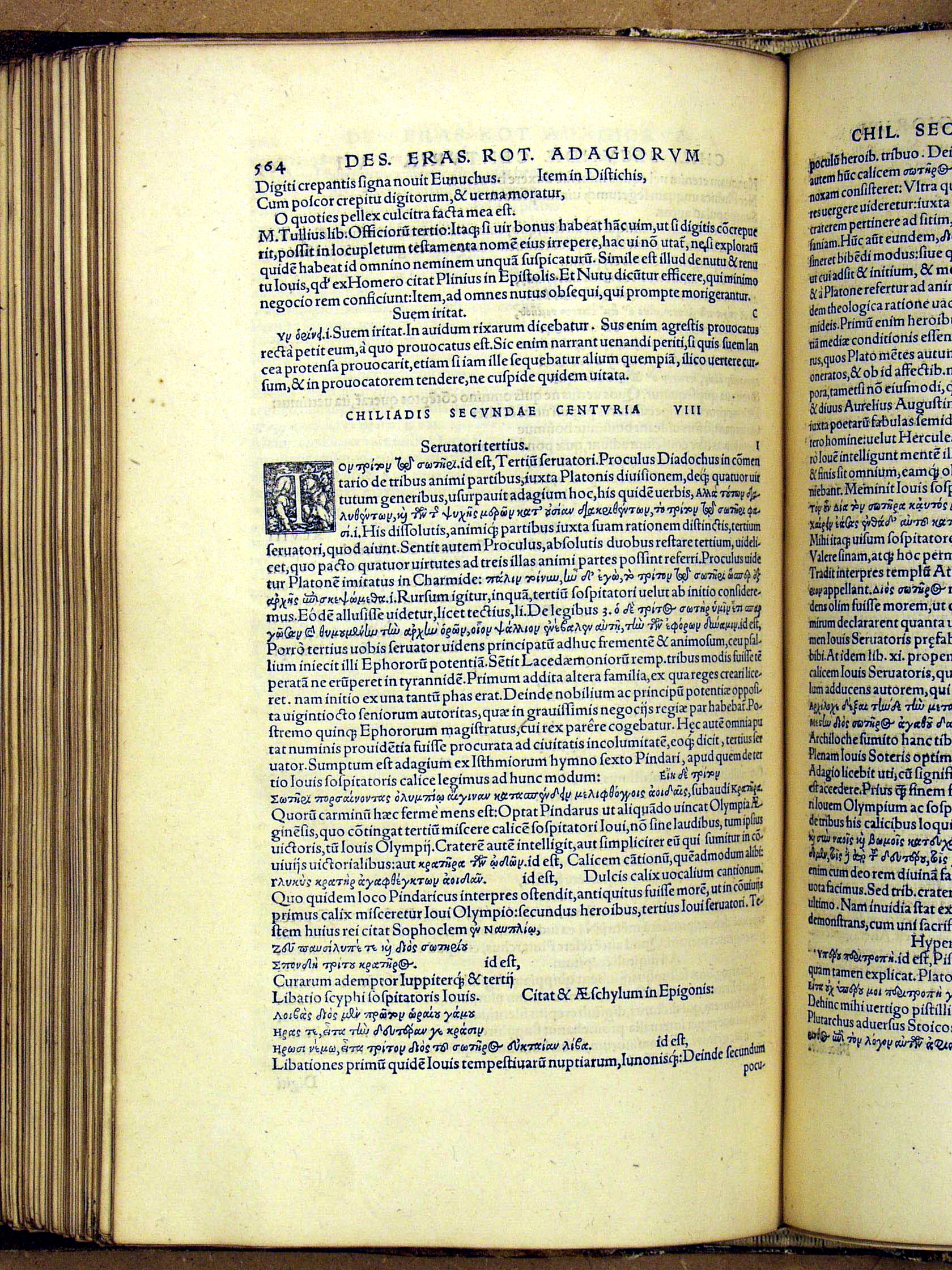

Iconclass: 49D124:49D11(3) division❧numerals: 3 51A7 Perfection, Completeness; 'Perfettione', 'Operatione perfetta' (Ripa) 55C22 Offering; 'Offerta overo Oblatione' (Ripa) 92B171 Jupiter as king of Heaven
Loci Communes: Perficiendi sive absolvendi (Finishing, completing, Achever, accomplir)
II viii 2 Hyperi vertigo The twirling of a pestle
Υπέρου περιτροπὴ, id est, Pistilli circumvolutio. Ubi quis semper idem agitat, neque quicquam tamen explicat. Plato Comicus, opinor, in Adonide, apud Zenodotum, Εἲτα οὐχ ὑπέρου μοι περιτροπὴ γενήσεται. id est, Dehinc mihi vertigo pistilli haud erit. Plutarchus adversus Stoicos significans illorum rationes eodem revolui: πολὺς οὖν ὁ διὸς κόρινθος ἐπι τὸν λόγον αὐτῶν ἀφιᾶταε. τὴν γὰρ ὑπέρου περιτροπὴν ἵνα μὴ σκώπτειν δοκῇς ἔασον: id est, Multus igitur Iovis Corinthus ad rationem illorum admittitur. Nam pistilli circumvolutionem, ne ridere videaris, omitte. Unde videtur solere dici, cum eadem saepius iterantur non sine taedio. Dialectici peti principium aiunt, quoties eodem revoluitur argumentatio. Hesychius interpretatur de his qui semper eadem aiunt, neque quicquam interim proficiunt. Huic ita finitimum est, ut idem videri possit, quod Plato recenset in Theaeteto: ἡ μὲν σκυτάλης,ἢ ὑπέρου ἢ ὅτου δὴ λέγεται περιτροπὴ. id est, Scytalae quidem, aut pistilli, aut si cuius alterius dicitur circumvolutio: quum sermo in idem revoluitur, quemadmodum illic Theaetetus iubet assentiri rectae opinioni, eum qui rectam habet opinionem. Scytalem interpres vertit, scuticam, quum Plato loquatur de loro, quod surculo circumvoluitur.
'[greek], A pestle going round and round. When a man is always busy on the same task and yet never gets anything finished. Plato, presumably the comic poet, in his Adonis, cited by Zenodotus: 'Then I shall never have the twirling of a pestle.' Plutarch in his 'Against the Stoics,' making the point that they argue in a circle: 'Corinth son of Jove is always coming into their conversation; but say nothing of the twirling pestle, for fear you seem to make fun of them.' It looks therefore as though the phrase was used when the same things are often repeated, until they become tedious. Logicians speak of 'begging the question' when an argument goes round in circles. Hesychius explains it of those who always say the same thing, and all the time make no progress. Plato discusses something in the Theaetetus which is so close to this that it might be thought identical: 'The twirling of an axle (scytale) or a pestle or whatever else they speak of,' when the discourse returns to the same point in the way in which, in that passage, Theaetetus says that the man who holds the right opinion ought to concur in the right opinion. The translator renders scytale by scutica, a thong, since Plato speaks of the leather strip wrapped round the staff.
Facsimile: 
Iconclass: 31AA27481 turning something, (causing) circular movement - AA - female human figure 49C212 logic, 'Logica'; 'Logica' (Ripa) 49G831 pestle and mortar 52B52 Syllogism, Demonstration
Loci Communes: Taedium ex iteratione (Tedium from repetition, Lassitude due à la répétition)
II viii 3 Sus sub fustem Put the hog under the cudgel
Υς ὑπὸ ῥόπαλον, id est, Sus sub fustem. Ubi quis sese in praesens discrimen ac perniciem praecipitat. Nam sues apud quosdam fuste mactari mos est. Refertur à Suida. Zenodotus indicat extare apud Dinolochum.
'[greek], Put the hog under the cudgel. When someone plunges headlong into instant peril and disaster, for it is the custom in some places to club a pig to death. Recorded by Suidas. Zenodotus says it is found in Deinolochus.
Facsimile:
Iconclass: 43C1421(+0):47I21211 cudgelling the cat, 'cat-in-a-barrel' (+ variant)❧hog (castrated male pig) 52AA21 Rashness, Imprudence, Recklessness 54A81 Fearlessness, Intrepidity; 'Intrepidità & Costanza' (Ripa)
Loci Communes: Discriminis (Danger, crisis, Danger)
II viii 4 Si bovem non possis, asinum agas If you cannot drive an ox, drive an ass
Εἰ μὴ δύναιο βοῦν, ἔλαυνε ὄνον. i. Si nequeas bovem, asinum agito. id est, si non potes ut vis, utcunque potes facito. Si fortuna splendidior non contingit, eam sortem quae contingit boni consulas: si quod optas non licet, id quod est proximum, amplectere. Autore Suida.
[greek], If you can't drive an ox, drive an ass; that is, if you can't do a thing as you would wish, do it as best you can. If a distinguished position does not come your way, make the most of what does come. If you are not allowed to do what you hope to do, be content with the second best. Suidas is the authority.
Facsimile:
Iconclass: 46C13142 ass, donkey 46C146 inciting riding-animal or draught-animal 47I21111 ox 56B3 Satisfaction, Contentment; 'Contento' (Ripa)
Loci Communes: Proximis utendum (One must make use of one's neighbors, Il faut se servir de son prochain)
II viii 5 Siren amicum nunciat, apis hospitem A bee foretells a stranger and a wasp foretells a friend
Ζειρὴν μὲν φίλον ἀγγέλλει, ξεῖνον δὲ μέλισσα. id est, Hospitem apis, verum siren praedicit amicum. Quoties complures eadem de re bene ominantur: aut ubi suae quisque spei blandiens ex quamlibet levibus argumentis divinat futurum quod optat. Nam Sirem hoc loco non unam ex illis virginibus Homericis significat, verum insecti genus, api non dissimile. Autore Suida. Quanquam apud Hesychium σείρη legitur, non σειρὴν.
Ζειρὴν μὲν φίλον ἀγγέλλει, ξεῖνον δὲ μέλισσα, A bee proclaims a stranger but a wasp foretells a friend. For use when we get a good omen on the same subject from several sources, or when everyone gives rein to his own hopes and infers from the most trivial indications that what he wishes is about to happen; for siren in this context does not mean one of those famous maidens in Homer but a kind of insect not unlike a bee. So we learn from Suidas. Though in Hesychius the text reads σείρη, not σειρὴν.
Facsimile:
Iconclass: 25F711(BEE) insects: bee 25F711(WASP) insects: wasp 33A5 friends 52E21 Good Omen; 'Augurio buono' (Ripa)
Loci Communes: Nuntius laetus (Happy news, Heureuse nouvelle)
II viii 6 Etiam si lupi meminisses If you had even mentioned a wolf
Εἰ καὶ λύκου ἐμνήσθης. i. Etiam si lupi mentionem fecisses. subaudiendum intervenisset. Quoties praeter expectationem intervenit is de quo fuerat mentio: cognatum ei, quod alibi recensuimus: Lupus in fabula, Id frequenter accidit in Comoediis ac tragoediis arte curaque scriptoris, ut de quo fiunt verba mox interveniat. Accommodari poterit ad rem, veluti si apud autorem protinus vel casu occurrat, id de quo vertebatur sermo. adagium refert Zenodotus. Plato in Phaedro, λέγεται γοῦν ὦ φαῖδρε δίκαιον εἶναι, καὶ τὸ τοῦ λύκου εἰπεῖν. id est, Aiunt igitur ô Phaedre iustum esse etiam quod de lupo dicitur narrare.
[greek], If you had even mentioned a wolf (we must supply, he would have appeared). For use when the man of whom we were speaking unexpectedly appears. Related to one I have recorded elsewhere, Talk of the wolf. It commonly happens in comedies and tragedies that by the writer's skill and contrivance a character who has been referred to makes an immediate appearance. It can be adapted to a subject, if for example in some author a thing of which we were speaking immediately occurs by chance. The adage is recorded by Zenodotus. Plato in the Phaedrus: 'At any rate, they say it is right to tell what is said about the wolf.'
Facsimile:
Iconclass: 25F23(WOLF)(+5211) beasts of prey, predatory animals: wolf (+ walking animal) 46C5141 being welcomed ~ travelling 52BB31 Improbability
Loci Communes: Subiti interventus (A sudden intervention, Intervention soudaine)
II viii 7 Similior ficu As like as two figs
Ομοίοτερος σύκου. id est, Similior ficu. Per iocum dicebatur, de vehementer inter se similibus. Ducta metaphora à ficorum inter ipsas similitudine. Plutar. adversus Stoicos: Θαυμαστὸν καὶ παράδοξον εἰ μήτε φάττα φάττῃ, μήτε μελίττῃ μελίττα, μήτε πυρῷ πυρὸς, ἢ σύκῳ, τὸ τοῦ λόγου, σῦκον, ἐν τῷ παντὶ χρόνῳ γέγονεν ἀπαράλλακτον. id est, Mirum & inopinabile, si neque palumbus palumbo, nec api apis, nec tritico triticum, aut fico, quod est in proverbio, ficus, semper adsimilis fuisset. Confine est iis quae retulimus alibi: Non tam ovum ovo simile, &, Non lac lacti magis est simile.
'[greek], As like as two figs. A humorous expression for two things very closely alike. The image is taken from the resemblance which one fig bears to any other. Plutarch in 'Against the Stoics': 'It would be surprising and incredible, had not two doves always been very much alike or two bees or two grains of wheat or, as the proverb has it, two figs.' Related to those I have recorded elsewhere, As like as one egg is to another and As like as milk to milk.
Facsimile:
Iconclass: 49D11(2):25G21(FIG) numerals: 2❧fruits: fig 51B2 Similarity, Likeness
Loci Communes: Similitudinis et congruentiae (Similarity and congruence, Similitude et convenance)
II viii 8 Simul et da et accipe Give and take at the same time
Αμα δίδου καὶ λάμβανε. id est, Simul da & accipe. Ubi res est cum homine parum certa fide, cui non sit tutum quicquam credere, nisi statim receperis quod fueris stipulatus. Torquebitur ad eum qui non collocat officium aut munus suum, nisi iam certus de mutuo: nec spem emit precio, quemadmodum ait leno Terentianus. Aristoteles hanc paroemiam venustius extulit lib. Moralium Nicomachiorum viii, taxans amicos, quos mutua conciliat utilitas: & perinde, ut in forensibus commerciis non dant beneficium, sed vendunt. ἡ μὲν πάμπαν ἀγοραία ἐκ χειρὸς εἰς χεῖρα, ἡ δὲ ἐλευθεριωτέρα εἰς χρόνον. id est, Altera quidem omnino sordida & cauponaria compensatio de manu in manum: altera magis ingenua ad tempus. Allusit philosophus ad Comicum illud, quod citatur ab interprete Pindari: Φοῖνιξ γὰρ εὐθὺς γίγνομαι, Τῇ μὲν δίδωμι χειρὶ, τῇ δὲ λαμβάνω. id est, Phoenix enim fio ilico. Quippe altera manu do, & accipio altera. Phoenices notantur nimio cauponandi studio. Unde & Pindaro dictum in Pythiis hym. ii. Τὸ δὲ μὲν κατα φοίνισσαν ἐμπολὰν μέλος. Phoenicum commutationem appellat cum datur aliquid, & vicissim accipitur. Porrò negociatorum genus nihil habet sacrum, praeter unum pecuniae lucrum, cui se totos ceu deo consecrarunt. Hoc pietatem, hoc amicitiam, hoc honestum, hoc famam, hoc divina pariter & humana omnia metiuntur. Reliqua nugae.
[greek], Give and take at the same time. When you have to do business with a man of doubtful honesty, who is not to be trusted in any respect unless you receive there and then what you have bargained for. It can be diverted to apply to someone who does not render any service or fulfil any obligation unless he is already certain of his quid pro quo, nor does he 'buy hope for good money,' as Terence's brothel-keeper puts it. Aristotle expressed this proverb more elegantly in book 8 of the Nicomachean Ethics, criticizing friends who are held together by ties of mutual advantage, and as in business relationships do not so much give a man their friendship as sell it him: 'One form of recompense is sordid, and passes from hand to hand in a purely commercial way; the other, prompted by the circumstances, is more honourable.' The philosopher alludes to that remark from some comedy which is cited by the scholiast on Pindar: I turn Phoenician instantly: give with one hand and take with the other.' The Phoenicians have a bad name for excessive commercial zeal, and hence Pindar's words in the Pythians, hymn 2: This song by some Phoenician exchange' use the expression when one thing is given and something else taken in its place. In fact the tribe of merchants hold nothing sacred except profit in cash, and to this alone they consecrate their whole selves as their god. For piety, for friendship, for honour, for reputation, for all things alike divine and human this is their only measure, and all else is nothing.
Facsimile: 
Iconclass: 55C2:55CC2:51F4 Giving❧Receiving❧Simultaneity 54DD52:57AA621 Risk; 'Ardire ultimo & necessario' (Ripa)❧Cheat, Deceit; 'Fraude', 'Inganno' (Ripa)
Collectanea (1500): 142
Loci Communes: Diffidentia (Distrust, Méfiance); Frustrata spes (Frustrated hope, Espoir déçu)
II viii 9 Semper me tales hostes insequantur O that I always had such enemies
Αεὶ τοιοῦτοί με πόλεμοι διώκοιεν. id est, Me bella semper insequantur talia. Ubi quospiam libenter odimus, ac simultatem illorum contemnimus: Est enim hominum genus, quos periculosius sit demeruisse, ut ait Seneca, quam offendisse: & quos magis expediat inimicos habere quàm amicos. Et quibusdam displicuisse, laudabile est. Et sunt cum quibus amicitia copulatum esse dedecori sit, simultate dissidere pulchrum. Potest accommodari & in eos qui desciscunt ab amicitia, sed ut inimici nihil queant nocere. Legitur et ad hunc modum: Αεὶ τοιοῦτοι με πολέμιοι διώκοιεν. id est, Me semper hostes insequantur hoc genus.
'[greek], O may such wars as these always pursue me. When we willingly hate certain people and despise them as opponents; for there is a type of man, as Seneca says, to whom it is more risky to do good than harm, and whom it is more profitable to have as enemies than as friends. There are people whose bad opinion of us does us credit. There are those with whom it is disreputable to be linked in friendship and whose opposition and hostility are an honour. This can also be adapted to friends who have proved false, but now that they are enemies can do one no harm. It is also found in the form O may such enemies always pursue me.
Facsimile:
Iconclass: 56F2:33B5 (personifications and symbolic representations of) Love; 'Amore (secondo Seneca)' (Ripa)❧enemy 57BB25 Calumny, Detraction; 'Biasimo vitioso', 'Calunnia', 'Detrattione', 'Maledicenza' (Ripa)
Loci Communes: Contemptus et vilitatis (Contempt and worthlessness, Mépris et bassesse)
II viii 10 Anus eriphus An aged kid
Γραῦς ἔριφος. i. Anus hoedus. Apollodorus apud Zenodotum ait, anum quandam fuisse, quae dicta sit Eripha, quod in virginitate consenuisset: perinde quasi eadem & anus esset per aetatem, & puella, quod adhuc innupta. Sunt qui tradant locustam agrestem, à nonnullis mantin appellatam, in Sicilia γραῦν ἔριφον appellari. Aiunt autem quodcunque animal aspexisset, illi mali quippiam accidere. Proinde in mulierem veneficam & fascinatricem quadrare videtur. Quod genus apud Horatium Canidia.
[greek], An aged kid. Apollodorus, cited by Zenodotus, says there was an aged woman called The Kid, because she lived into old age without being married, just as though the same person was an old woman in years and being unmarried was still a child. Some say that a wild locust, known sometimes as a mantis, was called in Sicily 'an aged kid,' and the story goes that anyone on whom this creature's eye falls suffers some misfortune. Clearly therefore it is suitable for a sorceress or a witch, like Horace's Canidia.
Facsimile:
Iconclass: 31D112 child 31D160 Old Age, 'Senectus'; 'Vecchiezza' (Ripa) 31D17:42D92 old woman❧single woman, spinster 31D52 adults behaving like children
Loci Communes: Absurda, indecora, seu praepostera (Absurd, unbecoming, or preposterous things, Choses absurdes, inconvenantes ou déplacées)
II viii 11 Anus saltat An old woman dancing
Γραῦς χορεύει, id est, Anus saltat. In eum convenit, qui indecore quippiam facit: velut, si senex ludat nucibus: aut theologus rhetoricis flosculis lasciviat: aut princeps exemplo Neronis musicetur. Confine est illi, quod supra retulimus: Camelus saltat. Horatius in anum intempestivae libidinis, Te lanae prope nobilem Tonsae Luceriam, non citharae decent, Nec flos purpureus rosae, Nec poti Vetulam faece tenus cadi. Apud Plutarchum in vita Periclis legimus, Elpinicem quandam, quum eum indecoris conviciis palàm incesseret, nihil aliud responsi tulisse quàm versiculum illum ex Archilocho, Οὐκ ἂν μύροισι γραῦς ἐοῦσα ἠλείφεο. id est, Unguento anus quum sis caveto inungier. Quid autem secutus Lapus vertit, Haud unguenti, vetula quum sis oblita es, non satis coniectamus, nisi forte pro ἀλείφεο legit, εἰλείθεο aut εἰλήθεο.
[greek] An old woman dancing, suits a person who does something outside all propriety; if, for instance, a graybeard were to play with children's toys, or a theologian to be carried away by florid rhetoric, or a prince to follow Nero's example and give a concert. It is close to one I have already recorded above, The camel dances. Horace, writing of an old woman whose lecherous ways were unsuited to her years: 'The fleeces shorn near famed Lucera are fit work for you; not yours the dance-band and the red, red rose, nor the cask drained to its last dregs: you're an old woman now.' In Plutarch, we read in his life of Pericles of a woman called Elpinice, who attacked people openly with indecent abuse, and got no answer except that line of Archilochus: Wow you're an old woman, do not drench yourself with scent.' When Lapus got the idea of rendering it 'You've not forgotten [oblita] the perfume, now you're an old woman,' cannot guess, unless perhaps instead of [greek] he read[greek] or [greek].
Facsimile:
Iconclass: 29A1 'mundus inversus', the reversed world, the topsy-turvy world, 'le monde bestourné' 31D17 old woman 43C912 woman dancing alone 59AA3 Vulgarity
Loci Communes: Absurda, indecora, seu praepostera (Absurd, unbecoming, or preposterous things, Choses absurdes, inconvenantes ou déplacées)
II viii 12 Anus subsultans multum excitat pulveris An old hag's capers raise a power of dust
Γραῦς ἀνακροτήσασα πολὺν κονιορτὸν ἐγείρει. id est, Anus subsultans, multum pulverem excitat. In eos dici solitum, qui ob rerum experientiam, multum negociorum aggrederentur. Videtur carmen hoc heroicum syllaba duntaxat deprautum.
[greek], An old hag's capers raise a power of dust, is said commonly of those whose experience of affairs leads them to undertake many tasks. It looks like a hexameter, corrupt in at least one syllable.
Facsimile:
Iconclass: 26C33(+0):25D29 sandstorm (+ variant)❧dust (soil type) 31D172 ugly old woman, hag 57AA66 Frivolity
Loci Communes: Prudentia senilis (The prudence of old age, Prudence de la vieillesse)
II viii 13 Anus velut equus profundam habesis fossam As an old woman you will have a deep grave, like a horse
Γραῦς ὥστις ἵππος τὸν χαραδραῖον τάφον ἔξεις, id est, Anus velut equus, alte hiantem habebis ac nigrum specum sepulta. De iis, qui penitus abiiciuntur, tanquam prorsus inutiles. Equi postea quàm consenuerint, in altos terrarum specus aliquò praecipitantur. Ita mulier olim amata, simul atque defloruit forma, fastiditur ab omnibus. Qualis est apud Horatium Lyce. simile illi: Equi senectus.
[greek], As an old woman you shall have, like a horse, a deep dark yawning cavern when you're buried. Of those who are cast out utterly, as being of no possible use. Horses, once they have grown old, are thrown headlong somewhere into deep holes in the ground. So is a woman, who has had lovers in her time, rejected by everyone as soon as her beauty fades. So it is with Lyce in Horace. Resembles that saying: A horse's old age.
Facsimile:
Iconclass: 31D172 ugly old woman, hag 42E23:46C13141 burial❧horse 42E242 throwing something into the open grave 51DD4 Ugliness 54BB3 Inutility, Noxiousness; 'Nocumento', 'Nocumento d'ogni cosa' (Ripa)
Loci Communes: Ignavia et inscitia (Cowardice and ignorance, Lâcheté et ignorance)
II viii 14 Aphyarum honos Whitebait glory
Αφυῶν τιμή, i. Aphyarum honos. Quoties humilibus exiguus quispiam honos contingit. Nam Aphya pisciculus est vilis, cui coquendo nihil adhibetur praeter oleum, quo frigitur. Unde iactatum illud: ἀφύας τιμὴ τ᾽ οὔλαιον, id est, Aphyae honos oleum.
'[greek], Whitebait glory. When some honour of low degree is conferred on men of humble station; for whitebait are a small cheap fish, which require nothing for their cooking except the oil in which they are fried. Hence there used to be a current phrase: Oil is a glory to whitebait.
Facsimile:
Iconclass: 25F62(WHITEBAIT) bony fishes (WHITEBAIT) 41C671 oils and vegetable fats 41C68(WHITEBAIT) fish (WHITEBAIT) 46A132 villagers; villeins (Dutch: 'dorpers') 59B31 Honour, Glory; 'Ampiezza della Gloria', 'Gloria', 'Gloria de prencipi', 'Gloria & Honore', 'Honore', 'Sublimatà della Gloria' (Ripa)
Loci Communes: Similitudinis et congruentiae (Similarity and congruence, Similitude et convenance)
II viii 15 Cur non suspendis te? Why not hang yourself?
Τί οὐκ ἀπήγξω, ἵνα θήβῃσιν ἥρως γένη; id est, Quin te suspendis, ut apud Thebanos heros fias? Apud alios summus honos habebatur iis, qui sibi mortem conscivissent, praesertim pro salute patriae; ut apud Atticos Codro pro patria non timido mori: apud Romanos Deciis, & Quinto Curtio, M. Catoni Uticensi, Bruto, & aliis plerisque: apud Thebanos autem nullus honos habebatur iis, qui sibi vim attulissent. Unde per ironiam dictum putant, ut Thebis semideus fias. Dici posse videtur in eos, quifamae ducti cupiditate, semet periculis gravibus obiciunt. Refertur à Zenodoto.
[greek], Why not hang yourself, and thus become a demigod at Thebes? Other peoples used to hold in the highest honour men who had contrived their own deaths, especially if it was to save their country; Codrus, for example, in Athens, who 'for his country's sake feared not to die,' and in Rome the Decii and Quintus Curtius, Cato of Utica and Brutus, and many others; but in Thebes those who had died by their own hand got no credit at all. Hence, it is thought, this ironical use of the phrase 'and thus become a demigod at Thebes.' It seems possible to use it of those who are inspired by the thirst for fame to expose themselves to great perils. Recorded by Zenodotus.
Facsimile: 
Iconclass: 12E13 representations ~ gods, demi-gods, heroes, etc. (Greek religion) 31E2355(+71) violent death by hanging (+ self-sacrifice, death in the service of a higher purpose) 61E(THEBES) names of cities and villages (THEBES) 59B31 Honour, Glory; 'Ampiezza della Gloria', 'Gloria', 'Gloria de prencipi', 'Gloria & Honore', 'Honore', 'Sublimatà della Gloria' (Ripa)
Loci Communes: Probrum, gloria (Disgrace, glory, Honte, gloire)
II viii 16 Quid tibi Apollo cecinit? What tune has Apollo played for you?
Τί σοι Απόλλων κεκιθάρικεν; id est, Quid tibi Apollo cecinit cithara? hoc est, quid tibi respondit? Allusum est autem ad Apollinis citharam, quam illi tribuunt poetae. Usus est hoc adagio Aeschylus in Aiace Locrensi. Refertur à Zenod. Conveniet, ubi quis à principe redeuntem percunctabitur, quid responsi tulerit, Τί σοι ἀπόλλων κεκιθάρικεν;
[greek], What tune has Apollo played for you on his cithara? - in other words, what answer has he given? The allusion is to Apollo's lyre, which is his attribute in poetry. The adage was used by Aeschylus1 in his Locrian Ajax. It is listed by Zenodotus. It will be suitable when one wishes to ask someone returning from an audience with the prince what sort of answer he has received: 'What tune has Apollo played?'
Facsimile:
Iconclass: 52E1 Response, Answer, Solution 92B373 Apollo playing the lyre, Apollo Citharoedus
Loci Communes: Nuntius laetus (Happy news, Heureuse nouvelle)
II viii 17 Quid non fies profectus Arbelas? Make for Arbelae and you'll do great things
Τί οὐ γενῆσῃ, ἰὼν ἀρβέλας; id est, Quid non fies Arbelas profectus? De eo dici solitum, qui peregre proficiscens ingentia sibi pollicetur, fretus gentis ad quam demigrat inscitia, barbarieque. Siquidem Arbela Siciliae civitas, autore Stephan. cuius cives male audiebant olim, ut stupidi, & quibus facile imponeretur. Apud hos igitur etiam contemptus alibi, magnum aliquid esse possit. Quanquam est huius nominis civitas in Perside, cuius meminit Strabo lib. xvi. Et Qu. Curtio est oppidum Mesopotamiae Darii copiaru internicione nobile.
[greek], Make for Arbelae and you'll do great things, used to be said of a man who has high hopes as he sets out for foreign parts, trusting in the ignorance and barbarism of the people among whom he means to live. Arbela was a town in Sicily (Stephanus is the authority), the citizens of which had in old days a bad reputation as blockheads who were easily taken in. Among them therefore even a man of no account elsewhere might hope to achieve some great position. Though there is also a city of this name in Persia, mentioned by Strabo in book 16; and Quintus Curtius knows of a town in Mesopotamia, famous for the destruction of Darius' army.
Facsimile:
Iconclass: 32B311(ARBELANS):52AA1 indigenous European peoples (ARBELANS)❧Stupidity, Poverty of Intellect; 'Stupidità overo Stolidità' (Ripa) 44C12:61E(ARBELA) emigration❧names of cities and villages (ARBELA) 53C11 Authority, Power; 'Dominio', 'Giurisdittione' (Ripa)
Loci Communes: Votum (A vow, a wish, Vœu)
II viii 18 Bonus e pharetra dies A good day out of the quiver
Αγαθὴ ἐκ τῆς φαρέτρας ἡμέρα. id est, Bonus è pharetra dies. De die fortunato dicebatur. Translatum à Scytharum consuetudine, quibus, ut narrat Philarchus, mos erat, ut vesperi prius quam dormirent, calculum in pharetram immitterent, candidum, si fortè is dies citra molestiam abiisset: atrum, si secus. Demum ubi quis vita decederet, eius pharetram proferebant: in qua si plures candidos calculos reperissent, felicem pronuntiabant: contrà, si plures nigros. Atque hinc vitae summam aestimabant: unde proverbio receptum est, ut dicerent, bonum diem è pharetra esse, si quid ex animi sententia accidisset.
[greek], A good day out of the quiver, was applied to a day when things went well. It is derived from a custom among the Scythians. Their practice was, as Philarchus tells us, every evening before they went to sleep to put a pebble into a quiver, a white pebble if the day had passed without mishap and otherwise a black one. In the end, when a man died, they used to bring out his quiver, and if they found in it more white pebbles than black, they declared him fortunate; the opposite, if they found more black. From this they passed judgment on his life as a whole; and hence it became proverbial to say 'A good day out of the quiver' if something had happened as they wished.
Facsimile:
Iconclass: 22C4(BLACK):25D12 colours, pigments, and paints: black❧kinds of non-precious stone 22C4(WHITE):25D12 colours, pigments, and paints: white❧kinds of non-precious stone 45C23 quiver 54F12 Luck, Fortune, Lot; 'Fato', 'Fortuna', 'Fortuna aurea', 'Fortuna buona', 'Fortuna pacifica overo clemente', 'Sorte' (Ripa)
Collectanea (1500): 664
Loci Communes: Bonae fortunae, copiae, felicitatis aut ominis (Of good fortune, abundance, happiness, or omen, Bonne fortune, abondance, bonheur ou présage)
II viii 19 Res Cannacae Cannacas' things
Τὰ καννάκου. id est, Res aut mala Cannacae. Bifariam hac utebantur paroemia, vel de rebus ob vetustatem admirandis, vel de lamentis & complorationibus miseris ac lachrymosis. Cannacas quispiam Phrygum rex, quemadmodum narrat Hermogenes in Phrygiis, qui cum praevidisset eventurum diluvium, convocatis omnibus ad templa deorum, multis lachrymis supplicabat diis, ut id malum averterent. Unde Herodes iambographus inquit, ἵνα τὰ καννάκου κλαύσω. id est, Ut Cannacae more prolem. Haec referuntur à Zenodoto. Plin. lib. tricesimo sexto, Cannacum inter statuarios nobiles recenset. Stephanus in dictione Iconium, meminit adagii, nisi quod Annacum appellat non Cannacum, aut Cannacam: et de fabula nonnihil evariat. Ait enim Annacum quendam vixisse super annos trecentos. Itaque undique consulta oracula, quo usque victurus esset. Responsum autem, mortuo Annaco peritura universa: quo defuncto, successisse diluvium Deucalionis. Caeterum audito responso magnopere luxisse Phryges, atque hinc de gravi luctu ortum proverbium ἐπὶ Αννακοῦ κλάυσειν.
[greek], Cannacas' things, or Cannacas' troubles. They used this proverb in two different senses, of things remarkable for their antiquity, or for sad and pitiful lamentation and mourning. Cannacas, as Hermogenes tells us in his account of Phrygia, was a Phrygian king, who foresaw the coming of a great flood and, summoning all the population to the temples of the gods, besought the gods with copious tears to avert the disaster. Hence Herodes the iambicwriter: 'That I may weep, as Cannacas did weep.' All this is recorded by Zenodotus. Pliny in book 36 has a Cannacus in his list of famous sculptors. Stephanus under the word Iconium mentions the adage, except that he calls him Annacus, and not Cannacus or Cannacas, and makes some changes in the story; for he says there was a man called Annacus who lived beyond the age of 300 years. Enquiries were therefore made of oracles everywhere, how long he was to go on living; and the reply was that, when Annacus dies, all things would perish. His death, according to the story, was followed by the great flood of Deucalion. When they heard the reply, the Phrygians are said to have been very greatly distressed, and hence arose the proverb, applied to any great grief: To mourn in future like Annacus.
Facsimile:
Iconclass: 25H199 flood 31D91 long life 52E2 Prediction, Prophecy; 'Augurio', 'Divinatione', 'Profetia' (Ripa) 98B(CANNACAS) male persons from classical history (CANNACAS) 98B(ANNACUS) male persons from classical history (ANNACUS)
Loci Communes: Ingrata ob vetustatem (Unpleasant because of age, Déplaisant à cause de l'ancienneté)
II viii 20 Qui modus equitum! Look, what horsemen!
Τίς τρόπος ἱππων; id est, Qui modus equorum? Ubi quis novam, ac peregrinam induceret consuetudinem: veluti si quis Italus Gallicis vestibus uteretur. Dictum videtur de hospitibus novo quadrigarum genere invectis. Metagenes in Thuriopersis apud Suidam: Τίς τρόπον ἵππων; ὡς δ᾽ ὀρχοῦνται τὸν βαρβαρικὸν τρόπον οὕτοι. id est, Quis equorum modus? Ut autem saltant hi more barbarico. Confinitatem habet cum illo, quod paulo superius recensuimus: ἄλλο γένος κώπης, id est, Aliud genus remi.
[greek], Look, what horses! If someone were to introduce a strange and foreign custom - suppose an Italian, for instance, were to wear French clothes. Spoken, it would seem, of strangers arriving in four-horse chariots of an unfamiliar kind. Metagenes in his Thuriopersae, cited by Suidas: 'Look, what horses! How they dance in barbarian style!' This is related to one I treated a little earlier, Another kind of oar.
II viii 21 Chironium vulnus A wound for Chiron
Χειρώνειον ἕλκος, id est, Chironium vulnus, immedicabile malum appellabant: Chiron in bello adversus Centauros ictus ab Hercule, vulnus immedicabile accepit in pede: unde & periit. Hinc natam paroemiam autor Zenodotus. Vergilius autem noster (nam huic carmen inscribitur) Chironiam manum medicam vocat: Vivit pectore sub dolente vulnus, Quod chironta nec manus levaret. Ab hoc Chirone centauro fertur educatus Achilles. Unde Plato Comicus Damonem, qui sub obtentu tradendae musices putabatur Periclem instituisse ad tyrannidem, taxat his versibus: Πρῶτον μὲν οὖν μοι λέξον ἀντιβολῶ, σύ γὰρ Ως φασιν ὁ Χείρων ἐξέθρεψας περικλέα. id est, Primum quidem illud obsecro dicas mihi, Tu quippe Chiron educasse diceris Periclem. Quem locum ita reddidit Lapus: Tu enim ut aiunt, pessime Periclem educasti. Quin & in aeditione Aldina geminum vitium est. Primum enim versus perperam distinctus est, deinde ut pro ῶ χείρων, legamus ὁ χείρων, id est, tu ille Chiron, metri cogit ratio. Per tropum siquidem appellat Damonem Chironem, quod id fuerit Pericli, quod Chiron fuit Achilli, quem docuit quidem fidibus canere, sed ad Centauricam ferociam eduxit. Hoc licet alieniore loco, visum est studiosis indicare, ne quis imprudens ad eum impingat lapidem.
[greek], A wound for Chiron, was a name for some incurable affliction. Chiron was hit by Hercules in the war against the Centaurs, and received an incurable wound in the foot, to which he succumbed. Hence, says Zenodotus, arose the proverb. Virgil, our great Latin poet (for the lines bear his name), calls a healing hand 'Chironian': 'Within his painful breast the wound lives on, / That Chiron's healing hand could not assuage.' This Centaur, Chiron, is fabled to have been the tutor of Achilles. Hence Plato the comic poet attacks Damon, who was supposed to have educated Pericles for dictatorship under the pretext of giving him music lessons, in the following lines: 'Tell me this first, I beg, for you (they say) / The Chiron were who brought up Pericles.' The passage was rendered by Lapo 'For you (they say) brought Pericles up very badly.' There are also two mistakes in the Aldine edition. First of all the line is divided wrongly, and then the rules of the metre force us to read not [greek] but [greek], 'you were that Chiron.' For by a figure of speech he calls Damon Chiron, because he stood in the same relation to Pericles that Chiron did to Achilles, whom he taught to play the lyre but brought him up as bold as a Centaur. Although it is strictly irrelevant, I thought it well to point this out to students, to prevent anyone stumbling in ignorance over that stone.
Facsimile: 
Iconclass: 31A4632 infections and wounds 31E23461 violent death by arrow(s) 56DD1 Fear, Dread; 'Paura', 'Timidità o Timore', 'Timore' (Ripa) 92L721681 Chiron is accidentally wounded during Hercules' visit to Chiron and the young Achilles
Loci Communes: Malum immedicabile (Incurable evil, Mal incurable)
II viii 22 Charontis Janua Charon's gate
Χαρώντος θύρα. id est, Charontica ianua. De imminente capitis periculo, sive de re magnopere tristi. Sic enim antiquitus appellabatur una è carceris ianuis, per quam damnati iudicum sententiis ad supplicium educebantur. Referunt Zenodotus, Hesychius & Suidas: Charontis enim cymba fingunt animas ad inferos deduci. Hinc Aristophanes in Pluto, ὁ δὲ χάρων τὸ ξύμβολον δίδωσι. i. Dat symbolum Charon: significans illi imminere mortem.
[greek], Charon's gate. Used of imminent danger of death, or of some very tragic event, for this was in Antiquity the name given to one of the gates of a prison, through which men condemned by verdict of the judges were led out to execution. Recorded by Zenodotus, Hesychius, and Suidas. For the story goes that souls were taken across to the nether regions in Charon's boat. Hence Aristophanes in the Plutus: 'But Charon gives him his ticket,' meaning that he is at death's door.
Facsimile:
Iconclass: 41A542 gate, entrance 44G3415 (person under sentence of death) on the way to the scaffold or place of execution 54DD51 Danger; 'Pericolo' (Ripa) 93E1 entrances to Hades 93E3 Charon, the ferryman
Loci Communes: Infortunii sive exitii (Misfortune or ruin, Malheur ou ruine)
II viii 23 Minxit in patrios cineres He has made water on the ashes of his ancestors
Qui intemperiis ageretur, cuique cuncta cederent infeliciter, in patrios cinere minxisse dicebatur. Antiquitus enim paterni sepulchri summa fuit religio. Quod liquet ex Thamyridis fabula, quam alibi retulimus. Proinde qui monumentum patris violasset, huis sicut & parricidis, Erynnes furias ultrices immittebant, neque quicquam prospere succedebat. Horatius in Arte poetica: Nec satis apparet, cum versus factitet, utrum Minxerit in patrios cineres, an triste bidental Moverit incestus, certè furit.
A man hounded by misfortune, for whom everything went wrong, was said to have made water on the ashes of his ancestors. In Antiquity the greatest respect was paid to the burial-places of one's forbears, as is clear from the story of Thamyris which I have recorded elsewhere. Accordingly, a man who had violated his father's grave was visited, like a parricide, by the Erinyes with avenging furies, and nothing ever went right for him. Horace in the Art of Poetry: 'Nor is it clear whether your persistent versifier has made water on the ashes of his ancestors, or tampered sacrilegiously with some haunted place where lightning struck; in any case, he's raving mad.'
Facsimile:
Iconclass: 11N44 Sacrilege; 'Sacrilegio' (Ripa) 42E49:31A61 desecration of grave❧urination 54FF11 Adversity, Misfortune, Bad Luck; 'Fortuna infelice', 'Infortunio' (Ripa)
Loci Communes: Infortunii sive exitii (Misfortune or ruin, Malheur ou ruine)
II viii 24 Maschalam tollere To lift the elbow
Μασχάλην αἴρειν. id est, Maschalam tollere dicebatur, qui avidius biberet. Sumptum à gestu bibonum, inter ebibendum cyathos, gulam ac mentum intendentium, et altius erigentium cubitos, ne quid resideat in cyatho liquoris. Idem appellant κωθωνίζειν, ἀπὸ τοῦ κώθωνος, quod est poculi genus. Hesychius indicat μασχάλην esse partem prorae, quae contineat τέρθρον, sive antemonem. Antemonem autem volunt esse veli genus. Sunt qui dicant μασχάλιον esse canistrum è palma contextum, quod virga palmea maschale dicatur, nonnunquam & pro fune poni. Alii contendunt maschalam esse machinam, qua sarcinae deponuntur in naves, aut eximuntur è navibus. Hinc iocus in eos qui poculum tollunt in altum. Hesychius adfert & hunc trochaicum tetrametrum citra nomenclaturam autoris, Ως ἄνω τὴν μασχάλην αἴρωμεν ἐμπεπτωκότες. id est, Sursum in altum ut irruentes erigamus maschalam. Fortassis huc allusit Stratonicus citharoedus apud Athenaeum lib. viii. qui notans singulas Graeciae civitates, βυζάντιον εἶπεν μασχάλην τῆς ἑλλάδος. id est, Byzantium dixit Graeciae maschalam, quod illic opinor strenue potaretur, sive quod esset emporium Graeciae. Est enim Thraciae civitas, cadem dicta Constantinopolis. Adiungit proverbio gratiam allusio, quod sunt pocula navigii specie, veluti cymbia, σκάφια, τριήρεις, & alia nonnulla. Refertur à Zenodoto. Meminit & Iulius Pollux libro sexto, cap. iii. his quidem verbis, ἐπὶ δὲ τῶν μεθύοντῶν ´λεγον τὸ μασχάλην αἴρειν, ὡς τοῦττο ἐθος ὄν τοῖς ἐν μέθῃ. i. De ebriis vero dicebant maschalam tollere, tanquam is mos sit temulentis. Adducit et Homerici carminis testimonium. Χεῖρας ἀνίσχοντες γέλῳ ἔκθανον. id est, Sublatis manibus risu emori. Ex his videtur non à tollendo poculo, sed à gestu gaudentium fuisse dictum. Certe manet & hodie apud Germanos milites, ut dextra sublata laetitiam indicent animi.
[greek], To lift the elbow. A man was said to do this who was too fond of drink. Taken from the movement of heavy drinkers who, in course of emptying their tankards, stretch the gullet and chin upwards and raise the forearm, so that no liquor may be left in the mug. Another word for this is kôthônizein, from kôthôn, which is a kind of drinking-vessel. Hesychius shows that maschalê is part of the forepart of a ship which holds the terthron or artemôn; and the artemôn is said to be a kind of sail. Some say that maschalê is a basket woven from palm-fronds, because maschalê is a word for palm-branch, and that the word is sometimes also used for rope. Others maintain that maschalê is a form of tackle used for lowering packages into ships or unloading them; hence the jesting application to those who lift their tankard high when they drink. Hesychius also adds this trochaic tetrameter, without naming the author: That having fallen upon them, we may lift the elbow.' It was perhaps to this that Stratonicus the lyre-player alluded, in Athenaeus book 8, when in the course of an individual review of Greek cities he called Byzantium 'the elbow of Greece,' because (I suppose) there were heavy drinkers there, or because it was the market-place of Greece. (There is a city in Thrace, also called Constantinople.) The proverb gains in elegance from the allusion, for some drinking-cups are boat-shaped, kymbia for example and skaphia and triremes and several others. Recorded by Zenodotus. Also mentioned by Julius Pollux, book 6 chapter 3, in these words: "They also applied to those who had had too much to drink the phrase "to lift the elbow," as though this were customary for drunkards.' He also quotes the evidence of a line in Homer: 'Raising their hands they died with laughing.' From this it looks as though the words came, not from raising a tankard but from some gesture of men rejoicing. The custom remains, at any rate, even in our own day among German soldiers of raising the right hand as a sign of good cheer.
Facsimile:
Iconclass: 31A2242(+63) elbow (+ upward) 31B521 drunkard
Loci Communes: Luxus et mollicies (Luxury and softness, Luxe et mollesse)
II viii 25 Magis ipse Phryx The Phrygian wins
Μᾶλλον ὁ φρύξ, i. Magis ipse Phryx. Equidem coniicio dictitatum, quoties ea magis probarentur, non quae veriora sint, sed quae adulantius dicta. Narrant Croesum Lydorum regem aliquando percunctatum septem illos sapientes, cui nam primum felicitatis titulum tribuerent. At cum varie responderetur, aliis dicentibus, feras indomitas sibi videri felicissimas, quod pro tuenda libertate mortem oppeterent: aliis ciconias, quod citra legem, suapte natura ius piumque servarent: Solone vero negante, quenquam appellandum felicem, prius quàm ex vita decesserit, assistens Phrygius ille fabulator Aesopus: Tanto, inquit,rex caeteros antecellis, quanto mare praestat fluviis. Id ubi rex audisset, respondisse fertur, μᾶλλον ὁ φρύξ. Ea vox in proverbium cessit, equidem haud sciο an ita legendum sit: μᾶλλον ὦ φρύξ. ut sit libenter agnoscentis eam laudem, & cum esset maxima, tamen aliquid etiam adiungi desiderantis, unde cum quis aperte nobis adulatur, succinere licebit, μᾶλλον ὦ φρύξ. Referunt Suidas & Zenodotus.
[greek], The Phrygian wins. My own guess is that this was used when approval was given to words which were flattering rather than sincere. The story goes that Croesus, king of Lydia, once asked the famous Seven Sages to whom they would give first place for happiness. They returned various answers, some saying that they thought untamed wild beasts most happy because they died in defence of their own freedom; others said storks because, though bound by no law, they followed justice and piety by their very nature. Solon however denied that anyone should be called happy until he is dead; whereupon Aesop, the famous Phrygian author of fables, who was present, said: 'You, O king, so far surpass all other men as the sea surpasses rivers.' When the king heard this, he is reported to have replied The Phrygian wins,' and the words passed into a proverb. For my part, I think perhaps we should read [greek], More, Phrygian, more,' so that these become the words of someone gladly acknowledging the compliment and, very great as it was, demanding yet something more. Hence when someone flatters us openly we can reply by repeating 'More, Phrygian.' Recorded by Suidas and Zenodotus.
Facsimile: 
Iconclass: 32B2(PHRYGIAN) historical peoples and nationalities (PHRYGIAN) 57A612 Sincerity; 'Purità et Sincerità d'animo', 'Sincerità' (Ripa) 57AA6121 Flattery; 'Adulatione' (Ripa) 98B(AESOP) male persons from classical history (AESOP) 98B(CROESUS)5 non-aggressive activities of Croesus
II viii 26 Magis sibi placet quam Peleus in machaera He is as pleased with himself as Peleus with his sword
Μέγα φρονεῖ μᾶλλον ἢ πηλεὺς ἐπὶ τῇ μαχαίρᾳ. id est: Magis sibi placet, quàm Peleus sua machaera. In eum competit, qui praeter modum re quapiam insolens est, ac tumet. Aiunt autem hunc gladium à Vulcano fabrefactum, à diis dono datum fuisse Peleo virturis illius ac prudentiae symbolum. Quo quidem ille utens & in praeliis & venatibus, consequebatur quicquid optabat. Zenodotus ait huius mentionem factam et apud Anacreontem, & apud Pindarum.
[greek], He is as pleased with himself as Peleus with his sword, is suitable for a man who is made intolerably insolent and conceited by something. The story is that this sword was forged by Vulcan, and given by the gods as a present to Peleus as an acknowledgment of his valour and good sense. Peleus used it both in battle and in the huntingfield, and achieved all he wished. Zenodotus says this is mentioned both in Anacreon and in Pindar.
Facsimile:
Iconclass: 45C13(SWORD) hacking and thrusting weapons: sword 57AA644 Arrogance; 'Arroganza' (Ripa) 92B2523(+0) other scenes ~ Vulcan forging (+ variant) 95A(PELEUS) (story of) Peleus and Acastus
Loci Communes: Arrogantia jactantiaque (Arrogance and boastfulness, Arrogance et vantardise)
II viii 27 Generosus es ex crumena You owe your blood to your purse
Γενναῖος εἶ ἐκ βαλάτίου, id est, Generosus es ex crumena. In eum iaciebatur, qui propter opulentiam generosus haberi voluisset, alioquin obscurus & humilis. Pariunt enim nobilitatem & opes, non antiquae solum, iuxta Aristotelem, verumetiam undecunque & quandocunque partae. Solet autem hoc genus ferocius insolescere, quàm qui maiorum imaginibus clari sunt.
[greek], You owe your blue blood to your purse, was levelled as a taunt against a man who had wished to be thought well-born on account of his wealth, though in all other respects he was obscure and plebeian. For coin is one of the sources of nobility, and not ancestral wealth alone, as Aristotle says, but coin from any source no matter how recent. And men of this sort are often more rude and insolent than those who owe their distinction to a long line of ancestors.
Facsimile:
Iconclass: 31A22611 blood 41D267 purse, money-bag 42G1 family lineage, pedigree, genealogical tree or table 46A166 parvenu, 'nouveau riche', upstart 57AA641 Immodesty
Loci Communes: Contemptus et vilitatis (Contempt and worthlessness, Mépris et bassesse)
II viii 28 Liberorum amantior quam Gello As fond of children as Gello
Γελλώ παιδοφιλοτέρα. id est, Puerorum amans Gello. Dici solitum vel in eos, qui morte praematura perissent, vel in eos, qui mira quidem charitate filios prosequerentur, sed eosdem indulgentia deliciisque corrumperent. Aiunt Gello virginem quampiam fuisse, quae puella adhuc vita decesserit. Huius spectrum oberrare Lesbiis creditum est, ac pueros impetere. Unde puerorum mortem, qui praematuro fato perirent, huic Gello imputabant. Citatur Sappho, quae huius fabulae meminerit.
[greek], As fond of children as Gello, was customarily used of those who had died an untimely death, or who were exceptionally devoted to their sons but ruined them by pampering and indulgence. Gello is said to have been an unmarried girl, who died while still very young. The people of Lesbos believed that her ghost walked, and attacked children. Hence the deaths of children who suffered an untimely fate were ascribed to this Gello. Sappho is cited as having mentioned this story.
II viii 29 Gleba arvum Clod and field
Βῶλος ἄρουρα, id est, Gleba arvum, ubi quis exigua maximis apponit, credens sese nonnihil iuvare. Proinde legendum suspicor, βῶλος ἄρουραν, aut ἀρούρᾳ, ut subaudias, προστίθεται aut αὐξάνει, aut eiusmodi quippiam. Nihil enim adfert momenti, si gleba aruo adiungatur, quod perinde sit, ac si quis aquam è lacu haustam infundat mari.
[greek], Clod and field. When someone adds small things to big, supposing that he renders some assistance. Hence I suspect that we should change the word for field into the accusative or dative case, and mentally supply some verb meaning 'is added to' or 'increases' or some such thing. For a man contributes nothing significant if he adds a clod of earth to a field; it is just like drawing water from a lake, and pouring it into the sea.
Facsimile:
Iconclass: 51GG1:25D24 Littleness, Smallness❧clay (soil type) 51G1:25H17 Largeness, Magnitude❧meadow, pasture 51CC19:54A6 No Result, Lack of Result, Inefficacy, Futility❧Helpfulness
Loci Communes: Accessio pusilla aut nimia (A trifling or excessive addition, Un ajout minime ou excessif)
II viii 30 Glauci ars The art of Glaucus
Γλαύκου τέχνη, id est, Glauci ars. Huius paroemiae duplex est usus. Convenit enim vel in opus celeriter absolutum, vel in id, quod est arte summa summaque cura elaboratum. Quidam ortum existimant à Glauco quodam Samio, qui primus aeris ferruminationem invenerit. Alii à Libyco quodam, qui quatuor cymbala quaedam fabricatus dicitur, certis proportionibus ita inter se respondentia, ut primi spissitudo Epitriti rationem haberet ad secundum, ad tertium Hemiolii, ad quartum dupli. Ea pulsata musicam quandam harmoniam reddebant. Autor Zenodotus.
[greek], The art of Glaucus. This proverb has two uses. It is appropriate, either to some task very swiftly completed, or to something finished with the greatest skill and care. Some think it comes from a certain Glaucus of Samos, who first invented the soldering of bronze; others from a Libyan who is said to have made four cymbals, adjusted to each other in exact proportions, so that the thickness of the first bore the ratio of four to three to the second, three to two to the third, and double to the fourth. These when struck produced a particular musical harmony. Zenodotus is the authority.
Facsimile:
Iconclass: 47B112 coppersmith, brassworker 51M11:51A7 Swiftness, Speed; 'Agilità', 'Celerità', 'Velocità' (Ripa)❧Perfection, Completeness; 'Perfettione', 'Operatione perfetta' (Ripa) 98B(GLAUCUS OF SAMOS) male persons from classical history (GLAUCUS OF SAMOS)
Loci Communes: Mira nova (Wonderful new things, Choses nouvelles et étonnantes)
II viii 31 Noctuae Laurioticae Lauriotic owls
Γλαῦκες λαυριωτικαὶ, id est, Noctuae laurioticae. hoc velut aenigmate pecuniarum vim significabant. Laurios enim Atticae regio est auri venis frequens. Porrò nomismatis aureis noctuarum figura inscalpebatur, quemadmodum alio diximus loco. Interpres addit & tetradrachmis noctuam solere insculpi. Aristophanes in Avibus: Γλαῦκες ὑμᾶς οὔποτ᾽ ἐπιλείψουσι λαυριωτικαὶ, Αλλ᾽ ἐνοικήσουσιν ἐνδὸν, ἔν τε τοῖς βαλαντίοις Εννεοττεύσουσι. id est: Noctuae vos non relinquent Laurioticae, sed hae Aedibus aderunt in ipsis, inque loculis nidulos Sibi parabunt.
[greek], Lauriotic owls, was used as a riddling way of referring to the power of money. Laurios is a region of Attica rich in veins of gold, and so they struck gold coins with the image of an owl on them, as I have said in another passage. The scholiast adds that four-drachma coins with an owl were also struck. Aristophanes in the Birds: 'Laurian owls shall ne'er desert you; in your houses they shall nest, / Rear their broods within your purses.'
Facsimile: 
Iconclass: 25F34(+15) owls (+ ornamental variants of animals) 46B311:25D13(GOLD) coin❧minerals and metals: gold 55B1 Wealth, Opulence; 'Opulenza', 'Richezza' (Ripa) 61D(LAURIOS) geographical names of countries, regions, mountains, rivers, etc. (LAURIOS) (LAURIOS)
II viii 32 Glaucus poto melle resurrexit Glaucus drank honey and came back to life
Γλαῦκος πίνων μέλι ἀνεστη, id est, Glaucus poto melle revixit. Dici solitum, quoties aliquis vulgari rumore dictus mortuus, denuo prodit in publicum, et quasi redivivus apparet iis quibus persuasum fuerat eum vita defunctum esse. Satis constat ab eventu natum. Nempe Glaucum quempiam praeter omnium exspectationem, gustato mellito pharmaco revaluisse. Eamque rem in iocum popularem versam fuisse. Quidam enarrant in hunc modum: Glaucus quidam poto melle, ob bilem penè exanimatus est. Ad hunc multis accurrentibus medicis, polyidos herba, quam draconem vocant, eum restituit.
[greek], Glaucus drank honey and revived. Used customarily when someone whose death is commonly reported is seen again in public, and appears like one risen from the dead to those who had firmly believed he was no more. It arose quite certainly from something that actually happened: a man called Glaucus, contrary to universal expectations, recovered from a fatal illness after drinking a medicine made with honey, and this was turned in jest into a proverb. Some tell the story thus: A certain Glaucus, after drinking honey, almost died from an attack of bile, but the physicians rushed to his bedside, and a herb called polyidos, also known as dragonwort, restored him to health.
Facsimile:
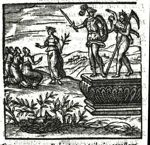
Gramen: Alciatus, Emblemata (Leiden, 1591), emblem 26 uses the adage's imagery
Iconclass: 25G4(DRAGONWORT) plants and herbs (DRAGONWORT) 25G4(TARRAGON) plants and herbs (TARRAGON) 31A4629 poisoning 41C636 honey 52CC41:52D5 Error; 'Errore' (Ripa)❧Rumour; 'Rumore' (Ripa) 98B(GLAUCUS) male persons from classical history (GLAUCUS)
Loci Communes: Praeter spem bonum aut malum (Good or bad beyond expectation, Bien ou mal inattendu)
II viii 33 Generosior Codro As nobly born as Codrus
Εὐγενέστερος κόδρου, id est, Generosior Codro. Per Ironiam recte dicetur in istos, qui maiorum fumosis imaginibus, & natalium antiquitate gloriantur. Codrus Melanthi filius fuit. Melanthus à Neleo sextus. A quo Neleo prognatus & Nestor. Hic igitur Melanthus, Messene patria pulsus venit Athenas: atque ibi cum Xantho Boeoto, qui tum Athenis imperabat, singulari certamine congressus, victor discessit, et Atheniensium imperium occupavit. Cui successit filius Codrus, singulari in patriam pietate praecipue nobilis. Nam cum Atticis bellum esset adversus Dores, proditumque esset oraculo, victoriam penes Atheniensem populum futuram, si rex illorum ab hostibus fuisset occisus, Codrus patriae gloriam sua incolumitate catiorem habens, ignota specie hostem provocavit, & interemptus est. Reliquit autem filios duos, Mentorem, qui patti defuncto successit in imperium, & Neleum, cuius auspiciis colonia in Asiam demigravit. Haec fermè Zenodotus.
[greek], As nobly born as Codrus, will be rightly used by way of irony of those who pride themselves on smoke-stained busts of their ancestors and on ancient lineage. Codrus was the son of Melanthus, and Melanthus was sixth in descent from Neleus, one of whose other descendants was Nestor. This Melanthus, then, was driven out of his native Messene and came to Athens; and there he engaged in single combat with Xanthus, a Boeotian who at that time was ruler of Athens, defeated him, and seized power over the Athenians. He was succeeded by Codrus his son, whose devotion to his country has earned him a great name. For when the Athenians were at war with the Dorians, and it had been declared by an oracle that they would be victorious, provided that their king had been killed by the enemy, Codrus, prizing his country's glory above his own safety, challenged the enemy in disguise, and was killed. He left two sons, Mentor, who after his father's death succeeded to the kingship, and Neleus, who acted as leader of a colony despatched to Asia. Such more or less is the account in Zenodotus.
Facsimile:
Iconclass: 42G1 family lineage, pedigree, genealogical tree or table 44C110 'Amor della patria' (Ripa) 57A68 Nobility; 'Nobiltà' (Ripa) 95A(CODRUS)68 death of Codrus, king of Athens: disguised as a peasant, he seeks to be killed by enemy soldiers to save his city, because he had learned from the oracle that the side whose king fell would be victorious
Loci Communes: Nobilitas / obscuritas (Nobility / obscurity, Noblesse / obscurité)
II viii 34 Cadmea victoria A Cadmean victory
Κάδμειος νίκη, id est, Cadmea victoria. Huius adagii varium adducunt et sensum, et originem. Sunt qui putent inutilem victoriam Cadmeam vocatam, propterea quod Eteocles & Polynices Thebani, cum de regni vicibus disceptarent, singulari certamine congressi, utrique perierint. Cuiusmodi victoriae meminit Herodootus lib. i. de Phocensibus agens. Vel quod Cadmei devicerint quidem Argivos cum Adrasto militantes, sed suo malo. Posteris enim illorum poenas abunde magnas dederunt. Vel quod Oedipus soluto Sphingis aenigmate, victoriam quidem à monstro magnificam reportavit, verum post imprudens suam ipsius matrem duxit uxorem. Idque simulatque rescivit, oculos sibimet eruit. Itaque illius quoque victoriae parum felix exitus fuit. Sunt qui huc referant. Cum Cadmus literas à Phoenicibus acceptas, Graecis tradere vellet, Linum, quod is quoque literas suas proferret, interemit. Deinde cives Cadmum exegerunt, ut nec huic bono fuerit Linum superasse. Plutarchus subscribit primae sententiae. Nam ad hunc modum scribit in commentario: περὶ τῆς φιλαδελφίας. Οὐ γὰρ ἑτέραμ οἱ παλαιοὶ καδμείαν νίκην, ἀλλὰ τὴν περὶ θήβας τῶν ἀδελφῶν, ὡς αἰσχίστην καὶ κακίστην προσηγόρευσαν. Non enim aliam prisci Cadmeam victoriam, quam eam quae fuit fratrum apud Thebas, ut turpissimam atque miserrimam appellarunt. Idem περὶ παίδων ἀγωγῆς , ostendit Cadmeam appellari victoriam, quoties praestat vinci quam vincere. Usurpavit hoc adagium Plato lib: De legibus primo, παιδεία μὲν οὖν φέρει καὶ νίκην, νίκη δὲ ἐνίοτε ἀπαιδευσίαν. πολλοὶ γὰρ ὑβριστότεροι διὰ πολέμων νίκας γενόμενοι, μυρίων ἄλλων κακῶν δὶ ὕβριν ἑνεπλήσθησαν, καὶ παιδεία μὲν οὐδεπώποτε γέγονε καδμεία, νίκαι δὲ ἄνθρώποις πολλαὶ δὴ τοιαυται γεγόνασί τε καὶ ἔσονται. i. id est, Proinde eruditio etiam victoriam adfert: contra victoria nonnunquam imperitiam: eo quod complures ob victorias bello partas insolentiores facti, innumeris aliis malis propter violentiam repleti sunt. At eruditio nunquam fuit Cadmea, victoriae vero multae profecto hominibus tales & fuerunt, & futurae sunt. Aristides in Pericle, Ως τε τὴν καδμείαν νίκην ἡγεῖτο νικήσειν, id est, Itaque Cadmeam victoriam reportaturum sese existimabat. Quo quidem loco scholium adscriptu praeter alia illud admonet ab iis, qua retuli, nonnihil diversum: Thebanos caesis Argivis, qui cum Polynice pugnarant, negasse sepulturam. Qua inhumanitate exasperati Athenienses, Thebanos oppugnatos devicerunt, & consimilem ad modum vetuerunt, ne cadavera caesorum darentur sepulturae. Nec prorsus dissonant ab his, nec prorsus congruunt quae scribit Pausanias in Boeoticis. Scribit autem in hanc fermè sententiam: Commisso apud Ismenum praelio, in congressu victi sunt Thebani,, & compulsi in fugam intra moenia sese receperunt, tanquam Peloponnesii oppugnationis essent ignari. Porrò quum illi magis ira quàm arte irruerent, non pauci à Thebanis è muro iaculis sunt interempti. Postremò vicerunt & alios, in palantes turbatosque facta impressione, ita ut totus exercitus excepto Adrasto interiret. Neque parvo ea victoria constitit Thebanis, καὶ ἀπὸ ἐκείνου, inquit, τὴν σὺν ὀλέθρῳ κρατης αύτῶν, καδμείαν ὀνομάζουσι νίκην, id est, Ex eo victoriam coniunctam cum exitio eorum qui vicerunt, Cadmeam appellant. Sed undecunque natum est adagium, Cadmeam victoriam appellabant infelicem, etiam ipsis victoribus. Cuiusmodi fuit & Graecorum, quorum nulli non magno constitit capta Troia. Et medici Cadmeam victoriam vocant, cum ita depellitur morbus, ut aegrotus interim in remedio pereat, succumbente natura.
[greek], A Cadmean victory. For this adage different accounts are offered of both meaning and origin. Some think an unprofitable victory was called 'Cadmean' because the Thebans Eteocles and Polynices, disagreeing about their alternate tenure of the throne, fought each other in single combat and were both killed. A victory of this kind is mentioned by Herodotus in book one, where he treats of the Phocaeans. Another theory is that the Cadmeans defeated the Argives, who were campaigning under Adrastus, but suffered for it; for they paid the penalty on a large scale to their successors. Another is that Oedipus, after solving the riddle of the Sphinx, won a glorious victory over the monster, but later married his own mother unawares, and when he discovered this, put out his own eyes. Thus his victory, like the others, had a far from happy outcome. Some refer it to the following story. When Cadmus had received the alphabet from the Phoenicians, and wished to pass it on to the Greeks, he found that Linus too was putting forward his own alphabet, and killed him. Thereupon the citizens expelled Cadmus, so that, like the others, he got no good from his defeat of Linus. Plutarch subscribes to the first view, for he writes as follows in his essay 'On Brotherly Love': 'For early writers identify a Cadmean victory as that won by the brothers at Thebes, the most disgraceful and lamentable that could be.' He also shows in his 'On the Education of Children' that the phrase 'Cadmean victory' is used when it is better to lose than to win. This adage is used by Plato in the first book of the Laws: 'Education, then, brings victory with it, but victory sometimes brings ignorance, because many people are made more insolent by victories won in war, and reap a harvest of countless other troubles through their use of force. But education was never Cadmean; many victories have proved in human experience to be so, and will be in the future.' Aristides in his Pericles: 'So that he thought he would win the Cadmean victory.' On this passage there is a scholium which, among other things, adds a new point somewhat different from what I have recorded so far. It says that the Thebans, after killing the Argives who had fought against Polynices, refused them burial. This inhuman conduct infuriated the Athenians; they attacked and defeated the Thebans, and in the same way forbade the burial of the bodies of the fallen. The account given by Pausanias in his book on Boeotia neither wholly disagrees with this nor wholly agrees; for he writes much as follows. Battle was joined at the Ismenus, and the Thebans, defeated in the engagement and put to flight, sought shelter behind their own walls, with the idea that the Peloponnesians were ignorant of siegecraft. And indeed, as they pressed on in anger rather than with any skill, not a few of them were killed by the Thebans with javelins thrown from the walls. In the end, they also defeated the others, launching an attack on them as they lost direction and discipline, with the result that the whole army, except Adrastus, was wiped out. But the Thebans paid dearly for their victory, and 'Thenceforward' says Pausanias 'any success accompanied with heavy loss for the victor has been called a Cadmean victory.' But whatever the source of the adage, Cadmean victory was a name for success which proved disastrous even for the victors themselves. Such was the Greeks' capture of Troy, which cost every one of them so dear. Physicians too speak of a Cadmean victory, when a disease is driven off, but only at the price of the patient's death under treatment which is more than nature can support.
Facsimile: 
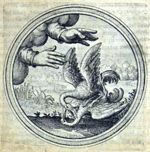
Iconclass: 54FF14:54F2 Disadvantage❧Victory 54FF14:45A3 Disadvantage❧victory ~ armed conflict 94B153 single combat between Eteocles and Polynices; they both die 95A(CADMUS)4 (story of) Cadmus - aggressive, unfriendly activities and relationships
Loci Communes: Infortunii sive exitii (Misfortune or ruin, Malheur ou ruine)
II viii 35 Pecuniae vir Money makes the man
Χρήματα ἀνὴρ, id est, Pecuniae, vir. Hoc est, tanti quisque fit, quantum possidet. Horatius: Nilsatis est, in quit, quiae tanti quantum habeas, fis. Zenodotus ex Pindaro citat. Extat autem in Isthmiis hymno secundo, his quidem verbis, Νῦν δ᾽ ἐφίητι τ᾽ ὠργείου φυλάξαι Ρἧμα τῆς ἀληθείας ἄγχιστα βαῖνον Χρήματα, χρήματ᾽ ἀνὴρ Ος φᾶκτεάνων θ᾽ ἅμα λειφθεὶς καὶ φίλων. id est, Nunc subit illud Argivi servare dictum, ad veritatem proxime accedens, Pecuniae pecuniae vir. Sic ait possessionibus simul destitutus & amicis. Interpres Pindari testatur Chrysippum autorem in proverbiis, qui scripserit esse Aristodemi Spartani. Idem interpres versum quem paulo ante recensuimus ex Alcaeo, refert hunc in modum, χρήματ᾽ ἀνήρ, πενιχρὸς δ᾽ οὐδεὶς πέλετ᾽ ἐσθλὸς, οὐδὲ τίμιος. Meminit apophthegmatis & Laert. in vita Thaletis, addens apud Lacedaemonios esse percelebre. Alcaei idem testantis haec verba citantur apud Suidam. Ως γὰρ δήποτ᾽ ἀριστόδαμόν φασιν ἐν σπάρτᾳ οὐκ ἀπάλαμνον λόγον εἰπειν, χρήματ᾽ ἀνὴρ, πενὶχρὸς δ᾽ οὐδέποτ᾽ ἐσθλὸς. id est, Sic enim olim aiunt Aristodamum apud Spartanos verbum non inscitum dixisse, pecuniae vir, pauper autem nunquam probus. Quidam ad septem illos sophos referre malunt. Ad hanc sententiam pertinent illi versus è comoedia quapiam, Τ᾽ ἀργύριον ἐστιν αἷμα καὶ ψυχὴ βροτοῖς. Οστις δὲ μὴ ἔχει τοῦτο μηδὲ κτήσατο Οὗτος μετὰ ζώντῶν τεθνηκὼς περιπατέει. id est, Argentum & anima & sanguis est mortalibus. Hoc qui caret, nec sibi paravit sedulo, Vivos hic inter mortuus circumambulat. Secundus versus Graecis constabit, si tollas δὲ aut si legas μἤχει pro μὴ ἔχει. Tertius constabit si pro τεθνηκὼς legas, τεθναώς. Celebratur & hic senarius, non alienus ab hac sententia: Βίος βίου δεόμενος οὐκ ἔστιν βίος. id est: Vita hand vocanda est vita victus indiga. Proinde quemadmodum apud Graecos βίος, itidem apud Latinos vita significat, & vitam morti contrariam, & facultates quibus vitam sustinemus.
[greek], Money makes the man. In other words, a man's worth is measured by his possessions. As Horace says, 'Enough? There's no such thing. What you possess / Fixes your value.' Zenodotus quotes this from Pindar. It is to be found in the Isthmians, in the second hymn, in these words: 'But now she tells me to observe the Argive's words, which come so close to the truth: 'Tis money, money makes the man. So said he when he was bereft alike of property and friends.' The scholiast on Pindar gives Chrysippus as the authority in his Book of Proverbs, where the speaker is said to have been Aristodemus of Sparta. The same scholiast quotes the line I have just recorded as from Alcaeus, in the form 'Money makes the man, and no one poor is ever brave or honourable.' The saying is also mentioned by Laertius in his life of Thales, and he adds that it was very popular in Sparta. These words from Alcaeus to the same effect are cited in Suidas: 'For so runs the word not without weight, once uttered in Sparta by Aristodemus, 'Tis money makes the man, and no one poor is ever brave.' Some would rather trace it back to the famous Seven Sages. To this school of thought belong those lines from some comedy or other: Money's the blood, the life and soul of mortals; He who no money has, nor ever had, Flits to and fro a corpse midst living men. (The second line will hold in Greek if you delete [greek] or read [greek] for [greek]; the third, if for [greek] you read [greek]. There is also a well-known iambic line, not unrelated to the same idea: life without livelihood's no life at all.' We must remember too that vita in Latin, like bios in Greek, means both life as opposed to death and the resources by which we sustain life.
II viii 36 Dives factus iam desiit gaudere lente Rich now, he has ceased to enjoy lentils
Επειτα πλουτῶν οὐκ ἔθ᾽ ἥδεται φακῶν. id est, Lenticula diviti placere desiit. Lens legumen pauperum, ac tenuium cibus est: Quae fastiditur, simulatque lautior fortuna contigit. Unde proverbium in eos, quibus ad uberiorem conditionem evectis, fastidio sunt ea, quae prius inopes, boni consulebant. Sumptum est adagium ex Aristophanis Pluto. Dicitur enim illic in adolescentem, qui quum pauper haberec consuetudinem cum anu, nactus divitias, coepit illam fastidire. Non dissimile illi, quod alibi recensuimus, ἄλλος βίος, ἄλλη δίαιτα.
[greek], Now that he's rich, he's lost his love of lentils. Lentils are a kind of vegetable eaten by the poor and lowly, which is despised as soon as a higher standard of living comes their way. Hence the proverb is applied to people who have risen into a more luxurious way of life, and have no further use for things they were thankful for when they were poor. The adage comes from the Plutus of Aristophanes, for it is applied there to a young man who in his days of poverty kept an ageing mistress, but had now achieved wealth and begun to tire of her. Not unlike one I have listed elsewhere: Change your life and change your style.
Facsimile:
Iconclass: 25G2111(LENTIL) seed (LENTIL) 46A166 parvenu, 'nouveau riche', upstart 54AA43 Intemperance, Immoderation 57AA8 Ingratitude; 'Ingratitudine' (Ripa)
Loci Communes: Proficientium in melius (Improving for the better, Progresser vers le mieux)
II viii 37 Calvum vellis You pluck the hair from a bald man's head
Φαλακρὸν τίλλεις, id est, Calvum vellis. Ubi inanem operam sumit, aut ubi quis auferre conatur, quo vacat is, a quo petitur. Veluti si quis a paupere conetur extundere pecuniam, ab indocto literaturam. Similimum est illi Plautino: Aquam è pumice postulas. Rursum illi, Nudo vestimenta detrahere. Quin hodie quoque vulgus ubi significat nihile esse quod adimatur, volam manus ostendens, iubet inde velli quippiam, quod ea corporis pars nemini non sit calva.
[greek], You pluck the hair from a bald man's head. When someone undertakes a futile task, or attempts to relieve a man of something which his victim does not possess; if, for instance, one were to try to extort money from a penniless man or a learned note from an ignoramus. It is very like that thing in Plautus 'You ask water from a stone' or again 'To drag the clothes off a naked man.' Even nowadays, when the common people wish to convey that there is nothing to be had, they show one the palm of one hand and tell one to pluck the hair from it, because that part of the body is invariably hairless.
Facsimile: 
Iconclass: 31A532 hair-cutting 31A5339 baldness 51CC19 No Result, Lack of Result, Inefficacy, Futility
Loci Communes: Inanis opera (Vain effort, Effort vain)
II viii 38 Somnus absit ab oculis Be sleep far from your eyes
Υπνος δ᾽ ἀπέστω γλυκύθυκος ὀμμάτων. id est, Oculis abesto leniens animum sopor. Ubi quis rem aggreditur, quae summam diligentiam, curamque desideret. Quod genus, si quis philosophiae capessat studium. Sumptus est autem hic senarius ex Aristophanis Nebulis, apud quem dicitur sub persona Socratis adhortantis Strepsiadem, ut philosophiae daturus operam, omnia tum faciat, tum patiatur.
[greek], Be sweet caressing sleep far from your eyes. When someone tackles a task that calls for the highest diligence and care; an example would be, to take up the study of philosophy. This iambic line comes from the Clouds of Aristophanes, where it is put in the mouth of Socrates; he is warning Strepsiades that if he proposes to devote himself to philosophy, he must be ready both to do and to suffer everything.
II viii 39 Phoci convivium Phocus' dinner-party
Φώκου ἔρανος, id est, Phoci pramium, sive convivium. Dictitari suetum, ubi quis suo malo convivas acciperer. Tametsi nihil vetat, quo minus longius etiam traducatur: nempe ad quosvis, qui laeduntur ab iis, de quibus benemeriti fuerint. Aiunt Phoco cuipiam filiam fuisse iam nuptiis maturam. ls procos, nam erant complures, convocare solitus praemia statuebat, & conditionibus subinde novis propositis nuptias prorogabat. Quamobrem indignati iuvenes Phocum in convivio trucidarunt. Autor Zenodotus. Etiam si Plutarch. in Amatoriis narrationibus fabulam hac diverse narrat. Eustathius in primum Odysseae, treis conviviorum species fecit. εἰλαπίνην, quod ad splendorem ac magnificentiam sit apparatum. γάμον, quod ipsum etiam sumptuosius esse consuevit. ἔρανον, ad quod plurimi conveniunt, sed suo quisque cibo, sumptuque. Ea convivandi ratio praecipue probatur Hesiodo, propterea quod cum plurimum habeat iucunditatis, minimum habeat sumptus. Nam temperantius & editur & bibitur, ubi quisque de suo edit ac bibit. Hesiodi carmen est huiusmodi, Αν κοινοῦ πλείστη τε χάρις δαπάνη τ᾽ ὀλιγίστη. Porrò qui splendidiores affectarent videri, ii etiam ἔρανον tum de suo, tum lautius exhibebant. Homerus has treis conviviorum formas simul complectitur: Τίπτε δέ σε χρεὼ, Εἰλαπίν᾽ ἠέ γάμος; ἐπεί οὐκ ἐρανος τά δε γ᾽ ἐστίν.
[greek], Phocus' fee or dinner-party, was customarily used when someone entertained guests and suffered for it. Though nothing prevents our giving the words a more far-fetched application, to any people who are injured by those to whom they have done a service. The story is that a certain Phocus had a daughter of marriageable age. His custom was to entertain her suitors, who were numerous, and for this he fixed a fee; then postponed the marriage by imposing from time to time new conditions of entry. This infuriated the young men, and they killed Phocus at the dinner-table. Zenodotus is the authority; though Plutarch in his 'Love Stories' tells this story differently. Eustathius on the first book of the Odyssey distinguishes three types of dinner-party. Eilapine, the banquet, is aimed at splendour and magnificence; gamos, the wedding-feast, which is normally an even more extravagant affair; and eranos, the collective feast, attended by many guests who provide their own food and expenses. This kind of party is particularly well thought of by Hesiod, as involving the maximum of pleasure and the minimum of expense; for men show greater restraint in both eating and drinking when each person pays for his own food and drink. Hesiod's line runs as follows: 'Sharing most pleasure brings and least expense.' And so those who wished to make an impression of greater splendour used to give an eranos at their own expense and on a grand scale. Homer joins these three types of feast together 'What do you want? A banquet or a marriage-feast? For this is surely no collective feast.'
Facsimile:
Iconclass: 33C331 sifting out the candidates 41C51 banquet of elegant company 54FF11 Adversity, Misfortune, Bad Luck; 'Fortuna infelice', 'Infortunio' (Ripa)
Loci Communes: Malum accersitum aut retortum (Evil brought upon oneself or turned back, Mal attiré ou retourné)
II viii 40 Antiquior quam chaos et Saturnia tempora Older than chaos and the age of Saturn
Ξάους ἀρχαίοτερος. i. Antiquior quàm chaos. De re nimium prisca & obsoleta. lbycus, ποτᾶται δ᾽ ἐν ἀλλοτρίῳ χάει. i. Volat in alieno chao. Ac rursum, ὁ δὲ φλυαρεῖ, καῖ μάτην ἡμῶν λῆρον καταχεῖ τοῦ χάους ἀρχαιότερον, καὶ κρονίων ἀπόζοντα. i. Hic autem nugatur, ac temere nugas in nos infundit antiquiores quàm chaos, ac Saturni tempora redolentes. Alludit adagium ad chaos, ad quod poetae deorum ac rerum omnium originem referunt. Ovidius opificium mundi hinc auspicatur, quemadmodum & Hebraei.
[greek], Older than chaos, of something excessively ancient and outdated. Ibycus: 'Flying in some foreign chaos,' and again 'But on he rambles, vainly swamping us with nonsense older than chaos and reeking of the age of Saturn.' The adage alludes to Chaos, to which the poets take back the origin of the gods and of all things. Ovid gives this as the beginning of the creation of the world, as also did the Hebrews.
Facsimile:
Iconclass: 51FF51 Oldness 91A14(CHAOS) other primeval deities: Chaos 91B111 (story of) Saturn (Cronus)
Loci Communes: Ingrata ob vetustatem (Unpleasant because of age, Déplaisant à cause de l'ancienneté)
II viii 41 Tanquam Argivum clypeum abstulerit, ita gloriatur He gives himself such airs, he might have stolen the shield from Argos
Ως τὴν ἐν ἄργει ἀσπίδα καθελὼν σεμνύνεται. id est, Superbit tanquam Argivum clypeum detraxerit. In fastuosos, & magnificentius sese gerentes dicebatur. Aiunt apud Aigivos sacrum quendam esse clypeum, clavis affixum, ut facile detrahi non possit. Alii dicunt, apud eos ordinem, ac delectum iuvenum viribus antecellentium, ἀσπίδα, id est, clypeum appellari. Autor Zenodotus.
'[greek], He gives himself such airs, he might have taken down the shield in Argos, was said of pompous people and those who made a great show. The story is that in Argos there was a sacred shield, fastened with nails so that it could not easily be taken down. Others say there was a select band of young men of outstanding prowess, called the Shield. Zenodotus is the authority.
Facsimile:
Iconclass: 44G544 theft 45C19(SHIELD) protective weapons: shield 57AA645 Boast; 'Iattanza' (Ripa) 61E(ARGOS) names of cities and villages (ARGOS)
Loci Communes: Arrogantia jactantiaque (Arrogance and boastfulness, Arrogance et vantardise)
II viii 42 Tanquam conchylium discerpere To tear in pieces like a shell-fish
Ωσπερ κογχύλων διελεῖν, id est, Tanquam concham dilacerare. De imbecillis & viribus longe inferioribus dicebatur. Nam illisae solo rumpuntur conchae quo cibus eximatur, aut inciso nervo quo se contrahunt ac diducunt, aperiuntur. Refertur apud Suidam.
[greek], To break in pieces like a shell, was used of weak subjects, far inferior in strength; for shell-fish are dashed on the ground to break them so that the flesh can be extracted to be eaten, or they are opened by cutting the sinew by which they close and open their shells. Recorded by Suidas.
Facsimile:
Iconclass: 25F716 crustaceans 25F72 molluscs 41C681(SHELLFISH) seafood (SHELLFISH) 54AA72 Vulnerability
Loci Communes: Contemptus et vilitatis (Contempt and worthlessness, Mépris et bassesse)
II viii 43 Mutus magis quam scapha As dumb as a boat
Συστομώτερος σκάφης, id est, Magis elinguis, quàm scapha. De iis dici consuevit, qui propter humilitatem conditionis apud praestantiores non audent hiscere. Natum hinc aiunt, quod olim inquilini, &hospites alienae Reip. ludis popularibus, in pompa incedebant, navim gestantes: unde quoties hospitem, non civem significabant, σκάφην ἤ σκαφηφόρον appellare consueverunt. proinde vulgo sic minitabantur, ποιήσω σὲ συστομώερον σκάφης, id est, Reddam tibi os occlusius scapha. Etenim iis qui in Rep. vivunt non sua, multa sunt mussitanda. Nam uti non convenit in aliena civitate curiosum esse, ita nec tutum est liberioris esse linguae. Huius interpretamenti Suidas autorem citat Theophrastum in opere De legibus. Equidem in plerisque codicibus, συντομώτερος scriptum reperimus, non συστομώτερος. Quae lectio si cui magis arridebit, non reluctabor, nempe ut metu contractum & humilem accipias.
[greek], As tongue-tied as a dugout boat, was used customarily of those who, being of low degree, dare not say a word in the presence of their betters. It is said to derive from the fact that in old days resident aliens and foreigners belonging to another state went in procession at the public games, carrying a boat; so that, whenever they wished to convey that someone was a stranger and no native, they were accustomed to call him a boat or a boat-carrier. And so it was a common form of threat to say 'I'll make you as dumb as a boat,' for those who live in a country which is not their own must keep their mouths shut on many topics. It does not pay in a foreign country to ask too many questions, and equally it is not safe to use unguarded language. For this interpretation Suidas cites the authority of Theophrastus in his book On the Laws. For my part, in most copies I find syntomôteros rather than systomôteros, and if anyone prefers that reading, I shall have no objection, provided we understand this as 'pinched by fear and humiliated.'
Facsimile: 
Iconclass: 31B62359 being silent 44C13 immigration 51EE11 Restriction, Limitation 52DD3 Taciturnity; 'Secretezza', 'Secretezza overo Taciturnità' (Ripa)
Loci Communes: Taciturnitas illaudata (Unpraised silence, Silence non loué)
II viii 44 Nudus tanquam ex matre Naked as he came from his mother
Γυμνὸς ὡς ἐκ μητρὸς, id est, Nudus ut ex matre. Proverbialis hyperbole de vehementer paupere. Nudissimi enim nascimur, ac ne pilis quidem tecti, nedum vestibus: quod non item in caeteris animantibus accidit. Hoc dictum & hodie vulgo nostrati est in ore. Tam nudus, quàm natus erat. Huic simile quod alibi referetur, Tanquam è naufragio.
[greek], Naked as he came from his mother. A proverbial exaggeration for someone in great poverty. For we are born utterly naked, not covered even with hair, let alone clothes, and of no other living creature is this true. This saying lives even in our own day on the lips of common folk in my own country: As bare as a new-born babe. It resembles one that will be referred to elsewhere: Like a man shipwrecked.
II viii 45 Est Pylus ante Pylum Pylos there is before Pylos
Plutarchus in libello, cui titulus, περὶ τοῦ μὴ δεῖν δανείζεσθαι, testatur hunc versum apud Messenios proverbio fuisse celebratum, Εστι Πύλος πρὸ πύλοιο, πύλος γὲ μὲν ἐστι καὶ ἄλλος. id est, Est Pylus ante pylum, siquidem est Pylus altera sanê. Dictum apparet, ubi quid alteri praefertur velut antiquius & praestantius. Aut ubi aliquis iactat sese, quasi vel solus sit, vel summus, cum reperiantur & alii, qui possint cum eo decertare. Pylus enim Messeniorum civitas, Nestore nobilis, ut affirmant quidam. Hoc autem carmen Plutarchus hoc pacto commutavit. Εστι τόκος πρὸ τόκοιο, τόκος γὲ μὲν ἐστι καὶ ἄλλος. id est, Usura usura prior, usura altera sanè est. In eos accommodari potest, quibus alia usura ex alia nascitur. Unde natum sit adagium, Eustathius interpretans Homeri Boeotiam indicavit. Scribit enim iuxta eos, qui de populis conscripserunt, treis fuisse Pylos. Unam Messeniae, alteram Triphyliae, tertiam Arcadiae. Triphyliacam obtinuisse Nestorem. Idem geographum testem adducit, Strabonem opinamur, qui treis item Pylos constituerit in Peloponeso. Tractat autem hac de re Strabo lib. Geographiae viii. demonstrans fuisse multas huius nominis urbes, quarum una quaeque sibi vindicaverit Nestorem, ob viri celebritatem. Quanquam idem post autumat Nestoris patriam fuisse, ex utraque parte Alphei. Allusit ad adagium Aristophanes in Equitibus, Αλλὰ τόδε φράζευ, πρὸ πύλου πύλον, ἥν σοι ἔφραζεν, Εστι πύλος πρὸ πύλοιο. τί τοῦτο λέγει πρὸ πύλοιο; id est. Hoc age dic, Pylus ante Pylum est, quam tu mthi narras, Est Pylus ante Pylum. sibi quid vult ante Pylum istuc? Interpres adscribit versiculum, quem paulo ante citavimus è Plutarcho, proditum oraculo fuisse.
Plutarch in the essay entitled 'That we ought not to borrow' tells us that in Messene there was a line current as a proverb: 'Pylos there is before Pylos, and Pylos a third there is also.' Clearly this was used when of two things one is selected as more highly valued and more distinguished, or when someone is highly self-satisfied as the only man or the best man in his class, though others may be found who can challenge his supremacy. Pylos is a city in Messenia, rendered famous (as some affirm) by Nestor. This line was altered by Plutarch to run as follows: 'Interest there is before interest, and interest a third there is also.' Can be adapted for use against those who face a second loan at high interest arising out of the first. The source of the adage is indicated by Eustathius in his commentary on the Boeotian book of Homer, for he says that according to writers on topography there were three places called Pylos, one in Messenia, the second in Triphylia and the third in Arcadia, and that it was the Triphylian Pylos that was held by Nestor. He also cites the evidence of a geographer, whom I take to be Strabo, who also puts three places of this name in the Peloponnese. Strabo treats of this subject in the eighth book of his Geography, and shows that there were many cities so called, each of which laid claim to Nestor because of his great celebrity. Though Strabo later avers that Nestor's home-country lay on both sides of the Alpheus. Aristophanes alludes to the adage in the Knights: 'Expound this too, this Pylos before Pylos of which he spoke, "Pylos there is before Pylos." - "Before Pylos" - what can he mean by that?' The scholiast adds that the half-line I quoted above from Plutarch was uttered by an oracle.
Facsimile:
Iconclass: 46B4711 interest (~ commerce) 55CC3 Borrowing, Hiring 56D31 Self-confidence 61E(PYLOS) names of cities and villages (PYLOS)
Loci Communes: Malum conduplicatum aut renovatum (Evil doubled or renewed, Mal redoublé ou renouvelé); Usura (Interest, usury, Usure)
II viii 46 Iecit Achilles duas tesseras et quatuor Achilles has thrown two threes and a four
Βέβληκ᾽ ἀχιλλεὺς δύο κύβω καὶ τέσσαρα. id est, Duas Achilles, quatuorque tesseras Iecit. Hunc versum Suidas ex Euripide citat. Quid autem sibi velit adagium, nullus explicat, Nisi quod coniectare licet dictum fuisse de iis, qui omni re vincerent, propterea quod is tesserarum iactus felix esset. Interpres Aristophanis in Ranis Aristarchum citat, qui scripserit hunc senarium Euripidis nomine circumferri solitum, sed falso, cum sit ἀδέσποτος. Apud Aristophanem usurpat Bacchus in Aeschylum, victorem Euripidis, unde apparet in faustis acclamationibus huius esse usum proverbii.
[greek], Two dice and four dice hath Achilles thrown. This line is cited by Suidas from Euripides; but the meaning of the adage is explained by no one, except that we may guess it was used of those who always win, because this was a lucky throw of the dice. The scholiast on Aristophanes' Frogs cites Aristarchus for the view that this iambic line commonly circulated under the name of Euripides, but wrongly, since it is anonymous. In Aristophanes Bacchus applies it to Aeschylus, who has just beaten Euripides; and this makes it look as though this proverb could be used in congratulating a winner.
Facsimile:
Iconclass: 43C552 dice 49D11(3) numerals: 3 49D11(4) numerals: 4 54F12 Luck, Fortune, Lot; 'Fato', 'Fortuna', 'Fortuna aurea', 'Fortuna buona', 'Fortuna pacifica overo clemente', 'Sorte' (Ripa) 95A(ACHILLES) (story of) Achilles
Loci Communes: Bonae fortunae, copiae, felicitatis aut ominis (Of good fortune, abundance, happiness, or omen, Bonne fortune, abondance, bonheur ou présage)
II viii 47 E tardigrades asinis equus prodiit The plodding donkeys have produced a horse
Εκ βραδυσκέλων ὄνων ἵππος ὤρουσεν. id est, E tardigradis asinis equus emersit. Cum clarus evadit quispiam obscuro genere natus, aut quoties ab indocto praeceptore proficiscitur discipulus eruditus. Potest & per Ironiam proferri, & per negationem, ut Nunquam ex asinis nascetur equus. Et, En tibi ex asinis equum. id est, ex infimis parentibus arrogantem, & ferocem. Huic contrarium est quod alibi retulimus, Heroum filiae noxae, quum ex egregiis viris prognati, non repondet maiorum virtutibus, quemadmodum Socrates apud Platonem in Alcibiade priore, docet ambos Periclis filios Paralum & Xantippum fuisse stupidos, Cliniam evasisse furiosum. Denique nullum illius opera factum sapientem, quum Zenonis consuetudine multi sapientes evaserint. Idem tractat in Menone, commemorans et Aristidem, qui filium habuit Lysimachum nullius rei: praeterea Thucydidem, cui duo fuerint filii, Milesias & Stephanus. Neuter respondit virtuti paternae. His addi poterat M. Tullius, qui filium reliquit illaudatum & à patriis virtutibus plurimum degenerantem.
'[greek], From plodding donkeys forth has leapt a horse. When some man achieves distinction who was of obscure birth, or a scholarly pupil is turned out by an ignorant teacher. It can also be used by way of irony and in the negative: for instance, 'A horse will never be born from donkeys' or 'There's a horse for you, sprung from the donkeys,' when some proud bold man is born of lowly parents. The opposite of this is one I have recorded elsewhere, Great men have trouble from their children, when the offspring of eminent fathers do not live up to the virtues of their forebears. Thus Socrates in Plato's First Alcibiades shows that both the sons of Pericles, Paralus and Xanthippus, were blockheads, and Clinias went mad; in fact that no one ended up wise as a result of his efforts, while many wise men were produced by associating with Zeno. He treats of the same subject in the Meno, where he also recalls the example of Aristides, who had a worthless son called Lysimachus, and of Thucydides, who had two sons, Melesias and Stephanus, neither of whom was as good a man as his father. To these we might add Cicero, who left a son of no reputation, who fell very far short of his father's virtues.
Facsimile:
Iconclass: 42G1 family lineage, pedigree, genealogical tree or table 46C13141(+741) horse (+ birth of an animal) 46C13142(+72) ass, donkey (+ sex and age of animals; propagation of animals) 54F Fortune and Misfortune
Collectanea (1500): 419
II viii 48 Epeo timidior As great a coward as Epeus
Επειοῦ δειλότερος. i. Epeo timidior. De magnopere pavido dicebatur. Ab Epeo quopiam dictum, notae timiditatis homine. Datum est hoc cognominis Cratino comico, per allusionem fortassis, quod cum Oenoidis tribus princeps esset, in eo munere timidius se gereret.
[greek], As great a coward as Epeus, was used of any very timorous person. Taken from a man called Epeus who was a notorious coward. This allusive nickname was given to Cratinus the comic poet, perhaps because he showed himself so poor-spirited in office, when he was head of the Oeneid tribe.
II viii 49 Ephesiae litterae Ephesian letters
Εφέσια γράμματα. i. Ephesiae literae. Dictum videtur de iis, qui mira felicitate, tanquam divina virgula, quicquid optarent, assequerentur. Aiunt enim Ephesiis notulas quasdam, et voces magicas fuisse, quibus utentes in omni negocio victores evaderent. Autor Diogenianus. Eustathius in Odysseae Φ. tradit his literis usum Croesum in rogo. Fuisse autem verba quaedam, obscura, aenigmatibus similima, neutiquam cohaerentia, descripta in pedibus, zona, & corona Dianae. Suidas addit huiusmodi fabulam, In Olympiis Milesium quempiam cum Ephesio palaestra commissum, nihil potuisse in conflictu, quod is Ephesius in talo Ephesias haberet literas. Quod simul ac animadversum esset, ademptis literis, Ephesium qui iam triginta defatigarat, succubuisse. Hesychius indicat fuisse priscas quasdam voces pro sacris habitas, quibus impostores deinde multas addiderint. Priscas putat has fuisse, ἄσκι, quod interpretatur tenebras, κατάσκι, lumen ἂίξ, ipse, δαμναμενεὺς sol, αἴσιον, verum. Meminit harum & Anaxilas apud Athenaeum lib. xii. Commemoratis enim philosophi cuiusdam deliciis ait, καὶ πρὸς τούτοὶς ἐν σκυταρίοις ῥαπτοῖσι φορῶν ἐφεσήϊα γράμματα καλὰ. id est, Ad haec, in consutilibus pelliculis gestans Ephesias literas pulchras. Nec desunt hodie, qui huiusmodi confictis vocibus imponant stultis. Illud satis apparet librariorum incuria commissum, quod quum Hesychius inter magicas voces recenseat τέτραξ, non meminit tamen interpretans singulas.
'[greek], Ephesian letters, was used, it seems, of those astonishingly lucky people who secured whatever they wanted as though by some magic wand. They say that the Ephesians possessed certain magic characters and words, by the use of which they emerged successful in business of every kind. Our authority is Diogenianus. Eustathius on Odyssey 19 tells us that Croesus used these letters on his funeral pyre. They were, he says, certain obscure words very much like riddles, which made absolutely no continuous sense, and were inscribed on the feet, girdle, and crown of Diana. Suidas adds a story on the following lines: at the Olympic games a man from Miletus was matched in the boxing against an Ephesian, but could do nothing with him, because the Ephesian had Ephesian letters on his heel. As soon as he noticed this, he removed the letters, and the Ephesian, who had already worn out thirty opponents, collapsed. Hesychius says that there were certain ancient words which were held sacred, to which many more were added by later impostors. The only ones he thinks ancient were aski, which means 'darkness,' kataski light,' aix 'self,' damnameneus 'sun,' arson 'true.' These are also mentioned by Anaxilas in book 12 of Athenaeus: having spoken of the excesses of a certain philosopher, he adds 'And besides this, on little scraps of leather sewn together, wearing lovely Ephesian letters.' Nor is there a lack of people even in our own day who impose on their foolish victims by inventing words of this kind. One thing is clear enough: careless scribes are responsible for the fact that, though Hesychius lists tetrax among his magic words, he does not mention it when giving the individual explanations.
Facsimile: 
Iconclass: 13C2 magic mathematical figures; magic numbers, words, monograms 32B311(EPHESIANS) indigenous European peoples (EPHESIANS) 49L16 letter combinations such as letterword, anagram, letter square, monogram, etc. 54F12 Luck, Fortune, Lot; 'Fato', 'Fortuna', 'Fortuna aurea', 'Fortuna buona', 'Fortuna pacifica overo clemente', 'Sorte' (Ripa)
Loci Communes: Imposturae (Impostures, Impostures)
II viii 50 Eodem in ludo docti Taught in the same school
Eodem in ludo docti dicebantur, similibus vitiis laborantes, & improbitate pares. Hoc dictum adeo vulgo manet, ut nihil sit tritius. Terent. in Hecyra, In eodem omnes mihi videntur ludo doctae, ad malitiam. Solent enim fermè, qui communibus usi sunt praeceptoribus, ingenio, moribusque convenire. Quod autem Terentius dixit in mulieres, omneis inter ipsas similibus esse moribus, idem Graecus attestatur senarius, Γυνὴ γυναικὸς πώποτ᾽ οὐδὲν διαφέρει. id est, A femina nihil femina umquam discrepat. Innuit autem proverbium nullam inveniri bonam mulierem.
Men who suffered from similar faults and were equally untrustworthy were described as Taught in the same school. The saying retains its currency, and nothing is more hackneyed. Terence in the Hecyra These women seem to me all taught in the same school, to make mischief.' For it is a common experience that those who have had the same teachers are alike in personality and character. What Terence says of women, that their characters are all alike, is attested already by an iambic line in Greek: 'One woman never differs from another.' The suggestion of the proverb is that a good woman is never found.
Facsimile:
Iconclass: 49B21 going to school 51B2:57AA6141 Similarity, Likeness❧Untrustworthiness, Unreliability
Loci Communes: Similitudinis et congruentiae (Similarity and congruence, Similitude et convenance)
II viii 51 Tanquam in phiditiis Like a Spartan dinner
Ωσπερ ἐν φειδιτίοις. i. Veluti in phiditiis, ubi quid parcius, nimiumque frugaliter actum significabimus. Lacedaemonii publica loca habebant, in quibus cibum caperent. In his accipiebant hospites ac legatos suos, sed apparatu perparco. Unde & Graeca vox ducta videtur à φείδεσθαι. id est, parcendo. Quanquam sunt qui malunt φιδίτια dicta quasi φιλίτια, quod eiusmodi conviviis coiretur sodalitas. Utranque vocis etymologiam recenset Plutarchus in vita Lycurgi. In priore abiicitur ε, è diphthongo, in posteriore λ, vertitur in δ. Addit autem tertiam etymologiam, phiditia dicta quasi ἐδίτια, à sumendo cibo, quae Graeci praesertim Athenienses vocant συσσίτια, Cretenses ἄνδρια, quemadmodum ibidem indicat Plutarchus: hoc genus conviviorum Lycurgus instituit, ad excludendum luxum ac temulentiam. M. Tullius meminit Phiditiorum lib. Tusculanarum quaestionum v. Quid, inquit, victum Lacedaemoniorum in phiditiis, nónne videmus? Ubi cum tyrannus coenavisset Dionysius, negavit se iure illo nigro, quod coenae caput erat, delectatum: tum is qui illa coxerat, Minime mirum, inquit: condimenta enim defuerunt. Quae tandem, inquit ille? Labor in venatu, sudor, cursus ab Eurota, fames, sitis. His enim rebus Lacedaemoniorum epulae condiuntur. Quanquam haec fabula secus narratur apud Plutarchum in Coronide quam adiectam videmus apophthegmatis Laconicis, de Lycurgi institutis. Erant apud Lacedaemonios & aliae conviviorum species, quorum unum erat κοπὶς, quod certis ciborum generibus instruebatur, alterum αἴκλον aliquanto splendidius. Omnium frugalissimum erat, quod agebatur in phiditiis. Multa super his Athenaeus lib. iiii. si cui libebit cognoscere. Accommodari poterit & ad orationem, ut si quis neget se contentum simplici sermone, velut in Laconicis phiditiis accipiatur, sed desiderare splendoris aliquid, & quod appetentiam iritet illecebra.
[greek], Like a Spartan dinner. When we wish to convey that something has been done with excessive economy and too meanly. The Spartans had public places intended for the eating of meals. In these they entertained their guests and visiting envoys, but with a minimum of special preparation. Hence it looks as though the Greek word was derived from pheidesthai, to spare, though some prefer to take it as phiditia, representing philitia, because such dinners encouraged social ties. Both derivations of the word are given by Plutarch in his life of Lycurgus. The first of them supposes the loss of an e from the diphthong, in the second an / is turned into a d. He adds a third derivation, that phiditia represents editia, from the eating of meals, for which the normal Greek word, especially in Athens, is sussitia, and the Cretan word andreia, as Plutarch tells us in the same passage. This system of common dinners was instituted by Lycurgus in order to exclude luxury and drunkenness. Cicero mentions the phiditia in the fifth book of his Tusculan Questions. 'Why,' he says, 'have we not before us the Spartan way of life in their phiditia, their common meals? When Dionysius the tyrant had dined there, he said he had by no means enjoyed the famous black broth which was the principal dish; whereupon the man who had cooked it said "That is not surprising. The usual relishes were lacking." "And what are they?" asked Dionysius. "Hard work in the hunting-field, sweating, running by the Eurotas, hunger, thirst - these are the things that give the Spartans an appetite for their dinner.'" Though this tale is told differently by Plutarch in the appendix which we find added to his 'Sayings of Spartans,' which deals with the constitution of Lycurgus. There were other kinds of dinner-party too in Sparta. One of these was the kopis, at which particular sorts of food were served; another, rather more elaborate, was the aiklon; the most frugal of them all was the meal served in the phiditia. Athenaeus has much to say of these in his fourth book, should anyone wish to learn. It will be possible to adapt this to style as well; if a man were to say, for instance, that he is not content with very simple language, as if he were being entertained at a Spartan dinner, but feels the need of something more elevated, something capable of arousing appetite by more attractive qualities.
Facsimile:
Iconclass: 41C43 evening meal, dinner, supper 55CC1 Saving, Frugality, Parsimony; 'Parsimonia' (Ripa) 61E(SPARTA) names of cities and villages (SPARTA)
Loci Communes: Frugalitas (Frugality, Frugalité)
II viii 52 Equo senescenti minora cicela admove On ageing horses set a lighter brand
Ιππῳ γηράσκοντι τὰ μείον κείκελα ἐπίβαλλε. i. Equo senescenti minora cicela admove. Admonet adagium, ubi vires per aetatem fatiscunt, respirationem ac refocillationem quandam à laboribus dandam, & decrescente robore minuendos labores, augendam remissionem. Ductum aiunt ab equis militaribus, quibus senescentibus, levius τρισίππιον admovebant. Est autem τρισίππιον, ceu rotula quaedam, publica nota, quae igni candefacta, malis equorum imprimi consuevit. Zenodotus ostendit proverbium exstitisse apud Craterem comicum in Samiis. Videtur carmen heroicum, si tantum legas, κύκλ᾽ ἐπίβαλλε. Nam κείκελα nondum reperi apud ullum autorem, praeterquam apud Zenodotum. Trisippii meminit Hesychius. Videtur autem, κείκελον aliquid esse, non dissimile trisippio.
[greek], Apply the lighter brand to an ageing horse. The lesson of this adage is that, when a man's powers begin to fail through old age, he should be given some degree of rest and respite from his labours; as his strength decreases, so his load of work should be reduced and his leisure lengthened. Taken, they say, from cavalry-horses, to which a lighter trisippion was applied as they grew old. A trisippion was a sort of small wheel, a public branding-iron, which used to be heated in the fire and applied to a horse's jaws. Zenodotus shows that this proverb was found in Crates the comic poet, in his Samians. It looks like a hexameter line, provided that you read [greek] for [greek] I have not yet found in any ancient author except Zenodotus. The trisippion is mentioned by Hesychius, and the keikelon seems to have been something not unlike it.
Facsimile: 
Iconclass: 46C13141(+724) horse (+ very old animal) 51GG2 Lightness; 'Leggierezza' (Ripa) 57A75 Mercy, Compassion; 'Compassione', 'Misericordia' (Ripa)
Loci Communes: Modestia modusque (Modesty and moderation, Modestie et mesure)
II viii 53 Eretriensium rho The Eritrian rho
Ερετρίεων ῥῶ, id est, Eretriensium Rho. Ubi quis crebrius & asperius eam literam sonaret. Quo nomine nunc male audiunt apud Gallos Piccardi. Notantur item quibus Alcibiadis labdacismus impendio placebat. Ridetur Arrius à Catullo, quod Chommoda dicebat, si quando commoda vellet. Dicere, & hinsidias Arrius insidias. Ac tum mirifice credebat se esse locutum, Cum quantum poterat, dixerat hinsidias. Adagium refertur à Diogeniano. Meminit Plato in Cratylo, οἶσθα οὖν ὅτι ἐπι τὸ αὐτὸ ἡμεῖς μὲν φαμὲν σκληρότης, ἐρετριεῖς δὲ σκληροτήρ. id est, Scis quod nos pro eodem dicimus sclerotes, id est, durities, pro quo Eretrienses scleroter. Ex quo liquet Eretrienses adamasse hanc literam ρ, quam loco σ, supposuerint, quum contra Athenienses, eam verterint in σ, ut θαρσεῖν pro θαῤῥεῖν. Quoniam ea litera dicitur impetus ac vehementiae significationem habere, videtur & in homines praecipites ac violentos congruere proverbium.
'[greek], The Eretrian rho. Used when a man pronounced the letter r repeatedly and more harshly than is usual, a practice for which Picards are notorious in France today. Criticism is also brought against those who favoured Alcibiades' lisping /. Arrius is ridiculed by Catullus: 'Arrius used to say chommoda when he meant commoda, and hinsidias for insidias; yet never did he think he had spoken more perfectly than when he had said hinsidias to his heart's content.' The adage is recorded by Diogenianus. Plato mentions it in the Cratylus: 'You know how to give the same effect we say sclerotes (that is, hardness) for which the Eretrians say scleroter.' It is clear from this that the Eretrians loved this letter r, which they used in place of s; while the Athenians on the other hand turned r into s, as when they said tharsein for tharrein. Since this letter is said to carry a notion of force and vehemence, the proverb also seems appropriate to headstrong violent men.
Facsimile:
Iconclass: 49L13(ρ) Greek script (ρ) 51G4:22D Hardness❧sound 61Ε(ERETRIA)
Loci Communes: Rixosus (Quarrelsome, Querelleur)
II viii 54 Oestro percitus Smitten by an oestrus
Οἴστρῳ παραπληγεὶς. id est, Oestro percitus. id est, ingenti animi cupiditate commotus, ac velut attonitus. Oestrum enim insecti genus, horrendo strepitu, unde et nomen inditum apud Graecos. Nam Latini, asilum appellant. Hoc addito Iuno vaccam Io in furorem egit. Unde poetae divino correpti furore, oestro conciti dicuntur. Est apud Platonem, tametsi locus in praesentia non succurrit, opinor in Phaedro. Unde & οἰστροπλῆγος dictione composita, pro insano: οἰστρεῖν & οἰστρηλατεῖν, pro insanire.
[greek], Smitten by an oestrus - deeply stirred, that is, and almost astounded by some overwhelming desire. The oestrum is a sort of insect making a horrible noise, whence its name in Greek; in Latin they call it asylum. It was by adding this to Io when she was turned into a cow, that Juno drove her mad. Hence poets rapt by some heaven-sent madness are said to be struck by an oestrus. This comes in Plato, though the passage does not occur to me at the moment; in the Phaedrus, I think. Hence too the compound word oistroplêgos for frenzied, and oistrein and oistrêlatein for to be struck with madness.
Facsimile:
Iconclass: 25F711(HORSEFLY) insects (HORSEFLY) 52BB61 Infatuation
Loci Communes: Vehementia, languor (Vehemence, listlessness, Véhémence, langueur)
II viii 55 In magnis et voluisse sat est In great enterprises even to have shown the will is enough
In magnis & voluisse sat est. Tibulliana haec sententia nihil celebratius. Eam Angelus Politianus non inscite vertit Graece, Αρκεῖ δ᾽ ἐν μεγάλοις καὶ τὸ θέλημα μόνον. Apuleius Floridorum lib. iiii. Maiore scilicet voluntate, quam facultate. Eoque propensius fortasse laudandus est, quod omnibus bonis in rebus, conatus in laude, effectus in casu est. Item M. Varro apud Gellium lib. i. capite decimooctavo, In quo non modo Laelii ingenium non reprehendo, sed industriam laudo. Successum enim fortuna, experientiam laus sequitur. Convenit, ubi quis maiora viribus conatus, tametsi rei susceptae magnitudini non facit satis, tamen hoc ipso nomine laudem promeretur, quod rem pulcherrimam tentaverit.
An aphorism of Tibullus, among the most famous of its kind, which has been expertly turned into Greek by Angelo Poliziano. Apuleius in book four of the Florida: 'With more enthusiasm, to be sure, than skill; and he should therefore perhaps be praised the more readily, for in all good undertakings the effort is praiseworthy and the outcome at the mercy of chance.' Marcus Varro too, in Gellius, book one chapter 18: 'In which so far am I from criticizing Laelius' action that I praise his zeal. Success has fortune as her handmaid, but praise waits upon a bold attempt.' Suitable when someone attempts a task beyond his powers and, though he is unequal to the greatness of the undertaking, deserves praise precisely for this reason, that he has attempted some outstanding enterprise.
Facsimile:
De wille is te prijsen - In magnis et voluisse sat est: Pers, Bellerophon (Amsterdam, 1614), emblem 2
Iconclass: 53B41 Inclination; 'Inclinatione' (Ripa) 54D11 Attempt, Trial 57B1 Praise, Approbation, Approval; 'Lode' (Ripa)
Loci Communes: Conatus (Effort, endeavor, Effort)
II viii 56 In holmo cubabo I shall sleep in a hollow stone
Εν ὅλμῳ εὐνάσω. i. In holmo cubabo. Dicebatur ab iis, qui se quippiam divinatione cognitum ire minitabantur. Nam ὅλμον quidam vatem interpretantur. Alii tripodes Apollinis holmos appellatos fuisse. Tradit autem Aristophanes grammaticus, citante Zenodoto, eos qui holmis indormissent, repente divinandi spiritum concipere. Addit Apollinem ob id ἔνολμον cognominatum à Sophocle. Quanquam apud Hesychium ὅλμος pro mortario ponitur. Apud Athenaeum lib. xi. poculi genus est cornu adsimile, ut per iocum torqueri possit & in bibones.
'[greek], I shall sleep in a hollow stone, was used by those who threatened to discover something by divination. For some explain the Greek holmos as meaning a soothsayer; others say that the tripods of Apollo were so called. Aristophanes the grammarian, however, cited by Zenodotus, tells us that those who had slept on holmoi at once acquired a spirit of divination, and adds that Apollo was for this reason given the epithet enolmos, sitting on the tripod, by Sophocles. Though in Hesychius holmos is put for a mortar. In Athenaeus, book 11, holmos is a drinking-cup shaped like a horn, so that the proverb could also be given a far-fetched sense, as a humorous name for deep drinkers.
II viii 57 Eadem cera One and the same wax
Εν κηρίον. Idem favus, dicebantur, qui uno ore idem affirmarent, aut qui inter se conspirassent. Ductum à favorum cellulis inter se connexis. Sive quod cera tenax, sibique haerens. Sive quod olim in ceratis tabellis scribebant, unde et Horatius, Cera laudatur ea dem. sive quod olim imagines è cera fingebantur, varia quidem forma, nunc deorum, nunc regum, nunc plebeiorum, sed haec omnia erant cera. Refert Zenodotus. Non dissimile illi quod alio diximus loco, Idem pulvis, & Eadem farina.
[greek], One and the same wax, was applied to those who affirmed the same view with one voice, or had agreed secretly among themselves. Taken from the close connection between the cells of a honeycomb, or from the fact that wax is tenacious and sticks together, or because in old days they wrote on wax tablets, whence also Horace's The same wax wins him praise,' or because the Ancients made images out of wax in various shapes, sometimes of gods, sometimes of kings, sometimes of common people, but all of the same wax. Recorded by Zenodotus. Not unlike what I have spoken of in another place: One and the same dust, and Of the same meal.
Facsimile: 
Iconclass: 47I2421 honey-comb 47I2422 wax ~ bee-keeping 51B2 Similarity, Likeness
Loci Communes: Similitudinis et congruentiae (Similarity and congruence, Similitude et convenance)
II viii 58 In quinque iudicium genibus situm est It lies on the knees of five judges
Εν πέντε κριτῶν γούνασι κεῖται. i. In quinque situm genibus iudicum, id est, in alieno arbitrio res est posita. Nam antiquitus quinque iudicibus datum erat negocium, ut de comicorum fabulis pronunciarent, ut testis et apud Zenodotum Epicharmus. Quanquam & apud Platonem quinque iudicum fit mentio, cum aliàs, tum in libro de legibus undecimo, Εν πέντε δὲ τῶν νομοφυλάκων τοῖς νεωτάτοις εἶναι τὴν κρίσιν. i. Ut iudicium sit penes quinque natu minimos, ex nomophylacibus. Allusum est autem ad illud Homero frequens: Καὶ ταῦτα θεῶν ἐν γούνασι κεῖται. id est, In genibus sunt haec sita divûm. Cum significamus non esse nostrae facultatis praestare rei exitum, verum hunc superis & fortunae in manu esse. Pindarus in Olympiis, Νυν δ᾽ ἔλπομαι μὲν, ἐν θεῷ γε μὰν τέλος. id est, Nunc spes quidem mihi, at in deo sit us exitus.
'[greek], It lies on the knees of five judges, that is, the question is for others to decide. In ancient times there were five judges entrusted with the business of settling questions relating to the comic stage, as we know from Epicharmus, cited by Zenodotus. Though in Plato too five judges are mentioned in, among other places, book 11 of the Laws: 'Decision to rest with five of the legislators, who are the youngest.' There is an allusion to that phrase which often occurs in Homer: 'And this lies on the knees of the gods,' when we wish to convey that it is not within our power to ensure the outcome of something, but that this is in the hands of heaven or of fortune. Pindar too in the Olympians: 'And now I am full of hopes, but the outcome is in the hand of god.'
II viii 59 Emunctae naris. Muccosis naribus With nose well wiped. Thick in the head
Emunctae naris dicitur acri exactoque iudicio, quasi purgatis naribus, muccoque emunctis. Horatius de Lucilio, Emunctae naris, durus componere versus. Contra, Obesae naris dicuntur stupidiores. Idem in Odis, Nec firmo iuveni, neque naris obesae. Lucianus in Alexandro Pseudomante, Τοῖς δὲ ἰδιώταις καὶ κορύζης μεστοῖς τὴν ῥίνα τεράστιον. id est, Indoctis autem, & quibus nares oppletae mucco, prodigiosum. Idem in Philopseude, Εμοί γε, ἦν δ᾽ ἐγώ, εἰ μὴ πάνυ τὴν ῥίνα κορύζης μεστὸς εἴην. i. mihi sanè, nisi planè nare sim oppleta mucco. Huc allusit Plato libro de Rep. primo, ubi Thrasymachus Socrati stuporem obiiciens, optat illi nutricem, quae muccum è naribus exprimat, ὅτι σε ἔφη κορυζῶντα περιορᾷ, καὶ οὐκ ἀπομύττει, δεόμενον αὐτῆς. i. Quoniam, inquit, te muccosum negligit, nec emungit, cum ea tibi sit opus.
With nose well wiped is a phrase for keen and exquisite judgment, as though the nose were cleared, with all mucus wiped away. Horace, speaking of Lucilius, 'With nose well wiped, though harsh the verse he wrote.' A blunt nose, on the other hand, conveys a degree of stupidity: Horace again in the Odes, Though neither young and strong nor thick in the nose.' Lucian in Alexander the False Prophet: 'Uneducated people with noses full of mucus thought it prodigious.' Again in the Philopseudes: 'In my opinion, I said, unless my nose is quite blocked with mucus.' Plato alludes to this in the first book of the Republic, where Thrasymachus, who is accusing Socrates of stupidity, wishes he may have a nursemaid to blow his nose for him: 'Because,' he said, 'she leaves you there snivelling, and doesn't wipe your nose for you when you need her to.'
II viii 60 Fames et mora bilem in nasum conciunt Hunger and waiting fill the nose with bile
Sosia Plautinus in Amphitryone: Vetus adagium est, inquit, Fames & mora bilem in nasum conciunt. id est, latrante stomacho omnis mora bilem movet. Quod autem dixit, bilem in nasum conciunt, convenit cum illo quod ait Theocritus in Thyrside, Εν τί γε πικρὸς Καὶ οἱ ἀεὶ δριμεῖα χολὰ ποτὶ ῥινὶ κάθηται. id est, Est enim acerbus, Atque illi semper sedet in nare aspera bilis. Ducta est metaphora ab animantibus iram narium flatu significantibus. Unde fabula de tauris ignem spirantibus. Quin hominibus etiam nonnullis ex naribus indicium iracundiae. Unde & Corrugare nares dicuntur, quae offendunt. Horatius: Ne sordida mappa Corruget nares. Item Persius in quinta Satyra, Sed ira cadat naso, rugosaque sanna. Potest id trahi latius, nempe ad quemlibet vehementius aliquid cupientem, cui omnis mora quantumvis pusilla, longissima videtur, attestante Mimo, Etiam celeritas in desiderio mora est. Huc respicit & Horatianum illud: Ut nox longa quibus mentitur amica, diesque Longa videtur opus debentibus, ut piger annus Pupillis, quos dura premit custodia matrum.
Plautus' Sosia in the Amphitryo observes: 'It is an old saying that hunger and waiting fill the nose with bile/ or in other words, that when the stomach yelps for want of food, every delay rouses the passions. When he says it is the nose that is filled with bile, this agrees with what Theocritus says in Thyrsis: 'And he is quick of temper and bitter wrath sits ever on his nostril.' The image is derived from those creatures which show anger by inflating their nostrils, whence comes the myth of fire-breathing bulls. Some human beings too give tokens of passion by their nostrils, and thus things which cause disgust are said to wrinkle the nose. Horace: 'Lest a dirty napkin make you wrinkle your nose,' and Persius in his fifth satire: 'But drop that angry wrinkled snarl from your nostrils.' This can be given a wider application, if used of anyone who passionately desires a thing, and finds any delay however short intolerably long. The moral maxim bears this out: 'In longing, speed itself seems mere delay.' Those lines in Horace make the same point: 'Long is the night for those whose mistress tells them lies, and long the day for those who must work for others; slow runs the year for children not yet of age, oppressed by their mothers' severe and watchful eye.'
II viii 61 Generosior Sparta As spirited as Sparta
Ελευθερώτερος σπάρτης. i. Generosior Sparta. Dicebatur excellenti animo, minimeque timidus aut humilis. Spartanis enim olim iudoles aderat generosa, & ingenium omnis impatiens servitutis, ac velut imperio natum, unde nec moenibus urbem cingebant, legibus ita iubentibus, abunde munitam arbitrantes fortibus viris. Foedissimum autem existimabant quenquam è pugna redire, nisi victorem: id quod epigrammate quoque testatum est. Nec tyrannidem in suam Remp. admittebant, sed aequa libertate parebant legibus. Denique nihil humilioris operae exercebant, sed agriculturam & artes sedentarias per Helotas, id erat servorum genus, peragebant.
'[greek], As spirited as Sparta, was applied to a man of a good courage, with no trace of cowardice or submissiveness about him; for in the old days the typical Spartan had the spirit of a man of free birth, and a character intolerant of all servitude and born, as it were, to command. That was why they did not surround their city with walls, which was forbidden by their law; they thought there was no bulwark like brave men. It seemed to them utter disgrace for a man to return from a battle unless he had won the day, a fact attested by an inscription. Nor did they allow despotic government into their constitution; all men lived equal under the law. What is more, they practised no demeaning occupations, and left agriculture and the sedentary trades to be undertaken by the helots, who were a kind of slaves.
Facsimile: 
Iconclass: 54A8 Courage, Bravery, Valiance, Manliness; 'Ardire magnanimo et generoso', 'Gagliardezza', 'Valore', 'Virtù heroica', 'Virtù dell'animo e del corpo' (Ripa) 61E(SPARTA) names of cities and villages (SPARTA)
Collectanea (1500): 356
Loci Communes: Nobilitas / obscuritas (Nobility / obscurity, Noblesse / obscurité)
II viii 62 Locrensis bos A Locrian ox
Λοκρικὸς βοῦς. id est, Locrensis bos. De re vili, aut de munere leviculo dici potest. Quum aliquando Locrenses publicum sacrum facturi bovem desiderarent, composito ex minutis lignis bovis simulacro, diis rem divinam fecerunt. Atque hinc vulgus adagionem arripuit.
[greek], A Locrian ox, can be used of anything cheap or any trifling gift. One day the people of Locri, when proposing to perform a sacrifice, were unable to supply the sacrificial ox, so they constructed a model of small pieces of wood and made their offering to the gods with that. Hence public usage seized upon it as an adage.
Facsimile:
Iconclass: 32B311(LOCRIANS) indigenous European peoples (LOCRIANS) 47I21111:48C24(+643) ox❧piece of sculpture, reproduction of a piece of sculpture (+ wood, e.g.: panel ~ arts) 54BB6:12E212 Worthlessness❧sacrifice ~ Greek religion
Loci Communes: Contemptus et vilitatis (Contempt and worthlessness, Mépris et bassesse)
II viii 63 Ficulnus gladius A figwood sword
Συκίνη μάχαιρα. id est, Ficulnus gladius. De frivola causa dici potest, quaeque minimo negocio queat refelli. Dictus est autem, ficulnus gladius sycophanta, quod idem & mollis sit, & calumniator. Meminit & Hesychius.
[greek], A figwood sword, can be applied to any frivolous argument, which may be refuted with the minimum of trouble. The phrase figwood sword is used of an informer, because he is a teaser and full of false accusations. Mentioned also by Hesychius.
Facsimile:
Iconclass: 25G3(FIG-TREE) trees: fig-tree 45C13(SWORD) hacking and thrusting weapons: sword 48C33(+643) work of applied art (+ wood, e.g.: panel ~ arts) 52BB53 Nonsense, Absurdity
Loci Communes: Contemptus et vilitatis (Contempt and worthlessness, Mépris et bassesse)
II viii 64 Ficum Mercurio A fig to Mercury
Σῦκον ἔφ᾽ ἑρμῃ, id est, Ficum Mercurio. De prompto, & quibuslibet exposito beneficio dicebatur. Nam antiquitus mos erat, sicubi ficus repertus fuisset, eum veluti Mercurio sacrum suspendere. Liberum autem erat tollere ficum Mercurialem, cuicumque libitum fuisset, vel quod is deus furibus favere creditus est, vel iuxta paroemiam illam, κοινὸς ἑρμῆς, Communis Mercurius. Huc opinor allusisse Persium cum ait: Inque luto fixum possis transcendere nummum, Nec gluto sorbere salivam Mercurialem. ut indicatum est alibi.
[greek], A fig to Mercury, was said of any advantage which lay ready to hand and was exposed to the first comer. It was the custom in Antiquity, if a fig had been found, to hang it up as if it were an offering to Mercury. It was however free for anyone who chose to take a 'Mercury-fig' either because he was thought to be the patron deity of thieves, or because there was a proverb Mercury in common, that is, Share your luck. It was to this, I take it, that Persius alluded when he wrote: 'Can you pass by a coin stuck in the mud, and not swallow hard as the god of luck makes your mouth water?' as is suggested elsewhere.
Facsimile:
Iconclass: 25G21(FIG) fruits: fig 41C111 giving food 92B57:44G54 specific aspects, allegorical aspects of Mercury; Mercury as patron❧thief
Loci Communes: Contemptus et vilitatis (Contempt and worthlessness, Mépris et bassesse)
II viii 65 Ut fici oculis incumbunt As warts grow on the eye
Ωσπερ᾽ τὰ σῦκ᾽ ἐπὶ τοὺς ὀφθαλμοὺς ἔφυ, id est, Quemadmodum fici oculis innati. De iis dicebatur, qui pertinaciter urgerent, premerentque negocium aliquod. Sumpta similitudine à ficis, hoc est, vitio quod oculis adnascitur, nec facile potest avelli oculo incolumi. Aristophanes in Ranis: Ωσπερ᾽ τὰ σῦκ᾽ ἐπὶ τοῖσιν ὀφθαλμοῖς ἔφυ. id est, Ut ficus oculis imminens, sic ille erat. Accommodabitur haudquaquam inepte & in hos qui cum graves sint & intolerabiles, tamen avelli non queunt nisi magno malo. Quod genus utinam nulli essent, aut unquam existeret principes, & principum optimates, qui cum avaricia sint inexplebiles, libidine corruptissimi, crudelitate perniciosissimi, tyranide immanes, verissimi reip. hostes, ac praedones, in publicam perniciem, non solum armis & opibus instructi, verum etiam novis artibus, quas nec Dionysius unquam, nec Phalaris reperit, tamen sic adhaerent, sic imminent, sic affixi sunt populo, ut nec ferri possint, nec avelli. Usque adeo nullus est senatus, nullus magistratus, nulla religio, nulla reipub. pars, in quam actis radicibus illi non penetrarint, ceu pestis per omneis corporis venas sparsa. Siquidem animadverterunt hoc homines tantum ad nocendum oculati cordatique, unam hanc ancoram superesse publicae incolumitatis, si civium & civitatum honesta concordia, tyrannis potentium coerceatur. Hanc igitur in primis dirimere cura est. Sentiunt in pace minimum sibi licere, cum res legibus & consiliis agitur, non dolis, aut armis. Proinde modis omnibus id agunt, ne populus publica pace gaudeat. Perspiciunt praecipuam reip. felicitatem in hoc sitam, si principem habeat integrum, cordatum, vigilantem, hoc est, vere principem. Itaque miro studio curant tutores, ne unquam vir sit princeps. adnituntur optimates ii qui publicis malis saginantur, ut voluptatibus sit quàm effoeminatissimus, ne quid eorum sciat quae maximè decet scire principem. Exuruntur vici, vastantur agri, diripiuntur templa, trucidantur immeriti cives, sacra prophanaque miscentur, dum princeps interim ociosus ludit aleam, dum saltitat, dum oblectat se morionibus, dum venatur, dum amat, dum potat. O Brutorum genus iam olim extinctum, ô fulmen Iovis aut caecum, aut obtusum. Neque dubium est quin isti principum corruptores, poenas deo daturi sint, sed sero nobis. Interim ferendi sunt, ne tyrannidem excipiat anarchia malum penè perniciosius. Quod complurium rerum publicarum experimentis comprobatum est, & nuper etiam agricolarum per Germaniam exortus tumultus nos docuit, aliquanto tolerabiliorem esse principum inhumanitatem, quàm ἀναρχίαν omnia confundentem. Siquidem fulmina terrent quidem omnes, at non ita multos feriunt. Caeterum mare inundans nulli parcit: nihil non miscens ac voluens. At quod optimates impii sunt Rei publicae, id fortasse sunt ecclesiae, nonnulli ex his ordinibus, quos vulgus mendicantes vocant. Pios non accuso, nec ordinem incesso, malos noto, quae ubique maxima turba est. Hi sic sese per omne reipublicae corpus sparserunt, ut nihil usquam agatur sine illis. Regnant in concionibus, quod peculiare munus episcoporum. Tyrannidem occuparunt in scholis, quod huic proximum munus. Per hos ministrantur ecclesiastica sacramenta, per hos sacerdotes sumus. Hi plus quam censoria severitate pronunciant de fidei professione: Hic Christianus est, hic semichristianus, hic haereticus, his sesquihaereticus. In horum sinus populus effundit occultos vitae actus, & secretissimas animi cogitationes: nec his contenti sunt, nulla panguntur principum foedera, in quibus hi non agant parteis. Sine his nullum contrahitur matrimonium. In theatricis certaminibus, in publicis sortibus agonothetas agunt, adeo nihil pudet. Denique nec mori licet absque istis. Nulla est aula principum in quam non irrepserint. Si quod impudens facinus destinarunt principes, per hos exequuntur. Si quod moliuntur Romani pontifices, quod paulo sit alienius ab apostolica illa & prisca sanctimonia, horum potissimum utuntur ministerio. Veluti si quod bellum, si quis tumultus, si qua exactio, si qua condonatio parum pudens, in hisce fabulis isti primas agunt. Interim simplici popello specie sanctiatis imponitur. Sacerdotes ad hos collati, sacerdotes non sunt. Episcopi horum fiducia in utramvis aurem dormiunt. Plebs destituta, pro unicis pastoribus gemino luporum genere discerpitur, dum & praesules exercent tyrannidem, nec hi tamen pastores sunt, sed alia ratione praedones. Rursus admoneo, nec pios à me notari, nec ordinem. Nam qui inter eos sunt incorruptissimi, solent eadem quae deploro, deplorare. Atque apibus licet suos fucos, ut aculeo carentes, quamvis furaces aliquando depellere, Hos fucos omnibus crabronibus aculeatiores, nec reges nec summi pontifices queant à republica, profligare, nisi magna Christianae religionis ruina, adeo suas factiones communierunt, adeo totum orbem arcibus ac populis suis occuparunt, & indies novos struunt nidos, hoc nimirum praetextu, quod superiorum monasteriorum religio, cuius commenatione primum exorta sunt, perierit, quasi vero & horum non paulopost sit peritura synceritas, si qua modo synceritas. Ita fit ut orbis impiis & ociosis monachorum gregibus oneretur, & principes fraudentur populo, & episcopi grege, & populus pastore, Christianae religionis puritas ac libertas, paulatim ad Iudaicas ceremonias delabatur. Et quemadmodum difficile dictu sit, utrum gravior sit reipublicae malorum principum inter se concordia, an dissidium: quod sive belligerantur, magno populi mali id faciant: sive conciliantur in publicum exitium conspirent: ita nescias utrum magis sit optandum, imò quo melius dicam, utrum magis detestandum, istorum ne inter ipsos consensus, an seditio, quod utraque res publico fiat malo. Opinor autem ficos hic dici, rigidum tumorem innascentem genis oculorum: ea res cum molestissima sit, tamen non sine periculo tollitur, quod oculo immineat parti vexationis & tractatus impatientissimae. Adagii mentionem facit Suidas.
[greek], As warts grow on the eye, was said of those who relentlessly pestered others and urged some favourite piece of business. The image is taken from 'figs' (large warts), a troublesome growth that comes on the eyelid and cannot easily be removed by force without damage to the eye. Aristophanes in the Frogs: 'It was like warts that on the eyelids grow.' And it will be by no means pointless if adapted also to those people who, though a grievous and intolerable burden, cannot be forcibly removed without great public mischief. Would that there were not now, and never might be, princes of this sort and princes' chief ministers! Insatiable as they are in their avarice, riddled through and through with lust, cruel in their love of destruction, merciless in their tyranny, the real enemies and predators of the common good, equipped for public devastation not only with resources military and financial but with a new sort of cunning such as Dionysius and Phalaris never knew; even so they cleave so close to the public, they loom over us, they have so secure a hold on it, that they can neither be tolerated nor removed by force. So true is it that there is no council, no body of magistrates, no branch of religion, no part of the body politic into which they have not thrust their roots and penetrated, as a plague spreads through every vein in the body. No doubt they have noticed - for they use their eyes and their wits solely to do harm - that the one remaining sheet-anchor of public prosperity is the restraint of despotic power by honourable agreement between citizens and between states; the dissolution of this concord is therefore their first aim. They realize that in peace their scope is limited, when law and wise counsel are the springs of action, not cunning or armed force; and so it is their chief object, by every means to prevent the people from enjoying the blessings of peace. They see clearly that the prosperity of a country lies above all in this, that it should have a prince who is honourable, intelligent, and watchful, in a word a true prince; and so his tutors take incredible efforts to ensure that the prince shall never be a man. His chief ministers, those who batten on public misfortunes, do their best to see that pleasure makes him as effeminate as possible, and that he should know none of the things which are most appropriate for a prince to know. Villages are burnt down, fields laid waste, churches despoiled, innocent citizens butchered, things sacred and profane utterly confused, while all the time the prince sits idly playing games of chance, dancing, amusing himself with court fools, hunting, womanizing, drinking. O for the line of Brutus and his like, now long extinct! Where is Jove's thunderbolt, now blind or blunted? For there is no doubt that these corrupters of princes will pay God their due penalty, though we may not live to see it. And meanwhile we must bear with them, lest tyranny give place to anarchy, an almost more pernicious evil. This has been proved by long experience of public affairs, and recently too the disorders that have broken out among the country people in Germany have taught us that the brutality of princes is in some ways more tolerable than the anarchy which reduces everything to chaos. Thunderbolts frighten everyone, but they do not strike all that many; an invasion of the sea spares no man, and all is confounded, all is swept away. But the place of godless grandees in the state is perhaps taken in the Church by some members of what are commonly called the Mendicant Orders. I bring no charge against the religious among them, I have no quarrel with an Order; it is the bad I criticize, of whom there are great crowds everywhere. These men have so spread themselves all over the body politic, that nothing can anywhere be done without them. They lord it in the pulpit, the special prerogative of bishops; they have seized despotic power in the universities, which stand next in importance. It is they who dispense the sacraments of the Church, and it is by their leave that we are priests. It is they who, with severity too great for any censor, pass judgment on the faith a man professes: this man is a Christian, that a half-Christian, this man a heretic, that a heretic and a half. It is into their bosoms that ordinary folk pour out the hidden actions of their lives and their hearts' most secret thoughts. Nor does this content them. No treaty can be concluded between princes in which they play no part; no wedding can be solemnized without them; at contests in the theatre and public lotteries they are the judges and organizers, so far are they from any sense of shame. In fact, one cannot even die without them. Of princes' courts there is not one into which they have not wormed their way, and if princes have decided on some nefarious action, it is they who execute it. If popes set on foot some policy which is a little further than one could wish from the traditional and apostolic holiness of their office, these are the men whose services they mostly use; be it war, for instance, or civil disorder, financial exaction, or an unwise indulgence, these are the plays in which these men play the lead, and all the time the simple-minded public are deluded by their show of holiness. Priests compared with them are no priests at all; bishops trust them and sleep sound on either ear. The poor abandoned public instead of living under single shepherds is torn in pieces by a double kind of wolves: their bishops rule as tyrants, nor are these men shepherds but robbers of another sort. Let me repeat: I do not criticize the good among them, or the religious order. There are men among them of the highest integrity, who deplore the same things that I deplore. Bees can from time to time drive out their drones, however thievish, for they have no sting. These drones have sharper stings than any hornet, and neither kings nor popes could drive them out of the commonwealth without disaster to the Christian religion, so well defended are their secret gangs, so well have they secured the whole world with their fortresses and their troupes, building themselves new nests every day, on the ground, no doubt, that the religious fervour of the earlier monasteries, and the reputation for it to which those houses owed their rise in the first place, are now no more, as though the sincerity (if it can be so called) of their own religion would not soon be no more in its turn. As a result, the world is burdened with irreligious and idle flocks of monks; princes are deprived of their people, bishops of their flock, ordinary people of their shepherd, and the purity and liberty of the Christian religion is gradually slipping into Jewish ceremonial. It is hard to say which is the greater burden for the state, the agreement of bad princes among themselves or their mutual hostility, for if they go to war it costs the people dear, and if they are in league they conspire for the public detriment. Just so, one cannot tell which is the more to be desiredit would be better to say, to be detested - the agreement of these men among themselves or their mutual feuding, for both bode public evil. I take the word ficus here to mean a horny swelling that grows on the socket of the eye; this is extremely vexatious, but cannot be removed without risk, being so near the eye, which is highly intolerant of interference and surgical operation. The adage is mentioned in Suidas.
Facsimile: 
Iconclass: 11P315(MENDICANT ORDERS) monastic orders, monastic life ~ Roman Catholic church (MENDICANT ORDERS) 11P9 (aspects of) Christian Religion or the Church (as institution) ridiculed, criticized, or caricaturized 31A411 disabilities affecting the eyes 31A463(WARTS) diseases affecting parts of the body (WARTS) 56E1 Irritation 57AA6122 Sponging, Parasitizing
Loci Communes: Molesti intolerabiles (Unbearable, troublesome people, Gens insupportables)
II viii 66 Cum hasta, cum scuto With spear and shield
Σὺν δορὶ, σὺν ἀσπίδι. i. Cum hasta, cum scuto. Ubi quis omni conatu rem aggreditur. Aristophanes ἐν εἰρήνῃ, Σὺν δορὶ, σὺν ἀσπίδι τε. id est, Cum hasta, cumque scuto. Item in Vespis, Εκδραμόντες δουρὶ ξὺν, καὶ ἀσπίδι. id est, Expedita excursione, cumque scuto & lancea. Sumpta metaphora à milite armis omnibus instructo. Ad similem usum recte torquebitur Homericum illud, Εγχεΐ τ᾽ ἄορί τ᾽, μεγάλοισί τε χερμαδίοισιν. id est, Hastaque & gladio, saxisque ingentibus instant. Quoties res omni vi geritur.
[greek], With spear and shield, when a man attacks some task with all his might. Aristophanes in the Peace: 'With spear and shield as well,' and again in the Wasps: 'Charging forth with spear and shield.' The image is taken from a soldier fully armed. We can also divert to a similar purpose that phrase in Homer: 'With spear and sword, with great and mighty rocks,' when something is done with all possible energy.
Facsimile:
Iconclass: 45C13(SWORD) hacking and thrusting weapons: sword 45C13(SPEAR) hacking and thrusting weapons (SPEAR) 54A11 Industriousness, Assiduity; 'Assiduità', 'Industria', 'Zelo' (Ripa)
Loci Communes: Conatus (Effort, endeavor, Effort)
II viii 67 Viri senis astaphis calvaria An old man's skull is as dry as raisins
Ανδρὸς γερόντος ἀσταφὶς τὸ κρανίον. id est, Viri senis velut vua passa cranium. Admonet adagium invalidum & flaccidum esse senile corpus, exhausto succo, carnibusque adesis. Lucianus in Tyranno de sedibus, ἐπεὶ ἀσταφίδες γε πάντεςἤδη εἰσὶ. i. Quandoquidem iam omnes vuae passae sunt. Rugosae enim & flaccidae sunt vuae passae, propter suc cum sole decoctum. Unde veteres & Vuas passas vocabant senes passos, ob rugositatem. Lucilius citante Nonio, Rugosi, passique senes eadem omnia quaerunt.
'[greek], An old man's skull is like raisins. The lesson of this adage is that an old man physically is weak and flabby; the juice is drained out of him and his flesh is gone to nothing. Lucian in his Tyrant about old men: 'For they're all just a bunch of raisins.' Grapes when dried are wrinkled and flabby, because the juice has been drained out of them by the sun. Hence the Ancients took also to calling dried-up old men 'raisins,' because of their many wrinkles; Lucilius, cited by Nonius: 'Wrinkled and dry, the old want everything the same.'
Facsimile: 
Iconclass: 31A211(+813) (human) skull (+ old male (human being)) 31B6251(+0) creased, wrinkled forehead (+ variant) 31D162 ugly old man 41C6531 processed fruit, e.g. jam, marmalade, etc. 47I4223 grape
Loci Communes: Longae vitae (A long life, Longue vie)
II viii 68 Post folia cadunt arbores First the leaves fall, then the trees
Post folia cadunt in te arbores. Quoties admonebimus, leviores iniurias si quis ferat, sequi atrociores. Veluti arborum decidua folia negliguntur, verum aliquando fit, ut ipsae arbores putres in caput subiecti decidant. Plautus in Menaechmis, Folia nunc cadunt: Nunc si triduum hoc hic erimus, tum arbores in te cadent.
After the leaves, the trees will fall on you. For use whenever we wish to warn someone that if a man tolerates slight injuries, more grievous injuries will follow. The falling leaves of trees, for example, may be neglected, but it happens sometimes that the trees themselves are rotten and fall on the head of him who stands below. Plautus in the Menaechmi: 'The leaves are falling now; but if we stay here these three days, then it will be the trees that fall on you.'
Facsimile:
Iconclass: 25G3(+35) trees (+ withering, leaves or flowers falling off) 25G3(+371) trees (+ dead, withered plant) 54FF13 Regression, Deterioration, Relapse
Loci Communes: Discriminis (Danger, crisis, Danger)
II viii 69 Ante tubam trepidas You're frightened before you hear the trumpet sound
Ante tubam trepidas, id est, animo consternaris, priusquam appareat periculum. Ab ignavis militibus sumptum, qui pavitant, priusquam bellicum canatur. Nam audita tuba, mirus quidam pavor solet militum animos incessere. Vergilius, Cur ante tubam tremor occupat artus? Qui sermo si paulo longius detorqueatur, in proverbii speciem abibit.
You're frightened before you hear the trumpet sound, your spirit is broken before the danger shows itself. Derived from cowardly soldiers, who are terrified before the trumpets sound for the fray. For when they hear the trumpet, soldiers' hearts are often attacked by a surprising fear. Virgil: 'Why does trembling seize your limbs before you hear the trumpet?' If diverted some distance from its original sense, this phrase will develop into a proverb.
II viii 70 Ameles angulus Neglected corner
Αμελὴς γωνία. i. Ameles angulus, id est, neglectus angulus, dicebatur, qui supinus & oscitabundus desideret, nihil bonarum rerum tentans. Aiunt in Lybia locum esse, qui ἀμελὴς γωνία, hoc est, securus angulus vulgo dictus sit, ob id fortasse quod neglectus & incultus iaceret. Comperio scriptum & ἀμελοῦς γωνία, id est, negligentis angulus. Recensent Zenodotus & Hesychius.
'[greek], Neglected corner, was used of a man who just sat idle and indolent and attempted nothing worth doing. They say there is a place in Libya commonly called Thoughtless Corner, perhaps because it lay neglected and uncultivated. I find this also written in the form ' [greek], Idle Man's Corner. Recorded by Zenodotus and Hesychius.
Facsimile:
Iconclass: 11N37 Sloth, Indolence, 'Acedia', 'Desidia'; 'Accidia' (Ripa) ~ personification of one of the Seven Deadly Sins 52AA31 Oblivion; 'Oblivione' (Ripa) 54DD2 Idleness; 'Otio' (Ripa)
Loci Communes: Ignavia et inscitia (Cowardice and ignorance, Lâcheté et ignorance)
II viii 71 Ultra res Callicrates Beyond the standard of Callicrates
Υπὲρ τὰ Καλλικράτους. i. Super fortunas Callicratis. De immensis opibus dicebatur. Aiunt Carystium quempiam fuisse, nomine Callicratem, qui reliquos cives opibus longe praestiterit. Unde si quem magnopere locupletem intelligi volebant, eum vel Carystii Callicratis facultates vincere dicebant. Aristoteles autem in Atheniesium Republ. citante Suida, tradit Callicratem quendam è iudicum ordine fuisse, qui iudiciarias exactiones supra modum auxerit, atque hinc natam paroemiam de immodicis exactionibus.
'[greek], Beyond the standard of Callicrates, was used of immense wealth. They say there was a man in Carystus called Callicrates, who was far richer than all his fellow-citizens, so that if they wished to convey the idea of a very rich man, they said he could outdo even the wealth of Callicrates of Carystus. Aristotle, however, in his Constitution of Athens, as cited by Suidas, tells us of a certain Callicrates, one of the judges, who increased the exactions of the judiciary beyond all reason, and hence the proverb arose as a phrase for excessive exactions.
II viii 72 Vulcanium vinculum Vulcan's chains
Ηφαίστειος δεσμὸς. i. Vulcanium vinculum. Ubi quis nodis inextricabilibus esset illigatus, Vulcaniis vinculis teneri dicebatur. Sumpta denominationc ab adamantinis illis vinculis, quibus ad Homerum Vulcanus Venerem & Martem sic irretivit, ut quo magis se conarentur explicare, hoc magis involuerentur. Homerus Odysseae octavo, Βῆ ῥ᾽ ἴμεν ἐς χαλκεῶνα, κακὰ φρεσὶ βυσσοδομεύων. Εν δ᾽ ἔθετ᾽ ἀκμοθέτῳ μέγαν ἄκμονα, κόπτε δὲ δεσμούς Αῤῥήκτους, ἄλττους, ὄφρ᾽ ἔμπεδον αὖθιμένοιεν, Αὐτὰρ ἐπεὶ δὴ τεῦξε δόλον κεχολωμένος ἄρει, Βῆ ῥ᾽ ἴμεν ἐς θάλαμον, ὅθι οἱ φίλα δέμνἰ ἔκειτο. Αμφὶ δ᾽ ἂρ ἑρμῖσιν χέε δέσματα κύκλῳ ἁπάντῃ. Πολλὰ δὲ καὶ καθύπερθε μελαθρόφιν ἐξεκέχμυτο, Ηΰτ᾽ ἀράχνια λεπτὰ, τὰ οὐ κὲ τις οὐδὲ ἴδοιτο, Οὐδὲ θεῶν μακάρων.. id est, Ille domum petiit, quà stat ferraria fornax Secum imo interea penitus mala pectore voluens, At trunco imposita praegrandi incude, secabat Vincula nulli vel rumpenda, vel effugienda, In quibus impliciti simul, astrictique manerent. At postquam insidias Marti indignatus, & artes Absolvisset, adit conclave, ubi dulce cubile Stabat, & hinc illinc fallacia vincula fulcris Obligat, & summo suspendit plurima tecto, Mire tenuia, sic telas ut araneorum, Sic uti nec possint oculis deprendier ullis, Non vel divorum. Adagium refertur à Suida.
'[greek], Vulcan's chains. When a man was bound in fetters that could not be loosed, he was said to be held by one of Vulcan's chains. The description is taken from those fetters of adamant with which Vulcan in Homer bound Venus and Mars, in such a way that the more they strove to get free, the more tightly they were enmeshed. Homer in Odyssey 8: 'So he went his way to the forge, brooding on mischief in his heart. There he set his great anvil on its stand, and hammered out bonds that could never be broken or loosed, that they might remain fixed fast for ever. Then, when in his anger he had finished the trap for Mars, he went his way to the chamber where his dear bed was laid. All round it in a circle on the bedposts he threw bonds everywhere, and many hung down from the roof slender as spider's webs, such as no eye could see, not even the eyes of the blessed gods.' The adage is recorded by Suidas.
Facsimile:
Iconclass: 47D8(CHAIN) tools, aids, implements ~ crafts and industries: chain 92B42331(+0) Mars and Venus, caught in a net by Vulcan, are exposed to the ridicule of the assembled gods (+ variant)
Loci Communes: Vinculum insolubile (An unbreakable bond, Un lien indissoluble)
II viii 73 Ad satietatem To the point of saturation
Αχρι κόρου. i. Usque satietatem, id est, quantumlibet, aut ampliter. Quod ita demum proverbium fuerit, si longiuscule transferatur, ut, In poeticis literis versatus sum ἄχρι κόρου. Et, Illusit nobis ἄχρι κόρου. Et, Quintilianus metaphoris gaudet ἄχρι κόρου. Idem composita voce dicunt, κατακόρως, id est, affatim. Iulius Pollux addit πέρα κόρου, id est, ultra satietatem. Atque ita vescentem indicat dici solere ἀδδηφάγον, & κάβαλον, à κάβος, quod est tritici mensura, quemadmodum Latini bibacem dicunt tricongium. Itidem dicunt ἄχρι χεἰλους, id est, usque ad labium, sumpta à vasis metaphora. &, Usque ad ambas aures. de quo me minimus alibi. Iulius Pollux vas plenum appellat ἰσοχειλὲς sive ἐπιχειλὲς, redundans ὑπερχειλὲς, à labro vasis sumpta voce. Refertur à Zenodoto.
[greek], To one's heart's content, that is, as much as one wants, or amply, which will form a proverb only if used as a somewhat far-fetched metaphor: for example, I spend my time on poetry to the point of saturation, and He played tricks with me to the point of saturation, and Quintilian indulges in metaphor to the point of saturation. They express the same thing in a compound word katakoros, enough and to spare. Julius Pollux adds [greek], Beyond the point of saturation, and shows that a man who ate in that way was called addêphagos, and kabasos, from kabos, which is a measure of grain, much as in Latin a heavy drinker can be called tricongius, a two-gallon can. In the same sense they say [greek], Up to the lip, taking the image from vessels of liquid, and Up to both ears, of which I have spoken elsewhere. Julius Pollux calls a full vessel isocheiles or epicheiles, brimfull, and one that overflows hypercheiles, over-brimming, forming the words from cheilos, the lip of a vase. Recorded by Zenodotus.
Facsimile: 
Iconclass: 56B3 Satisfaction, Contentment; 'Contento' (Ripa) 56BB41 Satiety
Loci Communes: Bonae fortunae, copiae, felicitatis aut ominis (Of good fortune, abundance, happiness, or omen, Bonne fortune, abondance, bonheur ou présage); Taedium ex iteratione (Tedium from repetition, Lassitude due à la répétition)
II viii 74 Votum munificum Wishes make wealthy
Εὐχὴ μεγαλόδωρος. i. Votum munificum. Ubi quis animo spes regias concipit, iamque voto dives est. Μεγαλόδωρος Graecis dicitur, qui magna donat. Nihil autem voto hominis liberalius. Largitur enim cuilibet, quantumcunque petit. Meminit huius Lucianus in Haeresibus. Promissis dives quilibet esse potest, ait Ovidius: sed multo facilius est, votis esse liberalem ac divitem.
[greek], Wishes make wealthy. When someone nourishes hopes on a kingly scale in his imagination, and as far as wishes go is rich already. The epithet megalodôros in Greek means 'giver of great gifts,' and there is no more generous donor than a man's wishes: they give each man just as much as he asks for. This is mentioned by Lucian in his essay On Sects. 'Promises are a currency in which anyone can be rich' says Ovid; but it is much easier to be generous and rich in wishes.
II viii 75 Utinam domi sim How I wish I were at home!
Οἴκοι γενοίμην. i. Utinam domi sim. Dici solitum, ubi quis optat è malis, quibus implicitus est, emergere. Translatum videtur ab iis qui in tempestate periclitantur. Nam nunc etiam ita vulgo loquuntur, qui periculose navigant, οἴκοι γενοίμην, Refertur à Suida.
[greek], I wish I were at home! A familiar saying when someone longs to escape from the troubles that beset him. Evidently borrowed from those who are in danger in a storm; for even nowadays people in peril on a voyage say 'Would I were at home!' Recorded by Suidas.
Facsimile:
Iconclass: 46C5141 being welcomed ~ travelling 56F1 Desire; 'Desiderio' (Ripa)
Loci Communes: Discriminis (Danger, crisis, Danger); Docilitas (Docility, teachableness, Docilité)
II viii 76 Utinam male, quemadmodum invienisti, eiicias May you disgorge in disgrace your disgraceful gains
Εἴθε φαύλως ὥσπερ εὗρες ἐκβάλοις τὴν ἔνθεσιν. id est, Utinam ita ut male reperisti ius, & eicias male. Hoc est, utinam quemadmodum male tibi peperisti famam, aut facultates, ita & male perdas: Iuxta Plautinum illud, Male partum, male disperit. Suidas hunc trochaicum, ut proverbialem citat ex Aristophane, apud quem extat in Equitibus. diciturque inibi in Cleonem reipublicae depeculatorem.
[greek], In disgrace may you disgorge the broth that by disgrace you gained; that is, as you acquired reputation or wealth discreditably, so may you lose them and be discredited. Like that phrase in Plautus, 'Ill gotten ill employed.' Suidas cites this trochaic line as a proverb from Aristophanes, where it is to be found in the Knights; it is there addressed to Cleon, who embezzled public funds.
Facsimile:
Iconclass: 31A63 vomiting 44G544 theft 55AA11 Relinquishment, Abandonment of Property 57AA621 Cheat, Deceit; 'Fraude', 'Inganno' (Ripa)
Loci Communes: Lucrum ex scelere (Gain from crime, Gain par le crime); Execrandi (Cursing, Maudire)
II viii 77 Ultro Deus subjicit bona God gives good things of his own free will
Αὐτομάτως ὁ θεὸς ἀνίησι τὰ ἀγαθά. i. Ultro Deus subiicit bona. Quoties res citra nostram operam feliciter cadunt, quasi deo quopiam accurante. Stobaeus senarium hunc adducit ex Plutis Cratini: Αὐτόματα τοῖσι θεὸς ἀείη τὰ ἀγαθά. id est, Ultro dona istis ipse suppeditat deus. De dormientis reti dictum est alias.
[greek], God produces good things of his own free will. When things turn out well without effort on our part, as though some god were taking care of us. Stobaeus adduces this iambic line from Cratinus' Ploutoi: 'God gives them good things of his own free will.' Of the sleeper's net I have spoken elsewhere.
Facsimile:
Iconclass: 11A Deity, God (in general) ~ Christian religion 51E1:53B2 Independence, Autonomy❧Decisiveness, Decision 54F12 Luck, Fortune, Lot; 'Fato', 'Fortuna', 'Fortuna aurea', 'Fortuna buona', 'Fortuna pacifica overo clemente', 'Sorte' (Ripa) 92 gods ~ classical mythology
Loci Communes: Citra laborem (Without effort, Sans effort)
II viii 78 Ventres Idle bellies
Παστέρες. i. Ventres. Dicebantur homines edaces, ventrique atque abdomini servientes. Epimenides Cretensis, citante divo Paulo in epistola quam scribit ad Titum: Κρῆτες ἀεὶ ψευσταὶ, κακὰ θηρία, γαστέρες ἀργοί. id est, Cretenses vani usque malae ferae, alvi inertes. Item Lucilius, Vivite lurcones, comedones, vivite ventres. Terentius in Phormione, Pugnos in ventrem ingere. Donatus ostendit, & ad totum parasitum referri posse. Plutarchus in commentario De discrime adulatoris & amici, putat hos versus iambicos, non perinde quadrare in cancrum, atque in assentatorem & parasitum: Παστὴρ ὅλον τὸ σῶμα, πανταχῆ βλέπων Οφθαλμὸς, ἕρπει τοῖς ὀδοῦσι θηρίον. id est, Est venter omne corpus, undique obtuens Oculus, suisque bestia reptat dentibus. Aristoteles libro Moralium 3. ostendit homines ventri gulaeque deditos appellari solere γαστριμάργους, quod praeter modum expleant ventrem cibo potuque. Constat vocem esse compositam à γαστὴρ, & μάγρος insanus. Libet obiter commemorate ridiculum quiddam quod per huius loci occasionem comperi. Qui Graecum Etymologicum nobis contexuit, negat à quoquam vel grammaticorum vel rhetorum explicatum unde dictus sit gastrimargus, verum id esse factum ab Aristotele in opere De animalibus. Equidem hactenus inhiabam larus, reconditum quiddam expectans. Margos, inquit, animal est, quod ex pu trefactione nascitur inter terram & aquam. Id quemadmodum è terra nascitur, ita non desinit vesci terra, donec ea perterebrata emergat in auras. Quo simul ut emersit, moritur triduum, donec veniat humida nebula, qua madefactum animal reviviscit, nec dein amplius terra vescitur. Atque hinc qui veteres philosophos sequuti sunt, homines impendio voraces appellarunt γαστριμάργους. Iam hoc somnio quod ineptius? Sed ille somnium addit somnio. Possunt tamen, inquit, pie quae dicta sunt intelligi. Omnis enim cupiditas è corruptionascitur. Ea posteaquam nata est, non desinit edere cor cui inest, donec per habitum scientiae in apertum prodeat: ubi prodierit, moritur tribus animi potentiis. Et sic gratia sancti spiritus per nebulam eruditionis apparens, dat stillas cognitionis, vivificatque non iuxta priorem vitam cupiditatibus obnoxiam, sed iuxta eam quae ob virtutem cum diis habet familiaritatem. Haec plusquam frivola, tamen recensere visum est, quo lecto intelligat quantum sit illis rhapsodiis tribuendum. Et quam sinistre faciant, qui nephas esse putant in dubium vocare, quicquid quacunque occasione chartis illitum repererint. Fuit hoc aliquando quorundam studium, ut non solum poetarum fabulas ad Christianam allegoriam traherent, verumetiam ipsi novas fanulas comminiscerentur, quas allegorice nobis exponerent, quasi veritas nisi adhibito mendacio disci non possit. Hic autem cum fuerit Christianus, tamen quoniam sui somnii autorem vult videri Aristotelem, putat se nobis pulchre oblevisse os, quod pro deo deos dicit: scilicet Aristoteles solet animantium naturas, ad moralem accommodare sensum: & ille novit quid sit spiritus sanctus. Iulius Pollux libro de rerum vocanulis sexto, admonet olim bibacem πίθον, id est, dolium appellatum. & edacem, κάβασον, quod κάβος frumenti mensuram significaret, quasi lagenam dicas. Antiphanes apud Athenaeum lib. 12. de obeso & bibaci, Τοῦτον οὖν Δἰ οἰνοφλυγίαν καὶ πάχος τοῦ σώματος Ασκὸν καλοῦσι πάντες οἱ ἐπιχώριοι. id est, Hunc igitur ob Bibacitatem & obesitatem corporis, Utrem vocant, eiusce cultores loci. Apud hunc ipsum alicubi cibo potuique dediti θύλακοι dicuntur. Nec obscurum est illud, Lagenam pendere non hominem.
[greek], Idle bellies, was applied to gross eaters, slaves of their stomachs and their digestions. Epimenides the Cretan, cited by St Paul in his epistle to Titus: 'Cretans are always liars, evil beasts, idle bellies.' And Lucilius: 'Farewell, ye greedy gluttons, and farewell, ye idle bellies.' Terence in the Phormio: 'Drive your fists into that paunch,' where, as Donatus points out, 'that paunch' or belly might equally mean the parasite's whole body. Plutarch in his essay 'On the Difference Between Flatterer and Friend' thinks these iambic lines do not suit a parasite so well as they do a flatterer and a toady: 'With body all belly, and with roving eye, / This is the beast that walks upon its teeth.' Aristotle in book three of the Ethics points out that men who are devoted to their stomachs and to what they eat are called gastrimargoi, because they fill their bellies beyond moderation with food and drink; for the word is unquestionably a compound of gastêr, belly, and margos, raving. I should like in passing to record an absurdity, of which I learned while considering this passage. The compiler of our Greek Etymologicon says that no teacher of grammar or rhetoric has ever explained the origin of this word gastrimargus; but that this was achieved by Aristotle in his work on animals. Up to this point I was gaping open-mouthed like a seagull, expecting something pretty recondite. "The margus,' he says, 'is a creature born from putrefaction between land and water. Born as it is from the ground, it does not cease to eat earth, until it has bored its way through the ground and emerges into the air. On emergence it lies dead for three days, until a moist mist arises; and when wetted by this, the creature revives, nor does it eat earth thereafter. Hence it is that those who follow the philosophers of Antiquity call men who are very gross eaters gastrimargoi.' Now what could make greater nonsense than such a fiction? But he follows one dream with another. 'And yet,' he goes on, 'this account can be understood in a religious sense. All carnal desire is born of corruption, and once born it does not cease to devour the heart that contains it until through the habit of knowledge it comes out into the open. When it has come out, it dies, a victim of the three powers of the soul. And thus the grace of the Holy Spirit, appearing through a mist of erudition, provides drops of recognition and revives it, not in accordance with its former life, subject to carnal desires, but according to that life which by way of virtue enjoys converse with gods.' Worse than nonsense though this is, I have thought it worth recording, that the reader may understand how little weight should be given to such drivel, and what a disservice those men do who think it a sin to throw doubt on anything that they have found for whatever reason 'on paper scribbled down.' There was a time when some men's purpose was, not merely to force the poets' fables to accept an allegorical Christian interpretation, but even to invent new fables of their own which they could expound to us allegorically, as though truth cannot be learnt without an admixture of falsehood. This man who, Christian as he was, wished to make Aristotle appear the authority for what he had dreamed up, thought he could nicely delude us all if he wrote 'gods' instead of 'God.' Are we to suppose that Aristotle normally adapts the natures of living creatures to convey a moral lesson, and that he of all people knows what is meant by 'Holy Spirit? Julius Pollux in book 6 of his On the Names of Things tells us that a drunkard is called pithos, a cask, and a glutton kabasos, because kabos meant a measure of grain, as one might say 'firkin.' Antiphanes, cited by Athenaeus in book 12, says of a fat man and a heavy drinker: 'He for his wine-swigging and his portly belly is called Old Barrel by all the locals.' Somewhere in the same author those who are devoted to food and drink are called Thylaci, 'meal-bags.' And there is nothing obscure in the phrase 'to hang a firkin, not a man.'
Facsimile: 
Iconclass: 11N35 Gluttony, Intemperance, 'Gula'; 'Gola', 'Ingordigia', 'Ingordigia overo Avidità', 'Voracità' (Ripa) ~ personification of one of the Seven Deadly Sins 11N36 Lust, Luxury, 'Luxuria'; 'Lussuria' (Ripa) ~ personification of one of the Deadly Sins 31A223 abdomen, belly (human being) 32A43 glutton 54DD2 Idleness; 'Otio' (Ripa) 55CC11 Greed, Covetousness, Cupidity; 'Cupidità' (Ripa)
Loci Communes: Luxus et mollicies (Luxury and softness, Luxe et mollesse)
II viii 79 Ulysseum commentum An invention worthy of Ulysses
Οδύσσειος μαχανὴ. i. Ulysseum inventum, callidum, astutum & vafrum dicebatur. Ulyssem Homerus ubique versutum facit, ac dissimulantem, simulantemque. Unde eundem statim initio Odysseae, πολύτροπον appellat. Vergilius item, Scelerumque inventor Ulysses. Refertur apud Suidam. Plutarchus in Lysandri vita declarat quid sit Ulysseum commentum. Lysandrum Lacedaemonii missa scytala domum revocarant. Is metuens accusationes Pharnabazi satrapae, qui gratiosus erat Lacedaemoniis, dedit operam ut cum illo veniret in colloquium, Ab eo multis precibus impetravit, ut scriberet magistratui se nullis ab ipso laesum iniuriis. Pharnabazus cum Cretensi quod aiunt Cretissans, conscripsit epistolam ex Lysandri sententia, quam illi legendam tradidit, sed clàm scripserat aliam ex sui animi sententia, sigillo & inscriptione tam simili, ut dignosci non quirent altera ab alteris, eamque tradit Lysandro. Is nihil suspicans, reddit: quam lectam, cum illi commonstrassent Ephori, Lysander intellexit, non solum Ulyssem versutum fuisse. In hanc fermè sententiam Plutarchus.
'[greek], An invention worthy of Ulysses, was applied to something ingenious, astute and wily. Homer always presents Ulysses as artful, suppressing fact and inventing fiction. Thus right at the start of the Odyssey he calls him polytropos, a man of many wiles. So does Virgil: Ulysses, fertile inventor of criminal schemes.' Recorded by Suidas. Plutarch in his life of Lysander makes it clear what 'an invention worthy of Ulysses' is. The Spartans had recalled Lysander by secret despatch. Lysander, expecting to face charges brought by Pharnabazus the Persian satrap, who was in high favour at Sparta, took steps to have an interview with him, and after much entreaty got him to write to the magistrates to say that he had not been wronged by Lysander in any way. Pharnabazus, playing Cretan with a Cretan, as the saying goes, wrote the letter that Lysander asked for and gave it him to read; but he had secretly written another letter conveying his own wishes, with a seal and address so like the other that it was impossible to tell them apart, and this was the one that he entrusted to Lysander. Having no suspicions, he delivered it; and when the ephors, after reading it, showed it to him, he realized that Ulysses was not the only cunning rascal. Such, more or less, is the account in Plutarch.
Facsimile:
Iconclass: 52A42 Invention, Inventiveness; 'Inventione' (Ripa) 57AA6131 Guile, Artfulness, Craftiness, Deceitfulness 95A(ULYSSES)7 (story of) Ulysses - specific aspects, allegorical aspects, as patron of
Loci Communes: Inconstantiae, perfidiae, versutiae (Inconstancy, treachery, cunning, Inconstance, perfidie, ruse)
II viii 80 Victitant succo suo They live on there own juice
Proverbiali figura dictum est in parasitos. Victitant succo suo, qui si quando coena contigit lautior, ingurgitant sese: rursus ubi nulla arridet spes coenatica, cogunturque οἰκόσιτοι vivere, fortiter ferunt inediam, & in convivii spem durant. Sumpta metaphora à cochleis quae per aestum intra testam contractae, utcunque succo suo aluntur, donec acciderit pluvia. Plautus in Captivi duo, Cum res. inquit, prolatae sunt, cum rus homines eunt, Simul prolatae res sunt nostris dentibus. Quasi cum caletur, cochleae in occulto latent, Suo sibi succo vivunt, ros si non cadit, Itidem parasiti rebus prolatis latent, In occulto miseri victitant succo suo.
There is a proverbial metaphor used of parasites, They live on their own juice. These characters, if they have the luck to be invited to a good dinner, stuff themselves to the full; if, on the other hand, no 'promise of food' has smiled upon them, and they are compelled to live off their own resources, they face famine with good courage and hold out in hopes of some dinner to come. The image derives from snails, which in hot weather shrink into their shells and somehow or other live on their own juice until it rains. Plautus in the Captivi: 'When if s vacation-time and men go into the country, there is an adjournment also for our teeth. Like snails that take cover in the hot weather, and live on their own juice if no dew falls, so parasites lie hidden in vacation, living on their own juice.'
Facsimile:
Iconclass: 32A45 parasite, sponger 51H41 Sufficiency 55CC1 Saving, Frugality, Parsimony; 'Parsimonia' (Ripa) 57AA6122 Sponging, Parasitizing
Collectanea (1500): 786
Loci Communes: Sordes et parcimonia (Meanness and stinginess, Bassesse et avarice)
II viii 81 Viri infortunati procul amici When a man's out of luck, his friends are out of reach
Ανδρὸς κακῶς πράσσοντες, ἐκποδὼν φίλοι. id est, Viri siti in malis amict sunt procul. Paroemia notat mores amicorum vulgarium, qui hirundinum ritu, pro ratione temporum advolant ac devolant: advolant ubi res secundae, devolant ingruente rerum tempestate. Aristides in oratione Panathenaica nominatim adagii titulo usurpavit, Καὶ τὴν παροιμΐαν ἐνήλλαξεν, οὐ γὰρ ἐκποδὼν εἶναι κατέδειξε φίλους κακῶς πράξαντος, ἀλλὰ πολλοὺς καὶ τῶν πρόσθεν διαφόρων ἐπὶ τοῖς ἀτυχήμασι φίλους πεποίηται.i. Ac proverbium invertit. Declaravit enim haudquaquam esse procul amicos, eius cui res sunt adversae, verum etiam multos, qui antea dissidebant, in rebus afflictis sibi reddidit amicos. In hanc sententiam extat & huiusmodi senarius, Τῶν δυστυχούντων εὐτυχὴς οὐδεὶς φίλος. id est, Felix amicus nullus infelicibus. Item alter huic similis, Κρίνει φίλους ὁ καιρὸς, ὡς χρυσὸν τὸ πῦρ. id est, Ut ignis aurum, amicum ita tempus arguit. Ad hanc sententiam palàm allusit Cicero libro Familiarium epistolarum nono. Nam &si non facile diiudicatur amor verus & fictus, nisi aliquod incidat eiusmodi tempus, ut quasi aurum igne, sic benevolentia fidelis, periculo aliquo perspici possit. Caetera sunt signa communia. Horatius, Vilis amicorum est annona, bonis ubi quid deest. Passim habentur amici qui petant: qui dent, perpauci. Pindarus in eandem sententiam, Οἵχεται τιμὰ φίλων παρωμένῳ Φωτὶ, παῦροι δ᾽ ἐν πόνῳ πιστοὶ βροτῶν. id est, Perit honos homini, amicis orbato. Sunt autem pauci mortales fidi in rebus afflictis.
Ανδρὸς κακῶς πράσσοντες, ἐκποδὼν φίλοι, The unlucky find their friends are not at home. This proverb is a scathing comment on the behaviour of the common run of friends who, like swallows, adjust their arrival and departure to suit the season: they arrive when all goes well, and when bad weather threatens, off they go. Aristides in his Panathenaic Oration uses this expressly as an adage: 'And he turned the proverb upside down. He made it clear that the friends of a man in misfortune are not far away, but has made many even of those previously at variance with him into friends through his afflictions.' There is also an iambic line to this effect: 'Misfortune never found a prosperous friend.' And a second very like it: 'Fortune tries friendship as the fire tries gold.' To this saying Cicero openly alluded in book 9 of his Letters to Friends: 'For though affection true and fictitious are not easily distinguished, unless things take such a turn that abiding loyalty can be tested by some danger as gold is by fire, all other symptoms can mean anything.' Horace: 'For friends come cheap when good men are in need.' Friends who ask are to be had everywhere; friends who give are very scarce. Pindar too writes to the same effect: 'Honour is lost when a man is bereft of his friends, and few mortals are loyal when things go wrong.'
Facsimile: 
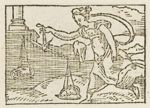
Pour peu de cas, trebusche foy legere: La Perrière, Le theatre des bons engins (Lyon, 1545), emblem 14 uses the imagery of a feather on one of the scales of a balance to express the idea that even a small adversity may cost you your friends
Iconclass: 51AA4:33A5 Nothingness, Absence❧friends 51II4:33A5 Farness❧friends 54FF11 Adversity, Misfortune, Bad Luck; 'Fortuna infelice', 'Infortunio' (Ripa)
Collectanea (1500): 434
Loci Communes: Amicitia (Friendship, Amitié)
II viii 82 Vias novit quibus effugit Eucrates He knows by what roads Eucrates escaped
Οἶδε τὰς ὁδοὺς ἅσπερ ἔφυγεν εὐκράτης. i. Novit vias quibus effugit Eucrates. In eum quadrat qui semper aliquam invenit rimam, ut inquit Plautus, per quam elabatur, ut officium subterfugiat. Aristophanes in Equitibus, Εὐλαβοῦ δὲ μη᾽ κφύγη σέ, καὶ γὰρ οἶδε τὰς ὁδοὺς Ασπερ εὐκράτης ἔφευγεν διὰ κυριβίων. id est, Caveto ne te effugerit, novit vias Quibus Eucrates effugerat per furfures. Taxat autem obiter Eucratis mores, qui quum molitor esset, tamen rempublicam administrarat. Quin & in Avibus taxat Execestidem quempiam, peregrinum & erronem, cui viae omnes notae fuerint. Congruet in hominem aliquo praetextu suffugientem, si quando fides sit praestanda.
[greek], He knows the roads by which Eucrates escaped, suits a man who always finds some chink, as Plautus puts it, by which he can slip out, and escape doing his duty. Aristophanes in the Knights: 'Mind he does not give you the slip, for he knows by what roads Eucrates escaped through the bran-market.' He criticizes in passing the character of Eucrates who, though a miller by trade, had run the country. In the Birds too he satirizes a certain Execestides, a homeless foreigner who knew the road to everywhere. This will suit a man who worms his way out on some pretext when he has to keep his word.
Facsimile:
Iconclass: 57AA2 Evasion of Duty, Dereliction of Duty 57AA6131 Guile, Artfulness, Craftiness, Deceitfulness 98B(EUCRATES) male persons from classical history (EUCRATES)
Loci Communes: Inconstantiae, perfidiae, versutiae (Inconstancy, treachery, cunning, Inconstance, perfidie, ruse)
II viii 83 Vivit, incende ignem It's alive, kindle the fire
Ζῆ, καῖε πῦρ, id est, Vivit, incende ignem. Ubi in negocii periculosi puncto festinandum admonemus, & occasionem arripiendam, ut cum reperta scintillula properatur, ne pereat & illa. Simile illi, Nunc tuum ferrum in igne est. Refertur apud Suidam.
[greek], It's alive, kindle the fire. When at the crisis of some risky business we tell a man to make haste and seize an opportunity, just as when we find a small spark on the hearth and make haste to see that it does not go out like the rest of the fire. Resembles Now your iron is in the fire. Recorded in Suidas.
Facsimile:
Iconclass: 31A2512(+934):54B121 arm stretched forward (+ reaching for somebody or something, seizing something, touching)❧'Occasio', 'Kairos'; 'Occasione' (Ripa) 41B11 kindling a fire 41B122 spark ~ fire 51M12 Haste
Loci Communes: Festinationis (Haste, Hâte)
II viii 84 Venter auribus caret The belly has no ears
Γαστὴρ οὐκ ἔχει ὦτα. i. Venter non habet aures. Ubi de pastu agitur, non admittuntur honestae rationes. Attestatur huic senarius ille proverbii vice Graecis celebratus, Λιμῷ γὰρ οὐδέν ἐστὶν αὐντειπεῖν ἔπος. id est, Contra famem etenim nulla contradictio est. Celebratur à Plutarcho Gellioque dictum illud Catonis, ex oratione quadam qua dissuasit legem agrariam. Eam sic exorsus est, ut dicat, arduum esse ad ventrem verba facere, qui careat auribus. Nec inepte accommodabitur in eos, qui vetris addicti voluptatibus, nihil admittunt quod ventri non sit amicum. Seneca li. 3. epist 21. Venter, inquit, praecepta non audit, poscit, appellat. Non est autem molestus creditor, parvo dimittitur, si modo das illi quod debes, non quod potes.
[greek], The belly has no ears. When food is at stake, questions of right and wrong do not get a hearing. This is supported by that iambic line current in Greek as a proverb: 'Hunger admits no counter-argument.' Plutarch and Gellius give currency to a familiar remark of Cato from one of his speeches, in which he opposed a land-law. He began by saying it was difficult for a speaker to address himself to the belly, which has no ears. And it will not be out of place if used of those who are devoted to the pleasures of the table, and accept no argument that may conflict with their dinner. Seneca in his Letters, book 3 number 21: 'The belly listens to no moral principles; it asks, it demands its due. But it is not a tiresome creditor; a small payment sends it away content, provided you pay it as much as you owe, not as much as you can.'
Facsimile:
Iconclass: 31A2231 external aspects ~ abdomen 41C119 hunger 51AA4:31A2213 Nothingness, Absence❧ears
Loci Communes: Luxus et mollicies (Luxury and softness, Luxe et mollesse)
II viii 85 Cum pulviscolo Dust and all
Vel cum pulvisculo dicimus, quoties omnia sic tolluntur, ut nihil fiat reliqui, ne pulvis quidem. Metaphora mutuo sumpta videtur ab iis qui frumentum ab area converrunt, non sine pulvere. Plautus in Rudentibus. Converret hic iam me totum cum pulvisculo. Idem in Truculento, Quo citius rem ab eo auferant cum pulvisculo. Simili figura dixit Iuvenalis Cum aerugine, pro eo quod est integre, et nulla parte diminutum: Nunc si depositum non inficietur amicus, Si reddat veterem cum tota aerugine follem. Eodem pertinet evangelicum illud, quod iubentur etiam pulverem excutere apostoli: id est, ne minimum quidem ab eis auferre secum.
We say Dust and all, whenever a clean sweep is made of something so that nothing is left, not even dust. The image looks as though it were taken from men sweeping up the grain on a threshing-floor, and some dirt with it. Plautus in the Rudens: 'He'll sweep me up entirely, dust and all.' And again in the Truculentus: 'To get his money off him all the sooner, dust and all.' Juvenal uses a similar metaphor when he writes 'rust and all' in the sense of 'completely, not a speck left behind': Nowadays, if your friend does not deny all knowledge of what you left in his charge, if he gives you back your old leather purse, rust and all.' There is a phrase in the gospels that belongs here, where the apostles are told to shake off even the dust, meaning, not to carry away with them anything at all.
Facsimile: 
Iconclass: 51AA4:25D29 Nothingness, Absence❧dust (soil type) 42F311 dusting 55CC11 Greed, Covetousness, Cupidity; 'Cupidità' (Ripa)
Collectanea (1500): 472
Loci Communes: Rapacitas et avaritia (Rapacity and greed, Rapacité et avarice)
II viii 86 Valere pancratice To be as fit as a pancratiast
Plautus in Bacchidibus, Valere pancratice dixit, pro eo quod est firma esse valetudine. Nam in Pancratistis robur corporis potissimum spectabatur. Pro eodem dixit, Valere athletice: Valere pugilice: Valere basilice. Terentius item: Pugilem esse aiunt. de puella robustiore & habitiore. Graeci βασιλικῶς pro magnifice proverbiali figura dicunt. Neque is sermo vulgo non tritus est, etiam hodiernis temporibus.
Plautus in the Bacchides uses To be as fit as a pancratiast, in the sense of being in good health, for to competitors in the pancratium physical fitness mattered more than anything. To the same effect he also uses To be as fit as an athlete, as a prizefighter, as a king. Terence too has They say she's a bruiser' of a girl of unusual strength and physique. Basilikôs, 'royally' or 'as a king,' is used in Greek for 'splendidly.' And the same phrase is still in common currency even in our own day.
Facsimile:
Iconclass: 43C39(+1) fighting contest (sport) (+ sportsman, player, etc.) 54A7 Strength, Power; 'Fortezza', 'Fortezza d'Animo e di corpo', 'Fortezza del corpo congiunta con la generosità dell'animo', 'Fortezza & valore del corpo congiunto con la prudenza & virtù del animo', 'Forza' (Ripa)
Collectanea (1500): 89
Loci Communes: Salubritas (Wholesomeness, Salubrité)
II viii 87 Foedum et mansisse diu vacuumque redisse It is a disgrace to stay too long and return empty-handed
Versus hic Homericus ex secundo Iliados libro, non dubium, quin annumerandus sit inter eos quos Macrobius scribit in proverbium abiisse: Αἰσχρόντοι δηρόν τε μένειν, κενεόν τε νέεσθαι. id est, Turpe est & mansisse diu, vatuumque redisse. Convenit, ubi quis longam de se concitavit expectationem, cui postea non respondeat. Veluti si quis studii causa diu peregrinatus, domum redeat nihilo doctior. Aut si negociator post diutinam absentiam revertatur, nihilo ditior. Aut si quis admodum longaevus, nihil praeclari gesserit in vita, quo se vixisse testaretur. M. Tullius proverbii vice usurpavit Epistolarum ad Atticum li. 6. epistola cui initium, Nunc quidem profecto.
This line of Homer, from the second book of the Iliad, is unquestionably to be numbered among those which, as Macrobius tells us, passed into a proverb: 'Base it is to stay too long and to return empty-handed.' This will be appropriate when someone has aroused long-standing expectations, which later he does not fulfil; if a man, for example, were to spend a long time abroad for purposes of study, and then come home no wiser than he went, or a merchant returning from a long absence not a penny the richer, or a man of great age who has done nothing distinguished in his whole life to prove that he ever existed. Cicero uses it as a proverb in book 6 of his Letters to Atticus, in the letter beginning Nunc quidem profecto.
Facsimile:
Iconclass: 46C513 'en route', traveller under way 53BB7 Non-observance 51AA4:55A1 Nothingness, Absence❧Acquisition, Gain, Profit
Loci Communes: Frustrata spes (Frustrated hope, Espoir déçu)
II viii 88 Tragulam iniicere To cast a spear
Plautus in Epidico, Tragulam in te iniicere adornant. id est, dolum aliquem in te struunt. Et ibidem, Nescio quam fabricam facit. Sic autem habet versus tetrameter, trochaicus: Tragulam in te iniicere adornat, nescio quam fabricam facit. Utraque figura proverbialis videtur. Idem in Cassina, Ego Pol istam iam aliquorsum tragulam decidero. Rursus in Pseudolo, At volui iniicere tragulam in nostrum senem. Huic similimum quod dixit in Mostellaria, Pilum iniecisti mihi. pilum enim hastae genus est.
Plautus in the Epidicus: 'They're getting ready to cast a spear at you,' meaning They're planning some secret attack on you. And in the same passage: 'He has some dirty work in hand.' For the line, which is a trochaic tetrameter, runs thus: 'Plans to cast a spear against you, has some dirty work in hand,' fabricam facit. Both metaphors have a proverbial air. Again in the Casina: 'I'll turn aside that spear of theirs some way or other.' And in the Pseudolus: 'But my plan was to cast a spear at our old man.' This is very close to a phrase in the Mostellaria: 'You've cast a javelin at me,' for a javelin is a kind of spear.
Facsimile:
Iconclass: 45C11(SPEAR)(+63) casting weapons: spear (+ handling of weapons) 45H12 surprise attack (from ambush) 57AA6223 Ambuscade, Trap; 'Insidia' (Ripa)
Collectanea (1500): 83
Loci Communes: Insidiae (Ambush, treachery, Embûches)
II viii 89 Trium literarum homo A three-letter man
Trium literarum homo, per Ironiam dici potest, in eum qui generosus & ingenuus videri cuplat. Inde natum quòd olim ingenui, praenomen, nomen & adnomen, in literis aut insignibus suis, tribus literis notare soleant. Ut pro Quinto Valerio Maximo, Q. V. M. Hinc vulgi iocus, de trium literarum homine. Plautus in Aulularia iocum aliò detorsit, nempe in servum furacem. Subiicit enim, Etiam fur, trifurcifer.
A three-letter man can be used by way of irony of one who wishes to be thought of good family and social standing. It arises from the fact that in old days it was the custom for men of free birth to abbreviate their three names - praenomen, nomen, agnomen - into three initials in their letters or insignia:Q. V.M., for instance, for Quintus Valerius Maximus. Hence the popular jest about a man of three letters. Plautus in the Aulularia turns the joke in another direction, to apply to a thievish slave, adding the retort Three-letter man yourself: cur and thrice a cur!'
Facsimile:
Iconclass: 46A1 social stratification, social groups 49D11(3):49L17 numerals: 3❧initial
Collectanea (1500): 216
Loci Communes: Contemptus et vilitatis (Contempt and worthlessness, Mépris et bassesse)
II viii 90 Trium dierum commeatum Three days' rations
Trium dierum commeatus, cum instare paupertas extrema significatur. Translatione ducta à militum commeatu. Et apud Aristophanem cum alias, tum in Acharnensibus. Καὶ μ᾽ ἠπιτηρεῖν σιτί᾽ ἡμερῶν τριῶν. id est, Mihique ut reservem commeatum tridui. Interpres addit, antiquitus in bellum ituris edici solere, ut sibi tridui non minus, commeatum pararent. Meminit & in Equitibus: Εγὼ ποριῶ καὶ τοῦτον Ημερῶν τριῶν. id est, Praebeo & istum quod sat est in triduum. Proinde Tridui commeatum dicemus minimas facultates, quae vix ad tridui victum sufficiant. Non dissimili figura Terentius in Seipsum excruciante, dixit Decem dierum familiam.
Three days' rations, to convey that destitution threatens, the metaphor being drawn from the food carried by soldiers. It comes in Aristophanes, in the Acharnians among other places: 'And to reserve for myself rations for three days.' The scholiast adds that in Antiquity men setting out on a campaign were warned by public proclamation to provide themselves with food for not less than three days. He mentions this in the Knights too: 'I shall provide it, and enough for three days.' Thus we shall use 'three days' rations' when we mean a minimal supply, barely enough to feed one for that space of time. Terence uses a not dissimilar metaphor in the Self-tormentor, when he speaks of 'ten days' supplies.'
II viii 91 Tragoedias in nugis agere To make tragedies out of trifles
Tragoedias in nugis agit, qui in re levicula tumultum movet, & ut ait Terentius, magno conatu magnas nugas dicit. M. Tullius De oratore, li. 2. Ne aut irrisione, aut odio digni putemur, si tragoedias agamus in nugis. Usurpat idem Fabius lib. sexto, capite De peroratione: Nam in parvis, inquit, litibus has tragoedias movere, tale est, quasi personam Herculis & cothurnos aptare infantibus velis, Quin hoc ipsum excitare tragoedia, si aliò quopiam deflectatur, proverbium resipit. Unde & Graecis ἐκτραγῶδίζειν, & τραγικῷς λέγειν, pro graviter sive acerbe loqui.
A man makes tragedies out of trifles who raises a storm over some matter of no importance and, as Terence puts it, 'brings great effort to the uttering of great nonsense.' Cicero in the De oratore, book 2: 'Lest we be thought to deserve ridicule or disgust if we make tragedies out of trifles.' Quintilian uses the same metaphor in book 6, in his chapter on the peroration: 'For to stir up tragedies in minor disputes is like trying to fit the mask and leggings of Hercules on small children.' In fact, the expression 'arousing a tragedy,' if applied in any other field, has itself the look of a proverb; and hence in Greek too there is ektragôdizein [act tragically] and tragikôs legein [speak tragically], for strong or bitter language.
Facsimile: 
Iconclass: 48C8545 tragedy 52D41 Trifles, 'Nugae' 54B5 Importance, Preponderance 54BB5 Unimportance
Loci Communes: Intempestiva et inepta (Untimely and inept things, Choses inopportunes et ineptes)
II viii 92 Transversum agere To drive off course
Transversum agere dicitur, qui vi & impetu quodam ab instituto deflectitur. Ita Laberius Mimus apud Macrobium libro Saturnalium secundo, cursum fortunae transversum vocat. Hunc enim C. Caesaris benignitas invitavit, ut eques Romanus, & senex prodiret in scenam. In prologo igitur queritur praeter animi sui sententiam eò Caesaris autoritate fuisse compulsum. Necessitas, inquit, cuius cursus transversum impetum Voluerunt multi effugere, pauci potuerunt, Quo me detrusit penè extremis sensibus, &c. Ita qui praeceps ira fertur, Transversus rapi dicitur. Ductum apparet à navigantibus, qui secundo vento recto cursu feruntur, flatu adverso, transversum aguntur.
A man is said to be driven off course who is deflected by some violent force from his intended path. Thus Laberius the writer of mimes, cited by Macrobius in book 2 of the Saturnalia, calls the course of fortune 'crosswise.' For Gaius Caesar in the kindness of his heart invited him, a Roman knight and an old man, to appear on the stage. In a prologue therefore he complains that contrary to his personal convictions he has been compelled to appear by the authority of the emperor. 'Necessity,' he says, 'whose violent crosswise course / Many have tried to escape and few succeeded, / Has thrust me down, in my extreme old age,' and what follows. So a man who is thus carried headlong is said to be 'swept off course.' Clearly drawn from sailors, who are carried straight forward by a following wind and driven off course if it blows contrary.
II viii 93 Thrasybulo Dionysium dictis esse similem You say that Dionysius is like Thrasybulus
Θρασυβούλῳ διονύσιον φάτ᾽ εἶναι ὅμοιον, id est, Dionysium Thrasybulo similem esse dicitis. Dici solitum, ubi quis ea componit, quae nimio intervallo inter se differunt. Dionysius enim inter pestilentissimos tyrannos commemoratur, Thrasybulus laudatus, quod reipublicae studiosissimus fuerit. Sumptum est è Pluto Aristophanis.
[greek], You say that Dionysius is like Thrasybulus, is used customarily when someone compares things which are much too far apart. Dionysius is one of the most pestilent tyrants on record, Thrasybulus has a reputation for his very great devotion to the public good. Taken from the Plutus of Aristophanes.
Facsimile:
Iconclass: 51BB2 Dissimilarity, Unlikeness 98B(DIONYSIUS II) (story of) Dionysius II, tyrant of Syracuse 98B(THRASYBULUS) male persons from classical history (THRASYBULUS)
Loci Communes: Dissimilitudinis et incongruentiae (Dissimilarity and incongruity, Dissemblance et incongruité)
II viii 94 Tributis potiora Better than tribute
Τὰ τῶν φόρων κρείττω, id est, Tributis potiora, dicebatur, ubi quis ex malefactis & iniquitate commodum ingens reportaret. Refertur à Suida & Zenodoto proverbii nomine, nec pluribus explicatur. Harpocration in dictionario rhetorico scribit exstitisse in oratione Hyperidis adversus Athenogenem. Inde natum opinor, quòd qui principum nomine tributum exigunt, ferè plus extorquent, quàm par est. Et principes sic petunt, ut ab invitis rapiant, ni dent quod petitur. Congruit huic illud Pindari ex Pythiis hymno octavo, κέρδος δὲ φίλτατον γ᾽ ἐκόντος εἰ τὶς ἐκ δόμων φέρει. i. Lucrum autem gratissimum, si quis ex volentis aedibus ferat.
[greek], Better than tribute, was used when someone derived enormous advantages from malpractices and crime. It is recorded by Suidas, and by Zenodotus, as a proverb, with no further explanation. Harpocration in his Rhetorical Dictionary writes that it occurred in a speech by Hyperides against Athenogenes. It arose, I presume, from the fact that those who exact tribute in the prince's name often collect more than the proper sum; and princes demand on terms which enable them to seize what they want from the unwilling if they do not pay up. That phrase in Pindar, in hymn 8 of the Pythians, agrees with this: 'And gain is most acceptable if a man gets it from the house of a willing giver.'
Facsimile:
Iconclass: 44D21 tax collection 44G51:55A12 crime❧Reward, 'Praemium'; 'Premio', 'Remuneratione' (Ripa)
Loci Communes: Lucrum ex scelere (Gain from crime, Gain par le crime)
II viii 95 Tragica simia A tragical ape
Τραγικὸς πιθηκος. i. Tragica simia. Proverbiali convicio dicebatur, qui fungeretur honoribus opibusque polleret, alioquin indignus. Simiam appellant homuncionem, vix hominem, sed simulacrum hominis magis. Tragicam addunt, propter fortunae strepitum & personam additam. Demosthenes in oratione pro Ctesiphonte, Aeschinem tragicam simiam appellat, quod quum esset nequissimus, splendidis verbis probum civem ageret. Cuius proverbii meminit Philostratus in Aristide. Divus Hicronymus in Epistolis ostendit hoc scomma iaci solere vulgo in Christianos, sed ab impiis, ethnicisque, perinde quasi vultu habituque sanctimoniam prae se ferrent, quum essent improbi. Quanquam hic locus in exemplaribus non eodem habetur modo, sicut admonuimus in scholiis nostris, quibus vere divini viri lucubrationes, quo à piis hominibus, sed mediocriter doctis, possent inoffense legi, summis vigiliis emendatas illustravimus. Convenit & in eos, qui barba pallioque philosophos se profitentur, cum caetera cultui non respondeant. Sic enim Plutarchus, Οὔτε γὰρ φιλοσόφους πωγωνοτροφίαι καὶ τριβωνοφορίαι ποιοῦσιν, οὔτε ἰσιακοὺς αἱ λινοστολίαι. i. Neque enim alere barbam, aut gestare vile pallium philosophum facit, neque lineis vestiri Isiacos. hoc est, Isidis sacerdotes.
[greek], A tragical ape, was proverbial as an offensive description of a man who held high office and was rich and powerful, though in other ways undeserving. Ape, like manikin, is the word for what is scarcely a man and more like a pale copy of one; and it is called 'tragic' because of the noise and bustle of high position and the wearing of a kind of mask. Demosthenes in his speech on behalf of Ctesiphon calls Aeschines a tragical ape because, though an utter rascal, he used splendid language to act the part of an upright citizen. The proverb is mentioned by Philostratus in his life of Aristides. St Jerome shows in his letters that this was a jibe often levelled at Christians, though only by the irreligious and by gentiles, as though they made a show of piety in face and bearing, while being themselves rascals; though this passage is not found in the same state in all the copies. This I have pointed out in my notes, in which I have devoted infinite labour to the correction and elucidation of the works of that truly divine author, so that they can be read without stumbling by religious men of only moderate education. It is suitable also for those who by beard and cloak profess themselves philosophers, though the rest of them do not correspond to the outward man. For, as Plutarch puts it, 'It is not wearing a beard or a rough cloak that makes philosophers nor dressing in linen that makes Isiacs,' that is, priests of Isis.
Facsimile:
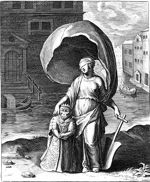
Fortuna non mutat genus: Vaenius, Emblemata Horatiana (Antwerp, 1612), emblem 74 uses the imagey of an ape dressed as king
Iconclass: 25F22 monkeys, apes 48C8545 tragedy 46B91 fraudulence, swindling 52AA511 Ridiculousness 57AA621 Cheat, Deceit; 'Fraude', 'Inganno' (Ripa)
Loci Communes: Honos indigno habitus (Honor given to the unworthy, Honneur accordé à qui ne le mérite pas); Fucus (Sham, deceptive appearance, Feinte, apparence trompeuse)
II viii 96 Tineas pascere To feed the worms
TIneas pascere dicuntur, quae neglecta situ pereunt. Ductum à vestibus, aut libris diu reconditis & intactis. Horatius in Epistolis, Contrectatus ubi manibus sordescere vulgi Coeperis, aut tineas pasces taciturnus inerteis, Aut fugies Uticam, aut unctus mitteris Ilerdam.
Things are said to feed the worms which are left untouched and perish from neglect. A metaphor from clothes or books which have been a long time motionless on the shelf. Horace in the Epistles: When you start looking dirty from fingering by common folk, Either you will fall silent and be food for idle worms Or you'll take refuge in Utica or be despatched in a greasy parcel to Ilerda.
Facsimile:
Iconclass: 25F73(+45) worms (+ animals eating and drinking) 41C111 giving food 54AA2 Negligence; 'Negligenza' (Ripa)
Collectanea (1500): 157
Loci Communes: Contemptus et vilitatis (Contempt and worthlessness, Mépris et bassesse)
II viii 97 Titio ad ignem A log onto the fire
Δάλος ἐπὶ πῦρ. i. Titio ad ignem. ubi quis applicatur ad eas res ad quas natura propensus est. Ut si mulierosus ad puellarum convictum, sanguinis avidus ad militiam, lucri sitiens ad mercaturam. Δάλον enim Graeci vocant lignum semiustulatum. Non admodum abludit ab illo, εἰς ἀμΐδα ἐνουρεῖν. id est, in matulam immeiere. Refertur à Suida & Zenodoto.
[greek], A log onto the fire. When a man devotes himself to the pursuits towards which he has a natural leaning - a lecher consigned to the society of young women, a bloodthirsty man to the army, one who thirsts to make money to a merchant's life. The word dalos in Greek means a piece of firewood half-burnt. Not very far from To make water in a chamber-pot. Recorded by Suidas, and by Zenodotus.
Facsimile:
Iconclass: 41B11 kindling a fire 41B12(LOG) burning as process: log 52C2:53B41 Affirmation, Confirmation; 'Confermatione' (Ripa)❧Inclination; 'Inclinatione' (Ripa)
Loci Communes: Proclivitas (contra) (Propensity (against), Penchant (contre))
II viii 98 Tithymallus Laconicus Laconian spurge
Τιθύμαλλος λακωνικός, id est, Tithymallus Laconicus. In lippientes, oculisque caecutientibus homines dicebatur. Tithymallus, herbae genus, apud Lacones repertum, lacteo succo manans decerptum, unde quidam dixere lactariam, singularis acrimoniae, quo sub noctem oculos illinebant ad visum acuendum. Huius Dioscorides in quarto plureis species facit, deque oculorum remedio diligenter meminit. Adagium refertur apud Suidam, qui citat ex Aristophane de Neoclide lippo, σκόροδ᾽ ὁμοῦ τριψαντα τιθυμάλλῳ. i. Qui allium trivit simul cum tithymallo. Carmen autem extat in Concionatricibus, Τί δὲ μ᾽ ἐχρῆν δρᾶν; Σκόροδ᾽ ὁμοῦ τρίψαντ᾽ ὀπῷ Τιθύμαλλον ἐμβαλόντα τοῦ λακωνικοῦ, Σαυτῷ παραλείφειν τὰ βλέφαρα τῆς ἑσπέρας. id est, Simul cum opi liquare tereres allia, Tithymallon insuper adderes Laconicum, Et obungeres tibi palpebras sub vesperam. Vox dicta videtur à mamma nutricis. sed apud alios per simplex λ scriptam comperio, licet Suidas scribat per geminum, nec indicat interim usum proverbii. Si competit in lippos, dicendum est, Tithymallo opus habet, aut, Tithymallum terit. Nam tradunt huic efficacem esse acrimoniam, ut quum succus eius colligitur, cavendum sit ne contingat oculos: & quoties sumitur in stomachum, devorare necesse est obvolutum, ne fauces radat. Huius succo medentur oculorum pituitae. Multa de his Plinius libro vigesimo sexto, capite octavo. Cornelius Celsus in quincto indicans eam herbam Latinis dici Lactucam marinam, vim ait habere exedendi.
[greek], Laconian spurge, was used in dealing with blearyeyed people and those whose sight was poor. Tithymallus is a kind of spurge found in Laconia (oozing when plucked with a milky juice, which has led some to call it lactaris, milkweed). This is exceptionally acrid, and was rubbed on the eyes at nightfall to sharpen the eyesight. Dioscorides in book 4 makes out several kinds of this, and gives a careful account of its use in the treatment of the eye. The adage is recorded by Suidas, who gives a quotation from Aristophanes about a man called Neoclides who had very weak sight, who 'pounded together garlic and spurge.' The passage is to be found in the Ecclesiazusae: What then should I have done? Together pound garlic and silphium-juice, Adding the spurge that's from Laconia, And on your eyelids smear at eventide. The word looks as though it were derived from a nurse's teat; but in other sources I find it written with a single /, though Suidas writes it with two, nor does he at the same time indicate how the proverb was used. If it applies to those with weak sight, one should say 'He needs spurge' or 'he's a spurgepounder.' For they say the bitterness of the juice is such that when collecting it one must be careful that it does not come in contact with the eye, and when taken by the stomach, it must be wrapped up before being swallowed to prevent it from making the throat sore. This juice is used in treating phlegm in the eye. Pliny4 has much to say of it in book 26, chapter 8. Cornelius Celsus in book 5 shows that this plant is called in Latin sea-lettuce, and lists it as an exedent.
Facsimile: 
Iconclass: 25G4(SPURGE) plants and herbs (SPURGE) 25G4(MILKWEED) plants and herbs (MILKWEED) 31A411 disabilities affecting the eyes 47I119 weeds 61D(LACONIA) geographical names of countries, regions, mountains, rivers, etc. (LACONIA) (LACONIA)
Loci Communes: Contemptus et vilitatis (Contempt and worthlessness, Mépris et bassesse)
II viii 99 Tinctura Sardonica Sardinian dye
Βάμμα σαρδωνικὸν.i. Tinctura Sardonica. De colore praecellenti dicebatur, praecipue purpurae. Per iocum autem transfertur ad eum qui pudefit, aut qui ob plagas sanguine tingitur. Sardo, sive (ut Hesychius scribit) Sardon, insula ingens apposita Italiae, in qua variae purpurarum tincturae laudatissimaeque fiebant. Itidem & Tyrium muricem ostrumque Sarranum, legimus apud Latinos. Aristophanes in Pace, Ην ἐκεῖνος φησὶν εἶναι βάμμα σαρδινιακὸν. id est: Quam ille praedicat coloris esse Sardiniaci. Idem in Acharnensibus, Ινα μή βάψω βάμμα σαρδινιακὸν. id est: Ne te linam colore Sardiniaco.
[greek], Sardinian dye, was applied to colour of the highest quality, especially scarlet, and was used in jest metaphorically of a man who blushed for shame or was coloured with blood from a wound. Sardo or, as Hesychius calls it, Sardon, is a large island off the coast of Italy which produced various scarlet dyes of the highest class. We find similar references in Latin to Tyrian purple and Sarranian purple. Aristophanes in the Peace: 'Which he says is of Sardinian dye,' and again in the Acharnians: 'Lest I dip you in Sardinian dye.'
Facsimile:
Iconclass: 22C4(SCARLET) colours, pigments, and paints (SCARLET) 31A22111(CHEEKS) parts of the face (CHEEKS) 61D(SARDINIA) geographical names of countries, regions, mountains, rivers, etc. (SARDINIA) (SARDINIA)
Loci Communes: Pudor (Shame, modesty, Pudeur)
II viii 100 Quam curat testudo muscam More than a tortoise minds a fly
Οσον μέλει τῇ χελωνῃ μυιῶν. i. Quàm curat testudo muscas. Suidas ex autore, nescio quo, refert haec verba, τῶν δὲ ἀγαμέμνονι τῆς θερσίτου παῤῥησίαςἧττον ἔμελεν,ἢ χελώνῃ μυιῶν, τὸ της παροιμΐας. id est, Agamemnon autem minoris faciebat Thersitae maledicentiam, quàm testudo muscas, quemadmodum proverbio dicitur. Testudini nihil nocere possunt muscae propter testam, qua munita est. Confine illi quod alibi memoravimus. Non curat culicem elephantus, Lepidius erit ad res animi detortum. Animus virtute ac philosophia munitus, nihil plus timet fortunae incursum, quàm testudo muscas.
Οσον μέλει τῇ χελωνῃ μυιῶν., More than a tortoise minds a fly. Suidas records these words from an author whose name I do not know: 'But Agamemnon cared no more for Thersites' insults than a tortoise minds a fly, as the proverb runs.' Flies cannot possibly hurt a tortoise on account of the shell that protects it. Related to one of which I have mentioned elsewhere, An elephant does not mind gnats. This will be more stylish if adapted to things of the mind: 'a mind defended by virtue and philosophy no more fears the assaults of fortune than a tortoise fears flies.'
Facsimile:
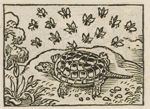
Contre Vertu Fortune n'a pouuoir: La Perrière, Le theatre des bons engins (Lyon, 1545), emblem 28 uses the adage's imagery of flies uselessly attacking a tortoise
Ego vero haud mordeor: Zincgreff, Emblematum Ethico-politicorum (Heidelberg, 1619), emblem 60 uses the adage's imagery of the exceptionally tough skin of the elephant, mentioned in the adage's comment
Iconclass: 25F44 tortoises, turtles 25F711(FLY) insects: fly 51AA4:54DD51 Nothingness, Absence❧Danger; 'Pericolo' (Ripa)
Loci Communes: Contemptus et vilitatis (Contempt and worthlessness, Mépris et bassesse); Securitatis et tutae rei (Security and safety, Sécurité et sûreté)